HR 117
- Session Year: 2023-2024
- House: Assembly
- Latest Version Date: 2024-08-12
Current Status:
Failed
(2024-08-22: Read. Adopted. (Page 6440.).)
Introduced
In Committee
First Chamber
In Committee
Second Chamber
Enacted
WHEREAS, The United States of America is a nation founded on the principles that all people are created equal and the promise of freedom for all; and
WHEREAS, Our strength as a country has always been greater when we welcome newcomers; and
WHEREAS, California has the highest number of migrants in the country; and
WHEREAS, It has been nearly 40 years since the federal government passed an immigration reform bill, and our current immigration system is unable to meet the needs of the present day; and
WHEREAS, California is home to nearly 10,000,000 immigrants, the majority of whom have lived in the United States for more than 10 years; and
WHEREAS, Undocumented immigrants contribute significantly to California; and
WHEREAS, One in 10 workers in California is an undocumented immigrant, and undocumented immigrants contribute $51.4 billion dollars in state and local taxes; and
WHEREAS, California would benefit from Congress updating immigration law because it has been shown that providing citizenship for undocumented immigrants boosts the economy and increases the job market; and
WHEREAS, In 2023, California congressional leaders introduced the Renewing Immigration Provisions of the Immigration Act of 1929 (HR 1511 and SB 2606) (Registry bills) that allows undocumented people living continuously in the United States for at least seven years to apply for legal permanent residency, and it is estimated that approximately 8,000,000 undocumented people may benefit from the passage of that bill; and
WHEREAS, Eighty percent of Californians believe there should be a pathway to citizenship for undocumented immigrants; and
WHEREAS, Immigrant communities continue to organize around passing immigration reform, and later this month, the Northern California Coalition for Just Immigration Reform will undergo a three-day walk from San Jose to San Francisco in support of the Registry bills; and
WHEREAS, Passing immigration reform that recognizes the contributions and humanity of immigrants is in line with our values as a state and as a country; now, therefore, be it
Resolved by the Assembly of the State of California, That a workable, humane, and just approach to solving our nations broken immigration system would benefit California and the United States as whole, and therefore, the Registry bills should be supported; and be it further
Resolved, That the Chief Clerk of the Assembly transmit copies of this resolution to the author for appropriate distribution.
|
Date
|
Status
|
|---|---|
| Aug 22, 2024 | Read. Adopted. (Page 6440.). |
| Aug 22, 2024 | Coauthors revised. |
| Aug 19, 2024 | From committee: Be adopted. Ordered to Third Reading. (Ayes 7. Noes 0.) (August 19). |
| Aug 15, 2024 | Referred to Com. on JUD. |
| Aug 12, 2024 | Introduced. |
|
Date
|
Description
|
Location
|
Votes
|
|
|---|---|---|---|---|
| Aug 19, 2024 | Be adopted. To third reading. | Assembly Standing Committee on Judiciary |
Passed |
This list shows positions taken on this bill by organizations on the date displayed, which is linked to the original source.
Positions by individuals are not included.
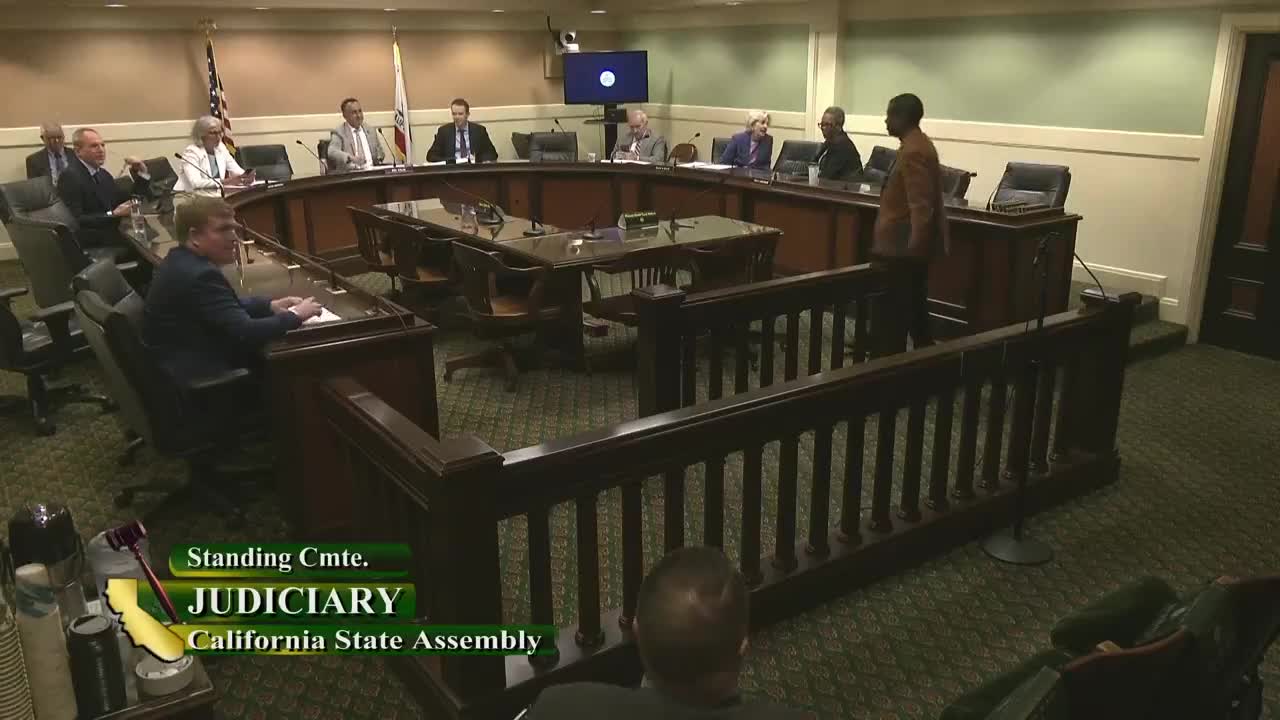
Date of Hearing: August 19, 2024
ASSEMBLY COMMITTEE ON JUDICIARY
Ash Kalra, Chair
ABPCA Bill Id:HR 117
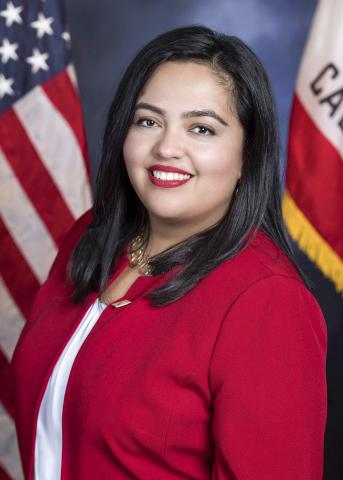
Author:(Wendy Carrillo) – As Introduced Ver:August 12, 2024
SUBJECT: Immigration
KEY ISSUE: SHOULD THE LEGISLATURE URGE THE FEDERAL GOVERNMENT TO ENACT COMPREHENSIVE IMMIGRATION REFORM THAT PROVIDES A PATHWAY TO CITIZENSHIP, PROTECTS ASYLUM SEEKERS, AND MODIFIES CURRENT IMMIGRATION LAWS, IN ALIGNMENT WITH CALIFORNIA'S VALUES OF INCLUSION AND FAIRNESS?
SYNOPSIS
An estimated 10 million immigrants live in California, many of whom lack a clear path to legal residency or citizenship due to the federal government's outdated immigration system. This resolution calls on the federal government to enact comprehensive immigration reform that reflects the state's values of inclusion, fairness, and opportunity. The resolution emphasizes the critical need for a humane and workable approach to immigration in order to provide undocumented individuals, including those brought to the United States as children, with a pathway to citizenship. It also stresses the importance of maintaining family unity, protecting asylum seekers, and addressing the economic contributions of immigrants to California’s workforce and communities.
This resolution advocates for federal action to modernize the immigration system, which has not happened in any significant way for decades. Specifically, it expresses the Legislature’s support for the federal bills S.B. 2606 and H.R. 1511 that would amend federal immigration law to increase those who are eligible for naturalization under the Immigration and Nationality Act by including long-term residents (defined as those who have resided in the U.S. for at least seven years). This resolution, which has no support or opposition on file, expresses the support of the California Legislature for inclusive policies that benefit both immigrants and the state as a whole.
SUMMARY: Resolves, on behalf of the Assembly of the State of California, that a workable, humane, and just approach to solving our nation’s broken immigration system would benefit California and the United States as whole, and that two bills pending in Congress, known as the Registry bills, should be supported. Specifically, this resolution makes the following findings:
- WHEREAS, The United States of America is a nation founded on the principles that all people are created equal and the promise of freedom for all;
- WHEREAS, Our strength as a country has always been greater when we welcome newcomers;
- WHEREAS, California has the highest number of migrants in the country;
- WHEREAS, It has been nearly 40 years since the federal government passed an immigration reform bill, and our current immigration system is unable to meet the needs of the present day;
- WHEREAS, California is home to nearly 10,000,000 immigrants, the majority of whom have lived in the United States for more than 10 years;
- WHEREAS, Undocumented immigrants contribute significantly to California;
- WHEREAS, One in 10 workers in California is an undocumented immigrant, and undocumented immigrants contribute $51.4 billion dollars in state and local taxes;
- WHEREAS, California would benefit from Congress updating immigration law because it has been shown that providing citizenship for undocumented immigrants boosts the economy and increases the job market;
- WHEREAS, In 2023, California congressional leaders introduced the Renewing Immigration Provisions of the Immigration Act of 1929 (HR 1511 and SB 2606) (Registry bills) that allows undocumented people living continuously in the United States for at least seven years to apply for legal permanent residency, and it is estimated that approximately 8,000,000 undocumented people may benefit from the passage of that bill;
- WHEREAS, Eighty percent of Californians believe there should be a pathway to citizenship for undocumented immigrants;
- WHEREAS, Immigrant communities continue to organize around passing immigration reform, and later this month, the Northern California Coalition for Just Immigration Reform will undergo a three-day walk from San Jose to San Francisco in support of the Registry bills; and
- WHEREAS, Passing immigration reform that recognizes the contributions and humanity of immigrants is in line with our values as a state and as a country.
EXISTING FEDERAL LAW:
- Provides that the federal government has the exclusive authority to regulate immigration and naturalization. (U.S. Const., article I, section 8, clauses 3 and 4.)
- Provides that the Secretary of Homeland Security or the Attorney General may grant asylum to an immigrant who has applied for asylum and who has been determined to be a refugee because they are unwilling or unable to return to their country of origin because they have been persecuted or have a well-founded fear of persecution on the basis of specified characteristics or activities. The President of the United States has the authority to set the number of refugees who may be admitted to the United States each year, based on the President’s determination of the number that is justified in light of humanitarian concerns and the national interest. (8 U.S.C. Sections 1101(a)(42), 1157(a)(2), 1158.)
- Prohibits the federal government from returning to their home countries people whose life or freedom would be threatened because of their race, religion, nationality, membership in a particular social group, or political opinion. (8 U.S.C. Section 1231(b)(3).)
- Protects all asylum seekers by prohibiting the federal government from returning to their home countries people who have fled persecution on account of race, religion, nationality, political opinion, or membership in a particular social group. (8 U.S.C. Section 1101(a)(42)(A.)
- Provides that a record of lawful admission for permanent residence may, at the discretion of the Attorney General (or Secretary of Homeland Security), be made for an alien who entered the United States prior to January 1, 1972, if they have continuously resided in the U.S. since entry, are of good moral character, and are not ineligible for citizenship or deportable for certain criminal offenses. (8 U.S.C. Section 1259, 6 U.S.C. Section 557.)
- Provides that once an alien enters the country, their legal circumstances change, for the Due Process Clause applies to all persons within the United States, including aliens, whether their presence here is lawful, unlawful, temporary, or permanent. (Zadvydas v. Davis (2001) 533 U.S. 678.)
- Establishes the Deferred Action for Childhood Arrivals program (DACA), which allows some undocumented immigrants who came to the United States as children to receive a renewable two-year period of deferred action from deportation and become eligible for a work permit in the United States. (Office of the President of the United States, Memorandum, Preserving and Fortifying Deferred Action for Childhood Arrivals (DACA) (Jan. 20, 2021), 86 Fed. Reg. 7053 (Jan. 25, 2021); Dept. of Homeland Security, Memorandum, Exercising Prosecutorial Discretion with Respect to Individuals Who Came to the United States as Children (Jun. 15, 2012).)
- Establishes the Temporary Protected Status program (TPS), a time-limited authorization to reside and work in the United States while the recipient’s country of origin recover from the impact of major natural disasters or extreme civil conflict. The United States government may extend a TPS authorization for additional intervals if the recipient’s country of origin has not recovered sufficiently from the major natural disaster or extreme civil conflict to permit a safe return. (8 U.S.C. Section 1254a.)
EXISTING STATE LAW declares that immigrants are valuable and essential members of the California community and points out that almost one in three Californians is foreign-born and one in two children in California has at least one immigrant parent. (Government Code Section 7284.2 (a).)
COMMENTS: This resolution underscores the critical role that California plays in advocating for comprehensive immigration reform at the national level. The resolution recognizes the essential contributions of immigrants to the state's economy, culture, and communities, and calls for urgent federal action to modernize the immigration system. The author writes in support:
Nearly 40 years and 6 presidential administrations have passed since the last time the United States has passed immigration reform that allowed for immigrants to adjust their status. For nearly 40 years, undocumented immigrants have raised families, worked jobs, laid roots, paid taxes and most importantly called the United States home. For nearly 40 years, those as young as their 20s and 30s have gone entire lifetimes in the U.S. and now in their 60s and 70s continue to be undocumented. In every way but in status, undocumented immigrants are Americans. We cannot wait another 40 years for undocumented immigrants to be able to realize their American dreams and become citizens. We urge the federal government to do what is right and pass comprehensive and just immigration reform – in particular, supporting legislation introduced by California congressional leaders that seeks to update the registry date, thus allowing undocumented immigrants present in the United States to adjust their status.
California is home to approximately 10 million immigrants, making it the state with the largest immigrant population in the United States. The United States has more immigrants than any other country in the world: approximately 46.1 million people living in the U.S., or 14.3% of the population, were born in another country. Around one quarter, or 11 million, of these immigrants are undocumented. California has the largest immigrant population in the country, with 10.4 million residents born outside the U.S. Immigrants in California account for 27% of the state’s population and make up over one-third of its labor force. Recent estimates suggest that approximately 1.85 million of those immigrants are undocumented. (Marisol Cuellar Mejia, Cesar Alesi Perez, and Hans Johnson, Immigrants in California, Public Policy Institute of California (Jan. 2024), available at https://www.ppic.org/publication/immigrants-in-california/, Jeffrey S. Passel, Abby Budiman, and D’Vera Cohn, Key findings about U.S. immigrants, Pew Research Center (July 22, 2024), available at https://www.pewresearch.org/short-reads/2024/07/22/key-findings-about-us-immigrants/.)
This measure draws attention to the tremendous economic benefit of immigrants within California’s competitive economy. Immigrants have continually contributed to our national and our state economy by paying taxes, spending money as consumers, and bringing in revenue through their businesses. Recent data has demonstrated that immigrant-led households in the state of California paid $80.8 billion in federal taxes and $38.9 billion in state and local taxes in 2018. Undocumented immigrants in California paid an estimated $4.5 billion in federal taxes and $2.5 billion in state and local taxes. (New American Economy, Analysis of 2018 ACS microdata using IPUMS, (Jan. 31, 2020), available at https://www.newamericaneconomy.org/locations/.) California DACA (Deferred Action for Childhood Arrivals) recipients and DACA-eligible individuals have paid an estimated $497.6 million in state and local taxes. (Institute on Taxation and Economic Policy, State & Local Tax Contributions of Young Undocumented Immigrants (April 2018), available at https://itep.org/state-local-tax-contributions-of-young-undocumented-immigrants.)
In California alone, immigrants with a college degree work in every major industry in the state and are especially well-represented in the technology and health sectors. A Congressional Research Service report revealed almost a quarter of all science, technology, engineering, and mathematics (STEM) undergraduates and about half of all STEM graduate students are immigrants, many of whom will remain in this country and work after graduation. (See Congressional Research Service, Foreign STEM Students in the United States, (Nov. 1, 2019), available at https://crsreports.congress.gov/product/pdf/IF/IF11347.) Further, immigrant entrepreneurs in California generate tens of billions of dollars in business revenue. (American Immigration Council, Immigrants in California, (Aug. 6, 2020), available at https://www.americanimmigrationcouncil.org/sites/default/files/research/immigrants_in_california.pdf.)
The federal bills, supported in the resolution, aim to provide a pathway to legal residency for long-term undocumented immigrants in the United States and seek to modernize federal immigration policy language. HR 1511 and SB 2606 propose updating the "registry" date under the Immigration and Nationality Act, allowing individuals who have resided continuously in the U.S. for at least seven years to apply for permanent residency. Previously, this program (referred to as the Registry program) was available only to eligible non-U.S. nationals who entered the U.S. before January 1, 1972. (8 U.S.C. Section 1259.) By expanding this long-outdated provision, the bills would offer millions of undocumented immigrants, many of whom have been living and contributing to the economy for decades, an opportunity to secure legal status. This resolution would express support for these measures that recognize the positive impact that granting legal residency would have on the individuals affected and on the overall economy. (H.R. 1511, 118th Congress (2023), S.B. 2606, 118th Congress (2023).)
This resolution provides clear support for comprehensive immigration reform and calls for further federal action. Although the resolution’s priorities align with the broader goals of the Biden Administration, which has sought to reverse the restrictive policies of the previous administration, the current immigration system still remains in need of significant reform. The resolution advocates for a humane and just approach to reform, emphasizing the importance of maintaining family unity, creating a pathway to citizenship for undocumented immigrants, and expanding protections for asylum seekers. If undocumented immigrants living in California had a legal pathway to residency and citizenship, the state could see increased economic activity as these individuals would be able to invest in education, purchase homes, start businesses, and contribute more robustly to the state’s tax base. This potential for economic growth underscores the importance of reforming an outdated and inefficient system that currently hinders, rather than helps, the state’s economy, especially in immigrant-rich states like California.
By supporting this resolution, the California Assembly would express its commitment to advocating for policies that uphold the rights and dignity of all residents, regardless of immigration status. The resolution sends a strong message to federal lawmakers that California supports and sees the economic benefits of comprehensive reform that reflects the state’s values of fairness, equality, and opportunity for all.
REGISTERED SUPPORT / OPPOSITION:
Support
None on file
Opposition
None on file
Analysis Prepared by: Nicole Larson / JUD. / (916) 319-2334
Discussed in Hearing
View Older Hearings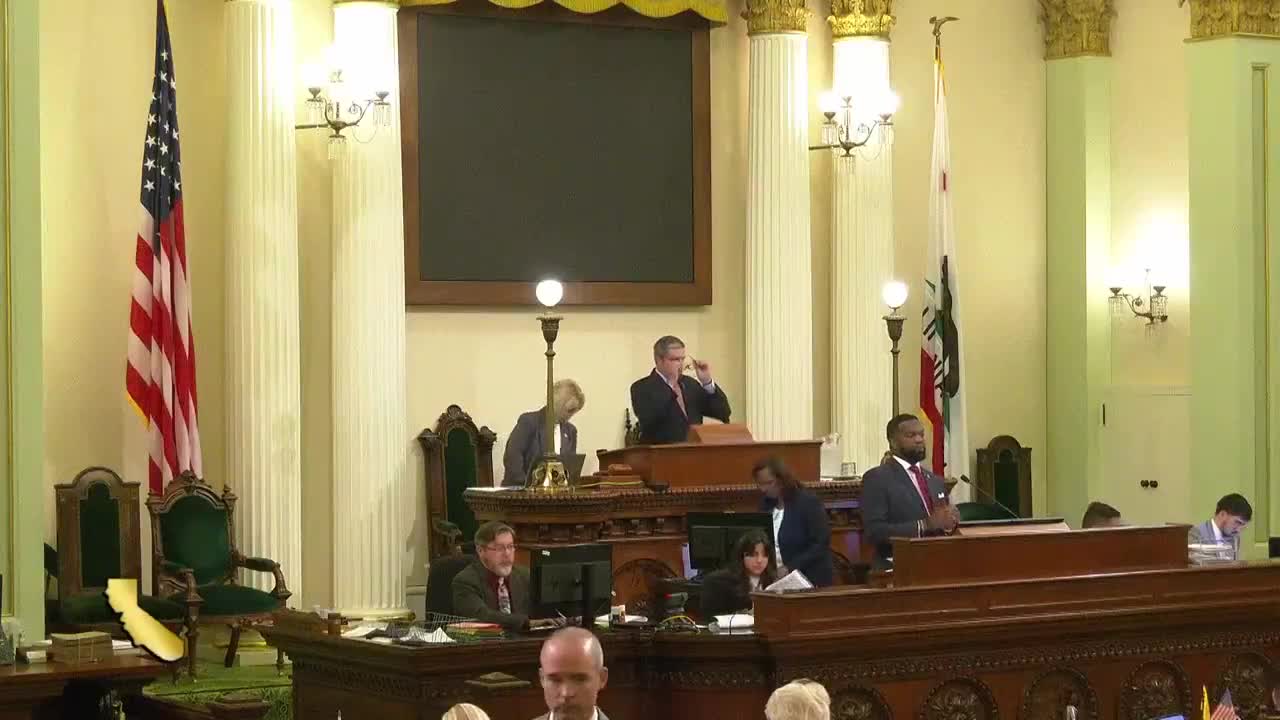
Bill Author
Bill Co-Author(s):