SB 1011: Encampments: penalties.
- Session Year: 2023-2024
- House: Senate
- Latest Version Date: 2024-02-05
Current Status:
Failed
(2024-04-16: April 16 set for first hearing. Failed passage in committee. (Ayes 1. Noes 3. Page 3637.) Reconsideration granted.)
Introduced
In Committee
First Chamber
In Committee
Second Chamber
Enacted
Under existing law, a person who lodges in a public or private place without permission is guilty of disorderly conduct, a misdemeanor. Existing law also provides that a person who willfully and maliciously obstructs the free movement of any person on any street, sidewalk, or other public place is guilty of a misdemeanor.
Under existing law, a nuisance is anything that is injurious to health or indecent or offensive to the senses, or an obstruction to the free use of property, so as to interfere with the comfortable enjoyment of life or property. Existing law also provides that a nuisance is anything that obstructs the free passage or use of any public park, square, street, or highway, among other things. Under existing law, a public nuisance is a nuisance that affects the entire community, neighborhood, or a considerable number of persons. Existing law provides various remedies against a public nuisance, including abatement by any public body or officer authorized by law.
This bill would prohibit a person from sitting, lying, sleeping, or storing, using, maintaining, or placing personal property upon a street or sidewalk if a homeless shelter, as defined, is available to the person. The bill would also prohibit sitting, lying, sleeping, or storing, using, maintaining, or placing personal property within 500 feet of a public or private school, open space, or major transit stop, as specified. The bill would specify that a violation of this prohibition is a public nuisance that can be abated and prevented, as specified. The bill would also provide that a violation of the prohibition may be charged as a misdemeanor or an infraction, at the discretion of the prosecutor. The bill would prohibit a person from being found in violation of the bills provisions unless provided notice, at least 72 hours before commencement of any enforcement action, as specified. By imposing criminal penalties for a violation of these provisions, this bill would impose a state-mandated local program.
The California Constitution requires the state to reimburse local agencies and school districts for certain costs mandated by the state. Statutory provisions establish procedures for making that reimbursement.
This bill would provide that no reimbursement is required by this act for a specified reason.
(a)For the purposes of this section, the following definitions apply:
(1)Homeless shelter means any of the following:
(A)An emergency shelter, as defined in Section 576.2 of Title 24 of the Code of Federal Regulations.
(B)An emergency shelter, as defined in subdivision (e) of Section 50801 of the Health and Safety Code.
(C)A navigation center, as defined in Section 50216 of the Health and Safety Code.
(2)Major transit stop has the same meaning as defined in Section 21064.3 of the Public Resources Code.
(3)Open space means a parcel or area of land or water that is substantially unimproved and devoted to an open-space use, as defined in Section 65560 of the Government Code.
(4)Peace officer means a person described in Section 830.
(b)A person shall not sit, lie, sleep, or store, use, maintain, or place personal property upon a street or sidewalk if a homeless shelter is available to the person.
(c)A person shall not sit, lie, sleep, or store, use, maintain, or place personal property upon a street, sidewalk, or other public property within the following locations:
(1)Five hundred feet of a public or private school providing instruction in kindergarten or grades 1 to 12, inclusive.
(2)An open space.
(3)A major transit stop.
(d)Subject to subdivision (e), this section may be enforced as follows:
(1)A violation of this section is a public nuisance that may be enjoined, abated, and prevented. The district attorney, county counsel of the county, or the city attorney of any incorporated city or of any city and county, in the name of the people, may maintain an action to abate and prevent the nuisance. Before pursuing abatement authorized by this paragraph, the district attorney, county counsel, or city attorney, as applicable, shall ensure that the person found to be in violation of this section has received verbal or written information regarding alternative locations to sleep, homeless and mental health services, or homeless shelters in the area.
(2)A violation of this section may be charged as a misdemeanor or an infraction, at the discretion of the prosecutor.
(e)A person shall not be found to be in violation of this section unless a peace officer employed by the county or city, as applicable, with jurisdiction over the location has provided that person written notice, at least 72 hours before commencement of any enforcement action described in subdivision (d), that the person is prohibited from sitting, lying, sleeping, or storing, using, maintaining, or placing personal property upon a street, sidewalk, or other public property pursuant to this section. A written notice shall only be deemed to have been provided for the purposes of this subdivision if the notice is given in a language understood by the person receiving the notice.
SEC. 2.No reimbursement is required by this act pursuant to Section 6 of Article XIIIB of the California Constitution because the only costs that may be incurred by a local agency or school district will be incurred because this act creates a new crime or infraction, eliminates a crime or infraction, or changes the penalty for a crime or infraction, within the meaning of Section 17556 of the Government Code, or changes the definition of a crime within the meaning of Section 6 of Article XIIIB of the California Constitution.
|
Date
|
Status
|
|---|---|
| Apr 16, 2024 | April 16 set for first hearing. Failed passage in committee. (Ayes 1. Noes 3. Page 3637.) Reconsideration granted. |
| Feb 23, 2024 | Set for hearing April 16. |
| Feb 14, 2024 | Referred to Com. on PUB S. |
| Feb 6, 2024 | From printer. May be acted upon on or after March 7. |
| Feb 5, 2024 | Introduced. Read first time. To Com. on RLS. for assignment. To print. |
|
Date
|
Description
|
Location
|
Votes
|
|
|---|---|---|---|---|
| Apr 16, 2024 | [First] hearing set for [04-16-2024]: Failed passage in Committee. Reconsideration granted | Senate Standing Committee on Public Safety |
Passed |
|
| Apr 16, 2024 | Do pass, but first be re-referred to the Committee on [Appropriations] | Senate Standing Committee on Public Safety |
Failed |
This list shows positions taken on this bill by organizations on the date displayed, which is linked to the original source.
Positions by individuals are not included.
SENATE COMMITTEE ON PUBLIC SAFETY
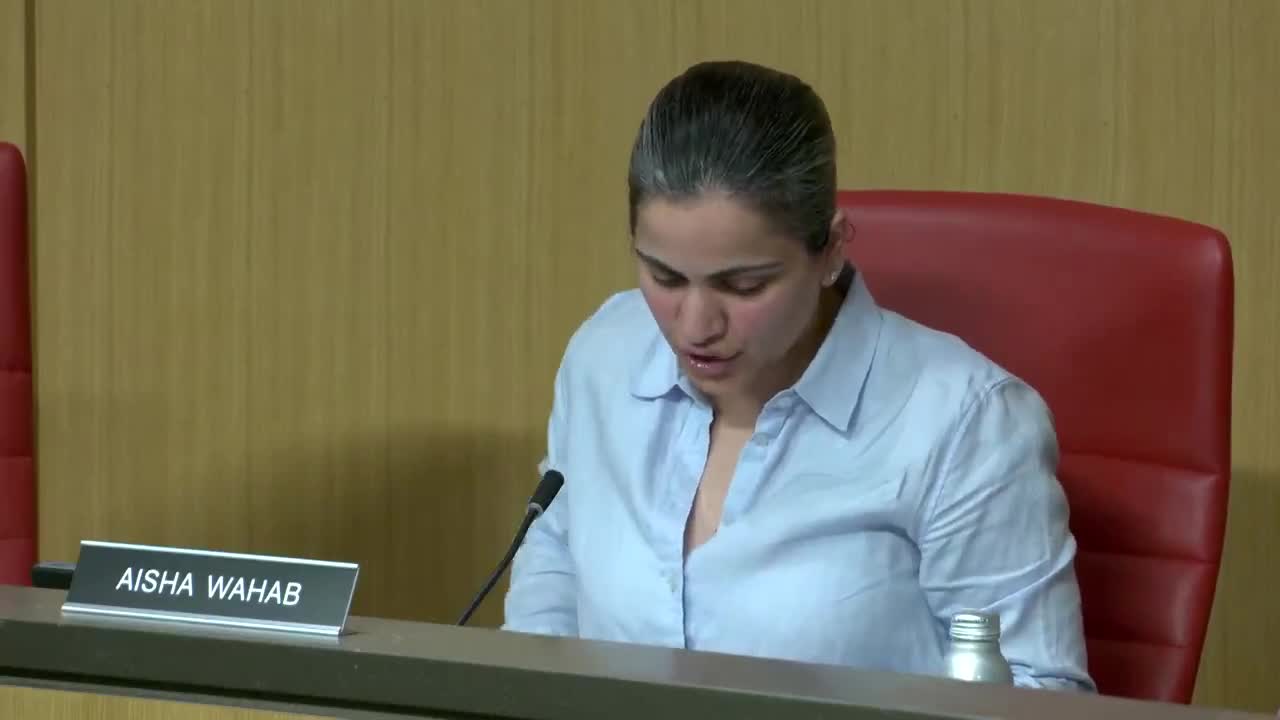
Senator Aisha Wahab, Chair
2023 - 2024 Regular
Bill No: SB 1011 Hearing Date: April 16, 2024
Author: | Jones | ||
Version: | February 5, 2024 | ||
Urgency: | No | Fiscal: | Yes |
Consultant: | MK | ||
Subject: Encampments: penalties
HISTORY
Source: Author
Prior Legislation: SB 31 (Jones) failed Senate Public Safety 2023
Support: California Baptist for Biblical Values; California State Sheriffs’ Assoc.; City of Carlsbad; City of Exeter; City of Oroville; Riverside County Sheriff's Office
Opposition: Abundant Housing LA; ACLU California Action; Active San Gabriel Valley;
Alameda County Homeless Action Center; All Home; All of Us or None Los Angeles; Alliance for Boys and Men of Color; Alliance for Reparations, Reconciliation, and Truth; Alliance San Diego; Atunse Justice League; Brilliant Corners; California Coalition for Housing and Survivor Justice; California Coalition for Women Prisoners; California Homeless Union Statewide Organizing Council; California Housing Partnership; California Nurses Association; California Public Defenders Assoc.; California Rural Legal Assistance Foundation; Californians for Safety and Justice; Californians United for A Responsible Budget; Catalyst California; Children's Defense Fund – CA; Chispa; Climate Resolve; Communities United for Restorative Youth Justice (CURYJ); Community Works West; Compass Family Services; Congregations Organized for Prophetic Engagement; Corporation for Supportive Housing; Critical Resistance; Disability Rights California; Downtown Women's Center; Drug Policy Alliance; East Bay Yimby; Ella Baker Center for Human Rights; Empowering Women Impacted by Incarceration; Felony Murder Elimination Project; First Step Communities; Fluid-o-tech; Food Not Bombs; Fresno Homeless Union; Glide; Greater LA Coalition on Homelessness; Grow the Richmond; Helping Handups; Housing California; Housing Is a Human Right Orange County; Initiate Justice; Initiate Justice Action; Inland Equity Partnership; Inner City Law Center; Justice in Aging; Kiwa; Ktown for All; LA Defensa; LA Forward; LA Progressive; Law Foundation of Silicon Valley; Legal Services for Prisoners with Children; Lived Experience Advisers; Lived Experience Advisers and Unhoused United; Los Angeles Regional Reentry Partnership (LARRP); Mental Health America of California; Mountain View Yimby; Napa-Solano for Everyone; National Alliance to End Homelessness; National Homelessness Law Center; Noho Home Alliance; Northern Neighbors; Oakland Communities United for Equity & Justice; Oakland Privacy; Orange County Equality Coalition; Peninsula for Everyone; People's Budget Orange County; People's Homeless Task Force Orange County; Poor Magazine; Progress Noe Valley; Public Interest Law Project; Public Advocates; Public Counsel; Root & Rebound; Run / Equal Rights for Every Neighbor; Sacramento Homeless Organizing Committee; Sacramento Homeless Union; Sacramento Regional Coalition to End Homelessness; Safe Place for Youth; San Clemente Affordable Housing Coalition; San Francisco Public Defender; San Francisco Yimby; San Luis Obispo Yimby; Santa Cruz Cares; Santa Cruz Fulltimers; Santa Cruz Yimby; Santa Rosa Yimby; Secure Justice; Silicon Valley De-bug; Smart Justice California; South Bay Yimby; Southern California Association of Non-profit Housing (SCANPH); Southside Forward; Starting Over, INC.; Steinberg Institute; Streets for People; Supportive Housing Alliance; Sustainable Economies Law Center; Tapestry Unitarian Universalist Congregation; Team Justice; The People Concern; The Peoples Botanica; Think Dignity; Transitions Clinic Network; Unhoused United; Union Station Homeless Services; United Way of Greater Los Angeles; University of The Pacific McGeorge School of Law Homeless Advocacy Clinic; Up North Harm Reduction; Urban Environmentalists; Venice Justice Committee; Ventura County Yimby; Vera Institute of Justice; Welcoming Neighbors Home; West Valley People's Alliance; Western Center on Law & Poverty; Western Regional Advocacy Project; Yimby Action; Young Women's Freedom Center
PURPOSE
The purpose of this bill is to make sitting, lying, sleeping, or storing, using, maintaining, or placing personal property upon any street, sidewalk, if a homeless shelter, as defined is available to the person. The bill also prohibits sitting, lying, sleeping, or storing, using, maintain, or placing personal property within 500 feet of a public or private school, open space or major transit stop. A violation of this bill would be a nuisance that can be abated and may be charged as alternative misdemeanor/infraction.
Existing law makes disorderly conduct a misdemeanor. Disorderly conduct includes an individual: who solicits or engages in lewd conduct in a public place; an individual who solicits or agrees to engage in prostitution; who accosts other persons in any public place or in any place open to the public for the purposes of begging for soliciting alms; who loiters in or about any toilet open to the public for the purpose of engaging in or soliciting any lewd or lascivious or any unlawful act; who lodges in any building, structure, vehicle, or place, whether public or private without permission of the owner; who is found in any public place under the influence of an intoxicating liquor, or drug in a condition where they are unable to exercise care for their own safety or the safety of others; who loiters, prowls, or wanders upon the private property of another without visible or lawful business with the owner; who while loitering, prowling, or wandering upon the private property of another peeks in the door or window of an occupied structure; and who uses a device to peek at another. (Penal Code §647)
Existing law provides that any peace officer may transport as quickly as is feasible, to the nearest homeless shelter, or any runaway youth or youth in crisis to the nearest runaway shelter, if the officer inquires whether the person desires the transportation, and the person does not object to the transportation. (Penal Code § 647a)
Existing law provides that every person who loiters about any school in which adults are in attendance at courses, and who annoys or molests any person in attendance is guilty of a misdemeanor. (Penal Code § 547b)
Existing law provides that every person who willfully and maliciously obstructs the free movement of any person on any street, sidewalk, or other public place or in any place open to the public is guilty of a misdemeanor. (Penal Code § 647c)
Existing law provides that every person who loiters about any school or public place at or near which children attend or normally congregate and remains or reenters the place within 72 hours of being asked to leave, is vagrant and punishable by a misdemeanor. (Penal Code § 653b)
Existing law defines a public nuisance as anything which is injurious to health, or is indecent, or offensive to the senses, or an obstruction to the free use of property, so as to interfere with the comfortable enjoyment of life or property by an entire community or neighborhood, or by any considerable number of persons, or unlawfully obstructs the free passage or use, in the customary manner, of any navigable lake, or river, bay, stream, canal, or basin, or any public park, square, street, or highway. (Penal Code§ 370.)
This bill provides that a person shall not sit, lie, sleep, or store, use, maintain, or place personal property upon a street, sidewalk if a homeless shelter is available to the person.
This bill provides that a person shall not sit, lie, sleep, or store, use or maintain or place person property upon a street, sidewalk, or other public property within the following locations:
- Five hundred feet of a public or private school providing instruction in kindergarten or grades 1-12 inclusive.
- An open space.
- A major transit stop.
This bill, except as otherwise provided, provides a violation of this section is a public nuisance that may be enjoined, abated, and prevented.
This bill provides that the district attorney, county counsel, or city attorney may maintain an action to abate and prevent a nuisance.
This bill provides that before pursuing abatement, the district attorney, county counsel, or city attorney, shall ensure that the person found to be in violation of this section has received verbal or written information regarding alternative locations to sleep, homeless and mental health services, or homeless shelters in the area.
This bill provides that a violation may be charged as a misdemeanor or an infraction at the discretion of the prosecutor.
This bill provides that a person shall not be found to be in violation of this section unless a peace officer employed by the county, city, or city and county with jurisdiction over the sensitive area has provided the person written notice, at least 72 hours before the commencement of any enforcement action, that the person is maintaining, or placing personal property upon a street, sidewalk or other public property pursuant to this action. A written notice shall only be deemed to have been provided for the purpose of this subdivision if the notice is given in a language understood by the person receiving the notice.
This bill defines “homeless shelter” as any of the following:
- An emergency shelter as defined in the Code of Federal Regulations.
- An emergency Shelter as defined in the Health and Safety Code Section 50801(e) (housing with minimal supportive services for homeless persons that is limited to occupancy of six months or less by a homeless person. No individual or household may be denied emergency shelter because of an inability to pay.)
- A navigation center as defined in Health and Safety Code Section 50216 (a Housing First, low-barrier, service-enriched shelter focused on moving homeless individuals and families into permanent housing that provides temporary living facilities while case managers connect individuals experiencing homelessness to income, public benefits, health services, shelter, and housing.)
This bill defines “major transit stop” as having the same meaning as Public Resources Code Section 21064.3 (a site containing any of the following: An existing rail or bus rapid transit station; A ferry terminal served by either a bus or rail transit service; The intersection of two or more major bus routes with a frequency of service interval of 15 minutes or less during the morning and afternoon peak commute periods.)
This bill defines “open space” as a parcel or area of land or water that is substantially improved and devoted to open-space use as defined in Government Code Section 65560
This bill defines a peace officer as a person described in Section 830.
COMMENTS
1. Need for This Bill
According to the author:
California has nearly 30% of the nation’s homeless population yet makes up less than 12% of the total population. The homeless are our veterans, our neighbors, our friends. Many are struggling with substance abuse or mental health issues. Unfortunately, California has a horrible record of getting people off the streets and into safe environments. California’s current approach to homelessness is clearly failing and it is time we tried something new.
SB 1011 does 3 things to help compassionately clear encampments. First, it prohibits encampments near the sensitive community areas of schools, transit stops, and open spaces, protecting our most vulnerable population—our children. Second, the bill requires a 72-hour warning before an encampment sweep, giving homeless folks a chance to find alternatives. Third, when conducting the sweep, the bill requires enforcement officers to provide information about shelters, sleeping alternatives, and mental health services in the area, connecting individuals to the services they desperately need.
This measure will help end the public camping in these areas, while also compassionately assisting the homeless with getting treatment for their physical and mental health needs and finding a more suitable place to stay.
The goal is not to criminalize homelessness but to protect the public and help lift homeless individuals off the street through a compassionate approach. Every Californian deserves a path off the streets.
2. Wobblette for sitting, sleeping, storing, etc. near a sensitive area
This bill makes it an alternative misdemeanor/infraction (woblette) for a person to sit, lie, sleep, or store, use maintain, or place personal property upon any street, sidewalk, or other public right-of-way within 500 feet of school or at an open space, or major transit stop. It declares these actions a public nuisance and sets forth a process for abating the nuisance.
3. Eighth Amendment Implications
Local agencies that have passed ordinances prohibiting camping have faced repeated litigation challenging their ability to prohibit camping in their jurisdiction when individuals experiencing homelessness lack shelter or other housing options. In Martin v. City of Boise (9th Cir. 2019) 920 F.3d 584, a group of homeless individuals sued the city of Boise, ID seeking relief from criminal prosecution pursuant to city ordinances related to public camping. Plaintiffs argued that the ordinances violated the Cruel and Unusual Punishments Clause of the Eighth Amendment. (Id. at 606.) This clause proscribes not only excessive punishment, but also places limits on what the government may criminalize in the first place. (Id. at 615.) It has been found to prohibit the criminalization of “status.” (Id. at 616, citing Robinson v. California (1962) 370 U.S. 660 [overturning a California law which made the “status’ of a narcotics addict a criminal offense].)
The Court of Appeals held that the Eighth Amendment prohibits the imposition of criminal penalties for sleeping outside on public property for homeless individuals who cannot obtain shelter. (Id. at pp. 615, 616, & 617.) In other words, the government cannot prosecute homeless people for sleeping in public if there are more homeless individuals in a jurisdiction than the number of available shelter beds. (Id. at 617.) The court observed that the conduct at issue in the ordinance -sitting, lying, and sleeping- was involuntary and inseparable from status in light of the fact that human beings biologically have a need to sleep. (Ibid.) The court did note that its holding was not meant to suggest that a jurisdiction without sufficient shelter beds could never criminalize sleeping outside; it left open the possibility that restrictions on sleeping outside at particular times or near particular places might be constitutional. (Ibid., fn. 8.)
In this respect, it should be noted that California has one of the worst homelessness rates in the nation. According to the US Department of Housing and Urban Development’s (HUD) AB 257 Annual Homeless Assessment Report to Congress, in January 2022 California accounted for 30% of the nation’s homeless population (or 171,521 people). California accounted for half of all unsheltered people in the country (115,491 people) including people living in vehicles, abandoned buildings, parks, or on the street. In California, 67 percent of people experiencing homelessness did so outdoors. This is more than nine times the number of unsheltered people in the state with the next highest number, Washington. California also had the highest rate of homelessness, with 44 people experiencing homelessness out of every 10,000 people in the state. (See The 2022 Annual Homelessness Assessment Report (AHAR) to Congress Part 1: Point-In-Time Estimates of Homelessness, December 2022, p. 16, 2022.)
According to the California Interagency Council on Homelessness 2021 Statewide Homelesness Assessment to the Legislature, the Housing Inventory Count (HIC), which depicts general trends in the provision of shelter and permanent Housing, shows about 60,500 total shelter/interim housing beds statewide. (see Legislative Report: Statewide Homelessness Landscape Assessment, p. 72; https://bcsh.ca.gov/calich/documents/homelessness_assessment.pdf .) Given that there are around 171,500 people in the HUD point-in-time count, that’s roughly 1 shelter bed for every 3 people.
4. Due Process Issues
This bill prohibits sitting, lying, sleeping, or storing, using, or maintaining or placing personal property on any street, sidewalk or other public right of way within 500 feet of a public or private school, in an open space or, at a major transit stop.
For reference, 500 feet is about 2 city blocks, half the length of a cruise ship, or about 2 Boeing 747’s. (https://dimensionofstuff.com/9-things-that-are-about-500-feet-long/) In any city or town with regular city parks, and a normal number of schools, is this distance long enough that it would prohibit a person from sitting on a sidewalk anywhere? Even a person who is sleeping in a shelter at night would need some place to stay during the day, as many shelters are open only for sleeping where are people supposed to stay and keep their stuff when a shelter is closed.
5. Availability of Shelters
This bill provides the prohibition only applies if a homeless shelter is available to a person. Advocates for people without homes argue that just because a shelter is available it does not mean it is safe or appropriate for a person. Some shelters don’t allow a person to bring their stuff into the shelter, there are anecdotes of people losing their belongings including health aids and even the ashes of a family member. Some shelters don’t allow a pet, many homeless people have a dog that helps make them feel safer, but if they can’t bring them into a shelter what are they supposed to do? Some shelters are single sex so partners may not be able to stay together, some shelters don’t allow children? If a shelter has one of these prohibitions, is it considered available to the person?
6. Will arrest hinder future housing?
A number of advocates for people without homes and the counsel for plaintiffs in COH et al v. San Francisco (9th Cir. 23-15087) argue that criminalizing homelessness exacerbates instead of reduces homelessness. If a person has an arrest or conviction on their record it may cause a housing application to be rejected even if they do manage to have the money. Even if a person only receives an infraction, the fines alone could set a person struggling financially back further.
7. HUD Funding
In July 2023 HUD announced $3.1 billion in funds to help with homelessness, however one of the stated goals in distributing funding is to find projects that reduce homelessness without criminalizing it. (HUD Announces More Than $3.1 Billion to Help People Experiencing Homelessness | HUD.gov / U.S. Department of Housing and Urban Development (HUD)) Will passing a bill that criminalizes homeless statewide impact funding eligible to the state to help with homelessness.
8. Report on LA Encampment Law
According to news sources, a report to the LA City Council about a homeless enforcement policy has been “kept hidden” by the council because the report shows the efforts have failed.
The report looks at one of the city’s most controversial enforcement laws, a rule known as 41.18 zones. Under changes approved in 2021, council members can designate areas in their district where unhoused people cannot sit, lie down, sleep, or keep belongings on sidewalks or other public areas. People are supposed to receive advanced warning and get help finding shelter before encampments are cleared.
The camping ban was viewed by some council members and housing activists as a cruel crackdown that criminalized poverty and put public spaces off limits for people unable to access shelter that’s in short supply. Supporters cheered the change as a step to make schools and other places safer by removing encampments and argued that shelter beds are available.
***
The analysis by LAHSA looked at 41.18 operations from December 2021 to November 2023, totaling 174 encampment clear-outs.
Among the report’s key findings, the vast majority of encampments came back:
- Unhoused people came back at high rates — 81% of encampments had people return who had been there before the clear-out.
- And nearly all encampments reemerged post clearing, when including people who hadn’t been there before.
- 94% of people at encampments targeted for removal under 41.18 wanted shelter. Of those, only 18% were able to get it.
For example, at Venice Boulevard and Tuller Avenue, the data show an encampment of 54 people before the operation. Among them, 52 people wanted shelter — but only two people got it, according to the data.
And after the 41.18 operation, 122 people came back at various points, the data show.
“In general, the framework of 41.18 falls short of more effective encampment resolution efforts, such as Inside Safe or other Encampment-to-Home initiatives,” states the report, dated Nov. 28. Inside Safe expands bed capacity so everyone at a particular encampment being cleared has a place to come indoors.
The encampment clearings also can disrupt people’s ability to get shelter, the report adds.
Unhoused people “may move away from the location and providers may lose contact after clients are displaced,” the report states. “Clients may also become distrustful of providers and refuse services after being forced to move from their current location. Encampment clearings can lead to a loss of ID and documentation that are crucial for ongoing services and eventual housing.”
Current and former homelessness officials told LAist the report’s findings underscore that the shortage of shelter and housing is driving the homelessness crisis, and unless that’s dealt with, encampments will keep coming back. (Hidden City Report Finds LA Council’s Signature Anti-Encampment Law Is Failing | LAist)
9. Argument in Support
The City of Carlsbad supports this bill stating:
California leads the nation with the most chronically homeless individuals. Estimates indicate that homelessness in California increased by 6% last year, and nearly 40% over the last six years, to over 181,000 people. During those six years, California spent over $22 billion on homelessness. Upward trends in homelessness are seen in cities across the state. Californians are becoming increasingly concerned with the state’s growing homeless population as they notice homeless encampments increase across the state. In fact, 60% of Californian adults say the presence of homeless people has increased over the past year and almost 70% of Californian adults see it as a big problem.
Residents are concerned about dangerous encampments and crime in their neighborhoods, as well as an overall decline in quality of life, because of the homelessness crisis. Parents are worried about their family’s safety with encampments only steps away from schools, playgrounds, and areas where children often gather.
Some local governments have already taken action to address their residents’ concerns about increasing homelessness, and these have strong support from residents. However, these additional tools to clear encampments are not available to all local jurisdictions statewide.
SB 1011 would help to clear encampments and would also improve public safety and public health. Specifically, this bill would:
- Prohibit encampments near schools, open spaces, or transit stops. This will help
protect our most vulnerable population: our children.
- Prohibit camping on sidewalks if a homeless shelter is available. This will protect pedestrians’ need to utilize sidewalks for travel without unfairly inconveniencing homeless individuals.
- Require a 72-hour warning before an encampment is cleared. This will give
homeless individuals a chance to find alternatives and accept services before their encampment is cleared.
- Require enforcement officers to provide information about sleeping alternatives, homeless and mental health services, and/or homeless shelters in the area. This will help connect homeless individuals to desperately needed services.
This bill balances accountability with compassion to tackle the homelessness crisis and puts public health and public safety as top priorities. The city supports legislation that preserve the safety, security, and well-being of our residents, workers, businesses and visitors. For these reasons, we are pleased to support SB 1011 and thank you for your leadership on this most important issue.
10. Argument in Opposition
A diverse coalition of civil rights and disability advocates, homeless, housing, and health champions, homeless services experts, and people with lived experience, all listed in the opposition above, oppose this bill stating:
Not a single jurisdiction that has implemented laws making the experience of houselessness a crime can show these laws work to achieve any valid policy.
To the contrary, laws that make living on our public streets or sidewalks a crime are completely ineffective at achieving stated goals of (1) reducing the number of people living unsheltered, (2) making houselessness less visible by “holding individuals accountable,” and (3) lowering crime rates. In fact, a recent report measuring the effectiveness of an ordinance criminalizing people experiencing houselessness, passed as Section 41.18 in Los Angeles in 2021, concludes that 41.18 has failed to achieve any of its goals. The report, drafted by the LA City-County joint powers authority, the LA Homeless Services Authority, revealed the following:
- The City spent millions on enforcement, only to have people removed from City streets under the law return to locations where they previously lived, or to move only blocks away. In fact, so-called “cleared” encampments returned, and 81 percent of people removed forcibly, ticketed, or arrested returned to the same location where police cited them.
- Service providers lost contact with clients they were serving after law enforcement forced their clients to move, making it more difficult for these providers to connect people to shelter and housing.
- People lost their identification and other documentation due to forced removal or arrest and they therefore had greater difficulties obtaining shelter or housing, likely extending their experience of being unsheltered and unhoused.
- 94 percent of people forced to leave their location stated they wanted shelter, but only 18 percent got connected to shelter.
- The City inconsistently enforces the law, with high levels of arrests in some communities and low levels in others, disproportionately impacting residents.
Experts on homelessness in San Diego strongly opposed the ordinance on which SB 1011 is based. Service providers, housing developers, and the San Diego Regional Task Force on Homelessness, the lead regional entity for addressing homelessness, expressed strong reservations with the proposed San Diego ordinance, stating the law would be ineffective at achieving any valid public policy purpose. Well ahead of the LAHSA analysis of LA City’s 41.18 ordinance, these experts anticipated the same outcomes the LAHSA report identified.
A 2023 RAND report similarly found laws criminalizing homelessness fail to decrease the number of people experiencing unsheltered homelessness, despite widespread enforcement through encampment clearing. Indeed, criminalization drives people into further poverty and keeps people unhoused longer, according to this report. Reports also show someone’s criminal record, even for misdemeanor “quality of life” crimes like nuisance violations, frequently stands in the way of landlords accepting a tenant application and a housing authority awarding a housing subsidy. Studies show fines or tickets issued to people who are unhoused, which people typically cannot afford to pay, results in bench warrants and time in jail, poor credit that interferes with a housing application, and loss of a vehicle acting as home and the only means of transportation to and from work, school, or doctors’ appointments.
-- END –
Discussed in Hearing
 46MIN