SB 1013: Taxation: Property Tax Assistance for Descendants of Enslaved Persons.
- Session Year: 2023-2024
- House: Senate
- Latest Version Date: 2024-04-30
Current Status:
Failed
(2024-05-16: May 16 hearing: Held in committee and under submission.)
Introduced
In Committee
First Chamber
In Committee
Second Chamber
Enacted
The Gonsalves-Deukmejian-Petris Senior Citizens Property Tax Assistance Law authorizes individuals who meet specified criteria, including that they either be 62 years of age or older or blind or disabled, as defined, to file with the Franchise Tax Board a claim for assistance. That law authorizes assistance in an amount equal to a percentage, determined as provided, of either the property taxes accrued and paid by the claimant on their residential dwelling or, with respect to a claimant renting their residence, the applicable statutory property tax equivalent.
This bill would establish the Property Tax Assistance for Descendants of Enslaved Persons Program for purposes of making, upon appropriation by the Legislature, moneys available to persons who meet specified criteria for purposes of providing financial assistance equal to a percentage of the total amount of property taxes paid on a residential dwelling, as defined. The bill would limit that assistance to $4,000. defined, or $4,000, whichever is less, and as subject to specified limitations. The bill would, for purposes of determining a persons eligibility for moneys under the program, require the person to provide an affidavit, under penalty of perjury, containing specified information, if the residential dwelling is owned by the person on property owned by a nonprofit incorporated association. By expanding the crime of perjury, the bill would impose a state-mandated local program. The bill would require the Franchise Tax Board to develop and administer the program and to provide moneys to eligible claimants. The bill would set forth procedures for administering the program.
The California Constitution requires the state to reimburse local agencies and school districts for certain costs mandated by the state. Statutory provisions establish procedures for making that reimbursement.
This bill would provide that no reimbursement is required by this act for a specified reason.
The Gonsalves-Deukmejian-Petris Senior Citizens Property Tax Assistance Law authorizes individuals who meet specified criteria, including that they either be 62 years of age or older or blind or disabled, as defined, to file with the Franchise Tax Board a claim for assistance. That law authorizes assistance in an amount equal to a percentage, determined as provided, of either the property taxes accrued and paid by the claimant on their residential dwelling or, with respect to a claimant renting their residence, the applicable statutory property tax equivalent.
This bill would establish the Property Tax Assistance for Descendants of Enslaved Persons Program for purposes of making, upon appropriation by the Legislature, moneys available to persons who meet specified criteria, including that the person currently live in a formerly redlined neighborhood in the state and is a descendant of a person enslaved in the United States, criteria for purposes of providing financial assistance equal to a percentage of property taxes on a residential dwelling, as defined. The bill would limit that assistance to $4,000. The bill would, for purposes of determining a persons eligibility for moneys under the program, require the person to provide an affidavit, under penalty of perjury, containing specified information, if the residential dwelling is owned by the person on property owned by a nonprofit incorporated association. By expanding the crime of perjury, the bill would impose a state-mandated local program. The bill would require the Franchise Tax Board to develop and administer the program and to provide moneys to eligible claimants. The bill would set forth procedures for administering the program.
The California Constitution requires the state to reimburse local agencies and school districts for certain costs mandated by the state. Statutory provisions establish procedures for making that reimbursement.
This bill would provide that no reimbursement is required by this act for a specified reason.
The Gonsalves-Deukmejian-Petris Senior Citizens Property Tax Assistance Law authorizes individuals who meet specified criteria, including that they either be 62 years of age or older or blind or disabled, as defined, to file with the Franchise Tax Board a claim for assistance. That law authorizes assistance in an amount equal to a percentage, determined as provided, of either the property taxes accrued and paid by the claimant on their residential dwelling or, with respect to a claimant renting their residence, the applicable statutory property tax equivalent.
This bill would establish the Property Tax Assistance for Descendants of Enslaved Persons Program for purposes of making, upon appropriation by the Legislature, grants moneys available to persons who meet specified criteria, including that the person currently live in a formerly redlined neighborhood in the state and are descendants is a descendant of a person enslaved in the United States. States, for purposes of providing financial assistance equal to a percentage of property taxes on a residential dwelling, as defined. The bill would, for purposes of determining a persons eligibility for moneys under the program, require the person to provide an affidavit, under penalty of perjury, containing specified information, if the residential dwelling is owned by the person on property owned by a nonprofit incorporated association. By expanding the crime of perjury, the bill would impose a state-mandated local program. The bill would require the department Franchise Tax Board to develop and administer the program and to provide grants to qualified applicants it selects to receive the grant. moneys to eligible claimants. The bill would set forth procedures for administering the program.
The California Constitution requires the state to reimburse local agencies and school districts for certain costs mandated by the state. Statutory provisions establish procedures for making that reimbursement.
This bill would provide that no reimbursement is required by this act for a specified reason.
Existing law establishes the Department of Housing and Community Development in the Business, Consumer Services, and Housing Agency and requires the department to administer various housing programs, including various financial assistance programs related to housing.
This bill would establish the Property Tax Assistance for Descendants of Enslaved Persons Program for purposes of making, upon appropriation by the Legislature, grants available to persons who currently live in a formerly redlined neighborhood in the state and are descendants of a person enslaved in the United States. The bill would require the department to develop and administer the program and to provide grants to qualified applicants it selects to receive the grant. The bill would set forth procedures for administering the program.
This chapter shall be known and may be cited as the Property Tax Assistance for Descendants of Enslaved Persons Program.
21101.For purposes of this part, the following definitions apply:
(a)Claimant means a person who satisfies all of the requirements under Section 21101.2.
(b)Floating home has the same meaning as defined in subdivision (d) of Section 18075.55 of the Health and Safety Code.
(b)(c)Household includes the claimant and all other persons whose principal place of residence is the residential dwelling of the claimant. For purposes of this subdivision, other persons shall exclude bona fide renters, minors, or students.
(d)Principal place of residence has the same meaning as principal residence, as that term is used in subdivision (k) of Section 3 of Article XIII.
(c)(e)Program means the Property Tax Assistance for Descendants of Enslaved Persons Program, as established by this part.
(d)(f)Property tax means all taxes, exclusive of interest, penalties, and principal payments on improvement bonds and charges for service, levied against a claimants residential dwelling by any taxing agency for payment in any fiscal year ending with respect to property tax lien dates occurring on or after June 30, January 1, 2025. Property tax includes license fees imposed by Part 5 (commencing with Section 10701) if the fee is imposed on land owned or rented by the claimant.
(e)(g)(1)Residential dwelling means a dwelling in the state used as a principal place of residence by the claimant and the land surrounding the dwelling as is reasonably necessary for use of the dwelling as a home. Residential
(2)Residential dwelling shall also include a mobilehome all of the following:
(A)A dwelling that is owned by a claimant, that is subject to property taxation pursuant to Part 13 (commencing with Section 5800) of Division 1, 1 or to the license fee imposed by Part 5 (commencing with Section 10701) of Division 1, and that is located on land owned or rented by the claimant.
(B)A dwelling that is rented by the claimant, that is subject to property taxation pursuant to Part 13 (commencing with Section 5800) of Division 1 or to the license fee imposed by Part 5 (commencing with Section 10701) of Division 1, and that is located on land rented by the claimant or the owner of the dwelling.
(C)A floating home owned or rented by a claimant.
(3)Notwithstanding paragraphs (1) and (2), residential dwelling shall not include any of the following:
(A)A dwelling that is exempt from ad valorem real property taxation and for which the owner of the dwelling is not liable for possessory interest taxes.
(B)A dwelling not located in the state.
(C)Land without a dwelling located on the land.
(f)(h)Taxing agency shall have the same meaning as in Section 121.
21101.1.(a)The Property Tax Assistance for Descendants of Enslaved Persons Program is hereby established for purposes of providing financial assistance to descendants of a person enslaved in the United States.
(b)Upon appropriation by the Legislature, moneys shall be distributed under the program in accordance with this part.
(c)(1)The Franchise Tax Board shall develop and administer the program and, consistent with the requirements of this part, shall provide assistance to claimants it selects to receive the assistance.
(2)The Franchise Tax Board shall adopt any rules and regulations necessary for the administration of this part.
21101.2.(a)A person may file with the Franchise Tax Board a claim for property tax assistance in accordance with this part.
(b)A person shall be considered a claimant that is eligible to receive assistance pursuant to this part if the person satisfies the following conditions:
(1)Is a descendant of an African American chattel enslaved person in the United States or descendants of a free Black person living in the United States prior to the end of the 19th century.
(2)Their status as a descendant, as described in paragraph (1), has been confirmed by the California American Freedmen Affairs Agency.
(3)Is an either of the following:
(A)An owner and occupant of a residential dwelling that is the persons principal place of residence, on the last day of residence during the calendar year that ends within the fiscal year for which assistance is claimed.
(B)A person who rents and occupies a residential dwelling as their principal place of residence during the calendar year for which assistance is claimed.
(4)Submits a complete claim to the Franchise Tax Board within the deadlines set by the board.
(5)If requested by the Franchise Tax Board, submits the following:
(A)If the person is requesting assistance related to property taxes on a residential dwelling purchased pursuant to an unrecorded contract of sale, a copy of the contract or other evidence to establish the fact of the purchase or change of ownership.
(B)If the residential dwelling is owned by the person on property owned by a nonprofit incorporated association, an affidavit, under penalty of perjury, containing sufficient evidence to support such ownership and the persons obligation to pay a pro rata share of the property tax levied against the nonprofit incorporated associations property.
21101.3.The Franchise Tax Board may provide assistance to claimants who are eligible under Section 21101.2 in an amount equal to a percentage the total amount of property taxes paid on the residential dwelling. dwelling or four thousand dollars ($4,000), whichever is less. However, any assistance shall be provided in accordance with the following:
(a)Assistance shall be provided only for property taxes for the fiscal calendar year in which the claim for assistance is made under this part.
(b)The amount of the assistance shall not exceed four thousand dollars ($4,000).(b)A claimant shall be entitled to assistance based on their pro rata share of property taxes paid during the calendar year for which assistance is claimed. The pro rata share for a claimant shall be calculated based on the following:
(1)The number of persons who paid rent, or owned and occupied, as applicable, the residential dwelling in the calendar year for which assistance is claimed.
(2)The number of months each claimant has paid rent, or owned and occupied, as applicable, the residential dwelling in the calendar year for which assistance is claimed.
(c)Notwithstanding any provision of this part, when a residential dwelling is owned by two or more persons as joint tenants or tenants in common and one or more of those persons is not a member of the claimants household, the claimant may only receive property tax assistance with respect to that part of the property tax that reflects the ownership percentage of the claimant and other persons who are part of the household. However, the proration requirement of this paragraph shall not apply to the ownership percentage of any of the following persons:
(1)The claimants spouse or domestic partner.
(2)The parents, natural or adopted children, or grandchildren of the claimant or the claimants spouse or domestic partner.
(3)The spouse or domestic partner of any person enumerated in paragraph (2).
(d)Assistance shall only be provided with respect to property taxes properly claimed and already paid.
(e)Assistance shall not be provided for claims that are five dollars ($5) or less.
(f)Only In the case of a claimant who is the owner and occupant of the residential dwelling, only one owner-claimant from each household shall be entitled to assistance pursuant to this part each fiscal calendar year. When two or more persons of a household are eligible to claim assistance under this part and disagree as to who the owner-claimant shall be, the matter shall be referred to the Franchise Tax Board. The boards decision shall be final.
SEC. 2.No reimbursement is required by this act pursuant to Section 6 of Article XIIIB of the California Constitution because the only costs that may be incurred by a local agency or school district will be incurred because this act creates a new crime or infraction, eliminates a crime or infraction, or changes the penalty for a crime or infraction, within the meaning of Section 17556 of the Government Code, or changes the definition of a crime within the meaning of Section 6 of Article XIIIB of the California Constitution.
This chapter shall be known and may be cited as the Property Tax Assistance for Descendants of Enslaved Persons Program.
21101.For purposes of this part, the following definitions apply:
(a)Claimant means a person who satisfies all of the requirements under Section 21101.2.
(b)Household includes the claimant and all other persons whose principal place of residence is the residential dwelling of the claimant. For purposes of this subdivision, other persons shall exclude bona fide renters, minors, or students.
(c)Program means the Property Tax Assistance for Descendants of Enslaved Persons Program, as established by this part.
(d)Property tax means all taxes, exclusive of interest, penalties, and principal payments on improvement bonds and charges for service, levied against a claimants residential dwelling by any taxing agency for payment in any fiscal year ending on or after June 30, 2025. Property tax includes license fees imposed by Part 5 (commencing with Section 10701) if the fee is imposed on land owned or rented by the claimant.
(e)Residential dwelling means a dwelling in the state used as a principal place of residence by the claimant and the land surrounding the dwelling as is reasonably necessary for use of the dwelling as a home. Residential dwelling shall also include a mobilehome that is owned by a claimant, that is subject to property taxation pursuant to Part 13 (commencing with Section 5800) of Division 1, and that is located on land owned or rented by the claimant.
(f)Taxing agency shall have the same meaning as in Section 121.
21101.1.(a)The Property Tax Assistance for Descendants of Enslaved Persons Program is hereby established for purposes of providing financial assistance to descendants of a person enslaved in the United States.
(b)Upon appropriation by the Legislature, moneys shall be distributed under the program in accordance with this part.
(c)(1)The Franchise Tax Board shall develop and administer the program and, consistent with the requirements of this part, shall provide assistance to claimants it selects to receive the assistance.
(2)The Franchise Tax Board shall adopt any rules and regulations necessary for the administration of this part.
21101.2.(a)A person may file with the Franchise Tax Board a claim for property tax assistance in accordance with this part.
(b)A person shall be considered a claimant that is eligible to receive assistance pursuant to this part if the person satisfies the following conditions:
(1)Currently lives in a formerly redlined neighborhood in the state.(2)Is a descendant of a person who was enslaved in the United States.(1)Is a descendant of an African American chattel enslaved person in the United States or descendants of a free Black person living in the United States prior to the end of the 19th century.
(2)Their status as a descendant, as described in paragraph (1), has been confirmed by the California American Freedmen Affairs Agency.
(3)Is an owner and occupant of a residential dwelling that is the persons principal place of residence, on the last day of the calendar year that ends within the fiscal year for which assistance is claimed.
(4)Submits a complete claim to the Franchise Tax Board within the deadlines set by the board.
(5)If requested by the Franchise Tax Board, submits the following:
(A)If the person is requesting assistance related to property taxes on a residential dwelling purchased pursuant to an unrecorded contract of sale, a copy of the contract or other evidence to establish the fact of the purchase or change of ownership.
(B)If the residential dwelling is owned by the person on property owned by a nonprofit incorporated association, an affidavit, under penalty of perjury, containing sufficient evidence to support such ownership and the persons obligation to pay a pro rata share of the property tax levied against the nonprofit incorporated associations property.
21101.3.The Franchise Tax Board may provide assistance to claimants who are eligible under Section 21101.2 in an amount equal to a percentage of property taxes on the residential dwelling. However, any assistance shall be provided in accordance with the following:
(a)Assistance shall be provided only for property taxes for the fiscal year in which the claim for assistance is made under this part.
(b)The amount of the assistance shall not exceed four thousand dollars ($4,000).
(b)(c)Notwithstanding any provision of this part, when a residential dwelling is owned by two or more persons as joint tenants or tenants in common and one or more of those persons is not a member of the claimants household, the claimant may only receive property tax assistance with respect to that part of the property tax that reflects the ownership percentage of the claimant and other persons who are part of the household. However, the proration requirement of this paragraph shall not apply to the ownership percentage of any of the following persons:
(1)The claimants spouse or domestic partner.
(2)The parents, natural or adopted children, or grandchildren of the claimant or the claimants spouse or domestic partner.
(3)The spouse or domestic partner of any person enumerated in paragraph (2).
(c)(d)Assistance shall only be provided with respect to property taxes properly claimed and already paid.
(d)(e)Assistance shall not be provided for claims that are five dollars ($5) or less.
(e)(f)Only one owner-claimant from each household shall be entitled to assistance pursuant to this part each fiscal year. When two or more persons of a household are eligible to claim assistance under this part and disagree as to who the owner-claimant shall be, the matter shall be referred to the Franchise Tax Board. The boards decision shall be final.
SEC. 2.No reimbursement is required by this act pursuant to Section 6 of Article XIIIB of the California Constitution because the only costs that may be incurred by a local agency or school district will be incurred because this act creates a new crime or infraction, eliminates a crime or infraction, or changes the penalty for a crime or infraction, within the meaning of Section 17556 of the Government Code, or changes the definition of a crime within the meaning of Section 6 of Article XIIIB of the California Constitution.
This chapter shall be known and may be cited as the Property Tax Assistance for Descendants of Enslaved Persons Program.
21101.For purposes of this part, the following definitions apply:
(a)Claimant means a person who satisfies all of the requirements under Section 21101.2.
(b)Household includes the claimant and all other persons whose principal place of residence is the residential dwelling of the claimant. For purposes of this subdivision, other persons shall exclude bona fide renters, minors, or students.
(c)Program means the Property Tax Assistance for Descendants of Enslaved Persons Program, as established by this part.
(d)Property tax means all taxes, exclusive of interest, penalties, and principal payments on improvement bonds and charges for service, levied against a claimants residential dwelling by any taxing agency for payment in any fiscal year ending on or after June 30, 2025. Property tax includes license fees imposed by Part 5 (commencing with Section 10701) if the fee is imposed on land owned or rented by the claimant.
(e)Residential dwelling means a dwelling in the state used as a principal place of residence by the claimant and the land surrounding the dwelling as is reasonably necessary for use of the dwelling as a home. Residential dwelling shall also include a mobilehome that is owned by a claimant, that is subject to property taxation pursuant to Part 13 (commencing with Section 5800) of Division 1, and that is located on land owned or rented by the claimant.
(f)Taxing agency shall have the same meaning as in Section 121.
21101.1.(a)The Property Tax Assistance for Descendants of Enslaved Persons Program is hereby established for purposes of providing financial assistance to descendants of a person enslaved in the United States.
(b)Upon appropriation by the Legislature, moneys shall be distributed under the program in accordance with this part.
(c)(1)The Franchise Tax Board shall develop and administer the program and, consistent with the requirements of this part, shall provide assistance to claimants it selects to receive the assistance.
(2)The Franchise Tax Board shall adopt any rules and regulations necessary for the administration of this part.
21101.2.(a)A person may file with the Franchise Tax Board a claim for property tax assistance in accordance with this part.
(b)A person shall be considered a claimant that is eligible to receive assistance pursuant to this part if the person satisfies the following conditions:
(1)Currently lives in a formerly redlined neighborhood in the state.
(2)Is a descendant of a person who was enslaved in the United States.
(3)Is an owner and occupant of a residential dwelling that is the persons principal place of residence, on the last day of the calendar year that ends within the fiscal year for which assistance is claimed.
(4)Submits a complete claim to the Franchise Tax Board within the deadlines set by the board.
(5)If requested by the Franchise Tax Board, submits the following:
(A)If the person is requesting assistance related to property taxes on a residential dwelling purchased pursuant to an unrecorded contract of sale, a copy of the contract or other evidence to establish the fact of the purchase or change of ownership.
(B)If the residential dwelling is owned by the person on property owned by a nonprofit incorporated association, an affidavit, under penalty of perjury, containing sufficient evidence to support such ownership and the persons obligation to pay a pro rata share of the property tax levied against the nonprofit incorporated associations property.
21101.3.The Franchise Tax Board may provide assistance to claimants who are eligible under Section 21101.2 in an amount equal to a percentage of property taxes on the residential dwelling. However, any assistance shall be provided in accordance with the following:
(a)Assistance shall be provided only for property taxes for the fiscal year in which the claim for assistance is made under this part.
(b)Notwithstanding any provision of this part, when a residential dwelling is owned by two or more persons as joint tenants or tenants in common and one or more of those persons is not a member of the claimants household, the claimant may only receive property tax assistance with respect to that part of the property tax that reflects the ownership percentage of the claimant and other persons who are part of the household. However, the proration requirement of this paragraph shall not apply to the ownership percentage of any of the following persons:
(1)The claimants spouse or domestic partner.
(2)The parents, natural or adopted children, or grandchildren of the claimant or the claimants spouse or domestic partner.
(3)The spouse or domestic partner of any person enumerated in paragraph (2).
(c)Assistance shall only be provided with respect to property taxes properly claimed and already paid.
(d)Assistance shall not be provided for claims that are five dollars ($5) or less.
(e)Only one owner-claimant from each household shall be entitled to assistance pursuant to this part each fiscal year. When two or more persons of a household are eligible to claim assistance under this part and disagree as to who the owner-claimant shall be, the matter shall be referred to the Franchise Tax Board. The boards decision shall be final.
SEC. 2.No reimbursement is required by this act pursuant to Section 6 of Article XIIIB of the California Constitution because the only costs that may be incurred by a local agency or school district will be incurred because this act creates a new crime or infraction, eliminates a crime or infraction, or changes the penalty for a crime or infraction, within the meaning of Section 17556 of the Government Code, or changes the definition of a crime within the meaning of Section 6 of Article XIIIB of the California Constitution.
SECTION 1.Chapter 6.9.5 (commencing with Section 50679) is added to Part 2 of Division 31 of the Health and Safety Code, to read:6.9.5.Property Tax Assistance for Descendants of Enslaved Persons50679.For purposes of this chapter, the following definitions apply:(a)Department means the Department of Housing and Community Development.(b)Principal residence has the same meaning as in subdivision (k) of Section 3 of Article XIII of the California Constitution.(c)Program means the Property Tax Assistance for Descendants of Enslaved Persons Program, as established by this chapter.(d)Qualified applicant means an applicant who satisfies all of the requirements under subdivision (a) of Section 50679.2.50679.1.(a)The Property Tax Assistance for Descendants of Enslaved Persons Program is hereby established for the purpose of making grants available to descendants of a person enslaved in the United States.(b)Upon appropriation by the Legislature, funds shall be distributed under the program in accordance with this chapter.(c)The department shall develop and administer the program and, consistent with the requirements of this chapter, shall provide grants to qualified applicants it selects to receive the grant.50679.2.(a)A person shall be considered a qualified applicant eligible to receive a grant pursuant to this chapter if the person currently lives in a formerly redlined neighborhood in the state and is a descendant of a person enslaved in the United States.(b)The department shall solicit and receive each round of applications for this program by January 1 of each year that moneys are available for the chapters purpose.(c)Grants provided pursuant to this program shall be used to assist qualified applicants with payments on taxes on real property used as a principal residence by the qualified applicant.For purposes of this chapter, the following definitions apply:
(a)Department means the Department of Housing and Community Development.
(b)Principal residence has the same meaning as in subdivision (k) of Section 3 of Article XIII of the California Constitution.
(c)Program means the Property Tax Assistance for Descendants of Enslaved Persons Program, as established by this chapter.
(d)Qualified applicant means an applicant who satisfies all of the requirements under subdivision (a) of Section 50679.2.
50679.1.(a)The Property Tax Assistance for Descendants of Enslaved Persons Program is hereby established for the purpose of making grants available to descendants of a person enslaved in the United States.
(b)Upon appropriation by the Legislature, funds shall be distributed under the program in accordance with this chapter.
(c)The department shall develop and administer the program and, consistent with the requirements of this chapter, shall provide grants to qualified applicants it selects to receive the grant.
50679.2.(a)A person shall be considered a qualified applicant eligible to receive a grant pursuant to this chapter if the person currently lives in a formerly redlined neighborhood in the state and is a descendant of a person enslaved in the United States.
(b)The department shall solicit and receive each round of applications for this program by January 1 of each year that moneys are available for the chapters purpose.
(c)Grants provided pursuant to this program shall be used to assist qualified applicants with payments on taxes on real property used as a principal residence by the qualified applicant.
|
Date
|
Status
|
|---|---|
| May 16, 2024 | May 16 hearing: Held in committee and under submission. |
| May 14, 2024 | Set for hearing May 16. |
| May 13, 2024 | May 13 hearing: Placed on APPR suspense file. |
| May 3, 2024 | Set for hearing May 13. |
| Apr 30, 2024 | Read second time and amended. Re-referred to Com. on APPR. |
| Apr 29, 2024 | From committee: Do pass as amended and re-refer to Com. on APPR. (Ayes 6. Noes 0. Page 3758.) (April 24). |
| Apr 18, 2024 | From committee with author's amendments. Read second time and amended. Re-referred to Com. on REV. & TAX. |
| Apr 12, 2024 | Set for hearing April 24. |
| Apr 3, 2024 | Re-referred to Com. on REV. & TAX. |
| Mar 21, 2024 | Re-referred to Com. on RLS. |
| Mar 21, 2024 | Withdrawn from committee. |
| Mar 20, 2024 | From committee with author's amendments. Read second time and amended. Re-referred to Com. on HOUSING. |
| Mar 13, 2024 | Referred to Com. on HOUSING. |
| Feb 6, 2024 | From printer. May be acted upon on or after March 7. |
| Feb 5, 2024 | Introduced. Read first time. To Com. on RLS. for assignment. To print. |
|
Date
|
Description
|
Location
|
Votes
|
|
|---|---|---|---|---|
| May 13, 2024 | Placed on suspense file | Senate Standing Committee on Appropriations |
Passed |
|
| Apr 24, 2024 | Do pass as amended, but first amend, and re-refer to the Committee on [Appropriations] | Senate Standing Committee on Revenue and Taxation |
Passed |
This list shows positions taken on this bill by organizations on the date displayed, which is linked to the original source.
Positions by individuals are not included.
|
Organization
|
Position
|
Date
|
|---|---|---|
| Alliance for Reparations, Reconciliation, and Truth | ** Support | |
| Black Equity Collective | ** Support | |
| California Association of County Treasurers and Tax Collectors | ** Support | |
| California Black Power Network | ** Support | |
| California Housing Partnership Corporation | ** Support | |
| California Reparations Task Force Member Don Tamaki | ** Support | |
| California Reparations Task Force Member Dr. Cheryl Grills | ** Support | |
| California Reparations Task Force Member Lisa Holder | ** Support | |
| Catalyst California | ** Support | |
| Contra Costa County | ** Support | |
| Equal Justice Society | ** Support | |
| Livefree California | ** Support |
SENATE COMMITTEE ON APPROPRIATIONS
Senator Anna Caballero, Chair
2023 - 2024 Regular Session
SB 1013 (Bradford) - Taxation: Property Tax Assistance for Descendants of Enslaved Persons
Version: April 30, 2024 | Policy Vote: REV. & TAX. 6 - 0 |
Urgency: No | Mandate: Yes |
Hearing Date: May 13, 2024 | Consultant: Robert Ingenito |
Bill Summary:
SB 1013 would create a property tax assistance program for the descendants of an African American chattel enslaved person in the United States and descendants of a free Black person living in the United States prior to the end of the 19th century, as specified.
Fiscal Impact:
This bill, upon appropriation by the Legislature, would likely result in an annual General Fund disbursement in the tens of millions of dollars minimally; the exact amount would depend on information that is not known with certainty (See Staff Comments). FTB’s costs to implement the bill have yet to be identified, but could potentially reach the millions of dollars annually (General Fund).
Background:
California created the Senior Citizens and Disabled Property Tax Assistance Program (PTAP) for homeowners and renters in 1967 to provide property tax relief to low income senior citizens, disabled, and blind persons by refunding a percentage of property taxes they paid.
FTB operated PTAP through 2007-08, after which the Legislature ceased to fund it, thereby effectively suspending it.
PTAP had nearly 640,000 people participating in it during the final year at a cost of approximately $185 million. The programs operated with the following parameters:
- It was limited to people who were over 62, blind, or disabled.
- An eligible recipient couldn’t have more than $42,770 in income during that final year of the program’s operation, a number that was indexed to inflation.
- Aid was based on a specified percentage of the first $34,000 of a home’s assessed value and the aid was awarded on a sliding scale, so the lower a person’s income was, the more assistance they received. For renters, the calculation was based in part on the amount of property taxes paid by the property owner.
Proposed Law:
This bill would, among other things, do the following:
- Create the Property Tax Assistance for Descendants of Enslaved Persons Program (Program) to provide, upon appropriation by the Legislature, financial assistance to descendants of an African-American chattel enslaved person in the United States or descendants of a free Black person living in the United States prior to the end of the 19th century. Task FTB with administering the Program, and authorize it to adopt rules and regulations.
- Provide that any person can file a claim with FTB for property tax assistance under the Program if they (1) meet specified criteria, (2) own and occupy a residential dwelling as their principal place of residence, on the last day of the calendar year that ends within the fiscal year for which assistance is claimed, (3) submit a complete claim to FTB; and (4) submit, if requested, specified information to FTB.
- Further provide that FTB may provide assistance to an eligible claimant in an amount equal to the total amount of taxes paid on the residential dwelling. However, any assistance shall: (1) only be provided for property taxes for the fiscal year in which the claim for assistance is made, (2) not exceed $4,000, (3) in cases where a home is owned by two or more people and one or more of the people are not members of the claimant’s household, the claimant may only receive property tax assistance their portion of the property tax that reflects their ownership percentage of the home, as specified, (4) only be provided with respect to property taxes properly claimed and already paid, (5) not be provided for claims that are $5 or less, and (6) only entitle one owner-claimant from each household to assistance each fiscal year, as specified.
Related Legislation:
As noted above, this bill would require eligible applicants to be a descendant of an African-American chattel enslaved person or a descendant of a free Black person who lived in the United States prior to the end of the 19th century and to have their status confirmed by the California American Freedman Affairs Agency (Agency). However, this agency has yet to be created. SB 1403 (Bradford), would create this agency. The bill is currently pending in this Committee.
Staff Comments:
To produce a reliable revenue estimate for this bill, the number of African-Americans who can prove they are descendants of an enslaved person or a free Black person who lived in the United States prior to the end of the 19th century must be known. Absent this information, an upper bound of the revenue loss can be developed using available data regarding (1) the number of African-American adults residing in the State, (2) the percentage of African-American adults that own homes, and (3) the bill’s $4,000 cap. Assuming every African-American who owns a home in the State can prove they are descendants of an enslaved person or a free Black person who lived in the United States prior to the end of the 19th century and otherwise qualify for the Program, each one percent of qualified applicants would result in a revenue loss of $29 million. Again, this figure reflects an upper bound to provide an order of magnitude, as it is unlikely that every condition listed above would be fully met. Also as noted previously, funding for the Program would be upon appropriation of the Legislature.
Any local government costs resulting from the mandate in this measure are not state-reimbursable because the mandate only involves the definition of a crime or the penalty for conviction of a crime.
-- END --
SENATE COMMITTEE ON REVENUE AND TAXATION
Senator Steven Glazer, Chair
2023 - 2024 Regular
Bill No: | SB 1013 | Hearing Date: | 4/24/24 |
Author: | Bradford | Tax Levy: | No |
Version: | 4/18/24 | Fiscal: | Yes |
Consultant: | Goldberg | ||
Taxation: Property Tax Assistance for Descendants of Enslaved Persons
Creates a property tax assistance program for the descendants of an African American chattel enslaved person in the United States and descendants of a free Black person living in the United States prior to the end of the 19th century and requires the Franchise Tax Board to administer the program.
Background
The California Task Force to Study and Develop Reparation Proposals for African Americans, with a Special Consideration for African Americans Who are Descendants of Persons Enslaved in the United States. Assembly Bill 3121 (Weber, 2020) created the California Task Force to Study and Develop Reparation Proposals for African Americans, with a Special Consideration for African Americans Who are Descendants of Persons Enslaved in the United States (Task Force) and directed the Task Force to:
- Identify, compile, and synthesize the relevant corpus of evidentiary documentation of the institution of slavery that existed within the United States and the colonies that became the United States from 1619 to 1865;
- Recommend appropriate ways to educate the California public about the Task Force’s findings; and
- Recommend appropriate remedies in consideration of the Task Force’s findings.
The Task Force issued The California Reparations Report (Report) on June 29, 2023 – a 1,064- page document that contained hundreds of policy recommendations, one of which is similar to what is contained in Senate Bill 1013.
Although California became a state in 1850, entering the Union as a supposed “free state,” an estimated 1,500 enslaved African Americans were brought to the state between 1849 and 1861 where they were allowed to live as long as they were eventually deported back to the South.
Reparations. One of the more contentious issues the Task Force debated was whether to recommend that all African-American Californians or only those who could prove they were descendants of enslaved Californians would be eligible to receive reparations. The 9-member committee voted 5-4 that whether a person was entitled to reparations would be “determined by an individual being an African-American descendant of a chattel enslaved person or the descendant of a free Black person living in the US prior to the end of the 19th century.”
Housing discrimination. The Report noted:
“Between the 1900s and the 1930s, local governments actively planned cities to be racially segregated. The real estate industry promoted restrictive covenants, which were clauses written into deeds that prohibited nonwhite residents from living in the house. By 1940, the average urban African American person lived in a neighborhood that was 43% African American. From the 1930s to the 1970s, the United States federal government built public housing for white Americans, but not African Americans. The federal government helped white Americans, but not African Americans buy houses in the suburbs. Throughout American history, up until the 1970s, white residents terrorized their African American neighbors by destroying their property, bombing their houses, and burning crosses on their lawns to scare them away from living in white neighborhoods. By 1970, the average urban African American person lived in a neighborhood that was 68% African American. Even after the passage of the Federal Housing Act, which outlawed housing discrimination, urban renewal and other uses of local government actions funded by the federal and state governments maintained residential segregation.
“The problem of segregation has never been corrected. America is as segregated in 2019 as it was in the 1940s, with the average urban Black person living in a neighborhood that is 44% black.”
According to the California Housing Finance Agency (CalHFA), 36% of African-Americans owned homes in California, down from its peak high of 51% in 2004 and down even from the 42% figure of the 1960s – a time when it was legal to discriminate against African-American homebuyers.
Property tax assistance. California created the Senior Citizens and Disabled Property Tax Assistance Program (PTAP) for homeowners and renters in 1967 to provide property tax relief to low income senior citizens, disabled, and blind persons by refunding a percentage of property taxes they paid.
The Franchise Tax Board (FTB) operated the program through the 2007-08 fiscal year, after which the Legislature effectively suspended it by declining to fund it.
PTAP, which helped both homeowners and renters, had 638,416 people participate in it during the final year at a cost of approximately $185 million. The programs operated with the following parameters:
- It was limited to people who were over 62, blind, or disabled;
- An eligible recipient couldn’t have more than $42,770 in income during that final year of the program’s operation, a number that was indexed to inflation; and
- Aid was based on a specified percentage of the first $34,000 of a home’s assessed value and the aid was awarded on a sliding scale, so the lower a person’s income was, the more assistance they received. For renters, the calculation was based in part on the amount of property taxes paid by the property owner.
The author wants to provide annual payments to California homeowners who can demonstrate they are descendants of an African-American chattel enslaved person in the United States or descendants of a free Black person living in the United States prior to the end of the 19th century.
Proposed Law
Senate Bill 1013 creates the Property Tax Assistance for Descendants of Enslaved Persons Program (Program) to provide financial assistance to descendants of an African-American chattel enslaved person in the United States or descendants of a free Black person living in the United States prior to the end of the 19th century. The Program will be administered by the FTB, which is authorized to adopt rules and regulations to implement it.
Any person can file a claim with the FTB for property tax assistance under the Program if they:
- Are a descendant of an African-American chattel enslaved person in the United States or descendants of a free Black person living in the United States prior to the end of the 19th century;
- Have had their status as a descendant confirmed by the California American Freedman Affairs Agency;
- Own and occupy a residential dwelling as their principal place of residence, on the last day of the calendar year that ends within the fiscal year for which assistance is claimed;
- Submit a complete claim to the FTB; and
- Submit, if asked to do so by the FTB:
- A copy of the contract or other evidence to establish ownership of the home if the person is requesting assistance purchased the property pursuant to an unrecorded contract of sale; or
- An affidavit, under penalty of perjury, containing sufficient evidence to support the person’s obligation to pay a pro rata share of the property tax levied against the nonprofit incorporated association’s property in cases where the residential dwelling is owned by the person on property owned by a nonprofit incorporated association.
FTB may provide assistance to an eligible claimant in an amount equal to a percentage of property taxes on the residential dwelling. However, any assistance shall:
- Only be provided for property taxes for the fiscal year in which the claim for assistance is made;
- Not exceed $4,000.
- In cases where a home is owned by two or more people and one or more of the people are not members of the claimant’s household, the claimant may only receive property tax assistance their portion of the property tax that reflects their ownership percentage of the home. The proration requirement will not apply to the ownership percentage if any of the following persons are:
- The claimant’s spouse or domestic partner;
- The parents, natural or adopted children, or grandchildren of the claimant or the claimant’s spouse or domestic partner; or
- The spouse or domestic partner of any person enumerated above.
- Only be provided with respect to property taxes properly claimed and already paid;
- Not be provided for claims that are $5 or less; and
- Only entitle one owner-claimant from each household to assistance each fiscal year. When two or more persons of a household are eligible to claim assistance under this part and disagree as to who the owner-claimant shall be, FTB shall decide which party should receive assistance and that decision shall be final.
The Program will be funded by money appropriated by the Legislature each year.
State Revenue Impact
No estimate.
Comments
1. Purpose of the bill. According to the author, “After the Civil War, federal, state, and local government officials, working with private individuals, actively segregated American land into African American and white neighborhoods. This housing segregation occurred over almost 200 years, and through a variety of different government strategies and policies.
“These government actions were intentional and they supplemented and intensified the actions of private individuals. As certain segregation methods were declared unconstitutional, local governments ignored them or thought up new ways to reach the same goals. Although the decisions of millions of private homeowners, real estate agents, and landlords settled Americans into segregated residential patterns, it was action by all levels of government which expanded and solidified these settlements into the segregated neighborhoods of today.
“To repair these injustices, SB 1013 would establish a property tax assistance program for descendants of enslaved persons.”
2. Determining who qualifies – and how an applicant can prove it. The bill requires eligible applicants to be a descendant of an African-American chattel enslaved person or a descendant of a free Black person who lived in the United States prior to the end of the 19th century and to have their status confirmed by the California American Freedman Affairs Agency (Agency).
At the moment, this agency doesn’t exist. It is proposed to be created by SB 1403 (Bradford), which recently passed the Senate Judiciary Committee and was scheduled to be heard on Tuesday, April 23, in the Senate Governmental Organization Committee.
SB 1403 creates California American Freedmen Affairs Agency and tasks it with:
- Implementing recommendations of the Task Force approved by the Legislature and the Governor; and
- Determining how a person’s status as a descendant of an enslaved person can be confirmed. Proof of a person’s descendent status shall be a qualifying criteria for benefits authorized by the state for descendants.
SB 1403 provides the Agency with:
- A Genealogy Office to support potential reparations claimants by providing access to expert genealogical research to confirm reparations eligibility and expedited assistance with the reparations claims process; and
- An Office of Legal Affairs to provide legal advice, counsel, and services to the agency and its officials, and to ensure the agency’s programs are legally administered.
3. How difficult is it to prove a claimant is eligible for funding under this bill? How a person can prove they are related to and a descendant of an enslaved person or a free Black person who lived in the United States prior to the end of the 19th century was a hotly debated topic amongst the Task Force members.
Evelyn McDowell, the President of The Sons & Daughters of The United States Middle Passage, a nonprofit that helps African-Americans discover their ancestry, told the Task Force her organization uses birth certificates, the census, bills of sale, wills and deeds, along with some 6,000 slave narratives that still exist to connect the generations.
Other genealogists cautioned the Task Force that the process of establishing lineage will be time consuming and costly, along with concerns that people with limited access to technology and people with disabilities may have trouble participating.
4. How much could this cost and who will pay? Absent one key figure – the number of African-Americans who can prove they are descendants of an enslaved person or a free Black person who lived in the United States prior to the end of the 19th century – it’s difficult to come up with an accurate figure relative to how much this could cost.
However, using some rough math:
- There are an estimated 2.7 million African-Americans in California and the Children’s Partnership estimates there are roughly 700,000 African-American children in the state, leaving an estimated 2 million African-American adults;
- CalHFA estimates the percentage of African-American homeownership in the state is 36%, meaning there are a maximum of about 720,000 eligible recipients; so
- The maximum benefit under the bill is $4,000 per homeowner. That means the maximum the measure – if every African-American who owns a home in California can prove they are descendants of an enslaved person or a free Black person who lived in the United States prior to the end of the 19th century – could cost is roughly $2.88 billion per year. If only 10% are qualified to receive the benefit, the annual cost would likely be closer to $288 million. If only 1% are qualified, then the cost would likely be closer to $28.8 million.
The state’s general fund will be responsible for funding whatever payments are awarded, though the measure specifically states money will only be distributed to fund the Program upon appropriation by the Legislature.
5. Why just homeowners? The bill limits the benefits it pays solely to African-Americans who own their homes and are descendants of an enslaved person or a free Black person who lived in the United States prior to the end of the 19th century. Presumably, some African-Americans who rent property would meet this definition, but they would not be eligible to file a claim under this measure.
6. Basing award on property value will lead to uneven assistance. Once a person meets the criteria for receiving the financial benefit created by this bill, the amount of the benefit they receive isn’t tied to the level of harm their ancestors suffered when compared to others, nor is it based on any financial needs they may have. Rather, it is based solely on the current value of their home and the property taxes they pay each year. The more a person’s home is worth and the more they pay in property taxes, the larger the benefit they will receive (capped at $4,000 each year). That is in contrast to the suspended PTAP program, where the benefits were means tested and the level of benefit was paid on a sliding scale based in part on a recipient’s income (the income cap in the final year of the program in 2008 was $42,770) and in part on value of their home.
7. Title & benefits should be aligned. The bill titles the program it creates as the “Property Tax Assistance for Descendants of Enslaved Persons Program” and it states the purpose of the program is to provide financial assistance to descendants of persons enslaved in the United States.
However, the bill defines an eligible claimant as anyone who can prove they are a descendant of an African-American chattel enslaved person in the United States or a descendant of a free Black person living in the United States prior to the end of the 19th century.
Given the discrepancy, the author and Committee may wish to consider amending the bill to ensure the terms in these three areas are aligned.
8. Taxable income? It’s not clear in the bill whether the income that stems from the awards granted under this bill will be taxable. The author and Committee may wish to consider clarifying this point.
Support and Opposition
(4/19/24)
Support: Alliance for Reparations, Reconciliation, and Truth
Black Equity Collective
California Association of County Treasurers and Tax Collectors
California Black Power Network
California Housing Partnership Corporation
California Reparations Task Force Members Dr. Cheryl Grills, Lisa Holder, and Don Tamaki
Catalyst California
Contra Costa County
Equal Justice Society
Livefree California
2 Individuals
Opposition: None submitted.
-- END --
Discussed in Hearing
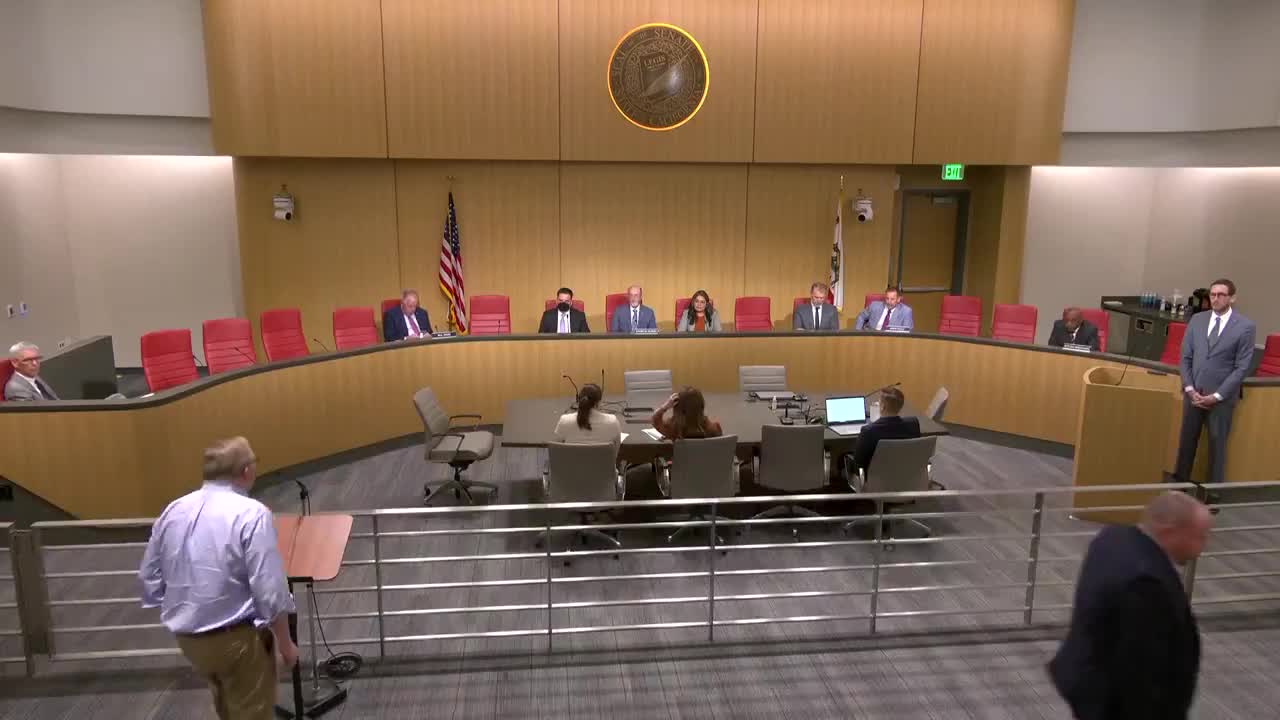 8MIN
Senate Standing Committee on Revenue and Taxation
Bill Author

Bill Co-Author(s):