SB 1036: Voluntary carbon offsets: business regulation.
- Session Year: 2023-2024
- House: Senate
- Latest Version Date: 2024-05-16
Current Status:
Failed
(2024-06-28: July 1 set for first hearing canceled at the request of author.)
Introduced
In Committee
First Chamber
In Committee
Second Chamber
Enacted
Under existing law, it is unlawful for a person to make an untruthful, deceptive, or misleading environmental marketing claim, whether explicit or implied.
Existing law requires business entities that are marketing or selling voluntary carbon offsets, as defined, within the state, and other entities engaging in specified activities relating to voluntary carbon offsets, to disclose on their internet websites certain information relating to those voluntary carbon offsets, as specified. Under existing law, a violation of those disclosure requirements is subject to a civil penalty.
This bill would make it unlawful for a person to certify or issue a voluntary carbon offset, to maintain on a registry a voluntary carbon offset, or to market, make available or offer for sale, or sell a voluntary carbon offset if the person knows or should know that the greenhouse gas reductions or greenhouse gas removal enhancements of the offset project related to the voluntary carbon offset are unlikely to be quantifiable, real, and additional.
The bill would also make it unlawful for a person to verify an offset project for the purposes of issuing a voluntary carbon offset if the person knows or should know that the greenhouse gas reductions or greenhouse gas removal enhancements of the offset project are unlikely to be quantifiable, real, and additional. The bill would make it unlawful for a person person, under certain circumstances, to market, make available or offer for sale, or sell a voluntary carbon offset if the person knows or should know that the durability of the voluntary carbon offsets greenhouse gas reductions or greenhouse gas removal enhancements is less than the atmospheric lifetime of carbon dioxide emissions, except as provided. The bill would make it unlawful for a person to market, make available or offer for sale, or sell a voluntary carbon offset if the person knows or should know that the atmospheric lifetime of the greenhouse gases associated with the voluntary carbon offsets greenhouse gas reductions or greenhouse gas removal enhancements is less than the atmospheric lifetime of carbon dioxide emissions, except as provided. without explicitly marketing the voluntary carbon offset as not being physically equivalent to the climate impact of carbon dioxide.
A violation of the bills provisions would not be a crime, but would be subject to enforcement by any available civil remedies.Under existing law, it is unlawful for a person to make an untruthful, deceptive, or misleading environmental marketing claim, whether explicit or implied.
Existing law requires business entities that are marketing or selling voluntary carbon offsets, as defined, within the state, and other entities engaging in specified activities relating to voluntary carbon offsets, to disclose on their internet websites certain information relating to those voluntary carbon offsets, as specified. Under existing law, a violation of those disclosure requirements is subject to a civil penalty.
This bill would make it unlawful for a person to certify or issue a voluntary carbon offset, to maintain on a registry a voluntary carbon offset, or to market, make available or offer for sale, or sell a voluntary carbon offset if the person knows or should know that the greenhouse gas reductions or greenhouse gas removal enhancements of the offset project related to the voluntary carbon offset are unlikely to be quantifiable, real, and additional.
The bill would also make it unlawful for a person to verify an offset project for the purposes of issuing a voluntary carbon offset if the person knows or should know that the greenhouse gas reductions or greenhouse gas removal enhancements of the offset project are unlikely to be quantifiable, real, and additional. The bill would make it unlawful for a person to market, make available or offer for sale, or sell a voluntary carbon offset if the person knows or should know that the durability of the voluntary carbon offsets greenhouse gas reductions or greenhouse gas removal enhancements is less than the atmospheric lifetime of carbon dioxide emissions, except as provided. The bill would make it unlawful for a person to market, make available or offer for sale, or sell a voluntary carbon offset if the person knows or should know that the atmospheric lifetime of the greenhouse gases associated with the voluntary carbon offsets greenhouse gas reductions or greenhouse gas removal enhancements is less than the atmospheric lifetime of carbon dioxide emissions, except as provided.
A violation of the bills provisions would not be a crime, but would be subject to enforcement by any available civil remedies.
For purposes of this article, the following definitions apply:
(a)Activity-shifting leakage means increased GHG emissions or decreased GHG removals that result from the displacement of activities or resources from inside the offset projects boundary to locations outside the offset projects boundary as a result of the offset project activity.
(b)Additional means greenhouse gas emission reductions or removals that exceed any greenhouse gas reduction or removals otherwise required by law, regulation, or legally binding mandate, and that exceed any greenhouse gas reductions or removals that would otherwise occur in a conservative business-as-usual scenario.
(c)Business-as-usual scenario means the set of conditions reasonably expected to occur within the offset project boundary in the absence of the financial incentives provided by voluntary carbon offsets, taking into account all current laws and regulations, as well as current economic and technological trends.
(d)Carbon dioxide equivalent means the number of metric tons of CO2 emissions with the same global warming potential as one metric ton of another greenhouse gas.
(e)Conservative means utilizing project baseline assumptions, emission factors, and methodologies that are more likely than not to understate net GHG reductions or GHG removal enhancements for an offset project to address uncertainties affecting the calculation or measurement of GHG reductions or GHG removal enhancements.
(f)Durability Durability commitment means the duration of time over which an offset project operator commits to maintain monitor its GHG reductions and GHG removal enhancements, as applicable, enhancements for the risk of reversal and to report any such reversals that may occur, exclusive of any aspirational outcomes periods of time that exceed or extend beyond the mandatory outcomes required of the offset project pursuant to its offset protocol.
(g)Emissions means the release of greenhouse gases into the atmosphere from sources and processes within an offset project boundary.
(h)GHG emissions source means any type of emitting activity that releases greenhouse gases into the atmosphere.
(i)GHG reduction means a calculated decrease in GHG emissions relative to a project baseline over a specified period of time.
(j)GHG removal means the calculated total mass of GHG removed from the atmosphere over a specified period of time.
(k)GHG removal enhancement means a calculated increase in GHG removals relative to a project baseline. baseline over a specified period of time.
(l)GHG reservoir means a physical unit or component of the biosphere, geosphere, or hydrosphere with the capability to store, accumulate, or release GHG removed from the atmosphere by a GHG sink or GHG captured from a GHG emission source.
(m)GHG sink means a physical unit or process that removes GHG from the atmosphere.
(n)Greenhouse gas or GHG means all of the greenhouse gases listed in subdivision (g) of Section 38505 of the Health and Safety Code.
(o)Issue means the creation of voluntary carbon offsets equivalent to the number of verified GHG reductions or GHG removal enhancements for an offset project over a specified period of time.
(p)Market-shifting leakage means increased GHG emissions or decreased GHG removals outside an offset projects boundary due to the effects of an offset project on an established market for goods or services.
(q)Offset project means all equipment, materials, items, or actions that are directly related to or have an impact on GHG reductions, project emissions, or GHG removal enhancements within the offset project boundary.
(r)Offset project boundary is defined by and includes all GHG emission sources, GHG sinks, or GHG reservoirs that are affected by an offset project and under control of the offset project operator or authorized project designee. operator. GHG emissions sources, GHG sinks, or GHG reservoirs not under control of the offset project operator are not included in the offset project boundary.
(s)Offset project operator means the entity with legal authority to implement the offset project.
(t)Offset protocol means a documented set of procedures and requirements to quantify ongoing GHG reductions or GHG removal enhancements achieved by an offset project and calculate the project baseline. Offset protocols specify relevant data collection and monitoring procedures, emission factors, and conservatively account for uncertainty and activity-shifting and market-shifting leakage risks associated with an offset project.
(u)Project baseline means, in the context of a specific offset project, a conservative estimate of business-as-usual GHG emission reductions or GHG removal enhancements for the offset projects GHG emission sources, GHG sinks, or GHG reservoirs within the offset project boundary.
(v)Project emissions means any GHG emissions associated with the implementation of an offset project.
(w)Quantifiable means the ability to accurately measure and calculate GHG reductions or GHG removal enhancements relative to a project baseline in a reliable and replicable manner for all GHG emission sources, GHG sinks, or GHG reservoirs included within the offset project boundary, while accounting for uncertainty and activity-shifting leakage and market-shifting leakage.
(x)Real means that GHG reductions or GHG enhancements result from a demonstrable action or set of actions, are quantified using appropriate, accurate, and conservative methodologies that account for all GHG emissions sources, GHG sinks, and GHG reservoirs within the offset project boundary, and account for uncertainty and the potential for activity-shifting leakage and market-shifting leakage.
(y)Reversal means a GHG reduction or GHG removal enhancement for which a voluntary carbon offset has been issued that is subsequently released or emitted back into the atmosphere, or that is later determined to have never occurred.
(y)(z)Verify means to undertake a systematic, independent, and documented process for evaluation of a potential offset project against an offset protocol.
(z)(aa)Voluntary carbon offset means a tradeable instrument that is issued to an offset project and that represents a GHG reduction or GHG removal enhancement of a specified amount of carbon dioxide equivalent. For purposes of this article, a voluntary carbon offset does not include either of the following:
(1)An offset credit issued pursuant to subdivision (c) of Section 38562 of the Health and Safety Code.
(2)A registry offset credit, as defined in Section 95802 of Title 17 of the California Code of Regulations, that is removed, retired, or canceled pursuant to Section 95981.1 of Title 17 of the California Code of Regulations, as those regulations read on January 1, 2024.
17579.1.17951.It is unlawful for a person to verify an offset project for the purposes of issuing a voluntary carbon offset if the person knows or should know that the GHG reductions or GHG removal enhancements of the offset project are unlikely to be quantifiable, real, and additional.
17579.2.17952.It is unlawful for a person to certify or issue a voluntary carbon offset if the person knows or should know that the GHG reductions or GHG removal enhancements of the offset project related to the voluntary carbon offset are unlikely to be quantifiable, real, and additional.
17579.3.17953.It is unlawful for a person to maintain on a registry a voluntary carbon offset if the person knows or should know that the GHG reductions or GHG removal enhancements of the offset project related to the voluntary carbon offset are unlikely to be quantifiable, real, and additional.
17579.4.17954.It is unlawful for a person to market, make available or offer for sale, or sell a voluntary carbon offset if the person knows or should know that the GHG reductions or GHG removal enhancements of the offset project related to the voluntary carbon offset are unlikely to be quantifiable, real, and additional.
17579.5.17955.It is unlawful for a person to market, make available or offer for sale, or sell a voluntary carbon offset if the person knows or should know that the durability of the voluntary carbon offsets GHG reductions or GHG removal enhancements is less than the atmospheric lifetime of carbon dioxide emissions, unless the person explicitly markets the voluntary carbon offset as not being physically equivalent to the climate impact of carbon dioxide emissions. without explicitly marketing the voluntary carbon offset as not being physically equivalent to the climate impact of carbon dioxide emissions, unless it is reasonably expected, based on appropriate technical evidence, that at the end of the durability commitment related to the voluntary carbon offset, the voluntary carbon offsets GHG reductions or GHG removal enhancements are subject to no more than a negligible risk of reversal over a period of at least 1,000 years, inclusive of the related durability commitment.
17579.6.17956.It is unlawful for a person to market, make available or offer for sale, or sell a voluntary carbon offset without explicitly marketing the voluntary carbon offset as not being physically equivalent to the climate impact of carbon dioxide emissions if the person knows or should know that the atmospheric lifetime of the non-carbon dioxide GHGs associated with the voluntary carbon offsets GHG reductions or GHG removal enhancements is less than the atmospheric lifetime of carbon dioxide emissions, unless the person explicitly markets the voluntary carbon offset as not being physically equivalent to the climate impact of carbon dioxide emissions. 1,000 years.
17579.7.A violation of this article shall not be a crime, notwithstanding Sections 17500 and 17534. However, all available civil remedies that are applicable to a violation of this article may be employed.For purposes of this article, the following definitions apply:
(a)Activity-shifting leakage means increased GHG emissions or decreased GHG removals that result from the displacement of activities or resources from inside the offset projects boundary to locations outside the offset projects boundary as a result of the offset project activity.
(b)Additional means greenhouse gas emission reductions or removals that exceed any greenhouse gas reduction or removals otherwise required by law, regulation, or legally binding mandate, and that exceed any greenhouse gas reductions or removals that would otherwise occur in a conservative business-as-usual scenario.
(c)Business-as-usual scenario means the set of conditions reasonably expected to occur within the offset project boundary in the absence of the financial incentives provided by voluntary carbon offsets, taking into account all current laws and regulations, as well as current economic and technological trends.
(d)Carbon dioxide equivalent means the number of metric tons of CO2 emissions with the same global warming potential as one metric ton of another greenhouse gas.
(e)Conservative means utilizing project baseline assumptions, emission factors, and methodologies that are more likely than not to understate net GHG reductions or GHG removal enhancements for an offset project to address uncertainties affecting the calculation or measurement of GHG reductions or GHG removal enhancements.
(f)Durability means the duration of time over which an offset project operator commits to maintain its GHG reductions and GHG removal enhancements, as applicable, exclusive of any aspirational outcomes that exceed or extend beyond the mandatory outcomes required of the offset project pursuant to its offset protocol.
(g)Emissions means the release of greenhouse gases into the atmosphere from sources and processes within an offset project boundary.
(h)GHG emissions source means any type of emitting activity that releases greenhouse gases into the atmosphere.
(i)GHG reduction means a calculated decrease in GHG emissions relative to a project baseline over a specified period of time.
(j)GHG removal means the calculated total mass of GHG removed from the atmosphere over a specified period of time.
(k)GHG removal enhancement means a calculated increase in GHG removals relative to a project baseline.
(l)GHG reservoir means a physical unit or component of the biosphere, geosphere, or hydrosphere with the capability to store, accumulate, or release GHG removed from the atmosphere by a GHG sink or GHG captured from a GHG emission source.
(m)GHG sink means a physical unit or process that removes GHG from the atmosphere.
(n)Greenhouse gas or GHG means all of the greenhouse gases listed in subdivision (g) of Section 38505 of the Health and Safety Code.
(o)Issue means the creation of voluntary carbon offsets equivalent to the number of verified GHG reductions or GHG removal enhancements for an offset project over a specified period of time.
(p)Market-shifting leakage means increased GHG emissions or decreased GHG removals outside an offset projects boundary due to the effects of an offset project on an established market for goods or services.
(q)Offset project means all equipment, materials, items, or actions that are directly related to or have an impact on GHG reductions, project emissions, or GHG removal enhancements within the offset project boundary.
(r)Offset project boundary is defined by and includes all GHG emission sources, GHG sinks, or GHG reservoirs that are affected by an offset project and under control of the offset project operator or authorized project designee. GHG emissions sources, GHG sinks, or GHG reservoirs not under control of the offset project operator are not included in the offset project boundary.
(s)Offset project operator means the entity with legal authority to implement the offset project.
(t)Offset protocol means a documented set of procedures and requirements to quantify ongoing GHG reductions or GHG removal enhancements achieved by an offset project and calculate the project baseline. Offset protocols specify relevant data collection and monitoring procedures, emission factors, and conservatively account for uncertainty and activity-shifting and market-shifting leakage risks associated with an offset project.
(u)Project baseline means, in the context of a specific offset project, a conservative estimate of business-as-usual GHG emission reductions or GHG removal enhancements for the offset projects GHG emission sources, GHG sinks, or GHG reservoirs within the offset project boundary.
(v)Project emissions means any GHG emissions associated with the implementation of an offset project.
(w)Quantifiable means the ability to accurately measure and calculate GHG reductions or GHG removal enhancements relative to a project baseline in a reliable and replicable manner for all GHG emission sources, GHG sinks, or GHG reservoirs included within the offset project boundary, while accounting for uncertainty and activity-shifting leakage and market-shifting leakage.
(x)Real means that GHG reductions or GHG enhancements result from a demonstrable action or set of actions, are quantified using appropriate, accurate, and conservative methodologies that account for all GHG emissions sources, GHG sinks, and GHG reservoirs within the offset project boundary, and account for uncertainty and the potential for activity-shifting leakage and market-shifting leakage.
(y)Verify means to undertake a systematic, independent, and documented process for evaluation of a potential offset project against an offset protocol.
(z)Voluntary carbon offset means a tradeable instrument that is issued to an offset project and that represents a GHG reduction or GHG removal enhancement of a specified amount of carbon dioxide equivalent.
17579.1.It is unlawful for a person to verify an offset project for the purposes of issuing a voluntary carbon offset if the person knows or should know that the GHG reductions or GHG removal enhancements of the offset project are unlikely to be quantifiable, real, and additional.
17579.2.It is unlawful for a person to certify or issue a voluntary carbon offset if the person knows or should know that the GHG reductions or GHG removal enhancements of the offset project related to the voluntary carbon offset are unlikely to be quantifiable, real, and additional.
17579.3.It is unlawful for a person to maintain on a registry a voluntary carbon offset if the person knows or should know that the GHG reductions or GHG removal enhancements of the offset project related to the voluntary carbon offset are unlikely to be quantifiable, real, and additional.
17579.4.It is unlawful for a person to market, make available or offer for sale, or sell a voluntary carbon offset if the person knows or should know that the GHG reductions or GHG removal enhancements of the offset project related to the voluntary carbon offset are unlikely to be quantifiable, real, and additional.
17579.5.It is unlawful for a person to market, make available or offer for sale, or sell a voluntary carbon offset if the person knows or should know that the durability of the voluntary carbon offsets GHG reductions or GHG removal enhancements is less than the atmospheric lifetime of carbon dioxide emissions, unless the person explicitly markets the voluntary carbon offset as not being physically equivalent to the climate impact of carbon dioxide emissions.
17579.6.It is unlawful for a person to market, make available or offer for sale, or sell a voluntary carbon offset if the person knows or should know that the atmospheric lifetime of the GHGs associated with the voluntary carbon offsets GHG reductions or GHG removal enhancements is less than the atmospheric lifetime of carbon dioxide emissions, unless the person explicitly markets the voluntary carbon offset as not being physically equivalent to the climate impact of carbon dioxide emissions.
17579.7.A violation of this article shall not be a crime, notwithstanding Sections 17500 and 17534. However, all available civil remedies that are applicable to a violation of this article may be employed.
|
Date
|
Status
|
|---|---|
| Jun 28, 2024 | July 1 set for first hearing canceled at the request of author. |
| Jun 3, 2024 | Referred to Com. on NAT. RES. |
| May 22, 2024 | In Assembly. Read first time. Held at Desk. |
| May 21, 2024 | Read third time. Passed. (Ayes 31. Noes 5. Page 4106.) Ordered to the Assembly. |
| May 20, 2024 | Read second time. Ordered to third reading. |
| May 16, 2024 | Read second time and amended. Ordered to second reading. |
| May 16, 2024 | From committee: Do pass as amended. (Ayes 5. Noes 2. Page 3969.) (May 16). |
| May 10, 2024 | Set for hearing May 16. |
| Apr 22, 2024 | April 22 hearing: Placed on APPR suspense file. |
| Apr 12, 2024 | Set for hearing April 22. |
| Apr 10, 2024 | From committee: Do pass and re-refer to Com. on APPR. (Ayes 9. Noes 1. Page 3530.) (April 9). Re-referred to Com. on APPR. |
| Mar 28, 2024 | Set for hearing April 9. |
| Mar 20, 2024 | From committee: Do pass and re-refer to Com. on JUD. (Ayes 5. Noes 0. Page 3378.) (March 20). Re-referred to Com. on JUD. |
| Mar 5, 2024 | Set for hearing March 20. |
| Feb 14, 2024 | Referred to Coms. on E.Q. and JUD. |
| Feb 7, 2024 | From printer. May be acted upon on or after March 8. |
| Feb 6, 2024 | Introduced. Read first time. To Com. on RLS. for assignment. To print. |
|
Date
|
Description
|
Location
|
Votes
|
|
|---|---|---|---|---|
| May 21, 2024 | Senate 3rd Reading SB1036 Limón | Senate Floor |
Passed |
|
| May 16, 2024 | Do pass as amended | Senate Standing Committee on Appropriations |
Passed |
|
| Apr 22, 2024 | Placed on suspense file | Senate Standing Committee on Appropriations |
Passed |
|
| Apr 9, 2024 | Do pass, but first be re-referred to the Committee on [Appropriations] | Senate Standing Committee on Judiciary |
Passed |
|
| Mar 20, 2024 | Do pass, but first be re-referred to the Committee on [Judiciary] | Senate Standing Committee on Environmental Quality |
Passed |
This list shows positions taken on this bill by organizations on the date displayed, which is linked to the original source.
Positions by individuals are not included.
|
Organization
|
Position
|
Date
|
|---|---|---|
| 3degrees INC. | ** Against | |
| ACR | ** Against | |
| A-gas | ** Against | |
| Anew Climate LLC | ** Against | |
| Arcmor Limited | ** Against | |
| Bezero Carbon | ** Against | |
| California Bankers Association | ** Against | |
| California Chamber Of Commerce | ** Against | |
| California Environmental Voters | ** Support | |
| California Food Producers | ** Against | |
| California Forest Carbon Coalition | ** Against | |
| California Independent Petroleum Association | ** Against | |
| California Manufacturers & Technology Association | ** Against | |
| Capricorn Investment Group | ** Against | |
| Carbon Streaming Corporation | ** Against | |
| Civil Justice Association Of California | ** Against | |
| cleanearth4kids.org | ** Support | |
| Climate Action Reserve | ** Against | |
| Climate Impact Partners | ** Against | |
| Climeco LLC | ** Against | |
| Consumer Watchdog | ** Support | |
| Cool Effect INC. | ** Against | |
| Defenders Of Wildlife | ** Support | |
| Ecolife Conservation | ** Against | |
| Emergent | ** Against | |
| Evolution Markets Inc. | ** Against | |
| Finite Carbon | ** Against | |
| Flowcarbon | ** Against | |
| Greenlining Institute; The | ** Support | |
| Ieta | ** Against | |
| Imperative Global Services, INC. | ** Against | |
| Independent Energy Producers Association | ** Against | |
| Institute for Agriculture and Trade Policy | ** Support | |
| NextGen California | ** Support | |
| Pacific Forest Trust | ** Support | |
| Pollination Capital Partners LLC | ** Against | |
| Resilient LLP | ** Against | |
| Respira International LTD | ** Against | |
| Rubicon Carbon | ** Against | |
| SanDiego350 | ** Support | |
| Securities Industry And Financial Markets Association | ** Against | |
| S&P Global Commodity Insights | ** Against | |
| Terra Global Capital LLC | ** Against | |
| The Climate Center | ** Support | |
| The Climate Trust | ** Against | |
| We Mean Business Coalition | ** Against | |
| Western States Petroleum Association | ** Against | |
| Xpansiv Ltd. | ** Against | |
| Yurok Tribe | ** Against |
SENATE RULES COMMITTEE Office of Senate Floor Analyses (916) 651-1520 Fax: (916) 327-4478 | SB 1036 |
THIRD READING
Bill No: SB 1036
Author: Limón (D)
Introduced: 5/16/24
Vote: 21
SENATE ENVIRONMENTAL QUALITY COMMITTEE: 5-0, 3/20/24
AYES: Allen, Gonzalez, Hurtado, Menjivar, Skinner
NO VOTE RECORDED: Dahle, Nguyen
SENATE JUDICIARY COMMITTEE: 9-1, 4/9/24
AYES: Umberg, Allen, Ashby, Caballero, Durazo, Laird, Min, Stern, Wahab
NOES: Wilk
NO VOTE RECORDED: Niello
SENATE APPROPRIATIONS COMMITTEE: 5-2, 5/16/24
AYES: Caballero, Ashby, Becker, Bradford, Wahab
NOES: Jones, Seyarto
SUBJECT: Voluntary carbon offsets: business regulation
SOURCE: Author
DIGEST:
This bill adds certain claims about voluntary carbon offsets (VCOs) to the False Advertising Law, related to VCOs that are known or should be known to not be quantifiable, real, and additional, as defined.
ANALYSIS:
Existing law:
- Establishes the Unfair Competition Law and therein defines “unfair competition” to mean and include any unlawful, unfair or fraudulent business act or practice and unfair, deceptive, untrue, or misleading advertising and any act prohibited by Chapter 1 (commencing with Section 17500) of Part 3 of Division 7 of the Business and Professions Code (False Advertising Law). (Bus. & Prof. Code (BPC) § 17200 et seq.)
- Stipulates that the False Advertising Law applies to entities who make certain statements that they know, or who by the exercise of reasonable care should know, to be untrue or misleading. (BPC § 17500)
- States that anyone who violates the False Advertising Law is guilty of a misdemeanor. (BPC § 17534)
- Defines terms related to the cap-and-trade program, including California Air Resource Board’s (CARB’s) Compliance Offsets Program. (Title 17 CCR, Section 95802)
This bill:
- Defines twenty-seven terms pertaining to carbon offsets, generally but not entirely in line with existing definitions for compliance offset protocols.
- Exempts certain specific offset credits that relate to California’s compliance offset protocol from the provisions of the bill.
- Declares the following activities unlawful for a person to do if the person knows or should know that the greenhouse gas (GHG) reductions or GHG removal enhancements of the VCO are unlikely to be quantifiable, real, and additional:
- Verifies a VCO project;
- Certifies or issue a VCO;
- Maintains a VCO on a registry; or
- Markets, offers for sale, or sells a VCO.
- Declares it to be unlawful for a person to market, offer for sale, or sell a VCO—without explicitly marketing the VCO as not being physically equivalent to the climate impact of carbon dioxide emissions—if either:
- It is reasonably expected, based on appropriate technical evidence, that the durability commitment related to the VCO is subject to no more than a negligible risk of reversal of at least 1,000 years; or
- The person knows or should know that either: the atmospheric lifetime of the VCO’s non-CO2 GHG reductions (or removal enhancements) are less than 1,000 years.
Background
- What is a carbon offset? In its simplest terms, a carbon offset is when one entity who is attempting to reduce their emissions instead pays another entity to reduce or remove an equivalent amount of emissions, rather than actually reduce their emissions themselves. The devil, of course, is in the details. Who is reducing their emissions instead? What emissions are they reducing, avoiding, or removing? Would they have reduced those emissions if they had not been paid through the offset arrangement? Are the offset emissions directly equivalent to the original emissions, or is their equivalence depending on subjective accounting assumptions? These questions and more have swirled around offsets for as long as they have been in use.
Despite these concerns, carbon offsets are widely used by individuals, corporations, and governments to mitigate their GHG emissions on the assumption that offsets reflect equivalent climate benefits achieved elsewhere. - Voluntary offsets versus compliance offsets. In California, many of the state’s largest polluters are subject to the state’s cap-and-trade program. Offsets purchased to comply with cap-and-trade are “compliance offsets”; their use is to comply with mandatory legal obligations.
In contrast, voluntary carbon markets are not established by governments and participation is voluntary. These markets allow companies, governments, and other organizations to offset their carbon emissions on a voluntary basis, either to meet their own sustainability goals or to demonstrate their commitment to reducing their carbon footprint. The voluntary carbon market is currently smaller than the compliance market, but it is expected to grow as more governments and businesses seek to increase their climate ambitions while minimizing associated costs.
This bill exclusively pertains to voluntary carbon markets. It makes no changes to the ability of cap-and-trade covered entities to use compliance offsets to comply with their cap-and-trade compliance obligations. - Junk offsets. Not all offsets are created equal. The lack of regulation and oversight of VCO markets in particular results in offsets being issued and sold that are highly unlikely to generate the carbon benefits that they claim to represent, which can be referred to as “junk offsets.” Junk offsets inflict harm in two primary ways. First, buyers of offsets who sincerely believe that purchasing an offset will finance projects that generate carbon benefits are defrauded when they are sold a junk offset that fails to deliver such benefits. Second, corporate buyers of junk offsets may greenwash their activities (intentionally or unintentionally) if they use the offsets in their accounting of the corporation’s carbon footprint, which may result in claims to customers, employees, and investors that are inaccurate.
- The Federal Trade Commission’s (FTC’s) Green Guides. The Green Guides are designed to help marketers avoid making environmental claims that mislead consumers. The FTC’s most recent update of the Guides includes, among other things, guidance on marketers’ claims about carbon offsets.
Comments
- Purpose of the Bill. According to the author, “Junk carbon offsets undermine our climate goals, defraud purchasers of offsets, and contribute to the greenwashing of corporate operations. These voluntary offsets are purchased by consumers and businesses to counterbalance their carbon footprints. Unfortunately, some offsets are created by projects that fail to provide quantifiable and additional carbon benefits, which completely undermines their purported purpose. While California has a regulatory framework for compliance offsets as part of our cap-and-trade program, there are no state or federal laws that provide clarity or establish standards for voluntary carbon offsets. This bill establishes baseline standards that participants in voluntary carbon offset markets must meet in order to offer their products for sale in our state. If a California consumer or business purchases a carbon offset, that offset must represent the real carbon benefits claimed by the issuer or seller of the offset.”
- Second attempt after unexpected veto. Last year (2023), Senator Monique Limon authored SB 390 (2023), which was identical to this bill as introduced. The bill received no ‘no’ votes, modest bipartisan support, and—between the four policy committees and two fiscal committees the bill was heard in—not a single letter of opposition was received. Nevertheless, the bill was vetoed by Governor Newsom. Letters of support were received from EnviroVoters, The Climate Center, the City Attorney of San Francisco, and twenty-three academics with expertise in the area of carbon offsets. The author has, understandably, reintroduced the measure in exactly the form that garnered its broad-based support last year, despite the veto.
As part of the veto message for SB 390, Governor Newsom wrote,
“I support the author's intent to bring greater transparency to the verification, issuance, and sale of voluntary carbon offsets, and to address the problem of so-called ‘junk offsets.’ However, by imposing civil liability for even unintentional mistakes about offset quality, this bill could inadvertently capture well- intentioned sellers and verifiers of voluntary offsets, and risks creating significant turmoil in the market for carbon offsets, potentially even beyond California.” [Emphasis added]
It is notable that the Governor took issue with the nature of the civil liability created by SB 390. However, the bill did not create a new standard of conduct; it largely brought entities in the voluntary carbon market under the aegis of the False Advertising Act. Requiring that an entity, “knows or should know” the nature of the products and services it provides is already a requirement for other products under the False Advertising Law (“…which is known, or which by the exercise of reasonable care should be known, to be untrue or misleading…” (BPC § 17500). The question then is why would, “…imposing civil liability for even unintentional mistakes…” be an acceptable standard to hold other products to, but not VCOs? If, say, a well-intentioned vitamin manufacturer made unintentional-yet-misleading mistakes in describing the benefits of their product, they could be liable under the False Advertising Law, and rightfully so.
Regardless of sellers’ intentions, Californians are protected from false, deceptive, or misleading advertising all the same. In a time where consumers increasingly value companies who proactively manage their environmental impacts, papering over legitimate concerns with dirt-cheap junk offsets represents a considerable unfair advantage over companies doing the hard work of bona fide emissions reductions.
The Governor’s veto message concluded, “I encourage the author to consider an alternative approach to ensuring voluntary carbon offset quality that avoids these unintended consequences.” The author has chosen not to pursue an alternative approach, largely for the reasons stated above. However, this bill has garnered significantly more attention than SB 390, which is reflected in the opposition to the bill and the amendments taken to address certain concerns.
- Voluntary offsets: more beset by issues AND more lucrative. Since SB 390 passed through this Legislature last year, there have been a number of developments regarding the VCO market. A nine-month investigation by the Guardian and others into the VCO market verifying company Verra estimated that more than 90% of their rainforest offset credits were unlikely to represent genuine carbon reductions. Another investigation looked into the top 50 emission offset projects globally, and found that 78% of them were categorized as “likely junk.” A consultant who helped start the offset industry, Mike Korchinsky, has since announced he is attempting to regain buyers’ trust by helping start a new standard that eliminates the equivalency between the offset project and the companies’ emissions altogether.
Nonetheless, recent years have included the voluntary market’s biggest ever, with around $2 billion in annual transactions and some predictions that carbon-credit sales could grow to more than $150 billion annually as more entities commit to reducing emissions and fulfil that commitment through VCOs.
Perhaps most germane to this bill, a class action lawsuit has been brought against Delta Airlines alleging the airline is “grossly misrepresenting the total environmental impact of its business operation in its advertisements, corporate announcements, and promotional materials, thereby attaining undeserved market share and extracting higher prices from consumers.” One of the causes of action for this lawsuit is the False Advertising Law. While this suit has not yet been resolved, it seems that despite the law not explicitly including VCOs in the way this bill proposes to do, some believe truth in advertising should apply to the VCO market already. - Addressing some concerns. Unlike SB 390 last year, numerous stakeholders have expressed concerns with this bill. Also unlike that bill, the author has amended the bill to address some—but not all—of those issues. These merit brief discussion here.
Amendments taken in the Senate Appropriations Committee change the concept around disclosing VCOs that have a shorter duration than the atmospheric lifetime of CO2. Some groups in opposition were concerned that the atmospheric lifetime of CO2 was a complicated and undefined term. In response, the author has amended the bill to apply to a 1,000-year duration. This is unambiguous and in line with best practices developed in the carbon dioxide removal space, such as by companies funded by Frontier Climate.
Even with the change to the atmospheric lifetime language, it is likely that many entities engaged in the VCO market will remain uncomfortable with SB 1036. Nevertheless, this bill proposes a seemingly reasonable approach to solving the junk offset problem in California and clarifying how the FAL should best be appled to this industry.
FISCAL EFFECT: Appropriation: No Fiscal Com.: No Local: No
According to the Senate Appropriations Committee:
- This bill would require VCOs that are not physically equivalent to the climate impact of carbon dioxide emissions, as specified, to be explicitly marketed as such. As a result, the use of some strategies such as nature based solutions might not be eligible for credits without the explicit marketing. To the extent an absence of explicit marketing results in nature based solutions being ineligible for voluntary offset credits, there is a potential for some ongoing costs (Cost of Implementation Account) for CARB to evaluate the implications on state sequestration targets. However, staff note that a simple disclosure of GHG reduction durability when VCOs are marketed or sold would meet the requirement in this bill and therefore do not expect a significant impact on the use of nature based solutions or state sequestration targets. As such, these costs are likely to be minor.
- The Department of Justice (DOJ) estimates unknown but potentially significant ongoing costs (General Fund) for the Attorney General to bring enforcement action against anyone in violation of this bill’s provisions.
SUPPORT: (Verified 5/16/24)
California Environmental Voters (formerly Clcv)
Cleanearth4kids.org
Consumer Watchdog
Greenlining Institute; the
Institute for Agriculture and Trade Policy
Nextgen California
Pacific Forest Trust
OPPOSITION: (Verified 5/16/24)
3degrees INC.
A-gas
ACR
Anew Climate LLC
Arcmor Limited
Bezero Carbon
California Bankers Association
California Chamber of Commerce
California Food Producers
California Forest Carbon Coalition
California Independent Petroleum Association
California Manufacturers & Technology Association
Capricorn Investment Group
Carbon Streaming Corporation
Civil Justice Association of California
Climate Action Reserve
Climate Impact Partners
Climeco LLC
Cool Effect INC.
Ecolife Conservation
Emergent
Evolution Markets INC.
Finite Carbon
Flowcarbon
Ieta
Imperative Global Services, INC.
Independent Energy Producers Association
Pollination Capital Partners LLC
Respira International LTD
Rubicon Carbon
Securities Industry and Financial Markets Association
Terra Global Capital LLC
The Climate Trust
Western States Petroleum Association
Xpansiv Ltd.
Yurok Tribe
5 individuals
ARGUMENTS IN SUPPORT: According to EnviroVoters, “SB 1036 brings legal standards into the markets for VCOs, which will incentivize market actors to conduct appropriate due diligence related to the claimed carbon benefits of VCOs that they issue and sell. Currently, VCOs operate outside of any legal frameworks or constructs that reflect the structure of carbon offset markets and the risks associated with junk offsets.
“This bill borrows and adapts definitions related to carbon offsets from CARB’s regulations that apply to compliance offsets under California’s cap-and-trade program. Leveraging those definitions, this bill establishes unlawful business practices related to VCOs by outlawing the issuance or sale of a VCO by a person who knows or should know that the project underlying the VCO is unlikely to deliver carbon benefits that are quantifiable, real, additional, durable, and that account.”
ARGUMENTS IN OPPOSITION: According to ACR, one of the three main VCO registries, “SB 1036 will have serious negative implications for market stakeholders' willingness to support climate action and verified mitigation outcomes through carbon markets for fear of lawsuits under rules that are subjective and difficult to enforce or prove on matters that lack scientific and policy consensus. The policy precedent California sets, particularly on climate change mitigation through markets, has far reaching effects both through extra-territorial impacts and policy replication and can either positively or negatively impact a range of other policy making efforts currently underway, including interagency work at the Federal level as well as international cooperation under Article 6 of the Paris Agreement.”
ACR’s mission is to create confidence in the integrity of carbon markets to catalyze transformational climate results. This bill, despite its intentions, will not contribute to that effort. We respectfully OPPOSE SB 1036 for this and the above reasons. We would welcome further engagement with the author’s office to discuss what we believe is our mutual goal of facilitating voluntary climate action through high-integrity and transparent environmental markets.”
Prepared by: Eric Walters / E.Q. / (916) 651-4108
5/20/24 18:52:24
**** END ****
SENATE COMMITTEE ON
Senator Anna Caballero, Chair
2023 - 2024 Regular Session
SB 1036 (Limón) - Voluntary carbon offsets: business regulation
Version: | Policy Vote: |
Urgency: | Mandate: |
Hearing Date: | Consultant: |
Bill Summary:
This bill would add certain claims about voluntary carbon offsets (VCOs) to the False Advertising Law, related to VCOs that are known or should be known to not be quantifiable, real, and additional, as defined.
*********** ANALYSIS ADDENDUM – SUSPENSE FILE ***********
The following information is revised to reflect amendments
adopted by the committee on May 16, 2024
Fiscal Impact:
- This bill would require VCOs that are not physically equivalent to the climate impact of carbon dioxide emissions, as specified, to be explicitly marketed as such. As a result, the use of some strategies such as nature based solutions might not be eligible for credits without the explicit marketing. To the extent an absence of explicit marketing results in nature based solutions being ineligible for voluntary offset credits, there is a potential for some ongoing costs (Cost of Implementation Account) for ARB to evaluate the implications on state sequestration targets. However, staff note that a simple disclosure of GHG reduction durability when VCOs are marketed or sold would meet the requirement in this bill and therefore do not expect a significant impact on the use of nature based solutions or state sequestration targets. As such, these costs are likely to be minor.
- The Department of Justice (DOJ) estimates unknown but potentially significant ongoing costs (General Fund) for the Attorney General to bring enforcement action against anyone in violation of this bill’s provisions.
Author Amendments:
These amendments would refine terms, exempt VCOs used in California's compliance market, and allow greater flexibility for required disclosures. Specifically, they would:
- Strike the term “durability” and instead define “durability commitment” to mean the duration of time over which an offset project operator commits to maintain monitor its GHG reductions and GHG removal enhancements for the risk of reversal and to report any such reversals that may occur, exclusive of any aspirational periods of time that exceed or extend beyond the mandatory outcomes required of the offset project pursuant to its offset protocol.
- Strike “authorized project designee.”
- Define “reversal” as a GHG reduction or GHG removal enhancement for which a voluntary carbon offset has been issued that is subsequently released or emitted back into the atmosphere, or that is later determined to have never occurred.
- Clarify that a “voluntary carbon offset” does not include either of the following:
- An offset credit issued pursuant to subdivision (c) of Section 38562 of the Health and Safety Code.
- A registry offset credit, as defined in Section 95802 of Title 17 of the California Code of Regulations, that is removed, retired, or canceled pursuant to Section 95981.1 of Title 17 of the California Code of Regulations, as those regulations read on January 1, 2024.
-- END --
SENATE COMMITTEE ON APPROPRIATIONS
Senator Anna Caballero, Chair
2023 - 2024 Regular Session
SB 1036 (Limón) - Voluntary carbon offsets: business regulation
Version: February 6, 2024 | Policy Vote: E.Q. 5 - 0, JUD. 9 - 1 |
Urgency: No | Mandate: No |
Hearing Date: April 22, 2024 | Consultant: Ashley Ames |
Bill Summary:
This bill would add certain claims about voluntary carbon offsets (VCOs) to the False Advertising Law, related to VCOs that are known or should be known to not be quantifiable, real, and additional, as defined.
Fiscal Impact:
- The California Air Resources Board (ARB) identified two potential costs that could result from this bill:
- To the extent that this bill reduces the number of voluntary offset credits that are converted into ARB early-action offset credits, ARB estimates ongoing costs of roughly $1 million annually (Cost of Implementation Account [COIA]) for 5 positions to evaluate (1) impacts for the purpose of cap-and-trade cost-containment, and (2) differing methodologies to determine atmospheric durability and/or permanence, including the “atmospheric lifetime” used in this bill.
- This bill would require VCOs that are not physically equivalent to the climate impact of carbon dioxide emissions, as specified, to be explicitly marketed as such. As a result, the use of some strategies such as nature based solutions might not be eligible for credits without the explicit marketing. To the extent an absence of explicit marketing results in nature based solutions being ineligible for voluntary offset credits, ARB estimates ongoing costs of up to $700,000 annually (COIA) for 3 positions to evaluate the implications on state sequestration targets as well as to revise the 2022 Scoping Plan to reflect less nature-based action. Staff note that a simple disclosure of GHG reduction durability when VCOs are marketed or sold would meet the requirement in this bill and continue to allow for nature based solutions.
- The Department of Justice (DOJ) estimates unknown but potentially significant ongoing costs (General Fund) for the Attorney General to bring enforcement action against anyone in violation of this bill’s provisions.
Background:
In its simplest terms, a carbon offset is when one entity who is attempting to reduce their emissions instead pays another entity to reduce or remove an equivalent amount of emissions, rather than actually reduce their emissions themselves.
In California, many of the state’s largest polluters are subject to the state’s cap-and-trade program. Cap-and-trade requires covered entities to either reduce their emissions or otherwise surrender compliance instruments to cover those emissions. The two available compliance instruments are allowances (which originate from the state providing a set amount each year) and offsets (which originate from entities outside of cap-and-trade offering to reduce or avoid equivalent volumes of emissions). Offsets purchased to comply with cap-and-trade are “compliance offsets”; their use is to comply with mandatory legal obligations.
In contrast, voluntary carbon markets are not established by governments and participation is voluntary. These markets allow companies, governments, and other organizations to offset their carbon emissions on a voluntary basis, either to meet their own sustainability goals or to demonstrate their commitment to reducing their carbon footprint. The voluntary carbon market is currently smaller than the compliance market, but it is expected to grow as more governments and businesses seek to increase their climate ambitions while minimizing associated costs.
The lack of regulation and oversight of VCO markets in particular results in offsets being issued and sold that are highly unlikely to generate the carbon benefits that they claim to represent, which can be referred to as “junk offsets.” Junk offsets inflict harm in two primary ways. First, buyers of offsets who sincerely believe that purchasing an offset will finance projects that generate carbon benefits are defrauded when they are sold a junk offset that fails to deliver such benefits. Second, corporate buyers of junk offsets may greenwash their activities (intentionally or unintentionally) if they use the offsets in their accounting of the corporation’s carbon footprint, which may result in claims to customers, employees, and investors that are inaccurate.
This bill is identical to last year’s SB 390 (Limon), which bypassed a hearing in this committee pursuant to Senate Rule 28.8. Under the provisions of Senate Rule 28.8, if the Chair determines that any state costs of a bill are not significant, the measure is sent directly to the Senate Floor for Second Reading without a hearing in the Appropriations Committee. SB 390 was subsequently vetoed by Governor Newsom. The veto message read, in part:
“I support the author's intent to bring greater transparency to the verification, issuance, and sale of voluntary carbon offsets, and to address the problem of so-called ‘junk offsets.’ However, by imposing civil liability for even unintentional mistakes about offset quality, this bill could inadvertently capture well- intentioned sellers and verifiers of voluntary offsets, and risks creating significant turmoil in the market for carbon offsets, potentially even beyond California.”
Proposed Law:
This bill would add certain claims related to VCOs that are known or should be known to not be quantifiable, real, and additional, to the False Advertising Law. Specifically, this bill would:
- Define 26 terms pertaining to carbon offsets, generally in line with existing definitions for compliance offset protocols.
- Declare the following activities unlawful for a person to do if the person knows or should know that the Green House Gas (GHG) reductions or GHG removal enhancements of the VCO are unlikely to be quantifiable, real, and additional:
- Verify a VCO project;
- Certify or issue a VCO;
- Maintain a VCO on a registry; or
- Market, offer for sale, or sell a VCO.
- Declare it to be unlawful for a person to market, offer for sale, or sell a VCO—without explicitly marketing the VCO as not being physically equivalent to the climate impact of carbon dioxide emissions—if the person knows or should know either:
- That the durability of the VCO’s GHG reductions (or removal enhancements) are less than the atmospheric lifetime of carbon dioxide; or
- That the atmospheric lifetime of the GHGs associated with the VCO is less than the atmospheric lifetime of carbon dioxide emissions.
Related Legislation:
SB 390 (Limon, 2023) was identical to this bill. It was vetoed by Governor Newsom.
AB 1305 (Gabriel, Chapter 365, Statutes of 2023) requires a business entity that is selling VCOs to disclose specified information about the applicable carbon offset project and details regarding accountability if a project is not completed or does not meet the projected emission reductions or removal benefits.
SB 343 (Allen, Chapter 507, Statutes of 2022) tightened the requirements around the permissible use of the “chasing arrows” recycling symbol, including but not limited to amending the False Advertising Law to define “environmental marketing claims.”
-- END --
Senator Thomas Umberg, Chair
2023-2024 Regular Session
Bill No: SB 1036 (Author:Limón)
Version: February 6, 2024
Hearing Date: April 9, 2024
Fiscal: Yes
Urgency: No
Consultant: CK
SUBJECT
Voluntary carbon offsets: business regulation
DIGEST
This bill makes it unlawful to engage in certain conduct related to voluntary carbon offsets.
EXECUTIVE SUMMARY
Carbon offsetting is an activity that compensates for, or balances out, greenhouse gas emissions generated by an organization through its activities and operations. Essentially, an entity that wants to mitigate its greenhouse gas emissions can pay another entity or person to eliminate, reduce, or refrain from greenhouse gas emissions, offsetting the first party’s emissions.
Verifying that these emissions are actually being offset is core to voluntary carbon offsets. Unlike the state’s cap and trade program, the voluntary carbon offset market is largely unregulated. This has driven concerns that there is rampant fraud in the industry and that many of these offsets are essentially worthless.
Identical to SB 390 (Limón, 2023), which passed out of this Committee last year, this bill seeks to use existing deceptive practices law to explicitly outlaw fraudulent claims and other misconduct in this industry and subject it to the civil enforcement mechanisms that already exist. The bill also painstakingly defines key terms related to voluntary offset markets. The ultimate aim of the bill is to incentivize greater self-regulation within the offsets markets and improve the overall quality of offsets being offered to Californians. This bill is author sponsored. It is supported by NextGen California and various environmental advocacy organizations. It is opposed by a variety of industry members, including Capricorn Investment Group. The bill passed the Senate Environmental Quality Committee on a 5 to 0 vote.
PROPOSED CHANGES TO THE LAW
Existing law:
- Establishes the Unfair Competition Law (UCL), which provides a statutory cause of action for any unlawful, unfair, or fraudulent business act or practice and unfair, deceptive, untrue, or misleading advertising, including over the internet. (Bus. & Prof. Code § 17200 et seq.)
- Defines unfair competition for purposes of the UCL to mean and include any unlawful, unfair or fraudulent business act or practice and unfair, deceptive, untrue or misleading advertising and any act prohibited by Chapter 1 (commencing with Section 17500) of Part 3 of Division 7 of the Business and Professions Code. (Bus. & Prof. Code § 17200.)
- Establishes the False Advertising Law (FAL), which proscribes making or disseminating any statement that is known or should be known to be untrue or misleading with intent to directly or indirectly dispose of real or personal property. (Bus. & Prof. Code § 17500 et seq.)
- Provides remedies for individuals who have suffered damages as a result of fraud or deceit, including situations involving fraudulent misrepresentations. (See Civil Code §§ 1709-1710, 1572-1573.)
- Makes it unlawful for a person to make an untruthful, deceptive, or misleading environmental marketing claim, whether explicit or implied. (Bus. & Prof. Code § 17580.5.)
- Defines “greenhouse gas” to include the following gases: carbon dioxide, methane, nitrous oxide, hydrofluorocarbons, perfluorocarbons, sulfur hexafluoride, and nitrogen triflouride. (Health & Saf. Code § 38505.)
- Defines terms related to the cap-and-trade program, including the California Air Resources Board’s (CARB) Compliance Offsets Program. (Title 17 CCR, Section 95802)
This bill:
- Makes it unlawful for a person to do the following:
- verify an offset project for the purposes of issuing a voluntary carbon offset if the person knows or should know that the greenhouse gas (GHG) reductions or GHG removal enhancements of the offset project are unlikely to be quantifiable, real, and additional;
- certify or issue a voluntary carbon offset if the person knows or should know that the GHG reductions or GHG removal enhancements of the offset project related to the voluntary carbon offset are unlikely to be quantifiable, real, and additional;
- maintain on a registry a voluntary carbon offset if the person knows or should know that the GHG reductions or GHG removal enhancements of the offset project related to the voluntary carbon offset are unlikely to be quantifiable, real, and additional;
- market, make available or offer for sale, or sell a voluntary carbon offset if the person knows or should know that the GHG reductions or GHG removal enhancements of the offset project related to the voluntary carbon offset are unlikely to be quantifiable, real, and additional;
- market, make available or offer for sale, or sell a voluntary carbon offset if the person knows or should know that the durability of the voluntary carbon offset’s GHG reductions or GHG removal enhancements is less than the atmospheric lifetime of carbon dioxide emissions, unless the person explicitly markets the voluntary carbon offset as not being physically equivalent to the climate impact of carbon dioxide emissions; or
- market, make available or offer for sale, or sell a voluntary carbon offset if the person knows or should know that the atmospheric lifetime of the GHGs associated with the voluntary carbon offset’s GHG reductions or GHG removal enhancements is less than the atmospheric lifetime of carbon dioxide emissions, unless the person explicitly markets the voluntary carbon offset as not being physically equivalent to the climate impact of carbon dioxide emissions.
- Specifies that violations are not a crime but are subject to all available civil remedies applicable to a violation of the article in which it is found within the Business and Professions Code.
- Defines the relevant terms.
COMMENTS
- California’s consumer protection laws
The Legislature has long considered consumer protection to be a matter of high importance. State law is replete with statutes aimed at protecting California consumers from unfair, dishonest, or harmful market practices. These consumer-protection laws authorize consumers to enforce their own rights and seek remedies to make them whole.
The UCL (Bus. & Prof. Code § 17200) provides remedies for “anything that can properly be called a business practice and that at the same time is forbidden by law.” (Cel-Tech Communications, Inc. v. Los Angeles Cellular Telephone Co. (1999) 20 Cal.4th 163, 180 [citations omitted].) The UCL provides that a court “may make such orders or judgments . . . as may be necessary to restore to any person in interest any money or property, real or personal, which may have been acquired by means of such unfair competition.” (Bus. & Prof. Code § 17203; see also Korea Supply Co. v. Lockheed Martin Corp. (2003) 29 Cal.4th 1134, 1146 [“An order for restitution, then, is authorized by the clear language of the [UCL.”]].) The law also permits courts to award injunctive relief and, in certain cases, to assess civil penalties against the violator. (Bus. & Prof. Code §§ 17203, 17206.)
The False Advertising Law (FAL) proscribes making or disseminating any statement that is known or should be known to be untrue or misleading with intent to directly or indirectly dispose of real or personal property. (Bus. & Prof. Code § 17500 et seq.) Violators are subject to a civil penalty not to exceed $2,500 for each violation in an action brought by the Attorney General or by any district attorney, county counsel, or city attorney. (Bus. & Prof. Code § 17536.) Similar to the UCL, the FAL provides that a person may bring an action for an injunction or restitution if the person has suffered injury in fact and has lost money or property as a result of a violation of the FAL. (Bus. & Prof. Code § 17535.)
- Cleaning up the voluntary carbon offset market
Carbon offsets operate where a certain entity absolutely must emit carbon dioxide and so provides for the same amount of the greenhouse gas to be removed from the atmosphere by other means to compensate. Offsets were historically centered on the planting or protection of trees, which absorb carbon dioxide, however, the term has since been applied to a variety of environmental efforts globally:
The vast majority of offsets available fall into a category called “avoided emissions.” These are projects that either protect forests, provide people with alternatives to using fossil fuels, or avert emissions from waste. If done right, such projects can reduce the volume of greenhouse gases being added to the atmosphere while providing other benefits to local communities and promoting biodiversity. Beyond planting or protecting trees, offsets can also be generated by preventing the release of greenhouse gases other than CO2, like methane or nitrous oxide. Typically, more expensive offsets involve removing carbon dioxide that’s already in the atmosphere and storing it away. That may involve projects like growing a forest or installing machines that vacuum carbon dioxide out of the air. Just 4% of off sets actually remove CO2 from the atmosphere. . . .[1]
The voluntary carbon offsets targeted by this bill are distinct from carbon offsets involved in the state’s cap-and-trade program. Under the cap-and-trade program, industry polluters are legally required to either reduce their emissions by specified amounts over time, or otherwise surrender compliance instruments to cover those emissions. The two available compliance instruments are allowances (which originate from the state providing a set amount each year) and offsets (which originate from entities outside of cap-and-trade offering to reduce or avoid equivalent volumes of emissions). Offsets purchased to comply with cap-and-trade are “compliance offsets”; their use is to comply with mandatory legal obligations.
Voluntary carbon markets are just that, voluntary. Voluntary carbon offsets allow companies, governments, and other organizations to offset their carbon emissions on a voluntary basis, either to meet their own sustainability goals or to demonstrate their commitment to reducing their carbon footprint.
The Federal Trade Commission has issued guidance on appropriate marketing of these products:
- Given the complexities of carbon offsets, sellers should employ competent and reliable scientific and accounting methods to properly quantify claimed emission reductions and to ensure that they do not sell the same reduction more than one time.
- It is deceptive to misrepresent, directly or by implication, that a carbon offset represents emission reductions that have already occurred or will occur in the immediate future. To avoid deception, marketers should clearly and prominently disclose if the carbon offset represents emission reductions that will not occur for two years or longer.
- It is deceptive to claim, directly or by implication, that a carbon offset represents an emission reduction if the reduction, or the activity that caused the reduction, was required by law.[2]
Despite this guidance, this market is largely unregulated and there are concerns about the legitimacy of these offsets.
According to the author:
Junk carbon offsets undermine our climate goals, defraud purchasers of offsets, and contribute to the greenwashing of corporate operations. These voluntary offsets are purchased by consumers and businesses to counterbalance their carbon footprints. Unfortunately, some offsets are created by projects that fail to provide quantifiable and additional carbon benefits, which completely undermines their purported purpose. While California has a regulatory framework for compliance offsets as part of our cap-and-trade program, there are no state or federal laws that provide clarity or establish standards for voluntary carbon offsets. SB 1036 will establish baseline standards that participants in voluntary carbon offset markets must meet in order to offer their products for sale in our state. If a California consumer or business purchases a carbon offset, that offset must represent the real carbon benefits claimed by the issuer or seller of the offset.
The concerns highlighted by the author are well-documented and widespread.
The brisk sales of meaningless offsets is leading to widespread claims of climate progress that isn’t actually happening. As Bloomberg Green previously reported, environmental groups such as the Nature Conservancy and the National Audubon Society have sold credits for protecting trees that weren’t in danger of being harvested, leading to misleading claims of emissions reductions by Walt Disney Co., JPMorgan Chase & Co., and other companies. Meanwhile, North America’s largest carbon reforestation project, Green Trees, has sold credits for trees that were already planted through government programs, sometimes more than a decade earlier, resulting in inflated carbon reduction claims by Bank of America Corp. and many others. (The Nature Conservancy, Audubon, and Green Trees all said their projects followed the market’s rules, while Disney, JPMorgan, and Bank of America each declined to comment.) “There’s a distinct possibility that a great deal of existing carbon offsets are effectively fake,” says Robert Mendelsohn, professor of forest policy and economics at Yale.[3]
As the author points out, these “junk offsets” inflict two major harms. First, buyers of offsets who sincerely believe that purchasing an offset will finance projects that generate carbon benefits are defrauded when they are sold a junk offset that fails to deliver such benefits. Second, corporate buyers of junk offsets may greenwash their activities (intentionally or unintentionally) if they use the offsets in their accounting of the corporation’s carbon footprint, which may result in claims to customers, employees, and investors that are inaccurate and can constitute a form of unfair competition.
This bill defines all the relevant terms involved in these markets. It then makes it unlawful, within the Business and Professions Code, to engage in unfair, deceptive, or fraudulent practices in the market. For instance, the bill makes it unlawful for a person (1) “to verify an offset project for the purposes of issuing a voluntary carbon offset,” (2) “to certify or issue a voluntary carbon offset,” (3) “to market, make available or offer for sale, or sell a voluntary carbon offset,” or (4) “to maintain on a registry a voluntary carbon offset” if the person “knows or should know that the GHG reductions or GHG removal enhancements of the offset project are unlikely to be quantifiable, real, and additional.”
Key characteristics of a legitimate carbon offset are that they are quantifiable, real, and additional. “Quantifiable” means the ability to accurately measure and calculate GHG reductions or GHG removal enhancements relative to a project baseline in a reliable and replicable manner for all GHG emission sources, GHG sinks, or GHG reservoirs included within the offset project boundary, while accounting for uncertainty and activity-shifting leakage and market-shifting leakage. “Real” means that GHG reductions or enhancements result from a demonstrable action or set of actions, are quantified using appropriate, accurate, and conservative methodologies that account for all GHG emissions sources, GHG sinks, and GHG reservoirs within the offset project boundary, and account for uncertainty and the potential for activity-shifting leakage and market-shifting leakage. “Additional” means GHG emission reductions or removals that exceed any GHG reduction or removals otherwise required by law, regulation, or legally binding mandate, and that exceed any GHG reductions or removals that would otherwise occur in a conservative business-as-usual scenario.
The goal of the bill is make regulation of these offsets more efficient and therefore more likely. It clearly defines the key terms and then provides the bases for enforcement action. While many of these targeted practices can already be enforced under existing UCL and FAL law, this makes their prohibition explicit. Public prosecutors are then able to more adequately enforce the corruption in this industry.
- Previous iteration of the bill
This bill is identical to SB 390 (Limón, 2023). That bill passed out of this Committee on a 10 to 0 vote and did not receive a single no vote in either house. Governor Newsom vetoed the bill, stating the following:
This bill makes certain actions related to voluntary carbon offsets subject to the False Advertising Law, including with respect to offsets that a person knows, or should have known, do not durably reduce greenhouse gases in an amount equal to the “atmospheric lifetime” of carbon dioxide emissions.
I support the author’s intent to bring greater transparency to the verification, issuance, and sale of voluntary carbon offsets, and to address the problem of so-called “junk offsets.” However, by imposing civil liability for even unintentional mistakes about offset quality, this bill could inadvertently capture well- intentioned sellers and verifiers of voluntary offsets, and risks creating significant turmoil in the market for carbon offsets, potentially even beyond California. I encourage the author to consider an alternative approach to ensuring voluntary carbon offset quality that avoids these unintended consequences.
As a general rule, California law provides that persons are responsible, not only for the result of their willful acts, but also for an injury occasioned to another by their want of ordinary care or skill in the management of their property or person, except so far as the latter has, willfully or by want of ordinary care, brought the injury upon themselves. (Civ. Code § 1714(a).) Liability has the primary effect of ensuring that some measure of recourse exists for those persons injured by the willful or negligent acts of others; the risk of that liability has the primary effect of ensuring parties act reasonably to avoid harm to those to whom they owe a duty.
Here the author is making clear that false representations in advertising these products subject persons to liability under California’s major consumer protection statutes, the UCL and FAL. While such unlawful practices are already subject to these laws, the bill provides more clarity to the industry and regulators with respect to the complex nature of these offsets and the claims associated with them. Given the scope of the problem and the murkiness of the products themselves, it is arguably necessary to hold these companies responsible for representations they should have known were likely false, forcing them to do their due diligence before making claims about their products.
It is an extremely high bar for those injured by false representations about products to only be able to seek a remedy when they can prove the company intentionally misrepresented its claims. The bar for private actions under these statutes is already high and requires proof a person has suffered injury in fact and has lost money or property as a result of a violation. Only then can they bring an action for an injunction or restitution. Otherwise enforcement is entirely left to public prosecutors.
- Stakeholder positions
California Environmental Voters, previously the California League of Conservation Voters, writes in support of the bill:
California Environmental Voters represents over 135,000 members, with a mission to protect and enhance the environment and the health of all California communities by electing environmental champions, advancing critical priorities, and holding policy makers accountable.
SB 1036 brings legal standards into the markets for VCOs, which will incentivize market actors to conduct appropriate due diligence related to the claimed carbon benefits of VCOs that they issue and sell. Currently, VCOs operate outside of any legal frameworks or constructs that reflect the structure of carbon offset markets and the risks associated with junk offsets.
This bill borrows and adapts definitions related to carbon offsets from CARB’s regulations that apply to compliance offsets under California’s cap-and-trade program. Leveraging those definitions, this bill establishes unlawful business practices related to VCOs by outlawing the issuance or sale of a VCO by a person who knows or should know that the project underlying the VCO is unlikely to deliver carbon benefits that are quantifiable, real, additional, durable, and that account.
Consumer Watchdog makes the case for the bill:
SB 1036 is urgently needed to clarify the application of California’s False Advertising Law (FAL) to the voluntary carbon offsets industry.
The global voluntary carbon offsets industry is currently valued at $2 billion and is expected to grow significantly over the next decade as more companies invest in voluntary carbon credits to reduce their carbon emissions, according to banking analysis.
Unfortunately, some market participants continue to sell carbon offset credits based on questionable project claims or flawed technical methodologies. Consumers can be offered opportunities to lower their carbon emissions or buy a “climate friendly” product or service based on these claims because there is little regulation of voluntary carbon market credit quality standards.
This bill rectifies that by making it unlawful for a person to “certify or issue a voluntary carbon offset, to maintain on a registry a voluntary carbon offset, or to market, make available or offer for sale, or sell a voluntary carbon offset if the person knows or should know that the greenhouse gas reductions or greenhouse gas removal enhancements of the offset project related to the voluntary carbon offset are unlikely to be quantifiable, real, and additional.” The bill does the same for verification of an offset project.
This legislation is valuable because it clarifies how California’s existing consumer protection laws apply in the context of industry claims about carbon credits. Today’s FAL is strong and applies broadly, but there is limited case law specifically on how it applies to climate-related greenwashing. Making its application straightforward to the carbon credit industry is essential to creating much-needed accountability and ensuring that carbon credits reflect accurate claims.
The bill does not change the substantive legal standard applied to false statements in the offsets industry, nor does it affect compliance offset programs like the one incorporated into California’s cap-and-trade program. Rather, it simplifies how a court would review claims about misleading marketing claims involving offsets by clarifying how the existing FAL applies to each step of carbon credit verification, issuance, brokering, and sales.
Writing in opposition, A-Gas, Rubicon Carbon, ClimeCo LLC, and a number of other companies argue:
SB 1036 makes it unlawful for a person to verify, certify or issue a voluntary carbon offset, to maintain on a registry a voluntary carbon offset, or to market, make available or offer for sale, or sell a voluntary carbon offset if the person knows or should know that the greenhouse gas reductions or greenhouse gas removal enhancements of the offset project related to the voluntary carbon offset are unlikely to be quantifiable, real, and additional.
While this may seem viable on the surface, the application of these criteria varies by project type and methodology. CARB, carbon standards/registries, carbon credit rating agencies and even the ICVCM have spent years developing project methodologies and/or assessment tools that evaluate these criteria on a project by project basis. Leaving the assessment of these criteria to civil litigants with limited carbon market expertise significantly increases the risk for market participants - even if they are following the guidance issued by a registry or ICVCM. In addition, the term “unlikely” dramatically increases the uncertainty and broadens the scope of risk for any market participant.
A coalition of groups, including the Western States Petroleum Association, writes in opposition:
The Federal Trade Commission (FTC) has contemplated the marketing and selling of voluntary carbon offsets by including within their Green Guides clear direction that offer guidance on the voluntary carbon offset market, noting specifically that sellers should “properly quantify emissions reductions” and that sellers and end users cannot represent that an offset will “represent emission reductions that have already or will occur” if the emissions reductions take a certain amount of time to materialize3. The FTC is currently in the process of updating their Green Guides to further clarify best practices for the use of voluntary carbon offsets to support corporate climate-related targets4. To that end, it would be prudent to await the outcome of FTC’s rulemaking process and determine, what, if any, gaps exist before moving forward.
SUPPORT
California Environmental Voters
Consumer Watchdog
Defenders of Wildlife
Institute for Agriculture and Trade Policy
NextGen California
Pacific Forest Trust
SanDiego350
The Climate Center
OPPOSITION
3degrees Inc.
A-Gas
ACR
Anew Climate LLC
Arcmor Limited
Bezero Carbon
California Bankers Association
California Chamber of Commerce
California Food Producers
California Forest Carbon Coalition
California Independent Petroleum Association
California Manufacturers & Technology Association
Capricorn Investment Group
Carbon Streaming Corporation
Civil Justice Association of California
Climate Action Reserve
Climeco LLC
Cool Effect INC.
Emergent
Evolution Markets, Inc.
Finite Carbon
Ieta
Imperative Global Services, INC.
Independent Energy Producers Association
Pollination Capital Partners LLC
Resilient LLP
Respira International LTD
Rubicon Carbon
Securities Industry and Financial Markets Association
S&P Global Commodity Insights
Terra Global Capital LLC
The Climate Trust
We Mean Business Coalition
Western States Petroleum Association
Xpansiv Ltd.
RELATED LEGISLATION
Pending Legislation: None known.
Prior Legislation:
SB 390 (Limón, 2023) See Comment 3.
AB 1305 (Gabriel, Ch. 365, Stats. 2023) requires a business entity that is marketing or selling voluntary carbon offsets to disclose specified information about the applicable carbon offset project and details regarding accountability if a project is not completed or does not meet the projected emission reductions or removal benefits.
SB 343 (Allen, Ch. 507, Stats. 2022) tightened the requirements around the permissible use of the “chasing arrows” recycling symbol to avoid deceptive uses in marketing and otherwise.
PRIOR VOTES:
Senate Environmental Quality Committee (Ayes 5, Noes 0)
**************
Ashkat Rathi & Ben Elgin, What Are Carbon Offsets and How Many Really Work? (June 14, 2022) Bloomberg, https://www.bloomberg.com/news/articles/2022-06-14/what-are-carbon-offsets-and-how-many-really-work-quicktake?leadSource=uverify%20wall. All internet citations are current as of March 19, 2024. ↑
Green Guides, FTC, https://www.ftc.gov/sites/default/files/attachments/press-releases/ftc-issues-revised-green-guides/greenguides.pdf. ↑
Ben Elgin, This Timber Company Sold Millions of Dollars of Useless Carbon Offsets (Mar. 17, 2022) Bloomberg, https://www.bloomberg.com/news/articles/2022-03-17/timber-ceo-wants-to-reform-flawed-carbon-offset-market. ↑
SENATE COMMITTEE ON ENVIRONMENTAL QUALITY
Senator Allen, Chair
2023 - 2024 Regular
Bill No: SB 1036
Author: | Limón | ||
Version: | 2/6/2024 | Hearing Date: | 3/20/24 |
Urgency: | No | Fiscal: | Yes |
Consultant: | Eric Walters | ||
SUBJECT: Voluntary carbon offsets: business regulation
DIGEST: This bill adds certain claims about voluntary carbon offsets (VCOs) to the False Advertising Law, related to VCOs that are known or should be known to not be quantifiable, real, and additional, as defined.
ANALYSIS:
Existing law:
- Establishes the Unfair Competition Law and therein defines “unfair competition” to mean and include any unlawful, unfair or fraudulent business act or practice and unfair, deceptive, untrue, or misleading advertising and any act prohibited by Chapter 1 (commencing with Section 17500) of Part 3 of Division 7 of the Business and Professions Code (False Advertising Law). (Bus. & Prof. Code (BPC) § 17200 et seq.)
- Stipulates that the False Advertising Law applies to entities who make certain statements that they know, or who by the exercise of reasonable care should know, to be untrue or misleading. (BPC § 17500)
- States that anyone who violates the False Advertising Law is guilty of a misdemeanor. (BPC § 17534)
- Defines “greenhouse gas” to include carbon dioxide, methane, nitrous oxide, hydrofluorocarbons, perfluorocarbons, sulfur hexafluoride, and nitrogen triflouride. (HSC § 38505)
- Defines terms related to the cap-and-trade program, including California Air Resource Board’s (CARB’s) Compliance Offsets Program. (Title 17 CCR, Section 95802)
This bill:
- Defines twenty-six terms pertaining to carbon offsets, generally in line with existing definitions for compliance offset protocols.
- Declares the following activities unlawful for a person to do if the person knows or should know that the Green House Gas (GHG) reductions or GHG removal enhancements of the VCO are unlikely to be quantifiable, real, and additional:
- Verify a VCO project;
- Certify or issue a VCO;
- Maintain a VCO on a registry; or
- Market, offer for sale, or sell a VCO.
- Declares it to be unlawful for a person to market, offer for sale, or sell a VCO—without explicitly marketing the VCO as not being physically equivalent to the climate impact of carbon dioxide emissions—if the person knows or should know either:
- That the durability of the VCO’s GHG reductions (or removal enhancements) are less than the atmospheric lifetime of carbon dioxide; or
- That the atmospheric lifetime of the GHGs associated with the VCO is less than the atmospheric lifetime of carbon dioxide emissions.
Background
- What is a carbon offset? In its simplest terms, a carbon offset is when one entity who is attempting to reduce their emissions instead pays another entity to reduce or remove an equivalent amount of emissions, rather than actually reduce their emissions themselves. The devil, of course, is in the details. Who is reducing their emissions instead? What emissions are they reducing, avoiding, or removing? Would they have reduced those emissions if they had not been paid through the offset arrangement? Are the offset emissions directly equivalent to the original emissions, or is their equivalence depending on subjective accounting assumptions? These questions and more have swirled around offsets for as long as they have been in use.
Despite these concerns, carbon offsets are widely used by individuals, corporations, and governments to mitigate their GHG emissions on the assumption that offsets reflect equivalent climate benefits achieved elsewhere. - Voluntary offsets versus compliance offsets. In California, many of the state’s largest polluters are subject to the state’s cap-and-trade program. Under the cap-and-trade program, they are required by law to either reduce their emissions by specified amounts over time, or otherwise surrender compliance instruments to cover those emissions. The two available compliance instruments are allowances (which originate from the state providing a set amount each year) and offsets (which originate from entities outside of cap-and-trade offering to reduce or avoid equivalent volumes of emissions). Offsets purchased to comply with cap-and-trade are “compliance offsets”; their use is to comply with mandatory legal obligations.
In contrast, voluntary carbon markets are not established by governments and participation is voluntary. These markets allow companies, governments, and other organizations to offset their carbon emissions on a voluntary basis, either to meet their own sustainability goals or to demonstrate their commitment to reducing their carbon footprint. The voluntary carbon market is currently smaller than the compliance market, but it is expected to grow as more governments and businesses seek to increase their climate ambitions while minimizing associated costs.
SB 1036 exclusively pertains to voluntary carbon markets. It makes no changes to the ability of cap-and-trade covered entities to use compliance offsets to comply with their cap-and-trade compliance obligations. - Junk offsets. Not all offsets are created equal. The lack of regulation and oversight of VCO markets in particular results in offsets being issued and sold that are highly unlikely to generate the carbon benefits that they claim to represent, which can be referred to as “junk offsets.” Junk offsets inflict harm in two primary ways. First, buyers of offsets who sincerely believe that purchasing an offset will finance projects that generate carbon benefits are defrauded when they are sold a junk offset that fails to deliver such benefits. Second, corporate buyers of junk offsets may greenwash their activities (intentionally or unintentionally) if they use the offsets in their accounting of the corporation’s carbon footprint, which may result in claims to customers, employees, and investors that are inaccurate.
- The Federal Trade Commission’s (FTC’s) Green Guides. The Green Guides are designed to help marketers avoid making environmental claims that mislead consumers. The FTC’s most recent update of the Guides includes, among other things, guidance on marketers’ claims about carbon offsets.
On carbon offsets, the FTC’s Green Guides read:- Given the complexities of carbon offsets, sellers should employ competent and reliable scientific and accounting methods to properly quantify claimed emission reductions and to ensure that they do not sell the same reduction more than one time.
- It is deceptive to misrepresent, directly or by implication, that a carbon offset represents emission reductions that have already occurred or will occur in the immediate future. To avoid deception, marketers should clearly and prominently disclose if the carbon offset represents emission reductions that will not occur for two years or longer.
- It is deceptive to claim, directly or by implication, that a carbon offset represents an emission reduction if the reduction, or the activity that caused the reduction, was required by law.
Comments
- Purpose of Bill. According to the author, “Junk carbon offsets undermine our climate goals, defraud purchasers of offsets, and contribute to the greenwashing of corporate operations. These voluntary offsets are purchased by consumers and businesses to counterbalance their carbon footprints. Unfortunately, some offsets are created by projects that fail to provide quantifiable and additional carbon benefits, which completely undermines their purported purpose. While California has a regulatory framework for compliance offsets as part of our cap-and-trade program, there are no state or federal laws that provide clarity or establish standards for voluntary carbon offsets. SB 1036 will establish baseline standards that participants in voluntary carbon offset markets must meet in order to offer their products for sale in our state. If a California consumer or business purchases a carbon offset, that offset must represent the real carbon benefits claimed by the issuer or seller of the offset.”
- This looks familiar. Last year, this committee heard SB 390, also authored by Senator Limon, which was identical to this bill. The bill received no ‘no’ votes, modest bipartisan support, and—between the four policy committees and two fiscal committees the bill was heard in—not a single letter of opposition was received. Nevertheless, the bill was vetoed by Governor Newsom. Letters of support were received from EnviroVoters, The Climate Center, the City Attorney of San Francisco, and twenty-three academics with expertise in the area of carbon offsets. The author has, understandably, reintroduced the measure in exactly the form that garnered its broad-based support last year, despite the veto.
- Governor’s veto raised more questions than it answered. As part of the veto message for SB 390, Governor Newsom wrote,
“I support the author's intent to bring greater transparency to the verification, issuance, and sale of voluntary carbon offsets, and to address the problem of so-called ‘junk offsets.’ However, by imposing civil liability for even unintentional mistakes about offset quality, this bill could inadvertently capture well- intentioned sellers and verifiers of voluntary offsets, and risks creating significant turmoil in the market for carbon offsets, potentially even beyond California.” [Emphasis added]
This veto message merits further consideration, and may more appropriately be discussed in greater depth in the Senate Judiciary Committee, where the bill would go next if approved by this committee today.
It is notable that the Governor took issue with the nature of the civil liability created by SB 390. However, the bill did not create a new standard of conduct; it largely brought entities in the voluntary carbon market under the aegis of the False Advertising Act. Requiring that an entity, “knows or should know” the nature of the products and services it provides is already a requirement for other products under the False Advertising Law (“…which is known, or which by the exercise of reasonable care should be known, to be untrue or misleading…” (BPC § 17500). The question then is why would, “…imposing civil liability for even unintentional mistakes…” be an acceptable standard to hold other products to, but not VCOs? If, say, a well-intentioned vitamin manufacturer made unintentional-yet-misleading mistakes in describing the benefits of their product, they could be liable under the False Advertising Law, and rightfully so.
Regardless of sellers’ intentions, Californians are protected from false, deceptive, or misleading advertising all the same. In a time where consumers increasingly value companies who proactively manage their environmental impacts, papering over legitimate concerns with dirt-cheap junk offsets represents a considerable unfair advantage over companies doing the hard work of bona fide emissions reductions.
The Governor’s veto message concluded, “I encourage the author to consider an alternative approach to ensuring voluntary carbon offset quality that avoids these unintended consequences.” The author has chosen not to pursue an alternative approach, largely for the reasons stated above.
- Concerned parties. In marked contrast to SB 390’s hearing last year, this committee received a number of communications from concerned VCO registries, project operators, and businesses in the three days preceding the position letter deadline. Although those parties are listed below, and the letters are available for members to consider for themselves, the materials were not received by the committee with sufficient time for them to be fully evaluated and addressed in this analysis. Moreover, a number of organizations who submitted letters in opposition are unable to attend the hearing today due to a conflicting conference in San Francisco.
Even if they are unable to attend in person, committee staff appreciates the early and emphatic engagement by affected parties, and members of the committee should be aware that this bill has garnered significant attention. Should this bill be approved by the committee today, committee staff will remain engaged with the negotiation process between the author and concerned parties as the bill moves through the legislative process. As the first policy committee, it may also be possible to withdraw the bill to committee from the Senate Floor for further hearing if subsequent amendments represent too significant a departure from the measure being considered today. - Voluntary offsets: more beset by issues AND more lucrative. Since SB 390 passed through this committee last year, there have been a number of developments regarding the VCO market. A nine-month investigation by the Guardian and others into the VCO market verifying company Verra estimated that more than 90% of their rainforest offset credits were unlikely to represent genuine carbon reductions. Another investigation looked into the top 50 emission offset projects globally, and found that 78% of them were categorized as “likely junk.” A consultant who helped start the offset industry, Mike Korchinsky, has since announced he is attempting to regain buyers’ trust by helping start a new standard that eliminates the equivalency between the offset project and the companies’ emissions altogether.
Nonetheless, recent years have included the voluntary market’s biggest ever, with around $2 billion in annual transactions and some predictions that carbon-credit sales could grow to more than $150 billion annually as more entities commit to reducing emissions and fulfil that commitment through VCOs.
Perhaps most germane to SB 1036, a class action lawsuit has been brought against Delta Airlines alleging the airline is “grossly misrepresenting the total environmental impact of its business operation in its advertisements, corporate announcements, and promotional materials, thereby attaining undeserved market share and extracting higher prices from consumers.” One of the causes of action for this lawsuit is the False Advertising Law. While this suit has not yet been resolved, it seems that despite the law not explicitly including VCOs in the way SB 1036 proposes to do, some believe truth in advertising should apply to the VCO market already.
DOUBLE REFERRAL:
If this measure is approved by the Senate Environmental Quality Committee, the do pass motion must include the action to re-refer the bill to the Senate Judiciary Committee.
Related/Prior Legislation
SB 390 (Limon, 2023) was identical to this bill. It was vetoed by Governor Newsom.
AB 1305 (Gabriel, Chapter 365, Statutes of 2023) requires a business entity that is selling VCOs to disclose specified information about the applicable carbon offset project and details regarding accountability if a project is not completed or does not meet the projected emission reductions or removal benefits.
SB 343 (Allen, Chapter 507, Statutes of 2022) tightened the requirements around the permissible use of the “chasing arrows” recycling symbol, including but not limited to amending the False Advertising Law to define “environmental marketing claims.”
SOURCE:
Author
SUPPORT:
California Environmental Voters (formerly Clcv)
Pacific Forest Trust
OPPOSITION:
3degrees INC.
A-gas
ACR
Anew Climate LLC
Arcmor Limited
Bezero Carbon
California Bankers Association
California Chamber of Commerce
California Food Producers
California Forest Carbon Coalition
California Independent Petroleum Association (CIPA)
California Manufacturers & Technology Association
Capricorn Investment Group
Carbon Streaming Corporation
Civil Justice Association of California
Climate Action Reserve
Climate Impact Partners
Climeco LLC
Cool Effect INC.
Emergent
Finite Carbon
Ieta
Imperative Global Services, INC.
Independent Energy Producers Association
Pollination Capital Partners LLC
Respira International LTD
Rubicon Carbon
Securities Industry and Financial Markets Association
Terra Global Capital LLC
The Climate Trust
Western States Petroleum Association
ARGUMENTS IN SUPPORT:
According to EnviroVoters, “SB 1036 brings legal standards into the markets for VCOs, which will incentivize market actors to conduct appropriate due diligence related to the claimed carbon benefits of VCOs that they issue and sell. Currently, VCOs operate outside of any legal frameworks or constructs that reflect the structure of carbon offset markets and the risks associated with junk offsets.
“This bill borrows and adapts definitions related to carbon offsets from CARB’s regulations that apply to compliance offsets under California’s cap-and-trade program. Leveraging those definitions, this bill establishes unlawful business practices related to VCOs by outlawing the issuance or sale of a VCO by a person who knows or should know that the project underlying the VCO is unlikely to deliver carbon benefits that are quantifiable, real, additional, durable, and that account.”
ARGUMENTS IN OPPOSITION:
According to ACR, one of the three VCO main registries, “SB 1036 will have serious negative implications for market stakeholders' willingness to support climate action and verified mitigation outcomes through carbon markets for fear of lawsuits under rules that are subjective and difficult to enforce or prove on matters that lack scientific and policy consensus. The policy precedent California sets, particularly on climate change mitigation through markets, has far reaching effects both through extra-territorial impacts and policy replication and can either positively or negatively impact a range of other policy making efforts currently underway, including interagency work at the Federal level as well as international cooperation under Article 6 of the Paris Agreement.”
ACR’s mission is to create confidence in the integrity of carbon markets to catalyze transformational climate results. This bill, despite its intentions, will not contribute to that effort. We respectfully OPPOSE SB 1036 for this and the above reasons. We would welcome further engagement with the author’s office to discuss what we believe is our mutual goal of facilitating voluntary climate action through high-integrity and transparent environmental markets.”
-- END --
Discussed in Hearing
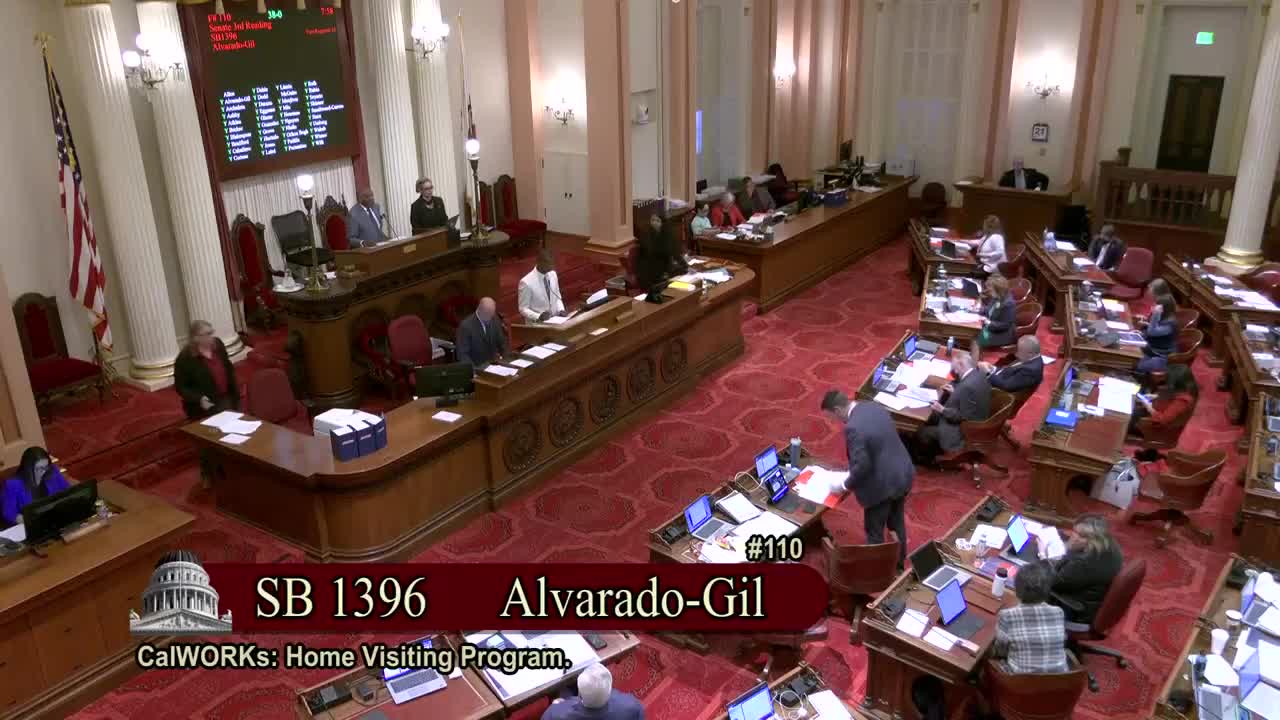 2MIN
Senate Floor
 30SEC
Senate Standing Committee on Appropriations
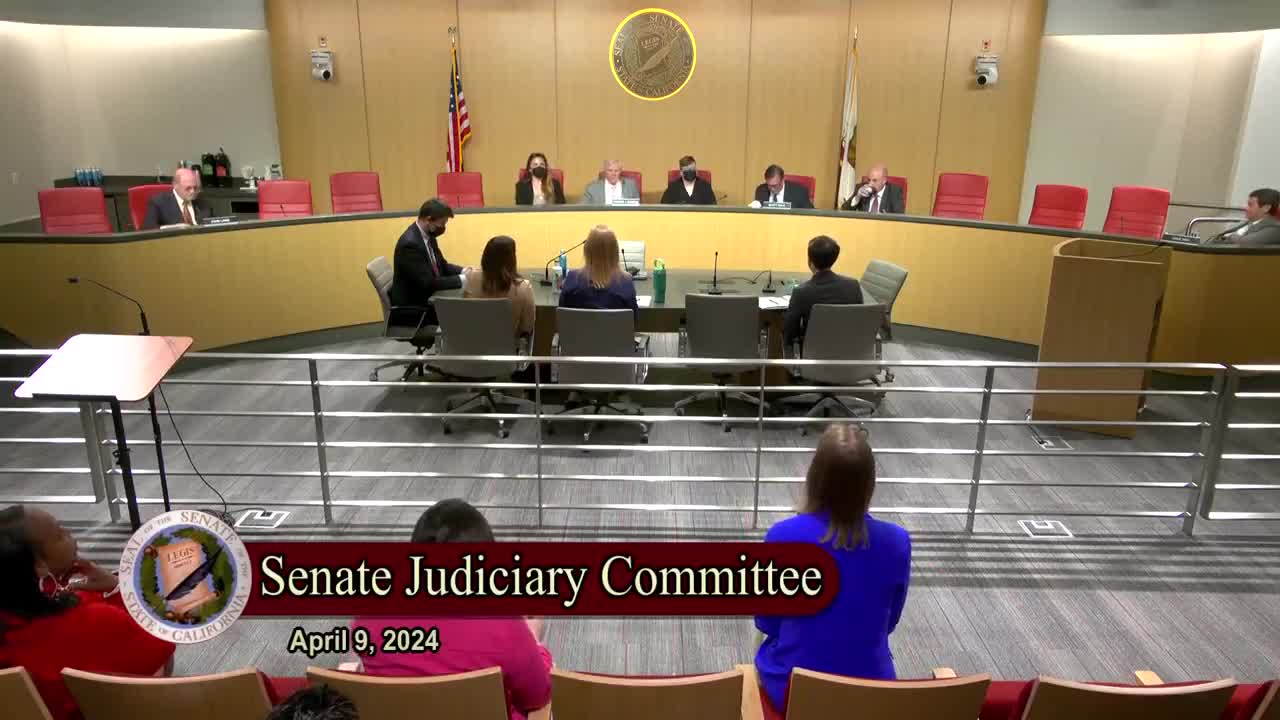 12MIN
Senate Standing Committee on Judiciary
 20MIN
Senate Standing Committee on Environmental Quality
Bill Author

Bill Co-Author(s):