SB 1037: Planning and zoning: housing element: enforcement.
- Session Year: 2023-2024
- House: Senate
- Latest Version Date: 2024-09-19
Current Status:
Passed
(2024-09-19: Chaptered by Secretary of State. Chapter 293, Statutes of 2024.)
Introduced
In Committee
First Chamber
In Committee
Second Chamber
Enacted
Existing law, the Planning and Zoning Law, requires a city or county to adopt a general plan for land use development within its boundaries that includes, among other things, a housing element. The Planning and Zoning Law requires the Department of Housing and Community Development (HCD) to determine whether the housing element is in substantial compliance with specified provisions of that law. The Planning and Zoning Law requires HCD to notify a city, county, or city and county, and authorizes HCD to notify the office of the Attorney General, that the city, county, or city and county is in violation of state law if the local government has taken action in violation of specified provisions of law. The Planning and Zoning Law also requires, among other things, that an application for a housing development be subject to a specified streamlined, ministerial approval process if the development satisfies certain objective planning standards. The Planning and Zoning Law requires a city or county to bring its general plan into substantial compliance with provisions regulating general plans and specifies timelines under which the city or county is required to bring its zoning ordinance into consistency if the court finds in favor of a plaintiff in an action challenging the validity of a general plan, or any mandatory element thereof, as specified.
This bill, in any action brought by the Attorney General or HCD to enforce the adoption of housing element revisions, as specified, or to enforce any state law that requires a city, county, or local agency to ministerially approve any planning or permitting application related to a housing development project, as specified, would subject the city, county, or local agency to specified remedies, including a civil penalty of, at minimum, $10,000 per month, and not exceeding $50,000 per month, for each violation, as specified. The bill would require that the penalties set forth in its provisions only apply when the local agencys acts or omissions, as described, are arbitrary, capricious, or entirely lacking in evidentiary support, contrary to established public policy, unlawful, or procedurally unfair. The bill would require a court to modify certain of its prior orders, including an order directing a city or county to substantially comply with provisions regulating general plans and to bring its zoning ordinance into consistency, to impose, among other things, the maximum penalty specified in these provisions, as provided. The bill would require these civil penalties, as specified, to be deposited into the Building Homes and Jobs Trust Fund for the sole purpose of supporting the development of affordable housing located in the affected jurisdiction, except as provided, and would require that expenditure of any penalty moneys deposited into the fund under these provisions be subject to appropriation by the Legislature. In the event a city, county, or local agency fails to pay civil penalties imposed by the court, the bill would authorize the court to require the Controller to intercept any available state and local funds and direct those funds to the Building Homes and Jobs Trust Fund to correct the jurisdictions failure to pay, as specified.
The bill would make a related statement of legislative findings and declarations.
The bill would include findings that changes proposed by this bill address a matter of statewide concern rather than a municipal affair and, therefore, apply to all cities, including charter cities.
Existing law, the Planning and Zoning Law, requires a city or county to adopt a general plan for land use development within its boundaries that includes, among other things, a housing element. The Planning and Zoning Law requires the Department of Housing and Community Development (HCD) to determine whether the housing element is in substantial compliance with specified provisions of that law. The Planning and Zoning Law requires HCD to notify a city, county, or city and county, and authorizes HCD to notify the office of the Attorney General, that the city, county, or city and county is in violation of state law if the local government has taken action in violation of specified provisions of law. The Planning and Zoning Law also requires, among other things, that an application for a housing development be subject to a specified streamlined, ministerial approval process if the development satisfies certain objective planning standards. The Planning and Zoning Law requires a city or county to bring its general plan into substantial compliance with provisions regulating general plans and specifies timelines under which the city or county is required to bring its zoning ordinance into consistency if the court finds in favor of a plaintiff in an action challenging the validity of a general plan, or any mandatory element thereof, as specified.
This bill, in any action brought by the Attorney General, on behalf of HCD or in an independent capacity, General or HCD to enforce the adoption of housing element revisions, as specified, or to enforce any state law that requires a city, county, or local agency to ministerially approve any planning or permitting application related to a housing development project, as specified, would subject the city, county, or local agency to specified remedies, including a civil penalty of, at minimum, $10,000 per month, and not exceeding $50,000 per month, for each violation, as specified. The bill would require that the penalties set forth in its provisions only apply when the local agencys acts or omissions, as described, are arbitrary, capricious, or entirely lacking in evidentiary support, contrary to established public policy, unlawful, or procedurally unfair. The bill would require a court to modify certain of its prior orders, including an order directing a city or county to substantially comply with provisions regulating general plans and to bring its zoning ordinance into consistency, to impose, among other things, the maximum penalty specified in these provisions, as provided. The bill would require these civil penalties, as specified, to be deposited into the Building Homes and Jobs Trust Fund for the sole purpose of supporting the development of affordable housing located in the affected jurisdiction, except as provided, and would require that expenditure of any penalty moneys deposited into the fund under these provisions be subject to appropriation by the Legislature. In the event a city, county, or local agency fails to pay civil penalties imposed by the court, the bill would authorize the court to require the Controller to intercept any available state and local funds and direct those funds to the Building Homes and Jobs Trust Fund to correct the jurisdictions failure to pay, as specified.
The bill would make a related statement of legislative findings and declarations.
The bill would include findings that changes proposed by this bill address a matter of statewide concern rather than a municipal affair and, therefore, apply to all cities, including charter cities.
Existing law, the Planning and Zoning Law, requires a city or county to adopt a general plan for land use development within its boundaries that includes, among other things, a housing element. The Planning and Zoning Law requires the Department of Housing and Community Development (HCD) to determine whether the housing element is in substantial compliance with specified provisions of that law. The Planning and Zoning Law requires HCD to notify a city, county, or city and county, and authorizes HCD to notify the office of the Attorney General, that the city, county, or city and county is in violation of state law if the local government has taken action in violation of specified provisions of law. The Planning and Zoning Law also requires, among other things, that an application for a housing development be subject to a specified streamlined, ministerial approval process if the development satisfies certain objective planning standards.
This bill, in any action brought by the Attorney General, on behalf of HCD or in an independent capacity, to enforce the adoption of housing element revisions, as specified, or to enforce any state law that requires a city, county, or local agency to ministerially approve any land use decision planning or permitting application for related to a housing development project, as specified, would subject the city, county, or local agency to specified remedies, including a civil penalty of, at minimum, $10,000 per month, and not exceeding $50,000 per month, for each violation, as specified. The bill would require that the penalties set forth in its provisions only apply when the local land use decisions or actions agencys acts or omissions, as described, are arbitrary, capricious, or entirely lacking in evidentiary support, contrary to established public policy, unlawful, or procedurally unfair. The bill would require these civil penalties, as specified, to be deposited into the Building Homes and Jobs Trust Fund for the sole purpose of supporting the development of affordable housing located in the affected jurisdiction, except as provided, and would require that expenditure of any penalty moneys deposited into the fund under these provisions be subject to appropriation by the Legislature. In the event a city, county, or local agency fails to pay civil penalties imposed by the court, the bill would authorize the court to require the Controller to intercept any available state and local funds and direct those funds to the Building Homes and Jobs Trust Fund to correct the jurisdictions failure to pay, as specified.
The bill would make a related statement of legislative findings and declarations.
The bill would include findings that changes proposed by this bill address a matter of statewide concern rather than a municipal affair and, therefore, apply to all cities, including charter cities.
Existing law, the Planning and Zoning Law, requires a city or county to adopt a general plan for land use development within its boundaries that includes, among other things, a housing element. The Planning and Zoning Law requires the Department of Housing and Community Development (HCD) to determine whether the housing element is in substantial compliance with specified provisions of that law. The Planning and Zoning Law requires HCD to notify a city, county, or city and county, and authorizes HCD to notify the office of the Attorney General, that the city, county, or city and county is in violation of state law if the local government has taken action in violation of specified provisions of law. The Planning and Zoning Law also requires, among other things, that an application for a housing development be subject to a specified streamlined, ministerial approval process if the development satisfies certain objective planning standards.
This bill, in any action brought by the Attorney General, on behalf of HCD or in an independent capacity, to enforce the adoption of housing element revisions, as specified, or to enforce any state law that requires a city, county, or local agency to ministerially approve any land use decision or permitting application for a housing development project, as specified, would subject the city, county, or local agency to specified remedies, including a civil penalty of, at minimum, $10,000 per month, and not exceeding $50,000 per month, for each violation, as specified. The bill would require that the penalties set forth in its provisions only apply when local land use decisions or actions are arbitrary, capricious, entirely lacking in evidentiary support, contrary to established public policy, unlawful, or procedurally unfair. The bill would require these civil penalties, as specified, to be deposited into the Building Homes and Jobs Trust Fund for the sole purpose of supporting the development of affordable housing located in the affected jurisdiction, except as provided, and would require that expenditure of any penalty moneys deposited into the fund under these provisions be subject to appropriation by the Legislature. In the event a city, county, or local agency fails to pay civil penalties imposed by the court, the bill would authorize the court to require the Controller to intercept any available state and local funds and direct those funds to the Building Homes and Jobs Trust Fund to correct the jurisdictions failure to pay, as specified.
The bill would make a related statement of legislative findings and declarations.
The bill would include findings that changes proposed by this bill address a matter of statewide concern rather than a municipal affair and, therefore, apply to all cities, including charter cities.
Existing law, the Planning and Zoning Law, requires a city or county to adopt a general plan for land use development within its boundaries that includes, among other things, a housing element. The Planning and Zoning Law requires the Department of Housing and Community Development (HCD) to determine whether the housing element is in substantial compliance with specified provisions of that law. The Planning and Zoning Law requires HCD to notify a city, county, or city and county, and authorizes HCD to notify the office of the Attorney General, that the city, county, or city and county is in violation of state law if the local government has taken action in violation of specified provisions of law. The Planning and Zoning Law also requires, among other things, that an application for a housing development be subject to a specified streamlined, ministerial approval process if the development satisfies certain objective planning standards.
This bill, in any action brought by the Attorney General, on behalf of HCD or in an independent capacity, to enforce the adoption of housing element revisions, as specified, or to enforce any state law that requires a city, county, or local agency to ministerially approve any land use decision or permitting application for a housing development project, as specified, would subject the city, county, or local agency to specified remedies, including a civil penalty of, at minimum, $10,000 per month, and not exceeding $50,000 per month, for each violation, as specified. The bill would require these civil penalties, as specified, to be deposited into the Building Homes and Jobs Trust Fund for the sole purpose of supporting the development of affordable housing located in the affected jurisdiction, except as provided, and would require that expenditure of any penalty moneys deposited into the fund under these provisions be subject to appropriation by the Legislature. In the event a city, county, or local agency fails to pay civil penalties imposed by the court, the bill would authorize the court to require the Controller to intercept any available state and local funds and direct those funds to the Building Homes and Jobs Trust Fund to correct the jurisdictions failure to pay, as specified.
The bill would make a related statement of legislative findings and declarations.
The bill would include findings that changes proposed by this bill address a matter of statewide concern rather than a municipal affair and, therefore, apply to all cities, including charter cities.
Existing law, the Planning and Zoning Law, requires a city or county to adopt a general plan for land use development within its boundaries that includes, among other things, a housing element.Existing law requires the planning agency of a city or county to provide an annual report to certain specified entities by April 1 of each year that includes specified information.This bill would make nonsubstantive changes to those provisions.Existing law, the Planning and Zoning Law, requires a city or county to adopt a general plan for land use development within its boundaries that includes, among other things, a housing element.
Existing law requires the planning agency of a city or county to provide an annual report to certain specified entities by April 1 of each year that includes specified information.
This bill would make nonsubstantive changes to those provisions.
The Legislature finds and declares all of the following:
(a)California has a statewide housing shortage crisis.
(b)Californias housing crisis stifles economic growth, contributes to the homelessness epidemic, consumes an ever-growing share of the paychecks of working families, and holds millions of households back from realizing the California dream of achieving housing security or home ownership. Conversely, new construction of residences, particularly multifamily homes, induces a chain of moves, ultimately adding more housing units affordable to middle- and low-income households.
(c)Restrictive zoning, land use planning, and burdensome residential permitting practices and policies, at the local level in particular, are a major cause of the shortfall between Californias housing needs and the available supply of housing. For example, despite the obligations of local governments under the Housing Element Law to update their general plans, including required rezoning for additional sites to address projected housing needs, numerous cities and counties continue to delay and, at times even refuse, to undertake required actions to encourage, promote, and facilitate the development of housing to accommodate the established regional housing need. The absence of updated housing elements that are substantially compliant with state law causes unnecessary uncertainty and delay in approving housing development applications. This cumulative delay causes many local governments to continue to fall behind in meeting their share of regional housing need.
(d)These restrictive practices and policies continue to persist despite other statewide reforms to expedite, streamline, and ministerially approve the planning and construction of housing of all types, including housing affordable to persons and families of lower income. While not exhaustive, these reforms can be found in the following provisions:
(1)Accessory dwelling units, as described in Chapter 13 (commencing with Section 66310) of Division 1 of Title 7 of the Government Code.
(2)By-right housing, in which certain multifamily housing is designated a permitted use, as described in Section 65589.4 of the Government Code.
(3)Reduced time for action on affordable housing applications under the approval of the development permits process, as described in Article 5 (commencing with Section 65950) of Chapter 4.5 of Division 1 of Title 7 of the Government Code.
(4)Streamlining housing approvals during a housing shortage, as described in Section 65913.4 of the Government Code.
(5)Streamlining agricultural employee housing development approvals, as described in Section 17021.8 of the Health and Safety Code.
(6)The Housing Crisis Act of 2019, as described in Chapter 654 of the Statutes of 2019 (Senate Bill 330).
(7)Allowing four units to be built on single-family parcels statewide, as described in Chapter 162 of the Statutes of 2021 (Senate Bill 9).
(8)The Middle Class Housing Act of 2022, as described in Section 65852.24 of the Government Code.
(9)The Affordable Housing and High Road Jobs Act of 2022, as described in Chapter 4.1 (commencing with Section 65912.100) of Division 1 of Title 7 of the Government Code.
(10)Housing element law requirements and required rezoning to address unmet housing needs, as described in Chapter 974 of the Statutes of 2018 (Senate Bill 828) and Chapter 358 of the Statutes of 2021 (Assembly Bill 1398).
(11)Small infill starter home subdivisions, as described in Sections 65913.4.5 and 66499.41 of the Government Code.
SEC. 2.Section 65009.1 is added to the Government Code, to read:65009.1.(a)In any action brought by the Attorney General or the Department of Housing and Community Development to enforce the adoption of housing element revisions pursuant to the schedule set forth in subdivision (e) of Section 65588, or to enforce any state law that requires a city, county, or local agency to ministerially approve, without discretionary review, any planning or permitting application related to a housing development project, the city, county, or local agency shall be subject to the following remedies:
(1)A civil penalty of, at minimum, ten thousand dollars ($10,000) per month, and not exceeding fifty thousand dollars ($50,000) per month, for each violation, accrued from the date of the violation until the date the violation is cured.
(2)(A)All costs of investigating and prosecuting this action, including expert fees, reasonable attorneys fees, and costs, whenever the Attorney General or the department prevails in a civil action to enforce any state laws under this section.
(B)Awards imposed pursuant to this paragraph shall be paid to the Public Rights Law Enforcement Special Fund established by Section 12530.
(3)(A)Other relief as the court deems appropriate, including equitable and injunctive relief, provisional or otherwise.
(B)Any injunction, provisional or otherwise, ordered by the court pursuant to this paragraph shall be deemed to be prohibitory, and not affirmative.
(b)The penalties set forth in this section shall only apply when the local agencys acts or omissions described in subdivision (a) are arbitrary, capricious, entirely lacking in evidentiary support, contrary to established public policy, unlawful, or procedurally unfair. The purpose of this section is to ensure adequate remedies are available to ensure that state laws mandating streamlined, ministerial approvals related to housing development projects, and the timely adoption of housing element revisions, are promptly and faithfully followed.
(c)(1)Any civil penalty levied pursuant to this section shall be deposited into the Building Homes and Jobs Trust Fund for the sole purpose of supporting the development of affordable housing located in the affected jurisdiction. Expenditure of any penalty moneys deposited into the Building Homes and Jobs Trust Fund pursuant to this subdivision shall be subject to appropriation by the Legislature.
(2)Any penalty imposed pursuant to this section shall not be paid out of funds already dedicated to affordable housing, including, but not limited to, very low, low-, and moderate-income households.
(3)To the extent permitted under the California Constitution, in the event a city, county, or local agency fails to pay civil penalties imposed by the court, the court may require the Controller to intercept any available state and local funds and direct those funds to the Building Homes and Jobs Trust Fund to correct the jurisdictions failure to pay.
(4)Notwithstanding paragraph (1), if the penalty moneys have not been expended five years after deposit, the penalty moneys may be used, upon appropriation, to finance newly constructed affordable housing units in the state without any geographic restrictions.
(d)(1)The liability, penalties, and remedies imposed by this section are in addition to any other liability, penalties, and remedies imposed by any other law.
(2)For actions brought under this section to enforce the adoption of housing element revisions pursuant to the schedule set forth in subdivision (e) of Section 65588, and where a city, county, or local agency, despite a court order, fails to meet the timelines specified in Section 65754, all of the following apply:
(A)Unless already imposed by the court, the court shall modify its prior order directing a city, county, or local agency to comply with Section 65754 to impose the maximum penalty of fifty thousand dollars ($50,000) per month, as specified in paragraph (1) of subdivision (a) of this section, for each additional month until the city, county, or local agency has substantially complied with Section 65754.
(B)Unless already imposed by the court, the court shall also modify its prior order directing a city, county, or local agency, to comply with Section 65754 to impose all of the remedial provisions set forth in subdivision (a) of Section 65755, until the local agency has substantially complied with Section 65754.
(C)An order imposing remedial provisions set forth in subdivision (a) of Section 65755, including any order entered pursuant to subparagraph (B) of this paragraph, shall not suspend the city, county, or local agencys authority to issue any type of approval identified in paragraphs (1), (2), and (3) of subdivision (a) of Section 65755 that is necessary for new housing development projects that are subject to any of the following:
(i)Subdivision (c) of Section 65755.
(ii)Subdivision (d) of Section 65589.5.
(iii)Any other statutory provision that requires a city, county, or local agency to ministerially approve, without discretionary review, a housing development project.
(iv)Any other housing development project, as defined in paragraph (2) of subdivision (h) of Section 65589.5 where the applicant establishes that approval of the project will not significantly impair the ability of the city, county, or local agency to comply with Section 65754.
(e)(1)The remedies available to the Attorney General and the department pursuant to this section apply to all cities, including charter cities, and do not limit or affect the remedies available to any other party seeking to enforce the laws enumerated in subdivision (j) of Section 65585, including, but not limited to, the remedies in Article 14 (commencing with Section 65750) of Chapter 3, and attorneys fees pursuant to Section 1021.5 of the Code of Civil Procedure.
(2)The remedies in Article 14 (commencing with Section 65750) of Chapter 3 apply to actions against all cities, including charter cities, to enforce the requirements of Section 65585 as a mandatory element of a general plan under Article 5 (commencing with Section 65300) of Chapter 3. This paragraph is declaratory of existing law.
SEC. 3.The Legislature finds and declares that the lack of housing is a matter of statewide concern and is not a municipal affair as that term is used in Section 5 of Article XI of the California Constitution. Therefore, the Legislature clarifies that Section 2 of this act adding Section 65009.1 to the Government Code, consistent with actions or proceedings brought under Article 14 (commencing with Section 65750) of Chapter 3 of Division 1 of Title 7 of the Government Code, applies to all cities, including charter cities.
The Legislature finds and declares all of the following:
(a)California has a statewide housing shortage crisis.
(b)Californias housing crisis stifles economic growth, contributes to the homelessness epidemic, consumes an ever-growing share of the paychecks of working families, and holds millions of households back from realizing the California dream of achieving housing security or home ownership. Conversely, new construction of residences, particularly multifamily homes, induces a chain of moves, ultimately adding more housing units affordable to middle- and low-income households.
(c)Restrictive zoning, land use planning, and burdensome residential permitting practices and policies, at the local level in particular, are a major cause of the shortfall between Californias housing needs and the available supply of housing. For example, despite the obligations of local governments under the Housing Element Law to update their general plans, including required rezoning for additional sites to address projected housing needs, numerous cities and counties continue to delay and, at times even refuse, to undertake required actions to encourage, promote, and facilitate the development of housing to accommodate the established regional housing need. The absence of updated housing elements that are substantially compliant with state law causes unnecessary uncertainty and delay in approving housing development applications. This cumulative delay causes many local governments to continue to fall behind in meeting their share of regional housing need.
(d)These restrictive practices and policies continue to persist despite other statewide reforms to expedite, streamline, and ministerially approve the planning and construction of housing of all types, including housing affordable to persons and families of lower income. While not exhaustive, these reforms can be found in the following provisions:
(1)Accessory dwelling units, as described in Chapter 13 (commencing with Section 66310) of Division 1 of Title 7 of the Government Code.
(2)By-right housing, in which certain multifamily housing is designated a permitted use, as described in Section 65589.4 of the Government Code.
(3)Reduced time for action on affordable housing applications under the approval of the development permits process, as described in Article 5 (commencing with Section 65950) of Chapter 4.5 of Division 1 of Title 7 of the Government Code.
(4)Streamlining housing approvals during a housing shortage, as described in Section 65913.4 of the Government Code.
(5)Streamlining agricultural employee housing development approvals, as described in Section 17021.8 of the Health and Safety Code.
(6)The Housing Crisis Act of 2019, as described in Chapter 654 of the Statutes of 2019 (Senate Bill 330).
(7)Allowing four units to be built on single-family parcels statewide, as described in Chapter 162 of the Statutes of 2021 (Senate Bill 9).
(8)The Middle Class Housing Act of 2022, as described in Section 65852.24 of the Government Code.
(9)The Affordable Housing and High Road Jobs Act of 2022, as described in Chapter 4.1 (commencing with Section 65912.100) of Division 1 of Title 7 of the Government Code.
(10)Housing element law requirements and required rezoning to address unmet housing needs, as described in Chapter 974 of the Statutes of 2018 (Senate Bill 828) and Chapter 358 of the Statutes of 2021 (Assembly Bill 1398).
(11)Small infill starter home subdivisions, as described in Sections 65913.4.5 and 66499.41 of the Government Code.
SEC. 2.Section 65009.1 is added to the Government Code, to read:65009.1.(a)In any action brought by the Attorney General, on behalf of General or the Department of Housing and Community Development or in an independent capacity, to enforce the adoption of housing element revisions pursuant to the schedule set forth in subdivision (e) of Section 65588, or to enforce any state law that requires a city, county, or local agency to ministerially approve, without discretionary review, any planning or permitting application related to a housing development project, the city, county, or local agency shall be subject to the following remedies:
(1)A civil penalty of, at minimum, ten thousand dollars ($10,000) per month, and not exceeding fifty thousand dollars ($50,000) per month, for each violation, accrued from the date of the violation until the date the violation is cured.
(2)(A)All costs of investigating and prosecuting this action, including expert fees, reasonable attorneys fees, and costs, whenever the Attorney General or the department prevails in a civil action to enforce any state laws under this section.
(B)Awards imposed pursuant to this paragraph shall be paid to the Public Rights Law Enforcement Special Fund established by Section 12530.
(3)(A)Other relief as the court deems appropriate, including equitable and injunctive relief, provisional or otherwise.
(B)Any injunction, provisional or otherwise, ordered by the court pursuant to this paragraph shall be deemed to be prohibitory, and not affirmative.
(b)The penalties set forth in this section shall only apply when the local agencys acts or omissions described in subdivision (a) are arbitrary, capricious, entirely lacking in evidentiary support, contrary to established public policy, unlawful, or procedurally unfair. The purpose of this section is to ensure adequate remedies are available to ensure that state laws mandating streamlined, ministerial approvals related to housing development projects, and the timely adoption of housing element revisions, are promptly and faithfully followed.
(c)(1)Any civil penalty levied pursuant to this section shall be deposited into the Building Homes and Jobs Trust Fund for the sole purpose of supporting the development of affordable housing located in the affected jurisdiction. Expenditure of any penalty moneys deposited into the Building Homes and Jobs Trust Fund pursuant to this subdivision shall be subject to appropriation by the Legislature.
(2)Any penalty imposed pursuant to this section shall not be paid out of funds already dedicated to affordable housing, including, but not limited to, very low, low-, and moderate-income households.
(3)To the extent permitted under the California Constitution, in the event a city, county, or local agency fails to pay civil penalties imposed by the court, the court may require the Controller to intercept any available state and local funds and direct those funds to the Building Homes and Jobs Trust Fund to correct the jurisdictions failure to pay.
(4)Notwithstanding paragraph (1), if the penalty moneys have not been expended five years after deposit, the penalty moneys may be used, upon appropriation, to finance newly constructed affordable housing units in the state without any geographic restrictions.
(d)(1)The liability, penalties, and remedies imposed by this section are in addition to any other liability, penalties, and remedies imposed by any other law.
(2)For actions brought under this section to enforce the adoption of housing element revisions pursuant to the schedule set forth in subdivision (e) of Section 65588, and where a city, county, or local agency, despite a court order, fails to meet the timelines specified in Section 65754, all of the following apply:
(A)Unless already imposed by the court, the court shall modify its prior order directing a city, county, or local agency to comply with Section 65754 to impose the maximum penalty of fifty thousand dollars ($50,000) per month, as specified in paragraph (1) of subdivision (a) of this section, for each additional month until the city, county, or local agency has substantially complied with Section 65754.
(B)Unless already imposed by the court, the court shall also modify its prior order directing a city, county, or local agency, to comply with Section 65754 to impose all of the remedial provisions set forth in subdivision (a) of Section 65755, until the local agency has substantially complied with Section 65754.
(C)An order imposing remedial provisions set forth in subdivision (a) of Section 65755, including any order entered pursuant to subparagraph (B) of this paragraph, shall not suspend the city, county, or local agencys authority to issue any type of approval identified in paragraphs (1), (2), and (3) of subdivision (a) of Section 65755 that is necessary for new housing development projects that are subject to any of the following:
(i)Subdivision (c) of Section 65755.
(ii)Subdivision (d) of Section 65589.5.
(iii)Any other statutory provision that requires a city, county, or local agency to ministerially approve, without discretionary review, a housing development project.
(iv)Any other housing development project, as defined in paragraph (2) of subdivision (h) of Section 65589.5 where the applicant establishes that approval of the project will not significantly impair the ability of the city, county, or local agency to comply with Section 65754.
(e)(1)The remedies available to the Attorney General and the department pursuant to this section apply to all cities, including charter cities, and do not limit or affect the remedies available to any other party seeking to enforce the laws enumerated in subdivision (j) of Section 65585, including, but not limited to, the remedies in Article 14 (commencing with Section 65750) of Chapter 3, and attorneys fees pursuant to Section 1021.5 of the Code of Civil Procedure.
(2)The remedies in Article 14 (commencing with Section 65750) of Chapter 3 apply to actions against all cities, including charter cities, to enforce the requirements of Section 65585 as a mandatory element of a general plan under Article 5 (commencing with Section 65300) of Chapter 3. This paragraph is declaratory of existing law.
SEC. 3.The Legislature finds and declares that the lack of housing is a matter of statewide concern and is not a municipal affair as that term is used in Section 5 of Article XI of the California Constitution. Therefore, the Legislature clarifies that Section 2 of this act adding Section 65009.1 to the Government Code Code, consistent with actions or proceedings brought under Article 14 (commencing with Section 65750) of Chapter 3 of Division 1 of Title 7 of the Government Code, applies to all cities, including charter cities.
The Legislature finds and declares all of the following:
(a)California has a statewide housing shortage crisis.
(b)Californias housing crisis stifles economic growth, contributes to the homelessness epidemic, consumes an ever-growing share of the paychecks of working families, and holds millions of households back from realizing the California dream of achieving housing security or home ownership. Conversely, new construction of residences, particularly multifamily homes, induces a chain of moves, ultimately adding more housing units affordable to middle- and low-income households.
(c)Restrictive zoning, land use planning, and burdensome residential permitting practices and policies, at the local level in particular, are a major cause of the shortfall between Californias housing needs and the available supply of housing. For example, despite the obligations of local governments under the Housing Element Law to update their general plans, including required rezoning for additional sites to address projected housing needs, numerous cities and counties continue to delay and, at times even refuse, to undertake required actions to encourage, promote, and facilitate the development of housing to accommodate the established regional housing need. The absence of updated housing elements that are substantially compliant with state law causes unnecessary uncertainty and delay in approving housing development applications. This cumulative delay causes many local governments to continue to fall behind in meeting their share of regional housing need.
(d)These restrictive practices and policies continue to persist despite other statewide reforms to expedite, streamline, and ministerially approve the planning and construction of housing of all types, including housing affordable to persons and families of lower income. While not exhaustive, these reforms can be found in the following provisions:
(1)Accessory dwelling units, as described in Sections 65852.150 and 65852.2 Chapter 13 (commencing with Section 66310) of Division 1 of Title 7 of the Government Code.
(2)By-right housing, in which certain multifamily housing is designated a permitted use, as described in Section 65589.4 of the Government Code.
(3)Reduced time for action on affordable housing applications under the approval of the development permits process, as described in Article 5 (commencing with Section 65950) of Chapter 4.5 of Division 1 of Title 7 of the Government Code.
(4)Streamlining housing approvals during a housing shortage, as described in Section 65913.4 of the Government Code.
(5)Streamlining agricultural employee housing development approvals, as described in Section 17021.8 of the Health and Safety Code.
(6)The Housing Crisis Act of 2019, as described in Chapter 654 of the Statutes of 2019 (Senate Bill 330).
(7)Allowing four units to be built on single-family parcels statewide, as described in Chapter 162 of the Statutes of 2021 (Senate Bill 9).
(8)The Middle Class Housing Act of 2022, as described in Section 65852.24 of the Government Code.
(9)The Affordable Housing and High Road Jobs Act of 2022, as described in Chapter 4.1 (commencing with Section 65912.100) of Division 1 of Title 7 of the Government Code.
(10)Housing element law requirements and required rezoning to address unmet housing needs, as described in Chapter 974 of the Statutes of 2018 (Senate Bill 828) and Chapter 358 of the Statutes of 2021 (Assembly Bill 1398).
SEC. 2.Section 65009.1 is added to the Government Code, to read:65009.1.(a)In any action brought by the Attorney General, on behalf of the Department of Housing and Community Development or in an independent capacity, to enforce the adoption of housing element revisions pursuant to the schedule set forth in subdivision (e) of Section 65588, or to enforce any state law that requires a city, county, or local agency to ministerially approve, without discretionary review, any land use decision planning or permitting application for related to a housing development project, the city, county, or local agency shall be subject to the following remedies:
(1)A civil penalty of, at minimum, ten thousand dollars ($10,000) per month, and not exceeding fifty thousand dollars ($50,000) per month, for each violation, accrued from the date of the violation until the date the violation is cured.
(2)(A)All costs of investigating and prosecuting this action, including expert fees, reasonable attorneys fees, and costs, whenever the Attorney General prevails in a civil action to enforce any state laws under this section.
(B)Awards imposed pursuant to this paragraph shall be paid to the Public Rights Law Enforcement Special Fund established by Section 12530.
(3)(A)Other relief as the court deems appropriate, including equitable and injunctive relief, provisional or otherwise.
(B)Any injunction, provisional or otherwise, ordered by the court pursuant to this paragraph shall be deemed to be prohibitory, and not affirmative.
(b)The penalties set forth in this section shall only apply when the local land use decisions or actions agencys acts or omissions described in subdivision (a) are arbitrary, capricious, entirely lacking in evidentiary support, contrary to established public policy, unlawful, or procedurally unfair. The purpose of this section is to ensure adequate remedies are available to ensure that state laws mandating streamlined, ministerial approvals related to housing development projects, and the timely adoption of housing element revisions, are promptly and faithfully followed.
(c)(1)Any civil penalty levied pursuant to this section shall be deposited into the Building Homes and Jobs Trust Fund for the sole purpose of supporting the development of affordable housing located in the affected jurisdiction. Expenditure of any penalty moneys deposited into the Building Homes and Jobs Trust Fund pursuant to this subdivision shall be subject to appropriation by the Legislature.
(2)Any penalty imposed pursuant to this section shall not be paid out of funds already dedicated to affordable housing, including, but not limited to, very low, low-, and moderate-income households.
(3)To the extent permitted under the California Constitution, in the event a city, county, or local agency fails to pay civil penalties imposed by the court, the court may require the Controller to intercept any available state and local funds and direct those funds to the Building Homes and Jobs Trust Fund to correct the jurisdictions failure to pay.
(4)Notwithstanding paragraph (1), if the penalty moneys have not been expended five years after deposit, the penalty moneys may be used, upon appropriation, to finance newly constructed affordable housing units in the state without any geographic restrictions.
(d)The liability, penalties, and remedies imposed by this section are in addition to any other liability, penalties, and remedies imposed by any other law.
(e)The remedies available to the Attorney General pursuant to this section do not limit or affect the remedies available to any other party seeking to enforce the laws enumerated in subdivision (j) of Section 65585, including, but not limited to, the remedies in Article 14 (commencing with Section 65750) of Chapter 3, and attorneys fees pursuant to Section 1021.5 of the Code of Civil Procedure.
SEC. 3.The Legislature finds and declares that the lack of housing is a matter of statewide concern and is not a municipal affair as that term is used in Section 5 of Article XI of the California Constitution. Therefore, the Legislature clarifies that Section 2 of this act adding Section 65009.1 to the Government Code applies to all cities, including charter cities.
REVISIONS: HeadingLine 2.The Legislature finds and declares all of the following:
(a)California has a statewide housing shortage crisis.
(b)Californias housing crisis stifles economic growth, contributes to the homelessness epidemic, consumes an ever-growing share of the paychecks of working families, and holds millions of households back from realizing the California dream of achieving housing security or home ownership. Conversely, new construction of residences, particularly multifamily homes, induces a chain of moves, ultimately adding more housing units affordable to middle- and low-income households.
(c)Restrictive zoning, land use planning, and burdensome residential permitting practices and policies, at the local level in particular, are a major cause of the shortfall between Californias housing needs and the available supply of housing. For example, despite the obligations of local governments under the Housing Element Law to update their general plans, including required rezoning for additional sites to address projected housing needs, numerous cities and counties continue to delay and, at times even refuse, to undertake required actions to encourage, promote, and facilitate the development of housing to accommodate the established regional housing need. The absence of updated housing elements that are substantially compliant with state law causes unnecessary uncertainty and delay in approving housing development applications. This cumulative delay causes many local governments to continue to fall behind in meeting their share of regional housing need.
(d)These restrictive practices and policies continue to persist despite other statewide reforms to expedite, streamline, and ministerially approve the planning and construction of housing of all types, including housing affordable to persons and families of lower income. While not exhaustive, these reforms can be found in the following provisions:
(1)Accessory dwelling units, as described in Sections 65852.150 and 65852.2 of the Government Code.
(2)By-right housing, in which certain multifamily housing is designated a permitted use, as described in Section 65589.4 of the Government Code.
(3)Reduced time for action on affordable housing applications under the approval of the development permits process, as described in Article 5 (commencing with Section 65950) of Chapter 4.5 of Division 1 of Title 7 of the Government Code.
(4)Streamlining housing approvals during a housing shortage, as described in Section 65913.4 of the Government Code.
(5)Streamlining agricultural employee housing development approvals, as described in Section 17021.8 of the Health and Safety Code.
(6)The Housing Crisis Act of 2019, as described in Chapter 654 of the Statutes of 2019 (Senate Bill 330).
(7)Allowing four units to be built on single-family parcels statewide, as described in Chapter 162 of the Statutes of 2021 (Senate Bill 9).
(8)The Middle Class Housing Act of 2022, as described in Section 65852.24 of the Government Code.
(9)The Affordable Housing and High Road Jobs Act of 2022, as described in Chapter 4.1 (commencing with Section 65912.100) of Division 1 of Title 7 of the Government Code.
(10)Housing element law requirements and required rezoning to address unmet housing needs, as described in Chapter 974 of the Statutes of 2018 (Senate Bill 828) and Chapter 358 of the Statutes of 2021 (Assembly Bill 1398).
SEC. 2.Section 65009.1 is added to the Government Code, to read:65009.1.(a)In any action brought by the Attorney General, on behalf of the Department of Housing and Community Development or in an independent capacity, to enforce the adoption of housing element revisions pursuant to the schedule set forth in subdivision (e) of Section 65588, or to enforce any state law that requires a city, county, or local agency to ministerially approve, without discretionary review, any land use decision or permitting application for a housing development project, the city, county, or local agency shall be subject to the following remedies:
(1)A civil penalty of, at minimum, ten thousand dollars ($10,000) per month, and not exceeding fifty thousand dollars ($50,000) per month, for each violation, accrued from the date of the violation until the date the violation is cured.
(2)(A)All costs of investigating and prosecuting this action, including expert fees, reasonable attorneys fees, and costs, whenever the Attorney General prevails in a civil action to enforce any state laws under this section.
(B)Awards imposed pursuant to this paragraph shall be paid to the Public Rights Law Enforcement Special Fund established by Section 12530.
(3)(A)Other relief as the court deems appropriate, including equitable and injunctive relief, provisional or otherwise.
(B)Any injunction, provisional or otherwise, ordered by the court pursuant to this paragraph shall be deemed to be prohibitory, and not affirmative.
(b)The purpose of this section is to ensure that, where penalties set forth in this section shall only apply when local land use decisions or actions are arbitrary, capricious, entirely lacking in evidentiary support, contrary to established public policy, unlawful, or procedurally unfair, unfair. The purpose of this section is to ensure adequate remedies are available to ensure that state laws mandating streamlined, ministerial approvals related to housing development projects, and the timely adoption of housing element revisions, are promptly and faithfully followed.
(c)(1)Any civil penalty levied pursuant to this section shall be deposited into the Building Homes and Jobs Trust Fund for the sole purpose of supporting the development of affordable housing located in the affected jurisdiction. Expenditure of any penalty moneys deposited into the Building Homes and Jobs Trust Fund pursuant to this subdivision shall be subject to appropriation by the Legislature.
(2)Any penalty imposed pursuant to this section shall not be paid out of funds already dedicated to affordable housing, including, but not limited to, very low, low-, and moderate-income households.
(3)To the extent permitted under the California Constitution, in the event a city, county, or local agency fails to pay civil penalties imposed by the court, the court may require the Controller to intercept any available state and local funds and direct those funds to the Building Homes and Jobs Trust Fund to correct the jurisdictions failure to pay.
(4)Notwithstanding paragraph (1), if the penalty moneys have not been expended five years after deposit, the penalty moneys may be used, upon appropriation, to finance newly constructed affordable housing units in the state without any geographic restrictions.
(d)The liability, penalties, and remedies imposed by this section are in addition to any other liability, penalties, and remedies imposed by any other law.
SEC. 3.The Legislature finds and declares that the lack of housing is a matter of statewide concern and is not a municipal affair as that term is used in Section 5 of Article XI of the California Constitution. Therefore, the Legislature clarifies that Section 2 of this act adding Section 65009.1 to the Government Code applies to all cities, including charter cities.
The Legislature finds and declares all of the following:
(a)California has a statewide housing shortage crisis.
(b)Californias housing crisis stifles economic growth, contributes to the homelessness epidemic, consumes an ever-growing share of the paychecks of working families, and holds millions of households back from realizing the California dream of achieving housing security or home ownership. Conversely, new construction of residences, particularly multifamily homes, induces a chain of moves, ultimately adding more housing units affordable to middle- and low-income households.
(c)Restrictive zoning, land use planning, and burdensome residential permitting practices and policies, at the local level in particular, are a major cause of the shortfall between Californias housing needs and the available supply of housing. For example, despite the obligations of local governments under the Housing Element Law to update their general plans, including required rezoning for additional sites to address projected housing needs, numerous cities and counties continue to delay and, at times even refuse, to undertake required actions to encourage, promote, and facilitate the development of housing to accommodate the established regional housing need. The absence of updated housing elements that are substantially compliant with state law causes unnecessary uncertainty and delay in approving housing development applications. This cumulative delay causes many local governments to continue to fall behind in meeting their share of regional housing need.
(d)These restrictive practices and policies continue to persist despite other statewide reforms to expedite, streamline, and ministerially approve the planning and construction of housing of all types, including housing affordable to persons and families of lower income. While not exhaustive, these reforms can be found in the following provisions:
(1)Accessory dwelling units, as described in Sections 65852.150 and 65852.2 of the Government Code.
(2)By-right housing, in which certain multifamily housing is designated a permitted use, as described in Section 65589.4 of the Government Code.
(3)Reduced time for action on affordable housing applications under the approval of the development permits process, as described in Article 5 (commencing with Section 65950) of Chapter 4.5 of Division 1 of Title 7 of the Government Code.
(4)Streamlining housing approvals during a housing shortage, as described in Section 65913.4 of the Government Code.
(5)Streamlining agricultural employee housing development approvals, as described in Section 17021.8 of the Health and Safety Code.
(6)The Housing Crisis Act of 2019, as described in Chapter 654 of the Statutes of 2019 (Senate Bill 330).
(7)Allowing four units to be built on single-family parcels statewide, as described in Chapter 162 of the Statutes of 2021 (Senate Bill 9).
(8)The Middle Class Housing Act of 2022, as described in Section 65852.24 of the Government Code.
(9)The Affordable Housing and High Road Jobs Act of 2022, as described in Chapter 4.1 (commencing with Section 65912.100) of Division 1 of Title 7 of the Government Code.
(10)Housing element law requirements and required rezoning to address unmet housing needs, as described in Chapter 974 of the Statutes of 2018 (Senate Bill 828) and Chapter 358 of the Statutes of 2021 (Assembly Bill 1398).
SEC. 2.Section 65009.1 is added to the Government Code, to read:65009.1.(a)In any action brought by the Attorney General, on behalf of the Department of Housing and Community Development or in an independent capacity, to enforce the adoption of housing element revisions pursuant to the schedule set forth in subdivision (e) of Section 65588, or to enforce any state law that requires a city, county, or local agency to ministerially approve, without discretionary review, any land use decision or permitting application for a housing development project, the city, county, or local agency shall be subject to the following remedies:
(1)A civil penalty of, at minimum, ten thousand dollars ($10,000) per month, and not exceeding fifty thousand dollars ($50,000) per month, for each violation, accrued from the date of the violation until the date the violation is cured.
(2)(A)All costs of investigating and prosecuting this action, including expert fees, reasonable attorneys fees, and costs, whenever the Attorney General prevails in a civil action to enforce any state laws under this section.
(B)Awards imposed pursuant to this paragraph shall be paid to the Public Rights Law Enforcement Special Fund established by Section 12530.
(3)(A)Other relief as the court deems appropriate, including equitable and injunctive relief, provisional or otherwise.
(B)Any injunction, provisional or otherwise, ordered by the court pursuant to this paragraph shall be deemed to be prohibitory, and not affirmative.
(b)The purpose of this section is to ensure that, where local land use decisions or actions are arbitrary, capricious, entirely lacking in evidentiary support, contrary to established public policy, unlawful, or procedurally unfair, adequate remedies are available to ensure that state laws mandating streamlined, ministerial approvals related to housing development projects, and the timely adoption of housing element revisions, are promptly and faithfully followed.
(c)(1)Any civil penalty levied pursuant to this section shall be deposited into the Building Homes and Jobs Trust Fund for the sole purpose of supporting the development of affordable housing located in the affected jurisdiction. Expenditure of any penalty moneys deposited into the Building Homes and Jobs Trust Fund pursuant to this subdivision shall be subject to appropriation by the Legislature.
(2)Any penalty imposed pursuant to this section shall not be paid out of funds already dedicated to affordable housing, including, but not limited to, very low, low-, and moderate-income households.
(3)To the extent permitted under the California Constitution, in the event a city, county, or local agency fails to pay civil penalties imposed by the court, the court may require the Controller to intercept any available state and local funds and direct those funds to the Building Homes and Jobs Trust Fund to correct the jurisdictions failure to pay.
(4)Notwithstanding paragraph (1), if the penalty moneys have not been expended five years after deposit, the penalty moneys may be used, upon appropriation, to finance newly constructed affordable housing units in the state without any geographic restrictions.
(d)The liability, penalties, and remedies imposed by this section are in addition to any other liability, penalties, and remedies imposed by any other law.
SEC. 3.The Legislature finds and declares that the lack of housing is a matter of statewide concern and is not a municipal affair as that term is used in Section 5 of Article XI of the California Constitution. Therefore, the Legislature clarifies that Section 2 of this act adding Section 65009.1 to the Government Code applies to all cities, including charter cities.
SECTION 1.Section 65400 of the Government Code is amended to read:65400.(a)After the legislative body has adopted all or part of a general plan, the planning agency shall do both of the following:(1)Investigate and make recommendations to the legislative body regarding reasonable and practical means for implementing the general plan or element of the general plan so that it will serve as an effective guide for orderly growth and development, preservation and conservation of open-space land and natural resources, and the efficient expenditure of public funds relating to the subjects addressed in the general plan.(2)Provide, by April 1 of each year, an annual report to the legislative body, the Office of Planning and Research, and the Department of Housing and Community Development that includes all of the following:(A)The status of the plan and progress in its implementation.(B)(i)The progress in meeting its share of regional housing needs determined pursuant to Section 65584, including the need for extremely low income households, as determined pursuant to paragraph (1) of subdivision (a) of Section 65583, and local efforts to remove governmental constraints to the maintenance, improvement, and development of housing pursuant to paragraph (3) of subdivision (c) of Section 65583.(ii)The housing element portion of the annual report, as required by this paragraph, shall be prepared through the use of standards, forms, and definitions adopted by the Department of Housing and Community Development. The department may review, adopt, amend, and repeal the standards, forms, or definitions to implement this article. Any standards, forms, or definitions adopted to implement this article shall not be subject to Chapter 3.5 (commencing with Section 11340) of Part 1 of Division 3 of Title 2. Before and after adoption of the forms, the housing element portion of the annual report shall include a section that describes the actions taken by the local government towards completion of the programs and status of the local governments compliance with the deadlines in its housing element. The report shall be considered at an annual public meeting before the legislative body where members of the public shall be allowed to provide oral testimony and written comments.(iii)The report may include the number of units that have been completed pursuant to subdivision (c) of Section 65583.1. For purposes of this paragraph, committed assistance may be executed throughout the planning period, and the program under paragraph (1) of subdivision (c) of Section 65583.1 shall not be required. The report shall document how the units meet the standards set forth in that subdivision.(iv)The planning agency shall include the number of units in a student housing development for lower income students for which the developer of the student housing development was granted a density bonus pursuant to subparagraph (F) of paragraph (1) of subdivision (b) of Section 65915.(C)The number of housing development applications received in the prior year, including whether each housing development application is subject to a ministerial or discretionary approval process.(D)The number of units included in all development applications in the prior year.(E)The number of units approved and disapproved in the prior year.(F)The degree to which its approved general plan complies with the guidelines developed and adopted pursuant to Section 65040.2 and the date of the last revision to the general plan.(G)A listing of sites rezoned to accommodate that portion of the citys or countys share of the regional housing need for each income level that could not be accommodated on sites identified in the inventory required by paragraph (1) of subdivision (c) of Section 65583 and Section 65584.09. The listing of sites shall also include any additional sites that may have been required to be identified by Section 65863.(H)(i)The number of units of housing demolished and new units of housing, including both rental housing and for-sale housing and any units that the County of Napa or the City of Napa may report pursuant to an agreement entered into pursuant to Section 65584.08, that have been issued a completed entitlement, a building permit, or a certificate of occupancy, thus far in the housing element cycle, and the income category, by area median income category, that each unit of housing satisfies. That production report shall do the following:(I)For each income category described in this subparagraph, distinguish between the number of rental housing units and the number of for-sale units that satisfy each income category.(II)For each entitlement, building permit, or certificate of occupancy, include a unique site identifier that must include the assessors parcel number, but may also include street address, or other identifiers.(ii)For the County of Napa and the City of Napa, the production report may report units identified in the agreement entered into pursuant to Section 65584.08.(I)The number of applications submitted pursuant to subdivision (a) of Section 65913.4, the location and the total number of developments approved pursuant to subdivision (c) of Section 65913.4, the total number of building permits issued pursuant to subdivision (c) of Section 65913.4, the total number of units including both rental housing and for-sale housing by area median income category constructed using the process provided for in subdivision (c) of Section 65913.4.(J)If the city or county has received funding pursuant to the Local Government Planning Support Grants Program (Chapter 3.1 (commencing with Section 50515) of Part 2 of Division 31 of the Health and Safety Code), the information required pursuant to subdivision (a) of Section 50515.04 of the Health and Safety Code.(K)The progress of the city or county in adopting or amending its general plan or local open-space element in compliance with its obligations to consult with California Native American tribes, and to identify and protect, preserve, and mitigate impacts to places, features, and objects described in Sections 5097.9 and 5097.993 of the Public Resources Code, pursuant to Chapter 905 of the Statutes of 2004.(L)The following information with respect to density bonuses granted in accordance with Section 65915:(i)The number of density bonus applications received by the city or county.(ii)The number of density bonus applications approved by the city or county.(iii)Data from all projects approved to receive a density bonus from the city or county, including, but not limited to, the percentage of density bonus received, the percentage of affordable units in the project, the number of other incentives or concessions granted to the project, and any waiver or reduction of parking standards for the project.(M)The following information with respect to each application submitted pursuant to Chapter 4.1 (commencing with Section 65912.100):(i)The location of the project.(ii)The status of the project, including whether it has been entitled, whether a building permit has been issued, and whether or not it has been completed.(iii)The number of units in the project.(iv)The number of units in the project that are rental housing.(v)The number of units in the project that are for-sale housing.(vi)The household income category of the units, as determined pursuant to subdivision (f) of Section 65584.(b)(1)(A)The department may request corrections to the housing element portion of an annual report submitted pursuant to paragraph (2) of subdivision (a) within 90 days of receipt. A planning agency shall make the requested corrections within 30 days after which the department may reject the report if the report is not in substantial compliance with the requirements of that paragraph.(B)If the department rejects the housing element portion of an annual report as authorized by subparagraph (A), the department shall provide the reasons the report is inconsistent with paragraph (2) of subdivision (a) to the planning agency in writing.(2)If a court finds, upon a motion to that effect, that a city, county, or city and county failed to submit, within 60 days of the deadline established in this section, the housing element portion of the report required pursuant to subparagraph (B) of paragraph (2) of subdivision (a) that substantially complies with the requirements of this section, the court shall issue an order or judgment compelling compliance with this section within 60 days. If the city, county, or city and county fails to comply with the courts order within 60 days, the plaintiff or petitioner may move for sanctions, and the court may, upon that motion, grant appropriate sanctions. The court shall retain jurisdiction to ensure that its order or judgment is carried out. If the court determines that its order or judgment is not carried out within 60 days, the court may issue further orders as provided by law to ensure that the purposes and policies of this section are fulfilled. This subdivision applies to proceedings initiated on or after the first day of October following the adoption of forms and definitions by the Department of Housing and Community Development pursuant to paragraph (2) of subdivision (a), but no sooner than six months following that adoption.(c)The Department of Housing and Community Development shall post a report submitted pursuant to this section on its internet website within a reasonable time of receiving the report.(a)After the legislative body has adopted all or part of a general plan, the planning agency shall do both of the following:
(1)Investigate and make recommendations to the legislative body regarding reasonable and practical means for implementing the general plan or element of the general plan so that it will serve as an effective guide for orderly growth and development, preservation and conservation of open-space land and natural resources, and the efficient expenditure of public funds relating to the subjects addressed in the general plan.
(2)Provide Provide, by April 1 of each year year, an annual report to the legislative body, the Office of Planning and Research, and the Department of Housing and Community Development that includes all of the following:
(A)The status of the plan and progress in its implementation.
(B)(i)The progress in meeting its share of regional housing needs determined pursuant to Section 65584, including the need for extremely low income households, as determined pursuant to paragraph (1) of subdivision (a) of Section 65583, and local efforts to remove governmental constraints to the maintenance, improvement, and development of housing pursuant to paragraph (3) of subdivision (c) of Section 65583.
(ii)The housing element portion of the annual report, as required by this paragraph, shall be prepared through the use of standards, forms, and definitions adopted by the Department of Housing and Community Development. The department may review, adopt, amend, and repeal the standards, forms, or definitions to implement this article. Any standards, forms, or definitions adopted to implement this article shall not be subject to Chapter 3.5 (commencing with Section 11340) of Part 1 of Division 3 of Title 2. Before and after adoption of the forms, the housing element portion of the annual report shall include a section that describes the actions taken by the local government towards completion of the programs and status of the local governments compliance with the deadlines in its housing element. The report shall be considered at an annual public meeting before the legislative body where members of the public shall be allowed to provide oral testimony and written comments.
(iii)The report may include the number of units that have been completed pursuant to subdivision (c) of Section 65583.1. For purposes of this paragraph, committed assistance may be executed throughout the planning period, and the program under paragraph (1) of subdivision (c) of Section 65583.1 shall not be required. The report shall document how the units meet the standards set forth in that subdivision.
(iv)The planning agency shall include the number of units in a student housing development for lower income students for which the developer of the student housing development was granted a density bonus pursuant to subparagraph (F) of paragraph (1) of subdivision (b) of Section 65915.
(C)The number of housing development applications received in the prior year, including whether each housing development application is subject to a ministerial or discretionary approval process.
(D)The number of units included in all development applications in the prior year.
(E)The number of units approved and disapproved in the prior year.
(F)The degree to which its approved general plan complies with the guidelines developed and adopted pursuant to Section 65040.2 and the date of the last revision to the general plan.
(G)A listing of sites rezoned to accommodate that portion of the citys or countys share of the regional housing need for each income level that could not be accommodated on sites identified in the inventory required by paragraph (1) of subdivision (c) of Section 65583 and Section 65584.09. The listing of sites shall also include any additional sites that may have been required to be identified by Section 65863.
(H)(i)The number of units of housing demolished and new units of housing, including both rental housing and for-sale housing and any units that the County of Napa or the City of Napa may report pursuant to an agreement entered into pursuant to Section 65584.08, that have been issued a completed entitlement, a building permit, or a certificate of occupancy, thus far in the housing element cycle, and the income category, by area median income category, that each unit of housing satisfies. That production report shall do the following:
(I)For each income category described in this subparagraph, distinguish between the number of rental housing units and the number of for-sale units that satisfy each income category.
(II)For each entitlement, building permit, or certificate of occupancy, include a unique site identifier that must include the assessors parcel number, but may also include street address, or other identifiers.
(ii)For the County of Napa and the City of Napa, the production report may report units identified in the agreement entered into pursuant to Section 65584.08.
(I)The number of applications submitted pursuant to subdivision (a) of Section 65913.4, the location and the total number of developments approved pursuant to subdivision (c) of Section 65913.4, the total number of building permits issued pursuant to subdivision (c) of Section 65913.4, the total number of units including both rental housing and for-sale housing by area median income category constructed using the process provided for in subdivision (c) of Section 65913.4.
(J)If the city or county has received funding pursuant to the Local Government Planning Support Grants Program (Chapter 3.1 (commencing with Section 50515) of Part 2 of Division 31 of the Health and Safety Code), the information required pursuant to subdivision (a) of Section 50515.04 of the Health and Safety Code.
(K)The progress of the city or county in adopting or amending its general plan or local open-space element in compliance with its obligations to consult with California Native American tribes, and to identify and protect, preserve, and mitigate impacts to places, features, and objects described in Sections 5097.9 and 5097.993 of the Public Resources Code, pursuant to Chapter 905 of the Statutes of 2004.
(L)The following information with respect to density bonuses granted in accordance with Section 65915:
(i)The number of density bonus applications received by the city or county.
(ii)The number of density bonus applications approved by the city or county.
(iii)Data from all projects approved to receive a density bonus from the city or county, including, but not limited to, the percentage of density bonus received, the percentage of affordable units in the project, the number of other incentives or concessions granted to the project, and any waiver or reduction of parking standards for the project.
(M)The following information with respect to each application submitted pursuant to Chapter 4.1 (commencing with Section 65912.100):
(i)The location of the project.
(ii)The status of the project, including whether it has been entitled, whether a building permit has been issued, and whether or not it has been completed.
(iii)The number of units in the project.
(iv)The number of units in the project that are rental housing.
(v)The number of units in the project that are for-sale housing.
(vi)The household income category of the units, as determined pursuant to subdivision (f) of Section 65584.
(b)(1)(A)The department may request corrections to the housing element portion of an annual report submitted pursuant to paragraph (2) of subdivision (a) within 90 days of receipt. A planning agency shall make the requested corrections within 30 days after which the department may reject the report if the report is not in substantial compliance with the requirements of that paragraph.
(B)If the department rejects the housing element portion of an annual report as authorized by subparagraph (A), the department shall provide the reasons the report is inconsistent with paragraph (2) of subdivision (a) to the planning agency in writing.
(2)If a court finds, upon a motion to that effect, that a city, county, or city and county failed to submit, within 60 days of the deadline established in this section, the housing element portion of the report required pursuant to subparagraph (B) of paragraph (2) of subdivision (a) that substantially complies with the requirements of this section, the court shall issue an order or judgment compelling compliance with this section within 60 days. If the city, county, or city and county fails to comply with the courts order within 60 days, the plaintiff or petitioner may move for sanctions, and the court may, upon that motion, grant appropriate sanctions. The court shall retain jurisdiction to ensure that its order or judgment is carried out. If the court determines that its order or judgment is not carried out within 60 days, the court may issue further orders as provided by law to ensure that the purposes and policies of this section are fulfilled. This subdivision applies to proceedings initiated on or after the first day of October following the adoption of forms and definitions by the Department of Housing and Community Development pursuant to paragraph (2) of subdivision (a), but no sooner than six months following that adoption.
(c)The Department of Housing and Community Development shall post a report submitted pursuant to this section on its internet website within a reasonable time of receiving the report.
|
Date
|
Status
|
|---|---|
| Sep 19, 2024 | Chaptered by Secretary of State. Chapter 293, Statutes of 2024. |
| Sep 19, 2024 | Approved by the Governor. |
| Sep 12, 2024 | Enrolled and presented to the Governor at 3 p.m. |
| Aug 31, 2024 | Assembly amendments concurred in. (Ayes 23. Noes 9. Page 5799.) Ordered to engrossing and enrolling. |
| Aug 31, 2024 | In Senate. Concurrence in Assembly amendments pending. |
| Aug 31, 2024 | Read third time. Passed. (Ayes 46. Noes 16. Page 7109.) Ordered to the Senate. |
| Aug 23, 2024 | Ordered to third reading. |
| Aug 23, 2024 | Read third time and amended. |
| Jul 3, 2024 | Read second time. Ordered to third reading. |
| Jul 2, 2024 | From committee: Do pass. (Ayes 11. Noes 4.) (July 2). |
| Jul 2, 2024 | Coauthors revised. |
| Jun 18, 2024 | From committee: Do pass and re-refer to Com. on APPR. (Ayes 8. Noes 2.) (June 18). Re-referred to Com. on APPR. |
| Jun 13, 2024 | From committee with author's amendments. Read second time and amended. Re-referred to Com. on JUD. |
| Jun 12, 2024 | From committee: Do pass and re-refer to Com. on JUD. (Ayes 8. Noes 1.) (June 12). Re-referred to Com. on JUD. |
| Jun 3, 2024 | Referred to Coms. on H. & C.D. and JUD. |
| May 22, 2024 | In Assembly. Read first time. Held at Desk. |
| May 21, 2024 | Read third time. Passed. (Ayes 24. Noes 9. Page 4083.) Ordered to the Assembly. |
| May 14, 2024 | Read second time. Ordered to third reading. |
| May 13, 2024 | From committee: Be ordered to second reading pursuant to Senate Rule 28.8. |
| May 3, 2024 | Set for hearing May 13. |
| Apr 25, 2024 | Read second time and amended. Re-referred to Com. on APPR. |
| Apr 24, 2024 | From committee: Do pass as amended and re-refer to Com. on APPR. (Ayes 9. Noes 2. Page 3725.) (April 23). |
| Apr 17, 2024 | From committee: Do pass and re-refer to Com. on JUD. (Ayes 7. Noes 2. Page 3633.) (April 16). Re-referred to Com. on JUD. |
| Apr 9, 2024 | Set for hearing April 23 in JUD. pending receipt. |
| Apr 5, 2024 | Set for hearing April 16. |
| Apr 3, 2024 | Re-referred to Coms. on HOUSING and JUD. |
| Mar 19, 2024 | From committee with author's amendments. Read second time and amended. Re-referred to Com. on RLS. |
| Feb 14, 2024 | Referred to Com. on RLS. |
| Feb 7, 2024 | From printer. May be acted upon on or after March 8. |
| Feb 6, 2024 | Introduced. Read first time. To Com. on RLS. for assignment. To print. |
|
Date
|
Description
|
Location
|
Votes
|
|
|---|---|---|---|---|
| Aug 31, 2024 | Unfinished Business SB1037 Wiener et al. Concurrence | Senate Floor |
Passed |
|
| Aug 31, 2024 | SB 1037 Wiener Senate Third Reading By Wicks | Assembly Floor |
Passed |
|
| Jul 2, 2024 | Do pass. | Assembly Standing Committee on Appropriations |
Passed |
|
| Jun 18, 2024 | Do pass and be re-referred to the Committee on [Appropriations] | Assembly Standing Committee on Judiciary |
Passed |
|
| Jun 12, 2024 | Do pass and be re-referred to the Committee on [Judiciary] | Assembly Standing Committee on Housing and Community Development |
Passed |
|
| May 21, 2024 | Senate 3rd Reading SB1037 Wiener | Senate Floor |
Passed |
|
| Apr 23, 2024 | Do pass as amended, but first amend, and re-refer to the Committee on [Appropriations] | Senate Standing Committee on Judiciary |
Passed |
|
| Apr 16, 2024 | Do pass, but first be re-referred to the Committee on [Judiciary] | Senate Standing Committee on Housing |
Passed |
This list shows positions taken on this bill by organizations on the date displayed, which is linked to the original source.
Positions by individuals are not included.
|
Organization
|
Position
|
Date
|
|---|---|---|
| Abundant Housing LA | ** Support | |
| California community builders | ** Support | |
| California Contract Cities Association | ** Against | |
| California Housing Partnership Corporation | ** Support | |
| California YIMBY | ** Support | |
| Catalyst For Local Control | ** Against | |
| Cities Association of Santa Clara County | ** Against | |
| City of Bellflower | ** Against | |
| City of Belmont | ** Against | |
| City of Camarillo | ** Against | |
| City of Chino Hills | ** Against | |
| City of Concord | ** Against | |
| city of Cypress | ** Against | |
| City of Downey | ** Against | |
| City of Fairfield | ** Against | |
| City Of Fullerton | ** Against | |
| City of Grass Valley | ** Against | |
| City of Grover Beach | ** Against | |
| City of Hesperia | ** Against | |
| City of Hidden Hills | ** Against | |
| City of Lafayette | ** Against | |
| City Of Lake Forest | ** Against | |
| City of Lakeport | ** Against | |
| City of Madera | ** Against | |
| City of Manhattan Beach | ** Against | |
| City Of Mendota | ** Against | |
| City Of Merced | ** Against | |
| City Of Mission Viejo | ** Against | |
| City of Murrieta | ** Against | |
| City of Oceanside | ** Against | |
| City of Palm Desert | ** Against | |
| city of paramount | ** Against | |
| City of Pismo Beach | ** Against | |
| City Of Placentia | ** Against | |
| City of Rancho Palos Verdes | ** Against | |
| City of Riverbank | ** Against | |
| City of Rolling Hills Estates | ** Against | |
| City of San Luis Obispo | ** Against | |
| City of San Marcos | ** Against | |
| City of Santa Fe Springs | ** Against | |
| City of Santa Rosa | ** Against | |
| City of Stanton | ** Against | |
| City of Thousand Oaks | ** Against | |
| City Of Tracy | ** Against | |
| City Of Tustin | ** Against | |
| City Of Visalia | ** Against | |
| City of Walnut Creek | ** Against | |
| city of wasco | ** Against | |
| city of yorba linda | ** Against | |
| CivicWell | ** Support | |
| Councilmember Arianna Barrios, City of Orange | ** Against | |
| East Bay for Everyone | ** Support | |
| Housing Action Coalition | ** Support | |
| LeadingAge California | ** Support | |
| League Of California Cities | ** Against | |
| Save Lafayette | ** Against | |
| SPUR | ** Support | |
| State of California Attorney General Rob Bonta | ** Support | |
| The Two Hundred for Homeownership | ** Support | |
| Yimby Action | ** Support |
SENATE RULES COMMITTEE Office of Senate Floor Analyses (916) 651-1520 Fax: (916) 327-4478 | SB 1037 |
UNFINISHED BUSINESS
Bill No: SB 1037
Author: Wiener (D), et al.
Amended: 8/23/24
Vote: 21
SENATE HOUSING COMMITTEE: 7-2, 4/16/24
AYES: Skinner, Blakespear, Caballero, Cortese, Menjivar, Padilla, Wahab
NOES: Ochoa Bogh, Seyarto
NO VOTE RECORDED: Umberg
SENATE JUDICIARY COMMITTEE: 9-2, 4/23/24
AYES: Umberg, Allen, Ashby, Caballero, Durazo, Gonzalez, Laird, Min, Wahab
NOES: Wilk, Niello
SENATE APPROPRIATIONS COMMITTEE: Senate Rule 28.8
SENATE FLOOR: 24-9, 5/21/24
AYES: Ashby, Atkins, Blakespear, Bradford, Caballero, Cortese, Dodd, Durazo, Eggman, Glazer, Gonzalez, Hurtado, Laird, McGuire, Menjivar, Min, Padilla, Roth, Skinner, Smallwood-Cuevas, Stern, Umberg, Wahab, Wiener
NOES: Dahle, Grove, Jones, Newman, Nguyen, Niello, Ochoa Bogh, Seyarto, Wilk
NO VOTE RECORDED: Allen, Alvarado-Gil, Archuleta, Becker, Limón, Portantino, Rubio
ASSEMBLY FLOOR: 42-15, 8/31/24 – Roll call not available
SUBJECT: Planning and zoning: housing element: enforcement
SOURCE: State of California Attorney General Rob Bonta
DIGEST:
This bill creates new legal remedies that can be used by the Attorney General (AG) to enforce the adoption of housing element revisions or to enforce any state law that requires a local government to ministerially approve any planning or permitting application related to a housing development project.
Assembly Amendments
add provisions related to how a court must impose penalties in situations where a jurisdiction has been found to be out of compliance with housing element law and has been directed by a court order to come into compliance pursuant to existing remedial provisions of law granting an additional 120 days for compliance, as specified.
ANALYSIS:
Existing law:
- Requires the California Department of Housing and Community Development (HCD) to notify a local government, and allows HCD to notify the office of the Attorney General (AG), if HCD finds that:
- A housing element does not substantially comply with state law; and
- Any local government has taken an action in violation of specified laws.
- Authorizes the AG to seek all remedies available under law to enforce state law in an independent capacity.
- Grants HCD and the AG the unconditional right to intervene in any suit brought to enforce any of the specified state housing laws.
- Grants the AG this unconditional right whether intervening in an independent capacity or pursuant to a notice or referral from HCD.
5) Establishes the Building Homes and Jobs Fund, through the Permanent Local Housing Allocation (PLHA) program, which provides funding to local governments in California for housing-related projects and programs that assist in addressing the unmet housing and homelessness needs of their local communities.
This bill:
- Provides that in any action brought by the AG, on behalf of the Department of Housing and Community Development (HCD) or in an independent capacity, to enforce the adoption of housing element revisions, as specified, or to enforce any state law that requires a city, county, or local agency to ministerially approve, without discretionary review, any planning or permitting application related to a housing development project, the city, county, or local agency shall be subject to the following remedies:
- A civil penalty of, at minimum, $10,000 per month, and not exceeding $50,000 per month, for each violation, accrued from the date of the violation until the violation is cured;
- All costs of investigating and prosecuting the action, including expert fees, reasonable attorney's fees, and costs, whenever the AG or HCD prevails in a civil action to enforce any state laws under this bill, with awards paid to the Public Rights Law Enforcement Special Fund, as specified; and
- Other relief as the court deems appropriate, including equitable and injunctive relief, provisional or otherwise; any injunction ordered by the court under this bill must be deemed to be prohibitory, and not affirmative.
- Applies the penalties in this bill only when the agency's acts or omissions in 1) are arbitrary, capricious, entirely lacking in evidentiary support, contrary to established public policy, unlawful, or procedurally unfair.
- Establishes the purpose of the bill is to ensure adequate remedies are available to ensure that state laws mandating streamlined, ministerial approvals related to housing development projects, and the timely adoption of housing element revisions, are promptly and faithfully followed.
- Requires any civil penalty levied under the bill to be deposited into the Building Homes and Jobs Trust Fund (the Fund) for the sole purpose of supporting the development of affordable housing located in the affected jurisdiction.
- Requires the expenditure of any penalty moneys deposited into the Fund to be subject to appropriation by the Legislature.
- Prohibits any penalty imposed under this bill from being paid out of funds already dedicated to affordable housing, including, but not limited to, very low, low-, and moderate-income households.
- Allows the court, in the event a city, county, or local agency fails to pay civil penalties imposed by the court, to require the Controller to intercept any available state and local funds and direct those funds to the Fund to correct the jurisdiction's failure to pay, to the extent permitted under the California Constitution.
- Allows, notwithstanding 4) and 5) above, if the penalty moneys have not been expended five years after deposit, that the penalty moneys to be used, upon appropriation, to finance newly constructed affordable housing units in the state without any geographic restrictions.
- Provides that the liability, penalties, and remedies imposed by this bill are in addition to any other liability, penalties, and remedies imposed by any other law.
- Provides that for actions brought under this bill to enforce the adoption of housing element revisions and where a city, county, or local agency, despite a court order, fails to meet the 120-day timeframe to bring a noncompliant housing element, general plan, or zoning ordinance into compliance, all of the following apply:
- Unless already imposed by the court, the court shall modify its prior order directing a jurisdiction to comply with the 120-day compliance timeframe to impose the maximum penalty of $50,000 per month under 1)a) above, for each additional month until the jurisdiction has substantially complied with the requirement to bring a noncompliant housing element, general plan, or zoning ordinance into compliance;
- Unless already imposed by the court, the court shall also modify its prior order under 10) above to impose existing remedial provisions that suspend the authority of the jurisdiction to issue certain building permits, grant zoning variances, and grant subdivision map approvals until the jurisdiction has substantially complied with housing element law; and
- An order imposing existing remedial provisions described in 10) b) above shall not suspend the jurisdiction's authority to issue approvals for new housing development projects that are required to be ministerially approved, for certain types of tentative subdivision maps, and for affordable and moderate-income housing projects or emergency shelters that meet the criteria of the Housing Accountability Act (HAA), as specified.
- Provides that the remedies available to the AG and HCD under this bill do not limit or affect the remedies available to any other party seeking to enforce specified laws.
- Applies the provisions of this bill to all cities, including charter cities.
- Clarifies that the existing remedial provisions to enforce housing element law apply to all cities, including charter cities, and provides that this is declaratory of existing law.
Background
Enforcement of State Housing Laws. In recent years, the Legislature has implemented many policy changes to address the housing deficit, including creating processes requiring streamlined, ministerial approval of housing and requiring local governments to plan and zone for more housing via the housing element process. AB 72 (Santiago, Chapter 370, Statutes of 2017) established a process for HCD to enforce state housing laws. AB 72 requires HCD to notify a local government, and allows HCD to notify the AG, if HCD finds that a local government’s housing element does not substantially comply with state law, or if any local government has taken an action in violation of specified housing laws.
In addition to the expanded authority under AB 72, HCD has created and staffed a Housing Accountability Unit (HAU), which provides education and technical assistance as well as oversight and enforcement of housing element laws to ensure local governments comply with specified state housing laws. Furthermore, many of the laws referenced above also provide a mechanism for private third party actors – for example, developers, advocacy organizations, and members of the public – to file their own lawsuits to challenge local land use planning and permitting decisions. The Housing Accountability Act, as an example, provides a private right of action to parties, including the development proponent, a person who would be eligible to live in the proposed development, or a housing organization, who wish to challenge a local government that denied approval or imposed severely burdensome conditions for approval on a housing development project.
Comments
- Role of the AG in Enforcement. Currently, the AG enforces state housing and development laws both in the AG’s independent capacity and on behalf of client agencies, including HCD. In 2022, Attorney General Bonta created a Housing Strike Force within the Department of Justice. The Strike Force is a cross-sectoral team of attorneys who work with state agencies and partners to enforce statewide housing laws.
- Housing Accountability Act (HAA). The purpose of the HAA, or Anti-NIMBY law, is to help ensure that a city does not reject or make infeasible housing development projects that contribute to meeting the housing need determined pursuant to the Housing Element Law without a thorough analysis of the economic, social, and environmental effects of the action and without complying with the HAA. The HAA restricts a city’s ability to disapprove, or require density reductions in, certain types of residential projects. The HAA does not preclude a locality from imposing developer fees necessary to provide public services or requiring a housing development project to comply with objective standards, conditions, and policies appropriate to the localities share of the regional housing needs assessment.
If a court finds that a locality violated the HAA, a court must issue an order or judgment compelling compliance with the HAA within 60 days, including but not limited to, an order that the locality take action on the housing development project or shelter. The plaintiff shall be entitled to attorney’s fees unless the court find that awarding fees would not further the purposes of the HAA. If a locality fails to comply within 60 days, the court shall impose fines, a minimum of $10,000 per housing unit in the housing development project, which shall be deposited in a local housing trust fund. The court may also approve the housing development project. If the court finds the locality acted in bad faith, in addition to other remedies, the court shall multiply the fine by a factor of five.
- Flagrant flouters of state law. Despite the recent actions by the state to facilitate housing construction at the local level, some local governments continue to violate state law. This bill seeks to impose fines with a finding of a state law violation more quickly to try to deter bad behavior from occurring in the first place, and also to deter a bad actor from "running out the clock" on the cure period, which may be done in hopes that the delays will harm or render infeasible the housing development in question. This bill imposes on a local government, in addition to any other liability, fines, or remedies imposed by any other law, specific penalties for a finding of a violation of state housing element law, or violation of state law authorizing the streamlined, ministerial approval of a housing development project, in a lawsuit brought by the AG. Specifically, the local government would be subject to a civil penalty of between $10,000 and $50,000 per month, for each violation, accrued from the date of the violation until the date the violation is cured; all costs associated with investigating and prosecuting the action; and any other relief the court may deem appropriate. Additionally, the bill clarifies that the remedies provided in this bill do not preclude the imposition of other remedies authorized under existing law. Civil penalty funds would be deposited in the Building Homes and Jobs Fund, specifically to develop affordable housing in the affected jurisdiction. If the affected jurisdiction fails to expend the money in five years, the money would revert to the state for purposes of building affordable housing anywhere in California.
These penalties will not be applied to jurisdictions that a court finds are attempting to comply in good faith with the law's requirements or who face substantial undue hardships that are delaying compliance. The bill will only be available to the AG and courts in situations where local acts or omissions to violate state housing laws are found to be arbitrary, capricious, entirely lacking in evidentiary support, contrary to established public policy, unlawful, or procedurally unfair.
4) Court Orders to Mandate Compliance with Housing Element Law. Recent amendments to the bill affect how a court must impose penalties in situations where a jurisdiction has been found to be out of compliance with housing element law and has been directed by a court order to come into compliance pursuant to existing remedial provisions of law granting an additional 120 days for compliance. If a jurisdiction fails to come into compliance with housing element law in the 120-day timeframe after a court order, this bill now requires a court to amend its previous order to impose the maximum $50,000 per month penalty for each additional month after 120 days that the jurisdiction is out of compliance, and to impose all of the remedial provisions in Government Code 65755, which include suspending the authority of the jurisdiction to issue certain building permits, grant zoning variances, and grant subdivision map approvals until the jurisdiction has come into compliance. The bill exempts from the suspension the jurisdiction's authority to issue approvals for new housing development projects that are required to be ministerially approved (under SB 35, AB 2011, etc.), for certain types of tentative subdivision maps, and for affordable and moderate-income housing projects or emergency shelters that meet the criteria of the HAA ("builder's remedy" projects).
According to the bill's sponsor, this portion of the bill would narrowly apply to actions brought by the AG or HCD against jurisdictions that failed to adopt a housing element, and would only apply once they have ignored technical assistance and notices of violation from HCD, have been sued, had a court order compelling them to come into compliance, and still failed to comply with the deadline following the court order. As a result, the scope would be limited to a very small group of recalcitrant jurisdictions.
FISCAL EFFECT: Appropriation: No Fiscal Com.: Yes Local: No
According to the Assembly Appropriations Committee:
- The Attorney General's Office (Department of Justice) anticipates negligible costs.
- Cost savings to the courts (Trial Court Trust Fund, General Fund) to the extent more immediate penalties compel compliance more expeditiously than the processes in current law, resulting in avoided proceedings.
SUPPORT: (Verified 8/31/24)
State of California Attorney General Rob Bonta (source)
California Housing Partnership Corporation
East Bay for Everyone
Housing Action Coalition
Leadingage California
OPPOSITION: (Verified 8/31/24)
California Contract Cities Association
Catalyst for Local Control
Cities Association of Santa Clara County
City of Bellflower
City of Belmont
City of Camarillo
City of Chino Hills
City of Concord
City of Cypress
City of Downey
City of Fairfield
City of Fullerton
City of Grass Valley
City of Grover Beach
City of Hesperia
City of Hidden Hills
City of Lafayette
City of Lake Forest
City of Lakeport
City of Madera
City of Manhattan Beach
City of Mendota
City of Merced
City of Mission Viejo
City of Murrieta
City of Oceanside
City of Palm Desert
City of Paramount
City of Pismo Beach
City of Placentia
City of Rancho Palos Verdes
City of Riverbank
City of Rolling Hills Estates
City of San Luis Obispo
City of San Marcos
City of Santa Fe Springs
City of Santa Rosa
City of Stanton
City of Thousand Oaks
City of Tracy
City of Tustin
City of Visalia
City of Walnut Creek
City of Wasco
City of Yorba Linda
Councilmember Arianna Barrios, City of Orange
League of California Cities
Save Lafayette
2 Individuals
ARGUMENTS IN SUPPORT: According to the author, “Senate Bill 1037 will enhance the Attorney General’s ability to seek civil penalties against local governments that are found by a court to have violated state housing law. Currently, the Attorney General can bring an action for violation of a ministerial approval law, but even if the Attorney General prevails in court, the local government has sixty days to cure its violation and thus avoid all penalties. As a result, local governments have little incentive to comply with the law. Cities should face immediate consequences after entry of a court judgment for violating state housing laws, and SB 1037 accomplishes this goal. SB 1037 will allow the Attorney General to seek between $10,000 and $50,000 in civil penalties per violation each month as a remedy in legal actions against local governments for noncompliance with housing element law or violating state ministerial approval laws.”
ARGUMENTS IN OPPOSITION: According to the League of California Cities, "Unfortunately, as currently drafted, SB 1037 does not provide an opportunity for cities to correct an honest mistake or address a genuine difference in interpreting the law. Even those jurisdictions acting in good faith could be subject to significant fines and be required to pay the Attorney General for all costs investigating and prosecuting the action, including expert witness fees and attorney's fees. In addition, the language used to define when penalties apply is vague, particularly the use of the following terms 'The penalties set forth in this section shall only apply when local land use decisions or actions are contrary to established public policy, unlawful, or procedurally unfair.' These subjective standards can be interpreted in numerous ways, leading to inconsistent enforcement and unpredictable legal outcomes. This lack of clarity could result in frequent legal challenges as cities attempt to navigate the uncertain parameters set forth by the measure. Consequently, local governments may find themselves entangled in costly legal disputes, diverting resources away from providing essential services to the community and local housing development efforts."
Prepared by: Alison Hughes / HOUSING / (916) 651-4124
8/31/24 23:10:20
**** END ****
SENATE THIRD READING
STR Bill Id:SB 1037
Author:(Wiener)
As Amended Ver:August 23, 2024
Majority vote
SUMMARY
Creates new legal remedies that can be used by the Attorney General (AG) to enforce the adoption of housing element revisions or to enforce any state law that requires a local government to ministerially approve any planning or permitting application related to a housing development project.
Major Provisions
- Provides that in any action brought by the AG, on behalf of the Department of Housing and Community Development (HCD) or in an independent capacity, to enforce the adoption of housing element revisions, as specified, or to enforce any state law that requires a city, county, or local agency to ministerially approve, without discretionary review, any planning or permitting application related to a housing development project, the city, county, or local agency shall be subject to the following remedies:
- A civil penalty of, at minimum, $10,000 per month, and not exceeding $50,000 per month, for each violation, accrued from the date of the violation until the violation is cured;
- All costs of investigating and prosecuting the action, including expert fees, reasonable attorney's fees, and costs, whenever the AG or HCD prevails in a civil action to enforce any state laws under this bill, with awards paid to the Public Rights Law Enforcement Special Fund, as specified; and
- Other relief as the court deems appropriate, including equitable and injunctive relief, provisional or otherwise; any injunction ordered by the court under this bill must be deemed to be prohibitory, and not affirmative.
- Applies the penalties in this bill only when the agency's acts or omissions in 1) are arbitrary, capricious, entirely lacking in evidentiary support, contrary to established public policy, unlawful, or procedurally unfair.
- Establishes the purpose of the bill is to ensure adequate remedies are available to ensure that state laws mandating streamlined, ministerial approvals related to housing development projects, and the timely adoption of housing element revisions, are promptly and faithfully followed.
- Requires any civil penalty levied under the bill to be deposited into the Building Homes and Jobs Trust Fund (the Fund) for the sole purpose of supporting the development of affordable housing located in the affected jurisdiction.
- Requires the expenditure of any penalty moneys deposited into the Fund to be subject to appropriation by the Legislature.
- Prohibits any penalty imposed under this bill from being paid out of funds already dedicated to affordable housing, including, but not limited to, very low, low-, and moderate-income households.
- Allows the court, in the event a city, county, or local agency fails to pay civil penalties imposed by the court, to require the Controller to intercept any available state and local funds and direct those funds to the Fund to correct the jurisdiction's failure to pay, to the extent permitted under the California Constitution.
- Notwithstanding 4) and 5) above, if the penalty moneys have not been expended five years after deposit, allows the penalty moneys to be used, upon appropriation, to finance newly constructed affordable housing units in the state without any geographic restrictions.
- Provides that the liability, penalties, and remedies imposed by this bill are in addition to any other liability, penalties, and remedies imposed by any other law.
- Provides that for actions brought under this bill to enforce the adoption of housing element revisions and where a city, county, or local agency, despite a court order, fails to meet the 120-day timeframe to bring a noncompliant housing element, general plan, or zoning ordinance into compliance, all of the following apply:
- Unless already imposed by the court, the court shall modify its prior order directing a jurisdiction to comply with the 120-day compliance timeframe to impose the maximum penalty of $50,000 per month under 1)a) above, for each additional month until the jurisdiction has substantially complied with the requirement to bring a noncompliant housing element, general plan, or zoning ordinance into compliance;
- Unless already imposed by the court, the court shall also modify its prior order under 10) above to impose existing remedial provisions that suspend the authority of the jurisdiction to issue certain building permits, grant zoning variances, and grant subdivision map approvals until the jurisdiction has substantially complied with housing element law; and
- An order imposing existing remedial provisions described in 10)b) above shall not suspend the jurisdiction's authority to issue approvals for new housing development projects that are required to be ministerially approved, for certain types of tentative subdivision maps, and for affordable and moderate-income housing projects or emergency shelters that meet the criteria of the Housing Accountability Act, as specified.
- Provides that the remedies available to the AG and HCD under this bill do not limit or affect the remedies available to any other party seeking to enforce specified laws.
- Applies the provisions of this bill to all cities, including charter cities.
- Clarifies that the existing remedial provisions to enforce housing element law apply to all cities, including charter cities, and provides that this is declaratory of existing law.
COMMENTS
Background: In recent years, the Legislature has implemented many policy changes to address the housing deficit, including streamlined, ministerial approval of housing and requiring local governments to plan and zone for more housing via the housing element process. For many years prior to the enactment of these and other laws, local governments often treated the housing element and other housing requirements as a "paper exercise" because the state lacked strong enforcement tools to ensure compliance.
AB 72 (Santiago, Chapter 370, Statutes of 2017) established a process for HCD to enforce state housing laws. AB 72 requires HCD to notify a local government, and allows HCD to notify the AG, if HCD finds that a local government's housing element does not substantially comply with state law, or if any local government has taken an action in violation of specified housing laws.
In addition to the expanded authority under AB 72, HCD has created and staffed a Housing Accountability Unit, which provides education and technical assistance as well as oversight and enforcement of housing element laws to ensure local governments comply with specified state housing laws. Violations of these laws may lead to a variety of consequences for local governments, including referral to the AG for further civil action.
In 2022, AG Bonta created a Housing Strike Force within the Department of Justice. The Strike Force is a cross-sectoral team of attorneys who work with state agencies and partners to enforce statewide housing laws. Last year, the Legislature passed and the Governor signed AB 1485 (Haney, Chapter 763, Statutes of 2023), which granted HCD and the AG the unconditional right to intervene in any suit brought to enforce specified housing laws. The purpose of that bill was to strengthen the state's ability to enforce housing laws and ensure that the state's interests are heard as a matter of right in private litigation dealing with the application of those laws.
Furthermore, many of the laws referenced above also provide a mechanism for private third party actors – for example, developers, advocacy organizations, and members of the public – to file their own lawsuits to challenge local land use planning and permitting decisions.
Housing Accountability Act (HAA): In 1982, in response to the housing crisis, which was viewed as threatening the economic, environmental, and social quality of life in California, the Legislature enacted the HAA. The purpose of the HAA is to help ensure that a city does not reject or make infeasible housing development projects that contribute to meeting the housing need determined pursuant to the Housing Element Law without a thorough analysis of the economic, social, and environmental effects of the action and without complying with the HAA. The HAA restricts a city's ability to disapprove, or require density reductions in, certain types of residential projects. The HAA does not preclude a locality from imposing developer fees necessary to provide public services or requiring a housing development project to comply with objective standards, conditions, and policies appropriate to the localities share of the regional housing needs assessment.
The HAA provides a private right of action to parties, including the development proponent, a person who would be eligible to live in the proposed development, or a housing organization, who wish to challenge a local government that denied approval or imposed severely burdensome conditions for approval on a housing development project.
If a locality denies approval or imposes conditions that have a substantial adverse effect on the viability or affordability of a housing development for very low-, low-, or moderate-income households, and the denial or imposition of conditions is subject to a court challenge, the burden is on the local government to show that its decision is consistent with specified written findings.
If a court finds that a locality violated the HAA, a court must issue an order or judgment compelling compliance with the HAA within 60 days, including, but not limited to, an order that the locality take action on the housing development project or shelter. The plaintiff is entitled to attorney's fees unless the court find that awarding fees would not further the purposes of the HAA. If a locality fails to comply within 60 days, the court must impose fines, a minimum of $10,000 per housing unit in the housing development project, which must be deposited in a local housing trust fund. The court may also directly approve the housing development project. If the court finds the locality acted in bad faith, in addition to other remedies, the court must multiply the fine by a factor of five.
More Teeth: Despite the recent actions by the state to facilitate housing construction at the local level, some local governments continue to violate state law. For example, some cities have been reluctant to process qualifying applications ministerially and others have placed obstructionist requirements to attempt to stop those developments altogether. According to the sponsor, AG Bonta, his office has taken action against some of the most egregious actors, but the remedies available under existing law – which provide lengthy off-ramps for curing even after a court finds a state law violation – are not effective at deterring bad behavior.
This bill seeks to impose fines with a finding of a state law violation more quickly to try to deter bad behavior from occurring in the first place, and also to deter a bad actor from "running out the clock" on the cure period, which may be done in hopes that the delays will harm or render infeasible the housing development in question. This bill imposes on a local government, in addition to any other liability, fines, or remedies imposed by any other law, specific penalties for a finding of a violation of state housing element law, or violation of state law authorizing the streamlined, ministerial approval of a housing development project, in a lawsuit brought by the AG. Specifically, the local government would be subject to a civil penalty of between $10,000 and $50,000 per month, for each violation, accrued from the date of the violation until the date the violation is cured; all costs associated with investigating and prosecuting the action; and any other relief the court may deem appropriate. Additionally, the bill clarifies that the remedies provided in this bill do not preclude the imposition of other remedies authorized under existing law. Civil penalty funds would be deposited in the Building Homes and Jobs Fund, specifically to develop affordable housing in the affected jurisdiction. If the affected jurisdiction fails to expend the money in five years, the money would revert to the state for purposes of building affordable housing anywhere in California.
These penalties will not be applied to jurisdictions that a court finds are attempting to comply in good faith with the law's requirements or who face substantial undue hardships that are delaying compliance. The bill will only be available to the AG and courts in situations where local acts or omissions to violate state housing laws are found to be arbitrary, capricious, entirely lacking in evidentiary support, contrary to established public policy, unlawful, or procedurally unfair.
Court Orders to Mandate Compliance with Housing Element Law: Recent amendments to the bill affect how a court must impose penalties in situations where a jurisdiction has been found to be out of compliance with housing element law and has been directed by a court order to come into compliance pursuant to existing remedial provisions of law granting an additional 120 days for compliance. If a jurisdiction fails to come into compliance with housing element law in the 120-day timeframe after a court order, this bill now requires a court to amend its previous order to impose the maximum $50,000 per month penalty for each additional month after 120 days that the jurisdiction is out of compliance, and to impose all of the remedial provisions in Government Code 65755, which include suspending the authority of the jurisdiction to issue certain building permits, grant zoning variances, and grant subdivision map approvals until the jurisdiction has come into compliance. The bill exempts from the suspension the jurisdiction's authority to issue approvals for new housing development projects that are required to be ministerially approved (under SB 35, AB 2011, etc.), for certain types of tentative subdivision maps, and for affordable and moderate-income housing projects or emergency shelters that meet the criteria of the HAA ("builder's remedy" projects).
According to the bill's sponsor, this portion of the bill would narrowly apply to actions brought by the AG or HCD against jurisdictions that failed to adopt a housing element, and would only apply once they have ignored technical assistance and notices of violation from HCD, have been sued, had a court order compelling them to come into compliance, and still failed to comply with the deadline following the court order. As a result, the scope would be limited to a very small group of recalcitrant jurisdictions.
According to the Author
"Senate Bill 1037 will enhance the Attorney General's ability to seek civil penalties against local governments that are found by a court to have violated state housing law. Currently, the Attorney General can bring an action for violation of a ministerial approval law, but even if the Attorney General prevails in court, the local government has sixty days to cure its violation and thus avoid all penalties. As a result, local governments have little incentive to comply with the law. Cities should face immediate consequences after entry of a court judgment for violating state housing laws, and SB 1037 accomplishes this goal. SB 1037 will allow the Attorney General to seek between $10,000 and $50,000 in civil penalties per violation each month as a remedy in legal actions against local governments for noncompliance with housing element law or violating state ministerial approval laws."
Arguments in Support
AG Bonta, the bill's sponsor, writes in support, "SB 1037 would enhance the Attorney General's ability to seek civil penalties in court against local governments that violate existing state housing laws, specifically housing element law and ministerial approval laws. Currently, when a court finds a local government in violation of these state housing laws, monetary penalties can only be imposed 60 days, or in some cases up to a year, after a court has ordered compliance and the violation continues. In the meantime, housing development projects are delayed, which often is enough to block a project from ever moving forward. SB 1037 would allow the Attorney General to instead seek new penalties that are assessed from the date that the housing law violation began. This should deter violations in the first place and strengthen the State's hand when the Attorney General warns local governments that they are out of compliance. Penalty money would be earmarked to support the development of affordable housing located in the affected jurisdiction."
Arguments in Opposition
According to the League of California Cities, "Unfortunately, as currently drafted, SB 1037 does not provide an opportunity for cities to correct an honest mistake or address a genuine difference in interpreting the law. Even those jurisdictions acting in good faith could be subject to significant fines and be required to pay the Attorney General for all costs investigating and prosecuting the action, including expert witness fees and attorney's fees. In addition, the language used to define when penalties apply is vague, particularly the use of the following terms 'The penalties set forth in this section shall only apply when local land use decisions or actions are contrary to established public policy, unlawful, or procedurally unfair.' These subjective standards can be interpreted in numerous ways, leading to inconsistent enforcement and unpredictable legal outcomes. This lack of clarity could result in frequent legal challenges as cities attempt to navigate the uncertain parameters set forth by the measure. Consequently, local governments may find themselves entangled in costly legal disputes, diverting resources away from providing essential services to the community and local housing development efforts."
FISCAL COMMENTS
According to the Assembly Committee on Appropriations:
- The Attorney General's Office (Department of Justice) anticipates negligible costs.
- Cost savings to the courts (Trial Court Trust Fund, General Fund) to the extent more immediate penalties compel compliance more expeditiously than the processes in current law, resulting in avoided proceedings.
VOTES
SENATE FLOOR: 24-9-7
YES: Ashby, Atkins, Blakespear, Bradford, Caballero, Cortese, Dodd, Durazo, Eggman, Glazer, Gonzalez, Hurtado, Laird, McGuire, Menjivar, Min, Padilla, Roth, Skinner, Smallwood-Cuevas, Stern, Umberg, Wahab, Wiener
NO: Dahle, Grove, Jones, Newman, Nguyen, Niello, Ochoa Bogh, Seyarto, Wilk
ABS, ABST OR NV: Allen, Alvarado-Gil, Archuleta, Becker, Limón, Portantino, Rubio
ASM HOUSING AND COMMUNITY DEVELOPMENT: 8-1-0
YES: Ward, Joe Patterson, Grayson, Kalra, Lee, Quirk-Silva, Reyes, Haney
NO: Sanchez
ASM JUDICIARY: 8-2-2
YES: Kalra, Bryan, Connolly, Haney, Maienschein, McKinnor, Joe Patterson, Reyes
NO: Dixon, Sanchez
ABS, ABST OR NV: Bauer-Kahan, Pacheco
ASM APPROPRIATIONS: 11-4-0
YES: Wicks, Arambula, Bryan, Calderon, Wendy Carrillo, Mike Fong, Grayson, Haney, Hart, Pellerin, Villapudua
NO: Sanchez, Dixon, Jim Patterson, Ta
UPDATED
VERSION: August 23, 2024
CONSULTANT: Nicole Restmeyer / H. & C.D. / (916) 319-2085 FN: 0004574
SENATE THIRD READING
STR Bill Id:SB 1037
Author:(Wiener)
As Amended Ver:June 13, 2024
Majority vote
SUMMARY
Creates new legal remedies that can be used by the Attorney General (AG) to enforce the adoption of housing element revisions or to enforce any state law that requires a local government to ministerially approve any planning or permitting application related to a housing development project.
Major Provisions
- Provides that in any action brought by the AG, on behalf of the Department of Housing and Community Development (HCD) or in an independent capacity, to enforce the adoption of housing element revisions, as specified, or to enforce any state law that requires a city, county, or local agency to ministerially approve, without discretionary review, any planning or permitting application related to a housing development project, the city, county, or local agency shall be subject to the following remedies:
- A civil penalty of, at minimum, $10,000 per month, and not exceeding $50,000 per month, for each violation, accrued from the date of the violation until the violation is cured;
- All costs of investigating and prosecuting the action, including expert fees, reasonable attorney's fees, and costs, whenever the AG prevails in a civil action to enforce any state laws under this bill, with awards paid to the Public Rights Law Enforcement Special Fund, as specified; and
- Other relief as the court deems appropriate, including equitable and injunctive relief, provisional or otherwise; any injunction ordered by the court under this bill must be deemed to be prohibitory, and not affirmative.
- Applies the penalties in this bill only when the agency's acts or omissions in 1), above, are arbitrary, capricious, entirely lacking in evidentiary support, contrary to established public policy, unlawful, or procedurally unfair.
- Establishes the purpose of the bill is to ensure adequate remedies are available to ensure that state laws mandating streamlined, ministerial approvals related to housing development projects, and the timely adoption of housing element revisions, are promptly and faithfully followed.
- Requires any civil penalty levied under the bill to be deposited into the Building Homes and Jobs Trust Fund (the Fund) for the sole purpose of supporting the development of affordable housing located in the affected jurisdiction.
- Requires the expenditure of any penalty moneys deposited into the Fund to be subject to appropriation by the Legislature.
- Prohibits any penalty imposed under this bill from being paid out of funds already dedicated to affordable housing, including, but not limited to, very low, low-, and moderate-income households.
- Allows the court, in the event a city, county, or local agency fails to pay civil penalties imposed by the court, to require the Controller to intercept any available state and local funds and direct those funds to the Fund to correct the jurisdiction's failure to pay, to the extent permitted under the California Constitution.
- Notwithstanding 4) and 5), above, if the penalty moneys have not been expended five years after deposit, allows the penalty moneys to be used, upon appropriation, to finance newly constructed affordable housing units in the state without any geographic restrictions.
- Provides that the liability, penalties, and remedies imposed by this bill are in addition to any other liability, penalties, and remedies imposed by any other law.
- Provides that the remedies available to the AG under this bill do not limit or affect the remedies available to any other party seeking to enforce specified laws.
- Applies the provisions of this bill to all cities, including charter cities.
COMMENTS
Background: In recent years, the Legislature has implemented many policy changes to address the housing deficit, including streamlined, ministerial approval of housing and requiring local governments to plan and zone for more housing via the housing element process. For many years prior to the enactment of these and other laws, local governments often treated the housing element and other housing requirements as a "paper exercise" because the state lacked strong enforcement tools to ensure compliance.
AB 72 (Santiago, Chapter 370, Statutes of 2017) established a process for HCD to enforce state housing laws. AB 72 requires HCD to notify a local government, and allows HCD to notify the AG, if HCD finds that a local government's housing element does not substantially comply with state law, or if any local government has taken an action in violation of specified housing laws.
In addition to the expanded authority under AB 72, HCD has created and staffed a Housing Accountability Unit, which provides education and technical assistance as well as oversight and enforcement of housing element laws to ensure local governments comply with specified state housing laws. Violations of these laws may lead to a variety of consequences for local governments, including referral to the AG for further civil action.
In 2022, AG Bonta created a Housing Strike Force within the Department of Justice. The Strike Force is a cross-sectoral team of attorneys who work with state agencies and partners to enforce statewide housing laws. Last year, the Legislature passed and the Governor signed AB 1485 (Haney, Chapter 763, Statutes of 2023), which granted HCD and the AG the unconditional right to intervene in any suit brought to enforce specified housing laws. The purpose of that bill was to strengthen the state's ability to enforce housing laws and ensure that the state's interests are heard as a matter of right in private litigation dealing with the application of those laws.
Furthermore, many of the laws referenced above also provide a mechanism for private third party actors – for example, developers, advocacy organizations, and members of the public – to file their own lawsuits to challenge local land use planning and permitting decisions.
Housing Accountability Act (HAA): In 1982, in response to the housing crisis, which was viewed as threatening the economic, environmental, and social quality of life in California, the Legislature enacted the HAA. The purpose of the HAA is to help ensure that a city does not reject or make infeasible housing development projects that contribute to meeting the housing need determined pursuant to the Housing Element Law without a thorough analysis of the economic, social, and environmental effects of the action and without complying with the HAA. The HAA restricts a city's ability to disapprove, or require density reductions in, certain types of residential projects. The HAA does not preclude a locality from imposing developer fees necessary to provide public services or requiring a housing development project to comply with objective standards, conditions, and policies appropriate to the localities share of the regional housing needs assessment.
The HAA provides a private right of action to parties, including the development proponent, a person who would be eligible to live in the proposed development, or a housing organization, who wish to challenge a local government that denied approval or imposed severely burdensome conditions for approval on a housing development project.
If a locality denies approval or imposes conditions that have a substantial adverse effect on the viability or affordability of a housing development for very low-, low-, or moderate-income households, and the denial or imposition of conditions is subject to a court challenge, the burden is on the local government to show that its decision is consistent with specified written findings.
If a court finds that a locality violated the HAA, a court must issue an order or judgment compelling compliance with the HAA within 60 days, including, but not limited to, an order that the locality take action on the housing development project or shelter. The plaintiff is entitled to attorney's fees unless the court find that awarding fees would not further the purposes of the HAA. If a locality fails to comply within 60 days, the court must impose fines, a minimum of $10,000 per housing unit in the housing development project, which must be deposited in a local housing trust fund. The court may also directly approve the housing development project. If the court finds the locality acted in bad faith, in addition to other remedies, the court must multiply the fine by a factor of five.
More Teeth: Despite the recent actions by the state to facilitate housing construction at the local level, some local governments continue to violate state law. For example, some cities have been reluctant to process qualifying applications ministerially and others have placed obstructionist requirements to attempt to stop those developments altogether. According to the sponsor, AG Bonta, his office has taken action against some of the most egregious actors, but the remedies available under existing law – which provide lengthy off-ramps for curing even after a court finds a state law violation – are not effective at deterring bad behavior.
This bill seeks to impose fines with a finding of a state law violation more quickly to try to deter bad behavior from occurring in the first place, and also to deter a bad actor from "running out the clock" on the cure period, which may be done in hopes that the delays will harm or render infeasible the housing development in question. This bill imposes on a local government, in addition to any other liability, fines, or remedies imposed by any other law, specific penalties for a finding of a violation of state housing element law, or violation of state law authorizing the streamlined, ministerial approval of a housing development project, in a lawsuit brought by the AG. Specifically, the local government would be subject to a civil penalty of between $10,000 and $50,000 per month, for each violation, accrued from the date of the violation until the date the violation is cured; all costs associated with investigating and prosecuting the action; and any other relief the court may deem appropriate. Additionally, the bill clarifies that the remedies provided in this bill do not preclude the imposition of other remedies authorized under existing law. Civil penalty funds would be deposited in the Building Homes and Jobs Fund, specifically to develop affordable housing in the affected jurisdiction. If the affected jurisdiction fails to expend the money in five years, the money would revert to the state for purposes of building affordable housing anywhere in California.
Recent amendments provide that these heightened penalties will not be applied to jurisdictions that a court finds are attempting to comply in good faith with the law's requirements or who face substantial undue hardships that are delaying compliance. The bill will only be available to the AG and courts in situations where local acts or omissions to violate state housing laws are found to be arbitrary, capricious, entirely lacking in evidentiary support, contrary to established public policy, unlawful, or procedurally unfair.
According to the Author
"Senate Bill 1037 will enhance the Attorney General's ability to seek civil penalties against local governments that are found by a court to have violated state housing law. Currently, the Attorney General can bring an action for violation of a ministerial approval law, but even if the Attorney General prevails in court, the local government has sixty days to cure its violation and thus avoid all penalties. As a result, local governments have little incentive to comply with the law. Cities should face immediate consequences after entry of a court judgment for violating state housing laws, and SB 1037 accomplishes this goal. SB 1037 will allow the Attorney General to seek between $10,000 and $50,000 in civil penalties per violation each month as a remedy in legal actions against local governments for noncompliance with housing element law or violating state ministerial approval laws."
Arguments in Support
AG Bonta, the bill's sponsor, writes in support, "SB 1037 would enhance the Attorney General’s ability to seek civil penalties in court against local governments that violate existing state housing laws, specifically housing element law and ministerial approval laws. Currently, when a court finds a local government in violation of these state housing laws, monetary penalties can only be imposed 60 days, or in some cases up to a year, after a court has ordered compliance and the violation continues. In the meantime, housing development projects are delayed, which often is enough to block a project from ever moving forward. SB 1037 would allow the Attorney General to instead seek new penalties that are assessed from the date that the housing law violation began. This should deter violations in the first place and strengthen the State’s hand when the Attorney General warns local governments that they are out of compliance. Penalty money would be earmarked to support the development of affordable housing located in the affected jurisdiction."
Arguments in Opposition
According to the League of California Cities, "Unfortunately, as currently drafted, SB 1037 does not provide an opportunity for cities to correct an honest mistake or address a genuine difference in interpreting the law. Even those jurisdictions acting in good faith could be subject to significant fines and be required to pay the Attorney General for all costs investigating and prosecuting the action, including expert witness fees and attorney's fees. In addition, the language used to define when penalties apply is vague, particularly the use of the following terms 'The penalties set forth in this section shall only apply when local land use decisions or actions are contrary to established public policy, unlawful, or procedurally unfair.' These subjective standards can be interpreted in numerous ways, leading to inconsistent enforcement and unpredictable legal outcomes. This lack of clarity could result in frequent legal challenges as cities attempt to navigate the uncertain parameters set forth by the measure. Consequently, local governments may find themselves entangled in costly legal disputes, diverting resources away from providing essential services to the community and local housing development efforts."
FISCAL COMMENTS
According to the Assembly Committee on Appropriations:
- The Attorney General's Office (Department of Justice) anticipates negligible costs.
- Cost savings to the courts (Trial Court Trust Fund, General Fund) to the extent more immediate penalties compel compliance more expeditiously than the processes in current law, resulting in avoided proceedings.
VOTES
SENATE FLOOR: 24-9-7
YES: Ashby, Atkins, Blakespear, Bradford, Caballero, Cortese, Dodd, Durazo, Eggman, Glazer, Gonzalez, Hurtado, Laird, McGuire, Menjivar, Min, Padilla, Roth, Skinner, Smallwood-Cuevas, Stern, Umberg, Wahab, Wiener
NO: Dahle, Grove, Jones, Newman, Nguyen, Niello, Ochoa Bogh, Seyarto, Wilk
ABS, ABST OR NV: Allen, Alvarado-Gil, Archuleta, Becker, Limón, Portantino, Rubio
ASM HOUSING AND COMMUNITY DEVELOPMENT: 8-1-0
YES: Ward, Joe Patterson, Grayson, Kalra, Lee, Quirk-Silva, Reyes, Haney
NO: Sanchez
ASM JUDICIARY: 8-2-2
YES: Kalra, Bryan, Connolly, Haney, Maienschein, McKinnor, Joe Patterson, Reyes
NO: Dixon, Sanchez
ABS, ABST OR NV: Bauer-Kahan, Pacheco
ASM APPROPRIATIONS: 11-4-0
YES: Wicks, Arambula, Bryan, Calderon, Wendy Carrillo, Mike Fong, Grayson, Haney, Hart, Pellerin, Villapudua
NO: Sanchez, Dixon, Jim Patterson, Ta
UPDATED
VERSION: June 13, 2024
CONSULTANT: Nicole Restmeyer / H. & C.D. / (916) 319-2085 FN: 0003707
Date of Hearing: July 2, 2024
ASSEMBLY COMMITTEE ON APPROPRIATIONS
Buffy Wicks, Chair
SBPCA Bill Id:SB 1037
Author:(Wiener) – As Amended Ver:June 13, 2024
Policy Committee: | Housing and Community Development | Vote: | 8 - 1 |
Judiciary | 8 - 2 | ||
|
|
Urgency: No State Mandated Local Program: No Reimbursable: No
SUMMARY:
This bill requires the imposition of civil penalties against a local agency in any action brought by the Attorney General (AG) to enforce housing element law or any state law that requires a local agency to ministerially approve a planning or permitting application related to a housing development project.
Specifically, this bill:
- Subjects to the following remedies any action brought by the AG on behalf of the Department of Housing and Community Development (HCD) or in an independent capacity to enforce the adoption of housing element revisions or to enforce any state law that requires a city, including a charter city, county, or local agency to ministerially approve a planning or permitting application related to a housing development project, the city, county, or local agency found to have violated the law:
- A civil penalty of, at minimum, $10,000 per month, not exceeding $50,000 per month, for each violation, accrued from the date of the violation until the date the violation is cured.
- All costs of investigating and prosecuting the action, including expert fees, reasonable attorney’s fees, and costs, whenever the AG prevails in a civil action to enforce state laws under this bill, with awards deposited to the Public Rights Law Enforcement Special Fund.
- Other relief as the court deems appropriate, including equitable and injunctive relief, provisional or otherwise, as specified.
- Provides the penalties set forth in 1, above, apply only when the local agency’s acts or omissions are arbitrary, capricious, entirely lacking in evidentiary support, contrary to established public policy, unlawful, or procedurally unfair.
- Clarifies the purpose of this bill is to ensure adequate remedies are available to ensure state laws mandating streamlined, ministerial approvals related to housing development projects, and the timely adoption of housing element revisions, are promptly and faithfully followed.
- Requires all civil penalties levied pursuant to 1, above, be deposited into the Building Homes and Jobs Trust Fund for the sole purpose of supporting the development of affordable housing located in the affected jurisdiction. Expenditures from the fund are subject to appropriation by the Legislature.
- Prohibits a local government from paying any civil penalties assessed in accordance with 1, above, by utilizing funds already dedicated to affordable housing, as specified.
- Authorizes the Controller, in the event a city, county, or local agency fails to pay civil penalties imposed by the court, to intercept any available state and local funds and direct those funds to the Building Homes and Jobs Trust Fund to correct the jurisdiction’s failure to pay, as specified.
- If the penalty moneys have not been expended five years after deposit, allows those moneys to be used, upon appropriation, to finance newly constructed affordable housing units in the state without any geographic restrictions.
- Clarifies the liability, penalties, and remedies imposed by this bill are in addition to any other liability, penalties, and remedies imposed by any other law, and the remedies available to the AG pursuant to this bill do not affect the remedies available to any other party seeking to enforce compliance with housing element laws.
FISCAL EFFECT:
- The Attorney General’s Office (Department of Justice) anticipates negligible costs.
- Cost savings to the courts (Trial Court Trust Fund, General Fund) to the extent more immediate penalties compel compliance more expeditiously than the processes in current law, resulting in avoided proceedings.
COMMENTS:
- Purpose. The author seeks to provide the AG, sponsor of the bill, with additional tools to enforce state housing laws. According to the author:
Currently, the AG can bring an action for violation of a ministerial approval law, but even if the AG prevails in court, the local government has sixty days to cure its violation and thus avoid all penalties. As a result, local governments have little incentive to comply with the law. Cities should face immediate consequences after entry of a court judgment for violating state housing laws, and [this bill] accomplishes this goal.
- Background. The Planning and Zoning Law requires each city and county to adopt a comprehensive long-term general plan that includes a number of mandatory elements, including a housing element that identifies the jurisdiction’s housing needs and specifies how the local agency intends to meet those needs. The Legislature has enacted numerous measures in recent years in an effort to increase housing production, and has provided new tools for the state to conduct enforcement activities to ensure compliance with housing laws.
Existing law requires HCD to notify a local government, and allows HCD to notify the AG, if HCD finds the local government’s housing element does not substantially comply with state law, or if any local government has taken an action in violation of specified housing laws. Violations of these laws potentially leads to a variety of consequences for local governments, including referral to the AG for further civil action.
Last year’s AB 1485 (Haney, Chapter 763, Statutes of 2023), granted HCD and the AG the unconditional right to intervene in any suit brought to enforce housing element law and specified housing laws listed in statute. Many of the state’s housing laws also provide for a private right of action to challenge local agency land use planning and permitting decisions.
Existing law authorizes the AG to bring action for violation of housing element compliance and seek available remedies, and specifies an escalating process to compel compliance. This process generally allows a local agency 12 months to comply with a court order or judgement prior to the imposition of a civil penalty (fine). The court is required to impose a fine if, after a status conference, the court determines the jurisdiction failed to comply with the order or judgment. Once the court imposes a fine, if the jurisdiction has not complied with the court order within three months from the imposition of the fine, the court must conduct another status conference and may increase the fine. This process repeats if the jurisdiction still has not complied with the court order within six months from the imposition of the fine.
The AG indicates the current process has not been an effective deterrent for the most egregious actors. This bill imposes more immediate consequences on a local agency that violates housing element law and other state housing laws.
- Arguments in Support. This bill is sponsored by the AG and is supported by a coalition of housing advocates and developers. In support of the bill the AG writes:
The Legislature has passed strong housing laws in recent years to help build new homes and make them more affordable and accessible to all Californians. These laws are designed to ensure that local governments are planning to meet their fair share of the regional and statewide housing needs, and use quick and clear processes to make decisions about housing proposals in accordance with those plans and state law. These important laws must be enforced, and local governments that refuse to comply with state law must be held accountable.
- Arguments in Opposition. This bill is opposed by a coalition of local governments and community organizations who contend the bill is overly punitive to local agencies. In opposition to the bill the League of California Cities states:
Unfortunately, as currently drafted, [this bill] does not provide an opportunity for cities to correct an honest mistake or address a genuine difference in interpreting the law. Instead of creating new fines and penalties, lawmakers and HCD should provide cities with clear guidance and technical assistance to help them finalize their housing elements and put those plans to work so that much-needed housing construction can occur.
- Related Legislation. AB 434 (Grayson), Chapter 740, Statutes of 2023, added eight housing laws to the list of statutes HCD and the AG may enforce.
Analysis Prepared by: Jennifer Swenson / APPR. / (916) 319-2081
Date of Hearing: June 18, 2024
ASSEMBLY COMMITTEE ON JUDICIARY
Ash Kalra, Chair
SBPCA Bill Id:SB 1037
Author:(Wiener) – As Amended Ver:June 13, 2024
SENATE VOTE: 24-9
SUBJECT: Planning and zoning: housing element: enforcement
KEY ISSUE: should the attorney general be authorized to seek civil penalties from local governments that fail to grant ministerial approval for otherwise qualified planning or permitting decisions related to housing development?
SYNOPSIS
Despite the Legislature’s passage of dozens of pro-housing bills in recent years, California’s housing shortage continues largely unabated. One critical driver of the lack of housing is local governments that are unwilling to approve new housing developments, particularly affordable housing developments, in the face of public pressure. The tension between the state and local governments regarding housing development is not new. Indeed, dating back to the early 1970s, when the Legislature significantly strengthened the mandates of the state’s general plan law, local governments have sought to avoid state-directed housing mandates. As a result of local inaction, as early as the 1980s, the Legislature was forced to adopt legislation to compel local governments to meet their own housing development targets.
This measure seeks to provide the Attorney General with new tools to assist in the enforcement of state housing development laws. Specifically, this measure will authorize the imposition of civil penalties, range from $10,000 to $50,000 per violation per month, against local agencies that fail to grant ministerial approval for an otherwise qualified planning decision or permitting action related to a housing development project. This bill clarifies that these penalties are designed to be imposed when a local government is acting in a manner that is arbitrary, capricious, entirely lacking in evidentiary support, contrary to established public policy, unlawful, or procedurally unfair.
This measure is sponsored by Attorney General Rob Bonta and is supported by a coalition of housing developers and affordable housing advocates. The supporters highlight the success of recent lawsuits by the Department of Justice and the Department of Housing and Community Development to compel cities to build more housing. The supporters argue this bill is simply another tool to help the state enforce land use planning and housing development laws. The bill is opposed by more than two dozen individual local governments, the League of California Cities, and several neighborhood organizations. The opponents contend the bill adopts ambiguous legal standards and is needlessly punitive toward local governments. This measure was previously heard and approved by the Committee on Housing and Community Development by a vote of eight to one.
SUMMARY: Provides for the imposition of civil penalties against local agencies that fail to grant ministerial approval for an otherwise qualified planning decision or housing development project. Specifically, this bill:
- Provides that in any action brought by the Attorney General, on behalf of the Department of Housing and Community Development or in an independent capacity, to enforce the adoption of housing element revisions or to enforce any state law that requires a city, county, or local agency to ministerially approve, without discretionary review, any planning or permitting application related to housing development project, the city, county, or local agency found to have violated the law is subject the following remedies:
- A civil penalty of, at minimum, ten thousand dollars ($10,000) per month, and not exceeding fifty thousand dollars ($50,000) per month, for each violation, accrued from the date of the violation until the date the violation is cured;
- All costs of investigating and prosecuting the action, including expert fees, reasonable attorney’s fees, and costs, whenever the Attorney General prevails in a civil action to enforce any state laws; and
- Other relief as the court deems appropriate, including equitable and injunctive relief, provisional or otherwise, as specified.
- Requires any recovery pursuant to b) of 1) to be deposited in the Public Rights Law Enforcement Special Fund.
- Provides that the penalties set forth in 1) are to apply only when the local agency’s acts or omissions are arbitrary, capricious, entirely lacking in evidentiary support, contrary to established public policy, unlawful, or procedurally unfair.
- Clarifies that the purpose of the bill is to ensure adequate remedies are available to ensure that state laws mandating streamlined, ministerial approvals related to housing development projects, and the timely adoption of housing element revisions, are promptly and faithfully followed.
- Provides that all civil penalties levied pursuant to 1) are to be deposited into the Building Homes and Jobs Trust Fund for the sole purpose of supporting the development of affordable housing located in the affected jurisdiction.
- Prohibits a local government from paying any civil penalties assessed in accordance with 1) by utilizing funds already dedicated to affordable housing, including, but not limited to, very low, low, and moderate-income households.
- Authorizes, in the event a city, county, or local agency fails to pay civil penalties imposed by the court, the Controller to intercept any available state and local funds and direct those funds to the Building Homes and Jobs Trust Fund to correct the jurisdiction’s failure to pay, as specified.
- Clarifies that the liability, penalties, and remedies imposed by this bill are in addition to any other liability, penalties, and remedies imposed by any other law, and that the remedies available to the Attorney General pursuant to this bill do not affect the remedies available to any other party seeking to enforce compliance with housing element laws.
- Adopts various findings and declarations related to California’s ongoing housing shortages.
EXISTING LAW:
- Requires all cities and counties to prepare, adopt, and amend general plans and elements of those general plans. (Government Code Section 65350.)
- Requires a general plan to consist of a statement of development policies and include a diagram or diagrams and text setting forth objectives, principles, standards, and plan proposals for the following elements:
- A land use element that designates the proposed general distribution and general location and extent of the uses of the land for housing, business, industry, open space, including agriculture, natural resources, recreation, and enjoyment of scenic beauty, education, public buildings and grounds, solid and liquid waste disposal facilities, greenways, and other categories of public and private uses of land;
- A circulation element consisting of the general location and extent of existing and proposed major thoroughfares, transportation routes, terminals, any military airports and ports, and other local public utilities and facilities, all correlated with the land use element of the plan;
- A housing element, as specified;
- A conservation element for the conservation, development, and utilization of natural resources, including water and its hydraulic force, forests, soils, rivers and other waters, harbors, fisheries, wildlife, minerals, and other natural resources;
- An open-space element, as specified;
- A noise element that identifies and appraises noise problems in the community;
- A safety element for the protection of the community from any unreasonable risks associated with the effects of seismically induced surface rupture, ground shaking, ground failure, tsunami, seiche, and dam failure; slope instability leading to mudslides and landslides; subsidence; liquefaction; and other geologic hazards known to the legislative body; flooding; and wildland and urban fires; and
- An environmental justice element. (Government Code Section 65302.)
- Requires the housing element of a general plan to consist of an identification and analysis of existing and projected housing needs and a statement of goals, policies, quantified objectives, financial resources, and scheduled programs for the preservation, improvement, and development of housing. (Government Code Section 65583.)
- Requires the Department of Housing and Community Development to notify a local government, and permits the Department to notify the Attorney General, if the Department finds the following:
- A housing element does not substantially comply with state law; and
- The local government has taken an action in violation of specified laws relating to housing and planning. (Government Code Section 65585 (j).)
- Authorizes the Attorney General to file a civil action related to a failure of a local government to comply with the housing element laws. (Government Code Section 65585 (k).)
- In an action filed pursuant to 5) the Attorney General may seek the following remedies:
- Upon a finding of the court that the housing element does not substantially comply with the requirements of existing law, that the court may issue an order or judgment directing the jurisdiction to bring its housing element into substantial compliance;
- The imposition of fines ranging from $10,000 to $100,000 per month if, after a status conference, the court determines that the jurisdiction failed to comply with the order or judgment compelling substantial housing element compliance;
- The imposition of fines three times the amount provided for in b) if the local government has not complied with the determination of the court within three months of the initial imposition of fines; and
- The imposition of fines six times the amount provided for in b) if the local government has not complied with the determination of the court within six months of the initial imposition of fines. (Government Code Section 65585 (l).)
- Requires the court, when determining fines pursuant to 6), to consider whether there are any mitigating circumstances delaying the jurisdiction from coming into compliance with state housing law when determining remedies, including but not limited to whether a city, county, or city and county is making a good faith effort to come into substantial compliance or is facing substantial undue hardships. (Government Code Section 65585 (m).)
- Provides that the Department of Housing and Community Development and the Attorney General possess the unconditional right to intervene in any suit brought to enforce specified state laws related to housing. (Government Code Section 65585.01.)
- Requires, if a local government’s planning director or equivalent position determines that a development submitted pursuant to the existing law regarding streamlined housing project approvals is consistent with objective planning standards, the local government to approve the development. (Government Code Section 65913.4 (c)(1).)
- Authorizes the issuance of a writ of mandate by any court to any inferior tribunal, corporation, board, or person, to compel the performance of an act which the law specially enjoins, as a duty resulting from an office, trust, or station, or to compel the admission of a party to the use and enjoyment of a right or office to which the party is entitled, and from which the party is unlawfully precluded by that inferior tribunal, corporation, board, or person. (Code of Civil Procedure Section 1085 (a).)
FISCAL EFFECT: As currently in print this bill is keyed fiscal.
COMMENTS: California’s General Plan Law requires local governments to adopt a housing element that identifies the jurisdiction’s housing needs and identifies how the local agency intends to meet those needs. Despite these longstanding requirements, for decades local governments have regularly failed to meet their goals for new home development. As a result of local government’s inability to support the development of needed housing, California now faces a critical shortage of housing units. In recent year, new state laws have empowered the Department of Housing and Community Development as well as the Attorney General to begin taking legal action against local governments that willfully refuse to approve needed housing developments. This measure seeks to give the Attorney General an additional tool to enforce state housing laws by permitting the Attorney General to seek civil penalties from local agencies that refuse to grant ministerial approval, essentially project approvals that involve little or no personal judgment by public officials as to the wisdom or manner of carrying out the project, to otherwise qualified projects. In support of this bill the author states:
Senate Bill 1037 will enhance the Attorney General’s ability to seek civil penalties against local governments that are found by a court to have violated state housing law. Currently, the Attorney General can bring an action for violation of a ministerial approval law, but even if the Attorney General prevails in court, the local government has sixty days to cure its violation and thus avoid all penalties. As a result, local governments have little incentive to comply with the law. Cities should face immediate consequences after entry of a court judgment for violating state housing laws, and SB 1037 accomplishes this goal. SB 1037 will allow the Attorney General to seek between $10,000 and $50,000 in civil penalties per violation each month as a remedy in legal actions against local governments for noncompliance with housing element law or violating state ministerial approval laws. Penalty funds would only be applicable when a jurisdiction has acted arbitrarily or capriciously and would be deposited into an affordable housing fund to be used by that jurisdiction.
California’s General Plan law requires local governments to plan for and develop sufficient housing units to meet the jurisdiction’s needs. Dating back to the 1920s, state law has required local agencies to engage in some degree of formal planning for the orderly development of cities and counties. (SB 585 (McKinely) Chap. 874, Stats. 1927.) However, until 1972, local general plans were considered mere advisory documents and did not obligate local governments to develop within the confines of their own planning documents. Once the Legislature required local agencies to adopt ordinances in a manner to effectuate the general plan’s requirement, general plan documents became significant documents for guiding local development. (AB 1301 (McCarthy) Chap. 1446, Stats. 1971.) The general plan is now so critical to the development of local cities and counties, the California Supreme Court has referred to these documents as the “constitution for all future developments” within a jurisdiction. (Goleta Valley v. Board of Supervisors of Santa Barbara Co. (1990) 52 Cal. 3d 553, 570.)
One of the most critical elements of the general plan is the housing element. The housing element requires local governments to identify the amount of housing needed in the jurisdiction to keep pace with growth and then to subsequently identify areas within the jurisdiction where housing can be constructed. Due to the ever-changing nature of a community’s housing needs, this element of a general plan must be updated every five years, while the rest of the plan must be updated every eight to ten years. Indeed, courts have held that the housing element now holds an “elevated” position within a general plan taking greater importance when compared to the other seven mandatory elements, including the safety element designed to prepare a city for natural disasters. (Honchariw v. County of Stanislaus (2011) 200 Cal. App 4th 1066, 1068.)
For decades state government has sought to force local agencies to meet their housing development goals. Despite the Legislature strengthening the state’s general plan laws in the early 1970s, many local governments still operated as if the plans were merely advisory. As it relates to the housing element, local government’s lax attitude toward permitting new development resulted in significant housing shortages beginning to occur in parts of the state by the early 1980s. As a result, the Legislature enacted the Housing Accountability Act to help ensure that a city or county would not reject or make infeasible housing development projects that contribute to meeting the housing need determined in the housing element without a thorough analysis of the economic, social, and environmental effects of the action. (AB 2513 (Bosco) Chap. 1483, Stats. 1982.) The Housing Accountability Act restricted a locality’s ability to disapprove, or require density reductions in, certain types of residential projects but still authorized the imposition of developer fees and locally mandated compliance with objective standards, conditions, and policies appropriate for regional housing needs. The Act also provided for a private right of action to challenge local agency decision making.
In 2017, the Housing Accountability Act was significantly strengthened with the passage of SB 167 (Skinner) Chap. 368, Stats. 2017, which strengthened the evidentiary standard a local government must meet to justify denying a housing project, added additional conditions on the denial of housing projects, and strengthened the remedies a court may utilize to compel a local agency to meet its housing goals. The updated version of the Housing Accountability Act was challenged as an unconstitutional infringement on local agency authority. However, the Act was upheld by a California appellate court which held that the lack of affordable housing was a “collective action” problem between local governments. In justifying the Legislature deeming the lack of housing a statewide concern necessitating overriding local control, a state appellate court held that given the, “extent and intractability of the housing shortfall, we see nothing improper in the Legislature addressing it on a statewide basis.” (California Renters Legal Advocacy & Education Fund v. City of San Mateo (2021) 68 Cal. App. 5th 820, 851.)
This bill provides the Attorney General a new tool to force cities to approve qualified housing projects. Building on recent reforms to strengthen state oversight of local decision making related to housing, and in light of state appellate courts ruling that the lack of housing units in the state is a matter of statewide concern, this bill would strengthen the Attorney General’s ability to seek penalties against local governments that refuse to comply with the ministerial approval process for local planning decisions. First, the bill requires specific penalties to be imposed in any action brought by the Attorney General on behalf of Department of Housing and Community Development or in an independent capacity to enforce any state law that requires a local government to ministerially approve, without discretionary review, any planning decision or permitting application for a housing development project. The penalties are $10,000 per month, not to exceed $50,000 per month, for each violation and accrue from the date of the court order or judgement finding a violation until the date the violation is cured by the local jurisdiction. The bill states that the penalties are to apply only when the local agency’s acts or omissions are arbitrary, capricious, entirely lacking in evidentiary support, contrary to established public policy, unlawful, or procedurally unfair. Secondly, the bill provides that all costs of investigating and prosecuting the action, including expert fees, reasonable attorney’s fees, and costs, are to be paid to the Attorney General whenever the Attorney General prevails on an action. Third, the bill authorizes the court to grant any other relief it deems appropriate, including equitable and injunctive relief, provisional, or otherwise. Additionally, the bill clarifies that the remedies provided in this bill do not preclude the imposition of other remedies authorized under existing law. Finally, this measure clarifies that the purpose of the bill is to ensure adequate remedies are available to ensure that state laws mandating streamlined, ministerial approvals related to housing development projects, and the timely adoption of housing element revisions, are promptly and faithfully followed.
Local governments argue this bill is ambiguous and will result in unnecessary litigation. The bill is opposed by more than two dozen local governments. While they generally contend the bill is too punitive towards local agencies, they also object that the bill lacks clarity. In objecting to subdivision (b) of the proposed Government Code Section 65009.1, describing what conduct the penalties are intended to apply to, the League of California Cities argues:
The language used to define when penalties apply is vague, particularly the use of the following terms "The penalties set forth in this section shall only apply when local land use decisions or actions are contrary to established public policy, unlawful, or procedurally unfair." These subjective standards can be interpreted in numerous ways, leading to inconsistent enforcement and unpredictable legal outcomes. This lack of clarity could result in frequent legal challenges as cities attempt to navigate the uncertain parameters set forth by the measure. Consequently, local governments may find themselves entangled in costly legal disputes…
The Attorney General’s office, the sponsor of this measure, has countered to this Committee that this language reflects legal standards utilized by courts to evaluate the conduct of local agencies. Indeed, the language in this section is an amalgamation of various standards of review used by courts to review agency decision making, albeit a slightly awkward grouping of the terms. Even the “procedurally unfair” standard the League of Cities highlights as being particularly unclear is well established in the case law surrounding writs of mandate, the legal mechanism to force government to take an action it is legally obligated to take. (See, e.g. Public Defender Association of San Diego County v. Board of Supervisors of San Diego County (1999) 74 Cal. App. 4th 1327.) Accordingly, these terms are generally understood by courts and should be workable for local government’s legal counsel.
Furthermore, it should be noted that the operative portions of this bill that trigger the actual imposition of civil penalties is not found in the disputed subdivision. Instead, subdivision (a) of the proposed Government Code Section 65009.1 appears to impose the penalties when a local government fails to “ministerially approve, without discretionary review, any planning decision or permitting application” related to a housing project. Accordingly, the inclusion of subdivision (b), while seeking to be informative to the courts, may instead muddle the bill’s requirements. Accordingly, in order to clarify the bill and seek consensus on the measure the author may wish to consider removing subdivision (b) of the proposed Government Code Section 65009.1. Nonetheless, in discussions with this Committee, the author and the sponsor of this measure contend that the language is an important guide for interpreting the bill. Given that the sponsor of the measure, the Attorney General’s Office, would be the very entity that must litigate these provisions, this Committee does not see the need to quibble with the judgment of the Attorney General’s Office.
ARGUMENTS IN SUPPORT: This bill is sponsored by Attorney General Rob Bonta and is supported by a coalition of housing advocates and developers. In support of the bill the Attorney General writes:
California is facing a housing crisis of epic proportions. According to the California Department of Housing and Community Development (HCD), California will need an estimated 2.5 million new homes by 2030 in order to meet housing demand. Yet on average, only 100,000 new homes are built in California each year. The only way to solve this crisis is for every city and county to do their part to address it, and following state housing laws is the bare minimum.
The Legislature has passed strong housing laws in recent years to help build new homes and make them more affordable and accessible to all Californians. These laws are designed to ensure that local governments are planning to meet their fair share of the regional and statewide housing needs, and use quick and clear processes to make decisions about housing proposals in accordance with those plans and state law. These important laws must be enforced, and local governments that refuse to comply with state law must be held accountable.
SB 1037 would enhance the Attorney General’s ability to seek civil penalties in court against local governments that violate existing state housing laws, specifically housing element law and ministerial approval laws. Currently, when a court finds a local government in violation of these state housing laws, monetary penalties can only be imposed 60 days, or in some cases up to a year, after a court has ordered compliance and the violation continues. In the meantime, housing development projects are delayed, which often is enough to block a project from ever moving forward.
SB 1037 would allow the Attorney General to instead seek new penalties that are assessed from the date that the housing law violation began. This should deter violations in the first place and strengthen the State’s hand when the Attorney General warns local governments that they are out of compliance. Penalty money would be earmarked to support the development of affordable housing located in the affected jurisdiction.
Additionally, Leading Age California notes:
California is in the depths of a housing crisis. Housing production has not kept pace with the state’s population growth, resulting in skyrocketing costs, particularly for lower income individuals. California ranks 49th out of 50 states in per capita housing units. Various estimates, including the Legislative Analyst’s Office, recommend the state produce an additional 100,000 units annually beyond the expected 100,000 to 140,000 units per year.
While the Legislature has attempted to address this issue by strengthening housing element law and passing various streamlined ministerial approval pathways for new housing - including SB 35 and its extension SB 423 by Sen. Wiener - some local governments have chosen to flout state law.
Cities should face immediate consequences for delaying and denying housing that is entitled to streamlined review under state law. By assessing monetary penalties from the date the violation began, this bill would strengthen the judicial remedies available to the Attorney General and more effectively deter local governments from violating these state housing laws at the outset.
ARGUMENTS IN OPPOSITION: This bill is opposed by a coalition of local governments and community organizations who contend the bill is overly punitive to local agencies. In opposition to this bill the League of California Cities states:
Unfortunately, as currently drafted, SB 1037 does not provide an opportunity for cities to correct an honest mistake or address a genuine difference in interpreting the law. Even those jurisdictions acting in good faith could be subject to significant fines and be required to pay the Attorney General for all costs investigating and prosecuting the action, including expert witness fees and attorney’s fees.
Instead of creating new fines and penalties, lawmakers and the Department of Housing and Community Development should provide cities with clear guidance and technical assistance to help them finalize their housing elements and put those plans to work so much-needed housing construction can occur.
Additionally, Save Lafayette writes:
This bill is intended to inflict punitive financial damages against cities for potentially not being able to meet their Housing Element requirements. None of the housing bills that have been passed are funded at all, and the committee members know full well that cities do not have the financial resources to build housing of any kind. So, to “add insult to injury”, this bill seeks to financially penalize cities who will not be able to meet their housing goals. And the money in fines that the cities could use to take care of the many services they pay for in the first place, under a democratic system, this bill seeks to take that money away from the cities. One should be asking the question, for what purpose?
The people of California are not “bad children” that need to be “punished” because the state is setting cities up for failure with unjustified and false RHNA numbers. When a government rules by fear and by force, by threats and untruths, THAT is most definitely NOT a working democracy, nor is it democratic. The issues of fairness and justification are completely removed from SB 1037, and all other “housing legislation.” When the people’s rights to vote or to even to voice their opinions (i.e., “ministerial review”), you have completely dismissed the democratic process. There is no “representative government” when all that is being legislated are mandates (dictates). This kind of activity should NOT be happening in a “blue state” like California. The people of California did not elect Democratic legislators to serve only the wealthy special interest groups; yet, that is what this bill and many other “housing bills” actually do.
REGISTERED SUPPORT / OPPOSITION:
Support
Attorney General Rob Bonta (sponsor)
Abundant Housing LA
California Apartment Association
California Community Builders
California Housing Partnership Corporation
California YIMBY
CivicWell
East Bay for Everyone
Housing Action Coalition
Housing California
LeadingAge California
SPUR
The San Fernando Valley Young Democrats
The Two Hundred
YIMBY Action
Opposition
California Contract Cities Association
Catalyst for Local Control
City of Bell
City of Camarillo
City of Carlsbad
City of Chino Hills
City of Cloverdale
City of Colton
City of Concord
City of Corona
City of Cypress
City of Del Mar
City of Downey
City of Elk Grove
City of Fairfield
City of Fullerton
City of Garden Grove
City of Grass Valley
City of Grover Beach
City of Hesperia
City of Hidden Hills
City of Huntington Beach
City of La Mirada
City of Lakeport
City of Los Alamitos
City of Mendota
City of Merced
City of Mission Viejo
City of Moorpark
City of Murrieta
City of Norwalk
City of Oakdale
City of Oceanside
City of Palm Desert
City of Paramount
City of Pismo Beach
City of Placentia
City of Port Hueneme
City of Rancho Palos Verdes
City of Rancho Santa Margarita
City of Riverbank
City of San Luis Obispo
City of San Marcos
City of Santa Clarita
City of Santa Fe Springs
City of Santa Paula
City of Simi Valley
City of Stanton
City of Sunnyvale
City of Thousand Oaks
City of Tracy
City of Tustin (unless amended)
City of Walnut Creek
City of Wasco
City of Whittier
City of Yorba Linda
Councilmember Arianna Barrios, City of Orange
League of California Cities
Los Angeles County Division, League of California Cities
New Livable California dba Livable California
Save Lafayette
Town of Apple Valley
Town of Truckee
Ventura Council of Governments
Analysis Prepared by: Nicholas Liedtke / JUD. / (916) 319-2334
Date of Hearing: June 12, 2024
ASSEMBLY COMMITTEE ON HOUSING AND COMMUNITY DEVELOPMENT
Christopher M. Ward, Chair
SBPCA Bill Id:SB 1037
Author:(Wiener) – As Amended Ver:April 25, 2024
SENATE VOTE: 24-9
SUBJECT: Planning and zoning: housing element: enforcement
SUMMARY: Creates new legal remedies that can be used by the Attorney General (AG) to enforce the adoption of housing element revisions or to enforce any state law that requires a local government to ministerially approve any decision or application for a housing development project. Specifically, this bill:
- Provides that in any action brought by the AG, on behalf of the Department of Housing and Community Development (HCD) or in an independent capacity, to enforce the adoption of housing element revisions, as specified, or to enforce any state law that requires a city, county, or local agency to ministerially approve, without discretionary review, any land use decision or permitting application for a housing development project, the city, county, or local agency shall be subject to the following remedies:
- A civil penalty of, at minimum, $10,000 per month, and not exceeding $50,000 per month, for each violation, accrued from the date of the violation until the violation is cured;
- All costs of investigating and prosecuting the action, including expert fees, reasonable attorney’s fees, and costs, whenever the AG prevails in a civil action to enforce any state laws under this bill, with awards paid to the Public Rights Law Enforcement Special Fund, as specified; and
- Other relief as the court deems appropriate, including equitable and injunctive relief, provisional or otherwise; any injunction ordered by the court under this bill must be deemed to be prohibitory, and not affirmative.
- Applies the penalties in this bill only when local land use decisions or actions are arbitrary, capricious, entirely lacking in evidentiary support, contrary to established public policy, unlawful, or procedurally unfair.
- Establishes the purpose of the bill is to ensure adequate remedies are available to ensure that state laws mandating streamlined, ministerial approvals related to housing development projects, and the timely adoption of housing element revisions, are promptly and faithfully followed.
- Requires any civil penalty levied under the bill to be deposited into the Building Homes and Jobs Trust Fund (the Fund) for the sole purpose of supporting the development of affordable housing located in the affected jurisdiction.
- Requires the expenditure of any penalty moneys deposited into the Fund to be subject to appropriation by the Legislature.
- Prohibits any penalty imposed under this bill from being paid out of funds already dedicated to affordable housing, including, but not limited to, very low, low-, and moderate-income households.
- Allows the court, in the event a city, county, or local agency fails to pay civil penalties imposed by the court, to require the Controller to intercept any available state and local funds and direct those funds to the Fund to correct the jurisdiction’s failure to pay, to the extent permitted under the California Constitution.
- Notwithstanding 4) and 5), if the penalty moneys have not been expended five years after deposit, allows the penalty moneys to be used, upon appropriation, to finance newly constructed affordable housing units in the state without any geographic restrictions.
- Provides that the liability, penalties, and remedies imposed by this bill are in addition to any other liability, penalties, and remedies imposed by any other law.
- Applies the provisions of this bill to all cities, including charter cities.
EXISTING LAW:
- Requires HCD to notify a local government, and allows HCD to notify the office of the AG, if HCD finds that:
- A housing element does not substantially comply with state law; and
- Any local government has taken an action in violation of the following laws:
- Housing Element Law;
- The Housing Accountability Act;
- “No net loss” policy for implementing housing elements, as specified;
- Density bonus law;
- Fair housing law, as specified;
- The Housing Crisis Act of 2019;
- The obligation to affirmatively further fair housing, as specified;
- Housing streamlining laws, as specified;
- Supportive housing streamlining laws;
- Low barrier navigation center streamlining laws;
- Laws related to floor area ratio standards, as specified;
- The requirement to submit an annual progress report regarding implementation of local housing elements;
- Laws related to the enforcement of minimum parking requirements on certain developments;
- The Affordable Housing and High Road Jobs Act of 2022;
- Accessory dwelling unit laws;
- Duplex and urban lot split streamlining laws;
- The Middle Class Housing Act of 2022;
- The Affordable Housing on Faith and Higher Education Lands Act of 2023;
- Small subdivision streamlining laws; and
- The Starter Home Revitalization Act of 2021. (Government Code (GC) Section 65585(j))
- Authorizes the AG to seek all remedies available under law to enforce state housing element law in an independent capacity. (GC 65585(k))
- Grants HCD and the AG the unconditional right to intervene in any suit brought to enforce the laws in 1) b) above, and grants the AG this unconditional right whether intervening in an independent capacity or pursuant to a notice or referral from HCD. (GC 65585.01)
- Establishes the Building Homes and Jobs Fund, through the Permanent Local Housing Allocation program, which provides funding to local governments in California for housing-related projects and programs that assist in addressing the unmet housing and homelessness needs of their local communities. (Health and Safety Code Section 50470)
FISCAL EFFECT: Unknown.
COMMENTS:
Author’s Statement: According to the author, “Senate Bill 1037 will enhance the Attorney General’s ability to seek civil penalties against local governments that are found by a court to have violated state housing law. Currently, the Attorney General can bring an action for violation of a ministerial approval law, but even if the Attorney General prevails in court, the local government has sixty days to cure its violation and thus avoid all penalties. As a result, local governments have little incentive to comply with the law. Cities should face immediate consequences after entry of a court judgment for violating state housing laws, and SB 1037 accomplishes this goal. SB 1037 will allow the Attorney General to seek between $10,000 and $50,000 in civil penalties per violation each month as a remedy in legal actions against local governments for noncompliance with housing element law or violating state ministerial approval laws.”
Background: In recent years, the Legislature has implemented many policy changes to address the housing deficit, including streamlined, ministerial approval of housing and requiring local governments to plan and zone for more housing via the housing element process. For many years prior to the enactment of these and other laws, local governments often treated the housing element and other housing requirements as a “paper exercise” because the state lacked strong enforcement tools to ensure compliance.
AB 72 (Santiago, Chapter 370, Statutes of 2017) established a process for HCD to enforce state housing laws. AB 72 requires HCD to notify a local government, and allows HCD to notify the AG, if HCD finds that a local government’s housing element does not substantially comply with state law, or if any local government has taken an action in violation of specified housing laws.
In addition to the expanded authority under AB 72, HCD has created and staffed a Housing Accountability Unit (HAU), which provides education and technical assistance as well as oversight and enforcement of housing element laws to ensure local governments comply with specified state housing laws. Violations of these laws may lead to a variety of consequences for local governments, including referral to the AG for further civil action.
In 2022, AG Bonta created a Housing Strike Force within the Department of Justice. The Strike Force is a cross-sectoral team of attorneys who work with state agencies and partners to enforce statewide housing laws. Last year, the Legislature passed and the Governor signed AB 1485 (Haney, Chapter 763, Statutes of 2023), which granted HCD and the AG the unconditional right to intervene in any suit brought to enforce specified housing laws. The purpose of that bill was to strengthen the state’s ability to enforce housing laws and ensure that the state’s interests are heard as a matter of right in private litigation dealing with the application of those laws.
Furthermore, many of the laws referenced above also provide a mechanism for private third party actors – for example, developers, advocacy organizations, and members of the public – to file their own lawsuits to challenge local land use planning and permitting decisions.
Housing Accountability Act (HAA): In 1982, in response to the housing crisis, which was viewed as threatening the economic, environmental, and social quality of life in California, the Legislature enacted the HAA. The purpose of the HAA is to help ensure that a city does not reject or make infeasible housing development projects that contribute to meeting the housing need determined pursuant to the Housing Element Law without a thorough analysis of the economic, social, and environmental effects of the action and without complying with the HAA. The HAA restricts a city’s ability to disapprove, or require density reductions in, certain types of residential projects. The HAA does not preclude a locality from imposing developer fees necessary to provide public services or requiring a housing development project to comply with objective standards, conditions, and policies appropriate to the localities share of the regional housing needs assessment.
The HAA provides a private right of action to parties, including the development proponent, a person who would be eligible to live in the proposed development, or a housing organization, who wish to challenge a local government that denied approval or imposed severely burdensome conditions for approval on a housing development project.
If a locality denies approval or imposes conditions that have a substantial adverse effect on the viability or affordability of a housing development for very low-, low-, or moderate-income households, and the denial or imposition of conditions is subject to a court challenge, the burden is on the local government to show that its decision is consistent with specified written findings.
If a court finds that a locality violated the HAA, a court must issue an order or judgment compelling compliance with the HAA within 60 days, including, but not limited to, an order that the locality take action on the housing development project or shelter. The plaintiff is entitled to attorney’s fees unless the court find that awarding fees would not further the purposes of the HAA. If a locality fails to comply within 60 days, the court must impose fines, a minimum of $10,000 per housing unit in the housing development project, which must be deposited in a local housing trust fund. The court may also directly approve the housing development project. If the court finds the locality acted in bad faith, in addition to other remedies, the court must multiply the fine by a factor of five.
More Teeth: Despite the recent actions by the state to facilitate housing construction at the local level, some local governments continue to violate state law. For example, some cities have been reluctant to process qualifying applications ministerially and others have placed obstructionist requirements to attempt to stop those developments altogether. According to the sponsor, AG Bonta, his office has taken action against some of the most egregious actors, but the remedies available under existing law – which provide lengthy off-ramps for curing even after a court finds a state law violation – are not effective at deterring bad behavior.
This bill seeks to impose fines with a finding of a state law violation more quickly to try to deter bad behavior from occurring in the first place, and also to deter a bad actor from “running out the clock” on the cure period, which may be done in hopes that the delays will harm or render infeasible the housing development in question. This bill imposes on a local government, in addition to any other liability, fines, or remedies imposed by any other law, specific penalties for a finding of a violation of state housing element law, or violation of state law authorizing the streamlined, ministerial approval of a housing development project, in a lawsuit brought by the AG. Specifically, the local government would be subject to a civil penalty of between $10,000 and $50,000 per month, for each violation, accrued from the date of the violation until the date the violation is cured; all costs associated with investigating and prosecuting the action; and any other relief the court may deem appropriate. Civil penalty funds would be deposited in the Building Homes and Jobs Fund, specifically to develop affordable housing in the affected jurisdiction. If the affected jurisdiction fails to expend the money in five years, the money would revert to the state for purposes of building affordable housing anywhere in California.
Recent amendments provide that these heightened penalties will not be applied to jurisdictions that a court finds are attempting to comply in good faith with the law’s requirements or who face substantial undue hardships that are delaying compliance. The bill will only be available to the AG and courts in situations where local actions or decisions to violate state housing laws are found to be arbitrary, capricious, entirely lacking in evidentiary support, contrary to established public policy, unlawful, or procedurally unfair.
Arguments in Support: The Housing Action Coalition writes in support, “It is no secret that California is in the midst of a housing crisis. Restrictive practices and policies at the local level create a significant roadblock for residential permitting practices and significantly contribute to the shortfall between California’s housing needs and the available supply of housing. SB 1037 seeks to address this issue by levying civil penalties on local ordinances in any action brought by the AG to enforce existing housing laws. This will ensure that local land use decisions, including those pertaining to affordable housing, are required to conform with state policy mandating streamlined approvals related to housing.”
Arguments in Opposition: According to the Los Angeles County Division of the League of California Cities, “In addition to the previously stated objections, cities would be required to incur legal expenses, including expenses related to obtaining a definitive court ruling, to refute any HCD or Attorney General claims that the city’s actions were ‘unlawful,’ etc. Instead of creating new fines and penalties, lawmakers and the Department of Housing and Community Development should provide cities with clear guidance and technical assistance to help them finalize their housing elements and put those plans to work so that much-needed housing construction can occur.”
Related Legislation:
AB 434 (Grayson), Chapter 740, Statutes of 2023: Added eight laws to the list of statutes HCD and the AG may enforce.
AB 1485 (Haney), Chapter 763, Statutes of 2023: Granted HCD and the AG the unconditional right to intervene in any suit brought to enforce specified housing laws.
AB 215 (Chiu), Chapter 342, Statutes of 2021: Provided HCD with additional enforcement authority over local agency violations of specified housing laws.
AB 72 (Santiago), Chapter 370, Statutes of 2017: Provided HCD the authority to find a local government’s housing element out of substantial compliance if it determines that the local government acts or fails to act in compliance with its housing element, and allows HCD to refer violations of law to the AG.
Double-referred: This bill was also referred to the Assembly Committee on Judiciary where it will be heard should it pass out of this committee
REGISTERED SUPPORT / OPPOSITION:
Support
State of California Attorney General (Sponsor)
Abundant Housing LA
California Apartment Association
California Community Builders
California Housing Partnership Corporation
California YIMBY
CivicWell
Housing Action Coalition
Housing California
LeadingAge California
SPUR
The Two Hundred
YIMBY Action
Opposition
California Contract Cities Association
City of Chino Hills
City of Cloverdale
City of Corona
City of Fullerton
City of Hesperia
City of Huntington Beach
City of Merced
City of Mission Viejo
City of Murrieta
City of Norwalk
City of Oakdale
City of Pismo Beach
City of Placentia
City of Rancho Palos Verdes
City of Santa Clarita
City of Santa Paula
City of Tracy
City of Walnut Creek
League of California Cities
Los Angeles County Division, League of California Cities
Oppose Unless Amended
City of Tustin
Analysis Prepared by: Nicole Restmeyer / H. & C.D. / (916) 319-2085
SENATE RULES COMMITTEE Office of Senate Floor Analyses (916) 651-1520 Fax: (916) 327-4478 | SB 1037 |
THIRD READING
Bill No: SB 1037
Author: Wiener (D)
Amended: 4/25/24
Vote: 21
SENATE HOUSING COMMITTEE: 7-2, 4/16/24
AYES: Skinner, Blakespear, Caballero, Cortese, Menjivar, Padilla, Wahab
NOES: Ochoa Bogh, Seyarto
NO VOTE RECORDED: Umberg
SENATE JUDICIARY COMMITTEE: 9-2, 4/23/24
AYES: Umberg, Allen, Ashby, Caballero, Durazo, Gonzalez, Laird, Min, Wahab
NOES: Wilk, Niello
SENATE APPROPRIATIONS COMMITTEE: Senate Rule 28.8
SUBJECT: Planning and zoning: housing element: enforcement
SOURCE: State of California Attorney General Rob Bonta
DIGEST:
This bill requires specific penalties to be imposed in any action brought by the California Attorney General (AG) on behalf of the California Department of Housing and Community Development (HCD) or in an independent capacity to enforce the adoption of housing element revisions, as specified, or to enforce any state law that requires a local government to ministerially approve, without discretionary review, any land use decision or permitting application for a housing development project.
ANALYSIS:
Existing law:
- Requires the California Department of Housing and Community Development (HCD) to notify a local government, and allows HCD to notify the office of the Attorney General (AG), if HCD finds that:
- A housing element does not substantially comply with state law; and
- Any local government has taken an action in violation of specified laws.
- Authorizes the AG to seek all remedies available under law to enforce state law in an independent capacity.
- Grants HCD and the AG the unconditional right to intervene in any suit brought to enforce any of the following state laws, as specified:
- Housing Element Law;
- The Housing Accountability Act;
- “No net loss” policy for implementing housing elements, as specified;
- Density bonus law;
- Fair housing law, as specified;
- The Housing Crisis Act of 2019;
- The obligation to affirmatively further fair housing as specified;
- Housing streamlining laws, as specified;
- Supportive housing streamlining laws;
- Low barrier navigation center streamlining laws;
- Laws related to floor area ratio standards, as specified;
- The requirement to submit an annual progress report regarding implementation of local housing elements;
- Laws related to the enforcement of minimum parking requirements on certain developments; and
- The Affordable Housing and High Road Jobs Act of 2022.
- Grants the AG this unconditional right whether intervening in an independent capacity or pursuant to a notice or referral from HCD.
- Establishes the Building Homes and Jobs Fund, through the Permanent Local Housing Allocation (PLHA) program, which provides funding to local governments in California for housing-related projects and programs that assist in addressing the unmet housing and homelessness needs of their local communities.
This bill:
- Requires specific penalties to be imposed in any action brought by the AG on behalf of HCD or in an independent capacity to enforce any state law that requires a local government to ministerially approve, without discretionary review, any land use decision or permitting application for a housing development project, including all of the following:
- A civil penalty of, at a minimum, $10,000 per month, not exceeding $50,000 per month, for each violation, accrued from the date of the violation, until the date the violation is cured.
- All costs of investigating and prosecuting this action, including expert fees, reasonable attorney’s fees, and costs, whenever the AG prevails.
- Other relief as the court deems appropriate, including equitable and injunctive relief, provisional or otherwise. Any injunction, provisional or otherwise, ordered by the court pursuant to this paragraph shall be deemed to be prohibitory, and not affirmative.
- Provides that the penalties shall only apply when local land use decisions or actions are arbitrary, capricious, entirely lacking in evidentiary support, contrary to established public policy, unlawful, or procedurally unfair. The intent is to ensure adequate remedies are available to ensure that state laws are promptly and faithfully followed.
- Provides that any fine levied shall be deposited in the Building Homes and Jobs Fund for the purpose of supporting the development of affordable housing located in the affected jurisdiction. If the funds are not used within five years, the penalty funds shall revert to financing newly constructed affordable housing units in the state without any geographic restrictions.
- Provides that the liability, penalties, and remedies imposed by this bill are in addition to any other liability, penalty, or remedy imposed by any other law.
Background
- Enforcement of State Housing Laws. In recent years, the Legislature has implemented many policy changes to address the housing deficit, including creating processes requiring streamlined, ministerial approval of housing and requiring local governments to plan and zone for more housing via the housing element process. For many years prior to the enactment of these and other laws, local governments often treated the housing element and other housing requirements as a “paper exercise” because the state lacked strong enforcement tools to ensure compliance.
AB 72 (Santiago, Chapter 370, Statutes of 2017) established a process for HCD to enforce state housing laws. AB 72 requires HCD to notify a local government, and allows HCD to notify the AG, if HCD finds that a local government’s housing element does not substantially comply with state law, or if any local government has taken an action in violation of specified housing laws.
In addition to the expanded authority under AB 72, HCD has created and staffed a Housing Accountability Unit (HAU), which provides education and technical assistance as well as oversight and enforcement of housing element laws to ensure local governments comply with specified state housing laws. Violations of these laws may lead to a variety of consequences for local governments, including referral to the AG for further civil action.
Furthermore, many of the laws referenced above also provide a mechanism for private third party actors – for example, developers, advocacy organizations, and members of the public – to file their own lawsuits to challenge local land use planning and permitting decisions. The Housing Accountability Act, as an example, provides a private right of action to parties, including the development proponent, a person who would be eligible to live in the proposed development, or a housing organization, who wish to challenge a local government that denied approval or imposed severely burdensome conditions for approval on a housing development project.
Comments
- Role of the AG in Enforcement. Currently, the AG enforces state housing and development laws both in the AG’s independent capacity and on behalf of client agencies, including HCD. In 2022, Attorney General Bonta created a Housing Strike Force within the Department of Justice. The Strike Force is a cross-sectoral team of attorneys who work with state agencies and partners to enforce statewide housing laws.
Last year, the legislature passed and the Governor signed AB 1485 (Haney, Chapter 763, Statutes of 2023) which granted HCD and the AG the unconditional right to intervene in any suit brought to enforce specified housing laws. The purpose of the bill was to strengthen the state’s ability to enforce housing laws and ensure that the state’s interests are heard as a matter of right in private litigation dealing with the application of those laws.
- Housing Accountability Act (HAA). In 1982, in response to the housing crisis, which was viewed as threatening the economic, environmental, and social quality of life in California, the Legislature enacted the Housing Accountability Act (HAA), commonly referred to as the Anti-NIMBY Law. The purpose of the HAA is to help ensure that a city does not reject or make infeasible housing development projects that contribute to meeting the housing need determined pursuant to the Housing Element Law without a thorough analysis of the economic, social, and environmental effects of the action and without complying with the HAA. The HAA restricts a city’s ability to disapprove, or require density reductions in, certain types of residential projects. The HAA does not preclude a locality from imposing developer fees necessary to provide public services or requiring a housing development project to comply with objective standards, conditions, and policies appropriate to the localities share of the regional housing needs assessment.
If a locality denies approval or imposes conditions that have a substantial adverse effect on the viability or affordability of a housing development for very low-, low-, or moderate-income households, and the denial or imposition of conditions is subject to a court challenge, the burden is on the local government to show that its decision is consistent with specified written findings.
If a court finds that a locality violated the HAA, a court must issue an order or judgment compelling compliance with the HAA within 60 days, including but not limited to, an order that the locality take action on the housing development project or shelter. The plaintiff shall be entitled to attorney’s fees unless the court find that awarding fees would not further the purposes of the HAA. If a locality fails to comply within 60 days, the court shall impose fines, a minimum of $10,000 per housing unit in the housing development project, which shall be deposited in a local housing trust fund. The court may also approve the housing development project. If the court finds the locality acted in bad faith, in addition to other remedies, the court shall multiply the fine by a factor of five.
- Flagrant flouters of state law. Despite the recent actions by the state to facilitate housing construction at the local level, some local governments continue to violate state law. For example, some cities have been reluctant to process qualifying applications ministerially and some have even placed obstructionist requirements to stop those developments all together. According to the sponsor, Attorney General Rob Bonta, his office has taken action against some of the most egregious actors, but the remedies available under existing law – which provide off-ramps for curing even after a court finds a state law violation – are not effective at deterring bad behavior.
This bill seeks to impose fines with a finding of a state law violation more quickly to try to deter bad behavior from occurring in the first place. This bill imposes on a local government, in addition to any other liability, fines, or remedies imposed by any other law, specific penalties for a finding of a violation of state housing element law, or violation of state law authorizing the streamlined ministerial approval of a housing development project, in a lawsuit brought by the AG. Specifically, the local government would be subject to a civil penalty of between $10,000 and $50,000 per month, for each violation, accrued from the date of the violation until the date the violation is cured; all costs associated with investigating and prosecuting the action; and any other relief the court may deem appropriate. Funds would be deposited in the Building Homes and Jobs fund, specifically to develop affordable housing in the affected jurisdiction. If the affected jurisdiction fails to expend the money in five years, the money would revert to the state for purposes of building affordable housing anywhere in the state.
FISCAL EFFECT: Appropriation: No Fiscal Com.: Yes Local: No
SUPPORT: (Verified 5/13/24)
State of California Attorney General Rob Bonta (source)
California Housing Partnership Corporation
East Bay for Everyone
Housing Action Coalition
LeadingAge California
OPPOSITION: (Verified 5/13/24)
California Contract Cities Association
Catalyst for Local Control
City of Cypress
City of Pismo Beach
City of Rancho Palos Verdes
City of San Luis Obispo
City of San Marcos
City of Stanton
League of California Cities
Save Lafayette
2 Individuals
ARGUMENTS IN SUPPORT: According to the author, “Senate Bill 1037 will enhance the Attorney General’s ability to seek civil penalties against local governments that are found by a court to have violated state housing law. Currently, the Attorney General can bring an action for violation of a ministerial approval law, but even if the Attorney General prevails in court, the local government has sixty days to cure its violation and thus avoid all penalties. As a result, local governments have little incentive to comply with the law. Cities should face immediate consequences after entry of a court judgment for violating state housing laws, and SB 1037 accomplishes this goal. SB 1037 will allow the Attorney General to seek between $10,000 and $50,000 in civil penalties per violation each month as a remedy in legal actions against local governments for noncompliance with housing element law or violating state ministerial approval laws.”
ARGUMENTS IN OPPOSITION: California Contract Cities Association is concerned that this bill will unfairly penalize smaller jurisdictions that are struggling to keep up with all the policy changes occurring at the state level. According to the League of California Cities, they are opposed because this bill “does not provide an opportunity for cities to correct an honest mistake or address a genuine difference in interpreting the law. Even those jurisdictions acting in good faith could be subject to significant fines and be required to pay the Attorney General for all costs investigating and prosecuting the action, including expert witness fees and attorney’s fees.”
Prepared by: Alison Hughes / HOUSING / (916) 651-4124
5/15/24 12:16:03
**** END ****
Senator Thomas Umberg, Chair
2023-2024 Regular Session
Bill No: SB 1037 (Author:Wiener)
Version: March 19, 2024
Hearing Date: April 23, 2024
Fiscal: Yes
Urgency: No
Consultant: AM
SUBJECT
Planning and zoning: housing element: enforcement
DIGEST
This bill requires specific penalties to be imposed in any action brought by the Attorney General (AG) to enforce the adoption of housing element revisions, as specified, or to enforce any state law that requires a local government to ministerially approve, without discretionary review, any land use decision or permitting application for a housing development project. The bill also specifies that any injunction, provisional or otherwise, ordered by the court under the bill’s provisions is deemed to be prohibitory, and not affirmative.
EXECUTIVE SUMMARY
This bill is brought in response to the housing crisis and affordability crisis California is currently facing. According to the author and sponsor, it has been found that local governments have little incentive to comply with existing state housing law until a court orders compliance and the consequences of noncompliance are clear and contemporaneous. This bill seeks to enact civil penalties for violation of the adoption of housing element revisions or any law requiring ministerial approval, without discretionary review, in order to disincentive local jurisdictions from violating state housing laws. This bill is sponsored by the Attorney General, Rob Bonta, and supported by various housing advocacy organizations and YIMBY organizations. The bill is opposed by various associations representing cities and advocating for local control. This bill passed the Senate Housing Committee on a vote of 7 to 2.
PROPOSED CHANGES TO THE LAW
Existing law:
- Requires the California Department of Housing and Community Development (HCD) to notify a local government, and allows HCD to notify the office of the Attorney General (AG), if HCD finds that: (1) a housing element does not substantially comply with state law; and, (2) any local government has taken an action in violation of specified laws relating to housing and planning. (Gov. Code § 65585(j.))
- Authorizes the Attorney General to bring suit for violation of housing element compliance and seek available remedies in an independent capacity. (Id. at subd. (k.))
- Authorizes the AG to request, upon a finding of the court that the housing element does not substantially comply with the requirements of existing law, that the court issue an order or judgment directing the jurisdiction to bring its housing element into substantial compliance. (Id. at subd. (l).)
- If the jurisdiction has not complied with the order or judgment after 12 months, the court must conduct a status conference. (Id. at para. (1).)
- The court is required to impose fines if, after the status conference, the court determines that the jurisdiction failed to comply with the order or judgment compelling substantial housing element compliance. (Ibid.)
- Fines imposed are to be a minimum of $10,000 per month, but not to exceed $100,000 per month. If the jurisdiction fails to pay the imposed fines, the court may require the Controller to intercept any available state and local funds. (Ibid.)
- If the jurisdiction has not complied with the court order within three months from the imposition of fines, the court is to conduct another status conference and may multiply the fines already imposed by a factor of three if the court finds that the initial imposition of fines is insufficient to bring the jurisdiction into compliance. (Id. at para. (2).)
- If the jurisdiction has not complied with the court order within six months from the imposition of fines, the court is to conduct another status conference. The court may multiply the fines already imposed by a factor of six if the court finds that the initial imposition of fines is insufficient to bring the jurisdiction into compliance, and a court may appoint a receiver pursuant to Section 564 of the Code of Civil Procedure. (Id. at para. (3).)
- Provides the court is to consider whether there are any mitigating circumstances delaying the jurisdiction from coming into compliance with state housing law when determining remedies under 2), above. Additionally, the court may consider whether a city, county, or city and county is making a good faith effort to come into substantial compliance or is facing substantial undue hardships. (Id. at subd. (m).)
- Specifies that nothing limits the authority of the office of the Attorney General to bring a suit to enforce state law in an independent capacity, and that the Attorney General may seek all remedies available under existing law. (Id. at subd. (n).)
- Specifies that HCD and the AG have the unconditional right to intervene in any suit brought to enforce specified state laws related to housing. The AG has this right whether intervening in an independent capacity or pursuant to a notice or referral from HCD. (Gov. Code § 65585.01.)
- Provides that the perfecting of an appeal stays proceedings in the trial court upon the judgment or order appealed from or upon the matters embraced therein or affected thereby, including enforcement of the judgment or order, but authorizes the trial court to proceed upon any other matter embraced in the action and not affected by the judgment or order, except as specified. (Code of Civ. Proc. § 916(a).)
This bill:
- Requires specific penalties to be imposed in any action brought by the AG on behalf of HCD or in an independent capacity to enforce any state law that requires a local government to ministerially approve, without discretionary review, any land use decision or permitting application for a housing development project, including all of the following:
- A civil penalty of $10,000 per month, not to exceeding $50,000 per month, for each violation accrued from the date of the order or judgement finding a violation until the date the violation is cured.
- All costs of investigating and prosecuting this action, including expert fees, reasonable attorney’s fees, and costs, whenever the AG prevails.
- Other relief as the court deems appropriate, including equitable and injunctive relief, provisional, or otherwise.
- Any injunction, provisional or otherwise, ordered by the court is to be deemed to be prohibitory, and not affirmative.
- Specifies that these provisions are intended to ensure that, where local land use decisions or actions are arbitrary, capricious, entirely lacking in evidentiary support, contrary to established public policy, unlawful, or procedurally unfair, adequate remedies are available to ensure that state laws are followed.
- Provides that any fine levied is to be deposited in the Building Homes and Jobs Fund for the purpose of supporting the development of affordable housing located in the affected jurisdiction.
- Any penalty imposed is prohibited from being paid out of funds already dedicated to affordable housing, including, but not limited to, very low, low-, and moderate-income households.
- To the extent permitted under the California Constitution, in the event a city, county, or local agency fails to pay civil penalties imposed by the court, the court may require the Controller to intercept any available state and local funds and direct those funds to the Building Homes and Jobs Trust Fund to correct the jurisdiction’s failure to pay.
- If the funds are not used within five years, the penalty funds shall revert to financing newly constructed affordable housing units in the state without any geographic restrictions.
- Specifies that any liability, penalties, and remedies authorized to be imposed by this bill are in addition to any other liability, penalty, or remedy that may be imposed under any other law.
- Makes various findings and declarations of the Legislature.
COMMENTS
- Stated need for the bill
The author writes:
Senate Bill 1037 will enhance the Attorney General’s ability to seek civil penalties against local governments that are found by a court to have violated state housing law. Currently, the Attorney General can bring an action for violation of a ministerial approval law, but even if the Attorney General prevails in court, the local government has sixty days to cure its violation and thus avoid all penalties. As a result, local governments have little incentive to comply with the law since the law affords them ample opportunity to cure their violation even after a lawsuit has been filed and court judgment entered. Cities should face immediate consequences after entry of a court judgment for violating state housing laws, and SB 1037 accomplishes this goal. SB 1037 will allow the Attorney General to seek between $10,000 and $50,000 in civil penalties per violation each month as a remedy in legal actions against local governments for noncompliance with housing element law or violating state ministerial approval laws.
The Attorney General, Rob Bonta, the sponsor of the bill writes:
California is facing a housing crisis of epic proportions. According to the California
Department of Housing and Community Development (HCD), California will need an estimated 2.5 million new homes by 2030 in order to meet housing demand. Yet on average, only 100,000 new homes are built in California each year. The only way to solve this crisis is for every city and county to do their part to address it, and following state housing laws is the bare minimum.
The Legislature has passed strong housing laws in recent years to help build new homes and make them more affordable and accessible to all Californians. These laws are designed to ensure that local governments are planning to meet their fair share of the regional and statewide housing needs, and use quick and clear processes to make decisions about housing proposals in accordance with those plans and state law. These important laws must be enforced, and local governments that refuse to comply with state law must be held accountable.
SB 1037 would enhance the Attorney General’s ability to seek civil penalties in court against local governments that violate existing state housing laws, specifically housing element law and ministerial approval laws. Currently, when a court finds a local government in violation of these state housing laws, monetary penalties can only be imposed 60 days, or in some cases up to a year, after a court has ordered compliance and the violation continues. In the meantime, housing development projects are delayed, which often is enough to block a project from ever moving forward.
SB 1037 would allow the Attorney General to instead seek new penalties that are assessed from the date that the housing law violation began. This should deter violations in the first place and strengthen the State’s hand when the Attorney General warns local governments that they are out of compliance. Penalty money would be earmarked to support the development of affordable housing located in the affected jurisdiction. […]
- This bill seeks to bolster the power of the AG to enforce state housing law against local jurisdictions that are in violation
Over the past several years the Legislature has passed numerous bills to address the housing crisis the state currently faces, including strengthening the state’s housing element law to ensure that local governments plan to meet their fair share of the housing needs in their jurisdiction, and various ministerial approval laws with the goal of streamlining and expediting housing development throughout the state. (See Prior Legislation below.) Existing law allows the AG to enforce state housing laws in the AG’s independent capacity and upon behalf of other entities, such as the California Department of Housing and Community Development (HCD). The AG has recently brought several actions against local jurisdictions for violating state housing laws, such as the City of Elk Grove for failure to approve a hosing proposal that would create 66 apartments for lower-income households at risk of homelessness.[1] Additionally, the Attorney General and HCD have sued Huntington Beach for failure to adopt a housing plan compliant with state law.[2]
According to the author and sponsor, it has been found that local governments’ professional staff are cooperative; however, local governments themselves have little incentive to comply with existing state housing law until a court orders compliance and the consequences of noncompliance are clear and contemporaneous. For example, under existing law a local jurisdiction that fails to adopt a housing element in compliance with state law has an entire year after a court order or judgment to comply before a court can even consider imposing civil penalties. (Gov. Code § 65585(l)(1).) For violation of a ministerial approval law, local jurisdictions have 60 days after a court order or judgment to comply before any civil penalties can be imposed. (Gov. Code 65589.5(k)(1(B).)
This bill seeks to provide stronger enforcement and incentives for local jurisdictions to comply with existing state housing law. First, the bill requires specific penalties to be imposed in any action brought by the AG on behalf of HCD or in an independent capacity to enforce any state law that requires a local government to ministerially approve, without discretionary review, any land use decision or permitting application for a housing development project. The penalties are $10,000 per month, not to exceed $50,000 per month, for each violation and accrue from the date of the court order or judgement finding a violation until the date the violation is cured by the local jurisdiction. Second, all costs of investigating and prosecuting the action, including expert fees, reasonable attorney’s fees, and costs, are to be paid to the AG whenever the AG prevails on an action. Third, it authorizes the court to grant any other relief it deems appropriate, including equitable and injunctive relief, provisional, or otherwise.
Lastly, the bill provides that any injunction, provisional or otherwise, ordered by the court is to be deemed to be prohibitory, and not affirmative. Section 916 of the Code of Civil Procedure provides a default rule that matters embraced upon an appeal of a trial court order are to be stayed during the pendency of the appeal, except as specified in Sections 917.1 through 917.9, and Section 116.810. The California Supreme Court has held that if the “statutory conditions have been met and a stay on appeal is prescribed, the courts lack discretion to deny it except as other statutes may authorize.”[3] The Court observed that there is no specific statute in the Code of Civil Procedure relating to the stay of an injunction on appeal; however, it noted that based upon common law principles the courts have found that prohibitory injunctions (ones that prohibit an action) are not stayed pending an appeal versus affirmative injunctions, which mandates an affirmative action.[4] However, the Court recognized that the “mandatory-prohibitory distinction can prove challenging to apply” and expounded that “[g]iven the essentially equitable nature of the stay pending appeal, it would seem to make sense for both trial and appellate courts to have the same authority to order, when justice demands it, that a mandatory injunction take effect notwithstanding the filing of an appeal from the injunctive order.”[5] The Court concluded that “the Legislature may always, if it chooses, reexamine California's statutory law governing stays pending appeal and decide whether the law would be better served by an approach that permits courts to take account of a wider array of equitable considerations than does present law.”[6]
This bill takes the Court up on its proposal, and expressly provides that any injunction ordered by the court relating to an order or judgment to enforce the adoption of housing element revisions or to enforce any state law that requires a city, county, or local agency to ministerially approve, without discretionary review, any land use decision or permitting application for a housing development project will be deemed to be prohibitory, and therefore will not be automatically stayed upon an appeal. The author and sponsor argue this is necessary to ensure that a local jurisdiction will not be able to continue violating existing state housing laws during the pendency of an appeal, potentially exacerbating the existing housing crisis.
- Proposed amendment
The bill expressly provides that its provisions are intended to ensure that, where local land use decisions or actions are arbitrary, capricious, entirely lacking in evidentiary support, contrary to established public policy, unlawful, or procedurally unfair, adequate remedies are available to ensure that state laws are followed. However, the bill does not specifically provide that if a court finds that a local jurisdiction is attempting to comply in good faith with existing state housing laws regarding the adoption of housing element revisions the court can choose not to assess the civil penalties under the bill.
This specific issue was noted in the League of California Cities letter in opposition stating:
Unfortunately, as currently drafted, SB 1037 does not provide an opportunity for cities to correct an honest mistake or address a genuine difference in interpreting the law. Even those jurisdictions acting in good faith could be subject to significant fines and be required to pay the Attorney General for all costs investigating and prosecuting the action, including expert witness fees and attorney’s fees.
In light of this the author has agreed to amend the bill to provide that local jurisdictions that are attempting to comply in good faith are not to be penalized under the bill’s provisions. The specific amendment is:
Amendment[7]
Section 65009.1 as added to the Government Code is amended, to read:
65009.1.
(a) In any action brought by the Attorney General, on behalf of the Department of Housing and Community Development or in an independent capacity, to enforce the adoption of housing element revisions pursuant to the schedule set forth in subdivision (e) of Section 65588, or to enforce any state law that requires a city, county, or local agency to ministerially approve, without discretionary review, any land use decision or permitting application for a housing development project, the city, county, or local agency shall be subject to the following remedies:
(1) A civil penalty of, at minimum, ten thousand dollars ($10,000) per month, and not exceeding fifty thousand dollars ($50,000) per month, for each violation, accrued from the date of the violation until the date the violation is cured.
(2) (A) All costs of investigating and prosecuting this action, including expert fees, reasonable attorney’s fees, and costs, whenever the Attorney General prevails in a civil action to enforce any state laws under this section.
(B) Awards imposed pursuant to this paragraph shall be paid to the Public Rights Law Enforcement Special Fund established by Section 12530.
(3) (A) Other relief as the court deems appropriate, including equitable and injunctive relief, provisional or otherwise.
(B) Any injunction, provisional or otherwise, ordered by the court pursuant to this paragraph shall be deemed to be prohibitory, and not affirmative.
(b) The purpose of this section is to ensure that, where penalties set forth in this section shall only apply when local land use decisions or actions are arbitrary, capricious, entirely lacking in evidentiary support, contrary to established public policy, unlawful, or procedurally unfair, unfair. The purpose of this section is to ensure adequate remedies are available to ensure that state laws mandating streamlined, ministerial approvals related to housing development projects, and the timely adoption of housing element revisions, are promptly and faithfully followed.
(c) (1) Any civil penalty levied pursuant to this section shall be deposited into the Building Homes and Jobs Trust Fund for the sole purpose of supporting the development of affordable housing located in the affected jurisdiction. Expenditure of any penalty moneys deposited into the Building Homes and Jobs Trust Fund pursuant to this subdivision shall be subject to appropriation by the Legislature.
(2) Any penalty imposed pursuant to this section shall not be paid out of funds already dedicated to affordable housing, including, but not limited to, very low, low-, and moderate-income households.
(3) To the extent permitted under the California Constitution, in the event a city, county, or local agency fails to pay civil penalties imposed by the court, the court may require the Controller to intercept any available state and local funds and direct those funds to the Building Homes and Jobs Trust Fund to correct the jurisdiction’s failure to pay.
(4) Notwithstanding paragraph (1), if the penalty moneys have not been expended five years after deposit, the penalty moneys may be used, upon appropriation, to finance newly constructed affordable housing units in the state without any geographic restrictions.
(d) The liability, penalties, and remedies imposed by this section are in addition to any other liability, penalties, and remedies imposed by any other law.
- Statements in support
A coalition of supporters, including California YIMBY, California Building Alliance, and the Housing Action Coalition, write in support stating:
California is in the depths of a housing crisis. Housing production has not kept pace with the state’s population growth, resulting in skyrocketing costs, particularly for lower income individuals. California ranks 49th out of 50 states in per capita housing units. Various estimates, including the Legislative Analyst’s Office, recommend the state produce an additional 100,000 units annually beyond the expected 100,000 to 140,000 units per year.
While the Legislature has attempted to address this issue by strengthening housing element law and passing various streamlined ministerial approval pathways for new housing - including SB 35 and its extension SB 423 by Sen. Wiener - some local governments have chosen to flout state law.
Although the Attorney General can take action to correct these violations, current law only allows for monetary penalties to be imposed after 60 days of the issuance of a court order if the violation has not been cured by that point. This timeframe results in local governments having little incentive to comply with the law given the ample opportunity to cure their violation before any monetary penalties accrue.
Cities should face immediate consequences for delaying and denying housing that is entitled to streamlined review under state law. By assessing monetary penalties from the date the violation began, this bill would strengthen the judicial remedies available to the Attorney General and more effectively deter local governments from violating these state housing laws at the outset.
- Statements in opposition
The California Contract Cities Association (CCCA) writes in opposition stating:
[…]As California’s Housing Element law has expanded over recent years, its rules and requirements have become increasingly complex. The burden of complying with the Law falls on local governments. While some large cities and counties may have the resources and capacity necessary to stay apprised of the latest State housing laws, other, smaller localities struggle to stay on top of the policies, and consistently look for increased help from the State to better understand and adhere to the requirements. SB 1037 offers no such support, and instead threatens to financially penalize cities that are out of compliance with catastrophic fines. CCCA finds this approach disheartening, as such a step places extreme and undue hardships on local governments as they work to adopt complaint housing elements.[…]
SUPPORT
Attorney General, Rob Bonta (sponsor)
Abundant Housing LA
California Community Builders
California YIMBY
CivicWell
East Bay for Everyone
Housing Action Coalition
LeadingAge California
SPUR
State of California Attorney General
The Two Hundred for Homeownership
YIMBY Action
OPPOSITION
California Contract Cities Association
Catalyst for Local Control
League of California Cities
Save Lafayette
RELATED LEGISLATION
Pending Legislation:
AB 1886 (Alvarez, 2024) among other things, provides that a housing element or amendment is considered substantially complaint when the local agency has adopted a housing element or amendments and HCD or a court of competent jurisdiction determines it is in substantial compliance. This bill is currently pending in the Assembly Local Government Committee.
Prior Legislation:
AB 1485 (Haney, Ch. 763, Stats. 2023), among other things, granted HCD and the AG the unconditional right to intervene in any suit brought to enforce specified housing laws, and made changes to the ministerial approval process for urban infill projects that are multi-family or mixed use where at least two-thirds of the square footage is for residential use, as provided.
AB 215 (Chiu, Ch. 342, Stats. 2021) specified that the AG has the authority to bring a suit to enforce state law in an independent capacity and can seek all remedies available under existing law.
AB 101 (Committee on Budget, Ch. 159, Stats. 2019) authorized the AG to bring suit for a violation of specified housing laws related to housing element compliance, authorized the court to issue an order or judgment directing the jurisdiction to bring its housing element into compliance, and authorized the court to assess specified civil penalties as a result of failure to comply with that order or judgment.
AB 2162 (Chiu, Ch. 753, Stats. 2018), among other things, required that affordable housing projects with a supportive housing component be permitted through a ministerial process in zones where multifamily and mixed uses are permitted, including nonresidential zones permitting multifamily uses.
AB 72 (Santiago, Ch. 370, Stats. 2017) authorized HCD to find a local government’s housing element is out of substantial compliance if it determines that the local government acts, or fails to act, in compliance with its housing element, and authorized HCD to refer violations to the AG.
SB 167 (Skinner, Ch. 368, Stats. 2017) amended the Housing Accountability Act by increasing the burden of proof on localities when denying a housing project and imposing fines on those localities that violate state law.
PRIOR VOTES
Senate Housing Committee (7 Ayes, 2 Noes)
**************
Attorney General Bonta Issues Statement on City of Elk Grove's Failure to Approve Affordable Housing Proposal, Cal. Dept. of Justice, (Sept. 28, 2023), available at https://oag.ca.gov/news/press-releases/attorney-general-bonta-issues-statement-city-elk-groves-failure-approve. ↑
People of California v. City of Huntington Beach (Super. Ct. County of Orange, 2024, No. 30-2023-01312235-CU-WM-CJC). ↑
Ibid. ↑
Id. at 1040. ↑
Id. at 1052 -54. ↑
Id. at 1054. ↑
The amendments may also include technical, nonsubstantive changes recommended by the Office of Legislative Counsel. ↑
SENATE COMMITTEE ON HOUSING
Senator Nancy Skinner, Chair
2023 - 2024 Regular
Bill No: SB 1037 Hearing Date: 4/16/2024
Author: | Wiener | ||
Version: | 3/19/24 | ||
Urgency: | No | Fiscal: | Yes |
Consultant: | Alison Hughes | ||
SUBJECT: Planning and zoning: housing element: enforcement
DIGEST: This bill requires specific penalties to be imposed in any action brought by the California Attorney General (AG) on behalf of the California Department of Housing and Community Development (HCD) or in an independent capacity to enforce the adoption of housing element revisions, as specified, or to enforce any state law that requires a local government to ministerially approve, without discretionary review, any land use decision or permitting application for a housing development project.
ANALYSIS:
Existing law:
- Requires the California Department of Housing and Community Development (HCD) to notify a local government, and allows HCD to notify the office of the Attorney General (AG), if HCD finds that:
- A housing element does not substantially comply with state law; and
- Any local government has taken an action in violation of specified laws.
- Authorizes the AG to seek all remedies available under law to enforce state law in an independent capacity.
- Grants HCD and the AG the unconditional right to intervene in any suit brought to enforce any of the following state laws, as specified:
- Housing Element Law;
- The Housing Accountability Act;
- “No net loss” policy for implementing housing elements, as specified;
- Density bonus law;
- Fair housing law, as specified;
- The Housing Crisis Act of 2019;
- The obligation to affirmatively further fair housing as specified;
- Housing streamlining laws, as specified;
- Supportive housing streamlining laws;
- Low barrier navigation center streamlining laws;
- Laws related to floor area ratio standards, as specified;
- The requirement to submit an annual progress report regarding implementation of local housing elements;
- Laws related to the enforcement of minimum parking requirements on certain developments; and
- The Affordable Housing and High Road Jobs Act of 2022.
- Grants the AG this unconditional right whether intervening in an independent capacity or pursuant to a notice or referral from HCD.
- Establishes the Building Homes and Jobs Fund, through the Permanent Local Housing Allocation (PLHA) program, which provides funding to local governments in California for housing-related projects and programs that assist in addressing the unmet housing and homelessness needs of their local communities.
This bill:
- Requires specific penalties to be imposed in any action brought by the AG on behalf of HCD or in an independent capacity to enforce any state law that requires a local government to ministerially approve, without discretionary review, any land use decision or permitting application for a housing development project, including all of the following:
- A civil penalty of, at a minimum, $10,000 per month, not exceeding $50,000 per month, for each violation, accrued from the date of the violation until the date the violation is cured.
- All costs of investigating and prosecuting this action, including expert fees, reasonable attorney’s fees, and costs, whenever the AG prevails.
- Other relief as the court deems appropriate, including equitable and injunctive relief, provisional or otherwise. Any injunction, provisional or otherwise, ordered by the court pursuant to this paragraph shall be deemed to be prohibitory, and not affirmative.
- Provides that this bill is intended to ensure that, where local land use decisions or actions are arbitrary, capricious, entirely lacking in evidentiary support, contrary to established public policy, unlawful, or procedurally unfair, adequate remedies are available to ensure that state laws are followed.
- Provides that any fine levied shall be deposited in the Building Homes and Jobs Fund for the purpose of supporting the development of affordable housing located in the affected jurisdiction. If the funds are not used within five years, the penalty funds shall revert to financing newly constructed affordable housing units in the state without any geographic restrictions.
- Provides that the liability, penalties, and remedies imposed by this bill are in addition to any other liability, penalty, or remedy imposed by any other law.
COMMENTS:
- Author’s statement. “Senate Bill 1037 will enhance the Attorney General’s ability to seek civil penalties against local governments that are found by a court to have violated state housing law. Currently, the Attorney General can bring an action for violation of a ministerial approval law, but even if the Attorney General prevails in court, the local government has sixty days to cure its violation and thus avoid all penalties. As a result, local governments have little incentive to comply with the law. Cities should face immediate consequences after entry of a court judgment for violating state housing laws, and SB 1037 accomplishes this goal. SB 1037 will allow the Attorney General to seek between $10,000 and $50,000 in civil penalties per violation each month as a remedy in legal actions against local governments for noncompliance with housing element law or violating state ministerial approval laws.”
- Enforcement of State Housing Laws. In recent years, the Legislature has implemented many policy changes to address the housing deficit, including creating processes requiring streamlined, ministerial approval of housing and requiring local governments to plan and zone for more housing via the housing element process. For many years prior to the enactment of these and other laws, local governments often treated the housing element and other housing requirements as a “paper exercise” because the state lacked strong enforcement tools to ensure compliance.
AB 72 (Santiago, Chapter 370, Statutes of 2017) established a process for HCD to enforce state housing laws. AB 72 requires HCD to notify a local government, and allows HCD to notify the AG, if HCD finds that a local government’s housing element does not substantially comply with state law, or if any local government has taken an action in violation of specified housing laws.
In addition to the expanded authority under AB 72, HCD has created and staffed a Housing Accountability Unit (HAU), which provides education and technical assistance as well as oversight and enforcement of housing element laws to ensure local governments comply with specified state housing laws. Violations of these laws may lead to a variety of consequences for local governments, including referral to the AG for further civil action.
Furthermore, many of the laws referenced above also provide a mechanism for private third party actors – for example, developers, advocacy organizations, and members of the public – to file their own lawsuits to challenge local land use planning and permitting decisions. The Housing Accountability Act, as an example, provides a private right of action to parties, including the development proponent, a person who would be eligible to live in the proposed development, or a housing organization, who wish to challenge a local government that denied approval or imposed severely burdensome conditions for approval on a housing development project.
- Role of the AG in Enforcement. Currently, the AG enforces state housing and development laws both in the AG’s independent capacity and on behalf of client agencies, including HCD. In 2022, Attorney General Bonta created a Housing Strike Force within the Department of Justice. The Strike Force is a cross-sectoral team of attorneys who work with state agencies and partners to enforce statewide housing laws.
Last year, the legislature passed and the Governor signed AB 1485 (Haney, Chapter 763) which granted HCD and the AG the unconditional right to intervene in any suit brought to enforce specified housing laws. The purpose of the bill was to strengthen the state’s ability to enforce housing laws and ensure that the state’s interests are heard as a matter of right in private litigation dealing with the application of those laws.
- Housing Accountability Act (HAA). In 1982, in response to the housing crisis, which was viewed as threatening the economic, environmental, and social quality of life in California, the Legislature enacted the Housing Accountability Act (HAA), commonly referred to as the Anti-NIMBY Law. The purpose of the HAA is to help ensure that a city does not reject or make infeasible housing development projects that contribute to meeting the housing need determined pursuant to the Housing Element Law without a thorough analysis of the economic, social, and environmental effects of the action and without complying with the HAA. The HAA restricts a city’s ability to disapprove, or require density reductions in, certain types of residential projects. The HAA does not preclude a locality from imposing developer fees necessary to provide public services or requiring a housing development project to comply with objective standards, conditions, and policies appropriate to the localities share of the regional housing needs assessment.
If a locality denies approval or imposes conditions that have a substantial adverse effect on the viability or affordability of a housing development for very low-, low-, or moderate-income households, and the denial or imposition of conditions is subject to a court challenge, the burden is on the local government to show that its decision is consistent with specified written findings.
If a court finds that a locality violated the HAA, a court must issue an order or judgment compelling compliance with the HAA within 60 days, including but not limited to, an order that the locality take action on the housing development project or shelter. The plaintiff shall be entitled to attorney’s fees unless the court find that awarding fees would not further the purposes of the HAA. If a locality fails to comply within 60 days, the court shall impose fines, a minimum of $10,000 per housing unit in the housing development project, which shall be deposited in a local housing trust fund. The court may also approve the housing development project. If the court finds the locality acted in bad faith, in addition to other remedies, the court shall multiply the fine by a factor of five.
- Flagrant flouters of state law. Despite the recent actions by the state to facilitate housing construction at the local level, some local governments continue to violate state law. For example, some cities have been reluctant to process qualifying applications ministerially and some have even placed obstructionist requirements to stop those developments all together. According to the sponsor, Attorney General Rob Bonta, his office has taken action against some of the most egregious actors, but the remedies available under existing law – which provide off-ramps for curing even after a court finds a state law violation – are not effective at deterring bad behavior.
This bill seeks to impose fines with a finding of a state law violation more quickly to try to deter bad behavior from occurring in the first place. This bill imposes on a local government, in addition to any other liability, fines, or remedies imposed by any other law, specific penalties for a finding of a violation of state housing element law, or violation of state law authorizing the streamlined ministerial approval of a housing development project, in a lawsuit brought by the AG. Specifically, the local government would be subject to a civil penalty of between $10,000 and $50,000 per month, for each violation, accrued from the date of the violation until the date the violation is cured; all costs associated with investigating and prosecuting the action; and any other relief the court may deem appropriate. Funds would be deposited in the Building Homes and Jobs fund, specifically to develop affordable housing in the affected jurisdiction. If the affected jurisdiction fails to expend the money in five years, the money would revert to the state for purposes of building affordable housing anywhere in the state.
- Opposition. California Contract Cities Association is concerned that this bill will unfairly penalize smaller jurisdictions that are struggling to keep up with all the policy changes occurring at the state level. According to the League of California Cities, they are opposed because the bill “does not provide an opportunity for cities to correct an honest mistake or address a genuine difference in interpreting the law. Even those jurisdictions acting in good faith could be subject to significant fines and be required to pay the Attorney General for all costs investigating and prosecuting the action, including expert witness fees and attorney’s fees.”
- Double-referral. This bill was also referred to the Senate Judiciary Committee.
Related Legislation:
AB 1485 (Haney, Chapter 763, Statutes of 2023) — granted HCD and the AG the unconditional right to intervene in any suit brought to enforce specified housing laws.
AB 215 (Chiu, Chapter 342, Statutes of 2021) — provided HCD with additional enforcement authority over local agency violations of specified housing laws.
AB 72 (Santiago, Chapter 370, Statutes of 2017) — gave HCD the authority to find a local government’s housing element out of substantial compliance if it determines that the local government acts or fails to act in compliance with its housing element, and allows HCD to refer violations of law to the Attorney General.
SB 167 (Skinner, Chapter 368, Statutes of 2017) — amended the HAA by increasing the burden of proof on localities when denying a housing project and imposing fines on those localities that violate state law.
FISCAL EFFECT: Appropriation: No Fiscal Com.: Yes Local: No
POSITIONS: (Communicated to the committee before noon on Wednesday,
April 10, 2024.)
SUPPORT:
State of California Attorney General Rob Bonta (Sponsor)
Housing Action Coalition
LeadingAge California
OPPOSITION:
California Contract Cities Association
Catalyst for Local Control
League of California Cities
Save Lafayette
2 Individuals
-- END --
SENATE COMMITTEE ON HOUSING
Senator Nancy Skinner, Chair
2023 - 2024 Regular
Bill No: SB 1037 Hearing Date: 4/16/2024
Author: | Wiener | ||
Version: | 3/19/24 | ||
Urgency: | No | Fiscal: | Yes |
Consultant: | Alison Hughes | ||
SUBJECT: Planning and zoning: housing element: enforcement
DIGEST: This bill requires specific penalties to be imposed in any action brought by the California Attorney General (AG) on behalf of the California Department of Housing and Community Development (HCD) or in an independent capacity to enforce the adoption of housing element revisions, as specified, or to enforce any state law that requires a local government to ministerially approve, without discretionary review, any land use decision or permitting application for a housing development project.
ANALYSIS:
Existing law:
- Requires the California Department of Housing and Community Development (HCD) to notify a local government, and allows HCD to notify the office of the Attorney General (AG), if HCD finds that:
- A housing element does not substantially comply with state law; and
- Any local government has taken an action in violation of specified laws.
- Authorizes the AG to seek all remedies available under law to enforce state law in an independent capacity.
- Grants HCD and the AG the unconditional right to intervene in any suit brought to enforce any of the following state laws, as specified:
- Housing Element Law;
- The Housing Accountability Act;
- “No net loss” policy for implementing housing elements, as specified;
- Density bonus law;
- Fair housing law, as specified;
- The Housing Crisis Act of 2019;
- The obligation to affirmatively further fair housing as specified;
- Housing streamlining laws, as specified;
- Supportive housing streamlining laws;
- Low barrier navigation center streamlining laws;
- Laws related to floor area ratio standards, as specified;
- The requirement to submit an annual progress report regarding implementation of local housing elements;
- Laws related to the enforcement of minimum parking requirements on certain developments; and
- The Affordable Housing and High Road Jobs Act of 2022.
- Grants the AG this unconditional right whether intervening in an independent capacity or pursuant to a notice or referral from HCD.
- Establishes the Building Homes and Jobs Fund, through the Permanent Local Housing Allocation (PLHA) program, which provides funding to local governments in California for housing-related projects and programs that assist in addressing the unmet housing and homelessness needs of their local communities.
This bill:
- Requires specific penalties to be imposed in any action brought by the AG on behalf of HCD or in an independent capacity to enforce any state law that requires a local government to ministerially approve, without discretionary review, any land use decision or permitting application for a housing development project, including all of the following:
- A civil penalty of, at a minimum, $10,000 per month, not exceeding $50,000 per month, for each violation accrued from the date of the order or judgement finding a violation until the date the violation is cured.
- All costs of investigating and prosecuting this action, including expert fees, reasonable attorney’s fees, and costs, whenever the AG prevails.
- Other relief as the court deems appropriate, including equitable and injunctive relief, provisional or otherwise. Any injunction, provisional or otherwise, ordered by the court pursuant to this paragraph shall be deemed to be prohibitory, and not affirmative.
- Provides that this bill is intended to ensure that, where local land use decisions or actions are arbitrary, capricious, entirely lacking in evidentiary support, contrary to established public policy, unlawful, or procedurally unfair, adequate remedies are available to ensure that state laws are followed.
- Provides that any fine levied shall be deposited in the Building Homes and Jobs Fund for the purpose of supporting the development of affordable housing located in the affected jurisdiction. If the funds are not used within five years, the penalty funds shall revert to financing newly constructed affordable housing units in the state without any geographic restrictions.
- Provides that the liability, penalties, and remedies imposed by this bill are in addition to any other liability, penalty, or remedy imposed by any other law.
COMMENTS:
- Author’s statement. “Senate Bill 1037 will enhance the Attorney General’s ability to seek civil penalties against local governments that are found by a court to have violated state housing law. Currently, the Attorney General can bring an action for violation of a ministerial approval law, but even if the Attorney General prevails in court, the local government has sixty days to cure its violation and thus avoid all penalties. As a result, local governments have little incentive to comply with the law. Cities should face immediate consequences after entry of a court judgment for violating state housing laws, and SB 1037 accomplishes this goal. SB 1037 will allow the Attorney General to seek between $10,000 and $50,000 in civil penalties per violation each month as a remedy in legal actions against local governments for noncompliance with housing element law or violating state ministerial approval laws.”
- Enforcement of State Housing Laws. In recent years, the Legislature has implemented many policy changes to address the housing deficit, including creating processes requiring streamlined, ministerial approval of housing and requiring local governments to plan and zone for more housing via the housing element process. For many years prior to the enactment of these and other laws, local governments often treated the housing element and other housing requirements as a “paper exercise” because the state lacked strong enforcement tools to ensure compliance.
AB 72 (Santiago, Chapter 370, Statutes of 2017) established a process for HCD to enforce state housing laws. AB 72 requires HCD to notify a local government, and allows HCD to notify the AG, if HCD finds that a local government’s housing element does not substantially comply with state law, or if any local government has taken an action in violation of specified housing laws.
In addition to the expanded authority under AB 72, HCD has created and staffed a Housing Accountability Unit (HAU), which provides education and technical assistance as well as oversight and enforcement of housing element laws to ensure local governments comply with specified state housing laws. Violations of these laws may lead to a variety of consequences for local governments, including referral to the AG for further civil action.
Furthermore, many of the laws referenced above also provide a mechanism for private third party actors – for example, developers, advocacy organizations, and members of the public – to file their own lawsuits to challenge local land use planning and permitting decisions. The Housing Accountability Act, as an example, provides a private right of action to parties, including the development proponent, a person who would be eligible to live in the proposed development, or a housing organization, who wish to challenge a local government that denied approval or imposed severely burdensome conditions for approval on a housing development project.
- Role of the AG in Enforcement. Currently, the AG enforces state housing and development laws both in the AG’s independent capacity and on behalf of client agencies, including HCD. In 2022, Attorney General Bonta created a Housing Strike Force within the Department of Justice. The Strike Force is a cross-sectoral team of attorneys who work with state agencies and partners to enforce statewide housing laws.
Last year, the legislature passed and the Governor signed AB 1485 (Haney, Chapter 763) which granted HCD and the AG the unconditional right to intervene in any suit brought to enforce specified housing laws. The purpose of the bill was to strengthen the state’s ability to enforce housing laws and ensure that the state’s interests are heard as a matter of right in private litigation dealing with the application of those laws.
- Housing Accountability Act (HAA). In 1982, in response to the housing crisis, which was viewed as threatening the economic, environmental, and social quality of life in California, the Legislature enacted the Housing Accountability Act (HAA), commonly referred to as the Anti-NIMBY Law. The purpose of the HAA is to help ensure that a city does not reject or make infeasible housing development projects that contribute to meeting the housing need determined pursuant to the Housing Element Law without a thorough analysis of the economic, social, and environmental effects of the action and without complying with the HAA. The HAA restricts a city’s ability to disapprove, or require density reductions in, certain types of residential projects. The HAA does not preclude a locality from imposing developer fees necessary to provide public services or requiring a housing development project to comply with objective standards, conditions, and policies appropriate to the localities share of the regional housing needs assessment.
If a locality denies approval or imposes conditions that have a substantial adverse effect on the viability or affordability of a housing development for very low-, low-, or moderate-income households, and the denial or imposition of conditions is subject to a court challenge, the burden is on the local government to show that its decision is consistent with specified written findings.
If a court finds that a locality violated the HAA, a court must issue an order or judgment compelling compliance with the HAA within 60 days, including but not limited to, an order that the locality take action on the housing development project or shelter. The plaintiff shall be entitled to attorney’s fees unless the court find that awarding fees would not further the purposes of the HAA. If a locality fails to comply within 60 days, the court shall impose fines, a minimum of $10,000 per housing unit in the housing development project, which shall be deposited in a local housing trust fund. The court may also approve the housing development project. If the court finds the locality acted in bad faith, in addition to other remedies, the court shall multiply the fine by a factor of five.
- Flagrant flouters of state law. Despite the recent actions by the state to facilitate housing construction at the local level, some local governments continue to violate state law. For example, some cities have been reluctant to process qualifying applications ministerially and some have even placed obstructionist requirements to stop those developments all together. According to the sponsor, Attorney General Rob Bonta, his office has taken action against some of the most egregious actors, but the remedies available under existing law – which provide off-ramps for curing even after a court finds a state law violation – are not effective at deterring bad behavior.
This bill seeks to impose fines with a finding of a state law violation more quickly to try to deter bad behavior from occurring in the first place. This bill imposes on a local government, in addition to any other liability, fines, or remedies imposed by any other law, specific penalties for a finding of a violation of state housing element law, or violation of state law authorizing the streamlined ministerial approval of a housing development project, in a lawsuit brought by the AG,. Specifically, the local government would be subject to a civil penalty of between $10,000 and $50,000 per month from the date of the judgement until the date the violation is cured; all costs associated with investigating and prosecuting the action; and any other relief the court may deem appropriate. Funds would be deposited in the Building Homes and Jobs fund, specifically to develop affordable housing in the affected jurisdiction. If the affected jurisdiction fails to expend the money in five years, the money would revert to the state for purposes of building affordable housing anywhere in the state.
- Opposition. California Contract Cities Association is concerned that this bill will unfairly penalize smaller jurisdictions that are struggling to keep up with all the policy changes occurring at the state level. According to the League of California Cities, they are opposed because the bill “does not provide an opportunity for cities to correct an honest mistake or address a genuine difference in interpreting the law. Even those jurisdictions acting in good faith could be subject to significant fines and be required to pay the Attorney General for all costs investigating and prosecuting the action, including expert witness fees and attorney’s fees.”
- Double-referral. This bill was also referred to the Senate Judiciary Committee.
Related Legislation:
AB 1485 (Haney, Chapter 763, Statutes of 2023) — granted HCD and the AG the unconditional right to intervene in any suit brought to enforce specified housing laws.
AB 215 (Chiu, Chapter 342, Statutes of 2021) — provided HCD with additional enforcement authority over local agency violations of specified housing laws.
AB 72 (Santiago, Chapter 370, Statutes of 2017) — gave HCD the authority to find a local government’s housing element out of substantial compliance if it determines that the local government acts or fails to act in compliance with its housing element, and allows HCD to refer violations of law to the Attorney General.
SB 167 (Skinner, Chapter 368, Statutes of 2017) — amended the HAA by increasing the burden of proof on localities when denying a housing project and imposing fines on those localities that violate state law.
FISCAL EFFECT: Appropriation: No Fiscal Com.: Yes Local: No
POSITIONS: (Communicated to the committee before noon on Wednesday,
April 10, 2024.)
SUPPORT:
State of California Attorney General Rob Bonta (Sponsor)
Housing Action Coalition
LeadingAge California
OPPOSITION:
California Contract Cities Association
Catalyst for Local Control
League of California Cities
Save Lafayette
2 Individuals
-- END --
Discussed in Hearing
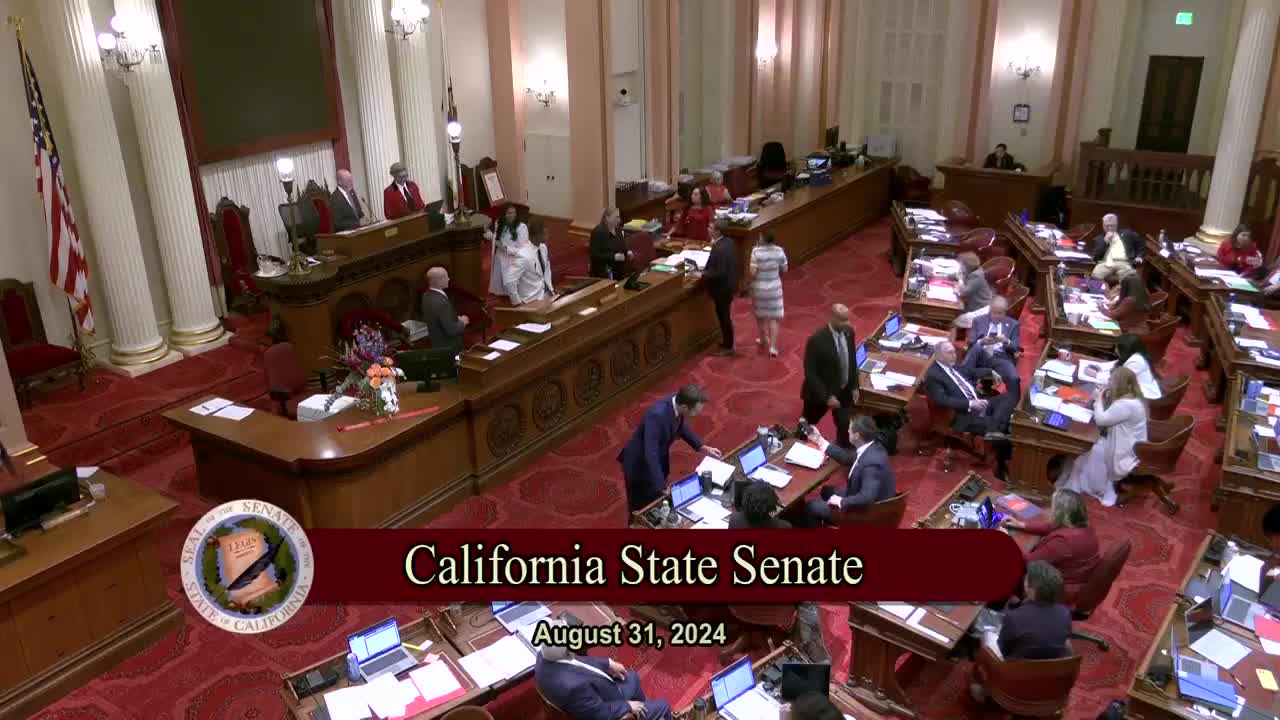 1MIN
Senate Floor
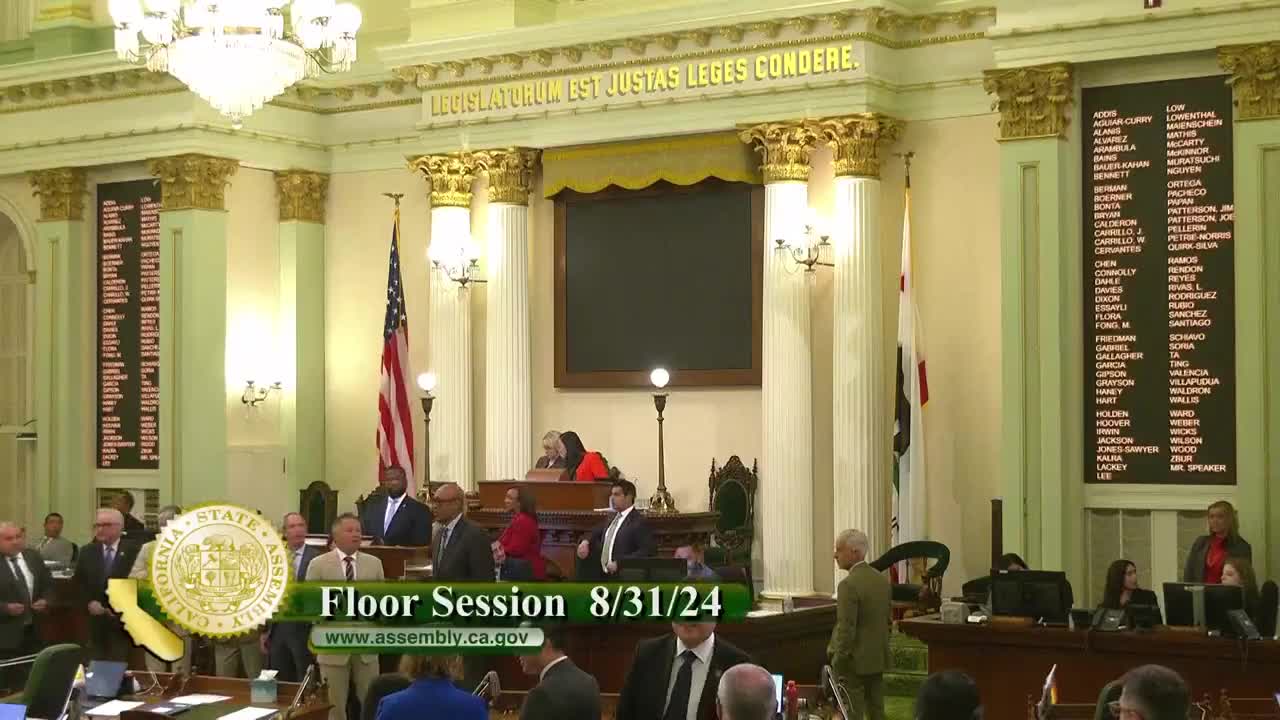 4MIN
Assembly Floor
 4MIN
Assembly Standing Committee on Appropriations
 26MIN
Assembly Standing Committee on Judiciary
 27MIN
Assembly Standing Committee on Housing and Community Development
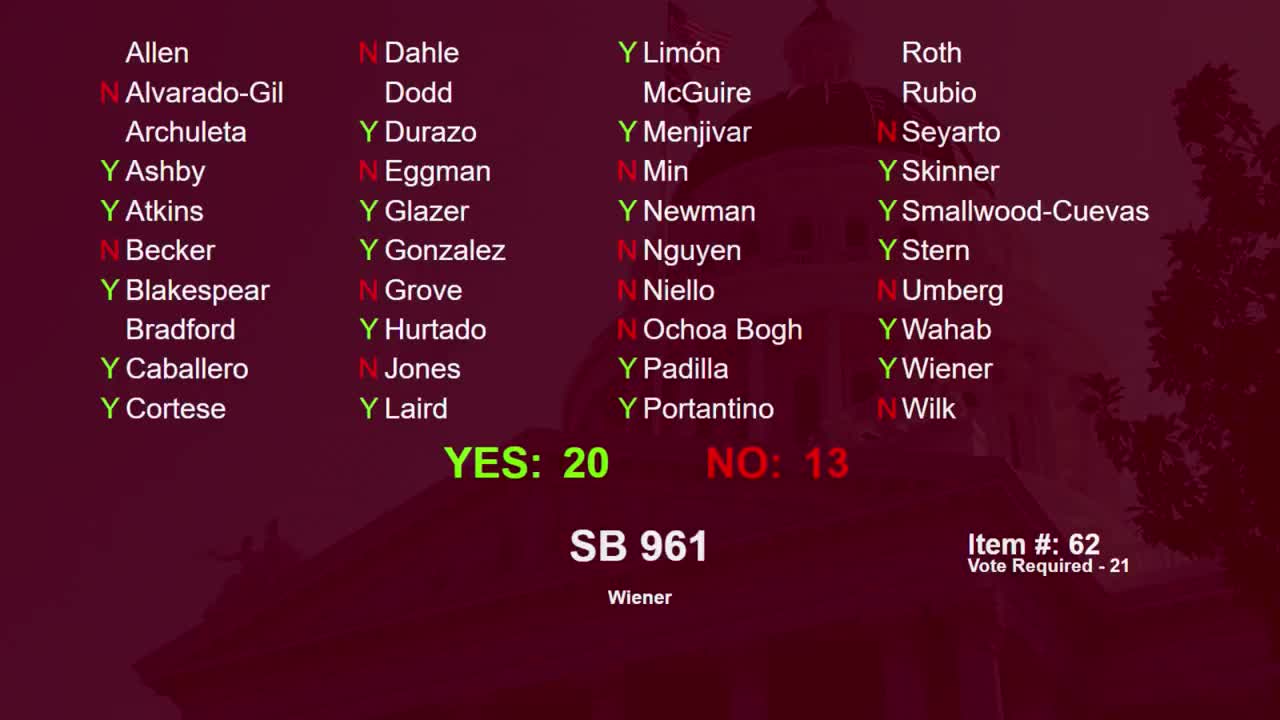 7MIN
Senate Floor
 9MIN
Senate Standing Committee on Judiciary
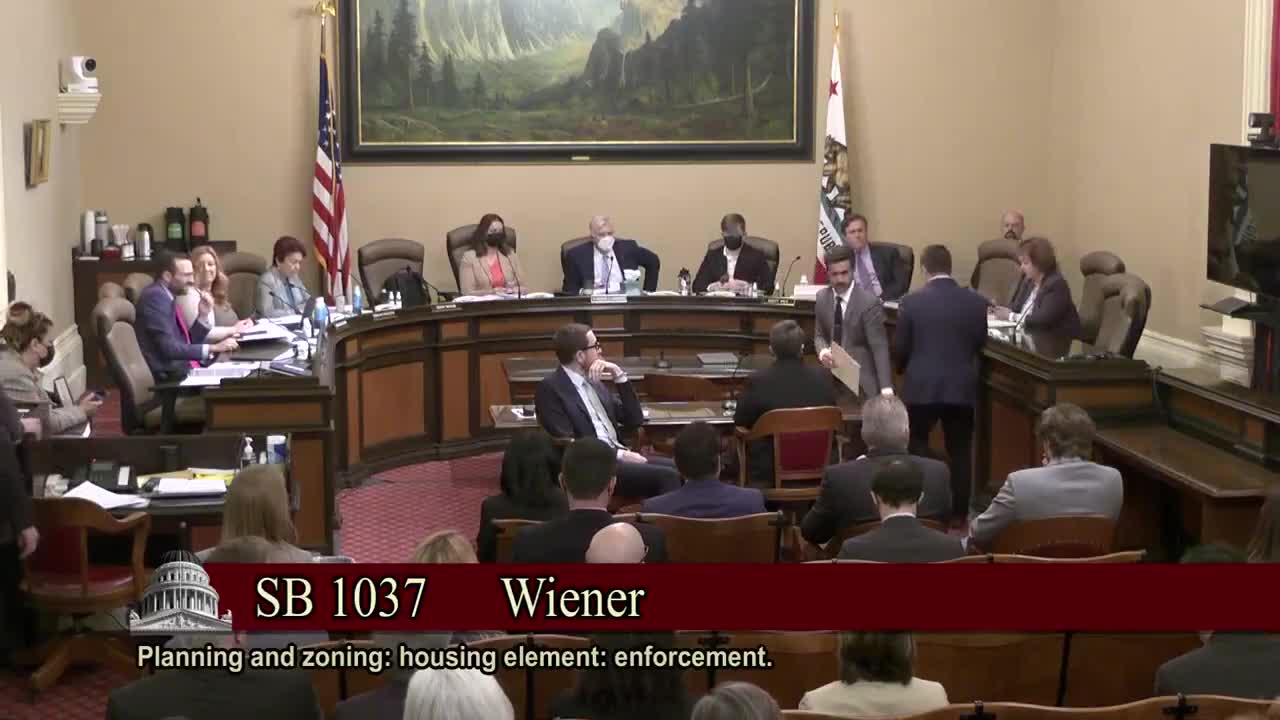 4MIN
Senate Standing Committee on Judiciary
Bill Author

Bill Co-Author(s):
