SB 1046: Organic waste reduction: program environmental impact report: small and medium compostable material handling facilities or operations.
- Session Year: 2023-2024
- House: Senate
- Latest Version Date: 2024-09-22
Current Status:
Passed
(2024-09-22: Chaptered by Secretary of State. Chapter 452, Statutes of 2024.)
Introduced
In Committee
First Chamber
In Committee
Second Chamber
Enacted
Existing law requires the Department of Resources Recycling and Recovery, in consultation with the State Air Resources Board, to adopt regulations to achieve specified organic waste reduction goals and to analyze the progress that the waste sector, state government, and local governments have made in achieving those reduction goals, as provided. Existing law authorizes the department to include incentives or additional requirements in specified regulations to facilitate progress towards achieving the organic waste reduction goals if the department determines that significant progress has not been made.
The California Environmental Quality Act (CEQA), requires a lead agency, as defined, to prepare, or cause to be prepared, and certify the completion of an environmental impact report on a project that it proposes to carry out or approve that may have a significant effect on the environment or to adopt a negative declaration if it finds that the project will not have that effect, as provided. Existing regulations describe the advantages and uses of a program environmental impact report.
This bill would require the Department of Resources Recycling and Recovery to prepare and certify, by January 1, 2027, a program environmental impact report that streamlines the process with which jurisdictions can develop and site small and medium compostable material handling facilities or operations, as defined, for processing organic material, as specified.
Existing law requires the Department of Resources Recycling and Recovery, in consultation with the State Air Resources Board, to adopt regulations to achieve certain reduction targets in the organic waste disposed in landfills and to analyze the progress that the waste sector, state government, and local governments have made in achieving those reduction targets, as provided. Existing law authorizes the department to provide incentives to facilitate progress towards the reduction targets if the department determines that sufficient progress has not been made.
The California Environmental Quality Act (CEQA), requires a lead agency, as defined, to prepare, or cause to be prepared, and certify the completion of an environmental impact report on a project that it proposes to carry out or approve that may have a significant effect on the environment or to adopt a negative declaration if it finds that the project will not have that effect, as provided. Existing regulations describe the advantages and uses of a program environmental impact report.
This bill would require the Department of Resources Recycling and Recovery to prepare and certify, by January 1, 2027, a program environmental impact report that streamlines the process with which jurisdictions can develop and site small and medium compostable material handling facilities or operations, as defined, for processing organic waste, material, as specified.
Existing law requires the Department of Resources Recycling and Recovery, in consultation with the State Air Resources Board, to adopt regulations to achieve certain reduction targets in the organic waste disposed in landfills and to analyze the progress that the waste sector, state government, and local governments have made in achieving those reduction targets, as provided. Existing law authorizes the department to provide incentives to facilitate progress towards the reduction targets if the department determines that sufficient progress has not been made.
The California Environmental Quality Act (CEQA), requires a lead agency, as defined, to prepare, or cause to be prepared, and certify the completion of an environmental impact report on a project that it proposes to carry out or approve that may have a significant effect on the environment or to adopt a negative declaration if it finds that the project will not have that effect, as provided. Existing regulations describe the advantages and uses of a program environmental impact report.
This bill would require the Department of Resources Recycling and Recovery to prepare and certify, by January 1, 2027, a program environmental impact report that streamlines the process with which jurisdictions can develop and site green material composting small and medium compostable material handling facilities or operations, as defined, for processing organic waste, as specified.
Existing law requires the Department of Resources Recycling and Recovery, in consultation with the State Air Resources Board, to adopt regulations to achieve certain reduction targets in the organic waste disposed in landfills and to analyze the progress that the waste sector, state government, and local governments have made in achieving those reduction targets, as provided. Existing law authorizes the department to provide incentives to facilitate progress towards the reduction targets if the department determines that sufficient progress has not been made.
The California Environmental Quality Act (CEQA), requires a lead agency, as defined, to prepare, or cause to be prepared, and certify the completion of an environmental impact report on a project that it proposes to carry out or approve that may have a significant effect on the environment or to adopt a negative declaration if it finds that the project will not have that effect, as provided. Existing regulations describe the advantages and uses of a program environmental impact report.
This bill would require the Department of Resources Recycling and Recovery to prepare and certify, by January 1, 2027, a program environmental impact report that streamlines the process with which jurisdictions can develop and site small and medium compost facilities green material composting operations, as defined, for processing organic waste, as specified.
Existing law requires the Department of Resources Recycling and Recovery, in consultation with the State Air Resources Board, to adopt regulations to achieve certain reduction targets in the organic waste disposed in landfills and to analyze the progress that the waste sector, state government, and local governments have made in achieving those reduction targets, as provided. Existing law authorizes the department to provide incentives to facilitate progress towards the reduction targets if the department determines that sufficient progress has not been made.
The California Environmental Quality Act (CEQA), requires a lead agency, as defined, to prepare, or cause to be prepared, and certify the completion of an environmental impact report on a project that it proposes to carry out or approve that may have a significant effect on the environment or to adopt a negative declaration if it finds that the project will not have that effect, as provided. Existing regulations describe the advantages and uses of a program environmental impact report.
This bill would require the Department of Resources Recycling and Recovery to prepare a program environmental impact report that streamlines the process with which jurisdictions can develop and site small and medium compost facilities for processing organic waste, as specified.
(a)By January 1, 2027, the Department of Resources Recycling and Recovery shall develop and certify a program environmental impact report pursuant to Section 15168 of Title 14 of the California Code of Regulations to streamline the permitting process for small and medium compostable material handling facilities or operations in the state that accept agricultural, food, and green materials. The program environmental impact report shall streamline the process with which jurisdictions can develop and site those facilities or operations to ensure organic material in the state is processed to its highest and best use.
(b)For the purposes of this section, all of the following definitions apply:
(1)Agricultural material has the same meaning as defined in Section 17852 of Title 14 of the California Code of Regulations.
(2)Compostable material handling facility or operation has the same meaning as defined in Section 17852 of Title 14 of the California Code of Regulations.
(3)Food material has the same meaning as defined in Section 17852 of Title 14 of the California Code of Regulations.
(4)Green material has the same meaning as defined in Section 17852 of Title 14 of the California Code of Regulations.
(5)Medium compostable material handling facility or operation means a facility or operation that handles more than 5,000 and not more than 12,500 cubic yards of material, including feedstock, compost material, additives, amendments, and finished compost at any one time.
(6)Small compostable material handling facility or operation means a facility or operation that handles not more than 5,000 cubic yards of material, including feedstock, compost material, additives, amendments, and finished compost at any one time.
(a)By January 1, 2027, the Department of Resources Recycling and Recovery shall develop and certify a program environmental impact report pursuant to Section 15168 of Title 14 of the California Code of Regulations to streamline the permitting process for small and medium compostable material handling facilities or operations in the state that accept agricultural, food, and green materials that are source separated or commingled. materials. The program environmental impact report shall streamline the process with which jurisdictions can develop and site those facilities or operations to ensure organic material in the state is processed to its highest and best use.
(b)For the purposes of this section, all of the following definitions apply:
(1)Agricultural material has the same meaning as defined in Section 17852 of Title 14 of the California Code of Regulations.
(2)Compostable material handling facility or operation has the same meaning as defined in Section 17852 of Title 14 of the California Code of Regulations.
(3)Food material has the same meaning as defined in Section 17852 of Title 14 of the California Code of Regulations.
(4)Green material has the same meaning as defined in Section 17852 of Title 14 of the California Code of Regulations.
(5)Medium compostable material handling facility or operation means a facility or operation that handles more than 5,000 and not more than 12,500 cubic yards of material, including feedstock, compost material, additives, amendments, and finished compost at any one time.
(6)Small compostable material handling facility or operation means a facility or operation that handles not more than 5,000 cubic yards of material, including feedstock, compost material, additives, amendments, and finished compost at any one time.
(a)By January 1, 2027, the Department of Resources Recycling and Recovery shall develop and certify a program environmental impact report pursuant to Section 15168 of Title 14 of the California Code of Regulations to streamline the permitting process for a green material composting operation small and medium compostable material handling facilities or operations in the state. state that accept agricultural, food, and green materials that are source separated or commingled. The program environmental impact report shall streamline the process with which jurisdictions can develop and site green material composting operations those facilities or operations to ensure organic material in the state is processed to its highest and best use.
(b)For the purposes of this section, green material composting operation means a composting operation that has no more than 12,500 cubic yards of feedstock, chipped and ground material, amendments, additives, active compost, and stabilized compost onsite at any one time, and that complies with the enforcement agency notification requirements set forth in Article 3.0 (commencing with Section 18100) of Chapter 5 of Division 7 of Title 14 of the California Code of Regulations and with the applicable requirements specified in Chapter 3.1 (commencing with Section 17850) of Division 7 of Title 14 of the California Code of Regulations. all of the following definitions apply:
(1)Agricultural material has the same meaning as defined in Section 17852 of Title 14 of the California Code of Regulations.
(2)Compostable material handling facility or operation has the same meaning as defined in Section 17852 of Title 14 of the California Code of Regulations.
(3)Food material has the same meaning as defined in Section 17852 of Title 14 of the California Code of Regulations.
(4)Green material has the same meaning as defined in Section 17852 of Title 14 of the California Code of Regulations.
(5)Medium compostable material handling facility or operation means a facility or operation that handles more than 5,000 and not more than 12,500 cubic yards of material, including feedstock, compost material, additives, amendments, and finished compost at any one time.
(6)Small compostable material handling facility or operation means a facility or operation that handles not more than 5,000 cubic yards of material, including feedstock, compost material, additives, amendments, and finished compost at any one time.
The (a)By January 1, 2027, the Department of Resources Recycling and Recovery shall develop and certify a program environmental impact report pursuant to Section 15168 of Title 14 of the California Code of Regulations to streamline the permitting process for small and medium compost facilities a green material composting operation in the state. The program environmental impact report shall streamline the process with which jurisdictions can develop and site small and medium compost facilities for specified material types green material composting operations to ensure organic material in the state is processed to its highest and best use.
(b)For the purposes of this section, green material composting operation means a composting operation that has no more than 12,500 cubic yards of feedstock, chipped and ground material, amendments, additives, active compost, and stabilized compost onsite at any one time, and that complies with the enforcement agency notification requirements set forth in Article 3.0 (commencing with Section 18100) of Chapter 5 of Division 7 of Title 14 of the California Code of Regulations and with the applicable requirements specified in Chapter 3.1 (commencing with Section 17850) of Division 7 of Title 14 of the California Code of Regulations.
The Department of Resources Recycling and Recovery shall develop a program environmental impact report pursuant to Section 15168 of Title 14 of the California Code of Regulations to streamline the permitting process for small and medium compost facilities in the state. The program environmental impact report shall streamline the process with which jurisdictions can develop and site small and medium compost facilities for specified material types to ensure organic material in the state is processed to its highest and best use.
|
Date
|
Status
|
|---|---|
| Sep 22, 2024 | Chaptered by Secretary of State. Chapter 452, Statutes of 2024. |
| Sep 22, 2024 | Approved by the Governor. |
| Sep 3, 2024 | Enrolled and presented to the Governor at 3 p.m. |
| Aug 26, 2024 | Assembly amendments concurred in. (Ayes 40. Noes 0. Page 5415.) Ordered to engrossing and enrolling. |
| Aug 22, 2024 | In Senate. Concurrence in Assembly amendments pending. |
| Aug 22, 2024 | Read third time. Passed. (Ayes 62. Noes 0. Page 6437.) Ordered to the Senate. |
| Aug 19, 2024 | Read second time. Ordered to third reading. |
| Aug 15, 2024 | From committee: Do pass. (Ayes 14. Noes 0.) (August 15). |
| Jul 2, 2024 | July 2 set for first hearing. Placed on suspense file. |
| Jun 26, 2024 | June 26 hearing postponed by committee. |
| Jun 12, 2024 | Read second time and amended. Re-referred to Com. on APPR. |
| Jun 11, 2024 | From committee: Do pass as amended and re-refer to Com. on APPR. with recommendation: To consent calendar. (Ayes 10. Noes 0.) (June 10). |
| May 6, 2024 | Referred to Com. on NAT. RES. |
| Apr 25, 2024 | In Assembly. Read first time. Held at Desk. |
| Apr 25, 2024 | Read third time. Passed. (Ayes 36. Noes 0. Page 3772.) Ordered to the Assembly. |
| Apr 23, 2024 | Read second time. Ordered to consent calendar. |
| Apr 22, 2024 | From committee: Be ordered to second reading pursuant to Senate Rule 28.8 and ordered to consent calendar. |
| Apr 12, 2024 | Set for hearing April 22. |
| Apr 11, 2024 | April 15 hearing postponed by committee. |
| Apr 9, 2024 | From committee with author's amendments. Read second time and amended. Re-referred to Com. on APPR. |
| Apr 5, 2024 | Set for hearing April 15. |
| Apr 4, 2024 | April 8 hearing postponed by committee. |
| Mar 28, 2024 | Set for hearing April 8. |
| Mar 21, 2024 | Read second time and amended. Re-referred to Com. on APPR. |
| Mar 20, 2024 | From committee: Do pass as amended and re-refer to Com. on APPR with recommendation: To consent calendar. (Ayes 6. Noes 0. Page 3379.) (March 20). |
| Mar 5, 2024 | Set for hearing March 20. |
| Feb 14, 2024 | Referred to Com. on E.Q. |
| Feb 8, 2024 | From printer. May be acted upon on or after March 9. |
| Feb 7, 2024 | Introduced. Read first time. To Com. on RLS. for assignment. To print. |
|
Date
|
Description
|
Location
|
Votes
|
|
|---|---|---|---|---|
| Aug 26, 2024 | Unfinished Business SB1046 Laird Concurrence | Senate Floor |
Passed |
|
| Aug 22, 2024 | SB 1046 Laird Senate Third Reading By Wood | Assembly Floor |
Passed |
|
| Aug 15, 2024 | Do pass. | Assembly Standing Committee on Appropriations |
Passed |
|
| Jun 10, 2024 | Do pass as amended, and be re-referred to the Committee on [Appropriations] with recommendation: To Consent Calendar | Assembly Standing Committee on Natural Resources |
Passed |
|
| Apr 25, 2024 | Consent Calendar 2nd SB1046 Laird | Senate Floor |
Passed |
|
| Mar 20, 2024 | Do pass as amended, but first amend, and re-refer to the Committee on [Appropriations] with the recommendation: To Consent Calendar | Senate Standing Committee on Environmental Quality |
Passed |
This list shows positions taken on this bill by organizations on the date displayed, which is linked to the original source.
Positions by individuals are not included.
|
Organization
|
Position
|
Date
|
|---|---|---|
| 350 Humboldt | ** Support | |
| 350 Sacramento | ** Support | |
| A Voice for Choice Advocacy | ** Support | |
| Berkeley City Of | ** Support | |
| California Compost Coalition | ** Support | |
| Californians Against Waste | ** Support | |
| California State Association Of Counties | ** Support | |
| Climate Action California | ** Support | |
| Climate Reality Project, Los Angeles Chapter | ** Support | |
| Climate Reality Project, San Fernando Valley | ** Support | |
| Elders Climate Action, Norcal and Socal Chapters | ** Support | |
| Emeryville; City Of | ** Support | |
| League Of California Cities | ** Support | |
| Little Hoover Commission | ** Support | |
| Republic Services - Western Region | ** Support | |
| Rural County Representatives of California | ** Support | |
| Santa Cruz Climate Action Network | ** Support | |
| Seaside City Of | ** Support | |
| South Bayside Waste Management Authority Dba Rethinkwaste | ** Support | |
| Thousand Oaks City Of | ** Support |
SENATE RULES COMMITTEE Office of Senate Floor Analyses (916) 651-1520 Fax: (916) 327-4478 | SB 1046 |
UNFINISHED BUSINESS
Bill No: SB 1046
Author: Laird (D)
Amended: 6/12/24
Vote: 21
SENATE ENVIRONMENTAL QUALITY COMMITTEE: 6-0, 3/20/24
AYES: Allen, Gonzalez, Hurtado, Menjivar, Nguyen, Skinner
NO VOTE RECORDED: Dahle
SENATE APPROPRIATIONS COMMITTEE: Senate Rule 28.8
SENATE FLOOR: 36-0, 4/25/24 (Consent)
AYES: Alvarado-Gil, Archuleta, Ashby, Atkins, Becker, Blakespear, Bradford, Caballero, Cortese, Dodd, Durazo, Glazer, Gonzalez, Grove, Hurtado, Jones, Laird, Limón, McGuire, Menjivar, Min, Newman, Nguyen, Niello, Padilla, Portantino, Roth, Rubio, Seyarto, Skinner, Smallwood-Cuevas, Stern, Umberg, Wahab, Wiener, Wilk
NO VOTE RECORDED: Allen, Dahle, Eggman, Ochoa Bogh
ASSEMBLY FLOOR: 62-0, 8/22/24 - See last page for vote
SUBJECT: Organic waste reduction: program environmental impact report: small and medium compostable material handling facilities or operations
SOURCE: Author
DIGEST:
This bill requires the California Department of Resources Recycling and Recovery (CalRecycle) to develop a Program Environmental Impact Report (PEIR) for use in review of small- and medium-sized compost facilities under the California Environmental Quality Act (CEQA).
Assembly Amendments
are technical and clarifying.
ANALYSIS:
Existing law:
- The California Environmental Quality Act (CEQA) requires lead agencies with the principal responsibility for carrying out or approving a project to prepare a negative declaration (ND), mitigated negative declaration (MND), or environmental impact report (EIR) for the project, unless the project is exempt from CEQA. (Public Resources Code (PRC) §21000 et seq.) If a project may have a significant effect on the environment, the lead agency must prepare a draft EIR. (CEQA Guidelines §15064(a)(1), (f)(1))
- Establishes and defines a PEIR in the CEQA guidelines as an EIR which may be prepared for a series of actions that can be characterized as one large project and are related either:
- Geographically;
- As logical parts in the chain of contemplated actions;
- In connection with issuance of rules, regulations, plans, or other general criteria to govern the conduct of a continuing program; or
- As individual activities carried out under the same authorizing statutory or regulatory authority and having generally similar environmental effects which can be mitigated in similar ways. (C.C.R. CEQA Guidelines § 15168)
- Establishes, under SB 1383 (Lara, Chapter 395, Statutes of 2016), as part of a broader short-lived climate pollutant reduction strategy, targets to achieve a 50% reduction in the level of statewide disposal of organic waste from the 2014 level by 2020, and a 75% reduction by 2025. (Health and Safety Code (HSC) § 39730.6)
- Requires CalRecycle, in consultation with CARB, to adopt regulations to achieve those targets for reducing organic waste in landfills. (Public Resources Code (PRC) § 42652.5)
This bill:
- Requires CalRecycle to develop a PEIR for small and medium compost facilities.
- Specifies that the PEIR shall streamline the process with which jurisdictions can develop and site compost facilities.
Background
- The A, B, C’s of CEQA. CEQA is designed to (a) make government agencies and the public aware of the environmental impacts of a proposed project, (b) ensure the public can take part in the review process, and (c) identify and implement measures to mitigate or eliminate any negative impact the project may have on the environment. CEQA is enforced by civil lawsuits that can challenge any project’s environmental review. Nonprofits, private individuals, public agencies, advocacy groups, and other organizations can all file lawsuits under CEQA.
Under CEQA, projects (unless they have a specific exemption) must undergo environmental analysis. This process starts with an initial study which determines what level of further environmental review is needed for a given project. If a project has no significant effects on the environment, or if those effects can be fully mitigated, the project can move forward with a negative declaration (ND) or mitigated negative declaration (MND). If the initial study finds that the project has potential significant effects on the environment, then a full EIR is conducted. An EIR provides thorough environmental review of a proposed project, analyzing the significant direct and indirect environmental impacts of a proposed project on water quality, transportation, air quality and greenhouse gas emissions, terrestrial and aquatic biological resources, surface and subsurface hydrology, land use and agricultural resources, aesthetics, geology and soils, recreation, public services and utilities such as water supply and wastewater disposal, and cultural resources, among other factors. The EIR also includes proposed mitigation measures for any significant effects that it identifies and considers alternatives to the proposed project.
- What is a Program EIR? Some projects that are similar or constitute a sequence of events may be grouped together under an umbrella EIR called a Program EIR (PEIR). The CEQA guidelines specify that a Program EIR may be useful and appropriate for projects that are related geographically, as logical parts in a chain of actions, are connected to a set of rules, regulations, are plans related to a single program, or are a set of activities.
Program EIRs can be used in two ways. A PEIR can be so comprehensive and detailed that it covers every environmental consideration that could come up for all the projects nested under the program: for these types of PEIRs, no further project-specific EIRs are needed. However, even if a PEIR cannot cover all environmental considerations for the projects that fall under its purview, the PEIR can still be used to cover environmental review for some aspects of those projects. In this case, the PEIR will be used in conjunction with a project-specific EIR that provides additional, site specific analysis that was not include in the PEIR.
- PEIR at CalRecycle. CalRecycle published a PEIR for anaerobic digestion technologies in July 2011. The final PEIR, which took a year and a half to prepare, included research on range of topics that could be applied broadly to anaerobic digestion technologies, regardless of the site-specific placement of a given project. This included research on various anaerobic digestion technologies, typical locations of anaerobic digester facilities, environmental impacts, potential feedstocks, and best management practices to reduce environmental impacts at anaerobic digester facilities, the types of anaerobic digestion projects being considered statewide, and the regulatory, technological and economic barriers to implementing potential anaerobic digestion projects. To evaluate the potential environmental impacts associated with anaerobic digestion projects analyzed in the PEIR, CalRecycle took input from a Technical Advisory Group made up of over 50 stakeholders.
- SB 1383 Goals and Targets. In 2016, California passed SB 1383 (Lara, Chapter 395, Statutes of 2016) to reduce emissions of short-lived climate pollutants (SLCP’s), and specifically to reduce methane emissions by 40% relative to 2014 levels by 2030. SB 1383 targets SLCP emissions from organic material decomposing in landfills.
When food and other organic material is discarded in a landfill, bacteria break down the material aerobically (without oxygen), a process that releases methane and other climate pollutants. While modern landfills have systems in place to capture this methane, significant amounts of SLCP’s continue to escape from landfills into the atmosphere. According to CalRecycle, landfills are the third largest source of methane in California, and organic waste in landfills emits 20% of the state's methane. Approximately 8.5 million tons of carbon dioxide equivalent were released by landfills in 2020.Compost facilities, in contrast to landfills, have significantly fewer emissions from organic waste, as composting primarily breaks material down aerobically (with oxygen), which does not produce methane. To reduce emissions from landfills, SB 1383 set a target of reducing the landfill disposal of organic waste 50% by 2020 and 75% by 2025 relative to the 2014 disposal level. Under SB 1383, the organic waste diverted from landfills must go to organics recovery facilities to make products like compost, fertilizer, fuel, or energy. In addition to these goals, at least 20 percent of the edible food in the organic waste stream must be recovered to feed people by 2025.
Broadly, SB 1383, as developed in regulations by CalRecycle in consultation with CARB, operates by requiring every jurisdiction to provide organic waste collection services to all residents and businesses and by creating a destination for that stream of organics by setting annual recovered organic waste procurement targets for jurisdictions.
- Progress towards SB 1383. California has made progress towards the organic-waste diversion goals outlined in SB 1383: however, according to a report by the Little Hoover Commission in 2023, the State failed to reach its 2020 targets and is not on track to reach its 2025 goals. Progress towards the goals has been mixed. For example:
- Jurisdictions report they rescued over 200,000 tons of unsold food in 2022, which is 87 percent of the way towards the SB 1383 edible food recovery target;
- 464 out of 616 jurisdictions report having residential organic waste collection in place –that’s 25% below SB 1383’s target;
- Organics diverted for recycling increased from 9.9 million tons in 2021 to 11.2 million tons in 2022. CalRecycle estimates that approximately 27 million tons of organic material will need to be redirected from landfills in 2025 to meet the SB 1383 reduction goal, meaning that diversion rate in 2022 was just 41% of the way towards the 2025 goal statewide.
Onboarding organic waste processing infrastructure has been and continues to be an essential step in achieving SB 1383’s goals. As of 2024, California has 210 operating organics processing facilities, including 169 composting facilities, 17 anaerobic digestion facilities, and 24 biomass operations. From October 2022 to December 2023, CalRecycle issued permits for seven solid waste facilities that included new compost, in-vessel digestion, and transfer/processing facilities for organic material. CalRecycle estimates 50 to 100 new or expanded anaerobic digestion facilities must come online to support SB 1383 organics waste reduction targets.
Comments
- Purpose of Bill. According to the author, “California set ambitious organic waste diversion and composting goals in an effort to curb methane emissions, a climate super pollutant 84 times more potent than carbon dioxide. However, California is not expected to meet its 2025 goal to reduce landfill disposal of organic materials by 75% below 2014 levels, which is partially attributed to insufficient infrastructure to process our organic waste.
“Senate Bill 1046 requires the Department of Resources Recycling and Recovery to develop a program environmental impact report (PEIR) for small and medium compost facilities to streamline permitting and help the state meet its climate goals, all while maintaining California’s strong environmental standards. A PEIR creates a clear and streamlined path to compliance for compost facilities, permitting agencies, and local governments, and reduces the time, cost, and resource barriers associated with the current permitting process. Additionally, small and medium compost facilities will help keep the compost closer to its point of generation to reduce emissions and wear and tear of road infrastructure. SB 1046 ensures a thoughtful approach to efficient development of compost facilities to meet our climate goals, without sacrificing environmental review.”
- Usefulness of a PEIR. Creating a PEIR for composting facilities assumes that composting facilities across the state share many of the same technologies, siting issues, and potential environmental impacts which would be examined in an EIR. A PEIR is only useful if there are enough similarities between composting facilitates to use some or all of the environmental review completed in the PEIR for individual composting facility projects. If composting facilities are similar enough to use elements of the PEIR, then the PEIR has the potential to provide significant time-savings from the CEQA process for individual composting facilities and reduce the overall permitting timeline for these facilities. In addition to providing environmental review that could be directly used in individual project EIRs, those elements of environmental analysis would not be subject to legal challenge for individual projects once the PEIR has been approved.
Related/Prior Legislation
AB 1236 (Lackey, 2019) would have required CalRecycle to prepare a PEIR for organic waste composting facilities on or before January 1, 2023. The bill was held on the Senate Appropriations suspense file.
SB 632 (Galgiani Chapter 411, Statutes of 2019) required the State Board of Forestry and Fire Protection, as soon as practicably feasible, but no later February 1, 2020, to complete its environmental review under CEQA and certify a specific final PEIR for a vegetation treatment program.
SB 45 (Portantino Chapter 445, Statutes of 2022) directed CalRecycle, in consultation with the CARB, to provide assistance to local jurisdictions for organic waste diversion programs.
FISCAL EFFECT: Appropriation: No Fiscal Com.: Yes Local: No
According to the Assembly Appropriations committee: “CalRecycle estimates ongoing annual costs starting in FY 2024-25 of $141,000 for one full-time staff position plus $250,000 in contract costs for FY 2024-25 through FY 2026-27 to develop regulations, facilitate a rulemaking, and create a PEIR.”
SUPPORT: (Verified 8/22/24)
350 Humboldt
350 Sacramento
A Voice for Choice Advocacy
Berkeley; City of
California Compost Coalition
California State Association of Counties
Californians Against Waste
Climate Action California
Climate Reality Project, Los Angeles Chapter
Climate Reality Project, San Fernando Valley
Elders Climate Action, Norcal and Socal Chapters
Emeryville; City of
League of California Cities
Little Hoover Commission
Republic Services - Western Region
Rural County Representatives of California
Santa Cruz Climate Action Network
Seaside; City of
South Bayside Waste Management Authority Dba Rethinkwaste
Thousand Oaks; City of
OPPOSITION: (Verified 8/22/24)
None received
ASSEMBLY FLOOR: 62-0, 8/22/24
AYES: Alanis, Alvarez, Arambula, Bains, Bennett, Berman, Boerner, Bryan, Calderon, Juan Carrillo, Wendy Carrillo, Chen, Connolly, Megan Dahle, Davies, Dixon, Essayli, Flora, Friedman, Gabriel, Gallagher, Garcia, Gipson, Grayson, Hart, Hoover, Jackson, Jones-Sawyer, Kalra, Lackey, Lee, Lowenthal, Maienschein, Mathis, Muratsuchi, Stephanie Nguyen, Pacheco, Papan, Jim Patterson, Joe Patterson, Pellerin, Quirk-Silva, Ramos, Rendon, Reyes, Luz Rivas, Rodriguez, Blanca Rubio, Sanchez, Santiago, Schiavo, Soria, Ta, Ting, Valencia, Villapudua, Waldron, Wallis, Ward, Wood, Zbur, Robert Rivas
NO VOTE RECORDED: Addis, Aguiar-Curry, Bauer-Kahan, Bonta, Cervantes, Mike Fong, Haney, Holden, Irwin, Low, McCarty, McKinnor, Ortega, Petrie-Norris, Weber, Wicks, Wilson
Prepared by: Brynn Cook / E.Q. / (916) 651-4108
8/22/24 16:10:51
**** END ****
SENATE THIRD READING
STR Bill Id:SB 1046
Author:(Laird)
As Amended Ver:June 12, 2024
Majority vote
SUMMARY
Requires the California Department of Resources Recycling and Recovery (CalRecycle) to develop a Program Environmental Impact Report (PEIR) for use in review of small- and medium-sized compost facilities under the California Environmental Quality Act (CEQA).
Major Provisions
- Requires CalRecycle, by January 1, 2027, to develop and certify a PEIR to streamline the permitting process for small and medium compostable material handling facilities or operations in the state that accept agricultural, food, and green materials that are source separated or comingled.
- Specifies that the PEIR streamline the process with which jurisdictions can develop and site those facilities or operations to ensure organic material in the state is processed to its highest and best use.
- Defines "medium compostable material handling facility or operation" as a facility or operation that handles more than 5,000 and not more than 12,500 cubic yards of material, including feedstock, compost material, additives, amendments, and finished compost at any one time; and defines "small compostable material handling facility or operation" as one that handles not more than 5,000 cubic yards of such materials.
COMMENTS
SB 1383 (Lara), Chapter 395, Statutes of 2016, requires the Air Resources Board (ARB) to complete, approve, and implement a comprehensive strategy to reduce emissions of short-lived climate pollutants (SLCP) in the state to achieve, among other things, a reduction in the statewide emissions of methane by 40% relative to 2013 levels. To achieve these methane reductions, SB 1383 set a goal of reducing landfill disposal of organic waste 50% by 2020 and 75% by 2025, and to rescue at least 20% of currently disposed of surplus food for meals by 2025.
Organic waste accounts for more than a third of California's waste stream. CalRecycle reports that 2.5 billion meals worth of potentially donatable food is landfilled in a year, and decomposing organic waste in landfills accounts for about 20% of the state's total methane emissions.
SB 1383 regulations adopted by CalRecycle require local jurisdictions to meet organic waste procurement and recovery targets based, in part, on population. A 2023 report by the Little Hoover Commission concluded that California failed to reach its 2020 targets and is not on track to reach its 2025 goals. One reason is delay in deploying compost facilities due to lengthy procedures under CEQA, which generally requires review by a lead agency of the environmental effects of specified projects, unless a CEQA exemption applies. If an initial study of a proposed project shows that the project may have a significant effect on the environment, an Environmental Impact Report (EIR) is required. The EIR must accurately describe the proposed project, identify, and analyze each significant environmental impact expected to result from the proposed project, identify mitigation measures to reduce those impacts to the extent feasible, and evaluate a range of reasonable alternatives to the proposed project. If mitigation measures are required or incorporated into a project, the agency must adopt a reporting or monitoring program to ensure compliance with those measures.
Similar projects subject to CEQA may be grouped together under an umbrella EIR, known as a PEIR. CEQA guidelines specify that a PEIR may be useful and appropriate for projects that are related geographically, as logical parts in a chain of actions, are connected to a set of regulations, are plans related to a single program, or are a set of activities. A PEIR can be so comprehensive and detailed that it covers every environmental consideration that could come up for all the projects nested under the program, thereby avoiding the need for project-specific EIRs. According to CalRecycle, the state needs approximately 50 to 100 new or expanded organics facilities to recycle the additional 20 million to 25 million tons of organic waste that will be collected to meet the SB 1383 organic waste reduction targets. The PEIR required by this bill could expedite siting of organic waste infrastructure and thereby improve progress toward achieving the state's organic waste goals.
According to the Author
California set ambitious organic waste diversion and composting goals in an effort to curb methane emissions, a climate super pollutant 84 times more potent than carbon dioxide. However, California is not expected to meet its 2025 goal to reduce landfill disposal of organic materials by 75% below 2014 levels, which is partially attributed to insufficient infrastructure to process our organic waste.
Senate Bill 1046 requires [CalRecycle] to develop a [PEIR] for small and medium compost facilities to streamline permitting and help the state meet its climate goals, all while maintaining California's strong environmental standards. A PEIR creates a clear and streamlined path to compliance for compost facilities, permitting agencies, and local governments, and reduces the time, cost, and resource barriers associated with the current permitting process. Additionally, small and medium compost facilities will help keep the compost closer to its point of generation to reduce emissions and wear and tear of road infrastructure. SB 1046 ensures a thoughtful approach to efficient development of compost facilities to meet our climate goals, without sacrificing environmental review.
Arguments in Support
The League of California Cities states:
Given the importance the state has assigned to reducing methane emissions from organic waste management – and the significant investments that will be required to achieve those objectives – a small state investment in developing a PEIR for composting facilities will repay itself many times over. We believe it will help increase organic waste recycling, reduce pollution, help local governments comply with SB 1383, and create in-state manufacturing jobs.
Arguments in Opposition
None on file.
FISCAL COMMENTS
According to the Assembly Appropriations Committee, CalRecycle estimates ongoing annual costs starting in Fiscal Year (FY) 2024-25 of $141,000 for one full-time staff position plus $250,000 in contract costs for FY 2024-25 through FY 2026-27 to develop regulations, facilitate rulemaking, and create a PEIR.
VOTES
SENATE FLOOR: 36-0-4
YES: Alvarado-Gil, Archuleta, Ashby, Atkins, Becker, Blakespear, Bradford, Caballero, Cortese, Dodd, Durazo, Glazer, Gonzalez, Grove, Hurtado, Jones, Laird, Limón, McGuire, Menjivar, Min, Newman, Nguyen, Niello, Padilla, Portantino, Roth, Rubio, Seyarto, Skinner, Smallwood-Cuevas, Stern, Umberg, Wahab, Wiener, Wilk
ABS, ABST OR NV: Allen, Dahle, Eggman, Ochoa Bogh
ASM NATURAL RESOURCES: 10-0-1
YES: Bryan, Flora, Bauer-Kahan, Friedman, Hoover, Kalra, Muratsuchi, Pellerin, Wicks, Wood
ABS, ABST OR NV: Mathis
ASM APPROPRIATIONS: 14-0-1
YES: Wicks, Sanchez, Arambula, Bryan, Calderon, Wendy Carrillo, Dixon, Mike Fong, Grayson, Haney, Hart, Pellerin, Ta, Villapudua
ABS, ABST OR NV: Jim Patterson
UPDATED
VERSION: June 12, 2024
CONSULTANT: Elizabeth MacMillan / NAT. RES. / (916) 319-2092 FN: 0003975
Date of Hearing: July 2, 2024
ASSEMBLY COMMITTEE ON APPROPRIATIONS
Buffy Wicks, Chair
SBPCA Bill Id:SB 1046
Author:(Laird) – As Amended Ver:June 12, 2024
Policy Committee: | Natural Resources | Vote: | 10 - 0 |
|
| ||
|
|
Urgency: No State Mandated Local Program: No Reimbursable: No
SUMMARY:
This bill requires the California Department of Resources Recycling and Recovery (CalRecycle) to develop a Program Environmental Impact Report (PEIR) for use in review of small- and medium-sized compost facilities under the California Environmental Quality Act (CEQA).
Specifically, this bill:
- Requires CalRecycle, by January 1, 2027, to develop and certify a PEIR to streamline the permitting process for small and medium compostable material handling facilities or operations in the state that accept agricultural, food, and green materials that are source separated or comingled.
- Specifies that the PEIR streamline the process with which jurisdictions can develop and site those facilities or operations to ensure organic material in the state is processed to its highest and best use.
- Defines “medium compostable material handling facility or operation” as a facility or operation that handles more than 5,000 and not more than 12,500 cubic yards of material, including feedstock, compost material, additives, amendments, and finished compost at any one time; and defines “small compostable material handling facility or operation” as one that handles not more than 5,000 cubic yards of such materials.
FISCAL EFFECT:
CalRecycle estimates ongoing annual costs starting in FY 2024-25 of $141,000 for one full-time staff position plus $250,000 in contract costs for FY 2024-25 through FY 2026-27 to develop regulations, facilitate a rulemaking, and create a PEIR.
COMMENTS:
- Purpose. According to the author:
California set ambitious organic waste diversion and composting goals in an effort to curb methane emissions, a climate super pollutant 84 times more potent than carbon dioxide. However, California is not expected to meet its 2025 goal to reduce landfill disposal of organic materials by 75% below 2014 levels, which is partially attributed to insufficient infrastructure to process our organic waste.
Senate Bill 1046 requires [CalRecycle] to develop a [PEIR] for small and medium compost facilities to streamline permitting and help the state meet its climate goals, all while maintaining California’s strong environmental standards. A PEIR creates a clear and streamlined path to compliance for compost facilities, permitting agencies, and local governments, and reduces the time, cost, and resource barriers associated with the current permitting process. Additionally, small and medium compost facilities will help keep the compost closer to its point of generation to reduce emissions and wear and tear of road infrastructure. SB 1046 ensures a thoughtful approach to efficient development of compost facilities to meet our climate goals, without sacrificing environmental review.
- Background. SB 1383 (Lara), Chapter 395, Statutes of 2016, requires the Air Resources Board (ARB) to complete, approve, and implement a comprehensive strategy to reduce emissions of short-lived climate pollutants (SLCP) in the state to achieve, among other things, a reduction in the statewide emissions of methane by 40% relative to 2013 levels. To achieve these methane reductions, SB 1383 set a goal of reducing landfill disposal of organic waste 50% by 2020 and 75% by 2025, and to rescue at least 20% of currently disposed of surplus food for meals by 2025.
Organic waste accounts for more than a third of California’s waste stream. CalRecycle reports that 2.5 billion meals worth of potentially donatable food is landfilled in a year, and decomposing organic waste in landfills accounts for about 20% of the state’s total methane emissions.
SB 1383 regulations adopted by CalRecycle require local jurisdictions to meet organic waste procurement and recovery targets based, in part, on population. A 2023 report by the Little Hoover Commission concluded that California failed to reach its 2020 targets and is not on track to reach its 2025 goals. One reason is delay in deploying compost facilities due to lengthy procedures under CEQA, which generally requires review by a lead agency of the environmental effects of specified projects, unless a CEQA exemption applies. If an initial study of a proposed project shows that the project may have a significant effect on the environment, an Environmental Impact Report (EIR) is required. The EIR must accurately describe the proposed project, identify and analyze each significant environmental impact expected to result from the proposed project, identify mitigation measures to reduce those impacts to the extent feasible, and evaluate a range of reasonable alternatives to the proposed project. If mitigation measures are required or incorporated into a project, the agency must adopt a reporting or monitoring program to ensure compliance with those measures.
Similar projects subject to CEQA may be grouped together under an umbrella EIR, known as a PEIR. CEQA guidelines specify that a PEIR may be useful and appropriate for projects that are related geographically, as logical parts in a chain of actions, are connected to a set of regulations, are plans related to a single program, or are a set of activities. A PEIR can be so comprehensive and detailed that it covers every environmental consideration that could come up for all the projects nested under the program, thereby avoiding the need for project-specific EIRs. According to CalRecycle, the state needs approximately 50 to 100 new or expanded organics facilities to recycle the additional 20 million to 25 million tons of organic waste that will be collected to meet the SB 1383 organic waste reduction targets. The PEIR required by this bill could expedite siting of organic waste infrastructure and thereby improve progress toward achieving the state’s organic waste goals.
- Related Legislation. A number of bills relating to organic waste management have been introduced this year. While viewed individually, these bills have modest impacts on the state’s efforts to achieve its SLCP reduction goals; however, added together, they may result in further hindering the state’s ability to reduce these critical GHG emissions. Such bills still under active consideration include AB 2311 (Bennett), AB 2346 (Lee), AB 2514 (Aguiar Curry), AB 2902 (Wood), SB 972 (Min), SB 1045 (Blakespear), and SB 1046 (Laird).
Analysis Prepared by: Jacqueline Kinney / APPR. / (916) 319-2081
Date of Hearing: June 10, 2024
ASSEMBLY COMMITTEE ON NATURAL RESOURCES
Isaac G. Bryan, Chair
SBPCA Bill Id:SB 1046
Author:(Laird) – As Amended Ver:April 9, 2024
SENATE VOTE: 36-0
SUBJECT: Organic waste reduction: program environmental impact report: small and medium compostable material handling facilities or operations
SUMMARY: Requires the California Department of Resources Recycling and Recovery (CalRecycle) to develop a Program Environmental Impact Report (PEIR) for small and medium sized compost facilities by January 1, 2027.
EXISTING LAW:
- Requires, under the California Environmental Quality Act (CEQA), lead agencies with the principal responsibility for carrying out or approving a project to prepare a negative declaration (ND), mitigated negative declaration (MND), or environmental impact report (EIR) for the project, unless the project is exempt from CEQA. (Public Resources Code (PRC) 21000 et seq.)
- For a project that may have a significant effect on the environment, requires the lead agency to prepare a draft EIR. (California Code of Regulations (CCR) 15064)
- Establishes and defines a PEIR in the CEQA guidelines as an EIR that may be prepared for a series of actions that can be characterized as one large project and are related either:
- Geographically;
- As logical parts in the chain of contemplated actions;
- In connection with issuance of rules, regulations, plans, or other general criteria to govern the conduct of a continuing program; or,
- As individual activities carried out under the same authorizing statutory or regulatory authority and having generally similar environmental effects which can be mitigated in similar ways. (CCR 15168)
- Requires the Air Resources Board (ARB) to develop a comprehensive strategy to reduce the emissions of short-lived climate pollutants (SLCP) to achieve a 40% reduction in methane emissions, 40% reduction in hydrofluorocarbon gases, and 50% reduction in anthropogenic black carbon below 2013 levels by 2030. (Health and Safety Code (HSC) 39730-39730.5)
- Requires the state to reduce the disposal of organic waste by 40% from the 2014 level by 2020 and 75% by 2025 to help achieve the state's methane reduction goal. (HSC 39730.6)
- Requires CalRecycle, in consultation with the Air Resources Board (ARB), to adopt regulations to achieve the targets for reducing the disposal of organic waste in landfills. (PRC 42652.5)
THIS BILL:
- Requires CalRecycle to develop and certify a PEIR to streamline the permitting process for small and medium compostable material handling facilities or operations in the state that accept agricultural, food, and green materials that are source separated or comingled by January 1, 2027. Specifies that the PEIR streamline the process with which jurisdictions can develop and site those facilities or operations to ensure organic material in the state is processed to its highest and best use.
- Defines terms used in the bill, including
- “Medium compostable material handling facility or operation” as a facility or operation that handles more than 5,000 and not more than 12,500 cubic yards of material, including feedstock, compost material, additives, amendments, and finished compost at any one time; and,
- “Small compostable material handling facility or operation” as a facility or operation that handles not more than 5,000 cubic yards of material, including feedstock, compost material, additives, amendments, and finished compost at any one time.
FISCAL EFFECT: According to the Senate Appropriations Committee, pursuant to Senate Rule 28.8, this bill has negligible state costs.
COMMENTS:
- CEQA. CEQA provides a process for evaluating the environmental effects of applicable projects undertaken or approved by public agencies. If a project is not exempt from CEQA, an initial study is prepared to determine whether the project may have a significant effect on the environment. If the initial study shows that there would not be a significant effect on the environment, the lead agency must prepare a ND. If the initial study shows that the project may have a significant effect on the environment, the lead agency must prepare an EIR.
An EIR must accurately describe the proposed project, identify and analyze each significant environmental impact expected to result from the proposed project, identify mitigation measures to reduce those impacts to the extent feasible, and evaluate a range of reasonable alternatives to the proposed project. If mitigation measures are required or incorporated into a project, the agency must adopt a reporting or monitoring program to ensure compliance with those measures.
Some projects that are similar may be grouped together under an umbrella EIR, known as a PEIR. The CEQA guidelines specify that a PEIR may be useful and appropriate for projects that are related geographically, as logical parts in a chain of actions, are connected to a set of rules, regulations, are plans related to a single program, or are a set of activities.
PEIRs can be used in two ways. A PEIR can be so comprehensive and detailed that it covers every environmental consideration that could come up for all the projects nested under the program: for these types of PEIRs, no further project-specific EIRs are needed. When a PEIR cannot cover all environmental considerations for the projects that fall under its purview, the PEIR can be used to cover environmental review for some aspects of those projects. In this case, the PEIR can be used in conjunction with a project-specific EIR that provides additional, site specific analysis that was not include in the PEIR.
CalRecycle published a PEIR for anaerobic digestion technologies in July 2011. The final PEIR, which took a year and a half to prepare, included research on a range of topics that could be applied broadly to anaerobic digestion technologies, regardless of the site-specific placement of a given project. This included research on various anaerobic digestion technologies, typical locations of facilities, types of projects being considered statewide, barriers to implementing potential anaerobic digestion projects, environmental impacts, potential feedstocks, and best management practices to reduce environmental impacts.
To evaluate the potential environmental impacts associated with anaerobic digestion projects analyzed in the PEIR, CalRecycle took input from a Technical Advisory Group made up of more than 50 stakeholders.
- Organic waste management. SB 1383 (Lara), Chapter 395, Statutes of 2016, requires ARB to approve and implement a comprehensive SLCP strategy to achieve, from 2013 levels, a 40% reduction in methane, a 40% reduction in hydrofluorocarbon gases, and a 50% reduction in anthropogenic black carbon by 2030. In order to accomplish these goals, the law specifies that the methane emission reduction goals include targets to reduce the landfill disposal of organic waste 50% by 2020 and 75% by 2025 from the 2014 level. SB 1383 also requires that by 2025, 20% of edible food that would otherwise be sent to landfills is redirected to feed people.
To achieve these targets, California’s waste management infrastructure is going to have to process and recycle much higher quantities of organic materials, involving significant investments in additional processing infrastructure. Organic waste is primarily recycled by composting the material, which generates compost that can be used in gardening and agriculture as a soil amendment and engineering purposes for things like slope stabilization. Anaerobic digestion is also widely used to recycle organic wastes. This technology uses bacteria to break down the material in the absence of oxygen and produces biogas, which can be used as fuel, and digestate, which can also be used as a soil amendment. - Target progress. California has made progress towards the organic-waste diversion goals outlined in SB 1383: however, according to a report by the Little Hoover Commission in 2023, the state failed to reach its 2020 targets and is not on track to reach its 2025 goals. Progress towards the goals has been mixed. For example:
- Jurisdictions report they rescued over 200,000 tons of unsold food in 2022, which is 87% of the SB 1383 edible food recovery target;
- 464 out of 616 jurisdictions report having residential organic waste collection in place, which is 25% below the SB 1383 target; and,
- Organics diverted for recycling increased from 9.9 million tons in 2021 to 11.2 million tons in 2022. CalRecycle estimates that approximately 27 million tons of organic material will need to be redirected from landfills in 2025 to meet the SB 1383 reduction goal, meaning that diversion rate in 2022 was just 41% of the 2025 goal statewide.
Expanding organic waste processing infrastructure has been and continues to be an essential step in achieving SB 1383's goals. As of 2024, California has 210 operating organics processing facilities, including 169 composting facilities, 17 anaerobic digestion facilities, and 24 biomass operations. From October 2022 to December 2023, CalRecycle issued permits for seven solid waste facilities that included new compost, in-vessel digestion, and transfer/processing facilities for organic material.
According to CalRecycle, the state needs approximately 50 to 100 new or expanded organics facilities to recycle the additional 20-25 million tons of organic waste that will be collected to meet the SB 1383 organic waste reduction targets.
- This bill. This bill requires CalRecycle to develop a PEIR for small to medium composting facilities to ease the regulatory barriers to citing new compost facilities. If composting facilities are similar enough to use elements of the PEIR, the PEIR has the potential to provide significant time-savings in the CEQA process for individual composting facilities and reduce the overall permitting timeline for these facilities. In addition to providing environmental review that could be directly used in individual project EIRs, those elements of environmental analysis would not be subject to legal challenge for individual projects once the PEIR has been approved.
- Author’s statement:
California set ambitious organic waste diversion and composting goals in an effort to curb methane emissions, a climate super pollutant 84 times more potent than carbon dioxide. However, California is not expected to meet its 2025 goal to reduce landfill disposal of organic materials by 75% below 2014 levels, which is partially attributed to insufficient infrastructure to process our organic waste.
Senate Bill 1046 requires the Department of Resources Recycling and Recovery to develop a program environmental impact report (PEIR) for small and medium compost facilities to streamline permitting and help the state meet its climate goals, all while maintaining California’s strong environmental standards. A PEIR creates a clear and streamlined path to compliance for compost facilities, permitting agencies, and local governments, and reduces the time, cost, and resource barriers associated with the current permitting process. Additionally, small and medium compost facilities will help keep the compost closer to its point of generation to reduce emissions and wear and tear of road infrastructure. SB 1046 ensures a thoughtful approach to efficient development of compost facilities to meet our climate goals, without sacrificing environmental review.
- Cumulative impacts. A number of bills relating to organic waste management have been introduced this year. While viewed individually, these bills have modest impacts on the state’s efforts to achieve its SLCP reduction goals; however, added together, they may result in further hindering the state’s ability to reduce these critical GHG emissions. As the bills move through the process, the authors should work together and with CalRecycle, stakeholders, and the relevant policy committees to ensure that the bills are complimentary and not duplicative or conflicting and that they do not negatively affect the state’s SLCP reduction efforts. The bills include:
AB 2311 (Bennett) adds edible food recovery activities to the activities eligible for funding from CalRecycle’s grant program that provides financial assistance to promote the development of organic waste infrastructure and waste reduction programs (infrastructure grant program). This bill has been referred to the Senate Environmental Quality Committee.
AB 2346 (Lee) authorizes local jurisdictions to be credited for the procurement of recovered organic waste products through contracts with direct service providers, and authorizes jurisdictions to receive procurement credit for investments made in projects that increase organic waste recycling capacity. This bill has been referred to the Senate Environmental Quality Committee.
AB 2514 (Aguiar Curry) exempts small counties with a population less than 70,000 from the state’s organic waste reduction requirements. This bill defines pyrolysis as the thermal decomposition of organic material at elevated temperatures in the absence of oxygen. This bill also requires CalRecycle to include hydrogen and pipeline biomethane converted from organic waste as eligible for procurement credit by local jurisdictions and requires CalRecycle to consider life cycle impacts when providing incentives to facilitate progress toward the organic waste reduction targets. This bill has been referred to the Senate Environmental Quality Committee.
AB 2902 (Wood) indefinitely extends the exemption for small rural counties with a population below 70,000 from the state’s organic waste reduction requirements, as specified. This bill provides additional compliance flexibility for small counties that produce less than 200,000 tons of solid waste annually. This bill also provides a process by which jurisdictions located at higher altitudes may receive an exemption from CalRecycle where food waste collection bins pose a threat to public health or animal safety due to bears. This bill has been referred to the Senate Environmental Quality Committee.
SB 972 (Min) requires CalRecycle, ARB, and the California Environmental Protection Agency to hold at least two joint meetings each calendar year to coordinate the implementation of policies that affect organic waste reduction targets. This bill has been referred to the Assembly Natural Resources Committee.
SB 1045 (Blakespear) requires the Office of Planning and Research, in consultation with CalRecycle, to develop a model zoning ordinance that facilitates the siting of compost facilities and requires local jurisdictions, when amending a zoning ordinance to also amend an appropriate zoning ordinance based on the model ordinance. This bill also requires district or regional water boards to act on permits for compost facilities within 30 days. This bill has been referred to the Assembly Natural Resources Committee and the Assembly Local Government Committee.
SB 1175 (Ochoa Bogh) requires CalRecycle to consider alternatives to census tracts when establishing the boundaries for a low-population or elevation waiver from the state’s organic waste reduction requirements. This bill has been referred to the Assembly Natural Resources Committee.
- Suggested amendment. To avoid confusion about the types of organic waste that can be processed by the small and medium sized compost facilities and operations, the committee may wish to amend the bill to strike “that are source separated or comingled” from page 2, line 10.
REGISTERED SUPPORT / OPPOSITION:
Support
California Compost Coalition
California State Association of Counties
Californians Against Waste
City of Emeryville
City of Goleta
City of Thousand Oaks
League of California Cities
Recology
Rural County Representatives of California
South Bayside Waste Management Authority
Opposition
None on file
Analysis Prepared by: Elizabeth MacMillan / NAT. RES. /
SENATE RULES COMMITTEE Office of Senate Floor Analyses (916) 651-1520 Fax: (916) 327-4478 | SB 1046 |
CONSENT
Bill No: SB 1046
Author: Laird (D)
Amended: 4/9/24
Vote: 21
SENATE ENVIRONMENTAL QUALITY COMMITTEE: 6-0, 3/20/24
AYES: Allen, Gonzalez, Hurtado, Menjivar, Nguyen, Skinner
NO VOTE RECORDED: Dahle
SENATE APPROPRIATIONS COMMITTEE: Senate Rule 28.8
SUBJECT: Organic waste reduction: program environmental impact report: small and medium compostable material handling facilities or operations
SOURCE: Author
DIGEST:
This bill requires the California Department of Resources Recycling and Recovery (CalRecycle) to develop a Program Environmental Impact Report (PEIR) for small and medium compost facilities by January 1, 2027.
ANALYSIS:
Existing law:
- Requires, under the California Environmental Quality Act (CEQA), lead agencies with the principal responsibility for carrying out or approving a project to prepare a negative declaration (ND), mitigated negative declaration (MND), or environmental impact report (EIR) for the project, unless the project is exempt from CEQA. (Public Resources Code (PRC) §21000 et seq.) If a project may have a significant effect on the environment, the lead agency must prepare a draft EIR. (California Environmental Quality Act (CEQA) Guidelines §15064(a)(1), (f)(1))
- Establishes and defines a PEIR in the CEQA guidelines as an EIR which may be prepared for a series of actions that can be characterized as one large project and are related either:
- Geographically;
- As logical parts in the chain of contemplated actions;
- In connection with issuance of rules, regulations, plans, or other general criteria to govern the conduct of a continuing program; or
- As individual activities carried out under the same authorizing statutory or regulatory authority and having generally similar environmental effects which can be mitigated in similar ways. (California Code of Regulations CEQA Guidelines § 15168)
- Establishes, under SB 1383 (Lara, Chapter 395, Statutes of 2016), as part of a broader short-lived climate pollutant reduction strategy, targets to achieve a 50% reduction in the level of statewide disposal of organic waste from the 2014 level by 2020, and a 75% reduction by 2025. (Health and Safety Code § 39730.6)
- Requires CalRecycle, in consultation with CARB, to adopt regulations to achieve those targets for reducing organic waste in landfills. (Public Resources Code § 42652.5)
This bill:
- Requires CalRecycle to develop a PEIR for small and medium compost facilities.
- Specifies that the PEIR shall streamline the process with which jurisdictions can develop and site compost facilities.
Background
- The A, B, C’s of CEQA. CEQA is designed to (a) make government agencies and the public aware of the environmental impacts of a proposed project, (b) ensure the public can take part in the review process, and (c) identify and implement measures to mitigate or eliminate any negative impact the project may have on the environment. CEQA is enforced by civil lawsuits that can challenge any project’s environmental review. Nonprofits, private individuals, public agencies, advocacy groups, and other organizations can all file lawsuits under CEQA.
Under CEQA, projects (unless they have a specific exemption) must undergo environmental analysis. This process starts with an initial study which determines what level of further environmental review is needed for a given project. If a project has no significant effects on the environment, or if those effects can be fully mitigated, the project can move forward with an ND or MND. If the initial study finds that the project has potential significant effects on the environment, then a full EIR is conducted. An EIR provides thorough environmental review of a proposed project, analyzing the significant direct and indirect environmental impacts of a proposed project on water quality, transportation, air quality and greenhouse gas emissions, terrestrial and aquatic biological resources, surface and subsurface hydrology, land use and agricultural resources, aesthetics, geology and soils, recreation, public services and utilities such as water supply and wastewater disposal, and cultural resources, among other factors. The EIR also includes proposed mitigation measures for any significant effects that it identifies and considers alternatives to the proposed project.
- What is a Program EIR? Some projects that are similar or constitute a sequence of events may be grouped together under an umbrella EIR called a Program EIR (PEIR). The CEQA guidelines specify that a Program EIR may be useful and appropriate for projects that are related geographically, as logical parts in a chain of actions, are connected to a set of rules, regulations, are plans related to a single program, or are a set of activities.
Program EIRs can be used in two ways. A PEIR can be so comprehensive and detailed that it covers every environmental consideration that could come up for all the projects nested under the program: for these types of PEIRs, no further project-specific EIRs are needed. However, even if a PEIR cannot cover all environmental considerations for the projects that fall under its purview, the PEIR can still be used to cover environmental review for some aspects of those projects. In this case, the PEIR will be used in conjunction with a project-specific EIR that provides additional, site specific analysis that was not include in the PEIR.
- PEIR at CalRecycle. CalRecycle published a PEIR for anaerobic digestion technologies in July 2011. The final PEIR, which took a year and a half to prepare, included research on range of topics that could be applied broadly to anaerobic digestion technologies, regardless of the site-specific placement of a given project. This included research on various anaerobic digestion technologies, typical locations of anaerobic digester facilities, environmental impacts, potential feedstocks, and best management practices to reduce environmental impacts at anaerobic digester facilities, the types of anaerobic digestion projects being considered statewide, and the regulatory, technological and economic barriers to implementing potential anaerobic digestion projects.
To evaluate the potential environmental impacts associated with anaerobic digestion projects analyzed in the PEIR, CalRecycle took input from a Technical Advisory Group made up of over 50 stakeholders.
- SB 1383 Goals and Targets. In 2016, California passed SB 1383 (Lara, Chapter 395, Statutes of 2016) to reduce emissions of short-lived climate pollutants (SLCP’s), and specifically to reduce methane emissions by 40% relative to 2014 levels by 2030. SB 1383 targets SLCP emissions from organic material decomposing in landfills.
When food and other organic material is discarded in a landfill, bacteria break down the material aerobically (without oxygen), a process that releases methane and other climate pollutants. While modern landfills have systems in place to capture this methane, significant amounts of SLCP’s continue to escape from landfills into the atmosphere. According to CalRecycle, landfills are the third largest source of methane in California, and organic waste in landfills emits 20% of the state's methane. Approximately 8.5 million tons of carbon dioxide equivalent were released by landfills in 2020.
Compost facilities, in contrast to landfills, have significantly fewer emissions from organic waste, as composting primarily breaks material down aerobically (with oxygen), which does not produce methane.
To reduce emissions from landfills, SB 1383 set a target of reducing the landfill disposal of organic waste 50% by 2020 and 75% by 2025 relative to the 2014 disposal level. Under SB 1383, the organic waste diverted from landfills must go to organics recovery facilities to make products like compost, fertilizer, fuel, or energy. In addition to these goals, at least 20 percent of the edible food in the organic waste stream must be recovered to feed people by 2025.
Broadly, SB 1383, as developed in regulations by CalRecycle in consultation with CARB, operates by requiring every jurisdiction to provide organic waste collection services to all residents and businesses and by creating a destination for that stream of organics by setting annual recovered organic waste procurement targets for jurisdictions.
- Progress towards SB 1383. California has made progress towards the organic-waste diversion goals outlined in SB 1383: however, according to a report by the Little Hoover Commission in 2023, the State failed to reach its 2020 targets and is not on track to reach its 2025 goals. Progress towards the goals has been mixed. For example:
- Jurisdictions report they rescued over 200,000 tons of unsold food in 2022, which is 87 percent of the way towards the SB 1383 edible food recovery target;
- 464 out of 616 jurisdictions report having residential organic waste collection in place –that’s 25% below SB 1383’s target;
- Organics diverted for recycling increased from 9.9 million tons in 2021 to 11.2 million tons in 2022. CalRecycle estimates that approximately 27 million tons of organic material will need to be redirected from landfills in 2025 to meet the SB 1383 reduction goal, meaning that diversion rate in 2022 was just 41% of the way towards the 2025 goal statewide.
Onboarding organic waste processing infrastructure has been and continues to be an essential step in achieving SB 1383’s goals. As of 2024, California has 210 operating organics processing facilities, including 169 composting facilities, 17 anaerobic digestion facilities, and 24 biomass operations. From October 2022 to December 2023, CalRecycle issued permits for seven solid waste facilities that included new compost, in-vessel digestion, and transfer/processing facilities for organic material.
CalRecycle estimates 50 to 100 new or expanded anaerobic digestion facilities must come online to support SB 1383 organics waste reduction targets.
Comments
- Purpose of Bill. According to the author, “California set ambitious organic waste diversion and composting goals in an effort to curb methane emissions, a climate super pollutant 84 times more potent than carbon dioxide. However, California is not expected to meet its 2025 goal to reduce landfill disposal of organic materials by 75% below 2014 levels, which is partially attributed to insufficient infrastructure to process our organic waste.
“Senate Bill 1046 requires the Department of Resources Recycling and Recovery to develop a program environmental impact report (PEIR) for small and medium compost facilities to streamline permitting and help the state meet its climate goals, all while maintaining California’s strong environmental standards. A PEIR creates a clear and streamlined path to compliance for compost facilities, permitting agencies, and local governments, and reduces the time, cost, and resource barriers associated with the current permitting process. Additionally, small and medium compost facilities will help keep the compost closer to its point of generation to reduce emissions and wear and tear of road infrastructure. SB 1046 ensures a thoughtful approach to efficient development of compost facilities to meet our climate goals, without sacrificing environmental review.”
- Usefulness of a PEIR. Creating a PEIR for composting facilities assumes that composting facilities across the state share many of the same technologies, siting issues, and potential environmental impacts which would be examined in an EIR. A PEIR is only useful if there are enough similarities between composting facilitates to use some or all of the environmental review completed in the PEIR for individual composting facility projects. If composting facilities are similar enough to use elements of the PEIR, then the PEIR has the potential to provide significant time-savings from the CEQA process for individual composting facilities and reduce the overall permitting timeline for these facilities. In addition to providing environmental review that could be directly used in individual project EIRs, those elements of environmental analysis would not be subject to legal challenge for individual projects once the PEIR has been approved.
Related/Prior Legislation
AB 1236 (Lackey, 2019) would have required CalRecycle to prepare a PEIR for organic waste composting facilities on or before January 1, 2023. The bill was held on the Senate Appropriations suspense file.
SB 632 (Galgiani Chapter 411, Statutes of 2019) required the State Board of Forestry and Fire Protection, as soon as practicably feasible, but no later February 1, 2020, to complete its environmental review under CEQA and certify a specific final PEIR for a vegetation treatment program.
SB 45 (Portantino Chapter 445, Statutes of 2022) directed CalRecycle, in consultation with the CARB, to provide assistance to local jurisdictions for organic waste diversion programs.
FISCAL EFFECT: Appropriation: No Fiscal Com.: Yes Local: No
SUPPORT: (Verified 4/23/24)
350 Humboldt
350 Sacramento
A Voice for Choice Advocacy
Berkeley; City of
California Compost Coalition
California State Association of Counties
Californians Against Waste
Climate Action California
Climate Reality Project, Los Angeles Chapter
Climate Reality Project, San Fernando Valley
Elders Climate Action, Norcal and Socal Chapters
League of California Cities
Little Hoover Commission
Republic Services - Western Region
Rural County Representatives of California
Santa Cruz Climate Action Network
Seaside; City of
South Bayside Waste Management Authority dba Rethinkwaste
Thousand Oaks; City of
OPPOSITION: (Verified 4/23/24)
None received
Prepared by: Brynn Cook / E.Q. / (916) 651-4108
4/24/24 15:04:46
**** END ****
SENATE COMMITTEE ON ENVIRONMENTAL QUALITY
Senator Allen, Chair
2023 - 2024 Regular
Bill No: SB 1046
Author: | Laird | ||
Version: | 2/7/2024 | Hearing Date: | 3/20/2024 |
Urgency: | No | Fiscal: | Yes |
Consultant: | Brynn Cook | ||
SUBJECT: Organic waste reduction: program environmental impact report: composting facilities
DIGEST: This bill requires the California Department of Resources Recycling and Recovery (CalRecycle) to develop a Program Environmental Impact Report (PEIR) for small and medium compost facilities.
ANALYSIS:
Existing law:
- The California Environmental Quality Act (CEQA) requires lead agencies with the principal responsibility for carrying out or approving a project to prepare a negative declaration (ND), mitigated negative declaration (MND), or environmental impact report (EIR) for the project, unless the project is exempt from CEQA. (Public Resources Code (PRC) §21000 et seq.) If a project may have a significant effect on the environment, the lead agency must prepare a draft EIR. (CEQA Guidelines §15064(a)(1), (f)(1))
- Establishes and defines a PEIR in the CEQA guidelines as an EIR which may be prepared for a series of actions that can be characterized as one large project and are related either:
- Geographically;
- As logical parts in the chain of contemplated actions;
- In connection with issuance of rules, regulations, plans, or other general criteria to govern the conduct of a continuing program; or
- As individual activities carried out under the same authorizing statutory or regulatory authority and having generally similar environmental effects which can be mitigated in similar ways. (C.C.R. CEQA Guidelines § 15168)
- Establishes, under SB 1383 (Lara, Chapter 395, Statutes of 2016), as part of a broader short-lived climate pollutant reduction strategy, targets to achieve a 50% reduction in the level of statewide disposal of organic waste from the 2014 level by 2020, and a 75% reduction by 2025. (HSC § 39730.6)
- Requires CalRecycle, in consultation with CARB, to adopt regulations to achieve those targets for reducing organic waste in landfills. (PRC § 42652.5)
This bill:
- Requires CalRecycle to develop a PEIR for small and medium compost facilities.
- Specifies that the PEIR shall streamline the process with which jurisdictions can develop and site compost facilities.
Background
- The A, B, C’s of CEQA. CEQA is designed to (a) make government agencies and the public aware of the environmental impacts of a proposed project, (b) ensure the public can take part in the review process, and (c) identify and implement measures to mitigate or eliminate any negative impact the project may have on the environment. CEQA is enforced by civil lawsuits that can challenge any project’s environmental review. Nonprofits, private individuals, public agencies, advocacy groups, and other organizations can all file lawsuits under CEQA.
Under CEQA, projects (unless they have a specific exemption) must undergo environmental analysis. This process starts with an initial study which determines what level of further environmental review is needed for a given project. If a project has no significant effects on the environment, or if those effects can be fully mitigated, the project can move forward with a negative declaration (ND) or mitigated negative declaration (MND). If the initial study finds that the project has potential significant effects on the environment, then a full EIR is conducted. An EIR provides thorough environmental review of a proposed project, analyzing the significant direct and indirect environmental impacts of a proposed project on water quality, transportation, air quality and greenhouse gas emissions, terrestrial and aquatic biological resources, surface and subsurface hydrology, land use and agricultural resources, aesthetics, geology and soils, recreation, public services and utilities such as water supply and wastewater disposal, and cultural resources, among other factors. The EIR also includes proposed mitigation measures for any significant effects that it identifies and considers alternatives to the proposed project.
- What is a Program EIR? Some projects that are similar or constitute a sequence of events may be grouped together under an umbrella EIR called a Program EIR (PEIR). The CEQA guidelines specify that a Program EIR may be useful and appropriate for projects that are related geographically, as logical parts in a chain of actions, are connected to a set of rules, regulations, are plans related to a single program, or are a set of activities.
Program EIRs can be used in two ways. A PEIR can be so comprehensive and detailed that it covers every environmental consideration that could come up for all the projects nested under the program: for these types of PEIRs, no further project-specific EIRs are needed. However, even if a PEIR cannot cover all environmental considerations for the projects that fall under its purview, the PEIR can still be used to cover environmental review for some aspects of those projects. In this case, the PEIR will be used in conjunction with a project-specific EIR that provides additional, site specific analysis that was not include in the PEIR.
- PEIR at CalRecycle. CalRecycle published a PEIR for anaerobic digestion technologies in July 2011. The final PEIR, which took a year and a half to prepare, included research on range of topics that could be applied broadly to anaerobic digestion technologies, regardless of the site-specific placement of a given project. This included research on various anaerobic digestion technologies, typical locations of anaerobic digester facilities, environmental impacts, potential feedstocks, and best management practices to reduce environmental impacts at anaerobic digester facilities, the types of anaerobic digestion projects being considered statewide, and the regulatory, technological and economic barriers to implementing potential anaerobic digestion projects.
To evaluate the potential environmental impacts associated with anaerobic digestion projects analyzed in the PEIR, CalRecycle took input from a Technical Advisory Group made up of over 50 stakeholders.
- SB 1383 Goals and Targets. In 2016, California passed SB 1383 (Lara, Chapter 395, Statutes of 2016) to reduce emissions of short-lived climate pollutants (SLCP’s), and specifically to reduce methane emissions by 40% relative to 2014 levels by 2030. SB 1383 targets SLCP emissions from organic material decomposing in landfills.
When food and other organic material is discarded in a landfill, bacteria break down the material aerobically (without oxygen), a process that releases methane and other climate pollutants. While modern landfills have systems in place to capture this methane, significant amounts of SLCP’s continue to escape from landfills into the atmosphere. According to CalRecycle, landfills are the third largest source of methane in California, and organic waste in landfills emits 20% of the state's methane. Approximately 8.5 million tons of carbon dioxide equivalent were released by landfills in 2020.
Compost facilities, in contrast to landfills, have significantly fewer emissions from organic waste, as composting primarily breaks material down aerobically (with oxygen), which does not produce methane.
To reduce emissions from landfills, SB 1383 set a target of reducing the landfill disposal of organic waste 50% by 2020 and 75% by 2025 relative to the 2014 disposal level. Under SB 1383, the organic waste diverted from landfills must go to organics recovery facilities to make products like compost, fertilizer, fuel, or energy. In addition to these goals, at least 20 percent of the edible food in the organic waste stream must be recovered to feed people by 2025.
Broadly, SB 1383, as developed in regulations by CalRecycle in consultation with CARB, operates by requiring every jurisdiction to provide organic waste collection services to all residents and businesses and by creating a destination for that stream of organics by setting annual recovered organic waste procurement targets for jurisdictions.
- Progress towards SB 1383. California has made progress towards the organic-waste diversion goals outlined in SB 1383: however, according to a report by the Little Hoover Commission in 2023, the State failed to reach its 2020 targets and is not on track to reach its 2025 goals. Progress towards the goals has been mixed. For example:
- Jurisdictions report they rescued over 200,000 tons of unsold food in 2022, which is 87 percent of the way towards the SB 1383 edible food recovery target;
- 464 out of 616 jurisdictions report having residential organic waste collection in place –that’s 25% below SB 1383’s target;
- Organics diverted for recycling increased from 9.9 million tons in 2021 to 11.2 million tons in 2022. CalRecycle estimates that approximately 27 million tons of organic material will need to be redirected from landfills in 2025 to meet the SB 1383 reduction goal, meaning that diversion rate in 2022 was just 41% of the way towards the 2025 goal statewide.
Onboarding organic waste processing infrastructure has been and continues to be an essential step in achieving SB 1383’s goals. As of 2024, California has 210 operating organics processing facilities, including 169 composting facilities, 17 anaerobic digestion facilities, and 24 biomass operations. From October 2022 to December 2023, CalRecycle issued permits for seven solid waste facilities that included new compost, in-vessel digestion, and transfer/processing facilities for organic material.
CalRecycle estimates 50 to 100 new or expanded anaerobic digestion facilities must come online to support SB 1383 organics waste reduction targets.
Comments
- Purpose of Bill. According to the author, “California set ambitious organic waste diversion and composting goals in an effort to curb methane emissions, a climate super pollutant 84 times more potent than carbon dioxide. However, California is not expected to meet its 2025 goal to reduce landfill disposal of organic materials by 75% below 2014 levels, which is partially attributed to insufficient infrastructure to process our organic waste.
“Senate Bill 1046 requires the Department of Resources Recycling and Recovery to develop a program environmental impact report (PEIR) for small and medium compost facilities to streamline permitting and help the state meet its climate goals, all while maintaining California’s strong environmental standards. A PEIR creates a clear and streamlined path to compliance for compost facilities, permitting agencies, and local governments, and reduces the time, cost, and resource barriers associated with the current permitting process. Additionally, small and medium compost facilities will help keep the compost closer to its point of generation to reduce emissions and wear and tear of road infrastructure. SB 1046 ensures a thoughtful approach to efficient development of compost facilities to meet our climate goals, without sacrificing environmental review.”
- On What Timeline? SB 1046 does not currently set a timeline for CalRecycle to begin or complete the required organics PEIR. PEIRs can take a significant amount of time to develop (for example, the Board of Forestry and Fire Protection (Board) developed a Vegetation Treatment Program (VTP) PEIR which took over a decade to complete). The VTP PEIR, which was not created at the direction of the Legislature, was eventually finished following legislation in 2019 which required the Board to complete and certify the final VTP PEIR by February 1, 2020.
A PEIR for compost facilities would be most useful towards advancing SB 1383’s 2025 goals if it was published before 2025, but given that a similar PEIR for anaerobic digesters took two years to complete, it is unlikely that a PEIR could be accomplished before the end of 2026 or beginning of 2027.
The author and committee may wish to consider providing further guidance to CalRecycle on the timeline for initiating and finalizing a draft PEIR.
- How small? How specific? SB 1046 does not currently define what constitutes a small or medium composting facility. CalRecycle’s SB 1383 regulations define small and medium composting facilities as those that accept less than 5,000 cubic yards of green material and less than 12,500 cubic yards of green material, respectively, and that are subject to the enforcement agency (EA) Tier of CalRecycle’s permitting regulatory structure. The EA tier generally has less intensive compliance requirements than the compliance requirements for larger composting facilities.
The author and committee may wish to consider specifying what volume of compost would be considered medium or smaller (i.e. any facility accepting less than 12,5000 cubic yards of green material) and defining other terms in the bill using existing definitions in the SB 1383 code of regulations.
- Committee Amendments: Staff recommends the committee adopt the suggested amendments bolded in (2) and (3) above.
Related/Prior Legislation
AB 1236 (Lackey, 2019) would have required CalRecycle to prepare a PEIR for organic waste composting facilities on or before January 1, 2023. The bill was held on the Senate Appropriations suspense file.
SB 632 (Galgiani Chapter 411, Statutes of 2019) requires the State Board of Forestry and Fire Protection, as soon as practicably feasible, but no later February 1, 2020, to complete its environmental review under CEQA and certify a specific final PEIR for a vegetation treatment program.
SB 45 (Portantino Chapter 445, Statutes of 2022) directs CalRecycle, in consultation with the CARB, to provide assistance to local jurisdictions for organic waste diversion programs.
SOURCE:
Author
SUPPORT:
A Voice for Choice Advocacy
California Compost Coalition
California State Association of Counties (CSAC)
League of California Cities
Rural County Representatives of California (RCRC)
South Bayside Waste Management Authority (sbwma ) Dba Rethinkwaste
OPPOSITION:
None received
-- END --
Discussed in Hearing
View Older Hearings
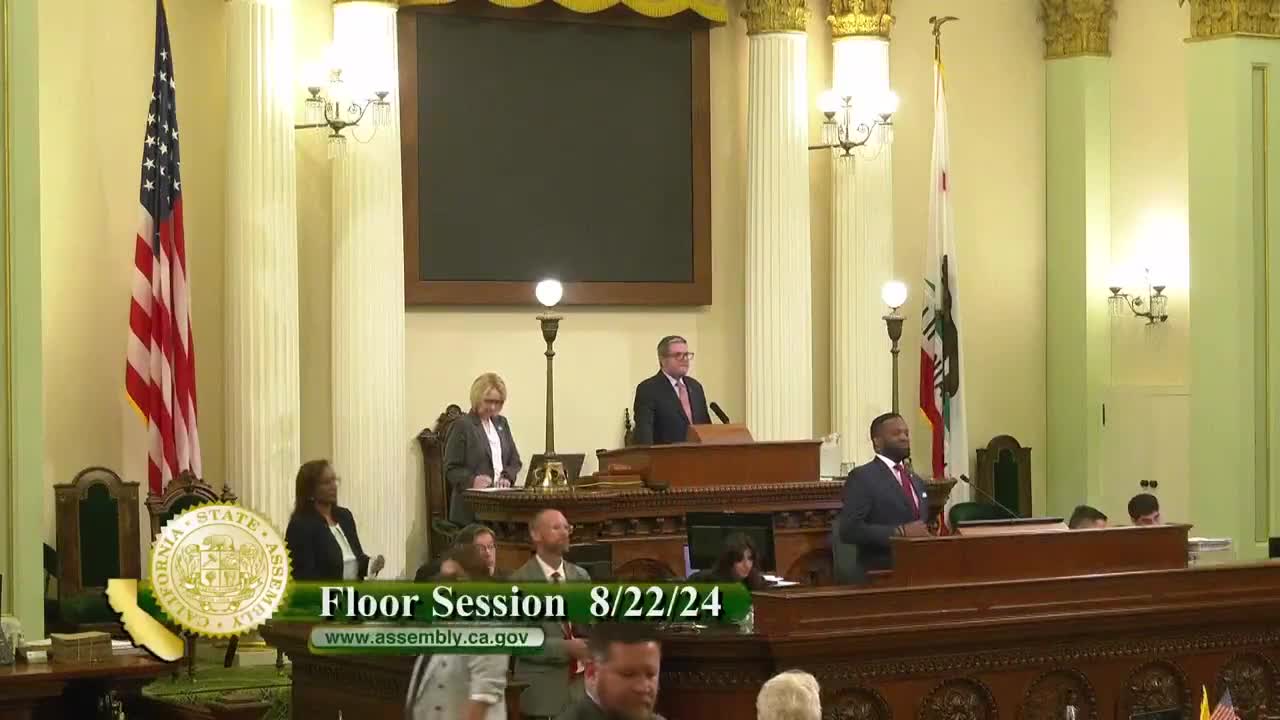
Bill Author

Bill Co-Author(s):