SB 1056: Elementary education: kindergarten.
- Session Year: 2023-2024
- House: Senate
- Latest Version Date: 2024-02-08
Current Status:
Failed
(2024-05-16: May 16 hearing: Held in committee and under submission.)
Introduced
In Committee
First Chamber
In Committee
Second Chamber
Enacted
Under existing law, a person between 6 and 18 years of age who is not exempted by law is subject to compulsory full-time education. Existing law excludes a child under 6 years of age from the public schools, subject to specified exceptions.
Existing law requires a school district maintaining a kindergarten to admit a child who will have their 5th birthday on or before September 1 of the school year. Existing law also requires a child who will have their 6th birthday on or before September 1 of the school year to be admitted to the first grade of an elementary school. Existing law authorizes a child who has been lawfully admitted to a public school kindergarten or a private school kindergarten in California and who is judged by the administration of the school district to be ready for first-grade work to be admitted to the first grade, as specified.
This bill, beginning with the 202627 school year, would require a child to have completed one year of kindergarten before that child may be admitted to the first grade at a public elementary school, except for a child who has been lawfully admitted to a public school kindergarten or a private school kindergarten in California, but has not yet completed one school year, and is judged to be ready for first-grade work, as specified, thereby imposing a state-mandated local program.
The California Constitution requires the state to reimburse local agencies and school districts for certain costs mandated by the state. Statutory provisions establish procedures for making that reimbursement.
This bill would provide that, if the Commission on State Mandates determines that the bill contains costs mandated by the state, reimbursement for those costs shall be made pursuant to the statutory provisions noted above.
(a)The Legislature finds and declares all of the following:
(1)Kindergarten prepares children academically and socially for future academic success. Considerable research shows that children who attend kindergarten receive significant benefits. Achievement and opportunity gaps begin as early as kindergarten, and children who attend preschool perform better than those who do not. Kindergarten becomes even more important for children who do not attend preschool, as kindergarten is where they learn important academic and social skills before entering the first grade.
(2)In comparing the long-term outcomes of children born in states with mandatory kindergarten attendance to states with voluntary kindergarten attendance, children who attend kindergarten are more likely to go to college and earn higher wages, and are less likely to experience poverty as adults.
(3)The benefits of an increased availability of kindergarten are also substantially larger for children who are Hispanic, Black, English language learners, and from immigrant households and lower income families.
(4)A 2011 study, Who Benefits From Kindergarten? Evidence From the Introduction of State Subsidization, shows that children from lower income families who attend kindergarten are less likely to be below grade level throughout their academic careers and earn 5 percent higher wages as adults. Kindergarten helps to level the playing field for children who are less likely to receive high-quality childcare or preschool. Hispanic children with access to kindergarten are also 17 percent less likely to be below grade level for their age, and earn wages 5 percent higher as adults.
(5)According to a 2019 study, The Returns of an Additional Year of Schooling: The Case of State-Mandated Kindergarten, Black and Hispanic children subjected to compulsory kindergarten experience a 5-percentage point increase in college completion relative to White children. They also experience a nearly 7-percent increase in wages and income relative to White children. There are similar differential impacts on education and income for women. These findings are extremely important given the presence of large education and earning gaps between Hispanic, Black, and White adults, and between men and women.
(b)It is the intent of the Legislature to maintain parental choice in determining the best option for their childs education. A parent or legal guardian of a pupil eligible for kindergarten maintains the discretion to enroll the pupil in either public school kindergarten or private school kindergarten, which includes home schooling, before enrolling the pupil in the first grade of a public elementary school.
(c)It is the intent of the Legislature that the age of compulsory education in California remain at six years of age.
SEC. 2.Section 48001 is added to the Education Code, to read:48001.(a)Beginning with the 202627 school year, except as provided in Section 48011, a child shall have completed one year of kindergarten before that child may be admitted to the first grade of a public elementary school, including a charter school.
(b)This section shall become operative on July 1, 2026.
SEC. 3.Section 48010 of the Education Code is amended to read:48010.(a)A child shall be admitted to the first grade of an a public elementary school school, including a charter school, during the first month of a school year if the child will have his or her their sixth birthday on or before one of the following dates:
(1)December 2 of the 201112 school year.
(2)November 1 of the 201213 school year.
(3)October 1 of the 201314 school year.
(4)September 1 of the 201415 school year and each school year thereafter.
(b)For good cause, the governing board of a school district or the governing body of a charter school may permit a child of proper age to be admitted to a class after the first school month of the school term.
(c)This section shall become inoperative on July 1, 2026, and, as of January 1, 2027, is repealed.
SEC. 4.Section 48010 is added to the Education Code, to read:48010.(a)A child shall be admitted to the first grade of a public elementary school, including a charter school, during the first month of a school year if the child has completed one year of kindergarten and will have their sixth birthday on or before one of the following dates:
(1)December 2 of the 201112 school year.
(2)November 1 of the 201213 school year.
(3)October 1 of the 201314 school year.
(4)September 1 of the 201415 school year and each school year thereafter.
(b)For good cause, the governing board of a school district or the governing body of a charter school may permit a child of proper age to be admitted to a class after the first school month of the school term.
(c)This section shall become operative on July 1, 2026.
SEC. 5.Section 48011 of the Education Code is amended to read:48011.(a)A child who, consistent with Section 48000, has been admitted to the kindergarten maintained by a private or a public school in California or any other state, and who has completed one school year therein, year, shall be admitted to the first grade of an a public elementary school school, including a charter school, unless the parent or guardian of the child and the administration of the school district or charter school agree that the child may continue in kindergarten for not more than an additional school year.
A(b)A child who has been lawfully admitted to a public school kindergarten or a private school kindergarten in California and who is judged by the administration of the school district, district or charter school, in accordance with rules and regulations adopted by the State Board of Education, state board, to be ready for first-grade work may be admitted to the first grade at the discretion of the school administration of the school district or charter school and with the consent of the childs parent or guardian if the child is at least five years of age. When a child has been legally enrolled in a another public school of another district school, including a charter school, within or out of the state, he or she the child may be admitted to school and placed in the grade of enrollment in the district school of former attendance, at the discretion of the school administration of the district school entered.
(c)This section shall become inoperative on July 1, 2026, and, as of January 1, 2027, is repealed.
SEC. 6.Section 48011 is added to the Education Code, to read:48011.(a)A child who, consistent with Section 48000, has been admitted to the kindergarten maintained by a private or a public school in California or any other state, and who has completed one school year, shall be admitted to the first grade of a public elementary school, including a charter school, unless the parent or guardian of the child and the administration of the school district or charter school agree that the child may continue in kindergarten for not more than an additional school year.
(b)A child who has been lawfully admitted to a public school kindergarten or a private school kindergarten in California, but has not yet completed one school year, and who is judged by the administration of the school district or charter school, in accordance with rules and regulations adopted by the state board, to be ready for first-grade work may be admitted to the first grade at the discretion of the administration of the school district or charter school and with the consent of the childs parent or guardian if the child is at least five years of age. When a child has been legally enrolled in another public school, including a charter school, within or out of the state, the child may be admitted to school and placed in the grade of enrollment in the school of former attendance, at the discretion of the school administration of the school entered.
(c)This section shall become operative on July 1, 2026.
SEC. 7.If the Commission on State Mandates determines that this act contains costs mandated by the state, reimbursement to local agencies and school districts for those costs shall be made pursuant to Part 7 (commencing with Section 17500) of Division 4 of Title 2 of the Government Code.
|
Date
|
Status
|
|---|---|
| May 16, 2024 | May 16 hearing: Held in committee and under submission. |
| May 10, 2024 | Set for hearing May 16. |
| Apr 22, 2024 | April 22 hearing: Placed on APPR suspense file. |
| Apr 12, 2024 | Set for hearing April 22. |
| Apr 10, 2024 | From committee: Do pass and re-refer to Com. on APPR. (Ayes 6. Noes 1. Page 3558.) (April 10). Re-referred to Com. on APPR. |
| Mar 20, 2024 | Set for hearing April 10. |
| Feb 21, 2024 | Referred to Com. on ED. |
| Feb 9, 2024 | From printer. May be acted upon on or after March 10. |
| Feb 8, 2024 | Introduced. Read first time. To Com. on RLS. for assignment. To print. |
|
Date
|
Description
|
Location
|
Votes
|
|
|---|---|---|---|---|
| Apr 22, 2024 | Placed on suspense file | Senate Standing Committee on Appropriations |
Passed |
|
| Apr 10, 2024 | Do pass, but first be re-referred to the Committee on [Appropriations] | Senate Standing Committee on Education |
Passed |
This list shows positions taken on this bill by organizations on the date displayed, which is linked to the original source.
Positions by individuals are not included.
|
Organization
|
Position
|
Date
|
|---|---|---|
| Baldwin Park Unified School District | ** Support | |
| California Association For Bilingual Education | ** Support | |
| California Charter Schools Association | ** Support | |
| California Retired Teachers Association | ** Support | |
| California School Employees Association | ** Support | |
| California Teachers Association | ** Support | |
| Communities in Schools of Los Angeles | ** Support | |
| Covina-Valley Unified School District | ** Support | |
| Early Edge California | ** Support | |
| Edvoice | ** Support | |
| El Monte Union High School District | ** Support | |
| Los Angeles Unified School District | ** Support | |
| Mountain View School District | ** Support | |
| San Diego Unified School District | ** Support |
SENATE COMMITTEE ON APPROPRIATIONS
Senator Anna Caballero, Chair
2023 - 2024 Regular Session
SB 1056 (Rubio) - Elementary education: kindergarten
Version: February 8, 2024 | Policy Vote: ED. 6 - 1 |
Urgency: No | Mandate: Yes |
Hearing Date: April 22, 2024 | Consultant: Lenin Del Castillo |
Bill Summary:
This bill requires, beginning with the 2026-27 school year, a student to have completed one year of kindergarten before being admitted to the first grade of a public school.
Fiscal Impact:
- This bill could result in significant, ongoing Proposition 98 General Fund costs beginning with the 2026-27 school year for an increased number of students to attend kindergarten. While a precise estimate is unknown, even a three to six percent increase in the number of students could be in the low hundreds of millions of dollars each year. In addition, local educational agencies (LEAs) may experience other local costs such as increased facility needs to accommodate the additional students.
- The California Department of Education (CDE) may incur additional General Fund costs, likely in the low hundreds of thousands of dollars, to provide technical assistance and training, hosting webinars, supporting transitions of children and their families, supporting transition processes for children with disabilities, and communication materials.
Background:
Existing law requires every person between the ages of 6 and 18 years to attend school full-time (at least the minimum school day as required by statute and school districts) and requires a student to be admitted to kindergarten if the student will have their 5th birthday on or before September 1.
Existing law authorizes school districts to admit to kindergarten, on a case-by-case basis, a student who will have their 5th birthday during the school year, subject to the following conditions: the governing board of the school district determines that the admittance is in the best interest of the student; and the parent is given information regarding the advantages and disadvantages and any other explanatory information about the effect of this early admittance.
Existing law requires a student to be admitted to the first grade if the student will have their 6th birthday on or before September 1.
Proposed Law:
This bill requires, beginning with the 2026-27 school year, a student to have completed one year of kindergarten before being admitted to the first grade of a public elementary school (including a charter school).
This bill provides that a student is to be admitted to the first grade if the student has their sixth birthday on or before September 1 and that the student has completed one year of kindergarten. It also specifies that the exiting authority for a kindergarten student to be placed in first grade if judged ready for first grade work applies to a student who has not completed one school year of kindergarten.
This bill extends to charter school governing bodies the existing authority for a school district governing board to admit a student of a proper age to a class after the first month of a school term.
Related Legislation:
SB 767 (Rubio, 2023) was similar to this bill and held on the Suspense File in this Committee.
SB 70 (Rubio, 2022) was similar to this bill and vetoed by the Governor, whose veto message read:
The learning that happens during the early years of a child's life is critical to their long-term success and happiness. It's why I worked with the Legislature to provide universal access to quality pre-kindergarten education, including transitional kindergarten, the California State Preschool Program, and other state-subsidized early learning programs. Making sure all kids begin their school careers ready to learn on par with their peers is one of the most impactful things we can do to combat societal inequities.
While the author's intent is laudable, SB 70 is estimated to have Prop. 98 General Fund cost impacts of up to $268 million ongoing, which is not currently accounted for in the state's fiscal plan. With our state facing lower-than-expected revenues over the first few months of this fiscal year, it is important to remain disciplined when it comes to spending, particularly spending that is ongoing. We must prioritize existing obligations and priorities, including education, health care, public safety and safety-net programs.
The Legislature sent measures with potential costs of well over $20 billion in one-time spending commitments and more than $10 billion in ongoing commitments not accounted for in the state budget. Bills with significant fiscal impact, such as this measure, should be considered and accounted for as part of the annual budget process. For these reasons, I cannot sign this bill.
AB 713 (Weber, 2015) would have required, beginning with the 2017-18 school year, a student to have completed one year of kindergarten before being admitted to the first grade. AB 713 was held in the Senate Appropriations Committee.
Staff Comments:
This bill makes one year of kindergarten attendance a prerequisite to attending first grade. Kindergarten is not currently mandatory in California, though the vast majority of age-eligible children do attend kindergarten.
Since ADA is one of the factors used to determine the size of the Proposition 98 Guarantee, costs will depend on the number of additional students who will enroll in kindergarten in a public school. This number is difficult to determine as it is unknown how many children will attend kindergarten in private school and whether parents would choose to send their children to private school if this bill is enacted.
Within the Guarantee, funding for programs driven by ADA would increase, including the Local Control Funding Formula (LCFF) and special education. The state provides funding for each student, as well as supplemental funding depending on whether the student is low-income, EL, or a foster youth. The level of funding needed for the LCFF would vary annually, depending on those factors. In addition, changes in ADA drive corresponding changes in required funding for the state’s special education program as its appropriation is distributed based on ADA. Increased funding for special education results in an increase in its maintenance of effort requirement, which essentially is a floor for annual program spending.
-- END --
SENATE COMMITTEE ON EDUCATION
Senator Josh Newman, Chair
2023 - 2024 Regular
Bill No: SB 1056 Hearing Date: April 10, 2024
Author: | |||
Version: | February 8, 2024 | ||
Urgency: | No | Fiscal: | Yes |
Consultant: | Lynn Lorber | ||
Subject: .
SUMMARY
This bill requires, beginning with the 2026-27 school year, a student to have completed one year of kindergarten before being admitted to the first grade of a public school. This bill, therefore, expands compulsory education to include kindergarten.
BACKGROUND
Existing law:
- Requires every person between the ages of six and 18 years to attend school full-time (at least the minimum school day as required by statute and school districts). (Education Code (EC) § 48200)
- Requires a student to be admitted to kindergarten if the student will have their fifth birthday on or before September 1. (EC § 48000)
- Authorizes school districts to admit to kindergarten, on a case-by-case basis, a student who will have their fifth birthday during the school year, subject to the following conditions:
- The governing board of the school district determines that the admittance is in the best interest of the student.
- The parent is given information regarding the advantages and disadvantages and any other explanatory information about the effect of this early admittance.
(EC § 48000)
- The governing board of the school district determines that the admittance is in the best interest of the student.
- Requires a student to be admitted to the first grade if the student will have their sixth birthday on or before September 1. (EC § 48010)
ANALYSIS
This bill:
- Requires, beginning with the 2026-27 school year, a student to have completed one year of kindergarten before being admitted to the first grade of a public elementary school (including a charter school).
- Clarifies that a student is to be admitted to the first grade if the student has their sixth birthday on or before September 1 and that the student has completed one year of kindergarten.
- Clarifies that the exiting authority for a kindergarten student to be placed in first grade if judged ready for first grade work applies to a student who has not completed one school year of kindergarten.
- Extends to charter school governing bodies the existing authority for a school district governing board to admit a student of a proper age to a class after the first month of a school term.
- States legislative intent to maintain parental choice in determining the best option for their child’s education, and states that a parent or legal guardian of a student eligible for kindergarten maintains the discretion to enroll the student in either public school kindergarten or private school kindergarten, which includes home schooling, before enrolling the student in the first grade of a public elementary school.
- Further states legislative intent that the age of compulsory education in California remain at six years of age.
- States legislative findings and declarations relative to the benefits of kindergarten.
STAFF COMMENTS
- Need for the bill. According to the author, “As a public school teacher for over 17 years, I have witnessed firsthand the detrimental impact on young students who miss out on the fundamentals of kindergarten. The voluntary participation for kindergarten leaves students unprepared. It is imperative that we ensure our earliest learners benefit from the curriculum framework and content standards in kindergarten. We have a responsibility to uplift all children in our community ensure children reach their full potential. This will only happen if every child enrolls in kindergarten.”
- How many students currently attend kindergarten? Kindergarten is considered a grade level, is factored in the calculation of average daily attendance, and is included in the academic content standards, curricular frameworks and instructional materials. However, attendance in kindergarten is not mandatory and compulsory education laws begin at age six. The California Department of Education (CDE) estimates that, pre-COVID, approximately 95% of eligible students attended kindergarten (public and private kindergarten), and approximately 80% of eligible students attended kindergarten at a public school.
According to data collected through the California Longitudinal Pupil Achievement Data System and released by CDE April 4, 2023, enrollment in K-12 public schools, overall and specifically in kindergarten (includes transitional kindergarten), shows a slower decline in overall enrollment and a significant increase in enrollment in kindergarten. While decreases in enrollment during the pandemic were most severe in kindergarten, the greatest increases in enrollment are now amongst kindergarteners.
The California Longitudinal Pupil Achievement Data System shows that in 2022-23, approximately 3.5 percent of 1st graders appear to be enrolled in the public school for the first time, suggesting they did not attend kindergarten in a public school.
Kindergarten Enrollment (includes TK) | Overall K-12 Enrollment | |
2022-23 | 495,811 | 5,852,544 |
2021-22 | 469,928 | 5,892,240 |
2020-21 | 462,172 | 6,002,523 |
2019-20 | 523,855 | 6,163,001 |
- Transitional kindergarten. The state has invested in expanding transitional kindergarten to all four-year olds; as prescribed by law, full expansion is expected in the 2025-26 school year. This bill proposes to require attendance in kindergarten in the 2026-27 school year, which delays implementation of mandatory kindergarten until after full expansion of transitional kindergarten is achieved.
- Chronic absenteeism in kindergarten. Existing law defines chronic absenteeism as when a student is absent on 10 percent or more of the schooldays in a school year (regardless of whether the absence was excused or not). According to DataQuest, chronic absenteeism for kindergarten in 2022-23 was 36.3 percent, compared to an average of 24.9 percent for all grades. Absenteeism in kindergarten may reflect the perceived lack of importance since kindergarten attendance is not mandatory.
It is worth noting that while kindergarten attendance is not mandatory, kindergarten attendance is included in school accountability measures, such as being reported on the School Dashboard. - Will all five-year olds be required to attend kindergarten? No. This bill requires attendance at kindergarten prior to enrollment in first grade in a public school, but does not preclude five-year-olds from attending transitional kindergarten or preclude six-year-olds from attending kindergarten. This bill does not preclude private schools from enrolling students in first grade who have not completed one year of kindergarten.
- Where are five-year olds if not already in kindergarten? Children who are too young to be admitted to, or whose parents choose not to enroll their child in, kindergarten may currently be served by other types of early education or care programs, such as state preschool or general child care programs. Those programs differ from kindergarten in which curriculum is offered, staffing ratios, length of program, and other important elements that parents may consider when choosing early education for their children. Currently, attendance in kindergarten is not mandatory; this bill makes kindergarten attendance mandatory prior to enrollment in first grade in a public school. The enrollment of additional students into kindergarten could affect other programs that may currently be serving these children (not an issue if the children are currently enrolled in transitional kindergarten).
- Public or private school. This bill does not require students to attend kindergarten at a public school; parents would retain the option to enroll their five- or six-year old in kindergarten at a private school, including homeschool. This bill does not preclude private schools from enrolling students in first grade who have not completed one year of kindergarten.
- Related legislation.
AB 2226 (Muratsuchi, 2024) is identical to this bill, and is scheduled to be heard in the Assembly Education Committee on April 10, 2024. - Prior legislation.
SB 767 (Rubio, 2023) was nearly identical to this bill. SB 767 was held in the Senate Appropriations Committee.
SB 70 (Rubio, 2022) was nearly identical to this bill. SB 70 was vetoed by the Governor, whose veto message read:
The learning that happens during the early years of a child's life is critical to their long-term success and happiness. It's why I worked with the Legislature to provide universal access to quality pre-kindergarten education, including transitional kindergarten, the California State Preschool Program, and other state-subsidized early learning programs. Making sure all kids begin their school careers ready to learn on par with their peers is one of the most impactful things we can do to combat societal inequities.
While the author's intent is laudable, SB 70 is estimated to have Prop. 98 General Fund cost impacts of up to $268 million ongoing, which is not currently accounted for in the state's fiscal plan. With our state facing lower-than-expected revenues over the first few months of this fiscal year, it is important to remain disciplined when it comes to spending, particularly spending that is ongoing. We must prioritize existing obligations and priorities, including education, health care, public safety and safety-net programs.
The Legislature sent measures with potential costs of well over $20 billion in one-time spending commitments and more than $10 billion in ongoing commitments not accounted for in the state budget. Bills with significant fiscal impact, such as this measure, should be considered and accounted for as part of the annual budget process. For these reasons, I cannot sign this bill.
SB 1153 (Rubio, 2020) was identical to this bill, other than the implementation date. SB 1153 was not heard due to the compressed 2020 legislative session.
AB 713 (Weber, 2015) would have required, beginning with the 2017-18 school year, a student to have completed one year of kindergarten before being admitted to the first grade. AB 713 was held in the Senate Appropriations Committee.
AB 1444 (Buchanan, 2014) would have required, beginning with the 2016-17 school year, a student to have completed one year of kindergarten before being admitted to the first grade. AB 1444 was vetoed by Governor Brown, whose veto message read:
Most children already attend kindergarten, and those that don't may be enrolled in other educational or developmental programs that are deemed more appropriate for them by their families.
I would prefer to let parents determine what is best for their children, rather than mandate an entirely new grade level.
AB 1772 (Buchanan, 2012) would have required, beginning with the 2014-15 school year, a student to have completed one year of kindergarten before being admitted to the first grade. AB 1772 was held in the Assembly Appropriations Committee.
AB 2203 (V. Manuel Perez, 2012) would have expanded compulsory education laws to include five-year olds. AB 2203 was held in the Assembly Appropriations Committee.
AB 1236 (Mullin, 2008) would have expanded compulsory education laws to include five-year olds. AB 1236 was held in the Assembly Appropriations Committee.
SUPPORT
Los Angeles Unified School District (sponsor)
Baldwin Park Unified School District
California Association for Bilingual Education
California Charter Schools Association
California Retired Teachers Association
California School Employees Association
California Teachers Association
Communities in Schools of Los Angeles
Covina-Valley Unified School District
Early Edge California
EdVoice
El Monte Union High School District
Mountain View School District
San Diego Unified School District
OPPOSITION
None received
-- END --
Discussed in Hearing
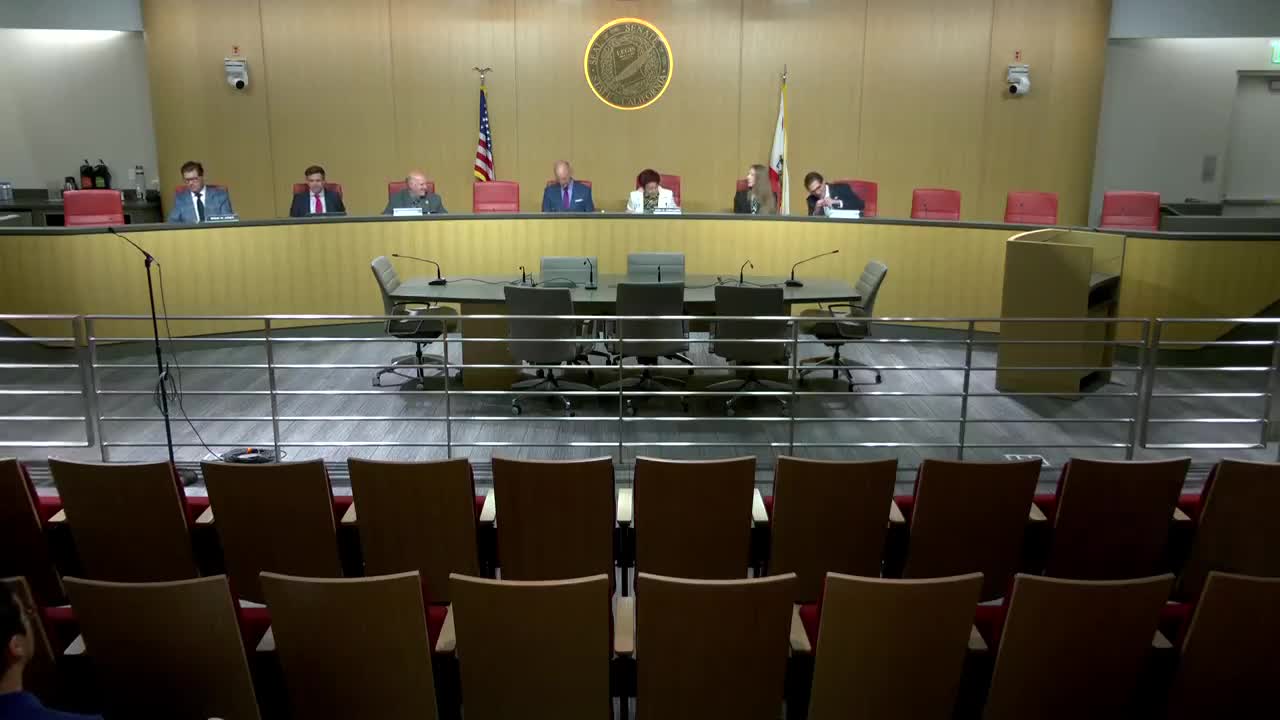 29SEC
Senate Standing Committee on Appropriations
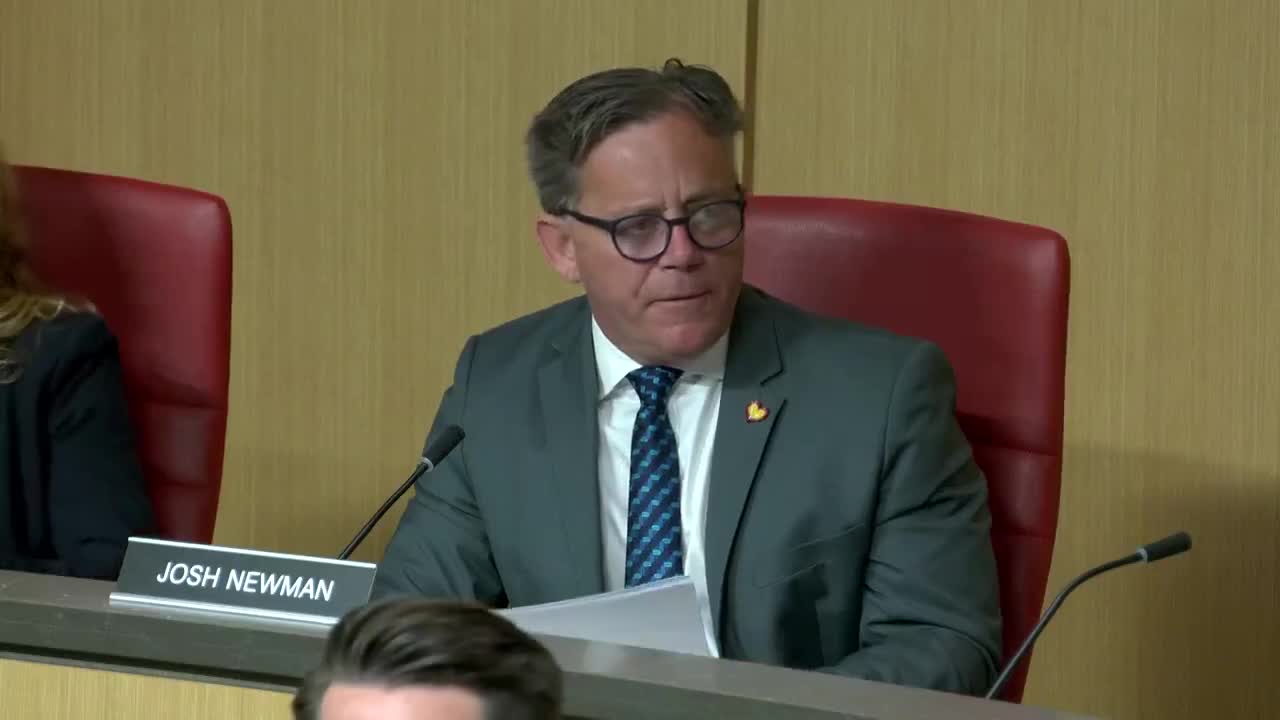 28MIN
Senate Standing Committee on Education
Bill Author
Bill Co-Author(s):