SB 1072: Local government: Proposition 218: remedies.
- Session Year: 2023-2024
- House: Senate
- Latest Version Date: 2024-09-20
Current Status:
Passed
(2024-09-20: Chaptered by Secretary of State. Chapter 323, Statutes of 2024.)
Introduced
In Committee
First Chamber
In Committee
Second Chamber
Enacted
The California Constitution sets forth various requirements for the imposition of local taxes. The California Constitution excludes from classification as a tax assessments and property-related fees imposed in accordance with provisions of the California Constitution that establish requirements for those assessments and property-related fees. Under these requirements, an assessment is prohibited from being imposed on any parcel if it exceeds the reasonable cost of the proportional special benefit conferred on that parcel, and a fee or charge imposed on any parcel or person as an incident of property ownership is prohibited from exceeding the proportional cost of the service attributable to the parcel.
Existing law, known as the Proposition 218 Omnibus Implementation Act, prescribes specific procedures and parameters for local compliance with the requirements of the California Constitution for assessments and property-related fees.
This bill would require a local agency, if a court determines that a fee or charge for a property-related service, as specified, violates the above-described provisions of the California Constitution relating to fees and charges, to credit the amount of the fee or charge attributable to the violation against the amount of the revenues required to provide the property-related service, unless a refund is explicitly provided for by statute.
This bill would declare that its provisions further the purposes and intent of Proposition 218, approved by the voters at the November 5, 1996, statewide general election, and the Proposition 218 Omnibus Implementation Act.
The California Constitution sets forth various requirements for the imposition of local taxes. The California Constitution excludes from classification as a tax assessments and property-related fees imposed in accordance with provisions of the California Constitution that establish requirements for those assessments and property-related fees. Under these requirements, an assessment is prohibited from being imposed on any parcel if it exceeds the reasonable cost of the proportional special benefit conferred on that parcel, and a fee or charge imposed on any parcel or person as an incident of property ownership is prohibited from exceeding the proportional cost of the service attributable to the parcel.
Existing law, known as the Proposition 218 Omnibus Implementation Act, prescribes specific procedures and parameters for local compliance with the requirements of the California Constitution for assessments and property-related fees.
This bill would require a local agency, if a court determines that a fee or charge for a property-related service, as specified, violates the above-described provisions of the California Constitution relating to fees and charges, to credit the amount of the fee or charge attributable to the violation against the amount of the revenues required to provide the property-related service, unless a refund is explicitly provided for by statute. The bill would declare that these provisions are declaratory of existing law.
This bill would declare that its provisions further the purposes and intent of Proposition 218, approved by the voters at the November 5, 1996, statewide general election, and the Proposition 218 Omnibus Implementation Act.
The California Constitution sets forth various requirements for the imposition of local taxes. The California Constitution excludes from classification as a tax assessments and property-related fees imposed in accordance with provisions of the California Constitution that establish requirements for those assessments and property-related fees. Under these requirements, an assessment is prohibited from being imposed on any parcel if it exceeds the reasonable cost of the proportional special benefit conferred on that parcel, and a fee or charge imposed on any parcel or person as an incident of property ownership is prohibited from exceeding the proportional cost of the service attributable to the parcel.
Existing law, known as the Proposition 218 Omnibus Implementation Act, prescribes specific procedures and parameters for local compliance with the requirements of the California Constitution for assessments and property-related fees.
This bill would require, if a property-related fee or charge creates revenues in excess of the local governments reasonable cost of providing the specific benefit or specific government service, that the excess revenues be used only to reduce the subsequently adopted and following property-related fee or charge. require a local agency, if a court determines that a fee or charge for a property-related service, as specified, violates the above-described provisions of the California Constitution relating to fees and charges, to credit the amount of the fee or charge attributable to the violation against the amount of the revenues required to provide the property-related service, unless a refund is explicitly provided for by statute. The bill would declare that this provision is these provisions are declaratory of existing law.
This bill would declare that its provisions further the purposes and intent of Proposition 218, approved by the voters at the November 5, 1996, statewide general election, and the Proposition 218 Omnibus Implementation Act.
The California Constitution sets forth various requirements for the imposition of local taxes. The California Constitution excludes from classification as a tax assessments and property-related fees imposed in accordance with provisions of the California Constitution that establish requirements for those assessments and property-related fees. Under these requirements, an assessment is prohibited from being imposed on any parcel if it exceeds the reasonable cost of the proportional special benefit conferred on that parcel, and a fee or charge imposed on any parcel or person as an incident of property ownership is prohibited from exceeding the proportional cost of the service attributable to the parcel.
Existing law, known as the Proposition 218 Omnibus Implementation Act, prescribes specific procedures and parameters for local compliance with the requirements of the California Constitution for assessments and property-related fees.
This bill would require, if a property-related fee or charge creates revenues in excess of the local governments reasonable cost of providing the specific benefit or specific government service, that the excess revenues be used only to reduce the subsequently adopted and following property-related fee or charge. The bill would declare that this provision is declaratory of existing law.
(a)If a court determines that a fee or charge for a property-related service, including water, sewer, and refuse collection, violates Section 6 of Article XIIID of the California Constitution, then the local agency shall, in the next procedure to impose or increase the fee or charge, credit the amount of the fee or charge attributable to the violation against the amount of the revenues required to provide the property-related service unless a refund is explicitly provided for by statute.
(b)This section does not apply to claims related to billing errors.
SEC. 2.The Legislature finds and declares that this act furthers the purposes and intent of the Right to Vote on Taxes Act, approved by the voters as Proposition 218 at the November 5, 1996, statewide general election, and the Proposition 218 Omnibus Implementation Act (Chapter 38 of the Statutes of 1997) by accomplishing all of the following:
(a)Finding that Proposition 218 does not contain any affirmative intent to authorize a refund remedy.
(b)Recognizing that water and sewer agencies, and local governments providing property-related services, set charges to merely recover costs annually and receive no profit.
(c)Further recognizing that lawsuits seeking refunds for property-related service rate determinations threaten to compromise the financial stability of water and sewer agencies and local governments providing property-related services and the critical public services they provide.
(d)Further recognizing that any refund would need to be funded by raising rates on future ratepayers, further reducing the affordability of essential public services.
(e)Protecting ratepayers by requiring that the entity charging the property-related service fee or charge credit against future revenues the amount of any fee or charge in violation of Proposition 218.
(a)If a court determines that a fee or charge for a property-related service, including water, sewer, and refuse collection, violates Section 6 of Article XIIID of the California Constitution, then the local agency shall, in the next procedure to impose or increase the fee or charge, credit the amount of the fee or charge attributable to the violation against the amount of the revenues required to provide the property-related service unless a refund is explicitly provided for by statute.
(b)This section does not apply to claims related to billing errors.
(c)This section does not constitute a change in, but is declaratory of, existing law.SEC. 2.The Legislature finds and declares that this act furthers the purposes and intent of the Right to Vote on Taxes Act, approved by the voters as Proposition 218 at the November 5, 1996, statewide general election, and the Proposition 218 Omnibus Implementation Act (Chapter 38 of the Statutes of 1997) by accomplishing all of the following:
(a)Finding that Proposition 218 does not contain any affirmative intent to authorize a refund remedy.
(b)Recognizing that water and sewer agencies, and local governments providing property-related services, set charges to merely recover costs annually and receive no profit.
(c)Further recognizing that lawsuits seeking refunds for property-related service rate determinations threaten to compromise the financial stability of water and sewer agencies and local governments providing property-related services and the critical public services they provide.
(d)Further recognizing that any refund would need to be funded by raising rates on future ratepayers, further reducing the affordability of essential public services.
(e)Protecting ratepayers by requiring that the entity charging the property-related service fee or charge credit against future revenues the amount of any fee or charge in violation of Proposition 218.
(a)If a court determines that a fee or charge for a property-related service, including water, sewer, and refuse collection, violates Section 6 of Article XIIID of the California Constitution, then the local agency shall, in the next procedure to impose or increase the fee or charge, credit the amount of the fee or charge attributable to the violation against the amount of the revenues required to provide the property-related service unless a refund is explicitly provided for by statute.
(b)This section does not apply to claims related to billing errors.
(c)This section does not constitute a change in, but is declaratory of, existing law.
SEC. 2.The Legislature finds and declares that this act furthers the purposes and intent of the Right to Vote on Taxes Act, approved by the voters as Proposition 218 at the November 5, 1996, statewide general election, and the Proposition 218 Omnibus Implementation Act (Chapter 38 of the Statutes of 1997) by accomplishing all of the following:
(a)Finding that Proposition 218 does not contain any affirmative intent to authorize a refund remedy.
(b)Recognizing that water and sewer agencies, and local governments providing property-related services, set charges to merely recover costs annually and receive no profit.
(c)Further recognizing that lawsuits seeking refunds for property-related service rate determinations threaten to compromise the financial stability of water and sewer agencies and local governments providing property-related services and the critical public services they provide.
(d)Further recognizing that any refund would need to be funded by raising rates on future ratepayers, further reducing the affordability of essential public services.
(e)Protecting ratepayers by requiring that the entity charging the property-related service fee or charge credit against future revenues the amount of any fee or charge in violation of Proposition 218.
(a)If a property-related fee or charge creates revenues in excess of the local governments reasonable cost to provide that specific benefit or specific government service, then the excess revenues shall be used only to reduce the subsequently adopted and following property-related fee or charge.
(b)This section does not constitute a change in, but is declaratory of, existing law.
|
Date
|
Status
|
|---|---|
| Sep 20, 2024 | Chaptered by Secretary of State. Chapter 323, Statutes of 2024. |
| Sep 20, 2024 | Approved by the Governor. |
| Sep 9, 2024 | Enrolled and presented to the Governor at 3 p.m. |
| Aug 29, 2024 | Assembly amendments concurred in. (Ayes 30. Noes 9. Page 5647.) Ordered to engrossing and enrolling. |
| Aug 28, 2024 | In Senate. Concurrence in Assembly amendments pending. |
| Aug 28, 2024 | Read third time. Passed. (Ayes 59. Noes 13. Page 6687.) Ordered to the Senate. |
| Jun 27, 2024 | Read second time. Ordered to third reading. |
| Jun 26, 2024 | From committee: Do pass. (Ayes 8. Noes 0.) (June 26). |
| Jun 17, 2024 | From committee with author's amendments. Read second time and amended. Re-referred to Com. on L. GOV. |
| Jun 3, 2024 | Referred to Com. on L. GOV. |
| May 23, 2024 | In Assembly. Read first time. Held at Desk. |
| May 22, 2024 | Read third time. Passed. (Ayes 31. Noes 5. Page 4141.) Ordered to the Assembly. |
| May 2, 2024 | Read second time. Ordered to third reading. |
| May 1, 2024 | From committee: Do pass. (Ayes 4. Noes 1. Page 3820.) (May 1). |
| Apr 24, 2024 | From committee with author's amendments. Read second time and amended. Re-referred to Com. on L. GOV. |
| Apr 17, 2024 | Set for hearing May 1. |
| Feb 21, 2024 | Referred to Com. on L. GOV. |
| Feb 13, 2024 | From printer. May be acted upon on or after March 14. |
| Feb 12, 2024 | Introduced. Read first time. To Com. on RLS. for assignment. To print. |
|
Date
|
Description
|
Location
|
Votes
|
|
|---|---|---|---|---|
| Aug 29, 2024 | Unfinished Business SB1072 Padilla Concurrence | Senate Floor |
Passed |
|
| Aug 28, 2024 | SB 1072 Padilla Senate Third Reading By Pacheco | Assembly Floor |
Passed |
|
| Jun 26, 2024 | Do pass. | Assembly Standing Committee on Local Government |
Passed |
|
| May 22, 2024 | Senate 3rd Reading SB1072 Padilla | Senate Floor |
Passed |
|
| May 1, 2024 | Do pass | Senate Standing Committee on Local Government |
Passed |
This list shows positions taken on this bill by organizations on the date displayed, which is linked to the original source.
Positions by individuals are not included.
|
Organization
|
Position
|
Date
|
|---|---|---|
| Association Of California Water Agencies | ** Support | |
| California Business Roundtable | ** Against | |
| California Municipal Utilities Association | ** Support | |
| California-Nevada Section, American Water Works Association | ** Support | |
| California Special Districts Association | ** Support | |
| California State Association Of Counties | ** Support | |
| City Of San Diego | ** Support | |
| Click here to enter text. | ** Against | |
| Coachella Valley Water District | ** Support | |
| Desert Water Agency | ** Support | |
| El Dorado Irrigation District | ** Support | |
| Fallbrook Public Utilities District | ** Support | |
| Helix Water District | ** Support | |
| Howard Jarvis Taxpayers Association | ** Against | |
| Lakeside Water District | ** Support | |
| League Of California Cities | ** Support | |
| Metropolitan Water District Of Southern California | ** Support | |
| Olivenhain Municipal Water District | ** Support | |
| Orange County Sanitation District | ** Support | |
| Otay Water District | ** Support | |
| Padre Dam Municipal Water District | ** Support | |
| Palmdale Water District | ** Support | |
| rainbow municipal water district | ** Support | |
| Rincon del Diablo Municipal Water District | ** Support | |
| Rowland Water District | ** Support | |
| San Diego County Water Authority | ** Support | |
| San Gabriel Valley Water Association | ** Support | |
| santa fe irrigation district | ** Support | |
| Sweetwater Authority | ** Support | |
| The Metropolitan Water District Of Southern California | ** Support | |
| Trabuco Canyon Water District | ** Support | |
| Vallecitos Water District | ** Support | |
| Valley Center Municipal Water District | ** Support | |
| Valley Sanitary District | ** Support | |
| Vista Irrigation District | ** Support | |
| Walnut Valley Water District | ** Support | |
| Water Replenishment District Of Southern California | ** Support |
SENATE RULES COMMITTEE Office of Senate Floor Analyses (916) 651-1520 Fax: (916) 327-4478 | SB 1072 |
UNFINISHED BUSINESS
Bill No: SB 1072
Author: Padilla (D)
Amended: 6/17/24
Vote: 21
SENATE LOCAL GOVERNMENT COMMITTEE: 4-1, 5/1/24
AYES: Durazo, Skinner, Smallwood-Cuevas, Wiener
NOES: Seyarto
NO VOTE RECORDED: Dahle, Glazer
SENATE FLOOR: 31-5, 5/22/24
AYES: Alvarado-Gil, Ashby, Atkins, Becker, Blakespear, Bradford, Caballero, Cortese, Dodd, Durazo, Eggman, Glazer, Gonzalez, Hurtado, Laird, Limón, McGuire, Menjivar, Min, Newman, Padilla, Portantino, Roth, Rubio, Skinner, Smallwood-Cuevas, Stern, Umberg, Wahab, Wiener, Wilk
NOES: Jones, Nguyen, Niello, Ochoa Bogh, Seyarto
NO VOTE RECORDED: Allen, Archuleta, Dahle, Grove
ASSEMBLY FLOOR: 44-12, 8/28/24- Roll call not available
SUBJECT: Local government: Proposition 218: remedies
SOURCE: City of San Diego
Otay Water District
DIGEST:
This bill provides that, if a court determines that a fee or charge for a property-related service violates Proposition 218, then the local agency must credit that amount against the cost of providing the property related service.
Assembly Amendments
remove declaration that the bill’s provisions are declaratory of existing law.
ANALYSIS:
Existing law:
- Imposes constitutional limits on local officials’ ability to impose, increase, and extend fees, including property-related fees (Proposition 218, 1996).
- Defines a property-related fee as any levy other than an ad valorem tax, a special tax, or an assessment imposed by an agency on a parcel or on a person as an incident of property ownership, including a user fee for a property-related service.
- Specifies definitions and procedures related to Proposition 218 in the Proposition 218 Omnibus Implementation Act (SB 919, Rainey, Chapter 38, Statutes of 1997). The Proposition 218 Omnibus Implementation Act requires local officials to, before imposing a new property related fee or increase an existing one:
- Identify the parcels to be charged.
- Calculate the fee for each parcel.
- Notify the parcels’ owners in writing about the fees and the hearing.
- Hold a public hearing to consider and count protests.
- Abandon the fees if a majority of the parcels’ owners protest.
- Requires new or increased property-related fees to:
- Be less than the proportional cost of service to each parcel.
- Receive approval by a majority-vote of the affected property owners, two-thirds registered voter approval, or weighted ballot approval by the affected property owners.
- Exempts property-related fees for water, sewer, and refuse collection from the voter approval requirements of Proposition 218.
This bill:
- Provides that, if a court determines that fee or charge for a property related service, including water, sewer, and refuse collections violates Proposition 218, then the local agency must, in the next procedure to impose or increase the fee or charge, credit that amount against the cost of providing the property related service, unless statute explicitly provides a refund remedy.
- Includes specific findings and declarations that it furthers the purposes and intent of Proposition 218 and the Proposition 218 Omnibus Implementation Act.
Background
Proposition 218. Neither Proposition 218, nor the Proposition 218 Omnibus Implementation Act, provide an explicit remedy, such as a refund, to ratepayers beyond invalidating the fee amounts moving forward. However, ratepayers – even in Proposition 218-related cases – may have opportunities to receive a refund even when statute does not explicitly provide one. Even if statute does not provide an explicit remedy, and the Government Claims Act does not apply, courts can still order a remedy for violations of a provision of the California Constitution. Under Katzberg v. Regents of University of California California (2002) 29 Cal.4th 300, 317, the California Supreme Court applied a two-prong test to identify circumstances when a constitutional violation allows for a refund.
Otay Water District. Otay Water District (the District) provides water, recycled water, and sewer service to over 225,000 customers across roughly 125 square miles of southeastern San Diego County. The District imposes a tiered rate structure for single-family residential customers to encourage water conservation. Otay Water District’s tiered rate structure has three components. First, all customers pay a fixed monthly charge based on the size of their water meter. Second, customers pay a variable usage fee based on their water consumption, meaning heavier water users pay more per unit of water than lower water users. Third, the District sets an energy charge and an improvement-district charge.
Ratepayers challenged the District’s rates, claiming they were not proportional to the cost of service for each parcel, as required by Proposition 218 (Coziahr v. Otay Water District, San Diego County Super. Ct. No. 37-2015-00400000-CU-MC-CTL). Specifically, higher-usage ratepayers claimed the rates the District charged exceeded the costs for the District to serve them. In January 2022, the San Diego Superior Court filed a judgment in favor of the ratepayers, and ordered the District to refund ratepayers $18 million plus $200,000 each month, plus interest, until the District brings its rates into compliance with Proposition 218.
The District has appealed the ruling. Oral arguments are expected later this year. In its appeal, the District claims its rate tiers, which charge higher-volume users more to ensure its water system ensures can meet peak demands, are consistent with Proposition 218. The District argues, since higher volume users cause these higher peak demands, they should pay more to provide a water system to meet can meet the higher demand they cause. Additionally, the District contends that, even if its rates were not proportional to the cost of service, the Court should not have awarded a refund because Proposition 218 only authorizes prospective relief.
Other water providers have faced similar challenges. For example, in 2021, the San Diego Superior Court invalidated the City of San Diego’s tiered water rates finding they were not proportional to the cost of service attributable to each parcel as required by Proposition 218 (Patz vs. City of San Diego, San Diego County Super. Ct. No. 37-2015-23413-CU-MC-CTL). Like Coziahr, the Court ordered the City of San Diego to refund customers. The City of San Diego appealed the Court’s ruling in Patz, but the case has not yet been resolved.
Comments
- Purpose of the bill. According to the author, “SB 1072 is a critical protection for our public water agencies so they can operate and reduce rate-hikes. This kind of reform is a necessary step to both ensure customers recoup excess fees but also allow agencies to not get overburdened with repayments while operating within tight budgets. It is vital that people get the money they are due while we provide our agencies with the flexibility they need to operate.”
- Let it play out. While the District has appealed the San Diego County Superior Court’s ruling, oral arguments are not likely to begin until later this year. On the one hand, the amount the District must refund continues to accrue interest, meaning the longer it takes to get clarity regarding whether the District must refund ratepayers, the more expensive it will be for the District to comply with any court-ordered refund. The District would likely have to ask current and future ratepayers to pay for refunds due to these higher-consumption users if its appeal is unsuccessful. On the other hand, waiting for the litigation’s resolution would allow the Legislature time to determine whether legislation is needed to clarify the remedies ratepayers have when a court determines fees to be excessive. Should the Legislature intervene before the appeal has played out in court?
- What’s fair? This bill prevents ratepayers that a court found overpaid for a property-related service from getting a refund. Instead of refunding these ratepayers, any excess fees collected would go to reduce the cost for the local agency to provide that service moving forward. On the one hand, the ratepayers that overpaid would not get their money back. On the other hand, all ratepayers, including those that overpaid, would pay less for that service moving forward. In the case of tiered water rates, lower-consumption users would not have to pay more to refund higher-consumption users, and all ratepayers would pay less the next time the District increases its fees. Does this bill achieve the right balance of fairness for both ratepayers a court has found overpaid and everyone else?
Related/Prior Legislation
AB 1827 (Papan, 2024) would seek, in response to legal challenges like those affecting Otay Water District and the City of San Diego, to provide statutory authority for fees or charges for property-related water service can include incrementally higher costs of water service. This can include incrementally higher costs due to higher water usage demand, maximum potential water use, and/or project peak water usage.
FISCAL EFFECT: Appropriation: No Fiscal Com.: No Local: No
SUPPORT: (Verified 8/27/24)
City of San Diego (co-source)
Otay Water District (co-source)
Association of California Water Agencies (ACWA)
California Municipal Utilities Association
California Municipal Utilities Association (CMUA)
California Special Districts Association
California State Association of Counties
California State Association of Counties (CSAC)
California-Nevada Section, American Water Works Association
Coachella Valley Water District
Desert Water Agency
El Dorado Irrigation District
Fallbrook Public Utilities District
Helix Water District
Lakeside Water District
League of California Cities
Metropolitan Water District of Southern California
Olivenhain Municipal Water District
Orange County Sanitation District
Padre Dam Municipal Water District
Palmdale Water District
Rainbow Municipal Water District
Rincon Del Diablo Municipal Water District
Rowland Water District
San Diego County Water Authority
San Gabriel Valley Water Association
Santa Fe Irrigation District
Sweetwater Authority
The Metropolitan Water District of Southern California
Trabuco Canyon Water District
Vallecitos Water District
Valley Center Municipal Water District
Valley Sanitary District
Vista Irrigation District
Walnut Valley Water District
Water Replenishment District of Southern California
OPPOSITION: (Verified 8/27/24)
California Business Roundtable
Howard Jarvis Taxpayers Association
Click here to enter text.
Prepared by: Jonathan Peterson / L. GOV. / (916) 651-4119
8/28/24 22:03:03
**** END ****
SENATE THIRD READING
STR Bill Id:SB 1072
Author:(Padilla)
As Amended Ver:June 17, 2024
Majority vote
SUMMARY
Provides that, if a court determines that a fee or charge for a property-related service violates Proposition 218, then the local agency must credit that amount against the cost of providing the property related service.
Major Provisions
- Provides that if a court determines that a fee or charge for a property-related service, including water, sewer, and refuse collection, violates Section 6 of Article XIII D of the California Constitution, then the local agency shall, in the next procedure to impose or increase the fee or charge, credit the amount of the fee or charge attributable to the violation against the amount of the revenues required to provide the property-related service unless a refund is explicitly provided for by statute.
- Specifies that this bill does not apply to claims related to billing errors.
COMMENTS
Proposition 218. The California Constitution requires voter approval for taxes and many other fees and charges. Proposition 218 (1996) added Article XIIID to the California Constitution, which imposed voter approval requirements for most "property-related fees"—any levy other than an ad valorem tax, a special tax, or an assessment imposed by an agency on a parcel or on a person as an incident of property ownership, including a user fee or charge for a property-related service.
Before a local government can charge a new property-related fee, or increase an existing one, Proposition 218 requires local officials to:
- Identify the parcels to be charged.
- Calculate the fee for each parcel.
- Notify the parcels' owners in writing about the fees and the hearing.
- Hold a public hearing to consider and count protests.
- Abandon the fees if a majority of the parcels' owners protest.
New, increased, or extended property-related fees generally require voter approval by one of the following: a majority-vote of the affected property owners; two-thirds registered voter approval; or weighted ballot approval by the affected property owners.
Fees or charges for property related services cannot exceed the proportional cost of providing service to the parcel and must be used only for the purposes for which they were collected. Property-related fees must also only fund services actually used by or immediately available to the property owner, not based on potential or future use. Finally, Proposition 218 prohibits local governments from imposing property-related fees or charges for general governmental services, including fire, police, ambulance, or library services, if the service is available to the public at large in substantially the same manner as it is to property owners.
Water, sewer, and refuse collection services are exempt from Proposition 218's voter approval requirements, but must meet all other procedural and substantive requirements in Proposition 218, including the requirement to hold a protest hearing not less than 45 days after mailing a notice of new or increased rates to affected property owners. If a majority protest the fee, based on the proportional obligation of the affected property, then the local agency cannot impose the fee.
Proposition 218 Omnibus Implementation Act. Proposition 218 is a complex statute and has been the subject of many court cases and rulings that often conflict with one another. In the past, the Legislature has weighed in to provide clarity on how to apply Proposition 218's provisions and statutorily reinforced court rulings that align with the Legislature's priorities. In particular, immediately after the passage of Proposition 218, the Legislature enacted the Proposition 218 Omnibus Implementation Act to translate many of Proposition 218's requirements into statutory definitions and procedures. More recently, the Legislature amended the Proposition 218 Implementation Act to define "water" in a manner that is consistent with an appellate court decision that provided greater flexibility to water agencies when setting rates [AB 2403 (Rendon) Chapter 78, Statutes of 2014]. SB 231 (Hertzberg) Chapter 536, Statutes of 2017, defined "sewer" for the purposes of the Proposition 218 Omnibus Implementation Act, and SB 1386 (Moorlach), Chapter 240, Statutes of 2020, provided that fire hydrants are a part of water service for the purposes of Proposition 218.
Neither Proposition 218, nor the Proposition 218 Omnibus Implementation Act, provide an explicit remedy for violations to ratepayers beyond invalidating the fee amounts moving forward. In other laws, the Legislature has explicitly authorized specific remedies in statute. For example, the Mitigation Fee Act, which sets forth rules governing how local agencies impose fees on development projects, requires local agencies to refund unexpended fee revenue in certain circumstances. For instance, when sufficient funds have been collected to complete financing on incomplete projects, and the project remains incomplete, the local agency is required to identify, within 180 days, a date that the construction of the project will commence, or the local agency must refund a specified amount of the unexpended portion of the fee and any interest.
However, individuals may have opportunities to receive a refund even when statute does not explicitly provide one. For example, the Government Claims Act establishes a standardized procedure for bringing claims against local governmental entities. Even if statute does not provide an explicit remedy, and the Government Claims Act does not apply, courts can still order a remedy for violations of a provision of the California Constitution. Under Katzberg v. Regents of University of California (2002) 29 Cal.4th 300, 317, the California Supreme Court applied a two-prong test to identify circumstances when a constitutional violation allows for a refund:
- Does the constitutional provision demonstrate an intent to permit or preclude damages as a remedy?
- If the constitutional provision does not expressly prohibit awarding damages, do certain factors weigh in favor of allowing a remedy?
Otay Water District. According to the Otay Water District (District), it provides water, recycled water, and sewer service to over 225,000 customers across roughly 125 square miles of southeastern San Diego County. The District imposes a tiered rate structure for single-family residential customers to encourage water conservation. Otay Water District's tiered rate structure has three components. First, all customers pay a fixed monthly charge based on the size of their water meter. Second, customers pay a variable usage fee based on their water consumption, meaning heavier water users pay more per unit of water than lower water users. Third, the District sets an energy charge and an improvement-district charge. In 2013, to ensure these rates met constitutional requirements, the District hired a consultant to complete a comprehensive rate study. In 2017, the District hired a different consultant to ensure its rates remained consistent with Proposition 218.
Ratepayers challenged the District's rates, claiming they were not proportional to the cost of service for each parcel, as required by Proposition 218 (Coziahr v. Otay Water District). Specifically, some ratepayers claimed the rates the District charged exceeded the costs for the District to serve them. In 2022, the San Diego Superior Court filed a judgment in favor of the ratepayers, and ordered Otay Water District to refund ratepayers approximately $18 million plus just over $200,000 each month, plus interest, until the District brings its rates into compliance with Proposition 218. The District says the total cost could add up to be more than $30 million.
The District has appealed the ruling. According to the District, oral arguments and a decision are expected in July and October of this year, respectively. In its appeal, the District claims its rate tiers, which charge higher-volume users more to ensure its water system ensures can meet peak demands, are consistent with Proposition 218. The District contends, since higher volume users cause these higher peak demands, they should pay more so a water system can meet the higher demand they cause. Additionally, the District asserts that, even if its rates were not proportional to the cost of service, the Court should not have awarded a refund because Proposition 218 only authorizes prospective relief.
Other water providers have faced similar challenges. For example, in 2021, the San Diego Superior Court invalidated the City of San Diego's tiered water rates finding they were not proportional to the cost of service attributable to each parcel as required by Proposition 218 (Patz vs. City of San Diego, San Diego County Super. Ct. No. 37-2015-23413-CU-MC-CTL). Like Coziahr, the Court ordered the City to refund customers. The City appealed the Court's ruling in Patz, but the case has not yet been resolved.
According to the Author
According to the author, "SB 1072 is a critical protection to ensure that we can deliver clean, reliable, and affordable water to our constituents. Water agencies pass fair and reasonable rates to cover the costs of operations and investments, not to make a profit. This kind of reform is a necessary step to ensure we protect our constituents from rate hikes while providing individual ratepayers with the opportunity for a refund when administrative errors are made. It is critical to give these public agencies the flexibility necessary to operate without jeopardizing water deliveries to its constituents."
Arguments in Support
According to the sponsors of this bill and a coalition of local governments and associations, "Proposition 218, approved by voters in 1996, amended the California Constitution and requires water, sewer, and refuse collection rates to be reasonably proportional to the costs of providing those services to a given property. The legislature enacted SB 919 'The Proposition 218 Omnibus Implementation Act' to clarify specific provisions of the proposition. SB 1072 seeks to further clarify the types of remedies available to customers who challenge water, sewer, and refuse collection rates.
"Writs of mandate, declaratory relief, and injunctive relief – which direct a public agency to change their rates in the future - are the traditional and appropriate remedies that courts have imposed for violations of Proposition 218. In contrast to these remedies, new class-action lawsuits have sought multi-million-dollar refunds, which, if ordered by a court, would force public agencies who merely recover annual costs and receive no profit to raise rates on future ratepayers in order to pay refunds to past users.
"No part of Proposition 218 provides for a refund, nor does any published case. SB 1072 will declare and clarify existing law that if a court determines that a fee or charge for a property-related service, including water, sewer, and refuse collection, violates Section 6 of Article XIII D of the California Constitution, then the local agency shall, in the next procedure to impose or increase the fee or charge, credit the amount of the fee or charge attributable to the violation against the amount of the revenues required to provide the property-related service unless a refund is explicitly provided for by statute. Therefore, a challenger's remedy will be to require the agency to change their rate structure going forward. The bill will significantly help agencies maintain predictable rates for water, sewer, and refuse collection services by making it clear in the Government Code that refunds are prohibited except when explicitly provided for in law, or in the case of billing errors."
Arguments in Opposition
According to the California Business Roundtable, "SB 1072 would require that, following a court's determination of a Prop. 218 violation of property-related fees or charges, the responsible local agency would only need to credit the specific amount attributed to the violation against future bills. This provision effectively eliminates the possibility of refunds for overcharged fees, depriving taxpayers of proper restitution.
"Currently, local governments are not bound by statutory requirements to subject fees to a public vote. This underscores the necessity for safeguards such as refund remedies to protect ratepayers when fees exceed the funds necessary for the related service. Existing barriers for refund remedies, including the detailed description of fee violations required in the pre-suit by the Government Claims Act, are already in place to ensure that challenges are substantive.
"True protection for ratepayers should derive from trust in their local government's commitment to fair and transparent fee assessments for essential property-related services. By eliminating ratepayers' ability to seek appropriate refund remedies, which has been established by existing case law, SB 1072 undermines this trust."
FISCAL COMMENTS
None.
VOTES
SENATE FLOOR: 31-5-4
YES: Alvarado-Gil, Ashby, Atkins, Becker, Blakespear, Bradford, Caballero, Cortese, Dodd, Durazo, Eggman, Glazer, Gonzalez, Hurtado, Laird, Limón, McGuire, Menjivar, Min, Newman, Padilla, Portantino, Roth, Rubio, Skinner, Smallwood-Cuevas, Stern, Umberg, Wahab, Wiener, Wilk
NO: Jones, Nguyen, Niello, Ochoa Bogh, Seyarto
ABS, ABST OR NV: Allen, Archuleta, Dahle, Grove
ASM LOCAL GOVERNMENT: 8-0-1
YES: Juan Carrillo, Waldron, Haney, Kalra, Pacheco, Ramos, Ward, Wilson
ABS, ABST OR NV: Essayli
UPDATED
VERSION: June 17, 2024
CONSULTANT: Jimmy MacDonald / L. GOV. / (916) 319-3958 FN: 0003658
Date of Hearing: June 26, 2024
ASSEMBLY COMMITTEE ON LOCAL GOVERNMENT
Juan Carrillo, Chair
SBPCA Bill Id:SB 1072
Author:(Padilla) – As Amended Ver:June 17, 2024
SENATE VOTE: 31-5
SUBJECT: Local government: Proposition 218: remedies.
SUMMARY: Provides that, if a court determines that a fee or charge for a property-related service violates Proposition 218, then the local agency must credit that amount against the cost of providing the property related service. Specifically, this bill:
- Provides that if a court determines that a fee or charge for a property-related service, including water, sewer, and refuse collection, violates Section 6 of Article XIII D of the California Constitution, then the local agency shall, in the next procedure to impose or increase the fee or charge, credit the amount of the fee or charge attributable to the violation against the amount of the revenues required to provide the property-related service unless a refund is explicitly provided for by statute.
- Specifies that this bill does not apply to claims related to billing errors.
- Finds and declares that this bill furthers the purposes and intent of the Right to Vote on Taxes Act, approved by the voters as Proposition 218 at the November 5, 1996, statewide general election, and the Proposition 218 Implementation Act [SB 919 (Rainey), Chapter 38, Statutes of 1997] by accomplishing all of the following:
- Finding that Proposition 218 does not contain any affirmative intent to authorize a refund remedy.
- Recognizing that water and sewer agencies, and local governments providing property-related services, set charges to merely recover costs annually and receive no profit.
- Further recognizing that lawsuits seeking refunds for property-related service rate determinations threaten to compromise the financial stability of water and sewer agencies and local governments providing property-related services and the critical public services they provide.
- Further recognizing that any refund would need to be funded by raising rates on future ratepayers, further reducing the affordability of essential public services.
- Protecting ratepayers by requiring that the entity charging the property-related service fee or charge credit against future revenues the amount of any fee or charge in violation of Proposition 218.
FISCAL EFFECT: None.
COMMENTS:
- Financing Water Infrastructure. Local governments in California provide most water related services in the state which include water service, sewer service, flood control, and storm water management. A 2014 Public Policy Institute of California (PPIC) report, Paying for Water in California, outlines four sources of funding currently used for water in California: a) Fees, which include water and waste water bills, property assessments or fees, developer or connection fees, and permitting fees; b) Taxes, which include both general and special taxes, including parcel taxes; c) Fines and penalties, which include excessive pumping on groundwater or directly to customers in violation of rationing restrictions during drought emergencies; and, d) Bonds, which include general obligation and revenue bonds. Local agencies frequently point to the series of constitutional reforms, Proposition 13 (1978), Proposition 218 (1996), and Proposition 26 (2010), that have made it increasingly more difficult to generate the necessary revenue to fund the costs of providing water and other essential services.
- Proposition 218. The California Constitution requires voter approval for taxes and many other fees and charges. Proposition 218 (1996) added Article XIIID to the California Constitution, which imposed voter approval requirements for most “property-related fees”—any levy other than an ad valorem tax, a special tax, or an assessment imposed by an agency on a parcel or on a person as an incident of property ownership, including a user fee or charge for a property-related service.
Before a local government can charge a new property-related fee, or increase an existing one, Proposition 218 requires local officials to:
- Identify the parcels to be charged.
- Calculate the fee for each parcel.
- Notify the parcels’ owners in writing about the fees and the hearing.
- Hold a public hearing to consider and count protests.
- Abandon the fees if a majority of the parcels’ owners protest.
New, increased, or extended property-related fees generally require voter approval by one of the following: a majority-vote of the affected property owners; two-thirds registered voter approval; or weighted ballot approval by the affected property owners.
Fees or charges for property related services cannot exceed the proportional cost of providing service to the parcel and must be used only for the purposes for which they were collected. Property-related fees must also only fund services actually used by or immediately available to the property owner, not based on potential or future use. Finally, Proposition 218 prohibits local governments from imposing property-related fees or charges for general governmental services, including fire, police, ambulance, or library services, if the service is available to the public at large in substantially the same manner as it is to property owners.
Water, sewer, and refuse collection services are exempt from Proposition 218’s voter approval requirements, but must meet all other procedural and substantive requirements in Proposition 218, including the requirement to hold a protest hearing not less than 45 days after mailing a notice of new or increased rates to affected property owners. If a majority protest the fee, based on the proportional obligation of the affected property, then the local agency cannot impose the fee.
- Proposition 218 Omnibus Implementation Act. Proposition 218 is a complex statute and has been the subject of many court cases and rulings that often conflict with one another. In the past, the Legislature has weighed in to provide clarity on how to apply Proposition 218’s provisions and statutorily reinforced court rulings that align with the Legislature’s priorities. In particular, immediately after the passage of Proposition 218, the Legislature enacted the Proposition 218 Omnibus Implementation Act to translate many of Proposition 218's requirements into statutory definitions and procedures. More recently, the Legislature amended the Proposition 218 Implementation Act to define “water” in a manner that is consistent with an appellate court decision that provided greater flexibility to water agencies when setting rates [AB 2403 (Rendon) Chapter 78, Statutes of 2014]. SB 231 (Hertzberg) Chapter 536, Statutes of 2017, defined "sewer" for the purposes of the Proposition 218 Omnibus Implementation Act, and SB 1386 (Moorlach), Chapter 240, Statutes of 2020, provided that fire hydrants are a part of water service for the purposes of Proposition 218.
Neither Proposition 218, nor the Proposition 218 Omnibus Implementation Act, provide an explicit remedy for violations to ratepayers beyond invalidating the fee amounts moving forward. In other laws, the Legislature has explicitly authorized specific remedies in statute. For example, the Mitigation Fee Act, which sets forth rules governing how local agencies impose fees on development projects, requires local agencies to refund unexpended fee revenue in certain circumstances. For instance, when sufficient funds have been collected to complete financing on incomplete projects, and the project remains incomplete, the local agency is required to identify, within 180 days, a date that the construction of the project will commence, or the local agency must refund a specified amount of the unexpended portion of the fee and any interest.
However, individuals may have opportunities to receive a refund even when statute does not explicitly provide one. For example, the Government Claims Act establishes a standardized procedure for bringing claims against local governmental entities. Even if statute does not provide an explicit remedy, and the Government Claims Act does not apply, courts can still order a remedy for violations of a provision of the California Constitution. Under Katzberg v. Regents of University of California (2002) 29 Cal.4th 300, 317, the California Supreme Court applied a two-prong test to identify circumstances when a constitutional violation allows for a refund:
- Does the constitutional provision demonstrate an intent to permit or preclude damages as a remedy?
- If the constitutional provision does not expressly prohibit awarding damages, do certain factors weigh in favor of allowing a remedy?
- Does the constitutional provision demonstrate an intent to permit or preclude damages as a remedy?
- Water Rates. Setting water rates can be a complex endeavor, and local agencies impose water rates in many different ways. Since the voters approved Proposition 218’s requirements, how public agency water providers impose these fees is a common debate. One increasingly common form of rates are tiered rates. While this bill is not limited to rates for drinking water, such rates have often been the subject of legal challenges. The imposition of tiered water rates have especially become a target for litigation in recent years. According to the PPIC report Paying for Water in California, “By the mid-2000s, over half of the state’s urban water utilities used tiered rates, and the practice has been growing as more utilities aim to reduce per capita urban water use, still high in California relative to comparable economies with similar climates, such as Australia, Spain, and Israel. The legal issue is whether these rate structures are consistent with Proposition 218’s requirement that fees be proportional to the cost of service. This accounting requirement turns out to be more complex than voters may have anticipated when they approved this constitutional reform. The courts have ruled that agencies cannot set different price tiers for different customer categories unless the rate differentials are based on differences in costs of service among categories. This ruling is beneficial insofar as it discourages the artificial subsidization of water use.”
In 2015, Capistrano Taxpayers Association v. City of San Juan Capistrano (2015) 235 Cal.App.4th 1493, the court ruled that the City’s water pricing violated the constitutional requirement that fees not exceed the proportional cost of the service attributable to the parcel. The court continued by saying, “This is not to say City Water must calculate a rate for 225 Elm Street and then calculate another for the house across the street at 226. Neither the voters nor the Constitution say anything we can find that would prohibit tiered pricing.” The court also stated that “And, we emphasize, there is nothing at all in subdivision (b)(3) or elsewhere in Proposition 218 that prevents water agencies from passing on the incrementally higher costs of expensive water to incrementally higher users.” Lastly, the court noted that “...we see nothing in article XIII, section 6, subdivision (b)(3) of the California Constitution that is incompatible with water agencies passing on the true, marginal cost of water to those consumers whose extra use of water forces water agencies to incur higher costs to supply that extra water.” Courts have interpreted the application of Proposition 218’s constitutional provisions numerous times, and despite the ruling in Capistrano, disputes over how best to determine rates continue to this day.
- Otay Water District. According to the Otay Water District (District), it provides water, recycled water, and sewer service to over 225,000 customers across roughly 125 square miles of southeastern San Diego County. The District imposes a tiered rate structure for single-family residential customers to encourage water conservation. Otay Water District’s tiered rate structure has three components. First, all customers pay a fixed monthly charge based on the size of their water meter. Second, customers pay a variable usage fee based on their water consumption, meaning heavier water users pay more per unit of water than lower water users. Third, the District sets an energy charge and an improvement-district charge. In 2013, to ensure these rates met constitutional requirements, the District hired a consultant to complete a comprehensive rate study. In 2017, the District hired a different consultant to ensure its rates remained consistent with Proposition 218.
Ratepayers challenged the District’s rates, claiming they were not proportional to the cost of service for each parcel, as required by Proposition 218 (Coziahr v. Otay Water District). Specifically, some ratepayers claimed the rates the District charged exceeded the costs for the District to serve them. In 2022, the San Diego Superior Court filed a judgment in favor of the ratepayers, and ordered Otay Water District to refund ratepayers approximately $18 million plus just over $200,000 each month, plus interest, until the District brings its rates into compliance with Proposition 218. The District says the total cost could add up to be more than $30 million.
The District has appealed the ruling. According to the District, oral arguments and a decision are expected in July and October of this year, respectively. In its appeal, the District claims its rate tiers, which charge higher-volume users more to ensure its water system ensures can meet peak demands, are consistent with Proposition 218. The District contends, since higher volume users cause these higher peak demands, they should pay more so a water system can meet the higher demand they cause. Additionally, the District asserts that, even if its rates were not proportional to the cost of service, the Court should not have awarded a refund because Proposition 218 only authorizes prospective relief.
Other water providers have faced similar challenges. For example, in 2021, the San Diego Superior Court invalidated the City of San Diego’s tiered water rates finding they were not proportional to the cost of service attributable to each parcel as required by Proposition 218 (Patz vs. City of San Diego, San Diego County Super. Ct. No. 37-2015-23413-CU-MC-CTL). Like Coziahr, the Court ordered the City to refund customers. The City appealed the Court’s ruling in Patz, but the case has not yet been resolved.
- Bill Summary and Author’s Statement. This bill provides that, if a court determines that a fee or charge for a property related service, including water, sewer, and refuse collections violates Proposition 218, then the local agency must, in the next procedure to impose or increase the fee or charge, credit that amount against the cost of providing the property related service, unless statute explicitly provides a refund remedy. The measure also states it does not apply to claims related to billing errors. The City of San Diego and the Otay Water District are the sponsors of this bill.
According to the author, “SB 1072 is a critical protection to ensure that we can deliver clean, reliable, and affordable water to our constituents. Water agencies pass fair and reasonable rates to cover the costs of operations and investments, not to make a profit. This kind of reform is a necessary step to ensure we protect our constituents from rate hikes while providing individual ratepayers with the opportunity for a refund when administrative errors are made. It is critical to give these public agencies the flexibility necessary to operate without jeopardizing water deliveries to its constituents.”
- Policy Consideration. This bill could ultimately prevent ratepayers that a court found overpaid for a property-related service from getting a direct refund. Instead of refunding these ratepayers, any excess fees collected would go to reduce the cost for the local agency to provide that service moving forward. As mentioned by the opposition, the ratepayers that overpaid and have moved out of the jurisdiction of the local agency would not see the benefit of a successful proposition 218 challenge. On the other hand, supporters argue that all ratepayers, including those that overpaid and continue to live within the agency’s jurisdiction, would pay less for that service moving forward. In the case of tiered water rates, lower-consumption users could avoid paying more to refund higher-consumption users, and all ratepayers could pay less the next time the agency increases its fees. The Committee may wish to consider if this bill strikes the right balance of fairness for both ratepayers a court has found overpaid and everyone else.
- Related Legislation. AB 1827 (Papan) provides that fees or charges for property-related water service may include the incrementally higher costs of water service, as specified. AB 1827 is currently pending in the Senate Local Government Committee.
AB 2257 (Wilson) establishes a procedure whereby a ratepayer for water or sewer services must exhaust specified administrative remedies to contest a new or increased fee or assessment in order for that ratepayer to be eligible to bring a lawsuit contesting the fee or assessment. This bill is currently pending in the Senate Local Government Committee.
- Arguments in Support. According to the sponsors of this bill and a coalition of local governments and associations, “Proposition 218, approved by voters in 1996, amended the California Constitution and requires water, sewer, and refuse collection rates to be reasonably proportional to the costs of providing those services to a given property. The legislature enacted SB 919 ‘The Proposition 218 Omnibus Implementation Act’ to clarify specific provisions of the proposition. SB 1072 seeks to further clarify the types of remedies available to customers who challenge water, sewer, and refuse collection rates.
“Writs of mandate, declaratory relief, and injunctive relief – which direct a public agency to change their rates in the future - are the traditional and appropriate remedies that courts have imposed for violations of Proposition 218. In contrast to these remedies, new class-action lawsuits have sought multi-million-dollar refunds, which, if ordered by a court, would force public agencies who merely recover annual costs and receive no profit to raise rates on future ratepayers in order to pay refunds to past users.
“No part of Proposition 218 provides for a refund, nor does any published case. SB 1072 will declare and clarify existing law that if a court determines that a fee or charge for a property-related service, including water, sewer, and refuse collection, violates Section 6 of Article XIII D of the California Constitution, then the local agency shall, in the next procedure to impose or increase the fee or charge, credit the amount of the fee or charge attributable to the violation against the amount of the revenues required to provide the property-related service unless a refund is explicitly provided for by statute. Therefore, a challenger’s remedy will be to require the agency to change their rate structure going forward. The bill will significantly help agencies maintain predictable rates for water, sewer, and refuse collection services by making it clear in the Government Code that refunds are prohibited except when explicitly provided for in law, or in the case of billing errors.”
- Arguments in Opposition. According to the California Business Roundtable, “SB 1072 would require that, following a court's determination of a Prop. 218 violation of property-related fees or charges, the responsible local agency would only need to credit the specific amount attributed to the violation against future bills. This provision effectively eliminates the possibility of refunds for overcharged fees, depriving taxpayers of proper restitution.
“Currently, local governments are not bound by statutory requirements to subject fees to a public vote. This underscores the necessity for safeguards such as refund remedies to protect ratepayers when fees exceed the funds necessary for the related service. Existing barriers for refund remedies, including the detailed description of fee violations required in the pre-suit by the Government Claims Act, are already in place to ensure that challenges are substantive.
“True protection for ratepayers should derive from trust in their local government's commitment to fair and transparent fee assessments for essential property-related services. By eliminating ratepayers' ability to seek appropriate refund remedies, which has been established by existing case law, SB 1072 undermines this trust.”
REGISTERED SUPPORT / OPPOSITION:
Support
City of San Diego [SPONSOR]
Otay Water District [SPONSOR]
Association of California Water Agencies
California Municipal Utilities Association
California-Nevada Section, American Water Works Association
California Special Districts Association
California State Association of Counties
Coachella Valley Water District
Desert Water Agency
El Dorado Irrigation District
Fallbrook Public Utility District
Helix Water District
League of California Cities
Metropolitan Water District of Southern California
Olivenhain Municipal Water District
Orange County Sanitation District
Padre Dam Municipal Water District
Palmdale Water District
Rainbow Municipal Water District
Rincon Del Diablo Municipal Water District
Rowland Water District
San Diego County Water Authority
San Gabriel Valley Water Association
Santa Fe Irrigation District
Sweetwater Authority
Trabuco Canyon Water District
Vallecitos Water District
Valley Center Municipal Water District
Valley Sanitary District
Vista Irrigation District
Walnut Valley Water District
Opposition
California Business Roundtable
Howard Jarvis Taxpayers Association
1 Individual
Analysis Prepared by: Jimmy MacDonald / L. GOV. / (916) 319-3958
SENATE RULES COMMITTEE Office of Senate Floor Analyses (916) 651-1520 Fax: (916) 327-4478 | SB 1072 |
THIRD READING
Bill No: SB 1072
Author: Padilla (D)
Amended: 4/24/24
Vote: 21
SENATE LOCAL GOVERNMENT COMMITTEE: 4-1, 5/1/24
AYES: Durazo, Skinner, Smallwood-Cuevas, Wiener
NOES: Seyarto
NO VOTE RECORDED: Dahle, Glazer
SUBJECT: Local government: Proposition 218: remedies
SOURCE: City of San Diego
Otay Water District
DIGEST:
This bill provides that, if a court determines that a fee or charge for a property-related service violates Proposition 218, then the local agency must credit that amount against the cost of providing the property related service.
ANALYSIS:
Existing law:
- Imposes constitutional limits on local officials’ ability to impose, increase, and extend fees, including property-related fees (Proposition 218, 1996).
- Defines a property-related fee as any levy other than an ad valorem tax, a special tax, or an assessment imposed by an agency on a parcel or on a person as an incident of property ownership, including a user fee for a property-related service.
- Specifies definitions and procedures related to Proposition 218 in the Proposition 218 Omnibus Implementation Act (SB 919, Rainey, Chapter 38, Statutes of 1997). The Proposition 218 Omnibus Implementation Act requires local officials to, before imposing a new property related fee or increase an existing one:
- Identify the parcels to be charged.
- Calculate the fee for each parcel.
- Notify the parcels’ owners in writing about the fees and the hearing.
- Hold a public hearing to consider and count protests.
- Abandon the fees if a majority of the parcels’ owners protest.
- Requires new or increased property-related fees to:
- Be less than the proportional cost of service to each parcel.
- Receive approval by a majority-vote of the affected property owners, two-thirds registered voter approval, or weighted ballot approval by the affected property owners.
- Exempts property-related fees for water, sewer, and refuse collection from the voter approval requirements of Proposition 218.
This bill:
- Provides that, if a court determines that fee or charge for a property related service, including water, sewer, and refuse collections violates Proposition 218, then the local agency must, in the next procedure to impose or increase the fee or charge, credit that amount against the cost of providing the property related service, unless statute explicitly provides a refund remedy.
- Includes specific findings and declarations that it furthers the purposes and intent of Proposition 218 and the Proposition 218 Omnibus Implementation Act.
Background
Proposition 218. Neither Proposition 218, nor the Proposition 218 Omnibus Implementation Act, provide an explicit remedy, such as a refund, to ratepayers beyond invalidating the fee amounts moving forward. However, ratepayers – even in Proposition 218-related cases – may have opportunities to receive a refund even when statute does not explicitly provide one. Even if statute does not provide an explicit remedy, and the Government Claims Act does not apply, courts can still order a remedy for violations of a provision of the California Constitution. Under Katzberg v. Regents of University of California California (2002) 29 Cal.4th 300, 317, the California Supreme Court applied a two-prong test to identify circumstances when a constitutional violation allows for a refund.
Otay Water District. Otay Water District (the District) provides water, recycled water, and sewer service to over 225,000 customers across roughly 125 square miles of southeastern San Diego County. The District imposes a tiered rate structure for single-family residential customers to encourage water conservation. Otay Water District’s tiered rate structure has three components. First, all customers pay a fixed monthly charge based on the size of their water meter. Second, customers pay a variable usage fee based on their water consumption, meaning heavier water users pay more per unit of water than lower water users. Third, the District sets an energy charge and an improvement-district charge.
Ratepayers challenged the District’s rates, claiming they were not proportional to the cost of service for each parcel, as required by Proposition 218 (Coziahr v. Otay Water District, San Diego County Super. Ct. No. 37-2015-00400000-CU-MC-CTL). Specifically, higher-usage ratepayers claimed the rates the District charged exceeded the costs for the District to serve them. In January 2022, the San Diego Superior Court filed a judgment in favor of the ratepayers, and ordered the District to refund ratepayers $18 million plus $200,000 each month, plus interest, until the District brings its rates into compliance with Proposition 218.
The District has appealed the ruling. Oral arguments are expected later this year. In its appeal, the District claims its rate tiers, which charge higher-volume users more to ensure its water system ensures can meet peak demands, are consistent with Proposition 218. The District argues, since higher volume users cause these higher peak demands, they should pay more to provide a water system to meet can meet the higher demand they cause. Additionally, the District contends that, even if its rates were not proportional to the cost of service, the Court should not have awarded a refund because Proposition 218 only authorizes prospective relief.
Other water providers have faced similar challenges. For example, in 2021, the San Diego Superior Court invalidated the City of San Diego’s tiered water rates finding they were not proportional to the cost of service attributable to each parcel as required by Proposition 218 (Patz vs. City of San Diego, San Diego County Super. Ct. No. 37-2015-23413-CU-MC-CTL). Like Coziahr, the Court ordered the City of San Diego to refund customers. The City of San Diego appealed the Court’s ruling in Patz, but the case has not yet been resolved.
Comments
- Purpose of the bill. According to the author, “SB 1072 is a critical protection for our public water agencies so they can operate and reduce rate-hikes. This kind of reform is a necessary step to both ensure customers recoup excess fees but also allow agencies to not get overburdened with repayments while operating within tight budgets. It is vital that people get the money they are due while we provide our agencies with the flexibility they need to operate.”
- Let it play out. This bill claims it is declaratory of existing law, but the two San Diego County Superior Court decisions suggest it is up for debate. While the District has appealed the ruling, oral arguments are not likely to begin until later this year. On the one hand, the amount the District must refund continues to accrue interest, meaning the longer it takes to get clarity regarding whether the District must refund ratepayers, the more expensive it will be for the District to comply with any court-ordered refund. The District would likely have to ask current and future ratepayers to pay for refunds due to these higher-consumption users if its appeal is unsuccessful. On the other hand, waiting for the litigation’s resolution would allow the Legislature time to determine whether legislation is needed to clarify the remedies ratepayers have when a court determines fees to be excessive. Should the Legislature intervene before the appeal has played out in court?
- What’s fair? This bill prevents ratepayers that a court found overpaid for a property-related service from getting a refund. Instead of refunding these ratepayers, any excess fees collected would go to reduce the cost for the local agency to provide that service moving forward. On the one hand, the ratepayers that overpaid would not get their money back. On the other hand, all ratepayers, including those that overpaid, would pay less for that service moving forward. In the case of tiered water rates, lower-consumption users would not have to pay more to refund higher-consumption users, and all ratepayers would pay less the next time the District increases its fees. Does this bill achieve the right balance of fairness for both ratepayers a court has found overpaid and everyone else?
Related/Prior Legislation
AB 1827 (Papan, 2024) seeks, in response to legal challenges like those affecting Otay Water District and the City of San Diego, to provide statutory authority for fees or charges for property-related water service can include incrementally higher costs of water service. This can include incrementally higher costs due to higher water usage demand, maximum potential water use, and/or project peak water usage. The bill also includes findings that it is declaratory of existing law. The bill is currently pending on the Assembly Floor.
FISCAL EFFECT: Appropriation: No Fiscal Com.: No Local: No
SUPPORT: (Verified 5/1/24)
City of San Diego (co-source)
Otay Water District (co-source)
Association of California Water Agencies
California Municipal Utilities Association
California Special Districts Association
California State Association of Counties
Coachella Valley Water District
El Dorado Irrigation District
Lakeside Water District
Orange County Sanitation District
San Diego County Water Authority
San Gabriel Valley Water Association
Sweetwater Authority
Valley Sanitary District
OPPOSITION: (Verified 5/1/24)
California Business Roundtable
Howard Jarvis Taxpayers Association
Prepared by: Jonathan Peterson / L. GOV. / (916) 651-4119
5/2/24 15:20:18
**** END ****
SENATE COMMITTEE ON LOCAL GOVERNMENT
Senator María Elena Durazo, Chair
2023 - 2024 Regular
Bill No: | SB 1072 | Hearing Date: | 5/1/24 |
Author: | Padilla | Fiscal: | No |
Version: | 4/24/24 | Consultant: | Peterson |
Local government: Proposition 218: remedies
Provides that, if a court determines that a fee or charge for a property-related service violates Proposition 218, then the local agency must credit that amount against the cost of providing the property related service.
Background
Proposition 218. The California Constitution requires voter approval for taxes and many other fees and charges. Proposition 218 (1996) added Article XIIID to the California Constitution, which imposed voter approval requirements for most “property-related fees”—any levy other than an ad valorem tax, a special tax, or an assessment imposed by an agency on a parcel or on a person as an incident of property ownership, including a user fee or charge for a property-related service.
Before a local government can charge a new property-related fee, or increase an existing one, Proposition 218 requires local officials to:
- Identify the parcels to be charged;
- Calculate the fee for each parcel;
- Notify the parcels’ owners in writing about the fees and the hearing;
- Hold a public hearing to consider and count protests; and
- Abandon the fees if a majority of the parcels’ owners protest.
New, increased, or extended property-related fees generally require voter approval by one of the following: a majority-vote of the affected property owners; two-thirds registered voter approval; or weighted ballot approval by the affected property owners.
Fees or charges for property related services cannot exceed the proportional cost of providing service to the parcel and must be used only for the purposes for which they were collected. Property-related fees must also only fund services actually used by or immediately available to the property owner, not based on potential or future use. Finally, Proposition 218 prohibits local governments from imposing fees or charges for general governmental services—including fire, police, ambulance, or library services—if the service is available to the public at large in substantially the same manner as it is to property owners.
Water, sewer, and refuse collection services are exempt from Proposition 218’s voter approval requirements, but must meet all other procedural and substantive requirements in Proposition 218, including the requirement to hold a protest hearing not less than 45 days after mailing a notice of new or increased rates to affected property owners. If a majority protest the fee, based on the proportional obligation of the affected property, then the local agency cannot impose the fee.
Proposition 218 is a complex statute and has been the subject of many court cases and rulings that often conflict with one another. In the past, the Legislature has weighed in to provide clarity on how to apply Proposition 218’s provisions and statutorily reinforced court rulings that align with the Legislature’s priorities. In particular, immediately after the passage of Proposition 218, the Legislature enacted the Proposition 218 Omnibus Implementation Act to translate many of Proposition 218’s requirements into statutory definitions and procedures (SB 919, Rainey, 1997).
Neither Proposition 218, nor the Proposition 218 Omnibus Implementation Act, provide an explicit remedy, such as a refund, to ratepayers beyond invalidating the fee amounts moving forward. In other laws, the Legislature has explicitly authorized a refund remedy. For example, the Mitigation Fee Act, which sets forth rules governing how local agencies impose fees on development projects, requires local agencies to refund unexpended fee revenue plus interest after the local agency has collected sufficient funds to complete public improvements, but those improvements remain incomplete within 180 days after it has collected sufficient funds.
However, ratepayers – even in Proposition 218-related cases – may have opportunities to receive a refund even when statute does not explicitly provide one. For example, the Government Claims Act establishes a standardized procedure for bringing claims against local governmental entities. Even if statute does not provide an explicit remedy, and the Government Claims Act does not apply, courts can still order a remedy for violations of a provision of the California Constitution. Under Katzberg v. Regents of University of California California (2002) 29 Cal.4th 300, 317, the California Supreme Court applied a two-prong test to identify circumstances when a constitutional violation allows for a refund:
- Does the constitutional provision demonstrate an intent to permit or preclude damages as a remedy?
- If the constitutional provision does not expressly prohibit awarding damages, do certain factors weigh in favor or allowing a remedy?
Otay Water District. Otay Water District (the District) provides water, recycled water, and sewer service to over 225,000 customers across roughly 125 square miles of southeastern San Diego County. The District imposes a tiered rate structure for single-family residential customers to encourage water conservation, as authorized by a California Court of Appeal decision that found the use of tiered rates to allocate costs are allowed under Proposition 218 provided they correspond to the actual cost of providing service at a given usage level (Capistrano Taxpayers Association, Inc. v. City of San Juan Capistrano (2015) 235 Cal.App.4th 1493, 1498).
Otay Water District’s tiered rate structure has three components. First, all customers pay a fixed monthly charge based on the size of their water meter. Second, customers pay a variable usage fee based on their water consumption, meaning heavier water users pay more per unit of water than lower water users. Third, the District sets an energy charge and an improvement-district charge. In 2013, to ensure these rates met constitutional requirements, the District hired a consultant to complete a comprehensive rate study. In 2017, the District hired a different consultant to ensure its rates remained consistent with Proposition 218.
Ratepayers challenged the District’s rates, claiming they were not proportional to the cost of service for each parcel, as required by Proposition 218 (Coziahr v. Otay Water District, San Diego County Super. Ct. No. 37-2015-00400000-CU-MC-CTL ). Specifically, higher-usage ratepayers claimed the rates the District charged exceeded the costs for the District to serve them. In January 2022, the San Diego Superior Court filed a judgment in favor of the ratepayers, and ordered Otay Water District to refund ratepayers $18 million plus $200,000 each month, plus interest, until the District brings its rates into compliance with Proposition 218.
Otay Water District has appealed the ruling. Oral arguments are expected later this year. In its appeal, the District claims its rate tiers, which charge higher-volume users more to ensure its water system ensures can meet peak demands, are consistent with Proposition 218. The District argues, since higher volume users cause these higher peak demands, they should pay more to provide a water system to meet can meet the higher demand they cause. Additionally, the District contends that, even if its rates were not proportional to the cost of service, the Court should not have awarded a refund because Proposition 218 only authorizes prospective relief.
Other water providers have faced similar challenges. For example, in 2021, the San Diego Superior Court invalidated the City of San Diego’s tiered water rates finding they were not proportional to the cost of service attributable to each parcel as required by Proposition 218 (Patz vs. City of San Diego, San Diego County Super. Ct. No. 37-2015-23413-CU-MC-CTL). Like Coziahr, the Court ordered the City to refund customers. The City appealed the Court’s ruling in Patz, but the case has not yet been resolved.
To avoid refund costs if their appeal is unsuccessful, Otay Water District wants to establish that Proposition 218 does not include a refund remedy.
Proposed Law
Senate Bill 1072 provides that, if a court determines that fee or charge for a property related service, including water, sewer, and refuse collections violates Proposition 218, then the local agency must, in the next procedure to impose or increase the fee or charge, credit that amount against the cost of providing the property related service, unless statute explicitly provides a refund remedy. The measure also states it does not apply to claims related to billing errors. Finally, it states this is declaratory of existing law.
SB 1072 includes specific findings and declarations that it furthers the purposes and intent of Proposition 218 and the Proposition 218 Omnibus Implementation Act by accomplishing the following:
- Finding Proposition 218 does not contain any affirmative intent to authorize a refund remedy;
- Recognizing that water agencies, sewer agencies, and local governments providing property-related services set charges to recover costs annually and receive no profit;
- Lawsuits seeking refunds threaten to compromise these agencies financial stability and the critical public services they provide;
- Any refund would need to be funded by raising rates on ratepayers in the future, further reducing the affordability of essential public services; and
- The measure is protecting ratepayers by requiring the entity imposing the fee or charge to credit amounts found in violation of Proposition 218 against future revenues.
Comments
1. Purpose of the bill. According to the author, “SB 1072 is a critical protection for our public water agencies so they can operate and reduce rate-hikes. This kind of reform is a necessary step to both ensure customers recoup excess fees but also allow agencies to not get overburdened with repayments while operating within tight budgets. It is vital that people get the money they are due while we provide our agencies with the flexibility they need to operate.”
2. Let it play out. SB 1072 claims it is declaratory of existing law, but the two San Diego County Superior Court decisions suggest it is up for debate. While the District has appealed the ruling, oral arguments are not likely to begin until later this year. On the one hand, the amount the District must refund continues to accrue interest, meaning the longer it takes to get clarity regarding whether the District must refund ratepayers, the more expensive it will be for the District to comply with any court-ordered refund. The District would likely have to ask current and future ratepayers to pay for refunds due to these higher-consumption users if its appeal is unsuccessful. On the other hand, waiting for the litigation’s resolution would allow the Legislature time to determine whether legislation is needed to clarify the remedies ratepayers have when a court determines fees to be excessive. Should the Legislature intervene before the appeal has played out in court?
3. What’s fair? SB 1072 would prevent ratepayers that a court found overpaid for a property-related service from getting a refund. Instead of refunding these ratepayers, any excess fees collected would go to reduce the cost for the local agency to provide that service moving forward. On the one hand, the ratepayers that overpaid would not get their money back. On the other hand, all ratepayers, including those that overpaid, would pay less for that service moving forward. In the case of tiered water rates, lower-consumption users would not have to pay more to refund higher-consumption users, and all ratepayers would pay less the next time the District increases its fees. Does SB 1072 achieve the right balance of fairness for both ratepayers a court has found overpaid and everyone else?
4. We are not alone. Responding to legal challenges like those affecting Otay Water District and the City of San Diego, AB 1827 (Papan, 2024) seeks to provide statutory authority for fees or charges for property-related water service can include incrementally higher costs of water service. This can include incrementally higher costs due to higher water usage demand, maximum potential water use, and/or project peak water usage. AB 1827 also includes findings that it is declaratory of existing law. The measure is currently pending on the Assembly Floor.
Support and Opposition
(4/26/24)
Support:
City of San Diego (Co-Sponsor)
Otay Water District (Co-Sponsor)
Association of California Water Agencies
California Municipal Utilities Association
California Special Districts Association
California State Association of Counties
Coachella Valley Water District
El Dorado Irrigation District
Lakeside Water District
Orange County Sanitation District
San Diego County Water Authority
San Gabriel Valley Water Association
Sweetwater Authority
Valley Sanitary District
Opposition: Howard Jarvis Taxpayers Association
-- END --
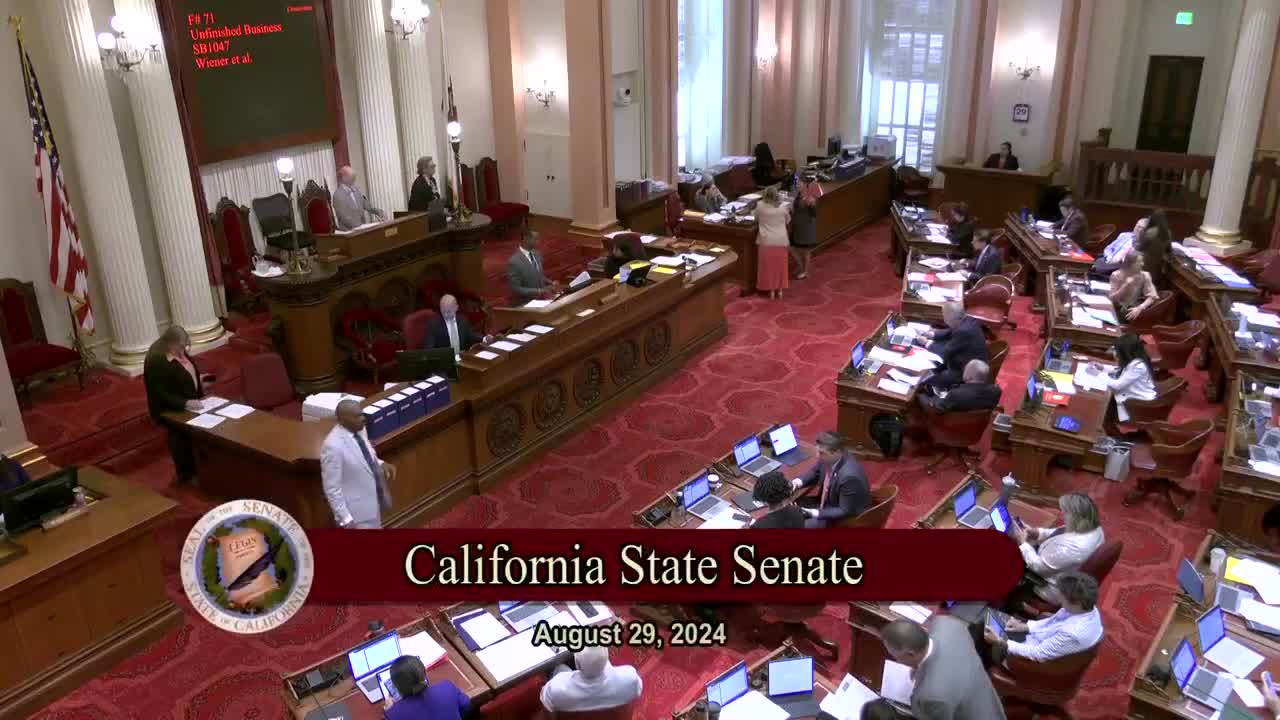
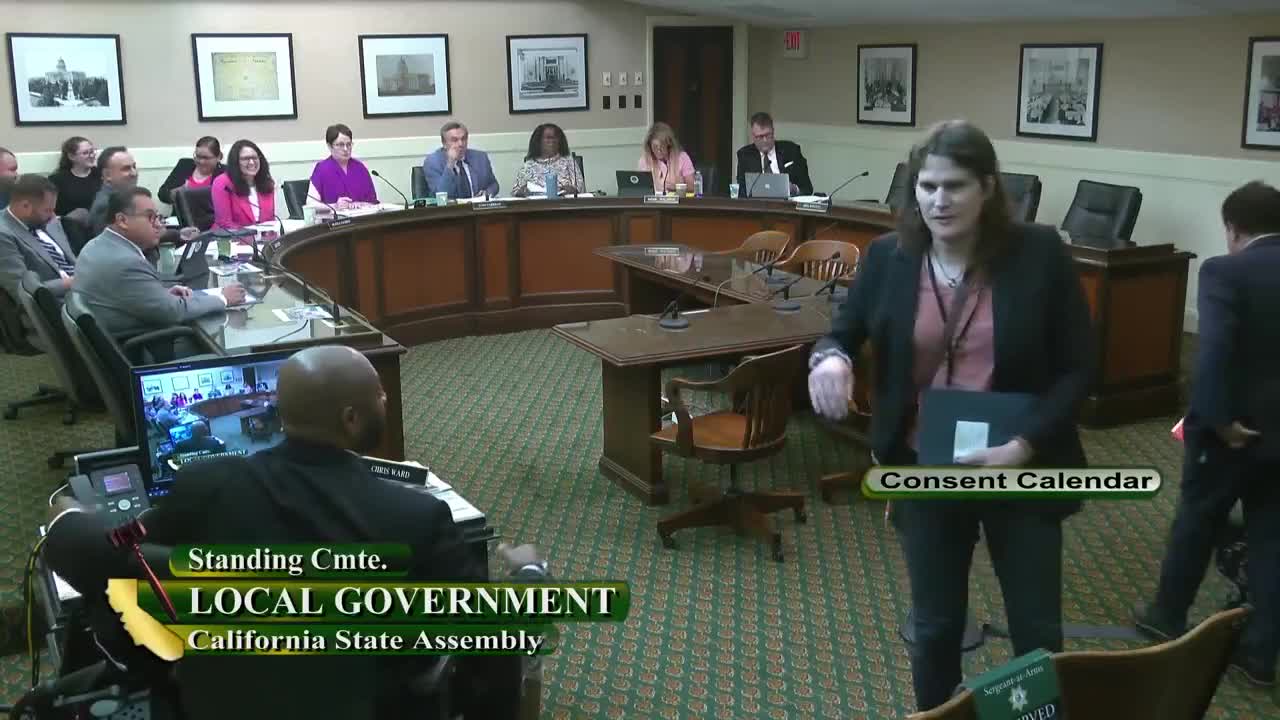
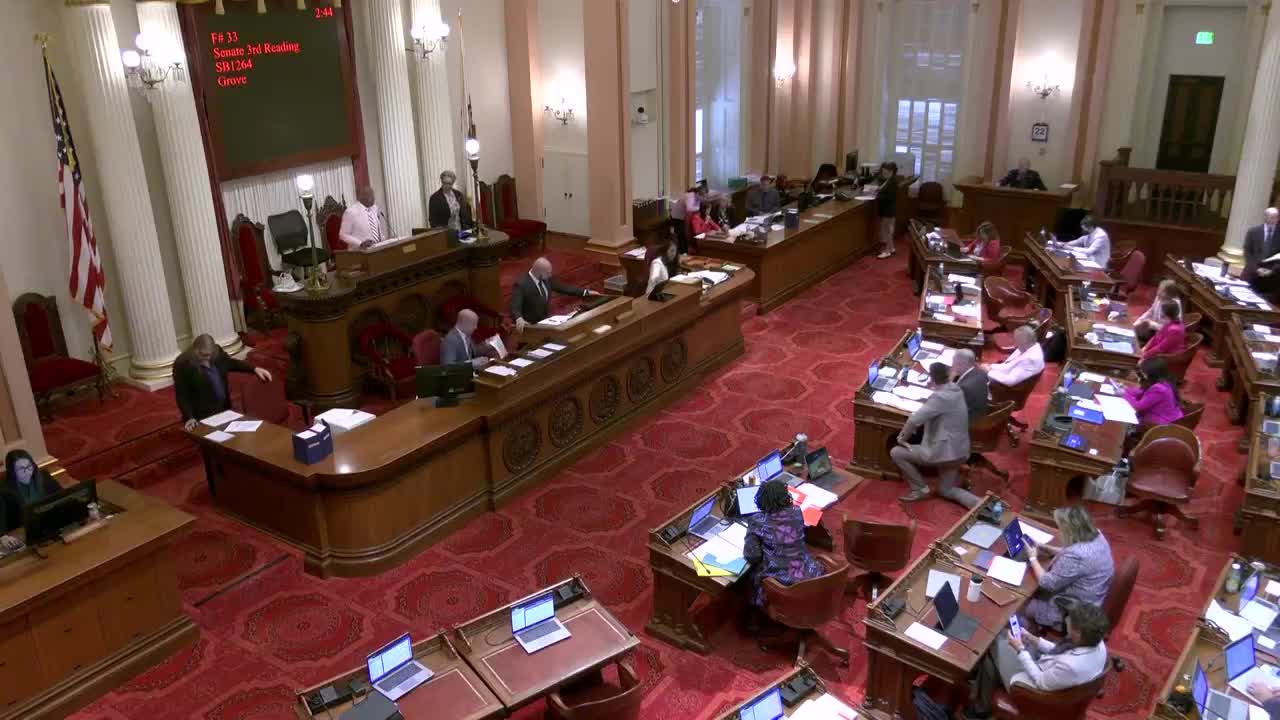
Bill Author
Bill Co-Author(s):