SB 1074: Sexually violent predators.
- Session Year: 2023-2024
- House: Senate
- Latest Version Date: 2024-05-16
Current Status:
Failed
(2024-08-15: August 15 hearing: Held in committee and under submission.)
Introduced
In Committee
First Chamber
In Committee
Second Chamber
Enacted
Existing law provides for the civil commitment of a person who is determined to be a sexually violent predator. Existing law establishes a procedure by which a person committed as a sexually violent predator may petition for conditional release and requires the court, if it makes a specified determination, to place the person on conditional release. Existing law generally requires that a person released on conditional release pursuant to these provisions be placed in the persons county of domicile prior to their incarceration unless extraordinary circumstances exist requiring placement outside the county, as specified. Existing law also prohibits the placement of a person released on conditional release within 1/4 mile of any public or private school, as specified.
Existing law defines a sexually violent predator as a person who has been convicted of a sexually violent offense and has a diagnosed mental disorder that makes the person a danger to others in that they are likely to engage in sexually violent criminal behavior. Existing law requires the State Department of State Hospitals to notify the sheriff or chief of police, or both, the district attorney, or the countys designated counsel under specific circumstances, including when it makes a recommendation to the court for community outpatient treatment for a person committed as a sexually violent predator.
This bill, the Sexually Violent Predator Accountability, Fairness, and Enforcement Act, would require the Director State Department of State Hospitals to ensure department vendors consider public safety as the overriding consideration in the placement of a conditionally released sexually violent predator and approve a potential placement before a department employee or vendor signs a lease or rental agreement for the placement of a sexually violent predator. predator, as specified.
This bill would declare that it is to take effect immediately as an urgency statute.
Existing law provides for the civil commitment of a person who is determined to be a sexually violent predator. Existing law establishes a procedure by which a person committed as a sexually violent predator may petition for conditional release and requires the court, if it makes a specified determination, to place the person on conditional release. Existing law generally requires that a person released on conditional release pursuant to these provisions be placed in the persons county of domicile prior to their incarceration unless extraordinary circumstances exist requiring placement outside the county, as specified. Existing law also prohibits the placement of a person released on conditional release within 1/4 mile of any public or private school, as specified.
Existing law defines a sexually violent predator as a person who has been convicted of a sexually violent offense and has a diagnosed mental disorder that makes the person a danger to others in that they are likely to engage in sexually violent criminal behavior. Existing law requires the State Department of State Hospitals to notify the sheriff or chief of police, or both, the district attorney, or the countys designated counsel under specific circumstances, including when it makes a recommendation to the court for community outpatient treatment for a person committed as a sexually violent predator.
This bill, the Sexually Violent Predator Accountability, Fairness, and Enforcement Act, would require the Director of State Hospitals to ensure department vendors consider public safety as the overriding consideration in the placement of a sexually violent predator and approve a potential placement before a department employee or vendor signs a lease or rental agreement for the placement of a sexually violent predator.
This bill would declare that it is to take effect immediately as an urgency statute.
(a)This act shall be known, and may be cited, as the Sexually Violent Predator Accountability, Fairness, and Enforcement Act.
(b)The Director State Department of State Hospitals is responsible for ensuring that department vendors consider public safety as the overriding consideration in the placement of a sexually violent predator. predator conditionally released pursuant to this article.
(c)(1)The Director State Department of State Hospitals shall approve a potential placement before a department employee or vendor signs proposes a potential placement to a court, including signing a lease or rental agreement regarding the placement of a sexually violent predator. predator who is scheduled to be conditionally released in the community.
(2)This subdivision does not prohibit the placement of a financial hold on a residence for purposes of assessing suitability and public safety considerations for the prospective placement of a person committed as a sexually violent predator.
SEC. 2.This act is an urgency statute necessary for the immediate preservation of the public peace, health, or safety within the meaning of Article IV of the California Constitution and shall go into immediate effect. The facts constituting the necessity are:
In order to protect the public and ensure greater transparency in the placement of sexually violent predators in communities at the earliest possible time, it is necessary for this act to take effect immediately.
(a)This act shall be known, and may be cited, as the Sexually Violent Predator Accountability, Fairness, and Enforcement Act.
(b)The Director of State Hospitals is responsible for ensuring that department vendors consider public safety as the overriding consideration in the placement of a sexually violent predator.
(c)The Director of State Hospitals shall approve a potential placement before a department employee or vendor signs a lease or rental agreement regarding the placement of a sexually violent predator.
SEC. 2.This act is an urgency statute necessary for the immediate preservation of the public peace, health, or safety within the meaning of Article IV of the California Constitution and shall go into immediate effect. The facts constituting the necessity are:
In order to protect the public and ensure greater transparency in the placement of sexually violent predators in communities at the earliest possible time, it is necessary for this act to take effect immediately.
|
Date
|
Status
|
|---|---|
| Aug 15, 2024 | August 15 hearing: Held in committee and under submission. |
| Aug 7, 2024 | August 7 set for first hearing. Placed on suspense file. |
| Jul 3, 2024 | From committee: Do pass and re-refer to Com. on APPR. (Ayes 8. Noes 0.) (July 2). Re-referred to Com. on APPR. |
| Jun 3, 2024 | Referred to Com. on PUB. S. |
| May 23, 2024 | In Assembly. Read first time. Held at Desk. |
| May 22, 2024 | Read third time. Urgency clause adopted. Passed. (Ayes 38. Noes 0. Page 4147.) Ordered to the Assembly. |
| May 20, 2024 | Read second time. Ordered to third reading. |
| May 16, 2024 | Read second time and amended. Ordered to second reading. |
| May 16, 2024 | From committee: Do pass as amended. (Ayes 7. Noes 0. Page 3970.) (May 16). |
| May 14, 2024 | Set for hearing May 16. |
| May 13, 2024 | May 13 hearing: Placed on APPR suspense file. |
| May 3, 2024 | Set for hearing May 13. |
| Apr 9, 2024 | From committee: Do pass and re-refer to Com. on APPR. (Ayes 4. Noes 0. Page 3533.) (April 9). Re-referred to Com. on APPR. |
| Mar 13, 2024 | Set for hearing April 9. |
| Feb 21, 2024 | Referred to Com. on PUB S. |
| Feb 13, 2024 | From printer. May be acted upon on or after March 14. |
| Feb 12, 2024 | Introduced. Read first time. To Com. on RLS. for assignment. To print. |
|
Date
|
Description
|
Location
|
Votes
|
|
|---|---|---|---|---|
| Jul 2, 2024 | Do pass and be re-referred to the Committee on [Appropriations] | Assembly Standing Committee on Public Safety |
Passed |
|
| May 22, 2024 | Senate 3rd Reading SB1074 Jones et al. Urgency Clause | Senate Floor |
Passed |
|
| May 16, 2024 | Do pass as amended | Senate Standing Committee on Appropriations |
Passed |
|
| May 13, 2024 | Placed on suspense file | Senate Standing Committee on Appropriations |
Passed |
|
| Apr 9, 2024 | Do pass, but first be re-referred to the Committee on [Appropriations] | Senate Standing Committee on Public Safety |
Passed |
This list shows positions taken on this bill by organizations on the date displayed, which is linked to the original source.
Positions by individuals are not included.
|
Organization
|
Position
|
Date
|
|---|---|---|
| Aclu California Action | ** Against | |
| California Attorneys For Criminal Justice | ** Against | |
| California District Attorneys Association | ** Support | |
| California Public Defenders Association | ** Against | |
| California State Sheriffs Association | ** Support | |
| Ella Baker Center For Human Rights | ** Against |
Date of Hearing: August 7, 2024
ASSEMBLY COMMITTEE ON APPROPRIATIONS
Buffy Wicks, Chair
SBPCA Bill Id:SB 1074
Author:(Jones) – As Amended Ver:May 16, 2024
Policy Committee: | Public Safety | Vote: | 8 - 0 |
|
| ||
|
|
Urgency: Yes State Mandated Local Program: No Reimbursable: No
SUMMARY:
This bill states the Department of State Hospitals (DSH) is responsible for ensuring its vendors consider public safety when finding a placement for a sexually violent predator (SVP) and requires DSH to approve the proposed placement of an SVP before the placement is proposed to the court.
FISCAL EFFECT:
Costs (General Fund) of an unknown but potentially significant amount to DSH. Because the bill does not define “public safety” and does not specify how DSH must ensure consideration of public safety by vendors, the bill will likely generate additional workload to DSH to determine whether its existing practices meet the standard established by the bill or whether changes to current protocols are warranted. DSH also anticipates potentially significant litigation costs since the bill’s public safety standard is not defined and, as discussed below, SVP placements are generally contested.
According to the Legislative Analyst’s Office, the General Fund faces a structural deficit in the tens of billions of dollars over the next several fiscal years.
COMMENTS:
- Purpose. According to the author:
The SAFE Act requires DSH to take ownership in the placement process by approving any placements BEFORE a department employee or vendor can sign any leases for placement locations. Additionally, this bill will make public safety a priority for any potential placement of an SVP. SB 1074 sets our priorities straight and puts public safety above the interests of Liberty Healthcare or the SVPs they release into our neighborhoods.
- Background. An SVP is a person who, after incarceration in state prison, must serve a civil commitment in DSH because a court has determined the person is likely to engage in sexually violent criminal behavior upon release. Generally, once a person is deemed an SVP, they must remain in a state hospital for treatment and confinement until they can show their condition has changed sufficiently that they no longer pose a significant risk to society. After a judicial review process, if a court determines that an SVP would not be a danger to the health and safety of others, they will be placed in their pre-incarceration county of domicile. Under existing law, DSH submits a proposed community placement location to the court, and the court evaluates the proposal and has the authority to order the SVP’s final placement. Many state and county representatives participate in the process of evaluating and determining a proposed SVP placement, and proposed placements are discussed at public meetings to incorporate community input. Finding a suitable housing placement for an SVP is challenging and often contentious. There are numerous statutory restrictions on where an SVP may live, and members of the public often do not want an SVP to live in their community.
Analysis Prepared by: Annika Carlson / APPR. / (916) 319-2081
Date of Hearing: July 2, 2024
Chief Counsel: Gregory Pagan
ASSEMBLY COMMITTEE ON PUBLIC SAFETY
Kevin McCarty, Chair
SBPCA Bill Id:SB 1074
Author:(Jones) – As Amended Ver:May 16, 2024
SUMMARY: Requires the State Department of State Hospitals (DSH) to approve the potential placement of a sexually violent predator (SVP) scheduled to be conditionally released before finalizing a lease or rental agreement. Specifically, this bill:
- States that the DSH is responsible for ensuring that department vendors consider public safety in the placement of SVP’s conditionally released in the community.
- Requires the DSH to approve a potential placement before a department employee or vendor proposes a potential placement to a court, including signing a lease or rental agreement regarding the placement of an SVP who is scheduled to be conditionally released in the community.
- Provides that the above provisions do not prohibit the placing hold on a residence for purposes of assessing suitability and public safety considerations for the prospective placement of a person committed as an SVP.
- Contains an urgency clause in order to protect the public and to provide greater transparency in the placement of SVP’s in the community.
EXISTING LAW:
- Provides for the civil commitment for psychiatric and psychological treatment of a prison inmate found to be a SVP after the person has served his or her prison commitment. (Welf. & Inst. Code, § 6600, et seq.)
- Defines a "sexually violent predator" as "a person who has been convicted of a sexually violent offense against at least one victim, and who has a diagnosed mental disorder that makes the person a danger to the health and safety of others in that it is likely that he or she will engage in sexually violent criminal behavior." (Welf. & Inst. Code, § 6600, subd. (a)(1).)
- Permits a person committed as a SVP to be held for an indeterminate term upon commitment. (Welf. & Inst. Code, § 6604.1.)
- Requires that a person found to have been a SVP and committed to the DSH have a current examination on his or her mental condition made at least yearly. The report shall include consideration of conditional release to a less restrictive alternative or an unconditional release is in the best interest of the person and also what conditions can be imposed to adequately protect the community. (Welf. & Inst. Code, § 6604.9.)
- Allows a SVP to seek conditional release with the authorization of the Director of the DSH when DSH determines that the person's condition has so changed that he or she no longer meets the SVP criteria, or when conditional release is in the person's best interest and conditions to adequately protect the public can be imposed. (Welf. & Inst. Code, § 6607.)
- Allows a person committed as a SVP to petition for conditional release or an unconditional discharge any time after one year of commitment, notwithstanding the lack of recommendation or concurrence by the Director of the DSH. (Welf. & Inst. Code, § 6608, subd. (a).)
- Provides that, if the court deems the conditional release petition not frivolous, the court is to give notice of the hearing date to the attorney designated to represent the county of commitment, the retained or appointed attorney for the committed person, and the Director of the DSH at least 30 court days before the hearing date. (Welf. & Inst. Code, § 6608, subd. (b).)
- Requires the court to first obtain the written recommendation of the director of the treatment facility before taking any action on the petition for conditional release if the is made without the consent of the director of the treatment facility. (Welf. & Inst. Code, § 6608, subd. (c).)
- Provides that the court shall hold a hearing to determine whether the person committed would be a danger to the health and safety of others in that it is likely that he or she will engage in sexually violent criminal behavior due to his or her diagnosed mental disorder if under supervision and treatment in the community. Provides that the attorney designated the county of commitment shall represent the state and have the committed person evaluated by experts chosen by the state and that the committed person shall have the right to the appointment of experts, if he or she so requests. (Welf. & Inst. Code, § 6608, subd. (e).)
- Requires the court to order the committed person placed with an appropriate forensic conditional release program operated by the state for one year if the court at the hearing determines that the committed person would not be a danger to others due to his or her diagnosed mental disorder while under supervision and treatment in the community. Requires a substantial portion of the state-operated forensic conditional release program to include outpatient supervision and treatment. Provides that the court retains jurisdiction of the person throughout the course of the program. (Welf. & Inst. Code, § 6608, subd. (e).)
- Provides that if the court denies the petition to place the person in an appropriate forensic conditional release program, the person may not file a new application until one year has elapsed from the date of the denial. (Welf. & Inst. Code, § 6608, subd. (h)
- Allows, after a minimum of one year on conditional release, the committed person, with or without the recommendation or concurrence of the Director of the DSH, to petition the court for unconditional discharge, as specified. (Welf. & Inst. Code, § 6608, subd. (k).)
- Prohibits a conditionally-released person from being placed within a quarter-mile of any kindergarten through twelfth grade school if the court finds that the person has “a history of improper sex conduct with children” or has previously been convicted of specified sex offenses. (Welf. & Inst. Code, § 6608.5, (f).)
- States that the county of domicile shall designate a county agency or program that will provide assistance and consultation in the process of locating and securing housing within the county for persons committed as SVPs who are about to be conditionally released. (Welf. & Inst. Code, § 6608.5, (d).)
- Specifies that in recommending a specific placement for community outpatient treatment, DSH or its designee shall consider all of the following: a) The concerns and proximity of the victim or the victim’s next of kin; and b) The age and profile of the victim or victims in the sexually violent offenses committed by the person subject to placement. The “profile” of a victim includes, but is not limited to, gender, physical appearance, economic background, profession, and other social or personal characteristics. (Welf. & Inst. Code, § 6608.5, (e)(1)-(2).)
- States that if the court determines that placement of a person in the county of his or her domicile is not appropriate, the court shall consider the following circumstances in designating his or her placement in a county for conditional release: a) If and how long the person has previously resided or been employed in the county; and b) If the person has next of kin in the county. (Welf. & Inst. Code, § 6608.5, (g)(1)-(2)
- Specifies that when DSH makes a recommendation to the court for community outpatient treatment for any person committed as a SVP, or possibilities of community placement exist, DSH must notify the sheriff or chief of police, or both, the district attorney, or the county’s designated counsel, that have jurisdiction over the following locations: (a) The community in which the person may be released for community outpatient treatment; (b) The community in which the person maintained his or her last legal residence; and, (c) The county that filed for the person’s civil commitment. (Welf. and Inst. Code, § 6609.1 (a)(1)(A)-(C).) 16)
- Requires notice be given at least 30 days prior to DSH’s submission of its recommendation to the court in those cases in which DSH recommended community outpatient treatment, or in which DSH is recommending or proposing a placement location, or in the case of a petition or placement proposal by someone other than DSH, within 48 hours after becoming aware of the petition or placement proposal. (Welf. & Inst. Code, 6609.1, subd. (a)(4).) 17) Specifies that agencies receiving the notice may provide written comment to the DSH and the court regarding the impending release, placement, location, and conditions of release. All community agency comments shall be combined and consolidated. (Welf. &Inst. Code, 6609.1, subd. (b).)
- Requires that the agencies’ comments and DSH’s statements be considered by the court which shall, based on those comments and statements, approve, modify, or reject the DSH’s recommendation or proposal regarding the community or specific address to which the person is scheduled to be released or the conditions that shall apply to the release if the court finds that DSH’s recommendation or proposal is not appropriate. (Welf. &Inst. Code, 6609.1, subd. (c).)
FISCAL EFFECT: Unknown
COMMENTS:
- Author's Statement: According to the author, "SB 1074 introduces the Sexually Violent Predator Accountability, Fairness, and Enforcement Act (SAFE Act) to oversee the placement of Sexually Violent Predators (SVPs) upon their release. SVPs are criminals who have committed a sexual offense and have a diagnosed mental disorder that makes them likely to reoffend. Currently, the Department of State Hospitals (DSH) contracts with Liberty Healthcare to manage SVP placement with little to no oversight. Time and again, this has led to entirely inappropriate placements, putting our communities at risk of victimization at the hands of these predators.
“The SAFE Act requires DSH to take ownership in the placement process by approving any placements BEFORE a department employee or vendor can sign any leases for placement locations. Additionally, this bill will make public safety a priority for any potential placement of an SVP. SB 1074 sets our priorities straight and puts public safety above the interests of Liberty Healthcare or the SVPs they release into our neighborhoods.”
- SVP Background: The Sexually Violent Predator Act (SVPA) establishes an extended civil commitment scheme for sex offenders who are about to be released from prison, but are referred to the DSH for treatment in a state hospital, because they have suffered from a mental illness which causes them to be a danger to the safety of others.
The DSH uses specified criteria to determine whether an individual qualifies for treatment as a SVP. Under existing law, a person may be deemed a SVP if: (a) the defendant has committed specified sex offenses against two or more victims; (b) the defendant has a diagnosable mental disorder that makes the person a danger to the health and safety of others in that it is likely that he or she will engage in sexually-violent criminal behavior; and, (3) two licensed psychiatrists or psychologists concur in the diagnosis. If both clinical evaluators find that the person meets the criteria, the case is referred to the county district attorney who may file a petition for civil commitment.
Once a petition has been filed, a judge holds a probable cause hearing; and if probable cause if found, the case proceeds to a trial at which the prosecutor must prove to a jury beyond a reasonable doubt that the offender meets the statutory criteria. The state must prove "[1] a person who has been convicted of a sexually violent offense against [at least one] victim[] and [2] who has a diagnosed mental disorder that [3] makes the person a danger to the health and safety of others in that it is likely that he or she will engage in [predatory] sexually violent criminal behavior." (Cooley v. Superior Court (Martinez) (2002) 29 Cal.4th 228, 246.) If the prosecutor meets this burden, the person then can be civilly committed to a DSH facility for treatment.
The DSH must conduct a yearly examination of a SVP's mental condition and submit an annual report to the court. This annual review includes an examination by a qualified expert. (Welf. & Inst. Code, § 6604.9.) In addition, DSH has an obligation to seek judicial review any time it believes a person committed as a SVP no longer meets the criteria, not just annually. (Welf. & Inst. Code, § 6607.)
The SVPA was substantially amended by Proposition 83 ("Jessica's Law"), which became operative on November 7, 2006. Originally, a SVP commitment was for two years; but now, under Jessica's Law, a person committed as a SVP may be held for an indeterminate term upon commitment or until it is shown that the defendant no longer poses a danger to others. (See People v. McKee (2010) 47 Cal.4th 1172, 1185-87.) Jessica's Law also amended the SVPA to make it more difficult for SVPs to petition for less restrictive alternatives to commitment. These changes have survived due process, ex post facto, and, more recently, equal protection challenges. (See People v. McKee, supra, 47 Cal.4th 1172 and People v. McKee (2012) 207 Cal.App.4th 1325.)
- Difficulty in Placing SVP’s on Conditional Release: Liberty Health Care, the contract provider for DSH, goes to great lengths at considerable expense to find suitable housing for an SVP on conditional release in the community. In the case of People v. Superior Court (Karsai) (2013) 213 Cal App 4th 774, Liberty Health Care reported that its staff had travelled 6,793 miles in one year searching for a residence for Karsai and had viewed 1,261 properties in Santa Barbara, Ventura, and San Luis Obispo Counties. The only potential residence was Karsai's mother's home in Santa Maria, and the Court determined that Karsai's mother's home was not disqualified as a potential residence despite its proximity to a park and an elementary school. Later, Liberty informed the court that the Karsai family had withdrawn his mother's home as a placement/residence site because the family had been beset upon by the local media.
The court then found that "extraordinary circumstances existed, justifying a search for 'any' available housing "without being constrained to San Luis Obispo or Santa Barbara County." Approximately five months later, Liberty had reviewed more than 1,830 sites and had identified two possible locations: an apartment in Sacramento and a small home in Auburn. At a hearing, both the People and Karsai objected to the locations. The People objected due to the proximity of Karsai's victims, and both sides objected "on the basis that the placement would provide no support structure for Mr. Karzai". Agreeing that it would be "fruitless" to pursue those placements, the court ordered Liberty to check into the option of placing Karzai in a travel trailer on a pad next to the San Luis Obispo County Sheriff's Office. Liberty shortly informed the court that there had been objections to Karzai's placement in a trailer and that the pad was "not Jessica's law compliant. Because it appeared to the court that "there was no suitable placement available either in Mr. Karsai's county of domicile, or elsewhere," the court ordered Karsai be "released in Santa Barbara County as a transient." Santa Barbara then sought a writ of mandate in the court of appeal, seeking to vacate the superior court's order releasing Karsai into Santa Barbara as a transient.
The court eventually ruled that nothing in the law forbids the conditional release of an SVP as a transient. "Moreover, to imply such imply such a limitation into the law would raise serious constitutional issues. 'Because civil commitment involves a significant deprivation of liberty, a defendant in an SVP proceeding is entitled to due process protections.' (People v. Otto (2001) 26 Cal.4th 200, 209 [109 Cal. Rptr. 2d 327, 26 P.3d 1061].) Once a court has determined that a particular SVP would not be a danger to the health and safety of others in that it is not likely that he or she would engage in sexually violent criminal [*789] behavior due to his or her diagnosed mental disorder if under supervision and treatment in the community, that person unquestionably has a significant liberty interest in being released. To authorize an unspecified delay in that release by implying in the SVPA a requirement that the person must have a specific resident before release, when under the statutory scheme the securing of a specific residence is not a prerequisite to a finding that the person would pose no danger to others if under outpatient supervision and treatment, would run the risk that a person who is no longer dangerous will nonetheless have to remain in custody in a secure facility indefinitely simply because of some [***28] extraneous factor, such as public outrage, that interferes with finding and securing a fixed residence for that person. To avoid such a potential due process problem, we believe the more prudent—as well as that most consistent with the established canons of statutory interpretation—is to not imply in the SVPA something the Legislature did not expressly include in it: the limitation that an SVP cannot be conditionally released in the community without a specific residence." - Argument in Support: According to the California District Attorneys Association, “Under current law, DSH avoids responsibility for placing SVP’s into the community by contracting their conditional release to Liberty Healthcare. Liberty Healthcare serves as the sole vendor for providing post release CONREP (Conditional Release Program). Although public safety should be the primary consideration, Liberty has engaged in a number of placements that do not reflect public safety as a primary concern. In doing so, Liberty has obligated the state to numerous leases and created unsafe conditions. Some of these releases include releasing an SVP next door to a home where six children reside, releasing an SVP next door to two deaf children, requiring their family to move for the safety of their children. DSH and specifically its director, have avoided responsibility by delegating the placement task to Liberty Healthcare.”
- Argument in Opposition: According to the California Attorneys for Criminal Justice, “CACJ opposes this bill as being another in a long line of proposed legislation designed to keep individuals who have previously been found to qualify as a sexually violent predator under California law from ever being able to find a residence once they have earned their right to be released from custody.
“Over the years since the Sexually Violent Predator law came into existence, numerous attempts have been made through legislation to bar or restrict the return and placement in our communities. Some of these attempts have become successful in becoming law. Many others have not either because of failing to become law or having been overturned by court decisions. It is clear to CACJ that the overriding goal in all these attempts is to keep the individuals from having a place to live in our communities. SB 1074 is no different.” - Prior Legislation:
- SB 832 (Jones) of the 2023 Legislative Session prohibited the placement of SVPs within five miles of federal land and to require the DSH to take specified actions before placing a sexually violent predator in the community and to require the DSH, the CDCR, and the Department of Forestry and Fire Protection to report to the Governor and Legislature the status of quarters available for the placement of sexually violent predators. SB 832 failed passage in the Senate Public Safety Committee.
- SB 841 (Jones) of the 2022 Legislative Session was substantially similar to SB 832. SB 832 failed passage in the Senate Public Safety Committee.
- SB 832 (Jones) of the 2023 Legislative Session prohibited the placement of SVPs within five miles of federal land and to require the DSH to take specified actions before placing a sexually violent predator in the community and to require the DSH, the CDCR, and the Department of Forestry and Fire Protection to report to the Governor and Legislature the status of quarters available for the placement of sexually violent predators. SB 832 failed passage in the Senate Public Safety Committee.
REGISTERED SUPPORT / OPPOSITION:
Support
California District Attorneys Association
California State Sheriffs’ Association
Opposition
California Attorneys for Criminal Justice
Ella Baker Center for Human Rights
Analysis Prepared by: Gregory Pagan / PUB. S. / (916) 319-3744
SENATE RULES COMMITTEE Office of Senate Floor Analyses (916) 651-1520 Fax: (916) 327-4478 | SB 1074 |
THIRD READING
Bill No: SB 1074
Author: Jones (R), et al.
Amended: 5/16/24
Vote: 27 - Urgency
SENATE PUBLIC SAFETY COMMITTEE: 4-0, 4/9/24
AYES: Wahab, Seyarto, Bradford, Wiener
NO VOTE RECORDED: Skinner
SENATE APPROPRIATIONS COMMITTEE: 7-0, 5/16/24
AYES: Caballero, Jones, Ashby, Becker, Bradford, Seyarto, Wahab
SUBJECT: Sexually violent predators
SOURCE: Author
DIGEST:
This bill provides that the Department of State Hospitals shall approve placement of a sexually violent predator scheduled to be conditionally released before any agreement regarding placement is finalized.
ANALYSIS:
Existing law:
- Permits a person committed as an SVP to be held for an indeterminate term upon commitment. (Welf. & Inst. Code, §§ 6604 & 6604.1.)
- Requires that a person found to have been an SVP and committed to the Department of State Hospitals (DSH) have a current examination on their mental condition made at least yearly. The report shall include consideration of whether conditional release to a less restrictive alternative or an unconditional release is in the best interest of the person and also what conditions can be imposed to adequately protect the community. (Welf. & Inst. Code, § 6604.9, subds. (a) & (b).)
- Provides that when DSH determines that the person's condition has so changed that he or she is not likely to commit acts of predatory sexual violence while under community treatment and supervision, then the DSH Director shall forward a report and recommendation for conditional release to the court, the prosecuting agency, and the attorney of record for the committed person. (Welf. & Inst. Code, § 6607.)
- Establishes a process whereby a person committed as an SVP can petition for conditional release or an unconditional discharge any time after one year of commitment, notwithstanding the lack of recommendation or concurrence by the Director of DSH. (Welf. & Inst. Code, § 6608, (a), (f) & (m).)
- Provides that if the petition is made without the consent of the director of the treatment facility, no action may be taken on the petition without first obtaining the written recommendation of the director of the treatment facility. (Welf. & Inst. Code, § 6608, (e).)
- Prohibits the court from holding a hearing on a petition for conditional release until the community program director designated by DHS submits a report to the court that makes a recommendation as to the appropriateness of placing the inmate in a state-operated forensic conditional release program. (Welf. & Inst. Code, § 6608, (f); Pen. Code, § 1605, (a).)
- Requires the court to place the committed person in a forensic conditional release program operated by the state for one year if it finds that the person is not a danger to others due to their mental disorder diagnosis while under treatment and supervision in the community. Specifies that the program must include outpatient care. (Welf. & Inst. Code, § 6608, (g).)
- Provides that before actually placing a person on conditional release, the community program director designated by DSH must recommend the program most appropriate for supervising and treating the person. (Welf. & Inst. Code, § 6608, (h).)
- Prohibits a conditionally-released person from being placed within a quarter-mile of any kindergarten through twelfth grade school if the court finds that the person has “a history of improper sex conduct with children” or has previously been convicted of specified sex offenses. (Welf. & Inst. Code, § 6608.5, (f).)
- States that the county of domicile shall designate a county agency or program that will provide assistance and consultation in the process of locating and securing housing within the county for persons committed as SVPs who are about to be conditionally released. (Welf. & Inst. Code, § 6608.5, (d).)
- Specifies that in recommending a specific placement for community outpatient treatment, DSH or its designee shall consider all of the following: a) The concerns and proximity of the victim or the victim’s next of kin; and b) The age and profile of the victim or victims in the sexually violent offenses committed by the person subject to placement. The “profile” of a victim includes, but is not limited to, gender, physical appearance, economic background, profession, and other social or personal characteristics. (Welf. & Inst. Code, § 6608.5, (e)(1)-(2).)
- States that if the court determines that placement of a person in the county of his or her domicile is not appropriate, the court shall consider the following circumstances in designating his or her placement in a county for conditional release: a) If and how long the person has previously resided or been employed in the county; and b) If the person has next of kin in the county. (Welf. & Inst. Code, § 6608.5, (g)(1)- (2)
- Specifies that when DSH makes a recommendation to the court for community outpatient treatment for any person committed as a SVP, or possibilities of community placement exist, DSH must notify the sheriff or chief of police, or both, the district attorney, or the county’s designated counsel, that have jurisdiction over the following locations: (a) The community in which the person may be released for community outpatient treatment; (b) The community in which the person maintained his or her last legal residence; and, (c) The county that filed for the person’s civil commitment. (Welf. and Inst. Code, § 6609.1 (a)(1)(A)-(C).) 16)
- Requires notice be given at least 30 days prior to DSH’s submission of its recommendation to the court in those cases in which DSH recommended community outpatient treatment, or in which DSH is recommending or proposing a placement location, or in the case of a petition or placement proposal by someone other than DSH, within 48 hours after becoming aware of the petition or placement proposal. (Welf. & Inst. Code, 6609.1, subd. (a)(4).) 17) Specifies that agencies receiving the notice may provide written comment to the DSH and the court regarding the impending release, placement, location, and conditions of release. All community agency comments shall be combined and consolidated. (Welf. &Inst. Code, 6609.1, subd. (b).)
- Requires that the agencies’ comments and DSH’s statements be considered by the court which shall, based on those comments and statements, approve, modify, or reject the DSH’s recommendation or proposal regarding the community or specific address to which the person is scheduled to be released or the conditions that shall apply to the release if the court finds that DSH’s recommendation or proposal is not appropriate. (Welf. &Inst. Code, 6609.1, subd. (c).)
This bill:
- Provides that the DSH is responsible for ensuring that department vendors consider public safety in the placement of a sexually violent predator conditionally released pursuant.
- Provides the DSH shall approve a potential placement before a department employee or vendor proposes a potential placement, including signing a lease or rental agreement, regarding the placement of a sexually violent predator scheduled to be conditionally released in the community.
- Provides that it shall not be construed to prohibit a financial hold placed on a residence for purposes of assessing suitability and public safety considerations for the prospective placement of a person committed as a sexually violent predator.
- Provides that it shall be known as the Sexually Violent Predator, Accountability, Fairness, and Enforcement Act.
Background
According the author:
SB 1074 introduces the Sexually Violent Predator Accountability, Fairness, and Enforcement Act (SAFE Act) to oversee the placement of Sexually Violent Predators (SVPs) upon their release. SVPs are criminals who have committed a sexual offense and have a diagnosed mental disorder that makes them likely to reoffend. Currently, the Department of State Hospitals (DSH) contracts with Liberty Healthcare to manage SVP placement with little to no oversight. Time and again, this has led to entirely inappropriate placements, putting our communities at risk of victimization at the hands of these predators.
The SAFE Act requires DSH to take ownership in the placement process by approving any placements BEFORE a department employee or vendor can sign any leases for placement locations. Additionally, this bill will make public safety the highest criteria of any potential placement of an SVP by making the Director of State Hospitals personally responsible for ensuring all department vendors hold public safety as the top priority during all placement procedures.
SB 1074 sets our priorities straight and puts public safety above the interests of Liberty Healthcare or the SVPs they release into our neighborhoods.
FISCAL EFFECT: Appropriation: No Fiscal Com.: Yes Local: No
According to the Senate Appropriations Committee:
DSH anticipates unknown, potentially significant cost pressures (General Fund).
SUPPORT: (Verified 5/16/24)
California District Attorneys Association
California State Sheriffs' Association
OPPOSITION: (Verified 5/16/24)
ACLU California Action
California Attorneys for Criminal Justice
California Public Defenders Association
Ella Baker Center for Human Rights
ARGUMENTS IN SUPPORT: The California District Attorneys Office supports this bill stating:
Under current law, DSH avoids responsibility for placing SVPs into the community by contracting their conditional release to Liberty Healthcare. Liberty Healthcare serves as the sole vendor for providing post release CONREP (Conditional Release Program). Although public safety should be the primary consideration, Liberty has engaged in a number of placements that do not reflect public safety as a primary concern. In doing so, Liberty has obligated the state to numerous leases and created unsafe conditions. Some of these releases include releasing an SVP next door to a home where six children reside, releasing an SVP next door to two deaf children, requiring their family to move for the safety of their children. DSH, and specifically its director, have avoided responsibility by delegating the placement task to Liberty Healthcare.
ARGUMENTS IN OPPOSITION: California Public Defenders Association opposes this bill stating:
SB 1074 seeks to construct additional bureaucratic obstacles to block conditionally released SVPs from being released into the community. Ultimately, this would jeopardize the constitutionality of the entire SVPA. By making it more difficult to place an individual after a court has found that the individual is not a danger to others due to a diagnosed mental condition while under supervision and treatment in the community, SB 1074 would lead to the SVPA running afoul of the U.S. Supreme Court precedents upholding similar civil commitment schemes detaining individuals after their prison sentences only if they are predicated on a finding that the individual is currently dangerous.
Under existing law, when it recommends community placement of an individual who has been adjudicated an SVP, the Department of State Hospitals must notify the community’s law enforcement, its designated counsel, and its district attorney. Except in extraordinary circumstances, the individual must be released to the county in which they were domiciled before they were incarcerated.
An individual is granted conditional release pursuant to WIC 6608 when the court determines that the person is not a danger to others while supervised in the community. Before an individual is released from the state hospital on conditional release, they have been found by a court, based on mental health expert opinion, to no longer present a danger to the public. Liberty Healthcare is the organization contracted with the Department of State Hospital and is responsible for providing treatment and supervision of the SVP patient in the community. The first task that Liberty Healthcare undertakes when an SVP patient is granted conditional release is finding suitable placement in the community. The community that the conditionally released SVP patient shall be placed in is determined by the county of domicile prior to the SVPs incarceration.
Prepared by: Mary Kennedy / PUB. S. /
5/18/24 14:01:50
**** END ****
SENATE COMMITTEE ON APPROPRIATIONS
Senator Anna Caballero, Chair
2023 - 2024 Regular Session
SB 1074 (Jones) - Sexually violent predators
Version: February 12, 2024 | Policy Vote: PUB. S. 4 - 0 |
Urgency: Yes | Mandate: No |
Hearing Date: May 16, 2024 | Consultant: Liah Burnley |
Bill Summary:
SB 1074 requires the Department of State Hospitals (DSH) to ensure the department vendors consider public safety in the placement of a person committed as a sexually violent predator (SVP).
*********** ANALYSIS ADDENDUM – SUSPENSE FILE ***********
The following information is revised to reflect amendments
adopted by the committee on May 16, 2024
Fiscal Impact:
DSH anticipates unknown, potentially significant cost pressures (General Fund).
Committee Amendments:
Make technical and clarifying changes to codify DSH’s existing practices.
-- END --
SENATE COMMITTEE ON
Senator Anna Caballero, Chair
2023 - 2024 Regular Session
SB 1074 (Jones) - Sexually violent predators
Version: | Policy Vote: |
Urgency: | Mandate: |
Hearing Date: | Consultant: |
Bill Summary: SB 1074 requires the Director of the Department of State Hospitals (DSH) to ensure the department vendors consider public safety as the overriding considerations in the placement of a sexually violent predator (SVP) and approve a potential placement before a department employee or vendor signs a lease or rental agreement for the placement of the individual.
Fiscal Impact:
DSH anticipates unknown, potentially significant cost pressures (General Fund) by imposing additional requirements for an individual to be placed in the community. (See Staff Comments.)
Background:
The Sexually Violent Predator Act (SVPA) establishes an extended civil commitment scheme for sex offenders who have finished serving their prison sentence, but are referred to DSH for a civil commitment and treatment in a state hospital upon release, because they have suffered from a mental illness which causes them to be a danger to the safety of others.
A person committed as a SVP may be held for an indeterminate term upon commitment or until it is shown that the defendant no longer poses a danger to others. DSH must conduct a yearly examination of a SVP's mental condition and submit an annual report to the court. This annual review includes an examination by a qualified expert. In addition, DSH has an obligation to seek judicial review any time it believes a person committed as a SVP no longer meets the criteria for commitment, not just annually. A person committed as a SVP may petition the court for conditional release or unconditional discharge after one year of commitment. The petition can be filed with, or without, the concurrence of the Director of DSH, as specified.
An individual is granted conditional release when the court determines that the person is not a danger to others while supervised in the community. Before an individual is released from the state hospital on conditional release, they have been found by a court, based on mental health expert opinion, to no longer present a danger to the public. Liberty Healthcare is the organization contracted with the DSH and is responsible for providing treatment and supervision of the SVP patient in the community. The first task that Liberty Healthcare undertakes when an SVP patient is granted conditional release is finding suitable placement in the community. It screens housing sites pursuant to the court’s orders and the individual patient’s needs and known risk factors, and residency restrictions, including proximity to schools and parks, if applicable. It considers clinical risk factors, treatment progress, protective factors, victim profiles and locations to ensure community and patient safety and submits the potential residency to the court for approval. In addition, DSH provides notice to district attorney’s offices, law enforcement, and the public of the potential placement.
Proposed Law: This bill states that the Director of DSH is responsible for ensuring that DSH’s vendors consider public safety as the overriding consideration in the placement of a SVP. This bill does not define “public safety.” It would require the Director to approve a potential placement before a department employee or vendor signs a lease or rental agreement regarding the placement of a SVP.
Staff Comments:
DSH notes that it this bill may generate cost increases to DSH since this bill imposes additional requirements for an individual to be placed in the community although a court has already determined an individual can be safely treated in the conditional release program. This bill may create additional challenges in placing conditionally released individuals in the community, lengthen the housing search and placement process, and could result in increased litigation and higher-cost transient releases being ordered by the court. Additionally, DSH may be required to increase its court appearances given this bill is silent on the Director's role in ensuring Liberty Health Care considers public safety as the overriding consideration in the placement of an SVP.
-- END --
SENATE COMMITTEE ON PUBLIC SAFETY
Senator Aisha Wahab, Chair
2023 - 2024 Regular
Bill No: SB 1074 Hearing Date: April 9, 2024
Author: | Jones | ||
Version: | February 12, 2024 | ||
Urgency: | Yes | Fiscal: | Yes |
Consultant: | MK | ||
Subject: Sexually violent predators
HISTORY
Source: Author
Prior Legislation: SB 832 (Jones) failed Senate Public Safety 2023
SB 841 (Jones) failed Senate Public Safety 2022
SB 1034 (Atkins) Ch. 880, Stats. 2022
AB 1650 (Cooper) Not heard in Assembly 2022
SB 248 (Bates) Ch. 383, Stats. 2020
SB 1023 (Bates) failed Senate Public Safety 2020
AB 1983 (Gallagher) not heard Assembly Public Safety
AB 303 (Cervantes) Ch. 606, Stats. 2019
AB 2661 (Arambula) Ch. 821, Stats. 2018
AB 1909 (Melendez) Ch. 878, Stats. 2016
SB 507 (Pavley) Ch. 576, Stats. 2015
AB 1607 (Fox) Ch. 877, Stats. 2014
SB 295 (Emmerson) – Ch. 182, Stats. 2013
SB 760 (Alquist) Ch. 790, Stats. 2012
Proposition 83, November 2006 General Election
SB 1128 (Alquist) Ch. 337, Stats. 2006
AB 893 (Horton) Ch. 162, Stats. 2005
AB 2450 (Canciamilla) Ch. 425, Stats. 2004
AB 493 (Salinas) Ch. 222, Stats. 2004
SB 659 (Correa) Ch. 248, Stats. 2001
AB 1142 (Runner) Ch. 323, Stats. 2001
SB 2018 (Schiff) Ch. 420, Stats. 2000
SB 451 (Schiff) Ch. 41, Stats. 2000
AB 2849 (Havice) Ch. 643, Stats. 2000
SB 746 (Schiff) Ch. 995, Stats. 1999
SB 11 (Schiff) Ch. 136, Stats. 1999
SB 1976 (Mountjoy) Ch. 961, Stats. 1998
AB 888 (Rogan) – Ch. 763, Stats. 1995
SB 1143 (Mountjoy) Ch. 764, Stats. 1995
AB 888 (Rogan) Ch. 763, Stats. 1995
SB 1143 (Mountjoy) Ch. 764, Stats. 1995
Support: California District Attorneys Association; California State Sheriffs’ Association
Opposition: ACLU California Action; California Attorneys for Criminal Justice; California Public Defenders Association
PURPOSE
The purpose of this bill is to require the Director of State Hospitals to ensure the department vendors consider public safety as the overriding considerations in the placement of a sexually violent predator and approve a potential placement before a department employee or vendor signs a lease or rental agreement for the placement of a sexually violent predator.
Existing law permits a person committed as an SVP to be held for an indeterminate term upon commitment. (Welf. & Inst. Code, §§ 6604 & 6604.1.)
Existing law requires that a person found to have been an SVP and committed to the Department of State Hospitals (DSH) have a current examination on their mental condition made at least yearly. The report shall include consideration of whether conditional release to a less restrictive alternative or an unconditional release is in the best interest of the person and also what conditions can be imposed to adequately protect the community. (Welf. & Inst. Code, § 6604.9, subds. (a) & (b).)
Existing law provides that when DSH determines that the person's condition has so changed that he or she is not likely to commit acts of predatory sexual violence while under community treatment and supervision, then the DSH Director shall forward a report and recommendation for conditional release to the court, the prosecuting agency, and the attorney of record for the committed person. (Welf. & Inst. Code, § 6607.)
Existing law establishes a process whereby a person committed as an SVP can petition for conditional release or an unconditional discharge any time after one year of commitment, notwithstanding the lack of recommendation or concurrence by the Director of DSH. (Welf. & Inst. Code, § 6608, (a), (f) & (m).)
Existing law provides that if the petition is made without the consent of the director of the treatment facility, no action may be taken on the petition without first obtaining the written recommendation of the director of the treatment facility. (Welf. & Inst. Code, § 6608, (e).)
Existing law prohibits the court from holding a hearing on a petition for conditional release until the community program director designated by DHS submits a report to the court that makes a recommendation as to the appropriateness of placing the inmate in a state-operated forensic conditional release program. (Welf. & Inst. Code, § 6608, (f); Pen. Code, § 1605, (a).)
Existing law requires the court to place the committed person in a forensic conditional release program operated by the state for one year if it finds that the person is not a danger to others due to their mental disorder diagnosis while under treatment and supervision in the community. Specifies that the program must include outpatient care. (Welf. & Inst. Code, § 6608, (g).)
Existing law provides that before actually placing a person on conditional release, the community program director designated by DSH must recommend the program most appropriate for supervising and treating the person. (Welf. & Inst. Code, § 6608, (h).)
Existing law prohibits a conditionally-released person from being placed within a quarter-mile of any kindergarten through twelfth grade school if the court finds that the person has “a history of improper sex conduct with children” or has previously been convicted of specified sex offenses. (Welf. & Inst. Code, § 6608.5, (f).)
Existing law states that the county of domicile shall designate a county agency or program that will provide assistance and consultation in the process of locating and securing housing within the county for persons committed as SVPs who are about to be conditionally released. (Welf. & Inst. Code, § 6608.5, (d).)
Existing law specifies that in recommending a specific placement for community outpatient treatment, DSH or its designee shall consider all of the following: a) The concerns and proximity of the victim or the victim’s next of kin; and b) The age and profile of the victim or victims in the sexually violent offenses committed by the person subject to placement. The “profile” of a victim includes, but is not limited to, gender, physical appearance, economic background, profession, and other social or personal characteristics. (Welf. & Inst. Code, § 6608.5, (e)(1)-(2).)
Existing law states that if the court determines that placement of a person in the county of his or her domicile is not appropriate, the court shall consider the following circumstances in designating his or her placement in a county for conditional release: a) If and how long the person has previously resided or been employed in the county; and b) If the person has next of kin in the county. (Welf. & Inst. Code, § 6608.5, (g)(1)- (2)
Existing law specifies that when DSH makes a recommendation to the court for community outpatient treatment for any person committed as a SVP, or possibilities of community placement exist, DSH must notify the sheriff or chief of police, or both, the district attorney, or the county’s designated counsel, that have jurisdiction over the following locations: a) The community in which the person may be released for community outpatient treatment; b) The community in which the person maintained his or her last legal residence; and, c) The county that filed for the person’s civil commitment. (Welf. and Inst. Code, § 6609.1 (a)(1)(A)-(C).) 16)
Existing law requires notice be given at least 30 days prior to DSH’s submission of its recommendation to the court in those cases in which DSH recommended community outpatient treatment, or in which DSH is recommending or proposing a placement location, or in the case of a petition or placement proposal by someone other than DSH, within 48 hours after becoming aware of the petition or placement proposal. (Welf. & Inst. Code, 6609.1, subd. (a)(4).) 17) Specifies that agencies receiving the notice may provide written comment to the DSH and the court regarding the impending release, placement, location, and conditions of release. All community agency comments shall be combined and consolidated. (Welf. &Inst. Code, 6609.1, subd. (b).)
Existing law requires that the agencies’ comments and DSH’s statements be considered by the court which shall, based on those comments and statements, approve, modify, or reject the DSH’s recommendation or proposal regarding the community or specific address to which the
person is scheduled to be released or the conditions that shall apply to the release if the court finds that DSH’s recommendation or proposal is not appropriate. (Welf. &Inst. Code, 6609.1, subd. (c).)
Existing federal law states that the term “Indian country”, as used in this chapter, means (a) all land within the limits of any Indian reservation under the jurisdiction of the United States Government, notwithstanding the issuance of any patent, and, including rights-of-way running through the reservation, (b) all dependent Indian communities within the borders of the United States whether within the original or subsequently acquired territory thereof, and whether within or without the limits of a state, and (c) all Indian allotments, the Indian titles to which have not been extinguished, including rights-of-way running through the same. (Section 1151 of Title 18 of the United States Code)
This bill provides that the Director of State Hospitals is responsible for ensuring that department vendors consider public safety as the overriding consideration in the placement of a sexually violent predator.
This bill provides that the Director of State Hospitals shall approve a potential placement before a department employee or vendor signs a lease or rental agreement regarding the placement of a sexually violent predator.
This bill provides that it shall be knowns and cited as the Sexually Violent Predator Accountability, Fairness, and Enforcement Act.
COMMENTS
1. Need for This Bill
According the author:
SB 1074 introduces the Sexually Violent Predator Accountability, Fairness, and Enforcement Act (SAFE Act) to oversee the placement of Sexually Violent Predators (SVPs) upon their release. SVPs are criminals who have committed a sexual offense and have a diagnosed mental disorder that makes them likely to reoffend. Currently, the Department of State Hospitals (DSH) contracts with Liberty Healthcare to manage SVP placement with little to no oversight. Time and again, this has led to entirely inappropriate placements, putting our communities at risk of victimization at the hands of these predators.
The SAFE Act requires DSH to take ownership in the placement process by approving any placements BEFORE a department employee or vendor can sign any leases for placement locations. Additionally, this bill will make public safety the highest criteria of any potential placement of an SVP by making the Director of State Hospitals personally responsible for ensuring all department vendors hold public safety as the top priority during all placement procedures.
SB 1074 sets our priorities straight and puts public safety above the interests of Liberty Healthcare or the SVPs they release into our neighborhoods.
2. SVP Law Generally
The Sexually Violent Predator Act (SVPA) establishes an extended civil commitment scheme for sex offenders who are about to be released from prison, but are referred to the DSH for treatment in a state hospital, because they have suffered from a mental illness which causes them to be a danger to the safety of others.
The DSH uses specified criteria to determine whether an individual qualifies for treatment as a SVP. Under existing law, a person may be deemed a SVP if: (a) the defendant has committed specified sex offenses against two or more victims; (b) the defendant has a diagnosable mental disorder that makes the person a danger to the health and safety of others in that it is likely that he or she will engage in sexually-violent criminal behavior; and, (3) two licensed psychiatrists or psychologists concur in the diagnosis. If both clinical evaluators find that the person meets the criteria, the case is referred to the county district attorney who may file a petition for civil commitment.
Once a petition has been filed, a judge holds a probable cause hearing; and if probable cause if found, the case proceeds to a trial at which the prosecutor must prove to a jury beyond a reasonable doubt that the offender meets the statutory criteria. The state must prove "[1] a person who has been convicted of a sexually violent offense against [at least one] victim[] and [2] who has a diagnosed mental disorder that [3] makes the person a danger to the health and safety of others in that it is likely that he or she will engage in [predatory] sexually violent criminal behavior." (Cooley v. Superior Court (Martinez) (2002) 29 Cal.4th 228, 246.)
If the prosecutor meets this burden, the person then can be civilly committed to a DSH facility for treatment.
The DSH must conduct a yearly examination of a SVP's mental condition and submit an annual report to the court. This annual review includes an examination by a qualified expert. (Welf. & Inst. Code, § 6604.9.) In addition, DSH has an obligation to seek judicial review any time it believes a person committed as a SVP no longer meets the criteria, not just annually. (Welf. & Inst. Code, § 6607.)
The SVPA was substantially amended by Proposition 83 ("Jessica's Law"), which became operative on November 7, 2006. Originally, a SVP commitment was for two years; but now, under Jessica's Law, a person committed as a SVP may be held for an indeterminate term upon commitment or until it is shown that the defendant no longer poses a danger to others. (See People v. McKee (2010) 47 Cal.4th 1172, 1185-87.) Jessica's Law also amended the SVPA to make it more difficult for SVPs to petition for less restrictive alternatives to commitment. These changes have survived due process, ex post facto, and, more recently, equal protection challenges. (See People v. McKee, supra, 47 Cal.4th 1172 and People v. McKee (2012) 207 Cal.App.4th 1325.)
3. Obtaining Release from Commitment
A person committed as a SVP may petition the court for conditional release or unconditional discharge after one year of commitment. (Welf. & Inst. Code, § 6608, subd. (a).) The petition can be filed with, or without, the concurrence of the Director of State Hospitals. The Director's concurrence or lack thereof makes a difference in the process used.
A SVP can, with the concurrence of the Director of State Hospitals, petition for unconditional discharge if the patient "no longer meets the definition of a SVP," or for conditional release. (Welf. & Inst. Code, § 6604.9, subd. (d).) If an evaluator determines that the person no longer qualifies as a SVP or that conditional release is in the person's best interest and conditions can be imposed to adequately protect the community, but the Director of State Hospitals disagrees with the recommendation, the Director must nevertheless authorize the petition. (People v. Landau (2011) 199 Cal.App.4th 31, 37-39.) When the petition is filed with the concurrence of the DSH, the court orders a show-cause hearing. (Welf. & Inst. Code, § 6604.9, subd. (f).) If probable cause is found, the patient thereafter has a right to a jury trial and is entitled to relief unless the district attorney proves "beyond a reasonable doubt that the committed person's diagnosed mental disorder remains such that he or she is a danger to the health and safety of others and is likely to engage in sexually violent behavior if discharged." (Welf. & Inst. Code, § 6605.)
A committed person may also petition for conditional release or unconditional discharge notwithstanding the lack of recommendation or concurrence by the Director of State Hospitals. (Welf. & Inst. Code, § 6608, subd. (a).) Upon receipt of this type of petition, the court "shall endeavor whenever possible to review the petition and determine if it is based upon frivolous grounds and, if so, shall deny the petition without a hearing." (Welf. & Inst. Code, § 6608, subd. (a).)[1] If the petition is not found to be frivolous, the court is required to hold a hearing. (People v. Smith (2013) 216 Cal.App.4th 947.)
The SVPA does not define the term "frivolous." The courts have applied the definition of "frivolous" found in Code of Civil Procedure section 128.5, subdivision (b)(2): "totally and completely without merit" or "for the sole purpose of harassing an opposing party." (People v. Reynolds (2010) 181 Cal.App.4th 1402, 1411; see also People v. McKee, supra, 47 Cal.4th 1172; People v. Collins (2003) 110 Cal.App.4th 340, 349.) Additionally, in Reynolds, supra, 181 Cal.App.4th at p. 1407, the court interpreted Welfare and Institutions Code section 6608 to require the petitioner to allege facts in the petition that will show he or she is not likely to engage in sexually-violent criminal behavior due to a diagnosed mental disorder, without supervision and treatment in the community, since that is the relief requested.
Once the court sets the hearing on the petition, then the petitioner is entitled to both the assistance of counsel, and the appointment of an expert. (People v. McKee, supra, 47 Cal.4th 1172, 1193.) At the hearing, the person petitioning for release has the burden of proof by a preponderance of the evidence. (Welf. & Inst. Code, § 6608, subd. (i); People v. Rasmuson (2006) 145 Cal.App.4th 1487, 1503.) If the petition is denied, the SVP may not file a subsequent petition until one year from the date of the denial. (Welf. & Inst. Code, § 6608, subd. (h).)
4. Director of State Hospital for Ensuring Vendors Consider Public Safety
This bill requires that the Directors is responsible for ensuring that department vendors consider public safety as the overriding consideration in the placement of an SVP. Is how public safety can be ensured subjective? Does it mean a person have adequate housing, even if placed in communities that might not be happy with their presence? Does it mean they live in a facility that can give them treatment or they have access to transportation to treatment? Does it mean they are located near a job?
5. Director Approval of Housing
This bill requires the Director to approve a potential placement before a department employee or vendor signs a lease or rental agreement regarding the placement of a SVP. Is it appropriate to have the Director personally approve of the housing? The finding of housing for an SVP is a multi-step process that includes feedback from the court along the way. Should the Director be able to override the process? What happens if the Director does not approve, the person still must be released so does that mean they are not released to adequate housing?
6. Argument in Opposition
California Public Defenders Association opposes this bill stating:
SB 1074 seeks to construct additional bureaucratic obstacles to block conditionally released SVPs from being released into the community. Ultimately, this would jeopardize the constitutionality of the entire SVPA. By making it more difficult to place an individual after a court has found that the individual is not a danger to others due to a diagnosed mental condition while under supervision and treatment in the community, SB 1074 would lead to the SVPA running afoul of the U.S. Supreme Court precedents upholding similar civil commitment schemes detaining individuals after their prison sentences only if they are predicated on a finding that the individual is currently dangerous.
Under existing law, when it recommends community placement of an individual who has been adjudicated an SVP, the Department of State Hospitals must notify the community’s law enforcement, its designated counsel, and its district attorney. Except in extraordinary circumstances, the individual must be released to the county in which they were domiciled before they were incarcerated.
An individual is granted conditional release pursuant to WIC 6608 when the court determines that the person is not a danger to others while supervised in the community. Before an individual is released from the state hospital on conditional release, they have been found by a court, based on mental health expert opinion, to no longer present a danger to the public. Liberty Healthcare is the organization contracted with the Department of State Hospital and is responsible for providing treatment and supervision of the SVP patient in the community. The first task that Liberty Healthcare undertakes when an SVP patient is granted conditional release is finding suitable placement in the community. The community that the conditionally released SVP patient shall be placed in is determined by the county of domicile prior to the SVPs incarceration.
-- END –
Recently, in People v. McCloud (2013) 213 Cal.App.4th 1076, the Court of Appeal recognized that the provision in Welfare and Institutions Code section 6608, subdivision (a) allowing for dismissal of a frivolous petition for release without a hearing, may violate the equal protection clause. The petitioner's equal protection claim was based on the fact that "[n]o other commitment scheme allows the judge to deem the petition 'frivolous' and thereby deny the petitioner a hearing." (Id. at p. 1087.) The court found there might well be actual disparate treatment of similarly situated persons—and if there was disparate treatment, the State might or might not be justified in so distinguishing between persons. The court remanded the case for further proceedings on the equal protection claim. (Id. at p. 1088.) ↑
Discussed in Hearing
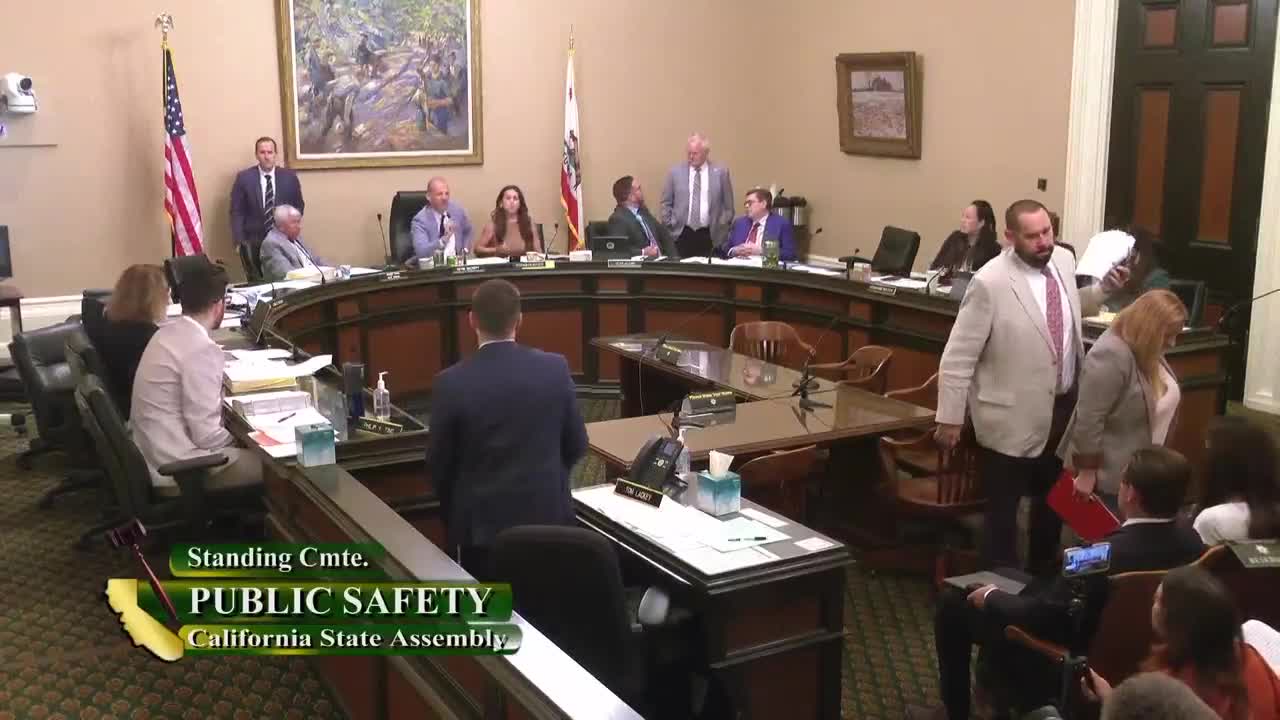 12MIN
Assembly Standing Committee on Public Safety
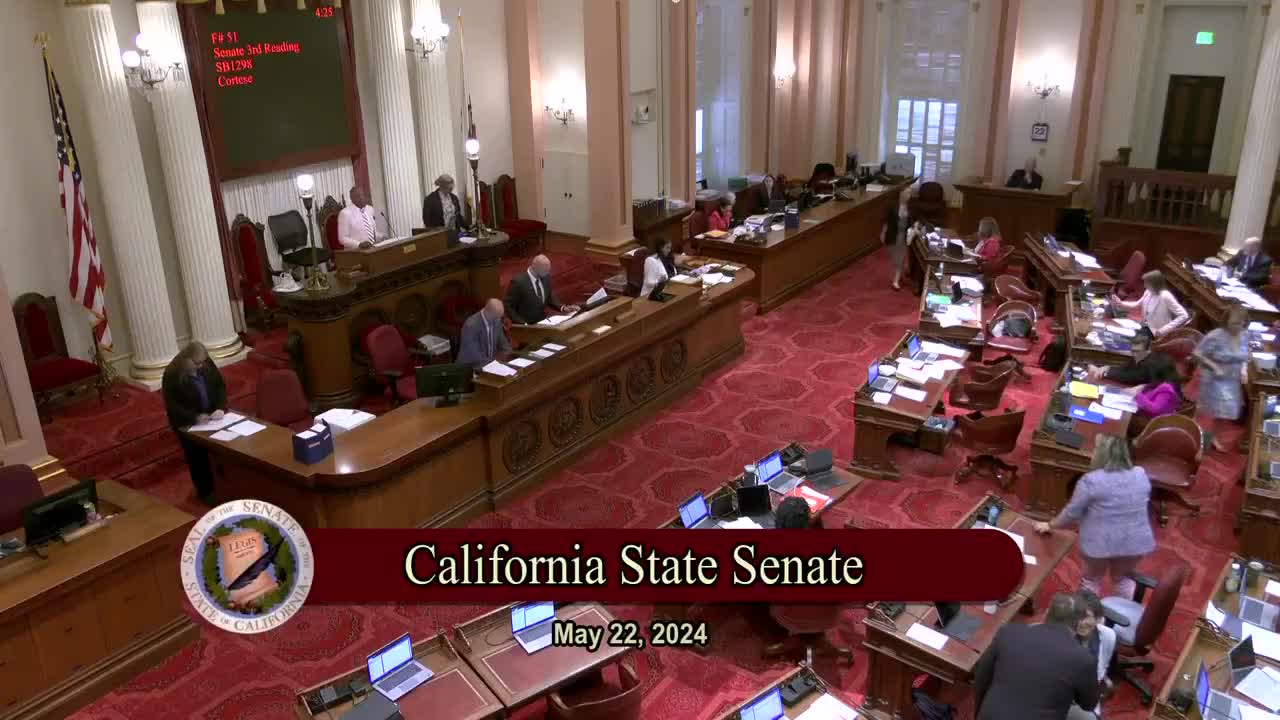 1MIN
Senate Floor
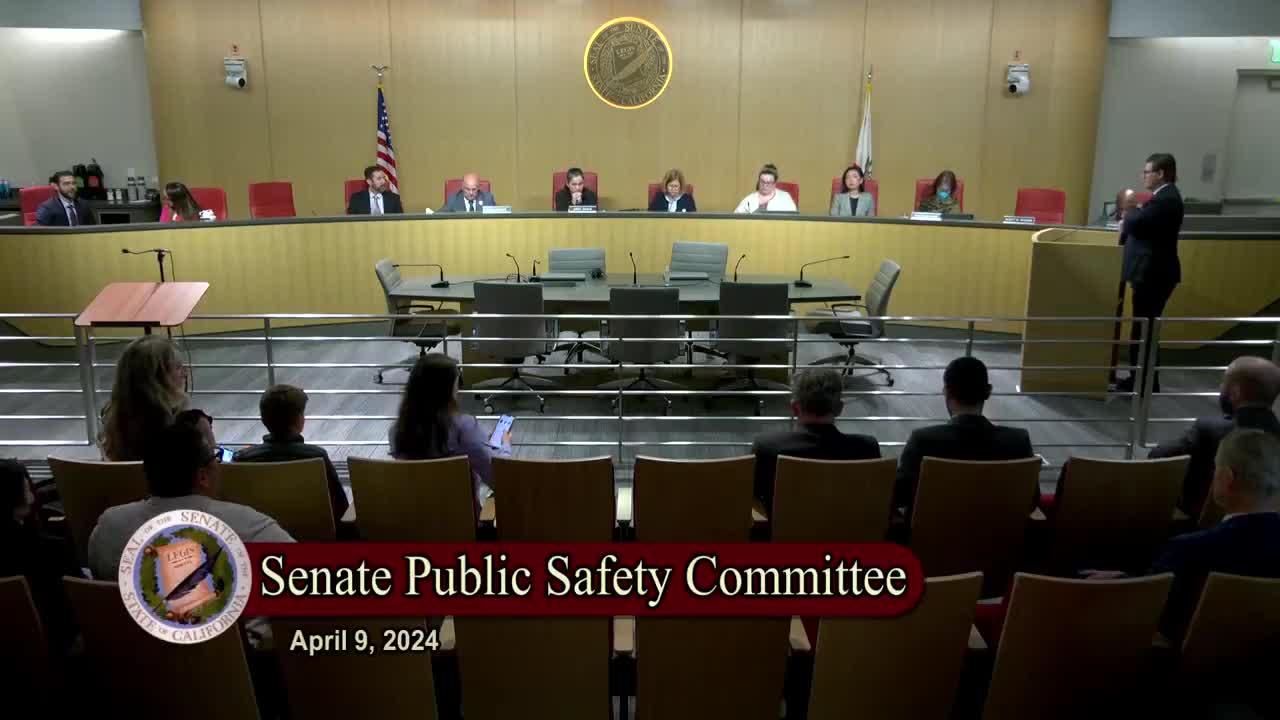 18MIN
Senate Standing Committee on Public Safety
Bill Author