SB 1077: Coastal resources: local coastal program: amendments: accessory and junior accessory dwelling units.
- Session Year: 2023-2024
- House: Senate
- Latest Version Date: 2024-09-22
Current Status:
Passed
(2024-09-22: Chaptered by Secretary of State. Chapter 454, Statutes of 2024.)
Introduced
In Committee
First Chamber
In Committee
Second Chamber
Enacted
Existing law, the California Coastal Act of 1976, among other things, establishes the California Coastal Commission and provides for planning and regulation of development in the coastal zone, as defined. The act requires the commission to adopt, after public hearing, procedures for the preparation, submission, approval, appeal, certification, and amendment of a local coastal program, as provided.
Existing law, the Planning and Zoning Law, authorizes a local agency to provide for the creation of accessory dwelling units in areas zoned for residential use, as specified. Existing law also authorizes a local agency to provide for the creation of junior accessory dwelling units in single-family residential zones, as specified. Existing law authorizes the Department of Housing and Community Development to review, adopt, amend, or repeal guidelines to implement uniform standards or criteria that supplement or clarify certain statutory terms, references, and standards related to accessory dwelling units.
This bill would require, by July 1, 2026, the commission, in coordination with the department, to develop and provide guidance for local governments to facilitate the preparation of amendments to a local coastal program to clarify and simplify the permitting process for accessory dwelling units and junior accessory dwelling units within the coastal zone. The bill would require the commission, in coordination with the department, to convene at least one public workshop to receive and consider public comments on the draft guidance before the finalization of the guidance document and to post the guidance document on the commissions and departments respective internet websites, as specified. To the extent the bill would create additional duties for a local government, the bill would impose a state-mandated local program.
The California Constitution requires the state to reimburse local agencies and school districts for certain costs mandated by the state. Statutory provisions establish procedures for making that reimbursement.
This bill would provide that, if the Commission on State Mandates determines that the bill contains costs mandated by the state, reimbursement for those costs shall be made pursuant to the statutory provisions noted above.
Existing law, the California Coastal Act of 1976, among other things, establishes the California Coastal Commission and provides for planning and regulation of development in the coastal zone, as defined. The act requires the commission to adopt, after public hearing, procedures for the preparation, submission, approval, appeal, certification, and amendment of a local coastal program, as provided.
Existing law, the Planning and Zoning Law, authorizes a local agency to provide for the creation of accessory dwelling units in areas zoned for residential use, as specified. Existing law also authorizes a local agency to provide for the creation of junior accessory dwelling units in single-family residential zones, as specified. Existing law authorizes the Department of Housing and Community Development to review, adopt, amend, or repeal guidelines to implement uniform standards or criteria that supplement or clarify certain statutory terms, references, and standards related to accessory dwelling units.
This bill would require, by July 1, 2026, the commission, in coordination with the department, to develop and provide guidance for local governments to facilitate the preparation of amendments to a local coastal program to clarify and simplify the permitting process for accessory dwelling units and junior accessory dwelling units within the coastal zone. The bill would require the commission, in coordination with the department, to convene at least one public workshop to receive and consider public comments on the draft guidance before the finalization of the guidance document and to post the guidance document on the commissions and departments respective internet website, websites, as specified. To the extent the bill would create additional duties for a local government, the bill would impose a state-mandated local program.
The California Constitution requires the state to reimburse local agencies and school districts for certain costs mandated by the state. Statutory provisions establish procedures for making that reimbursement.
This bill would provide that, if the Commission on State Mandates determines that the bill contains costs mandated by the state, reimbursement for those costs shall be made pursuant to the statutory provisions noted above.
Existing law, the California Coastal Act of 1976, among other things, establishes the California Coastal Commission and provides for planning and regulation of development in the coastal zone, as defined. The act requires the commission to adopt, after public hearing, procedures for the preparation, submission, approval, appeal, certification, and amendment of a local coastal program, as provided.
Existing law, the Planning and Zoning Law, authorizes a local agency to provide for the creation of accessory dwelling units in areas zoned for residential use, as specified. Existing law also authorizes a local agency to provide for the creation of junior accessory dwelling units in single-family residential zones, as specified. Existing law authorizes the Department of Housing and Community Development to review, adopt, amend, or repeal guidelines to implement uniform standards or criteria that supplement or clarify certain statutory terms, references, and standards related to accessory dwelling units.
This bill would require, by an unspecified date, July 1, 2026, the commission, in coordination with the department, to coordinate to develop and provide guidance for local governments to facilitate the preparation of amendments to a local coastal program to clarify and simplify the permitting process for accessory dwelling units and junior accessory dwelling units within the coastal zone. The bill would require the commission, in coordination with the department, to convene at least one public workshop to receive and consider public comments on the draft guidance before the finalization of the guidance document and to post the guidance document on the commissions internet website, as specified. To the extent the bill would create additional duties for a local government, the bill would impose a state-mandated local program.
The California Constitution requires the state to reimburse local agencies and school districts for certain costs mandated by the state. Statutory provisions establish procedures for making that reimbursement.
This bill would provide that, if the Commission on State Mandates determines that the bill contains costs mandated by the state, reimbursement for those costs shall be made pursuant to the statutory provisions noted above.
Existing law, the California Coastal Act of 1976, among other things, establishes the California Coastal Commission and provides for planning and regulation of development in the coastal zone, as defined. The act requires the commission to adopt, after public hearing, procedures for the preparation, submission, approval, appeal, certification, and amendment of a local coastal program, as provided.
Existing law, the Planning and Zoning Law, authorizes a local agency to provide for the creation of accessory dwelling units in areas zoned for residential use, as specified. Existing law also authorizes a local agency to provide for the creation of junior accessory dwelling units in single-family residential zones, as specified. Existing law authorizes the Department of Housing and Community Development to review, adopt, amend, or repeal guidelines to implement uniform standards or criteria that supplement or clarify certain statutory terms, references, and standards related to accessory dwelling units.
This bill would require, by an unspecified date, the commission commission, in coordination with the department, to coordinate to develop and provide guidance for local governments to facilitate the preparation of amendments to a local coastal program to clarify and simplify the permitting process for accessory dwelling units and junior accessory dwelling units within the coastal zone. The bill would require the commission, in coordination with the department, to convene at least one public workshop to receive and consider public comments on the draft guidance before the finalization of the guidance document and to post the guidance document on the commissions internet website, as specified. To the extent the bill would create additional duties for a local government, the bill would impose a state-mandated local program.
The California Constitution requires the state to reimburse local agencies and school districts for certain costs mandated by the state. Statutory provisions establish procedures for making that reimbursement.
This bill would provide that, if the Commission on State Mandates determines that the bill contains costs mandated by the state, reimbursement for those costs shall be made pursuant to the statutory provisions noted above.
Existing law, the California Coastal Act of 1976, among other things, requires anyone wishing to perform or undertake any development in the coastal zone, except as specified, in addition to obtaining any other permit required by law from any local government or from any state, regional, or local agency, to obtain a coastal development permit from the California Coastal Commission or a local government, as provided. The act provides that a coastal development permit is not required for specified types of development in specified areas, as provided, including improvements to existing single-family residences, provided that the commission shall specify, by regulation, those classes of development that involve a risk of adverse environmental effect and shall require that a coastal development permit be obtained pursuant to the act. establishes the California Coastal Commission and provides for planning and regulation of development in the coastal zone, as defined. The act requires the commission to adopt, after public hearing, procedures for the preparation, submission, approval, appeal, certification, and amendment of a local coastal program, as provided.
Existing law, the Planning and Zoning Law, authorizes a local agency to provide for the creation of accessory dwelling units in areas zoned for residential use, as specified. Existing law also authorizes a local agency to provide for the creation of junior accessory dwelling units in single-family residential zones, as specified.
This bill would specify, for the purposes of a coastal development permit not being required for improvements to existing single-family residences, that the exception includes the addition of an accessory dwelling unit or a junior accessory dwelling unit that is attached to an existing residential structure, as defined, and the conversion of an existing structure into an accessory dwelling unit or a junior accessory dwelling unit. require, by an unspecified date, the commission to develop and provide guidance for local governments to facilitate the preparation of amendments to a local coastal program to clarify and simplify the permitting process for accessory dwelling units and junior accessory dwelling units within the coastal zone. To the extent the bill would create additional duties for a local government, the bill would impose a state-mandated local program.
The California Constitution requires the state to reimburse local agencies and school districts for certain costs mandated by the state. Statutory provisions establish procedures for making that reimbursement.
This bill would provide that, if the Commission on State Mandates determines that the bill contains costs mandated by the state, reimbursement for those costs shall be made pursuant to the statutory provisions noted above.
Existing law, the California Coastal Act of 1976, among other things, requires anyone wishing to perform or undertake any development in the coastal zone, except as specified, in addition to obtaining any other permit required by law from any local government or from any state, regional, or local agency, to obtain a coastal development permit from the California Coastal Commission or a local government, as provided. The act provides that a coastal development permit is not required for specified types of development in specified areas, as provided. as provided, including improvements to existing single-family residences, provided that the commission shall specify, by regulation, those classes of development that involve a risk of adverse environmental effect and shall require that a coastal development permit be obtained pursuant to the act.
Existing law, the Planning and Zoning Law, authorizes a local agency to provide for the creation of accessory dwelling units in areas zoned for residential use, as specified. Existing law also authorizes a local agency to provide for the creation of junior accessory dwelling units in single-family residential zones, as specified.
This bill would provide that specify, for the purposes of a coastal development permit shall not be required for not being required for improvements to existing single-family residences, that the exception includes the addition of an accessory dwelling unit or a junior accessory dwelling unit that is proposed to be developed on a lot with an existing residential structure, as provided. The bill would provide, as an exception to the above, that a coastal development permit may be required for the development of an accessory dwelling unit or a junior accessory dwelling unit that is proposed to be located in specified locations. attached to an existing residential structure, as defined, and the conversion of an existing structure into an accessory dwelling unit or a junior accessory dwelling unit. To the extent the bill would create additional duties for a local government, the bill would impose a state-mandated local program.
The California Constitution requires the state to reimburse local agencies and school districts for certain costs mandated by the state. Statutory provisions establish procedures for making that reimbursement.
This bill would provide that, if the Commission on State Mandates determines that the bill contains costs mandated by the state, reimbursement for those costs shall be made pursuant to the statutory provisions noted above.
Existing law, the California Coastal Act of 1976, among other things, requires anyone wishing to perform or undertake any development in the coastal zone, except as specified, in addition to obtaining any other permit required by law from any local government or from any state, regional, or local agency, to obtain a coastal development permit from the California Coastal Commission or a local government, as provided. The act provides that a coastal development is not required for specified types of development in specified areas, as provided.
Existing law, the Planning and Zoning Law, authorizes a local agency to provide for the creation of accessory dwelling units in areas zoned for residential use, as specified. Existing law also authorizes a local agency to provide for the creation of junior accessory dwelling units in single-family residential zones, as specified.
This bill would provide that a coastal development permit shall not be required for the addition of an accessory dwelling unit or a junior accessory dwelling unit that is proposed to be developed on a lot with an existing residential structure, as provided. The bill would provide, as an exception to the above, that a coastal development permit may be required for the development of an accessory dwelling unit or a junior accessory dwelling unit that is proposed to be located in specified locations. To the extent the bill would create additional duties for a local government, the bill would impose a state-mandated local program.
The California Constitution requires the state to reimburse local agencies and school districts for certain costs mandated by the state. Statutory provisions establish procedures for making that reimbursement.
This bill would provide that, if the Commission on State Mandates determines that the bill contains costs mandated by the state, reimbursement for those costs shall be made pursuant to the statutory provisions noted above.
(a)By July 1, 2026, the commission shall, in coordination with the Department of Housing and Community Development, develop and provide guidance for local governments to facilitate the preparation of amendments to a local coastal program to clarify and simplify the permitting process for accessory dwelling units and junior accessory dwelling units, as defined in Section 66313 of the Government Code, within the coastal zone.
(b)The commission shall, in coordination with the Department of Housing and Community Development, convene at least one public workshop to receive and consider public comments on the draft guidance before the finalization of the guidance document. The commission and the Department of Housing and Community Development shall post the draft guidance on their respective internet websites at least 30 days before the public workshop. The commission shall provide notice of the public workshop to all cities and counties within the coastal zone. The final guidance document shall be posted on the commissions and the Department of Housing and Community Developments respective internet websites.
SEC. 2.If the Commission on State Mandates determines that this act contains costs mandated by the state, reimbursement to local agencies and school districts for those costs shall be made pursuant to Part 7 (commencing with Section 17500) of Division 4 of Title 2 of the Government Code.
(a)By July 1, 2026, the commission shall, in coordination with the Department of Housing and Community Development, develop and provide guidance for local governments to facilitate the preparation of amendments to a local coastal program to clarify and simplify the permitting process for accessory dwelling units and junior accessory dwelling units, as defined in Section 66313 of the Government Code, within the coastal zone.
(b)The commission shall, in coordination with the Department of Housing and Community Development, convene at least one public workshop to receive and consider public comments on the draft guidance before the finalization of the guidance document. The commission and the Department of Housing and Community Development shall post the draft guidance on its their respective internet website websites at least 30 days before the public workshop, and workshop. The commission shall provide notice of the public workshop to all cities and counties within the coastal zone. The final guidance document shall be posted on the commissions commissions and the Department of Housing and Community Developments respective internet website. websites.
SEC. 2.If the Commission on State Mandates determines that this act contains costs mandated by the state, reimbursement to local agencies and school districts for those costs shall be made pursuant to Part 7 (commencing with Section 17500) of Division 4 of Title 2 of the Government Code.
(a)By ____, July 1, 2026, the commission shall, in coordination with the Department of Housing and Community Development, coordinate to develop and provide guidance for local governments to facilitate the preparation of amendments to a local coastal program to clarify and simplify the permitting process for accessory dwelling units and junior accessory dwelling units, as defined in Section 66313 of the Government Code, within the coastal zone.
(b)The commission shall, in coordination with the Department of Housing and Community Development, convene at least one public workshop to receive and consider public comments on the draft guidance before the finalization of the guidance document. The commission shall post the draft guidance on its internet website at least 30 days before the public workshop, and shall provide notice of the public workshop to all cities and counties within the coastal zone. The final guidance document shall be posted on the commissions internet website.
SEC. 2.If the Commission on State Mandates determines that this act contains costs mandated by the state, reimbursement to local agencies and school districts for those costs shall be made pursuant to Part 7 (commencing with Section 17500) of Division 4 of Title 2 of the Government Code.
(a)By ____, the commission shall shall, in coordination with the Department of Housing and Community Development, coordinate to develop and provide guidance for local governments to facilitate the preparation of amendments to a local coastal program to clarify and simplify the permitting process for accessory dwelling units and junior accessory dwelling units, as defined in Section 66313 of the Government Code, within the coastal zone.
(b)The commission shall, in coordination with the Department of Housing and Community Development, convene at least one public workshop to receive and consider public comments on the draft guidance before the finalization of the guidance document. The commission shall post the draft guidance on its internet website at least 30 days before the public workshop, and shall provide notice of the public workshop to all cities and counties within the coastal zone. The final guidance document shall be posted on the commissions internet website.
SEC. 2.If the Commission on State Mandates determines that this act contains costs mandated by the state, reimbursement to local agencies and school districts for those costs shall be made pursuant to Part 7 (commencing with Section 17500) of Division 4 of Title 2 of the Government Code.
By ____, the commission shall develop and provide guidance for local governments to facilitate the preparation of amendments to a local coastal program to clarify and simplify the permitting process for accessory dwelling units and junior accessory dwelling units, as defined in Section 66313 of the Government Code, within the coastal zone.
SEC. 2.If the Commission on State Mandates determines that this act contains costs mandated by the state, reimbursement to local agencies and school districts for those costs shall be made pursuant to Part 7 (commencing with Section 17500) of Division 4 of Title 2 of the Government Code.
Notwithstanding any other provision of this division, a coastal development permit shall not be required pursuant to this chapter for the following types of development and in the following areas:
(a)(1)Improvements to existing single-family residences; provided, however, that the commission shall specify, by regulation, those classes of development that involve a risk of adverse environmental effect and shall require that a coastal development permit be obtained pursuant to this chapter.
(2)Improvements pursuant to paragraph (1) shall include both of the following:
(A)The addition of an accessory dwelling unit or a junior accessory dwelling unit that is attached to an existing residential structure.
(B)The conversion of an existing structure into an accessory dwelling unit or a junior accessory dwelling unit.
(3)As used in this subdivision, existing residential structure means a building that exists at the time a project proponent submits an application for the relevant development permits related to an accessory dwelling unit or a junior accessory dwelling unit.
(b)Improvements to a structure other than a single-family residence or a public works facility; provided, however, that the commission shall specify, by regulation, those types of improvements that (1) involve a risk of adverse environmental effect, (2) adversely affect public access, or (3) involve a change in use contrary to any policy of this division. Any improvement so specified by the commission shall require a coastal development permit.
(c)Maintenance dredging of existing navigation channels or moving dredged material from those channels to a disposal area outside the coastal zone, pursuant to a permit from the United States Army Corps of Engineers.
(d)Repair or maintenance activities that do not result in an addition to, or enlargement or expansion of, the object of those repair or maintenance activities; provided, however, that if the commission determines that certain extraordinary methods of repair and maintenance involve a risk of substantial adverse environmental impact, it shall, by regulation, require that a permit be obtained pursuant to this chapter.
(e)Any category of development, or any category of development within a specifically defined geographic area, that the commission, after public hearing, and by two-thirds vote of its appointed members, has described or identified and with respect to which the commission has found that there is no potential for any significant adverse effect, either individually or cumulatively, on coastal resources or on public access to, or along, the coast and, where the exclusion precedes certification of the applicable local coastal program, that the exclusion will not impair the ability of local government to prepare a local coastal program.
(f)The installation, testing, and placement in service or the replacement of a necessary utility connection between an existing service facility and a development approved pursuant to this division; provided, however, that the commission may, where necessary, require reasonable conditions to mitigate any adverse impacts on coastal resources, including scenic resources.
(g)(1)The replacement of a structure, other than a public works facility, destroyed by a disaster. The replacement structure shall conform to applicable existing zoning requirements, shall be for the same use as the destroyed structure, shall not exceed either the floor area, height, or bulk of the destroyed structure by more than 10 percent, and shall be sited in the same location on the affected property as the destroyed structure.
(2)As used in this subdivision:
(A)Disaster means a situation in which the force or forces that destroyed the structure to be replaced were beyond the control of its owner.
(B)Bulk means total interior cubic volume as measured from the exterior surface of the structure.
(C)Structure includes landscaping and any erosion control structure or device which is similar to that which existed prior to the occurrence of the disaster.
(h)Any activity anywhere in the coastal zone that involves the conversion of any existing multiple-unit residential structure to a time-share project, estate, or use, as defined in Section 11212 of the Business and Professions Code. If any improvement to an existing structure is otherwise exempt from the permit requirements of this division, no coastal development permit shall be required for that improvement on the basis that it is to be made in connection with any conversion exempt pursuant to this subdivision. The division of a multiple-unit residential structure into condominiums, as defined in Section 783 of the Civil Code, shall not be considered a time-share project, estate, or use for purposes of this subdivision.
(i)(1)Any proposed development that the executive director finds to be a temporary event that does not have any significant adverse impact upon coastal resources within the meaning of guidelines adopted pursuant to this subdivision by the commission. The commission shall, after public hearing, adopt guidelines to implement this subdivision to assist local governments and persons planning temporary events in complying with this division by specifying the standards that the executive director shall use in determining whether a temporary event is excluded from permit requirements pursuant to this subdivision. The guidelines adopted pursuant to this subdivision shall be exempt from the review of the Office of Administrative Law and from the requirements of Chapter 3.5 (commencing with Section 11340) of Part 1 of Division 3 of Title 2 of the Government Code.
(2)Exclusion or waiver from the coastal development permit requirements of this division pursuant to this subdivision does not diminish, waive, or otherwise prevent the commission from asserting and exercising its coastal development permit jurisdiction over any temporary event at any time if the commission determines that the exercise of its jurisdiction is necessary to implement the coastal resource protection policies of Chapter 3 (commencing with Section 30200).
(j)(1)The addition of an accessory dwelling unit or a junior accessory dwelling unit pursuant to Section 65852.2 or 65852.22 of the Government Code that is proposed to be developed on a lot with an existing residential structure.(2)Notwithstanding paragraph (1), a coastal development permit may be required for the development of an accessory dwelling unit or a junior accessory dwelling unit that is proposed to be in a location subject to paragraph (1) or (2) of subdivision (a) of Section 30603.SEC. 2.If the Commission on State Mandates determines that this act contains costs mandated by the state, reimbursement to local agencies and school districts for those costs shall be made pursuant to Part 7 (commencing with Section 17500) of Division 4 of Title 2 of the Government Code.
Notwithstanding any other provision of this division, no a coastal development permit shall not be required pursuant to this chapter for the following types of development and in the following areas:
(a)Improvements to existing single-family residences; provided, however, that the commission shall specify, by regulation, those classes of development which that involve a risk of adverse environmental effect and shall require that a coastal development permit be obtained pursuant to this chapter.
(b)Improvements to any a structure other than a single-family residence or a public works facility; provided, however, that the commission shall specify, by regulation, those types of improvements which that (1) involve a risk of adverse environmental effect, (2) adversely affect public access, or (3) involve a change in use contrary to any policy of this division. Any improvement so specified by the commission shall require a coastal development permit.
(c)Maintenance dredging of existing navigation channels or moving dredged material from those channels to a disposal area outside the coastal zone, pursuant to a permit from the United States Army Corps of Engineers.
(d)Repair or maintenance activities that do not result in an addition to, or enlargement or expansion of, the object of those repair or maintenance activities; provided, however, that if the commission determines that certain extraordinary methods of repair and maintenance involve a risk of substantial adverse environmental impact, it shall, by regulation, require that a permit be obtained pursuant to this chapter.
(e)Any category of development, or any category of development within a specifically defined geographic area, that the commission, after public hearing, and by two-thirds vote of its appointed members, has described or identified and with respect to which the commission has found that there is no potential for any significant adverse effect, either individually or cumulatively, on coastal resources or on public access to, or along, the coast and, where the exclusion precedes certification of the applicable local coastal program, that the exclusion will not impair the ability of local government to prepare a local coastal program.
(f)The installation, testing, and placement in service or the replacement of any a necessary utility connection between an existing service facility and any a development approved pursuant to this division; provided, however, that the commission may, where necessary, require reasonable conditions to mitigate any adverse impacts on coastal resources, including scenic resources.
(g)(1)The replacement of any a structure, other than a public works facility, destroyed by a disaster. The replacement structure shall conform to applicable existing zoning requirements, shall be for the same use as the destroyed structure, shall not exceed either the floor area, height, or bulk of the destroyed structure by more than 10 percent, and shall be sited in the same location on the affected property as the destroyed structure.
(2)As used in this subdivision:
(A)Disaster means any a situation in which the force or forces which that destroyed the structure to be replaced were beyond the control of its owner.
(B)Bulk means total interior cubic volume as measured from the exterior surface of the structure.
(C)Structure includes landscaping and any erosion control structure or device which is similar to that which existed prior to the occurrence of the disaster.
(h)Any activity anywhere in the coastal zone that involves the conversion of any existing multiple-unit residential structure to a time-share project, estate, or use, as defined in Section 11212 of the Business and Professions Code. If any improvement to an existing structure is otherwise exempt from the permit requirements of this division, no coastal development permit shall be required for that improvement on the basis that it is to be made in connection with any conversion exempt pursuant to this subdivision. The division of a multiple-unit residential structure into condominiums, as defined in Section 783 of the Civil Code, shall not be considered a time-share project, estate, or use for purposes of this subdivision.
(i)(1)Any proposed development which that the executive director finds to be a temporary event which that does not have any significant adverse impact upon coastal resources within the meaning of guidelines adopted pursuant to this subdivision by the commission. The commission shall, after public hearing, adopt guidelines to implement this subdivision to assist local governments and persons planning temporary events in complying with this division by specifying the standards which that the executive director shall use in determining whether a temporary event is excluded from permit requirements pursuant to this subdivision. The guidelines adopted pursuant to this subdivision shall be exempt from the review of the Office of Administrative Law and from the requirements of Chapter 3.5 (commencing with Section 11340) of Part 1 of Division 3 of Title 2 of the Government Code.
(2)Exclusion or waiver from the coastal development permit requirements of this division pursuant to this subdivision does not diminish, waive, or otherwise prevent the commission from asserting and exercising its coastal development permit jurisdiction over any temporary event at any time if the commission determines that the exercise of its jurisdiction is necessary to implement the coastal resource protection policies of Chapter 3 (commencing with Section 30200).
(j)(1)The addition of an accessory dwelling unit or a junior accessory dwelling unit pursuant to Section 65852.2 or 65852.22 of the Government Code that is proposed to be developed on a lot with an existing residential structure.
(2)Notwithstanding paragraph (1), a coastal development permit may be required for the development of an accessory dwelling unit or a junior accessory dwelling unit that is proposed to be in a location subject to paragraph (1) or (2) of subdivision (a) of Section 30603.
SEC. 2.If the Commission on State Mandates determines that this act contains costs mandated by the state, reimbursement to local agencies and school districts for those costs shall be made pursuant to Part 7 (commencing with Section 17500) of Division 4 of Title 2 of the Government Code.
|
Date
|
Status
|
|---|---|
| Sep 22, 2024 | Chaptered by Secretary of State. Chapter 454, Statutes of 2024. |
| Sep 22, 2024 | Approved by the Governor. |
| Sep 9, 2024 | Enrolled and presented to the Governor at 3 p.m. |
| Aug 29, 2024 | Assembly amendments concurred in. (Ayes 39. Noes 0. Page 5676.) Ordered to engrossing and enrolling. |
| Aug 28, 2024 | In Senate. Concurrence in Assembly amendments pending. |
| Aug 28, 2024 | Read third time. Passed. (Ayes 75. Noes 1. Page 6698.) Ordered to the Senate. |
| Aug 19, 2024 | Read second time. Ordered to third reading. |
| Aug 15, 2024 | From committee: Do pass. (Ayes 14. Noes 0.) (August 15). |
| Aug 7, 2024 | August 7 set for first hearing. Placed on suspense file. |
| Jun 27, 2024 | Read second time and amended. Re-referred to Com. on APPR. |
| Jun 26, 2024 | From committee: Do pass as amended and re-refer to Com. on APPR. (Ayes 9. Noes 0.) (June 26). |
| Jun 19, 2024 | Read second time and amended. Re-referred to Com. on H. & C.D. |
| Jun 18, 2024 | From committee: Do pass as amended and re-refer to Com. on H. & C.D. (Ayes 10. Noes 0.) (June 17). |
| Jun 3, 2024 | Referred to Coms. on NAT. RES. and H. & C.D. |
| May 24, 2024 | In Assembly. Read first time. Held at Desk. |
| May 23, 2024 | Read third time. Passed. (Ayes 36. Noes 0. Page 4188.) Ordered to the Assembly. |
| May 21, 2024 | Read second time. Ordered to third reading. |
| May 20, 2024 | Ordered to second reading. |
| May 20, 2024 | Read third time and amended. |
| May 16, 2024 | Read second time. Ordered to third reading. |
| May 16, 2024 | From committee: Do pass. (Ayes 6. Noes 1. Page 3970.) (May 16). |
| May 10, 2024 | Set for hearing May 16. |
| Apr 29, 2024 | April 29 hearing: Placed on APPR suspense file. |
| Apr 22, 2024 | Set for hearing April 29. |
| Apr 17, 2024 | From committee: Do pass and re-refer to Com. on APPR. (Ayes 8. Noes 1. Page 3633.) (April 16). Re-referred to Com. on APPR. |
| Apr 12, 2024 | Set for hearing April 16. |
| Apr 10, 2024 | Read second time and amended. Re-referred to Com. on HOUSING. |
| Apr 9, 2024 | From committee: Do pass as amended and re-refer to Com. on HOUSING. (Ayes 11. Noes 0. Page 3532.) (April 9). |
| Apr 1, 2024 | From committee with author's amendments. Read second time and amended. Re-referred to Com. on N.R. & W. |
| Mar 1, 2024 | Set for hearing April 9. |
| Feb 21, 2024 | Referred to Coms. on N.R. & W. and HOUSING. |
| Feb 13, 2024 | From printer. May be acted upon on or after March 14. |
| Feb 12, 2024 | Introduced. Read first time. To Com. on RLS. for assignment. To print. |
|
Date
|
Description
|
Location
|
Votes
|
|
|---|---|---|---|---|
| Aug 29, 2024 | Unfinished Business SB1077 Blakespear Concurrence | Senate Floor |
Passed |
|
| Aug 28, 2024 | SB 1077 Blakespear Senate Third Reading By Wicks | Assembly Floor |
Passed |
|
| Aug 15, 2024 | Do pass. | Assembly Standing Committee on Appropriations |
Passed |
|
| Jun 26, 2024 | Do pass as amended and be re-referred to the Committee on [Appropriations] | Assembly Standing Committee on Housing and Community Development |
Passed |
|
| Jun 17, 2024 | Do pass as amended and be re-referred to the Committee on [Housing and Community Development] | Assembly Standing Committee on Natural Resources |
Passed |
|
| May 23, 2024 | Senate 3rd Reading SB1077 Blakespear | Senate Floor |
Passed |
|
| May 16, 2024 | Do pass | Senate Standing Committee on Appropriations |
Passed |
|
| Apr 29, 2024 | Placed on suspense file | Senate Standing Committee on Appropriations |
Passed |
|
| Apr 16, 2024 | Do pass, but first be re-referred to the Committee on [Appropriations] | Senate Standing Committee on Housing |
Passed |
|
| Apr 9, 2024 | Do pass as amended, but first amend, and re-refer to the Committee on [Housing] | Senate Standing Committee on Natural Resources and Water |
Passed |
This list shows positions taken on this bill by organizations on the date displayed, which is linked to the original source.
Positions by individuals are not included.
|
Organization
|
Position
|
Date
|
|---|---|---|
| AARP | ** Support | |
| ABODU | ** Support | |
| Abundant Housing LA | ** Support | |
| ADU Geeks | ** Support | |
| ADU Homes | ** Support | |
| American Institute Of Architects California | ** Support | |
| American Planning Association California Chapter | ** Support | |
| Apartment Association of Greater Los Angeles | ** Support | |
| Azul | ** Against | |
| Bay Area Council | ** Support | |
| Bequall | ** Support | |
| Board of Supervisors President Aaron Peskin, County of San Francisco | ** Against | |
| California Apartment Association | ** Support | |
| California Building Industry Association | ** Support | |
| California Chamber Of Commerce | ** Support | |
| California Cities for Local Control | ** Against | |
| California Coastal Commission | ** Against | |
| California Coastal Protection Network | ** Against | |
| California community builders | ** Support | |
| California Rental Housing Association | ** Support | |
| California State Association Of Counties | ** Support | |
| California YIMBY | ** Support | |
| Casita Coalition | ** Support | |
| Circulate San Diego | ** Support | |
| City of Encinitas | ** Support | |
| City Of Half Moon Bay | ** Support | |
| City of Long Beach | ** Support | |
| City Of San Diego | ** Support | |
| Clean Water Action | ** Against | |
| Concerned Citizens of Laguna Woods Village | ** Against | |
| Coresgb, LLC | ** Support | |
| Cottage Technologies | ** Support | |
| Cottage Technologies, Inc. | ** Support | |
| Crest Backyard Homes | ** Support | |
| Crest Homes | ** Support | |
| Defeat Polluting Desalination | ** Against | |
| Desal Response Group | ** Against | |
| Dirt to Keys | ** Support | |
| East Area Progressive Democrats | ** Against | |
| East Bay Leadership Council | ** Support | |
| East Bay YIMBY | ** Support | |
| Eco San Diego | ** Against | |
| Eden Housing | ** Support | |
| Enterprise Community Partners | ** Support | |
| Environmental Action Committee of West Marin | ** Against | |
| Environmental Justice Coalition for Water | ** Against | |
| Environment California | ** Against | |
| Fieldstead And Company, Inc. | ** Support | |
| Green Foothills | ** Against | |
| Grow the Richmond | ** Support | |
| Habitat For Humanity California | ** Support | |
| HelloADU | ** Support | |
| Housing Action Coalition | ** Support | |
| How to ADU | ** Support | |
| Idle No More Venice | ** Against | |
| Inland Empire Waterkeeper | ** Against | |
| Inner City Law Center | ** Support | |
| L.A. Ecovillage Institute | ** Against | |
| Latino Coalition Against Plastic Pollution | ** Against | |
| Livable California | ** Against | |
| MidPen Housing | ** Support | |
| Mountain View YIMBY | ** Support | |
| Napa-Solano for Everyone | ** Support | |
| Natural Resources Defense Council | ** Against | |
| Northern Neighbors | ** Support | |
| Orange County Coastkeeper | ** Against | |
| Peninsula for Everyone | ** Support | |
| People For Housing Orange County | ** Support | |
| Progress Noe Valley | ** Support | |
| Safe Place For Youth | ** Support | |
| San Diego Housing Commission | ** Support | |
| San Francisco Bay Area Planning and Urban Research Association | ** Support | |
| San Francisco Yimby | ** Support | |
| Santa Cruz Yimby | ** Support | |
| Santa Rosa Yimby | ** Support | |
| Save Lafayette | ** Against | |
| SLOCo YIMBY | ** Support | |
| SnapADU | ** Support | |
| SoCal 350 Climate Action | ** Against | |
| South Bay Yimby | ** Support | |
| Southern California Watershed Alliance | ** Against | |
| Southside Forward | ** Support | |
| South Side Forward | ** Support | |
| Streets for All | ** Support | |
| Streets for People | ** Support | |
| Sunrise Movement Orange County | ** Against | |
| Supervisor Aaron Peskin, President, San Francisco Board of Supervisors | ** Against | |
| Surfrider Foundation | ** Against | |
| Tentmakers, Inc. | ** Support | |
| Unidosus | ** Support | |
| Urban Environmentalists | ** Support | |
| Ventura County YIMBY | ** Support | |
| Villa Homes | ** Support | |
| Women For: Orange County | ** Against | |
| Yimby Action | ** Support | |
| YIMBY Democrats of San Diego County | ** Support |
SENATE RULES COMMITTEE Office of Senate Floor Analyses (916) 651-1520 Fax: (916) 327-4478 | SB 1077 |
UNFINISHED BUSINESS
Bill No: SB 1077
Author: Blakespear (D)
Amended: 6/27/24
Vote: 21
SENATE NATURAL RES. & WATER COMMITTEE: 11-0, 4/9/24
AYES: Min, Seyarto, Allen, Dahle, Eggman, Grove, Hurtado, Laird, Limón, Padilla, Stern
SENATE HOUSING COMMITTEE: 8-1, 4/16/24
AYES: Skinner, Ochoa Bogh, Blakespear, Cortese, Menjivar, Padilla, Seyarto, Umberg
NOES: Caballero
NO VOTE RECORDED: Wahab
SENATE APPROPRIATIONS COMMITTEE: 6-1, 5/16/24
AYES: Caballero, Jones, Ashby, Becker, Bradford, Seyarto
NOES: Wahab
SENATE FLOOR: 36-0, 5/23/24
AYES: Alvarado-Gil, Ashby, Atkins, Becker, Blakespear, Bradford, Caballero, Cortese, Dahle, Dodd, Durazo, Eggman, Glazer, Gonzalez, Grove, Hurtado, Jones, Laird, Limón, McGuire, Menjivar, Min, Niello, Ochoa Bogh, Padilla, Portantino, Roth, Rubio, Seyarto, Skinner, Smallwood-Cuevas, Stern, Umberg, Wahab, Wiener, Wilk
NO VOTE RECORDED: Allen, Archuleta, Newman, Nguyen
ASSEMBLY FLOOR: 75-1, 8/28/24 - See last page for vote
SUBJECT: Coastal resources: local coastal program: amendments: accessory and junior accessory dwelling units
SOURCE: Bay Area Council
Casita Coalition
DIGEST:
This bill requires the California Coastal Commission, in coordination with the Department of Housing and Community Development, to develop and provide guidance for local governments to facilitate the preparation of amendments to a local coastal program to clarify and simplify the permitting process for accessory dwelling units and junior accessory dwelling units in the coastal zone, as provided.
Assembly Amendments
specify a due date of July 1, 2026 for the guidance to be provided, and require the Department of Housing and Community Development to post the draft and final guidance on its website, as provided.
ANALYSIS:
Existing law:
- Pursuant to the California Coastal Act of 1976 (Coastal Act) (Public Resources Code (PRC) §§30000 et seq.), includes legislative findings and declarations that:
- The coastal zone is a distinct and valuable natural resource of vital and enduring interest to all the people, the permanent protection of the state’s natural and scenic resources is a paramount concern to present and future residents, and existing uses and future developments that are carefully planned and developed consistent with the Coastal Act are essential to the economic and social well-of the people of the state (PRC §30001).
- The basic goals of the state for the coastal zone include to:
- Protect, maintain, and, where feasible, enhance and restore the overall quality of the coastal zone environment and its natural and artificial resources,
- Ensure orderly, balanced utilization and conservation of coastal zone resources taking into account the social and economic needs of the people of the state, and
- Maximize public access to and along the coast and maximize public recreational opportunities in the coastal zone consistent with sound resources conservation principles and constitutionally protected rights of private property owners, among other things (PRC §30001.5).
- Pursuant to the Coastal Act, provides for the planning and regulation of development within the coastal zone, as defined.
- A person planning to perform or undertake any development in the coastal zone is required to obtain a coastal development permit (CDP) from the California Coastal Commission (Coastal Commission) or local government enforcing a certified local coastal program (LCP) (PRC §30600).
- Development means, among other things, the placement or erection of any solid material or structure on land or in water. Structure means building, road, pipe, flume, conduit, and electrical power transmission and distribution lines, among other things (PRC §30106).
- The coastal zone means the coastal land and waters of California, and includes the lands that extend inland generally 1,000 yards from the mean high tide line, as specified, with various exceptions including the San Francisco Bay (PRC §30103).
- A person planning to perform or undertake any development in the coastal zone is required to obtain a coastal development permit (CDP) from the California Coastal Commission (Coastal Commission) or local government enforcing a certified local coastal program (LCP) (PRC §30600).
- Pursuant to the Coastal Act, requires a local government in the coastal zone to prepare a LCP. Requires the precise content of the LCP to be determined by the local government in full consultation with the Coastal Commission and with full public participation (PRC §30500). Provides for LCPs to be amended by the local government, but the amendment does not take effect until certified by the Coastal Commission (PRC §30514).
- Pursuant to the Coastal Act, requires that no CDP be required for certain improvements to existing single-family residences, although certain development that involves a risk of adverse environmental effects still require a CDP, as provided (PRC §30610).
- Authorizes a local agency to provide for the creation of accessory dwelling units (ADUs) in areas zoned for residential use, as specified, and also authorizes a local agency to provide for the creation of junior accessory dwelling units (JADUs) in single-family residential zones, as specified.
- Defines an ADU to mean an attached or a detached residential dwelling unit that provides complete independent living facilities for one or more persons and is located on a lot with a proposed or existing primary residence. An ADU is required to include permanent provisions for living, sleeping, eating, cooking, and sanitation on the same parcel as the single-family or multifamily dwelling is or will be situated, as specified (Government Code (GOV) §66313).
- Defines a JADU to mean a unit that is no more than 500 square feet in size and contained entirely within a single-family residence, as specified (GOV §66313).
- Requires a local agency to ministerially approve, within specified timelines, an application for a building permit within a residential or mixed-use zone to create one or more ADUs that meet all state and local requirements. Provides that a local agency is limited in its ability to establish local development standards that differ from specified standards for such issues as height, square footage, and setbacks.
- Requires a local agency to allow for at least one ADU within an existing multifamily dwelling (i.e., attached to the primary building) and allow up to 25% of the existing multifamily dwelling units.
- Requires a local agency to allow for no more than two detached ADUs that are located on a lot that has an existing or proposed multifamily dwelling.
- Provides in the state’s ADU laws that they shall not be construed to supersede or in any way alter or lessen the effect or application of the Coastal Act, except that the local government shall not be required to hold public hearings for CDP applications for ADUs (GOV §66329).
This bill:
By July 1, 2026, requires the Coastal Commission, in coordination with the Department of Housing and Community Development, to:
Develop and provide guidance for local governments to facilitate the preparation of amendments to a LCP to clarify and simplify the permitting process for ADUs and JADUs in the coastal zone, as provided.
Convene at least one public workshop to receive and consider public comments on the draft guidance, as provided.
Requires the Coastal Commission and the Department of Housing and Community Development to post the draft guidance on their respective internet websites at least 30 days before the public workshop, and to provide notice of the workshop to all cities and counties in the coastal zone.
Requires the final guidance document to be posted on the internet websites of the Coastal Commission and the Department of Housing and Community Development.
(NOTE: Additional information may be found in the policy bill analyses written by the Senate Natural Resources and Water Committee, and Senate Housing Committee.)
FISCAL EFFECT: Appropriation: No Fiscal Com.: Yes Local: Yes
According to the Assembly Appropriations Committee, the Commission estimates one-time General Fund (GF) costs of approximately $100,000 for 0.5 staff position for one year to coordinate with HCD to complete the bill's requirements. HCD estimates one-time GF costs of $205,000 for one staff position to confer with the Commission and to coordinate on the above tasks.
SUPPORT: (Verified 8/25/24)
Bay Area Council (co-source)
Casita Coalition (co-source)
AARP
Abodu
Abundant Housing LA
ADU Geeks
American Institute of Architects, California
American Planning Association – California Chapter
Apartment Association of Greater Los Angeles
Bequall
California Apartment Association
California Building Industry Association
California Chamber of Commerce
California Community Builders
California Rental Housing Association
California State Association of Counties
California YIMBY
Circulate San Diego
City of Half Moon Bay
City of San Diego
City of Encinitas
City of Long Beach
CoreSGB, LLC
Cottage Technologies, Inc.
Crest Homes
Dirt To Keys
East Bay Leadership Council
East Bay YIMBY
Eden Housing
Enterprise Community Partners
Fieldstead and Company, Inc.
Grow the Richmond
Habitat for Humanity California
HelloADU
Housing Action Coalition
How To ADU
Inner City Law Center
MidPen Housing
Mountain View YIMBY
Napa-Solano for Everyone
Northern Neighbors
Peninsula for Everyone
People for Housing – Orange County
Progress Noe Valley
Safe Place for Youth
San Diego Housing Commission
San Francisco Bay Area Planning and Urban Research Association (SPUR)
San Francisco YIMBY
Santa Cruz YIMBY
Santa Rosa YIMBY
SLOCo YIMBY
SnapADU
South Bay YIMBY
South Side Forward
Streets for All
Streets for People
Tentmakers, Inc.
UnidosUS
Urban Environmentalists
Ventura County YIMBY
Villa Homes
YIMBY Action
YIMBY Democrats of San Diego County
OPPOSITION: (Verified 8/25/24)
California Cities for Local Control
Concerned Citizens of Laguna Woods Village
Defeat Polluting Desalination
Desal Response Group
East Area Progressive Democrats
Environmental Justice Coalition for Water
Idle No More Venice
L.A. Ecovillage Institute
Latino Coalition Against Plastic Pollution
Save Lafayette
SoCal 350 Climate Action
Southern California Watershed Alliance
Sunrise Movement Orange County
Supervisor Aaron Peskin, President, San Francisco Board of Supervisors
Women for Orange County
ARGUMENTS IN SUPPORT: According to the author, “Restrictive land use policies have fueled our current housing shortage, which disproportionately pushes Californians with low incomes and Californians from marginalized ethnic groups into housing instability and homelessness. Make no mistake, this is a humanitarian crisis. Because almost 75 percent of developed land in California is zoned for single family housing, simplifying the regulatory process for adding accessory (ADUs) and junior accessory dwelling units (JADUs) can provide much of the housing our communities need while mitigating perceived impacts on community character and natural resources.
ARGUMENTS IN OPPOSITION: Amendments addressed the concerns of many opponents who have since moved to neutral. East Area Progressive Democrats, writing in opposition to a previous version of the bill, state that
“All Californians have a right to access and experience the magnificence of the coast. That promise, enshrined in the Coastal Act, will not survive unless lawmakers reject insidious policies like these that misplace blame for the housing crisis.”
ASSEMBLY FLOOR: 75-1, 8/28/24
AYES: Addis, Aguiar-Curry, Alanis, Alvarez, Arambula, Bains, Bauer-Kahan, Bennett, Berman, Boerner, Bonta, Bryan, Calderon, Juan Carrillo, Wendy Carrillo, Chen, Connolly, Megan Dahle, Davies, Dixon, Essayli, Flora, Mike Fong, Friedman, Gabriel, Gallagher, Garcia, Gipson, Grayson, Haney, Hart, Holden, Hoover, Irwin, Jackson, Jones-Sawyer, Kalra, Lackey, Lee, Low, Lowenthal, Maienschein, Mathis, McCarty, Muratsuchi, Stephanie Nguyen, Pacheco, Papan, Jim Patterson, Joe Patterson, Pellerin, Petrie-Norris, Quirk-Silva, Ramos, Rendon, Reyes, Luz Rivas, Rodriguez, Blanca Rubio, Sanchez, Santiago, Schiavo, Soria, Ta, Ting, Valencia, Villapudua, Waldron, Wallis, Ward, Weber, Wicks, Wilson, Zbur, Robert Rivas
NOES: McKinnor
NO VOTE RECORDED: Cervantes, Ortega, Wood
Prepared by: Katharine Moore / N.R. & W. / (916) 651-4116
8/28/24 22:16:21
**** END ****
SENATE THIRD READING
STR Bill Id:SB 1077
Author:(Blakespear)
As Amended Ver:June 27, 2024
Majority vote
SUMMARY
Requires the California Coastal Commission (Commission) to develop and provide guidance for local governments to facilitate the preparation of amendments to a local coastal program (LCP) to clarify and simplify the permitting process for accessory dwelling units (ADU) and junior accessory dwelling units (JADU) within the Coastal Zone.
Major Provisions
- Requires, by July 1, 2026, the Commission, in coordination with the Department of Housing and Community Development (HCD), to develop and provide guidance for local governments to facilitate the preparation of amendments to an LCP to clarify and simplify the permitting process for ADUs and JADUs within the Coastal Zone.
- Requires the Commission, in coordination with HCD, to convene at least one public workshop to receive and consider public comments on the draft guidance before the finalization of the guidance document. Requires the Commission and HCD to post the draft guidance on their respective internet websites at least 30 days before the public workshop.
- Provides that, if the Commission on State Mandates determines that this bill contains costs mandated by the state, reimbursement to local agencies and school districts for those costs shall be made pursuant to the Government Code.
COMMENTS
The Legislature has long identified ADUs, also known as second units, in-law apartments, or "granny flats," as a valuable form of housing for family members, students, the elderly, in-home health care providers, the disabled, and others, at below market prices within existing neighborhoods. The production of ADUs is an important strategy in the effort to reduce the cost of housing and build greater housing density across the state.
The Legislature has passed a multitude of laws to encourage the creation of ADUs, specifically by reforming how local jurisdictions regulate their approval and development. Since 2002, nearly a dozen laws have been enacted to allow ADUs, determine where ADUs can be zoned, limit where ADUs can be permitted, establish size and set-back requirements, change requirements on how local governments can and cannot regulate ADUs and JADUs, and more. This has led to confusion about compliance with the various and changing laws.
This bill requires the Commission to develop and provide guidance for local governments to facilitate the preparation of amendments to an LCP to clarify and simplify the permitting process for ADUs and JADUs within the Coastal Zone.
According to the Author
Restrictive land use policies have fueled our current housing shortage, which disproportionately pushes Californians with low incomes and Californians from marginalized ethnic groups into housing instability and homelessness. Make no mistake, this is a humanitarian crisis. Because almost 75% of developed land in California is zoned for single family housing, simplifying the regulatory process for adding ADUs and JADUs can provide much of the housing our communities need while mitigating perceived impacts on community character and natural resources. Local governments report that ADU permitting-related state mandates enforced by HCD and the California Coastal Commission conflict with one another, hamstringing locals' ability to permit ADU projects on appropriate timelines. SB 1077 will direct Commission and HCD to collaboratively develop, solicit feedback, and publish unified guidance for local governments on how to plan for and permit ADUs in accordance with state law. This will provide clarity to local governments and reduce administrative barriers to ADU production in the Coastal Zone.
Arguments in Support
The Bay Area Council writes that this bill will maintain the Coastal Act's critical protections for California's coastal habitats while making it easier for coastal homeowners whose projects have a low risk of damaging those habitats to add ADUs and JADUs. This will give coastal homeowners more autonomy over their properties and bolster the effort to end our housing shortage.
Arguments in Opposition
Save Lafayette expresses concerns that ADU's within the Coastal Zone will command higher rents without any requirements to meet the affordable housing needs of those who would live along California's coast, and that ADU's that would be built within the Coastal Zone would become vacation rentals (VRBO's) rather than affordable housing. They argue this is counterproductive to the professed goal of providing more affordable units.
FISCAL COMMENTS
According to the Assembly Appropriations Committee, the Commission estimates one-time General Fund (GF) costs of approximately $100,000 for 0.5 staff position for one year to coordinate with HCD to complete the bill's requirements. HCD estimates one-time GF costs of $205,000 for one staff position to confer with the Commission and to coordinate on the above tasks.
VOTES
SENATE FLOOR: 36-0-4
YES: Alvarado-Gil, Ashby, Atkins, Becker, Blakespear, Bradford, Caballero, Cortese, Dahle, Dodd, Durazo, Eggman, Glazer, Gonzalez, Grove, Hurtado, Jones, Laird, Limón, McGuire, Menjivar, Min, Niello, Ochoa Bogh, Padilla, Portantino, Roth, Rubio, Seyarto, Skinner, Smallwood-Cuevas, Stern, Umberg, Wahab, Wiener, Wilk
ABS, ABST OR NV: Allen, Archuleta, Newman, Nguyen
ASM NATURAL RESOURCES: 10-0-1
YES: Bryan, Flora, Bauer-Kahan, Friedman, Hoover, Kalra, Lackey, Muratsuchi, Pellerin, Wicks
ABS, ABST OR NV: Wood
ASM HOUSING AND COMMUNITY DEVELOPMENT: 9-0-0
YES: Ward, Joe Patterson, Grayson, Kalra, Lee, Quirk-Silva, Reyes, Sanchez, Wilson
ASM APPROPRIATIONS: 14-0-1
YES: Wicks, Sanchez, Arambula, Bryan, Calderon, Wendy Carrillo, Dixon, Mike Fong, Grayson, Haney, Hart, Pellerin, Ta, Villapudua
ABS, ABST OR NV: Jim Patterson
UPDATED
VERSION: June 27, 2024
CONSULTANT: Paige Brokaw / NAT. RES. / (916) 319-2092 FN: 0003911
Date of Hearing: August 7, 2024
ASSEMBLY COMMITTEE ON APPROPRIATIONS
Buffy Wicks, Chair
SBPCA Bill Id:SB 1077
Author:(Blakespear) – As Amended Ver:June 27, 2024
Policy Committee: | Natural Resources | Vote: | 10 - 0 |
Housing and Community Development | 9 - 0 | ||
|
|
Urgency: No State Mandated Local Program: Yes Reimbursable: Yes
SUMMARY:
This bill requires the California Coastal Commission (Coastal Commission), in coordination with the Department of Housing and Community Development (HCD), to develop and provide guidance to local governments on preparing amendments to a local coastal program (LCP) to clarify and simplify the permitting process for accessory dwelling units (ADUs).
Specifically, this bill:
- Requires, by July 1, 2026, the Coastal Commission, in coordination with HCD, to develop and provide guidance for local governments to facilitate the preparation of amendments to an LCP to clarify and simplify the permitting process for ADUs and junior ADUs (JADUs) within the coastal zone.
- Requires the Coastal Commission, in coordination with HCD, to convene at least one public workshop to receive and consider public comments on the draft guidance before the finalization of the guidance document.
- Requires the Coastal Commission and HCD to post the draft guidance on their respective internet websites at least 30 days before the public workshop.
- Requires the Coastal Commission to provide notice of the public workshop to all cities and counties within the coastal zone.
- Requires the Coastal Commission and HCD to post the final guidance document on their respective internet websites.
FISCAL EFFECT:
- The Coastal Commission estimates one-time General Fund (GF) costs of approximately $100,000 for 0.5 staff position for one year to coordinate with HCD to complete the bill’s requirements. Tasks include developing the draft guidance, convening at least one public workshop and other public outreach, gathering local government and public feedback, revising and finalizing the guidance, and posting it online by July 1, 2026.
- HCD estimates one-time GF costs of $205,000 for one staff position to confer with the Coastal Commission and to coordinate on the above tasks.
According to the Legislative Analyst’s Office, the General Fund faces a structural deficit in the tens of billions of dollars over the next several fiscal years.
COMMENTS:
- Purpose. According to the author:
Local governments report that ADU permitting-related state mandates enforced by HCD and the California Coastal Commission conflict with one another, hamstringing locals’ ability to permit ADU projects on appropriate timelines. [This bill] will direct the Commission and HCD to collaboratively develop, solicit feedback, and publish unified guidance for local governments on how to plan for and permit ADUs in accordance with state law. This will provide clarity to local governments and reduce administrative barriers to ADU production in the Coastal Zone.
- Background. Coastal Zone Development. The Coastal Commission administers the Coastal Act and regulates proposed development along the coast and in nearby areas. The Coastal Act requires local governments develop LCPs to carry out policies of the Coastal Act at the local level. LCPs are land use planning documents that provide a framework for development and coastal resource protection within a city or county’s coastal zone area. A local jurisdiction prepares an LCP and submits it to the Coastal Commission for certification.
About 73% of local jurisdictions in the coastal zone have an approved LCP. In the remaining jurisdictions, coastal development permits (CDPs) are issued by the Coastal Commission directly. Additionally, permitting decisions made by a local government with an approved LCP may be appealed directly to the Coastal Commission under specified circumstances. In reviewing the permit, the Coastal Commission generally must defer to those standards outlined in the LCP.
Housing Need and ADUs. According the HCD, in the sixth Regional Housing Needs Allocation (RHNA), California must plan for more than 2.5 million new homes, including one million that must be affordable to lower-income households. This is more than double the housing needed in the fifth RHNA cycle and requires production of more than 300,000 units a year. According to HCD, the affordable housing shortfall is more acute in the coastal zone. By contrast, housing production in the past decade has been less than 100,000 units per year – including less than 10,000 units of affordable housing per year. In response, the Legislature has passed a multitude of laws to expedite and simplify the housing development approval process.
ADUs, also known as second units, in-law apartments, or “granny flats,” are additional living quarters that are independent of the primary residence on the same lot. ADUs are either attached to, or detached from, the primary residence and provide complete independent living facilities for one or more persons, including separate access from the property’s primary unit. ADUs allow jurisdictions to increase their housing supply through urban infill, which helps limit sprawl, conserve undeveloped land, and use existing infrastructure efficiently. Recognizing ADUs as an important source of affordable housing, the Legislature has recently passed a number of bills to ease zoning restrictions and expedite approval processes for ADUs at the local level, which has contributed to the increased supply of ADUs throughout the state.
ADUs in the Coastal Zone. Local governments, when permitting ADUs in the coastal zone, must comply with both the state ADU laws and the development requirements in the Coastal Act. The Coastal Commission has issued multiple memos to assist local governments with carrying out these dual obligations. However, a 2021 report by the UC Berkeley Center for Community Innovation found that half of all coastal homeowners who successfully permitted an ADU found it difficult to obtain the permit, and about half found it difficult to build their ADU to their jurisdiction’s development standards.
This bill requires the Coastal Commission, in coordination with HCD, to develop and provide guidance for local governments to make amendments to their LCPs to clarify and simplify the permitting process for ADUs and JADUs within the coastal zone.
- Related Legislation. SB 951 (Wiener), of this legislative session, makes changes to the Coastal Act and clarifies that LCP updates, for local governments in the coastal zone, must be completed in the same timeframes as required for rezonings pursuant to Housing Element Law. SB 951 is pending in this committee.
Analysis Prepared by: Jennifer Swenson / APPR. / (916) 319-2081
Date of Hearing: June 26, 2024
ASSEMBLY COMMITTEE ON HOUSING AND COMMUNITY DEVELOPMENT
Christopher M. Ward, Chair
SBPCA Bill Id:SB 1077
Author:(Blakespear) – As Amended Ver:June 19, 2024
SENATE VOTE: 36-0
SUBJECT: Coastal resources: local coastal program: amendments: accessory and junior accessory dwelling units
SUMMARY: Requires the California Coastal Commission (Coastal Commission) to develop and provide guidance for local governments to facilitate the preparation of amendments to a Local Coastal Program (LCP) to clarify and simplify the permitting process for accessory dwelling units (ADUs) and junior accessory dwelling units (JADUs) within the Coastal Zone. Specifically, this bill:
- Requires, by July 1, 2026, the Coastal Commission, in coordination with the Department of Housing and Community Development (HCD), to develop and provide guidance for local governments to facilitate the preparation of amendments to an LCP to clarify and simplify the permitting process for ADUs and JADUs within the Coastal Zone.
- Requires the Coastal Commission, in coordination with HCD, to convene at least one public workshop to receive and consider public comments on the draft guidance before the finalization of the guidance document.
- Requires the Coastal Commission to post the draft guidance on its internet website at least 30 days before the public workshop, and provide notice of the public workshop to all cities and counties within the Coastal Zone.
- Requires the final guidance document to be posted on the Coastal Commission’s internet website.
- Provides that, if the Commission on State Mandates determines that this bill contains costs mandated by the state, reimbursement to local agencies and school districts for those costs shall be made.
EXISTING LAW:
- Defines ADU as an attached or a detached residential dwelling unit that provides complete independent living facilities for one or more persons and is located on a lot with a proposed or existing primary residence. It shall include permanent provisions for living, sleeping, eating, cooking, and sanitation on the same parcel as the single-family or multifamily dwelling is or will be situated. (Government Code (GC) 66313)
- Authorizes a local agency to provide for the creation of ADUs in areas zoned for residential use, as specified. (GC 66314)
- Authorizes a local agency to provide for the creation of JADUs in single-family residential zones, as specified. (GC 66333)
- Requires each local agency, by January 1, 2025, to develop a program for the preapproval of ADU plans and requires the program to comply with specified requirements. (GC 65852.27)
- Requires each local government lying, in whole or in part, within the Coastal Zone to prepare a local coastal program (LCP) for that portion of the Coastal Zone within its jurisdiction. Authorizes any local government to request, in writing, the Coastal Commission to prepare an LCP or a portion thereof, for the local government. Prohibits amendments to an LCP for the purpose of developing a certified LCP from constituting an amendment of a general plan. (Public Resources Code (PRC) 30500)
- Provides that no LCP is required to include housing policies and programs. (PRC 30500.1)
FISCAL EFFECT: Unknown.
COMMENTS:
Author’s Statement: According to the author, “Restrictive land use policies have fueled our current housing shortage, which disproportionately pushes Californians with low incomes and Californians from marginalized ethnic groups into housing instability and homelessness. Make no mistake, this is a humanitarian crisis. Because almost 75 percent of developed land in California is zoned for single family housing, simplifying the regulatory process for adding ADUs and JADUs can provide much of the housing our communities need while mitigating perceived impacts on community character and natural resources. Local governments report that ADU permitting-related state mandates enforced by HCD and the California Coastal Commission conflict with one another, hamstringing locals’ ability to permit ADU projects on appropriate timelines. SB 1077 will direct Commission and HCD to collaboratively develop, solicit feedback, and publish unified guidance for local governments on how to plan for and permit ADUs in accordance with state law. This will provide clarity to local governments and reduce administrative barriers to ADU production in the Coastal Zone.”
Statewide Housing Need: According to the Department of Housing and Community Development’s (HCD’s) 2022 Statewide Housing Plan Update,[1] California’s housing crisis is a half-century in the making. After decades of underproduction, supply is far behind need and housing and rental costs are soaring. As a result, millions of Californians must make hard decisions about paying for housing at the expense of food, health care, child care, and transportation, directly impacting quality of life in the state. One in three households in the state doesn’t earn enough money to meet their basic needs. In 2023, over 181,000 Californians experienced homelessness on a given night, with a sharp increase in the number of people who experienced homelessness for the first time.[2]
To meet this housing need, HCD determined that California must plan for more than 2.5 million new homes, and no less than one million of those homes must be affordable to lower-income households, in the 6th Regional Housing Needs Allocation (RHNA). This represents more than double the housing needed in the 5th RHNA cycle. As of June 18, 2024, in the 6th RHNA cycle, jurisdictions across the state have permitted the following:[3]
- 2.8% of the very low-income RHNA
- 6.6% of the low-income RHNA
- 5.3% of the moderate-income RHNA
- 16.3% of the above moderate-income RHNA
Development in the Coastal Zone: In 1976, the Legislature enacted the Coastal Act (Act), mandating that coastal counties manage the conservation and development of coastal resources through a comprehensive planning and regulatory program. The area that constitutes the Coastal Zone is defined by California's Public Resources Code. In significant coastal estuarine, habitat, and recreational areas, the Coastal Zone extends inland to the first major ridgeline paralleling the sea or five miles from the mean high tide line of the sea, whichever is less. In developed urban areas, the Coastal Zone generally extends inland less than 1,000 yards. The Coastal Zone does not include the area of jurisdiction of the San Francisco Bay Conservation and Development Commission, nor any area contiguous thereto, including any river, stream, tributary, creek, or flood control or drainage channel flowing into such area. California's coast is a vital natural resource and delicately balanced ecosystem, as well as an important economic and social resource for the state. However, not all of the Coastal Zone consists of natural resources; much of it encompasses developed urban areas, including affluent, high-opportunity coastal communities.
According to a 2015 analysis by the Legislative Analyst's Office, "far less housing has been built in California's coastal areas than people demand. As a result, households bid up the cost of housing in coastal regions. In addition, some of the unmet demand to live in coastal areas spills over into inland California, driving up prices there too. Second, land in California's coastal areas is expensive. Homebuilders typically respond to high land costs by building more housing units on each plot of land they develop, effectively spreading the high land costs among more units. In California's coastal metros, however, this response has been limited, meaning higher land costs have translated more directly into higher housing costs."
In partnership with coastal cities and counties, Coastal Commission plans and regulates the use of land and water in the Coastal Zone. Development activities in the Coastal Zone generally require a special Coastal Development Permit (CDP) from either the Coastal Commission or the local government with a certified Local Coastal Program (LCP). Approximately 73% of the jurisdictions in the Coastal Zone have approved LCPs that were certified by the Coastal Commission. In these certified jurisdictions, local governments issue CDPs with detailed planning and design standards. In the remaining jurisdictions that do not have an approved LCP – also known as "uncertified" jurisdictions – the Coastal Commission is still the permitting authority for CDPs. One exception to this is the City of Los Angeles, which implements the Act directly by issuing CDPs. However, every city-issued CDP can be appealed to the Coastal Commission.
ADUs as a Solution: Increasing density and facilitating the construction of new housing can occur in multiple ways. This has often meant high-density housing near major transit stops. However, such housing is expensive to build and limited in geographic scope. In California, much of the land suitable for this type of housing has already been developed. The remaining vacant developable areas are typically far from job centers, in high-risk wildfire areas, or land that is environmentally sensitive or important for agriculture. Therefore, addressing the housing crisis in an environmentally responsible way will require increased density in already developed areas. This policy of incentivizing infill development is aligned with other state policy goals, such as reducing vehicle miles traveled and lowering greenhouse gas emissions.
Recently, there has been a national trend to allow for more “gentle density,” e.g., ADUs, duplexes, fourplexes, townhomes, and other moderately dense developments that were common before the imposition of zoning. The Legislature has taken a more active role in facilitating such gentle density in recent years. In 2016 SB 1069 (Wieckowski) and AB 2299 (Bloom) permitted accessory dwelling units (ADUs) by right on all residentially-zoned parcels in the state. By permitting an ADU as a second unit on all single-family lots, these laws effectively doubled their allowed density. SB 9 (Atkins) furthered this trend by making duplexes by-right on single-family zoned properties.
These state laws have transformed ADUs from being less than 1% of new construction before 2017 to now being approximately 20%, at over 22,900 new ADUs legally completed in 2023, with construction figures from 2023 still being collected from local governments.[4] The number of ADUs is expected to continue growing as the ADU construction and financing industry matures, which will help meet the market feasibility for ADUs that is estimated to be approximately 1.8 million units in California.[5] With thousands of affordable ADUs being added every year, ADUs have already become an important part of the state’s stock of new affordable housing, with a growth potential that is not subject to the state’s funding allocations.
ADU Law Ambiguities: A 2020 report by the UC Berkeley Center for Community Innovation assessed over 200 local ADU ordinances both for consistency with state law and the user-friendliness of the jurisdiction’s ADU program.[6] This analysis found that local ADU policies are complicated by the difficulty faced by local staff when it comes to interpreting state-level ADU legislation. In addition to the number of changes and speed at which these statutory changes were enacted, most jurisdictions also reported having difficulty implementing the new ADU legislation due to a lack of clarity or lack of staffing capacity. City and county staffers were, in many cases, overwhelmed because they did not have the capacity needed to process and implement the new legislation, including: interpreting the various sections of the legislation, incorporating these changes into the jurisdiction’s codes, and then communicating changes to homeowners with ADU permits in the pipeline. In addition to the lack of clarity in the legislation, city employees expressed frustration that they did not know who to contact at the state level with ADU questions or clarification needs. A subsequent 2021 report by the UC Berkeley Center for Community Innovation found that half of all coastal homeowners who successfully permitted an ADU found it difficult to obtain an ADU permit, and the same percentage of homeowners found it difficult to build their ADU to their jurisdiction’s development standards.[7]
Some time has passed, and state ADU laws have further changed since the publication of that 2021 report. HCD has since released an updated ADU Handbook,[8] but the Handbook must be continuously updated as new legislation becomes enacted to remain useful. The underlying need for increased clarity and technical assistance when it comes to local implementation of state ADU Laws remain.
There is also ambiguity around the intersection of state ADU laws and the development requirements in the Coastal Zone. In April 2020, the Coastal Commission sent a memo to all the Planning Directors of coastal cities and counties providing general ADU guidance for local governments with fully certified LCPs. The Coastal Commission is generally responsible for Coastal Act review of ADUs in areas that are not subject to fully certified LCPs. Where LCP policies directly conflict with the new statutory provisions of ADU Law, or require refinement to be consistent with those laws, those LCPs should be updated to be consistent with the new ADU provisions to the greatest extent feasible while still complying with Coastal Act requirements.
This bill would require the Coastal Commission, in coordination with HCD, to develop and provide guidance for local governments to facilitate the preparation of amendments to an LCP to clarify and simplify the permitting process for ADUs and JADUs within the Coastal Zone. The guidance is due by July 1, 2026, and the Coastal Commission and HCD is required to convene at least one public workshop to receive and consider public comments on the draft guidance before the finalization of the guidance document. The final guidance document will be posted on the Coastal Commission’s internet website.
Arguments in Support: According to the City of Long Beach, “Coastal homeowners must obtain coastal development permits (CDPs) for ADU or JADU additions, making it more expensive to build in coastal communities like Long Beach….State-required coastal development permits add thousands of dollars in cost to build an ADU/JADU, without any added public benefit. ADUs and JADUs have become a major contributor to the growth of Long Beach’s housing stock. During FY23, the City facilitated 508 ADUs, which has allowed the City to add housing throughout Long Beach’s existing neighborhoods. ADU construction in Long Beach has gone from zero just ten years ago to a current rate of more than 400 per year. The City’s goal is to facilitate 400 to 500 ADUs per year throughout the coming decade.
SB 1077 aims to streamline the entitlement process for adding ADUs and JADUs to certain residential properties in the coastal zone. The legislation will maintain the Coastal Act’s critical protections for California’s coastal habitats. Furthermore, the legislation will reduce a state barrier to housing production in the coastal zone while maintaining the City’s local ADU/JADU Ordinance tailored to the specific needs of Long Beach. SB 1077 is in alignment with the City’s pro-housing policies and will contribute to promoting more affordable coastal housing.”
Arguments in Opposition: According to Save Lafayette, “This bill is an attempt to, along with several other bills in process right now, tear down our Coastal Act protections, and that is simply not justified, nor should it be allowed, for the simple reason that it would nullify the voting rights of millions of Californians, much like a certain small group of people tried to nullify the people’s vote on January 6, 2021.”
Related Legislation:
SB 951 (Wiener): Makes changes to the California Coastal Act and clarifies that local coastal program updates, for local governments in the coastal zone, shall be completed in the same timeframes as required for rezonings pursuant to Housing Element Law. SB 951 will be heard in this Committee during the same hearing as this bill.
Committee Amendments: Since HCD has enforcement authority over ADU Law, and HCD’s website serves as a resource to homeowners considering building an ADU and local governments updating their ADU ordinances, the Committee may wish to consider requiring HCD to post information about the public workshop on their website, and to post the final guidance document to HCD’s internet website, in addition to the Coastal Commission’s website.
(b) The commission shall, in coordination with the Department of Housing and Community Development, convene at least one public workshop to receive and consider public comments on the draft guidance before the finalization of the guidance document. The commission and the Department of Housing and Community Development shall post the draft guidance on its their internet websites at least 30 days before the public workshop. The commission shall provide notice of the public workshop to all cities and counties within the coastal zone. The final guidance document shall be posted on the commission’s and the Department of Housing and Community Development’s internet websites.
Double Referral: This bill is doubled referred. It was heard in the Assembly Committee on Natural Resources and it passed on a vote of 10-0 on June 17, 2024.
REGISTERED SUPPORT / OPPOSITION:
Support
Casita Coalition (Sponsor)
Bay Area Council (Co-Sponsor)
Abundant Housing LA
American Institute of Architects California
Apartment Association of Greater Los Angeles
California Apartment Association
California Building Industry Association
California Chamber of Commerce
California Community Builders
California Rental Housing Association
California State Association of Counties
California YIMBY
Circulate San Diego
City of Long Beach
Eden Housing
Enterprise Community Partners
Fieldstead and Company
Habitat for Humanity California
MidPen Housing
San Diego Housing Commission
SPUR
YIMBY Action
Opposition
Save Lafayette
Analysis Prepared by: Dori Ganetsos / H. & C.D. / (916) 319-2085
California Department of Housing and Community Development, A Home for Every Californian: 2022 Statewide Housing Plan. March 2022, https://storymaps.arcgis.com/stories/94729ab1648d43b1811c1698a748c136 ↑
U.S. Department of Housing and Urban Development, Point in Time Counts. https://www.huduser.gov/portal/datasets/ahar/2023-ahar-part-1-pit-estimates-of-homelessness-in-the-us.html ↑
Data pulled from HCD’s “APR Dashboard”: https://www.hcd.ca.gov/planning-and-community-development/housing-open-data-tools/housing-element-implementation-and-apr-dashboard. 2022 data will continue to be added through June 30, 2024. ↑
Per HCDs “APR Dashboard” https://www.hcd.ca.gov/planning-and-community-development/housing-open-data-tools/housing-element-implementation-and-apr-dashboard. Complete data for 2023 will be made available by June 30, 2024. This statistic relies on data pulled on May 28, 2024. ↑
Monkonnen et al, 2020, One to Four: The Market Potential of Fourplexes in California’s Single-Family Neighborhoods, UCLA Working Paper Series: https://www.lewis.ucla.edu/research/market-potential-fourplexes/ ↑
Chapple et al, 2020, The ADU Scorecard: Grading ADU Ordinances in California, https://www.aducalifornia.org/wp-content/uploads/2020/02/ADU-Scorecard-InterimReport-200201-1.pdf ↑
Chapple et al, 2021, Implementing the Backyard Revolution: Perspectives of California’s ADU Owners, https://www.aducalifornia.org/wp-content/uploads/2021/04/Implementing-the-Backyard-Revolution.pdf ↑
HCD ADU Handbook: https://www.hcd.ca.gov/sites/default/files/docs/policy-and-research/ADUHandbookUpdate.pdf ↑
Date of Hearing: June 17, 2024
ASSEMBLY COMMITTEE ON NATURAL RESOURCES
Isaac G. Bryan, Chair
SBPCA Bill Id:SB 1077
Author:(Blakespear) – As Amended Ver:May 20, 2024
SENATE VOTE: 36-0
SUBJECT: Coastal resources: local coastal program: amendments: accessory and junior accessory dwelling units.
SUMMARY: Requires the California Coastal Commission (Commission) to develop and provide guidance for local governments to facilitate the preparation of amendments to a local coastal program (LCP) to clarify and simplify the permitting process for accessory dwelling units (ADU) and junior accessory dwelling units (JADU) within the Coastal Zone.
EXISTING LAW:
Pursuant to the Planning and Zoning Law (Government Code (GC) 65000 et seq.):
- Defines ADU as an attached or a detached residential dwelling unit that provides complete independent living facilities for one or more persons and is located on a lot with a proposed or existing primary residence. It shall include permanent provisions for living, sleeping, eating, cooking, and sanitation on the same parcel as the single-family or multifamily dwelling is or will be situated. (GC 66313)
- Authorizes a local agency to provide for the creation of ADUs in areas zoned for residential use, as specified. (GC 66314)
- Authorizes a local agency to provide for the creation of JADUs in single-family residential zones, as specified. (GC 66333)
- Requires each local agency, by January 1, 2025, to develop a program for the preapproval of ADU plans and requires the program to comply with specified requirements. (GC 65852.27)
Pursuant to the California Coastal Act (Coastal Act) (Public Resources Code (PRC) 30000 et seq.):
- Requires each local government lying, in whole or in part, within the Coastal Zone to prepare a local coastal program (LCP) for that portion of the Coastal Zone within its jurisdiction. Authorizes any local government to request, in writing, the Commission to prepare an LCP or a portion thereof, for the local government. Prohibits amendments to an LCP for the purpose of developing a certified LCP from constituting an amendment of a general plan. (PRC 30500)
- Provides that no LCP is required to include housing policies and programs. (PRC 30500.1)
THIS BILL:
- Requires, by an unspecified date, the Commission, in coordination with the Department of Housing and Community Development (HCD), to develop and provide guidance for local governments to facilitate the preparation of amendments to an LCP to clarify and simplify the permitting process for ADUs and JADUs within the Coastal Zone.
- Requires the Commission, in coordination with HCD, to convene at least one public workshop to receive and consider public comments on the draft guidance before the finalization of the guidance document. Requires the Commission to post the draft guidance on its internet website at least 30 days before the public workshop, and provide notice of the public workshop to all cities and counties within the Coastal Zone. Requires the final guidance document to be posted on the Commission’s internet website.
- Provides that, if the Commission on State Mandates determines that this bill contains costs mandated by the state, reimbursement to local agencies and school districts for those costs shall be made pursuant to the Government Code.
FISCAL EFFECT: According to the Senate Appropriations Committee, this bill will result in one-time costs potentially in excess of $50,000 (General Fund) for the Commission to prepare, circulate, revise, and distribute the guidance document as required by this bill. Whatever deadline is ultimately adopted in the bill could impact the actual costs of this bill.
COMMENTS:
- Author’s statement:
Restrictive land use policies have fueled our current housing shortage, which disproportionately pushes Californians with low incomes and Californians from marginalized ethnic groups into housing instability and homelessness. Make no mistake, this is a humanitarian crisis. Because almost 75 percent of developed land in California is zoned for single family housing, simplifying the regulatory process for adding ADUs and JADUs can provide much of the housing our communities need while mitigating perceived impacts on community character and natural resources. Local governments report that ADU permitting-related state mandates enforced by HCD and the California Coastal Commission conflict with one another, hamstringing locals’ ability to permit ADU projects on appropriate timelines. SB 1077 will direct Commission and HCD to collaboratively develop, solicit feedback, and publish unified guidance for local governments on how to plan for and permit ADUs in accordance with state law. This will provide clarity to local governments and reduce administrative barriers to ADU production in the Coastal Zone.
- California’s housing crisis. After decades of underproduction, housing supply is far behind need and housing and rental costs are soaring. Only 27% of households can afford to purchase the median priced single-family home – 50% less than the national average. More than half of renters, and 80% of low-income renters, are rent-burdened, meaning they pay more than 30% of their income towards rent.
HCD has determined that California must plan for more than 2.5 million new homes, and no less than one million of those homes must be affordable to lower-income households, in the 6th Regional Housing Needs Allocation (RHNA). This represents more than double the housing needed in the 5th RHNA cycle and would require production of more than 300,000 units a year. By contrast, housing production in the past decade has been less than 100,000 units per year – including less than 10,000 units of affordable housing per year.
According to the Senate Housing Committee analysis, California’s high and rising land costs necessitate dense housing construction for a project to be financially viable and for the housing to ultimately be affordable to lower-income households. Yet, recent trends in California show that new housing has not commensurately increased in density. Higher density housing is a critical part of the solution as having multiple living units, such as apartment complexes and even accessory dwelling units, are more affordable, take up less land space, and use city infrastructure more efficiently.
- Development in the Coastal Zone. The Commission administers the Coastal Act and regulates proposed development along the coast and in nearby areas. The Coastal Act requires local governments develop LCPs that can carry out policies of the Coastal Act at the local level. LCPs are land use planning documents that lay out a framework for development and coastal resource protection within a city or county’s Coastal Zone area. They are prepared by the local jurisdiction and submitted to the Commission for certification.
About 73% of local jurisdictions in the Coastal Zone have approved LCPs. In the remaining jurisdictions that do not have an approved LCP, coastal development permits (CDPs) are issued by the Commission directly. Additionally, permitting decisions made by a local government with an approved LCP can be appealed directly to the Commission under specified circumstances. In reviewing the permit, Commission generally must defer to those standards outlined in the LCP.
The Coastal Act guides how the land along the coast of California is developed, or protected from development, and it emphasizes the importance of public access to the coast, and the preservation of sensitive coastal and marine habitat and biodiversity. Development is limited to preserve open space and coastal agricultural lands. The law calls for orderly, balanced development, consistent with state coastal priorities and taking into account the rights of property owners. The Coastal Act exists to provide additional protections for the coast because it is unique, irreplaceable, relied on by various sources of income, and utilized for myriad recreational activities.
According to HCD, statewide affordable housing shortfall is more acute in the Coastal Zone. HCD notes that coastal areas cost 30% more, and housing in the Coastal Zone has higher cost burden as a result of lack of affordable housing. The Coastal Act, according to HCD, raises the price and rental income of multifamily housing units located within the Coastal Zone. HCD sets housing need at the state level based on population growth and pent-up demand based on vacancy rates, high cost burden (percentage of income spent on housing), lack of affordability, and homelessness. High cost burden creates lack of home ownership (i.e., it’s too expensive to save for a down payment) and makes it harder to experience economic shocks (i.e., medical expenses, car breaking down, etc.). The Coastal Act, according to HCD, raises the price and rental income of multifamily housing units located within the Coastal Zone.
The production of ADUs is an important strategy in the effort to reduce the cost of housing and build greater housing density across the state.
Local governments are required to comply with the Planning and Zoning laws for ADUs/JADUs and the Coastal Act. HCD has an oversight and approval role to ensure that local ADU ordinances are consistent with state law, similar to the Commission’s review of LCPs.
- The more the merrier – encouraging ADUs and JADUs. The Legislature has long identified ADUs, also known as second units, in-law apartments, or “granny flats,” as a valuable form of housing for family members, students, the elderly, in-home health care providers, the disabled, and others, at below market prices within existing neighborhoods. ADUs are an affordable type of home to build because they do not require paying for land, major new infrastructure, structured parking, or elevators.
California cities can get credit for ADUs in their RHNA obligations. In addition, ADUs allow jurisdictions to increase their housing supply through urban infill, which helps limit sprawl, conserve undeveloped land, and use existing infrastructure efficiently.
According to a 2020 report by the Center for Community Innovation, the majority of local jurisdictions (87%) have adopted at least one ADU ordinance, and many regions with high rates of ADU ordinance adoption also built a large share of ADUs between 2018-2019. Overall, 92% of ADUs are built on parcels zoned for single-family residential homes, but about 2% are being built on lots with duplexes, triplexes, or fourplexes. Additionally, more than 3,300 ADUs have been built on parcels of less than 5,000 square feet, suggesting that eliminating minimum lot sizes could have a meaningful impact on state housing production.
- Confusing rules for ADUs/JADUs. The Legislature has passed a multitude of laws to encourage the creation of ADUs, specifically by reforming how local jurisdictions regulate their approval and development. Since 2002, nearly a dozen laws have been enacted to allow ADUs, determine where ADUs can be zoned, limit where ADUs can be permitted, establish size and set-back requirements, change requirements on how local governments can and cannot regulate ADUs and JADUs, and more.
Another Center for Community Innovation report found that more than 200 local ADU ordinances were assessed both for consistency with state law and the user-friendliness of the jurisdiction’s ADU programs for homeowners and found that local ADU policies are complicated by the difficulty for staff in interpreting the state-level ADU legislation itself. In addition to the number of changes and speed at which these statutory changes were enacted, most jurisdictions also reported having difficulty implementing the new ADU legislation due to a lack of clarity. Commonly cited areas of confusion include the actions triggered by different sizes of ADUs, the regulations for multifamily residences, setbacks, JADUs, and the definitions of certain elements such as single-family homes, efficiency kitchens, and multifamily dwellings. City and county staffers were, in many cases, overwhelmed because they did not have the capacity needed to process and implement the new legislation, including: interpreting the various sections of the legislation, incorporating these changes into the jurisdiction’s codes, and then communicating changes to homeowners with ADU permits in the pipeline. In addition to the lack of clarity in the legislation, city employees expressed frustration that they did not know who to contact at the state-level with any ADU questions or clarification needs.
In April 2020, the Commission sent a memo to all the planning directors of coastal cities and counties providing general guidance for local governments with fully certified LCPs. The Commission is generally responsible for Coastal Act review of ADUs in areas that are not subject to fully certified LCPs.
Where LCP policies directly conflict with the new statutory provisions or require refinement to be consistent with those laws, those LCPs should be updated to be consistent with the new ADU provisions to the greatest extent feasible while still complying with Coastal Act requirements.
- This bill. SB 1077 requires the Commission to develop and provide guidance for local governments to facilitate the preparation of amendments to an LCP to clarify and simplify the permitting process for ADUs and JADUs within the Coastal Zone.
- Double referral. This bill is also referred to the Assembly Housing & Community Development Committee.
- Committee amendments. The bill currently has a blank for the date by which the Commission and HCD are required to provide guidance for local governments. The Committee may wish to consider adding in a completion date of July 1, 2026, to give the state 18 months once the bill takes effect.
30500.5. (a) By July 1, 2026, the commission shall, in coordination with the Department of Housing and Community Development, coordinate to develop and provide guidance for local governments to facilitate the preparation of amendments to a local coastal program to clarify and simplify the permitting process for accessory dwelling units and junior accessory dwelling units, as defined in Section 66313 of the Government Code, within the Coastal Zone.
REGISTERED SUPPORT / OPPOSITION:
Support
Bay Area Council
California State Association of Counties
City of Long Beach
Enterprise Community Partners, INC.
Opposition
Save Lafayette
Analysis Prepared by: Paige Brokaw / NAT. RES. /
SENATE RULES COMMITTEE Office of Senate Floor Analyses (916) 651-1520 Fax: (916) 327-4478 | SB 1077 |
THIRD READING
Bill No: SB 1077
Author: Blakespear (D)
Amended: 5/20/24
Vote: 21
SENATE NATURAL RES. & WATER COMMITTEE: 11-0, 4/9/24
AYES: Min, Seyarto, Allen, Dahle, Eggman, Grove, Hurtado, Laird, Limón, Padilla, Stern
SENATE HOUSING COMMITTEE: 8-1, 4/16/24
AYES: Skinner, Ochoa Bogh, Blakespear, Cortese, Menjivar, Padilla, Seyarto, Umberg
NOES: Caballero
NO VOTE RECORDED: Wahab
SENATE APPROPRIATIONS COMMITTEE: 6-1, 5/16/24
AYES: Caballero, Jones, Ashby, Becker, Bradford, Seyarto
NOES: Wahab
SUBJECT: Coastal resources: local coastal program: amendments: accessory and junior accessory dwelling units
SOURCE: Author
DIGEST:
This bill requires the California Coastal Commission, in coordination with the Department of Housing and Community Development, to develop and provide guidance for local governments to facilitate the preparation of amendments to a local coastal program to clarify and simplify the permitting process for accessory dwelling units and junior accessory dwelling units in the coastal zone, as provided.
Senate Floor Amendments of 5/20/24 clarify the process for the California Coastal Commission (Commission) to develop and provide guidance to local jurisdictions to update local coastal programs (LCPs) to facilitate accessory dwelling unit (ADU) and junior accessory dwelling unit (JADU) permitting in the coastal zone.
ANALYSIS:
Existing law:
- Pursuant to the California Coastal Act of 1976 (Coastal Act) (Public Resources Code (PRC) §§30000 et seq.), includes legislative findings and declarations that:
- The coastal zone is a distinct and valuable natural resource of vital and enduring interest to all the people, the permanent protection of the state’s natural and scenic resources is a paramount concern to present and future residents, and existing uses and future developments that are carefully planned and developed consistent with the Coastal Act are essential to the economic and social well-of the people of the state (PRC §30001).
- The basic goals of the state for the coastal zone include to:
- Protect, maintain, and, where feasible, enhance and restore the overall quality of the coastal zone environment and its natural and artificial resources,
- Ensure orderly, balanced utilization and conservation of coastal zone resources taking into account the social and economic needs of the people of the state, and
- Maximize public access to and along the coast and maximize public recreational opportunities in the coastal zone consistent with sound resources conservation principles and constitutionally protected rights of private property owners, among other things (PRC §30001.5).
- Pursuant to the Coastal Act, provides for the planning and regulation of development within the coastal zone, as defined.
- A person planning to perform or undertake any development in the coastal zone is required to obtain a coastal development permit (CDP) from the California Coastal Commission (Coastal Commission) or local government enforcing a certified local coastal program (LCP) (PRC §30600).
- Development means, among other things, the placement or erection of any solid material or structure on land or in water. Structure means building, road, pipe, flume, conduit, and electrical power transmission and distribution lines, among other things (PRC §30106).
- The coastal zone means the coastal land and waters of California, and includes the lands that extend inland generally 1,000 yards from the mean high tide line, as specified, with various exceptions including the San Francisco Bay (PRC §30103).
- A person planning to perform or undertake any development in the coastal zone is required to obtain a coastal development permit (CDP) from the California Coastal Commission (Coastal Commission) or local government enforcing a certified local coastal program (LCP) (PRC §30600).
- Pursuant to the Coastal Act, requires a local government in the coastal zone to prepare a LCP. Requires the precise content of the LCP to be determined by the local government in full consultation with the Coastal Commission and with full public participation (PRC §30500). Provides for LCPs to be amended by the local government, but the amendment does not take effect until certified by the Coastal Commission (PRC §30514).
- Pursuant to the Coastal Act, requires that no CDP be required for certain improvements to existing single-family residences, although certain development that involves a risk of adverse environmental effects still require a CDP, as provided (PRC §30610).
- Authorizes a local agency to provide for the creation of accessory dwelling units (ADUs) in areas zoned for residential use, as specified, and also authorizes a local agency to provide for the creation of junior accessory dwelling units (JADUs) in single-family residential zones, as specified.
- Defines an ADU to mean an attached or a detached residential dwelling unit that provides complete independent living facilities for one or more persons and is located on a lot with a proposed or existing primary residence. An ADU is required to include permanent provisions for living, sleeping, eating, cooking, and sanitation on the same parcel as the single-family or multifamily dwelling is or will be situated, as specified (Government Code (GOV) §66313).
- Defines a JADU to mean a unit that is no more than 500 square feet in size and contained entirely within a single-family residence, as specified (GOV §66313).
- Requires a local agency to ministerially approve, within specified timelines, an application for a building permit within a residential or mixed-use zone to create one or more ADUs that meet all state and local requirements. Provides that a local agency is limited in its ability to establish local development standards that differ from specified standards for such issues as height, square footage, and setbacks.
- Requires a local agency to allow for at least one ADU within an existing multifamily dwelling (i.e., attached to the primary building) and allow up to 25% of the existing multifamily dwelling units.
- Requires a local agency to allow for no more than two detached ADUs that are located on a lot that has an existing or proposed multifamily dwelling.
- Provides in the state’s ADU laws that they shall not be construed to supersede or in any way alter or lessen the effect or application of the Coastal Act, except that the local government shall not be required to hold public hearings for CDP applications for ADUs (GOV §66329).
This bill:
Requires the Coastal Commission, in coordination with the Department of Housing and Community Development, to:
Develop and provide guidance for local governments to facilitate the preparation of amendments to a local coastal program to clarify and simplify the permitting process for accessory dwelling units and junior accessory dwelling units in the coastal zone, as provided.
Convene at least one public workshop to receive and consider public comments on the draft guidance, as provided.
Requires the Coastal Commission to post the draft guidance on its internet website at least 30 days before the public workshop, and to provide notice of the workshop to all cities and counties in the coastal zone.
Requires the final guidance document to be posted on the Coastal Commission’s internet website.
Background
California is facing a severe housing crisis. Housing production has not kept pace with the state’s population growth. Home values and rents in California are among the highest in the nation and the state has one of the highest rates of homelessness. Housing affordability is a major concern. In a sustained effort to increase the supply and affordability of housing, the Legislature has passed and the Governor signed into law multiple bills seeking to spur housing construction, including affordable housing.
One such set of reforms have included expediting and simplifying the approval process at the pre-entitlement, entitlement, and post-entitlement phases, including creating multiple pathways for by-right approvals for ADUs, deed-restricted affordable housing, and market-rate housing. According to the Department of Housing and Community Development (HCD) data dashboard, over 50,000 ADUs were completed statewide from 2018 – 2023, and most were in the “above moderate” income category. The changes to facilitate ADU approvals did not change the requirement to comply with the Coastal Act in the coastal zone.
In order to facilitate the construction of ADUs in the coastal zone, the Coastal Commission issued a series of memos providing guidance to the coastal zone cities and counties on how to update their LCPs to comply with both new state laws related to ADUs and the Coastal Act. In the most recent memo, dated January 1, 2022, the Coastal Commission “strongly” encouraged local governments to update their LCPs in a manner that “harmonizes” the state’s new ADU laws with the Coastal Act, in order to both boost housing and ensure that coastal resources and public access are protected. Multiple jurisdictions – such as the Cities of Santa Cruz, Pacifica, Santa Barbara, and Encinitas – have already updated their LCPs accordingly. The Coastal Commission prioritizes ADU-related LCP amendments and some of these amendments qualify for streamlined review as minor or de minimis amendments. The updated LCP – depending upon its contents – may also provide for a CDP waiver for an ADU is certain circumstances.
Comment
A note on the opposition letters. This bill was substantially amended by the Senate Natural Resources and Water Committee, and this bill’s language was entirely replaced. Concerns raised by the opponents were addressed by those amendments. Additional opposition letters, citing largely the same concerns, were subsequently received to the current version of this bill. The Coastal Commission has a neutral position on this current bill. No other organizations, however, have formally modified their position.
(NOTE: Additional information may be found in the policy bill analyses written by the Senate Natural Resources and Water Committee, and Senate Housing Committee.)
FISCAL EFFECT: Appropriation: No Fiscal Com.: Yes Local: Yes
According to the Senate Appropriations Committee to a previous version of this bill:
One-time costs potentially in excess of $50,000 (General Fund) for the Coastal Commission to prepare, circulate, revise and distribute the guidance document as required by this bill. Staff note the due date for this requirement is blank in the bill as it is currently written, and that whatever deadline is ultimately adopted could impact the actual costs of this bill.
SUPPORT: (Verified 5/17/24)
Bay Area Council (co-source)
Casita Coalition (co-source)
AARP
Abodu
Abundant Housing LA
ADU Geeks
American Planning Association – California Chapter
Apartment Association of Greater Los Angeles
Bequall
California Apartment Association
California Building Industry Association
California Chamber of Commerce
California Community Builders
California Rental Housing Association
Circulate San Diego
City of Half Moon Bay
City of San Diego
City of Encinitas
City of Long Beach
CoreSGB, LLC
Crest Homes
Dirt To Keys
East Bay YIMBY
Eden Housing
Fieldstead and Company, Inc.
Grow the Richmond
Habitat for Humanity California
HelloADU
Housing Action Coalition
How To ADU
Inner City Law Center
MidPen Housing
Mountain View YIMBY
Napa-Solano for Everyone
Northern Neighbors
Peninsula for Everyone
People for Housing – Orange County
Progress Noe Valley
Safe Place for Youth
San Francisco Bay Area Planning and Urban Research Association (SPUR)
San Francisco YIMBY
Santa Cruz YIMBY
Santa Rosa YIMBY
SLOCo YIMBY
SnapADU
South Bay YIMBY
South Side Forward
Streets for All
Streets for People
Tentmakers, Inc.
UnidosUS
Urban Environmentalists
Ventura County YIMBY
YIMBY Action
YIMBY Democrats of San Diego County
OPPOSITION: (Verified 5/17/24)
Azul
California Cities for Local Control
California Coastal Protection Network
Clean Water Action
Concerned Citizens of Laguna Woods Village
Defeat Polluting Desalination
Desal Response Group
East Area Progressive Democrats
Eco San Diego
Environment California
Environmental Action Committee of West Marin
Environmental Justice Coalition for Water
Green Foothills
Idle No More Venice
Inland Empire Waterkeeper
L.A. Ecovillage Institute
Latino Coalition Against Plastic Pollution
Livable California
Orange County Coastkeeper
SoCal 350 Climate Action
Southern California Watershed Alliance
Sunrise Movement Orange County
Supervisor Aaron Peskin, President, San Francisco Board of Supervisors
Surfrider Foundation
Women for Orange County
ARGUMENTS IN SUPPORT: According to the author, “Restrictive land use policies have fueled our current housing shortage, which disproportionately pushes Californians with low incomes and Californians from marginalized ethnic groups into housing instability and homelessness. Make no mistake, this is a humanitarian crisis. Because almost 75 percent of developed land in California is zoned for single family housing, simplifying the regulatory process for adding accessory (ADUs) and junior accessory dwelling units (JADUs) can provide much of the housing our communities need while mitigating perceived impacts on community character and natural resources. SB 1077 will make it easier for coastal homeowners to add ADUs and JADUs to their properties by exempting from the Coastal Development Permit (CDP) process projects that have a low risk of coastal natural resource degradation based on their location. This will provide homeowners located in the coastal zone with more autonomy to meet their households’ housing needs and to rent to people who currently struggle to find housing in the coastal zone. SB 1077 balances protections for coastal resources with unlocking the housing production our coastal communities need. I urge members to support SB 1077.”
ARGUMENTS IN OPPOSITION: East Area Progressive Democrats, writing in opposition to a previous version of the bill, states that this bill “is based on a specious argument, driven by a drumbeat of misinformation, that the Coastal Commission is somehow setting back the state’s goals of housing people and protecting the climate.”
“All Californians have a right to access and experience the magnificence of the coast. That promise, enshrined in the Coastal Act, will not survive unless lawmakers reject insidious policies like these that misplace blame for the housing
crisis and misuse the misery of Californians experiencing housing insecurity or homelessness, including members of our club.”
Prepared by: Katharine Moore / N.R. & W. / (916) 651-4116
5/21/24 18:07:47
**** END ****
SENATE RULES COMMITTEE Office of Senate Floor Analyses (916) 651-1520 Fax: (916) 327-4478 | SB 1077 |
THIRD READING
Bill No: SB 1077
Author: Blakespear (D)
Amended: 4/10/24
Vote: 21
SENATE NATURAL RES. & WATER COMMITTEE: 11-0, 4/9/24
AYES: Min, Seyarto, Allen, Dahle, Eggman, Grove, Hurtado, Laird, Limón, Padilla, Stern
SENATE HOUSING COMMITTEE: 8-1, 4/16/24
AYES: Skinner, Ochoa Bogh, Blakespear, Cortese, Menjivar, Padilla, Seyarto, Umberg
NOES: Caballero
NO VOTE RECORDED: Wahab
SUBJECT: Coastal resources: local coastal program: amendments: accessory and junior accessory dwelling units
SOURCE: Bay Area Council
Casita Coalition
DIGEST:
This bill requires the California Coastal Commission to develop and provide guidance for local governments to facilitate the preparation of amendments to a local coastal program to clarify and simplify the permitting process for accessory dwelling units and junior accessory dwelling units in the coastal zone, as provided.
ANALYSIS:
Existing law:
- Includes legislative findings and declarations that:
- The coastal zone is a distinct and valuable natural resource of vital and enduring interest to all the people, the permanent protection of the state’s natural and scenic resources is a paramount concern to present and future residents, and existing uses and future developments that are carefully planned and developed consistent with the Coastal Act are essential to the economic and social well-of the people of the state (PRC §30001).
- The basic goals of the state for the coastal zone include to:
- Protect, maintain, and, where feasible, enhance and restore the overall quality of the coastal zone environment and its natural and artificial resources,
- Ensure orderly, balanced utilization and conservation of coastal zone resources taking into account the social and economic needs of the people of the state, and
- Maximize public access to and along the coast and maximize public recreational opportunities in the coastal zone consistent with sound resources conservation principles and constitutionally protected rights of private property owners, among other things (PRC §30001.5).
- Provides for the planning and regulation of development within the coastal zone, as defined.
- A person planning to perform or undertake any development in the coastal zone is required to obtain a coastal development permit (CDP) from the Coastal Commission or local government enforcing a certified local coastal program (LCP) (PRC §30600).
- Development means, among other things, the placement or erection of any solid material or structure on land or in water. Structure means building, road, pipe, flume, conduit, and electrical power transmission and distribution lines, among other things (PRC §30106).
- The coastal zone means the coastal land and waters of California, and includes the lands that extend inland generally 1,000 yards from the mean high tide line, as specified, with various exceptions including the San Francisco Bay (PRC §30103).
- A person planning to perform or undertake any development in the coastal zone is required to obtain a coastal development permit (CDP) from the Coastal Commission or local government enforcing a certified local coastal program (LCP) (PRC §30600).
- Requires a local government in the coastal zone to prepare a LCP. Requires the precise content of the LCP to be determined by the local government in full consultation with the Coastal Commission and with full public participation (PRC §30500). Provides for LCPs to be amended by the local government, but the amendment does not take effect until certified by the Coastal Commission (PRC §30514).
- Requires that no CDP be required for certain improvements to existing single-family residences, although certain development that involves a risk of adverse environmental effects still require a CDP, as provided (PRC §30610).
- Authorizes a local agency to provide for the creation of accessory dwelling units (ADUs) in areas zoned for residential use, as specified, and also authorizes a local agency to provide for the creation of junior accessory dwelling units (JADUs) in single-family residential zones, as specified.
- Defines an ADU to mean an attached or a detached residential dwelling unit that provides complete independent living facilities for one or more persons and is located on a lot with a proposed or existing primary residence. An ADU is required to include permanent provisions for living, sleeping, eating, cooking, and sanitation on the same parcel as the single-family or multifamily dwelling is or will be situated, as specified (Government Code (GOV) §66313).
- Defines a JADU to mean a unit that is no more than 500 square feet in size and contained entirely within a single-family residence, as specified (GOV §66313).
- Requires a local agency to ministerially approve, within specified timelines, an application for a building permit within a residential or mixed-use zone to create one or more ADUs that meet all state and local requirements.
- Provides that a local agency is limited in its ability to establish local development standards that differ from specified standards for such issues as height, square footage, and setbacks.
- Requires a local agency to allow for at least one ADU within an existing multifamily dwelling (i.e., attached to the primary building) and allow up to 25% of the existing multifamily dwelling units.
- Requires a local agency to allow for no more than two detached ADUs that are located on a lot that has an existing or proposed multifamily dwelling.
- Provides in the state’s ADU laws that they shall not be construed to supersede or in any way alter or lessen the effect or application of the Coastal Act, except that the local government shall not be required to hold public hearings for CDP applications for ADUs (GOV §66329).
This bill requires the Coastal Commission to develop and provide guidance for local governments to facilitate the preparation of amendments to a local coastal program to clarify and simplify the permitting process for accessory dwelling units and junior accessory dwelling units in the coastal zone, as provided.
Background
The Coastal Commission was established by voter initiative in 1972. The Legislature later made the Coastal Commission permanent through the adoption of the Coastal Act. The Coastal Commission plans for and regulates the use of land and water in the coastal zone (which excludes the San Francisco Bay).
California is facing a severe housing crisis. Housing production has not kept pace with the state’s population growth. Home values and rents in California are among the highest in the nation and the state has one of the highest rates of homelessness. Housing affordability is a major concern. In a sustained effort to increase the supply and affordability of housing, the Legislature has passed and the Governor signed into law multiple bills seeking to spur housing construction, including affordable housing.
High labor and construction costs, restrictive zoning ordinances, local permitting processes that provide multiple avenues to stop a project, as well as the current (relatively) high interest rates that make project financing more expensive are among the factors adversely affecting new housing supply. These issues pose challenges to constructing market-rate and affordable housing developments alike. Given the complexities of developing housing in California, and in particular multifamily housing, the Legislature and Governor have passed over 150 bills since 2016 in an effort to facilitate more housing production.
One such set of reforms have included expediting and simplifying the approval process at the pre-entitlement, entitlement, and post-entitlement phases, including creating multiple pathways for by-right approvals for ADUs, deed-restricted affordable housing, and market-rate housing. The Legislature, starting in 2016, adopted a series of laws to encourage the construction of ADUs, including JADUs, which are generally relatively small, secondary housing units on residential lots. ADU construction has since boomed, and were, for example, half of all housing units permitted in the City of Los Angeles in 2018. According to the Department of Housing and Community Developments (HCD) data dashboard, over 50,000 ADUs were completed statewide from 2018 – 2023, and most were in the “above moderate” income category. The changes to facilitate ADU approvals did not change the requirement to comply with the Coastal Act in the coastal zone.
In order to facilitate the construction of ADUs in the coastal zone, the Coastal Commission issued a series of memos providing guidance to the coastal zone cities and counties on how to update their LCPs to comply with both new state laws related to ADUs and the Coastal Act. In the most recent memo, dated January 1, 2022, the Coastal Commission “strongly” encouraged local governments to update their LCPs in a manner that “harmonizes” the state’s new ADU laws with the Coastal Act, in order to both boost housing and ensure that coastal resources and public access are protected. Multiple jurisdictions – such as the Cities of Santa Cruz, Pacifica, Santa Barbara, and Encinitas – have already updated their LCPs accordingly. The Coastal Commission prioritizes ADU-related LCP amendments and some of these amendments qualify for streamlined review as minor or de minimis amendments. The updated LCP – depending upon its contents – may also provide for a CDP waiver for an ADU is certain circumstances.
Comment
A note on the opposition letters. This bill was substantially amended by the Senate Natural Resources and Water Committee, and this bill’s language was entirely replaced. Concerns raised by the opponents were addressed by those amendments. Additional opposition letters, citing largely the same concerns, were subsequently received to the current version of this bill. The Coastal Commission has a neutral position on this current bill. No other organizations, however, have formally modified their position.
(NOTE: Additional information may be found in the policy bill analyses written by the Senate Natural Resources and Water Committee, and Senate Housing Committee.)
FISCAL EFFECT: Appropriation: No Fiscal Com.: Yes Local: Yes
According to the Senate Appropriations Committee:
One-time costs potentially in excess of $50,000 (General Fund) for the Coastal Commission to prepare, circulate, revise and distribute the guidance document as required by this bill. Staff note the due date for this requirement is blank in the bill as it is currently written, and that whatever deadline is ultimately adopted could impact the actual costs of this bill.
SUPPORT: (Verified 5/17/24)
Bay Area Council (co-source)
Casita Coalition (co-source)
AARP
Abodu
Abundant Housing LA
ADU Geeks
American Planning Association – California Chapter
Apartment Association of Greater Los Angeles
Bequall
California Apartment Association
California Building Industry Association
California Chamber of Commerce
California Community Builders
California Rental Housing Association
Circulate San Diego
City of Half Moon Bay
City of San Diego
City of Encinitas
City of Long Beach
CoreSGB, LLC
Crest Homes
Dirt To Keys
East Bay YIMBY
Eden Housing
Fieldstead and Company, Inc.
Grow the Richmond
Habitat for Humanity California
HelloADU
Housing Action Coalition
How To ADU
Inner City Law Center
MidPen Housing
Mountain View YIMBY
Napa-Solano for Everyone
Northern Neighbors
Peninsula for Everyone
People for Housing – Orange County
Progress Noe Valley
Safe Place for Youth
San Francisco Bay Area Planning and Urban Research Association (SPUR)
San Francisco YIMBY
Santa Cruz YIMBY
Santa Rosa YIMBY
SLOCo YIMBY
SnapADU
South Bay YIMBY
South Side Forward
Streets for All
Streets for People
Tentmakers, Inc.
UnidosUS
Urban Environmentalists
Ventura County YIMBY
YIMBY Action
YIMBY Democrats of San Diego County
OPPOSITION: (Verified 5/17/24)
Azul
California Cities for Local Control
California Coastal Protection Network
Clean Water Action
Concerned Citizens of Laguna Woods Village
Defeat Polluting Desalination
Desal Response Group
East Area Progressive Democrats
Eco San Diego
Environment California
Environmental Action Committee of West Marin
Environmental Justice Coalition for Water
Green Foothills
Idle No More Venice
Inland Empire Waterkeeper
L.A. Ecovillage Institute
Latino Coalition Against Plastic Pollution
Livable California
Orange County Coastkeeper
SoCal 350 Climate Action
Southern California Watershed Alliance
Sunrise Movement Orange County
Supervisor Aaron Peskin, President, San Francisco Board of Supervisors
Surfrider Foundation
Women for Orange County
ARGUMENTS IN SUPPORT: According to the author, “Restrictive land use policies have fueled our current housing shortage, which disproportionately pushes Californians with low incomes and Californians from marginalized ethnic groups into housing instability and homelessness. Make no mistake, this is a humanitarian crisis. Because almost 75 percent of developed land in California is zoned for single family housing, simplifying the regulatory process for adding accessory (ADUs) and junior accessory dwelling units (JADUs) can provide much of the housing our communities need while mitigating perceived impacts on community character and natural resources. SB 1077 will make it easier for coastal homeowners to add ADUs and JADUs to their properties by exempting from the Coastal Development Permit (CDP) process projects that have a low risk of coastal natural resource degradation based on their location. This will provide homeowners located in the coastal zone with more autonomy to meet their households’ housing needs and to rent to people who currently struggle to find housing in the coastal zone. SB 1077 balances protections for coastal resources with unlocking the housing production our coastal communities need. I urge members to support SB 1077.”
ARGUMENTS IN OPPOSITION: East Area Progressive Democrats, writing in opposition to a previous version of the bill, states that this bill “is based on a specious argument, driven by a drumbeat of misinformation, that the Coastal Commission is somehow setting back the state’s goals of housing people and protecting the climate.”
“All Californians have a right to access and experience the magnificence of the coast. That promise, enshrined in the Coastal Act, will not survive unless lawmakers reject insidious policies like these that misplace blame for the housing crisis and misuse the misery of Californians experiencing housing insecurity or homelessness, including members of our club.”
Prepared by: Katharine Moore / N.R. & W. / (916) 651-4116
5/17/24 13:33:36
**** END ****
SENATE COMMITTEE ON
Senator Anna Caballero, Chair
2023 - 2024 Regular Session
SB 1077 (Blakespear) - Coastal resources: local coastal program: amendments: accessory and junior accessory dwelling units
Version: | Policy Vote: |
Urgency: | Mandate: |
Hearing Date: | Consultant: |
Bill Summary:
This bill would require, by an unspecified date, the California Coastal Commission to develop and provide guidance for local governments to facilitate the preparation of amendments to a local coastal program to clarify and simplify the permitting process for accessory dwelling units (ADUs) and junior accessory dwelling units (JADUs) within the coastal zone.
Fiscal Impact:
- One-time costs potentially in excess of $50,000 (General Fund) for the Coastal Commission to prepare, circulate, revise and distribute the guidance document as required by this bill. Staff note the due date for this requirement is blank in the bill as it is currently written, and that whatever deadline is ultimately adopted could impact the actual costs of this bill.
Background:
According to the Senate Housing Committee analysis, California’s high — and rising — land costs necessitate dense housing construction for a project to be financially viable and for the housing to ultimately be affordable to lower-income households. Yet, recent trends in California show that new housing has not commensurately increased in density. In a 2016 analysis, the Legislative Analyst’s Office (LAO) found that the housing density of a typical neighborhood in California’s coastal metropolitan areas increased only by four percent during the 2000s.
A variety of causes have contributed to the lack of housing production, including restrictive zoning ordinances, local permitting processes that provide multiple avenues to stop a project, and fiscal incentives associated with development decisions. These issues pose challenges to constructing market-rate and affordable housing developments alike. Given the complexities of developing housing in California, and in particular multifamily housing, the Legislature and Governor have passed over 150 bills since 2016 in an effort to facilitate more housing production.
One such set of reforms have included expediting and simplifying the approval process at the pre-entitlement, entitlement, and post-entitlement phases, including creating multiple pathways for by-right approvals for ADUs, deed-restricted affordable housing, and market-rate housing. Streamlined approval process changes have started to show results. ADU construction has exponentially grown from a handful each year statewide to over 10,000. In the past few years, affordable housing development has approached 20,000 units per year, doubling previous totals.
Developing in the coastal zone. The Coastal Act outlines standards for development in the coastal zone including specific policies addressing shoreline public access, recreation, protection of habitats, development design, and other things. Local governments within the coastal zone can adopt a local coastal plan (LCP). LCPs generally contain the rules for development and protection of coastal resources and basic planning tools used by the local government. Each LCP contains a land use plan and implementing measures (such as zoning and maps), some of which are subjective standards (such as requirements around design or community character), some of which are objective standards. In order for the local government to have primary jurisdiction over development permitting in the coastal zone, however, the LCP must be approved by the CCC. Once the LCP is approved by the CCC, the local government assumes permitting authority over local developments, including housing, and the LCP is considered to be an extension of the Coastal Act. About 73% of local jurisdictions in the coastal zone have approved LCPs. In the remaining jurisdictions (i.e., those that do not have an approved LCP), coastal development permits (CDPs) are issued by the CCC directly. Additionally, permitting decisions made by a local government with an approved LCP can be appealed directly to the CCC under specified circumstances. In reviewing the permit, CCC generally must defer to those standards outlined in the LCP.
ADU development in the Coastal zone. According to the sponsors, the Casita Coalition whose members build ADUs, reports that the process for permitting coastal zone ADU and JADU projects is so convoluted and disparate from jurisdiction to jurisdiction that even highly experienced contractors struggle to navigate the process and avoid coastal markets. In comparison, outside the coastal zone, many homeowners are able to obtain permits themselves.
Proposed Law:
This bill would require, by an unspecified date, the California Coastal Commission to develop and provide guidance for local governments to facilitate the preparation of amendments to a local coastal program to clarify and simplify the permitting process for ADUs and JADUs within the coastal zone.
This bill was gutted and amended on April 10, 2024 from a bill that exempted certain ADU and JADUs from requiring a coastal development permit in the coastal zone.
Related Legislation:
SB 951 (Wiener, 2024) would make changes to the California Coastal Act and clarify that local coastal program updates, for local governments in the coastal zone, shall be completed in the same timeframes as required in the housing element.
SB 1092 (Blakespear, 2024) would require the Coastal Commission, on or before January 1, 2028, to provide a report to the Legislature with information regarding appeals filed after January 1, 2025 regarding coastal development permits for multifamily housing developments that are appealed, approved, and denied.
-- END --
SENATE COMMITTEE ON HOUSING
Senator Nancy Skinner, Chair
2023 - 2024 Regular
Bill No: SB 1077 Hearing Date: 4/16/2024
Author: | Blakespear | ||
Version: | 4/10/2024 Amended | ||
Urgency: | No | Fiscal: | Yes |
Consultant: | Alison Hughes | ||
SUBJECT: Coastal resources: local coastal program: amendments: accessory and junior accessory dwelling units
DIGEST: This bill requires, by an unspecified date, the California Coastal Commission (CCC) to develop and provide guidance for local governments to facilitate the preparation of amendments to a local coastal program to clarify and simplify the permitting process for accessory dwelling units (ADUs) and junior accessory dwelling units (JADUs) within the coastal zone.
ANALYSIS:
Existing law:
- Defines an accessory dwelling unit (ADU) as an attached or a detached residential dwelling unit that provides complete independent living facilities for one or more persons and is located on a lot with a proposed or existing primary residence. It must include permanent provisions for living, sleeping, eating, cooking, and sanitation on the same parcel as the single-family or multifamily dwelling is or will be situated on.
- Requires a local agency to ministerially approve, within specified timelines, an application for a building permit within a residential or mixed-use zone to create one or more ADUs that meet all state and local requirements.
- Provides that a local agency is limited in its ability to establish local development standards that differ from specified standards for such issues as height, square footage, and setbacks.
- Requires a local agency to allow for at least one ADU within an existing multifamily dwelling (i.e., attached to the primary building) and allow up to 25% of the existing multifamily dwelling units.
- Requires a local agency to allow for no more than two detached ADUs that are located on a lot that has an existing or proposed multifamily dwelling.
- Establishes the California Coastal Commission (CCC) in the California Natural Resources Agency.
- Provides for the planning and regulation of development within the coastal zone.
- A person planning to perform or undertake any development in the coastal zone is required to obtain a coastal development permit from the CCC or local government enforcing a local coastal program (LCP) certified by the CCC.
- A LCP cannot be required to include housing programs and policies.
- The coastal zone means the coastal land and waters of California, and includes the lands that extend inland generally 1,000 yards from the mean high tide line, as specified, with various exceptions including the San Francisco Bay.
- Development means, among other things, the placement or construction of any solid material or structure on land or in water.
This bill:
- Requires, by an unspecified date, the CCC to develop and provide guidance for local governments to facilitate the preparation of amendments to a local coastal program to clarify and simplify the permitting process for ADUs and JADUs within the coastal zone.
COMMENTS:
- Author’s statement. “Restrictive land use policies have fueled our current housing shortage, which disproportionately pushes Californians with low incomes and Californians from marginalized ethnic groups into housing instability and homelessness. Make no mistake, this is a humanitarian crisis. Because almost 75 percent of developed land in California is zoned for single family housing, simplifying the regulatory process for adding accessory (ADUs) and junior accessory dwelling units (JADUs) can provide much of the housing our communities need while mitigating perceived impacts on community character and natural resources. SB 1077 will make it easier for coastal homeowners to add ADUs and JADUs to their properties by exempting from the Coastal Development Permit (CDP) process projects that have a low risk of coastal natural resource degradation based on their location. This will provide homeowners located in the coastal zone with more autonomy to meet their households’ housing needs and to rent to people who currently struggle to find housing in the coastal zone. SB 1077 balances protections for coastal resources with unlocking the housing production our coastal communities need. I urge members to support SB 1077.”
- Second units as a solution to the housing crisis? California’s high — and rising — land costs necessitate dense housing construction for a project to be financially viable and for the housing to ultimately be affordable to lower-income households. Yet, recent trends in California show that new housing has not commensurately increased in density. In a 2016 analysis, the Legislative Analyst’s Office (LAO) found that the housing density of a typical neighborhood in California’s coastal metropolitan areas increased only by four percent during the 2000s. In addition, the pattern of development in California has changed in ways that limit new housing opportunities. A 2016 analysis by BuildZoom found that new development has shifted from moderate but widespread density to pockets of high-density housing near downtown cores surrounded by vast swaths of low-density single-family housing. Specifically, construction of moderately-dense housing (2 to 49 units) in California peaked in the 1960s and 1970s and has slowed in recent decades.
Recently, there has been a national trend to allow for more "gentle density" (e.g., ADUs, duplexes, four-plexes, townhomes, and other moderately dense developments that were common before the imposition of zoning). The Legislature has also taken a more active role in facilitating this type of gentle density. In 2016, AB 2299 (Bloom) and SB 1069 (Wieckowski), permitted ADUs by-right on all residentially-zoned parcels in the state. By permitting an ADU as a second unit on all single-family lots, these laws effectively doubled their allowed density.
A research paper by UCLA’s Lewis Center for Regional Policy Studies, One to Four: The Market Potential of Fourplexes in California’s Single-Family Neighborhoods (June 2020), found that because state law now requires cities to allow ADUs and JADUs in single-family neighborhoods, there is potential for 1.5 million new units in the form of ADUs and JADUs.
- How many ADUs are being built in California? Prior to the Legislature requiring ministerial approval of ADUs in 2017, ADUs were less than one percent of permitted new construction. Now they are approximately 10%, at over 9,600 completed units in 2022; additionally, according to cities’ and counties’ latest Annual Progress Reports, nearly 25,000 ADUs were permitted statewide in 2022.
- Housing needs and ministerial approvals: expediting critical housing projects. Every city and county in California is required to develop a general plan that outlines the community’s vision of future development through a series of policy statements and goals. A community’s general plan lays the foundation for all future land use decisions, as these decisions must be consistent with the plan. Cities and counties enact zoning ordinances to implement their general plans. Zoning determines the type of housing that can be built. In addition, before building new housing, housing developers must obtain one or more permits from local planning departments and must also obtain approval from local planning commissions, city councils, or county board of supervisors.
Some housing projects can be permitted by city or county planning staff ministerially or without further approval from elected officials. Projects reviewed ministerially require only an administrative review designed to ensure they are consistent with existing general plan and zoning rules, as well as meet standards for building quality, health, and safety. Most large housing projects are not allowed ministerial review. Instead, these projects are vetted through both public hearings and administrative review. Most housing projects that require discretionary review and approval are subject to review under the California Environmental Quality Act (CEQA), while projects permitted ministerially generally are not.
- Need for certainty in the permitting process. A variety of causes have contributed to the lack of housing production, including restrictive zoning ordinances, local permitting processes that provide multiple avenues to stop a project, and fiscal incentives associated with development decisions. These issues pose challenges to constructing market-rate and affordable housing developments alike. Given the complexities of developing housing in California, and in particular multifamily housing, the Legislature and Governor have passed over 150 bills since 2016 in an effort to facilitate more housing production.
One such set of reforms have included expediting and simplifying the approval process at the pre-entitlement, entitlement, and post-entitlement phases, including creating multiple pathways for by-right approvals for ADUs, deed-restricted affordable housing, and market-rate housing. In addition to bypassing the CEQA process and the potential for litigation, housing streamlining – e.g., ministerial or by-right approval – provides more certainty as to what is required for permitting approval, and generally requires approval within specified timelines. This certainty and shortened approval timelines are particularly beneficial to affordable housing developers seeking funding from multiple federal, state, and local public funding sources. Additionally, this certainty provides more opportunities for multifamily developers to build in jurisdictions that are not housing friendly. Some local governments have intentionally made entitlement and permitting onerous to such a degree that developers – and in particular affordable housing developers – have avoided working in those jurisdictions altogether. Longer, uncertain permitting situations are risky for developers, and could kill projects all together. Streamlining unlocks more land opportunities, particularly in higher-resource, unfriendly housing cities.
Streamlined approval process changes have started to show results. ADU construction has exponentially grown from a handful each year statewide to over 10,000. In the past few years, affordable housing development has approached 20,000 units per year, doubling previous totals.
- Coastal Zone demographics. California coastal communities are on average wealthier and less diverse than the state as a whole. Within 1km of coastal access, there are roughly 25% more white people and 30% more senior citizens, while at the same time there are 52% fewer Hispanic or Latino people, 60% fewer Black or African American people, 57% fewer American Indians, and 18% fewer households below the poverty line as compared to their population predicted by a proportionate distribution. Additionally, coastal residents earn on average 20% more than the state average income, and on average, people from low-income communities and communities of color must travel further to access the social, economic, scenic, and health benefits of the coast.
Given this correlation, increasing housing density – and by extension housing equity – in the coastal zone is essential to fulfilling the Coastal Act’s goal of maximizing public access to and along the coast, as well as the State’s goal of advancing environmental justice and equality.
- Developing in the coastal zone. The Coastal Act outlines standards for development in the coastal zone including specific policies addressing shoreline public access, recreation, protection of habitats, development design, and other things. Local governments within the coastal zone can adopt a local coastal plan (LCP). LCPs generally contain the rules for development and protection of coastal resources and basic planning tools used by the local government. Each LCP contains a land use plan and implementing measures (such as zoning and maps), some of which are subjective standards (such as requirements around design or community character), some of which are objective standards. In order for the local government to have primary jurisdiction over development permitting in the coastal zone, however, the LCP must be approved by the CCC. Once the LCP is approved by the CCC, the local government assumes permitting authority over local developments, including housing, and the LCP is considered to be an extension of the Coastal Act. About 73% of local jurisdictions in the coastal zone have approved LCPs. In the remaining jurisdictions (i.e., those that do not have an approved LCP), coastal development permits (CDPs) are issued by the CCC directly. Additionally, permitting decisions made by a local government with an approved LCP can be appealed directly to the CCC under specified circumstances. In reviewing the permit, CCC generally must defer to those standards outlined in the LCP.
- ADU development in the Coastal zone. According to the sponsors, the Casita Coalition whose members build ADUs, reports that the process for permitting coastal zone ADU and JADU projects is so convoluted and disparate from jurisdiction to jurisdiction that even highly experienced contractors struggle to navigate the process and avoid coastal markets. In comparison, outside the coastal zone, many homeowners are able to obtain permits themselves.
This bill requires, by an unspecified date, the CCC to develop and provide guidance for local governments to facilitate the preparation of amendments to a local coastal program to clarify and simplify the permitting process for ADUs and JADUs within the coastal zone.
- Gutted. This bill was gut and amended on April 10, 2024 from a bill that exempted certain ADU and JADUs from requiring a coastal development permit in the coastal zone.
- Opposition. Neighborhood homeowner groups were opposed to a prior version of this bill for adding density with no parking requirements in the coastal zone. Environmental groups opposed to a prior version of this bill maintain that “exempting ADUs and JADUs from Coastal Commission jurisdiction would compromise the protections provided by the Coastal Act.” This bill was amended on April 10th coming out of the Senate Natural Resources and Water Committee. This Committee was not able to independently verify if these amendments changed the positions of any other opposition stakeholders.
- Double referral. This bill was heard in the Senate Natural Resources and Water Committee on April 9, 2024 and passed on an 11-0 vote.
RELATD LEGISLATION
SB 951 (Wiener, 2024) — makes changes to the California Coastal Act and clarifies that local coastal program updates, for local governments in the coastal zone, shall be completed in the same timeframes as required in the housing element. This bill is being heard in the Senate Housing Committee at this same hearing.
SB 1092 (Blakespear, 2024) — requires the California Coastal Commission (CCC), on or before January 1, 2028, to provide a report to the Legislature that provides the following information regarding appeals filed after January 1, 2025 regarding coastal development permits for multifamily housing developments that are appealed, approved, and denied. This bill is being heard in the Senate Housing Committee at this same hearing.
FISCAL EFFECT: Appropriation: No Fiscal Com.: Yes Local: Yes
POSITIONS: (Communicated to the committee before noon on Wednesday,
April 10, 2024.)
SUPPORT:
Casita Coalition (Sponsor)
Abodu
ADU Geeks
ADU Homes
American Planning Association, California Chapter
Bequall
California Apartment Association
California Community Builders
City of Encinitas
City of San Diego
Coresgb, LLC
Cottage Technologies
Crest Backyard Homes
Dirt to Keys
East Bay YIMBY
Grow the Richmond
HelloADU
Housing Action Coalition
How to ADU
Mountain View YIMBY
Napa-Solano for Everyone
Northern Neighbors
Peninsula for Everyone
People for Housing - Orange County
Progress Noe Valley
Safe Place for Youth
San Francisco Bay Area Planning and Urban Research Association (SPUR)
San Francisco YIMBY
San Luis Obispo YIMBY
Santa Cruz YIMBY
Santa Rosa YIMBY
SnapADU
South Bay YIMBY
Southside Forward
Streets for All
Streets for People
Tentmakers INC
The Casita Coalition
Urban Environmentalists
Ventura County YIMBY
Villa Homes
YIMBY Action
OPPOSITION:
Azul
Board of Supervisors President Aaron Peskin, County of San Francisco
California Cities for Local Control
California Coastal Protection Network
Clean Water Action
Eac of West Marin
Eco San Diego
Environment California
Green Foothills
Inland Empire Waterkeeper
Livable California
Natural Resources Defense Council
Orange County Coastkeeper
Surfrider Foundation
1 Individual
-- END --
SENATE COMMITTEE ON NATURAL RESOURCES AND WATER
Senator Dave Min, Chair
2023 - 2024 Regular
Bill No: SB 1077 Hearing Date: April 9, 2024
Author: | Blakespear | ||
Version: | April 1, 2024 Amended | ||
Urgency: | No | Fiscal: | Yes |
Consultant: | Katharine Moore | ||
Subject: Coastal resources: coastal development permits: accessory and junior accessory dwelling units
SUMMARY
This bill would provide that a coastal development permit is not required for the addition of an accessory dwelling unit or junior accessory dwelling unit to an existing residential structure in the coastal zone, and the conversion of an existing structure in the coastal zone into an accessory dwelling unit or junior accessory dwelling unit, as provided.
BACKGROUND AND EXISTING LAW
- Californians value the coast. In an August 2019 survey, the Public Policy Institute of California (PPIC) reported that 77% of Californians agreed that the “condition of the ocean and beaches is very important to California’s future economy and quality of life.” A subsequent PPIC survey asking the same question reported in July 2023 found that “nearly all” Californians agreed with the same statement.
- The California Coastal Commission (Coastal Commission) was established by voter initiative in 1972. The Legislature later made the Coastal Commission permanent through the adoption of the California Coastal Act of 1976 (Coastal Act) (Public Resources Code (PRC) §§30000 et seq.). The Coastal Commission plans for and regulates the use of land and water in the coastal zone (which excludes the San Francisco Bay).
- The Coastal Commission is an independent, quasi-judicial state agency, and its mission statement states that it “is committed to protecting and enhancing California’s coast and ocean for present and future generations.” The Coastal Commission does so “through careful planning and regulation of environmentally sustainable development, rigorous use of science, strong public participation, education, and effective intergovernmental coordination.”
- Development activities in the coastal zone generally require a coastal development permit (CDP) issued by the Coastal Commission or by a local government with a local coastal program (LCP) certified by the Coastal Commission. Coastal Act policies are the standards the Coastal Commission uses to determine the permissibility of proposed developments subject to its jurisdiction.
- CDPs issued by a local jurisdiction under its certified LCP (local CDPs) may be appealed to the Coastal Commission if certain criteria are met.
- California is facing a severe housing crisis. Housing production has not kept pace with the state’s population growth. Home values and rents in California are among the highest in the nation and the state has one of the highest rates of homelessness. Housing affordability is a major concern. In a sustained effort to increase the supply and affordability of housing, the Legislature has passed and the Governor signed into law multiple bills seeking to spur housing construction, including affordable housing (SB 423 (Wiener, Chapter 778, Statutes of 2023), AB 2011 (Wicks, Chapter 647, Statutes of 2022), SB 9 (Atkins, Chapter 162, Statutes of 2021), AB 1485 (Wicks, Chapter 663, Statutes of 2019), AB 2162 (Chiu, Chapter 753, Statutes of 2018), SB 35 (Wiener, Chapter 366, Statutes of 2017), among others). High labor and construction costs, as well as the current (relatively) high interest rates that make project financing more expensive are among the factors adversely affecting new housing supply.
- In order to boost housing, the Legislature, starting in 2016, adopted a series of laws to encourage the construction of accessory dwelling units (ADUs), including junior ADUs (JADUs), which are generally relatively small, secondary housing units on residential lots (see Government Code (GOV) §§66310 et seq.). ADU construction has since boomed, and were, for example, half of all housing units permitted in the City of Los Angeles in 2018. According to the Department of Housing and Community Developments (HCD) data dashboard, over 50,000 ADUs were completed statewide from 2018 – 2023, and most were in the “above moderate” income category. The changes to facilitate ADU approvals did not change the requirement to comply with the Coastal Act in the coastal zone.
- In order to facilitate the construction of ADUs in the coastal zone, the Coastal Commission issued a series of memos providing guidance to the coastal zone cities and counties on how to update their LCPs to comply with both new state laws related to ADUs and the Coastal Act. In the most recent memo, dated January 1, 2022, the Coastal Commission “strongly” encouraged local governments to update their LCPs in a manner that “harmonizes” the state’s new ADU laws with the Coastal Act, in order to both boost housing and ensure that coastal resources and public access are protected. For example, this could mean siting the ADU far enough back from a coastal bluff face that bluff erosion will not compromise the structure during its expected life time. Multiple jurisdictions – such as the Cities of Santa Cruz, Pacifica, Santa Barbara, and Encinitas – have already updated their LCPs accordingly.
- The Coastal Commission prioritizes ADU-related LCP amendments and some of these amendments qualify for streamlined review as minor or de minimis amendments. The updated LCP – depending upon its contents – may also provide for a CDP waiver for an ADU is certain circumstances. A CDP waiver would typically allow for a reduced evaluation framework and streamlined approval, according to the Coastal Commission. There are additional methods available to coastal jurisdictions to streamline compliance with the Coastal Act and facilitate ADU approvals in the coastal zone. The Coastal Commission recommends that coastal jurisdictions incorporate these features in their LCP amendments.
Existing law, pursuant to the Coastal Act:
- Establishes the Coastal Commission in the California Natural Resources Agency.
- Includes legislative findings and declarations that:
- The coastal zone is a distinct and valuable natural resource of vital and enduring interest to all the people, the permanent protection of the state’s natural and scenic resources is a paramount concern to present and future residents, and existing uses and future developments that are carefully planned and developed consistent with the Coastal Act are essential to the economic and social well-of the people of the state (PRC §30001).
- The basic goals of the state for the coastal zone include to:
- Protect, maintain, and, where feasible, enhance and restore the overall quality of the coastal zone environment and its natural and artificial resources,
- Ensure orderly, balanced utilization and conservation of coastal zone resources taking into account the social and economic needs of the people of the state, and
- Maximize public access to and along the coast and maximize public recreational opportunities in the coastal zone consistent with sound resources conservation principles and constitutionally protected rights of private property owners, among other things (PRC §30001.5).
- Provides for the planning and regulation of development within the coastal zone, as defined.
- A person planning to perform or undertake any development in the coastal zone is required to obtain a CDP from the Coastal Commission or local government enforcing a certified LCP (PRC §30600).
- Development means, among other things, the placement or erection of any solid material or structure on land or in water. Structure means building, road, pipe, flume, conduit, and electrical power transmission and distribution lines, among other things (PRC §30106).
- The coastal zone means the coastal land and waters of California, and includes the lands that extend inland generally 1,000 yards from the mean high tide line, as specified, with various exceptions including the San Francisco Bay (PRC §30103).
- A person planning to perform or undertake any development in the coastal zone is required to obtain a CDP from the Coastal Commission or local government enforcing a certified LCP (PRC §30600).
- Requires a local government in the coastal zone to prepare a LCP. Requires the precise content of the LCP to be determined by the local government in full consultation with the Coastal Commission and with full public participation (PRC §30500). Provides for LCPs to be amended by the local government, but the amendment does not take effect until certified by the Coastal Commission (PRC §30514).
- Prohibits the Coastal Commission from exercising its review authority over any new development within the area to which the certified LCP, or any portion thereof, applies (PRC §30519).
- Requires that the standard of review used by the Coastal Commission for the appeal of certain local CDPs is the applicable certified LCP or public access policies, as provided (PRC §30603).
- Requires that no CDP be required for certain improvements to existing single-family residences, although certain development that involves a risk of adverse environmental effects still require a CDP, as provided (PRC §30610).
Existing law:
- Authorizes a local agency to provide for the creation of ADUs in areas zoned for residential use, as specified, and also authorizes a local agency to provide for the creation of JADUs in single-family residential zones, as specified.
- Defines an ADU to mean an attached or a detached residential dwelling unit that provides complete independent living facilities for one or more persons and is located on a lot with a proposed or existing primary residence. An ADU is required to include permanent provisions for living, sleeping, eating, cooking, and sanitation on the same parcel as the single-family or multifamily dwelling is or will be situated, as specified (GOV §66313).
- Defines a JADU to mean a unit that is no more than 500 square feet in size and contained entirely within a single-family residence, as specified (GOV §66313).
- Provides in the state’s ADU laws that they shall not be construed to supersede or in any way alter or lessen the effect or application of the Coastal Act, except that the local government shall not be required to hold public hearings for CDP applications for ADUs (GOV §66329).
PROPOSED LAW
This bill would provide that a CDP is not required for the addition of an ADU or JADU to an existing residential structure in the coastal zone, and the conversion of an existing structure in the coastal zone into an ADU or JADU, as provided.
Specifically this bill would:
- Provide that no CDP is required for the addition of an ADU or JADU attached to an existing residential structure in the coastal zone, or for the conversion of an existing structure in the coastal zone into an ADU or JADU.
- Define an existing residential structure to mean a building that exists at the time the ADU or JADU application is submitted, as specified.
- Impose a state-mandated local program and provide for reimbursement, as specified.
ARGUMENTS IN SUPPORT
According to the author, “Restrictive land use policies have fueled our current housing shortage, which disproportionately pushes Californians with low incomes and Californians from historically marginalized ethnic groups into housing instability and homelessness. Make no mistake, this is a humanitarian crisis. In response, the Legislature has moved to modernize land use regulations in ways that balance environmental and social values with the need to provide more housing.”
“Making it feasible and favorable to build additional housing where communities have already developed is the primary way the legislature has struck this balance. To minimize impacts to community character in single family neighborhoods, the Legislature has made it easier to add accessory dwelling units (ADUs) and junior accessory dwelling units (JADUs) to existing houses. This approach is a way of adding gentle density that mitigates impacts on community character and natural resources. Because almost 75 percent of the state’s zoned land is zoned and developed for single family housing, simplifying the process of adding ADUs and JADUs holds substantial promise for meeting the state’s housing needs.”
“The California Coastal Act aims to limit coastal resource degradation through the coastal development permit (CDP) process. Nevertheless, the CDP process inadvertently contributes to insufficient coastal housing production thereby encouraging carbon emissions that harm the environment and coastal resources. While the state has made progress to reduce carbon emissions across most sectors, the state’s transportation emissions have remained stubbornly high. Evidence shows restrictive land use policies force many Californians to commute long distances to their work. This is especially true in coastal areas, where many people work but cannot afford to live. SB 1077 will make it easier for coastal homeowners to add ADUs and JADUs to their properties by exempting from the CDP process projects that have a low risk of harming coastal natural resources based on their location. This will provide coastal homeowners with more autonomy to meet their households’ housing needs and to rent to people who struggle to find housing in the coastal zone, such as local workers, students and the elderly, with minimal impact on surrounding natural resources.”
“For these reasons, I urge members to support SB 1077. I am committed to working with the Chair and committee staff to find a policy solution that balances protecting coastal resources with supporting the housing production our coastal communities need.
ARGUMENTS IN OPPOSITION
The Natural Resources Defense Council writing in opposition states “Approved by the Legislature in 1976, the Coastal Act protects public access to our iconic and public coastline. The Legislature declared the law as necessary to ensure ‘the permanent protection of the state’s natural and scenic resources’ which it describes as a ‘paramount concern to present and future residents of the state and nation.’ SB 1077 would weaken the Coastal Act by exempting the construction of Accessory Dwelling Units (ADUs) and Junior Accessory Dwelling Units (JADUs) from the purview of the Coastal Commission.”
“The Coastal Commission plays a critical role in evaluating projects in its jurisdiction and balancing economic development, housing needs, public access, natural resource protection, and the impacts of climate change happening along our coast. Exempting ADUs and JADUs from Coastal Commission jurisdiction would compromise the protections provided by the Coastal Act and is unnecessary. Housing opportunity, a public coastline and protected ecosystems are not mutually exclusive.”
The Surfrider Foundation, in a joint sign-on letter, argues that SB 1077 “will add to a cumulative degradation of the coastal environment for the benefit of those who live in the coastal zone and can afford to build these units.”
Surfrider continues, “[T]he data on ADUs and JDUs’ impact on the housing shortage remains unsubstantiated. Furthermore, there is no requirement in SB 1077 that these dwellings be used as living quarters rather than a yoga or art workshop, or some other purpose.”
The California Coastal Protection Network argues that “current law already provides for ministerial approval of ADUs in the coastal zone, […] The goal of increasing ADUs to serve as housing can be advanced without undermining the Coastal Act or the high risk of abuse threatened by SB 1077; this can be done and has been done administratively through development and approval of LCPs. Many local governments already have additional measures in their LCPs that make ADU development standards clear and facilitate ADU production; the Legislature could easily require or encourage other local governments in the coastal zone to adopt such measures.”
COMMENTS
This bill is double referred. This bill is referred to both this Committee and the Senate Housing Committee. Elements of the bill under that Committee’s jurisdiction will be discussed when heard before that Committee, and are included here for completeness and context only.
The existing process to facilitate ADU approvals in the coastal zone is not fully implemented. While some local jurisdictions have updated their LCPs via amendments to facilitate approvals in the coastal zone, others have not. The Coastal Commission reports processing “dozens” of LCP amendments, but that also only one-third of jurisdictions have done so. The LCP amendment process provides the opportunity for a local jurisdiction to work with both HCD and the Coastal Commission to address ADUs and any potential impacts to public access, sensitive environmental areas, wetlands, and other issues on a case-by-case and location-specific basis. Given the conflicts over coastal public access in some areas, it is reasonable to anticipate that some may seek to place ADUs – even those attached to an existing home – in such a manner as to hinder public access.
In view of this, the Committee may wish to amend the bill to remove the existing language and replace it with direction to the Coastal Commission to provide guidance to local jurisdictions on how to update LCPs to facilitate ADU permitting. [Amendment #1]
The Committee may also wish to direct staff to continue to work with the author’s office as the bill moves forward.
Re-hear. Should the bill’s language evolve substantially as the bill moves through the Legislature, the Committee may wish to re-hear the bill.
ADU approval times. Recently on March 21, 2024, the Terner Center for Housing Innovation at UC Berkeley published a blog post comparing the time to approval for coastal zone and non-coastal zone ADU applications for the counties of Los Angeles, Orange, and San Diego for 2018 – 2022. In the blog post was a figure showing the mean (average) approval times for coastal and non-coastal zone ADU applications. That figure – showing some additional information – is reproduced below (figure 1)[1].
The analysis performed is fundamentally flawed – it is an apples-to-oranges comparison. The correct analysis would be between the coastal zone and non-coastal zone ADU approvals for single permitting jurisdictions that include both types of areas – for example, within a single city. Averaging over all the cities and unincorporated areas within a county neglects the likely wide variation in permitting resources and performance between these jurisdictions. In addition this analysis also averages over jurisdictions in the coastal zone with outdated LCPs, jurisdictions with updated LCPs, and jurisdictions without any LCPs at all. All of these factors would affect the outcome. It is also worth noting that 15 counties include the coastal zone and data are presented for only three of them. Further, the temporal averaging masks the impact of any changes in permitting times with time. For these and other reasons, the original analysis is compromised.
There are some useful aspects to the data, however. In Figure 1, the standard deviation is plotted for each column and is shown using the error bar. Most of the data points are within one standard deviation of the average. Note how much overlap there is between coastal and non-coastal in each county. Further note the open diamonds – these represent the minimum time for ADU approval – this was zero in all instances. The maximum time for approval is shown in the open squares. In all instances the median value – where half of the approval times were lower and half were higher – for all of the columns was about 20% less than the average value. This means that those applications that take literally years to approve are the ones driving the average values.
In order to facilitate ADU approvals in any local jurisdiction, an appropriate approach would be to address why certain projects take years to approve, and to learn the lessons provided by the projects that are rapidly approved. This applies in both the coastal and non-coastal zone. An additional useful analysis would be to assess whether there is an overall reduction in permitting times in a particular jurisdiction after a LCP is updated to streamline ADU approvals.
ADU use. Committee staff were unable to find much recent information related to the actual use of ADUs in California. One study from UCLA[2] surveyed those who built ADUs in Los Angeles from 2013 – 2018. The survey found that one-third of respondents did not plan to rent the space to strangers, but rather use them for family and friends or as an extension of their own residence. Higher income homeowners were more likely to not use the additional space as a residence.

Figure 1. Selected non-coastal and coastal zone ADU approval times for Los Angeles, Orange and San Diego Counties, 2018 – 2022. Data from the Terner Center. Average values shown by the columns, the error bars are +/- one standard deviation, minimum value is the open diamond, maximum value is the open square.
Recent related legislation
SB 1234 (Allen, 2024) would authorize local governments to adopt certain suggested LCP modifications from the Coastal Commission through ministerial approval, as provided. (This bill is pending before this Committee.)
SB 1092 (Blakespear, 2024) would require the Coastal Commission to perform a study on appeals of multifamily housing projects, as provided. (This bill is pending before this Committee.)
SB 951 (Wiener, 2024) would modify existing rezoning standards to add the requirement that jurisdictions within the coastal zone identify any necessary local coastal program updates, among other provisions. (This bill is pending before this Committee.)
SB 689 (Blakespear, 2023) would provide that an application by a local government to convert an existing motorized vehicle travel lane into a dedicated bicycle lane shall not require a traffic study for a CDP or an update to a LCP. This bill also requires that any amendment to a LCP to develop such a lane will be processed with a minimal review. (This bill is pending referral in the Assembly.)
AB 3192 (Muratsuchi, 2024) would require any CDP for a major coastal resort to include new requirements for turf, landscape, and pest management, and prohibit the use of certain pesticides, among other things, as provided. (This bill is pending before the Assembly Natural Resources Committee.)
AB 2560 (Alvarez, 2024) would provide that any density bonus, concessions, incentives, waivers or reductions of development standards, and parking ratios to which an applicant is entitled under the Density Bonus Law be permitted notwithstanding the Coastal Act. (This bill is pending before the Assembly Housing and Community Development Committee.)
SB 704 (Min, Chapter 292, Statutes of 2023) authorizes the Coastal Commission to seek scientific advice on offshore wind, revises the coastal-dependent industrial use policies in the Coastal Act to bar new or expanded oil and gas development and new or expanded refineries or petrochemical facilities from being considered a coastal-dependent industrial use, and authorizes their permitting if all applicable Coastal Act provisions are complied with, among other things.
SB 272 (Laird, Chapter 384, Statutes of 2023) requires a local government in the coastal zone or within the San Francisco Bay to develop a sea level rise plan as part of either a LCP or a shoreline resiliency plan that includes certain information, including sea level rise adaptation strategies and recommended projects, requires local governments to comply by January 1, 2034, as specified, and prioritizes funding for implementation of sea level rise adaptation strategies in approved plans, among other things.
AB 584 (Hart, Chapter 118, Statutes of 2023) expands the eligibility criteria for certain coastal zone projects requiring immediate action for an emergency waiver of permitting requirements by increasing the value of permanent structures erected under an emergency permitting waiver to $125,000 from $25,000, and authorizes the annual indexing of the cap on the value of these structures based upon the Consumer Price Index, as provided.
SB 867 (Laird, 2022) would have required a local government in the coastal zone or within the San Francisco Bay to develop a sea level rise plan as part of either a LCP or a shoreline resiliency plan that includes certain information, including sea level rise adaptation strategies and recommended projects, among other things. (This bill was vetoed by Governor Newsom.)
AB 2593 (Boerner, 2022) would have authorized the Coastal Commission to approve blue carbon projects, as defined. (This bill was held on suspense in the Senate Appropriations Committee.)
AB 2160 (Bennet, Chapter 280, Statutes of 2022) amends the Coastal Act to authorize a city or county to waive or reduce CDP fees for public access or habitat restoration projects, as specified.
SB 1 (Atkins, Chapter 236, Statutes of 2021) establishes the California Sea Level Rise State and Regional Support Collaborative at the Ocean Protection Council to help coordinate and fund state efforts to prepare for sea level rise associated with climate change, and provides up to $100M state funding annually to address sea level rise, among other things.
AB 500 (Ward, 2021) would have reinstated the Coastal Commission’s affordable housing policies and provide for streamlined permitting for accessory dwelling units by the Coastal Commission, among other things. (This bill died on the inactive file on the Senate floor.)
SUGGESTED AMENDMENTS
AMENDMENT 1
Please add the following section to the Coastal Act (in Article 1 of Chapter 6) to replace the existing Section 1:
By (blank date), the Coastal Commission shall develop and provide guidance for local governments to facilitate the preparation of amendments to local coastal programs to clarify and simplify the permitting process for accessory dwelling units and junior accessory dwelling units, as defined in section 66313 of the Government Code, in the coastal zone.
SUPPORT
Bay Area Council (co-sponsor)
AARP
Abodu
Abundant Housing LA
ADU Geeks
American Planning Association – California Chapter
Bequall
California Apartment Association
California Building Industry Association
California Chamber of Commerce
California Community Builders
Casita Coalition
Circulate San Diego
City of Encinitas
City of Long Beach
CoreSGB, LLC
Crest Homes
Dirt To Keys
East Bay YIMBY
Fieldstead and Company, Inc.
Grow the Richmond
Habitat for Humanity California
HelloADU
Housing Action Coalition
How To ADU
MidPen Housing
Mountain View YIMBY
Napa-Solano for Everyone
Northern Neighbors
Peninsula for Everyone
People for Housing – Orange County
Progress Noe Valley
Safe Place for Youth
San Francisco Bay Area Planning and Urban Research Association (SPUR)
San Francisco YIMBY
Santa Cruz YIMBY
Santa Rosa YIMBY
SLOCo YIMBY
SnapADU
Streets for All
South Bay YIMBY
South Side Forward
Streets for People
Tentmakers, Inc.
Urban Environmentalists
Ventura County YIMBY
YIMBY Action
OPPOSITION
Azul
California Cities for Local Control
California Coastal Commission
California Coastal Protection Network
Clean Water Action
Eco San Diego
Environment California
Environmental Action Committee of West Marin
Green Foothills
Inland Empire Waterkeeper
Livable California
Natural Resources Defense Council
Orange County Coastkeeper
Supervisor Aaron Peskin, President, San Francisco Board of Supervisors
Surfrider Foundation
One individual
-- END --
Committee staff thank the Terner Center for providing additional information about the analysis in the blog post. ↑
Transforming Homeowners into Landlords: A Survey of Homeowners with Accessory Dwelling Units in Los Angeles. Rebecca E. Crane. UCLA Anderson School of Management. Published no earlier than 2019. ↑
SENATE COMMITTEE ON NATURAL RESOURCES AND WATER
Senator Dave Min, Chair
2023 - 2024 Regular
Bill No: SB Hearing Date: April 9, 2024
Author: | |||
Version: | Amended | ||
Urgency: | Fiscal: | ||
Consultant: | |||
Subject: Coastal resources: coastal development permits: accessory and junior accessory dwelling units
SUMMARY
This bill would provide that a coastal development permit is not required for the addition of an accessory dwelling unit or junior accessory dwelling unit to an existing residential structure in the coastal zone, and the conversion of an existing structure in the coastal zone into an accessory dwelling unit or junior accessory dwelling unit, as provided.
BACKGROUND AND EXISTING LAW
- Californians value the coast. In an August 2019 survey, the Public Policy Institute of California (PPIC) reported that 77% of Californians agreed that the “condition of the ocean and beaches is very important to California’s future economy and quality of life.” A subsequent PPIC survey asking the same question reported in July 2023 found that “nearly all” Californians agreed with the same statement.
- The California Coastal Commission (Coastal Commission) was established by voter initiative in 1972. The Legislature later made the Coastal Commission permanent through the adoption of the California Coastal Act of 1976 (Coastal Act) (Public Resources Code (PRC) §§30000 et seq.). The Coastal Commission plans for and regulates the use of land and water in the coastal zone (which excludes the San Francisco Bay).
- The Coastal Commission is an independent, quasi-judicial state agency, and its mission statement states that it “is committed to protecting and enhancing California’s coast and ocean for present and future generations.” The Coastal Commission does so “through careful planning and regulation of environmentally sustainable development, rigorous use of science, strong public participation, education, and effective intergovernmental coordination.”
- Development activities in the coastal zone generally require a coastal development permit (CDP) issued by the Coastal Commission or by a local government with a local coastal program (LCP) certified by the Coastal Commission. Coastal Act policies are the standards the Coastal Commission uses to determine the permissibility of proposed developments subject to its jurisdiction.
- CDPs issued by a local jurisdiction under its certified LCP (local CDPs) may be appealed to the Coastal Commission if certain criteria are met.
- California is facing a severe housing crisis. Housing production has not kept pace with the state’s population growth. Home values and rents in California are among the highest in the nation and the state has one of the highest rates of homelessness. Housing affordability is a major concern. In a sustained effort to increase the supply and affordability of housing, the Legislature has passed and the Governor signed into law multiple bills seeking to spur housing construction, including affordable housing (SB 423 (Wiener, Chapter 778, Statutes of 2023), AB 2011 (Wicks, Chapter 647, Statutes of 2022), SB 9 (Atkins, Chapter 162, Statutes of 2021), AB 1485 (Wicks, Chapter 663, Statutes of 2019), AB 2162 (Chiu, Chapter 753, Statutes of 2018), SB 35 (Wiener, Chapter 366, Statutes of 2017), among others). High labor and construction costs, as well as the current (relatively) high interest rates that make project financing more expensive are among the factors adversely affecting new housing supply.
- In order to boost housing, the Legislature, starting in 2016, adopted a series of laws to encourage the construction of accessory dwelling units (ADUs), including junior ADUs (JADUs), which are generally relatively small, secondary housing units on residential lots (see Government Code (GOV) §§66310 et seq.). ADU construction has since boomed, and were, for example, half of all housing units permitted in the City of Los Angeles in 2018. According to the Department of Housing and Community Developments (HCD) data dashboard, over 50,000 ADUs were completed statewide from 2018 – 2023, and most were in the “above moderate” income category. The changes to facilitate ADU approvals did not change the requirement to comply with the Coastal Act in the coastal zone.
- In order to facilitate the construction of ADUs in the coastal zone, the Coastal Commission issued a series of memos providing guidance to the coastal zone cities and counties on how to update their LCPs to comply with both new state laws related to ADUs and the Coastal Act. In the most recent memo, dated January 1, 2022, the Coastal Commission “strongly” encouraged local governments to update their LCPs in a manner that “harmonizes” the state’s new ADU laws with the Coastal Act, in order to both boost housing and ensure that coastal resources and public access are protected. For example, this could mean siting the ADU far enough back from a coastal bluff face that bluff erosion will not compromise the structure during its expected life time. Multiple jurisdictions – such as the Cities of Santa Cruz, Pacifica, Santa Barbara, and Encinitas – have already updated their LCPs accordingly.
- The Coastal Commission prioritizes ADU-related LCP amendments and some of these amendments qualify for streamlined review as minor or de minimis amendments. The updated LCP – depending upon its contents – may also provide for a CDP waiver for an ADU is certain circumstances. A CDP waiver would typically allow for a reduced evaluation framework and streamlined approval, according to the Coastal Commission. There are additional methods available to coastal jurisdictions to streamline compliance with the Coastal Act and facilitate ADU approvals in the coastal zone. The Coastal Commission recommends that coastal jurisdictions incorporate these features in their LCP amendments.
Existing law, pursuant to the Coastal Act:
- Establishes the Coastal Commission in the California Natural Resources Agency.
- Includes legislative findings and declarations that:
- The coastal zone is a distinct and valuable natural resource of vital and enduring interest to all the people, the permanent protection of the state’s natural and scenic resources is a paramount concern to present and future residents, and existing uses and future developments that are carefully planned and developed consistent with the Coastal Act are essential to the economic and social well-of the people of the state (PRC §30001).
- The basic goals of the state for the coastal zone include to:
- Protect, maintain, and, where feasible, enhance and restore the overall quality of the coastal zone environment and its natural and artificial resources,
- Ensure orderly, balanced utilization and conservation of coastal zone resources taking into account the social and economic needs of the people of the state, and
- Maximize public access to and along the coast and maximize public recreational opportunities in the coastal zone consistent with sound resources conservation principles and constitutionally protected rights of private property owners, among other things (PRC §30001.5).
- Provides for the planning and regulation of development within the coastal zone, as defined.
- A person planning to perform or undertake any development in the coastal zone is required to obtain a CDP from the Coastal Commission or local government enforcing a certified LCP (PRC §30600).
- Development means, among other things, the placement or erection of any solid material or structure on land or in water. Structure means building, road, pipe, flume, conduit, and electrical power transmission and distribution lines, among other things (PRC §30106).
- The coastal zone means the coastal land and waters of California, and includes the lands that extend inland generally 1,000 yards from the mean high tide line, as specified, with various exceptions including the San Francisco Bay (PRC §30103).
- A person planning to perform or undertake any development in the coastal zone is required to obtain a CDP from the Coastal Commission or local government enforcing a certified LCP (PRC §30600).
- Requires a local government in the coastal zone to prepare a LCP. Requires the precise content of the LCP to be determined by the local government in full consultation with the Coastal Commission and with full public participation (PRC §30500). Provides for LCPs to be amended by the local government, but the amendment does not take effect until certified by the Coastal Commission (PRC §30514).
- Prohibits the Coastal Commission from exercising its review authority over any new development within the area to which the certified LCP, or any portion thereof, applies (PRC §30519).
- Requires that the standard of review used by the Coastal Commission for the appeal of certain local CDPs is the applicable certified LCP or public access policies, as provided (PRC §30603).
- Requires that no CDP be required for certain improvements to existing single-family residences, although certain development that involves a risk of adverse environmental effects still require a CDP, as provided (PRC §30610).
Existing law:
- Authorizes a local agency to provide for the creation of ADUs in areas zoned for residential use, as specified, and also authorizes a local agency to provide for the creation of JADUs in single-family residential zones, as specified.
- Defines an ADU to mean an attached or a detached residential dwelling unit that provides complete independent living facilities for one or more persons and is located on a lot with a proposed or existing primary residence. An ADU is required to include permanent provisions for living, sleeping, eating, cooking, and sanitation on the same parcel as the single-family or multifamily dwelling is or will be situated, as specified (GOV §66313).
- Defines a JADU to mean a unit that is no more than 500 square feet in size and contained entirely within a single-family residence, as specified (GOV §66313).
- Provides in the state’s ADU laws that they shall not be construed to supersede or in any way alter or lessen the effect or application of the Coastal Act, except that the local government shall not be required to hold public hearings for CDP applications for ADUs (GOV §66329).
PROPOSED LAW
This bill would provide that a CDP is not required for the addition of an ADU or JADU to an existing residential structure in the coastal zone, and the conversion of an existing structure in the coastal zone into an ADU or JADU, as provided.
Specifically this bill would:
- Provide that no CDP is required for the addition of an ADU or JADU attached to an existing residential structure in the coastal zone, or for the conversion of an existing structure in the coastal zone into an ADU or JADU.
- Define an existing residential structure to mean a building that exists at the time the ADU or JADU application is submitted, as specified.
- Impose a state-mandated local program and provide for reimbursement, as specified.
ARGUMENTS IN SUPPORT
According to the author, “Restrictive land use policies have fueled our current housing shortage, which disproportionately pushes Californians with low incomes and Californians from historically marginalized ethnic groups into housing instability and homelessness. Make no mistake, this is a humanitarian crisis. In response, the Legislature has moved to modernize land use regulations in ways that balance environmental and social values with the need to provide more housing.”
“Making it feasible and favorable to build additional housing where communities have already developed is the primary way the legislature has struck this balance. To minimize impacts to community character in single family neighborhoods, the Legislature has made it easier to add accessory dwelling units (ADUs) and junior accessory dwelling units (JADUs) to existing houses. This approach is a way of adding gentle density that mitigates impacts on community character and natural resources. Because almost 75 percent of the state’s zoned land is zoned and developed for single family housing, simplifying the process of adding ADUs and JADUs holds substantial promise for meeting the state’s housing needs.”
“The California Coastal Act aims to limit coastal resource degradation through the coastal development permit (CDP) process. Nevertheless, the CDP process inadvertently contributes to insufficient coastal housing production thereby encouraging carbon emissions that harm the environment and coastal resources. While the state has made progress to reduce carbon emissions across most sectors, the state’s transportation emissions have remained stubbornly high. Evidence shows restrictive land use policies force many Californians to commute long distances to their work. This is especially true in coastal areas, where many people work but cannot afford to live. SB 1077 will make it easier for coastal homeowners to add ADUs and JADUs to their properties by exempting from the CDP process projects that have a low risk of harming coastal natural resources based on their location. This will provide coastal homeowners with more autonomy to meet their households’ housing needs and to rent to people who struggle to find housing in the coastal zone, such as local workers, students and the elderly, with minimal impact on surrounding natural resources.”
“For these reasons, I urge members to support SB 1077. I am committed to working with the Chair and committee staff to find a policy solution that balances protecting coastal resources with supporting the housing production our coastal communities need.
ARGUMENTS IN OPPOSITION
The Natural Resources Defense Council writing in opposition states “Approved by the Legislature in 1976, the Coastal Act protects public access to our iconic and public coastline. The Legislature declared the law as necessary to ensure ‘the permanent protection of the state’s natural and scenic resources’ which it describes as a ‘paramount concern to present and future residents of the state and nation.’ SB 1077 would weaken the Coastal Act by exempting the construction of Accessory Dwelling Units (ADUs) and Junior Accessory Dwelling Units (JADUs) from the purview of the Coastal Commission.”
“The Coastal Commission plays a critical role in evaluating projects in its jurisdiction and balancing economic development, housing needs, public access, natural resource protection, and the impacts of climate change happening along our coast. Exempting ADUs and JADUs from Coastal Commission jurisdiction would compromise the protections provided by the Coastal Act and is unnecessary. Housing opportunity, a public coastline and protected ecosystems are not mutually exclusive.”
The Surfrider Foundation, in a joint sign-on letter, argues that SB 1077 “will add to a cumulative degradation of the coastal environment for the benefit of those who live in the coastal zone and can afford to build these units.”
Surfrider continues, “[T]he data on ADUs and JDUs’ impact on the housing shortage remains unsubstantiated. Furthermore, there is no requirement in SB 1077 that these dwellings be used as living quarters rather than a yoga or art workshop, or some other purpose.”
The California Coastal Protection Network argues that “current law already provides for ministerial approval of ADUs in the coastal zone, […] The goal of increasing ADUs to serve as housing can be advanced without undermining the Coastal Act or the high risk of abuse threatened by SB 1077; this can be done and has been done administratively through development and approval of LCPs. Many local governments already have additional measures in their LCPs that make ADU development standards clear and facilitate ADU production; the Legislature could easily require or encourage other local governments in the coastal zone to adopt such measures.”
COMMENTS
This bill is double referred. This bill is referred to both this Committee and the Senate Housing Committee. Elements of the bill under that Committee’s jurisdiction will be discussed when heard before that Committee, and are included here for completeness and context only.
The existing process to facilitate ADU approvals in the coastal zone is not fully implemented. While some local jurisdictions have updated their LCPs via amendments to facilitate approvals in the coastal zone, others have not. The Coastal Commission reports processing “dozens” of LCP amendments, but that also only one-third of jurisdictions have done so. The LCP amendment process provides the opportunity for a local jurisdiction to work with both HCD and the Coastal Commission to address ADUs and any potential impacts to public access, sensitive environmental areas, wetlands, and other issues on a case-by-case and location-specific basis. Given the conflicts over coastal public access in some areas, it is reasonable to anticipate that some may seek to place ADUs – even those attached to an existing home – in such a manner as to hinder public access.
In view of this, the Committee may wish to amend the bill to remove the existing language and replace it with direction to the Coastal Commission to provide guidance to local jurisdictions on how to update LCPs to facilitate ADU permitting. [Amendment #1]
The Committee may also wish to direct staff to continue to work with the author’s office as the bill moves forward.
Re-hear. Should the bill’s language evolve substantially as the bill moves through the Legislature, the Committee may wish to re-hear the bill.
ADU approval times. Recently on March 21, 2024, the Terner Center for Housing Innovation at UC Berkeley published a blog post comparing the time to approval for coastal zone and non-coastal zone ADU applications for the counties of Los Angeles, Orange, and San Diego for 2018 – 2022. In the blog post was a figure showing the mean (average) approval times for coastal and non-coastal zone ADU applications. That figure – showing some additional information – is reproduced below (figure 1)[1].
The analysis performed is fundamentally flawed – it is an apples-to-oranges comparison. The correct analysis would be between the coastal zone and non-coastal zone ADU approvals for single permitting jurisdictions that include both types of areas – for example, within a single city. Averaging over all the cities and unincorporated areas within a county neglects the likely wide variation in permitting resources and performance between these jurisdictions. In addition this analysis also averages over jurisdictions in the coastal zone with outdated LCPs, jurisdictions with updated LCPs, and jurisdictions without any LCPs at all. All of these factors would affect the outcome. It is also worth noting that 15 counties include the coastal zone and data are presented for only three of them. Further, the temporal averaging masks the impact of any changes in permitting times with time. For these and other reasons, the original analysis is compromised.
There are some useful aspects to the data, however. In Figure 1, the standard deviation is plotted for each column and is shown using the error bar. Most of the data points are within one standard deviation of the average. Note how much overlap there is between coastal and non-coastal in each county. Further note the open diamonds – these represent the minimum time for ADU approval – this was zero in all instances. The maximum time for approval is shown in the open squares. In all instances the median value – where half of the approval times were lower and half were higher – for all of the columns was about 20% less than the average value. This means that those applications that take literally years to approve are the ones driving the average values.
In order to facilitate ADU approvals in any local jurisdiction, an appropriate approach would be to address why certain projects take years to approve, and to learn the lessons provided by the projects that are rapidly approved. This applies in both the coastal and non-coastal zone. An additional useful analysis would be to assess whether there is an overall reduction in permitting times in a particular jurisdiction after a LCP is updated to streamline ADU approvals.
ADU use. Committee staff were unable to find much recent information related to the actual use of ADUs in California. One study from UCLA[2] surveyed those who built ADUs in Los Angeles from 2013 – 2018. The survey found that one-third of respondents did not plan to rent the space to strangers, but rather use them for family and friends or as an extension of their own residence. Higher income homeowners were more likely to not use the additional space as a residence.
Figure 1. Selected non-coastal and coastal zone ADU approval times for Los Angeles, Orange and San Diego Counties, 2018 – 2022. Data from the Terner Center. Average values shown by the columns, the error bars are +/- one standard deviation, minimum value is the open diamond, maximum value is the open square.
Recent related legislation
SB 1234 (Allen, 2024) would authorize local governments to adopt certain suggested LCP modifications from the Coastal Commission through ministerial approval, as provided. (This bill is pending before this Committee.)
SB 1092 (Blakespear, 2024) would require the Coastal Commission to perform a study on appeals of multifamily housing projects, as provided. (This bill is pending before this Committee.)
SB 951 (Wiener, 2024) would modify existing rezoning standards to add the requirement that jurisdictions within the coastal zone identify any necessary local coastal program updates, among other provisions. (This bill is pending before this Committee.)
SB 689 (Blakespear, 2023) would provide that an application by a local government to convert an existing motorized vehicle travel lane into a dedicated bicycle lane shall not require a traffic study for a CDP or an update to a LCP. This bill also requires that any amendment to a LCP to develop such a lane will be processed with a minimal review. (This bill is pending referral in the Assembly.)
AB 3192 (Muratsuchi, 2024) would require any CDP for a major coastal resort to include new requirements for turf, landscape, and pest management, and prohibit the use of certain pesticides, among other things, as provided. (This bill is pending before the Assembly Natural Resources Committee.)
AB 2560 (Alvarez, 2024) would provide that any density bonus, concessions, incentives, waivers or reductions of development standards, and parking ratios to which an applicant is entitled under the Density Bonus Law be permitted notwithstanding the Coastal Act. (This bill is pending before the Assembly Housing and Community Development Committee.)
SB 704 (Min, Chapter 292, Statutes of 2023) authorizes the Coastal Commission to seek scientific advice on offshore wind, revises the coastal-dependent industrial use policies in the Coastal Act to bar new or expanded oil and gas development and new or expanded refineries or petrochemical facilities from being considered a coastal-dependent industrial use, and authorizes their permitting if all applicable Coastal Act provisions are complied with, among other things.
SB 272 (Laird, Chapter 384, Statutes of 2023) requires a local government in the coastal zone or within the San Francisco Bay to develop a sea level rise plan as part of either a LCP or a shoreline resiliency plan that includes certain information, including sea level rise adaptation strategies and recommended projects, requires local governments to comply by January 1, 2034, as specified, and prioritizes funding for implementation of sea level rise adaptation strategies in approved plans, among other things.
AB 584 (Hart, Chapter 118, Statutes of 2023) expands the eligibility criteria for certain coastal zone projects requiring immediate action for an emergency waiver of permitting requirements by increasing the value of permanent structures erected under an emergency permitting waiver to $125,000 from $25,000, and authorizes the annual indexing of the cap on the value of these structures based upon the Consumer Price Index, as provided.
SB 867 (Laird, 2022) would have required a local government in the coastal zone or within the San Francisco Bay to develop a sea level rise plan as part of either a LCP or a shoreline resiliency plan that includes certain information, including sea level rise adaptation strategies and recommended projects, among other things. (This bill was vetoed by Governor Newsom.)
AB 2593 (Boerner, 2022) would have authorized the Coastal Commission to approve blue carbon projects, as defined. (This bill was held on suspense in the Senate Appropriations Committee.)
AB 2160 (Bennet, Chapter 280, Statutes of 2022) amends the Coastal Act to authorize a city or county to waive or reduce CDP fees for public access or habitat restoration projects, as specified.
SB 1 (Atkins, Chapter 236, Statutes of 2021) establishes the California Sea Level Rise State and Regional Support Collaborative at the Ocean Protection Council to help coordinate and fund state efforts to prepare for sea level rise associated with climate change, and provides up to $100M state funding annually to address sea level rise, among other things.
AB 500 (Ward, 2021) would have reinstated the Coastal Commission’s affordable housing policies and provide for streamlined permitting for accessory dwelling units by the Coastal Commission, among other things. (This bill died on the inactive file on the Senate floor.)
SUGGESTED AMENDMENTS
AMENDMENT 1
Please add the following section to the Coastal Act (in Article 1 of Chapter 6) to replace the existing Section 1:
By (blank date), the Coastal Commission shall develop and provide guidance for local governments to facilitate the preparation of amendments to local coastal programs to clarify and simplify the permitting process for accessory dwelling units and junior accessory dwelling units, as defined in section 66313 of the Government Code, in the coastal zone.
SUPPORT
Bay Area Council (co-sponsor)
Casita Coalition (co-sponsor)
AARP
Abodu
Abundant Housing LA
ADU Geeks
American Planning Association – California Chapter
Bequall
California Apartment Association
California Building Industry Association
California Chamber of Commerce
California Community Builders
Circulate San Diego
City of Encinitas
City of Long Beach
CoreSGB, LLC
Crest Homes
Dirt To Keys
East Bay YIMBY
Fieldstead and Company, Inc.
Grow the Richmond
Habitat for Humanity California
HelloADU
Housing Action Coalition
How To ADU
MidPen Housing
Mountain View YIMBY
Napa-Solano for Everyone
Northern Neighbors
Peninsula for Everyone
People for Housing – Orange County
Progress Noe Valley
Safe Place for Youth
San Francisco Bay Area Planning and Urban Research Association (SPUR)
San Francisco YIMBY
Santa Cruz YIMBY
Santa Rosa YIMBY
SLOCo YIMBY
SnapADU
Streets for All
South Bay YIMBY
South Side Forward
Streets for People
Tentmakers, Inc.
Urban Environmentalists
Ventura County YIMBY
YIMBY Action
OPPOSITION
Azul
California Cities for Local Control
California Coastal Commission
California Coastal Protection Network
Clean Water Action
Eco San Diego
Environment California
Environmental Action Committee of West Marin
Green Foothills
Inland Empire Waterkeeper
Livable California
Natural Resources Defense Council
Orange County Coastkeeper
Supervisor Aaron Peskin, President, San Francisco Board of Supervisors
Surfrider Foundation
One individual
-- END --
Committee staff thank the Terner Center for providing additional information about the analysis in the blog post. ↑
Transforming Homeowners into Landlords: A Survey of Homeowners with Accessory Dwelling Units in Los Angeles. Rebecca E. Crane. UCLA Anderson School of Management. Published no earlier than 2019. ↑
Discussed in Hearing
 3MIN
Senate Floor
 1MIN
Assembly Floor
 7MIN
Assembly Standing Committee on Housing and Community Development
 4MIN
Assembly Standing Committee on Natural Resources
 2MIN
Senate Floor
 13MIN
Senate Standing Committee on Housing
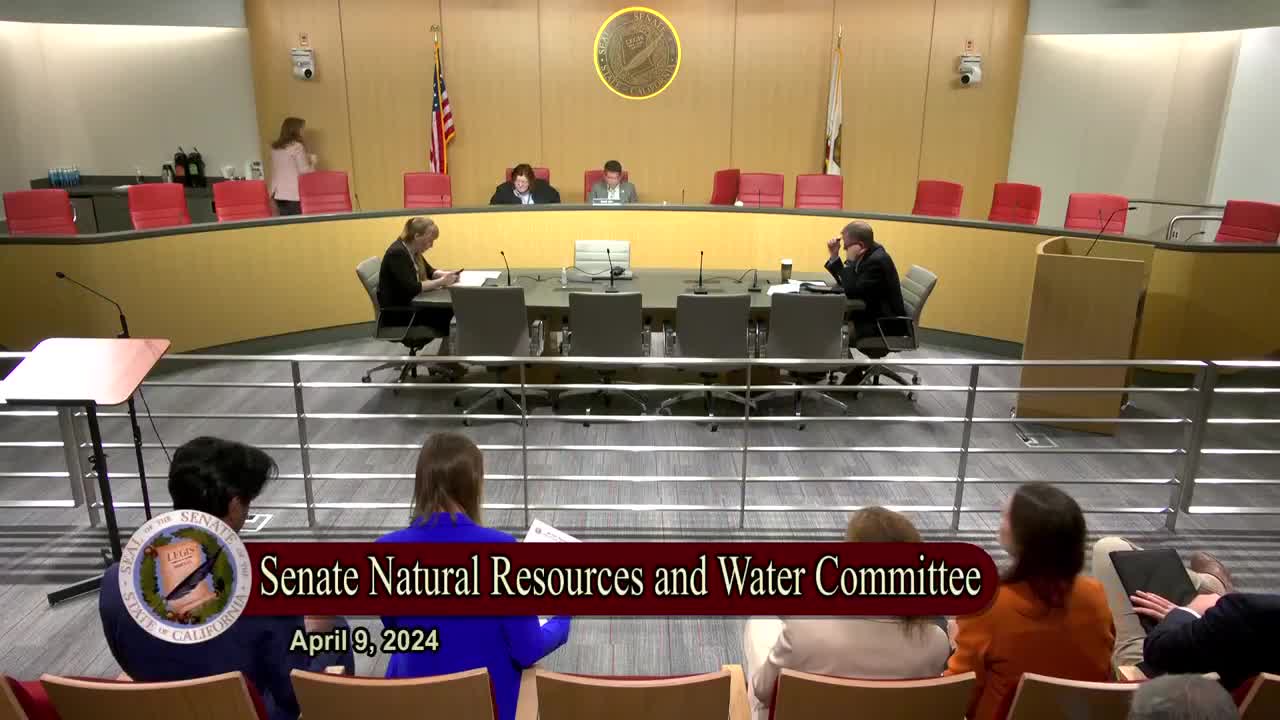 21MIN
Senate Standing Committee on Natural Resources and Water
Bill Author

Bill Co-Author(s):