SB 1081: Vehicles: driver’s license: selective service.
- Session Year: 2023-2024
- House: Senate
- Latest Version Date: 2024-05-16
Current Status:
Failed
(2024-07-01: July 1 set for first hearing canceled at the request of author.)
Introduced
In Committee
First Chamber
In Committee
Second Chamber
Enacted
Existing law establishes the practices and procedures for the issuance of an original or a renewal of a drivers license. The federal Military Selective Service Act requires specified persons to register with the United States Selective Service System.
This bill would would, commencing at the completion of the Digital eXperience Platform Project or on January 1, 2027, whichever is later, require a person who is required to be registered under the federal act and who submits an application for a drivers license, identification card, or renewal to be deemed to have consented to registration with the United States Selective Service System, as provided. The bill would require the Department of Motor Vehicles to include specified notices on an application for a drivers license, identification card, or renewal and would require the department to forward the necessary personal information required for registration to the United States Selective Service System in an electronic format. The bill would prohibit the department from making or distributing a list of individuals who did not consent to registration with the United States Selective Service System, as specified. This bill would require the department to solicit federal funds to implement these provisions and, if it receives that funding, to report to the Legislature and post specific information on its internet website, as specified.
Existing law establishes the practices and procedures for the issuance of an original or a renewal of a drivers license. The federal Military Selective Service Act requires specified persons to register with the United States Selective Service System.
This bill would require a person who is required to be registered under the federal act and who submits an application for a drivers license, identification card, or renewal to be deemed to have consented to registration with the United States Selective Service System, as provided. The bill would require the Department of Motor Vehicles to include specified notices on an application for a drivers license, identification card, or renewal and would require the department to forward the necessary personal information required for registration to the United States Selective Service System in an electronic format. The bill would prohibit the department from making or distributing a list of individuals who did not consent to registration with the United States Selective Service System, as specified. This bill would require the department to solicit federal funds to implement these provisions and, if it receives that funding, to report to the Legislature and post specific information on its internet website, as specified.
(a)It is the intent of the Legislature to protect Californians from the penalties associated with the failure to register with the United States Selective Service System and to help ensure any future draft is fair and equitable to all potential draftees.
(b)The Legislature finds and declares that the penalties associated with noncompliance of the federal Military Selective Service Act (50 U.S.C. Sec. 3801 et seq.) are severe, including, but not limited to, a felony conviction, delayed eligibility for United States citizenship for immigrants seeking citizenship, ineligibility to work for the federal government, including the United States Postal Service, ineligibility to work for many state and local governments, and ineligibility for participation in federally funded job training programs.
(c)Therefore, in recognition of the severe consequences of noncompliance with the federal Military Selective Service Act and the importance of helping ensure that any future draft is fair and equitable, it is the intent of the Legislature to notify Californians of their responsibility to register with the United States Selective Service System and provide them with the opportunity to register concurrent with applying for a drivers license or identification card.
SEC. 2.Section 12800 of the Vehicle Code, as amended by Section 1 of Chapter 969 of the Statutes of 2022, is amended to read:12800.Each application for an original or a renewal of a drivers license shall contain all of the following information:
(a)(1)The applicants true full name, age, gender category, mailing address, residence address, and, except as provided in Section 12801, social security account number.
(2)The applicant shall choose their gender category of female, male, or nonbinary.
(3)The department shall not require documentation for an original drivers license applicants initial choice of a gender category or a licensed applicants request for an amendment to a gender category other than the following:
(A)The applicants self-certification of their chosen gender category.
(B)Documentation required by this code and the California Code of Regulations as necessary to establish that an applicant is lawfully entitled to a license.
(b)A brief description of the applicant for the purpose of identification.
(c)A legible print of the thumb or finger of the applicant.
(d)The type of motor vehicle or combination of vehicles the applicant desires to operate.
(e)Whether the applicant has ever previously been licensed as a driver and, if so, when and in what state or country and whether or not the license has been suspended or revoked and, if so, the date of and reason for the suspension or revocation.
(f)Whether the applicant has ever previously been refused a drivers license in this state and, if so, the date of and the reason for the refusal.
(g)Whether the applicant, within the last three years, has experienced, on one or more occasions, either a lapse of consciousness or an episode of marked confusion caused by a condition that may bring about recurrent lapses, or whether the applicant has a disease, disorder, or disability that affects the applicants ability to exercise reasonable and ordinary control in operating a motor vehicle upon a highway.
(h)Whether the applicant understands traffic signs and signals.
(i)Whether the applicant has ever previously been issued an identification card by the department.
(j)Any other information that is necessary to enable the department to determine whether the applicant is entitled to a license under this code.
(k)(1)Commencing January 1, 2027, a statement informing the person that they may also need to change their address for purposes of their vehicle registration.
(2)The information described in paragraph (1) shall be given to the person orally if the drivers license application or renewal is done in person.
(l)The department shall adopt regulations to provide a process for an amendment to a gender category.
(m)This section shall become inoperative on the effective date of a final judicial determination made by a court of appellate jurisdiction that any provision of the act that added this section, or its application, either in whole or in part, is enjoined, found unconstitutional, or held invalid for any reason. The department shall post this information on its internet website.
(n)The information required under Section 12801.3.
SEC. 3.Section 12800 of the Vehicle Code, as amended by Section 2 of Chapter 969 of the Statutes of 2022, is amended to read:12800.Each application for an original or a renewal of a drivers license shall contain all of the following information:
(a)(1)The applicants true full name, age, gender category, mailing address, residence address, and social security account number.
(2)The applicant shall choose their gender category of female, male, or nonbinary.
(3)The department shall not require documentation for an original drivers license applicants initial choice of a gender category or a licensed applicants request for an amendment to a gender category other than the following:
(A)The applicants self-certification of their chosen gender category.
(B)Documentation required by this code and the California Code of Regulations as necessary to establish that an applicant is lawfully entitled to a license.
(b)A brief description of the applicant for the purpose of identification.
(c)A legible print of the thumb or finger of the applicant, which has been confirmed by the department to be on file prior to issuance of a drivers license.
(d)The type of motor vehicle or combination of vehicles the applicant desires to operate.
(e)Whether the applicant has ever previously been licensed as a driver and, if so, when and in what state or country and whether or not the license has been suspended or revoked and, if so, the date of and reason for the suspension or revocation.
(f)Whether the applicant has ever previously been refused a drivers license in this state and, if so, the date of and the reason for the refusal.
(g)Whether the applicant, within the last three years, has experienced, on one or more occasions, either a lapse of consciousness or an episode of marked confusion caused by a condition that may bring about recurrent lapses, or whether the applicant has a disease, disorder, or disability that affects their ability to exercise reasonable and ordinary control in operating a motor vehicle upon a highway.
(h)Whether the applicant understands traffic signs and signals.
(i)Whether the applicant has ever previously been issued an identification card by the department.
(j)Any other information that is necessary to enable the department to determine whether the applicant is entitled to a license under this code.
(k)(1)Commencing January 1, 2027, a statement informing the person that they may also need to change their address for purposes of their vehicle registration.
(2)The information described in paragraph (1) shall be given to the person orally if the drivers license application or renewal is done in person.
(l)The department shall adopt regulations to provide a process for an amendment to a gender category.
(m)This section shall become operative on the effective date of a final judicial determination made by a court of appellate jurisdiction that any provision of the act that added this section, or its application, either in whole or in part, is enjoined, found unconstitutional, or held invalid for any reason. The department shall post this information on its internet website.
(n)The information required under Section 12801.3.
SEC. 4.Section 12801.3 is added to the Vehicle Code, to read:12801.3.(a)An applicant who applies for a drivers license, identification card, or renewal, who is less than 26 years of age, authorizes the department to register the applicant with the United States Selective Service System in compliance with Section 3 of the Military Selective Service Act (50 U.S.C. Sec. 3802) through the applicants signature on the application unless the applicant indicates otherwise, as described in subdivision (b).
(b)(1)The department shall give notice to an applicant who is at least 16 years of age, but less than 26 years of age, that the applicant has a duty under federal law to register with the United States Selective Service System at 18 years of age.
(2)If the applicant is not registered within 30 days after reaching 18 years of age, they shall be informed that they still have an affirmative obligation under federal law to register with the United States Selective Service System before reaching 26 years of age.
(3)The department shall notify the applicant that their signature on an application for a drivers license, identification card, or renewal constitutes consent to authorize the department to forward the applicants information to the United States Selective Service System, registering the applicant with the United States Selective Service System, unless the applicant declines to consent by checking the Dont Register box on the application.
(c)If the applicant is at least 16 years of age, but less than 18 years of age, the department shall notify the applicant that their signature on an application for a drivers license, identification card, or renewal constitutes consent to authorize the department to register the applicant with the United States Selective Service System upon attaining 18 years of age, as required by federal law, unless the applicant indicates otherwise, as described in subdivision (b).
(d)(1)The department shall notify the applicant that a refusal to consent is not grounds for a denial of an application or renewal of a drivers license or identification card and that the opportunity to consent to the registration is provided only for the convenience of the applicant.
(2)This notice shall be made through a written document available in English, Spanish, and any other language the department determines.
(e)If an applicant authorizes the department to register the applicant, as described in subdivision (a), the department shall transmit, in an electronic format, only the information necessary for registration of the applicant to the United States Selective Service System.
(f)Refusal to grant authority as provided in this section is not a basis for the department, or any other related government agency, to discriminate against the applicant, including, but not limited to, the denial of driving privileges.
(g)(1)The department shall not compile, develop, or maintain a list of applicants who declined to grant the department authority to transmit their information to the United States Selective Service System unless it is necessary for the administration and operation of the department.
(2)The department shall not distribute or make available to a person, governmental entity, or nongovernmental entity a list of applicants who declined to grant the department authority to transmit their information to the United States Selective Service System.
(h)(1)The department shall initiate and monitor efforts to obtain federal funds for the purposes specified in this section.
(2)The department shall report to the Legislature and the relevant policy committees if it has received the federal funds specified in paragraph (1).
(3)The department shall post on its internet website the date upon which it received the federal funds specified in paragraph (1).
(i)This section does not apply to a drivers license issued to a person who is unable to submit satisfactory proof that the applicants presence in the United States is authorized under federal law.
(i)(j)Implementation of this section shall be contingent upon the departments receipt of federal funds to pay ____ dollars ($____) of the initial startup costs to implement this section. in an amount sufficient to pay for all of the initial startup and implementation costs.
(k)This section shall become operative upon completion of the Digital eXperience Platform project described in Item 2740-001-0044 of the Budget Act of 2021 (Chs. 21, 69, and 240, Stats. 2021) or on January 1, 2027, whichever is later.
SEC. 5.Section 13000 of the Vehicle Code is amended to read:13000.(a)(1)The department may issue an identification card to any person attesting to the true full name, correct age, and other identifying data as certified by the applicant for the identification card.
(2)The department may not issue a Real ID identification card to a person who holds a Real ID drivers license.
(3)The department may cancel an identification card in order to enable compliance with paragraph (2).
(b)A person 62 years of age or older may apply for, and the department upon receipt of a proper application therefor shall issue, an identification card bearing the notation Senior Citizen.
(c)Every application for an identification card shall be signed and verified by the applicant under penalty of perjury and shall be supported by bona fide documentary evidence of the age and identity of the applicant as the department may require.
(d)Prior to the issuance of an identification card, the department shall confirm that a legible print of the thumb or finger of the applicant is on file with the department.
(e)A person 62 years of age or older, and any other qualified person, may apply for, or possess, an identification card under the provisions of either subdivision (a) or (b), but not under both of those provisions.
(f)Each application for an original or a renewal of an identification card shall contain the information required under Section 12801.3.
(a)It is the intent of the Legislature to protect Californians from the penalties associated with the failure to register with the United States Selective Service System and to help ensure any future draft is fair and equitable to all potential draftees.
(b)The Legislature finds and declares that the penalties associated with noncompliance of the federal Military Selective Service Act (50 U.S.C. Sec. 3801 et seq.) are severe, including, but not limited to, a felony conviction, delayed eligibility for United States citizenship for immigrants seeking citizenship, ineligibility to work for the federal government, including the United States Postal Service, ineligibility to work for many state and local governments, and ineligibility for participation in federally funded job training programs.
(c)Therefore, in recognition of the severe consequences of noncompliance with the federal Military Selective Service Act and the importance of helping ensure that any future draft is fair and equitable, it is the intent of the Legislature to notify Californians of their responsibility to register with the United States Selective Service System and provide them with the opportunity to register concurrent with applying for a drivers license or identification card.
SEC. 2.Section 12800 of the Vehicle Code, as amended by Section 1 of Chapter 969 of the Statutes of 2022, is amended to read:12800.Each application for an original or a renewal of a drivers license shall contain all of the following information:
(a)(1)The applicants true full name, age, gender category, mailing address, residence address, and, except as provided in Section 12801, social security account number.
(2)The applicant shall choose their gender category of female, male, or nonbinary.
(3)The department shall not require documentation for an original drivers license applicants initial choice of a gender category or a licensed applicants request for an amendment to a gender category other than the following:
(A)The applicants self-certification of their chosen gender category.
(B)Documentation required by this code and the California Code of Regulations as necessary to establish that an applicant is lawfully entitled to a license.
(b)A brief description of the applicant for the purpose of identification.
(c)A legible print of the thumb or finger of the applicant.
(d)The type of motor vehicle or combination of vehicles the applicant desires to operate.
(e)Whether the applicant has ever previously been licensed as a driver and, if so, when and in what state or country and whether or not the license has been suspended or revoked and, if so, the date of and reason for the suspension or revocation.
(f)Whether the applicant has ever previously been refused a drivers license in this state and, if so, the date of and the reason for the refusal.
(g)Whether the applicant, within the last three years, has experienced, on one or more occasions, either a lapse of consciousness or an episode of marked confusion caused by a condition that may bring about recurrent lapses, or whether the applicant has a disease, disorder, or disability that affects the applicants ability to exercise reasonable and ordinary control in operating a motor vehicle upon a highway.
(h)Whether the applicant understands traffic signs and signals.
(i)Whether the applicant has ever previously been issued an identification card by the department.
(j)Any other information that is necessary to enable the department to determine whether the applicant is entitled to a license under this code.
(k)(1)Commencing January 1, 2027, a statement informing the person that they may also need to change their address for purposes of their vehicle registration.
(2)The information described in paragraph (1) shall be given to the person orally if the drivers license application or renewal is done in person.
(l)The department shall adopt regulations to provide a process for an amendment to a gender category.
(m)This section shall become inoperative on the effective date of a final judicial determination made by a court of appellate jurisdiction that any provision of the act that added this section, or its application, either in whole or in part, is enjoined, found unconstitutional, or held invalid for any reason. The department shall post this information on its internet website.
(n)The information required under Section 12801.3.
SEC. 3.Section 12800 of the Vehicle Code, as amended by Section 2 of Chapter 969 of the Statutes of 2022, is amended to read:12800.Each application for an original or a renewal of a drivers license shall contain all of the following information:
(a)(1)The applicants true full name, age, gender category, mailing address, residence address, and social security account number.
(2)The applicant shall choose their gender category of female, male, or nonbinary.
(3)The department shall not require documentation for an original drivers license applicants initial choice of a gender category or a licensed applicants request for an amendment to a gender category other than the following:
(A)The applicants self-certification of their chosen gender category.
(B)Documentation required by this code and the California Code of Regulations as necessary to establish that an applicant is lawfully entitled to a license.
(b)A brief description of the applicant for the purpose of identification.
(c)A legible print of the thumb or finger of the applicant, which has been confirmed by the department to be on file prior to issuance of a drivers license.
(d)The type of motor vehicle or combination of vehicles the applicant desires to operate.
(e)Whether the applicant has ever previously been licensed as a driver and, if so, when and in what state or country and whether or not the license has been suspended or revoked and, if so, the date of and reason for the suspension or revocation.
(f)Whether the applicant has ever previously been refused a drivers license in this state and, if so, the date of and the reason for the refusal.
(g)Whether the applicant, within the last three years, has experienced, on one or more occasions, either a lapse of consciousness or an episode of marked confusion caused by a condition that may bring about recurrent lapses, or whether the applicant has a disease, disorder, or disability that affects their ability to exercise reasonable and ordinary control in operating a motor vehicle upon a highway.
(h)Whether the applicant understands traffic signs and signals.
(i)Whether the applicant has ever previously been issued an identification card by the department.
(j)Any other information that is necessary to enable the department to determine whether the applicant is entitled to a license under this code.
(k)(1)Commencing January 1, 2027, a statement informing the person that they may also need to change their address for purposes of their vehicle registration.
(2)The information described in paragraph (1) shall be given to the person orally if the drivers license application or renewal is done in person.
(l)The department shall adopt regulations to provide a process for an amendment to a gender category.
(m)This section shall become operative on the effective date of a final judicial determination made by a court of appellate jurisdiction that any provision of the act that added this section, or its application, either in whole or in part, is enjoined, found unconstitutional, or held invalid for any reason. The department shall post this information on its internet website.
(n)The information required under Section 12801.3.
SEC. 4.Section 12801.3 is added to the Vehicle Code, to read:12801.3.(a)An applicant who applies for a drivers license, identification card, or renewal, who is less than 26 years of age, authorizes the department to register the applicant with the United States Selective Service System in compliance with Section 3 of the Military Selective Service Act (50 U.S.C. Sec. 3802) through the applicants signature on the application unless the applicant indicates otherwise, as described in subdivision (b).
(b)(1)The department shall give notice to an applicant who is at least 16 years of age, but less than 26 years of age, that the applicant has a duty under federal law to register with the United States Selective Service System at 18 years of age.
(2)If the applicant is not registered within 30 days after reaching 18 years of age, they shall be informed that they still have an affirmative obligation under federal law to register with the United States Selective Service System before reaching 26 years of age.
(3)The department shall notify the applicant that their signature on an application for a drivers license, identification card, or renewal constitutes consent to authorize the department to forward the applicants information to the United States Selective Service System, registering the applicant with the United States Selective Service System, unless the applicant declines to consent by checking the Dont Register box on the application.
(c)If the applicant is at least 16 years of age, but less than 18 years of age, the department shall notify the applicant that their signature on an application for a drivers license, identification card, or renewal constitutes consent to authorize the department to register the applicant with the United States Selective Service System upon attaining 18 years of age, as required by federal law, unless the applicant indicates otherwise, as described in subdivision (b).
(d)(1)The department shall notify the applicant that a refusal to consent is not grounds for a denial of an application or renewal of a drivers license or identification card and that the opportunity to consent to the registration is provided only for the convenience of the applicant.
(2)This notice shall be made through a written document available in English, Spanish, and any other language the department determines.
(3)If an applicant grants that authority,(e)If an applicant authorizes the department to register the applicant, as described in subdivision (a), the department shall transmit, in an electronic format, only the information necessary for registration of the applicant to the United States Selective Service System.
(e)(f)Refusal to grant authority as provided in this section is not a basis for the department, or any other related government agency, to discriminate against the applicant, including, but not limited to, the denial of driving privileges.
(f)(g)(1)The department shall not compile, develop, or maintain a list of applicants who declined to grant the department authority to transmit their information to the United States Selective Service System unless it is necessary for the administration and operation of the department.
(2)The department shall not distribute or make available to a person, governmental entity, or nongovernmental entity a list of applicants who declined to grant the department authority to transmit their information to the United States Selective Service System.
(g)(h)(1)The department shall initiate and monitor efforts to obtain federal funds for the purposes specified in this section.
(2)The department shall report to the Legislature and the relevant policy committees if it has received the federal funds specified in paragraph (1).
(3)The department shall post on its internet website the date upon which it received the federal funds specified in paragraph (1).
(h)(i)Implementation of this section shall be contingent upon the departments receipt of federal funds to pay $________ ____ dollars ($____) of the initial startup costs to implement this section.
SEC. 5.Section 13000 of the Vehicle Code is amended to read:13000.(a)(1)The department may issue an identification card to any person attesting to the true full name, correct age, and other identifying data as certified by the applicant for the identification card.
(2)The department may not issue a Real ID identification card to a person who holds a Real ID drivers license.
(3)The department may cancel an identification card in order to enable compliance with paragraph (2).
(b)A person 62 years of age or older may apply for, and the department upon receipt of a proper application therefor shall issue, an identification card bearing the notation Senior Citizen.
(c)Every application for an identification card shall be signed and verified by the applicant under penalty of perjury and shall be supported by bona fide documentary evidence of the age and identity of the applicant as the department may require.
(d)Prior to the issuance of an identification card, the department shall confirm that a legible print of the thumb or finger of the applicant is on file with the department.
(e)A person 62 years of age or older, and any other qualified person, may apply for, or possess, an identification card under the provisions of either subdivision (a) or (b), but not under both of those provisions.
(f)Each application for an original or a renewal of an identification card shall contain the information required under Section 12801.3.
(a)It is the intent of the Legislature to protect Californians from the penalties associated with the failure to register with the United States Selective Service System and to help ensure any future draft is fair and equitable to all potential draftees.
(b)The Legislature finds and declares that the penalties associated with noncompliance of the federal Military Selective Service Act (50 U.S.C. Sec. 3801 et seq.) are severe, including, but not limited to, a felony conviction, delayed eligibility for United States citizenship for immigrants seeking citizenship, ineligibility to work for the federal government, including the United States Postal Service, ineligibility to work for many state and local governments, and ineligibility for participation in federally funded job training programs.
(c)Therefore, in recognition of the severe consequences of noncompliance with the federal Military Selective Service Act and the importance of helping ensure that any future draft is fair and equitable, it is the intent of the Legislature to notify Californians of their responsibility to register with the United States Selective Service System and provide them with the opportunity to register concurrent with applying for a drivers license or identification card.
SEC. 2.Section 12800 of the Vehicle Code, as amended by Section 1 of Chapter 969 of the Statutes of 2022, is amended to read:12800.Each application for an original or a renewal of a drivers license shall contain all of the following information:
(a)(1)The applicants true full name, age, gender category, mailing address, residence address, and, except as provided in Section 12801, social security account number.
(2)The applicant shall choose their gender category of female, male, or nonbinary.
(3)The department shall not require documentation for an original drivers license applicants initial choice of a gender category or a licensed applicants request for an amendment to a gender category other than the following:
(A)The applicants self-certification of their chosen gender category.
(B)Documentation required by this code and the California Code of Regulations as necessary to establish that an applicant is lawfully entitled to a license.
(b)A brief description of the applicant for the purpose of identification.
(c)A legible print of the thumb or finger of the applicant.
(d)The type of motor vehicle or combination of vehicles the applicant desires to operate.
(e)Whether the applicant has ever previously been licensed as a driver and, if so, when and in what state or country and whether or not the license has been suspended or revoked and, if so, the date of and reason for the suspension or revocation.
(f)Whether the applicant has ever previously been refused a drivers license in this state and, if so, the date of and the reason for the refusal.
(g)Whether the applicant, within the last three years, has experienced, on one or more occasions, either a lapse of consciousness or an episode of marked confusion caused by a condition that may bring about recurrent lapses, or whether the applicant has a disease, disorder, or disability that affects the applicants ability to exercise reasonable and ordinary control in operating a motor vehicle upon a highway.
(h)Whether the applicant understands traffic signs and signals.
(i)Whether the applicant has ever previously been issued an identification card by the department.
(j)Any other information that is necessary to enable the department to determine whether the applicant is entitled to a license under this code.
(k)(1)Commencing January 1, 2027, a statement informing the person that they may also need to change their address for purposes of their vehicle registration.
(2)The information described in paragraph (1) shall be given to the person orally if the drivers license application or renewal is done in person.
(l)The department shall adopt regulations to provide a process for an amendment to a gender category.
(m)This section shall become operative on January 1, 2019.(n)(m)This section shall become inoperative on the effective date of a final judicial determination made by any a court of appellate jurisdiction that any provision of the act that added this section, or its application, either in whole or in part, is enjoined, found unconstitutional, or held invalid for any reason. The department shall post this information on its internet website.
(n)The information required under Section 12801.3.
SEC. 3.Section 12800 of the Vehicle Code, as amended by Section 2 of Chapter 969 of the Statutes of 2022, is amended to read:12800.Each application for an original or a renewal of a drivers license shall contain all of the following information:
(a)(1)The applicants true full name, age, gender category, mailing address, residence address, and social security account number.
(2)The applicant shall choose their gender category of female, male, or nonbinary.
(3)The department shall not require documentation for an original drivers license applicants initial choice of a gender category or a licensed applicants request for an amendment to a gender category other than the following:
(A)The applicants self-certification of their chosen gender category.
(B)Documentation required by this code and the California Code of Regulations as necessary to establish that an applicant is lawfully entitled to a license.
(b)A brief description of the applicant for the purpose of identification.
(c)A legible print of the thumb or finger of the applicant, which has been confirmed by the department to be on file prior to issuance of a drivers license.
(d)The type of motor vehicle or combination of vehicles the applicant desires to operate.
(e)Whether the applicant has ever previously been licensed as a driver and, if so, when and in what state or country and whether or not the license has been suspended or revoked and, if so, the date of and reason for the suspension or revocation.
(f)Whether the applicant has ever previously been refused a drivers license in this state and, if so, the date of and the reason for the refusal.
(g)Whether the applicant, within the last three years, has experienced, on one or more occasions, either a lapse of consciousness or an episode of marked confusion caused by a condition that may bring about recurrent lapses, or whether the applicant has a disease, disorder, or disability that affects their ability to exercise reasonable and ordinary control in operating a motor vehicle upon a highway.
(h)Whether the applicant understands traffic signs and signals.
(i)Whether the applicant has ever previously been issued an identification card by the department.
(j)Any other information that is necessary to enable the department to determine whether the applicant is entitled to a license under this code.
(k)(1)Commencing January 1, 2027, a statement informing the person that they may also need to change their address for purposes of their vehicle registration.
(2)The information described in paragraph (1) shall be given to the person orally if the drivers license application or renewal is done in person.
(l)The department shall adopt regulations to provide a process for an amendment to a gender category.
(m)This section shall become operative on the effective date of a final judicial determination made by any a court of appellate jurisdiction that any provision of the act that added this section, or its application, either in whole or in part, is enjoined, found unconstitutional, or held invalid for any reason. The department shall post this information on its internet website.
(n)The information required under Section 12801.3.
SEC. 4.Section 12801.3 is added to the Vehicle Code, to read:12801.3.(a)An applicant who applies for a drivers license, identification card, or renewal, who is less than 26 years of age, authorizes the department to register the applicant with the United States Selective Service System in compliance with Section 3 of the Military Selective Service Act (50 U.S.C. Sec. 3802) through the applicants signature on the application unless the applicant indicates otherwise, as described in subdivision (b).
(b)(1)The department shall give notice to an applicant who is at least 16 years of age, but less than 26 years of age, that the applicant has a duty under federal law to register with the United States Selective Service System at 18 years of age.
(2)If the applicant is not registered within 30 days after reaching 18 years of age, they shall be informed that they still have an affirmative obligation under federal law to register with the United States Selective Service System before reaching 26 years of age.
(3)The department shall notify the applicant that their signature on an application for a drivers license, identification card, or renewal constitutes consent to authorize the department to forward the applicants information to the United States Selective Service System, registering the applicant with the United States Selective Service System, unless the applicant declines to consent by checking the Dont Register box on the application.
(c)If the applicant is at least 16 years of age, but less than 18 years of age, the department shall notify the applicant that their signature on an application for a drivers license, identification card, or renewal constitutes consent to authorize the department to register the applicant with the United States Selective Service System upon attaining 18 years of age, as required by federal law, unless the applicant indicates otherwise, as described in subdivision (b).
(d)(1)The department shall notify the applicant that a refusal to consent is not grounds for a denial of an application or renewal of a drivers license or identification card and that the opportunity to consent to the registration is provided only for the convenience of the applicant.
(2)This notice shall be made through a written document available in English, Spanish, and any other language the department determines.
(3)If an applicant grants that authority, the department shall transmit, in an electronic format, only the information necessary for registration of the applicant to the United States Selective Service System.
(e)Refusal to grant authority as provided in this section is not a basis for the department, or any other related government agency, to discriminate against the applicant, including, but not limited to, the denial of driving privileges.
(f)(1)The department shall not compile, develop, or maintain a list of applicants who declined to grant the department authority to transmit their information to the United States Selective Service System unless it is necessary for the administration and operation of the department.
(2)The department shall not distribute or make available to a person, governmental entity, or nongovernmental entity a list of applicants who declined to grant the department authority to transmit their information to the United States Selective Service System.
(g)(1)The department shall initiate and monitor efforts to obtain federal funds for the purposes specified in this section.
(2)The department shall report to the Legislature and the relevant policy committees if it has received the federal funds specified in paragraph (1).
(3)The department shall post on its internet website the date upon which it received the federal funds specified in paragraph (1).
(h)Implementation of this section shall be contingent upon the departments receipt of federal funds to pay $________ of the initial startup costs to implement this section.
SEC. 5.Section 13000 of the Vehicle Code is amended to read:13000.(a)(1)The department may issue an identification card to any person attesting to the true full name, correct age, and other identifying data as certified by the applicant for the identification card.
(2)The department may not issue a Real ID identification card to a person who holds a Real ID drivers license.
(3)The department may cancel an identification card in order to enable compliance with paragraph (2).
(b)Any A person 62 years of age or older may apply for, and the department upon receipt of a proper application therefor shall issue, an identification card bearing the notation Senior Citizen.
(c)Every application for an identification card shall be signed and verified by the applicant under penalty of perjury and shall be supported by bona fide documentary evidence of the age and identity of the applicant as the department may require.
(d)Prior to the issuance of an identification card, the department shall confirm that a legible print of the thumb or finger of the applicant is on file with the department.
(e)Any A person 62 years of age or older, and any other qualified person, may apply for, or possess, an identification card under the provisions of either subdivision (a) or (b), but not under both of those provisions.
(f)Each application for an original or a renewal of an identification card shall contain the information required under Section 12801.3.
|
Date
|
Status
|
|---|---|
| Jul 1, 2024 | July 1 set for first hearing canceled at the request of author. |
| Jun 3, 2024 | Referred to Com. on TRANS. |
| May 23, 2024 | In Assembly. Read first time. Held at Desk. |
| May 22, 2024 | Read third time. Passed. (Ayes 24. Noes 2. Page 4131.) Ordered to the Assembly. |
| May 20, 2024 | Read second time. Ordered to third reading. |
| May 16, 2024 | Read second time and amended. Ordered to second reading. |
| May 16, 2024 | From committee: Do pass as amended. (Ayes 4. Noes 2. Page 3971.) (May 16). |
| May 10, 2024 | Set for hearing May 16. |
| Apr 22, 2024 | April 22 hearing: Placed on APPR suspense file. |
| Apr 12, 2024 | Set for hearing April 22. |
| Apr 10, 2024 | From committee: Do pass and re-refer to Com. on APPR. (Ayes 12. Noes 2. Page 3535.) (April 9). Re-referred to Com. on APPR. |
| Apr 2, 2024 | From committee with author's amendments. Read second time and amended. Re-referred to Com. on TRANS. |
| Feb 28, 2024 | Set for hearing April 9. |
| Feb 21, 2024 | Referred to Com. on TRANS. |
| Feb 13, 2024 | From printer. May be acted upon on or after March 14. |
| Feb 12, 2024 | Introduced. Read first time. To Com. on RLS. for assignment. To print. |
|
Date
|
Description
|
Location
|
Votes
|
|
|---|---|---|---|---|
| May 22, 2024 | Senate 3rd Reading SB1081 Archuleta | Senate Floor |
Passed |
|
| May 16, 2024 | Do pass as amended | Senate Standing Committee on Appropriations |
Passed |
|
| Apr 22, 2024 | Placed on suspense file | Senate Standing Committee on Appropriations |
Passed |
|
| Apr 9, 2024 | Do pass, but first be re-referred to the Committee on [Appropriations] | Senate Standing Committee on Transportation |
Passed |
This list shows positions taken on this bill by organizations on the date displayed, which is linked to the original source.
Positions by individuals are not included.
|
Organization
|
Position
|
Date
|
|---|---|---|
| Aclu California Action | ** Against | |
| American Friends Service Committee | ** Against | |
| American Legion, Department Of California | ** Support | |
| Amvets, Department Of California | ** Support | |
| Asian Americans Advancing Justice Southern California | ** Against | |
| California Immigrant Policy Center | ** Against | |
| Center on Conscience and War | ** Against | |
| Center on Conscience & War | ** Against | |
| Coalition for Humane Immigrant Rights | ** Against | |
| Committee Opposed to Militarism and the Draft | ** Against | |
| Courage California | ** Against | |
| Friends Committee On Legislation Of California | ** Against | |
| Indivisible Ca Statestrong | ** Against | |
| Long Beach Area Peace Network | ** Against | |
| Lutheran Office Of Public Policy - California | ** Against | |
| Military Law Task Force of The National Lawyers Guild | ** Against | |
| Military Officers Association Of America, California Council Of Chapters | ** Support | |
| Orange County Peace Coalition | ** Against | |
| Peace and Freedom Party of California | ** Against | |
| Peninsula Peace And Justice Center | ** Against | |
| San Jose Peace and Justice Center | ** Against | |
| Santa Barbara Friends Meeting | ** Against | |
| Veterans for Peace Chapter 110 | ** Against |
Date of Hearing: July 1, 2024
ASSEMBLY COMMITTEE ON TRANSPORTATION
Lori D. Wilson, Chair
SBPCA Bill Id:SB 1081
Author:(Archuleta) – As Amended Ver:May 16, 2024
SENATE VOTE: 24-2
SUBJECT: Vehicles: driver’s license: selective service
SUMMARY: Requires a person who is required to register for the United States Selective Service System (SSS) and who submits an application for a California driver’s license or identification card to be deemed to have consented to register, unless the applicant declines consent. Specifically, this bill:
- Requires a person who is required to be registered under the Military Selective Service Act and who submits an application for a driver’s license, identification card, or renewal to be deemed to have consented to registration with the SSS unless they indicate otherwise.
- Requires the Department of Motor Vehicles (DMV) to transmit only the information necessary for the registration of the applicant to the SSS unless the applicant opts-out.
- Requires the DMV to give notice to an applicant between 16 and 26 years of age and has a duty under federal law to register with the SSS at 18 years of age. If they are already over the age of 18 they will be informed of their affirmative obligation under federal law to register before reaching 26 years of age.
- Requires the DMV to notify an applicant that their signature on a driver’s license, identification card, or renewal application constitutes consent to the DMV forwarding the applicant’s information to the SSS to register them, or register them once they reach 18 years of age, unless they decline to consent by checking the “Don’t Register” box on the application.
- Requires the DMV to notify the applicant that refusal to consent is not grounds for denial of an application or renewal of a driver’s license or identification card. This notice shall be in English, Spanish, and any other language the DMV determines.
- Prohibits the DMV from compiling, developing, or maintaining a list of applicants who declined to grant the DMV authority to transmit their information to the SSS unless it is necessary for the administration and operation of the DMV. If such a list is necessary, prohibits the DMV from distributing or making it available to any entity.
- Requires each application for an original or renewal of an identification card or driver’s license to contain the information required to register the applicant with the SSS.
- Provides an exemption for driver’s license applicants who are unable to submit satisfactory proof of their presence in the United States as authorized under federal law.
- Requires the DMV to initiate efforts to obtain federal funds to implement this bill and makes implementation of this bill contingent on the DMV’s receipt of a sufficient amount of funds to pay for initial startup implementation costs.
- Stipulates this bill will only become operative upon completion of DMV’s Digital eXperience Platform project or on January 1, 2027, whichever is later.
EXISTING LAW:
Existing federal law:
- The Military Selective Service Act of 1948 requires every male citizen of the United States and every other male person residing in the United States between the ages of 18 and 26 to register for SSS. (50 United States Code 3802(a))
- Exempts lawful non-immigrant residents (such as people on visas), seasonal agricultural workers, and individuals with medical issues that prevent them from leaving a location.
- Requires SSS registration as a prerequisite for most federal jobs. (5 Code of Federal Regulations 300.704)
Existing state law:
- Establishes a REAL ID or driver’s license to mean a driver’s license or identification card that has been issued by a state that has been certified by the Department of Homeland Security to be in compliance with the requirements of the Real ID Act of 2005 (Public Law 109-13) and the regulations adopted pursuant to the act. (Vehicle Code 681)
- States that a governing board of a school district should, but is not required to, make every reasonable effort to appoint a selective service registrar for each high school who is tasked with helping pupils subject to the Military Selective Service Act register. (Education Code (EDC) 35041.3)
- Requires each public postsecondary educational institution to make every reasonable effort to inform all male applicants for undergraduate admission of their obligation to register with the SSS. (EDC 66500)
- Requires all state agencies to cooperate with the SSS in efforts to publicize the necessity of, and requirements for, compliance with the Military Selective Service Act. Any actions to implement this requirement must be mutually agreed to by the state agency and the SSS and costs must be reimbursed by the SSS. (Government Code 7593.1)
FISCAL EFFECT: According to the Senate Appropriations Committee, “Unknown, likely significant one-time DMV implementation costs in a future fiscal year, contingent upon the receipt of federal funding to partially offset implementation costs. One-time costs are primarily related to IT systems upgrades for identifying applicants between the age of 16 and 26, modifying online forms to accommodate additional disclosures, providing for the opt-out, and additional data collection and transmission capabilities.
Staff notes that DMV is currently undertaking an Enterprise Modernization Project (the Digital eXperience Project, or DXP), which is scheduled to be complete at the end of 2025-26, and the bill delays implementation until completion of the DXP or January 1, 2027, whichever is later. DMV indicates that IT costs related to the bill cannot be predicted because its functionalities are currently under development. (Federal Fund)
Unknown, potentially significant ongoing annual DMV costs for additional printing and mailing costs related to the expanded forms in multiple languages, for increases in field office and call center staff time regarding the requirements in the bill, and for ongoing data transmission to the SSS. Ongoing costs are likely to be a General Fund obligation because the Motor Vehicle Account is an ineligible fund source for these activities.”
COMMENTS:
Selective service. The SSS is an independent federal agency tasked with maintaining information on male residents in the United States potentially subject to military conscription. Federal law requires men between the ages of 18 and 26 to register with the SSS, with a few limited exceptions. This system would be the data source used for any random or skills-based conscriptions in the event of Presidential and Congressional action to authorize a military draft.
Risks of noncompliance. Failure to register for the SSS is a felony punishable by up to five years in prison and a $250,000 fine. The SSS annually refers names of non-registrants to the Department of Justice for possible investigation and prosecution, though no prosecutions have occurred for noncompliance since 1986. The greater risk of noncompliance is an inability for someone to access certain benefits.
The U.S Citizenship and Immigration Services makes registration with SSS a condition for U.S. citizenship. If the eligible person is under the age of 26 they will be denied naturalization unless they register. If they are between the age of 26 and 31 they are too old to register and must wait until age 32 before proceeding with naturalization unless they are able to present sworn declarations that failing to register for SSS was not due to willfully avoiding the requirement.
The Selective Service registration requirement to access federal student aid ended in 2022. Currently several state student aid programs still require SSS registration, but California does not. Most federal employment, security clearance for contractors, and access to some federal job training all require SSS registration. Demonstrating that the failure to register was not willful can be sufficient to avoid this requirement. For example, according to the Federal Office of Personnel Management, only 1% of cases of non-registrants they adjudicate result in denial of federal employment. However this process takes time and an employer may simply move onto the next applicant rather than seek a waiver.
Registration rates are dropping. The national Selective Service registration rate was 84% of eligible people according to the 2022 SSS annual report to Congress, a 5% decrease from the previous year. This decrease was likely driven by the recent removal of the SSS registration requirement to receive federal student aid. Mirroring the change in federal law, the California Legislature has removed the requirement for SSS registration for state student financial aid. This method of registration historically accounted for up to 20% of all annual registrations. Therefore, the SSS expects the registration rate to further decrease.
In 2022, over half of all electronic registrations (which account for ~95% of all registrations) came from programs enacted through driver’s license legislation at the state level. As of October 2023, the SSS estimates that only 75% of eligible Californians have registered. Other large states, such as New York, Texas, and Florida that have implemented driver’s license enrollment legislation see rates of enrollment over 90%.
What does California do? Existing state law requires all state agencies to cooperate with the SSS to publicize requirements for SSS registration and compliance. DMV entered into a memorandum of understanding with the SSS in 1990 and since then has provided a quarterly file to the SSS with personal information of self-identified men aged 18 to 26 who apply for an original driver’s license or identification card. Neither the DMV nor the SSS automatically register individuals under current practice. Instead, the SSS can use the DMV’s list to mail notices alerting individuals who have not yet registered of their obligation and provide information on how to do so. California also requires public postsecondary educational institutions to make every reasonable effort to inform all male applicants for undergraduate admission of their obligation to register with the SSS.
What do other states do? Only 10 states, including California, currently do not have some kind of driver’s license SSS registration requirement. 28 states employ automatic SSS registration for males between ages of 18 and 26 in order to obtain or renew their driver’s license. Only four states and Washington D.C. have an opt-out component like this bill would require, and eight states have opt-in requirements.
Impact on the DMV. This bill expands the DMV’s responsibilities and would require it to updates its information technology systems, implement additional procedures to register eligible applicants, and train staff.
The Legislative Analyst’s Office predicts the Motor Vehicle Account (MVA), the primary funding source for the DMV and the California Highway Patrol) is rapidly heading for insolvency and recently recommended the Legislature set a high bar for considering approval of any proposals that create additional MVA cost pressures. In order to defray some of these costs, implementation of this bill is contingent upon the receipt of federal funds to pay for all of the initial startup and implementation costs. According to the DMV, this bill would require DMV to apply for federal funding for these activities and currently the DMV does not have staff that apply for federal grants. In addition, ongoing operational costs for the system would be funded by the state. This bill also includes language delaying operation until completion of the Digital eXperience Platform project or on January 1, 2027, whichever is later, in order to defray cost pressures.
Gender discrimination. Opponents have raised concerns about the constitutionality of this bill, and the SSS overall, as it only applies to those assigned male at birth. This argument has actually been tested in court. A case in 2019 in the Southern District of Texas declared that requiring men but disallowing women to register for the draft was unconstitutional, but that ruling was reversed by the Fifth Circuit court and the Supreme Court declined to review the ruling because of ongoing discussions in Congress around removing the male-only requirement. Discussions in Congress continue with a provision in the annual defense policy bill which would require both men and women to register with SSS. The question of whether such a requirement would be in violation of California’s constitution has not been tested, but there was a requirement for many years for SSS registration to access state student aid. If those provisions were legal then it seems likely this bill would be as well.
Another concern opponents have raised is how this system will impact transgender individuals. Federal law The Military Selective Service Act applies to all people assigned male at birth regardless of their current gender identity. This creates concerns of accidently “outing” transgender individuals, devaluing their chosen gender, or potentially causing transgender people to be incorrectly registered. This bill is written in a gender-neutral way so that if Congress expands the registration requirement to all genders in the future, this bill will follow suit.
Undocumented men. California has enacted legislation to ensure undocumented immigrants can obtain legal identification cards and driver’s licenses. Undocumented men are required to sign up for the selective service, and so this bill would require the DMV to transmit their information to the SSS. According to the SSS website, they do not collect or share any information that would indicate a man’s immigration status, either documented or undocumented.
An amendment made in the Senate created an exemption in this bill to exclude AB 60 license applicants. While this amendment was meant to protect undocumented immigrants from their information being shared with SSS, opponents of this bill argue that there is an unintended consequence. AB 60 (Alejo), Chapter 524, Statutes of 2013 prohibits the DMV from creating a list of immigrants who are unable to provide satisfactory proof of their presence in the United States. The implementation of this bill may require the DMV to create a list of driver’s license holders who are undocumented in order to determine which applicants are excluded from SSS registration under this bill. Additionally, as undocumented immigrants are required to register with SSS, they would not be able to do so through the mechanism in this bill.
Opt-outs and incrimination. Opponents of this bill raise concerns that by the DMV providing notice to individuals of their obligation to register with SSS and requiring individuals to opt-out, the state would essentially be gathering evidence of knowing and willful violations of federal law. This bill includes privacy protections that direct the DMV to not maintain a list of applicants who declined to register, unless it is necessary for administration. If such a list is developed, this bill forbids the DMV from sharing it with any other entity. The opponents of this bill point out that a federal subpoena would overrule this provision and potentially leave these list vulnerable to prosecutors. Several other opt-out states don’t have privacy protections similar to this bill and according to SSS, there has been no attempt to prosecute anyone. Doing so would incentivize those states to quickly alter their laws to remove their requirements and would undercut the SSS’s efforts to reach 100% registration.
This bill is more flexible than the policies of many other states, which tie licensure to SSS registration. The opt-out approach in this bill is likely to result in increased SSS registration rates, as it is harder to opt-in than opt-out. Voter registration in California uses a similar opt-out approach.
According to the author, “California currently has one of the lowest rates of eligible residents who have signed up for the Selective Service System. As of October 2023, the Selective Service System estimates that only 74.6% of eligible Californians have registered. If they do not register by the age of 26, young men permanently become ineligible for federal jobs and federal job training programs including those funded by the Workforce Innovation and Opportunity Act. Failure to register may additionally cause delays in citizenship applications for immigrants who have not registered. When people choose to not sign up for the Selective Service, they often do so without being aware of the potential risks of failing to register. It is time for California to join the over forty states and five U.S. territories that have passed laws tying Selective Service registration to driver’s license applications.”
According to supporters of this bill, “California currently has one of the nation’s lowest rates of eligible residents who have signed up for the Selective Service. As of October 2023, the Selective Service System estimates that only 74.6% of eligible Californians have registered. In contrast, other large states including New York, Texas, and Florida that have implemented driver’s license enrollment see enrollment rates of over 90%. When people choose not to sign up for the Selective Service, they often do so without being aware of the potential future risks to themselves by failing to register. California must take action to ensure that our residents do not disproportionately make themselves ineligible for jobs and benefits due to our inability to enroll people through the DMV process.”
According to opponents, “AJSOCAL opposes the bill as SB 1081 directs a state agency to transmit peoples’ personal information to the federal government, which would be a significant concern for the immigrant community, especially those who are undocumented. There’s an estimated number of over 460,000 undocumented Asian immigrants in California, and statistics show that Southeast Asians are deported at the highest number compared to any other immigrant groups. As California passed various measures to protect immigrants, we must continue ensuring sensitive personal information, such as a person’s immigration status, is not easily transmitted to the federal government and agencies, with the possibility that a federal subpoena could override protections passed by the state legislature.”
Committee concerns. Federal law requires men between 18 and 26 to register with the SSS including immigrants, dual nationals, conscientious objectors, and hospitalized, incarcerated or disabled men, with very limited exceptions. There is a difference between exemption from registration and classification in the event of a national emergency. Selective Service does not have authority to pre-classify men for service if there is not an active draft. For example, if a draft is authorized and a conscientious objector is called, they would have the opportunity to file a claim for exemption from military service based upon their religious or moral objection to war. Similarly, if a disabled man would not qualify for military service, they are still required to register with SSS and would submit a claim for exemption from service in the event of a draft.
This bill includes an opt-out option and if selected by an individual, would be evidence of knowing and willful violations of federal law. This bill includes privacy protections prohibiting the DMV from creating a list of individuals who opt out of SSS registration, though this can be overridden with a federal subpoena. The committee is concerned that this bill provides a confusing opt out option that could put individuals in legal peril rather than joining the other 28 states that have an automatic SSS registration tied to the driver’s license application. Individuals would still be allowed to file for an exemption from military service as established by federal law.
Committee amendments. The author agreed to amend the bill to remove the opt-out option so that an applicant who applies for a driver’s license, identification card, or renewal who is less than 26 years of age automatically authorizes the DMV to register the applicant with SSS. These amendments alleviate the committee concerns described above.
Previous and related legislations: AB 82 (Garcia) of 2015 was substantially similar to this bill and passed out of this committee 15-1, but was vetoed by Governor Brown.
AB 2201 (Chávez) of 2014 would have required SSS registration by eligible males in order to obtain a driver’s license. The bill was held on the Senate Appropriations Committee suspense file.
SB 251 (Correa) of 2011 would have required the DMV to allow eligible males to consent to SSS registration while applying for a driver’s license. The bill was held on the Senate Appropriations Committee suspense file.
AB 1661 (Cook) of 2007 would have required the DMV to allow eligible males to consent to SSS registration while applying for a driver’s license. The bill was held on the Assembly Appropriations Committee suspense file.
SB 1276 (Speier) of 2002 would have required the DMV to allow eligible males to consent to SSS registration while applying for a driver’s license. The bill was held on the Senate Appropriations Committee suspense file.
SB 557 (Deddeh) Chapter 496, Statutes of 1989 required all state agencies to cooperate with the SSS in efforts to publicize the necessity of, and requirements for, compliance with the Military Selective Service Act.
REGISTERED SUPPORT / OPPOSITION:
Support
American Legion, Department of California
Amvets, Department of California
Military Officers Association of America, California Council of Chapters
Opposition
ACLU California Action
Asian Americans Advancing Justice Southern California
California Immigrant Policy Center
Center on Conscience & War
Committee Opposed to Militarism and The Draft
Courage California
Friends Committee on Legislation of California
Indivisible CA StateStrong
Long Beach Area Peace Network
Lutheran Office of Public Policy - California
Military Law Task Force of The National Lawyers Guild
Peace and Freedom Party of California
San Jose Peace and Justice Center
Santa Barbara Friends Meeting
Analysis Prepared by: Aaron Kurz / TRANS. / (916) 319-2093
SENATE RULES COMMITTEE Office of Senate Floor Analyses (916) 651-1520 Fax: (916) 327-4478 | SB 1081 |
THIRD READING
Bill No: SB 1081
Author: Archuleta (D)
Amended: 5/16/24
Vote: 21
SENATE TRANSPORTATION COMMITTEE: 12-2, 4/9/24
AYES: Cortese, Niello, Allen, Archuleta, Becker, Dodd, Gonzalez, Newman, Nguyen, Portantino, Seyarto, Umberg
NOES: Blakespear, Dahle
NO VOTE RECORDED: Limón
SENATE APPROPRIATIONS COMMITTEE: 4-2, 5/16/24
AYES: Caballero, Ashby, Becker, Seyarto
NOES: Jones, Wahab
NO VOTE RECORDED: Bradford
SUBJECT: Vehicles: driver’s license: selective service
SOURCE: Author
DIGEST:
This bill requires, beginning January 1, 2027 or upon completion of the Digital eXperience Platform project, a person who is required to be registered for the selective service to be deemed to have consented to registration when they submit an application for a driver’s license or identification card unless they decline to register or are applying for a license because they are unable to submit proof that their presence in the United States is authorized under federal law.
ANALYSIS:
Existing federal law:
- Requires, through the Military Selective Service Act of 1948, every male citizen of the United States and every other male person residing in the United States between the ages of 18 and 26 to register for the United States Selective Service System (SSS). (50 U.S.C. 3802(a))
- Exempts from this requirement lawful non-immigrant residents (such as people on visas), seasonal agricultural workers, and individuals with medical issues that prevent them from leaving a location.
- Requires SSS registration as a prerequisite for most federal jobs (5 CFR §300.704)
Existing state law:
- Specifies the type of information necessary to apply for an original or renewal driver’s license or identification card. (VEH §12800)
- Requires the DMV to issue a driver’s license to an individual who is unable to submit prof that their presence is in the United States is authorized under federal law if they meet all other qualifications for licensure and provide satisfactory proof of their identity and residency. (VEH §12801)
- Requires all state agencies to cooperate with the SSS in efforts to publicize the necessity of, and requirements for, compliance with the Military Selective Service Act. Any actions to implement this requirement must be mutually agreed to by the state agency and the SSS and costs must be reimbursed by the SSS. (GO §7593.1)
This bill:
- Requires, beginning January 1, 2027 or upon completion of the Digital eXperience Platform project, a person who is required to be registered under the Military Selective Service Act and who submits an application for a driver’s license, identification card, or renewal to be deemed to have consented to registration with the SSS unless they indicate otherwise or are applying for a license and are unable to submit proof that their presence in the United States is authorized under federal law.
- Requires the DMV to transmit only the information necessary for the registration of the applicant to the SSS unless the applicant opts-out.
- Requires the DMV to give notice to a male applicant between 16 and 26 years of age of their duty to register with the SSS at 18 years of age. If they are already over the age of 18 they will be informed of their affirmative obligation under federal law to register before reaching 26 years of age.
- Requires the DMV to notify an applicant that their signature on an application for a driver’s license, identification card, or renewal constitutes consent to the DMV forwarding the applicant’s information to the SSS to register them, or register them once they reach 18 years of age, unless they decline to consent by checking the “Don’t Register” box on the application.
- Requires the DMV to notify the applicant that refusal to consent is not grounds for denial of an application or renewal of a driver’s license or identification card. This notice shall be in English, Spanish, and any other language the DMV determines.
- Specifies that refusal to grant authority to register for the SSS is not a basis for the DMV or any related agency to discriminate against the applicant including the denial of driving privileges.
- Prohibits the DMV from compiling, developing, or maintaining a list of applicants who declined to grant the DMV authority to transmit their information to the SSS unless it is necessary for the administration and operation of the DMV. If such a list is necessary, prohibits the DMV from distributing or making it available to any entity.
- Requires each application for an original or renewal of an identification card or driver’s license to contain the information required to register the applicant with the SSS.
- Requires the DMV to initiate efforts to obtain federal funds to implement this bill and makes implementation of this bill contingent on the DMV’s receipt of federal funds sufficient to pay for all of the initial startup and implementation costs.
Comments
- Purpose of bill. According to the author, “California currently has one of the lowest rates of eligible residents who have signed up for the Selective Service System. As of October 2023, the Selective Service System estimates that only 74.6% of eligible Californians have registered. If they do not register by the age of 26, young men permanently become ineligible for federal jobs and federal job training programs including those funded by the Workforce Innovation and Opportunity Act. Failure to register may additionally cause delays in citizenship applications for immigrants who have not registered. When people choose to not sign up for the Selective Service, they often do so without being aware of the potential risks of failing to register. It is time for California to join the over forty states, Washington, DC, and four U.S. territories that have passed laws tying Selective Service registration to driver’s license applications.”
- Selective service. The SSS is an independent federal agency tasked with maintaining information on male residents in the United States potentially subject to military conscription. Under this system all men 18 years and older are required by federal law to register with the SSS, with a few limited exceptions. In the event of Presidential and Congressional action to authorize a military draft this system would be the data source used for any random or skills-based conscriptions.
- Risks of noncompliance. Failure to register for the SSS is a federal crime, potentially punishable by up to five years in prison and a $250,000 fine. The SSS annually refers names of non-registrants to the Department of Justice, but no prosecutions have occurred for noncompliance since 1986. The greater risk is an inability for someone to access certain benefits.
The U.S Citizenship and Immigration Services makes registration with SSS a condition for U.S. citizenship. If the eligible person is under the age of 26 they will be denied naturalization unless they register. If they are between the age of 26 and 31 they are too old to register and must wait until age 32 before proceeding with naturalization, unless they are able to present sworn declarations that failing to register for Selective Service was not due to willfully avoiding the requirement.
Registration used to be required in order to access federal student aid, though this was ended in 2022. Currently several state student aid programs still require SSS registration, but California does not. Most federal employment, some state employment, security clearance for contractors, and access to some federal job training, all require SSS registration. Like with immigration, demonstrating that the failure to register was not willful can be sufficient to avoid this requirement. For example, according to the Federal Office of Personnel Management (OPM), only 1% of cases of non-registrants they adjudicate result in denial of federal employment. However this process takes time and an employer may simply move onto the next applicant rather than seek a waiver.
- Registration rates are dropping. According to the 2022 SSS annual report to Congress, the national registration rate was 84% of eligible people, a 5 percent decrease from the previous year. This decrease was likely driven by the recent removal of the SSS registration requirement to receive federal student aid. Mirroring the change in federal law, the California Legislature has removed the requirement for SSS registration for state student financial aid. This method of registration historically accounted for up to 20 percent of all annual registrations and so the SSS expects the registration rate to further decrease.
In 2022 over half of all electronic registrations (which account for ~95% of all registrations) came from programs enacted through driver’s license legislation at the state level. As of October 2023, the SSS estimates that only 75% of eligible Californians have registered. Other large states, such as New York, Texas, and Florida that have implemented driver’s license enrollment legislation see rates of enrollment over 90%.
- What does California already do? Existing state law requires all state agencies to cooperate with the SSS to publicize requirements for SSS registration and compliance. DMV entered into a memorandum of understanding with the SSS in 1990 and since then has provided a quarterly file to the SSS with personal information of self-identified men aged 18 to 26 who apply for an original driver’s license or identification card. Neither the DMV nor the SSS automatically register individuals under current practice. Instead, the SSS can use this list to send out notices through the postal system alerting individuals who have not yet registered of their obligation and provide information on how to do so. California also requires public postsecondary educational institutions to make every reasonable effort to inform all male applicants for undergraduate admission of their obligation to register with the SSS.
- What do other states do? According to the SSS website, there are only 10 states, including California, that currently do not have some kind of driver’s license SSS registration requirement. The most common form of requirement is automatic registration. Twenty-eight states require males between ages of 18 and 26 to register for the SSS in order to obtain or renew their driver’s license. Four states and Washington D.C. have an opt-out component in their driver’s license application like this bill would require and eight states have opt-in requirements.
- Impact on the DMV and MVA. This bill expands the DMV’s responsibilities by requiring the DMV to carry out additional procedures to register eligible applicants, such as modifying the driver’s license application and administering additional staff training. This will result in resources and attention being used by the DMV and diverting them from their core functions of managing licensing of drivers and registration of vehicles. This is not unprecedented, as in the cases of voter registration and organ donation registration, but these programs have direct import and benefit to the people of California. In contrast, this program is created by a federal requirement and has federal implications, though the costs of nonregistration are detrimental to Californians.
In order to implement this bill the DMV will need to ask additional questions to self-identified young men at field offices, resulting in some amount of delay. It will also require updates to the DMV’s core information’s systems, which are currently undergoing an upgrade (the “Digital eXperience Platform project”). This bill will not become operative until that upgrade is complete, in order to reduce costs.
The Legislative analyst’s office predicts the Motor Vehicle Account (the primary funding source for the DMV) is rapidly heading for insolvency and recently recommended the Legislature set a high bar for considering approval of any proposals that create additional MVA cost pressures. In order to defray these costs this bill is contingent upon the receipt of sufficient funds from the federal government to reimburse the initial costs of establishing this program. Ongoing operational costs for the system will be covered by the state.
- Gender discrimination and the SSS. Opponents have raised concerns about the constitutionality of this bill, and the SSS overall, as it only applies to those assigned male at birth. This argument has actually been tested in court. A case in 2019 in the Southern District of Texas declared that requiring men but disallowing women to register for the draft was unconstitutional, but that ruling was reversed by the Fifth Circuit court and the Supreme Court declined to review the ruling because of ongoing discussions in Congress around removing the male-only requirement. The question of whether such a requirement would be in violation of California’s constitution has not been tested, but there were requirements for many years for SSS registration to access state student aid. If those provisions were legal then it seems likely this bill would be as well.
A related concern raised by opponents is how this system will impact transgender individuals. Because the lawmakers who wrote the Military Selective Service Act in the 1940s did not consider the existence of transgender people, the law applies to all people assigned male at birth regardless of their current gender identity. This creates concerns of accidently “outing” transgender individuals or devaluing their chosen gender. These problems are inherent to the federal law and not something the state can remedy. This bill is written in a gender-neutral way so that if Congress expands the registration requirement to all genders in the future, this bill will follow suit.
To implement this bill the DMV will have to ask people about SSS registration if they identified as male and are in the appropriate age range. If someone was assigned male at birth and now identifies as female or nonbinary on their license the system created by the bill will not affect them and they may miss out on completing their required registration through this route. Alternatively, if someone was assigned female at birth and identifies as male during licensing they would have to opt-out of the system and may fail to do so because of confusion over the requirements. In that case their registration information will be sent to the SSS. The SSS will compare the DMV records to other records they have access to from Social Security to ensure the person the DMV reported actually was assigned male at birth and must register, prior to registering the person. This prevents transgender people from being incorrectly registered.
- Conscientious objectors and the SSS. There are several religious groups who are deeply opposed to war and the military based on their tenets and principles. People in those religions are still required by federal law to sign up for the selective service and so this bill makes no particular accommodation for them. In the event of an actual draft the SSS will maintain an Alternative Service Program that allows objectors to work in conservation, caring for the infirm, educational projects and healthcare.
- Undocumented men and the SSS. California has taken action to help undocumented immigrants obtain legal identification cards and driver’s licenses. (AB 60, Alejo, Chapter 524, Statutes of 2013) Undocumented men are required to sign up for the selective service, and so this bill would require the DMV to transmit their information to the SSS. According to the SSS website they do not collect or share any information that would indicate a man’s immigration status, either documented or undocumented. However groups have raised concerns about the ability to protect information about undocumented individuals from other agencies in the federal government, and so this bill will not apply to individuals applying for licenses under the AB 60 system.
- Opt-outs and incrimination. Opponents of this bill raise concerns that by the DMV providing notice to individuals of their obligation to register with SSS and requiring individuals to opt-out the state would essentially be gathering evidence of knowing and willful violations of federal law. The bill has some privacy protections built in by directing the DMV to not maintain a list of applicants who declined to register, unless it’s necessary for administration. If such a list is developed the bill forbids the DMV from sharing it with any other entity. The opponents of the bill point out that a federal subpoena would overrule this provision and potentially leave these list vulnerable to prosecutors. The main response to this is that the SSS already receives similar lists from several other opt-out states and has not attempted to prosecute anyone. Doing so would incentivize those states to quickly alter their laws to remove their requirements and would undercut the SSS’s efforts to reach 100% registration.
This bill is already more flexible than many of the policies of other states, which tie licensure to SSS registration. However, it does take an opt-out approach rather than an opt-in approach. This is likely in an attempt to increase registration rates, as it is harder to opt-in than opt-out. Voter registration follows a similar opt-out model in California.
- Sixth time’s the charm? Legislation substantially similar to this bill has been advanced many times in the past. Usually these bills died in fiscal committees due to concerns about cost. In the most recent attempt in 2015 the bill passed the Legislature, but was ultimately vetoed by Governor Brown. According to that veto message: “In view of the relatively easy ways that young men can register for the U.S. Selective Service System such as registering online, at their high school, or at a local post office, I don't think this new responsibility for the Department of Motor Vehicles is advisable.”
Since that time SSS registration requirements for state student financial aid have ended, though the options for enrollment online, through schools, and a post offices persist.
FISCAL EFFECT: Appropriation: No Fiscal Com.: Yes Local: No
According to the Senate Appropriations Committee, this bill will result in unknown, likely significant one-time DMV implementation costs in a future fiscal year, contingent upon the receipt of federal funding to partially offset implementation costs. One-time costs are primarily related to IT systems upgrades for identifying applicants between the age of 16 and 26, modifying online forms to accommodate additional disclosures, providing for the opt-out, and additional data collection and transmission capabilities. Staff notes that DMV is currently undertaking an Enterprise Modernization Project (the Digital eXperience Project, or DXP), which is scheduled to be complete at the end of 2025-26, and the bill delays implementation until completion of the DXP or January 1, 2027, whichever is later. DMV indicates that IT costs related to the bill cannot be predicted because its functionalities are currently under development. (federal funds)
“Unknown, potentially significant ongoing annual DMV costs for additional printing and mailing costs related to the expanded forms in multiple languages, for increases in field office and call center staff time regarding the requirements in the bill, and for ongoing data transmission to the SSS. Ongoing costs are likely to be a General Fund obligation because the Motor Vehicle Account is an ineligible fund source for these activities.”
SUPPORT: (Verified 5/16/24)
Amvets, Department of California
Military Officers Association of America, California Council of Chapters
OPPOSITION: (Verified 5/16/24)
American Friends Service Committee
Asian Americans Advancing Justice Southern California
California Immigrant Policy Center
Center on Conscience and War
Coalition for Humane Immigrant Rights (CHIRLA)
Committee Opposed to Militarism and The Draft
Friends Committee on Legislation of California
Long Beach Area Peace Network
Military Law Task Force of The National Lawyers Guild
Orange County Peace Coalition
Peninsula Peace and Justice Center
San Jose Peace and Justice Center
Santa Barbara Friends Meeting
Veterans for Peace Chapter 110
Prepared by: Jacob O'Connor / TRANS. / (916) 651-4121
5/18/24 14:05:18
**** END ****
SENATE COMMITTEE ON APPROPRIATIONS
Senator Anna Caballero, Chair
2023 - 2024 Regular Session
SB 1081 (Archuleta) - Vehicles: driver’s license: selective service
Version: April 2, 2024 | Policy Vote: TRANS. 12 - 2 |
Urgency: No | Mandate: No |
Hearing Date: May 16, 2024 | Consultant: Mark McKenzie |
Bill Summary:
SB 1081 would automatically register a driver’s license or identification card applicant with the federal Selective Service System (SSS), if that person is required to be registered under federal law, unless the applicant declines to consent to registration by checking a box on the application, as specified. Implementation of the SSS registration provisions is contingent upon the Department of Motor Vehicles (DMV’s) receipt of federal funds to pay an unspecified amount of the initial startup costs.
*********** ANALYSIS ADDENDUM – SUSPENSE FILE ***********
The following information is revised to reflect amendments
adopted by the committee on May 16, 2024
Fiscal Impact:
- Unknown, likely significant one-time DMV implementation costs in a future fiscal year, contingent upon the receipt of federal funding to partially offset implementation costs. One-time costs are primarily related to IT systems upgrades for identifying applicants between the age of 16 and 26, modifying online forms to accommodate additional disclosures, providing for the opt-out, and additional data collection and transmission capabilities. Staff notes that DMV is currently undertaking an Enterprise Modernization Project (the Digital eXperience Project, or DXP), which is scheduled to be complete at the end of 2025-26, and the bill delays implementation until completion of the DXP or January 1, 2027, whichever is later. DMV indicates that IT costs related to the bill cannot be predicted because its functionalities are currently under development. (federal funds)
- Unknown, potentially significant ongoing annual DMV costs for additional printing and mailing costs related to the expanded forms in multiple languages, for increases in field office and call center staff time regarding the requirements in the bill, and for ongoing data transmission to the SSS. Ongoing costs are likely to be a General Fund obligation because the Motor Vehicle Account is an ineligible fund source for these activities.
Author Amendments:
- Specify that the bill’s requirements do not apply to a driver’s license issued to a person who is unable to submit satisfactory proof of legal presence in the United States.
- Specify that implementation is contingent upon DMV’s receipt of federal funds in an amount sufficient to pay for all initial startup and implementation costs.
- Delay the bill’s operative date to January 1, 2027, or upon completion of the DXP, whichever is later.
-- END --
SENATE COMMITTEE ON
Senator Anna Caballero, Chair
2023 - 2024 Regular Session
SB 1081 (Archuleta) - Vehicles: driver’s license: selective service
Version: | Policy Vote: |
Urgency: | Mandate: |
Hearing Date: | Consultant: |
Bill Summary:
SB 1081 would automatically register a driver’s license or identification card applicant with the federal Selective Service System (SSS), if that person is required to be registered under federal law, unless the applicant declines to consent to registration by checking a box on the application, as specified. Implementation of the SSS registration provisions is contingent upon the Department of Motor Vehicles (DMV’s) receipt of federal funds to pay an unspecified amount of the initial startup costs.
Fiscal Impact:
- Unknown, likely significant one-time DMV implementation costs in a future fiscal year, contingent upon the receipt of federal funding to partially offset implementation costs. One-time costs are primarily related to IT systems upgrades for identifying applicants between the age of 16 and 26, modifying online forms to accommodate additional disclosures, providing for the opt-out, and additional data collection and transmission capabilities. Staff notes that DMV is currently undertaking an Enterprise Modernization Project (the Digital eXperience Project, or DXP), which is scheduled to be complete at the end of 2025-26. If DMV were to implement the bill prior to the completion of DXP, IT costs to construct a temporary solution outside of core legacy systems, and potentially acquire new technology and services, would be substantial. If implementation were to occur after completion of the DXP, DMV indicates that IT costs related to the bill cannot be predicted because its functionalities are currently under development. (federal funds, as well as Motor Vehicle Account [MVA] and/or General Fund)
- Unknown, potentially significant ongoing annual DMV costs for additional printing and mailing costs related to the expanded forms in multiple languages, for increases in field office and call center staff time regarding the requirements in the bill, and for ongoing data transmission to the SSS. Ongoing costs are likely to be a General Fund obligation because the Motor Vehicle Account is an ineligible fund source for these activities.
Background:
Existing federal law requires all men who are 18 through 25 years of age to register with the Selective Service System within 30 days of their 18th birthday, and to keep registration current up to age 26. The SSS is an independent federal agency whose mission is to register men for a possible military draft, which enables the nation to expand the military forces rapidly and efficiently during a period of warfare or other national emergency. Failure to register is a felony violation, subject to a fine of up to $250,000 and/or up to five years of imprisonment. In addition, violators lose eligibility for federal benefits, including job training, employment opportunities with federal agencies, and citizenship for immigrants.
Existing state law requires all state agencies to cooperate with the SSS in efforts to publicize the necessity of, and requirements for, compliance with the federal military Selective Service Act. As a result, DMV entered into a memorandum of understanding with the SSS in 1990 that authorizes the release of personal information on driver’s license holders who are required to register for selective service. Since that time, DMV has provided the SSS with certain personal information of men 17 to 25 years of age who apply for an original driver’s license or identification card, including the person’s name, address, birthdate, and driver’s license number. The SSS matches this information with its registry and notifies any person that has not registered.
Existing law, Article XIX, Section 3 of the California Constitution, requires revenues from fees and taxes imposed by the state upon vehicles or their use or operation to be used for specified transportation-related infrastructure and the state administration and enforcement of laws regulating the use, operation, or registration of vehicles used on public roadways, including the enforcement of traffic and vehicle laws my state agencies and the mitigation of vehicles’ environmental impacts.
Proposed Law:
SB 1081 would provide a mechanism to automatically register an applicant for an original or renewal driver’s license or identification card with the SSS, if that person is required to be registered under federal law, except as specified. Specifically this bill would:
- Specify that an applicant for a driver’s license, identification card, or renewal who is under the age of 26 authorizes DMV to register the applicant with the SSS in compliance with the Military Selective Service Act through their signature on the application, unless they indicate otherwise.
- Require DMV to give notice to an applicant between 16 and 26 years of age of their duty to register with the SSS at 18 years of age. If the applicant is not registered within 30 days after reaching the age of 18, they will be informed of their affirmative obligation under federal law to register before reaching 26 years of age.
- Require DMV to notify an applicant that their signature on an application for a driver’s license, identification card, or renewal constitutes consent to the DMV forwarding the applicant’s information to the SSS to register them, or register them once they reach 18 years of age, unless they decline to consent by checking the “Don’t Register” box on the application.
- Require DMV to notify the applicant that refusal to consent is not grounds for denial of an application or renewal of a driver’s license or identification card. This notice shall be in English, Spanish, and any other language the DMV determines.
- Require DMV to transmit, in an electronic format, only the information necessary for the registration of the applicant to the SSS unless the applicant opts-out.
- Specify that refusal to grant authority to register for the SSS is not a basis for the DMV or any related agency to discriminate against the applicant, including the denial of driving privileges.
- Prohibit DMV from compiling, developing, or maintaining a list of applicants who declined to grant the DMV authority to transmit their information to the SSS unless it is necessary for the administration and operation of the DMV. The bill prohibits DMV from distributing or making any such list available to any entity.
- Require DMV to initiate and monitor efforts to obtain federal funds to implement the bill, and to report to the Legislature and post on its website, when it receives these federal funds.
- Make implementation of the above requirements contingent upon DMV’s receipt of federal funds to pay an unspecified amount of the initial startup costs to implement these provisions.
- Require each application for an original or renewal of an identification card or driver’s license to contain information required under these provisions.
Related Legislation:
There have been numerous attempts to pass legislation tying the driver’s license to registration with the Selective Service System over the past two decades, as follows:
- AB 82 (Garcia), which was vetoed by Governor Brown in 2015, would have required the DMV to include in the driver’s license application an option for an eligible individual to register with the SSS (an “opt in”), as specified. The Governor’s veto message stated the following: “In view of the relatively easy ways that young men can register for the U.S. Selective Service System such as registering online, at their high school, or at a local post office, I don't think this new responsibility for the Department of Motor Vehicles is advisable.”
- AB 2201 (Chavez), which was held on the Senate Appropriations Committee Suspense File in 2014, would have provided for automatic registration with the SSS upon application for an original or renewal driver’s license, beginning in 2016.
- SB 251 (Correa), which was held on the Senate Appropriations Committee Suspense File in 2011, would have provided for an “opt-in” on driver’s license applications that allows for consent to register with the SSS.
- AB 1661 (Cook), which was held on the Assembly Appropriations Committee Suspense File in 2007, would have provided for an “opt-in” on driver’s license applications that allows for consent to register with the SSS.
- SB 1276 (Speier), which was held on the Senate Appropriations Committee Suspense File in 2002, would have provided for an “opt-in” on driver’s license applications that allows for consent to register with the SSS.
- AB 1572 (Briggs), which was held on the Assembly Appropriations Committee Suspense File in 2001, would have provided for automatic registration with the SSS upon application for a driver’s license.
- AB 2574 (Briggs), which was held on the Assembly Appropriations Committee Suspense File in 2000, would have provided for automatic registration with the SSS upon application for a driver’s license.
Staff Comments:
SB 1081 would require DMV to add several prescribed notices regarding SSS registration and opt-out procedures on the standard “Driver License or Identification Card Application” DL-44 form. DMV anticipates the addition of these notices would extend the paper version of the DL-44 form to a third page, as well as increase the size and content of paper renewal notices. In addition, the bill requires notices to be provided in multiple languages, as specified. These issues would create ongoing costs for printing forms and renewal notices, and additional postage for mailed notices. DMV would also incur ongoing costs for data transmission and IT maintenance.
The bill requires DMV to transmit, in an electronic format, only the information necessary for the registration of the applicant to the SSS unless the applicant opts-out. Under the current MOU with the SSS, the DMV sends specified information to the SSS that is used to send registration reminder letters to those required to register. DMV sends the name, birthdate, driver’s license/identification card number, and address of males under the age of 26 in periodic electronic data transfers. Staff notes that this bill requires DMV to send information necessary for the registration of the applicant to the SSS, which would include Social Security numbers (SSNs). Current law prohibits the DMV from sharing SSNs that it collects from applicants for driver’s licenses and identification cards, except in four narrow circumstances specified in Vehicle Code Section 1653.5. This bill does not expand the authority for DMV to share SSN info with the SSS, so it is unclear whether the SSS would be able to register individuals whose information is shared by the DMV pursuant to this bill without obtaining that information independently.
The bill would only be implemented to the extent that the DMV receives federal funding to pay an unspecified amount of the initial startup costs. There is no known source of federal funding available for payment of DMV implementation costs. The Motor Vehicle Account is the DMV's primary source of funding, with revenues generated by vehicle registration fees, driver's license and ID card fees, and several other fees imposed by the DMV for particular services earmarked to the MVA. Since the expenditure of these revenues is constitutionally limited to specified transportation and vehicle-related uses, DMV indicates that the MVA cannot be used to support ongoing activities related to SSS registration of driver’s license applicants. To avoid legal challenge, staff assumes DMV’s ongoing costs related to the bill would be borne by the General Fund.
The Legislative Analyst’s Office (LAO) recently published a report as part of its analysis of the Governor’s proposed 2024-25 Budget entitled “Insolvency Risks for Environmental and Transportation Special Funds” that includes an evaluation of the MVA. The report notes that between 2018-19 and 2023-24, MVA revenues have increased by $714 million while expenditures have increased by about $1 billion, and since 2021-22, annual expenditures have exceeded yearly revenues, resulting in a structural imbalance. The MVA is expected to fully exhaust its reserves and become insolvent in 2025-26 (Budget Year +1). Specifically, the administration projects expenditures will exceed available resources by roughly $140 million in 2025-26. Absent actions to address the MVA fund condition, approving any new proposals that would increase MVA expenditures would exacerbate the structural imbalance and hasten the insolvency timeline. As such, the LAO recommends that “the Legislature set a high bar for considering approval of any proposals that create additional MVA cost pressures and accelerate the risk of insolvency.” To the extent that DMV’s administrative costs are borne by the MVA, staff notes that this bill would make the structural imbalance of the MVA worse.
Recommended Amendments:
Staff notes that the bill is contingent upon DMV’s receipt federal funds to pay an unspecified amount of the initial startup costs. The bill should be amended to specify the amount of funding necessary to implement the bill, at a minimum.
-- END --
SENATE COMMITTEE ON TRANSPORTATION
Senator Dave Cortese, Chair
2023 - 2024 Regular
Bill No: SB 1081 Hearing Date: 4/9/2024
Author: | Archuleta | ||
Version: | 4/2/2024 Amended | ||
Urgency: | No | Fiscal: | Yes |
Consultant: | Jacob O'Connor | ||
SUBJECT: Vehicles: driver’s license: selective service
DIGEST: This bill would require a person who is required to be registered for the selective service to be deemed to have consented to registration when they submit an application for a driver’s license or identification card unless they decline to register.
ANALYSIS:
Existing federal law:
- The Military Selective Service Act of 1948 requires every male citizen of the United States and every other male person residing in the United States between the ages of 18 and 26 to register for the United States Selective Service System (SSS). (50 U.S.C. 3802(a))
- Exempts from this requirement lawful non-immigrant residents (such as people on visas), seasonal agricultural workers, and individuals with medical issues that prevent them from leaving a location.
- Requires SSS registration as a prerequisite for most federal jobs (5 CFR §300.704)
Existing state law:
- Specifies the type of information necessary to apply for an original or renewal driver’s license or identification card.
- States that a governing board of a school district should, but is not required to, make every reasonable effort to appoint a selective service registrar for each high school who is tasked with helping pupils subject to the Military Selective Service Act register in accordance with that act. (EDC §35041.3)
- Requires each public postsecondary educational institution to make every reasonable effort to inform all male applicants for undergraduate admission of their obligation to register with the SSS. (EDC §66500)
- Requires all state agencies to cooperate with the SSS in efforts to publicize the necessity of, and requirements for, compliance with the Military Selective Service Act. Any actions to implement this requirement must be mutually agreed to by the state agency and the SSS and costs must be reimbursed by the SSS. (GO §7593.1)
This bill:
- Requires a person who is required to be registered under the Military Selective Service Act and who submits an application for a driver’s license, identification card, or renewal to be deemed to have consented to registration with the SSS unless they indicate otherwise.
- Requires the DMV to transmit only the information necessary for the registration of the applicant to the SSS unless the applicant opts-out.
- Requires the DMV to give notice to a male applicant between 16 and 26 years of age of their duty to register with the SSS at 18 years of age. If they are already over the age of 18 they will be informed of their affirmative obligation under federal law to register before reaching 26 years of age.
- Requires the DMV to notify an applicant that their signature on an application for a driver’s license, identification card, or renewal constitutes consent to the DMV forwarding the applicant’s information to the SSS to register them, or register them once they reach 18 years of age, unless they decline to consent by checking the “Don’t Register” box on the application.
- Requires the DMV to notify the applicant that refusal to consent is not grounds for denial of an application or renewal of a driver’s license or identification card. This notice shall be in English, Spanish, and any other language the DMV determines.
- Specifies that refusal to grant authority to register for the SSS is not a basis for the DMV or any related agency to discriminate against the applicant including the denial of driving privileges.
- Prohibits the DMV from compiling, developing, or maintaining a list of applicants who declined to grant the DMV authority to transmit their information to the SSS unless it is necessary for the administration and operation of the DMV. If such a list is necessary, prohibits the DMV from distributing or making it available to any entity.
- Requires each application for an original or renewal of an identification card or driver’s license to contain the information required to register the applicant with the SSS.
- Requires the DMV to initiate efforts to obtain federal funds to implement this bill and makes implementation of this bill contingent on the DMV’s receipt of funds to pay an unspecified amount of the initial startup implementation costs.
COMMENTS:
- Purpose of bill. According to the author, “California currently has one of the lowest rates of eligible residents who have signed up for the Selective Service System. As of October 2023, the Selective Service System estimates that only 74.6% of eligible Californians have registered. If they do not register by the age of 26, young men permanently become ineligible for federal jobs and federal job training programs including those funded by the Workforce Innovation and Opportunity Act. Failure to register may additionally cause delays in citizenship applications for immigrants who have not registered. When people choose to not sign up for the Selective Service, they often do so without being aware of the potential risks of failing to register. It is time for California to join the over forty states, Washington, DC, and four U.S. territories that have passed laws tying Selective Service registration to driver’s license applications.”
- Selective service. The SSS is an independent federal agency tasked with maintaining information on male residents in the United States potentially subject to military conscription. Under this system all men 18 years and older are required by federal law to register with the SSS, with a few limited exceptions. In the event of Presidential and Congressional action to authorize a military draft this system would be the data source used for any random or skills-based conscriptions.
- Risks of noncompliance. Failure to register for the SSS is a federal crime, potentially punishable by up to five years in prison and a $250,000 fine. The SSS annually refers names of non-registrants to the Department of Justice, but no prosecutions have occurred for noncompliance since 1986. The greater risk is an inability for someone to access certain benefits.
The U.S Citizenship and Immigration Services makes registration with SSS a condition for U.S. citizenship. If the eligible person is under the age of 26 they will be denied naturalization unless they register. If they are between the age of 26 and 31 they are too old to register and must wait until age 32 before proceeding with naturalization, unless they are able to present sworn declarations that failing to register for Selective Service was not due to willfully avoiding the requirement.
Registration used to be required in order to access federal student aid, though this was ended in 2022. Currently several state student aid programs still require SSS registration, but California does not. Most federal employment, some state employment, security clearance for contractors, and access to some federal job training, all require SSS registration. Like with immigration, demonstrating that the failure to register was not willful can be sufficient to avoid this requirement. For example, according to the Federal Office of Personnel Management (OPM), only 1% of cases of non-registrants they adjudicate result in denial of federal employment. However this process takes time and an employer may simply move onto the next applicant rather than seek a waiver.
- Registration rates are dropping. According to the 2022 SSS annual report to Congress, the national registration rate was 84% of eligible people, a 5 percent decrease from the previous year. This decrease was likely driven by the recent removal of the SSS registration requirement to receive federal student aid. Mirroring the change in federal law, the California Legislature has removed the requirement for SSS registration for state student financial aid. This method of registration historically accounted for up to 20 percent of all annual registrations and so the SSS expects the registration rate to further decrease.
In 2022 over half of all electronic registrations (which account for ~95% of all registrations) came from programs enacted through driver’s license legislation at the state level. As of October 2023, the SSS estimates that only 75% of eligible Californians have registered. Other large states, such as New York, Texas, and Florida that have implemented driver’s license enrollment legislation see rates of enrollment over 90%.
- What does California already do? Existing state law requires all state agencies to cooperate with the SSS to publicize requirements for SSS registration and compliance. DMV entered into a memorandum of understanding with the SSS in 1990 and since then has provided a quarterly file to the SSS with personal information of self-identified men aged 18 to 26 who apply for an original driver’s license or identification card. Neither the DMV nor the SSS automatically register individuals under current practice. Instead, the SSS can use this list to send out notices through the postal system alerting individuals who have not yet registered of their obligation and provide information on how to do so. California also requires public postsecondary educational institutions to make every reasonable effort to inform all male applicants for undergraduate admission of their obligation to register with the SSS.
- What do other states do? According to the SSS website, there are only 10 states, including California, that currently do not have some kind of driver’s license SSS registration requirement. The most common form of requirement is automatic registration. 28 states require males between ages of 18 and 26 to register for the SSS in order to obtain or renew their driver’s license. Four states and Washington D.C. have an opt-out component in their driver’s license application like this bill would require and 8 states have opt-in requirements.
- Impact on the DMV and MVA. This bill expands the DMV’s responsibilities by requiring the DMV to carry out additional procedures to register eligible applicants, such as modifying the driver’s license application and administering additional staff training. This will result in resources and attention being used by the DMV and diverting them from their core functions of managing licensing of drivers and registration of vehicles. This is not unprecedented, as in the cases of voter registration and organ donation registration, but these programs have direct import and benefit to the people of California. In contrast, this program is created by a federal requirement and has federal implications, though the costs of nonregistration are detrimental to Californians.
In order to implement this bill the DMV will need to ask additional questions to self-identified young men at field offices, resulting in some amount of delay. It will also require updates to the DMV’s core information’s systems, which are currently undergoing an upgrade, likely increasing implementation costs.
The Legislative analyst’s office predicts the Motor Vehicle Account (the primary funding source for the DMV) is rapidly heading for insolvency and recently recommended the Legislature set a high bar for considering approval of any proposals that create additional MVA cost pressures. In order to defray some of these costs this bill is contingent upon the receipt of an undetermined amount of funds from the federal government to reimburse the initial costs of establishing this program. The author intends to specify an amount based on further discussions with the DMV. Ongoing operational costs for the system will be covered by the state.
- Gender discrimination. Opponents have raised concerns about the constitutionality of this bill, and the SSS overall, as it only applies to those assigned male at birth. This argument has actually been tested in court. A case in 2019 in the Southern District of Texas declared that requiring men but disallowing women to register for the draft was unconstitutional, but that ruling was reversed by the Fifth Circuit court and the Supreme Court declined to review the ruling because of ongoing discussions in Congress around removing the male-only requirement. The question of whether such a requirement would be in violation of California’s constitution has not been tested, but there were requirements for many years for SSS registration to access state student aid. If those provisions were legal then it seems likely this bill would be as well.
A related concern raised by opponents is how this system will impact transgender individuals. Because the lawmakers wrote the Military Selective Service Act in the 1940s and were not considering the existence of transgender people, the law applies to all people assigned male at birth regardless of their current gender identity. This creates concerns of accidently “outing” transgender individuals or devaluing their chosen gender. These problems are inherent to the federal law and not something the state can remedy. This bill is written in a gender-neutral way so that if Congress expands the registration requirement to all genders in the future, this bill will follow suit.
To implement this bill the DMV will have to ask people about SSS registration if they identified as male and are in the appropriate age range. If someone was assigned male at birth and now identifies as female or nonbinary on their license the system created by the bill will not affect them and they may miss out on completing their required registration through this route. Alternatively, if someone was assigned female at birth and identifies as male during licensing they would have to opt-out of the system and may fail to do so because of confusion over the requirements. In that case their registration information will be sent to the SSS. The SSS will compare the DMV records to other records they have access to from Social Security to ensure the person the DMV reported actually was assigned male at birth and must register, prior to registering the person. This prevents transgender people from being incorrectly registered.
- Conscientious objectors? There are several religious groups in this country who are deeply opposed to war and the military based on their religious tenets and principles. Such people are still required by federal law to sign up for the selective service and so this bill makes no particular accommodation for them. In the event of an actual draft the SSS will maintain an Alternative Service Program that allows objectors to work in conservation, caring for the infirm, educational projects and healthcare.
- Undocumented men. California has taken action to help undocumented immigrants obtain legal identification cards and driver’s licenses. Undocumented men are required to sign up for the selective service, and so this bill would require the DMV to transmit their information to the SSS. According to the SSS website they do not collect or share any information that would indicate a man’s immigration status, either documented or undocumented.
- Opt-outs and incrimination. Opponents of this bill raise concerns that by the DMV providing notice to individuals of their obligation to register with SSS and requiring individuals to opt-out the state would essentially be gathering evidence of knowing and willful violations of federal law. The bill has some privacy protections built in by directing the DMV to not maintain a list of applicants who declined to register, unless it’s necessary for administration. If such a list is developed the bill forbids the DMV from sharing it with any other entity. The opponents of the bill point out that a federal subpoena would overrule this provision and potentially leave these list vulnerable to prosecutors. The main response to this is that the SSS already receives similar lists from several other opt-out states and has not attempted to prosecute anyone. Doing so would incentivize those states to quickly alter their laws to remove their requirements and would undercut the SSS’s efforts to reach 100% registration.
This bill is already more flexible than many of the policies of other states, which tie licensure to SSS registration. However, it does take an opt-out approach rather than an opt-in approach. This is likely in an attempt to increase registration rates, as it is harder to opt-in than opt-out. Voter registration follows a similar opt-out model in California.
- Sixth time’s the charm? Legislation substantially similar to this bill has been advanced many times in the past. Usually these bills died in fiscal committees due to concerns about cost. In the most recent attempt in 2015 the bill passed the Legislature, but was ultimately vetoed by Governor Brown. According to that veto message: “In view of the relatively easy ways that young men can register for the U.S. Selective Service System such as registering online, at their high school, or at a local post office, I don't think this new responsibility for the Department of Motor Vehicles is advisable.”
Since that time SSS registration requirements for state student financial aid have ended, though the options for enrollment online, through schools, and a post offices persist.
Related Legislation:
AB 82 (Garcia, 2015) was substantially similar to this bill and passed out of this committee 9-2, but was vetoed by Governor Brown.
AB 2201 (Chávez, 2014) would have required SSS registration by eligible males in order to obtain a driver’s license. The bill was held on the Senate Appropriations Committee suspense file.
SB 251 (Correa, 2011) would have required the DMV to allow eligible males to consent to SSS registration while applying for a driver’s license. The bill was held on the Senate Appropriations Committee suspense file.
AB 1661 (Cook, 2007) would have required the DMV to allow eligible males to consent to SSS registration while applying for a driver’s license. The bill was held on the Assembly Appropriations Committee suspense file.
SB 1276 (Speier, 2002) would have required the DMV to allow eligible males to consent to SSS registration while applying for a driver’s license. The bill was held on the Senate Appropriations Committee suspense file.
SB 557 (Deddeh, Chapter 496, Statutes of 1989) required all state agencies to cooperate with the SSS in efforts to publicize the necessity of, and requirements for, compliance with the Military Selective Service Act.
FISCAL EFFECT: Appropriation: Fiscal Com.: Local:
POSITIONS: (Communicated to the committee before noon on Wednesday,
April 3rd.)
SUPPORT:
Amvets, Department of California
Military Officers Association of America, California Council of Chapters
OPPOSITION:
ACLU California Action
American Friends Service Committee
California Immigrant Policy Center
Center on Conscience and War
Committee Opposed to Militarism and The Draft
Friends Committee on Legislation of California
Long Beach Area Peace Network
Military Law Task Force of The National Lawyers Guild
Orange County Peace Coalition
Peninsula Peace and Justice Center
San Jose Peace and Justice Center
Santa Barbara Friends Meeting
Veterans for Peace Chapter 110
ARGUMENTS IN SUPPORT: According to the California Council of Chapters of the Military Officers Association of America, “California currently has one of the nation’s lowest rates of eligible residents who have signed up for the Selective Service. As of October 2023, the Selective Service System estimates that only 74.6% of eligible Californians have registered. In contrast, other large states including New York, Texas, and Florida that have implemented driver’s license enrollment see enrollment rates of over 90%.
In addition to the legal requirement that almost all males register, men who fail to register cut themselves off from future benefits and opportunities. If they do not register by the age of 26, men permanently become ineligible for all federal jobs as well as federal job training programs including those funded by the Workforce
Innovation and Opportunity Act. Failure to register may additionally cause delays in citizenship applications for immigrants who have not registered.
When people choose not to sign up for the Selective Service, they often do so without being aware of the potential future risks to themselves by failing to register. California must take action to ensure that our residents do not disproportionately make themselves ineligible for jobs and benefits due to our inability to enroll people through the DMV process”
ARGUMENTS IN OPPOSITION: According to the Friend’s Committee on Legislation of California, “Under this proposed legislation, people as young as 16 years old, i.e., minors, and up to age 26, will be deemed to have agreed to automatic registration for the draft by placing their signature on a driver’s license application, which they have filled out for a completely unrelated purpose. The California Department of Motor Vehicles will forward their information to the Selective Service System, registering them immediately or in the case of those under 18, registering them automatically when they turn 18.
This linkage with filling out a DMV form trivializes registration for the draft, something that individuals should be able to thoughtfully consider, with full information and awareness of alternatives. The bill proposes that those who do not accept the linkage may proceed to sign the driver’s license form and also indicate that “the applicant declines to consent by checking the “Don’t Register” box on the application.” However, checking such a box could be considered “self-incrimination,” as “knowing and willful” nonregistration can be grounds for penalties such as refusal of federal employment or naturalization. Many people have sincere religious objections to registering for the draft. This bill would force them to violate their conscience or sign a confession of a crime to get a driver’s license.
There are other concerns raised by this bill: will information on females and non-binary individuals as well as males also be transmitted to the SSS and how will these potential issues be handled? Would parents have the legal authority to pre-register male minors into SSS or opt-out on their behalf? What will the additional burden on the DMV be in terms of additional procedures to register eligible applicants, staff training, time spent answering questions during field office visits?... Linking registration for the federal SSS to a completely unrelated state function is still a bad policy choice for a number of reasons. In light of the issues discussed here and many others, we ask the committee to vote NO on SB 1081.”
-- END --
Discussed in Hearing
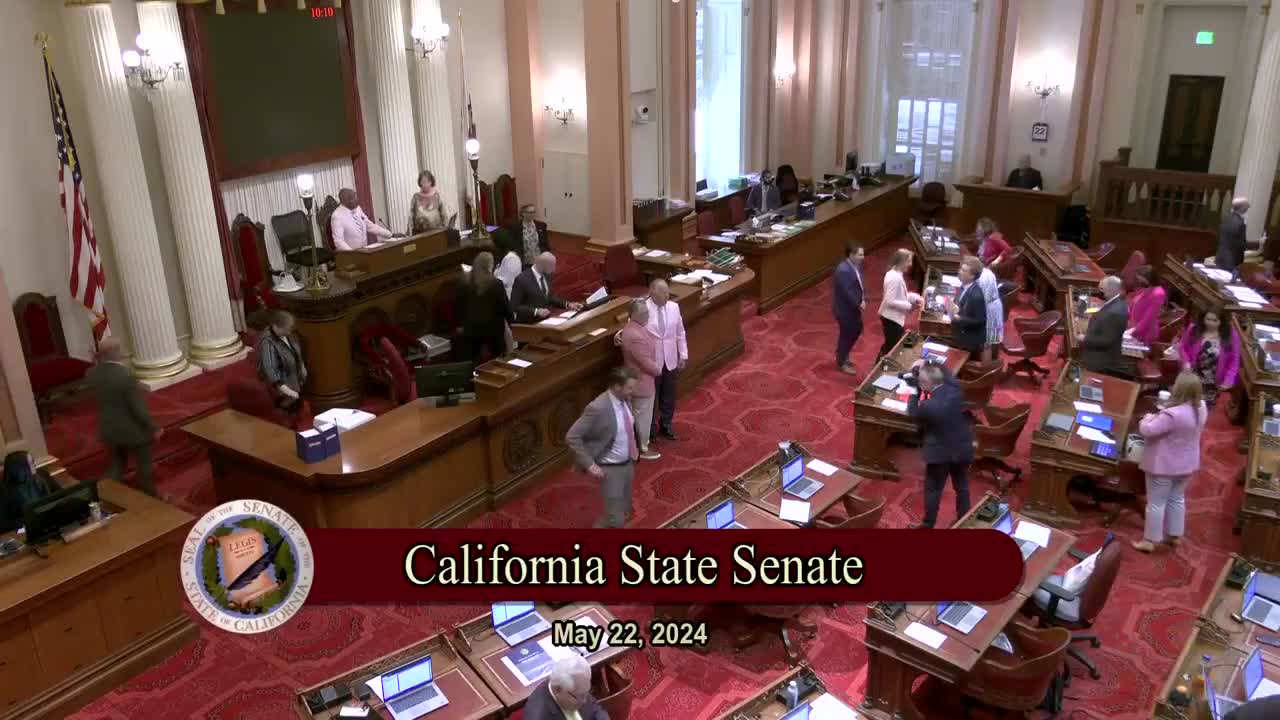 6MIN
Senate Floor
 2MIN
Senate Standing Committee on Appropriations
 26MIN
Senate Standing Committee on Transportation
Bill Author
Bill Co-Author(s):