SB 1091: School facilities: school projects: accessible path of travel requirements.
- Session Year: 2023-2024
- House: Senate
- Latest Version Date: 2024-09-30
Current Status:
Passed
(2024-09-30: Chaptered by Secretary of State. Chapter 1014, Statutes of 2024.)
Introduced
In Committee
First Chamber
In Committee
Second Chamber
Enacted
The Field Act requires the Department of General Services under the police power of the state to supervise the design and construction of any school building or the reconstruction or alteration of or addition to any school building, if not exempted, to ensure that plans and specifications comply with adopted rules and regulations and building standards published in regulations, and to ensure that the work of construction is performed in accordance with the approved plans and specifications for the protection of life and property.
The California Building Standards Code requires that specified buildings, structures, and facilities be accessible to, and useable by, persons with disabilities, including that when alterations or additions are made to existing buildings or facilities, an accessible path of travel to the specific area of alteration or addition is provided. Existing law limits the cost of complying with the requirement to provide an accessible path of travel to a free-standing, open-sided shade structure project that meets specified requirements and that is on a school district, county office of education, charter school, or community college campus to 20% of the adjusted construction cost, as defined, of the shade structure project.
This bill would additionally limit the cost of complying with the requirement to provide an accessible path of travel to a school district, county office of education, or charter school project that is approved by the Division of the State Architect on or before December 31, 2030, and that improves community ecological health and climate resilience, or pupil well-being, learning, or pupil play, and incorporates nature, as provided, to 20% of the adjusted construction cost, as defined, of the school project. The bill would authorize the Division of the State Architect to adopt regulations to implement these provisions, as provided. The bill would repeal these provisions on January 1, 2032.
The Field Act requires the Department of General Services under the police power of the state to supervise the design and construction of any school building or the reconstruction or alteration of or addition to any school building, if not exempted, to ensure that plans and specifications comply with adopted rules and regulations and building standards published in regulations, and to ensure that the work of construction is performed in accordance with the approved plans and specifications for the protection of life and property.
The California Building Standards Code requires that specified buildings, structures, and facilities be accessible to, and useable by, persons with disabilities, including that when alterations or additions are made to existing buildings or facilities, an accessible path of travel to the specific area of alteration or addition is provided. Existing law limits the cost of complying with the requirement to provide an accessible path of travel to a free-standing, open-sided shade structure project that meets specified requirements and that is on a school district, county office of education, charter school, or community college campus to 20% of the adjusted construction cost, as defined, of the shade structure project.
This bill would additionally limit the cost of complying with the requirement to provide an accessible path of travel to a school district, county office of education, or charter school project that is approved by the Division of the State Architect on or before January 1, December 31, 2030, and that improves community ecological health and climate resilience, or pupil well-being, learning, or pupil play, and incorporates nature, as provided, to 20% of the adjusted construction cost, as defined, of the school project. The bill would authorize the Division of the State Architect to adopt regulations to implement these provisions. provisions, as provided. The bill would repeal these provisions on January 1, 2031. 2032.
The Field Act requires the Department of General Services under the police power of the state to supervise the design and construction of any school building or the reconstruction or alteration of or addition to any school building, if not exempted, to ensure that plans and specifications comply with adopted rules and regulations and building standards published in regulations, and to ensure that the work of construction is performed in accordance with the approved plans and specifications for the protection of life and property.
The California Building Standards Code requires that specified buildings, structures, and facilities be accessible to, and useable by, persons with disabilities, including that when alterations or additions are made to existing buildings or facilities, an accessible path of travel to the specific area of alteration or addition is provided. Existing law limits the cost of complying with the requirement to provide an accessible path of travel to a free-standing, open-sided shade structure project that meets specified requirements and that is on a school district, county office of education, charter school, or community college campus to 20% of the adjusted construction cost, as defined, of the shade structure project.
Until January 1, 2035, this bill would additionally limit the cost of complying with the requirement to provide an accessible path of travel to a school ground greening project, as defined, that is on a school district, county office of education, or charter school to 20% of the adjusted construction cost, as defined, of the school ground greening project.This bill would additionally limit the cost of complying with the requirement to provide an accessible path of travel to a school district, county office of education, or charter school project that is approved by the Division of the State Architect on or before January 1, 2030, and that improves community ecological health and climate resilience, or pupil well-being, learning, or pupil play, and incorporates nature, as provided, to 20% of the adjusted construction cost, as defined, of the school project. The bill would authorize the Division of the State Architect to adopt regulations to implement these provisions. The bill would repeal these provisions on January 1, 2031.
The Field Act requires the Department of General Services under the police power of the state to supervise the design and construction of any school building or the reconstruction or alteration of or addition to any school building, if not exempted, to ensure that plans and specifications comply with adopted rules and regulations and building standards published in regulations, and to ensure that the work of construction is performed in accordance with the approved plans and specifications for the protection of life and property.
The California Building Standards Code requires that specified buildings, structures, and facilities be accessible to, and useable by, persons with disabilities, including that when alterations or additions are made to existing buildings or facilities, an accessible path of travel to the specific area of alteration or addition is provided. Existing law limits the cost of complying with the requirement to provide an accessible path of travel to a free-standing, open-sided shade structure project that meets specified requirements and that is on a school district, county office of education, charter school, or community college campus to 20% of the adjusted construction cost, as defined, of the shade structure project.
ThisUntil January 1, 2035, this bill would additionally limit the cost of complying with the requirement to provide an accessible path of travel to a school ground greening project, as defined, that is on a school district, county office of education, or charter school to 20% of the adjusted construction cost, as defined, of the school ground greening project.
The Field Act requires the Department of General Services under the police power of the state to supervise the design and construction of any school building or the reconstruction or alteration of or addition to any school building, if not exempted, to ensure that plans and specifications comply with adopted rules and regulations and building standards published in regulations, and to ensure that the work of construction is performed in accordance with the approved plans and specifications for the protection of life and property.
The California Building Standards Code requires that specified buildings, structures, and facilities be accessible to, and useable by, persons with disabilities, including that when alterations or additions are made to existing buildings or facilities, an accessible path of travel to the specific area of alteration or addition is provided. Existing law limits the cost of complying with the requirement to provide an accessible path of travel to a free-standing, open-sided shade structure project that meets specified requirements and that is on a school district, county office of education, charter school, or community college campus to 20% of the adjusted construction cost, as defined, of the shade structure project.
This bill would additionally limit the cost of complying with the requirement to provide an accessible path of travel to a school ground greening project, as defined, that is on a school district, county office of education, or charter school, or community college campus school to 20% of the adjusted construction cost, as defined, of the school ground greening project.
The Field Act requires the Department of General Services under the police power of the state to supervise the design and construction of any school building or the reconstruction or alteration of or addition to any school building, if not exempted, to ensure that plans and specifications comply with adopted rules and regulations and building standards published in regulations, and to ensure that the work of construction is performed in accordance with the approved plans and specifications for the protection of life and property.
The California Building Standards Code requires that specified buildings, structures, and facilities be accessible to, and useable by, persons with disabilities, including that when alterations or additions are made to existing buildings or facilities, an accessible path of travel to the specific area of alteration or addition is provided. Existing law limits the cost of complying with the requirement to provide an accessible path of travel to a free-standing, open-sided shade structure project that meets specified requirements and that is on a school district, county office of education, charter school, or community college campus to 20% of the adjusted construction cost, as defined, of the shade structure project.
This bill would additionally limit the cost of complying with the requirement to provide an accessible path of travel to a school ground greening project, as defined, that is on a school district, county office of education, charter school, or community college campus to 20% of the adjusted construction cost, as defined, of the school ground greening project.
The Field Act requires the Department of General Services under the police power of the state to supervise the design and construction of any school building or the reconstruction or alteration of or addition to any school building, if not exempted, to ensure that plans and specifications comply with adopted rules and regulations and building standards published in regulations, and to ensure that the work of construction is performed in accordance with the approved plans and specifications for the protection of life and property.
The California Building Standards Code requires that specified buildings, structures, and facilities be accessible to, and useable by, persons with disabilities, including that when alterations or additions are made to existing buildings or facilities, an accessible path of travel to the specific area of alteration or addition is provided. Existing law limits the cost of complying with the requirement to provide an accessible path of travel to a free-standing, open-sided shade structure project that meets specified requirements and that is on a school district, county office of education, charter school, or community college campus to 20% of the adjusted construction cost, as defined, of the shade structure project.
This bill would additionally limit the cost of complying with the requirement to provide an accessible path of travel to a greening project, as defined, that is on a school district, county office of education, charter school, or community college campus to 20% of the adjusted construction cost, as defined, of the greening project.
(a)School projects approved by the Division of the State Architect on or before December 31, 2030, that improve community ecological health and climate resilience, or improve pupil well-being, learning, or pupil play, and that incorporate nature, including living trees, shrubs, and other plants, natural materials, and basic infrastructure, such as pathways and benches on school grounds to support pupil engagement in the space, where the adjusted construction cost exceeds the valuation threshold for alterations or additions on a school district, county office of education, or charter school shall have the cost of compliance for path of travel improvements required by Section 202.4 of Chapter 11B of Part 2 of Title 24 of the California Code of Regulations limited to 20 percent of the adjusted construction cost of the project.
(b)In order to qualify for the limit of 20 percent of the adjusted construction cost of the project, as specified in subdivision (a), every effort shall be made not to significantly reduce accessible space and the project shall meet the applicable accessibility requirements of the Americans with Disabilities Act of 1990 (42 U.S.C. Sec. 12101 et seq.) and the California Building Standards Code and be, at a minimum, a project described in any of paragraphs (1) to (6), inclusive:
(1)A project to remove impervious pavement such as asphalt or concrete and to replace those surfaces with healthy soil, trees, native or climate-adapted plantings, vegetable gardens, or permeable surfaces such as mulch, engineered wood fiber, wood decking, decomposed granite, or pavers.
(2)A project to plant trees or create schoolyard forests in places that pupils can access during the schoolday, designed to shade and protect pupils from extreme heat and rising temperatures.
(3)A project to regenerate and support local ecological systems by planting biodiverse tree and plant species intended to decrease air and water pollution, nurture birds, and other beneficial wildlife, and improve local watersheds.
(4)A project to support outdoor education on school grounds, including native gardens, orchards, vegetable gardens, outdoor classrooms, and other nature-based outdoor learning spaces.
(5)A multibenefit child-friendly stormwater project on a school ground serving pupils in kindergarten or any of grades 1 to 12, inclusive, designed to manage runoff from the school building. These projects may include permeable surfaces, rainwater harvesting, and vegetated swales.
(6)A project to protect and enhance existing natural features such as heritage trees, stream corridors, and other natural areas, and make them accessible to pupils during the schoolday by removing fences or adding pathways, decks, stairs, ramps, interpretive signage, and other features needed to improve physical and visual access to nature for learning and play.
(c)The following projects shall not be authorized to use the limit of 20 percent of the adjusted construction cost of the project, as specified in subdivision (a):
(1)Projects that do not include any live vegetation.
(2)Projects that include artificial turf; rubber surfaces, except for rubber ground surfaces that provide accessibility for pupils with disabilities; rubber tires; plastic; and other similar materials that get excessively hot or materials that contain chemicals that are toxic to pupils and the environment.
(3)Projects that use trees and other vegetation that are not climate adapted or that are invasive.
(4)Projects that include sports fields or sports courts.
(5)Projects that include the construction of a new building or the modernization of an existing building.
(d)The Division of the State Architect may adopt regulations to implement this section. If the Division of the State Architect adopts regulations pursuant to this section, school projects submitted pursuant to subdivision (a) on or after January 1, 2025, shall be subject to the adopted regulations.
(e)For purposes of this section, adjusted construction cost has the same meaning as in Section 202 of Chapter 2 of Part 2 of Title 24 of the California Code of Regulations.
(f)This section shall remain in effect only until January 1, 2032, and as of that date is repealed.
(a)School projects approved by the Division of the State Architect on or before January 1, December 31, 2030, that improve community ecological health and climate resilience, or improve pupil well-being, learning, or pupil play, and that incorporate nature, including living trees, shrubs, and other plants, natural materials, and basic infrastructure, such as pathways and benches on school grounds to support pupil engagement in the space, where the adjusted construction cost exceeds the valuation threshold for alterations or additions on a school district, county office of education, or charter school shall have the cost of compliance for path of travel improvements required by Section 202.4 of Chapter 11B of Part 2 of Title 24 of the California Code of Regulations limited to 20 percent of the adjusted construction cost of the project.
(b)In order to qualify for the limit of 20 percent of the adjusted construction cost of the project, as specified in subdivision (a), every effort shall be made not to significantly reduce accessible space and the project shall meet the applicable accessibility requirements of the Americans with Disabilities Act of 1990 (42 U.S.C. Sec. 12101 et seq.) and the California Building Standards Code and be, at a minimum, a project described in any of paragraphs (1) to (6), inclusive:
(1)A project to remove impervious pavement such as asphalt or concrete and to replace those surfaces with healthy soil, trees, native or climate-adapted plantings, vegetable gardens, or permeable surfaces such as mulch, engineered wood fiber, wood decking, decomposed granite, or pavers.
(2)A project to plant trees or create schoolyard forests in places that pupils can access during the schoolday, designed to shade and protect pupils from extreme heat and rising temperatures.
(3)A project to regenerate and support local ecological systems by planting biodiverse tree and plant species intended to decrease air and water pollution, nurture birds, and other beneficial wildlife, and improve local watersheds.
(4)A project to support outdoor education on school grounds, including native gardens, orchards, vegetable gardens, outdoor classrooms, and other nature-based outdoor learning spaces.
(5)A multibenefit child-friendly stormwater project on a school ground serving pupils in kindergarten or any of grades 1 to 12, inclusive, designed to manage runoff from the school building. These projects may include permeable surfaces, rainwater harvesting, and vegetated swales.
(6)A project to protect and enhance existing natural features such as heritage trees, stream corridors, and other natural areas, and make them accessible to pupils during the schoolday by removing fences or adding pathways, decks, stairs, ramps, interpretive signage, and other features needed to improve physical and visual access to nature for learning and play.
(c)The following projects shall not be authorized to use the limit of 20 percent of the adjusted construction cost of the project, as specified in subdivision (a):
(1)Projects that do not include any live vegetation.
(2)Projects that include artificial turf; rubber surfaces, except for rubber ground surfaces that are required to provide accessibility for pupils with disabilities; rubber tires; plastic; and other similar materials that get excessively hot or materials that contain chemicals that are toxic to pupils and the environment.
(3)Projects that use trees and other vegetation that are not climate adapted or that are invasive.
(4)Projects that include sports fields or sports courts.
(5)Projects that include the construction of a new building or the modernization of an existing building.
(d)The Division of the State Architect may adopt regulations to implement this section. If the Division of the State Architect adopts regulations pursuant to this section, school projects submitted pursuant to subdivision (a) on or after January 1, 2025, shall be subject to the adopted regulations.
(e)For purposes of this section, adjusted construction cost has the same meaning as in Section 202 of Chapter 2 of Part 2 of Title 24 of the California Code of Regulations.
(f)This section shall remain in effect only until January 1, 2031, 2032, and as of that date is repealed.
(a)School projects approved by the Division of the State Architect on or before January 1, 2030, that improve community ecological health and climate resilience, or improve pupil well-being, learning, or pupil play, and that incorporate nature, including living trees, shrubs, and other plants, natural materials, and basic infrastructure, such as pathways and benches on school grounds to support pupil engagement in the space, where the adjusted construction cost exceeds the valuation threshold for alterations or additions on a school district, county office of education, or charter school shall have the cost of compliance for path of travel improvements required by Section 202.4 of Chapter 11B of Part 2 of Title 24 of the California Code of Regulations limited to 20 percent of the adjusted construction cost of the project.
(b)In order to qualify for the limit of 20 percent of the adjusted construction cost of the project, as specified in subdivision (a), every effort shall be made not to significantly reduce accessible space and the project shall meet the applicable accessibility requirements of the Americans with Disabilities Act of 1990 (42 U.S.C. Sec. 12101 et seq.) and the California Building Standards Code and be, at a minimum, a project described in any of paragraphs (1) to (6), inclusive:
(1)A project to remove impervious pavement such as asphalt or concrete and to replace those surfaces with healthy soil, trees, native or climate-adapted plantings, vegetable gardens, or permeable surfaces such as mulch, engineered wood fiber, wood decking, decomposed granite, or pavers.
(2)A project to plant trees or create schoolyard forests in places that pupils can access during the schoolday, designed to shade and protect pupils from extreme heat and rising temperatures.
(3)A project to regenerate and support local ecological systems by planting biodiverse tree and plant species intended to decrease air and water pollution, nurture birds, and other beneficial wildlife, and improve local watersheds.
(4)A project to support outdoor education on school grounds, including native gardens, orchards, vegetable gardens, outdoor classrooms, and other nature-based outdoor learning spaces.
(5)A multibenefit child-friendly stormwater project on a school ground serving pupils in kindergarten or any of grades 1 to 12, inclusive, designed to manage runoff from the school building. These projects may include permeable surfaces, rainwater harvesting, and vegetated swales.
(6)A project to protect and enhance existing natural features such as heritage trees, stream corridors, and other natural areas, and make them accessible to pupils during the schoolday by removing fences or adding pathways, decks, stairs, ramps, interpretive signage, and other features needed to improve physical and visual access to nature for learning and play.
(c)The following projects shall not be authorized to use the limit of 20 percent of the adjusted construction cost of the project, as specified in subdivision (a):
(1)Projects that do not include any live vegetation.
(2)Projects that include artificial turf; rubber surfaces, except for rubber ground surfaces that are required to provide accessibility for pupils with disabilities; rubber tires; plastic; and other similar materials that get excessively hot or materials that contain chemicals that are toxic to pupils and the environment.
(3)Projects that use trees and other vegetation that are not climate adapted or that are invasive.
(4)Projects that include sports fields or sports courts.
(d)The Division of the State Architect may adopt regulations to implement this section.
(e)For purposes of this section, adjusted construction cost has the same meaning as in Section 202 of Chapter 2 of Part 2 of Title 24 of the California Code of Regulations.
(f)This section shall remain in effect only until January 1, 2031, and as of that date is repealed.
(a)For purposes of this section, the following definitions apply:
(1)(A)Adjusted construction cost means all costs directly related to the construction of a project, including labor, material, equipment, services, utilities, contractor financing, contractor overhead and profit, and construction management costs.
(B)Adjusted construction cost is not reduced by the value of the components, assemblies, building equipment, or construction not directly associated with accessibility or usability.
(C)Adjusted construction cost does not include: project management fees and expenses, architectural and engineering fees, testing and inspection fees, and utility connection or service district fees.
(2)(A)School ground greening project means a project that uses nature-based solutions and improves pupil well-being or learning, or pupil play, and that improves community ecological health and climate resilience. School ground greening projects incorporate nature, including living trees, shrubs, and other plants, natural materials, and basic infrastructure, such as pathways and benches, on school grounds to support pupil engagement in the space. A school ground greening project shall be, at a minimum, a project described in any of clauses (i) to (vi), inclusive:
(i)A project to remove impervious pavement such as asphalt or concrete and replace those surfaces with healthy soil, trees, native or climate-adapted plantings, vegetable gardens, or permeable surfaces such as mulch, engineered wood fiber, wood decking, decomposed granite, or pavers.
(ii)A project to plant trees or create schoolyard forests in places that pupils can access during the schoolday, designed to shade and protect pupils from extreme heat and rising temperatures.
(iii)A project to regenerate and support local ecological systems by planting biodiverse tree and plant species intended to decrease air and water pollution, nurture birds and other beneficial wildlife, and improve local watersheds.
(iv)A project to support outdoor education on school grounds, including native gardens, orchards, vegetable gardens, outdoor classrooms, and other nature-based outdoor learning spaces.
(v)A multibenefit child-friendly stormwater project on a school ground serving pupils in kindergarten or any of grades 1 to 12, inclusive, designed to manage runoff from the school building. These projects include permeable surfaces, rainwater harvesting, and vegetated swales.
(vi)A project to protect and enhance existing natural features such as heritage trees, stream corridors, and other natural areas, and make them accessible to pupils during the schoolday by removing fences or adding pathways, decks, stairs, ramps, interpretive signage, and other features needed to improve physical and visual access to nature for learning and play.
(B)The following projects shall not be considered school ground greening projects:
(i)Projects that do not include any live vegetation.
(ii)Projects that include artificial turf, rubber surfaces, rubber tires, plastic, and other similar materials that get excessively hot or materials that contain chemicals that are toxic to pupils and the environment.
(iii)Projects that use trees and other vegetation that are not climate adapted or that are invasive.
(iv)Projects that consist exclusively of sports fields or sports courts.
(b)Projects solely for the installation of a school ground greening project where the adjusted construction cost exceeds the valuation threshold for alterations or additions on a school district, county office of education, or charter school shall have the cost of compliance for path of travel improvements required by Section 202.4 of Chapter 11B of Part 2 of Title 24 of the California Code of Regulations limited to 20 percent of the adjusted construction cost of the school ground greening project.
(c)This section shall remain in effect only until January 1, 2035, and as of that date is repealed.
(a)For purposes of this section, the following definitions apply:
(1)(A)Adjusted construction cost means all costs directly related to the construction of a project, including labor, material, equipment, services, utilities, contractor financing, contractor overhead and profit, and construction management costs.
(B)Adjusted construction cost is not reduced by the value of the components, assemblies, building equipment, or construction not directly associated with accessibility or usability.
(C)Adjusted construction cost does not include: project management fees and expenses, architectural and engineering fees, testing and inspection fees, and utility connection or service district fees.
(2)(A)School ground greening project means a project that uses nature-based solutions and improves pupil or student well-being or learning, or pupil play, and that improves community ecological health and climate resilience. School ground greening projects incorporate nature, including living trees, shrubs, and other plants, natural materials, and basic infrastructure, such as pathways and benches, on school grounds to support pupil and student engagement in the space. A school ground greening project shall be, at a minimum, a project described in any of clauses (i) to (vi), inclusive:
(i)A project to remove impervious pavement such as asphalt or concrete and replace those surfaces with healthy soil, trees, native or climate-adapted plantings, vegetable gardens, or permeable surfaces such as mulch, engineered wood fiber, wood decking, decomposed granite, or pavers.
(ii)A project to plant trees or create schoolyard forests in places that pupils or students can access during the schoolday, designed to shade and protect pupils or students from extreme heat and rising temperatures.
(iii)A project to regenerate and support local ecological systems by planting biodiverse tree and plant species intended to decrease air and water pollution, nurture birds and other beneficial wildlife, and improve local watersheds.
(iv)A project to support outdoor education on school grounds, including native gardens, orchards, vegetable gardens, outdoor classrooms, and other nature-based outdoor learning spaces.
(v)A multibenefit child-friendly stormwater project on a school ground serving pupils in kindergarten or any of grades 1 to 12, inclusive, designed to manage runoff from the school building. These projects include permeable surfaces, rainwater harvesting, and vegetated swales.
(vi)A project to protect and enhance existing natural features such as heritage trees, stream corridors, and other natural areas, and make them accessible to pupils and students during the schoolday by removing fences or adding pathways, decks, stairs, ramps, interpretive signage, and other features needed to improve physical and visual access to nature for learning and play.
(B)The following projects shall not be considered school ground greening projects:
(i)Projects that do not include any live vegetation.
(ii)Projects that include artificial turf, rubber surfaces, rubber tires, plastic, and other similar materials that get excessively hot or materials that contain chemicals that are toxic to pupils and students and the environment.
(iii)Projects that use trees and other vegetation that are not climate adapted or that are invasive.
(iv)Projects that consist exclusively of sports fields or sports courts.
(b)Projects solely for the installation of a school ground greening project where the adjusted construction cost exceeds the valuation threshold for alterations or additions on a school district, county office of education, or charter school, or community college campus school shall have the cost of compliance for path of travel improvements required by Section 202.4 of Chapter 11B of Part 2 of Title 24 of the California Code of Regulations limited to 20 percent of the adjusted construction cost of the school ground greening project.
(a)For purposes of this section, the following definitions apply:
(1)(A)Adjusted construction cost means all costs directly related to the construction of a project, including labor, material, equipment, services, utilities, contractor financing, contractor overhead and profit, and construction management costs.
(B)Adjusted construction cost is not reduced by the value of the components, assemblies, building equipment, or construction not directly associated with accessibility or usability.
(C)Adjusted construction cost does not include: project management fees and expenses, architectural and engineering fees, testing and inspection fees, and utility connection or service district fees.
(2)Greening project means an intervention that introduces vegetation and natural features into the urban realm, including, but not limited to, creating and restoring green space, replacing asphalt with greenways along pedestrian and bicycle routes, planting trees, and installing green walls and green roofs.(2)(A)School ground greening project means a project that uses nature-based solutions and improves pupil or student well-being or learning, or pupil play, and that improves community ecological health and climate resilience. School ground greening projects incorporate nature, including living trees, shrubs, and other plants, natural materials, and basic infrastructure, such as pathways and benches, on school grounds to support pupil and student engagement in the space. A school ground greening project shall be, at a minimum, a project described in any of clauses (i) to (vi), inclusive:
(i)A project to remove impervious pavement such as asphalt or concrete and replace those surfaces with healthy soil, trees, native or climate-adapted plantings, vegetable gardens, or permeable surfaces such as mulch, engineered wood fiber, wood decking, decomposed granite, or pavers.
(ii)A project to plant trees or create schoolyard forests in places that pupils or students can access during the schoolday, designed to shade and protect pupils or students from extreme heat and rising temperatures.
(iii)A project to regenerate and support local ecological systems by planting biodiverse tree and plant species intended to decrease air and water pollution, nurture birds and other beneficial wildlife, and improve local watersheds.
(iv)A project to support outdoor education on school grounds, including native gardens, orchards, vegetable gardens, outdoor classrooms, and other nature-based outdoor learning spaces.
(v)A multibenefit child-friendly stormwater project on a school ground serving pupils in kindergarten or any of grades 1 to 12, inclusive, designed to manage runoff from the school building. These projects include permeable surfaces, rainwater harvesting, and vegetated swales.
(vi)A project to protect and enhance existing natural features such as heritage trees, stream corridors, and other natural areas, and make them accessible to pupils and students during the schoolday by removing fences or adding pathways, decks, stairs, ramps, interpretive signage, and other features needed to improve physical and visual access to nature for learning and play.
(B)The following projects shall not be considered school ground greening projects:
(i)Projects that do not include any live vegetation.
(ii)Projects that include artificial turf, rubber surfaces, rubber tires, plastic, and other similar materials that get excessively hot or materials that contain chemicals that are toxic to pupils and students and the environment.
(iii)Projects that use trees and other vegetation that are not climate adapted or that are invasive.
(iv)Projects that consist exclusively of sports fields or sports courts.
(b)Projects solely for the installation of a school ground greening project where the adjusted construction cost exceeds the valuation threshold for alterations or additions on a school district, county office of education, charter school, or community college campus shall have the cost of compliance for path of travel improvements required by Section 202.4 of Chapter 11B of Part 2 of Title 24 of the California Code of Regulations limited to 20 percent of the adjusted construction cost of the school ground greening project.
(a)For purposes of this section, the following definitions apply:
(1)(A)Adjusted construction cost means all costs directly related to the construction of a project, including labor, material, equipment, services, utilities, contractor financing, contractor overhead and profit, and construction management costs.
(B)Adjusted construction cost is not reduced by the value of the components, assemblies, building equipment, or construction not directly associated with accessibility or usability.
(C)Adjusted construction cost does not include: project management fees and expenses, architectural and engineering fees, testing and inspection fees, and utility connection or service district fees.
(2)Greening project means an intervention that introduces vegetation and natural features into the urban realm, including, but not limited to, creating and restoring green space, replacing asphalt with greenways along pedestrian and bicycle routes, planting trees, and installing green walls and green roofs.
(b)Projects solely for the installation of a greening project where the adjusted construction cost exceeds the valuation threshold for alterations or additions on a school district, county office of education, charter school, or community college campus shall have the cost of compliance for path of travel improvements required by Section 202.4 of Chapter 11B of Part 2 of Title 24 of the California Code of Regulations limited to 20 percent of the adjusted construction cost of the greening project.
|
Date
|
Status
|
|---|---|
| Sep 30, 2024 | Chaptered by Secretary of State. Chapter 1014, Statutes of 2024. |
| Sep 30, 2024 | Approved by the Governor. |
| Sep 4, 2024 | Enrolled and presented to the Governor at 4 p.m. |
| Aug 28, 2024 | Assembly amendments concurred in. (Ayes 39. Noes 0. Page 5613.) Ordered to engrossing and enrolling. |
| Aug 27, 2024 | Ordered to special consent calendar. |
| Aug 26, 2024 | In Senate. Concurrence in Assembly amendments pending. |
| Aug 26, 2024 | Read third time. Passed. (Ayes 77. Noes 0. Page 6509.) Ordered to the Senate. |
| Aug 22, 2024 | Ordered to third reading. |
| Aug 22, 2024 | Read third time and amended. |
| Aug 8, 2024 | Ordered to third reading. |
| Aug 8, 2024 | From consent calendar on motion of Assembly Member Aguiar-Curry. |
| Aug 8, 2024 | Read second time. Ordered to consent calendar. |
| Aug 7, 2024 | From committee: Do pass. Ordered to consent calendar. (Ayes 14. Noes 0.) (August 7). |
| Jun 27, 2024 | Read second time and amended. Re-referred to Com. on APPR. |
| Jun 26, 2024 | From committee: Do pass as amended and re-refer to Com. on APPR. with recommendation: To consent calendar. (Ayes 7. Noes 0.) (June 26). |
| Jun 17, 2024 | From committee with author's amendments. Read second time and amended. Re-referred to Com. on ED. |
| Jun 5, 2024 | From committee with author's amendments. Read second time and amended. Re-referred to Com. on ED. |
| Jun 5, 2024 | June 12 set for first hearing canceled at the request of author. |
| May 28, 2024 | Referred to Coms. on ED. and HIGHER ED. |
| May 21, 2024 | In Assembly. Read first time. Held at Desk. |
| May 20, 2024 | Read third time. Passed. (Ayes 38. Noes 0. Page 4011.) Ordered to the Assembly. |
| Apr 16, 2024 | Read second time. Ordered to third reading. |
| Apr 15, 2024 | From committee: Be ordered to second reading pursuant to Senate Rule 28.8. |
| Apr 5, 2024 | Set for hearing April 15. |
| Apr 3, 2024 | From committee: Do pass and re-refer to Com. on APPR. (Ayes 6. Noes 0. Page 3465.) (April 3). Re-referred to Com. on APPR. |
| Mar 14, 2024 | Set for hearing April 3. |
| Mar 14, 2024 | From committee with author's amendments. Read second time and amended. Re-referred to Com. on ED. |
| Feb 21, 2024 | Referred to Com. on ED. |
| Feb 13, 2024 | From printer. May be acted upon on or after March 14. |
| Feb 12, 2024 | Introduced. Read first time. To Com. on RLS. for assignment. To print. |
|
Date
|
Description
|
Location
|
Votes
|
|
|---|---|---|---|---|
| Aug 28, 2024 | Special Consent SB1091 Menjivar | Senate Floor |
Passed |
|
| Aug 26, 2024 | SB 1091 Menjivar Senate Third Reading By Calderon | Assembly Floor |
Passed |
|
| Aug 7, 2024 | Do pass. To Consent Calendar. | Assembly Standing Committee on Appropriations |
Passed |
|
| Jun 26, 2024 | Do pass as amended, and be re-referred to the Committee on [Appropriations] with recommendation: To Consent Calendar | Assembly Standing Committee on Education |
Passed |
|
| May 20, 2024 | Senate 3rd Reading SB1091 Menjivar | Senate Floor |
Passed |
|
| Apr 3, 2024 | Do pass, but first be re-referred to the Committee on [Appropriations] | Senate Standing Committee on Education |
Passed |
This list shows positions taken on this bill by organizations on the date displayed, which is linked to the original source.
Positions by individuals are not included.
|
Organization
|
Position
|
Date
|
|---|---|---|
| Angelenos for Green Schools | ** Support | |
| A Voice for Choice Advocacy | ** Support | |
| California Environmental Voters | ** Support | |
| Canopy | ** Support | |
| Center for Ecoliteracy | ** Support | |
| Climate Action Pathways for Schools | ** Support | |
| Generation Up | ** Support | |
| Green Schoolyards America | ** Support | |
| Growing Together | ** Support | |
| Inclusion Outdoors | ** Support | |
| Living Classroom | ** Support | |
| Los Angeles County Office Of Education | ** Support | |
| Los Angeles Neighborhood Land Trust | ** Support | |
| Natural Resources Defense Council | ** Support | |
| New Buildings Institute | ** Support | |
| Non Toxic Schools | ** Support | |
| pogo park | ** Support | |
| Sacramento Splash | ** Support | |
| Save The Bay | ** Support | |
| Strategic Energy Innovations | ** Support | |
| Ten Strands | ** Support | |
| Tri-Valley Air Quality Climate Alliance | ** Support | |
| Trust for Public Land | ** Support | |
| UndauntedK12 | ** Support |
SENATE RULES COMMITTEE Office of Senate Floor Analyses (916) 651-1520 Fax: (916) 327-4478 | SB 1091 |
UNFINISHED BUSINESS
Bill No: SB 1091
Author: Menjivar (D)
Amended: 8/22/24
Vote: 21
SENATE EDUCATION COMMITTEE: 6-0, 4/3/24
AYES: Newman, Ochoa Bogh, Cortese, Gonzalez, Smallwood-Cuevas, Wilk
NO VOTE RECORDED: Glazer
SENATE APPROPRIATIONS COMMITTEE: Senate Rule 28.8
SENATE FLOOR: 38-0, 5/20/24
AYES: Allen, Archuleta, Ashby, Atkins, Becker, Blakespear, Bradford, Caballero, Cortese, Dahle, Dodd, Durazo, Eggman, Glazer, Gonzalez, Grove, Hurtado, Jones, Laird, Limón, McGuire, Menjivar, Newman, Nguyen, Niello, Ochoa Bogh, Padilla, Portantino, Roth, Rubio, Seyarto, Skinner, Smallwood-Cuevas, Stern, Umberg, Wahab, Wiener, Wilk
NO VOTE RECORDED: Alvarado-Gil, Min
ASSEMBLY FLOOR: 77-0, 8/26/24 - See last page for vote
SUBJECT: School facilities: school projects: accessible path of travel requirements
SOURCE: Green Schoolyards America
Trust for Public Land
DIGEST:
This bill allows, for school construction projects approved by the Division of the State Architect (DSA) on or before December 31, 2030, certain school ground construction projects to not comply with accessible path of travel requirements if the cost of doing so would exceed 20% of the project's total construction costs.
Assembly Amendments: (1)
extend the 20% cost limit for accessible path of travel requirements to any school project approved by the DSA by December 31, 2030, that enhances ecological health, climate resilience, or student well-being and incorporates nature; (2) require that qualifying projects not significantly reduce accessible space and comply with the Americans with Disabilities Act and California Building Standards Code; (3) exclude projects using artificial turf, sports fields, or non-native vegetation; and (4) allow the DSA to adopt regulations to implement the bill
ANALYSIS:
Existing law:
- Defines “construction or alteration” for purposes of school facilities projects to include any construction, reconstruction, or alteration of, or addition to, any school building. (Education Code (EC) 17294 and 81130.5)
- Requires the Department of General Services (DGS) to pass upon and approve or reject all plans for the construction or, if the estimated cost exceeds $100,000, the alteration of any school building. (EC 17295 and 81133)
- Generally requires the governing board of each school and community college district, before adopting construction or alteration plans, to submit the plans to DGS for approval and pay all associated fees. (EC 17295 and 81133)
- Requires construction projects over $195,358 (cost threshold) to provide “an accessible path of travel” from the building entrance to the project location. (24 California Code of Regulations (CCR) § 11B-202.4)
- Requires that an alteration that affects or could affect the usability or access to an area of a facility that contains a primary function to be made so as to ensure that, to the maximum extent feasible, the path of travel to the altered area and the restrooms, telephones, and drinking fountains serving the altered area are readily accessible to and usable by individuals with disabilities, including individuals who use wheelchairs, unless the cost and scope of such alterations is disproportionate to the cost of the overall alteration. Requires that alterations made to provide an accessible path of travel to the altered area will be deemed disproportionate to the overall alteration when the cost exceeds 20% of the cost of the alteration to the primary function area. (28 Code of Federal Regulations (CFR) § 35.151)
- Requires, when the adjusted construction cost, as defined, is less than or equal to the current valuation threshold, as defined, the cost of compliance with Section 11B-202.4 of 24 CCR to be limited to 20% of the adjusted construction cost of alterations, structural repairs or additions. When the cost of full compliance with Section 11B-202.4 would exceed 20%, compliance shall be provided to the greatest extent possible without exceeding 20%. (24 CCR § 11B-202.4)
- Specifies that, for projects solely for the installation of freestanding, open-sided shade structures included on the Division of the State Architect (DSA) pre-checked designs list where the adjusted construction cost exceeds the valuation threshold for alterations or additions on a school district, county office of education, charter school, or community college campus shall have the cost of compliance for path of travel improvements limited to 20 %of the adjusted construction cost of the shade structure project.
This bill:
1) Limits the cost of complying with the requirement to provide an accessible path of travel to a school district, county office of education, or charter school project that is approved by the DSA on or before December 31, 2030, and that improves community ecological health and climate resilience, or pupil well-being, leaning, and incorporates nature, to 20% of the adjusted construction cost of the school project.
2) Requires, in order to qualify for the limit of 20% of the adjusted construction cost of the project every effort shall be made not to significantly reduce accessible space and the project to meet the applicable accessibility requirements of the Americans with Disabilities Act of 1990 (42 U.S.C. Section 12101 et seq.) and the California Building Standards Code.
3) Examples of projects that could qualify for this exemption are projects to remove impervious pavement with permeable surfaces, such as mulch or soil, projects to plant trees or create schoolyard forest, or projects to protect and enhance existing natural features, among others.
4) Specifies certain projects are not eligible for the exemption, such as projects that include artificial turf or projects that include sports fields or sports courts, among others.
5) Authorizes the DSA to adopt regulations to implement the bill. Requires, if the DSA adopts regulations pursuant to the authorization to use the limit of 20% of the adjusted cost of the project, specified school projects on or after January 1, 2025, be subject to the adopted regulations.
Comments
- Need for the bill. According to the author, “Children, especially those that attend schools in urban areas that are ill equipped to shelter students from extreme heat, are at heightened risk of suffering heat-related illnesses, poor health and learning outcomes, as heat hinders students from engaging in outdoor activities and exercising. The lack of trees and natural areas disproportionately impacts communities of color and communities with the lowest incomes. When nature is absent where children spend their time, they are denied the health and learning benefits afforded to communities with access to more resources. Long term planning and sustained public funding investments are necessary to bring green schoolyards to scale across the state. Additionally, there are policy and institutional barriers that need to be addressed to ensure that those investments are successful in creating green climate resilient school grounds that serve some of the most vulnerable children and communities. SB 1091 takes one step to expand access to school greening projects for all students.”
- The Field Act. All school facilities must be built in compliance with specified earthquake safety standards, commonly known as the “Field Act.” The Field Act was enacted following a severe earthquake in Long Beach in 1933. The Field Act requires a comprehensive design specification and construction inspection process for K-12 public school educational facilities. Community college facilities may be constructed in accordance with either the Field Act or the California Building Standards Code.
The Field Act requires the DSA to review the construction plans for school buildings and requires school districts to hire onsite construction inspectors to ensure compliance with the structural safety standards. School and community college construction contracts may only be awarded after DSA approval of the plans and specifications on which the contracts are based.
- Plan review for construction projects. The DSA reviews plans for public school construction and certain other state-funded building projects to ensure that plans, specifications, and construction comply with the Building Code. The majority of DSA’s plan review and construction oversight focuses on new construction and alteration projects for California school and community college districts. DSA’s plan review ensures the project’s compliance with code requirements related to:
- Structural safety, ensuring that facilities meet the high standards set in the Field Act to withstand an earthquake;
- Fire and life safety, addressing the safety of occupants in buildings, as related to fire resistive building materials, fire alarms, fire suppression equipment, safe occupant egress, and firefighting equipment access;
- Access compliance, ensuring that public schools and state-funded construction projects meet accessibility requirements for people with disabilities; and
- Energy efficiency, including compliance with applicable California Green Building Standards Code requirements for sustainability.
- Accessible path of travel required by the Federal Americans with Disabilities Act and the California Building Code. The Federal Americans with Disabilities Act (ADA) and the California Building Code require, when alterations or additions are made to existing buildings or facilities, an “accessible path of travel” to the specific area of alteration or addition to be provided. An accessible path of travel is required to include a) a primary entrance to the building or facility; b) toilet and bathing facilities serving the area; c) drinking fountains serving the area; d) public telephones serving the areap; and e) signs. If the project site already meets the accessible path of travel requirements, no improvements are required to be made.
There are specified circumstances under federal and state law when the full cost of providing an accessible path of travel are not required. Under federal regulations, accessible path of travel costs may be deemed disproportionate—via self-certification—when their costs would exceed 20% of the project cost. Under State Building Code, accessible path of travel costs are automatically limited to 20% of the project costs if the project is less than or equal to the “valuation threshold” ($200,399 for 2024). When construction costs exceed the valuation threshold, the full costs for providing an accessible path of travel are triggered. However, requests of unreasonable hardship may be submitted to DSA in these instances. These requests are reviewed by DSA on a case-by-case basis, and take into account the nature of the projects, their impact on accessibility, cost estimates, and the financial feasibility of providing a fully accessible path of travel. If approved, the accessible path of travel costs may be as low as 20% of the project costs.
This bill limits the accessible path of travel costs to a school ground greening project, as defined, that is on a school district, county office of education, charter school, or community college campus to 20% of the project costs. In effect, this bill is akin to automatically providing DSA approval for unreasonable hardship from providing accessible path of travel for school districts doing schoolyard greening projects—but without regard to the nature or cost of the projects, the accessible path of travel costs, or the amount of local funding that an LEA may have access to.
- The tradeoffs between school greening and ensuring accessibility for students with disabilities. Greening schoolyards and ensuring accessibility for students with disabilities are important objectives, but implementing both at the same time presents tradeoffs. This bill aims to promote school greening projects by reducing the expenses associated with the necessary path of travel enhancements these projects typically require. However, it should be noted that existing path of travel requirements serve the purpose of guaranteeing equal access to the educational environment for students with disabilities, a demographic historically underserved. The following tradeoffs should be considered when evaluating the merits of this bill:
- Space Allocation—Greening schoolyards often involves adding vegetation, gardens, and natural play areas, which may reduce the amount of space available for accessible pathways, ramps, and specialized equipment for students with disabilities. To address this tradeoff, schools may need to carefully prioritize the placement of green features and accessibility infrastructure. This might involve strategic placement of greenery around accessible pathways, ensuring that both goals are met without compromising one another.
- Terrain and Surface—Natural elements like grass, trees, and uneven terrain can enhance the aesthetic and environmental benefits of schoolyards. However, these features may pose challenges for students with mobility impairments or those using mobility aids. Maintaining a balance between natural features and smooth, accessible surfaces can be challenging.
- Safety and Risk Management—Greening schoolyards might introduce new safety considerations, such as potential allergens from plants, tripping hazards from roots or uneven ground, and wildlife encounters. Ensuring accessibility involves mitigating these risks while still providing an environment that fosters exploration and learning.
- Inclusive Design—Striking a balance between green spaces and accessibility often involves adopting principles of inclusive design. This means considering the diverse needs of all students, including those with disabilities, from the initial planning stages. This might include providing sensory-rich experiences, integrating wheelchair-accessible raised beds for gardening, or installing inclusive play equipment that accommodates various physical abilities. Engaging students, parents, teachers, and disability advocacy groups in the design process can help ensure that the final product reflects a wide range of perspectives and addresses the unique needs of all students.
- Concerns from Disability Rights California. Disability Rights California writes, “Our core concern with this bill is that it subverts the way that the law provides for the built environment to become accessible over time. The Americans with Disabilities Act (ADA) and existing state law specify that school facilities built before the implementation of those laws do not need to be made accessible right away. However, new construction projects are required to be built accessible from the onset of the project. And to the extent pre-existing facilities are renovated, accessibility including an accessible and the path of travel must be provided. The intent behind existing law was to ensure accessibility to be provided over time. SB 1091 unfortunately delays or jeopardizes provisions regarding accessibility improvements that had already existed for years.
“This bill walks back state requirements about how much accessibility work needs to be done. The way the bill is structured reduces the amount in which accessibility upgrades need to be funded. And there is no time limit regarding those reductions, meaning that greening renovations could be made for decades into the future without triggering the requirement of full accessibility.”
FISCAL EFFECT: Appropriation: No Fiscal Com.: Yes Local: No
According to the Assembly Appropriations Committee:
No fiscal impact to DSA, housed under the Department of General Services (DGS). According to DGS, any regulations DSA would adopt related to this bill would be within its normal course of business.
SUPPORT: (Verified 8/27/24)
Green Schoolyards America (co-source)
Trust for Public Land (co-source)
A Voice for Choice Advocacy
Angelenos for Green Schools
California Environmental Voters
Canopy
Center for Ecoliteracy
Climate Action Pathways for Schools
Generation Up
Growing Together
Inclusion Outdoors
Living Classroom
Los Angeles County Office of Education
Los Angeles Neighborhood Land Trust
Natural Resources Defense Council
New Buildings Institute
Non Toxic Schools
Pogo Park
Sacramento Splash
Save the Bay
Strategic Energy Innovations
Ten Strands
Tri-Valley Air Quality Climate Alliance
Undauntedk12
OPPOSITION: (Verified 8/27/24)
None received
ASSEMBLY FLOOR: 77-0, 8/26/24
AYES: Addis, Aguiar-Curry, Alanis, Alvarez, Arambula, Bains, Bauer-Kahan, Bennett, Berman, Boerner, Bonta, Bryan, Calderon, Juan Carrillo, Wendy Carrillo, Chen, Connolly, Megan Dahle, Davies, Dixon, Essayli, Flora, Mike Fong, Friedman, Gabriel, Gallagher, Garcia, Gipson, Grayson, Haney, Hart, Holden, Hoover, Irwin, Jackson, Jones-Sawyer, Kalra, Lackey, Lee, Low, Lowenthal, Maienschein, Mathis, McCarty, McKinnor, Muratsuchi, Stephanie Nguyen, Pacheco, Papan, Jim Patterson, Joe Patterson, Pellerin, Petrie-Norris, Quirk-Silva, Ramos, Rendon, Reyes, Luz Rivas, Rodriguez, Blanca Rubio, Sanchez, Santiago, Schiavo, Soria, Ta, Ting, Valencia, Villapudua, Waldron, Wallis, Ward, Weber, Wicks, Wilson, Wood, Zbur, Robert Rivas
NO VOTE RECORDED: Cervantes, Ortega
Prepared by: Ian Johnson / ED. / (916) 651-4105
8/27/24 13:33:26
**** END ****
SENATE THIRD READING
STR Bill Id:SB 1091
Author:(Menjivar)
As Amended Ver:August 22, 2024
Majority vote
SUMMARY
Allows, for school construction projects approved by the Division of the State Architect (DSA) on or before December 31, 2030, certain school ground construction projects to not comply with certain accessible path of travel requirements if the cost of doing so would exceed 20% of the project's total construction costs.
Major Provisions
- Limits the cost of complying with the requirement to provide an accessible path of travel to a school district, county office of education, or charter school project that is approved by the DSA on or before December 31, 2030, and that improves community ecological health and climate resilience, or pupil well-being, leaning, and incorporates nature, to 20% of the adjusted construction cost of the school project.
- Requires, in order to qualify for the limit of 20% of the adjusted construction cost of the project every effort shall be made not to significantly reduce accessible space and the project to meet the applicable accessibility requirements of the Americans with Disabilities Act of 1990 (42 U.S.C. Section 12101 et seq.) and the California Building Standards Code
- Examples of projects that could qualify for this exemption are projects to remove impervious pavement with permeable surfaces, such as mulch or soil, projects to plant trees or create schoolyard forest, or projects to protect and enhance existing natural features, among others.
- Specifies certain projects are not eligible for the exemption, such as projects that include artificial turf or projects that include sports fields or sports courts, among others.
- Authorizes the DSA to adopt regulations to implement the bill. Requires, if the DSA adopts regulations pursuant to the authorization to use the limit of 20% of the adjusted cost of the project, specified school projects on or after January 1, 2025, be subject to the adopted regulations.
COMMENTS
Accessible path of travel required by the California Building Code and the Americans with Disabilities Act. The California Building Standards Code (CBSC) requires, when alterations or additions are made to existing buildings or facilities, an "accessible path of travel" to the specific area of alternation or addition to be provided. An accessible path of travel is required to include 1) a primary entrance to the building or facility, 2) toilet and bathing facilities serving the area, 3) drinking fountains serving the area, 4) public telephones serving the area, and 5) signs. If the project site already meets the accessible path of travel requirements, no improvements are required to be made. Similar federal requirements are in place to provide an accessible path of travel in order to meet the requirements of the Americans with Disabilities Act (ADA).
Federal regulation deem there to be a disparity to the overall alternation when costs exceed 20% of the cost to the alternation to the primary function area. CBSC requires that when construction project costs are less than or equal to the "valuation threshold" ($200,399 for the year 2024), the cost of the required improvements is limited to 20% of the construction cost; however, when construction costs are more than the valuation threshold, the cost of the required improvements may exceed 20%. The enforcing agency may determine that the cost of compliance with the accessible path of travel requirements is an unreasonable burden then full compliance is not required, but the cost of compliance must be at least 20%. Therefore, in specified projects over the valuation threshold, federal requirements establish a ceiling, and state requirements establish a floor for costs related to meeting accessibility of path requirements.
Federal and state requirements further require that if an area has been altered without providing an accessible path of travel to that area, and subsequent alterations of that area of a different area on the same path of travel are undertaken within three years of the original alteration, the total cost of the alterations to the areas on that path of travel during the preceding three-year period shall be considered in determining whether the cost of making that plan of travel accessible is disproportionate. According to the author's office, these retroactive alterations significantly increase the total cost of projects beyond what schools budget for. As a result, schools are disincentivized from constructing them in the first place.
Plan review for construction projects. The DSA reviews plans for public school construction and certain other state-funded building projects to ensure that plans, specifications, and construction comply with the CBSC. The majority of DSA's plan review and construction oversight focuses on new construction and alteration projects for California school and community college districts. DSA's plan review ensures the project's compliance with code requirements related to: structural safety, fire and life safety, access compliance, and energy efficiency.
LEAs have diverse and unique energy and climate challenges. Public K-12 facilities in California include approximately 12,800 schools with more than 714 million square feet of space, making LEAs the largest category of building in the public building sector. Unlike other commercial end users, government buildings generally are not able to use energy savings to reinvest in more capital improvements, which leads public buildings to require regular cycles of investment to update facilities and replace less efficient appliances. While some school districts may seek local and state bond or tax funding to make these updates, other school districts may seek monies and tax incentives from the recently enacted Infrastructure Investment and Jobs Act (IIJA) and Inflation Reduction Act (IRA).
The tradeoffs between school greening and ensuring accessibility for students with disabilities. Greening schoolyards and ensuring accessibility for students with disabilities are important objectives, but implementing both at the same time presents tradeoffs. This bill aims to promote school greening projects by reducing the expenses associated with the necessary path of travel enhancements these projects typically require. However, it should be noted that existing path of travel requirements serve the purpose of guaranteeing equal access to the educational environment for students with disabilities, a demographic historically underserved. The committee should consider several tradeoffs when evaluating this bill, including the following:
- Space Allocation: Greening schoolyards often involves adding vegetation, gardens, and natural play areas, which may reduce the amount of space available for accessible pathways, ramps, and specialized equipment for students with disabilities. To address this tradeoff, schools may need to carefully prioritize the placement of green features and accessibility infrastructure. This might involve strategic placement of greenery around accessible pathways, ensuring that both goals are met without compromising one another.
- Terrain and Surface: Natural elements like grass, trees, and uneven terrain can enhance the aesthetic and environmental benefits of schoolyards. However, these features may pose challenges for students with mobility impairments or those using mobility aids. Maintaining a balance between natural features and smooth, accessible surfaces can be challenging.
- Safety and Risk Management: Greening schoolyards might introduce new safety considerations, such as potential allergens from plants, tripping hazards from roots or uneven ground, and wildlife encounters. Ensuring accessibility involves mitigating these risks while still providing an environment that fosters exploration and learning.
- Inclusive Design: Striking a balance between green spaces and accessibility often involves adopting principles of inclusive design. This means considering the diverse needs of all students, including those with disabilities, from the initial planning stages. This might include providing sensory-rich experiences, integrating wheelchair-accessible raised beds for gardening, or installing inclusive play equipment that accommodates various physical abilities. Engaging students, parents, teachers, and disability advocacy groups in the design process can help ensure that the final product reflects a wide range of perspectives and addresses the unique needs of all students.
Disability Rights California provided a letter of concern related to this bill, which states:
"This bill walks back state requirements about how much accessibility work needs to be done. The way the bill is structured reduces the amount in which accessibility upgrades need to be funded. And there is no time limit regarding those reductions, meaning that greening renovations could be made for decades into the future without triggering the requirement of full accessibility.
At some point, in order to fulfill the promise of the ADA and related state laws to children with physical disabilities, schools do need to become fully physically accessible. This bill risks delaying to that process, since it allows for school ground renovation without full accessibility. If the path of travel to a school play area is not made accessible as a result of this type of renovation, at what point does it become fully accessible?
We understand the author's concern that, without this bill, important school greening measures will not take place at all. But current law already provides exceptions to guard against the cost of barrier removal unreasonably overshadowing the cost of a renovation. The cost of complying with the requirement to provide an accessible path of travel already is limited to 20% of the adjusted construction cost of the project for projects that do not exceed the current "valuation threshold." Cal. Code Regs, tit. 24, Section 11B-202.4. And even in cases where the cost of the project does exceed the valuation threshold, current law allows DSA to grant an exception to the requirement of a fully compliant path of travel if the cost of doing so would be an 'unreasonable hardship.'"
According to the Author
"Children, especially those that attend schools in urban areas that are ill equipped to shelter students from extreme heat, are at heightened risk of suffering heat-related illnesses, poor health and learning outcomes, as heat hinders students from engaging in outdoor activities and exercising. The lack of trees and natural areas disproportionately impacts communities of color and communities with the lowest incomes. When nature is absent where children spend their time, they are denied the health and learning benefits afforded to communities with access to more resources. Long term planning and sustained public funding investments are necessary to bring green schoolyards to scale across the state. Additionally, there are policy and institutional barriers that need to be addressed to ensure that those investments are successful in creating green climate resilient school grounds that serve some of the most vulnerable children and communities. SB 1091 takes one step to expand access to school greening projects for all students."
Arguments in Support
Undaunted K12 writes, "We believe that SB1091 aligns with our collective vision that every student in California attends a zero emission and climate-resilient school that supports their health, safety, learning, and development. This bill will significantly contribute to advancing the creation of green schoolyards, outdoor safety and extreme heat mitigation, and nature-based outdoor learning. In California, most school grounds are paved and lack tree shade and vegetation. As extreme heat events and higher average temperatures increase due to climate change, millions of children on unshaded playgrounds or on asphalt or artificial turf are left vulnerable to heat-related illnesses and thermal burns. On a 68-degree day, asphalt can reach 120°F. Lack of access to tree shade and nature is particularly urgent for communities with the lowest income and communities of color, who have historically lacked access to the health and wellbeing benefits that trees and nature provide. Increasing vegetation and tree cover also supports climate adaptation, flood mitigation, and better stormwater management. This benefits schools and students in the face of increasing climate-related extreme weather events that disrupt learning and jeopardize the health and safety of our school facilities."
Arguments in Opposition
None on file
FISCAL COMMENTS
According to the Assembly Appropriations Committee:
No fiscal impact to DSA, housed under the Department of General Services (DGS). According to DGS, any regulations DSA would adopt related to this bill would be within its normal course of business.
VOTES
SENATE FLOOR: 38-0-2
YES: Allen, Archuleta, Ashby, Atkins, Becker, Blakespear, Bradford, Caballero, Cortese, Dahle, Dodd, Durazo, Eggman, Glazer, Gonzalez, Grove, Hurtado, Jones, Laird, Limón, McGuire, Menjivar, Newman, Nguyen, Niello, Ochoa Bogh, Padilla, Portantino, Roth, Rubio, Seyarto, Skinner, Smallwood-Cuevas, Stern, Umberg, Wahab, Wiener, Wilk
ABS, ABST OR NV: Alvarado-Gil, Min
ASM EDUCATION: 7-0-0
YES: Muratsuchi, Addis, Alvarez, Bonta, Flora, Hoover, McCarty
ASM APPROPRIATIONS: 14-0-1
YES: Wicks, Sanchez, Arambula, Bryan, Calderon, Wendy Carrillo, Dixon, Mike Fong, Grayson, Haney, Hart, Jim Patterson, Pellerin, Ta
ABS, ABST OR NV: Villapudua
UPDATED
VERSION: August 22, 2024
CONSULTANT: Marguerite Ries / ED. / (916) 319-2087 FN: 0004243
SENATE THIRD READING
STR Bill Id:SB 1091
Author:(Menjivar)
As Amended Ver:June 27, 2024
Majority vote
SUMMARY
Allows, for school construction projects approved by the Division of the State Architect (DSA) on or before January 1, 2030, certain school ground greening construction projects to not comply with certain accessible path of travel requirements if the cost of doing so would exceed 20% of the project's total construction costs.
Major Provisions
- Limits the cost of complying with the requirement to provide an accessible path of travel to a school district, county office of education, or charter school project that is approved by the DSA on or before January 1, 2030, and that improves community ecological health and climate resilience, or pupil well-being, leaning, and incorporates nature, to 20% of the adjusted construction cost of the school project.
- Requires, in order to qualify for the limit of 20% of the adjusted construction cost of the project every effort shall be made not to significantly reduce accessible space and the project to meet the applicable accessibility requirements of the Americans with Disabilities Act of 1990 (42 U.S.C. Section 12101 et seq.) and the California Building Standards Code
- Examples of projects that could qualify for this exemption are projects to remove impervious pavement with permeable surfaces, such as mulch or soil, projects to plant trees or create schoolyard forest, or projects to protect and enhance existing natural features, among others.
- Specifies certain projects are not eligible for the exemption, such as projects that include artificial turf or projects that include sports fields or sports courts, among others.
- Authorizes the DSA to adopt regulations to implement the bill.
COMMENTS
Accessible path of travel required by the California Building Code and the Americans with Disabilities Act. The California Building Standards Code (CBSC) requires, when alterations or additions are made to existing buildings or facilities, an "accessible path of travel" to the specific area of alternation or addition to be provided. An accessible path of travel is required to include 1) a primary entrance to the building or facility, 2) toilet and bathing facilities serving the area, 3) drinking fountains serving the area, 4) public telephones serving the area, and 5) signs. If the project site already meets the accessible path of travel requirements, no improvements are required to be made. Similar federal requirements are in place to provide an accessible path of travel in order to meet the requirements of the Americans with Disabilities Act (ADA).
Federal regulation deem there to be a disparity to the overall alternation when costs exceed 20% of the cost to the alternation to the primary function area. CBSC requires that when construction project costs are less than or equal to the "valuation threshold" ($200,399 for the year 2024), the cost of the required improvements is limited to 20% of the construction cost; however, when construction costs are more than the valuation threshold, the cost of the required improvements may exceed 20%. The enforcing agency may determine that the cost of compliance with the accessible path of travel requirements is an unreasonable burden then full compliance is not required, but the cost of compliance must be at least 20%. Therefore, in specified projects over the valuation threshold, federal requirements establish a ceiling, and state requirements establish a floor for costs related to meeting accessibility of path requirements.
Federal and state requirements further require that if an area has been altered without providing an accessible path of travel to that area, and subsequent alterations of that area of a different area on the same path of travel are undertaken within three years of the original alteration, the total cost of the alterations to the areas on that path of travel during the preceding three-year period shall be considered in determining whether the cost of making that plan of travel accessible is disproportionate. According to the author's office, these retroactive alterations significantly increase the total cost of projects beyond what schools budget for. As a result, schools are disincentivized from constructing them in the first place.
Plan review for construction projects. The DSA reviews plans for public school construction and certain other state-funded building projects to ensure that plans, specifications, and construction comply with the CBSC. The majority of DSA's plan review and construction oversight focuses on new construction and alteration projects for California school and community college districts. DSA's plan review ensures the project's compliance with code requirements related to: structural safety, fire and life safety, access compliance, and energy efficiency.
LEAs have diverse and unique energy and climate challenges. Public K-12 facilities in California include approximately 12,800 schools with more than 714 million square feet of space, making LEAs the largest category of building in the public building sector. Unlike other commercial end users, government buildings generally are not able to use energy savings to reinvest in more capital improvements, which leads public buildings to require regular cycles of investment to update facilities and replace less efficient appliances. While some school districts may seek local and state bond or tax funding to make these updates, other school districts may seek monies and tax incentives from the recently enacted Infrastructure Investment and Jobs Act (IIJA) and Inflation Reduction Act (IRA).
The tradeoffs between school greening and ensuring accessibility for students with disabilities. Greening schoolyards and ensuring accessibility for students with disabilities are important objectives, but implementing both at the same time presents tradeoffs. This bill aims to promote school greening projects by reducing the expenses associated with the necessary path of travel enhancements these projects typically require. However, it should be noted that existing path of travel requirements serve the purpose of guaranteeing equal access to the educational environment for students with disabilities, a demographic historically underserved. The committee should consider several tradeoffs when evaluating this bill, including the following:
- Space Allocation: Greening schoolyards often involves adding vegetation, gardens, and natural play areas, which may reduce the amount of space available for accessible pathways, ramps, and specialized equipment for students with disabilities. To address this tradeoff, schools may need to carefully prioritize the placement of green features and accessibility infrastructure. This might involve strategic placement of greenery around accessible pathways, ensuring that both goals are met without compromising one another.
- Terrain and Surface: Natural elements like grass, trees, and uneven terrain can enhance the aesthetic and environmental benefits of schoolyards. However, these features may pose challenges for students with mobility impairments or those using mobility aids. Maintaining a balance between natural features and smooth, accessible surfaces can be challenging.
- Safety and Risk Management: Greening schoolyards might introduce new safety considerations, such as potential allergens from plants, tripping hazards from roots or uneven ground, and wildlife encounters. Ensuring accessibility involves mitigating these risks while still providing an environment that fosters exploration and learning.
- Inclusive Design: Striking a balance between green spaces and accessibility often involves adopting principles of inclusive design. This means considering the diverse needs of all students, including those with disabilities, from the initial planning stages. This might include providing sensory-rich experiences, integrating wheelchair-accessible raised beds for gardening, or installing inclusive play equipment that accommodates various physical abilities. Engaging students, parents, teachers, and disability advocacy groups in the design process can help ensure that the final product reflects a wide range of perspectives and addresses the unique needs of all students.
Disability Rights California provided a letter of concern related to this bill, which states:
"This bill walks back state requirements about how much accessibility work needs to be done. The way the bill is structured reduces the amount in which accessibility upgrades need to be funded. And there is no time limit regarding those reductions, meaning that greening renovations could be made for decades into the future without triggering the requirement of full accessibility.
At some point, in order to fulfill the promise of the ADA and related state laws to children with physical disabilities, schools do need to become fully physically accessible. This bill risks delaying to that process, since it allows for school ground renovation without full accessibility. If the path of travel to a school play area is not made accessible as a result of this type of renovation, at what point does it become fully accessible?
We understand the author's concern that, without this bill, important school greening measures will not take place at all. But current law already provides exceptions to guard against the cost of barrier removal unreasonably overshadowing the cost of a renovation. The cost of complying with the requirement to provide an accessible path of travel already is limited to 20% of the adjusted construction cost of the project for projects that do not exceed the current "valuation threshold." Cal. Code Regs, tit. 24, Section 11B-202.4. And even in cases where the cost of the project does exceed the valuation threshold, current law allows DSA to grant an exception to the requirement of a fully compliant path of travel if the cost of doing so would be an 'unreasonable hardship.'"
According to the Author
"Children, especially those that attend schools in urban areas that are ill equipped to shelter students from extreme heat, are at heightened risk of suffering heat-related illnesses, poor health and learning outcomes, as heat hinders students from engaging in outdoor activities and exercising. The lack of trees and natural areas disproportionately impacts communities of color and communities with the lowest incomes. When nature is absent where children spend their time, they are denied the health and learning benefits afforded to communities with access to more resources. Long term planning and sustained public funding investments are necessary to bring green schoolyards to scale across the state. Additionally, there are policy and institutional barriers that need to be addressed to ensure that those investments are successful in creating green climate resilient school grounds that serve some of the most vulnerable children and communities. SB 1091 takes one step to expand access to school greening projects for all students."
Arguments in Support
Undaunted K12 writes, "We believe that SB1091 aligns with our collective vision that every student in California attends a zero emission and climate-resilient school that supports their health, safety, learning, and development. This bill will significantly contribute to advancing the creation of green schoolyards, outdoor safety and extreme heat mitigation, and nature-based outdoor learning. In California, most school grounds are paved and lack tree shade and vegetation. As extreme heat events and higher average temperatures increase due to climate change, millions of children on unshaded playgrounds or on asphalt or artificial turf are left vulnerable to heat-related illnesses and thermal burns. On a 68-degree day, asphalt can reach 120°F. Lack of access to tree shade and nature is particularly urgent for communities with the lowest income and communities of color, who have historically lacked access to the health and wellbeing benefits that trees and nature provide. Increasing vegetation and tree cover also supports climate adaptation, flood mitigation, and better stormwater management. This benefits schools and students in the face of increasing climate-related extreme weather events that disrupt learning and jeopardize the health and safety of our school facilities."
Arguments in Opposition
None on file
FISCAL COMMENTS
According to the Assembly Appropriations Committee:
No fiscal impact to DSA, housed under the Department of General Services (DGS). According to DGS, any regulations DSA would adopt related to this bill would be within its normal course of business.
VOTES
SENATE FLOOR: 38-0-2
YES: Allen, Archuleta, Ashby, Atkins, Becker, Blakespear, Bradford, Caballero, Cortese, Dahle, Dodd, Durazo, Eggman, Glazer, Gonzalez, Grove, Hurtado, Jones, Laird, Limón, McGuire, Menjivar, Newman, Nguyen, Niello, Ochoa Bogh, Padilla, Portantino, Roth, Rubio, Seyarto, Skinner, Smallwood-Cuevas, Stern, Umberg, Wahab, Wiener, Wilk
ABS, ABST OR NV: Alvarado-Gil, Min
ASM EDUCATION: 7-0-0
YES: Muratsuchi, Addis, Alvarez, Bonta, Flora, Hoover, McCarty
ASM APPROPRIATIONS: 14-0-1
YES: Wicks, Sanchez, Arambula, Bryan, Calderon, Wendy Carrillo, Dixon, Mike Fong, Grayson, Haney, Hart, Jim Patterson, Pellerin, Ta
ABS, ABST OR NV: Villapudua
UPDATED
VERSION: June 27, 2024
CONSULTANT: Marguerite Ries / ED. / (916) 319-2087 FN: 0003797
Date of Hearing: August 7, 2024
ASSEMBLY COMMITTEE ON APPROPRIATIONS
Buffy Wicks, Chair
SBPCA Bill Id:SB 1091
Author:(Menjivar) – As Amended Ver:June 27, 2024
Policy Committee: | Education | Vote: | 7 - 0 |
|
| ||
|
|
Urgency: No State Mandated Local Program: No Reimbursable: No
SUMMARY:
This bill, until January 1, 2031, allows certain school ground greening construction projects to not comply with certain accessible path of travel requirements in specific instances. The bill authorizes the Division of the State Architect (DSA) to adopt regulations to implement the bill.
Specifically, for school construction projects approved by DSA on or before January 1, 2030, this bill temporarily allows certain school ground greening construction projects to not comply with certain accessible path of travel requirements if the cost of doing so would exceed 20% of the project’s total construction costs. Examples of projects that could qualify for this exemption are projects to remove impervious pavement with permeable surfaces, such as mulch or soil, a project to plant trees or create schoolyard forest, or a project to protect and enhance existing natural features, among others. The bill specifies certain projects are not eligible for the exemption, such as projects that include artificial turf or projects that include sports fields or sports courts, among others.
The bill requires a school using the exemption to make every effort not to significantly reduce accessible space and requires the project meet the applicable accessibility requirements of the Americans with Disabilities Act of 1990 and other applicable laws.
FISCAL EFFECT:
No fiscal impact to DSA, housed under the Department of General Services (DGS). According to DGS, any regulations DSA would adopt related to this bill would be within its normal course of business.
COMMENTS:
- Purpose. This bill is sponsored by Green Schoolyards America, who write:
We believe that all PK-12 public school grounds in California should include trees and nature-filled green spaces that provide opportunities for outdoor learning as integral parts of healthy, climate-resilient school facilities…This bill is an important first step towards that goal because it will remove a significant barrier to school-ground greening projects which will help address climate change, environmental injustices, racial and economic inequities, and public education needs.
- Background. DSA, housed under DGS, reviews plans for public school construction and certain other state-funded building projects to ensure that plans, specifications, and construction comply with the California Building Standards Code, including accessibility requirements for people with disabilities.
The California Building Standards Code requires construction projects, including alternations or additions, over a certain valuation threshold (currently $200,399) to provide “an accessible path of travel” from the building entrance to the project location. However, for projects under this threshold, the California Building Standards Code allows for the cost of an accessible path of travel to be limited to 20% of the total construction cost.
SB 515 (Stern), Chapter 489, Statutes of 2023, provides an exception to this requirement, by limiting the cost of complying with the requirement to provide an accessible path of travel to a free-standing, open-sided shade structure project to 20% of the construction cost of the shade structure project.
This bill seeks an additional exemption in statute by temporarily allowing certain school ground greening projects to exceed the valuation threshold to not provide an accessible path of travel, if doing so would cost more than 20% of the total project’s construction costs.
Analysis Prepared by: Natasha Collins / APPR. / (916) 319-2081
Date of Hearing: June 26, 2024
ASSEMBLY COMMITTEE ON EDUCATION
Al Muratsuchi, Chair
SBPCA Bill Id:SB 1091
Author:(Menjivar) – As Amended Ver:June 17, 2024
SENATE VOTE: 38-0
SUBJECT: School facilities: school ground greening projects
SUMMARY: Limits the cost of complying with the requirement to provide an accessible path of travel to a school ground greening project that is on a school district, county office of education (COE), or charter school to 20% of the adjusted construction cost of the school ground greening project until January 1, 2035. Specifically, this bill:
- Limits projects solely for the installation of a school ground greening project where the adjusted construction cost exceeds the valuation threshold for alterations or additions on a school district, COE, or charter school to have the cost of compliance for path of travel improvements required by Section 202.4 of Chapter 11B of Part 2 of Title 24 of the California Code of Regulations (CCR) to 20% of the adjusted construction cost of the school ground greening project.
- Defines the following terms:
- “Adjusted construction cost” to mean all costs directly related to the construction of a project, including labor, material, equipment, services, utilities, contractor financing, contractor overhead and profit, and construction management costs. Prohibits the adjusted construction cost from being reduced by the value of the components, assemblies, building equipment, or construction not directly associated with accessibility or usability. States that adjusted construction cost does not include: project management fees and expenses, architectural and engineering fees, testing and inspection fees, and utility connection or service district fees.
- “School ground greening project” to mean a project that uses nature-based solutions and improves pupil well-being or learning, or pupil play, and that improves community ecological health and climate resilience. Requires school ground greening projects to incorporate nature, including living trees, shrubs, and other plants, natural materials, and basic infrastructure, such as pathways and benches, on school grounds to support pupil engagement in the space. Requires a school ground greening project to be, at a minimum, one of the following:
- A project to remove impervious pavement such as asphalt or concrete and replace those surfaces with healthy soil, trees, native or climate-adapted plantings, vegetable gardens, or permeable surfaces such as mulch, engineered wood fiber, wood decking, decomposed granite, or pavers;
- A project to plant trees or create schoolyard forests in places that pupils can access during the schoolday, designed to shade and protect pupils from extreme heat and rising temperatures;
- A project to regenerate and support local ecological systems by planting biodiverse tree and plant species intended to decrease air and water pollution, nurture birds and other beneficial wildlife, and improve local watersheds;
- A project to support outdoor education on school grounds, including native gardens, orchards, vegetable gardens, outdoor classrooms, and other nature-based outdoor learning spaces;
- A multibenefit child-friendly stormwater project on a school ground serving pupils in kindergarten or any of grades 1 to 12, inclusive, designed to manage runoff from the school building. States that these projects include permeable surfaces, rainwater harvesting, and vegetated swales; and
- A project to protect and enhance existing natural features such as heritage trees, stream corridors, and other natural areas, and make them accessible to pupils during the schoolday by removing fences or adding pathways, decks, stairs, ramps, interpretive signage, and other features needed to improve physical and visual access to nature for learning and play.
- Requires the following projects to not be considered school ground greening projects: projects that do not include any live vegetation; projects that include artificial turf, rubber surfaces, rubber tires, plastic, and other similar materials that get excessively hot or materials that contain chemicals that are toxic to pupils and the environment; projects that use trees and other vegetation that are not climate adapted or that are invasive; and projects that consist exclusively of sports fields or sports courts.
- Specifies the authorization to limit the cost of complying with the requirement to provide an accessible path of travel to a school ground greening project to 20% of the adjusted construction cost of the project remain in effect only until January 1, 2035.
EXISTING LAW:
- Defines “construction or alteration” for purposes of school facilities projects to include any construction, reconstruction, or alteration of, or addition to, any school building. (Education Code (EC) 17294 and 81130.5)
- Requires the Department of General Services (DGS) to pass upon and approve or reject all plans for the construction or, if the estimated cost exceeds $100,000, the alteration of any school building. (EC 17295 and 81133)
- Generally requires the governing board of each school and community college district, before adopting construction or alteration plans, to submit the plans to DGS for approval and pay all associated fees. (EC 17295 and 81133)
- Requires construction projects over $200,399 (cost threshold) to provide “an accessible path of travel” from the building entrance to the project location. (24 CCR 11B-202.4)
- Requires that an alteration that affects or could affect the usability or access to an area of a facility that contains a primary function be made to ensure that, to the maximum extent feasible, the path of travel to the altered area and the restrooms, telephones, and drinking fountains serving the altered area are readily accessible to and usable by individuals with disabilities, including individuals who use wheelchairs, unless the cost and scope of such alterations is disproportionate to the cost of the overall alteration. Requires that alterations made to provide an accessible path of travel to the altered area will be deemed disproportionate to the overall alteration when the cost exceeds 20% of the cost of the alteration to the primary function area. (28 Code of Federal Regulations (CFR) 35.151)
- Requires, when the adjusted construction cost, as defined, is less than or equal to the current valuation threshold, as defined, the cost of compliance with Section 11B-202.4 of 24 CCR to be limited to 20% of the adjusted construction cost of alterations, structural repairs or additions. When the cost of full compliance with Section 11B-202.4 would exceed 20%, compliance shall be provided to the greatest extent possible without exceeding 20%. (24 CCR 11B-202.4)
- Prohibits the obligation to provide an accessible path of travel from being evaded by performing a series of small alterations to the area served by a single path of travel if those alterations could have been performed as a single undertaking. (28 CFR 35.151)
- Requires, if an area containing a primary function has been altered without providing an accessible path of travel to that area, and subsequent alterations of that area, or a different area on the same path of travel, are undertaken within three years of the original alteration, the total cost of alterations to the primary function areas on that path of travel during the preceding three year period shall be considered in determining whether the cost of making that path of travel accessible is disproportionate. (28 CFR 35.151)
- States that an area that has been altered without providing an accessible path of travel to that area, and subsequent alterations of that area or a different area on the same path of travel are undertaken within three years of the original alteration, the total cost of alterations for the preceding three-year period shall be considered in determining whether the cost threshold has been met. (24 CCR 11B-202.4)
- Establishes the School Facility Program (SFP), under which the state provides general obligation bond funding for various school construction projects, including new construction, modernization, joint-use facilities, and programs to specifically address the construction needs of charter schools, career technical education facilities, and seismic mitigation. (EC 17070.10 et seq)
- Requires the California Department of Education (CDE) to establish standards for use by school districts to ensure that the design and construction of school facilities is educationally appropriate, promotes school safety, and provides school districts with flexibility in designing instructional facilities. (EC 17251(c))
- Requires, the DGS, under the police power of the state, to supervise the design and construction of any school building or the reconstruction or alteration of or addition to any school building to ensure that plans and specifications comply with the specified rules and regulations, and to ensure that the work of construction has been performed in accordance with the approved plans and specifications, for the protection of life and property. (EC 17280)
- Specifies that for projects solely for the installation of freestanding, open-sided shade structures included on the Division of the State Architect (DSA) pre-checked designs list where the adjusted construction cost exceeds the valuation threshold for alterations or additions on a school district, county office of education, charter school, or community college campus shall have the cost of compliance for path of travel improvements limited to 20% of the adjusted construction cost of the shade structure project. (EC 17671)
FISCAL EFFECT: According to the Senate Appropriations Committee, pursuant to Senate Rule 28.8, negligible state costs.
COMMENTS:
Need for the bill. According to the author, “Children, especially those that attend schools in urban areas that are ill equipped to shelter students from extreme heat, are at heightened risk of suffering heat-related illnesses, poor health and learning outcomes, as heat hinders students from engaging in outdoor activities and exercising. The lack of trees and natural areas disproportionately impacts communities of color and communities with the lowest incomes. When nature is absent where children spend their time, they are denied the health and learning benefits afforded to communities with access to more resources. Long term planning and sustained public funding investments are necessary to bring green schoolyards to scale across the state. Additionally, there are policy and institutional barriers that need to be addressed to ensure that those investments are successful in creating green climate resilient school grounds that serve some of the most vulnerable children and communities. SB 1091 takes one step to expand access to school greening projects for all students.”
Accessible path of travel required by the California Building Code and the Americans with Disabilities Act. The California Building Code (CBC) requires, when alterations or additions are made to existing buildings or facilities, an “accessible path of travel” to the specific area of alternation or addition to be provided. An accessible path of travel is required to include 1) a primary entrance to the building or facility, 2) toilet and bathing facilities serving the area, 3) drinking fountains serving the area, 4) public telephones serving the area, and 5) signs. If the project site already meets the accessible path of travel requirements, no improvements are required to be made. Similar federal requirements are in place to provide an accessible path of travel in order to meet the requirements of the Americans with Disabilities Act (ADA).
Federal regulation deem there to be a disparity to the overall alternation when costs exceed 20% of the cost to the alternation to the primary function area. CBC requires that when construction project costs are less than or equal to the “valuation threshold” ($200,399 for the year 2024), the cost of the required improvements is limited to 20% of the construction cost; however, when construction costs are more than the valuation threshold, the cost of the required improvements may exceed 20%. The enforcing agency may determine that the cost of compliance with the accessible path of travel requirements is an unreasonable burden then full compliance is not required, but the cost of compliance must be at least 20%. Therefore, in specified projects over the valuation threshold, federal requirements establish a ceiling, and state requirements establish a floor for costs related to meeting accessibility of path requirements.
Federal and state requirements further require that if an area has been altered without providing an accessible path of travel to that area, and subsequent alterations of that area of a different area on the same path of travel are undertaken within three years of the original alteration, the total cost of the alterations to the areas on that path of travel during the preceding three-year period shall be considered in determining whether the cost of making that plan of travel accessible is disproportionate. According to the author’s office, these retroactive alterations significantly increase the total cost of projects beyond what schools budget for. As a result, schools are disincentivized from constructing them in the first place.
The Field Act. All school facilities must be built in compliance with specified earthquake safety standards, commonly known as the “Field Act.” The Field Act was enacted following a severe earthquake in Long Beach in 1933. The Field Act requires a comprehensive design specification and construction inspection process for K-12 public school educational facilities. Community college facilities may be constructed in accordance with either the Field Act or the California Building Standards Code.
The Field Act requires the DSA (within DGS) to review the construction plans for school buildings and requires school districts to hire onsite construction inspectors to ensure compliance with the structural safety standards. School and community college construction contracts may only be awarded after DSA approval of the plans and specifications on which the contracts are based.
Plan review for construction projects. The DSA reviews plans for public school construction and certain other state-funded building projects to ensure that plans, specifications, and construction comply with the CBC. The majority of DSA’s plan review and construction oversight focuses on new construction and alteration projects for California school and community college districts. DSA’s plan review ensures the project’s compliance with code requirements related to:
- Structural safety, ensuring that facilities meet the high standards set in the Field Act to withstand an earthquake;
- Fire and life safety, addressing the safety of occupants in buildings, as related to fire resistive building materials, fire alarms, fire suppression equipment, safe occupant egress, and firefighting equipment access;
- Access compliance, ensuring that public schools and state-funded construction projects meet accessibility requirements for people with disabilities; and
- Energy efficiency, including compliance with applicable California Green Building Standards Code requirements for sustainability.
Climate change impacts in California. California’s climate is generally expected to become hotter, drier, and more variable over the coming decades, increasing the risk of catastrophic wildfires, droughts, floods, extreme weather, biodiversity loss, and sea level rise. California’s Fourth Climate Assessment estimates the economic cost to California for these losses by 2050 will be over $100 billion annually. Average global temperatures have increased since 1895, with the fastest relative increase beginning in the 1980s. Nine of the ten hottest years recorded have occurred in the last decade. In California, the statewide average temperature is predicted to increase 1.9°F by 2025 and 4.6°F by 2050. Populations in cooler parts of the state, particularly along the coast, are generally at a greater risk for health-related illness because they are less acclimatized to heat, people may be less aware of behaviors to reduce exposure, and the built environment is not designed for warmer temperatures.
Urban areas have higher temperatures than in surrounding areas due to pavement and building materials that absorb sunlight and heat. This phenomenon is referred to as the urban heat island effect. Average daytime temperatures in urban areas are 1-6°F warmer than surrounding areas, but at night that increases to as much as 22°F as the heat is gradually released from buildings and paved surfaces. The urban heat island effect increases the health risks associated with extreme heat for populations living in those areas. A number of strategies can be used to mitigate the urban heat island effect, such as shading, green spaces, and the use of cool building and paving materials.
LEAs have diverse and unique energy and climate challenges. Public K-12 facilities in California include approximately 12,800 schools with more than 714 million square feet of space, making LEAs the largest category of building in the public building sector. Unlike other commercial end users, government buildings generally are not able to use energy savings to reinvest in more capital improvements, which leads public buildings to require regular cycles of investment to update facilities and replace less efficient appliances. While some school districts may seek local and state bond or tax funding to make these updates, other school districts may seek monies and tax incentives from the recently enacted Infrastructure Investment and Jobs Act (IIJA) and Inflation Reduction Act (IRA).
Shade in schoolyards. According to a 2023 University of California Los Angeles (UCLA) Luskin Center for Innovation policy brief, Protecting California with Heat-Resilient Schools, “despite some progress, the nexus of schools and extreme heat is an understudied and underfunded area deserving of more targeted attention. The amount of shade needed to provide a safe environment is not established, but research is underway to develop guidance for playground design and thermal comfort.” Figure 1 illustrates an example of the heat burden from high surface temperatures in schoolyards with and without shade.
Figure 1: Example of heat burden from high surface temperatures in school yards

Source: Protecting California with Heat-Resilient Schools, UCLA Luskin Center for Innovation, 2023.
The impact of heat on student health and academic performance. As climate change intensifies, students are increasingly burdened by worsening heat waves, wildfires, drought, and other extreme weather-related events that hinder their well-being and academic development, according to a 2023 report from the Sean N. Parker Center for Allergy and Asthma Research at Stanford University and other partners, Climate Resilient California Schools: Safeguarding Children’s Health and Opportunity to Learn in TK-12. Children are particularly vulnerable to extreme weather conditions because their bodies are more sensitive and less capable of self-regulating temperature. According to a 2023 UCLA Luskin Center for Innovation policy brief, “Children also face a heightened risk of some health conditions, including asthma, when they experience extremely high temperatures. Overheating at schools can lead to hospital emergency department room visits and missed school days. Socially, children have less agency to take care of their needs by retreating to a cool area. And when considering the effects of hot protective sports equipment, heat-absorbing blacktops, and other intensifying factors, children often face particularly heightened heat exposures, and thus risk, at school.”
According to a 2022 Legislative Analyst’s Office report, Climate Change Impacts Across California K-12 Education, climate change has led to students experiencing greater learning loss, poorer academic outcomes, food insecurity, and traumatic mental health problems. Moreover, minority children who live in high-poverty neighborhoods are often exposed to more heat, which contributes to racial disparities in health outcomes. School facilities located in low-income neighborhoods have historically had fewer financial resources to invest in efficient HVAC systems, and may have play areas covered in asphalt without shade, thereby compounding student health risks from worsening climate change.
According to a 2020 Journal of Human Resources article, Hot Temperature and High Stakes Performance, hot temperature reduces performance by up to 13% of a standard deviation and leads to persistent impacts on high school graduation status, despite compensatory responses by teachers who selectively upward manipulate grades after hotter exams. According to a 2020 American Economic Journal: Economic Policy article, Heat and Learning, students of color and students in lower-income areas are the most affected by heat-driven learning losses, exacerbating racial and income-based achievement gaps. It is estimated that 5% of the nationwide gap in academic achievement between white and Black students is due to heat and air conditioning disparities.
CAL FIRE Green Schoolyards Grant Program. The CAL FIRE Green Schoolyards Program’s purpose is to create green schoolyards to protect the health, well-being, and educational opportunity of children most vulnerable to increasing temperatures and extreme heat across California. Projects shall be centered around improving the environmental conditions and experiences for school children with the highest levels of co-benefits. In fiscal year 2023-24, $30 million was allocated for this purpose. Projects funded under the Green Schoolyards Program may be considered an alteration to a public-school campus as defined by the CBC and may necessitate accessibility improvements. All site improvements funded by the grant are required to be accessible to individuals with disabilities if required by the CBC and the ADA which includes the area of alteration and path of travel improvements to the area of alteration. The grant guidelines note, “CAL FIRE may cover the cost of path of travel improvements with grant funding up to 20% of the budget per campus, though the focus of the grant is on greening the campus with trees.”
California’s Extreme Heat Action Plan. Existing law requires the Natural Resources Agency to update the state’s climate adaptation strategy every three years. In updating the strategy, the need for an interagency approach to extreme heat was identified, and therefore the state updated its extreme heat guidance and recommendations to create California’s Extreme Heat Action Plan.
California’s Extreme Heat Action Plan was released by the Natural Resources Agency (NRA) in April 2022. The plan provides a strategic and comprehensive set of state actions to adapt and build resilience to extreme heat, including exploring the implementation of indoor and outdoor heat exposure rules for schools, supporting climate-smart planning in heat-vulnerable schools, promoting climate-appropriate shade tree cover and schools, and promoting increased use of green barriers between agricultural fields and schools.
The tradeoffs between school greening and ensuring accessibility for students with disabilities. Greening schoolyards and ensuring accessibility for students with disabilities are important objectives, but implementing both at the same time presents tradeoffs. This bill aims to promote school greening projects by reducing the expenses associated with the necessary path of travel enhancements these projects typically require. However, it should be noted that existing path of travel requirements serve the purpose of guaranteeing equal access to the educational environment for students with disabilities, a demographic historically underserved. The committee should consider several tradeoffs when evaluating this bill, including the following:
- Space Allocation: Greening schoolyards often involves adding vegetation, gardens, and natural play areas, which may reduce the amount of space available for accessible pathways, ramps, and specialized equipment for students with disabilities. To address this tradeoff, schools may need to carefully prioritize the placement of green features and accessibility infrastructure. This might involve strategic placement of greenery around accessible pathways, ensuring that both goals are met without compromising one another.
- Terrain and Surface: Natural elements like grass, trees, and uneven terrain can enhance the aesthetic and environmental benefits of schoolyards. However, these features may pose challenges for students with mobility impairments or those using mobility aids. Maintaining a balance between natural features and smooth, accessible surfaces can be challenging.
- Safety and Risk Management: Greening schoolyards might introduce new safety considerations, such as potential allergens from plants, tripping hazards from roots or uneven ground, and wildlife encounters. Ensuring accessibility involves mitigating these risks while still providing an environment that fosters exploration and learning.
- Inclusive Design: Striking a balance between green spaces and accessibility often involves adopting principles of inclusive design. This means considering the diverse needs of all students, including those with disabilities, from the initial planning stages. This might include providing sensory-rich experiences, integrating wheelchair-accessible raised beds for gardening, or installing inclusive play equipment that accommodates various physical abilities. Engaging students, parents, teachers, and disability advocacy groups in the design process can help ensure that the final product reflects a wide range of perspectives and addresses the unique needs of all students.
Disability Rights California provided a letter of concern related to this bill, which states:
This bill walks back state requirements about how much accessibility work needs to be done. The way the bill is structured reduces the amount in which accessibility upgrades need to be funded. And there is no time limit regarding those reductions, meaning that greening renovations could be made for decades into the future without triggering the requirement of full accessibility.
At some point, in order to fulfil the promise of the ADA and related state laws to children with physical disabilities, schools do need to become fully physically accessible. This bill risks delaying to that process, since it allows for school ground renovation without full accessibility. If the path of travel to a school play area is not made accessible as a result of this type of renovation, at what point does it become fully accessible?
We understand the author’s concern that, without this bill, important school greening measures will not take place at all. But current law already provides exceptions to guard against the cost of barrier removal unreasonably overshadowing the cost of a renovation. The cost of complying with the requirement to provide an accessible path of travel already is limited to 20% of the adjusted construction cost of the project for projects that do not exceed the current “valuation threshold.” Cal. Code Regs, tit. 24, § 11B-202.4. And even in cases where the cost of the project does exceed the valuation threshold, current law allows DSA to grant an exception to the requirement of a fully compliant path of travel if the cost of doing so would be an “unreasonable hardship.”
Recommended Committee Amendments. Staff recommends that the bill be amended as follows:
- In order to be approved, require projects seeking to limit the cost of complying with the requirement to provide an accessible path of travel to a specified to 20% of the adjusted construction cost:
- Meet accessibility requirements and make every effort not to significantly reduce accessible space;
- May include the use of rubber ground surfaces as required to provide accessibility for students with disabilities;
- May not include sports fields and sports courts; and
- Be approved by the DSA prior to December 31, 2029.
- Remove references to “nature based solutions” and “school ground greening project” as there are no widely agreed upon definitions for the terms;
- Align the definition of “adjusted construction cost” to existing regulations;
- Authorize the DSA to approve regulations pursuant to this authorization; and
- Establish a sunset of January 1, 2030 for the authorization.
Arguments in support. Undaunted K12 writes, “We believe that SB1091 aligns with our collective vision that every student in California attends a zero emission and climate-resilient school that supports their health, safety, learning, and development. This bill will significantly contribute to advancing the creation of green schoolyards, outdoor safety and extreme heat mitigation, and nature-based outdoor learning. In California, most school grounds are paved and lack tree shade and vegetation. As extreme heat events and higher average temperatures increase due to climate change, millions of children on unshaded playgrounds or on asphalt or artificial turf are left vulnerable to heat-related illnesses and thermal burns. On a 68-degree day, asphalt can reach 120°F. Lack of access to tree shade and nature is particularly urgent for communities with the lowest income and communities of color, who have historically lacked access to the health and wellbeing benefits that trees and nature provide.
Increasing vegetation and tree cover also supports climate adaptation, flood mitigation, and better stormwater management. This benefits schools and students in the face of increasing climate-related extreme weather events that disrupt learning and jeopardize the health and safety of our school facilities.”
Related legislation. AB 247 (Muratsuchi) of the 2023-24 Session would place the Kindergarten-Community Colleges Public Education Facilities Bond Act of 2024 on the 2024 statewide ballot, to be operative only if approved by voters at that election.
AB 384 (Calderon) of the 2023-24 Session would have required the CDE to conduct a research study on recommended indoor air temperature ranges and temperature control standards for public schools, to compile a statewide inventory of heating and cooling systems and interventions in all public schools, and to develop policy recommendations for safe indoor air temperature standards for public school facilities. This bill was vetoed by the Governor with the following message:
While I appreciate the author's goal of supporting access to indoor temperatures most conducive to student learning, this bill creates significant long-term cost pressures that are not accounted for in the budget. In partnership with the Legislature, we enacted a budget that closed a shortfall of more than $30 billion through balanced solutions that avoided deep program cuts and protected education, health care, climate, public safety, and social service programs that are relied on by millions of Californians. This year, however, the Legislature sent me bills outside of this budget process that, if all enacted, would add nearly $19 billion of unaccounted costs in the budget, of which $11 billion would be ongoing. With our state facing continuing economic risk and revenue uncertainty, it is important to remain disciplined when considering bills with significant fiscal implications, such as this measure.
AB 527 (Calderon) of the 2023-24 Session would have required the CAL FIRE to provide grants to qualified entities to support school greening. This bill was held in the Senate Appropriations Committee.
AB 1642 (Gipson) of the 2023-24 Session would require the CDE and the NRA, in consultation with the DSA, the Office of Public School Construction (OPSC), and any other appropriate state entities to facilitate an interagency and stakeholder engagement process to develop, on or before December 1, 2024, recommendations for a master plan for green schoolyards. Requires a report of the recommendations for a master plan for green schoolyards to be sent to the appropriate policy and fiscal committees of the Legislature on or before December 1, 2024.
AB 1653 (Sanchez), Chapter 589, Statutes of 2023, requires no later than July 1, 2024, the California Interscholastic Federation (CIF), in consultation with the CDE, to develop guidelines, procedures, and safety standards for the prevention and management of exertional heat illness; and requires CIF to develop guidelines to identify the environmental conditions at which a school must limit and prohibit practice and play.
SB 28 (Glazer) of the 2023-24 Session would place the Public Preschool, K-12, and College Health and Safety Bond Act on the ballot for the March 2024 statewide primary election.
SB 394 (Gonzalez) of the 2023-24 Session would require, upon an appropriation by the Legislature for this purpose, the California Energy Commission (CEC), in consultation with the CDE, DSA, OPSC, and NRA, to facilitate an interagency process and stakeholder engagement to develop a Master Plan for Healthy, Sustainable, and Climate-Resilient Schools. This bill was vetoed by the Governor with the following message:
While I support the author's goal of making our schools more climate friendly and climate prepared, the development of this Master Plan will cost up to $10 million that was not considered through the annual budget process. Additionally, the Master Plan would create significant long-term cost pressures that are not accounted for in the state budget plan. In partnership with the Legislature, we enacted a budget that closed a shortfall of more than $30 billion through balanced solutions that avoided deep program cuts and protected education, health care, climate, public safety, and social service programs that are relied on by millions of Californians. This year, however, the Legislature approved bills outside of this budget process that, if all enacted, would add nearly $19 billion of unaccounted costs in the budget, of which $11 billion would be ongoing. With our state facing continuing economic risk and revenue uncertainty, it is important to remain disciplined when considering bills with significant fiscal implications, such as this measure.
SB 499 (Menjivar) of the 2023-24 Session would have required every school in the state, contingent on appropriation, to develop and implement an extreme heat action plan. The bill would have also required every school to replace outdoor surfaces with more heat resistant materials the next time the school replaces an outdoor surface. This bill was held in the Assembly Appropriations Committee.
SB 515 (Stern), Chapter 489, Statutes of 2023 limits the cost of complying with the requirement to provide an accessible path of travel to a free-standing, open-sided shade structure project to 20% of the adjusted construction cost, as defined, of the shade structure project.
AB 544 (O’Donnell) of the 2021-22 Session would have required LEAs to provide the CDE information related to each school facility, schoolsite, or school property owned or leased by the LEA. This bill was held in the Senate Education Committee.
REGISTERED SUPPORT / OPPOSITION:
Support
A Voice for Choice Advocacy
Angelenos for Green Schools
California Environmental Voters (formerly CLCV)
Canopy
Center for Ecoliteracy
Climate Action Pathways for Schools
Elders Climate Action (ECA) Northern California (NORCAL) and Southern California (SOCAL) Chapters
GenUp (Generation Up)
Green Schoolyards America
Growing Together
Hed
Hyperion Street Safety Coalition
Inclusion Outdoors
Latino Outdoors
Living Classroom
Los Angeles Beautification Team
Los Angeles County Office of Education
Los Angeles Neighborhood Land Trust
Los Angeles Waterkeeper
Natural Resources Defense Council (NRDC)
New Buildings Institute
Non Toxic Schools
North East Trees
Oakland Unified School District
Pogo Park
Sacramento Splash
San Diego Unified School District
Save the Bay
Strategic Energy Innovations
Ten Strands
The Sage Garden Project
The Wilderness Society
Tri-Valley Air Quality Climate Alliance
Ultimate Restoration Unlimited
UndauntedK12
Yes Nature to Neighborhoods
3 individuals
Opposition
None on file
Analysis Prepared by: Marguerite Ries / ED. / (916) 319-2087
SENATE RULES COMMITTEE Office of Senate Floor Analyses (916) 651-1520 Fax: (916) 327-4478 | SB 1091 |
THIRD READING
Bill No: SB 1091
Author: Menjivar (D)
Amended: 3/14/24
Vote: 21
SENATE EDUCATION COMMITTEE: 6-0, 4/3/24
AYES: Newman, Ochoa Bogh, Cortese, Gonzalez, Smallwood-Cuevas, Wilk
NO VOTE RECORDED: Glazer
SENATE APPROPRIATIONS COMMITTEE: Senate Rule 28.8
SUBJECT: School facilities: school ground greening projects
SOURCE: Green Schoolyards America
Trust for Public Land
DIGEST:
This bill limits the cost of complying with the requirement to provide an accessible path of travel to a school ground greening project that is on a school district, county office of education, charter school, or community college campus to 20% of the adjusted construction cost of the school ground greening project.
ANALYSIS:
Existing law:
- Defines “construction or alteration” for purposes of school facilities projects to include any construction, reconstruction, or alteration of, or addition to, any school building. (Education Code (EC) 17294 and 81130.5)
- Requires the Department of General Services (DGS) to pass upon and approve or reject all plans for the construction or, if the estimated cost exceeds $100,000, the alteration of any school building. (EC 17295 and 81133)
- Generally requires the governing board of each school and community college district, before adopting construction or alteration plans, to submit the plans to DGS for approval and pay all associated fees. (EC 17295 and 81133)
- Requires construction projects over $195,358 (cost threshold) to provide “an accessible path of travel” from the building entrance to the project location. (24 California Code of Regulations (CCR) § 11B-202.4)
- Requires that an alteration that affects or could affect the usability or access to an area of a facility that contains a primary function to be made so as to ensure that, to the maximum extent feasible, the path of travel to the altered area and the restrooms, telephones, and drinking fountains serving the altered area are readily accessible to and usable by individuals with disabilities, including individuals who use wheelchairs, unless the cost and scope of such alterations is disproportionate to the cost of the overall alteration. Requires that alterations made to provide an accessible path of travel to the altered area will be deemed disproportionate to the overall alteration when the cost exceeds 20% of the cost of the alteration to the primary function area. (28 Code of Federal Regulations (CFR) § 35.151)
- Requires, when the adjusted construction cost, as defined, is less than or equal to the current valuation threshold, as defined, the cost of compliance with Section 11B-202.4 of 24 CCR to be limited to 20% of the adjusted construction cost of alterations, structural repairs or additions. When the cost of full compliance with Section 11B-202.4 would exceed 20%, compliance shall be provided to the greatest extent possible without exceeding 20%. (24 CCR § 11B-202.4)
- Specifies that, for projects solely for the installation of freestanding, open-sided shade structures included on the Division of the State Architect (DSA) pre-checked designs list where the adjusted construction cost exceeds the valuation threshold for alterations or additions on a school district, county office of education, charter school, or community college campus shall have the cost of compliance for path of travel improvements limited to 20 %of the adjusted construction cost of the shade structure project.
This bill:
- Defines “school greening project” as a project that uses nature-based solutions and improves pupil or student well-being or learning, or pupil play, and that improves community ecological health and climate resilience. School ground greening projects incorporate nature, including living trees, shrubs, and other plants, natural materials, and basic infrastructure, such as pathways and benches, on school grounds to support pupil and student engagement in the space. A school ground greening project shall be, at a minimum, a project described in any of the following:
- A project to remove impervious pavement such as asphalt or concrete and replace those surfaces with healthy soil, trees, native or climate-adapted plantings, vegetable gardens, or permeable surfaces such as mulch, engineered wood fiber, wood decking, decomposed granite, or pavers.
- A project to plant trees or create schoolyard forests in places that pupils or students can access during the schoolday, designed to shade and protect pupils or students from extreme heat and rising temperatures.
- A project to regenerate and support local ecological systems by planting biodiverse tree and plant species intended to decrease air and water pollution, nurture birds and other beneficial wildlife, and improve local watersheds.
- A project to support outdoor education on school grounds, including native gardens, orchards, vegetable gardens, outdoor classrooms, and other nature-based outdoor learning spaces.
- A multibenefit child-friendly stormwater project on a school ground serving pupils in kindergarten or any of grades 1 to 12, inclusive, designed to manage runoff from the school building. These projects include permeable surfaces, rainwater harvesting, and vegetated swales.
- A project to protect and enhance existing natural features such as heritage trees, stream corridors, and other natural areas, and make them accessible to pupils and students during the schoolday by removing fences or adding pathways, decks, stairs, ramps, interpretive signage, and other features needed to improve physical and visual access to nature for learning and play.
- Specifies that the following projects are not considered school ground greening projects:
- Projects that do not include any live vegetation.
- Projects that include artificial turf, rubber surfaces, rubber tires, plastic, and other similar materials that get excessively hot or materials that contain chemicals that are toxic to pupils and students and the environment.
- Projects that use trees and other vegetation that are not climate adapted or that are invasive.
- Projects that consist exclusively of sports fields or sports courts.
- Specifies that projects solely for the installation of a school ground greening project where the adjusted construction cost exceeds the valuation threshold for alterations or additions on a school district, county office of education, charter school, or community college campus shall have the cost of compliance for path of travel improvements limited to 20% of the adjusted construction cost of the school ground greening project.
Comments
- Need for the bill. According to the author, “Children, especially those that attend schools in urban areas that are ill equipped to shelter students from extreme heat, are at heightened risk of suffering heat-related illnesses, poor health and learning outcomes, as heat hinders students from engaging in outdoor activities and exercising. The lack of trees and natural areas disproportionately impacts communities of color and communities with the lowest incomes. When nature is absent where children spend their time, they are denied the health and learning benefits afforded to communities with access to more resources. Long term planning and sustained public funding investments are necessary to bring green schoolyards to scale across the state. Additionally, there are policy and institutional barriers that need to be addressed to ensure that those investments are successful in creating green climate resilient school grounds that serve some of the most vulnerable children and communities. SB 1091 takes one step to expand access to school greening projects for all students.”
- The Field Act. All school facilities must be built in compliance with specified earthquake safety standards, commonly known as the “Field Act.” The Field Act was enacted following a severe earthquake in Long Beach in 1933. The Field Act requires a comprehensive design specification and construction inspection process for K-12 public school educational facilities. Community college facilities may be constructed in accordance with either the Field Act or the California Building Standards Code.
The Field Act requires the DSA to review the construction plans for school buildings and requires school districts to hire onsite construction inspectors to ensure compliance with the structural safety standards. School and community college construction contracts may only be awarded after DSA approval of the plans and specifications on which the contracts are based.
- Plan review for construction projects. The DSA reviews plans for public school construction and certain other state-funded building projects to ensure that plans, specifications, and construction comply with the Building Code. The majority of DSA’s plan review and construction oversight focuses on new construction and alteration projects for California school and community college districts. DSA’s plan review ensures the project’s compliance with code requirements related to:
- Structural safety, ensuring that facilities meet the high standards set in the Field Act to withstand an earthquake;
- Fire and life safety, addressing the safety of occupants in buildings, as related to fire resistive building materials, fire alarms, fire suppression equipment, safe occupant egress, and firefighting equipment access;
- Access compliance, ensuring that public schools and state-funded construction projects meet accessibility requirements for people with disabilities; and
- Energy efficiency, including compliance with applicable California Green Building Standards Code requirements for sustainability.
- Accessible path of travel required by the Federal Americans with Disabilities Act and the California Building Code. The Federal Americans with Disabilities Act (ADA) and the California Building Code require, when alterations or additions are made to existing buildings or facilities, an “accessible path of travel” to the specific area of alteration or addition to be provided. An accessible path of travel is required to include a) a primary entrance to the building or facility; b) toilet and bathing facilities serving the area; c) drinking fountains serving the area; d) public telephones serving the areap; and e) signs. If the project site already meets the accessible path of travel requirements, no improvements are required to be made.
There are specified circumstances under federal and state law when the full cost of providing an accessible path of travel are not required. Under federal regulations, accessible path of travel costs may be deemed disproportionate—via self-certification—when their costs would exceed 20% of the project cost. Under State Building Code, accessible path of travel costs are automatically limited to 20% of the project costs if the project is less than or equal to the “valuation threshold” ($200,399 for 2024). When construction costs exceed the valuation threshold, the full costs for providing an accessible path of travel are triggered. However, requests of unreasonable hardship may be submitted to DSA in these instances. These requests are reviewed by DSA on a case-by-case basis, and take into account the nature of the projects, their impact on accessibility, cost estimates, and the financial feasibility of providing a fully accessible path of travel. If approved, the accessible path of travel costs may be as low as 20% of the project costs.
This bill limits the accessible path of travel costs to a school ground greening project, as defined, that is on a school district, county office of education, charter school, or community college campus to 20% of the project costs. In effect, this bill is akin to automatically providing DSA approval for unreasonable hardship from providing accessible path of travel for school districts doing schoolyard greening projects—but without regard to the nature or cost of the projects, the accessible path of travel costs, or the amount of local funding that an LEA may have access to.
- The tradeoffs between school greening and ensuring accessibility for students with disabilities. Greening schoolyards and ensuring accessibility for students with disabilities are important objectives, but implementing both at the same time presents tradeoffs. This bill aims to promote school greening projects by reducing the expenses associated with the necessary path of travel enhancements these projects typically require. However, it should be noted that existing path of travel requirements serve the purpose of guaranteeing equal access to the educational environment for students with disabilities, a demographic historically underserved. The committee should consider several tradeoffs when evaluating this bill, including the following:
- Space Allocation—Greening schoolyards often involves adding vegetation, gardens, and natural play areas, which may reduce the amount of space available for accessible pathways, ramps, and specialized equipment for students with disabilities. To address this tradeoff, schools may need to carefully prioritize the placement of green features and accessibility infrastructure. This might involve strategic placement of greenery around accessible pathways, ensuring that both goals are met without compromising one another.
- Terrain and Surface—Natural elements like grass, trees, and uneven terrain can enhance the aesthetic and environmental benefits of schoolyards. However, these features may pose challenges for students with mobility impairments or those using mobility aids. Maintaining a balance between natural features and smooth, accessible surfaces can be challenging.
- Safety and Risk Management—Greening schoolyards might introduce new safety considerations, such as potential allergens from plants, tripping hazards from roots or uneven ground, and wildlife encounters. Ensuring accessibility involves mitigating these risks while still providing an environment that fosters exploration and learning.
- Inclusive Design—Striking a balance between green spaces and accessibility often involves adopting principles of inclusive design. This means considering the diverse needs of all students, including those with disabilities, from the initial planning stages. This might include providing sensory-rich experiences, integrating wheelchair-accessible raised beds for gardening, or installing inclusive play equipment that accommodates various physical abilities. Engaging students, parents, teachers, and disability advocacy groups in the design process can help ensure that the final product reflects a wide range of perspectives and addresses the unique needs of all students.
- Concerns from Disability Rights California. Disability Rights California writes, “Our core concern with this bill is that it subverts the way that the law provides for the built environment to become accessible over time. The Americans with Disabilities Act (ADA) and existing state law specify that school facilities built before the implementation of those laws do not need to be made accessible right away. However, new construction projects are required to be built accessible from the onset of the project. And to the extent pre-existing facilities are renovated, accessibility including an accessible and the path of travel must be provided. The intent behind existing law was to ensure accessibility to be provided over time. SB 1091 unfortunately delays or jeopardizes provisions regarding accessibility improvements that had already existed for years.
“This bill walks back state requirements about how much accessibility work needs to be done. The way the bill is structured reduces the amount in which accessibility upgrades need to be funded. And there is no time limit regarding those reductions, meaning that greening renovations could be made for decades into the future without triggering the requirement of full accessibility.”
FISCAL EFFECT: Appropriation: No Fiscal Com.: Yes Local: No
SUPPORT: (Verified 4/15/24)
Green Schoolyards America (co-source)
Trust for Public Land (co-source)
A Voice for Choice Advocacy
Angelenos for Green Schools
California Environmental Voters
Canopy
Center for Ecoliteracy
Climate Action Pathways for Schools
Generation Up
Growing Together
Inclusion Outdoors
Living Classroom
Los Angeles County Office of Education
Los Angeles Neighborhood Land Trust
Natural Resources Defense Council
New Buildings Institute
Non Toxic Schools
Pogo Park
Sacramento Splash
Save the Bay
Strategic Energy Innovations
Ten Strands
Tri-Valley Air Quality Climate Alliance
Undauntedk12
OPPOSITION: (Verified 4/15/24)
Prepared by: Ian Johnson / ED. / (916) 651-4105
4/16/24 14:00:05
**** END ****
SENATE COMMITTEE ON EDUCATION
Senator Josh Newman, Chair
2023 - 2024 Regular
Bill No: Hearing Date: April 3, 2024
Author: | Menjivar | ||
Version: |
| ||
Urgency: | Fiscal: | ||
Consultant: | |||
Subject: .
SUMMARY
This bill limits the cost of complying with the requirement to provide an accessible path of travel to a school ground greening project that is on a school district, county office of education, charter school, or community college campus to 20% of the adjusted construction cost of the school ground greening project.
BACKGROUND
Existing law:
- Defines “construction or alteration” for purposes of school facilities projects to include any construction, reconstruction, or alteration of, or addition to, any school building. (Education Code (EC) 17294 and 81130.5)
2) Requires the Department of General Services (DGS) to pass upon and approve or reject all plans for the construction or, if the estimated cost exceeds $100,000, the alteration of any school building. (EC 17295 and 81133)
3) Generally requires the governing board of each school and community college district, before adopting construction or alteration plans, to submit the plans to DGS for approval and pay all associated fees. (EC 17295 and 81133)
4) Requires construction projects over $195,358 (cost threshold) to provide “an accessible path of travel” from the building entrance to the project location. (24 California Code of Regulations (CCR) § 11B-202.4)
5) Requires that an alteration that affects or could affect the usability or access to an area of a facility that contains a primary function to be made so as to ensure that, to the maximum extent feasible, the path of travel to the altered area and the restrooms, telephones, and drinking fountains serving the altered area are readily accessible to and usable by individuals with disabilities, including individuals who use wheelchairs, unless the cost and scope of such alterations is disproportionate to the cost of the overall alteration. Requires that alterations made to provide an accessible path of travel to the altered area will be deemed disproportionate to the overall alteration when the cost exceeds 20% of the cost of the alteration to the primary function area. (28 Code of Federal Regulations (CFR) § 35.151)
6) Requires, when the adjusted construction cost, as defined, is less than or equal to the current valuation threshold, as defined, the cost of compliance with Section 11B-202.4 of 24 CCR to be limited to 20% of the adjusted construction cost of alterations, structural repairs or additions. When the cost of full compliance with Section 11B-202.4 would exceed 20%, compliance shall be provided to the greatest extent possible without exceeding 20%. (24 CCR § 11B-202.4)
7) Prohibits the obligation to provide an accessible path of travel from being evaded by performing a series of small alterations to the area served by a single path of travel if those alterations could have been performed as a single undertaking. (28 CFR § 35.151)
8) Requires, if an area containing a primary function has been altered without providing an accessible path of travel to that area, and subsequent alterations of that area, or a different area on the same path of travel, are undertaken within three years of the original alteration, the total cost of alterations to the primary function areas on that path of travel during the preceding three year period shall be considered in determining whether the cost of making that path of travel accessible is disproportionate. (28 CFR § 35.151)
9) States that an area that has been altered without providing an accessible path of travel to that area, and subsequent alterations of that area or a different area on the same path of travel are undertaken within three years of the original alteration, the total cost of alterations for the preceding three-year period shall be considered in determining whether the cost threshold has been met. (24 CCR § 11B-202.4)
10) Establishes the School Facility Program (SFP), under which the state provides general obligation bond funding for various school construction projects, including new construction, modernization, joint-use facilities, and programs to specifically address the construction needs of charter schools, career technical education facilities, and seismic mitigation.
11) Requires the California Department of Education (CDE) to establish standards for use by school districts to ensure that the design and construction of school facilities is educationally appropriate, promotes school safety, and provides school districts with flexibility in designing instructional facilities. (EC 17251(c))
12) Requires, the DGS, under the police power of the state, to supervise the design and construction of any school building or the reconstruction or alteration of or addition to any school building to ensure that plans and specifications comply with the specified rules and regulations, and to ensure that the work of construction has been performed in accordance with the approved plans and specifications, for the protection of life and property. (EC 17280)
13) Specifies that, for projects solely for the installation of freestanding, open-sided shade structures included on the Division of the State Architect (DSA) pre-checked designs list where the adjusted construction cost exceeds the valuation threshold for alterations or additions on a school district, county office of education, charter school, or community college campus shall have the cost of compliance for path of travel improvements limited to 20 %of the adjusted construction cost of the shade structure project.
ANALYSIS
This bill:
- Defines “adjusted construction cost” as all costs directly related to the construction of a project, including labor, material, equipment, services, utilities, contractor financing, contractor overhead and profit, and construction management costs. Adjusted construction cost is not reduced by the value of the components, assemblies, building equipment, or construction not directly associated with accessibility or usability. Adjusted construction cost does not include: project management fees and expenses, architectural and engineering fees, testing and inspection fees, and utility connection or service district fees.
- Defines “school greening project” as a project that uses nature-based solutions and improves pupil or student well-being or learning, or pupil play, and that improves community ecological health and climate resilience. School ground greening projects incorporate nature, including living trees, shrubs, and other plants, natural materials, and basic infrastructure, such as pathways and benches, on school grounds to support pupil and student engagement in the space. A school ground greening project shall be, at a minimum, a project described in any of the following:
- A project to remove impervious pavement such as asphalt or concrete and replace those surfaces with healthy soil, trees, native or climate-adapted plantings, vegetable gardens, or permeable surfaces such as mulch, engineered wood fiber, wood decking, decomposed granite, or pavers.
- A project to plant trees or create schoolyard forests in places that pupils or students can access during the schoolday, designed to shade and protect pupils or students from extreme heat and rising temperatures.
- A project to regenerate and support local ecological systems by planting biodiverse tree and plant species intended to decrease air and water pollution, nurture birds and other beneficial wildlife, and improve local watersheds.
- A project to support outdoor education on school grounds, including native gardens, orchards, vegetable gardens, outdoor classrooms, and other nature-based outdoor learning spaces.
- A multibenefit child-friendly stormwater project on a school ground serving pupils in kindergarten or any of grades 1 to 12, inclusive, designed to manage runoff from the school building. These projects include permeable surfaces, rainwater harvesting, and vegetated swales.
- A project to protect and enhance existing natural features such as heritage trees, stream corridors, and other natural areas, and make them accessible to pupils and students during the schoolday by removing fences or adding pathways, decks, stairs, ramps, interpretive signage, and other features needed to improve physical and visual access to nature for learning and play.
- Specifies that the following projects are not considered school ground greening projects:
- Projects that do not include any live vegetation.
- Projects that include artificial turf, rubber surfaces, rubber tires, plastic, and other similar materials that get excessively hot or materials that contain chemicals that are toxic to pupils and students and the environment.
- Projects that use trees and other vegetation that are not climate adapted or that are invasive.
- Projects that consist exclusively of sports fields or sports courts.
- Specifies that projects solely for the installation of a school ground greening project where the adjusted construction cost exceeds the valuation threshold for alterations or additions on a school district, county office of education, charter school, or community college campus shall have the cost of compliance for path of travel improvements limited to 20% of the adjusted construction cost of the school ground greening project.
STAFF COMMENTS
- Need for the bill. According to the author, “Children, especially those that attend schools in urban areas that are ill equipped to shelter students from extreme heat, are at heightened risk of suffering heat-related illnesses, poor health and learning outcomes, as heat hinders students from engaging in outdoor activities and exercising. The lack of trees and natural areas disproportionately impacts communities of color and communities with the lowest incomes. When nature is absent where children spend their time, they are denied the health and learning benefits afforded to communities with access to more resources. Long term planning and sustained public funding investments are necessary to bring green schoolyards to scale across the state. Additionally, there are policy and institutional barriers that need to be addressed to ensure that those investments are successful in creating green climate resilient school grounds that serve some of the most vulnerable children and communities. SB 1091 takes one step to expand access to school greening projects for all students.”
- The Field Act. All school facilities must be built in compliance with specified earthquake safety standards, commonly known as the “Field Act.” The Field Act was enacted following a severe earthquake in Long Beach in 1933. The Field Act requires a comprehensive design specification and construction inspection process for K-12 public school educational facilities. Community college facilities may be constructed in accordance with either the Field Act or the California Building Standards Code.
The Field Act requires the DSA to review the construction plans for school buildings and requires school districts to hire onsite construction inspectors to ensure compliance with the structural safety standards. School and community college construction contracts may only be awarded after DSA approval of the plans and specifications on which the contracts are based.
- Plan review for construction projects. The DSA reviews plans for public school construction and certain other state-funded building projects to ensure that plans, specifications, and construction comply with the Building Code. The majority of DSA’s plan review and construction oversight focuses on new construction and alteration projects for California school and community college districts. DSA’s plan review ensures the project’s compliance with code requirements related to:
- Structural safety, ensuring that facilities meet the high standards set in the Field Act to withstand an earthquake;
- Fire and life safety, addressing the safety of occupants in buildings, as related to fire resistive building materials, fire alarms, fire suppression equipment, safe occupant egress, and firefighting equipment access;
- Access compliance, ensuring that public schools and state-funded construction projects meet accessibility requirements for people with disabilities; and
- Energy efficiency, including compliance with applicable California Green Building Standards Code requirements for sustainability.
- The impact of heat on student health and academic performance. As climate change intensifies, students are increasingly burdened by worsening heat waves, wildfires, drought, and other extreme weather-related events that hinder their well-being and academic development, according to a 2023 report from the Sean N. Parker Center for Allergy and Asthma Research at Stanford University and other partners, Climate Resilient California Schools: Safeguarding Children’s Health and Opportunity to Learn in TK-12. Children are particularly vulnerable to extreme weather conditions because their bodies are more sensitive and less capable of self-regulating temperature. According to a 2023 UCLA Luskin Center for Innovation policy brief, “Children also face a heightened risk of some health conditions, including asthma, when they experience extremely high temperatures. Overheating at schools can lead to hospital emergency department room visits and missed school days. Socially, children have less agency to take care of their needs by retreating to a cool area. And when considering the effects of hot protective sports equipment, heat-absorbing blacktops, and other intensifying factors, children often face particularly heightened heat exposures, and thus risk, at school.”
According to a 2022 Legislative Analyst’s Office report, Climate Change Impacts Across California K-12 Education, climate change has led to students experiencing greater learning loss, poorer academic outcomes, food insecurity, and traumatic mental health problems. Moreover, minority children who live in high-poverty neighborhoods are often exposed to more heat, which contributes to racial disparities in health outcomes. School facilities located in low-income neighborhoods have historically had fewer financial resources to invest in efficient HVAC systems, and may have play areas covered in asphalt without shade, thereby compounding student health risks from worsening climate change.
According to a 2020 Journal of Human Resources article, Hot Temperature and High Stakes Performance, hot temperature reduces performance by up to 13% of a standard deviation and leads to persistent impacts on high school graduation status, despite compensatory responses by teachers who selectively upward manipulate grades after hotter exams. According to a 2020 American Economic Journal: Economic Policy article, Heat and Learning, students of color and students in lower-income areas are the most affected by heat-driven learning losses, exacerbating racial and income-based achievement gaps. It is estimated that 5% of the nationwide gap in academic achievement between white and Black students is due to heat and air conditioning disparities.
- Accessible path of travel required by the Federal Americans with Disabilities Act and the California Building Code. The Federal Americans with Disabilities Act (ADA) and the California Building Code require, when alterations or additions are made to existing buildings or facilities, an “accessible path of travel” to the specific area of alteration or addition to be provided. An accessible path of travel is required to include 1) a primary entrance to the building or facility, 2) toilet and bathing facilities serving the area, 3) drinking fountains serving the area, 4) public telephones serving the area, and 5) signs. If the project site already meets the accessible path of travel requirements, no improvements are required to be made.
There are specified circumstances under federal and state law when the full cost of providing an accessible path of travel are not required. Under federal regulations, accessible path of travel costs may be deemed disproportionate—via self-certification—when their costs would exceed 20% of the project cost. Under State Building Code, accessible path of travel costs are automatically limited to 20% of the project costs if the project is less than or equal to the “valuation threshold” ($200,399 for 2024). When construction costs exceed the valuation threshold, the full costs for providing an accessible path of travel are triggered. However, requests of unreasonable hardship may be submitted to DSA in these instances. These requests are reviewed by DSA on a case-by-case basis, and take into account the nature of the projects, their impact on accessibility, cost estimates, and the financial feasibility of providing a fully accessible path of travel. If approved, the accessible path of travel costs may be as low as 20% of the project costs.
This bill limits the accessible path of travel costs to a school ground greening project, as defined, that is on a school district, county office of education, charter school, or community college campus to 20% of the project costs. In effect, this bill is akin to automatically providing DSA approval for unreasonable hardship from providing accessible path of travel for school districts doing schoolyard greening projects—but without regard to the nature or cost of the projects, the accessible path of travel costs, or the amount of local funding that an LEA may have access to.
- The tradeoffs between school greening and ensuring accessibility for students with disabilities. Greening schoolyards and ensuring accessibility for students with disabilities are important objectives, but implementing both at the same time presents tradeoffs. This bill aims to promote school greening projects by reducing the expenses associated with the necessary path of travel enhancements these projects typically require. However, it should be noted that existing path of travel requirements serve the purpose of guaranteeing equal access to the educational environment for students with disabilities, a demographic historically underserved. The committee should consider several tradeoffs when evaluating this bill, including the following:
- Space Allocation—Greening schoolyards often involves adding vegetation, gardens, and natural play areas, which may reduce the amount of space available for accessible pathways, ramps, and specialized equipment for students with disabilities. To address this tradeoff, schools may need to carefully prioritize the placement of green features and accessibility infrastructure. This might involve strategic placement of greenery around accessible pathways, ensuring that both goals are met without compromising one another.
- Terrain and Surface—Natural elements like grass, trees, and uneven terrain can enhance the aesthetic and environmental benefits of schoolyards. However, these features may pose challenges for students with mobility impairments or those using mobility aids. Maintaining a balance between natural features and smooth, accessible surfaces can be challenging.
- Safety and Risk Management—Greening schoolyards might introduce new safety considerations, such as potential allergens from plants, tripping hazards from roots or uneven ground, and wildlife encounters. Ensuring accessibility involves mitigating these risks while still providing an environment that fosters exploration and learning.
- Inclusive Design—Striking a balance between green spaces and accessibility often involves adopting principles of inclusive design. This means considering the diverse needs of all students, including those with disabilities, from the initial planning stages. This might include providing sensory-rich experiences, integrating wheelchair-accessible raised beds for gardening, or installing inclusive play equipment that accommodates various physical abilities. Engaging students, parents, teachers, and disability advocacy groups in the design process can help ensure that the final product reflects a wide range of perspectives and addresses the unique needs of all students.
- Arguments in support. Green Schoolyards America, sponsor of this bill, writes, “In California, over 10,000 public schools serve almost 5.9 million PK-12 students on approximately 130,000 acres of public land. Most of that land is paved and lacks tree canopy in places children spend their time during the school day, so millions of PK-12 students are exposed to unhealthy high temperatures on a regular basis. These harsh conditions will get worse due to climate change. This is a problem for all schools in California, because children are more vulnerable to heat than adults, and the situation creates a significant, disproportionate burden on school communities with the lowest income and in communities of color. Adding shade trees and creating nature-rich outdoor learning spaces will not only address issues related to extreme heat and other environmental problems, but it will also be an opportunity to address some of California’s stark inequalities related to access to green space, hands-on educational resources, and health and wellbeing.”
- Arguments of concern. Disability Rights California writes, “Our core concern with this bill is that it subverts the way that the law provides for the built environment to become accessible over time. The Americans with Disabilities Act (ADA) and existing state law specify that school facilities built before the implementation of those laws do not need to be made accessible right away. However, new construction projects are required to be built accessible from the onset of the project. And to the extent pre-existing facilities are renovated, accessibility including an accessible and the path of travel must be provided. The intent behind existing law was to ensure accessibility to be provided over time. SB 1091 unfortunately delays or jeopardizes provisions regarding accessibility improvements that had already existed for years.
“This bill walks back state requirements about how much accessibility work needs to be done. The way the bill is structured reduces the amount in which accessibility upgrades need to be funded. And there is no time limit regarding those reductions, meaning that greening renovations could be made for decades into the future without triggering the requirement of full accessibility.”
SUPPORT
Green Schoolyards America (co-sponsor)
Trust for Public Land (co-sponsor)
A Voice for Choice Advocacy
Angelenos for Green Schools
California Environmental Voters
Canopy
Growing Together
Inclusion Outdoors
Living Classroom
Los Angeles County Office of Education
Los Angeles Neighborhood Land Trust
Non Toxic Schools
Pogo Park
Strategic Energy Innovations
Ten Strands
UndauntedK12
One individual
OPPOSITION
None received
-- END --
Discussed in Hearing
 1MIN
Assembly Floor
 55SEC
Assembly Floor
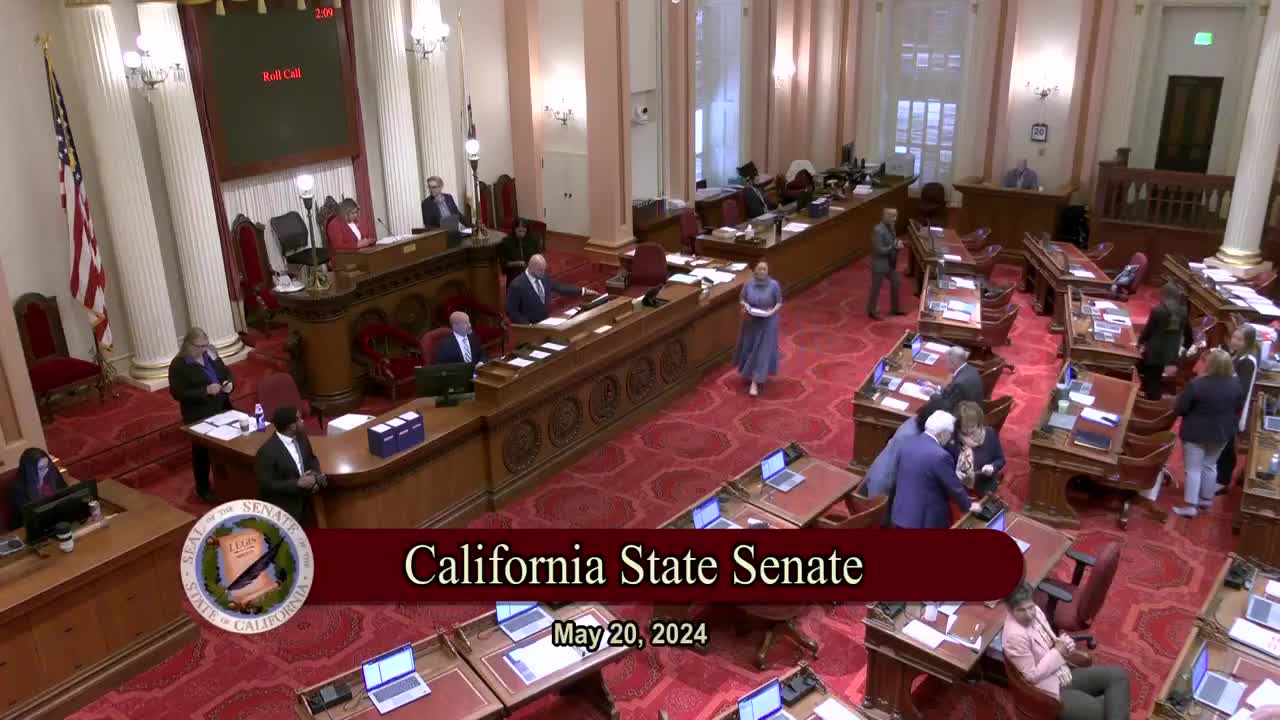 4MIN
Senate Floor
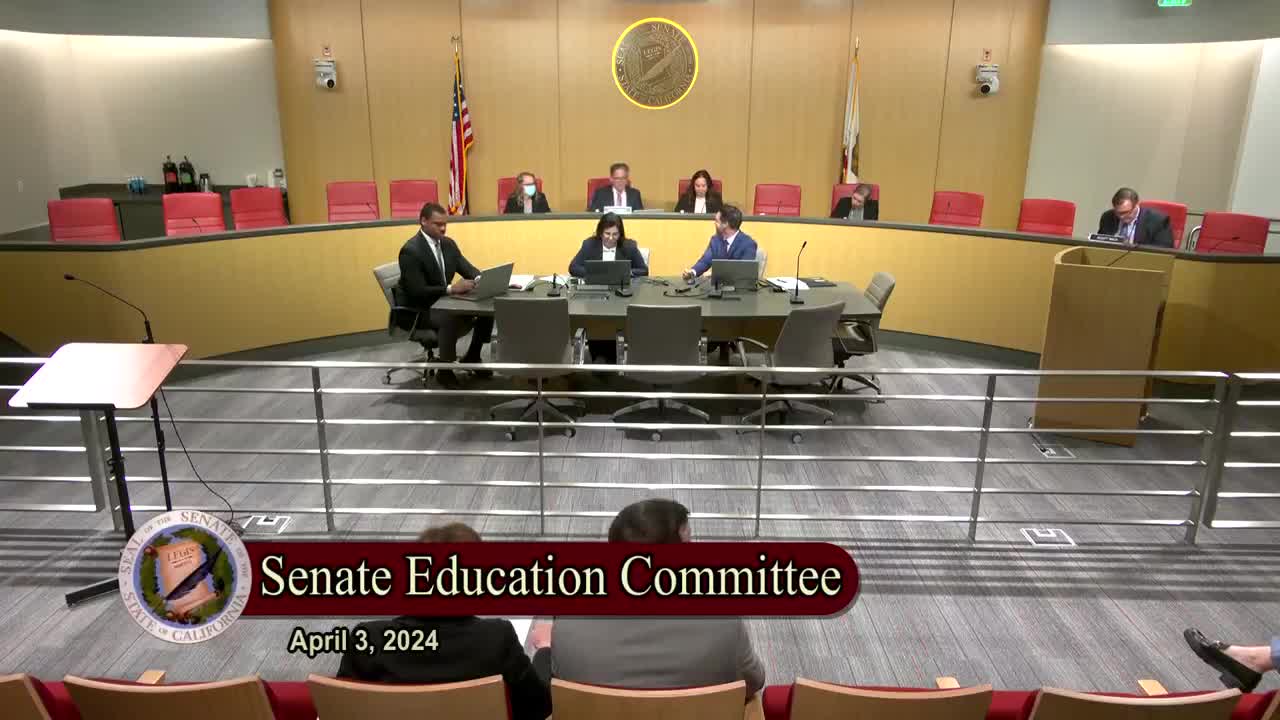 21MIN
Senate Standing Committee on Education
Bill Author
Bill Co-Author(s):