SB 1092: Coastal resources: coastal development permits: appeals: report.
- Session Year: 2023-2024
- House: Senate
- Latest Version Date: 2024-05-16
Current Status:
Failed
(2024-08-15: August 15 hearing: Held in committee and under submission.)
Introduced
In Committee
First Chamber
In Committee
Second Chamber
Enacted
The California Coastal Act of 1976, among other things, requires anyone wishing to perform or undertake any development in the coastal zone, in addition to obtaining any other permit required by law from any local government or from any state, regional, or local agency, to obtain a coastal development permit from the California Coastal Commission or a local government, as provided. The act authorizes an appeal to the commission for any action taken by a local government on coastal development permit applications, as provided. The act requires the commission to hear the appeal and establishes specified appeal procedures, as provided.
This bill would require the commission, on or before January 1, 2028, December 31, 2025, to provide a report to the Legislature that provides information regarding appeals relating to multifamily housing developments, as defined, including, among other things, the percentage of coastal development permits for multifamily housing developments that are appealed, approved, and denied. of local government coastal development permits to the commission, including, among other things, the percentage of local government coastal development permit actions that were appealed to the commission.
The California Coastal Act of 1976, among other things, requires anyone wishing to perform or undertake any development in the coastal zone, in addition to obtaining any other permit required by law from any local government or from any state, regional, or local agency, to obtain a coastal development permit from the California Coastal Commission or a local government, as provided. The act authorizes an appeal to the commission for any action taken by a local government on coastal development permit applications, as provided. The act requires the commission to hear the appeal and establishes specified appeal procedures, as provided.
This bill would require the commission to comply with specified appeal procedures when reviewing an appeal related to multifamily housing development, as defined, on specified sites, as defined, if the commission makes specified determinations. The bill would require the commission, on or before January 1, 2028, to provide a report to the Legislature that provides information relating to the appeal process described above, as provided. regarding appeals relating to multifamily housing developments, as defined, including, among other things, the percentage of coastal development permits for multifamily housing developments that are appealed, approved, and denied.
(2)The act authorizes any appealable action on a coastal development permit or claim of exemption for any development by a local government or port governing body to be appealed to the commission by an applicant, any aggrieved person, or any 2 members of the commission, as provided. The act requires the commission to hear an appeal unless it makes certain determinations.This bill would instead authorize the commission to hear an appeal only if it makes certain determinations, as provided.(1)The California Coastal Act of 1976, among other things, requires anyone wishing to perform or undertake any development in the coastal zone, in addition to obtaining any other permit required by law from any local government or from any state, regional, or local agency, to obtain a coastal development permit from the California Coastal Commission or a local government, as provided. The act authorizes an appeal to the commission for any action taken by a local government on coastal development permit applications, as provided. The act requires the commission to hear the appeal and establishes specified appeal procedures, as provided.
This bill would require the commission to comply with specified appeal procedures when reviewing an appeal related to multifamily housing development, as defined, on specified sites, as defined, if the commission makes specified determinations. The bill would require the commission, on or before January 1, 2028, to provide a report to the Legislature that provides information relating to the appeal process described above, as provided.
(2)The act authorizes any appealable action on a coastal development permit or claim of exemption for any development by a local government or port governing body to be appealed to the commission by an applicant, any aggrieved person, or any 2 members of the commission, as provided. The act requires the commission to hear an appeal unless it makes certain determinations.
This bill would instead authorize the commission to hear an appeal only if it makes certain determinations, as provided.
The existing Coastal Resources and Energy Assistance Act authorizes the Secretary of the Natural Resources Agency, after consulting with the California Coastal Commission and the State Lands Commission concerning offshore energy activities, to award grants to coastal communities and cities to be used for certain purposes relating to the planning, implementation, monitoring, and enforcement of offshore energy development, consistent with the requirements of the states coastal management program.This bill would make nonsubstantive changes in that provision.The existing Coastal Resources and Energy Assistance Act authorizes the Secretary of the Natural Resources Agency, after consulting with the California Coastal Commission and the State Lands Commission concerning offshore energy activities, to award grants to coastal communities and cities to be used for certain purposes relating to the planning, implementation, monitoring, and enforcement of offshore energy development, consistent with the requirements of the states coastal management program.
This bill would make nonsubstantive changes in that provision.
(a)On or before December 31, 2025, the commission shall provide a report to the Legislature that provides the following information regarding appeals of local government coastal development permit actions to the commission that were filed pursuant to Section 30602 or 30603 between January 1, 2021, and December 31, 2024, inclusive:
(1)The percentage of local government coastal development permit actions that were appealed to the commission.
(2)The amount of time, in business days, between when each appeal was filed and when the commission took a final action on the appeal.
(3)The percentage of appeal applications that the commission exercises it authority to hear and, of those appeals accepted, the percentage for which the commission decides to issue the permit and the percentage for which it decides to deny the permit.
(4)For appeals in the top quartile for the longest period between filing and final action, as determined pursuant to paragraph (2), information on the factors that contributed to the above-average amount of time these appeals required to be processed by the commission.
(b)(1)A report to be submitted pursuant to subdivision (a) shall be submitted in compliance with Section 9795 of the Government Code.
(2)Pursuant to Section 10231.5 of the Government Code, this section is repealed on January 1, 2028.
(a)For purposes of this section, the following definitions apply:
(1)Appeal shall have the same meaning as used in Sections 30602 and 30603.
(2)Multifamily housing development means a development that proposes to construct two or more housing units on an urban infill site and meets all of the following conditions:
(A)Results in a density of no fewer than 15 units per acre.
(B)(i)For developments that propose to build fewer than five housing units, the floor area, in square footage, of the largest unit shall be no more than twice the floor area, in square footage, of the smallest unit.
(ii)This subparagraph shall not apply to the addition of accessory dwelling units or junior accessory dwelling units to properties with existing residential structures.
(C)The development will result in a net increase of housing units.
(3)Site means a development and the site on which it is located that satisfies all of the following:
(A)It is a legal parcel or parcels located in a city if, and only if, the city boundaries include some portion of either an urbanized area or urban cluster, as designated by the United States Census Bureau, or, for unincorporated areas, a legal parcel or parcels wholly within the boundaries of an urbanized area or urban cluster, as designated by the United States Census Bureau.
(B)At least 75 percent of the perimeter of the site adjoins parcels that are developed with urban uses. For the purposes of this section, parcels that are only separated by a street or highway shall be considered to be adjoined.
(C)(i)A site that meets the requirements of clause (ii) and satisfies any of the following:
(I)The site is zoned for residential use or residential mixed-use development.
(II)The site has a general plan designation that allows residential use or a mix of residential and nonresidential uses.
(III)The site is zoned for office or retail commercial use.
(ii)At least two-thirds of the square footage of the development is designated for residential use. Additional density, floor area, and units, and any other concession, incentive, or waiver of development standards granted pursuant to the Density Bonus Law in Section 65915 of the Government Code, shall be included in the square footage calculation. The square footage of the development shall not include underground space, such as basements or underground parking garages.
(c)(1)Notwithstanding Sections 30604, 30621, and 30625, and any other law to the contrary, the commission may hear an appeal regarding a multifamily housing development only if it determines either of the following:(A)With respect to an appeal pursuant to Section 30602, there was an abuse of discretion with respect to conformance with Chapter 3 (commencing with Section 30200).(B)With respect to appeals to the commission after certification of a local coastal program, there was an abuse of discretion with respect to the grounds on which an appeal had been filed pursuant to Section 30603.(2)For purposes of this subdivision, a determination that there has been an abuse of discretion shall be established if the local government did not proceed in the manner required by law, the decision was not supported by the findings, or the findings are not supported by substantial evidence in the record of the local governments proceeding. The commission shall interpret the term abuse of discretion as it is used in Section 1094.5 of the Code of Civil Procedure and consistent with judicial interpretation.(3)(A)The commission shall determine that there has been an abuse of discretion regarding an issue or issues raised by an appeal no later than 49 working days after the appeal was filed.(B)The commission may only request, and the applicant of an appealed permit may only agree to, one extension of the deadline described in subparagraph (A) of up to 90 working days.(C)If the commission does not make the determination described in this paragraph by the applicable deadline, the local government action shall become final.(4)After determining that an appeal establishes an abuse of discretion, the commission may only request additional information from an applicant of an appealed permit within seven working days of the commissions determination that an appeal establishes an abuse of discretion, as described in this subdivision. The information requested by the commission pursuant to this paragraph shall be germane to issues raised in the appeal, which the commission determined established an abuse of discretion, as described in paragraphs (1) and (2).(5)The commissions de novo review of an appeal pursuant to this subdivision shall be limited to issues raised in the appeal that the commission determined established an abuse of discretion, as described in paragraphs (1) and (2).(6)(A)If the commission has found an abuse of discretion, the commission shall take final action on the appealed permit within 90 working days from either (i) the date the commission finds the appeal established an abuse of discretion as described in paragraphs (1) and (2) or (ii), if the commission requested information from the applicant of the appealed permit pursuant to paragraph (4), the date the applicant provides the additional information the commission requested, whichever occurs later.(B)The commission may only request, and the applicant of an appealed permit may only agree to, one extension of the deadline described in subparagraph (A) of up to 90 working days.(C)If the commission does not take final action by the applicable deadline described in this paragraph, the decision of the local government on the appealed permit shall become final.(7)When taking a final action on a permit appeal described in this subdivision, the commission may approve, require modifications, or deny the proposed development. Final action shall be made only on the basis of issues enumerated in the permit appeal that the commission determined established an abuse of discretion.(d)(b)(1)On or before January 1, 2028, the commission shall provide a report to the Legislature that provides the following information regarding appeals filed after implementing this section: January 1, 2025:
(A)Information on the percentage of coastal development permits for multifamily housing developments that are appealed, approved, and denied pursuant to this section. denied.
(B)Summary statistics, including statistics that are calculated using mean, median, and standard deviation measures, on both of the following:
(i)For appeals on multifamily housing developments that result in the commission upholding the action of the local government, the number of working days between when the commission first received an appeal pursuant to this section and when the commission upheld the local government action pursuant to this section. action.
(ii)For appeals on multifamily housing developments that result in the commission overturning the action of the local government, the number of working days between when the commission first received an appeal pursuant to this section and when the commission took final actions on the appeal pursuant to this section. appeal.
(2)A report submitted to the Legislature pursuant to this subdivision shall be submitted in compliance with Section 9795 of the Government Code.
(3)The requirement to submit a report imposed pursuant to this subdivision shall become inoperative on January 1, 2032, pursuant to Section 10231.5 of the Government Code.
(a)Except as otherwise specifically provided in subdivision (a) of Section 30602, any appealable action on a coastal development permit or claim of exemption for any development by a local government or port governing body may be appealed to the commission by an applicant, any aggrieved person, or any two members of the commission. The commission may approve, modify, or deny such that proposed development, and if no action is taken within the time limit specified in Sections 30621 and 30622, the decision of the local government or port governing body, as the case may be, shall become final, unless the time limit in Section 30621 or 30622 is waived by the applicant.
(b)The Except in cases where Section 30628 applies, the commission shall may hear an appeal unless only if it determines the following:
(1)With respect to appeals pursuant to subdivision (a) of Section 30602, that no a substantial issue exists as to conformity with Chapter 3 (commencing with Section 30200).
(2)With respect to appeals to the commission after certification of a local coastal program, that no a substantial issue exists with respect to the grounds on which an appeal has been filed pursuant to Section 30603.
(3)With respect to appeals to the commission after certification of a port master plan, that no a substantial issue exists as to conformity with the certified port master plan.
(c)Decisions of the commission, where applicable, shall guide local governments or port governing bodies in their future actions under this division.
SEC. 2.Section 30628 is added to the Public Resources Code, immediately following Section 30627, to read:30628.(a)(1)The Legislature finds and declares that to address the states housing shortage, specifically affordable housing for low- and moderate-income households, and reduce carbon emissions from vehicle miles traveled, which contribute to global anthropogenic climate change, it is necessary to streamline the coastal development permit appeals process for moderate- to high-density housing development projects proposed on urban infill sites. These reforms are intended to balance the objectives of the California Coastal Act of 1976, namely to preserve vital coastal natural resources and ensure public access to Californias coast, with the objectives of meeting the states housing needs and promoting sustainable development patterns.
(2)It is the intent of the Legislature that this section, as a specific statute of limited applicability, shall prevail over a conflicting statute of general applicability, and that to the extent the procedures for appeal set forth in this section conflict with any other procedures, including those set forth in Section 30604, 30621, or 30625, the procedures set out in this section shall prevail.
(b)For purposes of this section, the following definitions apply:
(1)Appeal shall have the same meaning as used in Sections 30602 and 30603.
(2)Multifamily housing development means a development that proposes to construct two or more housing units on an urban infill site and meets all of the following conditions:
(A)Results in a density of no fewer than 15 units per acre.
(B)(i)For developments that propose to build fewer than five housing units, the floor area, in square footage, of the largest unit shall be no more than twice the floor area, in square footage, of the smallest unit.
(ii)This subparagraph shall not apply to the addition of accessory dwelling units or junior accessory dwelling units to properties with existing residential structures.
(C)The development will result in a net increase of housing units.
(3)Site means a development and the site on which it is located that satisfies all of the following:
(A)It is a legal parcel or parcels located in a city if, and only if, the city boundaries include some portion of either an urbanized area or urban cluster, as designated by the United States Census Bureau, or, for unincorporated areas, a legal parcel or parcels wholly within the boundaries of an urbanized area or urban cluster, as designated by the United States Census Bureau.
(B)At least 75 percent of the perimeter of the site adjoins parcels that are developed with urban uses. For the purposes of this section, parcels that are only separated by a street or highway shall be considered to be adjoined.
(C)(i)A site that meets the requirements of clause (ii) and satisfies any of the following:
(I)The site is zoned for residential use or residential mixed-use development.
(II)The site has a general plan designation that allows residential use or a mix of residential and nonresidential uses.
(III)The site is zoned for office or retail commercial use.
(ii)At least two-thirds of the square footage of the development is designated for residential use. Additional density, floor area, and units, and any other concession, incentive, or waiver of development standards granted pursuant to the Density Bonus Law in Section 65915 of the Government Code, shall be included in the square footage calculation. The square footage of the development shall not include underground space, such as basements or underground parking garages.
(c)(1)Notwithstanding Sections 30604, 30621, and 30625, and any other law to the contrary, the commission may hear an appeal regarding a multifamily housing development only if it determines either of the following:
(A)With respect to an appeal pursuant to Section 30602, there was an abuse of discretion with respect to conformance with Chapter 3 (commencing with Section 30200).
(B)With respect to appeals to the commission after certification of a local coastal program, there was an abuse of discretion with respect to the grounds on which an appeal had been filed pursuant to Section 30603.
(2)For purposes of this subdivision, a determination that there has been an abuse of discretion shall be established if the local government did not proceed in the manner required by law, the decision was not supported by the findings, or the findings are not supported by substantial evidence in the record of the local governments proceeding. The commission shall interpret the term abuse of discretion as it is used in Section 1094.5 of the Code of Civil Procedure and consistent with judicial interpretation.
(3)(A)The commission shall determine that there has been an abuse of discretion regarding an issue or issues raised by an appeal no later than 49 working days after the appeal was filed.
(B)The commission may only request, and the applicant of an appealed permit may only agree to, one extension of the deadline described in subparagraph (A) of up to 90 working days.
(C)If the commission does not make the determination described in this paragraph by the applicable deadline, the local government action shall become final.
(4)After determining that an appeal establishes an abuse of discretion, the commission may only request additional information from an applicant of an appealed permit within seven working days of the commissions determination that an appeal establishes an abuse of discretion, as described in this subdivision. The information requested by the commission pursuant to this paragraph shall be germane to issues raised in the appeal, which the commission determined established an abuse of discretion, as described in paragraphs (1) and (2).
(5)The commissions de novo review of an appeal pursuant to this subdivision shall be limited to issues raised in the appeal that the commission determined established an abuse of discretion, as described in paragraphs (1) and (2).
(6)(A)If the commission has found an abuse of discretion, the commission shall take final action on the appealed permit within 90 working days from either (i) the date the commission finds the appeal established an abuse of discretion as described in paragraphs (1) and (2) or (ii), if the commission requested information from the applicant of the appealed permit pursuant to paragraph (4), the date the applicant provides the additional information the commission requested, whichever occurs later.
(B)The commission may only request, and the applicant of an appealed permit may only agree to, one extension of the deadline described in subparagraph (A) of up to 90 working days.
(C)If the commission does not take final action by the applicable deadline described in this paragraph, the decision of the local government on the appealed permit shall become final.
(7)When taking a final action on a permit appeal described in this subdivision, the commission may approve, require modifications, or deny the proposed development. Final action shall be made only on the basis of issues enumerated in the permit appeal that the commission determined established an abuse of discretion.
(d)(1)On or before January 1, 2028, the commission shall provide a report to the Legislature that provides the following information regarding appeals filed after implementing this section:
(A)Information on the percentage of coastal development permits that are appealed, approved, and denied pursuant to this section.
(B)Summary statistics, including statistics that are calculated using mean, median, and standard deviation measures, on both of the following:
(i)For appeals that result in the commission upholding the action of the local government, the number of working days between when the commission first received an appeal pursuant to this section and when the commission upheld the local government action pursuant to this section.
(ii)For appeals that result in the commission overturning the action of the local government, the number of working days between when the commission first received an appeal pursuant to this section and when the commission took final actions on the appeal pursuant to this section.
(2)A report submitted to the Legislature pursuant to this subdivision shall be submitted in compliance with Section 9795 of the Government Code.
(3)The requirement to submit a report imposed pursuant to this subdivision shall become inoperative on January 1, 2032, pursuant to Section 10231.5 of the Government Code.
SECTION 1.Section 35030 of the Public Resources Code is amended to read:35030.(a)The secretary, after consulting with the California Coastal Commission and the State Lands Commission concerning offshore energy activities, shall award grants to coastal counties and cities to be used for the purposes of planning, assessment, mitigation, permitting, monitoring and enforcement, public services and facilities, and for other activities that are related to offshore energy development, consistent with the requirements of the states coastal management program.(b)Before receiving grants under this chapter, each coastal county and city shall submit a report to the secretary describing how the funds are to be expended. Before submitting the report, each coastal county and city shall provide opportunities for the public to review and comment on the report and shall hold at least one public hearing on the report.(a)The secretary, after consulting with the California Coastal Commission and the State Lands Commission concerning offshore energy activities, shall award grants to coastal counties and cities to be used for the purposes of planning, assessment, mitigation, permitting, monitoring and enforcement, public services and facilities, and for other activities that are related to offshore energy development, consistent with the requirements of the states coastal management program.
(b)Prior to Before receiving grants under this chapter, each coastal county and city shall submit a report to the secretary describing how the funds are to be expended. Before submitting the report, each coastal county and city shall provide opportunities for the public to review and comment on the report and shall hold at least one public hearing on the report.
|
Date
|
Status
|
|---|---|
| Aug 15, 2024 | August 15 hearing: Held in committee and under submission. |
| Jul 2, 2024 | July 2 set for first hearing. Placed on suspense file. |
| Jun 24, 2024 | Re-referred to Com. on APPR. pursuant to Assembly Rule 96. |
| Jun 18, 2024 | From committee: Do pass and re-refer to Com. on L. GOV. (Ayes 10. Noes 0.) (June 17). Re-referred to Com. on L. GOV. |
| Jun 3, 2024 | Referred to Coms. on NAT. RES. and L. GOV. |
| May 23, 2024 | In Assembly. Read first time. Held at Desk. |
| May 22, 2024 | Read third time. Passed. (Ayes 38. Noes 0. Page 4147.) Ordered to the Assembly. |
| May 20, 2024 | Read second time. Ordered to third reading. |
| May 16, 2024 | Read second time and amended. Ordered to second reading. |
| May 16, 2024 | From committee: Do pass as amended. (Ayes 7. Noes 0. Page 3971.) (May 16). |
| May 10, 2024 | Set for hearing May 16. |
| Apr 29, 2024 | April 29 hearing: Placed on APPR suspense file. |
| Apr 22, 2024 | Set for hearing April 29. |
| Apr 17, 2024 | From committee: Do pass and re-refer to Com. on APPR. (Ayes 10. Noes 0. Page 3633.) (April 16). Re-referred to Com. on APPR. |
| Apr 11, 2024 | Set for hearing April 16. |
| Apr 9, 2024 | From committee: Do pass and re-refer to Com. on HOUSING. (Ayes 10. Noes 0. Page 3532.) (April 9). Re-referred to Com. on HOUSING. |
| Apr 3, 2024 | From committee with author's amendments. Read second time and amended. Re-referred to Com. on N.R. & W. |
| Apr 3, 2024 | Re-referred to Coms. on N.R. & W. and HOUSING. |
| Mar 28, 2024 | Set for hearing April 9 in N.R. & W. pending receipt. |
| Mar 14, 2024 | From committee with author's amendments. Read second time and amended. Re-referred to Com. on RLS. |
| Feb 21, 2024 | Referred to Com. on RLS. |
| Feb 13, 2024 | From printer. May be acted upon on or after March 14. |
| Feb 12, 2024 | Introduced. Read first time. To Com. on RLS. for assignment. To print. |
|
Date
|
Description
|
Location
|
Votes
|
|
|---|---|---|---|---|
| Jun 17, 2024 | Do pass and be re-referred to the Committee on [Local Government] | Assembly Standing Committee on Natural Resources |
Passed |
|
| May 22, 2024 | Senate 3rd Reading SB1092 Blakespear | Senate Floor |
Passed |
|
| May 16, 2024 | Do pass as amended | Senate Standing Committee on Appropriations |
Passed |
|
| Apr 29, 2024 | Placed on suspense file | Senate Standing Committee on Appropriations |
Passed |
|
| Apr 16, 2024 | Do pass, but first be re-referred to the Committee on [Appropriations] | Senate Standing Committee on Housing |
Passed |
|
| Apr 9, 2024 | Do pass, but first be re-referred to the Committee on [Housing] | Senate Standing Committee on Natural Resources and Water |
Passed |
This list shows positions taken on this bill by organizations on the date displayed, which is linked to the original source.
Positions by individuals are not included.
|
Organization
|
Position
|
Date
|
|---|---|---|
| Abundant Housing LA | ** Support | |
| Azul | ** Against | |
| Board of Supervisors President Aaron Peskin, County of San Francisco | ** Against | |
| California Apartment Association | ** Support | |
| California Building Industry Association | ** Support | |
| California Cities for Local Control | ** Against | |
| California Coastal Commission | ** Support | |
| California Coastal Protection Network | ** Against | |
| California YIMBY | ** Support | |
| Circulate San Diego | ** Support | |
| City Of Half Moon Bay | ** Support | |
| City of Long Beach | ** Support | |
| City Of San Diego | ** Support | |
| CivicWell | ** Support | |
| Clean Water Action | ** Against | |
| Coastal San Pedro Neighborhood Council | ** Against | |
| Concerned Citizens of Laguna Woods Village | ** Against | |
| County Of Del Norte | ** Support | |
| Defeat Polluting Desalination | ** Against | |
| Desal Response Group | ** Against | |
| East Area Progressive Democrats | ** Against | |
| East Bay YIMBY | ** Support | |
| Eco San Diego | ** Against | |
| Environmental Action Committee of West Marin | ** Against | |
| Environmental Center of San Diego | ** Against | |
| Environmental Justice Coalition for Water | ** Against | |
| Environment California | ** Against | |
| Green Foothills | ** Against | |
| Grow the Richmond | ** Support | |
| Habitat For Humanity California | ** Support | |
| Housing Action Coalition | ** Support | |
| How to ADU | ** Support | |
| Idle No More Venice | ** Against | |
| Inland Empire Waterkeeper | ** Against | |
| L.A. Ecovillage Institute | ** Against | |
| Latino Coalition Against Plastic Pollution | ** Against | |
| Livable California | ** Against | |
| MidPen Housing | ** Support | |
| Mission Street Neighbors | ** Against | |
| Mountain View YIMBY | ** Support | |
| Napa-Solano for Everyone | ** Support | |
| Natural Resources Defense Council | ** Against | |
| Northern Neighbors | ** Support | |
| Orange County Coastkeeper | ** Against | |
| Peninsula for Everyone | ** Support | |
| People For Housing Orange County | ** Support | |
| Progress Noe Valley | ** Support | |
| San Diego Housing Commission | ** Support | |
| San Francisco Bay Area Planning and Urban Research Association | ** Support | |
| San Francisco Yimby | ** Support | |
| Santa Cruz Yimby | ** Support | |
| Santa Rosa Yimby | ** Support | |
| Sierra Club California | ** Against | |
| SLOCo YIMBY | ** Support | |
| SoCal 350 Climate Action | ** Against | |
| South Bay Yimby | ** Support | |
| Southern California Watershed Alliance | ** Against | |
| Southside Forward | ** Support | |
| South Side Forward | ** Support | |
| Streets for People | ** Support | |
| Sunrise Movement Orange County | ** Against | |
| Supervisor Aaron Peskin, President, San Francisco Board of Supervisors | ** Against | |
| Surfrider Foundation | ** Against | |
| Urban Environmentalists | ** Support | |
| Ventura County YIMBY | ** Support | |
| Women For: Orange County | ** Against | |
| Yimby Action | ** Support | |
| YIMBY Democrats of San Diego County | ** Support |
Date of Hearing: July 2, 2024
ASSEMBLY COMMITTEE ON APPROPRIATIONS
Buffy Wicks, Chair
SBPCA Bill Id:SB 1092
Author:(Blakespear) – As Amended Ver:May 16, 2024
Policy Committee: | Natural Resources | Vote: | 10 - 0 |
|
| ||
|
|
Urgency: No State Mandated Local Program: No Reimbursable: No
SUMMARY:
This bill requires the California Coastal Commission (Commission), on or before December 31, 2025, to provide a report to the Legislature regarding appeals to the Commission of local government decisions on coastal development permit (CDP) applications.
Specifically, this bill:
- Requires that the report look at appeals filed with the Commission during the calendar years 2021, 2022, and 2023.
- Requires that the report identify, among other things, the percentage of local government CDP actions appealed to the Commission, the percentage of appeals the Commission agrees to hear, the percentage of appeals where the Commission grants or denies the permit, and the time it takes the Commission to act on appeals.
FISCAL EFFECT:
The Commission reports one-time General Fund costs of $48,000 for a one-quarter-time Coastal Program Analyst I/II position for one year to compile the relevant data regarding appeals of locally issued CDPs from 2021 through 2024. In any case, because this bill has the primary purpose of creating a reporting requirement, it is a candidate for the committee’s suspense file, consistent with the committee’s rules and practice.
According to the Legislative Analyst’s Office, the General Fund faces a structural deficit in the tens of billions of dollars over the next several fiscal years.
COMMENTS:
- Purpose. According to the author:
Affordable housing and market-rate developers report that they still experience uncertainty in the timelines for the CDP process, which is required to develop in California’s Coastal Zone. Closer analysis reveals that while there is relatively sufficient certainty on the timeline for initial decisions local governments make on CDPs, the timeline for the appeals process can be highly variable. In some cases, these appeals have taken years to be resolved. SB 1092 will direct the Commission to study the timeline uncertainty developers have identified and provide a report to the Legislature on its findings. With this information, the Legislature can take evidence-based actions to better align the CDP appeals process with its housing production priorities.
- Background. The Commission administers the Coastal Act and regulates proposed development along the coast and in nearby areas in the Coastal Zone. Generally, any development activity in the Coastal Zone requires a CDP from the Commission or from a local government with a certified local coastal program (LCP). About 73% of local jurisdictions in the Coastal Zone have approved LCPs. In the remaining jurisdictions that do not have an approved LCP, CDPs are issued by the Commission directly. Permitting decisions made by a local government with an LCP can be appealed directly to the Commission under specified circumstances. Current law sets deadlines and other requirements for the appeal process, including that the Commission generally must defer to standards outlined in the LCP of the local government acting on the underlying permit application.
The Commission’s consideration of appeals is a two-step process. The first step is determining whether the appeal raises a substantial issue that the Commission, in the exercise of its discretion, finds to be significant enough to warrant the Commission taking jurisdiction over the CDP application. The Commission is required to begin its hearing on an appeal, addressing at least the substantial issue question, within 49 working days of the filing of the appeal, unless the applicant has waived that requirement, in which case there is no deadline.
According to the Assembly Natural Resources Committee, based on preliminary data from the author, the average time for appeals that do not raise a substantial issue is two to three months. For appeals that raise a substantial issue, it takes an average of six to eight months to reach a final decision. According to the Commission, it does its best to process appeals as quickly as possible, generally in the order they are received. Informational needs, complexity of issues, extent of public interest, applicant responsiveness, and staff workload all affect the timing of the appeal process. Data from the author indicates some appeals take years to reach resolution.
Analysis Prepared by: Jacqueline Kinney / APPR. / (916) 319-2081
Date of Hearing: June 17, 2024
ASSEMBLY COMMITTEE ON NATURAL RESOURCES
Isaac G. Bryan, Chair
SBPCA Bill Id:SB 1092
Author:(Blakespear) – As Amended Ver:May 16, 2024
SENATE VOTE: 38-0
SUBJECT: Coastal resources: coastal development permits: appeals: report
SUMMARY: Requires the California Coastal Commission (Commission), on or before December 31, 2025, to provide a report to the Legislature that provides information regarding appeals of local government coastal development permits (CDPs) to the Commission, including, among other things, the percentage of local government CDP actions that were appealed to the Commission.
EXISTING LAW, pursuant to the California Coastal Act (Coastal Act) (Public Resources Code (PRC) 30000 et seq.):
- Requires each local government lying, in whole or in part, within the Coastal Zone to prepare a local coastal plan (LCP) for that portion of the Coastal Zone within its jurisdiction. Authorizes any local government to request, in writing, the Commission to prepare an LCP or a portion thereof, for the local government. (PRC 30500)
- Requires any person wishing to perform or undertake any development in the Coastal Zone, in addition to obtaining any other permit required by law from any local government or from any state, regional, or local agency, to obtain a CDP. (PRC 30600)
- Authorizes, prior to certification of its LCP, any action taken by a local government on a CDP application to be appealed by the executive director of the Commission, any person, including the applicant, or any two members of the Commission to the Commission. Regardless of whether an appeal is submitted, the local government’s action shall become final if an appeal fee is imposed and is not deposited with the Commission within the time prescribed. (PRC 30602)
- After certification of its LCP, an action taken by a local government on a CDP application may be appealed to the Commission only for specified types of developments, and provides that the grounds for an appeal is limited to an allegation that the development does not conform to the standards set forth in the certified LCP or the public access policies set forth in Coastal Act. (PRC 30603)
THIS BILL:
- Requires, on or before December 31, 2025, the Commission to provide a report to the Legislature that provides the following information regarding appeals of local government CDP actions to the Commission that were filed pursuant to Section 30602 or 30603 between January 1, 2021, and December 31, 2024, inclusive:
- The percentage of local government CDP actions that were appealed to the Commission;
- The amount of time, in business days, between when each appeal was filed and when the Commission took a final action on the appeal;
- The percentage of appeal applications that the Commission exercises its authority to hear and, of those appeals accepted, the percentage for which the Commission decides to issue the permit and the percentage for which it decides to deny the permit; and,
- For appeals in the top quartile for the longest period between filing and final action, information on the factors that contributed to the above-average amount of time these appeals required to be processed by the Commission.
- Requires the report to be submitted in compliance with Section 9795 of the Government Code.
- Sunsets the reporting requirement on January 1, 2028.
FISCAL EFFECT: According to the Senate Appropriations Committee, the Commission estimates one-time costs of about $48,000 (General Fund) to compile the relevant data regarding local CDPs and CDP appeals for multifamily housing projects in specified urban areas.
COMMENTS:
- Author’s statement:
Affordable housing and market-rate developers report that they still experience uncertainty in the timelines for the CDP process, which is required to develop in California’s Coastal Zone. Closer analysis reveals that while there is relatively sufficient certainty on the timeline for initial decisions local governments make on CDPs, the timeline for the appeals process can be highly variable. In some cases, these appeals have taken years to be resolved. SB 1092 will direct the Commission to study the timeline uncertainty developers have identified and provide a report to the Legislature on its findings. With this information, the Legislature can take evidence-based actions to better align the CDP appeals process with its housing production priorities.
- Development in the Coastal Zone. The Commission administers the Coastal Act and regulates proposed development along the coast and in nearby areas in the Coastal Zone. Generally, any development activity in the Coastal Zone requires a CDP from the Commission or local government with a certified LCP. About 73% of local jurisdictions in the Coastal Zone have approved LCPs. In the remaining jurisdictions that do not have an approved LCP, CDPs are issued by the Commission directly. Additionally, permitting decisions made by a local government with an approved LCP can be appealed directly to the Commission under specified circumstances. In reviewing the permit, Commission generally must defer to those standards outlined in the LCP.
- CDP appeals. The Coastal Act appeal process is intended to ensure that statewide interests in coastal resources are protected and appropriately balanced with competing local interests.
Coastal Act Section 30603 provides for the appeal to the Commission of certain CDP decisions by cities and counties that have Commission-certified LCPs. Any locally-approved development project between the first public road and the sea; within 300 feet of a beach or the mean high tideline where there is no beach; within 300 feet of a coastal bluff edge; within 100 feet of a wetland, estuary, or stream; or, on tidelands, submerged lands, or public trust lands is appealable to the Commission. The approval or denial of a major public works project or energy facility, regardless of its location, is also appealable.
Any applicant or person who participates in the local permitting process for a project may file an appeal. An appellant must have exhausted all local appeals unless the local government charges a fee to appeal, restricts the class of people who can file appeals, or fails to follow the hearing and notice requirements for issuing a coastal development approval. For appeals of a CDP approval, grounds for appeal are limited to allegations that the approved development does not conform to the LCP and/or to Coastal Act public access provisions.
The Commission’s consideration of appeals is a two-step process. The first step is determining whether the appeal raises a substantial issue that the Commission, in the exercise of its discretion, finds to be significant enough to warrant the Commission taking jurisdiction over the CDP application. The Commission is required to begin its hearing on an appeal, addressing at least the substantial issue question, within 49-working days of the filing of the appeal, unless the applicant has waived that requirement, in which case there is no deadline.
The average time for appeals that do not raise a substantial issue is two to three months. For appeals that raise a substantial issue, it takes approximately six to eight months on average to reach a final decision. According to the Commission, it does its best to process appeals as quickly as possible, generally in the order they are received. Informational needs, complexity of issues, extent of public interest, applicant responsiveness, and staff workload all affect the timing of the appeal process.
Of the almost 4,000 local CDPs for 2021 – 2023, inclusive, 2,395 (about 61%) were appealable to the Commission. About 5% of the total local CDPs – 190 – were actually appealed to the Commission. Data provided by the author to the Senate show that there are some appeals that take extended periods to reach resolution – in some instances as long as years.
SB 1092 requires the Commission, by December 31, 2025, to report to the Legislature with information regarding appeals of local government CDPs to the Commission, including, among other things, the percentage of local government CDP actions that were appealed to the Commission.
- Double referral. This bill is also referred to the Assembly Local Government Committee.
REGISTERED SUPPORT / OPPOSITION:
Support
Bay Area Council
City of Long Beach
Housing Action Coalition
Opposition
Livable California
Analysis Prepared by: Paige Brokaw / NAT. RES. /
SENATE RULES COMMITTEE Office of Senate Floor Analyses (916) 651-1520 Fax: (916) 327-4478 | SB 1092 |
THIRD READING
Bill No: SB 1092
Author: Blakespear (D)
Amended: 5/16/24
Vote: 21
SENATE NATURAL RES. & WATER COMMITTEE: 10-0, 4/9/24
AYES: Min, Seyarto, Allen, Eggman, Grove, Hurtado, Laird, Limón, Padilla, Stern
NO VOTE RECORDED: Dahle
SENATE HOUSING COMMITTEE: 10-0, 4/16/24
AYES: Skinner, Ochoa Bogh, Blakespear, Caballero, Cortese, Menjivar, Padilla, Seyarto, Umberg, Wahab
SENATE APPROPRIATIONS COMMITTEE: 7-0, 5/16/24
AYES: Caballero, Jones, Ashby, Becker, Bradford, Seyarto, Wahab
SUBJECT: Coastal resources: coastal development permits: appeals: report
SOURCE: Author
DIGEST:
This bill requires the California Coastal Commission, on or by December 31, 2025, to provide a legislative report about appeals of local government coastal development permit actions between January 1, 2021 and December 31, 2024, as provided.
ANALYSIS:
- Establishes the California Coastal Commission (Coastal Commission) in the California Natural Resources Agency.
- Includes legislative findings and declarations that:
- The coastal zone is a distinct and valuable natural resource of vital and enduring interest to all the people, the permanent protection of the state’s natural and scenic resources is a paramount concern to present and future residents, and existing uses and future developments that are carefully planned and developed consistent with the Coastal Act are essential to the economic and social well-of the people of the state (PRC §30001).
- The basic goals of the state for the coastal zone include to:
- Protect, maintain, and, where feasible, enhance and restore the overall quality of the coastal zone environment and its natural and artificial resources,
- Ensure orderly, balanced utilization and conservation of coastal zone resources taking into account the social and economic needs of the people of the state, and
- Maximize public access to and along the coast and maximize public recreational opportunities in the coastal zone consistent with sound resources conservation principles and constitutionally protected rights of private property owners, among other things (PRC §30001.5).
- Provides for the planning and regulation of development within the coastal zone, as defined.
- A person planning to perform or undertake any development in the coastal zone is required to obtain a coastal development permit (CDP) from the Coastal Commission or local government enforcing a certified local coastal program (LCP) (PRC §30600).
- Development means, among other things, the placement or erection of any solid material or structure on land or in water. Structure means building, road, pipe, flume, conduit, and electrical power transmission and distribution lines, among other things (PRC §30106).
- The coastal zone means the coastal land and waters of California, and includes the lands that extend inland generally 1,000 yards from the mean high tide line, as specified, with various exceptions including the San Francisco Bay (PRC §30103).
- A person planning to perform or undertake any development in the coastal zone is required to obtain a coastal development permit (CDP) from the Coastal Commission or local government enforcing a certified local coastal program (LCP) (PRC §30600).
- Requires a local government in the coastal zone to prepare a LCP. Requires the precise content of the LCP to be determined by the local government in full consultation with the Coastal Commission and with full public participation. (PRC §30500). Provides for LCPs to be amended by the local government, but the amendment does not take effect until certified by the Coastal Commission (PRC §30514).
- Prohibits the Coastal Commission from exercising its review authority over any new development within the area to which the certified LCP, or any portion thereof, applies (PRC §30519).
- Authorizes an appeal to the Coastal Commission of only the following developments approved by a local government with a certified LCP:
- Development between the sea and the first public road paralleling the sea or within 300 feet of the beach or mean high tideline, as provided.
- Development on certain tidelands, submerged lands, public trust lands, within 100 feet of any wetland, estuary or stream, or within 300 feet of the top of the seaward face of any coastal bluff.
- Developments in sensitive coastal areas other than those described in a) and b), as provided.
- Development approved by a coastal county that is not designated as a principal permitted use, as provided.
- Development that is a major public works or a major energy facility (PRC §30603).
- Requires that the standard of review used by the Coastal Commission for the appeal of certain CDPs approved by local jurisdictions is the applicable certified LCP or public access policies, as provided (PRC §30603).
This bill requires the Coastal Commission, on or by December 31, 2025, to provide a legislative report about appeals of local government CDP actions between January 1, 2021 and December 31, 2024, as provided. Specifically, this bill:
- Requires the Coastal Commission, on or by December 31, 2025, to provide a legislative report about appeals of local government CDP actions between January 1, 2021 and December 31, 2024, including:
- The percentage of local government CDP actions appealed to the Coastal Commission,
- The amount of time between when each appeal was filed and the Coastal Commission took final action, as specified,
- The percentage of appeals the Coastal Commission hears, and the percentages for which the Coastal Commission decides to issue and deny the permits for,
- Information on factors contributing to the above-average amount of time for those appeals that are in the top quartile of longest period between filing and final action, as specified.
- Sunset the legislative report requirement on January 1, 2028, and apply certain other requirements to the report.
Background
The Coastal Commission was established by voter initiative in 1972. The Legislature later made the Coastal Commission permanent through the adoption of the Coastal Act. The Coastal Commission plans for and regulates the use of land and water in the coastal zone (which excludes the San Francisco Bay).
Development activities in the coastal zone generally require a CDP issued by the Coastal Commission or by a local government with a LCP certified by the Coastal Commission. Coastal Act policies are the standards the Coastal Commission uses to determine the permissibility of proposed developments subject to its jurisdiction.
CDPs issued by a local jurisdiction under its certified LCP (local CDPs) may be appealed to the Coastal Commission if certain criteria are met. There are 10 working days after the Coastal Commission has received notice of the local CDP for it to be appealed. The Coastal Commission then has 49 days to hold a public hearing on the appeal. If the Coastal Commission, using the certified LCP or its public access policies to evaluate the local CDP, determines there is a “substantial issue” with conformity to the certified LCP or public access policies on appeal, the Coastal Commission will resume authority over permitting, and hold a “de novo” appeal hearing for the project. The Coastal Commission may then approve or deny the project.
For a “de novo” hearing, the Coastal Commission has the authority to address how the project conforms to all Coastal Act policies, not just the applicable LCP. This may involve requests for additional information from the applicant and other efforts. After a staff recommendation is published at least 10 days in advance of the “de novo” hearing, an applicant may seek a postponement.
According to the Coastal Commission’s appeals FAQs:
“The time required to process a Coastal Commission appeal depends in part on the complexity and significance of the issues raised. The average time for appeals that do not raise a substantial issue is 2 – 3 months. For appeals that raise a substantial issue, it takes approximately 6 – 8 months on average to reach a final decision. It may take longer to resolve more complicated appeals. The Coastal Commission does its best to process appeals as quickly as possible, generally in the order they are received. Informational needs, complexity of issues, extent of public interest, applicant responsiveness, and staff workload all affect the timing of the appeal process.”
The Coastal Commission provided information on appeals to the Coastal Commission of local decisions made statewide to issue CDPs for 2021 – 2023.
Of the almost 4,000 local CDPs for 2021 – 2023, inclusive, 2,395 (about 61%) were appealable to the Coastal Commission. About 5% of the total local CDPs – 190 – were actually appealed to the Coastal Commission. Data provided by the author shows that there are some appeals that take extended periods to reach resolution – in some instances as long as years.
Comments
A note on the opposition letters. This bill was substantially amended by the author prior to it being heard before the Senate Natural Resources and Water Committee. Concerns raised by many environmental and coastal groups were largely addressed by those amendments. The Coastal Commission has since moved to a support position, and Sierra Club California, the Surfrider Foundation, and the Natural Resources Defense Council, among others, have moved to neutral positions on the current bill. Few other organizations, however, have modified their position in writing since those amendments were taken.
(NOTE: Additional information may be found in the policy bill analyses written by the Senate Natural Resources and Water Committee and the Senate Housing Committee.)
FISCAL EFFECT: Appropriation: No Fiscal Com.: Yes Local: No
According to the Senate Appropriations Committee:
The Coastal Commission estimates one-time costs of about $48,000 (General Fund) to compile the relevant data regarding local Coastal Development Permits (CDPs) and CDP appeals for multifamily housing projects in specified urban areas.
SUPPORT: (Verified 5/17/24)
Abundant Housing LA
California Apartment Association
California Building Industry Association
California Coastal Commission
California YIMBY
Circulate San Diego
City of Half Moon Bay
City of Long Beach
City of San Diego
CivicWell
East Bay YIMBY
Grow the Richmond
Habitat for Humanity California
Housing Action Coalition
How to ADU
MidPen Housing
Mountain View YIMBY
Napa-Solano for Everyone
Northern Neighbors
Peninsula for Everyone
People for Housing – Orange County
Progress Noe Valley
San Diego Housing Commission
San Francisco Bay Area Planning and Urban Research Association (SPUR)
San Francisco YIMBY
Santa Cruz YIMBY
Santa Rosa YIMBY
SLOCo YIMBY
South Bay YIMBY
South Side Forward
Streets for People
Urban Environmentalists
Ventura County YIMBY
YIMBY Action
YIMBY Democrats of San Diego County
OPPOSITION: (Verified 5/17/24)
Azul
California Cities for Local Control
California Coastal Protection Network
Clean Water Action
Concerned Citizens of Laguna Woods Village
Defeat Polluting Desalination
Desal Response Group
East Area Progressive Democrats
Environment California
Environmental Center of San Diego
Environmental Action Committee of West Marin
Green Foothills
Environmental Justice Coalition for Water
Idle No More Venice
Inland Empire Waterkeeper
L.A. Ecovillage Institute
Latino Coalition Against Plastic Pollution
Livable California
Mission Street Neighbors
Orange County Coastkeeper
SoCal 350 Climate Action
Southern California Watershed Alliance
Sunrise Movement Orange County
Supervisor Aaron Peskin, President, San Francisco Board of Supervisors
Women for Orange County
ARGUMENTS IN SUPPORT: According to the author, “California is in a housing crisis of unprecedented scale due to decades of underproduction and high costs of building housing. To increase housing productions, the Legislature has passed reforms to require government agencies responsible for processing housing development permits to improve their processes. Generally, these reforms have required these agencies to shorten permitting timelines and maximize the use of objective standards, which cuts down on the uncertainty and financing challenges developers face. Despite these reforms, affordable housing and market-rate developers report that they still experience uncertainty in the timelines for the Coastal Development Permit (CDP) process, which is required to develop in California’s coastal zone. Closer analysis reveals that while there is relatively sufficient certainty on the timeline for initial decisions local governments make on CDPs, the timeline for the appeals process can be highly variable. In some cases, these appeals have taken years to be resolved. SB 1092 will direct the California Coastal Commission to study the timeline uncertainty developers have identified and provide a report to the Legislature on its findings. With this information, the Legislature can determine the extent of the problem and inform future reforms.”
ARGUMENTS IN OPPOSITION: Recent amendments respond specifically to concerns raised in the letters of opposition to a previous version of this bill. Some of the opposition letters explicitly support a study.
For example, the California Coastal Protection Network writes “We and our partners would eagerly support a bill that requires and funds the [Coastal] Commission to track such data, which could provide a sound, factual foundation for development of needed reforms.”
Prepared by: Katharine Moore / N.R. & W. / (916) 651-4116
5/18/24 14:48:50
**** END ****
SENATE COMMITTEE ON
Senator Anna Caballero, Chair
2023 - 2024 Regular Session
SB 1092 (Blakespear) - Coastal resources: multifamily housing development: coastal development permits: appeals: report
Version: | Policy Vote: |
Urgency: | Mandate: |
Hearing Date: | Consultant: |
Bill Summary:
This bill would require the California Coastal Commission to provide a legislative report about appeals related to multifamily housing developments, including the percentage in the coastal zone that are appealed, approved, and denied, among other information.
*********** ANALYSIS ADDENDUM – SUSPENSE FILE ***********
The following information is revised to reflect amendments
adopted by the committee on May 16, 2024
Fiscal Impact:
- The Coastal Commission estimates one-time costs of about $48,000 (General Fund) to compile the relevant data regarding local Coastal Development Permits (CDPs) and CDP appeals for multifamily housing projects in specified urban areas.
Author Amendments:
These amendments would incorporate feedback from the Coastal Commission to reduce costs. Specifically, these amendments would strike the information related to multifamily housing developments and instead require reporting on development permits to the commission, including, among other things, the percentage of local government coastal development permit actions that were appealed to the commission and change the report due date to December 31, 2025.
-- END --
SENATE COMMITTEE ON APPROPRIATIONS
Senator Anna Caballero, Chair
2023 - 2024 Regular Session
SB 1092 (Blakespear) - Coastal resources: multifamily housing development: coastal development permits: appeals: report
Version: April 3, 2024 | Policy Vote: N.R.& W.10-0, HOUSING 10-0 |
Urgency: No | Mandate: No |
Hearing Date: April 29, 2024 | Consultant: Ashley Ames |
Bill Summary:
This bill would require the California Coastal Commission to provide a legislative report about appeals related to multifamily housing developments, including the percentage in the coastal zone that are appealed, approved, and denied, among other information.
Fiscal Impact:
- The Coastal Commission estimates one-time costs of about $60,000 (General Fund) to compile the relevant data regarding local Coastal Development Permits (CDPs) and CDP appeals for multifamily housing projects in specified urban areas.
Background:
California has the largest concentration of severely unaffordable housing markets in the nation; the typical home value in California reached $747,400 in September 2023, a one percent decrease from the same month last year, but still far exceeding the national typical home value of $349,500. The lack of supply is the primary factor underlying California’s housing crunch. The state Department of Housing and Community Development (HCD) estimates that California needs to build 220,000 new homes a year to keep up with current population growth.
The California Coastal Commission was established by voter initiative in 1972. The Legislature later made the Coastal Commission permanent through the adoption of the California Coastal Act of 1976 (Coastal Act) (Public Resources Code (PRC) §§30000 et seq.). The Coastal Commission plans for and regulates the use of land and water in the coastal zone (which excludes the San Francisco Bay). The Coastal Commission is an independent, quasi-judicial state agency, and its mission statement states that it “is committed to protecting and enhancing California’s coast and ocean for present and future generations.” It does so “through careful planning and regulation of environmentally sustainable development, rigorous use of science, strong public participation, education, and effective intergovernmental coordination.”
Development activities in the coastal zone generally require a coastal development permit (CDP) issued by the Coastal Commission or by a local government with a local coastal program (LCP) certified by the Coastal Commission. Coastal Act policies are the standards the Coastal Commission uses to determine the permissibility of proposed developments subject to its jurisdiction. CDPs issued by a local jurisdiction under its certified LCP (local CDPs) may be appealed to the Coastal Commission if certain criteria are met. There are 10 working days after the Coastal Commission has received notice of the local CDP for it to be appealed. The Coastal Commission then has 49 days to hold a public hearing on the appeal. If the Coastal Commission, using the certified LCP or its public access policies to evaluate the local CDP, determines there is a “substantial issue” with conformity to the certified LCP or public access policies on appeal, the Coastal Commission will resume authority over permitting, and hold a “de novo” appeal hearing for the project. The Coastal Commission may then approve or deny the project.
Existing law requires a local government in the coastal zone to prepare a LCP. Requires the precise content of the LCP to be determined by the local government in full consultation with the Coastal Commission and with full public participation. (PRC §30500). Provides for LCPs to be amended by the local government, but the amendment does not take effect until certified by the Coastal Commission (PRC §30514). It also prohibits the Coastal Commission from exercising its review authority over any new development within the area to which the certified LCP, or any portion thereof, applies (PRC §30519).
Existing law authorizes an appeal to the Coastal Commission of only the following developments approved by a local government with a certified LCP:
- Development between the sea and the first public road paralleling the sea or within 300 feet of the beach or mean high tideline, as provided.
- Development on certain tidelands, submerged lands, public trust lands, within 100 feet of any wetland, estuary or stream, or within 300 feet of the top of the seaward face of any coastal bluff.
- Developments in sensitive coastal areas other than those described in a) and b), as provided.
- Development approved by a coastal county that is not designated as a principal permitted use, as provided.
- Development that is a major public works or a major energy facility (PRC §30603).
Existing law requires that the standard of review used by the Coastal Commission for the appeal of certain local CDPs is the applicable certified LCP or public access policies, as provided (PRC §30603).
Proposed Law:
This bill would require the Coastal Commission, on or by January 1, 2028, to provide a legislative report about appeals related to multifamily housing developments, as defined, including the percentage in the coastal zone that are appealed, approved, and denied, among other information. Specifically, this bill would:
- Require the Coastal Commission on or by January 1, 2028 to provide a legislative report that includes information regarding appeals filed after January 1, 2025.
- Require the legislative report to include the following information:
- The percentage of CDPs for multifamily housing developments that are appealed, approved, and denied.
- Summary statistics, as provided, that include the number of working days between the Coastal Commission’s receipt of an appeal and when the Coastal Commission upholds the local CDP, or when the Coastal Commission takes final actions on appeal where the local CDP is not upheld.
- Define relevant terms, including that a multifamily housing development means a development that proposes to construct two or more housing units on an urban infill site and meets certain additional conditions including that the site be zoned for residential or residential mixed-use development.
- Sunset the legislative report requirement on January 1, 2032, and apply certain other requirements to the report.
Related Legislation:
SB 1234 (Allen, 2024) would authorize local governments to adopt certain suggested LCP modifications from the Coastal Commission through ministerial approval, as provided.
SB 1077 (Blakespear, 2024) would require, by an unspecified date, the Coastal Commission to develop and provide guidance for local governments to facilitate the preparation of amendments to a local coastal program to clarify and simplify the permitting process for ADUs and JADUs within the coastal zone.
SB 951 (Wiener, 2024) would modify existing rezoning standards to add the requirement that jurisdictions within the coastal zone identify any necessary local coastal program updates, among other provisions.
SB 689 (Blakespear, 2023) would provide that an application by a local government to convert an existing motorized vehicle travel lane into a dedicated bicycle lane shall not require a traffic study for a CDP or an update to a LCP. This bill would also require that any amendment to a LCP to develop such a lane will be processed with a minimal review.
AB 3192 (Muratsuchi, 2024) would require any CDP for a major coastal resort to include new requirements for turf, landscape, and pest management, and prohibit the use of certain pesticides, among other things, as provided.
AB 2560 (Alvarez, 2024) would provide that any density bonus, concessions, incentives, waivers or reductions of development standards, and parking ratios to which an applicant is entitled under the Density Bonus Law be permitted notwithstanding the Coastal Act.
SB 704 (Min, Chapter 292, Statutes of 2023) authorizes the Coastal Commission to seek scientific advice on offshore wind, revises the coastal-dependent industrial use policies in the Coastal Act to bar new or expanded oil and gas development and new or expanded refineries or petrochemical facilities from being considered a coastal-dependent industrial use, and authorizes their permitting if all applicable Coastal Act provisions are complied with, among other things.
SB 272 (Laird, Chapter 384, Statutes of 2023) requires a local government in the coastal zone or within the San Francisco Bay to develop a sea level rise plan as part of either a LCP or a shoreline resiliency plan that includes certain information, including sea level rise adaptation strategies and recommended projects, requires local governments to comply by January 1, 2034, as specified, and prioritizes funding for implementation of sea level rise adaptation strategies in approved plans, among other things.
AB 584 (Hart, Chapter 118, Statutes of 2023) expands the eligibility criteria for certain coastal zone projects requiring immediate action for an emergency waiver of permitting requirements by increasing the value of permanent structures erected under an emergency permitting waiver to $125,000 from $25,000, and authorizes the annual indexing of the cap on the value of these structures based upon the Consumer Price Index, as provided.
SB 867 (Laird, 2022) would have required a local government in the coastal zone or within the San Francisco Bay to develop a sea level rise plan as part of either a LCP or a shoreline resiliency plan that includes certain information, including sea level rise adaptation strategies and recommended projects, among other things. (This bill was vetoed by Governor Newsom.)
AB 2593 (Boerner, 2022) would have authorized the Coastal Commission to approve blue carbon projects, as defined. (This bill was held on suspense in this committee.)
AB 2160 (Bennet, Chapter 280, Statutes of 2022) amends the Coastal Act to authorize a city or county to waive or reduce CDP fees for public access or habitat restoration projects, as specified.
SB 1 (Atkins, Chapter 236, Statutes of 2021) establishes the California Sea Level Rise State and Regional Support Collaborative at the Ocean Protection Council to help coordinate and fund state efforts to prepare for sea level rise associated with climate change, and provides up to $100M state funding annually to address sea level rise, among other things.
AB 500 (Ward, 2021) would have reinstated the Coastal Commission’s affordable housing policies and provide for streamlined permitting for accessory dwelling units by the Coastal Commission, among other things. (This bill died on the inactive file on the Senate floor.)
Staff Comments:
The Coastal Commission estimates costs of approximately $60,000 in one-time General Fund funding for a ¼ PY Coastal Program Analyst I/II for 1.25 years to compile the relevant data regarding local CDPs and CDP appeals for multifamily housing projects in specified urban areas. The report would analyze specified appeals from Jan 1, 2025 – December 31, 2027. The scope and timing of the report was initially designed to analyze the implementation of a new appeals process for multifamily housing projects in the coastal zone, which the introduced version of the bill would have created.
Because those sections of the bill have now been struck, the bill’s aim has instead become a way to gather data about the Commission’s existing appeals process. The Coastal Commission believes this should be done retrospectively, not prospectively, and should encompass all Commission appeals to provide useful context in which to consider appeals of multifamily projects and to determine whether changes are warranted. The Coastal Commission notes this would also allow it to provide the information to the Legislature sooner.
The Coastal Commission has suggested amendments that would broaden the scope of the report to consider all CDP appeals, and notes that this would actually reduce costs because it would save the Commission from having to individually review thousands of local CDP notices to determine which projects match the narrow siting criteria currently in the bill (and from having to obtain this information from local governments if it is missing from the CDP notice).
-- END --
SENATE COMMITTEE ON HOUSING
Senator Nancy Skinner, Chair
2023 - 2024 Regular
Bill No: SB 1092 Hearing Date: 4/16/2024
Author: | Blakespear | ||
Version: | 4/3/2024 | ||
Urgency: | No | Fiscal: | Yes |
Consultant: | Alison Hughes | ||
SUBJECT: Coastal resources: multifamily housing development: coastal development permits: appeals: report
DIGEST: This bill requires the California Coastal Commission (CCC), on or before January 1, 2028, to provide a report to the Legislature that provides specified information regarding appeals filed after January 1, 2025 regarding coastal development permits for multifamily housing developments that are appealed, approved, or denied.
ANALYSIS:
Existing law:
- Establishes the California Coastal Commission (CCC) in the California Natural Resources Agency.
- Provides for the planning and regulation of development within the coastal zone.
- A person planning to perform or undertake any development in the coastal zone is required to obtain a coastal development permit from the CCC or local government enforcing a local coastal program (LCP) certified by the CCC.
- A LCP cannot be required to include housing programs and policies.
- The coastal zone means the coastal land and waters of California, and includes the lands that extend inland generally 1,000 yards from the mean high tide line, as specified, with various exceptions including the San Francisco Bay.
- Development means, among other things, the placement or erection of any solid material or structure on land or in water.
- Provides that after certification of a local coastal program, an action taken by a local government on a coastal development permit application may be appealed to the CCC only for the following types of developments:
- Developments approved by the local government within a specified distance of the sea.
- Developments approved by the local government in specified tidelands submerged lands, public trust lands, and within 100 feet of a wetland, estuary, or stream, or within 300 feet of the top of the seaward face of a coastal bluff.
- Developments approved by the local government located in a sensitive coastal resource area.
- Any development approved by a coastal county not designated as the principal permitted use under the zoning ordinance or zoning district map.
- A development which constitutes a major public works project or a major energy facility.
This bill:
- Defines “multifamily housing development” as a development that proposes to construct two or more housing units on an urban infill site and meets all of the following conditions:
- Results in a density of no fewer than 15 units per acre, as specified, excluding accessory dwelling units or junior accessory dwelling units.
- The development will result in a net increase of housing units.
- Defines “site” as a development and the site on which it is located that satisfies all of the following:
- It is a legal parcel or parcels located in a city if, and only if, the city boundaries include some portion of either an urbanized area or urban cluster, or, for unincorporated areas, a legal parcel or parcels wholly within the boundaries of an urbanized area or urban cluster, as specified.
- At least 75% of the perimeter of the site adjoins parcels that are developed with urban uses.
- A site that is at least two-thirds of the square footage of the development is designated for residential use and satisfies any of the following:
- The site is zoned or has a general plan designation for residential use or residential mixed-use development.
- The site is zoned for office or retail commercial use.
- Requires the CCC, on or before January 1, 2028, to provide a report to the Legislature that provides the following information regarding appeals filed after January 1, 2025:
- Information on the percentage of coastal development permits for multifamily housing developments that are appealed, approved, or denied.
- Summary statistics, including statistics that are calculated using mean, median, and standard deviation measures, on both of the following:
For appeals on multifamily housing developments that result in the CCC upholding the action of the local government, the number of working days between when the CCC first received an appeal and when the CCC upheld the local government action.
For appeals on multifamily housing developments that result in the CCC overturning the action of the local government, the number of working days between when the CCC first received an appeal and when the CCC took final actions on the appeal.
- Sunsets the provisions of this bill on January 1, 2032.
COMMENTS:
- Author’s statement. “California is in a housing crisis of unprecedented scale due to decades of underproduction and high costs of building housing. To increase housing productions, the Legislature has passed reforms to require government agencies responsible for processing housing development permits to improve their processes. Generally, these reforms have required these agencies to shorten permitting timelines and maximize the use of objective standards, which cuts down on the uncertainty and financing challenges developers face. Despite these reforms, affordable housing and market-rate developers report that they still experience uncertainty in the timelines for the Coastal Development Permit (CDP) process, which is required to develop in California’s coastal zone. Closer analysis reveals that while there is relatively sufficient certainty on the timeline for initial decisions local governments make on CDPs, the timeline for the appeals process can be highly variable. In some cases, these appeals have taken years to be resolved. SB 1092 will direct the California Coastal Commission to study the timeline uncertainty developers have identified and provide a report to the Legislature on its findings. With this information, the Legislature can determine the extent of the problem and inform future reforms.”
- California’s housing and homelessness crisis. California has the largest concentration of severely unaffordable housing markets in the nation; the typical home value in California reached $747,400 in September 2023, a one percent decrease from the same month last year, but still far exceeding the national typical home value of $349,500. The lack of supply is the primary factor underlying California’s housing crunch. The state Department of Housing and Community Development (HCD) estimates that California needs to build 220,000 new homes a year to keep up with current population growth.
To keep up with demand, HCD estimates that California must plan for the development of more than 2.5 million homes over the next eight years, and no less than one million of those homes must meet the needs of lower-income households (more than 640,000 very low-income and 385,000 low-income units are needed). Additionally, the lack of affordable housing is the single biggest contributor to homelessness. This is because as housing costs continue to rise, rent becomes less affordable for lower-income households, who are forced to live beyond their means (paying more than 30% of income on housing costs) or are pushed out of their homes, leading to rapid increases in homelessness.
- Housing permitting generally. Cities and counties enact zoning ordinances to implement their general plans. Zoning determines the type of housing that can be built throughout a jurisdiction. Before building new housing, housing developers must obtain one or more permits from local planning departments and must also obtain approval from local planning commissions, city councils, and/or county board of supervisors. Most housing projects that require discretionary review and approval are subject to review under CEQA, while projects permitted ministerially generally are not. Development opponents can appeal many individual decisions related to the CEQA review to the planning commission and to the city council or board of supervisors. Finally, litigation over approvals is also common. The building industry points to environmental reviews and other permitting hurdles as a hindrance to housing development. They argue that the high cost of building and delays in the approval process reduce builders’ incentives to develop housing.
Some housing projects can be permitted by city or county planning staff ministerially or without further approval from elected officials. Projects reviewed ministerially (i.e., “by right”) require only an administrative review designed to ensure they are consistent with existing general plan and zoning rules, as well as meet standards for building quality, health, and safety. Most large housing projects are not allowed ministerial review. Instead, these projects are vetted through both public hearings and administrative review. In contrast, ministerial approval, a form of housing streamlining, in addition to bypassing the CEQA process and the potential for litigation, provides more certainty as to what is required for permitting approval, and generally also requires approval within specified timelines. This certainty and shortened approval timelines are particularly beneficial to affordable housing developers seeking funding from multiple federal, state, and local public funding sources.
- Need for certainty in the permitting process. A variety of causes have contributed to the lack of housing production, including restrictive zoning ordinances, local permitting processes that provide multiple avenues to stop a project, and fiscal incentives associated with development decisions. These issues pose challenges to constructing market-rate and affordable housing developments alike. Given the complexities of developing housing in California, and in particular multifamily housing, the Legislature and Governor have passed over 150 bills since 2016 in an effort to facilitate more housing production. One such set of reforms have included expediting and simplifying the approval process at the pre-entitlement, entitlement, and post-entitlement phases, including creating multiple pathways for by right approvals for ADUs, deed-restricted affordable housing, and market-rate housing. In addition to bypassing the CEQA process and the potential for litigation, housing streamlining provides more certainty as to what is required for permitting approval, and generally requires approval within specified timelines. This certainty and shortened approval timelines are particularly beneficial to affordable housing developers seeking funding from multiple federal, state, and local public funding sources. Additionally, this certainty provides more opportunities for multifamily developers to build in jurisdictions that are not housing friendly. Some local governments have intentionally made entitlement and permitting onerous to such a degree developers – and in particular affordable housing developers – have avoided working in those jurisdictions altogether. Longer, uncertain permitting situations are risky for developers, and could kill projects all together. Streamlining unlocks more land opportunities, particularly in higher-resource, unfriendly housing cities.
Streamlined approval process changes have started to show results. For example, ADU construction has exponentially grown from a handful each year statewide to over 10,000. In the past few years, affordable housing development has approached 20,000 units per year, doubling previous totals. And the adoption of local Housing Elements around the state has pushed cities to rethink how much housing they permit, where it is allowed, and establish new, creative programs to help local homeowners shorten the entitlement process.
Streamlined approval processes, such as those for infill housing developments through SB 35 (Wiener, Chapter 366, Statutes of 2017) are also yielding results. According to data provided by local governments in their annual progress reports (APRs) between 2018 and 2021[1] statewide, SB 35 has resulted in 19,239 units, 60% of which are affordable to lower-income households. This is likely an undercount, as some cities have shared with the committee that more projects have been approved than HCD has data. For example, San Francisco has received 26 total SB 35 project applications, for a total of 3,404 units, 2,970 of which are affordable. One affordable housing developer, Related, testified in a joint oversight hearing of the Senate Housing Committee and Assembly Housing and Community Development Committee on February 28, 2023 that they have entitled 818 units in seven projects, with another 1176 in process — some just months away. In the same hearing, a representative of San Francisco testified that SB 35 has reduced housing permitting times in San Francisco by four times (three to six months versus 18-24 months). The Senate Housing Committee received examples from a regional affordable housing group that their members reduced approval timelines between six and 24 months, depending on the jurisdiction. Clear timelines for affordable housing permitting is particularly critical as affordable developers often require between eight and 12 different sources of funding to make an affordable housing development pencil financially, and any delays risk the loss of available public funds.
- Restrictive Zoning Limits Housing Density. California’s high—and rising—land costs necessitate dense housing construction for a project to be financially viable and for the housing to ultimately be affordable to lower-income households. Yet, recent trends in California show that new housing has not commensurately increased in density with rising land costs. In a 2016 analysis, the Legislative Analyst’s Office (LAO) found that the housing density of a typical neighborhood in California’s coastal metropolitan areas increased only by four percent during the 2000s. The LAO also compared California’s coastal areas to similar metropolitan areas across the country and found that new housing constructed during the 2000s in California’s coastal cities was nearly 30% less dense on average than new housing in other comparable cities—10 units/acre in California compared to 14 units/acre in the other metropolitan areas. In addition, the pattern of development in California has changed in ways that limit new housing opportunities.
A 2016 analysis by BuildZoom found that new development has shifted from moderate but widespread density to pockets of high-density housing near downtown cores surrounded by vast swaths of low-density single-family housing. Specifically, construction of moderately-dense housing (2-49 units) in California peaked in the 1960s and 1970s and has slowed in recent decades. Zoning ordinances add additional constraints that can reduce density: setbacks, floor-area ratios, lot coverage ratios, design requirements, dedications of land for parks or other public purposes, and other regulations can reduce the space on a lot that a building can occupy in ways that lower the number of units it is feasible to construct on a lot. Local governments also sometimes establish stringent zoning restrictions specifically to maintain discretion over development. This practice allows them to bargain more effectively with developers for contributions to services in order to overcome the fiscal effects of residential development or to simply provide more opportunities to deny projects.
The consequence of the above barriers is that housing production has not kept up with the increase in population in many parts of California. As a result, land use restrictions can have various negative consequences, such as increased displacement and segregation, as well as lower economic growth.
- Coastal Zone demographics. California coastal communities are on average wealthier and less diverse than the state as a whole. Within 1km of coastal access, there are roughly 25% more white people, while at the same time there are 52% fewer Hispanic or Latino people, 60% fewer Black or African American people, 57% fewer American Indians, and 18% fewer households below the poverty line as compared to their population predicted by a proportionate distribution. Additionally, coastal residents earn on average 20% more than the state average income, and on average, people from low-income communities and communities of color must travel further to access the social, economic, scenic, and health benefits of the coast.
Given this correlation, increasing housing equity in the coastal zone is essential to fulfilling the Coastal Act’s goal of maximizing public access to and along the coast, as well as the State’s goal of advancing environmental justice and equality.
- Developing in the coastal zone. The Coastal Act outlines standards for development in the coastal zone including specific policies addressing shoreline public access, recreation, protection of habitats, development design, among other things. Local governments within the coastal zone can adopt a local coastal plan (LCP). LCPs generally contain the rules for development and protection of coastal resources and basic planning tools used by the local government. Each LCP contains a land use plan and implementing measures (such as zoning and maps), some of which are subjective standards (such as requirements around design or community character), some of which are objective standards.
In order for the local government to have primary jurisdiction over development permitting in the coastal zone, however, the LCP must be approved by the California Coastal Commission (CCC). Once the LCP is approved by the CCC, the local government assumes permitting authority over local developments, including housing, and the LCP is considered to be an extension of the Coastal Act. About 73% of local jurisdictions in the coastal zone have approved LCPs. In the remaining jurisdictions (i.e., those that do not have an approved LCP), coastal development permits (CDPs) are issued by the CCC directly. Additionally, permitting decisions made by a local government with an approved LCP can be appealed directly to the CCC under specified circumstances. In reviewing the permit, CCC generally must defer to those standards outlined in the LCP.
- Coastal zone development challenges. As noted above, certainty in the permitting process can be the key to success for a housing developer, and in particular for affordable housing development. Conversely, an uncertain timeline or risk of delays can mean increased costs or even the loss of state funding for affordable housing projects. In other words, delays – or even threats of delays – can kill projects entirely. According to the author and sponsors, uncertainty in this process has presented challenges for developers seeking to build denser, multifamily housing projects in the coastal zone. The committee has also heard from over a dozen housing developers – both for and non-profits alike – expressing longstanding challenges developing in the coastal zone. Some of the reasons include high land costs, few sites zoned for multifamily development, local opposition, and challenges with local approval processes; others, however, include the mere risk of project appeals to the CCC, delays in appellate review at the CCC, or in circumstances in which the CCC hold primary jurisdiction, the need to obtain an initial coastal development permit. As noted above, developers of 100% affordable housing projects are particularly risk adverse given the myriad of funding sources and regulatory processes they have to navigate to make a project “pencil-out.”
This bill would require the CCC, on or before January 1, 2028, to provide a report to the Legislature that provides specified information regarding appeals to multifamily housing projects filed after January 1, 2025. This report must include information on the percentage of coastal development permits for multifamily housing developments that are appealed, approved, or denied. This data can help inform the Legislature, the CCC, and interested stakeholders about where delays are occurring and identify the potential for reforms to facilitate more desperately needed dense, multifamily, and affordable housing that will facilitate more equitable development in the coastal zone.
- Gutted. This bill was gut and amended on April 3rd from a bill that required the CCC to comply with specified appeal procedures when reviewing an appeal related to specified multifamily housing developments.
- Opposition. Neighborhood homeowner groups were opposed to a prior version of this bill for “limit[ing] the commission’s review to whether the local government abused its discretion in approving [a] project.” Environmental groups opposed to a prior version of this bill stating it “would limit the Coastal Commission’s ability to hear appeals of local approvals of multifamily housing projects within the Coastal Zone.” The CCC removed its opposition to the bill following the April 3rd amendments. This Committee was not able to independently verify if the amendments made on April 3rd changed the positions of any other opposition stakeholders.
- Double referral. This bill was heard in the Senate Natural Resources and Water Committee on April 9, 2024 and passed on a vote of 10-0.
Related Legislation:
SB 951 (Wiener, 2024) — makes changes to the California Coastal Act and clarifies that local coastal program updates, for local governments in the coastal zone, shall be completed in the same timeframes as required in the housing element. This bill is being heard in the Senate Housing Committee at this same hearing.
SB 1077 (Blakespear, 2024) — requires, by an unspecified date, the CCC to develop and provide guidance for local governments to facilitate the preparation of amendments to a local coastal program to clarify and simplify the permitting process for ADUs and junior accessory dwelling units within the coastal zone. This bill is being heard in the Senate Housing Committee at this same hearing.
SB 423 (Wiener, Chapter Statutes of 2023) — extended the sunset on SB 35 (Wiener, Chapter 366, Statutes of 2017) to January 1, 2036, and made other changes, including authorizing SB 35 to apply within the coastal zone, beginning January 1, 2025, consistent with the applicable local coastal plan or land use plan, except in areas that are environmentally sensitive or hazardous, as specified.
AB 686 (Santiago, Chapter 958, Statutes of 2018) — required a public agency to administer its programs and activities relating to housing and community development in a manner to affirmatively further fair housing; also required local housing elements to affirmatively further fair housing.
FISCAL EFFECT: Appropriation: No Fiscal Com.: Yes Local: No
POSITIONS: (Communicated to the committee before noon on Wednesday,
April 10, 2024.)
SUPPORT:
California Apartment Association
City of San Diego
CivicWell
East Bay YIMBY
Grow the Richmond
Housing Action Coalition
How to ADU
Mountain View YIMBY
Napa-Solano for Everyone
Northern Neighbors
Peninsula for Everyone
People for Housing Orange County
Progress Noe Valley
San Francisco Bay Area Planning and Urban Research Association (SPUR)
San Francisco YIMBY
San Luis Obispo YIMBY
Santa Cruz YIMBY
Santa Rosa YIMBY
South Bay YIMBY
Southside Forward
Streets for People
Urban Environmentalists
Ventura County YIMBY
YIMBY Action
OPPOSITION:
Azul
Board of Supervisors President Aaron Peskin, County of San Francisco
California Cities for Local Control
California Coastal Protection Network
Clean Water Action
Coastal San Pedro Neighborhood Council
Eac of West Marin
Eco San Diego
Environment California
Green Foothills
Inland Empire Waterkeeper
Livable California
Natural Resources Defense Council
Orange County Coastkeeper
Sierra Club California
Surfrider Foundation
1 Individual
-- END --
2022 APRs are not due to HCD until April 1, 2023, so 2022 data is not yet available. ↑
SENATE COMMITTEE ON NATURAL RESOURCES AND WATER
Senator Dave Min, Chair
2023 - 2024 Regular
Bill No: SB Hearing Date: April 9, 2024
Author: | Blakespear | ||
Version: | April 3, 2024 Amended | ||
Urgency: | No | Fiscal: | Yes |
Consultant: | Katharine Moore | ||
Subject: Coastal resources: multifamily housing development: coastal development permits: appeals: report
SUMMARY
This bill would require the California Coastal Commission, on or by January 1, 2028, to provide a legislative report about appeals related to multifamily housing developments, as defined, including the percentage in the coastal zone that are appealed, approved, and denied, among other information.
BACKGROUND AND EXISTING LAW
- Californians value the coast. In an August 2019 survey, the Public Policy Institute of California (PPIC) reported that 77% of Californians agreed that the “condition of the ocean and beaches is very important to California’s future economy and quality of life.” A subsequent PPIC survey asking the same question reported in July 2023 found that “nearly all” Californians agreed with the same statement.
- The California Coastal Commission (Coastal Commission) was established by voter initiative in 1972. The Legislature later made the Coastal Commission permanent through the adoption of the California Coastal Act of 1976 (Coastal Act) (Public Resources Code (PRC) §§30000 et seq.). The Coastal Commission plans for and regulates the use of land and water in the coastal zone (which excludes the San Francisco Bay).
- The Coastal Commission is an independent, quasi-judicial state agency, and its mission statement states that it “is committed to protecting and enhancing California’s coast and ocean for present and future generations.” The Coastal Commission does so “through careful planning and regulation of environmentally sustainable development, rigorous use of science, strong public participation, education, and effective intergovernmental coordination.”
- Development activities in the coastal zone generally require a coastal development permit (CDP) issued by the Coastal Commission or by a local government with a local coastal program (LCP) certified by the Coastal Commission. Coastal Act policies are the standards the Coastal Commission uses to determine the permissibility of proposed developments subject to its jurisdiction.
- CDPs issued by a local jurisdiction under its certified LCP (local CDPs) may be appealed to the Coastal Commission if certain criteria are met. There are 10 working days after the Coastal Commission has received notice of the local CDP for it to be appealed. The Coastal Commission then has 49 days to hold a public hearing on the appeal. If the Coastal Commission, using the certified LCP or its public access policies to evaluate the local CDP, determines there is a “substantial issue” with conformity to the certified LCP or public access policies on appeal, the Coastal Commission will resume authority over permitting, and hold a “de novo” appeal hearing for the project. The Coastal Commission may then approve or deny the project.
- For a “de novo” hearing, the Coastal Commission has the authority to address how the project conforms to all Coastal Act policies, not just the applicable LCP. This may involve requests for additional information from the applicant and other efforts. After a staff recommendation is published at least 10 days in advance of the “de novo” hearing, an applicant may seek a postponement.
- According to the Coastal Commission’s appeals FAQs:
“The time required to process a Coastal Commission appeal depends in part on the complexity and significance of the issues raised. The average time for appeals that do not raise a substantial issue is 2 – 3 months. For appeals that raise a substantial issue, it takes approximately 6 – 8 months on average to reach a final decision. It may take longer to resolve more complicated appeals. The Coastal Commission does its best to process appeals as quickly as possible, generally in the order they are received. Informational needs, complexity of issues, extent of public interest, applicant responsiveness, and staff workload all affect the timing of the appeal process.”
- California is facing a severe housing crisis. Housing production has not kept pace with the state’s population growth. Home values and rents in California are among the highest in the nation and the state has one of the highest rates of homelessness. Housing affordability is a major concern. In a sustained effort to increase the supply and affordability of housing, the Legislature has passed and the Governor signed into law multiple bills seeking to spur housing construction, including affordable housing (SB 423 (Wiener, Chapter 778, Statutes of 2023), AB 2011 (Wicks, Chapter 647, Statutes of 2022), SB 9 (Atkins, Chapter 162, Statutes of 2021), AB 1485 (Wicks, Chapter 663, Statutes of 2019), AB 2162 (Chiu, Chapter 753, Statutes of 2018), SB 35 (Wiener, Chapter 366, Statutes of 2017), among others). High labor and construction costs, as well as the current (relatively) high interest rates that make project financing more expensive are among the factors adversely affecting new housing supply.
Existing law, pursuant to the Coastal Act:
- Establishes the Coastal Commission in the California Natural Resources Agency.
- Includes legislative findings and declarations that:
- The coastal zone is a distinct and valuable natural resource of vital and enduring interest to all the people, the permanent protection of the state’s natural and scenic resources is a paramount concern to present and future residents, and existing uses and future developments that are carefully planned and developed consistent with the Coastal Act are essential to the economic and social well-of the people of the state (PRC §30001).
- The basic goals of the state for the coastal zone include to:
- Protect, maintain, and, where feasible, enhance and restore the overall quality of the coastal zone environment and its natural and artificial resources,
- Ensure orderly, balanced utilization and conservation of coastal zone resources taking into account the social and economic needs of the people of the state, and
- Maximize public access to and along the coast and maximize public recreational opportunities in the coastal zone consistent with sound resources conservation principles and constitutionally protected rights of private property owners, among other things (PRC §30001.5).
- Provides for the planning and regulation of development within the coastal zone, as defined.
- A person planning to perform or undertake any development in the coastal zone is required to obtain a CDP from the Coastal Commission or local government enforcing a certified LCP (PRC §30600).
- Development means, among other things, the placement or erection of any solid material or structure on land or in water. Structure means building, road, pipe, flume, conduit, and electrical power transmission and distribution lines, among other things (PRC §30106).
- The coastal zone means the coastal land and waters of California, and includes the lands that extend inland generally 1,000 yards from the mean high tide line, as specified, with various exceptions including the San Francisco Bay (PRC §30103).
- A person planning to perform or undertake any development in the coastal zone is required to obtain a CDP from the Coastal Commission or local government enforcing a certified LCP (PRC §30600).
- Requires a local government in the coastal zone to prepare a LCP. Requires the precise content of the LCP to be determined by the local government in full consultation with the Coastal Commission and with full public participation. (PRC §30500). Provides for LCPs to be amended by the local government, but the amendment does not take effect until certified by the Coastal Commission (PRC §30514).
- Prohibits the Coastal Commission from exercising its review authority over any new development within the area to which the certified LCP, or any portion thereof, applies (PRC §30519).
- Authorizes an appeal to the Coastal Commission of only the following developments approved by a local government with a certified LCP:
- Development between the sea and the first public road paralleling the sea or within 300 feet of the beach or mean high tideline, as provided.
- Development on certain tidelands, submerged lands, public trust lands, within 100 feet of any wetland, estuary or stream, or within 300 feet of the top of the seaward face of any coastal bluff.
- Developments in sensitive coastal areas other than those described in a) and b), as provided.
- Development approved by a coastal county that is not designated as a principal permitted use, as provided.
- Development that is a major public works or a major energy facility (PRC §30603).
- Requires that the standard of review used by the Coastal Commission for the appeal of certain local CDPs is the applicable certified LCP or public access policies, as provided (PRC §30603).
PROPOSED LAW
This bill would require the Coastal Commission, on or by January 1, 2028, to provide a legislative report about appeals related to multifamily housing developments, as defined, including the percentage in the coastal zone that are appealed, approved, and denied, among other information. Specifically, this bill would:
- Require the Coastal Commission on or by January 1, 2028 to provide a legislative report that includes information regarding appeals filed after January 1, 2025.
- Require the legislative report to include the following information:
- The percentage of CDPs for multifamily housing developments that are appealed, approved, and denied.
- Summary statistics, as provided, that include the number of working days between the Coastal Commission’s receipt of an appeal and when the Coastal Commission upholds the local CDP, or when the Coastal Commission takes final actions on appeal where the local CDP is not upheld.
- Define relevant terms, including that a multifamily housing development means a development that proposes to construct two or more housing units on an urban infill site and meets certain additional conditions including that the site be zoned for residential or residential mixed-use development.
- Sunset the legislative report requirement on January 1, 2032, and apply certain other requirements to the report.
ARGUMENTS IN SUPPORT
According to the author, “California is in a housing crisis of unprecedented scale due to decades of underproduction and high costs of building new housing. Investigations into the drivers of these costs have revealed a myriad of causes. While the Legislature does not have a clear path to address some of these causes, such as the high cost of construction materials, the Legislature can address others, such as permitting processes.”
“Over the past several years, the Legislature has passed reforms to require government agencies responsible for processing housing development permits to improve their processes. Generally, these reforms have required these agencies to shorten permitting timelines and maximize the use of objective standards.”
“Despite these reforms, affordable housing and market-rate developers report that they still experience uncertainty in the timelines for the Coastal Development Permit (CDP) process, which is required to develop in California’s coastal zone. Closer analysis reveals that while there is relatively sufficient certainty on the timeline for initial decisions local governments make on CDPs, the timeline for the appeals process can be highly variable. In some cases, these appeals have taken years to be resolved. Affordable housing developers and market-rate developers alike report that the timeline uncertainty in the CDP process forces them to steer away from building in the coastal zone.”
“SB 1092 will direct the California Coastal Commission to study the timeline uncertainty developers have identified and provide a report to the Legislature on its findings. With this information, the Legislature can determine the extent of the problem and what to do to fix it.”
ARGUMENTS IN OPPOSITION
Recent author amendments – after the letter deadline for this hearing -- respond specifically to concerns raised in the letters of opposition. Some of the opposition letters specifically support the study.
For example, the California Coastal Protection Network writes “We and our partners would eagerly support a bill that requires and funds the [Coastal] Commission to track such data, which could provide a sound, factual foundation for development of needed reforms.”
COMMENTS
This bill is double referred. This bill is referred to both this Committee and the Senate Housing Committee. Elements of this bill under the jurisdiction of the Senate Housing Committee will be discussed before that Committee and are included here for completeness and context only.
Letters. As noted above, this bill was substantially amended by the author after the letter submittal deadline for this hearing. Based upon the content of the submitted letters of opposition, it is likely that those amendments will resolve much, if not all, of the opposition. However, no letters changing positions were received prior to the deadline to complete this bill analysis.
Information on appeals to the Coastal Commission of local CDP decisions. The Coastal Commission provided information on appeals to the Coastal Commission of local decisions made statewide to issue CDPs for 2021 – 2023. The data combined across all three years are shown in figure 1.
Of the almost 4,000 local CDPs for 2021 – 2023, inclusive, 2,395 (about 61%) were appealable to the Coastal Commission. About 5% of the total local CDPs – 190 – were actually appealed to the Coastal Commission. Of these 190, 29 were for multifamily housing projects (less than 1% of the total local CDPs, and about 15% of the appealed projects). In these data, a multifamily housing project means 2+ units. Figure 2 shows

Figure 1: Local CDPs issued and appealed, 2021 – 2023 combined.

Figure 2: Multifamily housing project local CDP appeals, combined 2021 - 2023
information on the appeals of multifamily housing projects only (as the information is difficult to discern in Figure 1 given the numbers involved). Of the 29 multifamily housing projects appealed to the Coastal Commission over the three years, 14 of the appeals (or 48%) were rejected by the Coastal Commission and the local CDP was upheld. Of the remaining 15 appeals where a substantial issue was identified by the Coastal Commission, 9 were subsequently approved, 2 were denied, and 4 remain either pending or postponed. Put another way, about 80% of the multifamily housing projects appealed to the Coastal Commission remained permitted, and these appeals were overall a very small fraction – well less than 1% of the total local CDPs issued in those three years.
Given the relatively small number of appeals of multifamily housing projects, it may be difficult to determine statistically significant trends or information from the proposed study if the number of projects and appeals are similar to those provided for 2021 – 2023. That is not to imply that the information won’t be useful, but it may not lend itself to ready generalization if there are unique project-specific characteristics or conditions that drive the results. It may be a longer study period could help to mitigate this likely shortcoming.
The data provided do not include the length of time between when an appeal is filed and when final action, however defined, is taken by the Coastal Commission. A selection of appeals data provided by the author’s office shows that some recent multifamily housing projects took substantial time periods – over one year in some instances – from the appeal being filed to the project being approved or denied, while others were resolved within a month or two. While not uniformly true, a Coastal Commission determination of no substantial issue on appeal was associated with the shorter appeal times. A potential benefit of the proposed study could be to provide some insight into the conditions associated with a quick resolution of an appeal compared to a longer one.
As the bill moves forward, the author may wish to consider modifying the report contents in order to collect additional information.
Data transparency. Information regarding appeals, including multifamily housing project appeals, was provided by the Coastal Commission. These data are publicly available through searching the Coastal Commission’s online archives and are compiled in some form in certain reports (at least the Coastal Commission’s “year in review”). The premise raised by this bill suggests that there would be merit in making these and other data regarding the Coastal Commission’s activities more readily available in a searchable format, such as an online “data dashboard.”
In view of this, the author may wish to consider as the bill moves forward incorporating a requirement that the Coastal Commission implement an online data dashboard or similar online format to facilitate public transparency.
Recent related legislation
SB 1234 (Allen, 2024) would authorize local governments to adopt certain suggested LCP modifications from the Coastal Commission through ministerial approval, as provided. (This bill is pending before this Committee.)
SB 1077 (Blakespear, 2024) would provide a CDP exemption from the Coastal Act for accessory dwelling units, as provided, among other things. (This bill is pending before this Committee.)
SB 951 (Wiener, 2024) would modify existing rezoning standards to add the requirement that jurisdictions within the coastal zone identify any necessary local coastal program updates, among other provisions. (This bill is pending before this Committee.)
SB 689 (Blakespear, 2023) would provide that an application by a local government to convert an existing motorized vehicle travel lane into a dedicated bicycle lane shall not require a traffic study for a CDP or an update to a LCP. This bill also requires that any amendment to a LCP to develop such a lane will be processed with a minimal review. (This bill is pending referral in the Assembly.)
AB 3192 (Muratsuchi, 2024) would require any CDP for a major coastal resort to include new requirements for turf, landscape, and pest management, and prohibit the use of certain pesticides, among other things, as provided. (This bill is pending before the Assembly Natural Resources Committee.)
AB 2560 (Alvarez, 2024) would provide that any density bonus, concessions, incentives, waivers or reductions of development standards, and parking ratios to which an applicant is entitled under the Density Bonus Law be permitted notwithstanding the Coastal Act. (This bill is pending before the Assembly Housing and Community Development Committee.)
SB 704 (Min, Chapter 292, Statutes of 2023) authorizes the Coastal Commission to seek scientific advice on offshore wind, revises the coastal-dependent industrial use policies in the Coastal Act to bar new or expanded oil and gas development and new or expanded refineries or petrochemical facilities from being considered a coastal-dependent industrial use, and authorizes their permitting if all applicable Coastal Act provisions are complied with, among other things.
SB 272 (Laird, Chapter 384, Statutes of 2023) requires a local government in the coastal zone or within the San Francisco Bay to develop a sea level rise plan as part of either a LCP or a shoreline resiliency plan that includes certain information, including sea level rise adaptation strategies and recommended projects, requires local governments to comply by January 1, 2034, as specified, and prioritizes funding for implementation of sea level rise adaptation strategies in approved plans, among other things.
AB 584 (Hart, Chapter 118, Statutes of 2023) expands the eligibility criteria for certain coastal zone projects requiring immediate action for an emergency waiver of permitting requirements by increasing the value of permanent structures erected under an emergency permitting waiver to $125,000 from $25,000, and authorizes the annual indexing of the cap on the value of these structures based upon the Consumer Price Index, as provided.
SB 867 (Laird, 2022) would have required a local government in the coastal zone or within the San Francisco Bay to develop a sea level rise plan as part of either a LCP or a shoreline resiliency plan that includes certain information, including sea level rise adaptation strategies and recommended projects, among other things. (This bill was vetoed by Governor Newsom.)
AB 2593 (Boerner, 2022) would have authorized the Coastal Commission to approve blue carbon projects, as defined. (This bill was held on suspense in the Senate Appropriations Committee.)
AB 2160 (Bennet, Chapter 280, Statutes of 2022) amends the Coastal Act to authorize a city or county to waive or reduce CDP fees for public access or habitat restoration projects, as specified.
SB 1 (Atkins, Chapter 236, Statutes of 2021) establishes the California Sea Level Rise State and Regional Support Collaborative at the Ocean Protection Council to help coordinate and fund state efforts to prepare for sea level rise associated with climate change, and provides up to $100M state funding annually to address sea level rise, among other things.
AB 500 (Ward, 2021) would have reinstated the Coastal Commission’s affordable housing policies and provide for streamlined permitting for accessory dwelling units by the Coastal Commission, among other things. (This bill died on the inactive file on the Senate floor.)
SUGGESTED AMENDMENTS: none
SUPPORT
Abundant Housing LA
California Building Industry Association
Circulate San Diego
CivicWell
County of Del Norte (if amended)
East Bay YIMBY
Grow the Richmond
Housing Action Coalition
How to ADU
MidPen Housing
Mountain View YIMBY
Napa-Solano for Everyone
Northern Neighbors
Peninsula for Everyone
People for Housing – Orange County
Progress Noe Valley
San Diego Housing Commission
San Francisco Bay Area Planning and Urban Research Association (SPUR)
San Francisco YIMBY
Santa Cruz YIMBY
Santa Rosa YIMBY
SLOCo YIMBY
South Bay YIMBY
South Side Forward
Streets for People
Urban Environmentalists
Ventura County YIMBY
YIMBY Action
OPPOSITION
Azul
California Cities for Local Control
California Coastal Commission (unless amended)
California Coastal Protection Network
Clean Water Action
Environment California
Environmental Center of San Diego
Environmental Action Committee of West Marin
Green Foothills
Inland Empire Waterkeeper
Natural Resources Defense Council
Orange County Coastkeeper
Sierra Club California
Supervisor Aaron Peskin, President, San Francisco Board of Supervisors
Surfrider Foundation
-- END --
Discussed in Hearing
 5MIN
Assembly Standing Committee on Natural Resources
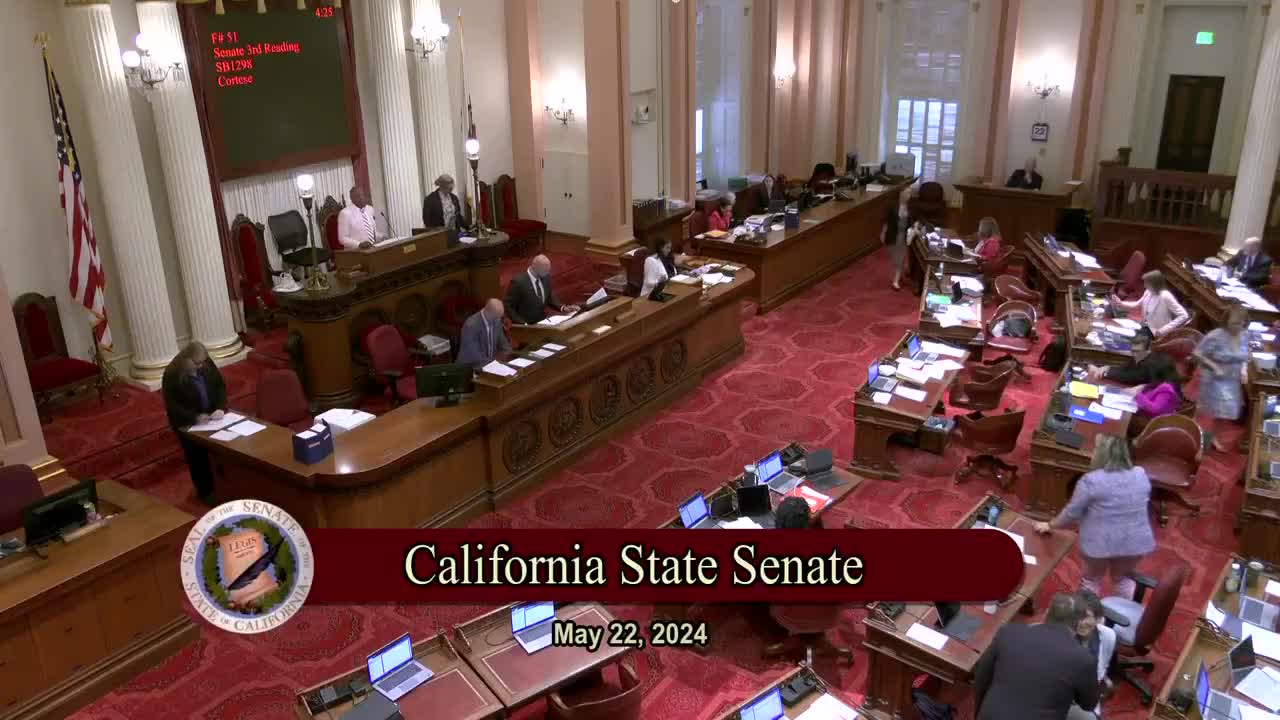 1MIN
Senate Floor
 8MIN
Senate Standing Committee on Housing
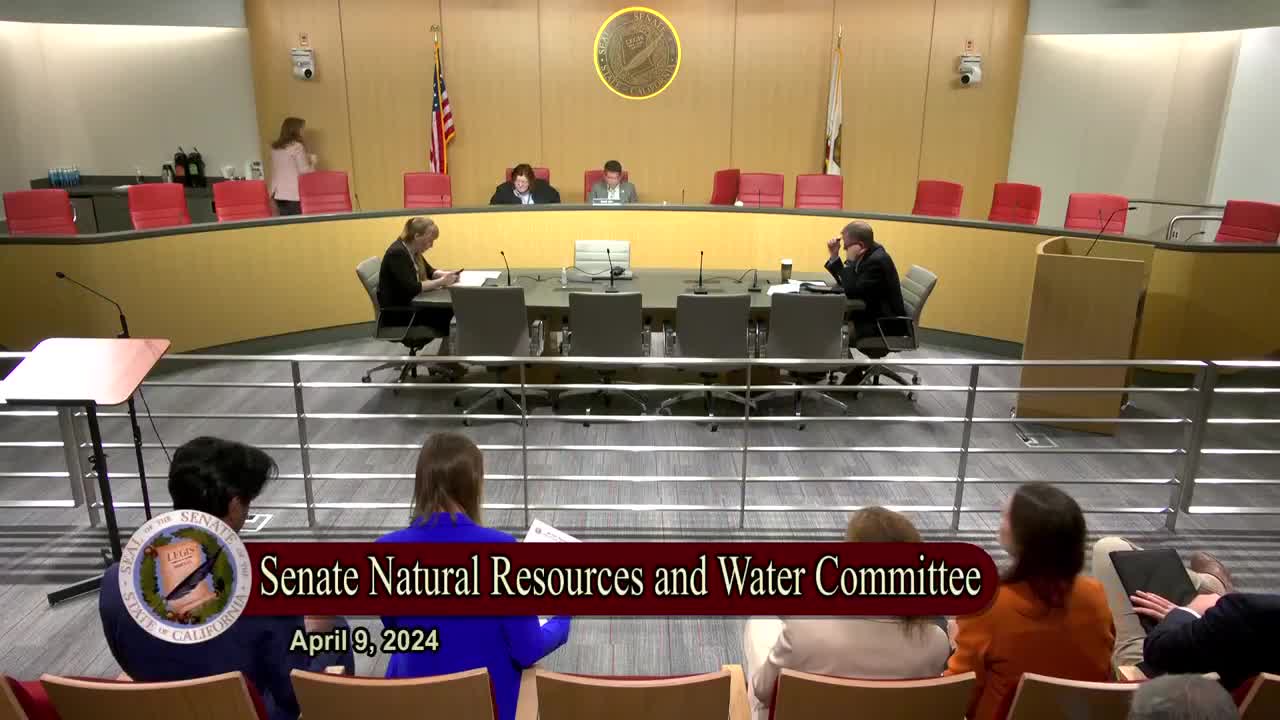 14MIN
Senate Standing Committee on Natural Resources and Water
Bill Author

Bill Co-Author(s):