SB 1105: Paid sick leave: agricultural employees: emergencies.
- Session Year: 2023-2024
- House: Senate
- Latest Version Date: 2024-09-24
Current Status:
Passed
(2024-09-24: Chaptered by Secretary of State. Chapter 525, Statutes of 2024.)
Introduced
In Committee
First Chamber
In Committee
Second Chamber
Enacted
Existing law, the Healthy Workplaces, Healthy Families Act of 2014, entitles an employee who works in California for the same employer for 30 or more days within one year from the commencement of employment to paid sick days, as specified. Existing law requires an employer to, upon the oral or written request of an employee, provide paid sick days for specified purposes, including the diagnosis, care, or treatment of an existing health condition of, or preventive care for, an employee or an employees family member.
Existing law prohibits an employer from denying an employee the right to use accrued sick days, or to discharge, threaten to discharge, demote, suspend, or in any manner discriminate against an employee for using or attempting to use accrued sick days. Existing law requires the Labor Commissioner to enforce the act, including investigating an alleged violation, and authorizes the Labor Commissioner to order any appropriate relief, as specified, to an employee or other person whose rights under the act were violated.
This bill would also require paid sick days to be provided to agricultural employees, as defined, who work outside and are entitled to paid sick days, as described, to avoid smoke, heat, or flooding conditions created by a local or state emergency, as described. The bill would declare that these provisions are declarative of existing law to the extent that the sick days are necessary for preventive care, as provided.
This bill would incorporate additional changes to Section 246.5 of the Labor Code proposed by AB 2499 to be operative only if this bill and AB 2499 are enacted and this bill is enacted last.
Existing law, the Healthy Workplaces, Healthy Families Act of 2014, entitles an employee who works in California for the same employer for 30 or more days within one year from the commencement of employment to paid sick days, as specified. Existing law requires an employer to, upon the oral or written request of an employee, provide paid sick days for specified purposes, including the diagnosis, care, or treatment of an existing health condition of, or preventive care for, an employee or an employees family member.
Existing law prohibits an employer from denying an employee the right to use accrued sick days, or to discharge, threaten to discharge, demote, suspend, or in any manner discriminate against an employee for using or attempting to use accrued sick days. Existing law requires the Labor Commissioner to enforce the act, including investigating an alleged violation, and authorizes the Labor Commissioner to order any appropriate relief, as specified, to an employee or other person whose rights under the act were violated.
This bill would also require paid sick days to be provided to agricultural employees, as defined, who work outside and are entitled to paid sick days, as described, to avoid smoke, heat, or flooding conditions created by a local or state emergency, as described. The bill would declare that these provisions are declarative of existing law to the extent that the sick days are necessary for preventive care, as provided.
Existing law, the Healthy Workplaces, Healthy Families Act of 2014, entitles an employee who works in California for the same employer for 30 or more days within one year from the commencement of employment to paid sick days, as specified. Existing law requires an employer to, upon the oral or written request of an employee, provide paid sick days for specified purposes, including the diagnosis, care, or treatment of an existing health condition of, or preventive care for, an employee or an employees family member.
Existing law prohibits an employer from denying an employee the right to use accrued sick days, or to discharge, threaten to discharge, demote, suspend, or in any manner discriminate against an employee for using or attempting to use accrued sick days. Existing law requires the Labor Commissioner to enforce the act, including investigating an alleged violation, and authorizes the Labor Commissioner to order any appropriate relief, as specified, to an employee or other person whose rights under the act were violated.
This bill would also require paid sick days to be provided to agricultural employees, as defined, who work outside and are entitled to paid sick days, as described, to avoid smoke, heat, or flooding conditions created by a local or state emergency, as described.
Existing law establishes in the Department of Industrial Relations the Division of Occupational Safety and Health, which assists in the performance of occupational health and safety functions, among other things.This bill would require the Division of Occupational Safety and Health to, upon the declaration of a local or state emergency, evaluate whether there are smoke, heat, or flooding conditions that make it dangerous for agricultural employees to work outside in the geographical region impacted by the emergency and would require the division to issue a notice of a determination that such conditions exist. The bill would also require the division to issue another notice when the conditions that serve as the basis for the determination are no longer present.Existing law, the Healthy Workplaces, Healthy Families Act of 2014, entitles an employee who works in California for the same employer for 30 or more days within one year from the commencement of employment to paid sick days, as specified. Existing law requires an employer to, upon the oral or written request of an employee, provide paid sick days for specified purposes, including the diagnosis, care, or treatment of an existing health condition of, or preventive care for, an employee or an employees family member.
Existing law prohibits an employer from denying an employee the right to use accrued sick days, or to discharge, threaten to discharge, demote, suspend, or in any manner discriminate against an employee for using or attempting to use accrued sick days. Existing law requires the Labor Commissioner to enforce the act, including investigating an alleged violation, and authorizes the Labor Commissioner to order any appropriate relief, as specified, to an employee or other person whose rights under the act were violated.
This bill would also require paid sick days to be provided to agricultural employees, as defined, who work outside and are entitled to paid sick days, as described, to avoid smoke, heat, or flooding conditions created by a local or state emergency, as described.
Existing law establishes in the Department of Industrial Relations the Division of Occupational Safety and Health, which assists in the performance of occupational health and safety functions, among other things.
This bill would require the Division of Occupational Safety and Health to, upon the declaration of a local or state emergency, evaluate whether there are smoke, heat, or flooding conditions that make it dangerous for agricultural employees to work outside in the geographical region impacted by the emergency and would require the division to issue a notice of a determination that such conditions exist. The bill would also require the division to issue another notice when the conditions that serve as the basis for the determination are no longer present.
(a)Upon the oral or written request of an employee, an employer shall provide paid sick days for the following purposes:
(1)Diagnosis, care, or treatment of an existing health condition of, or preventive care for, an employee or an employees family member.
(2)For an employee who is a victim of domestic violence, sexual assault, or stalking, the purposes described in subdivision (c) of Section 230 and subdivision (a) of Section 230.1.
(3)(A)For an employee who is an agricultural employee, as defined in Section 9110, who works outside and who is entitled to paid sick days under this article, to avoid smoke, heat, or flooding conditions created by a local or state emergency, including, but not limited to, when the employees worksite is closed due to the smoke, heat, or flooding conditions.
(B)For purposes of this paragraph, there are smoke, heat, or flood conditions created by a local or state emergency if the Governor proclaims a state of emergency pursuant to Section 8625 of the Government Code, or a local emergency is proclaimed pursuant to Section 8630 of the Government Code, due to smoke, heat, or flooding conditions that prevent agricultural employees from working.
(b)An employer shall not require as a condition of using paid sick days that the employee search for or find a replacement worker to cover the days during which the employee uses paid sick days.
(c)(1)An employer shall not deny an employee the right to use accrued sick days, discharge, threaten to discharge, demote, suspend, or in any manner discriminate against an employee for using accrued sick days, attempting to exercise the right to use accrued sick days, filing a complaint with the department or alleging a violation of this article, cooperating in an investigation or prosecution of an alleged violation of this article, or opposing any policy or practice or act that is prohibited by this article.
(2)There shall be a rebuttable presumption of unlawful retaliation if an employer denies an employee the right to use accrued sick days, discharges, threatens to discharge, demotes, suspends, or in any manner discriminates against an employee within 30 days of any of the following:
(A)The filing of a complaint by the employee with the Labor Commissioner or alleging a violation of this article.
(B)The cooperation of an employee with an investigation or prosecution of an alleged violation of this article.
(C)Opposition by the employee to a policy, practice, or act that is prohibited by this article.
(d)Notwithstanding subdivision (a) of Section 245.5, for purposes of this section, employee shall include an employee described in paragraph (1) of subdivision (a) of Section 245.5.
SEC. 1.5.Section 246.5 of the Labor Code is amended to read:246.5.(a)Upon the oral or written request of an employee, an employer shall provide paid sick days for the following purposes:
(1)Diagnosis, care, or treatment of an existing health condition of, or preventive care for, an employee or an employees family member.
(2)For an employee who is a victim or whose family member is a victim, as defined in subdivision (j) of Section 12945.8 of the Government Code, the purposes described in paragraph (3) of subdivision (a), or subdivision (b), of Section 12945.8 of the Government Code.
(3)(A)For an employee who is an agricultural employee, as defined in Section 9110, who works outside and who is entitled to paid sick days under this article, to avoid smoke, heat, or flooding conditions created by a local or state emergency, including, but not limited to, when the employees worksite is closed due to the smoke, heat, or flooding conditions.
(B)For purposes of this paragraph, there are smoke, heat, or flood conditions created by a local or state emergency if the Governor proclaims a state of emergency pursuant to Section 8625 of the Government Code, or a local emergency is proclaimed pursuant to Section 8630 of the Government Code, due to smoke, heat, or flooding conditions that prevent agricultural employees from working.
(b)An employer shall not require as a condition of using paid sick days that the employee search for or find a replacement worker to cover the days during which the employee uses paid sick days.
(c)(1)An employer shall not deny an employee the right to use accrued sick days, discharge, threaten to discharge, demote, suspend, or in any manner discriminate against an employee for using accrued sick days, attempting to exercise the right to use accrued sick days, filing a complaint with the department or alleging a violation of this article, cooperating in an investigation or prosecution of an alleged violation of this article, or opposing any policy or practice or act that is prohibited by this article.
(2)There shall be a rebuttable presumption of unlawful retaliation if an employer denies an employee the right to use accrued sick days, discharges, threatens to discharge, demotes, suspends, or in any manner discriminates against an employee within 30 days of any of the following:
(A)The filing of a complaint by the employee with the Labor Commissioner or alleging a violation of this article.
(B)The cooperation of an employee with an investigation or prosecution of an alleged violation of this article.
(C)Opposition by the employee to a policy, practice, or act that is prohibited by this article.
(d)Notwithstanding subdivision (a) of Section 245.5, for purposes of this section, employee shall include an employee described in paragraph (1) of subdivision (a) of Section 245.5.
SEC. 2.The addition of subparagraph (A) of paragraph (3) to subdivision (a) of Section 246.5 of the Labor Code as added during the second year of the 20232024 Regular Session, does not constitute a change in, but is declaratory of, existing law to the extent that the sick days are necessary for preventive care as provided in paragraph (1) of subdivision (a) of Section 246.5 of the Labor Code.
SEC. 3.Section 1.5 of this bill incorporates amendments to Section 246.5 of the Labor Code proposed by both this bill and Assembly Bill 2499. That section of this bill shall only become operative if (1) both bills are enacted and become effective on or before January 1, 2025, (2) each bill amends Section 246.5 of the Labor Code, and (3) this bill is enacted after Assembly Bill 2499, in which case Section 1 of this bill shall not become operative.
(a)Upon the oral or written request of an employee, an employer shall provide paid sick days for the following purposes:
(1)Diagnosis, care, or treatment of an existing health condition of, or preventive care for, an employee or an employees family member.
(2)For an employee who is a victim of domestic violence, sexual assault, or stalking, the purposes described in subdivision (c) of Section 230 and subdivision (a) of Section 230.1.
(3)(A)For an employee who is an agricultural employee, as defined in Section 9110, who works outside and who is entitled to paid sick days under this article, to avoid smoke, heat, or flooding conditions created by a local or state emergency, including, but not limited to, when the employees worksite is closed due to the smoke, heat, or flooding conditions.
(B)For purposes of this paragraph, there are smoke, heat, or flood conditions created by a local or state emergency if the Governor proclaims a state of emergency pursuant to Section 8625 of the Government Code, or a local emergency is proclaimed pursuant to Section 8630 of the Government Code, due to smoke, heat, or flooding conditions that prevent agricultural employees from working.
(b)An employer shall not require as a condition of using paid sick days that the employee search for or find a replacement worker to cover the days during which the employee uses paid sick days.
(c)(1)An employer shall not deny an employee the right to use accrued sick days, discharge, threaten to discharge, demote, suspend, or in any manner discriminate against an employee for using accrued sick days, attempting to exercise the right to use accrued sick days, filing a complaint with the department or alleging a violation of this article, cooperating in an investigation or prosecution of an alleged violation of this article, or opposing any policy or practice or act that is prohibited by this article.
(2)There shall be a rebuttable presumption of unlawful retaliation if an employer denies an employee the right to use accrued sick days, discharges, threatens to discharge, demotes, suspends, or in any manner discriminates against an employee within 30 days of any of the following:
(A)The filing of a complaint by the employee with the Labor Commissioner or alleging a violation of this article.
(B)The cooperation of an employee with an investigation or prosecution of an alleged violation of this article.
(C)Opposition by the employee to a policy, practice, or act that is prohibited by this article.
(d)Notwithstanding subdivision (a) of Section 245.5, for purposes of this section, employee shall include an employee described in paragraph (1) of subdivision (a) of Section 245.5.
SEC. 1.5.Section 246.5 of the Labor Code is amended to read:246.5.(a)Upon the oral or written request of an employee, an employer shall provide paid sick days for the following purposes:
(1)Diagnosis, care, or treatment of an existing health condition of, or preventive care for, an employee or an employees family member.
(2)For an employee who is a victim of domestic violence, sexual assault, or stalking, or whose family member is a victim, as defined in subdivision (j) of Section 12945.8 of the Government Code, the purposes described in subdivision (c) of Section 230 and subdivision (a) of Section 230.1. paragraph (3) of subdivision (a), or subdivision (b), of Section 12945.8 of the Government Code.
(3)(A)For an employee who is an agricultural employee, as defined in Section 9110, who works outside and who is entitled to paid sick days under this article, to avoid smoke, heat, or flooding conditions created by a local or state emergency, including, but not limited to, when the employees worksite is closed due to the smoke, heat, or flooding conditions.
(B)For purposes of this paragraph, there are smoke, heat, or flood conditions created by a local or state emergency if the Governor proclaims a state of emergency pursuant to Section 8625 of the Government Code, or a local emergency is proclaimed pursuant to Section 8630 of the Government Code, due to smoke, heat, or flooding conditions that prevent agricultural employees from working.
(b)An employer shall not require as a condition of using paid sick days that the employee search for or find a replacement worker to cover the days during which the employee uses paid sick days.
(c)(1)An employer shall not deny an employee the right to use accrued sick days, discharge, threaten to discharge, demote, suspend, or in any manner discriminate against an employee for using accrued sick days, attempting to exercise the right to use accrued sick days, filing a complaint with the department or alleging a violation of this article, cooperating in an investigation or prosecution of an alleged violation of this article, or opposing any policy or practice or act that is prohibited by this article.
(2)There shall be a rebuttable presumption of unlawful retaliation if an employer denies an employee the right to use accrued sick days, discharges, threatens to discharge, demotes, suspends, or in any manner discriminates against an employee within 30 days of any of the following:
(A)The filing of a complaint by the employee with the Labor Commissioner or alleging a violation of this article.
(B)The cooperation of an employee with an investigation or prosecution of an alleged violation of this article.
(C)Opposition by the employee to a policy, practice, or act that is prohibited by this article.
(d)Notwithstanding subdivision (a) of Section 245.5, for purposes of this section, employee shall include an employee described in paragraph (1) of subdivision (a) of Section 245.5.
SEC. 2.The addition of subparagraph (A) to of paragraph (3) of to subdivision (a) of Section 246.5 of the Labor Code as made by this act, added during the second year of the 20232024 Regular Session, does not constitute a change in, but is declaratory of, existing law to the extent that the sick days are necessary for preventive care as provided in paragraph (1) of subdivision (a) of Section 246.5 of the Labor Code.
SEC. 3.Section 1.5 of this bill incorporates amendments to Section 246.5 of the Labor Code proposed by both this bill and Assembly Bill 2499. That section of this bill shall only become operative if (1) both bills are enacted and become effective on or before January 1, 2025, (2) each bill amends Section 246.5 of the Labor Code, and (3) this bill is enacted after Assembly Bill 2499, in which case Section 1 of this bill shall not become operative.
(a)Upon the oral or written request of an employee, an employer shall provide paid sick days for the following purposes:
(1)Diagnosis, care, or treatment of an existing health condition of, or preventive care for, an employee or an employees family member.
(2)For an employee who is a victim of domestic violence, sexual assault, or stalking, the purposes described in subdivision (c) of Section 230 and subdivision (a) of Section 230.1.
(3)(A)For an employee who is an agricultural employee, as defined in Section 9110, who works outside and who is entitled to paid sick days under this article, to avoid smoke, heat, or flooding conditions created by a local or state emergency. emergency, including, but not limited to, when the employees worksite is closed due to the smoke, heat, or flooding conditions.
(B)For purposes of this paragraph, there are smoke, heat, or flood conditions created by a local or state emergency if the Governor proclaims a state of emergency pursuant to Section 8625 of the Government Code, or a local emergency is proclaimed pursuant to Section 8630 of the Government Code, due to smoke, heat, or flooding conditions that prevent agricultural employees from working.
(b)An employer shall not require as a condition of using paid sick days that the employee search for or find a replacement worker to cover the days during which the employee uses paid sick days.
(c)(1)An employer shall not deny an employee the right to use accrued sick days, discharge, threaten to discharge, demote, suspend, or in any manner discriminate against an employee for using accrued sick days, attempting to exercise the right to use accrued sick days, filing a complaint with the department or alleging a violation of this article, cooperating in an investigation or prosecution of an alleged violation of this article, or opposing any policy or practice or act that is prohibited by this article.
(2)There shall be a rebuttable presumption of unlawful retaliation if an employer denies an employee the right to use accrued sick days, discharges, threatens to discharge, demotes, suspends, or in any manner discriminates against an employee within 30 days of any of the following:
(A)The filing of a complaint by the employee with the Labor Commissioner or alleging a violation of this article.
(B)The cooperation of an employee with an investigation or prosecution of an alleged violation of this article.
(C)Opposition by the employee to a policy, practice, or act that is prohibited by this article.
(d)Notwithstanding subdivision (a) of Section 245.5, for purposes of this section, employee shall include an employee described in paragraph (1) of subdivision (a) of Section 245.5.
SEC. 2.The addition of subparagraph (A) to paragraph (3) of subdivision (a) of Section 246.5 of the Labor Code as made by this act, does not constitute a change in, but is declaratory of, existing law to the extent that the sick days are necessary for preventive care as provided in paragraph (1) of subdivision (a) of Section 246.5 of the Labor Code.
(a)Upon the oral or written request of an employee, an employer shall provide paid sick days for the following purposes:
(1)Diagnosis, care, or treatment of an existing health condition of, or preventive care for, an employee or an employees family member.
(2)For an employee who is a victim of domestic violence, sexual assault, or stalking, the purposes described in subdivision (c) of Section 230 and subdivision (a) of Section 230.1.
(3)(A)For an employee who is an agricultural employee, as defined in Section 9110, who works outside and who is entitled to paid sick days under this article, to avoid smoke, heat, or flooding conditions created by a local or state emergency.
(B)For purposes of this paragraph, there are smoke, heat, or flood conditions created by a local or state emergency if both of the following are satisfied: the Governor proclaims a state of emergency pursuant to Section 8625 of the Government Code, or a local emergency is proclaimed pursuant to Section 8630 of the Government Code, due to smoke, heat, or flooding conditions that prevent agricultural employees from working.
(i)The division issues a notice under Section 9111 determining that it is dangerous to work outside due to smoke, heat, or flooding conditions created by the local or state emergency, and the notice applies to the geographical region in which the employee works outside.(ii)The Governor proclaims a state of emergency pursuant to Section 8625 of the Government Code or a local emergency is proclaimed pursuant to Section 8630 of the Government Code.(b)An employer shall not require as a condition of using paid sick days that the employee search for or find a replacement worker to cover the days during which the employee uses paid sick days.
(c)(1)An employer shall not deny an employee the right to use accrued sick days, discharge, threaten to discharge, demote, suspend, or in any manner discriminate against an employee for using accrued sick days, attempting to exercise the right to use accrued sick days, filing a complaint with the department or alleging a violation of this article, cooperating in an investigation or prosecution of an alleged violation of this article, or opposing any policy or practice or act that is prohibited by this article.
(2)There shall be a rebuttable presumption of unlawful retaliation if an employer denies an employee the right to use accrued sick days, discharges, threatens to discharge, demotes, suspends, or in any manner discriminates against an employee within 30 days of any of the following:
(A)The filing of a complaint by the employee with the Labor Commissioner or alleging a violation of this article.
(B)The cooperation of an employee with an investigation or prosecution of an alleged violation of this article.
(C)Opposition by the employee to a policy, practice, or act that is prohibited by this article.
(d)Notwithstanding subdivision (a) of Section 245.5, for purposes of this section, employee shall include an employee described in paragraph (1) of subdivision (a) of Section 245.5.
SEC. 2.Section 9111 is added to the Labor Code, to read:9111.(a)The division shall, upon the declaration of a local or state emergency, evaluate whether there are smoke, heat, or flooding conditions that make it dangerous for agricultural employees, as defined in Section 9110, to work outside in the geographical region impacted by the emergency.(b)If the division determines it is dangerous to work outside due to smoke, heat, or flooding conditions created by the local or state emergency, as described in subdivision (a), the division shall issue, on its internet website, a notice of its determination and the geographical regions to which the notice applies.(c)The division shall issue another notice when the conditions that serve as the basis for the determination in subdivision (b) are no longer present.(d)For purposes of this section, the following definitions apply:(1)Local emergency means an emergency proclaimed pursuant to Section 8630 of the Government Code.(2)State emergency means an emergency proclaimed by the Governor pursuant to Section 8625 of the Government Code.(a)Upon the oral or written request of an employee, an employer shall provide paid sick days for the following purposes:
(1)Diagnosis, care, or treatment of an existing health condition of, or preventive care for, an employee or an employees family member.
(2)For an employee who is a victim of domestic violence, sexual assault, or stalking, the purposes described in subdivision (c) of Section 230 and subdivision (a) of Section 230.1.
(3)(A)For an employee who is an agricultural employee, as defined in Section 9110, who works outside and who is entitled to paid sick days under this article, to avoid smoke, heat, or flooding conditions created by a local or state emergency.
(B)For purposes of this paragraph, there are smoke, heat, or flood conditions created by a local or state emergency if both of the following are satisfied:
(i)The division issues a notice under Section 9111 determining that it is dangerous to work outside due to smoke, heat, or flooding conditions created by the local or state emergency, and the notice applies to the geographical region in which the employee works outside.
(ii)The Governor proclaims a state of emergency pursuant to Section 8625 of the Government Code or a local emergency is proclaimed pursuant to Section 8630 of the Government Code.
(b)An employer shall not require as a condition of using paid sick days that the employee search for or find a replacement worker to cover the days during which the employee uses paid sick days.
(c)(1)An employer shall not deny an employee the right to use accrued sick days, discharge, threaten to discharge, demote, suspend, or in any manner discriminate against an employee for using accrued sick days, attempting to exercise the right to use accrued sick days, filing a complaint with the department or alleging a violation of this article, cooperating in an investigation or prosecution of an alleged violation of this article, or opposing any policy or practice or act that is prohibited by this article.
(2)There shall be a rebuttable presumption of unlawful retaliation if an employer denies an employee the right to use accrued sick days, discharges, threatens to discharge, demotes, suspends, or in any manner discriminates against an employee within 30 days of any of the following:
(A)The filing of a complaint by the employee with the Labor Commissioner or alleging a violation of this article.
(B)The cooperation of an employee with an investigation or prosecution of an alleged violation of this article.
(C)Opposition by the employee to a policy, practice, or act that is prohibited by this article.
(d)Notwithstanding subdivision (a) of Section 245.5, for purposes of this section, employee shall include an employee described in paragraph (1) of subdivision (a) of Section 245.5.
SEC. 2.Section 9111 is added to the Labor Code, to read:9111.(a)The division shall, upon the declaration of a local or state emergency, evaluate whether there are smoke, heat, or flooding conditions that make it dangerous for agricultural employees, as defined in Section 9110, to work outside in the geographical region impacted by the emergency.
(b)If the division determines it is dangerous to work outside due to smoke, heat, or flooding conditions created by the local or state emergency, as described in subdivision (a), the division shall issue, on its internet website, a notice of its determination and the geographical regions to which the notice applies.
(c)The division shall issue another notice when the conditions that serve as the basis for the determination in subdivision (b) are no longer present.
(d)For purposes of this section, the following definitions apply:
(1)Local emergency means an emergency proclaimed pursuant to Section 8630 of the Government Code.
(2)State emergency means an emergency proclaimed by the Governor pursuant to Section 8625 of the Government Code.
|
Date
|
Status
|
|---|---|
| Sep 24, 2024 | Chaptered by Secretary of State. Chapter 525, Statutes of 2024. |
| Sep 24, 2024 | Approved by the Governor. |
| Sep 10, 2024 | Enrolled and presented to the Governor at 4 p.m. |
| Aug 30, 2024 | Assembly amendments concurred in. (Ayes 37. Noes 2. Page 5729.) Ordered to engrossing and enrolling. |
| Aug 30, 2024 | In Senate. Concurrence in Assembly amendments pending. |
| Aug 29, 2024 | Read third time. Passed. (Ayes 72. Noes 0. Page 6896.) Ordered to the Senate. |
| Aug 22, 2024 | Ordered to third reading. |
| Aug 22, 2024 | Read third time and amended. |
| Aug 20, 2024 | Read second time. Ordered to third reading. |
| Aug 19, 2024 | Read second time and amended. Ordered to second reading. |
| Aug 15, 2024 | From committee: Do pass as amended. (Ayes 11. Noes 0.) (August 15). |
| Aug 7, 2024 | August 7 set for first hearing. Placed on suspense file. |
| Jul 2, 2024 | From committee: Do pass and re-refer to Com. on APPR. (Ayes 7. Noes 0.) (July 2). Re-referred to Com. on APPR. |
| May 28, 2024 | Referred to Com. on L. & E. |
| May 21, 2024 | In Assembly. Read first time. Held at Desk. |
| May 20, 2024 | Read third time. Passed. (Ayes 34. Noes 3. Page 4025.) Ordered to the Assembly. |
| May 16, 2024 | Read second time. Ordered to third reading. |
| May 16, 2024 | From committee: Do pass. (Ayes 5. Noes 2. Page 3971.) (May 16). |
| May 10, 2024 | Set for hearing May 16. |
| Apr 29, 2024 | April 29 hearing: Placed on APPR suspense file. |
| Apr 23, 2024 | Set for hearing April 29. |
| Apr 22, 2024 | April 22 hearing postponed by committee. |
| Apr 12, 2024 | Set for hearing April 22. |
| Apr 10, 2024 | From committee: Do pass and re-refer to Com. on APPR. (Ayes 5. Noes 0. Page 3563.) (April 10). Re-referred to Com. on APPR. |
| Apr 4, 2024 | From committee with author's amendments. Read second time and amended. Re-referred to Com. on L., P.E. & R. |
| Mar 26, 2024 | Set for hearing April 10. |
| Feb 21, 2024 | Referred to Com. on L., P.E. & R. |
| Feb 14, 2024 | From printer. May be acted upon on or after March 15. |
| Feb 13, 2024 | Introduced. Read first time. To Com. on RLS. for assignment. To print. |
|
Date
|
Description
|
Location
|
Votes
|
|
|---|---|---|---|---|
| Aug 30, 2024 | Unfinished Business SB1105 Padilla Concurrence | Senate Floor |
Passed |
|
| Aug 29, 2024 | SB 1105 Padilla Senate Third Reading By Garcia | Assembly Floor |
Passed |
|
| Aug 15, 2024 | Do pass as amended. | Assembly Standing Committee on Appropriations |
Passed |
|
| Jul 2, 2024 | Do pass and be re-referred to the Committee on [Appropriations] | Assembly Standing Committee on Labor and Employment |
Passed |
|
| May 20, 2024 | Senate 3rd Reading SB1105 Padilla | Senate Floor |
Passed |
|
| May 16, 2024 | Do pass | Senate Standing Committee on Appropriations |
Passed |
|
| Apr 29, 2024 | Placed on suspense file | Senate Standing Committee on Appropriations |
Passed |
|
| Apr 10, 2024 | Do pass, but first be re-referred to the Committee on [Appropriations] | Senate Standing Committee on Labor, Public Employment and Retirement |
Passed |
This list shows positions taken on this bill by organizations on the date displayed, which is linked to the original source.
Positions by individuals are not included.
|
Organization
|
Position
|
Date
|
|---|---|---|
| California Food and Farming Network | ** Support | |
| Californians for Pesticide Reform | ** Support | |
| California Rural Legal Assistance Foundation | ** Support | |
| Central California Environmental Justice Network | ** Support | |
| Central Coast Alliance United for a Sustainable Economy | ** Support | |
| Centro Binacional Para El Desarrollo Indígena Oaxaqueño | ** Support | |
| Ceres Community Project | ** Support | |
| City Of El Centro | ** Support | |
| City of Imperial | ** Support | |
| cleanearth4kids.org | ** Support | |
| Imperial City Of | ** Support | |
| Imperial Valley Equity & Justice Coalition | ** Support | |
| Latino Coalition for a Healthy California | ** Support | |
| Lideres Campesinas | ** Support | |
| Marin Food Policy Council | ** Support | |
| Pesticide Action Network North America | ** Support | |
| Roots of Change | ** Support | |
| The Praxis Project | ** Support | |
| United Food & Commercial Workers, Western States Council | ** Support |
SENATE RULES COMMITTEE Office of Senate Floor Analyses (916) 651-1520 Fax: (916) 327-4478 | SB 1105 |
UNFINISHED BUSINESS
Bill No: SB 1105
Author: Padilla (D)
Amended: 8/22/24
Vote: 21
SENATE LABOR, PUB. EMP. & RET. COMMITTEE: 5-0, 4/10/24
AYES: Smallwood-Cuevas, Wilk, Cortese, Durazo, Laird
SENATE APPROPRIATIONS COMMITTEE: 5-2, 5/16/24
AYES: Caballero, Ashby, Becker, Bradford, Wahab
NOES: Jones, Seyarto
SENATE FLOOR: 34-3, 5/20/24
AYES: Allen, Alvarado-Gil, Archuleta, Ashby, Atkins, Becker, Blakespear, Bradford, Caballero, Cortese, Dodd, Durazo, Eggman, Glazer, Gonzalez, Hurtado, Laird, Limón, McGuire, Menjivar, Newman, Niello, Ochoa Bogh, Padilla, Portantino, Roth, Rubio, Skinner, Smallwood-Cuevas, Stern, Umberg, Wahab, Wiener, Wilk
NOES: Dahle, Jones, Seyarto
NO VOTE RECORDED: Grove, Min, Nguyen
ASSEMBLY FLOOR: 72-0, 8/29/24 - See last page for vote
SUBJECT: Paid sick leave: agricultural employees: emergencies
SOURCE: Author
DIGEST:
This bill expands existing paid sick leave provisions to allow agricultural employees, who work outside, to use their currently entitled paid sick days to avoid smoke, heat, or flooding conditions created by a local or state emergency.
Assembly Amendments
clarify that the addition of the requirement for an employer to provide paid sick leave for these purposes does not constitute a change in, but is declaratory of existing law to the extent that the sick days are necessary for preventative care as provided in the Labor Code.
ANALYSIS:
Existing law:
- Provides that the California Occupational Safety and Health Act assures safe and healthful working conditions for all California workers by authorizing the enforcement of effective standards, assisting and encouraging employers to maintain safe and healthful working conditions, and by providing for research, information, education, training, and enforcement in the field of occupational safety and health. (Labor Code §6300)
- Establishes the Division of Occupational Safety and Health (Cal/OSHA) within the Department of Industrial Relations (DIR) to, among other things, propose, administer, and enforce occupational safety and health standards. (Labor Code §6300 et seq.)
- Under the Healthy Workplaces, Healthy Families Act of 2014, entitles employees who work in California to paid sick days, provided they have worked for the same employer for 30 or more days within a year from the commencement of employment, with limited exemption, as specified in the Act. (Labor Code §246)
- Defines “full amount of leave” to mean five days or 40 hours of paid sick leave, to be accrued and carried over as specified. (Labor Code §246(d))
- Upon the oral or written request of an employee, requires an employer to provide paid sick days for the following purposes:
- Diagnosis, care, or treatment of an existing health condition or the provision of preventive care for an employee or an employee’s family member.
- For an employee who is a victim of domestic violence, sexual assault, or stalking, among others. (Labor Code §246.5)
- Prohibits an employer from denying an employee the right to use accrued sick days, discharging, threatening to discharge, demoting, suspending, or in any manner discriminating against an employee for using or attempting to use accrued sick days, filing a complaint with the Department or alleging a violation, cooperating in an investigation or prosecution of an alleged violation, or opposing any policy or practice that is prohibited by the Act. (Labor Code §246.5)
- Prohibits an employer from requiring that the employee search for or find a replacement worker to cover the days during which the employee uses paid sick days, as specified. (Labor Code §246.5)
- Establishes a rebuttable presumption of unlawful retaliation if an employer denies an employee the right to use accrued sick days, discharges, threatens to discharge, demotes, suspends, or in any manner discriminates against an employee within 30 days of any of the following:
- The filing of a complaint with the Labor Commissioner or alleging a violation.
- The cooperation with an investigation or prosecution of an alleged violation.
- Opposition by the employee to a policy, practice, or act that is prohibited by these provisions. (Labor Code §246.5)
- Authorizes a local emergency to be proclaimed by the governing body of a city, county, or city and county, or by an official designated by ordinance adopted by that governing body, as specified, and requires review for continuing the local emergency at least once every 60 days until the governing body terminates the local emergency. (Government Code §8630)
- Authorizes the Governor to proclaim a state of emergency in an area affected or likely to be affected, as specified, and defines “state of emergency” to mean the duly proclaimed existence of conditions of disaster or of extreme peril to the safety of persons and property within the state including, among others, flooding or fire. (Government Code §8625 and §8558)
- Prohibits an employer, in the event of an emergency condition, as defined, from taking or threatening an adverse action against any employee (except for specified emergency response workers, among others) for refusing to report to, or leaving, a workplace within the affected area because the employee has a reasonable belief that the workplace is unsafe. (Labor Code §1139)
This bill:
- Amends the Healthy Workplaces, Healthy Families Act of 2014 to require an employer to provide paid sick days to an agricultural employee who works outside and requests the paid sick leave to avoid smoke, heat, or flooding conditions created by a local or state emergency.
- Defines “agricultural employee” as currently defined in Labor Code Section 9110, to mean a person employed in any of the following:
- An agricultural occupation, as defined in Wage Order No. 14 of the Industrial Welfare Commission.
- An industry preparing agricultural products for the market, on the farm, as defined in Wage Order No. 13 of the Industrial Welfare Commission.
- An industry handling products after harvest, as defined in Wage Order No. 8 of the Industrial Welfare Commission.
- Provides, pursuant to 1) above, that there are smoke, heat, or flood conditions created by a local or state emergency, including but not limited to, when the employee’s worksite is closed due to the smoke, heat or flooding conditions, if the Governor proclaims a state of emergency, as specified, or a local emergency is proclaimed, as specified, due to smoke, heat, or flooding conditions that prevent agricultural employees from working.
- States that the addition of the requirement for an employer to provide paid sick leave in 1) above does not constitute a change in, but is declaratory of existing law to the extent that the sick days are necessary for preventative care as provided in the Labor Code.
- Incorporates additional changes to Section 246.5 of the Labor Code proposed by AB 2499 (Schiao, 2024) to be operative only if this bill and AB 2499 are enacted and this bill is enacted last. AB 2499 addresses protections for victims of violence and expands reasons for which an employee can use their entitled paid sick days.
Background
In California, every employer has a legal obligation to provide and maintain a safe and healthful workplace for their employees. Among other things, employers are required to have a written Injury and Illness Prevention Program (IIPP) with specific elements set forth in the Labor Code and the California Occupational Safety and Health Act. Existing law directs employers to be proactive in the identification of hazards with a focus on corrective actions for addressing these. Regarding emergencies that arise in the course of employment, existing law provides that a person who, after receiving notice to evacuate or leave, willfully and knowingly directs an employee to remain in, or enter, an area closed due to a menace to the public health or safety shall be guilty of a misdemeanor.
Additionally, SB 1044 (Durazo, Chapter 829, Statutes of 2022) prohibited an employer, in the event of an emergency condition, as defined, from taking or threatening an adverse action against any employee (except for specified emergency response workers, among others) for refusing to report to, or leaving, a workplace within the affected area because the employee has a reasonable belief that the workplace is unsafe. This bill also prohibits an employer from preventing an employee, with some exceptions, from accessing the employee’s mobile device or other communications device to seek emergency assistance, assessing the safety of the situation, or communicating with a person to verify their safety.
Need for this bill? According to the author, “As the nation’s leading farm state and one of the world’s largest producers of food, farmworkers have been foundational to California’s standing as the fourth largest economy in the world. Despite the vital role that farmworkers play to California, they continue to face several disadvantages as compared to other populations. Many lack access to health care and other critical safety net services and farmworkers do not enjoy the same protections workers as workers in other industries.”
Additionally, the author notes, “In an analysis conducted by Mother Jones of the 168-farmworker deaths in California between 2018 and 2022, 83 of the 168 tragically lost their lives when temperatures in the surrounding area exceeded 80 degrees Fahrenheit, the temperature that trigger’s California’s heat safety requirements. As average temperatures increase and heat waves, wildfires, and extreme rain events increase, farmworkers will be at continued risk of losing their lives.” This bill requires that paid sick leave granted to agricultural employees can also be utilized to avoid smoke, heat, or flooding conditions created by a local or state emergency.
Related/Prior Legislation
SB 616 (Gonzalez, Chapter 309, Statutes of 2023), among other things, increased from three days to five days the paid sick leave afforded to eligible employees.
SB 1044 (Durazo, Chapter 829, Statutes of 2022) prohibited an employer, in the event of an emergency condition, as defined, from taking or threatening an adverse action against any employee for refusing to report to, or leaving, a workplace within the affected area because the employee has a reasonable belief that the workplace is unsafe.
AB 2658 (Burke, Chapter 288, Statues of 2020) extended existing employee rights and anti-retaliation protections regarding the reporting of unsafe working conditions, or refusing to work in hazardous conditions, to domestic work employees. This bill also made it a crime for a person, after receiving notice to evacuate or leave, to willfully and knowingly direct an employee to remain in, or enter, an area closed due to a menace to the public health or safety, including domestic work employees.
FISCAL EFFECT: Appropriation: No Fiscal Com.: Yes Local: No
According to the Assembly Appropriations Committee:
Costs of approximately $260,000 in the first year and $238,000 annually thereafter to the Division of Labor Standards Enforcement for additional workload resulting from expanded paid sick leave wage and retaliation claims (Labor Enforcement Compliance Fund).
SUPPORT: (Verified 8/23/24)
California Food and Farming Network
California Rural Legal Assistance Foundation (CRLA)
Californians for Pesticide Reform
Central California Environmental Justice Network
Central Coast Alliance United for A Sustainable Economy
Centro Binacional Para El Desarrollo Indígena Oaxaqueño
Ceres Community Project
City of El Centro
City of Imperial
CleanEarth4Kids.org
Imperial Valley Equity & Justice Coalition
Latino Coalition for a Healthy California
Lideres Campesinas
Marin Food Policy Council
Pesticide Action Network North America
Roots of Change
The Praxis Project
United Food & Commercial Workers, Western States Council
OPPOSITION: (Verified 8/23/24)
None received
ARGUMENTS IN SUPPORT: According to a coalition of proponents, including the California Food & Farming Network, “workplace conditions often expose farmworkers to several adverse environmental hazards resulting from extreme weather events that endanger their health, safety, and economic livelihoods, including working under extremely high temperatures, exposure to smoke from wildfires, and torrential rain and flooding. By allowing farmworkers to utilize their paid sick leave during climate emergencies, California can treat farmworkers as essential workers, instead of sacrificial ones, by ensuring they do not have to choose between their safety or their livelihood. Agricultural workers are 35 times more likely to die from heat-related stress than workers in any other industry in the United States. Agriculture is one of the most hazardous industries in the United States and the rapidly changing climate will only make matters worse.”
They conclude stating that, “while the state of California has taken some of the nation’s most proactive steps to adopt occupational safety standards related to heat and smoke, farmworkers need to know that during a climate emergency they are not risking personal financial disaster by choosing their safety.”
ASSEMBLY FLOOR: 72-0, 8/29/24
AYES: Addis, Aguiar-Curry, Alanis, Alvarez, Arambula, Bains, Bauer-Kahan, Bennett, Berman, Boerner, Bonta, Bryan, Calderon, Juan Carrillo, Wendy Carrillo, Chen, Connolly, Davies, Dixon, Mike Fong, Friedman, Gabriel, Gallagher, Garcia, Gipson, Grayson, Haney, Hart, Holden, Hoover, Irwin, Jackson, Jones-Sawyer, Kalra, Lackey, Lee, Low, Lowenthal, Maienschein, Mathis, McCarty, McKinnor, Muratsuchi, Stephanie Nguyen, Pacheco, Papan, Jim Patterson, Joe Patterson, Pellerin, Petrie-Norris, Quirk-Silva, Ramos, Rendon, Reyes, Luz Rivas, Rodriguez, Blanca Rubio, Sanchez, Santiago, Schiavo, Soria, Ting, Valencia, Villapudua, Waldron, Wallis, Ward, Weber, Wicks, Wilson, Wood, Robert Rivas
NO VOTE RECORDED: Cervantes, Megan Dahle, Essayli, Flora, Ortega, Ta, Zbur
Click here to enter text.
Prepared by: Alma Perez-Schwab / L., P.E. & R. / (916) 651-1556
8/29/24 20:03:38
**** END ****
SENATE THIRD READING
STR Bill Id:SB 1105
Author:(Padilla)
As Amended Ver:August 22, 2024
Majority vote
SUMMARY
Amends the Healthy Workplaces, Healthy Families Act of 2014, to require an employer to provide paid sick leave to an agricultural employee who works outside and requests the paid sick leave to avoid smoke, heat, or flooding conditions created by a local or state emergency.
Major Provisions
- Amends the Healthy Workplaces, Healthy Families Act of 2014, to require an employer to provide paid sick leave to an agricultural employee who works outside and requests the paid sick leave to avoid smoke, heat, or flooding conditions created by a local or state emergency.
- Provides, pursuant to 1) above, that there are smoke, heat, or flood conditions created by a local or state emergency, including but not limited to, when the employee's worksite is closed due to the smoke, heat, or flooding conditions, if the Governor proclaims a state of emergency, as specified, or a local emergency is proclaimed, as specified, due to smoke, heat, or flooding conditions that prevent agricultural employees from working.
- States that the addition of the requirement for an employer to provide paid sick leave in 1) above does not constitute a change in, but is declaratory of existing law to the extent that the sick days are necessary for preventative care as provided in the Labor Code.
COMMENTS
In recent years, researchers have documented a number of harmful side effects to agricultural workers from exposure to wildfire smoke and high heat. Wildfire smoke can be especially detrimental to these workers because as temperatures rise, air pollution increases. According to the American Lung Association, many farmworkers also work in some of the most polluted areas of the country. Studies reveal a wide range of health impacts from inhaling the fine particles in wildfire smoke. Some of the harmful effects of wildfire smoke include irritation "to the eyes, nose and lungs, [aggravation] of asthma and other respiratory illnesses and [increased] risk of death from lung cancer and heart disease.[1]"
In a 2022 study that surveyed over 1,200 agricultural workers in California, a high percentage of respondents reported substantial employer non-compliance with state heat regulations. When precautions are not taken to protect farmworkers from excessive heat, the health impacts can be both acute and long lasting. As cited in a UC Merced Community and Labor Center report on farmworker health, "symptoms of heat-related illness build in the body the longer the exposure occurs. Initial acute signs and symptoms of a heat-related illness can be cramps in the body, a rash, or fatigue…If the farmworker continues to work once these symptoms occur, they are at risk of heat stroke, which can lead to confusion, seizures, unconsciousness, and even death."[2]
According to the Author
"As the nation's leading farm state and one of the world's largest producers of food, farmworkers have been foundational to California's standing as the fourth largest economy in the world. However, agricultural workers are 35 times more likely to die from heat-related stress than workers in any other industry in the United States. As our changing climate continues to cause heat waves, wildfires, and extreme rain events, farmworkers will be at continued risk of losing their lives. Our farmworkers are the very lifeblood of our society, working in conditions few dare face to put food on the table for not only their families, but families across the world. We must do everything we can to adapt our policies to ensure their wellbeing is protected."
The author further states that, "Farmworkers continue to face several disadvantages as compared to other populations. Many lack access to health care and other critical safety net services and farmworkers do not enjoy the same protections workers as workers in other industries, mainly due to the population's immigration status. Providing this flexibility acknowledges the difficult position farmworkers are placed in because of our failure to pass immigration reform."
Arguments in Support
A coalition of farmworker advocacy organizations, including the California Food and Farming Network, are in support, and state, "Agricultural workers are 35 times more likely to die from heat-related stress than workers in any other industry in the United States. Agriculture is one of the most hazardous industries in the United States and the rapidly changing climate will only make matters worse. Last year during a series of severe atmospheric river storms that struck California, many farmworkers lost work hours, decreasing their income due to the non-stop rain. One farmworker working in the Ventura strawberry fields recounted that he and his wife lost about $3,000 in income from reduced work, pushing them to make more trips to food distributions. Since the majority of farmworkers are undocumented, or low income they do not qualify for any unemployment benefits, leaving them vulnerable during disasters.
While the state of California has taken some of the nation's most proactive steps to adopt occupational safety standards related to heat and smoke, farmworkers need to know that during a climate emergency they are not risking personal financial disaster by choosing their safety."
Arguments in Opposition
None on file.
FISCAL COMMENTS
According to the Assembly Appropriations Committee, costs of approximately $260,000 in the first year and $238,000 annually thereafter to the Division of Labor Standards Enforcement for additional workload resulting from expanded paid sick leave wage and retaliation claims (Labor Enforcement Compliance Fund).
VOTES
SENATE FLOOR: 34-3-3
YES: Allen, Alvarado-Gil, Archuleta, Ashby, Atkins, Becker, Blakespear, Bradford, Caballero, Cortese, Dodd, Durazo, Eggman, Glazer, Gonzalez, Hurtado, Laird, Limón, McGuire, Menjivar, Newman, Niello, Ochoa Bogh, Padilla, Portantino, Roth, Rubio, Skinner, Smallwood-Cuevas, Stern, Umberg, Wahab, Wiener, Wilk
NO: Dahle, Jones, Seyarto
ABS, ABST OR NV: Grove, Min, Nguyen
ASM LABOR AND EMPLOYMENT: 7-0-0
YES: Ortega, Flora, Alanis, Wendy Carrillo, Lee, Ward, Zbur
ASM APPROPRIATIONS: 11-0-4
YES: Wicks, Arambula, Bryan, Calderon, Wendy Carrillo, Mike Fong, Grayson, Haney, Hart, Pellerin, Villapudua
ABS, ABST OR NV: Sanchez, Dixon, Jim Patterson, Ta
UPDATED
VERSION: August 22, 2024
CONSULTANT: Megan Lane / L. & E. / (916) 319-2091 FN: 0004517
SENATE THIRD READING
STR Bill Id:SB 1105
Author:(Padilla)
As Amended Ver:August 19, 2024
Majority vote
SUMMARY
Amends the Healthy Workplaces, Healthy Families Act of 2014, to require an employer to provide paid sick leave to an agricultural employee who works outside and requests the paid sick leave to avoid smoke, heat, or flooding conditions created by a local or state emergency.
Major Provisions
- Amends the Healthy Workplaces, Healthy Families Act of 2014, to require an employer to provide paid sick leave to an agricultural employee who works outside and requests the paid sick leave to avoid smoke, heat, or flooding conditions created by a local or state emergency.
- Provides, pursuant to 1) above, that there are smoke, heat, or flood conditions created by a local or state emergency, including but not limited to, when the employee's worksite is closed due to the smoke, heat, or flooding conditions, if the Governor proclaims a state of emergency, as specified, or a local emergency is proclaimed, as specified, due to smoke, heat, or flooding conditions that prevent agricultural employees from working.
- States that the addition of the requirement for an employer to provide paid sick leave in 1) above does not constitute a change in, but is declaratory of existing law to the extent that the sick days are necessary for preventative care as provided in the Labor Code.
COMMENTS
In recent years, researchers have documented a number of harmful side effects to agricultural workers from exposure to wildfire smoke and high heat. Wildfire smoke can be especially detrimental to these workers because as temperatures rise, air pollution increases. According to the American Lung Association, many farmworkers also work in some of the most polluted areas of the country. Studies reveal a wide range of health impacts from inhaling the fine particles in wildfire smoke. Some of the harmful effects of wildfire smoke include irritation "to the eyes, nose and lungs, [aggravation] of asthma and other respiratory illnesses and [increased] risk of death from lung cancer and heart disease.[1]"
In a 2022 study that surveyed over 1,200 agricultural workers in California, a high percentage of respondents reported substantial employer non-compliance with state heat regulations. When precautions are not taken to protect farmworkers from excessive heat, the health impacts can be both acute and long lasting. As cited in a UC Merced Community and Labor Center report on farmworker health, "symptoms of heat-related illness build in the body the longer the exposure occurs. Initial acute signs and symptoms of a heat-related illness can be cramps in the body, a rash, or fatigue…If the farmworker continues to work once these symptoms occur, they are at risk of heat stroke, which can lead to confusion, seizures, unconsciousness, and even death."[2]
According to the Author
"As the nation's leading farm state and one of the world's largest producers of food, farmworkers have been foundational to California's standing as the fourth largest economy in the world. However, agricultural workers are 35 times more likely to die from heat-related stress than workers in any other industry in the United States. As our changing climate continues to cause heat waves, wildfires, and extreme rain events, farmworkers will be at continued risk of losing their lives. Our farmworkers are the very lifeblood of our society, working in conditions few dare face to put food on the table for not only their families, but families across the world. We must do everything we can to adapt our policies to ensure their wellbeing is protected."
The author further states that, "Farmworkers continue to face several disadvantages as compared to other populations. Many lack access to health care and other critical safety net services and farmworkers do not enjoy the same protections workers as workers in other industries, mainly due to the population's immigration status. Providing this flexibility acknowledges the difficult position farmworkers are placed in because of our failure to pass immigration reform."
Arguments in Support
A coalition of farmworker advocacy organizations, including the California Food and Farming Network, are in support, and state, "Agricultural workers are 35 times more likely to die from heat-related stress than workers in any other industry in the United States. Agriculture is one of the most hazardous industries in the United States and the rapidly changing climate will only make matters worse. Last year during a series of severe atmospheric river storms that struck California, many farmworkers lost work hours, decreasing their income due to the non-stop rain. One farmworker working in the Ventura strawberry fields recounted that he and his wife lost about $3,000 in income from reduced work, pushing them to make more trips to food distributions. Since the majority of farmworkers are undocumented, or low income they do not qualify for any unemployment benefits, leaving them vulnerable during disasters.
While the state of California has taken some of the nation's most proactive steps to adopt occupational safety standards related to heat and smoke, farmworkers need to know that during a climate emergency they are not risking personal financial disaster by choosing their safety."
Arguments in Opposition
None on file.
FISCAL COMMENTS
According to the Assembly Appropriations Committee, costs of approximately $260,000 in the first year and $238,000 annually thereafter to the Division of Labor Standards Enforcement for additional workload resulting from expanded paid sick leave wage and retaliation claims (Labor Enforcement Compliance Fund).
VOTES
SENATE FLOOR: 34-3-3
YES: Allen, Alvarado-Gil, Archuleta, Ashby, Atkins, Becker, Blakespear, Bradford, Caballero, Cortese, Dodd, Durazo, Eggman, Glazer, Gonzalez, Hurtado, Laird, Limón, McGuire, Menjivar, Newman, Niello, Ochoa Bogh, Padilla, Portantino, Roth, Rubio, Skinner, Smallwood-Cuevas, Stern, Umberg, Wahab, Wiener, Wilk
NO: Dahle, Jones, Seyarto
ABS, ABST OR NV: Grove, Min, Nguyen
ASM LABOR AND EMPLOYMENT: 7-0-0
YES: Ortega, Flora, Alanis, Wendy Carrillo, Lee, Ward, Zbur
ASM APPROPRIATIONS: 11-0-4
YES: Wicks, Arambula, Bryan, Calderon, Wendy Carrillo, Mike Fong, Grayson, Haney, Hart, Pellerin, Villapudua
ABS, ABST OR NV: Sanchez, Dixon, Jim Patterson, Ta
UPDATED
VERSION: August 19, 2024
CONSULTANT: Megan Lane / L. & E. / (916) 319-2091 FN: 0004004
Date of Hearing: August 7, 2024
ASSEMBLY COMMITTEE ON APPROPRIATIONS
Buffy Wicks, Chair
SBPCA Bill Id:SB 1105
Author:(Padilla) – As Amended Ver:April 4, 2024
Policy Committee: | Labor and Employment | Vote: | 7 - 0 |
|
| ||
|
|
Urgency: No State Mandated Local Program: No Reimbursable: No
SUMMARY:
This bill allows an agricultural employee who works outside to use existing paid sick leave for purposes of avoiding smoke, heat, or flooding conditions created by a local or state emergency.
FISCAL EFFECT:
Costs of approximately $260,000 in the first year and $238,000 annually thereafter to the Division of Labor Standards Enforcement for additional workload resulting from expanded paid sick leave wage and retaliation claims (Labor Enforcement Compliance Fund).
COMMENTS:
- Purpose. According to the author:
As our changing climate continues to cause heat waves, wildfires, and extreme rain events, farmworkers will be at continued risk of losing their lives. Our farmworkers are the very lifeblood of our society, working in conditions few dare face to put food on the table for not only their families, but families across the world. We must do everything we can to adapt our policies to ensure their wellbeing is protected.
This bill is supported by the California Rural Legal Assistance Foundation, Latino Coalition for a Healthy California, and other farmworker and public health groups.
- Paid Sick Leave. The Healthy Workplaces, Healthy Families Act of 2014 established a requirement for employers to provide a minimum of three days of sick leave to their employees. Paid sick leave accrues at a rate of no less than one hour for every 30 hours worked, so that an employee has no less than 24 hours of accrued leave by the 120th calendar day of employment. SB 616 (Gonzalez), Chapter 309, Statutes of 2023, increased the minimum amount of paid sick leave to five days. An employee may use accrued paid sick leave for the following purposes: (a) preventative care, and diagnosis, care, and treatment of an existing health condition for an employee or employee’s family member and (b) to obtain relief or services if the employee is a victim of domestic violence, sexual assault, or stalking. This bill extends the purposes of paid sick leave to an agricultural employee who works outside to avoid smoke, heat, or flooding conditions created by a local or state emergency.
Analysis Prepared by: Irene Ho / APPR. / (916) 319-2081
Date of Hearing: July 2, 2024
ASSEMBLY COMMITTEE ON LABOR AND EMPLOYMENT
Liz Ortega, Chair
SBPCA Bill Id:SB 1105
Author:(Padilla) – As Amended Ver:April 4, 2024
SENATE VOTE: 34-3
SUBJECT: Paid sick leave: agricultural employees: emergencies
SUMMARY: Amends the Healthy Workplaces, Healthy Families Act of 2014, to require an employer to provide paid sick leave to an agricultural employee who works outside and requests the paid sick leave to avoid smoke, heat, or flooding conditions created by a local or state emergency. Specifically, this bill:
- Amends the Healthy Workplaces, Healthy Families Act of 2014, to require an employer to provide paid sick leave to an agricultural employee who works outside and requests the paid sick leave to avoid smoke, heat, or flooding conditions created by a local or state emergency.
- Provides, pursuant to 1) above, that there are smoke, heat, or flood conditions created by a local or state emergency if the Governor proclaims a state of emergency, as specified, or a local emergency is proclaimed, as specified, due to smoke, heat, or flooding conditions that prevent agricultural employees from working.
EXISTING LAW:
- Establishes the Healthy Workplaces, Healthy Families Act of 2014 which requires employers to provide paid sick leave to their employees, as specified. Labor Code, §245 et seq.
- Provides, with limited exceptions, that an employee who works in California for 30 or more days within a year from the start of employment is entitled to paid sick days for certain purposes, to be accrued at a rate of no less than one hour for every 30 hours worked, and to be available for use beginning on the 90th day of employment. Labor Code § 246 (a)-(c).
- Requires an employer, upon the oral or written request of an employee, to provide paid sick days for the following purposes:
- Diagnosis, care, or treatment of an existing health condition of, or preventive care for, an employee or an employee’s family member.
- For an employee who is a victim of domestic violence, sexual assault, or stalking, as specified. Labor Code § 246.5 (a).
- Prohibits an employer from denying an employee the right to use accrued sick days, discharging, demoting, suspending, or in any manner discriminating against an employee for using accrued sick days. Labor Code § 246.5 (c)(1).
- Establishes a rebuttable presumption of unlawful retaliation if an employer denies an employee the right to use accrued sick days, discharges, threatens to discharge, demotes, suspends, or in any manner discriminates against an employee within 30 days of any of the following:
- The filing of a complaint by the employee with the Labor Commissioner or alleging a violation, as specified.
- The cooperation of an employee with an investigation or prosecution of an alleged violation, as specified.
- Opposition by the employee to a policy, practice, or act that is prohibited, as specified. Labor Code § 246.5 (c)(2).
- Defines agricultural employee to mean a person employed in any of the following:
- An agricultural occupation, as defined in Wage Order No. 14 of the Industrial Welfare Commission.
- An industry preparing agricultural products for the market, on the farm, as defined in Wage Order No. 13 of the Industrial Welfare Commission.
- An industry handling products after harvest, as defined in Wage Order No. 8 of the Industrial Welfare Commission. Labor Code §9110(a).
- Defines “state of emergency” as the duly proclaimed existence of conditions of disaster or of extreme peril to the safety of persons and property within the state caused by conditions such as air pollution, fire, flood, storm, epidemic, riot, drought, cyberterrorism, sudden and severe energy shortage, electromagnetic pulse attack, plant or animal infestation or disease, the Governor’s warning of an earthquake or volcanic prediction, or an earthquake, or other conditions, other than conditions resulting from a labor controversy or conditions causing a “state of war emergency,” which, by reason of their magnitude, are or are likely to be beyond the control of the services, personnel, equipment, and facilities of any locality, as described, and require mutual aid, as specified, or with respect to regulated energy utilities, a sudden and severe energy shortage requires extraordinary measures beyond the authority vested in the Public Utilities Commission. Gov. Code §8558(b).
- Authorizes a local emergency to be proclaimed only by the governing body of a city, county, or city and county, or by an official designated by ordinance adopted by that governing body. Whenever a local emergency is proclaimed by a designated official, the local emergency shall not remain in effect for a period in excess of seven days unless it has been ratified by the governing body. Gov. Code §8630 (a)-(b).
FISCAL EFFECT: According to the Senate Appropriations Committee, “The administrative costs to the Department of Industrial Relations (DIR) resulting from this bill have yet to be determined. However, the magnitude of these costs would likely be, at a minimum, in the hundreds of thousands of dollars annually (special fund).”
COMMENTS: In recent years, researchers have documented a number of harmful side effects to agricultural workers from exposure to wildfire smoke and high heat. Wildfire smoke can be especially detrimental to these workers because as temperatures rise, air pollution increases. According to the American Lung Association, many farmworkers also work in some of the most polluted areas of the country. Studies reveal a wide range of health impacts from inhaling the fine particles in wildfire smoke. Some of the harmful effects of wildfire smoke include irritation “to the eyes, nose and lungs, [aggravation] of asthma and other respiratory illnesses and [increased] risk of death from lung cancer and heart disease.[1]”
In a 2022 study that surveyed over 1,200 agricultural workers in California, a high percentage of respondents reported substantial employer non-compliance with state heat regulations. When precautions are not taken to protect farmworkers from excessive heat, the health impacts can be both acute and long-lasting. As cited in a UC Merced Community and Labor Center report on farmworker health, “symptoms of heat-related illness build in the body the longer the exposure occurs. Initial acute signs and symptoms of a heat-related illness can be cramps in the body, a rash, or fatigue…If the farmworker continues to work once these symptoms occur, they are at risk of heat stroke, which can lead to confusion, seizures, unconsciousness, and even death.”[2]
According to the author, “As the nation’s leading farm state and one of the world’s largest producers of food, farmworkers have been foundational to California’s standing as the fourth largest economy in the world. However, agricultural workers are 35 times more likely to die from heat-related stress than workers in any other industry in the United States. As our changing climate continues to cause heat waves, wildfires, and extreme rain events, farmworkers will be at continued risk of losing their lives. Our farmworkers are the very lifeblood of our society, working in conditions few dare face to put food on the table for not only their families, but families across the world. We must do everything we can to adapt our policies to ensure their wellbeing is protected.”
The author further states that, “Farmworkers continue to face several disadvantages as compared to other populations. Many lack access to health care and other critical safety net services and farmworkers do not enjoy the same protections workers as workers in other industries, mainly due to the population’s immigration status. Providing this flexibility acknowledges the difficult position farmworkers are placed in because of our failure to pass immigration reform.”
Arguments in Support
A coalition of farmworker advocacy organizations, including the California Food and Farming Network, are in support, and state, “Agricultural workers are 35 times more likely to die from heat-related stress than workers in any other industry in the United States. Agriculture is one of the most hazardous industries in the United States and the rapidly changing climate will only make matters worse. Last year during a series of severe atmospheric river storms that struck California, many farmworkers lost work hours, decreasing their income due to the non-stop rain. One farmworker working in the Ventura strawberry fields recounted that he and his wife lost about $3,000 in income from reduced work, pushing them to make more trips to food distributions. Since the majority of farmworkers are undocumented, or low income they do not qualify for any unemployment benefits, leaving them vulnerable during disasters.
While the state of California has taken some of the nation’s most proactive steps to adopt
occupational safety standards related to heat and smoke, farmworkers need to know that during a
climate emergency they are not risking personal financial disaster by choosing their safety.”
Arguments in Opposition
None of file.
Related and Prior Legislation
SB 1299 (Cortese) of 2024 would create a disputable presumption that a heat-related injury that develops within a specified timeframe after working outdoors for an employer in the agriculture industry that fails to comply with heat illness prevention standards arose out of and came in the course of employment. This bill is in the Assembly Appropriations Committee.
SB 616 (Gonzalez) Chapter 309, Statutes of 2023, increased from three days to five days the paid sick leave afforded to eligible employees.
SB 1044 (Durazo) Chapter 829, Statutes of 2022, prohibited an employer, in the event of an emergency condition, as defined, from taking or threatening an adverse action against any employee for refusing to report to, or leaving, a workplace within the affected area because the employee has a reasonable belief that the workplace is unsafe.
AB 2658 (Burke) Chapter 288, Statues of 2020, extended existing employee rights and anti-retaliation protections regarding the reporting of unsafe working conditions, or refusing to work in hazardous conditions, to domestic work employees. This bill also made it a crime for a person, after receiving notice to evacuate or leave, to willfully and knowingly direct an employee to remain in, or enter, an area closed due to a menace to the public health or safety, including domestic work employees.
REGISTERED SUPPORT / OPPOSITION:
Support
California Food and Farming Network
California Rural Legal Assistance Foundation
Californians for Pesticide Reform
Central California Environmental Justice Network
Central Coast Alliance United for A Clean Economy
Central Coast Alliance United for A Sustainable Economy
Centro Binacional Para El Desarrollo Indígena Oaxaqueno
Ceres Community Project
City of El Centro
Cleanearth4kids.org
Imperial Valley Equity & Justice Coalition
Imperial; City of
Latino Coalition for A Healthy California
Lideres Campesinas
Marin Food Policy Council
Pesticide Action Network North America
Roots of Change
The Praxis Project
UFCW - Western States Council
Opposition
None on file.
Analysis Prepared by: Megan Lane / L. & E. /
SENATE RULES COMMITTEE Office of Senate Floor Analyses (916) 651-1520 Fax: (916) 327-4478 | SB 1105 |
THIRD READING
Bill No: SB 1105
Author: Padilla (D)
Amended: 4/4/24
Vote: 21
SENATE LABOR, PUB. EMP. & RET. COMMITTEE: 5-0, 4/10/24
AYES: Smallwood-Cuevas, Wilk, Cortese, Durazo, Laird
SENATE APPROPRIATIONS COMMITTEE: 5-2, 5/16/24
AYES: Caballero, Ashby, Becker, Bradford, Wahab
NOES: Jones, Seyarto
SUBJECT: Paid sick leave: agricultural employees: emergencies
SOURCE: Author
DIGEST:
This bill expands existing paid sick leave provisions to allow agricultural employees, who work outside, to use their currently entitled paid sick days to avoid smoke, heat, or flooding conditions created by a local or state emergency.
ANALYSIS:
Existing law:
- The California Occupational Safety and Health Act assures safe and healthful working conditions for all California workers by authorizing the enforcement of effective standards, assisting and encouraging employers to maintain safe and healthful working conditions, and by providing for research, information, education, training, and enforcement in the field of occupational safety and health. (Labor Code §6300)
- Establishes the Division of Occupational Safety and Health (Cal/OSHA) within the Department of Industrial Relations (DIR) to, among other things, propose, administer, and enforce occupational safety and health standards. (Labor Code §6300 et seq.)
- Under the Healthy Workplaces, Healthy Families Act of 2014, entitles employees who work in California to paid sick days, provided they have worked for the same employer for 30 or more days within a year from the commencement of employment, with limited exemption, as specified in the Act. (Labor Code §246)
- Defines “full amount of leave” to mean five days or 40 hours of paid sick leave, to be accrued and carried over as specified. (Labor Code §246(d))
- Upon the oral or written request of an employee, requires an employer to provide paid sick days for the following purposes:
- Diagnosis, care, or treatment of an existing health condition or the provision of preventive care for an employee or an employee’s family member.
- For an employee who is a victim of domestic violence, sexual assault, or stalking, among others. (Labor Code §246.5)
- Prohibits an employer from denying an employee the right to use accrued sick days, discharging, threatening to discharge, demoting, suspending, or in any manner discriminating against an employee for using or attempting to use accrued sick days, filing a complaint with the Department or alleging a violation, cooperating in an investigation or prosecution of an alleged violation, or opposing any policy or practice that is prohibited by the Act. (Labor Code §246.5)
- Prohibits an employer from requiring that the employee search for or find a replacement worker to cover the days during which the employee uses paid sick days, as specified. (Labor Code §246.5)
- Establishes a rebuttable presumption of unlawful retaliation if an employer denies an employee the right to use accrued sick days, discharges, threatens to discharge, demotes, suspends, or in any manner discriminates against an employee within 30 days of any of the following:
- The filing of a complaint with the Labor Commissioner or alleging a violation.
- The cooperation with an investigation or prosecution of an alleged violation.
- Opposition by the employee to a policy, practice, or act that is prohibited by these provisions. (Labor Code §246.5)
- Authorizes a local emergency to be proclaimed by the governing body of a city, county, or city and county, or by an official designated by ordinance adopted by that governing body, as specified, and requires review for continuing the local emergency at least once every 60 days until the governing body terminates the local emergency. (Government Code §8630)
- Authorizes the Governor to proclaim a state of emergency in an area affected or likely to be affected, as specified, and defines “state of emergency” to mean the duly proclaimed existence of conditions of disaster or of extreme peril to the safety of persons and property within the state including, among others, flooding or fire. (Government Code §8625 and §8558)
- Prohibits an employer, in the event of an emergency condition, as defined, from taking or threatening an adverse action against any employee (except for specified emergency response workers, among others) for refusing to report to, or leaving, a workplace within the affected area because the employee has a reasonable belief that the workplace is unsafe. (Labor Code §1139)
This bill:
- Requires that paid sick days be provided to an employee who is an agricultural employee, as defined, who works outside, and who is entitled to paid sick days under existing law, for the purpose of avoiding smoke, heat, or flooding conditions created by a local or state emergency.
- Defines “agricultural employee” as currently defined in Labor Code Section 9110, to mean a person employed in any of the following:
- An agricultural occupation, as defined in Wage Order No. 14 of the Industrial Welfare Commission.
- An industry preparing agricultural products for the market, on the farm, as defined in Wage Order No. 13 of the Industrial Welfare Commission.
- An industry handling products after harvest, as defined in Wage Order No. 8 of the Industrial Welfare Commission.
- Provides that there are smoke, heat, or flood conditions created by a local or state emergency if the Governor proclaims a state of emergency pursuant to Section 8625 of the Government Code, or a local emergency is proclaimed pursuant to Section 8630 of the Government Code, due to smoke, heat, or flooding conditions that prevent agricultural employees from working.
Background
In California, every employer has a legal obligation to provide and maintain a safe and healthful workplace for their employees. Among other things, employers are required to have a written Injury and Illness Prevention Program (IIPP) with specific elements set forth in the Labor Code and the California Occupational Safety and Health Act. Existing law directs employers to be proactive in the identification of hazards with a focus on corrective actions for addressing these. Regarding emergencies that arise in the course of employment, existing law provides that a person who, after receiving notice to evacuate or leave, willfully and knowingly directs an employee to remain in, or enter, an area closed due to a menace to the public health or safety shall be guilty of a misdemeanor.
Additionally, SB 1044 (Durazo, Chapter 829, Statutes of 2022) prohibited an employer, in the event of an emergency condition, as defined, from taking or threatening an adverse action against any employee (except for specified emergency response workers, among others) for refusing to report to, or leaving, a workplace within the affected area because the employee has a reasonable belief that the workplace is unsafe. This bill also prohibits an employer from preventing an employee, with some exceptions, from accessing the employee’s mobile device or other communications device to seek emergency assistance, assessing the safety of the situation, or communicating with a person to verify their safety.
Need for this bill? According to the author, “As the nation’s leading farm state and one of the world’s largest producers of food, farmworkers have been foundational to California’s standing as the fourth largest economy in the world. Despite the vital role that farmworkers play to California, they continue to face several disadvantages as compared to other populations. Many lack access to health care and other critical safety net services and farmworkers do not enjoy the same protections workers as workers in other industries.”
Additionally, the author notes, “In an analysis conducted by Mother Jones of the 168-farmworker deaths in California between 2018 and 2022, 83 of the 168 tragically lost their lives when temperatures in the surrounding area exceeded 80 degrees Fahrenheit, the temperature that trigger’s California’s heat safety requirements. As average temperatures increase and heat waves, wildfires, and extreme rain events increase, farmworkers will be at continued risk of losing their lives.” This bill requires that paid sick leave granted to agricultural employees can also be utilized to avoid smoke, heat, or flooding conditions created by a local or state emergency.
Related/Prior Legislation:
SB 616 (Gonzalez, Chapter 309, Statutes of 2023), among other things, increased from three days to five days the paid sick leave afforded to eligible employees.
SB 1044 (Durazo, Chapter 829, Statutes of 2022) prohibited an employer, in the event of an emergency condition, as defined, from taking or threatening an adverse action against any employee for refusing to report to, or leaving, a workplace within the affected area because the employee has a reasonable belief that the workplace is unsafe.
AB 2658 (Burke, Chapter 288, Statues of 2020) extended existing employee rights and anti-retaliation protections regarding the reporting of unsafe working conditions, or refusing to work in hazardous conditions, to domestic work employees. This bill also made it a crime for a person, after receiving notice to evacuate or leave, to willfully and knowingly direct an employee to remain in, or enter, an area closed due to a menace to the public health or safety, including domestic work employees.
FISCAL EFFECT: Appropriation: No Fiscal Com.: Yes Local: No
According to the Senate Appropriations Committee:
“The administrative costs to the Department of Industrial Relations (DIR) resulting from this bill have yet to be determined. However, the magnitude of these costs would likely be, at a minimum, in the hundreds of thousands of dollars annually (special fund).”
SUPPORT: (Verified 5/16/24)
California Food and Farming Network
California Rural Legal Assistance Foundation (CRLA)
Californians for Pesticide Reform
Central California Environmental Justice Network
Central Coast Alliance United for A Sustainable Economy
Centro Binacional Para El Desarrollo Indígena Oaxaqueño
Ceres Community Project
City of El Centro
City of Imperial
Imperial Valley Equity & Justice Coalition
Latino Coalition for a Healthy California
Lideres Campesinas
Marin Food Policy Council
Pesticide Action Network North America
Roots of Change
The Praxis Project
OPPOSITION: (Verified 5/16/24)
None received
ARGUMENTS IN SUPPORT: According to a coalition of proponents, including the California Food & Farming Network, “workplace conditions often expose farmworkers to several adverse environmental hazards resulting from extreme weather events that endanger their health, safety, and economic livelihoods, including working under extremely high temperatures, exposure to smoke from wildfires, and torrential rain and flooding. By allowing farmworkers to utilize their paid sick leave during climate emergencies, California can treat farmworkers as essential workers, instead of sacrificial ones, by ensuring they do not have to choose between their safety or their livelihood. Agricultural workers are 35 times more likely to die from heat-related stress than workers in any other industry in the United States. Agriculture is one of the most hazardous industries in the United States and the rapidly changing climate will only make matters worse.”
They conclude stating that, “while the state of California has taken some of the nation’s most proactive steps to adopt occupational safety standards related to heat and smoke, farmworkers need to know that during a climate emergency they are not risking personal financial disaster by choosing their safety.”
Prepared by: Alma Perez-Schwab / L., P.E. & R. / (916) 651-1556
5/17/24 10:09:22
SENATE COMMITTEE ON APPROPRIATIONS
Senator Anna Caballero, Chair
2023 - 2024 Regular Session
SB 1105 (Padilla) - Paid sick leave: agricultural employees: emergencies
Version: April 4, 2024 | Policy Vote: L., P.E. & R. 5 - 0 |
Urgency: No | Mandate: No |
Hearing Date: April 29, 2024 | Consultant: Robert Ingenito |
Bill Summary:
SB 1105 would expand existing paid sick leave provisions to allow agricultural employees who work outside to use their currently entitled paid sick days to avoid smoke, heat, or flooding conditions created by a local or state emergency.
Fiscal Impact:
The administrative costs to the Department of Industrial Relations (DIR) resulting from this bill have yet to be determined. However, the magnitude of these costs would likely be, at a minimum, in the hundreds of thousands of dollars annually (special fund).
Background:
Federal law does not require employers to provide sick leave and until 2014, California authorized employers to offer it but did not require it. AB 1522 (Gonzalez, 2014) enacted the Healthy Workplaces, Healthy Families Act of 2014 to provide employees with paid sick days for prescribed purposes, to be accrued at a rate of no less than one hour for every 30 hours worked. An employee is entitled to use accrued sick days beginning on the 90th day of employment and employers are authorized to limit an employee’s use of paid sick days to 24 hours or 3 days in each year of employment. That bill additionally prohibits an employer from discriminating or retaliating against an employee who requests paid sick days. Last year, SB 616 (Gonzalez, 2023), among other things, increased the paid sick leave currently required to be afforded to eligible employees from three days to five days.
Studies have identified low-wage workers as particularly susceptible to having little to no access to paid sick time. Consequently, workers with very little disposable income are likely to go to work sick.
In California, every employer has a legal obligation to provide and maintain a safe and healthful workplace for their employees. Among other things, employers are required to have a written Injury and Illness Prevention Program (IIPP) with specific elements set forth in the Labor Code and the California Occupational Safety and Health Act. Existing law directs employers to be proactive in the identification of hazards with a focus on corrective actions for addressing these. Regarding emergencies that arise in the course of employment, existing law provides that a person who, after receiving notice to evacuate or leave, willfully and knowingly directs an employee to remain in, or enter, an area closed due to a menace to the public health or safety shall be guilty of a misdemeanor.
Additionally, SB 1044 (Durazo, 2022) prohibits an employer, in the event of an emergency condition, as defined, from taking or threatening an adverse action against any employee (except for specified emergency response workers, among others) for refusing to report to, or leaving, a workplace within the affected area because the employee has a reasonable belief that the workplace is unsafe. This bill also prohibits an employer from preventing an employee, with some exceptions, from accessing the employee’s mobile device or other communications device to seek emergency assistance, assessing the safety of the situation, or communicating with a person to verify their safety.
Proposed Law:
This bill would do the following:
- Require that paid sick days be provided to an employee who is an agricultural employee, as defined, who works outside, and who is entitled to paid sick days under existing law, for the purpose of avoiding smoke, heat, or flooding conditions created by a local or state emergency.
- Provide that there are smoke, heat, or flood conditions created by a local or state emergency if the Governor proclaims a state of emergency pursuant to Section 8625 of the Government Code, or a local emergency is proclaimed pursuant to Section 8630 of the Government Code, due to smoke, heat, or flooding conditions that prevent agricultural employees from working.
Related Legislation:
- SB 616 (Gonzalez, Chapter 309, Statutes of 2023), among other things, increased from three days to five days the paid sick leave afforded to eligible employees.
- SB 1044 (Durazo, Chapter 829, Statutes of 2022) prohibited an employer, in the event of an emergency condition, as defined, from taking or threatening an adverse action against any employee for refusing to report to, or leaving, a workplace within the affected area because the employee has a reasonable belief that the workplace is unsafe.
- AB 2658 (Burke, Chapter 288, Statues of 2020) extended existing employee rights and anti-retaliation protections regarding the reporting of unsafe working conditions, or refusing to work in hazardous conditions, to domestic work employees. This bill also made it a crime for a person, after receiving notice to evacuate or leave, to willfully and knowingly direct an employee to remain in, or enter, an area closed due to a menace to the public health or safety, including domestic work employees.
-- END --
SENATE COMMITTEE ON LABOR, PUBLIC EMPLOYMENT AND RETIREMENT
Senator Lola Smallwood-Cuevas, Chair
2023 - 2024 Regular
Bill No: SB 1105 Hearing Date: April 10, 2024
Author: | Padilla | ||
Version: | April 4, 2024 | ||
Urgency: | No | Fiscal: Yes | |
Consultant: | Alma Perez-Schwab | ||
SUBJECT: Paid sick leave: agricultural employees: emergencies
KEY ISSUE
This bill expands existing paid sick leave provisions to allow agricultural employees who work outside to use their currently entitled paid sick days to avoid smoke, heat, or flooding conditions created by a local or state emergency.
ANALYSIS
Existing law:
- The California Occupational Safety and Health Act assures safe and healthful working conditions for all California workers by authorizing the enforcement of effective standards, assisting and encouraging employers to maintain safe and healthful working conditions, and by providing for research, information, education, training, and enforcement in the field of occupational safety and health. (Labor Code §6300)
- Establishes the Division of Occupational Safety and Health (Cal/OSHA) within the Department of Industrial Relations (DIR) to, among other things, propose, administer, and enforce occupational safety and health standards. (Labor Code §6300 et seq.)
- Under the Healthy Workplaces, Healthy Families Act of 2014, entitles employees who work in California to paid sick days, provided they have worked for the same employer for 30 or more days within a year from the commencement of employment, with limited exemption, as specified in the Act. (Labor Code §246)
- Defines “full amount of leave” to mean five days or 40 hours of paid sick leave, to be accrued and carried over as specified. (Labor Code §246(d))
- Upon the oral or written request of an employee, requires an employer to provide paid sick days for the following purposes:
- Diagnosis, care, or treatment of an existing health condition or the provision of preventive care for an employee or an employee’s family member.
- For an employee who is a victim of domestic violence, sexual assault, or stalking, among others. (Labor Code §246.5)
- Prohibits an employer from denying an employee the right to use accrued sick days, discharging, threatening to discharge, demoting, suspending, or in any manner discriminating against an employee for using or attempting to use accrued sick days, filing a complaint with the Department or alleging a violation, cooperating in an investigation or prosecution of an alleged violation, or opposing any policy or practice that is prohibited by the Act. (Labor Code §246.5)
- Prohibits an employer from requiring that the employee search for or find a replacement worker to cover the days during which the employee uses paid sick days, as specified. (Labor Code §246.5)
- Establishes a rebuttable presumption of unlawful retaliation if an employer denies an employee the right to use accrued sick days, discharges, threatens to discharge, demotes, suspends, or in any manner discriminates against an employee within 30 days of any of the following:
- The filing of a complaint with the Labor Commissioner or alleging a violation.
- The cooperation with an investigation or prosecution of an alleged violation.
- Opposition by the employee to a policy, practice, or act that is prohibited by these provisions.
(Labor Code §246.5)
- Authorizes a local emergency to be proclaimed by the governing body of a city, county, or city and county, or by an official designated by ordinance adopted by that governing body, as specified, and requires review for continuing the local emergency at least once every 60 days until the governing body terminates the local emergency. (Government Code §8630)
- Authorizes the Governor to proclaim a state of emergency in an area affected or likely to be affected, as specified, and defines “state of emergency” to mean the duly proclaimed existence of conditions of disaster or of extreme peril to the safety of persons and property within the state including, among others, flooding or fire. (Government Code §8625 and §8558)
- Prohibits an employer, in the event of an emergency condition, as defined, from taking or threatening an adverse action against any employee (except for specified emergency response workers, among others) for refusing to report to, or leaving, a workplace within the affected area because the employee has a reasonable belief that the workplace is unsafe. (Labor Code §1139)
This bill:
- Requires that paid sick days be provided to an employee who is an agricultural employee, as defined, who works outside, and who is entitled to paid sick days under existing law, for the purpose of avoiding smoke, heat, or flooding conditions created by a local or state emergency.
- Defines “agricultural employee” as currently defined in Labor Code Section 9110, to mean a person employed in any of the following:
- An agricultural occupation, as defined in Wage Order No. 14 of the Industrial Welfare Commission.
- An industry preparing agricultural products for the market, on the farm, as defined in Wage Order No. 13 of the Industrial Welfare Commission.
- An industry handling products after harvest, as defined in Wage Order No. 8 of the Industrial Welfare Commission.
- Provides that there are smoke, heat, or flood conditions created by a local or state emergency if the Governor proclaims a state of emergency pursuant to Section 8625 of the Government Code, or a local emergency is proclaimed pursuant to Section 8630 of the Government Code, due to smoke, heat, or flooding conditions that prevent agricultural employees from working.
COMMENTS
1. Background: Paid Sick Leave
Federal law does not require employers to provide sick leave and until 2014, California authorized employers to offer it but didn’t require it. AB 1522 (Gonzalez, Chapter 317, Statutes of 2014) enacted the Healthy Workplaces, Healthy Families Act of 2014 to provide employees with paid sick days for prescribed purposes, to be accrued at a rate of no less than one hour for every 30 hours worked. An employee is entitled to use accrued sick days beginning on the 90th day of employment and employers are authorized to limit an employee’s use of paid sick days to 24 hours or 3 days in each year of employment. The bill additionally prohibits an employer from discriminating or retaliating against an employee who requests paid sick days. Last year, SB 616 (Gonzalez, Chapter 309, Statutes of 2023), among other things, increased the paid sick leave currently required to be afforded to eligible employees from three days to five days.
2. Benefits of Paid Sick Days:
Studies have identified low-wage workers as particularly susceptible to having little to no access to paid sick time. As pointed out by the Economic Policy Institute, “while approximately 64 percent of private-sector American workers currently have access to paid sick days, this topline number masks the fact that higher-wage workers have much greater access to paid sick days than lower-wage workers do: for example, 87 percent of private-sector workers in the top 10 percent of wages have the ability to earn paid sick days, compared with only 27 percent of private-sector workers in the bottom 10 percent.”[1] This means that workers with very little disposable income are likely to go to work sick.
These findings are especially troubling considering the impact of untreated illnesses. Access to paid sick leave encourages workers to take time off when they or their family members are ill and need to seek medical care. According to the Institute for Women’s Policy Research, “adults and children who have the time and care they need to recover from health problems may use fewer health care resources in the long run. Active parental involvement in children’s hospital care, for instance, can head off future health care needs because of increased parental education and awareness…Conversely, the failure to provide adequate recuperative time and requisite parental care may tend to exacerbate future health needs.” [2]
3. Employees’ Rights to Work in a Safe and Healthful Workplace:
In California, every employer has a legal obligation to provide and maintain a safe and healthful workplace for their employees. Among other things, employers are required to have a written Injury and Illness Prevention Program (IIPP) with specific elements set forth in the Labor Code and the California Occupational Safety and Health Act. Existing law directs employers to be proactive in the identification of hazards with a focus on corrective actions for addressing these. Regarding emergencies that arise in the course of employment, existing law provides that a person who, after receiving notice to evacuate or leave, willfully and knowingly directs an employee to remain in, or enter, an area closed due to a menace to the public health or safety shall be guilty of a misdemeanor.
Additionally, SB 1044 (Durazo, Chapter 829, Statutes of 2022) prohibits an employer, in the event of an emergency condition, as defined, from taking or threatening an adverse action against any employee (except for specified emergency response workers, among others) for refusing to report to, or leaving, a workplace within the affected area because the employee has a reasonable belief that the workplace is unsafe. This bill also prohibits an employer from preventing an employee, with some exceptions, from accessing the employee’s mobile device or other communications device to seek emergency assistance, assessing the safety of the situation, or communicating with a person to verify their safety.
4. Need for this bill?
According to the author, “As the nation’s leading farm state and one of the world’s largest producers of food, farmworkers have been foundational to California’s standing as the fourth largest economy in the world. Despite the vital role that farmworkers play to California, they continue to face several disadvantages as compared to other populations. Many lack access to health care and other critical safety net services and farmworkers do not enjoy the same protections workers as workers in other industries.”
Additionally, the author notes, “In an analysis conducted by Mother Jones of the 168-farmworker deaths in California between 2018 and 2022, 83 of the 168 tragically lost their lives when temperatures in the surrounding area exceeded 80 degrees Fahrenheit, the temperature that trigger’s California’s heat safety requirements. As average temperatures increase and heat waves, wildfires, and extreme rain events increase, farmworkers will be at continued risk of losing their lives.” SB 1105 would require that paid sick leave granted to agricultural employees can also be utilized to avoid smoke, heat, or flooding conditions created by a local or state emergency.
5. Proponent Arguments:
According to a coalition of proponents, including the California Food & Farming Network, “workplace conditions often expose farmworkers to several adverse environmental hazards resulting from extreme weather events that endanger their health, safety, and economic livelihoods, including working under extremely high temperatures, exposure to smoke from wildfires, and torrential rain and flooding. By allowing farmworkers to utilize their paid sick leave during climate emergencies, California can treat farmworkers as essential workers, instead of sacrificial ones, by ensuring they do not have to choose between their safety or their livelihood.
Agricultural workers are 35 times more likely to die from heat-related stress than workers in any other industry in the United States. Agriculture is one of the most hazardous industries in the United States and the rapidly changing climate will only make matters worse. Last year during a series of severe atmospheric river storms that struck California, many farmworkers lost work hours, decreasing their income due to the non-stop rain. One farmworker working in the Ventura strawberry fields recounted that he and his wife lost about $3,000 in income from reduced work, pushing them to make more trips to food distributions. Since the majority of farmworkers are undocumented, or low income they do not qualify for any unemployment benefits, leaving them vulnerable during disasters.
While the state of California has taken some of the nation’s most proactive steps to adopt occupational safety standards related to heat and smoke, farmworkers need to know that during a climate emergency they are not risking personal financial disaster by choosing their safety.”
6. Opponent Arguments:
None received.
7. Prior/Related Legislation:
SB 616 (Gonzalez, Chapter 309, Statutes of 2023), among other things, increased from three days to five days the paid sick leave afforded to eligible employees.
SB 1044 (Durazo, Chapter 829, Statutes of 2022) prohibited an employer, in the event of an emergency condition, as defined, from taking or threatening an adverse action against any employee for refusing to report to, or leaving, a workplace within the affected area because the employee has a reasonable belief that the workplace is unsafe.
AB 2658 (Burke, Chapter 288, Statues of 2020) extended existing employee rights and anti-retaliation protections regarding the reporting of unsafe working conditions, or refusing to work in hazardous conditions, to domestic work employees. This bill also made it a crime for a person, after receiving notice to evacuate or leave, to willfully and knowingly direct an employee to remain in, or enter, an area closed due to a menace to the public health or safety, including domestic work employees.
SUPPORT
California Food and Farming Network
California Rural Legal Assistance Foundation (CRLA)
Central California Environmental Justice Network
Central Coast Alliance United for A Sustainable Economy
Centro Binacional Para El Desarrollo Indígena Oaxaqueno
City of El Centro
City of Imperial
Lideres Campesinas
Pesticide Action Network North America
Roots of Change
OPPOSITION
None received
-- END --

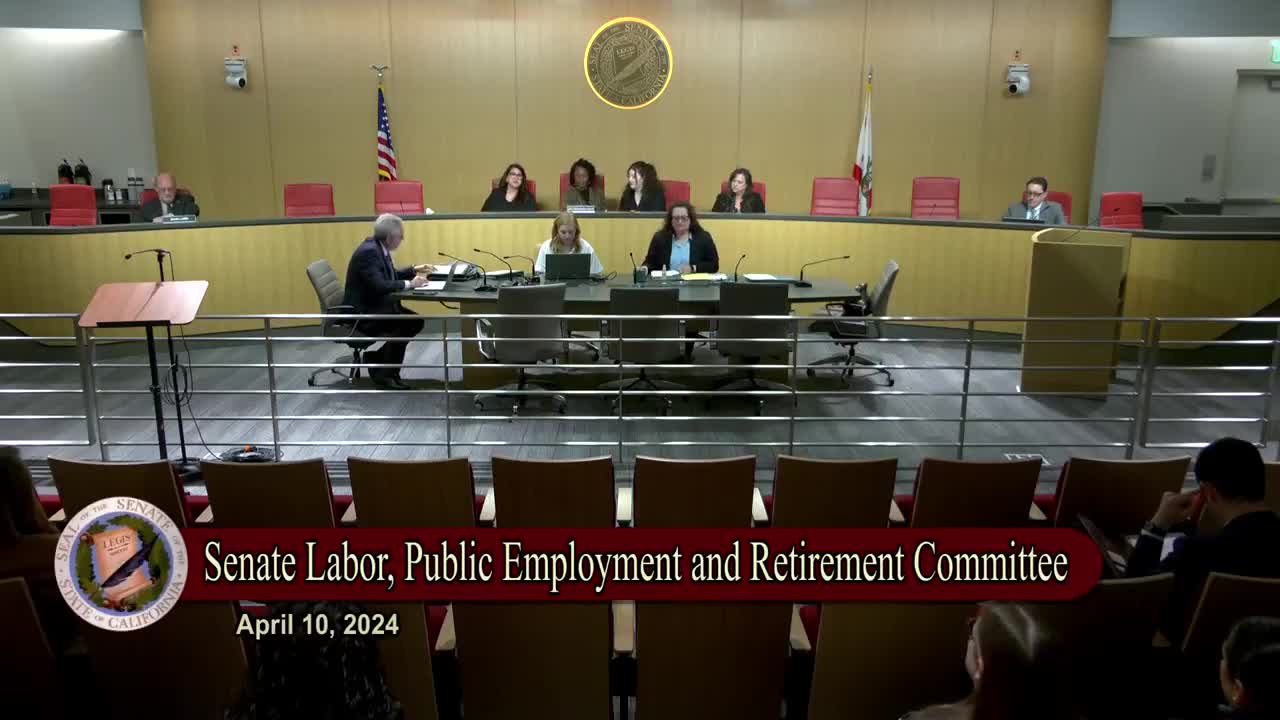
Bill Author

Bill Co-Author(s):