AB 758: Acupuncture: education and training programs.
- Session Year: 2015-2016
- House: Assembly
- Latest Version Date: 2015-02-25
The Acupuncture Licensure Act provides for the licensure and regulation of the practice of acupuncture by the Acupuncture Board within the Department of Consumer Affairs. The act, until January 1, 2017, requires the board to establish standards for the approval of schools and colleges offering education and training in the practice of an acupuncturist, as specified. The act, commencing January 1, 2017, defines an approved educational and training program, for purposes of licensure as an acupuncturist, as a school or college that: offers curriculum that has been submitted to and approved by the board and includes specified hours of didactic and laboratory training and supervised clinical instruction; is approved by the Bureau for Private Postsecondary Education or is the appropriate out-of-state governmental educational authority; and is accredited or granted candidacy status by the Accreditation Commission for Acupuncture and Oriental Medicine (ACAOM), or has submitted a letter of intent to pursue accreditation to the ACAOM, as specified. The act, commencing January 1, 2017, requires the board, within 30 days of receiving curriculum submitted by a school or college pursuant to these provisions, to review the curriculum, determine whether the curriculum satisfies the boards requirements, and notify the school or college, the ACAOM, and the bureau of whether the board has approved the curriculum.
This bill would include another accreditation agency recognized by the United States Department of Education as an alternative to the ACAOM in the above provisions. The bill would require the board to conduct site visits to each site of a school or college of acupuncture to inspect or reinspect the school or college for purposes of approval or continued approval of its training program, and to impose a fee for the site visits in an amount to recover direct reasonable regulatory costs incurred by the board in conducting the inspection and evaluation of the school or college.
(a)For purposes of this chapter, approved educational and training program means a school or college offering education and training in the practice of an acupuncturist that meets all of the following requirements:
(1)Offers curriculum that includes at least 3,000 hours of which at least 2,050 hours are didactic and laboratory training, and at least 950 hours are supervised clinical instruction. Has submitted that curriculum to the board, and has received board approval of the curriculum.
(2)Has received full institutional approval under Article 6 (commencing with Section 94885) of Chapter 8 of Part 59 of Division 10 of Title 3 of the Education Code in the field of traditional Asian medicine, or in the case of institutions located outside of this state, approval by the appropriate governmental educational authority using standards equivalent to those of Article 6 (commencing with Section 94885) of Chapter 8 of Part 59 of Division 10 of Title 3 of the Education Code.
(3)Meets any of the following:
(A)Is accredited by the Accreditation Commission for Acupuncture and Oriental Medicine. Medicine or another accreditation agency recognized by the United States Department of Education.
(B)Has been granted candidacy status by the Accreditation Commission for Acupuncture and Oriental Medicine. or another accreditation agency recognized by the United States Department of Education.
(C)Has submitted a letter of intent to pursue accreditation to the Accreditation Commission for Acupuncture and Oriental Medicine or another accreditation agency recognized by the United States Department of Education within 30 days of receiving full institutional approval pursuant to paragraph (2), and is granted candidacy status within three years of the date that letter was submitted.
(b)Within 30 days after receiving curriculum pursuant to paragraph (1), the board shall review the curriculum, determine whether the curriculum satisfies the requirements established by the board, and notify the school or college, the Accreditation Commission for Acupuncture and Oriental Medicine, any other accreditation agency recognized by the United States Department of Education, and Bureau of Private and Postsecondary Education of whether the board has approved the curriculum.
(c)This section shall become operative on January 1, 2017.
SEC. 2.Section 4939.5 is added to the Business and Professions Code, to read:4939.5.(a)The board shall conduct site visits to each site of a school or college of acupuncture to inspect or reinspect the school or college for purposes of approval or continued approval of its training program.
(b)The board shall impose a fee for the site visits in an amount to recover direct reasonable regulatory costs incurred by the board in conducting the inspection and evaluation of the school or college.
|
Date
|
Status
|
|---|---|
| Feb 1, 2016 | From committee: Filed with the Chief Clerk pursuant to Joint Rule 56. |
| Jan 31, 2016 | Died pursuant to Article IV, Sec. 10(c) of the Constitution. |
| Jan 12, 2016 | In committee: Set, second hearing. Failed passage. |
| Apr 28, 2015 | In committee: Set, first hearing. Hearing canceled at the request of author. |
| Mar 19, 2015 | Referred to Com. on B. & P. |
| Feb 26, 2015 | From printer. May be heard in committee March 28. |
| Feb 25, 2015 | Read first time. To print. |
|
Date
|
Description
|
Location
|
Votes
|
|
|---|---|---|---|---|
| Jan 12, 2016 | Do pass and be re-referred to the Committee on [Appropriations] | Assembly Standing Committee on Business and Professions |
Failed |
This list shows positions taken on this bill by organizations on the date displayed, which is linked to the original source.
Positions by individuals are not included.
Date of Hearing: January 12, 2016
ASSEMBLY COMMITTEE ON BUSINESS AND PROFESSIONS
Susan Bonilla, Chair
ABPCA Bill Id:AB 758
Author:Chau – As Introduced Ver:February 25, 2015
SUBJECT: Acupuncture: education and training programs.
SUMMARY: Allows acupuncture schools to receive approval from another accreditation agency recognized by the United States Department of Education (USDE) as an alternative to the Accreditation Commission for Acupuncture and Oriental Medicine (ACAOM), requires the California Acupuncture Board (CAB) to conduct site visits to acupuncture schools, and requires the CAB to impose a fee for the site visits.
EXISTING LAW:
- Provides for the licensure and regulation of the practice of acupuncture by the CAB within the Department of Consumer Affairs (DCA). (Business and Professions Code (BPC) § 4928 et seq.)
- Grants the CAB authority to establish standards for the approval of schools and colleges offering education and training in the practice of acupuncture, including standards for the faculty in those schools and colleges and tutorial programs. (BPC § 4939 et seq.)
- Defines an “approved educational and training program,” for purposes of licensure as an acupuncturist, as a school or college that meets the following: (BPC § 4927.5(a))
- Offers curriculum that has been submitted to and approved by the CAB and includes specified hours of didactic and laboratory training and supervised clinical instruction;
- Is approved by the Bureau of Private and Postsecondary Education (BPPE) or the appropriate out-of-state governmental educational authority; and,
- Is accredited by, granted candidacy status by, or has submitted a letter of intent to pursue accreditation to the ACAOM.
- Requires the CAB, until January 1, 2017, to investigate and evaluate each school or college applying for approval under BPC § 4939 and authorizes the CAB to utilize and contract with consultants to evaluate those training programs.
- Requires the CAB, commencing January 1, 2017, within 30 days of receiving curriculum from the school, to review a school’s curriculum and determine whether the curriculum satisfies the CAB’s requirements, and notify the school or college, the ACAOM, and the BPPE of whether the CAB has approved the curriculum. (BPC § 4927.5(b))
THIS BILL:
- Defines “approved educational and training program” as a school or college offering education and training in the practice of an acupuncturist that, among other things, meets any of the following:
- Is accredited by the ACAOM or another accreditation agency recognized by the USDE;
- Has been granted candidacy status by the ACAOM or another accreditation agency recognized by the USDE; or,
- Has submitted a letter of intent to pursue accreditation to the ACAOM or another accreditation agency recognized by the USDE within 30 days of receiving full institutional approval and is granted candidacy status within three years of the date the letter was submitted.
- Requires the CAB, within 30 days after receiving the curriculum, to review the curriculum, determine whether the curriculum satisfies the requirements established by the CAB, and notify the school or college, the ACAOM, any other accreditation agency recognized by the USDE, and the BPPE of whether the CAB has approved the curriculum.
- States that the section will become operative on January 1, 2017.
- Requires the CAB to conduct site visits to each site of a school or college of acupuncture to inspect or reinspect the school or college for purposes of approval or continued approval of its training program.
- Requires the CAB to impose a fee for the site visits in an amount to recover direct reasonable regulatory costs incurred by the CAB in conducting the inspection and evaluation of the school or college.
FISCAL EFFECT: Unknown. This bill is keyed fiscal by the Legislative Counsel.
COMMENTS:
Purpose. This bill is sponsored by the Council of Acupuncture and Oriental Medicine Associations. According to the author, “AB 758 strengthens California Acupuncture standards by requiring schools for acupuncture and Chinese medicine to receive accreditation by ACAOM or any [USDE] approved accrediting agency. To ensure compliance with state education and training standards, it also requires the CAB to conduct site visits.
Since the passage of [SB 1246] concerns have been raised among the acupuncture community about ACAOM and the removal of the authority for the CAB to perform site visits of schools… The CAB began conducting site visits of acupuncture schools in 2014 and found compliance issues with many of the 16 acupuncture schools they reviewed which are also accredited by ACAOM. Without CAB site visits acupuncture schools could go many years without being in compliance with state law without an ACAOM review to ensure compliance. Without changes to California law, we could weaken what are considered the highest acupuncture standards in the Nation.”
Background. In 2014, the Senate Committee on Business, Professions and Economic Development and the Assembly Committee on Business, Professions and Consumer Protection Committee (Committees) conducted joint sunset review oversight hearings to review nine regulatory entities, including the CAB. The Committees began their review of the licensing agencies in March 2014, and conducted two days of hearings. The resulting sunset bills were intended to implement Committee staff recommendations reflected in the background papers prepared for each agency that was reviewed. SB 1426 (Lieu), Chapter 397, Statutes of 2014, reflected the recommendations made for the CAB, including removing school approval authority from the CAB and requiring a national accreditor to take over the school accreditation process, and only granting the CAB a two year sunset date extension.
CAB School Approval. The CAB approves training programs at acupuncture schools and colleges, in particular, their curriculum programs, to ensure they meet the standards adopted by the CAB. The school approval process requires review of the application, governance, program curriculum, catalogs, admission policies, student and faculty policies and procedures, and financial solvency.
Due to several issues raised during the 2014 Sunset Review Oversight Hearings, including a failure to conduct site visits for 20 years, the Legislature voted to only allow the CAB to perform school site visits to review implementation of policies and procedures, facilities, and clinical training until January 1, 2017. Additionally, it is important to note that it is no longer common practice for licensing entities, under the DCA, to approve schools. In fact, only three licensing entities under DCA, including the CAB, solely conduct school approvals without a requirement for national accreditation. Most programs utilize a national accreditation organization to approve training programs.
ACAOM Accreditation. The ACAOM, founded in 1982, is the only national, USDE-approved accrediting agency for the field of acupuncture and oriental medicine. ACAOM is the only recognized accreditor for this profession, and as such has established de facto national standards for acupuncture training for both masters and doctoral level acupuncture programs and all ACAOM accredited and candidate programs are required to meet the applicable program standards, including the training standards described under Program of Study in ACAOM’s Accreditation Manual. While many other states defer to ACAOM accreditation as being a sufficient condition for applicants to take the state licensing exam, California has traditionally maintained authority to conduct its own school approval process. As of January 1, 2017, this will no longer be the case.
There are approximately 65 acupuncture schools throughout the U.S., 36 of which are approved by the CAB. Twenty one of the CAB-approved schools are located in California and 15 are located in other states. Sixty of the 65 schools are already accredited by the ACAOM.
In 2004, the Little Hoover Commission (LHC) conducted a comprehensive comparative analysis of the school approval processes of the ACAOM and the CAB. The LHC’s report found that the processes used by ACAOM appeared to be “superior” to the school approval process used by the CAB and could be used by the State to ensure the quality of education for potential licensees.
According to the Committees’ 2014 Sunset Review Background Paper, because the CAB performs its own school approvals, there are a number of consequences and problems. These include:
- Students who are educated in accredited schools, that are not approved by the CAB, receive only partial credit for their training. If they wish to gain licensure in California, they must complete a CAB approved training program.
- The CAB is slow to approve applications for schools located outside of California due to budget constraints.
- The CAB began conducting site visits in 2014, after a 20 year hiatus, and stated that because of staff vacancies, the process was moving slowly.
In the 2012 Sunset Review Background Paper to the CAB, the Committee staff wrote:
“…It should also be required that these acupuncture schools either have currently, or obtain within a reasonable time, accreditation from an accrediting agency recognized by the [USDE]. Especially since the accrediting process for these schools appears to be superior to that of the Board. At some time in the future, consideration could be given, based on the success of accreditation of these schools, to eliminating the [CAB's] responsibility and need for approving acupuncture educational programs.”
As a result of the sunset review recommendations from 2012 and 2014, the Committees thoroughly investigated the available USDE-approved acupuncture accrediting organizations. After a comprehensive investigation and review of the available evidence, the Committees decided to recommend ACAOM as the required accreditation entity for California acupuncture schools, which was enacted by SB 1246 (Lieu), Chapter 397, Statutes of 2014. The Legislature clearly indicated that using a national, USDE-approved acupuncture school accreditation agency will help free up the CAB’s time and resources to address the other salient issues identified during its prior sunset reviews.
ACAOM and USDE/NACIQI Review. In a letter to the Committees dated March 9, 2015, the National Guild for Acupuncture and Oriental Medicine discussed ACAOM’s 2011 USDE and National Advisory Committee on Institutional Quality and Integrity (NACIQI) review. The letter included editorial statements pointing out issues ACAOM was required to address in order to maintain USDE approval.
In response, ACAOM sent a letter to the Committees, dated March 26, 2015, to clarify and explain the issues. First, it explained, “The primary context of the letter refers to a perceived negative review ACAOM received in 2011 from the [USDE] and the [NACIQI]. ACAOM, like other accrediting agencies, is on a five-year recognition cycle with USDE… The last review was conducted in 2011, followed by a compliance report review in 2013 and the next comprehensive review for continuing recognition will occur in 2016.”
Among other things, ACAOM noted that the issues identified in the 2011 review have since been resolved. The NACIQI deemed ACAOM “fully compliant” in its June 2013 compliance review and ACAOM remains USDE approved. ACAOM’s next review will occur in 2016.
Prior Related Legislation. SB 1246 (Lieu), Chapter 397, Statutes of 2014, among other things, removed CAB's authority to approve schools and requires acupuncture schools to be accredited by the ACAOM and repealed the CAB's authority to investigate and evaluate each school or college applying for approval or continued approval.
SB 1236 (Price), Chapter 332, Statutes of 2012, extended the sunset date for the CAB and other boards under the DCA and the term of the Board's Executive Officer by two years, until January 1, 2015, and made technical and clarifying changes to statutes governing CAB-approved acupuncture training programs.
ARGUMENTS IN SUPPORT:
The Council of Acupuncture and Oriental Medicine Associations supports the bill and writes, “AB 758 will amend language in the Practice Act that was removed under SB 1246. Unfortunately, that 2014 bill will open California to a flood of graduates who wish to take the California Acupuncture Licensing Exam. A ‘free for all’ situation will reduce public safety and cause harm to our profession. Authority to regulate schools and graduates of those schools should remain within California instead of in the hands of an outside agency.”
The Asian Pacific Islander American Public Affairs Association writes in support, “California has the most acupuncture licensees and the most acupuncture schools in the nation. AB 758 will prevent California from becoming an “open” state for a graduate from any ACAOM approved school to become licensed in our state. California regulation of acupuncture must be conducted by a California regulatory agency.”
The American Association of Chinese Medicine and Acupuncture supports the bill and writes, “Protection of the public is the most fundamental mission of the [CAB]. California has the highest Acupuncture education and training standards in the nation. The California public is protected only when the training program for approval is finalized by our own California governmental agency. Without the authority of inspecting the school on site, CAB has no way to check whether the school carries out the approved curriculum properly.”
ARGUMENTS IN OPPOSITION:
The Council of Colleges of Acupuncture and Oriental Medicine writes in opposition to the bill, “The [Committee] was instrumental in 2014 in passing SB 1246 unanimously as did the full Assembly and Senate and every other legislative committee that considered this bill. AB 758 represents a direct effort to undermine the unanimous decision of the California legislature…As the committee is aware, apart from ACAOM, there is currently no other agency recognized by the USDE for professional accreditation of [acupuncture and oriental medicine (AOM)] schools and programs in the United States. No other AOM accrediting agency has a pending application of the [USDE] for such recognition. Regional accrediting agencies assess institutional capacity, without in depth review of curriculum, so it is important for AOM programs to have professional accreditation to ensure student learning outcomes and professional competencies are met by approved programs, as is the practice throughout professional/medical education…The Council’s member colleges that have been approved by the CAB are already undergoing oversight by ACAOM’s more rigorous accreditation process. The CAB’s duplicative attempts at oversight are not only unnecessary but a drain on the resources of the colleges, on the student who have to incur higher tuition to bear the burden of the additional costs of a dual regulatory regime, and on the patients at school clinics who have to incur higher costs to treatment.”
The California State Oriental Medical Association opposes the bill unless amended to require programmatic accreditation by a specialized agency recognized by the USDE, specifically it writes, “Effective in 2017… the Sunset Review bill limited the CAB’s role in educational oversight to establishing curricular requirements for acupuncture training programs. Accordingly, SB 1246 also eliminated the CAB’s authority to investigate and evaluate schools...Given that curricular reviews can be effectively performed via administrative desk checks by reviewing curricular checklists, syllabi and course catalogs, there is no discernible purpose for conducting site visits as part of this process. Recent CAB site visit reports indicate that the Board may already be stretching its regulatory authority by enforcing broadly and vaguely defined rules in an exceptionally specific and arbitrary fashion. This activity raises concerns regarding potential underground regulation. By extending site visit activities beyond the CAB’s 2017 reduction in regulatory scope, AB 758 heightens these concerns.”
The Southern California University of Health Sciences also opposes the bill and writes, “It is no secret that the CAB has been fraught with administrative and political difficulties for decades. SB 1246, by shunting CAB school approval power to the nationally recognized programmatic accreditor, brings a welcome change to the regulation of the profession of acupuncture in the State of California. The CAB has neither the professional educational expertise, nor the financial or staff resources to oversee California acupuncture school board approval.”
POLICY ISSUES FOR CONSIDERATION:
Sunset Review Recommendations of 2014. The intent of SB 1246 was to implement the recommendations made after the thorough sunset review process had been conducted. Further, the recommendations are consistent with recommendations made by the Little Hoover Commission who conducted a comparative analysis of the school approval processes of the ACAOM and the CAB in 2004. This bill would undo several of the solutions designed to rectify the identified problems with the CAB, including authorizing accreditation by any USDE national accreditation organization and reinstating the CAB’s authority to conduct school site visits.
In addition, the changes required by SB 1246 have not gone into effect—they will become operative on January 1, 2017— after the CAB is next reviewed by the joint oversight Committees in March of 2016. Ongoing discussions regarding the CAB and ACAOM school approval are taking place in preparation for the law to go into effect, and the Committees are working to resolve the CAB’s concerns with the loss of its school-approval authority. Therefore, this measure is premature.
Agency Transparency and Quality. The CAB and the sponsors of this bill argue that because ACAOM is not a “non-governmental agency,” there are transparency issues regarding ACAOM’s process. Further, the CAB argues that ACAOM’s school approval standards do not meet CAB’s own standards which are detailed in Title 16 California Code of Regulations § 1399.434-1399.436.
While ACAOM, and most other national accrediting organizations, are not required to meet the same open meeting and public document standards that the CAB must meet, almost all of ACAOM’s processes, procedures, and standards are publicly available. ACAOM has also been very forthcoming with producing documents and answering questions presented by the legislative policy committee staff.
Further, ACAOM’s standards are available for the Committees to examine, are developed through a public comment period, and are approved by the USDE. While CAB’s general standards are listed in its regulations, it has yet to produce the specific criteria it uses when approving schools. For instance, the CAB has criticized ACAOM’s clinical chart review process. However, when asked to produce the criteria for chart review that the CAB has been using during its school site visits, it was unable to.
The “Flood” of Out of State Acupuncturists. A popular concern raised by supporters of this measure is the possibility that the law, which will go into effect in 2017, will allow a flood of individuals from outside of California to take the California licensing examination. This is reflected in the form letters sent from various organizations and individuals as well as statements made by the CAB staff during public CAB meetings.
As was thoroughly discussed during the 2014 Sunset Review hearings, this is quite unlikely. The law states that the CAB must set the curriculum standards that acupuncture schools must adhere to. The California curriculum standards are the most stringent in the nation. As such, out of state applicants would be unable to apply for licensure in this state because the curriculum standards in their academic programs are not equivalent to those required by the CAB. In essence, the out of state institutions would need to completely change their curriculum standards in order to conform to California’s curriculum standards so that their graduates would be eligible to take the California licensing examination.
Accreditation by any USDE Approved Entity. On its face, the request for the law to be expanded to include school approval by any entity approved by the USDE may not seem problematic. However, if this happens, the current standards for school approval would be lessened—which is contradictory to what the CAB indicates it desires. For example, this bill would allow a number of regional accreditors, who focus broadly on approving an institution e.g. faculty and premises, not the specifics of an acupuncture program, to be the entity that approves acupuncture schools and programs. This is contradictory to what the CAB claims it desires, e.g. a regional accreditor that would not be involved in the specifics of a program, such as the clinical chart review.
Is there a need for the bill? One has only to review the prior sunset review and other reports about the CAB to understand that this regulatory board has had consistent problems with its functioning. Though many of the problems are in the past, and the new CAB is making some changes to the way the board operates, the sponsor continues to pressure the Legislature to make no changes, and in this instance, reverse the recent changes that have not yet taken effect and that the Legislature has mandated.
Based on the aforementioned reasons, in combination with the fact that the CAB is currently undergoing sunset review by this committee, that the Legislature made a decision to remove the CAB’s school approval authority and require accreditation of all acupuncture schools by the ACAOM, as well as the fact that the law has not even been implemented, it is not clear that the need for this bill has been established.
REGISTERED SUPPORT:
Council of Acupuncture and Oriental Medicine Associations (sponsor)
Alhambra Medical University
American Acupuncture Political Action Committee
American Association of Acupuncture & Traditional Chinese Medicine
American Association of Chinese Medicine and Acupuncture
American Institute of Acupuncture Orthopedics & Traumatology
American Traditional Chinese Medicine Society
Asian Pacific Islander American Public Affairs Association
California Acupuncture Medical Association
California Acupuncture Oriental Medicine Association
California Acupuncturists United Association
California Labor Federation
Chinese Herb Trade Association of America
Heilongjiang University of Chinese Medicine
Korean Acupuncture & Asian Medicine Association
National Guild of Acupuncture and Oriental Medicine
Office and Professional Employees International Union
United Acupuncture Association
UPC Medical Supplies, Inc.
Yuin University
Over 35 individuals
REGISTERED OPPOSITION:
Acupuncture & Integrative Medicine College
American College of Traditional Chinese Medicine
AOMA Graduate School of Integrative Medicine
Atlantic Institute of Oriental Medicine
California Institute of Integral Studies
California State Oriental Medical Association
Council of Colleges of Acupuncture and Oriental Medicine
Emperor’s College
National College of Natural Medicine
Southern California University of Health Sciences
Analysis Prepared by: Le Ondra Clark Harvey, Ph.D. and Vincent Chee / B. & P. / (916) 319-3301
AB 758
Page 7
Date of Hearing: April 28, 2015
ASSEMBLY COMMITTEE ON BUSINESS AND PROFESSIONS
Susan Bonilla, Chair
AB 758
(Chau) – As Introduced February 25, 2015
SUBJECT: Acupuncture: education and training programs.
SUMMARY: Allows acupuncture schools to receive approval from another accreditation agency recognized by the United States Department of Education (USDE) as an alternative to the Accreditation Commission for Acupuncture and Oriental Medicine (ACOAM), requires the California Acupuncture Board (CAB) to conduct site visits to acupuncture schools, and requires the CAB to impose a fee for the site visits.
EXISTING LAW:
Provides for the licensure and regulation of the practice of acupuncture by the CAB within the Department of Consumer Affairs (DCA). (Business and Professions Code (BPC) § 4928 et seq.)
Grants the CAB authority to establish standards for the approval of schools and colleges offering education and training in the practice of acupuncture, including standards for the faculty in those schools and colleges and tutorial programs. (BPC § 4939 et seq.)
Defines an “approved educational and training program,” for purposes of licensure as an acupuncturist, as a school or college that meets the following: (BPC § 4927.5(a))
Offers curriculum that has been submitted to and approved by the CAB and includes specified hours of didactic and laboratory training and supervised clinical instruction;
Is approved by the Bureau of Private and Postsecondary Education (BPPE) or the appropriate out-of-state governmental educational authority; and,
Is accredited or granted candidacy status by the ACAOM, or has submitted a letter of intent to pursue accreditation to the ACAOM.
Requires the CAB, until January 1, 2017, to investigate and evaluate each school or college applying for approval under BPC § 4939 and may utilize and contract with consultants to evaluate those training programs.
Requires the CAB, commencing January 1, 2017, to review a school’s curriculum, within 30 days of receiving curriculum from the school, determine whether the curriculum satisfies the CAB’s requirements, and notify the school or college, the ACAOM, and the BPPE of whether the CAB has approved the curriculum. (BPC § 4927.5(b))
THIS BILL:
Defines “approved educational and training program” as a school or college offering education and training in the practice of an acupuncturist that, among other things, meets any of the following:
Is accredited by the ACOAM or another accreditation agency recognized by the USDE;
Has been granted candidacy status by the ACOAM or another accreditation agency recognized by the USDE; and,
Has submitted a letter of intent to pursue accreditation to the ACOAM or another accreditation agency recognized by the USDE within 30 days of receiving full institutional approval, and is granted candidacy status within three years of the date the letter was submitted.
Requires the CAB, within 30 days after receiving the curriculum, to review the curriculum, determine whether the curriculum satisfies the requirements established by the CAB, and notify the school or college, the ACOAM, any other accreditation agency recognized by the USDE, and the BPPE of whether the CAB has approved the curriculum.
States that the section will become operative on January 1, 2017.
Requires the CAB to conduct site visits to each site of a school or college of acupuncture to inspect or reinspect the school or college for purposes of approval or continued approval of its training program.
Requires the CAB to impose a fee for the site visits in an amount to recover direct reasonable regulatory costs incurred by the CAB in conducting the inspection and evaluation of the school or college.
FISCAL EFFECT: Unknown. This bill has been keyed fiscal by the Legislative Counsel.
COMMENTS:
Purpose. This bill is sponsored by the Council of Acupuncture and Oriental Medicine Associations. According to the author, “AB 758 strengthens California Acupuncture standards by requiring schools for acupuncture and Chinese medicine to receive accreditation by ACAOM or any [USDE] approved accrediting agency. To ensure compliance with state education and training standards, it also requires the CAB to conduct site visits.
Since the passage of [SB 1246] concerns have been raised among the acupuncture community about ACAOM and the removal of the authority for the CAB to perform site visits of schools… The CAB began conducting site visits of acupuncture schools in 2014 and found compliance issues with many of the 16 acupuncture schools they reviewed which are also accredited by ACAOM. Without CAB site visits acupuncture schools could go many years without being in compliance with state law without an ACAOM review to ensure compliance. Without changes to California law, we could weaken what are considered the highest acupuncture standards in the Nation.”
Background. In 2014, the Senate Business and Professions Committee and the Assembly Business, Professions and Consumer Protection Committee (Committees) conducted joint oversight hearings to review nine regulatory entities, including the CAB. The Committees began their review of the licensing agencies in March 2014, and conducted two days of hearings. The resulting sunset bills were intended to implement Committee staff recommendations reflected in the Background Papers prepared for each agency reviewed. SB 1426 (Lieu), Chapter 397, Statutes of 2014, reflected the recommendations for CAB.
CAB School Approval. The CAB approves training programs at acupuncture schools and colleges, in particular, their curriculum programs, to ensure they meet the standards adopted by the CAB. The school approval process requires review of the application, governance, program curriculum, catalogs, admission policies, student and faculty policies and procedures, and financial solvency.
Due to several issues raised during the 2014 Sunset Review Oversight Hearings, including a failure to conduct site visits for 20 years, the CAB will only perform school site visits to review implementation of policies and procedures, facilities and clinical training until January 1, 2017. Additionally, it is important to note that it is no longer common practice for licensing entities, under the DCA, to approve schools versus utilize a private national accreditation organization to approve training programs.
ACAOM Accreditation. The ACAOM is the only national, USDE-approved accrediting agency for the field of acupuncture and oriental (Asian) medicine. While many other states defer to ACAOM accreditation as being a sufficient condition for applicants to take the licensing exam in their states, California has traditionally conducted its own school approval process. As of January 1, 2017, this will no longer be the case.
There are approximately 65 acupuncture schools throughout the U.S., 36 of which are approved by the CAB. Twenty one of the CAB-approved schools are located in California and 15 are located in other states. Sixty of the 65 schools are already accredited by the ACAOM.
In 2004, the Little Hoover Commission (LHC) conducted a comprehensive comparative analysis of the school approval processes of the ACAOM and the CAB. The LHC’s report found that the processes used by ACAOM appeared to be “superior” to the school approval process used by the CAB and could be used by the state to ensure the quality of education for potential licensees.
According to the Committees’ 2014 Sunset Review Background Paper, because CAB performs its own school approvals, there are a number of consequences and problems. These include:
Students who are educated in accredited schools that are not approved by CAB receive only partial credit for their training. If they wish to gain licensure in California, they must complete a CAB approved training program.
The CAB is slow to approve applications for schools located outside of California due to budget constraints.
The CAB had just began conducting site visits in 2014, after a 20 year hiatus; and stated that because of staff vacancies, the process was moving slowly.
In the 2012 Sunset Review Background Paper to the CAB, the Committee wrote:
“…It should also be required that these acupuncture schools either have currently, or obtain within a reasonable time, accreditation from an accrediting agency recognized by the United States Department of Education. Especially since the accrediting process for these schools appears to be superior to that of the Board. At some time in the future, consideration could be given, based on the success of accreditation of these schools, to eliminating the Board’s responsibility and need for approving acupuncture educational programs.”
As a result of the sunset review recommendations from 2012 and 2014, the Committees thoroughly investigated the available USDE-approved acupuncture accrediting organizations. After a comprehensive investigation and review of the available evidence, the Committees decided to recommend ACOAM as the required accreditation entity for California acupuncture schools, which was enacted by SB 1246 (Lieu), Chapter 397, Statutes of 2014. The Legislature clearly indicated that using a national, USDE-approved acupuncture school accreditation agency will help free up the CAB’s time and resources to address the other salient issues identified during its prior sunset reviews.
ACOAM and USDE/NACIQI Review. In a letter to the Committees dated March 9, 2015, the National Guild for Acupuncture and Oriental Medicine discussed ACAOM’s 2011 USDE and National Advisory Committee on Institutional Quality and Integrity (NACIQI) review. The letter included editorial statements pointing out issues ACAOM was required to address in order to maintain USDE approval.
In response, ACAOM sent a letter to the Committees, dated March 26, 2015, to clarify and explain the issues. First, it explained, “The primary context of the letter refers to a perceived negative review ACAOM received in 2011 from the [USDE] and the [NACIQI]. ACAOM, like other accrediting agencies, is on a five-year recognition cycle with USDE… The last review was conducted in 2011, followed by a compliance report review in 2013 and the next comprehensive review for continuing recognition will occur in 2016.”
Among other things, ACAOM noted that the issues identified in the 2011 review have since been resolved. The NACIQI deemed ACAOM “fully compliant” in its June 2013 compliance review and ACAOM remains USDE approved. ACAOM’s next review will occur in 2016.
Prior Related Legislation. SB 1246 (Lieu), Chapter 397, Statutes of 2014, among other things, removed CAB's authority to approve schools and requires acupuncture schools to be accredited by the ACOAM and repealed the CAB's authority to investigate and evaluate each school or college applying for approval or continued approval.
SB 1236 (Price), Chapter 332, Statutes of 2012, extended the sunset date for the CAB and other boards under the DCA and the term of the Board's Executive Officer by two years, until January 1, 2015, and made technical and clarifying changes to statutes governing CAB-approved acupuncture training programs.
ARGUMENTS IN SUPPORT:
The Council of Acupuncture and Oriental Medicine Associations supports the bill and writes, “AB 758 will amend language in the Practice Act that was removed last year under SB 1246. Unfortunately, that 2014 bill will open California to a flood of graduates who wish to take the California Acupuncture Licensing Exam. A “free for all” situation will reduce public safety and cause harm to our profession. Authority to regulate schools and graduates of those schools and graduates of those schools should remain within California instead of in the hands of an outside agency.”
The Asian Pacific Islander American Public Affairs Association writes in support, “California has the most acupuncture licensees and the most acupuncture schools in the nation. AB 758 will prevent California from becoming an “open” state for a graduate from any ACAOM approved school to become licensed in our state. California regulation of acupuncture must conducted by a California regulatory agency.”
ARGUMENTS IN OPPOSITION:
The Council of Colleges of Acupuncture and Oriental Medicine writes in opposition to the bill, “The [Committee] was instrumental in 2014 in passing SB 1246 unanimously as did the full Assembly and Senate and every other legislative committee. AB 758 represents a direct effort to undermine the unanimous decision of the California legislature…As the committee is aware, apart from ACAOM, there is currently no other agency recognized by the USDOE for professional accreditation of [acupuncture] schools and programs in the United States. Regional accrediting agencies assess institutional capacity.”
The California State Oriental Medical Association opposes the bill unless amended to require programmatic accreditation by a specialized agency recognized by the USDE, specifically it writes, “Effective in 2017, last year’s Sunset Review bill limited the CAB’s role in educational oversight to establishing curricular requirements for acupuncture training programs. Accordingly, SB 1246 also eliminated the CAB’s authority to investigate and evaluate schools...Given that curricular reviews can be effectively performed via administrative desk checks, there is no discernible purpose for conducting site visits as part of this process. Finally, recent CAB site visit reports indicate that it may already be stretching its regulatory authority by enforcing broadly defined rules in an exceptionally specific and arbitrary fashion. This enforcement activity raises concerns regarding potential underground regulation. By extending site visit activities beyond the CAB’s 2017 reduction in regulatory scope, AB 758 heightens these concerns.”
POLICY ISSUES FOR CONSIDERATION:
Sunset Review Recommendations. The intent of SB 1246 was to implement the recommendations made by the Committee staff after the thorough sunset review process had been conducted. This bill would undo several of the solutions designed to rectify the identified problems with the CAB, including requiring the CAB to use a national accreditation organization and remove the CAB’s authority to conduct school site visits.
In addition, the changes have not gone into effect—they will become operative on January 1, 2017—when the CAB is next reviewed by the joint oversight Committees. Ongoing discussions regarding the CAB and ACAOM school approval are taking place in preparation for the law to go into effect, and the Committees are working to resolve the CAB’s concerns with the loss of its school-approval authority. Therefore, this measure is premature.
Agency Transparency and Quality. The CAB and the sponsors of this bill argue that because ACAOM is not a “non-governmental agency,” there are transparency issues regarding ACAOM’s process. Further, the CAB argues that ACAOM’s school approval standards do not meet CAB’s own standards which are detailed in Title 16 California Code of Regulations § 1399.434-1399.436.
While ACAOM, and most other national accrediting organizations, are not required to meet the same open meeting and public document standards that the CAB must meet, almost all of ACAOM’s processes, procedures, and standards are publicly available. ACAOM has also been very forthcoming with producing documents and answering questions presented by the legislative policy Committees.
Further, ACAOM’s standards are available for the Committees to examine, are developed through a public comment period, and are approved by the USDE. While CAB’s general standards are listed in its regulations, it has yet to produce the specific criteria it uses when approving schools. For instance, the CAB has criticized ACAOM’s clinical chart review process. However, when asked to produce the criteria for chart review that the CAB has been using on recent school site visits, it was unable to.
The “Flood” of Out of State Acupuncturists. A popular concern raised by supporters of this measure is the possibility that the law, which will go into effect in 2017, will allow a flood of individuals from outside of California to take the California licensing examination. This is reflected in the form letters sent in from various organizations and individuals as well as statements made by the CAB staff during public CAB meetings last year.
As was thoroughly discussed during last year’s Sunset Review hearings, this is quite unlikely. The law states that the CAB must set the curriculum standards that acupuncture schools must adhere to. The California curriculum standards are the most stringent in the nation. As such, out of state applicants would be unable to apply for licensure in this state because the curriculum standards in their academic programs are not equivalent to those required by the CAB. In essence, the out of state institutions would need to completely change their curriculum standards in order to conform to California’s curriculum standards so that their graduates would be eligible to take the California licensing examination.
Accreditation by a USDE Approved Entity. On its face, the request for the law to be expanded to include school approval by any entity approved by the USDE may not seem problematic. However, if this happens, the current standards for school approval would be lessened—which is contradictory to what the CAB indicates it desires. For example, this bill would allow a number of regional accreditors, who focus broadly on approving an institution e.g. faculty and premises, not the specifics of an acupuncture program, to be the entity that approves acupuncture schools and programs. This is contradictory to what the CAB claims it desires e.g. a regional accreditor would not be involved in the specifics of a program such as the clinical chart review etc.
Based on the aforementioned reasons, in combination with the recent review of the CAB, the Legislature’s recent decision to remove the CAB’s school approval authority and require accreditation of all acupuncture schools by the ACAOM, as well as the fact that the law has not even been implemented, it is not clear that the need for this bill has been established.
REGISTERED SUPPORT:
Council of Acupuncture and Oriental Medicine Associations (sponsor)
Alhambra Medical University
American Association of Chinese Medicine and Acupuncture
Asian Pacific Islander American Public Affairs Association
California Acupuncture Medical Association
California Acupuncture Oriental Medicine Association
California Labor Federation
Chinese Herb Trade Association of America
Heilongjiang University of Chinese Medicine
Korean Acupuncture & Asian Medicine Association
National Guild of Acupuncture and Oriental Medicine
Office and Professional Employees International Union
United Acupuncture Association
Over 35 individuals
REGISTERED OPPOSITION:
Acupuncture & Integrative Medicine College
American College of Traditional Chinese Medicine
California State Oriental Medical Association
Council of Colleges of Acupuncture and Oriental Medicine
Emperor’s College
Southern California University of Health Sciences
Analysis Prepared by: Le Ondra Clark Harvey, Ph.D. and Vincent Chee / B. & P. / (916) 319-3301
Discussed in Hearing
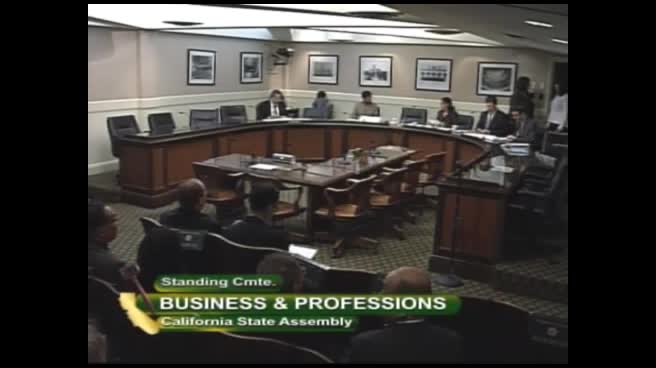 33MIN
Assembly Standing Committee on Business and Professions
Bill Author

Bill Co-Author(s):