SB 1136: California Global Warming Solutions Act of 2006: report.
- Session Year: 2023-2024
- House: Senate
- Latest Version Date: 2024-08-19
Current Status:
Passed
(2024-08-19: Chaptered by Secretary of State. Chapter 184, Statutes of 2024.)
Introduced
In Committee
First Chamber
In Committee
Second Chamber
Enacted
The California Global Warming Solutions Act of 2006 designates the State Air Resources Board as the state agency charged with monitoring and regulating sources of emissions of greenhouse gases. The act requires the state board to prepare and approve a scoping plan for achieving the maximum technologically feasible and cost-effective reductions in greenhouse gas emissions and to update the scoping plan at least once every 5 years. Existing law requires the state board to present an informational report on the reported emissions of greenhouse gases, criteria pollutants, and toxic air contaminants from all sectors covered by the scoping plan at least once a year at a hearing of the Joint Legislative Committee on Climate Change Policies.
This bill would instead require that informational report to cover topics related to the scoping plan, as directed by the Joint Legislative Committee on Climate Change Policies.
(a)The Joint Legislative Committee on Climate Change Policies is hereby created. The committee shall ascertain facts and make recommendations to the Legislature concerning the states programs, policies, and investments related to climate change. Those recommendations shall be shared with other appropriate legislative standing committees, including the Assembly Committee on Budget and the Senate Committee on Budget and Fiscal Review.
(b)The joint committee shall consist of at least three Members of the Senate and at least three Members of the Assembly who shall be selected in the manner provided for in the Joint Rules of the Senate and Assembly. The membership shall reflect the perspectives of multiple standing committees.
(c)The chair of the State Air Resources Board shall annually appear before the joint committee to present the state boards annual informational report on topics related to the scoping plan, as required pursuant to subdivision (b) of Section 38531 of the Health and Safety Code. This presentation may be done at a hearing that is held jointly with the relevant Assembly and Senate standing committees.
(d)In recognition of the technical complexity involved in reviewing the states climate policies, the joint committee may establish a panel of experts to provide an independent analysis of the states policies to better inform the joint committees recommendations.
SEC. 2.Section 38531 of the Health and Safety Code is amended to read:38531.(a)(1)The state board shall make available, and update at least annually, on its internet website the emissions of greenhouse gases and criteria pollutants for each facility that reports to the state board pursuant to Section 38530. The data shall be displayed in a manner that illustrates the changes in emissions levels over time.
(2)No later than January 1, 2018, the state board shall add toxic air contaminant emissions to the information made available pursuant to paragraph (1).
(3)The criteria pollutant and toxic air contaminant emissions data for stationary sources shall be based on data provided to the state board by air pollution control and air quality management districts collected pursuant to Section 39607 and Chapter 3 (commencing with Section 44340) of Part 6 of Division 26.
(b)At least once a year at a hearing of the Joint Legislative Committee on Climate Change Policies, the state board shall present an informational report on topics related to the scoping plan pursuant to Sections 38561 and 38562.7, as directed by the joint committee. The report shall include a discussion of the regulatory requirements, initiatives, and other programs that influence the implementation of the scoping plan. The report also may include recommendations from the state board for legislative action and consideration.
(a)The Joint Legislative Committee on Climate Change Policies is hereby created. The committee shall ascertain facts and make recommendations to the Legislature concerning the states programs, policies, and investments related to climate change. Those recommendations shall be shared with other appropriate legislative standing committees, including the Assembly Committee on Budget and the Senate Committee on Budget and Fiscal Review.
(b)The joint committee shall consist of at least three Members of the Senate and at least three Members of the Assembly who shall be selected in the manner provided for in the Joint Rules of the Senate and Assembly. The membership shall reflect the perspectives of multiple standing committees.
(c)The chair of the State Air Resources Board shall annually appear before the joint committee to present the state boards annual informational report on the reported emissions of greenhouse gases, criteria pollutants, and toxic air contaminants from all sectors covered by topics related to the scoping plan, as required pursuant to subdivision (b) of Section 38531 of the Health and Safety Code. This presentation may be done at a hearing that is held jointly with the relevant Assembly and Senate standing committees.
(d)In recognition of the technical complexity involved in reviewing the states climate policies, the joint committee may establish a panel of experts to provide an independent analysis of the states policies to better inform the joint committees recommendations.
SEC. 2.Section 38531 of the Health and Safety Code is amended to read:38531.(a)(1)The state board shall make available, and update at least annually, on its Internet Web site internet website the emissions of greenhouse gases and criteria pollutants for each facility that reports to the state board pursuant to Section 38530. The data shall be displayed in a manner that illustrates the changes in emissions levels over time.
(2)No later than January 1, 2018, the state board shall add toxic air contaminant emissions to the information made available pursuant to paragraph (1).
(3)The criteria pollutant and toxic air contaminant emissions data for stationary sources shall be based on data provided to the state board by air pollution control and air quality management districts collected pursuant to Section 39607 and Chapter 3 (commencing with Section 44340) of Part 6 of Division 26.
(b)At least once a year at a hearing of the Joint Legislative Committee on Climate Change Policies, the state board shall present an informational report on the reported emissions of greenhouse gases, criteria pollutants, and toxic air contaminants from all sectors covered by the scoping plan prepared pursuant to Section 38561. topics related to the scoping plan pursuant to Sections 38561 and 38562.7, as directed by the joint committee. The report shall evaluate emission trends and include a discussion of the regulatory requirements, initiatives, and other programs that may influence those trends. influence the implementation of the scoping plan. The report also may include recommendations from the state board for legislative action and consideration.
|
Date
|
Status
|
|---|---|
| Aug 19, 2024 | Chaptered by Secretary of State. Chapter 184, Statutes of 2024. |
| Aug 19, 2024 | Approved by the Governor. |
| Aug 13, 2024 | Enrolled and presented to the Governor at 2 p.m. |
| Aug 8, 2024 | In Senate. Ordered to engrossing and enrolling. |
| Aug 8, 2024 | Read third time. Passed. (Ayes 72. Noes 0. Page 6250.) Ordered to the Senate. |
| Jul 3, 2024 | Read second time. Ordered to consent calendar. |
| Jul 2, 2024 | From committee: Do pass. Ordered to consent calendar. (Ayes 15. Noes 0.) (July 2). |
| Jun 18, 2024 | From committee: Do pass and re-refer to Com. on APPR. with recommendation: To consent calendar. (Ayes 10. Noes 0.) (June 17). Re-referred to Com. on APPR. |
| Jun 3, 2024 | Referred to Com. on NAT. RES. |
| May 16, 2024 | In Assembly. Read first time. Held at Desk. |
| May 16, 2024 | Read third time. Passed. (Ayes 34. Noes 0. Page 3918.) Ordered to the Assembly. |
| Apr 9, 2024 | Read second time. Ordered to third reading. |
| Apr 8, 2024 | From committee: Be ordered to second reading pursuant to Senate Rule 28.8. |
| Mar 28, 2024 | Set for hearing April 8. |
| Mar 20, 2024 | From committee: Do pass and re-refer to Com. on APPR. (Ayes 6. Noes 0. Page 3379.) (March 20). Re-referred to Com. on APPR. |
| Mar 5, 2024 | Set for hearing March 20. |
| Feb 21, 2024 | Referred to Com. on E.Q. |
| Feb 14, 2024 | From printer. May be acted upon on or after March 15. |
| Feb 13, 2024 | Introduced. Read first time. To Com. on RLS. for assignment. To print. |
|
Date
|
Description
|
Location
|
Votes
|
|
|---|---|---|---|---|
| Aug 8, 2024 | SB 1136 Stern Consent Calendar Second Day Regular Session | Assembly Floor |
Passed |
|
| Jul 2, 2024 | Do pass. To Consent Calendar. | Assembly Standing Committee on Appropriations |
Passed |
|
| Jun 17, 2024 | Do pass and be re-referred to the Committee on [Appropriations] with recommendation: To Consent Calendar | Assembly Standing Committee on Natural Resources |
Passed |
|
| May 16, 2024 | Senate 3rd Reading SB1136 Stern et al. | Senate Floor |
Passed |
|
| Mar 20, 2024 | Do pass, but first be re-referred to the Committee on [Appropriations] | Senate Standing Committee on Environmental Quality |
Passed |
This list shows positions taken on this bill by organizations on the date displayed, which is linked to the original source.
Positions by individuals are not included.
Date of Hearing: July 2, 2024
ASSEMBLY COMMITTEE ON APPROPRIATIONS
Buffy Wicks, Chair
SBPCA Bill Id:SB 1136
Author:(Stern) – As Introduced Ver:February 13, 2024
Policy Committee: | Natural Resources | Vote: | 10 - 0 |
|
| ||
|
|
Urgency: No State Mandated Local Program: No Reimbursable: No
SUMMARY:
This bill revises topics in the Air Resources Board’s (ARB) annual report and presentation to the Joint Legislative Committee on Climate Change Policies (JLCCCP).
FISCAL EFFECT:
ARB reports minor and absorbable costs.
COMMENTS:
- Purpose. According to the author:
It is imperative that the Legislature provide vigilant oversight during the transition to a zero-emission economy. California is on the bleeding edge of this difficult period of time: attempting to curb emissions, adapt to climate change, retain jobs and grow clean industries, keep electricity and transportation costs affordable, and improve health outcomes for overburdened residents all at the same time. Going forward, decisions made about climate change and various climate programs are critical to the entire state economy, and this Committee plays a role in tracking the progress.
- Background. The California Global Warming Solutions Act of 2006 requires ARB to adopt a scoping plan for achieving the maximum technologically feasible and cost-effective greenhouse gas (GHG) reductions and to update the plan at least every 5 years. Current law establishes the JLCCCP to ascertain facts and make recommendations to the Legislature concerning the state’s programs, policies, and investments related to climate change. The joint committee is required to consist of at least three members of the Senate and at least three members of the Assembly. The ARB chair is required to annually appear before the joint committee to present ARB’s annual informational report on the reported emissions of GHGs, criteria pollutants, and toxic air contaminants from all sectors covered by the scoping plan. Current law requires ARB’s annual report to evaluate emission trends and include a discussion of the regulatory requirements, initiatives, and other programs that may influence those trends. This bill changes the focus of ARB’s annual report and presentation from GHGs, criteria pollutants, and toxic air contaminants to “topics related to” the scoping plan.
Analysis Prepared by: Jacqueline Kinney / APPR. / (916) 319-2081
Date of Hearing: June 17, 2024
ASSEMBLY COMMITTEE ON NATURAL RESOURCES
Isaac G. Bryan, Chair
SBPCA Bill Id:SB 1136
Author:(Stern) – As Introduced Ver:February 13, 2024
SENATE VOTE: 34-0
SUBJECT: California Global Warming Solutions Act of 2006: report
SUMMARY: Revises topics in the Air Resources Board’s (ARB) annual report and presentation to the Joint Legislative Committee on Climate Change Policies (JLCCCP).
EXISTING LAW establishes the JLCCCP to ascertain facts and make recommendations to the Legislature concerning the state’s programs, policies, and investments related to climate change. Requires the joint committee to consist of at least three Members of the Senate and at least three Members of the Assembly. Requires the ARB chair to annually appear before the joint committee to present ARB’s annual informational report on the reported emissions of greenhouse gases (GHGs), criteria pollutants, and toxic air contaminants from all sectors covered by the scoping plan. Requires ARB’s annual report to evaluate emission trends and include a discussion of the regulatory requirements, initiatives, and other programs that may influence those trends. (Government Code 9147.10 and Health and Safety Code 38531)
THIS BILL changes the focus of ARB’s annual report and presentation from GHGs, criteria pollutants, and toxic air contaminants to “topics related to” the scoping plan.
FISCAL EFFECT: According to the Senate Appropriations Committee, pursuant to Senate Rule 28.8, negligible state costs.
COMMENTS:
Author’s statement:
As we learned in the recent Joint Committee on Climate Change Policies hearing on the state’s climate programs, it is imperative that the Legislature provide vigilant oversight during the transition to a zero-emission economy. California is on the bleeding edge of this difficult period of time: attempting to curb emissions, adapt to climate change, retain jobs and grow clean industries, keep electricity and transportation costs affordable, and improve health outcomes for overburdened residents all at the same time. Going forward, decisions made about climate change and various climate programs are critical to the entire state economy, and this Committee plays a role in tracking the progress.
REGISTERED SUPPORT / OPPOSITION:
Support
None on file
Opposition
None on file
Analysis Prepared by: Lawrence Lingbloom / NAT. RES. /
SENATE RULES COMMITTEE Office of Senate Floor Analyses (916) 651-1520 Fax: (916) 327-4478 | SB 1136 |
THIRD READING
Bill No: SB 1136
Author: Stern (D), et al.
Introduced: 2/13/24
SENATE ENVIRONMENTAL QUAL. COMMITTEE: 6-0, 3/20/24
AYES: Allen, Gonzalez, Hurtado, Menjivar, Nguyen, Skinner
NO VOTE RECORDED: Dahle
SENATE APPROPRIATIONS COMMITTEE: Senate Rule 28.8
SUBJECT: California Global Warming Solutions Act of 2006: report
SOURCE: Author
DIGEST:
This bill updates the requirements on what the chair of California Air Resources Board (CARB) must report annually before the Joint Legislative Committee on Climate Change Policies (JLCCCP) to go beyond emission trends in specified air pollutants.
ANALYSIS:
Existing law:
- States that under the California Global Warming Solutions Act of 2006 (Health and Safety Code (HSC) §38500 et seq.):
- Establishes the CARB as the state agency responsible for monitoring and regulating sources emitting greenhouse gases.
- Requires CARB to approve a statewide greenhouse gas (GHG) emissions limit equivalent to the statewide GHG emissions level in 1990 to be achieved by 2020 (AB 32, Nunez, Chapter 488, Statutes of 2006) and to ensure that statewide GHG emissions are reduced to at least 40% below the 1990 level by 2030. (SB 32, Pavley, Chapter 249, Statutes of 2016)
- Requires CARB to prepare and approve a scoping plan for achieving the maximum technologically feasible and cost-effective reductions in GHG emissions and to update the scoping plan at least once every five years.
- States, under the California Climate Crisis Act—AB 1279 (Muratsuchi, Chapter 337, Statutes of 2022), that it is the policy of the state to achieve net zero GHG emissions no later than 2045, and to ensure that by 2045 statewide anthropogenic GHG emissions are reduced to at least 85% below the 1990 level.
- Establishes the JLCCCP to ascertain facts and make recommendations to the Legislature concerning the state’s programs, policies, and investments related to climate change. (Government Code § 9147.10)
- Requires the chair of CARB to appear annually before JLCCCP to present an annual informational report on the reported emissions of GHGs, criteria pollutants, and toxic air contaminants from all sectors covered by the scoping plan. (Government Code § 9147.10)
This bill changes the topics to be covered by the CARB Chair at the annual JLCCCP meeting to more broadly encompass topics related to the Scoping Plan, as directed by the committee.
Background
- Independent oversight. To empower CARB in its efforts to reduce statewide GHGs, the Legislature has granted broad authority to the Board under the AB 32 framework and carried that forward with SB 32 and AB 1279. These bills focus on targets and leave many implementation details to CARB. But the Legislature also made clear, by packaging AB 197 (E. Garcia, Chapter 250, Statutes of 2016) with SB 32, that greater authority would only be delegated if it came with expanded Legislative oversight and accountability. In recognition of the immense complexity of the work underway, the Legislature added two new legislatively appointed ex officio members to the CARB Board, and further strengthened its independent oversight of CARB’s efforts to achieve the state’s climate goals.
At this point, there are three different entities who the Legislature has tasked with understanding and reporting on the highly complex work being done at CARB on achieving our climate goals:- JLCCCP: This joint committee was established by AB 197 to ascertain facts and make recommendations to the Legislature concerning the state's programs, policies, and investments related to climate change.
- Legislative Analyst’s Office (LAO): Since 1941, the LAO has served as the "eyes and ears" for the Legislature to ensure that the executive branch is implementing legislative policy in a cost efficient and effective manner. AB 398 (E. Garcia, Chapter 135, Statutes of 2017) further required the LAO to annually report to the Legislature on the economic impacts and benefits of specified GHG emissions targets.
- Independent Emissions Market Advisory Council (IEMAC): Established by AB 398, the IEMAC analyzes the environmental and economic performance of the state’s cap-and-trade program and other relevant climate policies, then reports its findings to CARB and the JLCCCP.
- JLCCCP: This joint committee was established by AB 197 to ascertain facts and make recommendations to the Legislature concerning the state's programs, policies, and investments related to climate change.
Comments
- Purpose of Bill. According to the author, “As we learned in the recent Joint Committee on Climate Change Policies hearing on the state’s climate programs, it is imperative that the Legislature provide vigilant oversight during the transition to a zero-emission economy. California is on the bleeding edge of this difficult period of time: attempting to curb emissions, adapt to climate change, retain jobs and grow clean industries, keep electricity and transportation costs affordable, and improve health outcomes for overburdened residents all at the same time. Going forward, decisions made about climate change and various climate programs are critical to the entire state economy, and this Committee plays a role in tracking the progress.”
- “… and then we’ll get into the conversation about the Scoping Plan.” An illustrative example of why this bill is needed can be found in Chair Liane Randolph’s remarks at the March 1, 2023, joint hearing of the JLCCCP, this committee, and Assembly Natural Resources Committee. While the primary focus of the hearing was about the recent update to the 2022 Scoping Plan Update, it also served as the annually required report on emission trends. As such, roughly the first five minutes of her remarks were dedicated to delivering updates on trends in criteria pollutants, toxic air contaminants, and GHGs. While important and statutorily required, those were not the topics members subsequently showed the most interest in.
This bill imagines future JLCCCP hearings that will be able to focus more on pertinent issues to members of the committee, rather than those specific trends. Given the inherent difficulty in coordinating participants from the Legislature, CARB, and outside experts for a hearing, it is laudable that this bill attempts to make the most effective use of the limited time available. - How can we make the most of these hearings? While it is impossible to predict year-to-year what topics will be most timely and relevant, it seems wise to provide CARB more latitude in what to discuss. As written today, this bill would be expected to obviate the need for the kind of emission trend preamble one of the annual JLCCCP hearings must have today, which could make the hearings a more valuable use of everyone’s time.
But, beyond removing that requirement, what more could the Legislature gain from these hearings? Although care should be taken to avoid the hearings becoming overly prescriptive or lengthy, it may be beneficial to ensure CARB will provide the Legislature with actionable, relevant information. Some ideas for consideration could include any number of, but need not be limited to:- Major policy updates since the last year. Between implementation of recent legislation and other regulatory efforts, CARB is responsible for a large number of actions each year that are expected to reduce emissions. In order to give legislators a sense of the magnitude of the work being done at CARB and the emission reduction impacts thereof, it may be helpful to briefly detail new efforts the Legislature may not yet be aware of.
- Advancements in jobs and justice. As detailed in the most recent JLCCCP hearing of March 11, 2024, high-road job opportunities and environmental justice are highly desirable features of California climate policies. Uplifting progress on those fronts alongside reports on GHG emission reductions could be helpful in centering those efforts and concerns.
- Implementation plan. At this point, California’s success in reaching its climate goals is more dependent on the implementation of existing policies and directives than on setting or updating specific targets. This has been discussed in this committee and JLCCCP alike in the past several years. While a comprehensive assessment of all programs being implemented across all agencies to achieve the state’s climate goals would be well beyond the scope of any one hearing, this is clearly a topic of interest to members of the Legislature and may merit specific inclusion in this legislation.
- In state benefits of climate programs. Many of California’s climate programs are strictly in-state operations; the state’s authority to regulate activities ends at the border, after all. Nevertheless, programs like the Low-Carbon Fuel Standard (LCFS) provide incentives in the form of valuable credit generation to out-of-state entities. This may in part be attributable to past concerns about LCFS conflicting with the Dormant Commerce Clause by privileging in-state low-carbon fuel production. As a result, this may be a necessary feature of the program, but it would still be useful for legislators to know what portion of LCFS credit sale revenues are kept within California. Particularly when the costs of deficits are passed along to consumers in the form of higher fuel prices, it will be important to understand where the program’s benefits are most concentrated.
- Best and most current available GHG emissions data & trajectory towards goals. There is an inherent trade-off in data quality vs timeliness. By the time GHG emission data can be definitively verified, it may be years past its collection date. There have been efforts to address this through budget items (i.e. Budget Item 3900-001-3237 of 2021 required CARB to, for three years, post and report to the Legislature a preliminary estimate of the prior-year GHG emissions), but that remains an imperfect solution.
It would be invaluable for CARB and the Legislature to operate off of the same set of facts when engaging in discussions about climate programs, particularly as they pertain to meeting our GHG emission reduction goals. Rather than requiring independent experts or third parties to provide context and updates, perhaps an annual JLCCCP hearing could be an appropriate venue for CARB to definitively tell us where we are and how fast we are going.
- Major policy updates since the last year. Between implementation of recent legislation and other regulatory efforts, CARB is responsible for a large number of actions each year that are expected to reduce emissions. In order to give legislators a sense of the magnitude of the work being done at CARB and the emission reduction impacts thereof, it may be helpful to briefly detail new efforts the Legislature may not yet be aware of.
FISCAL EFFECT: Appropriation: No Fiscal Com.: Yes Local: No
SUPPORT: (Verified 4/8/24)
None received
OPPOSITION: (Verified 4/8/24)
Prepared by: Eric Walters / E.Q. / (916) 651-4108
4/10/24 12:38:08
**** END ****
SENATE COMMITTEE ON ENVIRONMENTAL QUALITY
Senator Allen, Chair
2023 - 2024 Regular
Bill No: SB 1136
Author: | Stern | ||
Version: | 2/13/2024 | Hearing Date: | 3/20/2024 |
Urgency: | No | Fiscal: | Yes |
Consultant: | Eric Walters | ||
SUBJECT: California Global Warming Solutions Act of 2006: report
DIGEST: This bill updates the requirements on what the chair of California Air Resources Board (CARB) must report annually before the Joint Legislative Committee on Climate Change Policies (JLCCCP) to go beyond emission trends in specified air pollutants.
ANALYSIS:
Existing law:
- Under the California Global Warming Solutions Act of 2006 (Health and Safety Code (HSC) §38500 et seq.):
- Establishes the California Air Resources Board (CARB) as the state agency responsible for monitoring and regulating sources emitting greenhouse gases.
- Requires CARB to approve a statewide greenhouse gas (GHG) emissions limit equivalent to the statewide GHG emissions level in 1990 to be achieved by 2020 (AB 32, 2006) and to ensure that statewide GHG emissions are reduced to at least 40% below the 1990 level by 2030 (SB 32, 2016).
- Requires CARB to prepare and approve a scoping plan for achieving the maximum technologically feasible and cost-effective reductions in GHG emissions and to update the scoping plan at least once every five years.
- States, under the California Climate Crisis Act—AB 1279 (Muratsuchi, Chapter 337, Statutes of 2022), that it is the policy of the state to achieve net zero GHG emissions no later than 2045, and to ensure that by 2045 statewide anthropogenic GHG emissions are reduced to at least 85% below the 1990 level.
- Establishes the Joint Legislative Committee on Climate Change Policies (JLCCCP) to ascertain facts and make recommendations to the Legislature concerning the state’s programs, policies, and investments related to climate change. (Government Code § 9147.10)
- Requires the chair of CARB to appear annually before JLCCCP to present an annual informational report on the reported emissions of GHGs, criteria pollutants, and toxic air contaminants from all sectors covered by the scoping plan. (GOV § 9147.10)
This bill changes the topics to be covered by the CARB Chair at the annual JLCCCP meeting to more broadly encompass topics related to the Scoping Plan, as directed by the committee.
Background
- Independent oversight. To empower CARB in its efforts to reduce statewide GHGs, the Legislature has granted broad authority to the Board under the AB 32 framework and carried that forward with SB 32 and AB 1279. These bills focus on targets and leave many implementation details to CARB. But the Legislature also made clear, by packaging AB 197 (E. Garcia, 2016) with SB 32, that greater authority would only be delegated if it came with expanded Legislative oversight and accountability. In recognition of the immense complexity of the work underway, the Legislature added two new legislatively appointed ex officio members to the CARB Board, and further strengthened its independent oversight of CARB’s efforts to achieve the state’s climate goals.
At this point, there are three different entities who the Legislature has tasked with understanding and reporting on the highly complex work being done at CARB on achieving our climate goals:- JLCCCP: This joint committee was established by AB 197 (E. Garcia, 2016) to ascertain facts and make recommendations to the Legislature concerning the state's programs, policies, and investments related to climate change.
- Legislative Analyst’s Office (LAO): Since 1941, the LAO has served as the "eyes and ears" for the Legislature to ensure that the executive branch is implementing legislative policy in a cost efficient and effective manner. AB 398 (E. Garcia, 2017) further required the LAO to annually report to the Legislature on the economic impacts and benefits of specified GHG emissions targets.
- Independent Emissions Market Advisory Council (IEMAC): Established by AB 398 (E. Garcia, 2017), the IEMAC analyzes the environmental and economic performance of the state’s cap-and-trade program and other relevant climate policies, then reports its findings to CARB and the JLCCCP.
- JLCCCP: This joint committee was established by AB 197 (E. Garcia, 2016) to ascertain facts and make recommendations to the Legislature concerning the state's programs, policies, and investments related to climate change.
Comments
- Purpose of Bill. According to the author, “As we learned in the recent Joint Committee on Climate Change Policies hearing on the state’s climate programs, it is imperative that the Legislature provide vigilant oversight during the transition to a zero-emission economy. California is on the bleeding edge of this difficult period of time: attempting to curb emissions, adapt to climate change, retain jobs and grow clean industries, keep electricity and transportation costs affordable, and improve health outcomes for overburdened residents all at the same time. Going forward, decisions made about climate change and various climate programs are critical to the entire state economy, and this Committee plays a role in tracking the progress.”
- “… and then we’ll get into the conversation about the Scoping Plan.” An illustrative example of why this bill is needed can be found in Chair Liane Randolph’s remarks at the 3/1/2023 joint hearing of the JLCCCP, this committee, and Assembly Natural Resources Committee. While the primary focus of the hearing was about the recent update to the 2022 Scoping Plan Update, it also served as the annually required report on emission trends. As such, roughly the first five minutes of her remarks were dedicated to delivering updates on trends in criteria pollutants, toxic air contaminants, and GHGs. While important and statutorily required, those were not the topics members subsequently showed the most interest in.
This bill imagines future JLCCCP hearings that will be able to focus more on pertinent issues to members of the committee, rather than those specific trends. Given the inherent difficulty in coordinating participants from the Legislature, CARB, and outside experts for a hearing, it is laudable that SB 1136 attempts to make the most effective use of the limited time available. - How can we make the most of these hearings? While it is impossible to predict year-to-year what topics will be most timely and relevant, it seems wise to provide CARB more latitude in what to discuss. As written today, SB 1136 would be expected to obviate the need for the kind of emission trend preamble one of the annual JLCCCP hearings must have today, which could make the hearings a more valuable use of everyone’s time.
But, beyond removing that requirement, what more could the Legislature gain from these hearings? Members of the committee are encouraged to share their opinions with the author of this measure for possible consideration. Although care should be taken to avoid the hearings becoming overly prescriptive or lengthy, it may be beneficial to ensure CARB will provide the Legislature with actionable, relevant information. Some ideas for consideration could include any number of, but need not be limited to:- Major policy updates since the last year. Between implementation of recent legislation and other regulatory efforts, CARB is responsible for a large number of actions each year that are expected to reduce emissions. In order to give legislators a sense of the magnitude of the work being done at CARB and the emission reduction impacts thereof, it may be helpful to briefly detail new efforts the Legislature may not yet be aware of.
- Advancements in jobs and justice. As detailed in the most recent JLCCCP hearing of March 11, 2024, high-road job opportunities and environmental justice are highly desirable features of California climate policies. Uplifting progress on those fronts alongside reports on GHG emission reductions could be helpful in centering those efforts and concerns.
- Implementation plan. At this point, California’s success in reaching its climate goals is more dependent on the implementation of existing policies and directives than on setting or updating specific targets. This has been discussed in this committee and JLCCCP alike in the past several years. While a comprehensive assessment of all programs being implemented across all agencies to achieve the state’s climate goals would be well beyond the scope of any one hearing, this is clearly a topic of interest to members of the Legislature and may merit specific inclusion in this legislation.
- In state benefits of climate programs. Many of California’s climate programs are strictly in-state operations; the state’s authority to regulate activities ends at the border, after all. Nevertheless, programs like the Low-Carbon Fuel Standard (LCFS) provide incentives in the form of valuable credit generation to out-of-state entities. This may in part be attributable to past concerns about LCFS conflicting with the Dormant Commerce Clause by privileging in-state low-carbon fuel production. As a result, this may be a necessary feature of the program, but it would still be useful for legislators to know what portion of LCFS credit sale revenues are kept within California. Particularly when the costs of deficits are passed along to consumers in the form of higher fuel prices, it will be important to understand where the program’s benefits are most concentrated.
- Best and most current available GHG emissions data & trajectory towards goals. There is an inherent trade-off in data quality vs timeliness. By the time GHG emission data can be definitively verified, it may be years past its collection date. There have been efforts to address this through budget items (i.e. Budget Item 3900-001-3237 of 2021 required CARB to, for three years, post and report to the Legislature a preliminary estimate of the prior-year GHG emissions), but that remains an imperfect solution.
It would be invaluable for CARB and the Legislature to operate off of the same set of facts when engaging in discussions about climate programs, particularly as they pertain to meeting our GHG emission reduction goals. Rather than requiring independent experts or third parties to provide context and updates, perhaps an annual JLCCCP hearing could be an appropriate venue for CARB to definitively tell us where we are and how fast we are going.
- Major policy updates since the last year. Between implementation of recent legislation and other regulatory efforts, CARB is responsible for a large number of actions each year that are expected to reduce emissions. In order to give legislators a sense of the magnitude of the work being done at CARB and the emission reduction impacts thereof, it may be helpful to briefly detail new efforts the Legislature may not yet be aware of.
- Future direction. As the chair of the JLCCCP, the author of SB 1136 is undoubtedly well positioned to assess what would and would not be useful for the committee’s future hearings. Nevertheless, he should continue to engage this committee and keep staff apprised of developments to this bill. If the committee chooses to pass this measure today, the author is expected to continue engaging with stakeholders and amending the bill.
Regardless of whether future amendments are specifically discussed in this analysis, there is an expectation the scope of the bill will remain the content of what CARB is required to report to JLCCCP annually. If, in the course of negotiating and developing this legislation, the scope of the bill expands significantly, this committee reserves the right to potentially hear the bill again to ensure committee members remain supportive of the measure.
SOURCE:
Author
SUPPORT:
None received
OPPOSITION:
None received
END --
Discussed in Hearing
View Older Hearings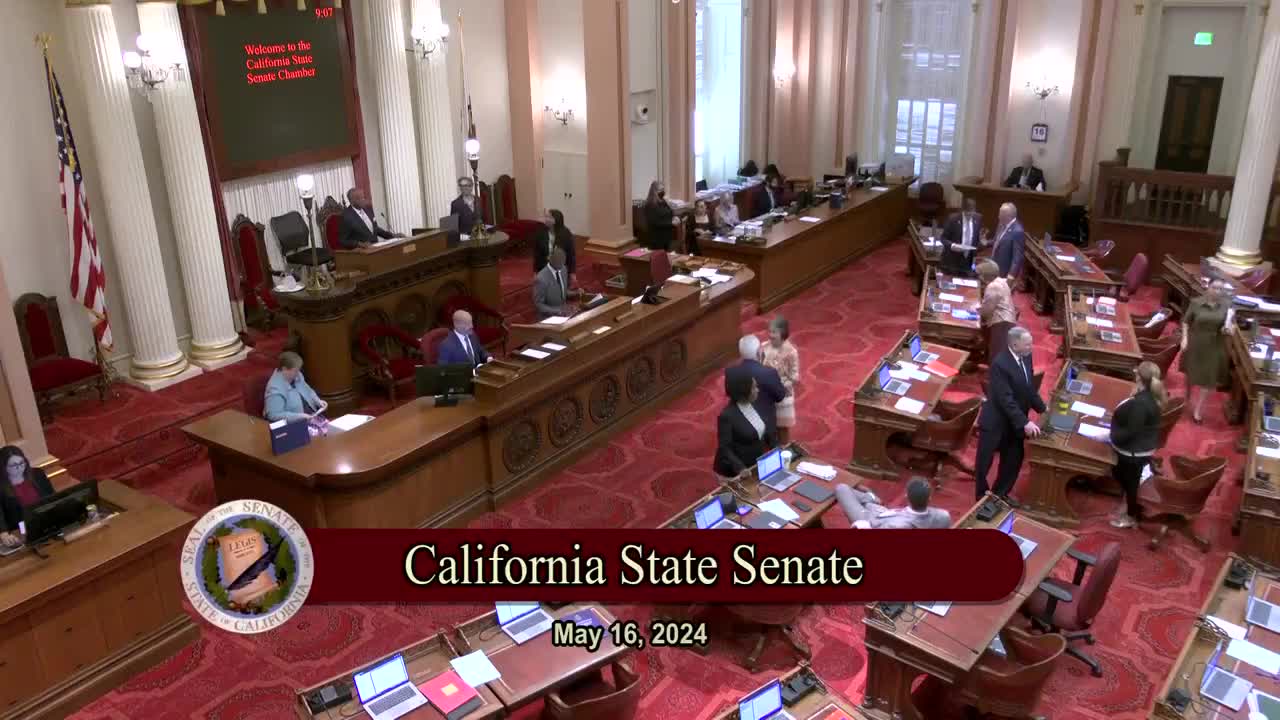
Bill Author