SB 1156: Groundwater sustainability agencies: conflicts of interest: financial interest disclosures.
- Session Year: 2023-2024
- House: Senate
- Latest Version Date: 2024-09-22
Current Status:
Passed
(2024-09-22: Chaptered by Secretary of State. Chapter 458, Statutes of 2024.)
Introduced
In Committee
First Chamber
In Committee
Second Chamber
Enacted
Existing law, the Sustainable Groundwater Management Act, requires all groundwater basins designated as high- or medium-priority basins by the Department of Water Resources to be managed under a groundwater sustainability plan or coordinated groundwater sustainability plans, except as specified. Existing law requires a groundwater sustainability plan to be developed and implemented for each medium- or high-priority basin by a groundwater sustainability agency. Existing law authorizes any local agency or combination of local agencies overlying a groundwater basin to decide to become a groundwater sustainability agency for that basin, as provided.
The Political Reform Act of 1974 prohibits a public official from making, participating in making, or attempting to use their official position to influence a governmental decision in which they know or have reason to know that they have a financial interest, as defined. The act requires specified public officials, including elected state officers, judges and court commissioners, members of certain boards and commissions, other state and local public officials, and candidates for these positions to file statements of economic interests, annually and at other specified times, that disclose their investments, interests in real property, income, and business positions. The Fair Political Practices Commission is the filing officer for such statements filed by statewide elected officers and candidates and other specified public officials.
This bill would require members of the board of directors and the executive, as defined, of a groundwater sustainability agency to file statements of economic interests, according to the filing requirements described above, with the Fair Political Practices Commission using the Commissions online system for filing statements of economic interests.
Existing law makes a knowing or willful violation of the Political Reform Act of 1974 a misdemeanor and subjects offenders to criminal penalties. By expanding the scope of an existing crime, this bill would impose a state-mandated local program.
The California Constitution requires the state to reimburse local agencies and school districts for certain costs mandated by the state. Statutory provisions establish procedures for making that reimbursement.
This bill would provide that no reimbursement is required by this act for a specified reason.
The Political Reform Act of 1974, an initiative measure, provides that the Legislature may amend the act to further the acts purposes upon a 2/3 vote of each house of the Legislature and compliance with specified procedural requirements.
This bill would declare that it furthers the purposes of the act.
Existing law, the Sustainable Groundwater Management Act, requires all groundwater basins designated as high- or medium-priority basins by the Department of Water Resources to be managed under a groundwater sustainability plan or coordinated groundwater sustainability plans, except as specified. Existing law requires a groundwater sustainability plan to be developed and implemented for each medium- or high-priority basin by a groundwater sustainability agency. Existing law authorizes any local agency or combination of local agencies overlying a groundwater basin to decide to become a groundwater sustainability agency for that basin, as provided.
The Political Reform Act of 1974 prohibits a public official from making, participating in making, or attempting to use their official position to influence a governmental decision in which they know or have reason to know that they have a financial interest, as defined. The act requires specified public officials, including elected state officers, judges and court commissioners, members of certain boards and commissions, other state and local public officials, and candidates for these positions to file statements of economic interests, annually and at other specified times, that disclose their investments, interests in real property, income, and business positions. The Fair Political Practices Commission is the filing officer for such statements filed by statewide elected officers and candidates and other specified public officials.
This bill would require members of the executive team, board of directors, and other groundwater management decision makers directors and the executive, as defined, of a groundwater sustainability agencies agency to file statements of economic interests interests, according to the filing requirements described above. The bill would require that these statements be filed with the Fair Political Practices Commission, and would require the commission to establish guidelines and procedures for the submission and review of the statements. above, with the Fair Political Practices Commission using the Commissions online system for filing statements of economic interests.
Existing law makes a knowing or willful violation of the Political Reform Act of 1974 a misdemeanor and subjects offenders to criminal penalties. By expanding the scope of an existing crime, this bill would impose a state-mandated local program.
The California Constitution requires the state to reimburse local agencies and school districts for certain costs mandated by the state. Statutory provisions establish procedures for making that reimbursement.
This bill would provide that no reimbursement is required by this act for a specified reason.
The Political Reform Act of 1974, an initiative measure, provides that the Legislature may amend the act to further the acts purposes upon a 2/3 vote of each house of the Legislature and compliance with specified procedural requirements.
This bill would declare that it furthers the purposes of the act.
Existing law, the Sustainable Groundwater Management Act, requires all groundwater basins designated as high- or medium-priority basins by the Department of Water Resources to be managed under a groundwater sustainability plan or coordinated groundwater sustainability plans, except as specified. Existing law requires a groundwater sustainability plan to be developed and implemented for each medium- or high-priority basin by a groundwater sustainability agency. Existing law authorizes any local agency or combination of local agencies overlying a groundwater basin to decide to become a groundwater sustainability agency for that basin, as provided.
Existing provisions of the The Political Reform Act of 1974 prohibit prohibits a public official from making, participating in making, or attempting to use their official position to influence a governmental decision in which they know or have reason to know that they have a financial interest, as defined. The act requires specified public officials, including elected state officers, judges and court commissioners, members of certain boards and commissions, other state and local public officials, and candidates for these positions to file statements of economic interests, annually and at other specified times, that disclose their investments, interests in real property, income, and business positions. The Fair Political Practices Commission is the filing officer for such statements filed by statewide elected officers and candidates and other specified public officials. However, existing law permits a public official to make or participate in the making of a governmental decision, even if the public official knows or has reason to know that the official has a financial interest, if the officials participation is legally required for the action or decision to be made. Existing law makes a knowing or willful violation of the act a misdemeanor and subjects offenders to criminal penalties.
This bill would require members of the executive team, board of directors, and other groundwater management decision makers of groundwater sustainability agencies to annually disclose any economic or financial interests pursuant to the Political Reform Act of 1974 that may reasonably be considered to affect their decision-making related to groundwater management, as provided. Because it would expand the scope of a crime, this bill would impose a state-mandated local program. file statements of economic interests according to the filing requirements described above. The bill would require that these statements be filed with the Fair Political Practices Commission Commission, and would require the commission to establish guidelines and procedures for the submission and review of those disclosures. The bill would authorize the commission to investigate and take appropriate enforcement actions for violations of the disclosure requirements. the statements.
Existing law makes a knowing or willful violation of the Political Reform Act of 1974 a misdemeanor and subjects offenders to criminal penalties. By expanding the scope of an existing crime, this bill would impose a state-mandated local program.
The California Constitution requires the state to reimburse local agencies and school districts for certain costs mandated by the state. Statutory provisions establish procedures for making that reimbursement.
This bill would provide that no reimbursement is required by this act for a specified reason.
The Political Reform Act of 1974, an initiative measure, provides that the Legislature may amend the act to further the acts purposes upon a 2/3 vote of each house of the Legislature and compliance with specified procedural requirements.
This bill would declare that it furthers the purposes of the act.
Existing law, the Sustainable Groundwater Management Act, requires all groundwater basins designated as high- or medium-priority basins by the Department of Water Resources to be managed under a groundwater sustainability plan or coordinated groundwater sustainability plans, except as specified. Existing law requires a groundwater sustainability plan to be developed and implemented for each medium- or high-priority basin by a groundwater sustainability agency. Existing law authorizes any local agency or combination of local agencies overlying a groundwater basin to decide to become a groundwater sustainability agency for that basin, as provided.
Existing provisions of the Political Reform Act of 1974 prohibit a public official from making, participating in making, or attempting to use their official position to influence a governmental decision in which they know or have reason to know that they have a financial interest, as defined. However, existing law permits a public official to make or participate in the making of a governmental decision, even if the public official knows or has reason to know that the official has a financial interest, if the officials participation is legally required for the action or decision to be made. Existing law makes a knowing or willful violation of the act a misdemeanor and subjects offenders to criminal penalties.
This bill would require members of the executive team, board of directors, and other groundwater management decision makers of groundwater sustainability agencies to annually disclose any economic or financial interests pursuant to the Political Reform Act of 1974 that may reasonably be considered to affect their decision-making related to groundwater management, as provided. Because it would expand the scope of a crime, this bill would impose a state-mandated local program. The bill would require the Fair Political Practices Commission to establish guidelines and procedures for the submission and review of those disclosures. The bill would authorize the commission to investigate and take appropriate enforcement actions for violations of the disclosure requirements.
The California Constitution requires the state to reimburse local agencies and school districts for certain costs mandated by the state. Statutory provisions establish procedures for making that reimbursement.
This bill would provide that no reimbursement is required by this act for a specified reason.
The Legislature finds and declares it is essential to establish mechanisms that promote transparency, prevent conflicts of interest, and ensure accountability within groundwater sustainability agencies to safeguard the sustainable management of groundwater resources.
SEC. 2.Section 87200.5 is added to the Government Code, to read:87200.5.(a)Members of the board of directors and the executive of a groundwater sustainability agency shall file statements of economic interests in accordance with this article with the Commission using the Commissions online system for filing statements of economic interests.
(b)For purposes of this section, executive means the executive director, general manager, or other equivalent position of the groundwater sustainability agency.
SEC. 3.No reimbursement is required by this act pursuant to Section 6 of Article XIIIB of the California Constitution because the only costs that may be incurred by a local agency or school district will be incurred because this act creates a new crime or infraction, eliminates a crime or infraction, or changes the penalty for a crime or infraction, within the meaning of Section 17556 of the Government Code, or changes the definition of a crime within the meaning of Section 6 of Article XIIIB of the California Constitution.
SEC. 4.The Legislature finds and declares that this act furthers the purposes of the Political Reform Act of 1974 within the meaning of subdivision (a) of Section 81012 of the Government Code.
The Legislature finds and declares it is essential to establish mechanisms that promote transparency, prevent conflicts of interest, and ensure accountability within groundwater sustainability agencies to safeguard the sustainable management of groundwater resources.
SEC. 2.Section 87200.5 is added to the Government Code, to read:87200.5.(a)(1)Members of the executive team, the board of directors, and other groundwater management decision makers directors and the executive of a groundwater sustainability agencies agency shall file statements of economic interests in accordance with this article that disclose any financial interests that may reasonably be considered to affect their decision-making related to groundwater management. with the Commission using the Commissions online system for filing statements of economic interests.
(2)The statements of economic interests required by this section shall be filed with the Commission in a format specified by the Commission.(b)The statements of economic interests required by this section shall include, but not be limited to, information on all of the following:(1)Investments, ownership, or financial interests in entities engaged in groundwater related activities or that may be impacted by groundwater related activities.(2)Receipts of gifts, loans, or other economic benefits due to the persons role in groundwater management.(3)Other financial interests that may reasonably influence decision-making pursuant to Article 1 (commencing with Section 87100) or this article.(c)(1)The Commission shall establish guidelines and procedures for the submission and review of statements of economic interests required by this section.(2)The Commission may investigate and take appropriate enforcement actions for violations of this section.(b)For purposes of this section, executive means the executive director, general manager, or other equivalent position of the groundwater sustainability agency.
SEC. 3.No reimbursement is required by this act pursuant to Section 6 of Article XIIIB of the California Constitution because the only costs that may be incurred by a local agency or school district will be incurred because this act creates a new crime or infraction, eliminates a crime or infraction, or changes the penalty for a crime or infraction, within the meaning of Section 17556 of the Government Code, or changes the definition of a crime within the meaning of Section 6 of Article XIIIB of the California Constitution.
SEC. 4.The Legislature finds and declares that this act furthers the purposes of the Political Reform Act of 1974 within the meaning of subdivision (a) of Section 81012 of the Government Code.
REVISIONS: HeadingLine 2.The Legislature finds and declares it is essential to establish mechanisms that promote transparency, prevent conflicts of interest, and ensure accountability within groundwater sustainability agencies to safeguard the sustainable management of groundwater resources.
SEC. 2.Section 87200.5 is added to the Government Code, to read:87200.5.(a)(1)Members of the executive team, the board of directors, and other groundwater management decision makers of groundwater sustainability agencies shall file statements of economic interests in accordance with this article that disclose any financial interests that may reasonably be considered to affect their decision-making related to groundwater management.
(2)The statements of economic interests required by this section shall be filed with the Commission in a format specified by the Commission.
(b)The statements of economic interests required by this section shall include, but not be limited to, information on all of the following:
(1)Investments, ownership, or financial interests in entities engaged in groundwater related activities or that may be impacted by groundwater related activities.
(2)Receipts of gifts, loans, or other economic benefits due to the persons role in groundwater management.
(3)Other financial interests that may reasonably influence decision-making pursuant to Article 1 (commencing with Section 87100) or this article.
(c)(1)The Commission shall establish guidelines and procedures for the submission and review of statements of economic interests required by this section.
(2)The Commission may investigate and take appropriate enforcement actions for violations of this section.
SEC. 2.Section 10724.1 is added to the Water Code, to read:10724.1.(a)(1)Members of the executive team, the board of directors, and other groundwater management decision makers of groundwater sustainability agencies shall annually disclose any economic or financial interests as required pursuant to Article 2 (commencing with Section 87200) of Chapter 7 of Title 9 of the Government Code that may reasonably be considered to affect their decision-making related to groundwater management.(2)The disclosures shall be submitted to the Fair Political Practices Commission in a format specified by the commission.(b)The disclosure shall include, but not be limited to, information on all of the following:(1)Investments, ownership, or financial interests in entities engaged in groundwater related activities or that may be impacted by groundwater related activities.(2)Receipts of gifts, loans, or other economic benefits due to the persons role in groundwater management.(3)Other economic or financial interests that may reasonably influence decision-making pursuant to Article 1 (commencing with Section 87100) of, and Article 2 (commencing with Section 87200) of, Chapter 7 of Title 9 of the Government Code.(c)(1)The Fair Political Practices Commission shall establish guidelines and procedures for the submission and review of disclosures required pursuant to this section.(2)The commission may investigate and take appropriate enforcement actions for violations of the disclosure requirements.(d)Failure to comply with the disclosure requirements pursuant to this section may result in penalties pursuant to Chapter 11 (commencing with Section 91000) of Title 9 of the Government Code.SEC. 3.No reimbursement is required by this act pursuant to Section 6 of Article XIIIB of the California Constitution because the only costs that may be incurred by a local agency or school district will be incurred because this act creates a new crime or infraction, eliminates a crime or infraction, or changes the penalty for a crime or infraction, within the meaning of Section 17556 of the Government Code, or changes the definition of a crime within the meaning of Section 6 of Article XIIIB of the California Constitution.
SEC. 4.The Legislature finds and declares that this act furthers the purposes of the Political Reform Act of 1974 within the meaning of subdivision (a) of Section 81012 of the Government Code.
The Legislature finds and declares it is essential to establish mechanisms that promote transparency, prevent conflicts of interest, and ensure accountability within groundwater sustainability agencies to safeguard the sustainable management of groundwater resources.
SEC. 2.Section 10724.1 is added to the Water Code, to read:10724.1.(a)(1)Members of the executive team, the board of directors, and other groundwater management decision makers of groundwater sustainability agencies shall annually disclose any economic or financial interests as required pursuant to Article 2 (commencing with Section 87200) of Chapter 7 of Title 9 of the Government Code that may reasonably be considered to affect their decision-making related to groundwater management.
(2)The disclosures shall be submitted to the Fair Political Practices Commission in a format specified by the commission.
(b)The disclosure shall include, but not be limited to, information on all of the following:
(1)Investments, ownership, or financial interests in entities engaged in groundwater related activities or that may be impacted by groundwater related activities.
(2)Receipts of gifts, loans, or other economic benefits due to the persons role in groundwater management.
(3)Other economic or financial interests that may reasonably influence decision-making pursuant to Article 1 (commencing with Section 87100) of, and Article 2 (commencing with Section 87200) of, Chapter 7 of Title 9 of the Government Code.
(c)(1)The Fair Political Practices Commission shall establish guidelines and procedures for the submission and review of disclosures required pursuant to this section.
(2)The commission may investigate and take appropriate enforcement actions for violations of the disclosure requirements.
(d)Failure to comply with the disclosure requirements pursuant to this section may result in penalties pursuant to Chapter 11 (commencing with Section 91000) of Title 9 of the Government Code.
SEC. 3.No reimbursement is required by this act pursuant to Section 6 of Article XIIIB of the California Constitution because the only costs that may be incurred by a local agency or school district will be incurred because this act creates a new crime or infraction, eliminates a crime or infraction, or changes the penalty for a crime or infraction, within the meaning of Section 17556 of the Government Code, or changes the definition of a crime within the meaning of Section 6 of Article XIIIB of the California Constitution.
|
Date
|
Status
|
|---|---|
| Sep 22, 2024 | Chaptered by Secretary of State. Chapter 458, Statutes of 2024. |
| Sep 22, 2024 | Approved by the Governor. |
| Aug 27, 2024 | Enrolled and presented to the Governor at 2 p.m. |
| Aug 22, 2024 | Assembly amendments concurred in. (Ayes 33. Noes 0. Page 5297.) Ordered to engrossing and enrolling. |
| Aug 20, 2024 | Ordered to special consent calendar. |
| Aug 15, 2024 | In Senate. Concurrence in Assembly amendments pending. |
| Aug 15, 2024 | Read third time. Passed. (Ayes 75. Noes 0. Page 6320.) Ordered to the Senate. |
| Aug 8, 2024 | Read second time. Ordered to consent calendar. |
| Aug 7, 2024 | From committee: Do pass. Ordered to consent calendar. (Ayes 14. Noes 0.) (August 7). |
| Jun 26, 2024 | From committee: Do pass and re-refer to Com. on APPR. (Ayes 8. Noes 0.) (June 26). Re-referred to Com. on APPR. |
| Jun 26, 2024 | Coauthors revised. |
| Jun 18, 2024 | From committee with author's amendments. Read second time and amended. Re-referred to Com. on ELECTIONS. |
| Jun 3, 2024 | Referred to Com. on ELECTIONS. |
| May 21, 2024 | In Assembly. Read first time. Held at Desk. |
| May 20, 2024 | Read third time. Passed. (Ayes 39. Noes 0. Page 4028.) Ordered to the Assembly. |
| May 9, 2024 | Ordered to third reading. |
| May 9, 2024 | From consent calendar on motion of Senator Blakespear. |
| May 7, 2024 | Read second time. Ordered to consent calendar. |
| May 6, 2024 | From committee: Be ordered to second reading pursuant to Senate Rule 28.8 and ordered to consent calendar. |
| Apr 30, 2024 | Set for hearing May 6. |
| Apr 29, 2024 | From committee with author's amendments. Read second time and amended. Re-referred to Com. on APPR. |
| Apr 25, 2024 | April 29 hearing postponed by committee. |
| Apr 22, 2024 | Set for hearing April 29. |
| Apr 16, 2024 | From committee: Do pass and re-refer to Com. on APPR with recommendation: To consent calendar. (Ayes 7. Noes 0. Page 3630.) (April 16). Re-referred to Com. on APPR. |
| Apr 9, 2024 | From committee: Do pass and re-refer to Com. on E. & C.A. with recommendation: To consent calendar. (Ayes 11. Noes 0. Page 3532.) (April 9). Re-referred to Com. on E. & C.A. |
| Apr 5, 2024 | Set for hearing April 16 in E. & C.A. pending receipt. |
| Mar 1, 2024 | Set for hearing April 9. |
| Feb 21, 2024 | Referred to Coms. on N.R. & W. and E. & C.A. |
| Feb 15, 2024 | From printer. May be acted upon on or after March 16. |
| Feb 14, 2024 | Introduced. Read first time. To Com. on RLS. for assignment. To print. |
|
Date
|
Description
|
Location
|
Votes
|
|
|---|---|---|---|---|
| Aug 22, 2024 | Special Consent SB1156 Hurtado et al. | Senate Floor |
Passed |
|
| Aug 15, 2024 | SB 1156 Hurtado Consent Calendar Second Day Regular Session | Assembly Floor |
Passed |
|
| Aug 7, 2024 | Do pass. To Consent Calendar. | Assembly Standing Committee on Appropriations |
Passed |
|
| Jun 26, 2024 | Do pass and be re-referred to the Committee on [Appropriations] | Assembly Standing Committee on Elections |
Passed |
|
| May 20, 2024 | Senate 3rd Reading SB1156 Hurtado | Senate Floor |
Passed |
|
| Apr 16, 2024 | Do pass, but first be re-referred to the Committee on [Appropriations] with the recommendation: To Consent Calendar | Senate Standing Committee on Elections and Constitutional Amendments |
Passed |
|
| Apr 9, 2024 | Do pass, but first be re-referred to the Committee on [Elections and Constitutional Amendments] with the recommendation: To Consent Calendar | Senate Standing Committee on Natural Resources and Water |
Passed |
This list shows positions taken on this bill by organizations on the date displayed, which is linked to the original source.
Positions by individuals are not included.
|
Organization
|
Position
|
Date
|
|---|---|---|
| Clean Water Action | ** Support | |
| Community Alliance With Family Farmers | ** Support | |
| Community Water Center | ** Support | |
| Mission Springs Water District | ** Support | |
| Valley Ag Water Coalition | ** Against | |
| Visalia, City of | ** Support |
SENATE RULES COMMITTEE Office of Senate Floor Analyses (916) 651-1520 Fax: (916) 327-4478 | SB 1156 |
UNFINISHED BUSINESS
Bill No: SB 1156
Author: Hurtado (D), et al.
Amended: 6/18/24
Vote: 27
SENATE NATURAL RES. & WATER COMMITTEE: 11-0, 4/9/24
AYES: Min, Seyarto, Allen, Dahle, Eggman, Grove, Hurtado, Laird, Limón, Padilla, Stern
SENATE ELECTIONS & C.A. COMMITTEE: 7-0, 4/16/24
AYES: Blakespear, Nguyen, Allen, Menjivar, Newman, Portantino, Umberg
SENATE APPROPRIATIONS COMMITTEE: Senate Rule 28.8
SENATE FLOOR: 39-0, 5/20/24
AYES: Allen, Alvarado-Gil, Archuleta, Ashby, Atkins, Becker, Blakespear, Bradford, Caballero, Cortese, Dahle, Dodd, Durazo, Eggman, Glazer, Gonzalez, Grove, Hurtado, Jones, Laird, Limón, McGuire, Menjivar, Newman, Nguyen, Niello, Ochoa Bogh, Padilla, Portantino, Roth, Rubio, Seyarto, Skinner, Smallwood-Cuevas, Stern, Umberg, Wahab, Wiener, Wilk
NO VOTE RECORDED: Min
ASSEMBLY FLOOR: 75-0, 8/15/24 (Consent) - See last page for vote
SUBJECT: Groundwater sustainability agencies: conflicts of interest: financial interest disclosures
SOURCE: Author
DIGEST:
This bill requires members of the board of directors and the executive of a groundwater sustainability agency, as defined by the bill, to file statements of economic interests with the Fair Political Practices Commission, as provided.
Assembly Amendments
remove the proposed requirement that members of the executive team and groundwater management decision makers file statements of economic interests, require the filing of all statements of economic interests instead of those that disclose financial interests that may be considered to affect decision-making related to groundwater management, and remove the proposed requirement that the Fair Political Practices Commission establish guidelines and procedures for the submission and review of the statements.
ANALYSIS:
Existing law:
- Creates the Fair Political Practices Commission (FPPC), and makes it responsible for the impartial, effective administration and implementation of the Political Reform Act (PRA). (Government Code (GOV) §§83100, 83111)
- Prohibits a public official from making, participating in making, or attempting to use their official position to influence a governmental decision in which they know or have reason to know that they have a financial interest, as defined, unless the official’s participation is legally required for the action or decision to be made. (GOV §§87100, 87101)
- Defines a local government agency within the PRA to mean a county, city, or district of any kind including school district, or any other local or regional political subdivision, or any department, division, bureau, office, board, commission, or other agency of the foregoing. (GOV §82041)
- Requires all state and local government agencies to adopt a conflict of interest code. Requires each conflict of interest code be reviewed and approved by the code reviewing body for each agency.
- Provides that conflict of interest codes generally list the position in an agency and describe the level of disclosure required for each position. Provides that individuals in positions that are designated in a conflict of interest code are “designated employees.”
- Requires specified public officials, including elected state officers, judges and court commissioners, members of certain boards and commissions, other state and local public officials, and candidates for these positions to file statements of economic interests, annually and at other specified times, that disclose their investments, interests in real property, income, and business positions. Provides that a report or statement filed is a public record open for public inspection and reproduction during regular business hours, as provided.
- The FPPC is the filing officer for such statements filed by statewide elected officers and candidates and other specified public officials.
- Makes violations of the PRA subject to administrative, civil, and criminal penalties. (GOV §§83116, 91000-91005.5)
- Requires all groundwater basins designated as high- or medium-priority basins by the Department of Water Resources (DWR) to be managed under a groundwater sustainability plan (GSP) or coordinated GSPs, except as specified. Requires a GSP to be developed and implemented for each medium- or high-priority basin by a groundwater sustainability agency (GSA).
- Defines a local agency to mean a local public agency that has water supply, water management, or land use responsibilities within a groundwater basin. (Water Code (WAT) §10721n)
- Authorizes a local agency or combination of local agencies overlying a groundwater basin to decide to become a GSA for that basin, as provided. (WAT §10723) Defines a GSA to mean one or more local agencies that implement provisions of Sustainable Groundwater Management Act (SGMA), or, in certain circumstances, each of the local agencies comprising the GSA, as provided. (WAT §10721j)
- Authorizes the participation of a water corporation regulated by the Public Utilities Commission or a mutual water company in a GSA through a memorandum of agreement or other legal agreement. (WAT §10723.6)
This bill:
- Requires members of the board of directors and the executive of a GSA to file statements of economic interests with the FPPC using the FPPC’s online system for filing statements of economic interests. Defines “executive” to mean the executive director, general manager, or other equivalent position of the GSA.
- Makes relevant legislative findings and declarations, provides that no reimbursement is required for a state-mandated local program, and declares that this bill furthers the purposes of the PRA, as provided.
Background
Signed into law in 2014, SGMA provides a framework for sustainable groundwater management with the goal of managing and using groundwater in such a way that certain undesirable results, such as seawater intrusion and the chronic lowering of groundwater levels, among others, can be avoided. According to DWR, SGMA’s foundational principle is that “groundwater is best managed at the local level, and the State’s primary role is to provide guidance and support.”
SGMA requires that local public agencies form GSAs by 2017. GSAs have broad management authority of the groundwater basins under their jurisdiction including defining the basins’ sustainable yield, limiting groundwater extraction, and imposing fees. According to DWR, over 350 unique GSAs have been formed for 142 groundwater basins statewide by March 2024.
SGMA requires the GSAs to develop enforceable GSPs that define the practices that govern use of the groundwater basins. Implementation of GSPs has been phased in with high- or medium-priority groundwater basins that are critically overdrafted and are required to be managed by a GSP or coordinated GSP by January 31, 2020.
The PRA was a voter-approved initiative that, among other provisions, imposed strict conflict of interest laws and required state and local agencies to establish conflict of interest codes, requiring agency officials who routinely participate in decisions to publicly disclose personal financial information, imposed restrictions on lobbyists, and established the FPPC to enforce the PRA.
Comments
GSAs as Public Entities. A GSA is a public entity. The membership of a GSA is typically composed of local public agencies, such as water districts. Some GSAs include participation by private entities, such as mutual water companies. Any person participating in a decision making role at a GSA is subject to the PRA, regardless of their public or private employment status.
When a GSA is formed, part of its formation includes development of a conflict of interest code. That code specifies which decision makers or participants in the decision making process have to make disclosures of economic interests (i.e. file a Form 700) and what is included in those disclosures. Depending upon the GSA and the conflict of interest code, the disclosures are filed with either the FPPC or the GSA itself. However, as noted above, existing law requires that this information be disclosed to the public once it has been provided by the public official.
This bill explicitly requires members of the board of directors and the executive of a GSA to file their statements of economic interests with the FPPC using the FPPC’s online filing system.
FISCAL EFFECT: Appropriation: No Fiscal Com.: Yes Local: Yes
According to the Assembly Appropriations Committee, this bill will have “[c]osts of approximately $40,000 to the FPPC to expand filer capacity in its online filing system.”
SUPPORT: (Verified 8/16/24)
Clean Water Action
Community Alliance with Family Farmers
Community Water Center
Mission Springs Water District
Visalia, City of
OPPOSITION: (Verified 8/16/24)
None received
ARGUMENTS IN SUPPORT: According to the author, “Requiring greater accountability by those in power of GSAs seeks to safeguard the sustainable management of groundwater resources.” The author contends requiring GSA leaders’ statement of economic interests disclosures be submitted to the FPPC will allow, if necessary, the FPPC to “investigate and take appropriate enforcement actions for violations of the disclosure requirements.”
Writing in support, the Mission Springs Water District notes that they had “challenges” in obtaining certain accounting information from their GSA and “it is imperative that we have access to clear and transparent financial information. Transparent and accountable governance is fundamental to effectively managing groundwater resources and protecting our community's interests.”
ASSEMBLY FLOOR: 75-0, 8/15/24
AYES: Addis, Aguiar-Curry, Alanis, Arambula, Bains, Bauer-Kahan, Bennett, Berman, Boerner, Bonta, Bryan, Calderon, Juan Carrillo, Wendy Carrillo, Cervantes, Connolly, Megan Dahle, Davies, Dixon, Essayli, Mike Fong, Friedman, Gabriel, Gallagher, Garcia, Gipson, Grayson, Haney, Hart, Hoover, Irwin, Jackson, Jones-Sawyer, Kalra, Lackey, Lee, Low, Lowenthal, Maienschein, Mathis, McCarty, McKinnor, Muratsuchi, Stephanie Nguyen, Ortega, Pacheco, Papan, Jim Patterson, Joe Patterson, Pellerin, Petrie-Norris, Quirk-Silva, Ramos, Rendon, Reyes, Luz Rivas, Rodriguez, Blanca Rubio, Sanchez, Santiago, Schiavo, Soria, Ta, Ting, Valencia, Villapudua, Waldron, Wallis, Ward, Weber, Wicks, Wilson, Wood, Zbur, Robert Rivas
NO VOTE RECORDED: Alvarez, Chen, Flora, Holden
Prepared by: Genevieve Wong / N.R. & W. / (916) 651-4116
8/16/24 12:47:48
**** END ****
Date of Hearing: August 7, 2024
ASSEMBLY COMMITTEE ON APPROPRIATIONS
Buffy Wicks, Chair
SBPCA Bill Id:SB 1156
Author:(Hurtado) – As Amended Ver:June 18, 2024
Policy Committee: | Elections | Vote: | 8 - 0 |
|
| ||
|
|
Urgency: No State Mandated Local Program: Yes Reimbursable: No
SUMMARY:
This bill requires the executive officer and members of the board of directors of a groundwater sustainability agency (GSA) to file a statement of economic interests (SEI) with the Fair Political Practices Commission (FPPC) utilizing the FPPC’s online filing system.
FISCAL EFFECT:
Costs of approximately $40,000 to the FPPC to expand filer capacity in its online filing system.
COMMENTS:
- Purpose. According to the author, “Requiring greater accountability by those in power of GSAs seeks to safeguard the sustainable management of groundwater resources.” The author contends requiring GSA leaders’ SEI disclosures be submitted to the FPPC will allow, if necessary, the FPPC to “investigate and take appropriate enforcement actions for violations of the disclosure requirements.” This bill is supported by clean water groups, Mission Springs Water District, and the City of Visalia.
- Background.
SEIs. The Political Reform Act (PRA) requires certain elected and other state and local officials and candidates to file an SEI, commonly referred to as the Form 700. The information that must be disclosed on an SEI and filing location of the SEI varies depending on the filer’s position. The SEI provides information to the public about an official’s personal financial interests so there is assurance that an official is making decisions that do not enhance their personal finances and reminds the official of potential conflicts of interests so the official will consider recusing themselves from participating in such government decisions. AB 409 (Quirk-Silva), Chapter 643, Statutes of 2013, authorized the FPPC to develop and operate an online system for filing SEIs. Although such a system is in place, a filer may still choose to submit their SEI via paper copy.
GSAs. The Sustainable Groundwater Management Act requires local public agencies to form GSAs, which have broad management authority of groundwater basins within the GSA’s jurisdiction. According to the Department of Water Resources, as of March 2024, over 350 unique GSAs have been formed for 142 groundwater basins. As a public entity, each GSA is required to adopt a conflict of interest code, with a person who participates in making decisions for the GSA subject to the PRA, including SEI filing. The SEI is either filed with the county, if the GSA’s boundaries are within only one county, or with the FPPC, if the GSA’s boundaries span multiple counties. This bill requires a GSA’s executive officer and members of the board of directors to utilize the FPPC’s online filing system for their existing SEI filing requirement. Other GSA employees already required to file an SEI would continue to file either with the county or the FPPC, pursuant to existing law. Thus, for a one-county GSA, the local agency would remain the filing officer and provide agency-wide compliance assistance, but certain individuals would file with the FPPC online while other individuals would continue to file with the county.
- Related Legislation. AB 1170 (Valencia) requires public officials and candidates who file their original SEIs with the FPPC to utilize the FPPC’s online filing system. AB 1170 is pending hearing in the Senate Appropriations Committee.
Analysis Prepared by: Irene Ho / APPR. / (916) 319-2081
Date of Hearing: June 26, 2024
ASSEMBLY COMMITTEE ON ELECTIONS
Gail Pellerin, Chair
SBPCA Bill Id:SB 1156
Author:(Hurtado) – As Amended Ver:June 18, 2024
SENATE VOTE: 39-0
SUBJECT: Groundwater sustainability agencies: conflicts of interest: financial interest disclosures.
SUMMARY: Requires specified members of a groundwater sustainability agency (GSA) to file their statements of economic interests (SEI) with the Fair Political Practices Commission (FPPC). Specifically, this bill requires members of the board of directors and the executive of a GSA to file their SEIs with the FPPC using the FPPC’s online filing system for SEIs. Provides that the term “executive” means the executive director, general manager, or other equivalent position of the GSA. Finds and declares it is essential to establish mechanisms that promote transparency, prevent conflicts of interest, and ensure accountability within groundwater sustainability agencies to safeguard the sustainable management of groundwater resources.
EXISTING LAW:
- Creates the FPPC, and makes it responsible for the impartial, effective administration and implementation of the Political Reform Act (PRA). (Government Code §§81000 et seq.)
- Makes violations of the PRA subject to administrative, civil, and criminal penalties. (Government Code §§83116, 91000-91005.5)
- Defines a local government agency within the PRA to mean a county, city, or district of any kind including school district, or any other local or regional political subdivision, or any department, division, bureau, office, board, commission, or other agency of the foregoing. (Government Code §82041)
- Prohibits a public official at any level of state or local government from making, participating in making, or in any way attempting to use the public official’s official position to influence a governmental decision in which the official knows or has reason to know that the official has a financial interest. (Government Code §87100 et seq.)
- Requires candidates for, and current holders of, specified elected or appointed state and local offices and designated employees of state and local agencies to file SEIs disclosing their financial interests, including investments, real property interests, and income. (Government Code §81009 et seq.)
- Requires every state or local agency to adopt a conflict of interest code that identifies the officials and employees within the agency who make governmental decisions based on the positions they hold, as specified. Provides that a conflict of interest code shall have the force of law. Requires the individuals in the designated positions, commonly referred to as “designated employees,” to file SEIs that publicly disclose the employees’ financial interests, as specified. (Government Code §§87300, 87302)
- Requires heads of local government agencies and members of local government boards or commissions for which the FPPC is the code reviewing body to file their original SEIs with the agency or board or commission, which shall be the filing officer, unless, at its discretion, the FPPC elects to act as the filing officer. Provides that in this instance, the original shall be filed with the agency, board, or commission, which shall make and retain a copy and forward the original to the FPPC. (Government Code § 87500(l))
- Defines the term “code reviewing body” to mean all of the following:
- The FPPC, with respect to the conflict of interest code of a state agency other than an agency in the judicial branch of government, or any local government agency with jurisdiction in more than one county.
- The board of supervisors, with respect to the conflict of interest code of any county agency other than the board of supervisors, or any agency of the judicial branch of government, and of any local government agency, other than a city agency, with jurisdiction wholly within the county. (Government Code §82011)
- Authorizes an agency to permit the electronic filing of an SEI, including amendments, in accordance with regulations adopted by the FPPC. (Government Code §87500.2)
- Permits the FPPC to develop and operate an online system for filing SEIs required by existing law, as specified. (Government Code §87500.3) Permits the FPPC to make all the data filed through this online system available on the FPPC’s internet website in an easily understood format that provides the greatest public access, and to provide assistance to those seeking public access to the information. (Government Code §87500.3(d)(1))
- Permits a GSA to be formed by a single local agency or a combination of local agencies by using a joint powers agreement, a memorandum of agreement, or other legal agreement. (Water Code §10723.6)
- Defines a local agency to mean a local public agency that has water supply, water management, or land use responsibilities within a groundwater basin (Water Code §10721(n)).
FISCAL EFFECT: Unknown. State-mandated local program; contains a crimes and infractions disclaimer.
COMMENTS:
- Purpose of the Bill: According to the author:
SB 1156 creates policies and procedures that promote transparency, prevent conflicts of interest, and ensure accountability within groundwater sustainability agencies. The disclosures by executive members and board of directors of GSAs will be submitted to the Fair Political Practices Commission. If necessary, the commission may investigate and take appropriate enforcement actions for violations of the disclosure requirements. Requiring greater accountability by those in power of GSAs seeks to safeguard the sustainable management of groundwater resources.
- Statements of Economic Interests and Previous Legislation: As part of the PRA's comprehensive scheme to prevent conflicts of interest by state and local public officials, existing law identifies certain elected and other high-level state and local officials who must file SEIs (commonly referred to as a Form 700). Similarly, candidates for those positions must file SEIs. Other state and local public officials and employees are required to file SEIs if the position they hold is designated in an agency's conflict of interest code. A position is required to be designated in an agency's conflict of interest code when the position entails the making or participation in the making of governmental decisions that may foreseeably have a material financial effect on the decision maker's financial interests.
The information that must be disclosed on an SEI, and the location at which an SEI is filed, varies depending on the position held by the individual who is required to file an SEI. Although there are some exceptions, individuals who are required to file an SEI typically must file that document with the agency of which they are an elected official or by which they are employed. In some cases, original SEIs or copies thereof are filed with the FPPC. The requirement for public officials to file SEIs serves two purposes. First, the SEI provides necessary information to the public about an official's personal financial interests so there is assurance that officials are making decisions that do not enhance their personal finances. Second, the requirement to file an SEI serves as a reminder to the public official of potential conflicts of interests so the official can recuse themselves from making or participating in governmental decisions that are deemed conflicts.
In 2013, the Legislature approved and then-Governor Brown signed AB 409 (Quirk-Silva), Chapter 643, Statutes of 2013, which permitted the FPPC to develop and operate an online system for filing SEIs. While AB 409 permitted the FPPC to establish an electronic system for filing SEIs, it would be up to each individual filer to decide whether to use that system or to file an SEI on paper.
- Groundwater Sustainability Agencies: According to the Senate Committee on Natural Resources and Water, the Sustainable Groundwater Management Act (SGMA) provides a framework for sustainable groundwater management with the goal of managing and using groundwater in such a way that certain undesirable results, such as seawater intrusion and the chronic lowering of groundwater levels, among others, can be avoided. According to the Department of Water Resources (DWR), SGMA’s foundational principle is that “groundwater is best managed at the local level, and the State’s primary role is to provide guidance and support.”
SGMA requires local public agencies to form GSAs which have broad management authority of the groundwater basins under their jurisdiction. According to DWR, over 350 unique GSAs have been formed for 142 groundwater basins statewide by March 2024.
A GSA is a public entity and its membership is typically composed of local public agencies, such as water districts. Some GSAs include participation by private entities such as mutual water companies. As a public entity, a GSA is required to adopt a conflict of interest code and any person participating in a decision making role at a GSA is subject to the PRA and required to file a an SEI. The SEI is filed either with the county (if the GSA is in only one county) or with the FPPC (if the GSA is in multiple counties) and existing law requires that information to be disclosed to the public once it has been filed.
This bill explicitly requires members of the board of directors and the executive of a GSA to file their SEIs with the FPPC using the FPPC’s online filing system for SEIs. Additionally, the bill defines the term “executive” to mean the executive director, general manager, or other equivalent position of the GSA. Other GSA designated employees will continue to file their SEIs either with the county or with the FPPC as required.
- Arguments in Support: In support of a prior version of this bill, the City of Visalia, wrote:
Current law lacks appropriate transparency measures relating to GSAs. This insufficiency can exacerbate the risk of economic interests influencing decision-making processes. The lack of robust mechanisms to ensure clarity and prevent conflicts of interest pose a severe threat to the sustainable management of precious groundwater resources. Without adequate safeguards, there is a heightened risk of economic instability and social inequities. Addressing these deficiencies is imperative to establish effective governance frameworks that prioritize the long-term health and sustainability of groundwater resources.
SB 1156 creates policies and procedures that promote transparency, prevents conflicts of interest, and ensures accountability within groundwater sustainability agencies. The disclosures by executive members and board of directors of GSAs will be submitted to the Fair Political Practices Commission.
- Arguments in Opposition: In opposition to a prior version of this bill, the Kings River Conservation District and the Kings River Water Association, wrote:
Each GSA is a public agency that is required to adopt a Conflict of Interest (“COI”) Code, which is required to be reviewed every two years (even numbered years). The COI Code identifies who those individuals are, in addition to the Board members, who need to file Form 700s. This is based on the conduct of the agency and consultants, staff and legal counsel and therefore may be included on the COI Code. The COI Code is then filed with either the County (if the GSA is wholly within one county) or the FPPC, if the GSA spans more than one county. Similarly, Form 700s are required to be filed upon entering office (within 30 days), annually, and upon leaving office (within 30 days) by each person identified in the COI Code. Those forms are either filed with the County (if the GSA is in only one county) or with the FPPC. The FPPC uses an online filing system, which most of the counties (at least all of those in the Central Valley) also use. The counties are using the exact same program as the FPPC (which was developed for the FPPC), so getting access to any Form 700s should not be an issue.
Based on the above, enough procedural safeguards exist to ensure that members of the executive team, board of directors…of the GSA engage in transparent conduct, prevent conflict of interests, and remain accountable.
- Related Legislation: AB 1170 (Valencia) requires public officials and candidates who file their original SEIs with the FPPC, to file those SEIs using the FPPC’s electronic filing system, as specified. AB 1170 is pending in the Senate Judiciary Committee.
- Political Reform Act of 1974: California voters passed an initiative, Proposition 9, in 1974 that created the FPPC and codified significant restrictions and prohibitions on candidates, officeholders, and lobbyists. That initiative is commonly known as the PRA. Amendments to the PRA that are not submitted to the voters, such as those contained in this bill, must further the purposes of the initiative and require a two-thirds vote of both houses of the Legislature.
REGISTERED SUPPORT / OPPOSITION:
Support
City of Visalia (prior version)
Opposition
Kings River Conservation District (prior version)
Kings River Water Association (prior version)
Analysis Prepared by: Nichole Becker / ELECTIONS / (916) 319-2094
SENATE RULES COMMITTEE Office of Senate Floor Analyses (916) 651-1520 Fax: (916) 327-4478 | SB 1156 |
THIRD READING
Bill No: SB 1156
Author: Hurtado (D)
Amended: 4/29/24
Vote: 27
SENATE NATURAL RES. & WATER COMMITTEE: 11-0, 4/9/24
AYES: Min, Seyarto, Allen, Dahle, Eggman, Grove, Hurtado, Laird, Limón, Padilla, Stern
SENATE ELECTIONS & C.A. COMMITTEE: 7-0, 4/16/24
AYES: Blakespear, Nguyen, Allen, Menjivar, Newman, Portantino, Umberg
SENATE APPROPRIATIONS COMMITTEE: Senate Rule 28.8
SUBJECT: Groundwater sustainability agencies: conflicts of interest: financial interest disclosures
SOURCE: Author
DIGEST:
This bill requires members of the executive team, board of directors, and other groundwater management decision makers of groundwater sustainability agencies to file statements of economic interests with the Fair Political Practices Commission, as provided, among other provisions.
ANALYSIS:
Existing law:
Political Reform Act of 1974 (PRA)
- Creates the Fair Political Practices Commission (FPPC), and makes it responsible for the impartial, effective administration and implementation of the PRA. (Government Code (GOV) §§83100, 83111)
- Prohibits a public official from making, participating in making, or attempting to use their official position to influence a governmental decision in which they know or have reason to know that they have a financial interest, as defined, unless the official’s participation is legally required for the action or decision to be made. (GOV §§87100, 87101)
- Defines a local government agency within the PRA to mean a county, city, or district of any kind including school district, or any other local or regional political subdivision, or any department, division, bureau, office, board, commission, or other agency of the foregoing. (GOV §82041)
- Requires all state and local government agencies to adopt a conflict of interest code. Requires each conflict of interest code be reviewed and approved by the code reviewing body for each agency.
- Provides that conflict of interest codes generally list the position in an agency and describe the level of disclosure required for each position. Provides that individuals in positions that are designated in a conflict of interest code are “designated employees.”
- Requires specified public officials, including elected state officers, judges and court commissioners, members of certain boards and commissions, other state and local public officials, and candidates for these positions to file statements of economic interests, annually and at other specified times, that disclose their investments, interests in real property, income, and business positions. Provides that a report or statement filed is a public record open for public inspection and reproduction during regular business hours, as provided.
- The FPPC is the filing officer for such statements filed by statewide elected officers and candidates and other specified public officials.
- Makes violations of the PRA subject to administrative, civil, and criminal penalties. (GOV §§83116, 91000-91005.5)
Sustainable Groundwater Management Act (SGMA)
- Requires all groundwater basins designated as high- or medium-priority basins by the Department of Water Resources (DWR) to be managed under a groundwater sustainability plan (GSP) or coordinated GSPs, except as specified. Requires a GSP to be developed and implemented for each medium- or high-priority basin by a groundwater sustainability agency (GSA).
- Defines a local agency to mean a local public agency that has water supply, water management, or land use responsibilities within a groundwater basin. (Water Code (WAT) §10721n)
- Authorizes a local agency or combination of local agencies overlying a groundwater basin to decide to become a GSA for that basin, as provided. (WAT §10723) Defines a GSA to mean one or more local agencies that implement provisions of SGMA, or, in certain circumstances, each of the local agencies comprising the GSA, as provided. (WAT §10721j)
- Authorizes the participation of a water corporation regulated by the Public Utilities Commission or a mutual water company in a GSA through a memorandum of agreement or other legal agreement. (WAT §10723.6)
This bill requires members of the executive team, board of directors, and other groundwater management decision makers of GSAs to file statements of economic interests with the FPPC, as provided, among other provisions. Specifically, this bill:
- Requires that members of the executive team, the board of directors, and other groundwater management decisions makers of GSAs file statements of economic interests that disclose any financial interests that may reasonably be considered to affect their decision-making related to groundwater management, as provided.
- Requires the statements of economic interests to be filed with the FPPC in a format specified by the FPPC.
- Requires the statements of economic interests to include, but not be limited to, information on all of the following:
- Investments, ownership, or financial interests in entities engaged in groundwater related activities or that may be impacted by groundwater related activities.
- Receipts of gifts, loans, or other economic benefits due to the person’s role in groundwater management.
- Other financial interests that may reasonably influence decision-making, as specified.
- Requires the FPPC to establish guidelines and procedures for the submission and review of these statements of economic interests.
- Authorizes the FPPC to investigate and take appropriate enforcement actions for violations, as provided.
- Makes relevant legislative findings and declarations, provides that no reimbursement is required for a state-mandated local program, and declares that this bill furthers the purposes of the PRA, as provided.
Background
Signed into law in 2014, SGMA provides a framework for sustainable groundwater management with the goal of managing and using groundwater in such a way that certain undesirable results, such as seawater intrusion and the chronic lowering of groundwater levels, among others, can be avoided. According to DWR, SGMA’s foundational principle is that “groundwater is best managed at the local level, and the State’s primary role is to provide guidance and support.”
SGMA requires that local public agencies form GSAs by 2017. GSAs have broad management authority of the groundwater basins under their jurisdiction including defining the basins’ sustainable yield, limiting groundwater extraction, and imposing fees. According to DWR, over 350 unique GSAs have been formed for 142 groundwater basins statewide by March 2024.
SGMA requires the GSAs to develop enforceable GSPs that define the practices that govern use of the groundwater basins. Implementation of GSPs has been phased in with high- or medium-priority groundwater basins that are critically overdrafted and are required to be managed by a GSP or coordinated GSP by January 31, 2020.
The PRA was a voter-approved initiative that, among other provisions, imposed strict conflict of interest laws and required state and local agencies to establish conflict of interest codes, requiring agency officials who routinely participate in decisions to publicly disclose personal financial information, imposed restrictions on lobbyists, and established the FPPC to enforce the PRA.
Comments
GSAs as Public Entities. A GSA is a public entity. The membership of a GSA is typically composed of local public agencies, such as water districts. Some GSAs include participation by private entities, such as mutual water companies. Any person participating in a decision making role at a GSA is subject to the PRA, regardless of their public or private employment status.
When a GSA is formed, part of its formation includes development of a conflict of interest code. That code specifies which decision makers or participants in the decision making process have to make disclosures of economic interests (i.e. file a Form 700) and what is included in those disclosures. Depending upon the GSA and the conflict of interest code, the disclosures are filed with either the FPPC or the GSA itself. However, as noted above, existing law requires that this information be disclosed to the public once it has been provided by the public official.
(NOTE: Additional information may be found in the policy bill analyses written by the Senate Natural Resources and Water, and Senate Elections and Constitutional Amendments Committees.)
FISCAL EFFECT: Appropriation: No Fiscal Com.: Yes Local: Yes
SUPPORT: (Verified 5/6/24)
Clean Water Action
Community Alliance with Family Farmers
Community Water Center
Mission Springs Water District
OPPOSITION: (Verified 5/6/24)
Valley Ag Water Coalition
ARGUMENTS IN SUPPORT: According to the author, “SB 1156 creates policies and procedures that promote transparency, prevent conflicts of interest, and ensure accountability within groundwater sustainability agencies. The disclosures by executive members and board of directors of GSAs will be submitted to the Fair Political Practices Commission. If necessary, the commission may investigate and take appropriate enforcement actions for violations of the disclosure requirements. Requiring greater accountability by those in power of GSAs seeks to safeguard the sustainable management of groundwater resources.”
Writing in support, the Mission Springs Water District notes that they had “challenges” in obtaining certain accounting information from their GSA and “it is imperative that we have access to clear and transparent financial information.”
“Transparent and accountable governance is fundamental to effectively managing groundwater resources and protecting our community's interests.”
ARGUMENTS IN OPPOSITION: The Valley Ag Water Coalition, writing in opposition, states “GSAs, as local agencies, are already covered by the statement of economic interest requirements under the [PRA]. […] The [PRA] defines ‘public official’ to mean ‘every member, officer, employee, or consultant of a state or local government agency.’ [Section 82048, Government Code] SB 1156 uses different terms and would create uncertainty through the use of ‘other groundwater management decision makers,’ which could include community volunteers who serve on GSA advisory or technical committees. FPPC advice letters and opinions may no longer be relevant given the lack of definition for the terms used in SB 1156.”
“SB 1156 also would add disclosure requirements that different from the [PRA] regarding the content of statement of economic interests. […] Finally, SB 1156 would needlessly increase the workload of the FPPC through the filing of statements related to GSAs, given that all other public official affiliated with special districts file statements with their county board of supervisors.”
Prepared by: Katharine Moore / N.R. & W. / (916) 651-4116
5/9/24 13:01:01
**** END ****
SENATE RULES COMMITTEE Office of Senate Floor Analyses (916) 651-1520 Fax: (916) 327-4478 | SB 1156 |
CONSENT
Bill No: SB 1156
Author: Hurtado (D)
Amended: 4/29/24
Vote: 27
SENATE NATURAL RES. & WATER COMMITTEE: 11-0, 4/9/24
AYES: Min, Seyarto, Allen, Dahle, Eggman, Grove, Hurtado, Laird, Limón, Padilla, Stern
SENATE ELECTIONS & C.A. COMMITTEE: 7-0, 4/16/24
AYES: Blakespear, Nguyen, Allen, Menjivar, Newman, Portantino, Umberg
SENATE APPROPRIATIONS COMMITTEE: Senate Rule 28.8
SUBJECT: Groundwater sustainability agencies: conflicts of interest: financial interest disclosures
SOURCE: Author
DIGEST:
This bill requires members of the executive team, board of directors, and other groundwater management decision makers of groundwater sustainability agencies to file statements of economic interests with the Fair Political Practices Commission, as provided, among other provisions.
ANALYSIS:
Existing law:
Political Reform Act of 1974 (PRA)
- Creates the Fair Political Practices Commission (FPPC), and makes it responsible for the impartial, effective administration and implementation of the PRA. (Government Code (GOV) §§83100, 83111)
- Prohibits a public official from making, participating in making, or attempting to use their official position to influence a governmental decision in which they know or have reason to know that they have a financial interest, as defined, unless the official’s participation is legally required for the action or decision to be made. (GOV §§87100, 87101)
- Defines a local government agency within the PRA to mean a county, city, or district of any kind including school district, or any other local or regional political subdivision, or any department, division, bureau, office, board, commission, or other agency of the foregoing. (GOV §82041)
- Requires all state and local government agencies to adopt a conflict of interest code. Requires each conflict of interest code be reviewed and approved by the code reviewing body for each agency.
- Provides that conflict of interest codes generally list the position in an agency and describe the level of disclosure required for each position. Provides that individuals in positions that are designated in a conflict of interest code are “designated employees.”
- Requires specified public officials, including elected state officers, judges and court commissioners, members of certain boards and commissions, other state and local public officials, and candidates for these positions to file statements of economic interests, annually and at other specified times, that disclose their investments, interests in real property, income, and business positions. Provides that a report or statement filed is a public record open for public inspection and reproduction during regular business hours, as provided.
- The FPPC is the filing officer for such statements filed by statewide elected officers and candidates and other specified public officials.
- Makes violations of the PRA subject to administrative, civil, and criminal penalties. (GOV §§83116, 91000-91005.5)
Sustainable Groundwater Management Act (SGMA)
- Requires all groundwater basins designated as high- or medium-priority basins by the Department of Water Resources (DWR) to be managed under a groundwater sustainability plan (GSP) or coordinated GSPs, except as specified. Requires a GSP to be developed and implemented for each medium- or high-priority basin by a groundwater sustainability agency (GSA).
- Defines a local agency to mean a local public agency that has water supply, water management, or land use responsibilities within a groundwater basin. (Water Code (WAT) §10721n)
- Authorizes a local agency or combination of local agencies overlying a groundwater basin to decide to become a GSA for that basin, as provided. (WAT §10723) Defines a GSA to mean one or more local agencies that implement provisions of SGMA, or, in certain circumstances, each of the local agencies comprising the GSA, as provided. (WAT §10721j)
- Authorizes the participation of a water corporation regulated by the Public Utilities Commission or a mutual water company in a GSA through a memorandum of agreement or other legal agreement. (WAT §10723.6)
This bill requires members of the executive team, board of directors, and other groundwater management decision makers of GSAs to file statements of economic interests with the FPPC, as provided, among other provisions. Specifically, this bill:
- Requires that members of the executive team, the board of directors, and other groundwater management decisions makers of GSAs file statements of economic interests that disclose any financial interests that may reasonably be considered to affect their decision-making related to groundwater management, as provided.
- Requires the statements of economic interests to be filed with the FPPC in a format specified by the FPPC.
- Requires the statements of economic interests to include, but not be limited to, information on all of the following:
- Investments, ownership, or financial interests in entities engaged in groundwater related activities or that may be impacted by groundwater related activities.
- Receipts of gifts, loans, or other economic benefits due to the person’s role in groundwater management.
- Other financial interests that may reasonably influence decision-making, as specified.
- Requires the FPPC to establish guidelines and procedures for the submission and review of these statements of economic interests.
- Authorizes the FPPC to investigate and take appropriate enforcement actions for violations, as provided.
- Makes relevant legislative findings and declarations, provides that no reimbursement is required for a state-mandated local program, and declares that this bill furthers the purposes of the PRA, as provided.
Background
Signed into law in 2014, SGMA provides a framework for sustainable groundwater management with the goal of managing and using groundwater in such a way that certain undesirable results, such as seawater intrusion and the chronic lowering of groundwater levels, among others, can be avoided. According to DWR, SGMA’s foundational principle is that “groundwater is best managed at the local level, and the State’s primary role is to provide guidance and support.”
SGMA requires that local public agencies form GSAs by 2017. GSAs have broad management authority of the groundwater basins under their jurisdiction including defining the basins’ sustainable yield, limiting groundwater extraction, and imposing fees. According to DWR, over 350 unique GSAs have been formed for 142 groundwater basins statewide by March 2024.
SGMA requires the GSAs to develop enforceable GSPs that define the practices that govern use of the groundwater basins. Implementation of GSPs has been phased in with high- or medium-priority groundwater basins that are critically overdrafted and are required to be managed by a GSP or coordinated GSP by January 31, 2020.
The PRA was a voter-approved initiative that, among other provisions, imposed strict conflict of interest laws and required state and local agencies to establish conflict of interest codes, requiring agency officials who routinely participate in decisions to publicly disclose personal financial information, imposed restrictions on lobbyists, and established the FPPC to enforce the PRA.
Comments
GSAs as Public Entities. A GSA is a public entity. The membership of a GSA is typically composed of local public agencies, such as water districts. Some GSAs include participation by private entities, such as mutual water companies. Any person participating in a decision making role at a GSA is subject to the PRA, regardless of their public or private employment status.
When a GSA is formed, part of its formation includes development of a conflict of interest code. That code specifies which decision makers or participants in the decision making process have to make disclosures of economic interests (i.e. file a Form 700) and what is included in those disclosures. Depending upon the GSA and the conflict of interest code, the disclosures are filed with either the FPPC or the GSA itself. However, as noted above, existing law requires that this information be disclosed to the public once it has been provided by the public official.
(NOTE: Additional information may be found in the policy bill analyses written by the Senate Natural Resources and Water, and Senate Elections and Constitutional Amendments Committees.)
FISCAL EFFECT: Appropriation: No Fiscal Com.: Yes Local: Yes
SUPPORT: (Verified 5/6/24)
Clean Water Action
Community Alliance with Family Farmers
Community Water Center
Mission Springs Water District
OPPOSITION: (Verified 5/6/24)
Valley Ag Water Coalition
ARGUMENTS IN SUPPORT: According to the author, “SB 1156 creates policies and procedures that promote transparency, prevent conflicts of interest, and ensure accountability within groundwater sustainability agencies. The disclosures by executive members and board of directors of GSAs will be submitted to the Fair Political Practices Commission. If necessary, the commission may investigate and take appropriate enforcement actions for violations of the disclosure requirements. Requiring greater accountability by those in power of GSAs seeks to safeguard the sustainable management of groundwater resources.”
Writing in support, the Mission Springs Water District notes that they had “challenges” in obtaining certain accounting information from their GSA and “it is imperative that we have access to clear and transparent financial information.”
“Transparent and accountable governance is fundamental to effectively managing groundwater resources and protecting our community's interests.”
ARGUMENTS IN OPPOSITION: The Valley Ag Water Coalition, writing in opposition, states “GSAs, as local agencies, are already covered by the statement of economic interest requirements under the [PRA]. […] The [PRA] defines ‘public official’ to mean ‘every member, officer, employee, or consultant of a state or local government agency.’ [Section 82048, Government Code] SB 1156 uses different terms and would create uncertainty through the use of ‘other groundwater management decision makers,’ which could include community volunteers who serve on GSA advisory or technical committees. FPPC advice letters and opinions may no longer be relevant given the lack of definition for the terms used in SB 1156.”
“SB 1156 also would add disclosure requirements that different from the [PRA] regarding the content of statement of economic interests. […] Finally, SB 1156 would needlessly increase the workload of the FPPC through the filing of statements related to GSAs, given that all other public official affiliated with special districts file statements with their county board of supervisors.”
Prepared by: Katharine Moore / N.R. & W. / (916) 651-4116
5/7/24 12:37:52
**** END ****
SENATE COMMITTEE ON
ELECTIONS AND CONSTITUTIONAL AMENDMENTS
Senator Catherine Blakespear, Chair
2023 - 2024 Regular
Bill No: SB Hearing Date: 4/16/24
Author: | |||
Version: | 2/14/24 | ||
Urgency: | No | Fiscal: | Yes |
Consultant: | Scott Matsumoto | ||
Subject: Groundwater sustainability agencies: financial disclosures
DIGEST
This bill requires annual disclosures by a groundwater sustainability agency’s (GSA’s) executive team, board of directors, or other decision makers of any economic or financial interest that may reasonably be considered to affect their groundwater management decisions, as specified.
ANALYSIS
Existing law:
- Creates the Fair Political Practices Commission (FPPC) and makes it responsible for the impartial, effective administration and implementation of the Political Reform Act of 1974 (PRA).
- Prohibits a public official from making, participating in making, or attempting to use their official position to influence a governmental decision in which they know or have reason to know that they have a financial interest, as defined, unless the official’s participation is legally required for the action or decision to be made.
- Defines a local government agency, pursuant to the PRA, to mean a county, city, or district of any kind including school district, or any other local or regional political subdivision, or any department, division, bureau, office, board, commission, or other agency of the foregoing.
- Defines a local agency to mean a local public agency that has water supply, water management, or land use responsibilities within a groundwater basin.
- Requires all state and local government agencies to adopt a conflict of interest code.
- Requires each conflict of interest code be reviewed and approved by the code reviewing body for each agency.
- Provides that conflict of interest codes generally list the position in an agency and describe the level of disclosure required for each position. Provides that individuals in positions that are designated in a conflict of interest code are “designated employees.”
- Disclosure is done on annual statements of economic interests (i.e. Form 700s) which are due annually and also when assuming or leaving office. Provides that a report or statement filed pursuant to the PRA is a public record open for public inspection and reproduction during regular business hours, as provided.
- Makes violations of the PRA subject to administrative, civil, and criminal penalties.
- Authorizes a local agency or combination of local agencies overlying a groundwater basin to decide to become a GSA for that basin, as provided. Defines a GSA to mean one or more local agencies that implement provisions of the Sustainable Groundwater Management Act (SGMA), or, in certain circumstances, each of the local agencies comprising the GSA, as provided.
- Authorizes the participation of a water corporation regulated by the Public Utilities Commission or a mutual water company in a GSA through a memorandum of agreement or other legal agreement.
This bill:
- Requires the annual disclosure by the executive team, the board of directors, and other groundwater management decision makers of GSAs of any economic or financial interest pursuant to the PRA that may reasonably be considered to affect their groundwater management decisions.
- Requires the disclosures to be submitted to the FPPC, as specified.
- Requires the disclosures to include, at least the following:
- Investments, ownership, or financial interests in entities engaged in groundwater related activities, as provided.
- Receipts of gifts, loans, or other economic benefits due to the person’s role in groundwater management.
- Other economic or financial interests that may reasonably influence decision-making, as specified.
- Requires the FPPC to establish guidelines and procedures for the submission and review of the disclosures, as specified. Authorize the FPPC to investigate and take appropriate enforcement actions.
- Authorizes penalties for failure to comply with disclosure requirements, as provided.
- Makes relevant legislative findings and declarations, and provides that no reimbursement for state-mandated local costs is required, as specified.
BACKGROUND
GSAs as Public Entities. A GSA is a public entity. The membership of a GSA is typically composed of local public agencies, such as water districts. Some GSAs include participation by private entities, such as mutual water companies. Any person participating in a decision making role at a GSA is subject to the PRA, regardless of their public or private employment status.
When a GSA is formed, part of its formation includes development of a conflict of interest code. That code specifies which decision makers or participants in the decision making process have to make disclosures of economic interests (i.e. file a Form 700) and what is included in those disclosures. Depending upon the GSA and the conflict of interest code, the disclosures are filed with either the FPPC or the GSA itself. However, as noted above, existing law requires that this information be disclosed to the public once it has been provided by the public official.
COMMENTS
- According to the author: SB 1156 creates policies and procedures that promote transparency, prevent conflicts of interest, and ensure accountability within groundwater sustainability agencies. The disclosures by executive members and board of directors of GSAs will be submitted to the FPPC. If necessary, the commission may investigate and take appropriate enforcement actions for violations of the disclosure requirements. Requiring greater accountability by those in power of GSAs seeks to safeguard the sustainable management of groundwater resources.
- Need for the Bill. According to the author, current law lacks appropriate transparency measures relating to GSAs. This insufficiency can exacerbate the risk of economic interests influencing decision-making processes. The lack of robust mechanisms to ensure clarity and prevent conflicts of interest pose a severe threat to the sustainable management of groundwater resources. Without adequate safeguards, there is a heightened risk of economic instability and social inequities.
- Double Referral. Prior to being heard in this committee, SB 1156 was heard in the Committee on Natural Resources and Water on April 9, 2024. The measure passed on an 11 – 0 vote.
- Argument in Support. In a letter supporting SB 1156, the Mission Springs Water District stated, in part, the following:
Recently, our District has encountered challenges in obtaining separate accounting information from our GSA. The commingling of funds between their business’s wholesale and retail sides has raised concerns regarding transparency and accountability.
As a water district responsible for ensuring the welfare of our community, it is imperative that we have access to clear and transparent financial information. The lack of financial separation between the wholesale and retail businesses, with the same board and staff, has raised questions regarding the autonomy of individual districts and their responsibilities as GSAs.
SB 1156 addresses these concerns by promoting transparency in financial matters and ensuring that GSAs remain accountable to the communities they serve. Therefore, we urge you to support SB 1156 and advocate for its passage. Transparent and accountable governance is fundamental to effectively managing groundwater resources and protecting our community’s interests.
RELATED/PRIOR LEGISLATION
AB 2799 (Fong) of 2024 would require a GSA to consider the efforts of small farms, as defined, that recharge groundwater into the basin upon which their property is located when imposing or increasing fees. AB 2799 is pending before the Assembly Committee on Water, Parks, and Wildlife.
AB 2079 (Bennett) of 2024 would set new requirement for permitting a new large-diameter, high-capacity well, as provided. AB 2079 is pending before the Assembly Committee on Water, Parks, and Wildlife.
POSITIONS
Sponsor: Author
Support: Clean Water Action
Community Alliance with Family Farmers
Community Water Center
Mission Springs Water District
Oppose: None received
-- END --
SENATE COMMITTEE ON NATURAL RESOURCES AND WATER
Senator Dave Min, Chair
2023 - 2024 Regular
Bill No: SB 1156 Hearing Date: April 9, 2024
Author: | |||
Version: | Introduced | ||
Urgency: | Fiscal: | ||
Consultant: | |||
Subject: Groundwater sustainability agencies: financial disclosures
SUMMARY
This bill would require annual disclosure by a groundwater sustainability agency’s executive team, board of directors, or other decision makers of any economic or financial interest pursuant to the Political Reform Act of 1974 that may reasonably be considered to affect their groundwater management decisions, among other provisions.
BACKGROUND AND EXISTING LAW
- In 2014, the Legislature passed and then-Governor Brown signed SB 1168 (Pavley), SB 1319 (Pavley) and AB 1739 (Dickinson)[1] which collectively established the Sustainable Groundwater Management Act (SGMA), among other related changes to the state’s water laws. California was the last western state to adopt a statewide groundwater management system.
- SGMA provides a framework for sustainable groundwater management with the goal of managing and using groundwater in such a way that certain undesirable results, such as seawater intrusion and the chronic lowering of groundwater levels, among others, can be avoided. According to the Department of Water Resources (DWR), SGMA’s foundational principle is that “groundwater is best managed at the local level, and the State’s primary role is to provide guidance and support.”
- SGMA requires that local public agencies form groundwater sustainability agencies (GSAs) by 2017. GSAs have broad management authority of the groundwater basins under their jurisdiction including defining the basins’ sustainable yield, limiting groundwater extraction, and imposing fees. According to DWR, over 350 unique GSAs have been formed for 142 groundwater basins statewide by March 2024.
- SGMA requires the GSAs to develop enforceable Groundwater Sustainability Plans (GSPs) that define the practices that govern use of the groundwater basins. Implementation of GSPs has been phased in with high- or medium-priority groundwater basins that are critically overdrafted and are required to be managed by a GSP or coordinated GSP by January 31, 2020.
- The Political Reform Act of 1974 (PRA) was a voter-approved initiative that, among other provisions, imposed strict conflict of interest laws and required state and local agencies to establish conflict of interest codes, requiring agency officials who routinely participate in decisions to publicly disclose personal financial information, imposed restrictions on lobbyists, and established the Fair Political Practices Commission (FPPC) to enforce the PRA (Government Code (GOV) §§81000 – 91014).
Existing law pursuant to SGMA:
- Defines a local agency to mean a local public agency that has water supply, water management, or land use responsibilities within a groundwater basin (Water Code (WAT) §10721n).
- Authorizes a local agency or combination of local agencies overlying a groundwater basin to decide to become a GSA for that basin, as provided (WAT §10723). Defines a GSA to mean one or more local agencies that implement provisions of SGMA, or, in certain circumstances, each of the local agencies comprising the GSA, as provided (WAT §10721j).
- Authorizes the participation of a water corporation regulated by the Public Utilities Commission or a mutual water company in a GSA through a memorandum of agreement or other legal agreement (WAT §10723.6).
Existing law pursuant to the PRA:
- Creates the FPPC, and makes it responsible for the impartial, effective administration and implementation of the PRA (GOV §§83100, 83111).
- Prohibits a public official from making, participating in making, or attempting to use their official position to influence a governmental decision in which they know or have reason to know that they have a financial interest, as defined, unless the official’s participation is legally required for the action or decision to be made (GOV §§87100, 87101).
- Defines a local government agency within the PRA to mean a county, city, or district of any kind including school district, or any other local or regional political subdivision, or any department, division, bureau, office, board, commission, or other agency of the foregoing (GOV §82041).
- Requires all state and local government agencies to adopt a conflict of interest code (GOV 87300).
- Each conflict of interest code must be reviewed and approved by the code reviewing body for each agency (GOV §§82011, 87303).
- Conflict of interest codes generally list the position in an agency and describe the level of disclosure required for each position (GOV §87302).
- People in positions that are designated in a conflict of interest code are “designated employees” (GOV §82019).
- Disclosure is done on annual statements of economic interests (i.e. Form 700s) which are due annually and also when assuming or leaving office. (GOV §§87500 et seq.). A report or statement filed pursuant to the PRA is a public record open for public inspection and reproduction during regular business hours, as provided (GOV §81008).
- Makes violations of the PRA subject to administrative, civil, and criminal penalties (GOV §§83116, 91000-91005.5).
PROPOSED LAW
This bill would require annual disclosure by a GSA’s executive team, board of directors, or other decision makers of any economic or financial interest pursuant to the PRA that may reasonably be considered to affect their groundwater management decisions, among other provisions.
Specifically, this bill would:
- Require the annual disclosure by the executive team, the board of directors, and other groundwater management decision makers of GSAs of any economic or financial interest pursuant to the PRA that may reasonably be considered to affect their groundwater management decisions.
- Require the disclosures to be submitted to the FPPC, as specified.
- Require the disclosures to include, at least the following:
- Investments, ownership, or financial interests in entities engaged in groundwater related activities, as provided.
- Receipts of gifts, loans, or other economic benefits due to the person’s role in groundwater management.
- Other economic or financial interests that may reasonably influence decision-making, as specified.
- Require the FPPC to establish guidelines and procedures for the submission and review of the disclosures, as specified. Authorize the FPPC to investigate and take appropriate enforcement actions.
- Authorize penalties for failure to comply with disclosure requirements, as provided.
- Make relevant legislative findings and declarations, and provide that no reimbursement for state-mandated local costs is required, as specified.
ARGUMENTS IN SUPPORT
According to the author, “SB 1156 creates policies and procedures that promote transparency, prevent conflicts of interest, and ensure accountability within groundwater sustainability agencies. The disclosures by executive members and board of directors of GSAs will be submitted to the Fair Political Practices Commission. If necessary, the commission may investigate and take appropriate enforcement actions for violations of the disclosure requirements. Requiring greater accountability by those in power of GSAs seeks to safeguard the sustainable management of groundwater resources.”
Writing in support, the Mission Springs Water District notes that they had “challenges” in obtaining certain accounting information from their GSA and “it is imperative that we have access to clear and transparent financial information.”
“Transparent and accountable governance is fundamental to effectively managing groundwater resources and protecting our community's interests.”
ARGUMENTS IN OPPOSITION
None received
COMMENTS
This bill is double-referred. This bill has been double-referred to both this Committee and the Senate Elections and Constitutional Amendments Committee. Elements of this bill in the Senate Elections and Constitutional Amendments Committee’s jurisdiction will be discussed before that committee, and are included here for context and completeness only.
GSAs are public agencies and GSA decision makers are public officials. A GSA is a public entity. The membership of a GSA is typically composed of local public agencies – such as water districts. Some GSAs include participation by private entities such as mutual water companies. Any person participating in a decision making role at a GSA is subject to the PRA regardless of their public or private employment status.
When a GSA is formed, part of its formation includes development of a conflict of interest code. That code specifies which decision makers or participants in the decision making process have to make disclosures of economic interests (i.e. file a Form 700) and what is included in those disclosures. Depending upon the GSA and the conflict of interest code, the disclosures are filed with either the FPPC or the GSA itself. However, as noted above, existing law requires that this information be disclosed to the public once it has been provided by the public official.
In view of this, the bill appears to be largely duplicative of existing law in the PRA. However, acknowledging the concerns flagged by supporters, the author may wish, as the bill moves forward, to clarify that GSAs are a “local government agency” for the purposes of the PRA (see, for example, WAT §81410).
GSA conflict of interest codes. In a sample of GSA conflict of interest codes, “other decision makers” include legal counsels and consultants.
Recent related legislation
AB 2799 (Fong, 2024) would require a GSA to consider the efforts of small farms, as defined, that recharge groundwater into the basin upon which their property is located when imposing or increasing fees. (This bill is pending before the Assembly Water Parks and Wildlife Committee.)
AB 2079 (Bennett, 2024) would set new requirement for permitting a new large-diameter, high-capacity well, as provided. (This bill is pending before the Assembly Water Parks and Wildlife Committee.)
AB 1563 (Bennett, 2023) would prohibit permitting agencies from approving permits for certain new groundwater wells or altering certain existing well permits in a critically over-drafted basin subject to SGMA unless certain conditions are met. (This bill is pending before the Senate Local Government Committee.)
AB 828 (Connolly, 2023) would exempt groundwater use by managed wetlands and small community water systems serving disadvantaged communities from certain authorities of GSAs to regulate groundwater pumping under SGMA. (This bill is pending referral from the Senate Rules Committee.)
AB 779 (Wilson, Chapter 665, Statutes of 2023) enacts various changes to procedures governing comprehensive groundwater adjudications and SGMA designed to address transparency, ensure that the water use of small farmers and disadvantaged communities have been considered, and specify that monitoring and reporting under an approved GSP continues throughout the duration of the adjudication proceeding, as specified.
AB 560 (Bennett, 2023) would require that parties to a groundwater management adjudication action submit a proposed settlement agreement, prior to filing it with the court, to the State Water Resources Control Board (SWRCB) for a nonbinding advisory determination regarding its impact on sustainable groundwater management and small and disadvantaged users, and would also require the SWRCB to provide the determination within 120 days, among other things. (This bill is on suspense in the Senate Appropriations Committee.)
SB 1372 (Stern, Chapter 682, Statutes of 2022 ) adds a provision to SGMA stating that the approval of a GSP by DWR is not a determination by or otherwise an opinion of DWR that the allocation of groundwater pumping rights in the GSP are consistent with groundwater rights law.
SUGGESTED AMENDMENTS: none
SUPPORT
Community Alliance with Family Farmers
Mission Springs Water District
OPPOSITION
None received
-- END --
These are Chapters 346 – 348 of the Statutes of 2014. ↑
Discussed in Hearing
View Older Hearings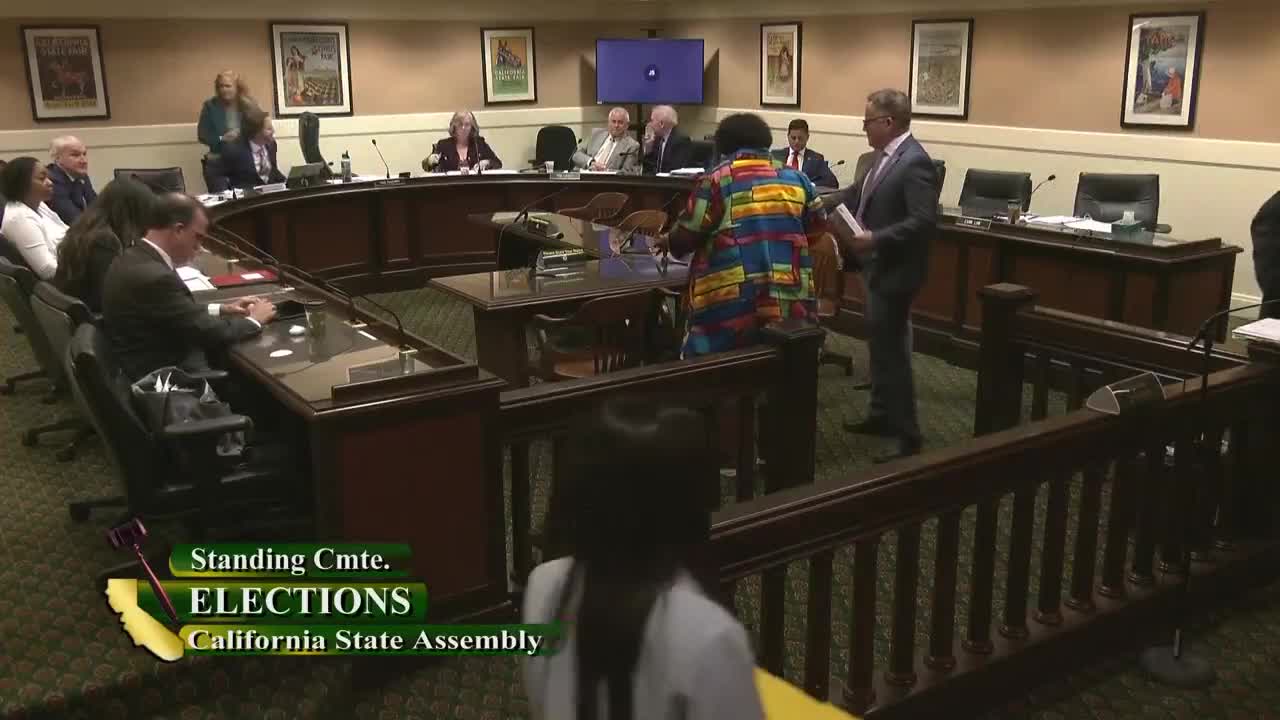
Bill Author

Bill Co-Author(s):
