SB 1182: Master Plan for Healthy, Sustainable, and Climate-Resilient Schools.
- Session Year: 2023-2024
- House: Senate
- Latest Version Date: 2024-08-29
Current Status:
Failed
(2024-09-22: In Senate. Consideration of Governor's veto pending.)
Introduced
In Committee
First Chamber
In Committee
Second Chamber
Enacted
Existing law requires the State Energy Resources Conservation and Development Commission to develop contingency plans to deal with possible shortages of electricity or fuel supplies to protect public health, safety, and welfare. Existing law establishes the Clean Energy Job Creation Program for purposes of funding projects for, among other things, energy efficiency retrofits and clean energy installations, and related improvements and repairs that contribute to reduced operating costs and improved health and safety conditions, on public schools. Existing law requires certain moneys appropriated for purposes of the program to be allocated to local educational agencies, as specified. Existing law authorizes the commission to adjust the funding allocation to local educational agencies and requires the commission, in allocating grants to local educational agencies, to give priority to certain local educational agencies, as provided.
This bill would require the commission to develop a Master Plan for Healthy, Sustainable, and Climate-Resilient Schools on or before March 31, 2026. The bill would require the commission to consult with specified state agencies and engage with a diverse group of stakeholders and experts regarding the development of the master plan, as provided. The bill would require the master plan to include specified elements, including, but not limited to, assessments of a representative sample of the states public elementary and secondary school buildings and grounds, as provided, and a set of priorities, benchmarks, and milestones for health, resilience, and decarbonization of public school campuses and support facilities.
For purposes of this chapter, the following definitions apply:
(a)Local educational agency means a school district, county office of education, charter school, or state special school pursuant to Part 32 (commencing with Section 59000) of Division 4 of Title 2 of the Education Code.
(b)Master plan means the Master Plan for Healthy, Sustainable, and Climate-Resilient Schools described in subdivision (a) of Section 25993.1.
25993.1.(a)The commission, in consultation with the State Department of Education, Division of the State Architect, Office of Public School Construction, and Natural Resources Agency, shall develop a Master Plan for Healthy, Sustainable, and Climate-Resilient Schools on or before March 31, 2026.
(b)For purposes of the development of the master plan pursuant to subdivision (a), the commission shall engage a diverse group of stakeholders and experts that reflect the geographic and climate diversity of the state to inform the master plans recommendations, including all of the following:
(1)Representatives of local educational agencies or their designees, including school administrators, members of governing boards of school districts, including small school districts, members of governing bodies of charter schools, and members of county boards of education.
(2)Private sector design professionals, including, but not limited to, building and landscape architects and engineers.
(3)School facility advocacy organizations.
(4)Educators.
(5)Representatives of classified school employee unions and building and construction trades councils.
(6)Pupil leaders.
(7)Parent advocates.
(8)Subject matter and technical experts from the higher education and nonprofit sectors.
(9)Representatives from state agencies that support or regulate school infrastructure.
(c)To ensure that all objectives, provisions, and recommendations expressed in the master plan also express and enact the states commitment to educational equity and environmental justice, the commission shall undertake or solicit, and be informed by, analysis employing geographic cross-referencing among areas where climate-related hazards, such as heat indices and air pollution, are elevated and where there are concentrated populations of pupils who may be especially vulnerable to stresses and disruptions, including socioeconomically disadvantaged pupils, pupils of color, English learners, and pupils with disabilities.
(d)To ensure that state and local funding is used efficiently, effectively, and with the greatest return on investment, the commission shall consult with state and federal leaders and technical experts to ensure that the master plan positions California schools to make the most of new unlimited, noncompetitive incentives for schools to deploy clean energy technologies, including funding available pursuant to the federal Infrastructure Investment and Jobs Act (Public Law 117-58) and Inflation Reduction Act of 2022 (Public Law 117-169).
(e)The completed master plan shall be provided electronically to the Governor, the appropriate policy and fiscal committees of the Legislature, the Superintendent of Public Instruction, the State Architect, the Office of Public School Construction, and the Secretary of the Natural Resources Agency. The commission, State Department of Education, Division of the State Architect, Office of Public School Construction, and Natural Resources Agency shall make the master plan publicly available on their respective internet websites.
25993.2.The master plan shall include all of the following:
(a)(1)An assessment of a representative sample of the states public elementary and secondary school buildings and grounds that includes building and site sizes and location, building age, whether and when the building and building systems such as heating, ventilation, and air conditioning were last modernized, age and fuel source for all building systems and major appliances, scores under the United States Environmental Protection Agencys Energy Star system, information related to available shade, information related to outdoor ground surface materials, and energy and water expenditures in the three most recent school years. The plan shall also include recommendations for building ongoing capacity and systems to track and analyze this data to inform planning and investment decisions. The commission shall catalog and use existing and previously collected data on the condition and performance of school infrastructure to inform the plan. The assessment of a representative sample of the states public school buildings and grounds shall include information on emissions of greenhouse gases, sustainability, and climate vulnerability.
(2)For purposes of this subdivision, the sample of school buildings and grounds shall be representative of geographic and climate zones, the size of the local educational agencys pupil population, building age, urban and rural communities, and pupil demographics. Through study of the representative sample of schools, the assessment shall identify the aspects of a school that indicate high-priority status for intervention and investment.
(3)For purposes of this subdivision, the representative sample may be provided by local educational agencies that agree to participate in the master plans development.
(b)A set of priorities, benchmarks, and milestones for health, resilience, and decarbonization of Californias public school campuses and support facilities in alignment with the states climate and equity goals. These priorities, benchmarks, and milestones shall do all of the following:
(1)Encompass recommendations for school buildings, school grounds, and support facilities.
(2)Account for the need for local educational agencies to maintain fiscal sustainability and responsibly invest local and state funding.
(3)Prioritize schools and communities that are disproportionately impacted by climate-related hazards and by structural inequities in the states economy and education system.
(c)Actionable steps and recommendations for school, local educational agency, and state agency roles within each priority area and an estimate of the costs to implement and achieve the benchmarks and milestones over a multiyear period, and the fiscal, health, and learning costs of inaction.
(d)Guidance for the Legislature and Governor to inform the development of infrastructure-related programs and the identification of the financial resources for local educational agencies to implement the recommendations and achieve the goals of the master plan. This guidance shall be informed by policy and institutional analyses to understand state and local climate adaptation capacities, limitations, including existing demand for available financial resources, and opportunities within Californias public school system.
(e)Recommendations and cost estimates for future school infrastructure spending, including guidance on infrastructure-related budget proposals and state bond measures, to do all of the following:
(1)Align spending with the states goal of achieving carbon neutrality by 2045 and climate adaptation and extreme heat action plans.
(2)Position California schools to take full advantage of incentives and funding for decarbonization and climate adaptation within relevant federal legislation, including the Infrastructure Investment and Jobs Act (Public Law 117-58) and Inflation Reduction Act of 2022 (Public Law 117-169).
(3)Equitably identify climate-vulnerable communities for priority investment.
(f)Guidance for local school infrastructure funding measures that align with state decarbonization and climate adaptation goals.
(g)Guidance on the roles of state and county agencies and other partners in providing technical assistance to local educational agencies to support sustainable and climate-resilient school infrastructure.
(h)Recommendations to ensure that local educational agencies have access to sufficient technical assistance, professional learning, training programs, and pipelines of sustainability and climate-resilience personnel to implement decarbonization and adaptation plans that include high road labor standards, project labor agreements with unionized workforces, workforce development, and training opportunities for current local educational agency employees who construct, operate, and maintain school infrastructure. The recommendations and guidelines shall be consistent with Section 45103.1 of the Education Code regarding the roles of current employees and staff in the implementation of the plan.
(i)Recommendations for state and local leaders from the public and private sectors to connect sustainable and climate-resilient school buildings and grounds to learning opportunities for pupils, green career and technical education, and pathways to green economy careers that support and advance statewide sustainability and resilience.
(j)Recommendations for county and city governments to more effectively include local educational agencies in their decarbonization and climate adaptation efforts.
25993.3.To guide the implementation of well-aligned state investments in healthy, sustainable, and climate-resilient school infrastructure, the commission, or the commissions designee, shall enter into a contract with one or more nongovernmental entities to review existing research and data, support and coordinate the master plan development process, and conduct research on priority areas of study identified pursuant to Section 25993.2.
For purposes of this chapter, the following definitions apply:
(a)Local educational agency means a school district, county office of education, charter school, or state special school pursuant to Part 32 (commencing with Section 59000) of Division 4 of Title 2 of the Education Code.
(b)Master plan means the Master Plan for Healthy, Sustainable, and Climate-Resilient Schools described in subdivision (a) of Section 25995.1. 25993.1.
25995.1.25993.1.(a)The commission, in consultation with the State Department of Education, Division of the State Architect, Office of Public School Construction, and Natural Resources Agency, shall develop a Master Plan for Healthy, Sustainable, and Climate-Resilient Schools on or before March 31, 2026.
(b)For purposes of the development of the master plan pursuant to subdivision (a), the commission shall engage a diverse group of stakeholders and experts that reflect the geographic and climate diversity of the state to inform the master plans recommendations, including all of the following:
(1)Representatives of local educational agencies or their designees, including school administrators, members of governing boards of school districts, including small school districts, members of governing bodies of charter schools, and members of county boards of education.
(2)Private sector design professionals, including, but not limited to, building and landscape architects and engineers.
(3)School facility advocacy organizations.
(4)Educators.
(5)Representatives of classified school employee unions and building and construction trades councils.
(6)Pupil leaders.
(7)Parent advocates.
(8)Subject matter and technical experts from the higher education and nonprofit sectors.
(9)Representatives from state agencies that support or regulate school infrastructure.
(c)To ensure that all objectives, provisions, and recommendations expressed in the master plan also express and enact the states commitment to educational equity and environmental justice, the commission shall undertake or solicit, and be informed by, analysis employing geographic cross-referencing among areas where climate-related hazards, such as heat indices and air pollution, are elevated and where there are concentrated populations of pupils who may be especially vulnerable to stresses and disruptions, including socioeconomically disadvantaged pupils, pupils of color, English learners, and pupils with disabilities.
(d)To ensure that state and local funding is used efficiently, effectively, and with the greatest return on investment, the commission shall consult with state and federal leaders and technical experts to ensure that the master plan positions California schools to make the most of new unlimited, noncompetitive incentives for schools to deploy clean energy technologies, including funding available pursuant to the federal Infrastructure Investment and Jobs Act (Public Law 117-58) and Inflation Reduction Act of 2022 (Public Law 117-169).
(e)The completed master plan shall be provided electronically to the Governor, the appropriate policy and fiscal committees of the Legislature, the commission, the Superintendent of Public Instruction, the State Architect, the Office of Public School Construction, and the Secretary of the Natural Resources Agency. The commission, State Department of Education, Division of the State Architect, Office of Public School Construction, and Natural Resources Agency shall make the master plan publicly available on their respective internet websites.
25995.2.25993.2.The master plan shall include all of the following:
(a)(1)An assessment of a representative sample of the states public elementary and secondary school buildings and grounds that includes building and site sizes and location, building age, whether and when the building and building systems such as heating, ventilation, and air conditioning were last modernized, age and fuel source for all building systems and major appliances, scores under the United States Environmental Protection Agencys Energy Star system, information related to available shade, information related to outdoor ground surface materials, and energy and water expenditures in the three most recent school years. The plan shall also include recommendations for building ongoing capacity and systems to track and analyze this data to inform planning and investment decisions. The commission shall catalog and use existing and previously collected data on the condition and performance of school infrastructure to inform the plan. The assessment of a representative sample of the states public school buildings and grounds shall include information on emissions of greenhouse gases, sustainability, and climate vulnerability.
(2)For purposes of this subdivision, the sample of school buildings and grounds shall be representative of geographic and climate zones, the size of the local educational agencys pupil population, building age, urban and rural communities, and pupil demographics. Through study of the representative sample of schools, the assessment shall identify the aspects of a school that indicate high-priority status for intervention and investment.
(3)For purposes of this subdivision, the representative sample may be provided by local educational agencies that agree to participate in the master plans development.
(b)A set of priorities, benchmarks, and milestones for health, resilience, and decarbonization of Californias public school campuses and support facilities in alignment with the states climate and equity goals. These priorities, benchmarks, and milestones shall do all of the following:
(1)Encompass recommendations for school buildings, school grounds, and support facilities.
(2)Account for the need for local educational agencies to maintain fiscal sustainability and responsibly invest local and state funding.
(3)Prioritize schools and communities that are disproportionately impacted by climate-related hazards and by structural inequities in the states economy and education system.
(c)Actionable steps and recommendations for school, local educational agency, and state agency roles within each priority area and an estimate of the costs to implement and achieve the benchmarks and milestones over a multiyear period, and the fiscal, health, and learning costs of inaction.
(d)Guidance for the Legislature and Governor to inform the development of infrastructure-related programs and the identification of the financial resources for local educational agencies to implement the recommendations and achieve the goals of the master plan. This guidance shall be informed by policy and institutional analyses to understand state and local climate adaptation capacities, limitations, including existing demand for available financial resources, and opportunities within Californias public school system.
(e)Recommendations and cost estimates for future school infrastructure spending, including guidance on infrastructure-related budget proposals and state bond measures, to do all of the following:
(1)Align spending with the states goal of achieving carbon neutrality by 2045 and climate adaptation and extreme heat action plans.
(2)Position California schools to take full advantage of incentives and funding for decarbonization and climate adaptation within relevant federal legislation, including the Infrastructure Investment and Jobs Act (Public Law 117-58) and Inflation Reduction Act of 2022 (Public Law 117-169).
(3)Equitably identify climate-vulnerable communities for priority investment.
(f)Guidance for local school infrastructure funding measures that align with state decarbonization and climate adaptation goals.
(g)Guidance on the roles of state and county agencies and other partners in providing technical assistance to local educational agencies to support sustainable and climate-resilient school infrastructure.
(h)Recommendations to ensure that local educational agencies have access to sufficient technical assistance, professional learning, training programs, and pipelines of sustainability and climate-resilience personnel to implement decarbonization and adaptation plans that include high road labor standards, project labor agreements with unionized workforces, workforce development, and training opportunities for current local educational agency employees who construct, operate, and maintain school infrastructure. The recommendations and guidelines shall be consistent with Section 45103.1 of the Education Code regarding the roles of current employees and staff in the implementation of the plan.
(i)Recommendations for state and local leaders from the public and private sectors to connect sustainable and climate-resilient school buildings and grounds to learning opportunities for pupils, green career and technical education, and pathways to green economy careers that support and advance statewide sustainability and resilience.
(j)Recommendations for county and city governments to more effectively include local educational agencies in their decarbonization and climate adaptation efforts.
25995.3.25993.3.To guide the implementation of well-aligned state investments in healthy, sustainable, and climate-resilient school infrastructure, the commission, or the commissions designee, shall enter into a contract with one or more nongovernmental entities to review existing research and data, support and coordinate the master plan development process, and conduct research on priority areas of study identified pursuant to Section 25995.2. 25993.2.
REVISIONS: HeadingLine 2.For purposes of this chapter, the following definitions apply:
(a)Local educational agency means a school district, county office of education, charter school, or state special school pursuant to Part 32 (commencing with Section 59000) of Division 4 of Title 2 of the Education Code.
(b)Master plan means the Master Plan for Healthy, Sustainable, and Climate-Resilient Schools described in subdivision (a) of Section 25995.1.
25995.1.(a)The commission, in consultation with the State Department of Education, Division of the State Architect, Office of Public School Construction, and Natural Resources Agency, shall facilitate an interagency process and stakeholder engagement to develop a Master Plan for Healthy, Sustainable, and Climate-Resilient Schools on or before March 31, 2026.
(b)A master plan steering team shall be organized and led by the commission to facilitate the planning process and stakeholder engagement to develop the master plan. The steering team shall include representatives from the State Department of Education, Division of the State Architect, Office of Public School Construction, and Natural Resources Agency and shall begin meeting at least monthly on or before March 1, 2025, to coordinate and advance the master planning process.(c)The process to create the master plan shall include input from additional state agencies that provide funding, guidance, and oversight for school buildings and grounds, including the State Board of Education, State Allocation Board, California School Finance Authority, California Health and Human Services Agency, State Department of Public Health, Strategic Growth Council, Office of Planning and Research, State Air Resources Board, Department of Resources Recycling and Recovery, Public Utilities Commission, California Building Standards Commission, California Environmental Protection Agency, Office of Environmental Health Hazard Assessment, and State Water Resources Control Board.(d)The process to develop(b)For purposes of the development of the master plan pursuant to subdivision (a) (a), the commission shall engage a diverse group of stakeholders and experts that reflect the geographic and climate diversity of the state to inform the master plans recommendations, including all of the following:
(1)Representatives of local educational agencies or their designees, including school administrators, members of governing boards of school districts, including small school districts, members of governing bodies of charter schools, and members of county boards of education.
(2)Private sector design professionals, including, but not limited to, building and landscape architects and engineers.
(3)School facility advocacy organizations.
(4)Educators.
(5)Representatives of classified school employee unions and building and construction trades councils.
(6)Pupil leaders.
(7)Parent advocates.
(8)Subject matter and technical experts from the higher education and nonprofit sectors.
(9)Representatives from state agencies that support or regulate school infrastructure.
(e)(c)To ensure that all objectives, provisions, and recommendations expressed in the master plan also express and enact the states commitment to educational equity, the master plan steering team equity and environmental justice, the commission shall undertake or solicit, and be informed by, analysis employing geographic cross-referencing among areas where climate-related hazards, such as heat indices and air pollution, are elevated and where there are concentrated populations of pupils who may be especially vulnerable to stresses and disruptions, including socioeconomically disadvantaged pupils, pupils of color, English learners, and pupils with disabilities.
(d)To ensure that state and local funding is used efficiently, effectively, and with the greatest return on investment, the commission shall consult with state and federal leaders and technical experts to ensure that the master plan positions California schools to make the most of new unlimited, noncompetitive incentives for schools to deploy clean energy technologies, including funding available pursuant to the federal Infrastructure Investment and Jobs Act (Public Law 117-58) and Inflation Reduction Act of 2022 (Public Law 117-169).
(f)(e)The completed master plan shall be provided electronically to the Governor, the appropriate policy and fiscal committees of the Legislature, the commission, the Superintendent of Public Instruction, the State Architect, the Office of Public School Construction, and the Secretary of the Natural Resources Agency, and leadership of the state agencies identified in subdivision (c). Agency. The commission, State Department of Education, Division of the State Architect, Office of Public School Construction, and Natural Resources Agency shall make the master plan publicly available on their respective internet websites.
25995.2.The master plan shall include all of the following:
(a)(1)(A)An assessment of a representative sample of the states public elementary and secondary school buildings and grounds that includes building and site sizes and location, building age, whether and when the building and building systems such as heating, ventilation, and air conditioning were last modernized, age and fuel source for all building systems and major appliances, scores under the United States Environmental Protection Agencys ENERGY STAR Energy Star system, information related to available shade, information related to outdoor ground surface materials, and energy and water expenditures in the three most recent school years. The plan shall also include recommendations for building ongoing capacity and systems to track and analyze this data to inform planning and investment decisions. The steering team commission shall catalog and use existing and previously collected data on the condition and performance of school infrastructure to inform the plan. The assessment of a representative sample of the states public school buildings and grounds shall include information on emissions of greenhouse gases, sustainability, and climate vulnerability.
(B)An assessment of a representative sample of the states public school buildings and grounds for both of the following:(i)The school and surrounding communitys vulnerability to climate hazards, such as heat, wildfire, landslide, sea level rise, flood risk, and electrical grid reliability, and adaptation potential.(ii)Emissions of greenhouse gases, sustainability, and mitigation potential.(2)For purposes of this subdivision, the sample of school buildings and grounds shall be representative of geographic and climate zones, the size of the local educational agencys pupil population, building age, urban and rural communities, and pupil demographics. Through study of the representative sample of schools, the assessment shall identify the aspects of a school that indicate high-priority status for intervention and investment.
(3)For purposes of this subdivision, the representative sample may be provided by local educational agencies that agree to participate in the master plans development.
(b)A set of priorities, benchmarks, and milestones for health, resilience, and decarbonization of Californias public school campuses and support facilities in alignment with the states climate and equity goals. These priorities, benchmarks, and milestones shall do all of the following:
(1)Encompass recommendations for school buildings, school grounds, and support facilities.
(2)Account for the need for local educational agencies to maintain fiscal sustainability and responsibly invest local and state funding.
(3)Prioritize schools and communities that are disproportionately impacted by climate-related hazards and by structural inequities in the states economy and education system.
(c)Actionable steps and recommendations for school, local educational agency, and state agency roles within each priority area and an estimate of the costs to implement and achieve the benchmarks and milestones over a multiyear period, and the fiscal, health, and learning costs of inaction.
(d)Guidance for the Legislature and Governor to inform the development of infrastructure-related programs and the identification of the financial resources for local educational agencies to implement the recommendations and achieve the goals of the master plan. This guidance shall be informed by policy and institutional analyses to understand state and local climate adaptation capacities, limitations, including existing demand for available financial resources, and opportunities within Californias public school system.
(e)Recommendations and cost estimates for future school infrastructure spending, including guidance on infrastructure-related budget proposals and state bond measures, to do all of the following:
(1)Align spending with the states goal of achieving carbon neutrality by 2045 and climate adaptation and extreme heat action plans.
(2)Position California schools to take full advantage of incentives and funding for decarbonization and climate adaptation within relevant federal legislation, including the Infrastructure Investment and Jobs Act (Public Law 117-58) and Inflation Reduction Act of 2022 (Public Law 117-169).
(3)Equitably identify climate-vulnerable communities for priority investment.
(f)Guidance for local school infrastructure funding measures that align with state decarbonization and climate adaptation goals.
(g)Guidance on the roles of state and county agencies and other partners in providing technical assistance to local educational agencies to support sustainable and climate-resilient school infrastructure.
(h)Recommendations to ensure that local educational agencies have access to sufficient technical assistance, professional learning, training programs, and pipelines of sustainability and climate-resilience personnel to implement decarbonization and adaptation plans that include high road labor standards, project labor agreements with unionized workforces, workforce development, and training opportunities for current local educational agency employees who construct, operate, and maintain school infrastructure. The recommendations and guidelines shall be consistent with Section 45103.1 of the Education Code regarding the roles of current employees and staff in the implementation of the plan.
(i)Recommendations for state and local leaders from the public and private sectors to connect sustainable and climate-resilient school buildings and grounds to learning opportunities for pupils, green career and technical education, and pathways to green economy careers that support and advance statewide sustainability and resilience.
(j)Recommendations for county and city governments to more effectively include local educational agencies in their decarbonization and climate adaptation efforts.
25995.3.To guide the implementation of well-aligned state investments in healthy, sustainable, and climate-resilient school infrastructure, the commission, or the commissions designee, shall enter into a contract with one or more nongovernmental entities to review existing research and data, support and coordinate the master plan development process, and conduct research on priority areas of study identified pursuant to Section 25995.2.
For purposes of this chapter, the following definitions apply:
(a)Local educational agency means a school district, county office of education, charter school, or state special school pursuant to Part 32 (commencing with Section 59000) of Division 4 of Title 2 of the Education Code.
(b)Master plan means the Master Plan for Healthy, Sustainable, and Climate-Resilient Schools described in subdivision (a) of Section 25995.1.
25995.1.(a)The commission, in consultation with the State Department of Education, Division of the State Architect, Office of Public School Construction, and Natural Resources Agency, shall facilitate an interagency process and stakeholder engagement to develop a Master Plan for Healthy, Sustainable, and Climate-Resilient Schools on or before March 31, 2026.
(b)A master plan steering team shall be organized and led by the commission to facilitate the planning process and stakeholder engagement to develop the master plan. The steering team shall include representatives from the State Department of Education, Division of the State Architect, Office of Public School Construction, and Natural Resources Agency and shall begin meeting at least monthly on or before March 1, 2025, to coordinate and advance the master planning process.
(c)The process to create the master plan shall include input from additional state agencies that provide funding, guidance, and oversight for school buildings and grounds, including the State Board of Education, State Allocation Board, California School Finance Authority, California Health and Human Services Agency, State Department of Public Health, Strategic Growth Council, Office of Planning and Research, State Air Resources Board, Department of Resources Recycling and Recovery, Public Utilities Commission, California Building Standards Commission, California Environmental Protection Agency, Office of Environmental Health Hazard Assessment, and State Water Resources Control Board.
(d)The process to develop the master plan pursuant to subdivision (a) shall engage a diverse group of stakeholders and experts that reflect the geographic and climate diversity of the state to inform the master plans recommendations, including all of the following:
(1)Representatives of local educational agencies or their designees, including school administrators, members of governing boards of school districts, including small school districts, members of governing bodies of charter schools, and members of county boards of education.
(2)Private sector design professionals, including, but not limited to, building and landscape architects and engineers.
(3)School facility advocacy organizations.
(4)Educators.
(5)Representatives of classified school employee unions and building and construction trades councils.
(6)Pupil leaders.
(7)Parent advocates.
(8)Subject matter and technical experts from the higher education and nonprofit sectors.
(e)To ensure that all objectives, provisions, and recommendations expressed in the master plan also express and enact the states commitment to educational equity, the master plan steering team shall undertake or solicit, and be informed by, analysis employing geographic cross-referencing among areas where climate-related hazards, such as heat indices and air pollution, are elevated and where there are concentrated populations of pupils who may be especially vulnerable to stresses and disruptions, including socioeconomically disadvantaged pupils, pupils of color, English learners, and pupils with disabilities.
(f)The completed master plan shall be provided electronically to the Governor, the appropriate policy and fiscal committees of the Legislature, the commission, the Superintendent of Public Instruction, the State Architect, the Office of Public School Construction, the Secretary of the Natural Resources Agency, and leadership of the state agencies identified in subdivision (c). The commission, State Department of Education, Division of the State Architect, Office of Public School Construction, and Natural Resources Agency shall make the master plan publicly available on their respective internet websites.
25995.2.The master plan shall include all of the following:
(a)(1)(A)An assessment of a representative sample of the states public elementary and secondary school buildings and grounds that includes building and site sizes and location, building age, whether and when the building and building systems such as heating, ventilation, and air conditioning were last modernized, age and fuel source for all building systems and major appliances, scores under the United States Environmental Protection Agencys ENERGY STAR system, information related to available shade, information related to outdoor ground surface materials, and energy and water expenditures in the three most recent school years. The plan shall also include recommendations for building ongoing capacity and systems to track and analyze this data to inform planning and investment decisions. The steering team shall catalog and use existing and previously collected data on the condition and performance of school infrastructure to inform the plan.
(B)An assessment of a representative sample of the states public school buildings and grounds for both of the following:
(i)The school and surrounding communitys vulnerability to climate hazards, such as heat, wildfire, landslide, sea level rise, flood risk, and electrical grid reliability, and adaptation potential.
(ii)Emissions of greenhouse gases, sustainability, and mitigation potential.
(2)For purposes of this subdivision, the sample of school buildings and grounds shall be representative of geographic and climate zones, the size of the local educational agencys pupil population, building age, urban and rural communities, and pupil demographics. Through study of the representative sample of schools, the assessment shall identify the aspects of a school that indicate high-priority status for intervention and investment.
(3)For purposes of this subdivision, the representative sample may be provided by local educational agencies that agree to participate in the master plans development.
(b)A set of priorities, benchmarks, and milestones for health, resilience, and decarbonization of Californias public school campuses and support facilities in alignment with the states climate and equity goals. These priorities, benchmarks, and milestones shall do all of the following:
(1)Encompass recommendations for school buildings, school grounds, and support facilities.
(2)Account for the need for local educational agencies to maintain fiscal sustainability and responsibly invest local and state funding.
(3)Prioritize schools and communities that are disproportionately impacted by climate-related hazards and by structural inequities in the states economy and education system.
(c)Actionable steps and recommendations for school, local educational agency, and state agency roles within each priority area and an estimate of the costs to implement and achieve the benchmarks and milestones over a multiyear period, and the fiscal, health, and learning costs of inaction.
(d)Guidance for the Legislature and Governor to inform the development of infrastructure-related programs and the identification of the financial resources for local educational agencies to implement the recommendations and achieve the goals of the master plan. This guidance shall be informed by policy and institutional analyses to understand state and local climate adaptation capacities, limitations, including existing demand for available financial resources, and opportunities within Californias public school system.
(e)Recommendations and cost estimates for future school infrastructure spending, including guidance on infrastructure-related budget proposals and state bond measures, to do all of the following:
(1)Align spending with the states goal of achieving carbon neutrality by 2045 and climate adaptation and extreme heat action plans.
(2)Position California schools to take full advantage of incentives and funding for decarbonization and climate adaptation within relevant federal legislation, including the Infrastructure Investment and Jobs Act (Public Law 117-58) and Inflation Reduction Act of 2022 (Public Law 117-169).
(3)Equitably identify climate-vulnerable communities for priority investment.
(f)Guidance for local school infrastructure funding measures that align with state decarbonization and climate adaptation goals.
(g)Guidance on the roles of state and county agencies and other partners in providing technical assistance to local educational agencies to support sustainable and climate-resilient school infrastructure.
(h)Recommendations to ensure that local educational agencies have access to sufficient technical assistance, professional learning, training programs, and pipelines of sustainability and climate-resilience personnel to implement decarbonization and adaptation plans that include high road labor standards, project labor agreements with unionized workforces, workforce development, and training opportunities for current local educational agency employees who construct, operate, and maintain school infrastructure. The recommendations and guidelines shall be consistent with Section 45103.1 of the Education Code regarding the roles of current employees and staff in the implementation of the plan.
(i)Recommendations for state and local leaders from the public and private sectors to connect sustainable and climate-resilient school buildings and grounds to learning opportunities for pupils, green career and technical education, and pathways to green economy careers that support and advance statewide sustainability and resilience.
(j)Recommendations for county and city governments to more effectively include local educational agencies in their decarbonization and climate adaptation efforts.
25995.3.To guide the implementation of well-aligned state investments in healthy, sustainable, and climate-resilient school infrastructure, the commission, or the commissions designee, shall enter into a contract with one or more nongovernmental entities to review existing research and data, support and coordinate the master plan development process, and conduct research on priority areas of study identified pursuant to Section 25995.2.
|
Date
|
Status
|
|---|---|
| Sep 22, 2024 | In Senate. Consideration of Governor's veto pending. |
| Sep 22, 2024 | Vetoed by the Governor. |
| Sep 3, 2024 | Enrolled and presented to the Governor at 3 p.m. |
| Aug 27, 2024 | Assembly amendments concurred in. (Ayes 39. Noes 0. Page 5508.) Ordered to engrossing and enrolling. |
| Aug 26, 2024 | In Senate. Concurrence in Assembly amendments pending. |
| Aug 26, 2024 | Read third time. Passed. (Ayes 69. Noes 1. Page 6536.) Ordered to the Senate. |
| Aug 19, 2024 | Read second time. Ordered to third reading. |
| Aug 15, 2024 | From committee: Do pass. (Ayes 11. Noes 1.) (August 15). |
| Aug 7, 2024 | August 7 set for first hearing. Placed on suspense file. |
| Jun 26, 2024 | From committee: Do pass and re-refer to Com. on APPR. (Ayes 6. Noes 0.) (June 26). Re-referred to Com. on APPR. |
| Jun 26, 2024 | Coauthors revised. |
| Jun 19, 2024 | Read second time and amended. Re-referred to Com. on ED. |
| Jun 18, 2024 | From committee: Do pass as amended and re-refer to Com. on ED. (Ayes 8. Noes 0.) (June 17). |
| Jun 3, 2024 | Referred to Coms. on NAT. RES. and ED. |
| May 22, 2024 | In Assembly. Read first time. Held at Desk. |
| May 21, 2024 | Read third time. Passed. (Ayes 36. Noes 0. Page 4092.) Ordered to the Assembly. |
| May 20, 2024 | Read second time. Ordered to third reading. |
| May 16, 2024 | Read second time and amended. Ordered to second reading. |
| May 16, 2024 | From committee: Do pass as amended. (Ayes 6. Noes 0. Page 3974.) (May 16). |
| May 10, 2024 | Set for hearing May 16. |
| Apr 15, 2024 | April 15 hearing: Placed on APPR suspense file. |
| Apr 5, 2024 | Set for hearing April 15. |
| Apr 3, 2024 | From committee: Do pass and re-refer to Com. on APPR. (Ayes 6. Noes 0. Page 3466.) (April 3). Re-referred to Com. on APPR. |
| Mar 26, 2024 | Set for hearing April 3. |
| Mar 19, 2024 | From committee: Do pass and re-refer to Com. on ED. (Ayes 17. Noes 0. Page 3349.) (March 19). Re-referred to Com. on ED. |
| Mar 6, 2024 | Set for hearing March 19. |
| Feb 21, 2024 | Referred to Coms. on E., U. & C. and ED. |
| Feb 15, 2024 | From printer. May be acted upon on or after March 16. |
| Feb 14, 2024 | Introduced. Read first time. To Com. on RLS. for assignment. To print. |
|
Date
|
Description
|
Location
|
Votes
|
|
|---|---|---|---|---|
| Aug 27, 2024 | Unfinished Business SB1182 Gonzalez et al. Concurrence | Senate Floor |
Passed |
|
| Aug 26, 2024 | SB 1182 Gonzalez Senate Third Reading By Ting | Assembly Floor |
Passed |
|
| Aug 15, 2024 | Do pass. | Assembly Standing Committee on Appropriations |
Passed |
|
| Jun 26, 2024 | Do pass and be re-referred to the Committee on [Appropriations] | Assembly Standing Committee on Education |
Passed |
|
| Jun 17, 2024 | Do pass as amended and be re-referred to the Committee on [Education] | Assembly Standing Committee on Natural Resources |
Passed |
|
| May 21, 2024 | Senate 3rd Reading SB1182 Gonzalez et al. | Senate Floor |
Passed |
|
| May 16, 2024 | Do pass as amended | Senate Standing Committee on Appropriations |
Passed |
|
| Apr 15, 2024 | Placed on suspense file | Senate Standing Committee on Appropriations |
Passed |
|
| Apr 3, 2024 | Do pass, but first be re-referred to the Committee on [Appropriations] | Senate Standing Committee on Education |
Passed |
|
| Mar 19, 2024 | Do pass, but first be re-referred to the Committee on [Education] | Senate Standing Committee on Energy, Utilities and Communications |
Passed |
This list shows positions taken on this bill by organizations on the date displayed, which is linked to the original source.
Positions by individuals are not included.
|
Organization
|
Position
|
Date
|
|---|---|---|
| Alameda County Office Of Education | ** Support | |
| Alliance for A Better Community | ** Support | |
| American Academy Of Pediatrics, California | ** Support | |
| American Federation of State, County, and Municipal Employees | ** Support | |
| A.O. Smith Corporation | ** Support | |
| Association For Environmental And Outdoor Education | ** Support | |
| A Voice for Choice Advocacy | ** Support | |
| BlueGreen Alliance | ** Support | |
| Breathe California | ** Support | |
| Building Decarbonization Coalition | ** Support | |
| California Academy of Preventive Medicine | ** Support | |
| California Alliance for Clean Air in Schools | ** Support | |
| California Environmental Voters | ** Support | |
| California Federation Of Teachers | ** Support | |
| California Green New Deal Coalition | ** Support | |
| California Labor for Climate Jobs | ** Support | |
| California Nurses for Environmental Health and Justice | ** Support | |
| California School Employees Association | ** Support | |
| California State PTA | ** Support | |
| Center for Cities and Schools, UC Berkeley | ** Support | |
| Center for Ecoliteracy | ** Support | |
| Center For Environmental Health | ** Support | |
| CFT- a Union of Educators & Classified Professionals | ** Support | |
| Children Now | ** Support | |
| cleanearth4kids.org | ** Support | |
| Climate Action Campaign | ** Support | |
| Climate Action Pathways for Schools | ** Support | |
| Climate Health Now | ** Support | |
| CMTA Engineers | ** Support | |
| Coalition For Adequate School Housing | ** Support | |
| Education Justice Academy | ** Support | |
| Gender Equity Policy Institute | ** Support | |
| GENup | ** Support | |
| Greenbelt Alliance | ** Support | |
| Green Schools National Network | ** Support | |
| Green Schoolyards America | ** Support | |
| HED | ** Support | |
| Jobs with Justice San Francisco | ** Support | |
| Labor Network for Sustainability | ** Support | |
| Los Angeles County Office Of Education | ** Support | |
| Menlo Spark | ** Support | |
| Natural Resources Defense Council | ** Support | |
| New Buildings Institute | ** Support | |
| NextGen California | ** Support | |
| Non Toxic Schools | ** Support | |
| Our Turn | ** Support | |
| Re:wild Your Campus | ** Support | |
| Rewiring America | ** Support | |
| San Francisco Bay Area Physicians for Social Responsibility | ** Support | |
| Santa Clara County Superintendent of Schools | ** Support | |
| Save The Bay | ** Support | |
| School Energy Coalition | ** Support | |
| SEIU California | ** Support | |
| Sheet Metal Workers Local 104 | ** Support | |
| Sierra Club California | ** Support | |
| Stanford Medicine | ** Support | |
| State Building and Construction Trades Council | ** Support | |
| Strategic Energy Innovations | ** Support | |
| Sustainable Mill Valley | ** Support | |
| Ten Strands | ** Support | |
| Terraverde Energy | ** Support | |
| Tree People | ** Support | |
| Trust for Public Land | ** Support | |
| UC Santa Barbara | ** Support | |
| UC Santa Barbara, 2035 Initiative | ** Support | |
| UFCW Western States Council | ** Support | |
| UndauntedK12 | ** Support | |
| united states green building council | ** Support | |
| United States Green Building Council-Los Angeles | ** Support | |
| United Steelworkers, District 12 | ** Support |
SENATE RULES COMMITTEE Office of Senate Floor Analyses (916) 651-1520 Fax: (916) 327-4478 | SB 1182 |
VETO
Bill No: SB 1182
Author: Gonzalez (D), et al.
Enrolled: 8/29/24
Vote: 27
SENATE ENERGY, U. & C. COMMITTEE: 17-0, 3/19/24
AYES: Bradford, Dahle, Ashby, Becker, Caballero, Dodd, Durazo, Eggman, Gonzalez, Grove, Limón, Min, Newman, Rubio, Skinner, Stern, Wilk
NO VOTE RECORDED: Seyarto
SENATE EDUCATION COMMITTEE: 6-0, 4/3/24
AYES: Newman, Ochoa Bogh, Cortese, Gonzalez, Smallwood-Cuevas, Wilk
NO VOTE RECORDED: Glazer
SENATE APPROPRIATIONS COMMITTEE: 6-0, 5/16/24
AYES: Caballero, Jones, Ashby, Becker, Bradford, Wahab
NO VOTE RECORDED: Seyarto
SENATE FLOOR: 36-0, 5/21/24
AYES: Alvarado-Gil, Archuleta, Ashby, Atkins, Becker, Blakespear, Bradford, Caballero, Cortese, Dahle, Dodd, Durazo, Eggman, Glazer, Gonzalez, Grove, Hurtado, Jones, Laird, Limón, McGuire, Menjivar, Min, Newman, Ochoa Bogh, Padilla, Portantino, Roth, Rubio, Skinner, Smallwood-Cuevas, Stern, Umberg, Wahab, Wiener, Wilk
NO VOTE RECORDED: Allen, Nguyen, Niello, Seyarto
SENATE FLOOR: 39-0, 8/27/24
AYES: Allen, Alvarado-Gil, Archuleta, Ashby, Atkins, Becker, Blakespear, Bradford, Caballero, Cortese, Dahle, Dodd, Durazo, Eggman, Glazer, Gonzalez, Grove, Hurtado, Jones, Laird, Limón, McGuire, Menjivar, Min, Newman, Nguyen, Ochoa Bogh, Padilla, Portantino, Roth, Rubio, Seyarto, Skinner, Smallwood-Cuevas, Stern, Umberg, Wahab, Wiener, Wilk
NO VOTE RECORDED: Niello
ASSEMBLY FLOOR: 69-1, 8/26/24 - See last page for vote
SUBJECT: Master Plan for Healthy, Sustainable, and Climate-Resilient Schools
SOURCE: California Federation of Teachers
California Labor for Climate Jobs
UndauntedK12
DIGEST:
This bill requires the California Energy Commission (CEC) to develop a Master Plan for Healthy, Sustainable, and Climate-Resilient Schools by March 31, 2026.
ANALYSIS:
Existing law:
- Establishes a goal of doubling energy efficiency savings from existing building end uses by January 1, 2030. Existing law requires the CEC to establish annual targets for statewide energy efficiency savings and demand reduction to achieve this goal. (Public Resources Code §25310)
- Establishes the School Energy Efficiency Stimulus Program (also known as the California Schools Healthy Air, Plumbing, and Efficiency Program – CalSHAPE), which provides grants to local educational agencies (LEAs) to fund appliance, plumbing and heating, ventilation and air conditioning (HVAC) upgrades at schools using ratepayer energy efficiency incentives. Existing law designates the CEC as the third-party administrator of CalSHAPE grants and sunsets the program on January 1, 2027. (Public Utilities Code §§1610 – 1618)
- Establishes the Clean Energy Job Creation Program to and allocates Proposition 39 revenues to fund energy efficient retrofits and clean energy installations as well as related improvements and repairs that contribute to reduced operating costs and provide certain non-energy benefits, including improved health and safety conditions in public schools. The program also allocated funds to the State Energy Conservation Assistance Account Education Subaccount to provide LEAs with no-interest revolving loans to fund energy efficiency and renewable energy projects. (Public Resources Code §26200 et seq.)
This bill:
Requires the CEC to facilitate an interagency process to develop a Master Plan for Healthy, Sustainable, and Climate-Resilient Schools by March 31, 2026.
- Specifies various agencies from whom the CEC must solicit input and specifies various stakeholder groups that must be included in the development of the Master Plan.
- Requires the CEC to submit Master Plan to various agencies and elected offices, including the Legislature and the Governor. This bill also require multiple agencies to post the Master Plan on their respective internet websites.
- Specifies contents that must be included in the Master Plan, including, but not limited to the following:
- An assessment of a representative sample of elementary and secondary school buildings for various opportunities to make climate and energy-related upgrades to the school buildings and grounds.
- Health, resilience, and decarbonization goals for public school campuses.
- Recommendations for various incentives and funding opportunities for school infrastructure upgrades, including facility upgrades to meet climate goals.
- Recommendations for LEAs to include various high-road workforce measures in decarbonization and adaptation plans, including project labor agreements with unionized workforces.
- Requires the CEC to consult with federal and state leaders to ensure that the Master Plan developed pursuant to this bill enables schools to use clean energy incentives, including funds from the federal Infrastructure Investment and Jobs Act (IIJA) and Inflation Reduction Act (IRA).
Background
- LEAs have diverse and unique energy and climate challenges. California’s K-12 facilities include approximately 12,800 schools with more than 714 million square feet of space, making LEAs the largest category of building in the public building sector. Unlike other commercial end users, government buildings generally aren’t able to use energy savings to reinvest in more capital improvements, which leads public buildings to require regular cycles of investment to update facilities and replace less efficient appliances. While some districts may seek local and state bond or tax funding to make these updates, other districts may seek moneys and tax incentives from the IIJA and IRA.
- Show me the money: bill aims to provide guidance for funding opportunities. This bill seeks to establish a Master Plan that may help provide LEAs with guidance about the types of building decarbonization and climate resilience investments that can provide benefits for LEAs. However, the diversity of size, condition, and location of California’s LEAs creates challenges for providing guidance that meaningfully addresses an LEA’s needs. While some LEAs may be seeking to make major investments in fuel switching, electric vehicle (EV) charging, and on-site clean energy generation, other LEAs may need new HVAC systems and water filtration. LEAs with sufficient resources may have little difficulties in taking advantage of new funding opportunities as they arise; however, smaller LEAs and LEAs with limited support resources may require additional guidance and technical assistance to identify the best opportunities for their specific considerations and submit successful applications. This bill requires the CEC to establish a master plan that would position California schools to take advantage of clean energy funding opportunities, including those included in the IIJA and IRA.
- CEC has administered energy efficiency programs supporting LEAs with goals similar to the master plan required by this bill. While the CEC has not established a Master Plan addressing K-12 buildings’ climate adaptation needs, the CEC has administered multiple programs aimed at providing incentives to improve energy efficiency, water savings, and non-energy benefits associated with clean energy and appliance installations in LEA facilities. Following the passage of Proposition 39 in 2012, the CEC administered the Clean Energy and Jobs Creation Program, which provided funding to schools to make various energy-saving upgrades to school facilities. Since the passage of AB 841 (Ting, Chapter 372, Statutes of 2020), the CEC has also administered CalSHAPE, which provides ratepayer-funded incentives to schools for efficient plumbing and HVAC upgrades. While the CEC has experience administering and providing guidance on energy efficient facility improvements, this bill’s Master Plan provisions would require the CEC to make recommendations about a larger scope of climate, health, equity, and sustainability measures for school facilities.
- Instant replay? This bill’s provisions are substantially similar to those in SB 394 (Gonzalez, 2023), which was vetoed. In his veto message, the Governor cited cost concerns as the primary basis for vetoing the bill. His veto message states:
While I support the author's goal of making our schools more climate friendly and climate prepared, the development of this Master Plan will cost up to $10 million that was not considered through the annual budget process. Additionally, the Master Plan would create significant long-term cost pressures that are not accounted for in the state budget plan.
Since the Governor’s veto message, fiscal conditions for the CEC’s primary operational account, the Energy Resources Programs Account (ERPA), have not improved. According to the February 2024 report Insolvency Risks for Environmental and Transportation Special Funds by the Legislative Analyst’s Office, ERPA remains in a structural deficit and is expected to become insolvent in 2027-28 without additional changes to revenues and expenditures.
Related/Prior Legislation
SB 394 (Gonzalez, 2023) would have required the CEC to develop a Master Plan for Healthy, Sustainable, and Climate-Resilient Schools upon receiving a legislative appropriation. The provisions of this bill specifying the required contents of the Master Plan are identical to those in SB 394. The bill was vetoed.
AB 841 (Ting, Chapter 372, Statutes of 2020) established, among other provisions, the CalSHAPE program to provide stimulus grants to LEAs to fund appliance, plumbing, and HVAC upgrades at schools using ratepayer energy efficiency incentives. The bill also designated the CEC as the third-party administrator of the CalSHAPE program.
SB 110 (Committee on Budget, Chapter 55, Statutes of 2017) and AB 129 (Committee on Budget, Chapter 250, Statutes of 2017) extended, among other requirements, the operation of the Proposition 39 program, re-appropriated funds for the purpose of the program, and revised the allocation of Proposition 39 funds for LEAs to establish a competitive grant program for the remainder of the program’s operation.
FISCAL EFFECT: Appropriation: No Fiscal Com.: Yes Local: No
According to the Assembly Appropriations Committee:
- One-time Energy Resources Programs Account (ERPA) special fund or General Fund costs of $6.5 million over two years. These costs include $749,171 annually for two years for five positions at CEC and $5 million in contract support over two years to complete the master plan.
According to CEC, ERPA is the primary operating account of the CEC, however, ERPA is experiencing an ongoing structural deficit. ERPA is supported by a statutory surcharge on electricity consumption.
- One-time Greenhouse Gas Reduction Fund special fund costs of $248,000 for one air pollution specialist position at the California Air Resources Board (CARB). While CARB is not named in the bill, according to CARB, it would need to participate in the master plan to ensure that CARB interests in building decarbonization and infrastructure to support zero-emission vehicles and equipment are incorporated into the master plan.
- One-time General Fund or special fund cost pressures, of an unknown, but likely minor amount, to CDE, DSA, OPSC, and NRA to consult on the master plan. Costs would depend on the level of participation of the agencies in the master plan consultation process.
- Potential General Fund or special fund cost pressures to LEAs to the extent funding is necessary to implement recommendations of the master plan.
SUPPORT: (Verified 9/24/24)
California Federation of Teachers (co-source)
California Labor for Climate Jobs (co-source)
UndauntedK12 (co-source)
A Voice for Choice Advocacy
A.O. Smith Corporation
Alameda County Office of Education
Alliance for a Better Community
American Academy of Pediatrics, California
American Federation of State, County, and Municipal Employees
Association for Environmental and Outdoor Education
BlueGreen Alliance
Breathe California
Building Decarbonization Coalition
California Academy of Preventive Medicine
California Alliance for Clean Air in Schools
California Environmental Voters
California Green New Deal Coalition
California Nurses for Environmental Health and Justice
California School Employees Association
California State PTA
Center for Cities and Schools, UC Berkeley
Center for Ecoliteracy
Center for Environmental Health
CFT- A Union of Educators & Classified Professionals
Children Now
CleanEarth4Kids.org
Climate Action Campaign
Climate Action Pathways for Schools
Climate Health Now
CMTA Engineers
Coalition for Adequate School Housing
Education Justice Academy
Gender Equity Policy Institute
GENup
Green Schools National Network
Green Schoolyards America
Greenbelt Alliance
HED
Jobs with Justice San Francisco
Labor Network for Sustainability
Los Angeles County Office of Education
Menlo Spark
Natural Resources Defense Council
New Buildings Institute
NextGen California
Non Toxic Schools
Our Turn
Re:wild Your Campus
Rewiring America
San Francisco Bay Area Physicians for Social Responsibility
Santa Clara County Superintendent of Schools
Save the Bay
School Energy Coalition
SEIU California
Sheet Metal Workers’, Local 104
Sierra Club California
Stanford Medicine
State Building and Construction Trades Council
Strategic Energy Innovations
Sustainable Mill Valley
Ten Strands
TerraVerde Energy
Tree People
Trust for Public Land
UC Santa Barbara, 2035 Initiative
UFCW Western States Council
United States Green Building Council
United States Green Building Council-Los Angeles
United Steelworkers, District 12
2 Individuals
OPPOSITION: (Verified 9/24/24)
None received
ARGUMENTS IN SUPPORT: According to the author:
California’s K-12 students are increasingly burdened by climate-related threats such as extreme heat, flooding, wildfire smoke, and other hazards that can harm their health and hinder their ability to learn. A recent report from the Legislative Analyst’s Office showed that, as climate change continues to drive extreme weather events and other disruptions, students will face learning loss, food insecurity, and traumatic mental health impacts that are likely to affect their ability to learn and result in diminished academic outcomes.
While California’s 10,000 school facilities play an integral part in the mission of educating California’s students, the State has no cohesive strategy to make school buildings and grounds climate-resilient to protect the health and safety of students. It is abundantly clear that for California to meet its climate goals and ensure the educational opportunities of students there must be a comprehensive policy and implementation road map.
SB 1182 will address the lack of guidance and planning around school facilities and sustainability by requiring the California Energy Commission to collaborate with various state agencies and education stakeholders to develop a Master Plan for Healthy, Sustainable, and Climate-Resilient Schools. This plan will provide the State and the public with substantive guidance to ensure California’s school facilities will be resilient in the face of continuing climate change and its acute impacts on the health and wellbeing of our students. A cohesive plan will also position California to take full advantage of forthcoming grants and incentives for de-carbonization and climate adaptation under the federal Infrastructure Investment and Jobs Act and Inflation Reduction Act.
GOVERNOR'S VETO MESSAGE:
This bill would result in costs in the multiple millions of dollars not accounted for in the 2024 Budget Act. While I support the author's goal of making our schools more climate-friendly and climate-prepared, this proposal should be considered as part of the annual budget process. Notably, last year I vetoed a substantially similar bill based on the same concerns.
In partnership with the Legislature this year, my Administration has enacted a balanced budget that avoids deep program cuts to vital services and protected investments in education, health care, climate, public safety, housing, and social service programs that millions of Californians rely on. It is important to remain disciplined when considering bills with significant fiscal implications that are not included in the budget, such as this measure.
ASSEMBLY FLOOR: 69-1, 8/26/24
AYES: Addis, Aguiar-Curry, Alanis, Alvarez, Arambula, Bains, Bauer-Kahan, Bennett, Berman, Boerner, Bonta, Bryan, Calderon, Juan Carrillo, Wendy Carrillo, Chen, Connolly, Megan Dahle, Davies, Flora, Mike Fong, Friedman, Gabriel, Garcia, Gipson, Grayson, Haney, Hart, Holden, Hoover, Irwin, Jackson, Jones-Sawyer, Kalra, Lee, Low, Lowenthal, Maienschein, Mathis, McCarty, McKinnor, Muratsuchi, Stephanie Nguyen, Pacheco, Papan, Pellerin, Petrie-Norris, Quirk-Silva, Ramos, Rendon, Reyes, Luz Rivas, Rodriguez, Blanca Rubio, Santiago, Schiavo, Soria, Ting, Valencia, Villapudua, Waldron, Wallis, Ward, Weber, Wicks, Wilson, Wood, Zbur, Robert Rivas
NOES: Gallagher
NO VOTE RECORDED: Cervantes, Dixon, Essayli, Lackey, Ortega, Jim Patterson, Joe Patterson, Sanchez, Ta
Prepared by: Sarah Smith / E., U. & C. / (916) 651-4107
10/16/24 14:16:29
**** END ****
SENATE RULES COMMITTEE Office of Senate Floor Analyses (916) 651-1520 Fax: (916) 327-4478 | SB 1182 |
UNFINISHED BUSINESS
Bill No: SB 1182
Author: Gonzalez (D), et al.
Amended: 6/19/24
Vote: 21
SENATE ENERGY, U. & C. COMMITTEE: 17-0, 3/19/24
AYES: Bradford, Dahle, Ashby, Becker, Caballero, Dodd, Durazo, Eggman, Gonzalez, Grove, Limón, Min, Newman, Rubio, Skinner, Stern, Wilk
NO VOTE RECORDED: Seyarto
SENATE EDUCATION COMMITTEE: 6-0, 4/3/24
AYES: Newman, Ochoa Bogh, Cortese, Gonzalez, Smallwood-Cuevas, Wilk
NO VOTE RECORDED: Glazer
SENATE APPROPRIATIONS COMMITTEE: 6-0, 5/16/24
AYES: Caballero, Jones, Ashby, Becker, Bradford, Wahab
NO VOTE RECORDED: Seyarto
SENATE FLOOR: 36-0, 5/21/24
AYES: Alvarado-Gil, Archuleta, Ashby, Atkins, Becker, Blakespear, Bradford, Caballero, Cortese, Dahle, Dodd, Durazo, Eggman, Glazer, Gonzalez, Grove, Hurtado, Jones, Laird, Limón, McGuire, Menjivar, Min, Newman, Ochoa Bogh, Padilla, Portantino, Roth, Rubio, Skinner, Smallwood-Cuevas, Stern, Umberg, Wahab, Wiener, Wilk
NO VOTE RECORDED: Allen, Nguyen, Niello, Seyarto
ASSEMBLY FLOOR: 69-1, 8/26/24 - See last page for vote
SUBJECT: Master Plan for Healthy, Sustainable, and Climate-Resilient Schools
SOURCE: California Federation of Teachers
California Labor for Climate Jobs
UndauntedK12
DIGEST:
This bill requires the California Energy Commission (CEC) to develop a Master Plan for Healthy, Sustainable, and Climate-Resilient Schools by March 31, 2026.
Assembly Amendments
make technical non-substantive changes.
ANALYSIS:
Existing law:
- Establishes a goal of doubling energy efficiency savings from existing building end uses by January 1, 2030. Existing law requires the CEC to establish annual targets for statewide energy efficiency savings and demand reduction to achieve this goal. (Public Resources Code §25310)
- Establishes the School Energy Efficiency Stimulus Program (also known as the California Schools Healthy Air, Plumbing, and Efficiency Program – CalSHAPE), which provides grants to local educational agencies (LEAs) to fund appliance, plumbing and heating, ventilation and air conditioning (HVAC) upgrades at schools using ratepayer energy efficiency incentives. Existing law designates the CEC as the third-party administrator of CalSHAPE grants and sunsets the program on January 1, 2027. (Public Utilities Code §§1610 – 1618)
- Establishes the Clean Energy Job Creation Program to and allocates Proposition 39 revenues to fund energy efficient retrofits and clean energy installations as well as related improvements and repairs that contribute to reduced operating costs and provide certain non-energy benefits, including improved health and safety conditions in public schools. The program also allocated funds to the State Energy Conservation Assistance Account Education Subaccount to provide LEAs with no-interest revolving loans to fund energy efficiency and renewable energy projects. (Public Resources Code §26200 et seq.)
This bill:
Requires the CEC to facilitate an interagency process to develop a Master Plan for Healthy, Sustainable, and Climate-Resilient Schools by March 31, 2026.
- Specifies various agencies from whom the CEC must solicit input and specifies various stakeholder groups that must be included in the development of the Master Plan.
- Requires the CEC to submit Master Plan to various agencies and elected offices, including the Legislature and the Governor. This bill also require multiple agencies to post the Master Plan on their respective internet websites.
- Specifies contents that must be included in the Master Plan, including, but not limited to the following:
- An assessment of a representative sample of elementary and secondary school buildings for various opportunities to make climate and energy-related upgrades to the school buildings and grounds.
- Health, resilience, and decarbonization goals for public school campuses.
- Recommendations for various incentives and funding opportunities for school infrastructure upgrades, including facility upgrades to meet climate goals.
- Recommendations for LEAs to include various high-road workforce measures in decarbonization and adaptation plans, including project labor agreements with unionized workforces.
- Requires the CEC to consult with federal and state leaders to ensure that the Master Plan developed pursuant to this bill enables schools to use clean energy incentives, including funds from the federal Infrastructure Investment and Jobs Act (IIJA) and Inflation Reduction Act (IRA).
Background
- LEAs have diverse and unique energy and climate challenges. California’s K-12 facilities include approximately 12,800 schools with more than 714 million square feet of space, making LEAs the largest category of building in the public building sector. Unlike other commercial end users, government buildings generally aren’t able to use energy savings to reinvest in more capital improvements, which leads public buildings to require regular cycles of investment to update facilities and replace less efficient appliances. While some districts may seek local and state bond or tax funding to make these updates, other districts may seek moneys and tax incentives from the IIJA and IRA.
- Show me the money: bill aims to provide guidance for funding opportunities. This bill seeks to establish a Master Plan that may help provide LEAs with guidance about the types of building decarbonization and climate resilience investments that can provide benefits for LEAs. However, the diversity of size, condition, and location of California’s LEAs creates challenges for providing guidance that meaningfully addresses an LEA’s needs. While some LEAs may be seeking to make major investments in fuel switching, electric vehicle (EV) charging, and on-site clean energy generation, other LEAs may need new HVAC systems and water filtration. LEAs with sufficient resources may have little difficulties in taking advantage of new funding opportunities as they arise; however, smaller LEAs and LEAs with limited support resources may require additional guidance and technical assistance to identify the best opportunities for their specific considerations and submit successful applications. This bill requires the CEC to establish a master plan that would position California schools to take advantage of clean energy funding opportunities, including those included in the IIJA and IRA.
- CEC has administered energy efficiency programs supporting LEAs with goals similar to the master plan required by this bill. While the CEC has not established a Master Plan addressing K-12 buildings’ climate adaptation needs, the CEC has administered multiple programs aimed at providing incentives to improve energy efficiency, water savings, and non-energy benefits associated with clean energy and appliance installations in LEA facilities. Following the passage of Proposition 39 in 2012, the CEC administered the Clean Energy and Jobs Creation Program, which provided funding to schools to make various energy-saving upgrades to school facilities. Since the passage of AB 841 (Ting, Chapter 372, Statutes of 2020), the CEC has also administered CalSHAPE, which provides ratepayer-funded incentives to schools for efficient plumbing and HVAC upgrades. While the CEC has experience administering and providing guidance on energy efficient facility improvements, this bill’s Master Plan provisions would require the CEC to make recommendations about a larger scope of climate, health, equity, and sustainability measures for school facilities.
- Instant replay? This bill’s provisions are substantially similar to those in SB 394 (Gonzalez, 2023), which was vetoed. In his veto message, the Governor cited cost concerns as the primary basis for vetoing the bill. His veto message states:
“While I support the author's goal of making our schools more climate friendly and climate prepared, the development of this Master Plan will cost up to $10 million that was not considered through the annual budget process. Additionally, the Master Plan would create significant long-term cost pressures that are not accounted for in the state budget plan.”
Since the Governor’s veto message, fiscal conditions for the CEC’s primary operational account, the Energy Resources Programs Account (ERPA), have not improved. According to the February 2024 report Insolvency Risks for Environmental and Transportation Special Funds by the Legislative Analyst’s Office, ERPA remains in a structural deficit and is expected to become insolvent in 2027-28 without additional changes to revenues and expenditures.
Related/Prior Legislation
SB 394 (Gonzalez, 2023) would have required the CEC to develop a Master Plan for Healthy, Sustainable, and Climate-Resilient Schools upon receiving a legislative appropriation. The provisions of this bill specifying the required contents of the Master Plan are identical to those in SB 394. The bill was vetoed.
AB 841 (Ting, Chapter 372, Statutes of 2020) established, among other provisions, the CalSHAPE program to provide stimulus grants to LEAs to fund appliance, plumbing, and HVAC upgrades at schools using ratepayer energy efficiency incentives. The bill also designated the CEC as the third-party administrator of the CalSHAPE program.
SB 110 (Committee on Budget, Chapter 55, Statutes of 2017) and AB 129 (Committee on Budget, Chapter 250, Statutes of 2017) extended, among other requirements, the operation of the Proposition 39 program, re-appropriated funds for the purpose of the program, and revised the allocation of Proposition 39 funds for LEAs to establish a competitive grant program for the remainder of the program’s operation.
FISCAL EFFECT: Appropriation: No Fiscal Com.: Yes Local: No
According to the Assembly Committee on Appropriations:
- One-time Energy Resources Programs Account (ERPA) special fund or General Fund costs of $6.5 million over two years. These costs include $749,171 annually for two years for five positions at CEC and $5 million in contract support over two years to complete the master plan.
According to CEC, ERPA is the primary operating account of the CEC, however, ERPA is experiencing an ongoing structural deficit. ERPA is supported by a statutory surcharge on electricity consumption.
- One-time Greenhouse Gas Reduction Fund special fund costs of $248,000 for one air pollution specialist position at the California Air Resources Board (CARB). While CARB is not named in the bill, according to CARB, it would need to participate in the master plan to ensure that CARB interests in building decarbonization and infrastructure to support zero-emission vehicles and equipment are incorporated into the master plan.
- One-time General Fund or special fund cost pressures, of an unknown, but likely minor amount, to CDE, DSA, OPSC, and NRA to consult on the master plan. Costs would depend on the level of participation of the agencies in the master plan consultation process.
- Potential General Fund or special fund cost pressures to LEAs to the extent funding is necessary to implement recommendations of the master plan.
SUPPORT: (Verified 8/26/24)
California Federation of Teachers (co-source)
California Labor for Climate Jobs (co-source)
UndauntedK12 (co-source)
A Voice for Choice Advocacy
A.O. Smith Corporation
Alameda County Office of Education
Alliance for a Better Community
American Academy of Pediatrics, California
American Federation of State, County, and Municipal Employees
Association for Environmental and Outdoor Education
BlueGreen Alliance
Breathe California
Building Decarbonization Coalition
California Academy of Preventive Medicine
California Alliance for Clean Air in Schools
California Environmental Voters
California Green New Deal Coalition
California Nurses for Environmental Health and Justice
California School Employees Association
California State PTA
Center for Cities and Schools, UC Berkeley
Center for Ecoliteracy
Center for Environmental Health
CFT- A Union of Educators & Classified Professionals
Children Now
CleanEarth4Kids.org
Climate Action Campaign
Climate Action Pathways for Schools
Climate Health Now
CMTA Engineers
Coalition for Adequate School Housing
Education Justice Academy
Gender Equity Policy Institute
GENup
Green Schools National Network
Green Schoolyards America
Greenbelt Alliance
HED
Jobs with Justice San Francisco
Labor Network for Sustainability
Los Angeles County Office of Education
Menlo Spark
Natural Resources Defense Council
New Buildings Institute
NextGen California
Non Toxic Schools
Our Turn
Re:wild Your Campus
Rewiring America
San Francisco Bay Area Physicians for Social Responsibility
Santa Clara County Superintendent of Schools
Save the Bay
School Energy Coalition
SEIU California
Sheet Metal Workers’, Local 104
Sierra Club California
Stanford Medicine
State Building and Construction Trades Council
Strategic Energy Innovations
Sustainable Mill Valley
Ten Strands
TerraVerde Energy
Tree People
Trust for Public Land
UC Santa Barbara, 2035 Initiative
UFCW Western States Council
United States Green Building Council
United States Green Building Council-Los Angeles
United Steelworkers, District 12
2 Individuals
OPPOSITION: (Verified 8/26/24)
None received
ARGUMENTS IN SUPPORT: According to the author:
California’s K-12 students are increasingly burdened by climate-related threats such as extreme heat, flooding, wildfire smoke, and other hazards that can harm their health and hinder their ability to learn. A recent report from the Legislative Analyst’s Office showed that, as climate change continues to drive extreme weather events and other disruptions, students will face learning loss, food insecurity, and traumatic mental health impacts that are likely to affect their ability to learn and result in diminished academic outcomes.
While California’s 10,000 school facilities play an integral part in the mission of educating California’s students, the State has no cohesive strategy to make school buildings and grounds climate-resilient to protect the health and safety of students. It is abundantly clear that for California to meet its climate goals and ensure the educational opportunities of students there must be a comprehensive policy and implementation road map.
SB 1182 will address the lack of guidance and planning around school facilities and sustainability by requiring the California Energy Commission to collaborate with various state agencies and education stakeholders to develop a Master Plan for Healthy, Sustainable, and Climate-Resilient Schools. This plan will provide the State and the public with substantive guidance to ensure California’s school facilities will be resilient in the face of continuing climate change and its acute impacts on the health and wellbeing of our students. A cohesive plan will also position California to take full advantage of forthcoming grants and incentives for de-carbonization and climate adaptation under the federal Infrastructure Investment and Jobs Act and Inflation Reduction Act.
ASSEMBLY FLOOR VOTE: 69-1 8/26/2024
Ayes: Addis, Aguiar-Curry, Alanis, Alvarez, Arambula, Bains, Bauer-Kahan, Bennett, Berman, Boerner, Bonta, Bryan, Calderon, Juan Carrillo, Wendy Carrillo, Chen, Connolly, Megan Dahle, Davies, Flora, Mike Fong, Friedman, Gabriel, Garcia, Gipson, Grayson, Haney, Hart, Holden, Hoover, Irwin, Jackson, Jones-Sawyer, Kalra, Lee, Low, Lowenthal, Maienschein, Mathis, McCarty, McKinnor, Muratsuchi, Stephanie Nguyen, Pacheco, Papan, Pellerin, Petrie-Norris, Quirk-Silva, Ramos, Rendon, Reyes, Luz Rivas, Rodriguez, Blanca Rubio, Santiago, Schiavo, Soria, Ting, Valencia, Villapudua, Waldron, Wallis, Ward, Weber, Wicks, Wilson, Wood, Zbur, Robert Rivas
Noes: Gallagher
No Vote Recorded: Cervantes, Dixon, Essayli, Lackey, Ortega, Jim Patterson, Joe Patterson, Sanchez, Ta
Prepared by: Sarah Smith / E., U. & C. / (916) 651-4107
8/27/24 12:23:21
**** END ****
SENATE THIRD READING
STR Bill Id:SB 1182
Author:(Gonzalez)
As Amended Ver:June 19, 2024
Majority vote
SUMMARY
Requires the California Energy Commission (CEC) to develop a Master Plan for Healthy, Sustainable, and Climate-Resilient Schools (master plan) by March 31, 2026.
Major Provisions
- Requires CEC, in consultation with the California Department of Education (CDE), Division of the State Architect (DSA), Office of Public School Construction (OPSC), and Natural Resources Agency (NRA), to develop the master plan by March 31, 2026.
- Requires CEC to consult with state and federal leaders and technical experts to ensure that the master plan positions California schools to take advantage of state and federal fiscal incentives for schools to deploy clean energy technologies.
- Requires CEC, or CEC's designee, to enter into a contract with one or more nongovernmental entities to support and coordinate the master plan development process, review research and data, and conduct additional research.
- Requires the master plan to include many elements, some of which include:
- An assessment of a representative sample of the state's public elementary and secondary school buildings and grounds that includes building and site sizes and location, building age, whether and when the building and building systems such as heating, ventilation, and air conditioning were last modernized, age and fuel source for all building systems and major appliances, information related to available shade, information related to outdoor ground surface materials, and energy and water expenditures in the three most recent school years, among other information. Additionally, an assessment to identify the characteristics of a school that indicate high-priority status for intervention and investment.
- A set of priorities, benchmarks, and milestones for health, resilience, and decarbonization of California's public school campuses and facilities, aligned with the state's climate and equity goals.
- Actionable steps and recommendations for schools, local educational agencies (LEAs), and state agency roles, with an estimate of the costs to implement and achieve the benchmarks and milestones over a multiyear period.
COMMENTS
Public school facilities in California include about 12,800 schools with more than 714 million square feet of space. While the state has general information on the number of schools and square footage, the state does not keep an inventory on the number of buildings within a schoolsite or the types of facilities in those buildings. Further, the state does not keep an inventory on other basic information about school facilities, such as access to air conditioning, shaded schoolyards, or other information related to climate resilience or heat interventions.
The NRA released its California's Extreme Heat Action Plan in April 2022. The plan provides a set of state actions to adapt and build resilience to extreme heat, including discussion of indoor and outdoor heat exposure rules for schools, supporting climate-smart planning in heat-vulnerable schools, promoting climate-appropriate shade tree cover at schools, and other actions.
This bill requires a school-specific master plan for sustainability and climate resilience at schools. The plan is to include representative samples of the state's public elementary and secondary school buildings and grounds, including information related to climate resilience.
According to the Author
California's K-12 students are increasingly burdened by climate-related threats such as extreme heat, flooding, wildfire smoke, and other hazards that can harm their health and hinder their ability to learn…SB 1182 will address the lack of guidance and planning around school facilities and sustainability by requiring the California Energy Commission to collaborate with various state agencies and education stakeholders to develop a Master Plan for Healthy, Sustainable, and Climate-Resilient Schools. This plan will provide the State and the public with substantive guidance to ensure California's school facilities will be resilient in the face of continuing climate change and its acute impacts on the health and wellbeing of our students. A cohesive plan will also position California to take full advantage of forthcoming grants and incentives for de-carbonization and climate adaptation under the federal Infrastructure Investment and Jobs Act and Inflation Reduction Act.
Arguments in Support
A coalition of supporters state:
A master plan will ensure that every dollar we spend to build and maintain school facilities –some $7 billion each year, including state and local outlays – is aligned with our legally-required GHG reduction targets, and the latest climate Scoping Plan Update for California which requires cutting emissions by 48% this decade to reach carbon neutrality by 2045. A master plan will also provide leverage for California schools to capitalize on extraordinary financing opportunities in the federal Inflation Reduction Act and Infrastructure Investment and Jobs Act.
With a master plan for K12 schools, California will stop treating climate as an overlay on the budget or a niche within it. Instead, our state will recognize climate-readiness for what it is: an imperative, and an essential part of our schools' 21st-century mission.
Arguments in Opposition
None on file.
FISCAL COMMENTS
According to the Assembly Appropriations Committee:
- One-time Energy Resources Programs Account (ERPA) special fund or General Fund costs of $6.5 million over two years. These costs include $749,171 annually for two years for five positions at CEC and $5 million in contract support over two years to complete the master plan.
According to CEC, ERPA is the primary operating account of the CEC, however, ERPA is experiencing an ongoing structural deficit. ERPA is supported by a statutory surcharge on electricity consumption.
- One-time Greenhouse Gas Reduction Fund special fund costs of $248,000 for one air pollution specialist position at the California Air Resources Board (CARB). While CARB is not named in the bill, according to CARB, it would need to participate in the master plan to ensure that CARB interests in building decarbonization and infrastructure to support zero-emission vehicles and equipment are incorporated into the master plan.
- One-time General Fund or special fund cost pressures, of an unknown, but likely minor amount, to CDE, DSA, OPSC, and NRA to consult on the master plan. Costs would depend on the level of participation of the agencies in the master plan consultation process.
- Potential General Fund or special fund cost pressures to LEAs to the extent funding is necessary to implement recommendations of the master plan.
VOTES
SENATE FLOOR: 36-0-4
YES: Alvarado-Gil, Archuleta, Ashby, Atkins, Becker, Blakespear, Bradford, Caballero, Cortese, Dahle, Dodd, Durazo, Eggman, Glazer, Gonzalez, Grove, Hurtado, Jones, Laird, Limón, McGuire, Menjivar, Min, Newman, Ochoa Bogh, Padilla, Portantino, Roth, Rubio, Skinner, Smallwood-Cuevas, Stern, Umberg, Wahab, Wiener, Wilk
ABS, ABST OR NV: Allen, Nguyen, Niello, Seyarto
ASM NATURAL RESOURCES: 8-0-3
YES: Bryan, Flora, Bauer-Kahan, Friedman, Hoover, Kalra, Muratsuchi, Wicks
ABS, ABST OR NV: Lackey, Pellerin, Wood
ASM EDUCATION: 6-0-1
YES: Muratsuchi, Addis, Alvarez, Bonta, Hoover, McCarty
ABS, ABST OR NV: Flora
ASM APPROPRIATIONS: 11-1-3
YES: Wicks, Arambula, Bryan, Calderon, Wendy Carrillo, Mike Fong, Grayson, Haney, Hart, Pellerin, Villapudua
NO: Dixon
ABS, ABST OR NV: Sanchez, Jim Patterson, Ta
UPDATED
VERSION: June 19, 2024
CONSULTANT: Elizabeth MacMillan / NAT. RES. / (916) 319-2092 FN: 0003976
Date of Hearing: August 7, 2024
ASSEMBLY COMMITTEE ON APPROPRIATIONS
Buffy Wicks, Chair
SBPCA Bill Id:SB 1182
Author:(Gonzalez) – As Amended Ver:June 19, 2024
Policy Committee: | Natural Resources | Vote: | 8 - 0 |
Education | 6 - 0 | ||
|
|
Urgency: No State Mandated Local Program: No Reimbursable: No
SUMMARY:
This bill requires the California Energy Commission (CEC) to develop a Master Plan for Healthy, Sustainable, and Climate-Resilient Schools (master plan) by March 31, 2026.
Specifically, this bill:
- Requires CEC, in consultation with the California Department of Education (CDE), Division of the State Architect (DSA), Office of Public School Construction (OPSC), and Natural Resources Agency (NRA), to develop the master plan by March 31, 2026.
- Requires CEC to consult with state and federal leaders and technical experts to ensure that the master plan positions California schools to take advantage of state and federal fiscal incentives for schools to deploy clean energy technologies.
- Requires CEC, or CEC’s designee, to enter into a contract with one or more nongovernmental entities to support and coordinate the master plan development process, review research and data, and conduct additional research.
- Requires the master plan to include many elements, some of which include:
- An assessment of a representative sample of the state’s public elementary and secondary school buildings and grounds that includes building and site sizes and location, building age, whether and when the building and building systems such as heating, ventilation, and air conditioning were last modernized, age and fuel source for all building systems and major appliances, information related to available shade, information related to outdoor ground surface materials, and energy and water expenditures in the three most recent school years, among other information. Additionally, an assessment to identify the characteristics of a school that indicate high-priority status for intervention and investment.
- A set of priorities, benchmarks, and milestones for health, resilience, and decarbonization of California’s public school campuses and facilities, aligned with the state’s climate and equity goals.
- Actionable steps and recommendations for schools, LEAs, and state agency roles, with an estimate of the costs to implement and achieve the benchmarks and milestones over a multiyear period.
FISCAL EFFECT:
- One-time Energy Resources Programs Account (ERPA) special fund or General Fund costs of $6.5 million over two years. These costs include $749,171 annually for two years for five positions at CEC and $5 million in contract support over two years to complete the master plan.
According to CEC, ERPA is the primary operating account of the CEC, however, ERPA is experiencing an ongoing structural deficit. ERPA is supported by a statutory surcharge on electricity consumption.
- One-time Greenhouse Gas Reduction Fund special fund costs of $248,000 for one air pollution specialist position at the California Air Resources Board (CARB). While CARB is not named in the bill, according to CARB, it would need to participate in the master plan to ensure that CARB interests in building decarbonization and infrastructure to support zero-emission vehicles and equipment are incorporated into the master plan.
- One-time General Fund or special fund cost pressures, of an unknown, but likely minor amount, to CDE, DSA, OPSC, and NRA to consult on the master plan. Costs would depend on the level of participation of the agencies in the master plan consultation process.
- Potential General Fund or special fund cost pressures to LEAs to the extent funding is necessary to implement recommendations of the master plan.
COMMENTS:
- Purpose. According to the author:
California’s K-12 students are increasingly burdened by climate-related threats such as extreme heat, flooding, wildfire smoke, and other hazards that can harm their health and hinder their ability to learn…SB 1182 will address the lack of guidance and planning around school facilities and sustainability by requiring the California Energy Commission to collaborate with various state agencies and education stakeholders to develop a Master Plan for Healthy, Sustainable, and Climate-Resilient Schools. This plan will provide the State and the public with substantive guidance to ensure California’s school facilities will be resilient in the face of continuing climate change and its acute impacts on the health and wellbeing of our students. A cohesive plan will also position California to take full advantage of forthcoming grants and incentives for de-carbonization and climate adaptation under the federal Infrastructure Investment and Jobs Act and Inflation Reduction Act.
- Background. Public school facilities in California include about 12,800 schools with more than 714 million square feet of space. While the state has general information on the number of schools and square footage, the state does not keep an inventory on the number of buildings within a schoolsite or the types of facilities in those buildings. Further, the state does not keep an inventory on other basic information about school facilities, such as access to air conditioning, shaded schoolyards, or other information related to climate resilience or heat interventions.
The NRA released its California’s Extreme Heat Action Plan in April 2022. The plan provides a set of state actions to adapt and build resilience to extreme heat, including discussion of indoor and outdoor heat exposure rules for schools, supporting climate-smart planning in heat-vulnerable schools, promoting climate-appropriate shade tree cover at schools, and other actions.
This bill requires a school-specific master plan for sustainability and climate resilience at schools. The plan is to include representative samples of the state’s public elementary and secondary school buildings and grounds, including information related to climate resilience.
- Related Legislation. SB 394 (Gonzalez) is very similar to this bill and would have required CEC, upon appropriation by the Legislature, to convene a group of agencies and stakeholders to develop a Master Plan for Healthy, Sustainable, and Climate-Resilient Schools. The bill was vetoed by the Governor with the following message:
While I support the author's goal of making our schools more climate friendly and climate prepared, the development of this master plan will cost up to $10 million that was not considered through the annual budget process. Additionally, the master plan would create significant long-term cost pressures that are not accounted for in the state budget plan.
AB 499 (Menjivar) requires each school in the state, contingent on appropriation, to develop and implement an extreme heat action plan. The bill also requires each school to replace outdoor surfaces with more heat-resistant materials the next time the school replaces an outdoor surface. The bill was held on this committee’s suspense file.
Analysis Prepared by: Natasha Collins / APPR. / (916) 319-2081
Date of Hearing: June 26, 2024
ASSEMBLY COMMITTEE ON EDUCATION
Al Muratsuchi, Chair
SBPCA Bill Id:SB 1182
Author:(Gonzalez) – As Amended Ver:June 19, 2024
[Note: This bill was double referred to the Assembly Natural Resources Committee and was heard by that Committee as it relates to issues under its jurisdiction.]
SENATE VOTE: 36-0
SUBJECT: Master Plan for Healthy, Sustainable, and Climate-Resilient Schools
SUMMARY: Requires the California Energy Commission (CEC) to develop a master plan for healthy, sustainable, and climate-resilient schools by March 31, 2026. Specifically, this bill:
- Defines the following terms:
- “Local educational agency (LEA)” means a school district, county office of education (COE), charter school, or state special school.
- “Master plan” means the Master Plan for Healthy, Sustainable, and Climate-Resilient Schools.
- Requires the CEC, in consultation with the California Department of Education (CDE), Division of the State Architect (DSA), Office of Public School Construction (OPSC), and Natural Resources Agency (NRA), to develop a Master Plan for Healthy, Sustainable, and Climate-Resilient Schools on or before March 31, 2026.
- Requires, for purposes of the development of the master plan, the CEC to engage a diverse group of stakeholders and experts that reflect the geographic and climate diversity of the state to inform the master plan’s recommendations, including all of the following:
- Representatives of LEAs or their designees, including school administrators, members of governing boards of school districts, including small school districts, members of governing bodies of charter schools, and members of county boards of education;
- Private sector design professionals, including, but not limited to, building and landscape architects and engineers;
- School facility advocacy organizations;
- Educators;
- Representatives of classified school employee unions and building and construction trades councils;
- Pupil leaders;
- Parent advocates;
- Subject matter and technical experts from the higher education and nonprofit sectors; and
- Representatives from state agencies that support or regulate school infrastructure.
- Requires, to ensure that all objectives, provisions, and recommendations expressed in the master plan also express and enact the state’s commitment to educational equity and environmental justice, the CEC to undertake or solicit, and be informed by, analysis employing geographic cross-referencing among areas where climate-related hazards, such as heat indices and air pollution, are elevated and where there are concentrated populations of pupils who may be especially vulnerable to stresses and disruptions, including socioeconomically disadvantaged pupils, pupils of color, English learners, and pupils with disabilities.
- Requires, to ensure that state and local funding is used efficiently, effectively, and with the greatest return on investment, the CEC to consult with state and federal leaders and technical experts to ensure that the master plan positions California schools to make the most of new unlimited, noncompetitive incentives for schools to deploy clean energy technologies, including funding available pursuant to the federal Infrastructure Investment and Jobs Act.
- Requires the completed master plan to be provided electronically to the Governor, the appropriate policy and fiscal committees of the Legislature, the Superintendent of Public Instruction (SPI), the State Architect, the OPSC, and the Secretary of the NRA. Requires the CEC, CDE, DSA, OPSC, and NRA to make the master plan publicly available on their respective websites.
- Requires the master plan to include all of the following:
- An assessment of a representative sample of the state’s public elementary and secondary school buildings and grounds that includes building and site sizes and location, building age, whether and when the building and building systems such as heating, ventilation, and air conditioning were last modernized, age and fuel source for all building systems and major appliances, scores under the United States Environmental Protection Agency’s Energy Star system, information related to available shade, information related to outdoor ground surface materials, and energy and water expenditures in the three most recent school years. Requires the plan to also include recommendations for building ongoing capacity and systems to track and analyze this data to inform planning and investment decisions. Requires the CEC to catalog and use existing and previously collected data on the condition and performance of school infrastructure to inform the plan. Requires the assessment of a representative sample of the state’s public school buildings and grounds to include information on emissions of greenhouse gases, sustainability, and climate vulnerability;
- A sample of school buildings and grounds that is representative of geographic and climate zones, the size of the LEA’s pupil population, building age, urban and rural communities, and pupil demographics. Requires, through the study of a representative sample of schools, the assessment to identify the aspects of a school that indicate high-priority status for intervention and investment. Authorizes the representative sample to be provided by LEAs that agree to participate in the master plan’s development;
- A set of priorities, benchmarks, and milestones for health, resilience, and decarbonization of California’s public school campuses and support facilities in alignment with the state’s climate and equity goals;
- Actionable steps and recommendations for school, LEA, and state agency roles within each priority area and an estimate of the costs to implement and achieve the benchmarks and milestones over a multiyear period, and the fiscal, health, and learning costs of inaction;
- Guidance for the Legislature and Governor to inform the development of infrastructure-related programs and the identification of the financial resources for LEAs to implement the recommendations and achieve the goals of the master plan. Requires this guidance to be informed by policy and institutional analyses to understand state and local climate adaptation capacities, and limitations, including existing demand for available financial resources, and opportunities within California’s public school system;
- Recommendations and cost estimates for future school infrastructure spending, including guidance on infrastructure-related budget proposals and state bond measures, to do all of the following:
- Align spending with the state’s goal of achieving carbon neutrality by 2045 and climate adaptation and extreme heat action plans;
- Position California schools to take full advantage of incentives and funding for decarbonization and climate adaptation within relevant federal legislation, including the Infrastructure Investment and Jobs Act and Inflation Reduction Act of 2022; and
- Equitably identify climate-vulnerable communities for priority investment.
- Guidance for local school infrastructure funding measures that align with state decarbonization and climate adaptation goals;
- Guidance on the roles of state and county agencies and other partners in providing technical assistance to LEAs to support sustainable and climate-resilient school infrastructure;
- Recommendations to ensure that LEAs have access to sufficient technical assistance, professional learning, training programs, and pipelines of sustainability and climate-resilience personnel to implement decarbonization and adaptation plans that include high road labor standards, project labor agreements with unionized workforces, workforce development, and training opportunities for current local educational agency employees who construct, operate, and maintain school infrastructure. Requires the recommendations and guidelines to be consistent with existing law regarding the roles of current employees and staff in the implementation of the plan;
- Recommendations for state and local leaders from the public and private sectors to connect sustainable and climate-resilient school buildings and grounds to learning opportunities for pupils, green career and technical education, and pathways to green economy careers that support and advance statewide sustainability and resilience; and
- Recommendations for county and city governments to more effectively include LEAs in their decarbonization and climate adaptation efforts.
- Requires, to guide the implementation of well-aligned state investments in healthy, sustainable, and climate-resilient school infrastructure, the CEC, or the CEC’s designee, to enter into a contract with one or more nongovernmental entities to review existing research and data, support and coordinate the master plan development process, and conduct research on priority areas of study, as specified.
EXISTING LAW:
- Establishes a goal of doubling energy efficiency savings from existing building end uses by January 1, 2030. Existing law requires the CEC to establish annual targets for statewide energy efficiency savings and demand reduction to achieve this goal.
- Establishes the School Energy Efficiency Stimulus Program (also known as the California Schools Healthy Air, Plumbing, and Efficiency Program – CalSHAPE), which provides grants to LEAs to fund appliance, plumbing, and HVAC upgrades at schools using ratepayer energy efficiency incentives. Existing law designates the CEC as the third-party administrator of CalSHAPE grants and sunsets the program on January 1, 2027.
- Establishes the Clean Energy Job Creation Program and allocates Proposition 39 revenues to fund energy efficient retrofits and clean energy installations, as well as related improvements and repairs that contribute to reduced operating costs and provide certain non-energy benefits, including improved health and safety conditions in public schools. The program also allocated funds to the State Energy Conservation Assistance Account Education Subaccount (ECAA-Ed) to provide LEAs with no-interest revolving loans to fund energy efficiency and renewable energy projects.
- Establishes the School Facility Program (SFP), under which the state provides general obligation bond funding for various school construction projects, including new construction, modernization, joint-use facilities, and programs to specifically address the construction needs of charter schools, career technical education facilities, and seismic mitigation. (EC 17070.10 et seq)
- Defines “good repair” to mean a school facility that is maintained in a manner that ensures that it is clean, safe, and functional as determined pursuant to a school facility inspection and evaluation instrument developed by the OPSC and approved by the State Board of Education (SBE) or a local evaluation instrument that meets the same criteria, and requires the evaluation instrument to include mechanical systems, including heating, ventilation, and air-conditioning systems, that are functional and unobstructed, appear to supply adequate amount of air to all classrooms, workspaces, and facilities, and maintain interior temperatures within normally acceptable ranges. (Education Code (EC) 17002(d))
- Requires the CDE to establish standards for use by school districts to ensure that the design and construction of school facilities is educationally appropriate, promote school safety, and provide school districts with flexibility in designing instructional facilities. (EC 17251(c))
- Requires, the Department of General Services (DGS), under the police power of the state, to supervise the design and construction of any school building or the reconstruction or alteration of or addition to any school building to ensure that plans and specifications comply with the specified rules and regulations, and to ensure that the work of construction has been performed in accordance with the approved plans and specifications, for the protection of life and property. (EC 17280)
- Requires the governing board of any school district to meet with appropriate local government recreation and park authorities to review all possible methods of coordinating planning, design, and construction of new school facilities and schoolsites or major additions to existing school facilities and recreation and park facilities in the community. (EC 35275)
- Makes findings and declarations that school gardens provide an interactive, hands-on learning environment in which pupils learn composting and waste management techniques, fundamental concepts about nutrition and obesity prevention, and the cultural and historical aspects of our food supply. States that school gardens also foster a better understanding and appreciation of where food comes from, how food travels from the farm to the table, and the important role of agriculture in the state, national, and global economy. (EC 51795)
- Establishes the Instructional School Gardens Program, administered by the CDE, for the promotion, creation, and support of instructional school gardens through the allocation of grants and through technical assistance provided to school districts, charter schools, or COEs. (EC 51796)
- Prohibits a local governing board from siting a school located on land that was previously a hazardous waste disposal site, that contains pipelines that carry hazardous substances, that is near an airport runway or freeway, or other busy traffic corridors and railyards that have the potential to expose students and school staff to hazardous air emissions. (EC 17213 and 17215)
- Requires the California Environmental Protection Agency (CalEPA) to identify disadvantaged communities for investment opportunities. Requires these communities to be identified based on geographic, socioeconomic, public health, and environmental hazard criteria and may include, but are not limited to, either of the following:
- Areas disproportionately affected by environmental pollution and other hazards that can lead to negative public health effects, exposure, or environmental degradation; or
- Areas with concentrations of people that are of low income, high unemployment, low levels of homeownership, high rent burden, sensitive populations, or low levels of educational attainment. (Health and Safety Code (HSC) 39711)
FISCAL EFFECT: According to the Senate Appropriations Committee:
- Unknown one-time costs, likely in the low millions of dollars, spread over two years (General Fund or Energy Resource Programs Account) for the CEC to create and administer the Master Plan. In addition, CEC notes that the amount needed to fund the work of the nongovernmental agency contractor may be up to $5,000,000 for a two-year term due to there being more than 10,000 schools throughout the state that may need information and data gathered, researched, and analyzed. Staff notes that the Energy Resources Programs Account (ERPA), the CEC’s main funding source, has a significant structural deficit and may not be the most appropriate funding source to support the implementation of this bill.
- Unknown ongoing costs, likely in the low hundreds of thousands of dollars annually (Greenhouse Gas Reduction Fund), for the duration of California Air Resources Board (ARB) participation in the creation, maintenance, and implementation of the Master Plan.
- Unknown, potentially significant cost pressure to fund school facility improvements or make other investments identified in the Master Plan.
COMMENTS:
Need for the bill. According to the author, “California’s K-12 students are increasingly burdened by climate-related threats such as extreme heat, flooding, wildfire smoke, and other hazards that can harm their health and hinder their ability to learn. A recent report from the Legislative Analyst’s Office showed that, as climate change continues to drive extreme weather events and other disruptions, students will face learning loss, food insecurity, and traumatic mental health impacts that are likely to affect their ability to learn and result in diminished academic outcomes.
While California’s 10,000 school facilities play an integral part in the mission of educating California’s students, the State has no cohesive strategy to make school buildings and grounds climate-resilient to protect the health and safety of students. It is abundantly clear that for California to meet its climate goals and ensure the educational opportunities of students there must be a comprehensive policy and implementation road map.
SB 1182 will address the lack of guidance and planning around school facilities and sustainability by requiring the California Energy Commission to collaborate with various state agencies and education stakeholders to develop a Master Plan for Healthy, Sustainable, and Climate-Resilient Schools. This plan will provide the State and the public with substantive guidance to ensure California’s school facilities will be resilient in the face of continuing climate change and its acute impacts on the health and wellbeing of our students. A cohesive plan will also position California to take full advantage of forthcoming grants and incentives for de-carbonization and climate adaptation under the federal Infrastructure Investment and Jobs Act and Inflation Reduction Act.”
Climate change impacts in California. California’s climate is generally expected to become hotter, drier, and more variable over the coming decades, increasing the risk of catastrophic wildfires, droughts, floods, extreme weather, biodiversity loss, and sea level rise. California’s Fourth Climate Assessment estimates the economic cost to California for these losses by 2050 will be over $100 billion annually. Average global temperatures have increased since 1895, with the fastest relative increase beginning in the 1980s. Nine of the ten hottest years recorded have occurred in the last decade. In California, the statewide average temperature is predicted to increase 1.9°F by 2025 and 4.6°F by 2050. Populations in cooler parts of the state, particularly along the coast, are generally at a greater risk for health-related illness because they are less acclimatized to heat, people may be less aware of behaviors to reduce exposure, and the built environment is not designed for warmer temperatures.
Urban areas have higher temperatures than in surrounding areas due to pavement and building materials that absorb sunlight and heat. This phenomenon is referred to as the urban heat island effect. Average daytime temperatures in urban areas are 1-6°F warmer than surrounding areas, but at night that increases to as much as 22°F as the heat is gradually released from buildings and paved surfaces. The urban heat island effect increases the health risks associated with extreme heat for populations living in those areas. A number of strategies can be used to mitigate the urban heat island effect, such as shading, green spaces, and the use of cool building and paving materials.
LEAs have diverse and unique energy and climate challenges. Public K-12 facilities in California include approximately 12,800 schools with more than 714 million square feet of space, making LEAs the largest category of building in the public building sector. Unlike other commercial end users, government buildings generally are not able to use energy savings to reinvest in more capital improvements, which leads public buildings to require regular cycles of investment to update facilities and replace less efficient appliances. While some school districts may seek local and state bond or tax funding to make these updates, other school districts may seek monies and tax incentives from the recently enacted Infrastructure Investment and Jobs Act (IIJA) and Inflation Reduction Act (IRA).
This bill seeks to establish a master plan that may help provide LEAs with guidance about the types of building decarbonization and climate resilience investments that can provide benefits for LEAs. The Committee may wish to consider that the diversity of size, condition, and location of California’s LEAs creates challenges for providing guidance that meaningfully addresses an LEA’s needs. While some LEAs may seek to make major investments in fuel switching, electric vehicle (EV) charging, and on-site clean energy generation, other LEAs may need new HVAC systems and water filtration. LEAs with sufficient resources may have little difficulty taking advantage of new funding opportunities as they arise; however, smaller LEAs and LEAs with limited support resources may require additional guidance and technical assistance to identify the best opportunities for their specific considerations and submit successful applications.
Greener schools. The majority of the state’s urban schools are covered in hard surfaces, particularly in neighborhoods that are already suffering from park scarcity. Play spaces are covered in asphalt and concrete, which contribute to the urban heat island effect. Green space, such as grass, trees, and shrubs, which have been shown to lower temperatures, is linked to improved child development outcomes. In addition to reducing heat, spending time in green spaces has been shown to improve student’s academic achievement, improve concentration, and reduce stress. Greenery near schools has also been shown to improve air quality. Existing law also requires a local governing board to evaluate methods for coordinating and planning new schoolsites and parks in the community. Many new schools are now constructed adjacent to a city park.
The impact of heat on student health and academic performance. As climate change intensifies, students are increasingly burdened by worsening heat waves, wildfires, drought, and other extreme weather-related events that hinder their well-being and academic development, according to a 2023 report from the Sean N. Parker Center for Allergy and Asthma Research at Stanford University and other partners, Climate Resilient California Schools: Safeguarding Children’s Health and Opportunity to Learn in TK-12. Children are particularly vulnerable to extreme weather conditions because their bodies are more sensitive and less capable of self-regulating temperature. According to a 2023 UCLA Luskin Center for Innovation policy brief, Protecting California with Heat-Resilient Schools, “Children also face a heightened risk of some health conditions, including asthma, when they experience extremely high temperatures. Overheating at schools can lead to hospital emergency department room visits and missed school days. Socially, children have less agency to take care of their needs by retreating to a cool area. And when considering the effects of hot protective sports equipment, heat-absorbing blacktops, and other intensifying factors, children often face particularly heightened heat exposures, and thus risk, at school.”
According to a 2022 Legislative Analyst’s Office (LAO) report, Climate Change Impacts Across California K-12 Education, climate change has led to students experiencing greater learning loss, poorer academic outcomes, food insecurity, and traumatic mental health problems. Moreover, minority children who live in high-poverty neighborhoods are often exposed to more heat, which contributes to racial disparities in health outcomes. School facilities located in low-income neighborhoods have historically had fewer financial resources to invest in efficient HVAC systems and may have play areas covered in asphalt without shade, thereby compounding student health risks from worsening climate change.
According to a 2020 Journal of Human Resources article, Hot Temperature and High Stakes Performance, hot temperatures reduce performance by up to 13% of a standard deviation and lead to persistent impacts on high school graduation status, despite compensatory responses by teachers who selectively upward manipulate grades after hotter exams. According to a 2020 American Economic Journal: Economic Policy article, Heat and Learning, students of color and students in lower-income areas are the most affected by heat-driven learning losses, exacerbating racial and income-based achievement gaps. It is estimated that 5% of the nationwide gap in academic achievement between White and Black students is due to heat and air conditioning disparities.
California lacks an inventory of public school facilities, including heating and cooling devices. While the state has general information on the number of K-12 schools (approximately 10,000 schools), there is no inventory on the number of school buildings within a schoolsite or the types of facilities in those buildings (e.g., gymnasiums, multipurpose rooms, etc.). Beginning in 2008, school districts applying for state bond funds must complete an informational worksheet on the project. Data on the number of new facilities and the types of facilities constructed since 2008 is available but is not comprehensive. California does not maintain a statewide database for tracking which schools have air conditioning, appropriately shaded schoolyards, and other heat interventions, according to the 2019 American Society of Civil Engineers Report Card for California’s Infrastructure. According to a 2020 Public Policy Institute of California (PPIC) report, Improving K-12 School Facilities in California, not every California school has adequate access to indoor cooling, making it impossible to universally maintain temperatures ideal for teachers to educate and students to learn. And with limited statewide school facility data, the Committee may wish to consider that it is difficult to know how widespread the problem is or what the cost of interventions will be.
Existing CEC energy efficiency programs supporting LEAs. While the CEC has not established a master plan addressing K-12 buildings’ climate adaptation needs, it has administered multiple programs aimed at providing incentives to improve energy efficiency, water savings, and non-energy benefits associated with clean energy and appliance installations in LEA facilities. Following the passage of Proposition 39 in 2012, the CEC administered the Clean Energy and Jobs Creation Program. Between 2013 and 2020, the CEC approved 2,108 applications from 1,739 LEAs for a total of $1.53 billion in funding. As part of the program, the CEC also approved 42 loans from the ECAA-Ed program totaling $64.6 million. Following an extension and revision of the Proposition 39 program in 2017, the program expanded to include the School Bus Replacement Program. As part of this program, the CEC awarded $74.7 million for replacement electric buses and $14.1 million for electric bus charging infrastructure.
This bill requires the master plan to include various components that are similar to the goals of the Clean Energy and Job Creation Program. For example, this bill requires the master plan to include recommendations on how schools can obtain sufficient technical assistance to leverage investments in building decarbonization and climate resilience and encourage workforce development and high-road jobs. During its administration of the Clean Energy and Job Creation Program, the CEC established the Bright Schools Program to provide $3.3 million for technical assistance to help LEAs identify opportunities for energy savings and submit successful funding applications. As part of its administration of the School Bus Replacement Program, the CEC leveraged $1 million in Clean Transportation Program (CTP) monies to develop and implement an automotive instructor training program for school districts to provide instruction on operating, maintaining, and managing electric buses. This training curriculum was created by a local community college and provided to school districts that received electric buses through the School Bus Replacement Program.
California’s Extreme Heat Action Plan. Existing law requires the NRA to update the state’s climate adaptation strategy every three years. In updating the strategy, the need for an interagency approach to extreme heat was identified, and therefore the state updated its extreme heat guidance and recommendations to create California’s Extreme Heat Action Plan.
California’s Extreme Heat Action Plan was released by the NRA in April 2022. The plan provides a strategic and comprehensive set of state actions to adapt and build resilience to extreme heat, including exploring the implementation of indoor and outdoor heat exposure rules for schools, supporting climate-smart planning in heat-vulnerable schools, promoting climate-appropriate shade tree cover and schools, and promoting increased use of green barriers between agricultural fields and schools.
Arguments in support. Undaunted K12 writes, “The California K-12 school system infrastructure covers 730 million square feet and sits on over 125,000 acres of land, requiring significant energy to operate and emitting carbon and other greenhouse gasses in the process. Our schools must adapt, mitigate, and educate in order to meet these linked challenges. It is clear that California needs a broad vision and clear multi-directional communication across state, county, and local agencies – goals we can accomplish through what SB 1182 sets out to achieve: the creation of a master plan for healthy, sustainable, climate-resilient California schools.
A master plan will ensure that every dollar we spend to build and maintain school facilities – some $7 billion each year, including state and local outlays – is aligned with our legally-required GHG reduction targets, and the latest climate Scoping Plan Update for California which requires cutting emissions by 48% this decade to reach carbon neutrality by 2045. A master plan will also provide leverage for California schools to capitalize on extraordinary financing opportunities in the federal Inflation Reduction Act and Infrastructure Investment and Jobs Act.”
Related legislation. SB 394 (Gonzalez) of the 2023-24 Session would have required CEC, upon appropriation by the Legislature, to convene a group of agencies and stakeholders to develop a master plan for healthy, sustainable, and climate-resilient schools. This bill was vetoed by the Governor with the following message:
While I support the author's goal of making our schools more climate friendly and climate prepared, the development of this master plan will cost up to $10 million that was not considered through the annual budget process. Additionally, the master plan would create significant long-term cost pressures that are not accounted for in the state budget plan.
AB 247 (Muratsuchi) of the 2023-24 Session would place the Kindergarten-Community Colleges Public Education Facilities Bond Act of 2024 on the 2024 statewide ballot, to be operative only if approved by voters at that election.
AB 384 (Calderon) of the 2023-24 Session would have required the CDE to conduct a research study on recommended indoor air temperature ranges and temperature control standards for public schools, to compile a statewide inventory of heating and cooling systems and interventions in all public schools, and to develop policy recommendations for safe indoor air temperature standards for public school facilities. This bill was vetoed by the Governor with the following message:
While I appreciate the author's goal of supporting access to indoor temperatures most conducive to student learning, this bill creates significant long-term cost pressures that are not accounted for in the budget.
AB 527 (Calderon) of the 2023-24 Session would have required the CAL FIRE to provide grants to qualified entities to support school greening. This bill was held in the Senate Appropriations Committee.
AB 1642 (Gipson) of the 2023-24 Session would have required the CDE and the NRA, in consultation with the DSA, the OPSC, and any other appropriate state entities to facilitate an interagency and stakeholder engagement process to develop, on or before December 1, 2024, recommendations for a master plan for green schoolyards. This bill would have required a report of the recommendations for a master plan for green schoolyards to be sent to the appropriate policy and fiscal committees of the Legislature on or before December 1, 2024. This bill was held in the Senate Appropriations Committee.
SB 28 (Glazer) of the 2023-24 Session would place the Public Preschool, K-12, and College Health and Safety Bond Act on the ballot for the March 2024 statewide primary election.
SB 499 (Menjivar) of the 2023-24 Session would have required every school in the state, contingent on appropriation, to develop and implement an extreme heat action plan. The bill would have also required every school to replace outdoor surfaces with more heat resistant materials the next time the school replaces an outdoor surface. This bill was held in the Assembly Appropriations Committee.
SB 515 (Stern), Chapter 489, Statutes of 2023, limits the cost of complying with the requirement to provide an accessible path of travel to a free-standing, open-sided shade structure project to 20% of the adjusted construction cost, as defined, of the shade structure project.
AB 544 (O’Donnell) of the 2021-22 Session would have required LEAs to provide the CDE information related to each school facility, schoolsite, or school property owned or leased by the LEA. This bill was held in the Senate Education Committee.
AB 2232 (McCarty), Chapter 777, Statutes of 2022, requires a covered school (school district, COE, charter school, private school, the California Community Colleges (CCC), the California State University (CSU), and requests the University of California (UC), to ensure that facilities, including classrooms for students, have HVAC systems that meet minimum ventilation rate requirements, as specified, and to install filtration that achieves minimum efficiency reporting values (MERV) levels of 13 or higher. Requires the California Building Standards Commission and the DSA to propose for adoption mandatory standards for carbon dioxide monitors in classrooms of a covered school and the UC.
AB 1292 (Evans) of the 2005-06 Session would have required school districts to ensure that facilities, including, but not limited to, classrooms, have HVAC systems that meet minimum requirements of indoor air quality, as adopted by the California Occupational Safety and Health Standards Board. This bill was held in the Assembly Appropriations Committee.
AB 2863 (Pavley) of the 2003-04 Session would have required a school district applying for state school facilities funds to include in its plans for new construction and modernization of a school building an indoor air quality management plan, and authorizes the use of certain funds to prevent indoor air problems in school facilities. This bill was held in the Assembly Appropriations Committee.
REGISTERED SUPPORT / OPPOSITION:
Support
A Voice for Choice Advocacy
A. O. Smith Corporation
AFSCME CA
Alameda County Office of Education
Alliance for A Better Community
American Academy of Pediatrics, California
American Federation of State, County and Municipal Employees, AFL-CIO
Association for Environmental and Outdoor Education
Bluegreen Alliance
Breathe California
Building Decarbonization Coalition
California Academy of Preventive Medicine
California Alliance for Clean Air in Schools
California Environmental Voters (formerly CLCV)
California Federation of Teachers AFL-CIO
California Green New Deal Coalition
California Labor for Climate Jobs
California School Employees Association
California State PTA
Center for Cities + Schools, UC Berkeley
Center for Ecoliteracy
Center for Environmental Health
CFT- a Union of Educators & Classified Professionals, AFT, AFL-CIO
Children Now
Cleanearth4kids.org
Climate Action Campaign
Climate Action Pathways for Schools
Climate Health Now
CMTA Engineers
Coalition for Adequate School Housing
Education Justice Academy
Gender Equity Policy Institute
GenUp (Generation Up)
Green Schools National Network
Green Schoolyards America
Greenbelt Alliance
Hed
Jobs With Justice San Francisco
Labor Network for Sustainability
Los Angeles County Office of Education
Los Angeles Unified School District
Menlo Spark
Natural Resources Defense Council (NRDC)
New Buildings Institute
Nextgen California
Non Toxic Schools
Our Turn
Physicians for Social Responsibility - San Francisco Bay Area Chapter
Re:wild Your Campus
Rewiring America
Sacramento Splash
San Francisco Bay Area Physicians for Social Responsibility
Santa Clara County Office of Education
Save the Bay
School Energy Coalition
Schools for Climate Action
SEIU California
Sheet Metal Workers' Local Union No. 104 (SMART)
Sierra Club California
State Building and Construction Trades Council
Strategic Energy Innovations
Sustainable Mill Valley
Ten Strands
Terraverde Energy
The 2035 Initiative
Tree People
Trust for Public Land; the
U.S. Green Building Council, INC. (USGBC)
UC Santa Barbara
Undauntedk12
United Food and Commercial Workers, Western States Council
United Steelworkers District 12
US Green Building Council
Opposition
None on file
Analysis Prepared by: Marguerite Ries / ED. / (916) 319-2087
Date of Hearing: June 17, 2024
ASSEMBLY COMMITTEE ON NATURAL RESOURCES
Isaac G. Bryan, Chair
SBPCA Bill Id:SB 1182
Author:(Gonzalez) – As Amended Ver:May 16, 2024
SENATE VOTE: 36-0
SUBJECT: Master Plan for Healthy, Sustainable, and Climate-Resilient Schools
SUMMARY: Requires the California Energy Commission (CEC) to develop a Master Plan for Healthy, Sustainable, and Climate-Resilient Schools (Master Plan) by March 31, 2026.
EXISTING LAW:
- Establishes a goal of doubling energy efficiency savings from existing building end uses by January 1, 2030. Requires the CEC to establish annual targets for statewide energy efficiency savings and demand reduction to achieve this goal. (Public Resources Code (PRC) 25310)
- Established the Clean Energy Job Creation Program to and allocates Proposition 39 revenues to fund energy efficient retrofits and clean energy installations as well as related improvements and repairs that contribute to reduced operating costs and provide certain non-energy benefits, including improved health and safety conditions in public schools. The program also allocated funds to the State Energy Conservation Assistance Account Education Subaccount to provide LEAs with no-interest revolving loans to fund energy efficiency and renewable energy projects. (PRC 26200 et seq.)
- Establishes the School Energy Efficiency Stimulus Program, also known as the California Schools Healthy Air, Plumbing, and Efficiency Program (CalSHAPE), which provides grants to local educational agencies (LEAs) for appliance, plumbing and heating, ventilation and air conditioning (HVAC) upgrades at schools using ratepayer energy efficiency incentives. Designates the CEC as the third-party administrator of CalSHAPE grants and sunsets the program on January 1, 2027. (Public Utilities Code 1610 – 1618)
- The Federal Infrasturcture Investment and Jobs Act authorizes $1.2 trillion for transportation and infrastructure spending with $550 billion of that figure going toward "new" investments and programs. Funding includes more than $50 billion to make infrastructure more resilient to the impacts of climate change. (Public Law 117-58)
- The Federal Inflation Reduction Act of 2022 enhanced or created more than 20 tax incentives for clean energy and manufacturing and opened access to certain clean energy tax incentives to tax-exempt entities like state, local, and tribal governments. (Public Law 117-169)
THIS BILL:
- Defines “local educational agency” as a school district, county office of education, charter school, or state special school, as specified.
- Requires the CEC, in consultation with the Department of Education, Division of the State Architect, Office of Public School Construction, and Natural Resources Agency (NRA), to develop the Master Plan on or before March 31, 2026.
- Requires CEC to engage a diverse group of stakeholders and experts that reflect the geographic and climate diversity of the state to inform the Master Plan’s recommendations, including:
- Representatives of local education agencies or their designees;
- Private sector design professionals;
- School facility advocacy organizations;
- Educators;
- Representatives of classified school employee unions and building and construction trades councils;
- Pupil leaders;
- Parent advocates;
- Subject matter and technical experts from the higher education and nonprofit sectors; and,
- Representatives from state agencies that support or regulate school infrastructure.
- Requires CEC to undertake or solicit, and be informed by, analysis employing geographic cross-referencing among areas where climate-related hazards, such as heat and air pollution, are elevated and where there are concentrated populations of pupils who may be especially vulnerable to stresses and disruptions, including socioeconomically disadvantaged pupils, pupils of color, English learners, and pupils with disabilities, to ensure that all objectives, provisions, and recommendations in the Master Plan also express and enact the state’s commitment to educational equity and environmental justice.
- Requires CEC to consult with state and federal leaders and technical experts to ensure that the Master Plan positions California schools to make the most of unlimited, noncompetitive incentives for schools to deploy clean energy technologies, including funding available pursuant to the federal Infrastructure Investment and Jobs Act and Inflation Reduction Act of 2022 to ensure that state and local funding is used efficiently, effectively, and with the greatest return on investment.
- Requires the Master Plan to be provided electronically to the Governor, the appropriate policy and fiscal committees of the Legislature, the CEC, the Superintendent of Public Instruction, the State Architect, the Office of Public School Construction, and the Secretary of the NRA. Requires that the Master Plan be posted on specified state entity websites.
- Requires the Master Plan to include:
- An assessment of a representative sample of the state’s public elementary and secondary school buildings and grounds that includes building and site sizes and location, building age, whether and when the building and building systems were last modernized, age and fuel source for building systems and major appliances, United States Environmental Protection Agency Energy Star scores, information related to available shade, ground surface materials, energy and water expenditures in the three most recent school years, and information on emissions of greenhouse gases, sustainability, and climate vulnerability. Requires the assessment to identify the aspects of a school that indicate a high-priority status for intervention and investment.
- Recommendations for building ongoing capacity and systems to track and analyze specified data to inform planning and investment decisions.
- A set of priorities, benchmarks, and milestones for health, resilience, and decarbonization of California’s public school campuses and support facilities in alignment with the state’s climate and equity goals. Requires the priorities benchmarks, milestones to:
- Encompass recommendations for school buildings, school grounds, and support facilities;
- Account for the need for local educational agencies to maintain fiscal sustainability and responsibly invest local and state funding; and,
- Prioritize schools and communities that are disproportionately impacted by climate-related hazards and by structural inequities in the state’s economy and education system.
- Actionable steps and recommendations for school, LEA, and state agency roles within each priority area and an estimate of the costs to implement and achieve the benchmarks and milestones over a multiyear period, and the fiscal, health, and learning costs of inaction.
- Guidance for the Legislature and Governor to inform the development of infrastructure-related programs and the identification of the financial resources for local educational agencies to implement the recommendations and achieve the goals of the Master Plan.
- Recommendations and cost estimates for future school infrastructure spending, including guidance on infrastructure-related budget proposals and state bond measures, to:
- Align spending with the state’s goal of achieving carbon neutrality by 2045 and climate adaptation and extreme heat action plans;
- Position California schools to take full advantage of incentives and funding for decarbonization and climate adaptation within relevant federal legislation; and,
- Equitably identify climate-vulnerable communities for priority investment.
- Guidance for local school infrastructure funding measures that align with the state’s decarbonization and climate adaptation goals.
- Guidance on the roles of state and county agencies and other partners in providing technical assistance to local educational agencies to support sustainable and climate-resilient school infrastructure.
- Recommendations to ensure that local educational agencies have access to sufficient technical assistance, professional learning, training programs, and pipelines of sustainability and climate-resilience personnel to implement decarbonization and adaptation plans that include high road labor standards, project labor agreements with unionized workforces, workforce development, and training opportunities for current local educational agency employees who construct, operate, and maintain school infrastructure.
- Recommendations for state and local leaders from the public and private sectors to connect sustainable and climate-resilient school buildings and grounds to learning opportunities for pupils, green career and technical education, and pathways to green economy careers that support and advance statewide sustainability and resilience.
- Recommendations for county and city governments to more effectively include local educational agencies in their decarbonization and climate adaptation efforts.
- Requires CEC, or the CEC’s designee, to enter into a contract with one or more nongovernmental entities to review existing research and data, support and coordinate the Master Plan development process, and conduct research on priority areas of study, as specified, to guide the implementation of well-aligned state investments in healthy, sustainable, and climate-resilient school infrastructure.
FISCAL EFFECT: Unknown
COMMENTS:
- Schools. Schools have diverse and unique energy and climate challenges. California’s K-12 facilities include approximately 12,800 schools with more than 714 million square feet of space, making them the largest category of building in the public building sector. Unlike other building owners, public agencies generally aren’t able to use energy savings to reinvest in future capital improvements, which leads public buildings to require regular cycles of investment to update facilities to make energy efficiency and other sustainability improvements. LEAs may rely on local and state bond or tax funding to make these updates, or apply for funding and tax incentives from the Infrastructure Investment and Jobs Act and Inflation Reduction Act.
- CEC. The CEC has administered multiple programs to provide incentives to improve energy efficiency, water savings, and non-energy benefits associated with clean energy and appliance installations in LEA facilities; however, it has not established a Master Plan addressing K-12 buildings’ climate adaptation needs. Following the passage of Proposition 39 in 2012, the CEC administered the Clean Energy and Jobs Creation Program, which provided funding to schools to make various energy-saving upgrades to school facilities. Since the passage of AB 841 (Ting), Chapter 372, Statutes of 2020, the CEC has also administered CalSHAPE, which provides ratepayer-funded incentives to schools for efficient plumbing and HVAC upgrades. While the CEC has experience administering and providing guidance on energy efficient facility improvements, this bill’s Master Plan provisions would require the CEC to make recommendations about a larger scope of climate, health, equity, and sustainability measures for school facilities.
- This bill. This bill proposes to create a Master Plan to provide LEAs with guidance about the types of building decarbonization and climate resilience investments available to make climate and energy-related improvements to schools. The Master Plan would also establish health, climate resilience, and decarbonization goals for public school facilities.
The Legislative Analyst’s report, Climate Change Impacts Across California: K-12 Education, states:
Climate change will have increasingly severe impacts on early childhood and K-12 education—particularly from more frequent wildfires and extreme heat waves. These threats will layer on top of schools’ existing challenges, such as addressing achievement gaps and meeting the needs of English learners. Confronting the effects of climate change will be challenging. However, the consequences of inaction could be even more severe, and will worsen over time as climate change impacts become more frequent and intense. In many cases, schools will struggle to prepare for these impacts on their own and will need state guidance and support.
- Author’s statement:
California’s K-12 students are increasingly burdened by climate-related threats such as extreme heat, flooding, wildfire smoke, and other hazards that can harm their health and hinder their ability to learn. A recent report from the Legislative Analyst’s Office showed that, as climate change continues to drive extreme weather events and other disruptions, students will face learning loss, food insecurity, and traumatic mental health impacts that are likely to affect their ability to learn and result in diminished academic outcomes.
While California’s 10,000 school facilities play an integral part in the mission of educating California’s students, the State has no cohesive strategy to make school buildings and grounds climate-resilient to protect the health and safety of students. It is abundantly clear that for California to meet its climate goals and ensure the educational opportunities of students there must be a comprehensive policy and implementation road map.
SB 1182 will address the lack of guidance and planning around school facilities and sustainability by requiring the California Energy Commission to collaborate with various state agencies and education stakeholders to develop a Master Plan for Healthy, Sustainable, and Climate-Resilient Schools. This plan will provide the State and the public with substantive guidance to ensure California’s school facilities will be resilient in the face of continuing climate change and its acute impacts on the health and wellbeing of our students. A cohesive plan will also position California to take full advantage of forthcoming grants and incentives for de-carbonization and climate adaptation under the federal Infrastructure Investment and Jobs Act and Inflation Reduction Act.
- Prior legislation. SB 394 (Gonzalez) of 2023 would have required the CEC to develop a Master Plan for Healthy, Sustainable, and Climate-Resilient Schools upon receiving a legislative appropriation. The provisions of this bill specifying the required contents of the Master Plan are identical to those in SB 394. The bill was vetoed by the Governor, who stated:
While I support the author's goal of making our schools more climate friendly and climate prepared, the development of this Master Plan will cost up to $10 million that was not considered through the annual budget process. Additionally, the Master Plan would create significant long-term cost pressures that are not accounted for in the state budget plan.
- Dual referral. This bill has also been referred to the Assembly Education Committee.
- Suggested amendment. The committee may wish to amend the bill to correct a drafting error by striking, “the commission” on page 4, line 22 and make a nonsubstantive technical amendment.
REGISTERED SUPPORT / OPPOSITION:
Support
AFSCME California
Alliance for A Better Community
American Academy of Pediatrics, California
American Federation of State, County and Municipal Employees
Association for Environmental and Outdoor Education
Bluegreen Alliance
Building Decarbonization Coalition
California Alliance for Clean Air in Schools
California Environmental Voters
California Federation of Teachers
California Green New Deal Coalition
California Labor for Climate Jobs
California School Employees Association
California State PTA
Center for Environmental Health
CTF - a Union of Educators & Classified Professionals
Children Now
Cleanearth4kids.org
Climate Action Campaign
Climate Action Pathways for Schools
Climate Health Now
CMTA Engineers
Education Justice Academy
Generation Up
Green Schools National Network
Green Schoolyards America
Greenbelt Alliance
HED
Jobs With Justice San Francisco
Labor Network for Sustainability
Los Angeles County Office of Education
Los Angeles Unified School District
Menlo Spark
New Buildings Institute
NextGen California
NRDC
Our Turn
Rewiring America
San Francisco Bay Area Physicians for Social Responsibility
Santa Clara County Office of Education
Save the Bay
SEI
SEIU California
Sierra Club California
Smart, Sheet Metal Workers' Local Union No. 104
Ten Strands
Terraverde Energy
Tree People
UC Berkeley’s Center for Cities and Schools
Undauntedk12
United Food and Commercial Workers, Western States Council
United Steelworkers District 12
US Green Building Council
USGBC Los Angeles
Opposition
None on file
Analysis Prepared by: Elizabeth MacMillan / NAT. RES. /
SENATE RULES COMMITTEE Office of Senate Floor Analyses (916) 651-1520 Fax: (916) 327-4478 | SB 1182 |
THIRD READING
Bill No: SB 1182
Author: Gonzalez (D), et al.
Amended: 5/16/24
Vote: 21
SENATE ENERGY, U. & C. COMMITTEE: 17-0, 3/19/24
AYES: Bradford, Dahle, Ashby, Becker, Caballero, Dodd, Durazo, Eggman, Gonzalez, Grove, Limón, Min, Newman, Rubio, Skinner, Stern, Wilk
NO VOTE RECORDED: Seyarto
SENATE EDUCATION COMMITTEE: 6-0, 4/3/24
AYES: Newman, Ochoa Bogh, Cortese, Gonzalez, Smallwood-Cuevas, Wilk
NO VOTE RECORDED: Glazer
SENATE APPROPRIATIONS COMMITTEE: 6-0, 5/16/24
AYES: Caballero, Jones, Ashby, Becker, Bradford, Wahab
NO VOTE RECORDED: Seyarto
SUBJECT: Master Plan for Healthy, Sustainable, and Climate-Resilient Schools
SOURCE: California Federation of Teachers
California Labor for Climate Jobs
UndauntedK12
DIGEST:
This bill requires the California Energy Commission (CEC) to convene specified stakeholders to develop a Master Plan for Healthy, Sustainable, and Climate-Resilient Schools by March 1, 2025.
ANALYSIS:
Existing law:
- Establishes a goal of doubling energy efficiency savings from existing building end uses by January 1, 2030. Existing law requires the CEC to establish annual targets for statewide energy efficiency savings and demand reduction to achieve this goal. (Public Resources Code §25310)
- Establishes the School Energy Efficiency Stimulus Program (also known as the California Schools Healthy Air, Plumbing, and Efficiency Program – CalSHAPE), which provides grants to local educational agencies (LEAs) to fund appliance, plumbing and heating, ventilation and air conditioning (HVAC) upgrades at schools using ratepayer energy efficiency incentives. Existing law designates the CEC as the third-party administrator of CalSHAPE grants and sunsets the program on January 1, 2027. (Public Utilities Code §§1610 – 1618)
- Establishes the Clean Energy Job Creation Program to and allocates Proposition 39 revenues to fund energy efficient retrofits and clean energy installations as well as related improvements and repairs that contribute to reduced operating costs and provide certain non-energy benefits, including improved health and safety conditions in public schools. The program also allocated funds to the State Energy Conservation Assistance Account Education Subaccount to provide LEAs with no-interest revolving loans to fund energy efficiency and renewable energy projects. (Public Resources Code §26200 et seq.)
This bill:
Requires the CEC to facilitate an interagency process to develop a Master Plan for Healthy, Sustainable, and Climate-Resilient Schools by March 31, 2026.
- Specifies various agencies from whom the CEC must solicit input and specifies various stakeholder groups that must be included in the development of the Master Plan.
- Requires the CEC to submit Master Plan to various agencies and elected offices, including the Legislature and the Governor. This bill also require multiple agencies to post the Master Plan on their respective internet websites.
- Specifies contents that must be included in the Master Plan, including, but not limited to the following:
- An assessment of a representative sample of elementary and secondary school buildings for various opportunities to make climate and energy-related upgrades to the school buildings and grounds.
- Health, resilience, and decarbonization goals for public school campuses.
- Recommendations for various incentives and funding opportunities for school infrastructure upgrades, including facility upgrades to meet climate goals.
- Recommendations for LEAs to include various high-road workforce measures in decarbonization and adaptation plans, including project labor agreements with unionized workforces.
- Requires the CEC to consult with federal and state leaders to ensure that the Master Plan developed pursuant to this bill enables schools to use clean energy incentives, including funds from the federal Infrastructure Investment and Jobs Act (IIJA) and Inflation Reduction Act (IRA).
Background
- LEAs have diverse and unique energy and climate challenges. California’s K-12 facilities include approximately 12,800 schools with more than 714 million square feet of space, making LEAs the largest category of building in the public building sector. Unlike other commercial end users, government buildings generally aren’t able to use energy savings to reinvest in more capital improvements, which leads public buildings to require regular cycles of investment to update facilities and replace less efficient appliances. While some districts may seek local and state bond or tax funding to make these updates, other districts may seek moneys and tax incentives from the Infrastructure Investment and Jobs Act and Inflation Reduction Act.
- Show me the money: bill aims to provide guidance for funding opportunities. This bill seeks to establish a Master Plan that may help provide LEAs with guidance about the types of building decarbonization and climate resilience investments that can provide benefits for LEAs. However, the diversity of size, condition, and location of California’s LEAs creates challenges for providing guidance that meaningfully addresses an LEA’s needs. While some LEAs may be seeking to make major investments in fuel switching, electric vehicle (EV) charging, and on-site clean energy generation, other LEAs may need new HVAC systems and water filtration. LEAs with sufficient resources may have little difficulties in taking advantage of new funding opportunities as they arise; however, smaller LEAs and LEAs with limited support resources may require additional guidance and technical assistance to identify the best opportunities for their specific considerations and submit successful applications. This bill requires the CEC to establish a master plan that would position California schools to take advantage of clean energy funding opportunities, including those included in the IIJA and IRA.
- CEC has administered energy efficiency programs supporting LEAs with goals similar to the master plan required by this bill. While the CEC has not established a Master Plan addressing K-12 buildings’ climate adaptation needs, the CEC has administered multiple programs aimed at providing incentives to improve energy efficiency, water savings, and non-energy benefits associated with clean energy and appliance installations in LEA facilities. Following the passage of Proposition 39 in 2012, the CEC administered the Clean Energy and Jobs Creation Program, which provided funding to schools to make various energy-saving upgrades to school facilities. Since the passage of AB 841 (Ting, Chapter 372, Statutes of 2020), the CEC has also administered CalSHAPE, which provides ratepayer-funded incentives to schools for efficient plumbing and HVAC upgrades. While the CEC has experience administering and providing guidance on energy efficient facility improvements, this bill’s Master Plan provisions would require the CEC to make recommendations about a larger scope of climate, health, equity, and sustainability measures for school facilities.
- Instant replay? This bill’s provisions are substantially similar to those in SB 394 (Gonzalez, 2023), which was vetoed. In his veto message, the Governor cited cost concerns as the primary basis for vetoing the bill. His veto message states:
“While I support the author's goal of making our schools more climate friendly and climate prepared, the development of this Master Plan will cost up to $10 million that was not considered through the annual budget process. Additionally, the Master Plan would create significant long-term cost pressures that are not accounted for in the state budget plan.”
Since the Governor’s veto message, fiscal conditions for the CEC’s primary operational account, the Energy Resources Programs Account (ERPA), have not improved. According to the February 2024 report Insolvency Risks for Environmental and Transportation Special Funds by the Legislative Analyst’s Office, ERPA remains in a structural deficit and is expected to become insolvent in 2027-28 without additional changes to revenues and expenditures.
Prior/Related Legislation
SB 394 (Gonzalez, 2023) would have required the CEC to develop a Master Plan for Healthy, Sustainable, and Climate-Resilient Schools upon receiving a legislative appropriation. The provisions of this bill specifying the required contents of the Master Plan are identical to those in SB 394. The bill was vetoed.
AB 841 (Ting, Chapter 372, Statutes of 2020) among other provisions, established the CalSHAPE program to provide stimulus grants to LEAs to fund appliance, plumbing, and HVAC upgrades at schools using ratepayer energy efficiency incentives. The bill also designated the CEC as the third-party administrator of the CalSHAPE program.
SB 110 (Committee on Budget, Chapter 55, Statutes of 2017) and AB 129 (Committee on Budget, Chapter 250, Statutes of 2017) among other requirements, extended the operation of the Proposition 39 program, re-appropriated funds for the purpose of the program, and revised the allocation of Proposition 39 funds for LEAs to establish a competitive grant program for the remainder of the program’s operation.
FISCAL EFFECT: Appropriation: No Fiscal Com.: Yes Local: No
According to the Senate Appropriations Committee:
- Unknown one-time costs, likely in the low millions of dollars, spread over two years (General Fund or Energy Resource Programs Account) for the CEC to create and administer the Master Plan. In addition, CEC notes that the amount needed to fund the work of the nongovernmental agency contractor may be up to $5,000,000 for a two-year term due to there being more than 10,000 schools throughout the state that may need information and data gathered, researched, and analyzed. Staff note that ERPA, the CEC’s main funding source, has a significant structural deficit and may not be the most appropriate funding source to support the implementation of this bill.
- Unknown ongoing costs, likely in the low hundreds of thousands of dollars annually (Greenhouse Gas Reduction Fund), for the duration of California Air Resources Board (ARB) participation in the creation, maintenance, and implementation of the Master Plan.
- Unknown, potentially significant cost pressure to fund school facility improvements or make other investments identified in the Master Plan.
SUPPORT: (Verified 5/15/24)
California Federation of Teachers (co-source)
California Labor for Climate Jobs (co-source)
UndauntedK12 (co-source)
A Voice for Choice Advocacy
A.O. Smith Corporation
Alameda County Office of Education
Alliance for A Better Community
American Academy of Pediatrics, California
American Federation of State, County, and Municipal Employees
Association for Environmental and Outdoor Education
Breathe California
Building Decarbonization Coalition
California Academy of Preventive Medicine
California Alliance for Clean Air in Schools
California Environmental Voters
California Labor for Climate Jobs
California State PTA
Center for Cities and Schools, UC Berkeley
Center for Ecoliteracy
CFT
Children Now
CleanEarth4Kids.org
Climate Action Campaign
Climate Action Pathways for Schools
Climate Health Now
CMTA Engineers
Coalition for Adequate School Housing
Education Justice Academy
Gender Equity Policy Institute
GENup
Green Schools National Network
Green Schoolyards America
Jobs with Justice San Francisco
Labor Network for Sustainability
Los Angeles County Office of Education
Menlo Spark
Natural Resources Defense Council
New Buildings Institute
NextGen California
Non Toxic Schools
Our Turn
Rewiring America
San Francisco Bay Area Physicians for Social Responsibility
Save the Bay
School Energy Coalition
SEIU California
Sheet Metal Workers’, Local 104
Stanford Medicine
State Building and Construction Trades Council
Strategic Energy Innovations
Sierra Club California
Ten Strands
TerraVerde Energy
Tree People
Trust for Public Land
UC Santa Barbara, 2035 Initiative
UFCW Western States Council
United States Green Building Council
United States Green Building Council-Los Angeles
United Steelworkers, District 12
2 Individuals
OPPOSITION: (Verified 5/15/24)
None received
ARGUMENTS IN SUPPORT: According to the author:
California’s K-12 students are increasingly burdened by climate-related threats such as extreme heat, flooding, wildfire smoke, and other hazards that can harm their health and hinder their ability to learn. A recent report from the Legislative Analyst’s Office showed that, as climate change continues to drive extreme weather events and other disruptions, students will face learning loss, food insecurity, and traumatic mental health impacts that are likely to affect their ability to learn and result in diminished academic outcomes.
While California’s 10,000 school facilities play an integral part in the mission of educating California’s students, the State has no cohesive strategy to make school buildings and grounds climate-resilient to protect the health and safety of students. It is abundantly clear that for California to meet its climate goals and ensure the educational opportunities of students there must be a comprehensive policy and implementation road map.
SB 1182 will address the lack of guidance and planning around school facilities and sustainability by requiring the California Energy Commission to collaborate with various state agencies and education stakeholders to develop a Master Plan for Healthy, Sustainable, and Climate-Resilient Schools. This plan will provide the State and the public with substantive guidance to ensure California’s school facilities will be resilient in the face of continuing climate change and its acute impacts on the health and wellbeing of our students. A cohesive plan will also position California to take full advantage of forthcoming grants and incentives for de-carbonization and climate adaptation under the federal Infrastructure Investment and Jobs Act and Inflation Reduction Act.
Prepared by: Sarah Smith / E., U. & C. / (916) 651-4107
5/18/24 18:25:03
**** END ****
SENATE COMMITTEE ON
Senator Anna Caballero, Chair
2023 - 2024 Regular Session
SB 1182 (Gonzalez) - Master Plan for Healthy, Sustainable, and Climate-Resilient Schools
Version: | Policy Vote: |
Urgency: | Mandate: |
Hearing Date: | Consultant: |
Bill Summary:
This bill would require the California Energy Commission (CEC) to convene specified stakeholders to develop a Master Plan for Healthy, Sustainable, and Climate-Resilient Schools by March 1, 2025.
*********** ANALYSIS ADDENDUM – SUSPENSE FILE ***********
The following information is revised to reflect amendments
adopted by the committee on May 16, 2024
Fiscal Impact:
- Unknown one-time costs, likely in the low millions of dollars, spread over two years (General Fund or Energy Resource Programs Account) for the CEC to create and administer the Master Plan. In addition, CEC notes that the amount needed to fund the work of the nongovernmental agency contractor may be up to $5,000,000 for a two-year term due to there being more than 10,000 schools throughout the state that may need information and data gathered, researched, and analyzed. Staff note that ERPA, the CEC’s main funding source, has a significant structural deficit and may not be the most appropriate funding source to support the implementation of this bill.
- Unknown ongoing costs, likely in the low hundreds of thousands of dollars annually (Greenhouse Gas Reduction Fund), for the duration of California Air Resources Board (ARB) participation in the creation, maintenance, and implementation of the Master Plan.
- Unknown, potentially significant cost pressure to fund school facility improvements or make other investments identified in the Master Plan.
Author Amendments:
These amendments would strike the requirement for a Steering Team.
-- END --
SENATE COMMITTEE ON
Senator Anna Caballero, Chair
2023 - 2024 Regular Session
SB 1182 (Gonzalez) - Master Plan for Healthy, Sustainable, and Climate-Resilient Schools
Version: | Policy Vote: |
Urgency: | Mandate: |
Hearing Date: | Consultant: |
Bill Summary:
This bill would require the California Energy Commission (CEC) to convene specified stakeholders to develop a Master Plan for Healthy, Sustainable, and Climate-Resilient Schools by March 1, 2025.
Fiscal Impact:
- CEC estimates one-time costs of about $1.5 million spread over two years and five limited-term positions (Energy Resource Programs Account [EPRA] or General Fund) to create and administer the Master Plan. In addition, CEC notes that the amount needed to fund the work of the nongovernmental agency contractor may be up to $5,000,000 for a two-year term due to there being more than 10,000 schools throughout the state that may need information and data gathered, researched, and analyzed. Staff note that ERPA, the CEC’s main funding source, has a significant structural deficit and may not be the most appropriate funding source to support the implementation of this bill.
- The California Air Resources Board (ARB) estimates costs of $248,000 annually (Greenhouse Gas Reduction Fund) for the duration of ARB participation in the creation, maintenance, and implementation of the Master Plan.
- Unknown, potentially significant costs (various funds) to the other 12 state agencies that would be a part of the Master Plan Steering Team.
- Unknown, potentially significant cost pressure to fund school facility improvements or make other investments identified in the Master Plan.
Background:
Substantially similar bill vetoed on fiscal grounds. This bill’s provisions are substantially similar to those in SB 394 (Gonzalez, 2023), which was vetoed on fiscal grounds. In his veto message, the Governor cited cost concerns as the primary basis for vetoing the bill. His veto message states:
“While I support the author's goal of making our schools more climate friendly and climate prepared, the development of this Master Plan will cost up to $10 million that was not considered through the annual budget process. Additionally, the Master Plan would create significant long-term cost pressures that are not accounted for in the state budget plan.”
Since the Governor’s veto message, fiscal conditions for the CEC’s primary operational account, the Energy Resources Programs Account (ERPA), have not improved. According to the February 2024 report Insolvency Risks for Environmental and Transportation Special Funds by the Legislative Analyst’s Office, ERPA remains in a structural deficit and is expected to become insolvent in 2027-28 without additional changes to revenues and expenditures.
LEAs have diverse and unique energy and climate challenges. California’s K-12 facilities include approximately 12,800 schools with more than 714 million square feet of space, making LEAs the largest category of building in the public building sector. Unlike other commercial end users, government buildings generally aren’t able to use energy savings to reinvest in more capital improvements, which leads public buildings to require regular cycles of investment to update facilities and replace less efficient appliances. While some districts may seek local and state bond or tax funding to make these updates, other districts may seek moneys and tax incentives from the Infrastructure Investment and Jobs Act and Inflation Reduction Act.
CEC has administered energy efficiency programs supporting LEAs with goals similar to the master plan required by this bill. While the CEC has not established a Master Plan addressing K-12 buildings’ climate adaptation needs, the CEC has administered multiple programs aimed at providing incentives to improve energy efficiency, water savings, and non-energy benefits associated with clean energy and appliance installations in LEA facilities. Following the passage of Proposition 39 in 2012, the CEC administered the Clean Energy and Jobs Creation Program, which provided funding to schools to make various energy-saving upgrades to school facilities. Since the passage of AB 841 (Ting, Chapter 372, Statutes of 2020), the CEC has also administered CalSHAPE, which provides ratepayer-funded incentives to schools for efficient plumbing and HVAC upgrades. While the CEC has experience administering and providing guidance on energy efficient facility improvements, this bill’s Master Plan provisions would require the CEC to make recommendations about a larger scope of climate, health, equity, and sustainability measures for school facilities.
Proposed Law:
This bill would require CEC to convene specified stakeholders to develop a Master Plan for Healthy, Sustainable, and Climate-Resilient Schools. Specifically, this bill would:
Require the CEC to facilitate an interagency process to develop a Master Plan for Healthy, Sustainable, and Climate-Resilient Schools by March 1, 2025.
- Specify various agencies from whom the CEC must solicit input and specifies various stakeholder groups that must be included in the development of the Master Plan.
- Require the CEC to submit Master Plan to various agencies and elected offices, including the Legislature and the Governor. This bill also require multiple agencies to post the Master Plan on their respective internet websites.
- Specify contents that must be included in the Master Plan, including, but not limited to the following:
- An assessment of a representative sample of elementary and secondary school buildings for various opportunities to make climate and energy-related upgrades to the school buildings and grounds.
- Health, resilience, and decarbonization goals for public school campuses.
- Recommendations for various incentives and funding opportunities for school infrastructure upgrades, including facility upgrades to meet climate goals.
- Recommendations for LEAs to include various high-road workforce measures in decarbonization and adaptation plans, including project labor agreements with unionized workforces.
Related Legislation:
SB 394 (Gonzalez, 2023) would have required the CEC to develop a Master Plan for Healthy, Sustainable, and Climate-Resilient Schools upon receiving a legislative appropriation. The provisions of this bill specifying the required contents of the Master Plan are identical to those in SB 394. The bill was vetoed.
AB 841 (Ting, Chapter 372, Statutes of 2020) among other provisions, established the CalSHAPE program to provide stimulus grants to LEAs to fund appliance, plumbing, and HVAC upgrades at schools using ratepayer energy efficiency incentives. The bill also designated the CEC as the third-party administrator of the CalSHAPE program.
SB 110 (Committee on Budget, Chapter 55, Statutes of 2017) and AB 129 (Committee on Budget, Chapter 250, Statutes of 2017) among other requirements, extended the operation of the Proposition 39 program, re-appropriated funds for the purpose of the program, and revised the allocation of Proposition 39 funds for LEAs to establish a competitive grant program for the remainder of the program’s operation.
Staff Comments:
The main funding source supporting CEC is ERPA, which was established to provide funds for ongoing energy programs and energy as established to provide funds for ongoing energy programs and energy projects, including the operations of the CEC. ERPA is supported by a statutory surcharge on electricity consumption. According to the CEC, as building and appliance energy efficiency and the increase of behind-the-meter solar produce customer savings and flatten statewide electricity consumption, ERPA revenues have decreased, and the costs have been borne by fewer and fewer customers. Even as revenues drop, ERPA is repeatedly tapped to support new programs and must cover increases in employee compensation and benefit contributions.
The surcharge generated approximately $69.1 million in 2020-21 and currently costs the average household about $2.13 annually (larger customers pay the same rate but pay more based on volume). Despite CEC efforts to reduce ERPA spending by more than $37 million over four years, a structural deficit remains and ERPA’s fund balance is projected to be in the red in 2024-25.
As part of the 2022-23 budget, the Legislature passed trailer bill language that raised the statutory cap on the ERPA surcharge, tied the statutory cap to the Consumer Price Index, and extended the surcharge to behind-the-meter electricity consumption. Using ERPA to fund implementation of this bill would increase ERPA expenditures thereby exacerbating the structural deficit. A better funding source may need to be identified.
-- END --
SENATE COMMITTEE ON EDUCATION
Senator Josh Newman, Chair
2023 - 2024 Regular
Bill No: SB 1182 Hearing Date: April 3, 2024
Author: | |||
Version: | February 14, 2024 | ||
Urgency: | No | Fiscal: | Yes |
Consultant: | Ian Johnson | ||
Subject: Master Plan for Healthy, Sustainable, and Climate-Resilient Schools.
SUMMARY
This bill requires the California Energy Commission (CEC) to convene a group of agencies and stakeholders to develop a master plan for healthy, sustainable, and climate-resilient schools.
BACKGROUND
Existing law:
- Establishes a goal of doubling energy efficiency savings from existing building end uses by January 1, 2030. Existing law requires the CEC to establish annual targets for statewide energy efficiency savings and demand reduction to achieve this goal.
- Establishes the School Energy Efficiency Stimulus Program (also known as the California Schools Healthy Air, Plumbing, and Efficiency Program – CalSHAPE), which provides grants to local educational agencies (LEAs) to fund appliance, plumbing, and HVAC upgrades at schools using ratepayer energy efficiency incentives. Existing law designates the CEC as the third-party administrator of CalSHAPE grants and sunsets the program on January 1, 2027.
- Established the Clean Energy Job Creation Program and allocates Proposition 39 revenues to fund energy efficient retrofits and clean energy installations as well as related improvements and repairs that contribute to reduced operating costs and provide certain non-energy benefits, including improved health and safety conditions in public schools. The program also allocated funds to the State Energy Conservation Assistance Account Education Subaccount (ECAA-Ed) to provide LEAs with no-interest revolving loans to fund energy efficiency and renewable energy projects.
- Establishes the School Facility Program (SFP), under which the state provides general obligation bond funding for various school construction projects, including new construction, modernization, joint-use facilities, and programs to specifically address the construction needs of overcrowded schools, charter schools, career technical education facilities, and seismic mitigation.
ANALYSIS
This bill:
- Requires the CEC to work with various stakeholders, including, but not limited to the California Department of Education (CDE), Division of the State Architect (DSA), Office of Public School Construction (OPSC), and Natural Resources Agency (NRA) to develop a master plan for healthy, sustainable, and climate-resilient schools by March 31, 2026.
- Specifies groups and entities with whom state agencies must engage to develop the master plan, including, but not limited to a selection of stakeholders from different geographic locations prone to climate hazards, stakeholders from diverse demographic backgrounds, and stakeholders from communities with high populations of K-12 students that are socioeconomically disadvantaged, English learners, pupils of color, and students with disabilities.
- Specifies the contents that must be included in the master plan, including, the following:
- Recommendations and strategies for how to align investments in public school buildings, including any potential school bond moneys and federal decarbonization funding, with state building decarbonization goals and climate adaptation needs.
- An assessment of a representative sample of the state’s existing K-12 buildings and grounds that includes a variety of features, including age and fuel source for all building systems and recommendations for systems to track and analyze inventory data for planning and investments. This bill requires the master plan steering team to use existing data on school building performance to inform the plan.
- An assessment of a representative sample of the state’s public school buildings and grounds for emissions reductions potential, climate hazards, grid reliability, and climate adaptation potential.
- Recommendations on how LEAs can leverage building decarbonization and climate resilience investments to support high-road job opportunities, including labor agreements with unionized workforces and workforce development for the local community and students.
- Requires the CEC to contract with a nongovernmental entity to review research, data and coordinate the development of the master plan.
- Requires the completed master plan to be published on specified public agency websites and submitted to the governor and relevant policy committees of the Legislature electronically.
STAFF COMMENTS
- Need for the bill. According to the author, “California’s K-12 students are served by over 1,000 school districts that utilize more than 10,000 facilities, comprising 125,000 acres of grounds, and 730 million square feet of buildings. The students who attend these schools each day are increasingly burdened by climate-related threats such as extreme heat, flooding, wildfire smoke, and other hazards that can harm their health and hinder their ability to learn. A recent report from the Legislative Analyst’s Office showed that, as climate change continues to drive extreme weather events and other disruptions, students will face learning loss, food insecurity, and traumatic mental health impacts that are likely to affect their ability to learn and result in diminished academic outcomes.
“While the condition of our school facilities plays an integral part in the mission of educating California’s students, the State currently has no mechanism for assessing its school facilities’ sustainability, and no cohesive strategy to make school buildings and grounds climate-resilient to protect the health and safety of students. It is abundantly clear that for California to meet its climate goals and ensure the educational opportunities of students there must be a comprehensive policy and implementation road map.
“SB 394 will address the lack of guidance and planning around school facilities and sustainability by requiring the California Energy Commission to collaborate with various state agencies and education stakeholders to develop a Master Plan for Healthy, Sustainable, and Climate-Resilient Schools. The Master Plan will provide the State and the public with substantive guidance to ensure California’s school facilities will be resilient in the face of continuing climate change and its acute impacts on the health and wellbeing of our students. A cohesive plan will also position California to take full advantage of forthcoming grants and incentives for de-carbonization and climate adaptation under the federal Infrastructure Investment and Jobs Act and Inflation Reduction Act.”
- LEAs have diverse and unique energy and climate challenges. California’s K-12 facilities include approximately 12,800 schools with more than 714 million square feet of space, making LEAs the largest category of building in the public building sector. Unlike other commercial end users, government buildings generally aren’t able to use energy savings to reinvest in more capital improvements, which leads public buildings to require regular cycles of investment to update facilities and replace less efficient appliances. While some districts may seek local and state bond or tax funding to make these updates, other districts may seek monies and tax incentives from the recently enacted Infrastructure Investment and Jobs Act (IIJA) and Inflation Reduction Act (IRA).
This bill seeks to establish a master plan that may help provide LEAs with guidance about the types of building decarbonization and climate resilience investments that can provide benefits for LEAs. However, the diversity of size, condition, and location of California’s LEAs creates challenges for providing guidance that meaningfully addresses an LEA’s needs. While some LEAs may be seeking to make major investments in fuel switching, electric vehicle (EV) charging, and on-site clean energy generation, other LEAs may need new HVAC systems and water filtration. LEAs with sufficient resources may have little difficulties in taking advantage of new funding opportunities as they arise; however, smaller LEAs and LEAs with limited support resources may require additional guidance and technical assistance to identify the best opportunities for their specific considerations and submit successful applications.
- CEC has administered energy efficiency programs supporting LEAs with goals similar to the master plan required by this bill. While the CEC has not established a master plan addressing K-12 buildings’ climate adaptation needs, the CEC has administered multiple programs aimed at providing incentives to improve energy efficiency, water savings, and non-energy benefits associated with clean energy and appliance installations in LEA facilities. Following the passage of Proposition 39 in 2012, the CEC administered the Clean Energy and Jobs Creation Program. Between 2013 and 2020, the CEC approved 2,108 applications from 1,739 LEAs for a total of $1.53 billion in funding. As part of the program, the CEC also approved 42 loans from the ECAA-Ed program totaling $64.6 million. Following an extension and revision of the Proposition 39 program in 2017, the program expanded to include the School Bus Replacement Program. As part of this program, the CEC awarded $74.7 million for replacement electric buses and $14.1 million for electric bus charging infrastructure.
This bill requires the master plan to include various components that are similar to the goals of the Clean Energy and Job Creation Program. For example, this bill requires the master plan to include recommendations on how schools can obtain sufficient technical assistance to leverage investments in building decarbonization and climate resilience and encourage workforce development and high-road jobs. During its administration of the Clean Energy and Job Creation Program, the CEC established the Bright Schools Program to provide $3.3 million for technical assistance to help LEAs identify opportunities for energy savings and submit successful funding applications. As part of its administration of the School Bus Replacement Program, the CEC leveraged $1 million in Clean Transportation Program (CTP) monies to develop and implement an automotive instructor training program for school districts to provide instruction on operating, maintaining, and managing electric buses. This training curriculum was created by a local community college and provided to school districts that received electric buses through the School Bus Replacement Program.
- Arguments in support. A coalition of over 30 organizations writes, “The California K-12 school system infrastructure covers 730 million square feet and sits on over 125,000 acres of land, requiring significant energy to operate and emitting carbon and other greenhouse gasses in the process. Our schools must adapt, mitigate, and educate in order to meet these linked challenges. It is clear that California needs a broad vision and clear multi-directional communication across state, county, and local agencies – goals we can accomplish through what SB 1182 sets out to achieve: the creation of a master plan for healthy, sustainable, climate-resilient California schools.
“A master plan will ensure that every dollar we spend to build and maintain school facilities – some $7 billion each year, including state and local outlays – is aligned with our legally-required GHG reduction targets, and the latest climate Scoping Plan Update for California which requires cutting emissions by 48% this decade to reach carbon neutrality by 2045. A master plan will also provide leverage for California schools to capitalize on extraordinary financing opportunities in the federal Inflation Reduction Act and Infrastructure Investment and Jobs Act.”
SUPPORT
California Federation of Teachers (co-sponsor)
California Labor for Climate Jobs (co-sponsor)
UndauntedK12 (co-sponsor)
A Voice for Choice Advocacy
A. O. Smith Corporation
Alameda County Office of Education
Alliance for A Better Community
American Academy of Pediatrics, California
Association for Environmental and Outdoor Education
Building Decarbonization Coalition
California Alliance for Clean Air in Schools
California Environmental Voters
California State PTA
Center for Cities and Schools, UC Berkeley
Center for Ecoliteracy
Children Now
Cleanearth4kids.org
Climate Action Campaign
Climate Action Pathways for Schools
Climate Health Now
CMTA Engineers
Coalition for Adequate School Housing
Education Justice Academy
Generation Up
Green Schools National Network
Green Schoolyards America
Jobs with Justice San Francisco
Labor Network for Sustainability
Los Angeles County Office of Education
Menlo Spark
National Resources Defense Council
New Buildings Institute
NextGen California
Non Toxic Schools
Our Turn
Rewiring America
San Francisco Bay Area Physicians for Social Responsibility
School Energy Coalition
Sierra Club California
Smart, Sheet Metal Workers' Local Union No. 104
State Building and Construction Trades Council
Strategic Energy Innovations
Ten Strands
Terraverde Energy
Tree People
UC Santa Barbara
OPPOSITION
None received
-- END --
SENATE COMMITTEE ON ENERGY, UTILITIES AND COMMUNICATIONS
Senator Steven Bradford, Chair
2023 - 2024 Regular
Bill No: Hearing Date: 3/19/2024
Author: | |||
Version: | Introduced | ||
Urgency: | Fiscal: | ||
Consultant: | |||
SUBJECT:
DIGEST: This bill requires the California Energy Commission (CEC) to convene specified stakeholders to develop a Master Plan for Healthy, Sustainable, and Climate-Resilient Schools by March 1, 2025.
ANALYSIS:
Existing law:
- Establishes a goal of doubling energy efficiency savings from existing building end uses by January 1, 2030. Existing law requires the CEC to establish annual targets for statewide energy efficiency savings and demand reduction to achieve this goal. (Public Resources Code §25310)
- Establishes the School Energy Efficiency Stimulus Program (also known as the California Schools Healthy Air, Plumbing, and Efficiency Program – CalSHAPE), which provides grants to local educational agencies (LEAs) to fund appliance, plumbing and heating, ventilation and air conditioning (HVAC) upgrades at schools using ratepayer energy efficiency incentives. Existing law designates the CEC as the third-party administrator of CalSHAPE grants and sunsets the program on January 1, 2027. (Public Utilities Code §§1610 – 1618)
- Established the Clean Energy Job Creation Program to and allocates Proposition 39 revenues to fund energy efficient retrofits and clean energy installations as well as related improvements and repairs that contribute to reduced operating costs and provide certain non-energy benefits, including improved health and safety conditions in public schools. The program also allocated funds to the State Energy Conservation Assistance Account Education Subaccount to provide LEAs with no-interest revolving loans to fund energy efficiency and renewable energy projects. (Public Resources Code §26200 et seq.)
This bill:
Requires the CEC to facilitate an interagency process to develop a Master Plan for Healthy, Sustainable, and Climate-Resilient Schools by March 1, 2025.
- Specifies various agencies from whom the CEC must solicit input and specifies various stakeholder groups that must be included in the development of the Master Plan.
- Requires the CEC to submit Master Plan to various agencies and elected offices, including the Legislature and the Governor. This bill also require multiple agencies to post the Master Plan on their respective internet websites.
- Specifies contents that must be included in the Master Plan, including, but not limited to the following:
- An assessment of a representative sample of elementary and secondary school buildings for various opportunities to make climate and energy-related upgrades to the school buildings and grounds.
- Health, resilience, and decarbonization goals for public school campuses.
- Recommendations for various incentives and funding opportunities for school infrastructure upgrades, including facility upgrades to meet climate goals.
- Recommendations for LEAs to include various high-road workforce measures in decarbonization and adaptation plans, including project labor agreements with unionized workforces.
Background
LEAs have diverse and unique energy and climate challenges. California’s K-12 facilities include approximately 12,800 schools with more than 714 million square feet of space, making LEAs the largest category of building in the public building sector. Unlike other commercial end users, government buildings generally aren’t able to use energy savings to reinvest in more capital improvements, which leads public buildings to require regular cycles of investment to update facilities and replace less efficient appliances. While some districts may seek local and state bond or tax funding to make these updates, other districts may seek moneys and tax incentives from the Infrastructure Investment and Jobs Act and Inflation Reduction Act.
Show me the money: bill aims to provide guidance for funding opportunities. This bill seeks to establish a Master Plan that may help provide LEAs with guidance about the types of building decarbonization and climate resilience investments that can provide benefits for LEAs. However, the diversity of size, condition, and location of California’s LEAs creates challenges for providing guidance that meaningfully addresses an LEA’s needs. While some LEAs may be seeking to make major investments in fuel switching, electric vehicle (EV) charging, and on-site clean energy generation, other LEAs may need new HVAC systems and water filtration. LEAs with sufficient resources may have little difficulties in taking advantage of new funding opportunities as they arise; however, smaller LEAs and LEAs with limited support resources may require additional guidance and technical assistance to identify the best opportunities for their specific considerations and submit successful applications.
CEC has administered energy efficiency programs supporting LEAs with goals similar to the master plan required by this bill. While the CEC has not established a Master Plan addressing K-12 buildings’ climate adaptation needs, the CEC has administered multiple programs aimed at providing incentives to improve energy efficiency, water savings, and non-energy benefits associated with clean energy and appliance installations in LEA facilities. Following the passage of Proposition 39 in 2012, the CEC administered the Clean Energy and Jobs Creation Program, which provided funding to schools to make various energy-saving upgrades to school facilities. Since the passage of AB 841 (Ting, Chapter 372, Statutes of 2020), the CEC has also administered CalSHAPE, which provides ratepayer-funded incentives to schools for efficient plumbing and HVAC upgrades. While the CEC has experience administering and providing guidance on energy efficient facility improvements, this bill’s Master Plan provisions would require the CEC to make recommendations about a larger scope of climate, health, equity, and sustainability measures for school facilities.
Instant replay? This bill’s provisions are substantially similar to those in SB 394 (Gonzalez, 2023), which was vetoed. In his veto message, the Governor cited cost concerns as the primary basis for vetoing the bill. His veto message states:
“While I support the author's goal of making our schools more climate friendly and climate prepared, the development of this Master Plan will cost up to $10 million that was not considered through the annual budget process. Additionally, the Master Plan would create significant long-term cost pressures that are not accounted for in the state budget plan.”
Since the Governor’s veto message, fiscal conditions for the CEC’s primary operational account, the Energy Resources Programs Account (ERPA), have not improved. According to the February 2024 report Insolvency Risks for Environmental and Transportation Special Funds by the Legislative Analyst’s Office, ERPA remains in a structural deficit and is expected to become insolvent in 2027-28 without additional changes to revenues and expenditures.
Dual Referral. Should this bill be approved by this committee, it will be re-referred to the Senate Committee on Education.
Prior/Related Legislation
SB 394 (Gonzalez, 2023) would have required the CEC to develop a Master Plan for Healthy, Sustainable, and Climate-Resilient Schools upon receiving a legislative appropriation. The provisions of this bill specifying the required contents of the Master Plan are identical to those in SB 394. The bill was vetoed.
AB 841 (Ting, Chapter 372, Statutes of 2020) among other provisions, established the CalSHAPE program to provide stimulus grants to LEAs to fund appliance, plumbing, and HVAC upgrades at schools using ratepayer energy efficiency incentives. The bill also designated the CEC as the third-party administrator of the CalSHAPE program.
SB 110 (Committee on Budget, Chapter 55, Statutes of 2017) and AB 129 (Committee on Budget, Chapter 250, Statutes of 2017) among other requirements, extended the operation of the Proposition 39 program, re-appropriated funds for the purpose of the program, and revised the allocation of Proposition 39 funds for LEAs to establish a competitive grant program for the remainder of the program’s operation.
FISCAL EFFECT: Appropriation: Fiscal Com.: Local:
SUPPORT:
California Federation of Teachers, Co-sponsor
California Labor for Climate Jobs, Co-sponsor
UndauntedK12, Co-sponsor
A Voice for Choice Advocacy
A. O. Smith Corporation
Alliance for A Better Community
American Academy of Pediatrics, California
Association for Environmental and Outdoor Education
Building Decarbonization Coalition
California Alliance for Clean Air in Schools
California Environmental Voters
California State PTA
Center for Cities and Schools, UC Berkeley
Center for Ecoliteracy
Children Now
Climate Action Campaign
Climate Action Pathways for Schools
Climate Health Now
CMTA Engineers
Education Justice Academy
GENup
Green Schools National Network
Green Schoolyards America
Jobs with Justice San Francisco
Labor Network for Sustainability
Menlo Spark
Natural Resources Defense Council
New Buildings Institute
NextGen California
Our Turn
Rewiring America
San Francisco Bay Area Physicians for Social Responsibility
Strategic Energy Innovations
Sierra Club California
Ten Strands
TerraVerde Energy
Tree People
Two Individuals
OPPOSITION:
None received
ARGUMENTS IN SUPPORT: According to the Author:
California’s K-12 students are increasingly burdened by climate-related threats such as extreme heat, flooding, wildfire smoke, and other hazards that can harm their health and hinder their ability to learn. A recent report from the Legislative Analyst’s Office showed that, as climate change continues to drive extreme weather events and other disruptions, students will face learning loss, food insecurity, and traumatic mental health impacts that are likely to affect their ability to learn and result in diminished academic outcomes.
While California’s 10,000 school facilities play an integral part in the mission of educating California’s students, the State has no cohesive strategy to make school buildings and grounds climate-resilient to protect the health and safety of students. It is abundantly clear that for California to meet its climate goals and ensure the educational opportunities of students there must be a comprehensive policy and implementation road map.
SB 1182 will address the lack of guidance and planning around school facilities and sustainability by requiring the California Energy Commission to collaborate with various state agencies and education stakeholders to develop a Master Plan for Healthy, Sustainable, and Climate-Resilient Schools. This plan will provide the State and the public with substantive guidance to ensure California’s school facilities will be resilient in the face of continuing climate change and its acute impacts on the health and wellbeing of our students. A cohesive plan will also position California to take full advantage of forthcoming grants and incentives for de-carbonization and climate adaptation under the federal Infrastructure Investment and Jobs Act and Inflation Reduction Act.
-- END --
Discussed in Hearing
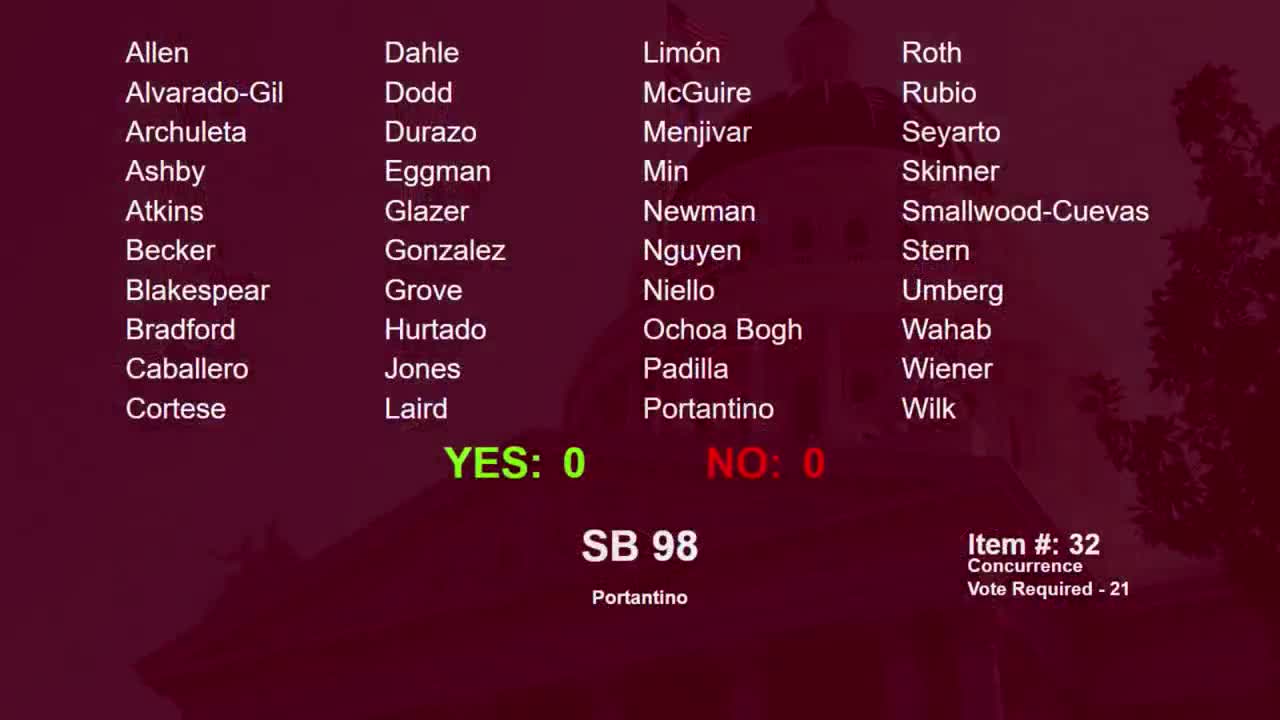 2MIN
Senate Floor
 52SEC
Assembly Floor
 37SEC
Assembly Standing Committee on Appropriations
 9MIN
Assembly Standing Committee on Education
 6MIN
Assembly Standing Committee on Natural Resources
 2MIN
Senate Floor
 10MIN
Senate Standing Committee on Education
 12MIN
Senate Standing Committee on Energy, Utilities and Communications
Bill Author