AB 768: Smokeless tobacco: baseball stadiums.
- Session Year: 2015-2016
- House: Assembly
- Latest Version Date: 2015-10-11
Existing law generally prohibits the smoking of tobacco in the workplace and in public buildings, except in specified areas.
This bill would, commencing December 1, 2016, prohibit the use or possession of smokeless tobacco products, as defined, on the playing field of a baseball stadium during a professional baseball game or practice. The bill would provide that if any provision or its application is held invalid, that invalidity shall not affect other provisions or applications that can be given effect without the invalid provision or application. The bill would provide that its provisions do not preempt or prohibit the adoption of a more restrictive local ordinance regarding smokeless tobacco possession or use in a baseball stadium.
Existing law generally prohibits the smoking of tobacco in the workplace and in public buildings, except in specified areas.
This bill would would, commencing December 1, 2016, prohibit the use or possession of smokeless tobacco products, as defined, on the playing field of a baseball stadium during a professional baseball game or practice. The bill would provide that if any provision or its application is held invalid, that invalidity shall not affect other provisions or applications that can be given effect without the invalid provision or application. The bill would provide that its provisions do not supersede a conflicting provision relating to smokeless tobacco in a collective bargaining agreement that is in effect on January 1, 2016, but will only apply to a collective bargaining agreement that is executed on or after January 1, 2016. The bill would provide that its provisions do not preempt or prohibit the adoption of a more restrictive local ordinance regarding smokeless tobacco possession or use in a baseball stadium.
Existing law generally prohibits the smoking of tobacco in the workplace and in public buildings, except in specified areas.
This bill would prohibit the use or possession of smokeless tobacco products, as defined, on the playing field of a baseball stadium during a professional baseball game or practice. The bill would provide that if any provision or its application is held invalid, that invalidity shall not affect other provisions or applications that can be given effect without the invalid provision or application. The bill would provide that its provisions do not supersede a conflicting provision relating to smokeless tobacco in a collective bargaining agreement that is in effect on January 1, 2016, but will only apply to a collective bargaining agreement that is executed on or after January 1, 2016.
Existing law prohibits the smoking of tobacco in every publicly owned building open to the general public for the primary purpose of exhibiting a motion picture, stage drama, music recital, or any other performance, with the exception of any indoor sporting event, except in designated areas. generally prohibits the smoking of tobacco in the workplace and in public buildings, except in specified areas.
This bill would prohibit the use or possession of smokeless tobacco products, as defined, including smokeless tobacco, in a baseball stadium, which includes the physical area in which a professional, collegiate, high school, or other organized baseball game or practice is occurring. The bill would require a baseball stadium to have posted at every entrance a conspicuous sign clearly communicating that the use of tobacco products, including smokeless tobacco, is prohibited. on the playing field of a baseball stadium during a professional baseball game or practice. The bill provides that, would provide that if any provision or its application is held invalid, that invalidity shall not affect other provisions or applications that can be given effect without the invalid provision or application.
Existing law prohibits the smoking of tobacco in every publicly owned building open to the general public for the primary purpose of exhibiting a motion picture, stage drama, music recital, or any other performance, with the exception of any indoor sporting event, except in designated areas.
This bill would prohibit the use of tobacco products, as defined, including smokeless tobacco, in a baseball stadium, which includes the physical area in which a professional, collegiate, high school, or other organized baseball game or practice is occurring. The bill would require a baseball stadium to have posted at every entrance a conspicuous sign clearly communicating that the use of tobacco products, including smokeless tobacco, is prohibited. The bill provides that, if any provision or its application is held invalid, that invalidity shall not affect other provisions or applications that can be given effect without the invalid provision or application.
(a)(1)The Legislature finds and declares that the use of smokeless tobacco products by professional baseball players is a matter of statewide interest and concern. It is the intent of the Legislature in enacting this section to prohibit the use of smokeless tobacco products by professional baseball players in stadiums in this state.
(2)The Legislature further finds that there is a high level of smokeless tobacco use by Major League Baseball players, as well as a well-established role-model effect between professional baseball players and youth. A ban on the use of smokeless tobacco in professional baseball takes aim at the use of smokeless tobacco by professional baseball players at stadiums throughout California with the goal that impressionable youth never begin to use smokeless tobacco products or associate smokeless tobacco with the sport of baseball.
(3)To promote a healthy and active lifestyle and to set a better example for youth, the Legislature urges Major League Baseball and the Major League Baseball Players Association to adopt a nationwide ban on the use of smokeless tobacco by players, managers, and coaches in public stadiums. Since 1993, minor league baseball has prohibited the use or possession of smokeless tobacco by players, coaches, and umpires on ballpark premises and during club travel.
(b)A person shall not use or possess a smokeless tobacco product at any time on the playing field of a baseball stadium.
(c)For purposes of this section, the following definitions shall apply:
(1)Baseball stadium means the physical area in which a professional baseball game or practice is occurring.
(2)Playing field means the area in which a baseball game is played, including a dugout, bullpen, and team bench area.
(3)Professional baseball means baseball games played in connection with Major League Baseball or minor league baseball.
(4)Smokeless tobacco means a product that contains cut, ground, powdered, or leaf tobacco and is intended to be placed in the oral or nasal cavity, including, but not limited to, snuff, chewing tobacco, dipping tobacco, dissolvable tobacco products, and snus.
(d)This section sets forth minimum state restrictions on the use or possession of smokeless tobacco in a baseball stadium and does not preempt or otherwise prohibit the adoption of a local ordinance that imposes a more restrictive or complete ban on smokeless tobacco use and possession in a baseball stadium. A local ordinance that imposes a more restrictive or complete ban on smokeless tobacco use or possession in a baseball stadium shall control in the event of an inconsistency between this section and the local ordinance.
(e)The provisions of this section are severable. If any provision of this section or its application is held invalid, that invalidity shall not affect other provisions or applications that can be given effect without the invalid provision or application.
(f)This section shall become operative on December 1, 2016.
(a)(1)The Legislature finds and declares that the use of smokeless tobacco products by professional baseball players is a matter of statewide interest and concern. It is the intent of the Legislature in enacting this section to prohibit the use of smokeless tobacco products by professional baseball players in stadiums in this state.
(2)The Legislature further finds that there is a high level of smokeless tobacco use by Major League Baseball players, as well as a well-established role-model effect between professional baseball players and youth. A ban on the use of smokeless tobacco in professional baseball takes aim at the use of smokeless tobacco by professional baseball players at stadiums throughout California with the goal that impressionable youth never begin to use smokeless tobacco products or associate smokeless tobacco with the sport of baseball.
(3)To promote a healthy and active lifestyle and to set a better example for youth, the Legislature urges Major League Baseball and the Major League Baseball Players Association to adopt a nationwide ban on the use of smokeless tobacco by players, managers, and coaches in public stadiums. Since 1993, minor league baseball has prohibited the use or possession of smokeless tobacco by players, coaches, and umpires on ballpark premises and during club travel.
(b)A person shall not use or possess a smokeless tobacco product at any time on the playing field of a baseball stadium.
(c)For purposes of this section, the following definitions shall apply:
(1)Baseball stadium means the physical area in which a professional baseball game or practice is occurring.
(2)Playing field means the area in which a baseball game is played, including a dugout, bullpen, and team bench area.
(3)Professional baseball means baseball games played in connection with Major League Baseball or minor league baseball.
(4)Smokeless tobacco means a product that contains cut, ground, powdered, or leaf tobacco and is intended to be placed in the oral or nasal cavity, including, but not limited to, snuff, chewing tobacco, dipping tobacco, dissolvable tobacco products, and snus.
(d)This section shall be construed as supplementing and imposing prohibitions and requirements in addition to those in existing law.
(d)This section sets forth minimum state restrictions on the use or possession of smokeless tobacco in a baseball stadium and does not preempt or otherwise prohibit the adoption of a local ordinance that imposes a more restrictive or complete ban on smokeless tobacco use and possession in a baseball stadium. A local ordinance that imposes a more restrictive or complete ban on smokeless tobacco use or possession in a baseball stadium shall control in the event of an inconsistency between this section and the local ordinance.
(e)The provisions of this section are severable. If any provision of this section or its application is held invalid, that invalidity shall not affect other provisions or applications that can be given effect without the invalid provision or application.
(f)The requirements of this section do not supersede a conflicting provision relating to smokeless tobacco contained in a collective bargaining agreement that is in effect on January 1, 2016, but will only apply to a collective bargaining agreement that is executed on or after January 1, 2016.
(f)This section shall become operative on December 1, 2016.
(a)(1)The Legislature finds and declares that the use of smokeless tobacco products by professional baseball players is a matter of statewide interest and concern. It is the intent of the Legislature in enacting this section to prohibit the use of smokeless tobacco products by professional baseball players in stadiums in this state.
(2)The Legislature further finds that there is a high level of smokeless tobacco use by Major League Baseball players, as well as a well-established role-model effect between professional baseball players and youth. A ban on the use of smokeless tobacco in professional baseball takes aim at the use of smokeless tobacco by professional baseball players at stadiums throughout California with the goal that impressionable youth never begin to use smokeless tobacco products or associate smokeless tobacco with the sport of baseball.
(3)To promote a healthy and active lifestyle and to set a better example for youth, the Legislature urges Major League Baseball and the Major League Baseball Players Association to adopt a nationwide ban on the use of smokeless tobacco by players, managers, and coaches in public stadiums. Since 1993, minor league baseball has prohibited the use or possession of smokeless tobacco by players, coaches, and umpires on ballpark premises and during club travel.
(b)A person shall not use or possess a smokeless tobacco product at any time on the playing field of a baseball stadium.
(c)For purposes of this section, the following definitions shall apply:
(1)Baseball stadium means the physical area in which a professional baseball game or practice is occurring.
(2)Playing field means the area in which a baseball game is played, including a dugout, bullpen, and team bench area.
(3)Professional baseball means baseball games played in connection with Major League Baseball or minor league baseball.
(4)Smokeless tobacco means a product that contains cut, ground, powdered, or leaf tobacco and is intended to be placed in the oral or nasal cavity, including, but not limited to, snuff, chewing tobacco, dipping tobacco, dissolvable tobacco products, and snus.
(d)This section shall be construed as supplementing and imposing prohibitions and requirements in addition to those in existing law.
(e)The provisions of this section are severable. If any provision of this section or its application is held invalid, that invalidity shall not affect other provisions or applications that can be given effect without the invalid provision or application.
(f)The requirements of this section do not supersede a conflicting provision relating to smokeless tobacco contained in a collective bargaining agreement that is in effect on January 1, 2016, but will only apply to a collective bargaining agreement that is executed on or after January 1, 2016.
This act shall be known, and may be cited, as the Tobacco Free Baseball Act.
SEC. 2.SECTION 1.Article 1.5 (commencing with Section 118916) is added to Chapter 4 of Part 15 of Division 104 of the Health and Safety Code, to read:1.5.Public Spaces Smokeless Tobacco in Professional Baseball118916.(a)(1)The Legislature finds and declares that the regulation on use of smokeless tobacco products in professional, collegiate, high school, and other baseball stadiums by professional baseball players is a matter of statewide interest and concern. It is the intent of the Legislature in enacting this section to prohibit any tobacco product, including smokeless tobacco, at any time at an event site for professional, collegiate, high school, or other organized baseball games in all baseball the use of smokeless tobacco products by professional baseball players in stadiums in this state.
(2)The Legislature further finds that there is a high level of smokeless tobacco use by Major League Baseball players, as well as a well-established role-model effect between professional baseball players and youth. A ban on the use of smokeless tobacco in professional baseball takes aim at the use of smokeless tobacco by professional baseball players at stadiums throughout California with the goal that impressionable youth never begin to use smokeless tobacco products or associate smokeless tobacco with the sport of baseball.
(3)To promote a healthy and active lifestyle and to set a better example for youth, the Legislature urges Major League Baseball and the Major League Baseball Players Association to adopt a nationwide ban on the use of smokeless tobacco by players, managers, and coaches in public stadiums. Since 1993, minor league baseball has prohibited the use or possession of smokeless tobacco by players, coaches, and umpires on ballpark premises and during club travel.
(b)A person shall not use or possess a smokeless tobacco product at any time at on the playing field of a baseball stadium.
(c)For purposes of this section, the following definitions shall apply:
(1)Baseball stadium means the physical area in which a professional, collegiate, high school, or other organized professional baseball game or practice is occurring, including all open, semiopen, and enclosed spaces and structures. A baseball stadium includes, but is not limited to, playing fields, dugouts, bullpens, training rooms, locker rooms, team bench areas, spectator seating areas, pedestrian walkways, bathrooms, dining areas, vendor areas, offices, and recreational areas. occurring.
(2)Playing field means the area in which a baseball game is played, including a dugout, bullpen, and team bench area.
(2)Organized
(3)Professional baseball means baseball games played in connection with an established league or other association of persons. Major League Baseball or minor league baseball.
(3)
(4)Smokeless tobacco means a product that contains cut, ground, powdered, or leaf tobacco and is intended to be placed in the oral or nasal cavity, including, but not limited to, snuff, chewing tobacco, dipping tobacco, dissolvable tobacco products, and sinus. snus.
(4)Tobacco product includes all of the following:
(A)A product made or derived from tobacco or nicotine that is intended for human consumption, whether smoked, heated, chewed, absorbed, dissolved, inhaled, snorted, sniffed, or ingested by any other means, including, but not limited to, cigarettes, cigars, little cigars, chewing tobacco, pipe tobacco, and snuff.
(B)An electronic device that delivers nicotine or other substances to the person inhaling from the device, including, but not limited to, an electronic cigarette, cigar, pipe, or hookah.
(C)A component, part, or accessory of a tobacco product, whether or not sold separately.
(D)Tobacco product does not include a product that has been approved by the United States Food and Drug Administration for sale as a tobacco cessation product or for other therapeutic purposes where the product is marketed and sold solely for that approved purpose.
(d)Each baseball stadium shall have posted at every entrance a conspicuous sign clearly communicating that the use of tobacco products, including smokeless tobacco, is prohibited. These signs shall also be posted in all dugouts, bullpens, locker rooms, and bathrooms.
(e)
(d)This section shall be construed as supplementing and imposing prohibitions and requirements in addition to those in existing law.
(f)
(e)The provisions of this section are severable. If any provision of this section or its application is held invalid, that invalidity shall not affect other provisions or applications that can be given effect without the invalid provision or application.
This act shall be known, and may be cited, as the Tobacco Free Baseball Act.
SEC. 2.Article 1.5 (commencing with Section 118916) is added to Chapter 4 of Part 15 of Division 104 of the Health and Safety Code, to read:1.5.Public Spaces118916.(a)The Legislature finds and declares that the regulation on tobacco products in professional, collegiate, high school, and other baseball stadiums is a matter of statewide interest and concern. It is the intent of the Legislature in enacting this section to prohibit any tobacco product, including smokeless tobacco, at any time at an event site for professional, collegiate, high school, or other organized baseball games in all baseball stadiums in this state, thereby eliminating the need for local governments to enact tobacco restrictions within their respective jurisdictions. state.
(b)A person shall not use a tobacco product at any time at a baseball stadium.
(c)For purposes of this section, the following definitions shall apply:
(1)Baseball stadium means the physical area in which a professional, collegiate, high school, or other organized baseball game or practice is occurring, including all open, semiopen, and enclosed spaces and structures. A baseball stadium includes, but is not limited to, playing fields, dugouts, bullpens, training rooms, locker rooms, team bench areas, spectator seating areas, pedestrian walkways, bathrooms, dining areas, vendor areas, offices, and recreational areas.
(2)Organized baseball means baseball games played in connection with an established league or other association of persons.
(3)Smokeless tobacco means a product that contains cut, ground, powdered, or leaf tobacco and is intended to be placed in the oral or nasal cavity, including, but not limited to, snuff, chewing tobacco, dipping tobacco, dissolvable tobacco products, and sinus.
(4)Tobacco product includes all of the following:
(A)A product made or derived from tobacco or nicotine that is intended for human consumption, whether smoked, heated, chewed, absorbed, dissolved, inhaled, snorted, sniffed, or ingested by any other means, including, but not limited to, cigarettes, cigars, little cigars, chewing tobacco, pipe tobacco, and snuff.
(B)An electronic device that delivers nicotine or other substances to the person inhaling from the device, including, but not limited to, an electronic cigarette, cigar, pipe, or hookah.
(C)A component, part, or accessory of a tobacco product, whether or not sold separately.
(D)Tobacco product does not include a product that has been approved by the United States Food and Drug Administration for sale as a tobacco cessation product or for other therapeutic purposes where the product is marketed and sold solely for that approved purpose.
(d)Each baseball stadium shall have posted at every entrance a conspicuous sign clearly communicating that the use of tobacco products, including smokeless tobacco, is prohibited. These signs shall also be posted in all dugouts, bullpens, locker rooms, and bathrooms.
(e)This section shall be construed as supplementing and imposing prohibitions and requirements in addition to those in existing law.
(f)The provisions of this section are severable. If any provision of this section or its application is held invalid, that invalidity shall not affect other provisions or applications that can be given effect without the invalid provision or application.
This act shall be known, and may be cited, as the Tobacco Free Baseball Act.
SEC. 2.Article 1.5 (commencing with Section 118916) is added to Chapter 4 of Part 15 of Division 104 of the Health and Safety Code, to read:1.5.Public Spaces118916.(a)The Legislature finds and declares that the regulation on tobacco products in professional, collegiate, high school, and other baseball stadiums is a matter of statewide interest and concern. It is the intent of the Legislature in enacting this section to prohibit any tobacco product, including smokeless tobacco, at any time at an event site for professional, collegiate, high school, or other organized baseball games in all baseball stadiums in this state, thereby eliminating the need for local governments to enact tobacco restrictions within their respective jurisdictions.
(b)A person shall not use a tobacco product at any time at a baseball stadium.
(c)For purposes of this section, the following definitions shall apply:
(1)Baseball stadium means the physical area in which a professional, collegiate, high school, or other organized baseball game or practice is occurring, including all open, semiopen, and enclosed spaces and structures. A baseball stadium includes, but is not limited to, playing fields, dugouts, bullpens, training rooms, locker rooms, team bench areas, spectator seating areas, pedestrian walkways, bathrooms, dining areas, vendor areas, offices, and recreational areas.
(2)Organized baseball means baseball games played in connection with an established league or other association of persons.
(3)Smokeless tobacco means a product that contains cut, ground, powdered, or leaf tobacco and is intended to be placed in the oral or nasal cavity, including, but not limited to, snuff, chewing tobacco, dipping tobacco, dissolvable tobacco products, and sinus.
(4)Tobacco product includes all of the following:
(A)A product made or derived from tobacco or nicotine that is intended for human consumption, whether smoked, heated, chewed, absorbed, dissolved, inhaled, snorted, sniffed, or ingested by any other means, including, but not limited to, cigarettes, cigars, little cigars, chewing tobacco, pipe tobacco, and snuff.
(B)An electronic device that delivers nicotine or other substances to the person inhaling from the device, including, but not limited to, an electronic cigarette, cigar, pipe, or hookah.
(C)A component, part, or accessory of a tobacco product, whether or not sold separately.
(D)Tobacco product does not include a product that has been approved by the United States Food and Drug Administration for sale as a tobacco cessation product or for other therapeutic purposes where the product is marketed and sold solely for that approved purpose.
(d)Each baseball stadium shall have posted at every entrance a conspicuous sign clearly communicating that the use of tobacco products, including smokeless tobacco, is prohibited. These signs shall also be posted in all dugouts, bullpens, locker rooms, and bathrooms.
(e)This section shall be construed as supplementing and imposing prohibitions and requirements in addition to those in existing law.
(f)The provisions of this section are severable. If any provision of this section or its application is held invalid, that invalidity shall not affect other provisions or applications that can be given effect without the invalid provision or application.
|
Date
|
Status
|
|---|---|
| Oct 11, 2015 | Chaptered by Secretary of State - Chapter 779, Statutes of 2015. |
| Oct 11, 2015 | Approved by the Governor. |
| Sep 3, 2015 | Enrolled and presented to the Governor at 4 p.m. |
| Aug 27, 2015 | Senate amendments concurred in. To Engrossing and Enrolling. (Ayes 54. Noes 23. Page 2613.). |
| Aug 27, 2015 | Senate amendments concurred in. To Engrossing and Enrolling. (Ayes 54. Noes 23.). |
| Aug 25, 2015 | In Assembly. Concurrence in Senate amendments pending. May be considered on or after August 27 pursuant to Assembly Rule 77. |
| Aug 24, 2015 | Read third time. Passed. Ordered to the Assembly. (Ayes 24. Noes 14. Page 2150.). |
| Aug 24, 2015 | Read third time. Passed. Ordered to the Assembly. |
| Jul 15, 2015 | Read second time. Ordered to third reading. |
| Jul 14, 2015 | Read third time and amended. Ordered to second reading. |
| Jul 9, 2015 | Read second time. Ordered to third reading. |
| Jul 8, 2015 | From committee: Do pass. (Ayes 4. Noes 1.) (July 8). |
| Jun 29, 2015 | From committee: Do pass and re-refer to Com. on L. & I.R. (Ayes 7. Noes 3.) (June 29). Re-referred to Com. on L. & I.R. |
| Jun 18, 2015 | Referred to Coms. on G.O. and L. & I.R. |
| Jun 4, 2015 | In Senate. Read first time. To Com. on RLS. for assignment. |
| Jun 4, 2015 | Read third time. Passed. Ordered to the Senate. (Ayes 53. Noes 25. Page 1904.) |
| Jun 4, 2015 | Assembly Rule 63 suspended. (Page 1903.) |
| Jun 4, 2015 | Read second time. Ordered to third reading. |
| Jun 3, 2015 | Read second time and amended. Ordered returned to second reading. |
| Jun 2, 2015 | From committee: Amend, and do pass as amended. (Ayes 12. Noes 4.) (May 27). |
| May 13, 2015 | In committee: Set, first hearing. Hearing canceled at the request of author. |
| May 6, 2015 | Re-referred to Com. on APPR. |
| May 5, 2015 | Read second time and amended. |
| May 4, 2015 | From committee: Amend, and do pass as amended and re-refer to Com. on APPR. (Ayes 15. Noes 5.) (April 27). |
| Apr 7, 2015 | From committee: Do pass and re-refer to Com. on G.O. (Ayes 4. Noes 2.) (April 7). Re-referred to Com. on G.O. |
| Apr 7, 2015 | Re-referred to Com. on A.,E.,S.,T., & I.M. |
| Apr 6, 2015 | From committee chair, with author's amendments: Amend, and re-refer to Com. on A.,E.,S.,T., & I.M. Read second time and amended. |
| Mar 19, 2015 | Re-referred to Coms. on A.,E.,S.,T., & I.M. and G.O. pursuant to Assembly Rule 96. |
| Mar 12, 2015 | Referred to Coms. on G.O. and A.,E.,S.,T., & I.M. |
| Feb 26, 2015 | From printer. May be heard in committee March 28. |
| Feb 25, 2015 | Read first time. To print. |
|
Date
|
Description
|
Location
|
Votes
|
|
|---|---|---|---|---|
| Aug 27, 2015 | AB 768 THURMOND Concurrence in Senate Amendments | Assembly Floor |
Passed |
|
| Aug 24, 2015 | Assembly 3rd Reading AB768 Thurmond By Leno | Senate Floor |
Passed |
|
| Jul 8, 2015 | Do pass | Senate Standing Committee on Labor and Industrial Relations |
Passed |
|
| Jun 29, 2015 | Do pass, but first be re-referred to the Committee on [Labor and Industrial Relations] | Senate Standing Committee on Governmental Organization |
Passed |
|
| Jun 4, 2015 | AB 768 THURMOND Assembly Third Reading | Assembly Floor |
Passed |
|
| May 27, 2015 | Do pass as amended. | Assembly Standing Committee on Appropriations |
Passed |
|
| Apr 27, 2015 | Do pass as amended and be re-referred to the Committee on [Appropriations] | Assembly Standing Committee on Governmental Organization |
Passed |
|
| Apr 7, 2015 | Do pass and be re-referred to the Committee on [Governmental Organization] | Assembly Standing Committee on Arts, Entertainment, Sports, Tourism, and Internet Media |
Passed |
This list shows positions taken on this bill by organizations on the date displayed, which is linked to the original source.
Positions by individuals are not included.
AB 768
Page 2
CONCURRENCE IN SENATE AMENDMENTS
AB 768
(Thurmond)
As Amended July 14, 2015
Majority vote
ASSEMBLY: |
53-25 |
(June 4, 2015) |
SENATE: |
24-14 |
(August 24, 2015) |
Original Committee Reference: A.,E.,S.,T., & I.M.
SUMMARY: Prohibits the use or possession of smokeless tobacco products on the playing field of a baseball stadium during a professional baseball game or practice.
The Senate amendments:
Strike the provisions declaring this section does not supersede any conflicting provision relating to smokeless tobacco contained in a collective bargaining agreement that is in effect on January 1, 2016, but will only apply to a collective bargaining agreement that is executed on or after January 1, 2016.
Specify that this bill sets forth minimum state restrictions on the use or possession of smokeless tobacco in baseball stadiums and specify that a local ordinance shall control in the event of an inconsistency between the provisions of this bill and the local ordinance.
Provide that this bill becomes operative on December 1, 2016.
EXISTING LAW:
Prohibits the smoking of tobacco in every publicly owned building open to the general public for the primary purpose of exhibiting a motion picture, stage drama, musical recital, or any other performance, with the exception of any indoor sporting event, except in designated area.
Prohibits any person from smoking in any public workplace or restaurant, inside a public building or within 20 feet of any air intake door or window of any government building.
Defines "tobacco product" to mean any product containing tobacco, as specified, including, but not limited to, cigarette, loose tobacco, cigars, snuff, chewing tobacco, or any other preparation of tobacco.
Defines an "electronic cigarette" as a device that can provide an inhalable dose of nicotine by delivering a vaporized solution.
FISCAL EFFECT: According to the Assembly Appropriations Committee, there are negligible costs to local law enforcement, if any.
COMMENTS: According to the author, "MLB has already begun the process of imposing certain limits on the use of smokeless tobacco, but its use has not yet been banned entirely. MLB players are not allowed to carry tobacco packages in their uniform pockets, and tobacco use during televised interviews and non-game functions is prohibited. Today, the crux of the smokeless tobacco debate in California is centered on the on-field use of smokeless tobacco. AB 768 will send a simple and powerful message to young fans that baseball and smokeless tobacco don’t mix."
Tobacco use in Minor League Baseball. California is currently home to 12 minor league teams. As of 1993, all minor league players, coaches and umpires are forbidden to smoke or chew tobacco anywhere in their ballparks or on team buses. The ban applies to more than 6,000 uniformed baseball personnel on the 160 minor league teams, but not to fans, employees of the clubs or to any major league players, including those sent down to the minors for rehabilitation.
Smokeless Tobacco use in Major League Baseball (MLB). Smokeless tobacco use by baseball players is an issue that is the subject of an existing collective bargaining agreement. Currently, baseball players do not carry tobacco tins or packages in their pockets when fans are allowed in the ballpark or use tobacco during pregame or postgame interviews or team functions, as part of their existing contracts. According to a press release by MLB, the players have agreed to these restrictions based in part upon their understanding of the importance of their status as role models; however, the players union strongly opposes any further limitation of their private rights to engage in legal conduct.
The current agreement is set to expire December 1, 2016, which coincides with the enactment date of this legislation.
Local ordinance in San Francisco. In May of this year San Francisco became the first city in the nation to outlaw all forms of tobacco, including e-cigarettes and chewing tobacco, from its athletic playing fields, including AT&T Park home to the San Francisco Giants. The ordinance will take effect Jan. 1, 2016.
Analysis Prepared by: Dana Mitchell/ A.,E.,S.,T., & I.M. / (916) 319-3450 FN: 0001290
AB 768
Page 7
|
Office of Senate Floor Analyses (916) 651-1520 Fax: (916) 327-4478 |
THIRD READING
Bill No: AB 768
Amended: 7/14/15 in Senate
SENATE GOVERNMENTAL ORG. COMMITTEE: 7-3, 6/29/15
AYES: Hall, Block, Glazer, Hernandez, Hill, Lara, McGuire
NOES: Gaines, Runner, Vidak
NO VOTE RECORDED: Berryhill, Galgiani, Hueso
SENATE LABOR & IND. REL. COMMITTEE: 4-1, 7/8/15
AYES: Mendoza, Jackson, Leno, Mitchell
NOES: Stone
ASSEMBLY FLOOR: 53-25, 6/4/15 - See last page for vote
SUBJECT: Smokeless tobacco: baseball stadiums
DIGEST: This bill prohibits the use or possession of smokeless tobacco products on the playing field of a baseball stadium during a professional baseball game or practice.
Senate Floor Amendments of 7/14/15 specify that this bill sets forth minimum state restrictions on the use or possession of smokeless tobacco in baseball stadiums and specify that a local ordinance shall control in the event of an inconsistency between the provisions of this bill and the local ordinance. Amendments also provide that this bill becomes operative on December 1, 2016, which is the date that the current collective bargaining agreement (CBA) is set to expire.
ANALYSIS:
Existing law:
Prohibits the smoking of tobacco in every publicly owned building open to the general public for the primary purpose of exhibiting a motion picture, stage drama, musical recital, or any other performance, with the exception of any indoor sporting event, except in designated area.
Prohibits any person from smoking in any public workplace or restaurant, inside a public building or within 20 feet of any air intake door or window of any government building.
Defines “tobacco product” to mean any product containing tobacco, as specified, including, but not limited to, cigarette, loose tobacco, cigars, snuff, chewing tobacco, or any other preparation of tobacco.
Defines an “electronic cigarette” as a device that can provide an inhalable dose of nicotine by delivering a vaporized solution.
This bill:
Prohibits the use or possession of smokeless tobacco products on the playing field of a baseball stadium during a professional baseball game or practice.
Defines a “baseball stadium” to mean the physical area in which a professional baseball game or practice is occurring.
Defines a “playing field” to mean the area in which a baseball game is played, including a dugout, bullpen, and team bench area.
Defines “professional baseball” to mean baseball games played in connection with Major League Baseball (MLB) or minor league baseball.
Defines “smokeless tobacco” to mean a product that contains cut, ground, powdered, or leaf tobacco and is intended to be placed in the oral or nasal cavity, including, but not limited to, snuff, chewing tobacco, dipping tobacco, dissolvable tobacco products, and snus.
Specifies that the provisions of this bill set forth minimum state restrictions on the use or possession of smokeless tobacco in a baseball stadium and does not preempt or otherwise prohibit the adoption of a local ordinance that imposes a more restrictive or complete ban on smokeless tobacco use and possession in a baseball stadium.
Specifies that a local ordinance that imposes a more restrictive or complete ban on smokeless tobacco use or possession in a baseball stadium shall control in the event of an inconsistency between the provisions of this bill and the local ordinance
Specifies that the provisions of this bill shall become operative on December 1, 2016.
Makes legislative findings and declarations.
Background
Purpose of the bill. According to the author, “MLB has already begun the process of imposing certain limits on the use of smokeless tobacco, but its use has not yet been banned entirely. MLB players are not allowed to carry tobacco packages in their uniform pockets, and tobacco use during televised interviews and non-game functions is prohibited. Today, the crux of the smokeless tobacco debate in California is centered on the on-field use of smokeless tobacco. AB 768 will send a simple and powerful message to young fans that baseball and smokeless tobacco don’t mix”
Smoking policies at MLB stadiums in California. Currently the State of California is home to the following five professional MLB teams each of which has the following smoking policies:
Los Angeles Angels – Angel Stadium: Angel Stadium prohibits smoking, including the use of electronic cigarettes, in seating areas, suites, concourses, and restrooms. Smoking is allowed in designated areas.
Los Angeles Dodgers – Dodger Stadium: Dodger Stadium is a smoke-free facility with designated smoking areas. Electronic cigarettes are subject to the same restrictions.
Oakland Athletics – O.co Coliseum: In accordance with the City of Oakland's smoking ordinance, all MLB games are smoke-free. Violators of this policy are subject to ejection and/or citation. There are no designated smoking areas anywhere in the stadium. Electronic cigarettes are not permitted.
San Diego Padres – Petco Park: The stadium is a smoke-free facility. Guests who use standard or electronic smoking devices at a Petco Park event are required to utilize the designated locations outside the ballpark.
San Francisco Giants – AT&T Park: AT&T Park is a smoke free facility with no smoking areas. Smoking is not permitted anywhere in the ballpark. Electronic smoking and any other vaporized smoking is not permitted anywhere inside AT&T Park.
Tobacco use in Minor League Baseball. California is currently home to 12 minor league teams. As of 1993, all minor league players, coaches and umpires are forbidden to smoke or chew tobacco anywhere in their ballparks or on team buses. The ban applies to more than 6,000 uniformed baseball personnel on the 160 minor league teams, but not to fans, employees of the clubs or to any major league players, including those sent down to the minors for rehabilitation.
Smokeless Tobacco use in MLB. Smokeless tobacco use by baseball players is an issue that is the subject of an existing CBA. Currently, baseball players do not carry tobacco tins or packages in their pockets when fans are allowed in the ballpark or use tobacco during pregame or postgame interviews or team functions, as part of their existing contracts. According to a press release by MLB, the players have agreed to these restrictions based in part upon their understanding of the importance of their status as role models; however, the players union strongly opposes any further limitation of their private rights to engage in legal conduct.
This bill specifies that the provisions of this bill will not supersede conflicting provisions relating to smokeless tobacco in a CBA that is in effect on January 1, 2016, but will only apply to a collective bargaining agreement that is executed on or after January 1, 2016. The current CBA is set to expire on December 1, 2016.
Prior/Related Legislation
SB 151 (Hernandez, 2015) increases the minimum legal age to purchase or consume tobacco from 18 to 21. (Pending in the Assembly Governmental Organization Committee)
SB 140 (Leno, 2015) recasts and broadens the definition of “tobacco product” in current law to include electronic cigarettes, as specified, and extends current restrictions and prohibitions against the use of tobacco products to electronic cigarettes. (Held in the Assembly Governmental Organization Committee)
SB 24 (Hill, 2015) extends the Stop Tobacco Access to Kids Enforcement Act requirements to the sale of electronic cigarettes, distinct from the definition of tobacco products, and requires enforcement, as specified, to begin July 1, 2016. (Failed passage on the Senate Floor)
AB 48 (Stone, 2015) prohibits a person or entity form selling, giving, or in any way furnishing to another person of any age in this state a cigarette utilizing a single-use filter made of any material, including cellulose acetate.
AB 1819 (Hall, Chapter 459, Statutes of 2014) expanded the existing prohibition against smoking in a family day care from only during the hours of operation to at any time.
SB 648 (Corbett, 2014) would have prohibited the offer, sale, or distribution of electronic cigarettes from a vending machine or other coin or token operated by a mechanical device or appliance, unless that machine or appliance is located on premises that are issued an on-sale public license to sell alcoholic beverages and is at least 15 feet from the entrance. (Failed passage in the Assembly Appropriations Committee)
AB 1500 (Dickinson, 2014) would have prohibited a seller that delivers products via shipping or mailing form selling or delivering an electronic cigarette to a person under 18 years of age. (Held in the Assembly Appropriations Committee)
AB 352 (Hall, Chapter 291, Statutes of 2013) prohibited the smoking of tobacco products in foster care homes.
SB 882 (Corbett, Chapter 312, Statutes of 2010) made it unlawful, to the extent not preempted by federal law, for a person to sell or otherwise furnish an electronic cigarette to a person under 18 years of age.
FISCAL EFFECT: Appropriation: No Fiscal Com.: No Local: No
American Academy of Pediatrics, California
American Cancer Society Cancer Action Network
American Federation of State, County and Municipal Employees, AFL-CIO
American Heart Association
American Stroke Association
California Academy of Family Physicians
California Black Health Network
California Academy of Family Physicians
California Chapter of the American College of Emergency Physicians
California Children’s Hospital Association
California Dental Association
California Dental Hygienists’ Association
California Medical Association
California Society of Addiction Medicine
Campaign for Tobacco-Free Kids
Children’s Defense Fund, California
City of Berkeley
County Health Executives Association of California
Health Access California
Medical Oncology Association of Southern California
UCSF Benioff Children’s Hospital Oakland
University of Southern California
OPPOSITION: (Verified 7/14/15)
None received
ARGUMENTS IN SUPPORT: According to the American Academy of Pediatrics, “tobacco use remains the leading preventable cause of death and illness in the United States. Most tobacco users started using tobacco products before 18 years of age. Role modeling of tobacco use by adults has been demonstrated to be a contributing factor.”
The California Children’s Hospital Association states that, “California is home to five major league baseball teams in both leagues. These players are role models for the millions of young people who watch baseball and often see players and managers using tobacco. AB 768 sends a simple and powerful message to kids that sports and tobacco don’t mix. Sports, including baseball, should be about promoting a healthy and active lifestyle, not a deadly and addictive product.”
ASSEMBLY FLOOR: 53-25, 6/4/15
AYES: Achadjian, Alejo, Baker, Bloom, Bonilla, Bonta, Brown, Burke, Calderon, Campos, Chau, Chiu, Chu, Cooley, Cooper, Daly, Dodd, Eggman, Frazier, Cristina Garcia, Eduardo Garcia, Gatto, Gipson, Gomez, Gonzalez, Gordon, Gray, Hadley, Roger Hernández, Holden, Jones-Sawyer, Levine, Linder, Lopez, Low, McCarty, Mullin, Nazarian, O'Donnell, Perea, Quirk, Rendon, Ridley-Thomas, Rodriguez, Salas, Santiago, Mark Stone, Thurmond, Ting, Weber, Williams, Wood, Atkins
NOES: Travis Allen, Bigelow, Brough, Chang, Chávez, Dababneh, Dahle, Beth Gaines, Grove, Harper, Irwin, Jones, Kim, Lackey, Maienschein, Mathis, Mayes, Melendez, Obernolte, Olsen, Patterson, Steinorth, Wagner, Waldron, Wilk
NO VOTE RECORDED: Gallagher, Medina
Prepared by: Felipe Lopez / G.O. / (916) 651-1530
7/14/15 16:51:58
**** END ****
AB 768
Page 6
|
Office of Senate Floor Analyses (916) 651-1520 Fax: (916) 327-4478 |
THIRD READING
Bill No: AB 768
Amended: 6/3/15 in Assembly
SENATE GOVERNMENTAL ORG. COMMITTEE: 7-3, 6/29/15
AYES: Hall, Block, Glazer, Hernandez, Hill, Lara, McGuire
NOES: Gaines, Runner, Vidak
NO VOTE RECORDED: Berryhill, Galgiani, Hueso
SENATE LABOR & IND. REL. COMMITTEE: 4-1, 7/8/15
AYES: Mendoza, Jackson, Leno, Mitchell
NOES: Stone
ASSEMBLY FLOOR: 53-25, 6/4/15 - See last page for vote
SUBJECT: Smokeless tobacco: baseball stadiums
DIGEST: This bill prohibits the use or possession of smokeless tobacco products on the playing field of a baseball stadium during a professional baseball game or practice.
ANALYSIS:
Existing law:
Prohibits the smoking of tobacco in every publicly owned building open to the general public for the primary purpose of exhibiting a motion picture, stage drama, musical recital, or any other performance, with the exception of any indoor sporting event, except in designated area.
Prohibits any person from smoking in any public workplace or restaurant, inside a public building or within 20 feet of any air intake door or window of any government building.
Defines “tobacco product” to mean any product containing tobacco, as specified, including, but not limited to, cigarette, loose tobacco, cigars, snuff, chewing tobacco, or any other preparation of tobacco.
Defines an “electronic cigarette” as a device that can provide an inhalable dose of nicotine by delivering a vaporized solution.
This bill:
Prohibits the use or possession of smokeless tobacco products on the playing field of a baseball stadium during a professional baseball game or practice.
Defines a “baseball stadium” to mean the physical area in which a professional baseball game or practice is occurring.
Defines a “playing field” to mean the area in which a baseball game is played, including a dugout, bullpen, and team bench area.
Defines “professional baseball” to mean baseball games played in connection with Major League Baseball (MLB) or minor league baseball.
Defines “smokeless tobacco” to mean a product that contains cut, ground, powdered, or leaf tobacco and is intended to be placed in the oral or nasal cavity, including, but not limited to, snuff, chewing tobacco, dipping tobacco, dissolvable tobacco products, and snus.
Specifies that the provisions of this bill do not supersede a conflicting provision in a collective bargaining agreement (CBA) that is in effect on January 1, 2016, but will only apply to a CBA that is executed on or after January 1, 2016.
Makes legislative findings and declarations.
Background
Purpose of the bill. According to the author, “MLB has already begun the process of imposing certain limits on the use of smokeless tobacco, but its use has not yet been banned entirely. MLB players are not allowed to carry tobacco packages in their uniform pockets, and tobacco use during televised interviews and non-game functions is prohibited. Today, the crux of the smokeless tobacco debate in California is centered on the on-field use of smokeless tobacco. AB 768 will send a simple and powerful message to young fans that baseball and smokeless tobacco don’t mix”
Smoking policies at MLB stadiums in California. Currently the State of California is home to the following five professional MLB teams each of which has the following smoking policies:
Los Angeles Angels – Angel Stadium: Angel Stadium prohibits smoking, including the use of electronic cigarettes, in seating areas, suites, concourses, and restrooms. Smoking is allowed in designated areas.
Los Angeles Dodgers – Dodger Stadium: Dodger Stadium is a smoke-free facility with designated smoking areas. Electronic cigarettes are subject to the same restrictions.
Oakland Athletics – O.co Coliseum: In accordance with the City of Oakland’s smoking ordinance, all MLB games are smoke-free. Violators of this policy are subject to ejection and/or citation. There are no designated smoking areas anywhere in the stadium. Electronic cigarettes are not permitted.
San Diego Padres – Petco Park: The stadium is a smoke-free facility. Guests who use standard or electronic smoking devices at a Petco Park event are required to utilize the designated locations outside the ballpark.
San Francisco Giants – AT&T Park: AT&T Park is a smoke free facility with no smoking areas. Smoking is not permitted anywhere in the ballpark. Electronic smoking and any other vaporized smoking is not permitted anywhere inside AT&T Park.
Tobacco use in Minor League Baseball. California is currently home to 12 minor league teams. As of 1993, all minor league players, coaches and umpires are forbidden to smoke or chew tobacco anywhere in their ballparks or on team buses. The ban applies to more than 6,000 uniformed baseball personnel on the 160 minor league teams, but not to fans, employees of the clubs or to any major league players, including those sent down to the minors for rehabilitation.
Smokeless tobacco use in MLB. Smokeless tobacco use by baseball players is an issue that is the subject of an existing CBA. Currently, baseball players do not carry tobacco tins or packages in their pockets when fans are allowed in the ballpark or use tobacco during pregame or postgame interviews or team functions, as part of their existing contracts. According to a press release by MLB, the players have agreed to these restrictions based in part upon their understanding of the importance of their status as role models; however, the players union strongly opposes any further limitation of their private rights to engage in legal conduct.
This bill specifies that the provisions of this bill will not supersede conflicting provisions relating to smokeless tobacco in a CBA that is in effect on January 1, 2016, but will only apply to a CBA that is executed on or after January 1, 2016. The current CBA is set to expire on December 1, 2016.
Prior/Related Legislation
SB 151 (Hernandez, 2015) increases the minimum legal age to purchase or consume tobacco from 18 to 21. (Pending in the Assembly Governmental Organization Committee)
SB 140 (Leno, 2015) recasts and broadens the definition of “tobacco product” in current law to include electronic cigarettes, as specified, and extends current restrictions and prohibitions against the use of tobacco products to electronic cigarettes. (Held in the Assembly Governmental Organization Committee)
SB 24 (Hill, 2015) extends the Stop Tobacco Access to Kids Enforcement Act requirements to the sale of electronic cigarettes, distinct from the definition of tobacco products, and requires enforcement, as specified, to begin July 1, 2016. (Failed passage on the Senate Floor)
AB 48 (Stone, 2015) prohibits a person or entity form selling, giving, or in any way furnishing to another person of any age in this state a cigarette utilizing a single-use filter made of any material, including cellulose acetate.
AB 1819 (Hall, Chapter 459, Statutes of 2014) expanded the existing prohibition against smoking in a family day care from only during the hours of operation to at any time.
SB 648 (Corbett, 2014) would have prohibited the offer, sale, or distribution of electronic cigarettes from a vending machine or other coin or token operated by a mechanical device or appliance, unless that machine or appliance is located on premises that are issued an on-sale public license to sell alcoholic beverages and is at least 15 feet from the entrance. (Failed passage in the Assembly Appropriations Committee)
AB 1500 (Dickinson, 2014) would have prohibited a seller that delivers products via shipping or mailing form selling or delivering an electronic cigarette to a person under 18 years of age. (Held in the Assembly Appropriations Committee)
AB 352 (Hall, Chapter 291, Statutes of 2013) prohibited the smoking of tobacco products in foster care homes.
SB 882 (Corbett, Chapter 312, Statutes of 2010) made it unlawful, to the extent not preempted by federal law, for a person to sell or otherwise furnish an electronic cigarette to a person under 18 years of age.
FISCAL EFFECT: Appropriation: No Fiscal Com.: No Local: No
American Academy of Pediatrics, California
American Cancer Society Cancer Action Network
American Federation of State, County and Municipal Employees, AFL-CIO
American Heart Association
American Stroke Association
California Academy of Family Physicians
California Black Health Network
California Academy of Family Physicians
California Chapter of the American College of Emergency Physicians
California Children’s Hospital Association
California Dental Association
California Dental Hygienists’ Association
California Medical Association
California Society of Addiction Medicine
Campaign for Tobacco-Free Kids
Children’s Defense Fund, California
City of Berkeley
County Health Executives Association of California
Health Access California
Medical Oncology Association of Southern California
UCSF Benioff Children’s Hospital Oakland
University of Southern California
None received
ARGUMENTS IN SUPPORT: According to the American Academy of Pediatrics, “tobacco use remains the leading preventable cause of death and illness in the United States. Most tobacco users started using tobacco products before 18 years of age. Role modeling of tobacco use by adults has been demonstrated to be a contributing factor.”
The California Children’s Hospital Association states that, “California is home to five major league baseball teams in both leagues. These players are role models for the millions of young people who watch baseball and often see players and managers using tobacco. AB 768 sends a simple and powerful message to kids that sports and tobacco don’t mix. Sports, including baseball, should be about promoting a healthy and active lifestyle, not a deadly and addictive product.”
ASSEMBLY FLOOR: 53-25, 6/4/15
AYES: Achadjian, Alejo, Baker, Bloom, Bonilla, Bonta, Brown, Burke, Calderon, Campos, Chau, Chiu, Chu, Cooley, Cooper, Daly, Dodd, Eggman, Frazier, Cristina Garcia, Eduardo Garcia, Gatto, Gipson, Gomez, Gonzalez, Gordon, Gray, Hadley, Roger Hernández, Holden, Jones-Sawyer, Levine, Linder, Lopez, Low, McCarty, Mullin, Nazarian, O’Donnell, Perea, Quirk, Rendon, Ridley-Thomas, Rodriguez, Salas, Santiago, Mark Stone, Thurmond, Ting, Weber, Williams, Wood, Atkins
NOES: Travis Allen, Bigelow, Brough, Chang, Chávez, Dababneh, Dahle, Beth Gaines, Grove, Harper, Irwin, Jones, Kim, Lackey, Maienschein, Mathis, Mayes, Melendez, Obernolte, Olsen, Patterson, Steinorth, Wagner, Waldron, Wilk
NO VOTE RECORDED: Gallagher, Medina
Prepared by: Felipe Lopez / G.O. / (916) 651-1530
7/10/15 14:06:12
**** END ****
AB 768 (Thurmond) Page 3 of 3
SENATE COMMITTEE ON LABOR AND INDUSTRIAL RELATIONS
Senator Tony Mendoza, Chair
2015 - 2016 Regular
Bill No: AB 768 Hearing Date: July 8, 2015
Author: |
Thurmond |
||
Version: |
June 3, 2015 |
||
Urgency: |
No |
Fiscal: |
No |
Consultant: |
Gideon Baum |
||
Subject: Smokeless tobacco: baseball stadiums.
KEY ISSUE
Should the Legislature ban the use of smokeless tobacco on a baseball field during a practice or a baseball game?
ANALYSIS
Existing law prohibits an employee from smoking tobacco products in an enclosed area, and also prohibits any employer from knowingly permitting anyone smoking tobacco in an enclosed space at a place of employment. “Enclosed space” includes lobbies, lounges, waiting areas, elevators, stairwells, and restrooms that are a structural part of the building and not specifically exempted. (Labor Code §6404.5)
Existing law prohibits a public employee or member of the public from smoking any tobacco product inside a public building, or in an outdoor area within 20 feet of a main exit, entrance, or operable window of a public building, or in a passenger vehicle owned by the state.
(Government Code §7597)
This bill:
Prohibits the use or possession of smokeless tobacco products on the playing field of a baseball stadium during a professional baseball game or practice.
Defines “smokeless tobacco” to mean a product that contains cut, ground, powdered, or leaf tobacco and is intended to be placed in the oral or nasal cavity, including, but not limited to, snuff, chewing tobacco, dipping tobacco, dissolvable tobacco products, and snus.
Specifies that the provisions of this bill do not supersede a conflicting provision in a collective bargaining agreement that is in effect on January 1, 2016, but will only apply to a collective bargaining agreement that is executed on or after January 1, 2016.
Makes legislative findings and declarations.
COMMENTS
1. Sports in California: A Tradition of Excellence
In the United States, there are few institutions that are treated with the reverence and respect of professional sports. Whereas earlier cultures shaped their calendar by the seasons and agricultural cycles, today’s calendar is shaped by the sports cycle: baseball in April; football in September; basketball in October; and play-offs and training in-between. As with all great institutions, the foundation of the institution rests on a social contract. In the case of professional sports, the social contract is between the athletes who play the games, the owners who shape the teams, and the fans that support them both.
Nowhere is this truer than in California. With the advent of professional baseball in San Francisco and Oakland in 1887, professional sports began to leave its imprint on the Golden State. Baseball teams in California have won 12 World Series Championships, and some of baseball’s greatest players of all time hail from California, including Joe DiMaggio, Curt Flood, Tony Gwynn, Jackie Robinson, and Ted Williams. From a labor perspective, Flood’s legacy is particularly notable – he challenged the “reserve clause” in baseball contracts, which gave the team that held the player’s contract near absolute control over the player’s contract. This challenge opened the door to free agency, ensuring that players shared in the financial windfall of modern sports.
2. Smokeless Tobacco in Baseball:
Smokeless tobacco has a long history in baseball, and it was historically prevalent. According to press accounts, use of chewing tobacco among baseball players was as high as 50% in 1994. More recently, it has dropped to 33% of players using smokeless tobacco, but attempts to prohibit the use of smokeless tobacco during games through the collective bargaining process have so far failed. However, in the wake of the death of Tony Gwynn in 2014 due to cancer caused by smokeless tobacco, several players voluntarily stopped using smokeless tobacco during games. Additionally, press accounts at that time quoted then-Commissioner of Baseball Bud Selig as saying smokeless tobacco would be a topic of negotiation during future collective bargaining agreement negotiations.
In the meantime, San Francisco this year banned smokeless tobacco in baseball stadiums. As the ban will not take effect until 2016, the enforcement questions of such a ban remain unanswered. If a player was seen chewing tobacco on the field, would enforcement occur during the game? If a player disputed that he was chewing tobacco, how would such a dispute be resolved? And would a player guilty of chewing of tobacco face fines or suspension from the MLB for conduct “detrimental to baseball”, despite the fact such behavior allowed in other states? In short, noting the challenges of enforcing a smokeless tobacco ban in a workplace as unusual as a baseball field, it is likely that some level of buy-in from the players is essential. Noting the press accounts above, it is likely that this will occur through the collective bargaining process.
3. Proponent Arguments:
According to the author, Major League Baseball (MLB) “has already begun the process of imposing certain limits on the use of smokeless tobacco, but its use has not yet been banned entirely. MLB players are not allowed to carry tobacco packages in their uniform pockets, and tobacco use during televised interviews and non-game functions is prohibited. Today, the crux of the smokeless tobacco debate in California is centered on the on-field use of smokeless tobacco.”
The author argues that “the use of smokeless tobacco products, particularly by professional players, is an issue of statewide importance because its use by those players serves as a detrimental example to our state’s youth. In fact, researchers at the Harvard School of Public Health have found that the use of smokeless tobacco by players has a powerful role model effect on youth. AB 768 will send a simple and powerful message to young fans that baseball and smokeless tobacco don’t mix.”
4. Opponent Arguments:
None on file.
5. Prior Legislation:
AB 1819 (Hall) Chapter 459, Statutes of 2014 expanded the existing prohibition against smoking in a family day care from only during the hours of operation to at any time.
SUPPORT
American Federation of State, County and Municipal Employees, AFL-CIO
OPPOSITION
None received.
-- END --
AB 768 (Thurmond) Page 4 of 4
SENATE COMMITTEE ON LABOR AND INDUSTRIAL RELATIONS
Senator Tony Mendoza, Chair
2015 - 2016 Regular
Bill No: AB 768 Hearing Date: July 8, 2015
Author: |
Thurmond |
||
Version: |
June 3, 2015 |
||
Urgency: |
No |
Fiscal: |
No |
Consultant: |
Gideon Baum |
||
Subject: Smokeless tobacco: baseball stadiums.
KEY ISSUE
Should the Legislature ban the use of smokeless tobacco on a baseball field during a practice or a baseball game?
ANALYSIS
Existing law prohibits an employee from smoking tobacco products in an enclosed area, and also prohibits any employer from knowingly permitting anyone smoking tobacco in an enclosed space at a place of employment. “Enclosed space” includes lobbies, lounges, waiting areas, elevators, stairwells, and restrooms that are a structural part of the building and not specifically exempted. (Labor Code §6404.5)
Existing law prohibits a public employee or member of the public from smoking any tobacco product inside a public building, or in an outdoor area within 20 feet of a main exit, entrance, or operable window of a public building, or in a passenger vehicle owned by the state.
(Government Code §7597)
This bill:
Prohibits the use or possession of smokeless tobacco products on the playing field of a baseball stadium during a professional baseball game or practice.
Defines “smokeless tobacco” to mean a product that contains cut, ground, powdered, or leaf tobacco and is intended to be placed in the oral or nasal cavity, including, but not limited to, snuff, chewing tobacco, dipping tobacco, dissolvable tobacco products, and snus.
Specifies that the provisions of this bill do not supersede a conflicting provision in a collective bargaining agreement that is in effect on January 1, 2016, but will only apply to a collective bargaining agreement that is executed on or after January 1, 2016.
Makes legislative findings and declarations.
COMMENTS
1. Sports in California: A Tradition of Excellence
In the United States, there are few institutions that are treated with the reverence and respect of professional sports. Whereas earlier cultures shaped their calendar by the seasons and agricultural cycles, today’s calendar is shaped by the sports cycle: baseball in April; football in September; basketball in October; and play-offs and training in-between. As with all great institutions, the foundation of the institution rests on a social contract. In the case of professional sports, the social contract is between the athletes who play the games, the owners who shape the teams, and the fans that support them both.
Nowhere is this truer than in California. With the advent of professional baseball in San Francisco and Oakland in 1887, professional sports began to leave its imprint on the Golden State. Baseball teams in California have won 12 World Series Championships, and some of baseball’s greatest players of all time hail from California, including Joe DiMaggio, Curt Flood, Tony Gwynn, Jackie Robinson, and Ted Williams. From a labor perspective, Flood’s legacy is particularly notable – he challenged the “reserve clause” in baseball contracts, which gave the team that held the player’s contract near absolute control over the player’s contract. This challenge opened the door to free agency, ensuring that players shared in the financial windfall of modern sports.
2. Smokeless Tobacco in Baseball:
Smokeless tobacco has a long history in baseball, and it was historically prevalent. According to press accounts, use of chewing tobacco among baseball players was as high as 50% in 1994. More recently, it has dropped to 33% of players using smokeless tobacco, but attempts to prohibit the use of smokeless tobacco during games through the collective bargaining process have so far failed. However, in the wake of the death of Tony Gwynn in 2014 due to cancer caused by smokeless tobacco, several players voluntarily stopped using smokeless tobacco during games. Additionally, press accounts at that time quoted then-Commissioner of Baseball Bud Selig as saying smokeless tobacco would be a topic of negotiation during future collective bargaining agreement negotiations.
In the meantime, San Francisco this year banned smokeless tobacco in baseball stadiums. As the ban will not take effect until 2016, the enforcement questions of such a ban remain unanswered. If a player was seen chewing tobacco on the field, would enforcement occur during the game? If a player disputed that he was chewing tobacco, how would such a dispute be resolved? And would a player guilty of chewing of tobacco face fines or suspension from the MLB for conduct “detrimental to baseball”, despite the fact such behavior allowed in other states? In short, noting the challenges of enforcing a smokeless tobacco ban in a workplace as unusual as a baseball field, it is likely that some level of buy-in from the players is essential. Noting the press accounts above, it is likely that this will occur through the collective bargaining process.
3. Proponent Arguments:
According to the author, Major League Baseball (MLB) “has already begun the process of imposing certain limits on the use of smokeless tobacco, but its use has not yet been banned entirely. MLB players are not allowed to carry tobacco packages in their uniform pockets, and tobacco use during televised interviews and non-game functions is prohibited. Today, the crux of the smokeless tobacco debate in California is centered on the on-field use of smokeless tobacco.”
The author argues that “the use of smokeless tobacco products, particularly by professional players, is an issue of statewide importance because its use by those players serves as a detrimental example to our state’s youth. In fact, researchers at the Harvard School of Public Health have found that the use of smokeless tobacco by players has a powerful role model effect on youth. AB 768 will send a simple and powerful message to young fans that baseball and smokeless tobacco don’t mix.”
4. Opponent Arguments:
None on file.
5. Prior Legislation:
AB 1819 (Hall) Chapter 459, Statutes of 2014 expanded the existing prohibition against smoking in a family day care from only during the hours of operation to at any time.
SUPPORT
American Academy of Pediatrics
American Federation of State, County and Municipal Employees, AFL-CIO
California Academy of Family Physicians
California American College of Emergency Physicians
California Black Health Network
California Children’s Hospital Association
California Dental Association
California Dental Hygienists’ Association
California Medical Association
California Society of Addiction Medicine
Children’s Defense Fund – California
City of Berkeley
County Health Executives Association of California Health Access California
Medical Oncology Association of Southern California
Shasta County Tobacco Education Coalition
UCSF Benioff Children’s Hospital Oakland
University of Southern California
OPPOSITION
None received.
-- END --
AB 768 (Thurmond) Page 6 of 6
SENATE COMMITTEE ON GOVERNMENTAL ORGANIZATION
Senator Isadore Hall, III
Chair
2015 - 2016 Regular
Bill No: AB 768 Hearing Date: 6/29/2015
Author: |
Thurmond |
||
Version: |
6/3/2015 Amended |
||
Urgency: |
No |
Fiscal: |
No |
Consultant: |
Felipe Lopez |
||
SUBJECT: Smokeless tobacco: baseball stadiums
DIGEST: This bill prohibits the use or possession of smokeless tobacco products on the playing field of a baseball stadium during a professional baseball game or practice.
ANALYSIS:
Existing law:
Prohibits the smoking of tobacco in every publicly owned building open to the general public for the primary purpose of exhibiting a motion picture, stage drama, musical recital, or any other performance, with the exception of any indoor sporting event, except in designated area.
Prohibits any person from smoking in any public workplace or restaurant, inside a public building or within 20 feet of any air intake door or window of any government building.
Defines “tobacco product” to mean any product containing tobacco, as specified, including, but not limited to, cigarette, loose tobacco, cigars, snuff, chewing tobacco, or any other preparation of tobacco.
Defines an “electronic cigarette” as a device that can provide an inhalable dose of nicotine by delivering a vaporized solution.
This bill:
Prohibits the use or possession of smokeless tobacco products on the playing field of a baseball stadium during a professional baseball game or practice.
Defines a “baseball stadium” to mean the physical area in which a professional baseball game or practice is occurring.
Defines a “playing field” to mean the area in which a baseball game is played, including a dugout, bullpen, and team bench area.
Defines “professional baseball” to mean baseball games played in connection with Major League Baseball (MLB) or minor league baseball.
Defines “smokeless tobacco” to mean a product that contains cut, ground, powdered, or leaf tobacco and is intended to be placed in the oral or nasal cavity, including, but not limited to, snuff, chewing tobacco, dipping tobacco, dissolvable tobacco products, and snus.
Specifies that the provisions of this bill do not supersede a conflicting provision in a collective bargaining agreement that is in effect on January 1, 2016, but will only apply to a collective bargaining agreement that is executed on or after January 1, 2016.
Makes legislative findings and declarations.
Background
Purpose of the bill. According to the author, “MLB has already begun the process of imposing certain limits on the use of smokeless tobacco, but its use has not yet been banned entirely. MLB players are not allowed to carry tobacco packages in their uniform pockets, and tobacco use during televised interviews and non-game functions is prohibited. Today, the crux of the smokeless tobacco debate in California is centered on the on-field use of smokeless tobacco.”
The author argues that “the use of smokeless tobacco products, particularly by professional players, is an issue of statewide importance because its use by those players serves as a detrimental example to our state’s youth. In fact, researchers at the Harvard School of Public Health have found that the use of smokeless tobacco by players has a powerful role model effect on youth. AB 768 will send a simple and powerful message to young fans that baseball and smokeless tobacco don’t mix.”
Smoking Policies at MLB Stadiums in California. Currently the State of California is home to the following five professional MLB teams each of which has the following smoking policies:
Los Angeles Angels – Angel Stadium: Angel Stadium prohibits smoking, including the use of electronic cigarettes, in seating areas, suites, concourses, and restrooms. Smoking is allowed in designated areas.
Los Angeles Dodgers – Dodger Stadium: Dodger Stadium is a smoke-free facility with designated smoking areas. Electronic cigarettes are subject to the same restrictions.
Oakland Athletics – O.co Coliseum: In accordance with the City of Oakland's smoking ordinance, all MLB games are smoke-free. Violators of this policy are subject to ejection and/or citation. There are no designated smoking areas anywhere in the stadium. Electronic cigarettes are not permitted.
San Diego Padres – Petco Park: The stadium is a smoke-free facility. Guests who use standard or electronic smoking devices at a Petco Park event are required to utilize the designated locations outside the ballpark.
San Francisco Giants – AT&T Park: AT&T Park is a smoke free facility with no smoking areas. Smoking is not permitted anywhere in the ballpark. Electronic smoking and any other vaporized smoking is not permitted anywhere inside AT&T Park.
Tobacco use in Minor League Baseball. California is currently home to 12 minor league teams. As of 1993, all minor league players, coaches and umpires are forbidden to smoke or chew tobacco anywhere in their ballparks or on team buses. The ban applies to more than 6,000 uniformed baseball personnel on the 160 minor league teams, but not to fans, employees of the clubs or to any major league players, including those sent down to the minors for rehabilitation.
Smokeless Tobacco use in MLB. Smokeless tobacco use by baseball players is an issue that is the subject of an existing collective bargaining agreement (CBA). Currently, baseball players do not carry tobacco tins or packages in their pockets when fans are allowed in the ballpark or use tobacco during pregame or postgame interviews or team functions, as part of their existing contracts. According to a press release by MLB, the players have agreed to these restrictions based in part upon their understanding of the importance of their status as role models; however, the players union strongly opposes any further limitation of their private rights to engage in legal conduct.
This bill specifies that the provisions of this bill would not supersede conflicting provisions relating to smokeless tobacco in a collective bargaining agreement that is in effect on January 1, 2016, but will only apply to a collective bargaining agreement that is executed on or after January 1, 2016. The current CBA is set to expire on December 1, 2016.
Smoking Prohibitions in California. Since 1994, California has banned smoking in most workplaces. Current law prohibits any person from smoking inside a public building or within 20 feet of any door, window, or air intake of any government building within the state. In addition, it is an infraction for a person to smoke within 25 feet of a playground or for a person to smoke in the presence of a minor in a vehicle.
In 2006, the State of California Air Resources Board identified second hand smoke as a Toxic Air Contaminant, meaning that secondhand smoke is now identified as an airborne toxic substance that may cause death or serious illness. The United States Environmental Protection Agency has classified secondhand smoke as a group A carcinogen, the most dangerous class of carcinogen. According to the Centers for Disease Control and Prevention (CDC), secondhand smoke is responsible for an estimated 49,400 deaths among nonsmokers each year in the United States, which includes 3,400 lung cancer deaths and 46,000 deaths due to heart disease.
In addition, studies have shown that secondhand smoke can be especially harmful to children because children breathe in more air than adults. This means that their bodies are exposed to more harmful chemicals from secondhand smoke. According to a 1997 study by the California Environmental Protection Agency, effects on children from secondhand smoke cause an estimated 120 child deaths per year from sudden infant death syndrome.
Prior/Related Legislation
SB 151 (Hernandez, 2015) increases the minimum legal age to purchase or consume tobacco from 18 to 21. (Pending in Assembly Governmental Organization Committee)
SB 140 (Leno, 2015) recasts and broadens the definition of “tobacco product” in current law to include electronic cigarettes, as specified, and extends current restrictions and prohibitions against the use of tobacco products to electronic cigarettes. (Pending in Assembly Governmental Organization Committee)
SB 24 (Hill, 2015) extends the Stop Tobacco Access to Kids Enforcement Act requirements to the sale of electronic cigarettes, distinct from the definition of tobacco products, and requires enforcement, as specified, to begin July 1, 2016. (Failed passage on Senate Floor)
AB 48 (Stone, 2015) prohibits a person or entity form selling, giving, or in any way furnishing to another person of any age in this state a cigarette utilizing a single-use filter made of any material, including cellulose acetate.
AB 1819 (Hall, Chapter 459, Statutes of 2014) expanded the existing prohibition against smoking in a family day care from only during the hours of operation to at any time.
SB 648 (Corbett, 2014) would have prohibited the offer, sale, or distribution of electronic cigarettes from a vending machine or other coin or token operated by a mechanical device or appliance, unless that machine or appliance is located on premises that are issued an on-sale public license to sell alcoholic beverages and is at least 15 feet from the entrance. (Failed passage in Assembly Appropriations Committee)
AB 1500 (Dickinson, 2014) would have prohibited a seller that delivers products via shipping or mailing form selling or delivering an electronic cigarette to a person under 18 years of age.
AB 352 (Hall, Chapter 291, Statutes of 2013) prohibited the smoking of tobacco products in foster care homes.
SB 882 (Corbett, Chapter 312, Statutes of 2010) made it unlawful, to the extent not preempted by federal law, for a person to sell or otherwise furnish an electronic cigarette to a person under 18 years of age.
FISCAL EFFECT: Appropriation: No Fiscal Com.: No Local: No
SUPPORT:
American Academy of Pediatrics, California
American Federation of State, County and Municipal Employees, AFL-CIO
California Academy of Family Physicians
California Black Health Network
California Academy of Family Physicians
California Chapter of the American College of Emergency Physicians
California Children’s Hospital Association
California Dental Association
California Dental Hygienists’ Association
California Society of Addiction Medicine
Children’s Defense Fund, California
City of Berkeley
County Health Executives Association of California
Health Access California
Medical Oncology Association of Southern California
UCSF Benioff Children’s Hospital Oakland
University of Southern California
OPPOSITION:
None received
ARGUMENTS IN SUPPORT: According to the American Academy of Pediatrics, “tobacco use remains the leading preventable cause of death and illness in the United States. Most tobacco users started using tobacco products before 18 years of age. Role modeling of tobacco use by adults has been demonstrated to be a contributing factor.”
The California Children’s Hospital Association states that, “California is home to five major league baseball teams in both leagues. These players are role models for the millions of young people who watch baseball and often see players and managers using tobacco. AB 768 sends a simple and powerful message to kids that sports and tobacco don’t mix. Sports, including baseball, should be about promoting a healthy and active lifestyle, not a deadly and addictive product.”
DUAL REFERAL: Senate Committee on Labor and Industrial Relations
AB 768
Page 2
Date of Hearing: May 27, 2015
ASSEMBLY COMMITTEE ON APPROPRIATIONS
Jimmy Gomez, Chair
AB 768
(Thurmond) – As Amended May 5, 2015
Policy Committee: |
Arts, Entertainment, Sports, Tourism, and Internet Media |
Vote: |
4 - 2 |
|
Governmental Organization |
|
15 - 5 |
Urgency: No State Mandated Local Program: No Reimbursable: No
SUMMARY:
This bill prohibits the use or possession of smokeless tobacco products on the playing field of a baseball stadium (including the dugout, bullpen, and team bench area) during a professional baseball game or practice.
FISCAL EFFECT:
Negligible costs to local law enforcement, if any.
COMMENTS:
1) Purpose. According to the author, this bill is an attempt to reduce the use of smokeless tobacco among youth, and was influenced by the death of baseball's Tony Gwynn from cancer of the mouth and salivary glands. The author asserts there is a disproportionately high use of chewing tobacco in baseball, and the players chewing tobacco are role models for impressionable youth. According to the sponsor, The Campaign for Tobacco-Free Kids, eliminating smokeless tobacco at baseball venues in California will send a message to children to dissociate chewing tobacco from the sport.
2) Big League Coup? Chewing tobacco is legal in California, and does not carry many of the negative second-hand exposure concerns inherent to cigarettes. While this bill may reduce the incidence of chewing tobacco on the baseball field, it does not affect use by baseball players off the field, or even in the locker rooms or other indoor areas of the stadiums. As a result, it is unclear whether this bill would have any impact on overall chewing tobacco use by baseball players.
Furthermore, whether players comply with the prohibition will not be known to most fans at the games, as it may be impossible to ascertain from the stands. The majority of baseball fans, including children, view baseball on television, which does provide an opportunity to observe players using chewing tobacco. This bill will not limit the use of chewing tobacco in other states, and players from the five California teams will still be able to chew tobacco on television when playing out-of-state. Lastly, clubs, the league, and ball parks are all free to adopt prohibitions on the use of chewing tobacco if they desire. The committee may wish to consider whether this is an appropriate issue for state statute, and whether there are more effective means of combatting chewing tobacco use among youths.
Analysis Prepared by: Joel Tashjian / APPR. / (916) 319-2081
AB 768
Page 8
Date of Hearing: April 27, 2015
ASSEMBLY COMMITTEE ON GOVERNMENTAL ORGANIZATION
Adam Gray, Chair
AB 768
Thurmond – As Amended April 6, 2015
SUBJECT: Tobacco Free Baseball Act
SUMMARY: Prohibits the use of tobacco products, as defined, including smokeless tobacco, in a baseball stadium, which includes the physical area in which a professional, collegiate, high school, or other organized baseball game or practice is occurring, as specified. Specifically, this bill:
1) Provides a person shall not use a tobacco product at any time at a baseball stadium.
2) Defines “Baseball stadium” as the physical area in which a professional, collegiate, high school, or other organized baseball game or practice is occurring, including all open, semi-open, and enclosed spaces and structures. A baseball stadium includes, but is not limited to, playing fields, dugouts, bullpens, training rooms, locker rooms, team bench areas, spectator seating areas, pedestrian walkways, bathrooms, dining areas, vendor areas, offices, and recreational areas.
3) Defines “Organized baseball” as baseball games played in connection with an established league or other association of persons.
4) Defines “Smokeless tobacco” means a product that contains cut, ground, powdered, or leaf tobacco and is intended to be placed in the oral or nasal cavity, including, but not limited to, snuff, chewing tobacco, dipping tobacco, dissolvable tobacco products, and sinus.
5) “Tobacco product” includes all of the following:
A product made or derived from tobacco or nicotine that is intended for human consumption, whether smoked, heated, chewed, absorbed, dissolved, inhaled, snorted, sniffed, or ingested by any other means, including, but not limited to, cigarettes, cigars, little cigars, chewing tobacco, pipe tobacco, and snuff.
An electronic device that delivers nicotine or other substances to the person inhaling from the device, including, but not limited to, an electronic cigarette, cigar, pipe, or hookah.
A component, part, or accessory of a tobacco product, whether or not sold separately.
“Tobacco product” does not include a product that has been approved by the United States Food and Drug Administration for sale as a tobacco cessation product or for other therapeutic purposes where the product is marketed and sold solely for that approved purpose.
6) Requires a baseball stadium to have posted at every entrance a conspicuous sign clearly communicating that the use of tobacco products, including smokeless tobacco, is prohibited.
7) Provides that, if any provision or its application is held invalid, that invalidity shall not affect other provisions or applications that can be given effect without the invalid provision or application.
8) Makes legislative findings and declarations.
EXISTING LAW:
1) Prohibits the smoking of tobacco in every publicly owned building open to the general public for the primary purpose of exhibiting a motion picture, stage drama, music recital, or any other performance, with the exception of any indoor sporting event, except in designated areas.
2) Prohibits any person from smoking in any public workplace or restaurant, inside a public building or within 20 feet of any air intake door or window of any government building.
3) Defines "tobacco product" to mean any product containing tobacco, as specified, including, but not limited to, cigarettes, loose tobacco, cigars, snuff, chewing tobacco, or any other preparation of tobacco.
4) Defines an electronic cigarette as a device that can provide an inhalable dose of nicotine by delivering an inhalable solution.
FISCAL EFFECT: Unknown
COMMENTS:
Background: Since 1994, California has banned smoking in most workplaces. Current law prohibits public employees and members of the public from smoking inside a public building or within 20 feet of any door, window, or air intake of any government building within the state. In addition, it is an infraction for a person to smoke within 25 feet of a playground or for a person to smoke in presence of a minor in a vehicle.
In 2006, the State of California Air Resources Board identified second hand smoke as a Toxic Air Contaminant, meaning that secondhand smoke is now identified as an airborne toxic substance that may cause death or serious illness. The United States Environmental Protection Agency has classified secondhand smoke as a group A carcinogen, the most dangerous class of carcinogen. According the Centers for Disease control and Prevention (CDC), secondhand smoke is responsible for an estimated 49,400 deaths among nonsmokers each year in the United States, which includes 3,400 lung cancer deaths and 46,000 deaths due to heart disease.
In addition, studies have shown that secondhand smoke can be especially harmful to children because children breathe in more air than adults. This means that their bodies are exposed to more harmful chemicals from secondhand smoke. According to a 1997 study by the California Environmental Protection Agency, effects on children from secondhand smoke causes an estimated 120 child deaths per year from sudden infant death syndrome.
Purpose of the bill: According to the author, this measure points to recent events as reason for introducing AB 768, saying, "Last year Hall of Fame batting champion, Tony Gwynn, died of cancer. He was 54 and succumbed to cancer of the mouth and salivary glands. In the same year, Curt Schilling, a three-time World Series champion, was also diagnosed with cancer of the mouth. More specifically, both men were diagnosed with cancer of the lining of the mouth, and both men attributed their diagnoses to a single habit – chewing tobacco. In addition, according to the National Cancer Institute at the National Institutes of Health, smokeless tobacco does, in fact, cause oral cancer, esophageal cancer, and pancreatic cancer. This measure is an attempt, primarily, to reduce the use of smokeless tobacco (e.g. chewing and dipping) among youth. Because there exists a disproportionately high level of smokeless tobacco use in baseball, as well as a well-established 'role model effect' between professional players and baseball youth, this bill takes aim at the use of smokeless tobacco only at a baseball stadium in the hopes that impressionable youth never begin to use smokeless tobacco products or associate smokeless tobacco with the sport of baseball."
In support: According to the bill's sponsor, The Campaign for Tobacco-Free Kids, "By eliminating the use of all tobacco products – including smokeless tobacco – at all baseball venues in California, (AB 768) sends a simple and powerful message to children: baseball and tobacco don’t mix. Sports should be about promoting a healthy and active lifestyle, not a product that addicts, sickens and kills…Each year, more than half a million kids age 12-17 use smokeless tobacco for the first time. Even as cigarette use continues to decline among youth, smokeless tobacco use has remained troublingly steady. Sadly, baseball is one reason. The Tobacco Free Baseball Act is about the health and future of our children. Because young fans idolize and imitate them, baseball players are powerful role models for our kids. Using smokeless tobacco is one thing we don’t want kids imitating."
The American Heart Association sates, "Smokeless tobacco use is on the rise, and is highest in young men between the ages of 18 and 24. Smokeless tobacco contains at least 28 known carcinogens and causes oral, pancreatic and esophageal cancer – as well as other serious health problems such as cardiovascular disease, gum disease, tooth decay and mouth lesions." The California American College of Emergency Physicians adds, "In 2012, approximately 1 in 15 middle school students and 1 in 4 high school students, nationally, were current tobacco users. Children are easily influenced and become lifelong tobacco users, whether it be by the tobacco industry or by a baseball player, they view as a role model. This bill is an important step toward reducing tobacco use by banning tobacco products, including smokeless tobacco, from baseball stadiums across California. Eliminating tobacco products at baseball stadiums will help change the culture of smokeless tobacco use by baseball players and set an example to children that no form of tobacco is safe."
American Lung Association of California points to statements from an expert from the Centers for Disease Control and Prevention (CDC), who opines that: “Professional athletes in certain sports, including baseball…have traditionally had high levels of smokeless tobacco use. Athletes serve as role models for youth, and smokeless tobacco manufacturers have used advertising, images, and testimonials featuring athletes and sports to make smokeless tobacco products appear attractive to youth. Children and teens closely observe athletes’ actions, including their use of tobacco products, and are influenced by what they see. Adolescents tend to mimic the behaviors of those they look up to and identify with, including baseball players and other athletes.”
More Background:
Current tobacco policies in baseball for players, teams and fans.
Major League Baseball.
According to information supplied by the author, Major League Baseball (MLB) is supportive of the concept put forth in AB 768. In a press release shared with the Committee, "Major League Baseball issued the following statement today on the announcement from California lawmakers and the Campaign for Tobacco-Free Kids on its "Knock Tobacco Out of the Park" program:
Major League Baseball has long supported a ban of smokeless tobacco at the Major League level. We have sought a ban of its use on field in discussions with the Major League Baseball Players Association. Currently, players, managers and coaches cannot use smokeless tobacco during interviews or Club appearances. Personnel may not carry tobacco products in uniform when fans are in the ballpark. The use of smokeless tobacco has long been banned in the Minor Leagues, where the matter is not subject to collective bargaining.
Currently all baseball stadiums have restrictions on smoking, which vary from designated smoking areas within the ballpark to total bans on any form of smoking. In addition, according to the sponsors, five stadiums have also prohibited the use of smokeless tobacco in the ballpark; Cleveland, Milwaukee, Saint Louis, San Diego and Seattle.
Minor League Baseball.
As of 1993, all minor league players, coaches and umpires are forbidden to smoke or chew tobacco anywhere in their ballparks or on team buses. The ban applies to more than 6,000 uniformed baseball personnel on the 160 minor league teams, but not to fans, employees of the clubs or to any major league players, including those sent down to the minors for rehabilitation.
Under the policy, violators are subject to ejection and fines -- ranging from $100 to $300 depending on the league level -- for each offense.
National Collegiate Athletic Association.
Players and coaches using "spit tobacco" during college baseball games since 2003 are subject to immediate expulsion under the zero-tolerance policy of the National Collegiate Athletic Association (NCAA). Approved in July 2002, the rule requires umpires to immediately eject any player or coach using the substance. According to news reports, "The use of tobacco by players, coaches, administrators, and officials during practices and competitions has been illegal since 1993 under NCAA bylaws. However, enforcement focused on warning rule-breakers and giving programs time to comply, says Dave Yeast, NCAA National Umpire Coordinator. The new policy will force umpires to toss players and coaches out of contests for infractions."
This issue is part of an existing collective bargaining agreement between MLB and the Player's Union (Major League Baseball Players Association): As stated in the above-mentioned MLB press release, smokeless tobacco use by baseball players is an issue that is the subject of an existing collective bargaining agreement. Currently, baseball players do not carry tobacco tins or packages in their pockets when fans are allowed in the ballpark or use tobacco during pregame or postgame interviews or team functions, as part of their existing contracts. The players have agreed to these restrictions based in part upon their understanding of the importance of their status as role models; however, the players union strongly opposes any further limitation of their private rights to engage in legal conduct.
Smoking Policies at Major League Baseball Stadiums in California:
Los Angeles Angels – Angel Stadium: Smoking is not permitted in the seating areas, suites, concourses, and restrooms. Smoking is allowed in designated areas such as the ramps and the Plaza Courtyard area. Electronic cigarettes are subject to the same restrictions.
Los Angeles Dodgers – Dodger Stadium: Dodger Stadium is a smoke-free facility with designated smoking areas. Electronic cigarettes are subject to the same restrictions.
Oakland Athletics – O.co Coliseum: In accordance with the City of Oakland's smoking ordinance, Section 8.30.40, all A's events are smoke-free. Violators of this policy are subject to ejection and/or citation. There are no designated smoking areas anywhere in the stadium. Electronic Cigarettes are not permitted.
San Diego Padres – Petco Park: The stadium is a smoke-free facility. Guests who use standard or electronic smoking devices at a Petco Park event are required to utilize the designated locations outside the ballpark.
San Francisco Giants – AT&T Park: In accordance with San Francisco City Ordinance, AT&T Park is a smoke free facility with no smoking areas. Smoking is not permitted anywhere in the ballpark. Electronic smoking and any other vaporized smoking is not permitted anywhere inside AT&T Park.
Committee comments:
The scope of proposed ban extends far beyond stated goals: The scope of AB 768 covers all organized baseball from T-Ball to the MLB, and reach all "persons" who are within the physical areas of the broadly defined "baseball stadium" at any and all times a baseball game or practice is taking place. While this vast scope of reach may be well intended, it extends far beyond the stated goal of AB 768 of preventing MLB players from setting a poor example of personal behavior for California youth.
Scope of persons covered under AB 768: includes office and stadium employees, along with Little League parents and park maintenance crews: While the author and supporters state that the target of AB 768 is professional baseball players, the language of the bill applies to any "person" in the "physical area in which a professional, collegiate, high school or other organized baseball game or practice is occurring." This restriction would be placed upon fans, players, vendors, stadium employees and visiting teams, both on the field and in offices and facilities. It would also reach parents in the stands of Little League baseball and public facilities such as bathrooms in city parks where they play.
Scope of territory covered by bill extends from stated target of MLB stadiums to private businesses and city parks: The bill defines baseball stadium to mean the physical area in which a professional, collegiate, high school, or other "organized baseball" game or practice is occurring. It encompasses "all open, semi-open, and enclosed spaces and structures including, but not limited to, playing fields, dugouts, bullpens, training rooms, locker rooms, team bench areas, spectator seating areas, pedestrian walkways, bathrooms, dining areas, vendor areas, offices, and recreational areas."
The bill attempts to refine its reach with a definition of “organized baseball” which it defines as, "baseball games played in connection with an established league or other association of persons," but this language is subject to many different interpretations and therefore may be too imprecise to be an effective limitation. Instead, the bill’s language opens its provisions up to all recreational leagues and the parks they play in. In addition, a plain reading of the language could prohibit any unrelated person in a recreational area such as a park, relaxing in the same physical area where a group is practicing recreation league baseball from using any legal tobacco product, in addition to the players and spectators of the baseball-related activity.
Related legislation: SB 69 of 2015 (Leno), would recast and broaden the definition of “tobacco product” in current law to include electronic cigarettes as specified; extends current restrictions and prohibitions against the use of tobacco products to electronic cigarettes; and, extends current licensing requirements for manufacturers, importers, distributors, wholesalers, and retailers of tobacco products to electronic cigarettes. SB 69 passed the Senate Health Committee on April 8, 2015.
SB 24 (Hill) of 2015, would extend Stop Tobacco Access to Kids Enforcement Act requirements to the sale of electronic cigarettes (e-cigs), distinct from the definition of tobacco products, and requires enforcement, as specified, to begin July 1, 2016; extends current smoke-free laws and penalties to e-cigs; requires e-cig cartridges to be in childproof packaging, as defined; broadens the current definition of e-cigs, as specified; and requires all retailers of e-cigs to apply for licensure to sell e-cigs, as specified. SB 24 passed the Senate Health Committee on April 15, 2015.
SB 151 (Hernandez) of 2015, would raise the legal age to purchase tobacco products to 21. SB 151 passed the Senate Health Committee on April 8, 2015.
AB 48 (Stone) of 2015, would prohibit a person or entity from selling, giving, or in any way furnishing to another person of any age in this state a cigarette utilizing a single-use filter made of any material, including cellulose acetate.
Prior legislation: AB 1819 (Hall), Chapter 459, Statutes of 2014. Extends the existing prohibition against tobacco smoking in a private residence that is licensed as a family day care home to outside the hours of operation of the home.
SB 648 (Corbett), 2013-2014 Legislative Session. Would have prohibited the offer, sale, or distribution of electronic cigarettes (e-cigarettes) from a vending machine or other coin or token operated mechanical device or appliance, unless that machine or appliance is located on a premises issued an on-sale public license to sell alcoholic beverages and is at least 15 feet from the entrance to that premises. (Failed Passage in Assembly Appropriations Committee).
AB 1500 (Dickinson), 2013-2014 Legislative Session. Would have prohibited a seller that delivers products via shipping or mailing from selling or delivering an electronic cigarette (e-cigarette) to a person under 18 years of age. (Failed Passage in Assembly Appropriations Committee).
AB 352 (Hall), Chapter 291, Statutes of 2013. Prohibited the smoking of tobacco products in foster care homes.
SB 332 (Padilla), Chapter 264, Statutes of 2011. Codified a landlord's right to prohibit smoking on their properties.
SB 882 (Corbett), Chapter 310, Statutes of 2010. The bill made it unlawful, to the extent not preempted by federal law, for a person to sell or otherwise furnish an e-cigarette to a person under 18 years of age.
SB 400 (Corbett), 2009-2010 Legislative Session. The bill would have defined e-cigarettes as drugs under state law, making them subject to the Sherman Food, Drug, and Cosmetic Law, and would have allowed the Department of Public Health (DPH) to halt the sale, distribution, or offering of e-cigarettes as part of its enforcement of the STAKE Act. (Vetoed by the Governor)
SB 1766 (Ortiz), Chapter 686, Statutes of 2002. The bill requires that all sales of cigarettes in the State be vendor-assisted, face-to-face sales unless the seller receives valid identification, that the purchaser is over 18, the product is shipped to the address provided on the identification, the sales is at least for two cartons, and the seller either provides the State Board of Equalization with all taxes due on the sale or includes with the shipment a notice that the purchaser is
responsible for state taxes.
AB 1830 (Frommer), Chapter 685, Statutes of 2002. The bill prohibits the sales of tobacco products to minors through the United States Postal Service or through any other public or private postal or package delivery service, and imposes specified age-verification requirements on tobacco product sellers or distributors.
SB 1927 (Hayden), Chapter 1009, Statutes of 1994. The bill enacted the STAKE Act to address the increase in tobacco sales to minors in California and fulfill the federal mandate that prohibited the sale of cigarettes and tobacco products to minors.
REGISTERED SUPPORT / OPPOSITION:
Support
American Academy of Pediatrics, California
American Cancer Society Cancer Action Network
American College of Emergency Physicians
American Heart Association
American Lung Association
American Stroke Association
Berkeley City Council
CA Dental Hygienists' Association
California Academy of Family Physicians
California Black Health Network
California Children's Hospital Association
California Dental Association
California Medical Association
Campaign for Tobacco-Free Kids
Children's Defense Fund – California
Health Access California
Medical Oncology Association of Southern California, Inc.
UCSF Benioff Children's Hospital
University of Southern California
Opposition
None on file
Analysis Prepared by: Eric Johnson / G.O. / (916) 319-2531
AB 768
Page 7
Date of Hearing: April 7, 2015
ASSEMBLY COMMITTEE ON ARTS, ENTERTAINMENT, SPORTS, TOURISM, AND INTERNET MEDIA
Ian Charles Calderon, Chair
AB 768
(Thurmond) – As Introduced February 25, 2015
SUBJECT: Tobacco Free Baseball Act.
SUMMARY: Would prohibit the use of tobacco products in any baseball stadium as defined. Specifically, this bill:
Prohibits the use of a tobacco product at any time at a baseball stadium.
Requires each baseball stadium to conspicuously post, at every entrance, a sign clearly communicating that the use of tobacco products, including smokeless tobacco, is prohibited.
Further provides that these signs shall also be posted in all dugouts, bullpens, locker rooms, and bathrooms.
Contains the following definitions:
“Baseball stadium” means the physical area in which a professional, collegiate, high school, or other organized baseball game or practice is occurring, including all open, semi-open, and enclosed spaces and structures. A baseball stadium includes, but is not limited to, playing fields, dugouts, bullpens, training rooms, locker rooms, team bench areas, spectator seating areas, pedestrian walkways, bathrooms, dining areas, vendor areas, offices, and recreational areas.
“Organized baseball” means baseball games played in connection with an established league or other association of persons.
“Smokeless tobacco” means a product that contains cut, ground, powdered, or leaf tobacco and is intended to be placed in the oral or nasal cavity, including, but not limited to, snuff, chewing tobacco, dipping tobacco, dissolvable tobacco products, and sinus.
“Tobacco product” as one that includes all of the following:
A product made or derived from tobacco or nicotine that is intended for human consumption, whether smoked, heated, chewed, absorbed, dissolved, inhaled, snorted, sniffed, or ingested by any other means, including, but not limited to, cigarettes, cigars, little cigars, chewing tobacco, pipe tobacco, and snuff.
An electronic device that delivers nicotine or other substances to the person inhaling from the device, including, but not limited to, an electronic cigarette, cigar, pipe, or hookah.
A component, part, or accessory of a tobacco product, whether or not sold separately.
Excludes from the definition of “Tobacco product” any product that has been approved by the United States Food and Drug Administration for sale as a tobacco cessation product or for other therapeutic purposes where the product is marketed and sold solely for that approved purpose.
Makes various legislative findings and declarations.
EXISTING LAW:
Prohibits the smoking or use of cigarettes or other tobacco products in or nearby various places, as specified, including among other places: schools, public buildings, workplaces and playgrounds.
Provides for various definitions relating to smoke, smoking, cigarettes or tobacco products, among other things in relation to the aforementioned prohibitions.
FISCAL EFFECT: Unknown
COMMENTS:
Author and supporter's statements of need for legislation.
The author points to recent events as reason for introducing AB 768,
saying, "Last year Hall of Fame batting champion, Tony Gwynn,
died of cancer. He was 54 and succumbed to cancer of the mouth and
salivary glands. In the same year, Curt Schilling, a three-time
World Series champion, was also diagnosed with cancer of the mouth.
More specifically, both men were diagnosed with cancer of the lining
of the mouth, and both men attributed their diagnoses to a single
habit – chewing tobacco. And, according to the National Cancer
Institute at the National Institutes of Health, smokeless tobacco
does, in fact, cause oral cancer, esophageal cancer, and pancreatic
cancer. AB 768 is an attempt, primarily, to reduce the use of
smokeless tobacco (e.g. chewing and dipping) among youth. Because
there exists a disproportionately high level of smokeless tobacco use
in baseball, as well as a well-established 'role model effect'
between professional players and baseball youth, this bill takes aim
at the use of smokeless tobacco only at a baseball stadium in the
hopes that impressionable youth never begin to use smokeless tobacco
products or associate smokeless tobacco with the sport of baseball."
According to the bill's sponsor, The Campaign for Tobacco-Free Kids, "By eliminating the use of all tobacco products – including smokeless tobacco – at all baseball venues in California, (AB 768) sends a simple and powerful message to children: baseball and tobacco don’t mix. Sports should be about promoting a healthy and active lifestyle, not a product that addicts, sickens and kills…Each year, more than half a million kids age 12-17 use smokeless tobacco for the first time. Even as cigarette use continues to decline among youth, smokeless tobacco use has remained troublingly steady. Sadly, baseball is one reason. The Tobacco Free Baseball Act is about the health and future of our children. Because young fans idolize and imitate them, baseball players are powerful role models for our kids. Using smokeless tobacco is one thing we don’t want kids imitating."
American Lung Association of California points to statements from an expert from the Centers for Disease Control and Prevention (CDC), who opines that: “Professional athletes in certain sports, including baseball…have traditionally had high levels of smokeless tobacco use. Athletes serve as role models for youth, and smokeless tobacco manufacturers have used advertising, images, and testimonials featuring athletes and sports to make smokeless tobacco products appear attractive to youth. Children and teens closely observe athletes’ actions, including their use of tobacco products, and are influenced by what they see. Adolescents tend to mimic the behaviors of those they look up to and identify with, including baseball players and other athletes.”
The American Heart Association shared the following in support, "Smokeless tobacco use is on the rise, and is highest in young men between the ages of 18 and 24. Smokeless tobacco contains at least 28 known carcinogens and causes oral, pancreatic and esophageal cancer – as well as other serious health problems such as cardiovascular disease, gum disease, tooth decay and mouth lesions." The California American College of Emergency Physicians adds, "In 2012, approximately 1 in 15 middle school students and 1 in 4 high school students, nationally, were current tobacco users. Children are easily influenced and become lifelong tobacco users, whether it be by the tobacco industry or by a baseball player they view as a role model. AB 768 is an important step toward reducing tobacco use by banning tobacco products, including smokeless tobacco, from baseball stadiums across California. Eliminating tobacco products at baseball stadiums will help change the culture of smokeless tobacco use by baseball players and set an example to children that no form of tobacco is safe."
Current tobacco policies in baseball for players, teams and fans.
Major League Baseball.
According to information supplied by the author, Major League Baseball (MLB) is supportive of the concept put forth in AB 768. In a press release shared with the Committee, "Major League Baseball issued the following statement today on the announcement from California lawmakers and the Campaign for Tobacco-Free Kids on its "Knock Tobacco Out of the Park" program:
Major League Baseball has long supported a ban of smokeless tobacco at the Major League level. We have sought a ban of its use on-field in discussions with the Major League Baseball Players Association. Currently, players, managers and coaches cannot use smokeless tobacco during interviews or Club appearances. Personnel may not carry tobacco products in uniform when fans are in the ballpark. The use of smokeless tobacco has long been banned in the Minor Leagues, where the matter is not subject to collective bargaining.
Currently all baseball stadiums have restrictions on smoking, which vary from designated smoking areas within the ballpark to total bans on any form of smoking. In addition, according to the sponsors, five stadiums have also prohibited the use of smokeless tobacco in the ballpark; Cleveland, Milwaukee, Saint Louis, San Diego and Seattle.
Minor League Baseball.
As of 1993, all minor league players, coaches and umpires are forbidden to smoke or chew tobacco anywhere in their ball parks or on team buses. The ban applies to more than 6,000 uniformed baseball personnel on the 160 minor league teams, but not to fans, employees of the clubs or to any major league players, including those sent down to the minors for rehabilitation.
Under the policy, violators are subject to ejection and fines -- ranging from $100 to $300 depending on the league level -- for each offense.
National Collegiate Athletic Association.
Players and coaches using "spit tobacco" during college baseball games since 2003 are subject to immediate expulsion under the zero-tolerance policy of the National Collegiate Athletic Association (NCAA). Approved in July, 2002, the rule requires umpires to immediately eject any player or coach using the substance. According to news reports, "The use of tobacco by players, coaches, administrators, and officials during practices and competitions has been illegal since 1993 under NCAA bylaws. But enforcement focused on warning rule-breakers and giving programs time to comply, says Dave Yeast, NCAA National Umpire Coordinator. The new policy will force umpires to toss players and coaches out of contests for infractions."
Committee comments:
Scope of proposed ban extends far beyond stated goals.
The scope of AB 768 is truly ambitious, as it aspires to cover all organized baseball from Tiny Tot T Ball to the MLB, and reach all "persons" who are within the physical areas of the broadly defined "baseball stadium" at any and all times a baseball game or practice is taking place. While this vast scope of reach may be well intended, it extends far beyond the stated goal of AB 768 of preventing Major League Baseball players from setting a poor example of personal behavior for California youth.
Scope of persons covered under AB 768: includes office and stadium employees, along with Little League parents and park maintenance crews
While the author and supporters state that the target of AB 768 is professional baseball players, the language of the bill applies to any "person" in the "physical area in which a professional, collegiate, high school or other organized baseball game or practice is occurring." This restriction would be placed upon fans, players, vendors, stadium employees and visiting teams, both on the field and in offices and facilities. It would also reach parents in the stands of Little League baseball and public facilities such as bathrooms in city parks where they play. An example of how broadly this language could be applied finds that it could be read to cover employees of private batting cage facilities when teams take practice there, along with other customers of the batting cage business in adjacent cages.
Scope of territory covered by bill extends from stated target of MLB stadiums to private businesses and city parks.
The bill defines baseball stadium to mean the physical area in which a professional, collegiate, high school, or other organized baseball game or practice is occurring (emphasis added). It encompasses "all open, semi-open, and enclosed spaces and structures including, but not limited to, playing fields, dugouts, bullpens, training rooms, locker rooms, team bench areas, spectator seating areas, pedestrian walkways, bathrooms, dining areas, vendor areas, offices, and recreational areas."
The bill attempts to refine its reach with a definition of “organized baseball” which it defines as, "baseball games played in connection with an established league or other association of persons," but this language is subject to many different interpretations and therefore may be too imprecise to be an effective limitation. Instead, the bill’s language opens its provisions up to all recreational leagues and the parks they play in. As mentioned in comment (a)(i) above, the bill would apply to a broad array of persons. In addition, a plain reading of the language could prohibit any unrelated person in a recreational area such as a park, relaxing in the same physical area where a group is practicing recreation league baseball from using any legal tobacco product, in addition to the players and spectators of the baseball-related activity.
Why target only baseball?
This measure is focused upon the sport of baseball. However, the issue of tobacco use is a much broader one in both society and professional athletics. In professional auto racing the Winston cigarette company famously sponsored the NASCAR Winston Cup and the National Association of Stock Car Auto Racing (NASCAR), as of this writing, continues to allow smokeless tobacco sponsorships for driving teams. In formula racing, the Marlborough Grand Prix remains well known on the international circuit. In addition, the Professional Rodeo Cowboy Association continues to be strongly associated with U.S. Smokeless Tobacco Company (USSTC), even though their official sponsorship ended in 2009. Federation Internationale de Football Association (FIFA), the world sanctioning body for soccer - the most popular sport in the world - continues to allow teams to accept tobacco sponsorships. To a lesser extent, players and coaches on the sidelines of football and basketball games have also been known to use smokeless tobacco, such as the Illinois coach recently caught dipping on the sideline of a televised football game.
When committee staff raised the question of why AB 768 only targeted baseball, and not other sports, the author responded that the problem is mostly one of baseball, saying, "According to the Journal of Athletic Training, athletes, particularly baseball players, are known to be heavy users of smokeless tobacco. Moreover, while the use of smokeless tobacco may also be prevalent at rodeos, for instance, AB 768, primarily, is focused on youth, and baseball is a sport that is professional and gathers a very substantial amount of media exposure. That is to say, a lot of youth aspire to be professional baseball players, many of whom use smokeless tobacco, and there aren’t nearly as many kids that aspire to perform in a rodeo."
This issue is part of an existing collective bargaining agreement between MLB and the Player's Union (Major League Baseball Players Association).
As mentioned by the MLB press release in Comment 2 (a) above, smokeless tobacco use by baseball players is an issue which is the subject of an existing collective bargaining agreement. Currently, baseball players do not carry tobacco tins or packages in their pockets when fans are allowed in the ballpark or use tobacco during pregame or postgame interviews or team functions, as part of their existing contracts. The players have agreed to these restrictions based in part upon their understanding of the importance of their status as role models; however the players union strongly opposes any further limitation of their private rights to engage in legal conduct.
Drafting issue: "Smokeless" Tobacco could still be allowed under AB 768.
As drafted, AB 768 contains a definition of "smokeless tobacco" which is not included in the definition of prohibited tobacco products, and therefore smokeless tobacco products could be read as exempt from the prohibition against use of other tobacco products in baseball stadiums. Should this measure move forward, the author may consider including smokeless tobacco in the language of proposed 118916(4)(A).
4) Recent amendments. The author removed language from the findings and declarations which would have stated the Legislature's intent to cover the field of tobacco regulation in baseball stadiums. By striking the phrase, "thereby eliminating the need for local governments to enact tobacco restrictions within their respective jurisdictions", the author intends to allow local jurisdictions to act in this area.
5) Double referral. This bill has been double referred and should it pass will be sent to the Assembly Governmental Organization Committee for further consideration.
6) Prior and Related Legislation.
SB 648 (Corbett) of 2013, would have extended the restrictions and prohibitions against the smoking of tobacco products to include restrictions or prohibitions against e-cigarette in various places, including, but not limited to, places of employment, school campuses, public buildings, day care facilities, retail food facilities, and health facilities. Failed passage in the Assembly Governmental Organization Committee.
SB 575 (DeSaulnier) of 2011, would have expanded the prohibition on smoking in a place of employment to include an owner-operated business, and also eliminates most of the specified exemptions that permit smoking in certain work environments, such as hotel lobbies, bars and taverns, banquet rooms, warehouse facilities, private residences used as family day care homes, and employee break rooms. Held in the Assembly Governmental Organization Committee.
AB 217 (Carter) of 2011, would have modified an exemption in current law authorizing smoking in “patient smoking areas” in long-term health care facilities. As recently amended, the bill would allow for patient smoking areas that meet specified conditions. The bill was vetoed by Governor Brown.
AB 1467 (DeSaulnier) of 2007, would have removed the exemptions that permit smoking in specified bars, warehouses, hotel lobbies, employee break rooms, and meeting and banquet rooms, while retaining exemptions for other types of businesses. In addition, the bill would have prohibited smoking in specified owner-operated businesses regardless of whether or not they have employees. The bill was vetoed by Governor Schwarzenegger.
AB 2067 (Oropeza), Chapter 736, Statutes of 2006, prohibits smoking in covered parking lots and adds to the definition of “enclosed spaces” lobbies, lounges, waiting areas, elevators, stairwells and restrooms that are a structural part of the building, thereby prohibiting smoking in those areas.
AB 3037 (Cannella), Chapter 989, Statutes of 1996, extends exemptions to the prohibition of smoking in bars, taverns, and gaming clubs to January 1, 1998. Smoking in bars, taverns, and gaming clubs could only continue beyond that date if regulations were adopted by either the Occupational Safety and Health Standards Board or the federal Environmental Protection Agency on an exposure level of environmental tobacco smoke that carried insignificantly harmful effects to exposed persons.
AB 13 (Friedman), Chapter 310, Statutes of 1994, prohibits employers from knowingly or intentionally permitting, or any person from engaging in, the smoking of tobacco products in enclosed places of employment, with specific exemptions. The bill allowed for the smoking of tobacco products in bars, taverns, and gaming clubs until January 1, 1997 if regulations were adopted by either the Occupational Safety and Health Standards Board or the federal Environmental Protection Agency on an exposure level of environmental tobacco smoke that carried insignificantly harmful effects to exposed persons.
REGISTERED SUPPORT / OPPOSITION:
Support
American Academy of Pediatrics
American Heart Association
American Lung Association
California Academy of Family Physicians
California American College of Emergency Physicians
California Black Health Network
California Children’s Hospital Association
California Dental Association
California Dental Hygienists’ Association
California Medical Association
Cancer Action Network
Children’s Defense Fund – California
County Health Executives Association of California
Health Access California
The Campaign for Tobacco-Free Kids
Shasta County Tobacco Education Coalition
University of Southern California, Trojans Athletic Compliance
UCSF Benioff Children’s Hospital Oakland
Opposition
There is no opposition on file.
Analysis Prepared by: Dana Mitchell / A.,E.,S.,T., & I.M. / (916) 319-3450
Discussed in Hearing
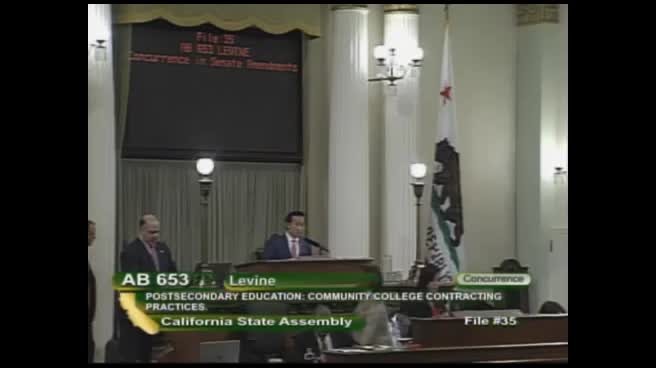 1MIN
Assembly Floor
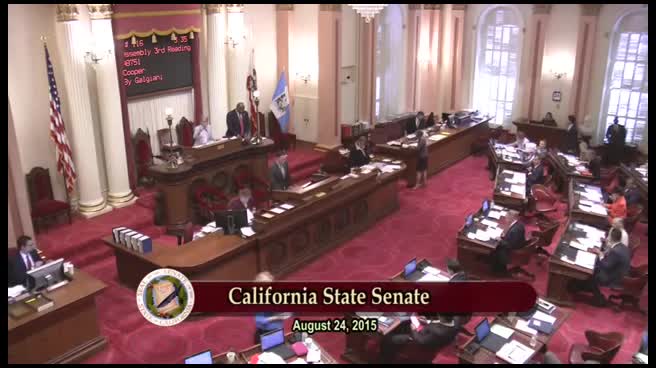 3MIN
Senate Floor
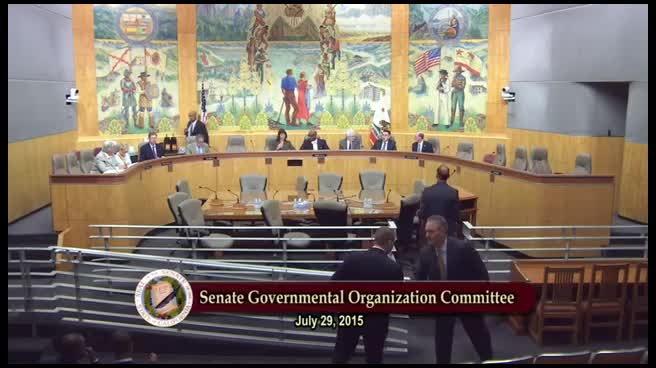 4MIN
Senate Standing Committee on Governmental Organization
 3MIN
Assembly Floor
 4MIN
Assembly Standing Committee on Appropriations
 19MIN
Assembly Standing Committee on Arts, Entertainment, Sports, Tourism, and Internet Media
Bill Author



