SB 1228: User identity authentication.
- Session Year: 2023-2024
- House: Senate
- Latest Version Date: 2024-04-25
Current Status:
Failed
(2024-05-16: May 16 hearing: Held in committee and under submission.)
Introduced
In Committee
First Chamber
In Committee
Second Chamber
Enacted
Existing law generally regulates online platforms, including by requiring a social media company, as defined, to post terms of service for each social media platform owned or operated by the social media company in a manner reasonably designed to inform all users of the social media platform of the existence and contents of the terms of service.
Existing law requires certain actions in cases involving the registration or denial of registration of voters, among others, to be placed on the calendar in the order of their date of filing and given precedence.This bill would require a large online social media platform, as defined, to seek to verify the name, telephone number, and email address of an influential user, as defined, by a means chosen by the large online social media platform and would require the social media platform to seek to verify the identity of a highly influential user, as defined, by asking to review the highly influential users government-issued identification.
This bill would require a large online social media platform to note on the profile page of an influential or highly influential user, in type at least as large and as visible as the users name, whether the user has been authenticated pursuant to those provisions, as prescribed, and would require the platform to attach to any post of an influential or highly influential user a notation that would be understood by a reasonable person as indicating that the user is authenticated or unauthenticated, as prescribed.
This bill would authorize the Attorney General or any district attorney or city attorney to seek injunctive or other equitable relief against a large online social media platform to compel compliance with the bill and would require those actions to be placed on the calendar in the order of their date of filing and given precedence. bill.
Existing law generally regulates online platforms, including by requiring a social media company, as defined, to post terms of service for each social media platform owned or operated by the social media company in a manner reasonably designed to inform all users of the social media platform of the existence and contents of the terms of service.
Existing law requires certain actions in cases involving the registration or denial of registration of voters, among others, to be placed on the calendar in the order of their date of filing and given precedence.
This bill would require a large online platform, as defined, to seek to verify the name, telephone number, and email address of an influential user, as defined, by a means chosen by the large online platform and would require the platform to seek to verify the identity of a highly influential user, as defined, by asking to review the highly influential users government-issued identification.
This bill would require a large online platform to note on the profile page of an influential or highly influential user, in type at least as large and as visible as the users name, whether the user has been authenticated pursuant to those provisions, as prescribed, and would require the platform to attach to any post of an influential or highly influential user a notation that would be understood by a reasonable person as indicating that the user is authenticated or unauthenticated, as prescribed.
This bill would authorize the Attorney General or any district attorney or city attorney to seek injunctive or other equitable relief against a large online platform to compel compliance with the bill and would require those actions to be placed on the calendar in the order of their date of filing and given precedence.
Existing law requires a social media company, as defined, to post terms of service for each social media platform, as defined, owned or operated by the company in a manner reasonably designed to inform all users of the social media platform of the existence and contents of the terms of service. Existing law requires, on a semiannual basis, a social media company to submit to the Attorney General a terms of service report that includes, among other things, the current version of the terms of service of the social media platform.This bill would require, on a semiannual basis, a social media platform that authenticates its users to submit to the Attorney General a statement regarding how it authenticates its users and whether it reports to the public if a user has been authenticated. The bill would also require, on a semiannual basis, a social media platform that does not authenticate its users to submit to the Attorney General a statement to that effect.Existing law requires a social media company, as defined, to post terms of service for each social media platform, as defined, owned or operated by the company in a manner reasonably designed to inform all users of the social media platform of the existence and contents of the terms of service. Existing law requires, on a semiannual basis, a social media company to submit to the Attorney General a terms of service report that includes, among other things, the current version of the terms of service of the social media platform.
This bill would require, on a semiannual basis, a social media platform that authenticates its users to submit to the Attorney General a statement regarding how it authenticates its users and whether it reports to the public if a user has been authenticated. The bill would also require, on a semiannual basis, a social media platform that does not authenticate its users to submit to the Attorney General a statement to that effect.
For the purposes of this chapter:
(a)Highly influential user means a user of a large online social media platform that meets any of the following criteria:
(1)Content authored, created, or produced by the user has been seen by more than 100,000 users within a seven-day period over all of the accounts that they control or administer on the platform.
(2)Accounts controlled or administered by the user have more than 30,000 followers.
(3)The user ranks in the top 3 percent of users by amount of content viewed by users on the platform within a seven-day period over all of the accounts that the user controls or administers on the platform.
(b)Influential user means a user of a large online social media platform that meets any of the following criteria:
(1)Content authored, created, or produced by the user has been seen by more than 50,000 users within a seven-day period over all of the accounts that the user controls or administers on the platform.
(2)Accounts controlled or administered by the user have more than 15,000 followers.
(3)The user ranks in the top 6 percent of users by amount of content viewed by users on the platform within a seven-day period over all of the accounts that the user controls or administers on the platform.
(c)Large online platform means a public-facing internet website, web application, or digital application, including a social network, video sharing platform, messaging platform, advertising network, or search engine that had at least 1,000,000 California users during the preceding 12 months.(d)(c)Sensitive personal information has the same meaning as defined in Section 1798.140 of the Civil Code.
(d)Social media platform has the same meaning as defined in Section 22675.
22684.1.(a)(1)(A)A large online social media platform shall seek to verify an influential users name, telephone number, and email address by a means chosen by the large online platform.
(B)A large online social media platform shall seek to verify a highly influential users identity by asking to review the highly influential users government-issued identification.
(2)A large online social media platform shall not use the identification information provided by a user for the purpose of complying with this subdivision for any purpose other than compliance with this subdivision.
(3)(A)Subject to subparagraph (B), a large online social media platform shall protect any identification information provided by an influential user in compliance with this section using, at a minimum, the standard of the industry used to protect the confidential information of users unless the large online social media platform makes that information public in the normal course of a users use of the large online social media platform.
(B)A large online social media platform shall not allow a users sensitive personal information to become public.
(b)A large online social media platform shall note on the profile page of an influential or highly influential user, in type at least as large and as visible as the users name, either of the following:
(1)This user has been authenticated, or some similar phrase, if the user has complied with the large online social media platforms identification process required by subdivision (a).
(2)This user is unauthenticated, or some similar phrase, if the user has failed to comply with the large online social media platforms identification process required by subdivision (a).
(c)(1)A large online social media platform shall attach to any post of an influential or highly influential user a notation that would be understood by a reasonable person as indicating that the user is authenticated or unauthenticated.
(2)For a post from an unauthenticated influential or highly influential user, the notation required by paragraph (1) shall be visible for at least two seconds before the rest of the post is visible and then shall remain visible with the post.
(d)A large online social media platform shall allow its users to opt out of receiving any posts, information, or other distributions from a user who is not authenticated.
(e)A large online social media platform shall maintain proof that it has complied with the verification requirements of this section but may refrain from storing or maintaining the verification information or documentation.
22684.2.(a)The Attorney General or any district attorney or city attorney may seek injunctive or other equitable relief against a large online social media platform to compel compliance with this chapter.
(b)In an action filed pursuant to this section, the court shall award a prevailing plaintiff reasonable attorneys fees and costs.
22684.3.(a)This chapter does not preclude a large online social media platform from developing and implementing policies that seek to verify the identity of users who are not influential or highly influential users or from verifying the identity of influential or highly influential users with additional proof.
(b)This chapter does not preclude a large online social media platform from requiring that its users comply with any identification verification required by the company. social media platform.
(c)This chapter does not preclude a large online social media platform from requiring that all users, including influential or highly influential users, be identified as either this user has been authenticated or this user is unauthenticated or similar phrases.
(d)This chapter does not preclude a large online social media platform from requiring or prohibiting its users to be publicly identified.
(e)This chapter does not require that a large online social media platform provide less exposure or visibility to the posts made or digital media content created by users who decline to provide identity verification.
(f)The provisions of this chapter are severable. If any provision of this chapter or its application is held invalid, that invalidity shall not affect other provisions or applications that can be given effect without the invalid provision or application.
(g)This chapter does not apply to a social media platform that had less than 1,000,000 California users during the preceding 12 months.
SEC. 2.Section 35 of the Code of Civil Procedure, as amended by Section 1 of Chapter 343 of the Statutes of 2023, is amended to read:35.(a)Proceedings in cases involving the registration or denial of registration of voters, the certification or denial of certification of candidates, the certification or denial of certification of ballot measures, election contests, actions under Section 20010 of the Elections Code, actions under Chapter 2 (commencing with Section 21100) of Division 21 of the Elections Code, and actions under Chapter 22.9 (commencing with Section 22684) of Division 8 of the Business and Professions Code shall be placed on the calendar in the order of their date of filing and shall be given precedence.(b)This section shall remain in effect only until January 1, 2027, and as of that date is repealed, unless a later enacted statute, that is enacted before January 1, 2027, deletes or extends that date.SEC. 3.Section 35 of the Code of Civil Procedure, as amended by Section 2 of Chapter 343 of the Statutes of 2023, is amended to read:35.(a)Proceedings in cases involving the registration or denial of registration of voters, the certification or denial of certification of candidates, the certification or denial of certification of ballot measures, election contests, actions under Chapter 2 (commencing with Section 21100) of Division 21 of the Elections Code, and actions under Chapter 22.9 (commencing with Section 22684) of Division 8 of the Business and Professions Code shall be placed on the calendar in the order of their date of filing and shall be given precedence.(b)This section shall become operative January 1, 2027.For the purposes of this chapter:
(a)Highly influential user means a user of a large online platform that meets either any of the following criteria:
(1)Content authored, created, or shared produced by the user has been seen by more than 100,000 users over the lifetime of the accounts that they control or administer on the platform. within a seven-day period over all of the accounts that they control or administer on the platform.
(2)Accounts controlled or administered by the user have posted or sent more than 5,000 pieces of content, whether text, images, audio, or video, that are found to be 90 percent or more likely to contain content generated by artificial intelligence, as assessed by the platform using state-of-the-art tools and techniques for detecting AI-generated content. more than 30,000 followers.
(3)The user ranks in the top 3 percent of users by amount of content viewed by users on the platform within a seven-day period over all of the accounts that the user controls or administers on the platform.
(b)Influential user means a user of a large online platform that meets either any of the following criteria:
(1)Content authored, created, or shared produced by the user has been seen by more than 25,000 50,000 users over the lifetime within a seven-day period over all of the accounts that they control or administer the user controls or administers on the platform.
(2)Accounts controlled or administered by the user have posted or sent more than 1,000 pieces of content, whether text, images, audio, or video, that are found to be 90 percent or more likely to contain content generated by artificial intelligence, as assessed by the platform using state-of-the-art tools and techniques for detecting AI-generated content. more than 15,000 followers.
(3)The user ranks in the top 6 percent of users by amount of content viewed by users on the platform within a seven-day period over all of the accounts that the user controls or administers on the platform.
(c)Large online platform means a public-facing internet website, web application, or digital application, including a social network, video sharing platform, messaging platform, advertising network, or search engine that had at least 1,000,000 California users during the preceding 12 months.
(d)Sensitive personal information has the same meaning as defined in Section 1798.140 of the Civil Code.
22684.1.(a)(1)(A)A large online platform shall seek to verify an influential users name, telephone number, and email address by a means chosen by the large online platform.
(B)A large online platform shall seek to verify a highly influential users identity by asking to review the highly influential users government-issued identification.
(2)A large online platform shall not use the identification information provided by a user for the purpose of complying with this subdivision for any purpose other than compliance with this subdivision.
(3)(A)Subject to subparagraph (B), a large online platform shall protect any identification information provided by an influential user in compliance with this section using, at a minimum, the standard of the industry used to protect the confidential information of users unless the large online platform makes that information public in the normal course of a users use of the large online platform.
(B)A large online platform shall not allow a users sensitive personal information to become public.
(b)A large online platform shall note on the profile page of an influential or highly influential user, in type at least as large and as visible as the users name, either of the following:
(1)This user has been authenticated, or some similar phrase, if the user has complied with the large online platforms identification process required by subdivision (a).
(2)This user is unauthenticated, or some similar phrase, if the user has failed to comply with the large online platforms identification process required by subdivision (a).
(c)(1)A large online platform shall attach to any post of an influential or highly influential user a notation that would be understood by a reasonable person as indicating that the user is authenticated or unauthenticated.
(2)For a post from an unauthenticated influential or highly influential user, the notation required by paragraph (1) shall be visible for at least two seconds before the rest of the post is visible and then shall remain visible with the post.
(d)A large online platform shall allow its users to opt out of receiving any posts, information, or other distributions from a user who is not authenticated.
(e)A large online platform shall maintain proof that it has complied with the verification requirements of this section but may refrain from storing or maintaining the verification information or documentation.
22684.2.(a)The Attorney General or any district attorney or city attorney may seek injunctive or other equitable relief against a large online platform to compel compliance with this chapter.
(b)In an action filed pursuant to this section, the court shall award a prevailing plaintiff reasonable attorneys fees and costs.
22684.3.(a)This chapter does not preclude a large online platform from developing and implementing policies that seek to verify the identity of users who are not influential or highly influential users or from verifying the identity of influential or highly influential users with additional proof.
(b)This chapter does not preclude a large online platform from requiring that its users comply with any identification verification required by the company.
(c)This chapter does not preclude a large online platform from requiring that all users, including influential or highly influential users, be identified as either this user has been authenticated or this user is unauthenticated or similar phrases.
(d)This chapter does not preclude a large online platform from requiring or prohibiting its users to be publicly identified.
(e)This chapter does not require that a large online platform provide less exposure or visibility to the posts made or digital media content created by users who decline to provide identity verification.
(f)The provisions of this chapter are severable. If any provision of this chapter or its application is held invalid, that invalidity shall not affect other provisions or applications that can be given effect without the invalid provision or application.
SEC. 2.Section 35 of the Code of Civil Procedure, as amended by Section 1 of Chapter 343 of the Statutes of 2023, is amended to read:35.(a)Proceedings in cases involving the registration or denial of registration of voters, the certification or denial of certification of candidates, the certification or denial of certification of ballot measures, election contests, actions under Section 20010 of the Elections Code, actions under Chapter 2 (commencing with Section 21100) of Division 21 of the Elections Code, and actions under Chapter 22.9 (commencing with Section 22684) of Division 8 of the Business and Professions Code shall be placed on the calendar in the order of their date of filing and shall be given precedence.
(b)This section shall remain in effect only until January 1, 2027, and as of that date is repealed, unless a later enacted statute, that is enacted before January 1, 2027, deletes or extends that date.
SEC. 3.Section 35 of the Code of Civil Procedure, as amended by Section 2 of Chapter 343 of the Statutes of 2023, is amended to read:35.(a)Proceedings in cases involving the registration or denial of registration of voters, the certification or denial of certification of candidates, the certification or denial of certification of ballot measures, election contests, actions under Chapter 2 (commencing with Section 21100) of Division 21 of the Elections Code, and actions under Chapter 22.9 (commencing with Section 22684) of Division 8 of the Business and Professions Code shall be placed on the calendar in the order of their date of filing and shall be given precedence.
(b)This section shall become operative January 1, 2027.
For the purposes of this chapter:
(a)Highly influential user means a user of a large online platform that meets either of the following criteria:
(1)Content authored, created, or shared by the user has been seen by more than 100,000 users over the lifetime of the accounts that they control or administer on the platform.
(2)Accounts controlled or administered by the user have posted or sent more than 5,000 pieces of content, whether text, images, audio, or video, that are found to be 90 percent or more likely to contain content generated by artificial intelligence, as assessed by the platform using state-of-the-art tools and techniques for detecting AI-generated content.
(b)Influential user means a user of a large online platform that meets either of the following criteria:
(1)Content authored, created, or shared by the user has been seen by more than 25,000 users over the lifetime of the accounts that they control or administer on the platform.
(2)Accounts controlled or administered by the user have posted or sent more than 1,000 pieces of content, whether text, images, audio, or video, that are found to be 90 percent or more likely to contain content generated by artificial intelligence, as assessed by the platform using state-of-the-art tools and techniques for detecting AI-generated content.
(c)Large online platform means a public-facing internet website, web application, or digital application, including a social network, video sharing platform, messaging platform, advertising network, or search engine that had at least 1,000,000 California users during the preceding 12 months.
(d)Sensitive personal information has the same meaning as defined in Section 1798.140 of the Civil Code.
22684.1.(a)(1)(A)A large online platform shall seek to verify an influential users name, telephone number, and email address by a means chosen by the large online platform.
(B)A large online platform shall seek to verify a highly influential users identity by asking to review the highly influential users government-issued identification.
(2)A large online platform shall not use the identification information provided by a user for the purpose of complying with this subdivision for any purpose other than compliance with this subdivision.
(3)(A)Subject to subparagraph (B), a large online platform shall protect any identification information provided by an influential user in compliance with this section using, at a minimum, the standard of the industry used to protect the confidential information of users unless the large online platform makes that information public in the normal course of a users use of the large online platform.
(B)A large online platform shall not allow a users sensitive personal information to become public.
(b)A large online platform shall note on the profile page of an influential or highly influential user, in type at least as large and as visible as the users name, either of the following:
(1)This user has been authenticated, or some similar phrase, if the user has complied with the large online platforms identification process required by subdivision (a).
(2)This user is unauthenticated, or some similar phrase, if the user has failed to comply with the large online platforms identification process required by subdivision (a).
(c)(1)A large online platform shall attach to any post of an influential or highly influential user a notation that would be understood by a reasonable person as indicating that the user is authenticated or unauthenticated.
(2)For a post from an unauthenticated influential or highly influential user, the notation required by paragraph (1) shall be visible for at least two seconds before the rest of the post is visible and then shall remain visible with the post.
(d)A large online platform shall allow its users to opt out of receiving any posts, information, or other distributions from a user who is not authenticated.
(e)A large online platform shall maintain proof that it has complied with the verification requirements of this section but may refrain from storing or maintaining the verification information or documentation.
22684.2.(a)The Attorney General or any district attorney or city attorney may seek injunctive or other equitable relief against a large online platform to compel compliance with this chapter.
(b)In an action filed pursuant to this section, the court shall award a prevailing plaintiff reasonable attorneys fees and costs.
22684.3.(a)This chapter does not preclude a large online platform from developing and implementing policies that seek to verify the identity of users who are not influential or highly influential users or from verifying the identity of influential or highly influential users with additional proof.
(b)This chapter does not preclude a large online platform from requiring that its users comply with any identification verification required by the company.
(c)This chapter does not preclude a large online platform from requiring that all users, including influential or highly influential users, be identified as either this user has been authenticated or this user is unauthenticated or similar phrases.
(d)This chapter does not preclude a large online platform from requiring or prohibiting its users to be publicly identified.
(e)This chapter does not require that a large online platform provide less exposure or visibility to the posts made or digital media content created by users who decline to provide identity verification.
(f)The provisions of this chapter are severable. If any provision of this chapter or its application is held invalid, that invalidity shall not affect other provisions or applications that can be given effect without the invalid provision or application.
SEC. 2.Section 35 of the Code of Civil Procedure, as amended by Section 1 of Chapter 343 of the Statutes of 2023, is amended to read:35.(a)Proceedings in cases involving the registration or denial of registration of voters, the certification or denial of certification of candidates, the certification or denial of certification of ballot measures, election contests, actions under Section 20010 of the Elections Code, and actions under Chapter 2 (commencing with Section 21100) of Division 21 of the Elections Code Code, and actions under Chapter 22.9 (commencing with Section 22684) of Division 8 of the Business and Professions Code shall be placed on the calendar in the order of their date of filing and shall be given precedence.
(b)This section shall remain in effect only until January 1, 2027, and as of that date is repealed, unless a later enacted statute, that is enacted before January 1, 2027, deletes or extends that date.
SEC. 3.Section 35 of the Code of Civil Procedure, as amended by Section 2 of Chapter 343 of the Statutes of 2023, is amended to read:35.(a)Proceedings in cases involving the registration or denial of registration of voters, the certification or denial of certification of candidates, the certification or denial of certification of ballot measures, election contests, and actions under Chapter 2 (commencing with Section 21100) of Division 21 of the Elections Code Code, and actions under Chapter 22.9 (commencing with Section 22684) of Division 8 of the Business and Professions Code shall be placed on the calendar in the order of their date of filing and shall be given precedence.
(b)This section shall become operative January 1, 2027.
SECTION 1.Chapter 22.9 (commencing with Section 22683) is added to Division 8 of the Business and Professions Code, to read:22.9.Social Media Platform User Authentication22683.As used in this chapter, social media platform has the same meaning as defined in Section 22945.22683.1.(a)On a semiannual basis, a social media platform that authenticates its users shall submit to the Attorney General a statement regarding both of the following: (1)How it authenticates its users.(2)Whether it reports to the public if a user has been authenticated.(b)On a semiannual basis, a social media platform that does not authenticate its users shall submit to the Attorney General a statement to that effect.22683.2.The Attorney General may adopt regulations necessary to accomplish the purposes of this chapter.As used in this chapter, social media platform has the same meaning as defined in Section 22945.
22683.1.(a)On a semiannual basis, a social media platform that authenticates its users shall submit to the Attorney General a statement regarding both of the following:
(1)How it authenticates its users.
(2)Whether it reports to the public if a user has been authenticated.
(b)On a semiannual basis, a social media platform that does not authenticate its users shall submit to the Attorney General a statement to that effect.
22683.2.The Attorney General may adopt regulations necessary to accomplish the purposes of this chapter.
|
Date
|
Status
|
|---|---|
| May 16, 2024 | May 16 hearing: Held in committee and under submission. |
| May 14, 2024 | Set for hearing May 16. |
| May 13, 2024 | May 13 hearing: Placed on APPR suspense file. |
| May 3, 2024 | Set for hearing May 13. |
| Apr 25, 2024 | Read second time and amended. Re-referred to Com. on APPR. |
| Apr 24, 2024 | From committee: Do pass as amended and re-refer to Com. on APPR. (Ayes 10. Noes 1. Page 3726.) (April 23). |
| Apr 11, 2024 | Set for hearing April 23. |
| Apr 10, 2024 | From committee with author's amendments. Read second time and amended. Re-referred to Com. on JUD. |
| Mar 18, 2024 | From committee with author's amendments. Read second time and amended. Re-referred to Com. on JUD. |
| Feb 29, 2024 | Referred to Com. on JUD. |
| Feb 16, 2024 | From printer. May be acted upon on or after March 17. |
| Feb 15, 2024 | Introduced. Read first time. To Com. on RLS. for assignment. To print. |
|
Date
|
Description
|
Location
|
Votes
|
|
|---|---|---|---|---|
| May 13, 2024 | Placed on suspense file | Senate Standing Committee on Appropriations |
Passed |
|
| Apr 23, 2024 | Do pass as amended, but first amend, and re-refer to the Committee on [Appropriations] | Senate Standing Committee on Judiciary |
Passed |
This list shows positions taken on this bill by organizations on the date displayed, which is linked to the original source.
Positions by individuals are not included.
|
Organization
|
Position
|
Date
|
|---|---|---|
| AFSCME, AFL-CIO | ** Support | |
| Asian Law Alliance | ** Support | |
| Bay Rising | ** Support | |
| California Chamber Of Commerce | ** Against | |
| California Clean Money Campaign | ** Support | |
| California Initiative for Technology & Democracy | ** Support | |
| Chamber Of Progress | ** Against | |
| Chinese Progressive Association | ** Support | |
| Computer And Communications Industry Association | ** Against | |
| Courage California | ** Support | |
| Hmong Innovating Politics | ** Support | |
| Internet.Works | ** Against | |
| NetChoice | ** Against | |
| Oakland Privacy | ** Against | |
| Partnership for the Advancement of New Americans | ** Support | |
| SEIU California | ** Support | |
| SNAP Inc. | ** Against | |
| Software & Information Industry Association | ** Against | |
| Technet | ** Against |
SENATE COMMITTEE ON
Senator Anna Caballero, Chair
2023 - 2024 Regular Session
SB 1228 (Padilla) - User identity authentication
Version: | Policy Vote: |
Urgency: | Mandate: |
Hearing Date: | Consultant: |
Bill Summary: SB 1228 requires large online platforms to verify influential users and authorizes public prosecutors to file prioritized actions to enjoin violations and seek other equitable relief.
Fiscal Impact: Unknown, potentially significant workload cost pressures (General Fund, Trial Court Trust Fund) to the courts to adjudicate violations of this bill in civil actions brought to enforce this bill. It generally costs about $8,000 to operate a courtroom for one eight-hour day. It is unknown how many additional civil actions would be brought as a result of the implementation of this bill. Additional cost pressures are likely as a result of the requirement that courts to prioritize civil actions brought for violations of the provisions of this bill. Consequently, if additional cases are filed under the provisions of this measure that otherwise would not be available and prioritized under existing law that take 50 or more hours of court involvement, the cost pressures of this measure to the courts would surpass the Suspense File threshold. While the superior courts are not funded on a workload basis, an increase in workload could result in delayed court services and would put pressure on the General Fund to increase the amount appropriated to backfill for trial court operations. For illustrative purposes, the Governor’s 2024-25 state budget proposes $83.1 million ongoing General Fund to continue to backfill the Trial Court Trust Fund for expected revenue declines.
Background: According to the Senate Judiciary Committee analysis of this bill:
Recent surveys estimate that half of adults in the United States get at least some of their news from social media. In fact, three in ten Americans say they regularly get news on Facebook. With the threat of coordinated hostile government campaigns and massive bot armies, it can be difficult to sort through the noise. This bill seeks to provide some level of transparency on these platforms by requiring platforms to at least seek to verify the identity of their most influential users. If they are successful, they are required to mark such accounts and their posts with an authenticated tag. If they are not, then the tag labels the content and accounts as unauthenticated.
Proposed Law: This bill would require large social media platforms, as defined, to seek to verify the name, telephone number, and email address of an influential user, as defined, by a means chosen by the platform and would require the platform to seek to verify the identity of a highly influential user by asking to review the highly influential user’s government-issued identification.
This bill would further require the platform to note on the profile page of an influential or highly influential user, in type at least as large and as visible as the user’s name, whether the user has been authenticated, and would require the platform to attach to any post of an influential or highly influential user a notation that would be understood by a reasonable person as indicating that the user is authenticated or unauthenticated.
This bill would also authorize the Attorney General or any district attorney or city attorney to seek injunctive or other equitable relief against a large online social media platform to compel compliance and would require those actions to be placed on the court’s calendar in the order of their date of filing and given precedence.
Related Legislation:
- SB 976 (Skinner) would prohibit internet-based services and applications from offering addictive feeds, as defined, to minors under 18 without parental consent. SB 976 is pending in this Committee.
- SB 1444 (Stern) would require social media platforms, as defined, to make third-party-accessible application programming interfaces to allow a third-party safety software provider, upon authorization by a child or a parent or legal guardian of a child, to manage a child’s online interactions, content, and account settings and initiate secure transfers of the child’s user data for these purposes, as provided. SB 1444 is pending in this Committee.
- SB 1504 (Stern) would expand provisions of the Cyberbullying and Protection Act, authorizes any person who submits a report of cyberbullying to the social media platform, city attorneys, district attorneys, and county counsels to bring an action to enforce the Act, and increases the civil liability for violating the act from $7,500 to $75,000 and authorizes a court to award reasonable attorney’s fees and costs to the prevailing plaintiff, as specified. SB 1504 is pending in this Committee.
-- END --
Senator Thomas Umberg, Chair
2023-2024 Regular Session
Bill No: SB 1228 (Author:Padilla)
Version: April 10, 2024
Hearing Date: April 23, 2024
Fiscal: Yes
Urgency: No
Consultant: CK
SUBJECT
Large online platforms: user identity authentication
DIGEST
This bill requires large online platforms to seek to verify influential users, as provided, and to label such accounts and their posts with notes that the user is or is not authenticated by the platform. The bill authorizes public prosecutors to file prioritized actions to enjoin violations and seek other equitable relief.
EXECUTIVE SUMMARY
Democracy and truth are under assault on a daily basis in this country. Political polarization and distrust in not only government, but the electoral process, are fueled by misinformation and disinformation, both coordinated and not. The impacts of false news are widespread, poisoning public discourse and deliberative processes, undermining our institutions, and shattering any sense of joint reality.
The overwhelming battleground for this assault is on social media platforms. Recent surveys estimate that half of adults in the United States get at least some of their news from social media. In fact, three in ten Americans say they regularly get news on Facebook. With the threat of coordinated hostile government campaigns and massive bot armies, it can be difficult to sort through the noise. This bill seeks to provide some level of transparency on these platforms by requiring platforms to at least seek to verify the identity of their most influential users. If they are successful, they are required to mark such accounts and their posts with an authenticated tag. If they are not, then the tag labels the content and accounts as unauthenticated.
This bill is sponsored by California Initiative for Technology and Democracy (CITED). It is supported by several advocacy groups, including the Asian Law Alliance. It is opposed by a coalition of industry associations, including Technet and Snap, Inc.
PROPOSED CHANGES TO THE LAW
Existing law:
- Requires social media platforms to semiannually report a detailed description of its content moderation practices including information on its policies to address disinformation or misinformation and details on how much content was flagged as such and what the platform did in response. (Bus. & Prof. Code § 22677.)
- Provides that proceedings in cases involving the registration or denial of registration of voters, the certification or denial of certification of candidates, the certification or denial of certification of ballot measures, election contests, actions under Chapter 2 (commencing with Section 21100) of Division 21 of the Elections Code, and actions under Chapter 22.9 (commencing with Section 22684) of Division 8 of the Business and Professions Code, shall be placed on the calendar in the order of their date of filing and shall be given precedence. (Code Civ. Proc. § 35.)
This bill:
- Requires a large online platform to seek to verify the following:
- An influential user’s name, telephone number, and email address by a means chosen by the large online platform.
- A highly influential user’s identity by asking to review the highly influential user’s government-issued identification.
- Requires a large online platform to protect any identification information provided by an influential user in compliance with this section using, at a minimum, the standard of the industry used to protect the confidential information of users unless the platform makes that information public in the normal course. However, a large online platform shall not allow a user’s sensitive personal information to become public and none of the identification information can be used for any purpose other than compliance with this bill. A large online platform shall maintain proof that it has complied with the verification requirements of this section but may refrain from storing or maintaining the verification information or documentation.
- Requires a large online platform to note on the profile page of an influential or highly influential user, in type at least as large and as visible as the user’s name, either of the following:
- “This user has been authenticated,” or some similar phrase, if the user has complied with the identification process.
- “This user is unauthenticated,” or some similar phrase, if the user has failed to comply.
- Requires the platform to attach to any post of an influential or highly influential user a notation that would be understood by a reasonable person as indicating that the user is authenticated or unauthenticated. If unauthenticated, the notation shall be visible for at least two seconds before the rest of the post is visible and remain with the post thereafter.
- Provides that a large online platform shall allow its users to opt out of receiving any posts, information, or other distributions from a user who is not authenticated.
- Defines the relevant terms, including:
- “Highly influential user” means a user of a large online platform that meets any of the following criteria:
- Content authored, created, or produced by the user has been seen by more than 100,000 users within a seven-day period over all of the accounts that they control or administer on the platform.
- Accounts controlled or administered by the user have more than 30,000 followers.
- The user ranks in the top 3 percent of users by amount of content viewed by users on the platform within a seven-day period over all of the accounts that the user controls or administers on the platform.
- “Influential user” means a user of a large online platform that meets any of the following criteria:
- Content authored, created, or produced by the user has been seen by more than 50,000 users within a seven-day period over all of the accounts that the user controls or administers on the platform.
- Accounts controlled or administered by the user have more than 15,000 followers.
- The user ranks in the top 6 percent of users by amount of content viewed by users on the platform within a seven-day period over all of the accounts that the user controls or administers on the platform.
- “Large online platform” means a public-facing website, web application, or digital application, including a social network, video sharing platform, messaging platform, advertising network, or search engine that had at least 1,000,000 California users during the preceding 12 months.
- “Highly influential user” means a user of a large online platform that meets any of the following criteria:
- Authorizes the Attorney General or any district attorney or city attorney to file an action to seek injunctive or other equitable relief against a large online platform to compel compliance. The court is required to award a prevailing plaintiff reasonable attorney’s fees and costs.
- Clarifies that it does not preclude a large online platform from more stringent identification verification procedures.
- Clarifies that it does not require a large online platform to provide less exposure or visibility to the posts made or digital media content created by users who decline to provide identity verification.
- Includes a severability clause.
- Prioritizes civil actions brought for violations.
COMMENTS
- Social media and the rise of misinformation and disinformation
In 2005, five percent of adults in the United States used social media. In just six years, that number jumped to half of all Americans. Today, over 70 percent of adults use at least one social media platform. Facebook alone is used by 69 percent of adults, and 70 percent of those adults say they use the platform on a daily basis. As stated, half of Americans rely on social media for at least some of their news leading to the conclusion: “Digital news has become an important part of Americans’ news media diets, with social media playing a crucial role in news consumption.”[1]
Given the reach of social media platforms and the role they play in many people’s lives, concerns have arisen over what content permeates these sites, entering the lives of the billions of users, and the effects it has on them and society as a whole. In particular, the sharpest calls for action focus on the rampant spread of misinformation and disinformation and the effects it has on our political discourse and faith in democracy and its institutions. According to the Brookings Institution:
[A] Quinnipiac University survey reveals that 76% of respondents think political instability within the country is a bigger danger to the United States than external adversaries. Amazingly, this suggests that Americans recognize that we are a bigger threat to our own democracy than any other potential external threat. Sadly, according to this poll, over half of Americans (53%) expect political divisions in the country to worsen over their lifetime rather than get better.
One of the drivers of decreased confidence in the political system has been the explosion of misinformation deliberately aimed at disrupting the democratic process. This confuses and overwhelms voters.[2]
The 2016 election was a major breaking point for many. Investigations uncovered attempted interference in the United States Presidential election through a social media “information warfare campaign designed to spread disinformation and societal division in the United States.”[3] The United States Senate Select Committee on Intelligence issued a report detailing how Russian operatives carried out their plan:
Masquerading as Americans, these operatives used targeted advertisements, intentionally falsified news articles, self-generated content, and social media platform tools to interact with and attempt to deceive tens of millions of social media users in the United States. This campaign sought to polarize Americans on the basis of societal, ideological, and racial differences, provoked real world events, and was part of a foreign government's covert support of Russia's favored candidate in the U.S. presidential election.
This again became a threat in the 2020 election, with social media rife with misinformation such as the incorrect election date,[4] and then social media became a hotbed of misinformation about the results of the election.[5] The author points to investigations that have found the violent insurrectionists that stormed the Capitol on January 6, 2021, were abetted and encouraged by posts on social media sites.[6] In response to indications that social media provided a venue for those who overran and assaulted police officers, Facebook deflected blame, asserting that “these events were largely organized on platforms that don’t have our abilities to stop hate, don’t have our standards, and don’t have our transparency.”[7] However, later indictments of those perpetrating the attack “made it clear just how large a part Facebook had played, both in spreading misinformation about election fraud to fueling anger among the Jan. 6 protesters, and in aiding the extremist militia’s communication ahead of the riots.”[8] Three in ten Americans regularly get their news from Facebook.[9]
- A measure of transparency on social media
According to the author:
Foreign adversaries hope to harness new and powerful technology to misinform and divide America this election cycle. Bad actors and foreign bots now have the ability to create fake videos and images and spread lies to millions at the touch of a button. We need to ensure our content platforms protect against the kind of malicious interference that we know is possible. Verifying the identities of accounts with large followings allows us to weed out those that seek to corrupt our information stream.
This bill attempts to tackle the problem by providing more transparency about who is behind the most influential social media accounts. The bill creates two tiers of users with wide reach:
- “Highly influential user” means a user of a large online platform that meets any of the following criteria:
- Content authored, created, or produced by the user has been seen by more than 100,000 users within a seven-day period over all of the accounts that they control or administer on the platform.
- Accounts controlled or administered by the user have more than 30,000 followers.
- The user ranks in the top 3 percent of users by amount of content viewed by users on the platform within a seven-day period over all of the accounts that the user controls or administers on the platform.
- “Influential user” means a user of a large online platform that meets any of the following criteria:
- Content authored, created, or produced by the user has been seen by more than 50,000 users within a seven-day period over all of the accounts that the user controls or administers on the platform.
- Accounts controlled or administered by the user have more than 15,000 followers.
- The user ranks in the top 6 percent of users by amount of content viewed by users on the platform within a seven-day period over all of the accounts that the user controls or administers on the platform.
- “Highly influential user” means a user of a large online platform that meets any of the following criteria:
The bill requires platforms to seek to verify the identity of these influential and highly influential users. For the first tier, the platform must seek to verify the user’s name, telephone number, and email address by whatever means they choose. For the higher threshold, platforms must seek to verify highly influential user’s identity by asking to review their government-issued identification.
Based on whether or not that process is successful, the platform must place a label on both the user’s profile and on their posted content that notes whether the user is authenticated or unauthenticated, although it is not prescriptive about the phrasing.
The California Initiative for Technology & Democracy (CITED), the sponsor of this bill, write:
California and the nation are entering an election season in which disinformation will pollute our information ecosystems like never before. In just a few clicks and at little-to-no cost, anyone has the power to create increasingly realistic deceptive content and then spread that fake digital media to millions very quickly over online platforms. Therefore, we need to have strong protections in place at the points of scaled dissemination. Examples of this occurring in U.S. elections include Ron Desantis using
AI-generated images to attack his opponent in his presidential run, coordinated foreign actors caught attempting to influence American politics through social media, and just this month, a supporter of former President Trump created a deepfake image of Trump designed to influence Black voters.
Social media users with the largest reach, including influencers and bot accounts acting in a coordinated manner to amplify discourse, have an outsized ability to amplify disinformation quickly. Furthermore, while some social media accounts accurately convey the individual behind the account, many usernames and profiles do not disclose any personal identifying information, and may even seek to mislead others as to the true identity behind the account. While anonymity can be useful in some contexts, such as allowing political dissidents to speak their mind without fear of repercussion, studies suggest more broadly that anonymity online is leading to manipulation and unaccountable communication.
Studies have found that anonymity online results in reduced inhibition and personal responsibility, and is associated with a lack of accountability, increased “unconstrained posting,” and increased aggressiveness.
Additional academic research highlights that, particularly on social media in which sources of content tend to look the same, users have difficulty assessing the source’s credibility, and lack the context needed to accurately judge the interests, agendas, or biases of the source of information. Voters simply do not know what images, audio, and video they can trust, or which users to believe.
Fortunately, California need not look far for solutions. Other industries, like banking, lending, and credit card companies, are required to employ “Know Your Customer” principles before allowing people to use their services. Under these principles, companies take steps to verify customer identities and to protect against fraud, corruption, and illegal activity. Higher levels of information may be required for customers that are identified as higher risk, allowing financial institutions to develop an understanding of the customer’s typical behavior in order to quickly identify suspicious activity.
Applying these same principles to social media accounts can help mitigate and slow the spread of disinformation. Escalating identity verification requirements on users may also impact the behavior of the users themselves as well as the viewers. Labeling is a time-tested method for providing consumers and voters more relevant information for their decision-making process, but has also been shown to impact the behavior of those subject to the labels.
A coalition of tech companies and industry associations, including the Computer and Communications Industry Association writes in opposition:
There are many reasons online platforms and users may choose to preserve online anonymity.
An online platform could choose not to offer user authentication due to concerns that users are not comfortable sharing certain personal information, for example, if they are speaking about a sensitive topic or are from a vulnerable community. Many users opt to use pseudonyms or no name at all when engaging in online speech. Anonymous speech is a long-held value and tradition in the United States, dating back to the Federalist Papers, famously penned under “Publius” and “Federal Farmer”. Protecting anonymity of online speech carries forward such traditions and protections to allow for open and free expression. By mandating that an online community be bifurcated into “authenticated” and “non-authenticated” users, it risks disincentivizing online anonymity lest “non-authenticated” accounts be viewed as less safe or legitimate. SB 1228 raises the likelihood of this effect because the bill would require “large online platforms” to show, for at least two seconds prior to the rest of the post being available, a message akin to “this user is unauthenticated” for any user that has not complied with the platform’s authentication process. This could appear to serve as a “red flag” or warning for other users for any unauthenticated user’s content.
User authentication requires additional data collection and could create security risks.
By forcing all large online platforms to implement various levels of user authentication, this in turn would require companies to collect sensitive information. It should be noted that implementing any user authentication mechanism requires a significant amount of resources. Online platforms would need to build the features into their current model and ensure that appropriate data security measures are in place due to the exchange of personal information, such as government-issued identification, as required under SB 1228 for “highly influential users”. This could create a chilling effect upon users as it risks having additional data stolen or linked to a user’s social media account.
Many online platforms do not want to collect additional information associated with authentication as they could be held liable for potential data breaches. SB 1228 makes it clear that a covered platform must protect a user’s information and “not allow a user’s sensitive personal information to become public.” It is unclear whether covered platforms would face liability if this collected sensitive personal information is disclosed via a breach. While such platforms may implement strong, industry-standard security measures, nefarious actors are constantly evolving and advancing new tactics to circumvent existing protective frameworks. Governments and private businesses alike are subject to security risks on a daily basis and mandating the additional collection of sensitive information only heightens this risk. Because the explicit requirement to provide a government-issued identification is limited to the most influential users, it creates a known and particularly appealing honeypot of information for bad actors to potentially exploit.
As to the privacy concerns, the bill has several mechanisms to mitigate the impact. First, it requires platforms to protect this information and to never allow sensitive personal information from becoming public. The bill also strictly limits what the platform can use this information for: only compliance with its provisions. In fact, while platforms are required to maintain proof of their own compliance with the law, they are not required to store or maintain the verification information or documentation. In response to the concerns about the bill’s impact on speech, CITED states:
Importantly, this bill balances free speech objectives with appropriate disclosures to the public related to users and their content. It does not silence or censor users and it passes no subjective judgment on the content. It simply makes it clear whether the person posting the information is a verified person or not. And because it only mandates the request of identity information from the users with the very largest audiences, it changes nothing about the user experience for the vast majority of social media users.
The bill is subject to only public enforcement and provides for only injunctive and other equitable relief as well as attorney’s fees and costs. The bill provides that such actions will be calendared in the order of their date of filing and given precedence over other cases. This latter provision would have such actions jump in front of many other very worthy matters. The author has agreed to remove this provision.
In addition, in order to ensure there is consistency in the law, the author has agreed to amendments that utilize the existing definition for social media platform found in Business and Professions Code section 22675, but will continue to limit it to social media platforms with at least one million California users during the preceding 12 months.
SUPPORT
California Initiative for Technology & Democracy (sponsor)
AFSCME, AFL-CIO
Asian Law Alliance
Bay Rising
California Clean Money Campaign
Chinese Progressive Association
Courage California
Hmong Innovating Politics
Partnership for the Advancement of New Americans
SEIU California
OPPOSITION
California Chamber of Commerce
Chamber of Progress
Computer and Communications Industry Association
Internet.works
Netchoice
Oakland Privacy
SNAP Inc.
Software & Information Industry Association
Technet
RELATED LEGISLATION
Pending Legislation: AB 2839 (Pellerin, 2024) prohibits a person, committee, or other entity from knowingly distributing an advertisement or other election communication, as defined, that contains certain materially deceptive and digitally altered or digitally created images or audio or video files, as defined, with the intent to influence an election or solicit funds for a candidate or campaign, subject to specified exemptions. AB 2839 is currently on the Assembly Floor.
Prior Legislation: AB 587 (Gabriel, Ch. 269, Stats. 2022) required, among other things, social media platforms to semiannually report a detailed description of its content moderation practices including information on its policies to address disinformation or misinformation and details on how much content was flagged as such and what the platform did in response.
**************
Social Media and News Fact Sheet (November 15, 2023) Pew Research Center, https://www.pewresearch.org/journalism/fact-sheet/social-media-and-news-fact-sheet/. All internet citations are current as of April 15, 2024. ↑
Gabriel R. Sanchez & Keesha Middlemass, Misinformation is eroding the public’s confidence in democracy (July 26, 2022) Brookings Institution, https://www.brookings.edu/articles/misinformation-is-eroding-the-publics-confidence-in-democracy/. ↑
Select Committee on Intelligence, Russian Active Measures, Campaigns, and Interference
in the 2016 U.S. Election, United States Senate, https://www.intelligence.senate.gov/sites/default/files/documents/Report_Volume2.pdf. ↑
Pam Fessler, Robocalls, Rumors And Emails: Last-Minute Election Disinformation Floods Voters, NPR (October 24, 2020), https://www.npr.org/2020/10/24/927300432/robocalls-rumors-and-emails-last-minute-election-disinformation-floods-voters. ↑
Sheera Frenkel, How Misinformation ‘Superspreaders’ Seed False Election Theories, New York Times (November 23, 2020), https://www.nytimes.com/2020/11/23/technology/election-misinformation-facebook-twitter.html; Philip Bump, The chain between Trump’s misinformation and violent anger remains unbroken, Washington Post (May 12, 2021), https://www.washingtonpost.com/politics/2021/05/12/chain-between-trumps-misinformation-violent-anger-remains-unbroken/. ↑
Ken Dilanian & Ben Collins, There are hundreds of posts about plans to attack the Capitol. Why hasn't this evidence been used in court? (April 20, 2021) NBC News, https://www.nbcnews.com/politics/justice-department/we-found-hundreds-posts-about-plans-attack-capitol-why-aren-n1264291. ↑
Sheera Frenkel & Cecilia Kang, Mark Zuckerberg and Sheryl Sandberg’s Partnership Did Not Survive Trump (July 8, 2021) The New York Times, https://www.nytimes.com/2021/07/08/business/mark-zuckerberg-sheryl-sandberg-facebook.html. ↑
Ibid. ↑
See fn. 1. ↑
Discussed in Hearing
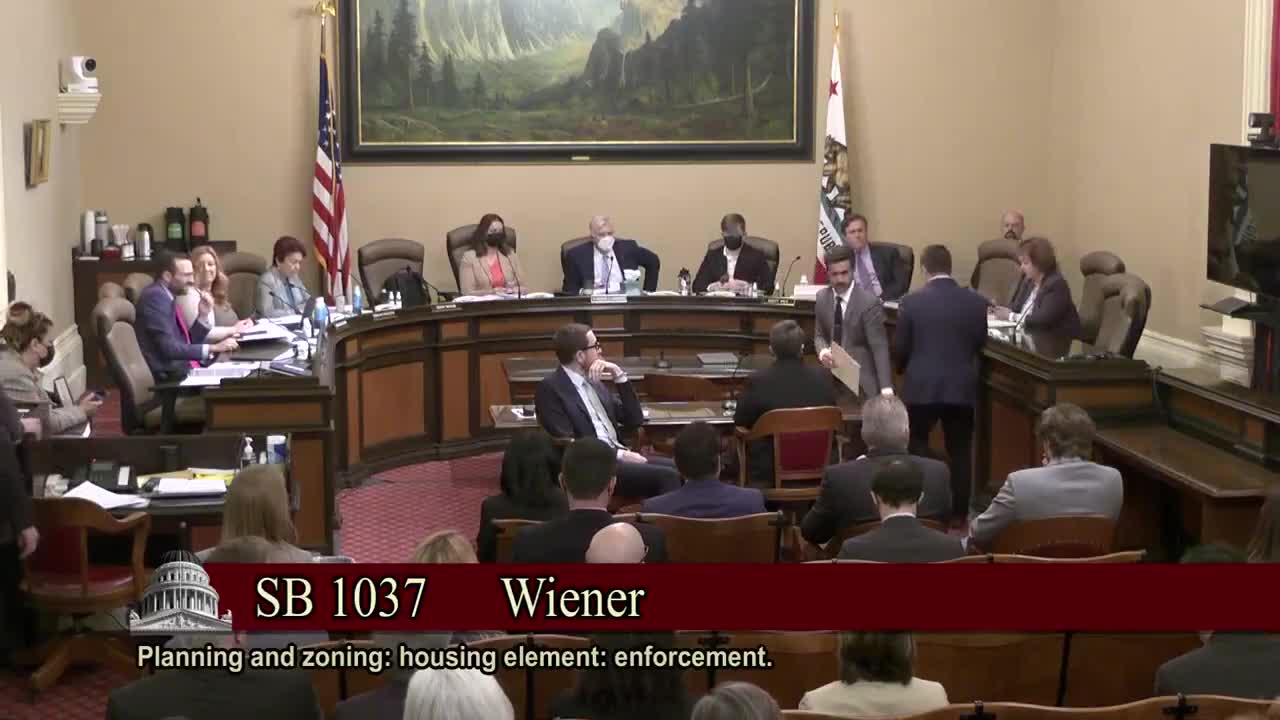 14MIN
Senate Standing Committee on Judiciary
 19SEC
Senate Standing Committee on Judiciary
Bill Author

Bill Co-Author(s):