SB 1249: Mello-Granlund Older Californians Act.
- Session Year: 2023-2024
- House: Senate
- Latest Version Date: 2024-09-21
Current Status:
Passed
(2024-09-21: Chaptered by Secretary of State. Chapter 337, Statutes of 2024.)
Introduced
In Committee
First Chamber
In Committee
Second Chamber
Enacted
Existing law, the Mello-Granlund Older Californians Act, establishes the California Department of Aging in the California Health and Human Services Agency and sets forth its mission to provide leadership to the area agencies on aging in developing systems of home- and community-based services that maintain individuals in their own homes or the least restrictive homelike environments. Existing law requires the department to designate various private nonprofit or public agencies as area agencies on aging to work within a planning and service area and provide a broad array of social and nutritional services. Existing law includes various findings and declarations relating to the purposes of the act.
This bill would update and revise those legislative findings and declarations, including recognizing the states major demographic shift towards an older, more diverse population and declaring the intent to reform provisions of the act related to various functions of the area agencies on aging. The bill would require the department, by September 30, 2026, to take various actions, including, among others, identifying the core programs and services to be provided to older adults and family caregivers, and developing a statewide consumer engagement plan. The bill would require the department to develop regulations that address specified topics relating to area agency on aging designations. The bill would require those deliverables to be informed by data from validated sources, which may include, among others, the United States Census.
This bill would also recast and revise various other provisions of the act, including by replacing use of the word senior and similar terminology with the term older adult. The bill would repeal obsolete provisions, such as the Senior Center Bond Act of 1984.
Existing law establishes the Senior Housing Information and Support Center within the department to serve as a clearinghouse for information for seniors and their families regarding available innovative resources and senior services, subject to appropriation for these purposes.
This bill would repeal the provisions establishing the Senior Housing Information and Support Center.
Existing law, the Mello-Granlund Older Californians Act, establishes the California Department of Aging in the California Health and Human Services Agency and sets forth its mission to provide leadership to the area agencies on aging in developing systems of home- and community-based services that maintain individuals in their own homes or the least restrictive homelike environments. Existing law requires the department to designate various private nonprofit or public agencies as area agencies on aging to work within a planning and service area and provide a broad array of social and nutritional services. Existing law includes various findings and declarations relating to the purposes of the act.
This bill would update and revise those legislative findings and declarations, including recognizing the states major demographic shift towards an older, more diverse population and declaring the intent to reform provisions of the act related to various functions of the area agencies on aging. The bill would require the department, by September 30, 2026, to take various actions, including, among others, identifying older adult and family caregiver support programs and services and developing a statewide consumer engagement plan. The bill would require the department to develop regulations that address specified topics relating to area agency on aging designations and to maintain the Data Dashboard for Aging, as specified. designations. The bill would require those deliverables to be informed by data from validated sources, which may include, among others, the United States Census.
This bill would also recast and revise various other provisions of the act, including by replacing use of the word senior and similar terminology with the term older adult. The bill would repeal obsolete provisions, such as the Senior Center Bond Act of 1984.
Existing law establishes the Senior Housing Information and Support Center within the department to serve as a clearinghouse for information for seniors and their families regarding available innovative resources and senior services, subject to appropriation for these purposes.
This bill would repeal the provisions establishing the Senior Housing Information and Support Center.
Existing law, the Mello-Granlund Older Californians Act, establishes the California Department of Aging in the California Health and Human Services Agency and sets forth its mission to provide leadership to the area agencies on aging in developing systems of home- and community-based services that maintain individuals in their own homes or the least restrictive homelike environments. Existing law requires the department to designate various private nonprofit or public agencies as area agencies on aging to work within a planning and service area and provide a broad array of social and nutritional services. Existing law includes various findings and declarations relating to the purposes of the act.
This bill would update and revise those legislative findings and declarations, including recognizing the states major demographic shift towards an older, more diverse population and declaring the intent to reform provisions of the act related to various functions of the area agencies on aging. The bill, within specified time periods, bill would require the department department, by September 30, 2026, to take various actions to reform the act, including giving counties the option to petition the department to be considered for designation as the area agency on aging that serves its local jurisdiction, developing core programs and services actions, including, among others, identifying older adult and family caregiver support programs and services and developing a statewide public awareness engagement strategy. consumer engagement plan. The bill would require the department to develop regulations that address specified topics relating to area agency on aging designations and to maintain the Data Dashboard for Aging, as specified.
Existing law, the Mello-Granlund Older Californians Act, establishes the California Department of Aging in the California Health and Human Services Agency, Agency and sets forth its mission to provide leadership to the area agencies on aging in developing systems of home- and community-based services that maintain individuals in their own homes or the least restrictive homelike environments. Existing law requires the department to designate various private nonprofit or public agencies as area agencies on aging to work within a planning and service area and provide a broad array of social and nutritional services. Existing law includes various findings and declarations relating to the purposes of the act act.
This bill would update and revise those legislative findings and declarations, including recognizing the states major demographic shift towards an older, more diverse population and declaring the intent to reform provisions of the act related to various functions of the area agencies on aging. The bill, within specified time periods, would require the department to take various actions to reform the act, including giving counties the option to petition the department to assume control of be considered for designation as the area agency on aging that serves the its local jurisdiction, developing core programs and services, services and developing a statewide public awareness engagement strategy. The bill would authorize the department to enter into exclusive or nonexclusive contracts, as specified, for purposes of administering and implementing the act, and to implement, interpret, or make specific that authority by means of information notices, provider bulletins, or other similar instructions.
Existing law, the Mello-Granlund Older Californians Act, establishes the California Department of Aging in the California Health and Human Services Agency, and sets forth its mission to provide leadership to the area agencies on aging in developing systems of home- and community-based services that maintain individuals in their own homes or the least restrictive homelike environments. Existing law requires the department to designate various private nonprofit or public agencies as area agencies on aging to work within a planning and service area and provide a broad array of social and nutritional services. Existing law includes various findings and declarations relating to the purposes of the act
This bill would update and revise those legislative findings and declarations, including recognizing the states major demographic shift towards an older, more diverse population and declaring the intent to reform provisions of the act related to various functions of the area agencies on aging. The bill, within specified time periods, would require the department to take various actions to reform the act, including giving counties the option to petition the department to assume control of the area agency on aging that serves the local jurisdiction, developing core programs and services, and developing a statewide public awareness engagement strategy. The bill would authorize the department to enter into exclusive or nonexclusive contracts, as specified, for purposes of administering and implementing the act, and to implement, interpret, or make specific that authority by means of information notices, provider bulletins, or other similar instructions.
This division shall be known, and may be cited, as the Mello-Granlund Older Californians Act, that reflects the policy mandates and directives of the Older Americans Act of 1965, as amended, and sets forth the states commitment to older adults, people with disabilities, and family caregivers served by the programs administered by the California Department of Aging.
SEC. 2.Section 9001 of the Welfare and Institutions Code is amended to read:9001.The Legislature hereby finds and recognizes all of the following:
(a)Older adults constitute a fundamental resource of the state that previously has been undervalued and poorly utilized, and ways must be found to enable older adults to apply their competence, wisdom, and experience for the benefit of all Californians.
(b)There is a continuing increase in the number of older adults in proportion to the total population.
(c)Services to older adults are administered by many different agencies and departments at both the state and local level.
(d)Enhanced coordination reduces duplication, eliminates inefficiencies, and enhances service delivery for the consumer.
(e)The ability of the constantly increasing number of older adults in the state to maintain self-sufficiency and personal well-being with the dignity to which their years of labor entitle them and to realize their maximum potential as creative and productive individuals are matters of profound importance and concern for all of the people of this state.
(f)In June 2019, Governor Gavin Newsom issued Executive Order No. N-14-19, calling for the creation of a Master Plan for Aging (MPA), which seeks to prepare local communities for the year 2030 when 10.8 million Californiansone in four residentswill be 60 years of age or older. The executive order affirms the priority of the health and well-being of older Californians and the need for policies that promote aging with dignity and independence.
(g)The states major demographic shift towards an older, more diverse population requires statewide systems and local structures that do all of the following:
(1)Offer, coordinate, and integrate increasingly complex social, medical, cognitive, and behavioral health supports.
(2)Respond to the needs of a growing number of older adults, people with disabilities, and family caregivers.
(3)Affirm the important values of race, ethnicity, language, culture, sexual orientation, and gender identity.
(h)In preparing for the aging of Californias population, the state seeks to eliminate disparities and improve access to services and supports to meet the needs of older adults, people with disabilities, and caregivers.
(i)It is the intent of the Legislature to reform provisions of the Mello-Granlund Older Californians Act related to area agencies on aging with respect to all of the following:
(1)Geography and demographics.
(2)Governance, including area agency on aging designations and planning service area boundaries.
(3)Programs and services.
(4)Performance measures.
(5)Funding sources and capacities.
(6)Public awareness.
SEC. 3.Section 9002 of the Welfare and Institutions Code is amended to read:9002.The Legislature finds and declares all of the following:
(a)Programs shall be initiated, promoted, and developed through all of the following:
(1)Volunteers and volunteer groups.
(2)Partnership with local governmental agencies.
(3)Coordinated efforts of state agencies.
(4)Coordination and cooperation with federal programs.
(5)Partnership with private health and social service agencies, community benefit organizations, and health plans.
(6)Participation by older adults in the planning and operation of all programs and services that may affect them.
(b)It shall be the policy of this state to give attention to the unique concerns of older adults with the greatest social and economic needs.
(c)In recognition of the many governmental programs serving older adults, and as specified in paragraph (2) of subdivision (c) of Section 9102, the California Department of Aging should coordinate, as existing resources permit, with other state departments in doing all of the following:
(1)Promote clear and simplified access to information assistance and services arrangements.
(2)Ensure that older adults retain the right of free choice in planning and managing their lives.
(3)Ensure that health and social services are available to do all of the following:
(A)Allow older adults to live independently at home or with others.
(B)Provide for advocacy for expansion of existing programs that prevent or minimize illness or social isolation, and allow individuals to maximize their dignity and choice of living.
(C)Provide for protection of older adults from physical and mental abuse, neglect, and fraudulent practices.
(4)Foster both preventive and primary health care, including mental and physical health care, to keep older adults active and contributing members of society.
(5)Encourage public and private development of suitable housing.
(6)Develop and seek support for plans to ensure access to information, counseling, and screening.
(7)Encourage public and private development of suitable housing and recreational opportunities to meet the needs of older adults.
(8)Encourage development of efficient community services including access to low-cost transportation services, that provide a choice in supported living arrangements and social assistance in a coordinated manner and that are readily available when needed.
(9)Encourage and develop meaningful employment opportunities for older adults.
(10)Encourage the development of barrier-free construction and the removal of architectural barriers, so that more facilities are accessible to older adults.
(11)Promote development of programs to educate persons who work with older adults.
(12)Encourage and support intergenerational programming and participation by community organizations and institutions to promote better understanding among the generations.
(d)The California Department of Aging shall ensure that, to the extent possible, the services provided for in accordance with this division shall be coordinated and integrated with services provided to older adults by other entities of the state. That integration may include, but not be limited to, the reconfiguration of state departments into a coordinated unit that can provide for multiple services to the same consumers. Services provided under this division shall be managed, directly or through contract, by local area agencies on aging or other local systems.
(e)On or before September 30, 2026, and in consultation with area agencies on aging and stakeholders, the department shall do all of the following:
(1)Identify the core programs and services to be provided to older adults and family caregivers, as directed by the Older Americans Act by all area agencies on aging or their contracted service providers.
(2)Submit to the Legislature and the federal Administration for Community Living an update to the intrastate funding formula, based on any revised area agency on aging designations and any modifications to planning service area map boundaries, and other factors and weights that may be adopted or required under state and federal statute and regulations.
(3)Develop objectives, key results, and a performance measurement methodology for core programs and services identified in paragraph (1) for adoption by the area agencies on aging.
(4)Develop a statewide consumer engagement plan. The statewide consumer engagement plan shall seek to raise public awareness of older adult and family caregiver programs and services, identify access points for information and assistance, provide consistent messaging to all audiences, and improve outreach to underrepresented communities and underserved populations, including rural Californians, Asian-Pacific Islander, Black, Latino, Native American and LGBTQ+ older adults, people with disabilities, and family caregivers.
(f)(1)In consultation with area agencies on aging and stakeholders, the department shall develop and submit regulations to the Office of Administrative Law that address, at a minimum, all of the following:
(A)The application process to determine an area agency on aging designation.
(B)The criteria used for an area agency on aging designation.
(C)The criteria used to remove an area agency on aging designation.
(D)Substantive updates to the intrastate funding formula.
(2)At the conclusion of the rulemaking process identified in paragraph (1), the department may consider letters of intent from counties interested in being considered for designation as the area agency on aging that serves its local jurisdiction.
(3)The department shall submit a plan including the updated area agency on aging designations and any corresponding changes to the statewide planning and service area map to the Legislature at least 90 days before final adoption.
(g)(1)A change made pursuant to this section shall be made in accordance with applicable federal statutes and regulations.
(2)The department shall take reasonable steps to ensure minimal disruption in the provision of older adult and family caregiver services in affected counties.
SEC. 4.Section 9002.5 is added to the Welfare and Institutions Code, to read:9002.5.The deliverables identified in Section 9002 shall be informed by data from validated sources, which may include, but shall not be limited to, the following:
(a)The United States Census.
(b)The Department of Finance.
(c)The Master Plan for Aging Data Dashboard.
(d)The Elder Index.
(e)The Healthy Places Index.
SEC. 5.Section 9100 of the Welfare and Institutions Code is amended to read:9100.(a)There is in the California Health and Human Services Agency, the California Department of Aging.
(b)The departments mission is to provide leadership to the area agencies on aging in developing systems of home- and community-based services that maintain individuals in their own homes or least restrictive homelike environments.
(c)(1)In fulfilling its mission, the department shall develop minimum standards for service delivery to ensure that its programs meet consumer needs, operate in a cost-effective manner, and preserve the independence and dignity of aging Californians. In accomplishing its mission, the department shall consider available data and population trends in developing programs and policies, collaborate with area agencies on aging, the commission, and other state and local agencies, and consider the views of advocates, consumers and their families, and service providers.
(2)The department shall report the California Elder Economic Security Standard Index data for each service area in its state plan and use it as a reference when making decisions about allocating its existing resources, but only if the California Elder Economic Security Standard Index is updated and made available to the department, and if the available public data used to calculate each California Elder Economic Security Standard Index data element is calculated and updated for each California county and made available to the department in a format that displays each countys specific data.
(d)The minimum standards for the department programs shall ensure that the system meets all of the following requirements:
(1)Have the flexibility to respond to the needs of individuals and their families and caregivers.
(2)Provide for consumer choice and self-determination.
(3)Enable consumers to be involved in designing and monitoring the system.
(4)Be equally accessible to diverse populations regardless of income, consistent with state and federal law.
(5)Have consistent statewide policy, with local choice, control, and implementation.
(6)Include preventive services and home- and community-based support.
(7)Have cost containment and fiscal incentives consistent with the delivery of appropriate services at the appropriate level.
SEC. 6.Section 9101 of the Welfare and Institutions Code is amended to read:9101.(a)The department shall consist of a director, and any staff as may be necessary for proper administration.
(b)The department shall maintain its main office in Sacramento.
(c)The Governor, with the consent of the Senate, shall appoint the director. The Governor shall consider, but not be limited to, recommendations from the commission.
(d)The director shall have the powers of a head of a department pursuant to Chapter 2 (commencing with Section 11150) of Part 1 of Division 3 of Title 2 of the Government Code, and shall receive the salary provided for by Chapter 6 (commencing with Section 11550) of Part 1 of Division 3 of Title 2 of the Government Code.
(e)The director shall do all of the following:
(1)Be responsible for the management of the department and achievement of its statewide goals.
(2)Assist the commission in carrying out its mandated duties and responsibilities in accordance with Section 9202.
(3)Coordinate with other state agencies that provide services to older adults, people with disabilities, and caregivers, including, but not limited to, the entities listed in subdivision (f).
(f)The Secretary of California Health and Human Services shall ensure effective coordination among departments of the agency in carrying out the mandates of this division. For this purpose, the secretary shall regularly convene meetings concerning services to older adults that shall include, but not be limited to, the State Department of Health Care Services, the State Department of Social Services, the Department of Rehabilitation, the State Department of Public Health, and the department.
(g)The Secretary of California Health and Human Services shall also encourage other state entities that have other programs for older adults to actively participate in periodic joint meetings for the joint purpose of coordinating service activities. These entities shall include, but not be limited to, the Department of Housing and Community Development, the Department of Parks and Recreation in the Natural Resources Agency, the Transportation Agency, the California Arts Council, and the Department of Veterans Affairs.
SEC. 7.Section 9101.5 of the Welfare and Institutions Code is repealed.SEC. 8.Section 9102 of the Welfare and Institutions Code is amended to read:9102.The duties and powers of the department shall be as follows:
(a)To administer all programs under the Older Americans Act of 1965, as amended, and this division, including providing leadership and technical assistance to the local area agencies on aging, including ongoing oversight, monitoring, and service quality evaluation of those agencies to ensure that service providers are meeting standards of service performance established by the department. This shall include, but is not limited to, all of the following:
(1)Setting program standards and providing standard materials for training.
(2)Providing technical assistance to area agencies on aging, program managers, staff, and volunteers providing services.
(3)Development of the state plan on aging according to federal law.
(4)Maintain a clearinghouse of information related to the interests and needs of older individuals and provide referral services, if appropriate.
(5)Maintain a management information and reporting system; including a database on service utilization patterns and demographic characteristics of the older population to be cross-classified by age, sex, race, and other information required for the planning process, and eliminate redundant and unnecessary reporting requirements.
(6)Encourage and support the involvement of volunteers in services to older individuals.
(7)Seek ways to utilize the private sector to assume greater responsibility in meeting the needs of older individuals.
(8)Encourage internships to be coordinated with schools of gerontology or related disciplines, including internships for older individuals.
(b)The department shall have primary responsibility for dispersing information and providing technical assistance to the area agencies on aging.
(c)The department shall be responsible for activities that promote the development, coordination, and utilization of resources to meet the long-term services and supports needs of older adults and persons with disabilities, consistent with its mission. The responsibilities shall include, but not be limited to, all of the following:
(1)Conduct research in the areas of alternative social and health care systems for older individuals.
(2)As specified in Section 9002, coordinate with agencies and departments that administer health, social, and related services to older adults and people with disabilities for the purposes of policy development, development of care standards, consistency in application of policy, and evaluation of alternative uses of available resources toward greater effectiveness in service delivery, including seeking additional federal and private dollars to support achievement of program system goals in developing integrated, coordinated systems of care.
(3)Monitor and evaluate programs and services administered by the department, utilizing standardized methodology.
(4)Develop and implement training and technical assistance programs designed to achieve program goals.
(5)Establish criteria for the designation, sanctioning, and defunding of area agencies on aging.
(d)In conjunction with the management information and reporting system required under paragraph (5) of subdivision (a), beginning in the 2006 calendar year, the department shall annually submit by January 10 of each year, to the budget, fiscal, and policy committees of the Legislature, and the Legislative Analyst, all of the following information:
(1)The number of persons served statewide in each of the prior and current fiscal years for each state or federally funded program or service administered by the department. This information shall also be provided for each Area Agency on Aging service area.
(2)To the extent feasible, the number of unduplicated persons served statewide in the prior and current fiscal years for all state or federally funded programs and services administered by the department. To the extent feasible, this information shall also be provided for each Area Agency on Aging service area.
(3)Total estimated statewide expenditures in the prior, current, and budget fiscal years for each state or federally funded program or service administered by the department. This information shall also be provided for each Area Agency on Aging service area.
(e)The report required by subdivision (d) shall be suspended until the 201011 fiscal year. In lieu of that information, the department shall submit to the budget, fiscal, and policy committees of the Legislature, and the Legislative Analyst, by March 1 of each year, copies of the program factsheets for each state and federal program administered by the department. The department shall update the information included in the program factsheets annually, before submitting them as required by this subdivision.
SEC. 9.Section 9103 of the Welfare and Institutions Code is amended to read:9103.The Legislature finds and declares all of the following:
(a)Recent studies have shown that lifelong experiences of marginalization place lesbian, gay, bisexual, and transgender (LGBT) older adults at high risk for isolation, poverty, homelessness, and premature institutionalization. Moreover, many LGBT older adults are members of multiple underrepresented groups, and, as a result, are doubly marginalized. Due to these factors, many LGBT older adults avoid accessing elder programs and services, even when their health, safety, and security depend on it.
(b)LGBT older adults often lack social and family support networks available to non-LGBT older adults. They may face particular health risks, as disease prevention strategies often ignore LGBT older adults, and HIV and AIDS drug trials generally do not include older participants.
(c)LGBT older adults are denied many vital financial benefits provided to heterosexual married couples. For example, surviving same-sex partners are denied the social security benefits that married couples are provided, and may face heavy taxes on the transfer of assets upon the death of a partner. Moreover, even under California law, LGBT older adults are denied equal long-term care insurance protections. This costs LGBT older adults hundreds of millions of dollars each year in lost benefits.
(d)The number of people 65 years of age and older in California is estimated to double to 6.5 million by the year 2020, thereby increasing the number of LGBT older adults who are receiving inadequate services.
(e)Ensuring that the needs of LGBT older adults as well as other underrepresented groups are adequately assessed during the planning and development of programs and services will increase access to the programs administered by the California Department of Aging and the area agencies on aging.
(f)California leads the nation in the protections it affords to LGBT persons. As the failure to meet the needs of LGBT older adults is a problem of national scope, including LGBT older adults and other underrepresented groups in need of assessment and area plan process will help the state to be a model for change in other states and at the federal level.
SEC. 10.Section 9105.1 of the Welfare and Institutions Code is amended to read:9105.1.The department, in partnership with the area agencies on aging, the Department of Rehabilitation, any independent living centers, any contractor selected to implement the federal Assistive Technology Act of 1998 (Public Law 105-394), and any organization that serves older adults and people with disabilities, may develop and provide consumer advice regarding home modification for older adults and people with disabilities.
SEC. 11.Section 9113 of the Welfare and Institutions Code is repealed.SEC. 12.Section 9115 of the Welfare and Institutions Code is repealed.SEC. 13.Section 9115 is added to the Welfare and Institutions Code, to read:9115.The Legislature finds and declares all of the following:
(a)According to a 2015 analysis of federal and state poverty data under the Supplemental Poverty Measure, 45 percent of adults over 65 years of age have incomes below 200 percent of the 2013 poverty threshold.
(b)Over one-third of households with an older adult face a high housing cost burden.
(c)As of 2016, 50 percent of homeless adults are over 50 years of age.
(d)Forty-four percent of all homeless older adults became homeless after 50 years of age.
(e)Older adults face special challenges when faced with housing insecurity, such as accessibility needs, physical limitations, cognitive limitations, and difficulty accessing benefits.
SEC. 14.Section 9118 of the Welfare and Institutions Code is repealed.SEC. 15.Section 9118 is added to the Welfare and Institutions Code, to read:9118.The Legislature finds and declares all of the following:
(a)The talents of our older adults will prove to be vital to the prosperity and well-being of California.
(b)Californias older adults possess experience and perspective that can be expanded through strong organizational associations.
(c)Californias older adults represent enormous civic potential, and they are underutilized.
(d)Californias older adults should be provided opportunities for civic involvement.
(e)The AARP reports that two-thirds of its senior corps volunteers reported a decrease in isolation upon volunteering.
(f)Sixty-seven percent of older adults who volunteer report that their social connectedness has increased because of the volunteer work.
(g)Volunteering has been shown to reduce self-reported symptoms of depression in older adults.
(h)Volunteer organizations maintain support for older adults and leverage individual interests and abilities through established community involvement
(i)Volunteering or donating time to nonprofit organizations may be an ideal low-cost strategy to help improve health among older adults.
(j)Volunteer roles that accommodate the variability of individual capabilities are likely to attract older volunteers who commit more and largely benefit from their experience.
(k)Californias older adults should be provided an array of volunteer opportunities to ensure the choice and flexibility of engagement.
(l)Extended periods of productivity in older adults contributes to improved health conditions and emotional well-being.
(m)Volunteer organizations are an investment in human capital and support the advancement of Californias older adults and community at large.
SEC. 16.Section 9118.5 of the Welfare and Institutions Code is repealed.SEC. 17.Section 9253 of the Welfare and Institutions Code is repealed.SEC. 18.Section 9320 of the Welfare and Institutions Code is amended to read:9320.(a)The department shall establish a task force to study and make recommendations, including action steps and timelines, on the improvement of legal services delivery to older adults in California by exploring the following matters:
(1)Actions to ensure that all area agencies on aging allocate sufficient funding to local legal assistance providers. Actions may include, but not be limited to, the establishment of a minimum percentage of area agency on aging funding for legal assistance providers in California.
(2)Ways to ensure uniformity in the provision of legal services throughout the state, including, but not limited to, possible development of uniform statewide standards for the delivery of legal services in California.
(3)Measures to evaluate and monitor local legal assistance programs to ensure compliance with the federal Older Americans Act and its implementing regulations.
(4)Establishment of statewide reporting system to assess the effectiveness of a legal assistance program for older adults in the state.
(5)The possible establishment of a statewide legal hotline for older adults.
(6)Opportunities to enhance communications among the various service providers and to ensure efficient service delivery involving local programs and a statewide hotline, should it come into existence.
(7)Opportunities for joint training for legal older adult services advocates around the state.
(8)Other states legal services delivery networks.
(b)The director shall serve on or appoint a representative to the task force, and shall appoint the following additional members:
(1)One member of the Legislature or their representative.
(2)Three legal service director representatives of existing legal service programs for older adults.
(3)The Legal Services Developer at the California Department of Aging.
(4)Two area agency on aging directors.
(5)Two representatives of older adult advocacy organizations.
(6)A representative of the State Bar of California.
(c)The Member of the Legislature, or their representative, shall serve on the task force to the extent that the service is compatible with the duties of a Member of the Legislature.
(d)The task force shall report and make its recommendations to the Legislature on or before September 1, 2002.
SEC. 19.Section 9400 of the Welfare and Institutions Code is amended to read:9400.(a)The Legislature hereby declares and recognizes the area agencies on aging to be the local units on aging in California that are supported from an array of sources, including federal funding largely through the federal Older Americans Act (42 U.S.C. Sec. 3001 et seq.), state and local governmental assistance, the private sector, and individual contributions for services.
(b)Area agencies on aging shall operate in compliance with the Older Americans Act and applicable regulations.
(c)Each area agency on aging shall maintain a professional staff that is supplemented by volunteers, governed by a board of directors or elected officials, and whose activities are reviewed by an advisory council consisting primarily of older individuals from the community.
(d)(1)Each area agency on aging shall create a plan that considers available data and population trends, assesses the needs for services provided under this division reflective of the community needs, identifies sources for funding those services, and develops and implements a plan for delivery of those services based on those needs. Each plan shall include developing area home- and community-based systems of care that maintain individuals in their own homes or least restrictive environment, providing better access to these services through information and referral, outreach, and transportation, and advocating for older adults on local, state, and national levels.
(2)Each plan shall use the California Elder Economic Security Standard Index as a reference when making decisions about allocating existing resources to specify the costs in the private market of meeting the basic needs of elders in each planning and service area. This paragraph shall be implemented only if the California Elder Economic Security Standard Index is updated and made available to the area agencies on aging, and if the available public data used to calculate each California Elder Economic Security Standard Index data element is calculated and updated using county level information specific to each California county and made available to the area agencies on aging in a format that displays each countys specific data.
(e)Area agencies on aging shall function as the community link at the local level for development of home- and community-based services provided under the departments programs.
(f)The area agencies on aging shall implement subdivision (b) of Section 9100 at the local level, with particular emphasis on coordinating with the local systems to enable individuals to live out their lives with maximum independence and dignity in their own homes and communities through the development of comprehensive and coordinated systems of home- and community-based care. This division shall not preclude local determination and designation of service coordinators other than area agencies on aging, for development and implementation of the long-term care integration pilot projects set forth in Article 4.05 (commencing with Section 14139.05) of Chapter 7 of Part 3 of Division 9.
(g)In fulfilling their mission, area agencies on aging shall build upon the resources and the commitment unique to each community and shall be guided by a 10-point description of a community-based system that shall do all of the following:
(1)Have a visible focal point of contact where anyone can go or call for help, information, or referral on any aging issue.
(2)Provide a range of service options.
(3)Ensure that these options are readily accessible to all older individuals, whether independent, semi-independent, or totally dependent, no matter what their income.
(4)Include a commitment of public, private, and voluntary resources committed to supporting the system.
(5)Involve collaborative decisionmaking among public, private, voluntary, religious, and fraternal organizations, as well as older adults and consumers in the community.
(6)Offer special help or targeted resources for the most vulnerable older adults, those in danger of losing their independence.
(7)Provide effective referral from agency to agency to ensure that information or assistance is received, regardless of how or where contact is made in the community.
(8)Evidence sufficient flexibility to respond with appropriate individualized assistance, especially for the vulnerable older individuals.
(9)Have a unique character that is tailored to the specific nature of the community.
(10)Be directed by leaders in the community who have the respect, capacity, and authority necessary to convene all interested persons to assess needs, design solutions, track overall success, stimulate change, and plan community responses for the present and for the future.
SEC. 20.Section 9501 of the Welfare and Institutions Code is amended to read:9501.(a)The department shall allocate any new funds to area agencies on aging based upon the existing intrastate funding formula, but without regard to subdivision (b) of Section 9112.
(b)Funds may be expended by area agencies on aging for any of the following purposes:
(1)To serve older individuals on waiting lists.
(2)To increase the number of days per week that meals are provided under the Home-Delivered Meals Program from five to seven.
(3)To provide modified diets specific to the needs of individuals being served by the Home-Delivered Meals Program.
(4)To establish an active outreach program to ensure that Californias older adults are aware of the availability of home-delivered meals services.
(5)For capital outlay to expand the physical capacity of local needs programs to serve unmet need.
(6)To fund transportation costs related to the delivery of home-delivered meals.
(7)To otherwise deal with the unmet home-delivered nutrition needs identified by the area agency on aging in accordance with the criteria developed by the department pursuant to this subdivision.
(c)The department shall encourage area agencies on aging to include in the home-delivered meals programs alternative service models designed to reduce the social isolation of older adults who are economically and nutritionally disadvantaged and who do not have permanent housing.
SEC. 21.Section 9530.5 of the Welfare and Institutions Code is amended to read:9530.5.Consistent with Article 4.05 (commencing with Section 14139.05) of Chapter 7 of Part 3 of Division 9, the Legislature reaffirms the need to restructure the array of categorical programs that offer medical, social, and other support services that are funded and administered by a variety of federal, state, and local agencies. It is in the interest of the state, as a whole, to address the duplication and fragmentation of the long-term care system and the home- and community-based services needs of older adults and adults with functional impairments. Ideally, individuals needing long-term care should be able to access the health and social services system through a central point of entry, disclose basic demographic information, and be referred to the appropriate sources for assessment, care planning, and purchase of services.
SEC. 22.Section 9531 of the Welfare and Institutions Code is amended to read:9531.(a)This chapter establishes the Community-Based Services Network.
(b)It is the intent of the Legislature that a Community-Based Services Network be initiated by the department in order to do all of the following:
(1)Locally integrate the state-funded community-based services programs, specified in this division, for older adults and adults with functional impairments.
(2)Provide increased local flexibility in setting priorities for the services contained within the six state General Fund programs specified in Sections 9542 to 9547, inclusive.
(3)Contract responsibility for local management of the state-funded community-based services programs specified in Chapter 7.5 (commencing with Section 9540) to participating area agencies on aging.
(c)Each participating area agency on aging shall ensure the continuation of the funding match currently required for the community-based services programs specified in Chapter 7.5 (commencing with Section 9540). The match may consist of either cash or in-kind services.
(d)Each participating area agency on aging shall have responsibility for local program management of the community-based services programs specified in Chapter 7.5 (commencing with Section 9540).
SEC. 23.Section 9532 of the Welfare and Institutions Code is amended to read:9532.In addition to the definitions already contained in this division, the following definitions apply to this chapter:
(a)Adult with functional impairment means an adult 18 years of age or older, who is at risk of institutional placement due to a chronic physical and mental disability, including disabilities caused by organic disorders or diseases, that restrict the individuals ability to independently perform activities of daily living, who has an inadequate informal or formal support network, and who has to leave their home without supportive home- and community-based services.
(b)Community-based services programs means the programs specified in Chapter 7.5 (commencing with Section 9540).
(c)Local program management means the area agency on agings responsibility to oversee the operation of programs specified in Chapter 7.5 (commencing with Section 9540).
(d)Participating area agency on aging means an area agency on aging that contracts with the department pursuant to this chapter.
SEC. 24.Section 9535 of the Welfare and Institutions Code is amended to read:9535.Area agencies on aging shall be responsible for, but not limited to, all of the following:
(a)Contracting with the department to locally manage the community-based programs specified in and in accordance with the requirements of this chapter and Chapter 7.5 (commencing with Section 9540).
(b)Integrating the community-based services programs contracted under this chapter into the local area plan development process.
(c)Where the area agency on aging proposes to redirect funding under this chapter, the area agency shall ensure that it has submitted its recommendations to a locally formed advisory committee, that shall include consumers of long-term care services, representatives of local organizations of older adults, adults with functional impairments, representatives of employees who deliver direct long-term care services, and representatives of organizations that provide long-term care services. At least one-half of the members of the advisory committee shall be consumers of services provided under this chapter or their representatives.
(d)In addition, where the area agency on aging proposes to redirect funding under this chapter, an administrative action plan shall be developed and shall receive the approval of the area agencys governing board, which shall consider the input received pursuant to subdivision (c). The administrative action plan shall receive the governing boards approval prior to submission to the department for final state approval. The administrative action plan shall be an update to the area plan.
(e)Effective in the 19992000 fiscal year, and except for the health insurance counseling and advocacy program, determining which of the community-based services programs specified in Chapter 7.5 (commencing with Section 9540) and contracted under the authority in this chapter will continue to be funded and the amount of funding to be allocated for that purpose.
(f)Subject to Section 9534, providing directly, through contracts with other local governmental entities, or through competitively procured contracts, the community-based services programs.
(g)When required pursuant to Chapter 875 of the Statutes of 1995, and subject to the annual Budget Act, relinquishing funding originally contracted under this chapter and the associated local management of the community-based services programs, and except for the health insurance counseling and advocacy program, to the long-term care integration pilot program.
(h)Monitoring direct services contract performance and ensuring compliance with the requirements of this chapter and any other relevant state or federal laws or regulations and the nondiscrimination requirements set forth under Article 9.5 (commencing with Section 4135) of Chapter 1 of Part 1 of Division 3 of Title 2 of the Government Code.
(i)Appropriately expending and accounting for all funds associated with this chapter and providing access to all program books of account and other records to state auditors.
(j)Maintaining a systematic means of capturing and reporting to the department all required community-based services program data, specified in paragraph (5) of subdivision (a) of Section 9102.
(k)The governing body of each participating area agency shall establish a process within its area plan for requesting and providing a hearing for the programs specified under this chapter and Chapter 7.5 (commencing with Section 9540). A hearing shall be provided upon the request of either provider whose existing direct services contract is either terminated prior to its expiration date or reduced in scope outside of the state or federal budget process, or any applicant that is not selected in a direct service contract procurement process due to the alleged presence of a conflict of interest, procedural error or omission in solicitation request, or the lack of substantial evidence to support the award.
SEC. 25.Section 9540 of the Welfare and Institutions Code is amended to read:9540.It is the intent of the Legislature to ensure that older adults and adults with functional impairments receive needed services that will enable them to maintain the maximum independence permitted by their functional ability and remain in their own home or communities for as long as possible. Except where otherwise provided, community-based services programs under the Community-Based Services Network shall meet all of the minimum requirements specified in this chapter.
SEC. 26.Section 9541 of the Welfare and Institutions Code is amended to read:9541.(a)The Legislature finds and declares all of the following:
(1)The purpose of the Health Insurance Counseling and Advocacy Program is to provide Medicare beneficiaries and those imminent of becoming eligible for Medicare with counseling and advocacy as to Medicare, private health insurance, and related health care coverage plans, on a statewide basis, and preserving service integrity.
(2)Lack of health insurance literacy skills can lead to misinformation or mismatched insurance needs.
(3)As health care options become increasingly complex, the Health Insurance Counseling and Advocacy Program plays a vital role in clarifying all aspects of the Medicare Program to the beneficiary served.
(b)The department shall be responsible for, but not limited to, doing both of the following:
(1)To act as a clearinghouse for information and materials relating to Medicare, managed care, health and long-term care related life and disability insurance, and related health care coverage plans.
(2)To develop additional information and materials relating to Medicare, managed care, and health and long-term care related life and disability insurance, and related health care coverage plans, as necessary.
(c)Notwithstanding the terms and conditions of the contracts, direct services contractors shall be responsible for, but not limited to, all of the following:
(1)Advising, educating, and empowering Medicare beneficiaries to make informed choices among the array of options to best fit their needs.
(2)Community education to the public on Medicare, long-term care planning, private health and long-term care insurance, managed care, and related health care coverage plans.
(3)Counseling and informal advocacy with respect to Medicare, long-term care planning, private health and long-term care insurance, managed care, and related health care coverage plans.
(4)Referral services for legal representation or legal representation with respect to Medicare appeals, Medicare related managed care appeals, and life and disability insurance problems. Legal services provided under this program shall be subject to the understanding that the legal representation and legal advocacy shall not include the filing of lawsuits against private insurers or managed health care plans. In the event that legal services are contracted for by the agency separately from counseling and education services, a formal system of coordination and referral from counseling services to legal services shall be established and maintained.
(5)Educational services supporting long-term care educational activities aimed at the general public, employers, employee groups, older adult organizations, and other groups expressing interest in long-term care planning issues.
(6)Educational services emphasizing the importance of long-term care planning, promotion of self-reliance and independence, and options for long-term care.
(7)To the extent possible, support additional emphasis on community educational activities that would provide for announcements on television and in other media describing the limited nature of Medicare, the need for long-term care planning, the function of long-term care insurance, and the availability of counseling and educational literature on those subjects.
(8)Recruitment, training, coordination, and registration, with the department, of health insurance counselors, including a large contingent of volunteer counselors designed to expand services as broadly as possible.
(9)A systematic means of capturing and reporting all required community-based services program data, as specified by the department.
(d)Participants who volunteer their time for the health insurance counseling and advocacy program may be reimbursed for expenses incurred, as specified by the department.
(e)The department, the Department of Managed Health Care, and the Department of Insurance shall jointly develop interagency procedures for referring and investigating suspected instances of misrepresentation in advertising or sales of services provided by Medicare, managed health care plans, and life and disability insurers and agents.
(f)(1)A health insurance counselor shall not provide counseling services under this chapter, unless the health insurance counselor is registered with the department.
(2)A registered volunteer health insurance counselor shall not be liable for a negligent act or omission in providing counseling services under this chapter. Immunity shall not apply to health insurance counselors for any grossly negligent act or omission or intentional misconduct.
(3)A registered volunteer health insurance counselor shall not be liable to any insurance agent, broker, employee thereof, or similarly situated person, for defamation, trade libel, slander, or similar actions based on statements made by the counselor when providing counseling, unless a statement was made with actual malice.
(4)Before providing any counseling services, a health insurance counselor shall disclose, in writing, to a recipient of counseling services pursuant to this chapter that the counselor is acting in good faith to provide information about health insurance policies and benefits on a volunteer basis, but that the information shall not be construed to be legal advice, and that the counselor is generally not liable unless their acts and omissions are grossly negligent or there is intentional misconduct on the part of the counselor.
(5)The department shall not register any applicant under this section unless the applicant has satisfactorily completed training that is approved by the department, and that consists of at least 24 hours of training that shall include, but is not limited to, all of the following subjects:
(A)Medicare.
(B)Life and disability insurance.
(C)Managed care.
(D)Retirement benefits and principles of long-term care planning.
(E)Counseling skills.
(F)Any other subject determined by the department to be necessary to the provision of counseling services under this chapter.
(6)The department shall not register any applicant under this section unless the applicant has completed all training requirements and has served an internship of cocounseling of at least 10 hours with an experienced counselor and is determined by the local program manager to be capable of discharging the responsibilities of a counselor. An applicant shall sign a conflict of interest and confidentiality agreement, as specified by the department.
(7)A counselor shall not continue to provide health insurance counseling services unless the counselor has received continuing education and training, in a manner prescribed by the department, on Medicare, managed care, life and disability insurance, and other subjects during each calendar year.
SEC. 27.Section 9543 of the Welfare and Institutions Code is amended to read:9543.(a)The Legislature finds and declares that the purpose of the Brown Bag Program is to provide opportunities for sponsors and volunteers to glean through excess food stuffs that are donated, and distribute bags of food to help meet the nutritional needs of low-income older individuals.
(b)For purposes of this section low-income older individual means a person 60 years of age or older, with an income no higher than that of the annual basic benefit level provided under the State Supplementary Program for a person who is blind, pursuant to subdivision (a) of Section 12200.
(c)If services are being provided in compliance with subdivision (b) and it is then determined that a surplus of foodstuffs exists, the program may also provide these services to persons 60 years of age or older with an income that does not exceed 125 percent of the maximum income level for a low-income older individual, as specified in subdivision (b). The provision of services under this subdivision shall be contingent upon the availability of surplus food products, as determined by the local delivery site, and services shall be rendered within the limits of available funds. Services shall be provided to otherwise eligible low-income older individuals with incomes over the annual basic benefit level specified in subdivision (b) only after the local agency operating the program determines that the needs of low-income older individuals who meet all the requirements of subdivision (b) have been met.
(d)In order to be eligible to receive funds under this chapter, a direct services contract applicant shall meet, but need not be limited to, all of the following conditions:
(1)Provide a cash match of 25 percent and an in-kind match of 25 percent prior to receiving funds under Chapter 7 (commencing with Section 9530) and this chapter.
(2)Use matching sources that are derived from, but are not limited to, city, county, and federal funds, contributions, and private or business donations. Priority shall be given to those local programs with a larger local match. State money shall be used as a catalyst for charitable contributions, including in-kind and local community support.
(3)Operate under a board of directors, with at least one low-income older individual as a representative, and other interested persons from the community.
(4)Provide adequate space to store food with necessary access to refrigerator and freezer storage.
(5)Utilize volunteers to distribute produce and unsold foodstuffs to low-income older individuals.
(6)Maintain a systematic means of capturing and reporting all required community-based services program data.
(e)Food distributed to older adults shall comply with county health regulations. Except for any injury resulting from gross negligence or willful act, no county or county agency established pursuant to this chapter and no person who donates any agricultural product shall be liable for any injury, including, but not limited to, injury resulting from the ingesting of the product, as a result of any act, or the omission of any act, in connection with donating any product pursuant to this chapter.
SEC. 28.Section 9544 of the Welfare and Institutions Code is amended to read:9544.(a)The Legislature finds and declares that the purpose of the Foster Grandparent Program shall be to provide personally meaningful volunteer community service opportunities to low-income older individuals through mentoring children with physical, developmental, or behavioral needs, in accordance with the federal National and Community Service Trust Act of 1993 (42 U.S.C. Sec. 12651 et seq.).
(b)For purposes of this section, foster grandparent volunteer means an individual who is 60 years of age or older, has an insufficient income, as determined in accordance with Part 1208 of Title 45 of the Code of Federal Regulations, and provides at least four hours a day, five days a week of foster grandparent services under this chapter.
(c)Direct service contractors shall meet all of the following requirements:
(1)Be a city, county, city and county, or department of the state, or any suitable private, nonprofit organization, that demonstrates the ability to provide the specified services in a variety of settings, including, but not limited to, hospital pediatric wards, facilities for the physically, emotionally, or mentally impaired, correctional facilities, schools, daycare centers, and residences.
(2)Recruit, select, train, and assign staff and volunteers.
(3)Provide volunteer participants with the same benefits, transportation, stipends, and income exemptions as provided to the foster grandparent volunteers funded through the Corporation for National Service.
(4)Provide or arrange for meals, transportation, and supervision for volunteers.
(5)Provide benefits and meaningful volunteer service opportunities to low-income individuals 60 years of age and older.
(6)Serve children under 21 years of age who have special needs or who could benefit from relationships with adults.
(7)Provide services to persons, including, but not limited to, any of the following:
(A)Infants that are premature and have failed to thrive, children who have been abused and neglected, or chronically ill children in hospitals.
(B)Children who have autism, children with cerebral palsy or with intellectual or developmental disabilities, and children who have been placed in institutions.
(C)Children with physical disabilities, children with intellectual or developmental disabilities, children with emotional challenges, or children who are socially and culturally isolated in school settings or childcare centers, children who have been neglected, and children who have been abused in residential settings.
(D)Children who are delinquent and have been placed in correctional institutions.
(E)Children under 19 years of age who have been charged with committing, or adjudged to have committed, an offense that is the equivalent to a misdemeanor.
(8)Maintaining a systematic means of capturing and reporting all required community-based services program data.
(d)In addition to the opportunity to help children who have physical, developmental, or behavioral needs and would benefit from relationships with adults, foster grandparent volunteers shall receive all of the following:
(1)Expenses for transportation to and from their homes and the place where they render their services or may have transportation in buses or in other transportation made available to them.
(2)One free meal during each day in which the foster grandparent renders services.
(3)Accident insurance, an annual physical examination, and a nontaxable hourly stipend.
(e)This section shall be implemented only to the extent that funds are appropriated for its purposes in the annual Budget Act or in another statute.
SEC. 29.Section 9545 of the Welfare and Institutions Code is amended to read:9545.(a)The Legislature finds and declares that the purpose of the Linkages Program shall be to provide care and case management services to at-risk older individuals and adults with functional impairments with priority for enrollment given to low-income individuals, to help prevent or delay placement in nursing facilities. For purposes of this section, care or case management means all of the following:
(1)As appropriate, ongoing care or case management to at-risk older adults and adults with functional impairments to help prevent or delay placement in nursing facilities.
(2)Client assessment, in conjunction with the development of a service plan with the participant and other appropriate persons, to provide for needs identified by the assessment.
(3)Authorization and arrangement for the purchase of services, or referral, with followup, to volunteer, informal, or third-party payer services. Contractors shall maximize to the fullest extent possible the use of existing services resources before using program funds to purchase services for clients. Any benefits received as a result of these purchases either shall not be considered income for purposes of programs provided for under Division 9 (commencing with Section 10000) or shall not be considered an alternative resource pursuant to Section 12301.
(4)Service and participant monitoring to determine that the services obtained are appropriate to need, of acceptable quality, and provided in a timely manner.
(5)Followup with clients, including periodic contact and initiation of an interim assessment, if deemed necessary, prior to scheduled reassessment.
(6)Assistance to older individuals entering or returning home from nursing facilities and who need help to make the transition.
(7)Comprehensive and timely information, when necessary, to individuals and their families about the availability of community resources, to assist at-risk older adults and adults with functional impairments to maintain the maximum independence permitted by their functional ability.
(8)Short-term specialized assistance, including timely one-time-only assistance in securing community resources, counseling, and the arrangement of an action plan, when there is a temporary probable threat to the ability of the at-risk older adult or adult with functional impairments to remain in the most independent living arrangement permitted by their functional ability.
(b)Contractors of the Linkages Program shall have experience in community long-term care services and capability to serve the at-risk older adults and adults with functional impairments, and where applicable, ensure separateness of the programs and demonstrate protective measures to avoid conflict of interest.
(c)Contractors of the Linkages Program shall have a systematic means of capturing and reporting all required community-based services program data.
(d)(1)Each county shall deposit funds collected pursuant to Section 1465.5 of the Penal Code in its general fund, to be available for use only for the support of services provided under this chapter in that county, including county administrative costs not exceeding 10 percent of the funds collected, except as otherwise provided in this subdivision. A county may join with other counties to establish and fund a program of services under this chapter.
(2)Funds utilized pursuant to this section shall not supplant, be offset against, or in any way reduce funds otherwise appropriated for the support of services provided under this chapter.
(e)(1)Notwithstanding Chapter 3.5 (commencing with Section 11340) of Part 1 of Division 3 of Title 2 of the Government Code, on or before September 1, 2009, the department shall issue a revised program manual, program memorandum, or similar instructions to contractors regarding the prioritization of low-income individuals.
(2)Contractors shall give priority for enrollment to low-income individuals.
SEC. 30.Section 9546 of the Welfare and Institutions Code is amended to read:9546.(a)The purpose of the Respite Program shall be to provide temporary or periodic services for older adults with severe functional or cognitive limitations to relieve persons who are providing care, or recruitment and screening of providers and matching respite providers to clients.
(b)Direct services contractors shall do either one or more of the following:
(1)In acting as a respite care information and referral agency, recruiting and screening respite providers and matching respite providers to clients. Respite care registries shall consist of the names, addresses, and telephone numbers of providers, including, but not limited to, individual caregivers, volunteers, adult daycare services, including adult day health care services and services provided by licensed residential care facilities for the elderly.
(2)Arranging for and purchasing respite services for program participants.
(3)Maintaining a systematic means of capturing and reporting all required community-based services program data.
(c)This section shall be implemented only to the extent that funds are appropriated for its purposes in the annual Budget Act or in another statute.
SEC. 31.Section 9547 of the Welfare and Institutions Code is amended to read:9547.(a)The purpose of the Senior Companion Program shall be to provide personally meaningful volunteer community service opportunities to older adults who are low income for the benefit of adults who need assistance with activities of daily living. It is the purpose of this chapter to enable older individuals to provide care and support on a person-to-person basis to adults with special needs, such as older adults who are at risk for institutionalization, in accordance with the National and Community Service Trust Act of 1993 (42 U.S.C. Sec. 12651 et seq.).
(b)For the purposes of this chapter senior companion volunteer means an older adult who is 60 years of age or older, who is low-income, as determined in accordance with Part 1208 of Title 45 of the Code of Federal Regulations, and provides at least four hours a day, five days a week, of senior companion services under this chapter.
(c)Requirements of direct service contractors:
(1)Be a city, county, city and county, or department of the state, or any suitable private, nonprofit organization, that demonstrates the ability to provide the specified services in a variety of settings, including, but not limited to, in residential, nonresidential, institutional and in-home settings.
(2)Demonstrate the ability to recruit, select, train, and assign staff and volunteers.
(3)Provide volunteer participants with the same benefits, transportation, stipends, and income exemptions as provided to the senior companion volunteers funded through the Corporation for National Service.
(4)Provide or arrange for meals, transportation, and supervision for volunteers.
(5)Provide benefits and meaningful volunteer service opportunities to low-income individuals 60 years of age or older.
(6)Serve adults who have severe functional impairments.
(7)Provide services to, but not limited to, all of the following:
(A)Older adults who have severe functional or cognitive limitations that result in an individuals inability to leave the home.
(B)Individuals with mental or neurological impairments who are capable of participating in activities, but have been denied access to those activities.
(C)Older adults who have withdrawn from all social interaction.
(D)Adults with physical disabilities who wish to participate in home- and community-based services programs, but who remain on waiting lists until there is an opening.
(8)Maintain a systematic means of capturing and reporting all required community-based services program data.
(d)In addition to the opportunity to help other adults who have special needs, such as at-risk older adults, senior companion volunteers shall receive all of the following:
(1)Expenses for transportation to and from their homes and the place where they render their services or transportation in buses or in other transportation made available to them.
(2)One free meal during each day in which the senior companion renders services.
(3)Accident insurance, an annual physical examination, and a nontaxable hourly stipend.
(e)Senior companions funded under this chapter shall not be assigned to individuals already receiving in-home supportive services.
(f)This section shall be implemented only to the extent that funds are appropriated for its purposes in the annual Budget Act or in another statute.
SEC. 32.Chapter 9 (commencing with Section 9590) of Division 8.5 of the Welfare and Institutions Code is repealed.SEC. 33.Section 9630 of the Welfare and Institutions Code is amended to read:9630.As part of its role in providing leadership in advocating on behalf of older adults, the department shall make efforts to increase public awareness about areas of importance to Californias older adults their families, and other caregivers. These efforts to increase public awareness and education may be accomplished through the use of public service announcements, radio and television commercials or infomercials, access on the internet, newspaper and other periodical editorials and letters to the editor, public and corporate symposiums, symposiums or educational efforts by public or private schools, colleges, and universities, and mass transit and outdoor signage.
SEC. 34.The heading of Chapter 10.5 (commencing with Section 9650) of Division 8.5 of the Welfare and Institutions Code is amended to read:10.5.Older Adult Wellness ProgramSEC. 35.Section 9652 of the Welfare and Institutions Code is amended to read:9652.Older adult means any person 60 years of age or older.
SEC. 36.Section 9654 of the Welfare and Institutions Code is amended to read:9654.Older adult wellness program means the program established pursuant to Article 2 (commencing with Section 9660).
SEC. 37.The heading of Article 2 (commencing with Section 9660) of Chapter 10.5 of Division 8.5 of the Welfare and Institutions Code is amended to read:2.Older Adult Wellness ProgramSEC. 38.Section 9660 of the Welfare and Institutions Code is amended to read:9660.There is in the California Department of Aging an older adult wellness program.
SEC. 39.Section 9661 of the Welfare and Institutions Code is amended to read:9661.(a)The older adult wellness program shall have all of the following functions:
(1)Focus on educating Californias older adults, as well as caregivers, families, and health care professions, about the importance of living a healthy lifestyle, including, but not limited to, nutrition, exercise, injury prevention, and mental well-being.
(2)Provide information on, and help Californias culturally and ethnically diverse older adults and adults with, functional impairments.
(3)Provide educational information on the resources and services available for older adults from both private and public entities in communities throughout the state and the area agencies on aging. The educational material shall accommodate the diverse linguistic needs of various populations in the state, including, but not limited to, English, Spanish, Russian, Chinese, and Braille.
(4)Promote education and training for professionals and caregivers who work directly with older adults in order to maximize wellness.
(5)Generate a cultural shift to a more positive vision and expectation with respect to how aging is viewed by all Californians.
(6)Transform perceptions of aging into a more hopeful, appreciative, and aspiring mode of being.
(7)Create a new culture that cherishes each of us, including the population of older adults, adults with disabilities, our aging, our ethnic and racial diversity, our becoming elders, and our maturity.
(8)Advance the recognition of the unique status, experience, capacity, and role of older adults to become our models for guidance and inspiration.
(9)Replace the image of older adults who are self-interested with an image of older adults who are actively engaged and involved in their communities.
(10)Promote and mobilize older adults and adults with disabilities into emerging roles for the public benefit.
(11)Challenge the prevailing culture, to the extent that it discounts the value of age.
(12)Rid our culture of the negative attitudes toward adults who are aging and adults with disabilities.
(b)Notwithstanding Section 9663, state funds shall not be appropriated for the purpose of implementing paragraphs (5) to (12), inclusive, of subdivision (a), and the department is not required to undertake implementation of those paragraphs, unless it receives federal or private funds for that purpose.
SEC. 40.Section 9662 of the Welfare and Institutions Code is amended to read:9662.The department shall deliver, or provide for the delivery of, older adult wellness program information through a variety of means, including, but not limited to, the internet, radio, television, and newspaper advertising, brochures, posters, and newsletters.
SEC. 41.Section 9664 of the Welfare and Institutions Code is amended to read:9664.(a)The Legislature finds and declares all of the following:
(1)Ageism is the systematic stereotyping of, and discrimination against, persons based on age.
(2)Ageism is manifested, at both the individual and institutional levels, in a range of ways, from the perpetuation of stereotypes and myths about aging and older adults, the dislike and outright disdain of elders, and the simple subtle avoidance of contact with elders, to discriminatory practices against elders in housing, employment, and services.
(b)It is the intent of the Legislature to enact legislation to encourage the development of partnerships addressed at combating ageism in the workplace.
SEC. 42.Section 9677 of the Welfare and Institutions Code is amended to read:9677.The department may provide a program grant to an eligible local public agency or nonprofit organization for the services specified in Section 9678 and for the following services:
(a)Provision of information and education regarding injury prevention to older adults and persons with disabilities living in the community.
(b)Comprehensive assessment of individual injury prevention needs.
(c)Consultation and instruction in the behavioral, physical, and environmental aspects of injury prevention.
(d)Mitigation of behavioral and physical factors.
SEC. 43.Section 9680 of the Welfare and Institutions Code is amended to read:9680.(a)The director shall establish a methodology for awarding grants under this article, in consultation with groups described in subdivision (a) of Section 9679. The director shall consult with these groups to develop criteria for the award of grants and the identification of specific performance measures.
(b)The criteria to be considered in the award of grants shall include, but not be limited to, all of the following:
(1)The description of a plan for providing outreach, prevention, intervention, and evaluation in a cost appropriate manner.
(2)The ability of the local level entities to engage in collaborations with local entities for purposes of program coordination, including, but not limited to, public and private nonprofit agencies that are experienced in injury prevention services, home modification services, home safety services, and services for older adults and people with disabilities.
(3)The ability of local level entities to gather and utilize other resources to supplant funding provided by the department.
(4)Demonstrated proficiency in, and awareness of, relevant issues in working with older adults and people with disabilities, particularly in relation to home modification and injury prevention.
(5)The description of the local population to be served, the ability to administer an effective service program, and the degree to which local agencies and advocates will support and collaborate with program efforts.
(6)The geographical representation of the applicants.
(7)The provision of a local match in funds.
(c)The funding provided pursuant to this article shall be sufficient to provide injury prevention education and assessment services and equipment and activities necessary for injury prevention in the home.
SEC. 44.Section 9700 of the Welfare and Institutions Code is amended to read:9700.(a)The Legislature recognizes that the department, pursuant to a grant from the federal government, has established a Long-Term Care Ombudsman Program.
(b)The Legislature declares that it is the public policy of this state to encourage community contact and involvement with older adult patients or residents of long-term care facilities or residential facilities through the use of volunteers and volunteer programs, and this chapter does not limit or constrict the continuation of relationships established between ombudspersons, the older adult patients or residents of long-term care facilities or residential facilities, and the operators of these facilities.
(c)The Legislature finds that in order to comply with the federal Older Americans Act (42 U.S.C. Sec. 3001, et seq.), as amended, and to effectively assist residents, patients, and clients of long-term care facilities in the assertion of their civil and human rights, the structure, powers, and duties of the Long-Term Care Ombudsman Program must be specifically defined.
SEC. 45.Section 9717 of the Welfare and Institutions Code is amended to read:9717.(a)All advocacy programs and any programs similar in nature to the Long-Term Care Ombudsman Program that receive funding or official designation from the state shall cooperate with the office, where appropriate. These programs include, but are not limited to, the Office of Human Rights within the State Department of State Hospitals, the Office of Patients Rights, Disability Rights California, and the Department of Rehabilitations Client Assistance Program.
(b)The office shall maintain a close working relationship with the Legal Services Development Program for the Elderly within the department.
(c)In order to ensure the provision of counsel for patients and residents of long-term care facilities, the office shall seek to establish effective coordination with programs that provide legal services for older adults, including, but not limited to, programs that are funded by the federal Legal Services Corporation or under the federal Older Americans Act (42 U.S.C. Sec. 3001 et seq.), as amended.
(d)The department and other state departments and programs that have roles in funding, regulating, monitoring, or serving long-term care facility residents, including law enforcement agencies, shall cooperate with and meet with the office periodically and as needed to address concerns or questions involving the care, quality of life, safety, rights, health, and well-being of long-term care facility residents.
SEC. 46.Section 9719 of the Welfare and Institutions Code is amended to read:9719.(a)(1)The office shall sponsor a training of representatives of approved organizations at least twice each year. The office shall provide training to these representatives as appropriate. Prior to the certification of an ombudsperson by the office, individuals shall meet both of the following requirements:
(A)Have a criminal offender record clearance conducted by the State Department of Social Services. A clearance pursuant to Section 1569.17 of the Health and Safety Code shall constitute clearances for the purpose of entry to any long-term care facility.
(B)Have received a minimum of 36 hours of certification training that is approved by the office and offered by an approved organization, which shall include training on cultural competency and sensitivity in issues relating to the underserved older adult lesbian, gay, bisexual, and transgender community.
(2)Upon receipt of an applicants criminal record clearance and acceptance by the office, the office shall issue a card identifying the bearer as a certified ombudsperson. Each ombudsperson shall receive a minimum of 12 hours of additional training annually.
(b)(1)The department shall contract with the State Department of Social Services to conduct a criminal offender record information search, pursuant to Section 1569.17 of the Health and Safety Code, for each applicant seeking certification as an ombudsperson. The State Department of Social Services shall notify the individual and the office of the individuals clearance or denial.
(2)An applicant for certification as an ombudsperson shall not be responsible for any costs associated with transmitting the fingerprint images and related information or conducting criminal record clearances.
(c)This section does not prohibit the Department of Justice from assessing a fee pursuant to Section 11105 of the Penal Code to cover the cost of searching for or furnishing summary criminal offender record information.
This division shall be known, and may be cited, as the Mello-Granlund Older Californians Act, that reflects the policy mandates and directives of the Older Americans Act of 1965, as amended, and sets forth the states commitment to older adults, people with disabilities, and family caregivers served by the programs administered by the California Department of Aging.
SEC. 2.Section 9001 of the Welfare and Institutions Code is amended to read:9001.The Legislature hereby finds and recognizes all of the following:
(a)Older adults constitute a fundamental resource of the state that previously has been undervalued and poorly utilized, and ways must be found to enable older adults to apply their competence, wisdom, and experience for the benefit of all Californians.
(b)There is a continuing increase in the number of older adults in proportion to the total population.
(c)Services to older adults are administered by many different agencies and departments at both the state and local level.
(d)Enhanced coordination reduces duplication, eliminates inefficiencies, and enhances service delivery for the consumer.
(e)The ability of the constantly increasing number of older adults in the state to maintain self-sufficiency and personal well-being with the dignity to which their years of labor entitle them and to realize their maximum potential as creative and productive individuals are matters of profound importance and concern for all of the people of this state.
(f)In June 2019, Governor Gavin Newsom issued Executive Order No. N-14-19, calling for the creation of a Master Plan for Aging (MPA), which seeks to prepare local communities for the year 2030 when 10.8 million Californiansone in four residentswill be 60 years of age or older. The executive order affirms the priority of the health and well-being of older Californians and the need for policies that promote aging with dignity and independence.
(g)The states major demographic shift towards an older, more diverse population requires statewide systems and local structures that do all of the following:
(1)Offer, coordinate, and integrate increasingly complex social, medical, cognitive, and behavioral health supports.
(2)Respond to the needs of a growing number of older adults, people with disabilities disabilities, and family caregivers.
(3)Affirm the important values of race, ethnicity, language, culture, sexual orientation, and gender identity.
(h)In preparing for the aging of Californias population, the state seeks to eliminate disparities and improve access to services and supports to meet the needs of older adults, people with disabilities, and caregivers.
(i)It is the intent of the Legislature to reform provisions of the Mello-Granlund Older Californians Act related to area agencies on aging with respect to all of the following:
(1)Geography and demographics.
(2)Governance, including area agency on aging designations and planning service area boundaries.
(3)Programs and services.
(4)Performance measures.
(5)Funding sources and capacities.
(6)Public awareness.
SEC. 3.Section 9002 of the Welfare and Institutions Code is amended to read:9002.The Legislature finds and declares all of the following:
(a)Programs shall be initiated, promoted, and developed through all of the following:
(1)Volunteers and volunteer groups.
(2)Partnership with local governmental agencies.
(3)Coordinated efforts of state agencies.
(4)Coordination and cooperation with federal programs.
(5)Partnership with private health and social service agencies. agencies, community benefit organizations, and health plans.
(6)Participation by older adults in the planning and operation of all programs and services that may affect them.
(b)It shall be the policy of this state to give attention to the unique concerns of our older adults. older adults with the greatest social and economic needs.
(c)In recognition of the many governmental programs serving older adults, and as specified in paragraph (2) of subdivision (c) of Section 9102, the California Department of Aging should coordinate, as existing resources permit, with other state departments in doing all of the following:
(1)Promote clear and simplified access to information assistance and services arrangements.
(2)Ensure that older adults retain the right of free choice in planning and managing their lives.
(3)Ensure that health and social services are available that to do all of the following:
(A)Allow older adults to live independently at home or with others.
(B)Provide for advocacy for expansion of existing programs that prevent or minimize illness or social isolation, and allow individuals to maximize their dignity and choice of living.
(C)Provide for protection of older adults from physical and mental abuse, neglect, and fraudulent practices.
(4)Foster both preventive and primary health care, including mental and physical health care, to keep older adults active and contributing members of society.
(5)Encourage public and private development of suitable housing.
(6)Develop and seek support for plans to ensure access to information, counseling, and screening.
(7)Encourage public and private development of suitable housing and recreational opportunities to meet the needs of older adults.
(8)Encourage development of efficient community services including access to low-cost transportation services, that provide a choice in supported living arrangements and social assistance in a coordinated manner and that are readily available when needed.
(9)Encourage and develop meaningful employment opportunities for older adults.
(10)Encourage the development of barrier-free construction and the removal of architectural barriers, so that more facilities are accessible to older adults.
(11)Promote development of programs to educate persons who work with older adults in gerontology and geriatrics. adults.
(12)Encourage and support intergenerational programming and participation by community organizations and institutions to promote better understanding among the generations.
(d)The California Department of Aging shall ensure that, to the extent possible, the services provided for in accordance with this division shall be coordinated and integrated with services provided to older adults by other entities of the state. That integration may include, but not be limited to, the reconfiguration of state departments into a coordinated unit that can provide for multiple services to the same consumers. Services provided under this division shall be managed, directly or through contract, by local area agencies on aging or other local systems.
(e)On or before September 30, 2026, and in consultation with area agencies on aging and stakeholders, the department shall do all of the following:
(1)Identify the core programs and services to be provided to older adults and family caregivers, as directed by the Older Americans Act by all area agencies on aging or their contracted service providers.
(2)Submit to the Legislature and the federal Administration for Community Living an update to the intrastate funding formula, based on any revised area agency on aging designations and any modifications to planning service area map boundaries, and other factors and weights that may be adopted or required under state and federal statute and regulations.
(3)Develop objectives, key results, and a performance measurement methodology for core programs and services identified in paragraph (1) for adoption by the area agencies on aging. The department shall maintain the Data Dashboard for Aging in accordance with Section 9002.5.
(4)Develop a statewide consumer engagement plan. The statewide consumer engagement plan shall seek to raise public awareness of older adult and family caregiver programs and services, identify access points for information and assistance, provide consistent messaging to all audiences, and improve outreach to underrepresented communities and underserved populations, including rural Californians, Asian-Pacific Islander, Black, Latino, Native American and LGBTQ+ older adults, people with disabilities, and family caregivers.
(f)(1)In consultation with area agencies on aging and stakeholders, the department shall develop and submit regulations to the Office of Administrative Law that address, at a minimum, all of the following:
(A)The application process to determine an area agency on aging designation.
(B)The criteria used for an area agency on aging designation.
(C)The criteria used to remove an area agency on aging designation.
(D)Substantive updates to the intrastate funding formula.
(2)At the conclusion of the rulemaking process identified in paragraph (1), the department may consider letters of intent from counties interested in being considered for designation as the area agency on aging that serves its local jurisdiction.
(3)The department shall submit a plan including the updated area agency on aging designations and any corresponding changes to the statewide planning and service area map to the Legislature at least 90 days before final adoption.
(g)(1)A change made pursuant to this section shall be made in accordance with applicable federal statutes and regulations.
(2)The department shall take reasonable steps to ensure minimal disruption in the provision of older adult and family caregiver services in affected counties.
SEC. 4.Section 9002.5 is added to the Welfare and Institutions Code, to read:9002.5.The department shall maintain the Data Dashboard for Aging to include updates that reflect demographic changes using validated sources, including, but not limited to, all of the following:(a)Data and metrics collected under Section 9002.(b)The United States census.(c)The Department of Finance.(d)The Elder Index.(e)The Healthy Places Index.SEC. 4.Section 9002.5 is added to the Welfare and Institutions Code, to read:9002.5.The deliverables identified in Section 9002 shall be informed by data from validated sources, which may include, but shall not be limited to, the following:
(a)The United States Census.
(b)The Department of Finance.
(c)The Master Plan for Aging Data Dashboard.
(d)The Elder Index.
(e)The Healthy Places Index.
SEC. 5.Section 9100 of the Welfare and Institutions Code is amended to read:9100.(a)There is in the California Health and Human Services Agency, the California Department of Aging.
(b)The departments mission shall be is to provide leadership to the area agencies on aging in developing systems of home- and community-based services that maintain individuals in their own homes or least restrictive homelike environments.
(c)(1)In fulfilling its mission, the department shall develop minimum standards for service delivery to ensure that its programs meet consumer needs, operate in a cost-effective manner, and preserve the independence and dignity of aging Californians. In accomplishing its mission, the department shall consider available data and population trends in developing programs and policies, collaborate with area agencies on aging, the commission, and other state and local agencies, and consider the views of advocates, consumers and their families, and service providers.
(2)The department shall report the California Elder Economic Security Standard Index data for each service area in its state plan and use it as a reference when making decisions about allocating its existing resources, but only if the California Elder Economic Security Standard Index is updated and made available to the department, and if the available public data used to calculate each California Elder Economic Security Standard Index data element is calculated and updated for each California county and made available to the department in a format that displays each countys specific data.
(d)The minimum standards for the department programs shall ensure that the system meets all of the following requirements:
(1)Have the flexibility to respond to the needs of individuals and their families and caregivers.
(2)Provide for consumer choice and self-determination.
(3)Enable consumers to be involved in designing and monitoring the system.
(4)Be equally accessible to diverse populations regardless of income, consistent with state and federal law.
(5)Have consistent statewide policy, with local control choice, control, and implementation.
(6)Include preventive services and home- and community-based support.
(7)Have cost containment and fiscal incentives consistent with the delivery of appropriate services at the appropriate level.
SEC. 6.Section 9101 of the Welfare and Institutions Code is amended to read:9101.(a)The department shall consist of a director, and any staff as may be necessary for proper administration.
(b)The department shall maintain its main office in Sacramento.
(c)The Governor, with the consent of the Senate, shall appoint the director. The Governor shall consider, but not be limited to, recommendations from the commission.
(d)The director shall have the powers of a head of a department pursuant to Chapter 2 (commencing with Section 11150) of Part 1 of Division 3 of Title 2 of the Government Code, and shall receive the salary provided for by Chapter 6 (commencing with Section 11550) of Part 1 of Division 3 of Title 2 of the Government Code.
(e)The director shall do all of the following:
(1)Be responsible for the management of the department and achievement of its statewide goals.
(2)Assist the commission in carrying out its mandated duties and responsibilities in accordance with Section 9202.
(3)Coordinate with other state agencies that provide services to older adults, people with disabilities, and caregivers, including, but not limited to, the entities listed in subdivision (f).
(f)The Secretary of California Health and Human Services shall ensure effective coordination among departments of the agency in carrying out the mandates of this division. For this purpose, the secretary shall regularly convene meetings concerning services to older individuals adults that shall include, but not be limited to, the State Department of Health Care Services, the State Department of Social Services, the Department of Rehabilitation, the State Department of Public Health, and the department.
(g)The Secretary of California Health and Human Services shall also encourage other state entities that have other programs for older individuals adults to actively participate in periodic joint meetings for the joint purpose of coordinating service activities. These entities shall include, but not be limited to, the Department of Housing and Community Development, the Department of Parks and Recreation in the Natural Resources Agency, the Transportation Agency, the California Arts Council, and the Department of Veterans Affairs.
SEC. 7.Section 9101.5 of the Welfare and Institutions Code is repealed.9101.5.(a)(1)The University of California is requested to compile the following information:(A)A survey of existing resources throughout Californias governmental and administrative structure that are available to address the needs of an aging society. The survey shall include, but not be limited to, a commentary on existing gaps in these resources, and projections for gaps that may occur, based on existing and future demographic trends. The survey required by this subparagraph shall be submitted to the Legislature and the Secretary of the California Health and Human Services Agency by no later than January 1, 2001. The survey shall avoid any duplication with the implementation of the report on long-term care programs required by Chapter 1.5 (commencing with Section 100145) of Part 1 of Division 101 of the Health and Safety Code.(B)A composite demographic profile of California. The University of California shall commence the profile required by this subparagraph by January 1, 2001, and shall complete the profile no later than January 1, 2002.(C)The development of a plan for a longitudinal data base of Californians. The University of California shall commence the development of the plan for a data base required by this subparagraph by January 1, 2002.(D)Findings and recommendations, and steps for their implementation.(2)This subdivision shall not apply to the University of California unless the Regents of the University of California, by resolution, make these provisions applicable.(b)Based upon the findings, recommendations, and data presented by the University of California, as specified in subdivision (a), the Secretary of the California Health and Human Services Agency shall, with the consultation or advise of the California Commission on Aging, the California Council on Gerontology and Geriatrics, consumer groups, and other interested parties, develop a statewide strategic plan for California to address the impending demographic, economic, and social changes triggered by Californias aging and diversifying society. The secretary shall submit the completed plan to the Legislature for consideration by July 1, 2003. It is the intent of the Legislature that the department hold public hearings on the reports.(c)The plan developed pursuant to subdivision (a) shall be periodically updated.(d)The sum of one hundred twenty-five thousand dollars ($125,000) is hereby appropriated from the General Fund to the University of California if the University of California conducts the survey of existing resources required by subparagraph (A) of paragraph (1) of subdivision (a).SEC. 8.Section 9102 of the Welfare and Institutions Code is amended to read:9102.The duties and powers of the department shall be: be as follows:
(a)To administer all programs under the Older Americans Act of 1965, as amended, and this division, including providing leadership and technical assistance to the local area agencies on aging, including ongoing oversight, monitoring, and service quality evaluation of those agencies to ensure that service providers are meeting standards of service performance established by the department. This shall include, but is not limited to, all of the following:
(1)Setting program standards and providing standard materials for training.
(2)Providing technical assistance to area agencies on aging, program managers, staff, and volunteers providing services.
(3)Development of the state plan on aging according to federal law.
(4)Maintain a clearinghouse of information related to the interests and needs of older individuals and provide referral services, if appropriate.
(5)Maintain a management information and reporting system; including a data base database on service utilization patterns and demographic characteristics of the older population to be cross-classified by age, sex, race, and other information required for the planning process, and eliminate redundant and unnecessary reporting requirements.
(6)Encourage and support the involvement of volunteers in services to older individuals.
(7)Seek ways to utilize the private sector to assume greater responsibility in meeting the needs of older individuals.
(8)Encourage internships to be coordinated with schools of gerontology or related disciplines, including internships for older individuals.
(b)The department shall have primary responsibility for dispersing information received and dispersed and providing technical assistance to the area agencies on aging.
(c)The department shall be responsible for activities that promote the development, coordination, and utilization of resources to meet the long-term care services and supports needs of older individuals, adults and persons with disabilities, consistent with its mission. The responsibilities shall include, but not be limited to, all of the following:
(1)Conduct research in the areas of alternative social and health care systems for older individuals.
(2)As specified in Section 9002, coordinate with agencies and departments that administer health, social, and related services to older adults and people with disabilities for the purposes of policy development, development of care standards, consistency in application of policy, and evaluation of alternative uses of available resources toward greater effectiveness in service delivery, including seeking additional federal and private dollars to support achievement of program goals, and ensure ongoing response to the identified special needs of the chronically impaired to provide support that maximizes their level of functioning. system goals in developing integrated, coordinated systems of care.
(3)Monitor and evaluate programs and services administered by the department, utilizing standardized methodology.
(4)Develop and implement training and technical assistance programs designed to achieve program goals.
(5)Establish criteria for the designation, sanctioning sanctioning, and defunding of area agencies on aging.
(d)In conjunction with the management information and reporting system required under paragraph (5) of subdivision (a), beginning in the 2006 calendar year, the department shall annually submit by January 10 of each year, to the budget, fiscal, and policy committees of the Legislature, and the Legislative Analyst, all of the following information:
(1)The number of persons served statewide in each of the prior and current fiscal years for each state or federally funded program or service administered by the department. This information shall also be provided for each Area Agency on Aging service area.
(2)To the extent feasible, the number of unduplicated persons served statewide in the prior and current fiscal years for all state or federally funded programs and services administered by the department. To the extent feasible, this information shall also be provided for each Area Agency on Aging service area.
(3)Total estimated statewide expenditures in the prior, current, and budget fiscal years for each state or federally funded program or service administered by the department. This information shall also be provided for each Area Agency on Aging service area.
(e)The report required by subdivision (d) shall be suspended until the 201011 fiscal year. In lieu of that information, the department shall submit to the budget, fiscal, and policy committees of the Legislature, and the Legislative Analyst, by March 1 of each year, copies of the program factsheets for each state and federal program administered by the department. The department shall update the information included in the program factsheets annually, before submitting them as required by this subdivision.
SEC. 9.Section 9103 of the Welfare and Institutions Code is amended to read:9103.The Legislature finds and declares all of the following:
(a)Recent studies have shown that lifelong experiences of marginalization place lesbian, gay, bisexual, and transgender (LGBT) seniors older adults at high risk for isolation, poverty, homelessness, and premature institutionalization. Moreover, many LGBT seniors older adults are members of multiple underrepresented groups, and and, as a result, are doubly marginalized. Due to these factors, many LGBT seniors older adults avoid accessing elder programs and services, even when their health, safety, and security depend on it.
(b)LGBT seniors older adults often lack social and family support networks available to non-LGBT seniors. older adults. They may face particular health risks, as disease prevention strategies often ignore LGBT seniors, older adults, and HIV and AIDS drug trials generally do not include older participants.
(c)LGBT seniors older adults are denied many vital financial benefits provided to heterosexual married couples. For example, surviving same-sex partners are denied the social security benefits that married couples are provided, and may face heavy taxes on the transfer of assets upon the death of a partner. Moreover, even under California law, LGBT seniors older adults are denied equal long-term care insurance protections. This costs LGBT seniors older adults hundreds of millions of dollars each year in lost benefits.
(d)The number of people 65 years of age and older in California is estimated to double to 6.5 million by the year 2020, thereby increasing the number of LGBT seniors older adults who are receiving inadequate services.
(e)Ensuring that the needs of LGBT seniors older adults as well as other underrepresented groups are adequately assessed during the planning and development of programs and services will increase access to the programs administered by the California Department of Aging and the area agencies on aging.
(f)California leads the nation in the protections it affords to LGBT persons. As the failure to meet the needs of LGBT seniors older adults is a problem of national scope, including LGBT seniors older adults and other underrepresented groups in need of assessment and area plan process will help the state to be a model for change in other states and at the federal level.
SEC. 10.Section 9105.1 of the Welfare and Institutions Code is amended to read:9105.1.The department, in partnership with the area agencies on aging, the Department of Rehabilitation, any independent living centers, any contractor selected to implement the federal Assistive Technology Act of 1998 (Public Law 105-394), and any organization that serves seniors and persons older adults and people with disabilities, may develop and provide consumer advice regarding home modification for seniors and persons older adults and people with disabilities.
SEC. 11.Section 9113 of the Welfare and Institutions Code is repealed.9113.Area agencies on aging shall maintain in effect contracts funded from appropriations made by the Budget Act of 2000 for community-based service program expansion until July 1, 2004.SEC. 12.Section 9115 of the Welfare and Institutions Code is repealed.9115.There is in the California Department of Aging the Senior Housing Information and Support Center, which shall have the following functions:(a)The center shall serve as a clearinghouse for information for seniors and their families regarding available innovative resources and senior services.(b)(1)The center shall provide information or contract with another entity to provide information concerning housing options and home modification alternatives, to enable seniors to live independently or with their families as often as possible.(2)The center shall distribute this information to each area agency on aging and to other appropriate entities throughout the state.(c)The center shall promote education and training for professionals who work directly with seniors in order to maximize opportunities for independent living.(d)This section shall be implemented only to the extent that funds for these purposes are appropriated by the Legislature in the annual Budget Act or other statute.SEC. 13.Section 9115 is added to the Welfare and Institutions Code, to read:9115.The Legislature finds and declares all of the following:
(a)According to a 2015 analysis of federal and state poverty data under the Supplemental Poverty Measure, 45 percent of adults over 65 years of age have incomes below 200 percent of the 2013 poverty threshold.
(b)Over one-third of households with an older adult face a high housing cost burden.
(c)As of 2016, 50 percent of homeless adults are over 50 years of age.
(d)Forty-four percent of all homeless older adults became homeless after 50 years of age.
(e)Older adults face special challenges when faced with housing insecurity, such as accessibility needs, physical limitations, cognitive limitations, and difficulty accessing benefits.
SEC. 14.Section 9118 of the Welfare and Institutions Code is repealed.9118.The Legislature finds and declares the following:(a)The talents of our elders will prove to be vital to the prosperity and well-being of California.(b)Californias seniors possess an abundance of experience, perspective, wisdom, time, and goodwill that Californians fail to cherish, and to use, for our common good.(c)Currently, persons age 55 years and older have the lowest rate of volunteerism among adults.(d)Californias seniors represent enormous civic potential, and they are underutilized.(e)Californias seniors should be provided opportunities for civic involvement.SEC. 15.Section 9118 is added to the Welfare and Institutions Code, to read:9118.The Legislature finds and declares all of the following:
(a)The talents of our older adults will prove to be vital to the prosperity and well-being of California.
(b)Californias older adults possess experience and perspective that can be expanded through strong organizational associations.
(c)Californias older adults represent enormous civic potential, and they are underutilized.
(d)Californias older adults should be provided opportunities for civic involvement.
(e)The AARP reports that two-thirds of its senior corps volunteers reported a decrease in isolation upon volunteering.
(f)Sixty-seven percent of older adults who volunteer report that their social connectedness has increased because of the volunteer work.
(g)Volunteering has been shown to reduce self-reported symptoms of depression in older adults.
(h)Volunteer organizations maintain support for older adults and leverage individual interests and abilities through established community involvement
(i)Volunteering or donating time to nonprofit organizations may be an ideal low-cost strategy to help improve health among older adults.
(j)Volunteer roles that accommodate the variability of individual capabilities are likely to attract older volunteers who commit more and largely benefit from their experience.
(k)Californias older adults should be provided an array of volunteer opportunities to ensure the choice and flexibility of engagement.
(l)Extended periods of productivity in older adults contributes to improved health conditions and emotional well-being.
(m)Volunteer organizations are an investment in human capital and support the advancement of Californias older adults and community at large.
SEC. 16.Section 9118.5 of the Welfare and Institutions Code is repealed.9118.5.(a)The Legislature requests that the Governors Office on Service and Volunteerism, in formulating its Unified State Plan for Service, and in coordination with the Corporation for National and Community Service and other involved entities including, but not limited to, the California Department of Aging and the State Department of Social Services, pursue resources to develop an Elder Corps master plan to expand opportunities for engaging Californias seniors, and to set standards for the effective training and supervision of volunteers.(b)The master plan described in subdivision (a) should also include recommendations for exploring the feasibility of incorporating the Retired and Senior Volunteer Program as a state program authorized under the Mello-Granlund Older Californians Act pursuant to Division 5 (commencing with Section 9000).(c)The master plan described in subdivision (a) shall be completed only if and when private funding is received for that purpose.(d)The Legislature requests that the Governors Office on Service and Volunteerism work with the Corporation for National and Community Service to ensure that Californias portion of the federal funds expected to be received through President Bushs USA Freedom Corps are used, in part, to enhance senior volunteer opportunities and intergenerational involvement, building off current programs and structures and utilizing the best practices of volunteer management.SEC. 17.Section 9253 of the Welfare and Institutions Code is repealed.9253.By June 1, 2003, pursuant to the California long-term care plan developed pursuant to Section 96 of Assembly Bill 442 of the 200102 Regular Session, the Long-Term Care Council shall assess the current availability of home- and community-based services, identify gaps in service availability, and evaluate changes that could be made to enable consumers to be served in the most integrated setting possible.SEC. 18.Section 9320 of the Welfare and Institutions Code is amended to read:9320.(a)The department shall establish a task force to study and make recommendations, including action steps and timelines, on the improvement of legal services delivery to senior citizens older adults in California by exploring the following matters:
(1)Actions to ensure that all area agencies on aging allocate sufficient funding to local legal assistance providers. Actions may include, but not be limited to, the establishment of a minimum percentage of area agency on aging funding for legal assistance providers in California.
(2)Ways to ensure uniformity in the provision of legal services throughout the state, including, but not limited to, possible development of uniform statewide standards for the delivery of legal services in California.
(3)Measures to evaluate and monitor local legal assistance programs to ensure compliance with the federal Older Americans Act and its implementing regulations.
(4)Establishment of statewide reporting system to assess the effectiveness of a legal assistance program for seniors older adults in the state.
(5)The possible establishment of a statewide legal hotline for seniors. older adults.
(6)Opportunities to enhance communications among the various service providers and to ensure efficient service delivery involving local programs and a statewide hotline, should it come into existence.
(7)Opportunities for joint training for senior legal older adult services advocates around the state.
(8)Other states legal services delivery networks.
(b)The director shall serve on or appoint a representative to the task force, and shall appoint the following additional members:
(1)One member of the Legislature or his or her their representative.
(2)Three legal service director representatives of existing legal service programs for seniors. older adults.
(3)The Legal Services Developer at the California Department of Aging.
(4)Two area agency on aging directors.
(5)Two representatives of senior older adult advocacy organizations.
(6)A representative of the State Bar of California.
(c)The Member of the Legislature, or his or her their representative, shall serve on the task force to the extent that the service is compatible with the duties of a Member of the Legislature.
(d)The task force shall report and make its recommendations to the Legislature on or before September 1, 2002.
SEC. 19.Section 9400 of the Welfare and Institutions Code is amended to read:9400.(a)The Legislature hereby declares and recognizes the area agencies on aging to be the local units on aging in California that are supported from an array of sources, including federal funding largely through the federal Older Americans Act (42 U.S.C. Sec. 3001 et seq.), state and local governmental assistance, the private sector, and individual contributions for services.
(b)Area agencies on aging shall operate in compliance with the Older Americans Act and applicable regulations.
(c)Each area agency on aging shall maintain a professional staff that is supplemented by volunteers, governed by a board of directors or elected officials, and whose activities are reviewed by an advisory council consisting primarily of older individuals from the community.
(d)(1)Each area agency on aging shall create a plan that considers available data and population trends, assesses the needs for services provided under this division reflective of the community needs, identifies sources for funding those services, and develops and implements a plan for delivery of those services based on those needs. Each plan shall include developing area home- and community-based systems of care that maintain individuals in their own homes or least restrictive environment, providing better access to these services through information and referral, outreach, and transportation, and advocating for the elderly older adults on local, state, and national levels.
(2)Each plan shall use the California Elder Economic Security Standard Index as a reference when making decisions about allocating existing resources to specify the costs in the private market of meeting the basic needs of elders in each planning and service area. This paragraph shall be implemented only if the California Elder Economic Security Standard Index is updated and made available to the area agencies on aging, and if the available public data used to calculate each California Elder Economic Security Standard Index data element is calculated and updated using county level information specific to each California county and made available to the area agencies on aging in a format that displays each countys specific data.
(e)Area agencies on aging shall function as the community link at the local level for development of home- and community-based services provided under the departments programs.
(f)The area agencies on aging shall implement subdivision (b) of Section 9100 at the local level, with particular emphasis on coordinating with the local systems to enable individuals to live out their lives with maximum independence and dignity in their own homes and communities through the development of comprehensive and coordinated systems of home- and community-based care. This division shall not preclude local determination and designation of service coordinators other than area agencies on aging, for development and implementation of the long-term care integration pilot projects set forth in Article 4.05 (commencing with Section 14139.05) of Chapter 7 of Part 3 of Division 9.
(g)In fulfilling their mission, area agencies on aging shall build upon the resources and the commitment unique to each community and shall be guided by a 10-point description of a community-based system that shall do all of the following:
(1)Have a visible focal point of contact where anyone can go or call for help, information, or referral on any aging issue.
(2)Provide a range of service options.
(3)Ensure that these options are readily accessible to all older individuals, whether independent, semi-independent, or totally dependent, no matter what their income.
(4)Include a commitment of public, private, and voluntary resources committed to supporting the system.
(5)Involve collaborative decisionmaking among public, private, voluntary, religious, and fraternal organizations, as well as older individuals adults and consumers in the community.
(6)Offer special help or targeted resources for the most vulnerable older individuals, adults, those in danger of losing their independence.
(7)Provide effective referral from agency to agency to ensure that information or assistance is received, regardless of how or where contact is made in the community.
(8)Evidence sufficient flexibility to respond with appropriate individualized assistance, especially for the vulnerable older individuals.
(9)Have a unique character that is tailored to the specific nature of the community.
(10)Be directed by leaders in the community who have the respect, capacity, and authority necessary to convene all interested persons to assess needs, design solutions, track overall success, stimulate change, and plan community responses for the present and for the future.
SEC. 20.Section 9501 of the Welfare and Institutions Code is amended to read:9501.(a)The department shall allocate any new funds to area agencies on aging based upon the existing intrastate funding formula, but without regard to subdivision (b) of Section 9112.
(b)Funds may be expended by area agencies on aging for any of the following purposes:
(1)To serve older individuals on waiting lists.
(2)To increase the number of days per week that meals are provided under the Home-Delivered Meals Program from five to seven.
(3)To provide modified diets specific to the needs of individuals being served by the Home-Delivered Meals Program.
(4)To establish an active outreach program to ensure that Californias elderly older adults are aware of the availability of home-delivered meals services.
(5)For capital outlay to expand the physical capacity of local needs programs to serve unmet need.
(6)To fund transportation costs related to the delivery of home-delivered meals.
(7)To otherwise deal with the unmet home-delivered nutrition needs identified by the area agency on aging in accordance with the criteria developed by the department pursuant to this subdivision.
(c)The department shall encourage area agencies on aging to include in the home-delivered meals programs alternative service models designed to reduce the social isolation of older adults who are economically and nutritionally disadvantaged older individuals living in residential hotels. and who do not have permanent housing.
SEC. 21.Section 9530.5 of the Welfare and Institutions Code is amended to read:9530.5.Consistent with Article 4.05 (commencing with Section 14139.05) of Chapter 7 of Part 3 of Division 9, the Legislature reaffirms the need to restructure the array of categorical programs that offer medical, social, and other support services that are funded and administered by a variety of federal, state, and local agencies. It is in the interest of the state, as a whole, to address the duplication and fragmentation of the long-term care system and the home- and community-based services needs of the elderly and functionally impaired adults. older adults and adults with functional impairments. Ideally, individuals needing long-term care should be able to access the health and social services system through a central point of entry, disclose basic demographic information, and be referred to the appropriate sources for assessment, care planning, and purchase of services. As a step towards this ideal, the department should develop, by January, 1998, a plan to expand its state-funded programs statewide, subject to the redirection of funds.
SEC. 22.Section 9531 of the Welfare and Institutions Code is amended to read:9531.(a)This chapter establishes the Community-Based Services Network.
(b)It is the intent of the Legislature that a Community-Based Services Network be initiated by the department in order to do all of the following:
(1)Locally integrate the state-funded community-based services programs, specified in this division, for older individuals and functionally impaired adults. adults and adults with functional impairments.
(2)Provide increased local flexibility in setting priorities for the services contained within the six state General Fund programs specified in Sections 9542 to 9547, inclusive.
(3)Contract responsibility for local management of the state-funded community-based services programs specified in Chapter 7.5 (commencing with Section 9540) to participating area agencies on aging.
(c)Each participating area agency on aging shall ensure the continuation of the funding match currently required for the community-based services programs specified in Chapter 7.5 (commencing with Section 9540). The match may consist of either cash or in-kind services.
(d)Each participating area agency on aging shall have responsibility for local program management of the community-based services programs specified in Chapter 7.5 (commencing with Section 9540).
SEC. 23.Section 9532 of the Welfare and Institutions Code is amended to read:9532.In addition to the definitions already contained in this division, the following definitions apply to this chapter. chapter:
(a)Community-based services programs means the programs specified in Chapter 7.5 (commencing with Section 9540).(b)Community-Based Services Network means the contracting of state funds and local management responsibility for the community-based services programs specified in Chapter 7.5 (commencing with Section 9540) to area agencies on aging.(c)Functionally-impaired adult means any(a)Adult with functional impairment means an adult 18 years of age or older, who is at risk of institutional placement due to a chronic physical and mental limitations, disability, including impairments disabilities caused by organic disorders or diseases, that restrict his or her the individuals ability to independently perform personal activities of daily living, who has an inadequate informal or formal support network, and who has to leave his or her their home without supportive home- and community-based services.
(b)Community-based services programs means the programs specified in Chapter 7.5 (commencing with Section 9540).
(d)(c)Local program management means the area agency on agings responsibility to oversee the operation of programs specified in Chapter 7.5 (commencing with Section 9540).
(e)(d)Participating area agency on aging means an area agency on aging that contracts with the department pursuant to this chapter.
SEC. 24.Section 9535 of the Welfare and Institutions Code is amended to read:9535.Area agencies on aging shall be responsible for, but not limited to, all of the following:
(a)Contracting with the department to locally manage the community-based programs specified in and in accordance with the requirements of this chapter and Chapter 7.5 (commencing with Section 9540).
(b)Integrating the community-based services programs contracted under this chapter into the local area plan development process.
(c)Where the area agency on aging proposes to redirect funding under this chapter, the area agency shall ensure that it has submitted its recommendations to a locally formed advisory committee, that shall include consumers of long-term care services, representatives of local organizations of seniors, functionally impaired adults, older adults, adults with functional impairments, representatives of employees who deliver direct long-term care services, and representatives of organizations that provide long-term care services. At least one-half of the members of the advisory committee shall be consumers of services provided under this chapter or their representatives.
(d)In addition, where the area agency on aging proposes to redirect funding under this chapter, an administrative action plan shall be developed and shall receive the approval of the area agencys governing board, which shall consider the input received pursuant to subdivision (c). The administrative action plan shall receive the governing boards approval prior to submission to the department for final state approval. The administrative action plan shall be an update to the area plan.
(e)Effective in the 19992000 fiscal year, and except for the health insurance counseling and advocacy program, determining which of the community-based services programs specified in Chapter 7.5 (commencing with Section 9540) and contracted under the authority in this chapter will continue to be funded and the amount of funding to be allocated for that purpose.
(f)Subject to Section 9534, providing directly, through contracts with other local governmental entities, or through competitively procured contracts, the community-based services programs.
(g)When required pursuant to Chapter 875 of the Statutes of 1995, and subject to the annual Budget Act, relinquishing funding originally contracted under this chapter and the associated local management of the community-based services programs, and except for the health insurance counseling and advocacy program, to the long-term care integration pilot program.
(h)Monitoring direct services contract performance and ensuring compliance with the requirements of this chapter and any other relevant state or federal laws or regulations and the nondiscrimination requirements set forth under Article 9.5 (commencing with Section 4135) of Chapter 1 of Part 1 of Division 3 of Title 2 of the Government Code.
(i)Appropriately expending and accounting for all funds associated with this chapter and providing access to all program books of account and other records to state auditors.
(j)Maintaining a systematic means of capturing and reporting to the department all required community-based services program data, specified in paragraph (5) of subdivision (a) of Section 9102.
(k)The governing body of each participating area agency shall establish a process within its area plan for requesting and providing a hearing for the programs specified under this chapter and Chapter 7.5 (commencing with Section 9540). A hearing shall be provided upon the request of either provider whose existing direct services contract is either terminated prior to its expiration date or reduced in scope outside of the state or federal budget process, or any applicant that is not selected in a direct service contract procurement process due to the alleged presence of a conflict of interest, procedural error or omission in solicitation request, or the lack of substantial evidence to support the award.
SEC. 25.Section 9540 of the Welfare and Institutions Code is amended to read:9540.It is the intent of the Legislature to ensure that older individuals and functionally impaired adults adults and adults with functional impairments receive needed services that will enable them to maintain the maximum independence permitted by their functional ability and remain in their own home or communities for as long as possible. Except where otherwise provided, community-based services programs under the Community-Based Services Network shall meet all of the minimum requirements specified in this chapter.
SEC. 26.Section 9541 of the Welfare and Institutions Code is amended to read:9541.(a)The Legislature finds and declares all of the following:
(a)(1)The Legislature finds and declares that the purpose of the Health Insurance Counseling and Advocacy Program is to provide Medicare beneficiaries and those imminent of becoming eligible for Medicare with counseling and advocacy as to Medicare, private health insurance, and related health care coverage plans, on a statewide basis, and preserving service integrity.
(2)Lack of health insurance literacy skills can lead to misinformation or mismatched insurance needs.
(3)As health care options become increasingly complex, the Health Insurance Counseling and Advocacy Program plays a vital role in clarifying all aspects of the Medicare Program to the beneficiary served.
(b)The department shall be responsible for, but not limited to, doing both of the following:
(1)To act as a clearinghouse for information and materials relating to Medicare, managed care, health and long-term care related life and disability insurance, and related health care coverage plans.
(2)To develop additional information and materials relating to Medicare, managed care, and health and long-term care related life and disability insurance, and related health care coverage plans, as necessary.
(c)Notwithstanding the terms and conditions of the contracts, direct services contractors shall be responsible for, but not limited to, all of the following:
(1)Advising, educating, and empowering Medicare beneficiaries to make informed choices among the array of options to best fit their needs.
(1)(2)Community education to the public on Medicare, long-term care planning, private health and long-term care insurance, managed care, and related health care coverage plans.
(2)(3)Counseling and informal advocacy with respect to Medicare, long-term care planning, private health and long-term care insurance, managed care, and related health care coverage plans.
(3)(4)Referral services for legal representation or legal representation with respect to Medicare appeals, Medicare related managed care appeals, and life and disability insurance problems. Legal services provided under this program shall be subject to the understanding that the legal representation and legal advocacy shall not include the filing of lawsuits against private insurers or managed health care plans. In the event that legal services are contracted for by the agency separately from counseling and education services, a formal system of coordination and referral from counseling services to legal services shall be established and maintained.
(4)(5)Educational services supporting long-term care educational activities aimed at the general public, employers, employee groups, senior older adult organizations, and other groups expressing interest in long-term care planning issues.
(5)(6)Educational services emphasizing the importance of long-term care planning, promotion of self-reliance and independence, and options for long-term care.
(6)(7)To the extent possible, support additional emphasis on community educational activities that would provide for announcements on television and in other media describing the limited nature of Medicare, the need for long-term care planning, the function of long-term care insurance, and the availability of counseling and educational literature on those subjects.
(7)(8)Recruitment, training, coordination, and registration, with the department, of health insurance counselors, including a large contingent of volunteer counselors designed to expand services as broadly as possible.
(8)(9)A systematic means of capturing and reporting all required community-based services program data, as specified by the department.
(d)Participants who volunteer their time for the health insurance counseling and advocacy program may be reimbursed for expenses incurred, as specified by the department.
(e)The department, the Department of Managed Health Care, and the Department of Insurance shall jointly develop interagency procedures for referring and investigating suspected instances of misrepresentation in advertising or sales of services provided by Medicare, managed health care plans, and life and disability insurers and agents.
(f)(1)No A health insurance counselor shall not provide counseling services under this chapter, unless he or she the health insurance counselor is registered with the department.
(2)No A registered volunteer health insurance counselor shall not be liable for his or her a negligent act or omission in providing counseling services under this chapter. No immunity Immunity shall not apply to health insurance counselors for any grossly negligent act or omission or intentional misconduct.
(3)No A registered volunteer health insurance counselor shall not be liable to any insurance agent, broker, employee thereof, or similarly situated person, for defamation, trade libel, slander, or similar actions based on statements made by the counselor when providing counseling, unless a statement was made with actual malice.
(4)Prior to Before providing any counseling services, a health insurance counselors counselor shall disclose, in writing, to recipients a recipient of counseling services pursuant to this chapter that the counselors are counselor is acting in good faith to provide information about health insurance policies and benefits on a volunteer basis, but that the information shall not be construed to be legal advice, and that the counselors are, generally, counselor is generally not liable unless their acts and omissions are grossly negligent or there is intentional misconduct on the part of the counselor.
(5)The department shall not register any applicant under this section unless he or she has completed satisfactorily training which the applicant has satisfactorily completed training that is approved by the department, and which shall consist of not less than that consists of at least 24 hours of training that shall include, but is not limited to, all of the following subjects:
(A)Medicare.
(B)Life and disability insurance.
(C)Managed care.
(D)Retirement benefits and principles of long-term care planning.
(E)Counseling skills.
(F)Any other subject or subjects determined by the department to be necessary to the provision of counseling services under this chapter.
(6)The department shall not register any applicant under this section unless he or she the applicant has completed all training requirements and has served an internship of cocounseling of not less than at least 10 hours with an experienced counselor and is determined by the local program manager to be capable of discharging the responsibilities of a counselor. An applicant shall sign a conflict of interest and confidentiality agreement, as specified by the department.
(7)A counselor shall not continue to provide health insurance counseling services unless he or she the counselor has received continuing education and training, in a manner prescribed by the department, on Medicare, managed care, life and disability insurance, and other subjects during each calendar year.
SEC. 27.Section 9543 of the Welfare and Institutions Code is amended to read:9543.(a)The Legislature finds and declares that the purpose of the Brown Bag Program is to provide opportunities for sponsors and volunteers to glean through excess food stuffs that are donated, and distribute bags of food to help meet the nutritional needs of low-income older individuals.
(b)For purposes of this section low-income older individual means a person 60 years of age or older, with an income no higher than that of the annual basic benefit level provided under the State Supplementary Program for a blind applicant or recipient person who is blind, pursuant to subdivision (a) of Section 12200.
(c)If services are being provided in compliance with subdivision (b) and it is then determined that a surplus of foodstuffs exists, the program may also provide these services to persons 60 years of age or older with an income that does not exceed 125 percent of the maximum income level for a low-income older individual, as specified in subdivision (b). The provision of services under this subdivision shall be contingent upon the availability of surplus food products, as determined by the local delivery site, and services shall be rendered within the limits of available funds. Services shall be provided to otherwise eligible low-income older individuals with incomes over the annual basic benefit level specified in subdivision (b) only after the local agency operating the program determines that the needs of low-income older individuals who meet all the requirements of subdivision (b) have been met.
(d)In order to be eligible to receive funds under this chapter, a direct services contract applicant shall meet, but need not be limited to, all of the following conditions:
(1)Provide a cash match of 25 percent and an in-kind match of 25 percent prior to receiving funds under Chapter 7 (commencing with Section 9530) and this chapter.
(2)Use matching sources that are derived from, but are not limited to, city, county, and federal funds, contributions, and private or business donations. Priority shall be given to those local programs with a larger local match. State money shall be used as a catalyst for charitable contributions, including in-kind and local community support.
(3)Operate under a board of directors, with at least one low-income older individual as a representative, and other interested persons from the community.
(4)Provide adequate space to store food with necessary access to refrigerator and freezer storage.
(5)Utilize volunteers to distribute produce and unsold foodstuffs to low-income older individuals.
(6)Maintain a systematic means of capturing and reporting all required community-based services program data.
(e)Food distributed to seniors older adults shall comply with county health regulations. Except for any injury resulting from gross negligence or willful act, no county or county agency established pursuant to this chapter and no person who donates any agricultural product shall be liable for any injury, including, but not limited to, injury resulting from the ingesting of the product, as a result of any act, or the omission of any act, in connection with donating any product pursuant to this chapter.
SEC. 28.Section 9544 of the Welfare and Institutions Code is amended to read:9544.(a)The Legislature finds and declares that the purpose of the Foster Grandparent Program shall be to provide personally meaningful volunteer community service opportunities to low-income older individuals through mentoring children with exceptional physical, developmental, or behavioral needs, in accordance with the federal National and Community Service Trust Act of 1993 (42 U.S.C. Sec. 12651 et seq.).
(b)For purposes of this section, foster grandparent volunteer means an individual who is 60 years of age or older, has an insufficient income, as determined in accordance with Part 1208 of Title 45 of the Code of Federal Regulations, and provides at least four hours a day, five days a week of foster grandparent services under this chapter.
(c)Direct service contractors shall meet all of the following requirements:
(1)Be a city, county, city and county, or department of the state, or any suitable private, nonprofit organization, that demonstrates the ability to provide the specified services in a variety of settings, including, but not limited to, hospital pediatric wards, facilities for the physically, emotionally, or mentally impaired, correctional facilities, schools, day care daycare centers, and residences.
(2)Recruit, select, train, and assign staff and volunteers.
(3)Provide volunteer participants with the same benefits, transportation, stipends, and income exemptions as provided to the foster grandparent volunteers funded through the Corporation for National Service.
(4)Provide or arrange for meals, transportation, and supervision for volunteers.
(5)Provide benefits and meaningful volunteer service opportunities to low-income individuals 60 years of age and older.
(6)Serve children under 21 years of age who have special needs or who are deprived of normal could benefit from relationships with adults.
(7)Provide services to persons, including, but not limited to, any of the following:
(A)Premature and failure-to-thrive babies, or abused, neglected, battered, or chronically ill children in hospitals.(B)Autistic children, children with cerebral palsy or developmentally disabled children placed in institutions for the developmentally disabled.(C)Physically impaired children, mentally disabled children, emotionally disturbed children, developmentally disabled children, or children who are socially and culturally deprived in school settings or child care centers, dependent children, neglected children, mentally disabled children, emotionally disturbed or physically impaired children, battered or abused children in residential settings.(D)Delinquent children or adolescents in correctional institutions.(A)Infants that are premature and have failed to thrive, children who have been abused and neglected, or chronically ill children in hospitals.
(B)Children who have autism, children with cerebral palsy or with intellectual or developmental disabilities, and children who have been placed in institutions.
(C)Children with physical disabilities, children with intellectual or developmental disabilities, children with emotional challenges, or children who are socially and culturally isolated in school settings or childcare centers, children who have been neglected, and children who have been abused in residential settings.
(D)Children who are delinquent and have been placed in correctional institutions.
(E)A child Children under 19 years of age, when the child has age who have been charged with committing, or adjudged to have committed, an offense which that is the equivalent to, to a misdemeanor.
(8)Maintaining a systematic means of capturing and reporting all required community-based services program data.
(d)In addition to the opportunity to help children who have exceptional physical, developmental, or behavioral needs and are deprived of normal would benefit from relationships with adults, foster grandparent volunteers shall receive all of the following:
(1)Expenses for transportation to and from their homes and the place where they render their services or may have transportation in buses or in other transportation made available to them.
(2)One free meal during each day in which the foster grandparent renders services.
(3)Accident insurance, an annual physical examination, and a nontaxable hourly stipend.
(e)This section shall be implemented only to the extent that funds are appropriated for its purposes in the annual Budget Act or in another statute.
SEC. 29.Section 9545 of the Welfare and Institutions Code is amended to read:9545.(a)The Legislature finds and declares that the purpose of the Linkages Program shall be to provide care and case management services to frail elderly and functionally impaired adults, with at-risk older individuals and adults with functional impairments with priority for enrollment given to low-income individuals, to help prevent or delay placement in nursing facilities. For purposes of this section, care or case management means all of the following:
(1)As appropriate, ongoing care or case management to frail elderly and functionally impaired adults at-risk older adults and adults with functional impairments to help prevent or delay placement in nursing facilities.
(2)Client assessment, in conjunction with the development of a service plan with the participant and other appropriate persons, to provide for needs identified by the assessment.
(3)Authorization and arrangement for the purchase of services, or referral, with followup, to volunteer, informal, or third-party payer services. Contractors shall maximize to the fullest extent possible the use of existing services resources before using program funds to purchase services for clients. Any benefits received as a result of these purchases either shall not be considered income for purposes of programs provided for under Division 9 (commencing with Section 10000) or shall not be considered an alternative resource pursuant to Section 12301.
(4)Service and participant monitoring to determine that the services obtained are appropriate to need, of acceptable quality, and provided in a timely manner.
(5)Followup with clients, including periodic contact and initiation of an interim assessment, if deemed necessary, prior to scheduled reassessment.
(6)Assistance to older individuals entering or returning home from nursing facilities and who need help to make the transition.
(7)Comprehensive and timely information, when necessary, to individuals and their families about the availability of community resources, to assist functionally impaired at-risk older adults and the frail elderly adults with functional impairments to maintain the maximum independence permitted by their functional ability.
(8)Short-term specialized assistance, including timely one-time-only assistance in securing community resources, counseling, and the arrangement of an action plan, when there is a temporary probable threat to the ability of the frail elderly person or functionally impaired adult at-risk older adult or adult with functional impairments to remain in the most independent living arrangement permitted by his or her their functional ability.
(b)Contractors of the Linkages Program shall have experience in community long-term care services and capability to serve the frail elderly and functionally impaired adults, at-risk older adults and adults with functional impairments, and where applicable, ensure separateness of the programs and demonstrate protective measures to avoid conflict of interest.
(c)Contractors of the Linkages Program shall have a systematic means of capturing and reporting all required community-based services program data.
(d)(1)Each county shall deposit funds collected pursuant to Section 1465.5 of the Penal Code in its general fund, to be available for use only for the support of services provided under this chapter in that county, including county administrative costs not exceeding 10 percent of the funds collected, except as otherwise provided in this subdivision. A county may join with other counties to establish and fund a program of services under this chapter.
(2)Funds utilized pursuant to this section shall not supplant, be offset against, or in any way reduce funds otherwise appropriated for the support of services provided under this chapter.
(e)(1)Notwithstanding Chapter 3.5 (commencing with Section 11340) of Part 1 of Division 3 of Title 2 of the Government Code, on or before September 1, 2009, the department shall issue a revised program manual, program memorandum, or similar instructions to contractors regarding the prioritization of low-income individuals.
(2)Effective November 1, 2009, contractors Contractors shall give priority for enrollment to low-income individuals.
SEC. 30.Section 9546 of the Welfare and Institutions Code is amended to read:9546.(a)The purpose of the Respite Program shall be to provide temporary or periodic services for frail elderly or functionally impaired adults older adults with severe functional or cognitive limitations to relieve persons who are providing care, or recruitment and screening of providers and matching respite providers to clients.
(b)Direct services contractors shall do either one or more of the following:
(1)In acting as a respite care information and referral agency, recruiting and screening respite providers and matching respite providers to clients. Respite care registries shall consist of the names, addresses, and telephone numbers of providers, including, but not limited to, individual caregivers, volunteers, adult day care daycare services, including adult day health care services and services provided by licensed residential care facilities for the elderly.
(2)Arranging for and purchasing respite services for program participants.
(3)Maintaining a systematic means of capturing and reporting all required community-based services program data.
(c)This section shall be implemented only to the extent that funds are appropriated for its purposes in the annual Budget Act or in another statute.
SEC. 31.Section 9547 of the Welfare and Institutions Code is amended to read:9547.(a)The purpose of the Senior Companion Program shall be to provide personally meaningful volunteer community service opportunities to low-income older individuals older adults who are low income for the benefit of adults who need assistance in their with activities of daily living. It is the purpose of this chapter to enable older individuals to provide care and support on a person-to-person basis to adults with special needs, such as the frail elderly, physically impaired adults and those adults who are mentally or neurologically impaired, older adults who are at risk for institutionalization, in accordance with the National and Community Service Trust Act of 1993 (42 U.S.C. Sec. 12651, 12651 et seq.).
(b)For the purposes of this chapter senior companion volunteer means an older individual adult who is 60 years of age or older, has an insufficient income, who is low-income, as determined in accordance with Part 1208 of Title 45 of the Code of Federal Regulations, and provides at least four hours a day, five days a week, of senior companion services under this chapter.
(c)Requirements of direct service contractors:
(1)Be a city, county, city and county, or department of the state, or any suitable private, nonprofit organization, that demonstrates the ability to provide the specified services in a variety of settings, including, but not limited to, in residential, nonresidential, institutional and in-home settings.
(2)Demonstrate the ability to recruit, select, train, and assign staff and volunteers.
(3)Provide volunteer participants with the same benefits, transportation, stipends, and income exemptions as provided to the senior companion volunteers funded through the Corporation for National Service.
(4)Provide or arrange for meals, transportation, and supervision for volunteers.
(5)Provide benefits and meaningful volunteer service opportunities to low-income individuals 60 years of age or older.
(6)Serve adults who are frail and have have severe functional impairments.
(7)Provide services to, but not limited to, all of the following:
(A)Older individuals who were either formerly active and are now bedfast, too frail, or too ill to be transported to special programs.(B)Physically impaired older individuals who cannot leave their homes due to the extent of their disabilities.(C)Individuals who, due to functional impairments, fear of a fast-moving society, and the possibility of bodily harm, are afraid to go out.(D)Physically impaired individuals who are capable of interacting in activities for the physically impaired, but because of their limitations have been overprotected by their guardians.(E)Physically or mentally impaired older individuals who have become so depressed that they have withdrawn from all social interaction and are confined as a result of psychological problems.(F)Physically impaired individuals who are eager to be enrolled in day care programs, but have to stay on waiting lists until there is an opening.(A)Older adults who have severe functional or cognitive limitations that result in an individuals inability to leave the home.
(B)Individuals with mental or neurological impairments who are capable of participating in activities, but have been denied access to those activities.
(C)Older adults who have withdrawn from all social interaction.
(D)Adults with physical disabilities who wish to participate in home- and community-based services programs, but who remain on waiting lists until there is an opening.
(8)Maintain a systematic means of capturing and reporting all required community-based services program data.
(d)In addition to the opportunity to help other adults who have special needs, such as the frail elderly, physically impaired adults and those adults who are mentally or neurologically impaired, at-risk older adults, senior companion volunteers shall receive all of the following:
(1)Expenses for transportation to and from their homes and the place where they render their services or transportation in buses or in other transportation made available to them.
(2)One free meal during each day in which the senior companion renders services.
(3)Accident insurance, an annual physical examination, and a nontaxable hourly stipend.
(e)Senior companions funded under this chapter shall not be assigned to individuals already receiving in-home supportive services.
(f)This section shall be implemented only to the extent that funds are appropriated for its purposes in the annual Budget Act or in another statute.
SEC. 32.Chapter 9 (commencing with Section 9590) of Division 8.5 of the Welfare and Institutions Code is repealed.SEC. 33.Section 9630 of the Welfare and Institutions Code is amended to read:9630.As part of its role in providing leadership in advocating on behalf of older individuals, adults, the department shall make efforts to increase public awareness about areas of importance to Californias older individuals, adults their families, and other caregivers. These efforts to increase public awareness and education may be accomplished through the use of public service announcements, radio and television commercials or infomercials, access on the internet, newspaper and other periodical editorials and letters to the editor, public and corporate symposiums, symposiums or educational efforts by public or private schools, colleges, and universities, and mass transit and outdoor signage.
SEC. 34.The heading of Chapter 10.5 (commencing with Section 9650) of Division 8.5 of the Welfare and Institutions Code is amended to read:10.5.Senior Older Adult Wellness ProgramSEC. 35.Section 9652 of the Welfare and Institutions Code is amended to read:9652.Senior Older adult means any person 60 years of age or older.
SEC. 36.Section 9654 of the Welfare and Institutions Code is amended to read:9654.Senior Older adult wellness program means the program established pursuant to Article 2 (commencing with Section 9660).
SEC. 37.The heading of Article 2 (commencing with Section 9660) of Chapter 10.5 of Division 8.5 of the Welfare and Institutions Code is amended to read:2.Senior Older Adult Wellness ProgramSEC. 38.Section 9660 of the Welfare and Institutions Code is amended to read:9660.There is in the California Department of Aging a senior an older adult wellness program.
SEC. 39.Section 9661 of the Welfare and Institutions Code is amended to read:9661.(a)The senior older adult wellness program shall have all of the following functions:
(1)Focus on educating Californias seniors, older adults, as well as caregivers, families, and health care professions, about the importance of living a healthy lifestyle, including, but not limited to, nutrition, exercise, injury prevention, and mental well-being.
(2)Provide information on, and help Californias culturally and ethnically diverse seniors older adults and adults with, functional impairments.
(3)Provide educational information on the resources and services available for seniors older adults from both private and public entities in communities throughout the state and the area agencies on aging. The educational material shall accommodate the diverse linguistic needs of various populations in the state, including, but not limited to, English, Spanish, Russian, Chinese, and Braille.
(4)Promote education and training for professionals and caregivers who work directly with seniors older adults in order to maximize wellness.
(5)Generate a cultural shift to a more positive vision and expectation with respect to how aging is viewed by all Californians.
(6)Transform perceptions of aging into a more hopeful, appreciative, and aspiring mode of being.
(7)Create a new culture that cherishes each of us, including the population of older adults, adults with disabilities, our aging, our ethnic and racial diversity, our becoming elders, and our maturity.
(8)Advance the recognition of the unique status, experience, capacity, and role of seniors older adults to become our models for guidance and inspiration.
(9)Replace the image of seniors older adults who are self-interested with an image of seniors older adults who are actively engaged and involved in their communities.
(10)Promote and mobilize older adults and adults with disabilities into emerging roles for the public benefit.
(11)Challenge the prevailing culture, to the extent that it discounts the value of age.
(12)Rid our culture of the negative attitudes toward adults who are aging and adults with disabilities.
(b)Notwithstanding Section 9663, state funds shall not be appropriated for the purpose of implementing paragraphs (5) to (12), inclusive, of subdivision (a), and the department is not required to undertake implementation of those paragraphs, unless it receives federal or private funds for that purpose.
SEC. 40.Section 9662 of the Welfare and Institutions Code is amended to read:9662.The department shall deliver, or provide for the delivery of, senior older adult wellness program information through a variety of means, including, but not limited to, the Internet, internet, radio, television, and newspaper advertising, brochures, posters, and newsletters.
SEC. 41.Section 9664 of the Welfare and Institutions Code is amended to read:9664.(a)The Legislature finds and declares all of the following:
(1)Ageism is the systematic stereotyping of, and discrimination against, persons based on age.
(2)Ageism is manifested, at both the individual and institutional levels, in a range of ways, from the perpetuation of stereotypes and myths about aging and aging people, older adults, the dislike and outright disdain of elders, and the simple subtle avoidance of contact with elders, to discriminatory practices against elders in housing, employment, and services.
(b)It is the intent of the Legislature to enact legislation to encourage the development of partnerships addressed at combating ageism in the workplace.
SEC. 42.Section 9677 of the Welfare and Institutions Code is amended to read:9677.The department may provide a program grant to an eligible local public agency or nonprofit organization for the services specified in Section 9678 and for the following services:
(a)Provision of information and education regarding injury prevention to seniors older adults and persons with disabilities living in the community.
(b)Comprehensive assessment of individual injury prevention needs.
(c)Consultation and instruction in the behavioral, physical, and environmental aspects of injury prevention.
(d)Mitigation of behavioral and physical factors.
SEC. 43.Section 9680 of the Welfare and Institutions Code is amended to read:9680.(a)The director shall establish a methodology for awarding grants under this article, in consultation with groups described in subdivision (a) of Section 9679. The director shall consult with these groups to develop criteria for the award of grants and the identification of specific performance measures.
(b)The criteria to be considered in the award of grants shall include, but not be limited to, all of the following:
(1)The description of a plan for providing outreach, prevention, intervention, and evaluation in a cost appropriate manner.
(2)The ability of the local level entities to engage in collaborations with local entities for purposes of program coordination, including, but not limited to, public and private nonprofit agencies that are experienced in injury prevention services, home modification services, home safety services, and services for seniors and persons older adults and people with disabilities.
(3)The ability of local level entities to gather and utilize other resources to supplant funding provided by the department.
(4)Demonstrated proficiency in, and awareness of, relevant issues in working with senior and disabled populations, older adults and people with disabilities, particularly in relation to home modification and injury prevention.
(5)The description of the local population to be served, the ability to administer an effective service program, and the degree to which local agencies and advocates will support and collaborate with program efforts.
(6)The geographical representation of the applicants.
(7)The provision of a local match in funds.
(c)The funding provided pursuant to this article shall be sufficient to provide injury prevention education and assessment services and equipment and activities necessary for injury prevention in the home.
SEC. 44.Section 9700 of the Welfare and Institutions Code is amended to read:9700.(a)The Legislature recognizes that the department, pursuant to a grant from the federal government, has established a Long-Term Care Ombudsman Program.
(b)The Legislature declares that it is the public policy of this state to encourage community contact and involvement with elderly older adult patients or residents of long-term care facilities or residential facilities through the use of volunteers and volunteer programs, and nothing in this chapter shall be construed as limiting or restricting this chapter does not limit or constrict the continuation of relationships established between ombudsmen, the elderly ombudspersons, the older adult patients or residents of long-term care facilities or residential facilities, and the operators of these facilities.
(c)The Legislature finds that in order to comply with the federal Older Americans Act (42 U.S.C. Sec. 3001, et seq.), as amended, and to effectively assist residents, patients, and clients of long-term care facilities in the assertion of their civil and human rights, the structure, powers, and duties of the Long-Term Care Ombudsman Program must be specifically defined.
SEC. 45.Section 9717 of the Welfare and Institutions Code is amended to read:9717.(a)All advocacy programs and any programs similar in nature to the Long-Term Care Ombudsman Program that receive funding or official designation from the state shall cooperate with the office, where appropriate. These programs include, but are not limited to, the Office of Human Rights within the State Department of State Hospitals, the Office of Patients Rights, Disability Rights California, and the Department of Rehabilitations Client Assistance Program.
(b)The office shall maintain a close working relationship with the Legal Services Development Program for the Elderly within the department.
(c)In order to ensure the provision of counsel for patients and residents of long-term care facilities, the office shall seek to establish effective coordination with programs that provide legal services for the elderly, older adults, including, but not limited to, programs that are funded by the federal Legal Services Corporation or under the federal Older Americans Act (42 U.S.C. Sec. 3001 et seq.), as amended.
(d)The department and other state departments and programs that have roles in funding, regulating, monitoring, or serving long-term care facility residents, including law enforcement agencies, shall cooperate with and meet with the office periodically and as needed to address concerns or questions involving the care, quality of life, safety, rights, health, and well-being of long-term care facility residents.
SEC. 46.Section 9719 of the Welfare and Institutions Code is amended to read:9719.(a)(1)The office shall sponsor a training of representatives of approved organizations at least twice each year. The office shall provide training to these representatives as appropriate. Prior to the certification of an ombudsman ombudsperson by the office, individuals shall meet both of the following requirements:
(A)Have a criminal offender record clearance conducted by the State Department of Social Services. A clearance pursuant to Section 1569.17 of the Health and Safety Code shall constitute clearances for the purpose of entry to any long-term care facility.
(B)Have received a minimum of 36 hours of certification training that is approved by the office and offered by an approved organization, which shall include training on cultural competency and sensitivity in issues relating to the underserved aging older adult lesbian, gay, bisexual, and transgender community.
(2)Upon receipt of an applicants criminal record clearance and acceptance by the office, the office shall issue a card identifying the bearer as a certified ombudsman. Each ombudsman ombudsperson. Each ombudsperson shall receive a minimum of 12 hours of additional training annually.
(b)(1)The department shall contract with the State Department of Social Services to conduct a criminal offender record information search, pursuant to Section 1569.17 of the Health and Safety Code, for each applicant seeking certification as an ombudsman. ombudsperson. The State Department of Social Services shall notify the individual and the office of the individuals clearance or denial.
(2)An applicant for certification as an ombudsman ombudsperson shall not be responsible for any costs associated with transmitting the fingerprint images and related information or conducting criminal record clearances.
(c)Nothing in this section shall be construed to This section does not prohibit the Department of Justice from assessing a fee pursuant to Section 11105 of the Penal Code to cover the cost of searching for or furnishing summary criminal offender record information.
This division shall be known, and may be cited, as the Mello-Granlund Older Californians Act, that reflects the policy mandates and directives of the Older Americans Act of 1965, as amended, and sets forth the states commitment to older adults, people with disabilities, and family caregivers served by the programs administered by the California Department of Aging.
SEC. 2.Section 9001 of the Welfare and Institutions Code is repealed.SEC. 3.Section 9001 is added to the Welfare and Institutions Code, to read:9001.The Legislature hereby finds and recognizes all of the following:(a)In June 2019, Governor Gavin Newsom issued Executive Order No. N-14-19, calling for the creation of a Master Plan for Aging (MPA), which seeks to prepare local communities for the year 2030 when 10.8 million Californians one in four residents will be 60 years of age or older. The executive order affirms the priority of the health and well-being of older Californians and the need for policies that promote aging with dignity and independence.(b)The states major demographic shift towards an older, more diverse population requires statewide systems and local structures that do all of the following:(1)Offer, coordinate, and integrate increasingly complex social, medical, cognitive, and behavioral health supports.(2)Respond to the needs of a growing number of older adults, people with disabilities and family caregivers.(3)Affirm the important values of race, ethnicity, language, culture, sexual orientation, and gender identity.(c)In preparing for the aging of Californias population, the state seeks to eliminate disparities and improve access to services and supports to meet the needs of older adults, people with disabilities, and caregivers.(d)It is the intent of the Legislature to reform provisions of the Mello-Granlund Older Californians Act related to area agencies on aging with respect to all of the following:(1)Geography and demographics.(2)Governance, including area agency on aging designations and planning service area boundaries.(3)Programs and services.(4)Performance measures.(5)Funding sources and capacities.(6)Public awareness.SEC. 4.Section 9002 of the Welfare and Institutions Code is repealed.SEC. 5.Section 9002 is added to the Welfare and Institutions Code, to read:9002.(a)The California Department of Aging shall ensure that, to the extent possible, the services provided for in accordance with this division shall be, directly or through contract, provided by local area agencies on aging.(b)Effective January 1, 2025, a county shall be given the option to petition the department to be considered for designation as the area agency on aging that serves its local jurisdiction. A county shall notify the department of its intent to petition to be considered for designation as the area agency on aging that serves its local jurisdiction by June 30, 2025. In consultation with area agencies on aging and stakeholders, the department shall develop and submit regulations to the Office of Administrative Law to effect changes in area agencies on aging designations as contemplated in this paragraph. The department shall submit the updated area agency on aging designations and any corresponding changes to the statewide planning and service area map to the Legislature within 90 days of final adoption.(c)On or before September 30, 2026, and in consultation with area agencies on aging and stakeholders, the department shall develop the core programs and services to be provided by all area agencies on aging.(d)On or before September 1, 2026, in consultation with area agencies on aging and stakeholders, the department shall submit to the Legislature and the federal Administration for Community Living an update to the intrastate funding formula, based on the revised area agencies on aging designations and planning service area map boundaries, and other factors and weights as required under state and federal statute and regulations.(e)On or before September 30, 2026, and in consultation with area agencies on aging and stakeholders, the department shall develop objectives, key results, and a performance measurement methodology for core programs and services for adoption by the area agencies on aging. The department shall maintain Californias Data Dashboard for Aging, which shall include updates to reflect demographic changes using validated sources including the United States Census, the Department of Finance, the Elder Index, and the California Healthy Places Index.(f)In consultation with area agencies on aging and stakeholders, the department shall develop a statewide engagement plan by September 30, 2026. The statewide plan shall seek to raise public awareness of programs and services, identify access points, provide consistent messaging to all audiences, and improve outreach to underrepresented and underserved populations, including Asian-Pacific Islander, Black, Latino, Indigenous, LGBTQ+ older adults, people with disabilities, and caregivers.SEC. 2.Section 9001 of the Welfare and Institutions Code is amended to read:9001.The Legislature hereby finds and recognizes all of the following:
(a)Older individuals adults constitute a fundamental resource of the state that previously has been undervalued and poorly utilized, and ways must be found to enable older individuals adults to apply their competence, wisdom, and experience for the benefit of all Californians.
(b)There is a continuing increase in the number of older individuals adults in proportion to the total population.
(c)Today, 14 percent of Californias population currently is 60 years of age and over.(d)By the year 2010, the first influx of baby boomers will constitute 29.2 percent of Californias total population over 60 years of age. By the year 2020, baby boomers will constitute 70.2 percent of Californias total population over 60 years of age.(e)By the year 2020, older individuals will represent 21 percent of Californias total population.(f)While the number of persons over 60 years of age is increasing rapidly, the number of older women, minorities and persons over the age of 75 are increasing at an even greater rate.(g)Among persons over 75 years of age, there is a higher incidence of functional disabilities.(h)The social and health problems of the older individual are further compounded by inaccessibility to existing services and by the unavailability of a complete range of services.(i)(c)Services to older individuals adults are administered by many different agencies and departments at both the state and local level.
(j)The planning and delivery of these services is not carried out with any degree of coordination among those agencies.(k)(d)Enhanced coordination reduces duplication, eliminates inefficiencies, and enhances service delivery for the consumer.
(l)(e)The ability of the constantly increasing number of aged older adults in the state to maintain self-sufficiency and personal well-being with the dignity to which their years of labor entitle them and to realize their maximum potential as creative and productive individuals are matters of profound importance and concern for all of the people of this state.
(f)In June 2019, Governor Gavin Newsom issued Executive Order No. N-14-19, calling for the creation of a Master Plan for Aging (MPA), which seeks to prepare local communities for the year 2030 when 10.8 million Californiansone in four residentswill be 60 years of age or older. The executive order affirms the priority of the health and well-being of older Californians and the need for policies that promote aging with dignity and independence.
(g)The states major demographic shift towards an older, more diverse population requires statewide systems and local structures that do all of the following:
(1)Offer, coordinate, and integrate increasingly complex social, medical, cognitive, and behavioral health supports.
(2)Respond to the needs of a growing number of older adults, people with disabilities and family caregivers.
(3)Affirm the important values of race, ethnicity, language, culture, sexual orientation, and gender identity.
(h)In preparing for the aging of Californias population, the state seeks to eliminate disparities and improve access to services and supports to meet the needs of older adults, people with disabilities, and caregivers.
(i)It is the intent of the Legislature to reform provisions of the Mello-Granlund Older Californians Act related to area agencies on aging with respect to all of the following:
(1)Geography and demographics.
(2)Governance, including area agency on aging designations and planning service area boundaries.
(3)Programs and services.
(4)Performance measures.
(5)Funding sources and capacities.
(6)Public awareness.
SEC. 3.Section 9002 of the Welfare and Institutions Code is amended to read:9002.The Legislature finds and declares all of the following:
(a)Programs shall be initiated, promoted, and developed through all of the following:
(1)Volunteers and volunteer groups.
(2)Partnership with local governmental agencies.
(3)Coordinated efforts of state agencies.
(4)Coordination and cooperation with federal programs.
(5)Partnership with private health and social service agencies.
(6)Participation by older individuals adults in the planning and operation of all programs and services that may affect them.
(b)It shall be the policy of this state to give attention to the unique concerns of our most frail and vulnerable older individuals. older adults.
(c)Recognizing the diversity in geography, economy, culture, and lifestyles in California and the diversity of local senior citizen networks, it shall be the policy of this state to encourage and emphasize local control to achieve the most effective blend of state and local authority.(d)(c)In recognition of the many governmental programs serving seniors, older adults, and as specified in paragraph (2) of subdivision (c) of Section 9102, the California Department of Aging should coordinate, as existing resources permit, with other state departments in doing all of the following:
(1)Promote clear and simplified access to information assistance and services arrangements.
(2)Ensure that older individuals adults retain the right of free choice in planning and managing their lives.
(3)Ensure that health and social services are available that do all of the following:
(A)Allow older individuals adults to live independently at home or with others.
(B)Provide for advocacy for expansion of existing programs that prevent or minimize illness or social isolation, and allow individuals to maximize their dignity and choice of living.
(C)Provide for protection of older individuals adults from physical and mental abuse, neglect, and fraudulent practices.
(4)Foster both preventive and primary health care, including mental and physical health care, to keep older individuals adults active and contributing members of society.
(5)Encourage public and private development of suitable housing.
(6)Develop and seek support for plans to ensure access to information, counseling, and screening.
(7)Encourage public and private development of suitable housing and recreational opportunities to meet the needs of older individuals. adults.
(8)Encourage development of efficient community services including access to low-cost transportation services, that provide a choice in supported living arrangements and social assistance in a coordinated manner and that are readily available when needed.
(9)Encourage and develop meaningful employment opportunities for older individuals. adults.
(10)Encourage the development of barrier-free construction and the removal of architectural barriers, so that more facilities are accessible to older individuals. adults.
(11)Promote development of programs to educate persons who work with older individuals adults in gerontology and geriatrics.
(12)Encourage and support intergenerational programming and participation by community organizations and institutions to promote better understanding among the generations.
(e)(d)The California Department of Aging shall ensure that, to the extent possible, the services provided for in accordance with this division shall be coordinated and integrated with services provided to older individuals adults by other entities of the state. That integration may include, but not be limited to, the reconfiguration of state departments into a coordinated unit that can provide for multiple services to the same consumers. Services provided under this division shall be managed, directly or through contract, by local area agencies on aging or other local systems.
(e)On or before September 30, 2026, and in consultation with area agencies on aging and stakeholders, the department shall do all of the following:
(1)Identify the core programs and services to be provided to older adults and family caregivers, as directed by the Older Americans Act by all area agencies on aging or their contracted service providers.
(2)Submit to the Legislature and the federal Administration for Community Living an update to the intrastate funding formula, based on any revised area agency on aging designations and any modifications to planning service area map boundaries, and other factors and weights that may be adopted or required under state and federal statute and regulations.
(3)Develop objectives, key results, and a performance measurement methodology for core programs and services identified in paragraph (1) for adoption by the area agencies on aging. The department shall maintain the Data Dashboard for Aging in accordance with Section 9002.5.
(4)Develop a statewide consumer engagement plan. The statewide consumer engagement plan shall seek to raise public awareness of older adult and family caregiver programs and services, identify access points for information and assistance, provide consistent messaging to all audiences, and improve outreach to underrepresented communities and underserved populations, including rural Californians, Asian-Pacific Islander, Black, Latino, Native American and LGBTQ+ older adults, people with disabilities, and family caregivers.
(f)(1)In consultation with area agencies on aging and stakeholders, the department shall develop and submit regulations to the Office of Administrative Law that address, at a minimum, all of the following:
(A)The application process to determine an area agency on aging designation.
(B)The criteria used for an area agency on aging designation.
(C)The criteria used to remove an area agency on aging designation.
(D)Substantive updates to the intrastate funding formula.
(2)At the conclusion of the rulemaking process identified in paragraph (1), the department may consider letters of intent from counties interested in being considered for designation as the area agency on aging that serves its local jurisdiction.
(3)The department shall submit a plan including the updated area agency on aging designations and any corresponding changes to the statewide planning and service area map to the Legislature at least 90 days before final adoption.
(g)(1)A change made pursuant to this section shall be made in accordance with applicable federal statutes and regulations.
(2)The department shall take reasonable steps to ensure minimal disruption in the provision of older adult and family caregiver services in affected counties.
SEC. 4.Section 9002.5 is added to the Welfare and Institutions Code, to read:9002.5.The department shall maintain the Data Dashboard for Aging to include updates that reflect demographic changes using validated sources, including, but not limited to, all of the following:
(a)Data and metrics collected under Section 9002.
(b)The United States census.
(c)The Department of Finance.
(d)The Elder Index.
(e)The Healthy Places Index.
This division shall be known, and may be cited, as the Mello-Granlund Older Californians Act, that reflects the policy mandates and directives of the Older Americans Act of 1965, as amended, and sets forth the states commitment to older adults, people with disabilities, and family caregivers served by the programs administered by the California Department of Aging.
SEC. 2.Section 9001 of the Welfare and Institutions Code is repealed.SEC. 3.Section 9001 is added to the Welfare and Institutions Code, to read:9001.The Legislature hereby finds and recognizes all of the following:
(a)In June 2019, Governor Gavin Newsom issued Executive Order No. N-14-19, calling for the creation of a Master Plan for Aging (MPA), which seeks to prepare local communities for the year 2030 when 10.8 million Californians one in four residents will be 60 years of age or older. The executive order affirms the priority of the health and well-being of older Californians and the need for policies that promote aging with dignity and independence.
(b)The states major demographic shift towards an older, more diverse population requires statewide systems and local structures that do all of the following:
(1)Offer, coordinate, and integrate increasingly complex social, medical, cognitive, and behavioral health supports.
(2)Respond to the needs of a growing number of older adults, people with disabilities and family caregivers.
(3)Affirm the important values of race, ethnicity, language, culture, sexual orientation, and gender identity.
(c)In preparing for the aging of Californias population, the state seeks to eliminate disparities and improve access to services and supports to meet the needs of older adults, people with disabilities, and caregivers.
(d)It is the intent of the Legislature to reform provisions of the Mello-Granlund Older Californians Act related to area agencies on aging with respect to all of the following:
(1)Geography and demographics.
(2)Governance, including area agency on aging designations and planning service area boundaries.
(3)Programs and services.
(4)Performance measures.
(5)Funding sources and capacities.
(6)Public awareness.
SEC. 4.Section 9002 of the Welfare and Institutions Code is repealed.SEC. 5.Section 9002 is added to the Welfare and Institutions Code, to read:9002.(a)The California Department of Aging shall ensure that, to the extent possible, the services provided for in accordance with this division shall be, directly or through contract, provided by local area agencies on aging.
(b)Effective January 1, 2025, a county shall be given the option to petition the department to assume control of be considered for designation as the area agency on aging that serves the its local jurisdiction. A county shall notify the department of its intent to petition to assume control of be considered for designation as the area agency on aging that serves its local jurisdiction by June 30, 2025. In consultation with area agencies on aging and stakeholders, the department shall develop and submit regulations to the Office of Administrative Law to effect changes in area agencies on aging designations as contemplated in this paragraph. The department shall submit the updated area agency on aging designations and planning and any corresponding changes to the statewide planning and service area map to the Legislature within 90 days of final adoption.
(c)On or before September 30, 2026, and in consultation with area agencies on aging and stakeholders, the department shall develop the core programs and services to be provided by all area agencies on aging.
(d)On or before September 1, 2026, in consultation with area agencies on aging and stakeholders, the department shall submit to the Legislature and the federal Administration for Community Living an update to the intrastate funding formula, based on the revised area agencies on aging designations and planning service area map boundaries, and other factors and weights as required under state and federal statute and regulations.
(e)On or before September 30, 2026, and in consultation with area agencies on aging and stakeholders, the department shall develop objectives, key results, and a performance measurement methodology for core programs and services for adoption by the area agencies on aging. The department shall maintain Californias Data Dashboard for Aging, which shall include updates to reflect demographic changes using validated sources including the United States Census, the Department of Finance, the Elder Index, and the California Healthy Places Index.
(f)In consultation with area agencies on aging and stakeholders, the department shall develop a statewide engagement plan by September 30, 2026. The statewide plan shall seek to raise public awareness of programs and services, identify access points, provide consistent messaging to all audiences, and improve outreach to underrepresented and underserved populations, including Asian-Pacific Islander, Black, Latino, Indigenous, LGBTQ+ older adults, people with disabilities, and caregivers.
SEC. 6.Section 9103.5 is added to the Welfare and Institutions Code, to read:9103.5.(a)The department may enter into exclusive or nonexclusive contracts, or amend existing contracts, on a bid or negotiated basis for purposes of administering or implementing the requirements of this division.(b)Contracts entered into or amended pursuant to this section shall be exempt from Chapter 6 (commencing with Section 14825) of Part 5.5 of Division 3 of Title 2 of the Government Code, Section 19130 of the Government Code, and Part 2 (commencing with Section 10100) of Division 2 of the Public Contract Code, and shall be exempt from the review or approval of any division of the Department of General Services.(c)Notwithstanding Chapter 3.5 (commencing with Section 11340) of Part 1 of Division 3 of Title 2 of the Government Code, the department may implement, interpret, or make specific this section, in whole or in part, by means of information notices, provider bulletins, or other similar instructions, without further regulatory action.This division shall be known, and may be cited, as the Mello-Granlund Older Californians Act, that reflects the policy mandates and directives of the Older Americans Act of 1965, as amended, and sets forth the states commitment to its older population and other populations older adults, people with disabilities, and family caregivers served by the programs administered by the California Department of Aging.
SEC. 2.Section 9001 of the Welfare and Institutions Code is repealed.9001.The Legislature hereby finds and recognizes all of the following:(a)Older individuals constitute a fundamental resource of the state that previously has been undervalued and poorly utilized, and ways must be found to enable older individuals to apply their competence, wisdom, and experience for the benefit of all Californians.(b)There is a continuing increase in the number of older individuals in proportion to the total population.(c)Today, 14 percent of Californias population currently is 60 years of age and over.(d)By the year 2010, the first influx of baby boomers will constitute 29.2 percent of Californias total population over 60 years of age. By the year 2020, baby boomers will constitute 70.2 percent of Californias total population over 60 years of age.(e)By the year 2020, older individuals will represent 21 percent of Californias total population.(f)While the number of persons over 60 years of age is increasing rapidly, the number of older women, minorities and persons over the age of 75 are increasing at an even greater rate.(g)Among persons over 75 years of age, there is a higher incidence of functional disabilities.(h)The social and health problems of the older individual are further compounded by inaccessibility to existing services and by the unavailability of a complete range of services.(i)Services to older individuals are administered by many different agencies and departments at both the state and local level.(j)The planning and delivery of these services is not carried out with any degree of coordination among those agencies.(k)Enhanced coordination reduces duplication, eliminates inefficiencies, and enhances service delivery for the consumer.(l)The ability of the constantly increasing number of aged in the state to maintain self-sufficiency and personal well-being with the dignity to which their years of labor entitle them and to realize their maximum potential as creative and productive individuals are matters of profound importance and concern for all of the people of this state.SEC. 3.Section 9001 is added to the Welfare and Institutions Code, to read:9001.The Legislature hereby finds and recognizes all of the following:
(a)In June 2019, Governor Gavin Newsom issued Executive Order No. N-14-19, calling for the creation of a Master Plan for Aging (MPA), which seeks to prepare local communities for the year 2030 when 10.8 million Californians one in four residents will be 60 years of age or older. The executive order affirms the priority of the health and well-being of older Californians and the need for policies that promote aging with dignity and independence.
(b)The states major demographic shift towards an older, more diverse population requires statewide systems and local structures that do all of the following:
(1)Offer, coordinate, and integrate increasingly complex social, medical, cognitive, and behavioral health supports.
(2)Respond to the needs of a growing number of older adults, people with disabilities and family caregivers.
(3)Affirm the important values of race, ethnicity, language, culture, sexual orientation, and gender identity.
(c)In preparing for the aging of Californias population, the state seeks to eliminate disparities and improve access to services and supports to meet the needs of older adults, people with disabilities, and caregivers.
(d)It is the intent of the Legislature to reform provisions of the Mello-Granlund Older Californians Act related to area agencies on aging with respect to all of the following:
(1)Geography and demographics.
(2)Governance, including area agency on aging designations and planning service area boundaries.
(3)Programs and services.
(4)Performance measures.
(5)Funding sources and capacities.
(6)Public awareness.
SEC. 4.Section 9002 of the Welfare and Institutions Code is repealed.9002.The Legislature finds and declares all of the following:(a)Programs shall be initiated, promoted, and developed through all of the following:(1)Volunteers and volunteer groups.(2)Partnership with local governmental agencies.(3)Coordinated efforts of state agencies.(4)Coordination and cooperation with federal programs.(5)Partnership with private health and social service agencies.(6)Participation by older individuals in the planning and operation of all programs and services that may affect them.(b)It shall be the policy of this state to give attention to the unique concerns of our most frail and vulnerable older individuals.(c)Recognizing the diversity in geography, economy, culture, and lifestyles in California and the diversity of local senior citizen networks, it shall be the policy of this state to encourage and emphasize local control to achieve the most effective blend of state and local authority.(d)In recognition of the many governmental programs serving seniors, and as specified in paragraph (2) of subdivision (c) of Section 9102, the California Department of Aging should coordinate, as existing resources permit, with other state departments in doing all of the following:(1)Promote clear and simplified access to information assistance and services arrangements.(2)Ensure that older individuals retain the right of free choice in planning and managing their lives.(3)Ensure that health and social services are available that do all of the following:(A)Allow older individuals to live independently at home or with others.(B)Provide for advocacy for expansion of existing programs that prevent or minimize illness or social isolation, and allow individuals to maximize their dignity and choice of living.(C)Provide for protection of older individuals from physical and mental abuse, neglect, and fraudulent practices.(4)Foster both preventive and primary health care, including mental and physical health care, to keep older individuals active and contributing members of society.(5)Encourage public and private development of suitable housing.(6)Develop and seek support for plans to ensure access to information, counseling, and screening.(7)Encourage public and private development of suitable housing and recreational opportunities to meet the needs of older individuals.(8)Encourage development of efficient community services including access to low-cost transportation services, that provide a choice in supported living arrangements and social assistance in a coordinated manner and that are readily available when needed.(9)Encourage and develop meaningful employment opportunities for older individuals.(10)Encourage the development of barrier-free construction and the removal of architectural barriers, so that more facilities are accessible to older individuals.(11)Promote development of programs to educate persons who work with older individuals in gerontology and geriatrics.(12)Encourage and support intergenerational programming and participation by community organizations and institutions to promote better understanding among the generations.(e)The California Department of Aging shall ensure that, to the extent possible, the services provided for in accordance with this division shall be coordinated and integrated with services provided to older individuals by other entities of the state. That integration may include, but not be limited to, the reconfiguration of state departments into a coordinated unit that can provide for multiple services to the same consumers. Services provided under this division shall be managed, directly or through contract, by local area agencies on aging or other local systems.SEC. 5.Section 9002 is added to the Welfare and Institutions Code, to read:9002.(a)The California Department of Aging shall ensure that, to the extent possible, the services provided for in accordance with this division shall be, directly or through contract, provided by local area agencies on aging.
(b)Effective January 1, 2025, a county shall be given the option to petition the department to assume control of the area agency on aging that serves the local jurisdiction. A county shall notify the department of its intent to petition to assume control of the area agency on aging that serves its jurisdiction by June 30, 2025. In consultation with area agencies on aging and stakeholders, the department shall develop and submit regulations to the Office of Administrative Law to effect changes in area agencies on aging designations as contemplated in this paragraph. The department shall submit the updated area agency on aging designations and planning service area map to the Legislature within 90 days of final adoption.
(c)On or before September 30, 2026, and in consultation with area agencies on aging and stakeholders, the department shall develop the core programs and services to be provided by all area agencies on aging.
(d)On or before September 1, 2026, in consultation with area agencies on aging and stakeholders, the department shall submit to the Legislature and the federal Administration for Community Living an update to the intrastate funding formula, based on the revised area agencies on aging designations and planning service area map boundaries, and other factors and weights as required under state and federal statute and regulations.
(e)On or before September 30, 2026, and in consultation with area agencies on aging and stakeholders, the department shall develop objectives, key results, and a performance measurement methodology for core programs and services for adoption by the area agencies on aging. The department shall maintain Californias Data Dashboard for Aging, which shall include updates to reflect demographic changes using validated sources including the United States Census, the Department of Finance, the Elder Index, and the California Healthy Places Index.
(f)In consultation with area agencies on aging and stakeholders, the department shall develop a statewide engagement plan by September 30, 2026. The statewide plan shall seek to raise public awareness of programs and services, identify access points, provide consistent messaging to all audiences, and improve outreach to underrepresented and underserved populations, including Asian-Pacific Islander, Black, Latino, Indigenous, LGBTQ+ older adults, people with disabilities, and caregivers.
SEC. 6.Section 9103.5 is added to the Welfare and Institutions Code, to read:9103.5.(a)The department may enter into exclusive or nonexclusive contracts, or amend existing contracts, on a bid or negotiated basis for purposes of administering or implementing the requirements of this division.
(b)Contracts entered into or amended pursuant to this section shall be exempt from Chapter 6 (commencing with Section 14825) of Part 5.5 of Division 3 of Title 2 of the Government Code, Section 19130 of the Government Code, and Part 2 (commencing with Section 10100) of Division 2 of the Public Contract Code, and shall be exempt from the review or approval of any division of the Department of General Services.
(c)Notwithstanding Chapter 3.5 (commencing with Section 11340) of Part 1 of Division 3 of Title 2 of the Government Code, the department may implement, interpret, or make specific this section, in whole or in part, by means of information notices, provider bulletins, or other similar instructions, without further regulatory action.
|
Date
|
Status
|
|---|---|
| Sep 21, 2024 | Chaptered by Secretary of State. Chapter 337, Statutes of 2024. |
| Sep 21, 2024 | Approved by the Governor. |
| Sep 9, 2024 | Enrolled and presented to the Governor at 3 p.m. |
| Aug 29, 2024 | Assembly amendments concurred in. (Ayes 38. Noes 0. Page 5631.) Ordered to engrossing and enrolling. |
| Aug 26, 2024 | In Senate. Concurrence in Assembly amendments pending. |
| Aug 26, 2024 | Read third time. Passed. (Ayes 76. Noes 0. Page 6502.) Ordered to the Senate. |
| Aug 22, 2024 | Ordered to third reading. |
| Aug 22, 2024 | Read third time and amended. |
| Jul 3, 2024 | Read second time. Ordered to third reading. |
| Jul 2, 2024 | From committee: Do pass. (Ayes 15. Noes 0.) (July 2). |
| Jun 19, 2024 | From committee: Do pass and re-refer to Com. on APPR. (Ayes 6. Noes 0.) (June 18). Re-referred to Com. on APPR. |
| Jun 12, 2024 | From committee with author's amendments. Read second time and amended. Re-referred to Com. on AGING & L.T.C. |
| May 28, 2024 | Referred to Com. on AGING & L.T.C. |
| May 22, 2024 | In Assembly. Read first time. Held at Desk. |
| May 21, 2024 | Read third time. Passed. (Ayes 32. Noes 0. Page 4077.) Ordered to the Assembly. |
| Apr 30, 2024 | Read second time. Ordered to third reading. |
| Apr 29, 2024 | From committee: Be ordered to second reading pursuant to Senate Rule 28.8. |
| Apr 22, 2024 | Set for hearing April 29. |
| Apr 17, 2024 | Withdrawn from committee. |
| Apr 17, 2024 | Re-referred to Com. on APPR. |
| Apr 16, 2024 | April 23 hearing postponed by committee. |
| Apr 16, 2024 | From committee with author's amendments. Read second time and amended. Re-referred to Com. on G.O. |
| Apr 9, 2024 | Set for hearing April 23. |
| Apr 2, 2024 | From committee: Do pass and re-refer to Com. on G.O. (Ayes 5. Noes 0. Page 3428.) (April 1). Re-referred to Com. on G.O. |
| Mar 12, 2024 | Set for hearing April 1. |
| Feb 29, 2024 | Referred to Coms. on HUMAN S. and G.O. |
| Feb 16, 2024 | From printer. May be acted upon on or after March 17. |
| Feb 15, 2024 | Introduced. Read first time. To Com. on RLS. for assignment. To print. |
|
Date
|
Description
|
Location
|
Votes
|
|
|---|---|---|---|---|
| Aug 29, 2024 | Unfinished Business SB1249 Roth et al. Concurrence | Senate Floor |
Passed |
|
| Aug 26, 2024 | SB 1249 Roth Senate Third Reading By Bains | Assembly Floor |
Passed |
|
| Jul 2, 2024 | Do pass. | Assembly Standing Committee on Appropriations |
Passed |
|
| Jun 18, 2024 | Do pass and be re-referred to the Committee on [Appropriations] | Assembly Standing Committee on Aging and Long-Term Care |
Passed |
|
| May 21, 2024 | Senate 3rd Reading SB1249 Roth | Senate Floor |
Passed |
|
| Apr 1, 2024 | Do pass, but first be re-referred to the Committee on [Governmental Organization] | Senate Standing Committee on Human Services |
Passed |
This list shows positions taken on this bill by organizations on the date displayed, which is linked to the original source.
Positions by individuals are not included.
|
Organization
|
Position
|
Date
|
|---|---|---|
| Agency on Aging Area 4 | ** Against | |
| Alzheimer’s Association- San Diego Chapter | ** Support | |
| Alzheimer'S Association, State Policy Office | ** Support | |
| Alzheimer's Los Angeles | ** Support | |
| alzheimer's orange county | ** Support | |
| American Association of Retired Persons | ** Support | |
| Area 12 Agency on Aging | ** Against | |
| California Assisted Living Association | ** Support | |
| California Commission on Aging | ** Support | |
| California Office Of The State Long-Term Care Ombudsman | ** Support | |
| California Women's Law Center | ** Support | |
| CalPACE | ** Support | |
| Choice in Aging | ** Support | |
| Del Oro Caregiver Resource Center | ** Against | |
| Fresno-madera Area Agency on Aging | ** Against | |
| Home Care Association Of America | ** Support | |
| Justice in Aging | ** Support | |
| Long Term Care Services of Ventura Co, Ombudsman | ** Support | |
| Seniors Council/Area Agency on Aging of Santa Cruz and San Benito Counties | ** Against | |
| Sourcewise | ** Against | |
| Valley Caregiver Resource Center | ** Against |
SENATE RULES COMMITTEE Office of Senate Floor Analyses (916) 651-1520 Fax: (916) 327-4478 | SB 1249 |
UNFINISHED BUSINESS
Bill No: SB 1249
Author: Roth (D), et al.
Amended: 8/22/24
Vote: 21
SENATE HUMAN SERVICES COMMITTEE: 5-0, 4/1/24
AYES: Alvarado-Gil, Ochoa Bogh, Blakespear, Menjivar, Wahab
SENATE APPROPRIATIONS COMMITTEE: Senate Rule 28.8
SENATE FLOOR: 32-0, 5/21/24
AYES: Archuleta, Ashby, Atkins, Becker, Blakespear, Bradford, Caballero, Cortese, Dodd, Durazo, Eggman, Glazer, Gonzalez, Hurtado, Jones, Laird, Limón, McGuire, Menjivar, Min, Newman, Ochoa Bogh, Padilla, Portantino, Roth, Rubio, Skinner, Smallwood-Cuevas, Stern, Umberg, Wahab, Wiener
NO VOTE RECORDED: Allen, Alvarado-Gil, Dahle, Grove, Nguyen, Niello, Seyarto, Wilk
ASSEMBLY FLOOR: 76-0, 8/26/24 - See last page for vote
SUBJECT: Mello-Granlund Older Californians Act
SOURCE: Author
DIGEST:
This bill updates and revises legislative findings and declarations within the Mello Grandlund Older Californians Act (Act) relating to California's significant demographic shift towards an older and more diverse population and declares intent to reform functions relating to area agencies on aging (AAA).
Assembly Amendments
combine the language of AB 2636 (Bains, 2024) with this bill.
ANALYSIS:
Existing law:
- Establishes the Act, which establishes the California Department of Aging (CDA), and sets forth its duties and powers, including, among other things, entering into a contract for the development of information and materials to educate Californians on the concept of “aging in place.” (WIC 9100 et seq.)
- Establishes the Aging and Disability Resource Connection (ADRC) program to provide information to consumers and their families on available long-term services and supports (LTSS) programs and to assist older adults, caregivers, and persons with disabilities in accessing LTSS programs at the local level through ADRC programs operated jointly by area agencies on aging and independent living centers. (WIC 9120(a))
- Administers the ADRC Infrastructure Grants Program for the purpose of implementing a No Wrong Door (NWD) System by CDA, upon appropriation by the Legislature for this purpose. (WIC 9121)
- Details the intent of the NWD System and establishes the ADRC Advisory Committee within CDA, to serve as the primary adviser to CDA, the Department of Rehabilitation (DOR), and the State Department of Health Care Services (DHCS) in the ongoing development and implementation of the NWD System and allows for CDA to expand the membership of the Advisory Committee as necessary to include the perspective of all relevant stakeholders. (WIC 9122 (a) and (b))
- Requires the CDA along with the ADRC Advisory Committee to do all of the following:
- Develop a plan for, and oversee, the phased statewide implementation of the NWD System that utilizes the ADRC program to assist older adults and people with disabilities to obtain and secure information and timely referrals to appropriate community services and supports. Include near and long-term tactics for state wide implementation;
- Serve as a statewide facilitator, coordinator, and policy development resource on the ADRC program and NWD system;
- Identify mainstream resources, benefits, and services that can be accessed for the NWD System;
- Create partnerships among state agencies and departments, local government agencies, and the federal Administration on Community Living (ACL), the federal Centers for Medicare and Medicaid Services and the federal Veterans Health Administration;
- Coordinate existing funding and applications for competitive funding, while also exploring avenues for future funding, including, but not limited to, Medicaid and federal Veterans Administration funding;
- Make policy and procedural recommendations to the Legislature and other governmental entities;
- Consider the expansion of the NWD approach to programs and policies outside of the California Health and Human Services Agency; and,
- Report to the Governor and the Legislature on the NWD System and its implementation. (WIC 8122 (d))
- Develop a plan for, and oversee, the phased statewide implementation of the NWD System that utilizes the ADRC program to assist older adults and people with disabilities to obtain and secure information and timely referrals to appropriate community services and supports. Include near and long-term tactics for state wide implementation;
- Vests in DOR the responsibility and authority to encourage the planning, development, and funding of ILCs, which are private, nonprofit organizations that provide specified services to individuals with disabilities, in order to assist those individuals in their attempts to live fuller and freer lives outside institutions. (WIC 19000 et seq.)
- Establishes the Medi-Cal program, administered by DHCS, under which qualified low-income individuals receive health care services. The Medi-Cal program is, in part, governed and funded by federal Medicaid program provisions. (42 USC 1396 et seq.)
- Requires area agencies on aging and ILCs to be the core local partners in developing ADRC programs. (WIC 9120 (c))
This bill:
- Mandates on or before September 30, 2026 CDA in consultation with AAAs to do all of the following:
- Identify core programs and services to be provided to older adults and family caregivers, as directed by the Older Americans Act (OAA) by all AAAs or their contracted providers;
- Submit to the legislature and the federal Administration for Community Living (ACL) an update to the intrastate funding formula (IFF);
- Develop objectives, key results and performance measurement methodology for core programs and services identified in the core programs identified above; and,
- Develop a statewide consumer engagement plan for older adults, people with disabilities and family caregivers to raise public awareness, identify access points, provide messaging and improve outreach to underrepresented communities.
- Identify core programs and services to be provided to older adults and family caregivers, as directed by the Older Americans Act (OAA) by all AAAs or their contracted providers;
- Requires deliverables from CDA referenced above be informed using data from validated sources.
- Requires CDA, in consultation with AAAs and stakeholders to develop and submit regulations to the Office of Administrative Law to all of the following:
- The application process to determine AAA designation,
- The criteria used for AAA designation;
- Criteria used to remove an AAA designation;
- Updates to the IFF.
- The application process to determine AAA designation,
- Allows, at the conclusion of the rulemaking process identified, for CDA to consider letters of intent from counties interested in being considered for designation as the AAA that serves its local jurisdiction.
- Requires CDA to submit a plan to the legislature at least 90 days before final adoption that includes updates to AAA designations; and corresponding changes to the statewide planning and service are map.
- Removes the requirement of CDA to maintain the Data Dashboard for Aging.
- Replaces references throughout various provisions of the Act from "senior" and similar terminology to "older adult" when possible.
- Repeals obsolete provisions relating to the Senior Center Bond Act of 1984.
- Repeals the provisions establishing the Senior Housing Information and Support Center.
Background
According to the author, “This timely measure builds on the work of the Master Plan for Aging by modernizing California’s aging services network in preparation for 2030 when one quarter of the state’s population will be 60 years of age or older. This bill will usher in a new era of a future-ready California aging network -- one that is inclusive and equitable, consistent, locally responsive, integrated, and performance-based.”
The author goes on to say “In reviewing our local system of aging services, counties and the state have worked to identify opportunities to strengthen service access, quality, and accountability for California families. The timing is right for SB 1249 to modernize the OCA for three main reasons:
- The proposed County Board of Supervisors review process will afford local governments the ability to revisit decisions about their local aging services made nearly 50 years ago. Federal statute[1] and regulation[2] affirm the right of local governments to be provided the right of first refusal to operate the AAA within their jurisdiction. However, local governments in California have not had the opportunity to revisit these decisions since the state’s AAA network was originally established in 1974.
- The Federal government issued the first regulations in 40 years to modernize the Older Americans Act (OAA), with significant State and local action due by October 1, 2025. SB 1249 will help California comply with new federal regulations that, among other things, require states to develop policies and procedures relative to providing local governments the first right of refusal to operate their AAA, and develop performance measures.
- California’s robust community, family, and stakeholder voices are calling for a highly-accessible, effective, and consistent entry point to access coordinated local aging services. SB 1249 proposes ideas and perspectives methodically collected from a wide and diverse array of stakeholders, including 110 individual and group interviews from AAAs, partners of the aging network, aging and disability experts, advocacy groups, state agencies, and more. It is these stakeholder perspectives and recommendations that are at the heart of this bill.”
Aging Californians. California is projected to be home to 10.8 million people age 60 and older by 2030. This is nearly twice as many people age 60 and older as there were in 2010. Additionally, by 2030 one out of every four Californians will be older adults. The state is making efforts to meet the needs of this growing population. In January 2021, the Newsom Administration published its Master Plan for Aging, which is intended to be a ten year blue-print for state government, local government, the private sector, and philanthropy to prepare the state for the coming demographic changes and “continue California’s leadership in aging, disability, and equity.” The Master Plan for Aging outlines five goals, twenty-three strategies, and over 100 initiatives. The five goals of the Master Plan are: housing for all ages and stages; health reimagined; inclusion and equity, not isolation; caregiving that works; and affording aging.
AAAs. CDA administers programs serving older adults through contracts with local agencies in 33 locations across the state which provide a wide array of services on a community level to seniors and adults with disabilities. Each county is required to have an AAA to ensure all communities have access to local aging programs and provide information and services for older adults. There are fewer AAA than counties in California, so some AAA serve multiple counties at once. This includes the Eureka location that services Del Norte and Humboldt Counties, the Sonora location that serves Calaveras, Mariposa, Tuolumne, Alpine and Amador Counties, and the Santa Maria location that serves Santa Barbara and San Luis Obispo Counties, among others.
Related/Prior Legislation:
AB 2620 (Bains, 2024) would make various changes to the makeup of California Commission on Aging. The bill would clarify that the commission is an “advisory commission” and revise the existing duties and purpose of the commission. This bill is currently in Engrossing and Enrolling.
AB 2636 (Bains, 2024) would increase flexibility for AAA to develop and manage community-based programs based on local need. It would further require the CDA to partner with other state departments, AAA, and other stakeholders to develop and maintain an electronic clearinghouse of information of available statewide agencies and supports for older adults and people with disabilities and providing referral services. This bill is currently at the Assembly Desk.
FISCAL EFFECT: Appropriation: No Fiscal Com.: Yes Local: No
According to the Assembly Appropriations Committee:
CDA anticipates costs to implement this bill are absorbable within existing resources and explains it would address the requirements of the bill as follows:
- Include the regulations required for this bill as part of the rulemaking package CDA must engage in as a result of new OAA regulations released by the Administration for Community Living in February 2024. CDA has assigned a regulations analyst to perform this workload.
- Utilize its standing, regularly recurring workgroup meetings with the AAAs for the consultative requirements of the bill, including identifying core programs, developing performance measures, intrastate funding formula revisions, and the statewide engagement plan, as well as for planning and service area boundaries and AAA designations.
- Incorporate the engagement plan required by the bill into existing communications and outreach activities conducted by the department. (By leveraging existing channels and platforms, such as newsletters, social media, and community events, CDA believes it can amplify the visibility of programs and services across diverse demographics.)
- Continue to maintain the Data Dashboard for Aging, developed in 2019-2020, using the existing, permanent staff in CDA’s Division of Policy, Research and Equity who currently maintain the dashboard.
SUPPORT: (Verified 8/27/24)
Alzheimer's Association State Policy Office
Alzheimer's Los Angeles
Alzheimer's Orange County
Alzheimers Association- San Diego Chapter
American Association of Retired Persons (AARP)
California Assisted Living Association
California Commission on Aging
California Office of The State Long-term Care Ombudsman
California Women's Law Center
Choice in Aging (UNREG)
Home Care Association of America
Justice in Aging
Long Term Care Services of Ventura Co, Ombudsman
OPPOSITION: (Verified 8/27/24)
Agency on Aging Area 4
Area 12 Agency on Aging
Del Oro Caregiver Resoruce Center
Fresno-madera Area Agency on Aging
Seniors Council/area Agency on Aging of Santa Cruz and San Benito Counties
Sourcewise
Valley Caregiver Resource Center
ASSEMBLY FLOOR: 76-0, 8/26/24
AYES: Addis, Aguiar-Curry, Alanis, Alvarez, Arambula, Bains, Bauer-Kahan, Bennett, Berman, Boerner, Bonta, Bryan, Calderon, Juan Carrillo, Wendy Carrillo, Chen, Connolly, Megan Dahle, Davies, Dixon, Flora, Mike Fong, Friedman, Gabriel, Gallagher, Garcia, Gipson, Grayson, Haney, Hart, Holden, Hoover, Irwin, Jackson, Jones-Sawyer, Kalra, Lackey, Lee, Low, Lowenthal, Maienschein, Mathis, McCarty, McKinnor, Muratsuchi, Stephanie Nguyen, Pacheco, Papan, Jim Patterson, Joe Patterson, Pellerin, Petrie-Norris, Quirk-Silva, Ramos, Rendon, Reyes, Luz Rivas, Rodriguez, Blanca Rubio, Sanchez, Santiago, Schiavo, Soria, Ta, Ting, Valencia, Villapudua, Waldron, Wallis, Ward, Weber, Wicks, Wilson, Wood, Zbur, Robert Rivas
NO VOTE RECORDED: Cervantes, Essayli, Ortega
Prepared by: Heather Hopkins / HUMAN S. / (916) 651-1524
8/27/24 13:17:22
**** END ****
SENATE THIRD READING
STR Bill Id:SB 1249
Author:(Roth)
As Amended Ver:August 22, 2024
Majority vote
SUMMARY
Updates and revises legislative findings and declarations within the Mello Grandlund Older Californians Act (Act) relating to California's significant demographic shift towards an older and more diverse population and declares intent to reform functions relating to area agencies on aging (AAA).
Major Provisions
- Mandates on or before September 30, 2026 the California Department of Aging (CDA) in consultation with AAAs to do all of the following:
- Identify core programs and services to be provided to older adults and family caregivers, as directed by the Older Americans Act (OAA) by all AAAs or their contracted providers;
- Submit to the legislature and the federal Administration for Community Living (ACL) an update to the intrastate funding formula (IFF);
- Develop objectives, key results and performance measurement methodology for core programs and services identified in the core programs identified above; and,
- Develop a statewide consumer engagement plan for older adults, people with disabilities and family caregivers to raise public awareness, identify access points, provide messaging and improve outreach to underrepresented communities.
- Requires deliverables from CDA referenced above be informed using data from validated sources.
- Requires CDA, in consultation with AAAs and stakeholders to develop and submit regulations to the Office of Administrative Law to all of the following:
- The application process to determine AAA designation,
- The criteria used for AAA designation;
- Criteria used to remove an AAA designation;
- Updates to the IFF.
- Allows, at the conclusion of the rulemaking process identified, for CDA to consider letters of intent from counties interested in being considered for designation as the AAA that serves its local jurisdiction.
- Requires CDA to submit a plan to the legislature at least 90 days before final adoption that includes updates to AAA designations; and corresponding changes to the statewide planning and service are map.
- Removes the requirement of CDA to maintain the Data Dashboard for Aging.
- Replaces references throughout various provisions of the Act from "senior" and similar terminology to "older adult" when possible.
- Repeals obsolete provisions relating to the Senior Center Bond Act of 1984.
- Repeals the provisions establishing the Senior Housing Information and Support Center.
COMMENTS
CDA administers programs serving older adults through contracts with local agencies in 33 locations across the state which provide a wide array of services on a community level to seniors and adults with disabilities. AAAs are designated to address the needs and concerns of older adults at the regional and local level. Each county is required to have an AAA to ensure all communities have access to local aging programs and provide information and services for older adults. While California is home to 58 counties, not all counties have a stand-alone AAA. Some AAAs represent multiple counties to serve the region.
California is projected to be one of the fastest growing states in the nation in total population. In 2016, California comprised 12% of the nation's population[1] and is expected to grow 30% by the year 2060 (an increase of 11.7 million people.[2] In California, the population aged 60 years and over is expected to grow more than three times as fast as the total population and this growth will vary by region.
The population over age 60 will have an overall increase of 166% during the period from 2010 to 2060. More than half the counties will have over a 100% increase in this age group. Nearly half of these counties will have growth rates of over 150%. These counties are located throughout the central and southern areas of the State. The influence of the 60 and over age group on California is expected to emerge most strongly between 2010 to 2030.
The population over age 85 will increase at an even a faster rate than those over 60 years of age, having an overall increase of 489% during the period from 2010 to 2060. Counties can expect to experience even higher growth rates after 2020. In particular, the influence of the 85 and over age group on California will emerge most strongly between 2030 to 2040 as the first of the baby boomers reach 85 years of age.[3]
Master Plan for Aging: In January of 2021, the Governor released his Master Plan for Aging (MPA). The MPA prioritizes the health and well-being of older Californians and the need for policies that promote healthy aging. The MPA serves as a blueprint for state government, local government, the private sector, and philanthropy to prepare the state for the coming demographic changes and continue California's leadership in aging, disability, and equity.
According to the Author
"This bill seeks to address the needs of California's rapidly aging population by modernizing the Older Californian's Act. Currently, aging services are delivered by 33 Area Agencies on Aging (AAA) covering all 58 counties. This network was first put in place nearly 50 years ago when the older adult population was much smaller and less diverse. A lot has changed in the last 50 years and by 2030, one in four Californians will be aged 60 or older. This dramatic demographic shift, as well as the changing needs of families and communities, requires that we re-examine how the current system delivers aging services. This bill proposes to reform the OCA to conform to recent changes in federal regulations and directs the Department on Aging to conduct a robust stakeholder engagement process and develop rules and regulations with stakeholder input to update our aging services delivery system."
Arguments in Support
The California Commission on Aging, the sponsor of the bill, writes in support, "California's aging network is comprised of 33 Planning and Service Areas (PSAs), each with its own Area Agency on Aging (AAA). This network of 33 local AAAs has remained largely unchanged since its inception nearly 50 years ago, despite the older adult population – and their needs, changing dramatically. Today, and into the future, California must proactively plan for increasing racial, ethnic, language, and sexual orientation-gender identity diversity; widening income gaps; rising rates of Alzheimer's disease; and changing family supports.
On February 6, 2024, the federal Administration for Community Living released a final rule updating Older Americans Act (OAA) programs regulations that, among other things, clarified requirements for states to develop, in consultation with Area Agencies on Aging (AAA) and other stakeholders, programmatic and fiscal performance measures, for services and activities performed by AAAs. States must achieve compliance by October 2025. Therefore, modifying statute in the current legislative session is critical."
The Mariposa County Board of Supervisors adds in support: "As a small, rural county, Mariposa is acutely aware of the increasing needs and the complexities of the needs of our senior population and residents with disabilities. This bill promotes continued conversations about how best to deliver services to address those needs in our county and statewide. Major changes like adoption of Systems of Care models and implementation of a Community Information Exchange certainly indicate that we should look at the means by which we deliver services and how we measure the effectiveness of the services delivered here in Mariposa and elsewhere in the State."
Justice in Aging, also writes in support, "SB 1249 builds on the collaborative approach that started with the Master Plan for Aging to improve California's aging network. This bill builds in several required stakeholder processes for making these improvements."
Arguments in Opposition
The Area Agency representing Santa Cruz and San Benito Counties writes in opposition, "De-designated guidelines will need to address unintended consequences if the result is splitting multi-county AAA's apart. The split needs to be good for all counties, not beneficial for one, and detrimental for others. Consideration of the broader impact must be part of the realignment process.
Advocacy for older adults, and prioritization of older adult needs is a critical component of AAA Services, Non-profit and Joint Powers Authorities (JPA) AAAs are focused specifically on senior services; while County's have to weigh senior services with law enforcement, streets & roads, children's services, court systems, fire, public transportation, and a myriad of other challenges. Understandably, seniors have to compete for prioritization in a county system. They ARE the prioritization in non-profit and JPA models. Representation of and advocacy for Older Adults must be one of the criteria used for measuring AAA effectiveness."
Area Agency on Aging Area 4 expresses opposition by stating "This bill grants the California Department of Aging the authority to establish statewide service priorities, potentially disregarding the core principle of the Older Americans Act (OAA). The OAA acknowledges the needs of the seven counties we serve, Nevada, Placer, Sacramento, Sierra, Sutter, Yolo and Yuba. Older Adults are not best served by a one-size-fits-all approach. One of the hallmark features of the Act is its allowance for local control over the use of federal funds. The needs and challenges of older adults in the rural Counties we serve are not the same as those in Los Angeles or San Francisco, and vice versa. SB 1249 proposes to severely compromise existing flexibility. Experts in our State and Country cite the local control of federal dollars as one of the most innovative and effective aspects of the OAA."
FISCAL COMMENTS
According to the Assembly Committee on Appropriations, CDA anticipates costs to implement this bill are absorbable within existing resources.
VOTES
SENATE FLOOR: 32-0-8
YES: Archuleta, Ashby, Atkins, Becker, Blakespear, Bradford, Caballero, Cortese, Dodd, Durazo, Eggman, Glazer, Gonzalez, Hurtado, Jones, Laird, Limón, McGuire, Menjivar, Min, Newman, Ochoa Bogh, Padilla, Portantino, Roth, Rubio, Skinner, Smallwood-Cuevas, Stern, Umberg, Wahab, Wiener
ABS, ABST OR NV: Allen, Alvarado-Gil, Dahle, Grove, Nguyen, Niello, Seyarto, Wilk
ASM AGING AND LONG-TERM CARE: 6-0-1
YES: Bains, Cervantes, Essayli, Friedman, Rodriguez, Blanca Rubio
ABS, ABST OR NV: Mathis
ASM APPROPRIATIONS: 15-0-0
YES: Wicks, Sanchez, Arambula, Bryan, Calderon, Wendy Carrillo, Dixon, Mike Fong, Grayson, Haney, Hart, Jim Patterson, Pellerin, Ta, Villapudua
UPDATED
VERSION: August 22, 2024
CONSULTANT: Elizabeth Fuller / AGING & L.T.C. / (916) 319-3990 FN: 0004377
SENATE THIRD READING
STR Bill Id:SB 1249
Author:(Roth)
As Amended Ver:June 12, 2024
Majority vote
SUMMARY
Updates and revises legislative findings and declarations within the Mello Grandlund Older Californians Act (Act) relating to California's significant demographic shift towards an older and more diverse population and declares intent to reform functions relating to area agencies on aging (AAA).
Major Provisions
- Mandates on or before September 30, 2026 the California Department of Aging (CDA) in consultation with AAAs to do all of the following:
- Identify core programs and services to be provided to older adults and family caregivers, as directed by the Older Americans Act (OAA) by all AAAs or their contracted providers;
- Submit to the legislature and the federal Administration for Community Living (ACL) an update to the intrastate funding formula (IFF);
- Develop objectives, key results and performance measurement methodology for core programs and services identified in the core programs identified above; and,
- Develop a statewide consumer engagement plan for older adults, people with disabilities and family caregivers to raise public awareness, identify access points, provide messaging and improve outreach to underrepresented communities.
- Requires CDA, in consultation with AAAs and stakeholders to develop and submit regulations to the Office of Administrative Law to all of the following:
- The application process to determine AAA designation,
- The criteria used for AAA designation;
- Criteria used to remove an AAA designation;
- Updates to the IFF.
- Allows, at the conclusion of the rulemaking process identified, for CDA to consider letters of intent from counties interested in being considered for designation as the AAA that serves its local jurisdiction.
- Requires CDA to submit a plan to the legislature at least 90 days before final adoption that includes updates to AAA designations; and corresponding changes to the statewide planning and service are map.
- Requires CDA to maintain the Data Dashboard for Aging.
COMMENTS
CDA administers programs serving older adults through contracts with local agencies in 33 locations across the state which provide a wide array of services on a community level to seniors and adults with disabilities. AAAs are designated to address the needs and concerns of older adults at the regional and local level. Each county is required to have an AAA to ensure all communities have access to local aging programs and provide information and services for older adults. While California is home to 58 counties, not all counties have a stand-alone AAA. Some AAAs represent multiple counties to serve the region.
California is projected to be one of the fastest growing states in the nation in total population. In 2016, California comprised 12% of the nation's population[1] and is expected to grow 30% by the year 2060 (an increase of 11.7 million people.[2] In California, the population aged 60 years and over is expected to grow more than three times as fast as the total population and this growth will vary by region.
The population over age 60 will have an overall increase of 166% during the period from 2010 to 2060. More than half the counties will have over a 100% increase in this age group. Nearly half of these counties will have growth rates of over 150%. These counties are located throughout the central and southern areas of the State. The influence of the 60 and over age group on California is expected to emerge most strongly between 2010 to 2030.
The population over age 85 will increase at an even a faster rate than those over 60 years of age, having an overall increase of 489% during the period from 2010 to 2060. Counties can expect to experience even higher growth rates after 2020. In particular, the influence of the 85 and over age group on California will emerge most strongly between 2030 to 2040 as the first of the baby boomers reach 85 years of age.[3]
Master Plan for Aging: In January of 2021, the Governor released his Master Plan for Aging (MPA). The MPA prioritizes the health and well-being of older Californians and the need for policies that promote healthy aging. The MPA serves as a blueprint for state government, local government, the private sector, and philanthropy to prepare the state for the coming demographic changes and continue California's leadership in aging, disability, and equity.
According to the Author
"This bill seeks to address the needs of California's rapidly aging population by modernizing the Older Californian's Act. Currently, aging services are delivered by 33 Area Agencies on Aging (AAA) covering all 58 counties. This network was first put in place nearly 50 years ago when the older adult population was much smaller and less diverse. A lot has changed in the last 50 years and by 2030, one in four Californians will be aged 60 or older. This dramatic demographic shift, as well as the changing needs of families and communities, requires that we re-examine how the current system delivers aging services. This bill proposes to reform the OCA to conform to recent changes in federal regulations and directs the Department on Aging to conduct a robust stakeholder engagement process and develop rules and regulations with stakeholder input to update our aging services delivery system."
Arguments in Support
The California Commission on Aging, the sponsor of the bill, writes in support, "California's aging network is comprised of 33 Planning and Service Areas (PSAs), each with its own Area Agency on Aging (AAA). This network of 33 local AAAs has remained largely unchanged since its inception nearly 50 years ago, despite the older adult population – and their needs, changing dramatically. Today, and into the future, California must proactively plan for increasing racial, ethnic, language, and sexual orientation-gender identity diversity; widening income gaps; rising rates of Alzheimer's disease; and changing family supports.
On February 6, 2024, the federal Administration for Community Living released a final rule updating Older Americans Act (OAA) programs regulations that, among other things, clarified requirements for states to develop, in consultation with Area Agencies on Aging (AAA) and other stakeholders, programmatic and fiscal performance measures, for services and activities performed by AAAs. States must achieve compliance by October 2025. Therefore, modifying statute in the current legislative session is critical.”
The Mariposa County Board of Supervisors adds in support: "As a small, rural county, Mariposa is acutely aware of the increasing needs and the complexities of the needs of our senior population and residents with disabilities. This bill promotes continued conversations about how best to deliver services to address those needs in our county and statewide. Major changes like adoption of Systems of Care models and implementation of a Community Information Exchange certainly indicate that we should look at the means by which we deliver services and how we measure the effectiveness of the services delivered here in Mariposa and elsewhere in the State."
Justice in Aging, also writes in support, "SB 1249 builds on the collaborative approach that started with the Master Plan for Aging to improve California's aging network. This bill builds in several required stakeholder processes for making these improvements.”
Arguments in Opposition
The Area Agency representing Santa Cruz and San Benito Counties writes in opposition, "De-designated guidelines will need to address unintended consequences if the result is splitting multi-county AAA's apart. The split needs to be good for all counties, not beneficial for one, and detrimental for others. Consideration of the broader impact must be part of the realignment process.
Advocacy for older adults, and prioritization of older adult needs is a critical component of AAA Services, Non-profit and Joint Powers Authorities (JPA) AAAs are focused specifically on senior services; while County's have to weigh senior services with law enforcement, streets & roads, children's services, court systems, fire, public transportation, and a myriad of other challenges. Understandably, seniors have to compete for prioritization in a county system. They ARE the prioritization in non-profit and JPA models. Representation of and advocacy for Older Adults must be one of the criteria used for measuring AAA effectiveness."
Area Agency on Aging Area 4 expresses opposition by stating "This bill grants the California Department of Aging the authority to establish statewide service priorities, potentially disregarding the core principle of the Older Americans Act (OAA). The OAA acknowledges the needs of the seven counties we serve, Nevada, Placer, Sacramento, Sierra, Sutter, Yolo and Yuba. Older Adults are not best served by a one-size-fits-all approach. One of the hallmark features of the Act is its allowance for local control over the use of federal funds. The needs and challenges of older adults in the rural Counties we serve are not the same as those in Los Angeles or San Francisco, and vice versa. SB 1249 proposes to severely compromise existing flexibility. Experts in our State and Country cite the local control of federal dollars as one of the most innovative and effective aspects of the OAA."
FISCAL COMMENTS
According to the Assembly Committee on Appropriations, CDA anticipates costs to implement this bill are absorbable within existing resources.
VOTES
SENATE FLOOR: 32-0-8
YES: Archuleta, Ashby, Atkins, Becker, Blakespear, Bradford, Caballero, Cortese, Dodd, Durazo, Eggman, Glazer, Gonzalez, Hurtado, Jones, Laird, Limón, McGuire, Menjivar, Min, Newman, Ochoa Bogh, Padilla, Portantino, Roth, Rubio, Skinner, Smallwood-Cuevas, Stern, Umberg, Wahab, Wiener
ABS, ABST OR NV: Allen, Alvarado-Gil, Dahle, Grove, Nguyen, Niello, Seyarto, Wilk
ASM AGING AND LONG-TERM CARE: 6-0-1
YES: Bains, Cervantes, Essayli, Friedman, Rodriguez, Blanca Rubio
ABS, ABST OR NV: Mathis
ASM APPROPRIATIONS: 15-0-0
YES: Wicks, Sanchez, Arambula, Bryan, Calderon, Wendy Carrillo, Dixon, Mike Fong, Grayson, Haney, Hart, Jim Patterson, Pellerin, Ta, Villapudua
UPDATED
VERSION: June 12, 2024
CONSULTANT: Elizabeth Fuller / AGING & L.T.C. / (916) 319-3990 FN: 0003721
Date of Hearing: July 2, 2024
ASSEMBLY COMMITTEE ON APPROPRIATIONS
Buffy Wicks, Chair
SBPCA Bill Id:SB 1249
Author:(Roth) – As Amended Ver:June 12, 2024
Policy Committee: | Aging and Long-Term Care | Vote: | 6 - 0 |
|
| ||
|
|
Urgency: No State Mandated Local Program: No Reimbursable: No
SUMMARY:
This bill requires the California Department of Aging (CDA) to reform its administration of the federal Older Americans Act (OAA), as specified, and permits a county to petition CDA to be considered for designation as the area agency on aging (AAA) for the local jurisdiction.
Specifically, this bill:
- Requires, by September 30, 2026, CDA, in consultation with area agencies on aging (AAAs) and stakeholders, do all of the following:
- Identify core programs and services to be provided to older adults and family caregivers, as directed by the OAA, by all AAAs or their contracted providers.
- Submit to the Legislature and the federal Administration for Community Living an update to the intrastate funding formula (IFF).
- Develop objectives, key results and performance measurement methodology for core programs and services identified in a, above.
- Develop a statewide consumer engagement plan to raise public awareness of older adult programs, identify access points, provide consistent messaging, and improve outreach to underrepresented communities, as specified.
- Requires CDA, in consultation with AAAs and stakeholders, to develop and submit regulations to the Office of Administrative Law regarding the AAA designation process and updates to the IFF, as specified.
- Allows, at the conclusion of the rulemaking process, CDA to consider letters of intent from counties interested in designation as the AAA that serves the local jurisdiction.
- Requires CDA to submit a plan to the Legislature at least 90 days before final adoption that includes updates to AAA designations and corresponding changes to the statewide planning and service area map.
- Requires CDA to maintain the Data Dashboard for Aging to include updates that reflect demographic changes using validated sources, including the U.S. Census, the Elder Index, the Health Places Index, among others.
- Declares Legislative intent to reform provisions of the Mello-Granland Older Californian’s Act (Older Californian’s Act) related to AAAs, as specified.
- Strikes the policy of the state to encourage and emphasize local control to achieve the most effective blend of state and local authority when recognizing the diversity in California and of local senior networks.
FISCAL EFFECT:
CDA anticipates costs to implement this bill are absorbable within existing resources and explains it would address the requirements of the bill as follows:
- Include the regulations required for this bill as part of the rulemaking package CDA must engage in as a result of new OAA regulations released by the Administration for Community Living in February 2024. CDA has assigned a regulations analyst to perform this workload.
- Utilize its standing, regularly recurring workgroup meetings with the AAAs for the consultative requirements of the bill, including identifying core programs, developing performance measures, intrastate funding formula revisions, and the statewide engagement plan, as well as for planning and service area boundaries and AAA designations.
- Incorporate the engagement plan required by the bill into existing communications and outreach activities conducted by the department. (By leveraging existing channels and platforms, such as newsletters, social media, and community events, CDA believes it can amplify the visibility of programs and services across diverse demographics.)
- Continue to maintain the Data Dashboard for Aging, developed in 2019-2020, using the existing, permanent staff in CDA’s Division of Policy, Research and Equity who currently maintain the dashboard.
COMMENTS:
- Purpose. The author seeks to reform the Older Californian’s Act to conform to recent federal changes regarding services to older adults. According to the author:
This bill seeks to address the needs of California’s rapidly aging population by modernizing the Older Californian’s Act. Currently, aging services are delivered by 33 AAAs covering all 58 counties. This network was first put in place nearly 50 years ago when the older adult population was much smaller and less diverse. A lot has changed in the last 50 years and by 2030, one in four Californians will be aged 60 or older. This dramatic demographic shift, as well as the changing needs of families and communities, requires that we re-examine how the current system delivers aging services. This bill proposes to reform the Older Californian’s Act to conform to recent changes in federal regulations and directs the CDA to conduct a robust stakeholder engagement process and develop rules and regulations with stakeholder input to update our aging services delivery system.
- Background. California’s senior population is growing faster than any other age group. The California Department of Finance projects about one in four Californians will be over the age of 65 by 2040. It is also the fastest growing homeless population in the state.
Existing federal law, the OAA, promotes the well-being of Americans 60 years of age and older through services and programs designed to meet their needs. Existing state law establishes the Older Californians Act, which establishes CDA, and sets forth its duties and powers.
Under the Older Californians Act, CDA administers programs serving older adults through contracts with local agencies in 33 locations across the state, which provide a wide array of services on a community level to seniors and adults with disabilities. AAAs are designated to address the needs and concerns of older adults at the regional and local level. Each county is required to have an AAA to ensure all communities have access to local aging programs and provide information and services for older adults. Some AAAs represent multiple counties to serve the region.
In January of 2021, the Governor released his Master Plan for Aging (MPA), which prioritizes the health and well-being of older Californians and the need for policies that promote healthy aging. The MPA serves as a blueprint for state government, local government, the private sector, and philanthropy to prepare the state for the coming demographic changes and continue California’s leadership in aging, disability, and equity.
The work plan laid out in the MPA continues to highlight the urgent needs facing California’s older adults, people with disabilities, their families, advocates and the workforce supporting these populations. The MPA outlines five bold goals and seeks to advance 95 initiatives to build a California for All Ages by 2030. It also includes a “Data Dashboard on Aging” to measure progress. This bill supports these efforts.
- Arguments in Support: The California Commission on Aging, sponsor of the bill, writes in support:
[The aging] network of 33 local AAAs has remained largely unchanged since its inception nearly 50 years ago, despite the older adult population – and their needs, changing dramatically. Today, and into the future, California must proactively plan for increasing racial, ethnic, language, and sexual orientation-gender identity diversity; widening income gaps; rising rates of Alzheimer’s disease; and changing family supports. On February 6, 2024, the federal Administration for Community Living released a final rule updating OAA programs regulations that, among other things, clarified requirements for states to develop, in consultation with AAAs and other stakeholders, programmatic and fiscal performance measures, for services and activities performed by AAAs. States must achieve compliance by October 2025. Therefore, modifying statute in the current legislative session is critical.
- Arguments in Opposition. This bill is opposed by several AAAs who worry about a loss of focus on senior services and funding flexibility, if the resulting state-level guidelines split multi-county AAA’s apart. The AAA Area 4 writes in opposition:
This bill grants the CDA the authority to establish statewide service priorities, potentially disregarding the core principle of the OAA. The OAA acknowledges the needs of the seven counties we serve, Nevada, Placer, Sacramento, Sierra, Sutter, Yolo and Yuba. Older adults are not best served by a one-size-fits-all approach. One of the hallmark features of the OAA is its allowance for local control over the use of federal funds. The needs and challenges of older adults in the rural counties we serve are not the same as those in Los Angeles or San Francisco, and vice versa. [This bill] proposes to severely compromise existing flexibility. Experts in our state and country cite the local control of federal dollars as one of the most innovative and effective aspects of the OAA.
Analysis Prepared by: Jennifer Swenson / APPR. / (916) 319-2081
Date of Hearing: June 18, 2024
ASSEMBLY COMMITTEE ON AGING AND LONG-TERM CARE
Jasmeet Bains, Chair
SBPCA Bill Id:SB 1249
Author:(Roth) – As Amended Ver:June 12, 2024
SENATE VOTE: 32-0
SUBJECT: Mello-Granlund Older Californians Act
SUMMARY: Updates and revises legislative findings and declarations relating to California’s significant demographic shift towards an older and more diverse population and declares intent to reform functions relating to area agencies on aging (AAA). Specifically, this bill:
- Mandates on or before September 30, 2026 the California Department of Aging (CDA) in consultation with AAAs to do all of the following:
- Identify core programs and services to be provided to older adults and family caregivers, as directed by the Older Americans Act (OAA) by all AAAs or their contracted providers;
- Submit to the legislature and the federal Administration for Community Living (ACL) an update to the intrastate funding formula (IFF);
- Develop objectives, key results and performance measurement methodology for core programs and services identified in the core programs identified above; and,
- Develop a statewide consumer engagement plan for older adults, people with disabilities and family caregivers to raise public awareness, identify access points, provide messaging and improve outreach to underrepresented communities, including;
- Rural Californians;
- Asian-Pacific Islanders;
- Black;
- Latino;
- Native American;
- LGBTQ+.
- Requires CDA, in consultation with AAAs and stakeholders to develop and submit regulations to the Office of Administrative Law to all of the following:
- The application process to determine AAA designation,
- The criteria used for AAA designation;
- Criteria used to remove an AAA designation;
- Updates to the IFF.
- Allows, at the conclusion of the rulemaking process identified, for CDA to consider letters of intent from counties interested in being considered for designation as the AAA that serves its local jurisdiction.
- Requires CDA to submit a plan to the legislature at least 90 days before final adoption that includes:
- Updates to AAA designations; and,
- Corresponding changes to the statewide planning and service are map.
- Requires CDA to maintain the Data Dashboard for Aging.
EXISTING LAW:
- Establishes, in federal law, the Older Americans Act (OAA), which promotes the well-being of Americans 60 years old and above through services and programs designed to meet their needs. (42 United States Code (USC.) § 3001, et seq.)
- Establishes the Mello-Granlund Older Californians Act (Act), which establishes CDA, and sets forth its duties and powers, including, among other things, entering into a contract for the development of information and materials to educate Californians on the concept of “aging in place.” (WIC § 9100 et seq.)
- Under the Act, requires CDA to designate various private nonprofit or public agencies as AAAs to work within a planning and service area and provide a broad array of social and nutritional services.
- Under the Act directs the CDA’s mission to provide leadership to AAAs to develop systems of home and community-based services that maintain individuals in their own homes or least restrictive homelike environments.)
- Defines “older individual” or “elderly” as a person 60 years of age or older, except where this provision is inconsistent with federal requirements. (WIC § 9018)
- Requires the Secretary of the California Health and Human Services Agency, in coordination with the Director of CDA, to lead the development and implementation of the MPA established pursuant to Executive Order N-14-19. (WIC § 9850)
FISCAL EFFECT: This bill has not yet been analyzed by a fiscal committee.
COMMENTS:
Author’s Statement: “This bill seeks to address the needs of California’s rapidly aging population by modernizing the Older Californian’s Act. Currently, aging services are delivered by 33 Area Agencies on Aging (AAA) covering all 58 counties. This network was first put in place nearly 50 years ago when the older adult population was much smaller and less diverse. A lot has changed in the last 50 years and by 2030, one in four Californians will be aged 60 or older. This dramatic demographic shift, as well as the changing needs of families and communities, requires that we re-examine how the current system delivers aging services. This bill proposes to reform the OCA to conform to recent changes in federal regulations and directs the Department on Aging to conduct a robust stakeholder engagement process and develop rules and regulations with stakeholder input to update our aging services delivery system.”
BACKGROUND
CDA administers programs serving older adults through contracts with local agencies in 33 locations across the state which provide a wide array of services on a community level to seniors and adults with disabilities. AAAs are designated to address the needs and concerns of older adults at the regional and local level. Each county is required to have an AAA to ensure all communities have access to local aging programs and provide information and services for older adults. While California is home to 58 counties, not all counties have a stand-alone AAA. Some AAAs represent multiple counties to serve the region.
California is projected to be one of the fastest growing states in the nation in total population. In 2016, California comprised 12 percent of the nation's population[1] and is expected to grow 30 percent by the year 2060 (an increase of 11.7 million people.[2] In California, the population aged 60 years and over is expected to grow more than three times as fast as the total population and this growth will vary by region.
The population over age 60 will have an overall increase of 166 percent during the period from 2010 to 2060. More than half the counties will have over a 100 percent increase in this age group. Nearly half of these counties will have growth rates of over 150 percent. These counties are located throughout the central and southern areas of the State. The influence of the 60 and over age group on California is expected to emerge most strongly between 2010 to 2030.
The population over age 85 will increase at an even a faster rate than those over 60 years of age, having an overall increase of 489 percent during the period from 2010 to 2060. Counties can expect to experience even higher growth rates after 2020. In particular, the influence of the 85 and over age group on California will emerge most strongly between 2030 to 2040 as the first of the baby boomers reach 85 years of age.[3]
Master Plan for Aging: In January of 2021, the Governor released his Master Plan for Aging (MPA). The MPA prioritizes the health and well-being of older Californians and the need for policies that promote healthy aging. The MPA serves as a blueprint for state government, local government, the private sector, and philanthropy to prepare the state for the coming demographic changes and continue California’s leadership in aging, disability, and equity.
After work began on the MPA, the COVID-19 pandemic reached California. The virus disproportionately harmed older and other at-risk adults, and it strained aging and disability services that were perpetually underfunded. Worldwide, older adults have experienced unprecedented death rates. California’s diverse population saw disproportionate numbers, particularly among Latino, Black and Asian Pacific Islander communities and those living in nursing homes. The pandemic intensified social isolation.
The work plan laid out in the MPA three years after its release continues to highlight the urgent needs facing California’s older adults, people with disabilities, their families, caregivers, advocates and the workforce supporting these populations..
In 2024-25, the MPA outlines five bold goals and currently seeks to advance 95 initiatives to build a California for All Ages by 2030. Each initiative features a designated area of focus; to deliver, to analyze and to communicate. It also includes a Data Dashboard on Aging to measure progress. SB 1249 is deeply related to the programs serving older adults and can be related to all of the five bold goals:
- Goal One: Housing for All Ages and Stages
- Goal Two: Health Reimagined
- Goal Three: Inclusion and Equity, Not Isolation
- Goal Four: Caregiving That Works
- Goal Five: Affording Aging
California’s Aging Network (CAN) consists of CDA and the 33 AAAs. It is a nearly 50 year old network and in 2022 the “California 2030” program was launched to develop tactics and strategies to prepare CAN for the future. In January of this year, the California 2030 report was published with recommendations for CAN. This report laid out the eight traits of an ideal future-ready CAN as follows:
- Aging and Disability Focused: It understands, prevents and combats negative stereotypes associated with aging and disability by promoting positive images and strengths of all people.
- Inclusive and Equitable: It addresses ageism, ableism, racism, and implicit biases. Manages resources and programs to meet Californians’ evolving needs, ensuring equitable distribution and reach across populations and rural and isolated geographies.
- Well-Known and Accessible: It is visible, recognized, and accessible to all Californians.
- Consistent: It provides a reliable standard of quality and core services across the state.
- Locally Responsive: It adapts and develops services, practices, and programs to address community-specific needs and opportunities.
- Strategic and Action-Oriented: It invests in and relies on leaders who anticipate and respond to internal and external opportunities and threats by leveraging the strengths of their stakeholders, communities, partners, and agencies.
- Performance-Based and Outcomes-Driven: It demonstrates the value and impact of its programs and services body measuring the monitoring performance and demonstrating the social, health, and economic outcomes of its results and investments.
- Integrated: It connects to public and private stakeholders spanning the continuum of human services, healthcare, behavioral health, and public health, serving as the trusted aging services resource, advocate, and ally.
Arguments in Support: The California Commission on Aging, the sponsor of the bill, writes in support, “California’s aging network is comprised of 33 Planning and Service Areas (PSAs), each with its own Area Agency on Aging (AAA). This network of 33 local AAAs has remained largely unchanged since its inception nearly 50 years ago, despite the older adult population – and their needs, changing dramatically. Today, and into the future, California must proactively plan for increasing racial, ethnic, language, and sexual orientation-gender identity diversity; widening income gaps; rising rates of Alzheimer’s disease; and changing family supports.
On February 6, 2024, the federal Administration for Community Living released a final rule updating Older Americans Act (OAA) programs regulations that, among other things, clarified requirements for states to develop, in consultation with Area Agencies on Aging (AAA) and other stakeholders, programmatic and fiscal performance measures, for services and activities performed by AAAs. States must achieve compliance by October 2025. Therefore, modifying statute in the current legislative session is critical.”
The Mariposa County Board of Supervisors adds in support: “As a small, rural county, Mariposa is acutely aware of the increasing needs and the complexities of the needs of our senior population and residents with disabilities. This bill promotes continued conversations about how best to deliver services to address those needs in our county and statewide. Major changes like adoption of Systems of Care models and implementation of a Community Information Exchange certainly indicate that we should look at the means by which we deliver services and how we measure the effectiveness of the services delivered here in Mariposa and elsewhere in the State.”
Justice in Aging, also writes in support, “SB 1249 builds on the collaborative approach that started with the Master Plan for Aging to improve California’s aging network. This bill builds in several required stakeholder processes for making these improvements.”
Arguments in Opposition:
The Area Agency representing Santa Cruz and San Benito Counties writes in opposition, “De-designated guidelines will need to address unintended consequences if the result is splitting multi-county AAA’s apart. The split needs to be good for all counties, not beneficial for one, and detrimental for others. Consideration of the broader impact must be part of the realignment process.
Advocacy for older adults, and prioritization of older adult needs is a critical component of AAA Services, Non-profit and Joint Powers Authorities (JPA) AAAs are focused specifically on senior services; while County’s have to weigh senior services with law enforcement, streets & roads, children’s services, court systems, fire, public transportation, and a myriad of other challenges. Understandably, seniors have to compete for prioritization in a county system. They ARE the prioritization in non-profit and JPA models. Representation of and advocacy for Older Adults must be one of the criteria used for measuring AAA effectiveness.”
Area Agency on Aging Area 4 expresses opposition by stating “This bill grants the California Department of Aging the authority to establish statewide service priorities, potentially disregarding the core principle of the Older Americans Act (OAA). The OAA acknowledges the needs of the seven counties we serve, Nevada, Placer, Sacramento, Sierra, Sutter, Yolo and Yuba. Older Adults are not best served by a one-size-fits-all approach. One of the hallmark features of the Act is its allowance for local control over the use of federal funds. The needs and challenges of older adults in the rural Counties we serve are not the same as those in Los Angeles or San Francisco, and vice versa. SB 1249 proposes to severely compromise existing flexibility. Experts in our State and Country cite the local control of federal dollars as one of the most innovative and effective aspects of the OAA.”
Current Related Legislation:
AB 2620 (Bains, 2024) would make various changes to the makeup of California Commission on Aging. The bill would clarify that the commission is an “advisory commission” and revise the existing duties and purpose of the commission..
AB 2636 (Bains, 2024) would replaces references throughout various provisions of the Act from "senior" and similar terminology to "older adult" when possible.
REGISTERED SUPPORT / OPPOSITION:
Support
California Commission on Aging (Sponsor)
AARP
Alzheimer's Association
California Alliance for Retired Americans
California Assisted Living Association
California Women's Law Center
County of Santa Clara
Justice in Aging
Mariposa County Board of Supervisors
Office of the State Long-term Care Ombudsman
Oppose
Agency on Aging \ Area 4
Seniors Council/area Agency on Aging of Santa Cruz and San Benito Counties
Valley Caregiver Resource Center
Analysis Prepared by: Elizabeth Fuller / AGING & L.T.C. / (916) 319-3990
http://www.dof.ca.gov/Forecasting/Demographics/Projections ↑
https://aging.ca.gov/Data_and_Reports/Facts_About_California%27s_Elderly/ ↑
SENATE RULES COMMITTEE Office of Senate Floor Analyses (916) 651-1520 Fax: (916) 327-4478 | SB 1249 |
THIRD READING
Bill No: SB 1249
Author: Roth (D)
Amended: 4/16/24
Vote: 21
SENATE HUMAN SERVICES COMMITTEE: 5-0, 4/1/24
AYES: Alvarado-Gil, Ochoa Bogh, Blakespear, Menjivar, Wahab
SENATE APPROPRIATIONS COMMITTEE: Senate Rule 28.8
SUBJECT: Mello-Granlund Older Californians Act
SOURCE: Author
DIGEST:
This bill updates and revises legislative findings and declarations regarding the Mello-Granlund Older Californians Act (OCA). This bill also requires the Department of Aging (CDA) to take actions to reform the OCA, including giving counties the option to petition the CDA to be considered for designation as the area agency on aging (AAA) that serves the local jurisdiction, developing core programs and services, and developing a statewide public awareness engagement strategy.
ANALYSIS:
Existing law:
- Establishes the OCA, which establishes the CDA, and sets forth its duties and powers, including, among other things, entering into a contract for the development of information and materials to educate Californians on the concept of “aging in place.” (Welfare & Institutions Code (WIC) 9100 et seq.)
- Establishes the Aging and Disability Resource Connection (ADRC) program to provide information to consumers and their families on available long-term services and supports (LTSS) programs and to assist older adults, caregivers, and persons with disabilities in accessing LTSS programs at the local level through ADRC programs operated jointly by area agencies on aging and independent living centers. (WIC 9120(a))
- Administers the ADRC Infrastructure Grants Program for the purpose of implementing a No Wrong Door (NWD) System by CDA, upon appropriation by the Legislature for this purpose. (WIC 9121)
- Details the intent of the NWD System and establishes the ADRC Advisory Committee within CDA, to serve as the primary adviser to CDA, the Department of Rehabilitation (DOR), and the State Department of Health Care Services (DHCS) in the ongoing development and implementation of the NWD System and allows for CDA to expand the membership of the Advisory Committee as necessary to include the perspective of all relevant stakeholders. (WIC 9122 (a) and (b))
- Vests in DOR the responsibility and authority to encourage the planning, development, and funding of Independent Living Centers (ILCs), which are private, nonprofit organizations that provide specified services to individuals with disabilities, in order to assist those individuals in their attempts to live fuller and freer lives outside institutions. (WIC 19000 et seq.)
- Establishes the Medi-Cal program, administered by DHCS, under which qualified low-income individuals receive health care services. Provides that the Medi-Cal program is, in part, governed and funded by federal Medicaid program provisions. (42 USC 1396 et seq.)
- Requires area agencies on aging and ILCs to be the core local partners in developing ADRC programs. (WIC 9120 (c))
- Requires the ADRC provide services within the geographic area serviced and provide information to the public about services provided by the programs. (WIC 9120 (e))
- Requires the ADRC program to be administered by CDA, in collaboration with DOR and DHCS, and further provides provisions related to ADRCs only become operative contingent upon appropriation of funds for that purpose by the Legislature. (WIC 9120 (b) and (g))
- Defines NWD System to mean a system that enables consumers to access all LTSS through one agency, organization, coordinated network or portal and provides information regarding the availability of LTSS, how to apply for LTSS, referral services for LTSS otherwise available in the community, and either a determination of financial and functional eligibility for LTSS or assistance with assessment processes for financial and functional eligibility for LTSS. (WIC 9121 (b))
- Determines, by DHCS, in consultation with CDA, if the Medicaid administrative claiming process may be used to fund the NWD System, or activities associated with the NWD System, including, but not limited to, outreach, person-centered counseling, training, program planning, and quality improvement. (WIC 9123 (a))
- Develops a core model of ADRC best practices by CDA and the ADRC Advisory Committee to include person-centered practices; public outreach and coordination with key referral sources; formal follow up and data sharing. (WIC 9120 (f))
This bill:
- Repeals outdated legislative findings regarding California’s aging population.
- Provides legislative findings and intent language regarding the priority of policies in California to promote a growing aging population and ensure systems are in place to allow people to age with dignity and independence.
- Provides it is the intent of the Legislature to reform provisions of the OCA related to AAA with respect to all of the following:
- Geography and demographics;
- Governance, including AAA designations and planning service area boundaries;
- Programs and services;
- Performance measures;
- Funding sources and capacities; and
- Public awareness.
- Provides that the CDA shall ensure that, to the extent possible, services provided shall be directly, or through contract, provided by local AAA.
- Provides that, effective January 1, 2025, a county shall be given the option to petition CDA to be considered for designation as the AAA that serves the local jurisdiction.
- Provides that a county shall notify the CDA of its intent to petition to be considered for designation as the AAA that serves its jurisdiction by June 30, 2025.
- Provides that, in consultation with AAA and stakeholders, CDA shall develop and submit regulations to the Office of Administrative Law to effect changes in AAA designations. The CDA shall submit the updated AAA designations and planning service area map to the Legislature within 90 days of final adoption.
- Provides that, on or before September 30, 2026, CDA shall:
- Develop core programs and services to be provided by all AAA;
- Submit to the Legislature and the federal Administration for Community Living an update to the intrastate funding formula, based, among other things, on the revised AAA designations and planning service area map boundaries.
- Develop objectives, key results, and a performance measurement methodology for core programs and services for adoption by the AAA.
- Maintain California’s Data Dashboard for Aging, which shall include updates to reflect demographic changes using validated sources including the United States Census, the Department of Finance, the Elder Index, and the California Healthy Places Index.
- Develop a statewide engagement plan which shall seek to raise public awareness of programs and services, identify access points, provide consistent messaging to all audiences, and improve outreach to underrepresented and underserved populations, including Asian-Pacific Islander, Black, Latino, Indigenous, LGBTQ+ older adults, people with disabilities, and caregivers.
Comments
According to the author, “This timely measure builds on the work of the Master Plan for Aging by modernizing California’s aging services network in preparation for 2030 when one quarter of the state’s population will be 60 years of age or older. This bill will usher in a new era of a future-ready California aging network -- one that is inclusive and equitable, consistent, locally responsive, integrated, and performance-based.”
The author goes on to say “In reviewing our local system of aging services, counties and the state have worked to identify opportunities to strengthen service access, quality, and accountability for California families. The timing is right for SB 1249 to modernize the OCA for three main reasons:
- The proposed County Board of Supervisors review process will afford local governments the ability to revisit decisions about their local aging services made nearly 50 years ago. Federal statute[1] and regulation[2] affirm the right of local governments to be provided the right of first refusal to operate the AAA within their jurisdiction. However, local governments in California have not had the opportunity to revisit these decisions since the state’s AAA network was originally established in 1974.
- The Federal government issued the first regulations in 40 years to modernize the Older Americans Act (OAA), with significant State and local action due by October 1, 2025. SB 1249 will help California comply with new federal regulations that, among other things, require states to develop policies and procedures relative to providing local governments the first right of refusal to operate their AAA, and develop performance measures.
- California’s robust community, family, and stakeholder voices are calling for a highly-accessible, effective, and consistent entry point to access coordinated local aging services. SB 1249 proposes ideas and perspectives methodically collected from a wide and diverse array of stakeholders, including 110 individual and group interviews from AAAs, partners of the aging network, aging and disability experts, advocacy groups, state agencies, and more. It is these stakeholder perspectives and recommendations that are at the heart of this bill.”
Aging Californians California is projected to be home to 10.8 million people age 60 and older by 2030. This is nearly twice as many people age 60 and older as there were in 2010. Additionally, by 2030 one out of every four Californians will be older adults. The state is making efforts to meet the needs of this growing population. In January 2021, the Newsom Administration published its Master Plan for Aging, which is intended to be a ten year blue-print for state government, local government, the private sector, and philanthropy to prepare the state for the coming demographic changes and “continue California’s leadership in aging, disability, and equity.” The Master Plan for Aging outlines five goals, twenty-three strategies, and over 100 initiatives. The five goals of the Master Plan are: (1) housing for all ages and stages; (2) health reimagined; (3) inclusion and equity, not isolation; (4) caregiving that works; and (5) affording aging.
AAAs CDA administers programs serving older adults through contracts with local agencies in 33 locations across the state which provide a wide array of services on a community level to seniors and adults with disabilities. Each county is required to have an AAA to ensure all communities have access to local aging programs and provide information and services for older adults. There are fewer AAA than counties in California, so some AAA serve multiple counties at once. This includes the Eureka location that services Del Norte and Humboldt Counties, the Sonora location that serves Calaveras, Mariposa, Tuolumne, Alpine and Amador Counties, and the Santa Maria location that serves Santa Barbara and San Luis Obispo Counties, among others.
Related/Prior Legislation
AB 2620 (Bains, 2024) make various changes to the makeup of California Commission on Aging. The bill clarifies that the commission is an “advisory commission” and revise the existing duties and purpose of the commission. The bill is set to be heard this year in the Assembly Aging and Long-Term Care Committee.
AB 2636 (Bains, 2024) increases flexibility for AAA to develop and manage community-based programs based on local need. The bill further requires the CDA to partner with other state departments, AAA, and other stakeholders to develop and maintain an electronic clearinghouse of information of available statewide agencies and supports for older adults and people with disabilities and providing referral services. The bill is set to be heard this year in the Assembly Aging and Long-Term Care Committee.
AB 2014 (Berg, 2005) would have established a new, single department—the California Department of Adults and Aging Services—whose mission is to coordinate and promote programs that enable older adults and adults with disabilities to remain in their own homes and communities. Specifically, the new department shall include all programs and services funded through the federal Older Americans Act, the OCA, the Caregiver Resource Centers, the IHSS program, the Independent Living Centers Program, Social Health Maintenance Organizations, adult day care, and adult day health care. The bill was not heard by any policy committee.
AB 784 (Daucher, 2003) would have renamed CDA the “Department of Adult and Aging Services” and combines services currently administered by a variety of state agencies into this umbrella agency. The bill was held on suspense in Assembly Appropriations Committee.
FISCAL EFFECT: Appropriation: No Fiscal Com.: Yes Local: No
SUPPORT: (Verified 5/1/24)
Alzheimer's Association State Policy Office
Alzheimer's Los Angeles Alzheimer's Orange County
Alzheimer’s Association- San Diego Chapter
American Association of Retired Persons
California Assisted Living Association
California Commission on Aging
California Women's Law Center
Choice in Aging
Home Care Association of America
Justice in Aging
Long Term Care Services of Ventura Co, Ombudsman
OPPOSITION: (Verified 5/1/24)
Area 12 Agency on Aging
Del Oro Caregiver Resource Center
Seniors Council/Area Agency on Aging of Santa Cruz and San Benito Counties
Prepared by: Heather Hopkins / HUMAN S. / (916) 651-1524
5/1/24 13:26:26
**** END ****
SENATE COMMITTEE ON HUMAN SERVICES
Senator Alvarado-Gil, Chair
2023 - 2024 Regular
Bill No: | SB 1249 | ||
Author: | Roth | ||
Version: | February 15, 2024 | Hearing Date: | April 1, 2024 |
Urgency: | No | Fiscal: | Yes |
Consultant: | Heather Hopkins | ||
Subject: Mello-Granlund Older Californians Act
SUMMARY
This bill updates and revises legislative findings and declarations regarding the Mello-Granlund Older Californians Act (OCA). This bill also requires the Department of Aging (CDA) to take actions to reform the OCA, including giving counties the option to petition the CDA to assume control of the area agency on aging (AAA) that serves the local jurisdiction, developing core programs and services, and developing a statewide public awareness engagement strategy.
ABSTRACT
Existing Law:
- Establishes the OCA, which establishes the CDA, and sets forth its duties and powers, including, among other things, entering into a contract for the development of information and materials to educate Californians on the concept of “aging in place.” (WIC 9100 et seq.)
- Establishes the Aging and Disability Resource Connection (ADRC) program to provide information to consumers and their families on available long-term services and supports (LTSS) programs and to assist older adults, caregivers, and persons with disabilities in accessing LTSS programs at the local level through ADRC programs operated jointly by area agencies on aging and independent living centers. (WIC 9120(a))
- Administers the ADRC Infrastructure Grants Program for the purpose of implementing a No Wrong Door (NWD) System by CDA, upon appropriation by the Legislature for this purpose. (WIC 9121)
- Details the intent of the NWD System and establishes the ADRC Advisory Committee within CDA, to serve as the primary adviser to CDA, the Department of Rehabilitation (DOR), and the State Department of Health Care Services (DHCS) in the ongoing development and implementation of the NWD System and allows for CDA to expand the membership of the Advisory Committee as necessary to include the perspective of all relevant stakeholders. (WIC 9122 (a) and (b))
- Requires the CDA along with the ADRC Advisory Committee to do all of the following:
- Develop a plan for, and oversee, the phased statewide implementation of the NWD System that utilizes the ADRC program to assist older adults and people with disabilities to obtain and secure information and timely referrals to appropriate community services and supports. Include near and long-term tactics for state wide implementation;
- Serve as a statewide facilitator, coordinator, and policy development resource on the ADRC program and NWD system;
- Identify mainstream resources, benefits, and services that can be accessed for the NWD System;
- Create partnerships among state agencies and departments, local government agencies, and the federal Administration on Community Living (ACL), the federal Centers for Medicare and Medicaid Services and the federal Veterans Health Administration;
- Coordinate existing funding and applications for competitive funding, while also exploring avenues for future funding, including, but not limited to, Medicaid and federal Veterans Administration funding;
- Make policy and procedural recommendations to the Legislature and other governmental entities;
- Consider the expansion of the NWD approach to programs and policies outside of the California Health and Human Services Agency; and,
- Report to the Governor and the Legislature on the NWD System and its implementation. (WIC 8122 (d))
- Develop a plan for, and oversee, the phased statewide implementation of the NWD System that utilizes the ADRC program to assist older adults and people with disabilities to obtain and secure information and timely referrals to appropriate community services and supports. Include near and long-term tactics for state wide implementation;
- Vests in DOR the responsibility and authority to encourage the planning, development, and funding of ILCs, which are private, nonprofit organizations that provide specified services to individuals with disabilities, in order to assist those individuals in their attempts to live fuller and freer lives outside institutions. (WIC 19000 et seq.)
- Establishes the Medi-Cal program, administered by DHCS, under which qualified low-income individuals receive health care services. The Medi-Cal program is, in part, governed and funded by federal Medicaid program provisions. (42 USC 1396 et seq.)
- Requires area agencies on aging and ILCs to be the core local partners in developing ADRC programs. (WIC 9120 (c))
- Requires and ADRC program to provide all of the following:
- Enhanced information and referral services and other assistance at hours convenient to the public;
- Options counseling concerning LTSS programs and public and private benefits programs;
- Short–term service coordination; and,
- Transition services from hospitals to home and from skilled nursing facilities to the community. (WIC 9120 (d))
- Enhanced information and referral services and other assistance at hours convenient to the public;
- Requires the ADRC provide services within the geographic area serviced and provide information to the public about services provided by the programs. (WIC 9120 (e))
- Requires the ADRC program to be administered by CDA, in collaboration with DOR and DHCS, and further provides provisions related to ADRCs only become operative contingent upon appropriation of funds for that purpose by the Legislature. (WIC 9120 (b) and (g))
- Defines NWD System to mean a system that enables consumers to access all LTSS through one agency, organization, coordinated network or portal and provides information regarding the availability of LTSS, how to apply for LTSS, referral services for LTSS otherwise available in the community, and either a determination of financial and functional eligibility for LTSS or assistance with assessment processes for financial and functional eligibility for LTSS. (WIC 9121 (b))
- Determines, by DHCS, in consultation with CDA, if the Medicaid administrative claiming process may be used to fund the NWD System, or activities associated with the NWD System, including, but not limited to, outreach, person-centered counseling, training, program planning, and quality improvement. (WIC 9123 (a))
- Develops a core model of ADRC best practices by CDA and the ADRC Advisory Committee to include person-centered practices; public outreach and coordination with key referral sources; formal follow up and data sharing. (WIC 9120 (f))
This Bill:
- Repeals outdated legislative findings regarding California’s aging population.
- Provides legislative findings and intent language regarding the priority of policies in California to promote a growing aging population and ensure systems are in place to allow people to age with dignity and independence.
- Provides it is the intent of the Legislature to reform provisions of the OCA related to AAA with respect to all of the following:
- Geography and demographics;
- Governance, including AAA designations and planning service area boundaries;
- Programs and services;
- Performance measures;
- Funding sources and capacities; and
- Public awareness.
- Geography and demographics;
- Provides that the CDA shall ensure that, to the extent possible, services provided shall be directly, or through contract, provided by local AAA.
- Provides that, effective January 1, 2025, a county shall be given the option to petition CDA to assume control of the AAA that serves the local jurisdiction.
- Provides that a county shall notify the CDA of its intent to petition to assume control of the AAA that serves its jurisdiction by June 30, 2025.
- Provides that, in consultation with AAA and stakeholders, CDA shall develop and submit regulations to the Office of Administrative Law to effect changes in AAA designations. The CDA shall submit the updated AAA designations and planning service area map to the Legislature within 90 days of final adoption.
- Provides that, on or before September 30, 2026, CDA shall:
- Develop core programs and services to be provided by all AAA;
- Submit to the Legislature and the federal Administration for Community Living an update to the intrastate funding formula, based, among other things, on the revised AAA designations and planning service area map boundaries.
- Develop objectives, key results, and a performance measurement methodology for core programs and services for adoption by the AAA.
- Maintain California’s Data Dashboard for Aging, which shall include updates to reflect demographic changes using validated sources including the United States Census, the Department of Finance, the Elder Index, and the California Healthy Places Index.
- Develop a statewide engagement plan which shall seek to raise public awareness of programs and services, identify access points, provide consistent messaging to all audiences, and improve outreach to underrepresented and underserved populations, including Asian-Pacific Islander, Black, Latino, Indigenous, LGBTQ+ older adults, people with disabilities, and caregivers.
- Develop core programs and services to be provided by all AAA;
FISCAL IMPACT
This bill has not yet been analyzed by a fiscal committee.
BACKGROUND AND DISCUSSION
Purpose of the Bill:
According to the author, “This timely measure builds on the work of the Master Plan for Aging by modernizing California’s aging services network in preparation for 2030 when one quarter of the state’s population will be 60 years of age or older. This bill will usher in a new era of a future-ready California aging network -- one that is inclusive and equitable, consistent, locally responsive, integrated, and performance-based.”
The author goes on to say “In reviewing our local system of aging services, counties and the state have worked to identify opportunities to strengthen service access, quality, and accountability for California families. The timing is right for SB 1249 to modernize the OCA for three main reasons:
- The proposed County Board of Supervisors review process will afford local governments the ability to revisit decisions about their local aging services made nearly 50 years ago. Federal statute[1] and regulation[2] affirm the right of local governments to be provided the right of first refusal to operate the AAA within their jurisdiction. However, local governments in California have not had the opportunity to revisit these decisions since the state’s AAA network was originally established in 1974.
- The Federal government issued the first regulations in 40 years to modernize the Older Americans Act (OAA), with significant State and local action due by October 1, 2025. SB 1249 will help California comply with new federal regulations that, among other things, require states to develop policies and procedures relative to providing local governments the first right of refusal to operate their AAA, and develop performance measures.
- California’s robust community, family, and stakeholder voices are calling for a highly-accessible, effective, and consistent entry point to access coordinated local aging services. SB 1249 proposes ideas and perspectives methodically collected from a wide and diverse array of stakeholders, including 110 individual and group interviews from AAAs, partners of the aging network, aging and disability experts, advocacy groups, state agencies, and more. It is these stakeholder perspectives and recommendations that are at the heart of this bill.”
Aging Californians
California is projected to be home to 10.8 million people age 60 and older by 2030. This is nearly twice as many people age 60 and older as there were in 2010. Additionally, by 2030 one out of every four Californians will be older adults. The state is making efforts to meet the needs of this growing population. In January 2021, the Newsom Administration published its Master Plan for Aging, which is intended to be a ten year blue-print for state government, local government, the private sector, and philanthropy to prepare the state for the coming demographic changes and “continue California’s leadership in aging, disability, and equity.” The Master Plan for Aging outlines five goals, twenty-three strategies, and over 100 initiatives. The five goals of the Master Plan are: housing for all ages and stages; health reimagined; inclusion and equity, not isolation; caregiving that works; and affording aging.
Final Rule to Older Americans Act
The Administration for Community Living released a final rule on February 6, 2024 for implementing the OAA programs. These new regulations took effect on March 15, 2024, but regulated entities have until October 1 of 2025 to comply. The key provisions of the Final Rule are:
- Clarifies requirements for state and area plans on aging and details requirements for coordination among tribal, state, and local programs.
- Improves consistency of definitions and operations between state and tribal OAA programs.
- Clarifies and strengthens provisions for meeting OAA requirements for prioritizing people with the greatest social and economic needs.
- Specifies the broad range of people who can receive services, how funds can be used, fiscal requirements, and other requirements that apply across programs.
- Clarifies required state and local agency policies and procedures. For example, the Final Rule establishes expectations regarding conflicts of interest.
- Requires state agencies to establish flexible and streamlined processes for area agencies to receive approval for contracts and commercial relationships.
- Includes guidance for the National Family Caregiver Support Program and the Native American Caregiver Support Program.
- Addresses emergency preparedness and response, incorporating lessons from the COVID-19 pandemic.
- Establishes expectations for legal assistance and activities to prevent elder abuse.
- Clarifies the role of the aging network in defending against the imposition of guardianship and in promoting alternatives.
- Updates definitions, modernizes requirements, and clarifies flexibilities within the OAA nutrition programs. For example, the rule allows for continuation of innovations developed during the pandemic, such as providing carry-out meals through the congregate meals program, in certain circumstances.
AAAs
CDA administers programs serving older adults through contracts with local agencies in 33 locations across the state which provide a wide array of services on a community level to seniors and adults with disabilities. Each county is required to have an AAA to ensure all communities have access to local aging programs and provide information and services for older adults. There are fewer AAA than counties in California, so some AAA serve multiple counties at once. This includes the Eureka location that services Del Norte and Humboldt Counties, the Sonora location that serves Calaveras, Mariposa, Tuolumne, Alpine and Amador Counties, and the Santa Maria location that serves Santa Barbara and San Luis Obispo Counties, among others.
California 2030: Recommendations for a Future-Ready California Aging Network
California’s Aging Network (CAN) consists of CDA and the 33 AAAs. It is a nearly 50 year old network and in 2022 the “California 2030” program was launched to develop tactics and strategies to prepare CAN for the future. In January of this year, the California 2030 report was published with recommendations for CAN. This report laid out the eight traits of an ideal future-ready CAN as follows:
- Aging and Disability Focused: It understands, prevents and combats negative stereotypes associated with aging and disability by promoting positive images and strengths of all people.
- Inclusive and Equitable: It addresses ageism, ableism, racism, and implicit biases. Manages resources and programs to meet Californians’ evolving needs, ensuring equitable distribution and reach across populations and rural and isolated geographies.
- Well-Known and Accessible: It is visible, recognized, and accessible to all Californians.
- Consistent: It provides a reliable standard of quality and core services across the state.
- Locally Responsive: It adapts and develops services, practices, and programs to address community-specific needs and opportunities.
- Strategic and Action-Oriented: It invests in and relies on leaders who anticipate and respond to internal and external opportunities and threats by leveraging the strengths of their stakeholders, communities, partners, and agencies.
- Performance-Based and Outcomes-Driven: It demonstrates the value and impact of its programs and services body measuring the monitoring performance and demonstrating the social, health, and economic outcomes of its results and investments.
- Integrated: It connects to public and private stakeholders spanning the continuum of human services, healthcare, behavioral health, and public health, serving as the trusted aging services resource, advocate, and ally.
Related/Prior Legislation:
AB 2620 (Bains, 2024) would make various changes to the makeup of California Commission on Aging. The bill would clarify that the commission is an “advisory commission” and revise the existing duties and purpose of the commission. This bill is set to be heard this year in the Assembly Aging and Long-Term Care Committee.
AB 2636 (Bains, 2024) would increase flexibility for AAA to develop and manage community-based programs based on local need. It would further require the CDA to partner with other state departments, AAA, and other stakeholders to develop and maintain an electronic clearinghouse of information of available statewide agencies and supports for older adults and people with disabilities and providing referral services. This bill is set to be heard this year in the Assembly Aging and Long-Term Care Committee.
AB 2014 (Berg, 2005) would have established a new, single department—the California Department of Adults and Aging Services—whose mission is to coordinate and promote programs that enable older adults and adults with disabilities to remain in their own homes and communities. Specifically, the new department shall include all programs and services funded through the federal Older Americans Act, the OCA, the Caregiver Resource Centers, the IHSS program, the Independent Living Centers Program, Social Health Maintenance Organizations, adult day care, and adult day health care. This bill was not heard by any policy committee.
AB 784 (Daucher, 2003) would have renamed CDA the “Department of Adult and Aging Services” and combines services currently administered by a variety of state agencies into this umbrella agency. This bill was held on suspense in Assembly Appropriations Committee.
COMMENTS
When California’s AAAs were created, the population of California was almost half what it is today and the population over 65 hovered around 10 percent. As the population of older adults in California has grown, so have their needs. Under current law there are no defined core services an AAA must provide, nor are there any metrics to track their effectiveness. This leads to a patchwork of inconsistent services that does not fully serve California’s rapidly growing older population. This bill helps to modernize and strengthen the state’s aging services.
POSITIONS
Support:
Alzheimer's Association State Policy Office
California Assisted Living Association
California Commission on Aging
California Office of The State Long-term Care Ombudsman
California Women's Law Center
Calpace
Choice in Aging (UNREG)
Justice in Aging
Oppose:
None
-- END --
Discussed in Hearing
 2MIN
Senate Floor
 1MIN
Assembly Floor
 44SEC
Assembly Floor
 5MIN
Assembly Standing Committee on Appropriations
 17MIN
Assembly Standing Committee on Aging and Long-Term Care
 2MIN
Senate Floor
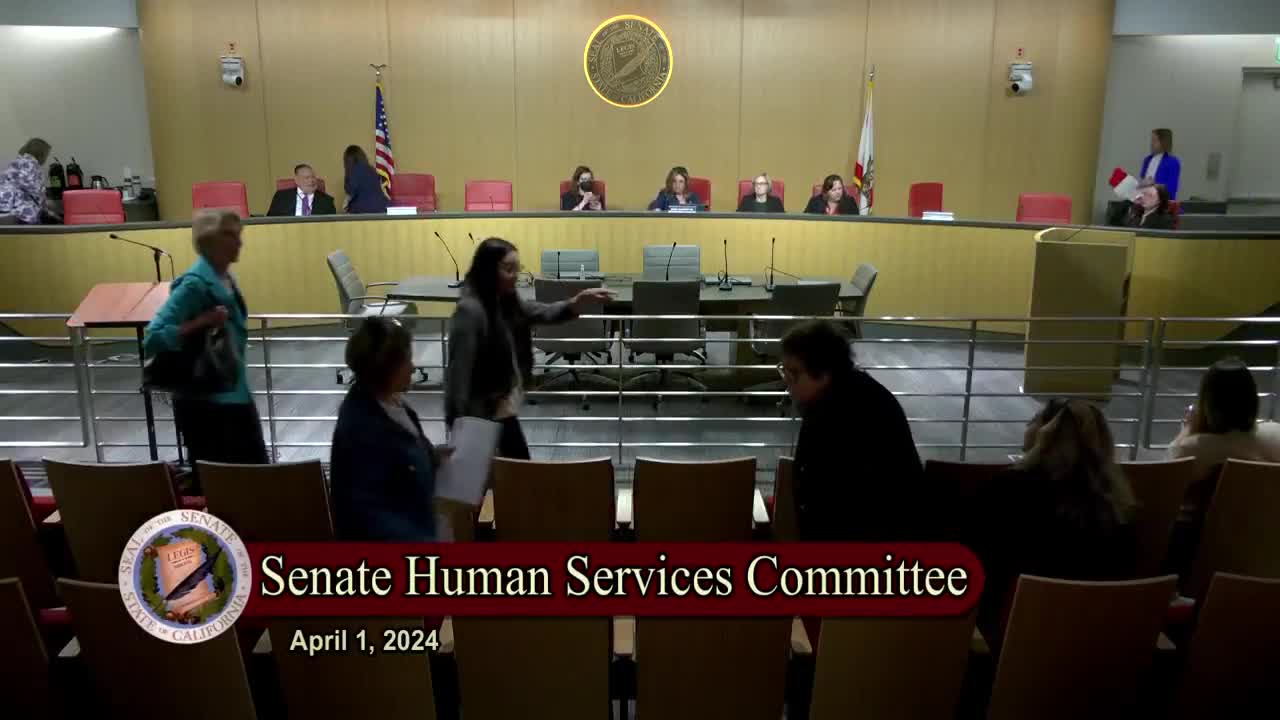 26MIN
Senate Standing Committee on Human Services
Bill Author

Bill Co-Author(s):