SB 1250: Privacy: genetic testing: newborn screening.
- Session Year: 2023-2024
- House: Senate
- Latest Version Date: 2024-02-15
Current Status:
Failed
(2024-04-23: April 23 set for first hearing canceled at the request of author.)
Introduced
In Committee
First Chamber
In Committee
Second Chamber
Enacted
Existing law, the Genetic Information Privacy Act, requires a direct-to-consumer genetic testing company, as defined, to provide a consumer with certain information regarding the companys policies and procedures for the collection, use, maintenance, and disclosure, as applicable, of genetic data, and to obtain a consumers express consent for collection, use, or disclosure of the consumers genetic data, as specified. Existing law also requires a direct-to-consumer genetic testing company to implement and maintain reasonable security procedures and practices to protect a consumers genetic data against unauthorized access, destruction, use, modification, or disclosure, and to develop procedures and practices to enable a consumer to access their genetic data and to delete their account and genetic data, as specified. Existing law excludes from its provisions the California Newborn Screening Program, among other activities subject to specified state and federal laws.
This bill would apply the requirements of the Genetic Information Privacy Act to the California Newborn Screening Program beginning on January 1, 2025.
Existing law imposes certain requirements for contracts between a direct-to-consumer genetic testing company and a service provider, as defined, including that the contract prohibits the service provider from retaining, using, or disclosing the biological sample, extracted genetic material, genetic data, or any information regarding the identity of the consumer, for any purpose other than for the specific purpose of performing the services specified in the contract for the business.
This bill would, for contracts entered into before January 1, 2025, apply the requirements of the act to the contract when altered, modified, renewed, or extended on or after January 1, 2025.
Existing law requires actions for relief pursuant to the Genetic Information Privacy Act to be prosecuted exclusively by the Attorney General, a district attorney, county counsel, city attorney, or city prosecutor, as specified, in the name of the people of the State of California upon their own complaint or upon the complaint of a board, officer, person, corporation, or association or upon a complaint by a person who has suffered injury in fact and has lost money or property as a result of the violation of the act.
Because the bill would require local officials to perform additional duties, the bill would impose a state-mandated local program.
The California Constitution requires the state to reimburse local agencies and school districts for certain costs mandated by the state. Statutory provisions establish procedures for making that reimbursement.
This bill would provide that, if the Commission on State Mandates determines that the bill contains costs mandated by the state, reimbursement for those costs shall be made pursuant to the statutory provisions noted above.
(a)The provisions of this chapter shall not reduce a direct-to-consumer genetic testing companys duties, obligations, requirements, or standards under any applicable state and federal laws for the protection of privacy and security.
(b)In the event of a conflict between the provisions of this chapter and any other law, the provisions of the law that afford the greatest protection for the right of privacy for consumers shall control.
(c)This chapter shall not apply to any of the following:
(1)Medical information governed by the Confidentiality of Medical Information Act, Part 2.6 (commencing with Section 56), or to protected health information that is collected, maintained, used, or disclosed by a covered entity or business associate governed by the privacy, security, and breach notification rules issued by the United States Department of Health and Human Services, Parts 160 and 164 of Title 45 of the Code of Federal Regulations established pursuant to the federal Health Insurance Portability and Accountability Act of 1996 (Public Law 104-191) and the federal Health Information Technology for Economic and Clinical Health Act (Public Law 111-5).
(2)A provider of health care governed by the Confidentiality of Medical Information Act (Part 2.6 (commencing with Section 56)) or a covered entity governed by the privacy, security, and breach notification rules issued by the United States Department of Health and Human Services, Parts 160 and 164 of Title 45 of the Code of Federal Regulations, established pursuant to the Health Insurance Portability and Accountability Act of 1996 (Public Law 104-191) and the federal Health Information Technology for Economic and Clinical Health Act, Title XIII of the federal American Recovery and Reinvestment Act of 2009 (Public Law 111-5), to the extent that the provider or covered entity maintains, uses, and discloses genetic information in the same manner as medical information or protected health information, as described in paragraph (1).
(3)A business associate of a covered entity governed by the privacy, security, and data breach notification rules issued by the United States Department of Health and Human Services, Parts 160 and 164 of Title 45 of the Code of Federal Regulations, established pursuant to the federal Health Insurance Portability and Accountability Act of 1996 (Public Law 104-191) and the federal Health Information Technology for Economic and Clinical Health Act, Title XIII of the federal American Recovery and Reinvestment Act of 2009 (Public Law 111-5), to the extent that the business associate maintains, uses, and discloses genetic information in the same manner as medical information or protected health information, as described in paragraph (1).
(4)Scientific research or educational activities conducted by a public or private nonprofit postsecondary educational institution that holds an assurance with the United States Department of Health and Human Services pursuant to Part 46 of Title 45 of the Code of Federal Regulations, to the extent that the scientific research and educational activities conducted by that institution comply with all applicable federal and state laws and regulations for the protection of human subjects in research, including, but not limited to, the Common Rule pursuant to Part 46 (commencing with Section 46.101) of Title 45 of the Code of Federal Regulations, United States Food and Drug Administration regulations pursuant to Parts 50 and 56 of Title 21 of the Code of Federal Regulations, the federal Family Educational Rights and Privacy Act (20 U.S.C. Sec. 1232g), and the Protection of Human Subjects in Medical Experimentation Act, Chapter 1.3 (commencing with Section 24170) of Division 20 of the Health and Safety Code.
(5)The Before January 1, 2025, the California Newborn Screening Program authorized by Chapter 1 (commencing with Section 124975) of Part 5 of Division 106 of the Health and Safety Code.
(6)Tests conducted exclusively to diagnose whether an individual has a specific disease, to the extent that all persons involved in the conduct of the test maintain, use, and disclose genetic information in the same manner as medical information or protected health information, as described in paragraph (1).
(7)Genetic data used or maintained by an employer, or disclosed by an employee to an employer, to the extent that the use, maintenance, or disclosure of that data is necessary to comply with a local, state, or federal workplace health and safety ordinance, law, or regulation.
(d)Nothing in this chapter shall be construed to affect access to information made available to the public by the consumer.
(e)(1)Beginning on January 1, 2025, the requirements of this chapter shall apply to the California Newborn Screening Program authorized by Chapter 1 (commencing with Section 124975) of Part 5 of Division 106 of the Health and Safety Code.
(2)Notwithstanding paragraph (1), for contracts entered into before January 1, 2025, the requirements of this chapter shall apply to the contract when altered, modified, renewed, or extended on or after January 1, 2025.
SEC. 2.If the Commission on State Mandates determines that this act contains costs mandated by the state, reimbursement to local agencies and school districts for those costs shall be made pursuant to Part 7 (commencing with Section 17500) of Division 4 of Title 2 of the Government Code.
|
Date
|
Status
|
|---|---|
| Apr 23, 2024 | April 23 set for first hearing canceled at the request of author. |
| Apr 5, 2024 | Set for hearing April 23. |
| Feb 29, 2024 | Referred to Com. on JUD. |
| Feb 16, 2024 | From printer. May be acted upon on or after March 17. |
| Feb 15, 2024 | Introduced. Read first time. To Com. on RLS. for assignment. To print. |
This list shows positions taken on this bill by organizations on the date displayed, which is linked to the original source.
Positions by individuals are not included.
|
Organization
|
Position
|
Date
|
|---|---|---|
| California ChildrenS Hospital Association | ** Against | |
| California Health Coalition Advocacy | ** Support | |
| California Medical Association | ** Against | |
| ChildrenS Specialty Care Coalition | ** Against | |
| Educate. Advocate. | ** Support |
Senator Thomas Umberg, Chair
2023-2024 Regular Session
Bill No: SB 1250 (Author:Nguyen)
Version: February 15, 2024
Hearing Date: April 23, 2024
Fiscal: Yes
Urgency: No
Consultant: CK
SUBJECT
Privacy: genetic testing: newborn screening
DIGEST
This bill subjects the California Newborn Screening Program to the California Genetic Information Privacy Act (GIPA).
EXECUTIVE SUMMARY
The California Newborn Screening Program (CNSP) screens all babies born in California for various serious, but treatable, genetic disorders. At the outset, the program tested for only one disorder, phenylketonuria (PKU). However, the program has expanded to cover over 80 different disorders. Currently, the only valid basis for objecting to the test is if the testing conflicts with the parents’ religious beliefs or practices. The blood spot collection cards are then stored by the California Department of Public Health (CDPH). They can be used for research when approved through California’s institutional review board (IRB). Parents, and eventually the patient, can request to have the blood spot cards destroyed.
GIPA is a genetic information privacy law that applies to direct-to-consumer genetic testing companies. It mandates certain policies and procedures to be put into place and requires these companies to secure affirmative consent for each collection, use, and the storage of genetic information. CNSP is exempt from GIPA.
Concerns have been raised about parental consent and notice regarding blood specimen collection, retention, and use in connection with the CNSP. This bill subjects CNSP to GIPA. This bill is author-sponsored. It is supported by the California Health Coalition Advocacy and Educate. Advocate. It is opposed by various health-related entities, including the California Medical Association and California Children’s Hospital Association.
PROPOSED CHANGES TO THE LAW
Existing law:
- Requires CDPH to establish a genetic disease unit to coordinate all CDPH programs in the area of genetic disease that will promote a statewide program of information, testing, and counseling services; and, have the responsibility of designating tests and regulations to be used in executing the California Newborn Screening Program (CNSP). (Health & Saf. Code § 125000.)
- Requires CDPH to include in the CNSP screening for phenylketonuria, fatty acid oxidation, amino acid, organic acid disorders, congenital adrenal hyperplasia, severe combined immunodeficiency (SCID), adrenoleukodystrophy (ALD), and any other disease that is detectable in blood samples as soon as practicable, but no later than two years after the disease is adopted by the federal Recommended Uniform Screening Panel (RUSP) or state law is amended, whichever is later. (Health & Saf. Code §§ 125000, 125001.)
- Requires CDPH to evaluate and prepare recommendations on the implementation of tests for the detection of hereditary and congenital diseases, including, but not limited to, biotinidase deficiency and cystic fibrosis. Requires CDPH to also evaluate and prepare recommendations on the availability and effectiveness of preventative follow-up interventions, including the use of specialized medically necessary dietary products. (Health & Saf. Code § 125000.)
- Requires birth attendants to provide pregnant persons, prior to the estimated delivery date, with a copy of CDPH’s informational material entitled “Important Information for Parents.” Requires perinatal licensed health facilities to provide the same to those admitted for delivery if they have not already received it and to translate or read the material in a language they understand if they cannot read it. (17 C.C.R. §§ 6504, 6504.2.)
- Authorizes the parent or guardian of a newborn child to opt out of the CNSP if they object to a test on the ground that the test conflicts with their religious beliefs or practices. Requires parents or guardians who opt out to sign a refusal form approved by CDPH and provided by the physician or birth attendant. Requires the form to be translated or read in a language understood by the parent or guardian if they cannot read the form. (Health & Saf. Code § 125000; 17 C.C.R. § 6501.2.)
- Requires perinatal health facilities to collect the CNSP blood spot specimen when a newborn is between 12 and 48 hours old, with certain exceptions, and send such specimen to a CNSP laboratory on the same or next business day. For infants not born in a perinatal licensed health facility, but admitted to such a facility, the facility is required to obtain a specimen within 48 hours of admission and send it to a CNSP laboratory on the same or next business day. For infants neither born nor admitted to a perinatal licensed health facility after birth, the out-of-hospital provider is required to collect the CNSP specimen when a newborn is between 12 and 48 hours old, unless a religious objection is executed, and sent to a CNSP laboratory on the same or next business day. (17 C.C.R. § 6505.)
- Requires county registrars of births to provide a copy of the informational material described above to each person registering the birth of a newborn that occurred outside of a perinatal health facility when the newborn was not admitted to such a facility within the first 30 days of age. Requires the county registrar of birth to notify the local health officer and CDPH of this birth, and requires the local health department to make every reasonable effort to obtain CNSP specimens. Permits local health departments, with permission from CDPH, to terminate efforts to obtain the CNSP specimen after 30 days. (17 C.C.R. §§ 6505, 6507.1.)
- Requires CDPH to provide the following forms for the administration of the CNSP: the California Newborn Screening Test Request Form (CDPH-4409) and the Notification of Registration of Birth Which Occurred Out of a Licensed Health Facility (CDPH-4460). (17 C.C.R. § 6501.5.)
- Requires CNSP results to be available to individuals over 18 years of age or the individual’s parent or guardian. Requires results to be held as a confidential medical record, except for data compiled without reference to the identity of any individual and for research purposes, provided that the research has first been reviewed and approved by an institutional review board, as specified. Requires any disclosure of information to preserve the anonymity of the persons tested unless the person has given written consent to disclose the information. (Health & Saf. Code § 124980; 17 C.C.R. § 6502.1.)
- Requires CDPH to charge a fee for newborn screening and follow-up services, and requires the amount of the fee to be periodically adjusted in order to meet the costs of the CNSP. (Health & Saf. Code § 125000.)
- Creates the Genetic Information Privacy Act to protect consumers’ “genetic data,” which is defined as any data, regardless of its format, that results from the analysis of a biological sample from a consumer, or from another element enabling equivalent information to be obtained, and concerns genetic material, except deidentified data, as provided. (Civ. Code § 56.18 et seq.)
- Regulates direct-to-consumer genetic testing companies (“DTC company”), which are defined as entities that do any of the following:
- Sell, market, interpret, or otherwise offer consumer-initiated genetic testing products or services directly to consumers;
- Analyze genetic data obtained from a consumer, except to the extent that the analysis is performed by a person licensed in the healing arts for diagnosis or treatment of a medical condition; or
- Collect, use, maintain, or disclose genetic data collected or derived from a direct-to-consumer genetic testing product or service, or is directly provided by a consumer. (Civ. Code § 56.18 et seq.)
- Requires a DTC company, or any other company that collects, uses, maintains, or discloses genetic data collected or derived from a direct-to-consumer genetic testing product or service or directly provided by a consumer to provide clear and complete information regarding the company’s policies and procedures for the collection, use, maintenance, and disclosure, as applicable, of genetic data by making certain disclosures available to a consumer. (Civ. Code § 56.181.)
- Requires the above companies to also obtain a consumer’s express consent for collection, use, and disclosure of the consumer’s genetic data and methods to revoke such consent, as specified. DTC companies must secure separate and express consent for specified actions. (Civ. Code § 56.181.)
- Provides that the requirement for separate and express consent for marketing does not require a DTC company to obtain a consumer’s express consent to market to the consumer on the company’s own website or mobile application, as specified. (Civ. Code § 56.181.)
- Requires a DTC company to implement and maintain reasonable security procedures and practices. Such companies must also develop procedures and practices to enable a consumer to easily access their genetic data, delete the consumer’s account and genetic data, except as specified, and have the consumer’s biological sample destroyed. (Civ. Code § 56.181.)
- Prohibits these companies from disclosing a consumer’s genetic data to any entity that is responsible for administering or making decisions regarding health insurance, life insurance, long-term care insurance, disability insurance, or employment, or to any entity that provides advice to an entity that is responsible for performing those functions, except as provided. (Civ. Code § 56.181.)
- Exempts application of its provision to certain medical information, health care providers, other covered entities and their business associates, and certain tests to diagnose specific diseases, as specified. It also does not apply to scientific research or educational activities conducted by a public or private nonprofit postsecondary educational institution or the CNSP. (Civ. Code § 56.184.)
- Subjects a company in violation of its provisions to specified civil penalties. Negligent violation are subject a civil penalty of up to $1,000, with willful violations subject to up to $10,000 penalties. Each violation is a separate and actionable violation. (Civ. Code § 56.182.)
This bill removes the exemption for the CNSP from GIPA.
COMMENTS
- GIPA
In December 2019, a memo issued by United States Department of Defense officials concerning DNA testing kits was obtained and reported on by news media.[1] In it, Under Secretary of Defense for Intelligence Joseph Kernan, and James Stewart, acting Under Secretary of Defense for Personnel and Readiness, laid out a series of warnings about the tests and the information they collected. The memo called into question the validity of the testing, asserted that certain military members were being targeted by the companies, and warned of nefarious efforts to exploit the sensitive information being collected. The memo stated: “Moreover, there is increased concern in the scientific community that outside parties are exploiting the use of genetic materials for questionable purposes, including mass surveillance and the ability to track individuals without their authorization or awareness.” The officials authoring the memo instructed military personnel to refrain from using the testing kits.
In response to concerns about the privacy and security of genetic information in the hands of these companies, SB 41 (Umberg, Ch. 596, Stats. 2021) was signed into law, establishing GIPA.
GIPA protects the sensitive information being collected by DTC companies by attaching a series of requirements to the collection, use, maintenance, and disclosure of genetic data. These companies are required to provide clear and complete information regarding the company’s policies and procedures by making certain information available to consumers. Consumers must be notified that their deidentified genetic or phenotypic information may be shared with or disclosed to third parties for research purposes, as such exemptions are written in to the definition of “genetic data.”
DTC companies are required to obtain a consumer’s express consent to the collection, use, and disclosure of the consumer’s genetic data. GIPA includes a robust definition for “express consent” that ensures meaningful consumer control:
“Express consent” means a consumer’s affirmative authorization to grant permission in response to a clear, meaningful, and prominent notice regarding the collection, use, maintenance, or disclosure of genetic data for a specific purpose. The nature of the data collection, use, maintenance, or disclosure shall be conveyed in clear and prominent terms in such a manner that an ordinary consumer would notice and understand it. Express consent cannot be inferred from inaction. Agreement obtained through use of dark patterns does not constitute consent.
The obligation for securing consent includes the requirement that these companies, at a minimum, secure separate and express consent for each of the following:
- The use of the genetic data collected through the genetic testing product or service offered to the consumer, including who has access to genetic data, and how genetic data may be shared, and the specific purposes for which it will be collected, used, and disclosed.
- The storage of a consumer’s biological sample after the initial testing requested by the consumer has been fulfilled.
- Each use of genetic data or the biological sample beyond the primary purpose of the genetic testing or service and inherent contextual uses.
- Each transfer or disclosure of the consumer’s genetic data or biological sample to a third party other than to a service provider, including the name of the third party to which the consumer’s genetic data or biological sample will be transferred or disclosed.
- The marketing or facilitation of marketing to a consumer, as provided.
It should be noted that “third party” does not include a public or private nonprofit postsecondary educational institution to the extent that the consumer’s genetic data or biological sample is disclosed to a public or private nonprofit postsecondary educational institution for the purpose of scientific research or educational activities, as specified.
- Screening newborns for potential genetic disorders
The CNSP is a public health program that screens all babies for many serious but treatable genetic disorders. Newborn screening began in California in 1966 and has grown to include screening for 80 different disorders, both genetic (passed down in families) and congenital (present at birth). The purpose of the program is to detect these disorders early so they can be treated from shortly after birth.
Medical professionals take a blood sample from each newborn baby within the first few days of birth and carry out the screening. Currently, parents can object to the screening only on religious grounds. However, all parents, and eventually the patients themselves, are authorized to thereafter contact the program to have the blood specimen destroyed after screening.
Attendant regulations require that pregnant persons are given a copy of the informational material, entitled “Important Information for Parents,” provided by CDPH. The brochure lays out what the program is, why it is carried out, and how it is done. It also lays out what happens with the blood specimen after the testing:
What Happens to My Baby’s Blood Spots After the Newborn Screening Test is Done? California, like many other states, stores newborn screening bloodspot cards. The bloodspot cards may be used for tests to improve the screening program or to develop tests for new disorders. The bloodspots may also be used for studies about diseases in women and children. The stored bloodspot cards do not have information, such as names or addresses, that can be used to identify you or your baby. The program follows all federal and state privacy and research laws. If you want the bloodspot card destroyed after the newborn screening test is done, that is your right.
To learn more about the storage and use of leftover blood spots, or to find out how to get your baby’s bloodspot card destroyed, visit: https://www.cdph.ca.gov/Programs/CFH/DGDS/Pages/NBS/IIP.aspx
California law requires the CNSP to use or provide newborn screening specimens for department-approved studies of diseases in women and children, such as research related to identifying and preventing disease. This could be to study birth defects, chronic disease, or exposure to toxins or infections.
Attendant regulations provide that the blood specimen and information obtained during the testing process becomes the property of the State and may be used for program evaluation or research by CDPH or CDPH-approved scientific researchers without identifying the person or persons from whom these results were obtained.
- Removing the CNSP exemption from GIPA
GIPA contains specific exemptions from its application. This includes exemptions for medical information covered by the California Medical Information Act and scientific research or educational activities conducted by a public or private nonprofit postsecondary educational institution, as provided. Most relevant here, it exempts the CNSP.
This bill removes this latter exemption as of January 1, 2025.
According to the author:
In 2022, Senator Umberg’s SB 41, was signed into law. It created the Genetic Information Privacy Act, That bill provided expanded privacy protections for genetic data by regulating the collection, use, maintenance, and disclosure by private companies. Since 1983, the California Department of Public health has been collecting blood samples through its Newborn Screening Program, containing genetic information, from every baby born in California and has stored those blood specimens in the California Biobank. Since then, the Biobank has collected blood samples from roughly 20 million individuals and have allowed those samples to be used in genetic research. Unfortunately, SB 41 did not include protections for the individuals whose blood resides in the California Biobank. My bill, SB 1250, simply expands the protections contained in SB 41 to everyone whose blood has been collected and used by the Department of Public Health through its Newborn Screening Program.
Writing in support, the California Health Coalition Advocacy states:
Hundreds of thousands of newborn screenings are performed to detect genetic conditions every year in California. The blood specimen and information obtained during the testing process become the property of the state. California indefinitely stores the residual blood samples and makes them available to third party researchers without the consent of parents.
These blood samples contain a wealth of personal information on our children, from eye and hair color to predisposition to diseases. This genomic data is highly distinguishable and cannot be truly de-identified.
Due to growing concern over genetic privacy, in 2021, California passed the Genetic Information Privacy Act to protect the genetic information of consumers with regard to certain genetic tests and to require express consent for collection, use, or disclosure of the consumer’s genetic data. However, the act specifically excluded the California Newborn Screening Program.
The newborn screening program and the BioBank are vital, but adequate protections for consumer privacy and patient consent are lacking. The protection provided consumers through the Genetic Information Privacy Act should be extended to parents and their newborns.
The law is driven in part by articles sounding the alarm as to potential privacy issues with the biobanks as “researchers can purchase those samples for state-approved studies and law enforcement can access them with a court order.” As reported by CBS News:
Genealogy companies like Ancestry.com and 23andMe have to get your permission before they store, use, or share your DNA, under the Genetic Information Privacy Act. However, the California Department of Public Health doesn’t have to. In fact, the agency has been storing DNA samples from every baby born in California since the 1980s.[2]
However, concerns about the devastating impact of this change in law to the CNSP and the critical research it fuels have been raised. Writing in opposition, the California Medical Association argues:
Current law requires health care providers to give all pregnant individuals a one-page informational handout prepared by the California Department of Public Health (CDPH) regarding the newborn screening program. Patients can opt out of having their baby’s blood spot tested for religious reasons and can also have their baby’s blood spot destroyed after testing so it is not used for research. The CDPH handout informs patients of these rights and how to exercise them.
This bill would subject California’s newborn genetic screening program to California’s Genetic Information Privacy Act. The original intent of the Privacy Act was to apply to direct-to-consumer genetic testing companies (like 23 & Me), but this bill would pull the newborn screening program under the act. This would require a parent’s express consent for storage of each blood spot and use of each blood spot for research. This could result in disastrous results for the newborn screening program due to blood spots not being tested because of the burdensome process put on parents by this legislation.
SB 1250 would change the research component of the newborn screening program from opt out to opt in which we believe jeopardizes important research about infant health conditions. There are already safeguards in place to allow patients to change their mind regarding whether to opt into the program which provides the medical profession with invaluable research to improve the lives of children.
The California Children’s Hospital Association writes in opposition:
Children’s hospitals are proud to be steadfast participants in the California Department of Public Health’s (CDPH) Newborn Screening Program. All newborn babies have blood collected from their heel shortly after birth. The spot of blood, affixed to a sample card, is sent to a CDPH-approved lab, where it is tested for dozens of rare, serious conditions including organic acid, fatty acid oxidation, amino acid, hemoglobin, and other disorders. If identified early, many of these conditions can be treated before they cause serious health problems. If they are not detected early, many will cause permanent and irreversible damage to the infant by the time symptoms appear. Early detection and treatment save and improve children’s lives and reduce medical costs by eliminating or mitigating the devastating consequences of these rare and treatable diseases. The blood spots are securely stored and maintained by CDPH, and may be used by bona fide researchers with CDPH approval.
Current law requires health care providers to give all pregnant patients a one-page informational handout prepared by CDPH about the newborn screening program. Patients can opt out of having their baby’s blood spot tested for religious reasons and can also have their baby’s blood spot destroyed after testing so it is not used for research. The CDPH handout informs patients of these rights and how to exercise them. SB 1250 would change the consent requirement for the research component of the newborn screening program from opt-out to opt-in, requiring CDPH to obtain separate and express consent for each of the following:
- The use of the genetic data collected through the genetic testing product or service offered to the consumer, including who has access to genetic data, and how genetic data may be shared, and the specific purposes for which it will be collected, used, and disclosed.
- The storage of a consumer’s biological sample after the initial testing requested by the consumer has been fulfilled.
- Each use of genetic data or the biological sample beyond the primary purpose of the genetic testing or service and inherent contextual uses.
- Each transfer or disclosure of the consumer’s genetic data or biological sample to a third party other than to a service provider, including the name of the third party to which the consumer’s genetic data or biological sample will be transferred or disclosed.
These requirements are clearly focused on individuals purchasing direct-to-consumer genetic testing, and do not entirely make sense when applied to research conducted by bona fide researchers for public health purposes. In addition, the third and fourth consent requirements would actually require CDPH to reach back out to families for consent each time there is a new request to use their babies’ blood spots in a research effort. This is an enormous and ongoing new burden that will inevitably limit important and potentially lifesaving research.
SUPPORT
California Health Coalition Advocacy
Educate. Advocate.
OPPOSITION
California Children’s Hospital Association
California Medical Association
Children’s Specialty Care Coalition
RELATED LEGISLATION
Pending Legislation:
SB 570 (Becker, 2023) prevents CDPH from prohibiting a laboratory, as specified, from offering all noninvasive prenatal tests, as ordered by a prenatal care provider, or otherwise limit the number of tests that the laboratory may provide to a pregnant person who has an order from a prenatal care provider. SB 570 was held in the Assembly Appropriations Committee.
SB 1099 (Nguyen, 2024) requires CDPH to annually report to the Legislature, starting January 1, 2026, information on the uses of residual screening samples from testing programs. This bill is currently in the Senate Health Committee.
AB 2563 (Essayli, 2024) requires CDPH to expand CNSP to include screening for Duchenne Muscular Dystrophy. AB 2563 is currently in the Assembly Health Committee.
Prior Legislation:
SB 625 (Nguyen, 2023) would have required CDPH to provide information about the testing program and to permit the parent or legal guardian to opt out of the retention or use of the newborn child’s blood sample for medical research. The bill would have prohibited any residual screening specimen from being released to any person or entity for law enforcement purposes or to establish a database for forensic identification. The bill would have authorized a parent or guardian of a minor child, and the child, once they are at least 18 years of age, to request that the department destroy the residual screening specimen or retain the specimen, but not use it for research purposes. The bill would require the department to comply with the request. The bill would have required the department, if the individual makes a request to destroy the blood sample specimen or to not use it for research purposes, to acknowledge receipt of the request and notify the individual that the specimen has been destroyed, as specified. CDPH would have been required to develop and distribute informational materials to this effect. SB 625 died in the Senate Appropriations Committee.
SB 41 (Umberg, Ch. 596, Stats. 2021) See Comment 1.
AB 556 (Maienschein, Ch. 170, Stats. 2021) established a private cause of action for damages against a person who misuses sperm, ova, or embryos in violation of Section 367g of the Penal Code. AB 556 provides for damages for a prevailing plaintiff, including actual or statutory damages.
AB 170 (Gatto, 2015) was substantially similar to this bill. AB 170 died in the Senate Health Committee.
**************
Tim Stelloh & Pete Williams, Pentagon tells military personnel not to use at-home DNA kits (December 23, 2019) NBC News, https://www.nbcnews.com/news/military/pentagon-tells-military-personnel-not-use-home-dna-kits-n1106761. All internet citations are current as of April 17, 2024. ↑
Julie Watts, California can share your baby’s DNA sample without permission, but new bill could force state to publicly reveal who they’re giving it to (April 17, 2024) CBS News, https://www.cbsnews.com/sacramento/news/baby-dna-parental-consent-genetic-records-california-law-newborns/. ↑
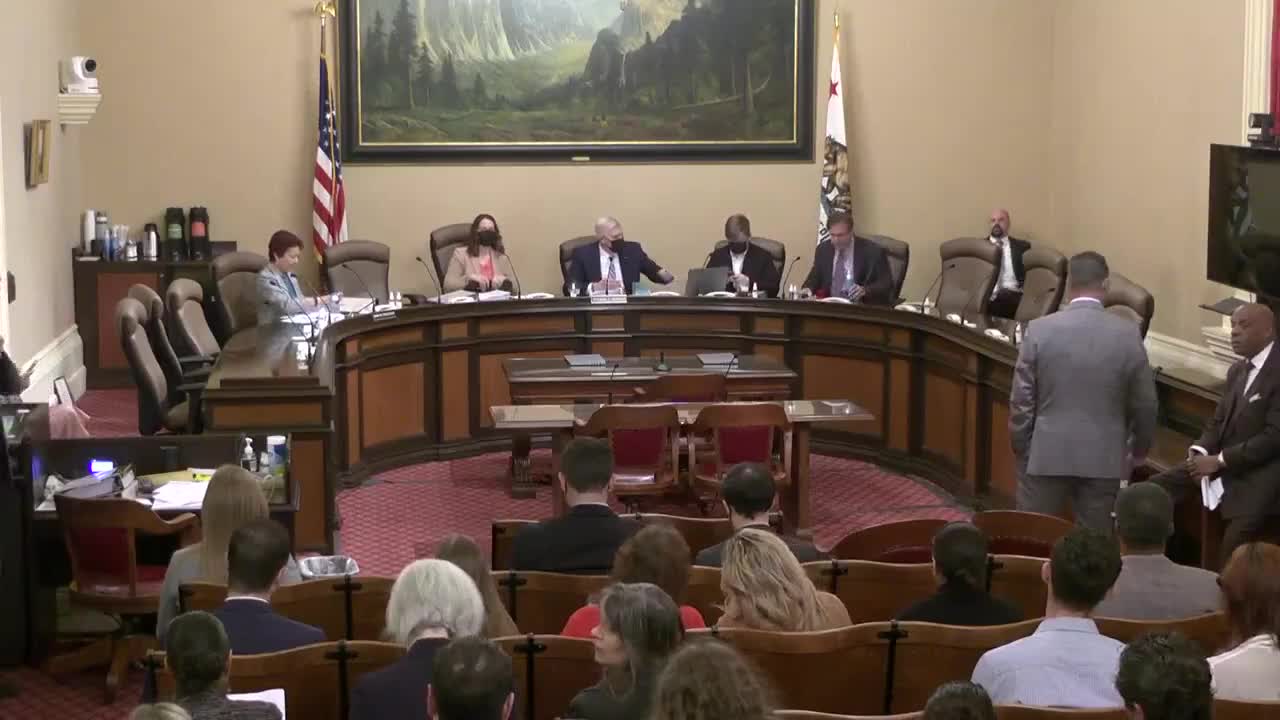
Bill Author

Bill Co-Author(s):