SB 1254: CalFresh: enrollment of incarcerated individuals.
- Session Year: 2023-2024
- House: Senate
- Latest Version Date: 2024-09-22
Current Status:
Passed
(2024-09-22: Chaptered by Secretary of State. Chapter 465, Statutes of 2024.)
Introduced
In Committee
First Chamber
In Committee
Second Chamber
Enacted
Existing federal law provides for the federal Supplemental Nutrition Assistance Program (SNAP), known in California as CalFresh, under which supplemental nutrition assistance benefits allocated to the state by the federal government are distributed to eligible individuals by each county. Existing federal law generally prohibits a resident of an institution from receiving supplemental nutrition assistance benefits.
Existing law requires the State Department of Social Services, if the department deems it necessary to maximize CalFresh enrollment outcomes or employment placement success rates for individuals reentering the community from the state prison or a county jail, to submit to the United States Department of Agricultures Food and Nutrition Service a request to waive that prohibition to allow for preenrollment of applicants prior to their release.
Existing law establishes the Medi-Cal program, which is administered by the State Department of Health Care Services and under which qualified low-income individuals receive health care services. The Medi-Cal program is, in part, governed and funded by federal Medicaid program provisions. Under existing law, subject to implementation of the California Advancing and Innovating Medi-Cal (CalAIM) initiative, a qualifying inmate of a public institution is eligible to receive targeted Medi-Cal services for 90 days, or the number of days approved in the CalAIM Terms and Conditions, before the date they are released from the institution, if otherwise eligible for Medi-Cal services.
This bill would require the State Department of Social Services to establish a CalFresh workgroup by February 1, 2026, composed of members with specified backgrounds, to meet no less than quarterly. The bill would require the workgroup to create and submit a report to the department and to the Legislature by August 31, 2027, and by August 31 annually thereafter, through 2030, with its recommendations for a state reentry process incorporating the necessary resources for transition from state prison or county jail to obtaining CalFresh benefits upon reentry into the community.
The bill would require the department, by January 1, 2026, to seek a certain federal waiver to allow for preenrollment of applicants prior to their release from the state prison or county jail.
The bill would require the department to partner with the Department of Corrections and Rehabilitation and county jails to allow for preenrollment of otherwise eligible applicants for the CalFresh program to ensure that an applicants benefits may begin as soon as possible upon reentry of the applicant into the community from the state prison or county jail. The bill would condition implementation of that partnership in a given county on notification to the State Department of Health Care Services that the corresponding county has implemented the Justice-Involved Initiative that is developed pursuant to the above-described CalAIM provisions. By creating new duties for county eligibility workers and county jail officials, the bill would impose a state-mandated local program.
The bill would make the provisions above operative on the date that the department notifies the Legislature that the Statewide Automated Welfare System can perform the necessary automation to implement those provisions.
The California Constitution requires the state to reimburse local agencies and school districts for certain costs mandated by the state. Statutory provisions establish procedures for making that reimbursement.
This bill would provide that, if the Commission on State Mandates determines that the bill contains costs mandated by the state, reimbursement for those costs shall be made pursuant to the statutory provisions noted above.
Existing federal law provides for the federal Supplemental Nutrition Assistance Program (SNAP), known in California as CalFresh, under which supplemental nutrition assistance benefits allocated to the state by the federal government are distributed to eligible individuals by each county. Existing federal law generally prohibits a resident of an institution from receiving supplemental nutrition assistance benefits.
Existing law requires the State Department of Social Services, if the department deems it necessary to maximize CalFresh enrollment outcomes or employment placement success rates for individuals reentering the community from the state prison or a county jail, to submit to the United States Department of Agricultures Food and Nutrition Service a request to waive that prohibition to allow for preenrollment of applicants prior to their release.
Existing law establishes the Medi-Cal program, which is administered by the State Department of Health Care Services and under which qualified low-income individuals receive health care services. The Medi-Cal program is, in part, governed and funded by federal Medicaid program provisions. Under existing law, subject to implementation of the California Advancing and Innovating Medi-Cal (CalAIM) initiative, a qualifying inmate of a public institution is eligible to receive targeted Medi-Cal services for 90 days, or the number of days approved in the CalAIM Terms and Conditions, before the date they are released from the institution, if otherwise eligible for Medi-Cal services.
This bill would require the State Department of Social Services to partner with the Department of Corrections and Rehabilitation, state prisons, and county jails to allow for preenrollment of otherwise eligible applicants for the CalFresh program to ensure that an applicants benefits may begin before the reentry of the applicant into the community from the state prison or county jail. The bill would condition implementation of that partnership in a given county on notification to the State Department of Health Care Services that the corresponding county has implemented the Justice-Involved Initiative that is developed pursuant to the above-described CalAIM provisions. By creating new duties for county eligibility workers and county jail officials, the bill would impose a state-mandated local program.TheThis bill would also require the department State Department of Social Services to establish a CalFresh workgroup by January February 1, 2026, composed of members with specified backgrounds, to meet no less than quarterly. The bill would require the workgroup to create and submit a report to the department and to the Legislature by August 31, 2026, 2027, and each August 31 annually thereafter, through 2030, with its recommendations for a state reentry process incorporating all of the necessary resources for transition from state prison or county jail to obtaining CalFresh benefits upon reentry into the community.
The bill would require the department department, by January 1, 2026, to submit applicable waivers to the federal government to allow for preenrollment of applicants prior to their release from the state prison or county jail by January 1, 2026. jail.
The bill would require the department to partner with the Department of Corrections and Rehabilitation and county jails to allow for preenrollment of otherwise eligible applicants for the CalFresh program to ensure that an applicants benefits may begin before the reentry of the applicant into the community from the state prison or county jail. The bill would condition implementation of that partnership in a given county on notification to the State Department of Health Care Services that the corresponding county has implemented the Justice-Involved Initiative that is developed pursuant to the above-described CalAIM provisions. By creating new duties for county eligibility workers and county jail officials, the bill would impose a state-mandated local program.
The bill would make the provisions above operative on the date that the department notifies the Legislature that the Statewide Automated Welfare System can perform the necessary automation to implement those provisions.
The California Constitution requires the state to reimburse local agencies and school districts for certain costs mandated by the state. Statutory provisions establish procedures for making that reimbursement.
This bill would provide that, if the Commission on State Mandates determines that the bill contains costs mandated by the state, reimbursement for those costs shall be made pursuant to the statutory provisions noted above.
Existing federal law provides for the federal Supplemental Nutrition Assistance Program (SNAP), known in California as CalFresh, under which supplemental nutrition assistance benefits allocated to the state by the federal government are distributed to eligible individuals by each county. Existing federal law generally prohibits a resident of an institution from receiving supplemental nutrition assistance benefits. Existing
Existing law requires the State Department of Social Services, if the department deems it necessary to maximize CalFresh enrollment outcomes or employment placement success rates for individuals reentering the community from the state prison or a county jail, to submit to the United States Department of Agricultures Food and Nutrition Service a request to waive of that prohibition to allow for preenrollment of applicants prior to their release.
Existing law establishes the Medi-Cal program, which is administered by the State Department of Health Care Services and under which qualified low-income individuals receive health care services. The Medi-Cal program is, in part, governed and funded by federal Medicaid program provisions. Under existing law, subject to implementation of the California Advancing and Innovating Medi-Cal (CalAIM) initiative, a qualifying inmate of a public institution is eligible to receive targeted Medi-Cal services for 90 days, or the number of days approved in the CalAIM Terms and Conditions, before the date they are released from the institution, if otherwise eligible for Medi-Cal services.
This bill would require the State Department of Social Services to partner with the Department of Corrections and Rehabilitation and county jails to enroll Rehabilitation, state prisons, and county jails to allow for preenrollment of otherwise eligible applicants for the CalFresh program to ensure that an applicants benefits may begin before the reentry of the applicant into the community from the state prison or county jail. The bill would require county eligibility workers to regularly enter any state prison or county jail in the county to conduct interviews and assist individuals that are within 90 days of release with completing a CalFresh benefits application. The bill would require the Department of Corrections and Rehabilitation, state prisons, and county jails to cooperate with the department and to allow county eligibility workers entrance into those facilities. By requiring regular entry of county eligibility workers into facilities to conduct interviews and assist individuals with enrollment applications and requiring the cooperation of The bill would condition implementation of that partnership in a given county on notification to the State Department of Health Care Services that the corresponding county has implemented the Justice-Involved Initiative that is developed pursuant to the above-described CalAIM provisions. By creating new duties for county eligibility workers and county jail officials, the bill would impose a state-mandated local program.
The bill would also require the department to create a workgroup on or before establish a CalFresh workgroup by January 1, 2026, comprised composed of members with specified backgrounds. backgrounds, to meet no less than quarterly. The bill would require the workgroup to create and submit a report to the department and to the Legislature by August 31, 2026, and each August 31 annually thereafter, with their its recommendations for a state reentry process incorporating all of the necessary resources for transition from state prison or county jail to reentry into the community.
The bill would require, on or before January 1, 2026, the department to partner with the State Department of Health Care Services to create and test a Medi-Cal and CalFresh combined application for incarcerated individuals soon leaving incarceration.The bill would require the department to submit applicable waivers to the federal government to allow for preenrollment of applicants prior to their release from the state prison or county jail on or before by January 1, 2026.
The bill would make the provisions above operative on the date that the department notifies the Legislature that the Statewide Automated Welfare System can perform the necessary automation to implement those provisions.
The California Constitution requires the state to reimburse local agencies and school districts for certain costs mandated by the state. Statutory provisions establish procedures for making that reimbursement.
This bill would provide that, if the Commission on State Mandates determines that the bill contains costs mandated by the state, reimbursement for those costs shall be made pursuant to the statutory provisions noted above.
Existing federal law provides for the federal Supplemental Nutrition Assistance Program (SNAP), known in California as CalFresh, under which supplemental nutrition assistance benefits allocated to the state by the federal government are distributed to eligible individuals by each county. Existing federal law generally prohibits a resident of an institution from receiving supplemental nutrition assistance benefits. Existing law requires the State Department of Social Services, if the department deems it necessary to maximize CalFresh enrollment outcomes or employment placement success rates for individuals reentering the community from the state prison or a county jail, to submit to the United States Department of Agricultures Food and Nutrition Service a request to waive of that prohibition to allow for preenrollment of applicants prior to their release.
Existing law establishes the Medi-Cal program, which is administered by the State Department of Health Care Services and under which qualified low-income individuals receive health care services. The Medi-Cal program is, in part, governed and funded by federal Medicaid program provisions.
This bill would require the State Department of Social Services to partner with the Department of Corrections and Rehabilitation and county jails to enroll otherwise eligible applicants for the CalFresh program to ensure that an applicants benefits may begin before the reentry of the applicant into the community from the state prison or county jail. The bill would require county eligibility workers to regularly enter any state prison or county jail in the county to conduct interviews and assist individuals that are within 90 days of release with completing a CalFresh benefits application. The bill would require the Department of Corrections and Rehabilitation, state prisons, and county jails to cooperate with the department and to allow county eligibility workers entrance into those facilities. By requiring regular entry of county eligibility workers into facilities to conduct interviews and assist individuals with enrollment applications and requiring the cooperation of county jail officials, the bill would impose a state-mandated local program.
The bill would also require the department to create a workgroup on or before January 1, 2026, comprised of members with specified backgrounds. The bill would require the workgroup to create a report to the department and to the Legislature by August 31, 2026, and each August 31 annually thereafter, with their recommendations for a state reentry process incorporating all the necessary resources for transition from state prison or county jail to reentry into the community.
The bill would require, on or before January 1, 2026, the department to partner with the State Department of Health Care Services to create and test a Medi-Cal and CalFresh combined application for incarcerated individuals soon leaving incarceration.
The bill would require the department to submit applicable waivers to the federal government to allow for preenrollment of applicants prior to their release from the state prison or county jail on or before January 1, 2026.
The California Constitution requires the state to reimburse local agencies and school districts for certain costs mandated by the state. Statutory provisions establish procedures for making that reimbursement.
This bill would provide that, if the Commission on State Mandates determines that the bill contains costs mandated by the state, reimbursement for those costs shall be made pursuant to the statutory provisions noted above.
Existing federal law provides for the federal Supplemental Nutrition Assistance Program (SNAP), known in California as CalFresh, under which supplemental nutrition assistance benefits allocated to the state by the federal government are distributed to eligible individuals by each county. Existing federal law generally prohibits a resident of an institution from receiving supplemental nutrition assistance benefits. Existing law requires the State Department of Social Services, if the department deems it necessary to maximize CalFresh enrollment outcomes or employment placement success rates for individuals reentering the community from the state prison or a county jail, to submit to the United States Department of Agricultures Food and Nutrition Service a request to waive of that prohibition to allow for preenrollment of applicants prior to their release.
Existing law establishes the Medi-Cal program, which is administered by the State Department of Health Care Services and under which qualified low-income individuals receive health care services. The Medi-Cal program is, in part, governed and funded by federal Medicaid program provisions.
This bill would require the State Department of Social Services to partner with the Department of Corrections and Rehabilitation and county jails to enroll otherwise eligible applicants for the CalFresh program to ensure that an applicants benefits may begin before the reentry of the applicant into the community from the state prison or county jail. The bill would require county eligibility workers to regularly enter any state prison or county jail in the county to conduct interviews and assist individuals that are within 90 days of release with completing a CalFresh benefits application. The bill would require the Department of Corrections and Rehabilitation, state prisons, and county jails to cooperate with the department and to allow county eligibility workers entrance into those facilities. By requiring regular entry of county eligibility workers into facilities to conduct interviews and assist individuals with enrollment applications and requiring the cooperation of county jail officials, the bill would impose a state-mandated local program.
The bill would also require the department to create a workgroup on or before January 1, 2026, comprised of members with specified backgrounds. The bill would require the workgroup to create a report to the department and to Legislature by August 31, 2025, 2026, and each August 31 annually thereafter, with their recommendations for a state reentry process incorporating all the necessary resources for transition from state prison or county jail to reentry into the community.
The bill would require, on or before January 1, 2026, the department to partner with the State Department of Health Care Services to create and test a Medi-Cal and CalFresh combined application for incarcerated individuals soon leaving incarceration.
The bill would require the department to submit applicable waivers to the federal government to allow for preenrollment of applicants prior to their release from the state prison or county jail on or before January 1, 2026.
The California Constitution requires the state to reimburse local agencies and school districts for certain costs mandated by the state. Statutory provisions establish procedures for making that reimbursement.
This bill would provide that, if the Commission on State Mandates determines that the bill contains costs mandated by the state, reimbursement for those costs shall be made pursuant to the statutory provisions noted above.
Existing federal law provides for the federal Supplemental Nutrition Assistance Program (SNAP), known in California as CalFresh, under which supplemental nutrition assistance benefits allocated to the state by the federal government are distributed to eligible individuals by each county. Existing federal law generally prohibits a resident of an institution from receiving supplemental nutrition assistance benefits. Existing law requires the State Department of Social Services, if the department deems it necessary to maximize CalFresh enrollment outcomes or employment placement success rates for individuals reentering the community from the state prison or a county jail, to submit to the United States Department of Agricultures Food and Nutrition Service a request to waive of that prohibition to allow for preenrollment of applicants prior to their release.
Existing law establishes the Medi-Cal program, which is administered by the State Department of Health Care Services and under which qualified low-income individuals receive health care services. The Medi-Cal program is, in part, governed and funded by federal Medicaid program provisions.
This bill would require the State Department of Social Services to partner with the Department of Corrections and Rehabilitation and county jails to enroll otherwise eligible applicants for the CalFresh program to ensure that an applicants benefits may begin before the reentry of the applicant into the community from the state prison or county jail. The bill would require county eligibility workers to regularly enter any state prison or county jail in the county to conduct interviews and assist individuals that are within 90 days of release with completing a CalFresh benefits application. The bill would require the Department of Corrections and Rehabilitation, state prisons, and county jails to cooperate with the department and to allow county eligibility workers entrance into those facilities. By requiring regular entry of county eligibility workers into facilities to conduct interviews and assist individuals with enrollment applications and requiring the cooperation of county jail officials, the bill would impose a state-mandated local program.
The bill would also require the department to create a workgroup on or before January 1, 2026, comprised of members with specified backgrounds. The bill would require the workgroup to create a report to the department and to Legislature by August 31, 2025, and each August 31 annually thereafter, with their recommendations for a state reentry process incorporating all the necessary resources for transition from state prison or county jail to reentry into the community.
The bill would require, on or before January 1, 2026, the department to partner with the State Department of Health Care Services to create and test a Medi-Cal and CalFresh combined application for incarcerated individuals soon leaving incarceration.
The bill would require the department to submit applicable waivers to the federal government to allow for preenrollment of applicants prior to their release from the state prison or county jail on or before January 1, 2026.
The California Constitution requires the state to reimburse local agencies and school districts for certain costs mandated by the state. Statutory provisions establish procedures for making that reimbursement.
This bill would provide that, if the Commission on State Mandates determines that the bill contains costs mandated by the state, reimbursement for those costs shall be made pursuant to the statutory provisions noted above.
(a)(1)The department, by February 1, 2026, shall establish a CalFresh workgroup to create recommendations for a state reentry process incorporating the necessary resources for transition from state prison or county jail to obtaining CalFresh benefits upon reentry into the community. The composition of the workgroup shall consist of all of the following:
(A)Two representatives from the State Department of Social Services, including one from the Disability Determination Services Division.
(B)One representative from community-based organizations.
(C)One representative from the Department of Corrections and Rehabilitation.
(D)One representative from the California Health and Human Services Agency.
(E)One representative from the County Welfare Directors Association of California.
(F)Two impacted individuals who were recipients of CalFresh benefits prior to release.
(G)A sheriff or an individual appointed by a sheriff.
(H)One representative from a county human services agency with expertise in CalFresh.
(2)The workgroup shall consider how best to increase CalFresh enrollment for otherwise eligible applicants for the CalFresh program to ensure that an applicants benefits begin upon the reentry of the applicant into the community from the state prison or county jail.
(3)The workgroup shall consider federal programs or applicable federal waivers to reduce food insecurity for individuals leaving incarceration and to aid in the reentry process.
(4)The workgroup shall meet no less than quarterly.
(b)By August 31, 2027, and annually by August 31 thereafter, through 2030, the workgroup shall create and submit a report to the department and the Legislature outlining the workgroups recommendations. That report shall be submitted in compliance with Section 9795 of the Government Code.
(c)By January 1, 2026, the department shall seek a federal waiver of Section 273.1(b)(7)(vi) of Title 7 of the Code of Federal Regulations to allow for preenrollment of applicants prior to their release from the state prison or a county jail.
(d)By January 1, 2026, the department shall seek a federal waiver of Section 2721.3 of Title 7 of the Code of Federal Regulations to allow for delay of verification of incarcerated individuals for up to five months.
(e)The department shall seek any other relevant federal waivers necessary to implement this section.
(f)(1)Subject to paragraph (2), the department shall partner with the Department of Corrections and Rehabilitation and county jails to allow for preenrollment of otherwise eligible applicants who are ineligible because of their incarceration status for the CalFresh program to ensure that an applicants benefits may begin as soon as possible upon reentry of the applicant into the community from the state prison or a county jail.
(2)In the case of a given county, the department shall implement the partnership described in paragraph (1) with the Department of Corrections and Rehabilitation and county jails upon notification to the State Department of Health Care Services that the corresponding county has implemented the Justice-Involved Initiative that is developed by the State Department of Health Care Services pursuant to CalAIM provisions, including, but not limited to, Section 14184.800.
(g)This section shall become operative on the date that the department notifies the Legislature that the Statewide Automated Welfare System can perform the necessary automation to implement this section.
SEC. 2.If the Commission on State Mandates determines that this act contains costs mandated by the state, reimbursement to local agencies and school districts for those costs shall be made pursuant to Part 7 (commencing with Section 17500) of Division 4 of Title 2 of the Government Code.
(a)(1)The department, by February 1, 2026, shall establish a CalFresh workgroup to create recommendations for a state reentry process incorporating all of the necessary resources for transition from state prison or county jail to obtaining CalFresh benefits upon reentry into the community. The composition of the workgroup shall consist of all of the following:
(A)Two representatives from the State Department of Social Services, including one from the Disability Determination Services Division.
(B)One representative from community-based organizations.
(C)One representative from the Department of Corrections and Rehabilitation.
(D)One representative from the California Health and Human Services Agency.
(E)One representative from the County Welfare Directors Association of California.
(F)Two impacted individuals who were recipients of CalFresh benefits prior to release.
(G)A sheriff or an individual appointed by a sheriff.
(H)One representative from a county human services agency with expertise in CalFresh.
(2)The workgroup shall consider how best to increase CalFresh enrollment for otherwise eligible applicants for the CalFresh program to ensure that an applicants benefits begin before upon the reentry of the applicant into the community from the state prison or county jail.
(3)The workgroup shall consider federal programs or applicable federal waivers to reduce food insecurity for individuals leaving incarceration and to aid in the reentry process.
(4)The workgroup shall meet no less than quarterly.
(c)(b)By August 31, 2026, 2027, and annually by August 31 thereafter, through 2030, the workgroup shall create and submit a report to the department and the Legislature outlining the workgroups recommendations. That report shall be submitted in compliance with Section 9795 of the Government Code.
(d)(c)By January 1, 2026, the department shall seek a federal waiver of Section 273.1(b)(7)(vi) of Title 7 of the Code of Federal Regulations to allow for preenrollment of applicants prior to their release from the state prison or a county jail.
(e)(d)By January 1, 2026, the department shall seek a federal waiver of Section 2721.3 of Title 7 of the Code of Federal Regulations to allow for delay of verification of incarcerated individuals for up to five months.
(f)(e)The department shall seek any other relevant federal waivers necessary to implement this section.
(f)(1)Subject to paragraph (2), the department shall partner with the Department of Corrections and Rehabilitation and county jails to allow for preenrollment of otherwise eligible applicants who are ineligible because of their incarceration status for the CalFresh program to ensure that an applicants benefits may begin as soon as possible upon reentry of the applicant into the community from the state prison or a county jail.
(2)In the case of a given county, the department shall implement the partnership described in paragraph (1) with the Department of Corrections and Rehabilitation and county jails upon notification to the State Department of Health Care Services that the corresponding county has implemented the Justice-Involved Initiative that is developed by the State Department of Health Care Services pursuant to CalAIM provisions, including, but not limited to, Section 14184.800.
(g)This section shall become operative on the date that the department notifies the Legislature that the Statewide Automated Welfare System can perform the necessary automation to implement this section.
SEC. 2.If the Commission on State Mandates determines that this act contains costs mandated by the state, reimbursement to local agencies and school districts for those costs shall be made pursuant to Part 7 (commencing with Section 17500) of Division 4 of Title 2 of the Government Code.
(a)The department shall partner with the Department of Corrections and Rehabilitation and county jails to enroll (1)Subject to paragraph (2), the department shall partner with the Department of Corrections and Rehabilitation, state prisons, and county jails to allow for preenrollment of otherwise eligible applicants who are ineligible because of their incarceration status for the CalFresh program to ensure that an applicants benefits may begin as soon as possible upon reentry of the applicant into the community from the state prison or a county jail.
(1)The department shall require county eligibility workers to regularly access any state prison or county jail within the county to conduct interviews and to assist individuals within ninety (90) days of release from state prison or county jail with completing applications for CalFresh benefits. The assistance provided pursuant to this subparagraph shall be for the purpose of establishing eligibility for CalFresh benefits prior to release from the institution.(2)The Department of Corrections and Rehabilitation, state prisons, and county jails shall cooperate with the department and allow county eligibility workers access pursuant to this section.(b)On or before January 1, 2026, the department shall partner with the State Department of Health Care Services to create and test a Medi-Cal and CalFresh combined application for incarcerated individuals soon leaving incarceration.(c)(1)The department, on or before February 1, 2026, shall create a workgroup(2)In the case of a given county, the department shall implement the partnership described in this subdivision with the Department of Corrections and Rehabilitation, state prisons, and county jails upon notification to the State Department of Health Care Services that the corresponding county has implemented the Justice-Involved Initiative that is developed by the State Department of Health Care Services pursuant to CalAIM provisions, including, but not limited to, Section 14184.800.
(b)(1)The department, by February 1, 2026, shall establish a CalFresh workgroup to create recommendations for a state reentry process incorporating all of the necessary resources for transition from state prison or county jail to reentry into the community. The composition of the workgroup shall consist of all of the following:
(A)Two representatives from the State Department of Social Services, including one from the Disability Determination Services Division.
(B)One representative from community-based organizations.
(C)One representative from the Department of Corrections and Rehabilitation.
(D)One representative from the California Health and Human Services Agency.
(E)One representative from the County Welfare Directors Association of California.
(F)Two impacted individuals who were recipients of CalFresh benefits prior to release.
(G)A sheriff or an individual appointed by a sheriff.
(2)The workgroup shall consider how best to increase CalFresh enrollment for otherwise eligible applicants for the CalFresh program to ensure that an applicants benefits begin before the reentry of the applicant into the community from the state prison or county jail.
(3)The workgroup shall consider federal programs or applicable federal waivers to reduce food insecurity for individuals leaving incarceration and to aid in the reentry process.
(4)The workgroup shall meet no less than quarterly.
(d)(c)By August 31, 2026, and annually by August 31 thereafter, the workgroup shall create and submit a report to the department and the Legislature outlining their the workgroups recommendations. That report shall be submitted in compliance with Section 9795 of the Government Code.
(e)A report to be submitted to the Legislature pursuant to this section shall be submitted in compliance with Section 9795 of the Government Code.(f)On or before(d)By January 1, 2026, the department shall seek a federal waiver of Section 273.1(b)(7)(vi) of Title 7 of the Code of Federal Regulations to allow for preenrollment of applicants prior to their release from the state prison or a county jail.
(g)On or before(e)By January 1, 2026, the department shall seek a federal waiver of Section 2721.3 of Title 7 of the Code of Federal Regulations to allow for delay of verification of incarcerated individuals for up to five months.
(h)(f)The department shall seek any other relevant federal waivers necessary to implement this section.
(g)This section shall become operative on the date that the department notifies the Legislature that the Statewide Automated Welfare System can perform the necessary automation to implement this section.
SEC. 2.If the Commission on State Mandates determines that this act contains costs mandated by the state, reimbursement to local agencies and school districts for those costs shall be made pursuant to Part 7 (commencing with Section 17500) of Division 4 of Title 2 of the Government Code.
(a)The department shall partner with the Department of Corrections and Rehabilitation and county jails to enroll otherwise eligible applicants who are ineligible because of their incarceration status for the CalFresh program to ensure that an applicants benefits may begin as soon as possible upon reentry of the applicant into the community from the state prison or a county jail.
(1)The department shall require county eligibility workers to regularly access any state prison or county jail within the county to conduct interviews and to assist individuals within ninety (90) days of release from state prison or county jail with completing applications for CalFresh benefits. The assistance provided pursuant to this subparagraph shall be for the purpose of establishing eligibility for CalFresh benefits prior to release from the institution.
(2)The Department of Corrections and Rehabilitation, state prisons, and county jails shall cooperate with the department and allow county eligibility workers access pursuant to this section.
(b)On or before January 1, 2026, the department shall partner with the State Department of Health Care Services to create and test a Medi-Cal and CalFresh combined application for incarcerated individuals soon leaving incarceration.
(c)(1)The department, on or before February 1, 2026, shall create a workgroup to create recommendations for a state reentry process incorporating all the necessary resources for transition from state prison or county jail to reentry into the community. The composition of the workgroup shall consist of the following:
(A)Two representatives from the State Department of Social Services, including one from the Disability Determination Services Division.
(B)One representative from community-based organizations.
(C)One representative from the Department of Corrections and Rehabilitation.
(D)One representative from the California Health and Human Services Agency.
(E)One representative from the County Welfare Directors Association of California.
(E)An(F)Two impacted individual who was a recipient individuals who were recipients of CalFresh benefits prior to release.
(G)A sheriff or an individual appointed by a sheriff.
(2)The workgroup shall consider how best to increase CalFresh enrollment for otherwise eligible applicants for the CalFresh program to ensure that an applicants benefits begin before the reentry of the applicant into the community from the state prison or county jail.
(3)The workgroup shall consider federal programs or applicable federal waivers to reduce food insecurity for individuals leaving incarceration and to aid in the reentry process.
(d)By August 31, 2026, and annually by August 31 thereafter, the workgroup shall create and submit a report to the department and the Legislature outlining their recommendations. That report shall be submitted in compliance with Section 9795 of the Government Code.
(e)A report to be submitted to the Legislature pursuant to this section shall be submitted in compliance with Section 9795 of the Government Code.
(f)On or before January 1, 2026, the department shall seek a federal waiver of Section 273.1(b)(7)(vi) of Title 7 of the Code of Federal Regulations to allow for preenrollment of applicants prior to their release from the state prison or a county jail.
(g)On or before January 1, 2026, the department shall seek a federal waiver of Section 2721.3 of Title 7 of the Code of Federal Regulations to allow for delay of verification of incarcerated individuals for up to five months.
(h)The department shall seek any other relevant federal waivers necessary to implement this section.
SEC. 2.If the Commission on State Mandates determines that this act contains costs mandated by the state, reimbursement to local agencies and school districts for those costs shall be made pursuant to Part 7 (commencing with Section 17500) of Division 4 of Title 2 of the Government Code.
(a)The department shall partner with the Department of Corrections and Rehabilitation and county jails to enroll otherwise eligible applicants who are ineligible because of their incarceration status for the CalFresh program to ensure that an applicants benefits may begin as soon as possible upon reentry of the applicant into the community from the state prison or a county jail.
(1)The department shall require county eligibility workers to regularly access any state prison or county jail within the county to conduct interviews and to assist individuals within ninety (90) days of release from state prison or county jail with completing applications for CalFresh benefits. The assistance provided pursuant to this subparagraph shall be for the purpose of establishing eligibility for CalFresh benefits prior to release from the institution.
(2)The Department of Corrections and Rehabilitation, state prisons, and county jails shall cooperate with the department and allow county eligibility workers access pursuant to this section.
(b)On or before January 1, 2026, the department shall partner with the State Department of Health Care Services to create and test a Medi-Cal and CalFresh combined application for incarcerated individuals soon leaving incarceration.
(c)(1)The department, on or before February 1, 2026, shall create a workgroup to create recommendations for a state reentry process incorporating all the necessary resources for transition from state prison or county jail to reentry into the community. The composition of the workgroup shall consist of the following:
(A)Two representatives from the State Department of Social Services, including one from the Disability Determination Services Division.
(B)One representative from community-based organizations.
(C)One representative from the Department of Corrections and Rehabilitation.
(D)One representative from the California Health and Human Services Agency.
(E)An impacted individual who was a recipient of CalFresh benefits prior to release.
(2)The workgroup shall consider how best to increase CalFresh enrollment for otherwise eligible applicants for the CalFresh program to ensure that an applicants benefits begin before the reentry of the applicant into the community from the state prison or county jail.
(3)The workgroup shall consider federal programs or applicable federal waivers to reduce food insecurity for individuals leaving incarceration and to aid in the reentry process.
(d)By August 31, 2025, 2026, and annually by August 31 thereafter, the workgroup shall create and submit a report to the department and the Legislature outlining their recommendations. That report shall be submitted in compliance with Section 9795 of the Government Code.
(e)A report to be submitted to the Legislature pursuant to this section shall be submitted in compliance with Section 9795 of the Government Code.
(f)On or before January 1, 2026, the department shall seek a federal waiver of Section 273.1(b)(7)(vi) of Title 7 of the Code of Federal Regulations to allow for preenrollment of applicants prior to their release from the state prison or a county jail.
(g)On or before January 1, 2026, the department seek a federal waiver of Section 2721.3 of Title 7 of the Code of Federal Regulations to allow for delay of verification of incarcerated individuals for up to five months.
(h)The department shall seek any other relevant federal waivers necessary to implement this section.
SEC. 2.If the Commission on State Mandates determines that this act contains costs mandated by the state, reimbursement to local agencies and school districts for those costs shall be made pursuant to Part 7 (commencing with Section 17500) of Division 4 of Title 2 of the Government Code.
(a)The department shall partner with the Department of Corrections and Rehabilitation and county jails to enroll otherwise eligible applicants who are ineligible because of their incarceration status for the CalFresh program to ensure that an applicants benefits may begin as soon as possible upon reentry of the applicant into the community from the state prison or a county jail.
(1)The department shall require county eligibility workers to regularly access any state prison or county jail within the county to conduct interviews and to assist individuals within ninety (90) days of release from state prison or county jail with completing applications for CalFresh benefits. The assistance provided pursuant to this subparagraph shall be for the purpose of establishing eligibility for CalFresh benefits prior to release from the institution.
(2)The Department of Corrections and Rehabilitation, state prisons, and county jails shall cooperate with the department and allow county eligibility workers access pursuant to this section.
(b)On or before January 1, 2026, the department shall partner with the State Department of Health Care Services to create and test a Medi-Cal and CalFresh combined application for incarcerated individuals soon leaving incarceration.
(c)(1)The department, on or before February 1, 2026, shall create a workgroup to create recommendations for a state reentry process incorporating all the necessary resources for transition from state prison or county jail to reentry into the community. The composition of the workgroup shall consist of the following:
(A)Two representatives from the State Department of Social Services, including one from the Disability Determination Services Division.
(B)One representative from community-based organizations.
(C)One representative from the Department of Corrections and Rehabilitation.
(D)One representative from the California Health and Human Services Agency.
(E)An impacted individual who was a recipient of CalFresh benefits prior to release.
(2)The workgroup shall consider how best to increase CalFresh enrollment for otherwise eligible applicants for the CalFresh program to ensure that an applicants benefits begin before the reentry of the applicant into the community from the state prison or county jail.
(3)The workgroup shall consider federal programs or applicable federal waivers to reduce food insecurity for individuals leaving incarceration and to aid in the reentry process.
(d)By August 31, 2025, and annually by August 31 thereafter, the workgroup shall create and submit a report to the department and the Legislature outlining their recommendations. That report shall be submitted in compliance with Section 9795 of the Government Code.
(e)A report to be submitted to the Legislature pursuant to this section shall be submitted in compliance with Section 9795 of the Government Code.
(f)On or before January 1, 2026, the department shall seek a federal waiver of Section 273.1(b)(7)(vi) of Title 7 of the Code of Federal Regulations to allow for preenrollment of applicants prior to their release from the state prison or a county jail.
(g)On or before January 1, 2026, the department seek a federal waiver of Section 2721.3 of Title 7 of the Code of Federal Regulations to allow for delay of verification of incarcerated individuals for up to five months.
(h)The department shall seek any other relevant federal waivers necessary to implement this section.
SEC. 2.If the Commission on State Mandates determines that this act contains costs mandated by the state, reimbursement to local agencies and school districts for those costs shall be made pursuant to Part 7 (commencing with Section 17500) of Division 4 of Title 2 of the Government Code.
|
Date
|
Status
|
|---|---|
| Sep 22, 2024 | Chaptered by Secretary of State. Chapter 465, Statutes of 2024. |
| Sep 22, 2024 | Approved by the Governor. |
| Sep 9, 2024 | Enrolled and presented to the Governor at 3 p.m. |
| Aug 29, 2024 | Assembly amendments concurred in. (Ayes 30. Noes 9. Page 5650.) Ordered to engrossing and enrolling. |
| Aug 28, 2024 | In Senate. Concurrence in Assembly amendments pending. |
| Aug 28, 2024 | Read third time. Passed. (Ayes 72. Noes 0. Page 6801.) Ordered to the Senate. |
| Aug 20, 2024 | Read second time. Ordered to third reading. |
| Aug 19, 2024 | Read second time and amended. Ordered to second reading. |
| Aug 15, 2024 | From committee: Do pass as amended. (Ayes 11. Noes 1.) (August 15). |
| Aug 7, 2024 | August 7 set for first hearing. Placed on suspense file. |
| Jul 3, 2024 | From committee: Do pass and re-refer to Com. on APPR. (Ayes 8. Noes 0.) (July 2). Re-referred to Com. on APPR. |
| Jun 12, 2024 | From committee: Do pass and re-refer to Com. on PUB. S. (Ayes 6. Noes 0.) (June 11). Re-referred to Com. on PUB. S. |
| May 28, 2024 | Referred to Coms. on HUM. S. and PUB. S. |
| May 22, 2024 | In Assembly. Read first time. Held at Desk. |
| May 21, 2024 | Read third time. Passed. (Ayes 33. Noes 5. Page 4100.) Ordered to the Assembly. |
| May 20, 2024 | Read second time. Ordered to third reading. |
| May 16, 2024 | Read second time and amended. Ordered to second reading. |
| May 16, 2024 | From committee: Do pass as amended. (Ayes 5. Noes 2. Page 3977.) (May 16). |
| May 10, 2024 | Set for hearing May 16. |
| May 6, 2024 | May 6 hearing: Placed on APPR suspense file. |
| Apr 26, 2024 | Set for hearing May 6. |
| Apr 23, 2024 | From committee: Do pass and re-refer to Com. on APPR. (Ayes 4. Noes 1. Page 3730.) (April 23). Re-referred to Com. on APPR. |
| Apr 15, 2024 | From committee with author's amendments. Read second time and amended. Re-referred to Com. on PUB S. |
| Apr 5, 2024 | Set for hearing April 23. |
| Apr 3, 2024 | Read second time and amended. Re-referred to Com. on PUB S. |
| Apr 2, 2024 | From committee: Do pass as amended and re-refer to Com. on PUB S. (Ayes 4. Noes 0. Page 3428.) (April 1). |
| Mar 12, 2024 | Set for hearing April 1. |
| Feb 29, 2024 | Referred to Coms. on HUMAN S. and PUB S. |
| Feb 16, 2024 | From printer. May be acted upon on or after March 17. |
| Feb 15, 2024 | Introduced. Read first time. To Com. on RLS. for assignment. To print. |
|
Date
|
Description
|
Location
|
Votes
|
|
|---|---|---|---|---|
| Aug 29, 2024 | Unfinished Business SB1254 Becker et al. Concurrence | Senate Floor |
Passed |
|
| Aug 28, 2024 | SB 1254 Becker Senate Third Reading By Lee | Assembly Floor |
Passed |
|
| Aug 15, 2024 | Do pass as amended. | Assembly Standing Committee on Appropriations |
Passed |
|
| Jul 2, 2024 | Do pass and be re-referred to the Committee on [Appropriations] | Assembly Standing Committee on Public Safety |
Passed |
|
| Jun 11, 2024 | Do pass and be re-referred to the Committee on [Public Safety] | Assembly Standing Committee on Human Services |
Passed |
|
| May 21, 2024 | Senate 3rd Reading SB1254 Becker et al. | Senate Floor |
Passed |
|
| May 16, 2024 | Do pass as amended | Senate Standing Committee on Appropriations |
Passed |
|
| May 6, 2024 | Placed on suspense file | Senate Standing Committee on Appropriations |
Passed |
|
| Apr 23, 2024 | Do pass, but first be re-referred to the Committee on [Appropriations] | Senate Standing Committee on Public Safety |
Passed |
|
| Apr 1, 2024 | Do pass as amended, but first amend, and re-refer to the Committee on [Public Safety] | Senate Standing Committee on Human Services |
Passed |
This list shows positions taken on this bill by organizations on the date displayed, which is linked to the original source.
Positions by individuals are not included.
|
Organization
|
Position
|
Date
|
|---|---|---|
| Aclu California Action | ** Support | |
| Agricultural Institute of Marin | ** Support | |
| Alchemist CDC | ** Support | |
| All Home | ** Support | |
| All Home A Project Of Tides Center | ** Support | |
| A New Way of Life Reentry Project | ** Support | |
| Aouon Orange County | ** Support | |
| Asian Americans Advancing Justice Southern California | ** Support | |
| Buen Vecino | ** Support | |
| CA4Health | ** Support | |
| California Alliance for Youth and Community Justice | ** Support | |
| California Association Of Food Banks | ** Support | |
| California Catholic Conference | ** Support | |
| California Family Resource Association | ** Support | |
| California Food and Farming Network | ** Support | |
| California Immigrant Policy Center | ** Support | |
| California Innocence Coalition | ** Support | |
| Californians for Safety and Justice | ** Support | |
| Californians United for a Responsible Budget | ** Support | |
| California Public Defenders Association | ** Support | |
| California State Sheriffs' Association | ** Against | |
| Caravan 4 Justice | ** Support | |
| Center for Healthy Communities At California State University, Chico | ** Support | |
| Center on Juvenile and Criminal Justice | ** Support | |
| Ceres Community Project | ** Support | |
| Communities Actively Living Independent & Free | ** Support | |
| Communities United for Restorative Youth Justice | ** Support | |
| Community Action Partnership of Orange County | ** Support | |
| Community Legal Services in East Palo Alto | ** Support | |
| County Welfare Directors Association of California | ** Against | |
| Courage California | ** Support | |
| Critical Resistance Los Angeles | ** Support | |
| Cure California | ** Support | |
| Disability Rights California | ** Support | |
| East Bay Community Law Center | ** Support | |
| Ella Baker Center For Human Rights | ** Support | |
| Equality California | ** Support | |
| Families Inspiring Reentry & Reunification 4 Everyone | ** Support | |
| Felony Murder Elimination Project | ** Support | |
| Food for People, the Food Bank for Humboldt County | ** Support | |
| Freedom 4 Youth | ** Support | |
| Fresh Approach | ** Support | |
| Glide | ** Support | |
| Grace Institute - End Child Poverty in Ca | ** Support | |
| Haywood Burns Institute | ** Support | |
| HealthRight 360 | ** Support | |
| Hunger Action Los Angeles INC | ** Support | |
| Initiate Justice | ** Support | |
| Initiate Justice Action | ** Support | |
| Interfaith Movement for Human Integrity | ** Support | |
| Justice in Aging | ** Support | |
| LA Defensa | ** Support | |
| Latino Coalition for a Healthy California | ** Support | |
| Lawyers' Committee for Civil Rights of the San Francisco Bay Area | ** Support | |
| Legal Aid Foundation of Los Angeles | ** Support | |
| Legal Services for Prisoners with Children | ** Support | |
| Los Angeles County District Attorney'S Office | ** Support | |
| Los Angeles Regional Reentry Partnership | ** Support | |
| Marin Food Policy Council | ** Support | |
| Milpa Collective | ** Support | |
| NextGen California | ** Support | |
| Nourish California | ** Support | |
| Pesticide Action Network North America | ** Support | |
| Prison From the Inside Out | ** Support | |
| Prison Ftio | ** Support | |
| Public Counsel | ** Support | |
| Restoring Hope California | ** Support | |
| Rising Communities | ** Support | |
| Root & Rebound | ** Support | |
| Roots of Change | ** Support | |
| Rubicon Programs | ** Support | |
| Sacramento Food Policy Council | ** Support | |
| San Diego Hunger Coalition | ** Support | |
| San Francisco-Marin Food Bank | ** Support | |
| San Francisco Public Defender | ** Support | |
| Second Harvest Food Bank of Orange County | ** Support | |
| Second Harvest of Silicon Valley | ** Support | |
| Silicon Valley De-Bug | ** Support | |
| Sisters of St. Joseph of Orange Healthcare Foundation | ** Support | |
| Sister Warriors Freedom Coalition | ** Support | |
| The Amelia Ann Adams Whole Life Center | ** Support | |
| The Child Abuse Prevention Center And Its Affiliates Safe Kids California Prevent Child Abuse California And The California Family Resource Association | ** Support | |
| The Praxis Project | ** Support | |
| transitions clinic network | ** Support | |
| Uncommon Law | ** Support | |
| United Way of Greater Los Angeles | ** Support | |
| Universidad Popular | ** Support | |
| University of San Francisco School of Law | Racial Justice Clinic | ** Support | |
| Urban Peace Movement | ** Support | |
| Veggielution | ** Support | |
| western center on law & poverty | ** Support | |
| Young Women's Freedom Center | ** Support |
SENATE RULES COMMITTEE Office of Senate Floor Analyses (916) 651-1520 Fax: (916) 327-4478 | SB 1254 |
UNFINISHED BUSINESS
Bill No: SB 1254
Author: Becker (D), et al.
Amended: 8/19/24
Vote: 21
SENATE HUMAN SERVICES COMMITTEE: 4-0, 4/1/24
AYES: Alvarado-Gil, Blakespear, Menjivar, Wahab
NO VOTE RECORDED: Ochoa Bogh
SENATE PUBLIC SAFETY COMMITTEE: 4-1, 4/23/24
AYES: Wahab, Bradford, Skinner, Wiener
NOES: Seyarto
SENATE APPROPRIATIONS COMMITTEE: 5-2, 5/16/24
AYES: Caballero, Ashby, Becker, Bradford, Wahab
NOES: Jones, Seyarto
SENATE FLOOR: 33-5, 5/21/24
AYES: Alvarado-Gil, Archuleta, Ashby, Atkins, Becker, Blakespear, Bradford, Caballero, Cortese, Dahle, Dodd, Durazo, Eggman, Glazer, Gonzalez, Hurtado, Laird, Limón, McGuire, Menjivar, Min, Newman, Padilla, Portantino, Roth, Rubio, Skinner, Smallwood-Cuevas, Stern, Umberg, Wahab, Wiener, Wilk
NOES: Grove, Jones, Nguyen, Niello, Seyarto
NO VOTE RECORDED: Allen, Ochoa Bogh
ASSEMBLY FLOOR: 72-0, 8/28/24 - See last page for vote
SUBJECT: CalFresh: enrollment of incarcerated individuals
SOURCE: Legal Services for Prisoners with Children
Nourish California
DIGEST:
This bill requires the California Department of Social Services (CDSS) to submit applicable waivers to the federal government to allow for pre-enrollment of incarcerated individuals prior to their release from state prison or county jail. This bill requires CDSS to partner with the California Department of Corrections and Rehabilitation (CDCR) and county jails to pre-enroll otherwise eligible applicants for the CalFresh program. This bill requires CDSS to create a workgroup and recommendations for a state reentry process incorporating resources for transition from state prison or county jail to reentry into the community.
Assembly Amendments
add one representative from a county human services agency to the CalFresh workgroup, and delays the first workgroup report to the Legislature by one year and requires annual reports through 2030.
ANALYSIS:
Existing Law
- Establishes under federal law the Supplemental Nutrition Assistance Program (SNAP) to promote the general welfare and to safeguard the health and wellbeing of the nation’s population by raising the levels of nutrition among low-income households. (7 United States Code, Section 2011 et seq.)
- Permits the federal Food and Nutrition Services (FNS) to authorize waivers to deviate from specific regulatory provisions for certain reasons, including in situations where FNS determines that the waiver would result in a more effective and efficient administration of the program, among other reasons. (7 Code of Federal Regulations (CFR) 272.3(c)(1)(ii))
- Prohibits certain individuals from being eligible to participate as separate households or as a member of any household for purposes of determining CalFresh eligibility, including, among other things, residents of an institution, and, further, specifies that a person is considered a resident of an institution when the institution provides them with a majority of their meals (over 50 percent of three meals daily) as part of the institution’s normal services. (7 CFR 273.1(b)(7)(vi))
- Establishes work requirements for SNAP benefits, for those who are not exempt, which includes participation in SNAP Education and Training, among other criteria. (7 CFR 273.7)
- Establishes in California statute the CalFresh Program to administer the provision of federal SNAP benefits to families and individuals meeting specified criteria. (WIC 18900 et seq.)
- Requires CDSS to issue an all-county letter containing recommendations and suggested methods for county human services agencies to partner with the CDCR and county jails to enroll otherwise eligible applicants for the CalFresh program to ensure that an applicant’s benefits may begin as soon as possible upon reentry of the applicant into the community from the state prison or a county jail. (WIC 18901.35 (a)(1))
- Requires the all-county letter to include, but not be limited to, information on the benefits of enrolling formerly incarcerated individuals into the CalFresh program, information on acceptable forms of identification necessary to complete an application for CalFresh benefits, information on how to connect individuals released from state prison with employment or employment opportunities. (WIC 18901.35 (a)(2)(A-D))
- Requires if the department deems it necessary to maximize CalFresh enrollment outcomes or employment placement success rates for individuals reentering the community from the state prison or a county jail, the department shall submit to the United States Department of Agriculture’s Food and Nutrition Service a request to waive Section 273.1(b)(7)(vi) of Title 7 of the Code of Federal Regulations to allow for pre-enrollment of applicants prior to their release from the state prison or a county jail. (WIC 18901.35 (b))
- Within the federal Affordable Care Act (ACA) of 2010, requires the development of interoperable and secure standards and protocols that facilitate enrollment of individuals in federal and state health and human services programs. (42 United States Code, 300jj–51)
- Allows the use of a joint application for insurance affordability programs, such as Medi-Cal, CalWORKs, and CalFresh. (WIC 15926(d))
This Bill
- By February 1, 2026, requires CDSS to create a CalFresh workgroup to create recommendations for a state reentry process incorporating the necessary resources for transition from state prison or county jail to obtaining CalFresh benefits upon reentry into the community.
- Requires the workgroup to be composed of the following: two representatives from CDSS, one representative from community-based organizations, one representative from CDCR, one representative from the California Health and Human Services Agency, one representative from the County Welfare Directors Association of California, two impacted individuals who were recipients of CalFresh benefits prior to release, a sheriff or an individual appointed by a sheriff, and one representative from a county human services agency with expertise in CalFresh.
- Requires the workgroup to consider how best to increase CalFresh enrollment for otherwise eligible applicants for the CalFresh program to ensure that an applicant’s benefits begin upon reentry.
- Requires the workgroup to consider federal programs or applicable federal waivers to reduce food insecurity for individuals leaving incarceration and to aid in the reentry process.
- Requires the workgroup to meet no less than quarterly.
- By August 31, 2027, and annually thereafter, through 2030, requires the workgroup to create and submit a report to the department and the Legislature outlining the workgroup’s recommendations.
- By January 1, 2026, requires CDSS to seek a federal waiver to allow for pre-enrollment of applicants prior to their release from a state prison or county jail.
- By January 1, 2026, requires CDSS to seek a federal waiver to allow for delay of verification of incarcerated individuals for up to five months.
- Requires CDSS to seek any other relevant federal waivers necessary to implement this bill.
- Requires reimbursement to local agencies if the Commission on State Mandates determines that this bill contains costs mandated by the state.
- Requires CDSS to partner with CDCR and county jails to pre-enroll otherwise eligible applicants for the CalFresh program who are ineligible due to their incarceration status to ensure that an applicant’s benefits may begin as soon as possible upon reentry of the applicant into the community from a state prison or county jail.
- Specifies, in the case of a given county, CDSS shall implement the partnership with CDCR, state prisons, and county jails upon notification to the Department of Health Care Services (DHCS) that the corresponding county has implemented the Justice-Involved Initiative that is developed by the DHCS pursuant to CalAIM provisions, as specified.
- Makes this bill operative on the date that CDSS notifies the Legislature that the Statewide Automated Welfare System (CalSAWS) can perform the necessary automation to implement this bill.
Discussion
CalFresh
CalFresh provides monthly food benefits to qualified low-income individuals and families to assist with the purchase of the food they need to maintain adequate nutrition levels. CalFresh is the largest nutrition assistance program in California, with 3.1 million households and over 5.3 million people receiving benefits in December 2023. The program is administered by CDSS at the state level and California’s 58 counties are responsible for administering CalFresh at the local level. CalFresh benefits are federally funded and national income eligibility standards and benefit levels are established by the federal government. Although benefits are federally funded, costs to administer the program are shared by state, county, and federal governments.
The benefit amount a household may receive is dependent upon various circumstances such as household size, countable income, and monthly household expenses. Benefits are made available to recipients on an electronic benefits transfer (EBT) card, which is an automated card like a debit card that allows an individual to purchase food at point-of-sale devices in stores and farmers’ markets. As of October 1, 2023 the maximum monthly benefit amount for a one-person household in California is $291, while a family of three may receive up to $766.
Federal Restrictions on CalFresh Enrollment of Individuals Residing in “Institutions”
Under federal regulations, if a person is incarcerated for more than 30 days, the individual becomes ineligible to receive CalFresh benefits. Counties may not enroll individuals residing in an institution into CalFresh unless the state obtains a waiver. State prisons and county jails are considered institutions, per these regulations. As such, many individuals who are ineligible for CalFresh based on the fact that they are incarcerated become potentially eligible as soon as they are released. Additionally, few individuals exiting a prison or jail are able to locate employment immediately upon their release, which means most have no regular source of income. However, such individuals often face barriers to accessing CalFresh and other public benefits because they typically exit with little or no proof of citizenship, income, and residency, all of which are required to determine CalFresh eligibility. There are provisions for expedited CalFresh, but the same dilemma exists: CalFresh applicants must provide specific documentation in order to become and remain eligible.
Waivers for CalFresh Enrollment of Incarcerated Individuals
States are permitted to obtain federal waivers that allow them to deviate from specific federal regulatory provisions in instances where the federal Food and Nutrition Service determines that the waiver would result in a more effective and efficient administration of the program. This can include early or pre-enrollment of people who are exiting an institutional setting, like prison or jail. As of January 2023, 12 states (New York, Nevada, Maine, Montana, Tennessee, Kansas, Missouri, New Jersey, South Dakota, Louisiana, Illinois, and Oregon) have received waivers from the USDA to accept pre-release applications for residents of “institutions.”
CDSS submitted and received approval for a federal waiver from the USDA to waive the above-described regulations to allow Orange County to operate a pilot program from March 1, 2021, to February 28, 2023. Incarcerated individuals at five county jails in Orange County could apply for CalFresh benefits up to 30 days before their release with the goal of addressing basic daily needs to ensure a successful transition back into the community as part of the county’s efforts toward criminal justice reform.
AB 3073 (Wicks, 2020) required CDSS to issue an All-County Letter containing recommendations and suggested methods for county human services agencies to partner with CDCR and county jails to pre-enroll incarcerated individuals into the CalFresh program. The department issued an All County Welfare Directors Letter on November 18, 2022, including information on the benefits of enrolling formerly incarcerating individuals in CalFresh, acceptable forms of verification, how to connect individuals released from state prison with employment or employment opportunities, and recommendations for County Welfare Directors to partner with CDCR and county jails for the purpose of CalFresh pre-release applications.
This bill would require CDSS to, by January 1, 2026, submit applicable waivers to the federal government to allow for statewide CalFresh pre-enrollment of incarcerated individuals.
Related/Prior Legislation
AB 2818 (Mathis) of the current Legislative Session would require, beginning January 1, 2026, each county jail to provide each incarcerated person with the contact information for certain entities, including the local social services agency, upon release from custody. AB 2818 was held on the Senate Appropriations suspense file.
AB 3037 (Wicks, Chapter 225, Statutes of 2020) required CDSS by September 1, 2022, to issue an all-county letter containing recommendations to county human services agencies to enroll formerly incarcerated individuals into CalFresh and connect them with employment or employment and training opportunities, and requires CDSS, if it deems it necessary, to submit a waiver to the USDA Food Nutrition Services to allow for the pre-enrollment of applicants prior to their release from state prison or county jail.
SB 708 (Skinner, 2017), among other things, would have required CDSS, by March 31, 2018, to request a waiver to allow for the pre-enrollment of otherwise eligible applicants to the CalFresh program up to one month prior to the applicants’ reentry into the community from a county jail or the state prison. This bill was held in Senate Appropriations.
AB 1 X1 (Pérez, Chapter 3, Statutes of 2013) allows the use of a joint application for insurance affordability programs, such as Medi-Cal, CalWORKs, and CalFresh, among other things.
Comments
This bill seeks to make reentry into the community easier and reduce recidivism for individuals leaving incarceration by building upon the Orange County CalFresh pre-enrollment pilot project and promising practices identified by CDSS. Many incarcerated individuals would likely be income eligible for CalFresh, and their incarcerated status is the only factor preventing them from being able to enroll in the program. This bill seeks to secure federal waivers to both allow pre-enrollment and allow the enrollment of incarcerated individuals to provide them access to CalFresh benefits.
This bill requires CDSS to seek federal waivers by January 1, 2026, and create a CalFresh workgroup by February 1, 2026, and requires the workgroup to submit a report by August 31, 2027. However, the bill makes implementation conditional based upon two factors. First, the entire bill shall become operative once CalSAWS has the ability to perform necessary automation related to this bill. It is unclear how long it might take CalSAWS to be ready with automation capabilities necessary to implement this bill. Second, in the case of a given county, CDSS is required to implement a partnership with CDCR and county jails upon notification to the Department of Health Care Services that the county has implemented the Justice-Involved Initiative. According to the County Correctional Facility Readiness Status tracker for the Justice-Involved Initiative on the Department of Health Care Services website, of a total of 61 county probation and/or sheriff agencies, seven have a requested “go live” date of October 1, 2024, and six agencies have a requested “go live” date in early 2025. The remaining 48 probation and/or sheriff agencies have not submitted their readiness status.
FISCAL EFFECT: Appropriation: No Fiscal Com.: Yes Local: Yes
According to the Assembly Appropriations Committee analysis,
- “CDSS anticipates minor and absorbable GF costs to create and participate in a CalFresh workgroup to produce recommendations, in an annual report, regarding how to best support the reintegration of those exiting incarceration back into society. CDSS indicates it would use existing staff allocated to the Orange County pilot program.”
- “CDCR anticipates minor and absorbable costs.”
- One-time GF automation costs of an unknown, but potentially significant amount for CalSAWS automation modifications to approve previously ineligible persons.”
- “Ongoing local costs (GF and local funds) of an unknown, but likely significant, amount for increased workload to county eligibility workers and county jail officials to provide CalFresh pre-enrollment to qualified incarcerated individuals. These costs will begin over a period of time as individual counties complete implementation of the Justice-Involved Initiative and trigger the requirements of this bill. These costs will also vary by county based on the number of facilities in each county, and the population within those facilities eligible for release at any given time. These costs are potentially reimbursable by the state, subject to a determination by the Commission on State Mandates.”
“According to the Legislative Analyst’s Office, the General Fund faces a structural deficit in the tens of billions of dollars over the next several fiscal years.”
SUPPORT: (Verfied 8/27/24)
Legal Services for Prisoners With Children (Co-source)
Nourish California (Co-source)
A New Way of Life Reentry Project
Alchemist CDC
All Home
All Home, a Project of Tides Center
Aouon Orange County
Ca4health
California Association of Food Banks
California Family Resource Association
California Food and Farming Network
California Immigrant Policy Center
California Public Defenders Association
Californians for Safety and Justice
Caravan 4 Justice
Center on Juvenile and Criminal Justice
Ceres Community Project
Child Abuse Prevention Center and Its Affiliates Safe Kids California, Prevent Child Abuse California and The California Family Resource Association; the
Community Action Partnership of Orange County
Cure California
Food for People, the Food Bank for Humboldt County
Fresh Approach
Glide
Grace Institute - End Child Poverty in Ca
Haywood Burns Institute
Initiate Justice
Initiate Justice Action
Justice in Aging
LA Defensa
Marin Food Policy Council
Pesticide Action Network North America
Prison Ftio
Public Counsel
Rising Communities
Root & Rebound (UNREG)
Roots of Change
Sacramento Food Policy Council
Second Harvest of Silicon Valley
The Amelia Ann Adams Whole Life Center
The Praxis Project
United Way of Greater Los Angeles
Universidad Popular
University of San Francisco School of Law | Racial Justice Clinic
Veggielution
OPPOSITION: (8.27.24)
California State Sheriffs' Association
County Welfare Directors Association of California
ARGUMENTS IN SUPPORT: According to Nourish California, “Food insecurity is one of the most challenging hurdles that previously incarcerated individuals face upon re-entry. While there is already an existing re-entry process for Medi-Cal, there is no equivalent enrollment process for CalFresh. SB 1254 creates this process and removes unnecessary barriers to re-entry. In doing so, SB 1254 helps reduce food insecurity in California and builds upon existing work in effectively connecting individuals with state services.”
ARGUMENTS IN OPPOSITION: According to the California State Sheriffs’ Association, “While we understand and appreciate the goal of easing the reentry of formerly incarcerated persons into society, this bill creates expensive challenges without funding or the guarantee that the program will be permitted. Existing law generally prohibits incarcerated persons from receiving supplemental nutrition assistance benefits. In order for this unfunded mandate to be implemented, state officials would have to seek and receive a federal waiver and there is no assurance such would occur.”
ASSEMBLY FLOOR: 72-0, 8/28/24
AYES: Addis, Aguiar-Curry, Alanis, Alvarez, Arambula, Bains, Bauer-Kahan, Bennett, Berman, Boerner, Bonta, Bryan, Calderon, Juan Carrillo, Wendy Carrillo, Chen, Connolly, Megan Dahle, Davies, Essayli, Flora, Mike Fong, Friedman, Gabriel, Garcia, Gipson, Grayson, Haney, Hart, Holden, Hoover, Irwin, Jackson, Jones-Sawyer, Kalra, Lackey, Lee, Low, Lowenthal, Maienschein, Mathis, McCarty, McKinnor, Muratsuchi, Stephanie Nguyen, Pacheco, Papan, Jim Patterson, Joe Patterson, Pellerin, Petrie-Norris, Quirk-Silva, Ramos, Rendon, Reyes, Luz Rivas, Blanca Rubio, Santiago, Schiavo, Soria, Ting, Valencia, Villapudua, Waldron, Wallis, Ward, Weber, Wicks, Wilson, Wood, Zbur, Robert Rivas
NO VOTE RECORDED: Cervantes, Dixon, Gallagher, Ortega, Rodriguez, Sanchez, Ta
Click here to enter text.
Prepared by: Diana Dominguez / HUMAN S. / (916) 651-1524
8/28/24 23:34:36
**** END ****
SENATE THIRD READING
STR Bill Id:SB 1254
Author:(Becker)
As Amended Ver:August 19, 2024
Majority vote
SUMMARY
Requires, contingent on counties implementing the Justice-Involved Initiative, the California Department of Social Services (CDSS) to partner with the California Department of Corrections and Rehabilitation (CDCR) and county jails to pre-enroll otherwise eligible CalFresh applicants who are ineligible due to their incarceration status upon their release.
Major Provisions
- Requires, by February 1, 2026, CDSS to establish a CalFresh workgroup to create recommendations for a state reentry process incorporating the necessary resources for transition from state prison or county jail to obtaining CalFresh benefits upon reentry into the community.
- Requires the composition of the workgroup to consist of representatives from specified state departments and agencies, community-based organizations, and associations, as well as a sheriff.
- Requires the workgroup to consider how best to increase CalFresh enrollment for otherwise eligible applicants for the CalFresh program to ensure that an applicant’s benefits begin upon the reentry of the applicant into the community from the state prison or county jail.
- Requires the workgroup to consider federal programs or applicable federal waivers to reduce food insecurity for individuals leaving incarceration and to aid in the reentry process.
- Requires, by August 31, 2027, and annually by August 31 thereafter, through 2030, the workgroup to create and submit a report to CDSS and the Legislature outlining the workgroup’s recommendations.
- Requires, by January 1, 2026, CDSS to seek a federal waiver, as specified, to allow for pre-enrollment of applicants prior to their release from state prison or a county jail.
- Requires, by January 1, 2026, CDSS to seek a federal waiver, as specified, to allow for a delay of verification of incarcerated individuals for up to five months.
- Requires CDSS to seek other relevant federal waivers necessary to implement this bill.
- Requires, subject to 10) below, CDSS to partner with CDCR and county jails to allow for pre-enrollment of otherwise eligible applicants who are ineligible because of their incarceration status for the CalFresh program, to ensure that an applicant's benefits may begin as soon as possible upon reentry of the applicant into the community from state prison or a county jail.
- Requires, in the case of a given county, CDSS to implement the partnership described in 9) above with CDCR and county jails upon notification to the California Department of Health Care Services (DHCS) that the corresponding county has implemented the Justice-Involved Initiative that is developed by DHCS pursuant to California Advancing and Innovating Medi-Cal (CalAIM) provisions, providing that a qualifying inmate of a public institution shall be eligible to receive targeted Medi-Cal services for 90 days, as specified.
- Provides that this section shall become operative on the date that CDSS notifies the Legislature that the Statewide Automated Welfare System (CalSAWs) can perform the necessary automation to implement these provisions.
COMMENTS
Background: CalFresh. CalFresh offers monthly benefits to eligible low-income households to help them purchase food. The program is administered by CDSS at the state level, while local administration is handled by California's 58 counties. To apply for CalFresh, individuals must provide specific information to establish eligibility, including proof of citizenship, income, residency, social security number, disability status (if applicable) and receipts for expenses like medical bills, childcare, and child support.
CalFresh Pre-Enrollment. Under federal regulations, individuals incarcerated for more than 30 days are ineligible to receive CalFresh benefits. However, a county may enroll an individual residing in an institution, such as a state prison or a county jail, if the state obtains a federal waiver. CDSS received approval for such a waiver to allow Orange County to operate a pilot program from March 1, 2021, to February 28, 2023. This program allowed incarcerated individuals in five Orange County jails to apply for CalFresh benefits up to 30 days before their release, with the goal of meeting basic needs and ensuring a successful reentry into the community. Unlike several other states, California has not pursued federal approval to implement CalFresh pre-release application processes statewide.
Under existing law, enacted by AB 3073 (Wicks), Chapter 225, Statutes of 2020, CDSS was required to issue an all-county letter by September 1, 2022, recommending that county human services agencies enroll formerly incarcerated individuals into CalFresh and connect them with employment and training opportunities. AB 3073 encouraged county human services agencies to require county eligibility workers to regularly enter state prisons or their county’s jails to assist individuals within 45 days of release in completing CalFresh applications. Additionally, AB 3073 required CDSS to seek a federal waiver, if necessary, to allow for the pre-enrollment of applicants prior to their release from state prison or a county jail. CDSS has not submitted a state-wide waiver request. This bill requires CDSS to seek such a waiver to allow for pre-enrollment of applicants prior to their release from state prison or a county jail.
California Advancing and Innovating Medi-Cal, Justice-Involved Initiative. On January 1, 2023, California received federal approval for its CalAIM Justice-Involved Initiative to provide a targeted set of Medicaid services to Medi-Cal-eligible youth and adults in state prisons, county jails, and youth correctional facilities for up to 90 days before their release. Through a federal waiver, DHCS has partnered with state agencies, counties, providers, and community-based organizations to create a coordinated community re-entry process to connect individuals to physical and behavioral health services before release and as they re-enter their communities. CalAIM rollout is anticipated to begin in October 2024.
This bill conditions the implementation of the partnership between CDSS and CDCR, and county jails on the notification to DHCS that the corresponding county has implemented the Justice-Involved Initiative.
According to the Author
"The Supplemental Nutrition Assistance Program (SNAP)—called CalFresh in California —is the largest food assistance program in the nation. Under federal law, incarcerated individuals become ineligible to receive CalFresh benefits after 30 days of confinement. The USDA allows for waivers to deviate from current provisions. Twelve states have applied for waivers to allow for the pre-enrollment of incarcerated people, with programs dating as far back to 2005 in some states.
"While there is already an existing re-entry process for Medi-Cal, there are no equivalent enrollment processes for CalFresh, and various other supportive services. California has previously passed legislation for pre-enrollment of state health and human services. AB 3073 (Wicks, 2020) required the California Department of Social Services (CDSS) to issue an all-county letter with recommendations on pre-enrollment on incarcerated applicants for CalFresh. These recommendations included suggestions for collaboration between county prison, social services and jails and steps to increase CalFresh access for incarcerated people.
"Every Californian deserves the opportunity for fresh, nutritious food. [This bill] will allow and assist incarcerated people in applying for CalFresh benefits up to 90 days before their release to better prepare them for reentry. The bill will also create a workgroup within the CDSS to begin recommendations for a statewide reentry process.
"By doing so, this bill decreases barriers to re-entry, helps address issues of food insecurity in California, and builds upon existing work in connecting individuals with state services in an effective manner."
Arguments in Support
Universidad Popular writes, "Under federal law, incarcerated individuals become ineligible to receive CalFresh benefits after 30 days of confinement. While there is already an existing re-entry process for Medi-Cal, there are no equivalent enrollment processes for CalFresh, and various other supportive services. [This bill] decreases barriers to re-entry, helps address issues of food insecurity in California, and builds upon existing work in connecting individuals with state services in an effective manner."
Arguments in Opposition
The California State Sheriff's Association writes, "While we understand and appreciate the goal of easing the reentry of formerly incarcerated persons into society, this bill creates expensive challenges without funding or the guarantee that the program will be permitted by the federal government. Existing law generally prohibits incarcerated persons from receiving supplemental nutrition assistance benefits. In order for this unfunded mandate to be implemented, state officials would have to seek and receive a federal waiver and there is no assurance such would occur.
Further, California state and county correctional facilities are in the middle of a years-long process to implement the second part of the CalAIM justice involved initiative, which requires the provision of in-reach services to county jail inmates within 90 days of release. This complex and novel program will not be rolled out in counties any earlier than October 1, 2024 and not all counties will be ready or willing to proceed at that time. Layering on another program that will require resources currently unaccounted for, both in funding and staff capacity, could hamstring local correctional efforts, even if SB 1254's requirements do not commence until CalAIM is implemented."
FISCAL COMMENTS
According to the Assembly Appropriations Committee on August 7, 2024:
- CDSS anticipates minor and absorbable GF costs to create and participate in a CalFresh workgroup to produce recommendations, in an annual report, regarding how to best support the reintegration of those exiting incarceration back into society. CDSS indicates it would use existing staff allocated to the Orange County pilot program.
- CDCR anticipates minor and absorbable costs.
- One-time GF automation costs of an unknown, but potentially significant amount for CalSAWS automation modifications to approve previously ineligible persons.
- Ongoing local costs (GF and local funds) of an unknown, but likely significant, amount for increased workload to county eligibility workers and county jail officials to provide CalFresh pre-enrollment to qualified incarcerated individuals. These costs will begin over a period of time as individual counties complete implementation of the Justice-Involved Initiative and trigger the requirements of this bill. These costs will also vary by county based on the number of facilities in each county, and the population within those facilities eligible for release at any given time. These costs are potentially reimbursable by the state, subject to a determination by the Commission on State Mandates.
According to the Legislative Analyst's Office, the General Fund faces a structural deficit in the tens of billions of dollars over the next several fiscal years.
VOTES
SENATE FLOOR: 33-5-2
YES: Alvarado-Gil, Archuleta, Ashby, Atkins, Becker, Blakespear, Bradford, Caballero, Cortese, Dahle, Dodd, Durazo, Eggman, Glazer, Gonzalez, Hurtado, Laird, Limón, McGuire, Menjivar, Min, Newman, Padilla, Portantino, Roth, Rubio, Skinner, Smallwood-Cuevas, Stern, Umberg, Wahab, Wiener, Wilk
NO: Grove, Jones, Nguyen, Niello, Seyarto
ABS, ABST OR NV: Allen, Ochoa Bogh
ASM HUMAN SERVICES: 6-0-1
YES: Lee, Essayli, Calderon, Gipson, Jackson, Ortega
ABS, ABST OR NV: Mathis
ASM PUBLIC SAFETY: 8-0-0
YES: McCarty, Alanis, Lackey, Stephanie Nguyen, Reyes, Ting, Wilson, Zbur
ASM APPROPRIATIONS: 11-1-3
YES: Wicks, Arambula, Bryan, Calderon, Wendy Carrillo, Mike Fong, Grayson, Haney, Hart, Pellerin, Villapudua
NO: Sanchez
ABS, ABST OR NV: Dixon, Jim Patterson, Ta
UPDATED
VERSION: August 19, 2024
CONSULTANT: Bri-Ann Hernández / HUM. S. / (916) 319-2089 FN: 0004130
Date of Hearing: August 7, 2024
ASSEMBLY COMMITTEE ON APPROPRIATIONS
Buffy Wicks, Chair
SBPCA Bill Id:SB 1254
Author:(Becker) – As Amended Ver:May 16, 2024
Policy Committee: | Human Services | Vote: | 6 - 0 |
Public Safety | 8 - 0 | ||
|
|
Urgency: No State Mandated Local Program: Yes Reimbursable: Yes
SUMMARY:
This bill requires the California Department of Social Services (CDSS) to partner with the California Department of Corrections and Rehabilitation (CDCR), state prisons, and county jails to pre-enroll otherwise eligible CalFresh applicants for the CalFresh program prior to their release.
Specifically, this bill:
- Requires CDSS, subject to 2, below, to partner with CDCR, state prisons, and county jails to allow for pre-enrollment of otherwise eligible applicants who are ineligible because of their incarceration status for the CalFresh program. States the purpose is to ensure an applicant’s benefits may begin as soon as possible upon reentry of the applicant into the community from the state prison or a county jail.
- In a given county, conditions the implementation of the partnership described in 1, above, upon notification to the California Department of Health Care Services (DHCS) that the corresponding county has implemented the Justice-Involved Initiative developed by DHCS pursuant to the California Advancing and Innovating Medi-Cal (CalAIM) provisions relevant to qualifying inmates, as specified.
- Requires CDSS, by February 1, 2026, to establish a CalFresh workgroup to create recommendations for a state reentry process incorporating all of the necessary resources for transition from state prison or county jail to reentry into the community. Specifies the membership of the workgroup and that the workgroup meet no less than quarterly.
- Requires the workgroup to consider how best to increase CalFresh enrollment for otherwise eligible applicants for the CalFresh program to ensure an applicant’s benefits begin before reentry into the community from the state prison or county jail.
- Requires the workgroup to consider federal programs or applicable federal waivers to reduce food insecurity for individuals leaving incarceration and to aid in the reentry process.
- Requires the workgroup, by August 31, 2026, and annually by August 31 thereafter, to submit a report to CDSS and the Legislature outlining the workgroup’s recommendations.
- Requires CDSS, by January 1, 2026, to seek federal waivers, as specified, to allow for pre-enrollment of applicants and delay of verification of incarcerated individuals, and other relevant federal waivers as necessary to implement these provisions.
- Specifies the bill’s provisions are operative on the date CDSS notifies the Legislature the Statewide Automated Welfare System (CalSAWs) can perform the necessary automation to implement these provisions.
FISCAL EFFECT:
- CDSS anticipates minor and absorbable GF costs to create and participate in a CalFresh workgroup to produce recommendations, in an annual report, regarding how to best support the reintegration of those exiting incarceration back into society. CDSS indicates it would use existing staff allocated to the Orange County pilot program.
- CDCR anticipates minor and absorbable costs.
- One-time GF automation costs of an unknown, but potentially significant amount for CalSAWS automation modifications to approve previously ineligible persons.
- Ongoing local costs (GF and local funds) of an unknown, but likely significant, amount for increased workload to county eligibility workers and county jail officials to provide CalFresh pre-enrollment to qualified incarcerated individuals. These costs will begin over a period of time as individual counties complete implementation of the Justice-Involved Initiative and trigger the requirements of this bill. These costs will also vary by county based on the number of facilities in each county, and the population within those facilities eligible for release at any given time. These costs are potentially reimbursable by the state, subject to a determination by the Commission on State Mandates.
According to the Legislative Analyst’s Office, the General Fund faces a structural deficit in the tens of billions of dollars over the next several fiscal years.
COMMENTS:
- Purpose. According to the author:
Every Californian deserves the opportunity for fresh, nutritious food. [This bill] will allow and assist incarcerated people in applying for CalFresh benefits up to 90 days before their release to better prepare them for reentry. By doing so, this bill decreases barriers to re-entry, helps address issues of food insecurity in California, and builds upon existing work in connecting individuals with state services in an effective manner.
- Background. CalFresh Program. CalFresh provides monthly food benefits to qualified low-income individuals and families to assist with the purchase of the food they need to maintain adequate nutrition levels. The program is administered by CDSS at the state level and California’s 58 counties are responsible for administering CalFresh at the local level. The CalFresh application process requires individuals to provide specified information to determine eligibility, including proof of citizenship, proof of income, proof of residency, social security number, proof of disability (if applicable), and receipts of expenses, such as medical bills, childcare and child support. California provides a joint application for individuals to apply for CalFresh and the Medi-Cal program, which provides health coverage to low-income individuals.
CalFresh Pre-enrollment. Under federal regulations, a person who is incarcerated for more than 30 days becomes ineligible to receive CalFresh benefits. However, a county may enroll an individual residing in an institution (including a state prison or a county jail) into CalFresh if the state obtains a federal waiver. CDSS received approval for a federal waiver to allow Orange County to operate a pilot program from March 1, 2021, to February 28, 2023. Incarcerated individuals at five county jails in Orange County could apply for CalFresh benefits up to 30 days before their release, with the goal of addressing basic daily needs to ensure a successful transition back into the community. Unlike many other states, California has not sought federal approval to enact CalFresh pre-release application processes statewide.
Existing law, enacted by AB 3073 (Wicks), Chapter 225, Statutes of 2020, required CDSS, by September 1, 2022, to issue an all-county letter with recommendations to county human services agencies to enroll formerly incarcerated individuals into CalFresh and connect them with employment and training opportunities. AB 3073 encouraged county human services agencies to require county eligibility workers to regularly enter any state prison or county jail within the county to assist individuals within 45 days of release with completing applications for CalFresh benefits. Additionally, AB 3073 required CDSS, if deemed necessary, to seek a federal waiver to allow for the pre-enrollment of applicants prior to their release from state prison or county jail. CDSS has not submitted a state-wide waiver request.
This bill requires CDSS to seek a waiver to allow for pre-enrollment of applicants prior to their release from the state prison or a county jail. The bill simultaneously requires CDSS to work with CDCR, state prisons, and county jails to pre-enroll otherwise eligible incarcerated individuals in CalFresh, and requires CDSS to establish a CalFresh workgroup to create recommendations for a state reentry process.
CalAIM, Justice-Involved Initiative. In January 2023, California received federal approval for its CalAIM, Justice-Involved Initiative to provide targeted Medicaid services to Medi-Cal-eligible youth and adults in state prisons, county jails, and youth correctional facilities for up to 90 days before their release. Through a federal waiver, DHCS is partnering with other agencies and organizations to create a coordinated community re-entry process to connect individuals to physical and behavioral health services before their release and as they re-enter their communities. CalAIM rollout is anticipated to begin in October 2024.
This bill conditions the implementation of the partnership between CDSS and CDCR, state prisons, and county jails on the notification to DHCS that the corresponding county has implemented the Justice-Involved Initiative.
- Arguments in Support. This bill is supported by a wide range of anti-hunger and anti-poverty groups, food banks, criminal justice groups, and prisoner advocacy groups. Legal Services for Prisoners with Children, co-sponsor of this bill, states:
While there is already an existing re-entry process for Medi-Cal, there are no equivalent enrollment processes for CalFresh, and various other supportive services. This legislation will take a necessary step in providing returning citizens with the support they need for successful reentry back into society. Access to essentials like food and water should be basic human rights that all community members in our great state should enjoy.
- Arguments in Opposition. This bill is opposed by the California State Sheriff’s Association who is concerned about local implementation costs. The association states:
This bill creates expensive challenges without funding or the guarantee that the program will be permitted by the federal government. Further, California state and county correctional facilities are in the middle of a years-long process to implement the second part of the CalAIM justice involved initiative, which requires the provision of in-reach services to county jail inmates within 90 days of release. Layering on another program that will require resources currently unaccounted for, both in funding and staff capacity, could hamstring local correctional efforts, even if [this bill’s] requirements do not commence until CalAIM is implemented.
- Related Legislation: SB 950 (Skinner), of this legislative session, expands reentry services and program assistance for incarcerated persons who are in community correctional reentry centers and requires CDCR to help incarcerated persons obtain support services and enrollment in eligible programs. SB 950 is pending in this committee.
Analysis Prepared by: Jennifer Swenson / APPR. / (916) 319-2081
Date of Hearing: July 2, 2024
Consultant: Elizabeth Potter
ASSEMBLY COMMITTEE ON PUBLIC SAFETY
Kevin McCarty, Chair
SBPCA Bill Id:SB 1254
Author:(Becker) – As Amended Ver:May 16, 2024
SUMMARY: Requires the California Department of Social Services (CDSS) to partner with the California Department of Corrections and Rehabilitation (CDCR), state prisons, and county jails to pre-enroll eligible applicants for the CalFresh program. Specifically, this bill:
- Requires CDSS, subject to the provisions in the below paragraph, to partner with CDCR, state prisons, and county jails to allow for pre-enrollment of otherwise eligible applicants who are ineligible because of their incarceration status for the CalFresh program, to ensure that an applicant’s benefits may begin as soon as possible upon reentry of the applicant into the community from state prison or county jail.
- Requires, in the case of a given county, CDSS to implement the partnership described in the above paragraph with CDCR, state prisons, and county jails upon notification to the California Department of Health Care Services (DHCS) that the corresponding county has implemented the Justice-Involved Initiative that is developed by DHCS pursuant to California Advancing and Innovating Medi-Cal (CalAIM) provisions, providing that a qualifying inmate of a public institution shall be eligible to receive targeted Medi-Cal services for 90 days, as specified.
- Requires, by February 1, 2026, CDSS to establish a CalFresh workgroup to create recommendations for a state reentry process incorporating all of the necessary resources for transition from state prison or county jail to reentry into the community. Requires the composition of the workgroup to consist of all of the following:
- Two representatives from CDSS, including one from the Disability Determination Services Division;
- One representative from community-based organizations;
- One representative from the California Health and Human Services Agency;
- One representative from the County Welfare Directors Association of California;
- Two impacted individuals who were recipients of CalFresh benefits prior to release; and,
- A sheriff or an individual appointed by a sheriff.
- States that the CalFresh workgroup shall consider how best to increase CalFresh enrollment for otherwise eligible applicants for the CalFresh program to ensure that an applicant’s benefits begin before the reentry of the applicant into the community from the state prison or county jail.
- Requires the CalFresh workgroup to consider federal programs or applicable federal waivers to reduce food insecurity for individuals leaving incarceration and to aid in the reentry process.
- Requires the CalFresh workgroup to meet no less than quarterly.
- Requires the CalFresh workgroup, by August 31, 2026, and annually by August 31 thereafter, to create and submit a report to CDSS and the Legislature outlining the workgroup’s recommendations
- Requires CDSS, by January 1, 2026, to seek a federal waiver, as specified, to allow for pre-enrollment of applicants prior to their release from state prison or county jail.
- Requires CDSS, by January 1, 2026, to seek a federal waiver, as specified, to allow for a delay of verification of incarcerated individuals for up to five months.
- Requires CDSS to seek other relevant federal waivers necessary to implement these provisions.
- Provides that this section shall become operative on the date that CDSS notifies the Legislature that the Statewide Automated Welfare System (CalSAWs) can perform the necessary automation to implement these provisions.
EXISTING FEDERAL LAW:
- Establishes the Supplemental Nutrition Assistance Program (SNAP) to promote the general welfare and to safeguard the health and wellbeing of the nation’s population by raising the levels of nutrition among low-income households. (7 U.S.C., § 2011 et seq.)
- Permits the federal Food and Nutrition Services (FNS) to authorize waivers to deviate from specific regulatory provisions for certain reasons, including in situations where FNS determines that the waiver would result in a more effective and efficient administration of the program, among other reasons. (7 C.F.R. § 272.3(c)(1)(ii).)
- Prohibits certain individuals from being eligible to participate as separate households or as a member of any household for purposes of determining SNAP eligibility, including, residents of an institution, and, further, specifies that a person is considered a resident of an institution when the institution provides them with a majority of their meals (over 50 percent of three meals daily) as part of the institution’s normal services. (7 C.F.R. § 273.1(b)(7)(vi).)
EXISTING LAW:
- Establishes the CalFresh program to administer the provision of SNAP benefits to families and individuals meeting certain criteria, as specified. (Welf. & Inst. Code § 18900 et seq.)
- Requires CDSS to issue an all-county letter (ACL) containing recommendations and suggested methods for county human services agencies to partner with CDCR and county jails to enroll otherwise eligible applicants for the CalFresh program, to ensure that an applicant’s benefits may begin as soon as possible upon reentry of the applicant into the community from the state prison or a county jail. (Welf. & Inst. Code § 18901.35. (a)(1).)
- Requires the ACL to include, but not be limited to, all of the following:
- Information on the benefits of enrolling formerly incarcerated individuals into the CalFresh program;
- Information on acceptable forms of identification necessary to complete an application for CalFresh benefits, including information on how to verify an applicant’s eligibility for expedited service, as specified;
- Information on how to connect individuals released from the state prison with employment or employment opportunities, including how counties may work with the CDCR to connect individuals to employment opportunities related to any experience, training, and education that the individual has obtained, including experience, training, and education obtained while in state prison; and,
- Encourage counties to require county eligibility workers to regularly enter any state prison or county jail within the county to conduct interviews and assist individuals that are within 45 days of release from state prison or county jail with completing applications for CalFresh benefits. This assistance shall be for the purpose of establishing eligibility for CalFresh benefits prior to release from the institution. (Welf. & Inst. Code § 18901.35. (a)(2).)
- Information on the benefits of enrolling formerly incarcerated individuals into the CalFresh program;
- Requires, if CDSS deems it necessary to maximize CalFresh enrollment outcomes or employment placement success rates for individuals reentering the community from state or prison or county jail, CDSS to submit to the United States Department of Agriculture’s (USDA’s) Food and Nutrition Service (FNS) a request to waive federal regulations, as specified, to allow for pre-enrollment of applicants prior to their release from the state prison or a county jail. (Welf. & Inst. Code § 18901.35. (b).)
- Requires, notwithstanding any other law, a qualifying inmate of a public institution to be eligible to receive targeted Medi-Cal services for 90 days, or the number of days approved in the CalAIM Terms and Conditions with respect to an eligible population of qualifying inmates if different than 90 days, prior to the date they are released from a public institution, if otherwise eligible for those services under this chapter as specified. (Welf. & Inst. Code § 14184.800 (a).)
- Requires, in an effort to expand CalFresh program outreach and retention and improve dual enrollment between the CalFresh and Medi-Cal programs, county welfare departments (CWDs) to complete all of the following:
- Ensure the Medi-Cal applicants applying in-person, online, or by telephone, and who also may be eligible for CalFresh, are screened and given the opportunity to apply at the same time they are applying for Medi-Cal or submitting information for their renewal process;
- Ensure the same staff receive Medi-Cal and CalFresh applications pursuant to the above paragraph during the Medi-Cal application, renewal, or application and renewal processes conduct the eligibility determination functions needed to determine eligibility or ineligibility to CalFresh; and,
- Designate one or more county liaisons to establish CalFresh application referral and communication procedures on outreach activities between counties and community-based organizations facilitating Medi-Cal enrollment. (Welf. & Inst. Code § 18918.1 (a))
- Ensure the Medi-Cal applicants applying in-person, online, or by telephone, and who also may be eligible for CalFresh, are screened and given the opportunity to apply at the same time they are applying for Medi-Cal or submitting information for their renewal process;
- Requires that a person be paid $200 upon release from state prison, as specified. (Penal Code § 2713.1)
FISCAL EFFECT: Unknown.
COMMENTS:
- Author's Statement: According to the author, “[t]he Supplemental Nutrition Assistance Program (SNAP)—called CalFresh in California —is the largest food assistance program in the nation. Under federal law, incarcerated individuals become ineligible to receive CalFresh benefits after 30 days of confinement. The USDA allows for waivers to deviate from current provisions. Twelve states have applied for waivers to allow for the pre-enrollment of incarcerated people, with programs dating as far back to 2005 in some states.
While there is already an existing re-entry process for Medi-Cal, there are no equivalent enrollment processes for CalFresh, and various other supportive services. California has previously passed legislation for pre-enrollment of state health and human services. AB 3073 (Wicks, 2020) required the California Department of Social Services (CDSS) to issue an all-county letter with recommendations on pre-enrollment on incarcerated applicants for CalFresh. These recommendations included suggestions for collaboration between county prison, social services and jails and steps to increase CalFresh access for incarcerated people.
Every Californian deserves the opportunity for fresh, nutritious food. SB 1254 will allow and assist incarcerated people in applying for CalFresh benefits up to 90 days before their release to better prepare them for reentry. The bill will also create a workgroup within the CDSS to begin recommendations for a statewide reentry process.
By doing so, this bill decreases barriers to re-entry, helps address issues of food insecurity in California, and builds upon existing work in connecting individuals with state services in an effective manner.” - Support Services and the Formerly Incarcerated: According to the Western Center on Law and Poverty “[s]ince few individuals leaving prison or jail have a job awaiting them immediately upon release, they would qualify for CalFresh due to their lack of income. The vast majority (80%) of incarcerated individuals are low-income (Eisen, 2014). However, despite their eligibility, formerly incarcerated individuals face particular barriers in acquiring CalFresh in the current application process that can cause them to be delayed, often for weeks, in receiving benefits at a critical time in their post-release. National studies have found that the rates that people re-offend are the highest in the first weeks and months after release (Solomon et al., 2008). This holds true in California as well, where the majority of individuals released from prison who recidivate will do so within the first six months post-release (California Department of Corrections and Rehabilitation, 2015). A CalFresh pre-enrollment program would eliminate these burdens and delays while providing immediate support to formerly incarcerated individuals during this crucial transition period.”[1]
This bill would require CDSS to work with CDCR, state prisons, and county jails to pre-enroll, otherwise qualifying, eligible incarcerated individuals to enroll in CalFresh. - Double-Referral: This bill was referred to the Assembly Committee on Public Safety. The first committee of reference, the Assembly Committee on Human Resources, provides a full analysis from the Human Resources policy perspective.
- Argument in Support: According to Nourish California, a co-sponsor of this bill, “[t]he Supplemental Nutrition Assistance Program (SNAP)—called CalFresh in California —is the most effective food assistance program in the nation.1 However, California has historically had a low ranking on the United States Department of Agriculture’s statewide ranking for eligible households to enroll and participate in SNAP/CalFresh due in part to barriers to acquiring CalFresh for all applicants. Altogether, nearly one in three eligible Californians are not connected to this 100 percent federally-funded food assistance program.
Under federal law, incarcerated individuals become ineligible to receive CalFresh benefits after 30 days of confinement. While there is already an existing re-entry process for Medi-Cal, there are no equivalent enrollment processes for CalFresh and various other supportive services.Food insecurity is one of the most challenging hurdles that previously incarcerated individuals face upon re-entry. While there is already an existing re-entry enrollment process for Medi-Cal, CalFresh and various other supportive services have no equivalent enrollment processes.
The FRESH Act creates this process for these programs and removes unnecessary barriers to re-entry. In doing so, it helps reduce food insecurity in California and builds upon existing work in effectively connecting individuals with state services.” (internal citations omitted) - Argument in Opposition: According to the California State Sheriff’s Association, “While we understand and appreciate the goal of easing the reentry of formerly incarcerated persons into society, this bill creates expensive challenges without funding or the guarantee that the program will be permitted by the federal government. Existing law generally prohibits incarcerated persons from receiving supplemental nutrition assistance benefits. In order for this unfunded mandate to be implemented, state officials would have to seek and receive a federal waiver and there is no assurance such would occur.
“Further, California state and county correctional facilities are in the middle of a years-long process to implement the second part of the CalAIM justice involved initiative, which requires the provision of in-reach services to county jail inmates within 90 days of release. This complex and novel program will not be rolled out in counties any earlier than October 1, 2024 and not all counties will be ready or willing to proceed at that time. Layering on another program that will require resources currently unaccounted for, both in funding and staff capacity, could hamstring local correctional efforts, even if SB 1254’s requirements do not commence until CalAIM is implemented.” - Related Legislation: SB 950 (Skinner) of the 2023-2024 Legislative Session, would expand reentry services and program assistance for incarcerated persons who are in community correctional reentry centers and require CDCR to help incarcerated persons obtain support services and enrollment in eligible programs
- Prior Legislation:
- AB 3073 (Wicks), Chapter 225, Statutes of 2020, requires CDSS to issue an ACL containing recommendations to county human services agencies to enroll formerly incarcerated individuals into CalFresh and connect them with employment or employment and training opportunities, and requires CDSS, if it deems it necessary, to submit a waiver to the United States Department of Agriculture (USDA) Food and Nutrition Service (FNS) to allow for the pre-enrollment of applicants prior to their release from state prison or county jail.
- AB 2308 (Stone), Chapter 607, Statutes of 2014, required that both CDCR and the Department of Motor Vehicles ensure that all individuals leaving prison have a valid state-issued identification card.
- AB 720 (Skinner), Chapter 646, Statutes of 2013, requires the board of supervisors in each county to designate an entity to assist certain jail inmates to apply for a health insurance affordability program, as defined, and prohibits county jail inmates who are currently enrolled in Medi-Cal from being terminated from the program due to their detention, unless required by federal law or they become otherwise ineligible, as specified.
- AB 3073 (Wicks), Chapter 225, Statutes of 2020, requires CDSS to issue an ACL containing recommendations to county human services agencies to enroll formerly incarcerated individuals into CalFresh and connect them with employment or employment and training opportunities, and requires CDSS, if it deems it necessary, to submit a waiver to the United States Department of Agriculture (USDA) Food and Nutrition Service (FNS) to allow for the pre-enrollment of applicants prior to their release from state prison or county jail.
REGISTERED SUPPORT / OPPOSITION:
Support
A New Way of Life Reentry Project
ACLU California Action
Agricultural Institute of Marin
Alchemist CDC
All Home
All Home, a Project of Tides Center
All of Us or None Bakersfield
Amelia Ann Adams Whole Life Center
Asian Americans Advancing Justice Southern California
Buen Vecino
Ca4health
California Alliance for Youth and Community Justice
California Association of Food Banks
California Catholic Conference
California Family Resource Association
California Food and Farming Network
California Immigrant Policy Center
California Innocence Coalition
California Public Defenders Association
Californians for Safety and Justice
Californians United for A Responsible Budget
Caravan 4 Justice
Center for Healthy Communities At California State University, Chico
Center on Juvenile and Criminal Justice
Ceres Community Project
Child Abuse Prevention Center and Its Affiliates Safe Kids California, Prevent Child Abuse California and The California Family Resource Association; the
Communities Actively Living Independent & Free
Communities United for Restorative Youth Justice (CURYJ)
Community Action Partnership of Orange County
Community Legal Services in East Palo Alto
Courage California
Critical Resistance, Los Angeles
Cure California
Disability Rights California
East Bay Community Law Center
Ella Baker Center for Human Rights
Equality California
Families Inspiring Reentry & Reunification 4 Everyone
Felony Murder Elimination Project
Food for People, the Food Bank for Humboldt County
Freedom 4 Youth
Fresh Approach
Glide
Grace Institute - End Child Poverty in Ca
Haywood Burns Institute
Healthright 360
Hunger Action Los Angeles INC
Initiate Justice
Initiate Justice Action
Interfaith Movement for Human Integrity
Justice in Aging
LA Defensa
Latino Coalition for A Healthy California
Lawyers' Committee for Civil Rights of The San Francisco Bay Area
Legal Aid Foundation of Los Angeles
Legal Services for Prisoners With Children
Los Angeles County District Attorney's Office
Los Angeles Regional Reentry Partnership (LARRP)
Marin Food Policy Council
Milpa Collective
Nextgen California
Nourish California
Pesticide Action Network
Prison From the Inside Out
Public Counsel
Restoring Hope California
Rising Communities
Riverside All of Us or None
Root & Rebound
Root & Rebound (UNREG)
Roots of Change
Rubicon Programs
Sacramento Food Policy Council
San Diego Hunger Coalition
San Francisco Public Defender
San Francisco-marin Food Bank
Second Harvest Food Bank of Orange County
Second Harvest of Silicon Valley
Silicon Valley De-bug
Sister Warriors Freedom Coalition
Sisters of St. Joseph of Orange Healthcare Foundation
The Praxis Project
Transitions Clinic Network
Uncommon Law
United Way of Greater Los Angeles
Universidad Popular
University of San Francisco School of Law, Racial Justice Clinic
Urban Peace Movement
Veggielution
Western Center on Law & Poverty
Young Women's Freedom Center
Oppose
California State Sheriffs' Association
Analysis Prepared by: Elizabeth Potter / PUB. S. / (916) 319-3744
Burton, Realignment: the policy opportunity for a CalFresh pre-enrollment program (Oct. 2016), p. 5, available at: https://wclp.org/wp-content/uploads/2016/10/Reducing-Hunger-Recidivism-by-Pre-Enrolling-Into-CalFresh.pdf ↑
Date of Hearing: June 11, 2024
ASSEMBLY COMMITTEE ON HUMAN SERVICES
Alex Lee, Chair
SBPCA Bill Id:SB 1254
Author:(Becker) – As Amended Ver:May 16, 2024
SENATE VOTE: 33-5
SUBJECT: CalFresh: enrollment of incarcerated individuals
SUMMARY: Requires, contingent on counties implementing the Justice-Involved Initiative, the California Department of Social Services (CDSS) to partner with the California Department of Corrections and Rehabilitation (CDCR), state prisons, and county jails to pre-enroll otherwise eligible CalFresh applicants who are ineligible due to their incarceration status before their release. Requires CDSS to establish a CalFresh workgroup to develop reentry process recommendations and consider how best to increase CalFresh enrollment while CDSS seeks necessary federal waivers to support pre-enrollment of applicants prior to their release from the state prison or a county jail. Specifically, this bill:
- Requires, subject to 2) below, CDSS to partner with CDCR, state prisons, and county jails to allow for pre-enrollment of otherwise eligible applicants who are ineligible because of their incarceration status for the CalFresh program, to ensure that an applicant’s benefits may begin as soon as possible upon reentry of the applicant into the community from the state prison or a county jail.
- Requires, in the case of a given county, CDSS to implement the partnership described in 1) above with CDCR, state prisons, and county jails upon notification to the California Department of Health Care Services (DHCS) that the corresponding county has implemented the Justice-Involved Initiative that is developed by DHCS pursuant to California Advancing and Innovating Medi-Cal (CalAIM) provisions, providing that a qualifying inmate of a public institution shall be eligible to receive targeted Medi-Cal services for 90 days, as specified.
- Requires, by February 1, 2026, CDSS to establish a CalFresh workgroup to create recommendations for a state reentry process incorporating all of the necessary resources for transition from state prison or county jail to reentry into the community. Requires the composition of the workgroup to consist of all of the following:
- Two representatives from CDSS, including one from the Disability Determination Services Division;
- One representative from community-based organizations;
- One representative from the California Health and Human Services Agency;
- One representative from the County Welfare Directors Association of California;
- Two impacted individuals who were recipients of CalFresh benefits prior to release; and,
- A sheriff or an individual appointed by a sheriff.
- Requires the workgroup to consider how best to increase CalFresh enrollment for otherwise eligible applicants for the CalFresh program to ensure that an applicant’s benefits begin before the reentry of the applicant into the community from the state prison or county jail.
- Requires the workgroup to consider federal programs or applicable federal waivers to reduce food insecurity for individuals leaving incarceration and to aid in the reentry process.
- Requires the workgroup to meet no less than quarterly.
- Requires, by August 31, 2026, and annually by August 31 thereafter, to create and submit a report to CDSS and the Legislature outlining the workgroup’s recommendations.
- Requires, by January 1, 2026, CDSS to seek a federal waiver, as specified, to allow for pre-enrollment of applicants prior to their release from the state prison or a county jail.
- Requires, by January 1, 2026, CDSS to seek a federal waiver, as specified, to allow for a delay of verification of incarcerated individuals for up to five months.
- Requires CDSS to seek other relevant federal waivers necessary to implement these provisions.
- Provides that this section shall become operative on the date that CDSS notifies the Legislature that the Statewide Automated Welfare System (CalSAWs) can perform the necessary automation to implement these provisions.
EXISTING LAW:
State law:
- Establishes, the CalFresh program to administer the provision of federal Supplemental Nutrition Assistance Program (SNAP) benefits to families and individuals meeting certain criteria, as specified. (Welfare and Institutions Code [WIC] § 18900 et seq.)
- Requires, no later than September 1, 2022, CDSS to issue an all-county letter (ACL) containing recommendations and suggested methods for county human services agencies to partner with CDCR and county jails to enroll otherwise eligible applicants for the CalFresh program to ensure that an applicant’s benefits may begin as soon as possible upon reentry of the applicant into the community from the state prison or a county jail. (WIC § 18901.35(a)(1))
- Requires the ACL to include, but not be limited to, all of the following:
- Information on the benefits of enrolling formerly incarcerated individuals into the CalFresh program;
- Information on acceptable forms of identification necessary to complete an application for CalFresh benefits, including information on how to verify an applicant’s eligibility for expedited service, as defined;
- Information on how to connect individuals released from the state prison with employment or employment opportunities, including how counties may work with CDCR to connect individuals to employment opportunities related to any experience, training, and education that the individual has obtained, including experience, training, and education while in state prison; and,
- Encourage counties to require county eligibility workers to regularly enter any state prison or county jail within the county to conduct interviews and assist individuals that are within 45 days of release from state prison or county jail completing applications for CalFresh benefits. Requires this assistance to be for the purpose of establishing eligibility for CalFresh benefits prior to release from the institution. (WIC § 18901.35(a)(2))
- Requires, if CDSS deems it necessary to maximize CalFresh enrollment outcomes or employment placement success rates for individuals reentering the community from state or prison or county jail, CDSS to submit to the United States Department of Agriculture’s (USDA’s) Food and Nutrition Service (FNS) a request to waive federal regulations to allow for pre-enrollment of applicants prior to their release from the state prison or a county jail. (WIC § 18901.35(b))
- Requires, notwithstanding any other law, commencing no sooner than January 1, 2023, a qualifying inmate of a public institution to be eligible to receive targeted Medi-Cal services for 90 days, or the number of days approved in the CalAIM Terms and Conditions with respect to an eligible population of qualifying inmates if different than 90 days, prior to the date they are released from a public institution, if otherwise eligible for those services. (WIC § 14184.800(a))
- Requires, in an effort to expand CalFresh program outreach and retention and improve dual enrollment between the CalFresh and Medi-Cal programs, county welfare departments (CWDs), no later than January 1, 2023, to complete all of the following:
- Ensure the Medi-Cal applicants applying in-person, online, or by telephone, and who also may be eligible for CalFresh, are screened and given the opportunity to apply at the same time they are applying for Medi-Cal or submitting information for their renewal process;
- Ensure the same staff receive Medi-Cal and CalFresh applications pursuant to a) above during the Medi-Cal application, renewal, or application and renewal processes conduct the eligibility determination functions needed to determine eligibility or ineligibility to CalFresh; and,
- Designate one or more county liaisons to establish CalFresh application referral and communication procedures on outreach activities between counties and community-based organizations facilitating Medi-Cal enrollment. (WIC § 18918.1(a))
- Requires individuals to be considered residents of an institution when the institution provides them with the majority of the meals as part of the institution’s normal services. Provides that residents of institutions are not eligible for participation in the Food Stamp Program. (CDSS Manual Letter No. FS-00-03 § 63-402.4)
- Requires that a person be paid $200 upon release from state prison. (Penal Code § 2713.1)
- Requires each county welfare department to orally inform each applicant of the availability of expedited service and assistance in filling out the CalFresh application. Requires each county welfare department to assist an applicant, upon request of the applicant, in filling out forms and completing the application process for expedited services. (WIC § 18912(a-b))
- Requires, pursuant to federal requirements, the county human services agency to screen all CalFresh applications for entitlement to expedited service. Requires applicants who meet the federal criteria for expedited services to receive either a manual authorization to participate or automated card or the immediate issuance of CalFresh benefits no later than the third day following the date the application was filed. (WIC § 18914(b))
- Provides that a household qualifies for expedited services if it has less than $150 in gross monthly income and has $100 or less in liquid resources. (CDSS Manual of Policies and Procedures § 63-301.51; 7 Code of Federal Regulations [CFR] § 273.2(i)(1)(i))
Federal law:
- Establishes SNAP pursuant to the Food Stamp Act of 1964 (7 United States Code § 2011 et seq.)
- Provides that residents of institutions, defined as an institution that provides a majority of the resident’s meals (over 50% of three meals daily) as part of its normal services, are not eligible for SNAP benefits. (7 CFR § 273.1(b)(7)(vi))
- Permits the federal FNS to authorize waivers to deviate from specific regulatory provisions for certain reasons, including in situations where FNS determines that the waiver would result in a more effective and efficient administration of the program, among other reasons. (7 CFR § 272.3(c)(1)(ii))
FISCAL EFFECT: According to the Senate Appropriations Committee on May 16, 2024:
- Unknown potential General Fund costs for the CDCR and the CDSS for state administration.
- Unknown, one-time General Fund costs for the CalSAWS automation system to add functionality.
- Cost to counties for administration would be potentially reimbursable by the state, subject to a determination by the Commission on State Mandates.
COMMENTS: This analysis only discusses policy issues germane to the jurisdiction of the Assembly Committee on Human Services.
Background: Justice-Involved Individuals. In California, an estimated 400,000 individuals are released from correctional facilities each year. Upon release, formerly incarcerated individuals often confront various challenges, including chronic health conditions, poor mental health, housing instability, and difficulty finding and keeping employment. A study conducted in Washington State revealed that mortality rates among former prisoners spike during the initial two weeks post-release. Additionally, many struggle to reintegrate, as the risk of recidivism is highest soon after release and diminishes over time.
Research indicates that accessing federal food benefits correlates with a reduced likelihood of returning to prison within the first year of release, a critical period when individuals are most vulnerable to re-incarceration. According to a 2018 report by the Center on Budget and Policy Priorities, prompt access to basic needs like adequate nutrition, alongside social services is crucial. Programs like CalFresh can help support formerly incarcerated individuals by providing food assistance and supplementing their income.
CalFresh. SNAP is the largest federal nutrition assistance program designed to provide nutrition assistance to low-income families and individuals in the United States. Administered by CDSS, CalFresh is California’s version of SNAP, which provides monthly benefits to help eligible households purchase nutritious food items. Participants receive benefits on Electronic Benefit Transfer (EBT) cards, which can be used to purchase eligible food items such as fruits and vegetables, meat, dairy products, and seeds and plants that produce food at authorized retailers, including grocery stores, supermarkets, and farmers’ markets. Californians received an average monthly benefit of about $185 per recipient in 2022‑23.
The USDA sets specific eligibility requirements for SNAP programs across the country, including gross and net income, household size, assets, and certain expenses. Eligible households must have gross incomes at or below 200% of the federal poverty level, although specific income limits may vary depending on household composition. Effective October 1, 2023, through September 30, 2024, the maximum annual gross income for a household size of three is $49,728.
CalFresh Enrollment Barriers for Justice-Involved Individuals. The USDA ranks states based on how many eligible households they enroll and retain in the food stamps program. Historically, California has struggled with poor participation rates, often ranking at bottom. According to the USDA’S latest estimates from 2020, California ranks 44th with a 66% participation rate, a 4% decrease from 70% in 2019. One reason for California’s low rate is the various barriers to acquiring CalFresh that all applicants face, but pose even greater challenges for individuals re-entering society.
Federal and state regulations currently deem incarcerated individuals in state prisons and county jails ineligible for these benefits, as they reside in an institution that provides the majority of their meals. Prior to 2015, individuals with prior drug felony convictions were also ineligible for CalFresh. Currently, many individuals who are ineligible for CalFresh due to their incarceration status may become eligible upon release. Federal SNAP rules require that states process applications within 30 days of an individual filing the request. However, for individuals with no means to meet their basic food needs, this means that these individuals may forego eating to use their limited resources on other basic needs like transportation, a cell phone, or staying in a shelter.
Individuals leaving prison or jail are eligible for expedited services, which by state law, requires applications to be processed in three days. Expedited services, commonly referred to as “emergency benefits” are offered to households if they have both, less than $150 in gross monthly income and liquid resources of $100 or less. Still, those who are released in California receive $200 in “gate money,” which automatically disqualifies them from expedited services. Even if formerly incarcerated individuals were to get expedited services, some may not have an address where the EBT card is to be mailed or transportation resources to travel to a county human services office.
These individuals often encounter additional barriers to accessing CalFresh and other public benefits because they often exit with little or no proof of citizenship, income, residency, Social Security number, proof of disability (if applicable), and receipts of other kinds of expenses, such as Medi-Cal bills, childcare and/or child support, all of which are necessary to determine CalFresh eligibility. While many verification requirements are waived for expedited services, identity is not, which requires a driver’s license or other forms of government identification. For an expedited services application, a self-signed affidavit can be accepted temporarily until the individual obtains and submits one of the required documents to the county within the next 45 days. If the individual does not provide the document within this timeframe, the county must terminate their case and discontinue their benefits.
AB 2308 (Stone), Chapter 607, Statutes of 2014, required that both CDCR and the Department of Motor Vehicles ensure that all individuals leaving prison have a valid state-issued identification card. However, according to the 2016 report, Realignment: the policy opportunity for a CalFresh pre-enrollment program, it is not well utilized. For those re-entering the community who do not qualify for expedited services, many of the documentation requirements are not waived. Moverover, if they are returning to a household where relatives are already receiving CalFresh benefits, they may be added to the existing case, yet they still face the challenges of providing documentation to determine the additional benefits to be added to that household’s EBT card. In essence, the most common reason for denied benefits is the inability to submit the necessary verification, even when they are eligible. This is especially true among justice-involved individuals. This bill requires CDSS to seek a federal waiver to allow for a delay of verification of incarcerated individuals for up to five months.
CalFresh Pre-Enrollment. As previously noted, counties cannot enroll individuals residing in an institution into CalFresh, unless the state obtains a federal waiver. Such waivers allow states to deviate from certain regulatory provisions when the USDA FNS determines that doing so would result in a more effective and efficient administration of the program. This can include early or pre-enrollment of individuals who are about to exit an institutional setting, such as a state prison or county jail.
At least 13 states, including Florida, Ohio, New Jersey, New York, Oregon, South Dakota, Tennessee, Colorado, Illinois, Maine, Missouri, Vermont, and Montana, have received waivers from the USDA to allow for the pre-enrollment of incarcerated individuals into SNAP. California does not have federal approval to enact CalFresh pre-release application processes statewide; however, AB 3073 (Wicks), Chapter 225, Statutes of 2020, required CDSS, no later than or before September 1, 2022, to issue an ACL containing recommendations to county human services agencies to enroll formerly incarcerated individuals into CalFresh and connect them with employment or employment and training opportunities. AB 3073 also encouraged CWDs to require county eligibility workers to regularly enter any state prison or county jail within the county to conduct interviews and assist individuals that are within 45 days of release, with completing applications for CalFresh benefits. Additionally, AB 3073 required CDSS, if it deems it necessary, to submit a waiver to the USDA FNS to allow for the pre-enrollment of applicants prior to their release from state prison or county jail. To date, CDSS has not submitted such a waiver request. This bill requires CDSS to seek such a waiver to allow for pre-enrollment of applicants prior to their release from the state prison or a county jail.
Pre-enrollment may reduce the need to handle a higher volume of expedited applications, which have much stricter timelines. Processing pre-enrollment applications weeks in advance may allow for a more efficient workflow. Moreover, research shows that accessing services is associated with reduced likelihood of returning to prison within the first year of release. A Congressional Research Services report surveyed recidivism nationwide and found that services initiated within correctional institutions and continued post-release provided a continuity of care that effectively lowered recidivism rates.
Pre-enrollment for justice-involved individuals is demonstrated to be a cost-effective investment for reducing recidivism as noted in the 2016 report, Realignment: the policy opportunity for a CalFresh pre-enrollment program shared the following:
A single CalFresh application typically costs $155 to process in terms of labor. However, the federal government reimburses 50% of these administrative costs, with the state and county sharing the remaining $77.5 at 35% and 15% respectively (Senate Appropriations Committee, 2014). In contrast, the annual cost of prisons in California is calculated to be approximately $47,000 per inmate, which equates to a cost of almost $130 per day (California Legislative Analyst’s Office, n.d.; Henrichson & Delaney, 2012). A comparison of eight California counties’ corrections budgets found that in 2012, the average cost per average daily jail population (excluding jail health costs) to be around $50,000, a rate of $137 per day (Stevenson et al., 2013). Enrolling someone into CalFresh costs nearly the same as one day spent back in jail or prison. With access to CalFresh, participants also can utilize the CalFresh Employment and Training program, which can be an additional source of support for formerly incarcerated individuals.
Orange County Pre-Release Application Pilot. CDSS submitted and received approval from the USDA FNS, to waive federal regulations, establishing a pilot program at five county jails within Orange County. This initiative allowed incarcerated individuals to apply for CalFresh up to 30 days before their scheduled release date. The pilot was operational from March 1, 2021, to February 28, 2023.
At the time that ACL 11-18-22 was released pursuant to AB 3073, the pre-release application process had not been fully implemented because the county jails were closed to visitors during the COVID-19 pandemic. Nonetheless, the Orange County Social Services Agency partnered with the community-based organization, Project Kinship (PK), which assists individuals with the re-entry process, including assisting with CalFresh and Medi-Cal applications. Their application process is listed below:
- Orange County Sheriff’s Department Inmate Services Division (ISD) identified interested incarcerated individuals;
- ISD sent a list of individuals to the Social Services Agency;
- The Social Services Agency completed a soft clearance and sent the cleared list back to ISD;
- ISD forwarded the cleared list to PK; and,
- PK collected applications and sent to the Social Services Agency for eligibility determination.
In addition to assisting the Social Services Agency with collecting applications, PK was also stationed outside of the Intake Release Center and assisted those just released with use of cell phones, clothes, and transportation.
The ACL offers recommendations that could be adopted statewide. These recommendations include, among others: requiring CWDs to accept any readily available documentary evidence that reasonably establishes the applicant’s identity, such as identification cards and booking sheets produced by the prison or jail. In cases where documentary evidence is not immediately accessible, CWDs are encouraged to verify identity through collateral contacts. Furthermore, the ACL advocates for CDSS to explore effective practices learned from the partnership between CDSS and the DHCS for assisting incarcerated individuals with Medi-Cal pre-release applications upon release from state prisons. It also suggests forming additional partnerships with Sheriff’s offices, which played a pivotal role in implementing the pre-release initiative in Orange County.
This bill aligns with these strategies by requiring CDSS to partner with CDCR, state prisons, and county jails to facilitate pre-enrollment of otherwise eligible applicants, but who are ineligible for the CalFresh program due to their incarceration status, to ensure that an applicant’s benefits may begin as soon as possible upon re-entry to the community. Additionally, this bill expands upon AB 3073 by requiring CDSS to establish a CalFresh workgroup by February 1, 2026. This workgroup would develop recommendations for a comprehensive state re-entry process, incorporating all of the necessary resources for transition from state prison or county jail to community re-entry. The workgroup would also explore strategies to increase CalFresh enrollment for otherwise eligible applicants, ensuring that their benefits begin before they re-enter the community from the state prison or county jail.
CalAIM, Justice-Involved Initiative. California became the first state to receive federal approval on January 1, 2023 to provide a targeted set of Medicaid services to Medi-Cal-eligible youth and adults in state prisons, county jails, and youth correctional facilities for up to 90 days before their release, known as the CalAIM, Justice-Involved Initiative. Through a federal Medicaid 1115 demonstration waiver approved by the Centers for Medicare & Medicaid Services, DHCS has partnered with state agencies, counties, providers, and community-based organizations to create a coordinated community re-entry process, which helps individuals leaving incarceration connect to the physical and behavioral health services they need before release and as they re-enter their communities. See illustration below:

The initial CalAIM 1115 waiver approval authorized $151 million in Providing Access and Transforming Health (PATH) funding to support collaborative planning and information technology (IT) investments intended to implement pre-release Medi-Cal application and enrollment processes. The subsequent demonstration approval for the 1115 Reentry Demonstration Initiative provided an additional $410 million in PATH funding to further support collaborative planning and IT investments for implementing pre-release Medi-Cal services. CalAIM is authorized through December 31, 2026.
Not all individuals transitioning are eligible for CalAIM pre-release services. The eligibility criteria for pre-release services were informed by existing criteria defined for other Medi-Cal policies, definitions leveraged by CDCR and based on feedback through the CalAIM Advisory Group. Qualifying health conditions include mental illness, substance use disorder, a chronic condition or significant non-chronic clinical condition, intellectual or developmental disability, a traumatic brain injury, a positive test or diagnosis of human immunodeficiency virus (HIV) or acquired immunodeficiency syndrome (AIDS), and pregnant or postpartum. All Medi-Cal members who have received pre-release services are eligible to receive Enhanced Care Management (ECM), which provides similar services post-release to ensure continuity of care.
Services covered under 90-day pre-release include re-entry case management services, laboratory and radiology services, and services provided by community health workers with lived experience, among other things. As part of case management services, case managers are required to ensure smooth linkages to services and supports, which includes CalFresh. Pre-release case managers are also required to participate in a warm hand-off encounter with a post-release care manager. However, the application process for CalFresh occurs after an individual is released from prison or jail. In other words, even if individuals are connected with CalFresh applications through the pre-release process, this does not necessarily mean they will automatically have their CalFresh benefits turned on upon release, which would require federal approval.
This bill requires, in the case of a given county, CDSS to implement the partnership between CDSS and CDCR, state prisons, and county jails upon notification to DHCS that the corresponding county has implemented the Justice-Involved Initiative. This bill further requires CDSS to seek any other relevant federal waivers necessary to ensure that an applicant’s benefits begin upon re-entry.
Author’s Statement: According to the Author, “The Supplemental Nutrition Assistance Program (SNAP)—called CalFresh in California —is the largest food assistance program in the nation. Under federal law, incarcerated individuals become ineligible to receive CalFresh benefits after 30 days of confinement. The USDA allows for waivers to deviate from current provisions. Twelve states have applied for waivers to allow for the pre-enrollment of incarcerated people, with programs dating as far back to 2005 in some states.
“While there is already an existing re-entry process for Medi-Cal, there are no equivalent enrollment processes for CalFresh, and various other supportive services. California has previously passed legislation for pre-enrollment of state health and human services. AB 3073 (Wicks, 2020) required the California Department of Social Services (CDSS) to issue an all-county letter with recommendations on pre-enrollment on incarcerated applicants for CalFresh. These recommendations included suggestions for collaboration between county prison, social services and jails and steps to increase CalFresh access for incarcerated people.
“Every Californian deserves the opportunity for fresh, nutritious food. [This bill] will allow and assist incarcerated people in applying for CalFresh benefits up to 90 days before their release to better prepare them for reentry. The bill will also create a workgroup within the CDSS to begin recommendations for a statewide reentry process.
“By doing so, this bill decreases barriers to re-entry, helps address issues of food insecurity in California, and builds upon existing work in connecting individuals with state services in an effective manner.”
Equity Implications: People of color are disproportionately represented in the criminal justice system due to over-policing, the criminalization of substance use disorders, and systemic inequities. In California, approximately 29% of male prisoners are Black, as compared to 5.6% of the overall adult male population. Similarly, Latino men face an imprisonment rate of 1,016 per 100,000, significantly higher than the rate of 314 per 100,000 for men of other races. Moreover, people of color face higher rates of food insecurity as a result of land-use policies, supermarket redlining, and food deserts, among others.
Upon release, justice-involved individuals confront numerous obstacles, such as housing instability, unemployment, and health issues. Streamlining access to benefits for these individuals during the pre-release process is essential in safeguarding them from hunger and food insecurity during this pivotal transition. By enabling individuals to navigate the application process through pre-enrollment, this bill has the potential to address racial disparities related to food access by granting immediate access to CalFresh benefits upon re-entry.
Access to nutritious food not only supports physical and mental well-being, but also plays a pivotal role in facilitating successful community reintegration and reducing the likelihood of recidivism. Furthermore, by providing a safety net upon re-entry, the provisions in this bill can play a role in alleviating the financial strain on justice-involved individuals and their families, thus promoting equity.
Double referral: Should this bill pass out of this committee, it will be referred to the Assembly Committee on Public Safety.
RELATED AND PRIOR LEGISLATION:
SB 1304 (Kamlager) of 2022, would have increased the amount of money an individual receives upon release from prison from $200 to $1,300. SB 1304 was vetoed by Governor Newsom.
AB 3073 (Wicks), Chapter 225, Statues of 2020, see comments above.
AB 2308 (Stone), Chapter 607, Statutes of 2014, see comments above.
AB 1468 (Committee on Budget), Chapter 26, Statutes of 2014, repealed the lifetime ban on CalFresh for people with prior drug felony convictions as long as they are complying with the conditions of their probation or parole, and also established CDCR’s Case Management Reentry Pilot Program to provide intensive case management to offenders who have been released on parole and are likely to benefit from assistance designed to avoid homelessness and joblessness and provide assistance for people with mental illnesses and developmental disabilities.
AB 720 (Skinner), Chapter 646, Statutes of 2013, required the board of supervisors in each county to designate an entity to assist certain jail inmates to apply for a health insurance affordability program, as defined. Prohibited county jail inmates who are currently enrolled in Medi-Cal from being terminated from the program due to their detention, unless required by federal law or they become otherwise ineligible, as specified.
REGISTERED SUPPORT / OPPOSITION:
Support
Legal Services for Prisoners With Children (Co-Sponsor)
Nourish California (Co-Sponsor)
ACLU California Action
Agricultural Institute of Marin
Alchemist CDC
All Home, a Project of Tides Center
CA4Health
California Association of Food Banks
California Catholic Conference
California Food and Farming Network
California Immigrant Policy Center
Californians United for a Responsible Budget
Ceres Community Project
Communities Actively Living Independent & Free
East Bay Community Law Center
Ella Baker Center for Human Rights
Food for People, the Food Bank for Humboldt County
Fresh Approach
GLIDE
Grace Institute - End Child Poverty in CA
Initiate Justice Action
Justice in Aging
La Defensa
Latino Coalition for A Healthy California
Legal Aid Foundation of Los Angeles
Los Angeles Regional Reentry Partnership (LARRP)
Marin Food Policy Council
NextGen California
Pesticide Action Network
Rising Communities
Root & Rebound
Roots of Change
Sacramento Food Policy Council
San Diego Hunger Coalition
Second Harvest Food Bank of Orange County
Second Harvest of Silicon Valley
The Praxis Project
Transitions Clinic Network
Veggielution
Western Center on Law & Poverty
Opposition
California State Sheriffs' Association
Analysis Prepared by: Bri-Ann Hernández / HUM. S. / (916) 319-2089
SENATE RULES COMMITTEE Office of Senate Floor Analyses (916) 651-1520 Fax: (916) 327-4478 | SB 1254 |
THIRD READING
Bill No: SB 1254
Author: Becker (D), et al.
Amended: 5/16/24
Vote: 21
SENATE HUMAN SERVICES COMMITTEE: 4-0, 4/1/24
AYES: Alvarado-Gil, Blakespear, Menjivar, Wahab
NO VOTE RECORDED: Ochoa Bogh
SENATE PUBLIC SAFETY COMMITTEE: 4-1, 4/23/24
AYES: Wahab, Bradford, Skinner, Wiener
NOES: Seyarto
SENATE APPROPRIATIONS COMMITTEE: 5-2, 5/16/24
AYES: Caballero, Ashby, Becker, Bradford, Wahab
NOES: Jones, Niello
SUBJECT: CalFresh: enrollment of incarcerated individuals
SOURCE: Legal Services for Prisoners with Children; Nourish California
DIGEST:
This bill requires: (1) the California Department of Social Services (CDSS) to submit applicable waivers to the federal government to allow for pre-enrollment of incarcerated individuals prior to their release from state prison or county jail: CDSS to partner with the California Department of Corrections and Rehabilitation (CDCR), state prisons, and county jails to pre-enroll otherwise eligible applicants for the CalFresh program; and (3) CDSS to create a workgroup and recommendations for a state reentry process incorporating resources for transition from state prison or county jail to reentry into the community.
ANALYSIS:
Existing law:
- Establishes under federal law the Supplemental Nutrition Assistance Program (SNAP) to promote the general welfare and to safeguard the health and wellbeing of the nation’s population by raising the levels of nutrition among low-income households. (7 United States Code, Section 2011 et seq.)
- Permits the federal Food and Nutrition Services (FNS) to authorize waivers to deviate from specific regulatory provisions for certain reasons, including in situations where FNS determines that the waiver would result in a more effective and efficient administration of the program, among other reasons. (7 Code of Federal Regulations (CFR) 272.3(c)(1)(ii))
- Prohibits certain individuals from being eligible to participate as separate households or as a member of any household for purposes of determining CalFresh eligibility, including, among other things, residents of an institution, and, further, specifies that a person is considered a resident of an institution when the institution provides them with a majority of their meals (over 50 percent of three meals daily) as part of the institution’s normal services. (7 CFR 273.1(b)(7)(vi))
- Establishes work requirements for SNAP benefits, for those who are not exempt, which includes participation in SNAP Education and Training, among other criteria. (7 CFR 273.7)
- Establishes in California statute the CalFresh Program to administer the provision of federal SNAP benefits to families and individuals meeting specified criteria. (WIC 18900 et seq.)
- Requires CDSS to issue an all-county letter containing recommendations and suggested methods for county human services agencies to partner with the CDCR and county jails to enroll otherwise eligible applicants for the CalFresh program to ensure that an applicant’s benefits may begin as soon as possible upon reentry of the applicant into the community from the state prison or a county jail. (WIC 18901.35 (a)(1))
- Requires the all-county letter to include, but not be limited to, information on the benefits of enrolling formerly incarcerated individuals into the CalFresh program, information on acceptable forms of identification necessary to complete an application for CalFresh benefits, information on how to connect individuals released from state prison with employment or employment opportunities. (WIC 18901.35 (a)(2)(A-D))
- Requires if the department deems it necessary to maximize CalFresh enrollment outcomes or employment placement success rates for individuals reentering the community from the state prison or a county jail, the department shall submit to the United States Department of Agriculture’s Food and Nutrition Service a request to waive Section 273.1(b)(7)(vi) of Title 7 of the Code of Federal Regulations to allow for pre-enrollment of applicants prior to their release from the state prison or a county jail. (WIC 18901.35 (b))
- Requires, within the federal Affordable Care Act (ACA) of 2010, the development of interoperable and secure standards and protocols that facilitate enrollment of individuals in federal and state health and human services programs. (42 United States Code, 300jj–51)
- Allows the use of a joint application for insurance affordability programs, such as Medi-Cal, CalWORKs, and CalFresh. (WIC 15926(d))
This bill:
- Requires CDSS to partner with CDCR, state prisons, and county jails to pre-enroll otherwise eligible applicants for the CalFresh program who are ineligible due to their incarceration status to ensure that an applicant’s benefits may begin as soon as possible upon reentry of the applicant into the community from a state prison or county jail.
- Specifies, in the case of a given county, CDSS shall implement the partnership with CDCR, state prisons, and county jails upon notification to the Department of Health Care Services (DHCS) that the corresponding county has implemented the Justice-Involved Initiative that is developed by the DHCS pursuant to CalAIM provisions, as specified.
- Requires, by February 1, 2026, the CDSS to create a CalFresh workgroup to create recommendations for a state reentry process incorporating all the necessary resources for transition from state prison or county jail to reentry into the community.
- Requires the workgroup to be composed of the following: (a) two representatives from CDSS; (b) one representative from community-based organizations, one representative from CDCR; (c) one representative from the California Health and Human Services Agency; (d) one representative from the County Welfare Directors Association of California; (e) two impacted individuals who were recipients of CalFresh benefits prior to release; and ( a sheriff or an individual appointed by a sheriff.
- Requires the workgroup to consider how best to increase CalFresh enrollment for otherwise eligible applicants for the CalFresh program to ensure that an applicant’s benefits begin before reentry.
- Requires the workgroup to consider federal programs or applicable federal waivers to reduce food insecurity for individuals leaving incarceration and to aid in the reentry process.
- Requires the workgroup to meet no less than quarterly.
- Requires, by August 31, 2026, and annually thereafter, the workgroup to create and submit a report to the department and the Legislature outlining the workgroup’s recommendations.
- By January 1, 2026, requires CDSS to seek a federal waiver to allow for pre-enrollment of applicants prior to their release from a state prison or county jail.
- Requires, by January 1, 2026, the CDSS to seek a federal waiver to allow for delay of verification of incarcerated individuals for up to five months.
- Requires CDSS to seek any other relevant federal waivers necessary to implement this bill.
- Makes this bill operative on the date that CDSS notifies the Legislature that the Statewide Automated Welfare System (CalSAWS) can perform the necessary automation to implement this bill.
- Requires reimbursement to local agencies if the Commission on State Mandates determines that this bill contains costs mandated by the state.
Background
Purpose of the Bill. According to the author, “While there is already an existing re-entry process for Medi-Cal, there are no equivalent enrollment processes for CalFresh. AB 3073 (Wicks, 2020) required CDSS to issue an all-county letter with recommendations on pre-enrollment on incarcerated applicants for CalFresh. These recommendations included suggestions for collaboration between county prison, social services and jails and steps to increase CalFresh access for incarcerated people. Every Californian deserves the opportunity for fresh, nutritious food. SB 1254 will allow and assist incarcerated people in applying for CalFresh benefits up to 90 days before their release to better prepare them for reentry. The bill will also create a workgroup within the CDSS to begin recommendations for a statewide reentry process. By doing so, this bill decreases barriers to re-entry, helps address issues of food insecurity in California, and builds upon existing work in connecting individuals with state services in an effective manner.”
CalFresh. CalFresh provides monthly food benefits to qualified low-income individuals and families to assist with the purchase of the food they need to maintain adequate nutrition levels. CalFresh is the largest nutrition assistance program in California, with 3.1 million households and over 5.3 million people receiving benefits in December 2023. The program is administered by CDSS at the state level and California’s 58 counties are responsible for administering CalFresh at the local level. CalFresh benefits are federally funded and national income eligibility standards and benefit levels are established by the federal government. Although benefits are federally funded, costs to administer the program are shared by state, county, and federal governments.
The benefit amount a household may receive is dependent upon various circumstances such as household size, countable income, and monthly household expenses. Benefits are made available to recipients on an electronic benefits transfer (EBT) card, which is an automated card like a debit card that allows an individual to purchase food at point-of-sale devices in stores and farmers’ markets. As of October 1, 2023 the maximum monthly benefit amount for a one-person household in California is $291, while a family of three may receive up to $766.
Federal Restrictions on CalFresh Enrollment of Individuals Residing in “Institutions”. Under federal regulations, if a person is incarcerated for more than 30 days, the individual becomes ineligible to receive CalFresh benefits. Counties may not enroll individuals residing in an institution into CalFresh unless the state obtains a waiver. State prisons and county jails are considered institutions, per these regulations. As such, many individuals who are ineligible for CalFresh based on the fact that they are incarcerated become potentially eligible as soon as they are released. Additionally, few individuals exiting a prison or jail are able to locate employment immediately upon their release, which means most have no regular source of income. However, such individuals often face barriers to accessing CalFresh and other public benefits because they typically exit with little or no proof of citizenship, income, and residency, all of which are required to determine CalFresh eligibility. There are provisions for expedited CalFresh, but the same dilemma exists: CalFresh applicants must provide specific documentation in order to become and remain eligible.
Waivers for CalFresh Enrollment of Incarcerated Individuals. States are permitted to obtain federal waivers that allow them to deviate from specific federal regulatory provisions in instances where the federal Food and Nutrition Service determines that the waiver would result in a more effective and efficient administration of the program. This can include early or pre-enrollment of people who are exiting an institutional setting, like prison or jail. As of January 2023, 12 states (New York, Nevada, Maine, Montana, Tennessee, Kansas, Missouri, New Jersey, South Dakota, Louisiana, Illinois, and Oregon) have received waivers from the USDA to accept pre-release applications for residents of “institutions.”
CDSS submitted and receive approval for a federal waiver from the USDA to waive the above-described regulations to allow Orange County to operate a pilot program from March 1, 2021, to February 28, 2023. Incarcerated individuals at five county jails in Orange County could apply for CalFresh benefits up to 30 days before their release with the goal of addressing basic daily needs to ensure a successful transition back into the community as part of the county’s efforts toward criminal justice reform.
AB 3037 (Wicks, Chapter 225, Statutes of 2020)) required CDSS to issue an All-County Letter containing recommendations and suggested methods for county human services agencies to partner with CDCR and county jails to pre-enroll incarcerated individuals into the CalFresh program. The department issued an All County Welfare Directors Letter on November 18, 2022, including information on the benefits of enrolling formerly incarcerating individuals in CalFresh, acceptable forms of verification, how to connect individuals released from state prison with employment or employment opportunities, and recommendations for County Welfare Directors to partner with CDCR and county jails for the purpose of CalFresh pre-release applications.
This bill requires CDSS to, by January 1, 2026, submit applicable waivers to the federal government to allow for statewide CalFresh pre-enrollment of incarcerated individuals.
Comments
This bill seeks to make reentry into the community easier and reduce recidivism for individuals leaving incarceration by building upon the Orange County CalFresh pre-enrollment pilot project and promising practices identified by CDSS. Many incarcerated individuals would likely be income eligible for CalFresh, and their incarcerated status is the only factor preventing them from being able to enroll in the program. This bill seeks to secure federal waivers to both allow pre-enrollment and allow the enrollment of incarcerated individuals to provide them access to CalFresh benefits.
This bill requires CDSS to seek federal waivers by January 1, 2026, and create a CalFresh workgroup by February 1, 2026, and requires the workgroup to submit a report by August 31, 2026. However, a recent amendment makes implementation conditional based upon the ability for the CalSAWS ability to perform necessary automation related to this bill. CalSAWS is still a new project and encompasses several business processes, including eligibility determination, benefit computation, benefit delivery, case management, and information management. It is unclear how long it might take CalSAWS to be ready with automation capabilities necessary to implement this bill. The author may wish to consider which provisions should be subject to CalSAWS automation, as opposed to the whole bill text.
Related/Prior Legislation
AB 2818 (Mathis, 2024), of the current Legislative Session, would require, beginning January 1, 2026, each county jail to provide each incarcerated person with the contact information for certain entities, including the local social services agency, upon release from custody. AB 2818 is pending in Assembly Appropriations.
AB 3037 (Wicks, Chapter 225, Statutes of 2020) required CDSS by September 1, 2022, to issue an all-county letter containing recommendations to county human services agencies to enroll formerly incarcerated individuals into CalFresh and connect them with employment or employment and training opportunities, and requires CDSS, if it deems it necessary, to submit a waiver to the USDA Food Nutrition Services to allow for the pre-enrollment of applicants prior to their release from state prison or county jail.
SB 708 (Skinner, 2017) among other things, would have required CDSS, by March 31, 2018, to request a waiver to allow for the pre-enrollment of otherwise eligible applicants to the CalFresh program up to one month prior to the applicants’ reentry into the community from a county jail or the state prison. This bill was held in Senate Appropriations.
AB 1 X1 (Pérez, Chapter 3, Statutes of 2013) allowed the use of a joint application for insurance affordability programs, such as Medi-Cal, CalWORKs, and CalFresh, among other things.
FISCAL EFFECT: Appropriation: No Fiscal Com.: Yes Local: Yes
According to Senate Appropriations, unknown potential General Fund costs for the CDCR and the CDSS for state administration. Unknown, one-time General Fund costs for the CalSAWS automation system to add functionality. Costs to counties for administration would be potentially reimbursable by the state, subject to a determination by the Commission on State Mandates.
SUPPORT: (Verified )
Legal Services for Prisoners with Children (co-source)
Nourish California (co-source)
A New Way of Life Reentry Project
Alchemist CDC
All Home
Aouon Orange County
Ca4health
California Association of Food Banks
California Family Resource Association
California Food and Farming Network
California Immigrant Policy Center
California Public Defenders Association
Californians for Safety and Justice
Caravan 4 Justice
Ceres Community Project
Child Abuse Prevention Center and Its Affiliates Safe Kids California, Prevent Child Abuse California and The California Family Resource Association; the
Community Action Partnership of Orange County
Cure California
Food for People, the Food Bank for Humboldt County
Fresh Approach
Glide
Grace Institute - End Child Poverty in Ca
Haywood Burns Institute
Initiate Justice
Initiate Justice Action
Justice in Aging
LA Defensa
Marin Food Policy Council
Pesticide Action Network North America
Prison Ftio
Public Counsel
Rising Communities
Root & Rebound
Roots of Change
Sacramento Food Policy Council
Second Harvest of Silicon Valley
The Amelia Ann Adams Whole Life Center
The Praxis Project
United Way of Greater Los Angeles
University of San Francisco School of Law | Racial Justice Clinic
Veggielution
OPPOSITION: (Verified 5/20/24)
California State Sheriffs' Association
ARGUMENTS IN SUPPORT: According to Nourish California, “Food insecurity is one of the most challenging hurdles that previously incarcerated individuals face upon re-entry. While there is already an existing re-entry process for Medi-Cal, there is no equivalent enrollment process for CalFresh. SB 1254 creates this process and removes unnecessary barriers to re-entry. In doing so, SB 1254 helps reduce food insecurity in California and builds upon existing work in effectively connecting individuals with state services.”
ARGUMENTS IN OPPOSITION: According to the California State Sheriffs’ Association, “While we understand and appreciate the goal of easing the reentry of formerly incarcerated persons into society, this bill creates expensive challenges without funding or the guarantee that the program will be permitted. Existing law generally prohibits incarcerated persons from receiving supplemental nutrition assistance benefits. In order for this unfunded mandate to be implemented, state officials would have to seek and receive a federal waiver and there is no assurance such would occur.”
Prepared by: Diana Dominguez / HUMAN S. / (916) 651-1524
5/20/24 18:52:44
**** END ****
SENATE COMMITTEE ON APPROPRIATIONS
Senator Anna Caballero, Chair
2023 - 2024 Regular Session
SB 1254 (Becker) - CalFresh: enrollment of incarcerated individuals
Version: April 15, 2024 | Policy Vote: HUMAN S. 4 - 0, PUB. S. 4 - 1 |
Urgency: No | Mandate: Yes |
Hearing Date: May 16, 2024 | Consultant: Agnes Lee |
Bill Summary:
SB 1254 would require the California Department of Social Services (CDSS) to partner with the Department of Corrections and Rehabilitation (CDCR) and county jails to enroll otherwise eligible applicants who are ineligible because of their incarceration status for the CalFresh program to ensure that an applicant’s benefits may begin as soon as possible upon reentry of the applicant into the community from the state prison or a county jail.
*********** ANALYSIS ADDENDUM – SUSPENSE FILE ***********
The following information is revised to reflect amendments
adopted by the committee on May 16, 2024
Fiscal Impact:
- Unknown potential General Fund costs for the CDCR and the CDSS for state administration.
- Unknown, one-time General Fund costs for the CalSAWS automation system to add functionality.
- Cost to counties for administration would be potentially reimbursable by the state, subject to a determination by the Commission on State Mandates.
Author Amendments:
Delete the creation of a combined Medi-Cal and CalFresh application; clarify timing for implementation, and make other clarifying changes.
Committee Amendments:
Delete the requirement for county eligibility workers to regularly access state prisons or county jails.
-- END --
SENATE COMMITTEE ON APPROPRIATIONS
Senator Anna Caballero, Chair
2023 - 2024 Regular Session
SB 1254 (Becker) - CalFresh: enrollment of incarcerated individuals
Version: April 15, 2024 | Policy Vote: HUMAN S. 4 - 0, PUB. S. 4 - 1 |
Urgency: No | Mandate: Yes |
Hearing Date: May 6, 2024 | Consultant: Agnes Lee |
Bill Summary:
SB 1254 would require the California Department of Social Services (CDSS) to partner with the Department of Corrections and Rehabilitation (CDCR) and county jails to enroll otherwise eligible applicants who are ineligible because of their incarceration status for the CalFresh program to ensure that an applicant’s benefits may begin as soon as possible upon reentry of the applicant into the community from the state prison or a county jail.
Fiscal Impact:
- The CDCR estimates ongoing General Fund costs, likely low hundreds of thousands, for workload associated with allowing county workers access to CDCR facilities.
- Unknown, one-time General Fund costs for the CalSAWS automation system to add functionality.
- Unknown potential General Fund costs for the Department of Health Care Services (DHCS) and the CDSS for state administration.
- Unknown, potentially significant ongoing costs for county workers to regularly access any state prison or county jail within the county to conduct interviews and to assist individuals with completing applications for CalFresh benefits. Cost to counties for administration would be potentially reimbursable by the state, subject to a determination by the Commission on State Mandates.
Background:
CalFresh provides monthly food benefits to qualified low-income individuals and families to assist with the purchase of the food they need to maintain adequate nutrition levels. The program is administered by CDSS at the state level and California’s 58 counties are responsible for administering CalFresh at the local level. CalFresh benefits are federally funded and national income eligibility standards and benefit levels are established by the federal government. Although benefits are federally funded, costs to administer the program are shared by state, county, and federal governments. California currently provides a joint application for individuals to apply for CalFresh and the Medi-Cal program, which provides health coverage to low-income individuals.
Under federal regulations, if a person is incarcerated for more than 30 days, the individual becomes ineligible to receive CalFresh benefits. Counties may not enroll individuals residing in an institution (including state prisons and county jails) into CalFresh unless the state obtains a federal waiver. CDSS submitted and received approval for a federal waiver to allow Orange County to operate a pilot program from March 1, 2021, to February 28, 2023. Incarcerated individuals at five county jails in Orange County could apply for CalFresh benefits up to 30 days before their release with the goal of addressing basic daily needs to ensure a successful transition back into the community as part of the county’s efforts toward criminal justice reform.
Proposed Law:
Specific provisions of the bill would:
- Require CDSS to partner with the CDCR and county jails to enroll otherwise eligible applicants who are ineligible because of their incarceration status for the CalFresh program to ensure that an applicant’s benefits may begin as soon as possible upon reentry of the applicant into the community from the state prison or a county jail.
- Require CDSS to require county eligibility workers to regularly access any state prison or county jail within the county to conduct interviews and to assist individuals within 90 days of release from state prison or county jail with completing applications for CalFresh benefits.
- Require CDSS to partner with the DHCS to create and test a Medi-Cal and CalFresh combined application for incarcerated individuals soon leaving incarceration.
- Require CDSS to create a workgroup, as specified, to create recommendations for a state reentry process incorporating all the necessary resources for transition from state prison or county jail to reentry into the community; and require that by August 31, 2026, and annually by August 31 thereafter, the workgroup to submit a report to CDSS and the Legislature outlining their recommendations.
- Require CDSS to seek federal waivers, as specified, to allow for preenrollment of applicants prior to their release from the state prison or a county jail and to allow for delay of verification of incarcerated individuals for up to five months.
-- END --
SENATE COMMITTEE ON PUBLIC SAFETY
Senator Aisha Wahab, Chair
2023 - 2024 Regular
Bill No: SB 1254 Hearing Date: April 23, 2024
Author: | Becker | ||
Version: | April 15, 2024 | ||
Urgency: | No | Fiscal: | Yes |
Consultant: | SJ | ||
Subject: CalFresh: enrollment of incarcerated individuals
HISTORY
Source: Legal Services for Prisoners with Children
Nourish California
Prior Legislation: AB 3070 (Wicks), Ch. 225, Stats. 2020
AB 720 (Skinner), Ch. 646, Stats. 2013
Support: A New Way of Life Reentry Project; Alchemist CDC; All Home; All of Us or None Bakersfield; Amelia Ann Adams Whole Life Center; CA4Health; California Alliance for Youth and Community Justice; California Association of Food Banks; California Family Resource Association; California Food and Farming Network; California Public Defenders Association; Californians for Safety and Justice; Californians United for A Responsible Budget; Caravan 4 Justice; Ceres Community Project; Child Abuse Prevention Center; Communities United for Restorative Youth Justice; Community Action Partnership of Orange County; Community Legal Services in East Palo Alto; Critical Resistance, Los Angeles; CURE California; Families Inspiring Reentry & Reunification 4 Everyone; Food for People, the Food Bank for Humboldt County; Freedom 4 Youth; Fresh Approach; GLIDE; GRACE-End Child Poverty in CA; Haywood Burns Institute; Healthright 360; Initiate Justice; Initiate Justice Action; Justice in Aging; LA Defensa; Lawyers’ Committee for Civil Rights of the San Francisco Bay Area; Legal Aid Foundation of Los Angeles; Marin Food Policy Council; MILPA Collective; Nextgen California; Pesticide Action Network North America; Prison From The Inside Out; Public Counsel; Rising Communities; Riverside All of Us or None; Root & Rebound; Roots of Change; Rubicon Programs; Sacramento Food Policy Council; San Diego Hunger Coalition; San Francisco Public Defender; San Francisco-Marin Food Bank; Second Harvest Food Bank of Orange County; Second Harvest of Silicon Valley; Sister Warriors Freedom Coalition; The Praxis Project; United Way of Greater Los Angeles; University of San Francisco School of Law, Racial Justice Clinic; Urban Peace Movement; Veggielution; Young Women’s Freedom Center
Opposition: California State Sheriffs’ Association; County Welfare Directors Association of California
PURPOSE
The purpose of this bill is to improve access to CalFresh for people upon reentry following incarceration by: 1) requiring the California Department of Corrections and Rehabilitation (CDCR) and county jails to partner with the Department of Social Services (CDSS) to pre-enroll otherwise eligible applicants for CalFresh; 2) requiring county eligibility workers to regularly enter any state prison or county jail to assist individuals who are within 90 days of release with completing a CalFresh benefits application; 3) requiring CDSS to create a workgroup to provide recommendations for a state reentry process and report those recommendations annually beginning August 31, 2026; 4) requiring CDSS to partner with the Department of Health Care Services (DHCS) to create and test a combined Medi-Cal and CalFresh pre-enrollment application by January 1, 2026; and 5) requiring CDSS to submit applicable waivers to the federal government by January 1, 2026 to allow for CalFresh pre-enrollment prior to applicants’ release from state prison or county jail.
Existing federal law establishes the Supplemental Nutrition Assistance Program (SNAP) to promote the general welfare and to safeguard the health and wellbeing of the nation’s population by raising the levels of nutrition among low-income households. (7 U.S.C., § 2011 et seq.)
Existing federal law permits the federal Food and Nutrition Services (FNS) to authorize waivers to deviate from specific regulatory provisions for certain reasons, including in situations where FNS determines that the waiver would result in a more effective and efficient administration of the program, among other reasons. (7 C.F.R. § 272.3(c)(1)(ii).)
Existing federal law prohibits certain individuals from being eligible to participate as separate households or as a member of any household for purposes of determining SNAP eligibility, including, residents of an institution, and, further, specifies that a person is considered a resident of an institution when the institution provides them with a majority of their meals (over 50 percent of three meals daily) as part of the institution’s normal services. (7 C.F.R. § 273.1(b)(7)(vi).)
Existing federal law establishes work requirements for SNAP benefits, for those who are not exempt, which includes participation in SNAP Education and Training, among other criteria. (7 C.F.R. § 273.7.)
Existing law establishes the CalFresh Program to administer the provision of federal SNAP benefits to families and individuals meeting specified criteria. (Welf. & Inst. Code, § 18900 et seq.)
Existing law requires CDSS to issue an all-county letter containing recommendations and suggested methods for county human services agencies to partner with the CDCR and county jails to enroll otherwise eligible applicants for the CalFresh program to ensure that an applicant’s benefits may begin as soon as possible upon reentry of the applicant into the community from the state prison or a county jail no later than September 1, 2022. (Welf. & Inst. Code, § 18901.35, subd. (a)(1).)
Existing law requires the all-county letter to include, but not be limited to, all of the following:
- Information on the benefits of enrolling formerly incarcerated individuals into the CalFresh program.
- Information on acceptable forms of identification necessary to complete an application for CalFresh benefits, including information on how to verify an applicant’s eligibility for expedited service, as defined.
- Information on how to connect individuals released from the state prison with employment or employment opportunities, including how counties may work with CDCR to connect individuals to employment opportunities related to any experience, training, and education that the individual has obtained, including experience, training, and education obtained while in state prison.
- Encourages counties to require county eligibility workers to regularly enter any state prison or county jail within the county to conduct interviews and assist individuals that are within 45 days of release from state prison or county jail with completing applications for CalFresh benefits. Provides that this assistance is for the purpose of establishing eligibility for CalFresh benefits prior to release from the institution.
(Welf. & Inst. Code, § 18901.35, subd. (a)(2).)
Existing law requires CDSS to request a waiver from the U.S. Department of Agriculture’s Food and Nutrition Service to allow for pre-enrollment of applicants prior to their release from the state prison or a county jail if the department deems it necessary to maximize CalFresh enrollment outcomes or employment placement success rates for individuals reentering the community from the state prison or a county jail. (Welf. & Inst. Code, § 18901.35, subd. (b).)
Existing law allows the use of a joint application developed by DHCS and CDSS that allows for an application to be made for multiple programs, including, but not limited to, CalWORKs, CalFresh, and insurance affordability programs. (Welf. & Inst. Code, § 15926, subd. (d).)
This bill requires CDSS to partner with CDCR and county jails to enroll otherwise eligible applicants who are ineligible because of their incarceration status for the CalFresh program to ensure that an applicant’s benefits may begin as soon as possible upon reentry of the applicant into the community from the state prison or a county jail.
This bill requires CDSS to require county eligibility workers to regularly access any state prison or county jail within the county to conduct interviews and to assist individuals within 90 days of release from state prison or county jail with completing applications for CalFresh benefits. Provides that the assistance provided is for the purpose of establishing eligibility for CalFresh benefits prior to release from the institution.
This bill requires CDCR, state prisons, and county jails to cooperate with CDSS and allow county eligibility workers access.
This bill requires CDSS to partner with DHCS, on or before January 1, 2026, to create and test a Medi-Cal and CalFresh combined application for incarcerated individuals soon leaving incarceration.
This bill requires CDSS, on or before February 1, 2026, to create a workgroup to create recommendations for a state reentry process incorporating all the necessary resources for transition from state prison or county jail to reentry into the community.
This bill requires the workgroup to include the following representatives:
- Two representatives from CDSS, including one from the Disability Determination Services Division.
- One representative from community-based organizations.
- One representative from CDCR.
- One representative from the California Health and Human Services Agency.
- One representative from the County Welfare Directors Association of California.
- Two impacted individuals who were recipients of CalFresh benefits prior to release.
- A sheriff or an individual appointed by a sheriff.
This bill requires the workgroup to consider how best to increase CalFresh enrollment for otherwise eligible applicants for the CalFresh program to ensure that an applicant’s benefits begin before the reentry of the applicant into the community from the state prison or county jail.
This bill requires the workgroup to consider federal programs or applicable federal waivers to reduce food insecurity for individuals leaving incarceration and to aid in the reentry process.
This bill requires the workgroup to create and submit a report to CDSS and the Legislature outlining their recommendations by August 31, 2026. Requires subsequent annual reports to be submitted by August 31.
This bill requires CDSS, on or before January 1, 2026, to seek a federal waiver to allow for pre-enrollment of applicants prior to their release from the state prison or a county jail.
This bill requires CDSS, on or before January 1, 2026, to seek a federal waiver to allow for delay of verification of incarcerated individuals for up to five months.
This bill requires CDSS to seek any other relevant federal waivers necessary to implement the provisions of the bill.
COMMENTS
- Need For This Bill
According to the author:
The Supplemental Nutrition Assistance Program (SNAP)—called CalFresh in California —is the largest food assistance program in the nation. Under federal law, incarcerated individuals become ineligible to receive CalFresh benefits after 30 days of confinement. The USDA allows for waivers to deviate from current provisions. Twelve states have applied for waivers to allow for the pre-enrollment of incarcerated people, with programs dating as far back to 2005 in some states.
While there is already an existing re-entry process for Medi-Cal, there are no equivalent enrollment processes for CalFresh, and various other supportive services. California has previously passed legislation for pre-enrollment of state health and human services. AB 3073 (Wicks, 2020) required the California Department of Social Services (CDSS) to issue an all-county letter with recommendations on pre-enrollment on incarcerated applicants for CalFresh. These recommendations included suggestions for collaboration between county prison, social services and jails and steps to increase CalFresh access for incarcerated people.
Every Californian deserves the opportunity for fresh, nutritious food. SB 1254 will allow and assist incarcerated people in applying for CalFresh benefits up to 90 days before their release to better prepare them for reentry. The bill will also create a workgroup within the CDSS to begin recommendations for a statewide reentry process.
By doing so, this bill decreases barriers to re-entry, helps address issues of food insecurity in California, and builds upon existing work in connecting individuals with state services in an effective manner.
- CalFresh
CalFresh provides monthly food benefits to qualified low-income individuals and families to assist with the purchase of the food they need to maintain adequate nutrition levels. The program is administered by CDSS at the state level, and the counties are responsible for administering CalFresh at the local level.
California determines CalFresh eligibility by looking at an applicant’s gross monthly income which must be 200 percent of the federal poverty level (FPL) or less for their household size. For a household of three in California, the maximum gross monthly income for CalFresh eligibility is $4,144. For a household of one in California, the maximum gross monthly income for CalFresh eligibility is $2,430. Households with seniors or disabled members are not subject to the gross income criteria; however, their net monthly income must be 100 percent of FPL or below.
- Federal Restrictions on CalFresh Enrollment of Individuals Residing in Institutions
Federal regulations exclude certain individuals from SNAP eligibility. For example, residents of an institution are not eligible for SNAP benefits. Regulations state that a person is considered a resident of an institution when the institution provides them with a majority of their meals, defined as over 50 percent of three meals daily, as part of the institution’s normal services. Further, an individual who is incarcerated for more than 30 days becomes ineligible to receive CalFresh benefits. Counties may not enroll individuals residing in an institution into CalFresh unless the state obtains a waiver.
States are permitted to obtain federal waivers that allow them to deviate from specific federal regulatory provisions in instances where the federal FNS determines that the waiver would result in a more effective and efficient administration of the program. This can include early or pre-enrollment of people who are exiting an institutional setting, like prison or jail. As of January 2023, 12 states have received waivers from the USDA to accept pre-release applications for residents of “institutions.” (https://www.fns.usda.gov/sites/default/files/resource-files/SNAP-Certification-Waivers-Jan-2024.xlsx) CDSS submitted and received approval for a federal waiver from the USDA to allow Orange County to operate a pilot program through which incarcerated individuals at five county jails in Orange County could apply for CalFresh benefits up to 30 days before their release. The pilot program was approved for operation from March 1, 2021, to February 28, 2023. However, in November 2022, the pre-release application process had not been fully implemented because the county jails were closed to visitors during the COVID-19 pandemic. (CDSS, All County Welfare Directors Letter (Nov. 18, 2022), p. 2 available at <https://www.cdss.ca.gov/Portals/9/Additional-Resources/Letters-and-Notices/ACWDL/2022/CL_11-18-22.pdf?ver=2022-11-22-171815-397>.)
AB 3073 (Wicks, Chapter 225, Statutes of 2020) required CDSS to issue an All-County Letter containing recommendations and suggested methods for county human services agencies to partner with CDCR and county jails to pre-enroll incarcerated individuals into the CalFresh program. The department issued an All County Welfare Directors Letter on November 18, 2022, including information on the benefits of enrolling formerly incarcerating individuals in CalFresh, acceptable forms of verification, how to connect individuals released from state prison with employment or employment opportunities, and recommendations for County Welfare Directors to partner with CDCR and county jails for the purpose of CalFresh pre-release applications. (Id. at pp. 2-5)
According to the Letter, “[T]he incarcerated population in California includes over 110,000 individuals, of whom over 10,000 are released annually. Formerly incarcerated individuals often experience post-release challenges including chronic health conditions, poor mental health, unstable housing, and difficulty finding and keeping employment.” (Id. at pp. 2-3.) The Letter further stated that research has linked access to federal food benefits to a lower likelihood of returning to prison within the first year of release, when formerly incarcerated individuals are most likely to become incarcerated again. (Id. at p. 3.) The promising practices relayed in the Letter were informed by the Orange County pilot project.
This bill requires CDSS to partner with CDCR and county jails to enroll otherwise eligible applicants who are ineligible because of their incarceration status for the CalFresh program to ensure that an applicant’s benefits may begin as soon as possible upon reentry of the applicant into the community from the state prison or a county jail. This bill also requires CDSS to require county eligibility workers to regularly access any state prison or county jail within the county to conduct interviews and to assist individuals within 90 days of release from state prison or county jail with completing applications for CalFresh benefits.
This bill additionally requires CDSS to partner with DHCS, on or before January 1, 2026, to create and test a Medi-Cal and CalFresh combined application for incarcerated individuals soon leaving incarceration.
This bill further requires CDSS, on or before February 1, 2026, to create a workgroup to create recommendations for a state reentry process incorporating all the necessary resources for transition from state prison or county jail to reentry into the community, and specifies the membership of the workgroup. The workgroup would be required to create and submit a report to CDSS and the Legislature outlining its recommendations by August 31, 2026 and for subsequent annual reports to be submitted by August 31.
Finally, this bill requires CDSS, on or before January 1, 2026, to seek a federal waiver to allow for pre-enrollment of applicants prior to their release from the state prison or a county jail, and to seek any other relevant federal waivers necessary to implement the provisions of the bill.
- Argument in Support
According to Legal Services for Prisoners with Children, one of the bill’s co-sponsors:
SB 1254 takes another huge step forward in ensuring that the reentry population is given the very best opportunities to successfully reintegrate into society. Though there is still much work to do to that end there are basic human needs that must be met to give people a fighting chance at successful reentry. One of those is basic human needs is access to food and to eliminate food insecurity as much as we possibly can.
As incarcerated populations prepare for release there are a myriad of things one has to prepare and plan for. Our state does an admirable job of providing a safety net with regards to giving access to food for those in need when it comes to the overall population. However, when reentering society from incarceration having to navigate the state and county benefits system can be daunting to say the least. Providing essential support to this population before they begin their journey of reintegration will go a long way toward ensuring that people’s basic needs are met which allows them to focus their attention on the many other things that a returning citizen must prepare for.
The Supplemental Nutrition Assistance Program (SNAP)—called CalFresh in California —is the largest food assistance program in the nation. However, California has historically had a low ranking on the United State’s Department of Agriculture’s statewide ranking for eligible households to enroll and participate in food stamps, due in part to barriers to acquiring CalFresh for all applicants.
Under federal law, incarcerated individuals become ineligible to receive CalFresh benefits after 30 days of confinement. While there is already an existing re-entry process for Medi-Cal, there are no equivalent enrollment processes for CalFresh, and various other supportive services.
SB 1254 decreases barriers to re-entry, helps address issues of food insecurity in California, and builds upon existing work in connecting individuals with state services in an effective manner.
- Argument in Opposition
The County Welfare Directors Association of California writes:
While CWDA agrees with the principle of reducing recidivism and ensuring that eligible individuals have access to benefits to which they are entitled, we identify significant problems created by the mandates in this bill.
First, counties are already working to implement the pre-release Medi-Cal application for incarcerated individuals mandated under the California Advancing and Innovating Medi-Cal (CalAIM) initiative. The Justice-Involved (JI) Initiative under CalAIM aims to ensure continuity of health care coverage and services between the time individuals are incarcerated and when they are released. Through the federally-approved JI initiative, individuals are eligible to receive selected Medi-Cal services up to 90 days prior to their release and have their Medi-Cal application processed and approved while they are incarcerated for Medi-Cal eligibility after their release.
Pre-enrollment of incarcerated individuals into CalFresh would require a federal waiver, which this bill would require the California Department of Social Services to seek. However, until such a waiver application is submitted and approved, developing a joint Medi-Cal and CalFresh application and requiring county workers to pre-enroll incarcerated individuals into CalFresh is premature.
Even if needed federal CalFresh waivers had already been obtained, the timeline mandated in this bill for implementing both Medi-Cal and CalFresh pre-enrollment is not feasible. The process for Medi-Cal enrollment under the JI Imitative has taken years to establish and implement, requiring a significant investment of county human services agencies staff resources. … CWDA request that implementation of the Medi-Cal pre-enrollment be completed before any additional mandates are made.
-- END --
SENATE COMMITTEE ON HUMAN SERVICES
Senator Alvarado-Gil, Chair
2023 - 2024 Regular
Bill No: | SB 1254 | ||
Author: | Becker | ||
Version: | February 15, 2024 | Hearing Date: | April 1, 2024 |
Urgency: | No | Fiscal: | Yes |
Consultant: | Diana Dominguez | ||
Subject: CalFresh: enrollment of incarcerated individuals
SUMMARY
This bill requires the California Department of Social Services (CDSS) to submit applicable waivers to the federal government to allow for pre-enrollment of incarcerated individuals prior to their release from state prison or county jail on or by January 1, 2026. This bill requires CDSS to partner with the California Department of Corrections and Rehabilitation (CDCR) and county jails to enroll otherwise eligible applicants for the CalFresh program, as specified. This bill requires CDSS to partner with the California Department of Health Care Services (DHCS) to create and test a Medi-Cal and CalFresh combined application for incarcerated individuals soon leaving incarceration; and further requires CDSS, on or before February 1, 2026, to create a workgroup and recommendations for a state reentry process incorporating all the necessary resources for transition from state prison or county jail to reentry into the community, as specified.
ABSTRACT
Existing Law:
- Establishes under federal law the Supplemental Nutrition Assistance Program (SNAP) to promote the general welfare and to safeguard the health and wellbeing of the nation’s population by raising the levels of nutrition among low-income households. (7 United States Code, Section 2011 et seq.)
- Permits the federal Food and Nutrition Services (FNS) to authorize waivers to deviate from specific regulatory provisions for certain reasons, including in situations where FNS determines that the waiver would result in a more effective and efficient administration of the program, among other reasons. (7 Code of Federal Regulations (CFR) 272.3(c)(1)(ii))
- Prohibits certain individuals from being eligible to participate as separate households or as a member of any household for purposes of determining CalFresh eligibility, including, among other things, residents of an institution, and, further, specifies that a person is considered a resident of an institution when the institution provides them with a majority of their meals (over 50 percent of three meals daily) as part of the institution’s normal services. (7 CFR 273.1(b)(7)(vi))
- Establishes work requirements for SNAP benefits, for those who are not exempt, which includes participation in SNAP Education and Training, among other criteria. (7 CFR 273.7)
- Establishes in California statute the CalFresh Program to administer the provision of federal SNAP benefits to families and individuals meeting specified criteria. (WIC 18900 et seq.)
- Requires CDSS to issue an all-county letter containing recommendations and suggested methods for county human services agencies to partner with the CDCR and county jails to enroll otherwise eligible applicants for the CalFresh program to ensure that an applicant’s benefits may begin as soon as possible upon reentry of the applicant into the community from the state prison or a county jail. (WIC 18901.35 (a)(1))
- Requires the all-county letter to include, but not be limited to, all of the following:
- Information on the benefits of enrolling formerly incarcerated individuals into the CalFresh program.
- Information on acceptable forms of identification necessary to complete an application for CalFresh benefits, including information on how to verify an applicant’s eligibility for expedited service, as defined.
- Information on how to connect individuals released from the state prison with employment or employment opportunities, including how counties may work with the Department of Corrections and Rehabilitation to connect individuals to employment opportunities related to any experience, training, and education that the individual has obtained, including experience, training, and education obtained while in state prison.
- Encourages counties to require county eligibility workers to regularly enter any state prison or county jail within the county to conduct interviews and assist individuals that are within 45 days of release from state prison or county jail with completing applications for CalFresh benefits. This assistance shall be for the purpose of establishing eligibility for CalFresh benefits prior to release from the institution. (WIC 18901.35 (a)(2)(A-D))
- Requires if the department deems it necessary to maximize CalFresh enrollment outcomes or employment placement success rates for individuals reentering the community from the state prison or a county jail, the department shall submit to the United States Department of Agriculture’s Food and Nutrition Service a request to waive Section 273.1(b)(7)(vi) of Title 7 of the Code of Federal Regulations to allow for pre-enrollment of applicants prior to their release from the state prison or a county jail. (WIC 18901.35 (b))
- Within the federal Affordable Care Act (ACA) of 2010, requires the development of interoperable and secure standards and protocols that facilitate enrollment of individuals in federal and state health and human services programs. (42 United States Code, 300jj–51)
- Allows the use of a joint application for insurance affordability programs, such as Medi-Cal, CalWORKs, and CalFresh. (WIC 15926(d))
This Bill:
- Requires CDSS to partner with CDCR and county jails to enroll otherwise eligible applicants for the CalFresh program who are ineligible due to their incarceration status to ensure that an applicant’s benefits may begin as soon as possible upon reentry of the applicant into the community from a state prison or county jail.
- Requires county eligibility workers to regularly access a state prison or county jail to conduct interviews and assist individuals within 90 days of release from state prison or county jail with completing applications for CalFresh benefits, with the purpose of establishing eligibility for benefits prior to release.
- Requires CDCR, state prisons, and county jails to cooperate with CDSS and allow county eligibility workers access.
- By January 1, 2026, requires CDSS to partner with DHCS to create and test a Medi-Cal and CalFresh combined application for incarcerated individuals soon leaving incarceration.
- By February 1, 2026, requires CDSS to create a workgroup to create recommendations for a state reentry process incorporating all the necessary resources for transition from state prison or county jail to reentry into the community.
- Requires the workgroup to be composed of the following:
- Two representatives from CDSS, including one from the Disability Determination Services Division;
- One representative from community-based organizations;
- One representative from CDCR;
- One representative from the California Health and Human Services Agency; and
- An impacted individual who was a recipient of CalFresh benefits prior to release.
- Two representatives from CDSS, including one from the Disability Determination Services Division;
- Requires the workgroup to consider how best to increase CalFresh enrollment for otherwise eligible applicants for the CalFresh program to ensure that an applicant’s benefits begin before reentry.
- Requires the workgroup to consider federal programs or applicable federal waivers to reduce food insecurity for individuals leaving incarceration and to aid in the reentry process.
- By August 31, 2025, and annually thereafter, requires the workgroup to create and submit a report to the department and the Legislature outlining their recommendations.
- By January 1, 2026, requires CDSS to seek a federal waiver to allow for pre-enrollment of applicants prior to their release from a state prison or county jail.
- By January 1, 2026, requires CDSS to seek a federal waiver to allow for delay of verification of incarcerated individuals for up to five months.
- Requires CDSS to seek any other relevant federal waivers necessary to implement this bill.
- Requires reimbursement to local agencies if the Commission on State Mandates determines that this bill contains costs mandated by the state.
FISCAL IMPACT
This bill has not yet been analyzed by a fiscal committee.
BACKGROUND AND DISCUSSION
Purpose of the Bill:
According to the author, “While there is already an existing re-entry process for Medi-Cal, there are no equivalent enrollment processes for CalFresh, and various other supportive services. California has previously passed legislation for pre-enrollment of state health and human services. AB 720 (Skinner, 2013) gave counties the option to create Medi-Cal pre-enrollment programs, from which 42 counties did by 2016. AB 3073 (Wicks, 2020) required CDSS to issue an all-county letter with recommendations on pre-enrollment on incarcerated applicants for CalFresh. These recommendations included suggestions for collaboration between county prison, social services and jails and steps to increase CalFresh access for incarcerated people.”
The author further states, “Every Californian deserves the opportunity for fresh, nutritious food. SB 1254 will allow and assist incarcerated people in applying for CalFresh benefits up to 90 days before their release to better prepare them for reentry. The bill will also create a workgroup within the CDSS to begin recommendations for a statewide reentry process. By doing so, this bill decreases barriers to re-entry, helps address issues of food insecurity in California, and builds upon existing work in connecting individuals with state services in an effective manner.”
CalFresh
CalFresh provides monthly food benefits to qualified low-income individuals and families to assist with the purchase of the food they need to maintain adequate nutrition levels. CalFresh is the largest nutrition assistance program in California, with 3.1 million households and over 5.3 million people receiving benefits in December 2023.[1] The program is administered by CDSS at the state level and California’s 58 counties are responsible for administering CalFresh at the local level. CalFresh benefits are federally funded and national income eligibility standards and benefit levels are established by the federal government. Although benefits are federally funded, costs to administer the program are shared by state, county, and federal governments.
California determines CalFresh eligibility by seeing if the applicant’s gross monthly income is 200 percent of the federal poverty level (FPL) or less for their household size. That means for a household of three in California, the maximum gross monthly income for CalFresh eligibility is $4,144. For a household of one in California, the maximum gross monthly income for CalFresh eligibility is $2,430. Households with seniors or disabled members are not subject to the gross income criteria; however, their net monthly income must be 100 percent of FPL or below.
The benefit amount a household may receive is dependent upon various circumstances such as household size, countable income, and monthly household expenses. Benefits are made available to recipients on an electronic benefits transfer (EBT) card, which is an automated card, like a debit card, that allows an individual to purchase food at point-of-sale devices in stores and farmers’ markets. As of October 1, 2023 the maximum monthly benefit amount for a one-person household in California is $291, while a family of three may receive up to $766. As a result of the Families First Coronavirus Response Act, all CalFresh recipients were able to receive the maximum allowable benefit amount based on household size, which was tied to the federal public health emergency (PHE) declaration. Prior to this pandemic related change, the average monthly benefit for a household of one was $134.
Recently, several federal and state actions decreased the amount of CalFresh benefits individuals will be eligible to receive to pre-pandemic levels. These actions include: uncoupling the CalFresh emergency allotments from the PHE declaration in the 2023 Consolidated Appropriations Act (signed into law December 29, 2022), the Biden-Harris Administration announcing on January 30, 2023 that that national PHE would end on May 11, 2023, and Governor Newsom ending the state’s health emergency on February 28, 2023. Due to the ending of the states PHE coupled with actions at the federal level, the last month CalFresh beneficiaries were eligible to receive additional benefits, or emergency allotments was February of 2023. According to the CDSS website, final allotments for February 2023 will be issued in March 2023. Households will receive their regular CalFresh benefit allotment amount beginning April 2023, as long as they remain eligible. CDSS estimates that households will loose on average $95 in monthly food benefits, ones they have had since nearly the beginning of the Covid-19 pandemic.
The SNAP maximum monthly benefit amounts are updated each year based on the cost of the Thrifty Food Plan in June and take effect on October 1. The Thrifty Food Plan is the cost of groceries needed to provide a healthy, budget-conscious diet for a family of four. In 2021, Congress directed the USDA to study the costs required to purchase a healthy diet. As a result, SNAP/CalFresh benefit amounts were permanently adjusted as of October 1, 2021, to provide 40 cents more per person, per meal to the maximum monthly benefit amounts, or a 22.7 percent average monthly increase to pre-pandemic benefits levels.
Federal Restrictions on CalFresh Enrollment of Individuals Residing in “Institutions”
Under federal regulations[2], if a person is incarcerated for more than 30 days, the individual becomes ineligible to receive CalFresh benefits. Counties may not enroll individuals residing in an institution into CalFresh unless the state obtains a waiver. State prisons and county jails are considered institutions, per these regulations. As such, many individuals who are ineligible for CalFresh based on the fact that they are incarcerated become potentially eligible as soon as they are released. Additionally, few individuals exiting a prison or jail are able to locate employment immediately upon their release, which means most have no regular source of income. However, such individuals often face barriers to accessing CalFresh and other public benefits because they typically exit with little or no proof of citizenship, income, and residency, all of which are required to determine CalFresh eligibility. There are provisions for expedited CalFresh, but the same dilemma exists: CalFresh applicants must provide specific documentation in order to become and remain eligible.
Waivers for CalFresh Enrollment of Incarcerated Individuals
States are permitted to obtain federal waivers that allow them to deviate from specific federal regulatory provisions in instances where the federal Food and Nutrition Service determines that the waiver would result in a more effective and efficient administration of the program. This can include early or pre-enrollment of people who are exiting an institutional setting, like prison or jail. As of January 2023, 12 states (New York, Nevada, Maine, Montana, Tennessee, Kansas, Missouri, New Jersey, South Dakota, Louisiana, Illinois, and Oregon) have received waivers from the USDA to accept pre-release applications for residents of “institutions.”[3]
CDSS submitted and receive approval for a federal waiver from the USDA to waive the above-described regulations to allow Orange County to operate a pilot program from March 1, 2021, to February 28, 2023. Incarcerated individuals at five county jails in Orange County could apply for CalFresh benefits up to 30 days before their release with the goal of addressing basic daily needs to ensure a successful transition back into the community as part of the county’s efforts toward criminal justice reform.
AB 3073 (Wicks, 2020) required CDSS to issue an All-County Letter containing recommendations and suggested methods for county human services agencies to partner with CDCR and county jails to pre-enroll incarcerated individuals into the CalFresh program. The department issued an All County Welfare Directors Letter on November 18, 2022[4], including information on the benefits of enrolling formerly incarcerating individuals in CalFresh, acceptable forms of verification, how to connect individuals released from state prison with employment or employment opportunities, and recommendations for County Welfare Directors to partner with CDCR and county jails for the purpose of CalFresh pre-release applications.
According to the Letter, “California’s incarcerated population includes over 110,000 individuals, of whom over 10,000 are released annually. Formerly incarcerated individuals often experience post-release challenges including chronic health conditions, poor mental health, unstable housing, and difficulty finding and keeping employment.” The Letter goes on to state that research has linked access to federal food benefits to a lower likelihood of returning to prison within the first year of release, when formerly incarcerated individuals are most likely to become incarcerated again. The promising practices relayed in the Letter were informed by the Orange County pilot project.
This bill would require CDSS to, by January 1, 2026, submit applicable waivers to the federal government to allow for statewide CalFresh pre-enrollment of incarcerated individuals up to 90 days before release from state prison or county jail.
Transitional Case Management Program
The University of California, San Diego contracts with CDCR’s Division of Adult Parole Operations to provide Transitional Case Management Program services to all eligible individuals incarcerated within CDCR who are to be released from prison and are transitioning back to the community. Transitional Case Management Program benefit workers are located at all CDCR adult institutions and travel to all CDCR Conservation (Fire) Camps, Modified Community Correctional Facilities, and State Hospitals. Transitional Case Management Program services start within 120 days of an individual’s release from prison and can include screenings for Medi-Cal, SSI/SSDI, and veterans administration benefits. Post release services are up to 60 days post-release, and include providing assistance with Medi-Cal applications, a resource guide based on the person’s needs to community services such as county welfare office information. Currently, they do not assist with the completion of applications for CalFresh.
This bill would provide CalFresh application assistance for incarcerated individuals prior to release, with the goal of improving stabilization upon release.
CalFresh and Medi-Cal Combined Application
The federal Affordable Care Act (ACA) of 2010 emphasized the goal of interoperability between health and human services programs. Following AB 1 X1 (Pérez, 2013), CDSS announced through an All County Letter[5] that it had worked closely with DHCS and the County Welfare Directors Association to establish the “Application for CalFresh, Cash Aid, and/or Medi-Cal/Health Care Programs,” also called SAWS 2 Plus, a joint application for CalWORKs, CalFresh, and Medi-Cal. The Letter stated that the SAWS 2 Plus form incorporated all federally required ACA elements into one application to ensure easy access to multiple programs through one form and adopt a “no wrong door” philosophy for the convenience of the general public and low income families who are applying for health insurance.
This bill would require CDSS to partner with DHCS to create and test a Medi-Cal and CalFresh combined application for incarcerated individuals soon leaving incarceration.
Related/Prior Legislation:
AB 2818 (Mathis) of the current Legislative Session would require, beginning January 1, 2026, each county jail to provide each incarcerated person with the contact information for certain entities, including the local social services agency and CDSS, upon release from custody. AB 2818 is set to be heard in Assembly Public Safety on April 2, 2024.
AB 3037 (Wicks, Chapter 225, Statutes of 2020) required CDSS by September 1, 2022, to issue an all-county letter containing recommendations to county human services agencies to enroll formerly incarcerated individuals into CalFresh and connect them with employment or employment and training opportunities, and requires CDSS, if it deems it necessary, to submit a waiver to the USDA Food Nutrition Services to allow for the pre-enrollment of applicants prior to their release from state prison or county jail.
SB 708 (Skinner, 2017) would have required the Secretary of CDCR to establish and maintain a statewide MOU with the federal Social Security Administration to allow a person incarcerated in a correctional institution to apply for and receive a replacement social security card and to allow the administration to process SSI claims under a prerelease program, and also would have required CDSS, on or before March 31, 2018, to request a waiver to allow for the pre-enrollment of otherwise eligible applicants to the CalFresh program up to one month prior to the applicants’ reentry into the community from a county jail or the state prison. This bill was held in the Senate Appropriations Committee.
AB 2308 (Stone, Chapter 607, Statutes of 201) made California’s Cal-ID program mandatory for all individuals in state prison, and authorized the Department of Motor Vehicles and CDCR to create an MOU in order to allow CDCR to provide all eligible individuals with state-issued identification cards prior to release.
AB 1468 (Committee on Budget, Chapter 26, Statutes of 2014) repealed the lifetime ban on CalFresh for people with prior drug felony convictions as long as they are complying with the conditions of their probation or parole, and also established CDCR’s Case Management Reentry Pilot Program to provide intensive case management to offenders who have been released on parole and are likely to benefit from assistance designed to avoid homelessness and joblessness and provide assistance for people with mental illnesses and developmental disabilities.
AB 720 (Skinner, Chapter 646, Statutes of 2013) required the board of supervisors in each county to designate an entity to assist certain jail inmates to apply for a health insurance affordability program, and prohibited county jail inmates who are currently enrolled in Medi-Cal from being terminated from the program due to their detention, unless required by federal law or they become otherwise ineligible.
AB 1 X1 (Pérez, Chapter 3, Statutes of 2013) allows the use of a joint application for insurance affordability programs, such as Medi-Cal, CalWORKs, and CalFresh, among other things.
SB 283 (Hancock, 2013) would have repealed the ban on CalFresh and CalWORKs for people with nonviolent felony drug convictions. SB 283 was held in the Assembly Appropriations Committee.
COMMENTS
This bill seeks to make reentry into the community easier and reduce recidivism for individuals leaving incarceration by building upon the Orange County CalFresh pre-enrollment pilot project and promising practices identified by CDSS. Many incarcerated individuals would likely be income eligible for CalFresh, and their incarcerated status is the only factor preventing them from being able to enroll in the program. This bill seeks to secure federal waivers to both allow pre-enrollment and allow the enrollment of incarcerated individuals to provide them access to CalFresh benefits.
The author may wish to consider providing access to eligibility workers past release from prison or jail, such as with the Transitional Case Management Program, for cases when an individual is released sooner than anticipated and has not had access to application support.
This bill also seeks to create a combined CalFresh and Medi-Cal application tailored to individuals soon leaving incarceration. Although the “SAWS 2 Plus” form already exists as a combined application, incarcerated individuals would remain ineligible for the CalFresh program without approval of a federal waiver allowing their enrollment.
Proposed Amendments: The author has offered technical amendments to correct a clerical error. The amendments revise the deadline for the workgroup to submit a report to CDSS and the Legislature by August 31, 2026, and annually thereafter, rather than August 31, 2025.
SECTION 1. Section 18901.36 of the Welfare and Institutions Code is amended to read:
18901.36.
(d) By August 31, 2025, 2026, and annually by August 31 thereafter, the workgroup shall create and submit a report to the department and the Legislature outlining their recommendations. That report shall be submitted in compliance with Section 9795 of the Government Code.
SUPPORT/OPPOSITION
Arguments in Support:
According to Nourish California, “The Supplemental Nutrition Assistance Program (SNAP)—called CalFresh in California—is the most effective food assistance program in the nation. However, California has historically had a low ranking on the United States Department of Agriculture’s statewide ranking for eligible households to enroll and participate in SNAP/CalFresh due in part to barriers to acquiring CalFresh for all applicants. Nearly one in three eligible Californians are not connected to this 100 percent federally-funded food assistance program. Under federal law, incarcerated individuals become ineligible to receive CalFresh benefits after 30 days of confinement. Food insecurity is one of the most challenging hurdles that previously incarcerated individuals face upon re-entry. While there is already an existing re-entry process for Medi-Cal, there are no equivalent enrollment processes for CalFresh and various other supportive services. The FRESH Act creates this process for these programs and removes unnecessary barriers to re-entry. In doing so, it helps reduce food insecurity in California and builds upon existing work in effectively connecting individuals with state services.”
Arguments in Opposition:
According to the County Welfare Directors Association, “The timeline mandated in this bill is not feasible. The process for Medi-Cal enrollment under the Justice-Involved Initiative has taken years to establish and implement, requiring a significant investment of county human services agencies staff resources. There are also automation changes that will need to be made to the statewide county eligibility system. CWDA requests that implementation of the Medi-Cal pre-enrollment be completed before any additional mandates are made.”
According to the California State Sheriffs’ Association, “The CalAIM justice involved initiative will not be rolled out in any earlier than October 1, 2024 and not all counties will be ready or willing to proceed at that time. Layering on another program that will require resources currently unaccounted for, both in funding and staff capacity, could hamstring local correctional efforts. Additionally, we have significant concern about a workgroup that is meant to make recommendations about a program to be foisted upon county jails that fails to include a single representative with knowledge and experience operating a local facility.”
POSITIONS
Support:
A New Way of Life Reentry Project
Alchemist CDC
All Home
Aouon Orange County
California Association of Food Banks
California Family Resource Association
California Food and Farming Network
California Immigrant Policy Center
California Public Defenders Association
Californians for Safety and Justice
Caravan 4 Justice
Ceres Community Project
Child Abuse Prevention Center and Its Affiliates Safe Kids California, Prevent Child Abuse California and The California Family Resource Association
Community Action Partnership of Orange County
Cure California
Food for People, the Food Bank for Humboldt County
Fresh Approach
Glide
GRACE Institute - End Child Poverty in CA
Haywood Burns Institute
Initiate Justice
Initiate Justice Action
Justice in Aging
LA Defensa
Pesticide Action Network North America
Prison FTIO
Public Counsel
Root & Rebound (UNREG)
Roots of Change
Sacramento Food Policy Council
Second Harvest of Silicon Valley
The Amelia Ann Adams Whole Life Center
United Way of Greater Los Angeles
University of San Francisco School of Law | Racial Justice Clinic
Veggielution
Oppose:
California State Sheriffs’ Association
County Welfare Directors Association of California
-- END --
https://www.cdss.ca.gov/inforesources/data-portal/research-and-data/calfresh-data-dashboard ↑
https://www.ecfr.gov/current/title-7/subtitle-B/chapter-II/subchapter-C/part-273/subpart-A/section-273.1#p-273.1(b)(7)(vi) ↑
https://www.fns.usda.gov/sites/default/files/resource-files/SNAP-Certification-Waivers-Jan-2024.xlsx ↑
https://www.cdss.ca.gov/Portals/9/Additional-Resources/Letters-and-Notices/ACWDL/2022/CL_11-18-22.pdf?ver=2022-11-22-171815-397 ↑
https://www.cdss.ca.gov/lettersnotices/entres/getinfo/acl/2013/13-96.pdf ↑
Discussed in Hearing
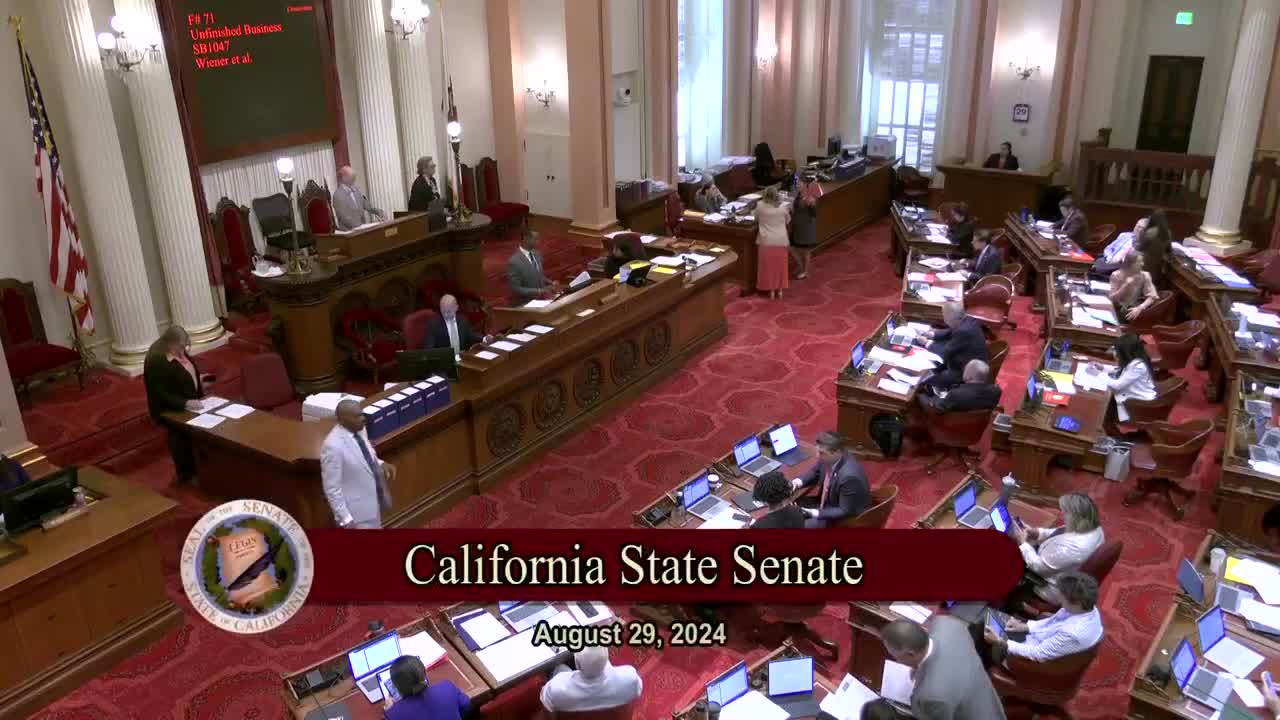 2MIN
Senate Floor
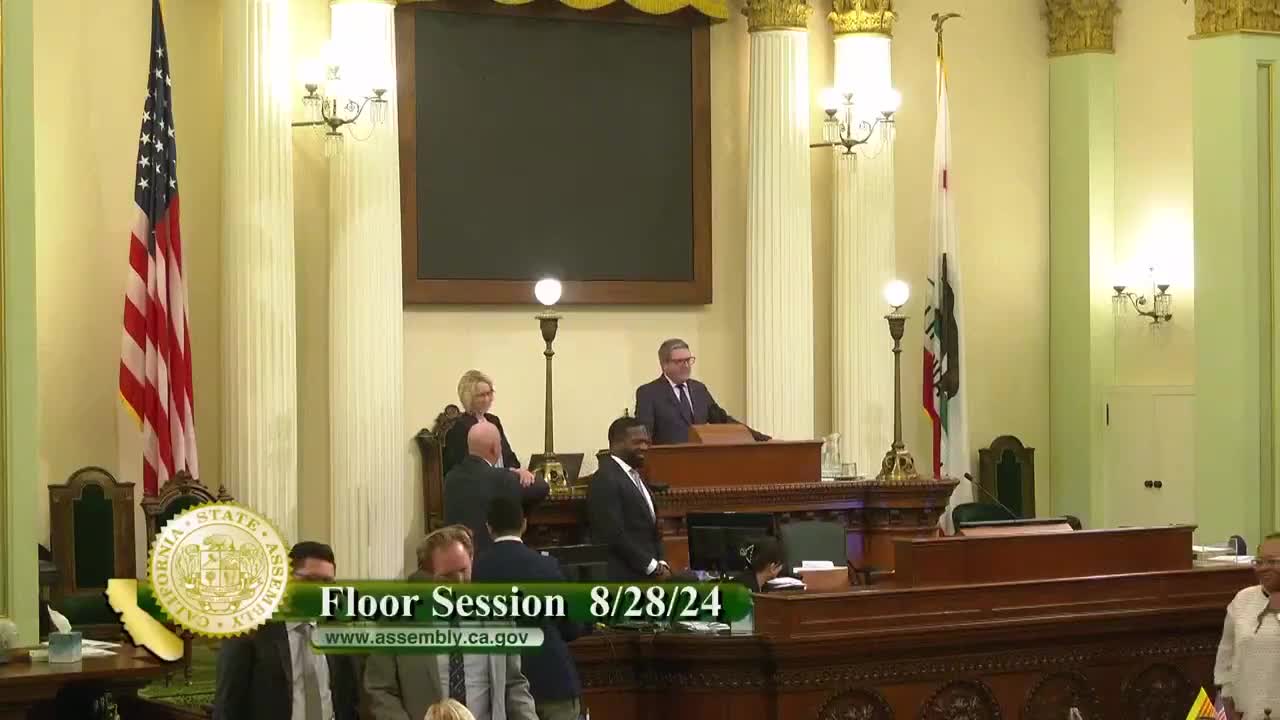 1MIN
Assembly Floor
 10MIN
Assembly Standing Committee on Public Safety
 9MIN
Assembly Standing Committee on Human Services
 2MIN
Senate Floor
 19MIN
Senate Standing Committee on Public Safety
 9SEC
Senate Standing Committee on Public Safety
 30MIN
Senate Standing Committee on Human Services
Bill Author