SB 1270: Department of Food and Agriculture: farm products: licenses and complaints: fees.
- Session Year: 2023-2024
- House: Senate
- Latest Version Date: 2024-09-25
Current Status:
Passed
(2024-09-25: Chaptered by Secretary of State. Chapter 603, Statutes of 2024.)
Introduced
In Committee
First Chamber
In Committee
Second Chamber
Enacted
(1)Existing law requires a person engaged in the business of processing or manufacturing any farm product to be licensed by the Secretary of Food and Agriculture, as specified. Existing law requires a person engaged in the business of buying, receiving on consignment, soliciting for sale on commission, or negotiating the sale of farm products from a licensee or producer for resale to be licensed by the secretary. Existing law requires each applicant for a license to pay to the Department of Food and Agriculture a fee in accordance with a fee schedule for each kind of license that contains specified tiers determined by the annual dollar volume of business based on farm product values.
This bill would raise those license fees by specified amounts and add another tier to the fee schedule for each kind of license. The bill would also increase the license fees for an agent acting on behalf of a processor of farm products or a producer dealer, as specified.
(2)Existing law requires that revenues from the above-described fees adequately cover the costs to fully administer and operate the applicable licensing program in an effective and efficient manner. Under existing law, the fees provided in the fee schedule for each kind of license are the maximum fees the department is authorized to charge. Existing law authorizes the secretary to fix those fees at a lesser amount, and to adjust those fees, if the secretary finds that the cost of administering the applicable licensing program can be defrayed with those below-maximum fees.
The bill would instead authorize the secretary to fix and adjust those fees if the secretary finds that the funds needed to administer the applicable licensing program must be adjusted for the sustainability of the program.
(3)Existing law authorizes the secretary to appoint an advisory committee of producers and licensees to provide guidance in establishing those fees for each kind of license or to rely on input from any similar advisory committee already assembled by the secretary.
The bill would delete those provisions and instead establish the Market Enforcement Advisory Committee in the department to advise the secretary and make recommendations on, among other things, all matters pertaining to the above-described licensing programs, including setting the appropriate fees for those programs. The bill would require that the advisory board consist of 12 voting members, appointed by the secretary, including a balanced representation of growers, processors, and produce dealers, as provided, and that the term for each member be 3 years. The bill would require the committee to follow specified rules for a meeting held by teleconference.
(4)Existing law authorizes an aggrieved grower or licensee under provisions relating to both processors of farm products and produce dealers, with a complaint not subject to certain federal laws, to seek resolution of the complaint by filing a complaint with the department, as provided, and paying a $100 filing fee.
This bill would raise the filing fees under the provisions relating to processors of farm products and the provisions relating to produce dealers by imposing a graduated fee schedule, with a maximum of $500, depending on the amount due alleged in the complaint.
(5)Existing law requires all of the above-described fees to be deposited into the Department of Food and Agriculture Fund, which is continuously appropriated, as prescribed.
By increasing the amount of existing fees, the revenue from which is continuously appropriated, the bill would make an appropriation. The bill would also make an appropriation by authorizing continuously appropriated moneys derived from specified licenses to be used for purposes of the Market Enforcement Advisory Committee.
(6)Existing constitutional provisions require that a statute that limits the right of access to the meetings of public bodies or the writings of public officials and agencies be adopted with findings demonstrating the interest protected by the limitation and the need for protecting that interest.
This bill would make legislative findings to that effect.
(1)Existing law prohibits a person from acting on behalf of a processor to contract for or solicit a farm product from a producer of the farm product, or to negotiate the purchase of a farm product on behalf of a processor, and from acting as a processor or a cash buying processor, unless the person has first obtained a license from the Secretary of Food and Agriculture, as specified. Existing law requires a person engaged in the business of buying, receiving on consignment, soliciting for sale on commission, or negotiating the sale of farm products from a licensee or producer for resale to be licensed by the secretary. Existing law requires each applicant for a license to pay to the Department of Food and Agriculture a fee in accordance with a fee schedule for each kind of license that contains specified tiers determined by the annual dollar volume of business based on farm product values.
This bill would raise those license fees by specified amounts and add another tier to the fee schedule for each kind of license.
(2)Existing law requires that revenues from the above-described fees adequately cover the costs to fully administer and operate the licensing program in an effective and efficient manner. Under existing law, the fees provided in the fee schedule for each kind of license are the maximum fees the department is authorized to charge. Existing law authorizes the secretary to fix those fees at a lesser amount, and to adjust those fees, if the secretary finds that the cost of administering the licensing program can be defrayed with those below-maximum fees.
The bill would instead authorize the secretary to undertake those actions fix and adjust those fees if the secretary finds that the cost of administering funds needed to administer the applicable licensing program must be adjusted for the sustainability of the program.
(3)Existing law authorizes the secretary to appoint an advisory committee of producers and licensees to provide guidance in establishing those fees for each kind of license or to rely on input from any similar advisory committee already assembled by the secretary.
The bill would delete those provisions and instead establish the Market Enforcement Advisory Committee in the department to advise the secretary and make recommendations on, among other things, all matters pertaining to the above-described licensing programs, including setting the appropriate fees for those programs. The bill would require that the advisory board consist of 12 voting members, appointed by the secretary, including a balanced representation of growers, processors, and produce dealers, as provided, and that the term for each member be 3 years. The bill would require the committee to follow specified rules for a meeting held by teleconference.
(4)Existing law authorizes an aggrieved grower or licensee under provisions relating to both processors of farm products and produce dealers, with a complaint not subject to certain federal laws, to seek resolution of the complaint by filing a complaint with the department, as provided, and paying a $100 filing fee.
This bill would raise the filing fees under the provisions relating to processors of farm products and the provisions relating to produce dealers by imposing a graduated fee schedule, with a maximum of $500, depending on the amount due alleged in the complaint.
(5)Existing law requires all of the above-described fees to be deposited into the Department of Food and Agriculture Fund, which is continuously appropriated, as prescribed.
By increasing the amount of existing fees, the revenue from which is continuously appropriated, the bill would make an appropriation. The bill would also make an appropriation by authorizing continuously appropriated moneys derived from specified licenses to be used for purposes of the Market Enforcement Advisory Committee.
(6)Existing constitutional provisions require that a statute that limits the right of access to the meetings of public bodies or the writings of public officials and agencies be adopted with findings demonstrating the interest protected by the limitation and the need for protecting that interest.
This bill would make legislative findings to that effect.
(1)Existing law prohibits a person from acting on behalf of a processor to contract for or solicit a farm product from a producer of the farm product, or to negotiate the purchase of a farm product on behalf of a processor, and from acting as a processor or a cash buying processor, unless the person has first obtained a license from the Secretary of Food and Agriculture, as specified. Existing law requires a person engaged in the business of buying, receiving on consignment, soliciting for sale on commission, or negotiating the sale of farm products from a licensee or producer for resale to be licensed by the secretary. Existing law requires each applicant for a license to pay to the Department of Food and Agriculture a fee in accordance with a fee schedule for each kind of license that contains specified tiers determined by the annual dollar volume of business based on farm product values.
This bill would raise those license fees by specified amounts and add another tier to the fee schedule for each kind of license.
(2)Existing law requires that revenues from the above-described fees adequately cover the costs to fully administer and operate the licensing program in an effective and efficient manner. Under existing law, the fees provided in the fee schedule for each kind of license are the maximum fees the department is authorized to charge. Existing law authorizes the secretary to fix those fees at a lesser amount, and to adjust those fees, if the secretary finds that the cost of administering the licensing program can be defrayed with those below-maximum fees.
The bill would instead authorize the secretary to undertake those actions if the secretary finds that the cost of administering the applicable licensing program must be adjusted for the sustainability of the program.
(3)Existing law authorizes the secretary to appoint an advisory committee of producers and licensees to provide guidance in establishing those fees for each kind of license or to rely on input from any similar advisory committee already assembled by the secretary.
The bill would delete those provisions and instead establish the Market Enforcement Advisory Committee in the department to advise the secretary and make recommendations on, among other things, all matters pertaining to the above-described licensing programs, including setting the appropriate fees for those programs. The bill would require that the advisory board consist of 12 voting members, appointed by the secretary, including a balanced representation of growers, processors, and produce dealers, as provided, and that the term for each member be 3 years. The bill would require the committee to follow specified rules for a meeting held by teleconference.
(4)Existing law authorizes an aggrieved grower or licensee under provisions relating to both processors of farm products and produce dealers, with a complaint not subject to certain federal laws, to seek resolution of the complaint by filing a complaint with the department, as provided, and paying a $100 filing fee.
This bill would raise the filing fees under the provisions relating to processors of farm products and the provisions relating to produce dealers by imposing a graduated fee schedule, with a maximum of $500, depending on the amount due alleged in the complaint.
(5)Existing law requires all of the above-described fees to be deposited into the Department of Food and Agriculture Fund, which is continuously appropriated, as prescribed.
By increasing the amount of existing fees, the revenue from which is continuously appropriated, the bill would make an appropriation. The bill would also make an appropriation by authorizing continuously appropriated moneys derived from specified licenses to be used for purposes of the Market Enforcement Advisory Committee.
(6)Existing constitutional provisions require that a statute that limits the right of access to the meetings of public bodies or the writings of public officials and agencies be adopted with findings demonstrating the interest protected by the limitation and the need for protecting that interest.
This bill would make legislative findings to that effect.
Existing law requires a processor to pay for a farm product that is delivered to the processor at the time and in the manner that is specified in the contract with the producer. If no time is set by the contract, or at the time of delivery, existing law requires the processor to pay for the farm product within 30 days of the delivery or taking possession of the farm product.This bill would make nonsubstantive changes to those provisions.Existing law requires a processor to pay for a farm product that is delivered to the processor at the time and in the manner that is specified in the contract with the producer. If no time is set by the contract, or at the time of delivery, existing law requires the processor to pay for the farm product within 30 days of the delivery or taking possession of the farm product.
This bill would make nonsubstantive changes to those provisions.
(a)The Department of Food and Agriculture Fund, which is a special fund, is continued in existence. Any moneys that are directed by law to be paid into the fund shall be paid into it and, unless otherwise specifically provided, shall be expended solely for the enforcement of the law under which the moneys were derived. The expenditure from the fund for the enforcement of any law shall not, unless otherwise specifically provided, exceed the amount of moneys that is credited to the fund pursuant to the law.
(b)Notwithstanding Section 13340 of the Government Code, all moneys deposited into the fund under the provisions enumerated in subdivision (c) are hereby continuously appropriated to the department without regard to fiscal years for expenditure in carrying out the purposes for which the moneys were deposited and for making the refunds authorized by Section 302.
(c)All moneys deposited into the fund under the provisions enumerated below are hereby exempted from Sections 13320 to 13324, inclusive, of the Government Code:
(1)Article 7 (commencing with Section 5821) and Article 7.5 (commencing with Section 5850) of Chapter 8 of Part 1 of Division 4, Chapter 1 (commencing with Section 6701) of Part 3 of Division 4, and Chapter 5 (commencing with Section 53301) of Division 18.
(2)Article 5 (commencing with Section 6001) of Chapter 9 of Part 1 of Division 4.
(3)Article 8.5 (commencing with Section 6047.1) of Chapter 9 of Part 1 of Division 4.
(4)Article 5 (commencing with Section 6981) of Chapter 2 of Part 3 of Division 4.
(5)Chapter 1.5 (commencing with Section 7401) of Part 4 of Division 4.
(6)Chapter 4 (commencing with Section 14200), Chapter 5 (commencing with Section 14501), and Chapter 6 (commencing with Section 14901) of Division 7.
(7)Part 1 (commencing with Section 16301) and Part 2 (commencing with Section 17401) of Division 9.
(8)Sections 19225, 19227, 19312, and 19315.
(9)Division 10 (commencing with Section 20001).
(10)Division 11 (commencing with Section 23001).
(11)Part 4 (commencing with Section 27501) of Division 12.
(12)Division 16 (commencing with Section 40501).
(13)Chapter 9 (commencing with Section 44971) of Division 17.
(14)Chapter 1 (commencing with Section 52001) of Division 18.
(15)Chapter 2 (commencing with Section 52251) of Division 18.
(16)Chapter 3 (commencing with Section 52651) of Division 18.
(17)Chapter 4 (commencing with Section 52851) of Division 18.
(18)Chapter 6 (commencing with Section 55401), Chapter 7 (commencing with Section 56101), and Chapter 7.2 (commencing with Section 56701) of Division 20.
(19)Section 58582.
(20)Chapter 1 (commencing with Section 61301), Chapter 2 (commencing with Section 61801), and Chapter 3 (commencing with Section 62700) of Part 3 of Division 21.
(21)Division 24 (commencing with Section 81000).
(22)Chapter 5.5 (commencing with Section 12531) of Division 5 of the Business and Professions Code.
(23)Chapter 7 (commencing with Section 12700) of Division 5 of the Business and Professions Code.
(24)Chapter 14 (commencing with Section 13400) and Chapter 15 (commencing with Section 13700) of Division 5 of the Business and Professions Code.
SEC. 2.Section 55433 of the Food and Agricultural Code is amended to read:55433.(a)Any money in the Department of Food and Agriculture Fund that was derived pursuant to this chapter, or Chapter 7 (commencing with Section 56101), may be expended for the administration and enforcement of these chapters and Chapter 7.2 (commencing with Section 56701), notwithstanding any other law that limits the expenditure of any such money to the specific purposes or to the administration or enforcement of each of the chapters separately.
(b)Notwithstanding subdivision (a) and Section 221, only moneys derived from the fees collected pursuant to Sections 55861, 55863, 56571, and 56574 may be used for purposes of Chapter 7.2 (commencing with Section 56701).
SEC. 3.Section 55722.5 of the Food and Agricultural Code is amended to read:55722.5.(a)(1)An aggrieved grower or licensee with a complaint that is not subject to the federal Packers and Stockyards Act, 1921 (7 U.S.C. Sec. 181 et seq.) or the federal Perishable Agricultural Commodities Act, 1930 (7 U.S.C. Sec. 499a et seq.) may seek resolution of that complaint by filing a complaint with the department within nine months from the date a complete account of sales was due. The complaint shall be accompanied by two copies of all documents in the complainants possession that are relevant to establishing the complaint, a filing fee in the amount specified in the fee schedule set forth in paragraph (2), and a written denial of jurisdiction from the appropriate federal agency unless the commodity involved clearly does not fall under either the federal Packers and Stockyards Act, 1921 (7 U.S.C. Sec. 181 et seq.) or the federal Perishable Agricultural Commodities Act, 1930 (7 U.S.C. Sec. 499a et seq.). Within five business days of receipt of a signed and verified complaint, the filing fee, and the denials of federal jurisdiction, the department shall serve the verified complaint on the respondent. Service shall be by certified mail. The department, the secretary, the departments employees, the departments agents, the boards and commissions associated with the department, their employees or agents, and the State of California are not parties to the dispute in a proceeding brought under this section.
(2)The complaint filing fee schedule shall be as follows:
(A)For complaints alleging an amount due of less than one hundred thousand dollars ($100,000), the filing fee shall be two hundred dollars ($200).
(B)For complaints alleging an amount due of one hundred thousand dollars ($100,000) or more but less than two hundred fifty thousand dollars ($250,000), the filing fee shall be three hundred dollars ($300).
(C)For complaints alleging an amount due of two hundred fifty thousand dollars ($250,000) or more, the filing fee shall be five hundred dollars ($500).
(b)The respondent served shall answer within 30 calendar days of service. The respondents response shall include two copies of all relevant documentation of the transactions referred to in the verified complaint.
(c)Within 30 calendar days of receipt of the answer, the department shall issue to both parties a written factual summary on the basis of the documents that have been filed with the department.
(d)If a settlement is not reached within 30 calendar days after the departments summary is issued, the department, on request of the claimant or respondent and upon payment of a filing fee of three hundred dollars ($300), shall schedule alternate dispute resolution, to commence within 90 calendar days. The department shall serve both parties with a notice of hearing, which sets out the time, date, street address, room number, telephone number, and name of the hearing officer. Service of the notice of hearing shall be by certified mail.
(e)The alternate dispute resolution shall proceed as follows:
(1)The hearing shall be conducted by hearing officers in accordance with standard procedures promulgated by the American Arbitration Association or other acceptable alternative dispute resolution entities.
(2)The hearing officers shall be familiar with the type of issues presented by those claims, but need not be attorneys.
(3)The sole parties to the proceedings shall be the complainant and the respondent.
(4)The disputes, claims, and interests of the department or the State of California are not within the jurisdiction of the proceedings.
(5)The validity of a regulation of the department or order promulgated pursuant to this code is not within the jurisdiction of the proceedings.
(6)Law and motion matters shall be handled by the assigned hearing officer.
(7)The hearing officer has no authority to enter into settlement discussions, except upon stipulation of the parties involved.
(8)The parties may represent themselves in propria persona or may be represented by a licensed attorney at law. A party may not be represented by a representative who is not licensed to practice law.
(9)To the extent of any conflict between Chapter 4.5 (commencing with Section 11400) of Part 1 of Division 3 of Title 2 of the Government Code and this article, this article shall prevail.
(10)The hearing officer may order a review of records or an audit of records by a certified public accountant. The review or audit shall be conducted under generally accepted auditing standards of the American Institute of Certified Public Accountants, and upon completion of the review or audit the nature and extent of the review or audit shall be disclosed to the parties by the auditor in the audit report. The audit report shall disclose the number of transactions reviewed and the rationale for selecting those transactions. The department shall advance the costs of the audit or review of records, but the hearing officer shall apportion the costs at the conclusion of the hearing. The department shall pursue repayment in accordance with the hearing officers apportionment and may bring an action in a court of competent jurisdiction to recover funds advanced. This subdivision does not require the department to pursue any specific remedy or prohibit the department from accepting a reasonable repayment plan.
(f)The hearing officer shall render a written decision within 60 days of submission of the case for decision. In addition to rendering a written finding as to what is owed by whom on the substantive allegations of the complaint, the hearing officer shall decide whether or not to order the full cost of the alternative dispute resolution proceeding, and in what ratio or order the losing party is to pay the costs of the proceeding. For these purposes, the cost of the alternative dispute resolution proceeding does not include the filing fee, the parties attorney fees, or expert witness fees. The hearing officer may also award a sanction against a complainant for filing a frivolous complaint or against a respondent for unreasonable delay tactics, bad faith bargaining, or resistance to the claim, of either 10 percent of the amount of the award or a specific amount, up to a maximum of one thousand dollars ($1,000). Any sanction award shall not be deemed to be res judicata or collateral estoppel in any subsequent case in which either the complainant or respondent are charged with filing a frivolous complaint, unreasonable delay tactics, bad faith bargaining, or resistance to the claim. The department may consider the written decision of the hearing officer in determining any related licensing action. The written decision of the hearing officer may be introduced as evidence at a court proceeding.
(g)This section does not prohibit the parties to the dispute from settling their dispute before, during, or after the hearing.
(h)This section does not alter, preclude, or condition the exercise, during any stage of the proceedings provided by this chapter, of any other rights to relief a party may have through petition to a court of competent jurisdiction, including, but not limited to, small claims court.
SEC. 4.Section 55861 of the Food and Agricultural Code is amended to read:55861.(a)Except as otherwise provided in this article or in Section 56574, each applicant for a license shall pay to the department a fee in accordance with the schedule in subdivision (b), except that an agent shall pay one hundred dollars ($100) for each license period of the principal.
(b)The amount of the fee due each year from the applicant shall be determined by the annual dollar volume of business based on the value of the farm products that are returned to the grower, as follows:
(1)For a dollar volume of less than twenty thousand dollars ($20,000), the fee shall be two hundred fifty dollars ($250).
(2)For a dollar volume of twenty thousand dollars ($20,000) and over, but less than fifty thousand dollars ($50,000), the fee shall be three hundred fifty dollars ($350).
(3)For a dollar volume of fifty thousand dollars ($50,000) and over, but less than two million dollars ($2,000,000), the fee shall be four hundred fifty dollars ($450).
(4)For a dollar volume of two million dollars ($2,000,000) and over, but less than four million dollars ($4,000,000), the fee shall be five hundred fifty dollars ($550).
(5)For a dollar volume of four million dollars ($4,000,000) and over, the fee shall be six hundred fifty dollars ($650).
(c)The department may reevaluate the fee structure based on operating costs. The fees shall adequately cover the costs to fully administer and operate the program in an effective and efficient manner.
SEC. 5.Section 55861.5 of the Food and Agricultural Code is amended to read:55861.5.The fees provided by Section 55861 are maximum fees. The secretary may fix those fees at a lesser amount, and may adjust those fees from time to time, whenever the secretary finds that the funds needed to administer this chapter must be adjusted for the sustainability of the program.
SEC. 6.Section 56133 of the Food and Agricultural Code is amended to read:56133.(a)Any money in the Department of Food and Agriculture Fund that was derived pursuant to this chapter or Chapter 6 (commencing with Section 55401) may be expended for the administration and enforcement of these chapters and Chapter 7.2 (commencing with Section 56701), notwithstanding any other law that limits the expenditure of any such money to the specific purposes or to the administration or enforcement of each of the chapters separately.
(b)Notwithstanding subdivision (a) and Section 221, only moneys derived from the fees collected pursuant to Sections 55861, 55863, 56571, and 56574 may be used for purposes of Chapter 7.2 (commencing with Section 56701).
SEC. 7.Section 56382.5 of the Food and Agricultural Code is amended to read:56382.5.(a)(1)An aggrieved grower or licensee with a complaint that is not subject to the federal Packers and Stockyards Act, 1921 (7 U.S.C. Sec. 181 et seq.) or the federal Perishable Agricultural Commodities Act, 1930 (7 U.S.C. Sec. 499a et seq.) may seek resolution of that complaint by filing a complaint with the department within nine months from the date a complete account of sales was due. The complaint shall be accompanied by two copies of all documents in the complainants possession that are relevant to establishing the complaint, a filing fee in the amount specified in the fee schedule set forth in paragraph (2), and a written denial of jurisdiction from the appropriate federal agency unless the commodity involved clearly does not fall under the federal Packers and Stockyards Act, 1921 (7 U.S.C. Sec. 181 et seq.) or the federal Perishable Agricultural Commodities Act, 1930 (7 U.S.C. Sec. 499a et seq.). Within five business days of receipt of a signed and verified complaint, the filing fee, and the denials of federal jurisdiction, the department shall serve the verified complaint on the respondent. Service shall be by certified mail. The department, the secretary, the departments employees, the departments agents, the boards and commissions associated with the department, their employees or agents, and the State of California are not parties to the dispute in a proceeding brought under this section.
(2)The complaint filing fee schedule shall be as follows:
(A)For complaints alleging an amount due of less than one hundred thousand dollars ($100,000), the filing fee shall be two hundred dollars ($200).
(B)For complaints alleging an amount due of one hundred thousand dollars ($100,000) or more but less than two hundred fifty thousand dollars ($250,000), the filing fee shall be three hundred dollars ($300).
(C)For complaints alleging an amount due of two hundred fifty thousand dollars ($250,000) or more, the filing fee shall be five hundred dollars ($500).
(b)The respondent served shall answer within 30 calendar days of service. The respondents response shall include two copies of all relevant documentation of the transactions referred to in the verified complaint.
(c)Within 30 calendar days of receipt of the answer, the department shall issue to both parties a written factual summary on the basis of the documents that have been filed with the department.
(d)If a settlement is not reached within 30 calendar days after the departments summary is issued, the department, on request of the claimant or respondent and upon payment of a filing fee of three hundred dollars ($300), shall schedule alternate dispute resolution, to commence within 90 calendar days. The department shall serve both parties with a notice of hearing, which sets out the time, date, street address, room number, telephone number, and name of the hearing officer. Service of the notice of hearing shall be by certified mail.
(e)The alternate dispute resolution shall proceed as follows:
(1)The hearing shall be conducted by hearing officers in accordance with standard procedures promulgated by the American Arbitration Association or other acceptable alternative dispute resolution entities.
(2)The hearing officers shall be familiar with the type of issues presented by such claims, but need not be attorneys.
(3)The sole parties to the proceedings shall be the complainant and the respondent.
(4)The disputes, claims, and interests of the department or the State of California are not within the jurisdiction of the proceedings.
(5)The validity of a regulation of the department or order promulgated pursuant to this code is not within the jurisdiction of the proceedings.
(6)Law and motion matters shall be handled by the assigned hearing officer.
(7)The hearing officer has no authority to enter into settlement discussions, except upon stipulation of the parties involved.
(8)The parties may represent themselves in propria persona or may be represented by a licensed attorney at law. A party may not be represented by a representative who is not licensed to practice law.
(9)To the extent of any conflict between Chapter 4.5 (commencing with Section 11400) of Part 1 of Division 3 of Title 2 of the Government Code and this article, this article shall prevail.
(10)The hearing officer may order a review of records or an audit of records by a certified public accountant. The review or audit shall be conducted under generally accepted auditing standards of the American Institute of Certified Public Accountants, and upon completion of the review or audit the nature and extent of the review or audit shall be disclosed to the parties by the auditor in the audit report. The audit report shall disclose the number of transactions reviewed and the rationale for selecting those transactions. The department shall advance the costs of the audit or review of records, but the hearing officer shall apportion the costs at the conclusion of the hearing. The department shall pursue repayment in accordance with the hearing officers apportionment and may bring an action in a court of competent jurisdiction to recover funds advanced. This subdivision does not require the department to pursue any specific remedy or prohibit the department from accepting a reasonable repayment plan.
(f)The hearing officer shall render a written decision within 60 days of submission of the case for decision. In addition to rendering a written finding as to what is owed by whom on the substantive allegations of the complaint, the hearing officer shall decide whether or not to order the full cost of the alternative dispute resolution proceeding, and in what ratio or order the losing party is to pay the costs of the proceeding. For these purposes, the cost of the alternative dispute resolution proceeding does not include the filing fee, the parties attorney fees, or expert witness fees. The hearing officer may also award a sanction against a complainant for filing a frivolous complaint or against a respondent for unreasonable delay tactics, bad faith bargaining, or resistance to the claim, of either 10 percent of the amount of the award or a specific amount, up to a maximum of one thousand dollars ($1,000). Any sanction award shall not be deemed to be res judicata or collateral estoppel in any subsequent case in which either the complainant or respondent is charged with filing a frivolous complaint, unreasonable delay tactics, bad faith bargaining, or resistance to the claim. The department may consider the written decision of the hearing officer in determining any related licensing action. The written decision of the hearing officer may be introduced as evidence at a court proceeding.
(g)This section does not prohibit the parties to the dispute from settling their dispute before, during, or after the hearing.
(h)This section does not alter, preclude, or condition the exercise, during any stage of the proceedings provided by this chapter, of any other rights to relief a party may have through petition to a court of competent jurisdiction, including, but not limited to, small claims court.
SEC. 8.Section 56571 of the Food and Agricultural Code is amended to read:56571.(a)Except as otherwise provided in this article or Section 55863, each applicant for a license shall pay to the department a fee in accordance with the schedule in subdivision (b), except that an agent shall pay one hundred dollars ($100) for each license period of the principal.
(b)The amount of the fee due each year shall be determined by the annual dollar volume of business based on farm product value returned to the grower or licensee, as follows:
(1)For a dollar volume of less than twenty thousand dollars ($20,000), the fee shall be two hundred fifty dollars ($250).
(2)For a dollar volume of twenty thousand dollars ($20,000) and over, but less than fifty thousand dollars ($50,000), the fee shall be three hundred fifty dollars ($350).
(3)For a dollar volume of fifty thousand dollars ($50,000) and over, but less than two million dollars ($2,000,000), the fee shall be four hundred fifty dollars ($450).
(4)For a dollar volume of two million dollars ($2,000,000) and over, but less than four millions dollars ($4,000,000), the fee shall be five hundred fifty dollars ($550).
(5)For a dollar volume of four million dollars ($4,000,000) and over, the fee shall be six hundred fifty dollars ($650).
(c)The department may reevaluate the fee structure based on operating costs. The fees shall adequately cover the costs to fully administer and operate the program in an effective and efficient manner.
SEC. 9.Section 56571.5 of the Food and Agricultural Code is amended to read:56571.5.The fees provided by Section 56571 are maximum fees. The secretary may fix those fees at a lesser amount, and may adjust those fees from time to time, whenever the secretary finds that the funds needed to administer this chapter must be adjusted for the sustainability of the program.
SEC. 10.Chapter 7.2 (commencing with Section 56701) is added to Division 20 of the Food and Agricultural Code, to read:7.2.Market Enforcement Advisory Committee56701.(a)The definitions set forth in Article 1 (commencing with Section 55401) of Chapter 6 apply to this chapter.
(b)For purposes of this chapter, committee means the Market Enforcement Advisory Committee established pursuant to Section 56702.
56702.(a)There is in the department a Market Enforcement Advisory Committee. The committee shall consist of up to 12 voting members, which shall include a balanced representation of growers, processors, and produce dealers, or representatives from organizations that advocate on behalf of these industry groups.
(b)The secretary shall appoint the members of the committee after receiving recommendations from the industry. In making appointments, the secretary shall ensure that there is representation on the board from a diverse population of industries, regions, business sizes, and farm product commodities.
(c)The secretary may appoint one additional member to the committee, from nominees received from the committee, who shall serve as the public member. The public member shall represent the interests of the public in all matters coming before the committee and shall have the same voting and other rights and immunities as other members of the committee.
56703.It is hereby declared, as a matter of legislative determination, that persons appointed to the committee are intended to represent and further the interests of the industry concerned, and that this representation and furtherance is intended to serve the public interest. Accordingly, the Legislature finds that, with respect to persons who are appointed to the committee, the industry concerned is tantamount to, and constitutes, the public generally within the meaning of Section 87103 of the Government Code.
56704.(a)The term of office for a member of the committee is three years. If a vacancy exists, the secretary shall, consistent with the membership requirements described in subdivisions (a) and (b) of Section 56702, appoint a replacement member of the committee for the duration of the term. The secretary may remove a committee member at any time.
(b)A member of the committee shall not receive a salary but may be reimbursed by the department for attendance at meetings and other committee activities authorized by the committee and approved by the secretary.
56705.(a)The committee shall advise the secretary and may make recommendations on all of the following:
(1)All matters pertaining to the administration and enforcement of Chapter 6 (commencing with Section 55401) and Chapter 7 (commencing with Section 56101) and any rules or regulations adopted pursuant to those chapters.
(2)Procedures established and performed by the Market Enforcement Branch of the department.
(3)Annual budgets required to accomplish the purposes of the chapters described in paragraph (1).
(4)The setting of appropriate licensing and complaint fees necessary for the administration of the chapters described in paragraph (1).
(b)The secretary may delegate additional advisory duties to the committee.
56706.(a)The committee shall annually elect a chair from its membership and, from time to time, other officers as it deems necessary.
(b)The committee shall meet at the call of its chair or the secretary. The committee shall meet at least once a year to review an annual budget and licensing fees.
56707.Notwithstanding Section 11123 of the Government Code, the committee shall follow the teleconference requirements set forth in Section 58853 of this code.
SEC. 11.The Legislature finds and declares that Section 10 of this act, which adds Section 56707 to the Food and Agricultural Code, imposes a limitation on the publics right of access to the meetings of public bodies or the writings of public officials and agencies within the meaning of Section 3 of Article I of the California Constitution. Pursuant to that constitutional provision, the Legislature makes the following findings to demonstrate the interest protected by this limitation and the need for protecting that interest:
In order for the Market Enforcement Advisory Committee to hold meetings and make timely decisions, it is in the states interest to establish alternative requirements for teleconferences for this committee in order to encourage participation by members. Many of these members are located in remote locations in the state that are difficult for the public to access and the members may need to participate from nonstationary locations.
(a)The Department of Food and Agriculture Fund, which is a special fund, is continued in existence. Any moneys that are directed by law to be paid into the fund shall be paid into it and, unless otherwise specifically provided, shall be expended solely for the enforcement of the law under which the moneys were derived. The expenditure from the fund for the enforcement of any law shall not, unless otherwise specifically provided, exceed the amount of moneys that is credited to the fund pursuant to the law.
(b)Notwithstanding Section 13340 of the Government Code, all moneys deposited into the fund under the provisions enumerated in subdivision (c) are hereby continuously appropriated to the department without regard to fiscal years for expenditure in carrying out the purposes for which the moneys were deposited and for making the refunds authorized by Section 302.
(c)All moneys deposited into the fund under the provisions enumerated below are hereby exempted from Sections 13320 to 13324, inclusive, of the Government Code:
(1)Article 7 (commencing with Section 5821) and Article 7.5 (commencing with Section 5850) of Chapter 8 of Part 1 of Division 4, Chapter 1 (commencing with Section 6701) of Part 3 of Division 4, and Chapter 5 (commencing with Section 53301) of Division 18.
(2)Article 5 (commencing with Section 6001) of Chapter 9 of Part 1 of Division 4.
(3)Article 8.5 (commencing with Section 6047.1) of Chapter 9 of Part 1 of Division 4.
(4)Article 5 (commencing with Section 6981) of Chapter 2 of Part 3 of Division 4.
(5)Chapter 1.5 (commencing with Section 7401) of Part 4 of Division 4.
(6)Chapter 4 (commencing with Section 14200), Chapter 5 (commencing with Section 14501), and Chapter 6 (commencing with Section 14901) of Division 7.
(7)Part 1 (commencing with Section 16301) and Part 2 (commencing with Section 17401) of Division 9.
(8)Sections 19225, 19227, 19312, and 19315.
(9)Division 10 (commencing with Section 20001).
(10)Division 11 (commencing with Section 23001).
(11)Part 4 (commencing with Section 27501) of Division 12.
(12)Division 16 (commencing with Section 40501).
(13)Chapter 9 (commencing with Section 44971) of Division 17.
(14)Chapter 1 (commencing with Section 52001) of Division 18.
(15)Chapter 2 (commencing with Section 52251) of Division 18.
(16)Chapter 3 (commencing with Section 52651) of Division 18.
(17)Chapter 4 (commencing with Section 52851) of Division 18.
(18)Chapter 6 (commencing with Section 55401), Chapter 7 (commencing with Section 56101), and Chapter 7.2 (commencing with Section 56701) of Division 20.
(19)Section 58582.
(20)Chapter 1 (commencing with Section 61301), Chapter 2 (commencing with Section 61801), and Chapter 3 (commencing with Section 62700) of Part 3 of Division 21.
(21)Division 24 (commencing with Section 81000).
(22)Chapter 5.5 (commencing with Section 12531) of Division 5 of the Business and Professions Code.
(23)Chapter 7 (commencing with Section 12700) of Division 5 of the Business and Professions Code.
(24)Chapter 14 (commencing with Section 13400) and Chapter 15 (commencing with Section 13700) of Division 5 of the Business and Professions Code.
SEC. 2.Section 55433 of the Food and Agricultural Code is amended to read:55433.(a)Any money in the Department of Food and Agriculture Fund that was derived pursuant to this chapter, or Chapter 7 (commencing with Section 56101), may be expended for the administration and enforcement of these chapters and Chapter 7.2 (commencing with Section 56701), notwithstanding any other law that limits the expenditure of any such money to the specific purposes or to the administration or enforcement of each of the chapters separately.
(b)Notwithstanding subdivision (a) and Section 221, only moneys derived from the fees collected pursuant to Sections 55861, 55863, 56571, and 56574 may be used for purposes of Chapter 7.2 (commencing with Section 56701).
SEC. 3.Section 55722.5 of the Food and Agricultural Code is amended to read:55722.5.(a)(1)An aggrieved grower or licensee with a complaint that is not subject to the federal Packers and Stockyards Act, 1921 (7 U.S.C. Sec. 181 et seq.) or the federal Perishable Agricultural Commodities Act, 1930 (7 U.S.C. Sec. 499a et seq.) may seek resolution of that complaint by filing a complaint with the department within nine months from the date a complete account of sales was due. The complaint shall be accompanied by two copies of all documents in the complainants possession that are relevant to establishing the complaint, a filing fee in the amount specified in the fee schedule set forth in paragraph (2), and a written denial of jurisdiction from the appropriate federal agency unless the commodity involved clearly does not fall under either the federal Packers and Stockyards Act, 1921 (7 U.S.C. Sec. 181 et seq.) or the federal Perishable Agricultural Commodities Act, 1930 (7 U.S.C. Sec. 499a et seq.). Within five business days of receipt of a signed and verified complaint, the filing fee, and the denials of federal jurisdiction, the department shall serve the verified complaint on the respondent. Service shall be by certified mail. The department, the secretary, the departments employees, the departments agents, the boards and commissions associated with the department, their employees or agents, and the State of California are not parties to the dispute in a proceeding brought under this section.
(2)The complaint filing fee schedule shall be as follows:
(A)For complaints alleging an amount due of less than one hundred thousand dollars ($100,000), the filing fee shall be two hundred dollars ($200).
(B)For complaints alleging an amount due of one hundred thousand dollars ($100,000) or more but less than two hundred fifty thousand dollars ($250,000), the filing fee shall be three hundred dollars ($300).
(C)For complaints alleging an amount due of two hundred fifty thousand dollars ($250,000) or more, the filing fee shall be five hundred dollars ($500).
(b)The respondent served shall answer within 30 calendar days of service. The respondents response shall include two copies of all relevant documentation of the transactions referred to in the verified complaint.
(c)Within 30 calendar days of receipt of the answer, the department shall issue to both parties a written factual summary on the basis of the documents that have been filed with the department.
(d)If a settlement is not reached within 30 calendar days after the departments summary is issued, the department, on request of the claimant or respondent and upon payment of a filing fee of three hundred dollars ($300), shall schedule alternate dispute resolution, to commence within 90 calendar days. The department shall serve both parties with a notice of hearing, which sets out the time, date, street address, room number, telephone number, and name of the hearing officer. Service of the notice of hearing shall be by certified mail.
(e)The alternate dispute resolution shall proceed as follows:
(1)The hearing shall be conducted by hearing officers in accordance with standard procedures promulgated by the American Arbitration Association or other acceptable alternative dispute resolution entities.
(2)The hearing officers shall be familiar with the type of issues presented by those claims, but need not be attorneys.
(3)The sole parties to the proceedings shall be the complainant and the respondent.
(4)The disputes, claims, and interests of the department or the State of California are not within the jurisdiction of the proceedings.
(5)The validity of a regulation of the department or order promulgated pursuant to this code is not within the jurisdiction of the proceedings.
(6)Law and motion matters shall be handled by the assigned hearing officer.
(7)The hearing officer has no authority to enter into settlement discussions, except upon stipulation of the parties involved.
(8)The parties may represent themselves in propria persona or may be represented by a licensed attorney at law. A party may not be represented by a representative who is not licensed to practice law.
(9)To the extent of any conflict between Chapter 4.5 (commencing with Section 11400) of Part 1 of Division 3 of Title 2 of the Government Code and this article, this article shall prevail.
(10)The hearing officer may order a review of records or an audit of records by a certified public accountant. The review or audit shall be conducted under generally accepted auditing standards of the American Institute of Certified Public Accountants, and upon completion of the review or audit the nature and extent of the review or audit shall be disclosed to the parties by the auditor in the audit report. The audit report shall disclose the number of transactions reviewed and the rationale for selecting those transactions. The department shall advance the costs of the audit or review of records, but the hearing officer shall apportion the costs at the conclusion of the hearing. The department shall pursue repayment in accordance with the hearing officers apportionment and may bring an action in a court of competent jurisdiction to recover funds advanced. This subdivision does not require the department to pursue any specific remedy or prohibit the department from accepting a reasonable repayment plan.
(f)The hearing officer shall render a written decision within 60 days of submission of the case for decision. In addition to rendering a written finding as to what is owed by whom on the substantive allegations of the complaint, the hearing officer shall decide whether or not to order the full cost of the alternative dispute resolution proceeding, and in what ratio or order the losing party is to pay the costs of the proceeding. For these purposes, the cost of the alternative dispute resolution proceeding does not include the filing fee, the parties attorney fees, or expert witness fees. The hearing officer may also award a sanction against a complainant for filing a frivolous complaint or against a respondent for unreasonable delay tactics, bad faith bargaining, or resistance to the claim, of either 10 percent of the amount of the award or a specific amount, up to a maximum of one thousand dollars ($1,000). Any sanction award shall not be deemed to be res judicata or collateral estoppel in any subsequent case in which either the complainant or respondent are charged with filing a frivolous complaint, unreasonable delay tactics, bad faith bargaining, or resistance to the claim. The department may consider the written decision of the hearing officer in determining any related licensing action. The written decision of the hearing officer may be introduced as evidence at a court proceeding.
(g)This section does not prohibit the parties to the dispute from settling their dispute before, during, or after the hearing.
(h)This section does not alter, preclude, or condition the exercise, during any stage of the proceedings provided by this chapter, of any other rights to relief a party may have through petition to a court of competent jurisdiction, including, but not limited to, small claims court.
SEC. 4.Section 55861 of the Food and Agricultural Code is amended to read:55861.(a)Except as otherwise provided in this article or in Section 56574, each applicant for a license shall pay to the department a fee in accordance with the schedule in subdivision (b), except that an agent shall pay one hundred dollars ($100) for each license period of the principal.
(b)The amount of the fee due each year from the applicant shall be determined by the annual dollar volume of business based on the value of the farm products that is are returned to the grower, as follows:
(1)For a dollar volume of less than twenty thousand dollars ($20,000), the fee shall be two hundred fifty dollars ($250).
(2)For a dollar volume of twenty thousand dollars ($20,000) and over, but less than fifty thousand dollars ($50,000), the fee shall be three hundred fifty dollars ($350).
(3)For a dollar volume of fifty thousand dollars ($50,000) and over, but less than two million dollars ($2,000,000), the fee shall be four hundred fifty dollars ($450).
(4)For a dollar volume of two million dollars ($2,000,000) and over, but less than four million dollars ($4,000,000), the fee shall be five hundred fifty dollars ($550).
(5)For a dollar volume of four million dollars ($4,000,000) and over, the fee shall be six hundred fifty dollars ($650).
(c)The department may reevaluate the fee structure based on operating costs. The fees shall adequately cover the costs to fully administer and operate the program in an effective and efficient manner.
SEC. 5.Section 55861.5 of the Food and Agricultural Code is amended to read:55861.5.The fees provided by Section 55861 are maximum fees. The secretary may fix those fees at a lesser amount, and may adjust those fees from time to time, whenever the secretary finds that the cost of administering funds needed to administer this chapter must be adjusted for the sustainability of the program.
SEC. 6.Section 56133 of the Food and Agricultural Code is amended to read:56133.(a)Any money in the Department of Food and Agriculture Fund that was derived pursuant to this chapter or Chapter 6 (commencing with Section 55401) may be expended for the administration and enforcement of these chapters and Chapter 7.2 (commencing with Section 56701), notwithstanding any other law that limits the expenditure of any such money to the specific purposes or to the administration or enforcement of each of the chapters separately.
(b)Notwithstanding subdivision (a) and Section 221, only moneys derived from the fees collected pursuant to Sections 55861, 55863, 56571, and 56574 may be used for purposes of Chapter 7.2 (commencing with Section 56701).
SEC. 7.Section 56382.5 of the Food and Agricultural Code is amended to read:56382.5.(a)(1)An aggrieved grower or licensee with a complaint that is not subject to the federal Packers and Stockyards Act, 1921 (7 U.S.C. Sec. 181 et seq.) or the federal Perishable Agricultural Commodities Act, 1930 (7 U.S.C. Sec. 499a et seq.) may seek resolution of that complaint by filing a complaint with the department within nine months from the date a complete account of sales was due. The complaint shall be accompanied by two copies of all documents in the complainants possession that are relevant to establishing the complaint, a filing fee in the amount specified in the fee schedule set forth in paragraph (2), and a written denial of jurisdiction from the appropriate federal agency unless the commodity involved clearly does not fall under the federal Packers and Stockyards Act, 1921 (7 U.S.C. Sec. 181 et seq.) or the federal Perishable Agricultural Commodities Act, 1930 (7 U.S.C. Sec. 499a et seq.). Within five business days of receipt of a signed and verified complaint, the filing fee, and the denials of federal jurisdiction, the department shall serve the verified complaint on the respondent. Service shall be by certified mail. The department, the secretary, the departments employees, the departments agents, the boards and commissions associated with the department, their employees or agents, and the State of California are not parties to the dispute in a proceeding brought under this section.
(2)The complaint filing fee schedule shall be as follows:
(A)For complaints alleging an amount due of less than one hundred thousand dollars ($100,000), the filing fee shall be two hundred dollars ($200).
(B)For complaints alleging an amount due of one hundred thousand dollars ($100,000) or more but less than two hundred fifty thousand dollars ($250,000), the filing fee shall be three hundred dollars ($300).
(C)For complaints alleging an amount due of two hundred fifty thousand dollars ($250,000) or more, the filing fee shall be five hundred dollars ($500).
(b)The respondent served shall answer within 30 calendar days of service. Respondents The respondents response shall include two copies of all relevant documentation of the transactions referred to in the verified complaint.
(c)Within 30 calendar days of receipt of the answer, the department shall issue to both parties a written factual summary on the basis of the documents that have been filed with the department.
(d)If a settlement is not reached within 30 calendar days after the departments summary is issued, the department, on request of the claimant or respondent and upon payment of a filing fee of three hundred dollars ($300), shall schedule alternate dispute resolution, to commence within 90 calendar days. The department shall serve both parties with a notice of hearing, which sets out the time, date, street address, room number, telephone number, and name of the hearing officer. Service of the notice of hearing shall be by certified mail.
(e)The alternate dispute resolution shall proceed as follows:
(1)The hearing shall be conducted by hearing officers in accordance with standard procedures promulgated by the American Arbitration Association or other acceptable alternative dispute resolution entities.
(2)The hearing officers shall be familiar with the type of issues presented by such claims, but need not be attorneys.
(3)The sole parties to the proceedings shall be the complainant and the respondent.
(4)The disputes, claims, and interests of the department or the State of California are not within the jurisdiction of the proceedings.
(5)The validity of a regulation of the department or order promulgated pursuant to this code is not within the jurisdiction of the proceedings.
(6)Law and motion matters shall be handled by the assigned hearing officer.
(7)The hearing officer has no authority to enter into settlement discussions, except upon stipulation of the parties involved.
(8)The parties may represent themselves in propria persona or may be represented by a licensed attorney at law. A party may not be represented by a representative who is not licensed to practice law.
(9)To the extent of any conflict between Chapter 4.5 (commencing with Section 11400) of Part 1 of Division 3 of Title 2 of the Government Code and this article, this article shall prevail.
(10)The hearing officer may order a review of records or an audit of records by a certified public accountant. The review or audit shall be conducted under generally accepted auditing standards of the American Institute of Certified Public Accountants, and upon completion of the review or audit the nature and extent of the review or audit shall be disclosed to the parties by the auditor in the audit report. The audit report shall disclose the number of transactions reviewed and the rationale for selecting those transactions. The department shall advance the costs of the audit or review of records, but the hearing officer shall apportion the costs at the conclusion of the hearing. The department shall pursue repayment in accordance with the hearing officers apportionment and may bring an action in a court of competent jurisdiction to recover funds advanced. This subdivision does not require the department to pursue any specific remedy or prohibit the department from accepting a reasonable repayment plan.
(f)The hearing officer shall render a written decision within 60 days of submission of the case for decision. In addition to rendering a written finding as to what is owed by whom on the substantive allegations of the complaint, the hearing officer shall decide whether or not to order the full cost of the alternative dispute resolution proceeding, and in what ratio or order the losing party is to pay the costs of the proceeding. For these purposes, the cost of the alternative dispute resolution proceeding does not include the filing fee, the parties attorney fees, or expert witness fees. The hearing officer may also award a sanction against a complainant for filing a frivolous complaint or against a respondent for unreasonable delay tactics, bad faith bargaining, or resistance to the claim, of either 10 percent of the amount of the award or a specific amount, up to a maximum of one thousand dollars ($1,000). Any sanction award shall not be deemed to be res judicata or collateral estoppel in any subsequent case in which either the complainant or respondent is charged with filing a frivolous complaint, unreasonable delay tactics, bad faith bargaining, or resistance to the claim. The department may consider the written decision of the hearing officer in determining any related licensing action. The written decision of the hearing officer may be introduced as evidence at a court proceeding.
(g)This section does not prohibit the parties to the dispute from settling their dispute before, during, or after the hearing.
(h)This section does not alter, preclude, or condition the exercise, during any stage of the proceedings provided by this chapter, of any other rights to relief a party may have through petition to a court of competent jurisdiction, including, but not limited to, small claims court.
SEC. 8.Section 56571 of the Food and Agricultural Code is amended to read:56571.(a)Except as otherwise provided in this article or Section 55863, each applicant for a license shall pay to the department a fee in accordance with the schedule in subdivision (b), except that an agent shall pay one hundred dollars ($100) for each license period of the principal.
(b)The amount of the fee due each year shall be determined by the annual dollar volume of business based on farm product value returned to the grower or licensee, as follows:
(1)For a dollar volume of less than twenty thousand dollars ($20,000), the fee shall be two hundred fifty dollars ($250).
(2)For a dollar volume of twenty thousand dollars ($20,000) and over, but less than fifty thousand dollars ($50,000), the fee shall be three hundred fifty dollars ($350).
(3)For a dollar volume of fifty thousand dollars ($50,000) and over, but less than two million dollars ($2,000,000), the fee shall be four hundred fifty dollars ($450).
(4)For a dollar volume of two million dollars ($2,000,000) and over, but less than four millions dollars ($4,000,000), the fee shall be five hundred fifty dollars ($550).
(5)For a dollar volume of four million dollars ($4,000,000) and over, the fee shall be six hundred fifty dollars ($650).
(c)The department may reevaluate the fee structure based on operating costs. The fees shall adequately cover the costs to fully administer and operate the program in an effective and efficient manner.
SEC. 9.Section 56571.5 of the Food and Agricultural Code is amended to read:56571.5.The fees provided by Section 56571 are maximum fees. The secretary may fix those fees at a lesser amount, and may adjust those fees from time to time, whenever the secretary finds that the cost of administering funds needed to administer this chapter must be adjusted for the sustainability of the program.
SEC. 10.Chapter 7.2 (commencing with Section 56701) is added to Division 20 of the Food and Agricultural Code, to read:7.2.Market Enforcement Advisory Committee56701.(a)The definitions set forth in Article 1 (commencing with Section 55401) of Chapter 6 apply to this chapter.
(b)For purposes of this chapter, committee means the Market Enforcement Advisory Committee established pursuant to Section 56702.
56702.(a)There is in the department a Market Enforcement Advisory Committee. The committee shall consist of up to 12 voting members, which shall include a balanced representation of growers, processors, and produce dealers, or representatives from organizations that advocate on behalf of these industry groups.
(b)The secretary shall appoint the members of the committee after receiving recommendations from the industry. In making appointments, the secretary shall ensure that there is representation on the board from a diverse population of industries, regions, business sizes, and farm product commodities.
(c)The secretary may appoint one additional member to the committee, from nominees received from the committee, who shall serve as the public member. The public member shall represent the interests of the public in all matters coming before the committee and shall have the same voting and other rights and immunities as other members of the committee.
56703.It is hereby declared, as a matter of legislative determination, that persons appointed to the committee are intended to represent and further the interests of the industry concerned, and that this representation and furtherance is intended to serve the public interest. Accordingly, the Legislature finds that, with respect to persons who are appointed to the committee, the industry concerned is tantamount to, and constitutes, the public generally within the meaning of Section 87103 of the Government Code.
56704.(a)The term of office for a member of the committee is three years. If a vacancy exists, the secretary shall, consistent with the membership requirements described in subdivisions (a) and (b) of Section 56702, appoint a replacement member of the committee for the duration of the term. The secretary may remove a committee member at any time.
(b)A member of the committee shall not receive a salary but may be reimbursed by the department for attendance at meetings and other committee activities authorized by the committee and approved by the secretary.
56705.(a)The committee shall advise the secretary and may make recommendations on all of the following:
(1)All matters pertaining to the administration and enforcement of Chapter 6 (commencing with Section 55401) and Chapter 7 (commencing with Section 56101) and any rules or regulations adopted pursuant to those chapters.
(2)Procedures established and performed by the Market Enforcement Branch of the department.
(3)Annual budgets required to accomplish the purposes of the chapters described in paragraph (1).
(4)The setting of appropriate licensing and complaint fees necessary for the administration of the chapters described in paragraph (1).
(b)The secretary may delegate additional advisory duties to the committee.
56706.(a)The committee shall annually elect a chair from its membership and, from time to time, other officers as it deems necessary.
(b)The committee shall meet at the call of its chair or the secretary. The committee shall meet at least once a year to review an annual budget and licensing fees.
56707.Notwithstanding Section 11123 of the Government Code, the committee shall follow the teleconference requirements set forth in Section 58853 of this code.
SEC. 11.The Legislature finds and declares that Section 10 of this act, which adds Section 56707 to the Food and Agricultural Code, imposes a limitation on the publics right of access to the meetings of public bodies or the writings of public officials and agencies within the meaning of Section 3 of Article I of the California Constitution. Pursuant to that constitutional provision, the Legislature makes the following findings to demonstrate the interest protected by this limitation and the need for protecting that interest:
In order for the Market Enforcement Advisory Committee to hold meetings and make timely decisions, it is in the states interest to establish alternative requirements for teleconferences for this committee in order to encourage participation by members. Many of these members are located in remote locations in the state that are difficult for the public to access and the members may need to participate from a nonstationary location. locations.
(a)The Department of Food and Agriculture Fund, which is a special fund, is continued in existence. Any moneys that are directed by law to be paid into the fund shall be paid into it and, unless otherwise specifically provided, shall be expended solely for the enforcement of the law under which the moneys were derived. The expenditure from the fund for the enforcement of any law shall not, unless otherwise specifically provided, exceed the amount of moneys that is credited to the fund pursuant to the law.
(b)Notwithstanding Section 13340 of the Government Code, all moneys deposited in into the fund under the provisions enumerated in subdivision (c) are hereby continuously appropriated to the department without regard to fiscal years for expenditure in carrying out the purposes for which the moneys were deposited and for making the refunds authorized by Section 302.
(c)All moneys deposited in into the fund under the provisions enumerated below are hereby exempted from Sections 13320 to 13324, inclusive, of the Government Code:
(1)Article 7 (commencing with Section 5821) and Article 7.5 (commencing with Section 5850) of Chapter 8 of Part 1 of Division 4, Chapter 1 (commencing with Section 6701) of Part 3 of Division 4, and Chapter 5 (commencing with Section 53301) of Division 18.
(2)Article 5 (commencing with Section 6001) of Chapter 9 of Part 1 of Division 4.
(3)Article 8.5 (commencing with Section 6047.1) of Chapter 9 of Part 1 of Division 4.
(4)Article 5 (commencing with Section 6981) of Chapter 2 of Part 3 of Division 4.
(5)Chapter 1.5 (commencing with Section 7401) of Part 4 of Division 4.
(6)Chapter 4 (commencing with Section 14200), Chapter 5 (commencing with Section 14501), and Chapter 6 (commencing with Section 14901) of Division 7.
(7)Part 1 (commencing with Section 16301) and Part 2 (commencing with Section 17401) of Division 9.
(8)Sections 19225, 19227, 19312, and 19315.
(9)Division 10 (commencing with Section 20001).
(10)Division 11 (commencing with Section 23001).
(11)Part 4 (commencing with Section 27501) of Division 12.
(12)Division 16 (commencing with Section 40501).
(13)Chapter 9 (commencing with Section 44971) of Division 17.
(14)Chapter 1 (commencing with Section 52001) of Division 18.
(15)Chapter 2 (commencing with Section 52251) of Division 18.
(16)Chapter 3 (commencing with Section 52651) of Division 18.
(17)Chapter 4 (commencing with Section 52851) of Division 18.
(18)Chapter 6 (commencing with Section 55401), Chapter 7 (commencing with Section 56101), and Chapter 7.5 7.2 (commencing with Section 56701) of Division 20.
(19)Section 58582.
(20)Chapter 1 (commencing with Section 61301), Chapter 2 (commencing with Section 61801), and Chapter 3 (commencing with Section 62700) of Part 3 of Division 21.
(21)Division 24 (commencing with Section 81000).
(22)Chapter 5.5 (commencing with Section 12531) of Division 5 of the Business and Professions Code.
(23)Chapter 7 (commencing with Section 12700) of Division 5 of the Business and Professions Code.
(24)Chapter 14 (commencing with Section 13400) and Chapter 15 (commencing with Section 13700) of Division 5 of the Business and Professions Code.
SEC. 2.Section 55433 of the Food and Agricultural Code is amended to read:55433.(a)Any money in the Department of Food and Agriculture Fund which that was derived pursuant to this chapter, or Chapter 7 (commencing with Section 56101), may be expended for the administration and enforcement of these chapters and Chapter 7.5 7.2 (commencing with Section 56701), notwithstanding any other provision of law which that limits the expenditure of any such money to the specific purposes or to the administration or enforcement of each of the chapters separately.
(b)Notwithstanding subdivision (a) and Section 221, only moneys derived from the fees collected pursuant to Sections 55861, 55863, 56571, and 56574 may be used for purposes of Chapter 7.2 (commencing with Section 56701).
SEC. 3.Section 55722.5 of the Food and Agricultural Code is amended to read:55722.5.(a)(1)An aggrieved grower or licensee with a complaint that is not subject to the federal Packers and Stockyards Act, 1921 (7 U.S.C. Sec. 181 et seq.) or the federal Perishable Agricultural Commodities Act, 1930 (7 U.S.C. Sec. 499a et seq.) may seek resolution of that complaint by filing a complaint with the department within nine months from the date a complete account of sales was due. The complaint shall be accompanied by two copies of all documents in the complainants possession that are relevant to establishing the complaint, a filing fee of one hundred dollars ($100), in the amount specified in the fee schedule set forth in paragraph (2), and a written denial of jurisdiction from the appropriate federal agency unless the commodity involved clearly does not fall under either the federal Packers and Stockyards Act, 1921 (7 U.S.C. Sec. 181 et seq.) or the federal Perishable Agricultural Commodities Act, 1930 (7 U.S.C. Sec. 499a et seq.). Within five business days of receipt of a signed and verified complaint, the filing fee, and the denials of federal jurisdiction, the department shall serve the verified complaint on the respondent. Service shall be by certified mail. The department, the secretary, the departments employees, the departments agents, the boards and commissions associated with the department, their employees or agents, and the State of California are not parties to the dispute in a proceeding brought under this section.
(2)The complaint filing fee schedule shall be as follows:
(A)For complaints alleging an amount due of less than one hundred thousand dollars ($100,000), the filing fee shall be two hundred dollars ($200).
(B)For complaints alleging an amount due of one hundred thousand dollars ($100,000) or more but less than two hundred fifty thousand dollars ($250,000), the filing fee shall be three hundred dollars ($300).
(C)For complaints alleging an amount due of two hundred fifty thousand dollars ($250,000) or more, the filing fee shall be five hundred dollars ($500).
(b)The respondent served shall answer within 30 calendar days of service. The respondents response shall include two copies of all relevant documentation of the transactions referred to in the verified complaint.
(c)Within 30 calendar days of receipt of the answer, the department shall issue to both parties a written factual summary on the basis of the documents that have been filed with the department.
(d)If a settlement is not reached within 30 calendar days after the departments summary is issued, the department, on request of the claimant or respondent and upon payment of a filing fee of three hundred dollars ($300), shall schedule alternate dispute resolution, to commence within 90 calendar days. The department shall serve both parties with a notice of hearing, which sets out the time, date, street address, room number, telephone number, and name of the hearing officer. Service of the notice of hearing shall be by certified mail.
(e)The alternate dispute resolution shall proceed as follows:
(1)The hearing shall be conducted by hearing officers in accordance with standard procedures promulgated by the American Arbitration Association or other acceptable alternative dispute resolution entities.
(2)The hearing officers shall be familiar with the type of issues presented by those claims, but need not be attorneys.
(3)The sole parties to the proceedings shall be the complainant and the respondent.
(4)The disputes, claims, and interests of the department or the State of California are not within the jurisdiction of the proceedings.
(5)The validity of a regulation of the department or order promulgated pursuant to this code is not within the jurisdiction of the proceedings.
(6)Law and motion matters shall be handled by the assigned hearing officer.
(7)The hearing officer has no authority to enter into settlement discussions discussions, except upon stipulation of the parties involved.
(8)The parties may represent themselves in propria persona or may be represented by a licensed attorney at law. A party may not be represented by a representative who is not licensed to practice law.
(9)To the extent of any conflict between any provision of Chapter 4.5 (commencing with Section 11400) of Part 1 of Division 3 of Title 2 of the Government Code and this article, this article shall prevail.
(10)The hearing officer may order a review of records or an audit of records by a certified public accountant. The review or audit shall be conducted under generally accepted auditing standards of the American Institute of Certified Public Accountants, and upon completion of the review or audit the nature and extent of the review or audit shall be disclosed to the parties by the auditor in the audit report. The audit report shall disclose the number of transactions reviewed and the rationale for selecting those transactions. The department shall advance the costs of the audit or review of records, but the hearing officer shall apportion the costs at the conclusion of the hearing. The department shall pursue repayment in accordance with the hearing officers apportionment and may bring an action in a court of competent jurisdiction to recover funds advanced. Nothing in this This subdivision shall be construed to does not require the department to pursue any specific remedy or to prohibit the department from accepting a reasonable repayment plan.
(f)The hearing officer shall render a written decision within 60 days of submission of the case for decision. In addition to rendering a written finding as to what is owed by whom on the substantive allegations of the complaint, the hearing officer shall decide whether or not to order the full cost of the alternative dispute resolution proceeding, and in what ratio or order the losing party is to pay the costs of the proceeding. For these purposes, the cost of the alternative dispute resolution proceeding does not include the filing fee, the parties attorney fees, or expert witness fees. The hearing officer may also award a sanction against a complainant for filing a frivolous complaint or against a respondent for unreasonable delay tactics, bad faith bargaining, or resistance to the claim, of either 10 percent of the amount of the award or a specific amount, up to a maximum of one thousand dollars ($1,000). Any sanction award shall not be deemed to be res judicata or collateral estoppel in any subsequent case in which either the complainant or respondent are charged with filing a frivolous complaint, unreasonable delay tactics, bad faith bargaining, or resistance to the claim. The department may consider the written decision of the hearing officer in determining any related licensing action. The written decision of the hearing officer may be introduced as evidence at a court proceeding.
(g)Nothing in this This section prohibits does not prohibit the parties to the dispute from settling their dispute prior to, before, during, or after the hearing.
(h)Nothing in this This section alters, precludes, does not alter, preclude, or conditions condition the exercise, during any stage of the proceedings provided by this chapter, of any other rights to relief a party may have through petition to a court of competent jurisdiction, including, but not limited to, small claims court.
SEC. 4.Section 55861 of the Food and Agricultural Code is amended to read:55861.(a)Except as otherwise provided in this article or in Section 56574, each applicant for a license shall pay to the department a fee in accordance with the schedule in subdivision (b), except that an agent shall pay fifty-five dollars ($55) one hundred dollars ($100) for each license period of the principal.
(b)The amount of the fee due each year from the applicant shall be determined by the annual dollar volume of business based on the value of the farm products that is returned to the grower, as follows:
(1)For a dollar volume of less than twenty thousand dollars ($20,000), the fee shall be one hundred thirty-six dollars ($136). two hundred fifty dollars ($250).
(2)For a dollar volume of twenty thousand dollars ($20,000) and over, but less than fifty thousand dollars ($50,000), the fee shall be two hundred dollars ($200). three hundred fifty dollars ($350).
(3)For a dollar volume of fifty thousand dollars ($50,000) and over, but less than two million dollars ($2,000,000), the fee shall be three hundred dollars ($300). four hundred fifty dollars ($450).
(4)For a dollar volume of two million dollars ($2,000,000) and over, but less than four million dollars ($4,000,000), the fee shall be four hundred dollars ($400). five hundred fifty dollars ($550).
(5)For a dollar volume of four million dollars ($4,000,000) and over, the fee shall be six hundred fifty dollars ($650).
(c)The department may reevaluate the fee structure based on operating costs. The fees shall adequately cover the costs to fully administer and operate the program in an effective and efficient manner.
SEC. 5.Section 55861.5 of the Food and Agricultural Code is amended to read:55861.5.The fees provided by Section 55861 are maximum fees. The secretary may fix those fees at a lesser amount, and may adjust those fees from time to time, whenever the secretary finds that the cost of administering this chapter can be defrayed with those below-maximum fees. The secretary may appoint an advisory committee of producers and licensees to provide guidance in establishing those fees or may rely on input from any similar advisory committee already assembled by the secretary. must be adjusted for the sustainability of the program.
SEC. 6.Section 56133 of the Food and Agricultural Code is amended to read:56133.(a)Any money in the Department of Food and Agriculture Fund which that was derived pursuant to this chapter or Chapter 6 (commencing with Section 55401) may be expended for the administration and enforcement of these chapters and Chapter 7.5 7.2 (commencing with Section 56701), notwithstanding any other provision of law which that limits the expenditure of any such money to the specific purposes or to the administration or enforcement of each of the chapters separately.
(b)Notwithstanding subdivision (a) and Section 221, only moneys derived from the fees collected pursuant to Sections 55861, 55863, 56571, and 56574 may be used for purposes of Chapter 7.2 (commencing with Section 56701).
SEC. 7.Section 56382.5 of the Food and Agricultural Code is amended to read:56382.5.(a)(1)An aggrieved grower or licensee with a complaint that is not subject to the federal Packers and Stockyards Act, 1921 (7 U.S.C. Sec. 181 et seq.) or the federal Perishable Agricultural Commodities Act, 1930 (7 U.S.C. Sec. 499a et seq.) may seek resolution of that complaint by filing a complaint with the department within nine months from the date a complete account of sales was due. The complaint shall be accompanied by two copies of all documents in the complainants possession that are relevant to establishing the complaint, a filing fee of one hundred dollars ($100), in the amount specified in the fee schedule set forth in paragraph (2), and a written denial of jurisdiction from the appropriate federal agency unless the commodity involved clearly does not fall under the federal Packers and Stockyards Act, 1921 (7 U.S.C. Sec. 181 et seq.) or the federal Perishable Agricultural Commodities Act, 1930 (7 U.S.C. Sec. 499a et seq.). Within five business days of receipt of a signed and verified complaint, the filing fee, and the denials of federal jurisdiction, the department shall serve the verified complaint on the respondent. Service shall be by certified mail. The department, the secretary, the departments employees, the departments agents, the boards and commissions associated with the department, their employees or agents, and the State of California are not parties to the dispute in a proceeding brought under this section.
(2)The complaint filing fee schedule shall be as follows:
(A)For complaints alleging an amount due of less than one hundred thousand dollars ($100,000), the filing fee shall be two hundred dollars ($200).
(B)For complaints alleging an amount due of one hundred thousand dollars ($100,000) or more but less than two hundred fifty thousand dollars ($250,000), the filing fee shall be three hundred dollars ($300).
(C)For complaints alleging an amount due of two hundred fifty thousand dollars ($250,000) or more, the filing fee shall be five hundred dollars ($500).
(b)The respondent served shall answer within 30 calendar days of service. Respondents response shall include two copies of all relevant documentation of the transactions referred to in the verified complaint.
(c)Within 30 calendar days of receipt of the answer, the department shall issue to both parties a written factual summary on the basis of the documents that have been filed with the department.
(d)If a settlement is not reached within 30 calendar days after the departments summary is issued, the department, on request of the claimant or respondent and upon payment of a filing fee of three hundred dollars ($300), shall schedule alternate dispute resolution, to commence within 90 calendar days. The department shall serve both parties with a notice of hearing, which sets out the time, date, street address, room number, telephone number, and name of the hearing officer. Service of the notice of hearing shall be by certified mail.
(e)The alternate dispute resolution shall proceed as follows:
(1)The hearing shall be conducted by hearing officers in accordance with standard procedures promulgated by the American Arbitration Association or other acceptable alternative dispute resolution entities.
(2)The hearing officers shall be familiar with the type of issues presented by such claims, but need not be attorneys.
(3)The sole parties to the proceedings shall be the complainant and the respondent.
(4)The disputes, claims, and interests of the department or the State of California are not within the jurisdiction of the proceedings.
(5)The validity of a regulation of the department or order promulgated pursuant to this code is not within the jurisdiction of the proceedings.
(6)Law and motion matters shall be handled by the assigned hearing officer.
(7)The hearing officer has no authority to enter into settlement discussions discussions, except upon stipulation of the parties involved.
(8)The parties may represent themselves in propria persona or may be represented by a licensed attorney at law. A party may not be represented by a representative who is not licensed to practice law.
(9)To the extent of any conflict between any provision of Chapter 4.5 (commencing with Section 11400) of Part 1 of Division 3 of Title 2 of the Government Code and this article, this article shall prevail.
(10)The hearing officer may order a review of records or an audit of records by a certified public accountant. The review or audit shall be conducted under generally accepted auditing standards of the American Institute of Certified Public Accountants, and upon completion of the review or audit the nature and extent of the review or audit shall be disclosed to the parties by the auditor in the audit report. The audit report shall disclose the number of transactions reviewed and the rationale for selecting those transactions. The department shall advance the costs of the audit or review of records, but the hearing officer shall apportion the costs at the conclusion of the hearing. The department shall pursue repayment in accordance with the hearing officers apportionment and may bring an action in a court of competent jurisdiction to recover funds advanced. Nothing in this This subdivision shall be construed to does not require the department to pursue any specific remedy or to prohibit the department from accepting a reasonable repayment plan.
(f)The hearing officer shall render a written decision within 60 days of submission of the case for decision. In addition to rendering a written finding as to what is owed by whom on the substantive allegations of the complaint, the hearing officer shall decide whether or not to order the full cost of the alternative dispute resolution proceeding, and in what ratio or order the losing party is to pay the costs of the proceeding. For these purposes, the cost of the alternative dispute resolution proceeding does not include the filing fee, the parties attorney fees, or expert witness fees. The hearing officer may also award a sanction against a complainant for filing a frivolous complaint or against a respondent for unreasonable delay tactics, bad faith bargaining, or resistance to the claim, of either 10 percent of the amount of the award or a specific amount, up to a maximum of one thousand dollars ($1,000). Any sanction award shall not be deemed to be res judicata or collateral estoppel in any subsequent case in which either the complainant or respondent is charged with filing a frivolous complaint, unreasonable delay tactics, bad faith bargaining, or resistance to the claim. The department may consider the written decision of the hearing officer in determining any related licensing action. The written decision of the hearing officer may be introduced as evidence at a court proceeding.
(g)Nothing in this This section prohibits does not prohibit the parties to the dispute from settling their dispute prior to, before, during, or after the hearing.
(h)Nothing in this This section alters, precludes, or conditions does not alter, preclude, or condition the exercise, during any stage of the proceedings provided by this chapter, of any other rights to relief a party may have through petition to a court of competent jurisdiction, including, but not limited to, small claims court.
SEC. 8.Section 56571 of the Food and Agricultural Code is amended to read:56571.(a)Except as otherwise provided in this article or Section 55863, each applicant for a license shall pay to the department a fee in accordance with the schedule in subdivision (b), except that an agent shall pay fifty-five dollars ($55) one hundred dollars ($100) for each license period of the principal.
(b)The amount of the fee due each year shall be determined by the annual dollar volume of business based on farm product value returned to the grower or licensee, as follows:
(1)For a dollar volume of less than twenty thousand dollars ($20,000), the fee shall be one hundred thirty-six dollars ($136). two hundred fifty dollars ($250).
(2)For a dollar volume of twenty thousand dollars ($20,000) and over, but less than fifty thousand dollars ($50,000), the fee shall be two hundred dollars ($200). three hundred fifty dollars ($350).
(3)For a dollar volume of fifty thousand dollars ($50,000) and over, but less than two million dollars ($2,000,000), the fee shall be three hundred dollars ($300). four hundred fifty dollars ($450).
(4)For a dollar volume of two million dollars ($2,000,000) and over, but less than four millions dollars ($4,000,000), the fee shall be four hundred dollars ($400). five hundred fifty dollars ($550).
(5)For a dollar volume of four million dollars ($4,000,000) and over, the fee shall be six hundred fifty dollars ($650).
(c)The department may reevaluate the fee structure based on operating costs. The fees shall adequately cover the costs to fully administer and operate the program in an effective and efficient manner.
SEC. 9.Section 56571.5 of the Food and Agricultural Code is amended to read:56571.5.The fees provided by Section 56571 are maximum fees. The secretary may fix those fees at a lesser amount, and may adjust those fees from time to time, whenever the secretary finds that the cost of administering this chapter can be defrayed with those below-maximum fees. The secretary may appoint an advisory committee of producers and licensees to provide guidance in establishing those fees or may rely on input from any similar advisory committee already assembled by the secretary. must be adjusted for the sustainability of the program.
SEC. 10.Chapter 7.2 (commencing with Section 56701) is added to Division 20 of the Food and Agricultural Code, to read:7.2.Market Enforcement Advisory Committee56701.(a)The definitions set forth in Article 1 (commencing with Section 55401) of Chapter 6 apply to this chapter.
(b)For purposes of this chapter, committee means the Market Enforcement Advisory Committee established pursuant to Section 56702.
56702.(a)There is in the department a Market Enforcement Advisory Committee. The committee shall consist of up to 12 voting members, which shall include a balanced representation of growers, processors, and produce dealers, or representatives from organizations that advocate on behalf of these industry groups.
(b)The secretary shall appoint the members of the committee after receiving recommendations from the industry. In making appointments, the secretary shall ensure that there is representation on the board from a diverse population of industries, regions, business sizes, and farm product commodities.
(c)The secretary may appoint one additional member to the committee, from nominees received from the committee, who shall serve as the public member. The public member shall represent the interests of the public in all matters coming before the committee and shall have the same voting and other rights and immunities as other members of the committee.
56703.It is hereby declared, as a matter of legislative determination, that persons appointed to the committee are intended to represent and further the interests of the industry concerned, and that this representation and furtherance is intended to serve the public interest. Accordingly, the Legislature finds that, with respect to persons who are appointed to the committee, the industry concerned is tantamount to, and constitutes, the public generally within the meaning of Section 87103 of the Government Code.
56704.(a)The term of office for a member of the committee is three years. If a vacancy exists, the secretary shall, consistent with the membership requirements described in subdivisions (a) and (b) of Section 56702, appoint a replacement member of the committee for the duration of the term. The secretary may remove a committee member at any time.
(b)A member of the committee shall not receive a salary but may be reimbursed by the department for attendance at meetings and other committee activities authorized by the committee and approved by the secretary.
56705.(a)The committee shall advise the secretary and may make recommendations on all of the following:
(1)All matters pertaining to the administration and enforcement of Chapter 6 (commencing with Section 55401) and Chapter 7 (commencing with Section 56101) and any rules or regulations adopted pursuant to those chapters.
(2)Procedures established and performed by the Market Enforcement Branch of the department.
(3)Annual budgets required to accomplish the purposes of the chapters described in paragraph (1).
(4)The setting of appropriate licensing and complaint fees necessary for the administration of the chapters described in paragraph (1).
(b)The secretary may delegate additional advisory duties to the committee.
56706.(a)The committee shall annually elect a chair from its membership and, from time to time, other officers as it deems necessary.
(b)The committee shall meet at the call of its chair or the secretary. The committee shall meet at least once a year to review an annual budget and licensing fees.
56707.Notwithstanding Section 11123 of the Government Code, the committee shall follow the teleconference requirements set forth in Section 58853 of this code.
SEC. 11.The Legislature finds and declares that Section 10 of this act, which adds Section 56707 to the Food and Agricultural Code, imposes a limitation on the publics right of access to the meetings of public bodies or the writings of public officials and agencies within the meaning of Section 3 of Article I of the California Constitution. Pursuant to that constitutional provision, the Legislature makes the following findings to demonstrate the interest protected by this limitation and the need for protecting that interest:
In order for the Market Enforcement Advisory Committee to hold meetings and make timely decisions, it is in the states interest to establish alternative requirements for teleconferences for this committee in order to encourage participation by members. Many of these members are located in remote locations in the state that are difficult for the public to access and the members may need to participate from a nonstationary location.
SECTION 1.Section 55601 of the Food and Agricultural Code is amended to read:55601.A processor shall pay for a farm product that is delivered to the processor at the time and in the manner that is specified in the contract with the producer. If no time is set by the contract, or at the time of delivery, then the processor shall pay for the farm product within 30 days of the delivery or taking possession of the farm product.Every A processor shall pay for any a farm product which that is delivered to the processor at the time and in the manner which that is specified in the contract with the producer. If no time is set by such the contract, or at the time of delivery, then the processor shall pay for the farm product within 30 days of the delivery or taking possession of such the farm product.
|
Date
|
Status
|
|---|---|
| Sep 25, 2024 | Chaptered by Secretary of State. Chapter 603, Statutes of 2024. |
| Sep 25, 2024 | Approved by the Governor. |
| Sep 4, 2024 | Enrolled and presented to the Governor at 4 p.m. |
| Aug 28, 2024 | Assembly amendments concurred in. (Ayes 39. Noes 0. Page 5615.) Ordered to engrossing and enrolling. |
| Aug 27, 2024 | Ordered to special consent calendar. |
| Aug 26, 2024 | In Senate. Concurrence in Assembly amendments pending. |
| Aug 26, 2024 | Read third time. Passed. (Ayes 76. Noes 0. Page 6533.) Ordered to the Senate. |
| Aug 22, 2024 | Ordered to third reading. |
| Aug 22, 2024 | Read third time and amended. |
| Aug 19, 2024 | Read second time. Ordered to third reading. |
| Aug 15, 2024 | From committee: Do pass. (Ayes 13. Noes 0.) (August 15). |
| Aug 7, 2024 | August 7 set for first hearing. Placed on suspense file. |
| Jun 27, 2024 | From committee: Do pass and re-refer to Com. on APPR. (Ayes 7. Noes 0.) (June 26). Re-referred to Com. on APPR. |
| Jun 3, 2024 | Referred to Com. on AGRI. |
| May 16, 2024 | In Assembly. Read first time. Held at Desk. |
| May 16, 2024 | Read third time. Passed. (Ayes 38. Noes 0. Page 3919.) Ordered to the Assembly. |
| May 7, 2024 | Read second time. Ordered to third reading. |
| May 6, 2024 | From committee: Do pass. (Ayes 6. Noes 0. Page 3849.) (May 6). |
| Apr 26, 2024 | Set for hearing May 6. |
| Apr 24, 2024 | From committee: Do pass and re-refer to Com. on APPR with recommendation: To consent calendar. (Ayes 11. Noes 0. Page 3726.) (April 23). Re-referred to Com. on APPR. |
| Apr 16, 2024 | From committee: Do pass and re-refer to Com. on JUD. with recommendation: To consent calendar. (Ayes 3. Noes 0. Page 3629.) (April 16). Re-referred to Com. on JUD. |
| Apr 9, 2024 | Set for hearing April 23 in JUD. pending receipt. |
| Apr 4, 2024 | Set for hearing April 16. |
| Apr 3, 2024 | Re-referred to Coms. on AGRI and JUD. |
| Mar 18, 2024 | From committee with author's amendments. Read second time and amended. Re-referred to Com. on RLS. |
| Feb 29, 2024 | Referred to Com. on RLS. |
| Feb 16, 2024 | From printer. May be acted upon on or after March 17. |
| Feb 15, 2024 | Introduced. Read first time. To Com. on RLS. for assignment. To print. |
|
Date
|
Description
|
Location
|
Votes
|
|
|---|---|---|---|---|
| Aug 28, 2024 | Special Consent SB1270 Grove | Senate Floor |
Passed |
|
| Aug 26, 2024 | SB 1270 Grove Senate Third Reading By Alanis | Assembly Floor |
Passed |
|
| Aug 15, 2024 | Do pass. | Assembly Standing Committee on Appropriations |
Passed |
|
| Jun 26, 2024 | Do pass and be re-referred to the Committee on [Appropriations] | Assembly Standing Committee on Agriculture |
Passed |
|
| May 16, 2024 | Senate 3rd Reading SB1270 Grove | Senate Floor |
Passed |
|
| May 6, 2024 | Do pass | Senate Standing Committee on Appropriations |
Passed |
|
| Apr 23, 2024 | Do pass, but first be re-referred to the Committee on [Appropriations] with the recommendation: To Consent Calendar | Senate Standing Committee on Judiciary |
Passed |
|
| Apr 16, 2024 | Do pass, but first be re-referred to the Committee on [Judiciary] with the recommendation: To Consent Calendar | Senate Standing Committee on Agriculture |
Passed |
This list shows positions taken on this bill by organizations on the date displayed, which is linked to the original source.
Positions by individuals are not included.
|
Organization
|
Position
|
Date
|
|---|---|---|
| California Association Of Winegrape Growers | ** Support | |
| California Farm Bureau | ** Support |
SENATE RULES COMMITTEE Office of Senate Floor Analyses (916) 651-1520 Fax: (916) 327-4478 | SB 1270 |
UNFINISHED BUSINESS
Bill No: SB 1270
Author: Grove (R)
Amended: 8/22/24
Vote: 21
SENATE AGRICULTURE COMMITTEE: 3-0, 4/16/24
AYES: Hurtado, Cortese, Padilla
NO VOTE RECORDED: Grove, Alvarado-Gil
SENATE JUDICIARY COMMITTEE: 11-0, 4/23/24
AYES: Umberg, Wilk, Allen, Ashby, Caballero, Durazo, Gonzalez, Laird, Min, Niello, Wahab
SENATE APPROPRIATIONS COMMITTEE: 6-0, 5/6/24
AYES: Caballero, Jones, Becker, Bradford, Wahab, Wiener
NO VOTE RECORDED: Seyarto
SENATE FLOOR: 38-0, 5/16/24
AYES: Allen, Alvarado-Gil, Archuleta, Ashby, Atkins, Becker, Blakespear, Bradford, Caballero, Cortese, Dahle, Dodd, Durazo, Glazer, Gonzalez, Grove, Hurtado, Jones, Laird, Limón, McGuire, Menjivar, Min, Newman, Nguyen, Niello, Ochoa Bogh, Padilla, Portantino, Roth, Rubio, Seyarto, Skinner, Smallwood-Cuevas, Stern, Wahab, Wiener, Wilk
NO VOTE RECORDED: Eggman, Umberg
ASSEMBLY FLOOR: 76-0, 8/26/24 - See last page for vote
SUBJECT: Department of Food and Agriculture: farm products: licenses and complaints: fees
SOURCE: Author
DIGEST:
This bill restructures and increases the complaint filing fee, the fee schedule for licenses issued to a person who contracts, solicits, negotiates, or acts as a processor or a cash buying processor on behalf of a processor, and the fee for each agent of a licensed producer or dealer/broker. This bill also establishes the Market Enforcement Advisory Committee to advise the secretary and make recommendations on all matters pertaining to the licensing program.
Assembly Amendments
clarify the secretary of CDFA may fix and adjust license fees if the secretary finds funds needed to administer the applicable licensing program must be adjusted for the sustainability of the program.
ANALYSIS:
Existing law:
- Establishes the Market Enforcement Branch (MEB) within the California Department of Food and Agriculture (CDFA). The mission of the MEB is to objectively enforce laws enacted to ensure confidence and stability in the agricultural marketplace and to protect against unfair business practices between producers, handlers, and processors of California farm products. The MEB licenses entities such as dealers, brokers, commission merchants, cash buyers, and processors that handle California farm products for the purpose of resale or processing. It also addresses complaints filed by producers or licenses and investigates violations and dispenses disciplinary action when appropriate. The MEB is solely funded by the registration fees collected. (https://www.cdfa.ca.gov/mkt/meb/)
- Establishes the complaint filing fee to be in the amount of $100. (Food and Agricultural Code Section 55722.5(a)(1)).
- Establishes that an agent shall pay fifty-five dollars ($55) for each license period of the principal. (Food and Agricultural Code Section 55861(a)).
- Establishes a maximum application fee to be paid to CDFA in accordance with the following schedule (Food and Agricultural Code Section 55861.(b)):
- For a dollar volume less than $20,000, the fee shall be $136.
- For a dollar volume of $20,000 but less than $50,000, the fee shall be $200.
- For a dollar volume of $50,000 but less than $2,000,000, the fee shall be $300.
- For a dollar volume of $2,000,000 but less than $4,000,000, the fee shall be $400.
- Authorizes the Secretary to fix fees at a lesser amount whenever the secretary finds the cost of administering this chapter can be sustained with those below-maximum fees. (Food and Agricultural Code Section 55861.5)
- Authorizes the Secretary of CDFA to appoint an advisory committee of producers and licensees to provide guidance in establishing those fees for each kind of license or to rely on input from any similar advisory committee already assembled by the secretary. (Food and Agricultural Code Section 55861.5 and 56571.5)
This bill:
- Incerases the complaint filing fee as follows:
- For complaints alleging an amount due of less than $100,000, the filing fee shall be $200.
- For complaints alleging an amount due of $100,000 or more but less than $250,000, the filing fee shall be $300.
- For complaints alleging an amount due of $250,000 or more, the filing fee shall be $500.
- Requires an agent to pay $100 for each license period of the principal.
- Establishes the following schedule for application fees:
- For a dollar volume less than $20,000, the fee shall be $250.
- For a dollar volume of $20,000 but less than $50,000, the fee shall be $350.
- For a dollar volume of $50,000 but less than $2,000,000, the fee shall be $450.
- For a dollar volume of $2,000,000 but less than $4,000,000, the fee shall be $550.
- For a dollar volume of $4,000,000 and over, the fee shall be $650.
- Allows the secretary to fix and adjust these fees if the secretary finds that the funds needed to administer the applicable licensing program must be adjusted for the sustainability of the program.
- Establishes the Market Enforcement Advisory Committee with the following:
- The committee shall be comprised of up to 12 voting members which shall include a balanced representation of growers, processors, and produce dealers, or representatives from organizations that advocate on behalf of these industry groups.
- The Secretary shall appoint the members of the committee after receiving recommendations from the industry.
- The Secretary shall ensure there is representation on the committee from a diverse population of industries, regions, business sizes, and farm product commodities.
- The Secretary may appoint one additional member to the committee, from nominees received from the committee, who shall serve as the public member. The public member shall represent the interests of the public on all matters coming before the committee and shall have the same voting and other rights and immunities as other members of the committee.
- The term of office for a member of the committee will be 3 years.
- Allows the committee to meet via teleconference in order to encourage participation by members.
FISCAL EFFECT: Appropriation: Yes Fiscal Com.: Yes Local: No
According to the Senate Committee on Appropriations:
“CDFA estimates that this bill would increase Market Enforcement Branch revenues by $1.6 million per year (Food and Agriculture Fund). Administrative costs to the Department would be minor and absorbable.”
SUPPORT: (Verified 8/27/24)
California Association of Winegrape Growers
California Farm Bureau
OPPOSITION: (Verified 8/27/24)
None received
ARGUMENTS IN SUPPORT:
According to the author:
“The Market Enforcement Branch of the California Department of Food and Agriculture provides important services to our farmers and growers, protecting more than $40 billion in California agricultural commodities. This industry-supported fee update will keep the Market Enforcement Branch solvent so that it can continue safeguarding the integrity and stability of the agricultural marketplace.”
The California Farm Bureau writes in support, stating:
“SB 1270 will update license and application fees and make complaint fees tiered based on the value of the complaint. MEB is supported by the agriculture industry and protects more than $40 billion in California agricultural commodities. With the passage of SB 1270, MEB will continue to function as an important resource for growers and handlers.”
ASSEMBLY FLOOR: 76-0, 8/26/24
AYES: Addis, Aguiar-Curry, Alanis, Alvarez, Arambula, Bains, Bauer-Kahan, Bennett, Berman, Boerner, Bonta, Bryan, Calderon, Juan Carrillo, Wendy Carrillo, Chen, Connolly, Megan Dahle, Davies, Dixon, Essayli, Flora, Mike Fong, Friedman, Gabriel, Gallagher, Garcia, Gipson, Grayson, Haney, Hart, Holden, Hoover, Irwin, Jackson, Jones-Sawyer, Kalra, Lackey, Lee, Low, Lowenthal, Maienschein, Mathis, McCarty, McKinnor, Muratsuchi, Stephanie Nguyen, Pacheco, Papan, Jim Patterson, Joe Patterson, Pellerin, Petrie-Norris, Quirk-Silva, Ramos, Rendon, Reyes, Luz Rivas, Rodriguez, Blanca Rubio, Sanchez, Santiago, Schiavo, Soria, Ting, Valencia, Villapudua, Waldron, Wallis, Ward, Weber, Wicks, Wilson, Wood, Zbur, Robert Rivas
NO VOTE RECORDED: Cervantes, Ortega, Ta
Prepared by: Reichel Everhart / AGRI. / (916) 651-1508
8/27/24 14:08:13
**** END ****
SENATE THIRD READING
STR Bill Id:SB 1270
Author:(Grove)
As Amended Ver:August 22, 2024
Majority vote
SUMMARY
This bill would increase licensing and complaint fees collected by the California Department of Food and Agriculture (CFDA) Market Enforcement Branch (MEB) that fund MEB's activities to license producers, handlers and processors of California farm products and enforce protections against unfair business practices.
Major Provisions
- Increases the complaint filing fee from $100 to a range from $200 to $500; increases the agent fee from $55 to $100; and increases the application fee from a range from $136 to $400 to a range from $250 to $650.
- Authorizes CDFA to adjust fees from time to time up to the maximum statutory fee when needed for the sustainability of the programs funded by those fees.
- Establishes the Market Enforcement Advisory Committee to advise and make recommendations on MEB's work including fee adjustments with up to 12 voting members appointed by the CDFA secretary representing growers, processors, and produce dealers from diverse industries, regions, business sizes, and farm product commodities and one member of the public.
- Provides for a three-year term for advisory committee members and allows them to meet via teleconference as an exception to open meeting requirements to meet in person.
COMMENTS
The MEB licenses dealers, brokers, commission merchants, cash buyers, and processors that handle California farm products for the purpose of resale or processing. It is unlawful to engage in these businesses without a license. MEB's mission is to objectively enforce laws enacted to ensure confidence and stability in the agricultural marketplace and to protect against unfair business practices. The MEB addresses complaints filed by producers or licensees, investigates alleged violations, and dispenses disciplinary action when appropriate. The most common complaints filed are for failure to pay in full, failure to render a true and complete account of sales, and failure to comply with the provisions of a written agreement. The MEB is solely funded by the registration fees collected.
CDFA reports that current MEB fees charged for licensing and complaints do not generate sufficient revenue to offset operational costs. The annual imbalance is about $600,000 per year, and expected to grow in the future. Absent an increase in revenue, MEB is at risk of insolvency before the end of the decade.
According to the Author
The MEB is funded entirely by its fees, and these fees have not been updated since 2010. Because of MEB, growers and handlers are able to have their verified complaints relating to contract issues investigated. Without this process, they would have to seek other more cumbersome and costly ways to resolve issues such as failure to pay, breach of contract, and failure to account properly. In addition to being costly and time-consuming, other alternatives could lead to unfair business practices amongst producers and handlers, and processors of California farm products, which would, in turn, negatively impact the marketplace. Thus, keeping the MEB solvent is in the interest of all farmers, especially low-income farmers.
Arguments in Support
MEB conducts investigations filed by growers and licensees, verifies the accuracy of transactions, verifies licensing statute, conducts operational sweeps and volume checks, educates the industry on licensing requirements and Branch services offered, and more. MEB is 100% industry-funded but is no longer generating sufficient revenue to offset operational costs and is on the road to going insolvent within a few years. This bill will ensure MEB is properly funded to continue serving farmers.
Arguments in Opposition
None on file.
FISCAL COMMENTS
According to the Assembly Committee on Appropriations, all fiscal impact from this bill would be special fund from industry fees, with estimated increased fee revenue to the Food and Agriculture Fund that CDFA can spend on MEB activities ranging from $1.6 million per year to a maximum of $3.64 million total in eight to 10 years, depending on inflation and the amount of each annual increase.
VOTES
SENATE FLOOR: 38-0-2
YES: Allen, Alvarado-Gil, Archuleta, Ashby, Atkins, Becker, Blakespear, Bradford, Caballero, Cortese, Dahle, Dodd, Durazo, Glazer, Gonzalez, Grove, Hurtado, Jones, Laird, Limón, McGuire, Menjivar, Min, Newman, Nguyen, Niello, Ochoa Bogh, Padilla, Portantino, Roth, Rubio, Seyarto, Skinner, Smallwood-Cuevas, Stern, Wahab, Wiener, Wilk
ABS, ABST OR NV: Eggman, Umberg
ASM AGRICULTURE: 7-0-3
YES: Soria, Alanis, Aguiar-Curry, Connolly, Irwin, Sanchez, Villapudua
ABS, ABST OR NV: Jones-Sawyer, Ta, Wood
ASM APPROPRIATIONS: 13-0-2
YES: Wicks, Sanchez, Arambula, Bryan, Calderon, Wendy Carrillo, Dixon, Mike Fong, Grayson, Haney, Hart, Pellerin, Villapudua
ABS, ABST OR NV: Jim Patterson, Ta
UPDATED
VERSION: August 22, 2024
CONSULTANT: Victor Francovich / AGRI. / (916) 319-2084 FN: 0004249
SENATE THIRD READING
STR Bill Id:SB 1270
Author:(Grove)
As Amended Ver:March 18, 2024
Majority vote
SUMMARY
This bill would increase licensing and complaint fees collected by the California Department of Food and Agriculture (CFDA) Market Enforcement Branch (MEB) that fund MEB's activities to license producers, handlers and processors of California farm products and enforce protections against unfair business practices.
Major Provisions
- Increases the complaint filing fee from $100 to a range from $200 to $500; increases the agent fee from $55 to $100; and increases the application fee from a range from $136 to $400 to a range from $250 to $650.
- Authorizes CDFA to adjust fees from time to time up to the maximum statutory fee when needed for the sustainability of the programs funded by those fees.
- Establishes the Market Enforcement Advisory Committee to advise and make recommendations on MEB's work including fee adjustments with up to 12 voting members appointed by the CDFA secretary representing growers, processors, and produce dealers from diverse industries, regions, business sizes, and farm product commodities and one member of the public.
- Provides for a three-year term for advisory committee members and allows them to meet via teleconference as an exception to open meeting requirements to meet in person.
COMMENTS
The MEB licenses dealers, brokers, commission merchants, cash buyers, and processors that handle California farm products for the purpose of resale or processing. It is unlawful to engage in these businesses without a license. MEB's mission is to objectively enforce laws enacted to ensure confidence and stability in the agricultural marketplace and to protect against unfair business practices. The MEB addresses complaints filed by producers or licensees, investigates alleged violations, and dispenses disciplinary action when appropriate. The most common complaints filed are for failure to pay in full, failure to render a true and complete account of sales, and failure to comply with the provisions of a written agreement. The MEB is solely funded by the registration fees collected.
CDFA reports that current MEB fees charged for licensing and complaints do not generate sufficient revenue to offset operational costs. The annual imbalance is about $600,000 per year, and expected to grow in the future. Absent an increase in revenue, MEB is at risk of insolvency before the end of the decade.
According to the Author
The MEB is funded entirely by its fees, and these fees have not been updated since 2010. Because of MEB, growers and handlers are able to have their verified complaints relating to contract issues investigated. Without this process, they would have to seek other more cumbersome and costly ways to resolve issues such as failure to pay, breach of contract, and failure to account properly. In addition to being costly and time-consuming, other alternatives could lead to unfair business practices amongst producers and handlers, and processors of California farm products, which would, in turn, negatively impact the marketplace. Thus, keeping the MEB solvent is in the interest of all farmers, especially low-income farmers.
Arguments in Support
MEB conducts investigations filed by growers and licensees, verifies the accuracy of transactions, verifies licensing statute, conducts operational sweeps and volume checks, educates the industry on licensing requirements and Branch services offered, and more. MEB is 100% industry-funded but is no longer generating sufficient revenue to offset operational costs and is on the road to going insolvent within a few years. This bill will ensure MEB is properly funded to continue serving farmers.
Arguments in Opposition
None on file.
FISCAL COMMENTS
According to the Assembly Committee on Appropriations, all fiscal impact from this bill would be special fund from industry fees, with estimated increased fee revenue to the Food and Agriculture Fund that CDFA can spend on MEB activities ranging from $1.6 million per year to a maximum of $3.64 million total in eight to 10 years, depending on inflation and the amount of each annual increase.
VOTES
SENATE FLOOR: 38-0-2
YES: Allen, Alvarado-Gil, Archuleta, Ashby, Atkins, Becker, Blakespear, Bradford, Caballero, Cortese, Dahle, Dodd, Durazo, Glazer, Gonzalez, Grove, Hurtado, Jones, Laird, Limón, McGuire, Menjivar, Min, Newman, Nguyen, Niello, Ochoa Bogh, Padilla, Portantino, Roth, Rubio, Seyarto, Skinner, Smallwood-Cuevas, Stern, Wahab, Wiener, Wilk
ABS, ABST OR NV: Eggman, Umberg
ASM AGRICULTURE: 7-0-3
YES: Soria, Alanis, Aguiar-Curry, Connolly, Irwin, Sanchez, Villapudua
ABS, ABST OR NV: Jones-Sawyer, Ta, Wood
ASM APPROPRIATIONS: 13-0-2
YES: Wicks, Sanchez, Arambula, Bryan, Calderon, Wendy Carrillo, Dixon, Mike Fong, Grayson, Haney, Hart, Pellerin, Villapudua
ABS, ABST OR NV: Jim Patterson, Ta
UPDATED
VERSION: March 18, 2024
CONSULTANT: Victor Francovich / AGRI. / (916) 319-2084 FN: 0003938
Date of Hearing: August 7, 2024
ASSEMBLY COMMITTEE ON APPROPRIATIONS
Buffy Wicks, Chair
SBPCA Bill Id:SB 1270
Author:(Grove) – As Amended Ver:March 18, 2024
Policy Committee: | Agriculture | Vote: | 7 - 0 |
|
| ||
|
|
Urgency: No State Mandated Local Program: No Reimbursable: No
SUMMARY: This bill would increase licensing and complaint fees collected by the California Department of Food and Agriculture (CFDA) Market Enforcement Branch (MEB) that fund MEB’s activities to license producers, handlers and processors of California farm products and enforce protections against unfair business practices.
Specifically, this bill:
- Increases the complaint filing fee from $100 to a range from $200 to $500; increases the agent fee from $55 to $100; and increases the application fee from a range from $136 to $400 to a range from $250 to $650.
- Authorizes CDFA to adjust fees from time to time up to the maximum statutory fee when needed for the sustainability of the programs funded by those fees.
- Establishes the Market Enforcement Advisory Committee to advise and make recommendations on MEB’s work including fee adjustments with up to 12 voting members appointed by the CDFA secretary representing growers, processors, and produce dealers from diverse industries, regions, business sizes, and farm product commodities and one member of the public.
- Provides for a three-year term for advisory committee members and allows them to meet via teleconference as an exception to open meeting requirements to meet in person.
FISCAL EFFECT:
All fiscal impact from this bill would be special fund from industry fees, with estimated increased fee revenue to the Food and Agriculture Fund that CDFA can spend on MEB activities ranging from $1.6 million per year to a maximum of $3.64 million total in eight to 10 years, depending on inflation and the amount of each annual increase.
CDFA reports that administrative costs from fee adjustments would be minor and absorbable and costs associated with establishing a new advisory committee would be absorbable due to a similar committee already existing.
COMMENTS:
- Purpose. According to the author:
The MEB is funded entirely by its fees, and these fees have not been updated since 2010. Because of MEB, growers and handlers are able to have their verified complaints relating to contract issues investigated. Without this process, they would have to seek other more cumbersome and costly ways to resolve issues such as failure to pay, breach of contract, and failure to account properly. In addition to being costly and time-consuming, other alternatives could lead to unfair business practices amongst producers and handlers, and processors of California farm products, which would, in turn, negatively impact the marketplace. Thus, keeping the MEB solvent is in the interest of all farmers, especially low-income farmers.
- Background. The MEB licenses dealers, brokers, commission merchants, cash buyers, and processors that handle California farm products for the purpose of resale or processing. It is unlawful to engage in these businesses without a license. MEB’s mission is to objectively enforce laws enacted to ensure confidence and stability in the agricultural marketplace and to protect against unfair business practices. The MEB addresses complaints filed by producers or licensees, investigates alleged violations, and dispenses disciplinary action when appropriate. The most common complaints filed are for failure to pay in full, failure to render a true and complete account of sales, and failure to comply with the provisions of a written agreement. The MEB is solely funded by the registration fees collected.
CDFA reports that current MEB fees charged for licensing and complaints do not generate sufficient revenue to offset operational costs. The annual imbalance is about $600,000 per year, and expected to grow in the future. Absent an increase in revenue, MEB is at risk of insolvency before the end of the decade.
Existing law requires that revenues from the MEB fees adequately cover the costs to fully administer the licensing program effectively and efficiently. Existing law establishes maximum fees the department may charge and authorizes the secretary to fix those fees at a lesser amount, and to adjust those fees, if the secretary finds that the cost of administering the licensing program can be defrayed with those below-maximum fees. This bill instead authorizes the secretary to adjust fees up to the maximum whenever the secretary finds an adjustment is needed for the sustainability of the program.
Current law authorizes, but does not require, the secretary to appoint an advisory committee for getting advice on setting fees. This bill replaces those provisions with a requirement to establish a new advisory committee to provide advice and recommendations on all MEB matters including fees and with detailed requirements on membership and process.
Analysis Prepared by: Jacqueline Kinney / APPR. / (916) 319-2081
Date of Hearing: June 26, 2024
ASSEMBLY COMMITTEE ON AGRICULTURE
Esmeralda Soria, Chair
SBPCA Bill Id:SB 1270
Author:(Grove) – As Amended Ver:March 18, 2024
SENATE VOTE: 38-0
SUBJECT: Department of Food and Agriculture: farm products: licenses and complaints: fees
SUMMARY: This bill would restructure and increase the complaint filing fee, the fee schedule for licenses issued to a person who contracts, solicits, negotiates, or acts as a processor or a cash buying processor on behalf of a processor, and the fee for each agent of a licensed producer or dealer/broker. This bill also establishes the Market Enforcement Advisory Committee to advise the secretary and make recommendations on all matters pertaining to the licensing program.
Specifically, this bill:
- Would increase the complaint filing fee as follows:
- For complaints alleging an amount due of less than $100,000, the filing fee shall be $200.
- For complaints alleging an amount due of $100,000 or more but less than $250,000, the filing fee shall be $300.
- For complaints alleging an amount due of $250,000 or more, the filing fee shall be $500.
- Would require an agent to pay $100 for each license period of the principal.
- Would establish the following schedule for application fees:
- For a dollar volume less than $20,000, the fee shall be $250.
- For a dollar volume of $20,000 but less than $50,000, the fee shall be $350.
- For a dollar volume of $50,000 but less than $2,000,000, the fee shall be $450.
- For a dollar volume of $2,000,000 but less than $4,000,000, the fee shall be $550.
- For a dollar volume of $4,000,000 and over, the fee shall be $650.
- Would establish the Market Enforcement Advisory Committee with the following:
- The committee shall be comprised of up to 12 voting members; which shall include a balanced representation of growers, processors, and produce dealers, or representatives from organizations that advocate on behalf of these industry groups.
- The Secretary shall appoint the members of the committee after receiving recommendations from the industry.
- The Secretary shall ensure there is representation on the committee from a diverse population of industries, regions, business sizes, and farm product commodities.
- The Secretary may appoint one additional member to the committee, from nominees received from the committee, who shall serve as the public member. The public member shall represent the interests of the public on all matters coming before the committee and shall have the same voting and other rights and immunities as other members of the committee.
- The term of office for a member of the committee will be 3 years.
- Allows the committee to meet via teleconference in order to encourage participation by members.
EXISTING LAW:
- Establishes the Market Enforcement Branch (MEB) within the California Department of Food and Agriculture (CDFA). The mission of the MEB is to objectively enforce laws enacted to ensure confidence and stability in the agricultural marketplace and to protect against unfair business practices between producers, handlers, and processors of California farm products. The MEB licenses entities such as dealers, brokers, commission merchants, cash buyers, and processors that handle California farm products for the purpose of resale or processing. It also addresses complaints filed by producers or licenses and investigates violations and dispenses disciplinary action when appropriate. The MEB is solely funded by the registration fees collected.
- Establishes the complaint filing fee to be in the amount of $100 (Food and Agricultural Code (FAC) 55722.5(a)(1)).
- Establishes that an agent shall pay fifty-five dollars ($55) for each license period of the principal (FAC 55861(a)).
- Establishes a maximum application fee to be paid to CDFA in accordance with the following schedule (FAC55861.(b)):
- For a dollar volume less than $20,000, the fee shall be $136.
- For a dollar volume of $20,000 but less than $50,000, the fee shall be $200.
- For a dollar volume of $50,000 but less than $2,000,000, the fee shall be $300.
- For a dollar volume of $2,000,000 but less than $4,000,000, the fee shall be $400.
- Authorizes the Secretary to fix fees at a lesser amount whenever the secretary finds the cost of administering this chapter can be sustained with those below-maximum fees (FAC 55861.5).
- Authorizes the Secretary of CDFA to appoint an advisory committee of producers and licensees to provide guidance in establishing those fees for each kind of license or to rely on input from any similar advisory committee already assembled by the secretary (FAC 55861.5 and 56571.5).
FISCAL EFFECT: CDFA estimates that this bill would increase MEB revenues by $1.6 million per year (Food and Agriculture Fund). Administrative costs to the Department would be minor and absorbable.
COMMENTS: According to the author, The MEB is funded entirely by its fees, and these fees have not been updated since 2010. Because of MEB, growers and handlers are able to have their verified complaints relating to contract issues investigated. Without this process, they would have to seek other more cumbersome and costly ways to resolve issues such as failure to pay, breach of contract, and failure to account properly. In addition to being costly and time-consuming, other alternatives could lead to unfair business practices amongst producers and handlers, and processors of California farm products, which would, in turn, negatively impact the marketplace. Thus, keeping the MEB solvent is in the interest of all farmers, especially low-income farmers.
Supporters’ state, MEB conducts investigations filed by growers and licensees, verifies the accuracy of transactions, verifies licensing statute, conducts operational sweeps and volume checks, educates the industry on licensing requirements and Branch services offered, and more. MEB is 100% industry-funded but is no longer generating sufficient revenue to offset operational costs and is on the road to going insolvent within a few years. This bill will ensure MEB is properly funded to continue serving farmers.
REGISTERED SUPPORT / OPPOSITION:
Support
California Association of Winegrape Growers
California Farm Bureau
Opposition
None on file.
Analysis Prepared by: Victor Francovich / AGRI. / (916) 319-2084
SENATE RULES COMMITTEE Office of Senate Floor Analyses (916) 651-1520 Fax: (916) 327-4478 | SB 1270 |
THIRD READING
Bill No: SB 1270
Author: Grove (R)
Amended: 3/18/24
Vote: 21
SENATE AGRICULTURE COMMITTEE: 3-0, 4/16/24
AYES: Hurtado, Cortese, Padilla
NO VOTE RECORDED: Grove, Alvarado-Gil
SENATE JUDICIARY COMMITTEE: 11-0, 4/23/24
AYES: Umberg, Wilk, Allen, Ashby, Caballero, Durazo, Gonzalez, Laird, Min, Niello, Wahab
SENATE APPROPRIATIONS COMMITTEE: 6-0, 5/6/24
AYES: Caballero, Jones, Becker, Bradford, Wahab, Wiener
NO VOTE RECORDED: Seyarto
SUBJECT: Department of Food and Agriculture: farm products: licenses and complaints: fees
SOURCE: Author
DIGEST:
This bill restructures and increases the complaint filing fee, the fee schedule for licenses issued to a person who contracts, solicits, negotiates, or acts as a processor or a cash buying processor on behalf of a processor, and the fee for each agent of a licensed producer or dealer/broker. This bill also establishes the Market Enforcement Advisory Committee to advise the secretary and make recommendations on all matters pertaining to the licensing program.
ANALYSIS:
Existing law:
- Establishes the Market Enforcement Branch (MEB) within the California Department of Food and Agriculture (CDFA). The mission of the MEB is to objectively enforce laws enacted to ensure confidence and stability in the agricultural marketplace and to protect against unfair business practices between producers, handlers, and processors of California farm products. The MEB licenses entities such as dealers, brokers, commission merchants, cash buyers, and processors that handle California farm products for the purpose of resale or processing. It also addresses complaints filed by producers or licenses and investigates violations and dispenses disciplinary action when appropriate. The MEB is solely funded by the registration fees collected. (https://www.cdfa.ca.gov/mkt/meb/)
- Establishes the complaint filing fee to be in the amount of $100. (Food and Agricultural Code Section 55722.5(a)(1))
- Establishes that an agent shall pay fifty-five dollars ($55) for each license period of the principal. (Food and Agricultural Code Section 55861(a)).
- Establishes a maximum application fee to be paid to CDFA in accordance with the following schedule (Food and Agricultural Code Section 55861.(b)):
- For a dollar volume less than $20,000, the fee shall be $136.
- For a dollar volume of $20,000 but less than $50,000, the fee shall be $200.
- For a dollar volume of $50,000 but less than $2,000,000, the fee shall be $300.
- For a dollar volume of $2,000,000 but less than $4,000,000, the fee shall be $400.
- Authorizes the Secretary to fix fees at a lesser amount whenever the secretary finds the cost of administering this chapter can be sustained with those below-maximum fees. (Food and Agricultural Code Section 55861.5)
- Authorizes the Secretary of CDFA to appoint an advisory committee of producers and licensees to provide guidance in establishing those fees for each kind of license or to rely on input from any similar advisory committee already assembled by the secretary. (Food and Agricultural Code Section 55861.5 and 56571.5)
This bill:
- Incerases the complaint filing fee as follows:
- For complaints alleging an amount due of less than $100,000, the filing fee shall be $200.
- For complaints alleging an amount due of $100,000 or more but less than $250,000, the filing fee shall be $300.
- For complaints alleging an amount due of $250,000 or more, the filing fee shall be $500.
- Requires an agent to pay $100 for each license period of the principal.
- Establishes the following schedule for application fees:
- For a dollar volume less than $20,000, the fee shall be $250.
- For a dollar volume of $20,000 but less than $50,000, the fee shall be $350.
- For a dollar volume of $50,000 but less than $2,000,000, the fee shall be $450.
- For a dollar volume of $2,000,000 but less than $4,000,000, the fee shall be $550.
- For a dollar volume of $4,000,000 and over, the fee shall be $650.
- Establishes the Market Enforcement Advisory Committee with the following:
- The committee shall be comprised of up to 12 voting members which shall include a balanced representation of growers, processors, and produce dealers, or representatives from organizations that advocate on behalf of these industry groups.
- The Secretary shall appoint the members of the committee after receiving recommendations from the industry.
- The Secretary shall ensure there is representation on the committee from a diverse population of industries, regions, business sizes, and farm product commodities.
- The Secretary may appoint one additional member to the committee, from nominees received from the committee, who shall serve as the public member. The public member shall represent the interests of the public on all matters coming before the committee and shall have the same voting and other rights and immunities as other members of the committee.
- The term of office for a member of the committee will be 3 years.
- Allows the committee to meet via teleconference in order to encourage participation by members.
FISCAL EFFECT: Appropriation: Yes Fiscal Com.: Yes Local: No
According to the Senate Appropriations Committee, “CDFA estimates that this bill would increase Market Enforcement Branch revenues by $1.6 million per year (Food and Agriculture Fund). Administrative costs to the Department would be minor and absorbable.”
SUPPORT: (Verified 5/7/24)
California Winegrape Growers
California Farm Bureau
OPPOSITION: (Verified 5/7/24)
None received
ARGUMENTS IN SUPPORT: According to the author:
“The Market Enforcement Branch of the California Department of Food and Agriculture provides important services to our farmers and growers, protecting more than $40 billion in California agricultural commodities. This industry-supported fee update will keep the Market Enforcement Branch solvent so that it can continue safeguarding the integrity and stability of the agricultural marketplace.”
The California Farm Bureau writes in support, stating:
“SB 1270 will update license and application fees and make complaint fees tiered based on the value of the complaint. MEB is supported by the agriculture industry and protects more than $40 billion in California agricultural commodities. With the passage of SB 1270, MEB will continue to function as an important resource for growers and handlers.”
Prepared by: Reichel Everhart / AGRI. /(916) 651-1508
5/8/24 10:48:57
**** END ****
SENATE COMMITTEE ON APPROPRIATIONS
Senator Anna Caballero, Chair
2023 - 2024 Regular Session
SB 1270 (Grove) - Department of Food and Agriculture: farm products: licenses and complaints: fees
Version: March 18, 2024 | Policy Vote: AGRI. 3 - 0, JUD. 11 - 0 |
Urgency: No | Mandate: No |
Hearing Date: May 6, 2024 | Consultant: Robert Ingenito |
Bill Summary:
SB 1270 would (1) establish the Market Enforcement Advisory Committee within the California Department of Food and Agriculture (CDFA), as specified, and (2) increase licensing fees for processors of farm products and produce dealers and make complaint filing fees be based on the value of the complaint instead of a flat fee.
Fiscal Impact:
CDFA estimates that this bill would increase Market Enforcement Branch revenues by $1.6 million per year (Food and Agriculture Fund). Administrative costs to the Department would be minor and absorbable.
Background:
The Market Enforcement Branch (MEB) of CDFA was established in 1928, to stabilize marketing conditions for most agricultural commodities. MEB (1) licenses dealers and processors, (2) conducts audits and investigations, (3) helps to ensure timely payment for producers and dealers of farm products, and (4) settles transaction complaints. All persons engaged in the processing or manufacturing, or purchasing for processing or manufacturing of any farm product are required to be licensed by CDFA. Additionally, all persons buying, receiving on consignment, soliciting for sale on commission, or negotiating the sale for resale of any farm product must be licensed by CDFA. The current licensing fees are based on annual volume of sales for each licensee:
- For a dollar volume of $20,000 or less, fees are $136
- For a dollar volume of $20,000 to $50,000, fees are $200
- For a dollar volume of $50,000 to $2 million, fees are $300
- For a dollar volume of $2 million, fees are $400.
Agents of a licensed principal are required to pay a $55 fee. Any aggrieved grower can file a complaint against a processor or broker/dealer for a filing fee of $100 to work towards a settlement of the dispute.
Current law (the Bagley-Keene Act) generally requires state bodies to conduct their meetings openly and make them accessible to the public. A state body includes boards, commissions, committees, councils, and any other public agency created by state statute or executive order, with some exceptions, and the State Bar. The law does not apply to individual officials, advisory committees with no decision-making authority, or the Legislature. Current law also requires state bodies to provide advance notice of their meetings and agendas and to allow public comments on matters under consideration. The Act includes certain exceptions, such as closed sessions for discussing personnel issues or pending litigation, to protect the privacy and legal interests of individuals and the State.
Proposed Law:
This bill would, among other things, do the following:
- Increase the complaint filing fee as follows: (1) for complaints alleging an amount due of less than $100,000, the filing fee would be $200, (2) for complaints alleging an amount due of $100,000 or more but less than $250,000, the filing fee would be $300, and (3) for complaints alleging an amount due of $250,000 or more, the filing fee would be $500.
- Require an agent to pay $100 for each license period of the principal.
- Establish the following schedule for application fees: (1) for a dollar volume less than $20,000, the fee shall be $250, (2) for a dollar volume of $20,000 but less than $50,000, the fee shall be $350, (3) for a dollar volume of $50,000 but less than $2,000,000, the fee shall be $450, (4) for a dollar volume of $2,000,000 but less than $4,000,000, the fee shall be $550, and (5) for a dollar volume of $4,000,000 and over, the fee shall be $650.
- Establish within CDFA the Market Enforcement Advisory Committee (Committee) that is to consist of up to 12 voting members, as specified. Provide the Committee is to advise CDFA and make recommendations on all of the following: (1) all matters pertaining to the administration and enforcement of Chapter 6 (commencing with Section 55401) and Chapter 7 (commencing with Section 56101) of the Food and Agriculture Code and any rules or regulations adopted pursuant to those chapters, (2) procedures established and performed by the Market Enforcement Branch of CDFA., (3) annual budgets required to accomplish the purposes of the chapters described in (1), and (4) the setting of appropriate licensing and complaint fees necessary for the administration of the chapters described in (1).
- Specify that the Committee may meet via teleconference if it meets specified requirements.
Related Legislation:
- SB 411 (Portantino, Chapter 605, Statutes of 2023) among other things, authorized a legislative body of a local agency to use alternate teleconferencing provisions similar to the emergency provisions indefinitely and without regard to a state of emergency, as specified.
- SB 537 (Becker, 2023) among other things, would authorize certain legislative bodies of local agencies to use alternate teleconferencing provisions similar to the emergency provisions indefinitely and without regard to a state of emergency, as specified. This bill is currently pending on the Assembly Floor.
- AB 1733 (Quirk, 2022) would have updated Bagley-Keene to accommodate teleconferenced meetings as a standard practice, as provided. This bill was never set for a hearing in the Assembly Governmental Organization Committee.
- AB 2449 (Rubio, Chapter 285, Statutes of 2022) allows, until January 1, 2026, members of a legislative body of a local agency to use teleconferencing without noticing their teleconference locations and making them publicly accessible under certain conditions.
Staff Comments:
As noted previously, funding for MEB activities is provided through the licensing and complaint filing fees paid for by processors and dealers or aggrieved growers or licensees. CDFA notes that current MEB fees charged for licensing and complaints do not generate sufficient revenue to offset operational costs. The annual imbalance is about $600,000 per year, and expected to grow in the future. Absent an increase in revenue, MEB is at risk of insolvency before the end of the decade.
-- END --
Senator Thomas Umberg, Chair
2023-2024 Regular Session
Bill No: SB 1270 (Author:Grove)
Version: March 18, 2024
Hearing Date: April 23, 2024
Fiscal: Yes
Urgency: No
AMConsultant:
SUBJECT
Department of Food and Agriculture: farm products: licenses and complaints: fees
DIGEST
This bill establishes the Market Enforcement Advisory Committee within the California Department of Food and Agriculture (CDFA), and authorizes the Committee to meet via teleconferencing if certain conditions are met. The bill also increases licensing fees for processors of farm products and produce dealers and makes complaint filing fees be based on the value of the complaint instead of a flat fee.
EXECUTIVE SUMMARY
The Market Enforcement Branch (MEB) of CDFA was established to ensure stability in the agricultural marketplace and to protect against unfair business practices between producers, handlers, and processors of California farm products, including by requiring licensure to transact business in the state. This bill raises certain license fees and changes the filing fee for complaints from a flat fee to a tiered fee based upon the value of the complaint. Additionally, the bill establishes the Market Enforcement Advisory Committee (Committee) within CDFA to advise the Secretary on the regulation of producers, handlers, and processors. This bill provides that the Committee may meet via teleconference if certain conditions are met. The bill is author sponsored and supported by the California Association of Winegrape Growers and the California Farm Bureau. No timely opposition was received by the Committee. This bill passed the Senate Agriculture Committee on a vote of 3 to 0.
PROPOSED CHANGES TO THE LAW
- Requires that all persons engaged in the processing or manufacturing, or purchasing for processing or manufacturing of any farm product be licensed by the California Department of Food and Agriculture. (CDFA). (Food & Ag. Code § 55401 et. seq. )
- Specifies various licensing fees for these purposes and authorizes the Secretary of CDFA to fix those fees at a lesser amount, and to adjust them from time to time. (Food & Ag. Code § 55861 & 55861.5.)
- Authorizes the Secretary to appoint an advisory committee of producers and licensees to provide guidance in establishing these fees or may rely on input from any similar advisory committee already assembled by the Secretary. (Food & Ag. Code § 55861.5.)
- Requires all persons buying, receiving on consignment, soliciting for sale on commission, or negotiating the sale for resale of any farm product to be licensed by CDFA. (Food & Ag. Code § 56271 et. seq.)
- Specifies various licensing fees for these purposes and authorizes the Secretary of CDFA to fix those fees at a lesser amount, and to adjust them from time to time. (Food & Ag. Code § 56571 & 56571.5.)
- Authorizes the Secretary to appoint an advisory committee of producers and licensees to provide guidance in establishing these fees or, in the alternative, rely on input from any similar advisory committee already assembled by the Secretary. (Food & Ag. Code § 55861.5.)
- Authorizes an aggrieved grower or licensee with a complaint that is not subject to the federal Packers and Stockyards Act, 1921 (7 U.S.C. Sec. 181 et seq.) or the federal Perishable Agricultural Commodities Act, 1930 (7 U.S.C. Sec. 499a et seq.) to seek resolution of that complaint with the department within nine months from the date a complete account of sales was due, and requires a filing fee of $100. (Food & Ag. Code § 56382.5(a).)
- Provides, pursuant to the California Constitution, that the people have the right of access to information concerning the conduct of the people’s business, and, therefore, the meetings of public bodies and the writings of public officials and agencies are required to be open to public scrutiny. (Cal. const. art. I, § 3(b)(1).)
- Requires a statute to be broadly construed if it furthers the people’s right of access, and narrowly construed if it limits the right of access. (Cal. const. art. I, § 3(b)(1).)
- Requires a statute that limits the public’s right of access to be adopted with findings demonstrating the interest protected by the limitation and the need for protecting that interest. (Cal. const. art. I, § 3(b)(1).)
- Establishes the Bagley-Keene Act, which requires state bodies to conduct their business in open public meetings, except as provided by the Act, and establishes requirements and procedures for such meetings. (Gov. Code § 11120 et seq.)
- “State bodies” covered by the Bagley-Keene Act include every state board, commission or body created by statute or required by law to conduct official meetings, every commission created by executive order, any board or body exercising the authority of a state body by delegation, any advisory body created by formal action of a state body, any state body that is supported by public funds and which a member of a state body serves in their official capacity, and the State Bar of California. (§ 11121.)
- “State bodies” do not include specified legislative agencies, agencies subject to the Brown Act, and certain educational and health-related agencies. (§ 11121.1.)
- Authorizes advisory boards created under the California Marketing Act of 1937 to, notwithstanding specified provisions of the Bagley-Keene Act, meet by teleconference if all of the following are met:
- The advisory board designates a primary physical meeting location where participants may physically attend the meeting and participate, and at least one member of the advisory board is in attendance at the primary physical meeting location.
- A member of the advisory board participating by teleconference must be listed in the minutes of the meeting, and must provide notice of that member’s participation by teleconference at least 24 hours before the meeting.
- The teleconference phone number, and, if applicable, the website or other information indicating how the public can access the meeting remotely, must be included in the agenda, which shall be available to the public.
- Prior to holding a meeting by teleconference, the advisory board must adopt teleconferencing guidelines to address issues that include, but are not limited to, cancellations as a result of technical difficulties, ensuring transparency, and public participation. (Food & Ag. Code § 58853.)
This bill:
- Increases the licensing fees and filing described above, as provided.
- Establishes within CDFA the Market Enforcement Advisory Committee (Committee) that is to consist of up to 12 voting members, which shall include a balanced representation of growers, processors, and produce dealers, or representatives from organizations that advocate on behalf of these industry groups. The term of office for a member of the Committee is three years.
- Authorizes the Secretary to appoint the members of the Committee after receiving recommendations from the industry, and to appoint one additional public member to the Committee, as provided.
- Declares, as a matter of legislative determination, that persons appointed to the Committee are intended to represent and further the interests of the industry concerned, and that this representation and furtherance is intended to serve the public interest.
- Accordingly, the Legislature finds that, with respect to persons who are appointed to the Committee, the industry concerned is tantamount to, and constitutes, the public generally within the meaning of Section 87103 of the Government Code.
- Provides the Committee is to advise the Secretary and make recommendations on all of the following:
- All matters pertaining to the administration and enforcement of Chapter 6 (commencing with Section 55401) and Chapter 7 (commencing with Section 56101) of the Food and Agriculture Code and any rules or regulations adopted pursuant to those chapters.
- Procedures established and performed by the Market Enforcement Branch of CDFA.
- Annual budgets required to accomplish the purposes of the chapters described in a).
- The setting of appropriate licensing and complaint fees necessary for the administration of the chapters described in a).
- Specifies that the Committee may meet via teleconference if it meets the requirements prescribed in 5), above for advisory boards created under the California Marketing Act of 1937.
COMMENTS
- Stated need for the bill
The author writes:
The Market Enforcement Branch of the California Department of Food and Agriculture provides important services to our farmers and growers, protecting more than $40 billion in California agricultural commodities. This industry-supported fee update will keep the Market Enforcement Branch solvent so that it can continue safeguarding the integrity and stability of the agricultural marketplace.
- Background
The Market Enforcement Branch (MEB) of CDFA was established by the Legislature in 1928, with the goal of stabilizing marketing conditions for most agricultural commodities. MEB licenses dealers and processors, conducts audits and investigations, helps to ensure timely payment for producers and dealers of farm products, and settles transaction complaints. All persons engaged in the processing or manufacturing, or purchasing for processing or manufacturing of any farm product are required to be licensed by CDFA. Additionally, all persons buying, receiving on consignment, soliciting for sale on commission, or negotiating the sale for resale of any farm product must be licensed by CDFA. The current licensing fees are based on annual volume of sales for each licensee: $20,000 or less, fees are $136; $20,000 to $49,999.99, fees are $200; $50,000 to $1,999.999.99 million, fees are $300; and over $2 million, fees are $400. Agents of a licensed principal are required to pay a $55 fee. Any aggrieved grower can file a complaint against a processor or broker/dealer for a filing fee of $100 to work towards a settlement of the dispute. This bill raises those license fees and the filing fee.
- Limitation on access to public meetings - Market Enforcement Advisory Committee
Bagley-Keene generally requires state bodies to conduct their meetings openly and make them accessible to the public. A state body includes boards, commissions, committees, councils, and any other public agency created by state statute or executive order, with some exceptions, and the State Bar. (§ 11121.) The law does not apply to individual officials, advisory committees with no decision-making authority, or the California State Legislature. The law also requires state bodies to provide advance notice of their meetings and agendas and to allow public comments on matters under consideration. (Gov. Code § 11125.) The act includes certain exceptions, such as closed sessions for discussing personnel issues or pending litigation, to protect the privacy and legal interests of individuals and the state. (§ 11126.)
This bill establishes the Market Enforcement Advisory Committee within CDFA to make recommendations to the Secretary regarding: (1) all matters pertaining to the administration and enforcement of laws regulating processors of farm products and produce dealers; (2) procedures established and performed by the MEB, including annual budgets; and (3) the setting of appropriate licensing and complaint fees. The bill provides that notwithstanding Bagley-Keene requirements, the Committee may meet via teleconference if certain conditions are met. These conditions are the same ones that advisory boards created under the California Marketing Act of 1937 are required to comply with in order to meet via teleconference. (Food & Ag. Code § 58853.) These requirements include:
- designating a primary physical meeting location where participants may physically attend the meeting and participate, and at least one member of the advisory board is in attendance at the primary physical meeting location;
- listing in the minutes of the meeting a member of the advisory board participating by teleconference, and providing notice of that member’s participation by teleconference at least 24 hours before the meeting;
- including in the agenda, which shall be available to the public, the teleconference phone number, and, if applicable, the website or other information indicating how the public can access the meeting remotely; and
- adopting teleconferencing guidelines to address issues that include, but are not limited to, cancellations as a result of technical difficulties, ensuring transparency, and public participation prior to holding a meeting by teleconference.
The California Constitution requires a statute that limits the public’s right of access to public meetings be adopted with findings demonstrating the interest protected by the limitation and the need for protecting that interest. (Cal. const. art. I, § 3(b)(1).) This bill states that in “order for the Market Enforcement Advisory Committee to hold meetings and make timely decisions, it is in the state’s interest to establish alternative requirements for teleconferences for this committee in order to encourage participation by members. Many of these members are located in remote locations in the state that are difficult for the public to access and the members may need to participate from a nonstationary location.” In light of the fact that existing law already allows similar committees under the California Marketing Act of 1937 to meet via teleconference if the prescribed requirements are met, the limitation in this bill appears reasonable.
- Statements in support
The supporters of the bill write:
SB 1270 will update license and application fees and make complaint fees tiered based on the value of the complaint. MEB is supported by the agriculture industry and protects more than $40 billion in California agricultural commodities. With the passage of SB 1270, MEB will continue to function as an important resource for growers and handlers.
SUPPORT
California Association of Winegrape Growers
California Farm Bureau
OPPOSITION
None received
RELATED LEGISLATION
Pending Legislation: None known.
Prior Legislation:
SB 411 (Portantino, Ch. 605, Stats. 2023) among other things, authorized a legislative body of a local agency to use alternate teleconferencing provisions similar to the emergency provisions indefinitely and without regard to a state of emergency, as specified.
SB 537 (Becker, 2023) among other things, authorizes certain legislative bodies of local agencies to use alternate teleconferencing provisions similar to the emergency provisions indefinitely and without regard to a state of emergency, as specified. This bill is currently pending on the Assembly Floor.
AB 1733 (Quirk, 2022) would have updated Bagley-Keene to accommodate teleconferenced meetings as a standard practice, as provided. This bill was never set for a hearing in the Assembly Governmental Organization Committee.
AB 2449 (Rubio, Ch. 285, Stats. 2022) allows, until January 1, 2026, members of a legislative body of a local agency to use teleconferencing without noticing their teleconference locations and making them publicly accessible under certain conditions.
PRIOR VOTES
Senate Agriculture Committee (3 Ayes, 0 Noes)
**************
SENATE COMMITTEE ON AGRICULTURE
Senator Melissa Hurtado, Chair
2023 - 2024 Regular
Bill No: SB 1270 Hearing Date: 4/16/24
Author: | Grove | ||
Version: | 3/18/24 | ||
Urgency: | No | Fiscal: | Yes |
Consultant: | Reichel Everhart | ||
Subject: Department of Food and Agriculture: farm products: licenses and complaints: fees
SUMMARY
:
This bill would restructure and increase the complaint filing fee, the fee schedule for licenses issued to a person who contracts, solicits, negotiates, or acts as a processor or a cash buying processor on behalf of a processor, and the fee for each agent of a licensed producer or dealer/broker. This bill also establishes the Market Enforcement Advisory Committee to advise the secretary and make recommendations on all matters pertaining to the licensing program.
BACKGROUND AND EXISTING LAW
:
- Establishes the Market Enforcement Branch (MEB) within the California Department of Food and Agriculture (CDFA). The mission of the MEB is to objectively enforce laws enacted to ensure confidence and stability in the agricultural marketplace and to protect against unfair business practices between producers, handlers, and processors of California farm products. The MEB licenses entities such as dealers, brokers, commission merchants, cash buyers, and processors that handle California farm products for the purpose of resale or processing. It also addresses complaints filed by producers or licenses and investigates violations and dispenses disciplinary action when appropriate. The MEB is solely funded by the registration fees collected (https://www.cdfa.ca.gov/mkt/meb/).
- Establishes the complaint filing fee to be in the amount of $100 (Food and Agricultural Code Section 55722.5(a)(1)).
- Establishes that an agent shall pay fifty-five dollars ($55) for each license period of the principal (Food and Agricultural Code Section 55861(a)).
- Establishes a maximum application fee to be paid to CDFA in accordance with the following schedule (Food and Agricultural Code Section 55861.(b)):
- For a dollar volume less than $20,000, the fee shall be $136.
- For a dollar volume of $20,000 but less than $50,000, the fee shall be $200.
- For a dollar volume of $50,000 but less than $2,000,000, the fee shall be $300.
- For a dollar volume of $2,000,000 but less than $4,000,000, the fee shall be $400.
- Authorizes the Secretary to fix fees at a lesser amount whenever the secretary finds the cost of administering this chapter can be sustained with those below-maximum fees (Food and Agricultural Code Section 55861.5).
- Authorizes the Secretary of CDFA to appoint an advisory committee of producers and licensees to provide guidance in establishing those fees for each kind of license or to rely on input from any similar advisory committee already assembled by the secretary (Food and Agricultural Code Section 55861.5 and 56571.5).
PROPOSED LAW
:
This bill:
- Would increase the complaint filing fee as follows:
- For complaints alleging an amount due of less than $100,000, the filing fee shall be $200.
- For complaints alleging an amount due of $100,000 or more but less than $250,000, the filing fee shall be $300.
- For complaints alleging an amount due of $250,000 or more, the filing fee shall be $500.
- Would require an agent to pay $100 for each license period of the principal.
- Would establish the following schedule for application fees:
- For a dollar volume less than $20,000, the fee shall be $250.
- For a dollar volume of $20,000 but less than $50,000, the fee shall be $350.
- For a dollar volume of $50,000 but less than $2,000,000, the fee shall be $450.
- For a dollar volume of $2,000,000 but less than $4,000,000, the fee shall be $550.
- For a dollar volume of $4,000,000 and over, the fee shall be $650.
- Would establish the Market Enforcement Advisory Committee with the following:
- The committee shall be comprised of up to 12 voting members which shall include a balanced representation of growers, processors, and produce dealers, or representatives from organizations that advocate on behalf of these industry groups.
- The Secretary shall appoint the members of the committee after receiving recommendations from the industry.
- The Secretary shall ensure there is representation on the committee from a diverse population of industries, regions, business sizes, and farm product commodities.
- The Secretary may appoint one additional member to the committee, from nominees received from the committee, who shall serve as the public member. The public member shall represent the interests of the public on all matters coming before the committee and shall have the same voting and other rights and immunities as other members of the committee.
- The term of office for a member of the committee will be 3 years.
- Allows the committee to meet via teleconference in order to encourage participation by members.
ARGUMENTS IN SUPPORT:
According to the author:
“The Market Enforcement Branch of the California Department of Food and Agriculture provides important services to our farmers and growers, protecting more than $40 billion in California agricultural commodities. This industry-supported fee update will keep the Market Enforcement Branch solvent so that it can continue safeguarding the integrity and stability of the agricultural marketplace.”
The California Farm Bureau writes in support, stating:
“SB 1270 will update license and application fees and make complaint fees tiered based on the value of the complaint. MEB is supported by the agriculture industry and protects more than $40 billion in California agricultural commodities. With the passage of SB 1270, MEB will continue to function as an important resource for growers and handlers.”
ARGUMENTS IN OPPOSITION:
None received.
COMMENTS
:
The fees for this program have not been increased since 2010. The fee increases reflected in this bill were suggested by the industry.
RELATED LEGISLATION
:
- SB 2240 (Chapter 382, Statutes of 2010): Increased the filing fee paid by a grower or licensee from $60 to $100, increased the filing fee paid by agents of produce dealers and food processors from $35 to $55, and increased the fee paid by produce dealers and food processors from $100 to $136. The bill also authorized the secretary of CDFA to appoint an advisory committee of producers and licensees to provide guidance in establishing those fees.
PRIOR ACTIONS
:
Assembly Floor: |
|
Assembly Appropriations Committee: |
|
Assembly Committee: |
|
SUPPORT
:
California Association of Winegrape Growers
California Farm Bureau
-- END --
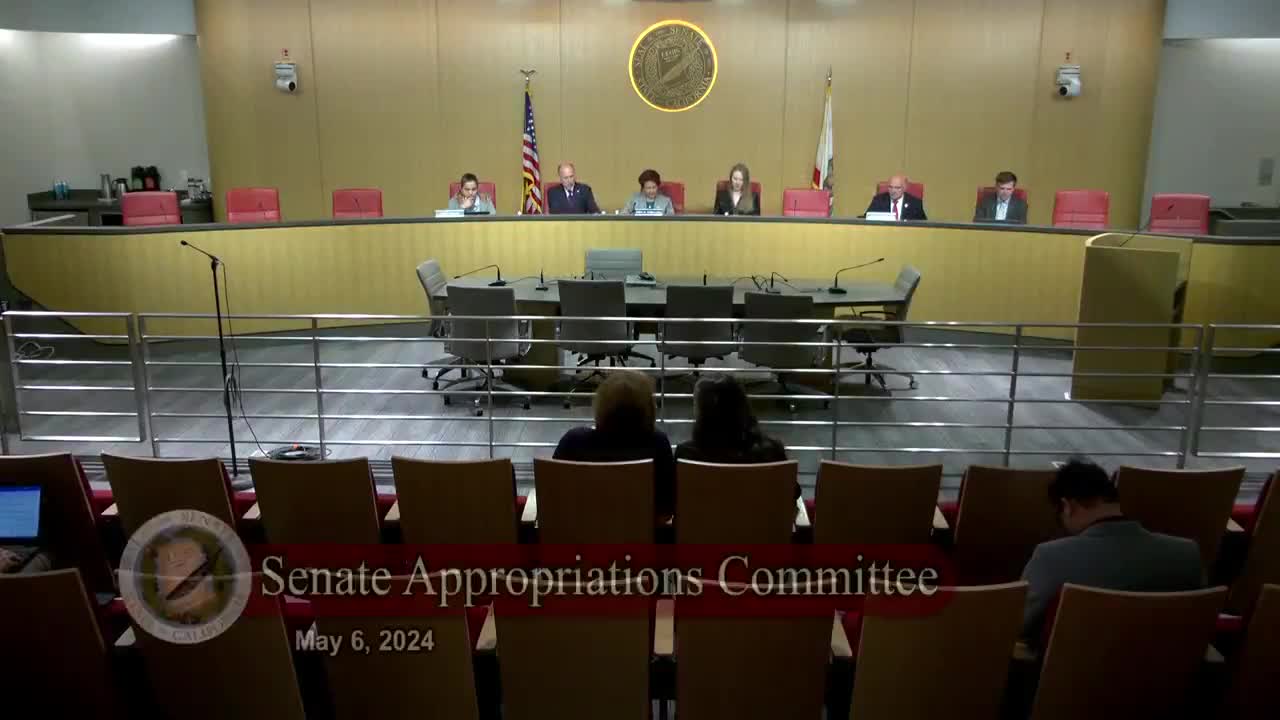
Bill Author
Bill Co-Author(s):