SB 1280: Waste management: propane cylinders: reusable or refillable.
- Session Year: 2023-2024
- House: Senate
- Latest Version Date: 2024-09-22
Current Status:
Passed
(2024-09-22: Chaptered by Secretary of State. Chapter 466, Statutes of 2024.)
Introduced
In Committee
First Chamber
In Committee
Second Chamber
Enacted
Existing law, the California Integrated Waste Management Act of 1989, establishes the Department of Resources Recycling and Recovery and requires the department to adopt rules and regulations, as necessary, to carry out the act.
This bill would, on and after January 1, 2028, prohibit the sale or offer for sale of propane cylinders other than those propane cylinders that are reusable or refillable, as defined. The bill would require the department to adopt regulations to implement the provisions of this bill with an effective date of January 1, 2028.
Existing law, the California Integrated Waste Management Act of 1989, establishes the Department of Resources Recycling and Recovery and requires the department to adopt rules and regulations, as necessary, to carry out the act.
This bill would, on and after January 1, 2028, prohibit the sale or offer for sale of propane cylinders other than those propane cylinders that are reusable or refillable, as defined, and would make the violation of this provision subject to specified civil penalties. The bill would authorize a city attorney or county counsel to impose the civil penalties, as provided. defined.
Existing law prohibits specified stores from providing single-use carryout bags to a customer at the point of sale and makes a violation of this provision subject to specified civil penalties.
This bill would, on and after an unspecified date, January 1, 2028, prohibit the sale or offer for sale of propane cylinders other than those propane cylinders that are reusable or refillable, as defined, and would make the violation of this provision subject to specified civil penalties. The bill would authorize a city attorney or county counsel to impose the civil penalties, as provided.
Existing law prohibits specified stores from providing single-use carryout bags to a customer at the point of sale and makes a violation of this provision subject to specified civil penalties.
This bill would, on and after an unspecified date, prohibit the sale or offer for sale of propane cylinders other than those propane cylinders that are reusable or refillable, as defined, and would make the violation of this provision subject to specified civil penalties. The bill would authorize a city attorney or county counsel to impose the civil penalties, as provided.
(a)For purposes of this chapter, reusable or refillable or reuse or refill, in regard to propane cylinders means a cylinder that satisfies all of the following:
(1)Explicitly designed and marketed to be utilized multiple times for the same product.
(2)Designed for durability to function properly in its original condition for multiple uses.
(3)Supported by adequate infrastructure to ensure the cylinders can be conveniently and safely reused or refilled for multiple cycles.
(b)For purposes of this chapter, propane cylinder does not include any of the following:
(1)Cylinders that are customarily designed for use in the construction industry and, when full, contain less than 15 ounces of fuel, whether filled solely with propane or not.
(2)Cylinders that have an overall product height-to-width ratio of 3.55 to 1 or greater.
(3)Cylinders that are offered to a state or local government agency for purchase pursuant to the United States General Services Administrations State and Local Disaster Purchasing Program, or a successor program.
42395.1.On and after January 1, 2028, only reusable or refillable propane cylinders shall be sold or offered for sale in this state.
42395.2.The department shall adopt regulations to implement this chapter with an effective date of January 1, 2028.
(a)For purposes of this chapter, reusable or refillable or reuse or refill, in regard to propane cylinders means a cylinder that satisfies all of the following:
(1)Explicitly designed and marketed to be utilized multiple times for the same product.
(2)Designed for durability to function properly in its original condition for multiple uses.
(3)Supported by adequate infrastructure to ensure the cylinders can be conveniently and safely reused or refilled for multiple cycles.
(b)For purposes of this chapter, propane cylinder does not include any of the following:
(1)Cylinders that are customarily designed for use in the construction industry and, when full, contain less than 15 ounces of fuel, whether filled solely with propane or not.
(2)Cylinders that have an overall product height-to-width ratio of 3.55 to 1 or greater.
(3)Cylinders that are offered to a state or local government agency for purchase pursuant to the United States General Services Administrations State and Local Disaster Purchasing Program, or a successor program.
42395.1.(a)On and after January 1, 2028, only reusable or refillable propane cylinders shall be sold or offered for sale in this state.
(b)A city attorney or county counsel may impose civil liability on a person who violates this section in the amount of five hundred dollars ($500) per day for the first violation, one thousand dollars ($1,000) per day for a second violation, and two thousand dollars ($2,000) per day for the third and subsequent violations. Any civil penalties collected pursuant to this section shall be paid to the office of the city attorney or county counsel, whichever office brought the action.(a)For purposes of this chapter, reusable or refillable or reuse or refill, in regard to propane cylinders means a cylinder that satisfies all of the following:
(1)Explicitly designed and marketed to be utilized multiple times for the same product.
(2)Designed for durability to function properly in its original condition for multiple uses.
(3)Supported by adequate infrastructure to ensure the cylinders can be conveniently and safely reused or refilled for multiple cycles.
(b)For purposes of this chapter, propane cylinder does not include any of the following:
(1)Cylinders that are customarily designed for use in the construction industry and, when full, contain less than 15 ounces of fuel, whether filled solely with propane or not.
(2)Cylinders that have an overall product height-to-width ratio of 3.55 to 1 or greater.
(3)Cylinders that are offered to a state or local government agency for purchase pursuant to the United States General Services Administrations State and Local Disaster Purchasing Program, or a successor program.
42395.1.(a)On and after January 1, ____, 2028, only reusable or refillable propane cylinders shall be sold or offered for sale in this state.
(b)A city attorney or county counsel may impose civil liability on a person who violates this section in the amount of five hundred dollars ($500) per day for the first violation, one thousand dollars ($1,000) per day for a second violation, and two thousand dollars ($2,000) per day for the third and subsequent violations. Any civil penalties collected pursuant to this section shall be paid to the office of the city attorney or county counsel, whichever office brought the action.
(a)For purposes of this chapter, reusable or refillable or reuse or refill, in regard to propane cylinders means a cylinder that satisfies all of the following:
(1)Explicitly designed and marketed to be utilized multiple times for the same product.
(2)Designed for durability to function properly in its original condition for multiple uses.
(3)Supported by adequate infrastructure to ensure the cylinders can be conveniently and safely reused or refilled for multiple cycles.
(b)For purposes of this chapter, propane cylinder does not include any of the following:
(1)Cylinders that are customarily designed for use in the construction industry and, when full, contain less than 15 ounces of fuel, whether filled solely with propane or not.
(2)Cylinders that have an overall product height-to-width ratio of 3.55 to 1 or greater.
(3)Cylinders that are offered to a state or local government agency for purchase pursuant to the United States General Services Administrations State and Local Disaster Purchasing Program, or a successor program.
42395.1.(a)On and after January 1, ____, only reusable or refillable propane cylinders shall be sold or offered for sale in this state.
(b)A city attorney or county counsel may impose civil liability on a person who violates this section in the amount of five hundred dollars ($500) per day for the first violation, one thousand dollars ($1,000) per day for a second violation, and two thousand dollars ($2,000) per day for the third and subsequent violations. Any civil penalties collected pursuant to this section shall be paid to the office of the city attorney or county counsel, whichever office brought the action.
|
Date
|
Status
|
|---|---|
| Sep 22, 2024 | Chaptered by Secretary of State. Chapter 466, Statutes of 2024. |
| Sep 22, 2024 | Approved by the Governor. |
| Sep 9, 2024 | Enrolled and presented to the Governor at 3 p.m. |
| Aug 29, 2024 | Assembly amendments concurred in. (Ayes 31. Noes 9. Page 5651.) Ordered to engrossing and enrolling. |
| Aug 28, 2024 | In Senate. Concurrence in Assembly amendments pending. |
| Aug 28, 2024 | Read third time. Passed. (Ayes 49. Noes 16. Page 6802.) Ordered to the Senate. |
| Aug 20, 2024 | Read second time. Ordered to third reading. |
| Aug 19, 2024 | Read second time and amended. Ordered to second reading. |
| Aug 15, 2024 | From committee: Do pass as amended. (Ayes 11. Noes 3.) (August 15). |
| Aug 7, 2024 | August 7 set for first hearing. Placed on suspense file. |
| Jun 18, 2024 | From committee: Do pass and re-refer to Com. on APPR. (Ayes 7. Noes 1.) (June 17). Re-referred to Com. on APPR. |
| Jun 3, 2024 | Referred to Com. on NAT. RES. |
| May 22, 2024 | In Assembly. Read first time. Held at Desk. |
| May 21, 2024 | Read third time. Passed. (Ayes 32. Noes 7. Page 4076.) Ordered to the Assembly. |
| Apr 23, 2024 | Read second time. Ordered to third reading. |
| Apr 22, 2024 | From committee: Be ordered to second reading pursuant to Senate Rule 28.8. |
| Apr 12, 2024 | Set for hearing April 22. |
| Apr 11, 2024 | April 15 hearing postponed by committee. |
| Apr 5, 2024 | Set for hearing April 15. |
| Apr 4, 2024 | Re-referred to Com. on APPR. |
| Apr 4, 2024 | Withdrawn from committee. |
| Apr 4, 2024 | From committee: Do pass and re-refer to Com. on JUD. (Ayes 4. Noes 2. Page 3467.) (April 3). Re-referred to Com. on JUD. |
| Mar 20, 2024 | From committee with author's amendments. Read second time and amended. Re-referred to Com. on E.Q. |
| Mar 18, 2024 | From committee with author's amendments. Read second time and amended. Re-referred to Com. on E.Q. |
| Mar 8, 2024 | Set for hearing April 3. |
| Feb 29, 2024 | Referred to Coms. on E.Q. and JUD. |
| Feb 16, 2024 | From printer. May be acted upon on or after March 17. |
| Feb 15, 2024 | Introduced. Read first time. To Com. on RLS. for assignment. To print. |
|
Date
|
Description
|
Location
|
Votes
|
|
|---|---|---|---|---|
| Aug 29, 2024 | Unfinished Business SB1280 Laird Concurrence | Senate Floor |
Passed |
|
| Aug 28, 2024 | SB 1280 Laird Senate Third Reading By Addis | Assembly Floor |
Passed |
|
| Aug 15, 2024 | Do pass as amended. | Assembly Standing Committee on Appropriations |
Passed |
|
| Jun 17, 2024 | Do pass and be re-referred to the Committee on [Appropriations] | Assembly Standing Committee on Natural Resources |
Passed |
|
| May 21, 2024 | Senate 3rd Reading SB1280 Laird | Senate Floor |
Passed |
|
| Apr 3, 2024 | Do pass, but first be re-referred to the Committee on [Judiciary] | Senate Standing Committee on Environmental Quality |
Passed |
This list shows positions taken on this bill by organizations on the date displayed, which is linked to the original source.
Positions by individuals are not included.
|
Organization
|
Position
|
Date
|
|---|---|---|
| Alameda County Board of Supervisors | ** Support | |
| California Chapters of The Solid Waste Association of North America's Legislative Task Force | ** Support | |
| Californians Against Waste | ** Support | |
| California Product Stewardship Council | ** Support | |
| California Resource Recovery Association | ** Support | |
| California Retailers Association | ** Against | |
| California State Association Of Counties | ** Support | |
| CALIFORNIA WASTE & RECYCLING ASSOCIATION | ** Support | |
| Castro Valley Sanitary District | ** Support | |
| Circular Polymers | ** Support | |
| City of Alameda | ** Support | |
| City of Sunnyvale | ** Support | |
| City of Thousand Oaks | ** Support | |
| cleanearth4kids.org | ** Support | |
| County of San Joaquin | ** Support | |
| Del Norte Solid Waste Management Authority | ** Support | |
| League Of California Cities | ** Support | |
| Little Kamper, LP | ** Support | |
| National Stewardship Action Council | ** Support | |
| Northern California Recycling Association | ** Support | |
| Product Stewardship Institute | ** Support | |
| ReGen Monterey | ** Support | |
| Republic Services Inc. | ** Support | |
| Republic Services - Western Region | ** Support | |
| Resource Recovery Coalition Of California | ** Support | |
| Rethinkwaste | ** Support | |
| Rural County Representatives of California | ** Support | |
| SAN JOAQUIN; COUNTY OF | ** Support | |
| Santa Clara County Recycling and Waste Reduction Commission | ** Support | |
| Sea Hugger | ** Support | |
| Solid Waste Association Of North America, California Chapters | ** Support | |
| StopWaste | ** Support | |
| Sustainable Works | ** Support | |
| Western Placer Waste Management Authority | ** Support | |
| Wm | ** Support | |
| Worthington Industries | ** Against | |
| Yolo County Waste Advisory Committee | ** Support | |
| Zero Waste Sonoma | ** Support |
SENATE RULES COMMITTEE Office of Senate Floor Analyses (916) 651-1520 Fax: (916) 327-4478 | SB 1280 |
UNFINISHED BUSINESS
Bill No: SB 1280
Author: Laird (D)
Amended: 8/19/24
Vote: 21
SENATE ENVIRONMENTAL QUALITY COMMITTEE: 4-2, 4/3/24
AYES: Allen, Gonzalez, Hurtado, Skinner
NOES: Dahle, Nguyen
NO VOTE RECORDED: Menjivar
SENATE APPROPRIATIONS COMMITTEE: Senate Rule 28.8
SENATE FLOOR: 32-7, 5/21/24
AYES: Alvarado-Gil, Archuleta, Ashby, Atkins, Becker, Blakespear, Bradford, Caballero, Cortese, Dodd, Durazo, Eggman, Glazer, Gonzalez, Hurtado, Laird, Limón, McGuire, Min, Newman, Niello, Padilla, Portantino, Roth, Rubio, Skinner, Smallwood-Cuevas, Stern, Umberg, Wahab, Wiener, Wilk
NOES: Dahle, Grove, Jones, Menjivar, Nguyen, Ochoa Bogh, Seyarto
NO VOTE RECORDED: Allen
ASSEMBLY FLOOR: 49-16, 8/28/24 - See last page for vote
SUBJECT: Waste management: propane cylinders: reusable or refillable
SOURCE: Author
DIGEST:
This bill prohibits the sale of propane cylinders that are not reusable or refillable on and after January 1, 2028.
Assembly Amendments
require CalRecycle to adopt regulations to implement the bill’s requirements with an effective date of January 1, 2028.
ANALYSIS:
Existing law:
- Defines a "household hazardous waste (HHW)" as hazardous waste generated incidental to owning or maintaining a place of residence, but does not include waste generated in the course of operating a business at a residence. (Health and Safety Code (HSC) § 25218.1(e))
- Establishes that counties and cities will provide services for the collection of HHW and that the state will provide an expedited and streamlined regulatory structure to facilitate the collection of HHW. (HSC § 25218)
- Provides requirements for the safe handling, storing and use of liquefied petroleum (LP) gas to reduce the possibility of damage to containers, accidental releases of LP-gas, and exposure of flammable concentrations of LP-gas to ignition sources. (California Fire Code, Chapter 61)
- States that it is the intent of the Legislature that the National Fire Protection Association (NFPA) 58 Standard supersede any inconsistent state standards, unless that standard contains a more stringent safety standard than that contained in the NFPA 58 Standard. (HSC § 13241)
This bill:
- Specifies that "reusable," "refillable," "reuse," or "refill," in regard to propane cylinders mean cylinders that are:
- Explicitly designed and marketed to be used multiple times for the same product;
- Designed for durability to function properly in its original condition for multiple uses; and,
- Supported by adequate infrastructure to ensure the cylinders can be conveniently and safely reused of refilled for multiple cycles.
- Specifies that for purposes of the bill, "propane cylinder" does not include cylinders that are:
- Customarily designed for use in the construction industry and, when fill, contain less than 15 ounces of fuel, whether filled solely with propane or not;
- Have an overall product height-to-width ratio of 3.55 to 1 or greater; or,
- Offered for sale to a state or local government agency for purchase pursuant to the United States General Services Administration's State and Local Disaster Purchasing Program, or a successor program.
- Prohibits the sale or propane cylinders that are not reusable or refillable on and after January 1, 2028.
- Requires CalRecycle to adopt regulations to implement the bill's requirements with an effective date of January 1, 2028.
Background
1) Propane cylinders. Disposable propane cylinders are single-use, generally one-pound, cylinders typically used in camping stoves, portable heaters, lanterns, portable showers, portable grills, boat engines, scooters, lawn care equipment, insect foggers, and welding equipment. An estimated 40-60 million disposable one-pound propane cylinders are sold in the United States every year. As California accounts for roughly 10% of the population, it is estimated that more than four million disposable one-pound propane cylinders are sold in California each year.
Under existing law, a consumer is permitted to dispose of an empty propane tank or cylinder in the curbside trash or recycling bin. If a propane tank or cylinder is not empty then it must be brought to a HHW facility; however, in most instances, it is impossible to know whether a cylinder is completely empty.
Cylinders received at HHW facilities are typically placed into 55-gallon drums, then transported to recycling/processing facilities where the cylinders are off-gassed to ensure no residual gas remains in the cylinder. Once empty, they are punctured, crushed, baled, and the metal is recycled. These safety measures are critical to avoid the risk of explosion that could cause injury to personnel or damage to infrastructure, which contributes to the cost of collecting and recycling these cylinders.
Based on data from CalRecycle, it is estimated that only 25% of the approximately four million disposable propane cylinders sold in California are recovered through HHW operations. Calculating in the cost of transporting and processing for these items, local governments, using ratepayer funds, are likely spending upwards of $3 million per year to handle this relatively small segment of the waste stream. The majority of the remaining three million or more disposable propane cylinders end up in the solid waste stream or are illegally dumped.
2) Improper disposal poses risks to workers and infrastructure. According to a May 23, 2019, article from Waste 360, a waste, recycling, and organics industry trade association:
Small, disposable propane tanks are convenient commodities, but they are a safety and economic nightmare for materials recovery facilities (MRFs), landfills, and parks, causing fires and explosions when tanks leak or get punctured… Disposable propane cylinders exploded at a Kent County, Mich., MRF in June 2016 and again in June 2017. "In 2016, it cost over $68,000 from one tank, and a worker was knocked off the baler," says Darwin Baas, Kent County Public Works director. "We receive dozens a week. When they are tipped on the floor, they are often covered by paper and old corrugated cardboard and easy to miss. They get punctured in the baler. They cause chemical damage and fire, and when the fire is put out, they cause water damage.
3) Transitioning from disposable to refillable cylinders. According to a December 21, 2020, report from the Statewide Commission on Recycling Markets and Curbside Recycling:
Single-use 1 lb. propane cylinders are a threat to human and environmental health. When "empty," single-use cylinders often still contain a small amount of gas, posing a danger to sanitation workers due to risk of explosion and resulting fires. Because of the high hazard level, this waste stream is very costly to manage and dispose of properly. Ironically, 80% of the purchase price is for the single-use packaging, the steel cylinder, which is the main culprit of the disposal issue.
Every year in North America, 40 million single-use 1 lb. propane cylinders are used, with an estimate of over four million in California alone. Because of limited disposal options, the empty cylinders are often disposed of improperly in landfills, dumpsters, household trash or recycling bins, campsites, on the roadside or in recycling containers and can cause explosions…
Made of hot rolled steel, these cylinders have very high GHG impacts with an estimated 11 million lbs of [greenhouse gas] emissions avoided if CA moved to refillables only. All other sizes of propane cylinders have been made refillable for decades, including BBQ size 5-gallon and the 20-gallon size used on forklifts. The public is trained to refill BBQ tanks and can do the same with 1 lbs in California, but when the cost of the 1 lb has been externalized onto local governments via HHW programs when the refillables now exist and are sold and refilled in California, we believe the sale of disposables should be banned in short order.
In light of the disposal problems of these products, some governments, businesses, and environmental nonprofits have begun encouraging alternatives to disposable cylinders. One such effort, Refuel Your Fun, was developed by the California Product Stewardship Council (CPSC) in 2015 using CalRecycle HHW grants to help transition communities to refillable cylinders. This is accomplished through a variety of methods, including conducting outreach and exchange events to get more refillables into circulation. To date, CalRecycle has awarded 33 grants (approximately $2.5 million in funds) throughout the state that have focused on refillable propane cylinders.
4) Availability of refillables. According to the sponsors of this proposal, there are more than 400 locations across the state that sell, refill, and/or exchange reusable cylinders. However, opponents contend that there are "minimal viable refill infrastructure or distribution network[s] within the state to refill or return" these cylinders. This bill provides a three-year window for the industry to transition to refillable cylinders. It seems most likely that the smaller refillable cylinders would transition to be used similarly to larger refillable cylinders, in which consumers generally return an empty cylinder and exchange it for a full cylinder.
Comments
Purpose of Bill. According to the author, “California can do much better when it comes to reusing and refilling our products and eliminating materials, often hazardous materials, which are discarded haphazardly. These propane cylinders place a great burden on our park systems, beaches, and material recovery facilities. It is time to transition away from single-use products that harm our environment, pose a threat to workers and end up in our landfills. SB 1280 would result in more reusable propane cylinders for consumers to refill which will lead to a cleaner and safer California.”
FISCAL EFFECT: Appropriation: No Fiscal Com.: Yes Local: No
According to the Assembly Appropriations Committee, the Department of Resources Recycling and Recovery (CalRecycle) will have costs, likely in the hundreds of thousands of dollars, to adopt regulations to implement this bill. This bill creates significant cost pressure, for CalRecycle to enforce the prohibition (special fund or General Fund), and for the Attorney General to engage in enforcement activities and respond to lawsuits challenging or seeking clarification of this bill (General Fund). According to the Legislative Analyst's Office, the General Fund faces a structural deficit in the tens of billions of dollars over the next several fiscal years.
SUPPORT: (Verified 8/27/24)
Alameda County Board of Supervisors
California Chapters of The Solid Waste Association of North America's Legislative Task Force
California Product Stewardship Council
California Resource Recovery Association
California State Association of Counties
California Waste & Recycling Association
Californians Against Waste
Castro Valley Sanitary District
Circular Polymers
City of Alameda
City of Sunnyvale
City of Thousand Oaks
Cleanearth4kids.org
County of San Joaquin
Del Norte Solid Waste Management Authority
League of California Cities
Little Kamper, Lp
National Stewardship Action Council
Northern California Recycling Association
Product Stewardship Institute
Regen Monterey
Republic Services - Western Region
Republic Services INC.
Resource Recovery Coalition of California
Rethinkwaste
Rural County Representatives of California
San Joaquin; County of
Santa Clara County Recycling and Waste Reduction Commission
Sea Hugger
Solid Waste Association of North America, California Chapters
Stopwaste
Sustainable Works
Western Placer Waste Management Authority
Wm
Yolo County Waste Advisory Committee
Zero Waste Sonoma
OPPOSITION: (Verified 8/27/24)
California Retailers Association
Worthington Industries
ARGUMENTS IN SUPPORT: According to the Rural County Representatives of California, the California State Association of Counties, and the League of California Cities:
Local governments are responsible for the collection, processing, recycling and disposal of solid waste, including the operation of local household hazardous waste collection programs. These local programs provide important public services and prevent improper disposal of hazardous wastes. Our local programs often offer residents free drop off of HHW; however, the cost to manage some of the waste streams are significant and put serious financial pressure on the programs and local governments that operate them. The cost for local governments to manage discarded single use propane cylinders can often approach or exceed the initial purchase price that consumers pay at the point of sale. With refillable cylinders becoming more common in the marketplace, SB 1280’s phase out of single-use small cylinders will help reduce costs, administrative burdens, and safety risks for local solid waste and household hazardous waste programs.
ARGUMENTS IN OPPOSITION: According to Worthington Industries:
Worthington is a leading manufacturer of both refillable and non-refillable pressurized cylinders which are commonly used in outdoor recreation, camping, picnics, and sporting event venues. The stated goal of this bill is to force consumers to buy a refillable/reusable product for which consumer demand has not been demonstrated. A ban of these cylinders is highly problematic given the minimal viable refill infrastructure or distribution network within the state to refill or return used 1 lb. cylinders; the concerns for retailer and consumer safety associated with refilling small format cylinders; cost and convenience considerations that hinder the use of small format refillable cylinders; and, finally, the fact that such a ban would still not address the waste management issues. Refillable cylinders also need be addressed at end-of-life.
ASSEMBLY FLOOR: 49-16, 8/28/24
AYES: Addis, Aguiar-Curry, Arambula, Bauer-Kahan, Bennett, Berman, Boerner, Bonta, Bryan, Calderon, Wendy Carrillo, Connolly, Mike Fong, Friedman, Gabriel, Garcia, Gipson, Grayson, Haney, Hart, Holden, Irwin, Jackson, Jones-Sawyer, Kalra, Lee, Low, Lowenthal, Maienschein, McCarty, McKinnor, Muratsuchi, Pacheco, Papan, Pellerin, Petrie-Norris, Quirk-Silva, Ramos, Rendon, Reyes, Luz Rivas, Santiago, Schiavo, Ting, Weber, Wicks, Wilson, Zbur, Robert Rivas
NOES: Alanis, Chen, Megan Dahle, Davies, Dixon, Essayli, Flora, Gallagher, Hoover, Mathis, Jim Patterson, Joe Patterson, Sanchez, Ta, Waldron, Wallis
NO VOTE RECORDED: Alvarez, Bains, Juan Carrillo, Cervantes, Lackey, Stephanie Nguyen, Ortega, Rodriguez, Blanca Rubio, Soria, Valencia, Villapudua, Ward, Wood
Prepared by: Gabrielle Meindl / E.Q. / (916) 651-4108
8/28/24 22:39:43
**** END ****
SENATE THIRD READING
STR Bill Id:SB 1280
Author:(Laird)
As Amended Ver:August 19, 2024
Majority vote
SUMMARY
Prohibits the sale of propane cylinders that are not reusable or refillable on and after January 1, 2028.
Major Provisions
- Specifies that "reusable," "refillable," "reuse," or "refill," in regard to propane cylinders mean cylinders that are:
- Explicitly designed and marketed to be used multiple times for the same product;
- Designed for durability to function properly in its original condition for multiple uses; and,
- Supported by adequate infrastructure to ensure the cylinders can be conveniently and safely reused of refilled for multiple cycles.
- Specifies that for purposes of the bill, "propane cylinder" does not include cylinders that are:
- Customarily designed for use in the construction industry and, when fill, contain less than 15 ounces of fuel, whether filled solely with propane or not;
- Have an overall product height-to-width ratio of 3.55 to 1 or greater; or,
- Offered for sale to a state or local government agency for purchase pursuant to the United States General Services Administration’s State and Local Disaster Purchasing Program, or a successor program.
- Prohibits the sale or propane cylinders that are not reusable or refillable on and after January 1, 2028.
- Requires CalRecycle to adopt regulations to implement the bill’s requirements with an effective date of January 1, 2028.
COMMENTS
- Propane cylinders. Disposable propane cylinders are single-use, generally one-pound, cylinders typically used in camping stoves, portable heaters, lanterns, portable showers, portable grills, boat engines, scooters, lawn care equipment, insect foggers, and welding equipment. An estimated 40-60 million disposable one-pound propane cylinders are sold in the United States every year. As California accounts for roughly 10% of the population, it is estimated that more than four million disposable one-pound propane cylinders are sold in California each year.
Under existing law, a consumer is permitted to dispose of an empty propane tank or cylinder in the curbside trash or recycling bin. If a propane tank or cylinder is not empty then it must be brought to a HHW facility; however, in most instances, it is impossible to know whether a cylinder is completely empty.
Cylinders received at HHW facilities are typically placed into 55-gallon drums, then transported to recycling/processing facilities where the cylinders are off-gassed to ensure no residual gas remains in the cylinder. Once empty, they are punctured, crushed, baled, and the metal is recycled. These safety measures are critical to avoid the risk of explosion that could cause injury to personnel or damage to infrastructure, which contributes to the cost of collecting and recycling these cylinders.
Based on data from CalRecycle, it is estimated that only 25% of the approximately four million disposable propane cylinders sold in California are recovered through HHW operations. Calculating in the cost of transporting and processing for these items, local governments, using ratepayer funds, are likely spending upwards of $3 million per year to handle this relatively small segment of the waste stream. The majority of the remaining three million or more disposable propane cylinders end up in the solid waste stream or are illegally dumped.
- Improper disposal poses risks to workers and infrastructure. According to a May 23, 2019, article from Waste 360, a waste, recycling, and organics industry trade association:
Small, disposable propane tanks are convenient commodities, but they are a safety and economic nightmare for materials recovery facilities (MRFs), landfills, and parks, causing fires and explosions when tanks leak or get punctured… Disposable propane cylinders exploded at a Kent County, Mich., MRF in June 2016 and again in June 2017. "In 2016, it cost over $68,000 from one tank, and a worker was knocked off the baler," says Darwin Baas, Kent County Public Works director. "We receive dozens a week. When they are tipped on the floor, they are often covered by paper and old corrugated cardboard and easy to miss. They get punctured in the baler. They cause chemical damage and fire, and when the fire is put out, they cause water damage."
- Transitioning from disposable to refillable cylinders. According to a December 21, 2020, report from the Statewide Commission on Recycling Markets and Curbside Recycling:
Single-use 1 lb. propane cylinders are a threat to human and environmental health. When "empty," single-use cylinders often still contain a small amount of gas, posing a danger to sanitation workers due to risk of explosion and resulting fires. Because of the high hazard level, this waste stream is very costly to manage and dispose of properly. Ironically, 80% of the purchase price is for the single-use packaging, the steel cylinder, which is the main culprit of the disposal issue.
Every year in North America, 40 million single-use 1 lb. propane cylinders are used, with an estimated of over four million in California alone. Because of limited disposal options, the empty cylinders are often disposed of improperly in landfills, dumpsters, household trash or recycling bins, campsites, on the roadside or in recycling containers and can cause explosions…
Made of hot rolled steel, these cylinders have very high GHG impacts with an estimated 11 million lbs of [greenhouse gas] emissions avoided if CA moved to refillables only. All other sizes of propane cylinders have been made refillable for decades, including BBQ size 5-gallon and the 20-gallon size used on forklifts. The public is trained to refill BBQ tanks and can do the same with 1 lbs in California, but when the cost of the 1 lb has been externalized onto local governments via HHW programs when the refillables now exist and are sold and refilled in California, we believe the sale of disposables should be banned in short order.
In light of the disposal problems of these products, some governments, businesses, and environmental nonprofits have begun encouraging alternatives to disposable cylinders. One such effort, Refuel Your Fun, was developed by the California Product Stewardship Council (CPSC) in 2015 using CalRecycle HHW grants to help transition communities to refillable cylinders. This is accomplished through a variety of methods, including conducting outreach and exchange events to get more refillables into circulation. To date, CalRecycle has awarded 33 grants (approximately $2.5 million in funds) throughout the state that have focused on refillable propane cylinders.
- Availability of refillables. According to the sponsors of this proposal, there are more than 400 locations across the state that sell, refill, and/or exchange reusable cylinders. However, opponents contend that there are "minimal viable refill infrastructure or distribution network[s] within the state to refill or return" these cylinders. This bill provides a three-year window for the industry to transition to refillable cylinders. It seems most likely that the smaller refillable cylinders would transition to be used similarly to larger refillable cylinders, in which consumers generally return an empty cylinder and exchange it for a full cylinder.
According to the Author
California can do much better when it comes to reusing and refilling our products and eliminating materials, often hazardous materials, which are discarded haphazardly. These propane cylinders place a great burden on our park systems, beaches, and material recovery facilities. It is time to transition away from single-use products that harm our environment, pose a threat to workers and end up in our landfills. SB 1280 would result in more reusable propane cylinders for consumers to refill, which will lead to a cleaner and safer California.
Arguments in Support
According to the Rural County Representatives of California, the California State Association of Counties, and the League of California Cities:
Local governments are responsible for the collection, processing, recycling and disposal of solid waste, including the operation of local household hazardous waste collection programs. These local programs provide important public services and prevent improper disposal of hazardous wastes. Our local programs often offer residents free drop off of HHW; however, the cost to manage some of the waste streams are significant and put serious financial pressure on the programs and local governments that operate them. The cost for local governments to manage discarded single use propane cylinders can often approach or exceed the initial purchase price that consumers pay at the point of sale.
With refillable cylinders becoming more common in the marketplace, SB 1280’s phase out of single-use small cylinders will help reduce costs, administrative burdens, and safety risks for local solid waste and household hazardous waste programs.
Arguments in Opposition
Worthington Industries states:
Worthington is a leading manufacturer of both refillable and non-refillable pressurized cylinders which are commonly used in outdoor recreation, camping, picnics, and sporting event venues. The stated goal of this bill is to force consumers to buy a refillable/reusable product for which consumer demand has not been demonstrated. A ban of these cylinders is highly problematic given the minimal viable refill infrastructure or distribution network within the state to refill or return used 1 lb. cylinders; the concerns for retailer and consumer safety associated with refilling small format cylinders; cost and convenience considerations that hinder the use of small format refillable cylinders; and, finally, the fact that such a ban would still not address the waste management issues. Refillable cylinders also need be addressed at end-of-life.
FISCAL COMMENTS
According to the Assembly Appropriations Committee, the Department of Resources Recycling and Recovery (CalRecycle) will have costs, likely in the hundreds of thousands of dollars, to adopt regulations to implement this bill. This bill creates significant cost pressure, for CalRecycle to enforce the prohibition (special fund or General Fund), and for the Attorney General to engage in enforcement activities and respond to lawsuits challenging or seeking clarification of this bill (General Fund).
According to the Legislative Analyst's Office, the General Fund faces a structural deficit in the tens of billions of dollars over the next several fiscal years.
VOTES
SENATE FLOOR: 32-7-1
YES: Alvarado-Gil, Archuleta, Ashby, Atkins, Becker, Blakespear, Bradford, Caballero, Cortese, Dodd, Durazo, Eggman, Glazer, Gonzalez, Hurtado, Laird, Limón, McGuire, Min, Newman, Niello, Padilla, Portantino, Roth, Rubio, Skinner, Smallwood-Cuevas, Stern, Umberg, Wahab, Wiener, Wilk
NO: Dahle, Grove, Jones, Menjivar, Nguyen, Ochoa Bogh, Seyarto
ABS, ABST OR NV: Allen
ASM NATURAL RESOURCES: 7-1-3
YES: Bryan, Bauer-Kahan, Friedman, Kalra, Muratsuchi, Pellerin, Wicks
NO: Hoover
ABS, ABST OR NV: Flora, Lackey, Wood
ASM APPROPRIATIONS: 11-3-1
YES: Wicks, Arambula, Bryan, Calderon, Wendy Carrillo, Mike Fong, Grayson, Haney, Hart, Pellerin, Villapudua
NO: Sanchez, Dixon, Ta
ABS, ABST OR NV: Jim Patterson
UPDATED
VERSION: August 19, 2024
CONSULTANT: Elizabeth MacMillan / NAT. RES. / (916) 319-2092 FN: 0004104
Date of Hearing: August 7, 2024
ASSEMBLY COMMITTEE ON APPROPRIATIONS
Buffy Wicks, Chair
SBPCA Bill Id:SB 1280
Author:(Laird) – As Amended Ver:March 20, 2024
Policy Committee: | Natural Resources | Vote: | 7 - 1 |
|
| ||
|
|
Urgency: No State Mandated Local Program: No Reimbursable: No
SUMMARY:
This bill, starting January 1, 2028, prohibits sale of propane cylinders that are not reusable or refillable, if adequate infrastructure exists to ensure they can be conveniently and safely reused or refilled, among other conditions, with specified disposable cylinders exempt from the ban.
Specifically, this bill:
- Defines “reusable” and “refillable” propane cylinders as those explicitly designed and marketed to be used multiple times for the same product, designed for durability to function properly in their original condition for multiple uses, and supported by adequate infrastructure to ensure they can be conveniently and safely reused or refilled for multiple cycles.
- Provides that the prohibition does not apply to sale of propane cylinders that are customarily designed for use in the construction industry with less than 15 ounces of fuel capacity, have an overall product height-to-width ratio of 3.55 to 1 or greater, or are offered for sale to a state or local government agency for purchase pursuant to the United States General Services Administration’s State and Local Disaster Purchasing Program, or a successor program.
FISCAL EFFECT:
The Department of Resources Recycling and Recovery (CalRecycle) reports no costs or minimal costs absorbable within existing resources. However, this bill creates significant cost pressure, potentially in the hundreds of thousands or millions of dollars for CalRecycle to adopt regulations, on its own initiative or in response to a petition for rulemaking, to interpret and fill in the gaps of unclear provisions of this bill and to enforce the prohibition (special fund or General Fund), and for the Attorney General to engage in enforcement activities and respond to lawsuits challenging or seeking clarification of this bill (General Fund).
According to the Legislative Analyst’s Office, the General Fund faces a structural deficit in the tens of billions of dollars over the next several fiscal years.
COMMENTS:
- Purpose. According to the author:
California can do much better when it comes to reusing and refilling our products and eliminating materials, often hazardous materials, which are discarded haphazardly. These propane cylinders place a great burden on our park systems, beaches, and material recovery facilities. It is time to transition away from single-use products that harm our environment, pose a threat to workers and end up in our landfills. SB 1280 would result in more reusable propane cylinders for consumers to refill, which will lead to a cleaner and safer California.
- Background. Disposable propane cylinders are single-use, generally one-pound cylinders typically used in camping stoves, portable heaters, lanterns, portable showers, portable grills, boat engines, scooters, lawn care equipment, insect foggers, and welding equipment. An estimated four million disposable propane cylinders are sold in California each year. Existing law permits a consumer to dispose of an empty propane cylinder in the curbside trash or recycling bin, with local governments having hazardous waste obligations. A propane cylinder that is not empty must be brought to a hazardous waste facility. It typically is impossible to know if a cylinder is completely empty, posing safety risks to workers and infrastructure from potential explosions.
Several prior measures seeking to end sale of disposable propane cylinders were not enacted. The legislative history of all these bills demonstrates generally broad agreement on the need to transition to reusable cylinders. The challenge has been finding an effective approach.
This bill is substantially similar to SB 1256 (Wieckowski), of the 2021-22 Legislative Session, which Governor Newsom vetoed with a message objecting to “an outright ban without a plan for collection and refill infrastructure.” In response, this bill bans the sale of disposable cylinders and allows sale only of a reusable or refillable propane cylinder, defined to mean a cylinder “[s]upported by adequate infrastructure to ensure the cylinders can be conveniently and safely reused or refilled for multiple cycles,” among other conditions. However, this bill does not specify what would qualify as “adequate infrastructure.” It could mean availability of locations that sell and refill reusable cylinders, which the author states number more than 400 across the state and increasing each year. But how many refill locations are “adequate”? Would an “adequate” number of locations in southern California be enough to prohibit sale of disposable cylinders in northern California? Or would only “adequate infrastructure” statewide be enough given that propane cylinders are portable and one bought in San Diego or Santa Cruz might be used camping at Mount Shasta? Moreover, what safety standards and protocols apply to ensure each refill location enables cylinders to be “safely reused or refilled for multiple cycles”?
Unlike SB 1256, which would have authorized cities and counties to enforce the ban on sale of disposable cylinders and impose penalties, this bill has no express enforcement provisions. However, this bill places the ban in the division of the Public Resources Code that CalRecycle is required to enforce. An applicable section states that CalRecycle “shall adopt rules and regulations, as necessary, to carry out this division” in compliance with the Administrative Procedure Act (APA). The APA provides for state agencies to adopt regulations to interpret or fill in the gaps of a statute it is required to administer in order to provide entities subject to the statute clear notice of what is required or prohibited. Given the ambiguities in this bill as described above, it seems CalRecycle would need to adopt regulations through an APA rulemaking, either on its own initiative or potentially in response to a petition for rulemaking from a party seeking clarity on how the statute applies, as provided for in the APA. As an example, CalRecycle currently has an open rulemaking to implement legislation requiring reusable food service ware, with some of the same terms as in this bill being further defined by regulation. Without CalRecycle regulations to similarly implement this bill, parties potentially subject to the ban in this bill likely will seek clarification through litigation against the state.
- Related legislation. SB 1143 (Allen), of the current legislative session, establishes a comprehensive expanded producer responsibility program for specified household waste, including propane cylinders. SB 1143 is pending in this committee.
SB 560 (Laird), of the current legislative session, would have established an expanded producer responsibility program for gas cylinders under 20 pounds. SB 560 was held in the Senate Appropriations Committee.
- Prior Legislation. SB 1256 (Wieckowski), of the 2021-22 Legislative Session, would have banned the sale of disposable propane cylinders beginning January 1, 2028. The Governor vetoed SB 1256, stating:
I acknowledge there are several challenges and costs faced by local governments and solid waste management authorities responsible for the disposal of single-use propane cylinders. However, an outright ban without a plan for collection and refill infrastructure could inhibit the success of building a circular system in California.
California has successfully implemented many reuse and recycling systems, from the Beverage Container Recycling Program to several extended producer responsibility programs. These market-based solutions both significantly reduce waste and create jobs by turning a challenging product into a resource. I encourage the Legislature and stakeholders to work on a similar approach for the collection and reuse of this product that accounts for manufacturer and retail responsibility.
Analysis Prepared by: Jacqueline Kinney / APPR. / (916) 319-2081
Date of Hearing: June 17, 2024
ASSEMBLY COMMITTEE ON NATURAL RESOURCES
Isaac G. Bryan, Chair
SBPCA Bill Id:SB 1280
Author:(Laird) – As Amended Ver:March 20, 2024
SENATE VOTE: 32-7
SUBJECT: Waste management: propane cylinders: reusable or refillable
SUMMARY: Prohibits the sale of propane cylinders that are not reusable or refillable on and after January 1, 2028.
EXISTING LAW:
- The California Integrated Waste Management Act of 1989, administered by the Department of Resources Recycling and Recovery (CalRecycle), generally regulates the disposal, management, and recycling of solid waste. Establishes a state recycling goal that 75% of solid waste generated is to be diverted from landfill disposal through source reduction, recycling, and composting by 2020. (Public Resources Code (PRC) 40000 et seq.)
- Establishes the Plastic Pollution Prevention and Packaging Producer Responsibility Act, which imposes minimum content requirements for single-use packaging and food ware and source reduction requirements for plastic single-use packaging and food ware, to be achieved through an EPR program. (PRC 42040 et seq.)
- Establishes the Used Mattress Recovery and Recycling Act, which creates an extended producer responsibility (EPR) program for the collection and recycling of used mattresses. (PRC 42985 et seq.)
- Establishes the Electronic Waste Recycling Act of 2003, which requires consumers to pay a fee for specified electronic devices, defined to include video screens larger than four inches and battery-embedded products and establishes processes for consumers to return, recycle, and ensure the safe disposal of covered electronic devices. (PRC 42460 et seq.)
- Defines "household hazardous waste” (HHW) as hazardous waste generated incidental to owning or maintaining a place of residence, but does not include waste generated in the course of operating a business at a residence. (Health and Safety Code (HSC) 25218.1(e))
- Requires counties and cities to provide services for the collection of HHW and requires the state to provide an expedited and streamlined regulatory structure to facilitate the collection of HHW. (HSC 25218)
THIS BILL:
- Specifies that “reusable,” “refillable,” “reuse,” or “refill,” in regard to propane cylinders mean cylinders that are:
- Explicitly designed and marketed to be used multiple times for the same product;
- Designed for durability to function properly in its original condition for multiple uses; and,
- Supported by adequate infrastructure to ensure the cylinders can be conveniently and safely reused of refilled for multiple cycles.
- Specifies that for purposes of the bill, “propane cylinder” does not include cylinders that are:
- Customarily designed for use in the construction industry and, when fill, contain less than 15 ounces of fuel, whether filled solely with propane or not;
- Have an overall product height-to-width ratio of 3.55 to 1 or greater; or,
- Offered for sale to a state or local government agency for purchase pursuant to the United States General Services Administration’s State and Local Disaster Purchasing Program, or a successor program.
- Prohibits the sale or propane cylinders that are not reusable or refillable on and after January 1, 2028.
FISCAL EFFECT: According to the Senate Appropriations Committee, pursuant to Senate Rule 28.8, this bill has negligible state costs.
COMMENTS:
- HHW management. At the local level, certified local agencies, known as Certified Unified Program Agencies (CUPAs), are responsible for developing local programs to collect, recycle, or properly dispose of HHW. The California Environmental Protection Agency (CalEPA) oversees the 81 CUPAs, and the statewide implementation of the Unified Program, which protects Californians from hazardous waste and hazardous materials by ensuring consistency throughout the state regarding the implementation of administrative requirements, permits, inspections, and enforcement at the local regulatory level. California Hazardous Waste Law provides several management requirements for HHW generators and establishes a streamlined permitting process for HHW collection facilities.
- Propane cylinders. Disposable propane cylinders are single-use, generally one-pound, cylinders typically used in camping stoves, portable heaters, lanterns, portable showers, portable grills, boat engines, scooters, lawn care equipment, insect foggers, and welding equipment. An estimated 40-60 million disposable one-pound propane cylinders are sold in the United States every year. As California accounts for roughly 10% of the population, it is estimated that more than four million disposable one-pound propane cylinders are sold in California each year.
Under existing law, a consumer is permitted to dispose of an empty propane tank or cylinder in the curbside trash or recycling bin. If a propane tank or cylinder is not empty then it must be brought to a HHW facility; however, in most instances, it is impossible to know whether a cylinder is completely empty.
Cylinders received at HHW facilities are typically placed into 55-gallon drums, then transported to recycling/processing facilities where the cylinders are off-gassed to ensure no residual gas remains in the cylinder. Once empty, they are punctured, crushed, baled, and the metal is recycled. These safety measures are critical to avoid the risk of explosion that could cause injury to personnel or damage to infrastructure, which contributes to the cost of collecting and recycling these cylinders.
Based on data from CalRecycle, it is estimated that only 25% of the approximately four million disposable propane cylinders sold in California are recovered through HHW operations. Calculating in the cost of transporting and processing for these items, local governments, using ratepayer funds, are likely spending upwards of $3 million per year to handle this relatively small segment of the waste stream. The majority of the remaining three million or more disposable propane cylinders end up in the solid waste stream or are illegally dumped.
- Improper disposal poses risks to workers and infrastructure. According to a May 23, 2019, article from Waste 360, a waste, recycling, and organics industry trade association:
Small, disposable propane tanks are convenient commodities, but they are a safety and economic nightmare for materials recovery facilities (MRFs), landfills, and parks, causing fires and explosions when tanks leak or get punctured… Disposable propane cylinders exploded at a Kent County, Mich., MRF in June 2016 and again in June 2017. “In 2016, it cost over $68,000 from one tank, and a worker was knocked off the baler,” says Darwin Baas, Kent County Public Works director. “We receive dozens a week. When they are tipped on the floor, they are often covered by paper and old corrugated cardboard and easy to miss. They get punctured in the baler. They cause chemical damage and fire, and when the fire is put out, they cause water damage.”
- Transitioning from disposable to refillable cylinders. According to a December 21, 2020, report from the Statewide Commission on Recycling Markets and Curbside Recycling:
Single-use 1 lb. propane cylinders are a threat to human and environmental health. When "empty," single-use cylinders often still contain a small amount of gas, posing a danger to sanitation workers due to risk of explosion and resulting fires. Because of the high hazard level, this waste stream is very costly to manage and dispose of properly. Ironically, 80% of the purchase price is for the single-use packaging, the steel cylinder, which is the main culprit of the disposal issue.
Every year in North America, 40 million single-use 1 lb. propane cylinders are used, with an estimated of over four million in California alone. Because of limited disposal options, the empty cylinders are often disposed of improperly in landfills, dumpsters, household trash or recycling bins, campsites, on the roadside or in recycling containers and can cause explosions…
Made of hot rolled steel, these cylinders have very high GHG impacts with an estimated 11 million lbs of [greenhouse gas] emissions avoided if CA moved to refillables only. All other sizes of propane cylinders have been made refillable for decades, including BBQ size 5-gallon and the 20-gallon size used on forklifts. The public is trained to refill BBQ tanks and can do the same with 1 lbs in California, but when the cost of the 1 lb has been externalized onto local governments via HHW programs when the refillables now exist and are sold and refilled in California, we believe the sale of disposables should be banned in short order.
In light of the disposal problems of these products, some governments, businesses, and environmental nonprofits have begun encouraging alternatives to disposable cylinders. One such effort, Refuel Your Fun, was developed by the California Product Stewardship Council (CPSC) in 2015 using CalRecycle HHW grants to help transition communities to refillable cylinders. This is accomplished through a variety of methods, including conducting outreach and exchange events to get more refillables into circulation. To date, CalRecycle has awarded 33 grants (approximately $2.5 million in funds) throughout the state that have focused on refillable propane cylinders.
- Availability of refillables. According to the sponsors of this proposal, there are more than 400 locations across the state that sell, refill, and/or exchange reusable cylinders. However, opponents contend that there are “minimal viable refill infrastructure or distribution network[s] within the state to refill or return” these cylinders. This bill provides a three-year window for the industry to transition to refillable cylinders. It seems most likely that the smaller refillable cylinders would transition to be used similarly to larger refillable cylinders, in which consumers generally return an empty cylinder and exchanging it for a full cylinder.
- Author’s statement:
California can do much better when it comes to reusing and refilling our products and eliminating materials, often hazardous materials, which are discarded haphazardly. These propane cylinders place a great burden on our park systems, beaches, and material recovery facilities. It is time to transition away from single-use products that harm our environment, pose a threat to workers and end up in our landfills. SB 1280 would result in more reusable propane cylinders for consumers to refill which will lead to a cleaner and safer California.
- Previous legislative action. The Legislature has attempted to tackle the management of disposable propane cylinders twice in recent years:
- SB 1256 (Wieckowski, 2022) would have banned the sale of disposable propane cylinders, as specified, beginning January 1, 2028. This bill was vetoed by the Governor, who stated:
I acknowledge there are several challenges and costs faced by local governments and solid waste management authorities responsible for the disposal of single-use propane cylinders. However, an outright ban without a plan for collection and refill infrastructure could inhibit the success of building a circular system in California.
California has successfully implemented many reuse and recycling systems, from the Beverage Container Recycling Program to several extended producer responsibility programs. These market-based solutions both significantly reduce waste and create jobs by turning a challenging product into a resource. I encourage the Legislature and stakeholders to work on a similar approach for the collection and reuse of this product that accounts for manufacturer and retail responsibility.
- SB 560 (Laird, 2023) was introduced in response to the veto message, which would have established an expanded producer responsibility program for gas cylinders under 20 pounds. This bill was held in the Senate Appropriations Committee.
- Related legislation. SB 1143 (Allen) establishes a comprehensive EPR program for specified HHW, including propane cylinders. SB 1143 has also been referred to this committee. Unlike SB 1143, SB 1280 would require a change in the design of propane cylinders (i.e., replacing disposable, one-pound propane cylinders with refillables). SB 1280 specifically targets one problematic source of HHW due to the potential risk of explosions and fires, the high cost of management, and the prevalence of improper disposal. SB 1143 focuses on end-of-life management for HHW generally. If both bills were enacted, SB 1143 would capture the refillable propane cylinders at end-of-life.
REGISTERED SUPPORT / OPPOSITION:
Support
Alameda County Board of Supervisors
California Chapters of The Solid Waste Association of North America's Legislative Task Force
California Product Stewardship Council
California Professional Firefighters
California Resource Recovery Association
California State Association of Counties
California Waste & Recycling Association
Californians Against Waste
Circular Polymers
City of Sunnyvale
City of Thousand Oaks
CleanEarth4Kids.org
County of San Joaquin
Del Norte Solid Waste Management Authority
League of California Cities
Little Kamper, LP
National Stewardship Action Council
Northern California Recycling Association
Product Stewardship Institute
Recology
Regen Monterey
Republic Services - Western Region
Republic Services, Inc.
Resource Recovery Coalition of California
Rethinkwaste
Rural County Representatives of California
Santa Clara County Recycling and Waste Reduction Commission
Sea Hugger
Stopwaste
Sustainable Works
Western Placer Waste Management Authority
WM
Zero Waste Sonoma
Opposition
Worthington Industries
Analysis Prepared by: Elizabeth MacMillan / NAT. RES. /
SENATE RULES COMMITTEE Office of Senate Floor Analyses (916) 651-1520 Fax: (916) 327-4478 | SB 1280 |
THIRD READING
Bill No: SB 1280
Author: Laird (D)
Amended: 3/20/24
Vote: 21
SENATE ENVIRONMENTAL QUALITY COMMITTEE: 4-2, 4/3/24
AYES: Allen, Gonzalez, Hurtado, Skinner
NOES: Dahle, Nguyen
NO VOTE RECORDED: Menjivar
SENATE APPROPRIATIONS COMMITTEE: Senate Rule 28.8
SUBJECT: Waste management: propane cylinders: reusable or refillable
SOURCE: Author
DIGEST: This bill prohibits the sale or offer for sale of propane cylinders, on and after January 1, 2028, other than those propane cylinders that are reusable or refillable, as defined.
ANALYSIS:
Existing law:
- Defines a "household hazardous waste (HHW)" as hazardous waste generated incidental to owning or maintaining a place of residence, but does not include waste generated in the course of operating a business at a residence. (Health and Safety Code (HSC) § 25218.1(e))
- Establishes that counties and cities will provide services for the collection of HHW and that the state will provide an expedited and streamlined regulatory structure to facilitate the collection of HHW. (HSC § 25218)
- Provides requirements for the safe handling, storing and use of liquefied petroleum (LP) gas to reduce the possibility of damage to containers, accidental releases of LP-gas, and exposure of flammable concentrations of LP-gas to ignition sources. (California Fire Code, Chapter 61)
- States that it is the intent of the Legislature that the National Fire Protection Association (NFPA) 58 Standard supersede any inconsistent state standards, unless that standard contains a more stringent safety standard than that contained in the NFPA 58 Standard. (HSC § 13241)
This bill:
- Defines “reusable” or “refillable” or “reuse” or “refill,” in regard to propane cylinders, as a cylinder that is explicitly designed and marketed to be utilized multiple times for the same product, is designed for durability to function properly in its original condition for multiple uses, and is supported by adequate infrastructure to ensure the cylinders can be conveniently and safely reused or refilled for multiple cycles.
- Specifies that “propane cylinder” does not include any of the following:
- Cylinders that are customarily designed for use in the construction industry and, when full, contain less than 15 ounces of fuel, whether filled solely with propane or no;.
- Cylinders that have an overall product height-to-width ratio of 3.55 to 1 or greater; and
- Cylinders that are offered to a state or local government agency for purchase pursuant to the United States General Services Administration’s State and Local Disaster Purchasing Program, or a successor program.
- On and after January 1, 2028, prohibits the sale or offer for sale of propane cylinders other than those propane cylinders that are reusable or refillable.
Background
- Household hazardous waste (HHW) disposal. At the local level, certified local agencies, known as Certified Unified Program Agencies (CUPAs), are responsible for developing local programs to collect, recycle, or properly dispose of HHW. The California Environmental Protection Agency (CalEPA) oversees the 81 CUPAs, and the statewide implementation of the Unified Program, which protects Californians from hazardous waste and hazardous materials by ensuring consistency throughout the state regarding the implementation of administrative requirements, permits, inspections, and enforcement at the local regulatory level. California Hazardous Waste Law provides several management requirements for HHW generators and establishes a streamlined permitting process for HHW collection facilities.
- Disposable propane cylinders. Disposable propane cylinders are single-use, generally one-pound, propane cylinders, typically used in camping stoves, portable heaters, lanterns, portable showers, tailgating grills, boat engines, scooters, lawn care equipment, insect foggers, and welding equipment. It is estimated that between 40-60 million disposable one-pound propane cylinders are sold in the United States every year. As California accounts for roughly 10% of the population, it is estimated that over 4 million disposable one-pound propane cylinders are sold in California each year. The current price for a disposable one-pound propane cylinder filled with gas averages about $5.00 each.
- Proper disposal is expensive. Under existing law, a consumer is permitted to dispose of an empty propane tank or cylinder in the curbside trash or recycling bin. However, if a propane tank or cylinder is not empty then it must be brought to a HHW facility. In most instances, however, it is impossible to know whether a cylinder is completely empty.
Cylinders received at HHW facilities are typically placed into 55-gallon drums, then transported to recycling/processing facilities where the cylinders are off-gassed to ensure no residual gas remains in the cylinder. Once empty, they are punctured and then crushed, baled, and then sent to the recycled metals market.
These safety measures, employed to avoid the risk of explosion that could cause injury to personnel or damage to infrastructure, contribute to the cost of collecting and recycling these cylinders. According to data provided by the author, the transportation and recycling/processing cost of a disposable propane cylinder is approximately $3.00.
Based on CalRecycle data, it is estimated that only a quarter of the approximately four million disposable propane cylinders sold in California are recovered through HHW operations. Calculating in the cost of transporting and processing for these items, local governments, using ratepayer funds, are likely spending upwards of $3 million per year to handle this relatively small waste stream. The majority of the remaining three million or more disposable propane cylinders end up in landfills.
- Improper disposal can wreak havoc. According to a May 23, 2019, article from Waste 360, a waste, recycling, and organics industry trade association, “Small, disposable propane tanks are convenient commodities, but they are a safety and economic nightmare for materials recovery facilities (MRFs), landfills and parks, causing fires and explosions when tanks leak or get punctured…Disposable propane cylinders exploded at a Kent County, Mich., MRF in June 2016 and again in June 2017. “In 2016, it cost over $68,000 from one tank, and a worker was knocked off the baler,” says Darwin Baas, Kent County Public Works director, “We receive dozens a week. When they are tipped on the floor, they are often covered by paper and old corrugated cardboard and easy to miss. They get punctured in the baler. They cause chemical damage and fire, and when the fire is put out, they cause water damage.”
- Transition from single-use propane cylinders to refillable. According to a December 21, 2020, report from the Statewide Commission on Recycling Markets and Curbside Recycling:
“Single-use 1 lb. propane cylinders are a threat to human and environmental health. When “empty,” single-use cylinders often still contain a small amount of gas, posing a danger to sanitation workers due to risk of explosion and resulting fires. Because of the high hazard level, this waste stream is very costly to manage and dispose of properly. Ironically, 80% of the purchase price is for the single-use packaging, the steel cylinder, which is the main culprit of the disposal issue…
“Made of hot rolled steel, these cylinders have very high GHG impacts with an estimated 11 million lbs. of GHG emissions avoided if CA moved to refillables only. All other sizes of propane cylinders have been made refillable for decades including BBQ size 5 gallon and the 20-gallon size used on forklifts. The public is trained to refill BBQ tanks and can do the same with 1lbs in California, but when the cost of the 1lb has been externalized onto local governments via HHW programs when the refillables now exist and are sold and refilled in California, we believe the sale of disposables should be banned in short order.”
- Refillable Campaigns. In light of the disposal problems of these products, some governments, businesses and environmental nonprofits have begun pushing alternatives to disposable cylinders. One such effort, Refuel Your Fun (RFYF), was developed by the California Product Stewardship Council (CPSC) in 2015 using CalRecycle HHW grants to transition communities to choose reusable cylinders over their single-use counterparts. The campaign works to educate the public about the advantages of using reusable propane cylinders as compared to the disadvantages of the single-use cylinders noted earlier. This is accomplished through a variety of methods including conducting outreach/exchange events to get more reusables into circulation. To date, CalRecycle has awarded 38 grants (approximately $2.7 million in funds) throughout the state that have focused on refillable propane cylinders.
Comments
- Purpose of Bill. According to the author, “California can do much better when it comes to reusing and refilling our products and eliminating materials, often hazardous materials, which are discarded haphazardly. These propane cylinders place a great burden on our park systems, beaches, and material recovery facilities. It is time to transition away from single-use products that harm our environment, pose a threat to workers and end up in our landfills. SB 1280 would result in more reusable propane cylinders for consumers to refill which will lead to a cleaner and safer California.”
- A problematic waste stream. Disposable propane cylinders are a problematic waste stream. The current purchase price of these cylinders does not cover the management cost of its waste stream. To date, the disposal costs of these products have been borne by local governments, who then pass along the costs to ratepayers through higher fees. Further, the improper disposal of these products can pose occupational and facility safety issues. Over the years, the state has dealt with problematic consumer products in various ways – through EPR programs, product-labeling requirements, visible deposit fees, and, in some instances, product sales bans.
- Look familiar? The Senate Environmental Quality Committee has heard and approved both a ban (SB 1256, Wieckowski, 2022) and an extended producer responsibility (EPR) approach (SB 560, Laird, 2023) to managing single-use, one-pound propane cylinders. In 2022, SB 1256 (Wieckowski; 2022), which would have banned these products, was vetoed. Governor Newsom's veto message stated:
"An outright ban without a plan for collection and refill infrastructure could inhibit the success of building a circular system in California…I encourage the Legislature and stakeholders to work on a approach for the collection and reuse of this product that accounts for manufacturer and retail responsibility."
Following this direction, in 2023, Senator Laird introduced SB 560, which used an EPR approach instead of a ban to reduce gas cylinders in the waste stream. However, this bill stalled in Senate Appropriations Committee. This year, this bill goes back to a similar approach taken with SB 1256 (Wieckowski, 2022) it specifies that only reusable or refillable propane cylinders can be offered for sale in the state after January 1, 2028 – effectively banning the sale of disposable cylinders after that date. Another related bill currently pending before this committee is SB 1143 (Allen, 2024), which would establish a comprehensive EPR program for specified HHW, including propane cylinders.
While the committee has before it two approaches to managing this problematic waste stream, they are not incompatible: this bill would require a change in the products design (i.e., ending the use of disposable, one-pound propane cylinders), while SB 1143 focuses on end-of-life management for products. As noted previously, even refillable cylinders have a shelf-life. Thus, the committee could choose to support both bills without inconsistency.
- Available refill infrastructure? For refillables to work, consumers need access to refillable cylinders and places to refill or exchange them. According to the sponsors of this proposal, there are more than 400 locations across the state that sell, refill, and/or exchange reusable cylinders. However, opponents contend that there are “minimal viable refill infrastructure or distribution network[s] within the state to refill or return” these cylinders and that refillable propane cylinders are likely only available at less 215 retail locations based on their review of the “Refuel Your Fun Retailer Map.” Opponents further claim that “no UHaul stores sell or refill one-pound propane cylinders; these stores represent 30 percent of the locations on the map.” While staff did not have the ability to verify all claims, from a search of its website, staff did not find evidence that UHaul offers refill services for propane tank sizes under 4.5 pounds. Proponents counter that many franchise locations for UHaul do offer refill of one-pound propane cylinders.
This bill would provide a three-year window for consumers, retailers, and propane cylinder exchange programs to transition to refillable cylinders. Given the questions about the available refill infrastructure, moving forward, the author may wish to consider whether a three-year window is sufficient to ensure adequate refill opportunities are available.
- End-of-life management issues for propane cylinders remain. Opponents argue that a ban on disposable cylinders does not address the end-of-life management issues associated with either disposable and refillable cylinders. This is a fair point. While a ban would arguably lower the overall number of cylinders entering the market, even reusables eventually need a viable disposal option. As mentioned previously, staff would note, however, that if SB 1143, the HHW EPR bill, were to pass, these cylinders could have a workable end-of-life route.
FISCAL EFFECT: Appropriation: No Fiscal Com.: Yes Local: No
SUPPORT: (Verified 4/23/24)
Alameda County Board of Supervisors
California Chapters of The Solid Waste Association of North America's Legislative Task Force
California Product Stewardship Council
California Resource Recovery Association
California State Association of Counties (CSAC)
California Waste & Recycling Association
Californians Against Waste
Castro Valley Sanitary District
City of Alameda
Cleanearth4kids.org
League of California Cities
Little Kamper, Lp
National Stewardship Action Council
Republic Services - Western Region
Resource Recovery Coalition of California
Rethinkwaste
Rural County Representatives of California (RCRC)
Santa Clara County Recycling and Waste Reduction Commission
Sea Hugger
Sustainable Works
Western Placer Waste Management Authority (WPWMA)
Zero Waste Sonoma
OPPOSITION: (Verified 4/23/24)
California Retailers Association
Worthington Industries
ARGUMENTS IN SUPPORT: According to the National Stewardship Action Council (NSAC), “NSAC is proud to support SB 1280 to support source reduction of waste and GHG emissions from making and recycling of steel canisters, which will prohibit the sale non-reusable propane cylinders, as defined:
“The California Integrated Waste Management Act of 1989, created by AB 939 (Sher), established the waste management hierarchy with source reduction first, then recycling. Millions of dollars of California grant funds, as well as non-profit funds, have been used to develop and implement a source reduction focused Campaign titled ReFuel Your Fun & $ave! (RFYF), which promotes the use of reusable 1 lb. propane gas cylinders. With the grant and non-profit funding using staff of NSAC, the Campaign established over hundreds of locations statewide that currently sell, refill, and/or exchange reusable 1 lb. propane gas cylinders.
“The California Commission on Recycling Markets and Curbside Recycling, which our Executive Director Heidi Sanborn chaired and was comprised of 16 experts representing materials management companies, local governments, unions, and NGOs, unanimously recommended that the legislature, “ban the sale of single-use cylinders as reusables are already on the market broadly in California and the costs to manage cylinders are most often more than the cost to buy them”, and to “transition from single-use propane cylinders to refillable.”
ARGUMENTS IN OPPOSITION:
According to Worthington Enterprises, “A ban of these cylinders is highly problematic given the minimal viable refill infrastructure or distribution network within the state to refill or return used 1 lb. cylinders; the concerns for retailer and consumer safety associated with refilling small format cylinders; cost and convenience considerations that hinder the use of small format refillable cylinders; and, finally, the fact that such a ban would still not address the waste management issues. Refillable cylinders also need be addressed at end-of-life.
“The stated reasons for denying consumers the ability to buy recyclable containers is the expense and alleged safety risk these containers pose on the waste industry and consumers. We are not aware of any studies to back up either of these allegations. We would also assume if these concerns did exist that they would apply to a wide range of non-refillable flammable products, along with refillable products when they are inappropriately handled or disposed of by consumers. According to CalRecycle’s 2021 Facility-Based Waste Characterization Data, 1 pound or smaller propane cylinders comprise zero percent of the waste stream. Due to Worthington’s experience supplying both non-refillable and refillable cylinders, we understand the market challenges and consumer risks related to enabling state-wide distribution of small format refillable cylinders. Notably, Worthington is concerned with the risks associated with asking consumers to refill cylinders at home…By promoting a refillable small format cylinder, SB 1280 will encourage and endorse the unsafe practice of self-filling.
“Worthington Enterprises remains committed to an Extended Producer Responsibility (EPR) program for its products…Worthington is in the process of implementing a producer responsibility program in Connecticut and is part of the group organizing to address Vermont’s new HHW EPR law.”
Prepared by: Gabrielle Meindl / E.Q. / (916) 651-4108
4/24/24 13:52:49
**** END ****
SENATE COMMITTEE ON ENVIRONMENTAL QUALITY
Senator Allen, Chair
2023 - 2024 Regular
Bill No: SB 1280
Author: | Laird | ||
Version: | 3/20/2024 | Hearing Date: | 4/3/2024 |
Urgency: | No | Fiscal: | Yes |
Consultant: | Gabrielle Meindl | ||
SUBJECT: Waste management: propane cylinders: reusable or refillable
DIGEST: Prohibits the sale or offer for sale of propane cylinders, on and after January 1, 2028, other than those propane cylinders that are reusable or refillable, as defined.
ANALYSIS:
Existing law:
- Defines a "household hazardous waste (HHW)" as hazardous waste generated incidental to owning or maintaining a place of residence, but does not include waste generated in the course of operating a business at a residence. (Health and Safety Code (HSC) § 25218.1(e))
- Establishes that counties and cities will provide services for the collection of HHW and that the state will provide an expedited and streamlined regulatory structure to facilitate the collection of HHW. (HSC § 25218)
- Provides requirements for the safe handling, storing and use of liquefied petroleum (LP) gas to reduce the possibility of damage to containers, accidental releases of LP-gas, and exposure of flammable concentrations of LP-gas to ignition sources. (California Fire Code, Chapter 61)
- States that it is the intent of the Legislature that the National Fire Protection Association (NFPA) 58 Standard supersede any inconsistent state standards, unless that standard contains a more stringent safety standard than that contained in the NFPA 58 Standard. (HSC § 13241)
This bill:
- Defines “reusable” or “refillable” or “reuse” or “refill,” in regard to propane cylinders, as a cylinder that is explicitly designed and marketed to be utilized multiple times for the same product, is designed for durability to function properly in its original condition for multiple uses, and is supported by adequate infrastructure to ensure the cylinders can be conveniently and safely reused or refilled for multiple cycles.
- Specifies that “propane cylinder” does not include any of the following:
- Cylinders that are customarily designed for use in the construction industry and, when full, contain less than 15 ounces of fuel, whether filled solely with propane or not.
- Cylinders that have an overall product height-to-width ratio of 3.55 to 1 or greater.
- Cylinders that are offered to a state or local government agency for purchase pursuant to the United States General Services Administration’s State and Local Disaster Purchasing Program, or a successor program.
- On and after January 1, 2028, prohibits the sale or offer for sale of propane cylinders other than those propane cylinders that are reusable or refillable.
Background
- Household hazardous waste (HHW) disposal. At the local level, certified local agencies, known as Certified Unified Program Agencies (CUPAs), are responsible for developing local programs to collect, recycle, or properly dispose of HHW. The California Environmental Protection Agency (CalEPA) oversees the 81 CUPAs, and the statewide implementation of the Unified Program, which protects Californians from hazardous waste and hazardous materials by ensuring consistency throughout the state regarding the implementation of administrative requirements, permits, inspections, and enforcement at the local regulatory level. California Hazardous Waste Law provides several management requirements for HHW generators and establishes a streamlined permitting process for HHW collection facilities.
- Disposable propane cylinders. Disposable propane cylinders are single-use, generally one-pound, propane cylinders, typically used in camping stoves, portable heaters, lanterns, portable showers, tailgating grills, boat engines, scooters, lawn care equipment, insect foggers, and welding equipment. It is estimated that between 40-60 million disposable one-pound propane cylinders are sold in the United States every year. As California accounts for roughly 10% of the population, it is estimated that over 4 million disposable one-pound propane cylinders are sold in California each year. The current price for a disposable one-pound propane cylinder filled with gas averages about $5.00 each.
- Proper disposal is expensive. Under existing law, a consumer is permitted to dispose of an empty propane tank or cylinder in the curbside trash or recycling bin. However, if a propane tank or cylinder is not empty then it must be brought to a HHW facility. In most instances, however, it is impossible to know whether a cylinder is completely empty.
Cylinders received at HHW facilities are typically placed into 55-gallon drums, then transported to recycling/processing facilities where the cylinders are off-gassed to ensure no residual gas remains in the cylinder. Once empty, they are punctured and then crushed, baled, and then sent to the recycled metals market.
These safety measures, employed to avoid the risk of explosion that could cause injury to personnel or damage to infrastructure, contribute to the cost of collecting and recycling these cylinders. According to data provided by the author, the transportation and recycling/processing cost of a disposable propane cylinder is approximately $3.00.
Based on CalRecycle data, it is estimated that only a quarter of the approximately four million disposable propane cylinders sold in California are recovered through HHW operations. Calculating in the cost of transporting and processing for these items, local governments, using ratepayer funds, are likely spending upwards of $3 million per year to handle this relatively small waste stream. The majority of the remaining three million or more disposable propane cylinders end up in landfills.
- Improper disposal can wreak havoc. According to a May 23, 2019, article from Waste 360, a waste, recycling, and organics industry trade association, “Small, disposable propane tanks are convenient commodities, but they are a safety and economic nightmare for materials recovery facilities (MRFs), landfills and parks, causing fires and explosions when tanks leak or get punctured…Disposable propane cylinders exploded at a Kent County, Mich., MRF in June 2016 and again in June 2017. “In 2016, it cost over $68,000 from one tank, and a worker was knocked off the baler,” says Darwin Baas, Kent County Public Works director. “We receive dozens a week. When they are tipped on the floor, they are often covered by paper and old corrugated cardboard and easy to miss. They get punctured in the baler. They cause chemical damage and fire, and when the fire is put out, they cause water damage.”
- Transition from single-use propane cylinders to refillable. According to a December 21, 2020, report from the Statewide Commission on Recycling Markets and Curbside Recycling:
“Single-use 1 lb. propane cylinders are a threat to human and environmental health. When “empty,” single-use cylinders often still contain a small amount of gas, posing a danger to sanitation workers due to risk of explosion and resulting fires. Because of the high hazard level, this waste stream is very costly to manage and dispose of properly. Ironically, 80% of the purchase price is for the single-use packaging, the steel cylinder, which is the main culprit of the disposal issue…
“Made of hot rolled steel, these cylinders have very high GHG impacts with an estimated 11 million lbs. of GHG emissions avoided if CA moved to refillables only. All other sizes of propane cylinders have been made refillable for decades including BBQ size 5 gallon and the 20-gallon size used on forklifts. The public is trained to refill BBQ tanks and can do the same with 1lbs in California, but when the cost of the 1lb has been externalized onto local governments via HHW programs when the refillables now exist and are sold and refilled in California, we believe the sale of disposables should be banned in short order.”
- Refillable Campaigns. In light of the disposal problems of these products, some governments, businesses and environmental nonprofits have begun pushing alternatives to disposable cylinders. One such effort, Refuel Your Fun (RFYF), was developed by the California Product Stewardship Council (CPSC) in 2015 using CalRecycle HHW grants to transition communities to choose reusable cylinders over their single-use counterparts. The campaign works to educate the public about the advantages of using reusable propane cylinders as compared to the disadvantages of the single-use cylinders noted earlier. This is accomplished through a variety of methods including conducting outreach/exchange events to get more reusables into circulation. To date, CalRecycle has awarded 38 grants (approximately $2.7 million in funds) throughout the state that have focused on refillable propane cylinders.
Comments
- Purpose of Bill. According to the author, “California can do much better when it comes to reusing and refilling our products and eliminating materials, often hazardous materials, which are discarded haphazardly. These propane cylinders place a great burden on our park systems, beaches, and material recovery facilities. It is time to transition away from single-use products that harm our environment, pose a threat to workers and end up in our landfills. SB 1280 would result in more reusable propane cylinders for consumers to refill which will lead to a cleaner and safer California.”
- A problematic waste stream. Disposable propane cylinders are a problematic waste stream. The current purchase price of these cylinders does not cover the management cost of its waste stream. To date, the disposal costs of these products have been borne by local governments, who then pass along the costs to ratepayers through higher fees. Further, the improper disposal of these products can pose occupational and facility safety issues. Over the years, the state has dealt with problematic consumer products in various ways – through EPR programs, product-labeling requirements, visible deposit fees, and, in some instances, product sales bans.
- Look familiar? This Committee has heard and approved both a ban (SB 1256, Wieckowski, 2022) and an extended producer responsibility (EPR) approach (SB 560, Laird, 2023) to managing single-use, one-pound propane cylinders. In 2022, SB 1256 (Wieckowski), which would have banned these products, was vetoed. Governor Newsom's veto message stated:
"An outright ban without a plan for collection and refill infrastructure could inhibit the success of building a circular system in California…I encourage the Legislature and stakeholders to work on a approach for the collection and reuse of this product that accounts for manufacturer and retail responsibility."
Following this direction, in 2023, Senator Laird introduced SB 560, which used an EPR approach instead of a ban to reduce gas cylinders in the waste stream. However, this bill stalled in Senate Appropriations Committee. This year, SB 1280 goes back to a similar approach taken with SB 1256 – it specifies that only reusable or refillable propane cylinders can be offered for sale in the state after January 1, 2028 – effectively banning the sale of disposable cylinders after that date. Another related bill currently pending before this committee is SB 1143 (Allen), which would establish a comprehensive EPR program for specified HHW, including propane cylinders.
While the committee has before it two approaches to managing this problematic waste stream, they are not incompatible: SB 1280 would require a change in the products design (i.e., ending the use of disposable, one-pound propane cylinders), while SB 1143 focuses on end-of-life management for products. As noted previously, even refillable cylinders have a shelf-life. Thus, the committee could choose to support both bills without inconsistency.
- Available refill infrastructure? For refillables to work, consumers need access to refillable cylinders and places to refill or exchange them. According to the sponsors of this proposal, there are more than 400 locations across the state that sell, refill, and/or exchange reusable cylinders. However, opponents contend that there are “minimal viable refill infrastructure or distribution network[s] within the state to refill or return” these cylinders and that refillable propane cylinders are likely only available at less 215 retail locations based on their review of the “Refuel Your Fun Retailer Map.” Opponents further claim that “no UHaul stores sell or refill one-pound propane cylinders; these stores represent 30 percent of the locations on the map.” While staff did not have the ability to verify all claims, from a search of its website, staff did not find evidence that UHaul offers refill services for propane tank sizes under 4.5 pounds. Proponents counter that many franchise locations for UHaul do offer refill of one-pound propane cylinders.
SB 1280 would provide a three-year window for consumers, retailers, and propane cylinder exchange programs to transition to refillable cylinders. Given the questions about the available refill infrastructure, moving forward, the author may wish to consider whether a three-year window is sufficient to ensure adequate refill opportunities are available. - End-of-life management issues for propane cylinders remain. Opponents argue that a ban on disposable cylinders does not address the end-of-life management issues associated with either disposable and refillable cylinders. This is a fair point. While a ban would arguably lower the overall number of cylinders entering the market, even reusables eventually need a viable disposal option. As mentioned previously, staff would note, however, that if SB 1143 (Allen), the HHW EPR bill, were to pass, these cylinders could have a workable end-of-life route.
- Definition of “refillable/reusable” needs clarification. The bill defines “reusable” or “refillable” in regard to propane cylinders, as a cylinder that is explicitly designed and marketed to be utilized multiple times for the same product, is designed for durability to function properly in its original condition for multiple uses, and is supported by adequate infrastructure to ensure the cylinders can be conveniently and safely reused or refilled for multiple cycles. Moving forward, the author should define what criteria is needed to demonstrate “adequate infrastructure.”
DOUBLE REFERRAL:
If this measure is approved by the Senate Environmental Quality Committee, the do pass motion must include the action to re-refer the bill to the Senate Judiciary Committee.
Related/Prior Legislation
SB 560 (Laird, 2023) would have established an Extended Producer Responsibility (EPR) program for gas cylinders under 20 pounds. This bill was held on Suspense in Senate Appropriations Committee.
SB 1256 (Wieckowski, 2022) would have prohibited the sale of disposable propane cylinders, as defined, on and after January 1, 2028, and would make the violation of this provision subject to specified civil penalties. This bill was vetoed.
SOURCE:
California Product Stewardship Council
SUPPORT:
Alameda County Board of Supervisors
California Chapters of The Solid Waste Association of North America's Legislative Task Force
California Product Stewardship Council
California Resource Recovery Association
California State Association of Counties (CSAC)
California Waste & Recycling Association
Californians Against Waste
Castro Valley Sanitary District
City of Alameda
Cleanearth4kids.org
League of California Cities
Little Kamper, Lp
National Stewardship Action Council
Republic Services - Western Region
Rethinkwaste
Rural County Representatives of California (RCRC)
Santa Clara County Recycling and Waste Reduction Commission
Sea Hugger
Sustainable Works
Western Placer Waste Management Authority (WPWMA)
Zero Waste Sonoma
OPPOSITION:
California Retailers Association
Worthington Industries
ARGUMENTS IN SUPPORT:
According to the National Stewardship Action Council (NSAC), “NSAC is proud to support SB 1280 to support source reduction of waste and GHG emissions from making and recycling of steel canisters, which will prohibit the sale non-reusable propane cylinders, as defined.
“The California Integrated Waste Management Act of 1989, created by AB 939 (Sher), established the waste management hierarchy with source reduction first, then recycling. Millions of dollars of California grant funds, as well as non-profit funds, have been used to develop and implement a source reduction focused Campaign titled ReFuel Your Fun & $ave! (RFYF), which promotes the
use of reusable 1 lb. propane gas cylinders. With the grant and non-profit funding using staff of NSAC, the Campaign established over hundreds of locations statewide that currently sell, refill, and/or exchange reusable 1 lb. propane gas cylinders.
“The California Commission on Recycling Markets and Curbside Recycling, which our Executive Director Heidi Sanborn chaired and was comprised of 16 experts representing materials management companies, local governments, unions, and NGOs, unanimously recommended that the legislature, “ban the sale of single-use cylinders as reusables are already on the market broadly in California and the costs to manage cylinders are most often more than the cost to buy them”,
and to “transition from single-use propane cylinders to refillable.”
ARGUMENTS IN OPPOSITION:
According to Worthington Enterprises, “A ban of these cylinders is highly problematic given the minimal viable refill infrastructure or distribution network within the state to refill or return used 1 lb. cylinders; the concerns for retailer and consumer safety associated with refilling small format cylinders; cost and convenience considerations that hinder the use of small format refillable cylinders; and, finally, the fact that such a ban would still not address the waste management issues. Refillable cylinders also need be addressed at end-of-life.
“The stated reasons for denying consumers the ability to buy recyclable containers is the expense and alleged safety risk these containers pose on the waste industry and consumers. We are not aware of any studies to back up either of these allegations. We would also assume if these concerns did exist that they would apply to a wide range of non-refillable flammable products, along with refillable products when they are inappropriately handled or disposed of by consumers. According to CalRecycle’s 2021 Facility-Based Waste Characterization Data, 1 pound or smaller propane cylinders comprise zero percent of the waste stream.
Due to Worthington’s experience supplying both non-refillable and refillable cylinders, we understand the market challenges and consumer risks related to enabling state-wide distribution of small format refillable cylinders. Notably, Worthington is concerned with the risks associated with asking consumers to refill cylinders at home…By promoting a refillable small format cylinder, SB 1280 will encourage and endorse the unsafe practice of self-filling.
“Worthington Enterprises remains committed to an Extended Producer Responsibility (EPR) program for its products…Worthington is in the process of implementing a producer responsibility program in Connecticut and is part of the group organizing to address Vermont’s new HHW EPR law.”
-- END --
Discussed in Hearing
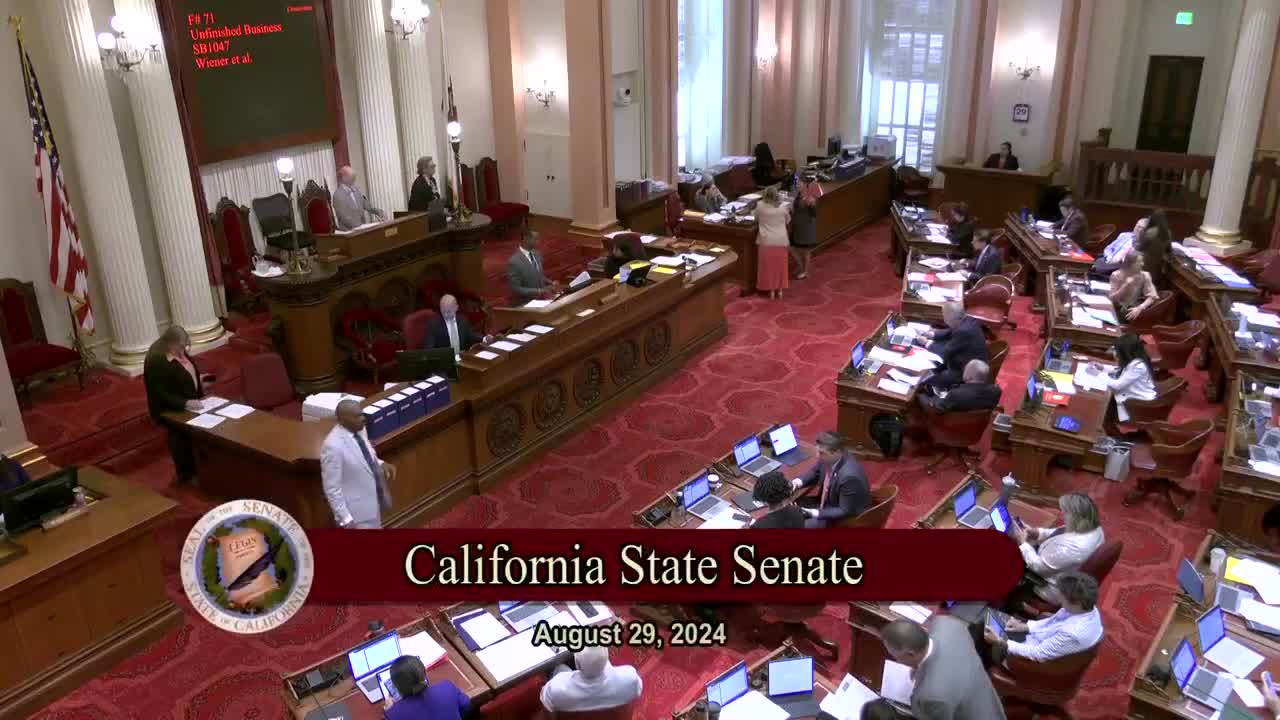 1MIN
Senate Floor
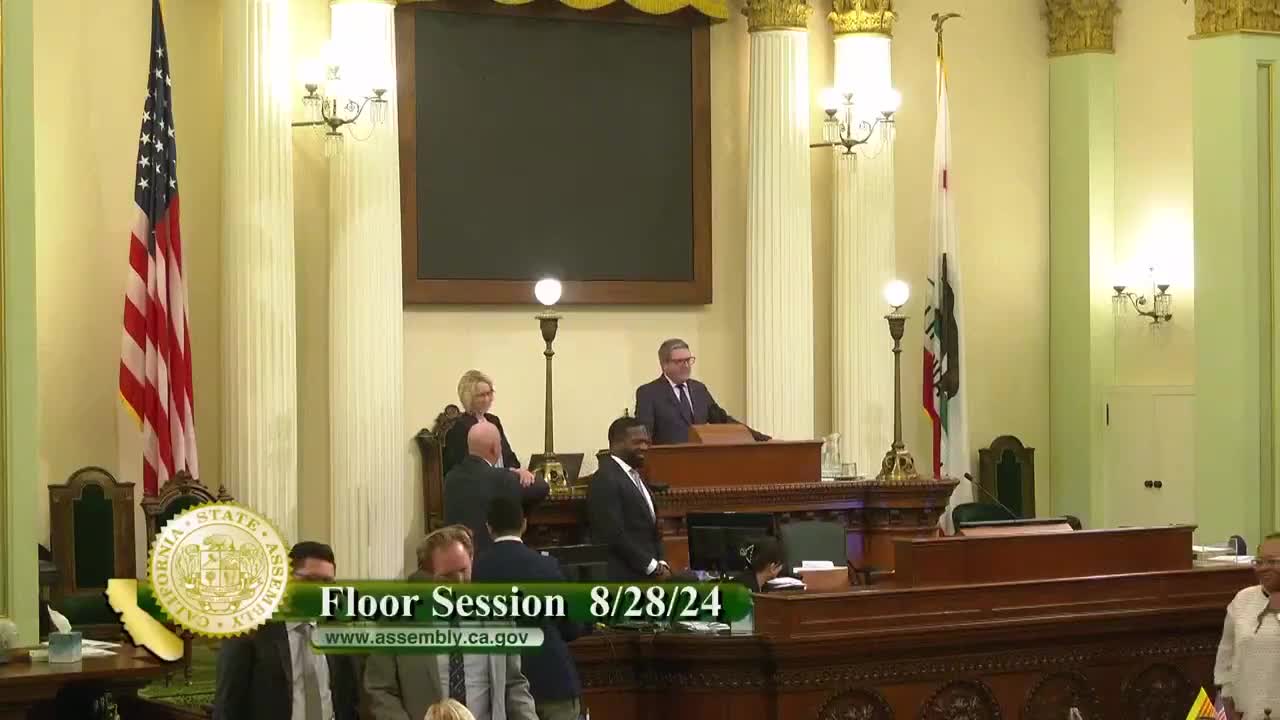 6MIN
Assembly Floor
 8SEC
Assembly Standing Committee on Appropriations
 28MIN
Assembly Standing Committee on Natural Resources
 6MIN
Senate Floor
 23MIN
Senate Standing Committee on Environmental Quality
Bill Author

Bill Co-Author(s):