SB 1313: Vehicle equipment: driver monitoring defeat devices.
- Session Year: 2023-2024
- House: Senate
- Latest Version Date: 2024-09-25
Current Status:
Passed
(2024-09-25: Chaptered by Secretary of State. Chapter 604, Statutes of 2024.)
Introduced
In Committee
First Chamber
In Committee
Second Chamber
Enacted
Existing law regulates vehicles, including autonomous vehicles and autonomous technology in vehicles. Existing law prohibits vehicles from being equipped with certain equipment, including, among other things, theft alarm systems that emit the sound of a siren. Existing law also prohibits vehicles from being equipped with a device that is designed for, or is capable of, jamming, scrambling, neutralizing, disabling, or interfering with radar, laser, or any other electronic device used by a law enforcement agency to measure the speed of moving objects.
This bill would prohibit vehicles from being equipped with a device that is specifically designed for, marketed for, or being used for, neutralizing, disabling, or otherwise interfering with a driver monitoring system, as defined, that is engaged when drivers are utilizing advanced driver assistance system features or autonomous technology, as defined. The bill would prohibit a person from using, buying, possessing, manufacturing, selling, advertising for sale, or otherwise distributing a device that is specifically designed for neutralizing, disabling, or otherwise interfering with a driver monitoring system that is engaged when drivers are utilizing advanced driver assistance system features or autonomous technology. The bill would make a violation of the above provisions an infraction. By creating a new crime, the bill would impose a state-mandated local program.
The California Constitution requires the state to reimburse local agencies and school districts for certain costs mandated by the state. Statutory provisions establish procedures for making that reimbursement.
This bill would provide that no reimbursement is required by this act for a specified reason.
Existing law regulates vehicles, including autonomous vehicles and autonomous technology in vehicles. Existing law prohibits vehicles from being equipped with certain equipment, including, among other things, theft alarm systems that emit the sound of a siren. Existing law also prohibits vehicles from being equipped with a device that is designed for, or is capable of, jamming, scrambling, neutralizing, disabling, or interfering with radar, laser, or any other electronic device used by a law enforcement agency to measure the speed of moving objects.
This bill would prohibit vehicles from being equipped with a device that is specifically designed for, marketed for, or being used for, neutralizing, disabling, or otherwise interfering with a driver monitoring system, as defined, that is engaged when drivers are utilizing partial driving automation system or conditional driving automation technology, advanced driver assistance system features or autonomous technology, as defined. The bill would prohibit a person from using, buying, possessing, manufacturing, selling, advertising for sale, or otherwise distributing a device that is specifically designed for neutralizing, disabling, or otherwise interfering with a driver monitoring system that is engaged when drivers are utilizing partial driving automation system or conditional driving automation technology. advanced driver assistance system features or autonomous technology. The bill would make a violation of the above provisions an infraction. By creating a new crime, the bill would impose a state-mandated local program.
The California Constitution requires the state to reimburse local agencies and school districts for certain costs mandated by the state. Statutory provisions establish procedures for making that reimbursement.
This bill would provide that no reimbursement is required by this act for a specified reason.
Existing law prohibits vehicles from being equipped with certain equipment, including, among other things, theft alarm systems that emit the sound of a siren. Existing law also prohibits vehicles from being equipped with a device that is designed for, or is capable of, jamming, scrambling, neutralizing, disabling, or interfering with radar, laser, or any other electronic device used by a law enforcement agency to measure the speed of moving objects.
This bill would prohibit vehicles from being equipped with a device that is specifically designed for, marketed for, or being used for, neutralizing, disabling, or otherwise interfering with a direct driver monitoring system, as defined, that is engaged when drivers are utilizing active driving assistance system partial driving automation system or conditional driving automation technology, as defined. The bill would prohibit a person from using, buying, possessing, manufacturing, selling, advertising for sale, or otherwise distributing a device that is specifically designed for neutralizing, disabling, or otherwise interfering with a direct driver monitoring system that is engaged when drivers are utilizing active driving assistance system partial driving automation system or conditional driving automation technology. The bill would make a violation of the above provisions an infraction. By creating a new crime, the bill would impose a state-mandated local program.
The California Constitution requires the state to reimburse local agencies and school districts for certain costs mandated by the state. Statutory provisions establish procedures for making that reimbursement.
This bill would provide that no reimbursement is required by this act for a specified reason.
Existing law prohibits vehicles from being equipped with certain equipment, including, among other things, theft alarm systems that emit the sound of a siren. Existing law also prohibits vehicles from being equipped with a device that is designed for, or is capable of, jamming, scrambling, neutralizing, disabling, or interfering with radar, laser, or any other electronic device used by a law enforcement agency to measure the speed of moving objects.
This bill would prohibit vehicles from being equipped with a device that is specifically designed for, marketed for, or being used for, neutralizing, disabling, or otherwise interfering with a direct driver monitoring system, as defined. defined, that is engaged when drivers are utilizing active driving assistance system technology, as defined. The bill would prohibit a person from using, buying, possessing, manufacturing, selling, advertising for sale, or otherwise distributing a device that is specifically designed for neutralizing, disabling, or otherwise interfering with a direct driver monitoring system. system that is engaged when drivers are utilizing active driving assistance system technology. The bill would make a violation of the above provisions an infraction. By creating a new crime, the bill would impose a state-mandated local program.
The California Constitution requires the state to reimburse local agencies and school districts for certain costs mandated by the state. Statutory provisions establish procedures for making that reimbursement.
This bill would provide that no reimbursement is required by this act for a specified reason.
Existing law prohibits vehicles from being equipped with certain equipment, including, among other things, theft alarm systems that emit the sound of a siren. Existing law also prohibits vehicles from being equipped with a device that is designed for, or is capable of, jamming, scrambling, neutralizing, disabling, or interfering with radar, laser, or any other electronic device used by a law enforcement agency to measure the speed of moving objects.
This bill would prohibit vehicles from being equipped with a device that is designed for, or is capable of, being used for, neutralizing, disabling, or otherwise interfering with a direct driver monitoring system, as defined. The bill would prohibit a person from using, buying, possessing, manufacturing, selling, or otherwise distributing a device that is designed for neutralizing, disabling, or otherwise interfering with a direct driver monitoring system. The bill would make a violation of the above provisions an infraction. By creating a new crime, the bill would impose a state-mandated local program.
The California Constitution requires the state to reimburse local agencies and school districts for certain costs mandated by the state. Statutory provisions establish procedures for making that reimbursement.
This bill would provide that no reimbursement is required by this act for a specified reason.
Existing law prohibits vehicles from being equipped with certain equipment, including, among other things, theft alarm systems that emit the sound of a siren. Existing law also prohibits vehicles from being equipped with a device that is designed for, or is capable of, jamming, scrambling, neutralizing, disabling, or interfering with radar, laser, or any other electronic device used by a law enforcement agency to measure the speed of moving objects.
This bill would prohibit vehicles from being equipped with a device that is designed for, or is capable of, neutralizing, disabling, or otherwise interfering with a direct driver monitoring system, as defined. The bill would prohibit a person from using, buying, possessing, manufacturing, selling, or otherwise distributing a device that is designed for neutralizing, disabling, or otherwise interfering with a direct driver monitoring system. The bill would make a violation of the above provisions an infraction. By creating a new crime, the bill would impose a state-mandated local program.
The California Constitution requires the state to reimburse local agencies and school districts for certain costs mandated by the state. Statutory provisions establish procedures for making that reimbursement.
This bill would provide that no reimbursement is required by this act for a specified reason.
Existing law generally regulates the requirements for, and operation of, vehicle brakes. Existing law prohibits a forklift truck manufactured after January 1, 1970, from being towed behind another vehicle unless it is equipped with brakes that meet specified requirementsThis bill would make technical, nonsubstantive changes to that provision.Existing law generally regulates the requirements for, and operation of, vehicle brakes. Existing law prohibits a forklift truck manufactured after January 1, 1970, from being towed behind another vehicle unless it is equipped with brakes that meet specified requirements
This bill would make technical, nonsubstantive changes to that provision.
(a)A vehicle shall not be equipped with a device that is specifically designed for, marketed for, or being used for, neutralizing, disabling, or otherwise interfering with a driver monitoring system that is engaged when drivers are utilizing advanced driver assistance system features or autonomous technology, as defined in Section 38750.
(b)A person shall not use, buy, possess, manufacture, sell, advertise for sale, or otherwise distribute a device that is specifically designed for neutralizing, disabling, or otherwise interfering with a driver monitoring system that is engaged when drivers are utilizing advanced driver assistance system features or autonomous technology, as defined in Section 38750.
(c)A violation of subdivision (a) or (b) is an infraction.
(d)All of the following are exempt from subdivision (a) or (b):
(1)A manufacturer while operating under a testing permit issued pursuant to Section 38750.
(2)A person or entity conducting motor vehicle diagnostic services, repairs, or enhancements consistent with the original equipment manufacturers safety standards, whether physically or remotely.
(3)In connection with an update or enhancement of the driver monitoring system by the original equipment manufacturer.
(4)In connection with a repair of a vehicle malfunction corrected by the manufacturer or manufacturer-approved third-party vendor.
(5)To remedy a defect corrected by the manufacturer or manufacturer-approved third-party vendor.
(6)For modifications or compliance pursuant to applicable provisions of the federal Americans with Disabilities Act of 1990 (42 U.S.C. Sec. 12101 et seq.).
(e)For purposes of this section, advanced driver assistance system means Level 2 of SAE Internationals Taxonomy and Definitions for Terms Related to Driving Automation Systems for On-Road Motor Vehicles, standard J3016 (APR 2021).
(f)For purposes of this section, a direct driver monitoring system includes exterior camera systems, interior camera systems, or other detection devices designed specifically to monitor the alertness of the driver while advanced driver assistance system technology or autonomous technology that meets the definition of a Level 3, 4 or 5 SAE Internationals Taxonomy and Definitions for Terms Related to Driving Automation Systems for On-Road Motor Vehicles, standard J3016 (APR2021) is engaged, systems that require a driver to maintain their hands on the steering wheel, pressure sensors, safety sensors, distracted driver sensors, systems that help the driver to continue to pay attention to the traffic situation, systems that warn the driver when the driver is distracted, and any other system that has been shown to be effective in monitoring drivers while they are utilizing advanced driver assistance system or autonomous technology.
(g)This section shall not be construed to do either of the following:
(1)Restrict or prohibit access to a motor vehicles onboard computer systems to conduct diagnostics, repairs, or enhancements consistent with the original equipment manufacturers safety standards, whether physically or remotely.
(2)Prevent a person from taking immediate steps to protect the life or physical safety of the driver or other people in the vehicle.
SEC. 2.No reimbursement is required by this act pursuant to Section 6 of Article XIIIB of the California Constitution because the only costs that may be incurred by a local agency or school district will be incurred because this act creates a new crime or infraction, eliminates a crime or infraction, or changes the penalty for a crime or infraction, within the meaning of Section 17556 of the Government Code, or changes the definition of a crime within the meaning of Section 6 of Article XIIIB of the California Constitution.
(a)A vehicle shall not be equipped with a device that is specifically designed for, marketed for, or being used for, neutralizing, disabling, or otherwise interfering with a driver monitoring system that is engaged when drivers are utilizing partial driving automation system or conditional driving automation technology. advanced driver assistance system features or autonomous technology, as defined in Section 38750.
(b)A person shall not use, buy, possess, manufacture, sell, advertise for sale, or otherwise distribute a device that is specifically designed for neutralizing, disabling, or otherwise interfering with a driver monitoring system that is engaged when drivers are utilizing partial driving automation system or conditional driving automation technology. advanced driver assistance system features or autonomous technology, as defined in Section 38750.
(c)A violation of subdivision (a) or (b) is an infraction.
(d)All of the following are exempt from subdivision (a) or (b):
(1)A person or entity with a valid permit to test autonomous technology. manufacturer while operating under a testing permit issued pursuant to Section 38750.
(2)A person or entity conducting motor vehicle diagnostic services, repairs, or enhancements consistent with the original equipment manufacturers safety standards, whether physically or remotely.
(3)In connection with an update or enhancement of the driver monitoring system by the original equipment manufacturer.
(4)In connection with a repair of a vehicle malfunction corrected by the manufacturer or manufacturer-approved third-party vendor.
(5)To remedy a defect corrected by the manufacturer or manufacturer-approved third-party vendor.
(6)For modifications or compliance pursuant to applicable provisions of the federal Americans with Disabilities Act of 1990 (42 U.S.C. Sec. 12101 et seq.).
(e)For purposes of this section, partial driving automation system means Level 2 and conditional driving automation means Level 3 advanced driver assistance system means Level 2 of SAE Internationals Taxonomy and Definitions for Terms Related to Driving Automation Systems for On-Road Motor Vehicles, standard J3016. J3016 (APR 2021).
(f)For purposes of this section, a driver monitoring system includes exterior or interior camera systems direct driver monitoring system includes exterior camera systems, interior camera systems, or other detection devices designed specifically to monitor the alertness of the driver while partial driving automation system or conditional driving automation technology advanced driver assistance system technology or autonomous technology that meets the definition of a Level 3, 4 or 5 SAE Internationals Taxonomy and Definitions for Terms Related to Driving Automation Systems for On-Road Motor Vehicles, standard J3016 (APR2021) is engaged, systems that require a driver to maintain their hands on the steering wheel, pressure sensors, safety sensors, distracted driver sensors, systems that help the driver to continue to pay attention to the traffic situation, systems that warn the driver when the driver is distracted, and any other system that has been shown to be effective in monitoring drivers while they are utilizing partial driving automation system or conditional driving automation technology. advanced driver assistance system or autonomous technology.
(g)This section shall not be construed to do either of the following:
(1)Restrict or prohibit access to a motor vehicles onboard computer systems to conduct diagnostics, repairs, or enhancements consistent with the original equipment manufacturers safety standards, whether physically or remotely.
(2)Prevent a person from taking immediate steps to protect the life or physical safety of the driver or other people in the vehicle.
SEC. 2.No reimbursement is required by this act pursuant to Section 6 of Article XIIIB of the California Constitution because the only costs that may be incurred by a local agency or school district will be incurred because this act creates a new crime or infraction, eliminates a crime or infraction, or changes the penalty for a crime or infraction, within the meaning of Section 17556 of the Government Code, or changes the definition of a crime within the meaning of Section 6 of Article XIIIB of the California Constitution.
(a)A vehicle shall not be equipped with a device that is specifically designed for, marketed for, or being used for, neutralizing, disabling, or otherwise interfering with a direct driver monitoring system that is engaged when drivers are utilizing active driving assistance system partial driving automation system or conditional driving automation technology.
(b)A person shall not use, buy, possess, manufacture, sell, advertise for sale, or otherwise distribute a device that is specifically designed for neutralizing, disabling, or otherwise interfering with a direct driver monitoring system that is engaged when drivers are utilizing active driving assistance system partial driving automation system or conditional driving automation technology.
(c)A violation of subdivision (a) or (b) is an infraction.
(d)All of the following are exempt from subdivision (a) or (b):
(1)A person or entity with a valid permit to test autonomous technology.
(2)A person or entity conducting motor vehicle diagnostic services, repairs, or enhancements consistent with the original equipment manufacturers safety standards, whether physically or remotely.
(3)In connection with an update or enhancement of the driver monitoring system by the original equipment manufacturer.
(4)In connection with a repair of a vehicle malfunction corrected by the manufacturer or manufacturer-approved third-party vendor.
(5)To remedy a defect corrected by the manufacturer or manufacturer-approved third-party vendor.
(6)For modifications or compliance pursuant to applicable provisions of the federal Americans with Disabilities Act of 1990 (42 U.S.C. Sec. 12101 et seq.).
(e)For purposes of this section, active driving assistance system means Level 2, Level 3, Level 4, or Level 5 partial driving automation system means Level 2 and conditional driving automation means Level 3 of SAE Internationals Taxonomy and Definitions for Terms Related to Driving Automation Systems for On-Road Motor Vehicles, standard J3016 (APR2021). J3016.
(f)For purposes of this section, a direct driver driver monitoring system includes exterior camera systems, or interior camera systems designed specifically to monitor the alertness of the driver while active driving assistance system partial driving automation system or conditional driving automation technology is engaged, systems that require a driver to maintain their hands on the steering wheel, pressure sensors, safety sensors, distracted driver sensors, systems that help the driver to continue to pay attention to the traffic situation, systems that warn the driver when the driver is distracted, and any other system that has been shown to be effective in monitoring drivers while they are utilizing active driving assistance system partial driving automation system or conditional driving automation technology.
(g)This section shall not be construed to do either of the following:
(1)Restrict or prohibit access to a motor vehicles onboard computer systems to conduct diagnostics, repairs, or enhancements consistent with the original equipment manufacturers safety standards, whether physically or remotely.
(2)Prevent a person from taking immediate steps to protect the life or physical safety of the driver or other people in the vehicle.
SEC. 2.No reimbursement is required by this act pursuant to Section 6 of Article XIIIB of the California Constitution because the only costs that may be incurred by a local agency or school district will be incurred because this act creates a new crime or infraction, eliminates a crime or infraction, or changes the penalty for a crime or infraction, within the meaning of Section 17556 of the Government Code, or changes the definition of a crime within the meaning of Section 6 of Article XIIIB of the California Constitution.
(a)A vehicle shall not be equipped with a device that is designed for, specifically designed for, marketed for, or being used for, neutralizing, disabling, or otherwise interfering with a direct driver monitoring system. system that is engaged when drivers are utilizing active driving assistance system technology.
(b)A person shall not use, buy, possess, manufacture, sell, advertise for sale, or otherwise distribute a device that is specifically designed for neutralizing, disabling, or otherwise interfering with a direct driver monitoring system. system that is engaged when drivers are utilizing active driving assistance system technology.
(c)A violation of subdivision (a) or (b) is an infraction.
(d)Notwithstanding any other law, all All of the following are exempt from subdivision (a) or (b):
(1)A person or entity with a valid permit to test autonomous technology.
(2)A person or entity conducting motor vehicle diagnostic services, repairs, or enhancements consistent with the original equipment manufacturers safety standards, whether physically or remotely.
(3)In connection with an update or enhancement of the driver monitoring system by the original equipment manufacturer.
(4)In connection with a repair of a vehicle malfunction corrected by the manufacturer or manufacturer-approved third-party vendor.
(5)To remedy a defect corrected by the manufacturer or manufacturer-approved third-party vendor.
(6)For modifications or compliance pursuant to applicable provisions of the federal Americans with Disabilities Act of 1990 (42 U.S.C. Sec. 12101 et seq.).
(e)For purposes of this section, active driving assistance system means Level 2, Level 3, Level 4, or Level 5 of SAE Internationals Taxonomy and Definitions for Terms Related to Driving Automation Systems for On-Road Motor Vehicles, standard J3016 (APR2021).
(e)(f)For purposes of this section, a direct driver monitoring system includes, but is not limited to, includes exterior camera systems, interior camera systems designed specifically to monitor the alertness of the driver while active driving assistance system technology is engaged, systems that require a driver to maintain their hands on the steering wheel, pressure sensors, safety sensors, distracted driver sensors, systems that help the driver to continue to pay attention to the traffic situation, and systems that warn the driver when the driver is distracted. distracted, and any other system that has been shown to be effective in monitoring drivers while they are utilizing active driving assistance system technology.
(f)(g)This section shall not be construed to restrict do either of the following:
(1)Restrict or prohibit access to a motor vehicles onboard computer systems to conduct diagnostics, repairs, or enhancements consistent with the original equipment manufacturers safety standards, whether physically or remotely.
(2)Prevent a person from taking immediate steps to protect the life or physical safety of the driver or other people in the vehicle.
SEC. 2.No reimbursement is required by this act pursuant to Section 6 of Article XIIIB of the California Constitution because the only costs that may be incurred by a local agency or school district will be incurred because this act creates a new crime or infraction, eliminates a crime or infraction, or changes the penalty for a crime or infraction, within the meaning of Section 17556 of the Government Code, or changes the definition of a crime within the meaning of Section 6 of Article XIIIB of the California Constitution.
(a)A vehicle shall not be equipped with a device that is designed for, or is capable of, being used for, neutralizing, disabling, or otherwise interfering with a direct driver monitoring system.
(b)A person shall not use, buy, possess, manufacture, sell, or otherwise distribute a device that is designed for neutralizing, disabling, or otherwise interfering with a direct driver monitoring system.
(c)A violation of subdivision (a) or (b) is an infraction.
(d)Notwithstanding any other law, all of the following are exempt from subdivision (a) or (b):
(1)A person or entity with a valid permit to test autonomous technology.
(2)A person or entity conducting motor vehicle diagnostic services, repairs, or enhancements consistent with the original equipment manufacturers safety standards, whether physically or remotely.
(2)(3)In connection with an update or enhancement of the driver monitoring system by the original equipment manufacturer.
(3)(4)In connection with a repair of a vehicle malfunction corrected by the manufacturer or manufacturer-approved third-party vendor.
(4)(5)To remedy a defect corrected by the manufacturer or manufacturer-approved third-party vendor.
(5)(6)For modifications or compliance pursuant to applicable provisions of the federal Americans with Disabilities Act of 1990 (42 U.S.C. Sec. 12101 et seq.).
(e)For purposes of this section, a direct driver monitoring system includes, but is not limited to, camera systems, systems that require a driver to maintain their hands on the steering wheel, pressure sensors, safety sensors, distracted driver sensors, systems that help the driver to continue to pay attention to the traffic situation, and systems that warn the driver when the driver is distracted.
(f)This section shall not be construed to restrict or prohibit access to a motor vehicles onboard computer systems to conduct diagnostics, repairs, or enhancements consistent with the original equipment manufacturers safety standards, whether physically or remotely.
SEC. 2.No reimbursement is required by this act pursuant to Section 6 of Article XIIIB of the California Constitution because the only costs that may be incurred by a local agency or school district will be incurred because this act creates a new crime or infraction, eliminates a crime or infraction, or changes the penalty for a crime or infraction, within the meaning of Section 17556 of the Government Code, or changes the definition of a crime within the meaning of Section 6 of Article XIIIB of the California Constitution.
(a)A vehicle shall not be equipped with a device that is designed for, or is capable of, neutralizing, disabling, or otherwise interfering with a direct driver monitoring system.
(b)A person shall not use, buy, possess, manufacture, sell, or otherwise distribute a device that is designed for neutralizing, disabling, or otherwise interfering with a direct driver monitoring system.
(c)A violation of subdivision (a) or (b) is an infraction.
(d)Notwithstanding any other law, all of the following are exempt from subdivision (a) or (b):
(1)A person or entity with a valid permit to test autonomous technology.
(2)In connection with an update or enhancement of the driver monitoring system by the original equipment manufacturer.
(3)In connection with a repair of a vehicle malfunction corrected by the manufacturer or manufacturer-approved third-party vendor.
(4)To remedy a defect corrected by the manufacturer or manufacturer-approved third-party vendor.
(5)For modifications or compliance pursuant to applicable provisions of the federal Americans with Disabilities Act of 1990 (42 U.S.C. Sec. 12101 et seq.).
(e)For purposes of this section, a direct driver monitoring system includes, but is not limited to, camera systems, systems that require a driver to maintain their hands on the steering wheel, pressure sensors, safety sensors, distracted driver sensors, systems that help the driver to continue to pay attention to the traffic situation, and systems that warn the driver when the driver is distracted.
SEC. 2.No reimbursement is required by this act pursuant to Section 6 of Article XIIIB of the California Constitution because the only costs that may be incurred by a local agency or school district will be incurred because this act creates a new crime or infraction, eliminates a crime or infraction, or changes the penalty for a crime or infraction, within the meaning of Section 17556 of the Government Code, or changes the definition of a crime within the meaning of Section 6 of Article XIIIB of the California Constitution.
SECTION 1.Section 26307 of the Vehicle Code is amended to read:26307.A forklift truck manufactured after January 1, 1970, shall not be towed behind another vehicle unless it is equipped with brakes on the wheels of the rearmost axle when the forklift truck is in the towing position. The forklift truck brakes shall be adequate, supplemental to the brakes on the towing vehicle, to enable the combination of vehicles to comply with the stopping distance requirements of Section 26454.No A forklift truck manufactured after January 1, 1970, shall not be towed behind another vehicle unless it is equipped with brakes on the wheels of the rearmost axle when the forklift truck is in the towing position, which. position. The forklift truck brakes shall be adequate, supplemental to the brakes on the towing vehicle, to enable the combination of vehicles to comply with the stopping distance requirements of Section 26454.
|
Date
|
Status
|
|---|---|
| Sep 25, 2024 | Chaptered by Secretary of State. Chapter 604, Statutes of 2024. |
| Sep 25, 2024 | Approved by the Governor. |
| Sep 11, 2024 | Enrolled and presented to the Governor at 3 p.m. |
| Aug 31, 2024 | Assembly amendments concurred in. (Ayes 40. Noes 0. Page 5774.) Ordered to engrossing and enrolling. |
| Aug 30, 2024 | In Senate. Concurrence in Assembly amendments pending. |
| Aug 29, 2024 | Read third time. Passed. (Ayes 76. Noes 0. Page 6890.) Ordered to the Senate. |
| Aug 23, 2024 | Ordered to third reading. |
| Aug 23, 2024 | Read third time and amended. |
| Aug 22, 2024 | Ordered to third reading. |
| Aug 22, 2024 | Read third time and amended. |
| Aug 8, 2024 | Ordered to third reading. |
| Aug 8, 2024 | From consent calendar on motion of Assembly Member Aguiar-Curry. |
| Aug 8, 2024 | Read second time. Ordered to consent calendar. |
| Aug 7, 2024 | From committee: Do pass. Ordered to consent calendar. (Ayes 14. Noes 0.) (August 7). |
| Jul 9, 2024 | Read second time and amended. Re-referred to Com. on APPR. |
| Jul 9, 2024 | From committee: Do pass as amended and re-refer to Com. on APPR. (Ayes 9. Noes 0.) (July 2). |
| Jun 18, 2024 | From committee: Do pass and re-refer to Com. on P. & C.P. (Ayes 15. Noes 0.) (June 17). Re-referred to Com. on P. & C.P. |
| Jun 3, 2024 | Referred to Coms. on TRANS. and P. & C.P. |
| May 13, 2024 | In Assembly. Read first time. Held at Desk. |
| May 13, 2024 | Read third time. Passed. (Ayes 36. Noes 0. Page 3893.) Ordered to the Assembly. |
| Apr 23, 2024 | Read second time. Ordered to third reading. |
| Apr 22, 2024 | From committee: Be ordered to second reading pursuant to Senate Rule 28.8. |
| Apr 17, 2024 | From committee with author's amendments. Read second time and amended. Re-referred to Com. on APPR. |
| Apr 12, 2024 | Set for hearing April 22. |
| Apr 10, 2024 | From committee: Do pass and re-refer to Com. on APPR. (Ayes 15. Noes 0. Page 3536.) (April 9). Re-referred to Com. on APPR. |
| Apr 3, 2024 | Re-referred to Com. on TRANS. |
| Apr 2, 2024 | Set for hearing April 9 in TRANS. pending receipt. |
| Mar 18, 2024 | From committee with author's amendments. Read second time and amended. Re-referred to Com. on RLS. |
| Feb 29, 2024 | Referred to Com. on RLS. |
| Feb 20, 2024 | From printer. May be acted upon on or after March 18. |
| Feb 16, 2024 | Introduced. Read first time. To Com. on RLS. for assignment. To print. |
|
Date
|
Description
|
Location
|
Votes
|
|
|---|---|---|---|---|
| Aug 31, 2024 | Unfinished Business SB1313 Ashby Concurrence | Senate Floor |
Passed |
|
| Aug 29, 2024 | SB 1313 Ashby Senate Third Reading By Hoover | Assembly Floor |
Passed |
|
| Aug 7, 2024 | Do pass. To Consent Calendar. | Assembly Standing Committee on Appropriations |
Passed |
|
| Jul 2, 2024 | Do pass as amended and be re-referred to the Committee on [Appropriations] | Assembly Standing Committee on Privacy and Consumer Protection |
Passed |
|
| Jun 17, 2024 | Do pass and be re-referred to the Committee on [Privacy and Consumer Protection] | Assembly Standing Committee on Transportation |
Passed |
|
| May 13, 2024 | Senate 3rd Reading SB1313 Ashby | Senate Floor |
Passed |
|
| Apr 9, 2024 | Do pass, but first be re-referred to the Committee on [Appropriations] | Senate Standing Committee on Transportation |
Passed |
This list shows positions taken on this bill by organizations on the date displayed, which is linked to the original source.
Positions by individuals are not included.
|
Organization
|
Position
|
Date
|
|---|---|---|
| Alliance For Automotive Innovation | ** Support | |
| Oakland Privacy | ** Against | |
| Tesla | ** Support |
SENATE RULES COMMITTEE Office of Senate Floor Analyses (916) 651-1520 Fax: (916) 327-4478 | SB 1313 |
UNFINISHED BUSINESS
Bill No: SB 1313
Author: Ashby (D)
Amended: 8/23/24
Vote: 21
SENATE TRANSPORTATION COMMITTEE: 15-0, 4/9/24
AYES: Cortese, Niello, Allen, Archuleta, Becker, Blakespear, Dahle, Dodd, Gonzalez, Limón, Newman, Nguyen, Portantino, Seyarto, Umberg
SENATE APPROPRIATIONS COMMITTEE: Senate Rule 28.8
SENATE FLOOR: 36-0, 5/13/24
AYES: Allen, Alvarado-Gil, Archuleta, Ashby, Becker, Blakespear, Bradford, Caballero, Cortese, Dahle, Dodd, Durazo, Eggman, Glazer, Grove, Hurtado, Jones, Laird, Limón, McGuire, Min, Newman, Nguyen, Niello, Ochoa Bogh, Portantino, Roth, Rubio, Seyarto, Skinner, Smallwood-Cuevas, Stern, Umberg, Wahab, Wiener, Wilk
NO VOTE RECORDED: Atkins, Gonzalez, Menjivar, Padilla
ASSEMBLY FLOOR: 76-0, 8/29/24 - See last page for vote
SUBJECT: Vehicle equipment: driver monitoring defeat devices
SOURCE: Author
DIGEST:
This bill prohibits a vehicle from being equipped with, or a person from using, a device that is designed for neutralizing or interfering with a driver monitoring system that is engaged when drivers are utilizing advanced driver assistance features or autonomous technology.
Assembly Amendments
are technical.
ANALYSIS: Existing law requires potential drivers to pass a test of the driver’s knowledge of traffic rules and ability to understand traffic signs and to demonstrate the drivers ability to exercise ordinary and reasonable control of a vehicle.
This bill:
- Prohibits vehicles from being equipped with devices that are specifically designed or used for, neutralizing or interfering with a driver monitoring system that is engaged when drivers are utilizing advanced driver assistance features or autonomous technology.
- Prohibits a person from using, buying, possessing, manufacturing, selling, advertising or distributing a device that is specifically designed for neutralizing or interfering with a driver monitoring system that is engaged when drivers are utilizing advanced driver assistance features or autonomous technology.
- Establishes that violations of these prohibitions are infractions punishable by a fine of up to $100 for a first infraction, up to $200 for a second, and up to $250 for subsequent infractions.
- Defines direct driver monitoring system to include interior and exterior cameras, systems that require a driver to maintain their hands on the steering wheel, distracted driver sensors, and systems that warn the driver when the driver is distracted.
Comments
- Author’s Statement. SB 1313 is a crucial step in ensuring the safety of drivers and pedestrians. This bill prohibits the use of devices that interfere with a vehicle’s Active Driving Assistance System (ADAS) technology. ADAS technology offers safety monitoring and driving assistance, which has shown significant potential in reducing traffic collisions, injuries, and fatalities. However, the overriding of ADAS through manipulation devices undermines the effectiveness of vehicle safety technology, jeopardizing lives in the process. As active driving assistance technology becomes increasingly standard in vehicles, California’s traffic laws must adapt to the misuse of technology to keep our roads safe. SB 1313 establishes the necessary measures to preserve the functionality of safety technology and protects our roads from distracted drivers.
- Look Mom, No Hands. Vehicles are increasingly equipped with driver assistance features which help the vehicle maintain speed, stay in the lane, or park. Unless the vehicle has been approved by the Department of Motor Vehicles as autonomous, the vehicle must be under the control of the driver at all times. Unfortunately, some drivers put too much faith in the technology mistaking driver assistance for vehicle autonomy, sometimes with tragic results. Vehicles are equipped with systems to deter drivers from such over-reliance, using pressure sensors to ensure the driver’s hands are on the steering wheel or cameras to ensure that the driver’s eyes are open and focused on the road. The bill refers to these as “driver monitoring systems”, but those systems can be easily defeated.
A quick search on the Internet shows several products that are explicitly marketed to over-ride the direct driver monitoring systems. These include simple devices such as steering wheel weights and more sophisticated equipment that must be plugged into the vehicle wiring. Vehicle manufacturers view these defeat devices as dangerous, bypassing the safety features designed to ensure the vehicle operates safely.
- Penalty. This bill makes it an infraction for a person to use, buy, possess, manufacture, sell or distribute such devices. The penalty is a fine of up to $100 for a first infraction, up to $200 for a second infraction that occurs within one year of the first, and up to $250 for an infraction that occurs within a year of two or more prior infractions.
FISCAL EFFECT: Appropriation: No Fiscal Com.: Yes Local: Yes
From the Assembly Appropriations Committee: Minor state costs, if any.
SUPPORT: (Verified 8/29/24)
Alliance for Automotive Innovation
Tesla
OPPOSITION: (Verified 8/29/24)
Oakland Privacy
ASSEMBLY FLOOR: 76-0, 8/29/24
AYES: Addis, Aguiar-Curry, Alanis, Alvarez, Arambula, Bains, Bauer-Kahan, Bennett, Berman, Boerner, Bonta, Bryan, Calderon, Juan Carrillo, Wendy Carrillo, Chen, Connolly, Megan Dahle, Davies, Dixon, Essayli, Flora, Mike Fong, Friedman, Gabriel, Gallagher, Garcia, Gipson, Grayson, Haney, Hart, Holden, Hoover, Irwin, Jackson, Jones-Sawyer, Kalra, Lackey, Lee, Low, Lowenthal, Maienschein, Mathis, McCarty, McKinnor, Muratsuchi, Stephanie Nguyen, Pacheco, Papan, Jim Patterson, Joe Patterson, Pellerin, Petrie-Norris, Quirk-Silva, Ramos, Rendon, Reyes, Luz Rivas, Rodriguez, Blanca Rubio, Sanchez, Santiago, Schiavo, Soria, Ta, Ting, Valencia, Villapudua, Waldron, Wallis, Ward, Weber, Wicks, Wilson, Wood, Robert Rivas
NO VOTE RECORDED: Cervantes, Ortega, Zbur
Click here to enter text.
Prepared by: Randy Chinn / TRANS. / (916) 651-4121
8/29/24 20:03:40
**** END ****
SENATE THIRD READING
STR Bill Id:SB 1313
Author:(Ashby)
As Amended Ver:August 23, 2024
Majority vote
SUMMARY
Prohibits vehicles from being equipped with a device that is designed for, marketed for, or being used for, neutralizing, disabling, or otherwise interfering with a driving monitor system that is engaged when drivers a using active driving assistance system technology.
Major Provisions
- Prohibits a person from using, buying, possessing, manufacturing, selling, advertise for selling, or otherwise distributing a device that is designed for neutralizing, disabling, or otherwise interfering with a direct driver monitoring system.
- Provides that a violation of either provision described above is an infraction.
- Exempts the following from either provision described above:
- A person or entity with a valid permit to test autonomous technology;
- A person or entity conducting motor vehicle diagnostic services, repairs, or enhancements consistent with the original equipment manufacturer's safety standards, whether physically or remotely;
- In connection with an update or enhancement of the driver monitoring system by the original equipment manufacturer;
- In connection with a repair of a vehicle malfunction corrected by the manufacturer or manufacturer-approved third-party; and,
- For modifications or compliance pursuant with the provisions of the federal Americans with Disabilities Act of 1990.
- Defines "driver monitoring system" to include exterior or interior camera systems designed specifically to monitor the alertness of the driver while an advanced driver assistance system features or autonomous technology is engaged, systems that require a driver to maintain their hands on the steering wheel, pressure sensors, safety sensors, distracted driver sensors, systems that help the driver to continue to pay attention to the traffic situation, and systems that warn the driver when the driver is distracted, and any other system that has been shown to be effective in monitoring drivers while they are utilizing a an advanced driver assistance system features or autonomous technology
- Defines "advanced driver assistance system" to mean a level 2 of SAE international's Taxonomy and Definitions for Terms Related to Driving Automation Systems for On-Road Motor Vehicles, standard J31016 (APR 2021).
- Defines "autonomous technology" to mean a level 3,4 or 5 of SAE international's Taxonomy and Definitions for Terms Related to Driving Automation Systems for On-Road Motor Vehicles, standard J31016 (APR 2021).
- Provides that the section should not be construed to restrict or prohibit access to a motor vehicle's onboard computer system to conduct diagnostics, repairs, or enhancements consistent with the original equipment manufacturer's safety standards, whether physically or remotely or prevent a person from taking immediate steps to protect the life or physical safety of the driver or other people in the vehicle.
COMMENTS
SAE International is a U.S. based professional association of engineers. SAE International's Taxonomy and Definition for Terms Related to Driving Automation Systems for On-Road Motor Vehicles have become the accepted engineering definitions for the different levels of automation with NHTSA and DMV. SAE has designated six different levels of Automated Vehicles (AVs):
Level 0: The human driver does all the driving.
Level 1: An advanced driver assistance system (ADAS) on the vehicle can sometimes assist the human driver with either steering or braking/accelerating, but not both simultaneously. An example includes adaptive cruise control.
Level 2: ADAS on the vehicle control both steering and braking/accelerating simultaneously under some circumstances. The human driver must pay full attention ("monitor the driving environment") at all times and perform the rest of the driving task. Examples include Tesla's Autopilot and Cadillac Super Cruise.
Level 3: An ADAS on the vehicle performs all aspects of the driving task under some circumstances. In those circumstances, the human driver must be ready to take back control at any time when the ADAS requests the human driver to do so. In all other circumstances, the human driver performs the driving task.
Level 4: ADAS on the vehicle performs all driving tasks and monitors the driving environment – essentially, does all the driving – in certain circumstances. The human need not pay attention in those circumstances.
Level 5: ADAS on the vehicle does all the driving in all circumstances. The human occupants are passengers and do not need to be involved in driving.
Both the federal and state law define AVs as vehicles with automated technology of Levels 3-5.
Level 2 and Level 3 systems relieve the driver of some or all of the dynamic driving task, while still requiring the driver to pay active attention to the road.
Experts and some AV developers have questioned whether Level 3 vehicles are safe at all, as it creates a split responsibility between drivers and machines. In October of 2015, Google released a report on its experiences with its driverless technology. In 2012, several Google employees were allowed to use one of Google's vehicles on autonomous mode for the freeway portion of their commute to work. Every employee was warned that the car is in its beginning stage, and they should pay attention 100% of the time. Each car was equipped with a video camera inside that would film the passengers.
Despite Google's instructions, videos showed that some drivers completely turned away from the driving seat to do things like search for a cell-phone charger, while others simply relaxed. Engineers call this behavior automation bias. Google stated in their report: "We saw human nature at work: people trust technology very quickly once they see that it works. As a result, it's difficult for them to dip in and out of the task of driving when they are encouraged to switch off and relax."
Waymo, Google's automated vehicle arm, has publicly stated they will not be releasing level 3 vehicles out of safety concerns that drivers may fall asleep while systems are operating, placing the driver and other users at risk.
Research at Virginia Tech University sponsored by General Motors (GM) and the Federal Highway Administration found similar results. Twelve drivers were given vehicles with adaptive cruise control that handled a car's steering and breaking and put on a test track. Drivers were provided reading material, food, drinks and entertainment media. A passenger joined them and was watching a DVD during the test drive. 58% of drivers watched the DVD for some time during the three hour trip. 25% of the drivers read--increasing their risk of a car crash by 3.4 times. Overall, drivers were estimated to be looking away from the road about 33% of the time during the course of the three-hour trip.
Vehicle manufacturers have developed driver monitoring systems for Level 2 vehicles in order to insure drivers are paying attention to the road. These systems include cameras to monitor a driver's eyes, weight sensors to ensure a person is in the driver's seat, and monitors in the wheel to ensure the person is still holding it even though the vehicle is performing the driving tasks.
While Level 2 systems are not as advanced as Level 3 systems, the problems identified by Google for Level 3 systems for driver overreliance have been prevalent for users of Level 2 systems. Unlike Level 3 systems, Level 2 systems are not capable of completing all dynamic driving tasks, but can complete enough of the dynamic driving tasks where drivers may stop paying attention. Cars with Level 2 technology have several features to deal with this problem. Tesla requires a hand to be on the wheel, while General Motor's Super Cruise has a camera that monitors a human's face to make sure they are paying attention. Tesla's system to ensure drivers are paying attention has not been fool proof. For example, in September of 2021 a Tesla driver was arrested in Glendale, California for driving under the influence. The driver was passed out behind the wheel as the vehicle operating on Autopilot was driving at slow speeds on a freeway overpass. Law enforcement got in front of the vehicle and slowed down to get the vehicle to stop.
In 2021 AAA released a report entitled Effectiveness of Driver Monitoring Systems. The report evaluated the effect of direct monitoring systems (cameras) and indirect monitoring systems (steering wheel input).
AAA found that both systems were susceptible to active circumvention attempts. On average, evaluated indirect systems allowed driver disengagement for an average of five minutes, while direct systems allowed disengagement for two minutes. At 65 miles per hour, this permits a person to drive either six or two miles without driver engagement with the system. AAA was able to have its drivers trick both systems without using any external devices, tools or aids as this bill would prohibit. AAA recommends that automakers opt for camera-based driver monitoring systems over steering wheel monitoring.
In 2021, the National Highway Traffic Administration (NHTSA) issued a standing blanket order requiring manufacturers and operators to report to it certain crashes involving vehicles equipped with Level 2 automated driving systems or advanced driver assistance systems. In 2022, 392 crashes were reported, including six fatalities. Tesla accounted for 273 of the crashes.
More recently, NHTSA required Tesla to recall more than two million of its vehicles after they found that Tesla's system to monitor drivers was defective. The update requires Tesla to increase warnings and alerts to drivers to keep their hands on the steering wheel.
Defeat devices this bill intends to target include Autopilot Buddy, an accessory specifically targeted to Tesla drivers to skirt around hands-off-the-wheel warnings. The small weighted device provides enough torque on the steering wheel to reduce the number of warnings from the vehicle regarding hands-off operation when autopilot is activated.
According to the Author
"SB 1313 is a crucial step in ensuring the safety of drivers and pedestrians. This bill prohibits the use of devices that interfere with a vehicle's Active Driving Assistance System (ADAS) technology. ADAS technology offers safety monitoring and driving assistance, which has shown significant potential in reducing traffic collisions, injuries, and fatalities. However, the overriding of ADAS through manipulation devices undermines the effectiveness of vehicle safety technology, jeopardizing lives in the process. As active driving assistance technology becomes increasingly standard in vehicles, California's traffic laws must adapt to the misuse of technology to keep our roads safe. SB 1313 establishes the necessary measures to preserve the functionality of safety technology and protects our roads from distracted drivers."
Arguments in Support
Tesla, writing in support of this bill, argues, "vehicles with certain advanced driver assistance systems (ADAS) can provide demonstrable safety benefits by reducing the frequency of crashes and mitigating the impact forces in unavoidable crashes. Importantly, ADAS requires continuous driver supervision in all driving environments. Some vehicles offer driver monitoring systems (DMS) that are designed to ensure driver attentiveness while using ADAS.
Unfortunately, some drivers try to intentionally deceive or override these safety systems with devices that are designed to mimic the conditions used by the DMS to determine driver attentiveness. Additionally, there are online forums that offer guidance on how to craft "homemade" defeat devices to affix to a steering wheel, as well as online vendors who offer such devices for sale. Responsively, vehicle manufacturers are forced to commit resources to combat misuse-enabling devices by introducing detection methods or by implementing changes in vehicle design.
SB 1313 prohibits a person from using, buying, possessing, manufacturing, selling, or distributing a device that is designed for neutralizing, disabling, or otherwise interfering with a vehicle's DMS."
Arguments in Opposition
None on file.
FISCAL COMMENTS
According to Assembly Appropriations Committee, "minor state costs, if any."
VOTES
SENATE FLOOR: 36-0-4
YES: Allen, Alvarado-Gil, Archuleta, Ashby, Becker, Blakespear, Bradford, Caballero, Cortese, Dahle, Dodd, Durazo, Eggman, Glazer, Grove, Hurtado, Jones, Laird, Limón, McGuire, Min, Newman, Nguyen, Niello, Ochoa Bogh, Portantino, Roth, Rubio, Seyarto, Skinner, Smallwood‑Cuevas, Stern, Umberg, Wahab, Wiener, Wilk
ABS, ABST OR NV: Atkins, Gonzalez, Menjivar, Padilla
ASM TRANSPORTATION: 15-0-0
YES: Wilson, Davies, Aguiar-Curry, Berman, Juan Carrillo, Hart, Hoover, Jackson, Lowenthal, Papan, Sanchez, Ting, Wallis, Ward, Wicks
ASM PRIVACY AND CONSUMER PROTECTION: 9-0-2
YES: Bauer-Kahan, Bryan, Dixon, Hoover, Irwin, Lowenthal, Ortega, Ward, Wilson
ABS, ABST OR NV: Joe Patterson, Wicks
ASM APPROPRIATIONS: 14-0-1
YES: Wicks, Sanchez, Arambula, Bryan, Calderon, Wendy Carrillo, Dixon, Mike Fong, Grayson, Haney, Hart, Jim Patterson, Pellerin, Ta
ABS, ABST OR NV: Villapudua
UPDATED
VERSION: August 23, 2024
CONSULTANT: David Sforza / TRANS. / (916) 319-2093 FN: 0004600
SENATE THIRD READING
STR Bill Id:SB 1313
Author:(Ashby)
As Amended Ver:July 9, 2024
Majority vote
SUMMARY
Prohibits vehicles from being equipped with a device that is designed for, marketed for, or being used for, neutralizing, disabling, or otherwise interfering with a direct driving monitor system that is engaged when drivers a using active driving assistance system technology.
Major Provisions
- Prohibits a person from using, buying, possessing, manufacturing, selling, advertise for selling, or otherwise distributing a device that is designed for neutralizing, disabling, or otherwise interfering with a direct driver monitoring system.
- Provides that a violation of either provision described above is an infraction.
- Exempts the following from either provision described above:
- A person or entity with a valid permit to test autonomous technology;
- A person or entity conducting motor vehicle diagnostic services, repairs, or enhancements consistent with the original equipment manufacturer's safety standards, whether physically or remotely;
- In connection with an update or enhancement of the driver monitoring system by the original equipment manufacturer;
- In connection with a repair of a vehicle malfunction corrected by the manufacturer or manufacturer-approved third-party; and,
- For modifications or compliance pursuant with the provisions of the federal Americans with Disabilities Act of 1990.
- Defines "direct driver monitoring system" to include exterior camera systems, interior camera systems designed specifically to monitor the alertness of the driver while active driver assistance system is engaged, systems that require a driver to maintain their hands on the steering wheel, pressure sensors, safety sensors, distracted driver sensors, systems that help the driver to continue to pay attention to the traffic situation, and systems that warn the driver when the driver is distracted, and any other system that has been shown to be effective in monitoring drivers while they are utilizing active driving assistance system technology.
- Defines "active driving assistance system" to mean a level 2-5 of SAE International's Taxonomy and Definitions for Terms Related to Driving Automation Systems for On-Road Motor Vehicles, standard J3016(APRL2021).
- Provides that the section should not be construed to restrict or prohibit access to a motor vehicle's onboard computer system to conduct diagnostics, repairs, or enhancements consistent with the original equipment manufacturer's safety standards, whether physically or remotely or prevent a person from taking immediate steps to protect the life or physical safety of the driver or other people in the vehicle.
COMMENTS
SAE International is a U.S. based professional association of engineers. SAE International's Taxonomy and Definition for Terms Related to Driving Automation Systems for On-Road Motor Vehicles have become the accepted engineering definitions for the different levels of automation with NHTSA and DMV. SAE has designated six different levels of Automated Vehicles (AVs):
Level 0: The human driver does all the driving.
Level 1: An advanced driver assistance system (ADAS) on the vehicle can sometimes assist the human driver with either steering or braking/accelerating, but not both simultaneously. An example includes adaptive cruise control.
Level 2: ADAS on the vehicle control both steering and braking/accelerating simultaneously under some circumstances. The human driver must pay full attention ("monitor the driving environment") at all times and perform the rest of the driving task. Examples include Tesla's Autopilot and Cadillac Super Cruise.
Level 3: An ADAS on the vehicle performs all aspects of the driving task under some circumstances. In those circumstances, the human driver must be ready to take back control at any time when the ADAS requests the human driver to do so. In all other circumstances, the human driver performs the driving task.
Level 4: ADAS on the vehicle performs all driving tasks and monitors the driving environment – essentially, does all the driving – in certain circumstances. The human need not pay attention in those circumstances.
Level 5: ADAS on the vehicle does all the driving in all circumstances. The human occupants are passengers and do not need to be involved in driving.
Both the federal and state law define AVs as vehicles with automated technology of Levels 3-5.
Level 2 and Level 3 systems relieve the driver of some or all of the dynamic driving task, while still requiring the driver to pay active attention to the road.
Experts and some AV developers have questioned whether Level 3 vehicles are safe at all, as it creates a split responsibility between drivers and machines. In October of 2015, Google released a report on its experiences with its driverless technology. In 2012, several Google employees were allowed to use one of Google's vehicles on autonomous mode for the freeway portion of their commute to work. Every employee was warned that the car is in its beginning stage, and they should pay attention 100% of the time. Each car was equipped with a video camera inside that would film the passengers.
Despite Google's instructions, videos showed that some drivers completely turned away from the driving seat to do things like search for a cell-phone charger, while others simply relaxed. Engineers call this behavior automation bias. Google stated in their report: "We saw human nature at work: people trust technology very quickly once they see that it works. As a result, it's difficult for them to dip in and out of the task of driving when they are encouraged to switch off and relax."
Waymo, Google's automated vehicle arm, has publicly stated they will not be releasing level 3 vehicles out of safety concerns that drivers may fall asleep while systems are operating, placing the driver and other users at risk.
Research at Virginia Tech University sponsored by General Motors (GM) and the Federal Highway Administration found similar results. Twelve drivers were given vehicles with adaptive cruise control that handled a car's steering and breaking and put on a test track. Drivers were provided reading material, food, drinks and entertainment media. A passenger joined them and was watching a digital video disk (DVD) during the test drive. 58% of drivers watched the DVD for some time during the three hour trip. 25% of the drivers read--increasing their risk of a car crash by 3.4 times. Overall, drivers were estimated to be looking away from the road about 33% of the time during the course of the three-hour trip.
Vehicle manufacturers have developed driver monitoring systems for Level 2 vehicles in order to insure drivers are paying attention to the road. These systems include cameras to monitor a driver's eyes, weight sensors to ensure a person is in the driver's seat, and monitors in the wheel to ensure the person is still holding it even though the vehicle is performing the driving tasks.
While Level 2 systems are not as advanced as Level 3 systems, the problems identified by Google for Level 3 systems for driver overreliance have been prevalent for users of Level 2 systems. Unlike Level 3 systems, Level 2 systems are not capable of completing all dynamic driving tasks, but can complete enough of the dynamic driving tasks where drivers may stop paying attention. Cars with Level 2 technology have several features to deal with this problem. Tesla requires a hand to be on the wheel, while General Motor's Super Cruise has a camera that monitors a human's face to make sure they are paying attention. Tesla's system to ensure drivers are paying attention has not been fool proof. For example, in September of 2021 a Tesla driver was arrested in Glendale, California for driving under the influence. The driver was passed out behind the wheel as the vehicle operating on Autopilot was driving at slow speeds on a freeway overpass. Law enforcement got in front of the vehicle and slowed down to get the vehicle to stop.
In 2021 AAA released a report entitled Effectiveness of Driver Monitoring Systems. The report evaluated the effect of direct monitoring systems (cameras) and indirect monitoring systems (steering wheel input).
AAA found that both systems were susceptible to active circumvention attempts. On average, evaluated indirect systems allowed driver disengagement for an average of five minutes, while direct systems allowed disengagement for two minutes. At 65 miles per hour, this permits a person to drive either six or two miles without driver engagement with the system. AAA was able to have its drivers trick both systems without using any external devices, tools or aids as this bill would prohibit. AAA recommends that automakers opt for camera-based driver monitoring systems over steering wheel monitoring.
In 2021, the National Highway Traffic Administration (NHTSA) issued a standing blanket order requiring manufacturers and operators to report to it certain crashes involving vehicles equipped with Level 2 automated driving systems or advanced driver assistance systems. In 2022, 392 crashes were reported, including six fatalities. Tesla accounted for 273 of the crashes.
More recently, NHTSA required Tesla to recall more than 2 million of its vehicles after they found that Tesla's system to monitor drivers was defective. The update requires Tesla to increase warnings and alerts to drivers to keep their hands on the steering wheel.
Defeat devices this bill intends to target include Autopilot Buddy, an accessory specifically targeted to Tesla drivers to skirt around hands-off-the-wheel warnings. The small weighted device provides enough torque on the steering wheel to reduce the number of warnings from the vehicle regarding hands-off operation when autopilot is activated.
According to the Author
"SB 1313 is a crucial step in ensuring the safety of drivers and pedestrians. This bill prohibits the use of devices that interfere with a vehicle's Active Driving Assistance System (ADAS) technology. ADAS technology offers safety monitoring and driving assistance, which has shown significant potential in reducing traffic collisions, injuries, and fatalities. However, the overriding of ADAS through manipulation devices undermines the effectiveness of vehicle safety technology, jeopardizing lives in the process. As active driving assistance technology becomes increasingly standard in vehicles, California's traffic laws must adapt to the misuse of technology to keep our roads safe. [This bill] establishes the necessary measures to preserve the functionality of safety technology and protects our roads from distracted drivers."
Arguments in Support
Tesla, writing in support of this bill, argues, "vehicles with certain advanced driver assistance systems (ADAS) can provide demonstrable safety benefits by reducing the frequency of crashes and mitigating the impact forces in unavoidable crashes. Importantly, ADAS requires continuous driver supervision in all driving environments. Some vehicles offer driver monitoring systems (DMS) that are designed to ensure driver attentiveness while using ADAS.
Unfortunately, some drivers try to intentionally deceive or override these safety systems with devices that are designed to mimic the conditions used by the DMS to determine driver attentiveness. Additionally, there are online forums that offer guidance on how to craft "homemade" defeat devices to affix to a steering wheel, as well as online vendors who offer such devices for sale. Responsively, vehicle manufacturers are forced to commit resources to combat misuse-enabling devices by introducing detection methods or by implementing changes in vehicle design.
SB 1313 prohibits a person from using, buying, possessing, manufacturing, selling, or distributing a device that is designed for neutralizing, disabling, or otherwise interfering with a vehicle's DMS."
Arguments in Opposition
None on file.
FISCAL COMMENTS
According to Assembly Appropriations Committee, "minor state costs, if any."
VOTES
SENATE FLOOR: 36-0-4
YES: Allen, Alvarado-Gil, Archuleta, Ashby, Becker, Blakespear, Bradford, Caballero, Cortese, Dahle, Dodd, Durazo, Eggman, Glazer, Grove, Hurtado, Jones, Laird, Limón, McGuire, Min, Newman, Nguyen, Niello, Ochoa Bogh, Portantino, Roth, Rubio, Seyarto, Skinner, Smallwood- Cuevas, Stern, Umberg, Wahab, Wiener, Wilk
ABS, ABST OR NV: Atkins, Gonzalez, Menjivar, Padilla
ASM TRANSPORTATION: 15-0-0
YES: Wilson, Davies, Aguiar-Curry, Berman, Juan Carrillo, Hart, Hoover, Jackson, Lowenthal, Papan, Sanchez, Ting, Wallis, Ward, Wicks
ASM PRIVACY AND CONSUMER PROTECTION: 9-0-2
YES: Bauer-Kahan, Bryan, Dixon, Hoover, Irwin, Lowenthal, Ortega, Ward, Wilson
ABS, ABST OR NV: Joe Patterson, Wicks
ASM APPROPRIATIONS: 14-0-1
YES: Wicks, Sanchez, Arambula, Bryan, Calderon, Wendy Carrillo, Dixon, Mike Fong, Grayson, Haney, Hart, Jim Patterson, Pellerin, Ta
ABS, ABST OR NV: Villapudua
UPDATED
VERSION: July 9, 2024
CONSULTANT: David Sforza / TRANS. / (916) 319-2093 FN: 0003762
Date of Hearing: August 7, 2024
ASSEMBLY COMMITTEE ON APPROPRIATIONS
Buffy Wicks, Chair
SBPCA Bill Id:SB 1313
Author:(Ashby) – As Amended Ver:July 9, 2024
Policy Committee: | Transportation | Vote: | 15 - 0 |
Privacy and Consumer Protection | 9 - 0 | ||
|
|
Urgency: No State Mandated Local Program: Yes Reimbursable: No
SUMMARY:
This bill prohibits the equipping of a vehicle with a devices that is designed for, marketed for, or being used for, neutralizing, disabling or otherwise interfering with a direct driver monitoring system that is engaged when drivers are utilizing active driving assistance system technology. Similarly the bill prohibits a person from using, buying, possessing, manufacturing, selling, advertising for sale or otherwise distributing such a device.
The bill provides several exceptions to the prohibitions described above and specifies that violation of either ban is an infraction.
FISCAL EFFECT:
Minor state costs, if any.
COMMENTS:
Many vehicles sold today include features that automate, or partially automate, some aspects of driving, such as steering, braking and accelerating. Carmakers intend a driver to remain fully engaged in driving, even when using such automated features, and design their vehicles to ensure the driver does so. For example, a feature to help a vehicle stay within a driving lane may alert the driver if the vehicle senses the driver to have removed their hands from the steering wheel.
Nonetheless, some drivers prefer to allow these automated features to do the driving for them, even though vehicle manufacturers, safety guidelines and the law require they not do so. Some drivers craft mechanisms to “trick” a car’s automated driving system into sensing the driver’s continued engagement. Others purchase such devices. For example, as mentioned in the Assembly Transportation Committee analysis of this bill, one company sells an “Autopilot Nag Reduction Device” for use with Tesla vehicles, which, according to the seller, “can extend the Autopilot detection interval from 30 seconds to 600 seconds.”
The sponsor of this bill, the Alliance for Automotive Innovation, writes:
The law is behind on regulating these devices and there are no laws in the state that prohibit their sale or circulation. Though there have been efforts from the National Highway Traffic Safety Administration (NHTSA) to end the marketing, sale, and distribution of these devices, online retailers continue to sell and offer them, promoting a dangerous product whose use will ultimately end in needless and preventable traffic accidents, injuries, and fatalities.
SB 1313 wisely prohibits a person from using, buying, possessing, manufacturing, selling, or otherwise distributing a device that is designed for or being used for neutralizing, disabling, or otherwise interfering with a safety monitoring system.
Support for the bill is not universal. Oakland Privacy, which describes itself as “a citizen's coalition that works to defend the right to privacy, enhance public transparency, and increase oversight of law enforcement, particularly regarding the use of surveillance techniques and equipment,” requests “narrowing amendments” that alter what the organizations sees as an “overly broad definition of direct driver monitoring devices.”
Analysis Prepared by: Jay Dickenson / APPR. / (916) 319-2081
Date of Hearing: July 2, 2024
ASSEMBLY COMMITTEE ON PRIVACY AND CONSUMER PROTECTION
Rebecca Bauer-Kahan, Chair
SBPCA Bill Id:SB 1313
Author:(Ashby) – As Amended Ver:April 17, 2024
SENATE VOTE: 36-0
SUBJECT: Vehicle equipment: driver monitoring defeat devices
SYNOPSIS
A number of vehicles, including some Teslas, are equipped with automated driving capabilities that allow technology built into the vehicle to control both steering and braking/accelerating simultaneously under some circumstances. The human driver must pay full attention (“monitor the driving environment”) at all times and perform the rest of the driving tasks. Vehicle manufacturers have developed driver monitoring systems for automated vehicles in order to ensure drivers are paying attention to the road. These systems include cameras to monitor a driver’s eyes, weight sensors to ensure a person is in the driver’s seat, and sensors in the wheel to ensure the person is still holding it even though the vehicle is performing the driving tasks.
Drivers are deceiving safety systems through the misuse and abuse of a number of different driver monitoring manipulation devices. According to information provided by the author’s office, “Entire online marketplaces exist dedicated to selling devices, sometimes referred to as ‘nag reduction devices,’ designed to hug the steering wheel and apply pressure to simulate a driver's hands on the wheel. There are dozens of driver-operated online forums offering guidance on crafting your own ‘homemade’ techniques to deceive safety systems, such as using weighted magnets, water bottles, hair clips, and various other items attached to a steering wheel.”
In 2018, The Verge reported on a device called the “Autopilot Buddy” that was specifically designed and marketed as a “Tesla autopilot nag reduction device.” This device is a piece of magnetic plastic that attaches to a Tesla steering wheel in order to trick the driver monitoring device into thinking the driver’s hands are on the wheel.[1] The National Highway Traffic Safety Administration (NHTSA) issued a cease and desist order to the manufacturer and issued a consumer advisory. A Google search for the “Autopilot Buddy” shows that it remains available for sale, but is now being marketed as a “Tesla cellphone holder” that attaches to the steering wheel.
The purpose of this bill is to prohibit the use of devices that interfere with a vehicle’s direct driver monitoring systems that are part of active driving assistance system (ADAS) technology. The danger associated with drivers using various devices to defeat the driver monitoring features of a vehicle that includes ADAS are clear. Of primary concern for this Committee is whether or not this bill goes beyond simply prohibiting the use of defeat devices while ADAS technology is activated and instead prohibits drivers from doing anything to disable or defeat driver monitoring and surveillance devices that are engaged when the ADAS technology is not in use. Of particular concern is how this bill impacts in-vehicle cameras.
Given the significant erosion of privacy when people are inside their vehicles, the Committee amendments detailed below would limit the prohibition against using this technology, particularly as it relates to in-vehicle cameras, to those times when the ADAS technology is engaged. This would allow drivers to use devices that cover cameras or other tools that limit the ability of car manufacturers and others to surveil them while they are in their car.
Additionally, the suggested amendments attempt to clarify that the prohibition against manufacturing and selling items that drivers could use to thwart driver monitoring is narrowly defined to only apply to the manufacture of devices specifically designed for that purpose. This makes it clear that other products, like mirrored sunglasses, that can be used as defeat devices but are not manufactured with that use in mind, are not prohibited.
This bill is supported by Tesla and the Alliance for Automotive Innovations (auto manufacturers). Oakland Privacy has taken an “oppose unless amended” position. The bill passed the Transportation Committee on a 15-0 vote.
SUMMARY: Establishes restrictions on devices that are intended to thwart the monitoring of drivers when active driving assistance systems are engaged. Specifically, this bill:
- Prohibits vehicles from being equipped with a device that is designed for, or being used for, neutralizing, disabling, or otherwise interfering with a direct driver monitoring system.
- Prohibits a person from using, buying, possessing, manufacturing, selling, or otherwise distributing a device that is designed for neutralizing, disabling, or otherwise interfering with a direct driver monitoring system.
- Provides that a violation of either provision described above is an infraction.
- Exempts the following from the prohibitions described above:
- A person or entity with a valid permit to test autonomous technology;
- A person or entity conducting motor vehicle diagnostic services, repairs, or enhancements consistent with the original equipment manufacturer’s safety standards, whether physically or remotely;
- In connection with an update or enhancement of the driver monitoring system by the original equipment manufacturer;
- In connection with a repair of a vehicle malfunction corrected by the manufacturer or manufacturer-approved third-party; and,
- For modifications or compliance pursuant with the provisions of the federal Americans with Disabilities Act of 1990.
- Defines “direct driver monitoring system” to include, but not be limited to, camera systems, systems that require a driver to maintain their hands on the steering wheel, pressure sensors, safety sensors, distracted driver sensors, systems that help the driver to continue to pay attention to the traffic situation, and systems that warn the driver when the driver is distracted.
- Provides that the section should not be constructed to restrict or prohibit access to a motor vehicle’s onboard computer system to conduct diagnostics, repairs, or enhancements consistent with the original equipment manufacturer’s safety standards, whether physically or remotely.
EXISTING LAW:
- Defines “autonomous technology” as technology that has the capability to drive a vehicle without the active physical control or monitoring by a human operator. “Autonomous vehicle” means any vehicle equipped with autonomous technology that has been integrated into that vehicle that meets the definition of Level 3, Level 4, or Level 5 of SAE International’s “Taxonomy and Definitions for Terms Related to Driving Automation Systems for On-Road Motor Vehicles, standard J3016 (APR2021),” as may be revised. (Veh. Code § 38750 (a).)
- Provides that an autonomous vehicle does not include a vehicle that is equipped with one or more collision avoidance systems, including, but not limited to, electronic blind spot assistance, automated emergency braking systems, park assist, adaptive cruise control, lane keep assist, lane departure warning, traffic jam and queuing assist, or other similar systems that enhance safety or provide driver assistance, but are not capable, collectively or singularly, of driving the vehicle without the active control or monitoring of a human operator. (Veh. Code § 38750 (a).)
- Authorizes an autonomous vehicle to be operated on public roads for testing purposes by specified drivers where certain requirements are met. (Veh. Code § 38750 (b).)
- Prohibits an autonomous vehicle from being operated on public roads until the manufacturer submits an application to the Department of Motor Vehicles (DMV), and that application is approved, as provided. (Veh. Code § 38750 (c).)
- Authorizes law enforcement to issue a corrective ticket for an equipment violation unless there is evidence of fraud or persistent neglect or if the violation presents an immediate safety hazard. (Veh. Code § 40610.)
- Provides that, unless specified otherwise, a person convicted of an infraction under the vehicle code shall be punished with a fine up to $100 for the first offense, up to $200 for a second offense, and up to $250 for a third offense (note: fines are multiplied by other penalty assessments). (Veh. Code § 42001.)
FISCAL EFFECT: As currently in print, this bill is keyed fiscal.
COMMENTS:
1) Active Driving Assistance Systems. For decades, companies have increasingly automated various driving tasks under the auspices of increasing driver safety and efficiency. These driving tasks range from acceleration/deceleration (e.g., cruise control) to fully automated driving that requires no driver attention. SAE International, a U.S. based professional association of engineers, has defined six deferent levels of automated vehicles (AVs) that include this technology:
- Level 0: The human driver does all the driving.
- Level 1: An advanced driver assistance system (ADAS) on the vehicle can sometimes assist the human driver with either steering or braking/accelerating, but not both simultaneously. An example includes adaptive cruise control.
- Level 2: ADAS on the vehicle control both steering and braking/accelerating simultaneously under some circumstances. The human driver must pay full attention (“monitor the driving environment”) at all times and perform the rest of the driving task. Examples include Tesla’s Autopilot and Cadillac Super Cruise.
- Level 3: An ADAS on the vehicle performs all aspects of the driving task under some circumstances. In those circumstances, the human driver must be ready to take back control at any time when the ADAS requests the human driver to do so. In all other circumstances, the human driver performs the driving task.
- Level 4: ADAS on the vehicle performs all driving tasks and monitors the driving environment – essentially, does all the driving – in certain circumstances. The human need not pay attention in those circumstances.
- Level 5: ADAS on the vehicle does all the driving in all circumstances. The human occupants are passengers and do not need to be involved in driving.[2]
2) Reason for the bill. This bill addresses Level 2 features, which primarily control both steering and breaking/acceleration simultaneously, as defined above. Vehicle manufacturers have developed driver-monitoring systems for Level 2 automated vehicles in order to ensure drivers are paying attention to the road. These systems include cameras to monitor a driver’s eyes, weight sensors to ensure a person is in the driver’s seat, and sensors in the wheel to ensure the person is still holding it even though the vehicle is performing the driving tasks.
Drivers are deceiving safety systems through the misuse and abuse of a number of different driver-monitoring manipulation devices. According to information provided by the author’s office, “Entire online marketplaces exist dedicated to selling devices, sometimes referred to as ‘nag reduction devices,’ designed to hug the steering wheel and apply pressure to simulate a driver's hands on the wheel. There are dozens of driver-operated online forums offering guidance on crafting your own ‘homemade’ techniques to deceive safety systems, such as using weighted magnets, water bottles, hair clips, and various other items attached to a steering wheel.”
In 2018, The Verge reported on a device called the “Autopilot Buddy” that was specifically designed and marketed as a “Tesla autopilot nag reduction device.” This device is a piece of magnetic plastic that attaches to a Tesla steering wheel in order to trick the driver-monitoring device into thinking the driver’s hands are on the wheel.[3] The National Highway Traffic Safety Administration (NHTSA) issued a cease and desist order to the manufacturer and issued a consumer advisory. A Google search for the “Autopilot Buddy” shows that it remains available for sale, but is now being marketed as a “Tesla cellphone holder” that attaches to the steering wheel.[4]
3) Author’s statement. According to the author:
SB 1313 is a crucial step in ensuring the safety of drivers and pedestrians. This bill prohibits the use of devices that interfere with a vehicle’s Active Driving Assistance System (ADAS) technology. ADAS technology offers safety monitoring and driving assistance, which has shown significant potential in reducing traffic collisions, injuries, and fatalities.
However, the overriding of ADAS through manipulation devices undermines the effectiveness of vehicle safety technology, jeopardizing lives in the process. As active driving assistance technology becomes increasingly standard in vehicles, California’s traffic laws must adapt to the misuse of technology to keep our roads safe. SB 1313 establishes the necessary measures to preserve the functionality of safety technology and protects our roads from distracted drivers.
4) Safety concerns. The Transportation Committee analysis speaks at length about the safety concerns related to ADAS technology:
Experts and some AV developers have questioned whether Level 3 vehicles are safe at all, as it creates a split responsibility between drivers and machines. In October of 2015, Google released a report on its experiences with its driverless technology. In 2012, several Google employees were allowed to use one of Google’s vehicles on autonomous mode for the freeway portion of their commute to work. Every employee was warned that the car is in its beginning stage, and they should pay attention 100% of the time. Each car was equipped with a video camera inside that would film the passengers.
Despite Google’s instructions, videos showed that some drivers completely turned away from the driving seat to do things like search for a cell-phone charger, while others simply relaxed. Engineers call this behavior automation bias. Google stated in their report: “We saw human nature at work: people trust technology very quickly once they see that it works. As a result, it’s difficult for them to dip in and out of the task of driving when they are encouraged to switch off and relax.”
Waymo, Google’s automated vehicle arm, has publicly stated they will not be releasing level 3 vehicles out of safety concerns that drivers may fall asleep while systems are operating, placing the driver and other users at risk.
Research at Virginia Tech University sponsored by General Motors (GM) and the Federal Highway Administration found similar results. Twelve drivers were given vehicles with adaptive cruise control that handled a car’s steering and breaking and put on a test track. Drivers were provided reading material, food, drinks and entertainment media. A passenger joined them and was watching a DVD during the test drive. 58% of drivers watched the DVD for some time during the three hour trip. 25% of the drivers read– increasing their risk of a car crash by 3.4 times. Overall, drivers were estimated to be looking away from the road about 33% of the time during the course of the three-hour trip.
While Level 2 systems are not as advanced as Level 3 systems, the problems identified by Google for Level 3 systems for driver overreliance have been prevalent for users of Level 2 systems. Unlike Level 3 systems, Level 2 systems are not capable of completing all dynamic driving tasks, but can complete enough of the dynamic driving tasks where drivers may stop paying attention. Cars with Level 2 technology have several features to deal with this problem. Tesla requires a hand to be on the wheel, while General Motor’s Super Cruise has a camera that monitors a human’s face to make sure they are paying attention. Tesla’s system to ensure drivers are paying attention has not been fool proof. For example, in September of 2021 a Tesla driver was arrested in Glendale, California for driving under the influence. The driver was passed out behind the wheel as the vehicle operating on Autopilot was driving at slow speeds on a freeway overpass. Law enforcement got in front of the vehicle and slowed down to get the vehicle to stop.
5) Analysis. The danger associated with drivers using various devices to defeat the driver-monitoring features of a vehicle that includes ADAS are clear. Of primary concern for this Committee is whether this bill goes beyond simply prohibiting the use of defeat devices while ADAS technology is activated and instead prohibits drivers from doing anything to disable or defeat driver-monitoring and surveillance devices that are engaged when the ADAS technology is not in use. Of particular concern is how this bill impacts in-vehicle cameras.
Oakland Privacy, with an opposed unless amended position on the bill, explains it this way:
The evolution of automobiles into “smartphones on wheels” is not good for consumer privacy and has raised a raft of issues. In fact, SB 1313 itself is an outgrowth of the car technology outburst, as what it is regulating is the use of car tech devices to interfere with the operations of other car tech devices. When you get to that point, there is an argument for just stopping the introduction of new car tech devices.
Specifically related to in-vehicle cameras they offer the following:
The term “camera systems” in the definition [contained in this bill] is not precise enough. There are and long have been many kinds of cameras inside of cars, and not all of those systems specifically function to monitor when drivers are distracted. The committee will remember Senator Wieckowski’s attempts to enhance privacy protections for in-vehicle cameras which was carried to completion by Senator Dodd in SB 296. Those bills focused on the use of in-vehicle cameras to generate information for advertisers or to provide a back door for law enforcement into private vehicles. We recommend the definition reference camera systems used to gauge whether a driver is focused on the road in front of them, as that is the bill’s purpose and concern.
Surveillance technology in new cars. Revelations about Tesla employees inappropriately sharing video recordings of Tesla owners, who were unaware that they were being recorded, speak to the need for regulating the use of in-vehicle cameras. According to the complaint filed in federal court in April 2023:
Since at least 2019, the cameras in Tesla vehicles captured highly-invasive videos and images of the cars’ owners, which Tesla employees were able to access—not for the stated purposes of communication, fulfillment of services, and enhancement of Tesla vehicle driving systems—but for the tasteless and tortious entertainment of Tesla employees, and perhaps those outside the company, and the humiliation of those surreptitiously recorded.
By virtue of this defective system, Tesla employees accessed and circulated recordings of Tesla customers in private and embarrassing situations, without their consent including, for example, video of a man approaching a Tesla vehicle completely naked, and video of vehicle crashes and road-rage incidents. Tesla employees also shared pictures of family pets, which were made into memes by embellishing them with captions or commentary before posting them in group chats.[5]
The experience of Tesla owners demonstrates the increasing encroachment of surveillance technology into spaces that people generally consider to be private and illustrates the need for lawmakers to vigilantly protect consumers against that encroachment.
In-vehicle cameras and the reasonable expectation of privacy. In 1967, the United States Supreme Court held that private conversations secluded from the public are protected against government surveillance under the Fourth Amendment’s protections against unreasonable search and seizure.[6] The decision in that case relied heavily on affirming the existence of a reasonable societal expectation that private conversations in areas secluded from the public will be afforded privacy. Since then, the proliferation of so-called “smart” devices and vehicles, with the ability to both actively and passively collect various types of information, have redefined our understanding of this expectation.
The United States and California Supreme Courts have, on several occasions, affirmed that individuals possess a reasonable expectation of privacy inside their vehicles.[7] This Legislature has also previously recognized the particular need to regulate surveillance in vehicles. In 2003, the Governor signed into law AB 213 (Leslie; Ch. 427, Stats. 2003), which required motor vehicle manufacturers to disclose in the vehicle’s owner’s manual if a vehicle sold or leased in this state is equipped with one or more “event data recorders (EDRs)” or “sensing and diagnostic modules (SDMs),” recording devices that collect certain telematics from the operation of the vehicle. AB 213 also prohibited any person other than the owner of a vehicle from downloading or otherwise retrieving EDR or SDM data, except with the consent of the owner or under specified circumstances.
AB 213 responded to the growing number of vehicle manufacturers “installing recording devices in vehicles that may perform a variety of functions, from recording and transmitting accident data to recording a history of where the vehicle travels,” and provides that a manufacturer of a new motor vehicle sold or leased in this state may not download or otherwise retrieve any of the following data except under specified circumstances: recordings of how fast and in which direction the motor vehicle is traveling; recordings containing a history of where the motor vehicle travels; recordings of steering performance; recordings of brake performance, including, but not limited to, whether brakes were applied before an accident; recordings of the driver’s seatbelt status; and information concerning an accident in which the motor vehicle has been involved.
In-vehicle cameras can serve a variety of functions, ranging from using facial-recognition technology to automatically adjusting seat and mirror settings for each driver, to detecting drowsy or distracted drivers and either alerting them or capping vehicle speed. In the United States, all new cars are required to have backup cameras to help drivers avoid accidents, and other countries have already expanded such safety requirements to include in-vehicle, driver-directed sensors and cameras. However, little is known about how data collected by these cameras is stored and used, and with most new cars sold in the United States, including all new Fords, GMs, and BMWs, and nearly all Toyotas and Volkswagens, coming with built-in internet connections, the possibility that such private data is being made immediately accessible to automobile manufacturers and others without the knowledge or consent of the driver arguably warrants specific protections and consideration when considering bills that involve interior and exterior cameras.
Given the significant erosion of privacy when people are inside their vehicles, the Committee amendments detailed below would limit the prohibition against using this technology, particularly as it relates to in-vehicle cameras, to those times when the ADAS technology is engaged. This would allow drivers to use devices that cover cameras or other tools that limit the ability of car manufacturers and others to surveil them while they are in their car.
Going forward, the author may wish to consider the option put forward by Oakland Privacy that would further narrow the definition of direct driver-monitoring systems (DDMS) to technology that is on a closed loop and is not transmitted outside of the car. They explain the reason for the amendment this way:
Privacy-respecting DDMS systems should operate a closed loop, in the sense that they provide direct feedback to the driver of the car, but do not otherwise exchange information with any third parties, including the car manufacturer, law enforcement, insurance companies or advertisers. The bill should restrict itself to these closed loop systems as other kinds of car technology should not prevent drivers from choosing not to use them if they prefer.
Additionally, the suggested amendments attempt to clarify that the prohibition against manufacturing and selling items that drivers could use to thwart driver monitoring, is narrowly defined to only apply to the manufacture of devices specifically designed for that purpose. Therefore, making it clear that other products, like mirrored sunglasses, that can be used as defeat devices but are not manufactured with that use in mind, are not prohibited.
6) Suggested Committee amendments. The Committee is suggesting the following amendments in order to balance protecting the privacy of drivers with the important safety measures contained in this bill.
Amendment #1 is intended to clarify what constitutes a prohibited device:
28155. (a) A vehicle shall not be equipped with a device that is specifically designed for, marketed for, or being used for, neutralizing, disabling, or otherwise interfering with a direct driver monitoring system that is engaged when drivers are utilizing active driving assistance system technology.
(b) A person shall not use, buy, possess, manufacture, sell, advertise for sale or otherwise distribute a device that is specifically designed for neutralizing, disabling, or otherwise interfering with a direct driver monitoring system that is engaged when drivers are utilizing active driving assistance system technology.
Amendment #2 removes an unnecessary “notwithstanding” clause:
(d) Notwithstanding any other law, All of the following are exempt from subdivision (a) or (b):
Amendment #3 updates the definitions in the bill:
(e) For purposes of this section, “active driving assistance system” means Level 2, Level 3, Level 4, or Level 5 of SAE International’s Taxonomy and Definitions for Terms Related to Driving Automation Systems for On-Road Motor Vehicles, standard J3016 (APR2021).
(f) For purposes of this section, a “direct driver monitoring system” includes, but is not limited to, exterior camera systems, interior camera systems designed specifically to monitor the alertness of the driver while active driving assistance system technology is engaged, systems that require a driver to maintain their hands on the steering wheel, pressure sensors, safety sensors, distracted driver sensors, systems that help the driver to continue to pay attention to the traffic situation, and systems that warn the driver when the driver is distracted, and any other system that has been shown to be effective in monitoring drivers while they are utilizing active driving assistance system technology.
Amendment #4 adds an exemption, particularly related to the cameras, for situations where, for safety reasons, it may be necessary for a driver to disable a driver monitoring device:
(g) This section shall not be construed to:
(1) Restrict or prohibit access to a motor vehicle’s onboard computer systems to conduct diagnostics, repairs, or enhancements consistent with the original equipment manufacturer’s safety standards, whether physically or remotely; or
(2) Prevent a person from taking immediate steps to protect the life or physical safety of the driver or other people in the vehicle.
7) Related legislation. SB 296 (Dodd; Ch. 864, Stats. 2023) requires the disclosure of in-vehicle cameras installed by the manufacturer and places restrictions on what can be done with video recordings from such cameras and where such recordings can be retained.
SB 1398 (Gonzalez; Ch.308, Stats. of 2022) requires a dealer or manufacturer of a passenger vehicle that is equipped with any partial driving automation feature to provide the buyer or owner with a notice that provides the name of each feature and clearly describe the functions and limitations of the feature.
ARGUMENTS IN SUPPORT:
Writing in support of the bill, the Alliance for Automotive Innovation notes:
All vehicles with active driving assistance systems (ADAS) require continuous driving supervision in all driving environments. ADAS includes features like adaptive cruise control, lane keeping assistance, and automatic emergency braking. Additionally, many vehicles are also equipped with driving monitoring systems (DMS), designed to prevent accidents. DMS features detect driver impairment and enable appropriate interventions. These systems include cameras to monitor the driver’s eyes, head position, and sensors to detect that hands are kept on the steering wheel.
Unfortunately, some drivers attempt to deceive or override these safety systems by using devices designed to mimic actual hands-on steering wheel action. Dedicated online marketplaces exist purely to sell devices designed to hug the steering wheel and apply pressure to simulate a driver’s hands on the wheel. Additionally, there are online forums offering guidance on crafting your own “handmade” techniques to deceive safety systems that attach to a steering wheel.
Vehicles equipped with ADAS are not designed to operate independently of the human driver. There is nothing currently in California law that allows law enforcement to stop or cite a driver who has tampered with a vehicle’s safety features, thus allowing them to drive hands-free or otherwise disengage from driving. This results in dangerous inattentiveness and eliminates a vehicle’s safety capabilities, thus endangering pedestrians and motorists.
The law is behind on regulating these devices and there are no laws in the state that prohibit their sale or circulation. Though there have been efforts from the National Highway Traffic Safety Administration (NHTSA) to end the marketing, sale, and distribution of these devices, online retailers continue to sell and offer them, promoting a dangerous product whose use will ultimately end in needless and preventable traffic accidents, injuries, and fatalities.
ARGUMENTS IN OPPOSITION: See Comment #5.
REGISTERED SUPPORT / OPPOSITION:
Support
Alliance for Automotive Innovation
Tesla
Oppose Unless Amended
Oakland Privacy
Analysis Prepared by: Julie Salley / P. & C.P. / (916) 319-2200
Hawkins, Andrew J. “‘Autopilot Buddy’ that tricks Tesla vehicles declared ‘unsafe’ by US,” The Verge (Jun. 19, 2018) https://www.theverge.com/2018/6/19/17479316/tesla-autopilot-buddy-aftermarket-nhtsa. ↑
SAE International. Taxonomy and Definition for Terms Related to Driving Automation Systems for On-Road Motor Vehicles, (Apr. 30, 2021) https://www.sae.org/standards/content/j3016_202104/. ↑
Hawkins, Andrew J. “‘Autopilot Buddy’ that tricks Tesla vehicles declared ‘unsafe’ by US,” The Verge (Jun. 19, 2018) https://www.theverge.com/2018/6/19/17479316/tesla-autopilot-buddy-aftermarket-nhtsa. ↑
Yeh v. Tesla, inc., No. 3:23-cv-01704 Class Action Complaint (2023) https://storage.courtlistener.com/recap/gov.uscourts.cand.410887/gov.uscourts.cand.410887.1.0.pdf ↑
Katz v. United States (1967) 389 U.S. 347. ↑
See, e.g., United States v. Jones (2012) 565 U.S. 400; People v. Xinos (2011) 192 Cal. App. 4th 637; People v. Bell (1996) 43. Cal. App. 4th 754. ↑
Date of Hearing: June 17, 2024
ASSEMBLY COMMITTEE ON TRANSPORTATION
Lori D. Wilson, Chair
SBPCA Bill Id:SB 1313
Author:(Ashby) – As Amended Ver:April 17, 2024
SENATE VOTE: 36-0
SUBJECT: Vehicle equipment: driver monitoring defeat devices
SUMMARY: Prohibits vehicles from being equipped with a device that is designed for, or being used for, neutralizing, disabling, or otherwise interfering with a direct driving monitor system. Specifically, this bill:
- Prohibits a person from using, buying, possessing, manufacturing, selling, or otherwise distributing a device that is designed for neutralizing, disabling, or otherwise interfering with a direct driver monitoring system.
- Provides that a violation of either provision described above is an infraction.
- Exempts the following from either provision described above:
- A person or entity with a valid permit to test autonomous technology;
- A person or entity conducting motor vehicle diagnostic services, repairs, or enhancements consistent with the original equipment manufacturer’s safety standards, whether physically or remotely;
- In connection with an update or enhancement of the driver monitoring system by the original equipment manufacturer;
- In connection with a repair of a vehicle malfunction corrected by the manufacturer or manufacturer-approved third-party; and,
- For modifications or compliance pursuant with the provisions of the federal Americans with Disabilities Act of 1990.
- Defines “direct driver monitoring system” to include, but not be limited to, camera systems, systems that require a driver to maintain their hands on the steering wheel, pressure sensors, safety sensors, distracted driver sensors, systems that help the driver to continue to pay attention to the traffic situation, and systems that warn the driver when the driver is distracted.
- Provides that the section should not be constructed to restrict or prohibit access to a motor vehicle’s onboard computer system to conduct diagnostics, repairs, or enhancements consistent with the original equipment manufacturer’s safety standards, whether physically or remotely.
EXISTING LAW:
- Authorizes law enforcement to issue a corrective ticket for an equipment violation unless there is evidence of fraud or puersistent neglect or if the violation presents an immediate safety hazard. (Vehicle Code (VEH) 40610).
- Provides that, unless specified otherwise, a person convicted of an infraction under the vehicle code shall be punished with a fine up to $100 for the first offense, up to $200 for a second offense, and up to $250 for a third offense (note: fines are multiplied by other penalty assessments). (VEH 42001).
FISCAL EFFECT: According to the Senate Appropriations Committee, pursuant to Senate Rule 28.8, negligible state costs.
COMMENTS:
SAE International is a U.S. based professional association of engineers. SAE International’s Taxonomy and Definition for Terms Related to Driving Automation Systems for On-Road Motor Vehicles have become the accepted engineering definitions for the different levels of automation with NHTSA and DMV. SAE has designated six different levels of Automated Vehicles (AVs):
Level 0: The human driver does all the driving.
Level 1: An advanced driver assistance system (ADAS) on the vehicle can sometimes assist the human driver with either steering or braking/accelerating, but not both simultaneously. An example includes adaptive cruise control.
Level 2: ADAS on the vehicle control both steering and braking/accelerating simultaneously under some circumstances. The human driver must pay full attention (“monitor the driving environment”) at all times and perform the rest of the driving task. Examples include Tesla’s Autopilot and Cadillac Super Cruise.
Level 3: An ADAS on the vehicle performs all aspects of the driving task under some circumstances. In those circumstances, the human driver must be ready to take back control at any time when the ADAS requests the human driver to do so. In all other circumstances, the human driver performs the driving task.
Level 4: ADAS on the vehicle performs all driving tasks and monitors the driving environment – essentially, does all the driving – in certain circumstances. The human need not pay attention in those circumstances.
Level 5: ADAS on the vehicle does all the driving in all circumstances. The human occupants are passengers and do not need to be involved in driving.
Both the federal and state law define AVs as vehicles with automated technology of Levels 3-5.
Level 2 and Level 3 systems relieve the driver of some or all of the dynamic driving task, while still requiring the driver to pay active attention to the road.
Experts and some AV developers have questioned whether Level 3 vehicles are safe at all, as it creates a split responsibility between drivers and machines. In October of 2015, Google released a report on its experiences with its driverless technology. In 2012, several Google employees were allowed to use one of Google’s vehicles on autonomous mode for the freeway portion of their commute to work. Every employee was warned that the car is in its beginning stage, and they should pay attention 100% of the time. Each car was equipped with a video camera inside that would film the passengers.
Despite Google’s instructions, videos showed that some drivers completely turned away from the driving seat to do things like search for a cell-phone charger, while others simply relaxed. Engineers call this behavior automation bias. Google stated in their report: “We saw human nature at work: people trust technology very quickly once they see that it works. As a result, it’s difficult for them to dip in and out of the task of driving when they are encouraged to switch off and relax.”
Waymo, Google’s automated vehicle arm, has publicly stated they will not be releasing level 3 vehicles out of safety concerns that drivers may fall asleep while systems are operating, placing the driver and other users at risk.
Research at Virginia Tech University sponsored by General Motors (GM) and the Federal Highway Administration found similar results. Twelve drivers were given vehicles with adaptive cruise control that handled a car’s steering and breaking and put on a test track. Drivers were provided reading material, food, drinks and entertainment media. A passenger joined them and was watching a DVD during the test drive. 58% of drivers watched the DVD for some time during the three hour trip. 25% of the drivers read--increasing their risk of a car crash by 3.4 times. Overall, drivers were estimated to be looking away from the road about 33% of the time during the course of the three-hour trip.
Vehicle manufacturers have developed driver monitoring systems for Level 2 vehicles in order to insure drivers are paying attention to the road. These systems include cameras to monitor a driver’s eyes, weight sensors to ensure a person is in the driver’s seat, and monitors in the wheel to ensure the person is still holding it even though the vehicle is performing the driving tasks.
While Level 2 systems are not as advanced as Level 3 systems, the problems identified by Google for Level 3 systems for driver overreliance have been prevalent for users of Level 2 systems. Unlike Level 3 systems, Level 2 systems are not capable of completing all dynamic driving tasks, but can complete enough of the dynamic driving tasks where drivers may stop paying attention. Cars with Level 2 technology have several features to deal with this problem. Tesla requires a hand to be on the wheel, while General Motor’s Super Cruise has a camera that monitors a human’s face to make sure they are paying attention. Tesla’s system to ensure drivers are paying attention has not been fool proof. For example, in September of 2021 a Tesla driver was arrested in Glendale, California for driving under the influence. The driver was passed out behind the wheel as the vehicle operating on Autopilot was driving at slow speeds on a freeway overpass. Law enforcement got in front of the vehicle and slowed down to get the vehicle to stop.
According to the author, “SB 1313 is a crucial step in ensuring the safety of drivers and pedestrians. This bill prohibits the use of devices that interfere with a vehicle’s Active Driving Assistance System (ADAS) technology. ADAS technology offers safety monitoring and driving assistance, which has shown significant potential in reducing traffic collisions, injuries, and fatalities. However, the overriding of ADAS through manipulation devices undermines the effectiveness of vehicle safety technology, jeopardizing lives in the process. As active driving assistance technology becomes increasingly standard in vehicles, California’s traffic laws must adapt to the misuse of technology to keep our roads safe. SB 1313 establishes the necessary measures to preserve the functionality of safety technology and protects our roads from distracted drivers.”
In 2021 AAA released a report entitled Effectiveness of Driver Monitoring Systems. The report evaluated the effect of direct monitoring systems (cameras) and indirect monitoring systems (steering wheel input).
AAA found that both systems were susceptible to active circumvention attempts. On average, evaluated indirect systems allowed driver disengagement for an average of five minutes, while direct systems allowed disengagement for two minutes. At 65 miles per hour, this permits a person to drive either six or two miles without driver engagement with the system. AAA was able to have its drivers trick both systems without using any external devices, tools or aids as this bill would prohibit. AAA recommends that automakers opt for camera-based driver monitoring systems over steering wheel monitoring.
In 2021, the National Highway Traffic Administration (NHTSA) issued a standing blanket order requiring manufacturers and operators to report to it certain crashes involving vehicles equipped with Level 2 automated driving systems or advanced driver assistance systems. In 2022, 392 crashes were reported, including six fatalities. Tesla accounted for 273 of the crashes.
Tesla, writing in support of this bill, argues “Vehicles with certain advanced driver assistance systems (ADAS) can provide demonstrable safety benefits by reducing the frequency of crashes and mitigating the impact forces in unavoidable crashes. Importantly, ADAS requires continuous driver supervision in all driving environments. Some vehicles offer driver monitoring systems (DMS) that are designed to ensure driver attentiveness while using ADAS.
Unfortunately, some drivers try to intentionally deceive or override these safety systems with devices that are designed to mimic the conditions used by the DMS to determine driver attentiveness. Additionally, there are online forums that offer guidance on how to craft "homemade" defeat devices to affix to a steering wheel, as well as online vendors who offer such devices for sale. Responsively, vehicle manufacturers are forced to commit resources to combat misuse-enabling devices by introducing detection methods or by implementing changes in vehicle design.
SB 1313 prohibits a person from using, buying, possessing, manufacturing, selling, or distributing a device that is designed for neutralizing, disabling, or otherwise interfering with a vehicle’s DMS.”
More recently, NHTSA required Tesla to recall more than 2 million of its vehicles after they found that Tesla’s system to monitor drivers was defective. The update requires Tesla to increase warnings and alerts to drivers to keep their hands on the steering wheel.
Defeat devices this bill intends to target include Autopilot Buddy, an accessory specifically targeted to Tesla drivers to skirt around hands-off-the-wheel warnings. The small weighted device provides enough torque on the steering wheel to reduce the number of warnings from the vehicle regarding hands-off operation when autopilot is activated.
Previous Legislation: SB 1398 (Gonzalez), Chapter 308, Statutes of 2022 requires a dealer or manufacturer of a passenger vehicle that is equipped with any partial driving automation feature to provide the buyer or owner with a notice that provides the name of each feature and clearly describe the functions and limitations of the feature.
REGISTERED SUPPORT / OPPOSITION:
Support
Alliance for Automotive Innovation
Tesla
Opposition
None on file
Analysis Prepared by: David Sforza / TRANS. / (916) 319-2093
SENATE RULES COMMITTEE Office of Senate Floor Analyses (916) 651-1520 Fax: (916) 327-4478 | SB 1313 |
THIRD READING
Bill No: SB 1313
Author: Ashby (D)
Amended: 4/17/24
Vote: 21
SENATE TRANSPORTATION COMMITTEE: 15-0, 4/9/24
AYES: Cortese, Niello, Allen, Archuleta, Becker, Blakespear, Dahle, Dodd, Gonzalez, Limón, Newman, Nguyen, Portantino, Seyarto, Umberg
SENATE APPROPRIATIONS COMMITTEE: Senate Rule 28.8
SUBJECT: Vehicle equipment: driver monitoring defeat devices
SOURCE: Author
DIGEST:
This bill prohibits a person from using, buying, possessing, manufacturing, selling or distributing a device that is designed for neutralizing or interfering with a direct driver monitoring system.
ANALYSIS:
Existing law requires potential drivers to pass a test of the driver’s knowledge of traffic rules and ability to understand traffic signs and to demonstrate the drivers ability to exercise ordinary and reasonable control of a vehicle.
This bill:
- Prohibits vehicles from being equipped with devices that are designed for, or are capable of, neutralizing or interfering with a direct driver monitoring system.
- Prohibits a person from using, buying, possessing, manufacturing, selling or distributing a device that is designed for neutralizing or interfering with a direct driver monitoring system.
- Establishes that violations of these prohibitions are infractions punishable by a fine of up to $100 for a first infraction, up to $200 for a second, and up to $250 for subsequent infractions.
- Defines direct driver monitoring system to include, but not be limited to, cameras, systems that require a driver to maintain their hands on the steering wheel, distracted driver sensors, and systems that warn the driver when the driver is distracted.
Comments
- Author’s Statement. This bill is a crucial step in ensuring the safety of drivers and pedestrians. This bill prohibits the use of devices that interfere with a vehicle’s Active Driving Assistance System (ADAS) technology. ADAS technology offers safety monitoring and driving assistance, which has shown significant potential in reducing traffic collisions, injuries, and fatalities. However, the overriding of ADAS through manipulation devices undermines the effectiveness of vehicle safety technology, jeopardizing lives in the process. As active driving assistance technology becomes increasingly standard in vehicles, California’s traffic laws must adapt to the misuse of technology to keep our roads safe. This bill establishes the necessary measures to preserve the functionality of safety technology and protects our roads from distracted drivers.
- Look Mom, No Hands. Vehicles are increasingly equipped with driver assistance features which help the vehicle maintain speed, stay in the lane, or park. Unless the vehicle has been approved by the Department of Motor Vehicles as autonomous, the vehicle must be under the control of the driver at all times. Unfortunately, some drivers put too much faith in the technology mistaking driver assistance for vehicle autonomy, sometimes with tragic results. Vehicles are equipped with systems to deter drivers from such over-reliance, using pressure sensors to ensure the driver’s hands are on the steering wheel or cameras to ensure that the driver’s eyes are open and focused on the road. The bill refers to these as “direct driver monitoring systems”, but those systems can be easily defeated.
A quick search on the Internet shows several products that are explicitly marketed to over-ride the direct driver monitoring systems. These include simple devices such as steering wheel weights and more sophisticated equipment that must be plugged into the vehicle wiring. Vehicle manufacturers view these defeat devices as dangerous, bypassing the safety features designed to ensure the vehicle operates safely.
- Penalty. This bill makes it an infraction for a person to use, buy, possess, manufacture, sell or distribute such devices. The penalty is a fine of up to $100 for a first infraction, up to $200 for a second infraction that occurs within one year of the first, and up to $250 for an infraction that occurs within a year of two or more prior infractions.
- Unintended Consequences. This bill is written broadly and may therefore result in unnecessary interactions with law enforcement or inappropriate fines. For example, the types of equipment which this bill captures are devices which are “designed for, or (are) capable of, neutralizing, disabling, or otherwise interfering with a direct driver monitoring system.” Steering wheel weights are appropriately captured by this definition but so too are plastic water bottles (which can be jammed into the steering wheel weight to perform the same function), post-it notes (which can block the cameras which are looking at the position of the driver’s eyes), and sunglasses (same). This bill may also be overly broad in that it prohibits not just the use of these devices but also their possession. The broadness of this bill may open the door for increased unnecessary interaction between law enforcement officers and citizens, something that the Legislature has been trying to minimize. The author may wish to consider narrowing this bill as it progresses through the legislative process.
FISCAL EFFECT: Appropriation: No Fiscal Com.: Yes Local: Yes
SUPPORT: (Verified 4/24/24)
Alliance for Automotive Innovation
Tesla
OPPOSITION: (Verified 4/24/24)
Prepared by: Randy Chinn / TRANS. / (916) 651-4121
4/24/24 11:16:25
**** END ****
SENATE COMMITTEE ON TRANSPORTATION
Senator Dave Cortese, Chair
2023 - 2024 Regular
Bill No: SB 1313 Hearing Date:
Author: | Ashby | ||
Version: | 3/18/2024 Amended | ||
Urgency: | No | Fiscal: | Yes |
Consultant: | Randy Chinn | ||
SUBJECT: Vehicle equipment: driver monitoring defeat devices
DIGEST: This bill prohibits a person from using, buying, possessing, manufacturing, selling or distributing a device that is designed for neutralizing or interfering with a direct driver monitoring system.
ANALYSIS:
Existing law:
- Requires potential drivers to pass a test of the drivers knowledge of traffic rules and ability to understand traffic signs and to demonstrate the drivers ability to exercise ordinary and reasonable control of a vehicle.
This bill:
- Prohibits vehicles from being equipped with devices that are designed for, or are capable of, neutralizing or interfering with a direct driver monitoring system.
- Prohibits a person from using, buying, possessing, manufacturing, selling or distributing a device that is designed for neutralizing or interfering with a direct driver monitoring system.
- Establishes that violations of these prohibitions are infractions punishable by a fine of up to $100 for a first infraction, up to $200 for a second, and up to $250 for subsequent infractions.
- Defines direct driver monitoring system to include, but not be limited to, cameras, systems that require a driver to maintain their hands on the steering wheel, distracted driver sensors, and systems that warn the driver when the driver is distracted.
COMMENTS:
- Author’s Statement. SB 1313 is a crucial step in ensuring the safety of drivers and pedestrians. This bill prohibits the use of devices that interfere with a vehicle’s Active Driving Assistance System (ADAS) technology. ADAS technology offers safety monitoring and driving assistance, which has shown significant potential in reducing traffic collisions, injuries, and fatalities. However, the overriding of ADAS through manipulation devices undermines the effectiveness of vehicle safety technology, jeopardizing lives in the process. As active driving assistance technology becomes increasingly standard in vehicles, California’s traffic laws must adapt to the misuse of technology to keep our roads safe. SB 1313 establishes the necessary measures to preserve the functionality of safety technology and protects our roads from distracted drivers.
- Look Mom, No Hands. Vehicles are increasingly equipped with driver assistance features which help the vehicle maintain speed, stay in the lane, or park. Unless the vehicle has been approved by the Department of Motor Vehicles as autonomous, the vehicle must be under the control of the driver at all times. Unfortunately, some drivers put too much faith in the technology mistaking driver assistance for vehicle autonomy, sometimes with tragic results. Vehicles are equipped with systems to deter drivers from such over-reliance, using pressure sensors to ensure the driver’s hands are on the steering wheel or cameras to ensure that the driver’s eyes are open and focused on the road. The bill refers to these as “direct driver monitoring systems”, but those systems can be easily defeated.
A quick search on the Internet shows several products that are explicitly marketed to over-ride the direct driver monitoring systems. These include simple devices such as steering wheel weights and more sophisticated equipment that must be plugged into the vehicle wiring. Vehicle manufacturers view these defeat devices as dangerous, bypassing the safety features designed to ensure the vehicle operates safely.
- Penalty. This bill makes it an infraction for a person to use, buy, possess, manufacture, sell or distribute such devices. The penalty is a fine of up to $100 for a first infraction, up to $200 for a second infraction that occurs within one year of the first, and up to $250 for an infraction that occurs within a year of two or more prior infractions.
- Unintended Consequences. This bill is written broadly and may therefore result in unnecessary interactions with law enforcement or inappropriate fines. For example, the types of equipment which this bill captures are devices which are “designed for, or (are) capable of, neutralizing, disabling, or otherwise interfering with a direct driver monitoring system.” Steering wheel weights are appropriately captured by this definition but so too are plastic water bottles (which can be jammed into the steering wheel weight to perform the same function), post-it notes (which can block the cameras which are looking at the position of the driver’s eyes), and sunglasses (same). The bill may also be overly broad in that it prohibits not just the use of these devices but also their possession. The broadness of the bill may open the door for increased unnecessary interaction between law enforcement officers and citizens, something that the Legislature has been trying to minimize. The author may wish to consider narrowing the bill as it progresses through the legislative process.
Related Legislation:
None.
FISCAL EFFECT: Appropriation: Fiscal Com.: Local:
POSITIONS: (Communicated to the committee before noon on Wednesday,
April 3, 2024.)
SUPPORT:
Alliance for Automotive Innovation
OPPOSITION:
None received
-- END --
Discussed in Hearing
 35SEC
Senate Floor
 2MIN
Assembly Floor
 5MIN
Assembly Standing Committee on Privacy and Consumer Protection
 5MIN
Assembly Standing Committee on Transportation
 1MIN
Senate Floor
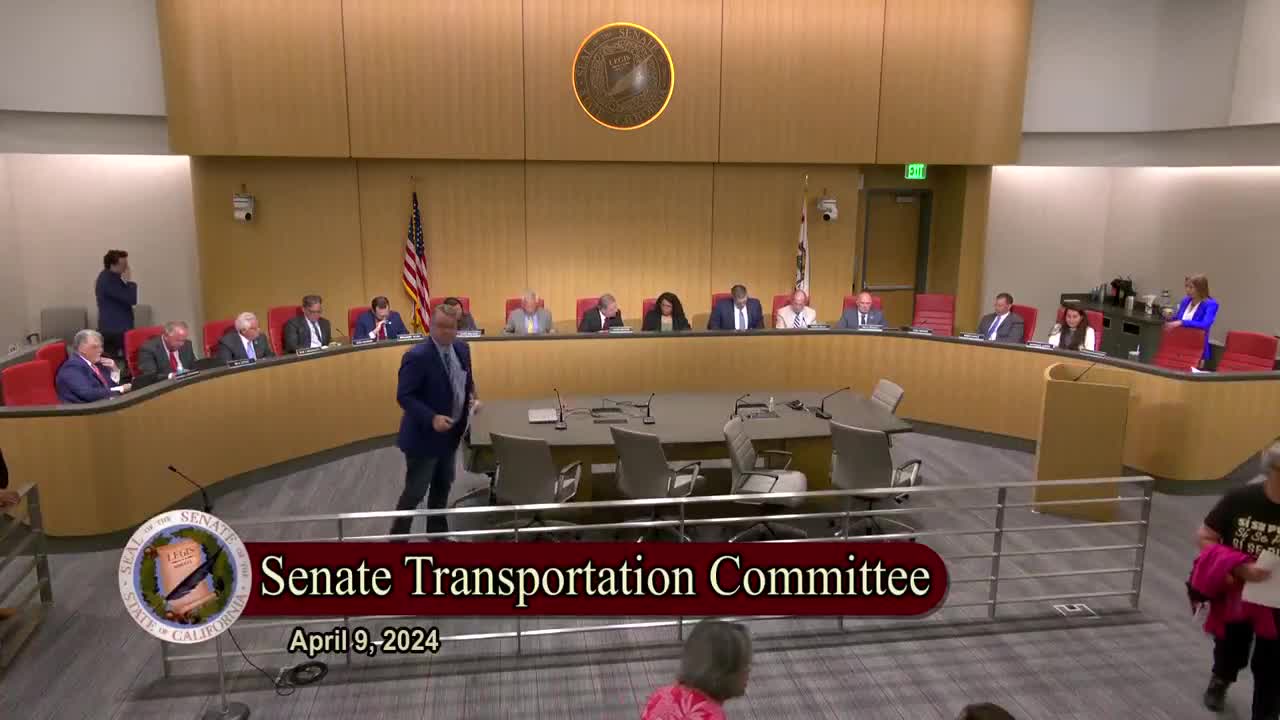 6MIN
Senate Standing Committee on Transportation
Bill Author

Bill Co-Author(s):