SB 1342: California Environmental Quality Act: infrastructure projects: County of San Diego.
- Session Year: 2023-2024
- House: Senate
- Latest Version Date: 2024-09-27
Current Status:
Passed
(2024-09-27: Chaptered by Secretary of State. Chapter 794, Statutes of 2024.)
Introduced
In Committee
First Chamber
In Committee
Second Chamber
Enacted
The California Environmental Quality Act (CEQA) requires a lead agency, as defined, to prepare, or cause to be prepared, and certify the completion of an environmental impact report (EIR) on a project that it proposes to carry out or approve that may have a significant effect on the environment or to adopt a negative declaration if it finds that the project will not have that effect. CEQA also requires a lead agency to prepare a mitigated negative declaration for a project that may have a significant effect on the environment if revisions in the project would avoid or mitigate that effect and there is no substantial evidence that the project, as revised, would have a significant effect on the environment.
Existing law authorizes the Governor to certify projects meeting certain requirements as infrastructure projects and provides those certified projects with certain streamlining benefits, including requiring the lead agency to prepare the record of proceedings concurrently with the environmental review process and requiring the resolution of an action or proceeding challenging the certification of an EIR for certified projects or the granting of any project approvals, to the extent feasible, within 270 days of the filing of the record of proceedings with the court, as specified. Existing law requires the lead agency, within 10 days of the certification of an infrastructure project, to provide a public notice of the certification, as provided. If a lead agency fails to approve a project certified as an infrastructure project before January 1, 2033, existing law specifies that the certification is no longer valid.
This bill would include the San Vicente Energy Storage Facility project proposed by the San Diego County Water Authority and a project for the repair, rehabilitation, or replacement of the South Bay Sewage Treatment Plant in the County of San Diego, operated by the International Boundary and Water Commission, as infrastructure projects, thereby providing the above-described streamlining benefits to those 2 projects. To the extent the bill would increase the duties of a lead agency regarding projects proposed by a third party, this bill would impose a state-mandated local program.
The California Constitution requires the state to reimburse local agencies and school districts for certain costs mandated by the state. Statutory provisions establish procedures for making that reimbursement.
This bill would provide that no reimbursement is required by this act for a specified reason.
This bill would make legislative findings and declarations as to the necessity of a special statute for the County of San Diego.
(a)For purposes of subdivision (d) of Section 21189.81, an energy infrastructure project includes the San Vicente Energy Storage Facility project proposed by the San Diego County Water Authority for pumped energy storage located in the eastern portion of the County of San Diego.
(b)For purposes of subdivision (h) of Section 21189.81, a water-related project includes a project for the repair, rehabilitation, or replacement of the South Bay Sewage Treatment Plant in the County of San Diego, operated by the International Boundary and Water Commission.
SEC. 2.No reimbursement is required by this act pursuant to Section 6 of Article XIIIB of the California Constitution because a local agency or school district has the authority to levy service charges, fees, or assessments sufficient to pay for the program or level of service mandated by this act, within the meaning of Section 17556 of the Government Code.
SEC. 3.The Legislature finds and declares that a special statute is necessary and that a general statute cannot be made applicable within the meaning of Section 16 of Article IV of the California Constitution because of the unique circumstances existing in the County of San Diego.
For the purposes of this chapter, the following definitions apply:
(a)Applicant means a public or private entity or its affiliates, or a person or entity that undertakes a public works project, that proposes a project and its successors, heirs, and assignees.
(b)Disadvantaged community means an area identified by the California Environmental Protection Agency pursuant to Section 39711 of the Health and Safety Code or an area identified as a disadvantaged unincorporated community pursuant to Section 65302.10 of the Government Code.
(c)Electrical transmission facility project means a project for the construction and operation of an electrical transmission facility the meets either of the following:
(1)An electrical transmission facility project identified by the Independent System Operator in its annual transmission planning process that meets either of the following criteria:
(A)The project will facilitate delivery of electricity from renewable energy resources or zero-carbon resources.
(B)The project will facilitate delivery of electricity from energy storage projects.
(2)An electrical transmission facility project identified by a local publicly owned electric utility that would satisfy a transmission expansion need approved by the governing body of the local publicly owned electric utility and that meets either of the following criteria:
(A)The project will facilitate delivery of electricity from renewable energy resources or zero-carbon resources.
(B)The project will facilitate delivery of electricity from energy storage projects.
(d)(1)Energy infrastructure project means any of the following:
(A)An eligible renewable energy resource, as defined in Section 399.12 of the Public Utilities Code, excluding resources that utilize biomass fuels.
(B)New energy storage systems of 20 megawatts or more, that are capable of discharging for at least two hours, provided that a pumped hydro facility may qualify only if it is less than or equal to 500 megawatts and has been directly appropriated funding by the state before January 1, 2023.
(C)A project for which the applicant has certified that a capital investment of at least two hundred fifty million dollars ($250,000,000) made over a period of five years and the project is for either of the following:
(i)The manufacture, production, or assembly of an energy storage system or component manufacturing, wind system or component manufacturing, and solar photovoltaic energy system or component manufacturing.
(ii)The manufacture, production, or assembly of specialized products, components, or systems that are integral to renewable energy or energy storage technologies.
(D)An electric transmission facility project, provided that nothing in this chapter affects the jurisdiction of the California Coastal Commission pursuant to Division 20 (commencing with Section 30000) to regulate such projects if located in the coastal zone.
(E)The San Vicente Energy Storage Facility project proposed by the San Diego County Water Authority for pumped energy storage located in the eastern portion of the County of San Diego.
(F)An energy infrastructure project does not include projects utilizing hydrogen as a fuel.
(2)Any project to develop a facility within the meaning of subdivision (b) of Section 25545 shall meet the requirements of Sections 25545.3.3 and 25545.3.5, except that those requirements shall also apply to solar photovoltaic and terrestrial wind electrical generating power plants with a generating capacity of between 20 and 50 megawatts and energy storage projects capable of storing between 80 and 200 megawatt hours of electrical energy.
(e)Infrastructure project means a project that is certified pursuant to Sections 21189.82 and 21189.83 as any of the following:
(1)An energy infrastructure project.
(2)A semiconductor or microelectronic project.
(3)A transportation-related project.
(4)A water-related project.
(f)Semiconductor or microelectronic project means a project that meets the requirements related to investment in new or expanded facilities and is awarded funds under the federal Creating Helpful Incentives to Produce Semiconductors Act of 2022 (Public Law 117-167), commonly known as the CHIPS Act of 2022, and the requirements of Section 21183.5.
(g)(1)Transportation-related project means a transportation infrastructure project that advances one or more of, and does not conflict with, the following goals related to the Climate Action Plan for Transportation Infrastructure adopted by the Transportation Agency:
(A)Build toward an integrated, statewide rail and transit network.
(B)Invest in networks of safe and accessible bicycle and pedestrian infrastructure.
(C)Include investments in light-, medium-, and heavy-duty zero-emission vehicle infrastructure.
(D)Develop a zero-emission freight transportation system.
(E)Reduce public health and economic harms and maximize community benefits.
(F)Make safety improvements to reduce fatalities and severe injuries of all users towards zero.
(G)Assess and integrate assessments of physical climate risk.
(H)Promote projects that do not significantly increase passenger vehicle travel.
(I)Promote compact infill development while protecting residents and businesses from displacement.
(J)Protect natural and working lands.
(2)Transportation-related projects are public works for the purposes of Section 1720 of the Labor Code and shall comply with the applicable provisions of Chapter 1 (commencing with Section 1720) of Part 7 of Division 2 of the Labor Code.
(h)(1)Water-related project means any of the following:
(A)A project that is approved to implement a groundwater sustainability plan that the Department of Water Resources has determined is in compliance with Sections 10727.2 and 10727.4 of the Water Code or to implement an interim groundwater sustainability plan adopted pursuant to Section 10735.6 of the Water Code.
(B)(i)A water storage project funded by the California Water Commission pursuant to Chapter 8 (commencing with Section 79750) of Division 26.7 of the Water Code.
(ii)In addition to clause (i), the applicant shall demonstrate that the project will minimize the intake or diversion of water except during times of surplus water and prioritizes the discharge of water for ecological benefits or to mitigate an emergency, including, but not limited to, dam repair, levee repair, wetland restoration, marshland restoration, or habitat preservation, or other public benefits described in Section 79753 of the Water Code.
(C)Projects for the development of recycled water, as defined in Section 13050 of the Water Code.
(D)Contaminant and salt removal projects, including groundwater desalination and associated treatment, storage, conveyance, and distribution facilities. This shall not include seawater desalination.
(E)Projects exclusively for canal or other conveyance maintenance and repair.
(F)A project for the repair, rehabilitation, or replacement of the South Bay Sewage Treatment Plant in the County of San Diego, operated by the International Boundary and Water Commission.
(2)Water-related projects are public works for the purposes of Section 1720 of the Labor Code and shall comply with the applicable provisions of Chapter 1 (commencing with Section 1720) of Part 7 of Division 2 of the Labor Code.
(3)Water-related project does not include the design or construction of through-Delta conveyance facilities of the Sacramento-San Joaquin Delta.
SEC. 2.No reimbursement is required by this act pursuant to Section 6 of Article XIIIB of the California Constitution because a local agency or school district has the authority to levy service charges, fees, or assessments sufficient to pay for the program or level of service mandated by this act, within the meaning of Section 17556 of the Government Code.
SEC. 3.The Legislature finds and declares that a special statute is necessary and that a general statute cannot be made applicable within the meaning of Section 16 of Article IV of the California Constitution because of the unique circumstances existing in the County of San Diego.
For purposes of this chapter, the following definitions apply:
(a)Applicant means a public or private entity or its affiliates, or a person or entity that undertakes a public works project, that proposes a project and its successors, heirs, and assignees.
(b)Disadvantaged community means an area identified by the California Environmental Protection Agency pursuant to Section 39711 of the Health and Safety Code or an area identified as a disadvantaged unincorporated community pursuant to Section 65302.10 of the Government Code.
(c)Electrical transmission facility project means a project for the construction and operation of an electrical transmission facility the meets either of the following:
(1)An electrical transmission facility project identified by the Independent System Operator in its annual transmission planning process that meets either of the following criteria:
(A)The project will facilitate delivery of electricity from renewable energy resources or zero-carbon resources.
(B)The project will facilitate delivery of electricity from energy storage projects.
(2)An electrical transmission facility project identified by a local publicly owned electric utility that would satisfy a transmission expansion need approved by the governing body of the local publicly owned electric utility and that meets either of the following criteria:
(A)The project will facilitate delivery of electricity from renewable energy resources or zero-carbon resources.
(B)The project will facilitate delivery of electricity from energy storage projects.
(d)(1)Energy infrastructure project means any of the following:
(A)An eligible renewable energy resource, as defined in Section 399.12 of the Public Utilities Code, excluding resources that utilize biomass fuels.
(B)New energy storage systems of 20 megawatts or more, that are capable of discharging for at least two hours, provided that a pumped hydro facility may qualify only if it is less than or equal to 500 megawatts and has been directly appropriated funding by the state before January 1, 2023.
(C)A project for which the applicant has certified that a capital investment of at least two hundred fifty million dollars ($250,000,000) made over a period of five years and the project is for either of the following:
(i)The manufacture, production, or assembly of an energy storage system or component manufacturing, wind system or component manufacturing, and solar photovoltaic energy system or component manufacturing.
(ii)The manufacture, production, or assembly of specialized products, components, or systems that are integral to renewable energy or energy storage technologies.
(D)An electric transmission facility project, provided that nothing in this chapter affects the jurisdiction of the California Coastal Commission pursuant to Division 20 (commencing with Section 30000) to regulate such projects if located in the coastal zone.
(E)The San Vicente Energy Storage Facility project proposed by the San Diego County Water Authority for pumped energy storage located in the eastern portion of the County of San Diego.
(E)
(F)An energy infrastructure project does not include projects utilizing hydrogen as a fuel.
(2)Any project to develop a facility within the meaning of subdivision (b) of Section 25545 shall meet the requirements of Sections 25545.3.3 and 25545.3.5, except that those requirements shall also apply to solar photovoltaic and terrestrial wind electrical generating power plants with a generating capacity of between 20 and 50 megawatts and energy storage projects capable of storing between 80 and 200 megawatt hours of electrical energy.
(e)Infrastructure project means a project that is certified pursuant to Sections 21189.82 and 21189.83 as any of the following:
(1)An energy infrastructure project.
(2)A semiconductor or microelectronic project.
(3)A transportation-related project.
(4)A water-related project.
(f)Semiconductor or microelectronic project means a project that meets the requirements related to investment in new or expanded facilities and is awarded funds under the federal Creating Helpful Incentives to Produce Semiconductors Act of 2022 (Public Law 117-167), commonly known as the CHIPS Act of 2022, and the requirements of Section 21183.5.
(g)(1)Transportation-related project means a transportation infrastructure project that advances one or more of, and does not conflict with, the following goals related to the Climate Action Plan for Transportation Infrastructure adopted by the Transportation Agency:
(A)Build toward an integrated, statewide rail and transit network.
(B)Invest in networks of safe and accessible bicycle and pedestrian infrastructure.
(C)Include investments in light-, medium-, and heavy-duty zero-emission vehicle infrastructure.
(D)Develop a zero-emission freight transportation system.
(E)Reduce public health and economic harms and maximize community benefits.
(F)Make safety improvements to reduce fatalities and severe injuries of all users towards zero.
(G)Assess and integrate assessments of physical climate risk.
(H)Promote projects that do not significantly increase passenger vehicle travel.
(I)Promote compact infill development while protecting residents and businesses from displacement.
(J)Protect natural and working lands.
(2)Transportation-related projects are public works for the purposes of Section 1720 of the Labor Code and shall comply with the applicable provisions of Chapter 1 (commencing with Section 1720) of Part 7 of Division 2 of the Labor Code.
(h)(1)Water-related project means any of the following:
(A)A project that is approved to implement a groundwater sustainability plan that the Department of Water Resources has determined is in compliance with Sections 10727.2 and 10727.4 of the Water Code or to implement an interim groundwater sustainability plan adopted pursuant to Section 10735.6 of the Water Code.
(B)(i)A water storage project funded by the California Water Commission pursuant to Chapter 8 (commencing with Section 79750) of Division 26.7 of the Water Code.
(ii)In addition to clause (i), the applicant shall demonstrate that the project will minimize the intake or diversion of water except during times of surplus water and prioritizes the discharge of water for ecological benefits or to mitigate an emergency, including, but not limited to, dam repair, levee repair, wetland restoration, marshland restoration, or habitat preservation, or other public benefits described in Section 79753 of the Water Code.
(C)Projects for the development of recycled water, as defined in Section 13050 of the Water Code.
(D)Contaminant and salt removal projects, including groundwater desalination and associated treatment, storage, conveyance, and distribution facilities. This shall not include seawater desalination.
(E)Projects exclusively for canal or other conveyance maintenance and repair.
(F)A project for the repair, rehabilitation, or replacement of the South Bay Sewage Treatment Plant in the County of San Diego, operated by the International Boundary and Water Commission.
(2)Water-related projects are public works for the purposes of Section 1720 of the Labor Code and shall comply with the applicable provisions of Chapter 1 (commencing with Section 1720) of Part 7 of Division 2 of the Labor Code.
(3)Water-related project does not include the design or construction of through-Delta conveyance facilities of the Sacramento-San Joaquin Delta.
SEC. 2.No reimbursement is required by this act pursuant to Section 6 of Article XIIIB of the California Constitution because a local agency or school district has the authority to levy service charges, fees, or assessments sufficient to pay for the program or level of service mandated by this act, within the meaning of Section 17556 of the Government Code.
SEC. 3.The Legislature finds and declares that a special statute is necessary and that a general statute cannot be made applicable within the meaning of Section 16 of Article IV of the California Constitution because of the unique circumstances existing in the County of San Diego.
|
Date
|
Status
|
|---|---|
| Sep 27, 2024 | Chaptered by Secretary of State. Chapter 794, Statutes of 2024. |
| Sep 27, 2024 | Approved by the Governor. |
| Sep 4, 2024 | Enrolled and presented to the Governor at 4 p.m. |
| Aug 28, 2024 | Assembly amendments concurred in. (Ayes 39. Noes 0. Page 5590.) Ordered to engrossing and enrolling. |
| Aug 28, 2024 | In Senate. Concurrence in Assembly amendments pending. |
| Aug 27, 2024 | Read third time. Passed. (Ayes 77. Noes 0. Page 6655.) Ordered to the Senate. |
| Aug 22, 2024 | Ordered to third reading. |
| Aug 22, 2024 | Read third time and amended. |
| Aug 12, 2024 | Ordered to third reading. |
| Aug 12, 2024 | From consent calendar on motion of Assembly Member Aguiar-Curry. |
| Aug 8, 2024 | Read second time. Ordered to consent calendar. |
| Aug 7, 2024 | From committee: Do pass. Ordered to consent calendar. (Ayes 14. Noes 0.) (August 7). |
| Jun 18, 2024 | From committee: Do pass and re-refer to Com. on APPR. (Ayes 10. Noes 0.) (June 17). Re-referred to Com. on APPR. |
| May 28, 2024 | Referred to Com. on NAT. RES. |
| May 21, 2024 | In Assembly. Read first time. Held at Desk. |
| May 20, 2024 | Read third time. Passed. (Ayes 39. Noes 0. Page 4016.) Ordered to the Assembly. |
| Apr 30, 2024 | Read second time. Ordered to third reading. |
| Apr 29, 2024 | From committee: Be ordered to second reading pursuant to Senate Rule 28.8. |
| Apr 22, 2024 | Set for hearing April 29. |
| Apr 17, 2024 | From committee: Do pass and re-refer to Com. on APPR. (Ayes 7. Noes 0. Page 3661.) (April 17). Re-referred to Com. on APPR. |
| Apr 8, 2024 | From committee with author's amendments. Read second time and amended. Re-referred to Com. on E.Q. |
| Mar 12, 2024 | Set for hearing April 17. |
| Feb 29, 2024 | Referred to Com. on E.Q. |
| Feb 20, 2024 | From printer. May be acted upon on or after March 18. |
| Feb 16, 2024 | Introduced. Read first time. To Com. on RLS. for assignment. To print. |
|
Date
|
Description
|
Location
|
Votes
|
|
|---|---|---|---|---|
| Aug 28, 2024 | Unfinished Business SB1342 Atkins et al. Concurrence | Senate Floor |
Passed |
|
| Aug 27, 2024 | SB 1342 Atkins Senate Third Reading By Alvarez | Assembly Floor |
Passed |
|
| Aug 7, 2024 | Do pass. To Consent Calendar. | Assembly Standing Committee on Appropriations |
Passed |
|
| Jun 17, 2024 | Do pass and be re-referred to the Committee on [Appropriations] | Assembly Standing Committee on Natural Resources |
Passed |
|
| May 20, 2024 | Senate 3rd Reading SB1342 Atkins et al. | Senate Floor |
Passed |
|
| Apr 17, 2024 | Do pass, but first be re-referred to the Committee on [Appropriations] | Senate Standing Committee on Environmental Quality |
Passed |
This list shows positions taken on this bill by organizations on the date displayed, which is linked to the original source.
Positions by individuals are not included.
|
Organization
|
Position
|
Date
|
|---|---|---|
| American Council of Engineering Companies of California | ** Support | |
| California Conference of Carpenters | ** Support | |
| California Teamsters Public Affairs Council | ** Support | |
| District Council Of Iron Workers Of The State Of California And Vicinity | ** Support | |
| Dunn Consulting | ** Support | |
| International Brotherhood of Boilermakers | ** Support | |
| International Brotherhood of Boilermakers, Iron Ship Builders, Blacksmiths, Forgers and Helpers | ** Support | |
| International Brotherhood Of Boilermakers Western States Section | ** Support | |
| Judicial Council of California | ** Against | |
| Mussey Grade Road Alliance | ** Against | |
| San Diego County Water Authority | ** Support | |
| San Diego Regional Chamber Of Commerce | ** Support | |
| State Building and Construction Trades Council | ** Support | |
| The Protect Our Communities Foundation | ** Against |
SENATE RULES COMMITTEE Office of Senate Floor Analyses (916) 651-1520 Fax: (916) 327-4478 | SB 1342 |
UNFINISHED BUSINESS
Bill No: SB 1342
Author: Atkins (D), et al.
Amended: 8/22/24
Vote: 21
SENATE ENVIRONMENTAL QUALITY COMMITTEE: 7-0, 4/17/24
AYES: Allen, Dahle, Archuleta, Gonzalez, Menjivar, Nguyen, Skinner
SENATE APPROPRIATIONS COMMITTEE: Senate Rule 28.8
SENATE FLOOR: 39-0, 5/20/24
AYES: Allen, Alvarado-Gil, Archuleta, Ashby, Atkins, Becker, Blakespear, Bradford, Caballero, Cortese, Dahle, Dodd, Durazo, Eggman, Glazer, Gonzalez, Grove, Hurtado, Jones, Laird, Limón, McGuire, Menjivar, Newman, Nguyen, Niello, Ochoa Bogh, Padilla, Portantino, Roth, Rubio, Seyarto, Skinner, Smallwood-Cuevas, Stern, Umberg, Wahab, Wiener, Wilk
NO VOTE RECORDED: Min
ASSEMBLY FLOOR: 77-0, 8/27/24 - See last page for vote
SUBJECT: California Environmental Quality Act: infrastructure projects: County of San Diego
SOURCE: Author
DIGEST:
This bill adds two infrastructure projects in San Diego County to the list of infrastructure projects eligible for California Environmental Quality Act (CEQA) judicial and administrative streamlining under SB 149 (Caballero, Chapter 60, Statutes of 2023).
Assembly Amendments
- : move the language from one code section a different code section: the amendments do not change the substance of the bill.
ANALYSIS:
Existing law:
- CEQA requires lead agencies with the principal responsibility for carrying out or approving a project to prepare a negative declaration (ND), mitigated negative declaration (MND), or environmental impact report (EIR) for the project, unless the project is exempt from CEQA. (Public Resources Code (PRC) §21000 et seq.). If a project may have a significant effect on the environment, the lead agency must prepare a draft EIR. (CEQA Guidelines §15064(a)(1), (f)(1))
- Established the Jobs and Economic Improvement Through Environmental Leadership Act of 2011 (AB 900, Buchanan, Chapter 354, Statutes of 2011), which established CEQA administrative and judicial review procedures for an "environmental leadership" project. The Act was later extended and modified in 2021 (SB 7, Atkins, Chapter 19, Statutes of 2021). (PRC §21178 et seq.)
- Establishes streamlining provisions for a broad swath of energy, transportation, water, and semiconductor projects eligible for expedited judicial review under CEQA in SB 149 (Caballero, Chapter 60, Statutes of 2023). Projects must meet certain environmental and labor criteria to be eligible for this certification. The streamlining certification ends January 1, 2033.
- Specifies that one type of energy storage projects eligible for streamlining are new storage systems of 20 megawatts or more, that are capable of discharging for at least two hours, provided that a pumped hydro facility may qualify only if it is less than or equal to 500 megawatts and has been directly appropriated funding by the state before January 1, 2023. (PRC § 21189.81(d)(1)(B)
- Specifies that one type of water project eligible for streamlining are projects that remove contaminants and salt, including associated treatment, storage, conveyance, and distribution facilities, excluding seawater desalination. (PRC § 21189.81(h)(1)(D)
This bill adds the San Vicente Energy Storage Facility project proposed by the San Diego County Water Authority and a project for the repair, rehabilitation, or replacement of the South Bay Sewage Treatment Plant operated by the International Boundary and Water Commission, as projects eligible for CEQA streamlining certification under SB 149 (Caballero, Chapter 60, Statutes of 2023).
Background
- The A, B, C’s of CEQA. CEQA is designed to (a) make government agencies and the public aware of the environmental impacts of a proposed project, (b) ensure the public can take part in the review process, and (c) identify and implement measures to mitigate or eliminate any negative impact the project may have on the environment. CEQA is enforced by civil lawsuits that can challenge any project’s environmental review. Nonprofits, private individuals, public agencies, advocacy groups, and other organizations can all file lawsuits under CEQA.
Under CEQA, projects (unless they have a specific exemption) must undergo environmental analysis. This process starts with an initial study which determines what level of further environmental review is needed for a given project. If a project has no significant effects on the environment, or if those effects can be fully mitigated, the project can move forward with a negative declaration (ND) or mitigated negative declaration (MND). If the initial study finds that the project has potential significant effects on the environment, then a full EIR is conducted. An EIR provides thorough environmental review of a proposed project, analyzing the significant direct and indirect environmental impacts of a proposed project on water quality, transportation, air quality and greenhouse gas emissions, terrestrial and aquatic biological resources, surface and subsurface hydrology, land use and agricultural resources, aesthetics, geology and soils, recreation, public services and utilities such as water supply and wastewater disposal, and cultural resources, among other factors. The EIR also includes proposed mitigation measures for any significant effects that it identifies and considers alternatives to the proposed project.
- CEQA streamlining. The Legislature has developed streamlining measures to speed CEQA lawsuits against specified projects through the courts. In current law, CEQA streamlining entails both judicial and administrative streamlining. Judicial streamlining requires that a CEQA lawsuit be heard in 270 days, including all appeals, as feasible. Administrative streamlining requires projects to prepare the administrative record, the comprehensive document at the heart of a CEQA case, at the same time as the environmental review documents are prepared. Preparing these documents concurrently, instead of sequentially, saves time if there is a lawsuit. These streamlining measures shorten what is potentially the lengthiest portion of the CEQA process—litigation—while retaining the full environmental review and public engagement offered under CEQA.
In 2011, the Legislature passed the first CEQA streamlining certification program with the Jobs and Economic Improvement Through Environmental Leadership Act (Leadership Act), which created CEQA streamlining for residential, retail, commercial, sports, and recreational use projects that were certified as Environmental Leadership Development Projects (ELDP) by the Governor (AB 900, Buchanan, Chapter 354, Statutes of 2011). The ELDP program was further extended and modified in 2021 with (SB 7, Atkins, Chapter 19, Statutes of 2021).
In 2023, The Legislature expanded these same streamlining provisions for certain energy, transportation, and water infrastructure projects (SB 149, Caballero, Chapter 60, Statutes of 2023).
The specific criteria that projects must meet to be eligible for CEQA streamlining varies by project and process, but all are intended to ensure that projects meet high environmental and labor standards. In current law environmental criteria for streamlining includes requirements such as achieving Leadership in Energy and Environmental Design (LEED) Gold certification and being greenhouse gas neutral. SB 149 (Caballero, Chapter 60, Statutes of 2023) also includes a specific equity provision which requires that projects both minimize significant environmental impacts in disadvantaged communities and take mitigation measures that directly benefit the affected community. In offering CEQA streamlining for projects that meet these high standards, California has been able to promote projects that align with the State’s environmental, climate, and labor goals.
- San Vicente Energy Storage Facility Project. The proposed San Vicente Energy Storage Facility Project would be located at the San Vicente Dam and Reservoir in San Diego County. The project would create a small upper reservoir above the existing, city-owned San Vicente Reservoir. The upper reservoir would be connected to the lower reservoir by a tunnel system and an underground powerhouse. Water from the bottom reservoir would then be pumped up to the smaller reservoir where it could be stored and eventually released back downhill, generating electricity. The exchange between the two reservoirs would not consume water.
According to the San Diego County Water Authority website, the proposed hydro energy storage facility at the San Vicente Reservoir could store 500 megawatts of capacity for eight hours generating enough energy for about 135,000 households.
The San Vicente Energy Storage Facility Project would be developed by the City of San Diego and the San Diego County Water Authority. The City of San Diego owns and operates the San Vicente Dam and Reservoir, and the Water Authority constructed the San Vicente Dam in 2014 and owns 157,000 acre-feet of storage capacity in the expanded reservoir area.
In 2021, the San Vicente Energy Storage Facility received $18 million in the state budget for initial design, environmental review and federal licensing. In 2022, the Water Authority initiated feasibility studies and environmental reviews as the first step to obtain state and federal regulatory permits and licenses needed to move the project forward. The total cost of the project was estimated at $1.5 Billion in 2022.
- South Bay International Wastewater Treatment Plant (SBIWTP). The SBIWTP was built in 1996 on a 75-acre site near the international boundary in the United States immediately north of the City of Tijuana in Mexico. The SBIWTP can treat up to 25 million gallons per day of raw sewage and other wastewater flows originating from Tijuana. The SBIWT is owned and administered by the U.S. Section of the International Boundary and Water Commission (USIBWC) and is operated and maintained by a private contractor. After the wastewater is treated, it is discharged into the Pacific Ocean under a National Pollutant Discharge Elimination System (NPDES) permit.
Since October 2020, the International Boundary and Water Commission (IBWC) has reported about 360 violations of its NPDES permit, most for exceeding the limit of 25 million gallons per day of flow from Mexico that should enter the plant. It’s also reported that over 100 billion gallons of untreated sewage, industrial waste, and urban runoff have spilled into the Tijuana Estuary and the Pacific Ocean via the Tijuana River and its tributaries over the last five years. The sewage has been fouling beaches and closing tourist and recreational areas in the region. County officials said that between December 2022 and the Fall of 2023, "an alarming 35 billion gallons" have flowed north into U.S. territory from the sewage treatment plant in Mexico. According to the San Diego Coastkeeper and the Coastal Environmental Rights Foundation (CERF) there have been over 700 consecutive days of beach closures in and around Imperial Beach since the beginning of 2022 through December 2023.
On May 12, 2021, the San Diego Water Board issued a Cease and Desist Order (CDO) requiring USIBWC to meet the requirements of the NPDES Permit. As part of this action, the SBIWTP is required to submit quarterly compliance assurance reports. In December 2023, the San Diego Coastkeeper and CERF announced their intention to sue the IBWC over alleged “hundreds of violations” of the Clean Water Act and NPDES Permit.
In March 2024, the U.S. International Boundary and Water Commission appropriated $103 million in additional funding to help repair the SBIWTP.
Comments
- Purpose of the bill. According to the author, “In 2023, as part of the 2023-2024 Budget Agreement, the Legislature and Governor Newsom enacted an historic infrastructure streamlining package to accelerate construction timelines on specific types of projects to achieve the state’s ambitious climate, water, and clean energy goals. SB 1342 extends the provisions of last year’s Infrastructure Streamlining Package to help expedite the analysis, approvals, and construction of two much-needed projects to promote clean energy, eliminate coastal sewage pollution, and create jobs and economic investment. Completion of the San Vicente Pumped Energy Storage project and the repair and expansion of the South Bay International Wastewater Treatment Plant are critical for the health and safety, as well as the energy and wastewater needs, of the San Diego Region.”
Aren’t these already eligible for streamlining? The projects specifically named as infrastructure projects in SB 1342 may already be eligible for streamlining under SB 149. Among the types of Energy Storage systems eligible for SB 149 streamlining are energy storage systems that are new storage systems of 20 megawatts or more, that are capable of discharging for at least two hours. For pumped hydrofacilities under this criteria, projects are only eligible if they are less than or equal to 500 megawatts and have been directly appropriated state funding before January 1, 2023.
The San Vicente Project would store 4,000 megawatt-hours per day, and is a pumped hydrofacility that produces 400 MW, and received a direct appropriation of $18 million in the 2021 budget. It is very likely that the San Vicente Energy Storage Facility Project is already eligible for CEQA streamlining under SB 149.
SB 149 also allows streamlining for water projects that remove contaminants and associated treatment, storage, conveyance, and distribution facilities, which may include projects that remove contaminants by treating sewage, like SBIWTP.
The SB 149 streamlining certification is designed for certain types of projects, and does not currently call out specific projects by name. By describing what types of projects are eligible for streamlining, SB 149 makes it clear that only specific types of infrastructure projects—those that advance environmental goals, like renewable energy projects or groundwater recharge projects, are eligible for streamlining. On the other hand, specifying a project by name, including a project that may already be eligible for streamlining, adds clarity for project developers seeking to use this streamlining provision.
- Subject to CEQA? It is unclear whether the SBIWT, which is owned and administered by the Federal USIBWC and operated by a third-party contractor, is subject to CEQA. If the project is not subject to CEQA and does not file CEQA documents, naming the project as eligible for CEQA streamlining in statute could act as evidence for an assertion that the project should have undergone CEQA review.
Related/Prior Legislation
SB 149 (Caballero, Chapter 60, Statutes of 2023) made a broad swath of energy, transportation, water, and semiconductor projects eligible for expedited judicial review under CEQA. Projects must meet certain environmental and labor criteria to be eligible for certification. The streamlining certification ends January 1, 2033.
AB 1373 (Garcia, Chapter 367, Statutes of 2023) made numerous changes to electricity policy, most notably, authorizes the Department of Water Resources (DWR) to serve as a central procurement entity to procure energy resources in order to help the state meet its renewable and zero-carbon energy resources and reliability goals, and specifies that Resources from a pump hydroelectric facility may be procured by DWR pursuant to this section if the pump meets criteria that matched the criteria for the San Vicente Energy Storage Facility Project.
SB 7 (Atkins, Chapter 19, Statutes of 2021) extended and expand expedited CEQA administrative and judicial review procedures in the Leadership Act for ELDPs. Additionally, this bill expands the Leadership Act to include smaller housing projects.
FISCAL EFFECT: Appropriation: No Fiscal Com.: Yes Local: Yes
According to the assembly appropriations committee:
“The Governor’s Office of Planning and Research (OPR) reports no significant fiscal impact from this bill.”
SUPPORT: (Verified 8/27/24)
American Council of Engineering Companies of California
California Conference of Carpenters
California Teamsters Public Affairs Council
District Council of Iron Workers of The State of California and Vicinity
Dunn Consulting
International Brotherhood of Boilermakers
International Brotherhood of Boilermakers, Iron Ship Builders, Blacksmiths, Forgers and Helpers
International Brotherhood of Boilermakers, Western States Section
San Diego County Water Authority
San Diego Regional Chamber of Commerce
State Building and Construction Trades Council
OPPOSITION: (Verified 8/27/24)
Judicial Council of California
The Protect Our Communities Foundation
Mussey Grade Road Alliance
ASSEMBLY FLOOR: 77-0, 8/27/24
AYES: Addis, Aguiar-Curry, Alanis, Alvarez, Arambula, Bains, Bauer-Kahan, Bennett, Berman, Boerner, Bonta, Bryan, Calderon, Juan Carrillo, Wendy Carrillo, Chen, Connolly, Megan Dahle, Davies, Dixon, Essayli, Flora, Mike Fong, Friedman, Gabriel, Gallagher, Garcia, Gipson, Grayson, Haney, Hart, Holden, Hoover, Irwin, Jackson, Jones-Sawyer, Kalra, Lackey, Lee, Low, Lowenthal, Maienschein, Mathis, McCarty, McKinnor, Muratsuchi, Stephanie Nguyen, Pacheco, Papan, Jim Patterson, Joe Patterson, Pellerin, Petrie-Norris, Quirk-Silva, Ramos, Rendon, Reyes, Luz Rivas, Rodriguez, Blanca Rubio, Sanchez, Santiago, Schiavo, Soria, Ta, Ting, Valencia, Villapudua, Waldron, Wallis, Ward, Weber, Wicks, Wilson, Wood, Zbur, Robert Rivas
NO VOTE RECORDED: Cervantes, Ortega
Prepared by: Brynn Cook / E.Q. / (916) 651-4108
8/27/24 18:41:28
**** END ****
SENATE THIRD READING
STR Bill Id:SB 1342
Author:(Atkins)
As Amended Ver:August 22, 2024
Majority vote
SUMMARY
Adds two specific projects in San Diego County (the San Vicente Energy Storage Facility and repair, rehabilitation, or replacement of the South Bay Sewage Treatment Plant) to expedited California Environmental Quality Act (CEQA) judicial review procedures for infrastructure projects established last year by SB 149 (Caballero), Chapter 60, Statutes of 2023.
Major Provisions
Specifically adds the following projects to the SB 149 expedited review procedures:
- The San Vicente Energy Storage Facility project proposed by the San Diego County Water Authority for pumped energy storage located in the eastern portion of the County of San Diego, as an energy infrastructure project.
- A project for the repair, rehabilitation, or replacement of the South Bay Sewage Treatment Plant in the County of San Diego, operated by the International Boundary and Water Commission (IBWC), as a water-related project.
COMMENTS
Generally, CEQA actions taken by public agencies can be challenged in superior court once the agency approves or determines to carry out the project. CEQA appeals are subject to unusually short statutes of limitations. Court challenges of CEQA decisions generally must be filed within 30-35 days, depending on the type of decision. The courts are required to give CEQA actions preference over all other civil actions. However, the schedules for briefing, hearing, and decision are less definite. The petitioner must request a hearing within 90 days of filing the petition and, generally, briefing must be completed within 90 days of the request for hearing. There is no deadline specified for the court to render a decision.
In 2011, AB 900 (Buchanan) and SB 292 (Padilla) established expedited CEQA judicial review procedures for a limited number of projects. For AB 900, it was large-scale projects meeting extraordinary environmental standards and providing significant jobs and investment. For SB 292, it was a proposed downtown Los Angeles football stadium and convention center project achieving specified traffic and air quality mitigations. For these eligible projects, the bills provided for original jurisdiction by the Court of Appeal and a compressed schedule requiring the court to render a decision on any lawsuit within 175 days. This promised to reduce the existing judicial review timeline by 100 days or more, while creating new burdens for the courts and litigants to meet the compressed schedule. AB 900's provision granting original jurisdiction to the Court of Appeal was invalidated in 2013 by a decision in Alameda Superior Court in Planning and Conservation League v. State of California. AB 900 was subsequently revised to restore jurisdiction to superior courts and require resolution of lawsuits within 270 days, to the extent feasible.
As part of their expedited judicial review procedures, these bills required the lead agency to prepare and certify the record of proceedings concurrently with the administrative process and required the applicant to pay for it. It was commonly agreed that this would expedite preparation of the record for trial. Since 2011, several additional bills have provided similar project-specific concurrent preparation procedures. In addition, SB 122 (Jackson), Chapter 476, Statutes of 2016, established an optional concurrent preparation procedure for any CEQA project, subject to the lead agency agreeing, and the applicant paying the agency's costs.
The most recent of these bills, SB 149, offered expedited judicial review to a broad range, and unlimited number, of infrastructure projects falling into four categories – energy, transportation, water, and semiconductor/microelectronic.
SB 149 included the following language within the definition of energy infrastructure project, which was intended to capture the San Vicente project, while excluding other, more controversial pumped hydro projects:
"New energy storage systems of 20 megawatts or more, that are capable of discharging for at least two hours, provided that a pumped hydro facility may qualify only if it is less than or equal to 500 megawatts and has been directly appropriated funding by the state before January 1, 2023."
The South Bay Sewage Treatment Plant is owned by the federal IBWC. As such, the plant was not subject to CEQA when constructed in 1996. Likewise, future modifications to the plant may not be subject to CEQA either.
According to the Author
SB 1342 extends and expands the provisions of last year’s (SB 149) to help expedite the analysis, approvals, and construction of two much-needed projects to promote clean energy, eliminate coastal sewage pollution, and create jobs and economic investment. Completion of the San Vicente Pumped Energy Storage project and the repair and expansion of the South Bay Sewage Treatment Plant are critical for the health and safety, as well as the energy and wastewater needs, of the San Diego Region.
The San Vicente Pumped Energy Storage Project will help balance the energy grid and enhance system reliability for San Diego by storing energy during low-use periods. It will produce energy on demand, especially during high-use periods, and store surplus renewable wind and solar energy that would otherwise be post during times of low-energy use. It will also generate additional revenue to offset water agency costs and help stabilize water rates.
The South Bay Sewage Treatment Plant was built in 1996 on a 75-acre site near the international boundary in the United States immediately north of the City of Tijuana, Baja California, Mexico. Since October 2020, the IBWC has reported about 360 violations of its (waste discharge) permit, most for exceeding the limit of 25 million gallons per day of flow from Mexico that should enter the plant. It’s also reported that over 100 billion gallons of untreated sewage, industrial waste, and urban runoff have spilled into the Tijuana Estuary and the Pacific Ocean via the Tijuana River and its tributaries over the last five years. The sewage spilled into waterways is fouling beaches and closing tourist and recreational areas in the region. The desperately needed expansion of this plant will allow it to double in size, resulting in a 50% reduction in the number of days of trans-border wastewater flow in the Tijuana River and an 80% reduction in the volume of untreated wastewater discharged to the Pacific Ocean six miles south of the border.
Arguments in Support
According to the San Diego Chamber of Commerce, SB 1342's effort to streamline the regulatory review process stands as a beacon of hope, promising prompt execution without compromising environmental safeguards. The Chamber firmly supports SB 1342 and this much needed effort to expedite the current bureaucratic processes that will help make these projects a reality to the benefit of our community.
According to the State Building and Construction Trades Council, under SB 1342, in order to qualify for streamlining, a project must use a "skilled and trained" workforce for all construction work. It further requires contractors and subcontractors to pay all construction workers employed in the execution of the project at least the general prevailing rate of per diem wages. Finally, SB 1342 provides that these labor obligations may be enforced by the Labor Commissioner…unless all contractors and subcontractors performing work on the project are subject to a project labor agreement that requires the payment of prevailing wages and provides for enforcement through an arbitration procedure.
Arguments in Opposition
According to the Judicial Council, SB 1342 perpetuates the arbitrary and unrealistically short timeframe for California's courts to address every issue each CEQA case is likely to present; the 270-day timeline remains arbitrary and characteristically unworkable in practice; CEQA cases often include ancillary administrative and non-CEQA judicial causes of action; and the expedited judicial review requirements for two additional infrastructure projects in SB 1342 will likely have an adverse impact on other cases with calendar preferences.
FISCAL COMMENTS
According to the Assembly Appropriations Committee, the Governor's Office of Planning and Research reports no significant fiscal impact from this bill.
VOTES
SENATE FLOOR: 39-0-1
YES: Allen, Alvarado-Gil, Archuleta, Ashby, Atkins, Becker, Blakespear, Bradford, Caballero, Cortese, Dahle, Dodd, Durazo, Eggman, Glazer, Gonzalez, Grove, Hurtado, Jones, Laird, Limón, McGuire, Menjivar, Newman, Nguyen, Niello, Ochoa Bogh, Padilla, Portantino, Roth, Rubio, Seyarto, Skinner, Smallwood-Cuevas, Stern, Umberg, Wahab, Wiener, Wilk
ABS, ABST OR NV: Min
ASM NATURAL RESOURCES: 10-0-1
YES: Bryan, Flora, Bauer-Kahan, Friedman, Hoover, Kalra, Lackey, Muratsuchi, Pellerin, Wicks
ABS, ABST OR NV: Wood
ASM APPROPRIATIONS: 14-0-1
YES: Wicks, Sanchez, Arambula, Bryan, Calderon, Wendy Carrillo, Dixon, Mike Fong, Grayson, Haney, Hart, Jim Patterson, Pellerin, Ta
ABS, ABST OR NV: Villapudua
UPDATED
VERSION: August 22, 2024
CONSULTANT: Lawrence Lingbloom / NAT. RES. / (916) 319-2092 FN: 0004537
SENATE THIRD READING
STR Bill Id:SB 1342
Author:(Atkins)
As Amended Ver:April 8, 2024
Majority vote
SUMMARY
Adds two specific projects in San Diego County (the San Vicente Energy Storage Facility and repair, rehabilitation, or replacement of the South Bay Sewage Treatment Plant) to expedited California Environmental Quality Act (CEQA) judicial review procedures for infrastructure projects established last year by SB 149 (Caballero), Chapter 60, Statutes of 2023.
Major Provisions
Specifically adds the following projects to the SB 149 expedited review procedures:
- The San Vicente Energy Storage Facility project proposed by the San Diego County Water Authority for pumped energy storage located in the eastern portion of the County of San Diego, as an energy infrastructure project.
- A project for the repair, rehabilitation, or replacement of the South Bay Sewage Treatment Plant in the County of San Diego, operated by the International Boundary and Water Commission (IBWC), as a water-related project.
COMMENTS
Generally, CEQA actions taken by public agencies can be challenged in superior court once the agency approves or determines to carry out the project. CEQA appeals are subject to unusually short statutes of limitations. Court challenges of CEQA decisions generally must be filed within 30-35 days, depending on the type of decision. The courts are required to give CEQA actions preference over all other civil actions. However, the schedules for briefing, hearing, and decision are less definite. The petitioner must request a hearing within 90 days of filing the petition and, generally, briefing must be completed within 90 days of the request for hearing. There is no deadline specified for the court to render a decision.
In 2011, AB 900 (Buchanan), Chapter 354, Statutes of 2011 and SB 292 (Padilla), Chapter 353, Statutes of 2011 established expedited CEQA judicial review procedures for a limited number of projects. For AB 900, it was large-scale projects meeting extraordinary environmental standards and providing significant jobs and investment. For SB 292, it was a proposed downtown Los Angeles football stadium and convention center project achieving specified traffic and air quality mitigations. For these eligible projects, the bills provided for original jurisdiction by the Court of Appeal and a compressed schedule requiring the court to render a decision on any lawsuit within 175 days. This promised to reduce the existing judicial review timeline by 100 days or more, while creating new burdens for the courts and litigants to meet the compressed schedule. AB 900's provision granting original jurisdiction to the Court of Appeal was invalidated in 2013 by a decision in Alameda Superior Court in Planning and Conservation League v. State of California. AB 900 was subsequently revised to restore jurisdiction to superior courts and require resolution of lawsuits within 270 days, to the extent feasible.
As part of their expedited judicial review procedures, these bills required the lead agency to prepare and certify the record of proceedings concurrently with the administrative process and required the applicant to pay for it. It was commonly agreed that this would expedite preparation of the record for trial. Since 2011, several additional bills have provided similar project-specific concurrent preparation procedures. In addition, SB 122 (Jackson), Chapter 476, Statutes of 2016, established an optional concurrent preparation procedure for any CEQA project, subject to the lead agency agreeing, and the applicant paying the agency's costs.
The most recent of these bills, SB 149 (Caballero et al), Chapter 60, Statutes of 2023 offered expedited judicial review to a broad range, and unlimited number, of infrastructure projects falling into four categories – energy, transportation, water, and semiconductor/microelectronic.
SB 149 included the following language within the definition of energy infrastructure project, which was intended to capture the San Vicente project, while excluding other, more controversial pumped hydro projects:
"New energy storage systems of 20 megawatts or more, that are capable of discharging for at least two hours, provided that a pumped hydro facility may qualify only if it is less than or equal to 500 megawatts and has been directly appropriated funding by the state before January 1, 2023."
The South Bay Sewage Treatment Plant is owned by the federal IBWC. As such, the plant was not subject to CEQA when constructed in 1996. Likewise, future modifications to the plant may not be subject to CEQA either.
According to the Author
SB 1342 extends and expands the provisions of last year's (SB 149) to help expedite the analysis, approvals, and construction of two much-needed projects to promote clean energy, eliminate coastal sewage pollution, and create jobs and economic investment. Completion of the San Vicente Pumped Energy Storage project and the repair and expansion of the South Bay Sewage Treatment Plant are critical for the health and safety, as well as the energy and wastewater needs, of the San Diego Region.
The San Vicente Pumped Energy Storage Project will help balance the energy grid and enhance system reliability for San Diego by storing energy during low-use periods. It will produce energy on demand, especially during high-use periods, and store surplus renewable wind and solar energy that would otherwise be post during times of low-energy use. It will also generate additional revenue to offset water agency costs and help stabilize water rates.
The South Bay Sewage Treatment Plant was built in 1996 on a 75-acre site near the international boundary in the United States immediately north of the City of Tijuana, Baja California, Mexico. Since October 2020, the IBWC has reported about 360 violations of its (waste discharge) permit, most for exceeding the limit of 25 million gallons per day of flow from Mexico that should enter the plant. It's also reported that over 100 billion gallons of untreated sewage, industrial waste, and urban runoff have spilled into the Tijuana Estuary and the Pacific Ocean via the Tijuana River and its tributaries over the last five years. The sewage spilled into waterways is fouling beaches and closing tourist and recreational areas in the region. The desperately needed expansion of this plant will allow it to double in size, resulting in a 50% reduction in the number of days of trans-border wastewater flow in the Tijuana River and an 80% reduction in the volume of untreated wastewater discharged to the Pacific Ocean six miles south of the border
Arguments in Support
According to the San Diego Chamber of Commerce, SB 1342's effort to streamline the regulatory review process stands as a beacon of hope, promising prompt execution without compromising environmental safeguards. The Chamber firmly supports SB 1342 and this much needed effort to expedite the current bureaucratic processes that will help make these projects a reality to the benefit of our community.
According to the State Building and Construction Trades Council, under SB 1342, in order to qualify for streamlining, a project must use a "skilled and trained" workforce for all construction work. It further requires contractors and subcontractors to pay all construction workers employed in the execution of the project at least the general prevailing rate of per diem wages. Finally, SB 1342 provides that these labor obligations may be enforced by the Labor Commissioner…unless all contractors and subcontractors performing work on the project are subject to a project labor agreement that requires the payment of prevailing wages and provides for enforcement through an arbitration procedure.
Arguments in Opposition
According to the Judicial Council, SB 1342 perpetuates the arbitrary and unrealistically short timeframe for California's courts to address every issue each CEQA case is likely to present; the 270-day timeline remains arbitrary and characteristically unworkable in practice; CEQA cases often include ancillary administrative and non-CEQA judicial causes of action; and the expedited judicial review requirements for two additional infrastructure projects in SB 1342 will likely have an adverse impact on other cases with calendar preferences.
FISCAL COMMENTS
According to the Assembly Appropriations Committee, the Governor's Office of Planning and Research reports no significant fiscal impact from this bill.
VOTES
SENATE FLOOR: 39-0-1
YES: Allen, Alvarado-Gil, Archuleta, Ashby, Atkins, Becker, Blakespear, Bradford, Caballero, Cortese, Dahle, Dodd, Durazo, Eggman, Glazer, Gonzalez, Grove, Hurtado, Jones, Laird, Limón, McGuire, Menjivar, Newman, Nguyen, Niello, Ochoa Bogh, Padilla, Portantino, Roth, Rubio, Seyarto, Skinner, Smallwood-Cuevas, Stern, Umberg, Wahab, Wiener, Wilk
ABS, ABST OR NV: Min
ASM NATURAL RESOURCES: 10-0-1
YES: Bryan, Flora, Bauer-Kahan, Friedman, Hoover, Kalra, Lackey, Muratsuchi, Pellerin, Wicks
ABS, ABST OR NV: Wood
ASM APPROPRIATIONS: 14-0-1
YES: Wicks, Sanchez, Arambula, Bryan, Calderon, Wendy Carrillo, Dixon, Mike Fong, Grayson, Haney, Hart, Jim Patterson, Pellerin, Ta
ABS, ABST OR NV: Villapudua
UPDATED
VERSION: April 8, 2024
CONSULTANT: Lawrence Lingbloom / NAT. RES. / (916) 319-2092 FN: 0003847
Date of Hearing: August 7, 2024
ASSEMBLY COMMITTEE ON APPROPRIATIONS
Buffy Wicks, Chair
SBPCA Bill Id:SB 1342
Author:(Atkins) – As Amended Ver:April 8, 2024
Policy Committee: | Natural Resources | Vote: | 10 - 0 |
|
| ||
|
|
Urgency: No State Mandated Local Program: Yes Reimbursable: No
SUMMARY:
This bill adds two specific projects in San Diego County (the San Vicente Energy Storage Facility and repair, rehabilitation, or replacement of the South Bay Sewage Treatment Plant) as eligible for expedited California Environmental Quality Act (CEQA) judicial review procedures.
FISCAL EFFECT:
The Governor’s Office of Planning and Research (OPR) reports no significant fiscal impact from this bill.
COMMENTS:
- Purpose. According to the author:
In 2023, as part of the 2023-2024 Budget Agreement, the Legislature and Governor Newsom enacted an historic infrastructure streamlining package to accelerate construction timelines on specific types of projects to achieve the state’s ambitious climate, water, and clean energy goals. SB 1342 extends and expands the provisions of last year’s Infrastructure Streamlining Package to help expedite the analysis, approvals, and construction of two much-needed projects to promote clean energy, eliminate coastal sewage pollution, and create jobs and economic investment. Completion of the San Vicente Pumped Energy Storage project and the repair and expansion of the South Bay International Wastewater Treatment Plant are critical for the health and safety, as well as the energy and wastewater needs, of the San Diego Region.
- Background. CEQA requires a lead agency to evaluate environmental impacts of a proposed project and issue a negative declaration, mitigated negative declaration, or environmental impact report, unless a project is exempt from CEQA. A project-specific CEQA exemption can be provided in statute, or specified in the CEQA guidelines issued by OPR for agencies to follow in evaluating projects. In addition, OPR certifies projects meeting certain requirements as infrastructure projects eligible for streamlining benefits, including expedited judicial review procedures.
Generally, CEQA actions taken by public agencies can be challenged in superior court once the agency approves or determines to carry out the project. CEQA appeals are subject to unusually short statutes of limitations. Court challenges of CEQA decisions generally must be filed within 30 to 35 days, depending on the type of decision. The courts are required to give CEQA actions preference over all other civil actions. However, the schedules for briefing, hearing, and decision are less definite. The petitioner must request a hearing within 90 days of filing the petition and, generally, briefing must be completed within 90 days of the request for hearing. There is no deadline specified for the court to render a decision.
Several prior bills enacted since 2011 have established expedited judicial review procedures for certain projects subject to CEQA. These procedures include requiring resolution of CEQA lawsuits within 270 days, to the extent feasible, and requiring the lead agency to prepare and certify the record of proceedings concurrently with the administrative process to expedite preparation of the record for trial. Most recently, SB 149 offered expedited judicial review to a broad range, and unlimited number, of infrastructure projects falling into four categories – energy, transportation, water, and semiconductor/microelectronic. This bill calls out two San Diego projects as falling within the projects eligible for expedited judicial review under SB 149.
The Assembly Natural Resources Committee analysis indicates that this bill may not be necessary because a) the San Vicente project is already eligible for a SB 149 CEQA exemption as an energy infrastructure project; and b) improvements to the South Bay Sewage Treatment Plant do not appear to trigger CEQA review, stating that the plant was not subject to CEQA when constructed in 1996 and, likewise, future modifications to the plant may not be subject to CEQA either. The author states that the urgent need for these project to move forward expeditiously justifies the added layer of security this bill provides.
Judicial Council, in opposition to the bill, cites the following impacts on courts from this bill:
[Judicial Council] regretfully must oppose Senate Bill 1342 because it [perpetuates] the arbitrary and unrealistically short timeframe for California’s courts to address every issue each CEQA case is likely to present…Senate Bill 1342 requires that a CEQA lawsuit challenging the certification of an environmental impact report of a proposed infrastructure project, including any appeals to the Courts of Appeal or Supreme Court, be resolved, to the extent feasible, within 270 days. This is problematic as CEQA actions are already entitled under current law to calendar preference “over all other civil actions” pursuant to section 21167.1(a) of the Public Resources Code in both the superior courts and the Courts of Appeal. Imposing an expedited 270-day judicial review timeline on top of existing CEQA calendar preferences is unworkable for several reasons. The 270-day timeline remains arbitrary and characteristically unworkable in practice. CEQA cases are inherently complex and time-consuming. Even in an unrealistic scenario in which no extensions of time were requested or granted for any aspect of a case, such a CEQA case would take an estimated six months just to get to a hearing, not to mention a decision. The reason this is an unrealistic scenario is because parties almost always request – and even stipulate to – continuances, delays, or other procedural extensions.
- Prior Legislation. SB 149 (Caballero), Chapter 60, Statutes of 2023, made a broad swath of energy, transportation, water, and semiconductor projects eligible for expedited judicial review under CEQA, through January 1, 2033, if they meet certain environmental and labor criteria to be eligible for certification.
Analysis Prepared by: Jacqueline Kinney / APPR. / (916) 319-2081
Date of Hearing: June 17, 2024
ASSEMBLY COMMITTEE ON NATURAL RESOURCES
Isaac G. Bryan, Chair
SBPCA Bill Id:SB 1342
Author:(Atkins) – As Amended Ver:April 8, 2024
SENATE VOTE: 39-0
SUBJECT: California Environmental Quality Act: infrastructure projects: County of San Diego
SUMMARY: Adds two specific projects in San Diego County (the San Vicente Energy Storage Facility and repair, rehabilitation, or replacement of the South Bay Sewage Treatment Plant) to expedited California Environmental Quality Act (CEQA) judicial review procedures for infrastructure projects established last year by SB 149 (Caballero), Chapter 60, Statutes of 2023.
EXISTING LAW:
- CEQA requires lead agencies with the principal responsibility for carrying out or approving a proposed project to prepare a negative declaration, mitigated negative declaration, or environmental impact report (EIR) for this action, unless the project is exempt from CEQA (CEQA includes various statutory exemptions, as well as categorical exemptions in the CEQA guidelines). (Public Resources Code (PRC) 21000 et seq.)
- Authorizes judicial review of CEQA actions taken by public agencies, following the agency's decision to carry out or approve the project. Challenges alleging improper determination that a project may have a significant effect on the environment, or alleging an EIR does not comply with CEQA, must be filed in the superior court within 30 days of filing of the notice of approval. The courts are required to give CEQA actions preference over all other civil actions. Requires the court to regulate the briefing schedule so that, to the extent feasible, hearings commence within one year of the filing of the appeal. Requires the plaintiff to request a hearing within 90 days of filing the petition. Requires the court to establish a briefing schedule and a hearing date, requires briefing to be completed within 90 days of the plaintiff’s request for hearing, and requires the hearing, to the extent feasible, to be held within 30 days thereafter. (PRC 21167 et seq.)
- Requires a court, upon finding a public agency's actions are not in compliance with CEQA, to order one or more of the following:
- A mandate that the determination, finding, or decision be voided by the public agency, in whole or in part;
- If the court finds that a specific project activity or activities will prejudice the consideration or implementation of particular mitigation measures or alternatives to the project, a mandate that the public agency and any real parties in interest suspend any or all specific project activity or activities, pursuant to the determination, finding, or decision, that could result in an adverse change or alteration to the physical environment, until the public agency has taken any actions that may be necessary to bring the determination, finding, or decision into compliance with this division; and
- A mandate that the public agency take specific action as may be necessary to bring the determination, finding, or decision into compliance with CEQA.
Any order shall include only those mandates which are necessary to achieve compliance with CEQA and only those specific project activities in noncompliance with CEQA. (PRC 21168.9)
- Establishes procedures for expedited administrative review (i.e., concurrent preparation) and judicial review (i.e., requiring the courts to resolve lawsuits within 270 days, to the extent feasible) for the following four categories of public and private “infrastructure” projects:
- Energy infrastructure project: Renewable energy generation eligible under the Renewables Portfolio Standard (excluding resources that utilize biomass fuels); new energy storage systems of 20 megawatts or more (excluding specified pumped hydro facilities); manufacture, production, or assembly of specified energy storage and renewable energy components; electric transmission facilities (with projects in the Coastal Zone subject to regulation by the Coastal Commission). Explicitly excludes projects utilizing hydrogen as a fuel.
- Semiconductor or microelectronic project: A project that meets the requirements related to investment in new or expanded facilities and is awarded funds under the federal Creating Helpful Incentives to Produce Semiconductors (CHIPS) Act of 2022.
- Transportation-related project: A project that advances one or more specified goals related to the Climate Action Plan for Transportation Infrastructure (CAPTI).
- Water-related project:
- A project that is approved to implement a groundwater sustainability plan that the Department of Water Resources (DWR) has determined is in compliance with specified provisions of the Sustainable Groundwater Management Act (SGMA).
- A water storage project funded by the California Water Commission pursuant to Proposition 1, provided the applicant demonstrates that the project will minimize the intake or diversion of water except during times of surplus water and prioritizes the discharge of water for ecological benefits or to mitigate an emergency, including, but not limited to, dam repair, levee repair, wetland restoration, marshland restoration, or habitat preservation, or other specified public benefits.
- Projects for the development of recycled water, defined as “water which, as a result of treatment of waste, is suitable for a direct beneficial use or a controlled use that would not otherwise occur and is therefore considered a valuable resource.”
- Contaminant and salt removal projects, including groundwater desalination and associated treatment, storage, conveyance, and distribution facilities (excluding seawater desalination).
- Projects exclusively for canal or other conveyance maintenance and repair.
- Authorizes the governor to certify each of the four project types, provided the applicant agrees to pay the costs of the trial court and the court of appeal in hearing and deciding any case challenging a lead agency’s action on a certified project (except for transportation-related projects, for which there is no requirement to pay court costs).
- For a water-related project, requires the governor to find that greenhouse gases (GHG) emissions resulting from the project will be mitigated to the extent feasible.
- Requires the following additional GHG mitigation for energy infrastructure, semiconductor/microelectronic, and transportation-related projects:
- For energy infrastructure and semiconductor/microelectronic projects, the project does not result in any net additional GHG emissions, including employee transportation. A project is deemed to meet the requirements of this section if the applicant demonstrates to the satisfaction of the governor that the applicant has a binding commitment that it will mitigate impacts resulting from the emission of greenhouse gases, if any, in accordance with PRC 21183.6 (i.e., the GHG mitigation requirements of SB 7).
- For transportation-related projects, the project does not result in any net additional GHG emissions, excluding employee transportation. A project is deemed to meet the requirements of this section if the applicant demonstrates to the satisfaction of the governor that the applicant has a binding commitment that it will mitigate impacts resulting from GHG emissions, if any, preferably through direct emissions reductions where feasible, but where not feasible, then through the use of offsets that are real, permanent, verifiable, and enforceable, and that provide a specific, quantifiable, and direct environmental and public health benefit to the same air pollution control district or air quality management district in which the project is located, but if all of the project impacts cannot be feasibly and fully mitigated in the same air pollution control district or air quality management district, then remaining unmitigated impacts shall be mitigated through the use of offsets that provide a specific, quantifiable, and direct environmental and public health benefit to the region in which the project is located.
- Requires the applicant to pay the costs of preparing an analysis of the GHG emissions resulting from the project.
- Requires an applicant for certification of an infrastructure project to do all of the following:
- Avoid or minimize significant environmental impacts in any disadvantaged community, as defined.
- If measures are required pursuant to CEQA to mitigate significant environmental impacts in a disadvantaged community, mitigate those impacts consistent with CEQA. Requires mitigation measures to be undertaken in, and directly benefit, the affected community.
- Enter into a binding and enforceable agreement to comply with these community mitigation requirements in its application to the Governor and to the lead agency prior to the agency’s certification of the EIR for the project.
- Requires an action or proceeding brought to attack, review, set aside, void, or annul the certification of an EIR for a certified infrastructure project, or the granting of any project approvals, including any potential appeals to the court of appeal or the Supreme Court, to be resolved, to the extent feasible, within 270 days of the filing of the certified record of proceedings with the court.
- Requires all infrastructure projects to follow specified procedures for the administrative record, with the lead agency preparing the record concurrently with the administrative process, posting all record documents online (with exceptions for copyright-protected materials), certifying the final record within five days of its approval of the project, and requiring the applicant to pay the costs of preparing the record, which costs are not recoverable from the plaintiff or petitioner before, during, or after any litigation.
- Provides that certification of an infrastructure project expires and is no longer valid if the lead agency fails to approve the project prior to January 1, 2033.
- Sunsets the infrastructure project chapter January 1, 2034.
(PRC 21189.80 et seq.)
THIS BILL specifically adds the following projects to the SB 149 expedited review procedures:
- The San Vicente Energy Storage Facility project proposed by the San Diego County Water Authority for pumped energy storage located in the eastern portion of the County of San Diego, as an energy infrastructure project.
- A project for the repair, rehabilitation, or replacement of the South Bay Sewage Treatment Plant in the County of San Diego, operated by the International Boundary and Water Commission (IBWC), as a water-related project.
FISCAL EFFECT: According to the Senate Appropriations Committee, pursuant to Senate Rule 28.8, negligible state costs.
COMMENTS:
- Background. CEQA provides a process for evaluating the environmental effects of applicable projects undertaken or approved by public agencies. If a project is not exempt from CEQA, an initial study is prepared to determine whether the project may have a significant effect on the environment. If the initial study shows that there would not be a significant effect on the environment, the lead agency must prepare a negative declaration. If the initial study shows that the project may have a significant effect on the environment, the lead agency must prepare an EIR.
An EIR must accurately describe the proposed project, identify and analyze each significant environmental impact expected to result from the proposed project, identify mitigation measures to reduce those impacts to the extent feasible, and evaluate a range of reasonable alternatives to the proposed project. If mitigation measures are required or incorporated into a project, the agency must adopt a reporting or monitoring program to ensure compliance with those measures.
Generally, CEQA actions taken by public agencies can be challenged in superior court once the agency approves or determines to carry out the project. CEQA appeals are subject to unusually short statutes of limitations. Court challenges of CEQA decisions generally must be filed within 30-35 days, depending on the type of decision. The courts are required to give CEQA actions preference over all other civil actions. However, the schedules for briefing, hearing, and decision are less definite. The petitioner must request a hearing within 90 days of filing the petition and, generally, briefing must be completed within 90 days of the request for hearing. There is no deadline specified for the court to render a decision.
In 2011, AB 900 (Buchanan) and SB 292 (Padilla) established expedited CEQA judicial review procedures for a limited number of projects. For AB 900, it was large-scale projects meeting extraordinary environmental standards and providing significant jobs and investment. For SB 292, it was a proposed downtown Los Angeles football stadium and convention center project achieving specified traffic and air quality mitigations. For these eligible projects, the bills provided for original jurisdiction by the Court of Appeal and a compressed schedule requiring the court to render a decision on any lawsuit within 175 days. This promised to reduce the existing judicial review timeline by 100 days or more, while creating new burdens for the courts and litigants to meet the compressed schedule. AB 900’s provision granting original jurisdiction to the Court of Appeal was invalidated in 2013 by a decision in Alameda Superior Court in Planning and Conservation League v. State of California. AB 900 was subsequently revised to restore jurisdiction to superior courts and require resolution of lawsuits within 270 days, to the extent feasible.
As part of their expedited judicial review procedures, these bills required the lead agency to prepare and certify the record of proceedings concurrently with the administrative process and required the applicant to pay for it. It was commonly agreed that this would expedite preparation of the record for trial. Since 2011, several additional bills have provided similar project-specific concurrent preparation procedures. In addition, SB 122 (Jackson), Chapter 476, Statutes of 2016, established an optional concurrent preparation procedure for any CEQA project, subject to the lead agency agreeing, and the applicant paying the agency’s costs.
The most recent of these bills, SB 149, offered expedited judicial review to a broad range, and unlimited number, of infrastructure projects falling into four categories – energy, transportation, water, and semiconductor/microelectronic.
- Author’s statement:
In 2023, as part of the 2023-2024 Budget Agreement, the Legislature and Governor Newsom enacted an historic infrastructure streamlining package to accelerate construction timelines on specific types of projects to achieve the state’s ambitious climate, water, and clean energy goals. SB 1342 extends and expands the provisions of last year’s Infrastructure Streamlining Package to help expedite the analysis, approvals, and construction of two much-needed projects to promote clean energy, eliminate coastal sewage pollution, and create jobs and economic investment. Completion of the San Vicente Pumped Energy Storage project and the repair and expansion of the South Bay International Wastewater Treatment Plant are critical for the health and safety, as well as the energy and wastewater needs, of the San Diego Region.
The San Vicente Pumped Energy Storage Project will help balance the energy grid and enhance system reliability for San Diego by storing energy during low-use periods. It will produce energy on demand, especially during high-use periods, and store surplus renewable wind and solar energy that would otherwise be post during times of low-energy use. It will also generate additional revenue to offset water agency costs and help stabilize water rates.
The South Bay International Wastewater Treatment Plant (SBIWTP) was built in 1996 on a 75-acre site near the international boundary in the United States immediately north of the City of Tijuana, Baja California, Mexico. Since October 2020, the International Boundary and Water Commission (IBWC) has reported about 360 violations of its NPDES permit, most for exceeding the limit of 25 million gallons per day of flow from Mexico that should enter the plant. It’s also reported that over 100 billion gallons of untreated sewage, industrial waste, and urban runoff have spilled into the Tijuana Estuary and the Pacific Ocean via the Tijuana River and its tributaries over the last five years. The sewage spilled into waterways is fouling beaches and closing tourist and recreational areas in the region. The desperately needed expansion of this plant will allow it to double in size, resulting in a 50% reduction in the number of days of trans-border wastewater flow in the Tijuana River and an 80% reduction in the volume of untreated wastewater discharged to the Pacific Ocean six miles south of the border.
- The San Vicente project is already eligible under SB 149. SB 149 included the following language within the definition of energy infrastructure project, which was intended to capture the San Vicente project, while excluding other, more controversial pumped hydro projects:
“New energy storage systems of 20 megawatts or more, that are capable of discharging for at least two hours, provided that a pumped hydro facility may qualify only if it is less than or equal to 500 megawatts and has been directly appropriated funding by the state before January 1, 2023.”
- Improvements to the South Bay Sewage Treatment Plant do not appear to trigger CEQA review. The South Bay Sewage Treatment Plant is owned by the federal IBWC. As such, the plant was not subject to CEQA when constructed in 1996. Likewise, future modifications to the plant may not be subject to CEQA either.
REGISTERED SUPPORT / OPPOSITION:
Support
California Conference of Carpenters
San Diego Regional Chamber of Commerce
State Building and Construction Trades Council
Opposition
Judicial Council of California
Analysis Prepared by: Lawrence Lingbloom / NAT. RES. /
SENATE RULES COMMITTEE Office of Senate Floor Analyses (916) 651-1520 Fax: (916) 327-4478 | SB 1342 |
THIRD READING
Bill No: SB 1342
Author: Atkins (D), et al.
Amended: 4/8/24
Vote: 21
SENATE ENVIRONMENTAL QUALITY COMMITTEE: 7-0, 4/17/24
AYES: Allen, Dahle, Archuleta, Gonzalez, Menjivar, Nguyen, Skinner
SENATE APPROPRIATIONS COMMITTEE: Senate Rule 28.8
SUBJECT: California Environmental Quality Act: infrastructure projects: County of San Diego
SOURCE: Author
DIGEST:
This bill adds two infrastructure projects in San Diego County to the list of infrastructure projects eligible for California Environmental Quality Act (CEQA) judicial and administrative streamlining under SB 149 (Caballero, Chapter 60, Statutes of 2023).
ANALYSIS:
Existing law:
- Requires through CEQA that lead agencies with the principal responsibility for carrying out or approving a project to prepare a negative declaration (ND), mitigated negative declaration (MND), or environmental impact report (EIR) for the project, unless the project is exempt from CEQA. (Public Resources Code (PRC) §21000 et seq.). Provides that if a project may have a significant effect on the environment, the lead agency must prepare a draft EIR. (CEQA Guidelines §15064(a)(1), (f)(1))
- Establishes the Jobs and Economic Improvement Through Environmental Leadership Act of 2011 (Leadership Act) (AB 900, Buchanan, Chapter 354, Statutes of 2011), which established CEQA administrative and judicial review procedures for an "environmental leadership" project. The Leadership Act was later extended and modified in 2021. (SB 7, Atkins, Chapter 19, Statutes of 2021)(PRC §21178 et seq.)
- Establishes streamlining provisions for a broad swath of energy, transportation, water, and semiconductor projects eligible for expedited judicial review under CEQA in SB 149. Projects must meet certain environmental and labor criteria to be eligible for this certification. The streamlining certification ends January 1, 2033.
- Specifies that one type of energy storage projects eligible for streamlining are new storage systems of 20 megawatts or more, that are capable of discharging for at least two hours, provided that a pumped hydro facility may qualify only if it is less than or equal to 500 megawatts and has been directly appropriated funding by the state before January 1, 2023. (PRC § 21189.81(d)(1)(B)
- Specifies that one type of water project eligible for streamlining are projects that remove contaminants and salt, including associated treatment, storage, conveyance, and distribution facilities, excluding seawater desalination. (PRC § 21189.81(h)(1)(D)
This bill adds the San Vicente Energy Storage Facility project proposed by the San Diego County Water Authority and a project for the repair, rehabilitation, or replacement of the South Bay Sewage Treatment Plant operated by the International Boundary and Water Commission, as projects eligible for CEQA streamlining certification under SB 149.
Background
- The A, B, C’s of CEQA. CEQA is designed to (a) make government agencies and the public aware of the environmental impacts of a proposed project; (b) ensure the public can take part in the review process; and (c) identify and implement measures to mitigate or eliminate any negative impact the project may have on the environment. CEQA is enforced by civil lawsuits that can challenge any project’s environmental review. Nonprofits, private individuals, public agencies, advocacy groups, and other organizations can all file lawsuits under CEQA.
Under CEQA, projects (unless they have a specific exemption) must undergo environmental analysis. This process starts with an initial study which determines what level of further environmental review is needed for a given project. If a project has no significant effects on the environment, or if those effects can be fully mitigated, the project can move forward with a ND or MND. If the initial study finds that the project has potential significant effects on the environment, then a full EIR is conducted. An EIR provides thorough environmental review of a proposed project, analyzing the significant direct and indirect environmental impacts of a proposed project on water quality, transportation, air quality and greenhouse gas emissions, terrestrial and aquatic biological resources, surface and subsurface hydrology, land use and agricultural resources, aesthetics, geology and soils, recreation, public services and utilities such as water supply and wastewater disposal, and cultural resources, among other factors. The EIR also includes proposed mitigation measures for any significant effects that it identifies and considers alternatives to the proposed project.
- CEQA streamlining. The Legislature has developed streamlining measures to speed CEQA lawsuits against specified projects through the courts. In current law, CEQA streamlining entails both judicial and administrative streamlining. Judicial streamlining requires that a CEQA lawsuit be heard in 270 days, including all appeals, as feasible. Administrative streamlining requires projects to prepare the administrative record, the comprehensive document at the heart of a CEQA case, at the same time as the environmental review documents are prepared. Preparing these documents concurrently, instead of sequentially, saves time if there is a lawsuit. These streamlining measures shorten what is potentially the lengthiest portion of the CEQA process—litigation—while retaining the full environmental review and public engagement offered under CEQA.
In 2011, the Legislature passed the first CEQA streamlining certification program with the Leadership Act, which created CEQA streamlining for residential, retail, commercial, sports, and recreational use projects that were certified as Environmental Leadership Development Projects (ELDP) by the Governor (AB 900, Buchanan, Chapter 354, Statutes of 2011). The ELDP program was further extended and modified in 2021 with SB 7 (Atkins, Chapter 19, Statutes of 2021).
In 2023, The Legislature expanded these same streamlining provisions for certain energy, transportation, and water infrastructure projects.
The specific criteria that projects must meet to be eligible for CEQA streamlining varies by project and process, but all are intended to ensure that projects meet high environmental and labor standards. In current law environmental criteria for streamlining includes requirements such as achieving Leadership in Energy and Environmental Design (LEED) Gold certification and being greenhouse gas neutral. SB 149 also includes a specific equity provision which requires that projects both minimize significant environmental impacts in disadvantaged communities and take mitigation measures that directly benefit the affected community. In offering CEQA streamlining for projects that meet these high standards, California has been able to promote projects that align with the State’s environmental, climate, and labor goals.
- San Vicente Energy Storage Facility Project. The proposed San Vicente Energy Storage Facility Project would be located at the San Vicente Dam and Reservoir in San Diego County. The project would create a small upper reservoir above the existing, city-owned San Vicente Reservoir. The upper reservoir would be connected to the lower reservoir by a tunnel system and an underground powerhouse. Water from the bottom reservoir would then be pumped up to the smaller reservoir where it could be stored and eventually released back downhill, generating electricity. The exchange between the two reservoirs would not consume water.
According to the San Diego County Water Authority website, the proposed hydro energy storage facility at the San Vicente Reservoir could store 500 megawatts of capacity for eight hours generating enough energy for about 135,000 households.
The San Vicente Energy Storage Facility Project would be developed by the City of San Diego and the San Diego County Water Authority. The City of San Diego owns and operates the San Vicente Dam and Reservoir, and the Water Authority constructed the San Vicente Dam in 2014 and owns 157,000 acre-feet of storage capacity in the expanded reservoir area.
In 2021, the San Vicente Energy Storage Facility received $18 million in the state budget for initial design, environmental review and federal licensing. In 2022, the Water Authority initiated feasibility studies and environmental reviews as the first step to obtain state and federal regulatory permits and licenses needed to move the project forward. The total cost of the project was estimated at $1.5 billion in 2022.
- South Bay International Wastewater Treatment Plant (SBIWTP). The SBIWTP was built in 1996 on a 75-acre site near the international boundary in the United States immediately north of the City of Tijuana in Mexico. The SBIWTP can treat up to 25 million gallons per day of raw sewage and other wastewater flows originating from Tijuana. The SBIWT is owned and administered by the U.S. Section of the International Boundary and Water Commission (USIBWC) and is operated and maintained by a private contractor. After the wastewater is treated, it is discharged into the Pacific Ocean under a National Pollutant Discharge Elimination System (NPDES) permit.
Since October 2020, the International Boundary and Water Commission (IBWC) has reported about 360 violations of its NPDES permit, most for exceeding the limit of 25 million gallons per day of flow from Mexico that should enter the plant. It’s also reported that over 100 billion gallons of untreated sewage, industrial waste, and urban runoff have spilled into the Tijuana Estuary and the Pacific Ocean via the Tijuana River and its tributaries over the last five years. The sewage has been fouling beaches and closing tourist and recreational areas in the region. County officials said that between December 2022 and the Fall of 2023, "an alarming 35 billion gallons" have flowed north into U.S. territory from the sewage treatment plant in Mexico. According to the San Diego Coastkeeper and the Coastal Environmental Rights Foundation (CERF) there have been over 700 consecutive days of beach closures in and around Imperial Beach since the beginning of 2022 through December 2023.
On May 12, 2021, the San Diego Water Board issued a Cease and Desist Order (CDO) requiring USIBWC to meet the requirements of the NPDES Permit. As part of this action, the SBIWTP is required to submit quarterly compliance assurance reports. In December 2023, the San Diego Coastkeeper and CERF announced their intention to sue the IBWC over alleged “hundreds of violations” of the Clean Water Act and NPDES Permit.
In March 2024, the U.S. International Boundary and Water Commission appropriated $103 million in additional funding to help repair the SBIWTP.
Comments
- Purpose of Bill. According to the author, “In 2023, as part of the 2023-2024 Budget Agreement, the Legislature and Governor Newsom enacted an historic infrastructure streamlining package to accelerate construction timelines on specific types of projects to achieve the state’s ambitious climate, water, and clean energy goals. SB 1342 extends the provisions of last year’s Infrastructure Streamlining Package to help expedite the analysis, approvals, and construction of two much-needed projects to promote clean energy, eliminate coastal sewage pollution, and create jobs and economic investment. Completion of the San Vicente Pumped Energy Storage project and the repair and expansion of the South Bay International Wastewater Treatment Plant are critical for the health and safety, as well as the energy and wastewater needs, of the San Diego Region.”
- Aren’t these already eligible for streamlining? The projects specifically named as infrastructure projects in this bill may already be eligible for streamlining under SB 149. Among the types of Energy Storage systems eligible for this bill streamlining are energy storage systems that are new storage systems of 20 megawatts or more, that are capable of discharging for at least two hours. For pumped hydrofacilities under this criteria, projects are only eligible if they are less than or equal to 500 megawatts and have been directly appropriated state funding before January 1, 2023.
The San Vicente Project would store 4,000 megawatt-hours per day, and is a pumped hydrofacility that produces 400 MW, and received a direct appropriation of $18 million in the 2021 budget. It is very likely that the San Vicente Energy Storage Facility Project is already eligible for CEQA streamlining under SB 149.
SB 149 also allowed streamlining for water projects that remove contaminants and associated treatment, storage, conveyance, and distribution facilities, which may include projects that remove contaminants by treating sewage, like SBIWTP.
The SB 149 streamlining certification was designed for certain types of projects, and does not currently call out specific projects by name. By describing what types of projects are eligible for streamlining, SB 149 made it clear that only specific types of infrastructure projects—those that advance environmental goals, like renewable energy projects or groundwater recharge projects, are eligible for streamlining. On the other hand, specifying a project by name, including a project that may already be eligible for streamlining, adds clarity for project developers seeking to use this streamlining provision.
- Subject to CEQA? At the time of this hearing, it is unclear whether the SBIWT, which is owned and administered by the Federal USIBWC and operated by a third-party contractor, is subject to CEQA. Should it later be determined by USIBWC that the project is not, in fact, subject to CEQA, it could be in the interest of the author to remove the specific reference to this SBIWT from the bill. Making the SBIWT eligible for CEQA streamlining by name would imply that it is subject to CEQA. If the project is not subject to CEQA and does not file CEQA documents, naming the project as eligible for CEQA streamlining in statute could act as evidence for an assertion that the project should have undergone CEQA review.
Related/Prior Legislation
SB 149 (Caballero, Chapter 60, Statutes of 2023) made a broad swath of energy, transportation, water, and semiconductor projects eligible for expedited judicial review under CEQA. Projects must meet certain environmental and labor criteria to be eligible for certification. The streamlining certification ends January 1, 2033.
AB 1373 (Garcia, Chapter 367, Statutes of 2023) made numerous changes to electricity policy, most notably, authorized the Department of Water Resources (DWR) to serve as a central procurement entity to procure energy resources in order to help the state meet its renewable and zero-carbon energy resources and reliability goals, and specified that Resources from a pump hydroelectric facility may be procured by DWR pursuant to this section if the pump meets criteria that matched the criteria for the San Vicente Energy Storage Facility Project.
SB 7 (Atkins, Chapter 19, Statutes of 2021) extended and expanded expedited CEQA administrative and judicial review procedures in the Leadership Act for ELDPs. Additionally, the bill expanded the Leadership Act to include smaller housing projects.
FISCAL EFFECT: Appropriation: No Fiscal Com.: Yes Local: Yes
SUPPORT: (Verified 4/30/24)
American Council of Engineering Companies of California
California Conference of Carpenters
California Teamsters Public Affairs Council
District Council of Iron Workers of the State of California and Vicinity
Dunn Consulting
International Brotherhood of Boilermakers
International Brotherhood of Boilermakers, Iron Ship Builders, Blacksmiths, Forgers and Helpers
International Brotherhood of Boilermakers, Western States Section
San Diego County Water Authority
State Building and Construction Trades Council
OPPOSITION: (Verified 4/30/24)
The Protect Our Communities Foundation
Mussey Grade Road Alliance
ARGUMENTS IN SUPPORT: The San Diego County Water Authority writes in support of this bill stating “This legislation authorizes CEQA streamlining for two key clean energy and clean water projects in the San Diego region. One being the construction of the proposed San Vicente Energy Storage project located in Eastern San Diego. This project has the potential of providing 500 megawatts of grid reliability to the San Diego region using one of the most promising climate solutions—pumped energy storage. The second is for the upgrade and possible reconstruction of the South Bay International Wastewater Treatment Plant (SBIWTP) located in south San Diego near the international border with Mexico. The continuous delay of this project has exacerbated this issue which has spewed millions of gallons of raw sewage into the southern beaches of San Diego County and polluted the air of thousands of residents throughout the same region. This issue has quickly become one of the most impactful environmental disasters in the Western United States.
“Authorizing CEQA streamlining for these two projects would allow, but not mandate, the project developers to ensure that any CEQA related challenge in court to be resolved within 270 days. It will not, however, preclude the developers from foregoing any of the additional requirements under CEQA or any other environmental hurdle their project must complete.”
ARGUMENTS IN OPPOSITION:
The Protect Our Communities Foundation writes in opposition to this bill stating: “The PCF opposes changes to the California Environmental Quality Act (CEQA) in Senate Bill 1342 that would add language in the Definitions section of the present law naming the San Vicente Energy Storage Facility (SVESF) as a category of “energy infrastructure project” in Section 21189 of the Public Resources Code. We request removal of this language from the bill; alternatively, the bill should be rejected by the Committee.
The Protect Our Communities Foundation has fought for nearly two decades to protect fellow Southern Californians and the environment. In fulfillment of its mission, PCF advocates for clean energy locally and regularly intervenes before the California Public Utilities Commission on statewide energy issues. PCF supports clean, local, equitable energy solutions while fighting polluting power sources and infrastructure.
“PCF opposes the proposed San Vicente Energy Storage Facility because it would divert ratepayer dollars statewide from local generation and storage and instead reinforce centralized industrial production of energy, require further buildout of electricity delivery infrastructure, and as per SB-1373, be subsidized by California ratepayers through purchase of power by the California Department of Water Resources. The SVEFS is environmentally harmful in that it would despoil two preserves, Boulder Oaks Preserve and the San Vicente Highlands Open Space Preserve. Additionally, the SVEFS is not economically viable because if pumped hydro storage were viable it would be in wider use since the technology is well-established.”
Prepared by: Brynn Cook / E.Q. / (916) 651-4108
5/1/24 10:58:24
**** END ****
SENATE COMMITTEE ON ENVIRONMENTAL QUALITY
Senator Allen, Chair
2023 - 2024
Bill No. | SB 1342 | Hearing Date: | 4/17/2024 |
Author: | Atkins | ||
Version: | 4/8/2024 | ||
Urgency: | No | Fiscal: | Yes |
Consultant: | Brynn Cook | ||
SUBJECT: California Environmental Quality Act: infrastructure projects: County of San Diego
DIGEST: This bill would add two infrastructure projects in San Diego County to the list of infrastructure projects eligible for California Environmental Quality Act (CEQA) judicial and administrative streamlining under SB 149 (Caballero, Chapter 60, Statutes of 2023).
ANALYSIS:
Existing law:
- CEQA requires lead agencies with the principal responsibility for carrying out or approving a project to prepare a negative declaration (ND), mitigated negative declaration (MND), or environmental impact report (EIR) for the project, unless the project is exempt from CEQA. (Public Resources Code (PRC) §21000 et seq.). If a project may have a significant effect on the environment, the lead agency must prepare a draft EIR. (CEQA Guidelines §15064(a)(1), (f)(1))
- Established the Jobs and Economic Improvement Through Environmental Leadership Act of 2011 (AB 900, Buchanan, Chapter 354, Statutes of 2011), which established CEQA administrative and judicial review procedures for an "environmental leadership" project. The Act was later extended and modified in 2021 (SB 7, Atkins, Chapter 19, Statutes of 2021). (PRC §21178 et seq.)
- Establishes streamlining provisions for a broad swath of energy, transportation, water, and semiconductor projects eligible for expedited judicial review under CEQA in SB 149 (Caballero, Chapter 60, Statutes of 2023). Projects must meet certain environmental and labor criteria to be eligible for this certification. The streamlining certification ends January 1, 2033.
- Specifies that one type of energy storage projects eligible for streamlining are new storage systems of 20 megawatts or more, that are capable of discharging for at least two hours, provided that a pumped hydro facility may qualify only if it is less than or equal to 500 megawatts and has been directly appropriated funding by the state before January 1, 2023. (PRC § 21189.81(d)(1)(B)
- Specifies that one type of water project eligible for streamlining are projects that remove contaminants and salt, including associated treatment, storage, conveyance, and distribution facilities, excluding seawater desalination. (PRC § 21189.81(h)(1)(D)
This bill:
- Adds the San Vicente Energy Storage Facility project proposed by the San Diego County Water Authority and a project for the repair, rehabilitation, or replacement of the South Bay Sewage Treatment Plant operated by the International Boundary and Water Commission, as projects eligible for CEQA streamlining certification under SB 149 (Caballero, Chapter 60, Statutes of 2023).
Background
- The A, B, C’s of CEQA. CEQA is designed to (a) make government agencies and the public aware of the environmental impacts of a proposed project, (b) ensure the public can take part in the review process, and (c) identify and implement measures to mitigate or eliminate any negative impact the project may have on the environment. CEQA is enforced by civil lawsuits that can challenge any project’s environmental review. Nonprofits, private individuals, public agencies, advocacy groups, and other organizations can all file lawsuits under CEQA.
Under CEQA, projects (unless they have a specific exemption) must undergo environmental analysis. This process starts with an initial study which determines what level of further environmental review is needed for a given project. If a project has no significant effects on the environment, or if those effects can be fully mitigated, the project can move forward with a negative declaration (ND) or mitigated negative declaration (MND). If the initial study finds that the project has potential significant effects on the environment, then a full EIR is conducted. An EIR provides thorough environmental review of a proposed project, analyzing the significant direct and indirect environmental impacts of a proposed project on water quality, transportation, air quality and greenhouse gas emissions, terrestrial and aquatic biological resources, surface and subsurface hydrology, land use and agricultural resources, aesthetics, geology and soils, recreation, public services and utilities such as water supply and wastewater disposal, and cultural resources, among other factors. The EIR also includes proposed mitigation measures for any significant effects that it identifies and considers alternatives to the proposed project.
- CEQA streamlining. The Legislature has developed streamlining measures to speed CEQA lawsuits against specified projects through the courts. In current law, CEQA streamlining entails both judicial and administrative streamlining. Judicial streamlining requires that a CEQA lawsuit be heard in 270 days, including all appeals, as feasible. Administrative streamlining requires projects to prepare the administrative record, the comprehensive document at the heart of a CEQA case, at the same time as the environmental review documents are prepared. Preparing these documents concurrently, instead of sequentially, saves time if there is a lawsuit. These streamlining measures shorten what is potentially the lengthiest portion of the CEQA process—litigation—while retaining the full environmental review and public engagement offered under CEQA.
In 2011, the Legislature passed the first CEQA streamlining certification program with the Jobs and Economic Improvement Through Environmental Leadership Act (Leadership Act), which created CEQA streamlining for residential, retail, commercial, sports, and recreational use projects that were certified as Environmental Leadership Development Projects (ELDP) by the Governor (AB 900, Buchanan, Chapter 354, Statutes of 2011). The ELDP program was further extended and modified in 2021 with (SB 7, Atkins, Chapter 19, Statutes of 2021).
In 2023, The Legislature expanded these same streamlining provisions for certain energy, transportation, and water infrastructure projects (SB 149, Caballero, Chapter 60, Statutes of 2023).
The specific criteria that projects must meet to be eligible for CEQA streamlining varies by project and process, but all are intended to ensure that projects meet high environmental and labor standards. In current law environmental criteria for streamlining includes requirements such as achieving Leadership in Energy and Environmental Design (LEED) Gold certification and being greenhouse gas neutral. SB 149 (Caballero, Chapter 60, Statutes of 2023) also includes a specific equity provision which requires that projects both minimize significant environmental impacts in disadvantaged communities and take mitigation measures that directly benefit the affected community. In offering CEQA streamlining for projects that meet these high standards, California has been able to promote projects that align with the State’s environmental, climate, and labor goals.
- San Vicente Energy Storage Facility Project. The proposed San Vicente Energy Storage Facility Project would be located at the San Vicente Dam and Reservoir in San Diego County. The project would create a small upper reservoir above the existing, city-owned San Vicente Reservoir. The upper reservoir would be connected to the lower reservoir by a tunnel system and an underground powerhouse. Water from the bottom reservoir would then be pumped up to the smaller reservoir where it could be stored and eventually released back downhill, generating electricity. The exchange between the two reservoirs would not consume water.
According to the San Diego County Water Authority website, the proposed hydro energy storage facility at the San Vicente Reservoir could store 500 megawatts of capacity for eight hours generating enough energy for about 135,000 households.
The San Vicente Energy Storage Facility Project would be developed by the City of San Diego and the San Diego County Water Authority. The City of San Diego owns and operates the San Vicente Dam and Reservoir, and the Water Authority constructed the San Vicente Dam in 2014 and owns 157,000 acre-feet of storage capacity in the expanded reservoir area.
In 2021, the San Vicente Energy Storage Facility received $18 million in the state budget for initial design, environmental review and federal licensing. In 2022, the Water Authority initiated feasibility studies and environmental reviews as the first step to obtain state and federal regulatory permits and licenses needed to move the project forward. The total cost of the project was estimated at $1.5 Billion in 2022.
- South Bay International Wastewater Treatment Plant (SBIWTP). The SBIWTP was built in 1996 on a 75-acre site near the international boundary in the United States immediately north of the City of Tijuana in Mexico. The SBIWTP can treat up to 25 million gallons per day of raw sewage and other wastewater flows originating from Tijuana. The SBIWT is owned and administered by the U.S. Section of the International Boundary and Water Commission (USIBWC) and is operated and maintained by a private contractor. After the wastewater is treated, it is discharged into the Pacific Ocean under a National Pollutant Discharge Elimination System (NPDES) permit.
Since October 2020, the International Boundary and Water Commission (IBWC) has reported about 360 violations of its NPDES permit, most for exceeding the limit of 25 million gallons per day of flow from Mexico that should enter the plant. It’s also reported that over 100 billion gallons of untreated sewage, industrial waste, and urban runoff have spilled into the Tijuana Estuary and the Pacific Ocean via the Tijuana River and its tributaries over the last five years. The sewage has been fouling beaches and closing tourist and recreational areas in the region. County officials said that between December 2022 and the Fall of 2023, "an alarming 35 billion gallons" have flowed north into U.S. territory from the sewage treatment plant in Mexico. According to the San Diego Coastkeeper and the Coastal Environmental Rights Foundation (CERF) there have been over 700 consecutive days of beach closures in and around Imperial Beach since the beginning of 2022 through December 2023.
On May 12, 2021, the San Diego Water Board issued a Cease and Desist Order (CDO) requiring USIBWC to meet the requirements of the NPDES Permit. As part of this action, the SBIWTP is required to submit quarterly compliance assurance reports. In December 2023, the San Diego Coastkeeper and CERF announced their intention to sue the IBWC over alleged “hundreds of violations” of the Clean Water Act and NPDES Permit.
In March 2024, the U.S. International Boundary and Water Commission appropriated $103 million in additional funding to help repair the SBIWTP.
Comments
- Purpose of Bill. According to the author, “In 2023, as part of the 2023-2024 Budget Agreement, the Legislature and Governor Newsom enacted an historic infrastructure streamlining package to accelerate construction timelines on specific types of projects to achieve the state’s ambitious climate, water, and clean energy goals. SB 1342 extends the provisions of last year’s Infrastructure Streamlining Package to help expedite the analysis, approvals, and construction of two much-needed projects to promote clean energy, eliminate coastal sewage pollution, and create jobs and economic investment. Completion of the San Vicente Pumped Energy Storage project and the repair and expansion of the South Bay International Wastewater Treatment Plant are critical for the health and safety, as well as the energy and wastewater needs, of the San Diego Region.”
Aren’t these already eligible for streamlining? The projects specifically named as infrastructure projects in SB 1342 may already be eligible for streamlining under SB 149. Among the types of Energy Storage systems eligible for SB 149 streamlining are energy storage systems that are new storage systems of 20 megawatts or more, that are capable of discharging for at least two hours. For pumped hydrofacilities under this criteria, projects are only eligible if they are less than or equal to 500 megawatts and have been directly appropriated state funding before January 1, 2023.
The San Vicente Project would store 4,000 megawatt-hours per day, and is a pumped hydrofacility that produces 400 MW, and received a direct appropriation of $18 million in the 2021 budget. It is very likely that the San Vicente Energy Storage Facility Project is already eligible for CEQA streamlining under SB 149.
SB 149 also allows streamlining for water projects that remove contaminants and associated treatment, storage, conveyance, and distribution facilities, which may include projects that remove contaminants by treating sewage, like SBIWTP.
The SB 149 streamlining certification is designed for certain types of projects, and does not currently call out specific projects by name. By describing what types of projects are eligible for streamlining, SB 149 makes it clear that only specific types of infrastructure projects—those that advance environmental goals, like renewable energy projects or groundwater recharge projects, are eligible for streamlining. On the other hand, specifying a project by name, including a project that may already be eligible for streamlining, adds clarity for project developers seeking to use this streamlining provision.
- Subject to CEQA? At the time of this hearing, it is unclear whether the SBIWT, which is owned and administered by the Federal USIBWC and operated by a third-party contractor, is subject to CEQA. Should it later be determined by USIBWC that the project is not, in fact, subject to CEQA, it could be in the interest of the author to remove the specific reference to this SBIWT from the bill. Making the SBIWT eligible for CEQA streamlining by name would imply that it is subject to CEQA. If the project is not subject to CEQA and does not file CEQA documents, naming the project as eligible for CEQA streamlining in statute could act as evidence for an assertion that the project should have undergone CEQA review.
Related/Prior Legislation
SB 149 (Caballero, Chapter 60, Statutes of 2023) makes a broad swath of energy, transportation, water, and semiconductor projects eligible for expedited judicial review under CEQA. Projects must meet certain environmental and labor criteria to be eligible for certification. The streamlining certification ends January 1, 2033.
AB 1373 (Garcia, Chapter 367, Statutes of 2023) makes numerous changes to electricity policy, most notably, authorizes the Department of Water Resources (DWR) to serve as a central procurement entity to procure energy resources in order to help the state meet its renewable and zero-carbon energy resources and reliability goals, and specifies that Resources from a pump hydroelectric facility may be procured by DWR pursuant to this section if the pump meets criteria that matched the criteria for the San Vicente Energy Storage Facility Project.
SB 7 (Atkins, Chapter 19, Statutes of 2021) extends and expands expedited CEQA administrative and judicial review procedures in the Leadership Act for ELDPs. Additionally, this bill expands the Leadership Act to include smaller housing projects.
SOURCE:
Author
SUPPORT:
American Council of Engineering Companies of California
California Conference of Carpenters
California Teamsters Public Affairs Council
District Council of Iron Workers of The State of California and Vicinity
Dunn Consulting
International Brotherhood of Boilermakers
International Brotherhood of Boilermakers, Iron Ship Builders, Blacksmiths, Forgers and Helpers
International Brotherhood of Boilermakers, Western States Section
San Diego County Water Authority
State Building and Construction Trades Council
OPPOSITION:
The Protect Our Communities Foundation
Mussey Grade Road Alliance
ARGUMENTS IN SUPPORT:
The San Diego Water Authority writes in support of the measure stating “This legislation authorizes CEQA streamlining for two key clean energy and clean water projects in the San Diego region. One being the construction of the proposed San Vicente Energy Storage project located in Eastern San Diego. This project has the potential of providing 500 megawatts of grid reliability to the San Diego region using one of the most promising climate solutions—pumped energy storage. The second is for the upgrade and possible reconstruction of the South Bay International Wastewater Treatment Plant (SBIWTP) located in south San Diego near the international border with Mexico. The continuous delay of this project has exacerbated this issue which has spewed millions of gallons of raw sewage into the southern beaches of San Diego County and polluted the air of thousands of residents throughout the same region. This issue has quickly become one of the most impactful environmental disasters in the Western United States.
“Authorizing CEQA streamlining for these two projects would allow, but not mandate, the project developers to ensure that any CEQA related challenge in court to be resolved within 270 days. It will not, however, preclude the developers from foregoing any of the additional requirements under CEQA or any other environmental hurdle their project must complete.”
ARGUMENTS IN OPPOSITION:
The Protect Our Community Foundation writes in opposition to the bill stating: “The PCF opposes changes to the California Environmental Quality Act (CEQA) in Senate Bill 1342 that would add language in the Definitions section of the present law naming the San Vicente Energy Storage Facility (SVESF) as a category of “energy infrastructure project” in Section 21189 of the Public Resources Code. We request removal of this language from the bill; alternatively, the bill should be rejected by the Committee.
The Protect Our Communities Foundation has fought for nearly two decades to protect fellow Southern Californians and the environment. In fulfillment of its mission, PCF advocates for clean energy locally and regularly intervenes before the California Public Utilities Commission on statewide energy issues. PCF supports clean, local, equitable energy solutions while fighting polluting power sources and infrastructure.
PCF opposes the proposed San Vicente Energy Storage Facility because it would divert ratepayer dollars statewide from local generation and storage and instead reinforce centralized industrial production of energy, require further buildout of electricity delivery infrastructure, and as per SB-1373, be subsidized by California ratepayers through purchase of power by the California Department of Water Resources. The SVEFS is environmentally harmful in that it would despoil two preserves, Boulder Oaks Preserve and the San Vicente Highlands Open Space Preserve. Additionally, the SVEFS is not economically viable because if pumped hydro storage were viable it would be in wider use since the technology is well-established.
-- END --
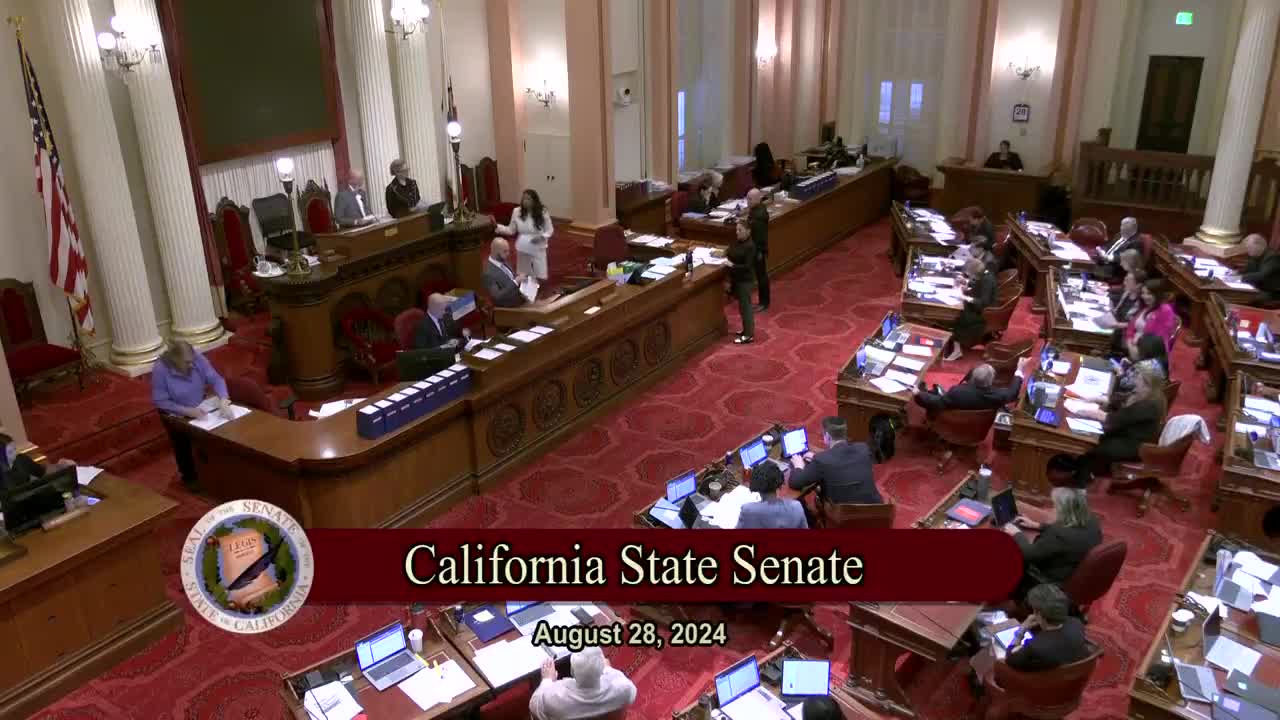
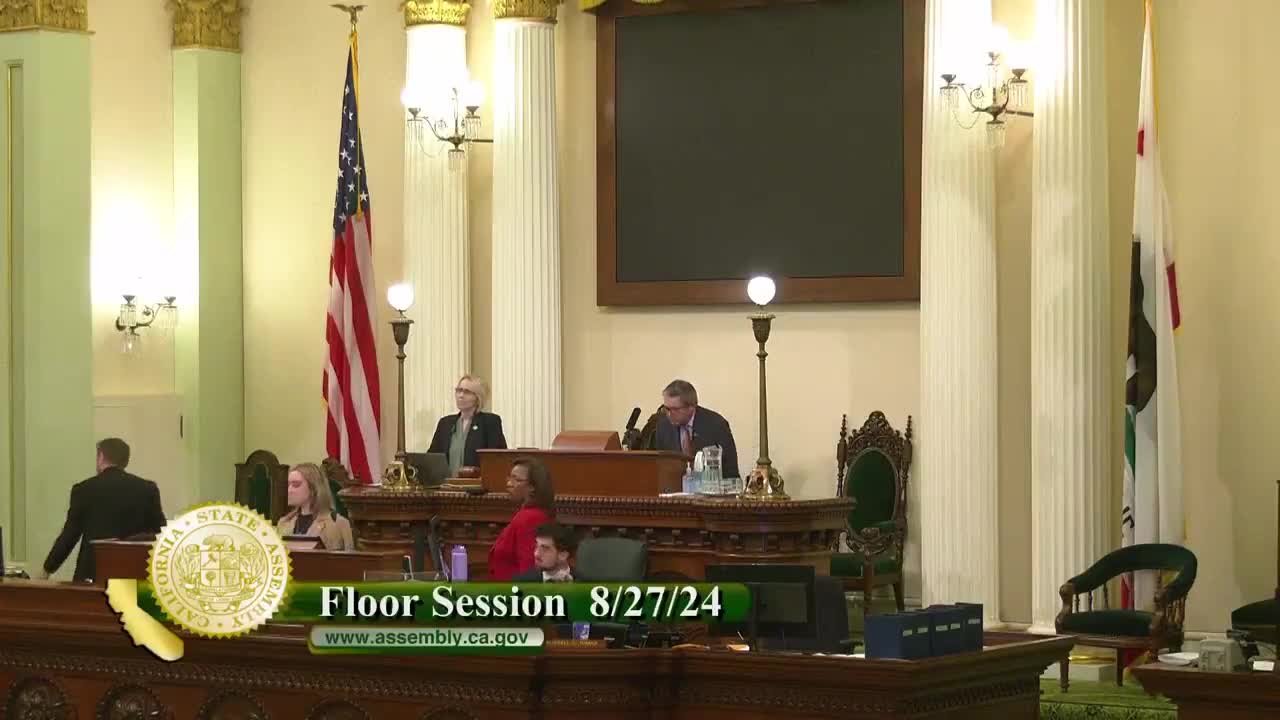

Bill Author

Bill Co-Author(s):