SB 1379: Public Employees’ Retirement Law: reinstatement: County of Solano.
- Session Year: 2023-2024
- House: Senate
- Latest Version Date: 2024-09-29
Current Status:
Passed
(2024-09-29: Chaptered by Secretary of State. Chapter 992, Statutes of 2024.)
Introduced
In Committee
First Chamber
In Committee
Second Chamber
Enacted
The Public Employees Retirement Law creates the Public Employees Retirement System (PERS), which provides pension and other benefits to members of the system and prescribes limitations on the service that retired members may perform, without the member reinstating in the system, for employers that participate in the system. The California Public Employees Pension Reform Act of 2013 (PEPRA) also prescribes limitations on the activities of retired members of these retirement systems, which supersede the provisions of PERS with which they conflict. Under both PERS and PEPRA, a retired member is generally subject to a limit of 960 hours of employment within a calendar or fiscal year, depending on the administrator of the system, for specified employers without reinstating in the system.
This bill would create an exception from the above-described limit for hours worked by a retired person in an appointment by the Solano County Sheriffs Office to perform a function or functions regularly performed by a deputy sheriff, evidence technician, or communications operator, subject to meeting certain requirements. The bill would limit the number of appointments made under these provisions to 20. The bill would repeal these provisions on January 1, 2027.
This bill would make legislative findings and declarations as to the necessity of a special statute for the County of Solano.
This bill would declare that it is to take effect immediately as an urgency statute.
The Public Employees Retirement Law creates the Public Employees Retirement System (PERS), which provides pension and other benefits to members of the system and prescribes limitations on the service that retired members may perform, without the member reinstating in the system, for employers that participate in the system. The California Public Employees Pension Reform Act of 2013 (PEPRA) also prescribes limitations on the activities of retired members of these retirement systems, which supersede the provisions of PERS with which they conflict. Under both PERS and PEPRA, a retired member is generally subject to a limit of 960 hours of employment within a calendar or fiscal year, depending on the administrator of the system, for specified employers without reinstating in the system.
This bill would create an exception from the above-described limit for hours worked by a retired person for in an appointment by the Solano County Sheriffs Department Office to perform a function or functions regularly performed by a deputy sheriff, evidence technician, or communications operator, subject to meeting certain requirements. The bill would limit the number of appointments made under these provisions to 20. The bill would repeal these provisions on January 1, 2027.
This bill would make legislative findings and declarations as to the necessity of a special statute for the County of Solano.
This bill would declare that it is to take effect immediately as an urgency statute.
The Public Employees Retirement Law creates the Public Employees Retirement System (PERS), which provides pension and other benefits to members of the system and prescribes limitations on the service that retired members may perform, without the member reinstating in the system, for employers that participate in the system. The California Public Employees Pension Reform Act of 2013 (PEPRA) also prescribes limitations on the activities of retired members of these retirement systems, which supersede the provisions of PERS with which they conflict. Under both PERS and PEPRA, a retired member is generally subject to a limit of 960 hours of employment within a calendar or fiscal year, depending on the administrator of the system, for specified employers without reinstating in the system.
This bill would create an exception for from the above-described limit for retired members hired by the City of Vallejo or the County of hours worked by a retired person for the Solano County Sheriffs Department to perform a function or functions regularly performed by a peace officer, any evidence or dispatch personnel, or any administrative or records personnel. deputy sheriff, evidence technician, or communications operator, subject to meeting certain requirements. The bill would repeal these provisions on January 1, 2029. 2027.
This bill would make legislative findings and declarations as to the necessity of a special statute for the County of Solano.
This bill would declare that it is to take effect immediately as an urgency statute.
The Public Employees Retirement Law creates the Public Employees Retirement System (PERS), which provides pension and other benefits to members of the system and prescribes limitations on the service that retired members may perform, without the member reinstating in the system, for employers that participate in the system. The California Public Employees Pension Reform Act of 2013 (PEPRA) also prescribes limitations on the activities of retired members of these retirement systems, which supersede the provisions of PERS with which they conflict. Under both PERS and PEPRA, a retired member is generally subject to a limit of 960 hours of employment within a calendar or fiscal year, depending on the administrator of the system, for specified employers without reinstating in the system.
This bill would create an exception for the above-described limit for retired members hired by the City of Vallejo or the County of Solano to perform a function or functions regularly performed by a peace officer, any evidence or dispatch personnel, or any administrative or records personnel. The bill would repeal these provisions on January 1, 2029.
This bill would make legislative findings and declarations as to the necessity of a special statute for the County of Solano.
This bill would declare that it is to take effect immediately as an urgency statute.
(a)This section shall apply to any person who is receiving a pension benefit from a public retirement system and shall supersede any other provision in conflict with this section.
(b)A retired person shall not serve, be employed by, or be employed through a contract directly by, a public employer in the same public retirement system from which the retired person receives the benefit without reinstatement from retirement, except as permitted by this section.
(c)A person who retires from a public employer may serve without reinstatement from retirement or loss or interruption of benefits provided by the retirement system upon appointment by the appointing power of a public employer either during an emergency to prevent stoppage of public business or because the retired person has skills needed to perform work of limited duration.
(d)Appointments of a person authorized under this section shall not exceed a total for all employers in that public retirement system of 960 hours or other equivalent limit, in a calendar or fiscal year, depending on the administrator of the system. The rate of pay for the employment shall not be less than the minimum, nor exceed the maximum, paid by the employer to other employees performing comparable duties, divided by 173.333 to equal an hourly rate. A retired person whose employment without reinstatement is authorized by this section shall acquire no service credit or retirement rights under this section with respect to the employment unless the retired person reinstates from retirement.
(e)(1)Notwithstanding subdivision (c), any retired person shall not be eligible to serve or be employed by a public employer if, during the 12-month period prior to an appointment described in this section, the retired person received any unemployment insurance compensation arising out of prior employment subject to this section with a public employer. A retired person shall certify in writing to the employer upon accepting an offer of employment that the retired person is in compliance with this requirement.
(2)A retired person who accepts an appointment after receiving unemployment insurance compensation as described in this subdivision shall terminate that employment on the last day of the current pay period and shall not be eligible for reappointment subject to this section for a period of 12 months following the last day of employment.
(f)A retired person shall not be eligible to be employed pursuant to this section for a period of 180 days following the date of retirement unless the retired person meets one of the following conditions:
(1)The employer certifies the nature of the employment and that the appointment is necessary to fill a critically needed position before 180 days have passed and the appointment has been approved by the governing body of the employer in a public meeting. The appointment may not be placed on a consent calendar.
(2)(A)Except as otherwise provided in this paragraph, for state employees, the state employer certifies the nature of the employment and that the appointment is necessary to fill a critically needed state employment position before 180 days have passed and the appointment has been approved by the Department of Human Resources. The department may establish a process to delegate appointing authority to individual state agencies, but shall audit the process to determine if abuses of the system occur. If necessary, the department may assume an agencys appointing authority for retired workers and may charge the department an appropriate amount for administering that authority.
(B)For legislative employees, the Senate Committee on Rules or the Assembly Rules Committee certifies the nature of the employment and that the appointment is necessary to fill a critically needed position before 180 days have passed and approves the appointment in a public meeting. The appointment may not be placed on a consent calendar.
(C)For employees of the California State University, the Trustees of the California State University certifies the nature of the employment and that the appointment is necessary to fill a critically needed position before 180 days have passed and approves the appointment in a public meeting. The appointment may not be placed on a consent calendar.
(3)A retired person is eligible to participate in the Faculty Early Retirement Program pursuant to a collective bargaining agreement with the California State University that existed prior to January 1, 2013, or has been included in subsequent agreements.
(4)A retired person is a public safety officer or firefighter hired to perform a function or functions regularly performed by a public safety officer or firefighter.
(g)A retired person who accepted a retirement incentive upon retirement shall not be eligible to be employed pursuant to this section for a period of 180 days following the date of retirement and subdivision (f) shall not apply.
(h)This section shall not apply to a person who is retired from the State Teachers Retirement System, and who is subject to Section 24214, 24214.5, or 26812 of the Education Code.
(i)This section shall not apply to (1) a subordinate judicial officer whose position, upon retirement, is converted to a judgeship pursuant to Section 69615, and the judicial officer returns to work in the converted position, and the employer is a trial court, or (2) a retired person of the Judges Retirement System or the Judges Retirement System II who is assigned to serve in a court pursuant to Section 68543.5.
(j)The 960-hour limit set forth in subdivision (d) shall not apply to hours worked in an appointment by the Solano County Sheriffs Office to perform a function or functions regularly performed by a deputy sheriff, evidence technician, or communications operator provided the Solano County Board of Supervisors certifies, by resolution at a public meeting, that the appointment satisfies the following conditions:
(1)The retired person has undergone and passed a preemployment background investigation.
(2)The retired person is not subject to decertification or under investigation for decertification by the Commission on Peace Officer Standards and Training.
(3)The County of Solano has posted a position for recruitment of an active member for not less than six continuous months to perform the same function or functions to be performed by the retired person, prior to appointing the retired person to perform the function or functions and no qualified applicant either applied to the position or was available for hire.
(4)Notwithstanding the rate of pay described in subdivision (d), the rate of pay for the retired person shall not exceed the average rate of pay of all positions in the same class of the position as filled by active members, divided by 173.333 to equal an hourly rate.
(5)Subject to the limitation in paragraph (4), the rate of pay upon appointment of the retired person shall not exceed the higher of either the retired persons last rate of pay as an active member or the rate of pay of the entry step on the publicly available pay schedule for the class. However, the retired person shall be eligible for reasonable and regular adjustments to the rate of pay that apply generally to positions in the same class, if the rate of pay after the adjustment meets the requirement in paragraph (4).
(6)The appointment may not be placed on a consent calendar.
(7)The maximum aggregate number of appointments made pursuant to this subdivision and subdivision (c) of Section 21224 shall not exceed 20.
(8)Pay a fee to the system in the amount of two hundred dollars ($200) for each month the retired person worked.
(k)This section shall remain in effect only until January 1, 2027, and as of that date is repealed.
SEC. 2.Section 7522.56 is added to the Government Code, to read:7522.56.(a)This section shall apply to any person who is receiving a pension benefit from a public retirement system and shall supersede any other provision in conflict with this section.
(b)A retired person shall not serve, be employed by, or be employed through a contract directly by, a public employer in the same public retirement system from which the retired person receives the benefit without reinstatement from retirement, except as permitted by this section.
(c)A person who retires from a public employer may serve without reinstatement from retirement or loss or interruption of benefits provided by the retirement system upon appointment by the appointing power of a public employer either during an emergency to prevent stoppage of public business or because the retired person has skills needed to perform work of limited duration.
(d)Appointments of the person authorized under this section shall not exceed a total for all employers in that public retirement system of 960 hours or other equivalent limit, in a calendar or fiscal year, depending on the administrator of the system. The rate of pay for the employment shall not be less than the minimum, nor exceed the maximum, paid by the employer to other employees performing comparable duties, divided by 173.333 to equal an hourly rate. A retired person whose employment without reinstatement is authorized by this section shall acquire no service credit or retirement rights under this section with respect to the employment unless the retired person reinstates from retirement.
(e)(1)Notwithstanding subdivision (c), any retired person shall not be eligible to serve or be employed by a public employer if, during the 12-month period prior to an appointment described in this section, the retired person received any unemployment insurance compensation arising out of prior employment subject to this section with a public employer. A retired person shall certify in writing to the employer upon accepting an offer of employment that the retired person is in compliance with this requirement.
(2)A retired person who accepts an appointment after receiving unemployment insurance compensation as described in this subdivision shall terminate that employment on the last day of the current pay period and shall not be eligible for reappointment subject to this section for a period of 12 months following the last day of employment.
(f)A retired person shall not be eligible to be employed pursuant to this section for a period of 180 days following the date of retirement unless the retired person meets one of the following conditions:
(1)The employer certifies the nature of the employment and that the appointment is necessary to fill a critically needed position before 180 days have passed and the appointment has been approved by the governing body of the employer in a public meeting. The appointment may not be placed on a consent calendar.
(2)(A)Except as otherwise provided in this paragraph, for state employees, the state employer certifies the nature of the employment and that the appointment is necessary to fill a critically needed state employment position before 180 days have passed and the appointment has been approved by the Department of Human Resources. The department may establish a process to delegate appointing authority to individual state agencies, but shall audit the process to determine if abuses of the system occur. If necessary, the department may assume an agencys appointing authority for retired workers and may charge the department an appropriate amount for administering that authority.
(B)For legislative employees, the Senate Committee on Rules or the Assembly Rules Committee certifies the nature of the employment and that the appointment is necessary to fill a critically needed position before 180 days have passed and approves the appointment in a public meeting. The appointment may not be placed on a consent calendar.
(C)For employees of the California State University, the Trustees of the California State University certifies the nature of the employment and that the appointment is necessary to fill a critically needed position before 180 days have passed and approves the appointment in a public meeting. The appointment may not be placed on a consent calendar.
(3)A retired person is eligible to participate in the Faculty Early Retirement Program pursuant to a collective bargaining agreement with the California State University that existed prior to January 1, 2013, or has been included in subsequent agreements.
(4)A retired person is a public safety officer or firefighter hired to perform a function or functions regularly performed by a public safety officer or firefighter.
(g)A retired person who accepted a retirement incentive upon retirement shall not be eligible to be employed pursuant to this section for a period of 180 days following the date of retirement and subdivision (f) shall not apply.
(h)This section shall not apply to a person who is retired from the State Teachers Retirement System, and who is subject to Section 24214, 24214.5, or 26812 of the Education Code.
(i)This section shall not apply to (1) a subordinate judicial officer whose position, upon retirement, is converted to a judgeship pursuant to Section 69615, and the judicial officer returns to work in the converted position, and the employer is a trial court, or (2) a retired person of the Judges Retirement System or the Judges Retirement System II who is assigned to serve in a court pursuant to Section 68543.5.
(j)This section shall become operative on January 1, 2027.
SEC. 3.Section 21224 of the Government Code is amended to read:21224.(a)A retired person may serve without reinstatement from retirement or loss or interruption of benefits provided by this system upon appointment by the appointing power of a state agency or public agency employer either during an emergency to prevent stoppage of public business or because the retired person has specialized skills needed in performing work of limited duration. These appointments shall not exceed a combined total of 960 hours for all employers each fiscal year. The compensation for the appointment shall not exceed the maximum monthly base salary paid to other employees performing comparable duties as listed on a publicly available pay schedule divided by 173.333 to equal an hourly rate. A retired person appointed pursuant to this section shall not receive any benefit, incentive, compensation in lieu of benefits, or other form of compensation in addition to the hourly pay rate. A retired person appointed pursuant to this section shall not work more than 960 hours each fiscal year, regardless of whether the retired person works for one or more employers.
(b)(1)This section shall not apply to any retired person otherwise eligible if during the 12-month period prior to an appointment described in this section the retired person received any unemployment insurance compensation arising out of prior employment subject to this section with the same employer.
(2)A retired person who accepts an appointment after receiving unemployment insurance compensation as described in this subdivision shall terminate that employment on the last day of the current pay period and shall not be eligible for reappointment subject to this section for a period of 12 months following the last day of employment. The retired person shall not be subject to Section 21202 or subdivision (b) of Section 21220.
(c)The 960-hour limit set forth in subdivision (a) shall not apply to hours worked in an appointment by the Solano County Sheriffs Office to perform a function or functions regularly performed by a deputy sheriff, evidence technician, or communications operator provided the Solano County Board of Supervisors certifies, by resolution at a public meeting, that appointment satisfies the following conditions:
(1)The retired person has undergone and passed a preemployment background investigation.
(2)The retired person is not subject to decertification or under investigation for decertification by the Commission on Peace Officer Standards and Training.
(3)The County of Solano has posted a position for recruitment of an active member for not less than six continuous months to perform the same function or functions to be performed by the retired person, prior to appointing the retired person to perform the function or functions and no qualified applicant either applied to the position or was available for hire.
(4)Notwithstanding the rate of pay described in subdivision (d), the rate of pay for the retired person shall not exceed the average rate of pay of all positions in the same class of the position as filled by active members, divided by 173.333 to equal an hourly rate.
(5)Subject to the limitation in paragraph (4), the compensation upon appointment of the retired person shall not exceed the higher of either the retired persons last monthly base salary paid as an active member or the monthly base salary at the entry step on the publicly available pay schedule for the class. However, the retired person shall be eligible for reasonable and regular adjustments to the base salary that apply generally to positions in the same class, if the rate of pay after the adjustment meets the requirement in paragraph (4).
(6)The appointment may not be placed on a consent calendar.
(7)The maximum aggregate number of appointments made pursuant to this subdivision and subdivision (j) of Section 7522.56 shall not exceed 20.
(8)Pay a fee to the system in the amount of two hundred dollars ($200) for each month the retired person worked.
(d)This section shall remain in effect only until January 1, 2027, and as of that date is repealed.
SEC. 4.Section 21224 is added to the Government Code, to read:21224.(a)A retired person may serve without reinstatement from retirement or loss or interruption of benefits provided by this system upon appointment by the appointing power of a state agency or public agency employer either during an emergency to prevent stoppage of public business or because the retired person has specialized skills needed in performing work of limited duration. These appointments shall not exceed a combined total of 960 hours for all employers each fiscal year. The compensation for the appointment shall not exceed the maximum monthly base salary paid to other employees performing comparable duties as listed on a publicly available pay schedule divided by 173.333 to equal an hourly rate. A retired person appointed pursuant to this section shall not receive any benefit, incentive, compensation in lieu of benefits, or other form of compensation in addition to the hourly pay rate. A retired person appointed pursuant to this section shall not work more than 960 hours each fiscal year regardless of whether the retired person works for one or more employers.
(b)(1)This section shall not apply to any retired person otherwise eligible if during the 12-month period prior to an appointment described in this section the retired person received any unemployment insurance compensation arising out of prior employment subject to this section with the same employer.
(2)A retired person who accepts an appointment after receiving unemployment insurance compensation as described in this subdivision shall terminate that employment on the last day of the current pay period and shall not be eligible for reappointment subject to this section for a period of 12 months following the last day of employment. The retired person shall not be subject to Section 21202 or subdivision (b) of Section 21220.
(c)This section shall become operative on January 1, 2027.
SEC. 5.The Legislature finds and declares that a special statute is necessary and that a general statute cannot be made applicable within the meaning of Section 16 of Article IV of the California Constitution because of the urgent substantial understaffing of the City of Vallejo Police Department that constitutes a risk to public health and safety.
SEC. 6.This act is an urgency statute necessary for the immediate preservation of the public peace, health, or safety within the meaning of Article IV of the California Constitution and shall go into immediate effect. The facts constituting the necessity are:
The urgent substantial understaffing of the City of Vallejo Police Department constitutes a risk to public health and safety, as the Vallejo City Council declared a state of emergency pertaining to the major staffing shortage in that city and requires the immediate assistance of the Solano County Sheriffs Office.
(a)This section shall apply to any person who is receiving a pension benefit from a public retirement system and shall supersede any other provision in conflict with this section.
(b)A retired person shall not serve, be employed by, or be employed through a contract directly by, a public employer in the same public retirement system from which the retired person receives the benefit without reinstatement from retirement, except as permitted by this section.
(c)A person who retires from a public employer may serve without reinstatement from retirement or loss or interruption of benefits provided by the retirement system upon appointment by the appointing power of a public employer either during an emergency to prevent stoppage of public business or because the retired person has skills needed to perform work of limited duration.
(d)Appointments of a person authorized under this section shall not exceed a total for all employers in that public retirement system of 960 hours or other equivalent limit, in a calendar or fiscal year, depending on the administrator of the system. The rate of pay for the employment shall not be less than the minimum, nor exceed the maximum, paid by the employer to other employees performing comparable duties, divided by 173.333 to equal an hourly rate. A retired person whose employment without reinstatement is authorized by this section shall acquire no service credit or retirement rights under this section with respect to the employment unless the retired person reinstates from retirement.
(e)(1)Notwithstanding subdivision (c), any retired person shall not be eligible to serve or be employed by a public employer if, during the 12-month period prior to an appointment described in this section, the retired person received any unemployment insurance compensation arising out of prior employment subject to this section with a public employer. A retired person shall certify in writing to the employer upon accepting an offer of employment that the retired person is in compliance with this requirement.
(2)A retired person who accepts an appointment after receiving unemployment insurance compensation as described in this subdivision shall terminate that employment on the last day of the current pay period and shall not be eligible for reappointment subject to this section for a period of 12 months following the last day of employment.
(f)A retired person shall not be eligible to be employed pursuant to this section for a period of 180 days following the date of retirement unless the retired person meets one of the following conditions:
(1)The employer certifies the nature of the employment and that the appointment is necessary to fill a critically needed position before 180 days have passed and the appointment has been approved by the governing body of the employer in a public meeting. The appointment may not be placed on a consent calendar.
(2)(A)Except as otherwise provided in this paragraph, for state employees, the state employer certifies the nature of the employment and that the appointment is necessary to fill a critically needed state employment position before 180 days have passed and the appointment has been approved by the Department of Human Resources. The department may establish a process to delegate appointing authority to individual state agencies, but shall audit the process to determine if abuses of the system occur. If necessary, the department may assume an agencys appointing authority for retired workers and may charge the department an appropriate amount for administering that authority.
(B)For legislative employees, the Senate Committee on Rules or the Assembly Rules Committee certifies the nature of the employment and that the appointment is necessary to fill a critically needed position before 180 days have passed and approves the appointment in a public meeting. The appointment may not be placed on a consent calendar.
(C)For employees of the California State University, the Trustees of the California State University certifies the nature of the employment and that the appointment is necessary to fill a critically needed position before 180 days have passed and approves the appointment in a public meeting. The appointment may not be placed on a consent calendar.
(3)A retired person is eligible to participate in the Faculty Early Retirement Program pursuant to a collective bargaining agreement with the California State University that existed prior to January 1, 2013, or has been included in subsequent agreements.
(4)A retired person is a public safety officer or firefighter hired to perform a function or functions regularly performed by a public safety officer or firefighter.
(g)A retired person who accepted a retirement incentive upon retirement shall not be eligible to be employed pursuant to this section for a period of 180 days following the date of retirement and subdivision (f) shall not apply.
(h)This section shall not apply to a person who is retired from the State Teachers Retirement System, and who is subject to Section 24214, 24214.5, or 26812 of the Education Code.
(i)This section shall not apply to (1) a subordinate judicial officer whose position, upon retirement, is converted to a judgeship pursuant to Section 69615, and the judicial officer returns to work in the converted position, and the employer is a trial court, or (2) a retired person of the Judges Retirement System or the Judges Retirement System II who is assigned to serve in a court pursuant to Section 68543.5.
(j)The 960-hour limit set forth in subdivision (d) shall not apply to hours worked in an appointment by the Solano County Sheriffs Department Office to perform a function or functions regularly performed by a deputy sheriff, evidence technician, or communications operator provided the Solano County Board of Supervisors certifies, by resolution at a public meeting, that the appointment satisfies the following conditions:
(1)The retired person has undergone and passed a preemployment background investigation.
(2)The retired person is not subject to decertification or under investigation for decertification by the Commission on Peace Officer Standards and Training.
(3)The County of Solano has posted the a position for recruitment of an active member for not less than six continuous months to perform the same function or functions to be performed by the retired person, prior to appointing a the retired person to the position and no reasonable perform the function or functions and no qualified applicant either applied to the position and or was available for hire.
(4)The Notwithstanding the rate of pay described in subdivision (d), the rate of pay for the retired person shall not exceed the average rate of pay of all positions in the same class of the position as filled by active members. members, divided by 173.333 to equal an hourly rate.
(5)The Subject to the limitation in paragraph (4), the rate of pay upon appointment of a the retired person shall not exceed the higher of either the retired persons last rate of pay as an active member or the rate of pay of the entry step on the salary publicly available pay schedule for the class. However, the retired person shall be eligible for reasonable and regular adjustments to the rate of pay that apply generally to positions in the same class. class, if the rate of pay after the adjustment meets the requirement in paragraph (4).
(6)The appointment may not be placed on a consent calendar.
(7)The maximum aggregate number of appointments made pursuant to this subdivision and subdivision (c) of Section 21224 shall not exceed 20.
(8)Pay a fee to the system in the amount of two hundred dollars ($200) for each month the retired person worked.
(k)This section shall remain in effect only until January 1, 2027, and as of that date is repealed.
SEC. 2.Section 7522.56 is added to the Government Code, to read:7522.56.(a)This section shall apply to any person who is receiving a pension benefit from a public retirement system and shall supersede any other provision in conflict with this section.
(b)A retired person shall not serve, be employed by, or be employed through a contract directly by, a public employer in the same public retirement system from which the retired person receives the benefit without reinstatement from retirement, except as permitted by this section.
(c)A person who retires from a public employer may serve without reinstatement from retirement or loss or interruption of benefits provided by the retirement system upon appointment by the appointing power of a public employer either during an emergency to prevent stoppage of public business or because the retired person has skills needed to perform work of limited duration.
(d)Appointments of the person authorized under this section shall not exceed a total for all employers in that public retirement system of 960 hours or other equivalent limit, in a calendar or fiscal year, depending on the administrator of the system. The rate of pay for the employment shall not be less than the minimum, nor exceed the maximum, paid by the employer to other employees performing comparable duties, divided by 173.333 to equal an hourly rate. A retired person whose employment without reinstatement is authorized by this section shall acquire no service credit or retirement rights under this section with respect to the employment unless the retired person reinstates from retirement.
(e)(1)Notwithstanding subdivision (c), any retired person shall not be eligible to serve or be employed by a public employer if, during the 12-month period prior to an appointment described in this section, the retired person received any unemployment insurance compensation arising out of prior employment subject to this section with a public employer. A retired person shall certify in writing to the employer upon accepting an offer of employment that the retired person is in compliance with this requirement.
(2)A retired person who accepts an appointment after receiving unemployment insurance compensation as described in this subdivision shall terminate that employment on the last day of the current pay period and shall not be eligible for reappointment subject to this section for a period of 12 months following the last day of employment.
(f)A retired person shall not be eligible to be employed pursuant to this section for a period of 180 days following the date of retirement unless the retired person meets one of the following conditions:
(1)The employer certifies the nature of the employment and that the appointment is necessary to fill a critically needed position before 180 days have passed and the appointment has been approved by the governing body of the employer in a public meeting. The appointment may not be placed on a consent calendar.
(2)(A)Except as otherwise provided in this paragraph, for state employees, the state employer certifies the nature of the employment and that the appointment is necessary to fill a critically needed state employment position before 180 days have passed and the appointment has been approved by the Department of Human Resources. The department may establish a process to delegate appointing authority to individual state agencies, but shall audit the process to determine if abuses of the system occur. If necessary, the department may assume an agencys appointing authority for retired workers and may charge the department an appropriate amount for administering that authority.
(B)For legislative employees, the Senate Committee on Rules or the Assembly Rules Committee certifies the nature of the employment and that the appointment is necessary to fill a critically needed position before 180 days have passed and approves the appointment in a public meeting. The appointment may not be placed on a consent calendar.
(C)For employees of the California State University, the Trustees of the California State University certifies the nature of the employment and that the appointment is necessary to fill a critically needed position before 180 days have passed and approves the appointment in a public meeting. The appointment may not be placed on a consent calendar.
(3)A retired person is eligible to participate in the Faculty Early Retirement Program pursuant to a collective bargaining agreement with the California State University that existed prior to January 1, 2013, or has been included in subsequent agreements.
(4)A retired person is a public safety officer or firefighter hired to perform a function or functions regularly performed by a public safety officer or firefighter.
(g)A retired person who accepted a retirement incentive upon retirement shall not be eligible to be employed pursuant to this section for a period of 180 days following the date of retirement and subdivision (f) shall not apply.
(h)This section shall not apply to a person who is retired from the State Teachers Retirement System, and who is subject to Section 24214, 24214.5, or 26812 of the Education Code.
(i)This section shall not apply to (1) a subordinate judicial officer whose position, upon retirement, is converted to a judgeship pursuant to Section 69615, and the judicial officer returns to work in the converted position, and the employer is a trial court, or (2) a retired person of the Judges Retirement System or the Judges Retirement System II who is assigned to serve in a court pursuant to Section 68543.5.
(j)This section shall become operative on January 1, 2027.
SEC. 3.Section 21224 of the Government Code is amended to read:21224.(a)A retired person may serve without reinstatement from retirement or loss or interruption of benefits provided by this system upon appointment by the appointing power of a state agency or public agency employer either during an emergency to prevent stoppage of public business or because the retired person has specialized skills needed in performing work of limited duration. These appointments shall not exceed a combined total of 960 hours for all employers each fiscal year. The compensation for the appointment shall not exceed the maximum monthly base salary paid to other employees performing comparable duties as listed on a publicly available pay schedule divided by 173.333 to equal an hourly rate. A retired person appointed pursuant to this section shall not receive any benefit, incentive, compensation in lieu of benefits, or other form of compensation in addition to the hourly pay rate. A retired person appointed pursuant to this section shall not work more than 960 hours each fiscal year, regardless of whether the retired person works for one or more employers.
(b)(1)This section shall not apply to any retired person otherwise eligible if during the 12-month period prior to an appointment described in this section the retired person received any unemployment insurance compensation arising out of prior employment subject to this section with the same employer.
(2)A retired person who accepts an appointment after receiving unemployment insurance compensation as described in this subdivision shall terminate that employment on the last day of the current pay period and shall not be eligible for reappointment subject to this section for a period of 12 months following the last day of employment. The retired person shall not be subject to Section 21202 or subdivision (b) of Section 21220.
(c)The 960-hour limit set forth in subdivision (a) shall not apply to hours worked in an appointment by the Solano County Sheriffs Department Office to perform a function or functions regularly performed by a deputy sheriff, evidence technician, or communications operator provided the Solano County Board of Supervisors certifies, by resolution at a public meeting, that appointment satisfies the following conditions:
(1)The retired person has undergone and passed a preemployment background investigation.
(2)The retired person is not subject to decertification or under investigation for decertification by the Commission on Peace Officer Standards and Training.
(3)The County of Solano has posted the a position for recruitment of an active member for not less than six continuous months to perform the same function or functions to be performed by the retired person, prior to appointing a the retired person to the position and no reasonable perform the function or functions and no qualified applicant either applied to the position and or was available for hire.
(4)The Notwithstanding the rate of pay described in subdivision (d), the rate of pay for the retired person shall not exceed the average rate of pay of all positions in the same class of the position as filled by active members. members, divided by 173.333 to equal an hourly rate.
(5)The rate of pay Subject to the limitation in paragraph (4), the compensation upon appointment of a the retired person shall not exceed the higher of either the retired persons last rate of pay monthly base salary paid as an active member or the rate of pay of monthly base salary at the entry step on the salary publicly available pay schedule for the class. However, the retired person shall be eligible for reasonable and regular adjustments to the rate of pay base salary that apply generally to positions in the same class. class, if the rate of pay after the adjustment meets the requirement in paragraph (4).
(6)The appointment may not be placed on a consent calendar.
(7)The maximum aggregate number of appointments made pursuant to this subdivision and subdivision (j) of Section 7522.56 shall not exceed 20.
(8)Pay a fee to the system in the amount of two hundred dollars ($200) for each month the retired person worked.
(d)This section shall remain in effect only until January 1, 2027, and as of that date is repealed.
SEC. 4.Section 21224 is added to the Government Code, to read:21224.(a)A retired person may serve without reinstatement from retirement or loss or interruption of benefits provided by this system upon appointment by the appointing power of a state agency or public agency employer either during an emergency to prevent stoppage of public business or because the retired person has specialized skills needed in performing work of limited duration. These appointments shall not exceed a combined total of 960 hours for all employers each fiscal year. The compensation for the appointment shall not exceed the maximum monthly base salary paid to other employees performing comparable duties as listed on a publicly available pay schedule divided by 173.333 to equal an hourly rate. A retired person appointed pursuant to this section shall not receive any benefit, incentive, compensation in lieu of benefits, or other form of compensation in addition to the hourly pay rate. A retired person appointed pursuant to this section shall not work more than 960 hours each fiscal year regardless of whether the retired person works for one or more employers.
(b)(1)This section shall not apply to any retired person otherwise eligible if during the 12-month period prior to an appointment described in this section the retired person received any unemployment insurance compensation arising out of prior employment subject to this section with the same employer.
(2)A retired person who accepts an appointment after receiving unemployment insurance compensation as described in this subdivision shall terminate that employment on the last day of the current pay period and shall not be eligible for reappointment subject to this section for a period of 12 months following the last day of employment. The retired person shall not be subject to Section 21202 or subdivision (b) of Section 21220.
(c)This section shall become operative on January 1, 2027.
SEC. 5.The Legislature finds and declares that a special statute is necessary and that a general statute cannot be made applicable within the meaning of Section 16 of Article IV of the California Constitution because of the urgent substantial understaffing of the City of Vallejo Police Department that constitutes a risk to public health and safety.
SEC. 6.This act is an urgency statute necessary for the immediate preservation of the public peace, health, or safety within the meaning of Article IV of the California Constitution and shall go into immediate effect. The facts constituting the necessity are:
The urgent substantial understaffing of the City of Vallejo Police Department constitutes a risk to public health and safety, as the Vallejo City Council declared a state of emergency pertaining to the major staffing shortage in that city and requires the immediate assistance of the Solano County Sheriffs Department. Office.
(a)This section shall apply to any person who is receiving a pension benefit from a public retirement system and shall supersede any other provision in conflict with this section.
(b)A retired person shall not serve, be employed by, or be employed through a contract directly by, a public employer in the same public retirement system from which the retiree retired person receives the benefit without reinstatement from retirement, except as permitted by this section.
(c)A person who retires from a public employer may serve without reinstatement from retirement or loss or interruption of benefits provided by the retirement system upon appointment by the appointing power of a public employer either during an emergency to prevent stoppage of public business or because the retired person has skills needed to perform work of limited duration.
(d)(1)Except as provided in paragraph (2), appointments Appointments of the a person authorized under this section shall not exceed a total for all employers in that public retirement system of 960 hours or other equivalent limit, in a calendar or fiscal year, depending on the administrator of the system. The rate of pay for the employment shall not be less than the minimum, nor exceed the maximum, paid by the employer to other employees performing comparable duties, divided by 173.333 to equal an hourly rate. A retired person whose employment without reinstatement is authorized by this section shall acquire no service credit or retirement rights under this section with respect to the employment unless the retired person reinstates from retirement.
(2)The limit set forth in paragraph (1) shall not apply to either of the following:(A)A retiree who is hired by the City of Vallejo to perform a function or functions regularly performed by a peace officer, any evidence or dispatch personnel, or any administrative or records personnel.(B)A retiree who is hired by the County of Solano to perform a function or functions regularly performed by a peace officer, any evidence or dispatch personnel, or any administrative or records personnel.(e)(1)Notwithstanding subdivision (c), any retired person shall not be eligible to serve or be employed by a public employer if, during the 12-month period prior to an appointment described in this section, the retired person received any unemployment insurance compensation arising out of prior employment subject to this section with a public employer. A retiree retired person shall certify in writing to the employer upon accepting an offer of employment that the retiree retired person is in compliance with this requirement.
(2)A retired person who accepts an appointment after receiving unemployment insurance compensation as described in this subdivision shall terminate that employment on the last day of the current pay period and shall not be eligible for reappointment subject to this section for a period of 12 months following the last day of employment.
(f)A retired person shall not be eligible to be employed pursuant to this section for a period of 180 days following the date of retirement unless the retiree retired person meets one of the following conditions:
(1)The employer certifies the nature of the employment and that the appointment is necessary to fill a critically needed position before 180 days have passed and the appointment has been approved by the governing body of the employer in a public meeting. The appointment may not be placed on a consent calendar.
(2)(A)Except as otherwise provided in this paragraph, for state employees, the state employer certifies the nature of the employment and that the appointment is necessary to fill a critically needed state employment position before 180 days have passed and the appointment has been approved by the Department of Human Resources. The department may establish a process to delegate appointing authority to individual state agencies, but shall audit the process to determine if abuses of the system occur. If necessary, the department may assume an agencys appointing authority for retired workers and may charge the department an appropriate amount for administering that authority.
(B)For legislative employees, the Senate Committee on Rules or the Assembly Rules Committee certifies the nature of the employment and that the appointment is necessary to fill a critically needed position before 180 days have passed and approves the appointment in a public meeting. The appointment may not be placed on a consent calendar.
(C)For employees of the California State University, the Trustees of the California State University certifies the nature of the employment and that the appointment is necessary to fill a critically needed position before 180 days have passed and approves the appointment in a public meeting. The appointment may not be placed on a consent calendar.
(3)The retiree A retired person is eligible to participate in the Faculty Early Retirement Program pursuant to a collective bargaining agreement with the California State University that existed prior to January 1, 2013, or has been included in subsequent agreements.
(4)The retiree A retired person is a public safety officer or firefighter hired to perform a function or functions regularly performed by a public safety officer or firefighter.
(g)A retired person who accepted a retirement incentive upon retirement shall not be eligible to be employed pursuant to this section for a period of 180 days following the date of retirement and subdivision (f) shall not apply.
(h)This section shall not apply to a person who is retired from the State Teachers Retirement System, and who is subject to Section 24214, 24214.5, or 26812 of the Education Code.
(i)This section shall not apply to (1) a subordinate judicial officer whose position, upon retirement, is converted to a judgeship pursuant to Section 69615, and the judicial officer returns to work in the converted position, and the employer is a trial court, or (2) a retiree retired person of the Judges Retirement System or the Judges Retirement System II who is assigned to serve in a court pursuant to Section 68543.5.
(j)The 960-hour limit set forth in subdivision (d) shall not apply to hours worked in an appointment by the Solano County Sheriffs Department to perform a function or functions regularly performed by a deputy sheriff, evidence technician, or communications operator provided the Solano County Board of Supervisors certifies, by resolution at a public meeting, that the appointment satisfies the following conditions:
(1)The retired person has undergone and passed a preemployment background investigation.
(2)The retired person is not subject to decertification or under investigation for decertification by the Commission on Peace Officer Standards and Training.
(3)The County of Solano has posted the position for recruitment of an active member for not less than six continuous months prior to appointing a retired person to the position and no reasonable applicant applied to the position and was available for hire.
(4)The rate of pay for the retired person shall not exceed the average rate of pay of all positions in the same class of the position as filled by active members.
(5)The rate of pay upon appointment of a retired person shall not exceed the higher of either the retired persons last rate of pay as an active member or the rate of pay of the entry step on the salary schedule for the class. However, the retired person shall be eligible for reasonable and regular adjustments to the rate of pay that apply generally to positions in the same class.
(j)(k)This section shall remain in effect only until January 1, 2029, 2027, and as of that date is repealed.
SEC. 2.Section 7522.56 is added to the Government Code, to read:7522.56.(a)This section shall apply to any person who is receiving a pension benefit from a public retirement system and shall supersede any other provision in conflict with this section.
(b)A retired person shall not serve, be employed by, or be employed through a contract directly by, a public employer in the same public retirement system from which the retiree retired person receives the benefit without reinstatement from retirement, except as permitted by this section.
(c)A person who retires from a public employer may serve without reinstatement from retirement or loss or interruption of benefits provided by the retirement system upon appointment by the appointing power of a public employer either during an emergency to prevent stoppage of public business or because the retired person has skills needed to perform work of limited duration.
(d)Appointments of the person authorized under this section shall not exceed a total for all employers in that public retirement system of 960 hours or other equivalent limit, in a calendar or fiscal year, depending on the administrator of the system. The rate of pay for the employment shall not be less than the minimum, nor exceed the maximum, paid by the employer to other employees performing comparable duties, divided by 173.333 to equal an hourly rate. A retired person whose employment without reinstatement is authorized by this section shall acquire no service credit or retirement rights under this section with respect to the employment unless the retired person reinstates from retirement.
(e)(1)Notwithstanding subdivision (c), any retired person shall not be eligible to serve or be employed by a public employer if, during the 12-month period prior to an appointment described in this section, the retired person received any unemployment insurance compensation arising out of prior employment subject to this section with a public employer. A retiree retired person shall certify in writing to the employer upon accepting an offer of employment that the retiree retired person is in compliance with this requirement.
(2)A retired person who accepts an appointment after receiving unemployment insurance compensation as described in this subdivision shall terminate that employment on the last day of the current pay period and shall not be eligible for reappointment subject to this section for a period of 12 months following the last day of employment.
(f)A retired person shall not be eligible to be employed pursuant to this section for a period of 180 days following the date of retirement unless the retiree retired person meets one of the following conditions:
(1)The employer certifies the nature of the employment and that the appointment is necessary to fill a critically needed position before 180 days have passed and the appointment has been approved by the governing body of the employer in a public meeting. The appointment may not be placed on a consent calendar.
(2)(A)Except as otherwise provided in this paragraph, for state employees, the state employer certifies the nature of the employment and that the appointment is necessary to fill a critically needed state employment position before 180 days have passed and the appointment has been approved by the Department of Human Resources. The department may establish a process to delegate appointing authority to individual state agencies, but shall audit the process to determine if abuses of the system occur. If necessary, the department may assume an agencys appointing authority for retired workers and may charge the department an appropriate amount for administering that authority.
(B)For legislative employees, the Senate Committee on Rules or the Assembly Rules Committee certifies the nature of the employment and that the appointment is necessary to fill a critically needed position before 180 days have passed and approves the appointment in a public meeting. The appointment may not be placed on a consent calendar.
(C)For employees of the California State University, the Trustees of the California State University certifies the nature of the employment and that the appointment is necessary to fill a critically needed position before 180 days have passed and approves the appointment in a public meeting. The appointment may not be placed on a consent calendar.
(3)The retiree A retired person is eligible to participate in the Faculty Early Retirement Program pursuant to a collective bargaining agreement with the California State University that existed prior to January 1, 2013, or has been included in subsequent agreements.
(4)The retiree A retired person is a public safety officer or firefighter hired to perform a function or functions regularly performed by a public safety officer or firefighter.
(g)A retired person who accepted a retirement incentive upon retirement shall not be eligible to be employed pursuant to this section for a period of 180 days following the date of retirement and subdivision (f) shall not apply.
(h)This section shall not apply to a person who is retired from the State Teachers Retirement System, and who is subject to Section 24214, 24214.5, or 26812 of the Education Code.
(i)This section shall not apply to (1) a subordinate judicial officer whose position, upon retirement, is converted to a judgeship pursuant to Section 69615, and the judicial officer returns to work in the converted position, and the employer is a trial court, or (2) a retiree retired person of the Judges Retirement System or the Judges Retirement System II who is assigned to serve in a court pursuant to Section 68543.5.
(j)This section shall become operative on January 1, 2029. 2027.
SEC. 3.Section 21221 of the Government Code is amended to read:21221.A retired person may serve without reinstatement from retirement or loss or interruption of benefits provided by this system, as follows:(a)As a member of any board, commission, or advisory committee, upon appointment by the Governor, the Speaker of the Assembly, the President pro Tempore of the Senate, director of a state department, or the governing board of the contracting agency. However, the appointment shall not be deemed employment within the meaning of Division 4 (commencing with Section 3200) and Division 4.5 (commencing with Section 6100) of the Labor Code, and shall not provide a basis for the payment of workers compensation to a retired state employee or to retired state employees dependents.(b)As a school crossing guard.(c)As a juror or election officer. (d)As an elective officer on and after September 15, 1961. However, all rights and immunities which may have accrued under Section 21229 as it read prior to that sections repeal during the 1969 Regular Session of the Legislature are hereby preserved.(e)As an appointive member of the governing body of a contracting agency. However, the compensation for that office shall not exceed one hundred dollars ($100) per month.(f)Upon appointment by the Legislature, or either house, or a legislative committee to a position deemed by the appointing power to be temporary in nature.(g)Upon employment by a contracting agency to a position found by the governing body, by resolution, to be available because of a leave of absence granted to a person on payroll status for a period not to exceed one year and found by the governing body to require specialized skills. The temporary employment shall be terminated at the end of the leave of absence. Appointments under this section shall be reported to the board and shall be accompanied by the resolution adopted by the governing body.(h)(1)Upon interim appointment by the governing body of a contracting agency to a vacant position during recruitment for a permanent appointment and deemed by the governing body to require specialized skills or during an emergency to prevent stoppage of public business. A retired person shall only be appointed once to this vacant position. These appointments, including any made concurrently pursuant to Section 21224 or 21229, except as provided in paragraph (2), shall not exceed a combined total of 960 hours for all employers each fiscal year. The compensation for the interim appointment shall not exceed the maximum monthly base salary paid to other employees performing comparable duties as listed on a publicly available pay schedule for the vacant position divided by 173.333 to equal an hourly rate. A retired person appointed to a vacant position pursuant to this subdivision shall not receive any benefits, incentives, compensation in lieu of benefits, or any other forms of compensation in addition to the hourly rate. A retired annuitant appointed pursuant to this subdivision shall not work more than 960 hours each fiscal year, except as provided in paragraph (2), regardless of whether the retired annuitant works for one or more employers.(2)The 960-hour limits described in paragraph (1) shall not apply to hours worked in an appointment by the City of Vallejo or hours worked in an appointment by the County of Solano to perform a function or functions regularly performed by a peace officer, any evidence or dispatch personnel, or any administrative or records personnel.(i)Upon appointment by the Administrative Director of the Courts to the position of Court Security Coordinator, a position deemed temporary in nature and requiring the specialized skills and experience of a retired professional peace officer.(j)This section shall remain in effect only until January 1, 2029, and as of that date is repealed.SEC. 4.Section 21221 is added to the Government Code, to read:21221.A retired person may serve without reinstatement from retirement or loss or interruption of benefits provided by this system, as follows:
(a)As a member of any board, commission, or advisory committee, upon appointment by the Governor, the Speaker of the Assembly, the President pro Tempore of the Senate, director of a state department, or the governing board of the contracting agency. However, the appointment shall not be deemed employment within the meaning of Division 4 (commencing with Section 3200) and Division 4.5 (commencing with Section 6100) of the Labor Code, and shall not provide a basis for the payment of workers compensation to a retired state employee or to retired state employees dependents.
(b)As a school crossing guard.
(c)As a juror or election officer.
(d)As an elective officer on and after September 15, 1961. However, all rights and immunities which may have accrued under Section 21229 as it read prior to that sections repeal during the 1969 Regular Session of the Legislature are hereby preserved.
(e)As an appointive member of the governing body of a contracting agency. However, the compensation for that office shall not exceed one hundred dollars ($100) per month.
(f)Upon appointment by the Legislature, or either house, or a legislative committee to a position deemed by the appointing power to be temporary in nature.
(g)Upon employment by a contracting agency to a position found by the governing body, by resolution, to be available because of a leave of absence granted to a person on payroll status for a period not to exceed one year and found by the governing body to require specialized skills. The temporary employment shall be terminated at the end of the leave of absence. Appointments under this section shall be reported to the board and shall be accompanied by the resolution adopted by the governing body.
(h)Upon interim appointment by the governing body of a contracting agency to a vacant position during recruitment for a permanent appointment and deemed by the governing body to require specialized skills or during an emergency to prevent stoppage of public business. A retired person shall only be appointed once to this vacant position. These appointments, including any made concurrently pursuant to Section 21224 or 21229, shall not exceed a combined total of 960 hours for all employers each fiscal year. The compensation for the interim appointment shall not exceed the maximum monthly base salary paid to other employees performing comparable duties as listed on a publicly available pay schedule for the vacant position divided by 173.333 to equal an hourly rate. A retired person appointed to a vacant position pursuant to this subdivision shall not receive any benefits, incentives, compensation in lieu of benefits, or any other forms of compensation in addition to the hourly rate. A retired annuitant appointed pursuant to this subdivision shall not work more than 960 hours each fiscal year regardless of whether the retired annuitant works for one or more employers.
(i)Upon appointment by the Administrative Director of the Courts to the position of Court Security Coordinator, a position deemed temporary in nature and requiring the specialized skills and experience of a retired professional peace officer.
(j)This section shall become operative on January 1, 2029.
SEC. 5.SEC. 3.Section 21224 of the Government Code is amended to read:21224.(a)(1)A retired person may serve without reinstatement from retirement or loss or interruption of benefits provided by this system upon appointment by the appointing power of a state agency or public agency employer either during an emergency to prevent stoppage of public business or because the retired person has specialized skills needed in performing work of limited duration. Except as provided in paragraph (2), these These appointments shall not exceed a combined total of 960 hours for all employers each fiscal year. The compensation for the appointment shall not exceed the maximum monthly base salary paid to other employees performing comparable duties as listed on a publicly available pay schedule divided by 173.333 to equal an hourly rate. A retired person appointed pursuant to this section shall not receive any benefit, incentive, compensation in lieu of benefits, or other form of compensation in addition to the hourly pay rate. A retired annuitant person appointed pursuant to this section shall not work more than 960 hours each fiscal year, except as provided in paragraph (2), regardless of whether the retired annuitant person works for one or more employers.
(2)The 960-hour limits described in paragraph (1) shall not apply to hours worked in an appointment by the City of Vallejo or hours worked in an appointment by the County of Solano to perform a function or functions regularly performed by a peace officer, any evidence or dispatch personnel, or any administrative or records personnel.(b)(1)This section shall not apply to any retired person otherwise eligible if during the 12-month period prior to an appointment described in this section the retired person received any unemployment insurance compensation arising out of prior employment subject to this section with the same employer.
(2)A retired person who accepts an appointment after receiving unemployment insurance compensation as described in this subdivision shall terminate that employment on the last day of the current pay period and shall not be eligible for reappointment subject to this section for a period of 12 months following the last day of employment. The retired person shall not be subject to Section 21202 or subdivision (b) of Section 21220.
(c)The 960-hour limit set forth in subdivision (a) shall not apply to hours worked in an appointment by the Solano County Sheriffs Department to perform a function or functions regularly performed by a deputy sheriff, evidence technician, or communications operator provided the Solano County Board of Supervisors certifies, by resolution at a public meeting, that appointment satisfies the following conditions:
(1)The retired person has undergone and passed a preemployment background investigation.
(2)The retired person is not subject to decertification or under investigation for decertification by the Commission on Peace Officer Standards and Training.
(3)The County of Solano has posted the position for recruitment of an active member for not less than six continuous months prior to appointing a retired person to the position and no reasonable applicant applied to the position and was available for hire.
(4)The rate of pay for the retired person shall not exceed the average rate of pay of all positions in the same class of the position as filled by active members.
(5)The rate of pay upon appointment of a retired person shall not exceed the higher of either the retired persons last rate of pay as an active member or the rate of pay of the entry step on the salary schedule for the class. However, the retired person shall be eligible for reasonable and regular adjustments to the rate of pay that apply generally to positions in the same class.
(c)(d)This section shall remain in effect only until January 1, 2029, 2027, and as of that date is repealed.
SEC. 6.SEC. 4.Section 21224 is added to the Government Code, to read:21224.(a)A retired person may serve without reinstatement from retirement or loss or interruption of benefits provided by this system upon appointment by the appointing power of a state agency or public agency employer either during an emergency to prevent stoppage of public business or because the retired person has specialized skills needed in performing work of limited duration. These appointments shall not exceed a combined total of 960 hours for all employers each fiscal year. The compensation for the appointment shall not exceed the maximum monthly base salary paid to other employees performing comparable duties as listed on a publicly available pay schedule divided by 173.333 to equal an hourly rate. A retired person appointed pursuant to this section shall not receive any benefit, incentive, compensation in lieu of benefits, or other form of compensation in addition to the hourly pay rate. A retired annuitant person appointed pursuant to this section shall not work more than 960 hours each fiscal year regardless of whether the retired annuitant person works for one or more employers.
(b)(1)This section shall not apply to any retired person otherwise eligible if during the 12-month period prior to an appointment described in this section the retired person received any unemployment insurance compensation arising out of prior employment subject to this section with the same employer.
(2)A retired person who accepts an appointment after receiving unemployment insurance compensation as described in this subdivision shall terminate that employment on the last day of the current pay period and shall not be eligible for reappointment subject to this section for a period of 12 months following the last day of employment. The retired person shall not be subject to Section 21202 or subdivision (b) of Section 21220.
(c)This section shall become operative on January 1, 2029. 2027.
SEC. 7.SEC. 5.The Legislature finds and declares that a special statute is necessary and that a general statute cannot be made applicable within the meaning of Section 16 of Article IV of the California Constitution because of the urgent substantial understaffing of the City of Vallejo Police Department that constitutes a risk to public health and safety.
SEC. 8.SEC. 6.This act is an urgency statute necessary for the immediate preservation of the public peace, health, or safety within the meaning of Article IV of the California Constitution and shall go into immediate effect. The facts constituting the necessity are:
The urgent substantial understaffing of the City of Vallejo Police Department constitutes a risk to public health and safety, as the Vallejo City Council declared a state of emergency pertaining to the major staffing shortage. shortage in that city and requires the immediate assistance of the Solano County Sheriffs Department.
(a)This section shall apply to any person who is receiving a pension benefit from a public retirement system and shall supersede any other provision in conflict with this section.
(b)A retired person shall not serve, be employed by, or be employed through a contract directly by, a public employer in the same public retirement system from which the retiree receives the benefit without reinstatement from retirement, except as permitted by this section.
(c)A person who retires from a public employer may serve without reinstatement from retirement or loss or interruption of benefits provided by the retirement system upon appointment by the appointing power of a public employer either during an emergency to prevent stoppage of public business or because the retired person has skills needed to perform work of limited duration.
(d)Appointments (1)Except as provided in paragraph (2), appointments of the person authorized under this section shall not exceed a total for all employers in that public retirement system of 960 hours or other equivalent limit, in a calendar or fiscal year, depending on the administrator of the system. The rate of pay for the employment shall not be less than the minimum, nor exceed the maximum, paid by the employer to other employees performing comparable duties, divided by 173.333 to equal an hourly rate. A retired person whose employment without reinstatement is authorized by this section shall acquire no service credit or retirement rights under this section with respect to the employment unless he or she the retired person reinstates from retirement.
(2)The limit set forth in paragraph (1) shall not apply to either of the following:
(A)A retiree who is hired by the City of Vallejo to perform a function or functions regularly performed by a peace officer, any evidence or dispatch personnel, or any administrative or records personnel.
(B)A retiree who is hired by the County of Solano to perform a function or functions regularly performed by a peace officer, any evidence or dispatch personnel, or any administrative or records personnel.
(e)(1)Notwithstanding subdivision (c), any retired person shall not be eligible to serve or be employed by a public employer if, during the 12-month period prior to an appointment described in this section, the retired person received any unemployment insurance compensation arising out of prior employment subject to this section with a public employer. A retiree shall certify in writing to the employer upon accepting an offer of employment that he or she the retiree is in compliance with this requirement.
(2)A retired person who accepts an appointment after receiving unemployment insurance compensation as described in this subdivision shall terminate that employment on the last day of the current pay period and shall not be eligible for reappointment subject to this section for a period of 12 months following the last day of employment.
(f)A retired person shall not be eligible to be employed pursuant to this section for a period of 180 days following the date of retirement unless he or she the retiree meets one of the following conditions:
(1)The employer certifies the nature of the employment and that the appointment is necessary to fill a critically needed position before 180 days have passed and the appointment has been approved by the governing body of the employer in a public meeting. The appointment may not be placed on a consent calendar.
(2)(A)Except as otherwise provided in this paragraph, for state employees, the state employer certifies the nature of the employment and that the appointment is necessary to fill a critically needed state employment position before 180 days have passed and the appointment has been approved by the Department of Human Resources. The department may establish a process to delegate appointing authority to individual state agencies, but shall audit the process to determine if abuses of the system occur. If necessary, the department may assume an agencys appointing authority for retired workers and may charge the department an appropriate amount for administering that authority.
(B)For legislative employees, the Senate Committee on Rules or the Assembly Rules Committee certifies the nature of the employment and that the appointment is necessary to fill a critically needed position before 180 days have passed and approves the appointment in a public meeting. The appointment may not be placed on a consent calendar.
(C)For employees of the California State University, the Trustees of the California State University certifies the nature of the employment and that the appointment is necessary to fill a critically needed position before 180 days have passed and approves the appointment in a public meeting. The appointment may not be placed on a consent calendar.
(3)The retiree is eligible to participate in the Faculty Early Retirement Program pursuant to a collective bargaining agreement with the California State University that existed prior to January 1, 2013, or has been included in subsequent agreements.
(4)The retiree is a public safety officer or firefighter hired to perform a function or functions regularly performed by a public safety officer or firefighter.
(g)A retired person who accepted a retirement incentive upon retirement shall not be eligible to be employed pursuant to this section for a period of 180 days following the date of retirement and subdivision (f) shall not apply.
(h)This section shall not apply to a person who is retired from the State Teachers Retirement System, and who is subject to Section 24214, 24214.5, or 26812 of the Education Code.
(i)This section shall not apply to (1) a subordinate judicial officer whose position, upon retirement, is converted to a judgeship pursuant to Section 69615, and he or she the judicial officer returns to work in the converted position, and the employer is a trial court, or (2) a retiree of the Judges Retirement System or the Judges Retirement System II who is assigned to serve in a court pursuant to Section 68543.5.
(j)This section shall remain in effect only until January 1, 2029, and as of that date is repealed.
SEC. 2.Section 7522.56 is added to the Government Code, to read:7522.56.(a)This section shall apply to any person who is receiving a pension benefit from a public retirement system and shall supersede any other provision in conflict with this section.
(b)A retired person shall not serve, be employed by, or be employed through a contract directly by, a public employer in the same public retirement system from which the retiree receives the benefit without reinstatement from retirement, except as permitted by this section.
(c)A person who retires from a public employer may serve without reinstatement from retirement or loss or interruption of benefits provided by the retirement system upon appointment by the appointing power of a public employer either during an emergency to prevent stoppage of public business or because the retired person has skills needed to perform work of limited duration.
(d)Appointments of the person authorized under this section shall not exceed a total for all employers in that public retirement system of 960 hours or other equivalent limit, in a calendar or fiscal year, depending on the administrator of the system. The rate of pay for the employment shall not be less than the minimum, nor exceed the maximum, paid by the employer to other employees performing comparable duties, divided by 173.333 to equal an hourly rate. A retired person whose employment without reinstatement is authorized by this section shall acquire no service credit or retirement rights under this section with respect to the employment unless the retired person reinstates from retirement.
(e)(1)Notwithstanding subdivision (c), any retired person shall not be eligible to serve or be employed by a public employer if, during the 12-month period prior to an appointment described in this section, the retired person received any unemployment insurance compensation arising out of prior employment subject to this section with a public employer. A retiree shall certify in writing to the employer upon accepting an offer of employment that the retiree is in compliance with this requirement.
(2)A retired person who accepts an appointment after receiving unemployment insurance compensation as described in this subdivision shall terminate that employment on the last day of the current pay period and shall not be eligible for reappointment subject to this section for a period of 12 months following the last day of employment.
(f)A retired person shall not be eligible to be employed pursuant to this section for a period of 180 days following the date of retirement unless the retiree meets one of the following conditions:
(1)The employer certifies the nature of the employment and that the appointment is necessary to fill a critically needed position before 180 days have passed and the appointment has been approved by the governing body of the employer in a public meeting. The appointment may not be placed on a consent calendar.
(2)(A)Except as otherwise provided in this paragraph, for state employees, the state employer certifies the nature of the employment and that the appointment is necessary to fill a critically needed state employment position before 180 days have passed and the appointment has been approved by the Department of Human Resources. The department may establish a process to delegate appointing authority to individual state agencies, but shall audit the process to determine if abuses of the system occur. If necessary, the department may assume an agencys appointing authority for retired workers and may charge the department an appropriate amount for administering that authority.
(B)For legislative employees, the Senate Committee on Rules or the Assembly Rules Committee certifies the nature of the employment and that the appointment is necessary to fill a critically needed position before 180 days have passed and approves the appointment in a public meeting. The appointment may not be placed on a consent calendar.
(C)For employees of the California State University, the Trustees of the California State University certifies the nature of the employment and that the appointment is necessary to fill a critically needed position before 180 days have passed and approves the appointment in a public meeting. The appointment may not be placed on a consent calendar.
(3)The retiree is eligible to participate in the Faculty Early Retirement Program pursuant to a collective bargaining agreement with the California State University that existed prior to January 1, 2013, or has been included in subsequent agreements.
(4)The retiree is a public safety officer or firefighter hired to perform a function or functions regularly performed by a public safety officer or firefighter.
(g)A retired person who accepted a retirement incentive upon retirement shall not be eligible to be employed pursuant to this section for a period of 180 days following the date of retirement and subdivision (f) shall not apply.
(h)This section shall not apply to a person who is retired from the State Teachers Retirement System, and who is subject to Section 24214, 24214.5, or 26812 of the Education Code.
(i)This section shall not apply to (1) a subordinate judicial officer whose position, upon retirement, is converted to a judgeship pursuant to Section 69615, and the judicial officer returns to work in the converted position, and the employer is a trial court, or (2) a retiree of the Judges Retirement System or the Judges Retirement System II who is assigned to serve in a court pursuant to Section 68543.5.
(j)This section shall become operative on January 1, 2029.
SEC. 3.Section 21221 of the Government Code is amended to read:21221.A retired person may serve without reinstatement from retirement or loss or interruption of benefits provided by this system, as follows:
(a)As a member of any board, commission, or advisory committee, upon appointment by the Governor, the Speaker of the Assembly, the President pro Tempore of the Senate, director of a state department, or the governing board of the contracting agency. However, the appointment shall not be deemed employment within the meaning of Division 4 (commencing with Section 3200) and Division 4.5 (commencing with Section 6100) of the Labor Code, and shall not provide a basis for the payment of workers compensation to a retired state employee or to his or her retired state employees dependents.
(b)As a school crossing guard.
(c)As a juror or election officer.
(d)As an elective officer on and after September 15, 1961. However, all rights and immunities which may have accrued under Section 21229 as it read prior to that sections repeal during the 1969 Regular Session of the Legislature are hereby preserved.
(e)As an appointive member of the governing body of a contracting agency. However, the compensation for that office shall not exceed one hundred dollars ($100) per month.
(f)Upon appointment by the Legislature, or either house, or a legislative committee to a position deemed by the appointing power to be temporary in nature.
(g)Upon employment by a contracting agency to a position found by the governing body, by resolution, to be available because of a leave of absence granted to a person on payroll status for a period not to exceed one year and found by the governing body to require specialized skills. The temporary employment shall be terminated at the end of the leave of absence. Appointments under this section shall be reported to the board and shall be accompanied by the resolution adopted by the governing body.
(h)(1)Upon interim appointment by the governing body of a contracting agency to a vacant position during recruitment for a permanent appointment and deemed by the governing body to require specialized skills or during an emergency to prevent stoppage of public business. A retired person shall only be appointed once to this vacant position. These appointments, including any made concurrently pursuant to Section 21224 or 21229, except as provided in paragraph (2), shall not exceed a combined total of 960 hours for all employers each fiscal year. The compensation for the interim appointment shall not exceed the maximum monthly base salary paid to other employees performing comparable duties as listed on a publicly available pay schedule for the vacant position divided by 173.333 to equal an hourly rate. A retired person appointed to a vacant position pursuant to this subdivision shall not receive any benefits, incentives, compensation in lieu of benefits, or any other forms of compensation in addition to the hourly rate. A retired annuitant appointed pursuant to this subdivision shall not work more than 960 hours each fiscal year year, except as provided in paragraph (2), regardless of whether he or she the retired annuitant works for one or more employers.
(2)The 960-hour limits described in paragraph (1) shall not apply to hours worked in an appointment by the City of Vallejo or hours worked in an appointment by the County of Solano to perform a function or functions regularly performed by a peace officer, any evidence or dispatch personnel, or any administrative or records personnel.
(i)Upon appointment by the Administrative Director of the Courts to the position of Court Security Coordinator, a position deemed temporary in nature and requiring the specialized skills and experience of a retired professional peace officer.
(j)This section shall remain in effect only until January 1, 2029, and as of that date is repealed.
SEC. 4.Section 21221 is added to the Government Code, to read:21221.A retired person may serve without reinstatement from retirement or loss or interruption of benefits provided by this system, as follows:
(a)As a member of any board, commission, or advisory committee, upon appointment by the Governor, the Speaker of the Assembly, the President pro Tempore of the Senate, director of a state department, or the governing board of the contracting agency. However, the appointment shall not be deemed employment within the meaning of Division 4 (commencing with Section 3200) and Division 4.5 (commencing with Section 6100) of the Labor Code, and shall not provide a basis for the payment of workers compensation to a retired state employee or to retired state employees dependents.
(b)As a school crossing guard.
(c)As a juror or election officer.
(d)As an elective officer on and after September 15, 1961. However, all rights and immunities which may have accrued under Section 21229 as it read prior to that sections repeal during the 1969 Regular Session of the Legislature are hereby preserved.
(e)As an appointive member of the governing body of a contracting agency. However, the compensation for that office shall not exceed one hundred dollars ($100) per month.
(f)Upon appointment by the Legislature, or either house, or a legislative committee to a position deemed by the appointing power to be temporary in nature.
(g)Upon employment by a contracting agency to a position found by the governing body, by resolution, to be available because of a leave of absence granted to a person on payroll status for a period not to exceed one year and found by the governing body to require specialized skills. The temporary employment shall be terminated at the end of the leave of absence. Appointments under this section shall be reported to the board and shall be accompanied by the resolution adopted by the governing body.
(h)Upon interim appointment by the governing body of a contracting agency to a vacant position during recruitment for a permanent appointment and deemed by the governing body to require specialized skills or during an emergency to prevent stoppage of public business. A retired person shall only be appointed once to this vacant position. These appointments, including any made concurrently pursuant to Section 21224 or 21229, shall not exceed a combined total of 960 hours for all employers each fiscal year. The compensation for the interim appointment shall not exceed the maximum monthly base salary paid to other employees performing comparable duties as listed on a publicly available pay schedule for the vacant position divided by 173.333 to equal an hourly rate. A retired person appointed to a vacant position pursuant to this subdivision shall not receive any benefits, incentives, compensation in lieu of benefits, or any other forms of compensation in addition to the hourly rate. A retired annuitant appointed pursuant to this subdivision shall not work more than 960 hours each fiscal year regardless of whether the retired annuitant works for one or more employers.
(i)Upon appointment by the Administrative Director of the Courts to the position of Court Security Coordinator, a position deemed temporary in nature and requiring the specialized skills and experience of a retired professional peace officer.
(j)This section shall become operative on January 1, 2029.
SEC. 5.Section 21224 of the Government Code is amended to read:21224.(a)(1)A retired person may serve without reinstatement from retirement or loss or interruption of benefits provided by this system upon appointment by the appointing power of a state agency or public agency employer either during an emergency to prevent stoppage of public business or because the retired person has specialized skills needed in performing work of limited duration. These Except as provided in paragraph (2), these appointments shall not exceed a combined total of 960 hours for all employers each fiscal year. The compensation for the appointment shall not exceed the maximum monthly base salary paid to other employees performing comparable duties as listed on a publicly available pay schedule divided by 173.333 to equal an hourly rate. A retired person appointed pursuant to this section shall not receive any benefit, incentive, compensation in lieu of benefits, or other form of compensation in addition to the hourly pay rate. A retired annuitant appointed pursuant to this section shall not work more than 960 hours each fiscal year year, except as provided in paragraph (2), regardless of whether he or she the retired annuitant works for one or more employers.
(2)The 960-hour limits described in paragraph (1) shall not apply to hours worked in an appointment by the City of Vallejo or hours worked in an appointment by the County of Solano to perform a function or functions regularly performed by a peace officer, any evidence or dispatch personnel, or any administrative or records personnel.
(b)(1)This section shall not apply to any retired person otherwise eligible if during the 12-month period prior to an appointment described in this section the retired person received any unemployment insurance compensation arising out of prior employment subject to this section with the same employer.
(2)A retired person who accepts an appointment after receiving unemployment insurance compensation as described in this subdivision shall terminate that employment on the last day of the current pay period and shall not be eligible for reappointment subject to this section for a period of 12 months following the last day of employment. The retired person shall not be subject to Section 21202 or subdivision (b) of Section 21220.
(c)This section shall remain in effect only until January 1, 2029, and as of that date is repealed.
SEC. 6.Section 21224 is added to the Government Code, to read:21224.(a)A retired person may serve without reinstatement from retirement or loss or interruption of benefits provided by this system upon appointment by the appointing power of a state agency or public agency employer either during an emergency to prevent stoppage of public business or because the retired person has specialized skills needed in performing work of limited duration. These appointments shall not exceed a combined total of 960 hours for all employers each fiscal year. The compensation for the appointment shall not exceed the maximum monthly base salary paid to other employees performing comparable duties as listed on a publicly available pay schedule divided by 173.333 to equal an hourly rate. A retired person appointed pursuant to this section shall not receive any benefit, incentive, compensation in lieu of benefits, or other form of compensation in addition to the hourly pay rate. A retired annuitant appointed pursuant to this section shall not work more than 960 hours each fiscal year regardless of whether the retired annuitant works for one or more employers.
(b)(1)This section shall not apply to any retired person otherwise eligible if during the 12-month period prior to an appointment described in this section the retired person received any unemployment insurance compensation arising out of prior employment subject to this section with the same employer.
(2)A retired person who accepts an appointment after receiving unemployment insurance compensation as described in this subdivision shall terminate that employment on the last day of the current pay period and shall not be eligible for reappointment subject to this section for a period of 12 months following the last day of employment. The retired person shall not be subject to Section 21202 or subdivision (b) of Section 21220.
(c)This section shall become operative on January 1, 2029.
SEC. 7.The Legislature finds and declares that a special statute is necessary and that a general statute cannot be made applicable within the meaning of Section 16 of Article IV of the California Constitution because of the urgent substantial understaffing of the City of Vallejo Police Department that constitutes a risk to public health and safety.
SEC. 8.This act is an urgency statute necessary for the immediate preservation of the public peace, health, or safety within the meaning of Article IV of the California Constitution and shall go into immediate effect. The facts constituting the necessity are:
The urgent substantial understaffing of the City of Vallejo Police Department constitutes a risk to public health and safety, as the Vallejo City Council declared a state of emergency pertaining to the major staffing shortage.
|
Date
|
Status
|
|---|---|
| Sep 29, 2024 | Chaptered by Secretary of State. Chapter 992, Statutes of 2024. |
| Sep 29, 2024 | Approved by the Governor. |
| Aug 23, 2024 | Enrolled and presented to the Governor at 2 p.m. |
| Aug 20, 2024 | Assembly amendments concurred in. (Ayes 36. Noes 3. Page 5246.) Ordered to engrossing and enrolling. |
| Aug 12, 2024 | In Senate. Concurrence in Assembly amendments pending. |
| Aug 12, 2024 | Read third time. Urgency clause adopted. Passed. (Ayes 74. Noes 0. Page 6279.) Ordered to the Senate. |
| Aug 8, 2024 | Read second time. Ordered to third reading. |
| Aug 7, 2024 | From committee: Do pass. (Ayes 14. Noes 0.) (August 7). |
| Jun 20, 2024 | Read second time and amended. Re-referred to Com. on APPR. |
| Jun 19, 2024 | From committee: Do pass as amended and re-refer to Com. on APPR. (Ayes 7. Noes 0.) (June 19). |
| May 28, 2024 | Referred to Com. on P.E. & R. |
| May 22, 2024 | In Assembly. Read first time. Held at Desk. |
| May 21, 2024 | Read third time. Urgency clause adopted. Passed. (Ayes 35. Noes 4. Page 4057.) Ordered to the Assembly. |
| May 14, 2024 | Read second time. Ordered to third reading. |
| May 13, 2024 | From committee: Be ordered to second reading pursuant to Senate Rule 28.8. |
| May 3, 2024 | Set for hearing May 13. |
| Apr 25, 2024 | Read second time and amended. Re-referred to Com. on APPR. |
| Apr 24, 2024 | From committee: Do pass as amended and re-refer to Com. on APPR. (Ayes 5. Noes 0. Page 3758.) (April 24). |
| Apr 16, 2024 | Set for hearing April 24. |
| Apr 10, 2024 | April 10 set for first hearing canceled at the request of author. |
| Mar 26, 2024 | Set for hearing April 10. |
| Feb 29, 2024 | Referred to Com. on L., P.E. & R. |
| Feb 20, 2024 | From printer. May be acted upon on or after March 18. |
| Feb 16, 2024 | Introduced. Read first time. To Com. on RLS. for assignment. To print. |
|
Date
|
Description
|
Location
|
Votes
|
|
|---|---|---|---|---|
| Aug 20, 2024 | Unfinished Business SB1379 Dodd et al. Urgency Clause Concurrence | Senate Floor |
Passed |
|
| Aug 12, 2024 | SB 1379 Dodd Third Reading Urgency By Wilson | Assembly Floor |
Passed |
|
| Aug 7, 2024 | Do pass. | Assembly Standing Committee on Appropriations |
Passed |
|
| Jun 19, 2024 | Do pass as amended and be re-referred to the Committee on [Appropriations] | Assembly Standing Committee on Public Employment and Retirement |
Passed |
|
| May 21, 2024 | Senate 3rd Reading SB1379 Dodd Urgency Clause | Senate Floor |
Passed |
|
| Apr 24, 2024 | Do pass as amended, but first amend, and re-refer to the Committee on [Appropriations] | Senate Standing Committee on Labor, Public Employment and Retirement |
Passed |
This list shows positions taken on this bill by organizations on the date displayed, which is linked to the original source.
Positions by individuals are not included.
|
Organization
|
Position
|
Date
|
|---|---|---|
| California State Sheriffs' Association | ** Support | |
| Solano County Deputy Sheriff’s Association | ** Support | |
| Solano County Sheriff's Office | ** Support | |
| Solano County Supervisor Monica Brown | ** Support | |
| VALLEJO CHAMBER OF COMMERCE | ** Support | |
| Vallejo Mayor Robert H. McConnell | ** Support | |
| Vallejo Mayor Robert Mcconnell | ** Support |
SENATE RULES COMMITTEE Office of Senate Floor Analyses (916) 651-1520 Fax: (916) 327-4478 | SB 1379 |
UNFINISHED BUSINESS
Bill No: SB 1379
Author: Dodd (D), et al.
Amended: 6/20/24
Vote: 27 - Urgency
SENATE LABOR, PUB. EMP. & RET. COMMITTEE: 5-0, 4/24/24
AYES: Smallwood-Cuevas, Wilk, Cortese, Durazo, Laird
SENATE APPROPRIATIONS COMMITTEE: Senate Rule 28.8
SENATE FLOOR: 35-4, 5/21/24
AYES: Alvarado-Gil, Archuleta, Ashby, Atkins, Becker, Blakespear, Bradford, Caballero, Cortese, Dodd, Durazo, Eggman, Glazer, Gonzalez, Grove, Hurtado, Laird, Limón, McGuire, Menjivar, Min, Newman, Niello, Ochoa Bogh, Padilla, Portantino, Roth, Rubio, Skinner, Smallwood-Cuevas, Stern, Umberg, Wahab, Wiener, Wilk
NOES: Dahle, Jones, Nguyen, Seyarto
NO VOTE RECORDED: Allen
ASSEMBLY FLOOR: 74-0, 8/12/24 - See last page for vote
SUBJECT: Public Employees’ Retirement Law: reinstatement: County of Solano
SOURCE: Solano County Sheriff’s Office
DIGEST:
This bill exempts specified California Public Employees’ Retirement System (CalPERS) retirees hired by the Solano County Sheriff’s Office from the Public Employees’ Pension Reform Act (PEPRA)’s 960-hour post-retirement earnings limit.
Assembly Amendments:
- Clarify that the County must have posted a position for recruitment of an active member for not less than six continuous months to perform the same function or functions to be performed by the retired person, prior to appointing a retired person to perform the function or functions and no qualified applicant either applied to the position or was available for hire.
- Make technical adjustments to the bill’s limitation on the rate of pay for a retired annuitant to: express the limitation as an hourly rate; clarify that the limitation is based on publicly available pay schedules; and provide that eligibility for any general pay increase applies only if the revised pay continues to meet the bill’s requirement that the retired annuitant’s pay not exceed the average pay of persons in the same class, as specified.
- Prohibit a retired person’s appointment to the position from being placed on a consent calendar.
- Limit the number of appointments under the bill’s provisions to not exceed 20.
- Require the County to pay a fee to the system in the amount of two hundred dollars ($200) for each month the retired person worked.
ANALYSIS:
Existing law:
- Establishes PEPRA, a comprehensive reform of public pension law designed to stabilize California public pension systems that suffered existential and long-term damage during the 2008 financial crisis and to preserve the objective of ensuring that public employees who dedicate a lifetime of service to California receive retirement security in their old age. (Government Code (GC) § 7522 et seq.)
- Prohibits a person retired from a public retirement system from working for a public employer in the same public retirement system from which the retiree receives the retirement benefit without reinstatement.[1] (GC § 7522.56 (b))
- Authorizes a retiree to serve without reinstatement from retirement or loss or interruption of pension benefits during an emergency to prevent stoppage of public business or because the retired person has skills needed to perform work of limited duration, as specified. (GC § 7522.56 (c))
- Limits the time a retiree can work under the emergency or limited duration exception to not more than 960 hours per year. (GC §7522.56 (d))
- Limits the pay rate that a retiree can receive for work under the emergency or limited duration exception to not more than the maximum, paid by the employer to other employees performing comparable duties, divided by 173.333 to equal an hourly rate. (GC §7522.56 (d))
- Prohibits a retiree working under the emergency or limited duration exception from acquiring any service credit or retirement rights with respect to the employment unless the retiree reinstates from retirement. (GC §7522.56 (d))
- Prohibits a person retired under CalPERS from working in any capacity, except as specified, for the state, university, a school employer, or a contracting agency unless the person first reinstates from retirement. (GC § 21220)
- Requires that a CalPERS retiree in violation of the post-retirement employment (or working after retirement) rules to do the following if CalPERS reinstates them:
- Reimburse CalPERS for any retirement allowance received during the period or periods of employment that are in violation of the law.
- Pay to CalPERS the employee contributions they would have otherwise paid during the period, plus interest.
- Reimburse CalPERS for related administrative expenses, as specified. (GC § 21220(b))
- Requires that a CalPERS employer in violation of the post-retirement employment rules pay to CalPERS the employer contributions they would have otherwise paid during the period, plus interest, and reimburse CalPERS for related administrative expenses, if CalPERS elects to reinstate the retired annuitant. (GC § 21220(c))
- Authorizes CalPERS to charge the employer a fee of $200 per retired member per month that the employer fails to enroll a retired annuitant employed in any capacity for CalPERS’ administrative recordkeeping purposes, as specified, or fails to report the retired annuitant’s pay rate and hours worked, as specified. The employer may not pass these fees onto the employee. (GC § 21220(d)-(f))
- Allows CalPERS discretion in determining whether to reinstate into membership a person employed in violation of the post-retirement employment rules, as specified. (GC § 21202)
This bill:
- Creates an exception to PEPRA from the 960-hour limitation on retired public employees working after retirement for hours worked in an appointment by the County of Solano Sheriff’s Office to perform a function or functions regularly performed by a deputy sheriff, evidence technician, or communications operator provided the Board of Supervisors of the County of Solano certifies, by resolution at a public meeting, that the appointment satisfies the following conditions:
- The retired person has undergone and passed a pre-employment background investigation.
- The retired person is not subject to decertification or under investigation for decertification by the Commission on Peace Officers Standards and Training.
- The County of Solano has posted a position for recruitment of an active member for not less than six continuous months to perform the same function or functions to be performed by the retired person, prior to appointing the retired person to perform the function or functions and no qualified applicant either applied to the position or was available for hire.
- The rate of pay for the retired person shall not exceed the average rate of pay, as specified, of all positions in the same class of the position as filled by active members.
- The rate of pay upon appointment of the retired person shall not exceed the higher of either the retired person’s last rate of pay as an active member or the rate of pay of the entry step on the publicly available pay schedule for the class. However, the retired person shall be eligible for reasonable and regular adjustments to the rate of pay that apply generally to positions in the same class, if the rate of pay after the adjustment meets the requirement that the retired person’s pay not exceed the average rate of pay, as specified, of all positions in the same class of the position filled by active members.
- The appointment may not be placed on a consent calendar.
- The maximum aggregate number of appointments made pursuant to this bill’s provision shall not exceed 20.
- The county pays a fee to the system in the amount of two hundred dollars ($200) for each month the retired person worked.
- Makes technical changes to revise and update gendered terms.
- Includes a sunset date for the 960-hour limitation exception of January 1, 2027.
- Makes legislative findings and declarations that a special statute is necessary and that a general statute cannot be made applicable within the meaning of Section 16 of Article IV of the California Constitution because of the urgent substantial understaffing of the City of Vallejo Police Department that constitutes a risk to public health and safety.
- Contains an urgency clause that this bill is necessary for the immediate preservation of the public peace, health, or safety within the meaning of Article IV of the California Constitution and shall go into immediate effect. Declares that the facts constituting the necessity are that the urgent substantial understaffing of the City of Vallejo Police Department constitutes a risk to public health and safety, as the Vallejo City Council declared a state of emergency pertaining to the major staffing shortage in that city and requires the immediate assistance of the Solano County Sheriff’s Office.
Background
Vallejo filed for bankruptcy during the 2008 Financial Crisis when the city lost around one-quarter of its revenues as local sales taxes and real estate development fees collapsed.[2] Even before the Financial Crisis, Vallejo suffered from the 1996 military base realignment closures that shut the Mare Island Naval Shipyard.[3]
The city recovered from both events due in part to its proximity to the rest of the Bay Area’s highly charged economies, its relative value compared to neighboring jurisdictions that attracted new development and residents, and its ongoing redevelopment of Mare Island. [4] The city apparently demonstrated to the bond market that its economic house was quickly getting back in order. [5]
However, the pandemic brought the city more recent economic challenges (even though unprecedented federal government programs provided temporary funding that mitigated some of those challenges).[6] On top of that, the city has one of the highest crime rates in the country and some cite it as one of the 100 most dangerous cities in the United States.[7]
Vallejo also faces substantial state oversight and public criticism over its law enforcement policies that have resulted in several confrontations, deaths, and lawsuits.[8] The California Attorney General sued the city for its policing practices and recently entered into a stipulated judgement and executed a consent decree with the city to reform its police department and city administration, after a three-year collaborative review and reform period failed to achieve the changes sought by the California Department of Justice.[9]
Vallejo’s whipsawing economic conditions, budgetary limitations, challenging crime statistics, and the state and public criticism of its policing function which have all created substantial challenges to its ability to recruit and retain police officers and related support staff.
Because of its inability to fill police staffing levels, Vallejo city leaders have appealed to Solano County officials for assistance in providing police services to its community while simultaneously endeavoring to implement reforms to its police department. It is in this context that the present bill seeks to create an exemption in PEPRA for Solano County Sheriff’s deputies and related support staff to allow retired persons to staff or cover specified Sheriff Office positions in order to free active duty deputies to assist in Vallejo.
Comments
According to the author, “The Vallejo City Council recently declared a state of emergency last year due to a major police officer staffing shortage. On average, it can take anywhere from 18-24 months to fully train a new recruit. Given the staffing shortage in the city of Vallejo, and the public safety problems it presents, the city can ill afford to wait for more officers to be trained. Without this immediate assistance, Vallejo will be unable to reach appropriate staffing levels as compared to surrounding cities. Despite being authorized to have 132 officers, Vallejo PD currently only has 31 patrol officers, 4 detectives, and no traffic officers. In light of dire staffing levels, the Vallejo Police Department is in a unique situation which requires immediate attention.”
FISCAL EFFECT: Appropriation: No Fiscal Com.: Yes Local: No
According to the Assembly Appropriations Committee:
- One-time costs of $100,000 to CalPERS for system enhancements related to this bill. Specifically, CalPERS will need to add functionality to report appointments, limit enrollments, and to track and set up receivables. According to CalPERS, it likely would recoup some of these costs from the $200 per retiree per month fee required by this bill.
- No additional costs to CalPERS for pension benefits. This bill does not affect the pension benefits of a retired annuitant who exceeds the 960-hour limit from hours worked by a retired person.
SUPPORT: (Verified 8/12/24)
Solano County Sheriff's Office (source)
Solano County Supervisor Monica Brown
Vallejo Mayor Robert H. McConnell
California State Sheriffs' Association
Solano County Deputy Sheriff’s Association
Vallejo Chamber of Commerce
OPPOSITION: (Verified 8/12/24)
None received
ARGUMENTS IN SUPPORT: According to the Solano County Sheriff’s Office:
“Despite an authorized force of 132 officers, the Vallejo Police Department is currently operating with only 31 patrol officers, 4 detectives, and no traffic officers. This dire situation necessitates urgent action to ensure the safety of the community. Because of this staffing shortage, the Solano County Sheriff’s Office is pressured with responding to calls for service in Vallejo. Therefore, the 960 hour limit should also be waived for the Solano County Sheriff’s Office, as it will almost certainly be tasked with responding to calls in Vallejo.”
ASSEMBLY FLOOR: 74-0, 8/12/24
AYES: Addis, Aguiar-Curry, Alanis, Alvarez, Arambula, Bains, Bauer-Kahan, Berman, Boerner, Bonta, Bryan, Calderon, Juan Carrillo, Wendy Carrillo, Cervantes, Chen, Connolly, Megan Dahle, Davies, Dixon, Flora, Mike Fong, Friedman, Gabriel, Garcia, Gipson, Grayson, Haney, Hart, Hoover, Irwin, Jackson, Jones-Sawyer, Kalra, Lackey, Lee, Low, Lowenthal, Maienschein, McCarty, McKinnor, Muratsuchi, Stephanie Nguyen, Ortega, Pacheco, Papan, Jim Patterson, Joe Patterson, Pellerin, Petrie-Norris, Quirk-Silva, Ramos, Rendon, Reyes, Luz Rivas, Rodriguez, Blanca Rubio, Sanchez, Santiago, Schiavo, Soria, Ta, Ting, Valencia, Villapudua, Waldron, Wallis, Ward, Weber, Wicks, Wilson, Wood, Zbur, Robert Rivas
NO VOTE RECORDED: Bennett, Essayli, Gallagher, Holden, Mathis
Prepared by: Glenn Miles / L., P.E. & R. / (916) 651-1556
8/14/24 16:40:28
**** END ****
Reinstatement means reinstating the retiree into active membership status in the retirement system. Active members, as opposed to retired annuitants, are by definition not retired. Thus, the pension system essentially, “un-retires” the retiree. This action stops the retiree’s pension allowance; requires the retiree to reimburse the system for any pension benefits received; requires the retiree’s employer to reemploy the retiree; and requires both the retiree and the employer to pay to the system pension contributions that would have been due during the period that the retiree would have been in active employment, with specified limitations. Reinstatement can have harsh financial consequences for both the retiree and the employer, especially if the retiree has been retired for a long period prior to CalPERS’ discovery of violations of the post-retirement work rules. Recent legislation has given CalPERS greater discretion to opt not to impose reinstatement to mitigate some of the harsher consequences on retirees. ↑
https://www.pbs.org/newshour/economy/analysis-cities-hit-hard-by-the-covid-19-pandemic-face-bankruptcy ↑
https://www.bondbuyer.com/news/ten-years-after-bankruptcy-filing-vallejo-looks-ahead ↑
Ibid. ↑
Ibid. ↑
https://openvallejo.org/2023/11/24/vallejo-to-use-1-5-million-in-covid-relief-for-staff-bonuses/ ↑
https://www.neighborhoodscout.com/ca/vallejo/crime#description ↑
https://www.sfchronicle.com/bayarea/otisrtaylorjr/article/Litany-of-complaints-describes-how-police-15559987.php ↑
State of California v. City of Vallejo and the Vallejo Police Department, Solano County Superior Court (2023), Case No: CU23-04676; see also https://www.kqed.org/news/11964674/trust-has-been-broken-california-demands-vallejo-police-reforms-citing-major-rights-violations ↑
SENATE THIRD READING
STR Bill Id:SB 1379
Author:(Dodd)
As Amended Ver:June 20, 2024
2/3 vote. Urgency
SUMMARY
For a limited period of time, creates an exception to certain post-employment retirement provisions established pursuant to the Public Employees' Pension Reform Act (PEPRA) of 2013 for appointments by the Solano County Sheriff's Department to perform certain functions due to the understaffing of the City of Vallejo Police Department, among other provisions.
Major Provisions
- Exempts from the PEPRA 960-hour limit any hours worked by a retired person in an appointment by the Solano County Sheriff's Office to perform function or functions regularly performed by a deputy sheriff, evidence technician, or communications operator.
- Limits the number of retired annuitants to which this exemption applies to 20.
- For retired annuitants exceeding hour caps as a result of this bill, a) places certain pay caps on retired annuitants, b) requires Solano County to have posted a vacant position for at least six months before hiring a retired annuitant for the position, and c) requires Solano County to pay a fee to the California Public Retirement System (CalPERS) of $200 for each month the retired person works in excess of the cap.
COMMENTS
The City of Vallejo: Significant and Concerning Challenges Continue
The City of Vallejo filed for bankruptcy during the 2008 Financial Crisis when the city lost around one-quarter of its revenues as local sales taxes and real estate development fees collapsed. Even before the Financial Crisis, Vallejo suffered from the 1996 military base realignment closures that closed the Mare Island Naval Shipyard.
The city recovered from both events due in part to its proximity to the rest of the Bay Area's highly charged economies, its relative value compared to neighboring jurisdictions that attracted new development and residents, and its ongoing redevelopment of Mare Island. The city apparently demonstrated to the bond market that its economic house was quickly getting back in order. However, the pandemic brought the city more recent economic challenges (even though unprecedented federal government programs provided temporary funding that mitigated some of those challenges). On top of that, the city has one of the highest crime rates in the country and some cite it as one of the 100 most dangerous cities in the United States.
Vallejo also faces substantial state oversight and public criticism over its law enforcement policies that have resulted in several confrontations, deaths, and lawsuits. The California Attorney General sued the city for its policing practices and recently entered into a stipulated judgement and executed a consent decree with the city to reform its police department and city administration, after a three-year collaborative review and reform period failed to achieve the changes sought by the California Department of Justice (DOJ).
Vallejo's whipsawing economic conditions, budgetary limitations, challenging crime statistics, and the state and public criticism of its policing function which have all created substantial challenges to its ability to recruit and retain police officers and related support staff. Because of its inability to fill police staffing levels, Vallejo city leaders have appealed to county and state officials for assistance in providing police services to its community while simultaneously endeavoring to implement reforms to its police department.
Under this context, this bill seeks to create a limited exception to the PEPRA for Solano County Sheriff's deputies and related support staff to temporarily address specific concerns and needs relating to the City of Vallejo.
What is the PEPRA? Why Does it Exist and Matter?
Enactment of the PEPRA by the Legislature and its effectuation on January 1, 2013, resulted from substantial negative legislative and public experiences that required a statutory response through prudent public policy reforms to public employee retirement.
The enactment of SB 400, (Ortiz), Chapter 555, Statutes of 1999 that generally increased pension benefit formulas, and coupled with the granting of pension contribution holidays (i.e.., reduced or eliminated employer and employee contributions) under a soon-to-be-realized mistaken belief that the superfunded (i.e., more than 100% funded) status of particular retirement systems would remain for some time following a strong period of national economic growth and pension system positive investment gains/returns, was shortly thereafter met by economic and financial crises due to the dot-com downturn in the early- to mid-2000s followed by the 2008 economic crisis that caused financial market instability. Both events negatively affected California's public employee pension systems' investment returns and their funded status which took nearly a decade for them to come close to recovering. With both the enactment of SB 400 (Ortiz) followed by economic crises affecting pension fund investment returns, this resulted in increased unfunded or underfunded actuarial liabilities (UAL) or obligations (UAO).
The public outcry following enactment of that statute coupled with successive economic crises and increases in UAL/UAO was then followed by regular and increased attention by the media that highlighted the growing liabilities as being shouldered by taxpayers. Concerns were further amplified by regular media and public attention to pension abuse and manipulation schemes such as "pension spiking," "double-dipping," and other questionable and concerning pension-related activities by public employers and their employees. This included regular attention by various media outlets as to public employees whose pensions annually exceeded $100,000, e.g., "The $100,000 Club," among others.
Following concerns regarding those cumulative actions and events, the threat of statewide ballot measures by attentive, informed, and well-resourced taxpayer interests (referred to by some as "pension critics," "pension-envy critics", or "anti-pension proponents") that proposed drastic austerity measures, up to and including, the elimination of public employee defined benefit plans (i.e., pensions) in favor of defined contribution plans (i.e., 401(k)-style plans) or draconian reductions to pension benefit formulas, was ever-present.
In response, as a long term solution to address these concerns and others, the Legislature enacted the PEPRA as a means to address questionable pension-related activities, restore public confidence in public employee retirement, and to address long-term costs relating to UAL/UAO. After enactment of the PEPRA, another crisis in the form of the global COVID-19 health pandemic and its ensuing uncertainty negatively affected all facets of society, including financial markets, which again, resulted in well over $100 billion in California's pensions systems' investment losses, followed by recent and ongoing federal inflationary measures that affect the economy and financial markets, investments returns, and short- and long-term assumptions where these systems continue to rigorously assess risks and seek opportunities in an effort to recover and maintain their ability to meet their statutory and constitutional mandates. Today, these systems continue their efforts to recover from those losses.
Since its enactment over a decade ago, two judicial decisions by the California Supreme Court regarding the PEPRA have affirmed the Legislature's intent and enactment of this public policy and today, the PEPRA continues to exist as a prudent measure and means to maintain public confidence in public employee retirement and achieve its other objectives despite numerous legislative proposals, and attempted federal interference with respect to public transit agency employees, that would undermine the act and that could result in a return of past negative practices or experiences. Since the effectuation of the PEPRA, the prior ever-present and discernable drumbeat of threats to California's public employee pensions by concerned taxpayer interests largely remains, to a certain extent, somewhat muted; albeit, guarded, including by the media.
Opening Pandora's Box?
Though well-intended to address a specific challenge, this bill presents inherent challenges as discussed below.
- This Bill May Serve to Incentivize or Encourage Increased "Double-Dipping" Activity and Undermine PEPRA's Pension Abuse Guardrails
As previously discussed, the PEPRA is a comprehensive reform of public employee retirement that, among other things, increased contributions towards retirement, decreased benefit formulas, and increased the age of retirement that apply to new members of the system first hired on or after January 1, 2013, and made changes that apply to all members towards resolving pension liabilities, manipulation of compensation for purposes of calculating a retirement allowance (i.e., pensions spiking), double-dipping, and other prescribed best practice measures.
Because this bill would create an exception to the PEPRA's post-retirement work limitations, even though limited, it promotes and authorizes "double-dipping" where an employee could retire on a Friday and return to work for the same employer to perform the same duties on the following Monday.
While the PEPRA recognizes the value and expertise of retirees who had a long career in public service and authorizes them to able to return to such service for a limited duration and under narrow circumstances, this bill unambiguously seeks to address a particular problem by eviscerating the guardrails of one of a number of significant problems, e.g., double-dipping, that served as a basis for PEPRA enactment. Thus, while this bill is well-intended, it also may incentivize existing personnel who are on the horizon of retirement to retire and return shortly thereafter for personal pecuniary advantage at taxpayer expense where they would receive a retirement allowance and a paycheck for working as a retiree, commonly referred to as a "retired annuitant."
- This Bill May Incentivize or Encourage a Number of Other Public Employers Throughout the State to Seek Similar Authority That Could Result in Increased Costs to Taxpayers in the Future and Jeopardize Defined Benefit Pension Programs
Since effectuation of the PEPRA, there have been numerous attempts by various public employer segments and public employees throughout California that have sought certain exemptions, exceptions or otherwise to some, if not many or all, of its provisions for various self-described "unique" reasons. In particular, the overwhelming majority of the attempts have centered on PEPRA's conditions and limitations on working after retirement (i.e., hiring retired annuitants), pensionable compensation/compensation earnable (i.e., types or forms of compensation that may be used to calculate a retirement benefit), and compensation earnings limits (i.e., the maximum amount of compensation that may be used towards calculating a retirement benefit), among others. However, this committee in particular has remained steadfast in its commitment to maintaining the foundation of, and the Legislature's intent regarding, this state public policy.
Following those efforts and the Legislature's continued stance regarding the PEPRA, this bill may pave the way for other localities and public agencies to claim other self-described "unique" needs as specific justification to effect en masse return of retirees, rather than hire permanent employees; thereby, eroding the foundation of the PEPRA, the long-term financial viability of CalPERS, and in a manner that would create unknown, but foreseeable substantial costs to taxpayers in out-years.
Please see the policy committee analysis for a full discussion of this bill.
According to the Author
"The Vallejo City Council recently declared a state of emergency last year due to a major police officer staffing shortage. On average, it can take anywhere from 18-24 months to fully train a new recruit. Given the staffing shortage in the city of Vallejo, and the public safety problems it presents, Solano County Sheriff needs assistance as they respond to emergency calls in the city of Vallejo. Without this immediate assistance, Vallejo and be unable to reach appropriate staffing levels as compared to surrounding cities. Despite being authorized to have 132 officers, Vallejo currently only has 32 patrol officers, 4 detectives, and no traffic officers. In light of dire staffing levels, the city of Vallejo is in a unique situation which requires immediate attention. The 960 hour limit for retired annuitants was designed and instituted to prevent retired individuals from exploiting the retirement system by working full time. However, the city of Vallejo is in desperate need of help. Because of this staffing shortage, Solano County Sheriff is pressured with responding to calls for service in Vallejo. Therefore, the 960 hour limit should be waived for Solano County Sheriff, as it provides extra help if officers need to respond to calls in Vallejo.
"According to Solano County Sheriff, they are currently understaffed with administrative personnel, evidence personnel, dispatch personnel, and law enforcement officers as Vallejo PD has requested Solano County Sheriff to supplement their staffing and respond to calls for service during Vallejo PD's staffing emergency. Since 2020, Solano County Sheriff have been responding to emergency calls for service in Vallejo on a much more frequent basis. Therefore, this exemption shall apply to Solano County Sheriff as they require additional staffing as they continue to respond to emergency calls in Vallejo."
For purposes of this bill, the author states that, "[in] light of dire staffing levels, the Vallejo Police Department is in a unique situation which requires immediate attention."
Arguments in Support
The Mayor of the City of Vallejo states in part that, because of an acute staffing shortage within the Vallejo Police Department and the city is facing a state of emergency leading to public safety concerns that demand immediate attention, this bill is necessary to enlist the services of the Solano County Sheriff's Office, which is currently pressured to respond to calls for service in the City of Vallejo. The proposed exemption encompasses deputy sheriffs, evidence technicians, or communications operators who can provide essential support during this critical period.
The California State Sheriff's Association offers statements similar to those of the Mayor of the City of Vallejo.
Arguments in Opposition
None.
FISCAL COMMENTS
According to the Assembly Appropriations Committee, this bill would result in the following:
- One-time costs of $100,000 to CalPERS for system enhancements related to this bill. Specifically, CalPERS will need to add functionality to report appointments, limit enrollments, and to track and set up receivables. According to CalPERS, it likely would recoup some of these costs from the $200 per retiree per month fee required by this bill.
- No additional costs to CalPERS for pension benefits. This bill does not affect the pension benefits of a retired annuitant who exceeds the 960-hour limit from hours worked by a retired person.
VOTES
SENATE FLOOR: 35-4-1
YES: Alvarado-Gil, Archuleta, Ashby, Atkins, Becker, Blakespear, Bradford, Caballero, Cortese, Dodd, Durazo, Eggman, Glazer, Gonzalez, Grove, Hurtado, Laird, Limón, McGuire, Menjivar, Min, Newman, Niello, Ochoa Bogh, Padilla, Portantino, Roth, Rubio, Skinner, Smallwood-Cuevas, Stern, Umberg, Wahab, Wiener, Wilk
NO: Dahle, Jones, Nguyen, Seyarto
ABS, ABST OR NV: Allen
ASM PUBLIC EMPLOYMENT AND RETIREMENT: 7-0-0
YES: McKinnor, Lackey, Alanis, Boerner, Hart, Stephanie Nguyen, Luz Rivas
ASM APPROPRIATIONS: 14-0-1
YES: Wicks, Sanchez, Arambula, Bryan, Calderon, Wendy Carrillo, Dixon, Mike Fong, Grayson, Haney, Hart, Jim Patterson, Pellerin, Ta
ABS, ABST OR NV: Villapudua
UPDATED
VERSION: June 20, 2024
CONSULTANT: Michael Bolden / P. E. & R. / (916) 319-3957 FN: 0003775
Date of Hearing: August 7, 2024
ASSEMBLY COMMITTEE ON APPROPRIATIONS
Buffy Wicks, Chair
SBPCA Bill Id:SB 1379
Author:(Dodd) – As Amended Ver:June 20, 2024
Policy Committee: | Public Employment and Retirement | Vote: | 7 - 0 |
|
| ||
|
|
Urgency: Yes State Mandated Local Program: No Reimbursable: No
SUMMARY:
This bill allows certain retired annuitants working with the Solano County Sheriff’s office to exceed the current 960-hour per-year work limit, if certain conditions are met, until January 1, 2027. This bill it is to take effect immediately as an urgency statute.
Specifically, this bill exempts from the 960-hour limit any hours worked by a retired person in an appointment by the Solano County Sheriff’s Office to perform function or functions regularly performed by a deputy sheriff, evidence technician, or communications operator. The bill limits the number of retired annuitants to which this exemption applies to 20.
In addition, this bill, for retired annuitants exceeding hour caps as a result of this bill, (a) places certain pay caps on retired annuitants, (b) requires Solano County to have posted a vacant position for at least six months before hiring a retired annuitant for the position, and (c) requires Solano County to pay a fee to the California Public Retirement System (CalPERS) of $200 for each month the retired person works in excess of the cap.
FISCAL EFFECT:
- One-time costs of $100,000 to CalPERS for system enhancements related to this bill. Specifically, CalPERS will need to add functionality to report appointments, limit enrollments, and to track and set up receivables. According to CalPERS, it likely would recoup some of these costs from the $200 per retiree per month fee required by this bill.
- No additional costs to CalPERS for pension benefits. This bill does not affect the pension benefits of a retired annuitant who exceeds the 960-hour limit from hours worked by a retired person.
COMMENTS:
- Background. The Vallejo Police Department is currently operating with 35 staff while having an authorized force of 132 officers. As a result of these staffing shortages the Solano County Sheriff’s Office has been responding to calls for service in Vallejo. According to the Solano County Sheriff's Office, the sponsor of this bill, it requires additional staffing due to the situation in Vallejo diverting its staff away from the sheriff’s office’s duties. To achieve additional staffing at the Solano County Sheriff’s Office, this bill proposes to allow certain retired annuitants to exceed the current work cap of 960 hours annually.
- Related Legislation. SB 411 (Cortese), Chapter 136, Statutes off 2021, authorizes CalPERS to reinstate a retiree to active membership if they work more than the 960-hour-per-fiscal-year limit, under current law, in CalPERS-covered positions.
Analysis Prepared by: Natasha Collins / APPR. / (916) 319-2081
Date of Hearing: June 19, 2024
ASSEMBLY COMMITTEE ON PUBLIC EMPLOYMENT AND RETIREMENT
Tina S. McKinnor, Chair
SBPCA Bill Id:SB 1379
Author:(Dodd) – As Amended Ver:April 25, 2024
SENATE VOTE: 35-4
SUBJECT: Public Employees’ Retirement Law: reinstatement: County of Solano
SUMMARY: For a limited period of time, creates an exception to certain post-employment retirement provisions established pursuant to the Public Employees’ Pension Reform Act (PEPRA) of 2013 for appointments by the Solano County Sheriff’s Department to perform certain functions due to the understaffing of the City of Vallejo Police Department, among other provisions. Specifically, this bill:
- Excepts appointments by the Solano County Sheriff’s Department to perform a function or functions regularly performed by a deputy sheriff, evidence technician, or communications operator from the PEPRA 960-hour work limitation provided that the Solano County Board of Supervisors certifies by resolution at public meeting that the appointment satisfies each of the following conditions:
- The retired person has undergone and passed a preemployment background investigation;
- The retired person is not subject to decertification or under investigation for decertification by the Commission on Peace Officer Standards and Training;
- The County of Solano has posted the position for recruitment of an active member for at least 6 continuous months prior to appointing a retired person to the position and no reasonable applicant applied to the position or was available for hire;
- The rate of pay for the retired person must not exceed the average rate of pay of all positions in the same class of position as filled by active members; and
- The rate of pay of an appointed retired person must not exceed the higher of either the retired person’s last rate of pay as an active member or the rate of pay of the entry step on the salary schedule for the class. However, the retired person must be eligible for reasonable regular adjustments to the rate of pay that generally apply to positions in the same class.
- Also applies the above-described requirements and creates an additional exception to the existing statutory requirements under the Public Employees’ Retirement Law (PERL) relating to a retired California Public Employees’ Retirement System (CalPERS) member serving without reinstatement or loss or interruption of benefits for limited service during an emergency or if special skills are needed to perform work of limited duration.
- Repeals the above-described exceptions and requirements on January 1, 2027.
- Includes a legislative finding and declaration that a special statute is necessary because of the urgent substantial understaffing of the City of Vallejo Police Department that constitutes a risk to public health and safety, and expressly establishes that this act is an urgency statute as the Vallejo City Council declared a state of emergency pertaining to the major staffing shortage in that city and requires immediate assistance of the Solano County Sheriff’s Department.
EXISTING LAW:
- Establishes the Public Employees’ Pension Reform Act of 2013 (PEPRA) – a comprehensive and substantive reform of public employee retirement that, among other things, increased contribution rates towards retirement, decreased retirement benefit formulas, increased the age of retirement that apply to new members of the system first hired on or after January 1, 2013, established certain limitations and prohibitions on employees and employers, and made changes that apply to all members towards resolving unfunded liabilities, manipulation of compensation for purposes of calculating a retirement allowance (i.e., pensions spiking), double-dipping, and includes other prescribed best practice measures as a matter of prudent public policy.[1]
- Establishes, pursuant to the PEPRA, certain conditions and limitations on service after retirement such as:[2]
- Prohibiting a person retired from a public retirement system from working for a public employer in the same public retirement system from which the retiree receives the retirement benefit without reinstatement.
- Authorizing a retiree to serve without reinstatement from retirement or loss or interruption of pension benefits during an emergency to prevent stoppage of public business or because the retired person has skills needed to perform work of limited duration, as specified.
- Limiting the time a retiree can work under the above-described emergency or limited duration exception to not more than 960 hours per year.
- Limiting the pay rate that a retiree can receive for work under the emergency or limited duration exception to not more than the maximum, paid by the employer to other employees performing comparable duties, divided by 173.333 to equal an hourly rate, and prohibiting a retiree working under the emergency or limited duration exception from acquiring any service credit or retirement rights with respect to the employment unless the retiree reinstates from retirement
- Prohibiting a retired person from returning to work for 180 days following the date of retirement unless they meet certain specified criteria. However, the governing body of a public employer, as prescribed, may seek an exemption from these conditions and limitations to fill a critically needed position by approving the appointment in a public meeting in which the matter cannot be placed on a consent calendar.
- Prohibits a person retired under the California Public Employees’ Retirement System (CalPERS) from working in any capacity, except as specified, for the state, university, a school employer, or a contracting agency unless the person first reinstates from retirement.[3]
- Requires that a CalPERS retiree in violation of the post-retirement employment (or working after retirement) requirements to do the following if CalPERS reinstates them:[4]
- Reimburse CalPERS for any retirement allowance received during the period or periods of employment that are in violation of the law.
- Pay to CalPERS the employee contributions they would have otherwise paid during the period, plus interest.
- Reimburse CalPERS for related administrative expenses, as specified.
- Requires that a CalPERS employer in violation of the post-retirement employment requirements pay to CalPERS the employer contributions they would have otherwise paid during the period, plus interest, and reimburse CalPERS for related administrative expenses, if CalPERS elects to reinstate the retired annuitant.[5]
- Authorizes CalPERS to charge the employer a fee of $200 per retired member per month that the employer fails to enroll a retired annuitant employed in any capacity for CalPERS’ administrative recordkeeping purposes, as specified, or fails to report the retired annuitant’s pay rate and hours worked, as specified. The employer may not pass these fees onto the employee.[6]
- Authorizes a retired person to serve without reinstatement from retirement or loss or interruption of benefits upon appointment by a state or public agency employer during an emergency to prevent stoppage of business or because the retired person has specialized skills in performing work of limited duration, but limits such appointments to 960-hours per fiscal year for all employers; limits the maximum monthly base salary paid to other employees performing comparable duties as listed on a publicly available pay schedule, as prescribed; and, among other things, provides that a retired person appointed as such must not receive any benefit, incentive, compensation in lieu of benefits, or other form of compensation in addition to the hourly pay rate.[7]
- Allows CalPERS discretion in determining whether to reinstate into membership a person employed in violation of the post-retirement employment requirements, as specified.[8]
FISCAL EFFECT: Unknown. This bill was passed by the Senate Appropriations Committee pursuant to Senate Rule 28.8.
COMMENTS:
- The City of Vallejo: Significant and Concerning Challenges Continue
The City of Vallejo filed for bankruptcy during the 2008 Financial Crisis when the city lost around one-quarter of its revenues as local sales taxes and real estate development fees collapsed.[9] Even before the Financial Crisis, Vallejo suffered from the 1996 military base realignment closures that closed the Mare Island Naval Shipyard.[10]
The city recovered from both events due in part to its proximity to the rest of the Bay Area’s highly charged economies, its relative value compared to neighboring jurisdictions that attracted new development and residents, and its ongoing redevelopment of Mare Island. [11] The city apparently demonstrated to the bond market that its economic house was quickly getting back in order. [12] However, the pandemic brought the city more recent economic challenges (even though unprecedented federal government programs provided temporary funding that mitigated some of those challenges).[13] On top of that, the city has one of the highest crime rates in the country and some cite it as one of the 100 most dangerous cities in the United States.[14]
Vallejo also faces substantial state oversight and public criticism over its law enforcement policies that have resulted in several confrontations, deaths, and lawsuits.[15] The California Attorney General sued the city for its policing practices and recently entered into a stipulated judgement and executed a consent decree with the city to reform its police department and city administration, after a three-year collaborative review and reform period failed to achieve the changes sought by the California Department of Justice (DOJ).[16]
Vallejo’s whipsawing economic conditions, budgetary limitations, challenging crime statistics, and the state and public criticism of its policing function which have all created substantial challenges to its ability to recruit and retain police officers and related support staff. Because of its inability to fill police staffing levels, Vallejo city leaders have appealed to county and state officials for assistance in providing police services to its community while simultaneously endeavoring to implement reforms to its police department.
Under this context, this bill seeks to create a limited exception to the PEPRA for Solano County Sheriff’s deputies and related support staff to temporarily address specific concerns and needs relating to the City of Vallejo.
- What is the PEPRA and Why Does it Exist and Matter?
Enactment of the PEPRA by the Legislature and its effectuation on January 1, 2013, resulted from substantial negative legislative and public experiences that required a statutory response through prudent public policy reforms to public employee retirement.
The enactment of Chapter 555, Statutes of 1999 (Senate Bill 400, Ortiz) that generally increased pension benefit formulas, and coupled with the granting of pension contribution holidays (i.e.., reduced or eliminated employer and employee contributions) under a soon-to-be-realized mistaken belief that the superfunded (i.e., more than 100 percent funded) status of particular retirement systems would remain for some time following a strong period of national economic growth and pension system positive investment gains/returns, was shortly thereafter met by economic and financial crises due to the dot-com downturn in the early- to mid-2000s followed by the 2008 economic crisis that caused financial market instability. Both events negatively affected California’s public employee pension systems’ investment returns and their funded status which took nearly a decade for them to come close to recovering. With both the enactment of SB 400 (Ortiz) followed by economic crises affecting pension fund investment returns, this resulted in increased unfunded or underfunded actuarial liabilities (UAL) or obligations (UAO).
The public outcry following enactment of that statute coupled with successive economic crises and increases in UAL/UAO was then followed by regular and increased attention by the media that highlighted the growing liabilities as being shouldered by taxpayers. Concerns were further amplified by regular media and public attention to pension abuse and manipulation schemes such as “pension spiking,” “double-dipping,” and other questionable and concerning pension-related activities by public employers and their employees. This included regular attention by various media outlets as to public employees whose pensions annually exceeded $100,000, e.g., “The $100,000 Club,” among others.
Following concerns regarding those cumulative actions and events, the threat of statewide ballot measures by attentive, informed, and well-resourced taxpayer interests (referred to by some as “pension critics,” “pension-envy critics”, or “anti-pension proponents”) that proposed drastic austerity measures, up to and including, the elimination of public employee defined benefit plans (i.e., pensions) in favor of defined contribution plans (i.e., 401(k)-style plans) or draconian reductions to pension benefit formulas, was ever-present.
In response, as a long term solution to address these concerns and others, the Legislature enacted the PEPRA as a means to address questionable pension-related activities, restore public confidence in public employee retirement, and to address long-term costs relating to UAL/UAO. After enactment of the PEPRA, another crisis in the form of the global COVID-19 health pandemic and its ensuing uncertainty negatively affected all facets of society, including financial markets, which again, resulted in well over $100 billion in California’s pensions systems’ investment losses, followed by recent and ongoing federal inflationary measures that affect the economy and financial markets, investments returns, and short- and long-term assumptions where these systems continue to rigorously assess risks and seek opportunities in an effort to recover and maintain their ability to meet their statutory and constitutional mandates. Today, these systems continue their efforts to recover from those losses.
Since its enactment over a decade ago, two decisions by the California Supreme Court regarding the PEPRA have affirmed the Legislature’s intent and enactment of this public policy and today, the PEPRA continues to exist as a prudent measure and means to maintain public confidence in public employee retirement and achieve its other objectives despite numerous legislative proposals, and attempted federal interference with respect to public transit agency employees, that would undermine the act and that could result in a return of past negative practices or experiences.[17] Since the effectuation of the PEPRA, the prior ever-present and discernable drumbeat of threats to California’s public employee pensions by concerned taxpayer interests largely remains, to a certain extent, somewhat muted; albeit, guarded, including by the media.
- Opening Pandora’s Box
Though well-intended to address a specific challenge, this bill presents other inherent challenges, as discussed below, that rest among others in the past that also have sought had “unique” challenges.
- This Bill May Serve to Incentivize or Encourage Increased “Double-Dipping” Activity and Undermine PEPRA’s Pension Abuse Guardrails
As previously discussed, the PEPRA is a comprehensive reform of public employee retirement that, among other things, increased contributions towards retirement, decreased benefit formulas, and increased the age of retirement that apply to new members of the system first hired on or after January 1, 2013, and made changes that apply to all members towards resolving pension liabilities, manipulation of compensation for purposes of calculating a retirement allowance (i.e., pensions spiking), double-dipping, and other prescribed best practice measures.[18]
Because this bill would create an exception to the PEPRA’s post-retirement work limitations, even though limited, it promotes and authorizes “double-dipping” where an employee could retire on a Friday and return to work for the same employer to perform the same duties on the following Monday.
While the PEPRA recognizes the value and expertise of retirees who had a long career in public service and authorizes them to able to return to such service for a limited duration and under narrow circumstances, this bill unambiguously seeks to address a particular problem by eviscerating the guardrails of one of a number of significant problems, e.g., double-dipping, that served as a basis for PEPRA enactment. Thus, while this bill is well-intended, it also may incentivize existing personnel who are on the horizon of retirement to retire and return shortly thereafter for personal pecuniary advantage at taxpayer expense where they would receive a retirement allowance and a paycheck for working as a retiree, commonly referred to as a “retired annuitant.”
- This Bill May Incentivize or Encourage a Number of Other Public Employers Throughout the State to Seek Similar Authority That Could Result in Increased Costs to Taxpayers in the Future and Jeopardize Defined Benefit Pension Programs
Since effectuation of the PEPRA, there have been numerous attempts by various public employer segments and public employees throughout California that have sought certain exemptions, exceptions or otherwise to some, if not many or all, of its provisions for various self-described “unique” reasons. In particular, the overwhelming majority of the attempts have centered on PEPRA’s conditions and limitations on working after retirement (i.e., hiring retired annuitants), pensionable compensation/compensation earnable (i.e., types or forms of compensation that may be used to calculate a retirement benefit), and compensation earnings limits (i.e., the maximum amount of compensation that may be used towards calculating a retirement benefit), among others. However, this committee in particular has remained steadfast in its commitment to maintaining the foundation of, and the Legislature’s intent regarding, this state public policy.
Following those efforts and the Legislature’s continued stance regarding the PEPRA, this bill may pave the way for other localities and public agencies to claim other self-described “unique” needs as specific justification to effect en masse return of retirees, rather than hire permanent employees, thereby, eroding the foundation of the PEPRA, the long-term financial viability of CalPERS, and in a manner that would create unknown, but foreseeable substantial costs to taxpayers in out-years. Notwithstanding the raison d’etre of the proposed statute here, the committee is highly advised to cautiously consider this bill when other alternatives may exist.
- Valuable Alternatives That, Instead, Could or Should be Explored as Primary Temporary Options
- Governor’s Executive Order
Similar to the Governor’s Executive Order N-12-21, which waived certain procedural requirements for retired teachers to return to the classroom and earn compensation without impacting their retirement, a similar approach via Executive Order also could or should be explored and sought here.
- Request Deployment of California Highway Patrol Personnel and Associated Resources to Assist in Temporarily Addressing the City of Vallejo’s Need
To crack down on crime and improve public safety, on February 6, 2024, the Governor announced the deployment of 120 California Highway Patrol (CHP) officers to Oakland and the surrounding area. This deployment included specialized units and advanced investigative technology to conduct targeted law enforcement who worked in partnership with local law enforcement agencies.[19] According to the Governor, the CHP’s surge operation, which included K9s and air support, represented a nearly 900 percent increase in CHP personnel in Oakland.
To the extent that CHP personnel and associated resources may temporarily be deployed to the City of Vallejo to work in partnership with the County of Solano and its Sheriff’s Department, the author, sponsor, Vallejo city leaders, and the Solano County Board of Supervisors similarly should consider (assuming that this has not yet been considered or requested), requesting that the Governor also deploy CHP personnel and associated resources to temporarily assist in the local law enforcement endeavor.
Rather than what is proposed by this bill, this option may be more financially prudent over the long-term with respect to UAL/UAO growth that likely may be realized in out-years resulting from this bill due to increased payroll costs to hire retired annuitants (i.e., salaries/pay), reduced (employer) pension contributions, and ongoing service or disability retirements (which also could negatively affect CalPERS), even when temporary.
- The PEPRA Post-Retirement 180-Day Wait Period
It is noted that this bill specifically seeks an exemption to the PEPRA 960-hour work limitation, but does not include provisions regarding PEPRA’s post-retirement 180-day wait period before a retired person can return to work. Absent specific provisions that also temporarily exempt the County of Solano from this PEPRA requirement for these purposes, the PEPRA post-retirement 180-day wait period provision will apply to the County and retired persons who return to work.
- Increasing Reliance by Public Employers on a Contingent, Part-Time, Temporary, or Retired Annuitant Workforce to Provide Public Services
The committee is reminded of its informational hearing on May 10, 2023, titled “Strengthening California through the Public Sector and Its Workforce,” which focused on various subjects, including contracting out of public employee work.
During that hearing, the committee heard from a number of panelists, including experts from the University of California at Berkeley Labor Center, where data was provided and substantial concerns were expressed by other panelists about the ongoing and increasing reliance by public employers, including the state – as an employer, on a contingent, part-time, temporary, contracted out, or retired annuitant workforce to fill public sector vacancies, or to perform the duties of willing and capable existing and prospective public employees. These concerns also detailed how public employers are increasingly relying on these forms of employment and in a manner that has deleterious effects on wage growth, employee morale, employer-employee relations, and the need to ensure operational consistency and quality in the provision of services to the public that could be performed by permanent employees.
These concerns also detailed how public employers are increasingly relying on these forms of employment and in a manner that has deleterious effects on wage growth, employee morale, employer-employee relations, and the need to ensure operational consistency and quality in the provision of services to the public that could be performed by permanent employees.
Following the committee’s hearing last year, on April 17, 2024, the committee held another information relating to that subject titled: “Public Service Delivery and Workforce Wellbeing – Addressing the Vacancy Crisis in Local Government,” where civil service vacancies, impacts of vacancies on the civil service workforce and services, and collaborative solutions to address civil service vacancies, were discussed.
Although this bill proposes to utilize retired annuitants to fill vacancies to address a specific local emergency for a limited period of time, it may be viewed as misaligned with the committee’s ongoing concerns and efforts to address public agency vacancies on a permanent basis, and when considering that the City of Vallejo’s Police Department staffing shortages might not be resolved by the time the provisions of this bill are repealed, which may result in a request to extend the proposed statute in the future.
- Statement by the Author
Information received from the author states that, “[the] Vallejo City Council recently declared a state of emergency last year due to a major police officer staffing shortage. On average, it can take anywhere from 18-24 months to fully train a new recruit. Given the staffing shortage in the city of Vallejo, and the public safety problems it presents, Solano County Sheriff needs assistance as they respond to emergency calls in the city of Vallejo. Without this immediate assistance, Vallejo and be unable to reach appropriate staffing levels as compared to surrounding cities. Despite being authorized to have 132 officers, Vallejo currently only has 32 patrol officers, 4 detectives, and no traffic officers. In light of dire staffing levels, the city of Vallejo is in a unique situation which requires immediate attention. The 960 hour limit for retired annuitants was designed and instituted to prevent retired individuals from exploiting the retirement system by working full time. However, the city of Vallejo is in desperate need of help. Because of this staffing shortage, Solano County Sheriff is pressured with responding to calls for service in Vallejo. Therefore, the 960 hour limit should be waived for Solano County Sheriff, as it provides extra help if officers need to respond to calls in Vallejo.
“According to Solano County Sheriff, they are currently understaffed with administrative personnel, evidence personnel, dispatch personnel, and law enforcement officers as Vallejo PD has requested Solano County Sheriff to supplement their staffing and respond to calls for service during Vallejo PD’s staffing emergency. Since 2020, Solano County Sheriff have been responding to emergency calls for service in Vallejo on a much more frequent basis. Therefore, this exemption shall apply to Solano County Sheriff as they require additional staffing as they continue to respond to emergency calls in Vallejo.”
For purposes of this bill, the author states that, “[in] light of dire staffing levels, the Vallejo Police Department is in a unique situation which requires immediate attention.”
- Proposed Committee Amendments
To address concerns discussed in this writing, the committee proposes the following generally-described amendments to add further clarity, and guard against potential abuse in manner that preserves the PEPRA state public policy given what is proposed by this bill and the extenuating circumstances in the City of Vallejo:
- Hiring of Retired Annuitants: Clarifying Duties to be Performed
The committee’s proposed amendments clarify regarding the County of Solano posting a position for recruitment for an active member for not less than six continuous months, that it is to perform the same function or functions to be performed by the retired person and no qualified applicant either applied for the position or was available for hire.
- Rate of Pay for Retired Annuitants: Calculation
The committee’s proposed amendments clarify the rate of pay by adding a quotient for calculating the pay of a retired annuitant authorized to be hired pursuant to this bill.
- Maintaining Public Transparency, Scrutiny, and Accountabiiltyn
The proposed committee amendments further clarify that the pay of a retired person hired pursuant to the provisions of this bill must not exceed the rate of pay of the entry step on the publicly available pay schedule for the class; make other technical changes to provisions relating to regular adjustments to the rate of pay; and, expressly provide that the hire of a retired annuitant for purposes of this bill may not be placed on a consent calendar.
- Establishing a Limitation on the Number of Retired Annuitants that May be Hired
The proposed committee amendments limit the maximum aggregate number of appointments made pursuant to the provisions of this bill to 20.
- Address Administrative Costs
The proposed committee amendments require the County of Solano to pay a $200 fee to CalPERS for each month that the retired person works.
- Other
The committee’s proposed amendments make other technical and clarifying changes for these purposes.
- Comments by Supporters
The Mayor of the City of Vallejo states in part that, because of an acute staffing shortage within the Vallejo Police Department and the city is facing a state of emergency leading to public safety concerns that demand immediate attention, this bill is necessary to enlist the services of the Solano County Sheriff’s Office, which is currently pressured to respond to calls for service in the City of Vallejo. The proposed exemption encompasses deputy sheriffs, evidence technicians, or communications operators who can provide essential support during this critical period.
The California State Sheriff’s Association offers statements similar to those of the Mayor of the City of Vallejo.
- Comments by Opponents
None on file.
- Prior or Related Legislation
Chapter 136, Statutes of 2021 (Senate Bill 411, Cortese) amended the PEPRA to grant CalPERS discretionary authority, rather than to require CalPERS, to reinstate a retiree if they work more than the 960-hour-per-fiscal-year limit, thereby allowing CalPERS discretion in addressing violations of the rule in a manner that does not impose unnecessarily harsh financial penalties on retirees.
REGISTERED SUPPORT / OPPOSITION:
Support
California State Sheriffs’ Association
Mayor of the City of Vallejo
Opposition
None on file.
Analysis Prepared by: Michael Bolden / P. E. & R. / (916) 319-3957
Sections 7522.02 et seq. of the Government (Gov.) Code. ↑
Section 7522.56 (b) through (d) of the Gov. Code. ↑
Section 21220 of the Gov. Code. ↑
Section 21220 (b), ibid. ↑
Section 21220 (c), ibid. ↑
Sections 21220 (d) through (f), ibid. ↑
Section 21224 of the Gov. Code. ↑
Sections 21202 of the Gov. Code. ↑
“Analysis: Cities hit hard by the COVID-19 pandemic face bankruptcy.” PBS News Hour, July 30, 2020. ↑
“Ten years after Chapter 9 filing, Vallejo looks ahead.” The Bond Buyer, May 17, 2018. ↑
Ibid. ↑
Ibid. ↑
“Vallejo to use $1.5 million in COVID relief for staff bonuses.” Open Vallejo, November 24, 2023. ↑
“Vallejo, CA Crime Rates.” Neighborhoodscout.com ↑
“Police killings in Vallejo aren’t the full story: Everyday encounters often turn violent.” San Francisco Chronicle, September 14, 2020. ↑
State of California v. City of Vallejo and the Vallejo Police Department, Solano County Superior Court (2023), Case No: CU23-04676. Also see, “’Trust Has Been Broken:: California DOJ Demands Vallejo Police Reforms, Citing Major Rights Violations.” KQED, October 16, 2023. ↑
Alameda County Deputy Sheriff’s Association v. Alameda County Employees’ Retirement Association (2020) 9 Cal.5th 1032, and CAL FIRE Local 2881 v. CalPERS (2019) 6 Cal. 5th 965. It is noted that while the specific subject matter of the litigation in each of these cases involved “pensionable compensation” or “compensation earnable” and “air time,” respectively. However, this commentary regarding these two cases is offered to provide significant historical context as to legislative proposals that undermine the intent and “spirit” of the Legislature’s enactment of the PEPRA state public policy. ↑
Section 7522.02 of the Gov. Code. ↑
“Governor Newsom Deploys California Highway Patrol to Oakland and East Bay, Launches Law Enforcement Surge Operation.” Office of Gov. Gavin Newsom, February 6, 2024. ↑
SENATE RULES COMMITTEE Office of Senate Floor Analyses (916) 651-1520 Fax: (916) 327-4478 | SB 1379 |
THIRD READING
Bill No: SB 1379
Author: Dodd (D)
Amended: 4/25/24
Vote: 27 - Urgency
SENATE LABOR, PUB. EMP. & RET. COMMITTEE: 5-0, 4/24/24
AYES: Smallwood-Cuevas, Wilk, Cortese, Durazo, Laird
SENATE APPROPRIATIONS COMMITTEE: Senate Rule 28.8
SUBJECT: Public Employees’ Retirement Law: reinstatement: County of Solano
SOURCE: Solano County Sheriff's Office
DIGEST:
This bill exempts specified California Public Employees’ Retirement System (CalPERS) retirees hired by the Solano County Sheriff’s Office from the Public Employees’ Pension Reform Act (PEPRA)’s 960-hour post-retirement earnings limit.
ANALYSIS:
Existing law:
- Establishes PEPRA, a comprehensive reform of public pension law designed to stabilize California public pension systems that suffered existential and long-term damage during the 2008 financial crisis and to preserve the objective of ensuring that public employees who dedicate a lifetime of service to California receive retirement security in their old age. (Government Code (GC) § 7522 et seq.)
- Prohibits a person retired from a public retirement system from working for a public employer in the same public retirement system from which the retiree receives the retirement benefit without reinstatement.[1] (GC § 7522.56 (b))
- Authorizes a retiree to serve without reinstatement from retirement or loss or interruption of pension benefits during an emergency to prevent stoppage of public business or because the retired person has skills needed to perform work of limited duration, as specified. (GC § 7522.56 (c))
- Limits the time a retiree can work under the emergency or limited duration exception to not more than 960 hours per year. (GC §7522.56 (d))
- Limits the pay rate that a retiree can receive for work under the emergency or limited duration exception to not more than the maximum, paid by the employer to other employees performing comparable duties, divided by 173.333 to equal an hourly rate. (GC §7522.56 (d))
- Prohibits a retiree working under the emergency or limited duration exception from acquiring any service credit or retirement rights with respect to the employment unless the retiree reinstates from retirement. (GC §7522.56 (d))
- Prohibits a person retired under CalPERS from working in any capacity, except as specified, for the state, university, a school employer, or a contracting agency unless the person first reinstates from retirement. (GC § 21220)
- Requires that a CalPERS retiree in violation of the post-retirement employment (or working after retirement) rules to do the following if CalPERS reinstates them:
- Reimburse CalPERS for any retirement allowance received during the period or periods of employment that are in violation of the law.
- Pay to CalPERS the employee contributions they would have otherwise paid during the period, plus interest.
- Reimburse CalPERS for related administrative expenses, as specified. (GC § 21220(b))
- Requires that a CalPERS employer in violation of the post-retirement employment rules pay to CalPERS the employer contributions they would have otherwise paid during the period, plus interest, and reimburse CalPERS for related administrative expenses, if CalPERS elects to reinstate the retired annuitant. (GC § 21220(c))
- Authorizes CalPERS to charge the employer a fee of $200 per retired member per month that the employer fails to enroll a retired annuitant employed in any capacity for CalPERS’ administrative recordkeeping purposes, as specified, or fails to report the retired annuitant’s pay rate and hours worked, as specified. The employer may not pass these fees onto the employee. (GC § 21220(d)-(f))
- Allows CalPERS discretion in determining whether to reinstate into membership a person employed in violation of the post-retirement employment rules, as specified. (GC § 21202)
This bill:
- Creates an exception to PEPRA from the 960-hour limitation on retired public employees working after retirement for hours worked in an appointment by the County of Solano sheriff’s department to perform a function or functions regularly performed by a deputy sheriff, evidence technician, or communications operator provided the Board of Supervisors of the County of Solano certifies, by resolution at a public meeting, that the appointment satisfies the following conditions:
- The retired person has undergone and passed a pre-employment background investigation.
- The retired person is not subject to decertification or under investigation for decertification by the Commission on Peace Officers Standards and Training.
- The County of Solano has posted the position for recruitment of an active member for not less than six continuous months prior to appointing a retired person to the position and no reasonable applicant applied to the position and was available for hire.
- The rate of pay for the retired person shall not exceed the average rate of pay of all positions in the same class of the position as filled by active members.
- The rate of pay upon appointment of a retired person shall not exceed the higher of either the retired person’s last rate of pay as an active member or the rate of pay of the entry step on the salary schedule for the class. However, the retired person shall be eligible for reasonable and regular adjustments to the rate of pay that apply generally to positions in the same class.
- Makes technical changes to revise and update gendered terms.
- Includes a sunset date for the 960-hour limitation exception of January 1, 2027.
- Makes legislative findings and declarations that a special statute is necessary and that a general statute cannot be made applicable within the meaning of Section 16 of Article IV of the California Constitution because of the urgent substantial understaffing of the City of Vallejo Police Department that constitutes a risk to public health and safety.
- Contains an urgency clause that this bill is necessary for the immediate preservation of the public peace, health, or safety within the meaning of Article IV of the California Constitution and shall go into immediate effect. Declares that the facts constituting the necessity are that the urgent substantial understaffing of the City of Vallejo Police Department constitutes a risk to public health and safety, as the Vallejo City Council declared a state of emergency pertaining to the major staffing shortage in that city and requires the immediate assistance of the Solano County Sheriff’s Department.
Background
Vallejo filed for bankruptcy during the 2008 Financial Crisis when the city lost around one-quarter of its revenues as local sales taxes and real estate development fees collapsed.[2] Even before the Financial Crisis, Vallejo suffered from the 1996 military base realignment closures that shut the Mare Island Naval Shipyard.[3]
The city recovered from both events due in part to its proximity to the rest of the Bay Area’s highly charged economies, its relative value compared to neighboring jurisdictions that attracted new development and residents, and its ongoing redevelopment of Mare Island. [4] The city apparently demonstrated to the bond market that its economic house was quickly getting back in order. [5]
However, the pandemic brought the city more recent economic challenges (even though unprecedented federal government programs provided temporary funding that mitigated some of those challenges).[6] On top of that, the city has one of the highest crime rates in the country and some cite it as one of the 100 most dangerous cities in the United States.[7]
Vallejo also faces substantial state oversight and public criticism over its law enforcement policies that have resulted in several confrontations, deaths, and lawsuits.[8] The California Attorney General sued the city for its policing practices and recently entered into a stipulated judgement and executed a consent decree with the city to reform its police department and city administration, after a three-year collaborative review and reform period failed to achieve the changes sought by the California Department of Justice.[9]
Vallejo’s whipsawing economic conditions, budgetary limitations, challenging crime statistics, and the state and public criticism of its policing function which have all created substantial challenges to its ability to recruit and retain police officers and related support staff.
Because of its inability to fill police staffing levels, Vallejo city leaders have appealed to Solano County officials for assistance in providing police services to its community while simultaneously endeavoring to implement reforms to its police department. It is in this context that the present bill seeks to create an exemption in PEPRA for Solano County Sheriff’s deputies and related support staff to allow retired persons to staff or cover specified sheriff department positions in order to free active duty deputies to assist in Vallejo.
Comments
Need for this bill? According to the author, “The Vallejo City Council recently declared a state of emergency last year due to a major police officer staffing shortage. On average, it can take anywhere from 18-24 months to fully train a new recruit. Given the staffing shortage in the city of Vallejo, and the public safety problems it presents, the city can ill afford to wait for more officers to be trained. Without this immediate assistance, Vallejo will be unable to reach appropriate staffing levels as compared to surrounding cities. Despite being authorized to have 132 officers, Vallejo PD currently only has 31 patrol officers, 4 detectives, and no traffic officers. In light of dire staffing levels, the Vallejo Police Department is in a unique situation which requires immediate attention.”
FISCAL EFFECT: Appropriation: No Fiscal Com.: Yes Local: No
SUPPORT: (Verified 5/13/24)
Solano County Sheriff's Office (source)
Solano County Supervisor Monica Brown
Vallejo Mayor Robert H. McConnell
California State Sheriffs' Association
Solano County Deputy Sheriff’s Association
Vallejo Chamber of Commerce
OPPOSITION: (Verified 5/13/24)
None received
ARGUMENTS IN SUPPORT: According to the Solano County Sheriff’s Office:
Despite an authorized force of 132 officers, the Vallejo Police Department is currently operating with only 31 patrol officers, 4 detectives, and no traffic officers. This dire situation necessitates urgent action to ensure the safety of the community. Because of this staffing shortage, the Solano County Sheriff’s Office is pressured with responding to calls for service in Vallejo. Therefore, the 960 hour limit should also be waived for the
Solano County Sheriff’s Office, as it will almost certainly be tasked with responding to calls in Vallejo.
Prepared by: Glenn Miles / L., P.E. & R. / (916) 651-1556
5/15/24 11:14:05
Reinstatement means reinstating the retiree into active membership status in the retirement system. Active members, as opposed to retired annuitants, are by definition not retired. Thus, the pension system essentially, “un-retires” the retiree. This action stops the retiree’s pension allowance; requires the retiree to reimburse the system for any pension benefits received; requires the retiree’s employer to reemploy the retiree; and requires both the retiree and the employer to pay to the system pension contributions that would have been due during the period that the retiree would have been in active employment, with specified limitations. Reinstatement can have harsh financial consequences for both the retiree and the employer, especially if the retiree has been retired for a long period prior to CalPERS’ discovery of violations of the post-retirement work rules. Recent legislation has given CalPERS greater discretion to opt not to impose reinstatement to mitigate some of the harsher consequences on retirees. ↑
https://www.pbs.org/newshour/economy/analysis-cities-hit-hard-by-the-covid-19-pandemic-face-bankruptcy ↑
https://www.bondbuyer.com/news/ten-years-after-bankruptcy-filing-vallejo-looks-ahead ↑
Ibid. ↑
Ibid. ↑
https://openvallejo.org/2023/11/24/vallejo-to-use-1-5-million-in-covid-relief-for-staff-bonuses/ ↑
https://www.neighborhoodscout.com/ca/vallejo/crime#description ↑
https://www.sfchronicle.com/bayarea/otisrtaylorjr/article/Litany-of-complaints-describes-how-police-15559987.php ↑
State of California v. City of Vallejo and the Vallejo Police Department, Solano County Superior Court (2023), Case No: CU23-04676; see also https://www.kqed.org/news/11964674/trust-has-been-broken-california-demands-vallejo-police-reforms-citing-major-rights-violations ↑
SENATE COMMITTEE ON LABOR, PUBLIC EMPLOYMENT AND RETIREMENT
Senator Lola Smallwood-Cuevas, Chair
2023 - 2024 Regular
Bill No: SB 1379 Hearing Date: April 24, 2024
Author: | Dodd | ||
Version: | February 16, 2024 | ||
Urgency: | Yes | Fiscal: | Yes |
Consultant: | Glenn Miles | ||
SUBJECT: Public Employees’ Retirement Law: reinstatement: County of Solano
KEY ISSUE
This bill exempts certain California Public Employees’ Retirement System (CalPERS) retirees hired by Vallejo and Solano County in specified positions from the Public Employees’ Pension Reform Act (PEPRA)’s post-retirement earnings limits.
ANALYSIS
Existing law:
- Establishes PEPRA, a comprehensive reform of public pension law designed to stabilize California public pension systems that suffered existential and long-term damage during the 2008 financial crisis and to preserve the objective of ensuring that public employees who dedicate a lifetime of service to California receive retirement security in their old age. (Government Code (GC) § 7522 et seq.)
- Prohibits a person retired from a public retirement system from working for a public employer in the same public retirement system from which the retiree receives the retirement benefit without reinstatement.[1] (GC § 7522.56 (b))
- Authorizes a retiree to serve without reinstatement from retirement or loss or interruption of pension benefits during an emergency to prevent stoppage of public business or because the retired person has skills needed to perform work of limited duration, as specified. (GC § 7522.56 (c))
- Limits the time a retiree can work under the emergency or limited duration exception to not more than 960 hours per year. (GC §7522.56 (d))
- Limits the pay rate that a retiree can receive for work under the emergency or limited duration exception to not more than the maximum, paid by the employer to other employees performing comparable duties, divided by 173.333 to equal an hourly rate. (GC §7522.56 (d))
- Prohibits a retiree working under the emergency or limited duration exception from acquiring any service credit or retirement rights with respect to the employment unless the retiree reinstates from retirement. (GC §7522.56 (d))
- Prohibits a person retired under CalPERS from working in any capacity, except as specified, for the state, university, a school employer, or a contracting agency unless the person first reinstates from retirement. (GC § 21220)
- Requires that a CalPERS retiree in violation of the post-retirement employment (or working after retirement) rules to do the following if CalPERS reinstates them:
- Reimburse CalPERS for any retirement allowance received during the period or periods of employment that are in violation of the law.
- Pay to CalPERS the employee contributions they would have otherwise paid during the period, plus interest.
- Reimburse CalPERS for related administrative expenses, as specified. (GC § 21220(b))
- Requires that a CalPERS employer in violation of the post-retirement employment rules pay to CalPERS the employer contributions they would have otherwise paid during the period, plus interest, and reimburse CalPERS for related administrative expenses, if CalPERS elects to reinstate the retired annuitant. (GC § 21220(c))
- Authorizes CalPERS to charge the employer a fee of $200 per retired member per month that the employer fails to enroll a retired annuitant employed in any capacity for CalPERS’ administrative recordkeeping purposes, as specified, or fails to report the retired annuitant’s pay rate and hours worked, as specified. The employer may not pass these fees onto the employee. (GC § 21220(d)-(f))
- Allows CalPERS discretion in determining whether to reinstate into membership a person employed in violation of the post-retirement employment rules, as specified. (GC § 21202)
This bill:
- Creates an exception to the PEPRA working after retirement rules to completely exempt a retiree hired by the City of Vallejo or the County of Solano “to perform a function or functions regularly performed by a peace officer, any evidence or dispatch personnel, or any administrative or records personnel” from the following:
- The 960-hour limitation;
- The pay rate limitation; and
- The service credit accrual limitation.
- Includes a sunset date for the exception of January 1, 2029.
- Makes technical changes to revise and update gendered terms.
COMMENTS
1. Need for this bill?
According to the author:
“The Vallejo City Council recently declared a state of emergency last year due to a major police officer staffing shortage. On average, it can take anywhere from 18-24 months to fully train a new recruit. Given the staffing shortage in the city of Vallejo, and the public safety problems it presents, the city can ill afford to wait for more officers to be trained. Without this immediate assistance, Vallejo will be unable to reach appropriate staffing levels as compared to surrounding cities. Despite being authorized to have 132 officers, Vallejo PD currently only has 31 patrol officers, 4 detectives, and no traffic officers. In light of dire staffing levels, the Vallejo Police Department is in a unique situation which requires immediate attention.”
Background
Vallejo filed for bankruptcy during the 2008 Financial Crisis when the city lost around one-quarter of its revenues as local sales taxes and real estate development fees collapsed.[2] Even before the Financial Crisis, Vallejo suffered from the 1996 military base realignment closures that shut the Mare Island Naval Shipyard.[3]
The city recovered from both events due in part to its proximity to the rest of the Bay Area’s highly charged economies, its relative value compared to neighboring jurisdictions that attracted new development and residents, and its ongoing redevelopment of Mare Island. [4] The city apparently demonstrated to the bond market that its economic house was quickly getting back in order. [5]
However, the pandemic brought the city more recent economic challenges (even though unprecedented federal government programs provided temporary funding that mitigated some of those challenges).[6] On top of that, the city has one of the highest crime rates in the country and some cite it as one of the 100 most dangerous cities in the United States.[7]
Vallejo also faces substantial state oversight and public criticism over its law enforcement policies that have resulted in several confrontations, deaths, and lawsuits.[8] The California Attorney General sued the city for its policing practices and recently entered into a stipulated judgement and executed a consent decree with the city to reform its police department and city administration, after a three-year collaborative review and reform period failed to achieve the changes sought by the California Department of Justice (DOJ).[9]
Vallejo’s whipsawing economic conditions, budgetary limitations, challenging crime statistics, and the state and public criticism of its policing function which have all created substantial challenges to its ability to recruit and retain police officers and related support staff.
Because of its inability to fill police staffing levels, Vallejo city leaders have appealed to county and state officials for assistance in providing police services to its community while simultaneously endeavoring to implement reforms to its police department. It is in this context that the present bill seeks to create an exemption in PEPRA for both Vallejo police officers and related support staff as well as Solano County Sheriff’s deputies and related support staff.
Committee Concerns
Although well intentioned, this bill erodes the critical pension reform policies that California put in place precisely to stabilize and strengthen the states’ public retirement systems after the Financial Crisis. Specifically, the bill seeks to allow certain Vallejo and Solano County employees to double dip.
Double Dipping
Double dipping, in the public pension context, refers to the practice of allowing a public employee to receive concurrently both a publicly funded salary and a public retirement benefit while retaining their position. The practice significantly erodes public support for public pension funds. Non-public employees who may have no pension plan and little if any retirement savings in a 401k-type defined contribution plan seethe when faced with rising costs, increased taxes and governmental fees, and the probability that the federal government will soon extend the age to claim Social Security. That resentment grows when encountering fellow residents who have a secure and meaningful public pension. It absolutely erupts when they discover a public employee who receives a pension and salary for the same position from which the employee is supposedly retired. This “pension envy” makes average residents highly susceptible to policy proposals to eliminate public pension benefits and impose defined contribution plans. While 401K-style investment accounts can certainly help supplement a higher level of retirement security, they historically have failed to do so for lower- and middle-income employees many of whom find it necessary to empty those same accounts prematurely during recessionary times. In contrast, defined benefit pension plans have historically provided substantive retirement security to those who are fortunate to have them. Ignoring or belittling the public’s pension envy sentiment and authorizing double dipping, especially in challenging economic times, likely will undermine support for the state’s several retirement systems in the future and is ultimately detrimental to the long-term sustainability of our public pension plans.
Negative Incentives Adverse to Healthy Pension Funds
Both public employers and their employees’ representatives have strong economic incentives adverse to healthy pension funds to obtain double dipping exemptions. Once an employee retires, neither they nor their employer have to pay pension contributions, health benefits contributions, nor (for miscellaneous employees) social security contributions. This can result in significant savings to the employer, which employee representatives can then target at the bargaining table. The negative aspect is that as the rate of retirement accelerates artificially because of the double dipping, pension fund outflows occur sooner than otherwise anticipated. The resulting earlier outflows lead to less time and opportunity for the fund to generate investment return, which can create pressure to raise contribution rates to compensate for the lost investment potential depending on the fund’s condition.
Cement Ceilings
Double dipping also can result in limited opportunities for newer, younger public employees because older employees have no incentive to leave their positions. Indeed, they have a significant incentive to stay longer than they otherwise would. Doing so blocks or reduces younger staff from receiving promotional opportunities to gain experience that allows them to rise in the civil service ranks. Such career sclerosis dramatically affects staff morale and creates its own recruitment and retention problems. Moreover, it can reduce how quickly a workforce adapts to societal and generational change, thereby creating a less representative workforce than the community writ large.
Not Just a District Bill
Providing Vallejo and Solano County the ability to offer double dipping to their employees gives them significant employee benefit advantages that other jurisdictions do not have and allows them to poach, even if unintentionally, from those jurisdictions. Other jurisdictions will seek similar exemptions and raise similarly compelling reasons why the Legislature should grant them those exemptions, until no meaningful rule against double dipping will apply to any jurisdiction. Each new exemption will increase pressure on jurisdictions without the exemption to request it or lose personnel to competing employers.
Increased Pressure to Eliminate Other PEPRA Reforms
As the state and federal governments reduce pandemic era support to local governments and also simultaneously begin addressing systemic budget deficits, public employer and employee representatives will apply ever greater pressure on the Legislature to weaken PEPRA reforms and allow practices that lower their short-term costs, satisfy active employee compensation demands, but drive up long-term unfunded pension liabilities. Already during the pandemic era, the governor’s executive orders and legislative initiatives have neutralized many PEPRA reform statutes. Creating exemptions for double dipping will only inspire other initiatives to return to irresponsible pension policies.
Alternative Approaches
Budget Action
Given the inherent problem that this bill poses to the state’s long-term commitment to healthy public pension policy, and the state’s substantial interest in reforming Vallejo police practices, the committee suggests that a better approach to addressing Vallejo’s problem come from direct state funding through the budget process and/or a special Solano County assessment to support law enforcement, perhaps on the proposed new California Forever city development near Fairfield that has attracted substantial investor interest.
Bill Amendments
If the bill does move forward, the committee recommends amendments that would do the following:
- Reformat the exemption language into a separate subdivision.
- Limit the provision to the Solano County Sheriff’s Office.
- Change the sunset from 5 years to 3 years.
- Require retired persons employed by the Solano County Sheriff’s Office to undergo and pass pre-employment background investigations.
- Require Solano County to post the position to recruit an active member for six continuous months and have no available applicant to hire prior to hiring a retired person.
- Limit the rate of pay the retired person receives to the average rate of pay of active members in the same class.
- Limit the retired person’s entry rate of pay to no more than their last rate of pay as an active member. However, they would be eligible for reasonable regular class-wide pay adjustments
The substantive amendments would be generally drafted as follows:
(j) The 960-hour limit set forth in subdivision (d) shall not apply to hours worked in an appointment by the County of Solano sheriff’s department to perform a function or functions regularly performed by a deputy sheriff, evidence technician, or communications operator provided the Board of Supervisors of the County of Solano certifies, by resolution at a public meeting, the appointment satisfies the following conditions:
- The retired person has undergone and passed a pre-employment background investigation.
- The retired person is not subject to decertification or under investigation for decertification by the Commission on Peace Officers Standards and Training.
- The County of Solano has posted the position for recruitment of an active member for not less than six continuous months prior to appointing a retired person to the position and no reasonable applicant applied to the position and was available for hire.
- The rate of pay for the retired person shall not exceed the average rate of pay of all positions in the same class of the position as filled by active members.
- The rate of pay upon appointment of a retired person shall not exceed the higher of either the retired person’s last rate of pay as an active member or the rate of pay of the entry step on the salary schedule for the class. However, the retired person shall be eligible for reasonable and regular adjustments to the rate of pay that apply generally to positions in the same class.
(k) This section shall remain in effect only until January 1, 2027, and as of that date is repealed.
2. Proponent Arguments
According to the City of Vallejo:
“SB 1379, a crucial district bill aimed at addressing the acute staffing shortage within the Vallejo Police Department, would allow retired annuitants working for the Vallejo Police Department, and sheriff deputies from Solano County to exceed the 960-hour work limit. The city is currently facing a state of emergency due to a severe lack of police officers, leading to public safety concerns that demand immediate attention.”
According to the Solano County Sheriff’s Office:
“Despite an authorized force of 132 officers, the Vallejo Police Department is currently operating with only 31 patrol officers, 4 detectives, and no traffic officers. This dire situation necessitates urgent action to ensure the safety of the community. Because of this staffing shortage, the Solano County Sheriff’s Office is pressured with responding to calls for service in Vallejo. Therefore, the 960 hour limit should also be waived for the Solano County Sheriff’s Office, as it will almost certainly be tasked with responding to calls in Vallejo.”
3. Opponent Arguments:
None received.
4. Prior Legislation:
SB 411 (Cortese, Chapter 411, Statutes of 2021), amended PEPRA to grant CalPERS discretionary authority, rather than to require CalPERS, to reinstate a retiree if they work more than the 960-hour-per-fiscal-year limit, thereby allowing CalPERS discretion in addressing violations of the rule in a manner that does not impose unnecessarily harsh financial penalties on retirees.
SUPPORT
California State Sheriffs' Association
Solano County Deputy Sheriff’s Association
Solano County Sheriff's Office
Vallejo Chamber of Commerce
Vallejo Mayor Robert Mcconnell
OPPOSITION
None received.
-- END --
Reinstatement means reinstating the retiree into active membership status in the retirement system. Active members, as opposed to retired annuitants, are by definition not retired. Thus, the pension system essentially, “un-retires” the retiree. This action stops the retiree’s pension allowance; requires the retiree to reimburse the system for any pension benefits received; requires the retiree’s employer to reemploy the retiree; and requires both the retiree and the employer to pay to the system pension contributions that would have been due during the period that the retiree would have been in active employment, with specified limitations. Reinstatement can have harsh financial consequences for both the retiree and the employer, especially if the retiree has been retired for a long period prior to CalPERS’ discovery of violations of the post-retirement work rules. Recent legislation has given CalPERS greater discretion to opt not to impose reinstatement to mitigate some of the harsher consequences on retirees. ↑
https://www.pbs.org/newshour/economy/analysis-cities-hit-hard-by-the-covid-19-pandemic-face-bankruptcy ↑
https://www.bondbuyer.com/news/ten-years-after-bankruptcy-filing-vallejo-looks-ahead ↑
Ibid. ↑
Ibid. ↑
https://openvallejo.org/2023/11/24/vallejo-to-use-1-5-million-in-covid-relief-for-staff-bonuses/ ↑
https://www.neighborhoodscout.com/ca/vallejo/crime#description ↑
https://www.sfchronicle.com/bayarea/otisrtaylorjr/article/Litany-of-complaints-describes-how-police-15559987.php ↑
State of California v. City of Vallejo and the Vallejo Police Department, Solano County Superior Court (2023), Case No: CU23-04676; see also https://www.kqed.org/news/11964674/trust-has-been-broken-california-demands-vallejo-police-reforms-citing-major-rights-violations ↑
SENATE COMMITTEE ON LABOR, PUBLIC EMPLOYMENT AND RETIREMENT
Senator Lola Smallwood-Cuevas, Chair
2023 - 2024 Regular
Bill No: SB 1379 Hearing Date: April 10, 2024
Author: | Dodd | ||
Version: | February 16, 2024 | ||
Urgency: | Yes | Fiscal: | Yes |
Consultant: | Glenn Miles | ||
SUBJECT: Public Employees’ Retirement Law: reinstatement: County of Solano
KEY ISSUE
This bill exempts certain California Public Employees’ Retirement System (CalPERS) retirees hired by Vallejo and Solano County in specified positions from the Public Employees’ Pension Reform Act (PEPRA)’s post-retirement earnings limits.
ANALYSIS
Existing law:
- Establishes PEPRA, a comprehensive reform of public pension law designed to stabilize California public pension systems that suffered existential and long-term damage during the 2008 financial crisis and to preserve the objective of ensuring that public employees who dedicate a lifetime of service to California receive retirement security in their old age. (Government Code (GC) § 7522 et seq.)
- Prohibits a person retired from a public retirement system from working for a public employer in the same public retirement system from which the retiree receives the retirement benefit without reinstatement.[1] (GC § 7522.56 (b))
- Authorizes a retiree to serve without reinstatement from retirement or loss or interruption of pension benefits during an emergency to prevent stoppage of public business or because the retired person has skills needed to perform work of limited duration, as specified. (GC § 7522.56 (c))
- Limits the time a retiree can work under the emergency or limited duration exception to not more than 960 hours per year. (GC §7522.56 (d))
- Limits the pay rate that a retiree can receive for work under the emergency or limited duration exception to not more than the maximum, paid by the employer to other employees performing comparable duties, divided by 173.333 to equal an hourly rate. (GC §7522.56 (d))
- Prohibits a retiree working under the emergency or limited duration exception from acquiring any service credit or retirement rights with respect to the employment unless the retiree reinstates from retirement. (GC §7522.56 (d))
- Prohibits a person retired under CalPERS from working in any capacity, except as specified, for the state, university, a school employer, or a contracting agency unless the person first reinstates from retirement. (GC § 21220)
- Requires that a CalPERS retiree in violation of the post-retirement employment (or working after retirement) rules to do the following if CalPERS reinstates them:
- Reimburse CalPERS for any retirement allowance received during the period or periods of employment that are in violation of the law.
- Pay to CalPERS the employee contributions they would have otherwise paid during the period, plus interest.
- Reimburse CalPERS for related administrative expenses, as specified. (GC § 21220(b))
- Requires that a CalPERS employer in violation of the post-retirement employment rules pay to CalPERS the employer contributions they would have otherwise paid during the period, plus interest, and reimburse CalPERS for related administrative expenses, if CalPERS elects to reinstate the retired annuitant. (GC § 21220(c))
- Authorizes CalPERS to charge the employer a fee of $200 per retired member per month that the employer fails to enroll a retired annuitant employed in any capacity for CalPERS’ administrative recordkeeping purposes, as specified, or fails to report the retired annuitant’s pay rate and hours worked, as specified. The employer may not pass these fees onto the employee. (GC § 21220(d)-(f))
- Allows CalPERS discretion in determining whether to reinstate into membership a person employed in violation of the post-retirement employment rules, as specified. (GC § 21202)
This bill:
- Creates an exception to the PEPRA working after retirement rules to completely exempt a retiree hired by the City of Vallejo or the County of Solano “to perform a function or functions regularly performed by a peace officer, any evidence or dispatch personnel, or any administrative or records personnel” from the following:
- The 960-hour limitation;
- The pay rate limitation; and
- The service credit accrual limitation.
- Includes a sunset date for the exception of January 1, 2029.
- Makes technical changes to revise and update gendered terms.
- Creates an exception to the PEPRA working after retirement rules to completely exempt a retiree hired by the City of Vallejo or the County of Solano “to perform a function or functions regularly performed by a peace officer, any evidence or dispatch personnel, or any administrative or records personnel” from the following:
COMMENTS
1. Need for this bill?
According to the author:
“The Vallejo City Council recently declared a state of emergency last year due to a major police officer staffing shortage. On average, it can take anywhere from 18-24 months to fully train a new recruit. Given the staffing shortage in the city of Vallejo, and the public safety problems it presents, the city can ill afford to wait for more officers to be trained. Without this immediate assistance, Vallejo will be unable to reach appropriate staffing levels as compared to surrounding cities. Despite being authorized to have 132 officers, Vallejo PD currently only has 31 patrol officers, 4 detectives, and no traffic officers. In light of dire staffing levels, the Vallejo Police Department is in a unique situation which requires immediate attention.”
Background
Vallejo filed for bankruptcy during the 2008 Financial Crisis when the city lost around one-quarter of its revenues as local sales taxes and real estate development fees collapsed.[2] Even before the Financial Crisis, Vallejo suffered from the 1996 military base realignment closures that shut the Mare Island Naval Shipyard.[3]
The city recovered from both events due in part to its proximity to the rest of the Bay Area’s highly charged economies, its relative value compared to neighboring jurisdictions that attracted new development and residents, and its ongoing redevelopment of Mare Island. [4] The city apparently demonstrated to the bond market that its economic house was quickly getting back in order. [5]
However, the pandemic brought the city more recent economic challenges (even though unprecedented federal government programs provided temporary funding that mitigated some of those challenges).[6] On top of that, the city has one of the highest crime rates in the country and some cite it as one of the 100 most dangerous cities in the United States.[7]
Vallejo also faces substantial state oversight and public criticism over its law enforcement policies that have resulted in several confrontations, deaths, and lawsuits.[8] The California Attorney General sued the city for its policing practices and recently entered into a stipulated judgement and executed a consent decree with the city to reform its police department and city administration, after a three-year collaborative review and reform period failed to achieve the changes sought by the California Department of Justice (DOJ).[9]
Vallejo’s whipsawing economic conditions, budgetary limitations, challenging crime statistics, and the state and public criticism of its policing function which have all created substantial challenges to its ability to recruit and retain police officers and related support staff.
Because of its inability to fill police staffing levels, Vallejo city leaders have appealed to county and state officials for assistance in providing police services to its community while simultaneously endeavoring to implement reforms to its police department. It is in this context that the present bill seeks to create an exemption in PEPRA for both Vallejo police officers and related support staff as well as Solano County Sheriff’s deputies and related support staff.
Committee Concerns
Although well intentioned, this bill erodes the critical pension reform policies that California put in place precisely to stabilize and strengthen the states’ public retirement systems after the Financial Crisis. Specifically, the bill seeks to allow certain Vallejo and Solano County employees to double dip.
Double Dipping
Double dipping, in the public pension context, refers to the practice of allowing a public employee to receive concurrently both a publicly funded salary and a public retirement benefit while retaining their position. The practice significantly erodes public support for public pension funds. Non-public employees who may have no pension plan and little if any retirement savings in a 401k-type defined contribution plan seethe when faced with rising costs, increased taxes and governmental fees, and the probability that the federal government will soon extend the age to claim Social Security. That resentment grows when encountering fellow residents who have a secure and meaningful public pension. It absolutely erupts when they discover a public employee who receives a pension and salary for the same position from which the employee is supposedly retired. This “pension envy” makes average residents highly susceptible to policy proposals to eliminate public pension benefits and impose defined contribution plans. While 401K-style investment accounts can certainly help supplement a higher level of retirement security, they historically have failed to do so for lower- and middle-income employees many of whom find it necessary to empty those same accounts prematurely during recessionary times. In contrast, defined benefit pension plans have historically provided substantive retirement security to those who are fortunate to have them. Ignoring or belittling the public’s pension envy sentiment and authorizing double dipping, especially in challenging economic times, likely will undermine support for the state’s several retirement systems in the future and is ultimately detrimental to the long-term sustainability of our public pension plans.
Negative Incentives Adverse to Healthy Pension Funds
Both public employers and their employees’ representatives have strong economic incentives adverse to healthy pension funds to obtain double dipping exemptions. Once an employee retires, neither they nor their employer have to pay pension contributions, health benefits contributions, nor (for miscellaneous employees) social security contributions. This can result in significant savings to the employer, which employee representatives can then target at the bargaining table. The negative aspect is that as the rate of retirement accelerates artificially because of the double dipping, pension fund outflows occur sooner than otherwise anticipated. The resulting earlier outflows lead to less time and opportunity for the fund to generate investment return, which can create pressure to raise contribution rates to compensate for the lost investment potential depending on the fund’s condition.
Cement Ceilings
Double dipping also can result in limited opportunities for newer, younger public employees because older employees have no incentive to leave their positions. Indeed, they have a significant incentive to stay longer than they otherwise would. Doing so blocks or reduces younger staff from receiving promotional opportunities to gain experience that allows them to rise in the civil service ranks. Such career sclerosis dramatically affects staff morale and creates its own recruitment and retention problems. Moreover, it can reduce how quickly a workforce adapts to societal and generational change, thereby creating a less representative workforce than the community writ large.
Not Just a District Bill
Providing Vallejo and Solano County the ability to offer double dipping to their employees gives them significant employee benefit advantages that other jurisdictions do not have and allows them to poach, even if unintentionally, from those jurisdictions. Other jurisdictions will seek similar exemptions and raise similarly compelling reasons why the Legislature should grant them those exemptions, until no meaningful rule against double dipping will apply to any jurisdiction. Each new exemption will increase pressure on jurisdictions without the exemption to request it or lose personnel to competing employers.
Increased Pressure to Eliminate Other PEPRA Reforms
As the state and federal governments reduce pandemic era support to local governments and also simultaneously begin addressing systemic budget deficits, public employer and employee representatives will apply ever greater pressure on the Legislature to weaken PEPRA reforms and allow practices that lower their short-term costs, satisfy active employee compensation demands, but drive up long-term unfunded pension liabilities. Already during the pandemic era, the governor’s executive orders and legislative initiatives have neutralized many PEPRA reform statutes. Creating exemptions for double dipping will only inspire other initiatives to return to irresponsible pension policies.
Alternative Approaches
Given the inherent problem that this bill poses to the state’s long-term commitment to healthy public pension policy, and the state’s substantial interest in reforming Vallejo police practices, the committee suggests that a better approach to addressing Vallejo’s problem come from direct state funding through the budget process and/or a special Solano County assessment to support law enforcement, perhaps on the proposed new California Forever city development near Fairfield that has attracted substantial investor interest.
2. Proponent Arguments
According to the City of Vallejo:
“SB 1379, a crucial district bill aimed at addressing the acute staffing shortage within the Vallejo Police Department, would allow retired annuitants working for the Vallejo Police Department, and sheriff deputies from Solano County to exceed the 960-hour work limit. The city is currently facing a state of emergency due to a severe lack of police officers, leading to public safety concerns that demand immediate attention.”
According to the Solano County Sheriff’s Office:
“Despite an authorized force of 132 officers, the Vallejo Police Department is currently operating with only 31 patrol officers, 4 detectives, and no traffic officers. This dire situation necessitates urgent action to ensure the safety of the community. Because of this staffing shortage, the Solano County Sheriff’s Office is pressured with responding to calls for service in Vallejo. Therefore, the 960 hour limit should also be waived for the Solano County Sheriff’s Office, as it will almost certainly be tasked with responding to calls in Vallejo.”
3. Opponent Arguments:
None received.
4. Prior Legislation:
SB 411 (Cortese, Chapter 411, Statutes of 2021), amended PEPRA to grant CalPERS discretionary authority, rather than to require CalPERS, to reinstate a retiree if they work more than the 960-hour-per-fiscal-year limit, thereby allowing CalPERS discretion in addressing violations of the rule in a manner that does not impose unnecessarily harsh financial penalties on retirees.
SUPPORT
California State Sheriffs' Association
Solano County Deputy Sheriff’s Association
Solano County Sheriff's Office
Vallejo Chamber of Commerce
Vallejo Mayor Robert Mcconnell
OPPOSITION
None received.
-- END --
Reinstatement means reinstating the retiree into active membership status in the retirement system. Active members, as opposed to retired annuitants, are by definition not retired. Thus, the pension system essentially, “un-retires” the retiree. This action stops the retiree’s pension allowance; requires the retiree to reimburse the system for any pension benefits received; requires the retiree’s employer to reemploy the retiree; and requires both the retiree and the employer to pay to the system pension contributions that would have been due during the period that the retiree would have been in active employment, with specified limitations. Reinstatement can have harsh financial consequences for both the retiree and the employer, especially if the retiree has been retired for a long period prior to CalPERS’ discovery of violations of the post-retirement work rules. Recent legislation has given CalPERS greater discretion to opt not to impose reinstatement to mitigate some of the harsher consequences on retirees. ↑
https://www.pbs.org/newshour/economy/analysis-cities-hit-hard-by-the-covid-19-pandemic-face-bankruptcy ↑
https://www.bondbuyer.com/news/ten-years-after-bankruptcy-filing-vallejo-looks-ahead ↑
Ibid. ↑
Ibid. ↑
https://openvallejo.org/2023/11/24/vallejo-to-use-1-5-million-in-covid-relief-for-staff-bonuses/ ↑
https://www.neighborhoodscout.com/ca/vallejo/crime#description ↑
https://www.sfchronicle.com/bayarea/otisrtaylorjr/article/Litany-of-complaints-describes-how-police-15559987.php ↑
State of California v. City of Vallejo and the Vallejo Police Department, Solano County Superior Court (2023), Case No: CU23-04676; see also https://www.kqed.org/news/11964674/trust-has-been-broken-california-demands-vallejo-police-reforms-citing-major-rights-violations ↑
Discussed in Hearing
 1MIN
Senate Floor
 1MIN
Assembly Floor
 3MIN
Assembly Standing Committee on Appropriations
 9MIN
Assembly Standing Committee on Public Employment and Retirement
 4MIN
Senate Floor
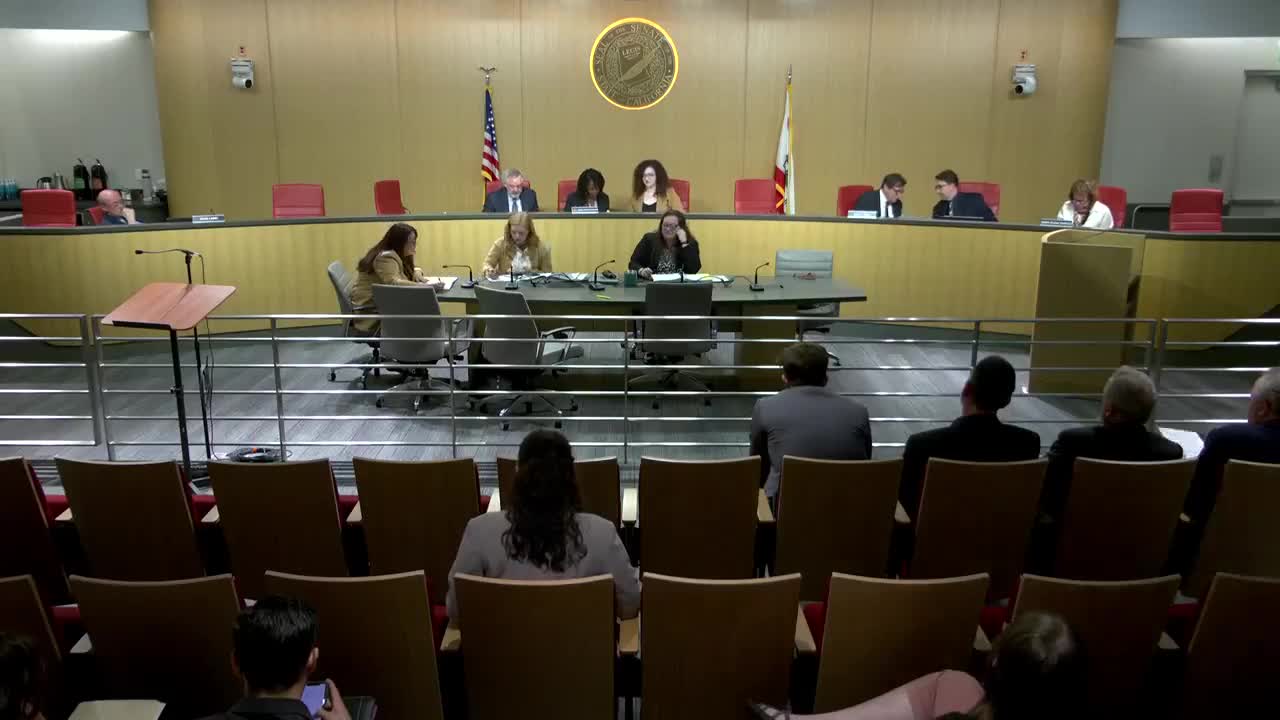 17MIN
Senate Standing Committee on Labor, Public Employment and Retirement
Bill Author

Bill Co-Author(s):
