SB 1385: Medi-Cal: community health workers: supervising providers.
- Session Year: 2023-2024
- House: Senate
- Latest Version Date: 2024-07-18
Current Status:
Passed
(2024-07-18: Chaptered by Secretary of State. Chapter 164, Statutes of 2024.)
Introduced
In Committee
First Chamber
In Committee
Second Chamber
Enacted
Existing law establishes the Medi-Cal program, which is administered by the State Department of Health Care Services and under which qualified low-income individuals receive health care services through various delivery systems, including fee-for-service and managed care. The Medi-Cal program is, in part, governed and funded by federal Medicaid program provisions.
Under existing law, community health worker services are a covered Medi-Cal benefit subject to any necessary federal approvals. Under existing law, a community health worker is a liaison, link, or intermediary between health and social services and the community to facilitate access to services and to improve the access and cultural competence of service delivery. Existing law requires a Medi-Cal managed care plan to engage in outreach and education efforts to enrollees, and to notify providers, about the community health worker services benefit, as specified.
This bill would require a Medi-Cal managed care plan, no later than July 1, 2025, to adopt policies and procedures to effectuate a billing pathway for supervising providers to claim for the provision of community health worker services to enrollees during an emergency department visit and as an outpatient followup to an emergency department visit. The bill would require that the policies and procedures be consistent with guidance developed by the department for use by supervising providers to claim for community health worker services to Medi-Cal members in the fee-for-service delivery system in the settings described above.
The bill would define a supervising provider for purposes of these provisions as an enrolled Medi-Cal provider that is authorized to supervise a community health worker pursuant to the federally approved Medicaid state plan amendment and that ensures that a community health worker meets the qualifications as required by the department, as specified.
Existing law establishes the Medi-Cal program, which is administered by the State Department of Health Care Services and under which qualified low-income individuals receive health care services through various delivery systems, including fee-for-service and managed care. The Medi-Cal program is, in part, governed and funded by federal Medicaid program provisions.
Under existing law, community health worker services are a covered Medi-Cal benefit subject to any necessary federal approvals. Under existing law, a community health worker is a liaison, link, or intermediary between health and social services and the community to facilitate access to services and to improve the access and cultural competence of service delivery. Existing law requires a Medi-Cal managed care plan to engage in outreach and education efforts to enrollees, and to notify providers, about the community health worker services benefit, as specified.
This bill would require a Medi-Cal managed care plan, no later than July 1, 2025, to adopt policies and procedures to effectuate a billing pathway for supervising providers to claim for the provision of community health worker services to enrollees during an emergency department visit and as an outpatient followup to an emergency department visit. The bill would require that the policies and procedures be consistent with guidance developed by the department for use by supervising providers to claim for community health worker services to Medi-Cal members in the fee-for-service delivery system in the settings described above.
The bill would define a supervising provider for purposes of these provisions as an enrolled Medi-Cal provider that is authorized to supervise a community health worker pursuant to the federally approved Medicaid state plan amendment and that ensures that a community health worker meets the qualifications as required by the department, as specified.
Existing law establishes the Medi-Cal program, which is administered by the State Department of Health Care Services and under which qualified low-income individuals receive health care services through various delivery systems, including fee-for-service and managed care. The Medi-Cal program is, in part, governed and funded by federal Medicaid program provisions. Under federal law, covered services include preventive services, which are defined as, services recommended by a physician or other licensed practitioner of the healing arts acting within the scope of authorized practice under state law to prevent disease, disability, and other health conditions or their progression, prolong life, and promote physical and mental health and efficiency. On July 26, 2022, the federal Centers for Medicare and Medicaid Services approved the departments Medicaid State Plan Amendment to add community health workers as a preventive service. Under existing law, the department is required, through existing and regular stakeholder processes, to inform stakeholders about, and accept input from stakeholders on, implementation of the community health worker services benefit.
Under existing law, community health worker services are a covered Medi-Cal benefit subject to any necessary federal approvals. Under existing law, a community health worker is a liaison, link, or intermediary between health and social services and the community to facilitate access to services and to improve the access and cultural competence of service delivery. Existing law requires a Medi-Cal managed care plan to engage in outreach and education efforts to enrollees, and to notify providers, about the community health worker services benefit, as specified.
This bill would require Medi-Cal managed care plans a Medi-Cal managed care plan, no later than July 1, 2025, to adopt policies and procedures to effectuate a billing pathway for supervising providers, as defined, providers to claim for the provision of community health worker services to enrollees during an emergency department visit and as an outpatient followup to an emergency department visit that are visit. The bill would require that the policies and procedures be consistent with guidance developed by the department pursuant to the stakeholder process described above. The bill would require the department to develop similar guidance to be used for use by supervising providers to claim for community health worker services to fee-for-service beneficiaries Medi-Cal members in the fee-for-service delivery system in the settings described above. The
The bill would define a supervising provider for purposes of these provisions as an enrolled Medi-Cal provider that submits claims for services provided by a community health worker, is authorized to supervise a community health worker pursuant to the federally approved Medicaid state plan amendment and that ensures that a community health worker meets the qualifications as required by the department, and directly or indirectly oversees community health workers and the services they deliver to Medi-Cal beneficiaries. as specified.
Existing law establishes the Medi-Cal program, which is administered by the State Department of Health Care Services and under which qualified low-income individuals receive health care services through various delivery systems, including fee-for-service and managed care. The Medi-Cal program is, in part, governed and funded by federal Medicaid program provisions. Under federal law, covered services include preventive services, which are defined as, services recommended by a physician or other licensed practitioner of the healing arts acting within the scope of authorized practice under state law to prevent disease, disability, and other health conditions or their progression, prolong life, and promote physical and mental health and efficiency. On July 26, 2022, the federal Centers for Medicare and Medicaid Services approved the departments Medicaid State Plan Amendment to add community health workers as a preventive service. Under existing law, the department is required, through existing and regular stakeholder processes, to inform stakeholders about, and accept input from stakeholders on, implementation of the community health worker services benefit.
This bill would require Medi-Cal managed care plans to adopt policies and procedures to effectuate a billing pathway for supervising providers, as defined, to claim for the provision of community health worker services to enrollees during an emergency department visit and as an outpatient followup to an emergency department visit that are consistent with guidance developed by the department pursuant to the stakeholder process described above. The bill would require the department to develop similar guidance to be used by supervising providers to claim for community health worker services to fee-for-service beneficiaries in the settings described above. The bill would define a supervising provider for purposes of these provisions as an enrolled Medi-Cal provider that submits claims for services provided by a community health worker, ensures that a community health worker meets the qualifications as required by the department, and directly or indirectly oversees community health workers and the services they deliver to Medi-Cal beneficiaries.
Existing law provides for the licensure and regulation of various professions and vocations by boards within the Department of Consumer Affairs. Existing law specifies that any board within the department that was required to submit reports to the Governor prior to 1967 under any provision of the Business and Professions Code is not required to submit those reports. This bill would repeal the above provision.Existing law provides for the licensure and regulation of various professions and vocations by boards within the Department of Consumer Affairs. Existing law specifies that any board within the department that was required to submit reports to the Governor prior to 1967 under any provision of the Business and Professions Code is not required to submit those reports.
This bill would repeal the above provision.
(a)Community health worker services are a covered Medi-Cal benefit.
(b)For purposes of this section, the following definitions apply:
(1)Community health worker has the same meaning as defined in subdivision (b) of Section 18998.
(2)Supervising provider is an enrolled Medi-Cal provider that is authorized to supervise a community health worker pursuant to the federally approved Medicaid state plan amendment and that ensures that a community health worker meets the qualifications as required by the department. The supervising provider directly or indirectly oversees community health workers and the services that they deliver to Medi-Cal members.
(c)A Medi-Cal managed care plan shall engage in outreach and education efforts to enrollees in a form and manner as directed by the department. At a minimum, the department shall require a Medi-Cal managed care plan to provide the following information to an enrollee:
(1)A description of the community health worker services benefit, including eligibility and coverage criteria.
(2)A list of providers that are authorized to refer an enrollee to community health worker services, and an explanation of how to request a referral.
(3)A list of contracted community health worker entities, including community-based organizations, community clinics, local health jurisdictions, licensed providers, clinics, or hospitals available to provide community health worker services, updated at least annually.
(4)An email address, internet website, and telephone number for an enrollee to access to request additional information regarding community health worker services.
(d)The outreach and education efforts conducted by a Medi-Cal managed care plan pursuant to subdivision (c) shall meet cultural and linguistic appropriateness standards, as determined by the department.
(e)The Medi-Cal managed care plan shall notify providers about the community health worker services benefit, as set forth by the department.
(f)(1)No later than July 1, 2025, a Medi-Cal managed care plan shall adopt policies and procedures to effectuate a billing pathway for supervising providers, including contracted hospitals, to claim for the provision of community health worker services to enrollees during an emergency department visit and an outpatient followup to an emergency department visit, that are consistent with guidance developed by the department pursuant to paragraph (2).
(2)No later than July 1, 2025, the department shall, consistent with subdivision (g), develop guidance on policies and procedures to effectuate a billing pathway for supervising providers, including contracted hospitals, to claim for the provision of community health worker services to Medi-Cal members under the fee-for-service delivery system during an emergency department visit and as an outpatient followup to an emergency department visit.
(g)The department shall, through existing and regular stakeholder processes, inform stakeholders about, and accept input from stakeholders on, implementation of the community health worker services benefit.
(h)This section shall be implemented only to the extent that federal financial participation is available and not otherwise jeopardized, and any necessary federal approvals have been obtained.
(i)Notwithstanding Chapter 3.5 (commencing with Section 11340) of Part 1 of Division 3 of Title 2 of the Government Code, the department may implement, interpret, or make specific this section by means of policy letters, provider bulletins, or other similar instructions, without taking any further regulatory action.
(a)Community health worker services are a covered Medi-Cal benefit.
(b)For purposes of this section, the following definitions apply:
(1)Community health worker has the same meaning as defined in subdivision (b) of Section 18998.
(2)Supervising provider is an enrolled Medi-Cal provider that is authorized to supervise a community health worker pursuant to the federally approved Medicaid state plan amendment and that ensures that a community health worker meets the qualifications as required by the department. The supervising provider directly or indirectly oversees community health workers and the services that they deliver to Medi-Cal members.
(c)A Medi-Cal managed care plan shall engage in outreach and education efforts to enrollees in a form and manner as directed by the department. At a minimum, the department shall require a Medi-Cal managed care plan to provide the following information to an enrollee:
(1)A description of the community health worker services benefit, including eligibility and coverage criteria.
(2)A list of providers that are authorized to refer an enrollee to community health worker services, and an explanation of how to request a referral.
(3)A list of contracted community health worker entities, including community-based organizations, community clinics, local health jurisdictions, licensed providers, clinics, or hospitals available to provide community health worker services, updated at least annually.
(4)An email address, internet website, and telephone number for an enrollee to access to request additional information regarding community health worker services.
(d)The outreach and education efforts conducted by a Medi-Cal managed care plan pursuant to subdivision (c) shall meet cultural and linguistic appropriateness standards, as determined by the department.
(e)The Medi-Cal managed care plan shall notify providers about the community health worker services benefit, as set forth by the department.
(f)(1)No later than July 1, 2025, a Medi-Cal managed care plan shall adopt policies and procedures to effectuate a billing pathway for supervising providers, including contracted hospitals, to claim for the provision of community health worker services to enrollees during an emergency department visit and an outpatient followup to an emergency department visit, that are consistent with guidance developed by the department pursuant to paragraph (2).
(2)No later than July 1, 2025, the department shall, consistent with subdivision (g), develop guidance on policies and procedures to effectuate a billing pathway for supervising providers, including contracted hospitals, to claim for the provision of community health worker services to Medi-Cal members under the fee-for-service delivery system during an emergency department visit and as an outpatient followup to an emergency department visit.
(g)The department shall, through existing and regular stakeholder processes, inform stakeholders about, and accept input from stakeholders on, implementation of the community health worker services benefit.
(h)This section shall be implemented only to the extent that federal financial participation is available and not otherwise jeopardized, and any necessary federal approvals have been obtained.
(i)Notwithstanding Chapter 3.5 (commencing with Section 11340) of Part 1 of Division 3 of Title 2 of the Government Code, the department may implement, interpret, or make specific this section by means of policy letters, provider bulletins, or other similar instructions, without taking any further regulatory action.
(a)Community health worker services are a covered Medi-Cal benefit.
(b)For purposes of this section, the following definitions apply:
(1)Community health worker has the same meaning as defined in subdivision (b) of Section 18998.
(2)Supervising provider is an enrolled Medi-Cal provider that submits claims for services provided by a community health worker. The supervising provider ensures that a community health worker meets the qualifications as required by the department and directly or indirectly oversees community health workers and the services they deliver to Medi-Cal beneficiaries. A supervising provider may be a licensed provider, a hospital, an outpatient clinic, a local health jurisdiction, or a community-based organization.(2)Supervising provider is an enrolled Medi-Cal provider that is authorized to supervise a community health worker pursuant to the federally approved Medicaid state plan amendment and that ensures that a community health worker meets the qualifications as required by the department. The supervising provider directly or indirectly oversees community health workers and the services that they deliver to Medi-Cal members.
(c)A Medi-Cal managed care plan shall engage in outreach and education efforts to enrollees in a form and manner as directed by the department. At a minimum, the department shall require a Medi-Cal managed care plan to provide the following information to an enrollee:
(1)A description of the community health worker services benefit, including eligibility and coverage criteria.
(2)A list of providers that are authorized to refer an enrollee to community health worker services, and an explanation of how to request a referral.
(3)A list of contracted community health worker entities, including community-based organizations, community clinics, local health jurisdictions, licensed providers, clinics, or hospitals available to provide community health worker services, updated at least annually.
(4)An email address, internet website, and telephone number for an enrollee to access to request additional information regarding community health worker services.
(d)The outreach and education efforts conducted by a Medi-Cal managed care plan pursuant to subdivision (c) shall meet cultural and linguistic appropriateness standards, as determined by the department.
(e)The Medi-Cal managed care plan shall notify providers about the community health worker services benefit, as set forth by the department.
(f)(1)A No later than July 1, 2025, a Medi-Cal managed care plan shall adopt policies and procedures to effectuate a billing pathway for supervising providers, including contracted hospitals, to claim for the provision of community health worker services to enrollees during an emergency department visit and an outpatient follow up followup to an emergency department visit, that are consistent with guidance developed by the department pursuant to subdivision (g). paragraph (2).
(2)The department shall, pursuant to No later than July 1, 2025, the department shall, consistent with subdivision (g), develop guidance on policies and procedures to effectuate a billing pathway for supervising providers, including contracted hospitals, to claim for the provision of community health worker services to fee-for-service beneficiaries Medi-Cal members under the fee-for-service delivery system during an emergency department visit and as an outpatient follow up followup to an emergency department visit.
(g)The department shall, through existing and regular stakeholder processes, inform stakeholders about, and accept input from stakeholders on, implementation of the community health worker services benefit.
(h)This section shall be implemented only to the extent that federal financial participation is available and not otherwise jeopardized, and any necessary federal approvals have been obtained.
(i)Notwithstanding Chapter 3.5 (commencing with Section 11340) of Part 1 of Division 3 of Title 2 of the Government Code, the department may implement, interpret, or make specific this section by means of policy letters, provider bulletins, or other similar instructions, without taking any further regulatory action.
REVISIONS: HeadingLine 4.(a)Community health worker services are a covered Medi-Cal benefit.
(b)For purposes of this section, community health worker has the same meaning as defined in subdivision (b) of Section 18998. the following definitions apply:
(1)Community health worker has the same meaning as defined in subdivision (b) of Section 18998.
(2)Supervising provider is an enrolled Medi-Cal provider that submits claims for services provided by a community health worker. The supervising provider ensures that a community health worker meets the qualifications as required by the department and directly or indirectly oversees community health workers and the services they deliver to Medi-Cal beneficiaries. A supervising provider may be a licensed provider, a hospital, an outpatient clinic, a local health jurisdiction, or a community-based organization.
(c)A Medi-Cal managed care plan shall engage in outreach and education efforts to enrollees in a form and manner as directed by the department. At a minimum, the department shall require a Medi-Cal managed care plan to provide the following information to an enrollee:
(1)A description of the community health worker services benefit, including eligibility and coverage criteria.
(2)A list of providers that are authorized to refer an enrollee to community health worker services, and an explanation of how to request a referral.
(3)A list of contracted community health worker entities, including community-based organizations, community clinics, local health jurisdictions, licensed providers, clinics, or hospitals available to provide community health worker services, updated at least annually.
(4)An email address, internet website, and telephone number for an enrollee to access to request additional information regarding community health worker services.
(d)The outreach and education efforts conducted by a Medi-Cal managed care plan pursuant to subdivision (c) shall meet cultural and linguistic appropriateness standards, as determined by the department.
(e)The Medi-Cal managed care plan shall notify providers about the community health worker services benefit, as set forth by the department.
(f)(1)A Medi-Cal managed care plan shall adopt policies and procedures to effectuate a billing pathway for supervising providers, including contracted hospitals, to claim for the provision of community health worker services to enrollees during an emergency department visit and an outpatient follow up to an emergency department visit, that are consistent with guidance developed by the department pursuant to subdivision (g).
(2)The department shall, pursuant to subdivision (g), develop guidance on policies and procedures to effectuate a billing pathway for supervising providers, including contracted hospitals, to claim for the provision of community health worker services to fee-for-service beneficiaries during an emergency department visit and as an outpatient follow up to an emergency department visit.
(f)(g)The department shall, through existing and regular stakeholder processes, inform stakeholders about, and accept input from stakeholders on, implementation of the community health worker services benefit.
(g)(h)This section shall be implemented only to the extent that federal financial participation is available and not otherwise jeopardized, and any necessary federal approvals have been obtained.
(h)(i)Notwithstanding Chapter 3.5 (commencing with Section 11340) of Part 1 of Division 3 of Title 2 of the Government Code, the department may implement, interpret, or make specific this section by means of policy letters, provider bulletins, or other similar instructions, without taking any further regulatory action.
SECTION 1.Section 126 of the Business and Professions Code is repealed.|
Date
|
Status
|
|---|---|
| Jul 18, 2024 | Chaptered by Secretary of State. Chapter 164, Statutes of 2024. |
| Jul 18, 2024 | Approved by the Governor. |
| Jul 16, 2024 | Enrolled and presented to the Governor at 2:30 p.m. |
| Jul 3, 2024 | Assembly amendments concurred in. (Ayes 39. Noes 0. Page 4933.) Ordered to engrossing and enrolling. |
| Jul 1, 2024 | Ordered to special consent calendar. |
| Jun 27, 2024 | In Senate. Concurrence in Assembly amendments pending. |
| Jun 26, 2024 | Read third time. Passed. (Ayes 75. Noes 0. Page 6038.) Ordered to the Senate. |
| Jun 20, 2024 | Read second time. Ordered to consent calendar. |
| Jun 19, 2024 | From committee: Do pass. Ordered to consent calendar. (Ayes 14. Noes 0.) (June 19). |
| Jun 19, 2024 | Coauthors revised. |
| Jun 12, 2024 | From committee: Do pass and re-refer to Com. on APPR. with recommendation: To consent calendar. (Ayes 16. Noes 0.) (June 11). Re-referred to Com. on APPR. |
| Jun 12, 2024 | Coauthors revised. |
| Jun 5, 2024 | From committee with author's amendments. Read second time and amended. Re-referred to Com. on HEALTH. |
| Jun 3, 2024 | Referred to Com. on HEALTH. |
| May 23, 2024 | In Assembly. Read first time. Held at Desk. |
| May 22, 2024 | Read third time. Passed. (Ayes 39. Noes 0. Page 4133.) Ordered to the Assembly. |
| May 16, 2024 | Read second time. Ordered to third reading. |
| May 16, 2024 | From committee: Do pass. (Ayes 7. Noes 0. Page 3981.) (May 16). |
| May 10, 2024 | Set for hearing May 16. |
| Apr 22, 2024 | April 22 hearing: Placed on APPR suspense file. |
| Apr 12, 2024 | Set for hearing April 22. |
| Apr 11, 2024 | From committee: Do pass and re-refer to Com. on APPR. (Ayes 10. Noes 0. Page 3562.) (April 10). Re-referred to Com. on APPR. |
| Apr 4, 2024 | Set for hearing April 10. |
| Apr 3, 2024 | Re-referred to Com. on HEALTH. |
| Mar 21, 2024 | Re-referred to Com. on RLS. |
| Mar 21, 2024 | Withdrawn from committee. |
| Mar 20, 2024 | From committee with author's amendments. Read second time and amended. Re-referred to Com. on B., P. & E. D. |
| Feb 29, 2024 | Referred to Com. on B., P. & E. D. |
| Feb 20, 2024 | From printer. May be acted upon on or after March 18. |
| Feb 16, 2024 | Introduced. Read first time. To Com. on RLS. for assignment. To print. |
|
Date
|
Description
|
Location
|
Votes
|
|
|---|---|---|---|---|
| Jul 3, 2024 | Special Consent SB1385 Roth et al. | Senate Floor |
Passed |
|
| Jun 26, 2024 | SB 1385 Roth Consent Calendar Second Day Regular Session | Assembly Floor |
Passed |
|
| Jun 19, 2024 | Do pass. To Consent Calendar. | Assembly Standing Committee on Appropriations |
Passed |
|
| Jun 11, 2024 | Do pass and be re-referred to the Committee on [Appropriations] with recommendation: To Consent Calendar | Assembly Standing Committee on Health |
Passed |
|
| May 22, 2024 | Senate 3rd Reading SB1385 Roth et al. | Senate Floor |
Passed |
|
| May 16, 2024 | Do pass | Senate Standing Committee on Appropriations |
Passed |
|
| Apr 22, 2024 | Placed on suspense file | Senate Standing Committee on Appropriations |
Passed |
|
| Apr 10, 2024 | Do pass, but first be re-referred to the Committee on [Appropriations] | Senate Standing Committee on Health |
Passed |
This list shows positions taken on this bill by organizations on the date displayed, which is linked to the original source.
Positions by individuals are not included.
|
Organization
|
Position
|
Date
|
|---|---|---|
| California Chapter of the American College of Emergency Physicians | ** Support | |
| Californians for Safety and Justice | ** Support | |
| Californians United for a Responsible Budget | ** Support | |
| California Retailers Association | ** Support | |
| California State Association of Psychiatrists | ** Support | |
| City of San Diego Mayor Todd Gloria | ** Support | |
| Ella Baker Center For Human Rights | ** Support | |
| Health Net | ** Support | |
| Prosecutors Alliance of California | ** Support | |
| Smart Justice California | ** Support | |
| Steinberg Institute | ** Support | |
| Vera Institute Of Justice | ** Support |
SENATE RULES COMMITTEE Office of Senate Floor Analyses (916) 651-1520 Fax: (916) 327-4478 | SB 1385 |
UNFINISHED BUSINESS
Bill No: SB 1385
Author: Roth (D), et al.
Amended: 6/5/24
Vote: 21
SENATE HEALTH COMMITTEE: 10-0, 4/10/24
AYES: Roth, Glazer, Gonzalez, Grove, Hurtado, Limón, Menjivar, Rubio, Smallwood-Cuevas, Wiener
NO VOTE RECORDED: Nguyen
SENATE APPROPRIATIONS COMMITTEE: 7-0, 5/16/24
AYES: Caballero, Jones, Ashby, Becker, Bradford, Seyarto, Wahab
SENATE FLOOR: 39-0, 5/22/24
AYES: Alvarado-Gil, Archuleta, Ashby, Atkins, Becker, Blakespear, Bradford, Caballero, Cortese, Dahle, Dodd, Durazo, Eggman, Glazer, Gonzalez, Grove, Hurtado, Jones, Laird, Limón, McGuire, Menjivar, Min, Newman, Nguyen, Niello, Ochoa Bogh, Padilla, Portantino, Roth, Rubio, Seyarto, Skinner, Smallwood-Cuevas, Stern, Umberg, Wahab, Wiener, Wilk
NO VOTE RECORDED: Allen
ASSEMBLY FLOOR: 75-0, 6/26/24 (Consent) - See last page for vote
SUBJECT: Medi-Cal: community health workers: supervising providers
SOURCE: California Chapter of the American College of Emergency
Physicians
DIGEST:
This bill requires the Department of Health Care Services (DHCS) and Medi-Cal managed care (MCMC) plans to adopt policies and procedures to effectuate a billing pathway for supervising providers, as defined, to claim for the provision of community health worker services provided to a Medi-Cal recipient during an emergency department visit or as an outpatient follow up to an emergency department visit.
Assembly Amendments
: Remove language specifying what entities may be supervising providers, add language delaying the implementation of required policies and procedures to July 1, 2025, and make other nonsubstantive changes.
ANALYSIS:
Existing law:
- Establishes the Medi-Cal program, administered by the DHCS, which provides medical coverage to low income persons. [WIC §14000, et seq.]
- Includes community health worker (CHW) services as a covered Medi-Cal benefit. [WIC §14132.36]
- Defines “CHW” as a liaison, link, or intermediary between health and social services and the community to facilitate access to services and to improve the access and cultural competence of service delivery. Includes Promotores, Promotores de Salud, Community Health Representatives, navigators, and other non-licensed health workers, including violence prevention professionals. Requires a CHW’s lived experience to align with and provide a connection to the community being served. [WIC §18998]
- Requires MCMC plans to engage in outreach and education efforts with plan enrollees and to notify providers about the CHW services benefit. [WIC §14132.36]
- Requires DHCS to inform stakeholders about and accept input from stakeholders on the implementation of the CHW services benefit. [WIC §14132.36]
This bill:
- Requires a MCMC plan to adopt policies and procedures to effectuate a billing pathway for supervising providers, including contracted hospitals, to claim for the provision of CHW services to enrollees during an emergency department visit and an outpatient follow up to an emergency department visit, that are consistent with guidance developed by DHCS no later than July 1, 2025.
- Requires DHCS to develop guidance on policies and procedures to effectuate a billing pathway for supervising providers, including contracted hospitals, to claim for the provision of CHW services to fee-for-service Medi-Cal recipients during an emergency department visit and as an outpatient followup to an emergency department visit no later than July 1, 2025.
- Defines “supervising provider” as an enrolled Medi-Cal provider that is authorized to supervise a CHW pursuant to the federally approved Medicaid state plan amendment and that ensures a CHW meets the qualifications as required by DHCS. States that the supervising provider directly or indirectly oversees community health workers and the services they deliver to Medi-Cal members.
Comments
Author’s statement. According to the author, “The State of California continues to grapple with an opioid epidemic. According to CDPH, in 2022 nearly 6,500 Californians died from opioid-related overdoses and over 21,000 emergency department visits in California were related to an opioid overdose. Research has shown that the emergency department can be a critical access point to treatment for those with a substance abuse disorder. A study from the Public Health Institute’s CalBridge and partners found that patients with opioid use disorder were twice as likely to continue receiving medical treatment for addiction if treatment started in the emergency department. The CalBridge program combines immediate access to medication for addiction treatment with support from a substance use counselor or navigator in emergency departments and is an incredibly successful model. In order for this highly effective program to continue and for the State to maintain a critical tool to combat the opioid epidemic, this bill creates an ongoing funding source by creating a billing pathway for those navigator services. This bill is part of the bipartisan legislative package, Working Together for a Safer California.”
- Addition of CHWs as a Medi-Cal benefit. The 2021-2022 Budget Act added CHWs to the class of skilled and trained individuals who are able to provide clinically appropriate Medi-Cal covered benefits and services using the federal preventive services option which allows preventive services to be provided by non-licensed individuals under the supervision of a licensed health care provider. CHW services are preventive health services to prevent disease, disability, and other health conditions or their progression; to prolong life; and promote physical and mental health and well-being. CHW services may assist with a variety of concerns impacting Medi-Cal enrollees, including the control and prevention of chronic conditions or infectious diseases, behavioral health conditions, and need for preventive services. Additionally, CHW services can help enrollees receive appropriate services related to perinatal care, preventive care, sexual and reproductive health, environmental and climate-sensitive health issues, oral health, aging, injury, and domestic violence and other violence prevention services. The CHW benefit was originally set for January 1, 2022 but was delayed until July 1, 2022. Later legislation, AB 2697 (Aguiar-Curry, Chapter 488, Statutes of 2022), codified the definition of CHWs and required MCMC plans to do outreach to MCMC plan enrollees about the CHW benefit.
- Home and Community-Based Services (HCBS) Spending Plan. In March 2021, the American Rescue Plan Act (ARPA) was passed to provide widespread economic relief during the COVID-19 pandemic. Among other things, ARPA provided states with a temporary ten-percentage point increase to the federal medical assistance percentage (FMAP) for certain Medicaid expenditures for HCBS from April 1, 2021 through March 31, 2022. States were required to use the federal funds attributable to the increased FMAP to supplement, not supplant, existing state funds expended for Medicaid HCBS in effect as of April 1, 2021 along with state matching funds by March 31, 2024. California's HCBS Spending Plan totaled approximately $3B in enhanced federal funding and included the following categories of services: retaining and building a network of HCBS direct care workers, HCBS navigation, HCBS transition services, and enhancing HCBS capacity and models of care.
- CalBridge Behavioral Health Pilot Program. Among the services that California opted to add to its HCBS services through the available ARPA funds was the CalBridge Behavioral Health Pilot Program which provided grants to acute care hospitals to support hiring trained behavioral health navigators in emergency departments to screen patients and, if appropriate, offer intervention and referral to mental health or substance use disorder programs. The funding also supported technical assistance and training for participating emergency departments and support for DHCS to administer the program. While CalBridge was not a new program, the ARPA and state matching funding was dedicated to expanding the role of the behavioral health navigators to better address mental health conditions as well as substance use disorders, covering the costs for hospitals already participating in CalBridge to add new navigators and expand hours of coverage or patients served, and expanding CalBridge to hospitals that had not yet participated. Specifically, behavioral health navigators in emergency departments provide screening, brief assessments, and referral to ongoing substance use disorder and mental health treatments to patients upon release from the emergency department. As the ARPA funds were one-time and have now expired, this bill seeks to ensure that hospital emergency departments can provide the same or similar behavioral health navigation services through the Medi-Cal CHW services benefit that has since launched by ensuring that emergency department providers, including hospitals, can bill for the services provided by a CHW. This bill does not, however, expressly limit such use of CHWs by hospitals to the CalBridge program.
Related/Prior Legislation
AB 2697 (Aguiar-Curry, Chapter 488, Statutes of 2022) required MCMC plans to do outreach to Medi-Cal enrollees on the availability of CHW services and requires DHCS to accept input from stakeholders on the implementation of the CHW benefit.
AB 133 (Committee on Budget, Chapter 143, Statutes of 2021) added CHWs to the class of skilled and trained individuals who are able to provide clinically appropriate Medi-Cal covered services.
FISCAL EFFECT: Appropriation: No Fiscal Com.: Yes Local: No
According to the Senate Appropriations Committee:
Unknown, ongoing costs, likely hundreds of thousands, for DHCS for state administration (General Fund and federal funds).
SUPPORT: (Verified 6/27/24)
California Chapter of the American College of Emergency Physicians (source)
Californians for Safety and Justice
California Retailers Association
California State Association of Psychiatrists
Californians United for a Responsible Budget
City of San Diego, Mayor Todd Gloria
Ella Baker Center for Human Rights
Health Net
Prosecutors Alliance of California
Smart Justice California
Steinberg Institute
Vera Institute of Justice
OPPOSITION: (Verified 6/27/24)
None received
ARGUMENTS IN SUPPORT: Sponsors California Chapter of American College of Emergency Physicians write that state grant funding administered through the California Bridge Program embedded substance use navigators in most California emergency departments. These programs combine immediate access to medication for addiction treatment with support from a substance use counselor and are an incredibly successful model. They have improved outcomes for patients and reduced overdose deaths. This bill allows this highly effective program to continue by creating an ongoing funding source through the creation of a billing pathway for CHW services. It is estimated that 85% of patients treated for substance use disorder or who overdosed in the emergency department are Medi-Cal eligible. Medi-Cal reimbursement for this service is consistent with the goals of CalAIM, and it is time we aligned funding towards this important program.
ASSEMBLY FLOOR: 75-0, 6/26/24
AYES: Addis, Aguiar-Curry, Alanis, Alvarez, Arambula, Bains, Bauer-Kahan, Bennett, Berman, Boerner, Bonta, Bryan, Calderon, Juan Carrillo, Wendy Carrillo, Cervantes, Chen, Connolly, Megan Dahle, Davies, Dixon, Essayli, Flora, Mike Fong, Friedman, Gabriel, Gallagher, Garcia, Grayson, Haney, Hart, Holden, Hoover, Irwin, Jackson, Kalra, Lackey, Lee, Low, Lowenthal, Maienschein, McCarty, McKinnor, Muratsuchi, Stephanie Nguyen, Ortega, Pacheco, Jim Patterson, Joe Patterson, Pellerin, Petrie-Norris, Quirk-Silva, Ramos, Rendon, Reyes, Luz Rivas, Rodriguez, Blanca Rubio, Sanchez, Santiago, Schiavo, Soria, Ta, Ting, Valencia, Villapudua, Waldron, Wallis, Ward, Weber, Wicks, Wilson, Wood, Zbur, Robert Rivas
NO VOTE RECORDED: Gipson, Jones-Sawyer, Mathis, Papan
Prepared by: Jen Flory / HEALTH / (916) 651-4111
6/28/24 10:45:09
**** END ****
Date of Hearing: June 19, 2024
ASSEMBLY COMMITTEE ON APPROPRIATIONS
Buffy Wicks, Chair
SBPCA Bill Id:SB 1385
Author:(Roth) – As Amended Ver:June 5, 2024
Policy Committee: | Health | Vote: | 16 - 0 |
|
| ||
|
|
Urgency: No State Mandated Local Program: No Reimbursable: No
SUMMARY:
This bill requires a Medi-Cal managed care plan to enable a supervising provider, including a contracted hospital, to bill for providing community health worker (CHW) services to members during an emergency department (ED) visit and in the course of outpatient follow-up care.
Specifically, this bill:
- Defines a supervising provider as an enrolled Medi-Cal provider who is authorized to supervise a CHW pursuant to the Medi-Cal State Plan, ensures a CHW meets the qualifications as required by the Department of Health Care Services (DHCS), and directly or indirectly oversees the CHW.
- Requires a Medi-Cal managed care plan to adopt policies and procedures to effectuate a billing pathway for a supervising provider, including a contracted hospital, to claim for the provision of CHW services to an enrollee during an ED visit and as an outpatient follow-up to an ED visit.
- Requires the policies and procedures in 2, above, be consistent with guidance developed by DHCS for use by supervising providers to claim for CHW services to Medi-Cal members in the fee-for-service delivery system.
FISCAL EFFECT:
DHCS states it reimburses for CHW services provided in the ED and for follow-up care, and therefore does not anticipate costs associated with this bill.
COMMENTS:
- Purpose. This bill is sponsored by California Chapter of the American College of Emergency Physicians (Cal ACEP). According to the author:
The State of California continues to grapple with an opioid epidemic. According to the California Department of Public Health (CDPH), in 2022 nearly 6,500 Californians died from opioid-related overdoses and over 21,000 emergency department visits in California were related to an opioid overdose.
Research has shown that the emergency department can be a critical access point to treatment for those with a substance abuse disorder. A study from the Public Health Institute’s CA Bridge and partners found that patients with opioid use disorder (OUD) were twice as likely to continue receiving medical treatment for addiction if treatment started in the emergency department.
The CA Bridge program combines immediate access to medication for addiction treatment with support from a substance use counselor or navigator in emergency departments and is an incredibly successful model. In order for this highly effective program to continue and for the State to maintain a critical tool to combat the opioid epidemic, SB 1385 creates an ongoing funding source by creating a billing pathway for those navigator services.
- Background.
CA Bridge. The CA Bridge program places substance use disorder (SUD) navigators in EDs to provide low-barrier, immediate access to medication-assisted treatment (MAT); navigation to ongoing care and community resources; and a culture of harm reduction. CA Bridge navigators work with hospital staff to change organizational culture to reduce stigma and center patients’ goals. According to DHCS, studies show it is feasible to implement low-barrier MAT in all types of EDs, MAT reaches low-income patients, and low-barrier MAT is effective.
The CA Bridge Program was initially funded through a one-time allocation of federal funds. The Budget Act of 2023 included $4 million one-time to provide statewide capacity to support the CA Bridge program. According to the author and sponsor, Cal ACEP, providers implementing the CA Bridge navigator program in EDs are now seeking an ongoing fund source to retain the navigators after the expiration of the original funding allocation. Whether billing for the CHW benefit would fully sustain the cost of maintaining navigators in EDs is unknown; however, it would provide ongoing financing.
Barriers to Billing for CHW Services. According to the Assembly Health Committee analysis of this bill, SUD navigators working under the CA Bridge program appear to fit under the federally approved definition of a CHW in Medi-Cal. CHW billing policies also specify hospitals as supervising providers. However, there is no explicit billing policy that applies to CHW or SUD navigator services in an ED and for outpatient follow-up care. Anecdotally, this has led to confusion over how such CHW services, including SUD navigator services, can be billed when delivered in the ED or as follow-up to ED care. This bill clarifies hospitals’ ability to bill for the services by requiring DHCS and managed care plans to specify appropriate billing pathways.
Analysis Prepared by: Allegra Kim / APPR. / (916) 319-2081
Date of Hearing: June 11, 2024
ASSEMBLY COMMITTEE ON HEALTH
Mia Bonta, Chair
SBPCA Bill Id:SB 1385
Author:(Roth) – As Amended Ver:June 5, 2024
SENATE VOTE: 39-0
SUBJECT: Medi-Cal: community health workers: supervising providers.
SUMMARY: Clarifies that hospitals can bill Medi-Cal for community health worker (CHW) services delivered in emergency departments (EDs) and in the course of related outpatient follow-up care, and requires the development of related policies and procedures. Specifically, this bill:
- Defines a supervising provider as an enrolled Medi-Cal provider authorized to supervise a CHW pursuant to the Medi-Cal State Plan, who ensures a CHW meets the qualifications established by the Department of Health Care Services (DHCS).
- Requires DHCS to develop guidance on policies and procedures to effectuate a billing pathway for supervising providers, including contracted hospitals, to bill for the provision of CHW services to fee-for-service (FFS) members during an ED visit and during an outpatient follow up to an ED visit. Requires this guidance to be developed by July 1, 2025, and in consultation with stakeholders, as specified.
- Requires a Medi-Cal managed care plan to adopt similar billing policies and procedures consistent with those developed by DHCS pursuant to 2) above.
EXISTING LAW:
- Establishes the Medi-Cal program, administered by DHCS, under which low-income individuals are eligible for medical coverage. [Welfare and Institutions Code (WIC) §14000, et seq.]
- Establishes a schedule of benefits under the Medi-Cal program, which includes benefits required under federal law and benefits provided at state option but for which federal financial participation is available. [WIC §14132]
- Specifies CHW services as a covered benefit under Medi-Cal. [WIC §14132.36]
- Defines CHW to mean a liaison, link, or intermediary between health and social services and the community to facilitate access to services and to improve the access and cultural competence of service delivery. States that CHWs include Promotores, Promotores de Salud, community health representatives, navigators, and other nonlicensed health workers, including violence prevention professionals. Requires a CHW’s lived experience to align with and provide a connection to the community being served. [WIC §18998]
- Establishes, as California's essential health benefits (EHB) benchmark plan under federal law, the Kaiser Small Group Health Maintenance Organization contract, existing California health insurance mandates, and federally mandated benefits. Specifies EHBs in 10 categories, including mental health and substance use disorder (SUD) services. [Health & Safety Code §1367.005 and Insurance Code §10112.27]
- Specifies SUD services included in the state-adopted EHB package as covered Medi-Cal benefits. [WIC §14132.03]
- Contingent on federal approval and the availability of federal financial participation, defines medication-assisted treatment services, including medications approved for the treatment of opioid use disorder, counseling services, and behavioral therapy as benefits under the Drug Medi-Cal program administered by California counties. [WIC §14124.24]
FISCAL EFFECT: According to the Senate Committee on Appropriations, unknown, ongoing costs, likely hundreds of thousands, for DHCS for state administration (General Fund and federal funds).
COMMENTS:
PURPOSE OF THIS BILL. This bill is intended to provide a clear billing pathway for SUD navigator services provided in EDs. A program called California Bridge (CA Bridge) that places navigators in EDs has demonstrated that these services effectively connect people who have an opioid use disorder to medication for addiction treatment (MAT) and encourage them to stay in care. The CA Bridge program combines immediate access to MAT with support from a substance use counselor or navigator in the ED. In order to continue this highly effective program, the author indicates this bill creates a billing pathway for those navigator services through the CHW Medi-Cal benefit. The author indicates this bill is part of a bipartisan legislative package titled, “Working Together for a Safer California.”
- BACKGROUND.
- Opioid Use Disorder and MAT. Overdose deaths from both opioids and psychostimulants (such as amphetamines) are soaring. The increased availability of fentanyl, an extremely potent synthetic opioid, has resulted in a 10-fold increase in fentanyl-related deaths between 2015 and 2019.
According to the federal Substance Abuse and Mental Health Services Administration, research shows that a combination of medication and therapy can successfully treat SUD, and some medications can help sustain recovery. Medications used in MAT for opioid use disorder include buprenorphine, methadone, and naltrexone. These medications can support a person's recovery by helping to normalize brain chemistry, relieving cravings, and in some cases can prevent withdrawal symptoms. Unfortunately, there is no similar evidence-based pharmacological treatment approved for amphetamine addiction.
Although most SUD treatment services covered by Medi-Cal are financed and delivered by county mental health plans, Medi-Cal managed care and Medi-Cal FFS reimburse for MAT delivered in EDs, as well as outpatient treatment services for opioid use disorder, which include management, care coordination, psychotherapy and counseling.
- CA Bridge. The CA Bridge program has placed navigators in EDs to provide low-barrier, immediate access to MAT; navigation to ongoing care and community resources; and a culture of harm reduction. According to DHCS, studies have shown it is feasible to implement low-barrier MAT in all types of EDs, that it successfully reaches low-income patients, and that low-barrier MAT is effective even with the increasing presence of fentanyl in the drug supply. CA Bridge navigators work with hospital staff to change organizational culture to reduce stigma and center patients’ goals. A study at Highland Hospital in Oakland demonstrated that patients seen by a navigator were three times more likely to be in follow-up treatment 30 days after their ED visit.
The CA Bridge Program was initially funded through a time-limited allocation of federal funds. The enacted 2023-24 Budget Act also included $4 million one-time to provide statewide capacity to support the CA Bridge program. According to the author and sponsor, California Chapter of the American College of Emergency Physicians, providers implementing the CA Bridge navigator program in EDs are seeking an ongoing fund source to retain the navigators after the expiration of the original funding allocation. Although it is unknown whether billing for the CHW benefit would fully sustain the cost of maintaining navigators in EDs, it would provide an ongoing source of financing.
- CHW Services and SUD Navigators. DHCS added CHW services as a Medi-Cal benefit starting July 1, 2022. The benefit was later codified through AB 2697 (Aguiar-Curry), Chapter 488, Statutes of 2022. CHW services are defined to also include those delivered by promotores, community health representatives who work in tribal communities, navigators, and other non-licensed public health workers.
CHW services include health education; navigation to health care and other community resources that address health-related social needs; screening and assessment that does not require a license and that assists a beneficiary to connect to appropriate services to improve their health; and individual support and advocacy that assists a beneficiary in preventing a health condition, injury, or violence. CHW services are defined as medically necessary for individuals meeting a wide range of criteria and who have different types of health conditions. CHWs can address mental health conditions and SUDs, as well as preventive care and other diseases and conditions.
Medi-Cal billing policy specifies that a supervising provider who bills for CHW services is an enrolled Medi-Cal provider who oversees the services provided and ensures a CHW meets the defined qualifications. The supervising provider can be a licensed provider, a hospital, an outpatient clinic, a local health jurisdiction, or a community-based organization. CHWs cannot bill independently; CHW services are always billed by the supervising provider. - Current Barriers to Billing. Given the flexibility in how CHWs and CHW services are defined, SUD navigators working under the CA Bridge program appear to fit under the current federally approved definition of a CHW in Medi-Cal. Current CHW billing policies also specify hospitals as supervising providers. However, there is currently no explicit billing policy that applies to CHW or SUD navigator services in an ED and for outpatient follow-up care. Anecdotally, this has led to some confusion over how such CHW services, including SUD navigator services, can be billed when delivered in these settings. This bill would clarify hospitals’ ability to bill for the services by requiring DHCS and managed care plans to specify appropriate billing pathways.
- CHW Services and SUD Navigators. DHCS added CHW services as a Medi-Cal benefit starting July 1, 2022. The benefit was later codified through AB 2697 (Aguiar-Curry), Chapter 488, Statutes of 2022. CHW services are defined to also include those delivered by promotores, community health representatives who work in tribal communities, navigators, and other non-licensed public health workers.
- SUPPORT. A range of stakeholders write in support, including criminal justice reform organizations, the California Retailers Association, Health Net, and the Steinberg Institute, a behavioral health advocacy nonprofit. Supporters write that ongoing funding for the CA Bridge navigator program will ensure that this successful model combining immediate access to MAT with support from an SUD counselor or navigator in the ED, will continue.
- RELATED LEGISLATION. AB 2250 (Weber) requires a health plan, health insurer, and Medi-Cal to provide coverage for, and provider reimbursement of, social determinants of health screenings. Requires a health plan or insurer to provide to physicians who provide primary care services with adequate access to peer support specialists, lay health workers, social workers, or CHWs, as defined. AB 2250 is pending in the Senate Health Committee.
- PREVIOUS LEGISLATION.
- AB 85 (Weber) of 2023 was similar to AB 2250 and was vetoed by Governor Newsom, who cited concerns that the bill was premature and duplicative of existing efforts.
- AB 2697 codifies CHW services as a covered Medi-Cal benefit. Requires DHCS, through existing and regular stakeholder processes, to inform stakeholders about, and accept input from stakeholders on, implementation of the CHW services benefit.
- SB 184 (Committee on Budget and Fiscal Review), Chapter 47, Statutes of 2022, the 2022 Health Trailer Bill, requires the Department of Health Care Access and Information to develop statewide requirements for CHW certificate programs in consultation with stakeholders.
REGISTERED SUPPORT / OPPOSITION:
Support
California Chapter of the American College of Emergency Physicians (sponsor)
Mayor Todd Gloria, City of San Diego
California for Safety and Justice
California Retailers Association
Californians United for a Responsible Budget
Elderly Care Everywhere
Ella Baker Center for Human Rights
Health Net and Its Affiliated Companies
Prosecutors Alliance of California, a Project of Tides Advocacy
Smart Justice California, a Project of Tides Advocacy
Steinberg Institute
Vera Institute of Justice
Opposition
None on file.
Analysis Prepared by: Lisa Murawski / HEALTH / (916) 319-2097
SENATE RULES COMMITTEE Office of Senate Floor Analyses (916) 651-1520 Fax: (916) 327-4478 | SB 1385 |
THIRD READING
Bill No: SB 1385
Author: Roth (D), et al.
Amended: 3/20/24
Vote: 21
SENATE HEALTH COMMITTEE: 10-0, 4/10/24
AYES: Roth, Glazer, Gonzalez, Grove, Hurtado, Limón, Menjivar, Rubio, Smallwood-Cuevas, Wiener
NO VOTE RECORDED: Nguyen
SENATE APPROPRIATIONS COMMITTEE: 7-0, 5/16/24
AYES: Caballero, Jones, Ashby, Becker, Bradford, Seyarto, Wahab
SUBJECT: Medi-Cal: Supervising providers
SOURCE: Author
DIGEST:
Requires the Department of Health Care Services and Medi-Cal managed care plans to adopt policies and procedures to effectuate a billing pathway for supervising providers, as defined, to claim for the provision of community health worker services provided to a Medi-Cal recipient during an emergency department visit or as an outpatient follow up to an emergency department visit.
ANALYSIS:
Existing law:
- Establishes the Medi-Cal program, administered by the Department of Health Care Services (DHCS), which provides medical coverage to low income persons. [WIC §14000, et seq.]
- Includes community health worker (CHW) services as a covered Medi-Cal benefit. [WIC §14132.36]
- Defines “CHW” as a liaison, link, or intermediary between health and social services and the community to facilitate access to services and to improve the access and cultural competence of service delivery. Includes Promotores, Promotores de Salud, Community Health Representatives, navigators, and other non-licensed health workers, including violence prevention professionals. Requires a CHW’s lived experience to align with and provide a connection to the community being served. [WIC §18998]
- Requires Medi-Cal managed care (MCMC) plans to engage in outreach and education efforts with plan enrollees and to notify providers about the CHW services benefit. [WIC §14132.36]
- Requires DHCS to inform stakeholders about and accept input from stakeholders on the implementation of the CHW services benefit. [WIC §14132.36]
This bill:
- Requires a MCMC plan to adopt policies and procedures to effectuate a billing pathway for supervising providers, including contracted hospitals, to claim for the provision of CHW services to enrollees during an emergency department visit and an outpatient follow up to an emergency department visit, that are consistent with guidance developed by DHCS.
- Requires DHCS to develop guidance on policies and procedures to effectuate a billing pathway for supervising providers, including contracted hospitals, to claim for the provision of CHW services to fee-for-service beneficiaries during an emergency department visit and as an outpatient follow up to an emergency department visit.
- Defines “supervising provider” as an enrolled Medi-Cal provider that submits claims for services provided by a CHW. The supervising provider ensures that a CHW meets the qualifications as required by DHCS and directly or indirectly oversees CHWs and the services they deliver to Medi-Cal beneficiaries. States that a supervising provider may be a licensed provider, a hospital, an outpatient clinic, a local health jurisdiction, or a community-based organization.
COMMENTS:
Author’s statement. According to the author:
The State of California continues to grapple with an opioid epidemic. According to CDPH, in 2022 nearly 6,500 Californians died from opioid-related overdoses and over 21,000 emergency department visits in California were related to an opioid overdose. Research has shown that the emergency department can be a critical access point to treatment for those with a substance abuse disorder. A study from the Public Health Institute’s CalBridge and partners found that patients with opioid use disorder were twice as likely to continue receiving medical treatment for addiction if treatment started in the emergency department. The CalBridge program combines immediate access to medication for addiction treatment with support from a substance use counselor or navigator in emergency departments and is an incredibly successful model. In order for this highly effective program to continue and for the State to maintain a critical tool to combat the opioid epidemic, this bill creates an ongoing funding source by creating a billing pathway for those navigator services. This bill is part of the bipartisan legislative package, Working Together for a Safer California.
- Addition of CHWs as a Medi-Cal benefit. The 2021-2022 Budget Act added CHWs to the class of skilled and trained individuals who are able to provide clinically appropriate Medi-Cal covered benefits and services using the federal preventive services option which allows preventive services to be provided by non-licensed individuals under the supervision of a licensed health care provider. CHW services are preventive health services to prevent disease, disability, and other health conditions or their progression; to prolong life; and promote physical and mental health and well-being. CHW services may assist with a variety of concerns impacting Medi-Cal enrollees, including the control and prevention of chronic conditions or infectious diseases, behavioral health conditions, and need for preventive services. Additionally, CHW services can help enrollees receive appropriate services related to perinatal care, preventive care, sexual and reproductive health, environmental and climate-sensitive health issues, oral health, aging, injury, and domestic violence and other violence prevention services. The CHW benefit was originally set for January 1, 2022 but was delayed until July 1, 2022. Later legislation, AB 2697 (Aguiar-Curry, Chapter 488, Statutes of 2022), codified the definition of CHWs and required MCMC plans to do outreach to MCMC plan enrollees about the CHW benefit.
- Home and Community-Based Services (HCBS) Spending Plan. In March 2021, the American Rescue Plan Act (ARPA) was passed to provide widespread economic relief during the COVID-19 pandemic. Among other things, ARPA provided states with a temporary ten-percentage point increase to the federal medical assistance percentage (FMAP) for certain Medicaid expenditures for HCBS from April 1, 2021 through March 31, 2022. States were required to use the federal funds attributable to the increased FMAP to supplement, not supplant, existing state funds expended for Medicaid HCBS in effect as of April 1, 2021 along with state matching funds by March 31, 2024. California's HCBS Spending Plan totaled approximately $3B in enhanced federal funding and included the following categories of services: retaining and building a network of HCBS direct care workers, HCBS navigation, HCBS transition services, and enhancing HCBS capacity and models of care.
- CalBridge Behavioral Health Pilot Program. Among the services that California opted to add to its HCBS services through the available ARPA funds was the CalBridge Behavioral Health Pilot Program which provided grants to acute care hospitals to support hiring trained behavioral health navigators in emergency departments to screen patients and, if appropriate, offer intervention and referral to mental health or substance use disorder programs. The funding also supported technical assistance and training for participating emergency departments and support for DHCS to administer the program. While CalBridge was not a new program, the ARPA and state matching funding was dedicated to expanding the role of the behavioral health navigators to better address mental health conditions as well as substance use disorders, covering the costs for hospitals already participating in CalBridge to add new navigators and expand hours of coverage or patients served, and expanding CalBridge to hospitals that had not yet participated. Specifically, behavioral health navigators in emergency departments provide screening, brief assessments, and referral to ongoing substance use disorder and mental health treatments to patients upon release from the emergency department. As the ARPA funds were one-time and have now expired, this bill seeks to ensure that hospital emergency departments can provide the same or similar behavioral health navigation services through the Medi-Cal CHW services benefit that has since launched by ensuring that emergency department providers, including hospitals, can bill for the services provided by a CHW. This bill does not, however, expressly limit such use of CHWs by hospitals to the CalBridge program.
- Prior legislation. AB 2697 (Aguiar-Curry, Chapter 488, Statutes of 2022) requires MCMC plans to do outreach to Medi-Cal enrollees on the availability of CHW services and requires DHCS to accept input from stakeholders on the implementation of the CHW benefit.
AB 133 (Committee on Budget, Chapter 143, Statutes of 2021) added CHWs to the class of skilled and trained individuals who are able to provide clinically appropriate Medi-Cal covered services.
FISCAL EFFECT: Appropriation: No Fiscal Com.: Yes Local: No
According to the Senate Appropriations Committee:
Unknown, ongoing costs, likely hundreds of thousands, for DHCS for state administration (General Fund and federal funds).
SUPPORT: (Verified 5/15/24)
Californians for Safety and Justice
Californians United for a Responsible Budget
Ella Baker Center for Human Rights
Health Net
Prosecutors Alliance of California
Smart Justice California
Steinberg Institute
Vera Institute of Justice
OPPOSITION: (Verified 5/15/24)
None received
ARGUMENTS IN SUPPORT: Supporters include a number of criminal justice reform organizations who write that supporting ongoing funding for the CalBridge navigator program will ensure that this successful model combining immediate access to medication for addiction treatment with support from a substance use counselor or navigator in the emergency department, will continue.
Prepared by: Jen Flory / HEALTH / (916) 651-4111
5/17/24 17:19:28
**** END ****
SENATE COMMITTEE ON
Senator Anna Caballero, Chair
2023 - 2024 Regular Session
SB 1385 (Roth) - Medi-Cal: Supervising providers
Version: | Policy Vote: |
Urgency: | Mandate: |
Hearing Date: | Consultant: |
Bill Summary:
SB 1385 would require the Department of Health Care Services (DHCS) and Medi-Cal managed care plans to adopt policies and procedures to effectuate a billing pathway for supervising providers, as defined, to claim for the provision of community health worker services provided to a Medi-Cal recipient during an emergency department visit or as an outpatient follow up to an emergency department visit.
Fiscal Impact:
Unknown, ongoing costs, likely hundreds of thousands, for DHCS for state administration (General Fund and federal funds).
Background:
The Medi-Cal program provides medical coverage to eligible low-income persons. Current law includes community health worker (CHW) services as a covered Medi-Cal benefit and defines CHW as a liaison, link, or intermediary between health and social services and the community to facilitate access to services and to improve the access and cultural competence of service delivery. CHWs include Promotores, Promotores de Salud, Community Health Representatives, navigators, and other non-licensed health workers, including violence prevention professionals.
Current law requires Medi-Cal managed care plans to engage in outreach and education efforts with plan enrollees and to notify providers about the CHW services benefit and requires DHCS to inform stakeholders about and accept input from stakeholders on the implementation of the CHW services benefit.
Proposed Law:
Specific provisions of the bill would:
- Require Medi-Cal managed care plans to adopt policies and procedures to effectuate a billing pathway for supervising providers, including contracted hospitals, to claim for the provision of community health worker services to enrollees during an emergency department visit and an outpatient follow up to an emergency department visit, that are consistent with guidance developed by DHCS.
- Require DHCS to develop guidance on policies and procedures to effectuate a billing pathway for supervising providers, including contracted hospitals, to claim for the provision of community health worker services to fee-for-service beneficiaries during an emergency department visit and as an outpatient follow up to an emergency department visit.
- Define “supervising provider” as an enrolled Medi-Cal provider that submits claims for services provided by a community health worker; state that the supervising provider ensures that a community health worker meets the qualifications as required by DHCS and directly or indirectly oversees community health workers and the services they deliver to Medi-Cal beneficiaries; and state that a supervising provider may be a licensed provider, a hospital, an outpatient clinic, a local health jurisdiction, or a community-based organization.
-- END --
SENATE COMMITTEE ON HEALTH
Senator Richard Roth, Chair
BILL NO: SB 1385
AUTHOR: | Roth | ||
VERSION: | March 20, 2024 | ||
HEARING DATE: | April 10, 2024 | ||
CONSULTANT: | Jen Flory | ||
SUBJECT: Medi-Cal: Supervising providers.
SUMMARY:
Requires the Department of Health Care Services and Medi-Cal managed care plans to adopt policies and procedures to effectuate a billing pathway for supervising providers, as defined, to claim for the provision of community health worker services provided to a Medi-Cal recipient during an emergency department visit or as an outpatient follow up to an emergency department visit.
Existing law:
- Establishes the Medi-Cal program, administered by the Department of Health Care Services (DHCS), which provides medical coverage to low income persons. [WIC §14000, et seq.]
- Includes community health worker (CHW) services as a covered Medi-Cal benefit. [WIC §14132.36]
- Defines “CHW” as a liaison, link, or intermediary between health and social services and the community to facilitate access to services and to improve the access and cultural competence of service delivery. Includes Promotores, Promotores de Salud, Community Health Representatives, navigators, and other non-licensed health workers, including violence prevention professionals. Requires a CHW’s lived experience to align with and provide a connection to the community being served. [WIC §18998]
- Requires Medi-Cal managed care (MCMC) plans to engage in outreach and education efforts with plan enrollees and to notify providers about the CHW services benefit. [WIC §14132.36]
- Requires DHCS to inform stakeholders about and accept input from stakeholders on the implementation of the CHW services benefit. [WIC §14132.36]
This bill:
- Requires a MCMC plan to adopt policies and procedures to effectuate a billing pathway for supervising providers, including contracted hospitals, to claim for the provision of CHW services to enrollees during an emergency department visit and an outpatient follow up to an emergency department visit, that are consistent with guidance developed by DHCS.
- Requires DHCS to develop guidance on policies and procedures to effectuate a billing pathway for supervising providers, including contracted hospitals, to claim for the provision of CHW services to fee-for-service beneficiaries during an emergency department visit and as an outpatient follow up to an emergency department visit.
- Defines “supervising provider” as an enrolled Medi-Cal provider that submits claims for services provided by a CHW. The supervising provider ensures that a CHW meets the qualifications as required by DHCS and directly or indirectly oversees CHWs and the services they deliver to Medi-Cal beneficiaries. States that a supervising provider may be a licensed provider, a hospital, an outpatient clinic, a local health jurisdiction, or a community-based organization.
FISCAL EFFECT:
This bill has not been analyzed by a fiscal committee.
COMMENTS:
Author’s statement. According to the author, the State of California continues to grapple with an opioid epidemic. According to CDPH, in 2022 nearly 6,500 Californians died from opioid-related overdoses and over 21,000 emergency department visits in California were related to an opioid overdose. Research has shown that the emergency department can be a critical access point to treatment for those with a substance abuse disorder. A study from the Public Health Institute’s CalBridge and partners found that patients with opioid use disorder were twice as likely to continue receiving medical treatment for addiction if treatment started in the emergency department. The CalBridge program combines immediate access to medication for addiction treatment with support from a substance use counselor or navigator in emergency departments and is an incredibly successful model. In order for this highly effective program to continue and for the State to maintain a critical tool to combat the opioid epidemic, this bill creates an ongoing funding source by creating a billing pathway for those navigator services. This bill is part of the bipartisan legislative package, Working Together for a Safer California.
- Addition of CHWs as a Medi-Cal benefit. The 2021-2022 Budget Act added CHWs to the class of skilled and trained individuals who are able to provide clinically appropriate Medi-Cal covered benefits and services using the federal preventive services option which allows preventive services to be provided by non-licensed individuals under the supervision of a licensed health care provider. CHW services are preventive health services to prevent disease, disability, and other health conditions or their progression; to prolong life; and promote physical and mental health and well-being. CHW services may assist with a variety of concerns impacting Medi-Cal enrollees, including the control and prevention of chronic conditions or infectious diseases, behavioral health conditions, and need for preventive services. Additionally, CHW services can help enrollees receive appropriate services related to perinatal care, preventive care, sexual and reproductive health, environmental and climate-sensitive health issues, oral health, aging, injury, and domestic violence and other violence prevention services. The CHW benefit was originally set for January 1, 2022 but was delayed until July 1, 2022. Later legislation, AB 2697 (Aguiar-Curry, Chapter 488, Statutes of 2022), codified the definition of CHWs and required MCMC plans to do outreach to MCMC plan enrollees about the CHW benefit.
- Home and Community-Based Services (HCBS) Spending Plan. In March 2021, the American Rescue Plan Act (ARPA) was passed to provide widespread economic relief during the COVID-19 pandemic. Among other things, ARPA provided states with a temporary ten-percentage point increase to the federal medical assistance percentage (FMAP) for certain Medicaid expenditures for HCBS from April 1, 2021 through March 31, 2022. States were required to use the federal funds attributable to the increased FMAP to supplement, not supplant, existing state funds expended for Medicaid HCBS in effect as of April 1, 2021 along with state matching funds by March 31, 2024. California's HCBS Spending Plan totaled approximately $3B in enhanced federal funding and included the following categories of services: retaining and building a network of HCBS direct care workers, HCBS navigation, HCBS transition services, and enhancing HCBS capacity and models of care.
- CalBridge Behavioral Health Pilot Program. Among the services that California opted to add to its HCBS services through the available ARPA funds was the CalBridge Behavioral Health Pilot Program which provided grants to acute care hospitals to support hiring trained behavioral health navigators in emergency departments to screen patients and, if appropriate, offer intervention and referral to mental health or substance use disorder programs. The funding also supported technical assistance and training for participating emergency departments and support for DHCS to administer the program. While CalBridge was not a new program, the ARPA and state matching funding was dedicated to expanding the role of the behavioral health navigators to better address mental health conditions as well as substance use disorders, covering the costs for hospitals already participating in CalBridge to add new navigators and expand hours of coverage or patients served, and expanding CalBridge to hospitals that had not yet participated. Specifically, behavioral health navigators in emergency departments provide screening, brief assessments, and referral to ongoing substance use disorder and mental health treatments to patients upon release from the emergency department. As the ARPA funds were one-time and have now expired, this bill seeks to ensure that hospital emergency departments can provide the same or similar behavioral health navigation services through the Medi-Cal CHW services benefit that has since launched by ensuring that emergency department providers, including hospitals, can bill for the services provided by a CHW.
- Related legislation. AB 2110 (Arambula) requires DHCS to include community-based organizations and local health jurisdictions that provide health services through CHWs and doulas that are enrolled Medi-Cal providers, as providers qualified to provide and receive payments for Adverse Childhood Experiences trauma screenings. AB 2110 is set to be heard in Assembly Health on April 9, 2024.
AB 3149 (Garcia and Reyes) would require DHCS to convene a Promotores Advisory and Oversight Workgroup to examine the implementation of the CHW benefit under the Medi-Cal program. AB 3149 is set to be heard in Assembly Health on April 16, 2024.
- Prior legislation. AB 2697 (Aguiar-Curry, Chapter 488, Statutes of 2022) requires MCMC plans to do outreach to Medi-Cal enrollees on the availability of CHW services and requires DHCS to accept input from stakeholders on the implementation of the CHW benefit.
AB 133 (Committee on Budget, Chapter 143, Statutes of 2021) added CHWs to the class of skilled and trained individuals who are able to provide clinically appropriate Medi-Cal covered services.
- Support. Supporters include a number of criminal justice reform organizations who write that supporting ongoing funding for the CalBridge navigator program will ensure that this successful model combining immediate access to medication for addiction treatment with support from a substance use counselor or navigator in the emergency department, will continue.
SUPPORT AND OPPOSITION:
Support: Californians for Safety and Justice
Ella Baker Center for Human Rights
Prosecutors Alliance of California
Smart Justice California
Vera Institute of Justice
Oppose: None received
-- END --
Discussed in Hearing
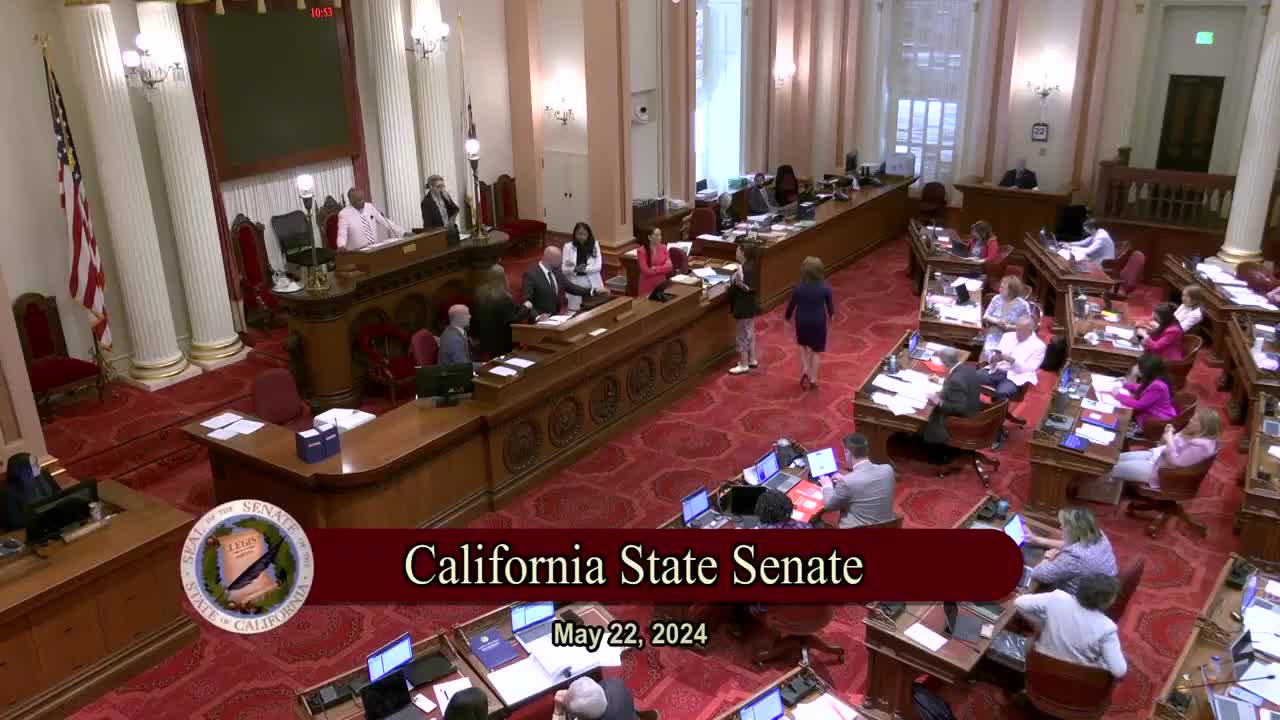 6MIN
Senate Floor
 27SEC
Senate Standing Committee on Appropriations
 6MIN
Senate Standing Committee on Health
Bill Author

Bill Co-Author(s):