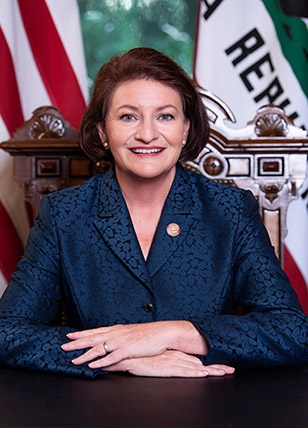
SB 1386: Evidence: sexual assault.
- Session Year: 2023-2024
- House: Senate
- Latest Version Date: 2024-09-29
Current Status:
Passed
(2024-09-29: Chaptered by Secretary of State. Chapter 993, Statutes of 2024.)
Introduced
In Committee
First Chamber
In Committee
Second Chamber
Enacted
Under existing law, in any civil action that contains allegations of sexual harassment, sexual assault, or sexual battery, opinion evidence, reputation evidence, and evidence of specific instances of a plaintiffs sexual conduct with someone other than the alleged perpetrator, is not admissible by the defendant in order to prove consent by the plaintiff or the absence of injury to the plaintiff.
This bill would also make the specified types of evidence inadmissible in such civil actions when being used to attack the credibility of the plaintiffs testimony on consent or absence of injury.
Under existing law, in any sexual battery civil action involving a minor and an adult who is in a position of authority, as specified, evidence of the plaintiff minors sexual conduct with the defendant adult is not admissible to prove consent by the plaintiff or the absence of injury to the plaintiff. Existing law authorizes evidence of the minor plaintiffs sexual conduct to be introduced only to attack the credibility of the plaintiff or to prove something other than consent by the plaintiff if, upon a hearing of the court out of the presence of the jury, the defendant proves that the probative value of that evidence outweighs the prejudice to the plaintiff, as specified.
This bill would remove the requirement, in cases involving a minor and an adult who is in a position of authority, that prior to the introduction of specified types of evidence, a court hold a hearing out of the presence of the jury, where the defendant bears the burden to prove that the probative value of the evidence outweighs the prejudice. The introduction of evidence relating to the sexual conduct of the minor in such cases would be evaluated under procedures already in place under existing law.
Under existing law, in any civil action that contains allegations of sexual harassment, sexual assault, or sexual battery, opinion evidence, reputation evidence, and evidence of specific instances of a plaintiffs sexual conduct with someone other than the alleged perpetrator, is not admissible by the defendant in order to prove consent by the plaintiff or the absence of injury to the plaintiff.
This bill would also make the specified types of evidence inadmissible in such civil actions when being used to attack the credibility of the plaintiffs testimony on consent or on the lack of harm the plaintiff suffered. This bill would broaden the inadmissibility of evidence of the plaintiffs lack of injury to include lack of harm. absence of injury.
Under existing law, in any sexual battery civil action involving a minor and an adult who is in a position of authority, as specified, evidence of the plaintiff minors sexual conduct with the defendant adult is not admissible to prove consent by the plaintiff or the absence of injury to the plaintiff. Existing law authorizes evidence of the minor plaintiffs sexual conduct to be introduced only to attack the credibility of the plaintiff or to prove something other than consent by the plaintiff if, upon a hearing of the court out of the presence of the jury, the defendant proves that the probative value of that evidence outweighs the prejudice to the plaintiff, as specified.
This bill would remove the requirement, in cases involving a minor and an adult who is in a position of authority, that prior to the introduction of specified types of evidence, a court hold a hearing out of the presence of the jury, where the defendant bears the burden to prove that the probative value of the evidence outweighs the prejudice. The introduction of evidence relating to the sexual conduct of the minor in such cases would be evaluated under procedures already in place under existing law.
Under existing law, in any civil action that contains allegations of sexual harassment, sexual assault, or sexual battery, opinion evidence, reputation evidence, and evidence of specific instances of a plaintiffs sexual conduct with someone other than the alleged perpetrator, is not admissible by the defendant in order to prove consent by the plaintiff or the absence of injury to the plaintiff.
This bill would also make the specified types of evidence inadmissible in such civil actions when being used to attack the credibility of the plaintiffs testimony on consent or on the lack of harm the plaintiff suffered. This bill would broaden the inadmissibility of evidence of the plaintiffs lack of injury to include lack of harm.
Under existing law, in any sexual battery civil action involving a minor and an adult who is in a position of authority, as specified, evidence of the plaintiff minors sexual conduct with the defendant adult is not admissible to prove consent by the plaintiff or the absence of injury to the plaintiff. Existing law authorizes evidence of the minor plaintiffs sexual conduct to be introduced only to attack the credibility of the plaintiff or to prove something other than consent by the plaintiff if, upon a hearing of the court out of the presence of the jury, the defendant proves that the probative value of that evidence outweighs the prejudice to the plaintiff, as specified.
This bill would remove the requirement, in cases involving a minor and an adult who is in a position of authority, that prior to the introduction of specified types of evidence, a court hold a hearing out of the presence of the jury, where the defendant bears the burden to prove that the probative value of the evidence outweighs the prejudice. The introduction of evidence relating to the sexual conduct of the minor in such cases would be evaluated under procedures already in place under existing law.
Under existing law, in a civil action alleging conduct which constitutes sexual harassment, sexual assault, or sexual battery, evidence of sexual conduct of the plaintiff offered to attack credibility of the plaintiff is only admissible if specified procedures are followed.
This bill would require a court, when considering whether such evidence is admissible, to be mindful of the Legislatures finding that evidence of a plaintiffs past sexual conduct is more often harassing and intimidating than probative and that the potential for prejudice generally outweighs any probative value, as specified.
Under existing law, in any civil action that contains allegations of sexual harassment, sexual assault, or sexual battery, opinion evidence, reputation evidence, and evidence of specific instances of a plaintiffs sexual conduct with someone other than the alleged perpetrator, is not admissible by the defendant in order to prove consent by the plaintiff or the absence of injury to the plaintiff.
This bill would also make the specified types of evidence inadmissible in such civil actions when being used to attack the credibility of the plaintiffs testimony on consent or on the lack of harm the plaintiff suffered. This bill would broaden the inadmissibility of evidence of the plaintiffs lack of injury to include lack of harm.
Under existing law, in any sexual battery civil action involving a minor and an adult who is in a position of authority, as specified, evidence of the plaintiff minors sexual conduct with the defendant adult is not admissible to prove consent by the plaintiff or the absence of injury to the plaintiff. Existing law authorizes evidence of the minor plaintiffs sexual conduct to be introduced only to attack the credibility of the plaintiff or to prove something other than consent by the plaintiff if, upon a hearing of the court out of the presence of the jury, the defendant proves that the probative value of that evidence outweighs the prejudice to the plaintiff, as specified.
This bill would remove the requirement, in cases involving a minor and an adult who is in a position of authority, that prior to the introduction of specified types of evidence, a court hold a hearing out of the presence of the jury, where the defendant bears the burden to prove that the probative value of the evidence outweighs the prejudice. The introduction of evidence relating to the sexual conduct of the minor in such cases would be evaluated under procedures already in place under existing law.
(a)In any civil action alleging conduct which constitutes sexual harassment, sexual assault, or sexual battery, opinion evidence, reputation evidence, and evidence of specific instances of the plaintiffs sexual conduct, or any of that evidence, is not admissible by the defendant in order to:
(1)Prove consent by the plaintiff.
(2)Prove absence of injury suffered by the plaintiff, unless the injury alleged by the plaintiff is in the nature of loss of consortium.
(3)Attack the credibility of the plaintiffs testimony on consent or the absence of injury suffered by the plaintiff.
(b)Subdivision (a) does not apply to evidence of the plaintiffs sexual conduct with the alleged perpetrator.
(c)Notwithstanding subdivision (b), in any civil action brought pursuant to Section 1708.5 of the Civil Code involving a minor and an adult as described in Section 1708.5.5 of the Civil Code, evidence of the plaintiff minors sexual conduct with the defendant adult shall not be admissible to prove consent by the plaintiff or the absence of injury to the plaintiff.
(d)If the plaintiff introduces evidence, including testimony of a witness, or the plaintiff as a witness gives testimony, and the evidence or testimony relates to the plaintiffs sexual conduct, the defendant may cross-examine the witness who gives the testimony and offer relevant evidence limited specifically to the rebuttal of the evidence introduced by the plaintiff or given by the plaintiff.
(e)This section shall not be construed to make inadmissible any evidence offered to attack the credibility of the plaintiffs testimony as to something other than consent or absence of injury as provided in Section 783.
(a)In any civil action alleging conduct which constitutes sexual harassment, sexual assault, or sexual battery, opinion evidence, reputation evidence, and evidence of specific instances of the plaintiffs sexual conduct, or any of that evidence, is not admissible by the defendant in order to:
(1)Prove consent by the plaintiff.
(2)Prove lack of harm absence of injury suffered by the plaintiff, unless the injury alleged by the plaintiff is in the nature of loss of consortium.
(3)Attack the credibility of the plaintiffs testimony on consent or the lack of harm absence of injury suffered by the plaintiff.
(b)Subdivision (a) does not apply to evidence of the plaintiffs sexual conduct with the alleged perpetrator.
(c)Notwithstanding subdivision (b), in any civil action brought pursuant to Section 1708.5 of the Civil Code involving a minor and an adult as described in Section 1708.5.5 of the Civil Code, evidence of the plaintiff minors sexual conduct with the defendant adult shall not be admissible to prove consent by the plaintiff or the absence of harm injury to the plaintiff.
(d)If the plaintiff introduces evidence, including testimony of a witness, or the plaintiff as a witness gives testimony, and the evidence or testimony relates to the plaintiffs sexual conduct, the defendant may cross-examine the witness who gives the testimony and offer relevant evidence limited specifically to the rebuttal of the evidence introduced by the plaintiff or given by the plaintiff.
(e)This section shall not be construed to make inadmissible any evidence offered to attack the credibility of the plaintiffs testimony as to something other than consent or lack of harm absence of injury as provided in Section 783.
(a)In any civil action alleging conduct which constitutes sexual harassment, sexual assault, or sexual battery, opinion evidence, reputation evidence, and evidence of specific instances of the plaintiffs sexual conduct, or any of that evidence, is not admissible by the defendant in order to:
(1)Prove consent by the plaintiff.
(2)Prove lack of harm suffered by the plaintiff, unless the injury alleged by the plaintiff is in the nature of loss of consortium.
(3)Attack the credibility of the plaintiffs testimony on consent or the lack of harm suffered by the plaintiff.
(b)Subdivision (a) does not apply to evidence of the plaintiffs sexual conduct with the alleged perpetrator.
(c)Notwithstanding subdivision (b), in any civil action brought pursuant to Section 1708.5 of the Civil Code involving a minor and an adult as described in Section 1708.5.5 of the Civil Code, evidence of the plaintiff minors sexual conduct with the defendant adult shall not be admissible to prove consent by the plaintiff or the absence of harm to the plaintiff.
(d)If the plaintiff introduces evidence, including testimony of a witness, or the plaintiff as a witness gives testimony, and the evidence or testimony relates to the plaintiffs sexual conduct, the defendant may cross-examine the witness who gives the testimony and offer relevant evidence limited specifically to the rebuttal of the evidence introduced by the plaintiff or given by the plaintiff.
(e)This section shall not be construed to make inadmissible any evidence offered to attack the credibility of the plaintiffs testimony as to something other than consent or lack of harm as provided in Section 783.
(a)In any civil action alleging conduct which constitutes sexual harassment, sexual assault, or sexual battery, opinion evidence, reputation evidence, and evidence of specific instances of the plaintiffs sexual conduct, or any of that evidence, is not admissible by the defendant in order to:
(1)Prove consent by the plaintiff.
(2)Prove lack of harm suffered by the plaintiff, unless the injury alleged by the plaintiff is in the nature of loss of consortium.
(3)Attack the credibility of the plaintiffs testimony on consent or the lack of harm suffered by the plaintiff.
(b)Subdivision (a) does not apply to evidence of the plaintiffs sexual conduct with the alleged perpetrator.
(c)Notwithstanding subdivision (b), in any civil action brought pursuant to Section 1708.5 of the Civil Code involving a minor and adult as described in Section 1708.5.5 of the Civil Code, evidence of the plaintiff minors sexual conduct with the defendant adult shall not be admissible to prove consent by the plaintiff or the absence of harm to the plaintiff.
(d)If the plaintiff introduces evidence, including testimony of a witness, or the plaintiff as a witness gives testimony, and the evidence or testimony relates to the plaintiffs sexual conduct, the defendant may cross-examine the witness who gives the testimony and offer relevant evidence limited specifically to the rebuttal of the evidence introduced by the plaintiff or given by the plaintiff.
(e)This section shall not be construed to make inadmissible any evidence offered to attack the credibility of the plaintiffs testimony as to something other than consent or lack of harm as provided in Section 783.
In any civil action alleging conduct which constitutes sexual harassment, sexual assault, or sexual battery, if evidence of sexual conduct of the plaintiff is offered to attack credibility of the plaintiff under Section 780, the following procedures shall be followed:
(a)A written motion shall be made by the defendant to the court and the plaintiffs attorney stating that the defense has an offer of proof of the relevancy of evidence of the sexual conduct of the plaintiff proposed to be presented.
(b)The written motion shall be accompanied by an affidavit in which the offer of proof shall be stated.
(c)If the court finds that the offer of proof is sufficient, the court shall order a hearing out of the presence of the jury, if any, and at the hearing allow the questioning of the plaintiff regarding the offer of proof made by the defendant.
(d)At the conclusion of the hearing, if the court finds that evidence proposed to be offered by the defendant regarding the sexual conduct of the plaintiff is relevant pursuant to Section 780, and is not inadmissible pursuant to Section 352, the court may make an order stating what evidence may be introduced by the defendant, and the nature of the questions to be permitted. The defendant may then offer evidence pursuant to the order of the court.
(e)In determining whether a sufficient offer of proof has been demonstrated and whether the evidence proposed to be offered by the defendant is admissible under Section 352, the court shall be mindful of the Legislatures finding that the use of evidence of a plaintiffs sexual conduct is more often harassing and intimidating than genuinely probative, and the potential for prejudice generally outweighs whatever probative value that evidence may have. Especially careful review and scrutiny under section 352 is required to protect a plaintiffs privacy rights and limit introduction of evidence concerning that persons sexual conduct.
SEC. 2.Section 1106 of the Evidence Code is amended to read:1106.(a)In any civil action alleging conduct which constitutes sexual harassment, sexual assault, or sexual battery, opinion evidence, reputation evidence, and evidence of specific instances of the plaintiffs sexual conduct, or any of that evidence, is not admissible by the defendant in order to consent by to:
(1)Prove consent by the plaintiff or the absence plaintiff.
(2)Prove lack of injury to the harm suffered by the plaintiff, unless the injury alleged by the plaintiff is in the nature of loss of consortium.
(3)Attack the credibility of the plaintiffs testimony on consent or the lack of harm suffered by the plaintiff.
(b)Subdivision (a) does not apply to evidence of the plaintiffs sexual conduct with the alleged perpetrator.
(c)Notwithstanding subdivision (b), in any civil action brought pursuant to Section 1708.5 of the Civil Code involving a minor and adult as described in Section 1708.5.5 of the Civil Code, evidence of the plaintiff minors sexual conduct with the defendant adult shall not be admissible to prove consent by the plaintiff or the absence of injury harm to the plaintiff. Such evidence of the plaintiffs sexual conduct may only be introduced to attack the credibility of the plaintiff in accordance with Section 783 or to prove something other than consent by the plaintiff if, upon a hearing of the court out of the presence of the jury, the defendant proves that the probative value of that evidence outweighs the prejudice to the plaintiff consistent with Section 352.
(d)If the plaintiff introduces evidence, including testimony of a witness, or the plaintiff as a witness gives testimony, and the evidence or testimony relates to the plaintiffs sexual conduct, the defendant may cross-examine the witness who gives the testimony and offer relevant evidence limited specifically to the rebuttal of the evidence introduced by the plaintiff or given by the plaintiff.
(e)This section shall not be construed to make inadmissible any evidence offered to attack the credibility of the plaintiff plaintiffs testimony as to something other than consent or lack of harm as provided in Section 783.
|
Date
|
Status
|
|---|---|
| Sep 29, 2024 | Chaptered by Secretary of State. Chapter 993, Statutes of 2024. |
| Sep 29, 2024 | Approved by the Governor. |
| Sep 9, 2024 | Enrolled and presented to the Governor at 3 p.m. |
| Aug 29, 2024 | Assembly amendments concurred in. (Ayes 40. Noes 0. Page 5644.) Ordered to engrossing and enrolling. |
| Aug 28, 2024 | In Senate. Concurrence in Assembly amendments pending. |
| Aug 28, 2024 | Read third time. Passed. (Ayes 72. Noes 0. Page 6695.) Ordered to the Senate. |
| Aug 22, 2024 | Ordered to third reading. |
| Aug 22, 2024 | Read third time and amended. |
| Aug 12, 2024 | Ordered to third reading. |
| Aug 12, 2024 | Read third time and amended. |
| Jun 5, 2024 | Read second time. Ordered to third reading. |
| Jun 4, 2024 | From committee: Do pass. (Ayes 8. Noes 0.) (June 4). |
| May 28, 2024 | Referred to Com. on JUD. |
| May 21, 2024 | In Assembly. Read first time. Held at Desk. |
| May 20, 2024 | Read third time. Passed. (Ayes 39. Noes 0. Page 4011.) Ordered to the Assembly. |
| Apr 11, 2024 | Read second time. Ordered to third reading. |
| Apr 10, 2024 | From committee: Do pass. (Ayes 10. Noes 0. Page 3531.) (April 9). |
| Mar 28, 2024 | Set for hearing April 9. |
| Mar 19, 2024 | From committee with author's amendments. Read second time and amended. Re-referred to Com. on JUD. |
| Feb 29, 2024 | Referred to Com. on JUD. |
| Feb 20, 2024 | From printer. May be acted upon on or after March 18. |
| Feb 16, 2024 | Introduced. Read first time. To Com. on RLS. for assignment. To print. |
|
Date
|
Description
|
Location
|
Votes
|
|
|---|---|---|---|---|
| Aug 29, 2024 | Unfinished Business SB1386 Caballero et al. Concurrence | Senate Floor |
Passed |
|
| Aug 28, 2024 | SB 1386 Caballero Senate Third Reading By Petrie-Norris | Assembly Floor |
Passed |
|
| Jun 4, 2024 | Do pass. | Assembly Standing Committee on Judiciary |
Passed |
|
| May 20, 2024 | Senate 3rd Reading SB1386 Caballero et al. | Senate Floor |
Passed |
|
| Apr 9, 2024 | Do pass | Senate Standing Committee on Judiciary |
Passed |
This list shows positions taken on this bill by organizations on the date displayed, which is linked to the original source.
Positions by individuals are not included.
|
Organization
|
Position
|
Date
|
|---|---|---|
| Asian Americans for Community Involvement | ** Support | |
| California Employment Lawyers Association | ** Support | |
| Californians for Safety and Justice | ** Support | |
| California Sexual Assault Forensic Examiners Association | ** Support | |
| California Womens Law Center | ** Support | |
| Consumer Attorneys Of California | ** Support | |
| Equal Rights Advocates | ** Support | |
| Oakland Privacy | ** Support |
SENATE RULES COMMITTEE Office of Senate Floor Analyses (916) 651-1520 Fax: (916) 327-4478 | SB 1386 |
UNFINISHED BUSINESS
Bill No: SB 1386
Author: Caballero (D), et al.
Amended: 8/22/24
Vote: 21
SENATE JUDICIARY COMMITTEE: 10-0, 4/9/24
AYES: Umberg, Allen, Ashby, Caballero, Durazo, Laird, Min, Niello, Stern, Wahab
NO VOTE RECORDED: Wilk
SENATE FLOOR: 39-0, 5/20/24
AYES: Allen, Alvarado-Gil, Archuleta, Ashby, Atkins, Becker, Blakespear, Bradford, Caballero, Cortese, Dahle, Dodd, Durazo, Eggman, Glazer, Gonzalez, Grove, Hurtado, Jones, Laird, Limón, McGuire, Menjivar, Newman, Nguyen, Niello, Ochoa Bogh, Padilla, Portantino, Roth, Rubio, Seyarto, Skinner, Smallwood-Cuevas, Stern, Umberg, Wahab, Wiener, Wilk
NO VOTE RECORDED: Min
ASSEMBLY FLOOR: 72-0, 8/28/24 - See last page for vote
SUBJECT: Evidence: sexual assault
SOURCE: Consumer Attorneys of California
Equal Rights Advocates
DIGEST:
This bill extends the Rape Shield Law’s prohibition on evidence of a plaintiff’s past sexual conduct to include introduction for purposes of attacking the credibility of a plaintiff’s testimony regarding consent or the absence of injury suffered. This bill extends the restrictions to cover admission for absence of injury and reworks provisions governing civil actions for sexual battery involving a minor.
Assembly Amendments
replace “lack of harm” with “absence of injury.”
ANALYSIS:
Existing law:
- Provides that, except as otherwise provided by statute, the court or jury may consider in determining the credibility of a witness any matter that has any tendency in reason to prove or disprove the truthfulness of the witness’ testimony at the hearing. (Evidence Code (Evid.Code) § 780)
- Provides that in any civil action alleging conduct which constitutes sexual harassment, sexual assault, or sexual battery, opinion evidence, reputation evidence, and evidence of specific instances of the plaintiff’s sexual conduct, or any of that evidence, is not admissible by the defendant in order to prove consent by the plaintiff or the absence of injury to the plaintiff, unless the injury alleged by the plaintiff is in the nature of loss of consortium. This does not apply to evidence of sexual conduct between the plaintiff and alleged perpetrator. (Evid. Code § 1106)
- Provides that notwithstanding the above, in a civil action brought for sexual battery involving a minor and adult, as specified, evidence of the plaintiff minor’s sexual conduct with the defendant adult shall not be admissible to prove consent by the plaintiff or the absence of injury to the plaintiff. Such evidence of the plaintiff’s sexual conduct may only be introduced to attack the credibility of the plaintiff in accordance with Section 783 of the Evidence Code or to prove something other than consent by the plaintiff if, upon a hearing of the court out of the presence of the jury, the defendant proves that the probative value of that evidence outweighs the prejudice to the plaintiff consistent with Section 352. (Evid. Code § 1106(c))
- Authorizes the defendant, if the plaintiff introduces evidence, including testimony of a witness, or the plaintiff as a witness gives testimony, and the evidence or testimony relates to the plaintiff’s sexual conduct, to cross-examine the witness who gives the testimony and offer relevant evidence limited specifically to the rebuttal of the evidence introduced by the plaintiff or given by the plaintiff. (Evid. Code § 1106(d))
- Provides that the above shall not be construed to make inadmissible any evidence offered to attack the credibility of the plaintiff as provided in Section 783. (Evid. Code § 1106)
- Requires the following procedures to be followed in any civil action alleging conduct which constitutes sexual harassment, sexual assault, or sexual battery, if evidence of sexual conduct of the plaintiff is offered to attack credibility of the plaintiff under Section 780:
- A written motion shall be made by the defendant to the court and the plaintiff’s attorney stating that the defense has an offer of proof of the relevancy of evidence of the sexual conduct of the plaintiff proposed to be presented.
- The written motion shall be accompanied by an affidavit in which the offer of proof shall be stated.
- If the court finds that the offer of proof is sufficient, the court shall order a hearing out of the presence of the jury, if any, and at the hearing allow the questioning of the plaintiff regarding the offer of proof made by the defendant.
- At the conclusion of the hearing, if the court finds that evidence proposed to be offered by the defendant regarding the sexual conduct of the plaintiff is relevant pursuant to Section 780, and is not inadmissible pursuant to Section 352, the court may make an order stating what evidence may be introduced by the defendant, and the nature of the questions to be permitted. The defendant may then offer evidence pursuant to the order of the court. (Evid. Code § 783)
- Authorizes the court in its discretion to exclude evidence if its probative value is substantially outweighed by the probability that its admission will either necessitate undue consumption of time or create substantial danger of undue prejudice, of confusing the issues, or of misleading the jury. (Evid. Code § 352)
This bill:
- Provides that in any civil action alleging conduct which constitutes sexual harassment, sexual assault, or sexual battery, opinion evidence, reputation evidence, and evidence of specific instances of the plaintiff’s sexual conduct, or any of that evidence, is not only inadmissible by the defendant in order to prove consent, but also to:
- Prove absence of injury suffered by the plaintiff, unless the injury alleged by the plaintiff is in the nature of loss of consortium.
- Attack the credibility of the plaintiff’s testimony on consent or the absence of injury suffered by the plaintiff.
- Modifies the provision of Section 1106(c) to remove the specified procedure for weighing such evidence when used to attack credibility.
- Clarifies in Section 1106 that Section 783 controls evidence offered to attack credibility of the plaintiff’s testimony as to something other than consent or absence of injury.
Background
California’s Rape Shield Law restricts introduction of opinion evidence, reputation evidence, and evidence of specific instances of a plaintiff’s sexual conduct in order to prove consent by the plaintiff or the absence of injury, as specified. This applies in civil actions alleging conduct constituting sexual harassment, sexual assault, or sexual battery. However, the statute also provides that these provisions do not make inadmissible such evidence when used to attack the credibility of the plaintiff’s testimony, which is subject to specified procedures and considerations.
In the wake of a California Supreme Court decision interpreting the statute, the author and sponsors seek to strengthen California’s Rape Shield Law. This bill extends the law to prohibit evidence regarding the plaintiff’s sexual conduct to be introduced in order to attack the plaintiff’s credibility as to consent or the absence of injury suffered by the plaintiff. It also amends the balancing test triggered when a defendant seeks to introduce such evidence to attack the credibility of a minor plaintiff in an action for sexual battery. This bill is co-sponsored by Equal Rights Advocates and the Consumer Attorneys of California. It is supported by several other organizations. No opposition was received.
Comments
Generally, public policy disfavors the exclusion of relevant evidence at trial and, accordingly, the Evidence Code begins with a general presumption that all relevant evidence is admissible. (Evid. Code § 351) A judge may, however, exclude otherwise relevant evidence based upon the undue prejudice that the evidence would pose to the party against whom it is sought to be introduced. Specifically, Section 352 authorizes a court, in its discretion, to exclude evidence if its probative value is substantially outweighed by the probability that its admission will (a) necessitate undue consumption of time or (b) create substantial danger of undue prejudice, of confusing the issues, or of misleading the jury.
In 1985, California extended the rape shield laws applicable in the criminal context, to civil actions. Section 1106 provides that in a civil action alleging sexual harassment, sexual assault, or sexual battery, specified evidence of the plaintiff’s sexual conduct is not admissible by the defendant in order to prove consent by the plaintiff or the absence of injury to the plaintiff, unless the injury alleged by the plaintiff is in the nature of loss of consortium. This does not apply to other instances of sexual conduct between the plaintiff and defendant, except where the plaintiff is a minor and the action is for sexual battery.
In passing the law, the Legislature declared:
The discovery of sexual aspects of complainant[s’] lives, as well as those of their past and current friends and acquaintances, has the clear potential to discourage complaints and to annoy and harass litigants. That annoyance and discomfort, as a result of defendant or respondent inquiries, is unnecessary and deplorable. Without protection against it, individuals whose intimate lives are unjustifiably and offensively intruded upon might face the “Catch-22” of invoking their remedy only at the risk of enduring further intrusions into details of their personal lives in discovery, and in open quasi-judicial or judicial proceedings. . . . [T]he use of evidence of a complainant's sexual behavior is more often harassing and intimidating than genuinely probative, and the potential for prejudice outweighs whatever probative value that evidence may have.
However, relevant here, Section 1106(e) also specifically states that it shall not be construed to make inadmissible such evidence when presented to attack the credibility of the plaintiff as provided in Section 783. Section 783 lays out the procedures for offering such evidence in these actions to attack the plaintiff’s credibility. It provides for a motion and offer of proof by the defendant, which the court shall consider. If the court finds it sufficient, it shall order a hearing outside the presence of any jury and determine if the evidence is relevant and whether it is admissible pursuant to Section 352. The court can then allow for the introduction of the evidence, or some form of it.
Using previous sexual conduct to attack a plaintiff’s credibility. Concerns regarding the permissiveness of Section 1106(e) in allowing for evidence of specific instances of a plaintiff’s sexual conduct in sexual harassment, sexual assault, or sexual battery actions to be used to attack a plaintiff’s credibility were heightened in the wake of a recent opinion interpreting the statute by the California Supreme Court. In Doe v. Superior Court (2023) 15 Cal. 5th 40, 54-56, the plaintiff sued a school district for sexual abuse committed by a fourth-grade teacher when she was eight years old. “The District, seeking to undermine plaintiff's claim for emotional distress damages resulting from the teacher's conduct, planned to introduce evidence that plaintiff had been molested a few years later by another person—and that this subsequent molestation caused at least some of plaintiff's emotional distress injuries and related damages.”[1]
The plaintiff sought to exclude evidence of the subsequent molestation, but the trial court ruled that “the challenged evidence was (1) not protected by any shield statute, and (2) relevant and admissible with regard to whether plaintiff's emotional distress was caused solely by the teacher's conduct or by a combination of his conduct and the subsequent molestation.”[2] The appellate court found the evidence regarding the subsequent molestation admissible and the Supreme Court granted review to address the interrelationship of the statutory provisions and the admissibility of the challenged evidence. The Supreme Court concluded:
[S]ection 1106, subdivision (e), may permit admission of evidence that would otherwise be excluded under section 1106, subdivision (a). But such admissibility is subject to the procedures set out in section 783 and especially careful review and scrutiny under section 352. . . . [T]he Legislature devised section 783 to protect against unwarranted intrusion into the private life of a plaintiff who sues for sexual assault, by identifying and circumscribing evidence that may be admitted to attack such a person's credibility. Correspondingly, section 352, as applied in this setting, requires special informed review and scrutiny, designed to protect such a plaintiff's privacy rights and to limit the introduction of evidence concerning such a person's sexual conduct.[3]
While the Supreme Court ultimately found this heightened scrutiny lacking in this case, the author and sponsors argue that this “ruling underscore[s] the need for further clarification in the rape shield laws.” They state:
Rape shield laws are designed to protect survivors from unnecessary and intrusive inquiries into their personal lives and sexual histories. Forcing survivors to disclose details about their intimate life or to relive traumatic incidents unrelated to the case in order to undermine their credibility can be as traumatizing as the assault itself. Allowing such evidence will have a chilling effect on survivors who come forward to hold perpetrators accountable, but who now fear having their personal sexual histories revealed if they do.
Extending the protections of California’s rape shield law. In response to these concerns, this bill enhances and extends the restrictions in Section 1106. This bill provides that evidence of the plaintiff’s sexual conduct is not admissible in order to attack the credibility of the plaintiff’s testimony with regard to consent or the absence of injury suffered by the plaintiff.
Currently the provision applying to minors provides a special procedure for introducing the sexual conduct evidence to attack the credibility of the minor plaintiff. This bill removes this special provision in light of the change highlighted above, thereby subjecting any such evidence to attack credibility to the procedures in Section 783.
According to the author:
Rape shield laws create a legal environment that prioritizes justice, fairness and the protection of survivors of sexual abuse. The legislature must protect the dignity of survivors and foster a supportive environment for them to come forward and seek the justice they deserve. SB 1386 will preserve the integrity of the civil rape shield law by protecting survivors and safeguarding their rights. As a society, we should make sure that victims of rape and sexual assault are protected to ensure the opportunity for fairness and justice within our legal system.
FISCAL EFFECT: Appropriation: No Fiscal Com.: No Local: No
SUPPORT: (Verified 8/27/24)
Consumer Attorneys of California (co-source)
Equal Rights Advocates (co-source)
Asian Americans for Community Involvement
California Employment Lawyers Association
California Sexual Assault Forensic Examiner Association
California Women’s Law Center
Californians for Safety and Justice
Oakland Privacy
OPPOSITION: (Verified 8/27/24)
None received
ARGUMENTS IN SUPPORT: The Consumer Attorneys of California and Equal Rights Advocates, co-sponsors of the bill, write:
Rape shield laws are designed to protect survivors from unjustifiably intrusive inquiries into their personal lives and sexual histories during legal proceedings. Engaging in the legal system can create new trauma for survivors in addition to—and compounding—the trauma of the underlying incident. For many survivors, having details about their intimate life unnecessarily thrust into the spotlight or being forced to relive other harm they endured can be as traumatizing as the assault itself, if not more so, deterring reporting and opening the door to harassing cross-examination when survivors do come forward. The trauma associated with sexual violence and related legal proceedings can affect every aspect of a survivor’s life, including their ability to work or learn. Because of the important function of these laws, the federal government and the overwhelming majority of states have passed some form of rape shield legislation.
…
SB 1386 brings greater clarity to Evidence Code Section 1106, particularly the interaction between subsections (a) and (e). This clarification is necessary following a recent California Supreme Court ruling that created new uncertainty in civil rape shield protections. In Doe v. Mountain View School District, Real Party in Interest (2023) (“Mountain View”), the Court held that evidence of a survivor’s other sexual conduct may be admissible under Section 1106(e) for the purposes of impeaching their credibility as to consent or injury, even if that evidence would be otherwise excluded under Section 1106(a). This holding is inconsistent with the intent of the Legislature in enacting California’s civil rape shield law. Because the Supreme Court’s analysis was based on the statutory construction of Section 1106, clarity of the statute is now necessary.
ASSEMBLY FLOOR: 72-0, 8/28/24
AYES: Addis, Aguiar-Curry, Alanis, Alvarez, Arambula, Bains, Bauer-Kahan, Bennett, Berman, Boerner, Bonta, Bryan, Calderon, Juan Carrillo, Wendy Carrillo, Chen, Connolly, Megan Dahle, Davies, Flora, Mike Fong, Friedman, Gabriel, Garcia, Gipson, Grayson, Haney, Hart, Holden, Hoover, Irwin, Jackson, Jones-Sawyer, Kalra, Lee, Low, Lowenthal, Maienschein, Mathis, McCarty, McKinnor, Muratsuchi, Stephanie Nguyen, Pacheco, Papan, Jim Patterson, Joe Patterson, Pellerin, Petrie-Norris, Quirk-Silva, Ramos, Rendon, Reyes, Luz Rivas, Rodriguez, Blanca Rubio, Santiago, Schiavo, Soria, Ta, Ting, Valencia, Villapudua, Waldron, Wallis, Ward, Weber, Wicks, Wilson, Wood, Zbur, Robert Rivas
NO VOTE RECORDED: Cervantes, Dixon, Essayli, Gallagher, Lackey, Ortega, Sanchez
Prepared by: Christian Kurpiewski / JUD. / (916) 651-4113
8/29/24 20:03:41
**** END ****
SENATE RULES COMMITTEE Office of Senate Floor Analyses (916) 651-1520 Fax: (916) 327-4478 | SB 1386 |
UNFINISHED BUSINESS
Bill No: SB 1386
Author: Caballero (D), et al.
Amended: 8/22/24
Vote: 21
SENATE JUDICIARY COMMITTEE: 10-0, 4/9/24
AYES: Umberg, Allen, Ashby, Caballero, Durazo, Laird, Min, Niello, Stern, Wahab
NO VOTE RECORDED: Wilk
SENATE FLOOR: 39-0, 5/20/24
AYES: Allen, Alvarado-Gil, Archuleta, Ashby, Atkins, Becker, Blakespear, Bradford, Caballero, Cortese, Dahle, Dodd, Durazo, Eggman, Glazer, Gonzalez, Grove, Hurtado, Jones, Laird, Limón, McGuire, Menjivar, Newman, Nguyen, Niello, Ochoa Bogh, Padilla, Portantino, Roth, Rubio, Seyarto, Skinner, Smallwood-Cuevas, Stern, Umberg, Wahab, Wiener, Wilk
NO VOTE RECORDED: Min
ASSEMBLY FLOOR: 72-0, 8/28/24
(Roll call vote not available)
SUBJECT: Evidence: sexual assault
SOURCE: Consumer Attorneys of California
Equal Rights Advocates
DIGEST:
This bill extends the Rape Shield Law’s prohibition on evidence of a plaintiff’s past sexual conduct to include introduction for purposes of attacking the credibility of a plaintiff’s testimony regarding consent or the absence of injury suffered. This bill extends the restrictions to cover admission for absence of injury and reworks provisions governing civil actions for sexual battery involving a minor.
Assembly Amendments
replace “lack of harm” with “absence of injury.”
ANALYSIS:
Existing law:
- Provides that, except as otherwise provided by statute, the court or jury may consider in determining the credibility of a witness any matter that has any tendency in reason to prove or disprove the truthfulness of the witness’ testimony at the hearing. (Evidence Code (Evid.Code) § 780)
- Provides that in any civil action alleging conduct which constitutes sexual harassment, sexual assault, or sexual battery, opinion evidence, reputation evidence, and evidence of specific instances of the plaintiff’s sexual conduct, or any of that evidence, is not admissible by the defendant in order to prove consent by the plaintiff or the absence of injury to the plaintiff, unless the injury alleged by the plaintiff is in the nature of loss of consortium. This does not apply to evidence of sexual conduct between the plaintiff and alleged perpetrator. (Evid. Code § 1106)
- Provides that notwithstanding the above, in a civil action brought for sexual battery involving a minor and adult, as specified, evidence of the plaintiff minor’s sexual conduct with the defendant adult shall not be admissible to prove consent by the plaintiff or the absence of injury to the plaintiff. Such evidence of the plaintiff’s sexual conduct may only be introduced to attack the credibility of the plaintiff in accordance with Section 783 of the Evidence Code or to prove something other than consent by the plaintiff if, upon a hearing of the court out of the presence of the jury, the defendant proves that the probative value of that evidence outweighs the prejudice to the plaintiff consistent with Section 352. (Evid. Code § 1106(c))
- Authorizes the defendant, if the plaintiff introduces evidence, including testimony of a witness, or the plaintiff as a witness gives testimony, and the evidence or testimony relates to the plaintiff’s sexual conduct, to cross-examine the witness who gives the testimony and offer relevant evidence limited specifically to the rebuttal of the evidence introduced by the plaintiff or given by the plaintiff. (Evid. Code § 1106(d))
- Provides that the above shall not be construed to make inadmissible any evidence offered to attack the credibility of the plaintiff as provided in Section 783. (Evid. Code § 1106)
- Requires the following procedures to be followed in any civil action alleging conduct which constitutes sexual harassment, sexual assault, or sexual battery, if evidence of sexual conduct of the plaintiff is offered to attack credibility of the plaintiff under Section 780:
- A written motion shall be made by the defendant to the court and the plaintiff’s attorney stating that the defense has an offer of proof of the relevancy of evidence of the sexual conduct of the plaintiff proposed to be presented.
- The written motion shall be accompanied by an affidavit in which the offer of proof shall be stated.
- If the court finds that the offer of proof is sufficient, the court shall order a hearing out of the presence of the jury, if any, and at the hearing allow the questioning of the plaintiff regarding the offer of proof made by the defendant.
- At the conclusion of the hearing, if the court finds that evidence proposed to be offered by the defendant regarding the sexual conduct of the plaintiff is relevant pursuant to Section 780, and is not inadmissible pursuant to Section 352, the court may make an order stating what evidence may be introduced by the defendant, and the nature of the questions to be permitted. The defendant may then offer evidence pursuant to the order of the court. (Evid. Code § 783)
- Authorizes the court in its discretion to exclude evidence if its probative value is substantially outweighed by the probability that its admission will either necessitate undue consumption of time or create substantial danger of undue prejudice, of confusing the issues, or of misleading the jury. (Evid. Code § 352)
This bill:
- Provides that in any civil action alleging conduct which constitutes sexual harassment, sexual assault, or sexual battery, opinion evidence, reputation evidence, and evidence of specific instances of the plaintiff’s sexual conduct, or any of that evidence, is not only inadmissible by the defendant in order to prove consent, but also to:
- Prove absence of injury suffered by the plaintiff, unless the injury alleged by the plaintiff is in the nature of loss of consortium.
- Attack the credibility of the plaintiff’s testimony on consent or the absence of injury suffered by the plaintiff.
- Modifies the provision of Section 1106(c) to remove the specified procedure for weighing such evidence when used to attack credibility.
- Clarifies in Section 1106 that Section 783 controls evidence offered to attack credibility of the plaintiff’s testimony as to something other than consent or absence of injury.
Background
California’s Rape Shield Law restricts introduction of opinion evidence, reputation evidence, and evidence of specific instances of a plaintiff’s sexual conduct in order to prove consent by the plaintiff or the absence of injury, as specified. This applies in civil actions alleging conduct constituting sexual harassment, sexual assault, or sexual battery. However, the statute also provides that these provisions do not make inadmissible such evidence when used to attack the credibility of the plaintiff’s testimony, which is subject to specified procedures and considerations.
In the wake of a California Supreme Court decision interpreting the statute, the author and sponsors seek to strengthen California’s Rape Shield Law. This bill extends the law to prohibit evidence regarding the plaintiff’s sexual conduct to be introduced in order to attack the plaintiff’s credibility as to consent or the absence of injury suffered by the plaintiff. It also amends the balancing test triggered when a defendant seeks to introduce such evidence to attack the credibility of a minor plaintiff in an action for sexual battery. This bill is co-sponsored by Equal Rights Advocates and the Consumer Attorneys of California. It is supported by several other organizations. No opposition was received.
Comments
Generally, public policy disfavors the exclusion of relevant evidence at trial and, accordingly, the Evidence Code begins with a general presumption that all relevant evidence is admissible. (Evid. Code § 351) A judge may, however, exclude otherwise relevant evidence based upon the undue prejudice that the evidence would pose to the party against whom it is sought to be introduced. Specifically, Section 352 authorizes a court, in its discretion, to exclude evidence if its probative value is substantially outweighed by the probability that its admission will (a) necessitate undue consumption of time or (b) create substantial danger of undue prejudice, of confusing the issues, or of misleading the jury.
In 1985, California extended the rape shield laws applicable in the criminal context, to civil actions. Section 1106 provides that in a civil action alleging sexual harassment, sexual assault, or sexual battery, specified evidence of the plaintiff’s sexual conduct is not admissible by the defendant in order to prove consent by the plaintiff or the absence of injury to the plaintiff, unless the injury alleged by the plaintiff is in the nature of loss of consortium. This does not apply to other instances of sexual conduct between the plaintiff and defendant, except where the plaintiff is a minor and the action is for sexual battery.
In passing the law, the Legislature declared:
The discovery of sexual aspects of complainant[s’] lives, as well as those of their past and current friends and acquaintances, has the clear potential to discourage complaints and to annoy and harass litigants. That annoyance and discomfort, as a result of defendant or respondent inquiries, is unnecessary and deplorable. Without protection against it, individuals whose intimate lives are unjustifiably and offensively intruded upon might face the “Catch-22” of invoking their remedy only at the risk of enduring further intrusions into details of their personal lives in discovery, and in open quasi-judicial or judicial proceedings. . . . [T]he use of evidence of a complainant's sexual behavior is more often harassing and intimidating than genuinely probative, and the potential for prejudice outweighs whatever probative value that evidence may have.
However, relevant here, Section 1106(e) also specifically states that it shall not be construed to make inadmissible such evidence when presented to attack the credibility of the plaintiff as provided in Section 783. Section 783 lays out the procedures for offering such evidence in these actions to attack the plaintiff’s credibility. It provides for a motion and offer of proof by the defendant, which the court shall consider. If the court finds it sufficient, it shall order a hearing outside the presence of any jury and determine if the evidence is relevant and whether it is admissible pursuant to Section 352. The court can then allow for the introduction of the evidence, or some form of it.
Using previous sexual conduct to attack a plaintiff’s credibility. Concerns regarding the permissiveness of Section 1106(e) in allowing for evidence of specific instances of a plaintiff’s sexual conduct in sexual harassment, sexual assault, or sexual battery actions to be used to attack a plaintiff’s credibility were heightened in the wake of a recent opinion interpreting the statute by the California Supreme Court. In Doe v. Superior Court (2023) 15 Cal. 5th 40, 54-56, the plaintiff sued a school district for sexual abuse committed by a fourth-grade teacher when she was eight years old. “The District, seeking to undermine plaintiff's claim for emotional distress damages resulting from the teacher's conduct, planned to introduce evidence that plaintiff had been molested a few years later by another person—and that this subsequent molestation caused at least some of plaintiff's emotional distress injuries and related damages.”[1]
The plaintiff sought to exclude evidence of the subsequent molestation, but the trial court ruled that “the challenged evidence was (1) not protected by any shield statute, and (2) relevant and admissible with regard to whether plaintiff's emotional distress was caused solely by the teacher's conduct or by a combination of his conduct and the subsequent molestation.”[2] The appellate court found the evidence regarding the subsequent molestation admissible and the Supreme Court granted review to address the interrelationship of the statutory provisions and the admissibility of the challenged evidence. The Supreme Court concluded:
[S]ection 1106, subdivision (e), may permit admission of evidence that would otherwise be excluded under section 1106, subdivision (a). But such admissibility is subject to the procedures set out in section 783 and especially careful review and scrutiny under section 352. . . . [T]he Legislature devised section 783 to protect against unwarranted intrusion into the private life of a plaintiff who sues for sexual assault, by identifying and circumscribing evidence that may be admitted to attack such a person's credibility. Correspondingly, section 352, as applied in this setting, requires special informed review and scrutiny, designed to protect such a plaintiff's privacy rights and to limit the introduction of evidence concerning such a person's sexual conduct.[3]
While the Supreme Court ultimately found this heightened scrutiny lacking in this case, the author and sponsors argue that this “ruling underscore[s] the need for further clarification in the rape shield laws.” They state:
Rape shield laws are designed to protect survivors from unnecessary and intrusive inquiries into their personal lives and sexual histories. Forcing survivors to disclose details about their intimate life or to relive traumatic incidents unrelated to the case in order to undermine their credibility can be as traumatizing as the assault itself. Allowing such evidence will have a chilling effect on survivors who come forward to hold perpetrators accountable, but who now fear having their personal sexual histories revealed if they do.
Extending the protections of California’s rape shield law. In response to these concerns, this bill enhances and extends the restrictions in Section 1106. This bill provides that evidence of the plaintiff’s sexual conduct is not admissible in order to attack the credibility of the plaintiff’s testimony with regard to consent or the absence of injury suffered by the plaintiff.
Currently the provision applying to minors provides a special procedure for introducing the sexual conduct evidence to attack the credibility of the minor plaintiff. This bill removes this special provision in light of the change highlighted above, thereby subjecting any such evidence to attack credibility to the procedures in Section 783.
According to the author:
Rape shield laws create a legal environment that prioritizes justice, fairness and the protection of survivors of sexual abuse. The legislature must protect the dignity of survivors and foster a supportive environment for them to come forward and seek the justice they deserve. SB 1386 will preserve the integrity of the civil rape shield law by protecting survivors and safeguarding their rights. As a society, we should make sure that victims of rape and sexual assault are protected to ensure the opportunity for fairness and justice within our legal system.
FISCAL EFFECT: Appropriation: No Fiscal Com.: No Local: No
SUPPORT: (Verified 8/27/24)
ASSEMBLY FLOOR: 72-0, 8/28/24
AYES: Addis, Aguiar-Curry, Alanis, Alvarez, Arambula, Bains, Bauer-Kahan, Bennett, Berman, Boerner, Bonta, Bryan, Calderon, Juan Carrillo, Wendy Carrillo, Chen, Connolly, Megan Dahle, Davies, Flora, Mike Fong, Friedman, Gabriel, Garcia, Gipson, Grayson, Haney, Hart, Holden, Hoover, Irwin, Jackson, Jones-Sawyer, Kalra, Lee, Low, Lowenthal, Maienschein, Mathis, McCarty, McKinnor, Muratsuchi, Stephanie Nguyen, Pacheco, Papan, Jim Patterson, Joe Patterson, Pellerin, Petrie-Norris, Quirk-Silva, Ramos, Rendon, Reyes, Luz Rivas, Rodriguez, Blanca Rubio, Santiago, Schiavo, Soria, Ta, Ting, Valencia, Villapudua, Waldron, Wallis, Ward, Weber, Wicks, Wilson, Wood, Zbur, Robert Rivas
NO VOTE RECORDED: Cervantes, Dixon, Essayli, Gallagher, Lackey, Ortega, Sanchez
Consumer Attorneys of California (co-source)
Equal Rights Advocates (co-source)
Asian Americans for Community Involvement
California Employment Lawyers Association
California Sexual Assault Forensic Examiner Association
California Women’s Law Center
Californians for Safety and Justice
Oakland Privacy
OPPOSITION: (Verified 8/27/24)
None received
ARGUMENTS IN SUPPORT: The Consumer Attorneys of California and Equal Rights Advocates, co-sponsors of the bill, write:
Rape shield laws are designed to protect survivors from unjustifiably intrusive inquiries into their personal lives and sexual histories during legal proceedings. Engaging in the legal system can create new trauma for survivors in addition to—and compounding—the trauma of the underlying incident. For many survivors, having details about their intimate life unnecessarily thrust into the spotlight or being forced to relive other harm they endured can be as traumatizing as the assault itself, if not more so, deterring reporting and opening the door to harassing cross-examination when survivors do come forward. The trauma associated with sexual violence and related legal proceedings can affect every aspect of a survivor’s life, including their ability to work or learn. Because of the important function of these laws, the federal government and the overwhelming majority of states have passed some form of rape shield legislation.
…
SB 1386 brings greater clarity to Evidence Code Section 1106, particularly the interaction between subsections (a) and (e). This clarification is necessary following a recent California Supreme Court ruling that created new uncertainty in civil rape shield protections. In Doe v. Mountain View School District, Real Party in Interest (2023) (“Mountain View”), the Court held that evidence of a survivor’s other sexual conduct may be admissible under Section 1106(e) for the purposes of impeaching their credibility as to consent or injury, even if that evidence would be otherwise excluded under Section 1106(a). This holding is inconsistent with the intent of the Legislature in enacting California’s civil rape shield law. Because the Supreme Court’s analysis was based on the statutory construction of Section 1106, clarity of the statute is now necessary.
Click here to enter text.
Prepared by: Christian Kurpiewski / JUD. / (916) 651-4113
8/28/24 22:39:45
**** END ****
SENATE THIRD READING
STR Bill Id:SB 1386
Author:(Caballero)
As Amended Ver:August 22, 2024
Majority vote
SUMMARY
Strengthens the state's existing civil rape shield law to further limit the admissibility of evidence of specific instances of the plaintiff's sexual conduct in a civil action alleging conduct that constitutes sexual harassment, sexual assault, or sexual battery.
Major Provisions
- Provides that in any civil action alleging conduct which constitutes sexual harassment, sexual assault, or sexual battery, evidence of specific instances of the plaintiff's sexual conduct, or any of that evidence, is not admissible by the defendant in order to attack the credibility of the plaintiff's testimony on consent or the absence of injury suffered by the plaintiff.
- Removes from existing law the ability of a court to admit evidence of the plaintiff's sexual conduct to attack the credibility of the plaintiff in accordance with Evidence Code Section 783 or to prove something other than consent by the plaintiff if, upon a hearing of the court out of the presence of the jury, the defendant proves that the probative value of that evidence outweighs the prejudice to the plaintiff consistent with Evidence Code Section 352. (All further statutory references are to the Evidence Code unless otherwise specified.)
- Clarifies that any evidence offered to attack the credibility of the plaintiff's testimony as to something other than consent or absence of injury as provided in Section 783 remains admissible as provided under existing law.
COMMENTS
This bill, co-sponsored by Consumer Attorneys of California and Equal Rights Advocates, strengthens the state's existing civil rape shield law to further limit the admissibility of evidence of specific instances of the plaintiff's sexual conduct in a civil action alleging conduct that constitutes sexual harassment, sexual assault, or sexual battery.
Limitations on the admissibility of evidence in civil actions and specific rules regarding civil actions for sexual assault. Generally, public policy disfavors the exclusion of relevant evidence at trial. Accordingly, the Evidence Code begins with a general presumption that all relevant evidence is admissible. (See Section 351.) A court may, however, exclude otherwise relevant evidence based upon the undue prejudice that the evidence would pose to the party against whom it is sought to be introduced. Specifically, Section 352 authorizes a court, in its discretion, to exclude evidence if its probative value is substantially outweighed by the probability that its admission will create substantial danger of undue prejudice, of confusing the issues, or of misleading the jury. The Evidence Code also makes certain evidence generally inadmissible as a matter of law. (See Section 1100 et seq.)
Most relevant to this bill, Section 1106, generally prohibits the admission of evidence of specific instances of plaintiff's sexual conduct to prove consent by the plaintiff, or the absence of injury to the plaintiff in a civil action alleging sexual harassment, sexual assault, or sexual battery when such evidence is offered by the defendant. There is, however, an exception to this general prohibition where the evidence relates to the plaintiff's sexual conduct with the alleged perpetrator. Additionally, existing law allows defendants to cross-examine any witnesses and offer relevant evidence specifically to rebut evidence introduced or offered by the plaintiff relating to their own sexual conduct. Lastly, existing law clarifies that it does not affect the admissibility of any evidence offered to attack the credibility of the plaintiff pursuant to specified procedures. Those procedures require, among other things, that the defendant must first provide a written motion to the court and the plaintiff's attorney with an offer of proof regarding the relevancy of any evidence of sexual conduct by the plaintiff that the defendant proposes to present. If the court finds the offer of proof to be sufficient, it must hold a hearing outside of the presence of the jury to allow questioning of the plaintiff regarding the offer of proof. Only at the conclusion of that evidentiary hearing, if 1) the court finds that evidence proposed to be offered by the defendant regarding the sexual conduct of the plaintiff is relevant, and 2) the court does not find the evidence inadmissible pursuant to its analysis of the probative value and potential prejudice, the court may allow the evidence to be introduced by the defendant, and specify the nature of the questions regarding such evidence that are permitted. (See Sections 352, 780, and 783.)
Evidence of the victim's consent. Under civil law principles, consent is generally available as a defense. While civil law creates an obligation for every person to abstain from injuring another person, a defendant in a civil action can present, as a defense, evidence that the injured person consented to the injury. Thus, when the Legislature created a new civil action for sexual battery, the general civil law defenses attached to the new civil action, absent legislative directive to the contrary. Accordingly, a consent defense is possible in a civil action for sexual battery.
Courts in California have not adopted a singular strategy for how to treat the issue of consent. Some courts have found that the minor's consent is relevant in considering civil liability. (See Cynthia M. v. Rodney E. (1991) 228 Cal.App.3d 1040, 1044 [case involved two minors]; Doe v. Starbucks (2009) 2009 U.S. Dist. LEXIS 118878 at 18-19 [case involved a 16-year old and her 24-year old supervisor where the court, relying on the California Supreme Court case of People v. Tobias (2001) 25 Cal.4th 327, 33-334, found that the California Legislature implicitly acknowledged that "in some cases at least, a minor may be capable of giving legal consent to sexual relations," by creating a separate statute for what constitutes unlawful sexual intercourse with a minor in the Penal Code and amending the rape statute to no longer include sex with a minor in the definition of rape].) Other courts have prohibited a defendant from raising a consent defense, at least with respect to a civil action based on the Penal Code. (See In re Kennedy (2009) WL 256511 [a bankruptcy court found that consent could not be raised as a defense to a civil action based on the criminal sexual intercourse with a minor statute, but might be possible for an action based on the Civil Code].)
Doe v. Superior Court. Concerns regarding the permissiveness of Section 1106 to allow evidence of specific instances of a plaintiff's sexual conduct to be admitted (albeit in limited circumstances) in sexual harassment, sexual assault, or sexual battery actions to attack a plaintiff's credibility were heightened in the wake of a recent opinion interpreting the statute by the California Supreme Court. In Doe v. Superior Court (2023) 15 Cal. 5th 40, 54-56, the plaintiff sued a school district for sexual abuse committed by a fourth-grade teacher when she was eight years old. "The District, seeking to undermine plaintiff's claim for emotional distress damages resulting from the teacher's conduct, planned to introduce evidence that plaintiff had been molested a few years later by another person—and that this subsequent molestation caused at least some of plaintiff's emotional distress injuries and related damages." (Id., at p. 46.)
The plaintiff sought to exclude evidence of the subsequent molestation, but the trial court ruled that "the challenged evidence was 1) not protected by any shield statute, and 2) relevant and admissible with regard to whether plaintiff's emotional distress was caused solely by the teacher's conduct or by a combination of his conduct and the subsequent molestation." (Doe, supra, 15 Cal. 5th, at p. 46.) The appellate court found the evidence regarding the subsequent molestation admissible and the Supreme Court granted review to address the interrelationship of the statutory provisions and the admissibility of the challenged evidence. The Supreme Court concluded:
[S]ection 1106, subdivision (e), may permit admission of evidence that would otherwise be excluded under section 1106, subdivision (a). But such admissibility is subject to the procedures set out in section 783 and especially careful review and scrutiny under section 352. . . . [T]he Legislature devised section 783 to protect against unwarranted intrusion into the private life of a plaintiff who sues for sexual assault, by identifying and circumscribing evidence that may be admitted to attack such a person's credibility. Correspondingly, section 352, as applied in this setting, requires special informed review and scrutiny, designed to protect such a plaintiff's privacy rights and to limit the introduction of evidence concerning such a person's sexual conduct. (Id., at p. 47.)
While the Supreme Court ultimately found that the trial and appellate courts did not properly scrutinize the evidence of prior molestation that is required under existing law, the author and sponsors argue that this "ruling underscore[s] the need for further clarification in the rape shield laws."
This bill strengthens the state's existing rape shield law to further limit the admissibility of evidence of specific instances of the plaintiff's sexual conduct in a civil action alleging conduct that constitutes sexual harassment, sexual assault, or sexual battery. It does so in three ways:
First, it specifies that evidence of specific instances of the plaintiff's sexual conduct, or any of that evidence, is not admissible by the defendant in order to attack the credibility of the plaintiff's testimony on consent or the absence of injury suffered by the plaintiff. While arguably, this limitation could be implied by existing law (and the case law that interprets it), the bill helpfully further clarifies the point.
Second, the bill removes from existing law the ability of a court to admit evidence of the plaintiff's sexual conduct to attack the credibility of the plaintiff in accordance with Section 783 or to prove something other than consent by the plaintiff if, upon a hearing of the court out of the presence of the jury, the defendant proves that the probative value of that evidence outweighs the prejudice to the plaintiff consistent with Section 352.
Finally, it clarifies that any evidence offered to attack the credibility of the plaintiff's testimony as to something other than consent or absence of injury as provided in Section 783 remains admissible as provided under existing law. These two points should help to ensure that a case such as Doe – where the trial court inappropriately allowed the admission of evidence that the victim previously was molested without following the rigorous procedures set forth in Section 783 as it reads in existing law – is far less likely to occur.
According to the Author
Rape shield laws create a legal environment that prioritizes justice, fairness and the protection of survivors of sexual abuse. The legislature must protect the dignity of survivors and foster a supportive environment for them to come forward and seek the justice they deserve. SB 1386 will preserve the integrity of the civil rape shield law by protecting survivors and safeguarding their rights. As a society, we should make sure that victims of rape and sexual assault are protected to ensure the opportunity for fairness and justice within our legal system.
Arguments in Support
In their joint letter, co-sponsors of the bill Consumer Attorneys of California and Equal Rights Advocates, write the following to explain the need for and their support of the bill:
Rape shield laws are designed to protect survivors from unjustifiably intrusive inquiries into their personal lives and sexual histories during legal proceedings. Engaging in the legal system can create new trauma for survivors in addition to—and compounding—the trauma of the underlying incident. For many survivors, having details about their intimate life unnecessarily thrust into the spotlight or being forced to relive other harm they endured can be as traumatizing as the assault itself, if not more so, deterring reporting and opening the door to harassing cross-examination when survivors do come forward. The trauma associated with sexual violence and related legal proceedings can affect every aspect of a survivor's life, including their ability to work or learn. Because of the important function of these laws, the federal government and the overwhelming majority of states have passed some form of rape shield legislation.
Survivors need and deserve robust rape shield law protections when they seek justice in court. [This bill] will protect these survivors by clarifying that evidence of a plaintiff's other sexual conduct is not admissible to impeach their testimony as to consent or damages. This bill will help protect the dignity of survivors by fostering a supportive environment for them to come forward and seek justice. For these reasons, we are proud to co-sponsor [this bill].
Arguments in Opposition
No opposition on file.
FISCAL COMMENTS
None.
VOTES
SENATE FLOOR: 39-0-1
YES: Allen, Alvarado-Gil, Archuleta, Ashby, Atkins, Becker, Blakespear, Bradford, Caballero, Cortese, Dahle, Dodd, Durazo, Eggman, Glazer, Gonzalez, Grove, Hurtado, Jones, Laird, Limón, McGuire, Menjivar, Newman, Nguyen, Niello, Ochoa Bogh, Padilla, Portantino, Roth, Rubio, Seyarto, Skinner, Smallwood-Cuevas, Stern, Umberg, Wahab, Wiener, Wilk
ABS, ABST OR NV: Min
ASM JUDICIARY: 8-0-4
YES: Kalra, Lee, Bryan, Connolly, Haney, Maienschein, McKinnor, Pacheco
ABS, ABST OR NV: Dixon, Joe Patterson, Reyes, Sanchez
UPDATED
VERSION: August 22, 2024
CONSULTANT: Alison Merrilees / JUD. / (916) 319-2334 FN: 0004295
SENATE THIRD READING
STR Bill Id:SB 1386
Author:(Caballero)
As Amended Ver:August 12, 2024
Majority vote
SUMMARY
Strengthens the state's existing civil rape shield law to further limit the admissibility of evidence of specific instances of the plaintiff's sexual conduct in a civil action alleging conduct that constitutes sexual harassment, sexual assault, or sexual battery.
Major Provisions
- Provides that in any civil action alleging conduct which constitutes sexual harassment, sexual assault, or sexual battery, evidence of specific instances of the plaintiff's sexual conduct, or any of that evidence, is not admissible by the defendant in order to attack the credibility of the plaintiff's testimony on consent or the lack of harm suffered by the plaintiff.
- Removes from existing law the ability of a court to admit evidence of the plaintiff's sexual conduct to attack the credibility of the plaintiff in accordance with Evidence Code Section 783 or to prove something other than consent by the plaintiff if, upon a hearing of the court out of the presence of the jury, the defendant proves that the probative value of that evidence outweighs the prejudice to the plaintiff consistent with Evidence Code Section 352. (All further statutory references are to the Evidence Code unless otherwise specified.)
- Clarifies that any evidence offered to attack the credibility of the plaintiff's testimony as to something other than consent or lack of harm as provided in Section 783 remains admissible as provided under existing law.
COMMENTS
This bill, co-sponsored by Consumer Attorneys of California and Equal Rights Advocates, strengthens the state's existing civil rape shield law to further limit the admissibility of evidence of specific instances of the plaintiff's sexual conduct in a civil action alleging conduct that constitutes sexual harassment, sexual assault, or sexual battery.
Limitations on the admissibility of evidence in civil actions and specific rules regarding civil actions for sexual assault. Generally, public policy disfavors the exclusion of relevant evidence at trial. Accordingly, the Evidence Code begins with a general presumption that all relevant evidence is admissible. (See Section 351.) A court may, however, exclude otherwise relevant evidence based upon the undue prejudice that the evidence would pose to the party against whom it is sought to be introduced. Specifically, Section 352 authorizes a court, in its discretion, to exclude evidence if its probative value is substantially outweighed by the probability that its admission will create substantial danger of undue prejudice, of confusing the issues, or of misleading the jury. The Evidence Code also makes certain evidence generally inadmissible as a matter of law. (See Section 1100 et seq.)
Most relevant to this bill, Section 1106, generally prohibits the admission of evidence of specific instances of plaintiff's sexual conduct to prove consent by the plaintiff, or the absence of injury to the plaintiff in a civil action alleging sexual harassment, sexual assault, or sexual battery when such evidence is offered by the defendant. There is, however, an exception to this general prohibition where the evidence relates to the plaintiff's sexual conduct with the alleged perpetrator. Additionally, existing law allows defendants to cross-examine any witnesses and offer relevant evidence specifically to rebut evidence introduced or offered by the plaintiff relating to their own sexual conduct. Lastly, existing law clarifies that it does not affect the admissibility of any evidence offered to attack the credibility of the plaintiff pursuant to specified procedures. Those procedures require, among other things, that the defendant must first provide a written motion to the court and the plaintiff's attorney with an offer of proof regarding the relevancy of any evidence of sexual conduct by the plaintiff that the defendant proposes to present. If the court finds the offer of proof to be sufficient, it must hold a hearing outside of the presence of the jury to allow questioning of the plaintiff regarding the offer of proof. Only at the conclusion of that evidentiary hearing, if 1) the court finds that evidence proposed to be offered by the defendant regarding the sexual conduct of the plaintiff is relevant, and 2) the court does not find the evidence inadmissible pursuant to its analysis of the probative value and potential prejudice, the court may allow the evidence to be introduced by the defendant, and specify the nature of the questions regarding such evidence that are permitted. (See Sections 352, 780, and 783.)
Evidence of the victim's consent. Under civil law principles, consent is generally available as a defense. While civil law creates an obligation for every person to abstain from injuring another person, a defendant in a civil action can present, as a defense, evidence that the injured person consented to the injury. Thus, when the Legislature created a new civil action for sexual battery, the general civil law defenses attached to the new civil action, absent legislative directive to the contrary. Accordingly, a consent defense is possible in a civil action for sexual battery.
Courts in California have not adopted a singular strategy for how to treat the issue of consent. Some courts have found that the minor's consent is relevant in considering civil liability. (See Cynthia M. v. Rodney E. (1991) 228 Cal.App.3d 1040, 1044 [case involved two minors]; Doe v. Starbucks (2009) 2009 U.S. Dist. LEXIS 118878 at 18-19 [case involved a 16-year old and her 24-year old supervisor where the court, relying on the California Supreme Court case of People v. Tobias (2001) 25 Cal.4th 327, 33-334, found that the California Legislature implicitly acknowledged that "in some cases at least, a minor may be capable of giving legal consent to sexual relations," by creating a separate statute for what constitutes unlawful sexual intercourse with a minor in the Penal Code and amending the rape statute to no longer include sex with a minor in the definition of rape].) Other courts have prohibited a defendant from raising a consent defense, at least with respect to a civil action based on the Penal Code. (See In re Kennedy (2009) WL 256511 [a bankruptcy court found that consent could not be raised as a defense to a civil action based on the criminal sexual intercourse with a minor statute, but might be possible for an action based on the Civil Code].)
Doe v. Superior Court. Concerns regarding the permissiveness of Section 1106 to allow evidence of specific instances of a plaintiff's sexual conduct to be admitted (albeit in limited circumstances) in sexual harassment, sexual assault, or sexual battery actions to attack a plaintiff's credibility were heightened in the wake of a recent opinion interpreting the statute by the California Supreme Court. In Doe v. Superior Court (2023) 15 Cal. 5th 40, 54-56, the plaintiff sued a school district for sexual abuse committed by a fourth-grade teacher when she was eight years old. "The District, seeking to undermine plaintiff's claim for emotional distress damages resulting from the teacher's conduct, planned to introduce evidence that plaintiff had been molested a few years later by another person—and that this subsequent molestation caused at least some of plaintiff's emotional distress injuries and related damages." (Id., at p. 46.)
The plaintiff sought to exclude evidence of the subsequent molestation, but the trial court ruled that "the challenged evidence was 1) not protected by any shield statute, and 2) relevant and admissible with regard to whether plaintiff's emotional distress was caused solely by the teacher's conduct or by a combination of his conduct and the subsequent molestation." (Doe, supra, 15 Cal. 5th, at p. 46.) The appellate court found the evidence regarding the subsequent molestation admissible and the Supreme Court granted review to address the interrelationship of the statutory provisions and the admissibility of the challenged evidence. The Supreme Court concluded:
[S]ection 1106, subdivision (e), may permit admission of evidence that would otherwise be excluded under section 1106, subdivision (a). But such admissibility is subject to the procedures set out in section 783 and especially careful review and scrutiny under section 352. . . . [T]he Legislature devised section 783 to protect against unwarranted intrusion into the private life of a plaintiff who sues for sexual assault, by identifying and circumscribing evidence that may be admitted to attack such a person's credibility. Correspondingly, section 352, as applied in this setting, requires special informed review and scrutiny, designed to protect such a plaintiff's privacy rights and to limit the introduction of evidence concerning such a person's sexual conduct. (Id., at p. 47.)
While the Supreme Court ultimately found that the trial and appellate courts did not properly scrutinize the evidence of prior molestation that is required under existing law, the author and sponsors argue that this "ruling underscore[s] the need for further clarification in the rape shield laws."
This bill strengthens the state's existing rape shield law to further limit the admissibility of evidence of specific instances of the plaintiff's sexual conduct in a civil action alleging conduct that constitutes sexual harassment, sexual assault, or sexual battery. It does so in three ways:
First, it specifies that evidence of specific instances of the plaintiff's sexual conduct, or any of that evidence, is not admissible by the defendant in order to attack the credibility of the plaintiff's testimony on consent or the lack of harm suffered by the plaintiff. While arguably, this limitation could be implied by existing law (and the case law that interprets it), the bill helpfully further clarifies the point.
Second, the bill removes from existing law the ability of a court to admit evidence of the plaintiff's sexual conduct to attack the credibility of the plaintiff in accordance with Section 783 or to prove something other than consent by the plaintiff if, upon a hearing of the court out of the presence of the jury, the defendant proves that the probative value of that evidence outweighs the prejudice to the plaintiff consistent with Section 352.
Finally, it clarifies that any evidence offered to attack the credibility of the plaintiff's testimony as to something other than consent or lack of harm as provided in Section 783 remains admissible as provided under existing law. These two points should help to ensure that a case such as Doe – where the trial court inappropriately allowed the admission of evidence that the victim previously was molested without following the rigorous procedures set forth in Section 783 as it reads in existing law – is far less likely to occur.
According to the Author
Rape shield laws create a legal environment that prioritizes justice, fairness and the protection of survivors of sexual abuse. The legislature must protect the dignity of survivors and foster a supportive environment for them to come forward and seek the justice they deserve. SB 1386 will preserve the integrity of the civil rape shield law by protecting survivors and safeguarding their rights. As a society, we should make sure that victims of rape and sexual assault are protected to ensure the opportunity for fairness and justice within our legal system.
Arguments in Support
In their joint letter, co-sponsors of the bill Consumer Attorneys of California and Equal Rights Advocates, write the following to explain the need for and their support of the bill:
Rape shield laws are designed to protect survivors from unjustifiably intrusive inquiries into their personal lives and sexual histories during legal proceedings. Engaging in the legal system can create new trauma for survivors in addition to—and compounding—the trauma of the underlying incident. For many survivors, having details about their intimate life unnecessarily thrust into the spotlight or being forced to relive other harm they endured can be as traumatizing as the assault itself, if not more so, deterring reporting and opening the door to harassing cross-examination when survivors do come forward. The trauma associated with sexual violence and related legal proceedings can affect every aspect of a survivor's life, including their ability to work or learn. Because of the important function of these laws, the federal government and the overwhelming majority of states have passed some form of rape shield legislation.
Survivors need and deserve robust rape shield law protections when they seek justice in court. [This bill] will protect these survivors by clarifying that evidence of a plaintiff's other sexual conduct is not admissible to impeach their testimony as to consent or damages. This bill will help protect the dignity of survivors by fostering a supportive environment for them to come forward and seek justice. For these reasons, we are proud to co-sponsor [this bill].
Arguments in Opposition
No opposition on file.
FISCAL COMMENTS
None.
VOTES
SENATE FLOOR: 39-0-1
YES: Allen, Alvarado-Gil, Archuleta, Ashby, Atkins, Becker, Blakespear, Bradford, Caballero, Cortese, Dahle, Dodd, Durazo, Eggman, Glazer, Gonzalez, Grove, Hurtado, Jones, Laird, Limón, McGuire, Menjivar, Newman, Nguyen, Niello, Ochoa Bogh, Padilla, Portantino, Roth, Rubio, Seyarto, Skinner, Smallwood-Cuevas, Stern, Umberg, Wahab, Wiener, Wilk
ABS, ABST OR NV: Min
ASM JUDICIARY: 8-0-4
YES: Kalra, Lee, Bryan, Connolly, Haney, Maienschein, McKinnor, Pacheco
ABS, ABST OR NV: Dixon, Joe Patterson, Reyes, Sanchez
UPDATED
VERSION: August 12, 2024
CONSULTANT: Alison Merrilees / JUD. / (916) 319-2334 FN: 0003754
SENATE THIRD READING
STR Bill Id:SB 1386
Author:(Caballero)
As Amended Ver:March 19, 2024
Majority vote
SUMMARY
Strengthens the state's existing civil rape shield law to further limit the admissibility of evidence of specific instances of the plaintiff's sexual conduct in a civil action alleging conduct that constitutes sexual harassment, sexual assault, or sexual battery.
Major Provisions
- Provides that in any civil action alleging conduct which constitutes sexual harassment, sexual assault, or sexual battery, evidence of specific instances of the plaintiff's sexual conduct, or any of that evidence, is not admissible by the defendant in order to attack the credibility of the plaintiff's testimony on consent or the lack of harm suffered by the plaintiff.
- Removes from existing law the ability of a court to admit evidence of the plaintiff's sexual conduct to attack the credibility of the plaintiff in accordance with Evidence Code Section 783 or to prove something other than consent by the plaintiff if, upon a hearing of the court out of the presence of the jury, the defendant proves that the probative value of that evidence outweighs the prejudice to the plaintiff consistent with Evidence Code Section 352. (All further statutory references are to the Evidence Code unless otherwise specified.)
- Clarifies that any evidence offered to attack the credibility of the plaintiff's testimony as to something other than consent or lack of harm as provided in Section 783 remains admissible as provided under existing law.
COMMENTS
This bill, co-sponsored by Consumer Attorneys of California and Equal Rights Advocates, strengthens the state's existing civil rape shield law to further limit the admissibility of evidence of specific instances of the plaintiff's sexual conduct in a civil action alleging conduct that constitutes sexual harassment, sexual assault, or sexual battery.
Limitations on the admissibility of evidence in civil actions and specific rules regarding civil actions for sexual assault. Generally, public policy disfavors the exclusion of relevant evidence at trial. Accordingly, the Evidence Code begins with a general presumption that all relevant evidence is admissible. (See Section 351.) A court may, however, exclude otherwise relevant evidence based upon the undue prejudice that the evidence would pose to the party against whom it is sought to be introduced. Specifically, Section 352 authorizes a court, in its discretion, to exclude evidence if its probative value is substantially outweighed by the probability that its admission will create substantial danger of undue prejudice, of confusing the issues, or of misleading the jury. The Evidence Code also makes certain evidence generally inadmissible as a matter of law. (See Section 1100 et seq.)
Most relevant to this bill, Section 1106, generally prohibits the admission of evidence of specific instances of plaintiff's sexual conduct to prove consent by the plaintiff, or the absence of injury to the plaintiff in a civil action alleging sexual harassment, sexual assault, or sexual battery when such evidence is offered by the defendant. There is, however, an exception to this general prohibition where the evidence relates to the plaintiff's sexual conduct with the alleged perpetrator. Additionally, existing law allows defendants to cross-examine any witnesses and offer relevant evidence specifically to rebut evidence introduced or offered by the plaintiff relating to their own sexual conduct. Lastly, existing law clarifies that it does not affect the admissibility of any evidence offered to attack the credibility of the plaintiff pursuant to specified procedures. Those procedures require, among other things, that the defendant must first provide a written motion to the court and the plaintiff's attorney with an offer of proof regarding the relevancy of any evidence of sexual conduct by the plaintiff that the defendant proposes to present. If the court finds the offer of proof to be sufficient, it must hold a hearing outside of the presence of the jury to allow questioning of the plaintiff regarding the offer of proof. Only at the conclusion of that evidentiary hearing, if 1) the court finds that evidence proposed to be offered by the defendant regarding the sexual conduct of the plaintiff is relevant, and 2) the court does not find the evidence inadmissible pursuant to its analysis of the probative value and potential prejudice, the court may allow the evidence to be introduced by the defendant, and specify the nature of the questions regarding such evidence that are permitted. (See Sections 352, 780, and 783.)
Evidence of the victim's consent. Under civil law principles, consent is generally available as a defense. While civil law creates an obligation for every person to abstain from injuring another person, a defendant in a civil action can present, as a defense, evidence that the injured person consented to the injury. Thus, when the Legislature created a new civil action for sexual battery, the general civil law defenses attached to the new civil action, absent legislative directive to the contrary. Accordingly, a consent defense is possible in a civil action for sexual battery.
Courts in California have not adopted a singular strategy for how to treat the issue of consent. Some courts have found that the minor's consent is relevant in considering civil liability. (See Cynthia M. v. Rodney E. (1991) 228 Cal.App.3d 1040, 1044 [case involved two minors]; Doe v. Starbucks (2009) 2009 U.S. Dist. LEXIS 118878 at 18-19 [case involved a 16-year old and her 24-year old supervisor where the court, relying on the California Supreme Court case of People v. Tobias (2001) 25 Cal.4th 327, 33-334, found that the California Legislature implicitly acknowledged that "in some cases at least, a minor may be capable of giving legal consent to sexual relations," by creating a separate statute for what constitutes unlawful sexual intercourse with a minor in the Penal Code and amending the rape statute to no longer include sex with a minor in the definition of rape].) Other courts have prohibited a defendant from raising a consent defense, at least with respect to a civil action based on the Penal Code. (See In re Kennedy (2009) WL 256511 [a bankruptcy court found that consent could not be raised as a defense to a civil action based on the criminal sexual intercourse with a minor statute, but might be possible for an action based on the Civil Code].)
Doe v. Superior Court. Concerns regarding the permissiveness of Section 1106 to allow evidence of specific instances of a plaintiff's sexual conduct to be admitted (albeit in limited circumstances) in sexual harassment, sexual assault, or sexual battery actions to attack a plaintiff's credibility were heightened in the wake of a recent opinion interpreting the statute by the California Supreme Court. In Doe v. Superior Court (2023) 15 Cal. 5th 40, 54-56, the plaintiff sued a school district for sexual abuse committed by a fourth-grade teacher when she was eight years old. "The District, seeking to undermine plaintiff's claim for emotional distress damages resulting from the teacher's conduct, planned to introduce evidence that plaintiff had been molested a few years later by another person—and that this subsequent molestation caused at least some of plaintiff's emotional distress injuries and related damages." (Id., at p. 46.)
The plaintiff sought to exclude evidence of the subsequent molestation, but the trial court ruled that "the challenged evidence was 1) not protected by any shield statute, and 2) relevant and admissible with regard to whether plaintiff's emotional distress was caused solely by the teacher's conduct or by a combination of his conduct and the subsequent molestation." (Doe, supra, 15 Cal. 5th, at p. 46.) The appellate court found the evidence regarding the subsequent molestation admissible and the Supreme Court granted review to address the interrelationship of the statutory provisions and the admissibility of the challenged evidence. The Supreme Court concluded:
[S]ection 1106, subdivision (e), may permit admission of evidence that would otherwise be excluded under section 1106, subdivision (a). But such admissibility is subject to the procedures set out in section 783 and especially careful review and scrutiny under section 352. . . . [T]he Legislature devised section 783 to protect against unwarranted intrusion into the private life of a plaintiff who sues for sexual assault, by identifying and circumscribing evidence that may be admitted to attack such a person's credibility. Correspondingly, section 352, as applied in this setting, requires special informed review and scrutiny, designed to protect such a plaintiff's privacy rights and to limit the introduction of evidence concerning such a person's sexual conduct. (Id., at p. 47.)
While the Supreme Court ultimately found that the trial and appellate courts did not properly scrutinize the evidence of prior molestation that is required under existing law, the author and sponsors argue that this "ruling underscore[s] the need for further clarification in the rape shield laws."
This bill strengthens the state's existing rape shield law to further limit the admissibility of evidence of specific instances of the plaintiff's sexual conduct in a civil action alleging conduct that constitutes sexual harassment, sexual assault, or sexual battery. It does so in three ways:
First, it specifies that evidence of specific instances of the plaintiff's sexual conduct, or any of that evidence, is not admissible by the defendant in order to attack the credibility of the plaintiff's testimony on consent or the lack of harm suffered by the plaintiff. While arguably, this limitation could be implied by existing law (and the case law that interprets it), the bill helpfully further clarifies the point.
Second, the bill removes from existing law the ability of a court to admit evidence of the plaintiff's sexual conduct to attack the credibility of the plaintiff in accordance with Section 783 or to prove something other than consent by the plaintiff if, upon a hearing of the court out of the presence of the jury, the defendant proves that the probative value of that evidence outweighs the prejudice to the plaintiff consistent with Section 352.
Finally, it clarifies that any evidence offered to attack the credibility of the plaintiff's testimony as to something other than consent or lack of harm as provided in Section 783 remains admissible as provided under existing law. These two points should help to ensure that a case such as Doe – where the trial court inappropriately allowed the admission of evidence that the victim previously was molested without following the rigorous procedures set forth in Section 783 as it reads in existing law – is far less likely to occur.
According to the Author
Rape shield laws create a legal environment that prioritizes justice, fairness and the protection of survivors of sexual abuse. The legislature must protect the dignity of survivors and foster a supportive environment for them to come forward and seek the justice they deserve. SB 1386 will preserve the integrity of the civil rape shield law by protecting survivors and safeguarding their rights. As a society, we should make sure that victims of rape and sexual assault are protected to ensure the opportunity for fairness and justice within our legal system.
Arguments in Support
In their joint letter, co-sponsors of the bill Consumer Attorneys of California and Equal Rights Advocates, write the following to explain the need for and their support of the bill:
Rape shield laws are designed to protect survivors from unjustifiably intrusive inquiries into their personal lives and sexual histories during legal proceedings. Engaging in the legal system can create new trauma for survivors in addition to—and compounding—the trauma of the underlying incident. For many survivors, having details about their intimate life unnecessarily thrust into the spotlight or being forced to relive other harm they endured can be as traumatizing as the assault itself, if not more so, deterring reporting and opening the door to harassing cross-examination when survivors do come forward. The trauma associated with sexual violence and related legal proceedings can affect every aspect of a survivor's life, including their ability to work or learn. Because of the important function of these laws, the federal government and the overwhelming majority of states have passed some form of rape shield legislation.
Survivors need and deserve robust rape shield law protections when they seek justice in court. [This bill] will protect these survivors by clarifying that evidence of a plaintiff's other sexual conduct is not admissible to impeach their testimony as to consent or damages. This bill will help protect the dignity of survivors by fostering a supportive environment for them to come forward and seek justice. For these reasons, we are proud to co-sponsor [this bill].
Arguments in Opposition
No opposition on file.
FISCAL COMMENTS
None.
VOTES
SENATE FLOOR: 39-0-1
YES: Allen, Alvarado-Gil, Archuleta, Ashby, Atkins, Becker, Blakespear, Bradford, Caballero, Cortese, Dahle, Dodd, Durazo, Eggman, Glazer, Gonzalez, Grove, Hurtado, Jones, Laird, Limón, McGuire, Menjivar, Newman, Nguyen, Niello, Ochoa Bogh, Padilla, Portantino, Roth, Rubio, Seyarto, Skinner, Smallwood-Cuevas, Stern, Umberg, Wahab, Wiener, Wilk
ABS, ABST OR NV: Min
ASM JUDICIARY: 8-0-4
YES: Kalra, Lee, Bryan, Connolly, Haney, Maienschein, McKinnor, Pacheco
ABS, ABST OR NV: Dixon, Joe Patterson, Reyes, Sanchez
UPDATED
VERSION: March 19, 2024
CONSULTANT: Alison Merrilees / JUD. / (916) 319-2334 FN: 0003491
Date of Hearing: June 4, 2024
ASSEMBLY COMMITTEE ON JUDICIARY
Ash Kalra, Chair
SBPCA Bill Id:SB 1386
Author:(Caballero) – As Amended Ver:March 19, 2024
SENATE VOTE: 39-0
SUBJECT: EVIDENCE: SEXUAL ASSAULT
KEY ISSUE: SHOULD THE STATE’S EXISTING CIVIL RAPE SHIELD LAW BE STRENGTHENED TO FURTHER LIMIT THE ADMISSIBILITY OF EVIDENCE OF SPECIFIC INSTANCES OF THE PLAINTIFF’S SEXUAL CONDUCT IN A CIVIL ACTION ALLEGING CONDUCT THAT CONSTITUTES SEXUAL HARASSMENT, SEXUAL ASSAULT, OR SEXUAL BATTERY?
SYNOPSIS
Generally, public policy disfavors the exclusion of relevant evidence at trial. But specific evidence is made inadmissible in civil actions because of policy considerations. For example,
Evidence Code Section 1106, generally prohibits the admission of evidence of specific instances of a plaintiff’s sexual conduct to prove consent by the plaintiff, or the absence of injury to the plaintiff in a civil action alleging sexual harassment, sexual assault, or sexual battery when such evidence is offered by the defendant. There is, however, an exception to this general prohibition where the evidence relates to the plaintiff’s sexual conduct with the alleged perpetrator.
According to the author, co-sponsors, and supporters of this bill, existing law allows too much discretion to the courts to admit evidence of a victim’s past sexual conduct in a civil action alleging conduct that constitutes sexual harassment, sexual assault, or sexual battery. The bill, co-sponsored by the Consumer Attorneys of California and Equal Rights Advocates, therefore proposes to strengthen the state’s existing civil rape shield law to further limit the admissibility of evidence of specific instances of the plaintiff’s sexual conduct in a civil action alleging conduct that constitutes sexual harassment, sexual assault, or sexual battery. It does so in three ways: First, it specifies that evidence of specific instances of the plaintiff’s sexual conduct, or any of that evidence, is not admissible by the defendant in order to attack the credibility of the plaintiff’s testimony on consent or the lack of harm suffered by the plaintiff. Second, the bill removes from existing law the ability of a court to admit evidence of the plaintiff’s sexual conduct to attack the credibility of the plaintiff in accordance with Section 783 or to prove something other than consent by the plaintiff if, upon a hearing of the court out of the presence of the jury, the defendant proves that the probative value of that evidence outweighs the prejudice to the plaintiff consistent with Section 352 of the Evidence Code. Finally, it clarifies that any evidence offered to attack the credibility of the plaintiff’s testimony regarding something other than consent or lack of harm as provided in Section 783 of the Evidence Code remains admissible as provided under existing law. The bill is supported by numerous organizations representing victims of sexual assault, women, and privacy interests. It has no opposition on file.
SUMMARY: Strengthens the state’s existing civil rape shield law to further limit the admissibility of evidence of specific instances of the plaintiff’s sexual conduct in a civil action alleging conduct that constitutes sexual harassment, sexual assault, or sexual battery. Specifically, this bill:
- Provides that in any civil action alleging conduct which constitutes sexual harassment, sexual assault, or sexual battery, evidence of specific instances of the plaintiff’s sexual conduct, or any of that evidence, is not admissible by the defendant in order to attack the credibility of the plaintiff’s testimony on consent or the lack of harm suffered by the plaintiff.
- Removes from existing law the ability of a court to admit evidence of the plaintiff’s sexual conduct to attack the credibility of the plaintiff in accordance with Section 783 or to prove something other than consent by the plaintiff if, upon a hearing of the court out of the presence of the jury, the defendant proves that the probative value of that evidence outweighs the prejudice to the plaintiff consistent with Section 352 of the Evidence Code.
- Clarifies that any evidence offered to attack the credibility of the plaintiff’s testimony as to something other than consent or lack of harm as provided in Section 783 of the Evidence Code remains admissible as provided under existing law.
EXISTING LAW:
- Provides that, except as otherwise provided by statute, the court or jury may consider in determining the credibility of a witness any matter that has any tendency in reason to prove or disprove the truthfulness of the witness’ testimony at the hearing. (Evidence Code Section 780. All further statutory references are to this code, unless otherwise specified.)
- Provides that in any civil action alleging conduct which constitutes sexual harassment, sexual assault, or sexual battery, opinion evidence, reputation evidence, and evidence of specific instances of the plaintiff’s sexual conduct, or any of that evidence, is not admissible by the defendant in order to prove consent by the plaintiff or the absence of injury to the plaintiff, unless the injury alleged by the plaintiff is in the nature of loss of consortium. This does not apply to evidence of sexual conduct between the plaintiff and alleged perpetrator. (Section 1106.)
- Provides that notwithstanding the above, in a civil action brought for sexual battery involving a minor and adult, as specified, evidence of the plaintiff minor’s sexual conduct with the defendant adult shall not be admissible to prove consent by the plaintiff or the absence of injury to the plaintiff. Such evidence of the plaintiff’s sexual conduct may only be introduced to attack the credibility of the plaintiff in accordance with Section 783 of the Evidence Code or to prove something other than consent by the plaintiff if, upon a hearing of the court out of the presence of the jury, the defendant proves that the probative value of that evidence outweighs the prejudice to the plaintiff consistent with Section 352. (Section 1106 (c).)
- Authorizes the defendant, if the plaintiff introduces evidence, including testimony of a witness, or the plaintiff as a witness gives testimony, and the evidence or testimony relates to the plaintiff’s sexual conduct, to cross-examine the witness who gives the testimony and offer relevant evidence limited specifically to the rebuttal of the evidence introduced by the plaintiff or given by the plaintiff. (Section 1106 (d).)
- Provides that the above shall not be construed to make inadmissible any evidence offered to attack the credibility of the plaintiff as provided in Section 783. (Section 1106.)
- Requires the following procedures to be followed in any civil action alleging conduct which constitutes sexual harassment, sexual assault, or sexual battery, if evidence of sexual conduct of the plaintiff is offered to attack credibility of the plaintiff under Section 780:
- A written motion shall be made by the defendant to the court and the plaintiff’s attorney stating that the defense has an offer of proof of the relevancy of evidence of the sexual conduct of the plaintiff proposed to be presented.
- The written motion shall be accompanied by an affidavit in which the offer of proof shall be stated.
- If the court finds that the offer of proof is sufficient, the court shall order a hearing out of the presence of the jury, if any, and at the hearing allow the questioning of the plaintiff regarding the offer of proof made by the defendant.
- At the conclusion of the hearing, if the court finds that evidence proposed to be offered by the defendant regarding the sexual conduct of the plaintiff is relevant pursuant to Section 780, and is not inadmissible pursuant to Section 352, the court may make an order stating what evidence may be introduced by the defendant, and the nature of the questions to be permitted. The defendant may then offer evidence pursuant to the order of the court. (Section 783.)
- Authorizes the court in its discretion to exclude evidence if its probative value is substantially outweighed by the probability that its admission will either necessitate undue consumption of time or create substantial danger of undue prejudice, of confusing the issues, or of misleading the jury. (Section 352.)
FISCAL EFFECT: As currently in print this bill is keyed non-fiscal.
COMMENTS: This bill, co-sponsored by Consumer Attorneys of California and Equal Rights Advocates, strengthens the state’s existing civil rape shield law to further limit the admissibility of evidence of specific instances of the plaintiff’s sexual conduct in a civil action alleging conduct that constitutes sexual harassment, sexual assault, or sexual battery. The author states:
Rape shield laws create a legal environment that prioritizes justice, fairness and the protection of survivors of sexual abuse. The legislature must protect the dignity of survivors and foster a supportive environment for them to come forward and seek the justice they deserve. SB 1386 will preserve the integrity of the civil rape shield law by protecting survivors and safeguarding their rights. As a society, we should make sure that victims of rape and sexual assault are protected to ensure the opportunity for fairness and justice within our legal system.
Limitations on the admissibility of evidence in civil actions and specific rules regarding civil actions for sexual assault. Generally, public policy disfavors the exclusion of relevant evidence at trial. Accordingly, the Evidence Code begins with a general presumption that all relevant evidence is admissible. (See Evidence Code Section 351.) A court may, however, exclude otherwise relevant evidence based upon the undue prejudice that the evidence would pose to the party against whom it is sought to be introduced. Specifically, Section 352 authorizes a court, in its discretion, to exclude evidence if its probative value is substantially outweighed by the probability that its admission will create substantial danger of undue prejudice, of confusing the issues, or of misleading the jury. The Evidence Code also makes certain evidence generally inadmissible as a matter of law. (See Section 1100 et seq.)
Most relevant to this bill, Section 1106, generally prohibits the admission of evidence of specific instances of plaintiff’s sexual conduct to prove consent by the plaintiff, or the absence of injury to the plaintiff in a civil action alleging sexual harassment, sexual assault, or sexual battery when such evidence is offered by the defendant. There is, however, an exception to this general prohibition where the evidence relates to the plaintiff’s sexual conduct with the alleged perpetrator. Additionally, existing law allows defendants to cross-examine any witnesses and offer relevant evidence specifically to rebut evidence introduced or offered by the plaintiff relating to their own sexual conduct. Lastly, existing law clarifies that it does not affect the admissibility of any evidence offered to attack the credibility of the plaintiff pursuant to specified procedures. Those procedures require, among other things, that the defendant must first provide a written motion to the court and the plaintiff’s attorney with an offer of proof regarding the relevancy of any evidence of sexual conduct by the plaintiff that the defendant proposes to present. If the court finds the offer of proof to be sufficient, it must hold a hearing outside of the presence of the jury to allow questioning of the plaintiff regarding the offer of proof. Only at the conclusion of that evidentiary hearing, if (1) the court finds that evidence proposed to be offered by the defendant regarding the sexual conduct of the plaintiff is relevant, and (2) the court does not find the evidence inadmissible pursuant to its analysis of the probative value and potential prejudice, the court may allow the evidence to be introduced by the defendant, and specify the nature of the questions regarding such evidence that are permitted. (See Sections 352, 780, and 783.)
In 1990, the Legislature enacted SB 2336 ((Roberti) Chap. 1531, Stats. 1990), creating a civil action for injuries resulting from sexual battery. The statute was intended to provide victims of criminal sexual offenses with the ability to pursue a separate civil remedy in civil court. In fact, SB 2336 was intended to “respond[] to the inability of the criminal justice system to adequately address the victims of rape or other sexual crimes.” (Assembly Subcommittee on the Administration of Justice, Analysis of SB 2336 (June 1990) [quoting the bill's author].) Accordingly, SB 2336 afforded a victim “redress for a sexual injury in the civil process where the standard of proof is lower and you do not need a unanimous jury.” (Ibid.)
Evidence of the victim’s consent. Under civil law principles, consent is generally available as a defense. While civil law creates an obligation for every person to abstain from injuring another person, a defendant in a civil action can present, as a defense, evidence that the injured person consented to the injury. Thus, when the Legislature created a new civil action for sexual battery, the general civil law defenses attached to the new civil action, absent legislative directive to the contrary. Accordingly, a consent defense is possible in a civil action for sexual battery.
Courts in California have not adopted a singular strategy for how to treat the issue of consent. Some courts have found that the minor’s consent is relevant in considering civil liability. (See Cynthia M. v. Rodney E. (1991) 228 Cal.App.3d 1040, 1044 [case involved two minors]; Doe v. Starbucks (2009) 2009 U.S. Dist. LEXIS 118878 at 18-19 [case involved a 16-year old and her 24-year old supervisor where the court, relying on the California Supreme Court case of People v. Tobias (2001) 25 Cal.4th 327, 33-334, found that the California Legislature implicitly acknowledged that “in some cases at least, a minor may be capable of giving legal consent to sexual relations,” by creating a separate statute for what constitutes unlawful sexual intercourse with a minor in the Penal Code and amending the rape statute to no longer include sex with a minor in the definition of rape].) Other courts have prohibited a defendant from raising a consent defense, at least with respect to a civil action based on the Penal Code. (See In re Kennedy (2009) WL 256511 [a bankruptcy court found that consent could not be raised as a defense to a civil action based on the criminal sexual intercourse with a minor statute, but might be possible for an action based on the Civil Code].)
Doe v. Superior Court. Concerns regarding the permissiveness of Section 1106 to allow evidence of specific instances of a plaintiff’s sexual conduct to be admitted (albeit in limited circumstances) in sexual harassment, sexual assault, or sexual battery actions to attack a plaintiff’s credibility were heightened in the wake of a recent opinion interpreting the statute by the California Supreme Court. In Doe v. Superior Court (2023) 15 Cal. 5th 40, 54-56, the plaintiff sued a school district for sexual abuse committed by a fourth-grade teacher when she was eight years old. “The District, seeking to undermine plaintiff's claim for emotional distress damages resulting from the teacher's conduct, planned to introduce evidence that plaintiff had been molested a few years later by another person—and that this subsequent molestation caused at least some of plaintiff's emotional distress injuries and related damages.” (Id., at p. 46.)
The plaintiff sought to exclude evidence of the subsequent molestation, but the trial court ruled that “the challenged evidence was (1) not protected by any shield statute, and (2) relevant and admissible with regard to whether plaintiff's emotional distress was caused solely by the teacher's conduct or by a combination of his conduct and the subsequent molestation.” (Doe, supra, 15 Cal. 5th, at p. 46.) The appellate court found the evidence regarding the subsequent molestation admissible and the Supreme Court granted review to address the interrelationship of the statutory provisions and the admissibility of the challenged evidence. The Supreme Court concluded:
[S]ection 1106, subdivision (e), may permit admission of evidence that would otherwise be excluded under section 1106, subdivision (a). But such admissibility is subject to the procedures set out in section 783 and especially careful review and scrutiny under section 352. . . . [T]he Legislature devised section 783 to protect against unwarranted intrusion into the private life of a plaintiff who sues for sexual assault, by identifying and circumscribing evidence that may be admitted to attack such a person's credibility. Correspondingly, section 352, as applied in this setting, requires special informed review and scrutiny, designed to protect such a plaintiff's privacy rights and to limit the introduction of evidence concerning such a person's sexual conduct. (Id., at p. 47.)
While the Supreme Court ultimately found that the trial and appellate courts did not properly scrutinize the evidence of prior molestation that is required under existing law, the author and sponsors argue that this “ruling underscore[s] the need for further clarification in the rape shield laws.”
This bill strengthens the state’s existing rape shield law to further limit the admissibility of evidence of specific instances of the plaintiff’s sexual conduct in a civil action alleging conduct that constitutes sexual harassment, sexual assault, or sexual battery. It does so in three ways:
First, it specifies that evidence of specific instances of the plaintiff’s sexual conduct, or any of that evidence, is not admissible by the defendant in order to attack the credibility of the plaintiff’s testimony on consent or the lack of harm suffered by the plaintiff. While arguably, this limitation could be implied by existing law (and the case law that interprets it), the bill helpfully further clarifies the point.
Second, the bill removes from existing law the ability of a court to admit evidence of the plaintiff’s sexual conduct to attack the credibility of the plaintiff in accordance with Section 783 or to prove something other than consent by the plaintiff if, upon a hearing of the court out of the presence of the jury, the defendant proves that the probative value of that evidence outweighs the prejudice to the plaintiff consistent with Section 352 of the Evidence Code. Finally, it clarifies that any evidence offered to attack the credibility of the plaintiff’s testimony as to something other than consent or lack of harm as provided in Section 783 of the Evidence Code remains admissible as provided under existing law. These two points should help to ensure that a case such as Doe – where the trial court inappropriately allowed the admission of evidence that the victim previously was molested without following the rigorous procedures set forth in Section 783 as it reads in existing law – is far less likely to occur.
ARGUMENTS IN SUPPORT: In their joint letter, co-sponsors of the bill Consumer Attorneys of California and Equal Rights Advocates, write the following to explain the need for and their support of the bill:
Rape shield laws are designed to protect survivors from unjustifiably intrusive inquiries into their personal lives and sexual histories during legal proceedings. Engaging in the legal system can create new trauma for survivors in addition to—and compounding—the trauma of the underlying incident. For many survivors, having details about their intimate life unnecessarily thrust into the spotlight or being forced to relive other harm they endured can be as traumatizing as the assault itself, if not more so, deterring reporting and opening the door to harassing cross-examination when survivors do come forward. The trauma associated with sexual violence and related legal proceedings can affect every aspect of a survivor’s life, including their ability to work or learn. Because of the important function of these laws, the federal government and the overwhelming majority of states have passed some form of rape shield legislation.
. . .
Survivors need and deserve robust rape shield law protections when they seek justice in court. SB 1386 will protect these survivors by clarifying that evidence of a plaintiff’s other sexual conduct is not admissible to impeach their testimony as to consent or damages. This bill will help protect the dignity of survivors by fostering a supportive environment for them to come forward and seek justice. For these reasons, we are proud to co-sponsor SB 1386.
REGISTERED SUPPORT / OPPOSITION:
Support
California Employment Lawyers Association
California Legislative Women's Caucus
California Sexual Assault Forensic Examiner Association
Californians for Safety and Justice
Consumer Attorneys of California (co-sponsor)
Equal Rights Advocates (co-sponsor)
Oakland Privacy
Office of Lieutenant Governor Eleni Kounalakis
Opposition
None on file
Analysis Prepared by: Alison Merrilees / JUD. / (916) 319-2334
SENATE RULES COMMITTEE Office of Senate Floor Analyses (916) 651-1520 Fax: (916) 327-4478 | SB 1386 |
THIRD READING
Bill No: SB 1386
Author: Caballero (D), et al.
Amended: 3/19/24
Vote: 21
SENATE JUDICIARY COMMITTEE: 10-0, 4/9/24
AYES: Umberg, Allen, Ashby, Caballero, Durazo, Laird, Min, Niello, Stern, Wahab
NO VOTE RECORDED: Wilk
SUBJECT: Evidence: sexual assault
SOURCE: Consumer Attorneys of California
Equal Rights Advocates
DIGEST:
This bill extends the Rape Shield Law’s prohibition on evidence of a plaintiff’s past sexual conduct to include introduction for purposes of attacking the credibility of a plaintiff’s testimony regarding consent or the amount of harm suffered. This bill extends the restrictions to cover admission for lack of harm and reworks provisions governing civil actions for sexual battery involving a minor.
ANALYSIS:
Existing law:
- Provides that, except as otherwise provided by statute, the court or jury may consider in determining the credibility of a witness any matter that has any tendency in reason to prove or disprove the truthfulness of the witness’ testimony at the hearing. (Evidence Code (Evid.Code) § 780)
- Provides that in any civil action alleging conduct which constitutes sexual harassment, sexual assault, or sexual battery, opinion evidence, reputation evidence, and evidence of specific instances of the plaintiff’s sexual conduct, or any of that evidence, is not admissible by the defendant in order to prove consent by the plaintiff or the absence of injury to the plaintiff, unless the injury alleged by the plaintiff is in the nature of loss of consortium. This does not apply to evidence of sexual conduct between the plaintiff and alleged perpetrator. (Evid. Code § 1106)
- Provides that notwithstanding the above, in a civil action brought for sexual battery involving a minor and adult, as specified, evidence of the plaintiff minor’s sexual conduct with the defendant adult shall not be admissible to prove consent by the plaintiff or the absence of injury to the plaintiff. Such evidence of the plaintiff’s sexual conduct may only be introduced to attack the credibility of the plaintiff in accordance with Section 783 of the Evidence Code or to prove something other than consent by the plaintiff if, upon a hearing of the court out of the presence of the jury, the defendant proves that the probative value of that evidence outweighs the prejudice to the plaintiff consistent with Section 352. (Evid. Code § 1106(c))
- Authorizes the defendant, if the plaintiff introduces evidence, including testimony of a witness, or the plaintiff as a witness gives testimony, and the evidence or testimony relates to the plaintiff’s sexual conduct, to cross-examine the witness who gives the testimony and offer relevant evidence limited specifically to the rebuttal of the evidence introduced by the plaintiff or given by the plaintiff. (Evid. Code § 1106(d))
- Provides that the above shall not be construed to make inadmissible any evidence offered to attack the credibility of the plaintiff as provided in Section 783. (Evid. Code § 1106)
- Requires the following procedures to be followed in any civil action alleging conduct which constitutes sexual harassment, sexual assault, or sexual battery, if evidence of sexual conduct of the plaintiff is offered to attack credibility of the plaintiff under Section 780:
- A written motion shall be made by the defendant to the court and the plaintiff’s attorney stating that the defense has an offer of proof of the relevancy of evidence of the sexual conduct of the plaintiff proposed to be presented.
- The written motion shall be accompanied by an affidavit in which the offer of proof shall be stated.
- If the court finds that the offer of proof is sufficient, the court shall order a hearing out of the presence of the jury, if any, and at the hearing allow the questioning of the plaintiff regarding the offer of proof made by the defendant.
- At the conclusion of the hearing, if the court finds that evidence proposed to be offered by the defendant regarding the sexual conduct of the plaintiff is relevant pursuant to Section 780, and is not inadmissible pursuant to Section 352, the court may make an order stating what evidence may be introduced by the defendant, and the nature of the questions to be permitted. The defendant may then offer evidence pursuant to the order of the court. (Evid. Code § 783)
- Authorizes the court in its discretion to exclude evidence if its probative value is substantially outweighed by the probability that its admission will either necessitate undue consumption of time or create substantial danger of undue prejudice, of confusing the issues, or of misleading the jury. (Evid. Code § 352)
This bill:
- Provides that in any civil action alleging conduct which constitutes sexual harassment, sexual assault, or sexual battery, opinion evidence, reputation evidence, and evidence of specific instances of the plaintiff’s sexual conduct, or any of that evidence, is not only inadmissible by the defendant in order to prove consent, but also to:
- Prove lack of harm suffered by the plaintiff, unless the injury alleged by the plaintiff is in the nature of loss of consortium.
- Attack the credibility of the plaintiff’s testimony on consent or the lack of harm suffered by the plaintiff.
- Modifies the provision of Section 1106(c) to make the relevant evidence inadmissible to prove absence of harm, rather than injury. It also removes the specified procedure for weighing such evidence when used to attack credibility.
- Clarifies in Section 1106 that Section 783 controls evidence offered to attack credibility of the plaintiff’s testimony as to something other than consent or lack of harm.
Background
California’s Rape Shield Law restricts introduction of opinion evidence, reputation evidence, and evidence of specific instances of a plaintiff’s sexual conduct in order to prove consent by the plaintiff or the absence of injury, as specified. This applies in civil actions alleging conduct constituting sexual harassment, sexual assault, or sexual battery. However, the statute also provides that these provisions do not make inadmissible such evidence when used to attack the credibility of the plaintiff’s testimony, which is subject to specified procedures and considerations.
In the wake of a California Supreme Court decision interpreting the statute, the author and sponsors seek to strengthen California’s Rape Shield Law. This bill extends the law to prohibit evidence regarding the plaintiff’s sexual conduct to be introduced in order to attack the plaintiff’s credibility as to consent or the lack of harm suffered by the plaintiff. This bill also extends these restrictions from covering absence of injury to lack of harm. It also amends the balancing test triggered when a defendant seeks to introduce such evidence to attack the credibility of a minor plaintiff in an action for sexual battery. This bill is co-sponsored by Equal Rights Advocates and the Consumer Attorneys of California. It is supported by several other organizations. No opposition was received.
Comments
Generally, public policy disfavors the exclusion of relevant evidence at trial and, accordingly, the Evidence Code begins with a general presumption that all relevant evidence is admissible. (Evid. Code § 351) A judge may, however, exclude otherwise relevant evidence based upon the undue prejudice that the evidence would pose to the party against whom it is sought to be introduced. Specifically, Section 352 authorizes a court, in its discretion, to exclude evidence if its probative value is substantially outweighed by the probability that its admission will (a) necessitate undue consumption of time or (b) create substantial danger of undue prejudice, of confusing the issues, or of misleading the jury.
In 1985, California extended the rape shield laws applicable in the criminal context, to civil actions. Section 1106 provides that in a civil action alleging sexual harassment, sexual assault, or sexual battery, specified evidence of the plaintiff’s sexual conduct is not admissible by the defendant in order to prove consent by the plaintiff or the absence of injury to the plaintiff, unless the injury alleged by the plaintiff is in the nature of loss of consortium. This does not apply to other instances of sexual conduct between the plaintiff and defendant, except where the plaintiff is a minor and the action is for sexual battery.
In passing the law, the Legislature declared:
The discovery of sexual aspects of complainant[s’] lives, as well as those of their past and current friends and acquaintances, has the clear potential to discourage complaints and to annoy and harass litigants. That annoyance and discomfort, as a result of defendant or respondent inquiries, is unnecessary and deplorable. Without protection against it, individuals whose intimate lives are unjustifiably and offensively intruded upon might face the “Catch-22” of invoking their remedy only at the risk of enduring further intrusions into details of their personal lives in discovery, and in open quasi-judicial or judicial proceedings. . . . [T]he use of evidence of a complainant's sexual behavior is more often harassing and intimidating than genuinely probative, and the potential for prejudice outweighs whatever probative value that evidence may have.
However, relevant here, Section 1106(e) also specifically states that it shall not be construed to make inadmissible such evidence when presented to attack the credibility of the plaintiff as provided in Section 783. Section 783 lays out the procedures for offering such evidence in these actions to attack the plaintiff’s credibility. It provides for a motion and offer of proof by the defendant, which the court shall consider. If the court finds it sufficient, it shall order a hearing outside the presence of any jury and determine if the evidence is relevant and whether it is admissible pursuant to Section 352. The court can then allow for the introduction of the evidence, or some form of it.
Using previous sexual conduct to attack a plaintiff’s credibility
Concerns regarding the permissiveness of Section 1106(e) in allowing for evidence of specific instances of a plaintiff’s sexual conduct in sexual harassment, sexual assault, or sexual battery actions to be used to attack a plaintiff’s credibility were heightened in the wake of a recent opinion interpreting the statute by the California Supreme Court. In Doe v. Superior Court (2023) 15 Cal. 5th 40, 54-56, the plaintiff sued a school district for sexual abuse committed by a fourth-grade teacher when she was eight years old. “The District, seeking to undermine plaintiff's claim for emotional distress damages resulting from the teacher's conduct, planned to introduce evidence that plaintiff had been molested a few years later by another person—and that this subsequent molestation caused at least some of plaintiff's emotional distress injuries and related damages.”[1]
The plaintiff sought to exclude evidence of the subsequent molestation, but the trial court ruled that “the challenged evidence was (1) not protected by any shield statute, and (2) relevant and admissible with regard to whether plaintiff's emotional distress was caused solely by the teacher's conduct or by a combination of his conduct and the subsequent molestation.”[2] The appellate court found the evidence regarding the subsequent molestation admissible and the Supreme Court granted review to address the interrelationship of the statutory provisions and the admissibility of the challenged evidence. The Supreme Court concluded:
[S]ection 1106, subdivision (e), may permit admission of evidence that would otherwise be excluded under section 1106, subdivision (a). But such admissibility is subject to the procedures set out in section 783 and especially careful review and scrutiny under section 352. . . . [T]he Legislature devised section 783 to protect against unwarranted intrusion into the private life of a plaintiff who sues for sexual assault, by identifying and circumscribing evidence that may be admitted to attack such a person's credibility. Correspondingly, section 352, as applied in this setting, requires special informed review and scrutiny, designed to protect such a plaintiff's privacy rights and to limit the introduction of evidence concerning such a person's sexual conduct.[3]
While the Supreme Court ultimately found this heightened scrutiny lacking in this case, the author and sponsors argue that this “ruling underscore[s] the need for further clarification in the rape shield laws.” They state:
Rape shield laws are designed to protect survivors from unnecessary and intrusive inquiries into their personal lives and sexual histories. Forcing survivors to disclose details about their intimate life or to relive traumatic incidents unrelated to the case in order to undermine their credibility can be as traumatizing as the assault itself. Allowing such evidence will have a chilling effect on survivors who come forward to hold perpetrators accountable, but who now fear having their personal sexual histories revealed if they do.
Extending the protections of California’s rape shield law. In response to these concerns, this bill enhances and extends the restrictions in Section 1106. This bill provides that evidence of the plaintiff’s sexual conduct is not admissible in order to attack the credibility of the plaintiff’s testimony with regard to consent or the lack of harm suffered by the plaintiff.
This bill also extends the protections restricting the evidence to prove the “absence of injury” to now prohibiting it to prove the “lack of harm.” This latter change is also made in the provision prohibiting evidence of sexual conduct between a minor plaintiff and a defendant adult in an action for sexual battery. The sponsors indicate this change is in response to oral argument in the Doe case discussed above that expressed some uncertainty with regard to this language. The Consumer Attorneys of California explain: “By changing the language from ‘absence of injury’ to ‘lack of harm,’ the intent is to clarify that Section 1106, subdivision (a), prohibits a defendant from introducing evidence of other sexual conduct to prove alternative sources for the harm suffered.”
Currently the provision applying to minors provides a special procedure for introducing the sexual conduct evidence to attack the credibility of the minor plaintiff. This bill removes this special provision in light of the change highlighted above, thereby subjecting any such evidence to attack credibility to the procedures in Section 783.
According to the author:
Rape shield laws create a legal environment that prioritizes justice, fairness and the protection of survivors of sexual abuse. The legislature must protect the dignity of survivors and foster a supportive environment for them to come forward and seek the justice they deserve. SB 1386 will preserve the integrity of the civil rape shield law by protecting survivors and safeguarding their rights. As a society, we should make sure that victims of rape and sexual assault are protected to ensure the opportunity for fairness and justice within our legal system.
FISCAL EFFECT: Appropriation: No Fiscal Com.: No Local: No
SUPPORT: (Verified 4/10/24)
Consumer Attorneys of California (co-source)
Equal Rights Advocates (co-source)
California Employment Lawyers Association
California Sexual Assault Forensic Examiner Association
Californians for Safety and Justice
Oakland Privacy
OPPOSITION: (Verified 4/10/24)
None received
ARGUMENTS IN SUPPORT: The Consumer Attorneys of California and Equal Rights Advocates, co-sponsors of the bill, write:
Rape shield laws are designed to protect survivors from unjustifiably intrusive inquiries into their personal lives and sexual histories during legal proceedings. Engaging in the legal system can create new trauma for survivors in addition to—and compounding—the trauma of the underlying incident. For many survivors, having details about their intimate life unnecessarily thrust into the spotlight or being forced to relive other harm they endured can be as traumatizing as the assault itself, if not more so, deterring reporting and opening the door to harassing cross-examination when survivors do come forward. The trauma associated with sexual violence and related legal proceedings can affect every aspect of a survivor’s life, including their ability to work or learn. Because of the important function of these laws, the federal government and the overwhelming majority of states have passed some form of rape shield legislation.
…
SB 1386 brings greater clarity to Evidence Code Section 1106, particularly the interaction between subsections (a) and (e). This clarification is necessary following a recent California Supreme Court ruling that created new uncertainty in civil rape shield protections. In Doe v. Mountain View School District, Real Party in Interest (2023) (“Mountain View”), the Court held that evidence of a survivor’s other sexual conduct may be admissible under Section 1106(e) for the purposes of impeaching their credibility as to consent or injury, even if that evidence would be otherwise excluded under Section 1106(a). This holding is inconsistent with the intent of the Legislature in enacting California’s civil rape shield law. Because the Supreme Court’s analysis was based on the statutory construction of Section 1106, clarity of the statute is now necessary.
Prepared by: Christian Kurpiewski / JUD. / (916) 651-4113
4/11/24 12:09:49
Senator Thomas Umberg, Chair
2023-2024 Regular Session
Bill No: SB 1386 (Author:Caballero)
Version: March 19, 2024
Hearing Date: April 9, 2024
Fiscal: No
Urgency: No
Consultant: CK
SUBJECT
Evidence: sexual assault
DIGEST
This bill extends the Rape Shield Law’s prohibition on evidence of a plaintiff’s past sexual conduct to include introduction for purposes of attacking the credibility of a plaintiff’s testimony regarding consent or the amount of harm suffered. The bill extends the restrictions to cover admission for lack of harm and reworks provisions governing civil actions for sexual battery involving a minor.
EXECUTIVE SUMMARY
California’s Rape Shield Law restricts introduction of opinion evidence, reputation evidence, and evidence of specific instances of a plaintiff’s sexual conduct in order to prove consent by the plaintiff or the absence of injury, as specified. This applies in civil actions alleging conduct constituting sexual harassment, sexual assault, or sexual battery. However, the statute also provides that these provisions do not make inadmissible such evidence when used to attack the credibility of the plaintiff’s testimony, which is subject to specified procedures and considerations.
In the wake of a California Supreme Court decision interpreting the statute, the author and sponsors seek to strengthen California’s Rape Shield Law. This bill extends the law to prohibit evidence regarding the plaintiff’s sexual conduct to be introduced in order to attack the plaintiff’s credibility as to consent or the lack of harm suffered by the plaintiff. The bill also extends these restrictions from covering absence of injury to lack of harm. It also amends the balancing test triggered when a defendant seeks to introduce such evidence to attack the credibility of a minor plaintiff in an action for sexual battery. This bill is co-sponsored by Equal Rights Advocates and the Consumer Attorneys of California. It is supported by several other organizations. No timely opposition was received by the Committee.
PROPOSED CHANGES TO THE LAW
Existing law:
- Provides that, except as otherwise provided by statute, the court or jury may consider in determining the credibility of a witness any matter that has any tendency in reason to prove or disprove the truthfulness of the witness’ testimony at the hearing. (Evid. Code § 780.)
- Provides that in any civil action alleging conduct which constitutes sexual harassment, sexual assault, or sexual battery, opinion evidence, reputation evidence, and evidence of specific instances of the plaintiff’s sexual conduct, or any of that evidence, is not admissible by the defendant in order to prove consent by the plaintiff or the absence of injury to the plaintiff, unless the injury alleged by the plaintiff is in the nature of loss of consortium. This does not apply to evidence of sexual conduct between the plaintiff and alleged perpetrator. (Evid. Code § 1106.)
- Provides that notwithstanding the above, in a civil action brought for sexual battery involving a minor and adult, as specified, evidence of the plaintiff minor’s sexual conduct with the defendant adult shall not be admissible to prove consent by the plaintiff or the absence of injury to the plaintiff. Such evidence of the plaintiff’s sexual conduct may only be introduced to attack the credibility of the plaintiff in accordance with Section 783 of the Evidence Code or to prove something other than consent by the plaintiff if, upon a hearing of the court out of the presence of the jury, the defendant proves that the probative value of that evidence outweighs the prejudice to the plaintiff consistent with Section 352. (Evid. Code § 1106(c).)
- Authorizes the defendant, if the plaintiff introduces evidence, including testimony of a witness, or the plaintiff as a witness gives testimony, and the evidence or testimony relates to the plaintiff’s sexual conduct, to cross-examine the witness who gives the testimony and offer relevant evidence limited specifically to the rebuttal of the evidence introduced by the plaintiff or given by the plaintiff. (Evid. Code § 1106(d).)
- Provides that the above shall not be construed to make inadmissible any evidence offered to attack the credibility of the plaintiff as provided in Section 783. (Evid. Code § 1106.)
- Requires the following procedures to be followed in any civil action alleging conduct which constitutes sexual harassment, sexual assault, or sexual battery, if evidence of sexual conduct of the plaintiff is offered to attack credibility of the plaintiff under Section 780:
- A written motion shall be made by the defendant to the court and the plaintiff’s attorney stating that the defense has an offer of proof of the relevancy of evidence of the sexual conduct of the plaintiff proposed to be presented.
- The written motion shall be accompanied by an affidavit in which the offer of proof shall be stated.
- If the court finds that the offer of proof is sufficient, the court shall order a hearing out of the presence of the jury, if any, and at the hearing allow the questioning of the plaintiff regarding the offer of proof made by the defendant.
- At the conclusion of the hearing, if the court finds that evidence proposed to be offered by the defendant regarding the sexual conduct of the plaintiff is relevant pursuant to Section 780, and is not inadmissible pursuant to Section 352, the court may make an order stating what evidence may be introduced by the defendant, and the nature of the questions to be permitted. The defendant may then offer evidence pursuant to the order of the court. (Evid. Code § 783.)
- Authorizes the court in its discretion to exclude evidence if its probative value is substantially outweighed by the probability that its admission will either necessitate undue consumption of time or create substantial danger of undue prejudice, of confusing the issues, or of misleading the jury. (Evid. Code § 352.)
This bill:
- Provides that in any civil action alleging conduct which constitutes sexual harassment, sexual assault, or sexual battery, opinion evidence, reputation evidence, and evidence of specific instances of the plaintiff’s sexual conduct, or any of that evidence, is not only inadmissible by the defendant in order to prove consent, but also to:
- Prove lack of harm suffered by the plaintiff, unless the injury alleged by the plaintiff is in the nature of loss of consortium.
- Attack the credibility of the plaintiff’s testimony on consent or the lack of harm suffered by the plaintiff.
- Modifies the provision of Section 1106(c) to make the relevant evidence inadmissible to prove absence of harm, rather than injury. It also removes the specified procedure for weighing such evidence when used to attack credibility.
- Clarifies in Section 1106 that Section 783 controls evidence offered to attack credibility of the plaintiff’s testimony as to something other than consent or lack of harm.
COMMENTS
- California’s rape shield laws
Generally, public policy disfavors the exclusion of relevant evidence at trial and, accordingly, the Evidence Code begins with a general presumption that all relevant evidence is admissible. (Evid. Code § 351.) A judge may, however, exclude otherwise relevant evidence based upon the undue prejudice that the evidence would pose to the party against whom it is sought to be introduced. Specifically, Section 352 authorizes a court, in its discretion, to exclude evidence if its probative value is substantially outweighed by the probability that its admission will (a) necessitate undue consumption of time or (b) create substantial danger of undue prejudice, of confusing the issues, or of misleading the jury.
In 1985, California extended the rape shield laws applicable in the criminal context, to civil actions. Section 1106 provides that in a civil action alleging sexual harassment, sexual assault, or sexual battery, specified evidence of the plaintiff’s sexual conduct is not admissible by the defendant in order to prove consent by the plaintiff or the absence of injury to the plaintiff, unless the injury alleged by the plaintiff is in the nature of loss of consortium. This does not apply to other instances of sexual conduct between the plaintiff and defendant, except where the plaintiff is a minor and the action is for sexual battery.
In passing the law, the Legislature declared:
The discovery of sexual aspects of complainant[s’] lives, as well as those of their past and current friends and acquaintances, has the clear potential to discourage complaints and to annoy and harass litigants. That annoyance and discomfort, as a result of defendant or respondent inquiries, is unnecessary and deplorable. Without protection against it, individuals whose intimate lives are unjustifiably and offensively intruded upon might face the “Catch-22” of invoking their remedy only at the risk of enduring further intrusions into details of their personal lives in discovery, and in open quasi-judicial or judicial proceedings. . . . [T]he use of evidence of a complainant's sexual behavior is more often harassing and intimidating than genuinely probative, and the potential for prejudice outweighs whatever probative value that evidence may have.
However, relevant here, Section 1106(e) also specifically states that it shall not be construed to make inadmissible such evidence when presented to attack the credibility of the plaintiff as provided in Section 783. Section 783 lays out the procedures for offering such evidence in these actions to attack the plaintiff’s credibility. It provides for a motion and offer of proof by the defendant, which the court shall consider. If the court finds it sufficient, it shall order a hearing outside the presence of any jury and determine if the evidence is relevant and whether it is admissible pursuant to Section 352. The court can then allow for the introduction of the evidence, or some form of it.
- Using previous sexual conduct to attack a plaintiff’s credibility
Concerns regarding the permissiveness of Section 1106(e) in allowing for evidence of specific instances of a plaintiff’s sexual conduct in sexual harassment, sexual assault, or sexual battery actions to be used to attack a plaintiff’s credibility were heightened in the wake of a recent opinion interpreting the statute by the California Supreme Court. In Doe v. Superior Court (2023) 15 Cal. 5th 40, 54-56, the plaintiff sued a school district for sexual abuse committed by a fourth-grade teacher when she was eight years old. “The District, seeking to undermine plaintiff's claim for emotional distress damages resulting from the teacher's conduct, planned to introduce evidence that plaintiff had been molested a few years later by another person—and that this subsequent molestation caused at least some of plaintiff's emotional distress injuries and related damages.”[1]
The plaintiff sought to exclude evidence of the subsequent molestation, but the trial court ruled that “the challenged evidence was (1) not protected by any shield statute, and (2) relevant and admissible with regard to whether plaintiff's emotional distress was caused solely by the teacher's conduct or by a combination of his conduct and the subsequent molestation.”[2] The appellate court found the evidence regarding the subsequent molestation admissible and the Supreme Court granted review to address the interrelationship of the statutory provisions and the admissibility of the challenged evidence. The Supreme Court concluded:
[S]ection 1106, subdivision (e), may permit admission of evidence that would otherwise be excluded under section 1106, subdivision (a). But such admissibility is subject to the procedures set out in section 783 and especially careful review and scrutiny under section 352. . . . [T]he Legislature devised section 783 to protect against unwarranted intrusion into the private life of a plaintiff who sues for sexual assault, by identifying and circumscribing evidence that may be admitted to attack such a person's credibility. Correspondingly, section 352, as applied in this setting, requires special informed review and scrutiny, designed to protect such a plaintiff's privacy rights and to limit the introduction of evidence concerning such a person's sexual conduct.[3]
While the Supreme Court ultimately found this heightened scrutiny lacking in this case, the author and sponsors argue that this “ruling underscore[s] the need for further clarification in the rape shield laws.” They state:
Rape shield laws are designed to protect survivors from unnecessary and intrusive inquiries into their personal lives and sexual histories. Forcing survivors to disclose details about their intimate life or to relive traumatic incidents unrelated to the case in order to undermine their credibility can be as traumatizing as the assault itself. Allowing such evidence will have a chilling effect on survivors who come forward to hold perpetrators accountable, but who now fear having their personal sexual histories revealed if they do.
- Extending the protections of California’s rape shield law
In response to these concerns, this bill enhances and extends the restrictions in Section 1106. The bill provides that evidence of the plaintiff’s sexual conduct is not admissible in order to attack the credibility of the plaintiff’s testimony with regard to consent or the lack of harm suffered by the plaintiff.
The bill also extends the protections restricting the evidence to prove the “absence of injury” to now prohibiting it to prove the “lack of harm.” This latter change is also made in the provision prohibiting evidence of sexual conduct between a minor plaintiff and a defendant adult in an action for sexual battery. The sponsors indicate this change is in response to oral argument in the Doe case discussed above that expressed some uncertainty with regard to this language. The Consumer Attorneys of California explain: “By changing the language from ‘absence of injury’ to ‘lack of harm,’ the intent is to clarify that Section 1106, subdivision (a), prohibits a defendant from introducing evidence of other sexual conduct to prove alternative sources for the harm suffered.”
Currently the provision applying to minors provides a special procedure for introducing the sexual conduct evidence to attack the credibility of the minor plaintiff. The bill removes this special provision in light of the change highlighted above, thereby subjecting any such evidence to attack credibility to the procedures in Section 783.
According to the author:
Rape shield laws create a legal environment that prioritizes justice, fairness and the protection of survivors of sexual abuse. The legislature must protect the dignity of survivors and foster a supportive environment for them to come forward and seek the justice they deserve. SB 1386 will preserve the integrity of the civil rape shield law by protecting survivors and safeguarding their rights. As a society, we should make sure that victims of rape and sexual assault are protected to ensure the opportunity for fairness and justice within our legal system.
- Stakeholder positions
The Consumer Attorneys of California and Equal Rights Advocates, co-sponsors of the bill, write:
Rape shield laws are designed to protect survivors from unjustifiably intrusive inquiries into their personal lives and sexual histories during legal proceedings. Engaging in the legal system can create new trauma for survivors in addition to—and compounding—the trauma of the underlying incident. For many survivors, having details about their intimate life unnecessarily thrust into the spotlight or being forced to relive other harm they endured can be as traumatizing as the assault itself, if not more so, deterring reporting and opening the door to harassing cross-examination when survivors do come forward. The trauma associated with sexual violence and related legal proceedings can affect every aspect of a survivor’s life, including their ability to work or learn. Because of the important function of these laws, the federal government and the overwhelming majority of states have passed some form of rape shield legislation.
…
SB 1386 brings greater clarity to Evidence Code Section 1106, particularly the interaction between subsections (a) and (e). This clarification is necessary following a recent California Supreme Court ruling that created new uncertainty in civil rape shield protections. In Doe v. Mountain View School District, Real Party in Interest (2023) (“Mountain View”), the Court held that evidence of a survivor’s other sexual conduct may be admissible under Section 1106(e) for the purposes of impeaching their credibility as to consent or injury, even if that evidence would be otherwise excluded under Section 1106(a). This holding is inconsistent with the intent of the Legislature in enacting California’s civil rape shield law. Because the Supreme Court’s analysis was based on the statutory construction of Section 1106, clarity of the statute is now necessary.
Writing in support, the California Sexual Assault Forensic Examiner Association (CalSAFE) states:
CalSAFE represents the 48 sexual assault forensic examiner teams in California. We meet with victims in their most vulnerable hours post assault and then testify on these cases in court. We see first hand the court’s harsh treatment of victims. It takes so much courage for a survivor to take the stand about their assault. Our laws should support the brave survivors that do come forward more through the entire criminal justice process. SB 1386 will clarify that evidence of a victim’s other sexual conduct is not admissible to impeach their testimony as to consent or damages. This bill will help protect the dignity of survivors by fostering a supportive environment for them to come forward and seek justice.
SUPPORT
Consumer Attorneys of California (co-sponsor)
Equal Rights Advocates (co-sponsor)
California Sexual Assault Forensic Examiner Association
Californians for Safety and Justice
Oakland Privacy
OPPOSITION
None received
RELATED LEGISLATION
Pending Legislation: SB 894 (Min, 2024) removes the defense of consent in an action for sexual battery where the alleged perpetrator is a member of the clergy who is in a position of trust or authority over the victim, as provided. It also provides that a member of the clergy who is in such a position of trust or authority over an adult parishioner and who engages in specified sexual conduct with that adult parishioner is guilty of sexual exploitation by a member of the clergy, a criminal offense. Consent is not a defense in such an action. SB 894 is currently in the Senate Public Safety Committee.
Prior Legislation: SB 14 (Lara, Ch. 128, Stats. 2015) prohibits the use of consent as a defense in any sexual battery civil action involving a minor victim where the person committing the sexual battery is an adult who is in a position of authority, as defined. It prohibits the use of evidence of the minor’s sexual conduct with the adult perpetrator, except in limited circumstances.
**************
Discussed in Hearing
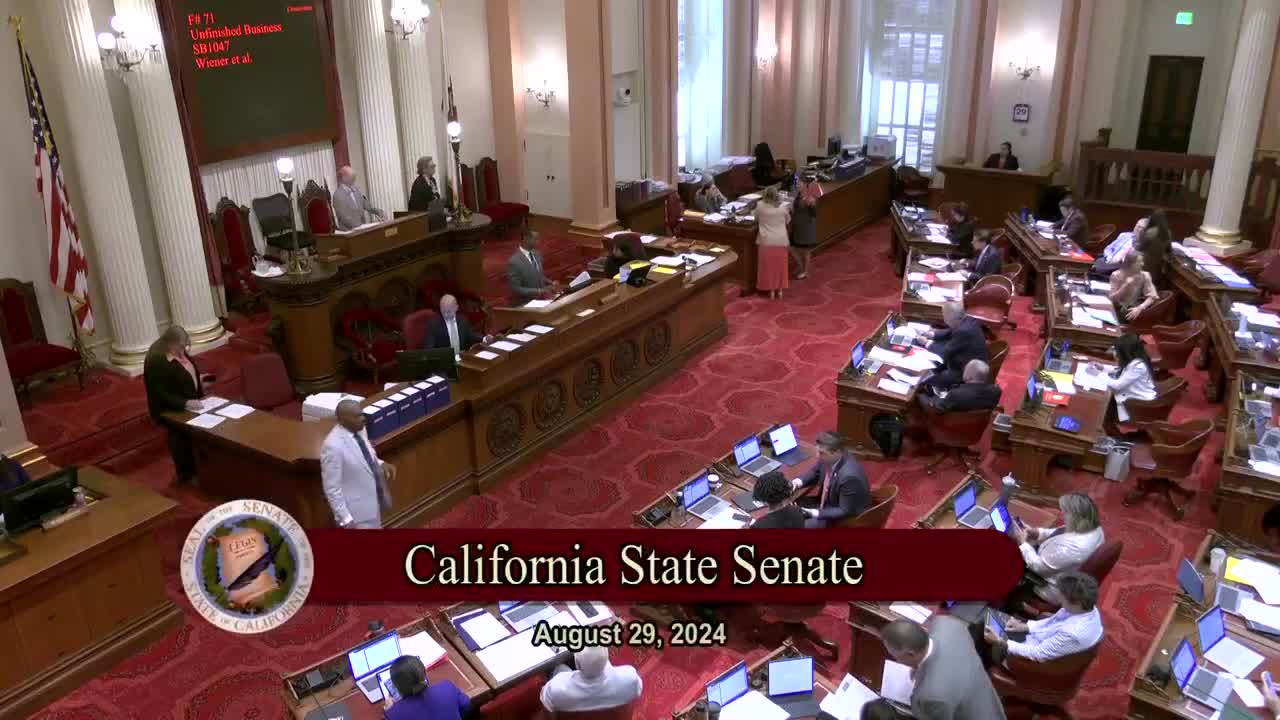 2MIN
Senate Floor
 2MIN
Assembly Floor
 1MIN
Assembly Floor
 45SEC
Assembly Floor
 14MIN
Assembly Standing Committee on Judiciary
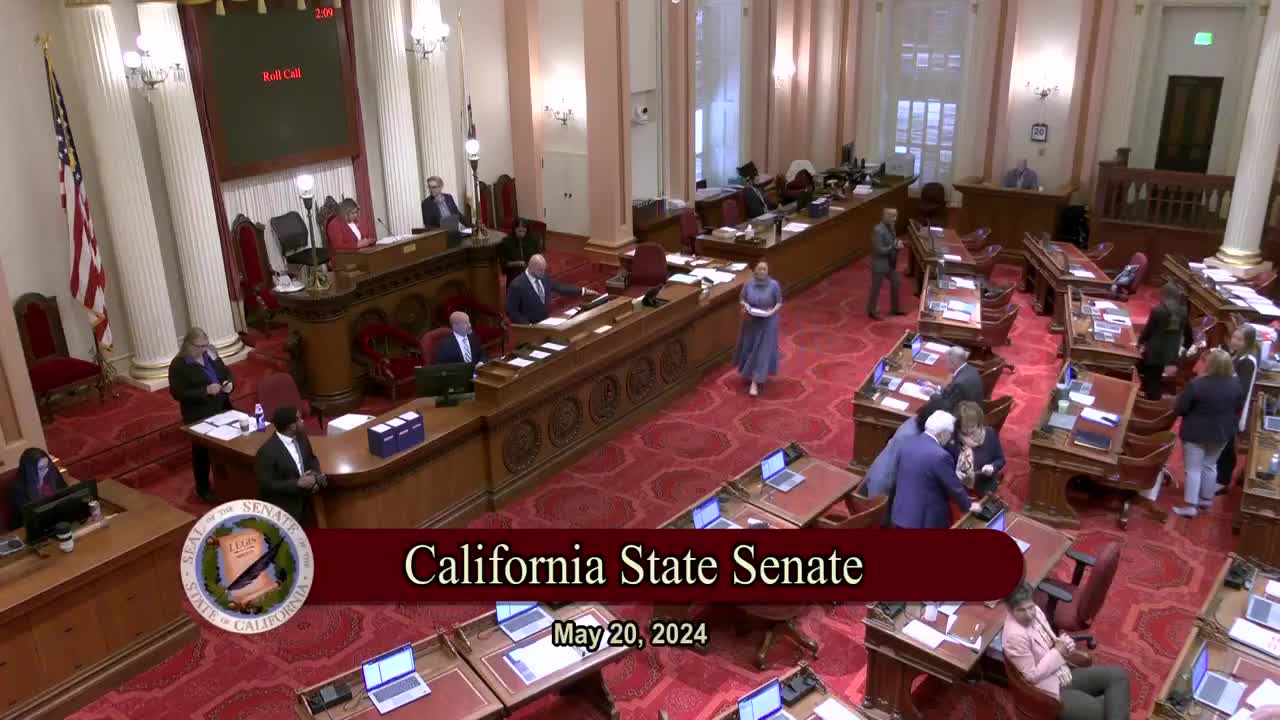 3MIN
Senate Floor
 12MIN
Senate Standing Committee on Judiciary
Bill Author