SB 1395: Shelter crisis: Low Barrier Navigation Center: use by right: building standards.
- Session Year: 2023-2024
- House: Senate
- Latest Version Date: 2024-09-19
Current Status:
Passed
(2024-09-19: Chaptered by Secretary of State. Chapter 297, Statutes of 2024.)
Introduced
In Committee
First Chamber
In Committee
Second Chamber
Enacted
(1)Existing law authorizes a governing body of a political subdivision, as those terms are defined, to declare a shelter crisis if the governing body makes a specified finding. Upon declaration of a shelter crisis, existing law, among other things, suspends certain state and local laws, regulations, and ordinances to the extent that strict compliance would prevent, hinder, or delay the mitigation of the effects of the shelter crisis and allows a city, county, or city and county, in lieu of compliance, to adopt by ordinance reasonable local standards and procedures for the design, site development, and operation of homeless shelters and the structures and facilities therein. Existing law, among other things, exempts from the California Environmental Quality Act specified actions by a state agency or a city, county, or city and county to lease, convey, or encumber land owned by a city, county, or city and county, or to facilitate the lease, conveyance, or encumbrance of land owned by the local government for, or to provide financial assistance to, a homeless shelter constructed or allowed by these provisions. Existing law repeals these provisions on January 1, 2026.
This bill would expand the exemption from the California Environmental Quality Act described above to include action taken by a state agency or a city, county, or city and county, to approve a contract to provide services for people experiencing homelessness to a homeless shelter constructed pursuant to, or authorized by, these provisions, as specified. This bill would extend the repeal date of these provisions to January 1, 2036. The bill would make other nonsubstantive, conforming changes.
(2)Existing law, the California Environmental Quality Act (CEQA), requires a lead agency, as defined, to prepare, or cause to be prepared, and certify the completion of an environmental impact report on a project that it proposes to carry out or approve that may have a significant effect on the environment or to adopt a negative declaration if it finds that the project will not have that effect. CEQA also requires a lead agency to prepare a mitigated negative declaration for a project that may have a significant effect on the environment if revisions in the project would avoid or mitigate that effect and there is no substantial evidence that the project, as revised, would have a significant effect on the environment.
Existing law, the Planning and Zoning Law, requires that a Low Barrier Navigation Center development be a use by right in areas zoned for mixed uses and nonresidential zones permitting multifamily uses if it meets prescribed requirements. Existing law provides that the CEQA does not apply to an action taken by a public agency to lease, convey, or encumber land owned by a public entity or to facilitate the lease, conveyance, or encumbrance of land owned by a public agency, or to provide financial assistance to, or otherwise approve, a Low Barrier Navigation Center constructed or allowed by existing law. Existing law defines the term Low Barrier Navigation Center for these purposes to mean a Housing First, low-barrier, service-enriched shelter focused on moving people into permanent housing that provides temporary living facilities while case managers connect individuals experiencing homelessness to income, public benefits, health services, shelter, and housing. Existing law repeals these provisions on January 1, 2027.
This bill would revise the definition of Low Barrier Navigation Center by specifying that a Low Barrier Navigation Center may be non-congregate and relocatable. The bill would also delete the January 1, 2027, repeal date, thereby extending operation of these provisions indefinitely. By indefinitely changing the local permitting process and increasing the duties of local planning officials, this bill would impose a state-mandated local program.
This bill would exempt from CEQA specified activities by local agencies relating to low barrier navigation centers. To the extent this bill would impose additional duties on county clerks, this bill would impose a state-mandated local program.
(3)Existing law requires agencies and departments administering state programs related to homelessness to adopt guidelines and regulations to incorporate core components of Housing First, as defined. Existing law defines state programs for this purpose as any program a California state agency or department funds, implements, or administers for the purpose of providing housing or housing-based services to people experiencing homelessness or at risk of homelessness, except as provided.
This bill would expand the definition of state programs to include programs a California state agency or department funds, implements, or administers for the purpose of providing emergency shelter or interim housing.
(4)The California Constitution requires the state to reimburse local agencies and school districts for certain costs mandated by the state. Statutory provisions establish procedures for making that reimbursement.
This bill would provide that no reimbursement is required by this act for a specified reason.
(1)Existing law authorizes a governing body of a political subdivision, as those terms are defined, to declare a shelter crisis if the governing body makes a specified finding. Upon declaration of a shelter crisis, existing law, among other things, suspends certain state and local laws, regulations, and ordinances to the extent that strict compliance would prevent, hinder, or delay the mitigation of the effects of the shelter crisis and allows a city, county, or city and county, in lieu of compliance, to adopt by ordinance reasonable local standards and procedures for the design, site development, and operation of homeless shelters and the structures and facilities therein. Existing law, among other things, exempts from the California Environmental Quality Act specified actions by a state agency or a city, county, or city and county to lease, convey, or encumber land owned by a city, county, or city and county, or to facilitate the lease, conveyance, or encumbrance of land owned by the local government for, or to provide financial assistance to, a homeless shelter constructed or allowed by these provisions. Existing law repeals these provisions on January 1, 2026.
This bill would expand the exemption from the California Environmental Quality Act described above to include action taken by a state agency or a city, county, or city and county, to approve a contract to provide services for people experiencing homelessness to a homeless shelter constructed pursuant to, or authorized by, these provisions. provisions, as specified. This bill would extend the repeal date of these provisions to January 1, 2036. The bill would make other nonsubstantive, conforming changes.
(2)Existing law, the California Environmental Quality Act (CEQA), requires a lead agency, as defined, to prepare, or cause to be prepared, and certify the completion of an environmental impact report on a project that it proposes to carry out or approve that may have a significant effect on the environment or to adopt a negative declaration if it finds that the project will not have that effect. CEQA also requires a lead agency to prepare a mitigated negative declaration for a project that may have a significant effect on the environment if revisions in the project would avoid or mitigate that effect and there is no substantial evidence that the project, as revised, would have a significant effect on the environment.
Existing law, the Planning and Zoning Law, requires that a Low Barrier Navigation Center development be a use by right in areas zoned for mixed uses and nonresidential zones permitting multifamily uses if it meets prescribed requirements. Existing law provides that the CEQA does not apply to an action taken by a public agency to lease, convey, or encumber land owned by a public entity or to facilitate the lease, conveyance, or encumbrance of land owned by a public agency, or to provide financial assistance to, or otherwise approve, a Low Barrier Navigation Center constructed or allowed by existing law. Existing law defines the term Low Barrier Navigation Center for these purposes to mean a Housing First, low-barrier, service-enriched shelter focused on moving people into permanent housing that provides temporary living facilities while case managers connect individuals experiencing homelessness to income, public benefits, health services, shelter, and housing. Existing law repeals these provisions on January 1, 2027.
This bill would revise the definition of Low Barrier Navigation Center by specifying that a Low Barrier Navigation Center may be non-congregate and relocatable. The bill would also delete the January 1, 2027, repeal date, thereby extending operation of these provisions indefinitely. By indefinitely changing the local permitting process and increasing the duties of local planning officials, this bill would impose a state-mandated local program.
This bill would exempt from CEQA specified activities by local agencies relating to low barrier navigation centers. To the extent this bill would impose additional duties on county clerks, this bill would impose a state-mandated local program.
(3)Existing law requires agencies and departments administering state programs related to homelessness to adopt guidelines and regulations to incorporate core components of Housing First, as defined. Existing law defines state programs for this purpose as any program a California state agency or department funds, implements, or administers for the purpose of providing housing or housing-based services to people experiencing homelessness or at risk of homelessness, except as provided.
This bill would expand the definition of state programs to include programs a California state agency or department funds, implements, or administers for the purpose of providing emergency shelter or interim housing.
(4)The California Constitution requires the state to reimburse local agencies and school districts for certain costs mandated by the state. Statutory provisions establish procedures for making that reimbursement.
This bill would provide that no reimbursement is required by this act for a specified reason.
(1)Existing law authorizes a governing body of a political subdivision, as those terms are defined, to declare a shelter crisis if the governing body makes a specified finding. Upon declaration of a shelter crisis, existing law, among other things, suspends certain state and local laws, regulations, and ordinances to the extent that strict compliance would prevent, hinder, or delay the mitigation of the effects of the shelter crisis and allows a city, county, or city and county, in lieu of compliance, to adopt by ordinance reasonable local standards and procedures for the design, site development, and operation of homeless shelters and the structures and facilities therein. Existing law, among other things, exempts from the California Environmental Quality Act specified actions by a state agency or a city, county, or city and county to lease, convey, or encumber land owned by a city, county, or city and county, or to facilitate the lease, conveyance, or encumbrance of land owned by the local government for, or to provide financial assistance to, a homeless shelter constructed or allowed by these provisions. Existing law repeals these provisions on January 1, 2026.
This bill would expand the exemption from the California Environmental Quality Act described above to include action taken by a state agency or a city, county, or city and county, to approve a contract to provide services for people experiencing homelessness to a homeless shelter constructed pursuant to, or authorized by, these provisions. This bill would extend the repeal date of these provisions to January 1, 2036. The bill would make other nonsubstantive, conforming changes.
(2)Existing law, the California Environmental Quality Act (CEQA), requires a lead agency, as defined, to prepare, or cause to be prepared, and certify the completion of an environmental impact report on a project that it proposes to carry out or approve that may have a significant effect on the environment or to adopt a negative declaration if it finds that the project will not have that effect. CEQA also requires a lead agency to prepare a mitigated negative declaration for a project that may have a significant effect on the environment if revisions in the project would avoid or mitigate that effect and there is no substantial evidence that the project, as revised, would have a significant effect on the environment.
Existing law, the Planning and Zoning Law, requires that a Low Barrier Navigation Center development be a use by right in areas zoned for mixed uses and nonresidential zones permitting multifamily uses if it meets prescribed requirements. Existing law provides that the CEQA does not apply to an action taken by a public agency to lease, convey, or encumber land owned by a public entity or to facilitate the lease, conveyance, or encumbrance of land owned by a public agency, or to provide financial assistance to, or otherwise approve, a Low Barrier Navigation Center constructed or allowed by existing law. Existing law defines the term Low Barrier Navigation Center for these purposes to mean a Housing First, low-barrier, service-enriched shelter focused on moving people into permanent housing that provides temporary living facilities while case managers connect individuals experiencing homelessness to income, public benefits, health services, shelter, and housing. Existing law repeals these provisions on January 1, 2027.
This bill would revise the definition of Low Barrier Navigation Center by specifying that a Low Barrier Navigation Center may be non-congregate and relocatable. The bill would also delete the January 1, 2027, repeal date, thereby extending operation of these provisions indefinitely. By indefinitely changing the local permitting process and increasing the duties of local planning officials, this bill would impose a state-mandated local program.
This bill would exempt from CEQA specified activities by local agencies relating to low barrier navigation centers. To the extent this bill would impose additional duties on county clerks, this bill would impose a state-mandated local program.
(3)Existing law requires agencies and departments administering state programs related to homelessness to adopt guidelines and regulations to incorporate core components of Housing First, as defined. Existing law defines state programs for this purpose as any program a California state agency or department funds, implements, or administers for the purpose of providing housing or housing-based services to people experiencing homelessness or at risk of homelessness, except as provided.
This bill would expand the definition of state programs to include programs a California state agency or department funds, implements, or administers for the purpose of providing emergency shelter or interim housing.
(4)The California Constitution requires the state to reimburse local agencies and school districts for certain costs mandated by the state. Statutory provisions establish procedures for making that reimbursement.
This bill would provide that no reimbursement is required by this act for a specified reason.
(a)Notwithstanding any other provision in this chapter, upon a declaration of a shelter crisis by a city, county, or city and county, the following shall apply to the respective city, county, or city and county during the shelter crisis:
(1)Emergency housing may include homeless shelters for the homeless located or constructed on any land owned or leased by a city, county, or city and county, including land acquired with low- and moderate-income housing funds.
(2)(A)(i)The city, county, or city and county, in lieu of compliance with local building approval procedures or state housing, health, habitability, planning and zoning, or safety standards, procedures, and laws, may adopt by ordinance reasonable local standards and procedures for the design, site development, and operation of homeless shelters and the structures and facilities therein, to the extent that it is determined at the time of adoption that strict compliance with state and local standards or laws in existence at the time of that adoption would in any way prevent, hinder, or delay the mitigation of the effects of the shelter crisis. For a jurisdiction that adopts an ordinance establishing reasonable local standards, those standards shall, at a minimum, meet the standards provided in the 2019 California Residential Code Appendix X, and California Building Code Appendix O, and any future standards adopted by the Department of Housing and Community Development related to emergency housing or emergency housing facilities, unless the city, county, or city and county adopts findings stating why the standards cannot be met and stating how the standards in the ordinance protect health and safety. Upon the adoption of an ordinance, the city, county, or city and county shall file a copy of the adopted ordinance, and any associated findings, with the department.
(ii)During the shelter crisis, except as provided in this section, provisions of any housing, health, habitability, planning and zoning, or safety standards, procedures, or laws shall be suspended for homeless shelters, provided that the city, county, or city and county has adopted health and safety standards and procedures for homeless shelters consistent with ensuring minimal public health and safety and those standards are complied with. Landlord tenant laws codified in Sections 1941 to 1942.5, inclusive, of the Civil Code providing a cause of action for habitability or tenantability shall be suspended for homeless shelters, provided that the city, county, or city and county has adopted health and safety standards for homeless shelters and those standards are complied with. During the shelter crisis, the local and state law requirements for homeless shelters to be consistent with the local land use plans, including the general plan, shall be suspended.
(B)This section applies only to a public facility or homeless shelters reserved entirely for the homeless pursuant to this chapter.
(3)Homeless shelters constructed or allowed under this chapter shall not be subject to the Special Occupancy Parks Act (Part 2.3 (commencing with Section 18860) of Division 13 of the Health and Safety Code), the Mobilehome Parks Act (Part 2.1 (commencing with Section 18200) of Division 13 of the Health and Safety Code), the Mobilehome Residency Law (Chapter 2.5 (commencing with Section 798) of Title 2 of Part 2 of Division 2 of the Civil Code), or the Recreational Vehicle Park Occupancy Law (Chapter 2.6 (commencing with Section 799.20) of Title 2 of Part 2 of Division 2 of the Civil Code), except that disposition of any vehicle or its contents abandoned by its owner shall be performed pursuant to Chapter 5 (commencing with Section 1980) of Title 5 of Part 4 of Division 3 of the Civil Code.
(4)The California Environmental Quality Act (Division 13 (commencing with Section 21000) of the Public Resources Code) shall not apply to any of the following actions taken by a state agency or a city, county, or city and county:
(A)To lease, convey, or encumber land owned by a city, county, or city and county, or to facilitate the lease, conveyance, or encumbrance of land owned by the local government for a homeless shelter constructed pursuant to, or authorized by, this section.
(B)To provide financial assistance to a homeless shelter constructed pursuant to, or authorized by, this section.
(C)To approve a contract to provide services for people experiencing homelessness to a homeless shelter constructed pursuant to, or authorized by, this section. These services may include, but are not limited to, case management, resource navigation, security services, residential services, and counseling services.
(5)(A)On or before July 1, 2019, the Cities of Berkeley, Emeryville, Los Angeles, Oakland, and San Diego, the County of Santa Clara, and the City and County of San Francisco shall develop a plan to address the shelter crisis, including, but not limited to, the development of homeless shelters and permanent supportive housing, as well as onsite supportive services. The city, county, or city and county shall make the plan publicly available.
(B)In the case of a shelter crisis declared by the County of Alameda, a city located within the County of Alameda, the County of Orange, a city located within the County of Orange, or the City of San Jose, the county or the city, as applicable, shall develop the plan described in subparagraph (A) on or before July 1, 2020, and shall include in the plan required by this subparagraph a plan to transition residents from homeless shelters to permanent housing.
(C)In the case of a shelter crisis declared by any other county or city not described in subparagraph (A) or (B) on or before January 1, 2021, the county or the city, as applicable, shall develop the plan described in subparagraph (A) on or before July 1, 2021, and shall include in the plan required by this subparagraph a plan to transition residents from homeless shelters to permanent housing.
(D)In the case of a shelter crisis declared by any other county or city not described in subparagraph (A) or (B) after January 1, 2021, the county or the city, as applicable, shall develop the plan described in subparagraph (A) on or before July 1 of the year following the declaration of the shelter crisis, and shall include in the plan required by this subparagraph a plan to transition residents from homeless shelters to permanent housing.
(6)If the city, county, or city and county has declared a shelter crisis, the city, county, or city and county shall report, by January 1 of each year, all of the following to the Senate Committee on Housing and the Assembly Committee on Housing and Community Development:
(A)The total number of residents in homeless shelters within the city, county, or city and county.
(B)The total number of residents who have moved from a homeless shelter into permanent supportive housing within the city, county, or city and county.
(C)The estimated number of permanent supportive housing units.
(D)The number of residents who have exited the system and are no longer in need of a homeless shelter or permanent supportive housing within the city, county, or city and county.
(E)The number and bed capacity of new homeless shelters built pursuant to this section within the city, county, or city and county. The information regarding the bed capacity shall be included in reports due by January 1, 2022, and by January 1 of each year thereafter. Bed capacity shall not include the parking vehicle capacity of a homeless shelter on a parking lot owned or leased by a city, county, or city and county specifically identified as one allowed for safe parking by homeless and unstably housed individuals.
(F)New actions the city, county, or city and county is taking under the declared shelter crisis to better serve the homeless population and to reduce the number of people experiencing homelessness.
(G)The ordinance and any associated findings adopted by the city, county, or city and county pursuant to paragraph (2).
(b)A declaration of a shelter crisis by a city, county, or city and county and the provisions in this section that are or may be utilized by a city, county, or city and county, including an ordinance adopted by a city, county, or city and county pursuant to clause (i) of subparagraph (A) of paragraph (2) of subdivision (a), shall apply to any land owned or leased by an agency or entity created pursuant to the Joint Exercise of Powers Act (Chapter 5 (commencing with Section 6500) of Division 7 of Title 1 of the Government Code) if the city, county, or city and county that declared a shelter crisis is one of the parties to the agreement creating the entity or agency and the real property owned or leased by the agency or entity is located within the jurisdiction of the city, county, or city and county that declared the shelter crisis.
(c)For purposes of this section, the following terms have the following meanings:
(1)Homeless shelter means a facility with overnight sleeping accommodations, the primary purpose of which is to provide temporary shelter for the homeless that is not in existence after the declared shelter crisis. A temporary homeless shelter community may include supportive and self-sufficiency development services. A homeless shelter shall include a parking lot owned or leased by a city, county, or city and county specifically identified as one allowed for safe parking by homeless and unstably housed individuals.
(2)Permanent supportive housing means housing for people who are homeless, with no limit on length of stay, and that is linked to onsite or offsite services that assist the supportive housing resident in retaining the housing, improving the persons health status, and maximizing the persons ability to live and, when possible, work in the community.
(d)This section shall remain in effect only until January 1, 2036, and as of that date is repealed.
SEC. 2.Section 65660 of the Government Code is amended to read:65660.For purposes of this article:
(a)Low Barrier Navigation Center means a Housing First, low-barrier, service-enriched shelter focused on moving people into permanent housing that provides temporary living facilities while case managers connect individuals experiencing homelessness to income, public benefits, health services, shelter, and housing. A Low Barrier Navigation Center may be non-congregate and relocatable. Low Barrier means best practices to reduce barriers to entry, and may include, but is not limited to, the following:
(1)The presence of partners if it is not a population-specific site, such as for survivors of domestic violence or sexual assault, women, or youth.
(2)Pets.
(3)The storage of possessions.
(4)Privacy, such as partitions around beds in a dormitory setting or in larger rooms containing more than two beds, or private rooms.
(b)Use by right has the meaning defined in subdivision (i) of Section 65583.2. Division 13 (commencing with Section 21000) of the Public Resources Code shall not apply to actions taken by a public agency to lease, convey, or encumber land owned by a public agency, or to facilitate the lease, conveyance, or encumbrance of land owned by a public agency, or to provide financial assistance to, or otherwise approve, a Low Barrier Navigation Center constructed or allowed by this section.
SEC. 3.Section 65668 of the Government Code is repealed.SEC. 4.Section 21080.27.5 is added to the Public Resources Code, immediately following Section 21080.27, to read:21080.27.5.(a)This division does not apply to any of the following activities by a local agency:
(1)An action to lease or facilitate the lease of land owned by the local agency for a low barrier navigation center.
(2)An action associated with a lease for a low barrier navigation center pursuant to subdivision (a).
(3)An action to provide financial assistance to a low barrier navigation center.
(4)An action to construct or operate a low barrier navigation center.
(5)An action to enter into a contract to provide services to a low barrier navigation center.
(b)For purposes of this section, low barrier navigation center has the same definition as in Section 65660 of the Government Code.
SEC. 5.Section 8255 of the Welfare and Institutions Code is amended to read:8255.For purposes of this chapter:
(a)Council means the California Interagency Council on Homelessness, formerly known as the Homeless Coordinating and Financing Council established pursuant to Section 8257.
(b)Core components of Housing First means all of the following:
(1)Tenant screening and selection practices that promote accepting applicants regardless of their sobriety or use of substances, completion of treatment, or participation in services.
(2)Applicants are not rejected on the basis of poor credit or financial history, poor or lack of rental history, criminal convictions unrelated to tenancy, or behaviors that indicate a lack of housing readiness.
(3)Acceptance of referrals directly from shelters, street outreach, drop-in centers, and other parts of crisis response systems frequented by vulnerable people experiencing homelessness.
(4)Supportive services that emphasize engagement and problem solving over therapeutic goals and service plans that are highly tenant-driven without predetermined goals.
(5)Participation in services or program compliance is not a condition of permanent housing tenancy.
(6)Tenants have a lease and all the rights and responsibilities of tenancy, as outlined in Californias Civil, Health and Safety, and Government codes.
(7)The use of alcohol or drugs in and of itself, without other lease violations, is not a reason for eviction.
(8)In communities with coordinated assessment and entry systems, incentives for funding promote tenant selection plans for supportive housing that prioritize eligible tenants based on criteria other than first-come-first-serve, including, but not limited to, the duration or chronicity of homelessness, vulnerability to early mortality, or high utilization of crisis services. Prioritization may include triage tools, developed through local data, to identify high-cost, high-need homeless residents.
(9)Case managers and service coordinators who are trained in and actively employ evidence-based practices for client engagement, including, but not limited to, motivational interviewing and client-centered counseling.
(10)Services are informed by a harm-reduction philosophy that recognizes drug and alcohol use and addiction as a part of tenants lives, where tenants are engaged in nonjudgmental communication regarding drug and alcohol use, and where tenants are offered education regarding how to avoid risky behaviors and engage in safer practices, as well as connected to evidence-based treatment if the tenant so chooses.
(11)The project and specific apartment may include special physical features that accommodate disabilities, reduce harm, and promote health and community and independence among tenants.
(c)Homeless has the same definition as that term is defined in Section 91.5 of Title 24 of the Code of Federal Regulations.
(d)(1)Housing First means the evidence-based model that uses housing as a tool, rather than a reward, for recovery and that centers on providing or connecting homeless people to permanent housing as quickly as possible. Housing First providers offer services as needed and requested on a voluntary basis and that do not make housing contingent on participation in services.
(2)(A)Housing First includes time-limited rental or services assistance, so long as the housing and service provider assists the recipient in accessing permanent housing and in securing longer term rental assistance, income assistance, or employment.
(B)For time-limited, supportive services programs serving homeless youth, programs should use a positive youth development model and be culturally competent to serve unaccompanied youth under 25 years of age. Providers should work with the youth to engage in family reunification efforts, where appropriate and when in the best interest of the youth. In the event of an eviction, programs shall make every effort, which shall be documented, to link tenants to other stable, safe, decent housing options. Exit to homelessness should be extremely rare, and only after a tenant refuses assistance with housing search, location, and move-in assistance.
(e)State programs means any programs a California state agency or department funds, implements, or administers for the purpose of providing emergency shelter, interim housing, housing, or housing-based services to people experiencing homelessness or at risk of homelessness, with the exception of federally funded programs with requirements inconsistent with this chapter.
SEC. 6.No reimbursement is required by this act pursuant to Section 6 of Article XIIIB of the California Constitution because a local agency or school district has the authority to levy service charges, fees, or assessments sufficient to pay for the program or level of service mandated by this act, within the meaning of Section 17556 of the Government Code.
REVISIONS: HeadingLine 2.(a)Notwithstanding any other provision in this chapter, upon a declaration of a shelter crisis by a city, county, or city and county, the following shall apply to the respective city, county, or city and county during the shelter crisis:
(1)Emergency housing may include homeless shelters for the homeless located or constructed on any land owned or leased by a city, county, or city and county, including land acquired with low- and moderate-income housing funds.
(2)(A)(i)The city, county, or city and county, in lieu of compliance with local building approval procedures or state housing, health, habitability, planning and zoning, or safety standards, procedures, and laws, may adopt by ordinance reasonable local standards and procedures for the design, site development, and operation of homeless shelters and the structures and facilities therein, to the extent that it is determined at the time of adoption that strict compliance with state and local standards or laws in existence at the time of that adoption would in any way prevent, hinder, or delay the mitigation of the effects of the shelter crisis. For a jurisdiction that adopts an ordinance establishing reasonable local standards, those standards shall, at a minimum, meet the standards provided in the 2019 California Residential Code Appendix X, and California Building Code Appendix O, and any future standards adopted by the Department of Housing and Community Development related to emergency housing or emergency housing facilities, unless the city, county, or city and county adopts findings stating why the standards cannot be met and stating how the standards in the ordinance protect health and safety. Upon the adoption of an ordinance, the city, county, or city and county shall file a copy of the adopted ordinance, and any associated findings, with the department.
(ii)During the shelter crisis, except as provided in this section, provisions of any housing, health, habitability, planning and zoning, or safety standards, procedures, or laws shall be suspended for homeless shelters, provided that the city, county, or city and county has adopted health and safety standards and procedures for homeless shelters consistent with ensuring minimal public health and safety and those standards are complied with. Landlord tenant laws codified in Sections 1941 to 1942.5, inclusive, of the Civil Code providing a cause of action for habitability or tenantability shall be suspended for homeless shelters, provided that the city, county, or city and county has adopted health and safety standards for homeless shelters and those standards are complied with. During the shelter crisis, the local and state law requirements for homeless shelters to be consistent with the local land use plans, including the general plan, shall be suspended.
(B)This section applies only to a public facility or homeless shelters reserved entirely for the homeless pursuant to this chapter.
(3)Homeless shelters constructed or allowed under this chapter shall not be subject to the Special Occupancy Parks Act (Part 2.3 (commencing with Section 18860) of Division 13 of the Health and Safety Code), the Mobilehome Parks Act (Part 2.1 (commencing with Section 18200) of Division 13 of the Health and Safety Code), the Mobilehome Residency Law (Chapter 2.5 (commencing with Section 798) of Title 2 of Part 2 of Division 2 of the Civil Code), or the Recreational Vehicle Park Occupancy Law (Chapter 2.6 (commencing with Section 799.20) of Title 2 of Part 2 of Division 2 of the Civil Code), except that disposition of any vehicle or its contents abandoned by its owner shall be performed pursuant to Chapter 5 (commencing with Section 1980) of Title 5 of Part 4 of Division 3 of the Civil Code.
(4)The California Environmental Quality Act (Division 13 (commencing with Section 21000) of the Public Resources Code) shall not apply to any of the following actions taken by a state agency or a city, county, or city and county, to lease, convey, or encumber land owned by a city, county, or city and county, or to facilitate the lease, conveyance, or encumbrance of land owned by the local government for, or to provide financial assistance to, a homeless shelter constructed or allowed by this section. county:
(A)To lease, convey, or encumber land owned by a city, county, or city and county, or to facilitate the lease, conveyance, or encumbrance of land owned by the local government for a homeless shelter constructed pursuant to, or authorized by, this section.
(B)To provide financial assistance to a homeless shelter constructed pursuant to, or authorized by, this section.
(C)To approve a contract to provide services for people experiencing homelessness to a homeless shelter constructed pursuant to, or authorized by, this section.
(5)(A)On or before July 1, 2019, the Cities of Berkeley, Emeryville, Los Angeles, Oakland, and San Diego, the County of Santa Clara, and the City and County of San Francisco shall develop a plan to address the shelter crisis, including, but not limited to, the development of homeless shelters and permanent supportive housing, as well as onsite supportive services. The city, county, or city and county shall make the plan publicly available.
(B)In the case of a shelter crisis declared by the County of Alameda, a city located within the County of Alameda, the County of Orange, a city located within the County of Orange, or the City of San Jose, the county or the city, as applicable, shall develop the plan described in subparagraph (A) on or before July 1, 2020, and shall include in the plan required by this subparagraph a plan to transition residents from homeless shelters to permanent housing.
(C)In the case of a shelter crisis declared by any other county or city not described in subparagraph (A) or (B) on or before January 1, 2021, the county or the city, as applicable, shall develop the plan described in subparagraph (A) on or before July 1, 2021, and shall include in the plan required by this subparagraph a plan to transition residents from homeless shelters to permanent housing.
(D)In the case of a shelter crisis declared by any other county or city not described in subparagraph (A) or (B) after January 1, 2021, the county or the city, as applicable, shall develop the plan described in subparagraph (A) on or before July 1 of the year following the declaration of the shelter crisis, and shall include in the plan required by this subparagraph a plan to transition residents from homeless shelters to permanent housing.
(6)If the city, county, or city and county has declared a shelter crisis, the city, county, or city and county shall report, by January 1 of each year, all of the following to the Senate Committee on Housing and the Assembly Committee on Housing and Community Development:
(A)The total number of residents in homeless shelters within the city, county, or city and county.
(B)The total number of residents who have moved from a homeless shelter into permanent supportive housing within the city, county, or city and county.
(C)The estimated number of permanent supportive housing units.
(D)The number of residents who have exited the system and are no longer in need of a homeless shelter or permanent supportive housing within the city, county, or city and county.
(E)The number and bed capacity of new homeless shelters built pursuant to this section within the city, county, or city and county. The information regarding the bed capacity shall be included in reports due by January 1, 2022, and by January 1 of each year thereafter. Bed capacity shall not include the parking vehicle capacity of a homeless shelter on a parking lot owned or leased by a city, county, or city and county specifically identified as one allowed for safe parking by homeless and unstably housed individuals.
(F)New actions the city, county, or city and county is taking under the declared shelter crisis to better serve the homeless population and to reduce the number of people experiencing homelessness.
(G)The ordinance and any associated findings adopted by the city, county, or city and county pursuant to paragraph (2).
(b)A declaration of a shelter crisis by a city, county, or city and county and the provisions in this section that are or may be utilized by a city, county, or city and county, including an ordinance adopted by a city, county, or city and county pursuant to clause (i) of subparagraph (A) of paragraph (2) of subdivision (a), shall apply to any land owned or leased by an agency or entity created pursuant to the Joint Exercise of Powers Act (Chapter 5 (commencing with Section 6500) of Division 7 of Title 1 of the Government Code) if the city, county, or city and county that declared a shelter crisis is one of the parties to the agreement creating the entity or agency and the real property owned or leased by the agency or entity is located within the jurisdiction of the city, county, or city and county that declared the shelter crisis.
(c)For purposes of this section, the following terms have the following meanings:
(1)Homeless shelter means a facility with overnight sleeping accommodations, the primary purpose of which is to provide temporary shelter for the homeless that is not in existence after the declared shelter crisis. A temporary homeless shelter community may include supportive and self-sufficiency development services. A homeless shelter shall include a parking lot owned or leased by a city, county, or city and county specifically identified as one allowed for safe parking by homeless and unstably housed individuals.
(2)Permanent supportive housing means housing for people who are homeless, with no limit on length of stay, and that is linked to onsite or offsite services that assist the supportive housing resident in retaining the housing, improving the persons health status, and maximizing the persons ability to live and, when possible, work in the community.
(d)This section shall remain in effect only until January 1, 2026, 2036, and as of that date is repealed.
SEC. 2.Section 65660 of the Government Code is amended to read:65660.For purposes of this article:
(a)Low Barrier Navigation Center means a Housing First, low-barrier, service-enriched shelter focused on moving people into permanent housing that provides temporary living facilities while case managers connect individuals experiencing homelessness to income, public benefits, health services, shelter, and housing. A Low Barrier Navigation Center may be non-congregate and relocatable. Low Barrier means best practices to reduce barriers to entry, and may include, but is not limited to, the following:
(1)The presence of partners if it is not a population-specific site, such as for survivors of domestic violence or sexual assault, women, or youth.
(2)Pets.
(3)The storage of possessions.
(4)Privacy, such as partitions around beds in a dormitory setting or in larger rooms containing more than two beds, or private rooms.
(b)Use by right has the meaning defined in subdivision (i) of Section 65583.2. Division 13 (commencing with Section 21000) of the Public Resources Code shall not apply to actions taken by a public agency to lease, convey, or encumber land owned by a public agency, or to facilitate the lease, conveyance, or encumbrance of land owned by a public agency, or to provide financial assistance to, or otherwise approve, a Low Barrier Navigation Center constructed or allowed by this section.
SEC. 3.Section 65668 of the Government Code is repealed.65668. This article shall remain in effect only until January 1, 2027, and as of that date is repealed.SEC. 4.Section 21080.27.5 is added to the Public Resources Code, immediately following Section 21080.27, to read:21080.27.5.(a)This division does not apply to any of the following activities by a local agency:
(1)An action to lease or facilitate the lease of land owned by the local agency for a low barrier navigation center.
(2)An action associated with a lease for a low barrier navigation center pursuant to subdivision (a).
(3)An action to provide financial assistance to a low barrier navigation center.
(4)An action to construct or operate a low barrier navigation center.
(5)An action to enter into a contract to provide services to a low barrier navigation center.
(b)For purposes of this section, low barrier navigation center has the same definition as in Section 65660 of the Government Code.
SEC. 5.Section 8255 of the Welfare and Institutions Code is amended to read:8255.For purposes of this chapter:
(a)Council means the California Interagency Council on Homelessness, formerly known as the Homeless Coordinating and Financing Council established pursuant to Section 8257.
(b)Core components of Housing First means all of the following:
(1)Tenant screening and selection practices that promote accepting applicants regardless of their sobriety or use of substances, completion of treatment, or participation in services.
(2)Applicants are not rejected on the basis of poor credit or financial history, poor or lack of rental history, criminal convictions unrelated to tenancy, or behaviors that indicate a lack of housing readiness.
(3)Acceptance of referrals directly from shelters, street outreach, drop-in centers, and other parts of crisis response systems frequented by vulnerable people experiencing homelessness.
(4)Supportive services that emphasize engagement and problem solving over therapeutic goals and service plans that are highly tenant-driven without predetermined goals.
(5)Participation in services or program compliance is not a condition of permanent housing tenancy.
(6)Tenants have a lease and all the rights and responsibilities of tenancy, as outlined in Californias Civil, Health and Safety, and Government codes.
(7)The use of alcohol or drugs in and of itself, without other lease violations, is not a reason for eviction.
(8)In communities with coordinated assessment and entry systems, incentives for funding promote tenant selection plans for supportive housing that prioritize eligible tenants based on criteria other than first-come-first-serve, including, but not limited to, the duration or chronicity of homelessness, vulnerability to early mortality, or high utilization of crisis services. Prioritization may include triage tools, developed through local data, to identify high-cost, high-need homeless residents.
(9)Case managers and service coordinators who are trained in and actively employ evidence-based practices for client engagement, including, but not limited to, motivational interviewing and client-centered counseling.
(10)Services are informed by a harm-reduction philosophy that recognizes drug and alcohol use and addiction as a part of tenants lives, where tenants are engaged in nonjudgmental communication regarding drug and alcohol use, and where tenants are offered education regarding how to avoid risky behaviors and engage in safer practices, as well as connected to evidence-based treatment if the tenant so chooses.
(11)The project and specific apartment may include special physical features that accommodate disabilities, reduce harm, and promote health and community and independence among tenants.
(c)Homeless has the same definition as that term is defined in Section 91.5 of Title 24 of the Code of Federal Regulations.
(d)(1)Housing First means the evidence-based model that uses housing as a tool, rather than a reward, for recovery and that centers on providing or connecting homeless people to permanent housing as quickly as possible. Housing First providers offer services as needed and requested on a voluntary basis and that do not make housing contingent on participation in services.
(2)(A)Housing First includes time-limited rental or services assistance, so long as the housing and service provider assists the recipient in accessing permanent housing and in securing longer term rental assistance, income assistance, or employment.
(B)For time-limited, supportive services programs serving homeless youth, programs should use a positive youth development model and be culturally competent to serve unaccompanied youth under 25 years of age. Providers should work with the youth to engage in family reunification efforts, where appropriate and when in the best interest of the youth. In the event of an eviction, programs shall make every effort, which shall be documented, to link tenants to other stable, safe, decent housing options. Exit to homelessness should be extremely rare, and only after a tenant refuses assistance with housing search, location, and move-in assistance.
(e)State programs means any programs a California state agency or department funds, implements, or administers for the purpose of providing housing emergency shelter, interim housing, housing, or housing-based services to people experiencing homelessness or at risk of homelessness, with the exception of federally funded programs with requirements inconsistent with this chapter.
SEC. 6.No reimbursement is required by this act pursuant to Section 6 of Article XIIIB of the California Constitution because a local agency or school district has the authority to levy service charges, fees, or assessments sufficient to pay for the program or level of service mandated by this act, within the meaning of Section 17556 of the Government Code.
|
Date
|
Status
|
|---|---|
| Sep 19, 2024 | Chaptered by Secretary of State. Chapter 297, Statutes of 2024. |
| Sep 19, 2024 | Approved by the Governor. |
| Aug 23, 2024 | Enrolled and presented to the Governor at 2 p.m. |
| Aug 20, 2024 | In Senate. Ordered to engrossing and enrolling. |
| Aug 19, 2024 | Read third time. Passed. (Ayes 74. Noes 0. Page 6376.) Ordered to the Senate. |
| Aug 5, 2024 | Ordered to third reading. |
| Aug 5, 2024 | From consent calendar on motion of Assembly Member Hart. |
| Jul 3, 2024 | Read second time. Ordered to consent calendar. |
| Jul 2, 2024 | From committee: Do pass. Ordered to consent calendar. (Ayes 15. Noes 0.) (July 2). |
| Jun 25, 2024 | From committee: Do pass and re-refer to Com. on APPR. with recommendation: To consent calendar. (Ayes 10. Noes 0.) (June 24). Re-referred to Com. on APPR. |
| Jun 12, 2024 | From committee: Do pass and re-refer to Com. on NAT. RES. (Ayes 9. Noes 0.) (June 12). Re-referred to Com. on NAT. RES. |
| Jun 12, 2024 | Coauthors revised. |
| Jun 3, 2024 | Referred to Coms. on H. & C.D. and NAT. RES. |
| May 13, 2024 | In Assembly. Read first time. Held at Desk. |
| May 13, 2024 | Read third time. Passed. (Ayes 36. Noes 0. Page 3894.) Ordered to the Assembly. |
| Apr 30, 2024 | Read second time. Ordered to third reading. |
| Apr 29, 2024 | From committee: Be ordered to second reading pursuant to Senate Rule 28.8. |
| Apr 23, 2024 | Set for hearing April 29. |
| Apr 18, 2024 | Read second time and amended. Re-referred to Com. on APPR. |
| Apr 17, 2024 | From committee: Do pass as amended and re-refer to Com. on APPR. (Ayes 7. Noes 0. Page 3661.) (April 17). |
| Apr 5, 2024 | Set for hearing April 17. |
| Mar 20, 2024 | From committee: Do pass and re-refer to Com. on E.Q. (Ayes 9. Noes 0. Page 3350.) (March 19). Re-referred to Com. on E.Q. |
| Mar 6, 2024 | Set for hearing March 19. |
| Feb 29, 2024 | Referred to Coms. on HOUSING and E.Q. |
| Feb 20, 2024 | From printer. May be acted upon on or after March 18. |
| Feb 16, 2024 | Introduced. Read first time. To Com. on RLS. for assignment. To print. |
|
Date
|
Description
|
Location
|
Votes
|
|
|---|---|---|---|---|
| Aug 19, 2024 | SB 1395 Becker Senate Third Reading By Hart | Assembly Floor |
Passed |
|
| Jul 2, 2024 | Do pass. To Consent Calendar. | Assembly Standing Committee on Appropriations |
Passed |
|
| Jun 24, 2024 | Do pass and be re-referred to the Committee on [Appropriations] with recommendation: To Consent Calendar | Assembly Standing Committee on Natural Resources |
Passed |
|
| Jun 12, 2024 | Do pass and be re-referred to the Committee on [Natural Resources] | Assembly Standing Committee on Housing and Community Development |
Passed |
|
| May 13, 2024 | Senate 3rd Reading SB1395 Becker | Senate Floor |
Passed |
|
| Apr 17, 2024 | Do pass as amended, but first amend, and re-refer to the Committee on [Appropriations] | Senate Standing Committee on Environmental Quality |
Passed |
|
| Mar 19, 2024 | Do pass, but first be re-referred to the Committee on [Environmental Quality] | Senate Standing Committee on Housing |
Passed |
This list shows positions taken on this bill by organizations on the date displayed, which is linked to the original source.
Positions by individuals are not included.
|
Organization
|
Position
|
Date
|
|---|---|---|
| Bay Area Council | ** Support | |
| Boss Cubez | ** Support | |
| California Apartment Association | ** Support | |
| California community builders | ** Support | |
| California Travel Association | ** Support | |
| Catalyst Housing Group | ** Support | |
| City of Alameda | ** Support | |
| City of Goleta | ** Support | |
| Community Solutions | ** Support | |
| Dignitymoves | ** Support | |
| East Bay YIMBY | ** Support | |
| Five Keys | ** Support | |
| Gensler | ** Support | |
| Grow the Richmond | ** Support | |
| Homefirst Services of Santa Clara County | ** Support | |
| Housing Action Coalition | ** Support | |
| Housing California | ** Support | |
| How to ADU | ** Support | |
| LeadingAge California | ** Support | |
| Mackenzie | ** Support | |
| Mayor London Breed, City and County of San Francisco | ** Support | |
| Merewether Family Trust | ** Support | |
| MidPen Housing Corporation | ** Support | |
| Mountain View YIMBY | ** Support | |
| Napa-Solano for Everyone | ** Support | |
| North Bay Leadership Council | ** Support | |
| Northern Neighbors | ** Support | |
| Peninsula for Everyone | ** Support | |
| People For Housing Orange County | ** Support | |
| PRC Baker Places | ** Support | |
| Progress Noe Valley | ** Support | |
| San Francisco International Airport | ** Support | |
| San Francisco Yimby | ** Support | |
| San Luis Obispo Yimby | ** Support | |
| San Mateo County Economic Development Association | ** Support | |
| Santa Clara Valley Water District | ** Support | |
| Santa Cruz Yimby | ** Support | |
| Santa Rosa Yimby | ** Support | |
| South Bay Yimby | ** Support | |
| Southside Forward | ** Support | |
| SPUR | ** Support | |
| Streets for People | ** Support | |
| Synbiobeta | ** Support | |
| The Sobrato Organization | ** Support | |
| Tim Lewis Communities | ** Support | |
| Tmg Partners | ** Support | |
| united way bay area | ** Support | |
| Urban Environmentalists | ** Support | |
| Ventura County YIMBY | ** Support | |
| Yimby Action | ** Support |
SENATE THIRD READING
STR Bill Id:SB 1395
Author:(Becker)
As Amended Ver:April 18, 2024
Majority vote
SUMMARY
Provides additional exemptions from the California Environmental Quality Act (CEQA) to certain actions regarding homeless shelters, and makes changes to several laws governing the creation of certain types of homeless shelters.
Major Provisions
- Extends the sunset date of the Shelter Crisis Act (SCA) from January 1, 2026 to January 1, 2036.
- Adds the following CEQA exemption to the SCA's existing CEQA exemptions for certain actions taken to facilitate homeless shelters: actions taken by a state agency, city, county, or city and county to approve a contract to provide services for people experiencing homelessness to a homeless shelter constructed pursuant to or authorized by the SCA. Allows the services to include, but not be limited to, case management, resource navigation, security services, residential services, and counseling services.
- Deletes the sunset date on existing law providing streamlined, ministerial approval to Low Barrier Navigation Centers (LBNCs), thereby extending the LBNC law indefinitely.
- Revises the definition of LBNC to clarify that a LBNC may be non-congregate and relocatable.
- Provides that CEQA does not apply to any of the following activities by a local agency:
- An action to lease or facilitate the lease of land owned by the local agency for a LBNC;
- An action associated with a lease for a LBNC;
- An action to provide financial assistance to a LBNC;
- An action to construct or operate a LBNC; or
- An action to enter into a contract to provide services to a LBNC.
- Expands the definition of "state programs" in existing law related to the California Interagency Council on Homelessness (Cal-ICH), requirements for state programs to comply with Housing First, and governance and data collection of state homelessness programs, to include any program a California state agency or department funds, implements, or administers for the purpose of providing emergency shelter or interim housing to people experiencing homelessness or at risk of homelessness.
COMMENTS
Homelessness in California: Based on the 2023 point in time count, California has the largest homeless population in the nation with 181,399 people experiencing homelessness on any given night. Many of those people (113,660) are unsheltered, meaning they are living outdoors and not in temporary shelters. Nearly half of all unsheltered people in the country were in California during the 2023 count. The homelessness crisis is driven in significant part by the lack of affordable rental housing for lower income people. In the current market, 2.2 million extremely low-income and very low-income renter households are competing for 664,000 affordable rental units. Of the six million renter households in the state, 1.7 million are paying more than 50% of their income toward rent. The National Low Income Housing Coalition estimates that the state needs an additional 1.5 million housing units affordable to very low-income Californians.
Overwhelming evidence shows that the solution to homelessness is providing more habitable, stable, and permanent housing at all income levels, and in particular, more housing affordable to the lowest income earners. While increasing the supply of affordable housing is the priority solution to the homelessness crisis, there is a spectrum of housing solutions that different levels of governments should offer, depending on the specific needs of the individual or family experiencing homelessness. For those living on the streets or in encampments, a shelter can provide short-term, temporary respite. Shelters generally have very low rates of exiting to permanent housing. Interim solutions, such as bridge housing communities and LBNCs, provide a spectrum of housing and healthcare services, particularly to marginalized communities and those with pets, and may be necessary while a more permanent solution (such as rental assistance or the construction of a new unit) can be achieved.
Shelter Crisis Act: The existing SCA – set to sunset on January 1, 2026 – permits a local jurisdiction to declare a shelter crisis with limited liability to provide emergency housing. The intent of the SCA is to allow local governments to act more nimbly to provide temporary shelter solutions to deal with a local homelessness crisis. Under the SCA, the local jurisdiction may allow homeless persons to occupy designated public facilities for the duration of the crisis. It suspends local housing, health, and safety standards for public facilities to the extent full compliance would hamper mitigation of the effects of the shelter crisis. Locals must simultaneously adopt a plan to address the shelter crisis, including, but not limited to, the development of homeless shelters and permanent supportive housing, as well as onsite supportive services, and provide data to various entities, including the Legislature, on the outcome of that plan.
The SCA contains a narrow CEQA exemption for shelters constructed under the SCA; specifically, it states that CEQA shall not apply to actions taken by a state agency or a local government to lease, convey, or encumber land owned by a local government or to facilitate the lease, conveyance, or encumbrance of land owned by the local government for, or to provide financial assistance to, a homeless shelter constructed or allowed by the SCA.
This bill expands the CEQA exemption for shelters constructed under the SCA to apply to actions to approve a contract to provide services for people experiencing homelessness to a homeless shelter constructed pursuant to the SCA. This bill would also extend the sunset on the SCA for 10 years, from January 1, 2026 to January 1, 2036.
Low Barrier Navigation Centers: Current law authorizes a by-right approval process for LBNCs, which can be located in areas zoned for mixed uses and nonresidential zones that allow for multifamily uses, must be low barrier (allow for the presence of partners, pets, possessions, and privacy), and must offer services to connect people to permanent housing through a services plan. This bill clarifies that LBNCs eligible for by-right approval may be non-congregate and relocatable. Additionally, this bill eliminates the sunset for by-right approval.
This bill also provides similar CEQA exemptions for specific governmental actions related to funding eligible projects, contracting for services, and leasing sites used for LBNCs as for the SCA. These CEQA exemptions are also similar to those provided for 100% affordable and permanent supportive housing developments.
Housing First and Data Reporting for State Programs: This bill also modifies the definition of "state programs" as it relates to current law requirements for state programs to incorporate the core components of Housing First and for programs to report data for program oversight and data collection. The current definition includes state programs that a state agency or department funds, implements, or administers for the purpose of providing housing or housing-based services to people experiencing homelessness or at risk of homelessness. This bill would additionally include in those requirements any state-funded or state-administered programs that provide emergency shelter or interim housing to people experiencing or at risk of homelessness.
According to the Author
"California has fewer housing units affordable and available to households earning below 50 percent of Area Median Income than any other state, the fourth highest rate of homelessness and the highest rate of unsheltered homelessness in the nation. The longer unhoused residents go without shelter, the less likely they'll be able to return to self-sufficiency. As California invests in more permanent housing, more must be done to bring unsheltered people indoors and save lives.
An innovative approach to sheltering people experiencing homelessness has been gaining momentum: non-permanent or relocatable housing communities built on underutilized vacant land. This burgeoning new solution is cost-effective, rapid, scalable, and provides a new tool for local governments to immediately address unsheltered homelessness while permanent housing is under construction.
SB 1395 fills a consequential gap as California moves to end homelessness by empowering local governments who want to build interim housing to do so quickly and cost-effectively. With the development of more interim housing, we can put a roof over the heads of our unhoused neighbors to provide the security, stability, and dignity necessary to get our neighbors back on their feet."
Arguments in Support
According to the California Apartment Association, "Despite concerted efforts to increase housing production, California's budget and land and zoning limitations inhibit sufficient permanent housing construction in the near term. The Legislature has recognized this and consistently moved to address the immediate need to tackle homelessness by passing legislation that exempts LBNC construction from CEQA. LBNCs are cost-effective, rapid, scalable, and provide immediate help to our lack of permanent housing. By cutting the existing red tape of local approvals and CEQA compliance for these interim homeless shelters, SB 1395 would continue to make it easier for local governments to respond to homelessness in their jurisdiction."
Arguments in Opposition
None on file.
FISCAL COMMENTS
According to the Assembly Appropriations Committee:
- Local costs related to indefinitely extending provisions providing for low-barrier navigation centers as a use-by-right would not be subject to state reimbursement because local agencies have general authority to charge and adjust planning and permitting fees to cover administrative expenses related to planning mandates.
- HCD indicates minor and absorbable costs to review local ordinances related to the declaration of a shelter crisis.
VOTES
SENATE FLOOR: 36-0-4
YES: Allen, Alvarado-Gil, Archuleta, Ashby, Becker, Blakespear, Bradford, Caballero, Cortese, Dahle, Dodd, Durazo, Eggman, Glazer, Grove, Hurtado, Jones, Laird, Limón, McGuire, Min, Newman, Nguyen, Niello, Ochoa Bogh, Portantino, Roth, Rubio, Seyarto, Skinner, Smallwood‑Cuevas, Stern, Umberg, Wahab, Wiener, Wilk
ABS, ABST OR NV: Atkins, Gonzalez, Menjivar, Padilla
ASM HOUSING AND COMMUNITY DEVELOPMENT: 9-0-0
YES: Ward, Joe Patterson, Grayson, Kalra, Lee, Quirk-Silva, Reyes, Sanchez, Haney
ASM NATURAL RESOURCES: 10-0-1
YES: Bryan, Flora, Bauer-Kahan, Friedman, Hoover, Kalra, Muratsuchi, Pellerin, Wicks, Wood
ABS, ABST OR NV: Mathis
ASM APPROPRIATIONS: 15-0-0
YES: Wicks, Sanchez, Arambula, Bryan, Calderon, Wendy Carrillo, Dixon, Mike Fong, Grayson, Haney, Hart, Jim Patterson, Pellerin, Ta, Villapudua
UPDATED
VERSION: April 18, 2024
CONSULTANT: Nicole Restmeyer / H. & C.D. / (916) 319-2085 FN: 0003737
Date of Hearing: July 2, 2024
ASSEMBLY COMMITTEE ON APPROPRIATIONS
Buffy Wicks, Chair
SBPCA Bill Id:SB 1395
Author:(Becker) – As Amended Ver:April 18, 2024
Policy Committee: | Housing and Community Development | Vote: | 9 - 0 |
Natural Resources | 10 - 0 | ||
|
|
Urgency: No State Mandated Local Program: Yes Reimbursable: No
SUMMARY:
This bill extends and expands existing California Environmental Quality Act (CEQA) exemptions for projects related to homeless shelters, extends the sunset date for the Shelter Crisis Act (SCA) by 10 years, and permanently extends the streamlined, ministerial (by-right) approval process for Low Barrier Navigation Centers (LBNCs), among other changes.
Specifically, this bill:
- Extends the sunset date of the SCA from January 1, 2026, to January 1, 2036.
- Exempts from CEQA actions taken by a public agency to approve a contract for providing homeless services, including case management, resource navigation, security services, residential services, and counseling services.
- Deletes the January 1, 2027 sunset date providing by-right approval to LBNCs.
- Revises the definition of LBNC to clarify an LBNC may be non-congregate and relocatable.
- Provides that CEQA does not apply to any of the following activities by a local agency:
- An action to lease or facilitate the lease of land owned by the local agency for an LBNC.
- An action associated with a lease for an LBNC.
- An action to provide financial assistance to an LBNC.
- An action to construct, operate, or enter into a contract to provide services to an LBNC.
- Expands the definition of “state programs” in existing law related to core components of Housing First and data reporting, to include any program a California state agency or department funds, implements, or administers to provide emergency shelter or interim housing to people experiencing homelessness or at risk of homelessness.
FISCAL EFFECT:
- Local costs related to indefinitely extending provisions providing for low-barrier navigation centers as a use-by-right would not be subject to state reimbursement because local agencies have general authority to charge and adjust planning and permitting fees to cover administrative expenses related to planning mandates.
- HCD indicates minor and absorbable costs to review local ordinances related to the declaration of a shelter crisis.
COMMENTS:
- Purpose. According to the author:
California has fewer housing units affordable and available to households earning below 50% of Area Median Income than any other state, the fourth highest rate of homelessness and the highest rate of unsheltered homelessness in the nation. The longer unhoused residents go without shelter, the less likely they’ll be able to return to self-sufficiency. As California invests in more permanent housing, more must be done to bring unsheltered people indoors and save lives.
- Background. The SCA allows a city or county to declare a shelter crisis if a significant number of people cannot obtain shelter, threatening their health and safety. State and local regulatory statutes, regulations or ordinances that prescribe standards of housing health and safety are suspended if they would prevent, hinder, or delay mitigating the effects of the shelter crisis. In place of existing standards, a city or county may enact alternative local health and safety standards for the design, site development, and operation of homeless shelters and structures to ensure minimal public health and safety, subject to approval by HCD. These exceptions apply only to additional public facilities opened to people experiencing homelessness during a shelter crisis. The SCA sunsets on January 1, 2026.
The SCA contains a narrow CEQA exemption for shelters constructed under the SCA. This bill expands this CEQA exemption to include actions to approve a contract to provide services for people experiencing homelessness in a project constructed pursuant to the SCA. This bill also extends the sunset on the SCA from January 1, 2026 to January 1, 2036.
Existing law defines an LBNC as a high-quality, low-barrier, service-enriched shelter focused on moving people into permanent housing while connecting them with services. Existing law requires an LBNC be a use by-right in areas zoned for mixed uses and nonresidential zones that allow for multifamily uses if the development meets certain requirements. A navigation center is low barrier if it includes best practices to reduce barriers to entry, such as allowing tenants to have partners, pets, possessions, and privacy.
This bill clarifies that LBNCs eligible for by-right approval may be non-congregate and relocatable. Additionally, this bill eliminates the sunset for by-right approval and provides similar CEQA exemptions for specific governmental actions related to funding eligible projects, contracting for services, and leasing sites used for LBNCs as for the SCA.
- Related legislation. SB 1361 (Blakespear) exempts actions taken by a local agency to approve a contract for providing homeless services, similar to two provisions in this bill. SB 1361 is pending on the Assembly Floor.
Analysis Prepared by: Jennifer Swenson / APPR. / (916) 319-2081
Date of Hearing: June 24, 2024
ASSEMBLY COMMITTEE ON NATURAL RESOURCES
Isaac G. Bryan, Chair
SBPCA Bill Id:SB 1395
Author:(Becker) – As Amended Ver:April 18, 2024
SENATE VOTE: 36-0
SUBJECT: Shelter crisis: Low Barrier Navigation Center: use by right: building standards
SUMMARY: Extends and expands existing California Environmental Quality Act (CEQA) exemptions for projects related to homeless shelters.
EXISTING LAW:
- Requires, pursuant to CEQA, lead agencies with the principal responsibility for carrying out or approving a proposed project to prepare a negative declaration, mitigated negative declaration, or environmental impact report (EIR) for this action, unless the project is exempt from CEQA. (Public Resources Code (PRC) 21000 et seq.)
- Authorizes, pursuant to the Shelter Crisis Act (SCA), the Governor and local governing bodies to declare a shelter crisis. “Declaration of a shelter crisis” is defined as the duly proclaimed existence of a situation in which a significant number of persons are without the ability to obtain shelter, resulting in a threat to their health and safety. The SCA sunsets January 1, 2026. (Government Code (GC) 8698 et seq.)
- Exempts, upon the declaration of a shelter crisis, actions by the state or a local government from CEQA related to:
- Leasing, conveying or encumbering land owned by a city, county, or city and county, or to facilitating the lease, conveyance or encumbrance of land owned by the local government for a homeless shelter constructed pursuant to the SCA; and
- Providing financial assistance to a homeless shelter constructed pursuant to the SCA. (GC 8698.4)
- Requires by-right approval of a low-barrier navigation center (LBNC) if the development meets certain requirements. Defines a navigation center as low barrier if it includes best practices to reduce barriers to entry, such as allowing tenants to have partners, pets, possessions, and privacy. This by-right process sunsets on January 1, 2027. (GC 65662)
- Exempts from CEQA a low barrier navigation center, supportive housing, and transitional housing for youth and young adults within the City of Los Angeles administered by the City of Los Angeles and by other local eligible public agencies. This exemption sunsets January 1, 2025. (PRC 21080.27)
THIS BILL:
- Extends the sunset date of the Shelter Crisis Act (SCA) from January 1, 2026 to January 1, 2036.
- Exempts from CEQA actions taken by a public agency to approve a contract for providing homeless services, including case management, resource navigation, security services, residential services, and counseling services
- Deletes the 2027 sunset date on LBNC by-right approval.
- Revises the definition of LBNC to clarify that a LBNC may be non-congregate and relocatable.
- Provides that CEQA does not apply to any of the following activities by a local agency:
- An action to lease or facilitate the lease of land owned by the local agency for a LBNC;
- An action associated with a lease for a LBNC;
- An action to provide financial assistance to a LBNC;
- An action to construct or operate a LBNC; or
- An action to enter into a contract to provide services to a LBNC.
- Expands the definition of “state programs” in existing law related to the California Interagency Council on Homelessness (Cal-ICH), requirements for state programs to comply with Housing First, and governance and data collection of state homelessness programs, to include any program a California state agency or department funds, implements, or administers for the purpose of providing emergency shelter or interim housing to people experiencing homelessness or at risk of homelessness.
FISCAL EFFECT: According to the Senate Appropriations Committee, pursuant to Senate Rule 28.8, negligible state costs.
COMMENTS:
- Background. The Legislature has passed a wide array of CEQA exemptions for residential projects, and more recently, specifically for shelters and other projects intended to address homelessness. Since 1978, CEQA has included statutory exemptions for housing. There are now at least 14 distinct CEQA exemptions for housing projects. The majority of residential projects are approved via exemption or negative declaration under CEQA, or through ministerial permits where CEQA does not apply. Some shelter projects (e.g., change in use of an existing facility) may not constitute a CEQA project. For those shelter projects that do meet the CEQA definition of a project, several existing residential exemptions may apply.
In recent years, the Legislature has passed a patchwork of targeted CEQA exemptions for shelter-related projects, some for specific actions (i.e., motel conversion) and some for specific jurisdictions (i.e., Los Angeles, where CEQA challenges to shelter projects have been most prominent). These specific exemptions have created the implication that other minor actions that have not been exempted by a specific statute are subject to CEQA.
- Author’s statement:
California has fewer housing units affordable and available to households earning below 50 percent of Area Median Income than any other state, the fourth highest rate of homelessness and the highest rate of unsheltered homelessness in the nation. The longer unhoused residents go without shelter, the less likely they’ll be able to return to self-sufficiency. As California invests in more permanent housing, more must be done to bring unsheltered people indoors and save lives.
An innovative approach to sheltering people experiencing homelessness has been gaining momentum: non-permanent or relocatable housing communities built on underutilized vacant land. This burgeoning new solution is cost-effective, rapid, scalable, and provides a new tool for local governments to immediately address unsheltered homelessness while permanent housing is under construction.
SB 1395 fills a consequential gap as California moves to end homelessness by empowering local governments who want to build interim housing to do so quickly and cost-effectively. With the development of more interim housing, we can put a roof over the heads of our unhoused neighbors to provide the security, stability, and dignity necessary to get our neighbors back on their feet.
- Related legislation. SB 1361 (Blakespear) exempts actions taken by a local agency to approve a contract for providing homeless services, which is duplicated by two similar provisions in this bill that applies to contracts related to SCA shelters and LBNCs. SB 1361 passed this committee by a vote of 10-0 on June 10 and is pending in the Housing and Community Development Committee.
- Double referral. This bill was approved by the Housing and Community Development Committee by a vote of 9-0 on June 12.
REGISTERED SUPPORT / OPPOSITION:
Support
Bay Area Council
California Apartment Association
California Travel Association
Catalyst Housing Group
City of Alameda
City of Goleta
City of San Jose
Community Solutions
DignityMoves
East Bay YIMBY
Eden Housing
Five Keys
Gensler
Grow the Richmond
Housing Action Coalition
Housing California
How to ADU
LeadingAge California
Mackenzie
MidPen Housing Corporation
Mountain View YIMBY
Napa-Solano for Everyone
Northern Neighbors
Peninsula for Everyone
People for Housing Orange County
Progress Noe Valley
San Francisco Bay Area Planning and Urban Research Association
San Francisco International Airport
San Francisco Marin Medical Society
San Francisco YIMBY
San Luis Obispo YIMBY
San Mateo County Economic Development Association
Santa Clara Valley Water District
Santa Cruz YIMBY
Santa Rosa YIMBY
South Bay YIMBY
Southside Forward
Specialty Construction
Streets for People
Synbiobeta
Tim Lewis Communities
TMG Partners
United Way Bay Area
Urban Environmentalists
Ventura County YIMBY
YIMBY Action
Opposition
None on file
Analysis Prepared by: Lawrence Lingbloom / NAT. RES. /
Date of Hearing: June 12, 2024
ASSEMBLY COMMITTEE ON HOUSING AND COMMUNITY DEVELOPMENT
Christopher M. Ward, Chair
SBPCA Bill Id:SB 1395
Author:(Becker) – As Amended Ver:April 18, 2024
SENATE VOTE: 36-0
SUBJECT: Shelter crisis: Low Barrier Navigation Center: use by right: building standards
SUMMARY: Provides additional exemptions from the California Environmental Quality Act (CEQA) to certain actions regarding homeless shelters, and makes changes to several laws governing the creation of certain types of homeless shelters. Specifically, this bill:
- Extends the sunset date of the Shelter Crisis Act (SCA) from January 1, 2026 to January 1, 2036.
- Adds the following CEQA exemption to the SCA’s existing CEQA exemptions for certain actions taken to facilitate homeless shelters: actions taken by a state agency, city, county, or city and county to approve a contract to provide services for people experiencing homelessness to a homeless shelter constructed pursuant to or authorized by the SCA. Allows the services to include, but not be limited to, case management, resource navigation, security services, residential services, and counseling services.
- Deletes the sunset date on existing law providing streamlined, ministerial approval to Low Barrier Navigation Centers (LBNCs), thereby extending the LBNC law indefinitely.
- Revises the definition of LBNC to clarify that a LBNC may be non-congregate and relocatable.
- Provides that CEQA does not apply to any of the following activities by a local agency:
- An action to lease or facilitate the lease of land owned by the local agency for a LBNC;
- An action associated with a lease for a LBNC;
- An action to provide financial assistance to a LBNC;
- An action to construct or operate a LBNC; or
- An action to enter into a contract to provide services to a LBNC.
- Expands the definition of “state programs” in existing law related to the California Interagency Council on Homelessness (Cal-ICH), requirements for state programs to comply with Housing First, and governance and data collection of state homelessness programs, to include any program a California state agency or department funds, implements, or administers for the purpose of providing emergency shelter or interim housing to people experiencing homelessness or at risk of homelessness.
EXISTING LAW:
- Authorizes a governing body to declare a shelter crisis, through a body of law known as the SCA. “Declaration of a shelter crisis” is defined as the duly proclaimed existence of a situation in which a significant number of persons are without the ability to obtain shelter, resulting in a threat to their health and safety. (Government Code (GC) Section 8698.4)
- Authorizes emergency housing, until January 1, 2026, to include homeless shelters upon the declaration of a shelter crisis by a city or county. (GC 8698.4(a)(1))
- Authorizes the cities and counties in 2) above to suspend housing, health, habitability, planning and zoning, or safety standards and procedures during the shelter crisis and allows them to adopt, by ordinance reviewed by the Department of Housing and Community Development (HCD), local standards and procedures for the design, site development, and operation of homeless shelters and structures if it is determined that strict compliance with state and local standards and laws would prevent, hinder, or delay the mitigation of the effects of the shelter crisis. (GC 8698.4(a)(2))
- Requires lead agencies with the principal responsibility for carrying out or approving a project to prepare a negative declaration, mitigated negative declaration, or environmental impact report (EIR) for the project, unless the project is exempt from CEQA. If a project may have a significant effect on the environment, the lead agency must prepare a draft EIR. (Public Resources Code (PRC) Section 21000, et seq.)
- Exempts from CEQA actions taken by HCD, the California Housing Finance Agency, and local governments to provide financial assistance or insurance to develop and build housing for people with low- or moderate-incomes as long as the project receiving the financial assistance or insurance is subject to review under CEQA by another public agency. (PRC 21080.10)
- Exempts from CEQA actions taken by a state agency, city, county, or city and county to lease, convey, or encumber land owned by the local government, or to facilitate the lease, conveyance, or encumbrance of land owned by the local government for, or to provide financial assistance to, a homeless shelter constructed or allowed by the SCA. (GC 8698.4(4))
- Defines “low barrier navigation center” (LBNC) as a Housing First, low-barrier, service-enriched shelter focused on moving people into permanent housing that provides temporary living facilities while case managers connect individuals experiencing homelessness to income, public benefits, health services, shelter, and housing. (GC 65660(a))
- Exempts from CEQA actions taken by a public agency to lease, convey, or encumber land owned by a public agency, or to facilitate the lease, conveyance, or encumbrance of land owned by a public agency, or to provide financial assistance to, or otherwise approve, a LBNC constructed or allowed by the LBNC law. (GC 65660(b))
- Requires a LBNC to be a “use by right” in areas zoned for mixed use and nonresidential zones permitting multifamily uses if it meets the following requirements:
- Offers services to connect people to permanent housing through a services plan that identifies services staffing;
- Is linked to a coordinated entry system;
- Complies with Housing First and data collection policies; and
- Has a system for entering information regarding client information through the local Homeless Management Information System (HMIS). (GC 65662)
- Sunsets and repeals the LBNC law on January 1, 2027. (GC 65668)
- Defines “Housing First” to mean the evidence-based model that uses housing as a tool, rather than a reward, for recovery and that centers on providing or connecting homeless people to permanent housing as quickly as possible. Housing First providers offer services as needed and requested on a voluntary basis and that do not make housing contingent on participation in services. (GC 8255(d))
- Defines “state programs,” for purposes of existing law requiring state agencies and departments administering state programs to comply with Housing First and data collection policies, to mean any programs a California state agency or department funds, implements, or administers for the purpose of providing housing or housing-based services to people experiencing homelessness or at risk of homelessness, with the exception of federally funded programs with requirements inconsistent with those policies. (GC 8255(e))
- Requires agencies and departments administering state programs created on or after July 1, 2017 to collaborate with Cal-ICH to adopt guidelines and regulations to incorporate core components of Housing First, as defined. (GC 8256(a))
- Requires, beginning on January 1, 2023, a grantee or entity operating any of specified state homelessness programs, as a condition of receiving state funds, to enter specified data elements into its local HMIS. (GC 8256(d))
- Requires Cal-ICH to create a statewide data system or warehouse, the Homeless Data Integration System (HDIS), that collects local data through HMIS, with the ultimate goal of matching data on homelessness to programs impacting homeless recipients of state programs, as specified. (GC 8257(b)(13))
FISCAL EFFECT: Unknown.
COMMENTS:
Author’s Statement: According to the author, “California has fewer housing units affordable and available to households earning below 50 percent of Area Median Income than any other state, the fourth highest rate of homelessness and the highest rate of unsheltered homelessness in the nation. The longer unhoused residents go without shelter, the less likely they’ll be able to return to self-sufficiency. As California invests in more permanent housing, more must be done to bring unsheltered people indoors and save lives.
An innovative approach to sheltering people experiencing homelessness has been gaining momentum: non-permanent or relocatable housing communities built on underutilized vacant land. This burgeoning new solution is cost-effective, rapid, scalable, and provides a new tool for local governments to immediately address unsheltered homelessness while permanent housing is under construction.
SB 1395 fills a consequential gap as California moves to end homelessness by empowering local governments who want to build interim housing to do so quickly and cost-effectively. With the development of more interim housing, we can put a roof over the heads of our unhoused neighbors to provide the security, stability, and dignity necessary to get our neighbors back on their feet.”
Homelessness in California: Based on the 2023 point in time count, California has the largest homeless population in the nation with 181,399 people experiencing homelessness on any given night. Many of those people (113,660) are unsheltered, meaning they are living outdoors and not in temporary shelters. Nearly half of all unsheltered people in the country were in California during the 2023 count. The homelessness crisis is driven in part by the lack of affordable rental housing for lower income people. In the current market, 2.2 million extremely low-income and very low-income renter households are competing for 664,000 affordable rental units. Of the six million renter households in the state, 1.7 million are paying more than 50% of their income toward rent. The National Low Income Housing Coalition estimates that the state needs an additional 1.5 million housing units affordable to very low-income Californians.
Overwhelming evidence shows that the solution to homelessness is providing more habitable, stable, and permanent housing at all income levels, and in particular, more housing affordable to the lowest income earners. While increasing the supply of affordable housing is the priority solution to the homelessness crisis, there is a spectrum of housing solutions that different levels of governments should offer, depending on the specific needs of the individual or family experiencing homelessness. For those living on the streets or in encampments, a shelter can provide short-term, temporary respite. Shelters generally have very low rates of exiting to permanent housing. Interim solutions, such as bridge housing communities and LBNCs, provide a spectrum of housing and healthcare services, particularly to marginalized communities and those with pets, and may be necessary while a more permanent solution (such as rental assistance or the construction of a new unit) can be achieved.
Shelter Crisis Act: The existing SCA – set to sunset on January 1, 2026 – permits a local jurisdiction to declare a shelter crisis with limited liability to provide emergency housing. The intent of the SCA is to allow local governments to act more nimbly to provide temporary shelter solutions to deal with a local homelessness crisis. Under the SCA, the local jurisdiction may allow homeless persons to occupy designated public facilities for the duration of the crisis. It suspends local housing, health, and safety standards for public facilities to the extent full compliance would hamper mitigation of the effects of the shelter crisis.
In 2017, with the signature of AB 932 (Ting), Chapter 786, Statutes of 2017, the Legislature expanded local authority for a few select localities – which was later expanded statewide through the passage of AB 2553 (Ting), Chapter 147, Statutes of 2020 – to provide emergency shelter to people experiencing homelessness by expanding “emergency housing” under the SCA to include homeless shelters located or constructed on any land owned or leased by the locality. Under the emergency declaration, homeless shelters do not have to be consistent with local land use plans, including general plans, during the shelter crisis.
Locals are further authorized to adopt ordinances that provide for reasonable local standards and procedures for design, site development, and operation of homeless shelters and the structures, in lieu of compliance with local building approval procedures or state housing, health, habitability, planning and zoning, or safety standards. The ordinance must demonstrate that at the time of adoption, strict compliance with state and local standards and laws would prevent or delay the mitigation of the effects of the shelter crisis. These ordinances must also adopt health and safety standards and procedures for homeless shelters to ensure minimal public health and safety, and must be approved by HCD. Locals must simultaneously adopt a plan to address the shelter crisis, including, but not limited to, the development of homeless shelters and permanent supportive housing, as well as onsite supportive services, and provide specified data to various entities, including the Legislature, on the outcome of that plan.
The SCA contains a narrow CEQA exemption for shelters constructed under the SCA; specifically, it states that CEQA shall not apply to actions taken by a state agency or a local government to lease, convey, or encumber land owned by a local government or to facilitate the lease, conveyance, or encumbrance of land owned by the local government for, or to provide financial assistance to, a homeless shelter constructed or allowed by this section.
This bill expands the CEQA exemption for shelters constructed under the SCA to apply to actions to approve a contract to provide services for people experiencing homelessness to a homeless shelter constructed pursuant to the SCA. This bill would also extend the sunset on the SCA for ten years, from January 1, 2026 to January 1, 2036.
Low Barrier Navigation Centers: Current law authorizes a by-right approval process for LBNCs, which can be located in areas zoned for mixed uses and nonresidential zones that allow for multifamily uses, must be low barrier (allow for the presence of partners, pets, possessions, and privacy), and must offer services to connect people to permanent housing through a services plan. This bill clarifies that LBNCs eligible for by-right approval may be non-congregate and relocatable. Additionally, this bill eliminates the sunset for by-right approval.
This bill also provides similar CEQA exemptions for specific governmental actions related to funding eligible projects, contracting for services, and leasing sites used for LBNCs as for the SCA. These CEQA exemptions are also similar to those provided for 100% affordable and permanent supportive housing developments.
Housing First and HMIS/HDIS for State Programs: This bill also modifies the definition of “state programs” as it relates to the current law requirements for state programs to incorporate the core components of Housing First and for those programs to report data via the local HMIS (that can be pulled into the statewide HDIS system) for program oversight and data collection. The current definition includes state programs that a state agency or department funds, implements, or administers for the purpose of providing housing or housing-based services to people experiencing homelessness or at risk of homelessness. This bill would additionally include in those requirements any state-funded or state-administered programs that provide emergency shelter or interim housing to people experiencing or at risk of homelessness.
Arguments in Support: According to the California Apartment Association, “Despite concerted efforts to increase housing production, California’s budget and land and zoning limitations inhibit sufficient permanent housing construction in the near term. The Legislature has recognized this and consistently moved to address the immediate need to tackle homelessness by passing legislation that exempts LBNC construction from CEQA. LBNCs are cost-effective, rapid, scalable, and provide immediate help to our lack of permanent housing. By cutting the existing red tape of local approvals and CEQA compliance for these interim homeless shelters, SB 1395 would continue to make it easier for local governments to respond to homelessness in their jurisdiction.”
Arguments in Opposition: None on file.
Related Legislation:
SB 1361 (Blakespear) of the current legislative session adds actions taken by a local agency to approve a contract for providing services for people experiencing homelessness to the current law exemption from CEQA of certain affordable housing-related activities. This bill is currently pending before the Assembly Committee on Natural Resources and this committee.
SB 634 (Becker) of the 2023 session would have required opportunity housing projects, as defined, to be a use by right on certain sites. That bill was held on suspense in the Senate Appropriations Committee.
AB 2553 (Ting, Chapter 147, Statutes of 2020): Expanded the SCA to any city or county that has declared a shelter crisis, and made other changes to the SCA, until January 1, 2026.
AB 101 (Committee on Budget, Chapter 159, Statutes of 2019): Established the LBNC by-right approval process.
AB 932 (Ting, Chapter 786, Statutes of 2017): Authorized, upon the declaration of a shelter crisis, emergency housing to include homeless shelters in specified cities until January 1, 2021.
Double-referred: This bill was also referred to the Assembly Committee on Natural Resources where it will be heard should it pass out of this committee.
REGISTERED SUPPORT / OPPOSITION:
Support
Bay Area Council (Co-Sponsor)
DignityMoves (Co-Sponsor)
San Francisco Bay Area Planning and Urban Research Association (Co-Sponsor)
California Apartment Association
California State Association of Counties
California Travel Association
Catalyst Housing Group
City of Alameda
City of Goleta
City of San Jose
Community Solutions
East Bay YIMBY
Eden Housing
Five Keys
Gensler
Grow the Richmond
Housing Action Coalition
Housing California
How to ADU
Los Angeles Business Council
Mackenzie
MidPen Housing Corporation
Mountain View YIMBY
Napa-Solano for Everyone
Northern Neighbors
Peninsula for Everyone
People for Housing Orange County
PRC
Progress Noe Valley
San Francisco International Airport
San Francisco Marin Medical Society
San Francisco YIMBY
San Luis Obispo YIMBY
San Mateo County Economic Development Association
Santa Cruz YIMBY
Santa Rosa YIMBY
South Bay YIMBY
Southside Forward
Specialty Construction
Streets for People
SynBioBeta
Tim Lewis Communities
TMG Partners
United Way Bay Area
Urban Environmentalists
Ventura County YIMBY
YIMBY Action
Opposition
None on file.
Analysis Prepared by: Nicole Restmeyer / H. & C.D. / (916) 319-2085
SENATE RULES COMMITTEE Office of Senate Floor Analyses (916) 651-1520 Fax: (916) 327-4478 | SB 1395 |
THIRD READING
Bill No: SB 1395
Author: Becker (D)
Amended: 4/18/24
Vote: 21
SENATE HOUSING COMMITTEE: 9-0, 3/19/24
AYES: Skinner, Ochoa Bogh, Blakespear, Caballero, Cortese, Padilla, Seyarto, Umberg, Wahab
NO VOTE RECORDED: Menjivar
SENATE ENVIRONMENTAL QUALITY COMMITTEE: 7-0, 4/17/24
AYES: Allen, Dahle, Archuleta, Gonzalez, Menjivar, Nguyen, Skinner
SENATE APPROPRIATIONS COMMITTEE: Senate Rule 28.8
SUBJECT: Shelter crisis: Low Barrier Navigation Center: use by right: building standards
SOURCE: Bay Area Council
DignityMoves
SPUR
DIGEST:
This bill makes several changes related to homelessness housing options: (1) extends the sunset on authorized emergency housing under the Shelter Crisis Act (SCA) to January 1, 2036; (2) allows actions related to contracting for services for a homeless shelter under the SCA to be exempt from the California Environmental Quality Act (CEQA); (3) eliminates the sunset for by-right approval of low barrier navigation centers and exempts from CEQA certain actions by local agencies related to low barrier navigation centers; and (4) clarifies that state programs subject to “Housing First” includes programs that fund emergency shelters and interim housing.
ANALYSIS:
Existing law:
- Authorizes a governing body to declare a shelter crisis, through a body of law known as the SCA. “Declaration of a shelter crisis” is defined as the duly proclaimed existence of a situation in which a significant number of persons are without the ability to obtain shelter, resulting in a threat to their health and safety.
- Authorizes emergency housing, until January 1, 2026, to include homeless shelters upon the declaration of a shelter crisis by a city or county.
- Authorizes the cities and counties in 2) above to suspend housing, health, habitability, planning and zoning, or safety standards and procedures during the shelter crisis and allows them to adopt, by ordinance reviewed by the Department of Housing and Community Development (HCD), local standards and procedures for the design, site development, and operation of homeless shelters and structures if it is determined that strict compliance with state and local standards and laws would prevent, hinder, or delay the mitigation of the effects of the shelter crisis.
- Requires lead agencies with the principal responsibility for carrying out or approving a project to prepare a negative declaration, mitigated negative declaration, or environmental impact report (EIR) for the project, unless the project is exempt from the California Environmental Quality Act (CEQA). If a project may have a significant effect on the environment, the lead agency must prepare a draft EIR.
- Exempts from CEQA any extension of time given to a city or county to prepare or adopt any elements of a general plan.
- Exempts from CEQA actions taken by HCD, the California Housing Finance Agency, and local governments to provide financial assistance or insurance to develop and build housing for people with low- or moderate-incomes as long as the project receiving the financial assistance or insurance is subject to review under CEQA by another public agency.
- Exempts, upon the declaration of a shelter crisis, actions by the state or a local government from CEQA related to:
- Leasing, conveying or encumbering land owned by a city, county, or city and county, or to facilitating the lease, conveyance or encumbrance of land owned by the local government for a homeless shelter constructed pursuant to the SCA; and
- Providing financial assistance to a homeless shelter constructed pursuant to the SCA.
- Requires all cities or counties that have declared a shelter crisis to report specified information to the Legislature by January 1 of each year.
- Defines “low barrier navigation center” as a Housing First, low-barrier, service-enriched shelter focused on moving people into permanent housing that provides temporary living facilities while case managers connect individuals experiencing homelessness to income, public benefits, health services, shelter, and housing.
- Defines “low-barrier” as best practices to reduce barriers to entry, and may include, but is not limited to, accommodating the presence of partners, pets, the storage of possessions, and privacy, as specified.
- Requires low barrier navigation centers to be a use by right in areas zoned for mixed use and nonresidential zones permitting multifamily uses if it meets the following requirements:
- Offers services to connect people to permanent housing through a services plan that identifies services staffing;
- Is linked to a coordinated entry system;
- Complies with housing first policies; and
- Has a system for entering information regarding client information through the local Homeless Management Information System.
- Requires agencies and departments administering state programs created on or after July 1, 2017 to incorporate the core components of Housing First.
- Defines “Housing First” to mean the evidence-based model that uses housing as a tool, rather than a reward, for recovery and that centers on providing or connecting homeless people to permanent housing as quickly as possible. Housing First providers offer services as needed and requested on a voluntary basis and that do not make housing contingent on participation in services.
This bill:
- Authorizes emergency housing under the SCA, until January 1, 2036, to include homeless shelters upon the declaration of a shelter crisis by a city or county.
- Exempts, upon the declaration of a shelter crisis, actions by the state or a local government from CEQA related to approving a contract to provide services for people experiencing homelessness to a homeless shelter constructed pursuant to the SCA.
- Expands the definition of a “low barrier navigation center” to be non-congregate and relocatable.
- Eliminates the sunset on by-right approvals of low barrier navigation centers.
- Provides that CEQA does not apply to the following actions by a local agency:
- An action to lease or facilitate the lease of land owned by the local agency for a low barrier navigation center.
- An action associated with a lease for a low barrier navigation center pursuant to subdivision a).
- An action to provide financial assistance to a low barrier navigation center.
- An action to construct or operate a low barrier navigation center.
- An action to enter into a contract to provide services to a low barrier navigation center. Defines “services” as including, but not limited to, case management, resource navigation, security services, residential services, and counseling services.
- Clarifies that state programs that are subject to housing first includes programs that fund emergency shelters, interim housing, and housing.
Background
According to the most recent point in time count, 171,521 people were experiencing homelessness in California—representing 30% of the nation’s homeless population. Two-thirds of the homeless population in California is unsheltered. Over half (51%) of all unsheltered people in the US were in California. A lack of affordable housing is the biggest contributor to homelessness. As housing costs continue to rise, rent becomes less affordable for lower-income households, who are forced to live beyond their means (paying more than 30% of income on housing costs) or are pushed out of their homes, leading to rapid increases in homelessness.
The overwhelming evidence shows that the solution to homelessness is providing more habitable, stable, and permanent housing at all income levels, and in particular, more housing affordable to the lowest income earners. While increasing the supply of affordable housing is the priority solution to the homelessness crisis, there is a spectrum of housing solutions that different levels of governments should offer, depending on the specific needs of the individual or family experiencing homelessness. For those living on the streets or in encampments, a shelter can provide short-term, temporary respite. Shelters generally have very low rates of exiting to permanent housing. Interim solutions, such as bridge housing communities and low barrier navigation centers, provide a spectrum of housing and healthcare services, particularly to marginalized communities and those with pets, and may be necessary while a more permanent solution (such as rental assistance or the construction of a new unit) can be attained.
Comments
- Author’s statement. According to the author, “California has fewer housing units affordable and available to households earning below 50 percent of Area Median Income than any other state, the fourth highest rate of homelessness and the highest rate of unsheltered homelessness in the nation. The longer unhoused residents go without shelter, the less likely they’ll be able to return to self-sufficiency. As California invests in more permanent housing, more must be done to bring unsheltered people indoors and save lives. An innovative approach to sheltering people experiencing homelessness has been gaining momentum: non-permanent or relocatable housing communities built on underutilized vacant land. This burgeoning new solution is cost-effective, rapid, scalable, and provides a new tool for local governments to immediately address unsheltered homelessness while permanent housing is under construction. SB 1395 fills a consequential gap as California moves to end homelessness by empowering local governments who want to build interim housing to do so quickly and cost-effectively. With the development of more interim housing, we can put a roof over the heads of our unhoused neighbors to provide the security, stability, and dignity necessary to get our neighbors back on their feet.”
- SCA. The existing SCA – set to sunset on January 1, 2026 – permits a local jurisdiction to declare a shelter crisis with limited liability to provide emergency housing. The intent of the SCA is to allow local governments to act more nimbly to provide temporary shelter solutions to deal with a local homelessness crisis. Under the SCA, the local jurisdiction may allow homeless persons to occupy designated public facilities for the duration of the crisis. It suspends local housing, health, and safety standards for public facilities to the extent full compliance would hamper mitigation of the effects of the shelter crisis.
In 2017, with the signature of AB 932 (Ting, Chapter 786, Statutes of 2017), the Legislature expanded local authority for a few select localities – which was later expanded statewide through the passage of AB 2553 (Ting, Chapter 147, Statutes of 2020) – to provide emergency shelter to people experiencing homelessness by expanding “emergency housing” under the SCA to include homeless shelters located or constructed on any land owned or leased by the locality. Under the emergency declaration, homeless shelters do not have to be consistent with local land use plans, including general plans, during the shelter crisis.
Locals are further authorized to adopt ordinances that adopt reasonable local standards and procedures for design, site development, and operation of homeless shelters and the structures, in lieu of compliance with local building approval procedures or state housing, health, habitability, planning and zoning, or safety standards. The ordinance must demonstrate that at the time of adoption strict compliance with state and local standards and laws would in any way prevent or delay the mitigation of the effects of the shelter crisis. These ordinances must also adopt health and safety standards and procedures for homeless shelters to ensure minimal public health and safety, and must be approved by HCD. Locals must simultaneously adopt a plan to address the shelter crisis, including, but not limited to, the development of homeless shelters and permanent supportive housing, as well as onsite supportive services, and provide specified data on the outcome of that plan.
The SCA contains a narrow CEQA exemption for shelters constructed under the SCA; specifically, it states that CEQA shall not apply to actions taken by a state agency or a local government to lease, convey, or encumber land owned by a local government or to facilitate the lease, conveyance, or encumbrance of land owned by the local government for, or to provide financial assistance to, a homeless shelter constructed or allowed by this section.
This bill expands the CEQA exemption for shelters constructed under the SCA to apply to actions to approve a contract to provide services for people experiencing homelessness to a homeless shelter constructed pursuant to the SCA. This bill would also extend the sunset on the SCA to January 1, 2036.
- Low Barrier Navigation Centers. Current law authorizes a by-right approval process for low-barrier navigation centers. Low-barrier navigation centers may be located in areas zoned for mixed uses and nonresidential zones that allow for multifamily uses, must be low barrier (allow for the presence of partners, pets, possessions, and privacy), and offer services to connect people to permanent housing through a services plan.
This bill clarifies that low barrier navigation centers eligible for by right approval may be non-congregate and relocatable. Additionally, this bill eliminates the sunset for by right approval.
Lastly, this bill provides similar CEQA exemptions for specific governmental actions related to funding eligible projects, contracting for services, and leasing sites used for low barrier navigation centers. These CEQA exemptions are similar to those provided for 100% affordable and permanent supportive housing developments.
FISCAL EFFECT: Appropriation: No Fiscal Com.: Yes Local: Yes
SUPPORT: (Verified 4/29/24)
Bay Area Council (co-source)
DignityMoves (co-source)
SPUR (co-source)
Boss Cubez
California Apartment Association
California Community Builders
California Travel Association
Catalyst Housing Group
City of Alameda
City of Goleta
Community Solutions
East Bay YIMBY
Five Keys
Gensler
Grow the Richmond
Homefirst Services of Santa Clara County
Housing California
How to ADU
LeadingAge California
Mackenzie
Mayor London Breed, City and County of San Francisco
Midpen Housing Corporation
Mountain View YIMBY
Napa-Solano for Everyone
North Bay Leadership Council
Northern Neighbors
Peninsula for Everyone
People for Housing Orange County
PRC Baker Places
Progress Noe Valley
San Francisco International Airport
San Francisco YIMBY
San Luis Obispo YIMBY
San Mateo County Economic Development Association
Santa Cruz YIMBY
Santa Rosa YIMBY
South Bay YIMBY
Southside Forward
Streets for People
The Sobrato Organization
Tim Lewis Communities
United Way Bay Area
Urban Environmentalists
Ventura County YIMBY
YIMBY Action
4 Individuals
OPPOSITION: (Verified 4/29/24)
None received
Prepared by: Alison Hughes / HOUSING / (916) 651-4124
4/30/24 9:48:46
SENATE COMMITTEE ON ENVIRONMENTAL QUALITY
Senator Allen, Chair
2023 - 2024 Regular
Bill No. | SB 1395 | Hearing Date: | 4/17/2024 |
Author: | Becker | ||
Version: | 2/16/2024 | ||
Urgency: | No | Fiscal: | Yes |
Consultant: | Brynn Cook | ||
SUBJECT: Shelter crisis: Low Barrier Navigation Center: use by right: building standards
DIGEST: This bill makes several changes related to homelessness housing options: (1) extends the sunset on authorized emergency housing under the Shelter Crisis Act (SCA) to January 1, 2036; (2) allows actions related to contracting for services for a homeless shelter under the SCA to be exempt from the California Environmental Quality Act (CEQA); (3) eliminates the sunset for by-right approval of low barrier navigation centers (LBNC)and exempts from CEQA certain actions by local agencies related to low barrier navigation centers; and (4) clarifies that state programs subject to “Housing First” includes programs that fund emergency shelters and interim housing.
ANALYSIS:
Existing law:
- Under CEQA, a lead agency determines whether a project is exempt from CEQA, or if it must do an initial study to determine if a project will have significant effects on the environment. If a project has no effect on the environment or effects that can be mitigated, the lead agency prepares a negative declaration (ND) or mitigated ND (MND). If the project will have significant impacts, the lead agency prepares an environmental impact report (EIR) to evaluate and propose mitigation measures for any effects on the environment, including impacts or likely impacts to land, air, water, minerals, flora, fauna, ambient noise, and historic or aesthetic significance. (Public Resources Code (PRC) §§21000 et seq.)
- Authorizes a governing body to declare a shelter crisis, through a body of law known as the Shelter Crisis Act (SCA). “Declaration of a shelter crisis” is defined as the duly proclaimed existence of a situation in which a significant number of persons are without the ability to obtain shelter, resulting in a threat to their health and safety. (Government Code (GC) § 8698)
- Authorizes emergency housing, until January 1, 2026, to include homeless shelters upon the declaration of a shelter crisis by a city or county. Authorizes these cities and counties to suspend housing, health, habitability, planning and zoning, or safety standards and procedures during the shelter crisis and allows them to adopt, by ordinance reviewed by the Department of Housing and Community Development (HCD), local standards and procedures for the design, site development, and operation of homeless shelters and structures if it is determined that strict compliance with state and local standards and laws would prevent, hinder, or delay the mitigation of the effects of the shelter crisis. (GC § 8698)
- Exempts, upon the declaration of a shelter crisis, actions by the state or a local government from CEQA related to:
- Leasing, conveying or encumbering land owned by a city, county, or city and county, or to facilitating the lease, conveyance or encumbrance of land owned by the local government for a homeless shelter constructed pursuant to the SCA; and
- Providing financial assistance to a homeless shelter constructed pursuant to the SCA. (GC § 8698.4)
- Exempts from CEQA actions taken by HCD, the California Housing Finance Agency, and local governments to provide financial assistance or insurance to develop and build housing for people with low- or moderate-incomes as long as the project receiving the financial assistance or insurance is subject to review under CEQA by another public agency. (PRC § 21080.10)
- Requires low-barrier navigation center (LBNC) developments use a by-right (and thus not subject to CEQA) process if the development meets certain requirements. Defines a navigation center as low barrier if it includes best practices to reduce barriers to entry, such as allowing tenants to have partners, pets, possessions, and privacy. This by-right process requirement sunsets on January 1, 2027. (PRC § 65660.2)
- Creates a statutory CEQA exemption for low barrier navigation center, supportive housing, and transitional housing for youth and young adults within the City of Los Angeles administered by the City of Los Angeles and by other local eligible public agencies, which sunsets January 1, 2025. (PRC § 21080.27)
This bill:
- Creates a CEQA exemption for approving a contract to provide services for people experiencing homelessness to a homeless shelter constructed pursuant to the SCA.
- Expands the definition of a “low barrier navigation center” to be non-congregate and relocatable.
- Eliminates the sunset on by-right approvals of low barrier navigation centers.
- Extends the emergency housing under the SCA, until January 1, 2036, to include homeless shelters upon the declaration of a shelter crisis by a city or county.
- Clarifies that state programs that are subject to housing first includes programs that fund emergency shelters, interim housing, and housing.
Background
- The A, B, C’s of CEQA. CEQA is designed to (a) make government agencies and the public aware of the environmental impacts of a proposed project, (b) ensure the public can take part in the review process, and (c) identify and implement measures to mitigate or eliminate any negative impact the project may have on the environment. CEQA is enforced by civil lawsuits that can challenge any project’s environmental review. Nonprofits, private individuals, public agencies, advocacy groups, and other organizations can all file lawsuits under CEQA.
A project is only subject to CEQA if (1) it involves a public agencies’ discretionary funding or approval that may cause either (2) a direct physical change in the environment or (3) a reasonably foreseeable indirect physical change in the environment. Actions that are by-right or ministerial are not “projects” under CEQA.
- CEQA exemptions. Some projects may be eligible for CEQA exemptions. If a project is exempt from CEQA, the lead agency simply identifies which exemption the project is eligible for, and no further environmental review or public engagement is required.
There are two types of CEQA exemptions: statutory and categorical exemptions. Statutory exemptions are created by the Legislature, and generally apply even if a project has the potential to significantly affect the environment. There are over 120 statutory CEQA exemptions in the Public Resources Code, Water Code, Government Code, and Health and Safety Code among others. In contrast to statutory exemptions, categorical exemptions, which are part of the CEQA guidelines, generally do not apply if there are significant environmental impacts associated with the project. There are 33 categorical CEQA exemptions listed in the CEQA guidelines, many of which cover a wide range of projects.
- Homelessness: stats and causes. According to the most recent point in time (PIT) count, 171,521 people were experiencing homelessness in California— representing 30% of the nation’s homeless population. Two-thirds of the homeless population in California is unsheltered. Over half (51%) of all unsheltered people in the US were in California. A lack of affordable housing is the biggest contributor to homelessness: cities with higher rents and lower rental vacancy rates (i.e., tighter housing markets) are directly linked to higher per capita rates of homelessness. The overwhelming evidence shows that the solution to homelessness is providing more habitable, stable, and permanent housing at all income levels, and in particular, more housing affordable to the lowest income earners.
While increasing the supply of affordable housing is the priority solution to the homelessness crisis, there is a spectrum of housing solutions that different levels of governments should offer, depending on the specific needs of the individual or family experiencing homelessness. For example, many families merely require temporary rental assistance to maintain housing or rapid rehousing to reconnect to permanent housing. Some populations require more intensive services in conjunction with permanent housing options. For those living on the streets or in encampments, a shelter can provide short-term, temporary respite. Shelters generally have very low rates of exiting to permanent housing. Interim solutions, such as bridge housing communities and low barrier navigation centers, provide a spectrum of housing and healthcare services, particularly to marginalized communities and those with pets, and may be necessary while a more permanent solution (such as rental assistance or the construction of a new unit) can be attained.
- SCA. According to the Senate Housing Committee, the SCA – set to sunset on January 1, 2026 – allows local jurisdictions to declare a shelter crisis with limited liability to provide emergency housing. The intent of the SCA is to allow local governments to act quickly to provide temporary shelter solutions to deal with a local homelessness crisis. Under the SCA, the local jurisdiction may allow homeless persons to occupy designated public facilities for the duration of the crisis. The SCA suspends local housing, health, and safety standards for public facilities to the extent full compliance would hamper mitigation of the effects of the shelter crisis.
In 2020, the Legislature gave locals across the State authority to provide emergency shelter to people experiencing homelessness by expanding “emergency housing” under the SCA to include homeless shelters located or constructed on any land owned or leased by the locality AB 2553 (Ting, Chapter 147, Statutes of 2020). Under the emergency declaration, homeless shelters do not have to be consistent with local land use plans, including general plans, during the shelter crisis.
Locals are further authorized to adopt ordinances that adopt reasonable local standards and procedures for design, site development, and operation of homeless shelters and the structures, in lieu of compliance with local building approval procedures or state housing, health, habitability, planning and zoning, or safety standards. The ordinance must demonstrate compliance with state and local standards and laws would prevent or delay the mitigation of the effects of the shelter crisis. These ordinances must also adopt health and safety standards and procedures for homeless shelters to ensure minimal public health and safety, and must be approved by HCD. Locals must simultaneously adopt a plan to address the shelter crisis, including, but not limited to, the development of homeless shelters and permanent supportive housing, as well as onsite supportive services, and provide specified data on the outcome of that plan (such as housing exits and number of shelter beds and new affordable housing units created).
- CEQA exemptions to address the housing and homelessness crisis. In recognition of the housing and homelessness crisis, the Legislature has passed numerous CEQA exemptions for affordable housing and temporary housing to speed up the deployment of these projects.
The SCA contains a CEQA exemption for shelters constructed under the SCA; specifically, it states that CEQA shall not apply to actions taken by a state agency or a local government to lease, convey, or encumber land owned by a local government or to facilitate the lease, conveyance, or encumbrance of land owned by the local government for, or to provide financial assistance to, a homeless shelter constructed or allowed under the SCA.
In 2019, the Legislature created a by-right process (not subject to CEQA) for local actions taken to site and permit LBNCs, which provide temporary shelter and social services to Californians who are unhoused. This by-right process included not just entitlement for LBNCs, but also any action to facilitate the lease, conveyance, or encumbrance of land owned by a public agency, or to provide financial assistance to, or otherwise approve the LBNC.
- What actions are subject to CEQA? Actions that are unlikely to have impacts on the environment and that supplement development projects, such as executing financing decisions or providing technical assistance for projects, have historically been considered outside the purview of CEQA. However, public agencies have raised concerns that any ambiguity as to whether or not these actions are subject to CEQA could provide opponents of the overall project with a lever to bring a CEQA lawsuit and delay the overall project deployment.
The Legislature has weighed in on whether or not actions that supplement “projects” like affordable housing financing or technical assistance documents are subject to CEQA by passing a number of bills in recent years (AB 1449 Chapter 761, Statutes of 2023; AB 1319 Wicks, Chapter 758, Statutes of 2023; SB 679, Kamlager, Chapter 661, Statutes of 2022) that specifically exempt actions related to financing and technical assistance that supplement development projects that undergo CEQA or are themselves exempt from CEQA.
Comments
- Purpose of Bill. According to the author, “California has fewer housing units affordable and available to households earning below 50 percent of Area Median Income than any other state, the fourth highest rate of homelessness and the highest rate of unsheltered homelessness in the nation.
“An innovative approach to sheltering people experiencing homelessness has been gaining momentum: non-permanent or relocatable housing communities built on underutilized vacant land. This burgeoning new solution is cost-effective, rapid, scalable, and provides a new tool for local governments to immediately address unsheltered homelessness while permanent housing is under construction.
“SB 1395 fills a consequential gap as California moves to end homelessness by empowering local governments who want to build interim housing to do so quickly and cost-effectively. With the development of more interim housing, we can put a roof over the heads of our unhoused neighbors to provide the security, stability, and dignity necessary to get our neighbors back on their feet.”
- Are these supplemental actions under CEQA? As described in the background section, in order for a project to be subject to CEQA, it must be a discretionary decision by a public agency that could have a direct or reasonably foreseeable indirect impact on the environment. For example, contracts for services for people experiencing homelessness include actions such as counseling services, security contracts, resource navigation services, and other actions that are unlikely to have a direct or foreseeably indirect impact on the environment. If executing contracts for services for people experiencing homelessness are not ‘projects,’ then they would not need a CEQA exemption because that action is not under the purview of CEQA. A similar case could be made for actions such as facilitating the lease of land or an action to provide financial assistance to low barrier navigation centers.
The committee is not aware of any lawsuits under CEQA that have challenged homelessness service contracts in the State. However, public agencies wishing to execute contracts for services for people experiencing homelessness may argue that any uncertainty on whether or not executing service contracts is subject to CEQA introduces a risk of litigation –especially for projects or actions that involve homeless services which can be controversial. A lawsuit alleging that a public agency violated the law by taking one of these actions without going through the CEQA process could slow down deployment of the project, even if the suit does not succeed. However, it is important to note that an explicit CEQA exemption for executing these types of supplemental actions would still be subject to legal challenge under CEQA.
- If these are subject to CEQA, what else is? Creating a new CEQA exemption for contracts for services for individuals experiencing homelessness makes it explicit that these types of actions are exempt from CEQA in case of a lawsuit. However, these same exemptions also make it explicit that these actions are in fact under the purview of CEQA, because otherwise they would not need exemptions. While that may not be problematic for these specific actions, since they would have an exemption, it could imply that other similar actions that support deployment of projects but are unlikely to have direct or foreseeable indirect impacts on the environment are under the purview of CEQA. These similar contracts, some of which may have justifiably considered themselves to be outside the purview of CEQA, would now be more vulnerable to legal action asserting that they are projects. Creating specific exemptions in law for actions that have historically not been subject to CEQA could backfire and result in more litigation for local entities.
- What’s in a contract? There is no definition in current law for “services for people experiencing homelessness.” While these services typically include actions such as mental health services, without a specific definition for what these “services” entail, SB 1395 could potentially be exploited to exempt contracts for projects such as new construction of facilities, deploying new fleets of vehicles, or other actions that seem to be outside the scope of the author’s intent.
To address this concern, the author and committee may wish to add more clarity on the types of actions entailed in “services for individuals experiencing homelessness.”
- Committee amendments. Staff recommends the committee adopt the bolded amendments contained in comments 4 above.
DOUBLE REFERRAL:
This measure was heard in Senate Housing Committee on March 14th, 2024, and passed out of committee with a vote of 9-0.
Related/Prior Legislation
SB 1361 (Blakespear, 2024) would specify that approving contracts for individuals experiencing homelessness are exempt from CEQA. This bill is pending hearing in the Senate Housing Committee.
SB 406 (Cortese Chapter 150, Statutes of 2023) establishes a CEQA exemption for actions taken by a local agency to provide financial assistance or insurance for the development and construction of residential housing for persons and families of low or moderate income if the project that is the subject of the application for financial assistance or insurance will be reviewed pursuant to CEQA by another public agency.
SB 634 (Becker, 2023) would have required an “opportunity housing project,” as defined, to be a use by-right in areas zoned for mixed use, and nonresidential zones permitting multifamily uses, medical use, or faith-based use, if the project meets certain requirements. The bill would also have required HCD to investigate possible changes to the California Building Code for health, safety, and fire standards that could unnecessarily increase project construction costs for opportunity housing projects, while ensuring housing quality, as specified. This bill was held in the Senate Appropriations Committee.
AB 101 (Committee on Budget: Housing development and financing
Chapter 159, Statutes of 2019) requires siting and permitting of low-barrier navigation center developments to be a by-right process.
SOURCE:
Author
SUPPORT:
Bay Area Council
California Apartment Association
California Community Builders
California Travel Association (CALTRAVEL)
Catalyst Housing Group
City of Alameda
Community Solutions
Dignitymoves (UNREG)
East Bay Yimby
Five Keys
Gensler
Goleta; City of
Grow the Richmond
Homefirst Services of Santa Clara County
Housing Action Coalition (UNREG)
Housing California
How to Adu
Leadingage California
Mackenzie
Mayor of City & County of San Francisco London Breed
Merewether Family Trust
Midpen Housing Corporation
Mountain View Yimby
Napa-solano for Everyone
North Bay Leadership Council
Northern Neighbors
Peninsula for Everyone
People for Housing Orange County
Prc Baker Places
Progress Noe Valley
San Francisco Bay Area Planning and Urban Research Association (SPUR)
San Francisco International Airport
San Francisco Yimby
San Luis Obispo Yimby
San Mateo County Economic Development Association (SAMCEDA)
Santa Clara Valley Water District
Santa Cruz Yimby
Santa Rosa Yimby
South Bay Yimby
Southside Forward
Streets for People
Synbiobeta
The Sobrato Organization
Tim Lewis Communities
Tmg Partners
United Way Bay Area
Urban Environmentalists
Ventura County Yimby
Yimby Action
Two Individuals
OPPOSITION:
None received
-- END --
SENATE COMMITTEE ON HOUSING
Senator Nancy Skinner, Chair
2023 - 2024 Regular
Bill No: SB 1395 Hearing Date: 3/19/2024
Author: | Becker | ||
Version: | 2/16/2024 Introduced | ||
Urgency: | No | Fiscal: | Yes |
Consultant: | Alison Hughes | ||
SUBJECT: Shelter crisis: Low Barrier Navigation Center: use by right: building standards
DIGEST: This bill makes several changes related to homelessness housing options: (1) extends the sunset on authorized emergency housing under the Shelter Crisis Act (SCA) to January 1, 2036; (2) allows actions related to contracting for services for a homeless shelter under the SCA to be exempt from the California Environmental Quality Act (CEQA); (3) eliminates the sunset for by-right approval of low barrier navigation centers and exempts from CEQA certain actions by local agencies related to low barrier navigation centers; and (4) clarifies that state programs subject to “Housing First” includes programs that fund emergency shelters and interim housing.
ANALYSIS:
Existing law:
- Authorizes a governing body to declare a shelter crisis, through a body of law known as the Shelter Crisis Act (SCA). “Declaration of a shelter crisis” is defined as the duly proclaimed existence of a situation in which a significant number of persons are without the ability to obtain shelter, resulting in a threat to their health and safety.
- Authorizes emergency housing, until January 1, 2026, to include homeless shelters upon the declaration of a shelter crisis by a city or county.
- Authorizes the cities and counties in 2) above to suspend housing, health, habitability, planning and zoning, or safety standards and procedures during the shelter crisis and allows them to adopt, by ordinance reviewed by the Department of Housing and Community Development (HCD), local standards and procedures for the design, site development, and operation of homeless shelters and structures if it is determined that strict compliance with state and local standards and laws would prevent, hinder, or delay the mitigation of the effects of the shelter crisis.
- Requires lead agencies with the principal responsibility for carrying out or approving a project to prepare a negative declaration (ND), mitigated negative declaration (MND), or environmental impact report (EIR) for the project, unless the project is exempt from the California Environmental Quality Act (CEQA). If a project may have a significant effect on the environment, the lead agency must prepare a draft EIR.
- Exempts from CEQA any extension of time given to a city or county to prepare or adopt any elements of a general plan.
- Exempts from CEQA actions taken by HCD, the California Housing Finance Agency, and local governments to provide financial assistance or insurance to develop and build housing for people with low- or moderate-incomes as long as the project receiving the financial assistance or insurance is subject to review under CEQA by another public agency.
- Exempts, upon the declaration of a shelter crisis, actions by the state or a local government from CEQA related to:
- Leasing, conveying or encumbering land owned by a city, county, or city and county, or to facilitating the lease, conveyance or encumbrance of land owned by the local government for a homeless shelter constructed pursuant to the SCA; and
- Providing financial assistance to a homeless shelter constructed pursuant to the SCA.
- Requires all cities or counties that have declared a shelter crisis to report specified information to the Legislature by January 1 of each year.
- Defines “low barrier navigation center” as a Housing First, low-barrier, service-enriched shelter focused on moving people into permanent housing that provides temporary living facilities while case managers connect individuals experiencing homelessness to income, public benefits, health services, shelter, and housing.
- Defines “low-barrier” as best practices to reduce barriers to entry, and may include, but is not limited to, accommodating the presence of partners, pets, the storage of possessions, and privacy, as specified.
- Requires low barrier navigation centers to be a use by right in areas zoned for mixed use and nonresidential zones permitting multifamily uses if it meets the following requirements:
- Offers services to connect people to permanent housing through a services plan that identifies services staffing;
- Is linked to a coordinated entry system;
- Complies with housing first policies; and
- Has a system for entering information regarding client information through the local Homeless Management Information System.
- Requires agencies and departments administering state programs created on or after July 1, 2017 to incorporate the core components of Housing First.
- Defines “Housing First” to mean the evidence-based model that uses housing as a tool, rather than a reward, for recovery and that centers on providing or connecting homeless people to permanent housing as quickly as possible. Housing First providers offer services as needed and requested on a voluntary basis and that do not make housing contingent on participation in services.
This bill:
- Authorizes emergency housing under the SCA, until January 1, 2036, to include homeless shelters upon the declaration of a shelter crisis by a city or county.
- Exempts, upon the declaration of a shelter crisis, actions by the state or a local government from CEQA related to approving a contract to provide services for people experiencing homelessness to a homeless shelter constructed pursuant to the SCA.
- Expands the definition of a “low barrier navigation center” to be non-congregate and relocatable.
- Eliminates the sunset on by-right approvals of low barrier navigation centers.
- Provides that CEQA does not apply to the following actions by a local agency:
- An action to lease or facilitate the lease of land owned by the local agency for a low barrier navigation center.
- An action associated with a lease for a low barrier navigation center pursuant to subdivision (a).
- An action to provide financial assistance to a low barrier navigation center.
- An action to construct or operate a low barrier navigation center.
- An action to enter into a contract to provide services to a low barrier navigation center.
- Clarifies that state programs that are subject to housing first includes programs that fund emergency shelters, interim housing, and housing.
COMMENTS:
- Author’s statement. “California has fewer housing units affordable and available to households earning below 50 percent of Area Median Income than any other state, the fourth highest rate of homelessness and the highest rate of unsheltered homelessness in the nation. The longer unhoused residents go without shelter, the less likely they’ll be able to return to self-sufficiency. As California invests in more permanent housing, more must be done to bring unsheltered people indoors and save lives. An innovative approach to sheltering people experiencing homelessness has been gaining momentum: non-permanent or relocatable housing communities built on underutilized vacant land. This burgeoning new solution is cost-effective, rapid, scalable, and provides a new tool for local governments to immediately address unsheltered homelessness while permanent housing is under construction. SB 1395 fills a consequential gap as California moves to end homelessness by empowering local governments who want to build interim housing to do so quickly and cost-effectively. With the development of more interim housing, we can put a roof over the heads of our unhoused neighbors to provide the security, stability, and dignity necessary to get our neighbors back on their feet.”
- Homelessness: stats and causes. According to the most recent point in time (PIT) count, 171,521 people were experiencing homelessness in California—representing 30% of the nation’s homeless population. Two-thirds of the homeless population in California is unsheltered. Over half (51%) of all unsheltered people in the US were in California. A lack of affordable housing is the biggest contributor to homelessness. As housing costs continue to rise, rent becomes less affordable for lower-income households, who are forced to live beyond their means (paying more than 30% of income on housing costs) or are pushed out of their homes, leading to rapid increases in homelessness. Variation in rates of homelessness cannot be explained by variation in rates of individual factors such as poverty or mental illness; however, cities with higher rents and lower rental vacancy rates (i.e., tighter housing markets) are directly linked to higher per capita rates of homelessness.
The overwhelming evidence shows that the solution to homelessness is providing more habitable, stable, and permanent housing at all income levels, and in particular, more housing affordable to the lowest income earners. While increasing the supply of affordable housing is the priority solution to the homelessness crisis, there is a spectrum of housing solutions that different levels of governments should offer, depending on the specific needs of the individual or family experiencing homelessness. For example, many families merely require temporary rental assistance to maintain housing or rapid rehousing to reconnect to permanent housing. Some populations require more intensive services in conjunction with permanent housing options. For those living on the streets or in encampments, a shelter can provide short-term, temporary respite. Shelters generally have very low rates of exiting to permanent housing. Interim solutions, such as bridge housing communities and low barrier navigation centers, provide a spectrum of housing and healthcare services, particularly to marginalized communities and those with pets, and may be necessary while a more permanent solution (such as rental assistance or the construction of a new unit) can be attained. The end goal should always be connections to housing that is truly affordable, low barrier, permanent, safe, and habitable as quickly as possible.
- SCA. The existing SCA – set to sunset on January 1, 2026 – permits a local jurisdiction to declare a shelter crisis with limited liability to provide emergency housing. The intent of the SCA is to allow local governments to act more nimbly to provide temporary shelter solutions to deal with a local homelessness crisis. Under the SCA, the local jurisdiction may allow homeless persons to occupy designated public facilities for the duration of the crisis. Further, the SCA suspends local housing, health, and safety standards for public facilities to the extent full compliance would hamper mitigation of the effects of the shelter crisis. Emergency housing is typically provided as shelter beds allowing for an overnight stay in existing structures such as gyms.
In 2017, with the signature of AB 932 (Ting, Chapter 786), the Legislature expanded local authority for a few select localities – which was later expanded statewide through the passage of AB 2553 (Ting, Chapter 147, Statutes of 2020) – to provide emergency shelter to people experiencing homelessness by expanding “emergency housing” under the SCA to include homeless shelters located or constructed on any land owned or leased by the locality. Under the emergency declaration, homeless shelters do not have to be consistent with local land use plans, including general plans, during the shelter crisis.
Locals are further authorized to adopt ordinances that adopt reasonable local standards and procedures for design, site development, and operation of homeless shelters and the structures, in lieu of compliance with local building approval procedures or state housing, health, habitability, planning and zoning, or safety standards. The ordinance must demonstrate that at the time of adoption strict compliance with state and local standards and laws would in any way prevent or delay the mitigation of the effects of the shelter crisis. These ordinances must also adopt health and safety standards and procedures for homeless shelters to ensure minimal public health and safety, and must be approved by HCD.
Locals must simultaneously adopt a plan to address the shelter crisis, including, but not limited to, the development of homeless shelters and permanent supportive housing, as well as onsite supportive services, and provide specified data on the outcome of that plan (such as housing exits and number of shelter beds and new affordable housing units created).
The SCA contains a narrow CEQA exemption for shelters constructed under the SCA; specifically, it states that CEQA shall not apply to actions taken by a state agency or a local government to lease, convey, or encumber land owned by a local government or to facilitate the lease, conveyance, or encumbrance of land owned by the local government for, or to provide financial assistance to, a homeless shelter constructed or allowed by this section.
This bill would expand the CEQA exemption for shelters constructed under the SCA to apply to actions to approve a contract to provide services for people experiencing homelessness to a homeless shelter constructed pursuant to the SCA. This bill would also extend the sunset on the SCA to January 1, 2036.
- Low Barrier Navigation Centers. Current law authorizes a by-right approval process for low-barrier navigation centers. Low-barrier navigation centers may be located in areas zoned for mixed uses and nonresidential zones that allow for multifamily uses, must be low barrier (allow for the presence of partners, pets, possessions, and privacy), and offer services to connect people to permanent housing through a services plan.
This bill would clarify that low barrier navigation centers eligible for by right approval may be non-congregate and relocatable. Additionally, this bill would eliminate the sunset for by right approval.
Lastly, this bill would provide similar CEQA exemptions for specific governmental actions related to funding eligible projects, contracting for services, and leasing sites used for low barrier navigation centers. The committee has heard from several local governments that absent explicit exemptions related to local government actions, local counsel’s offices have to spend considerable staff time and resources preparing CEQA-related documents when seeking approval to enter into necessary contracts for services, entering into land leases, and even financing projects. The time spent doing this work often delays their ability to stand up and open projects quickly, which is often needed in cases where county funds are being combined with state and local funding. These CEQA exemptions are similar to those provided for 100% affordable and permanent supportive housing developments.
- If at first you don’t succeed…. The author introduced a bill last year – SB 634 (Becker) – that would have created a new by-right approval process for “opportunity housing” projects, in an attempt to create less expensive, interim housing solutions that are available on more parcels of land. Those projects, while similar to low barrier navigation centers, differed in the following notable ways: (a) projects could be occupied by persons and families at risk of homelessness (instead of those currently experiencing homelessness); (b) projects could be sited on medical and faith-based land; and (c) could be located on a privately held parcel that has no demonstrable use within the next five years, or a publicly owned parcel that the local jurisdiction has determined has no demonstrable use within the next five years and the jurisdiction is willing to negotiate a lease or license agreement with an opportunity housing project proponent for the parcel. The author continued to work with the opposition and Senate Housing and Local Government committees after that bill was held in Senate Appropriations Committee in May 2023. That ongoing work informed the bill in its present form.
- Double referral. This bill has also been referred to the Senate Environmental Quality Committee.
Related Legislation:
SB 406 (Cortese, Chapter 150, Statutes of 2023) — allowed local agencies to utilize a particular CEQA exemption limited to actions taken to provide financial assistance or insurance to develop and build housing for people with low- or moderate-incomes.
SB 634 (Becker, 2023) — would have required an “opportunity housing project,” as defined, to be a use by-right in areas zoned for mixed use, and nonresidential zones permitting multifamily uses, medical use, or faith-based use, if the project meets certain requirements. The bill would also have required HCD to investigate possible changes to the California Building Code for health, safety, and fire standards that could unnecessarily increase project construction costs for opportunity housing projects, while ensuring housing quality, as specified. This bill was held in the Senate Appropriations Committee.
FISCAL EFFECT: Appropriation: No Fiscal Com.: Yes Local: Yes
POSITIONS: (Communicated to the committee before noon on Wednesday,
March 13, 2024.)
SUPPORT:
Bay Area Council (Co-Sponsor)
San Francisco Bay Area Planning and Urban Research Association (SPUR) (Co-Sponsor)
DignityMoves (Co-Sponsor)
California Community Builders
East Bay YIMBY
Five Keys
Gensler
Grow the Richmond
Homefirst Services of Santa Clara County
Housing California
How to ADU
Midpen Housing Corporation
Mountain View YIMBY
Napa-Solano for Everyone
North Bay Leadership Council
Northern Neighbors
Peninsula for Everyone
People for Housing Orange County
PRC Baker Places
Progress Noe Valley
San Francisco YIMBY
San Luis Obispo YIMBY
San Mateo County Economic Development Association
Santa Cruz YIMBY
Santa Rosa YIMBY
South Bay YIMBY
Southside Forward
Streets for People
The Sobrato Organization
Tim Lewis Communities
Urban Environmentalists
Ventura County YIMBY
YIMBY Action
3 Individuals
OPPOSITION:
None received.
-- END --
Discussed in Hearing
 1MIN
Assembly Floor
 9MIN
Assembly Standing Committee on Housing and Community Development
 1MIN
Senate Floor
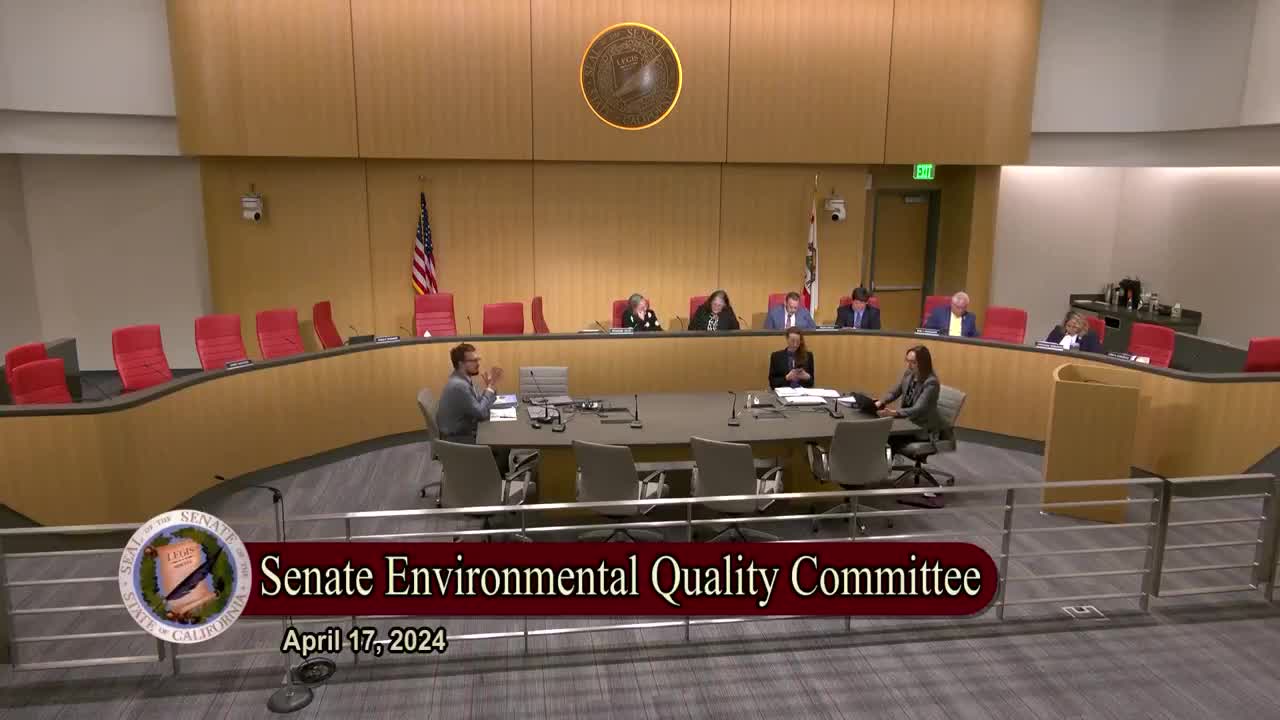 8MIN
Senate Standing Committee on Environmental Quality
 7MIN
Senate Standing Committee on Housing
Bill Author