SB 1402: 30x30 goal: state agencies: adoption, revision, or establishment of plans, policies, and regulations.
- Session Year: 2023-2024
- House: Senate
- Latest Version Date: 2024-07-01
Current Status:
Failed
(2024-08-15: August 15 hearing: Held in committee and under submission.)
Introduced
In Committee
First Chamber
In Committee
Second Chamber
Enacted
By Executive Order No. N-82-20, Governor Gavin Newsom directed the Natural Resources Agency to combat the biodiversity and climate crises by, among other things, establishing the California Biodiversity Collaborative and conserving at least 30% of the states lands and coastal waters by 2030. Existing law requires the Secretary of the Natural Resources Agency to prepare and submit, on or before March 31, 2024, and annually thereafter, a report to the Legislature on the progress made in the prior calendar year toward achieving the goal to conserve 30% of Californias lands and coastal waters by 2030. Existing law provides that it is the goal of the state to conserve at least 30% of Californias lands and coastal waters by 2030, known as the 30x30 goal.
This bill would require all state agencies, departments, boards, offices, commissions, and conservancies to consider the 30x30 goal when adopting, revising, or establishing plans, policies, and or regulations that directly affect land use, the use of coastal waters or land, management of natural resources, or biodiversity conservation.
By Executive Order No. N-82-20, Governor Gavin Newsom directed the Natural Resources Agency to combat the biodiversity and climate crises by, among other things, establishing the California Biodiversity Collaborative and conserving at least 30% of the states lands and coastal waters by 2030. Existing law requires the Secretary of the Natural Resources Agency to prepare and submit, on or before March 31, 2024, and annually thereafter, a report to the Legislature on the progress made in the prior calendar year toward achieving the goal to conserve 30% of Californias lands and coastal waters by 2030. Existing law provides that it is the goal of the state to conserve at least 30% of Californias lands and coastal waters by 2030, known as the 30x30 goal.
This bill would require all state agencies, departments, boards, offices, commissions, and conservancies to consider the 30x30 goal when adopting, revising, or establishing plans, policies, and regulations that directly affect land use, management of natural resources, water use and quality, or biodiversity conservation.
By Executive Order No. N-82-20, Governor Gavin Newsom directed the Natural Resources Agency to combat the biodiversity and climate crises by, among other things, establishing the California Biodiversity Collaborative and conserving at least 30% of the states lands and coastal waters by 2030. Existing law requires the Secretary of the Natural Resources Agency to prepare and submit, on or before March 31, 2024, and annually thereafter, a report to the Legislature on the progress made in the prior calendar year toward achieving the goal to conserve 30% of Californias lands and coastal waters by 2030. Existing law provides that it is the goal of the state to conserve at least 30% of Californias lands and coastal waters by 2030, known as the 30x30 goal.
This bill would require all state agencies, departments, boards, offices, commissions, and conservancies to consider the 30x30 goal when adopting, revising, or establishing plans, policies, and regulations. regulations that directly affect land use, management of natural resources, water use and quality, or biodiversity conservation.
By Executive Order No. N-82-20, Governor Gavin Newsom directed the Natural Resources Agency to combat the biodiversity and climate crises by, among other things, establishing the California Biodiversity Collaborative and conserving at least 30% of the states lands and coastal waters by 2030. Existing law requires the Secretary of the Natural Resources Agency to prepare and submit, on or before March 31, 2024, and annually thereafter, a report to the Legislature on the progress made in the prior calendar year toward achieving the goal to conserve 30% of Californias lands and coastal waters by 2030. Existing law provides that it is the goal of the state to conserve at least 30% of Californias lands and coastal waters by 2030, known as the 30x30 goal.
This bill would require all state agencies, departments, boards, offices, commissions, and conservancies to consider the 30x30 goal when adopting, revising, or establishing plans, policies, and regulations.
(a)For the purposes of this part, the following definitions apply:
(1)30x30 goal means the goal to conserve 30 percent of Californias lands and coastal waters by 2030 established in subdivision (b) and by Executive Order No. N-82-20.
(2)Pathways to 30x30 Report means the report entitled Pathways to 30x30 California: Accelerating Conservation of Californias Nature that was issued by the Natural Resources Agency on April 22, 2022.
(b)It is the goal of the state to conserve at least 30 percent of Californias lands and coastal waters by 2030.
(c)All state agencies, departments, boards, offices, commissions, and conservancies shall consider the 30x30 goal when adopting, revising, or establishing plans, policies, and or regulations that directly affect land use, the use of coastal waters or land, management of natural resources, or biodiversity conservation.
(a)For the purposes of this part, the following definitions apply:
(1)30x30 goal means the goal to conserve 30 percent of Californias lands and coastal waters by 2030 established in subdivision (b) and by Executive Order No. N-82-20.
(2)Pathways to 30x30 Report means the report entitled Pathways to 30x30 California: Accelerating Conservation of Californias Nature that was issued by the Natural Resources Agency on April 22, 2022.
(b)It is the goal of the state to conserve at least 30 percent of Californias lands and coastal waters by 2030.
(c)All state agencies, departments, boards, offices, commissions, and conservancies shall consider the 30x30 goal when adopting, revising, or establishing plans, policies, and regulations that directly affect land use, management of natural resources, water use and quality, or biodiversity conservation.
REVISIONS: HeadingLine 2.(a)For the purposes of this part, the following definitions apply:
(1)30x30 goal means the goal to conserve 30 percent of Californias lands and coastal waters by 2030 established in subdivision (b) and by Executive Order No. N-82-20.
(2)Pathways to 30x30 Report means the report entitled Pathways to 30x30 California: Accelerating Conservation of Californias Nature that was issued by the Natural Resources Agency on April 22, 2022.
(b)It is the goal of the state to conserve at least 30 percent of Californias lands and coastal waters by 2030.
(c)All state agencies, departments, boards, offices, commissions, and conservancies shall consider the 30x30 goal when adopting, revising, or establishing plans, policies, and regulations. regulations that directly affect land use, management of natural resources, water use and quality, or biodiversity conservation.
(a)For the purposes of this part, the following definitions apply:
(1)30x30 goal means the goal to conserve 30 percent of Californias lands and coastal waters by 2030 established in subdivision (b) and by Executive Order No. N-82-20.
(2)Pathways to 30x30 Report means the report entitled Pathways to 30x30 California: Accelerating Conservation of Californias Nature that was issued by the Natural Resources Agency on April 22, 2022.
(b)It is the goal of the state to conserve at least 30 percent of Californias lands and coastal waters by 2030.
(c)All state agencies, departments, boards, offices, commissions, and conservancies shall consider the 30x30 goal when adopting, revising, or establishing plans, policies, and regulations.
|
Date
|
Status
|
|---|---|
| Aug 15, 2024 | August 15 hearing: Held in committee and under submission. |
| Aug 7, 2024 | August 7 set for first hearing. Placed on suspense file. |
| Jul 1, 2024 | Read second time and amended. Re-referred to Com. on APPR. |
| Jun 27, 2024 | From committee: Do pass as amended and re-refer to Com. on APPR. (Ayes 10. Noes 1.) (June 25). |
| Jun 18, 2024 | From committee: Do pass and re-refer to Com. on W., P., & W. (Ayes 6. Noes 3.) (June 17). Re-referred to Com. on W., P., & W. |
| Jun 18, 2024 | Coauthors revised. |
| Jun 11, 2024 | From committee with author's amendments. Read second time and amended. Re-referred to Com. on NAT. RES. |
| Jun 3, 2024 | Referred to Coms. on NAT. RES. and W., P., & W. |
| May 22, 2024 | In Assembly. Read first time. Held at Desk. |
| May 21, 2024 | Read third time. Passed. (Ayes 30. Noes 9. Page 4071.) Ordered to the Assembly. |
| May 16, 2024 | Read second time. Ordered to third reading. |
| May 16, 2024 | From committee: Do pass. (Ayes 5. Noes 2. Page 3982.) (May 16). |
| May 10, 2024 | Set for hearing May 16. |
| May 6, 2024 | May 6 hearing: Placed on APPR suspense file. |
| Apr 26, 2024 | Set for hearing May 6. |
| Apr 23, 2024 | From committee: Do pass and re-refer to Com. on APPR. (Ayes 8. Noes 3. Page 3729.) (April 23). Re-referred to Com. on APPR. |
| Apr 12, 2024 | Set for hearing April 23. |
| Apr 10, 2024 | Read second time and amended. Re-referred to Com. on N.R. & W. |
| Apr 9, 2024 | From committee: Do pass as amended and re-refer to Com. on N.R. & W. (Ayes 9. Noes 3. Page 3529.) (April 9). |
| Mar 26, 2024 | Set for hearing April 9. |
| Feb 29, 2024 | Referred to Coms. on G.O. and N.R. & W. |
| Feb 20, 2024 | From printer. May be acted upon on or after March 18. |
| Feb 16, 2024 | Introduced. Read first time. To Com. on RLS. for assignment. To print. |
|
Date
|
Description
|
Location
|
Votes
|
|
|---|---|---|---|---|
| Jun 25, 2024 | Do pass as amended and be re-referred to the Committee on [Appropriations] | Assembly Standing Committee on Water, Parks, and Wildlife |
Passed |
|
| Jun 17, 2024 | Do pass and be re-referred to the Committee on [Water, Parks, and Wildlife] | Assembly Standing Committee on Natural Resources |
Passed |
|
| May 21, 2024 | Senate 3rd Reading SB1402 Min | Senate Floor |
Passed |
|
| May 16, 2024 | Do pass | Senate Standing Committee on Appropriations |
Passed |
|
| May 6, 2024 | Placed on suspense file | Senate Standing Committee on Appropriations |
Passed |
|
| Apr 23, 2024 | Do pass, but first be re-referred to the Committee on [Appropriations] | Senate Standing Committee on Natural Resources and Water |
Passed |
|
| Apr 9, 2024 | Do pass as amended, but first amend, and re-refer to the Committee on [Natural Resources and Water] | Senate Standing Committee on Governmental Organization |
Passed |
This list shows positions taken on this bill by organizations on the date displayed, which is linked to the original source.
Positions by individuals are not included.
|
Organization
|
Position
|
Date
|
|---|---|---|
| Audubon California | ** Support | |
| Bear Yuba Land Trust | ** Support | |
| Big Sur Land Trust | ** Support | |
| Bolsa Chica Land Trust | ** Support | |
| California Association Of Professional Scientists | ** Support | |
| California Association Of Resource Conservation Districts | ** Support | |
| California Council Of Land Trusts | ** Support | |
| California Environmental Voters | ** Support | |
| California Institute for Biodiversity | ** Support | |
| California Native Plant Society, Alta Peak Chapter | ** Support | |
| California Native Plant Society, Mojave Desert Chapter | ** Support | |
| California State Parks Foundation | ** Support | |
| cleanearth4kids.org | ** Support | |
| Coastal Corridor Alliance | ** Support | |
| County of Nevada | ** Support | |
| County Of Placer | ** Support | |
| Defenders Of Wildlife | ** Support | |
| East Bay Regional Park District | ** Support | |
| Eastern Sierra Land Trust | ** Support | |
| Endangered Habitats League | ** Support | |
| Environmental Center of San Diego | ** Support | |
| Environmental Protection Information Center | ** Support | |
| Feather River Land Trust | ** Support | |
| Friends of Harbors, Beaches and Parks | ** Support | |
| Friends of the Inyo | ** Support | |
| Friends of the River | ** Support | |
| Land Trust Of Santa Cruz County | ** Support | |
| Los Angeles Neighborhood Land Trust | ** Support | |
| Midpeninsula Regional Open Space District | ** Support | |
| Mono Lake Committee | ** Support | |
| morongo basin conservation association | ** Support | |
| National Audubon Society | ** Support | |
| Outdoor Outreach | ** Support | |
| Pacific Forest Trust | ** Support | |
| Peninsula Open Space Trust | ** Support | |
| Placer Land Trust | ** Support | |
| Planning And Conservation League | ** Support | |
| Resource Renewal Institute | ** Support | |
| Santa Clara Valley Audubon Society | ** Support | |
| Sea And Sage Audubon Society | ** Support | |
| Sempervirens Fund | ** Support | |
| Sierra Business Council | ** Support | |
| Sierra Club California | ** Support | |
| Sierra Consortium | ** Support | |
| Sierra County Land Trust | ** Support | |
| Sierra Foothill Conservancy | ** Support | |
| Sierra Nevada Alliance | ** Support | |
| Silicon Valley Youth Climate Action | ** Support | |
| The Wildlands Conservancy | ** Support | |
| Truckee Donner Land Trust | ** Support | |
| Tuleyome | ** Support |
Date of Hearing: August 7, 2024
ASSEMBLY COMMITTEE ON APPROPRIATIONS
Buffy Wicks, Chair
SBPCA Bill Id:SB 1402
Author:(Min) – As Amended Ver:July 1, 2024
Policy Committee: | Natural Resources | Vote: | 6 - 3 |
Water, Parks and Wildlife | 10 - 1 | ||
|
|
Urgency: No State Mandated Local Program: No Reimbursable: No
SUMMARY:
This bill requires all state agencies, boards, offices, commissions, and conservancies to consider the 30x30 goal when adopting, revising, or establishing plans, policies, or regulations that directly affect the use of coastal waters or land, management of natural resources, or biodiversity conservation.
FISCAL EFFECT:
The Natural Resources Agency reports Ocean Protection Council (OPC) General Fund costs of $180,000 annually ongoing for one permanent full-time Environmental Scientist position to support OPC’s leadership role to provide the required scientific expertise and analysis tools to inform state agency decision-making and implementation of 30x30 in coastal waters.
Several state entities with responsibilities related to use of coastal waters or land, management of natural resources, and conservation -- Department of Parks and Recreation, CalFire, and Department of Fish and Wildlife -- report no or minor costs, citing that they already consider 30x30 if applicable.
Given the broad range of issues this bill mandates myriad state entities to consider, unknown additional costs, likely of a significant amount, creating cost pressure on the General Fund.
According to the Legislative Analyst’s Office, the General Fund faces a structural deficit in the tens of billions of dollars over the next several fiscal years.
COMMENTS:
- Purpose. According to the author:
California is home to one of 25 global biodiversity hotspots, but its biodiversity is under threat from climate change, habitat loss and fragmentation, invasive species, disease, pests, and pollution. Conserving the Earth’s lands and waters is one of the best tools we have to prevent further extinctions and protect biodiversity and ecosystem services. By considering 30x30 goals as plans and policies are established and updated, agencies can align their actions with conservation, restoration, and management efforts that will keep California on track to achieve its goals in 2030 and beyond.
- Background. In October 2020, Governor Newsom issued Executive Order N-82-20, which establishes a state goal of conserving 30% of California’s lands and coastal waters by 2030, known as “30x30.” The 30x30 goal is intended to help conserve state lands and coastal waters through voluntary, collaborative action with partners across the state to meet three objectives: conserve and restore biodiversity, expand access to nature, and mitigate and build resilience to climate change.
NRA released “Pathways to 30x30 California” in April 2022, which describes the key objectives and core commitments that are a part of California’s 30x30 conservation framework; defines conservation for the purpose of California’s 30x30 initiative and establishes a current baseline of conserved areas; outlines strategic actions necessary to achieve 30x30; and introduces CA Nature, a suite of publicly available applications to identify conservation opportunities and track progress.
As of May 2023, the state has conserved 24.4% of lands and 16.2% of coastal waters for 30x30. California’s strategy to conserve an additional six million acres of land and half a million acres of coastal waters is organized into 10 pathways that are specific state actions that will help achieve 30x30.
While current law states the 30x30 goal and defines that goal and the “Pathways to 30x30 Report,” this bill expressly requires every state entity to “consider” the 30x30 goal in many of its activities that directly affect a broad range of topics -- the use of coastal waters or land, management of natural resources, or biodiversity conservation.
- Prior Legislation. SB 337 (Min), Chapter 392, Statutes of 2023, codifies and defines the 30x30 goal.
Analysis Prepared by: Jacqueline Kinney / APPR. / (916) 319-2081
Date of Hearing: June 25, 2024
ASSEMBLY COMMITTEE ON WATER, PARKS, AND WILDLIFE
Diane Papan, Chair
SBPCA Bill Id:SB 1402
Author:(Min) – As Amended Ver:June 11, 2024
SENATE VOTE: 30-9
SUBJECT: 30x30 goal: state agencies: adoption, revision, or establishment of plans, policies, and regulations
SUMMARY: Requires all state entities to consider the 30x30 goal when adopting, revising, or establishing plans, policies, and regulations that directly affect land use, management of natural resources, or biodiversity conservation.
EXISTING LAW:
- Directs California Natural Resources Agency (CNRA) to combat the biodiversity and climate crisis by, among other things, establishing the California Biodiversity Collaborative and establishing the 30x30 goal, which is to conserve 30% of California’s lands and coastal waters by 2030 (Executive Order No. N-82-20).
- Codifies the 30x30 goal [Public Resources Code (PRC) § 71450].
- Requires CNRA, in implementing actions to achieve the 30x30 goal, to prioritize specified actions. Requires the Secretary of CNRA to prepare and submit, beginning on or before March 31, 2024, and annually thereafter, a report to the Legislature on the progress made during the prior calendar year toward achieving that goal (PRC §§ 71451–71452).
FISCAL EFFECT: Unknown. This bill is keyed fiscal.
COMMENTS:
- Purpose of this bill. This bill requires all state entities to consider the 30x30 goal when adopting, revising, or establishing plans, policies, and regulations that directly affect land use, management of natural resources, or biodiversity. According to the author, “California is home to one of 25 global biodiversity hotspots, but its biodiversity is under threat from climate change, habitat loss and fragmentation, invasive species, disease, pests, and pollution. Conserving the Earth’s lands and waters is one of the best tools we have to prevent further extinctions and protect biodiversity and ecosystem services. By considering 30x30 goals as plans and policies are established and updated, agencies can align their actions with conservation, restoration, and management efforts that will keep California on track to achieve its goals in 2030 and beyond.”
- Background. In October 2020, Governor Newsom issued Executive Order N-82-20, which establishes a state goal of conserving 30% of California’s lands and coastal waters by 2030—known as 30x30. The 30x30 goal is intended to help conserve state lands and coastal waters through voluntary, collaborative action with partners across the state to meet three objectives: conserve and restore biodiversity, expand access to nature, and mitigate and build resilience to climate change. The 30x30 goal was codified by SB 337 (Min), Chapter 392, Statutes of 2023.
CNRA released Pathways to 30x30 California in April 2022, which describes the key objectives and core commitments that are a part of California’s 30x30 conservation framework; defines conservation for the purpose of California’s 30x30 initiative and establishes a current baseline of conserved areas; outlines strategic actions necessary to achieve 30x30; and, introduces CA Nature, a suite of publicly available applications to identify conservation opportunities and track our collective progress.
As of May 2023, the state has conserved 24.4% of lands and 16.2% of coastal waters for 30x30. California’s strategy to conserve an additional six million acres of land and half a million acres of coastal waters is organized into ten pathways that are specific state actions that will help achieve 30x30.
- Conflict with other pending legislation. Two bills under consideration by the Legislature seek to amend PRC § 71450: this bill and AB 2320 (Irwin). The Committee may wish to direct the author address these chaptering out issues in the event that both these bills are signed into law by the Governor.
- Proposed committee amendments. To more consistently reflect the 30x30 goal, the Committee may wish the author to consider the following amendments:
(c) All state agencies, departments, boards, offices, commissions, and conservancies shall consider the 30x30 goal when adopting, revising, or establishing plans, policies, or and regulations that directly affect the use of coastal waters and land land use, management of natural resources, or biodiversity conservation.
- Arguments in support. Numerous environmental organizations write in support of this bill. They laud the goals of 30x30 and claim this bill will increase transparency in the state’s efforts and progress to achieve 30x30.
- Double referral. This bill was also been referred to the Assembly Natural Resources Committee where it passed by a vote of 6–3 on June 17, 2024.
- Related legislation. AB 2320 (Irwin) of the current legislative session requires CNRA to annually report to the Legislature on progress made to achieve the 30x30 goal to include the identification of key wildlife corridors in the state, connections between large blocks of natural areas and habitats, progress on protecting additional acres of wildlife corridors, and goals for wildlife corridor protection in the next five years. AB 2320 is pending in the Senate Appropriations Committee.
AB 2440 (Reyes) of the current legislative session requires CNRA, in implementing the strategies to achieve the 30x30 goal, to promote and support partnering state agencies and departments, including the Department of Parks and Recreation, in the acquisition and responsible stewardship of state land. AB 2440 is pending in the Senate Appropriations Committee.
SB 337 (Min), Chapter 392, Statutes of 2023, codifies the 30x30 goal.
REGISTERED SUPPORT / OPPOSITION:
Support
Audubon Society, Santa Clara Valley Chapter
Audubon Society, Sea and Sage Chapter
Bear Yuba Land Trust
Big Sur Land Trust
Bolsa Chica Land Trust
California Association of Professional Scientists
California Association of Resource Conservation Districts
California Council of Land Trusts
California Environmental Voters
California Institute for Biodiversity
California Native Plant Society, Alta Peak Chapter
California Native Plant Society, Mojave Desert Chapter
California State Parks Foundation
Cleanearth4kids.org
Coastal Corridor Alliance
County of Nevada
County of Placer
Defenders of Wildlife
East Bay Regional Park District
Eastern Sierra Land Trust
Endangered Habitats League
Environmental Center of San Diego
Environmental Protection Information Center
Feather River Land Trust
Friends of Harbors, Beaches and Parks
Friends of The Inyo
Friends of The River
Land Trust of Santa Cruz County
Los Angeles Neighborhood Land Trust
Midpeninsula Regional Open Space District
Mono Lake Committee
Morongo Basin Conservation Association
National Audubon Society
Outdoor Outreach
Pacific Forest Trust
Peninsula Open Space Trust
Placer Land Trust
Planning and Conservation League
Resource Renewal Institute
Sempervirens Fund
Sierra Business Council
Sierra Club California
Sierra Consortium
Sierra County Land Trust
Sierra Foothill Conservancy
Sierra Nevada Alliance
The Wildlands Conservancy
Truckee Donner Land Trust
Tuleyome
Opposition
None on file
Analysis Prepared by: Stephanie Mitchell / W., P., & W. / (916) 319-2096
Date of Hearing: June 17, 2024
ASSEMBLY COMMITTEE ON NATURAL RESOURCES
Isaac G. Bryan, Chair
SBPCA Bill Id:SB 1402
Author:(Min) – As Amended Ver:June 11, 2024
SENATE VOTE: 30-9
SUBJECT: 30x30 goal: state agencies: adoption, revision, or establishment of plans, policies, and regulations.
SUMMARY: Requires all state entities to consider the 30x30 goal when adopting, revising, or establishing plans, policies, and regulations that directly affect land use, management of natural resources, or biodiversity conservation.
EXISTING LAW:
- Directs California Natural Resources Agency (NRA) to combat the biodiversity and climate crisis by, among other things, establishing the California Biodiversity Collaborative and establishing the 30x30 goal. (Executive Order No. N-82-20)
- Codifies the 30x30 goal. (Public Resources Code (PRC) 71450)
- Requires NRA, in implementing actions to achieve the 30x30 goal, to prioritize specified actions. Requires the Secretary of NRA to prepare and submit, beginning on or before March 31, 2024, an annual report to the Legislature on the progress made during the prior calendar year toward achieving that goal, as provided. (PRC 71451-71452)
FISCAL EFFECT: According to the Senate Appropriations Committee, this bill will result in ongoing costs of about $180,000 annually (General Fund) for the OPC for one position to support its ongoing leadership role to provide the required scientific expertise and analysis tools to inform state agency decision-making and implementation of 30x30 in coastal waters. In addition, there may be potential costs likely to be minor and absorbable to other state agencies, departments, boards, offices, commissions, and conservancies for considering the 30x30 goal as required.
COMMENTS:
- Author’s statement:
California is home to one of 25 global biodiversity hotspots, but its biodiversity is under threat from climate change, habitat loss and fragmentation, invasive species, disease, pests, and pollution. Conserving the Earth’s lands and waters is one of the best tools we have to prevent further extinctions and protect biodiversity and ecosystem services. By considering 30x30 goals as plans and policies are established and updated, agencies can align their actions with conservation, restoration, and management efforts that will keep California on track to achieve its goals in 2030 and beyond.
- 30x30. In October 2020, Governor Newsom issued Executive Order N-82-20 which establishes a state goal of conserving 30% of California’s lands and coastal waters by 2030 – known as 30x30. The 30x30 goal is intended to help conserve our lands and coastal waters through voluntary, collaborative action with partners across the state to meet three objectives: conserve and restore biodiversity, expand access to nature, and mitigate and build resilience to climate change. The 30x30 goal was codified by SB 337 (Min), Chapter 392, Statutes of 2023. California’s 30x30 commitment is part of a global effort to increase biodiversity conservation, including in the United States. In January of 2021, the Biden administration issued an Executive Order on tackling the climate crisis and committed the United States to 30x30 through its America the Beautiful Initiative.
NRA released Pathways to 30x30 California in April 2022, which describes the key objectives and core commitments that are a part of California’s 30x30 conservation framework; defines conservation for the purpose of California’s 30x30 initiative and establishes a current baseline of conserved areas; outlines strategic actions necessary to achieve 30x30; and, introduces CA Nature, a suite of publicly available applications to identify conservation opportunities and track our collective progress.
As of May 2023, the state has conserved 24.4% of lands and 16.2% of coastal waters for 30x30, adding approximately 631,000 acres to lands conserved over the past year and identifying concrete strategies to strengthen conservation in coastal waters. California’s strategy to conserve an additional six million acres of land and half a million acres of coastal waters is organized into ten pathways that are specific state actions that will help achieve 30x30.
- All hands on deck. This bill requires all state entities to consider the 30x30 goal when adopting, revising, or establishing plans, policies, and regulations that directly affect land use, management of natural resources, or biodiversity conservation.
- Double referral. This bill is also referred to the Water, Parks, and Wildlife Committee.
- Related legislation:
AB 2320 (Irwin) requires the NRA to annually report to the Legislature on progress made to achieve the 30x30 goal to include the identification of key wildlife corridors in the state, connections between large blocks of natural areas and habitats, progress on protecting additional acres of wildlife corridors, and goals for wildlife corridor protection in the next five years. This bill has been referred to the Senate Natural Resources and Water Committee.
AB 2440 (Reyes) requires NRA, in implementing the strategies to achieve the 30x30 goal, to promote and support partnering state agencies and departments, including the Department of Parks and Recreation, in the acquisition and responsible stewardship of state land. This bill has been referred to the Senate Natural Resources and Water Committee.
REGISTERED SUPPORT / OPPOSITION:
Support
Bear Yuba Land Trust
Big Sur Land Trust
Bolsa Chica Land Trust
California Association of Professional Scientists
California Association of Resource Conservation Districts
California Council of Land Trusts
California Environmental Voters
California Institute for Biodiversity
California Native Plant Society, Alta Peak Chapter
California Native Plant Society, Mojave Desert Chapter
California State Parks Foundation
Cleanearth4kids.org
Coastal Corridor Alliance
County of Placer
Defenders of Wildlife
East Bay Regional Park District
Eastern Sierra Land Trust
Endangered Habitats League
Environmental Center of San Diego
Environmental Protection Information Center
Feather River Land Trust
Friends of Harbors, Beaches and Parks
Friends of The Inyo
Friends of The River
Land Trust of Santa Cruz County
Los Angeles Neighborhood Land Trust
Midpeninsula Regional Open Space District
Mono Lake Committee
Morongo Basin Conservation Association
National Audubon Society
Nevada; County of
Outdoor Outreach
Pacific Forest Trust
Peninsula Open Space Trust
Placer Land Trust
Planning and Conservation League
Resource Renewal Institute
Santa Clara Valley Audubon Society
Sea and Sage Audubon Society
Sempervirens Fund
Sierra Business Council
Sierra Club California
Sierra Consortium
Sierra County Land Trust
Sierra Foothill Conservancy
Sierra Nevada Alliance
The Wildlands Conservancy
Truckee Donner Land Trust
Tuleyome
Opposition
None on file
Analysis Prepared by: Paige Brokaw / NAT. RES. /
SENATE RULES COMMITTEE Office of Senate Floor Analyses (916) 651-1520 Fax: (916) 327-4478 | SB 1402 |
THIRD READING
Bill No: SB 1402
Author: Min (D)
Amended: 4/10/24
Vote: 21
SENATE GOVERNMENTAL ORG. COMMITTEE: 9-3, 4/9/24
AYES: Dodd, Alvarado-Gil, Archuleta, Bradford, Glazer, Padilla, Portantino, Rubio, Smallwood-Cuevas
NOES: Jones, Ochoa Bogh, Seyarto
NO VOTE RECORDED: Wilk, Ashby, Nguyen, Roth
SENATE NATURAL RES. & WATER COMMITTEE: 8-3, 4/23/24
AYES: Min, Allen, Eggman, Hurtado, Laird, Limón, Menjivar, Padilla
NOES: Seyarto, Dahle, Grove
SENATE APPROPRIATIONS COMMITTEE: 5-2, 5/16/24
AYES: Caballero, Ashby, Becker, Bradford, Wahab
NOES: Jones, Seyarto
SUBJECT: 30x30 goal: state agencies: adoption, revision, or establishment of plans, policies, and regulations
SOURCE: Author
DIGEST:
This bill requires all state agencies, departments, boards, offices, commissions, and conservancies to consider the state’s 30x30 goal, as specified, when adopting, revising, or establishing plans, policies, and regulations that directly affect land use, management of natural resources, water use and quality, or biodiversity conservation.
ANALYSIS:
Existing law:
- Establishes the goal of the state to conserve at least 30% of California’s lands and coastal waters by 2030.
- Requires the Secretary of the California Natural Resources Agency (CNRA) to prepare and submit, on or before March 31, 2024, and annually thereafter, a report to the Legislature on the progress made in the prior calendar year toward achieving the goal to conserve 30% of California’s lands and coastal waters by 2030.
- EO N-82-20, by Governor Gavin Newsom, directs the CNRA to combat the biodiversity and climate crises by, among other things, establishing the California Biodiversity Collaborative and conserving at least 30% of the state’s lands and coastal waters by 2030.
This bill requires all state agencies, departments, boards, offices, commissions, and conservancies to consider the 30x30 goal when adopting, revising, or establishing plans, policies, and regulations that directly affect land use, management of natural resources, water use and quality, or biodiversity conservation.
Background
Author’s Statement. According to the author’s office, “California is home to one of 25 global biodiversity hotspots, but its biodiversity is under threat from climate change, habitat loss and fragmentation, invasive species, disease, pests, and pollution. Conserving the Earth’s lands and waters is one of the best tools we have to prevent further extinctions and protect biodiversity and ecosystem services. By considering 30x30 goals as plans and policies are established and updated, agencies can align their actions with conservation, restoration, and management efforts that will keep California on track to achieve its goals in 2030 and beyond.”
California’s 30x30 Goal. As the nation’s most biodiverse state, California is home to approximately 6,500 known types of plants, roughly 40% of which are found only within its borders. Among them, the world’s tallest, largest, and oldest trees. According to an April 2023 article in the New York Times, this diversity exists “because of California’s size; its Mediterranean-type climate; and its wide range of habitats, including coastlines, mountains and deserts, which span both the lowest and highest elevations in the contiguous United States, according to Alison Young at the California Academy of Sciences in San Francisco.”
Yet, California’s lands and coastal waters are threatened by the twin crises of climate change and biodiversity loss. Threats to the state’s lands and coastal ecosystems fit into a larger global trend of losses of ecosystems and ecosystem services, and rapid rates of species extinctions. A United Nations report estimates that a quarter of all species face extinction, many within decades. There is broad scientific consensus that, similar to climate change, this is human-caused and represents and existential threat to ecosystems and humanity. Every time a species or population vanishes, the associated ecosystem’s capacity to function and provide services upon which we depend erodes.
Conserving the Earth’s lands and coastal waters can help to prevent extinctions and protect the biodiversity of ecosystems upon which humanity depends. Specifically, the scientific community has identified a need to protect 50% of the Earth’s surface by 2050 to achieve these goals. The scientific community has called for a step goal of 30% by 2030 to help spur and measure progress toward the 2050 goal.
To answer this call to action, Governor Newsom’s October 2020 Nature-based Solutions Executive Order No. N-82-20 committed the state to the goal of conserving 30% of California’s lands and coastal waters by the year 2030. That goal was later codified and reinforced by AB 2278 (Kalra, Chapter 349, Statutes of 2022) and SB 337 (Min, Chapter 392, Statutes of 2023).
In April 2022, after 15 months of tribal consultations, public input, and collaboration with partners, the CNRA released a shared strategic vision called Pathways to 30x30 that includes 10 concurrent and complementary strategies to reach the goal. At the same time, CA Nature was launched to provide a set of online mapping applications to identify conservation opportunities and track progress toward the goal by 2030.
In summer 2022, the Governor and Legislature delivered unprecedented funding to implement 30x30. The CNRA also established the 30x30 Partnership, an alliance of groups and leaders advancing this initiative. The 30x30 Partnership Coordinating Committee is continuing this work by strengthening connections, sharing opportunities to collaborate, and helping to grow the movement. In December 2022, a delegation of leaders from California joined the United Nations Conference of Parties on Biodiversity in Montreal, advocating for and ultimately witnessing a compact among virtually all of the world’s nations to achieve 30x30 in their own territories.
Since April 2022, California has added approximately 631,000 acres of conserved land, bringing our statewide total to 24.4% of lands and 16.2% of coastal waters. This progress included large area projects such as the Onyx Conservation Project, to small projects like the Wiyot Tribe Land Return. Each project brings its own unique benefits, and all these actions together can achieve, as a portfolio, the key objectives for 30x30.

Figure 1 Source: California Natural Resources Agency "Pathways to 30x30 California Annual Progress Report (May 18, 2023)
The CNRA includes more than two dozen departments, conservancies, and commissions coordinating California’s 30x30 imitative. Through the 30x30 Partnership, this work focuses on supporting groups and leaders across the state, achieving 30x30 one project and action at a time. According to the CRNA, this requires the dedication of tribal governments and communities, local governments, federal agencies, non-governmental groups, academic researchers, private landowners, and caring community members.
This bill requires all state agencies, departments, boards, offices, commissions, and conservancies to consider the 30x30 goal when adopting, revising, or establishing plans, policies, and regulations that directly affect land use, management of natural resources, water use and quality, or biodiversity conservation.
Related Prior Legislation
AB 2320 (Irwin, 2024) the Wildlife Connectivity and Climate Adaptation Act of 2024 would expand the scope of CNRA’s annual 30x30 progress report to include the identification of key wildlife corridors in the state, connections between large blocks of natural areas and habitats, progress on protecting additional acres of wildlife corridors, and goals for wildlife corridor protection in the next five years, as specified. (Pending in the Assembly Appropriations Committee)
AB 2440 (Reyes, 2024) would, among other things, expand the actions CNRA must prioritize when implementing the 10 pathways in Pathways to include promoting and supporting partnering state agencies and departments, including, State Parks, in the acquisition and responsible stewardship of state land. (Pending in the Assembly Appropriations Committee)
AB 3023 (Papan, 2024) requires the state to align watershed restoration plans and initiatives with forest resilience actions to achieve more integrated and holistic outcomes, as specified. (Pending in the Assembly Appropriations Committee)
SB 337 (Min, Chapter 392, Statutes of 2023) codified the goal of the state to conserve at least 30% of California’s land and coastal waters by 2030.
AB 2278 (Kalra, Chapter 349, Statutes of 2022) required the Secretary of the NRA to prepare and submit, beginning on or before March 31, 2024, an annual report to the Legislature on the progress made during the prior calendar year toward achieving the goal to conserve 30% of state lands and coastal waters by 2030 established by Governor Newsom’s EO N-82-20.
FISCAL EFFECT: Appropriation: No Fiscal Com.: Yes Local: No
According to the Senate Appropriations Committee, the Ocean Protection Council (OPC) estimates ongoing costs of about $180,000 annually (General Fund) for one position to support its ongoing leadership role to provide the required scientific expertise and analysis tools to inform state agency decision-making and implementation of 30x30 in coastal waters.
Potential costs likely to be minor and absorbable to other state agencies, departments, boards, offices, commissions, and conservancies for considering the 30x30 goal as required.
SUPPORT: (Verified 5/16/24)
Bear Yuba Land Trust
Big Sur Land Trust
Bolsa Chica Land Trust
California Association of Professional Scientists
California Association of Resource Conservation Districts
California Council of Land Trusts
California Environmental Voters
California Institute for Biodiversity
California Native Plant Society, Alta Peak Chapter
California Native Plant Society, Mojave Desert Chapter
California State Parks Foundation
Cleanearth4kids.org
Coastal Corridor Alliance
County of Nevada
County of Placer
Defenders of Wildlife
East Bay Regional Park District
Eastern Sierra Land Trust
Endangered Habitats League
Environmental Center of San Diego
Environmental Protection Information Center
Feather River Land Trust
Friends of Harbors, Beaches and Parks
Friends of The Inyo
Friends of The River
Land Trust of Santa Cruz County
Los Angeles Neighborhood Land Trust
Midpeninsula Regional Open Space District
Mono Lake Committee
Morongo Basin Conservation Association
National Audubon Society
Outdoor Outreach
Pacific Forest Trust
Peninsula Open Space Trust
Placer Land Trust
Planning and Conservation League
Resource Renewal Institute
Santa Clara Valley Audubon Society
Sea and Sage Audubon Society
Sempervirens Fund
Sierra Business Council
Sierra Club California
Sierra Consortium
Sierra County Land Trust
Sierra Foothill Conservancy
Sierra Nevada Alliance
Silicon Valley Youth Climate Action
The Wildlands Conservancy
Truckee Donner Land Trust
Tuleyome
OPPOSITION: (Verified 5/16/24)
None received
ARGUMENTS IN SUPPORT: A coalition of supporters write that last year, “the California Legislature passed and Governor Newsom signed SB 337 (Min), which put the 30x30 goal into statute. California has taken important first steps to implement this goal. In 2022, the [CNRA] finalized its Pathways to 30x30 Report that sets forth strategies to implement the 30x30 goal. The California Legislature and Administration have made critical investments in land and water conservation to further the 30x30 goal.”
Further, “one of the critical missing components is ensuring that the commitment to meet this 30x30 goal is rooted in California’s many plans, policies, and regulations, including the California Water Plan, Adaption Strategy, and Scoping Plan for Achieving Carbon Neutrality. It is common sense to make sure that a statewide policy is considered by state agencies when they are updating, adopting, or revising their plans, policies, and regulations.”
Prepared by: Brian Duke / G.O. / (916) 651-1530
5/17/24 17:44:25
**** END ****
SENATE COMMITTEE ON
Senator Anna Caballero, Chair
2023 - 2024 Regular Session
SB 1402 (Min) - 30x30 goal: state agencies: adoption, revision, or establishment of plans, policies, and regulations
Version: | Policy Vote: |
Urgency: | Mandate: |
Hearing Date: | Consultant: |
Bill Summary:
This bill would require all state agencies, departments, boards, offices, commissions, and conservancies to consider the 30x30 goal when adopting, revising, or establishing plans, policies, and regulations that directly affect land use, management of natural resources, water use and quality, or biodiversity conservation.
Fiscal Impact:
- The Ocean Protection Council (OPC) estimates ongoing costs of about t$180,000 annually (General Fund) for one position to support its ongoing leadership role to provide the required scientific expertise and analysis tools to inform state agency decision-making and implementation of 30x30 in coastal waters.
- Potential costs likely to be minor and absorbable to other state agencies, departments, boards, offices, commissions, and conservancies for considering the 30x30 goal as required.
Background:
California is home to one of 25 global hotspots for conservation due to its remarkable biodiversity and significant threats to its habitats and endemic species. The state has the highest number of native and endemic plant species of any U.S. state and is recognized as one of 34 global hotspots for plant diversity. California’s coastal and ocean ecosystems also are some of the most diverse in the world. Climate change, habitat loss and fragmentation, invasive species, disease, pests, and pollution threaten this biodiversity and the public benefits and services this biodiversity provides.
Conserving the Earth’s lands and waters can help to prevent extinctions and protect the biodiversity and ecosystem services upon which humanity depends. Specifically, the scientific community has identified a need to protect 50% of the Earth’s surface by 2050 to achieve these goals. Scientists have called for a step goal of 30% by 2030 to help spur and measure progress toward the 2050 goal. Importantly, protections must be combined with restoration and management efforts to protect the function and services of the Earth’s ecosystems. Also, conservation, restoration, and improved management can avoid and reduce greenhouse gas emissions and sequester carbon, helping to advance climate goals.
To combat the biodiversity crisis in California, Governor Newsom issued Executive Order N-82-20 in 2020, which adopted a goal to conserve at least 30% of California’s land and coastal waters by 2030. SB 337 (Min, Chapter 392, Statutes of 2023) later codified this goal. In 2022, CNRA released Pathways to 30x30 California: Accelerating Conservation of California’s Nature (Pathways), which defines the term “conserved” for the purpose of the goal, identifies how many acres of land and coastal waters are already conserved, adopts key objectives and core commitments, identifies strategies to achieve the goal, and establishes an implementation framework to coordinate action across agencies and stakeholders. According to CNRA’s 2023 progress report, the state has already conserved 24.4% of lands and 16.2% of its coastal waters. To reach the goal, it must conserve approximately 5.6 million more acres of land and approximately 500,000 more acres of coastal waters.
Proposed Law:
This bill would require all state agencies, departments, boards, offices, commissions, and conservancies to consider the 30x30 goal when adopting, revising, or establishing plans, policies, and regulations that directly affect land use, management of natural resources, water use and quality, or biodiversity conservation.
Related Legislation:
AB 2320 (Irwin, 2024), the Wildlife Connectivity and Climate Adaptation Act of 2024, would expand the scope of CNRA’s annual 30x30 progress report to include the identification of key wildlife corridors in the state, connections between large blocks of natural areas and habitats, progress on protecting additional acres of wildlife corridors, and goals for wildlife corridor protection in the next five years, as specified.
AB 2440 (Reyes, 2024) would, among other things, expand the actions CNRA must prioritize when implementing the 10 pathways in Pathways to include promoting and supporting partnering state agencies and departments, including the Department of Parks and Recreation, in the acquisition and responsible stewardship of state land.
AB 3023 (Papan, 2024) requires the state to align watershed restoration plans and initiatives with forest resilience actions to achieve more integrated and holistic outcomes, as specified.
SB 337 (Min, Chapter 392, Statutes of 2023) codified the 30x30 goal.
AB 2278 (Kalra, Chapter 349, Statutes of 2022) requires the CNRA secretary to submit annual reports to the Legislature on the progress made during the prior calendar year toward achieving the 30x30 goal.
-- END --
SENATE COMMITTEE ON NATURAL RESOURCES AND WATER
Senator Dave Min, Chair
2023 - 2024 Regular
Bill No: SB Hearing Date: April 23, 2024
Author: | Min | ||
Version: | April 10, 2024 Amended | ||
Urgency: | No | Fiscal: | Yes |
Consultant: | Catherine Baxter | ||
Subject: 30x30 goal: state agencies: adoption, revision, or establishment of plans, policies, and regulations
SUMMARY
This bill would require all state agencies, departments, boards, offices, commissions, and conservancies to consider the 30x30 goal when adopting, revising, or establishing plans, policies, and regulations that directly affect land use, management of natural resources, water use and quality, or biodiversity conservation.
BACKGROUND AND EXISTING LAW
Background
California is home to one of 25 global hotspots for conservation due to its remarkable biodiversity and significant threats to its habitats and endemic species. The state has the highest number of native and endemic plant species of any U.S. state and is recognized as one of 34 global hotspots for plant diversity. California’s coastal and ocean ecosystems also are some of the most diverse in the world. Climate change, habitat loss and fragmentation, invasive species, disease, pests, and pollution threaten this biodiversity and the public benefits and services this biodiversity provides.
Conserving the Earth’s lands and waters can help to prevent extinctions and protect the biodiversity and ecosystem services upon which humanity depends. Specifically, the scientific community has identified a need to protect 50% of the Earth’s surface by 2050 to achieve these goals. Scientists have called for a step goal of 30% by 2030 to help spur and measure progress toward the 2050 goal. Importantly, protections must be combined with restoration and management efforts to protect the function and services of the Earth’s ecosystems. Also, conservation, restoration, and improved management can avoid and reduce greenhouse gas emissions and sequester carbon, helping to advance climate goals.
To combat the biodiversity crisis in California, Governor Newsom issued Executive Order N-82-20 in 2020, which adopted a goal to conserve at least 30% of California’s land and coastal waters by 2030. SB 337 (Min, Chapter 392, Statutes of 2023) later codified this goal. In 2022, CNRA released Pathways to 30x30 California: Accelerating Conservation of California’s Nature (Pathways), which defines the term “conserved” for the purpose of the goal, identifies how many acres of land and coastal waters are already conserved, adopts key objectives and core commitments, identifies strategies to achieve the goal, and establishes an implementation framework to coordinate action across agencies and stakeholders. According to CNRA’s 2023 progress report, the state has already conserved 24.4% of lands and 16.2% of its coastal waters. To reach the goal, it must conserve approximately 5.6 million more acres of land and approximately 500,000 more acres of coastal waters.
Existing law:
- Establishes a goal of the state to conserve at least 30 percent of California’s lands and coastal waters by 2030. This is known as the “30x30 goal.” Public Resources Code (PRC) §71450.
- Directs the California Natural Resources Agency (CNRA) to prioritize certain actions in implementing the 30x30 goal, including supporting tribal engagement and leadership in implementing the 30x30 goal and partnering with federal agencies to leverage strategic funding and resources in achieving the 30x30 goal, among others. PRC §71451.
- Directs the CNRA secretary to prepare and submit, on or before March 31, 2024, and annually thereafter, a report to the Legislature on the progress made in the prior calendar year toward achieving the 30x30 goal. PRC §71452.
PROPOSED LAW
This bill would require all state agencies, departments, boards, offices, commissions, and conservancies to consider the 30x30 goal when adopting, revising, or establishing plans, policies, and regulations that directly affect land use, management of natural resources, water use and quality, or biodiversity conservation.
ARGUMENTS IN SUPPORT
According to the author, “California is home to one of 25 global biodiversity hotspots, but its biodiversity is under threat from climate change, habitat loss and fragmentation, invasive species, disease, pests, and pollution. Conserving the Earth’s lands and waters is one of the best tools we have to prevent further extinctions and protect biodiversity and ecosystem services. By considering 30x30 goals as plans and policies are established and updated, agencies can align their actions with conservation, restoration, and management efforts that will keep California on track to achieve its goals in 2030 and beyond.”
According to a coalition of supporters, “One of the critical mission components is ensuring that the commitment to meet this 30x30 goal is rooted in California’s many plans, policies, and regulations, including the California Water Plan, Adaptation Strategy, and Scoping Plan for Achieving Carbon Neutrality. It is common sense to make sure that a statewide policy is considered by state agencies when they are updating, adopting, or revising their plans, policies, and regulations.”
“Too often, we see laudable statewide goals languish when agencies are not required to consider them when doing their work. SB 1402 will ensure that the 30x30 effort will remain alive and relevant because agencies will need to consider how to implement this policy. Finally, this bill will provide more transparency in the state’s efforts and progress to achieve the 30x30 goal.”
ARGUMENTS IN OPPOSITION
None received.
COMMENTS
Dual referral. This bill was referred to the Senate Governmental Organization Committee and this Committee. The former Committee passed the bill 9-3 on March 12, 2024, with amendments. Elements of the bill under that Committee’s jurisdiction were discussed before that Committee and are included here for completeness and context only.
Need for the bill. This bill seeks to embed the state’s 30x30 conservation goal across all levels of state planning, policy development, and regulation by requiring that all state agencies, departments, boards, offices, commissions, and conservancies consider the 30x30 goal when adopting, revising, or establishing plans, policies, and regulations that directly affect land use, management of natural resources, water use and quality, or biodiversity conservation. This targeted approach can help to ensure that the 30x30 goal is meaningfully integrated into state actions with the most significant potential to impact conservation outcomes. By focusing on areas directly related to land use, natural resources, water management, and biodiversity, the state can more effectively leverage its regulatory and policy frameworks towards achieving the 30x30 conservation objectives.
Prior/related legislation.
AB 2320 (Irwin, 2024), the Wildlife Connectivity and Climate Adaptation Act of 2024, would expand the scope of CNRA’s annual 30x30 progress report to include the identification of key wildlife corridors in the state, connections between large blocks of natural areas and habitats, progress on protecting additional acres of wildlife corridors, and goals for wildlife corridor protection in the next five years, as specified. This bill is pending review in the Assembly Natural Resources Committee.
AB 2440 (Reyes, 2024) would, among other things, expand the actions CNRA must prioritize when implementing the 10 pathways in Pathways to include promoting and supporting partnering state agencies and departments, including the Department of Parks and Recreation, in the acquisition and responsible stewardship of state land. This bill is pending review in the Assembly Water, Parks, and Wildlife Committee.
AB 3023 (Papan, 2024) requires the state to align watershed restoration plans and initiatives with forest resilience actions to achieve more integrated and holistic outcomes, as specified. This bill is pending review in the Assembly Natural Resources Committee.
SB 337 (Min, Chapter 392, Statutes of 2023) codified the 30x30 goal.
AB 2278 (Kalra, Chapter 349, Statutes of 2022) requires the CNRA secretary to submit annual reports to the Legislature on the progress made during the prior calendar year toward achieving the 30x30 goal.
SUPPORT
Audubon California
Bear Yuba Land Trust
Big Sur Land Trust
Bolsa Chica Land Trust
California Association of Professional Scientists
California Association of Resource Conservation Districts
California Council of Land Trusts
California Environmental Voters
California Institute for Biodiversity
California Native Plant Society, Alta Peak Chapter
California Native Plant Society, Mojave Desert Chapter
CleanEarth4Kids.org
Coastal Corridor Alliance
County of Nevada
County of Placer
Defenders of Wildlife
Eastern Sierra Land Trust
Endangered Habitats League
Environmental Center of San Diego
Environmental Protection Information Center
Feather River Land Trust
Friends of Harbors, Beaches and Parks
Friends of the Inyo
Friends of the River
Los Angeles Neighborhood Land Trust
Midpeninsula Regional Open Space District
Mono Lake Committee
Morongo Basin Conservation Association
Outdoor Outreach
Pacific Forest Trust
Peninsula Open Space Trust
Placer Land Trust
Planning and Conservation League
Resource Renewal Institute
Santa Clara Valley Audubon Society
Sea and Sage Audubon Society
Sierra Business Council
Sierra Club California
Sierra Consortium
Sierra County Land Trust
Sierra Foothill Conservancy
Sierra Nevada Alliance
The Wildlands Conservancy
Truckee Donner Land Trust
Tuleyome
OPPOSITION
None Received
-- END --
SENATE COMMITTEE ON GOVERNMENTAL ORGANIZATION
Senator Bill Dodd
Chair
2023 - 2024 Regular
Bill No: SB Hearing Date: 4/9/2024
Author: | Min | ||
Version: | Introduced | ||
Urgency: | Fiscal: | ||
Consultant: | |||
SUBJECT:
DIGEST: This bill requires all state agencies, departments, boards, offices, commissions, and conservancies to consider the state’s 30x30 goal, as specified, when adopting, revising, or establishing plans, policies, and regulations.
ANALYSIS:
Existing law:
- Establishes the goal of the state to conserve at least 30% of California’s lands and coastal waters by 2030.
- Requires the Secretary of the California Natural Resources Agency (CNRA) to prepare and submit, on or before March 31, 2024, and annually thereafter, a report to the Legislature on the progress made in the prior calendar year toward achieving the goal to conserve 30% of California’s lands and coastal waters by 2030.
- Requires the CNRA, in implementing the 10 pathways and specific near-term priority actions described in the Pathways to 30x30 Report, to prioritize the following actions:
- Creating and facilitating the 30x30 Partnership, which includes the Ocean Protection Council, 30x30 Coordinating Committee, California Biodiversity Council, and California Biodiversity Network.
- Conducting public outreach to engage historically marginalized communities in the planning and implementation of the 30x30 goal.
- Identifying and promoting regional 30x30 goal efforts, including efforts that enhance equitable public access to nature.
- Supporting tribal engagement and leadership in implementing the 30x30 goal.
- Enhancing coordination between state, local, and federal agencies and departments to ensure that relevant state programs and actions are complementary to, and assist achieving, the 30x30 goal.
- Partnering with federal agencies to leverage strategic funding and resources in achieving the 30x30 goal.
- Defines “30x30 goal” to mean the goal to conserve 30% of California’s lands and waters by 2030 as established above and by Executive Order (EO) N-82-20.
- Defines “Pathways to 30x30 Report” to mean the report entitled “Pathways to 30x30 California: Accelerating Conservation of California’s Nature” that was issued by the NRA on April 22, 2022.
- EO N-82-20, by Governor Gavin Newsom, directs the CNRA to combat the biodiversity and climate crises by, among other things, establishing the California Biodiversity Collaborative and conserving at least 30% of the state’s lands and coastal waters by 2030.
This bill requires all state agencies, departments, boards, offices, commissions, and conservancies to consider the 30x30 goal when adopting, revising, or establishing plans, policies, and regulations.
Background
Author Statement. According to the author’s office, “California is home to one of 25 global biodiversity hotspots, but its biodiversity is under threat from climate change, habitat loss and fragmentation, invasive species, disease, pests, and pollution. Conserving the Earth’s lands and waters is one of the best tools we have to prevent further extinctions and protect biodiversity and ecosystem services. By considering 30x30 goals as plans and policies are established and updated, agencies can align their actions with conservation, restoration, and management efforts that will keep California on track to achieve its goals in 2030 and beyond.”
California’s 30x30 Goal. As the nation’s most biodiverse state, California is home to approximately 6,500 known types of plants, roughly 40% of which are found only within its borders. Among them, the world’s tallest, largest, and oldest trees. According to an April 2023 article in the New York Times, this diversity exists “because of California’s size; its Mediterranean-type climate; and its wide range of habitats, including coastlines, mountains and deserts, which span both the lowest and highest elevations in the contiguous United States, according to Alison Young at the California Academy of Sciences in San Francisco.”
Yet, California’s lands and coastal waters are threatened by the twin crises of climate change and biodiversity loss. Threats to the state’s lands and coastal ecosystems fit into a larger global trend of losses of ecosystems and ecosystem services, and rapid rates of species extinctions. A United Nations report estimates that a quarter of all species face extinction, many within decades. There is broad scientific consensus that, similar to climate change, this is human-caused and represents and existential threat to ecosystems and humanity. Every time a species or population vanishes, the associated ecosystem’s capacity to function and provide services upon which we depend erodes.
Conserving the Earth’s lands and coastal waters can help to prevent extinctions and protect the biodiversity of ecosystems upon which humanity depends. Specifically, the scientific community has identified a need to protect 50% of the Earth’s surface by 2050 to achieve these goals. The scientific community has called for a step goal of 30% by 2030 to help spur and measure progress toward the 2050 goal.
To answer this call to action, Governor Newsom’s October 2020 Nature-based Solutions Executive Order No. N-82-20 committed the state to the goal of conserving 30% of California’s lands and coastal waters by the year 2030. That goal was later codified and reinforced by AB 2278 (Kalra, Chapter 349, Statutes of 2022) and SB 337 (Min, Chapter 392, Statutes of 2023).
In April 2022, after 15 months of tribal consultations, public input, and collaboration with partners, the CNRA released a shared strategic vision called Pathways to 30x30 that includes 10 concurrent and complementary strategies to reach the goal. At the same time, CA Nature was launched to provide a set of online mapping applications to identify conservation opportunities and track progress toward the goal by 2030.
In summer 2022, the Governor and Legislature delivered unprecedented funding to implement 30x30. The CNRA also established the 30x30 Partnership, an alliance of groups and leaders advancing this initiative. The 30x30 Partnership Coordinating Committee is continuing this work by strengthening connections, sharing opportunities to collaborate, and helping to grow the movement. In December 2022, a delegation of leaders from California joined the United Nations Conference of Parties on Biodiversity in Montreal, advocating for and ultimately witnessing a compact among virtually all of the world’s nations to achieve 30x30 in their own territories.
Since April 2022, California has added approximately 631,000 acres of conserved land, bringing our statewide total to 24.4% of lands and 16.2% of coastal waters. This progress included large area projects such as the Onyx Conservation Project, to small projects like the Wiyot Tribe Land Return. Each project brings its own unique benefits, and all these actions together can achieve, as a portfolio, the key objectives for 30x30.
Figure 1 Source: California Natural Resources Agency "Pathways to 30x30 California Annual Progress Report (May 18, 2023)
The CNRA includes more than two dozen departments, conservancies, and commissions coordinating California’s 30x30 imitative. Through the 30x30 Partnership, this work focuses on supporting groups and leaders across the state, achieving 30x30 one project and action at a time. According to the CRNA, this requires the dedication of tribal governments and communities, local governments, federal agencies, non-governmental groups, academic researchers, private landowners, and caring community members.
Policy Considerations. In pursuit of realizing California’s ambitious 30x30 conservation goals, it is important that legislative actions are both effective in promoting conservation efforts and pragmatic in their application across the diverse functions of state governance. This bill seeks to embed the state’s conservation goals across all levels of state planning, policy development, and regulation by requiring that “all state agencies, departments, boards, offices, commissions, and conservancies shall consider the 30x30 goal when adopting, revising, or establishing plans, policies, and regulations.”
To enhance the focus and applicability of this bill, the author may wish to amend the bill to explicitly target the application of the 30x30 goal to those plans, policies, and regulations that directly influence the state’s land and coastal waters conservation efforts. Specifically, the author may wish to amend the bill as follows:
(c) All state agencies, departments, boards, offices, commissions, and conservancies shall consider the 30x30 goal when adopting, revising, or establishing plans, policies, and regulations that directly affect land use, natural resource management, water use and quality, and biodiversity conservation.
This targeted approach can help to ensure that the 30x30 goal is meaningfully integrated into state actions with the most significant potential to impact conservation outcomes. By focusing on areas directly related to land use, natural resources, water management, and biodiversity, the state can more effectively leverage its regulatory and policy frameworks towards achieving the 30x30 conservation objectives.
Prior/Related Legislation
AB 2320 (Irwin, 2024) the Wildlife Connectivity and Climate Adaptation Act of 2024 would expand the scope of CNRA’s annual 30x30 progress report to include the identification of key wildlife corridors in the state, connections between large blocks of natural areas and habitats, progress on protecting additional acres of wildlife corridors, and goals for wildlife corridor protection in the next five years, as specified. (Pending in the Assembly Water, Parks, and Wildlife Committee)
AB 2440 (Reyes, 2024) would, among other things, expand the actions CNRA must prioritize when implementing the 10 pathways in Pathways to include promoting and supporting partnering state agencies and departments, including, State Parks, in the acquisition and responsible stewardship of state land. (Pending in the Assembly Water, Parks, and Wildlife Committee)
AB 3023 (Papan, 2024) requires the state to align watershed restoration plans and initiatives with forest resilience actions to achieve more integrated and holistic outcomes, as specified. (Pending in the Assembly Natural Resources Committee)
SB 337 (Min, Chapter 392, Statutes of 2023) codified the goal of the state to conserve at least 30% of California’s land and coastal waters by 2030.
AB 2278 (Kalra, Chapter 349, Statutes of 2022) required the Secretary of the NRA to prepare and submit, beginning on or before March 31, 2024, an annual report to the Legislature on the progress made during the prior calendar year toward achieving the goal to conserve 30% of state lands and coastal waters by 2030 established by Governor Newsom’s EO N-82-20.
FISCAL EFFECT: Appropriation: No Fiscal Com.: Yes Local: No
SUPPORT:
Bear Yuba Land Trust
Big Sur Land Trust
Bolsa Chica Land Trust
California Association of Resource Conservation Districts
California Council of Land Trusts
California Institute for Biodiversity
California Native Plant Society, Alta Peak Chapter
California Native Plant Society, Mojave Desert Chapter
Cleanearth4kids.org
Coastal Corridor Alliance
County of Nevada
County of Placer
Defenders of Wildlife
Eastern Sierra Land Trust
Endangered Habitats League
Environmental Center of San Diego
Environmental Protection Information Center
Feather River Land Trust
Friends of Harbors, Beaches and Parks
Friends of The Inyo
Friends of The River
Los Angeles Neighborhood Land Trust
Midpeninsula Regional Open Space District
Mono Lake Committee
Morongo Basin Conservation Association
National Audubon Society
Outdoor Outreach
Pacific Forest Trust
Peninsula Open Space Trust
Placer Land Trust
Planning and Conservation League
Resource Renewal Institute
Santa Clara Valley Audubon Society
Sea and Sage Audubon Society
Sierra Business Council
Sierra Club California
Sierra Consortium
Sierra County Land Trust
Sierra Foothill Conservancy
Sierra Nevada Alliance
The Wildlands Conservancy
Tuleyome
ARGUMENTS IN SUPPORT: The coalition of supporters write that, “[l]ast year, the California Legislature passed, and Governor Newsom signed SB 337 (Min), which put the 30x30 goal into statute. California has taken important first steps to implement this goal. In 2022, the California Natural Resources Agency (CNRA) finalized its Pathways to 30x30 Report that sets forth strategies to implement the 30x30 goal. The California Legislature and Administration have made critical investments in land and water conservation to further the 30x30 goal.”
Further, “[d]espite all this excellent work, one of the critical mission components is ensuring that the commitment to meet this 30x30 goal is rooted in California’s many plans, policies, and regulations, including the California Water Plan, Adaptation Strategy, and Scoping Plan for Achieving Carbon Neutrality. It is common sense to make sure that a statewide policy is considered by state agencies when they are updating, adopting, or revising their plans, policies, and regulations.”
OPPOSITION:
None received
DUAL REFERRAL: Senate Governmental Organization Committee & Senate Natural Resources & Water Committee
Discussed in Hearing
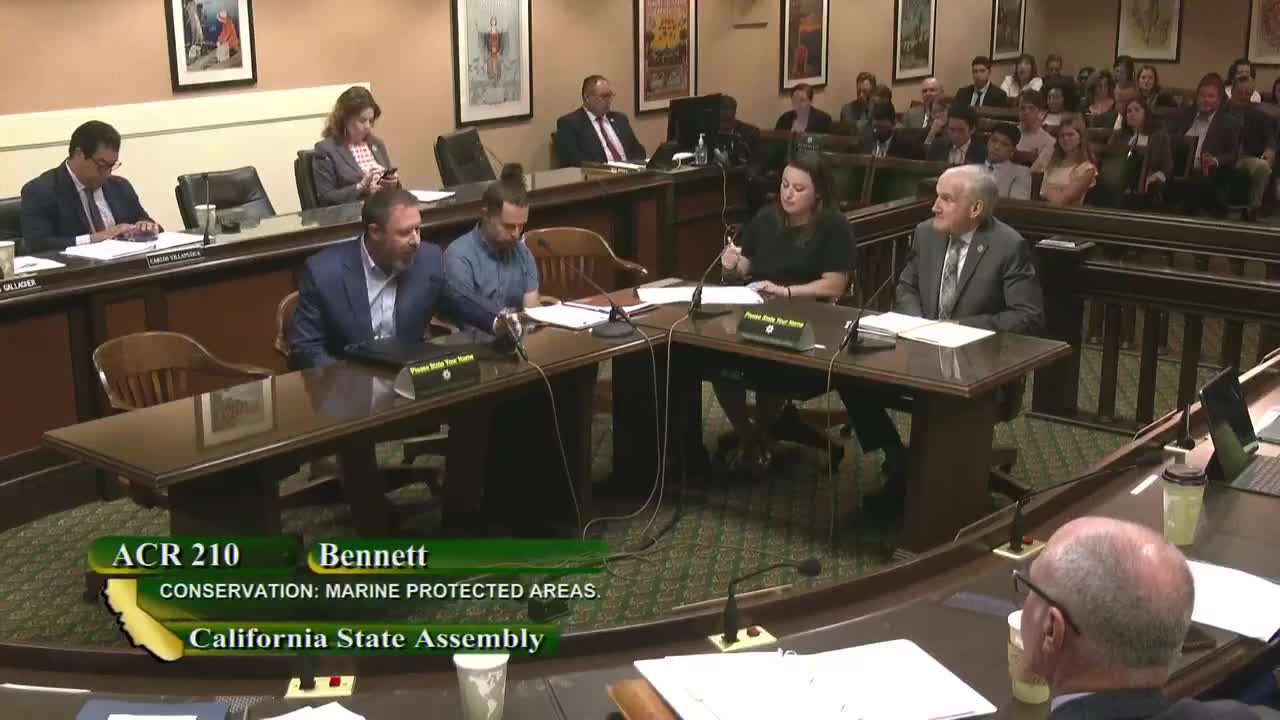 3MIN
Assembly Standing Committee on Water, Parks, and Wildlife
 4MIN
Assembly Standing Committee on Natural Resources
 2MIN
Senate Floor
 6MIN
Senate Standing Committee on Natural Resources and Water
 43SEC
Senate Standing Committee on Natural Resources and Water
39SEC
Senate Standing Committee on Natural Resources and Water
49SEC
Senate Standing Committee on Natural Resources and Water
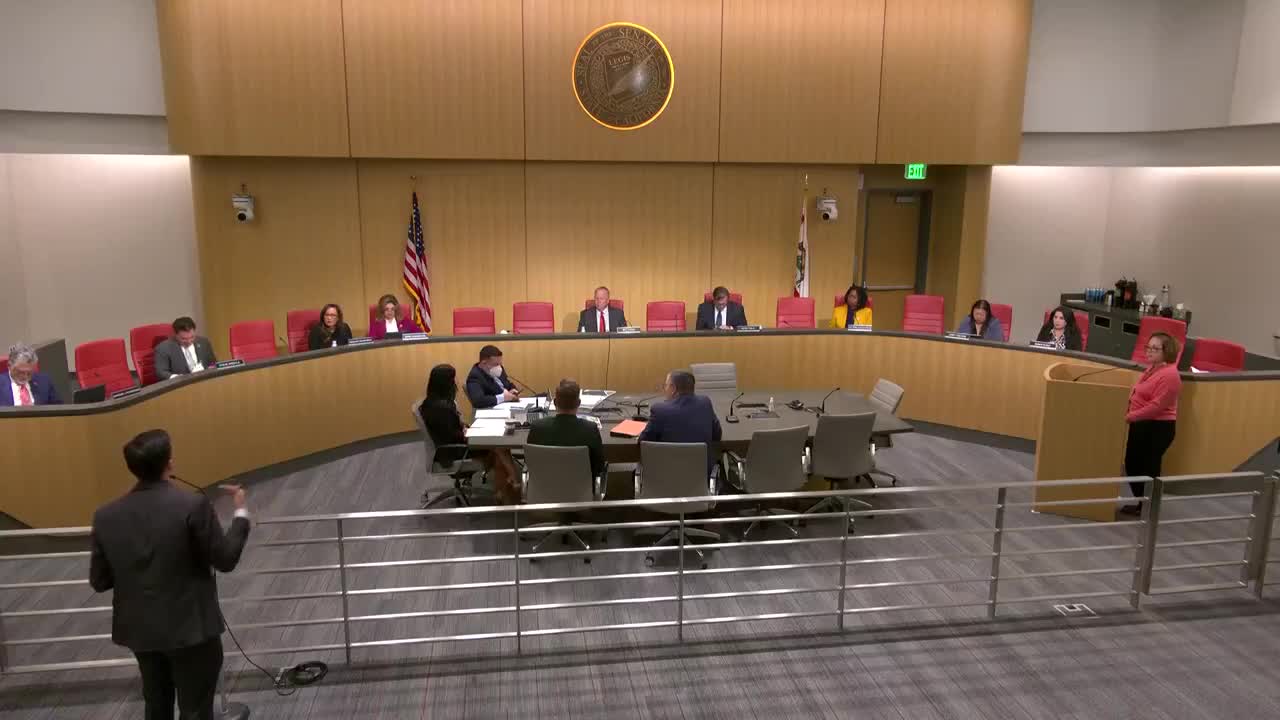 5MIN
Senate Standing Committee on Governmental Organization
Bill Author
Bill Co-Author(s):
