SB 1412: Instructional Quality Commission: qualifications: prohibited communications.
- Session Year: 2023-2024
- House: Senate
- Latest Version Date: 2024-09-04
Current Status:
Failed
(2024-09-22: In Senate. Consideration of Governor's veto pending.)
Introduced
In Committee
First Chamber
In Committee
Second Chamber
Enacted
Existing law establishes the Instructional Quality Commission and requires the commission to, among other things, recommend curriculum frameworks and instructional materials to the State Board of Education for adoption. Existing law requires the membership of the commission to consist of one Member of the Assembly and one public member appointed by the Speaker of the Assembly, one Member of the Senate and one public member appointed by the Senate Committee on Rules, one public member appointed by the Governor, and 13 public members appointed by the state board upon the recommendation of the Superintendent of Public Instruction or the members of the state board, and prescribes their qualifications. Existing regulations of the state board prohibit certain communications between publishers, and their representatives, and members of the commission and certain people involved in the instructional material adoption process, as provided.
This bill would prohibit curriculum vendors, as defined, from being eligible for appointment to a curriculum framework and evaluation criteria committee of the commission or being selected to serve as a member of the writing team, as defined. The bill would prohibit communications between (1) curriculum vendors and (2) members of the commission or the writing team, during their tenure, except as specifically authorized. If there is a prohibited communication, the bill would authorize the state board to take corrective action, including disqualification from further participation in the adoption at issue.
This bill would incorporate additional changes to Section 33530 of the Education Code proposed by SB 1411 to be operative only if this bill and SB 1411 are enacted and this bill is enacted last.
Existing law establishes the Instructional Quality Commission and requires the commission to, among other things, recommend curriculum frameworks and instructional materials to the State Board of Education for adoption. Existing law requires the membership of the commission to consist of one Member of the Assembly and one public member appointed by the Speaker of the Assembly, one Member of the Senate and one public member appointed by the Senate Committee on Rules, one public member appointed by the Governor, and 13 public members appointed by the state board upon the recommendation of the Superintendent of Public Instruction or the members of the state board, and prescribes their qualifications. Existing regulations of the state board prohibit certain communications between publishers, and their representatives, and members of the commission and certain people involved in the instructional material adoption process, as provided.
This bill would prohibit publishers, distributors, and retailers of instructional materials or professional development materials, and their representatives, curriculum vendors, as defined, from being eligible for appointment to a curriculum framework and evaluation criteria committee of the commission or being selected to serve on any committee, subcommittee, or working group of the commission, as provided. as a member of the writing team, as defined. The bill would codify and expand the above-described regulatory prohibition by prohibiting prohibit communications between (1) publishers, distributors, and retailers of instructional materials or professional development materials, and their representatives, curriculum vendors and (2) members of the commission, facilitators, instructional materials reviewers, or content review experts, commission or the writing team, during their tenure, except as specifically authorized. If there is a prohibited communication, the bill would authorize the state board to take corrective action, including disqualification from further participation in the adoption at issue.
This bill would incorporate additional changes to Section 33530 of the Education Code proposed by SB 1411 to be operative only if this bill and SB 1411 are enacted and this bill is enacted last.
Existing law establishes the Instructional Quality Commission and requires the commission to, among other things, recommend curriculum frameworks and instructional materials to the State Board of Education for adoption. Existing law requires the membership of the commission to consist of one Member of the Assembly and one public member appointed by the Speaker of the Assembly, one Member of the Senate and one public member appointed by the Senate Committee on Rules, one public member appointed by the Governor, and 13 public members appointed by the state board upon the recommendation of the Superintendent of Public Instruction or the members of the state board, and prescribes their qualifications. Existing regulations of the state board prohibit certain communications between publishers, and their representatives, and members of the commission and certain people involved in the instructional material adoption process, as provided.
This bill would prohibit publishers, distributers, distributors, and retailers of instructional materials or professional development materials, and their representatives, from being eligible for appointment to the commission or selected to serve on any committee, subcommittee, or working group of the commission, as provided. The bill would codify and expand the above-described regulatory prohibition by prohibiting communications between (1) publishers, distributers, distributors, and retailers of instructional materials or professional development materials, and their representatives, and (2) members of the commission, facilitators, instructional materials reviewers, or content review experts, during their tenure, except as specifically authorized. If there is a prohibited communication, the bill would authorize the state board to take corrective action, including disqualification from further participation in the adoption at issue.
Existing law establishes the Instructional Quality Commission and requires the commission to, among other things, recommend curriculum frameworks and instructional materials to the State Board of Education for adoption. Existing law requires the membership of the commission to consist of one Member of the Assembly and one public member appointed by the Speaker of the Assembly, one Member of the Senate and one public member appointed by the Senate Committee on Rules, one public member appointed by the Governor, and 13 public members appointed by the state board upon the recommendation of the Superintendent of Public Instruction or the members of the state board, and prescribes their qualifications. Existing regulations of the state board prohibit certain communications between publishers, and their representatives, and members of the commission and certain people involved in the instructional material adoption process, as provided.
This bill would prohibit publishers, distributers, and retailers of instructional materials or professional development materials, and their representatives, from being eligible for appointment to the commission or selected to serve on any committee, subcommittee, or working group of the commission, as provided. The bill would codify and expand the above-described regulatory prohibition by prohibiting communications between (1) publishers, distributers, and retailers of instructional materials or professional development materials, and their representatives, and (2) members of the commission, facilitators, instructional materials reviewers, or content review experts, during their tenure, except as specifically authorized. If there is a prohibited communication, the bill would authorize the state board to take corrective action, including disqualification from further participation in the adoption at issue.
It is the intent of the Legislature in adding Section 33530.5 to the Education Code, to codify and expand the prohibitions in Section 9514 of Title 5 of the California Code of Regulations.
SEC. 2.Section 33530 of the Education Code is amended to read:33530.(a)There is in the state government the Instructional Quality Commission consisting of one Member of the Assembly appointed by the Speaker of the Assembly, one Member of the Senate appointed by the Senate Committee on Rules, one public member appointed by the Speaker of the Assembly, one public member appointed by the Senate Committee on Rules, one public member appointed by the Governor, and 13 public members appointed by the state board upon the recommendation of the Superintendent or the members of the state board.
(b)So far as is practical and consistent with the duties assigned to the commission by the state board, at least 7 of the 13 public members appointed by the state board shall be persons who, because they have taught, written, or lectured on the subject matter fields specified in Section 33533, in the course of public or private employment, have become recognized authorities or experienced practitioners in those fields. The state board shall make its appointments to ensure that, at any one time, at least 7 of the 13 public members shall be current classroom teachers, or mentor teachers, or both assigned to teach kindergarten or any of grades 1 to 12, inclusive.
(c)Notwithstanding the requirement that 7 of the 13 public members shall be current classroom teachers or mentor teachers, current members of the commission who were appointed on or before December 31, 1989, shall be allowed to complete their terms.
(d)(1)It is the intent of the Legislature to encourage the state board to consider appointing a pupil to the commission, using the current appointment process.
(2)Notwithstanding Section 1020 of the Government Code, if the state board elects to appoint a pupil to the commission, the pupil shall meet both of the following criteria:
(A)The pupil has been enrolled in a California high school for a minimum of two consecutive years.
(B)The pupil is in good standing.
(e)In making the remaining appointments to the commission, and in establishing the commissions advisory task forces or committees, the state board is encouraged to consider the role of other representatives of the educational community in the development of curriculum and instructional materials, including, but not limited to, administrators, governing school board members, pupils, and parents who are reflective of the various ethnic groups and types of school districts in California.
(f)A curriculum vendor, as defined in subdivision (e) in Section 33530.5, shall not be appointed to a curriculum framework and evaluation criteria committee or be selected to serve as a member of the writing team, as defined in subdivision (e) in Section 33530.5.
SEC. 2.5.Section 33530 of the Education Code is amended to read:33530.(a)There is in the state government the Instructional Quality Commission consisting of one Member of the Assembly appointed by the Speaker of the Assembly, one Member of the Senate appointed by the Senate Committee on Rules, one public member appointed by the Speaker of the Assembly, one public member appointed by the Senate Committee on Rules, one public member appointed by the Governor, and 13 public members appointed by the state board upon the recommendation of the Superintendent or the members of the state board.
(b)So far as is practical and consistent with the duties assigned to the commission by the state board, at least 7 of the 13 public members appointed by the state board shall be persons who, because they have taught, written, or lectured on the subject matter fields specified in Section 33533, in the course of public or private employment, have become recognized authorities or experienced practitioners in those fields. The state board shall make its appointments to ensure that, at any one time, at least 7 of the 13 public members shall be current classroom teachers, or mentor teachers, or both assigned to teach kindergarten or any of grades 1 to 12, inclusive.
(c)Notwithstanding the requirement that 7 of the 13 public members shall be current classroom teachers or mentor teachers, current members of the commission who were appointed on or before December 31, 1989, shall be allowed to complete their terms.
(d)(1)It is the intent of the Legislature to encourage the state board to consider appointing a pupil to the commission, using the current appointment process.
(2)Notwithstanding Section 1020 of the Government Code, if the state board elects to appoint a pupil to the commission, the pupil shall meet both of the following criteria:
(A)The pupil has been enrolled in a California high school for a minimum of two consecutive years.
(B)The pupil is in good standing.
(e)In making the remaining appointments to the commission, and in establishing the commissions advisory task forces or committees, the state board is encouraged to consider the role of other representatives of the educational community in the development of curriculum and instructional materials, including, but not limited to, administrators, governing school board members, pupils, and parents who are reflective of the various ethnic groups and types of school districts in California.
(f)A curriculum vendor, as defined in subdivision (e) in Section 33530.5, shall not be appointed to a curriculum framework and evaluation criteria committee or be selected to serve as a member of the writing team, as defined in subdivision (e) in Section 33530.5.
(g)When the commission revises a curriculum framework in mathematics or science, it shall ensure that the associated curriculum framework and evaluation criteria committee includes representation from higher education faculty with relevant subject matter expertise. The Intersegmental Committee of the Academic Senates may nominate two faculty from California public institutions of higher education for consideration to serve on the relevant curriculum framework and evaluation criteria committee for these purposes.
SEC. 3.Section 33530.5 is added to the Education Code, to read:33530.5.(a)(1)A curriculum vendor shall not communicate with a member of the writing team during their tenure, and a member of the writing team, during their tenure, shall not communicate with a curriculum vendor about anything related to the evaluation or adoption of instructional materials submitted for adoption, other than when a curriculum vendor is making presentations or providing public comment in open publicly noticed meetings.
(2)If a curriculum vendor or a member of the writing team makes a prohibited communication, the state board may take corrective action, including disqualification of the curriculum vendor or a member of the writing team from further participation in the adoption at issue.
(b)(1)A curriculum vendor shall not communicate with members of the commission about anything related to the evaluation or adoption of instructional materials, other than during the times for public comment in open publicly noticed meetings or through written submissions addressed to all members of the commission in care of the executive director of the commission, between the date set forth in the schedule of significant events when instructional materials are delivered to instructional materials reviewers, content review experts, and learning resources display centers and the date when the state board takes action to adopt.
(2)If a curriculum vendor or members of the commission make a prohibited communication, the state board may take corrective action, including disqualification of the curriculum vendor and the member of the commission from further participation in the adoption at issue.
(c)Notwithstanding subdivisions (a) and (b), a member of the writing team and members of the commission may contact a curriculum vendor for technical assistance in using electronic instructional materials.
(d)Notwithstanding subdivisions (a) and (b), a curriculum vendor may communicate with the chair of the commission, or the chairs designee, or the chair of the subject matter committee, or the chairs designee, involved in the adoption during the time set forth for deliberations.
(e)For purposes of this section, the following definitions apply:
(1)Curriculum vendor means an individual who sells curriculum or professional development associated with a curriculum, or a representative of an entity that sells curriculum or professional development associated with a curriculum.
(2)Writing team means the group of individuals tasked with writing framework drafts during the process of the frameworks development.
SEC. 4.Section 2.5 of this bill incorporates amendments to Section 33530 of the Education Code proposed by both this bill and Senate Bill 1411. That section of this bill shall only become operative if (1) both bills are enacted and become effective on or before January 1, 2025, (2) each bill amends Section 33530 of the Education Code, and (3) this bill is enacted after Senate Bill 1411, in which case Section 2 of this bill shall not become operative.
It is the intent of the Legislature in adding Section 33530.5 to the Education Code, to codify and expand the prohibitions in Section 9514 of Title 5 of the California Code of Regulations.
SEC. 2.Section 33530 of the Education Code is amended to read:33530.(a)There is in the state government the Instructional Quality Commission consisting of one Member of the Assembly appointed by the Speaker of the Assembly, one Member of the Senate appointed by the Senate Committee on Rules, one public member appointed by the Speaker of the Assembly, one public member appointed by the Senate Committee on Rules, one public member appointed by the Governor, and 13 public members appointed by the state board upon the recommendation of the Superintendent or the members of the state board.
(b)So far as is practical and consistent with the duties assigned to the commission by the state board, at least 7 of the 13 public members appointed by the state board shall be persons who, because they have taught, written, or lectured on the subject matter fields specified in Section 33533, in the course of public or private employment, have become recognized authorities or experienced practitioners in those fields. The state board shall make its appointments to ensure that, at any one time, at least 7 of the 13 public members shall be current classroom teachers, or mentor teachers, or both assigned to teach kindergarten or any of grades 1 to 12, inclusive.
(c)Notwithstanding the requirement that 7 of the 13 public members shall be current classroom teachers or mentor teachers, current members of the commission who were appointed on or before December 31, 1989, shall be allowed to complete their terms.
(d)(1)It is the intent of the Legislature to encourage the state board to consider appointing a pupil to the commission, using the current appointment process.
(2)Notwithstanding Section 1020 of the Government Code, if the state board elects to appoint a pupil to the commission, the pupil shall meet both of the following criteria:
(A)The pupil has been enrolled in a California high school for a minimum of two consecutive years.
(B)The pupil is in good standing.
(e)In making the remaining appointments to the commission, and in establishing the commissions advisory task forces or committees, the state board is encouraged to consider the role of other representatives of the educational community in the development of curriculum and instructional materials, including, but not limited to, administrators, governing school board members, pupils, and parents who are reflective of the various ethnic groups and types of school districts in California.
(f)Notwithstanding any other law, publishers, distributors, and retailers of instructional materials or professional development materials, and their representatives, shall not be eligible for appointment to the commission or selected to serve on any committee, subcommittee, or working group of the commission, including, but not limited to, Curriculum Framework and Evaluation Committees, Subject Matter Expertise Committees, and curriculum framework writing teams, nor shall they be selected to serve as facilitators, instructional materials reviewers, or content review experts.(f)A curriculum vendor, as defined in subdivision (e) in Section 33530.5, shall not be appointed to a curriculum framework and evaluation criteria committee or be selected to serve as a member of the writing team, as defined in subdivision (e) in Section 33530.5.
SEC. 2.5.Section 33530 of the Education Code is amended to read:33530.(a)There is in the state government the Instructional Quality Commission consisting of a one Member of the Assembly appointed by the Speaker of the Assembly, a one Member of the Senate appointed by the Senate Committee on Rules, one public member appointed by the Speaker of the Assembly, one public member appointed by the Senate Committee on Rules, one public member appointed by the Governor, and 13 public members appointed by the state board upon the recommendation of the Superintendent or the members of the state board.
(b)So far as is practical and consistent with the duties assigned to the commission by the state board, at least seven 7 of the 13 public members appointed by the state board shall be persons who, because they have taught, written, or lectured on the subject matter fields specified in Section 33533, in the course of public or private employment, have become recognized authorities or experienced practitioners in those fields. The state board shall make its appointments to ensure that, at any one time, at least seven 7 of the 13 public members shall be current classroom teachers, or mentor teachers, or both assigned to teach kindergarten or any of grades 1 to 12, inclusive.
(c)Notwithstanding the requirement that seven 7 of the 13 public members shall be current classroom teachers or mentor teachers, current members of the commission who were appointed on or before December 31, 1989, shall be allowed to complete their terms.
(d)(1)It is the intent of the Legislature to encourage the state board to consider appointing a pupil to the commission, using the current appointment process.
(2)Notwithstanding Section 1020 of the Government Code, if the state board elects to appoint a pupil to the commission, the pupil shall meet both of the following criteria:
(A)The pupil has been enrolled in a California high school for a minimum of two consecutive years.
(B)The pupil is in good standing.
(e)In making the remaining appointments to the commission, and in establishing the commissions advisory task forces or committees, the state board is encouraged to consider the role of other representatives of the educational community in the development of curriculum and instructional materials, including, but not limited to, administrators, governing school board members, pupils, and parents who are reflective of the various ethnic groups and types of school districts in California.
(f)A curriculum vendor, as defined in subdivision (e) in Section 33530.5, shall not be appointed to a curriculum framework and evaluation criteria committee or be selected to serve as a member of the writing team, as defined in subdivision (e) in Section 33530.5.
(g)When the commission revises a curriculum framework in mathematics or science, it shall ensure that the associated curriculum framework and evaluation criteria committee includes representation from higher education faculty with relevant subject matter expertise. The Intersegmental Committee of the Academic Senates may nominate two faculty from California public institutions of higher education for consideration to serve on the relevant curriculum framework and evaluation criteria committee for these purposes.
SEC. 3.Section 33530.5 is added to the Education Code, to read:33530.5.(a)(1)Publishers, distributors, and retailers of instructional materials or professional development materials, and their representatives, A curriculum vendor shall not communicate with facilitators, instructional materials reviewers, or content review experts a member of the writing team during their tenure, and facilitators, instructional materials reviewers, and content review experts, a member of the writing team, during their tenure, shall not communicate with publishers, distributors, and retailers of instructional materials or professional development materials, and their representatives, a curriculum vendor about anything related to the evaluation or adoption of instructional materials submitted for adoption, other than when publishers, distributors, or retailers of instructional materials or professional development materials, or their representatives, are a curriculum vendor is making presentations or providing public comment in open publicly noticed meetings.
(2)If a publisher, distributor, or retailer of instructional materials or professional development materials, or their representative, or a facilitator, instructional materials reviewer, or content review expert curriculum vendor or a member of the writing team makes a prohibited communication, the state board may take corrective action, including disqualification of the publisher, facilitator, instructional materials reviewer, or content review expert curriculum vendor or a member of the writing team from further participation in the adoption at issue.
(b)(1)Publishers, distributors, or retailers of instructional materials or professional development materials, or their representatives, A curriculum vendor shall not communicate with members of the commission about anything related to the evaluation or adoption of instructional materials, other than during the times for public comment in open publicly noticed meetings or through written submissions addressed to all members of the commission in care of the executive director of the commission, between the date set forth in the schedule of significant events when instructional materials are delivered to instructional materials reviewers, content review experts, and learning resources display centers and the date when the state board takes action to adopt.
(2)If a publisher, distributor, or retailer of instructional materials or professional development materials, or their representative, curriculum vendor or members of the commission make a prohibited communication, the state board may take corrective action, including disqualification of the publisher curriculum vendor and the member of the commission from further participation in the adoption at issue.
(c)Notwithstanding subdivisions (a) and (b), facilitators, instructional materials reviewers, content review experts, a member of the writing team and members of the commission may contact publishers, distributors, or retailers of instructional materials or professional development materials, or their representatives, a curriculum vendor for technical assistance in using electronic instructional materials.
(d)Notwithstanding subdivisions (a) and (b), publishers, distributors, and retailers of instructional materials or professional development materials, and their representatives, a curriculum vendor may communicate with the chair of the commission, or the chairs designee, or the chair of the subject matter committee, or the chairs designee, involved in the adoption during the time set forth for deliberations.
(e)For purposes of this section, the following definitions apply:
(1)Curriculum vendor means an individual who sells curriculum or professional development associated with a curriculum, or a representative of an entity that sells curriculum or professional development associated with a curriculum.
(2)Writing team means the group of individuals tasked with writing framework drafts during the process of the frameworks development.
SEC. 4.Section 2.5 of this bill incorporates amendments to Section 33530 of the Education Code proposed by both this bill and Senate Bill 1411. That section of this bill shall only become operative if (1) both bills are enacted and become effective on or before January 1, 2025, (2) each bill amends Section 33530 of the Education Code, and (3) this bill is enacted after Senate Bill 1411, in which case Section 2 of this bill shall not become operative.
It is the intent of the Legislature in adding Section 33530.5 to the Education Code, to codify and expand the prohibitions in Section 9514 of Title 5 of the California Code of Regulations.
SEC. 2.Section 33530 of the Education Code is amended to read:33530.(a)There is in the state government the Instructional Quality Commission consisting of one Member of the Assembly appointed by the Speaker of the Assembly, one Member of the Senate appointed by the Senate Committee on Rules, one public member appointed by the Speaker of the Assembly, one public member appointed by the Senate Committee on Rules, one public member appointed by the Governor, and 13 public members appointed by the state board upon the recommendation of the Superintendent or the members of the state board.
(b)So far as is practical and consistent with the duties assigned to the commission by the state board, at least 7 of the 13 public members appointed by the state board shall be persons who, because they have taught, written, or lectured on the subject matter fields specified in Section 33533, in the course of public or private employment, have become recognized authorities or experienced practitioners in those fields. The state board shall make its appointments to ensure that, at any one time, at least 7 of the 13 public members shall be current classroom teachers, or mentor teachers, or both assigned to teach kindergarten or any of grades 1 to 12, inclusive.
(c)Notwithstanding the requirement that 7 of the 13 public members shall be current classroom teachers or mentor teachers, current members of the commission who were appointed on or before December 31, 1989, shall be allowed to complete their terms.
(d)(1)It is the intent of the Legislature to encourage the state board to consider appointing a pupil to the commission, using the current appointment process.
(2)Notwithstanding Section 1020 of the Government Code, if the state board elects to appoint a pupil to the commission, the pupil shall meet both of the following criteria:
(A)The pupil has been enrolled in a California high school for a minimum of two consecutive years.
(B)The pupil is in good standing.
(e)In making the remaining appointments to the commission, and in establishing the commissions advisory task forces or committees, the state board is encouraged to consider the role of other representatives of the educational community in the development of curriculum and instructional materials, including, but not limited to, administrators, governing school board members, pupils, and parents who are reflective of the various ethnic groups and types of school districts in California.
(f)Notwithstanding any other law, publishers, distributers, distributors, and retailers of instructional materials or professional development materials, and their representatives, shall not be eligible for appointment to the commission or selected to serve on any committee, subcommittee, or working group of the commission, including, but not limited to, Curriculum Framework and Evaluation Committees, Subject Matter Expertise Committees, and curriculum framework writing teams, nor shall they be selected to serve as facilitators, instructional materials reviewers, or content review experts.
SEC. 3.Section 33530.5 is added to the Education Code, to read:33530.5.(a)(1)Publishers, distributers, distributors, and retailers of instructional materials or professional development materials, and their representatives, shall not communicate with facilitators, instructional materials reviewers, or content review experts during their tenure, and facilitators, instructional materials reviewers, and content review experts, during their tenure, shall not communicate with publishers, distributers, distributors, and retailers of instructional materials or professional development materials, and their representatives, about anything related to the evaluation or adoption of instructional materials submitted for adoption, other than when publishers, distributers, distributors, or retailers of instructional materials or professional development materials, or their representatives, are making presentations or providing public comment in open publicly noticed meetings.
(2)If a publisher, distributer, distributor, or retailer of instructional materials or professional development materials, or their representative, or a facilitator, instructional materials reviewer, or content review expert makes a prohibited communication, the state board may take corrective action, including disqualification of the publisher, facilitator, instructional materials reviewer, or content review expert from further participation in the adoption at issue.
(b)(1)Publishers, distributers, distributors, or retailers of instructional materials or professional development materials, or their representatives, shall not communicate with members of the commission about anything related to the evaluation or adoption of instructional materials, other than during the times for public comment in open publicly noticed meetings or through written submissions addressed to all members of the commission in care of the executive director of the commission, between the date set forth in the schedule of significant events when instructional materials are delivered to instructional materials reviewers, content review experts, and learning resources display centers and the date when the state board takes action to adopt.
(2)If a publisher, distributer, distributor, or retailer of instructional materials or professional development materials, or their representative, or members of the commission make a prohibited communication, the state board may take corrective action, including disqualification of the publisher and the member of the commission from further participation in the adoption at issue.
(c)Notwithstanding subdivisions (a) and (b), facilitators, instructional materials reviewers, content review experts, and members of the commission may contact publishers, distributers, distributors, or retailers of instructional materials or professional development materials, or their representatives, for technical assistance in using electronic instructional materials.
(d)Notwithstanding subdivisions (a) and (b), publishers, distributors, and retailers of instructional materials or professional development materials, and their representatives, may communicate with the chair of the commission, or the chairs designee, or the chair of the subject matter committee, or the chairs designee, involved in the adoption during the time set forth for deliberations.
It is the intent of the Legislature in adding Section 33530.5 to the Education Code, to codify and expand the prohibitions in Section 9514 of Title 5 of the California Code of Regulations.
SEC. 2.Section 33530 of the Education Code is amended to read:33530.(a)There is in the state government the Instructional Quality Commission consisting of a one Member of the Assembly appointed by the Speaker of the Assembly, a one Member of the Senate appointed by the Senate Committee on Rules, one public member appointed by the Speaker of the Assembly, one public member appointed by the Senate Committee on Rules, one public member appointed by the Governor, and 13 public members appointed by the state board upon the recommendation of the Superintendent or the members of the state board.
(b)So far as is practical and consistent with the duties assigned to the commission by the state board, at least seven 7 of the 13 public members appointed by the state board shall be persons who, because they have taught, written, or lectured on the subject matter fields specified in Section 33533, in the course of public or private employment, have become recognized authorities or experienced practitioners in those fields. The state board shall make its appointments to ensure that, at any one time, at least seven of the 7 of the 13 public members shall be current classroom teachers, or mentor teachers, or both assigned to teach kindergarten or any of grades 1 to 12, inclusive.
(c)Notwithstanding the requirement that seven of the 7 of the 13 public members shall be current classroom teachers or mentor teachers, current members of the commission who were appointed on or before December 31, 1989, shall be allowed to complete their terms.
(d)(1)It is the intent of the Legislature to encourage the state board to consider appointing a pupil to the commission, using the current appointment process.
(2)Notwithstanding Section 1020 of the Government Code, if the state board elects to appoint a pupil to the commission, the pupil shall meet both of the following criteria:
(A)The pupil has been enrolled in a California high school for a minimum of two consecutive years.
(B)The pupil is in good standing.
(e)In making the remaining appointments to the commission, and in establishing the commissions advisory task forces or committees, the state board is encouraged to consider the role of other representatives of the educational community in the development of curriculum and instructional materials, including, but not limited to, administrators, governing school board members, pupils, and parents who are reflective of the various ethnic groups and types of school districts in California.
(f)Notwithstanding any other law, publishers, distributers, and retailers of instructional materials or professional development materials, and their representatives, shall not be eligible for appointment to the commission or selected to serve on any committee, subcommittee, or working group of the commission, including, but not limited to, Curriculum Framework and Evaluation Committees, Subject Matter Expertise Committees, and curriculum framework writing teams, nor shall they be selected to serve as facilitators, instructional materials reviewers, or content review experts.
SEC. 3.Section 33530.5 is added to the Education Code, to read:33530.5.(a)(1)Publishers, distributers, and retailers of instructional materials or professional development materials, and their representatives, shall not communicate with facilitators, instructional materials reviewers, or content review experts during their tenure, and facilitators, instructional materials reviewers, and content review experts, during their tenure, shall not communicate with publishers, distributers, and retailers of instructional materials or professional development materials, and their representatives, about anything related to the evaluation or adoption of instructional materials submitted for adoption, other than when publishers, distributers, or retailers of instructional materials or professional development materials, or their representatives, are making presentations or providing public comment in open publicly noticed meetings.
(2)If a publisher, distributer, or retailer of instructional materials or professional development materials, or their representative, or a facilitator, instructional materials reviewer, or content review expert makes a prohibited communication, the state board may take corrective action, including disqualification of the publisher, facilitator, instructional materials reviewer, or content review expert from further participation in the adoption at issue.
(b)(1)Publishers, distributers, or retailers of instructional materials or professional development materials, or their representatives, shall not communicate with members of the commission about anything related to the evaluation or adoption of instructional materials, other than during the times for public comment in open publicly noticed meetings or through written submissions addressed to all members of the commission in care of the executive director of the commission, between the date set forth in the schedule of significant events when instructional materials are delivered to instructional materials reviewers, content review experts, and learning resources display centers and the date when the state board takes action to adopt.
(2)If a publisher, distributer, or retailer of instructional materials or professional development materials, or their representative, or members of the commission make a prohibited communication, the state board may take corrective action, including disqualification of the publisher and the member of the commission from further participation in the adoption at issue.
(c)Notwithstanding subdivisions (a) and (b), facilitators, instructional materials reviewers, content review experts, and members of the commission may contact publishers, distributers, or retailers of instructional materials or professional development materials, or their representatives, for technical assistance in using electronic instructional materials.
(d)Notwithstanding subdivisions (a) and (b), publishers, distributors, and retailers of instructional materials or professional development materials, and their representatives, may communicate with the chair of the commission, or the chairs designee, or the chair of the subject matter committee, or the chairs designee, involved in the adoption during the time set forth for deliberations.
|
Date
|
Status
|
|---|---|
| Sep 22, 2024 | In Senate. Consideration of Governor's veto pending. |
| Sep 22, 2024 | Vetoed by the Governor. |
| Sep 10, 2024 | Enrolled and presented to the Governor at 4 p.m. |
| Aug 30, 2024 | Assembly amendments concurred in. (Ayes 40. Noes 0. Page 5750.) Ordered to engrossing and enrolling. |
| Aug 29, 2024 | Ordered to special consent calendar. |
| Aug 28, 2024 | In Senate. Concurrence in Assembly amendments pending. |
| Aug 28, 2024 | Read third time. Passed. (Ayes 77. Noes 0. Page 6797.) Ordered to the Senate. |
| Aug 22, 2024 | Ordered to third reading. |
| Aug 22, 2024 | Read third time and amended. |
| Aug 5, 2024 | Ordered to third reading. |
| Aug 5, 2024 | From consent calendar on motion of Assembly Member Gabriel. |
| Jul 3, 2024 | Read second time. Ordered to consent calendar. |
| Jul 2, 2024 | From committee: Do pass. Ordered to consent calendar. (Ayes 15. Noes 0.) (July 2). |
| Jun 26, 2024 | June 26 hearing postponed by committee. |
| Jun 13, 2024 | From committee: Do pass and re-refer to Com. on APPR. with recommendation: To consent calendar. (Ayes 7. Noes 0.) (June 12). Re-referred to Com. on APPR. |
| Jun 3, 2024 | From committee with author's amendments. Read second time and amended. Re-referred to Com. on ED. |
| Apr 29, 2024 | Referred to Com. on ED. |
| Apr 18, 2024 | In Assembly. Read first time. Held at Desk. |
| Apr 18, 2024 | Read third time. Passed. (Ayes 39. Noes 0. Page 3672.) Ordered to the Assembly. |
| Apr 16, 2024 | Read second time. Ordered to consent calendar. |
| Apr 15, 2024 | From committee: Be ordered to second reading pursuant to Senate Rule 28.8 and ordered to consent calendar. |
| Apr 5, 2024 | Set for hearing April 15. |
| Apr 3, 2024 | From committee: Do pass and re-refer to Com. on APPR with recommendation: To consent calendar. (Ayes 6. Noes 0. Page 3466.) (April 3). Re-referred to Com. on APPR. |
| Mar 13, 2024 | Set for hearing April 3. |
| Feb 29, 2024 | Referred to Com. on ED. |
| Feb 20, 2024 | From printer. May be acted upon on or after March 18. |
| Feb 16, 2024 | Introduced. Read first time. To Com. on RLS. for assignment. To print. |
|
Date
|
Description
|
Location
|
Votes
|
|
|---|---|---|---|---|
| Aug 30, 2024 | Special Consent SB1412 Ochoa Bogh | Senate Floor |
Passed |
|
| Aug 28, 2024 | SB 1412 Ochoa Bogh Senate Third Reading By Hoover | Assembly Floor |
Passed |
|
| Jul 2, 2024 | Do pass. To Consent Calendar. | Assembly Standing Committee on Appropriations |
Passed |
|
| Jun 12, 2024 | Do pass and be re-referred to the Committee on [Appropriations] with recommendation: To Consent Calendar | Assembly Standing Committee on Education |
Passed |
|
| Apr 18, 2024 | Consent Calendar 2nd SB1412 Ochoa Bogh | Senate Floor |
Passed |
|
| Apr 3, 2024 | Do pass, but first be re-referred to the Committee on [Appropriations] with the recommendation: To Consent Calendar | Senate Standing Committee on Education |
Passed |
This list shows positions taken on this bill by organizations on the date displayed, which is linked to the original source.
Positions by individuals are not included.
SENATE RULES COMMITTEE Office of Senate Floor Analyses (916) 651-1520 Fax: (916) 327-4478 | SB 1412 |
VETO
Bill No: SB 1412
Author: Ochoa Bogh (R)
Enrolled: 9/4/24
Vote: 27
SENATE EDUCATION COMMITTEE: 6-0, 4/3/24
AYES: Newman, Ochoa Bogh, Cortese, Gonzalez, Smallwood-Cuevas, Wilk
NO VOTE RECORDED: Glazer
SENATE APPROPRIATIONS COMMITTEE: Senate Rule 28.8
SENATE FLOOR: 39-0, 4/18/24 (Consent)
AYES: Allen, Alvarado-Gil, Archuleta, Ashby, Atkins, Becker, Blakespear, Bradford, Caballero, Cortese, Dahle, Dodd, Durazo, Eggman, Glazer, Gonzalez, Grove, Jones, Laird, Limón, McGuire, Menjivar, Min, Newman, Nguyen, Niello, Ochoa Bogh, Padilla, Portantino, Roth, Rubio, Seyarto, Skinner, Smallwood-Cuevas, Stern, Umberg, Wahab, Wiener, Wilk
NO VOTE RECORDED: Hurtado
SENATE FLOOR: 40-0, 8/30/24
AYES: Allen, Alvarado-Gil, Archuleta, Ashby, Atkins, Becker, Blakespear, Bradford, Caballero, Cortese, Dahle, Dodd, Durazo, Eggman, Glazer, Gonzalez, Grove, Hurtado, Jones, Laird, Limón, McGuire, Menjivar, Min, Newman, Nguyen, Niello, Ochoa Bogh, Padilla, Portantino, Roth, Rubio, Seyarto, Skinner, Smallwood-Cuevas, Stern, Umberg, Wahab, Wiener, Wilk
ASSEMBLY FLOOR: 77-0, 8/28/24 - See last page for vote
SUBJECT: Instructional Quality Commission: qualifications: prohibited communications
SOURCE: Author
DIGEST:
This bill prohibits curriculum vendors, as defined, from being appointed to serve on a curriculum framework and evaluation committee (CFCC) or from being chosen as a member of a curriculum framework writing team, and codifies and expands the existing prohibition on communications between publishers and members of the Instructional Quality Commission (IQC) to include curriculum vendors.
ANALYSIS:
Existing law:
California Code of Regulation (CCR)
- Prohibits publishers or their representatives from communicating with facilitators, Instructional material reviewers (IMR), Content Reviewer Experts (CRE), and facilitators, IMRs and CREs during their tenure, from communicating with publishers or their representatives, about anything related to the evaluation or adoption of instructional materials submitted for adoption, other than when publishers are making presentations or public comment in open publicly-noticed meetings, but allows facilitators, IMRs, CREs, and Commissioners to communicate with publishers for technical assistance in using electronic instructional materials and allow publishers or their representatives to communicate with the chairperson, or designee, of the Commission or the chairperson, or designee, of the Subject Matter Committee involved in the adoption during the time set forth for deliberations. When publishers or their representatives, or facilitators, IMRs or CREs, make a prohibited communication, the State Board of Education (SBE) may take corrective action, including disqualification of the publisher, facilitator and IMR/CRE from further participation in the adoption. (CCR Title 5 § 9514 (a))
- Prohibits a publisher from communicating with members of the IQC about anything related to the evaluation or adoption of instructional materials other than during the times for public comment in open publicly noticed meetings or through written submissions addressed to all commissioners in care of the Executive Director of the IQC, between the date set forth in the Schedule of Significant Events when instructional materials are delivered to IMRs, CREs and Learning Resources Display Center (LRDCs) and the date when the SBE takes action to adopt, but allows publishers or their representatives to communicate with the chairperson, or designee, of the Commission or the chairperson, or designee, of the Subject Matter Committee involved in the adoption during the time set forth for deliberations. When publishers or their representatives, or commissioners make a prohibited communication, the SBE may take corrective action, including disqualification of the publisher and the Commissioner from further participation in the adoption. (CCR Title 5 § 9514 (b))
Education Code (EC)
- Requires the IQC to perform all of the following duties:
- Recommend curriculum frameworks to the SBE.
- Develop criteria for evaluating instructional materials submitted for adoption so that the materials adopted shall adequately cover the subjects in the indicated grade or grades and comply with the Fair, Accurate, Inclusive and Respectful (FAIR) Act and consistent with the model instructional materials, as specified.
- Study and evaluate instructional materials submitted for adoption.
- Recommend instructional materials for adoption to the state board.
- Recommend to the state board policies and activities to assist the department and school districts in the use of the curriculum framework and other available model curriculum materials for the purpose of guiding and strengthening the quality of instruction in public schools.
- Advise and make recommendations to the state board, including, but not limited to, what policies and activities are needed to implement the state’s academic content standards, and bring the state’s curriculum frameworks, instructional materials, professional development programs, pupil assessments, and academic accountability systems into alignment with those standards. (EC § 60204)
- Declares that in the state government, the IQC must consist of a Member of the Assembly appointed by the Speaker of the Assembly, a Member of the Senate appointed by the Senate Committee on Rules, one public member appointed by the Speaker of the Assembly, one public member appointed by the Senate Committee on Rules, one public member appointed by the Governor, and 13 public members appointed by the state board upon the recommendation of the Superintendent or the members of the SBE with a t least 7 of the 13 public members who, because they have taught, written, or lectured on the subject matter fields in the course of public or private employment, have become recognized authorities or experienced practitioners in those fields. (EC § 33530)
This bill:
- States it is the intent of the Legislature to codify and expand the prohibitions in Section 9514 of Title 5 of the California Code of Regulations.
- Prohibits curriculum vendors from being eligible for appointment to a CFCC or selection to serve on a curriculum framework writing team; and
- Codifies existing regulations that prohibit communication between publishers and the IQC and its committees, and expands the individuals subject to the prohibitions on communication to include curriculum vendors, defined as individuals who sell curriculum or professional development associated with a curriculum, or their representatives.
Comments
- Need for the bill. According to the author, “SB 1412 would codify the Board of Education’s regulations pertaining to prohibited communications, and equally apply these regulations to representatives of organizations that create curricula and instructional materials at the high school level, or provide professional development in the use of such products in grades K-12. This will close a loophole in state regulations that currently only apply to the state approval of materials adopted for K-8 students. By prohibiting communications between representatives of potentially conflicted organizations and various curriculum committees, commissions, and boards, all levels of K-12 curriculum development and materials adoption will be better protected from conflicts of interest.”
- Existing Prohibitions Established in the California Code of Regulations. Title 5 Section 9514, currently prohibits publishers or their representatives from communicating to members with facilitators, IMRs, and CREs during their tenure and facilitators, IMRs, and CREs during their tenure from communicating about anything related to the evaluation or adoption of instructional materials submitted for adoption, other than when publishers are making presentations or public comment in open, publicly-noticed meetings, but still allows facilitators, IMRs, CREs, and Commissioners to contact publishers for technical assistance in using electronic instructional materials.
Title 5, Section 9514 also stipulates that publishers or their representatives cannot communicate with the IQC about anything related to the evaluation or adoption of instructional materials other than during the times for public comment in open publicly-noticed meetings, or other than through written submissions addressed to all Commissioners in care of the Executive Director of the Commission, between the date set forth in the Schedule of Significant Events when instructional materials are delivered to IMRs, CREs and LRDCs and the date when the SBE takes action to adopt but still allows publishers or their representatives to communicate with the chairperson, or designee, of the IQC or the chairperson, or designee, of the Subject Matter Committee involved in the adoption during the time set forth for deliberations.
If there is any prohibited communication, as specified above, the SBE may take corrective action, including disqualification of the publisher, facilitator, and IMR/CRE from further participation in the adoption.
FISCAL EFFECT: Appropriation: No Fiscal Com.: Yes Local: No
According to the Assembly Appropriations Committee, “no state costs.”
SUPPORT: (Verified 10/10/24)
None received
OPPOSITION: (Verified 10/10/24)
None received
GOVERNOR'S VETO MESSAGE:
This bill would prohibit curriculum vendors from being appointed to serve on a Curriculum Framework and Evaluation Criteria Committee (CFCC), or from being chosen as a member of a curriculum framework writing team, and codifies and expands the existing prohibition on communications between publishers and members of the Instructional Quality Commission (IQC) to include curriculum vendors.
The IQC is an advisory body to the State Board of Education (SBE) comprised of 18 Commissioners - at least half of whom are classroom teachers - that helps develop curriculum frameworks and makes recommendations for approval of instructional materials for use by California's school districts. Existing SBE regulations already prohibit publishers or their representatives from communicating with the Commissioners and others involved in the adoption of instructional materials during their tenure about anything related to the evaluation or adoption of instructional materials outside of publicly noticed meetings. As these existing regulations already carry the force of law, this bill is unnecessary. Additionally, this bill's new definitions and prohibitions are overly broad and would limit the ability of the most qualified individuals, particularly educators, to advise the IQC, and thus the SBE, on curriculum development.
For these reasons, I cannot sign this bill.
ASSEMBLY FLOOR: 77-0, 8/28/24
AYES: Addis, Aguiar-Curry, Alanis, Alvarez, Arambula, Bains, Bauer-Kahan, Bennett, Berman, Boerner, Bonta, Bryan, Calderon, Juan Carrillo, Wendy Carrillo, Chen, Connolly, Megan Dahle, Davies, Dixon, Essayli, Flora, Mike Fong, Friedman, Gabriel, Gallagher, Garcia, Gipson, Grayson, Haney, Hart, Holden, Hoover, Irwin, Jackson, Jones-Sawyer, Kalra, Lackey, Lee, Low, Lowenthal, Maienschein, Mathis, McCarty, McKinnor, Muratsuchi, Stephanie Nguyen, Pacheco, Papan, Jim Patterson, Joe Patterson, Pellerin, Petrie-Norris, Quirk-Silva, Ramos, Rendon, Reyes, Luz Rivas, Rodriguez, Blanca Rubio, Sanchez, Santiago, Schiavo, Soria, Ta, Ting, Valencia, Villapudua, Waldron, Wallis, Ward, Weber, Wicks, Wilson, Wood, Zbur, Robert Rivas
NO VOTE RECORDED: Cervantes, Ortega
Prepared by: Kordell Hampton / ED. / (916) 651-4105
10/16/24 14:26:30
**** END ****
SENATE RULES COMMITTEE Office of Senate Floor Analyses (916) 651-1520 Fax: (916) 327-4478 | SB 1412 |
UNFINISHED BUSINESS
Bill No: SB 1412
Author: Ochoa Bogh (R)
Amended: 8/22/24
Vote: 21
SENATE EDUCATION COMMITTEE: 6-0, 4/3/24
AYES: Newman, Ochoa Bogh, Cortese, Gonzalez, Smallwood-Cuevas, Wilk
NO VOTE RECORDED: Glazer
SENATE APPROPRIATIONS COMMITTEE: Senate Rule 28.8
SENATE FLOOR: 39-0, 4/18/24 (Consent)
AYES: Allen, Alvarado-Gil, Archuleta, Ashby, Atkins, Becker, Blakespear, Bradford, Caballero, Cortese, Dahle, Dodd, Durazo, Eggman, Glazer, Gonzalez, Grove, Jones, Laird, Limón, McGuire, Menjivar, Min, Newman, Nguyen, Niello, Ochoa Bogh, Padilla, Portantino, Roth, Rubio, Seyarto, Skinner, Smallwood-Cuevas, Stern, Umberg, Wahab, Wiener, Wilk
NO VOTE RECORDED: Hurtado
ASSEMBLY FLOOR: 77-0, 8/28/24 - See last page for vote
SUBJECT: Instructional Quality Commission: qualifications: prohibited communications
SOURCE: Author
DIGEST:
This bill Prohibits curriculum vendors, as defined, from being appointed to serve on a curriculum framework and evaluation committee (CFCC) or from being chosen as a member of a curriculum framework writing team, and codifies and expands the existing prohibition on communications between publishers and members of the Instructional Quality Commission (IQC) to include curriculum vendors.
Assembly Amendments
incorporates the provisions of SB 1411 (Ochoa Bogh, 2024) for the purposes of chaptering.
ANALYSIS:
Existing Law:
California Code of Regulation (CCR)
- Prohibits publishers or their representatives from communicating with facilitators, Instructional material reviewers (IMR), Content Reviewer Experts (CRE), and facilitators, IMRs and CREs during their tenure, from communicating with publishers or their representatives, about anything related to the evaluation or adoption of instructional materials submitted for adoption, other than when publishers are making presentations or public comment in open publicly-noticed meetings, but allows facilitators, IMRs, CREs, and Commissioners to communicate with publishers for technical assistance in using electronic instructional materials and allow publishers or their representatives to communicate with the chairperson, or designee, of the Commission or the chairperson, or designee, of the Subject Matter Committee involved in the adoption during the time set forth for deliberations. When publishers or their representatives, or facilitators, IMRs or CREs, make a prohibited communication, the State Board of Education (SBE) may take corrective action, including disqualification of the publisher, facilitator and IMR/CRE from further participation in the adoption. (CCR Title 5 § 9514 (a))
- Prohibits a publisher from communicating with members of the IQC about anything related to the evaluation or adoption of instructional materials other than during the times for public comment in open publicly noticed meetings or through written submissions addressed to all commissioners in care of the Executive Director of the IQC, between the date set forth in the Schedule of Significant Events when instructional materials are delivered to IMRs, CREs and Learning Resources Display Center (LRDCs) and the date when the SBE takes action to adopt, but allows publishers or their representatives to communicate with the chairperson, or designee, of the Commission or the chairperson, or designee, of the Subject Matter Committee involved in the adoption during the time set forth for deliberations. When publishers or their representatives, or commissioners make a prohibited communication, the SBE may take corrective action, including disqualification of the publisher and the Commissioner from further participation in the adoption. (CCR Title 5 § 9514 (b))
Education Code (EC)
- Requires the IQC to perform all of the following duties:
- Recommend curriculum frameworks to the SBE.
- Develop criteria for evaluating instructional materials submitted for adoption so that the materials adopted shall adequately cover the subjects in the indicated grade or grades and comply with the Fair, Accurate, Inclusive and Respectful (FAIR) Act and consistent with the model instructional materials, as specified.
- Study and evaluate instructional materials submitted for adoption.
- Recommend instructional materials for adoption to the state board.
- Recommend to the state board policies and activities to assist the department and school districts in the use of the curriculum framework and other available model curriculum materials for the purpose of guiding and strengthening the quality of instruction in public schools.
- Advise and make recommendations to the state board, including, but not limited to, what policies and activities are needed to implement the state’s academic content standards, and bring the state’s curriculum frameworks, instructional materials, professional development programs, pupil assessments, and academic accountability systems into alignment with those standards. (EC § 60204)
- Declares that in the state government, the IQC must consist of a Member of the Assembly appointed by the Speaker of the Assembly, a Member of the Senate appointed by the Senate Committee on Rules, one public member appointed by the Speaker of the Assembly, one public member appointed by the Senate Committee on Rules, one public member appointed by the Governor, and 13 public members appointed by the state board upon the recommendation of the Superintendent or the members of the SBE with a t least 7 of the 13 public members who, because they have taught, written, or lectured on the subject matter fields in the course of public or private employment, have become recognized authorities or experienced practitioners in those fields. (EC § 33530)
This bill:
- State it is the intent of the Legislature to codify and expand the prohibitions in Section 9514 of Title 5 of the California Code of Regulations.
- Prohibits curriculum vendors from being eligible for appointment to a CFCC or selection to serve on a curriculum framework writing team; and
- Codifies existing regulations that prohibit communication between publishers and the IQC and its committees, and expands the individuals subject to the prohibitions on communication to include curriculum vendors, defined as individuals who sell curriculum or professional development associated with a curriculum, or their representatives.
Comments
- Need for the bill. According to the author, “SB 1412 would codify the Board of Education’s regulations pertaining to prohibited communications, and equally apply these regulations to representatives of organizations that create curricula and instructional materials at the high school level, or provide professional development in the use of such products in grades K-12. This will close a loophole in state regulations that currently only apply to the state approval of materials adopted for K-8 students. By prohibiting communications between representatives of potentially conflicted organizations and various curriculum committees, commissions, and boards, all levels of K-12 curriculum development and materials adoption will be better protected from conflicts of interest.”
- Existing Prohibitions Established in the California Code of Regulations. Title 5 Section 9514, currently prohibits publishers or their representatives from communicating to members with facilitators, IMRs, and CREs during their tenure and facilitators, IMRs, and CREs during their tenure from communicating about anything related to the evaluation or adoption of instructional materials submitted for adoption, other than when publishers are making presentations or public comment in open, publicly-noticed meetings, but still allows facilitators, IMRs, CREs, and Commissioners to contact publishers for technical assistance in using electronic instructional materials.
Title 5, Section 9514 also stipulates that publishers or their representatives cannot communicate with the IQC about anything related to the evaluation or adoption of instructional materials other than during the times for public comment in open publicly-noticed meetings, or other than through written submissions addressed to all Commissioners in care of the Executive Director of the Commission, between the date set forth in the Schedule of Significant Events when instructional materials are delivered to IMRs, CREs and LRDCs and the date when the SBE takes action to adopt but still allows publishers or their representatives to communicate with the chairperson, or designee, of the IQC or the chairperson, or designee, of the Subject Matter Committee involved in the adoption during the time set forth for deliberations.
If there is any prohibited communication, as specified above, the SBE may take corrective action, including disqualification of the publisher, facilitator, and IMR/CRE from further participation in the adoption.
FISCAL EFFECT: Appropriation: No Fiscal Com.: Yes Local: No
According to the Assembly Appropriations Committee, “no state costs.”
SUPPORT: (Verified 8/27/24)
None received
OPPOSITION: (Verified 8/27/24)
None received
ASSEMBLY FLOOR: 77-0, 8/28/24
AYES: Addis, Aguiar-Curry, Alanis, Alvarez, Arambula, Bains, Bauer-Kahan, Bennett, Berman, Boerner, Bonta, Bryan, Calderon, Juan Carrillo, Wendy Carrillo, Chen, Connolly, Megan Dahle, Davies, Dixon, Essayli, Flora, Mike Fong, Friedman, Gabriel, Gallagher, Garcia, Gipson, Grayson, Haney, Hart, Holden, Hoover, Irwin, Jackson, Jones-Sawyer, Kalra, Lackey, Lee, Low, Lowenthal, Maienschein, Mathis, McCarty, McKinnor, Muratsuchi, Stephanie Nguyen, Pacheco, Papan, Jim Patterson, Joe Patterson, Pellerin, Petrie-Norris, Quirk-Silva, Ramos, Rendon, Reyes, Luz Rivas, Rodriguez, Blanca Rubio, Sanchez, Santiago, Schiavo, Soria, Ta, Ting, Valencia, Villapudua, Waldron, Wallis, Ward, Weber, Wicks, Wilson, Wood, Zbur, Robert Rivas
NO VOTE RECORDED: Cervantes, Ortega
Prepared by: Kordell Hampton / ED. / (916) 651-4105
8/29/24 11:54:13
**** END ****
SENATE RULES COMMITTEE Office of Senate Floor Analyses (916) 651-1520 Fax: (916) 327-4478 | SB 1412 |
UNFINISHED BUSINESS
Bill No: SB 1412
Author: Ochoa Bogh (R)
Amended: 8/22/24
Vote: 21
SENATE EDUCATION COMMITTEE: 6-0, 4/3/24
AYES: Newman, Ochoa Bogh, Cortese, Gonzalez, Smallwood-Cuevas, Wilk
NO VOTE RECORDED: Glazer
SENATE APPROPRIATIONS COMMITTEE: Senate Rule 28.8
SENATE FLOOR: 39-0, 4/18/24 (Consent)
AYES: Allen, Alvarado-Gil, Archuleta, Ashby, Atkins, Becker, Blakespear, Bradford, Caballero, Cortese, Dahle, Dodd, Durazo, Eggman, Glazer, Gonzalez, Grove, Jones, Laird, Limón, McGuire, Menjivar, Min, Newman, Nguyen, Niello, Ochoa Bogh, Padilla, Portantino, Roth, Rubio, Seyarto, Skinner, Smallwood-Cuevas, Stern, Umberg, Wahab, Wiener, Wilk
NO VOTE RECORDED: Hurtado
ASSEMBLY FLOOR: 77-0, 8/28/24 - See last page for vote
SUBJECT: Instructional Quality Commission: qualifications: prohibited communications
SOURCE: Author
DIGEST:
This bill Prohibits curriculum vendors, as defined, from being appointed to serve on a curriculum framework and evaluation committee (CFCC) or from being chosen as a member of a curriculum framework writing team, and codifies and expands the existing prohibition on communications between publishers and members of the Instructional Quality Commission (IQC) to include curriculum vendors.
Assembly Amendments
incorporates the provisions of SB 1411 (Ochoa Bogh, 2024) for the purposes of chaptering.
ANALYSIS:
Existing Law:
California Code of Regulation (CCR)
- Prohibits publishers or their representatives from communicating with facilitators, Instructional material reviewers (IMR), Content Reviewer Experts (CRE), and facilitators, IMRs and CREs during their tenure, from communicating with publishers or their representatives, about anything related to the evaluation or adoption of instructional materials submitted for adoption, other than when publishers are making presentations or public comment in open publicly-noticed meetings, but allows facilitators, IMRs, CREs, and Commissioners to communicate with publishers for technical assistance in using electronic instructional materials and allow publishers or their representatives to communicate with the chairperson, or designee, of the Commission or the chairperson, or designee, of the Subject Matter Committee involved in the adoption during the time set forth for deliberations. When publishers or their representatives, or facilitators, IMRs or CREs, make a prohibited communication, the State Board of Education (SBE) may take corrective action, including disqualification of the publisher, facilitator and IMR/CRE from further participation in the adoption. (CCR Title 5 § 9514 (a))
- Prohibits a publisher from communicating with members of the IQC about anything related to the evaluation or adoption of instructional materials other than during the times for public comment in open publicly noticed meetings or through written submissions addressed to all commissioners in care of the Executive Director of the IQC, between the date set forth in the Schedule of Significant Events when instructional materials are delivered to IMRs, CREs and Learning Resources Display Center (LRDCs) and the date when the SBE takes action to adopt, but allows publishers or their representatives to communicate with the chairperson, or designee, of the Commission or the chairperson, or designee, of the Subject Matter Committee involved in the adoption during the time set forth for deliberations. When publishers or their representatives, or commissioners make a prohibited communication, the SBE may take corrective action, including disqualification of the publisher and the Commissioner from further participation in the adoption. (CCR Title 5 § 9514 (b))
Education Code (EC)
- Requires the IQC to perform all of the following duties:
- Recommend curriculum frameworks to the SBE.
- Develop criteria for evaluating instructional materials submitted for adoption so that the materials adopted shall adequately cover the subjects in the indicated grade or grades and comply with the Fair, Accurate, Inclusive and Respectful (FAIR) Act and consistent with the model instructional materials, as specified.
- Study and evaluate instructional materials submitted for adoption.
- Recommend instructional materials for adoption to the state board.
- Recommend to the state board policies and activities to assist the department and school districts in the use of the curriculum framework and other available model curriculum materials for the purpose of guiding and strengthening the quality of instruction in public schools.
- Advise and make recommendations to the state board, including, but not limited to, what policies and activities are needed to implement the state’s academic content standards, and bring the state’s curriculum frameworks, instructional materials, professional development programs, pupil assessments, and academic accountability systems into alignment with those standards. (EC § 60204)
- Declares that in the state government, the IQC must consist of a Member of the Assembly appointed by the Speaker of the Assembly, a Member of the Senate appointed by the Senate Committee on Rules, one public member appointed by the Speaker of the Assembly, one public member appointed by the Senate Committee on Rules, one public member appointed by the Governor, and 13 public members appointed by the state board upon the recommendation of the Superintendent or the members of the SBE with a t least 7 of the 13 public members who, because they have taught, written, or lectured on the subject matter fields in the course of public or private employment, have become recognized authorities or experienced practitioners in those fields. (EC § 33530)
This bill:
- State it is the intent of the Legislature to codify and expand the prohibitions in Section 9514 of Title 5 of the California Code of Regulations.
- Prohibits curriculum vendors from being eligible for appointment to a CFCC or selection to serve on a curriculum framework writing team; and
- Codifies existing regulations that prohibit communication between publishers and the IQC and its committees, and expands the individuals subject to the prohibitions on communication to include curriculum vendors, defined as individuals who sell curriculum or professional development associated with a curriculum, or their representatives.
Comments
- Need for the bill. According to the author, “SB 1412 would codify the Board of Education’s regulations pertaining to prohibited communications, and equally apply these regulations to representatives of organizations that create curricula and instructional materials at the high school level, or provide professional development in the use of such products in grades K-12. This will close a loophole in state regulations that currently only apply to the state approval of materials adopted for K-8 students. By prohibiting communications between representatives of potentially conflicted organizations and various curriculum committees, commissions, and boards, all levels of K-12 curriculum development and materials adoption will be better protected from conflicts of interest.”
- Existing Prohibitions Established in the California Code of Regulations. Title 5 Section 9514, currently prohibits publishers or their representatives from communicating to members with facilitators, IMRs, and CREs during their tenure and facilitators, IMRs, and CREs during their tenure from communicating about anything related to the evaluation or adoption of instructional materials submitted for adoption, other than when publishers are making presentations or public comment in open, publicly-noticed meetings, but still allows facilitators, IMRs, CREs, and Commissioners to contact publishers for technical assistance in using electronic instructional materials.
Title 5, Section 9514 also stipulates that publishers or their representatives cannot communicate with the IQC about anything related to the evaluation or adoption of instructional materials other than during the times for public comment in open publicly-noticed meetings, or other than through written submissions addressed to all Commissioners in care of the Executive Director of the Commission, between the date set forth in the Schedule of Significant Events when instructional materials are delivered to IMRs, CREs and LRDCs and the date when the SBE takes action to adopt but still allows publishers or their representatives to communicate with the chairperson, or designee, of the IQC or the chairperson, or designee, of the Subject Matter Committee involved in the adoption during the time set forth for deliberations.
If there is any prohibited communication, as specified above, the SBE may take corrective action, including disqualification of the publisher, facilitator, and IMR/CRE from further participation in the adoption.
FISCAL EFFECT: Appropriation: No Fiscal Com.: Yes Local: No
According to the Assembly Appropriations Committee, “no state costs.”
SUPPORT: (Verified 8/27/24)
None received
OPPOSITION: (Verified 8/27/24)
None received
Prepared by: Kordell Hampton / ED. / (916) 651-4105
8/28/24 22:58:57
**** END ****
SENATE THIRD READING
STR Bill Id:SB 1412
Author:(Ochoa Bogh)
As Amended Ver:August 22, 2024
Majority vote
SUMMARY
Prohibits curriculum vendors, as defined, from being appointed to serve on a curriculum framework and evaluation committee (CFCC) or from being chosen as a member of a curriculum framework writing team, and codifies and expands the existing prohibition on communications between publishers and members of the Instructional Quality Commission (IQC) to include curriculum vendors.
Major Provisions
- States the intent of the Legislature to codify and expand the prohibitions in Section 9514 of Title 5 of the California Code of Regulations (CCR).
- Prohibits curriculum vendors from being eligible for appointment to a CFCC or selection to serve on a curriculum framework writing team.
- Prohibits communication between curriculum vendors and members of a curriculum framework writing team or between curriculum vendors and the IQC about anything related to the evaluation or adoption of instructional materials submitted for adoption, other than when publishers, distributors, or retailers of instructional materials or professional development materials, or their representatives, are making presentations or providing public comment in open publicly noticed meetings.
- Permits the State Board of Education (SBE) to take corrective action against curriculum vendors, including disqualification from further participation in the adoption at issue for making prohibited communications.
- Establishes the following definitions:
- Defines "curriculum vendor" to mean an individual who sells curriculum or professional development associated with a curriculum, or a representative of an entity that sells curriculum or professional development associated with a curriculum; and
- Defines "writing team" to mean the group of individuals tasked with writing framework drafts during the process of the framework's development.
- Includes provisions to address conflicts with SB 1411 of this Session.
COMMENTS
Major provisions of this bill. This bill:
- Prohibits curriculum vendors from being eligible for appointment to a CFCC or selection to serve on a curriculum framework writing team; and
- Codifies existing regulations that prohibit communication between publishers and the IQC and its committees, and expands the individuals subject to the prohibitions on communication to include curriculum vendors, defined as individuals who sell curriculum or professional development associated with a curriculum, or their representatives.
Existing prohibitions on communication between publishers and the IQC. CCR Title 5 Section 9514 currently prohibits publishers or their representatives from communicating with members, facilitators, instructional materials reviewers (IMRs), and content review experts (CREs) during their tenure about anything related to the evaluation or adoption of instructional materials submitted for adoption, other than when publishers are making presentations or public comment in open, publicly-noticed meetings. The regulations still allow facilitators, IMRs, CREs, and IQC members to contact publishers for technical assistance in using electronic instructional materials.
These regulations also prohibit communication with the IQC about anything related to the evaluation or adoption of instructional materials other than during the times for public comment in open publicly-noticed meetings, or other than through written submissions addressed to all Commissioners. If there is any prohibited communication, as specified above, the SBE may take corrective action, including disqualification of the publisher from further participation in the adoption.
According to the Author
"SB 1412 would codify the Board of Education's regulations pertaining to prohibited communications, and equally apply these regulations to representatives of organizations that create curricula and instructional materials at the high school level, or provide professional development in the use of such products in grades K-12. This will close a loophole in state regulations that currently only apply to the state approval of materials adopted for K-8 students. By prohibiting communications between representatives of potentially conflicted organizations and various curriculum committees, commissions, and boards, all levels of K-12 curriculum development and materials adoption will be better protected from conflicts of interest."
Arguments in Support
None on file.
Arguments in Opposition
None on file.
FISCAL COMMENTS
According to the Assembly Appropriations Committee, no state costs.
VOTES
SENATE FLOOR: 39-0-1
YES: Allen, Alvarado-Gil, Archuleta, Ashby, Atkins, Becker, Blakespear, Bradford, Caballero, Cortese, Dahle, Dodd, Durazo, Eggman, Glazer, Gonzalez, Grove, Jones, Laird, Limón, McGuire, Menjivar, Min, Newman, Nguyen, Niello, Ochoa Bogh, Padilla, Portantino, Roth, Rubio, Seyarto, Skinner, Smallwood-Cuevas, Stern, Umberg, Wahab, Wiener, Wilk
ABS, ABST OR NV: Hurtado
ASM EDUCATION: 7-0-0
YES: Muratsuchi, Addis, Alvarez, Bonta, Flora, Hoover, McCarty
ASM APPROPRIATIONS: 15-0-0
YES: Wicks, Sanchez, Arambula, Bryan, Calderon, Wendy Carrillo, Dixon, Mike Fong, Grayson, Haney, Hart, Jim Patterson, Pellerin, Ta, Villapudua
UPDATED
VERSION: August 22, 2024
CONSULTANT: Tanya Lieberman / ED. / (916) 319-2087 FN: 0004532
SENATE THIRD READING
STR Bill Id:SB 1412
Author:(Ochoa Bogh)
As Amended Ver:June 3, 2024
Majority vote
SUMMARY
Prohibits publishers, distributors, and retailers of instructional materials or professional development materials, and their representatives, from being eligible for appointment to the Instructional Quality Commission (IQC) or selected to serve on any committee, subcommittee, or working group of the IQC, and codifies and expands the existing prohibition on communications between publishers, distributors, and retailers of instructional materials or professional development materials, and their representatives, and members of the IQC, as specified.
Major Provisions
- Prohibits publishers, distributors, and retailers of instructional materials or professional development materials, and their representatives, from being eligible for appointment to the IQC or selected to serve on any committee, subcommittee, or working group of the IQC, including, but not limited to, Curriculum Framework and Evaluation Committees, Subject Matter Expertise Committees (SME), and curriculum framework writing teams.
- Prohibits publishers, distributors, and retailers of instructional materials or professional development materials, and their representatives, from being selected to serve as facilitators, Instructional Material Reviewers (IMR), or Content Reviewer Experts (CRE).
- States the intent of the Legislature to codify and expand the prohibitions in Section 9514 of Title 5 of the California Code of Regulations (CCR).
- Prohibits publishers, distributors, and retailers of instructional materials or professional development materials, and their representatives, from communicating with facilitators, IMRs, CREs, during their tenure, and facilitators, from communicating with publishers, distributors, and retailers of instructional materials or professional development materials, and their representatives, about anything related to the evaluation or adoption of instructional materials submitted for adoption, other than when publishers, distributors, or retailers of instructional materials or professional development materials, or their representatives, are making presentations or providing public comment in open publicly noticed meetings.
- Permits facilitators, IMRs, CREs, and members of the IQC to contact publishers, distributors, or retailers of instructional materials or professional development materials, or their representatives, for technical assistance in using electronic instructional materials and allows publishers, distributors, and retailers of instructional materials or professional development materials, and their representatives to communicate with the chair of the IQC, or the chair's designee, or the chair of the subject matter committee, or the chair's designee, involved in the adoption during the time set forth for deliberations.
- Permits the SBE to take corrective action, including disqualification of the publisher, facilitator, IMR, or CRE from further participation in the adoption at issue if a publisher, distributor, or retailer of instructional materials or professional development materials, or their representative, or a facilitator, instructional materials reviewer, or content review expert makes a prohibited communication.
- Prohibits publishers, distributors, or retailers of instructional materials or professional development materials, or their representatives, from communicating with members of the IQC about anything related to the evaluation or adoption of instructional materials other than during the times for public comment in open publicly noticed meetings or through written submissions addressed to all members of the IQC in care of the executive director of the IQC, between the date set forth in the schedule of significant events when instructional materials are delivered to IMRs, CREs, and learning resources display centers (LRDCs) and the date when the State Board of Education (SBE) takes action to adopt.
- Authorizes facilitators, IMRs, CREs, and members of the IQC to contact publishers, distributors, or retailers of instructional materials or professional development materials, or their representatives, for technical assistance in using electronic instructional materials and allows publishers, distributors, and retailers of instructional materials or professional development materials, and their representatives to communicate with the chair of the IQC, or the chair's designee, or the chair of the SME, or the chair's designee, involved in the adoption during the time set forth for deliberations.
- Permits the SBE to take corrective action, including disqualification of the publisher and the member of the IQC from further participation in the adoption at issue, if a publisher, distributor, or retailer of instructional materials or professional development materials, or their representative, or members of the IQC make a prohibited communication.
COMMENTS
Major provisions of this bill. This bill:
- Prohibits publishers, distributors, and retailers of instructional materials or professional development materials, and their representatives, from being appointed to the IQC or being selected to serve as facilitators, IMRs, or CREs;
- Codifies existing regulations which prohibit communication between publishers and the IQC and its committees, and expands the individuals subject to the prohibitions on communication to include distributors and retailers of instructional materials or professional development materials, and their representatives;
- Adds professional development materials to the materials about which this communication is prohibited.
- Existing prohibitions on communication between publishers and the IQC. CCR Title 5 Section 9514 currently prohibits publishers or their representatives from communicating with members, facilitators, IMRs, and CREs during their tenure and facilitators, IMRs, and CREs during their tenure about anything related to the evaluation or adoption of instructional materials submitted for adoption, other than when publishers are making presentations or public comment in open, publicly-noticed meetings. The regulations still allow facilitators, IMRs, CREs, and Commissioners to contact publishers for technical assistance in using electronic instructional materials.
These regulations also prohibit communication with the IQC about anything related to the evaluation or adoption of instructional materials other than during the times for public comment in open publicly-noticed meetings, or other than through written submissions addressed to all Commissioners in care of the Executive Director of the Commission, between the date set forth in the Schedule of Significant Events when instructional materials are delivered to IMRs, CREs and LRDCs and the date when the SBE takes action to adopt but still allows publishers or their representatives to communicate with the chairperson, or designee, of the IQC or the chairperson, or designee, of the SME involved in the adoption during the time set forth for deliberations.
If there is any prohibited communication, as specified above, the SBE may take corrective action, including disqualification of the publisher from further participation in the adoption.
According to the Author
"SB 1412 would codify the Board of Education's regulations pertaining to prohibited communications, and equally apply these regulations to representatives of organizations that create curricula and instructional materials at the high school level, or provide professional development in the use of such products in grades K-12. This will close a loophole in state regulations that currently only apply to the state approval of materials adopted for K-8 students. By prohibiting communications between representatives of potentially conflicted organizations and various curriculum committees, commissions, and boards, all levels of K-12 curriculum development and materials adoption will be better protected from conflicts of interest."
Arguments in Support
None on file.
Arguments in Opposition
None on file.
FISCAL COMMENTS
According to the Assembly Appropriations Committee, no state costs.
VOTES
SENATE FLOOR: 39-0-1
YES: Allen, Alvarado-Gil, Archuleta, Ashby, Atkins, Becker, Blakespear, Bradford, Caballero, Cortese, Dahle, Dodd, Durazo, Eggman, Glazer, Gonzalez, Grove, Jones, Laird, Limón, McGuire, Menjivar, Min, Newman, Nguyen, Niello, Ochoa Bogh, Padilla, Portantino, Roth, Rubio, Seyarto, Skinner, Smallwood-Cuevas, Stern, Umberg, Wahab, Wiener, Wilk
ABS, ABST OR NV: Hurtado
ASM EDUCATION: 7-0-0
YES: Muratsuchi, Addis, Alvarez, Bonta, Flora, Hoover, McCarty
ASM APPROPRIATIONS: 15-0-0
YES: Wicks, Sanchez, Arambula, Bryan, Calderon, Wendy Carrillo, Dixon, Mike Fong, Grayson, Haney, Hart, Jim Patterson, Pellerin, Ta, Villapudua
UPDATED
VERSION: June 3, 2024
CONSULTANT: Tanya Lieberman / ED. / (916) 319-2087 FN: 0003742
Date of Hearing: July 2, 2024
ASSEMBLY COMMITTEE ON APPROPRIATIONS
Buffy Wicks, Chair
SBPCA Bill Id:SB 1412
Author:(Ochoa Bogh) – As Amended Ver:June 3, 2024
Policy Committee: | Education | Vote: | 7 - 0 |
|
| ||
|
|
Urgency: No State Mandated Local Program: No Reimbursable: No
SUMMARY:
This bill codifies certain regulations related to communications between publishers, distributors, and retailers of instructional materials or professional development materials and the Instructional Quality Commission (IQC) and prohibits such an individual from serving on the IQC and its committees.
Specifically, this bill:
- Prohibits publishers, distributors, and retailers of instructional materials or professional development materials, and their representatives, from being eligible for appointment to the IQC or selected to serve on any committee, subcommittee, or working group of the IQC.
- Codifies existing regulations which prohibit communication between publishers and the IQC and its committees, and expands the individuals subject to the prohibitions on communication to include distributors and retailers of instructional materials or professional development materials, and their representatives.
- Adds professional development materials to the materials about which communication is prohibited.
FISCAL EFFECT:
No state costs.
COMMENTS:
- Purpose. According to the author:
By prohibiting communications between representatives of potentially conflicted organizations and various curriculum committees, commissions, and boards, all levels of K-12 curriculum development and materials adoption will be better protected from conflicts of interest.
- Background. The IQC is a state body responsible for advising the State Board of Education (SBE) on matters related to the state’s curriculum frameworks, instructional materials, professional development programs, pupil assessments, and academic accountability systems. The IQC consists of 18 members. 13 members are appointed by the SBE and seven of these members must be recognized authorities in specific subject matter fields and be current K-12 classroom teachers, mentor teachers, or both. In addition, one public member is appointed by the Governor, one public member is appointed by the Speaker of the Assembly, one public member is appointed by the Senate Rules Committee, one Assemblymember is appointed by the Speaker of the Assembly, and one Senator is appointed by the Senate Rules Committee. In addition, the IQC has various committee, subcommittee, and working groups, such as Curriculum Framework and Evaluation Committees, Subject Matter Expertise Committees, and curriculum framework writing teams.
Current law requires certain subjects be taught to students in public schools. These subjects include in English, math, social sciences, and science, among others. “Content standards” determine what content is to be included in teaching the aforementioned subjects. Content standards are developed by the IQC through a public process, and are then adopted by the SBE. The IQC also develops “curriculum frameworks” through a public process for approval by the SBE. Curriculum frameworks provide guidance to schools for implementing the content standards. The curriculum frameworks are also used by the IQC to establish criteria for its evaluation of instructional materials schools may use to teach the content standards for kindergarten through grade eight and to guide school district selection of instructional materials for grades nine through 12.
The California Code of Regulations, Title 5, Section 9514, currently prohibits publishers or their representatives from communicating with the IQC and its committees about anything related to the evaluation or adoption of instructional materials submitted for adoption, other than when publishers are making presentations or public comment in open, publicly-noticed meetings.
This bill codifies the aforementioned regulations and prohibits publishers, distributors, and retailers of instructional materials or professional development materials, and their representatives, from serving on the IQC and its committees.
Analysis Prepared by: Natasha Collins / APPR. / (916) 319-2081
Date of Hearing: June 12, 2024
ASSEMBLY COMMITTEE ON EDUCATION
Al Muratsuchi, Chair
SBPCA Bill Id:SB 1412
Author:(Ochoa Bogh) – As Amended Ver:June 3, 2024
SENATE VOTE: 39-0
SUBJECT: Instructional Quality Commission: qualifications: prohibited communications
SUMMARY: Prohibits publishers, distributors, and retailers of instructional materials or professional development materials, and their representatives, from being eligible for appointment to the Instructional Quality Commission (IQC) or selected to serve on any committee, subcommittee, or working group of the IQC, and codifies and expands the existing prohibition on communications between publishers, distributors, and retailers of instructional materials or professional development materials, and their representatives, and members of the IQC, as specified. Specifically, this bill:
- Prohibits publishers, distributors, and retailers of instructional materials or professional development materials, and their representatives, from being eligible for appointment to the IQC or selected to serve on any committee, subcommittee, or working group of the IQC, including, but not limited to, Curriculum Framework and Evaluation Committees, Subject Matter Expertise Committees (SME), and curriculum framework writing teams.
- Prohibits publishers, distributors, and retailers of instructional materials or professional development materials, and their representatives, from being selected to serve as facilitators, Instructional Material Reviewers (IMR), or Content Reviewer Experts (CRE).
- States the intent of the Legislature to codify and expand the prohibitions in Section 9514 of Title 5 of the California Code of Regulations (CCR).
- Prohibits publishers, distributors, and retailers of instructional materials or professional development materials, and their representatives, from communicating with facilitators, IMRs, CREs, during their tenure, and facilitators, from communicating with publishers, distributors, and retailers of instructional materials or professional development materials, and their representatives, about anything related to the evaluation or adoption of instructional materials submitted for adoption, other than when publishers, distributors, or retailers of instructional materials or professional development materials, or their representatives, are making presentations or providing public comment in open publicly noticed meetings.
- Permits facilitators, IMRs, CREs, and members of the IQC to contact publishers, distributors, or retailers of instructional materials or professional development materials, or their representatives, for technical assistance in using electronic instructional materials and allows publishers, distributors, and retailers of instructional materials or professional development materials, and their representatives to communicate with the chair of the IQC, or the chair’s designee, or the chair of the subject matter committee, or the chair’s designee, involved in the adoption during the time set forth for deliberations.
- Permits the SBE to take corrective action, including disqualification of the publisher, facilitator, IMR, or CRE from further participation in the adoption at issue if a publisher, distributor, or retailer of instructional materials or professional development materials, or their representative, or a facilitator, instructional materials reviewer, or content review expert makes a prohibited communication.
- Prohibits publishers, distributors, or retailers of instructional materials or professional development materials, or their representatives, from communicating with members of the IQC about anything related to the evaluation or adoption of instructional materials other than during the times for public comment in open publicly noticed meetings or through written submissions addressed to all members of the IQC in care of the executive director of the IQC, between the date set forth in the schedule of significant events when instructional materials are delivered to IMRs, CREs, and learning resources display centers (LRDCs) and the date when the State Board of Education (SBE) takes action to adopt.
- Authorizes facilitators, IMRs, CREs, and members of the IQC to contact publishers, distributors, or retailers of instructional materials or professional development materials, or their representatives, for technical assistance in using electronic instructional materials and allows publishers, distributors, and retailers of instructional materials or professional development materials, and their representatives to communicate with the chair of the IQC, or the chair’s designee, or the chair of the SME, or the chair’s designee, involved in the adoption during the time set forth for deliberations.
- Permits the SBE to take corrective action, including disqualification of the publisher and the member of the IQC from further participation in the adoption at issue, if a publisher, distributor, or retailer of instructional materials or professional development materials, or their representative, or members of the IQC make a prohibited communication.
EXISTING LAW:
California Code of Regulations (CCR):
- Prohibits publishers or their representatives from communicating with facilitators, IMR, CRE, and facilitators, during their tenure, from communicating with publishers or their representatives, about anything related to the evaluation or adoption of instructional materials submitted for adoption, other than when publishers are making presentations or public comment in open publicly-noticed meetings.
- Allows facilitators, IMRs, CREs, and Commissioners to communicate with publishers for technical assistance in using electronic instructional materials and allows publishers or their representatives to communicate with the chairperson, or designee, of the Commission or the chairperson, or designee, of the SMC involved in the adoption during the time set forth for deliberations. When publishers or their representatives, or facilitators, IMRs or CREs, make a prohibited communication, the SBE may take corrective action, including disqualification of the publisher, facilitator and IMR or CRE from further participation in the adoption. (CCR Title 5 9514 (a))
- Prohibits a publisher from communicating with members of the IQC about anything related to the evaluation or adoption of instructional materials other than during the times for public comment in open publicly noticed meetings or through written submissions addressed to all commissioners in care of the Executive Director of the IQC, between the date set forth in the Schedule of Significant Events when instructional materials are delivered to IMRs, CREs and LRDCs and the date when the SBE takes action to adopt, but allows publishers or their representatives to communicate with the chairperson, or designee, of the Commission or the chairperson, or designee, of the Subject Matter Committee involved in the adoption during the time set forth for deliberations. When publishers, their representatives, or commissioners make a prohibited communication, the SBE may take corrective action, including disqualification of the publisher and the Commissioner from further participation in the adoption. (CCR Title 5 9514 (b))
Education Code (EC):
- Establishes the IQC, consisting of a Member of the Assembly appointed by the Speaker of the Assembly, a Member of the Senate appointed by the Senate Committee on Rules, one public member appointed by the Speaker of the Assembly, one public member appointed by the Senate Committee on Rules, one public member appointed by the Governor, and 13 public members appointed by the SBE upon the recommendation of the Superintendent of Public Instruction (SPI) or the members of the SBE, with at least 7 of the 13 public members who, because they have taught, written, or lectured on the subject matter fields in the course of public or private employment, have become recognized authorities or experienced practitioners in those fields. (EC 33530)
- Requires the IQC to perform all of the following duties:
- Recommend curriculum frameworks to the SBE;
- Develop criteria for evaluating instructional materials submitted for adoption so that the materials adopted shall adequately cover the subjects in the indicated grade or grades and comply with the Fair, Accurate, Inclusive and Respectful (FAIR) Act, and consistent with the model instructional materials, as specified;
- Study and evaluate instructional materials submitted for adoption;
- Recommend instructional materials for adoption to the SBE;
- Recommend to the SBE policies and activities to assist the California Department of Education (CDE) and school districts in the use of the curriculum framework and other available model curriculum materials for the purpose of guiding and strengthening the quality of instruction in public schools; and
- Advise and make recommendations to the SBE, including, but not limited to, what policies and activities are needed to implement the state’s academic content standards, and bring the state’s curriculum frameworks, instructional materials, professional development programs, pupil assessments, and academic accountability systems into alignment with those standards. (EC 60204)
- Requires the SBE to adopt basic instructional materials for use in kindergarten through grade 8. Requires the SBE to adopt at least five sets of basic materials in the subject of language arts, mathematics, science, social science, bilingual or bicultural subjects, and any other discipline which it determines is necessary or desirable. (EC 60200)
FISCAL EFFECT: According to the Senate Appropriations Committee, pursuant to Senate Rule 28.8, negligible state costs.
COMMENTS:
Need for the bill. According to the author, “SB 1412 would codify the Board of Education’s regulations pertaining to prohibited communications, and equally apply these regulations to representatives of organizations that create curricula and instructional materials at the high school level, or provide professional development in the use of such products in grades K-12. This will close a loophole in state regulations that currently only apply to the state approval of materials adopted for K-8 students. By prohibiting communications between representatives of potentially conflicted organizations and various curriculum committees, commissions, and boards, all levels of K-12 curriculum development and materials adoption will be better protected from conflicts of interest.”
Major provisions of this bill. This bill:
- Prohibits publishers, distributors, and retailers of instructional materials or professional development materials, and their representatives, from being appointed to the IQC or being selected to serve as facilitators, IMRs, or CREs;
- Codifies existing regulations which prohibit communication between publishers and the IQC and its committees, and expands the individuals subject to the prohibitions on communication to include distributors and retailers of instructional materials or professional development materials, and their representatives;
- Adds professional development materials to the materials about which this communication is prohibited.
Existing prohibitions on communication between publishers and the IQC. CCR Title 5 Section 9514 currently prohibits publishers or their representatives from communicating with members, facilitators, IMRs, and CREs during their tenure and facilitators, IMRs, and CREs during their tenure about anything related to the evaluation or adoption of instructional materials submitted for adoption, other than when publishers are making presentations or public comment in open, publicly-noticed meetings. The regulations still allow facilitators, IMRs, CREs, and Commissioners to contact publishers for technical assistance in using electronic instructional materials.
These regulations also prohibit communication with the IQC about anything related to the evaluation or adoption of instructional materials other than during the times for public comment in open publicly-noticed meetings, or other than through written submissions addressed to all Commissioners in care of the Executive Director of the Commission, between the date set forth in the Schedule of Significant Events when instructional materials are delivered to IMRs, CREs and LRDCs and the date when the SBE takes action to adopt but still allows publishers or their representatives to communicate with the chairperson, or designee, of the IQC or the chairperson, or designee, of the SME involved in the adoption during the time set forth for deliberations.
If there is any prohibited communication, as specified above, the SBE may take corrective action, including disqualification of the publisher from further participation in the adoption.
Standards, frameworks, instructional materials, local adoption. The Legislature has vested the IQC and SBE with the authority to develop and adopt state curriculum and instructional materials. The IQC develops content standards and curriculum frameworks in each subject by convening expert panels, developing drafts, and holding public hearings to solicit input. Changes are frequently made in response to public comment. The SBE then adopts the frameworks in a public meeting.
The SBE also adopts, in a public process, instructional materials aligned to those frameworks for grades K-8. School district governing boards and charter schools adopt instructional materials aligned to these standards and frameworks. Local adoption of new curricula involves significant local cost and investment of resources and professional development.
These existing processes involve practitioners and experts who have an in-depth understanding of curriculum and instruction, including the full scope and sequence of the curriculum in each subject and at each grade level, constraints on instructional time and resources, and the relationship of curriculum to state assessments and other measures of student progress.
 Instructional materials adoption process. This bill is intended to reduce conflicts of interest between the state entities responsible for the development of curriculum and adoption of instructional materials. The chart below, published by the CDE in 2008, displays the process of the adoption of instructional materials (note that the process may have changed since then).
The CDE describes the process of instructional materials adoption as follows:
- The SBE schedules each new instructional materials adoption after adopting a new or revised curriculum framework, each containing a chapter describing the criteria for evaluation of instructional materials.
- The adoption process is designed to ensure broad public participation. The adoption process involves three concurrent steps:
- Social content review;
- Public review and comment; and
- Education content review
- The education content review is based on the associated SBE-adopted framework and the content standards it embodies. Evaluation criteria are developed by the IQC and adopted by the SBE and included within each curriculum framework. After a statewide recruitment and application process, the IQC recommends and the SBE appoints reviewers for the programs to be submitted by publishers.
- These reviewers include both IMRs and CREs. The IMRs consist of classroom teachers (but may also include administrators, curriculum specialists, university faculty, and parents); CREs are subject-matter experts, typically university professors. Members of the IQC and CDE staff train reviewers in the use of the evaluation criteria and establish review panels of approximately 7–12 reviewers assigned to evaluate submitted programs. Reviewers apply this training knowledge, utilizing associated review tools, during an independent review of programs, then convene to review in panel deliberations sessions. Review panels reach consensus on submitted programs and prepare a Report of Findings detailing the program alignment with specific evaluation criteria. Members of the IQC consider these Reports of Findings and conduct their own review of submitted programs. The IQC subsequently develops an Instructional Quality Commission Advisory Report containing recommendations on each submission.
- In its final adoption action, the SBE considers the review panels’ Reports of Findings, the IQC Advisory Report, and all public comments prior to adopting or not adopting each publisher-submitted instructional materials program.
Appointments to the Instructional Quality Commission. The IQC consists of 18 members:
- Thirteen public members appointed by the State Board of Education;
- One public member appointed by the Governor;
- One public member appointed by the Speaker of the Assembly;
- One public member appointed by the Senate Rules Committee;
- One Assemblymember appointed by the Speaker of the Assembly; and
- One Senator appointed by the Senate Rules Committee.
Current law also specifies that at least seven of the 13 public members appointed by the State Board shall be recognized authorities in specific subject matter fields and be current K–12 classroom teachers, mentor teachers, or both.
Related Legislation. SB 1411 (Ochoa Bogh) of the 2023-24 Session would add to the IQC, 6 public members appointed by the Intersegmental Committee of the Academic Senates (ICAS) as specified.
SB 1410 (Ochoa Bogh) of the 2023-24 Session would require the state board, in adopting any revised mathematics curriculum framework on or after January 1, 2025, to include a requirement that grade 8 pupils be offered the opportunity to take an algebra course.
REGISTERED SUPPORT / OPPOSITION:
Support
None on file
Opposition
None on file
Analysis Prepared by: Tanya Lieberman / ED. / (916) 319-2087
Date of Hearing: June 12, 2024
ASSEMBLY COMMITTEE ON EDUCATION
Al Muratsuchi, Chair
SBPCA Bill Id:SB 1412
Author:(Ochoa Bogh) – As Introduced Ver:February 16, 2024
SENATE VOTE: 39-0
SUBJECT: Instructional Quality Commission: qualifications: prohibited communications
SUMMARY: Prohibits publishers, distributors, and retailers of instructional materials or professional development materials, and their representatives, from being eligible for appointment to the Instructional Quality Commission (IQC) or selected to serve on any committee, subcommittee, or working group of the IQC, and codifies and expands the existing prohibition on communications between publishers, distributors, and retailers of instructional materials or professional development materials, and their representatives, and members of the IQC, as specified. Specifically, this bill:
- Prohibits publishers, distributors, and retailers of instructional materials or professional development materials, and their representatives, from being eligible for appointment to the IQC or selected to serve on any committee, subcommittee, or working group of the IQC, including, but not limited to, Curriculum Framework and Evaluation Committees, Subject Matter Expertise Committees (SME), and curriculum framework writing teams.
- Prohibits publishers, distributors, and retailers of instructional materials or professional development materials, and their representatives, from being selected to serve as facilitators, Instructional Material Reviewers (IMR), or Content Reviewer Experts (CRE).
- States the intent of the Legislature to codify and expand the prohibitions in Section 9514 of Title 5 of the California Code of Regulations (CCR).
- Prohibits publishers, distributors, and retailers of instructional materials or professional development materials, and their representatives, from communicating with facilitators, IMRs, CREs, during their tenure, and facilitators, from communicating with publishers, distributors, and retailers of instructional materials or professional development materials, and their representatives, about anything related to the evaluation or adoption of instructional materials submitted for adoption, other than when publishers, distributors, or retailers of instructional materials or professional development materials, or their representatives, are making presentations or providing public comment in open publicly noticed meetings.
- Permits facilitators, IMRs, CREs, and members of the IQC to contact publishers, distributors, or retailers of instructional materials or professional development materials, or their representatives, for technical assistance in using electronic instructional materials and allows publishers, distributors, and retailers of instructional materials or professional development materials, and their representatives to communicate with the chair of the IQC, or the chair’s designee, or the chair of the subject matter committee, or the chair’s designee, involved in the adoption during the time set forth for deliberations.
- Permits the SBE to take corrective action, including disqualification of the publisher, facilitator, IMR, or CRE from further participation in the adoption at issue if a publisher, distributor, or retailer of instructional materials or professional development materials, or their representative, or a facilitator, instructional materials reviewer, or content review expert makes a prohibited communication.
- Prohibits publishers, distributors, or retailers of instructional materials or professional development materials, or their representatives, from communicating with members of the IQC about anything related to the evaluation or adoption of instructional materials other than during the times for public comment in open publicly noticed meetings or through written submissions addressed to all members of the IQC in care of the executive director of the IQC, between the date set forth in the schedule of significant events when instructional materials are delivered to IMRs, CREs, and learning resources display centers (LRDCs) and the date when the State Board of Education (SBE) takes action to adopt.
- Authorizes facilitators, IMRs, CREs, and members of the IQC to contact publishers, distributors, or retailers of instructional materials or professional development materials, or their representatives, for technical assistance in using electronic instructional materials and allows publishers, distributors, and retailers of instructional materials or professional development materials, and their representatives to communicate with the chair of the IQC, or the chair’s designee, or the chair of the SME, or the chair’s designee, involved in the adoption during the time set forth for deliberations.
- Permits the SBE to take corrective action, including disqualification of the publisher and the member of the IQC from further participation in the adoption at issue, if a publisher, distributor, or retailer of instructional materials or professional development materials, or their representative, or members of the IQC make a prohibited communication.
EXISTING LAW:
California Code of Regulations (CCR):
- Prohibits publishers or their representatives from communicating with facilitators, IMR, CRE, and facilitators, during their tenure, from communicating with publishers or their representatives, about anything related to the evaluation or adoption of instructional materials submitted for adoption, other than when publishers are making presentations or public comment in open publicly-noticed meetings.
- Allows facilitators, IMRs, CREs, and Commissioners to communicate with publishers for technical assistance in using electronic instructional materials and allows publishers or their representatives to communicate with the chairperson, or designee, of the Commission or the chairperson, or designee, of the SMC involved in the adoption during the time set forth for deliberations. When publishers or their representatives, or facilitators, IMRs or CREs, make a prohibited communication, the SBE may take corrective action, including disqualification of the publisher, facilitator and IMR or CRE from further participation in the adoption. (CCR Title 5 9514 (a))
- Prohibits a publisher from communicating with members of the IQC about anything related to the evaluation or adoption of instructional materials other than during the times for public comment in open publicly noticed meetings or through written submissions addressed to all commissioners in care of the Executive Director of the IQC, between the date set forth in the Schedule of Significant Events when instructional materials are delivered to IMRs, CREs and LRDCs and the date when the SBE takes action to adopt, but allows publishers or their representatives to communicate with the chairperson, or designee, of the Commission or the chairperson, or designee, of the Subject Matter Committee involved in the adoption during the time set forth for deliberations. When publishers, their representatives, or commissioners make a prohibited communication, the SBE may take corrective action, including disqualification of the publisher and the Commissioner from further participation in the adoption. (CCR Title 5 9514 (b))
Education Code (EC):
- Establishes the IQC, consisting of a Member of the Assembly appointed by the Speaker of the Assembly, a Member of the Senate appointed by the Senate Committee on Rules, one public member appointed by the Speaker of the Assembly, one public member appointed by the Senate Committee on Rules, one public member appointed by the Governor, and 13 public members appointed by the SBE upon the recommendation of the Superintendent of Public Instruction (SPI) or the members of the SBE, with at least 7 of the 13 public members who, because they have taught, written, or lectured on the subject matter fields in the course of public or private employment, have become recognized authorities or experienced practitioners in those fields. (EC 33530)
- Requires the IQC to perform all of the following duties:
- Recommend curriculum frameworks to the SBE;
- Develop criteria for evaluating instructional materials submitted for adoption so that the materials adopted shall adequately cover the subjects in the indicated grade or grades and comply with the Fair, Accurate, Inclusive and Respectful (FAIR) Act, and consistent with the model instructional materials, as specified;
- Study and evaluate instructional materials submitted for adoption;
- Recommend instructional materials for adoption to the SBE;
- Recommend to the SBE policies and activities to assist the California Department of Education (CDE) and school districts in the use of the curriculum framework and other available model curriculum materials for the purpose of guiding and strengthening the quality of instruction in public schools; and
- Advise and make recommendations to the SBE, including, but not limited to, what policies and activities are needed to implement the state’s academic content standards, and bring the state’s curriculum frameworks, instructional materials, professional development programs, pupil assessments, and academic accountability systems into alignment with those standards. (EC 60204)
- Requires the SBE to adopt basic instructional materials for use in kindergarten through grade 8. Requires the SBE to adopt at least five sets of basic materials in the subject of language arts, mathematics, science, social science, bilingual or bicultural subjects, and any other discipline which it determines is necessary or desirable. (EC 60200)
FISCAL EFFECT: According to the Senate Appropriations Committee, pursuant to Senate Rule 28.8, negligible state costs.
COMMENTS:
Need for the bill. According to the author, “SB 1412 would codify the Board of Education’s regulations pertaining to prohibited communications, and equally apply these regulations to representatives of organizations that create curricula and instructional materials at the high school level, or provide professional development in the use of such products in grades K-12. This will close a loophole in state regulations that currently only apply to the state approval of materials adopted for K-8 students. By prohibiting communications between representatives of potentially conflicted organizations and various curriculum committees, commissions, and boards, all levels of K-12 curriculum development and materials adoption will be better protected from conflicts of interest.”
Major provisions of this bill. This bill:
- Prohibits publishers and others from serving on the IQC or as facilitators, IMRs, or CREs;
- Codifies existing regulations which prohibit communication between publishers and the IQC and its committees, and expands the individuals subject to the prohibitions on communication requirements to include distributors and retailers of instructional materials or professional development materials, and their representatives;
- Adds professional development materials to the materials about which this communication is prohibited; and
Existing prohibitions on communication between publishers and the IQC. CCR Title 5 Section 9514 currently prohibits publishers or their representatives from communicating with members, facilitators, IMRs, and CREs during their tenure and facilitators, IMRs, and CREs during their tenure about anything related to the evaluation or adoption of instructional materials submitted for adoption, other than when publishers are making presentations or public comment in open, publicly-noticed meetings. The regulations still allow facilitators, IMRs, CREs, and Commissioners to contact publishers for technical assistance in using electronic instructional materials.
These regulations also prohibit communication with the IQC about anything related to the evaluation or adoption of instructional materials other than during the times for public comment in open publicly-noticed meetings, or other than through written submissions addressed to all Commissioners in care of the Executive Director of the Commission, between the date set forth in the Schedule of Significant Events when instructional materials are delivered to IMRs, CREs and LRDCs and the date when the SBE takes action to adopt but still allows publishers or their representatives to communicate with the chairperson, or designee, of the IQC or the chairperson, or designee, of the SME involved in the adoption during the time set forth for deliberations.
If there is any prohibited communication, as specified above, the SBE may take corrective action, including disqualification of the publisher from further participation in the adoption.
Standards, frameworks, instructional materials, local adoption. The Legislature has vested the IQC and SBE with the authority to develop and adopt state curriculum and instructional materials. The IQC develops content standards and curriculum frameworks in each subject by convening expert panels, developing drafts, and holding public hearings to solicit input. Changes are frequently made in response to public comment. The SBE then adopts the frameworks in a public meeting.
The SBE also adopts, in a public process, instructional materials aligned to those frameworks for grades K-8. School district governing boards and charter schools adopt instructional materials aligned to these standards and frameworks. Local adoption of new curricula involves significant local cost and investment of resources and professional development.
These existing processes involve practitioners and experts who have an in-depth understanding of curriculum and instruction, including the full scope and sequence of the curriculum in each subject and at each grade level, constraints on instructional time and resources, and the relationship of curriculum to state assessments and other measures of student progress.
Instructional materials adoption process. This bill is intended to reduce conflicts of interest between the state entities responsible for the development of curriculum and adoption of instructional materials. The chart below, published by the CDE in 2008, displays the process of the adoption of instructional materials (note that the process may have changed since then).
The CDE describes the process of instructional materials adoption as follows:
- The SBE schedules each new instructional materials adoption after adopting a new or revised curriculum framework, each containing a chapter describing the criteria for evaluation of instructional materials.
- The adoption process is designed to ensure broad public participation. The adoption process involves three concurrent steps:
- Social content review;
- Public review and comment; and
- Education content review
- The education content review is based on the associated SBE-adopted framework and the content standards it embodies. Evaluation criteria are developed by the IQC and adopted by the SBE and included within each curriculum framework. After a statewide recruitment and application process, the IQC recommends and the SBE appoints reviewers for the programs to be submitted by publishers.
- These reviewers include both IMRs and CREs. The IMRs consist of classroom teachers (but may also include administrators, curriculum specialists, university faculty, and parents); CREs are subject-matter experts, typically university professors. Members of the IQC and CDE staff train reviewers in the use of the evaluation criteria and establish review panels of approximately 7–12 reviewers assigned to evaluate submitted programs. Reviewers apply this training knowledge, utilizing associated review tools, during an independent review of programs, then convene to review in panel deliberations sessions. Review panels reach consensus on submitted programs and prepare a Report of Findings detailing the program alignment with specific evaluation criteria. Members of the IQC consider these Reports of Findings and conduct their own review of submitted programs. The IQC subsequently develops an Instructional Quality Commission Advisory Report containing recommendations on each submission.
- In its final adoption action, the SBE considers the review panels’ Reports of Findings, the IQC Advisory Report, and all public comments prior to adopting or not adopting each publisher-submitted instructional materials program.
Appointments to the Instructional Quality Commission. The IQC consists of 18 members:
- Thirteen public members appointed by the State Board of Education;
- One public member appointed by the Governor;
- One public member appointed by the Speaker of the Assembly;
- One public member appointed by the Senate Rules Committee;
- One Assemblymember appointed by the Speaker of the Assembly; and
- One Senator appointed by the Senate Rules Committee.
Current law also specifies that at least seven of the 13 public members appointed by the State Board shall be recognized authorities in specific subject matter fields and be current K–12 classroom teachers, mentor teachers, or both.
Related Legislation. SB 1411 (Ochoa Bogh) of the 2023-24 Session would add to the IQC, 6 public members appointed by the Intersegmental Committee of the Academic Senates (ICAS) as specified.
SB 1410 (Ochoa Bogh) of the 2023-24 Session would require the state board, in adopting any revised mathematics curriculum framework on or after January 1, 2025, to include a requirement that grade 8 pupils be offered the opportunity to take an algebra course.
REGISTERED SUPPORT / OPPOSITION:
Support
None on file
Opposition
None on file
Analysis Prepared by: Tanya Lieberman / ED. / (916) 319-2087
SENATE RULES COMMITTEE Office of Senate Floor Analyses (916) 651-1520 Fax: (916) 327-4478 | SB 1412 |
CONSENT
Bill No: SB 1412
Author: Ochoa Bogh (R)
Introduced: 2/16/24
Vote: 21
SENATE EDUCATION COMMITTEE: 6-0, 4/3/24
AYES: Newman, Ochoa Bogh, Cortese, Gonzalez, Smallwood-Cuevas, Wilk
NO VOTE RECORDED: Glazer
SENATE APPROPRIATIONS COMMITTEE: Senate Rule 28.8
SUBJECT: Instructional Quality Commission: qualifications: prohibited communications
SOURCE: Author
DIGEST:
This bill prohibits publishers, distributers, and retailers of instructional materials or professional development materials, and their representatives, from being eligible for appointment to the Instructional Quality Commission (IQC) or selected to serve on any committee, subcommittee, or working group of the IQC and codifies and expands the existing prohibition on communications between publishers, distributers, and retailers of instructional materials or professional development materials, and their representatives, and members of the IQC, as specified.
ANALYSIS:
Existing law:
- Prohibits publishers or their representatives from communicating with facilitators, Instructional material reviewers (IMR), Content Reviewer Experts (CRE), and facilitators, IMRs and CREs during their tenure, from communicating with publishers or their representatives, about anything related to the evaluation or adoption of instructional materials submitted for adoption, other than when publishers are making presentations or public comment in open publicly-noticed meetings, but allows facilitators, IMRs, CREs, and IQC commissioners to communicate with publishers for technical assistance in using electronic instructional materials and allow publishers or their representatives to communicate with the chairperson, or designee, of the IQC or the chairperson, or designee, of the Subject Matter Committee involved in the adoption during the time set forth for deliberations. When publishers or their representatives, or facilitators, IMRs or CREs, make a prohibited communication, the State Board of Education (SBE) may take corrective action, including disqualification of the publisher, facilitator and IMR/CRE from further participation in the adoption. (California Code of Regulation (CCR) Title 5 § 9514 (a))
- Prohibits a publisher from communicating with members of the IQC about anything related to the evaluation or adoption of instructional materials other than during the times for public comment in open publicly noticed meetings or through written submissions addressed to all IQC commissioners in care of the Executive Director of the IQC, between the date set forth in the Schedule of Significant Events when instructional materials are delivered to IMRs, CREs and Learning Resources Display Center (LRDCs) and the date when the SBE takes action to adopt, but allows publishers or their representatives to communicate with the chairperson, or designee, of the IQC or the chairperson, or designee, of the Subject Matter Committee involved in the adoption during the time set forth for deliberations. When publishers or their representatives, or IQC commissioners make a prohibited communication, the SBE may take corrective action, including disqualification of the publisher and the commissioner from further participation in the adoption. (CCR Title 5 § 9514 (b))
- Requires the IQC to perform all of the following duties:
- Recommend curriculum frameworks to the SBE.
- Develop criteria for evaluating instructional materials submitted for adoption so that the materials adopted shall adequately cover the subjects in the indicated grade or grades and comply with the Fair, Accurate, Inclusive and Respectful (FAIR) Act and consistent with the model instructional materials, as specified.
- Study and evaluate instructional materials submitted for adoption.
- Recommend instructional materials for adoption to the SBE.
- Recommend to the SBE policies and activities to assist the department and school districts in the use of the curriculum framework and other available model curriculum materials for the purpose of guiding and strengthening the quality of instruction in public schools.
- Advise and make recommendations to the SBE, including, but not limited to, what policies and activities are needed to implement the state’s academic content standards, and bring the state’s curriculum frameworks, instructional materials, professional development programs, pupil assessments, and academic accountability systems into alignment with those standards. (Education Code (EC) § 60204)
- Declares that in the state government, the IQC must consist of a Member of the Assembly appointed by the Speaker of the Assembly, a Member of the Senate appointed by the Senate Rules Committee, one public member appointed by the Speaker of the Assembly, one public member appointed by the Senate Rules Committee, one public member appointed by the Governor, and 13 public members appointed by the SBE upon the recommendation of the Superintendent or the members of the SBE with at least seven of the 13 public members who, because they have taught, written, or lectured on the subject matter fields in the course of public or private employment, have become recognized authorities or experienced practitioners in those fields. (EC § 33530)
This bill:
- Prohibits publishers, distributers, and retailers of instructional materials or professional development materials, and their representatives, from being eligible for appointment to the IQC or selected to serve on any committee, subcommittee, or working group of the IQC, including, but not limited to, Curriculum Framework and Evaluation Committees, Subject Matter Expertise Committees, and curriculum framework writing teams, nor shall they be selected to serve as facilitators, instructional materials reviewers, or content review experts.
- States that it is the intent of the Legislature to codify and expand the prohibitions in Section 9514 of Title 5 of the California Code of Regulations.
- Prohibits publishers, distributers, and retailers of instructional materials or professional development materials, and their representatives, from communicating with facilitators, IMRs, or CREs during their tenure, and facilitators, IMRs, and CREs, during their tenure from communicating with publishers, distributers, and retailers of instructional materials or professional development materials, and their representatives, about anything related to the evaluation or adoption of instructional materials submitted for adoption, other than when publishers, distributers, or retailers of instructional materials or professional development materials, or their representatives, are making presentations or providing public comment in open publicly noticed meetings, but allows facilitators, instructional materials reviewers, content review experts, and members of the IQC to contact publishers, distributers, or retailers of instructional materials or professional development materials, or their representatives, for technical assistance in using electronic instructional materials and allows publishers, distributors, and retailers of instructional materials or professional development materials, and their representatives to communicate with the chair of the IQC, or the chair’s designee, or the chair of the subject matter committee, or the chair’s designee, involved in the adoption during the time set forth for deliberations; and allows the SBE to take corrective action, including disqualification of the publisher, facilitator, IMR, or CRE from further participation in the adoption at issue if a publisher, distributer, or retailer of instructional materials or professional development materials, or their representative, or a facilitator, instructional materials reviewer, or content review expert makes a prohibited communication.
- Prohibits publishers, distributers, or retailers of instructional materials or professional development materials, or their representatives, from communicating with members of the IQC about anything related to the evaluation or adoption of instructional materials other than during the times for public comment in open publicly noticed meetings or through written submissions addressed to all members of the IQC in care of the executive director of the IQC, between the date set forth in the schedule of significant events when instructional materials are delivered to IMRs, CREs, and learning resources display centers and the date when the SBE takes action to adopt, but allows facilitators, IMRs, CREs, and members of the IQC to contact publishers, distributers, or retailers of instructional materials or professional development materials, or their representatives, for technical assistance in using electronic instructional materials and allows publishers, distributors, and retailers of instructional materials or professional development materials, and their representatives to communicate with the chair of the IQC, or the chair’s designee, or the chair of the subject matter committee, or the chair’s designee, involved in the adoption during the time set forth for deliberations, and allows the SBE to take corrective action, including disqualification of the publisher and the member of the IQC from further participation in the adoption at issue, if a publisher, distributer, or retailer of instructional materials or professional development materials, or their representative, or members of the IQC make a prohibited communication.
Comments
- Need for the bill. According to the author: “SB 1412 would codify the Board of Education’s regulations pertaining to prohibited communications, and equally apply these regulations to representatives of organizations that create curricula and instructional materials at the high school level, or provide professional development in the use of such products in grades K-12. This will close a loophole in state regulations that currently only apply to the state approval of materials adopted for K-8 students. By prohibiting communications between representatives of potentially conflicted organizations and various curriculum committees, commissions, and boards, all levels of K-12 curriculum development and materials adoption will be better protected from conflicts of interest.”
- Instructional Quality Commission. How Curriculum, Standards, Frameworks, and Model Curricula Are Created and Adopted. The Legislature has vested the IQC and SBE with the authority to develop and adopt state curriculum and instructional materials. The IQC develops curriculum frameworks in each subject by convening expert panels, developing drafts, and holding public hearings to solicit input. Changes are frequently made in response to public comment. The SBE then adopts the frameworks in a public meeting. The SBE also adopts, in a public process, instructional materials aligned to those frameworks for grades K-8. School district governing boards and charter schools adopt instructional materials aligned to these standards and frameworks. This process occurs on a regular schedule, giving schools a predictable timetable to plan and budget for changes to the curriculum. Local adoption of new curricula involves significant local cost and investment of resources and professional development.
These existing processes involve practitioners and experts who have an in-depth understanding of curriculum and instruction, including the full scope and sequence of the curriculum in each subject and at each grade level, constraints on instructional time and resources, and the relationship of curriculum to state assessments and other measures of student progress.
- Appointment to the Instructional Quality Commission. The IQC consists of 18 members:
- 13 public members appointed by the SBE.
- One public member appointed by the Governor.
- One public member appointed by the Speaker of the Assembly.
- One public member appointed by the Senate Rules Committee.
- One State Assembly Member appointed by the Speaker of the Assembly.
- One State Senator appointed by the Senate Rules Committee.
Current law also specifies that at least seven of the 13 public members appointed by the SBE shall be recognized authorities in specific subject matter fields and be current K–12 classroom teachers, mentor teachers, or both.
This bill prohibits publishers, distributers, and retailers of instructional materials or professional development materials, and their representatives, from being eligible for appointment to the IQC or selected to serve on any committee, subcommittee, or working group of the IQC, including, but not limited to, Curriculum Framework and Evaluation Committees, Subject Matter Expertise Committees, curriculum framework writing teams, nor be selected to serve as facilitators, instructional materials reviewers, or content review experts.
- Existing Prohibitions Established in the California Code of Regulations. Title 5 Section 9514, currently prohibits publishers or their representatives from communicating to members with facilitators, IMRs, and CREs during their tenure and facilitators, IMRs, and CREs during their tenure from communicating about anything related to the evaluation or adoption of instructional materials submitted for adoption, other than when publishers are making presentations or public comment in open, publicly-noticed meetings, but still allows facilitators, IMRs, CREs, and IQC commissioners to contact publishers for technical assistance in using electronic instructional materials.
Title 5 Section 9514 also stipulates that publishers or their representatives cannot communicate with the IQC about anything related to the evaluation or adoption of instructional materials other than during the times for public comment in open publicly-noticed meetings, or other than through written submissions addressed to all commissioners in care of the Executive Director of the IQC, between the date set forth in the Schedule of Significant Events when instructional materials are delivered to IMRs, CREs and LRDCs and the date when the SBE takes action to adopt but still allows publishers or their representatives to communicate with the chairperson, or designee, of the IQC or the chairperson, or designee, of the Subject Matter Committee involved in the adoption during the time set forth for deliberations.
If there is any prohibited communication, as specified above, the SBE may take corrective action, including disqualification of the publisher, facilitator, and IMR/CRE from further participation in the adoption.
This bill codifies this regulation into statute, and expands to include distributers, and retailers of instructional materials or professional development materials, and their representatives, in addition to publishers and their representatives, from communicating with the IQC, as specified.
Related/Prior Legislation
SB 1411 (Ochoa Bogh, 2024) adds to the IQC, six public members appointed by the Intersegmental Committee of the Academic Senates (ICAS) as specified. The bill is placed on suspense in the Senate Appropriations Committee.
SB 1410 (Ochoa Bogh, 2024) requires the SBE, in adopting any revised mathematics curriculum framework on or after January 1, 2025, to include a requirement that grade 8 pupils be offered the opportunity to take an algebra course. The bill is pending a hearing in the Senate Education Committee.
AB 2097 (Berman, 2024) requires school districts and charter schools maintaining any of grades 9 to 12 to offer computer science education courses, as specified, timeline and, commencing with pupils graduating in the 2030–31 school year, including for pupils enrolled in a charter school, add the completion of a course in computer science to the above-described graduation requirements. The bill is pending a hearing in the Assembly Education Committee.
FISCAL EFFECT: Appropriation: No Fiscal Com.: Yes Local: No
SUPPORT: (Verified 4/17/24)
None received
OPPOSITION: (Verified 4/17/24)
None received
Prepared by: Kordell Hampton / ED. / (916) 651-4105
4/17/24 14:54:08
**** END ****
SENATE COMMITTEE ON EDUCATION
Senator Josh Newman, Chair
2023 - 2024 Regular
Bill No: Hearing Date: April 3, 2024
Author: | |||
Version: |
| ||
Urgency: | Fiscal: | ||
Consultant: | |||
Subject: .
SUMMARY
This bill would prohibit publishers, distributers, and retailers of instructional materials or professional development materials, and their representatives, from being eligible for appointment to the Instructional Quality Commission (IQC) or selected to serve on any committee, subcommittee, or working group of the IQC and would codify and expand the existing prohibition on communications between publishers, distributers, and retailers of instructional materials or professional development materials, and their representatives, and members of the IQC, as specified.
BACKGROUND
Existing Law:
California Code of Regulation (CCR)
- Prohibits publishers or their representatives from communicating with facilitators, Instructional material reviewers (IMR), Content Reviewer Experts (CRE), and facilitators, IMRs and CREs during their tenure, from communicating with publishers or their representatives, about anything related to the evaluation or adoption of instructional materials submitted for adoption, other than when publishers are making presentations or public comment in open publicly-noticed meetings, but allows facilitators, IMRs, CREs, and Commissioners to communicate with publishers for technical assistance in using electronic instructional materials and allow publishers or their representatives to communicate with the chairperson, or designee, of the Commission or the chairperson, or designee, of the Subject Matter Committee involved in the adoption during the time set forth for deliberations. When publishers or their representatives, or facilitators, IMRs or CREs, make a prohibited communication, the State Board of Education (SBE) may take corrective action, including disqualification of the publisher, facilitator and IMR/CRE from further participation in the adoption. (CCR Title 5 § 9514 (a))
- Prohibits a publisher from communicating with members of the IQC about anything related to the evaluation or adoption of instructional materials other than during the times for public comment in open publicly noticed meetings or through written submissions addressed to all commissioners in care of the Executive Director of the IQC, between the date set forth in the Schedule of Significant Events when instructional materials are delivered to IMRs, CREs and Learning Resources Display Center (LRDCs) and the date when the SBE takes action to adopt, but allows publishers or their representatives to communicate with the chairperson, or designee, of the Commission or the chairperson, or designee, of the Subject Matter Committee involved in the adoption during the time set forth for deliberations. When publishers or their representatives, or commissioners make a prohibited communication, the SBE may take corrective action, including disqualification of the publisher and the Commissioner from further participation in the adoption. (CCR Title 5 § 9514 (b))
Education Code (EC)
- Requires the IQC to perform all of the following duties:
- Recommend curriculum frameworks to the SBE.
- Develop criteria for evaluating instructional materials submitted for adoption so that the materials adopted shall adequately cover the subjects in the indicated grade or grades and comply with the Fair, Accurate, Inclusive and Respectful (FAIR) Act and consistent with the model instructional materials, as specified.
- Study and evaluate instructional materials submitted for adoption.
- Recommend instructional materials for adoption to the state board.
- Recommend to the state board policies and activities to assist the department and school districts in the use of the curriculum framework and other available model curriculum materials for the purpose of guiding and strengthening the quality of instruction in public schools.
- Advise and make recommendations to the state board, including, but not limited to, what policies and activities are needed to implement the state’s academic content standards, and bring the state’s curriculum frameworks, instructional materials, professional development programs, pupil assessments, and academic accountability systems into alignment with those standards. (EC § 60204
- Declares that in the state government, the IQC must consist of a Member of the Assembly appointed by the Speaker of the Assembly, a Member of the Senate appointed by the Senate Committee on Rules, one public member appointed by the Speaker of the Assembly, one public member appointed by the Senate Committee on Rules, one public member appointed by the Governor, and 13 public members appointed by the state board upon the recommendation of the Superintendent or the members of the SBE with a t least 7 of the 13 public members who, because they have taught, written, or lectured on the subject matter fields in the course of public or private employment, have become recognized authorities or experienced practitioners in those fields. (EC § 33530)
ANALYSIS
This bill:
- Prohibits publishers, distributers, and retailers of instructional materials or professional development materials, and their representatives, from being eligible for appointment to the commission or selected to serve on any committee, subcommittee, or working group of the IQC, including, but not limited to, Curriculum Framework and Evaluation Committees, Subject Matter Expertise Committees, and curriculum framework writing teams, nor shall they be selected to serve as facilitators, instructional materials reviewers, or content review experts.
- State it is the intent of the Legislature to codify and expand the prohibitions in Section 9514 of Title 5 of the California Code of Regulations.
- Prohibits publishers, distributers, and retailers of instructional materials or professional development materials, and their representatives, from communicating with facilitators, IMRs, or CREs during their tenure, and facilitators, IMRs, and CREs, during their tenure from communicating with publishers, distributers, and retailers of instructional materials or professional development materials, and their representatives, about anything related to the evaluation or adoption of instructional materials submitted for adoption, other than when publishers, distributers, or retailers of instructional materials or professional development materials, or their representatives, are making presentations or providing public comment in open publicly noticed meetings, but allows facilitators, instructional materials reviewers, content review experts, and members of the IQC to contact publishers, distributers, or retailers of instructional materials or professional development materials, or their representatives, for technical assistance in using electronic instructional materials and allows publishers, distributors, and retailers of instructional materials or professional development materials, and their representatives to communicate with the chair of the commission, or the chair’s designee, or the chair of the subject matter committee, or the chair’s designee, involved in the adoption during the time set forth for deliberations. and allows the SBE to take corrective action, including disqualification of the publisher, facilitator, IMR, or CRE from further participation in the adoption at issue if a publisher, distributer, or retailer of instructional materials or professional development materials, or their representative, or a facilitator, instructional materials reviewer, or content review expert makes a prohibited communication.
- Prohibits publishers, distributers, or retailers of instructional materials or professional development materials, or their representatives, from communicating with members of the commission about anything related to the evaluation or adoption of instructional materials other than during the times for public comment in open publicly noticed meetings or through written submissions addressed to all members of the IQC in care of the executive director of the IQC, between the date set forth in the schedule of significant events when instructional materials are delivered to IMRs, CREs, and learning resources display centers and the date when the SBE takes action to adopt, but allows facilitators, IMRs, CREs, and members of the IQC to contact publishers, distributers, or retailers of instructional materials or professional development materials, or their representatives, for technical assistance in using electronic instructional materials and allows publishers, distributors, and retailers of instructional materials or professional development materials, and their representatives to communicate with the chair of the commission, or the chair’s designee, or the chair of the subject matter committee, or the chair’s designee, involved in the adoption during the time set forth for deliberations, and allows the SBE to take corrective action, including disqualification of the publisher and the member of the IQC from further participation in the adoption at issue, if a publisher, distributer, or retailer of instructional materials or professional development materials, or their representative, or members of the IQC make a prohibited communication.
STAFF COMMENTS
- Need for the bill. According to the author, “SB 1412 would codify the Board of Education’s regulations pertaining to prohibited communications, and equally apply these regulations to representatives of organizations that create curricula and instructional materials at the high school level, or provide professional development in the use of such products in grades K-12. This will close a loophole in state regulations that currently only apply to the state approval of materials adopted for K-8 students. By prohibiting communications between representatives of potentially conflicted organizations and various curriculum committees, commissions, and boards, all levels of K-12 curriculum development and materials adoption will be better protected from conflicts of interest.”
- Instructional Quality Commission. How Curriculum, Standards, Frameworks, and Model Curricula Are Created and Adopted. The Legislature has vested the IQC and SBE with the authority to develop and adopt state curriculum and instructional materials. The IQC develops curriculum frameworks in each subject by convening expert panels, developing drafts, and holding public hearings to solicit input. Changes are frequently made in response to public comment. The SBE then adopts the frameworks in a public meeting. The SBE also adopts, in a public process, instructional materials aligned to those frameworks for grades K-8. School district governing boards and charter schools adopt instructional materials aligned to these standards and frameworks. This process occurs on a regular schedule, giving schools a predictable timetable to plan and budget for changes to the curriculum. Local adoption of new curricula involves significant local cost and investment of resources and professional development.
These existing processes involve practitioners and experts who have an in-depth understanding of curriculum and instruction, including the full scope and sequence of the curriculum in each subject and at each grade level, constraints on instructional time and resources, and the relationship of curriculum to state assessments and other measures of student progress.
- Appointment To The Instructional Quality Commission. The IQC consists of 18 members:
- Thirteen public members appointed by the State Board of Education.
- One public member appointed by the Governor.
- One public member appointed by the Speaker of the Assembly.
- One public member appointed by the Senate Rules Committee.
- One State Assembly Member appointed by the Speaker of the Assembly.
- One State Senator appointed by the Senate Rules Committee.
Current law also specifies that at least seven of the 13 public members appointed by the State Board shall be recognized authorities in specific subject matter fields and be current K–12 classroom teachers, mentor teachers, or both.
This bill would prohibit publishers, distributers, and retailers of instructional materials or professional development materials, and their representatives, from being eligible for appointment to the commission or selected to serve on any committee, subcommittee, or working group of the IQC, including, but not limited to, Curriculum Framework and Evaluation Committees, Subject Matter Expertise Committees, curriculum framework writing teams, nor be selected to serve as facilitators, instructional materials reviewers, or content review experts.
- Existing Prohibitions Established in the California Code of Regulations. Title 5 Section 9514, currently prohibits publishers or their representatives from communicating to members with facilitators, IMRs, and CREs during their tenure and facilitators, IMRs, and CREs during their tenure from communicating about anything related to the evaluation or adoption of instructional materials submitted for adoption, other than when publishers are making presentations or public comment in open, publicly-noticed meetings, but still allows facilitators, IMRs, CREs, and Commissioners to contact publishers for technical assistance in using electronic instructional materials.
Title 5, Section 9514 also stipulates that publishers or their representatives cannot communicate with the IQC about anything related to the evaluation or adoption of instructional materials other than during the times for public comment in open publicly-noticed meetings, or other than through written submissions addressed to all Commissioners in care of the Executive Director of the Commission, between the date set forth in the Schedule of Significant Events when instructional materials are delivered to IMRs, CREs and LRDCs and the date when the SBE takes action to adopt but still allows publishers or their representatives to communicate with the chairperson, or designee, of the IQC or the chairperson, or designee, of the Subject Matter Committee involved in the adoption during the time set forth for deliberations.
If there is any prohibited communication, as specified above, the SBE may take corrective action, including disqualification of the publisher, facilitator, and IMR/CRE from further participation in the adoption.
This bill would codify this regulation into statute, and expand to include distributers, and retailers of instructional materials or professional development materials, and their representatives, in addition to publishers and their representatives, from communicating with the IQC, as specified.
- Related Legislation.
SB 1411 (Ochoa Bogh, 2024) adds to the IQC, 6 public members appointed by the Intersegmental Committee of the Academic Senates (ICAS) as specified. This bill is set to be heard April 3, 2024.
SB 1410 (Ochoa Bogh, 2024) would require the state board, in adopting any revised mathematics curriculum framework on or after January 1, 2025, to include a requirement that grade 8 pupils be offered the opportunity to take an algebra course. Pending hearing in this committee.
AB 2097 (Berman, 2024) would require school districts and charter schools maintaining any of grades 9 to 12 to offer computer science education courses, as specified, timeline and, commencing with pupils graduating in the 2030–31 school year, including for pupils enrolled in a charter school, add the completion of a course in computer science to the above-described graduation requirements. Pending a hearing in Assembly Education Committee.
SUPPORT
None received
OPPOSITION
None received
-- END --
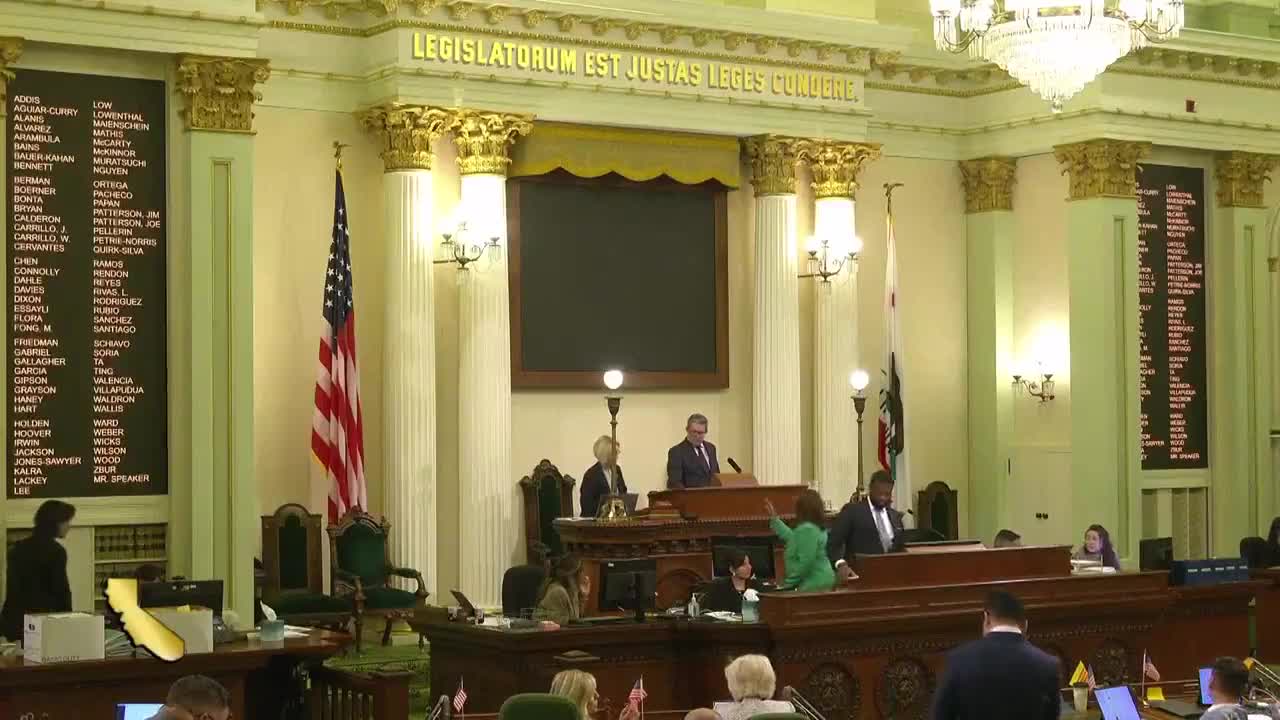
Bill Author

Bill Co-Author(s):