SB 1423: Medi-Cal: Rural Hospital Technical Advisory Group.
- Session Year: 2023-2024
- House: Senate
- Latest Version Date: 2024-08-30
Current Status:
Failed
(2024-09-22: In Senate. Consideration of Governor's veto pending.)
Introduced
In Committee
First Chamber
In Committee
Second Chamber
Enacted
Existing law establishes the Medi-Cal program, which is administered by the State Department of Health Care Services and under which qualified low-income individuals receive health care services. The Medi-Cal program is, in part, governed and funded by federal Medicaid program provisions.
Under existing law, each hospital designated by the department as a critical access hospital, and certified as such by the Secretary of the United States Department of Health and Human Services under the federal Medicare Rural Hospital Flexibility Program, is eligible for supplemental payments for Medi-Cal covered outpatient services rendered to Medi-Cal eligible persons. Existing law sets forth various other provisions regarding Medi-Cal reimbursement in consideration of small and rural hospitals.
This bill would require the department to convene a Rural Hospital Technical Advisory Group, with a certain composition of stakeholders, at least bimonthly during the 2025 calendar year. The bill would set forth the purposes of the advisory group, including, among other things, analyzing the continued ability of small, rural, or critical access hospitals, as defined, to remain financially viable under existing Medi-Cal reimbursement methodologies, providing related recommendations, and identifying key contributors to the financial challenges of those hospitals, as specified.
The bill would require, by March 31, 2026, the department, in consultation with the advisory group, to report to the Legislature on the findings and recommendations arising out of the convenings, as specified.
Existing law establishes the Medi-Cal program, which is administered by the State Department of Health Care Services and under which qualified low-income individuals receive health care services. The Medi-Cal program is, in part, governed and funded by federal Medicaid program provisions.
Under existing law, each hospital designated by the department as a critical access hospital, and certified as such by the Secretary of the United States Department of Health and Human Services under the federal Medicare rural hospital flexibility program, Rural Hospital Flexibility Program, is eligible for supplemental payments for Medi-Cal covered outpatient services rendered to Medi-Cal eligible persons. Existing law sets forth various other provisions regarding Medi-Cal reimbursement in consideration of small and rural hospitals.
This bill would require the department to convene a Rural Hospital Technical Advisory Group, with a certain composition of stakeholders, at least bimonthly during the 2025 calendar year. The bill would set forth the purposes of the advisory group, including, among other things, analyzing the continued ability of small, rural, or critical access hospitals, as defined, to remain financially viable under existing Medi-Cal reimbursement methodologies, to provide related recommendations, and to identify key contributors to the financial challenges of those hospitals, as specified.
The bill would require, by March 31, 2026, the department, in consultation with the advisory group, to report to the Legislature on the findings and recommendations arising out of the convenings, as specified.
Existing law establishes the Medi-Cal program, which is administered by the State Department of Health Care Services and under which qualified low-income individuals receive health care services. The Medi-Cal program is, in part, governed and funded by federal Medicaid program provisions.
Under existing law, each hospital designated by the department as a critical access hospital, and certified as such by the Secretary of the United States Department of Health and Human Services under the federal Medicare rural hospital flexibility program, is eligible for supplemental payments for Medi-Cal covered outpatient services rendered to Medi-Cal eligible persons. Existing law conditions those payments on receipt of federal financial participation and an appropriation in the annual Budget Act for the nonfederal share of those payments, with supplemental payments being apportioned among critical access hospitals based on their number of Medi-Cal outpatient visits. Existing law sets forth various other provisions regarding Medi-Cal reimbursement in consideration of small and rural hospitals.
This bill would require that each critical access hospital that elects to participate receive a base reimbursement at 100% of the hospitals projected reasonable and allowable costs for covered Medi-Cal services, as defined, furnished in the Medi-Cal fee-for-service and managed care delivery systems for each subject calendar year, effective for dates of service on or after January 1, 2026. The bill would require the department to develop and maintain one or more reimbursement methodologies, or revise one or more existing reimbursement methodologies applicable to participating critical access hospitals, or both, to implement the cost-based payment levels.The bill would set forth a timeline and a procedure for the department to notify each critical access hospital of the ability to elect to participate in those methodologies, and for a critical access hospital to inform the department of its election to participate, its discontinuance, or its later participation. The bill would require a critical access hospital that elects to participate to make available to the department relevant financial information upon request by the department. Under the bill, these provisions would not be construed to preclude a participating critical access hospital from receiving any other Medi-Cal payment for which it is eligible, including, but not limited to, supplemental payments, with specified exceptions.The bill would require the department to determine the projected reasonable and allowable Medi-Cal costs prior to each applicable calendar year, as specified. The bill would require the department to require each applicable Medi-Cal managed care plan to reimburse a participating hospital for covered services, and would require the department to develop and pay actuarially sound capitation rates to each applicable managed care plan, as specified.The bill would require the department to promptly seek any federal approvals that it deems necessary to implement these provisions, as specified. The bill would condition implementation of these provisions on receipt of any necessary federal approvals, the availability of federal financial participation, and an appropriation. The bill would authorize the department to modify the requirements described in these provisions under certain conditions for federal purposes.This bill would require the department to convene a Rural Hospital Technical Advisory Group, with a certain composition of stakeholders, at least bimonthly during the 2025 calendar year. The bill would set forth the purposes of the advisory group, including, among other things, analyzing the continued ability of small, rural, or critical access hospitals, as defined, to remain financially viable under existing Medi-Cal reimbursement methodologies, to provide related recommendations, and to identify key contributors to the financial challenges of those hospitals, as specified.
The bill would require, by March 31, 2026, the department, in consultation with the advisory group, to report to the Legislature on the findings and recommendations arising out of the convenings, as specified.
Existing law establishes the Medi-Cal program, which is administered by the State Department of Health Care Services and under which qualified low-income individuals receive health care services. The Medi-Cal program is, in part, governed and funded by federal Medicaid program provisions.
Under existing law, each hospital designated by the department as a critical access hospital, and certified as such by the Secretary of the United States Department of Health and Human Services under the federal Medicare rural hospital flexibility program, is eligible for supplemental payments for Medi-Cal covered outpatient services rendered to Medi-Cal eligible persons. Existing law conditions those payments on receipt of federal financial participation and an appropriation in the annual Budget Act for the nonfederal share of those payments, with supplemental payments being apportioned among critical access hospitals based on their number of Medi-Cal outpatient visits.
This bill would require that each critical access hospital that elects to participate receive a base reimbursement at 100% of the hospitals projected reasonable and allowable costs for covered Medi-Cal services, as defined, furnished in the Medi-Cal fee-for-service and managed care delivery systems for each subject calendar year, effective for dates of service on or after January 1, 2026. The bill would require the department to develop and maintain one or more reimbursement methodologies, or revise one or more existing reimbursement methodologies applicable to participating critical access hospitals, or both, to implement the cost-based payment levels.
The bill would set forth a timeline and a procedure for the department to notify each critical access hospital of the ability to elect to participate in those methodologies, and for a critical access hospital to inform the department of its election to participate, its discontinuance, or its later participation. The bill would require a critical access hospital that elects to participate to make available to the department relevant financial information upon request by the department. Under the bill, these provisions would not be construed to preclude a participating critical access hospital from receiving any other Medi-Cal payment for which it is eligible, including, but not limited to, supplemental payments, with specified exceptions.
The bill would require the department to determine the projected reasonable and allowable Medi-Cal costs prior to each applicable calendar year, as specified. The bill would require the department to require each applicable Medi-Cal managed care plan to reimburse a participating hospital for covered services, and would require the department to develop and pay actuarially sound capitation rates to each applicable managed care plan, as specified.
The bill would require the department to promptly seek any federal approvals that it deems necessary to implement these provisions, as specified. The bill would condition implementation of these provisions on receipt of any necessary federal approvals and approvals, the availability of federal financial participation. participation, and an appropriation. The bill would authorize the department to modify the requirements described in these provisions under certain conditions for federal purposes.
Existing law establishes the Medi-Cal program, which is administered by the State Department of Health Care Services and under which qualified low-income individuals receive health care services. The Medi-Cal program is, in part, governed and funded by federal Medicaid program provisions.
Under existing law, each hospital designated by the department as a critical access hospital, and certified as such by the Secretary of the United States Department of Health and Human Services under the federal Medicare rural hospital flexibility program, is eligible for supplemental payments for Medi-Cal covered outpatient services rendered to Medi-Cal eligible persons. Existing law conditions those payments on receipt of federal financial participation and an appropriation in the annual Budget Act for the nonfederal share of those payments, with supplemental payments being apportioned among critical access hospitals based on their number of Medi-Cal outpatient visits.
This bill would require that each critical access hospital that elects to participate be reimbursed receive a base reimbursement at 100% of the hospitals projected reasonable and allowable costs for covered Medi-Cal services, as defined, furnished in the Medi-Cal fee-for-service and managed care delivery systems for each subject calendar year, effective for dates of service on or after January 1, 2026. The bill would require the department to develop and maintain one or more reimbursement methodologies, or revise one or more existing reimbursement methodologies applicable to participating critical access hospitals, or both, to implement the minimum cost-based payment levels.
The bill would set forth a timeline and a procedure for the department to notify each critical access hospital of the ability to elect to participate in those methodologies, and for a critical access hospital to inform the department of its election to participate, its discontinuance, or its later participation. The bill would require a critical access hospital that elects to participate to make available to the department relevant financial information upon request by the department. Under the bill, these provisions would not be construed to preclude a participating critical access hospital from receiving any other Medi-Cal payment for which it is eligible, including, but not limited to, supplemental payments, with specified exceptions.
The bill would require the department to determine the projected reasonable and allowable Medi-Cal costs prior to each applicable calendar year, as specified. The bill would require the department to require each applicable Medi-Cal managed care plan to reimburse a participating hospital for covered services, and would require the department to develop and pay actuarially sound capitation rates to each applicable managed care plan, as specified.
The bill would require the department to promptly seek any federal approvals that it deems necessary to implement these provisions, as specified. The bill would condition implementation of these provisions on receipt of any necessary federal approvals and the availability of federal financial participation. The bill would authorize the department to modify the requirements described in these provisions under certain conditions for federal purposes.
Existing law establishes the Medi-Cal program, which is administered by the State Department of Health Care Services and under which qualified low-income individuals receive health care services. The Medi-Cal program is, in part, governed and funded by federal Medicaid program provisions.
Under existing law, each hospital designated by the department as a critical access hospital, and certified as such by the Secretary of the United States Department of Health and Human Services under the federal Medicare rural hospital flexibility program, is eligible for supplemental payments for Medi-Cal covered outpatient services rendered to Medi-Cal eligible persons. Existing law conditions those payments on receipt of federal financial participation and an appropriation in the annual Budget Act for the nonfederal share of those payments, with supplemental payments being apportioned among critical access hospitals based on their number of Medi-Cal outpatient visits.
This bill would remove the provisions relating to supplemental payments and would instead require the reimbursement to a critical access hospital for Medi-Cal covered outpatient services at a rate equal to the actual cost to the hospital of providing the services or the amount charged by the hospital for the services, whichever is less. The bill would also require reimbursement to those hospitals, under the same terms, for swing-bed services, relating to beds licensed for general acute care that may be used as skilled nursing beds.Existing law sets forth various Medi-Cal payment reductions by specified percentages for certain providers, including rural swing-bed facilities.This bill would make an exception to those payment reductions for rural-swing bed facilities in the case of critical access hospitals under the above-described reimbursement provisions.This bill would require that each critical access hospital that elects to participate be reimbursed at 100% of the hospitals projected reasonable and allowable costs for covered Medi-Cal services, as defined, furnished in the Medi-Cal fee-for-service and managed care delivery systems for each subject calendar year, effective for dates of service on or after January 1, 2026. The bill would require the department to develop and maintain one or more reimbursement methodologies, or revise one or more existing reimbursement methodologies applicable to participating critical access hospitals, or both, to implement the minimum cost-based payment levels.
The bill would set forth a timeline and a procedure for the department to notify each critical access hospital of the ability to elect to participate in those methodologies, and for a critical access hospital to inform the department of its election to participate, its discontinuance, or its later participation. Under the bill, these provisions would not be construed to preclude a participating critical access hospital from receiving any other Medi-Cal payment for which it is eligible, including, but not limited to, supplemental payments, with specified exceptions.
The bill would require the department to determine the projected reasonable and allowable Medi-Cal costs prior to each applicable calendar year, as specified. The bill would require the department to require each applicable Medi-Cal managed care plan to reimburse a participating hospital for covered services, and would require the department to develop and pay actuarially sound capitation rates to each applicable managed care plan, as specified.
The bill would require the department to promptly seek any federal approvals that it deems necessary to implement these provisions, as specified. The bill would condition implementation of these provisions on receipt of any necessary federal approvals and the availability of federal financial participation. The bill would authorize the department to modify the requirements described in these provisions under certain conditions for federal purposes.
Existing law establishes the Medi-Cal program, which is administered by the State Department of Health Care Services and under which qualified low-income individuals receive health care services. The Medi-Cal program is, in part, governed and funded by federal Medicaid program provisions.
Under existing law, each hospital designated by the department as a critical access hospital, and certified as such by the Secretary of the United States Department of Health and Human Services under the federal Medicare rural hospital flexibility program, is eligible for supplemental payments for Medi-Cal covered outpatient services rendered to Medi-Cal eligible persons. Existing law conditions those payments on receipt of federal financial participation and an appropriation in the annual Budget Act for the nonfederal share of those payments, with supplemental payments being apportioned among critical access hospitals based on their number of Medi-Cal outpatient visits.
This bill would remove the provisions relating to supplemental payments and would instead require the reimbursement to a critical access hospital for Medi-Cal covered outpatient services at a rate equal to the actual cost to the hospital of providing the services or the amount charged by the hospital for the services, whichever is less. The bill would also require reimbursement to those hospitals, under the same terms, for swing-bed services, relating to beds licensed for general acute care that may be used as skilled nursing beds.
Existing law sets forth various Medi-Cal payment reductions by specified percentages for certain providers, including rural swing-bed facilities.
This bill would make an exception to those payment reductions for rural-swing bed facilities in the case of critical access hospitals under the above-described reimbursement provisions.
(a)(1)During the 2025 calendar year, the department shall convene a Rural Hospital Technical Advisory Group, consisting of representatives from small, rural, and critical access hospitals; statewide hospital trade associations representing general acute care hospitals; managed care plans, including Medi-Cal managed care plans, and statewide organizations representing those plans; statewide or regional organizations representing rural communities; individuals with specific relevant expertise in hospital finance, Medicaid reimbursement, rural health care delivery, or related areas; and other affected stakeholders as the department deems appropriate, for the following purposes:
(A)To analyze the continued ability of small, rural, or critical access hospitals to remain financially viable under existing Medi-Cal reimbursement methodologies applicable to the array of covered Medi-Cal services provided by small, rural, or critical access hospitals in both the fee-for-service and managed care delivery systems. This analysis shall include, at a minimum, consideration of the costs incurred by small, rural, or critical access hospitals in serving Medi-Cal beneficiaries and the extent to which current reimbursement methodologies reimburse for those costs.
(B)To provide recommendations on changes to existing Medi-Cal reimbursement methodologies described in subparagraph (A) or the implementation of successor reimbursement methodologies, or both, to ensure sufficient access to covered Medi-Cal services in the rural communities served by small, rural, or critical access hospitals and to promote the continued financial viability of these hospitals.
(C)To analyze the contribution of Medi-Cal reimbursement to the overall financial viability of small, rural, or critical access hospitals, and to identify, as appropriate, any other key contributors to the financial challenges of small, rural, or critical access hospitals. The department may engage stakeholders, researchers, and other state departments, including, but not limited to, the Department of Managed Health Care, the Department of Health Care Access and Information, and the State Department of Public Health, in this effort.
(2)The advisory group described in paragraph (1) shall be convened, at a minimum, on a bimonthly basis through the end of the 2025 calendar year.
(b)(1)By March 31, 2026, and in consultation with the advisory group, the department shall report to the Legislature on the findings and recommendations arising out of the convenings described in subdivision (a). This reporting shall include, at a minimum, all of the following:
(A)Recommendations for successor reimbursement methodologies applicable to public or private small, rural, or critical access hospitals, or both.
(B)Identification of any existing reimbursement methodologies that would be replaced by successor methodologies described in subparagraph (A).
(C)Any considerations for obtaining the necessary federal approvals for changes described in subparagraph (A).
(D)Any conforming statutory changes necessary to effectuate the recommendations described in subparagraph (A).
(E)An assessment of the contribution of Medi-Cal reimbursement to the overall financial viability of small, rural, or critical access hospitals, and any other key contributors to financial challenges of small, rural, or critical access hospitals, as appropriate, as well as any recommendations identified by the department that relate to these other key contributors.
(2)The report required pursuant to this subdivision shall be submitted in compliance with Section 9795 of the Government Code.
(c)For purposes of this section, small, rural, or critical access hospital means a general acute care hospital licensed pursuant to subdivision (a) of Section 1250 of the Health and Safety Code that meets one or both of the following criteria:
(1)The hospital has fewer than 25 licensed general acute care beds and is located in a Medical Service Study Area with a Rural or Frontier designation status.
(2)The hospital is designated by the State Department of Public Health as a critical access hospital, and certified as such by the Secretary of the United States Department of Health and Human Services under the federal Medicare Rural Hospital Flexibility Program, as described in Section 1250.7 of the Health and Safety Code.
(a)(1)During the 2025 calendar year, the department shall convene a Rural Hospital Technical Advisory Group, consisting of representatives from small, rural, and critical access hospitals, hospitals; statewide hospital trade associations representing general acute care hospitals, hospitals; managed care plans, including Medi-Cal managed care plans, and statewide organizations representing those plans; statewide or regional organizations representing rural communities, communities; individuals with specific relevant expertise in hospital finance, Medicaid reimbursement, rural health care delivery, or related areas, areas; and other affected stakeholders as the department deems appropriate, for the following purposes:
(A)To analyze the continued ability of small, rural, or critical access hospitals to remain financially viable under existing Medi-Cal reimbursement methodologies applicable to the array of covered Medi-Cal services provided by small, rural, or critical access hospitals in both the fee-for-service and managed care delivery systems. This analysis shall include, at a minimum, consideration of the costs incurred by small, rural, or critical access hospitals in serving Medi-Cal beneficiaries and the extent to which current reimbursement methodologies reimburse for those costs.
(B)To provide recommendations on changes to existing Medi-Cal reimbursement methodologies described in subparagraph (A) or the implementation of successor reimbursement methodologies, or both, to ensure sufficient access to covered Medi-Cal services in the rural communities served by small, rural, or critical access hospitals and to promote the continued financial viability of these hospitals.
(C)To analyze the contribution of Medi-Cal reimbursement to the overall financial viability of small, rural, or critical access hospitals, and to identify, as appropriate, any other key contributors to the financial challenges of small, rural, or critical access hospitals. The department may engage stakeholders, researchers, and other state departments, including, but not limited to, the Department of Managed Health Care, the Department of Health Care Access and Information, and the State Department of Public Health, in this effort.
(2)The advisory group described in paragraph (1) shall be convened, at a minimum, on a bimonthly basis through the end of the 2025 calendar year.
(b)(1)By March 31, 2026, and in consultation with the advisory group, the department shall report to the Legislature on the findings and recommendations arising out of the convenings described in subdivision (a). This reporting shall include, at a minimum, all of the following:
(A)Recommendations for successor reimbursement methodologies applicable to public or private small, rural, or critical access hospitals, or both.
(B)Identification of any existing reimbursement methodologies that would be replaced by successor methodologies described in subparagraph (A).
(C)Any considerations for obtaining the necessary federal approvals for changes described in subparagraph (A).
(D)Any conforming statutory changes necessary to effectuate the recommendations described in subparagraph (A).
(E)An assessment of the contribution of Medi-Cal reimbursement to the overall financial viability of small, rural, or critical access hospitals, and any other key contributors to financial challenges of small, rural, or critical access hospitals, as appropriate, as well as any recommendations identified by the department that relate to these other key contributors.
(2)The report required pursuant to this subdivision shall be submitted in compliance with Section 9795 of the Government Code.
(c)For purposes of this section, small, rural, or critical access hospital means a general acute care hospital licensed pursuant to subdivision (a) of Section 1250 of the Health and Safety Code that meets one or both of the following criteria:
(1)The hospital has fewer than 25 licensed general acute care beds and is located in a Medical Service Study Area with a Rural or Frontier designation status.
(2)The hospital is designated by the State Department of Public Health as a critical access hospital, and certified as such by the Secretary of the United States Department of Health and Human Services under the federal Medicare Rural Hospital Flexibility Program, as described in Section 1250.7 of the Health and Safety Code.
(a)(1)During the 2025 calendar year, the department shall convene a Rural Hospital Technical Advisory Group, consisting of representatives from small, rural, and critical access hospitals, statewide hospital trade associations representing general acute care hospitals, statewide or regional organizations representing rural communities, individuals with specific relevant expertise in hospital finance, Medicaid reimbursement, rural health care delivery, or related areas, and other affected stakeholders as the department deems appropriate, for the following purposes:
(A)To analyze the continued ability of small, rural, or critical access hospitals to remain financially viable under existing Medi-Cal reimbursement methodologies applicable to the array of covered Medi-Cal services provided by small, rural, or critical access hospitals in both the fee-for-service and managed care delivery systems. This analysis shall include, at a minimum, consideration of the costs incurred by small, rural, or critical access hospitals in serving Medi-Cal beneficiaries and the extent to which current reimbursement methodologies reimburse for those costs.
(B)To provide recommendations on changes to existing Medi-Cal reimbursement methodologies described in subparagraph (A) or the implementation of successor reimbursement methodologies, or both, to ensure sufficient access to covered Medi-Cal services in the rural communities served by small, rural, or critical access hospitals and to promote the continued financial viability of these hospitals.
(C)To analyze the contribution of Medi-Cal reimbursement to the overall financial viability of small, rural, or critical access hospitals, and to identify, as appropriate, any other key contributors to the financial challenges of small, rural, or critical access hospitals. The department may engage stakeholders, researchers, and other state departments, including, but not limited to, the Department of Managed Health Care, the Department of Health Care Access and Information, and the State Department of Public Health, in this effort.
(2)The advisory group described in paragraph (1) shall be convened, at a minimum, on a bimonthly basis through the end of the 2025 calendar year.
(b)(1)By March 31, 2026, and in consultation with the advisory group, the department shall report to the Legislature on the findings and recommendations arising out of the convenings described in subdivision (a). This reporting shall include, at a minimum, all of the following:
(A)Recommendations for successor reimbursement methodologies applicable to public or private small, rural, or critical access hospitals, or both.
(B)Identification of any existing reimbursement methodologies that would be replaced by successor methodologies described in subparagraph (A).
(C)Any considerations for obtaining the necessary federal approvals for changes described in subparagraph (A).
(D)Any conforming statutory changes necessary to effectuate the recommendations described in subparagraph (A).
(E)An assessment of the contribution of Medi-Cal reimbursement to the overall financial viability of small, rural, or critical access hospitals, and any other key contributors to financial challenges of small, rural, or critical access hospitals, as appropriate, as well as any recommendations identified by the department that relate to these other key contributors.
(2)The report required pursuant to this subdivision shall be submitted in compliance with Section 9795 of the Government Code.
(c)For purposes of this section, small, rural, or critical access hospital means a general acute care hospital licensed pursuant to subdivision (a) of Section 1250 of the Health and Safety Code that meets one or both of the following criteria:
(1)The hospital has fewer than 25 licensed general acute care beds and is located in a Medical Service Study Area with a Rural or Frontier designation status.
(2)The hospital is designated by the State Department of Public Health as a critical access hospital, and certified as such by the Secretary of the United States Department of Health and Human Services under the federal Medicare Rural Hospital Flexibility Program, as described in Section 1250.7 of the Health and Safety Code.
SECTION 1.Section 14105.175 is added to the Welfare and Institutions Code, immediately following Section 14105.17, to read:14105.175.(a)Notwithstanding any other law, each critical access hospital that elects to participate as described in subdivision (c) shall receive a base reimbursement at 100 percent of the hospitals projected reasonable and allowable costs for covered Medi-Cal services furnished in the Medi-Cal fee-for-service and managed care delivery systems for each subject calendar year, effective for dates of service on or after January 1, 2026.(b)In consultation with critical access hospitals and other affected stakeholders, as applicable, the department shall develop and maintain one or more reimbursement methodologies, or revise one or more existing reimbursement methodologies applicable to participating critical access hospitals, or both, to implement the cost-based payment levels described in subdivision (a).(c)(1)(A)No less than 180 calendar days prior to the start of the first calendar year in which the methodologies developed or revised pursuant to subdivision (b) are to be implemented, the department shall notify each critical access hospital in the state of the hospitals ability to elect to participate in those methodologies for that subject calendar year.(B)A critical access hospital that elects to participate in the methodologies developed or revised pursuant to subdivision (b) for the first calendar year of implementation shall inform the department of its election no less than 90 calendar days prior to the start of that subject calendar year.(2)A participating critical access hospital may opt to discontinue its election to participate in the methodologies developed or revised pursuant to subdivision (b) for a subsequent calendar year subject to a notice requirement of no less than 180 calendar days prior to the start of that applicable calendar year.(3)A critical access hospital that elects not to participate in the methodologies developed or revised pursuant to subdivision (b) for a subject calendar year may opt to participate in those methodologies for the immediately subsequent calendar year subject to a notice requirement of no less than 180 calendar days prior to the start of that applicable calendar year.(4)A critical access hospital that elects to participate in the methodologies developed or revised pursuant to subdivision (b) shall make available to the department relevant financial information upon request by the department.(d)For purposes of this section, the department shall, in consultation with participating critical access hospitals, determine the projected reasonable and allowable Medi-Cal costs prior to each applicable calendar year, using the best available and reasonable current estimates or projections made with respect to participating critical access hospitals for the subject calendar year period. These projected Medi-Cal costs shall be considered final as of the start of each applicable calendar year for purposes of the payment levels described in subdivision (a). Subject to subdivision (g), projected Medi-Cal costs of participating critical access hospitals shall be based on the cost-finding principles applied under subdivision (b) of Section 14166.4, except that the projected Medi-Cal costs shall not be multiplied by the federal medical assistance percentage and are not subject to the reimbursement limitations set forth in Article 7.5 (commencing with Section 51536) of Chapter 3 of Subdivision 1 of Division 3 of Title 22 of the California Code of Regulations.(e)(1)For any contract period for which all necessary federal approvals have been obtained to implement this section with respect to the Medi-Cal managed care delivery system, the department shall do both of the following:(A)Require each applicable Medi-Cal managed care plan to reimburse a participating critical access hospital for covered Medi-Cal services furnished to an enrollee of that plan in accordance with the cost-based payment levels described in subdivision (a) and in accordance with the applicable federal approval or approvals obtained pursuant to Section 438.6 of Title 42 of the Code of Federal Regulations or any other applicable federal Medicaid managed care authority.(B)Develop and pay actuarially sound capitation rates to each applicable Medi-Cal managed care plan that properly account for the cost-based payment levels for participating hospitals described in subdivision (a).(2)The department may require Medi-Cal managed care plans and participating critical access hospitals to submit information that the department deems necessary to implement this subdivision, at the times and in the form and manner specified by the department.(f)(1)Notwithstanding any other law, except as provided in paragraph (2) and subject to subdivision (g), this section shall not be construed to preclude a participating critical access hospital from receiving any other Medi-Cal payment for which it is eligible, including, but not limited to, supplemental payments pursuant to Section 14105.17 or any other applicable provision of this chapter, or managed care-based directed or pass-through payments federally approved pursuant to Section 438.6 of Title 42 of the Code of Federal Regulations or any other applicable federal Medicaid managed care authority, in addition to the payments required by this section.(2)In developing or revising the applicable methodologies pursuant to subdivision (b), the department shall determine, in consultation with critical access hospitals, those existing Medi-Cal supplemental payments, if any, that are specifically intended to allow a critical access hospital to be reimbursed at 100 percent of their reasonable and actual costs of providing covered Medi-Cal services above what would otherwise be payable in base reimbursement to the hospital by the department. To the extent that the department identifies any such supplemental payments, the department shall seek federal approvals for having the applicable federal authority amended or waived as is necessary to preclude a participating critical access hospitals eligibility for those supplemental payments for periods in which the cost-based payment level pursuant to this section is effective with respect to the applicable Medi-Cal covered service category.(g)(1)The department shall promptly seek any federal approvals that it deems necessary to implement this section, in consultation with critical access hospitals and other affected stakeholders, as applicable.(2)This section shall be implemented only to the extent that any necessary federal approvals are obtained and federal financial participation is available and not otherwise jeopardized.(3)Each of the reimbursement methodologies developed or revised pursuant to this section with respect to a category of covered Medi-Cal services or a specific Medi-Cal delivery system may be implemented independently as federal approval is received for that applicable methodology, so long as the department determines that federal financial participation would not be otherwise jeopardized as a result.(h)(1)The department, after consultation with critical access hospitals and other affected stakeholders, as applicable, may modify the requirements set forth in this section to the extent necessary to meet federal requirements, to obtain or maintain federal approval, or to ensure associated federal financial participation is available and maximized or is not otherwise jeopardized.(2)If the department determines that federal approval is only available with significant limitations or modifications, the department shall consult with critical access hospitals and other affected stakeholders, as applicable, to consider alternative methodologies.(3)If a modification is made pursuant to this subdivision, the department shall notify critical access hospitals, Medi-Cal managed care plans as applicable, the Joint Legislative Budget Committee, and the relevant policy and fiscal committees of the Legislature within 10 business days of that modification, in accordance with Section 9795 of the Government Code.(i)Notwithstanding Chapter 3.5 (commencing with Section 11340) of Part 1 of Division 3 of Title 2 of the Government Code, the department may implement, interpret, or make specific this section, in whole or in part, by means of plan letters, provider bulletins, information notices, or other similar instructions, until regulations are adopted.(j)This section shall be implemented subject to an appropriation made by the Legislature in the annual Budget Act for the purpose of this section.(k)For purposes of this section, the following definitions apply:(1)Base reimbursement means payment received in the Medi-Cal fee-for-service and managed care delivery systems, not inclusive of supplemental payments.(2)Covered Medi-Cal services means all of the following:(A)Inpatient hospital services.(B)Outpatient hospital services.(C)Skilled nursing facility services provided in a distinct part of a critical access hospital.(3)Critical access hospital means a hospital designated by the State Department of Public Health as a critical access hospital, and certified as such by the Secretary of the United States Department of Health and Human Services under the federal Medicare Rural Hospital Flexibility Program, as described in Section 1250.7 of the Health and Safety Code.(4)Medi-Cal managed care plan has the same meaning as set forth in subdivision (j) of Section 14184.101.(5)Reasonable and allowable costs means those costs that are eligible for federal financial participation under the Medicaid program pursuant to applicable federal cost reimbursement principles, including, but not limited to, Part 413 (commencing with Section 413.1) of Title 42 of the Code of Federal Regulations.(a)Notwithstanding any other law, each critical access hospital that elects to participate as described in subdivision (c) shall receive a base reimbursement at 100 percent of the hospitals projected reasonable and allowable costs for covered Medi-Cal services furnished in the Medi-Cal fee-for-service and managed care delivery systems for each subject calendar year, effective for dates of service on or after January 1, 2026.
(b)In consultation with critical access hospitals and other affected stakeholders, as applicable, the department shall develop and maintain one or more reimbursement methodologies, or revise one or more existing reimbursement methodologies applicable to participating critical access hospitals, or both, to implement the cost-based payment levels described in subdivision (a).
(c)(1)(A)No less than 180 calendar days prior to the start of the first calendar year in which the methodologies developed or revised pursuant to subdivision (b) are to be implemented, the department shall notify each critical access hospital in the state of the hospitals ability to elect to participate in those methodologies for that subject calendar year.
(B)A critical access hospital that elects to participate in the methodologies developed or revised pursuant to subdivision (b) for the first calendar year of implementation shall inform the department of its election no less than 90 calendar days prior to the start of that subject calendar year.
(2)A participating critical access hospital may opt to discontinue its election to participate in the methodologies developed or revised pursuant to subdivision (b) for a subsequent calendar year subject to a notice requirement of no less than 180 calendar days prior to the start of that applicable calendar year.
(3)A critical access hospital that elects not to participate in the methodologies developed or revised pursuant to subdivision (b) for a subject calendar year may opt to participate in those methodologies for the immediately subsequent calendar year subject to a notice requirement of no less than 180 calendar days prior to the start of that applicable calendar year.
(4)A critical access hospital that elects to participate in the methodologies developed or revised pursuant to subdivision (b) shall make available to the department relevant financial information upon request by the department.
(d)For purposes of this section, the department shall, in consultation with participating critical access hospitals, determine the projected reasonable and allowable Medi-Cal costs prior to each applicable calendar year, using the best available and reasonable current estimates or projections made with respect to participating critical access hospitals for the subject calendar year period. These projected Medi-Cal costs shall be considered final as of the start of each applicable calendar year for purposes of the payment levels described in subdivision (a). Subject to subdivision (g), projected Medi-Cal costs of participating critical access hospitals shall be based on the cost-finding principles applied under subdivision (b) of Section 14166.4, except that the projected Medi-Cal costs shall not be multiplied by the federal medical assistance percentage and are not subject to the reimbursement limitations set forth in Article 7.5 (commencing with Section 51536) of Chapter 3 of Subdivision 1 of Division 3 of Title 22 of the California Code of Regulations.
(e)(1)For any contract period for which all necessary federal approvals have been obtained to implement this section with respect to the Medi-Cal managed care delivery system, the department shall do both of the following:
(A)Require each applicable Medi-Cal managed care plan to reimburse a participating critical access hospital for covered Medi-Cal services furnished to an enrollee of that plan in accordance with the cost-based payment levels described in subdivision (a) and in accordance with the applicable federal approval or approvals obtained pursuant to Section 438.6 of Title 42 of the Code of Federal Regulations or any other applicable federal Medicaid managed care authority.
(B)Develop and pay actuarially sound capitation rates to each applicable Medi-Cal managed care plan that properly account for the cost-based payment levels for participating hospitals described in subdivision (a).
(2)The department may require Medi-Cal managed care plans and participating critical access hospitals to submit information that the department deems necessary to implement this subdivision, at the times and in the form and manner specified by the department.
(f)(1)Notwithstanding any other law, except as provided in paragraph (2) and subject to subdivision (g), this section shall not be construed to preclude a participating critical access hospital from receiving any other Medi-Cal payment for which it is eligible, including, but not limited to, supplemental payments pursuant to Section 14105.17 or any other applicable provision of this chapter, or managed care-based directed or pass-through payments federally approved pursuant to Section 438.6 of Title 42 of the Code of Federal Regulations or any other applicable federal Medicaid managed care authority, in addition to the payments required by this section.
(2)In developing or revising the applicable methodologies pursuant to subdivision (b), the department shall determine, in consultation with critical access hospitals, those existing Medi-Cal supplemental payments, if any, that are specifically intended to allow a critical access hospital to be reimbursed at 100 percent of their reasonable and actual costs of providing covered Medi-Cal services above what would otherwise be payable in base reimbursement to the hospital by the department. To the extent that the department identifies any such supplemental payments, the department shall seek federal approvals for having the applicable federal authority amended or waived as is necessary to preclude a participating critical access hospitals eligibility for those supplemental payments for periods in which the cost-based payment level pursuant to this section is effective with respect to the applicable Medi-Cal covered service category.
(g)(1)The department shall promptly seek any federal approvals that it deems necessary to implement this section, in consultation with critical access hospitals and other affected stakeholders, as applicable.
(2)This section shall be implemented only to the extent that any necessary federal approvals are obtained and federal financial participation is available and not otherwise jeopardized.
(3)Each of the reimbursement methodologies developed or revised pursuant to this section with respect to a category of covered Medi-Cal services or a specific Medi-Cal delivery system may be implemented independently as federal approval is received for that applicable methodology, so long as the department determines that federal financial participation would not be otherwise jeopardized as a result.
(h)(1)The department, after consultation with critical access hospitals and other affected stakeholders, as applicable, may modify the requirements set forth in this section to the extent necessary to meet federal requirements, to obtain or maintain federal approval, or to ensure associated federal financial participation is available and maximized or is not otherwise jeopardized.
(2)If the department determines that federal approval is only available with significant limitations or modifications, the department shall consult with critical access hospitals and other affected stakeholders, as applicable, to consider alternative methodologies.
(3)If a modification is made pursuant to this subdivision, the department shall notify critical access hospitals, Medi-Cal managed care plans as applicable, the Joint Legislative Budget Committee, and the relevant policy and fiscal committees of the Legislature within 10 business days of that modification, in accordance with Section 9795 of the Government Code.
(i)Notwithstanding Chapter 3.5 (commencing with Section 11340) of Part 1 of Division 3 of Title 2 of the Government Code, the department may implement, interpret, or make specific this section, in whole or in part, by means of plan letters, provider bulletins, information notices, or other similar instructions, until regulations are adopted.
(j)This section shall be implemented subject to an appropriation made by the Legislature in the annual Budget Act for the purpose of this section.
(j)(k)For purposes of this section, the following definitions apply:
(1)Base reimbursement means payment received in the Medi-Cal fee-for-service and managed care delivery systems, not inclusive of supplemental payments.
(2)Covered Medi-Cal services means all of the following:
(A)Inpatient hospital services.
(B)Outpatient hospital services.
(C)Skilled nursing facility services provided in a distinct part of a critical access hospital.
(3)Critical access hospital means a hospital designated by the State Department of Public Health as a critical access hospital, and certified as such by the Secretary of the United States Department of Health and Human Services under the federal Medicare Rural Hospital Flexibility Program, as described in Section 1250.7 of the Health and Safety Code.
(4)Medi-Cal managed care plan has the same meaning as set forth in subdivision (j) of Section 14184.101.
(5)Reasonable and allowable costs means those costs that are eligible for federal financial participation under the Medicaid program pursuant to applicable federal cost reimbursement principles, including, but not limited to, Part 413 (commencing with Section 413.1) of Title 42 of the Code of Federal Regulations.
(a)Notwithstanding any other law, each critical access hospital that elects to participate as described in subdivision (c) shall, at a minimum, be reimbursed shall receive a base reimbursement at 100 percent of the hospitals projected reasonable and allowable costs for covered Medi-Cal services furnished in the Medi-Cal fee-for-service and managed care delivery systems for each subject calendar year, effective for dates of service on or after January 1, 2026.
(b)In consultation with critical access hospitals and other affected stakeholders, as applicable, the department shall develop and maintain one or more reimbursement methodologies, or revise one or more existing reimbursement methodologies applicable to participating critical access hospitals, or both, to implement the minimum cost-based payment levels described in subdivision (a).
(c)(1)(A)No less than 180 calendar days prior to the start of the first calendar year in which the methodologies developed or revised pursuant to subdivision (b) are to be implemented, the department shall notify each critical access hospital in the state of the hospitals ability to elect to participate in those methodologies for that subject calendar year.
(B)A critical access hospital that elects to participate in the methodologies developed or revised pursuant to subdivision (b) for the first calendar year of implementation shall inform the department of its election no less than 90 calendar days prior to the start of that subject calendar year.
(2)A participating critical access hospital may opt to discontinue its election to participate in the methodologies developed or revised pursuant to subdivision (b) for a subsequent calendar year subject to a notice requirement of no less than 180 calendar days prior to the start of that applicable calendar year.
(3)A critical access hospital that elects not to participate in the methodologies developed or revised pursuant to subdivision (b) for a subject calendar year may opt to participate in those methodologies for the immediately subsequent calendar year subject to a notice requirement of no less than 180 calendar days prior to the start of that applicable calendar year.
(4)A critical access hospital that elects to participate in the methodologies developed or revised pursuant to subdivision (b) shall make available to the department relevant financial information upon request by the department.
(d)For purposes of this section, the department shall, in consultation with participating critical access hospitals, determine the projected reasonable and allowable Medi-Cal costs prior to each applicable calendar year, using the best available and reasonable current estimates or projections made with respect to participating critical access hospitals for the subject calendar year period. These projected Medi-Cal costs shall be considered final as of the start of each applicable calendar year for purposes of the minimum payment levels described in subdivision (a). Subject to subdivision (g), projected Medi-Cal costs of participating critical access hospitals shall be based on the cost-finding principles applied under subdivision (b) of Section 14166.4, except that the projected Medi-Cal costs shall not be multiplied by the federal medical assistance percentage and are not subject to the reimbursement limitations set forth in Article 7.5 (commencing with Section 51536) of Chapter 3 of Subdivision 1 of Division 3 of Title 22 of the California Code of Regulations.
(e)(1)For any contract period for which all necessary federal approvals have been obtained to implement this section with respect to the Medi-Cal managed care delivery system, the department shall do both of the following:
(A)Require each applicable Medi-Cal managed care plan to reimburse a participating critical access hospital for covered Medi-Cal services furnished to an enrollee of that plan in accordance with the minimum cost-based payment levels described in subdivision (a) and in accordance with the applicable federal approval or approvals obtained pursuant to Section 438.6 of Title 42 of the Code of Federal Regulations or any other applicable federal Medicaid managed care authority.
(B)Develop and pay actuarially sound capitation rates to each applicable Medi-Cal managed care plan that properly account for the minimum cost-based payment levels for participating hospitals described in subdivision (a).
(2)The department may require Medi-Cal managed care plans and participating critical access hospitals to submit information that the department deems necessary to implement this subdivision, at the times and in the form and manner specified by the department.
(f)(1)Notwithstanding any other law, except as provided in paragraph (2) and subject to subdivision (g), this section shall not be construed to preclude a participating critical access hospital from receiving any other Medi-Cal payment for which it is eligible, including, but not limited to, supplemental payments pursuant to Section 14105.17 or any other applicable provision of this chapter, or managed care-based directed or pass-through payments federally approved pursuant to Section 438.6 of Title 42 of the Code of Federal Regulations or any other applicable federal Medicaid managed care authority, in addition to the payments required by this section.
(2)In developing or revising the applicable methodologies pursuant to subdivision (b), the department shall determine, in consultation with critical access hospitals, those existing Medi-Cal supplemental payments, if any, that are specifically intended to allow a critical access hospital to be reimbursed at 100 percent of their reasonable and actual costs of providing covered Medi-Cal services above what would otherwise be payable in base reimbursement to the hospital by the department. To the extent that the department identifies any such supplemental payments, the department shall seek federal approvals for having the applicable federal authority amended or waived as is necessary to preclude a participating critical access hospitals eligibility for those supplemental payments for periods in which the minimum cost-based payment level pursuant to this section is effective with respect to the applicable Medi-Cal covered service category.
(g)(1)The department shall promptly seek any federal approvals that it deems necessary to implement this section, in consultation with critical access hospitals and other affected stakeholders, as applicable.
(2)This section shall be implemented only to the extent that any necessary federal approvals are obtained and federal financial participation is available and not otherwise jeopardized.
(3)Each of the reimbursement methodologies developed or revised pursuant to this section with respect to a category of covered Medi-Cal services or a specific Medi-Cal delivery system may be implemented independently as federal approval is received for that applicable methodology, so long as the department determines that federal financial participation would not be otherwise jeopardized as a result.
(h)(1)The department, after consultation with critical access hospitals and other affected stakeholders, as applicable, may modify the requirements set forth in this section to the extent necessary to meet federal requirements, to obtain or maintain federal approval, or to ensure associated federal financial participation is available and maximized or is not otherwise jeopardized.
(2)If the department determines that federal approval is only available with significant limitations or modifications, the department shall consult with critical access hospitals and other affected stakeholders, as applicable, to consider alternative methodologies.
(3)If a modification is made pursuant to this subdivision, the department shall notify critical access hospitals, Medi-Cal managed care plans as applicable, the Joint Legislative Budget Committee, and the relevant policy and fiscal committees of the Legislature within 10 business days of that modification, in accordance with Section 9795 of the Government Code.
(i)Notwithstanding Chapter 3.5 (commencing with Section 11340) of Part 1 of Division 3 of Title 2 of the Government Code, the department may implement, interpret, or make specific this section, in whole or in part, by means of plan letters, provider bulletins, information notices, or other similar instructions, without taking any further regulatory action. until regulations are adopted.
(j)For purposes of this section, the following definitions apply:
(1)Base reimbursement means payment received in the Medi-Cal fee-for-service and managed care delivery systems, not inclusive of supplemental payments.
(1)(2)Covered Medi-Cal services means all of the following:
(A)Inpatient hospital services.
(B)Outpatient hospital services.
(C)Skilled nursing facility services provided in a distinct part of a critical access hospital.
(2)(3)Critical access hospital means a hospital designated by the State Department of Public Health as a critical access hospital, and certified as such by the Secretary of the United States Department of Health and Human Services under the federal Medicare Rural Hospital Flexibility Program, as described in Section 1250.7 of the Health and Safety Code.
(3)(4)Medi-Cal managed care plan has the same meaning as set forth in subdivision (j) of Section 14184.101.
(4)(5)Reasonable and allowable costs means those costs that are eligible for federal financial participation under the Medicaid program pursuant to applicable federal cost reimbursement principles, including, but not limited to, Part 413 (commencing with Section 413.1) of Title 42 of the Code of Federal Regulations.
(a)Notwithstanding any other law, each critical access hospital that elects to participate as described in subdivision (c) shall, at a minimum, be reimbursed at 100 percent of the hospitals projected reasonable and allowable costs for covered Medi-Cal services furnished in the Medi-Cal fee-for-service and managed care delivery systems for each subject calendar year, effective for dates of service on or after January 1, 2026.
(b)In consultation with critical access hospitals and other affected stakeholders, as applicable, the department shall develop and maintain one or more reimbursement methodologies, or revise one or more existing reimbursement methodologies applicable to participating critical access hospitals, or both, to implement the minimum cost-based payment levels described in subdivision (a).
(c)(1)(A)No less than 180 calendar days prior to the start of the first calendar year in which the methodologies developed or revised pursuant to subdivision (b) are to be implemented, the department shall notify each critical access hospital in the state of the hospitals ability to elect to participate in those methodologies for that subject calendar year.
(B)A critical access hospital that elects to participate in the methodologies developed or revised pursuant to subdivision (b) for the first calendar year of implementation shall inform the department of its election no less than 90 calendar days prior to the start of that subject calendar year.
(2)A participating critical access hospital may opt to discontinue its election to participate in the methodologies developed or revised pursuant to subdivision (b) for a subsequent calendar year subject to a notice requirement of no less than 180 calendar days prior to the start of that applicable calendar year.
(3)A critical access hospital that elects not to participate in the methodologies developed or revised pursuant to subdivision (b) for a subject calendar year may opt to participate in those methodologies for the immediately subsequent calendar year subject to a notice requirement of no less than 180 calendar days prior to the start of that applicable calendar year.
(d)For purposes of this section, the department shall, in consultation with participating critical access hospitals, determine the projected reasonable and allowable Medi-Cal costs prior to each applicable calendar year, using the best available and reasonable current estimates or projections made with respect to participating critical access hospitals for the subject calendar year period. These projected Medi-Cal costs shall be considered final as of the start of each applicable calendar year for purposes of the minimum payment levels described in subdivision (a). Subject to subdivision (g), projected Medi-Cal costs of participating critical access hospitals shall be based on the cost-finding principles applied under subdivision (b) of Section 14166.4, except that the projected Medi-Cal costs shall not be multiplied by the federal medical assistance percentage and are not subject to the reimbursement limitations set forth in Article 7.5 (commencing with Section 51536) of Chapter 3 of Subdivision 1 of Division 3 of Title 22 of the California Code of Regulations.
(e)(1)For any contract period for which all necessary federal approvals have been obtained to implement this section with respect to the Medi-Cal managed care delivery system, the department shall do both of the following:
(A)Require each applicable Medi-Cal managed care plan to reimburse a participating critical access hospital for covered Medi-Cal services furnished to an enrollee of that plan in accordance with the minimum cost-based payment levels described in subdivision (a) and in accordance with the applicable federal approval or approvals obtained pursuant to Section 438.6 of Title 42 of the Code of Federal Regulations or any other applicable federal Medicaid managed care authority.
(B)Develop and pay actuarially sound capitation rates to each applicable Medi-Cal managed care plan that properly account for the minimum cost-based payment levels for participating hospitals described in subdivision (a).
(2)The department may require Medi-Cal managed care plans and participating critical access hospitals to submit information that the department deems necessary to implement this subdivision, at the times and in the form and manner specified by the department.
(f)(1)Notwithstanding any other law, except as provided in paragraph (2) and subject to subdivision (g), this section shall not be construed to preclude a participating critical access hospital from receiving any other Medi-Cal payment for which it is eligible, including, but not limited to, supplemental payments pursuant to Section 14105.17 or any other applicable provision of this chapter, or managed care-based directed or pass-through payments federally approved pursuant to Section 438.6 of Title 42 of the Code of Federal Regulations or any other applicable federal Medicaid managed care authority, in addition to the payments required by this section.
(2)In developing or revising the applicable methodologies pursuant to subdivision (b), the department shall determine, in consultation with critical access hospitals, those existing Medi-Cal supplemental payments, if any, that are specifically intended to allow a critical access hospital to be reimbursed at 100 percent of their reasonable and actual costs of providing covered Medi-Cal services above what would otherwise be payable in base reimbursement to the hospital by the department. To the extent that the department identifies any such supplemental payments, the department shall seek federal approvals for having the applicable federal authority amended or waived as is necessary to preclude a participating critical access hospitals eligibility for those supplemental payments for periods in which the minimum cost-based payment level pursuant to this section is effective with respect to the applicable Medi-Cal covered service category.
(g)(1)The department shall promptly seek any federal approvals that it deems necessary to implement this section, in consultation with critical access hospitals and other affected stakeholders, as applicable.
(2)This section shall be implemented only to the extent that any necessary federal approvals are obtained and federal financial participation is available and not otherwise jeopardized.
(3)Each of the reimbursement methodologies developed or revised pursuant to this section with respect to a category of covered Medi-Cal services or a specific Medi-Cal delivery system may be implemented independently as federal approval is received for that applicable methodology, so long as the department determines that federal financial participation would not be otherwise jeopardized as a result.
(h)(1)The department, after consultation with critical access hospitals and other affected stakeholders, as applicable, may modify the requirements set forth in this section to the extent necessary to meet federal requirements, to obtain or maintain federal approval, or to ensure associated federal financial participation is available and maximized or is not otherwise jeopardized.
(2)If the department determines that federal approval is only available with significant limitations or modifications, the department shall consult with critical access hospitals and other affected stakeholders, as applicable, to consider alternative methodologies.
(3)If a modification is made pursuant to this subdivision, the department shall notify critical access hospitals, Medi-Cal managed care plans as applicable, the Joint Legislative Budget Committee, and the relevant policy and fiscal committees of the Legislature within 10 business days of that modification, in accordance with Section 9795 of the Government Code.
(i)Notwithstanding Chapter 3.5 (commencing with Section 11340) of Part 1 of Division 3 of Title 2 of the Government Code, the department may implement, interpret, or make specific this section, in whole or in part, by means of plan letters, provider bulletins, information notices, or other similar instructions, without taking any further regulatory action.
(j)For purposes of this section, the following definitions apply:
(1)Covered Medi-Cal services means all of the following:
(A)Inpatient hospital services.
(B)Outpatient hospital services.
(C)Skilled nursing facility services provided in a distinct part of a critical access hospital.
(2)Critical access hospital means a hospital designated by the State Department of Public Health as a critical access hospital, and certified as such by the Secretary of the United States Department of Health and Human Services under the federal Medicare Rural Hospital Flexibility Program, as described in Section 1250.7 of the Health and Safety Code.
(3)Medi-Cal managed care plan has the same meaning as set forth in subdivision (j) of Section 14184.101.
(4)Reasonable and allowable costs means those costs that are eligible for federal financial participation under the Medicaid program pursuant to applicable federal cost reimbursement principles, including, but not limited to, Part 413 (commencing with Section 413.1) of Title 42 of the Code of Federal Regulations.
All matter omitted in this version of the bill appears in the bill as introduced in the Senate, February 16, 2024. (JR11)(a)(1)Each hospital designated by the department as a critical access hospital, and certified as such by the Secretary of the United States Department of Health and Human Services under the federal Medicare rural hospital flexibility program, shall be eligible for supplemental payments reimbursed, in accordance with paragraph (2), for Medi-Cal covered outpatient services and swing-bed services rendered to Medi-Cal eligible persons.
(2)A critical access hospital described in paragraph (1) shall be reimbursed for the services rendered to Medi-Cal eligible persons as described in paragraph (1) at a rate equal to the actual cost to the critical access hospital of providing the services or the amount charged by the critical access hospital for the services, whichever is less.
(3)For purposes of this section, swing bed has the same meaning as set forth in Section 1339.5 of the Health and Safety Code or in Section 413.114 of Title 42 of the Code of Federal Regulations.
(b)Payments made pursuant to subdivision (a) shall be contingent upon receipt of federal financial participation, and shall be limited by the appropriation in the annual Budget Act for the nonfederal share of these payments. Supplemental payments shall be apportioned among critical access hospitals based upon their number of Medi-Cal outpatient visits.
(c)Nothing in this section shall be interpreted as meaning that a critical access hospital is not a general acute care hospital.
(d)The department shall promptly seek any necessary federal approvals for the implementation of this section. If necessary to obtain federal approval, the department may, for federal purposes, limit implementation of this section to those payments that are allowable expenses under Title XIX of the federal Social Security Act (Subchapter 19 (commencing with Section 1396) of Chapter 7 of Title 42 of the United States Code). If federal approval is not obtained for implementation of this section, this section shall become inoperative.
(e)The department may adopt emergency regulations in accordance with the Administrative Procedure Act (Chapter 3.5 (commencing with Section 11340) of Part 1 of Division 1 3 of Title 2 of the Government Code) to implement this section. One initial adoption of the emergency regulations and one readoption of the initial regulations shall be deemed to be an emergency and necessary for the immediate preservation of the public peace, health and safety, or general welfare. Initial emergency regulations and the first readoption of those regulations shall be exempt from review by the Office of Administrative Law. The emergency regulations authorized by this section shall be submitted to the Office of Administrative Law for filing with the Secretary of State and publication in the California Code of Regulations, and shall remain in effect for no more than 180 days. If the department adopts emergency regulations pursuant to this section, the department shall seek prior input from representatives of the hospital industry, including the California Healthcare Association.
SEC. 2.Section 14105.191 of the Welfare and Institutions Code is amended to read:14105.191.(a)Notwithstanding any other provision of law, in order to implement changes in the level of funding for health care services, the director shall reduce provider payments, as specified in this section.
(b)(1)Except as otherwise provided in this section, payments shall be reduced by 1 percent for Medi-Cal fee-for-service benefits for dates of service on and after March 1, 2009.
(2)Except as provided in subdivision (d), for dates of service on and after March 1, 2009, payments to the following classes of providers shall be reduced by 5 percent for Medi-Cal fee-for-service benefits:
(A)Intermediate care facilities, excluding those facilities identified in paragraph (5) of subdivision (d). For purposes of this section, intermediate care facility has the same meaning as defined in Section 51118 of Title 22 of the California Code of Regulations.
(B)Skilled nursing facilities that are distinct parts of general acute care hospitals. For purposes of this section, distinct part has the same meaning as defined in Section 72041 of Title 22 of the California Code of Regulations.
(C)Rural swing-bed facilities. facilities, except as specified in Section 14105.17.
(D)Subacute care units that are, or are parts of, distinct parts of general acute care hospitals. For purposes of this subparagraph, subacute care unit has the same meaning as defined in Section 51215.5 of Title 22 of the California Code of Regulations.
(E)Pediatric subacute care units that are, or are parts of, distinct parts of general acute care hospitals. For purposes of this subparagraph, pediatric subacute care unit has the same meaning as defined in Section 51215.8 of Title 22 of the California Code of Regulations.
(F)Adult day health care centers.
(3)Except as provided in subdivision (d), for dates of service on and after March 1, 2009, Medi-Cal fee-for-service payments to pharmacies shall be reduced by 5 percent.
(4)Except as provided in subdivision (d), payments shall be reduced by 1 percent for non-Medi-Cal programs described in Article 6 (commencing with Section 124025) of Chapter 3 of Part 2 of Division 106 of the Health and Safety Code, and Section 14105.18, for dates of service on and after March 1, 2009.
(5)For managed health care plans that contract with the department pursuant to this chapter, Chapter 8 (commencing with Section 14200), and Chapter 8.75 (commencing with Section 14591), payments shall be reduced by the actuarial equivalent amount of the payment reductions specified in this subdivision pursuant to contract amendments or change orders effective on July 1, 2008, or thereafter.
(c)Notwithstanding any other provision of this section, payments to hospitals that are not under contract with the State Department of Health Care Services pursuant to Article 2.6 (commencing with Section 14081) for inpatient hospital services provided to Medi-Cal beneficiaries and that are subject to Section 14166.245 shall be governed by that section.
(d)To the extent applicable, the services, facilities, and payments listed in this subdivision shall be exempt from the payment reductions specified in subdivision (b):
(1)Acute hospital inpatient services that are paid under contracts pursuant to Article 2.6 (commencing with Section 14081).
(2)Federally qualified health center services, including those facilities deemed to have federally qualified health center status pursuant to a waiver pursuant to subsection (a) of Section 1115 of the federal Social Security Act (42 U.S.C. Sec. 1315(a)).
(3)Rural health clinic services.
(4)Skilled nursing facilities licensed pursuant to subdivision (c) of Section 1250 of the Health and Safety Code other than those specified in paragraph (2) of subdivision (b).
(5)Intermediate care facilities for the developmentally disabled licensed pursuant to subdivision (e), (g), or (h) of Section 1250 of the Health and Safety Code, or facilities providing continuous skilled nursing care to developmentally disabled individuals pursuant to the pilot project established by Section 14495.10.
(6)Payments to facilities owned or operated by the State Department of State Hospitals or the State Department of Developmental Services.
(7)Hospice services.
(8)Contract services, as designated by the director pursuant to subdivision (g).
(9)Payments to providers to the extent that the payments are funded by means of a certified public expenditure or an intergovernmental transfer pursuant to Section 433.51 of Title 42 of the Code of Federal Regulations.
(10)Services pursuant to local assistance contracts and interagency agreements to the extent the funding is not included in the funds appropriated to the department in the annual Budget Act.
(11)Payments to Medi-Cal managed care plans pursuant to Section 4474.5 for services to consumers transitioning from Agnews Developmental Center into the Counties of Alameda, San Mateo, and Santa Clara pursuant to the Plan for the Closure of Agnews Developmental Center.
(12)Breast and cervical cancer treatment provided pursuant to Section 14007.71 and as described in paragraph (3) of subdivision (a) of Section 14105.18 or Article 1.5 (commencing with Section 104160) of Chapter 2 of Part 1 of Division 103 of the Health and Safety Code.
(13)The Family Planning, Access, Care, and Treatment (Family PACT) Program pursuant to subdivision (aa) of Section 14132.
(14)Small and rural hospitals, as defined in Section 124840 of the Health and Safety Code.
(e)Subject to the exemptions listed in subdivision (d), the payment reductions required by paragraph (1) of subdivision (b) shall apply to the benefits rendered by any provider who may be authorized to bill for provision of the benefit, including, but not limited to, physicians, podiatrists, nurse practitioners, certified nurse midwives, nurse anesthetists, and organized outpatient clinics.
(f)(1)Notwithstanding any other provision of law, Medi-Cal reimbursement rates applicable to the classes of providers identified in paragraph (2) of subdivision (b), for services rendered during the 200910 rate year and each rate year thereafter, shall not exceed the reimbursement rates that were applicable to those classes of providers in the 200809 rate year.
(2)In addition to the classes of providers described in paragraph (1), Medi-Cal reimbursement rates applicable to the following classes of facilities for services rendered during the 200910 rate year, and each rate year thereafter, shall not exceed the reimbursement rates that were applicable to those facilities and services in the 200809 rate year:
(A)Facilities identified in paragraph (5) of subdivision (d).
(B)Freestanding pediatric subacute care units, as defined in Section 51215.8 of Title 22 of the California Code of Regulations.
(3)Paragraphs (1) and (2) shall not apply to providers that are paid pursuant to Article 3.8 (commencing with Section 14126), or to services, facilities, and payments specified in subdivision (d), with the exception of facilities described in paragraph (5) of subdivision (d).
(4)The limitation set forth in this subdivision shall be applied only after the reductions in paragraph (2) of subdivision (b) have been made.
(g)Notwithstanding Chapter 3.5 (commencing with Section 11340) of Part 1 of Division 3 of Title 2 of the Government Code, the department may implement and administer this section by means of provider bulletins, or similar instructions, without taking regulatory action.
(h)The reductions and limitations described in this section shall apply only to payments for benefits when the General Fund share of the payment is paid with funds directly appropriated to the department in the annual Budget Act, and shall not apply to payments for benefits paid with funds appropriated to other departments or agencies.
(i)The department shall promptly seek any necessary federal approvals for the implementation of this section. To the extent that federal financial participation is not available with respect to any payment that is reduced or limited pursuant to this section, the director may elect not to implement that reduction or limitation.
SEC. 3.Section 14105.192 of the Welfare and Institutions Code is amended to read:14105.192.(a)The Legislature finds and declares all of the following:
(1)Costs within the Medi-Cal program continue to grow due to the rising cost of providing health care throughout the state and also due to increases in enrollment, which are more pronounced during difficult economic times.
(2)In order to minimize the need for drastically cutting enrollment standards or benefits during times of economic crisis, it is crucial to find areas within the Medi-Cal program that have reimbursement levels higher than required under the standard provided in Section 1902(a)(30)(A) of the federal Social Security Act and may be reduced in accordance with federal law.
(3)The Medi-Cal program delivers its services and benefits to Medi-Cal beneficiaries through a wide variety of health care providers, some of which deliver care via managed care or other contract models while others do so through fee-for-service arrangements.
(4)The setting of rates within the Medi-Cal program is complex and subject to close supervision by the United States Department of Health and Human Services.
(5)As the single state agency for the Medicaid program in California, the department has unique expertise that can inform decisions that set or adjust reimbursement methodologies and levels consistent with the requirements of federal law.
(b)Therefore, it is the intent of the Legislature for the department to analyze and identify where reimbursement levels can be reduced consistent with the standard provided in Section 1902(a)(30)(A) of the federal Social Security Act and consistent with federal and state law and policies, including exemptions contained in the act that added this section, provided that the reductions in reimbursement shall not exceed 10 percent on an aggregate basis for all providers, services, and products.
(c)Notwithstanding any other law, the director shall adjust provider payments, as specified in this section.
(d)(1)Except as otherwise provided in this section, payments shall be reduced by 10 percent for Medi-Cal fee-for-service benefits for dates of service on and after June 1, 2011.
(2)For managed health care plans that contract with the department pursuant to this chapter or Chapter 8 (commencing with Section 14200), except contracts with Senior Care Action Network and AIDS Healthcare Foundation, payments shall be reduced by the actuarial equivalent amount of the payment reductions specified in this section pursuant to contract amendments or change orders effective on July 1, 2011, or thereafter.
(3)Payments shall be reduced by 10 percent for non-Medi-Cal programs described in Article 6 (commencing with Section 124025) of Chapter 3 of Part 2 of Division 106 of the Health and Safety Code, and Section 14105.18, for dates of service on and after June 1, 2011. This paragraph shall not apply to inpatient hospital services provided in a hospital that is paid under contract pursuant to Article 2.6 (commencing with Section 14081).
(4)(A)Notwithstanding any other law, the director may adjust the payments specified in paragraphs (1) and (3) with respect to one or more categories of Medi-Cal providers, or for one or more products or services rendered, or any combination thereof, if the resulting reductions to any category of Medi-Cal providers, in the aggregate, total no more than 10 percent.
(B)The adjustments authorized in subparagraph (A) shall be implemented only if the director determines that, for each affected product, service, or provider category, the payments resulting from the adjustment comply with subdivision (m).
(e)Notwithstanding this section, payments to hospitals that are not under contract with the department pursuant to Article 2.6 (commencing with Section 14081) for inpatient hospital services provided to Medi-Cal beneficiaries and that are subject to former Section 14166.245 shall be governed by that section.
(f)Notwithstanding this section, both of the following apply:
(1)Payments to providers that are paid pursuant to Article 3.8 (commencing with Section 14126) shall be governed by that article.
(2)(A)Subject to subparagraph (B), for dates of service on and after June 1, 2011, Medi-Cal reimbursement rates for intermediate care facilities for the developmentally disabled licensed pursuant to subdivision (e), (g), or (h) of Section 1250 of the Health and Safety Code, and facilities providing continuous skilled nursing care to developmentally disabled individuals pursuant to the pilot project established by Section 14132.20, as determined by the applicable methodology for setting reimbursement rates for these facilities, shall not exceed the reimbursement rates that were applicable to providers in the 200809 rate year.
(B)(i)If Section 14105.07 is added to the Welfare and Institutions Code during the 201112 Regular Session of the Legislature, subparagraph (A) shall become inoperative.
(ii)If Section 14105.07 is added to the Welfare and Institutions Code during the 201112 Regular Session of the Legislature, then for dates of service on and after June 1, 2011, payments to intermediate care facilities for the developmentally disabled licensed pursuant to subdivision (e), (g), or (h) of Section 1250 of the Health and Safety Code, and facilities providing continuous skilled nursing care to developmentally disabled individuals pursuant to the pilot project established by Section 14132.20, shall be governed by the applicable methodology for setting reimbursement rates for these facilities and by Section 14105.07.
(g)The department may enter into contracts with a vendor for the purposes of implementing this section on a bid or nonbid basis. In order to achieve maximum cost savings, the Legislature declares that an expedited process for contracts under this subdivision is necessary. Therefore, contracts entered into to implement this section and all contract amendments and change orders shall be exempt from Chapter 2 (commencing with Section 10290) of Part 2 Division 2 of the Public Contract Code.
(h)To the extent applicable, all of the following services, facilities, and payments shall be exempt from the payment reductions specified in subdivision (d):
(1)Acute hospital inpatient services that are paid under contracts pursuant to Article 2.6 (commencing with Section 14081).
(2)Federally qualified health center services, including those facilities deemed to have federally qualified health center status pursuant to a waiver pursuant to subsection (a) of Section 1115 of the federal Social Security Act (42 U.S.C. Sec. 1315(a)).
(3)Rural health clinic services.
(4)Payments to facilities owned or operated by the State Department of State Hospitals or the State Department of Developmental Services.
(5)Hospice services.
(6)Contract services, as designated by the director pursuant to subdivision (k).
(7)Payments to providers to the extent that the payments are funded by means of a certified public expenditure or an intergovernmental transfer pursuant to Section 433.51 of Title 42 of the Code of Federal Regulations. This paragraph shall apply to payments described in paragraph (3) of subdivision (d) only to the extent that they are also exempt from reduction pursuant to subdivision (l).
(8)Services pursuant to local assistance contracts and interagency agreements to the extent the funding is not included in the funds appropriated to the department in the annual Budget Act.
(9)Breast and cervical cancer treatment provided pursuant to Section 14007.71 and as described in paragraph (3) of subdivision (a) of Section 14105.18 or Article 1.5 (commencing with Section 104160) of Chapter 2 of Part 1 of Division 103 of the Health and Safety Code.
(10)The Family Planning, Access, Care, and Treatment (Family PACT) Program pursuant to subdivision (aa) of Section 14132.
(11)(A)Effective for dates of service on or after July 1, 2015, or the effective date of any necessary federal approvals as required by subdivisions (n) and (o), whichever is later, dental services and applicable ancillary services.
(B)For dental managed care plans that contract with the department pursuant to this chapter or Chapter 8 (commencing with Section 14200), payments pursuant to contract amendments or change orders effective on or after July 1, 2015, or the effective date of any necessary federal approvals as required by subdivisions (n) and (o), whichever is later.
(12)For dates of service on and after January 1, 2022, or the effective date of any necessary federal approvals as required by subdivisions (n) and (o), whichever is later, providers of complex rehabilitation technology and complex rehabilitation technology services, as described in Section 14132.85.
(13)For dates of service on and after July 1, 2022, or the effective date of any necessary federal approvals as required by subdivisions (n) and (o), whichever is later, all of the following services and providers:
(A)Nurses, including certified nurse-midwives, nurse anesthetists, certified pediatric nurse practitioners, certified family nurse practitioners, and group certified pediatric nurse practitioners.
(B)Alternative birth centers as described in Section 14148.8.
(C)Audiologists and hearing aid dispensers as described in Section 14105.49 of this code and Section 51319 of Title 22 of the California Code of Regulations.
(D)Respiratory care providers as described in Section 51316 of Title 22 of the California Code of Regulations.
(E)Durable medical equipment, as described in Section 51160 of Title 22 of the California Code of Regulations.
(F)Chronic dialysis clinics.
(G)Emergency medical air transportation services as described in Section 76000.10 of the Government Code.
(H)Nonemergency medical transportation services as described in Section 51323 of Title 22 of the California Code of Regulations.
(I)Doula services as described in Section 14132.24.
(J)Community health worker services as described in the approved Medi-Cal State Plan.
(K)Durable medical equipment and related supplies or accessories, as described in Section 14105.48 and Section 51160 of Title 22 of the California Code of Regulations, that is a continuous glucose monitoring system or continuous glucose monitoring system supplies and accessories, as determined by the department.
(L)Health care services delivered via remote patient monitoring, authorized pursuant to subparagraph (B) of paragraph (1) of subdivision (f) of Section 14124.12.
(M)Asthma prevention services as described in the approved Medi-Cal State Plan.
(N)Dyadic services as described in Section 14132.755.
(O)Medication therapy management services as described in Section 14132.969.
(P)Clinical laboratory services, as defined in Section 51137.2 of Title 22 of the California Code of Regulations, that are 2019 Novel Coronavirus (COVID-19) diagnostic testing or specimen collection services, as determined by the department.
(Q)Blood banks, as described in Section 51052 of Title 22 of the California Code of Regulations.
(R)Occupational therapy, as described in Section 51085 of the California Code of Regulations.
(S)Orthotists, as described in Section 51101 of Title 22 of the California Code of Regulations.
(T)Psychologists, as described in Section 51099 of Title 22 of the California Code of Regulations.
(U)Medical social work or medical social services, as described in Section 51147 of Title 22 of the California Code of Regulations.
(V)Speech pathologists, as described in Section 51095 of Title 22 of the California Code of Regulations.
(W)Outpatient heroin detoxification services, as described in Section 51116 of Title 22 of the California Code of Regulations.
(X)Dispensing opticians, as described in Section 51090 of Title 22 of the California Code of Regulations.
(Y)Optometrists, including optometry groups, as described in Section 51091 of Title 22 of the California Code of Regulations.
(Z)Acupuncturists, as described in Section 51074 of Title 22 of the California Code of Regulations.
(AA)Portable imaging services, as described in Section 51193.1 of Title 22 of the California Code of Regulations.
(AB)The following primary care or specialty clinics, as determined by the department:
(i)Community clinics, as defined in Section 1204 of the Health and Safety Code.
(ii)Free clinics, as defined in Section 1204 of the Health and Safety Code.
(iii)Surgical clinics, as defined in Section 1204 of the Health and Safety Code.
(iv)Rehabilitation clinics, as defined in Section 1204 of the Health and Safety Code.
(v)Clinics exempt from licensure under Section 1206 of the Health and Safety Code, including nonhospital county-operated community clinics.
(AC)Services provided under the California Childrens Services Program, established pursuant to Article 5 (commencing with Section 123845) of Chapter 3 of Part 2 of Division 106 of the Health and Safety Code, and under the Genetically Handicapped Persons Program, established pursuant to Article 1 (commencing with Section 125125) of Chapter 2 of Part 5 of Division 106 of the Health and Safety Code, as determined by the department.
(AD)Community-Based Adult Services (CBAS), as described in Section 14186.3 and as covered pursuant to subdivision (e) of Section 14184.201.
(14)For dates of service on and after January 1, 2023, or the effective date of any necessary federal approvals as required by subdivisions (n) and (o), whichever is later, both of the following providers:
(A)Podiatrists, as described in Section 51075 of Title 22 of the California Code of Regulations.
(B)Prosthetists, as described in Section 51103 of Title 22 of the California Code of Regulations.
(15)For dates of service on and after January 1, 2024, or the effective date of the payments implemented pursuant to subdivision (a) of Section 14105.201, whichever is later, all of the following services and providers:
(A)Primary care services, including those provided by physicians or nonphysician health professionals, as defined in Section 51170.5 of Title 22 of the California Code of Regulations.
(B)Obstetric care services and doula services as described in Section 14132.24.
(C)Outpatient mental health services that are not the financial responsibility of county mental health plans operating pursuant to Chapter 8.9 (commencing with Section 14700).
(i)Subject to the exception for services listed in subdivision (h), the payment reductions required by subdivision (d) shall apply to the benefits rendered by any provider who may be authorized to bill for the service, including, but not limited to, physicians, podiatrists, nurse practitioners, certified nurse-midwives, nurse anesthetists, and organized outpatient clinics.
(j)Notwithstanding any other law, for dates of service on and after June 1, 2011, Medi-Cal reimbursement rates applicable to the following classes of providers shall not exceed the reimbursement rates that were applicable to those classes of providers in the 200809 rate year, as described in subdivision (f) of Section 14105.191, reduced by 10 percent:
(1)Intermediate care facilities, excluding those facilities identified in paragraph (2) of subdivision (f). For purposes of this section, intermediate care facility has the same meaning as defined in Section 51118 of Title 22 of the California Code of Regulations.
(2)Skilled nursing facilities that are distinct parts of general acute care hospitals. For purposes of this section, distinct part has the same meaning as defined in Section 72041 of Title 22 of the California Code of Regulations.
(3)Rural swing-bed facilities. facilities, except as specified in Section 14105.17.
(4)Subacute care units that are, or are parts of, distinct parts of general acute care hospitals. For purposes of this paragraph, subacute care unit has the same meaning as defined in Section 51215.5 of Title 22 of the California Code of Regulations.
(5)Pediatric subacute care units that are, or are parts of, distinct parts of general acute care hospitals. For purposes of this paragraph, pediatric subacute care unit has the same meaning as defined in Section 51215.8 of Title 22 of the California Code of Regulations.
(6)Adult day health care centers.
(7)Freestanding pediatric subacute care units, as defined in Section 51215.8 of Title 22 of the California Code of Regulations.
(k)Notwithstanding Chapter 3.5 (commencing with Section 11340) of Part 1 of Division 3 of Title 2 of the Government Code, the department may implement and administer this section by means of provider bulletins or similar instructions, without taking regulatory action.
(l)The reductions described in this section shall apply only to payments for services when the General Fund share of the payment is paid with funds directly appropriated to the department in the annual Budget Act and shall not apply to payments for services paid with funds appropriated to other departments or agencies.
(m)Notwithstanding this section, the payment reductions and adjustments provided for in subdivision (d) shall be implemented only if the director determines that the payments that result from the application of this section comply with applicable federal Medicaid program requirements and that federal financial participation will be available.
(1)In determining whether federal financial participation is available, the director shall determine whether the payments comply with applicable federal Medicaid program requirements, including those set forth in Section 1396a(a)(30)(A) of Title 42 of the United States Code.
(2)To the extent that the director determines that the payments do not comply with the federal Medicaid program requirements or that federal financial participation is not available with respect to any payment that is reduced pursuant to this section, the director shall retain the discretion to not implement the particular payment reduction or adjustment and may adjust the payment as necessary to comply with federal Medicaid program requirements.
(n)The department shall seek any necessary federal approvals for the implementation of this section.
(o)(1)The payment reductions and adjustments set forth in this section shall not be implemented until federal approval is obtained.
(2)To the extent that federal approval is obtained for one or more of the payment reductions and adjustments in this section and Section 14105.07, the payment reductions and adjustments set forth in Section 14105.191 shall cease to be implemented for the same services provided by the same class of providers. If there is a conflict between this section and Section 14105.191, other than the provisions setting forth a payment reduction or adjustment, this section shall govern.
(3)When federal approval is obtained, the payments resulting from the application of this section shall be implemented retroactively to June 1, 2011, or on any other date or dates, as may be applicable.
(4)The director may clarify the application of this subdivision by means of provider bulletins or similar instructions, pursuant to subdivision (k).
(p)Adjustments to pharmacy drug product payment pursuant to this section shall no longer apply when the department determines that the average acquisition cost methodology pursuant to Section 14105.45 has been fully implemented and the departments pharmacy budget reduction targets, consistent with payment reduction levels pursuant to this section, have been met.
|
Date
|
Status
|
|---|---|
| Sep 22, 2024 | In Senate. Consideration of Governor's veto pending. |
| Sep 22, 2024 | Vetoed by the Governor. |
| Sep 4, 2024 | Enrolled and presented to the Governor at 4 p.m. |
| Aug 28, 2024 | Assembly amendments concurred in. (Ayes 39. Noes 0. Page 5591.) Ordered to engrossing and enrolling. |
| Aug 28, 2024 | In Senate. Concurrence in Assembly amendments pending. |
| Aug 26, 2024 | Read third time. Passed. (Ayes 77. Noes 0. Page 6521.) Ordered to the Senate. |
| Aug 22, 2024 | Ordered to third reading. |
| Aug 22, 2024 | Read third time and amended. |
| Aug 19, 2024 | Read second time. Ordered to third reading. |
| Aug 15, 2024 | From committee: Do pass. (Ayes 14. Noes 0.) (August 15). |
| Aug 7, 2024 | August 7 set for first hearing. Placed on suspense file. |
| Jun 27, 2024 | Read second time and amended. Re-referred to Com. on APPR. |
| Jun 26, 2024 | From committee: Do pass as amended and re-refer to Com. on APPR. (Ayes 16. Noes 0.) (June 25). |
| Jun 3, 2024 | Referred to Com. on HEALTH. |
| May 23, 2024 | In Assembly. Read first time. Held at Desk. |
| May 22, 2024 | Read third time. Passed. (Ayes 38. Noes 0. Page 4149.) Ordered to the Assembly. |
| May 20, 2024 | Read second time. Ordered to third reading. |
| May 16, 2024 | Read second time and amended. Ordered to second reading. |
| May 16, 2024 | From committee: Do pass as amended. (Ayes 7. Noes 0. Page 3983.) (May 16). |
| May 10, 2024 | Set for hearing May 16. |
| May 6, 2024 | May 6 hearing: Placed on APPR suspense file. |
| Apr 30, 2024 | Set for hearing May 6. |
| Apr 29, 2024 | Read second time and amended. Re-referred to Com. on APPR. |
| Apr 25, 2024 | From committee: Do pass as amended and re-refer to Com. on APPR. (Ayes 11. Noes 0. Page 3756.) (April 24). |
| Apr 8, 2024 | From committee with author's amendments. Read second time and amended. Re-referred to Com. on HEALTH. |
| Apr 3, 2024 | Set for hearing April 24. |
| Feb 29, 2024 | Referred to Com. on HEALTH. |
| Feb 20, 2024 | From printer. May be acted upon on or after March 18. |
| Feb 16, 2024 | Introduced. Read first time. To Com. on RLS. for assignment. To print. |
|
Date
|
Description
|
Location
|
Votes
|
|
|---|---|---|---|---|
| Aug 28, 2024 | Unfinished Business SB1423 Dahle et al. Concurrence | Senate Floor |
Passed |
|
| Aug 26, 2024 | SB 1423 Dahle Senate Third Reading By Wood | Assembly Floor |
Passed |
|
| Aug 15, 2024 | Do pass. | Assembly Standing Committee on Appropriations |
Passed |
|
| Jun 25, 2024 | Do pass as amended and be re-referred to the Committee on [Appropriations] | Assembly Standing Committee on Health |
Passed |
|
| May 22, 2024 | Senate 3rd Reading SB1423 Dahle et al. | Senate Floor |
Passed |
|
| May 16, 2024 | Do pass as amended | Senate Standing Committee on Appropriations |
Passed |
|
| May 6, 2024 | Placed on suspense file | Senate Standing Committee on Appropriations |
Passed |
|
| Apr 24, 2024 | Do pass as amended, but first amend, and re-refer to the Committee on [Appropriations] | Senate Standing Committee on Health |
Passed |
This list shows positions taken on this bill by organizations on the date displayed, which is linked to the original source.
Positions by individuals are not included.
|
Organization
|
Position
|
Date
|
|---|---|---|
| Adventist Health | ** Support | |
| Antelope Valley Medical Center | ** Support | |
| Banner Health Lassen Medical Center | ** Support | |
| Barton Memorial Hospital | ** Support | |
| Bear Valley Community Healthcare District | ** Support | |
| California Academy Of Family Physicians | ** Support | |
| California Fresh Fruit Association | ** Support | |
| California Hospital Association | ** Support | |
| Catalina Island Health | ** Support | |
| City of King | ** Support | |
| Community Memorial Hospital | ** Support | |
| County of Los Angeles, Board of Supervisors | ** Support | |
| Eastern Plumas Health Care | ** Support | |
| Fairchild Medical Center | ** Support | |
| Hazel Hawkins Memorial Hospital | ** Support | |
| Jerold Phelps Community Hospital | ** Support | |
| John C Fremont Healthcare District | ** Support | |
| Kern Valley Healthcare District | ** Support | |
| Mad River Community Hospital | ** Support | |
| Marshall Medical Center | ** Support | |
| Mee Memorial Healthcare System | ** Support | |
| Palo Verde Hospital | ** Support | |
| Plumas District Hospital | ** Support | |
| Providence | ** Support | |
| Santa Ynez Valley Cottage Hospital | ** Support | |
| Sohum Health | ** Support | |
| Tahoe Forest Hospital District | ** Support |
SENATE RULES COMMITTEE Office of Senate Floor Analyses (916) 651-1520 Fax: (916) 327-4478 | SB 1423 |
VETO
Bill No: SB 1423
Author: Dahle (R), et al.
Enrolled: 8/30/24
Vote: 27
SENATE HEALTH COMMITTEE: 11-0, 4/24/24
AYES: Roth, Nguyen, Glazer, Gonzalez, Grove, Hurtado, Limón, Menjivar, Rubio, Smallwood-Cuevas, Wiener
SENATE APPROPRIATIONS COMMITTEE: 7-0, 5/16/24
AYES: Caballero, Jones, Ashby, Becker, Bradford, Seyarto, Wahab
SENATE FLOOR: 38-0, 5/22/24
AYES: Alvarado-Gil, Ashby, Atkins, Becker, Blakespear, Bradford, Caballero, Cortese, Dahle, Dodd, Durazo, Eggman, Glazer, Gonzalez, Grove, Hurtado, Jones, Laird, Limón, McGuire, Menjivar, Min, Newman, Nguyen, Niello, Ochoa Bogh, Padilla, Portantino, Roth, Rubio, Seyarto, Skinner, Smallwood-Cuevas, Stern, Umberg, Wahab, Wiener, Wilk
NO VOTE RECORDED: Allen, Archuleta
SENATE FLOOR: 39-0, 8/28/24
AYES: Allen, Archuleta, Ashby, Atkins, Becker, Blakespear, Bradford, Caballero, Cortese, Dahle, Dodd, Durazo, Eggman, Glazer, Gonzalez, Grove, Hurtado, Jones, Laird, Limón, McGuire, Menjivar, Min, Newman, Nguyen, Niello, Ochoa Bogh, Padilla, Portantino, Roth, Rubio, Seyarto, Skinner, Smallwood-Cuevas, Stern, Umberg, Wahab, Wiener, Wilk
NO VOTE RECORDED: Alvarado-Gil
ASSEMBLY FLOOR: 77-0, 8/26/24 - See last page for vote
SUBJECT: Medi-Cal: Rural Hospital Technical Advisory Group
SOURCE: California Hospital Association
DIGEST:
This bill requires the Department of Health Care Services (DHCS) to convene a Rural Hospital Technical Advisory Group to discuss and provide recommendations on Medi-Cal reimbursement and other issues related to the financial viability of small, rural, or critical access hospitals.
ANALYSIS:
Existing law:
- Establishes the Medi-Cal program, administered by the Department of Health Care Services (DHCS), under which low-income individuals are eligible for medical coverage. [WIC §14000, et seq.]
- Makes hospitals designated as a critical access hospital by DHCS, and certified as such by the federal Department of Health and Human Services, eligible for supplemental payments for Medi-Cal covered outpatient services. [WIC §14105.17]
- Subjects the supplemental payments in 2) above to federal financial participation (FFP) and an appropriation in the annual Budget Act for the nonfederal share of the payments. Requires the supplemental payments to be apportioned among critical access hospitals based upon their number of Medi-Cal outpatient visits. [WIC §14105.17]
- Establishes the Managed Care Organization provider tax (MCO tax) and deposits the revenues from the tax in the Managed Care Enrollment Fund to fund, among other things, transfers to the Medi-Cal Provider Payment Reserve Fund. [WIC §14199.80-14199.87]
- Establishes the Medi-Cal Provider Payment Reserve Fund to, among other things, fund targeted increases to Medi-Cal provider payments or other investments and the Small and Rural Hospital Relief Fund. [WIC §14105.200]
This bill:
- Requires DHCS to convene a Rural Hospital Technical Advisory Group, consisting of representatives from small, rural, and critical access hospitals; managed care plans, and statewide organizations representing hospitals, plans, and organizations representing rural communities; individuals with specific relevant expertise in hospital finance, Medicaid reimbursement, rural health care delivery, or related areas; and other affected stakeholders as DHCS deems appropriate, for the following purposes:
- Analyze the continued ability of small, rural, or critical access hospitals to remain financially viable under existing Medi-Cal reimbursement methodologies applicable to the array of covered Medi-Cal services provided by small, rural, or critical access hospitals in both the fee-for-service and managed care delivery systems;
- Provide recommendations on changes to existing Medi-Cal reimbursement methodologies or the implementation of successor reimbursement methodologies, or both, to ensure sufficient access to covered Medi-Cal services in the rural communities served by small, rural, or critical access hospitals and to promote the continued financial viability of these hospitals; and,
- Analyze the contribution of Medi-Cal reimbursement to the overall financial viability of small, rural, or critical access hospitals, and to identify, as appropriate, any other key contributors to the financial challenges of small, rural, or critical access hospitals.
- Requires DHCS to convene the advisory group, at a minimum, on a bimonthly basis through the end of the 2025 calendar year.
- Requires DHCS, by March 31, 2026, to report to the Legislature on the findings and recommendations arising out of the convenings and requires the reporting to include, at a minimum, all of the following:
- Recommendations for successor reimbursement methodologies applicable to public or private small, rural, or critical access hospitals, or both;
- Identification of any existing reimbursement methodologies that would be replaced by successor methodologies;
- Any considerations for obtaining the necessary federal approvals;
- Any conforming statutory changes necessary to effectuate the recommendations; and,
- An assessment of the contribution of Medi-Cal reimbursement to the overall financial viability of small, rural, or critical access hospitals, and any other key contributors to financial challenges of small, rural, or critical access hospitals, as appropriate, as well as any recommendations identified by DHCS that relate to these other key contributors.
Comments
- Author’s statement. According to the author, “California hospitals, especially rural critical access hospitals are suffering. California has the most heavily regulated business environment in the nation so providing essential services to those in need is extremely difficult. The 37 critical access hospitals in California serve the state’s most vulnerable and disadvantaged people and financial pressures such as an increase in Medi-Cal patients, labor expenses, and building regulations are severely limiting the ability of these hospitals to continue providing essential care. Many of these hospitals are on the verge of closing and will be forced to shut down because they simply are not able to operate at a loss anymore. California hospitals are not currently fully reimbursed for providing Medi-Cal covered services. Faced with a similar issue, Nevada recently passed a law requiring that all critical access hospitals receive full cost-based reimbursement for swing bed and outpatient services. This bill, inspired by that Nevada law, protects healthcare access for these communities as well as communities throughout the state, by ensuring that critical access hospitals receive higher reimbursement rates for providing services to Medi-Cal patients.”
- Critical access hospitals. The federal Medicare program allows for certification of hospitals as critical access hospitals if they meet particular criteria established in 42 C.F.R. §485.601 et seq., the most relevant being:
- The hospital is located in a state with a State Medicare Rural Hospital Flexibility Program and has been designated by the state as a critical access hospital;
- The hospital is located in a rural area or an area that is treated as rural and is more than 35 miles from the nearest hospital or more than 15 miles in areas with mountainous terrain or only secondary roads; and,
- The hospital has no more than 25 inpatient beds, an average length of stay of 96 hours or less per patient for acute inpatient care, and has 24-hour emergency care services seven days a week.
According to the federal Health Resources and Services Administration, there are currently 37 critical access hospitals in California.
- California hospitals at risk of closure. In January 2023, Madera Community Hospital closed its doors completely after years of financial struggle, along with its three clinics, leaving only a children’s hospital in that county. According to the Center for Healthcare Quality and Payment Reform, as of January 2024, of the 56 rural hospitals in California, nine are at immediate risk of closing, while an additional 17 are at risk of closing and 33 have already reduced services. Although the Center does not disclose the names of the at-risk hospitals, as reported in an April 6, 2023 CalMatters article, hospitals that have publicly discussed their financial difficulties include Hazel Hawkins in Hollister, Mad River Community Hospital in Arcata, Kaweah Health Medical Center in Visalia, El Centro Regional Medical Center in Imperial County, and Beverly Hospital in Montebello. Of those, only Hazel Hawkins is a critical access hospital. In a 2023 California Health Care Foundation report on the financial stability of hospitals in California, the report noted that an analysis of the subset of hospitals with the most negative margins the year prior, revealed a diverse set of facilities ranging from small ten-bed hospitals to large 482-bed hospitals with 14% designated as rural hospitals. The report also noted that these facilities were no more dependent on Medi-Cal or Medicare payments than the average hospital.
- Medi-Cal payments to hospitals. Medi-Cal payments to hospitals used to be confidentially negotiated through the California Medical Assistance Commission (CMAC), the agency who negotiated on behalf of DHCS until July 2012, using the Selective Provider Contracting Program. This program was criticized for being non-transparent and highly politicized. However, despite problems with the CMAC rates, they were increased annually. It was replaced by the implementation of the new discharge-based diagnosis-related groups (DRG) hospital payment methodology beginning July 1, 2013, based on the requirements of SB 853 (Committee on Budget and Fiscal Review, Chapter 717, Statutes of 2010). According to DHCS’s most recent DRG fact sheet, implementation of DRGs required budget neutrality in aggregate for fee-for-service (FFS) Medi-Cal. This requirement ensures that payment for hospital services for each year of DRG payments are not below the 2012-13 levels. Base rates are set each state fiscal year with a budget target that is budget neutral. For services covered by Medi-Cal plans, the reimbursement levels are negotiated between the hospitals and the plans; however, the Medi-Cal FFS rate is highly influential on these negotiations as it is considered when DHCS develops the plan’s capitated rate. There are other payments to hospitals for Medi-Cal services, including Disproportionate Share Hospital (DSH) payments and similar programs for hospitals with high numbers of Medi-Cal patients and the Hospital Quality Assurance Fee program designed to draw down additional federal Medicaid dollars based on fees collected from hospitals, as well as the current supplemental payment program for outpatient services at critical access hospitals. Nonetheless, the base reimbursement rate has not increased since the implementation of the DRG payment program.
FISCAL EFFECT: Appropriation: No Fiscal Com.: Yes Local: No
According to the Assembly Appropriations Committee, this bill would have costs of an unknown amount, likely hundreds of thousands of dollars, for workload to convene the advisory group and prepare a report for the Legislature (General Fund, federal funds).
SUPPORT: (Verified 10/1/24)
California Hospital Association (source)
Adventist Health
Antelope Valley Medical Center
Banner Health Lassen Medical Center
Barton Memorial Hospital
Bear Valley Community Healthcare District
California Academy of Family Physicians
California Fresh Fruit Association
Catalina Island Health
City of King
Community Memorial Hospital
County of Los Angeles, Board of Supervisors
Eastern Plumas Healthcare
Fairchild Medical Center
Hazel Hawkins Memorial Hospital
John C Fremont Healthcare District
Jerold Phelps Community Hospital
Kern Valley Healthcare District
Mad River Community Hospital
Marshall Medical Center
Mee Memorial Healthcare System
Palo Verde Hospital
Plumas District Hospital
Providence
Santa Ynez Valley Cottage Hospital
Sohum Health
Tahoe Forest Hospital District
57 Individuals
OPPOSITION: (Verified 10/1/24)
None received
ARGUMENTS IN SUPPORT: Supporters include hospitals and hospital systems with critical access hospitals who write that they are pleased to see that a key responsibility of the advisory group created by this bill would be the inclusion of representatives from critical access hospitals like ours, as well as community-based organizations that represent rural communities. This process would finally give voice to California’s rural and underserved communities to have the conversations necessary to preserve health care delivery in remote parts of the state.
GOVERNOR'S VETO MESSAGE:
This bill would require DHCS to convene a Rural Hospital Technical Advisory Group in 2025 to analyze the fiscal viability of small, rural, and critical access hospitals under existing Medi-Cal reimbursement methodologies and to provide a report to the Legislature.
The viability of our state's hospitals, especially in rural communities, is of the utmost importance. For this reason, together with the Legislature, we authorized $300 million for the Distressed Hospital Loan Program to offer zero-interest loans to eligible financially distressed hospitals. Further, DHCS is already examining how to address hospital financing in a manner that is greater in scope than what this bill proposes. Though well-intended, this bill would also result in new costs to implement an advisory body that is duplicative of ongoing efforts.
For these reasons, I cannot sign this bill.
ASSEMBLY FLOOR: 77-0, 8/26/24
AYES: Addis, Aguiar-Curry, Alanis, Alvarez, Arambula, Bains, Bauer-Kahan, Bennett, Berman, Boerner, Bonta, Bryan, Calderon, Juan Carrillo, Wendy Carrillo, Chen, Connolly, Megan Dahle, Davies, Dixon, Essayli, Flora, Mike Fong, Friedman, Gabriel, Gallagher, Garcia, Gipson, Grayson, Haney, Hart, Holden, Hoover, Irwin, Jackson, Jones-Sawyer, Kalra, Lackey, Lee, Low, Lowenthal, Maienschein, Mathis, McCarty, McKinnor, Muratsuchi, Stephanie Nguyen, Pacheco, Papan, Jim Patterson, Joe Patterson, Pellerin, Petrie-Norris, Quirk-Silva, Ramos, Rendon, Reyes, Luz Rivas, Rodriguez, Blanca Rubio, Sanchez, Santiago, Schiavo, Soria, Ta, Ting, Valencia, Villapudua, Waldron, Wallis, Ward, Weber, Wicks, Wilson, Wood, Zbur, Robert Rivas
NO VOTE RECORDED: Cervantes, Ortega
Prepared by: Jen Flory / HEALTH / (916) 651-4111
10/16/24 14:27:57
SENATE RULES COMMITTEE Office of Senate Floor Analyses (916) 651-1520 Fax: (916) 327-4478 | SB 1423 |
UNFINISHED BUSINESS
Bill No: SB 1423
Author: Dahle (R), et al.
Amended: 8/22/24
Vote: 21
SENATE HEALTH COMMITTEE: 11-0, 4/24/24
AYES: Roth, Nguyen, Glazer, Gonzalez, Grove, Hurtado, Limón, Menjivar, Rubio, Smallwood-Cuevas, Wiener
SENATE APPROPRIATIONS COMMITTEE: 7-0, 5/16/24
AYES: Caballero, Jones, Ashby, Becker, Bradford, Seyarto, Wahab
SENATE FLOOR: 38-0, 5/22/24
AYES: Alvarado-Gil, Ashby, Atkins, Becker, Blakespear, Bradford, Caballero, Cortese, Dahle, Dodd, Durazo, Eggman, Glazer, Gonzalez, Grove, Hurtado, Jones, Laird, Limón, McGuire, Menjivar, Min, Newman, Nguyen, Niello, Ochoa Bogh, Padilla, Portantino, Roth, Rubio, Seyarto, Skinner, Smallwood-Cuevas, Stern, Umberg, Wahab, Wiener, Wilk
NO VOTE RECORDED: Allen, Archuleta
ASSEMBLY FLOOR: 77-0, 8/26/24 - See last page for vote
SUBJECT: Medi-Cal: Rural Hospital Technical Advisory Group
SOURCE: California Hospital Association
DIGEST:
Requires the Department of Health Care Services (DHCS) to convene a Rural Hospital Technical Advisory Group to discuss and provide recommendations on Medi-Cal reimbursement and other issues related to the financial viability of small, rural, or critical access hospitals.
Assembly Amendments
delete requirements for DHCS to develop and maintain one or more reimbursement methodologies for critical access hospitals that would reimburse participating hospitals at 100% of the hospital’s projected reasonable and allowable costs for covered Medi-Cal services and instead require DHCS to convene an advisory workgroup to provide recommendations on Medi-Cal reimbursement and the financial viability of small, rural, or critical access hospitals.
ANALYSIS:
Existing law:
- Establishes the Medi-Cal program, administered by the Department of Health Care Services (DHCS), under which low-income individuals are eligible for medical coverage. [WIC §14000, et seq.]
- Makes hospitals designated as a critical access hospital by DHCS, and certified as such by the federal Department of Health and Human Services, eligible for supplemental payments for Medi-Cal covered outpatient services. [WIC §14105.17]
- Subjects the supplemental payments in 2) above to federal financial participation (FFP) and an appropriation in the annual Budget Act for the nonfederal share of the payments. Requires the supplemental payments to be apportioned among critical access hospitals based upon their number of Medi-Cal outpatient visits. [WIC §14105.17]
- Establishes the Managed Care Organization provider tax (MCO tax) and deposits the revenues from the tax in the Managed Care Enrollment Fund to fund, among other things, transfers to the Medi-Cal Provider Payment Reserve Fund. [WIC §14199.80-14199.87]
- Establishes the Medi-Cal Provider Payment Reserve Fund to, among other things, fund targeted increases to Medi-Cal provider payments or other investments and the Small and Rural Hospital Relief Fund. [WIC §14105.200]
This bill:
- Requires DHCS to convene a Rural Hospital Technical Advisory Group, consisting of representatives from small, rural, and critical access hospitals; managed care plans, and statewide organizations representing hospitals, plans, and organizations representing rural communities; individuals with specific relevant expertise in hospital finance, Medicaid reimbursement, rural health care delivery, or related areas; and other affected stakeholders as DHCS deems appropriate, for the following purposes:
- Analyze the continued ability of small, rural, or critical access hospitals to remain financially viable under existing Medi-Cal reimbursement methodologies applicable to the array of covered Medi-Cal services provided by small, rural, or critical access hospitals in both the fee-for-service and managed care delivery systems;
- Provide recommendations on changes to existing Medi-Cal reimbursement methodologies or the implementation of successor reimbursement methodologies, or both, to ensure sufficient access to covered Medi-Cal services in the rural communities served by small, rural, or critical access hospitals and to promote the continued financial viability of these hospitals; and,
- Analyze the contribution of Medi-Cal reimbursement to the overall financial viability of small, rural, or critical access hospitals, and to identify, as appropriate, any other key contributors to the financial challenges of small, rural, or critical access hospitals.
- Requires DHCS to convene the advisory group, at a minimum, on a bimonthly basis through the end of the 2025 calendar year.
- Requires DHCS, by March 31, 2026, to report to the Legislature on the findings and recommendations arising out of the convenings and requires the reporting to include, at a minimum, all of the following:
- Recommendations for successor reimbursement methodologies applicable to public or private small, rural, or critical access hospitals, or both;
- Identification of any existing reimbursement methodologies that would be replaced by successor methodologies;
- Any considerations for obtaining the necessary federal approvals;
- Any conforming statutory changes necessary to effectuate the recommendations; and,
- An assessment of the contribution of Medi-Cal reimbursement to the overall financial viability of small, rural, or critical access hospitals, and any other key contributors to financial challenges of small, rural, or critical access hospitals, as appropriate, as well as any recommendations identified by DHCS that relate to these other key contributors.
Comments
- Author’s statement. According to the author, “California hospitals, especially rural critical access hospitals are suffering. California has the most heavily regulated business environment in the nation so providing essential services to those in need is extremely difficult. The 37 critical access hospitals in California serve the state’s most vulnerable and disadvantaged people and financial pressures such as an increase in Medi-Cal patients, labor expenses, and building regulations are severely limiting the ability of these hospitals to continue providing essential care. Many of these hospitals are on the verge of closing and will be forced to shut down because they simply are not able to operate at a loss anymore. California hospitals are not currently fully reimbursed for providing Medi-Cal covered services. Faced with a similar issue, Nevada recently passed a law requiring that all critical access hospitals receive full cost-based reimbursement for swing bed and outpatient services. This bill, inspired by that Nevada law, protects healthcare access for these communities as well as communities throughout the state, by ensuring that critical access hospitals receive higher reimbursement rates for providing services to Medi-Cal patients.”
- Critical access hospitals. The federal Medicare program allows for certification of hospitals as critical access hospitals if they meet particular criteria established in 42 C.F.R. §485.601 et seq., the most relevant being:
- The hospital is located in a state with a State Medicare Rural Hospital Flexibility Program and has been designated by the state as a critical access hospital;
- The hospital is located in a rural area or an area that is treated as rural and is more than 35 miles from the nearest hospital or more than 15 miles in areas with mountainous terrain or only secondary roads; and,
- The hospital has no more than 25 inpatient beds, an average length of stay of 96 hours or less per patient for acute inpatient care, and has 24-hour emergency care services seven days a week.
According to the federal Health Resources and Services Administration, there are currently 37 critical access hospitals in California.
- California hospitals at risk of closure. In January 2023, Madera Community Hospital closed its doors completely after years of financial struggle, along with its three clinics, leaving only a children’s hospital in that county. According to the Center for Healthcare Quality and Payment Reform, as of January 2024, of the 56 rural hospitals in California, nine are at immediate risk of closing, while an additional 17 are at risk of closing and 33 have already reduced services. Although the Center does not disclose the names of the at-risk hospitals, as reported in an April 6, 2023 CalMatters article, hospitals that have publicly discussed their financial difficulties include Hazel Hawkins in Hollister, Mad River Community Hospital in Arcata, Kaweah Health Medical Center in Visalia, El Centro Regional Medical Center in Imperial County, and Beverly Hospital in Montebello. Of those, only Hazel Hawkins is a critical access hospital. In a 2023 California Health Care Foundation report on the financial stability of hospitals in California, the report noted that an analysis of the subset of hospitals with the most negative margins the year prior, revealed a diverse set of facilities ranging from small ten-bed hospitals to large 482-bed hospitals with 14% designated as rural hospitals. The report also noted that these facilities were no more dependent on Medi-Cal or Medicare payments than the average hospital.
- Medi-Cal payments to hospitals. Medi-Cal payments to hospitals used to be confidentially negotiated through the California Medical Assistance Commission (CMAC), the agency who negotiated on behalf of DHCS until July 2012, using the Selective Provider Contracting Program. This program was criticized for being non-transparent and highly politicized. However, despite problems with the CMAC rates, they were increased annually. It was replaced by the implementation of the new discharge-based diagnosis-related groups (DRG) hospital payment methodology beginning July 1, 2013, based on the requirements of SB 853 (Committee on Budget and Fiscal Review, Chapter 717, Statutes of 2010). According to DHCS’s most recent DRG fact sheet, implementation of DRGs required budget neutrality in aggregate for fee-for-service (FFS) Medi-Cal. This requirement ensures that payment for hospital services for each year of DRG payments are not below the 2012-13 levels. Base rates are set each state fiscal year with a budget target that is budget neutral. For services covered by Medi-Cal plans, the reimbursement levels are negotiated between the hospitals and the plans; however, the Medi-Cal FFS rate is highly influential on these negotiations as it is considered when DHCS develops the plan’s capitated rate. There are other payments to hospitals for Medi-Cal services, including Disproportionate Share Hospital (DSH) payments and similar programs for hospitals with high numbers of Medi-Cal patients and the Hospital Quality Assurance Fee program designed to draw down additional federal Medicaid dollars based on fees collected from hospitals, as well as the current supplemental payment program for outpatient services at critical access hospitals. Nonetheless, the base reimbursement rate has not increased since the implementation of the DRG payment program.
FISCAL EFFECT: Appropriation: No Fiscal Com.: Yes Local: No
According to the Assembly Appropriations Committee, this bill would have costs of an unknown amount, likely hundreds of thousands of dollars, for workload to convene the advisory group and prepare a report for the Legislature (General Fund, federal funds).
SUPPORT: (Verified 8/27/24)
California Hospital Association (source)
Adventist Health
Antelope Valley Medical Center
Banner Health Lassen Medical Center
Barton Memorial Hospital
Bear Valley Community Healthcare District
California Academy of Family Physicians
California Fresh Fruit Association
Catalina Island Health
City of King
Community Memorial Hospital
County of Los Angeles, Board of Supervisors
Eastern Plumas Healthcare
Fairchild Medical Center
Hazel Hawkins Memorial Hospital
John C Fremont Healthcare District
Jerold Phelps Community Hospital
Kern Valley Healthcare District
Mad River Community Hospital
Marshall Medical Center
Mee Memorial Healthcare System
Palo Verde Hospital
Plumas District Hospital
Providence
Santa Ynez Valley Cottage Hospital
Sohum Health
Tahoe Forest Hospital District
57 Individuals
OPPOSITION: (Verified 8/27/24)
None received
ARGUMENTS IN SUPPORT: Supporters include hospitals and hospital systems with critical access hospitals who write that Click or tap here to enter text.
they are pleased to see that a key responsibility of the advisory group created by this bill would be the inclusion of representatives from critical access hospitals like ours, as well as community-based organizations that represent rural communities. This process would finally give voice to California’s rural and underserved communities to have the conversations necessary to preserve health care delivery in remote parts of the state.
ASSEMBLY FLOOR: 77-0, 8/26/24
AYES: Addis, Aguiar-Curry, Alanis, Alvarez, Arambula, Bains, Bauer-Kahan, Bennett, Berman, Boerner, Bonta, Bryan, Calderon, Juan Carrillo, Wendy Carrillo, Chen, Connolly, Megan Dahle, Davies, Dixon, Essayli, Flora, Mike Fong, Friedman, Gabriel, Gallagher, Garcia, Gipson, Grayson, Haney, Hart, Holden, Hoover, Irwin, Jackson, Jones-Sawyer, Kalra, Lackey, Lee, Low, Lowenthal, Maienschein, Mathis, McCarty, McKinnor, Muratsuchi, Stephanie Nguyen, Pacheco, Papan, Jim Patterson, Joe Patterson, Pellerin, Petrie-Norris, Quirk-Silva, Ramos, Rendon, Reyes, Luz Rivas, Rodriguez, Blanca Rubio, Sanchez, Santiago, Schiavo, Soria, Ta, Ting, Valencia, Villapudua, Waldron, Wallis, Ward, Weber, Wicks, Wilson, Wood, Zbur, Robert Rivas
NO VOTE RECORDED: Cervantes, Ortega
Prepared by: Jen Flory / HEALTH / (916) 651-4111
8/28/24 12:41:39
**** END ****
SENATE THIRD READING
STR Bill Id:SB 1423
Author:(Dahle)
As Amended Ver:August 22, 2024
Majority vote
SUMMARY
Requires the Department of Health Care Services (DHCS) to convene a Rural Hospital Technical Advisory Group, consisting of representatives, as specified, to discuss and provide recommendations on Medi-Cal reimbursement and other issues related to the financial viability of small, rural, or critical access hospitals (CAHs).
Major Provisions
COMMENTS
- CAHs. The federal Medicare program allows for certification of hospitals as CAHs if they meet particular criteria established in federal regulations. These hospitals are small, under 25 beds, are located in rural areas, and must be designated by a state as a CAH.
According to the federal Health Resources and Services Administration, there are currently 37 CAHs in California. The federal Medicare program pays 101% of a CAH's reasonable costs for most inpatient and outpatient services.
- Hospital Access. Hospital locations and services emerged from and continue to evolve based on community demand, public and private investment, and regional health care market environments. Most hospitals are private entities, and state regulation is focused on whether a hospital meets licensure, staffing and quality standards—not where a hospital operates or what services they offer. Some states require review and approval of health facilities, bed capacity, and services through a "Certificate of Need" process to encourage rational allocation of health resources, but in California such decisions are generally market-based or a result of local public or nonprofit investment. The financial health of hospitals is monitored by the Department of Health Care Access and Information through mandatory data reporting, however, there is no state oversight entity tasked with monitoring or guiding the geographic availability of hospitals nor ensuing financial viability of hospitals in areas that have limited access, such as rural areas. The state maintains a program to assist small and rural hospitals to comply with seismic requirements, and recently launched a loan program for distressed hospitals pursuant to AB 112 (Committee on Budget), Chapter 6, Statutes of 2023, which was quickly oversubscribed. In addition, this year's health-related budget cleanup legislation currently under consideration in the Legislature, SB 177 (Committee on Budget and Fiscal Review), includes a specific payment mechanism to support Martin Luther King, Jr. Community Hospital in Los Angeles due to financial distress.
The Department of Managed Health Care's network adequacy standards for licensed health plans require plans to include an in-network hospital within 30 minutes or 15 miles of an enrollee's residence. However, in many cases, health plans can apply for exemptions from this requirement in rural areas.
According to the California Hospital Association (CHA), sponsor of this bill, one-fifth of California's rural hospitals stopped offering obstetric services between 2011 and 2021, and 40% of California's rural hospitals stopped offering chemotherapy between 2014 and 2022. CHA notes when a rural hospital closes, those in poor health, seniors, and people experiencing poverty suffer the most. According to a report by the California Health Care Foundation (CHCF), hospitals are often an important source of employment opportunities in rural parts of the state, and financial insolvency may have serious impacts on regional labor markets.
- Hospital Financial Distress. A number of hospitals in California, primarily those in rural areas but also some independent hospitals in urban areas, are in financial distress. According to the Center for Healthcare Quality and Payment Reform, more than 600 rural hospitals 200 rural hospitals are at "immediate risk of closing."
According to CHA, California's 37 CAHs have seen their operating margin drop by eight percentage points from 2019 to 2023. CHA notes that small remote hospitals face bigger challenges than ever, and asserts that when there isn't a large enough population of privately insured patients to offset the cost of treating low-income Medi-Cal and Medicare enrollees, small hospitals lose money.
However, not all California hospitals are in financial trouble; some are doing quite well financially. In addition, contrary to common assertions, the report commissioned by CHCF found, the "payer mix" – the proportion of inpatient discharges paid by Medi-Cal, Medicare, and private payers—did not explain low hospital margins. Notably, these low-margin hospitals were no more dependent on Medi-Cal or Medicare than the average hospital. The average hospital in California has a payer mix (based on inpatient discharges) of 40% Medicare and 32% Medi-Cal. The sample of low-margin hospitals had a payer mix of 42% Medicare and 31% Medi-Cal. Nearly 20% of the lowest margin hospitals had a private payer mix of 50% or more. Furthermore, based on HCAI financial disclosures and Medicare cost reports, the study concludes that payment-to-cost ratios are least favorable for Medicare lines of business, and that supplemental payment streams significantly improve Medi-Cal payment-to-cost ratios.
The study also concluded that while many of California's hospitals appear to have come through the most acute phases of the COVID-19 pandemic on sound financial footing, significant and fundamental challenges persist, and policymakers must confront the long-term sustainability of the underlying business model for hospital-based services in various parts of the state. A hospital's status as financially viable is unique to each hospital in their particular region. The specific type and location of a facility determine eligibility for some federal and state supplemental payment streams. A facility's size, competitive environment, and system-membership status impact the payment rates it can negotiate. Hospitals may or may not have an efficient underlying cost structure and have varying degrees of control over their costs.
- Medi-Cal Hospital Reimbursement. Medi-Cal hospital reimbursement is complicated and multi-layered. First, hospitals receive different types of Medi-Cal payment depending on whether the patient they are treating is enrolled in a managed care plan or in fee-for-service (FFS) Medi-Cal. Second, hospitals also deliver care in different settings—inpatient, outpatient, and nursing facilities— and different reimbursement mechanisms apply to these three types of care within each of the two delivery systems (FFS and managed care). Third, a hospital's status as designated public hospital, district hospital, or private hospital determines how a hospital is paid and eligibility for supplemental payments. Finally, CAHs are treated separately for purposes of certain types of payments.
This bill will provide a forum to assess the adequacy of these current reimbursement methodologies and levels to cover the cost of caring for Medi-Cal beneficiaries, as well as other key contributors to hospitals' financial challenges and provide related recommendations, as warranted.
According to the Author
California hospitals, especially rural CAHs, are suffering. The author points out that the state has the most heavily regulated business environment in the nation, so providing essential services to those in need is extremely difficult. The 37 CAHs in California serve the state's most vulnerable and disadvantaged people. Financial pressures, such as an increase in Medi-Cal patients, labor expenses, and building regulations are severely limiting the ability of these hospitals to continue providing essential care. The author asserts that many of these hospitals are on the verge of closing and will be forced to shut down because they simply are not able to operate at a loss anymore. Although a prior version of this bill would have implemented a cost-based reimbursement methodology for CAHs, the bill in its current form will allow for a comprehensive consideration of the fiscal challenges of CAHs, engage stakeholders and technical experts to inform a Medi-Cal reimbursement design that is sustainable, and identify and provide recommendations to address other contributors to the financial challenges of these hospitals. With this information and engagement, the author concludes we can take proactive measures to prevent financial distress while maintaining critical services.
Arguments in Support
CHA is the sponsor of this bill and argues CAHs need a strategy for long-term, sustainable funding to stabilize their finances and support their ability to care for patients in rural communities. CHA notes in support that proposed amendments that would create a Technical Advisory Group will maintain and extend the work that started this year to save hospitals. CHA supports the development of an advisory group at the DHCS to evaluate and make recommendations on the financial stability of CAHs. DHCS will then submit a report to the Legislature with recommendations to improve the financial stability of these vulnerable hospitals.
Arguments in Opposition
There is no known opposition.
FISCAL COMMENTS
According to the Assembly Appropriations Committee:
Costs of an unknown amount, likely hundreds of thousands of dollars, for workload to convene the advisory group and prepare a report for the Legislature (General Fund, federal funds).
According to the Legislative Analyst's Office, the General Fund faces a structural deficit in the tens of billions of dollars over the next several fiscal years.
VOTES
SENATE FLOOR: 38-0-2
YES: Alvarado-Gil, Ashby, Atkins, Becker, Blakespear, Bradford, Caballero, Cortese, Dahle, Dodd, Durazo, Eggman, Glazer, Gonzalez, Grove, Hurtado, Jones, Laird, Limón, McGuire, Menjivar, Min, Newman, Nguyen, Niello, Ochoa Bogh, Padilla, Portantino, Roth, Rubio, Seyarto, Skinner, Smallwood-Cuevas, Stern, Umberg, Wahab, Wiener, Wilk
ABS, ABST OR NV: Allen, Archuleta
ASM HEALTH: 16-0-0
YES: Bonta, Waldron, Aguiar-Curry, Arambula, Wendy Carrillo, Flora, Haney, Wood, Jackson, McCarty, Joe Patterson, Rodriguez, Sanchez, Santiago, Schiavo, Weber
ASM APPROPRIATIONS: 14-0-1
YES: Wicks, Sanchez, Arambula, Bryan, Calderon, Wendy Carrillo, Dixon, Mike Fong, Grayson, Haney, Hart, Pellerin, Ta, Villapudua
ABS, ABST OR NV: Jim Patterson
UPDATED
VERSION: August 22, 2024
CONSULTANT: Lisa Murawski / HEALTH / (916) 319-2097 FN: 0004237
SENATE THIRD READING
STR Bill Id:SB 1423
Author:(Dahle)
As Amended Ver:June 27, 2024
Majority vote
SUMMARY
Requires the Department of Health Care Services (DHCS) to convene a Rural Hospital Technical Advisory Group, consisting of representatives, as specified, to discuss and provide recommendations on Medi-Cal reimbursement and other issues related to the financial viability of small, rural, or critical access hospitals (CAHs).
Major Provisions
COMMENTS
- CAHs. The federal Medicare program allows for certification of hospitals as CAHs if they meet particular criteria established in federal regulations. These hospitals are small, under 25 beds, are located in rural areas, and must be designated by a state as a CAH.
According to the federal Health Resources and Services Administration, there are currently 37 CAHs in California. The federal Medicare program pays 101% of a CAH's reasonable costs for most inpatient and outpatient services.
- Hospital Access. Hospital locations and services emerged from and continue to evolve based on community demand, public and private investment, and regional health care market environments. Most hospitals are private entities, and state regulation is focused on whether a hospital meets licensure, staffing and quality standards—not where a hospital operates or what services they offer. Some states require review and approval of health facilities, bed capacity, and services through a "Certificate of Need" process to encourage rational allocation of health resources, but in California such decisions are generally market-based or a result of local public or nonprofit investment. The financial health of hospitals is monitored by the Department of Health Care Access and Information through mandatory data reporting, however, there is no state oversight entity tasked with monitoring or guiding the geographic availability of hospitals nor ensuing financial viability of hospitals in areas that have limited access, such as rural areas. The state maintains a program to assist small and rural hospitals to comply with seismic requirements, and recently launched a loan program for distressed hospitals pursuant to AB 112 (Committee on Budget), Chapter 6, Statutes of 2023, which was quickly oversubscribed. In addition, this year's health-related budget cleanup legislation currently under consideration in the Legislature, SB 177 (Committee on Budget and Fiscal Review), includes a specific payment mechanism to support Martin Luther King, Jr. Community Hospital in Los Angeles due to financial distress.
The Department of Managed Health Care's network adequacy standards for licensed health plans require plans to include an in-network hospital within 30 minutes or 15 miles of an enrollee's residence. However, in many cases, health plans can apply for exemptions from this requirement in rural areas.
According to the California Hospital Association (CHA), sponsor of this bill, one-fifth of California's rural hospitals stopped offering obstetric services between 2011 and 2021, and 40% of California's rural hospitals stopped offering chemotherapy between 2014 and 2022. CHA notes when a rural hospital closes, those in poor health, seniors, and people experiencing poverty suffer the most. According to a report by the California Health Care Foundation (CHCF), hospitals are often an important source of employment opportunities in rural parts of the state, and financial insolvency may have serious impacts on regional labor markets.
- Hospital Financial Distress. A number of hospitals in California, primarily those in rural areas but also some independent hospitals in urban areas, are in financial distress. According to the Center for Healthcare Quality and Payment Reform, more than 600 rural hospitals 200 rural hospitals are at "immediate risk of closing."
According to CHA, California's 37 CAHs have seen their operating margin drop by eight percentage points from 2019 to 2023. CHA notes that small remote hospitals face bigger challenges than ever, and asserts that when there isn't a large enough population of privately insured patients to offset the cost of treating low-income Medi-Cal and Medicare enrollees, small hospitals lose money.
However, not all California hospitals are in financial trouble; some are doing quite well financially. In addition, contrary to common assertions, the report commissioned by CHCF found, the "payer mix" – the proportion of inpatient discharges paid by Medi-Cal, Medicare, and private payers—did not explain low hospital margins. Notably, these low-margin hospitals were no more dependent on Medi-Cal or Medicare than the average hospital. The average hospital in California has a payer mix (based on inpatient discharges) of 40% Medicare and 32% Medi-Cal. The sample of low-margin hospitals had a payer mix of 42% Medicare and 31% Medi-Cal. Nearly 20% of the lowest margin hospitals had a private payer mix of 50% or more. Furthermore, based on HCAI financial disclosures and Medicare cost reports, the study concludes that payment-to-cost ratios are least favorable for Medicare lines of business, and that supplemental payment streams significantly improve Medi-Cal payment-to-cost ratios.
The study also concluded that while many of California's hospitals appear to have come through the most acute phases of the COVID-19 pandemic on sound financial footing, significant and fundamental challenges persist, and policymakers must confront the long-term sustainability of the underlying business model for hospital-based services in various parts of the state. A hospital's status as financially viable is unique to each hospital in their particular region. The specific type and location of a facility determine eligibility for some federal and state supplemental payment streams. A facility's size, competitive environment, and system-membership status impact the payment rates it can negotiate. Hospitals may or may not have an efficient underlying cost structure and have varying degrees of control over their costs.
- Medi-Cal Hospital Reimbursement. Medi-Cal hospital reimbursement is complicated and multi-layered. First, hospitals receive different types of Medi-Cal payment depending on whether the patient they are treating is enrolled in a managed care plan or in fee-for-service (FFS) Medi-Cal. Second, hospitals also deliver care in different settings—inpatient, outpatient, and nursing facilities— and different reimbursement mechanisms apply to these three types of care within each of the two delivery systems (FFS and managed care). Third, a hospital's status as designated public hospital, district hospital, or private hospital determines how a hospital is paid and eligibility for supplemental payments. Finally, CAHs are treated separately for purposes of certain types of payments.
This bill will provide a forum to assess the adequacy of these current reimbursement methodologies and levels to cover the cost of caring for Medi-Cal beneficiaries, as well as other key contributors to hospitals' financial challenges and provide related recommendations, as warranted.
According to the Author
California hospitals, especially rural CAHs, are suffering. The author points out that the state has the most heavily regulated business environment in the nation, so providing essential services to those in need is extremely difficult. The 37 CAHs in California serve the state's most vulnerable and disadvantaged people. Financial pressures, such as an increase in Medi-Cal patients, labor expenses, and building regulations are severely limiting the ability of these hospitals to continue providing essential care. The author asserts that many of these hospitals are on the verge of closing and will be forced to shut down because they simply are not able to operate at a loss anymore. Although a prior version of this bill would have implemented a cost-based reimbursement methodology for CAHs, the bill in its current form will allow for a comprehensive consideration of the fiscal challenges of CAHs, engage stakeholders and technical experts to inform a Medi-Cal reimbursement design that is sustainable, and identify and provide recommendations to address other contributors to the financial challenges of these hospitals. With this information and engagement, the author concludes we can take proactive measures to prevent financial distress while maintaining critical services.
Arguments in Support
CHA is the sponsor of this bill and argues CAHs need a strategy for long-term, sustainable funding to stabilize their finances and support their ability to care for patients in rural communities. CHA notes in support that proposed amendments that would create a Technical Advisory Group will maintain and extend the work that started this year to save hospitals. CHA supports the development of an advisory group at the DHCS to evaluate and make recommendations on the financial stability of CAHs. DHCS will then submit a report to the Legislature with recommendations to improve the financial stability of these vulnerable hospitals.
Arguments in Opposition
There is no known opposition.
FISCAL COMMENTS
According to the Assembly Appropriations Committee:
Costs of an unknown amount, likely hundreds of thousands of dollars, for workload to convene the advisory group and prepare a report for the Legislature (General Fund, federal funds).
According to the Legislative Analyst's Office, the General Fund faces a structural deficit in the tens of billions of dollars over the next several fiscal years.
VOTES
SENATE FLOOR: 38-0-2
YES: Alvarado-Gil, Ashby, Atkins, Becker, Blakespear, Bradford, Caballero, Cortese, Dahle, Dodd, Durazo, Eggman, Glazer, Gonzalez, Grove, Hurtado, Jones, Laird, Limón, McGuire, Menjivar, Min, Newman, Nguyen, Niello, Ochoa Bogh, Padilla, Portantino, Roth, Rubio, Seyarto, Skinner, Smallwood-Cuevas, Stern, Umberg, Wahab, Wiener, Wilk
ABS, ABST OR NV: Allen, Archuleta
ASM HEALTH: 16-0-0
YES: Bonta, Waldron, Aguiar-Curry, Arambula, Wendy Carrillo, Flora, Haney, Wood, Jackson, McCarty, Joe Patterson, Rodriguez, Sanchez, Santiago, Schiavo, Weber
ASM APPROPRIATIONS: 14-0-1
YES: Wicks, Sanchez, Arambula, Bryan, Calderon, Wendy Carrillo, Dixon, Mike Fong, Grayson, Haney, Hart, Pellerin, Ta, Villapudua
ABS, ABST OR NV: Jim Patterson
UPDATED
VERSION: June 27, 2024
CONSULTANT: Lisa Murawski / HEALTH / (916) 319-2097 FN: 0004050
Date of Hearing: August 7, 2024
ASSEMBLY COMMITTEE ON APPROPRIATIONS
Buffy Wicks, Chair
SBPCA Bill Id:SB 1423
Author:(Dahle) – As Amended Ver:June 27, 2024
Policy Committee: | Health | Vote: | 16 - 0 |
|
| ||
|
|
Urgency: No State Mandated Local Program: No Reimbursable: No
SUMMARY:
This bill requires the Department of Health Care Services (DHCS) to convene a Rural Hospital Technical Advisory Group (advisory group), composed of specified representatives, to provide recommendations on Medi-Cal reimbursement and other issues related to the financial viability of small, rural, or critical access hospitals (CAHs).
Specifically, this bill:
- Requires DHCS, during the 2025 calendar year, to convene the advisory group, which must include representatives from small, rural, and CAHs; statewide trade associations representing general acute care hospitals; statewide or regional organizations representing rural communities; individuals with expertise in hospital finance, Medicaid reimbursement, rural health care delivery, or related areas; and other stakeholders as DHCS deems appropriate, for the following purposes:
- To analyze the continued ability of small, rural, and CAHs to remain financially viable under Medi-Cal reimbursement methodologies applicable to covered Medi-Cal services provided by small, rural, or CAHs, and to include consideration of the costs of serving Medi-Cal beneficiaries and the extent to which current reimbursement covers those costs.
- To make recommendations on changes to existing Medi-Cal reimbursement methodologies or the implementation of successor reimbursement methodologies, or both, to ensure sufficient access to covered Medi-Cal services and to promote the continued financial viability of these hospitals.
- To analyze the contribution of Medi-Cal reimbursement to the overall financial viability of small, rural, and CAHs, and identify, as appropriate, any other key contributors to the financial challenges of small, rural, and CAHs.
- To analyze the continued ability of small, rural, and CAHs to remain financially viable under Medi-Cal reimbursement methodologies applicable to covered Medi-Cal services provided by small, rural, or CAHs, and to include consideration of the costs of serving Medi-Cal beneficiaries and the extent to which current reimbursement covers those costs.
- Requires the advisory group to convene, at a minimum, once every two months through 2025.
- Requires DHCS, by March 31, 2026, and in consultation with the advisory group, to report to the Legislature on the findings and recommendations arising out of the meetings. Requires the report to include recommendations for successor reimbursement methodologies and identification of the reimbursement methodologies that would be replaced; considerations for obtaining the necessary federal approvals for such changes; statutory changes necessary to effectuate recommendations; an assessment of the contribution of Medi-Cal reimbursement and any other key factors to the overall financial viability of small, rural, and CAHs, as appropriate, and any recommendations identified by DHCS that relate to other key factors.
- Defines “Small, rural, or CAH” to mean a licensed general acute care hospital that meets at least one of the following criteria:
- Is designated by the Department of Public Health as a CAH, and certified as such by the Secretary of the U.S. Department of Health and Humans Services under the federal Medicare Rural Hospital Flexibility Program.
- Has fewer than 25 licensed general acute care beds and is located in a Medical Service Study Area with a Rural or Frontier designation status.
FISCAL EFFECT:
Costs of an unknown amount, likely hundreds of thousands of dollars, for workload to convene the advisory group and prepare a report for the Legislature (General Fund, federal funds).
According to the Legislative Analyst’s Office, the General Fund faces a structural deficit in the tens of billions of dollars over the next several fiscal years.
COMMENTS:
- Purpose. This bill is sponsored by the California Hospital Association (CHA). According to the author:
The 37 critical access hospitals in California serve the state’s most vulnerable and disadvantaged people and financial pressures such as an increase in Medi-Cal patients, labor expenses, and building regulations are severely limiting the ability of these hospitals to continue providing essential care. Many of these hospitals are on the verge of closing and will be forced to shut down because they simply are not able to operate at a loss anymore. California hospitals are not currently fully reimbursed for providing Medi-Cal covered services.
- Background.
CAHs. The federal Medicare program allows certification of a hospital as a CAH if it meets the following criteria established in federal regulations:- The hospital is located in a state with a State Medicare Rural Hospital Flexibility Program and has been designated by the state as a CAH.
- The hospital is located in a rural area or an area that is treated as rural and is more than 35 miles from the nearest hospital or more than 15 miles in areas with mountainous terrain or only secondary roads.
- The hospital has no more than 25 inpatient beds, an average length of stay of 96 hours or less per patient for acute inpatient care, and has 24-hour emergency care services seven days a week.
- The hospital is located in a state with a State Medicare Rural Hospital Flexibility Program and has been designated by the state as a CAH.
Medi-Cal Reimbursement for CAHs. Hospitals receive different types of Medi-Cal payment, depending on whether a patient is enrolled in a managed care plan or in fee-for-service (FFS) Medi-Cal. Hospitals also deliver care in different settings—inpatient, outpatient, and nursing facilities— and different reimbursement mechanisms apply to these three types of care within each of the two delivery systems (FFS and managed care). A hospital’s status as a designated public hospital, district hospital, or private hospital determines how a hospital is paid and eligibility for supplemental payments. Also, CAHs are treated separately for purposes of certain types of payments.
Hospital payments comprise a “base rate” and “supplemental payments.” Supplemental payments have grown in recent years to make up a large proportion of many hospitals’ total Medi-Cal revenue. For an explanation of Medi-Cal reimbursement mechanisms that currently apply to CAHs, refer to the Assembly Health Committee analysis of this bill.
Hospital Financial Distress. According to CHA, California’s 37 CAHs saw their operating margin drop by eight percentage points from 2019 to 2023. CHA asserts that when there isn’t a large enough population of privately insured patients to offset the cost of treating low-income Medi-Cal and Medicare enrollees, small hospitals lose money. However, a study commissioned by the California Healthcare Foundation found that the “payer mix”—the proportion of inpatient discharges paid by Medi-Cal, Medicare, and private payers—did not explain the low margins. Low-margin hospitals were no more dependent on Medi-Cal or Medicare than the average hospital.
Analysis Prepared by: Allegra Kim / APPR. / (916) 319-2081
Date of Hearing: June 25, 2024
ASSEMBLY COMMITTEE ON HEALTH
Mia Bonta, Chair
SBPCA Bill Id:SB 1423
Author: (Dahle) – As Amended Ver:May 16, 2024
AS PROPOSED TO BE AMENDED
SENATE VOTE: 38-0
SUBJECT: Medi-Cal: critical access hospitals.
SUMMARY: Requires the Department of Health Care Services (DHCS) to convene a Rural Hospital Technical Advisory Group, consisting of representatives, as specified, to discuss and provide recommendations on Medi-Cal reimbursement and other issues related to the financial viability of small, rural, or critical access hospitals (CAHs). Specifically, this bill:
- Requires DHCS, during the 2025 calendar year, to convene a Rural Hospital Technical Advisory Group (advisory group), consisting of representatives from small, rural, and CAHs, statewide hospital trade associations representing general acute care hospitals, statewide or regional organizations representing rural communities, individuals with specific relevant expertise in hospital finance, Medicaid reimbursement, rural health care delivery, or related areas, and other affected stakeholders as the department deems appropriate, for the following purposes:
- To analyze the continued ability of small, rural, and CAHs to remain financially viable under existing Medi-Cal reimbursement methodologies applicable to the array of covered Medi-Cal services provided by small, rural, and CAHs in both the fee-for-service (FFS) and managed care delivery systems. Requires this to include, at a minimum, consideration of the costs incurred by small, rural, and CAHs in serving Medi-Cal beneficiaries and the extent to which current reimbursement methodologies reimburse for those costs;
- To provide recommendations on changes to existing Medi-Cal reimbursement methodologies or the implementation of successor reimbursement methodologies, or both, to ensure sufficient access to covered Medi-Cal services in the rural communities served by small, rural, and CAHs and to promote the continued financial viability of these hospitals; and,
- To analyze the contribution of Medi-Cal reimbursement to the overall financial viability of small, rural, and CAHs, and identify, as appropriate, any other key contributors to the financial challenges of small, rural, and CAHs. Allows DHCS to engage stakeholders, researchers, and other state departments, including but not limited to, the Department of Managed Health Care (DMHC), the Department of Health Care Access and Information (HCAI), and the Department of Public Health, in this effort.
- To analyze the continued ability of small, rural, and CAHs to remain financially viable under existing Medi-Cal reimbursement methodologies applicable to the array of covered Medi-Cal services provided by small, rural, and CAHs in both the fee-for-service (FFS) and managed care delivery systems. Requires this to include, at a minimum, consideration of the costs incurred by small, rural, and CAHs in serving Medi-Cal beneficiaries and the extent to which current reimbursement methodologies reimburse for those costs;
- Requires the advisory group to be convened, at a minimum, on a bimonthly basis through the end of the 2025 calendar year.
- Requires DHCS, by March 31, 2026, and in consultation with the advisory group, to report to the Legislature on the findings and recommendations arising out of the meetings. Requires this to include, at a minimum:
- Recommendations for successor reimbursement methodologies applicable to public or private small, rural, and CAHs, or both;
- Identification of any existing reimbursement methodologies that would be replaced by such successor methodologies;
- Any considerations for obtaining the necessary federal approvals for such changes;
- Any conforming statutory changes necessary to effectuate such recommendations; and,
- An assessment of the contribution of Medi-Cal reimbursement to the overall financial viability of small, rural, and CAHs, and any other key contributors to financial challenges of small, rural, and CAHs, as appropriate, as well as any recommendations identified by DHCS that relate to these other key contributors.
- Defines “Small, rural, or CAH” to mean a licensed general acute care hospital that meets at least one of the following criteria:
- Is designated by the State Department of Public Health as a CAH, and certified as such by the Secretary of the United States Department of Health and Humans Services under the federal Medicare Rural Hospital Flexibility Program; or,
- Has fewer than 25 licensed general acute care beds and is located in a Medical Service Study Area defined as having a Rural or Frontier designation status.
EXISTING LAW:
- Establishes the Medi-Cal program, administered by the DHCS, under which low-income individuals are eligible for medical coverage. [Welfare and Institutions Code (WIC) §14000 et seq.]
- Makes hospitals designated as a CAH by DHCS, and certified as such by the federal Department of Health and Human Services, eligible for supplemental payments for Medi-Cal covered outpatient services. [WIC §14105.17]
- Subjects the supplemental payments in 2) above to federal financial participation and an appropriation in the annual Budget Act for the nonfederal share of the payments. Requires the supplemental payments to be apportioned among CAHs based upon their number of Medi-Cal outpatient visits. [WIC §14105.17]
- Establishes a Hospital Quality Assurance Fee (HQAF) supplemental payment program, defines private hospitals as eligible recipients of payments through the program, and exempts specified small and rural hospitals from payment of fees associated with the program. [WIC §14169.50]
FISCAL EFFECT: This bill, as proposed to be amended, has not been analyzed by a fiscal committee.
COMMENTS:
- PURPOSE OF THIS BILL. According to the author, California hospitals, especially rural CAHs, are suffering. The author points out that the state has the most heavily regulated business environment in the nation, so providing essential services to those in need is extremely difficult. The 37 CAHs in California serve the state’s most vulnerable and disadvantaged people. Financial pressures, such as an increase in Medi-Cal patients, labor expenses, and building regulations are severely limiting the ability of these hospitals to continue providing essential care. The author asserts that many of these hospitals are on the verge of closing and will be forced to shut down because they simply are not able to operate at a loss anymore. Although a prior version of this bill would have implemented a cost-based reimbursement methodology for CAHs, this bill as proposed to be amended will instead allow for a comprehensive consideration of the fiscal challenges of CAHs, engage stakeholders and technical experts to inform a Medi-Cal reimbursement design that is sustainable, and identify and provide recommendations to address other contributors to the financial challenges of these hospitals. With this information and engagement, the author concludes we can take proactive measures to prevent financial distress while maintaining critical services.
- BACKGROUND.
- CAHs. The federal Medicare program allows for certification of hospitals as CAHs if they meet particular criteria established in federal regulations. These requirements include:
- The hospital is located in a state with a State Medicare Rural Hospital Flexibility Program and has been designated by the state as a CAH;
- The hospital is located in a rural area or an area that is treated as rural and is more than 35 miles from the nearest hospital or more than 15 miles in areas with mountainous terrain or only secondary roads; and,
- The hospital has no more than 25 inpatient beds, an average length of stay of 96 hours or less per patient for acute inpatient care, and has 24-hour emergency care services seven days a week.
- CAHs. The federal Medicare program allows for certification of hospitals as CAHs if they meet particular criteria established in federal regulations. These requirements include:
The federal Medicare program pays 101% of a CAH’s reasonable costs for most inpatient and outpatient services. According to the federal Health Resources and Services Administration, there are currently 37 CAHs in California.
- Hospital Access. Hospital locations and services emerged from and continue to evolve based on community demand, public and private investment, and regional health care market environments. Most hospitals are private entities, and state regulation is focused on whether a hospital meets licensure, staffing and quality standards—not where a hospital operates or what services they offer. Some states require review and approval of health facilities, bed capacity, and services through a “Certificate of Need” process to encourage rational allocation of health resources, but in California such decisions are generally market-based or a result of local public or nonprofit investment. The financial health of hospitals is monitored by HCAI through mandatory data reporting, however, there is no state oversight entity tasked with monitoring or guiding the geographic availability of hospitals nor ensuing financial viability of hospitals in areas that have limited access, such as rural areas. The state does have a program to assist small and rural hospitals to comply with seismic requirements, and recently launched a loan program for distressed hospitals pursuant to AB 112 (Committee on Budget), Chapter 6, Statutes of 2023.
DMHC network adequacy standards for licensed health plans require plans to include an in-network hospital within 30 minutes or 15 miles of enrollee’s residence. However, in many cases, health plans can apply for exemptions from this requirement in rural areas by requesting “alternative access standards,” based on evidence and good-faith efforts to include available providers in their network.
- Impact of Rural Hospital Closures. According to an August 2019 National Bureau of Economic Research paper, “Impact of Rural and Urban Hospital Closures on Inpatient Mortality,” 92 rural hospitals closed in California from 1995 to 2011. The paper found that mortality rates rose nearly 6% when a rural hospital closed. However, the closings of urban hospitals did not have a similar impact. In rural areas, ambulances have to travel further to patients after a hospital closes.
According to the California Hospital Association, sponsor of this bill, one-fifth of California’s rural hospitals stopped offering obstetric services between 2011 and 2021, and 40% of California’s rural hospitals stopped offering chemotherapy between 2014 and 2022. CHA notes when a rural hospital closes, those in poor health, seniors, and people experiencing poverty suffer the most. According to a report by the California Health Care Foundation (CHCF), hospitals are often an important source of employment opportunities in rural parts of the state, and financial insolvency may have serious impacts on regional labor markets. - Hospital Financial Distress. A number of hospitals in California, primarily those in rural areas but also some independent hospitals in urban areas, are in financial distress. According to the Center for Healthcare Quality and Payment Reform (CHQPR), more than 600 rural hospitals across the country are at risk of closing in the near future due to persistent financial losses on patient services and low financial reserves. Of these, 200 are at “immediate risk of closing,” including six in California, according to CHQPR. CHQPR does not release names, and hospitals in general avoid publicizing financial distress, because it could lead to staff leaving and exacerbating the hospital’s situation.
According to an April 6, 2023 article in CalMatters, among hospitals that have publicly talked about their troubles or attributed reductions in services and staff to their finances are Mad River Community Hospital in Arcata, Kaweah Health Medical Center in Visalia, El Centro Regional Medical Center in Imperial County, and Beverly Community Hospital in Montebello. Madera Community Hospital in central California closed in January 2023. Catalina Island Health, a CAH, also presented on its financial distress publicly this year, and according to an April 12, 2024, Los Angeles Times article, L.A. Care, a local Medi-Cal managed care plan, provided a $2 million emergency grant to keep the hospital afloat.
- Impact of Rural Hospital Closures. According to an August 2019 National Bureau of Economic Research paper, “Impact of Rural and Urban Hospital Closures on Inpatient Mortality,” 92 rural hospitals closed in California from 1995 to 2011. The paper found that mortality rates rose nearly 6% when a rural hospital closed. However, the closings of urban hospitals did not have a similar impact. In rural areas, ambulances have to travel further to patients after a hospital closes.
According to CHA, California’s 37 CAHs have seen their operating margin drop by a frightening eight percentage points from 2019 to 2023. CHA notes that small remote hospitals face bigger challenges than ever, and asserts that when there isn’t a large enough population of privately insured patients to offset the cost of treating low-income Medi-Cal and Medicare enrollees, small hospitals lose money.
Not all California hospitals are in financial trouble; some are doing quite well financially. According to a recent study commissioned by CHCF, while both the average and median profitability for all hospitals remained positive for all but one quarter of 2020–22, those in the bottom quartile of financial performance were losing money throughout that period and had an average margin of -8% in the fourth quarter of 2022. The top quartile boasted total margins averaging 14% throughout that period.
Contrary to common assertions, the study found that the “payer mix” – the proportion of inpatient discharges paid by Medi-Cal, Medicare, and private payers—did not explain the low margins. Notably, these low-margin hospitals were no more dependent on Medi-Cal or Medicare than the average hospital. The average hospital in California has a payer mix (based on inpatient discharges) of 40% Medicare and 32% Medi-Cal. The sample of low-margin hospitals had a payer mix of 42% Medicare and 31% Medi-Cal. Nearly 20% of the lowest margin hospitals had a private payer mix of 50% or more. Furthermore, based on HCAI financial disclosures and Medicare cost reports, the study concludes that payment-to-cost ratios are least favorable for Medicare lines of business, and that supplemental payment streams significantly improve Medi-Cal payment-to-cost ratios.
The study also concluded that while many of California’s hospitals appear to have come through the most acute phases of the COVID-19 pandemic on sound financial footing, significant and fundamental challenges persist, and policymakers must confront the long-term sustainability of the underlying business model for hospital-based services in various parts of the state. A hospital’s status as financially viable is unique to each hospital in their particular region. The specific type and location of a facility determine eligibility for some federal and state supplemental payment streams. A facility’s size, competitive environment, and system-membership status impact the payment rates it can negotiate. Hospitals may or may not have an efficient underlying cost structure and have varying degrees of control over their costs.
- Medi-Cal Hospital Reimbursement for CAHs. Medi-Cal hospital reimbursement is complicated and multi-layered. First, hospitals receive different types of Medi-Cal payment depending on whether the patient they are treating is enrolled in a managed care plan or in FFS Medi-Cal. Second, hospitals also deliver care in different settings—inpatient, outpatient, and nursing facilities— and different reimbursement mechanisms apply to these three types of care within each of the two delivery systems (FFS and managed care). Third, a hospital’s status as designated public hospital, district hospital, or private hospital determines how a hospital is paid and eligibility for supplemental payments. Finally, CAHs are treated separately for purposes of certain types of payments.
Broadly speaking, hospital payments are comprised of both “base rate”—e.g., the type of payment that may correspond to an itemized bill for an episode of service—as well as supplemental payments. The term “supplemental payments” has become somewhat of a misnomer, as these payments have grown in recent years to comprise a large proportion of many hospitals’ total Medi-Cal revenue.
Designated public hospitals, which include county-administered and University of California hospitals, have a reimbursement methodology that is highly specific to this class of hospital. The majority of hospitals, i.e., private hospitals or other public (district) hospitals, are paid through similar mechanisms with respect to the “base rate,” but differ in their eligibility for and participation in various Medi-Cal supplemental payment programs. Medi-Cal reimbursement mechanisms that currently apply to CAHs are described below.- Inpatient. In FFS Medi-Cal, inpatient services are reimbursed via a mechanism called diagnosis-related group (DRG). Within the DRG system, CAHs are eligible for a CAH-specific rate, a prospective rate that is projected to cover 95% of their costs, with costs aggregated across the class of CAHs as a whole and not on a per-hospital basis.
With respect to base rates for Medi-Cal inpatient services in Medi-Cal managed care, rates are negotiated between plans and CAHs; however, the Medi-Cal FFS rate often serves as a benchmark in these negotiations.
With respect to supplemental payments, a CAH is eligible for payments based on whether it is a district hospital or a private hospital. CAHs that are district hospitals participate in two inpatient supplemental payment programs, the District Hospital Directed Payment Program and the District Hospital Quality Improvement Program. CAHs that are private hospitals participate in the HQAF supplemental payment program. - Outpatient, Including Emergency Services. Outpatient services are reimbursed similarly for CAHs as for most other public and private hospitals, with rates paid according to the Medi-Cal fee schedule in FFS Medi-Cal, and rates negotiated with managed care plans in Medi-Cal managed care. The supplemental payment programs noted above that apply to district and private hospitals, respectively, also have an outpatient component, meaning the total supplemental payments are based on the volume of outpatient services at each hospital, in addition to inpatient.
A fiscal and policy consideration with respect to increasing payments for hospital outpatient services is that these services also tend to be available outside of a hospital, sometimes at a lower cost, given the higher overhead costs of operating outpatient services as part of a hospital or hospital system. From an economic standpoint, significantly increasing payments for hospital outpatient services could incentivize hospital-based outpatient services over provision of the same services in a physician office, ambulatory surgery center, or other lower-cost location. On the other hand, many rural areas also lack these other options. - Long Term Care Services. About half of CAHs also administer distinct-part nursing facilities (DP-NFs) that provide skilled nursing care.
In FFS Medi-Cal, DP-NF rates are facility-specific and are established on a quasi-cost basis, based on a facility’s prior year cost reports with an inflation adjustment, with some limits on costs. Skilled nursing services provided in a DP-NF are generally paid at a much higher rate than for standalone skilled nursing facilities. Long-term services and supports (LTSS), including skilled nursing facility care, was recently “carved in to” managed care. This means Medi-Cal managed care plans became responsible for the provision of these services. During the transitional period of this carve-in of skilled nursing facility services, managed care plans must pay at least at the FFS rate level through December 31, 2025. On or after January 1, 2026, subject to federal approval, DHCS is authorized to continue requiring this payment level at its discretion, or allow payments to be determined subject to negotiation.
Supplemental payments are also available for nursing facility services provided by CAHs that participate in the district hospital supplemental payment programs. The HQAF that applies to private hospitals, including CAHs, does not provide supplemental payments for nursing facility services.
- Inpatient. In FFS Medi-Cal, inpatient services are reimbursed via a mechanism called diagnosis-related group (DRG). Within the DRG system, CAHs are eligible for a CAH-specific rate, a prospective rate that is projected to cover 95% of their costs, with costs aggregated across the class of CAHs as a whole and not on a per-hospital basis.
- Medi-Cal Hospital Reimbursement for CAHs. Medi-Cal hospital reimbursement is complicated and multi-layered. First, hospitals receive different types of Medi-Cal payment depending on whether the patient they are treating is enrolled in a managed care plan or in FFS Medi-Cal. Second, hospitals also deliver care in different settings—inpatient, outpatient, and nursing facilities— and different reimbursement mechanisms apply to these three types of care within each of the two delivery systems (FFS and managed care). Third, a hospital’s status as designated public hospital, district hospital, or private hospital determines how a hospital is paid and eligibility for supplemental payments. Finally, CAHs are treated separately for purposes of certain types of payments.
This bill will provide a forum to assess the adequacy of these current reimbursement methodologies and levels to cover the cost of caring for Medi-Cal beneficiaries, as well as other key contributors to hospitals’ financial challenges and provide related recommendations, as warranted.
- SUPPORT. CHA is the sponsor of this bill and argues CAHs need a strategy for long-term, sustainable funding to stabilize their finances and support their ability to care for patients in rural communities. CHA notes in support that proposed amendments that would create a Technical Advisory Group will maintain and extend the work that started this year to save hospitals. CHA supports the development of an advisory group at the DHCS to evaluate and make recommendations on the financial stability of CAHs. DHCS will then submit a report to the Legislature with recommendations to improve the financial stability of these vulnerable hospitals.
REGISTERED SUPPORT / OPPOSITION:
Support (Prior Version)
California Hospital Association (sponsor)
Adventist Health
Antelope Valley Medical Center
Banner Lassen Medical Center
Barton Memorial Hospital
California Fresh Fruit Association
Fairchild Medical Center
John C Fremont Healthcare District
Los Angeles County
Marshall Medical Center
Mee Memorial Healthcare System
Plumas District Hospital
Providence
Sohum Health
Opposition (Prior Version)
None on file.
Analysis Prepared by: Lisa Murawski / HEALTH / (916) 319-2097
SENATE RULES COMMITTEE Office of Senate Floor Analyses (916) 651-1520 Fax: (916) 327-4478 | SB 1423 |
THIRD READING
Bill No: SB 1423
Author: Dahle (R), et al.
Amended: 5/16/24
Vote: 21
SENATE HEALTH COMMITTEE: 11-0, 4/24/24
AYES: Roth, Nguyen, Glazer, Gonzalez, Grove, Hurtado, Limón, Menjivar, Rubio, Smallwood-Cuevas, Wiener
SUBJECT: Medi-Cal: critical access hospitals
SOURCE: California Hospital Association
DIGEST:
This bill requires the Department of Health Care Services to develop and maintain one or more reimbursement methodologies for critical access hospitals that would reimburse participating hospitals at 100% of the hospital’s projected reasonable and allowable costs for covered Medi-Cal services.
ANALYSIS:
Existing law:
- Establishes the Medi-Cal program, administered by the Department of Health Care Services (DHCS), under which low-income individuals are eligible for medical coverage. [WIC §14000 et seq.]
- Makes hospitals designated as a critical access hospital by DHCS, and certified as such by the federal Department of Health and Human Services, eligible for supplemental payments for Medi-Cal covered outpatient services. [WIC §14105.17]
- Subjects the supplemental payments in 2) above to federal financial participation (FFP) and an appropriation in the annual Budget Act for the nonfederal share of the payments. Requires the supplemental payments to be apportioned among critical access hospitals based upon their number of Medi-Cal outpatient visits. [WIC §14105.17]
- Establishes the Managed Care Organization provider tax (MCO tax) and deposits the revenues from the tax in the Managed Care Enrollment Fund to fund, among other things, transfers to the Medi-Cal Provider Payment Reserve Fund. [WIC §14199.80-14199.87]
- Establishes the Medi-Cal Provider Payment Reserve Fund to, among other things, fund targeted increases to Medi-Cal provider payments or other investments and the Small and Rural Hospital Relief Fund. [WIC §14105.200]
- Requires DHCS to submit a plan to the Legislature for targeted increases to Medi-Cal provider payments in the following domains:
- Primary care services, including those provided by physicians and nonphysician health professionals, obstetric care and doula services, and outpatient mental health services that are not the responsibility of county mental health plans;
- Specialty services;
- Community or hospital outpatient services;
- Family planning services;
- Hospital-based emergency and emergency physician services;
- Ground emergency transport services;
- Designated public hospitals;
- Behavior health care in hospital and institutional long-term care settings; and,
- Investments to maintain and grow the workforce. [WIC §14105.202]
This bill:
- Requires DHCS, in consultation with critical access hospitals and other stakeholders, to develop or revise and maintain one or more reimbursement methodologies that reimburse a critical access hospital at a base reimbursement of 100% of the hospital’s projected reasonable and allowable costs for covered Medi-Cal services starting January 1, 2026.
- Defines “base reimbursement” as payment received in the Medi-Cal fee-for-service and managed care delivery systems, not inclusive of supplemental payments. Defines “critical access hospital” as a hospital designated as such by the California Department of Public Health and certified as such by the federal Department of Health and Human Services. Defines “covered Medi-Cal services” as hospital inpatient, outpatient and skilled nursing facility services provided in a critical access hospital. Defines “reasonable and allowable costs” as those that are eligible for FFP under the Medicaid program. Defines “base reimbursement” as payment received in the Medi-Cal fee-for-service and managed care delivery systems, not inclusive of supplemental payments.
- Requires DHCS to notify critical access hospitals of their ability to elect to participate in the new reimbursement methodology 180 days prior to the start of the first year the methodology is to be implemented. Requires a critical access hospital to notify DHCS of its election to participate in the new methodology 90 days prior to the start of that year.
- Allows a critical access hospital not participating in the new methodology to elect to participate the following year if it notifies DHCS 180 days prior to the start of the year.
- Requires a critical access hospital that elects to participate in the new methodology to make available to DHCS relevant financial information requested by DHCS.
- Requires DHCS, in consultation with participating critical access hospitals, to determine the projected reasonable and allowable Medi-Cal costs prior to each year, using the best available and reasonable current estimates or projections, and following the cost-finding principles in existing state law with certain exceptions.
- Requires DHCS to require each Medi-Cal managed care plan (MCMC plan) to reimburse participating critical access hospitals in accordance with the minimum cost-based payment levels described in 1) above and to pay the plans actuarially sound capitation rates to account for these payments.
- Prohibits this bill from being construed so as to preclude participating critical access hospitals from receiving other Medi-Cal payments, including supplemental payments. If any supplemental payments are identified as specifically allowing a critical access hospital to be reimbursed at 100% of actual costs of Medi-Cal services, requires DHCS to seek federal approval to preclude a participating hospital’s eligibility for those payments.
- Conditions implementation of this bill on an appropriation by the Legislature in the annual Budget Act, federal approval and continued FFP. Permits DHCS, after consulting with critical access hospitals and other stakeholders, to modify the requirements of this bill as necessary to meet federal requirements, obtain federal approval, or ensure FFP is maximized or not otherwise jeopardized. Requires DHCS to notify critical access hospitals, MCMC plans, the Joint Legislative Budget Committee, and the relevant legislative policy and fiscal committees within ten days of a modification.
- Permits DHCS to implement this bill via guidance until regulations are adopted.
Comments
- Author’s statement. According to the author, “California hospitals, especially rural critical access hospitals are suffering. California has the most heavily regulated business environment in the nation so providing essential services to those in need is extremely difficult. The 37 critical access hospitals in California serve the state’s most vulnerable and disadvantaged people and financial pressures such as an increase in Medi-Cal patients, labor expenses, and building regulations are severely limiting the ability of these hospitals to continue providing essential care. Many of these hospitals are on the verge of closing and will be forced to shut down because they simply are not able to operate at a loss anymore. California hospitals are not currently fully reimbursed for providing Medi-Cal covered services. Faced with a similar issue, Nevada recently passed a law requiring that all critical access hospitals receive full cost-based reimbursement for swing bed and outpatient services. This bill, inspired by that Nevada law, protects healthcare access for these communities as well as communities throughout the state, by ensuring that critical access hospitals receive higher reimbursement rates for providing services to Medi-Cal patients.”
- Critical access hospitals. The federal Medicare program allows for certification of hospitals as critical access hospitals if they meet particular criteria established in 42 C.F.R. §485.601 et seq., the most relevant being:
- The hospital is located in a state with a State Medicare Rural Hospital Flexibility Program and has been designated by the state as a critical access hospital;
- The hospital is located in a rural area or an area that is treated as rural and is more than 35 miles from the nearest hospital or more than 15 miles in areas with mountainous terrain or only secondary roads; and,
- The hospital has no more than 25 inpatient beds, an average length of stay of 96 hours or less per patient for acute inpatient care, and has 24-hour emergency care services seven days a week.
According to the federal Health Resources and Services Administration, there are currently 37 critical access hospitals in California.
- California hospitals at risk of closure. In January 2023, Madera Community Hospital closed its doors completely after years of financial struggle, along with its three clinics, leaving only a children’s hospital in that county. According to the Center for Healthcare Quality and Payment Reform, as of January 2024, of the 56 rural hospitals in California, nine are at immediate risk of closing, while an additional 17 are at risk of closing and 33 have already reduced services. Although the Center does not disclose the names of the at-risk hospitals, as reported in an April 6, 2023 CalMatters article, hospitals that have publicly discussed their financial difficulties include Hazel Hawkins in Hollister, Mad River Community Hospital in Arcata, Kaweah Health Medical Center in Visalia, El Centro Regional Medical Center in Imperial County, and Beverly Hospital in Montebello. Of those, only Hazel Hawkins is a critical access hospital. In a 2023 California Health Care Foundation report on the financial stability of hospitals in California, the report noted that an analysis of the subset of hospitals with the most negative margins the year prior, revealed a diverse set of facilities ranging from small ten-bed hospitals to large 482-bed hospitals with 14% designated as rural hospitals. The report also noted that these facilities were no more dependent on Medi-Cal or Medicare payments than the average hospital.
- Medi-Cal payments to hospitals. Medi-Cal payments to hospitals used to be confidentially negotiated through the California Medical Assistance Commission (CMAC), the agency who negotiated on behalf of DHCS until July 2012, using the Selective Provider Contracting Program. This program was criticized for being non-transparent and highly politicized. However, despite problems with the CMAC rates, they were increased annually. It was replaced by the implementation of the new discharge-based diagnosis-related groups (DRG) hospital payment methodology beginning July 1, 2013, based on the requirements of SB 853 (Committee on Budget and Fiscal Review, Chapter 717, Statutes of 2010). According to DHCS’s most recent DRG fact sheet, implementation of DRGs required budget neutrality in aggregate for fee-for-service (FFS) Medi-Cal. This requirement ensures that payment for hospital services for each year of DRG payments are not below the 2012-13 levels. Base rates are set each state fiscal year with a budget target that is budget neutral. For services covered by MCMC plans, the reimbursement levels are negotiated between the hospitals and the plans; however, the Medi-Cal FFS rate is highly influential on these negotiations as it is considered when DHCS develops the plan’s capitated rate. There are other payments to hospitals for Medi-Cal services, including Disproportionate Share Hospital (DSH) payments and similar programs for hospitals with high numbers of Medi-Cal patients and the Hospital Quality Assurance Fee program designed to draw down additional federal Medicaid dollars based on fees collected from hospitals, as well as the current supplemental payment program for outpatient services at critical access hospitals. Nonetheless, the base reimbursement rate has not increased since the implementation of the DRG payment program.
- Concerns. The District Hospital Leadership Forum representing California’s 33 district and municipal hospitals write that while they share the concerns regarding the sustainability of health care services in rural communities, they are concerned that this bill (a) lacks sufficient analysis to assume that this is the best model to guarantee sustainability of health services in rural communities, (b) has too many unanswered implementation questions, such as how other revenue streams will be affected, and (c) has no guarantees that this will increase net reimbursement for all district hospitals.
FISCAL EFFECT: Appropriation: No Fiscal Com.: Yes Local: No
According to the Senate Appropriations Committee, this bill would have the following fiscal effect:
- Unknown, ongoing significant costs for increased reimbursement payments to critical access hospitals (General Fund and federal funds).
- Unknown, ongoing costs, likely hundreds of thousands, for the Department of Health Care Services (DHCS) for state administration (General Fund and federal funds).
SUPPORT: (Verified 5/15/24)
California Hospital Association (source)
Adventist Health
Antelope Valley Medical Center
Banner Health Lassen Medical Center
Barton Memorial Hospital
California Fresh Fruit Association
City of King
County of Los Angeles, Board of Supervisors
Fairchild Medical Center
John C Fremont Healthcare District
Jerold Phelps Community Hospital
Mad River Community Hospital
Marshall Medical Center
Mee Memorial Healthcare System
Plumas District Hospital
Providence
57 Individuals
OPPOSITION: (Verified 5/15/24)
None received
ARGUMENTS IN SUPPORT: Sponsors the California Hospital Association write that California’s 37 critical access hospitals have seen their operating margins drop by eight percentage points from 2019 to 2023. They are losing money every day to deliver care and maintain access. Two-thirds of critical access hospitals are operating in the red and their scant reserves are dwindling and at risk. This bill will create cost-based Medi-Cal reimbursement for critical access hospitals. This proposed new payment methodology preserves access to care by enhancing financial sustainability for these most vulnerable hospitals. These hospitals need a strategy for long-term, sustainable funding to stabilize their finances and support their ability to care for patients in rural communities. This funding will aid in keeping hospital doors open to serve rural communities in California.
Prepared by: Jen Flory / HEALTH / (916) 651-4111
5/21/24 18:07:50
**** END ****
SENATE RULES COMMITTEE Office of Senate Floor Analyses (916) 651-1520 Fax: (916) 327-4478 | SB 1423 |
THIRD READING
Bill No: SB 1423
Author: Dahle (R), et al.
Amended: 5/16/24
Vote: 21
SENATE HEALTH COMMITTEE: 11-0, 4/24/24
AYES: Roth, Nguyen, Glazer, Gonzalez, Grove, Hurtado, Limón, Menjivar, Rubio, Smallwood-Cuevas, Wiener
SENATE APPROPRIATIONS COMMITTEE: 7-0, 5/16/24
AYES: Caballero, Jones, Ashby, Becker, Bradford, Seyarto, Wahab
SUBJECT: Medi-Cal: critical access hospitals
SOURCE: California Hospital Association
DIGEST:
This bill requires the Department of Health Care Services to develop and maintain one or more reimbursement methodologies for critical access hospitals that would reimburse participating hospitals at 100% of the hospital’s projected reasonable and allowable costs for covered Medi-Cal services.
ANALYSIS:
Existing law:
- Establishes the Medi-Cal program, administered by the Department of Health Care Services (DHCS), under which low-income individuals are eligible for medical coverage. [WIC §14000 et seq.]
- Makes hospitals designated as a critical access hospital by DHCS, and certified as such by the federal Department of Health and Human Services, eligible for supplemental payments for Medi-Cal covered outpatient services. [WIC §14105.17]
- Subjects the supplemental payments in 2) above to federal financial participation (FFP) and an appropriation in the annual Budget Act for the nonfederal share of the payments. Requires the supplemental payments to be apportioned among critical access hospitals based upon their number of Medi-Cal outpatient visits. [WIC §14105.17]
- Establishes the Managed Care Organization provider tax (MCO tax) and deposits the revenues from the tax in the Managed Care Enrollment Fund to fund, among other things, transfers to the Medi-Cal Provider Payment Reserve Fund. [WIC §14199.80-14199.87]
- Establishes the Medi-Cal Provider Payment Reserve Fund to, among other things, fund targeted increases to Medi-Cal provider payments or other investments and the Small and Rural Hospital Relief Fund. [WIC §14105.200]
- Requires DHCS to submit a plan to the Legislature for targeted increases to Medi-Cal provider payments in the following domains:
- Primary care services, including those provided by physicians and nonphysician health professionals, obstetric care and doula services, and outpatient mental health services that are not the responsibility of county mental health plans;
- Specialty services;
- Community or hospital outpatient services;
- Family planning services;
- Hospital-based emergency and emergency physician services;
- Ground emergency transport services;
- Designated public hospitals;
- Behavior health care in hospital and institutional long-term care settings; and,
- Investments to maintain and grow the workforce. [WIC §14105.202]
This bill:
- Requires DHCS, in consultation with critical access hospitals and other stakeholders, to develop or revise and maintain one or more reimbursement methodologies that reimburse a critical access hospital at a base reimbursement of 100% of the hospital’s projected reasonable and allowable costs for covered Medi-Cal services starting January 1, 2026.
- Defines “base reimbursement” as payment received in the Medi-Cal fee-for-service and managed care delivery systems, not inclusive of supplemental payments. Defines “critical access hospital” as a hospital designated as such by the California Department of Public Health and certified as such by the federal Department of Health and Human Services. Defines “covered Medi-Cal services” as hospital inpatient, outpatient and skilled nursing facility services provided in a critical access hospital. Defines “reasonable and allowable costs” as those that are eligible for FFP under the Medicaid program. Defines “base reimbursement” as payment received in the Medi-Cal fee-for-service and managed care delivery systems, not inclusive of supplemental payments.
- Requires DHCS to notify critical access hospitals of their ability to elect to participate in the new reimbursement methodology 180 days prior to the start of the first year the methodology is to be implemented. Requires a critical access hospital to notify DHCS of its election to participate in the new methodology 90 days prior to the start of that year.
- Allows a critical access hospital not participating in the new methodology to elect to participate the following year if it notifies DHCS 180 days prior to the start of the year.
- Requires a critical access hospital that elects to participate in the new methodology to make available to DHCS relevant financial information requested by DHCS.
- Requires DHCS, in consultation with participating critical access hospitals, to determine the projected reasonable and allowable Medi-Cal costs prior to each year, using the best available and reasonable current estimates or projections, and following the cost-finding principles in existing state law with certain exceptions.
- Requires DHCS to require each Medi-Cal managed care plan (MCMC plan) to reimburse participating critical access hospitals in accordance with the minimum cost-based payment levels described in 1) above and to pay the plans actuarially sound capitation rates to account for these payments.
- Prohibits this bill from being construed so as to preclude participating critical access hospitals from receiving other Medi-Cal payments, including supplemental payments. If any supplemental payments are identified as specifically allowing a critical access hospital to be reimbursed at 100% of actual costs of Medi-Cal services, requires DHCS to seek federal approval to preclude a participating hospital’s eligibility for those payments.
- Conditions implementation of this bill on an appropriation by the Legislature in the annual Budget Act, federal approval and continued FFP. Permits DHCS, after consulting with critical access hospitals and other stakeholders, to modify the requirements of this bill as necessary to meet federal requirements, obtain federal approval, or ensure FFP is maximized or not otherwise jeopardized. Requires DHCS to notify critical access hospitals, MCMC plans, the Joint Legislative Budget Committee, and the relevant legislative policy and fiscal committees within ten days of a modification.
- Permits DHCS to implement this bill via guidance until regulations are adopted.
Comments
Author’s statement. According to the author, California hospitals, especially rural critical access hospitals are suffering. California has the most heavily regulated business environment in the nation so providing essential services to those in need is extremely difficult. The 37 critical access hospitals in California serve the state’s most vulnerable and disadvantaged people and financial pressures such as an increase in Medi-Cal patients, labor expenses, and building regulations are severely limiting the ability of these hospitals to continue providing essential care. Many of these hospitals are on the verge of closing and will be forced to shut down because they simply are not able to operate at a loss anymore. California hospitals are not currently fully reimbursed for providing Medi-Cal covered services. Faced with a similar issue, Nevada recently passed a law requiring that all critical access hospitals receive full cost-based reimbursement for swing bed and outpatient services. This bill, inspired by that Nevada law, protects healthcare access for these communities as well as communities throughout the state, by ensuring that critical access hospitals receive higher reimbursement rates for providing services to Medi-Cal patients.
Critical access hospitals. The federal Medicare program allows for certification of hospitals as critical access hospitals if they meet particular criteria established in 42 C.F.R. §485.601 et seq., the most relevant being:
- The hospital is located in a state with a State Medicare Rural Hospital Flexibility Program and has been designated by the state as a critical access hospital;
- The hospital is located in a rural area or an area that is treated as rural and is more than 35 miles from the nearest hospital or more than 15 miles in areas with mountainous terrain or only secondary roads; and,
- The hospital has no more than 25 inpatient beds, an average length of stay of 96 hours or less per patient for acute inpatient care, and has 24-hour emergency care services seven days a week.
According to the federal Health Resources and Services Administration, there are currently 37 critical access hospitals in California.
California hospitals at risk of closure. In January 2023, Madera Community Hospital closed its doors completely after years of financial struggle, along with its three clinics, leaving only a children’s hospital in that county. According to the Center for Healthcare Quality and Payment Reform, as of January 2024, of the 56 rural hospitals in California, nine are at immediate risk of closing, while an additional 17 are at risk of closing and 33 have already reduced services. Although the Center does not disclose the names of the at-risk hospitals, as reported in an April 6, 2023 CalMatters article, hospitals that have publicly discussed their financial difficulties include Hazel Hawkins in Hollister, Mad River Community Hospital in Arcata, Kaweah Health Medical Center in Visalia, El Centro Regional Medical Center in Imperial County, and Beverly Hospital in Montebello. Of those, only Hazel Hawkins is a critical access hospital. In a 2023 California Health Care Foundation report on the financial stability of hospitals in California, the report noted that an analysis of the subset of hospitals with the most negative margins the year prior, revealed a diverse set of facilities ranging from small ten-bed hospitals to large 482-bed hospitals with 14% designated as rural hospitals. The report also noted that these facilities were no more dependent on Medi-Cal or Medicare payments than the average hospital.
Medi-Cal payments to hospitals. Medi-Cal payments to hospitals used to be confidentially negotiated through the California Medical Assistance Commission (CMAC), the agency who negotiated on behalf of DHCS until July 2012, using the Selective Provider Contracting Program. This program was criticized for being non-transparent and highly politicized. However, despite problems with the CMAC rates, they were increased annually. It was replaced by the implementation of the new discharge-based diagnosis-related groups (DRG) hospital payment methodology beginning July 1, 2013, based on the requirements of SB 853 (Committee on Budget and Fiscal Review, Chapter 717, Statutes of 2010). According to DHCS’s most recent DRG fact sheet, implementation of DRGs required budget neutrality in aggregate for fee-for-service (FFS) Medi-Cal. This requirement ensures that payment for hospital services for each year of DRG payments are not below the 2012-13 levels. Base rates are set each state fiscal year with a budget target that is budget neutral. For services covered by MCMC plans, the reimbursement levels are negotiated between the hospitals and the plans; however, the Medi-Cal FFS rate is highly influential on these negotiations as it is considered when DHCS develops the plan’s capitated rate. There are other payments to hospitals for Medi-Cal services, including Disproportionate Share Hospital (DSH) payments and similar programs for hospitals with high numbers of Medi-Cal patients and the Hospital Quality Assurance Fee program designed to draw down additional federal Medicaid dollars based on fees collected from hospitals, as well as the current supplemental payment program for outpatient services at critical access hospitals. Nonetheless, the base reimbursement rate has not increased since the implementation of the DRG payment program.
FISCAL EFFECT: Appropriation: No Fiscal Com.: Yes Local: No
According to the Senate Appropriations Committee, this bill would have the following fiscal effect:
- Unknown, ongoing significant costs for increased reimbursement payments to critical access hospitals (General Fund and federal funds).
- Unknown, ongoing costs, likely hundreds of thousands, for the Department of Health Care Services (DHCS) for state administration (General Fund and federal funds).
SUPPORT: (Verified 5/15/24)
California Hospital Association (source)
Adventist Health
Antelope Valley Medical Center
Banner Health Lassen Medical Center
Barton Memorial Hospital
California Fresh Fruit Association
City of King
County of Los Angeles, Board of Supervisors
Fairchild Medical Center
John C Fremont Healthcare District
Jerold Phelps Community Hospital
Mad River Community Hospital
Marshall Medical Center
Mee Memorial Healthcare System
Plumas District Hospital
Providence
57 Individuals
OPPOSITION: (Verified 5/15/24)
None received
ARGUMENTS IN SUPPORT: Sponsors the California Hospital Association write that California’s 37 critical access hospitals have seen their operating margins drop by eight percentage points from 2019 to 2023. They are losing money every day to deliver care and maintain access. Two-thirds of critical access hospitals are operating in the red and their scant reserves are dwindling and at risk. This bill will create cost-based Medi-Cal reimbursement for critical access hospitals. This proposed new payment methodology preserves access to care by enhancing financial sustainability for these most vulnerable hospitals. These hospitals need a strategy for long-term, sustainable funding to stabilize their finances and support their ability to care for patients in rural communities. This funding will aid in keeping hospital doors open to serve rural communities in California.
Prepared by: Jen Flory / HEALTH / (916) 651-4111
5/18/24 12:35:12
**** END ****
SENATE COMMITTEE ON
Senator Anna Caballero, Chair
2023 - 2024 Regular Session
SB 1423 (Dahle) - Medi-Cal: critical access hospitals
Version: | Policy Vote: |
Urgency: | Mandate: |
Hearing Date: | Consultant: |
Bill Summary:
SB 1423 would provide critical access hospitals with a base reimbursement rate of 100 percent of the hospital’s projected reasonable and allowable costs for covered Medi-Cal services, subject to specified requirements.
*********** ANALYSIS ADDENDUM – SUSPENSE FILE ***********
The following information is revised to reflect amendments
adopted by the committee on May 16, 2024
Fiscal Impact:
- The Department of Health Care Services (DHCS) estimates costs, potentially ranging in the several hundreds of millions, for increased reimbursement payments to critical access hospitals (General Fund and federal funds). Staff notes that implementation would be contingent upon federal approval and federal financial participation. This may limit the extent to which the state can increase rates due to federal rules governing payment levels to hospitals.
- DHCS estimates costs, likely millions, for state administration (General Fund and federal funds).
Committee Amendments:
Make implementation contingent upon an appropriation.
-- END --
SENATE COMMITTEE ON APPROPRIATIONS
Senator Anna Caballero, Chair
2023 - 2024 Regular Session
SB 1423 (Dahle) - Medi-Cal: critical access hospitals
Version: April 29, 2024 | Policy Vote: HEALTH 11 - 0 |
Urgency: No | Mandate: No |
Hearing Date: May 6, 2024 | Consultant: Agnes Lee |
Bill Summary:
SB 1423 would provide critical access hospitals with a base reimbursement rate of 100 percent of the hospital’s projected reasonable and allowable costs for covered Medi-Cal services, subject to specified requirements.
Fiscal Impact:
- Unknown, ongoing significant costs for increased reimbursement payments to critical access hospitals (General Fund and federal funds).
- Unknown, ongoing costs, likely hundreds of thousands, for the Department of Health Care Services (DHCS) for state administration (General Fund and federal funds).
Background:
The federal Medicare program allows for certification of hospitals as critical access hospitals if they meet particular criteria, including:
- The hospital is located in a state with a State Medicare Rural Hospital Flexibility Program and has been designated by the state as a critical access hospital;
- The hospital is located in a rural area or an area that is treated as rural and is more than 35 miles from the nearest hospital or more than 15 miles in areas with mountainous terrain or only secondary roads; and,
- The hospital has no more than 25 inpatient beds, an average length of stay of 96 hours or less per patient for acute inpatient care, and has 24-hour emergency care services seven days a week.
Medi-Cal fee-for-service payments to hospitals are developed pursuant to a discharge-based diagnosis-related groups (DRG) payment methodology. For services covered by Medi-Cal managed care plans, the reimbursement levels are negotiated between the hospitals and the plans. Other payments to hospitals for Medi-Cal services, include: Disproportionate Share Hospital (DSH) payments and similar programs for hospitals with high numbers of Medi-Cal patients, the Hospital Quality Assurance Fee program designed to draw down additional federal Medicaid dollars based on fees collected from hospitals, and the current supplemental payment program for outpatient services at critical access hospitals.
Proposed Law:
Specific provisions of the bill would:
- Require that each critical access hospital, as defined, that elects to participate pursuant to the provisions of the bill, must receive a base reimbursement at 100 percent of the hospital’s projected reasonable and allowable costs for covered Medi-Cal services furnished in the Medi-Cal fee-for-service and managed care delivery systems, as specified.
- Condition implementation only to the extent that any necessary federal approvals are obtained and federal financial participation is available and not otherwise jeopardized.
- Authorize DHCS, after consultation with critical access hospitals and other affected stakeholders, to modify the requirements set forth in the bill’s provisions, to the extent necessary to meet federal requirements, to obtain or maintain federal approval, or to ensure associated federal financial participation is available and maximized or is not otherwise jeopardized; and require that if a modification is made, DHCS must notify critical access hospitals, Medi-Cal managed care plans, the Joint Legislative Budget Committee, and the relevant policy and fiscal committees of the Legislature within 10 business days of that modification, as specified.
-- END --
SENATE COMMITTEE ON HEALTH
Senator Richard Roth, Chair
BILL NO: SB 1423
AUTHOR: | Dahle | ||
VERSION: | April 8, 2024 | ||
HEARING DATE: | April 24, 2024 | ||
CONSULTANT: | Jen Flory | ||
SUBJECT: Medi-Cal: critical access hospitals
SUMMARY:
Requires the Department of Health Care Services to develop and maintain one or more reimbursement methodologies for critical access hospitals that would reimburse participating hospitals at a minimum of 100% of the hospital’s projected reasonable and allowable costs for covered Medi-Cal services.
Existing law:
- Establishes the Medi-Cal program, administered by the Department of Health Care Services (DHCS), under which low-income individuals are eligible for medical coverage. [WIC §14000 et seq.]
- Makes hospitals designated as a critical access hospital by DHCS, and certified as such by the federal Department of Health and Human Services, eligible for supplemental payments for Medi-Cal covered outpatient services. [WIC §14105.17]
- Subjects the supplemental payments in 2) above to federal financial participation (FFP) and an appropriation in the annual Budget Act for the nonfederal share of the payments. Requires the supplemental payments to be apportioned among critical access hospitals based upon their number of Medi-Cal outpatient visits. [WIC §14105.17]
- Establishes the Managed Care Organization provider tax (MCO tax) and deposits the revenues from the tax in the Managed Care Enrollment Fund to fund, among other things, transfers to the Medi-Cal Provider Payment Reserve Fund. [WIC §14199.80-14199.87]
- Establishes the Medi-Cal Provider Payment Reserve Fund to, among other things, fund targeted increases to Medi-Cal provider payments or other investments and the Small and Rural Hospital Relief Fund. [WIC §14105.200]
- Requires DHCS to submit a plan to the Legislature for targeted increases to Medi-Cal provider payments in the following domains:
- Primary care services, including those provided by physicians and nonphysician health professionals, obstetric care and doula services, and outpatient mental health services that are not the responsibility of county mental health plans;
- Specialty services;
- Community or hospital outpatient services;
- Family planning services;
- Hospital-based emergency and emergency physician services;
- Ground emergency transport services;
- Designated public hospitals;
- Behavior health care in hospital and institutional long-term care settings; and,
- Investments to maintain and grow the workforce. [WIC §14105.202]
This bill:
- Requires DHCS, in consultation with critical access hospitals and other stakeholders, to develop or revise and maintain one or more reimbursement methodologies that reimburse a critical access hospital at a minimum of 100% of the hospital’s projected reasonable and allowable costs for covered Medi-Cal services starting January 1, 2026.
- Defines “critical access hospital” as a hospital designated as such by the California Department of Public Health and certified as such by the federal Department of Health and Human Services. Defines “covered Medi-Cal services” as hospital inpatient, outpatient and skilled nursing facility services provided in a critical access hospital. Defines “reasonable and allowable costs” as those that are eligible for FFP under the Medicaid program.
- Requires DHCS to notify critical access hospitals of their ability to elect to participate in the new reimbursement methodology 180 days prior to the start of the first year the methodology is to be implemented. Requires a critical access hospital to notify DHCS of its election to participate in the new methodology 90 days prior to the start of that year.
- Allows a critical access hospital not participating in the new methodology to elect to participate the following year if it notifies DHCS 180 days prior to the start of the year.
- Requires DHCS, in consultation with participating critical access hospitals, to determine the projected reasonable and allowable Medi-Cal costs prior to each year, using the best available and reasonable current estimates or projections, and following the cost-finding principles in existing state law with certain exceptions.
- Requires DHCS to require each Medi-Cal managed care plan (MCMC plan) to reimburse participating critical access hospitals in accordance with the minimum cost-based payment levels described in 1) above and to pay the plans actuarially sound capitation rates to account for these payments.
- Prohibits this bill from being construed so as to preclude participating critical access hospitals from receiving other Medi-Cal payments, including supplemental payments. If any supplemental payments are identified as specifically allowing a critical access hospital to be reimbursed at 100% of actual costs of Medi-Cal services, requires DHCS to seek federal approval to preclude a participating hospital’s eligibility for those payments.
- Conditions implementation of this bill on federal approval and continued FFP. Permits DHCS, after consulting with critical access hospitals and other stakeholders, to modify the requirements of this bill as necessary to meet federal requirements, obtain federal approval, or ensure FFP is maximized or not otherwise jeopardized. Requires DHCS to notify critical access hospitals, MCMC plans, the Joint Legislative Budget Committee, and the relevant legislative policy and fiscal committees within ten days of a modification.
- Permits DHCS to implement this bill via guidance without taking regulatory action.
FISCAL EFFECT:
This bill has not yet been analyzed by a fiscal committee.
COMMENTS:
- Author’s statement. According to the author, California hospitals, especially rural critical access hospitals are suffering. California has the most heavily regulated business environment in the nation so providing essential services to those in need is extremely difficult. The 37 critical access hospitals in California serve the state’s most vulnerable and disadvantaged people and financial pressures such as an increase in Medi-Cal patients, labor expenses, and building regulations are severely limiting the ability of these hospitals to continue providing essential care. Many of these hospitals are on the verge of closing and will be forced to shut down because they simply are not able to operate at a loss anymore. California hospitals are not currently fully reimbursed for providing Medi-Cal covered services. Faced with a similar issue, Nevada recently passed a law requiring that all critical access hospitals receive full cost-based reimbursement for swing bed and outpatient services. This bill, inspired by that Nevada law, protects healthcare access for these communities as well as communities throughout the state, by ensuring that critical access hospitals receive higher reimbursement rates for providing services to Medi-Cal patients.
- Critical access hospitals. The federal Medicare program allows for certification of hospitals as critical access hospitals if they meet particular criteria established in 42 C.F.R. §485.601 et seq., the most relevant being:
- The hospital is located in a state with a State Medicare Rural Hospital Flexibility Program and has been designated by the state as a critical access hospital;
- The hospital is located in a rural area or an area that is treated as rural and is more than 35 miles from the nearest hospital or more than 15 miles in areas with mountainous terrain or only secondary roads; and,
- The hospital has no more than 25 inpatient beds, an average length of stay of 96 hours or less per patient for acute inpatient care, and has 24-hour emergency care services seven days a week.
According to the federal Health Resources and Services Administration, there are currently 37 critical access hospitals in California.
- California hospitals at risk of closure. In January 2023, Madera Community Hospital closed its doors completely after years of financial struggle, along with its three clinics, leaving only a children’s hospital in that county. According to the Center for Healthcare Quality and Payment Reform, as of January 2024, of the 56 rural hospitals in California, nine are at immediate risk of closing, while an additional 17 are at risk of closing and 33 have already reduced services. Although the Center does not disclose the names of the at-risk hospitals, as reported in an April 6, 2023 CalMatters article, hospitals that have publicly discussed their financial difficulties include Hazel Hawkins in Hollister, Mad River Community Hospital in Arcata, Kaweah Health Medical Center in Visalia, El Centro Regional Medical Center in Imperial County, and Beverly Hospital in Montebello. Of those, only Hazel Hawkins is a critical access hospital. In a 2023 California Health Care Foundation report on the financial stability of hospitals in California, the report noted that an analysis of the subset of hospitals with the most negative margins the year prior, revealed a diverse set of facilities ranging from small ten-bed hospitals to large 482-bed hospitals with 14% designated as rural hospitals. The report also noted that these facilities were no more dependent on Medi-Cal or Medicare payments than the average hospital.
- Medi-Cal payments to hospitals. Medi-Cal payments to hospitals used to be confidentially negotiated through the California Medical Assistance Commission (CMAC), the agency who negotiated on behalf of DHCS until July 2012, using the Selective Provider Contracting Program. This program was criticized for being non-transparent and highly politicized. However, despite problems with the CMAC rates, they were increased annually. It was replaced by the implementation of the new discharge-based diagnosis-related groups (DRG) hospital payment methodology beginning July 1, 2013, based on the requirements of SB 853 (Committee on Budget and Fiscal Review, Chapter 717, Statutes of 2010). According to DHCS’s most recent DRG fact sheet, implementation of DRGs required budget neutrality in aggregate for fee-for-service (FFS) Medi-Cal. This requirement ensures that payment for hospital services for each year of DRG payments are not below the 2012-13 levels. Base rates are set each state fiscal year with a budget target that is budget neutral. For services covered by MCMC plans, the reimbursement levels are negotiated between the hospitals and the plans; however, the Medi-Cal FFS rate is highly influential on these negotiations as it is considered when DHCS develops the plan’s capitated rate. There are other payments to hospitals for Medi-Cal services, including Disproportionate Share Hospital (DSH) payments and similar programs for hospitals with high numbers of Medi-Cal patients and the Hospital Quality Assurance Fee program designed to draw down additional federal Medicaid dollars based on fees collected from hospitals, as well as the current supplemental payment program for outpatient services at critical access hospitals. Nonetheless, the base reimbursement rate has not increased since the implementation of the DRG payment program.
- MCO tax and targeted rate increases. Federal Medicaid regulations allow states to impose taxes on health care service providers to use as the non-federal share of spending for health care services in a state’s Medicaid program, which allows the state to draw down additional federal funding for those services. State Medicaid programs may receive FFP for expenditures using health care-related taxes, as long as the taxes are broad-based, uniformly imposed, and contain no hold-harmless provisions. AB 119 (Committee on Budget, Chapter 13, Statutes of 2023) reauthorized a tax on MCOs licensed by the Department of Managed Health Care or contracted with the Medi-Cal program to generate funds for the Medi-Cal program, including to increase provider rates. Last month, the tax rate was increased to generate additional funding via SB 136 (Committee on Budget and Fiscal Review, Chapter 6, Statutes of 2024).
As part of the MCO tax, DHCS is required to submit to the Legislature a plan for additional targeted increases to Medi-Cal provider payments. Under the proposed plan released in January 2024, DHCS proposes to transition hospital outpatient, ambulatory surgical center, and emergency department payments away from a traditional FFS rate schedule to an Outpatient Prospective Payment System (OPPS), similar to what has been adopted by 12 other state Medicaid programs. The OPPS methodology uses a single, bundled payment for different types of visits, which can be adjusted for regional cost differences between facilities. According to DHCS, bundled payments incentivize more efficient provision of services over volume billing. In order to transition to the OPPS methodology in 2027, DHCS proposes a temporary rate increase to baseline reimbursements starting January 1, 2025. These increases will be regionally adjusted and will average an approximate 10% increase for outpatient services and a 40% increase for emergency department services. Services such as obstetrics and non-specialty mental health services will not be included as those services are subject to a separate rate increase. The OPPS is intended to be budget neutral in relation to the transitionary baseline increase, and will be similar to the existing Medicare OPPS but with adjustments specific to the Medi-Cal program, including geographic and equity adjustments to align with the goals of improving access and equity. With regards to the equity adjustments in particular, DHCS has stated that they will work to develop an equity index using a composite of existing data sources, including status as a health care worker shortage area, status as a rural or frontier area, concentration of Medi-Cal members as a percent of regional population, and broader measures of social drivers of health such as the Healthy Places Index.
- Related legislation. AB 2342 (Lowenthal) requires DHCS to provide an annual supplemental payment to each critical access hospital that operates on an island at least ten miles offshore that is still within the jurisdiction of the state (i.e. Catalina). AB 2342 is pending in the Assembly Health Committee.
- Prior legislation. SB 136 (Committee on Budget and Fiscal Review, Chapter 6, Statutes of 2024) raised the tax on rate on MCMC plans in the existing MCO tax.
SB 870 (Caballero of 2023) would have renewed the expired MCO provider tax on an unspecified timeline and with unspecified rates and stated the intent of the Legislature that the MCO tax would serve, in part, as a vehicle to better fund Medi-Cal reimbursements and prevent the closure of rural hospitals. SB 870 was held on the Assembly Appropriations suspense file.
AB 118 (Committee on Budget, Chapter 42, Statutes on 2023) among other things, created the Medi-Cal Provider Payment Reserve Fund to deposit moneys from the MCO tax for specified purposes, including to increase provider payments and to fund the Distressed Hospital Loan Program Fund.
AB 119 (Committee on Budget, Chapter 13, Statutes of 2023) authorized an MCO tax, effective April 1, 2023 through December 31, 2026, with revenues to be used to support the Medi-Cal program, including new targeted provider rate increases.
AB 412 (Soria of 2023) would have established the Distressed Hospital Loan Program to provide interest free cash flow loans to not-for-profit hospitals and public hospitals in significant financial distress, or to governmental entities representing a closed hospital. AB 412 was held on the Assembly Appropriations suspense file.
AB 1131 (Garcia of 2023) would have established the Hospitals First Revolving Fund, administered by the Department of Health Care Access and Information, to offer grants and low-cost loans to hospitals in rural and medically underserved communities to prevent the closure of a hospital or facilitate the reopening of a closed hospital. AB 1131 was held on the Assembly Appropriations suspense file.
AB 2877 (Thomson, Chapter 93, Statutes of 2000) allows critical access hospitals to receive supplemental payments for Medi-Cal covered outpatient services.
- Support. Sponsors the California Hospital Association write that California’s 37 critical access hospitals have seen their operating margins drop by eight percentage points from 2019 to 2023. They are losing money every day to deliver care and maintain access. Two-thirds of critical access hospitals are operating in the red and their scant reserves are dwindling and at risk. This bill will create cost-based Medi-Cal reimbursement for critical access hospitals. This proposed new payment methodology preserves access to care by enhancing financial sustainability for these most vulnerable hospitals. These hospitals need a strategy for long-term, sustainable funding to stabilize their finances and support their ability to care for patients in rural communities. This funding will aid in keeping hospital doors open to serve rural communities in California.
- Policy comment. DHCS’s recent MCO tax targeted rate increase proposal shows a movement in the direction of bundled payments to hospitals with adjustments to increase access, which is different from a cost-based reimbursement methodology. If implemented as proposed, the critical access hospitals should see increases in reimbursement for outpatient and emergency department services. DHCS also recently moved away from a cost-based reimbursement system for specialty mental health services administered by counties as part of the CalAIM initiative’s payment reform provisions. According to DHCS, the complexity of the cost settlement process created significant audit risk and audit timelines created budget challenges for counties by requiring them to carry financial risk over multiple years. While this bill does not specify a back-end audit process, according to DHCS, it would at a minimum require front end auditing in setting the projected reasonable and allowable costs.
- Amendments. The author and committee have agreed to the following amendments:
- Limit the cost-based reimbursement methodology to 100% of projected reasonable and allowable costs, rather than a minimum of 100% of those costs;
- Require participating hospitals to demonstrate what their actual Medi-Cal costs are prior to participating in the new cost-based reimbursement methodology; and,
- Require DHCS to eventually promulgate regulations.
SUPPORT AND OPPOSITION:
Support: California Hospital Association (sponsor)
Adventist Health
Antelope Valley Medical Center
Banner Health Lassen Medical Center
Barton Memorial Hospital
Fairchild Medical Center
John C Fremont Healthcare District
Jerold Phelps Community Hospital
Marshall Medical Center
Mee Memorial Healthcare System
Plumas District Hospital
Providence
57 Individuals
Oppose: None received
-- END --

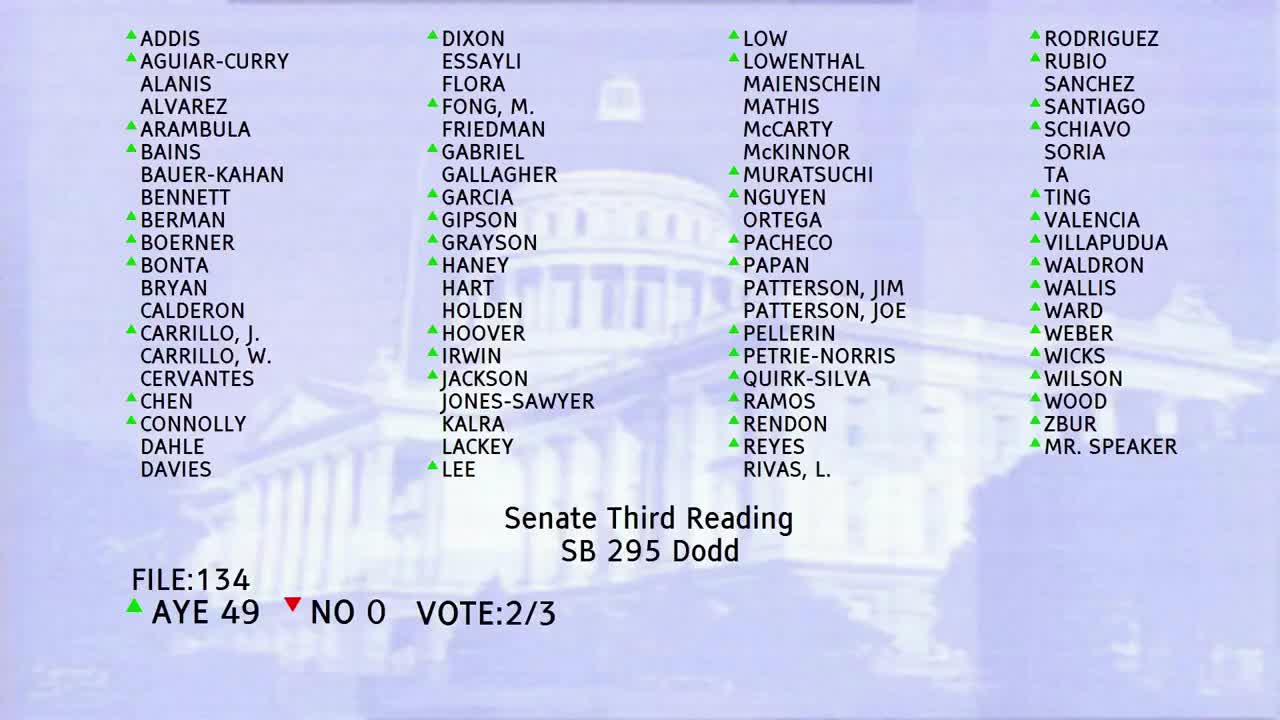

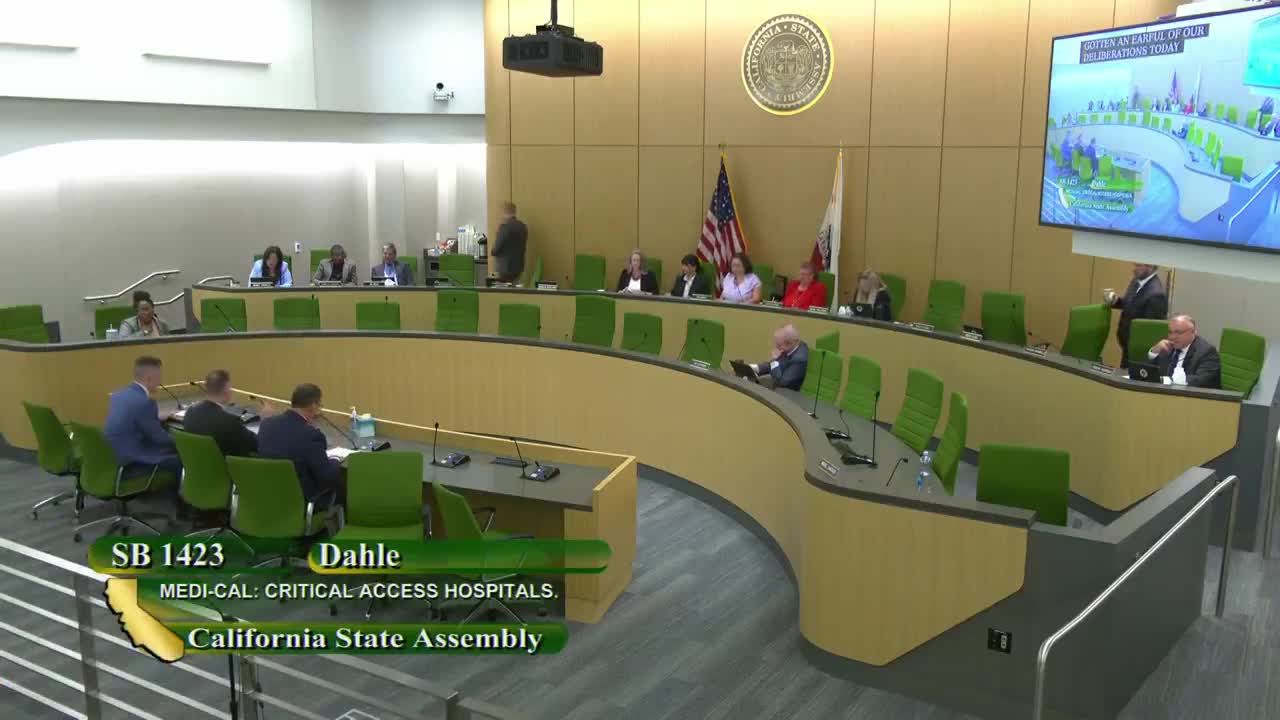

Bill Author