SB 1435: Books and other school materials: obscene matter.
- Session Year: 2023-2024
- House: Senate
- Latest Version Date: 2024-04-08
Current Status:
Failed
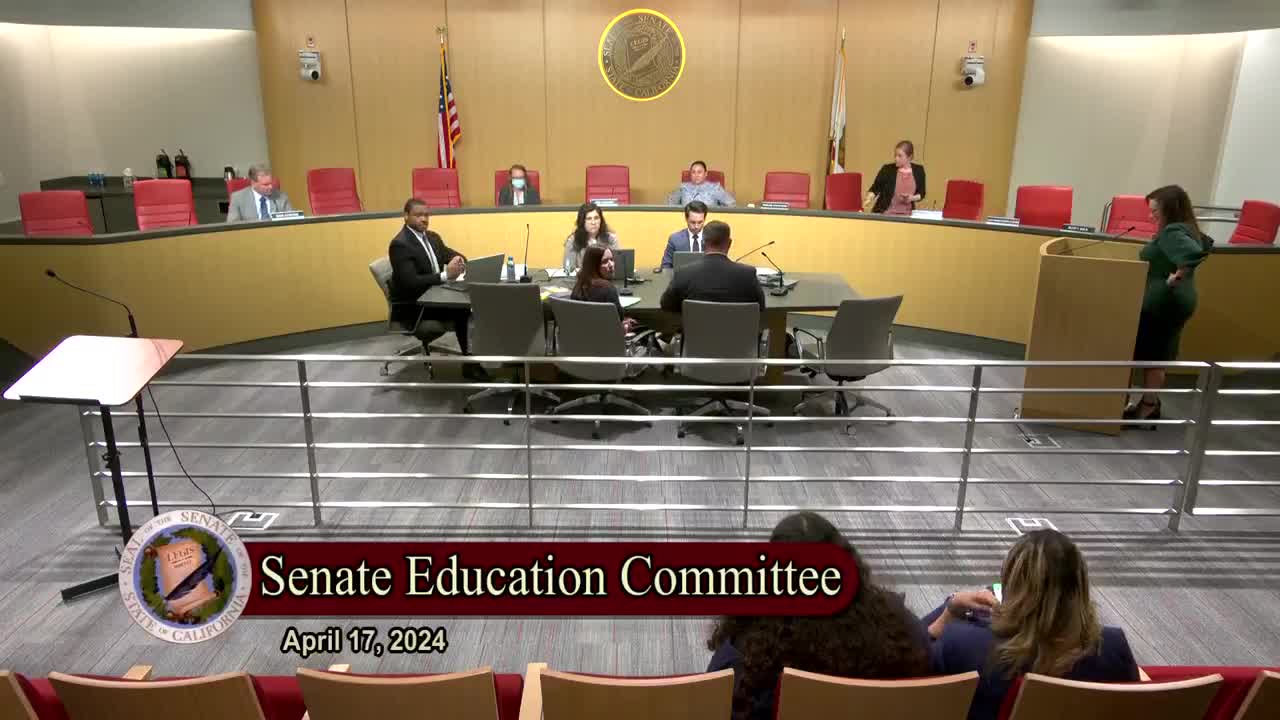
(2024-04-24: April 24 set for first hearing. Failed passage in committee. (Ayes 2. Noes 3. Page 3752.))
Introduced
In Committee
First Chamber
In Committee
Second Chamber
Enacted
Existing law requires the State Board of Education to adopt standards, rules, and regulations for school library services. Existing law authorizes the governing board of a school district to exclude from schools and school libraries all books, publications, or papers of a sectarian, partisan, or denominational character.
This bill would require the governing board of a school district to exclude from schools and school libraries serving pupils in preschool, transitional kindergarten, kindergarten, and grades 1 to 8, inclusive, all books, publications, or papers that contain obscene harmful matter, as defined. The bill would require the harmful matter to be removed on or before July 31, 2025. To the extent these provisions would add new duties on school districts, the bill would impose a state-mandated local program. The bill would authorize a parent, guardian, or resident of a school district to commence a civil action to obtain appropriate injunctive and declaratory relief for violations of these provisions after the governing board of the school districts refusal to remove any harmful matter requested of it.
The California Constitution requires the state to reimburse local agencies and school districts for certain costs mandated by the state. Statutory provisions establish procedures for making that reimbursement.
This bill would provide that, if the Commission on State Mandates determines that the bill contains costs mandated by the state, reimbursement for those costs shall be made pursuant to the statutory provisions noted above.
Existing law requires the State Board of Education to adopt standards, rules, and regulations for school library services. Existing law authorizes the governing board of a school district to exclude from schools and school libraries all books, publications, or papers of a sectarian, partisan, or denominational character.
This bill would require the governing board of a school district to exclude from schools and school libraries serving pupils in preschool, transitional kindergarten, kindergarten, and grades 1 to 8, inclusive, all books, publications, or papers that contain obscene matter, as defined. To the extent these provisions would add new duties on school districts, the bill would impose a state-mandated local program.
The California Constitution requires the state to reimburse local agencies and school districts for certain costs mandated by the state. Statutory provisions establish procedures for making that reimbursement.
This bill would provide that, if the Commission on State Mandates determines that the bill contains costs mandated by the state, reimbursement for those costs shall be made pursuant to the statutory provisions noted above.
Existing law requires the adopted course of study for grades 1 to 6, inclusive, to include physical education. Existing law provides that the Superintendent of Public Instruction shall employ an elementary physical education specialist to develop model curriculum standards in physical education for grades 1 to 8, inclusive, provide technical assistance to teachers, and assist school districts in the development of physical education programs.This bill would nonsubstantive changes to the latter provision.Existing law requires the adopted course of study for grades 1 to 6, inclusive, to include physical education. Existing law provides that the Superintendent of Public Instruction shall employ an elementary physical education specialist to develop model curriculum standards in physical education for grades 1 to 8, inclusive, provide technical assistance to teachers, and assist school districts in the development of physical education programs.
This bill would nonsubstantive changes to the latter provision.
The Legislature finds and declares all of the following:
(a)Obscene material is not protected under the First Amendment, as established by the United States Supreme Court in Miller v. California (1973) 413 U.S. 15.
(b)In Section 1464 of Title 18 of the United States Code, Congress prohibited broadcasting obscene material.
(c)In applying that standard, the Federal Communications Commission states that federal law prohibits obscene, indecent, and profane content from being broadcast on the radio or television, and in deciding what is obscene, indecent, or profane, each type of content has a distinct definition:
(1)For content to be obscene, it must meet a three-pronged test established by the United States Supreme Court: it must appeal to an average persons prurient interest; depict or describe sexual conduct in a patently offensive way; and, taken as a whole, lack serious literary, artistic, political, or scientific value.
(2)Indecent content portrays sexual or excretory organs or activities in a way that is patently offensive but does not meet the three-prong test for obscenity.
(3)Profane content includes grossly offensive language that is considered a public nuisance.
(d)The Penal Code further recognizes obscenity as obscene matter, defining it as matter, taken as a whole, that to the average person, applying contemporary statewide standards, appeals to the prurient interest, that, taken as a whole, depicts or describes sexual conduct in a patently offensive way, and that, taken as a whole, lacks serious literary, artistic, political, or scientific value.(d)The Penal Code further recognizes material that is harmful to children as harmful matter, defining it as matter, taken as a whole, which to the average person, applying contemporary statewide standards, appeals to the prurient interest, and is matter which, taken as a whole, depicts or describes in a patently offensive way sexual conduct and which, taken as a whole, lacks serious literary, artistic, political, or scientific value for minors.
(e)If material is not acceptable to be broadcast to adults on network television or radio stations, which are both regulated as public utilities by the federal government, then the material is not suitable for display, use, or storage in public school libraries for children.
SEC. 2.Section 18112 is added to the Education Code, to read:18112.(a)(1)The governing board of a school district shall exclude from schools and school libraries serving pupils in preschool, transitional kindergarten, kindergarten, and grades 1 to 8, inclusive, all books, publications, or papers that contain obscene harmful matter, as defined in Section 311 313 of the Penal Code.
(2)Notwithstanding Section 313 of the Penal Code, the governing board of a school district shall apply contemporary local standards for deciding what is harmful matter for purposes of this section.
(b)Harmful matter described in subdivision (a) shall be removed on or before July 31, 2025.
(c)(1)Nothing in this section affects the defenses available pursuant to Section 313.3 of the Penal Code as it applies to criminal punishments set forth in Section 313.4 of the Penal Code.
(2)Nothing in this section prohibits a parent, guardian, or resident of a school district from requesting that the governing board of the school district remove any material containing harmful matter from schools and school libraries.
(d)A parent, guardian, or resident of a school district may commence a civil action to obtain appropriate injunctive and declaratory relief for violations of this section after the governing board of the school districts refusal to remove any harmful matter requested of it.
SEC. 3.If the Commission on State Mandates determines that this act contains costs mandated by the state, reimbursement to local agencies and school districts for those costs shall be made pursuant to Part 7 (commencing with Section 17500) of Division 4 of Title 2 of the Government Code.
The Legislature finds and declares all of the following:
(a)Obscene material is not protected under the First Amendment, as established by the United States Supreme Court in Miller v. California (1973) 413 U.S. 15.
(b)In Section 1464 of Title 18 of the United States Code, Congress prohibited broadcasting obscene material.
(c)In applying that standard, the Federal Communications Commission states that federal law prohibits obscene, indecent, and profane content from being broadcast on the radio or television, and in deciding what is obscene, indecent, or profane, each type of content has a distinct definition:
(1)For content to be obscene, it must meet a three-pronged test established by the United States Supreme Court: it must appeal to an average persons prurient interest; depict or describe sexual conduct in a patently offensive way; and, taken as a whole, lack serious literary, artistic, political, or scientific value.
(2)Indecent content portrays sexual or excretory organs or activities in a way that is patently offensive but does not meet the three-prong test for obscenity.
(3)Profane content includes grossly offensive language that is considered a public nuisance.
(d)The Penal Code further recognizes obscenity as obscene matter, defining it as matter, taken as a whole, that to the average person, applying contemporary statewide standards, appeals to the prurient interest, that, taken as a whole, depicts or describes sexual conduct in a patently offensive way, and that, taken as a whole, lacks serious literary, artistic, political, or scientific value.
(e)If material is not acceptable to be broadcast to adults on network television or radio stations, which are both regulated as public utilities by the federal government, then the material is not suitable for display, use, or storage in public school libraries for children.
SEC. 2.Section 18112 is added to the Education Code, to read:18112.The governing board of a school district shall exclude from schools and school libraries serving pupils in preschool, transitional kindergarten, kindergarten, and grades 1 to 8, inclusive, all books, publications, or papers that contain obscene matter, as defined in Section 311 of the Penal Code.
SEC. 3.If the Commission on State Mandates determines that this act contains costs mandated by the state, reimbursement to local agencies and school districts for those costs shall be made pursuant to Part 7 (commencing with Section 17500) of Division 4 of Title 2 of the Government Code.
SECTION 1.Section 51206 of the Education Code is amended to read:51206.(a)The Legislature hereby finds and declares that the physical fitness and motor development of children in the public elementary schools is of equal importance to that of other elements of the curriculum.(b)The Legislature further finds that, in order to improve the level of physical education in the elementary grades, the Superintendent shall, through the regular budget process, employ an elementary physical education specialist to develop model curriculum standards in physical education for grades 1 to 8, inclusive, provide technical assistance to teachers, and assist school districts in the development of physical education programs.(a)The Legislature hereby finds and declares that the physical fitness and motor development of children in the public elementary schools is of equal importance to that of other elements of the curriculum.
The(b)The Legislature further finds that, in order to improve the level of physical education in the elementary grades, the Superintendent of Public Instruction shall, through the regular budget process, employ an elementary physical education specialist to develop model curriculum standards in physical education for grades 1 to 8, inclusive, provide technical assistance to teachers, and assist school districts in the development of their physical education programs.
|
Date
|
Status
|
|---|---|
| Apr 24, 2024 | April 24 set for first hearing. Failed passage in committee. (Ayes 2. Noes 3. Page 3752.) |
| Apr 23, 2024 | Set for hearing April 24. |
| Apr 22, 2024 | Joint Rule 62(a) suspended. |
| Apr 22, 2024 | April 17 set for first hearing. Failed passage in committee. (Ayes 2. Noes 3. Page 3660.) Reconsideration granted. |
| Apr 16, 2024 | Set for hearing April 23 in JUD. pending receipt. |
| Apr 8, 2024 | From committee with author's amendments. Read second time and amended. Re-referred to Com. on ED. |
| Apr 4, 2024 | Set for hearing April 17. |
| Apr 3, 2024 | Re-referred to Coms. on ED. and JUD. |
| Mar 18, 2024 | From committee with author's amendments. Read second time and amended. Re-referred to Com. on RLS. |
| Feb 29, 2024 | Referred to Com. on RLS. |
| Feb 20, 2024 | From printer. May be acted upon on or after March 18. |
| Feb 16, 2024 | Introduced. Read first time. To Com. on RLS. for assignment. To print. |
|
Date
|
Description
|
Location
|
Votes
|
|
|---|---|---|---|---|
| Apr 24, 2024 | Do pass, but first be re-referred to the Committee on [Judiciary] | Senate Standing Committee on Education |
Failed |
|
| Apr 17, 2024 | [04-17-2024] hearing: Motion to Reconsider. [Reconsideration Granted.] | Senate Standing Committee on Education |
Passed |
|
| Apr 17, 2024 | Do pass, but first be re-referred to the Committee on [Judiciary] | Senate Standing Committee on Education |
Failed |
This list shows positions taken on this bill by organizations on the date displayed, which is linked to the original source.
Positions by individuals are not included.
|
Organization
|
Position
|
Date
|
|---|---|---|
| Aclu California Action | ** Against | |
| California Catholic Conference | ** Support | |
| California Policy Center | ** Support | |
| California Teachers Association | ** Against | |
| Educate. Advocate. | ** Support | |
| Equality California | ** Against | |
| Equal Justice Society | ** Against | |
| Generation Up | ** Against | |
| Our Duty | ** Support | |
| Our Family Coalition | ** Against | |
| Protection of the Educational Rights of Kids - Advocacy | ** Support | |
| Public Advocates | ** Against | |
| Public Counsel | ** Against | |
| Stand Up California | ** Support | |
| THE AMERICAN COUNCIL | ** Support |
SENATE COMMITTEE ON EDUCATION
Senator Josh Newman, Chair
2023 - 2024 Regular
Bill No: SB 1435 Hearing Date: April 24, 2024
Author: | |||
Version: | April 8, 2024 | ||
Urgency: | No | Fiscal: | Yes |
Consultant: | Kordell Hampton | ||
Subject: Books and other school materials: obscene matter.
NOTE: This bill was previously heard by this Committee on April 17, 2024, and failed passage, but reconsideration was requested and granted.
NOTE: This bill has been referred to the Committees on Education and Judiciary. A “do pass” motion should include referral to the Committee on Judiciary.
SUMMARY
This bill would require the governing board of a local educational agency (LEA) to exclude from schools and school libraries serving pupils in preschool, transitional kindergarten, kindergarten, and grades 1 to 8, inclusive, all books, publications, or papers that contain harmful matter, as defined, by July 31, 2025 and allows a parent, guardian, or resident of a LEA to commence a civil action to obtain appropriate injunctive and declaratory relief for violations, as specified, after the governing board of the school district’s refusal to remove any harmful matter requested of it.
BACKGROUND
Existing Law:
Penal Code (PEN)
- “Harmful matter” means matter, taken as a whole, which to the average person, applying contemporary statewide standards, appeals to the prurient interest, and is matter which, taken as a whole, depicts or describes in a patently offensive way sexual conduct and which, taken as a whole, lacks serious literary, artistic, political, or scientific value for minors.
- If it appears from the nature of the matter or the circumstances of its dissemination, distribution, or exhibition that it is designed for clearly defined deviant sexual groups, the appeal of the matter shall be judged with reference to its intended recipient group.
- In prosecutions, if circumstances of production, presentation, sale, dissemination, distribution, or publicity indicate that matter is being commercially exploited by the defendant for the sake of its prurient appeal, this evidence is probative with respect to the nature of the matter and may justify the conclusion that the matter lacks serious literary, artistic, political, or scientific value. (PEN 313 (a))
- “Matter” means any book, magazine, newspaper, video recording, or other printed or written material or any picture, drawing, photograph, motion picture, or other pictorial representation or any statue or other figure, or any recording, transcription, or mechanical, chemical, or electrical reproduction or any other articles, equipment, machines, or materials. “Matter” also includes live or recorded telephone messages when transmitted, disseminated, or distributed as part of a commercial transaction. PEN § 313(b))
- “Person” means any individual, partnership, firm, association, corporation, limited liability company, or other legal entity. (PEN § 313(c))
- “Distribute” means transfer possession of, whether with or without consideration. (PEN § 313(d))
- “Knowingly” means being aware of the character of the matter or live conduct. (PEN § 313(e)).
- Every person who, with knowledge that a person is a minor, or who fails to exercise reasonable care in ascertaining the true age of a minor, knowingly sells, rents, distributes, sends, causes to be sent, exhibits, or offers to distribute or exhibit by any means, including, but not limited to, live or recorded telephone messages, any harmful matter to the minor shall be punished as specified in Penal Code. (PEN § 313.1 (a))
- Every person who violates Section 313.1, as specified in Penal Code, is punishable by fine of not more than two thousand dollars ($2,000), by imprisonment in the county jail for not more than one year, or by both that fine and imprisonment. (PEN § 313.4)
- Allows, to be a defense in any prosecution, for any person violation, with knowledge that a person is a minor, or who fails to exercise reasonable care in ascertaining the true age of a minor, knowingly sells, rents, distributes, sends, causes to be sent, exhibits, or offers to distribute or exhibit by any means, including, but not limited to, live or recorded telephone messages, any harmful matter to the minor, was committed in aid of legitimate scientific or educational purposes. (PEN 313.3)
Education Code (EC)
- Libraries may be established and maintained under the control of the governing board of any school district. (EC § 18100)
- The governing board of a school district is accountable for the proper care and preservation of the school libraries of the district, and may make all necessary rules and regulations not provided for by the State Board of Education (SBE), or the Superintendent of Public Instruction (SPI) and not inconsistent therewith. (EC § 18121)
- Requires the State Librarian to employ a consultant to provide technical assistance to public libraries in the development and enhancement of library services to children and youth. (EC § 19320.5)
- Requires each district board to provide for substantial teacher involvement in selecting instructional materials and to promote the involvement of parents and other community members in choosing instructional materials. (EC § 60002)
- Requires all instructional materials adopted by any governing board for use in the schools shall be, to the satisfaction of the governing board, accurate, objective, current, and suited to the needs and comprehension of pupils at their respective grade levels. (EC § 60045)
California Code of Regulation (CCR)
- Persons employed by a school district as school librarians, assisted by other certificated personnel where deemed necessary, are responsible to perform the duties assigned by the school district governing board, including, but not limited to, supplementing classroom instruction, helping and instructing pupils in the choice and use of library materials, planning and coordinating school library programs with the instructional programs of a school district, selecting materials for school libraries, and conducting a planned course of instruction for those pupils who assist in the operation of school libraries, subject to such policies, rules and regulations as may be established by the governing board for the operation and utilization of school libraries. (CCR § 16043)
ANALYSIS
This bill:
- Requires the governing board of a school district to exclude from schools and school libraries serving pupils in preschool, transitional kindergarten, kindergarten, and grades 1 to 8, inclusive, all books, publications, or papers that contain harmful matter, as defined in Penal Code by July 31, 2025.
- Requires the governing board of an LEA, notwithstanding applying contemporary statewide standards, to establish contemporary local standards for deciding what is “harmful matter.”
- Specifies that a defense, if a person with knowledge that a person is a minor, or who fails to exercise reasonable care in ascertaining the true age of a minor, knowingly sells, rents, distributes, sends, causes to be sent, exhibits, or offers to distribute or exhibit by any means, including, but not limited to, live or recorded telephone messages, any harmful matter to the minor, was committed in aid of legitimate scientific or educational purposes, in any prosecution related to “harmful matter”.
- Allows a parent, guardian, or resident of an LEA to commence civil action to obtain appropriate injunctive and declaratory relief for violations of this section after the governing board of the school district’s refusal to remove any harmful matter requested of it.
- Makes findings and declarations related to obscene and harmful matters defined as matter, taken as a whole, that to the average person, applying contemporary statewide standards, appeals to the prurient interest, that, taken as a whole, depicts or describes sexual conduct in a patently offensive way, and that, taken as a whole, lacks serious literary, artistic, political, or scientific value as it related broadcasting on the radio or television and how these standard should apply to public school libraries for children.
STAFF COMMENTS
- Need for the bill. According to the author, “The United States Supreme Court in Miller v. California (1973) 413 U.S. 15 found that obscene material is not protected under the First Amendment, and the Federal Communications Commission prohibits obscene, indecent, and profane content from being broadcast on the radio or television, in accordance with section 1464 of Title 18 of the United States Code.”
“When these sexually explicit books are presented during a school board meeting to be considered for removal, the materials are sometimes censored or unable to be read aloud for the safety of the viewing audience due these existing federal regulations. Yet, these books can be found in California school libraries, available for check out by children without their parents (or guardians) ever knowing.”
“SB 1435 ultimately seeks to protect our children from accessing content in school libraries that our state considers too sexually explicit to be distributed to minors in public, and material that our own federal government considers too obscene for adults to hear or view on radio and television.”
- Background and Context: Miller v. California (1973). Within the provisions of the bill, the findings and declarations cite Miller v. California (1973) 413 U.S. 15 affirming that obscene materials are not protected under the First Amendment and clarifying what materials qualify as “obscene.” Before advancing, it is essential to discuss the context in which the ruling in Miller was made.
In 1968, Marvin Miller, after conducting a mass mailing campaign to advertise the sale of "adult" material (Intercourse, Man–Woman, Sex Orgies Illustrated, and An Illustrated History of Pornography — and a film entitled Marital Intercourse) for his business, was convicted of violating a California statute prohibiting the distribution of obscene materials. Unwilling recipients of Miller's brochures complained to the police, initiating the legal proceedings. Miller appealed to the U.S. Supreme Court, contending that the advertisements in question were not obscene under the First Amendment's freedom of speech guarantee.
Notability, while the findings and declarations highlight the Miller case, it is important to recognize that the Miller case was tried under the definition of “obscene matter” (Pen Code 311(a)) rather than ‘harmful matter” (Pen Code 313 (a)) as referenced in the bill. Although the definitions may seem similar, “obscene matter” generally refers to obscene materials in public, while “harmful matter” is more specific to minors.
During the trial, the judge had instructed the jury to use the community standard for California in determining whether the materials would be considered obscene. Miller then argued on appeal that these instructions had failed to comply with the Supreme Court's decision in Memoirs v. Massachusetts, which would require a national standard for obscenity because obscene works must be completely lacking in redeeming social value. The appellate decision rejected this argument, and the state appellate court refused review.
Vacating and remanding the state court decision, Supreme Court Justice Warren Earl Burger reiterated that the First Amendment does not protect obscene speech, and especially hardcore pornography, but created a more detailed standard for determining whether material is obscene. He noted that any statutes prohibiting obscenity must be narrowly constructed and created three factors to help state legislatures in formulating them. These were:
- Whether the average person, applying contemporary community standards, would find that the work as a whole appeals to the prurient interest;
- Whether the work depicts or describes sexual conduct or excretory functions, as defined by state law, in an offensive way; and
- Whether the work as a whole lacks serious literary, artistic, political, or scientific value.
Only if all three of these factors are satisfied with regard to a work as a whole—not portions of the work—can the speech give rise to criminal liability as obscene matter. In developing this test, Justice Burger refined the ruling in Memoirs that speech was only obscene if it had absolutely no redeeming value.
This bill potentially extends criminal liability and punishment to school districts and allows a parent, guardian, or resident of a school district to commence a civil action to obtain appropriate injunctive and declaratory relief for violations related to schools and school libraries for containing “harmful material.” The committee may wish to consider if the ability for a parent, guardian, or resident of a school district to commence a civil action to obtain appropriate injunctive and declaratory relief for violations as established in this bill may result in frivolous lawsuits against school districts, and whether the threat of criminal prosecution will cause librarians to self-censor and remove important works from school libraries.
The Supreme Court in Miller v. California established a new standard for determining what could be considered obscene materials and subject to government restrictions. The three-part test asked whether the average person, applying contemporary community standards, would find the work appeals on the whole to prurient interests; describes sexual conduct in a patently offensive way; and lacks any serious literary, artistic, political or scientific value, to give raise to criminal liability.
The definition of “harmful matter” in Penal Code 313 is based on the obscene materials standard developed in Miller v. California in that it criminalizes material that, taken as a whole and using contemporary statewide standards appeals to the prurient interest or describes or depicts sexual conduct in a patently offensive way, where the work, as a whole, lacks serious literary, artistic, political, or scientific value for minors.
Should the criminal standard for harmful material apply to school library books? Further, if the criminal standard were to be applied, the committee may wish to consider to what extent a book from a school library would, as a whole, lack serious literary, artistic, political or scientific value.
- Students’ First Amendment Right to Receive Information: Board of Education Island Trees Union Free School District v. Pico (1982). In Pico, a four-justice plurality of the U.S. Supreme Court stated that a student’s First Amendment right to access of information is violated when school officials remove books from a library “simply because they dislike the ideas contained in those books and seek by their removal to ‘prescribe what shall be orthodox in politics, nationalism, religion, or other matters of opinion.” (Board of Educ., Island Trees Union Free School Dist. No. 26 v. Pico, 457 U.S. 853, 871–72 (1982))
Unlike Miller (1973,) the U.S Supreme Court’s ruling in Pico (1982) is very narrow and fact specific as it related to school libraries compared to the distribution of “adult” materials in public.
In 1976, the school board for the Island Trees Union Free School District No. 26 in New York removed 11 books from its schools’ libraries, claiming they were “anti-American, anti-Christian, anti-Semitic and just plain filthy.” The books included Slaughterhouse-Five by Kurt Vonnegut, The Fixer by Bernard Malamud, Go Ask Alice by Anonymous, Black Boy by Richard Wright, and A Hero Ain’t Nothin’ but a Sandwich by Alice Childress. After objections from the school superintendent—who noted that the officials had failed to follow the existing policy for book removal—the board appointed a review committee, which advised that five of the books at issue be kept in the libraries. The board, however, overruled the committee’s recommendation, giving no explanation of its actions, and banned all but 2 of the 11 books. Steven Pico, a student at the high school, was among those who sought injunctive and declaratory relief, claiming that the school board violated their First Amendment rights.
A federal district court granted the board’s motion for summary judgment on the basis that its motivation stemmed from a “conservative educational philosophy,” which was permissible in light of the wide discretion usually given to school boards. Subsequently, The United States Court of Appeals for the Second Circuit reversed and remanded for trial, and certiorari was granted. Justice Brennan, writing the plurality opinion, stated that:
- Local school boards may not remove books from school library shelves simply because they dislike the ideas contained in those books and seek by their removal to prescribe what shall be orthodox in politics, nationalism, religion or other matters of opinion; and
- Issues of fact precluding summary judgment existed as to whether the school board exceeded constitutional limitations in exercising its discretion to remove the books from the school libraries.
- Removal of Library Materials – Local Discretion. The selection of materials for school libraries (or media centers) is subject to the discretion of the governing board and guided by the rights of students.
This bill requires the governing board of a school district to establish contemporary local standards for deciding what is a “harmful matter.” It should be noted that Penal Code 313(a) requires the application of “contemporary statewide standards.” This bill ignores that application, and instead, requires the governing board of an LEA to apply a “local contemporary standard.” Existing law already allows governing board of school districts to determine, based on their community needs without exception to existing law, the books that can be found in school libraries.
According to CDE, school library plays an important role in preparing students to live and learn in a world of information. Since 1988, the mission of school library media programs across the country has been to ensure that students and staff are effective users of ideas and information by taking the following steps:
- Providing intellectual and physical access to materials in all formats.
- Providing instruction to foster competence and stimulate interest in reading, viewing, and using information and ideas.
- Working with other educators to design learning strategies to meet the needs of individual students.
Section 18121 of the education code states “the governing board of a school district is accountable for the proper care and preservation of the school libraries of the district, and may make all necessary rules and regulations not provided for by the SBE, or the SPI and not inconsistent therewith.” Further California Code of Regulation states school librarians and other certified personnel are responsible for performing various duties assigned by the school district's governing board. These duties may include supplementing classroom instruction, assisting students in choosing appropriate library materials, planning library programs, selecting materials, and providing instruction on library operations, all by the governing board's policies and regulations. (CCR 16043)
The standard set in Pico for when a book can be removed requires the removal to be due to the book’s “educational suitability” or “pervasive vulgarity.” (Id. at 871.). The process for removing books must be “established, regular, and facially unbiased.” (Id. at 874.) In summary, local boards have discretion to remove books from school libraries, but they must only use that discretion in an established process and the intention for the removal must be constitutionally valid, meaning it “may not be exercised in a narrowly partisan or political manner.” (Id. at 854.)
- Related Legislation.
AB 1825 (Muratsuchi, 2024), which would prohibit public libraries refusing to procure books in a manner that discriminates against or excludes materials based on race, nationality, gender identity, sexual orientation, religion, disability, political affiliation, or socioeconomic status, or on the basis that the materials under consideration contain inclusive and diverse perspectives.
AB 1078 (Jackson, Chapter 229, Statutes of 2023) makes various changes to the adoption of instructional materials for use in schools, including a provision that would prohibit a governing board from disallowing the use of an existing textbook, other instructional material, or curriculum that contains inclusive and diverse perspectives, as specified.
AB 48 (Leno, Chapter 81, Statutes of 2011) require California public schools to provide Fair, Accurate, Inclusive, and Respectful representations of our diverse ethnic and cultural population in the K-12 grade history and social studies curriculum.
SUPPORT
California Catholic Conference
California Policy Center
Educate. Advocate.
Our Duty
Protection of the Educational Rights of Kids - Advocacy
Stand Up California
The American Council
The National Center for Law & Policy18 Individuals
OPPOSITION
ACLU California Action
California Teachers Association
Equal Justice Society
Equality California
Generation Up
Our Family Coalition
Public Advocates
Public Counsel
-- END --
SENATE COMMITTEE ON EDUCATION
Senator Josh Newman, Chair
2023 - 2024 Regular
Bill No: Hearing Date: April 17, 2024
Author: | Ochoa Bogh | ||
Version: |
| ||
Urgency: | Fiscal: | ||
Consultant: | |||
Subject:
NOTE: This bill has been referred to the Committees on Education and Judiciary. A "do pass" motion should include referral to the Committee on Judiciary.
SUMMARY
This bill would require the governing board of a local educational agency (LEA) to exclude from schools and school libraries serving pupils in preschool, transitional kindergarten, kindergarten, and grades 1 to 8, inclusive, all books, publications, or papers that contain harmful matter, as defined, by July 31, 2025 and allows a parent, guardian, or resident of a LEA to commence a civil action to obtain appropriate injunctive and declaratory relief for violations, as specified, after the governing board of the school district’s refusal to remove any harmful matter requested of it.
BACKGROUND
Existing Law:
Penal Code (PEN)
- “Harmful matter” means matter, taken as a whole, which to the average person, applying contemporary statewide standards, appeals to the prurient interest, and is matter which, taken as a whole, depicts or describes in a patently offensive way sexual conduct and which, taken as a whole, lacks serious literary, artistic, political, or scientific value for minors.
- If it appears from the nature of the matter or the circumstances of its dissemination, distribution, or exhibition that it is designed for clearly defined deviant sexual groups, the appeal of the matter shall be judged with reference to its intended recipient group.
- In prosecutions, if circumstances of production, presentation, sale, dissemination, distribution, or publicity indicate that matter is being commercially exploited by the defendant for the sake of its prurient appeal, this evidence is probative with respect to the nature of the matter and may justify the conclusion that the matter lacks serious literary, artistic, political, or scientific value. (PEN 313 (a))
- “Matter” means any book, magazine, newspaper, video recording, or other printed or written material or any picture, drawing, photograph, motion picture, or other pictorial representation or any statue or other figure, or any recording, transcription, or mechanical, chemical, or electrical reproduction or any other articles, equipment, machines, or materials. “Matter” also includes live or recorded telephone messages when transmitted, disseminated, or distributed as part of a commercial transaction. PEN § 313(b))
- “Person” means any individual, partnership, firm, association, corporation, limited liability company, or other legal entity. (PEN § 313(c))
- “Distribute” means transfer possession of, whether with or without consideration. (PEN § 313(d))
- “Knowingly” means being aware of the character of the matter or live conduct. (PEN § 313(e)).
- Every person who, with knowledge that a person is a minor, or who fails to exercise reasonable care in ascertaining the true age of a minor, knowingly sells, rents, distributes, sends, causes to be sent, exhibits, or offers to distribute or exhibit by any means, including, but not limited to, live or recorded telephone messages, any harmful matter to the minor shall be punished as specified in Penal Code. (PEN § 313.1 (a))
- Every person who violates Section 313.1, as specified in Penal Code, is punishable by fine of not more than two thousand dollars ($2,000), by imprisonment in the county jail for not more than one year, or by both that fine and imprisonment. (PEN § 313.4)
- Allows, to be a defense in any prosecution, for any person violation, with knowledge that a person is a minor, or who fails to exercise reasonable care in ascertaining the true age of a minor, knowingly sells, rents, distributes, sends, causes to be sent, exhibits, or offers to distribute or exhibit by any means, including, but not limited to, live or recorded telephone messages, any harmful matter to the minor, was committed in aid of legitimate scientific or educational purposes. (PEN 313.3)
Education Code (EC)
- Libraries may be established and maintained under the control of the governing board of any school district. (EC § 18100)
- The governing board of a school district is accountable for the proper care and preservation of the school libraries of the district, and may make all necessary rules and regulations not provided for by the State Board of Education (SBE), or the Superintendent of Public Instruction (SPI) and not inconsistent therewith. (EC § 18121)
- Requires the State Librarian to employ a consultant to provide technical assistance to public libraries in the development and enhancement of library services to children and youth. (EC § 19320.5)
- Requires each district board to provide for substantial teacher involvement in selecting instructional materials and to promote the involvement of parents and other community members in choosing instructional materials. (EC § 60002)
- Requires all instructional materials adopted by any governing board for use in the schools shall be, to the satisfaction of the governing board, accurate, objective, current, and suited to the needs and comprehension of pupils at their respective grade levels. (EC § 60045)
California Code of Regulation (CCR)
- Persons employed by a school district as school librarians, assisted by other certificated personnel where deemed necessary, are responsible to perform the duties assigned by the school district governing board, including, but not limited to, supplementing classroom instruction, helping and instructing pupils in the choice and use of library materials, planning and coordinating school library programs with the instructional programs of a school district, selecting materials for school libraries, and conducting a planned course of instruction for those pupils who assist in the operation of school libraries, subject to such policies, rules and regulations as may be established by the governing board for the operation and utilization of school libraries. (CCR § 16043)
ANALYSIS
This bill:
- Requires the governing board of a school district to exclude from schools and school libraries serving pupils in preschool, transitional kindergarten, kindergarten, and grades 1 to 8, inclusive, all books, publications, or papers that contain harmful matter, as defined in Penal Code by July 31, 2025.
- Requires the governing board of an LEA, notwithstanding applying contemporary statewide standards, to establish contemporary local standards for deciding what is “harmful matter.”
- Specifies that a defense, if a person with knowledge that a person is a minor, or who fails to exercise reasonable care in ascertaining the true age of a minor, knowingly sells, rents, distributes, sends, causes to be sent, exhibits, or offers to distribute or exhibit by any means, including, but not limited to, live or recorded telephone messages, any harmful matter to the minor, was committed in aid of legitimate scientific or educational purposes, in any prosecution related to “harmful matter”.
- Allows a parent, guardian, or resident of an LEA to commence civil action to obtain appropriate injunctive and declaratory relief for violations of this section after the governing board of the school district’s refusal to remove any harmful matter requested of it.
- Makes findings and declarations related to obscene and harmful matters defined as matter, taken as a whole, that to the average person, applying contemporary statewide standards, appeals to the prurient interest, that, taken as a whole, depicts or describes sexual conduct in a patently offensive way, and that, taken as a whole, lacks serious literary, artistic, political, or scientific value as it related broadcasting on the radio or television and how these standard should apply to public school libraries for children.
STAFF COMMENTS
- Need for the bill. According to the author, “The United States Supreme Court in Miller v. California (1973) 413 U.S. 15 found that obscene material is not protected under the First Amendment, and the Federal Communications Commission prohibits obscene, indecent, and profane content from being broadcast on the radio or television, in accordance with section 1464 of Title 18 of the United States Code.”
“When these sexually explicit books are presented during a school board meeting to be considered for removal, the materials are sometimes censored or unable to be read aloud for the safety of the viewing audience due these existing federal regulations. Yet, these books can be found in California school libraries, available for check out by children without their parents (or guardians) ever knowing.”
“SB 1435 ultimately seeks to protect our children from accessing content in school libraries that our state considers too sexually explicit to be distributed to minors in public, and material that our own federal government considers too obscene for adults to hear or view on radio and television.”
- Background and Context: Miller v. California (1973). Within the provisions of the bill, the findings and declarations cite Miller v. California (1973) 413 U.S. 15 affirming that obscene materials are not protected under the First Amendment and clarifying what materials qualify as “obscene.” Before advancing, it is essential to discuss the context in which the ruling in Miller was made.
In 1968, Marvin Miller, after conducting a mass mailing campaign to advertise the sale of "adult" material (Intercourse, Man–Woman, Sex Orgies Illustrated, and An Illustrated History of Pornography — and a film entitled Marital Intercourse) for his business, was convicted of violating a California statute prohibiting the distribution of obscene materials. Unwilling recipients of Miller's brochures complained to the police, initiating the legal proceedings. Miller appealed to the U.S. Supreme Court, contending that the advertisements in question were not obscene under the First Amendment's freedom of speech guarantee.
Notability, while the findings and declarations highlight the Miller case, it is important to recognize that the Miller case was tried under the definition of “obscene matter” (Pen Code 311(a)) rather than ‘harmful matter” (Pen Code 313 (a)) as referenced in the bill. Although the definitions may seem similar, “obscene matter” generally refers to obscene materials in public, while “harmful matter” is more specific to minors.
During the trial, the judge had instructed the jury to use the community standard for California in determining whether the materials would be considered obscene. Miller then argued on appeal that these instructions had failed to comply with the Supreme Court's decision in Memoirs v. Massachusetts, which would require a national standard for obscenity because obscene works must be completely lacking in redeeming social value. The appellate decision rejected this argument, and the state appellate court refused review.
Vacating and remanding the state court decision, Supreme Court Justice Warren Earl Burger reiterated that the First Amendment does not protect obscene speech, and especially hardcore pornography, but created a more detailed standard for determining whether material is obscene. He noted that any statutes prohibiting obscenity must be narrowly constructed and created three factors to help state legislatures in formulating them. These were:
- Whether the average person, applying contemporary community standards, would find that the work as a whole appeals to the prurient interest;
- Whether the work depicts or describes sexual conduct or excretory functions, as defined by state law, in an offensive way; and
- Whether the work as a whole lacks serious literary, artistic, political, or scientific value.
Only if all three of these factors are satisfied with regard to a work as a whole—not portions of the work—can the speech give rise to criminal liability as obscene matter. In developing this test, Justice Burger refined the ruling in Memoirs that speech was only obscene if it had absolutely no redeeming value.
This bill potentially extends criminal liability and punishment to school districts and allows a parent, guardian, or resident of a school district to commence a civil action to obtain appropriate injunctive and declaratory relief for violations related to schools and school libraries for containing “harmful material.” The committee may wish to consider if the ability for a parent, guardian, or resident of a school district to commence a civil action to obtain appropriate injunctive and declaratory relief for violations as established in this bill may result in frivolous lawsuits against school districts, and whether the threat of criminal prosecution will cause librarians to self-censor and remove important works from school libraries.
The Supreme Court in Miller v. California established a new standard for determining what could be considered obscene materials and subject to government restrictions. The three-part test asked whether the average person, applying contemporary community standards, would find the work appeals on the whole to prurient interests; describes sexual conduct in a patently offensive way; and lacks any serious literary, artistic, political or scientific value, to give raise to criminal liability.
The definition of “harmful matter” in Penal Code 313 is based on the obscene materials standard developed in Miller v. California in that it criminalizes material that, taken as a whole and using contemporary statewide standards appeals to the prurient interest or describes or depicts sexual conduct in a patently offensive way, where the work, as a whole, lacks serious literary, artistic, political, or scientific value for minors.
Should the criminal standard for harmful material apply to school library books? Further, if the criminal standard were to be applied, the committee may wish to consider to what extent a book from a school library would, as a whole, lack serious literary, artistic, political or scientific value.
- Students’ First Amendment Right to Receive Information: Board of Education Island Trees Union Free School District v. Pico (1982). In Pico, a four-justice plurality of the U.S. Supreme Court stated that a student’s First Amendment right to access of information is violated when school officials remove books from a library “simply because they dislike the ideas contained in those books and seek by their removal to ‘prescribe what shall be orthodox in politics, nationalism, religion, or other matters of opinion.” (Board of Educ., Island Trees Union Free School Dist. No. 26 v. Pico, 457 U.S. 853, 871–72 (1982))
Unlike Miller (1973,) the U.S Supreme Court’s ruling in Pico (1982) is very narrow and fact specific as it related to school libraries compared to the distribution of “adult” materials in public.
In 1976, the school board for the Island Trees Union Free School District No. 26 in New York removed 11 books from its schools’ libraries, claiming they were “anti-American, anti-Christian, anti-Semitic and just plain filthy.” The books included Slaughterhouse-Five by Kurt Vonnegut, The Fixer by Bernard Malamud, Go Ask Alice by Anonymous, Black Boy by Richard Wright, and A Hero Ain’t Nothin’ but a Sandwich by Alice Childress. After objections from the school superintendent—who noted that the officials had failed to follow the existing policy for book removal—the board appointed a review committee, which advised that five of the books at issue be kept in the libraries. The board, however, overruled the committee’s recommendation, giving no explanation of its actions, and banned all but 2 of the 11 books. Steven Pico, a student at the high school, was among those who sought injunctive and declaratory relief, claiming that the school board violated their First Amendment rights.
A federal district court granted the board’s motion for summary judgment on the basis that its motivation stemmed from a “conservative educational philosophy,” which was permissible in light of the wide discretion usually given to school boards. Subsequently, The United States Court of Appeals for the Second Circuit reversed and remanded for trial, and certiorari was granted. Justice Brennan, writing the plurality opinion, stated that:
- Local school boards may not remove books from school library shelves simply because they dislike the ideas contained in those books and seek by their removal to prescribe what shall be orthodox in politics, nationalism, religion or other matters of opinion; and
- Issues of fact precluding summary judgment existed as to whether the school board exceeded constitutional limitations in exercising its discretion to remove the books from the school libraries.
- Removal of Library Materials – Local Discretion. The selection of materials for school libraries (or media centers) is subject to the discretion of the governing board and guided by the rights of students.
This bill requires the governing board of a school district to establish contemporary local standards for deciding what is “harmful matter”. It should be noted that Penal Code 313(a) requires the application of “contemporary statewide standards”. This bill ignores that application, and instead, requires the governing board of an LEA to apply a “local contemporary standard”. Existing law already allows governing board of school districts to determine, based on their community needs without exception to existing law, the books that can be found in school libraries.
According to CDE, school library plays an important role in preparing students to live and learn in a world of information. Since 1988, the mission of school library media programs across the country has been to ensure that students and staff are effective users of ideas and information by taking the following steps:
- Providing intellectual and physical access to materials in all formats.
- Providing instruction to foster competence and stimulate interest in reading, viewing, and using information and ideas.
- Working with other educators to design learning strategies to meet the needs of individual students.
Section 18121 of the education code states “the governing board of a school district is accountable for the proper care and preservation of the school libraries of the district, and may make all necessary rules and regulations not provided for by the SBE, or the SPI and not inconsistent therewith.” Further California Code of Regulation states school librarians and other certified personnel are responsible for performing various duties assigned by the school district's governing board. These duties may include supplementing classroom instruction, assisting students in choosing appropriate library materials, planning library programs, selecting materials, and providing instruction on library operations, all by the governing board's policies and regulations. (CCR 16043)
The standard set in Pico for when a book can be removed requires the removal to be due to the book’s “educational suitability” or “pervasive vulgarity.” (Id. at 871.). The process for removing books must be “established, regular, and facially unbiased.” (Id. at 874.) In summary, local boards have discretion to remove books from school libraries, but they must only use that discretion in an established process and the intention for the removal must be constitutionally valid, meaning it “may not be exercised in a narrowly partisan or political manner.” (Id. at 854.)
- Related Legislation.
AB 1825 (Muratsuchi, 2024), which would prohibit public libraries refusing to procure books in a manner that discriminates against or excludes materials based on race, nationality, gender identity, sexual orientation, religion, disability, political affiliation, or socioeconomic status, or on the basis that the materials under consideration contain inclusive and diverse perspectives.
AB 1078 (Jackson, Chapter 229, Statutes of 2023) makes various changes to the adoption of instructional materials for use in schools, including a provision that would prohibit a governing board from disallowing the use of an existing textbook, other instructional material, or curriculum that contains inclusive and diverse perspectives, as specified.
AB 48 (Leno, Chapter 81, Statutes of 2011) require California public schools to provide Fair, Accurate, Inclusive, and Respectful representations of our diverse ethnic and cultural population in the K-12 grade history and social studies curriculum.
SUPPORT
California Policy Center
Educate.Advocate.
Protection of the Educational Rights of Kids - Advocacy
Stand Up California
The American Council
18 Individuals
OPPOSITION
ACLU California Action
California Teachers Association
Equal Justice Society
Equality California
Generation Up
Our Family Coalition
Public Advocates
Public Counsel
-- END --
SENATE COMMITTEE ON EDUCATION
Senator Josh Newman, Chair
2023 - 2024 Regular
Bill No: SB 1435 Hearing Date: April 17, 2024
Author: | |||
Version: | April 8, 2024 | ||
Urgency: | No | Fiscal: | Yes |
Consultant: | Kordell Hampton | ||
Subject: Books and other school materials: obscene matter.
NOTE: This bill has been referred to the Committees on Education and Judiciary. A "do pass" motion should include referral to the Committee on Judiciary.
SUMMARY
This bill would require the governing board of a local educational agency (LEA) to exclude from schools and school libraries serving pupils in preschool, transitional kindergarten, kindergarten, and grades 1 to 8, inclusive, all books, publications, or papers that contain hamful matter, as defined, by July 31, 2025 and allows a parent, guardian, or resident of a LEA to commence a civil action to obtain appropriate injunctive and declaratory relief for violations, as specified, after the governing board of the school district’s refusal to remove any harmful matter requested of it.
BACKGROUND
Existing Law:
Penal Code (PEN)
- “Harmful matter” means matter, taken as a whole, which to the average person, applying contemporary statewide standards, appeals to the prurient interest, and is matter which, taken as a whole, depicts or describes in a patently offensive way sexual conduct and which, taken as a whole, lacks serious literary, artistic, political, or scientific value for minors.
- If it appears from the nature of the matter or the circumstances of its dissemination, distribution, or exhibition that it is designed for clearly defined deviant sexual groups, the appeal of the matter shall be judged with reference to its intended recipient group.
- In prosecutions, if circumstances of production, presentation, sale, dissemination, distribution, or publicity indicate that matter is being commercially exploited by the defendant for the sake of its prurient appeal, this evidence is probative with respect to the nature of the matter and may justify the conclusion that the matter lacks serious literary, artistic, political, or scientific value. (PEN 313 (a))
- “Matter” means any book, magazine, newspaper, video recording, or other printed or written material or any picture, drawing, photograph, motion picture, or other pictorial representation or any statue or other figure, or any recording, transcription, or mechanical, chemical, or electrical reproduction or any other articles, equipment, machines, or materials. “Matter” also includes live or recorded telephone messages when transmitted, disseminated, or distributed as part of a commercial transaction. PEN § 313(b))
- “Person” means any individual, partnership, firm, association, corporation, limited liability company, or other legal entity. (PEN § 313(c))
- “Distribute” means transfer possession of, whether with or without consideration. (PEN § 313(d))
- “Knowingly” means being aware of the character of the matter or live conduct. (PEN § 313(e)).
- Every person who, with knowledge that a person is a minor, or who fails to exercise reasonable care in ascertaining the true age of a minor, knowingly sells, rents, distributes, sends, causes to be sent, exhibits, or offers to distribute or exhibit by any means, including, but not limited to, live or recorded telephone messages, any harmful matter to the minor shall be punished as specified in Penal Code. (PEN § 313.1 (a))
- Every person who violates Section 313.1, as specified in Penal Code, is punishable by fine of not more than two thousand dollars ($2,000), by imprisonment in the county jail for not more than one year, or by both that fine and imprisonment. (PEN § 313.4)
- Allows, to be a defense in any prosecution, for any person violation, with knowledge that a person is a minor, or who fails to exercise reasonable care in ascertaining the true age of a minor, knowingly sells, rents, distributes, sends, causes to be sent, exhibits, or offers to distribute or exhibit by any means, including, but not limited to, live or recorded telephone messages, any harmful matter to the minor, was committed in aid of legitimate scientific or educational purposes. (PEN 313.3)
Education Code (EC)
- Libraries may be established and maintained under the control of the governing board of any school district. (EC § 18100)
- The governing board of a school district is accountable for the proper care and preservation of the school libraries of the district, and may make all necessary rules and regulations not provided for by the State Board of Education (SBE), or the Superintendent of Public Instruction (SPI) and not inconsistent therewith. (EC § 18121)
- Requires the State Librarian to employ a consultant to provide technical assistance to public libraries in the development and enhancement of library services to children and youth. (EC § 19320.5)
- Requires each district board to provide for substantial teacher involvement in selecting instructional materials and to promote the involvement of parents and other community members in choosing instructional materials. (EC § 60002)
- Requires all instructional materials adopted by any governing board for use in the schools shall be, to the satisfaction of the governing board, accurate, objective, current, and suited to the needs and comprehension of pupils at their respective grade levels. (EC § 60045)
California Code of Regulation (CCR)
- Persons employed by a school district as school librarians, assisted by other certificated personnel where deemed necessary, are responsible to perform the duties assigned by the school district governing board, including, but not limited to, supplementing classroom instruction, helping and instructing pupils in the choice and use of library materials, planning and coordinating school library programs with the instructional programs of a school district, selecting materials for school libraries, and conducting a planned course of instruction for those pupils who assist in the operation of school libraries, subject to such policies, rules and regulations as may be established by the governing board for the operation and utilization of school libraries. (CCR § 16043)
ANALYSIS
This bill:
- Requires the governing board of a school district to exclude from schools and school libraries serving pupils in preschool, transitional kindergarten, kindergarten, and grades 1 to 8, inclusive, all books, publications, or papers that contain harmful matter, as defined in Penal Code by July 31, 2025.
- Requires the governing board of an LEA, notwithstanding applying contemporary statewide standards, to establish contemporary local standards for deciding what is “harmful matter.”
- Specifies that a defense, if a person with knowledge that a person is a minor, or who fails to exercise reasonable care in ascertaining the true age of a minor, knowingly sells, rents, distributes, sends, causes to be sent, exhibits, or offers to distribute or exhibit by any means, including, but not limited to, live or recorded telephone messages, any harmful matter to the minor, was committed in aid of legitimate scientific or educational purposes, in any prosecution related to “harmful matter”.
- Allows a parent, guardian, or resident of an LEA to commence civil action to obtain appropriate injunctive and declaratory relief for violations of this section after the governing board of the school district’s refusal to remove any harmful matter requested of it.
- Makes findings and declarations related to obscene and harmful matters defined as matter, taken as a whole, that to the average person, applying contemporary statewide standards, appeals to the prurient interest, that, taken as a whole, depicts or describes sexual conduct in a patently offensive way, and that, taken as a whole, lacks serious literary, artistic, political, or scientific value as it related broadcasting on the radio or television and how these standard should apply to public school libraries for children.
STAFF COMMENTS
- Need for the bill. According to the author, “The United States Supreme Court in Miller v. California (1973) 413 U.S. 15 found that obscene material is not protected under the First Amendment, and the Federal Communications Commission prohibits obscene, indecent, and profane content from being broadcast on the radio or television, in accordance with section 1464 of Title 18 of the United States Code.”
“When these sexually explicit books are presented during a school board meeting to be considered for removal, the materials are sometimes censored or unable to be read aloud for the safety of the viewing audience due these existing federal regulations. Yet, these books can be found in California school libraries, available for check out by children without their parents (or guardians) ever knowing.”
“SB 1435 ultimately seeks to protect our children from accessing content in school libraries that our state considers too sexually explicit to be distributed to minors in public, and material that our own federal government considers too obscene for adults to hear or view on radio and television.”
- Background and Context: Miller v. California (1973). Within the provisions of the bill, the findings and declarations cite Miller v. California (1973) 413 U.S. 15 affirming that obscene materials are not protected under the First Amendment and clarifying what materials qualify as “obscene.” Before advancing, it is essential to discuss the context in which the ruling in Miller was made.
In 1968, Marvin Miller, after conducting a mass mailing campaign to advertise the sale of "adult" material (Intercourse, Man–Woman, Sex Orgies Illustrated, and An Illustrated History of Pornography — and a film entitled Marital Intercourse) for his business, was convicted of violating a California statute prohibiting the distribution of obscene materials. Unwilling recipients of Miller's brochures complained to the police, initiating the legal proceedings. Miller appealed to the U.S. Supreme Court, contending that the advertisements in question were not obscene under the First Amendment's freedom of speech guarantee.
Notability, while the findings and declarations highlight the Miller case, it is important to recognize that the Miller case was tried under the definition of “obscene matter” (Pen Code 311(a)) rather than ‘harmful matter” (Pen Code 313 (a)) as referenced in the bill. Although the definitions may seem similar, “obscene matter” generally refers to obscene materials in public, while “harmful matter” is more specific to minors.
During the trial, the judge had instructed the jury to use the community standard for California in determining whether the materials would be considered obscene. Miller then argued on appeal that these instructions had failed to comply with the Supreme Court's decision in Memoirs v. Massachusetts, which would require a national standard for obscenity because obscene works must be completely lacking in redeeming social value. The appellate decision rejected this argument, and the state appellate court refused review.
Vacating and remanding the state court decision, Supreme Court Justice Warren Earl Burger reiterated that the First Amendment does not protect obscene speech, and especially hardcore pornography, but created a more detailed standard for determining whether material is obscene. He noted that any statutes prohibiting obscenity must be narrowly constructed and created three factors to help state legislatures in formulating them. These were:
- Whether the average person, applying contemporary community standards, would find that the work as a whole appeals to the prurient interest;
- Whether the work depicts or describes sexual conduct or excretory functions, as defined by state law, in an offensive way; and
- Whether the work as a whole lacks serious literary, artistic, political, or scientific value.
Only if all three of these factors are satisfied with regard to a work as a whole—not portions of the work—can the speech give rise to criminal liability as obscene matter. In developing this test, Justice Burger refined the ruling in Memoirs that speech was only obscene if it had absolutely no redeeming value.
This bill potentially extends criminal liability and punishment to school districts and allows a parent, guardian, or resident of a school district to commence a civil action to obtain appropriate injunctive and declaratory relief for violations related to schools and school libraries for containing “harmful material.” The committee may wish to consider if the ability for a parent, guardian, or resident of a school district to commence a civil action to obtain appropriate injunctive and declaratory relief for violations as established in this bill may result in frivolous lawsuits against school districts, and whether the threat of criminal prosecution will cause librarians to self-censor and remove important works from school libraries.
The Supreme Court in Miller v. California established a new standard for determining what could be considered obscene materials and subject to government restrictions. The three-part test asked whether the average person, applying contemporary community standards, would find the work appeals on the whole to prurient interests; describes sexual conduct in a patently offensive way; and lacks any serious literary, artistic, political or scientific value, to give raise to criminal liability.
The definition of “harmful matter” in Penal Code 313 is based on the obscene materials standard developed in Miller v. California in that it criminalizes material that, taken as a whole and using contemporary statewide standards appeals to the prurient interest or describes or depicts sexual conduct in a patently offensive way, where the work, as a whole, lacks serious literary, artistic, political, or scientific value for minors.
Should the criminal standard for harmful material apply to school library books? Further, if the criminal standard were to be applied, the committee may wish to consider to what extent a book from a school library would, as a whole, lack serious literary, artistic, political or scientific value.
- Students’ First Amendment Right to Receive Information: Board of Education Island Trees Union Free School District v. Pico (1982). In Pico, a four-justice plurality of the U.S. Supreme Court stated that a student’s First Amendment right to access of information is violated when school officials remove books from a library “simply because they dislike the ideas contained in those books and seek by their removal to ‘prescribe what shall be orthodox in politics, nationalism, religion, or other matters of opinion.” (Board of Educ., Island Trees Union Free School Dist. No. 26 v. Pico, 457 U.S. 853, 871–72 (1982))
Unlike Miller (1973,) the U.S Supreme Court’s ruling in Pico (1982) is very narrow and fact specific as it related to school libraries compared to the distribution of “adult” materials in public.
In 1976, the school board for the Island Trees Union Free School District No. 26 in New York removed 11 books from its schools’ libraries, claiming they were “anti-American, anti-Christian, anti-Semitic and just plain filthy.” The books included Slaughterhouse-Five by Kurt Vonnegut, The Fixer by Bernard Malamud, Go Ask Alice by Anonymous, Black Boy by Richard Wright, and A Hero Ain’t Nothin’ but a Sandwich by Alice Childress. After objections from the school superintendent—who noted that the officials had failed to follow the existing policy for book removal—the board appointed a review committee, which advised that five of the books at issue be kept in the libraries. The board, however, overruled the committee’s recommendation, giving no explanation of its actions, and banned all but 2 of the 11 books. Steven Pico, a student at the high school, was among those who sought injunctive and declaratory relief, claiming that the school board violated their First Amendment rights.
A federal district court granted the board’s motion for summary judgment on the basis that its motivation stemmed from a “conservative educational philosophy,” which was permissible in light of the wide discretion usually given to school boards. Subsequently, The United States Court of Appeals for the Second Circuit reversed and remanded for trial, and certiorari was granted. Justice Brennan, writing the plurality opinion, stated that:
- Local school boards may not remove books from school library shelves simply because they dislike the ideas contained in those books and seek by their removal to prescribe what shall be orthodox in politics, nationalism, religion or other matters of opinion; and
- Issues of fact precluding summary judgment existed as to whether the school board exceeded constitutional limitations in exercising its discretion to remove the books from the school libraries.
- Removal of Library Materials – Local Discretion. The selection of materials for school libraries (or media centers) is subject to the discretion of the governing board and guided by the rights of students.
This bill requires the governing board of a school district to establish contemporary local standards for deciding what is “harmful matter”. It should be noted that Penal Code 313(a) requires the application of “contemporary statewide standards”. This bill ignores that application, and instead, requires the governing board of an LEA to apply a “local contemporary standard”. Existing law already allows governing board of school districts to determine, based on their community needs without exception to existing law, the books that can be found in school libraries.
According to CDE, school library plays an important role in preparing students to live and learn in a world of information. Since 1988, the mission of school library media programs across the country has been to ensure that students and staff are effective users of ideas and information by taking the following steps:
- Providing intellectual and physical access to materials in all formats.
- Providing instruction to foster competence and stimulate interest in reading, viewing, and using information and ideas.
- Working with other educators to design learning strategies to meet the needs of individual students.
Section 18121 of the education code states “the governing board of a school district is accountable for the proper care and preservation of the school libraries of the district, and may make all necessary rules and regulations not provided for by the SBE, or the SPI and not inconsistent therewith.” Further California Code of Regulation states school librarians and other certified personnel are responsible for performing various duties assigned by the school district's governing board. These duties may include supplementing classroom instruction, assisting students in choosing appropriate library materials, planning library programs, selecting materials, and providing instruction on library operations, all by the governing board's policies and regulations. (CCR 16043)
The standard set in Pico for when a book can be removed requires the removal to be due to the book’s “educational suitability” or “pervasive vulgarity.” (Id. at 871.). The process for removing books must be “established, regular, and facially unbiased.” (Id. at 874.) In summary, local boards have discretion to remove books from school libraries, but they must only use that discretion in an established process and the intention for the removal must be constitutionally valid, meaning it “may not be exercised in a narrowly partisan or political manner.” (Id. at 854.)
- Related Legislation.
AB 1825 (Muratsuchi, 2024), which would prohibit public libraries refusing to procure books in a manner that discriminates against or excludes materials based on race, nationality, gender identity, sexual orientation, religion, disability, political affiliation, or socioeconomic status, or on the basis that the materials under consideration contain inclusive and diverse perspectives.
AB 1078 (Jackson, Chapter 229, Statutes of 2023) makes various changes to the adoption of instructional materials for use in schools, including a provision that would prohibit a governing board from disallowing the use of an existing textbook, other instructional material, or curriculum that contains inclusive and diverse perspectives, as specified.
AB 48 (Leno, Chapter 81, Statutes of 2011) require California public schools to provide Fair, Accurate, Inclusive, and Respectful representations of our diverse ethnic and cultural population in the K-12 grade history and social studies curriculum.
SUPPORT
California Policy Center
Educate.Advocate.
Protection of the Educational Rights of Kids - Advocacy
Stand Up California
The American Council
18 Individuals
OPPOSITION
ACLU California Action
California Teachers Association
Equal Justice Society
Equality California
Generation Up
Our Family Coalition
Public Advocates
Public Counsel
-- END --
Bill Author

Bill Co-Author(s):