SB 1445: Governing boards: pupil members: expulsion hearing recommendations.
- Session Year: 2023-2024
- House: Senate
- Latest Version Date: 2024-09-20
Current Status:
Passed
(2024-09-20: Chaptered by Secretary of State. Chapter 327, Statutes of 2024.)
Introduced
In Committee
First Chamber
In Committee
Second Chamber
Enacted
Existing law requires school district governing boards, charter school governing bodies, and the governing bodies of entities managing multiple charter schools to appoint at least one high school pupil as a pupil member of the board or body, as applicable, in response to a petition from high school pupils requesting the appointment of one or more pupil members, as provided. Existing law gives each pupil member the right to attend every meeting of the governing board or body, except closed sessions, and to receive all materials received by regular members, except for materials that pertain to closed session items, as provided.
Existing law requires the governing boards of school districts to establish rules and regulations governing procedures for the expulsion of pupils, and requires a petition to establish a charter school to include, among other things, a reasonably comprehensive description of the procedures by which pupils can be suspended or expelled from the charter school for disciplinary reasons or otherwise involuntarily removed from the charter school for any reason, as specified. Existing law requires school district pupils to be entitled to a hearing to determine whether the pupil should be expelled, conducted in a session closed to the public, except as provided.
This bill would authorize school district governing boards, charter school governing bodies, and the governing bodies of entities managing multiple charter schools to allow each of their respective pupil members to make restorative justice recommendations that would be considered in closed session expulsion hearings. The bill would require, if the school district governing board, charter school governing body, or governing body of an entity managing multiple charter schools authorizes those pupil member recommendations, limited case information that pertains to those closed session items to be disclosed to each pupil member, subject to pupil and parental consent, as specified.
Existing law requires county boards of education and school district governing boards boards, charter school governing bodies, and the governing bodies of entities managing multiple charter schools to appoint at least one high school pupil as a pupil member of the board, board or body, as applicable, in response to a petition from high school pupils requesting the appointment of one or more pupil members, as provided. Existing law gives each pupil member the right to attend every meeting of the governing board, board or body, except closed sessions, and to receive all materials received by regular members, except for materials that pertain to closed session items, as provided.
Existing law requires the governing boards of school districts to establish rules and regulations governing procedures for the expulsion of pupils, and requires county boards of education to adopt rules and regulations establishing procedures for expulsion appeals, a petition to establish a charter school to include, among other things, a reasonably comprehensive description of the procedures by which pupils can be suspended or expelled from the charter school for disciplinary reasons or otherwise involuntarily removed from the charter school for any reason, as specified. Existing law requires school district pupils to be entitled to a hearing to determine whether the pupil should be expelled, conducted in a session closed to the public, except as provided. Existing law also requires, if a pupil is expelled from school, a right to an appeal to the county board of education and an appeal hearing, conducted in a closed session, as provided.
This bill would authorize county boards of education and school district governing boards boards, charter school governing bodies, and the governing bodies of entities managing multiple charter schools to allow each of their respective pupil member members to make restorative justice recommendations that would be considered in closed session expulsion hearings. The bill would require, if the county board of education or school district governing board board, charter school governing body, or governing body of an entity managing multiple charter schools authorizes those pupil member recommendations, limited case information that pertains to those closed session items to be disclosed to the each pupil member, subject to pupil and parental consent, as specified.
Existing law requires county boards of education and school district governing boards to appoint at least one high school pupil as a pupil member of the board, as applicable, in response to a petition from high school pupils requesting the appointment of one or more pupil members, as provided. Existing law gives each pupil member the right to attend every meeting of the governing board, except closed sessions, and to receive all materials received by regular members, except for materials that pertain to closed session items, as provided.
Existing law requires the governing boards of school districts to establish rules and regulations governing procedures for the expulsion of pupils, and requires county boards of education to adopt rules and regulations establishing procedures for expulsion appeals, as specified. Existing law requires pupils to be entitled to a hearing to determine whether the pupil should be expelled, conducted in a session closed to the public, except as provided. Existing law also requires, if a pupil is expelled from school, a right to an appeal to the county board of education and an appeal hearing, conducted in a closed session, as provided.
This bill would authorize county boards of education and school district governing boards to allow each pupil member to make restorative justice recommendations that would be considered in closed session expulsion hearings. The bill would require, if the county board of education or school district governing board authorizes those pupil member recommendations, limited case information that pertains to those closed session items to be disclosed to the pupil member, subject to pupil and parental consent, as specified.
Existing law establishes the system of public elementary and secondary schools in this state, and provides for their funding and governance. Existing law establishes school districts throughout the state to administer the public elementary and secondary schools within their respective jurisdictions. Existing law requires that every school district be under the control of a board of school trustees or a board of education and requires the governing board of each school district to prescribe and enforce rules not inconsistent with the law, or with the rules prescribed by the State Board of Education, for its own government.This bill would make nonsubstantive changes to the latter provision.Existing law establishes the system of public elementary and secondary schools in this state, and provides for their funding and governance. Existing law establishes school districts throughout the state to administer the public elementary and secondary schools within their respective jurisdictions. Existing law requires that every school district be under the control of a board of school trustees or a board of education and requires the governing board of each school district to prescribe and enforce rules not inconsistent with the law, or with the rules prescribed by the State Board of Education, for its own government.
This bill would make nonsubstantive changes to the latter provision.
(a)Except as otherwise provided, the governing board of a school district shall consist of five regular members elected at large by the qualified voters of the school district. The terms of the regular members shall, except as otherwise provided, be for four years and staggered so that as nearly as practicable one-half of the regular members shall be elected in each odd-numbered year.
(b)A unified school district may have a governing board of seven regular members if the proposal for unification has specified a governing board of seven regular members. The regular members of the governing board of a unified school district shall be elected at large or by trustee areas as designated in the proposal for unification and shall serve four-year terms of office.
(c)Notwithstanding subdivision (a), and except as provided in this subdivision and Section 5018, the governing board of an elementary school district other than a union or joint union elementary school district shall consist of three regular members selected at large from the territory comprising the school district. Whenever, in any such elementary school district, the average daily attendance during the preceding fiscal year is 300 or more, the procedures prescribed by Section 5018 shall be undertaken.
(d)(1)There may be submitted to the governing board of a school district maintaining one or more high schools a pupil petition requesting the governing board to appoint one or more pupil members to the governing board pursuant to this section.
(2)The petition shall contain the signatures of either (A) not less than 500 pupils regularly enrolled in high schools of the school district, or (B) not less than 10 percent of the number of pupils regularly enrolled in high schools of the school district, whichever is less. Each fiscal year, and within 60 days of receipt of a petition for pupil representation, or at its next regularly scheduled meeting if no meeting is held within those 60 days, the governing board of a school district shall order the inclusion within the membership of the governing board, in addition to the number of regular members otherwise prescribed, at least one pupil member. The governing board of a school district may order the inclusion of more than one pupil member.
(3)Upon receipt of a petition for pupil representation, the governing board of a school district shall, commencing July 1, 1976, and each year thereafter, order the inclusion within the membership of the governing board, in addition to the number of regular members otherwise prescribed, at least one pupil member. The governing board of a school district may order the inclusion of more than one pupil member. The governing board of a school district may appoint a pupil to serve as an alternate pupil member who would fulfill all duties and have the same rights as a pupil member if the governing board of a school district determines the pupil member is not fulfilling their duties. If the governing board of a school district appoints an alternate pupil member, the governing board shall suspend the prior pupil members rights and privileges related to service on the governing board.
(4)(A)A pupil member of the governing board of a school district shall have preferential voting rights.
(B)Preferential voting, as used in this section, means a formal expression of opinion that is recorded in the minutes and cast before the official vote of the governing board of the school district. A preferential vote shall not serve in determining the final numerical outcome of a vote. No preferential vote shall be solicited on matters subject to closed session discussion.
(5)The governing board of the school district may adopt a resolution authorizing the pupil member or members to make motions that may be acted upon by the governing board, except on matters dealing with employer-employee relations pursuant to Chapter 10.7 (commencing with Section 3540) of Division 4 of Title 1 of the Government Code.
(6)(A)Each pupil member shall have the right to attend each and all meetings of the governing board of the school district, except closed sessions.
(B)(i)Each pupil member shall be appointed to subcommittees of the governing board in the same manner as regular members.
(ii)Each pupil member shall be made aware of the time commitment required to participate in subcommittee meetings and work, and may decline an appointment to a subcommittee.
(iii)Subcommittee meetings may be scheduled in accordance with the availability of all members, including each pupil member.
(7)Any pupil selected to serve as a pupil member of the governing board of a school district shall be enrolled in a high school of the school district, may be less than 18 years of age, and shall be chosen by the pupils enrolled in the high school or high schools of the school district in accordance with policies and procedures prescribed by the governing board. The term of a pupil member shall be one year, commencing on July 1 of each year, except that the term of a pupil member may be adjusted only in cases where a vacancy occurs or to provide more pupils with an opportunity to serve on the governing board.
(8)A pupil member shall be entitled to the mileage allowance to the same extent as regular members, and may receive compensation as specified in subdivision (f) of Section 35120.
(9)(A)A pupil member shall be seated with the regular members of the governing board of the school district, and shall be recognized as a full member of the governing board at the meetings, including receiving all open meeting materials presented to the regular members at the same time the materials are presented to the regular members, being invited to staff briefings of regular members or being provided a separate staff briefing within the same timeframe as the staff briefing of regular members, being invited to attend other functions of the governing board of the school district, such as forums, meetings with pupils and parents, and other general assemblies, and participating in the questioning of witnesses and the discussion of issues.
(B)A pupil member shall also receive all materials received by regular members between open meetings, except for materials that pertain to closed session items.
(C)(i)The governing board of the school district may authorize the pupil member or members to make restorative justice recommendations that may be considered by the governing board of the school district in closed session expulsion hearings. If the governing board of the school district authorizes pupil recommendations in expulsion hearings, then notwithstanding subparagraph (B), the governing board of the school district shall disclose limited case information that pertains to closed session items to the pupil member or members to allow the pupil member or members to make those recommendations.
(ii)Disclosure of case information to the pupil member or members pursuant to clause (i) shall be conditioned on the voluntary, written consent of the pupil who is subject to the expulsion hearing and the pupils parent or guardian, and shall be consistent with federal and state privacy laws, including, but not limited to, the federal Family Educational Rights and Privacy Act of 2001 (20 U.S.C. Sec. 1232g) and any implementing federal regulations.
(10)The pupil member shall not be included in determining the vote required to carry any measure before the governing board of the school district.
(11)The pupil member shall not be liable for any acts of the governing board of the school district.
(12)A majority vote of all voting regular members shall be required to approve a motion to eliminate the pupil member position from the governing board of a school district. The motion shall be listed as a public agenda item for a meeting of the governing board before the motion being voted upon.
(e)Pupil members shall not be considered members of a legislative body of a local agency for purposes of the Ralph M. Brown Act (Chapter 9 (commencing with Section 54950) of Part 1 of Division 2 of Title 5 of the Government Code).
(f)As used in this section, the following definitions apply:
(1)Pupil member means a pupil board member appointed pursuant to subdivision (d).
(2)Regular member means a board member elected or selected pursuant to subdivisions (a) to (c), inclusive.
SEC. 2.Section 47604.2 of the Education Code is amended to read:47604.2.(a)For purposes of this section, entity managing a charter school has the same meaning as described in subdivision (a) of Section 47604.1.
(b)(1)There may be submitted to the governing body of a charter school attended by high school pupils, or to the governing body of an entity managing multiple charter schools including a charter school attended by high school pupils, a pupil petition requesting the governing body of the charter school or the governing body of the entity managing multiple charter schools, as appropriate, to appoint one or more pupil members to the appropriate governing body pursuant to this section.
(2)The petition shall contain the signatures of either (A) not less than 500 pupils regularly enrolled in the high school of the charter school, or (B) not less than 10 percent of the number of pupils regularly enrolled in the high school of the charter school. If a charter school attended by high school pupils is operated by an entity managing a charter school or managing multiple charter schools, then the petition shall contain the signatures of either (A) not less than 500 pupils regularly enrolled in any of the high schools operated by the entity managing a charter school or multiple charter schools, or (B) not less than 10 percent of the number of pupils regularly enrolled in high schools operated by the entity managing a charter school or multiple charter schools. Each fiscal year, and within 60 days of receipt of a petition for pupil representation, or at its next regularly scheduled meeting if no meeting is held within those 60 days, the governing body of the charter school or of the entity managing multiple charter schools shall order the inclusion within the membership of that governing body, in addition to the number of regular members otherwise prescribed, of at least one pupil member. The governing body of the charter school or of the entity managing multiple charter schools may order the inclusion of more than one pupil member.
(3)Upon receipt of a petition for pupil representation, the governing body of a charter school or of an entity managing multiple charter schools shall, commencing July 1, 2023, and each year thereafter, order the inclusion within the membership of that governing body, in addition to the number of regular members otherwise prescribed, of at least one pupil member. The governing body of a charter school or of an entity managing multiple charter schools may order the inclusion of more than one pupil member. The governing body of a charter school or of an entity managing multiple charter schools may appoint a pupil to serve as an alternate pupil member who would fulfill all duties and have the same rights as a pupil member if that governing body determines the pupil member is not fulfilling their duties. If the governing body of a charter school or of an entity managing multiple charter schools appoints an alternate pupil member, that governing body shall suspend the prior pupil members rights and privileges related to service on that governing body.
(4)(A)A pupil member of the governing body of a charter school or of an entity managing multiple charter schools shall have preferential voting rights.
(B)Preferential voting, as used in this section, means a formal expression of opinion that is recorded in the minutes and cast before the official vote of the governing body of the charter school or of an entity managing multiple charter schools. A preferential vote shall not serve in determining the final numerical outcome of a vote. No preferential vote shall be solicited on matters subject to closed session discussion.
(5)The governing body of a charter school or of an entity managing multiple charter schools may adopt a resolution authorizing the pupil member or members to make motions that may be acted upon by that governing body, except on matters dealing with employer-employee relations pursuant to Chapter 10.7 (commencing with Section 3540) of Division 4 of Title 1 of the Government Code.
(6)(A)Each pupil member shall have the right to attend each and all meetings of the governing body of a charter school or of an entity managing multiple charter schools, except closed sessions.
(B)(i)Each pupil member shall be appointed to subcommittees of the governing body in the same manner as other governing body regular members.
(ii)Each pupil member shall be made aware of the time commitment required to participate in subcommittee meetings and work, and may decline an appointment to a subcommittee.
(iii)Subcommittee meetings may be scheduled in accordance with the availably of all members of the governing body, including each pupil member.
(7)Any pupil selected to serve as a member of the governing body of a charter school or of an entity managing multiple charter schools shall be enrolled in high school within the charter school, may be less than 18 years of age, and shall be chosen by the pupils enrolled in high school within the charter school in accordance with policies and procedures prescribed by that governing body. The term of a pupil member shall be one year, commencing on July 1 of each year, except that the term of a pupil member may be adjusted only in cases where a vacancy occurs or to provide more pupils with an opportunity to serve on the governing body.
(8)(A)A pupil member shall be entitled to the mileage allowance to the same extent as regular governing body members, and may receive compensation, as specified pursuant to subparagraph (B).
(B)The governing body of a charter school or of an entity managing multiple charter schools may award a pupil member either or both of the following:
(1)Elective course credit based on the number of equivalent daily instructional minutes for the pupil members services provided.
(2)Monthly financial compensation as determined by the governing body.
(9)(A)A pupil member shall be seated with the regular members of the governing body of a charter school or of an entity managing multiple charter schools, and shall be recognized as a full member of that governing body at the meetings, including receiving all open meeting materials presented to the governing body regular members at the same time the materials are presented to the other governing body regular members, being invited to staff briefings of governing body regular members, or being provided a separate staff briefing within the same timeframe as the staff briefing of other governing body regular members, being invited to attend other functions of that governing body, such as forums, meetings with pupils and parents, and other general assemblies, and participating in the questioning of witnesses and the discussion of issues.
(B)A pupil member shall also receive all materials received by other governing body regular members between open meetings, except for materials that pertain to closed session items.
(C)(i)The governing body of a charter school or of an entity managing multiple charter schools may authorize the pupil member or members to make restorative justice recommendations that may be considered by the governing body in closed session expulsion hearings. If the governing body authorizes pupil recommendations in expulsion hearings, then notwithstanding subparagraph (B), the governing body shall disclose limited case information that pertains to closed session items to the pupil member or members to allow the pupil member or members to make those recommendations.
(ii)Disclosure of case information to the pupil member or members pursuant to clause (i) shall be conditioned on the voluntary, written consent of the pupil who is subject to the expulsion hearing and the pupils parent or guardian, and shall be consistent with federal and state privacy laws, including, but not limited to, the federal Family Educational Rights and Privacy Act of 2001 (20 U.S.C. Sec. 1232g) and any implementing federal regulations.
(10)A pupil member shall not be included in determining the vote required to carry any measure before the governing body of a charter school or of an entity managing multiple charter schools.
(11)The pupil member shall not be liable for any acts of the governing body of a charter school or of an entity managing multiple charter schools.
(12)A majority vote of all voting governing body regular members shall be required to approve a motion to eliminate the pupil member position from the governing body of a charter school or of an entity managing multiple charter schools. The motion shall be listed as a public agenda item for a meeting of the governing body before the motion being voted upon.
(c)A pupil member of the governing body of a charter school or of an entity managing multiple charter schools shall not be considered a member of a legislative body or a local agency for purposes of the Ralph M. Brown Act (Chapter 9 (commencing with Section 54950) of Part 1 of Division 2 of Title 5 of the Government Code) or the Bagley-Keene Open Meeting Act.
(d)The governing body of a charter school or of an entity managing multiple charter schools that orders the inclusion of a pupil member within its governing body membership pursuant to paragraph (2) of subdivision (b) shall do both of the following:
(1)(A)Notify the chartering authority of the charter school within 30 days of either of the following:
(i)The inclusion of the pupil member.
(ii)Any subsequent change in the pupil membership.
(B)The notification shall be in writing, include the name of the pupil member, the duration of the term of the pupil, and a copy of the approved pupil petition described in subdivision (b).
(2)Include at the next charter renewal with the chartering authority, the inclusion of the pupil member as a change to the governing body of the charter school or of an entity managing multiple charter schools.
(e)As used in this section, the following definitions apply:
(1)Pupil member means a pupil member appointed pursuant to subdivision (b).
(2)Regular member means a governing body member nominated or appointed to the governing body of the charter school or of an entity managing multiple charter schools, consistent with Section 47605 or 47605.6, as applicable.
(f)This section shall prevail over any contrary provision in the Nonprofit Public Benefit Corporation Law (Part 2 (commencing with Section 5110) of Division 2 of Title 1 of the Corporations Code), or between this section and a nonprofit public benefit corporations articles of incorporation or bylaws, relating to pupil members on the governing body of the charter school or of an entity managing multiple charter schools. Nothing in this section otherwise alters, amends, or impairs the rights, duties, and obligations of a nonprofit public benefit corporation relating to the operation of a charter school.
(g)The requirements of this section shall not be waived by the state board pursuant to Section 33050 or any other law.
(a)Except in a city and county, there shall be a county board of education, which shall, except as provided in subdivision (b), consist of five or seven regular members to be determined by the county committee on school district organization. Each regular member of the board shall be an elector of the trustee area that the regular member represents, and shall be elected by the electors of the trustee area. In chartered counties, the manner of selection of the county board of education shall be prescribed in the county charter, or by the county board of supervisors. In a county unified school district or in a unified or elementary school district that includes all of the territory over which a county superintendent of schools has jurisdiction, the governing board of the district shall serve as the county board of education.
(b)(1)There may be submitted to the county board of education of a county maintaining one or more high schools a pupil petition requesting the county board of education to appoint one or more pupil members to the county board of education pursuant to this section.
(2)The petition shall contain the signatures of either (A) not less than 500 pupils regularly enrolled in high schools that are under the jurisdiction of the county board of education, or (B) not less than 10 percent of the number of pupils regularly enrolled in high schools that are under the jurisdiction of the county board of education, whichever is less. Each fiscal year, and within 60 days of receipt of a petition for pupil representation, or at its next regularly scheduled meeting if no meeting is held within those 60 days, the county board of education shall order the inclusion within the membership of the county board of education, in addition to the number of regular members otherwise prescribed, of at least one pupil member. The county board of education may order the inclusion of more than one pupil member.
(3)Upon receipt of a petition for pupil representation, the county board of education shall, commencing July 1, 2023, and each year thereafter, order the inclusion within the membership of the county board of education, in addition to the number of regular members otherwise prescribed, of at least one pupil member. The county board of education may order the inclusion of more than one pupil member. The county board of education may appoint a pupil to serve as an alternate pupil member who would fulfill all duties and have the same rights as a pupil member if the county board of education determines the pupil member is not fulfilling their duties. If the county board of education appoints an alternate pupil member, the county board of education shall suspend the prior pupil members rights and privileges related to service on the county board of education.
(4)(A)A pupil member of the county board of education shall have preferential voting rights.
(B)Preferential voting, as used in this section, means a formal expression of opinion that is recorded in the minutes and cast before the official vote of the county board of education. A preferential vote shall not serve in determining the final numerical outcome of a vote. No preferential vote shall be solicited on matters subject to closed session discussion.
(5)The county board of education may adopt a resolution authorizing the pupil member or members to make motions that may be acted upon by the county board of education, except on matters dealing with employer-employee relations pursuant to Chapter 10.7 (commencing with Section 3540) of Division 4 of Title 1 of the Government Code.
(6)(A)Each pupil member shall have the right to attend each and all meetings of the county board of education, except closed sessions.
(B)(i)Each pupil member shall be appointed to subcommittees of the county board of education in the same manner as regular members.
(ii)Each pupil member shall be made aware of the time commitment required to participate in subcommittee meetings and work, and may decline an appointment to a subcommittee.
(iii)Subcommittee meetings may be scheduled in accordance with the availability of all members, including each pupil member.
(7)(A)Except as provided in subparagraph (B), a pupil selected to serve as a pupil member of the county board of education shall be enrolled in a high school that is under the jurisdiction of the county board of education, may be less than 18 years of age, and shall be chosen by the pupils enrolled in the high school or high schools of the county in accordance with policies and procedures prescribed by the county board of education. The term of a pupil member shall be one year, commencing on July 1 of each year, except that the term of a pupil member may be adjusted only in cases where a vacancy occurs or to provide more pupils with an opportunity to serve on the county board of education.
(B)A pupil who is enrolled in a high school that is under the jurisdiction of a school district, and who may be less than 18 years of age, or a pupil who is enrolled in a high school that is under the jurisdiction of the county board of education, and who may be less than 18 years of age, may be selected to serve as a pupil member of the county board of education as specified in subparagraph (A) if no petition is submitted to select a pupil who is enrolled in a high school that is under the jurisdiction of the county board of education.
(8)A pupil member shall be entitled to the mileage allowance to the same extent as regular members, and may receive compensation as specified in subdivision (h) of Section 1090.
(9)(A)A pupil member shall be seated with the regular members of the county board of education, and shall be recognized as a full member of the county board of education at the meetings, including receiving all open meeting materials presented to the regular members at the same time the materials are presented to the regular members, being invited to staff briefings of regular members, or being provided a separate staff briefing within the same timeframe as the staff briefing of regular members, being invited to attend other functions of the county board of education, such as forums, meetings with pupils and parents, and other general assemblies, and participating in the questioning of witnesses and the discussion of issues.
(B)A pupil member shall also receive all materials received by regular members between open meetings, except for materials that pertain to closed session items.
(C)(i)The county board of education may authorize the pupil member or members to make restorative justice recommendations that may be considered by the county board of education in closed session expulsion hearings. If the county board of education authorizes pupil recommendations in expulsion hearings, then notwithstanding subparagraph (B), the county board of education shall disclose limited case information that pertains to closed session items to the pupil member or members to allow the pupil member or members to make those recommendations.
(ii)Disclosure of case information to the pupil member or members pursuant to clause (i) shall be conditioned on the voluntary, written consent of the pupil who is subject to the expulsion hearing and the pupils parent or guardian, and shall be consistent with federal and state privacy laws, including, but not limited to, the federal Family Educational Rights and Privacy Act of 2001 (20 U.S.C. Sec. 1232g) and any implementing federal regulations.
(10)A pupil member shall not be included in determining the vote required to carry any measure before the county board of education.
(11)A pupil member shall not be liable for any acts of the county board of education.
(12)A majority vote of all voting regular members shall be required to approve a motion to eliminate a pupil member position from the county board of education. The motion shall be listed as a public agenda item for a meeting of the county board of education before the motion is voted upon.
(13)The policies and procedures for the selection of pupils to serve on the county board of education shall ensure and protect the privacy of each pupil, and of the parents or guardians of each pupil, involved in proceedings before the county board of education acting in its capacity as an appellate body.
(c)Pupil members of a county board of education shall not be considered members of a legislative body or a local agency for purposes of the Ralph M. Brown Act (Chapter 9 (commencing with Section 54950) of Part 1 of Division 2 of Title 5 of the Government Code).
(d)As used in this section, the following definitions apply:
(1)Pupil member means a pupil board member appointed pursuant to subdivision (b).
(2)Regular member means a board member elected or selected pursuant to subdivision (a).
SEC. 2.Section 35012 of the Education Code is amended to read:35012.(a)Except as otherwise provided, the governing board of a school district shall consist of five regular members elected at large by the qualified voters of the school district. The terms of the regular members shall, except as otherwise provided, be for four years and staggered so that as nearly as practicable one-half of the regular members shall be elected in each odd-numbered year.
(b)A unified school district may have a governing board of seven regular members if the proposal for unification has specified a governing board of seven regular members. The regular members of the governing board of a unified school district shall be elected at large or by trustee areas as designated in the proposal for unification and shall serve four-year terms of office.
(c)Notwithstanding subdivision (a), and except as provided in this subdivision and Section 5018, the governing board of an elementary school district other than a union or joint union elementary school district shall consist of three regular members selected at large from the territory comprising the school district. Whenever, in any such elementary school district, the average daily attendance during the preceding fiscal year is 300 or more, the procedures prescribed by Section 5018 shall be undertaken.
(d)(1)There may be submitted to the governing board of a school district maintaining one or more high schools a pupil petition requesting the governing board to appoint one or more pupil members to the governing board pursuant to this section.
(2)The petition shall contain the signatures of either (A) not less than 500 pupils regularly enrolled in high schools of the school district, or (B) not less than 10 percent of the number of pupils regularly enrolled in high schools of the school district, whichever is less. Each fiscal year, and within 60 days of receipt of a petition for pupil representation, or at its next regularly scheduled meeting if no meeting is held within those 60 days, the governing board of a school district shall order the inclusion within the membership of the governing board, in addition to the number of regular members otherwise prescribed, at least one pupil member. The governing board of a school district may order the inclusion of more than one pupil member.
(3)Upon receipt of a petition for pupil representation, the governing board of a school district shall, commencing July 1, 1976, and each year thereafter, order the inclusion within the membership of the governing board, in addition to the number of regular members otherwise prescribed, at least one pupil member. The governing board of a school district may order the inclusion of more than one pupil member. The governing board of a school district may appoint a pupil to serve as an alternate pupil member who would fulfill all duties and have the same rights as a pupil member if the governing board of a school district determines the pupil member is not fulfilling their duties. If the governing board of a school district appoints an alternate pupil member, the governing board shall suspend the prior pupil members rights and privileges related to service on the governing board.
(4)(A)A pupil member of the governing board of a school district shall have preferential voting rights.
(B)Preferential voting, as used in this section, means a formal expression of opinion that is recorded in the minutes and cast before the official vote of the governing board of the school district. A preferential vote shall not serve in determining the final numerical outcome of a vote. No preferential vote shall be solicited on matters subject to closed session discussion.
(5)The governing board of the school district may adopt a resolution authorizing the pupil member or members to make motions that may be acted upon by the governing board, except on matters dealing with employer-employee relations pursuant to Chapter 10.7 (commencing with Section 3540) of Division 4 of Title 1 of the Government Code.
(6)(A)Each pupil member shall have the right to attend each and all meetings of the governing board of the school district, except closed sessions.
(B)(i)Each pupil member shall be appointed to subcommittees of the governing board in the same manner as regular members.
(ii)Each pupil member shall be made aware of the time commitment required to participate in subcommittee meetings and work, and may decline an appointment to a subcommittee.
(iii)Subcommittee meetings may be scheduled in accordance with the availability of all members, including each pupil member.
(7)Any pupil selected to serve as a pupil member of the governing board of a school district shall be enrolled in a high school of the school district, may be less than 18 years of age, and shall be chosen by the pupils enrolled in the high school or high schools of the school district in accordance with policies and procedures prescribed by the governing board. The term of a pupil member shall be one year, commencing on July 1 of each year, except that the term of a pupil member may be adjusted only in cases where a vacancy occurs or to provide more pupils with an opportunity to serve on the governing board.
(8)A pupil member shall be entitled to the mileage allowance to the same extent as regular members, and may receive compensation as specified in subdivision (f) of Section 35120.
(9)(A)A pupil member shall be seated with the regular members of the governing board of the school district, and shall be recognized as a full member of the governing board at the meetings, including receiving all open meeting materials presented to the regular members at the same time the materials are presented to the regular members, being invited to staff briefings of regular members or being provided a separate staff briefing within the same timeframe as the staff briefing of regular members, being invited to attend other functions of the governing board of the school district, such as forums, meetings with pupils and parents, and other general assemblies, and participating in the questioning of witnesses and the discussion of issues.
(B)A pupil member shall also receive all materials received by regular members between open meetings, except for materials that pertain to closed session items.
(C)(i)The governing board of the school district may authorize the pupil member or members to make restorative justice recommendations that may be considered by the governing board of the school district in closed session expulsion hearings. If the governing board of the school district authorizes pupil recommendations in expulsion hearings, then notwithstanding subparagraph (B), the governing board of the school district shall disclose limited case information that pertains to closed session items to the pupil member or members to allow the pupil member or members to make those recommendations.
(ii)Disclosure of case information to the pupil member or members pursuant to clause (i) shall be conditioned on the voluntary, written consent of the pupil who is subject to the expulsion hearing and the pupils parent or guardian, and shall be consistent with federal and state privacy laws, including, but not limited to, the federal Family Educational Rights and Privacy Act of 2001 (20 U.S.C. Sec. 1232g) and any implementing federal regulations.
(10)The pupil member shall not be included in determining the vote required to carry any measure before the governing board of the school district.
(11)The pupil member shall not be liable for any acts of the governing board of the school district.
(12)A majority vote of all voting regular members shall be required to approve a motion to eliminate the pupil member position from the governing board of a school district. The motion shall be listed as a public agenda item for a meeting of the governing board before the motion being voted upon.
(e)Pupil members shall not be considered members of a legislative body of a local agency for purposes of the Ralph M. Brown Act (Chapter 9 (commencing with Section 54950) of Part 1 of Division 2 of Title 5 of the Government Code).
(f)As used in this section, the following definitions apply:
(1)Pupil member means a pupil board member appointed pursuant to subdivision (d).
(2)Regular member means a board member elected or selected pursuant to subdivisions (a) to (c), inclusive.
SECTION 1.Section 35010 of the Education Code is amended to read:35010.(a)Each school district shall be under the control of a board of school trustees or a board of education.(b)The governing board of each school district shall prescribe and enforce rules not inconsistent with law, or with the rules prescribed by the state board, for its own government.(a)Every Each school district shall be under the control of a board of school trustees or a board of education.
(b)The governing board of each school district shall prescribe and enforce rules not inconsistent with law, or with the rules prescribed by the State Board of Education, state board, for its own government.
|
Date
|
Status
|
|---|---|
| Sep 20, 2024 | Chaptered by Secretary of State. Chapter 327, Statutes of 2024. |
| Sep 20, 2024 | Approved by the Governor. |
| Aug 23, 2024 | Enrolled and presented to the Governor at 2 p.m. |
| Aug 20, 2024 | In Senate. Ordered to engrossing and enrolling. |
| Aug 19, 2024 | Read third time. Passed. (Ayes 58. Noes 16. Page 6371.) Ordered to the Senate. |
| Jun 17, 2024 | Read second time. Ordered to third reading. |
| Jun 13, 2024 | From committee: Do pass. (Ayes 5. Noes 1.) (June 12). |
| May 28, 2024 | Referred to Com. on ED. |
| May 21, 2024 | In Assembly. Read first time. Held at Desk. |
| May 20, 2024 | Read third time. Passed. (Ayes 34. Noes 5. Page 4012.) Ordered to the Assembly. |
| Apr 18, 2024 | Read second time and amended. Ordered to third reading. |
| Apr 17, 2024 | From committee: Do pass as amended. (Ayes 7. Noes 0. Page 3660.) (April 17). |
| Apr 4, 2024 | Set for hearing April 17. |
| Apr 3, 2024 | Re-referred to Com. on ED. |
| Mar 19, 2024 | From committee with author's amendments. Read second time and amended. Re-referred to Com. on RLS. |
| Feb 29, 2024 | Referred to Com. on RLS. |
| Feb 20, 2024 | From printer. May be acted upon on or after March 18. |
| Feb 16, 2024 | Introduced. Read first time. To Com. on RLS. for assignment. To print. |
|
Date
|
Description
|
Location
|
Votes
|
|
|---|---|---|---|---|
| Aug 19, 2024 | SB 1445 Cortese Senate Third Reading By Bonta | Assembly Floor |
Passed |
|
| Jun 12, 2024 | Do pass. | Assembly Standing Committee on Education |
Passed |
|
| May 20, 2024 | Senate 3rd Reading SB1445 Cortese | Senate Floor |
Passed |
|
| Apr 17, 2024 | Do pass as amended | Senate Standing Committee on Education |
Passed |
This list shows positions taken on this bill by organizations on the date displayed, which is linked to the original source.
Positions by individuals are not included.
|
Organization
|
Position
|
Date
|
|---|---|---|
| California Association of Student Councils | ** Support | |
| Communities United for Restorative Youth Justice | ** Support | |
| SIATech Academy South High School | ** Support | |
| Young Women's Freedom Center | ** Support |
SENATE THIRD READING
STR Bill Id:SB 1445
Author:(Cortese)
As Amended Ver:April 18, 2024
Majority vote
SUMMARY
Authorizes a school district governing board, a charter school governing body, or an entity managing multiple charter schools, to allow student board members to make restorative justice recommendations that may be considered by the board or body in closed session expulsion hearings; and requires the board or body to provide limited case information to the student board member, subject to the approval of the student being considered for expulsion and their parent or guardian, and to relevant state and federal privacy protections.
Major Provisions
- Authorizes a school district governing board, a charter school governing body, or an entity managing multiple charter schools, to allow student board member(s) to make restorative justice recommendations that may be considered by the board in closed session expulsion hearings.
- Requires, if the governing board authorizes student board members to make such recommendations, that the governing board disclose limited case information on the relevant closed session expulsion item to the student board member(s) to facilitate those recommendations.
- Requires the disclosure of any expulsion case information to student board members to be made only with the voluntary, written consent of the student involved in the expulsion case, their parent or guardian, and consistent with federal and state privacy laws and regulations.
COMMENTS
Student board members in California. Current law requires the governing board of a school district, county board of education, and governing body of a charter school, to include a student board member if a petition signed by a specified number of high school students is brought before the governing board. The California School Boards Association estimates that approximately half of all school district governing boards include a student board member.
Current law requires that school district student board members be seated with the regular members of the governing board of the school district, and be recognized as a full member of the governing board at the meetings, including receiving all open meeting materials presented to the regular members at the same time the materials are presented to the regular members, being invited to staff briefings of regular members or being provided a separate staff briefing within the same timeframe as the staff briefing of regular members, being invited to attend other functions of the governing board of the school district, such as forums, meetings with pupils and parents, and other general assemblies, and participating in the questioning of witnesses and the discussion of issues.
Student board members have preferential voting rights, defined as a formal expression of opinion that is recorded in the minutes and cast before the official vote of the governing board of the school district. A preferential vote may not serve in determining the final numerical outcome of a vote. No preferential vote is permitted on matters subject to closed session discussion.
This bill would authorize governing boards and bodies to permit student board members to submit recommendations regarding restorative justice options for board members to consider on an expulsion case being discussed in a closed session. It would not authorize student board members to participate in the closed session discussion.
When is a student recommended for expulsion? Expulsion is the most serious disciplinary action a school administrator may recommend, and a school district may impose on a student. Expulsion can only occur through the action of the school district governing board, but administrators have an important role in recommending expulsion. Due process procedures for student expulsion require that a student is entitled to a hearing within 30 school days after that determination unless the student or parents or guardians request in writing that the hearing be postponed.
California expulsions have declined, but disproportionality remains. Data from the CDE shows that while the number of expulsions decreased over the 10-year period from 2012-13 to 2022-23, the number of African American students expelled remains significantly above their proportionate enrollment. Total expulsions dropped by 44% over the 10-year period, from 8,564 in 2012-13 to 4,750 in 2022-23. However, African American students made up 6% of enrollment in 2012-13 and 5% in 2022-23, but received 13% of total expulsions in 20212-13 and 12% in 2022-23.
What is restorative justice? The use of restorative justice and restorative practices in schools offers a respectful and equitable approach to discipline, as well as a proactive strategy to create a connected, inclusive school culture. Inspired by indigenous values, restorative justice is a philosophy and a theory of justice that emphasizes bringing together everyone affected by wrongdoing to address needs and responsibilities and to heal the harm to relationships as much as possible. The term "restorative practices" is used by a number of practitioners to describe how the concepts of restorative justice are utilized to create change in school systems. These practices are an alternative to zero-tolerance policies that mandate suspension or expulsion of students from school for a wide variety of misbehaviors that are not necessarily violent or dangerous. (Fix School Discipline, 2022)
According to the Author
Excluding student board members from the expulsion hearing process deprives students of the opportunity to advocate for their peers. Restorative justice alternatives are necessary to protect our most vulnerable student populations by ensuring they remain in school while emphasizing the importance of collaboration and community involved conflict resolution.
By focusing on repairing harm and strengthening connections amongst affected individuals, peers, teachers, and the wider school community, we can provide students with the support they need. All parties should have the opportunity to contribute to the resolution process, shifting the school board's role from authority to facilitator and promoting student-centered problem-solving.
I've seen the benefits of restorative justice initiatives first hand. In 2011, as a Santa Clara County Supervisor, I established the Santa Clara County Peer Court. Under Peer Court, juries composed of teenage peers judge low-level juvenile offenders facing their first misdemeanor charges. Peer Court has proven to be a cost-effective method of advancing restorative justice while allowing young people to avoid the juvenile system."
Arguments in Support
The California Association of Student Councils, sponsor of the bill, writes, "Although California has made strides in recent years to address overly punitive actions in schools, low-income students, students with disabilities, and students of color are still expelled at higher rates compared to their peers. The CDE data shows that expulsion trends are returning to pre-pandemic levels. In the 2022-23 school year, 4,718 students were expelled. Of those students, 88% were considered low-income. Even more troubling, a quarter (1,036) were students with disabilities, nearly twice as many as the previous year. Despite Black students accounting for 4.7% of California's student population, they were 12% of all students expelled.
Restorative justice alternatives are necessary to protect our most vulnerable student populations by ensuring they remain in school while emphasizing the importance of collaboration and community-involved conflict resolution. SB 1445 ensures that the student perspective is considered as part of the school community seeking to produce more restorative outcomes for our students without direct involvement in the confidential hearing process."
Arguments in Opposition
None on file
FISCAL COMMENTS
This bill has been keyed as non-fiscal by the Office of Legislative Counsel.
VOTES
SENATE FLOOR: 34-5-1
YES: Allen, Alvarado-Gil, Archuleta, Ashby, Atkins, Becker, Blakespear, Bradford, Caballero, Cortese, Dodd, Durazo, Eggman, Glazer, Gonzalez, Hurtado, Laird, Limón, McGuire, Menjivar, Newman, Niello, Ochoa Bogh, Padilla, Portantino, Roth, Rubio, Skinner, Smallwood-Cuevas, Stern, Umberg, Wahab, Wiener, Wilk
NO: Dahle, Grove, Jones, Nguyen, Seyarto
ABS, ABST OR NV: Min
ASM EDUCATION: 5-1-1
YES: Muratsuchi, Addis, Alvarez, Bonta, McCarty
NO: Hoover
ABS, ABST OR NV: Flora
UPDATED
VERSION: April 18, 2024
CONSULTANT: Debbie Look / ED. / (916) 319-2087 FN: 0003526
Date of Hearing: June 12, 2024
ASSEMBLY COMMITTEE ON EDUCATION
Al Muratsuchi, Chair
SBPCA Bill Id:SB 1445
Author:(Cortese) – As Amended Ver:April 18, 2024
SENATE VOTE: 34-5
SUBJECT: Governing boards: pupil members: expulsion hearing recommendations
SUMMARY: Authorizes a school district governing board, a charter school governing body, or an entity managing multiple charter schools, to allow student board members to make restorative justice recommendations that may be considered by the board or body in closed session expulsion hearings; and requires the board or body to provide limited case information to the student board member, subject to the approval of the student being considered for expulsion and their parent or guardian, and to relevant state and federal privacy protections. Specifically, this bill:
- Authorizes a school district governing board, a charter school governing body, or an entity managing multiple charter schools, to allow student board member(s) to make restorative justice recommendations that may be considered by the board in closed session expulsion hearings.
- Requires, if the governing board authorizes student board members to make such recommendations, that the governing board disclose limited case information on the relevant closed session expulsion item to the student board member(s) to facilitate those recommendations.
- Requires the disclosure of any expulsion case information to student board members to be made only with the voluntary, written consent of the student involved in the expulsion case, their parent or guardian, and consistent with federal and state privacy laws and regulations.
EXISTING LAW:
- Authorizes a student enrolled in a high school of a school district, county office of education (COE), or charter school to petition the governing board or body to appoint one or more student members to the governing board or body. Requires each student member to have the right to attend all meetings of the governing board of the school district except executive sessions, to receive all relevant materials, and to have preferential voting rights. (Education Code (EC) 35012)
- Prohibits a student from being suspended from school or recommended for expulsion, unless the superintendent of the school district, or the principal of the school, determines that the student has committed specified offenses, while on school grounds, while going to or coming from school, during the lunch period whether on or off the campus, or during or while going to or coming from a school sponsored activity. (EC 48900, 48900.2, 48900.3, 48900.4, 48900.7)
- Includes the provisions on suspension and expulsions for specified offenses to apply to students in charter schools. (EC 48901.1)
- Requires that a suspension only be imposed when other means of correction fail to bring about proper conduct. Specifies that other means of correction may include, but are not limited to, the following:
- A conference between school personnel, the student's parent or guardian, and the student;
- Referrals to the school counselor, psychologist, social worker, child welfare attendance personnel, or other school support personnel for case management and counseling;
- Study teams, guidance teams, resource panel teams, or other intervention-related teams that assess the behavior, develop and implement individualized plans to address the behavior in partnership with the student and his or her parents;
- Referral for a comprehensive psychosocial or psychoeducational assessment;
- Enrollment in a program for teaching prosocial behavior or anger management;
- Participation in a restorative justice program;
- A positive behavior support approach with tiered interventions that occur during the schoolday on campus;
- After school programs that address specific behavioral issues or expose students to positive activities and behaviors; and
- Community service including but not limited to, work performed in the community or on school grounds in the areas of outdoor beautification, community or campus betterment, and teacher, peer, or youth assistance programs. (EC 48900.5 and 48900.6)
- Requires the principal or superintendent of schools to recommend the expulsion of a student for any of the following acts committed at school or at a school activity off school grounds, unless it is determined that the expulsion should not be recommended under the circumstances or that an alternative means of correction would address the conduct:
- Causing serious physical injury to another person, except in self-defense;
- Possession of any knife or other dangerous object of no reasonable use to the student;
- Unlawful possession of any controlled substance, as specified;
- Robbery or extortion; and
- Assault or battery, as defined, upon any school employee. (EC 48915)
- Requires the principal or superintendent to immediately suspend and recommend expulsion of a student if it is determined that they committed any of the following acts at school or a school activity:
- Possessing, selling, or otherwise furnishing a firearm;
- Brandishing a knife at another person;
- Unlawfully selling a controlled substance, as defined;
- Committing or attempting to commit sexual assault or sexual battery; or
- Possession of an explosive. (EC 48915)
- Authorizes a governing board, upon voting to expel a student, to suspend the enforcement of the expulsion order for up to one year and, as a condition of the suspension of enforcement, assign the student to a school, class, or program that is deemed appropriate for the rehabilitation of the student. During the period of the suspension of the expulsion order, the student is deemed to be on probationary status. Upon satisfactory completion of the rehabilitation assignment, the governing board is required to reinstate the student in a school in the district and may order the expungement of records of the expulsion proceedings. (EC 48917)
- Requires the California Department of Education (CDE), by June 1, 2024, to develop evidence-based best practices for restorative justice practice implementation on a school campus and make these available on the department website for use by local educational agencies (LEAs) to implement restorative justice practices as part of efforts to improve campus culture and climate. Also requires the CDE to consult with school-based restorative justice practitioners, public school educators, students, community partners, and nonprofit and public entities in developing the best practices, and to the extent feasible take into account other programs and resources, as specified. (EC 49055)
FISCAL EFFECT: This bill has been keyed as non-fiscal by the Office of Legislative Counsel.
COMMENTS:
Need for the bill. According to the author, “Excluding student board members from the expulsion hearing process deprives students of the opportunity to advocate for their peers. Restorative justice alternatives are necessary to protect our most vulnerable student populations by ensuring they remain in school while emphasizing the importance of collaboration and community involved conflict resolution.
By focusing on repairing harm and strengthening connections amongst affected individuals, peers, teachers, and the wider school community, we can provide students with the support they need. All parties should have the opportunity to contribute to the resolution process, shifting the school board's role from authority to facilitator and promoting student-centered problem-solving.
I’ve seen the benefits of restorative justice initiatives first hand. In 2011, as a Santa Clara County Supervisor, I established the Santa Clara County Peer Court. Under Peer Court, juries composed of teenage peers judge low-level juvenile offenders facing their first misdemeanor charges. Peer Court has proven to be a cost-effective method of advancing restorative justice while allowing young people to avoid the juvenile system.”
Student board members in California. Current law requires the governing board of a school district, county board of education, and governing body of a charter school, to include a student board member if a petition signed by a specified number of high school students is brought before the governing board. The California School Boards Association estimates that approximately half of all school district governing boards include a student board member.
Current law requires that school district student board members be seated with the regular members of the governing board of the school district, and be recognized as a full member of the governing board at the meetings, including receiving all open meeting materials presented to the regular members at the same time the materials are presented to the regular members, being invited to staff briefings of regular members or being provided a separate staff briefing within the same timeframe as the staff briefing of regular members, being invited to attend other functions of the governing board of the school district, such as forums, meetings with pupils and parents, and other general assemblies, and participating in the questioning of witnesses and the discussion of issues.
Student board members have preferential voting rights, defined as a formal expression of opinion that is recorded in the minutes and cast before the official vote of the governing board of the school district. A preferential vote may not serve in determining the final numerical outcome of a vote. No preferential vote is permitted on matters subject to closed session discussion.
This bill would authorize governing boards and bodies to permit student board members to submit recommendations regarding restorative justice options for board members to consider on an expulsion case being discussed in a closed session. It would not authorize student board members to participate in the closed session discussion.
Importance of student voice. Research identifies the importance of student voice in influencing education policy and practice. Student voice may be defined as student input in their education, ranging from input into the instructional topics, the way students learn, the way schools are designed, and more. Numerous surveys show that students do not feel engaged in school, especially in later years, which can be an impediment to success in their academic career. Therefore, ensuring that all students are engaged by increasing access to rigorous coursework and providing the necessary supports for success is paramount. Equally important is the need to ensure students have a voice in their education. Schools should empower students to influence instruction, school climate, and education policies. In addition, teachers, school administrators, and policymakers should adopt practices or structures that allow students to share their perspectives—and make their voices heard. Increasing student voice is particularly important for historically marginalized populations, including students from Black, Latinx, Native American, and low-income communities, as well as students with disabilities. (Benner, 2019)
One study of a large school district in Kansas found a consistent, positive relationship between a school’s responsiveness to student voice and students’ grades and attendance. Responsiveness to student voice was related to higher grade point averages, fewer absences, and less chronic absenteeism. (Kahne, 2022)
When is a student recommended for expulsion? Expulsion is the most serious disciplinary action a school administrator may recommend, and a school district may impose on a student. Expulsion can only occur through the action of the school district governing board, but administrators have an important role in recommending expulsion. Due process procedures for student expulsion require that a student is entitled to a hearing within 30 school days after that determination unless the student or parents or guardians request in writing that the hearing be postponed.
The local governing board has the authority to suspend the enforcement of an expulsion order and assign the student to a school, class, or program that is deemed appropriate for their rehabilitation at any time after voting to expel a pupil. The student is considered on probationary status during the suspension period for the expulsion order. Upon successful completion of the program, the student is to be returned to a school in the district and the records of the expulsion proceedings may be expunged.
California expulsions have declined, but disproportionality remains. Data from the CDE shows that while the number of expulsions decreased over the 10-year period from 2012-13 to 2022-23, the number of African American students expelled remains significantly above their proportionate enrollment. Total expulsions dropped by 44% over the 10-year period, from 8,564 in 2012-13 to 4,750 in 2022-23. African American students made up 6% of enrollment in 2012-13 and 5% in 2022-23, but received 13% of total expulsions in 20212-13 and 12% in 2022-23.
Increasing use of alternatives to suspension and expulsion in California, including restorative justice. Current law requires that suspension be imposed only when other means of correction fail to bring, about proper conduct. Other means of correction include, but are not limited to:
- A conference between school personnel, the pupil’s parent or guardian, and the pupil;
- Referrals to the school counselor, psychologist, social worker, child welfare attendance personnel, or other school support service personnel for case management and counseling;
- Study teams, guidance teams, resource panel teams, or other intervention-related teams that assess the behavior, and develop and implement individualized plans to address the behavior in partnership with the pupil and the pupil’s parents;
- Referral for a comprehensive psychosocial or psychoeducational assessment, including for purposes of creating an individualized education program (IEP) or a Section 504 plan;
- Enrollment in a program for teaching prosocial behavior or anger management;
- Participation in a restorative justice program;
- A positive behavior support approach with tiered interventions that occur during the schoolday on campus; and
- After school programs that address specific behavioral issues or expose pupils to positive activities and behaviors, including, but not limited to, those operated in collaboration with local parents and community groups.
What is restorative justice? The use of restorative justice and restorative practices in schools offers a respectful and equitable approach to discipline, as well as a proactive strategy to create a connected, inclusive school culture. Inspired by indigenous values, restorative justice is a philosophy and a theory of justice that emphasizes bringing together everyone affected by wrongdoing to address needs and responsibilities and to heal the harm to relationships as much as possible. The term “restorative practices” is used by a number of practitioners to describe how the concepts of restorative justice are utilized to create change in school systems. These practices are an alternative to zero-tolerance policies that mandate suspension or expulsion of students from school for a wide variety of misbehaviors that are not necessarily violent or dangerous. (Fix School Discipline, 2022)
According to the Learning Policy Institute (LPI), “Safe, supportive learning environments, where students feel a sense of belonging and where relational trust prevails, are the foundation of a restorative approach to education. Research shows that stable, caring relationships with teachers and other adults are linked to better school performance and engagement. Even one stable relationship with a committed adult can help buffer a child from the effects of serious adversity. Restorative structures, such as advisory systems, support community building and relationships and provide consistent opportunities for teachers to check in on students’ academic, social-emotional, and mental health needs and connect them to appropriate supports.” (LPI, March 2021).
Restorative practices in schools include:
- Staff and students have a shared vocabulary that enables them to express feelings in a healthy productive way and to criticize the deed, not the doer;
- Impromptu student conferences are used to redirect a student’s behavior in a way that minimizes disruption to instructional time; and
- Restorative circles are structured processes guided by a trained facilitator with a strong emphasis on the importance of listening, facilitated by using a talking piece.
Research generally supports the use of restorative practices. A growing body of research suggests that restorative practices are beneficial. Numerous studies have found that restorative practices are not only associated with improvements in student behavior (e.g., decreases in fighting and bullying), but also with a decrease in office referrals, classroom removals, suspensions, and expulsions. Studies also suggest a link between restorative approaches and improved school climate outcomes, including increased levels of student connectedness, improved relationships between students and teachers, and improved perceptions of school climate. (LPI, October 2021).
Another review of research on restorative initiatives concluded that results from case studies, district-wide correlational studies, and experimental trials convincingly demonstrate that when schools implement a restorative initiative, their out-of-school suspension rates decrease. The report further concludes that restorative initiatives have promise to narrow racial disparities in suspension as well as to foster positive student development. However, mixed findings indicate that the promise is not always realized. (National Education Policy Center, 2020).
CDE is currently developing best practices in restorative justice. AB 2598 (Akilah Weber), Chapter 914, Statutes of 2022 requires the CDE, by June 1, 2024, to develop evidence-based practices for restorative justice practice implementation on a school campus as part of efforts to improve campus culture and climate. The legislation encourages the CDE to take into account resources and best practices that have been identified or developed as part of the Scaling Up Multi-Tiered Systems of Support (MTSS) initiative, the California Community Schools Partnership Program, and resources developed by the CDE in support of social-emotional learning (SEL).
Student privacy. This bill requires the governing board or body to disclose limited case information pertaining to a closed session expulsion hearing to student board members to allow them to make restorative justice recommendations to the board, only when permission to disclose such information is provided by the student involved in the expulsion case and their parent or guardian. The bill also requires that any such information be provided consistent with all state and federal privacy laws, including FERPA.
The Family Educational Rights and Privacy Act (FERPA) protects the privacy of students’ personal records held by educational agencies or institutions that receive federal funds under programs administered by the U.S. Secretary of Education. FERPA controls the disclosure of recorded information maintained in a pupil’s education record. FERPA generally limits access to all student records, and for example, only school staff with a legitimate educational interest in the information should be able to access it. FERPA also requires schools to include in their annual notices to parents a statement indicating whether the school has a policy of disclosing information from the education file to school officials, and, if so, which parties are considered school officials and what the school considers to be a legitimate educational interest.
Arguments in support. The California Association of Student Councils, sponsor of the bill, writes, “Although California has made strides in recent years to address overly punitive actions in schools, low-income students, students with disabilities, and students of color are still expelled at higher rates compared to their peers. The CDE data shows that expulsion trends are returning to pre-pandemic levels. In the 2022-23 school year, 4,718 students were expelled. Of those students, 88% were considered low-income. Even more troubling, a quarter (1,036) were students with disabilities, nearly twice as many as the previous year. Despite Black students accounting for 4.7% of California’s student population, they were 12% of all students expelled.
Restorative justice alternatives are necessary to protect our most vulnerable student populations by ensuring they remain in school while emphasizing the importance of collaboration and community-involved conflict resolution. SB 1445 ensures that the student perspective is considered as part of the school community seeking to produce more restorative outcomes for our students without direct involvement in the confidential hearing process.”
Related legislation. SB 691 (Portantino) of the 2023-24 Session would increase the number of students appointed to the State Board of Education (SBE) to serve as student board members from 1 to 3 and provide the two additional student board members with preferential voting rights; remove the requirement that the mandatory truancy notification letter include references to parents or guardians being subject to prosecution for failing to ensure their child attends school and a student may be subject to prosecution for truancy.
AB 275 (Ward), Chapter 321, Statutes of 2023, authorizes a governing board of a school district, county board of education, and charter school governing board to award a student member elective course credit or financial compensation, or both while serving as a student member.
AB 824 (Bennett), Chapter 669, Statutes of 2021, authorizes a student petition requesting that a COE or the governing body of a charter school appoint one or more student board members to be submitted to a board or body operating one or more high schools.
AB 261 (Thurmond), Chapter 257, Statutes of 2017, provides that a student member of the governing board of a school district has preferential voting rights.
SB 468 (Leyva), Chapter 283, Statutes of 2017, modifies the requirement that school district governing boards provide a student board member with materials presented to the board members to specify that the student members are to receive all open meeting materials at the same time the materials are presented to the board members, and requires governing boards to invite the student member to staff briefings provided to board members or offer a separate briefing within the same timeframe as the briefing of board members.
REGISTERED SUPPORT / OPPOSITION:
Support
California Association of Student Councils
Communities United for Restorative Youth Justice
Fresh Lifelines for Youth
SIATech Academy South High School
Young Women's Freedom Center
Youth Will
Opposition
None on file
Analysis Prepared by: Debbie Look / ED. / (916) 319-2087
SENATE RULES COMMITTEE Office of Senate Floor Analyses (916) 651-1520 Fax: (916) 327-4478 | SB 1445 |
THIRD READING
Bill No: SB 1445
Author: Cortese (D)
Amended: 4/18/24
Vote: 21
SENATE EDUCATION COMMITTEE: 7-0, 4/17/24
AYES: Newman, Ochoa Bogh, Cortese, Glazer, Gonzalez, Smallwood-Cuevas, Wilk
SUBJECT: Governing boards: pupil members: expulsion hearing recommendations
SOURCE: California Association of Student Councils
DIGEST:
This bill allows governing board of a charter school or local educational agency (LEA) to authorize its pupil members to make restorative justice recommendations that may be considered by the governing board of a charter school or LEA in closed session expulsion hearings, as specified.
ANALYSIS:
Existing law:
- Authorizes a student petition to be submitted to the governing board of a school district maintaining one or more high schools requesting the governing board to appoint one or more student members to the governing board. (EC § 1000(b)(1)), 35012(d)(1), and 47604.2 (b)(1))
- Requires the petition to contain the signatures of either of the following, whichever is less:
- Not less than 500 students regularly enrolled in high schools of the school district.
- Not less than 10 percent of the number of students regularly enrolled in high schools of the school district. (EC § 1000(b)(2), 35012(d)(2), 47604.2 (b)(2))
- Requires a pupil member to receive all materials other board members receive between open meetings, except for materials about closed sessions. (EC § 1000(b)(9)(B), 35012(b)(9)(A), 47604.2 (b)(9)(A))
- Prohibits a pupil from being suspended or recommended for expulsion unless the superintendent of the school district or the principal of the school determines that the pupil has committed certain acts, including, among other acts, the following:
- Caused, attempted to cause, or threatened to cause physical injury to another person.
- Willfully used force or violence upon the person of another, except in self-defense.
- Possessed, sold, or otherwise furnished a firearm, knife, explosive, or other dangerous object, except as specified. (EC § 48900)
- Authorizes school district superintendents and school principals to use discretion to provide alternatives to suspension or expulsion that are age appropriate and designed to address and correct the pupil’s specific misbehavior, as specified. (EC § 48900(v))
- States that suspension, including supervised suspension, shall be imposed only when other means of correction fail to bring about proper conduct, but authorizes a pupil, including a pupil with exceptional needs, to be suspended upon a first offense for certain acts (not including disrupting school activities or otherwise willfully defied the valid authority of supervisors, teachers, administrators, school officials, or other school personnel engaged in the performance of their duties) or the pupil’s presence causes a danger to persons. (EC § 48900.5)
This bill:
- Allows the governing board of a charter school to authorize its pupil member or members to make restorative justice recommendations that may be considered by the governing board of a charter school in closed session expulsion hearings and specifies that, if a governing board of a charter school authorizes its pupil member or members to make a restorative justice recommendation, then the governing board of a charter school must disclose limited case information that pertains to expulsion hearings to the pupil member or members to allow the pupil member or members to make those recommendations if the pupil who is subject to the expulsion hearing and the pupil’s parent or guardian provides written consent with federal and state privacy laws, including, but not limited to, the federal Family Educational Rights and Privacy Act of 2001 (20 U.S.C. Sec. 1232g) and any implementing federal regulations.
- Allows a school governing board of a LEA to authorize its pupil member or members to make restorative justice recommendations that may be considered by LEA in closed session expulsion hearings and specifies that if a LEA authorizes its pupil member or members to make a restorative justice recommendation then the LEA must disclose limited case information that pertains to an expulsion hearing to the pupil member or members to allow the pupil member or members to make those recommendations if the pupil who is subject to the expulsion hearing and the pupil’s parent or guardian provides written consent with federal and state privacy laws, including, but not limited to, the federal Family Educational Rights and Privacy Act of 2001 (20 U.S.C. Sec. 1232g) and any implementing federal regulations.
Comments
- Need for the bill. According to the author, “Excluding student board members from the expulsion hearing process deprives students of the opportunity to advocate for their peers. Restorative justice alternatives are necessary to protect our most vulnerable student populations by ensuring they remain in school while emphasizing the importance of collaboration and community involved conflict resolution.
“By focusing on repairing harm and strengthening connections amongst affected individuals, peers, teachers, and the wider school community, we can provide students with the support they need. All parties should have the opportunity to contribute to the resolution process, shifting the school board's role from authority to facilitator and promoting student-centered problem-solving.
“I’ve seen the benefits of restorative justice initiatives first hand. In 2011, as a Santa Clara County Supervisor, I established the Santa Clara County Peer Court. Under Peer Court, juries composed of teenage peers judge low-level juvenile offenders facing their first misdemeanor charges. Peer Court has proven to be a cost-effective method of advancing restorative justice while allowing young people to avoid the juvenile system.”
- Student Board Members: Eligibility, Roles, and Abilities. Student board members enable governance teams to incorporate student voices in their district responsibilities, elevating student perspectives on education policy decisions that they may not have otherwise considered. Students get the opportunity to participate in the governance process of their district meaningfully, learn essential democratic skills, and represent and advocate for their peers. Any student elected to serve as a member of the governing board of a school district must be enrolled in a high school of the school district and chosen by the pupils enrolled in the high school or high schools of the school district.
Student board members are full board members and have the right to attend meetings and receive all available session materials, be appointed to subcommittees, be briefed by staff, and be invited to attend other board functions. School boards may also set the roles and responsibilities of student board members within their bylaws. Examples of these duties may include:
- Making motions on matters upon which the board can act;
- Questioning witnesses during an open session; and
- Attending training and conferences.
Student board members can also express their opinions and perspectives through preferential voting. Preferential voting means that student members may formally express their preference on a motion before a vote by the board. Preferential votes do not count in the final numerical outcome of a motion. Student board members, however, cannot participate in or receive closed-session materials because they often include discussions of sensitive topics such as student discipline or personnel and labor issues.
This bill allows pupil members to receive limited case information, upon approval of the pupil being expelled and their parents, to make a recommendation to their board, but not participate in the hearing.
- When Is A Pupil Recommended For Expulsion? Expulsion is the most serious disciplinary action a school administrator may recommend, and a school district may impose on a student. Expulsion can only occur through the action of the school district governing board, but administrators have an important role in recommending expulsion. Due process procedures for student expulsion are prescribed in Education Code Section 48915, which categorizes the types of offenses that require an expulsion recommendation and those that do not require an expulsion recommendation. If an administrator does recommend expulsion for a specified offense, a student is entitled to a hearing within 30 school days after that determination unless the student or parents or guardians request in writing that the hearing be postponed. This excludes expulsion for students in kindergarten to grade twelve, inclusive, for willful defiance which is prohibited. It should be noted that the California Department of Education’s (CDE) website contains a matrix tool designed to help administrators decide, when expulsion of a student is deemed mandatory, expected, or at administrators discretion.
It is worth noting that Education Code Section 48917, empowers the local governing board to suspend the enforcement of an expulsion order and assign the student to a school, class, or program that is deemed appropriate for their rehabilitation at any time after voting to expel a pupil. The student is considered on probationary status during the suspension period for the expulsion order.
- Restorative Justice and Other Approaches to Suspension and Expulsion. Several school districts, including some of the largest, have adopted board policies prohibiting willful defiance as the basis for suspension or expulsion and are committing resources to effectively implement alternative correction models, including restorative justice, positive behavior interventions and support, and other evidence-based approaches. For example, Oakland Unified School District has banned the suspension or expulsion of students based solely upon willful defiance. Oakland Unified offers restorative justice programs in their schools. Furthermore, the Legislature has made significant investments to encourage LEAs to establish alternatives to suspension and expulsion.
In a 2019 study conducted by WestEd, Restorative Justice in U.S. Schools, “Educators across the United States have been looking to restorative justice as an alternative to exclusionary disciplinary actions. Two significant developments have partly driven the popularity of restorative justice in schools. First, there is a growing perception that zero-tolerance policies, popular in the United States during the 1980s– 1990s, have harmed students and schools, generally, and had a particularly pernicious impact on Black students and students with disabilities. These policies, many argue, have increased the use of suspensions and other exclusionary discipline practices to ill effect. For example, researchers reviewing data from Kentucky found that, after controlling for a range of different factors, suspensions explained 1/5 of the Black-White achievement gap. Secondly, restorative justice has gained popularity as a means of addressing disproportionalities in exclusionary discipline. For example, it was found that Black students were 26.2 percent more likely to receive an out-of-school suspension for their first offense than White students.
“In this manner, restorative justice is viewed as a remedy to the uneven enforcement and negative consequences that many people associate with exclusionary punishment,” according to the study. Exclusionary discipline can leave the victim without closure and fail to resolve the harmful situation. In contrast, because restorative justice involves the victim and the community in the process, it can open the door for more communication and resolutions to problems that do not include exclusionary punishments like suspension. Unlike punitive approaches, which rely on deterrence as the sole preventative measure for misconduct, restorative justice uses community-building to improve relationships, reducing the frequency of punishable offenses while yielding a range of benefits. There are a variety of practices that fall under the restorative justice umbrella that schools may implement. These practices include victim-offender mediation conferences; group conferences; and various circles that can be classified as community-building, peace-making, or restorative.”
This bill allows the governing board of an LEA or charter school the ability to allow their pupil members to make restorative justice recommendations that may be considered by the governing board of an LEA or charter school in closed session expulsion hearings, but does not allow pupil board members to attend closed session.
- Student Privacy – The Family Educational Rights and Privacy Act (FERPA). FERPA protects the privacy of students’ personal records held by educational agencies or institutions that receive federal funds under programs administered by the U.S. Secretary of Education. Almost all public schools and public school districts receive some form of federal education funding and must comply with FERPA. Organizations and individuals that contract with or consult for an educational agency also may be subject to FERPA if certain conditions are met. FERPA controls the disclosure of recorded information maintained in a pupil’s education record. FERPA generally limits access to all student records, and for example, only school staff with a legitimate educational interest in the information should be able to access it. FERPA also requires schools to include in their annual notices to parents a statement indicating whether the school has a policy of disclosing information from the education file to school officials, and, if so, which parties are considered school officials and what the school considers to be a legitimate educational interest.
While this bill requires a governing board of an LEA or charter school to disclose limited case information that pertains to a closed session expulsion hearing to pupil members, if the governing board of an LEA or charter school allows pupil members to make restorative justice recommendations to be considered by the board, the requirement for disclosure is dependent on the consent of both the student and the student’s parent for release of limited case information.
FISCAL EFFECT: Appropriation: No Fiscal Com.: No Local: No
SUPPORT: (Verified 4/18/24)
California Association of Student Councils (source)
Communities United for Restorative Youth Justice
SIATech Academy South High School
Young Women's Freedom Center
1 individual
OPPOSITION: (Verified 4/18/24)
None received
ARGUMENTS IN SUPPORT: According to the California Association of Student Councils, “The California Association of Student Councils (CASC) is pleased to sponsor SB 1445 by Senator Cortese which will enable county boards of education and school districts to allow their student board member to receive limited case information in a separate pre-hearing, with the consent of the student facing expulsion and their parent or guardian, to provide restorative justice recommendations for the larger board’s consideration in their closed-session meeting. Although California has made strides in recent years to address overly punitive actions in schools, low-income students, students with disabilities, and students of color are still expelled at higher rates compared to their peers. The California Department of Education (CDE) data shows that expulsion trends are returning to pre-pandemic levels. In the 2022-23 school year, 4,718 students were expelled. Of those students, 88% were considered low-income. Even more troubling, a quarter (1,036) were students with disabilities, nearly twice as many as the previous year. Despite Black students accounting for 4.7% of California’s student population, they were 12% of all students expelled. Restorative justice alternatives are necessary to protect our most vulnerable student populations by ensuring they remain in school while emphasizing the importance of collaboration and community-involved conflict resolution. SB 1445 ensures that the student perspective is considered as part of the school community seeking to produce more restorative outcomes for our students without direct involvement in the confidential hearing process.”
Prepared by: Kordell Hampton / ED. / (916) 651-4105
4/19/24 14:09:49
**** END ****
SENATE COMMITTEE ON EDUCATION
Senator Josh Newman, Chair
2023 - 2024 Regular
Bill No: Hearing Date: April 17, 2024
Author: | |||
Version: |
| ||
Urgency: | Fiscal: | ||
Consultant: | |||
Subject:
SUMMARY
This bill allows a county board of education (CBOE) and the governing board of a local educational agency (LEA) to authorize its pupil member or members to make restorative justice recommendations that may be considered by CBOEs or school district governing boards in closed session expulsion hearings, as specified.
BACKGROUND
Existing Law:
Education Code (EC)
- Authorizes a student petition to be submitted to the governing board of a school district maintaining one or more high schools requesting the governing board to appoint one or more student members to the governing board. (EC § 1000(b)(1)), 35012(d)(1), and 47604.2 (b)(1))
- Requires the petition to contain the signatures of either of the following, whichever is less:
- Not less than 500 students regularly enrolled in high schools of the school district.
- Not less than 10 percent of the number of students regularly enrolled in high schools of the school district. (EC § 1000(b)(2), 35012(d)(2), 47604.2 (b)(2))
- Upon receipt of a petition for pupil representation, the governing board of a school district, county office of education, and charter school shall the inclusion within the membership of the governing board, in addition to the number of regular members otherwise prescribed, at least one pupil member. (EC § 1000(b)(3), 35012(d)(3), 47604.2(b)(3))
- Requires a pupil member to receive all materials other board members receive between open meetings, except for materials about closed sessions. (EC § 1000(b)(9)(B), 35012(b)(9)(A), 47604.2 (b)(9)(A))
- Prohibits a pupil from being suspended or recommended for expulsion unless the superintendent of the school district or the principal of the school determines that the pupil has committed certain acts, including, among other acts, the following:
- Caused, attempted to cause, or threatened to cause physical injury to another person.
- Willfully used force or violence upon the person of another, except in self defense.
- Possessed, sold, or otherwise furnished a firearm, knife, explosive, or other dangerous object, except as specified. (EC § 48900)
- Authorizes school district superintendents and school principals to use discretion to provide alternatives to suspension or expulsion that are age appropriate and designed to address and correct the pupil’s specific misbehavior, as specified. (EC § 48900(v))
- States that suspension, including supervised suspension, shall be imposed only when other means of correction fail to bring about proper conduct, but authorizes a pupil, including a pupil with exceptional needs, to be suspended upon a first offense for certain acts (not including disrupting school activities or otherwise willfully defied the valid authority of supervisors, teachers, administrators, school officials, or other school personnel engaged in the performance of their duties) or the pupil’s presence causes a danger to persons. (EC § 48900.5)
ANALYSIS
This bill:
- Allows a CBOE to authorize its pupil member or members to make restorative justice recommendations that may be considered by the CBOE in closed session expulsion hearings and specifies that, if a CBOE or LEA authorizes its pupil member or members to make a restorative justice recommendation, then the CBOE must disclose limited case information that pertains to expulsion hearings to the pupil member or members to allow the pupil member or members to make those recommendations if the pupil who is subject to the expulsion hearing and the pupil’s parent or guardian provides written consent with federal and state privacy laws, including, but not limited to, the federal Family Educational Rights and Privacy Act of 2001 (20 U.S.C. Sec. 1232g) and any implementing federal regulations.
- Allows a school governing board of a LEA to authorize its pupil member or members to make restorative justice recommendations that may be considered by LEA in closed session expulsion hearings and specifies that if a LEA authorizes its pupil member or members to make a restorative justice recommendation then the LEA must disclose limited case information that pertains to an expulsion hearing to the pupil member or members to allow the pupil member or members to make those recommendations if the pupil who is subject to the expulsion hearing and the pupil’s parent or guardian provides written consent with federal and state privacy laws, including, but not limited to, the federal Family Educational Rights and Privacy Act of 2001 (20 U.S.C. Sec. 1232g) and any implementing federal regulations.
STAFF COMMENTS
- Need for the bill. According to the author, “Excluding student board members from the expulsion hearing process deprives students of the opportunity to advocate for their peers. Restorative justice alternatives are necessary to protect our most vulnerable student populations by ensuring they remain in school while emphasizing the importance of collaboration and community involved conflict resolution.”
“By focusing on repairing harm and strengthening connections amongst affected individuals, peers, teachers, and the wider school community, we can provide students with the support they need. All parties should have the opportunity to contribute to the resolution process, shifting the school board's role from authority to facilitator and promoting student-centered problem-solving.”
“I’ve seen the benefits of restorative justice initiatives first hand. In 2011, as a Santa Clara County Supervisor, I established the Santa Clara County Peer Court. Under Peer Court, juries composed of teenage peers judge low-level juvenile offenders facing their first misdemeanor charges. Peer Court has proven to be a cost-effective method of advancing restorative justice while allowing young people to avoid the juvenile system.”
- Student Board Members: Eligibility, Roles, and Abilities. Student board members enable governance teams to incorporate student voices in their district responsibilities, elevating student perspectives on education policy decisions that they may not have otherwise considered. Students get the opportunity to participate in the governance process of their district meaningfully, learn essential democratic skills, and represent and advocate for their peers. Any student elected to serve as a member of the governing board of a school district must be enrolled in a high school of the school district and chosen by the pupils enrolled in the high school or high schools of the school district.
Student board members are full board members and have the right to attend meetings and receive all available session materials, be appointed to subcommittees, be briefed by staff, and be invited to attend other board functions. School boards may also set the roles and responsibilities of student board members within their bylaws. Examples of these duties may include:
- Making motions on matters upon which the board can act;
- Questioning witnesses during an open session; and
- Attending training and conferences.
Student board members can also express their opinions and perspectives through preferential voting. Preferential voting means that student members may formally express their preference on a motion before a vote by the board. Preferential votes do not count in the final numerical outcome of a motion. Student board members, however, cannot participate in or receive closed-session materials because they often include discussions of sensitive topics such as student discipline or personnel and labor issues.
This bill would allow pupil members to receive limited case information, upon approval of the pupil being expelled and their parents, to make a recommendation to their board, but not participate in the hearing.
- County Offices of Education Are Responsible For Some Alternative Education. Current law gives county offices of education (COE) a role in alternative education, which refers to any nontraditional academic program designed for students who require or could benefit from an alternative placement. COEs are responsible for ensuring that students incarcerated at the county level are provided with an educational program. COEs receive direct funding for educating students on probation, referred by probation departments, or mandatorily expelled. All other at-risk students, including nonmandatorily expelled students, students referred by school attendance review boards, students with significant behavior issues, and students with serious academic deficiencies, are funded through school districts while served by COEs
Would it be more appropriate for pupil members at a CBOE to provide recommendations for appeal hearing rather than expulsion hearings, as COEs traditionally do not expel their students?
- When Is A Pupil Recommended For Expulsion? Expulsion is the most serious disciplinary action a school administrator may recommend, and a school district may impose on a student. Expulsion can only occur through the action of the school district governing board, but administrators have an important role in recommending expulsion. Due process procedures for student expulsion are prescribed in EC § 48915, which categorizes the types of offenses that require an expulsion recommendation and those that do not require an expulsion recommendation. If an administrator does recommend expulsion for a specified offense, a student is entitled to a hearing within 30 school days after that determination unless the student or parents or guardians request in writing that the hearing be postponed. This excludes expulsion for students in kindergarten to grade twelve, inclusive, for willful defiance which is prohibited. It should be noted that the California Department of Education’s (CDE) website contains a matrix tool designed to help administrators decide, when expulsion of a student is deemed mandatory, expected, or at administrators discretion.
Must Recommend Expulsion (Mandatory) | Shall Recommend Expulsion Unless Particular Circumstances Render Inappropriate | May Recommend Expulsion (Discretionary) |
EC § 48915(c) Act must be committed at school or school activity.
| Act must be committed at school or school activity. EC § 48915(a) states that an administrator shall recommend expulsion for the following violations (except for subsections [c] and [e]) unless the administrator finds that expulsion is inappropriate due to a particular circumstance.
The recommendation for expulsion shall be based on one or both of the following:
Due to the nature of the act, the presence of the pupil causes a continuing danger to the physical safety of the pupil or others (see EC Section 48915[b][2]). | Acts committed at school or school activity or on the way to and from school or school activity.
The recommendation for expulsion shall be based on one or both of the following:
EC Section 48900(t) states a pupil who aids or abets in infliction of physical injury to another, as defined in California Penal Code Section 31, may suffer suspension, but not expulsion. However, if a student is adjudged by a court to have caused, attempted to cause, or threatened personal injury, the student may be expelled. EC Section 48900(u) "school property" includes, but is not limited to, electronic files and databases. |
Source: CDE | ||
It is worth noting that EC 48917 empowers the local governing board to suspend the enforcement of an expulsion order and assign the student to a school, class, or program that is deemed appropriate for their rehabilitation at any time after voting to expel a pupil. The student is considered on probationary status during the suspension period for the expulsion order.
- Restorative Justice and Other Approaches to Suspension and Expulsion. Several school districts, including some of the largest, have adopted board policies prohibiting willful defiance as the basis for suspension or expulsion and are committing resources to effectively implement alternative correction models, including restorative justice, positive behavior interventions and support, and other evidence-based approaches. For example, Oakland Unified School District has banned the suspension or expulsion of students based solely upon willful defiance. Oakland Unified offers restorative justice programs in their schools. Furthermore, the Legislature has made significant investments to encourage LEAs to establish alternatives to suspension and expulsion.
In a 2019 study conducted by WestEd, Restorative Justice in U.S. Schools, “Educators across the United States have been looking to restorative justice as an alternative to exclusionary disciplinary actions. Two significant developments have partly driven the popularity of restorative justice in schools. First, there is a growing perception that zero-tolerance policies, popular in the United States during the 1980s– 1990s, have harmed students and schools, generally, and had a particularly pernicious impact on Black students and students with disabilities. These policies, many argue, have increased the use of suspensions and other exclusionary discipline practices to ill effect. For example, researchers reviewing data from Kentucky found that, after controlling for a range of different factors, suspensions explained 1/5 of the Black-White achievement gap. Secondly, restorative justice has gained popularity as a means of addressing disproportionalities in exclusionary discipline. For example, it was found that Black students were 26.2 percent more likely to receive an out-of-school suspension for their first offense than White students.
“In this manner, restorative justice is viewed as a remedy to the uneven enforcement and negative consequences that many people associate with exclusionary punishment,” according to the study. Exclusionary discipline can leave the victim without closure and fail to resolve the harmful situation. In contrast, because restorative justice involves the victim and the community in the process, it can open the door for more communication and resolutions to problems that do not include exclusionary punishments like suspension. Unlike punitive approaches, which rely on deterrence as the sole preventative measure for misconduct, restorative justice uses community-building to improve relationships, reducing the frequency of punishable offenses while yielding a range of benefits. There are a variety of practices that fall under the restorative justice umbrella that schools may implement. These practices include victim-offender mediation conferences; group conferences; and various circles that can be classified as community-building, peace-making, or restorative.”
This bill would allow CBOEs and LEAs governing boards the ability to allow their pupil members to make restorative justice recommendations that may be considered by the CBOE or LEA governing board in closed session expulsion hearings, but does not allow pupil board members to attend closed session.
- Student Privacy – The Family Educational Rights and Privacy Act (FERPA). FERPA protects the privacy of students’ personal records held by educational agencies or institutions that receive federal funds under programs administered by the U.S. Secretary of Education. Almost all public schools and public school districts receive some form of federal education funding and must comply with FERPA. Organizations and individuals that contract with or consult for an educational agency also may be subject to FERPA if certain conditions are met. FERPA controls the disclosure of recorded information maintained in a pupil’s education record. FERPA generally limits access to all student records, and for example, only school staff with a legitimate educational interest in the information should be able to access it. FERPA also requires schools to include in their annual notices to parents a statement indicating whether the school has a policy of disclosing information from the education file to school officials, and, if so, which parties are considered school officials and what the school considers to be a legitimate educational interest.
While the bill requires a CBOE or LEA governing board to disclose limited case information that pertains to a closed session expulsion hearing to pupil members, if the CBOE or LEA governing board allows pupil members to make restorative justice recommendations to be considered by the board, the requirement for disclosure is dependent on the consent of both the student and the student’s parent for release of limited case information.
- Committee Amendments. Committee staff recommends, and the author has agreed to accept, the following amendments:
- Remove reference to CBOEs as they traditionally do not expel their students.
- Allow charter school governing boards to allow each pupil member to make restorative justice recommendations that may be considered by its governing board.
- Related Legislation.
AB 824 (Bennett, Chapter 669, Statutes of 2021) authorizes a pupil petition requesting that a COE or the governing body of a charter school appoint one or more pupil board members to be submitted to a board or body operating one or more high schools.
AB 261 (Thurmond, Chapter 257, Statutes of 2017) provides that a pupil member of the governing board of a school district shall have preferential voting rights.
SB 468 (Leyva, Chapter 283, Statutes of 2017) modifies the existing requirement that school district governing boards provide the student board member with materials presented to the board members to specify that the student members are to receive all open meeting materials at the same time the materials are presented to the board members, and requires governing boards to invite the student member to staff briefings provided to board members or offer a separate briefing within the same timeframe as the briefing of board members.
SUPPORT
California Association of Student Councils (sponsor)
Communities United for Restorative Youth Justice
SIATech Academy South High School
Young Women's Freedom Center
OPPOSITION
None received
-- END --
Discussed in Hearing
 1MIN
Assembly Floor
 17MIN
Assembly Standing Committee on Education
 2MIN
Senate Floor
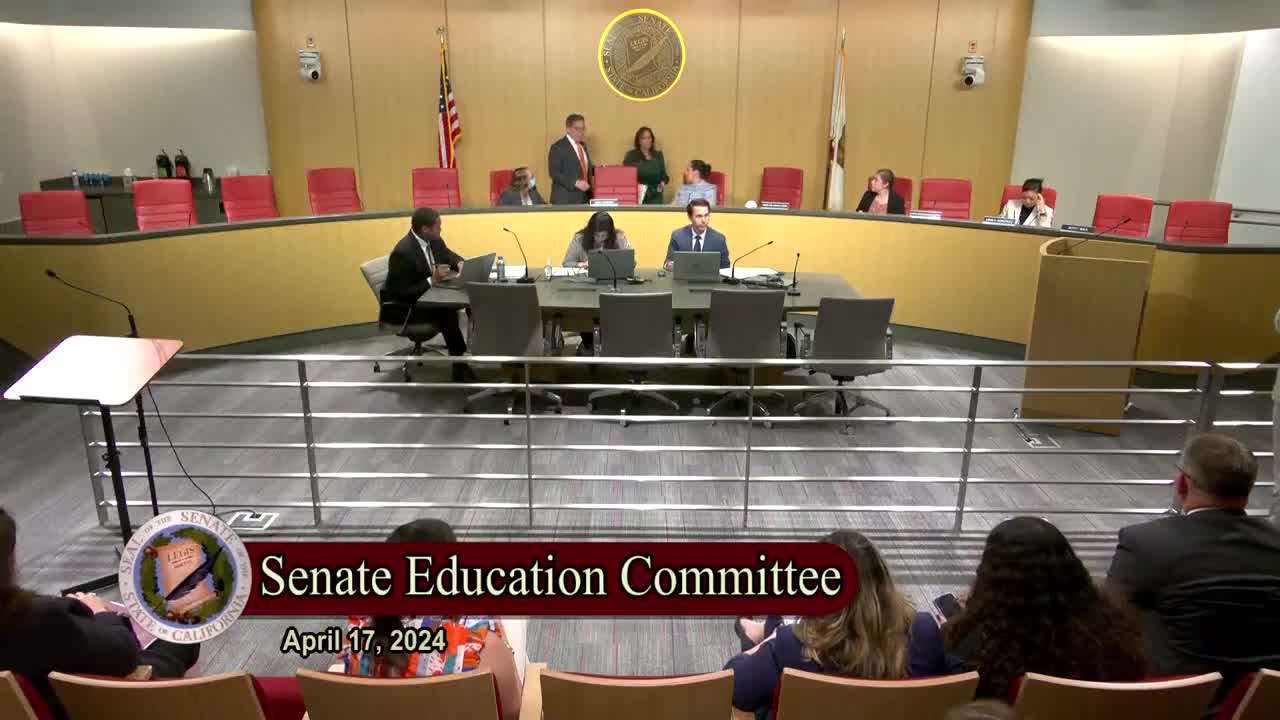 24MIN
Senate Standing Committee on Education
Bill Author

Bill Co-Author(s):