SB 1490: Food delivery platforms.
- Session Year: 2023-2024
- House: Senate
- Latest Version Date: 2024-09-28
Current Status:
Passed
(2024-09-28: Chaptered by Secretary of State. Chapter 898, Statutes of 2024.)
Introduced
In Committee
First Chamber
In Committee
Second Chamber
Enacted
Existing law imposes various business practice restrictions on a food delivery platform, defined as an online business that acts as an intermediary between consumers and multiple food facilities to submit food orders from a consumer to a participating food facility, and to arrange for the delivery of the order from the food facility to the consumer.
This bill would expand the definition of a food delivery platform to cover the completion of those deliveries and to include beverage orders, as provided.
Existing law prohibits a food delivery platform from arranging for the delivery of an order from a food facility without first obtaining an agreement with the food facility expressly authorizing the food delivery platform to take orders and deliver meals prepared by the food facility.
This bill would require a food delivery platform to provide to a food facility a mechanism to, among other things, remove the food facility, as specified, from the platform within 3 business days of receiving a request to be removed from the platform. The bill would require a food delivery platform to inform a food facility, before signing an agreement, of the fees charged by the food delivery platform for each service plan offered and the features included in each service plan, as applicable. Among other changes, the bill would also require a food delivery platform to inform a food facility of any change to the agreement deemed material and applicable to the food facility.
Existing law prohibits a food delivery platform from charging a customer a purchase price for food or beverage that is higher than the price posted on the food delivery platforms internet website by the food facility at the time of the order. Existing law requires a food delivery platform to disclose to the customer and to the food facility a cost breakdown of each transaction, as described. Existing law requires the cost breakdown to include, among other information, the purchase price of the food and beverage and any tip or gratuity. Existing law defines purchase price as the price, as listed on the menu, for items contained in an online order and excludes from this definition the taxes or gratuities that make up the total amount charged to the customer of an online order.
This bill would also exclude from the definition of purchase price fees and commissions that may make up the total amount charged to the customer of an online order. The bill would revise the above-described requirement to disclose the cost breakdown by, among other things, limiting the tip or gratuity disclosure requirement to those tips or gratuities that are payable to the delivery driver or food facility. The bill would require a food delivery platform to disclose clearly and regularly to the food facility and the customer the status of the order, as specified.
Existing law imposes various business practice restrictions on a food delivery platform, defined as an online business that acts as an intermediary between consumers and multiple food facilities to submit food orders from a consumer to a participating food facility, and to arrange for the delivery of the order from the food facility to the consumer.
This bill would expand the definition of a food delivery platform to cover the completion of those deliveries and to include beverage orders, as provided.
Existing law prohibits a food delivery platform from arranging for the delivery of an order from a food facility without a specified agreement with the food facility. first obtaining an agreement with the food facility expressly authorizing the food delivery platform to take orders and deliver meals.
This bill would require a food delivery platform to provide to a food facility a mechanism to, among other things, remove the food facility, as specified, from the platform within 3 business days of receiving a request to be removed from the platform. The bill would require a food delivery platform to inform a food facility of, among other things, how charges for customer order or delivery errors are calculated. facility, before signing an agreement, of the fees charged by the food delivery platform for each service plan offered and the features included in each service plan, as applicable. Among other changes, the bill would also require a food delivery platform to inform a food facility of any change to the agreement deemed material and applicable to the food facility.
Existing law prohibits a food delivery platform from charging a customer a purchase price for food or beverage that is higher than the price posted on the food delivery platforms internet website by the food facility at the time of the order. Existing law requires a food delivery platform to disclose to the customer and to the food facility a cost breakdown of each transaction, as described. Existing law requires the cost breakdown to include, among other information, the purchase price of the food and beverage and any tip or gratuity. Existing law defines purchase price as the price, as listed on the menu, for items contained in an online order and excludes from this definition the taxes or gratuities that make up the total amount charged to the customer of an online order.
This bill would also exclude from the definition of purchase price fees, commissions, and surcharges fees and commissions that may make up the total amount charged to the customer of an online order. The bill would revise the above-described requirement to disclose the cost breakdown by, among other things, limiting the tip or gratuity disclosure requirement to those tips or gratuities that are payable to the delivery driver, courier, driver or food facility. The bill would require a food delivery platform to disclose clearly and regularly to the food facility and the customer the status of the order, as specified.
Existing law imposes various business practice restrictions on a food delivery platform, defined as an online business that acts as an intermediary between consumers and multiple food facilities to submit food orders from a consumer to a participating food facility, and to arrange for the delivery of the order from the food facility to the consumer.
This bill would expand the definition of a food delivery platform to cover the completion of those deliveries and to include beverage orders, as provided.
Existing law prohibits a food delivery platform from arranging for the delivery of an order from a food facility without a specified agreement with the food facility.
This bill would require a food delivery platform to provide to a food facility a mechanism to, among other things, remove the food facility, as specified, from the platform within 3 business days of receiving a request to be removed from the platform. The bill would require a food delivery platform to inform a food facility of, among other things, how charges for customer order or delivery errors are calculated. The bill would also require a food delivery platform to allow a food facility to authorize specified individuals to review the agreement between the food delivery platform and the food facility, as provided.
Existing law prohibits a food delivery platform from charging a customer a purchase price for food or beverage that is higher than the price posted on the food delivery platforms internet website by the food facility at the time of the order. Existing law requires a food delivery platform to disclose to the customer and to the food facility a cost breakdown of each transaction, as described. Existing law requires the cost breakdown to include, among other information, the purchase price of the food and beverage and any tip or gratuity. Existing law defines purchase price as the price, as listed on the menu, for items contained in an online order and excludes from this definition the taxes or gratuities that make up the total amount charged to the customer of an online order.
This bill would also exclude from the definition of purchase price fees, commissions, and surcharges that may make up the total amount charged to the customer of an online order. The bill would revise the above-described requirement to disclose the cost breakdown by, among other things, limiting the tip or gratuity disclosure requirement to those tips or gratuities that are payable to the delivery driver, courier, or food facility. The bill would require a food delivery platform to disclose clearly and regularly to the food facility and the customer the status of the order, as specified.
Existing law imposes various business practice restrictions on a food delivery platform, defined as an online business that acts as an intermediary between consumers and multiple food facilities to submit food orders from a consumer to a participating food facility, and to arrange for the delivery of the order from the food facility to the consumer.
This bill would expand the definition of a food delivery platform to cover the completion of those deliveries and to include beverage orders, as provided.
Existing law prohibits a food delivery platform from arranging for the delivery of an order from a food facility without a specified agreement with the food facility.
This bill would require a food delivery platform to provide to a food facility a mechanism to, among other things, request removal of a listing or promotion of its services from the food delivery platform and to select services offered by the food delivery platform from a display that clearly discloses the fees charged by the food delivery platform, as specified. The bill would prohibit a food delivery platform from placing certain limits on a food facility to dispute specified transactions, from penalizing a food facility for refusal to use a food delivery platforms service, and from restricting a food facilitys use of consultants, accountants, or legal services to manage or review information provided by the food delivery platform. remove the food facility, as specified, from the platform within 3 business days of receiving a request to be removed from the platform. The bill would require a food delivery platform to inform a food facility of, among other things, how charges for customer order or delivery errors are calculated. The bill would also require a food delivery platform to allow a food facility to authorize specified individuals to review the agreement between the food delivery platform and the food facility, as provided.
Existing law prohibits a food delivery platform from charging a customer a purchase price for food or beverage that is higher than the price posted on the food delivery platforms internet website by the food facility at the time of the order. Existing law requires a food delivery platform to disclose to the customer and to the food facility a cost breakdown of each transaction, as described. Existing law requires the cost breakdown to include, among other information, the purchase price of the food and beverage and any tip or gratuity. Existing law defines purchase price as the price, as listed on the menu, for items contained in an online order and excludes from this definition the taxes or gratuities that make up the total amount charged to the customer of an online order.
This bill would also exclude from the definition of purchase price fees, commissions, and surcharges that may make up the total amount charged to the customer of an online order. The bill would revise the above-described requirement to disclose the cost breakdown by, among other things, limiting the tip or gratuity disclosure requirement to those tips or gratuities that are payable to the delivery driver, courier, or food facility. The bill would require a food delivery platform to disclose clearly and regularly to the food facility and the customer the status of the order, as specified. The bill would require a food delivery platform to provide the contact information of the food facility to the customer, as described.
Existing law imposes various business practice restrictions on a food delivery platform, defined as an online business that acts as an intermediary between consumers and multiple food facilities to submit food orders from a consumer to a participating food facility, and to arrange for the delivery of the order from the food facility to the consumer.
This bill would expand the definition of a food delivery platform to cover the completion of those deliveries and to include beverage orders, as provided.
Existing law prohibits a food delivery platform from arranging for the delivery of an order from a food facility without a specified agreement with the food facility.
This bill would require a food delivery platform to provide to a food facility a mechanism to to, among other things, request removal of a listing or promotion of its services from the food delivery platform and to select services offered by the food delivery platform from a display that clearly discloses the fees charged by the food delivery platform, as specified. The bill would prohibit a food delivery platform from placing certain limits on a food facility to dispute specified transactions, from penalizing a food facility for refusal to use a food delivery platforms service, and from restricting a food facilitys use of consultants, accountants, or legal services to manage or review information provided by the food delivery platform.
Existing law prohibits a food delivery platform from charging a customer a purchase price for food or beverage that is higher than the price posted on the food delivery platforms internet website by the food facility at the time of the order. Existing law requires a food delivery platform to disclose to the customer and to the food facility a cost breakdown of each transaction, as described. Existing law requires the cost breakdown to include, among other information, the purchase price of the food and beverage and a notice that the food delivery platform charges a fee, commission, or cost to the food facility, except as otherwise provided. any tip or gratuity. Existing law defines purchase price as the price, as listed on the menu, for items contained in an online order and excludes from this definition the taxes or gratuities that make up the total amount charged to the customer of an online order.
This bill would also exclude from the definition of purchase price fees, commissions, and surcharges that may make up the total amount charged to the customer of an online order. The bill would revise the above-described requirement to disclose the cost breakdown by, among other things, removing the notice that the food delivery platform charges a fee, commission, or cost to the food facility, and instead requiring the disclosure of each fee, commission, surcharge, and cost charged to the food facility. The bill would require a food delivery platform to disclose prominently and clearly to the customer the specific amounts received by the food facility and the food delivery platform of certain charges. limiting the tip or gratuity disclosure requirement to those tips or gratuities that are payable to the delivery driver, courier, or food facility. The bill would require a food delivery platform to disclose clearly and regularly to the food facility and the customer the status of the order, as specified. The bill would require a food delivery platform to provide the contact information of the food facility to the customer, as described.
Existing law imposes various business practice restrictions on a food delivery platform, defined as an online business that acts as an intermediary between consumers and multiple food facilities to submit food orders from a consumer to a participating food facility, and to arrange for the delivery of the order from the food facility to the consumer.
This bill would expand the definition of a food delivery platform to cover the completion of those deliveries and to include beverage orders, as provided.
Existing law prohibits a food delivery platform from arranging for the delivery of an order from a food facility without a specified agreement with the food facility.
This bill would require a food delivery platform to provide to a food facility a mechanism to request removal of a listing or promotion of its services from the food delivery platform and to select services offered by the food delivery platform from a display that clearly discloses the fees charged by the food delivery platform, as specified. The bill would prohibit a food delivery platform from placing certain limits on a food facility to dispute specified transactions, from penalizing a food facility for refusal to use a food delivery platforms service, and from restricting a food facilitys use of consultants, accountants, or legal services to manage or review information provided by the food delivery platform.
Existing law prohibits a food delivery platform from charging a customer a purchase price for food or beverage that is higher than the price posted on the food delivery platforms internet website by the food facility at the time of the order. Existing law requires a food delivery platform to disclose to the customer and to the food facility a cost breakdown of each transaction, as described. Existing law requires the cost breakdown to include, among other information, the purchase price of the food and beverage and a notice that the food delivery platform charges a fee, commission, or cost to the food facility, except as otherwise provided. Existing law defines purchase price as the price, as listed on the menu, for items contained in an online order and excludes from this definition the taxes or gratuities that make up the total amount charged to the customer of an online order.
This bill would also exclude from the definition of purchase price fees, commissions, and surcharges that may make up the total amount charged to the customer of an online order. The bill would revise the above-described requirement to disclose the cost breakdown by, among other things, removing the notice that the food delivery platform charges a fee, commission, or cost to the food facility, and instead requiring the disclosure of each fee, commission, surcharge, and cost charged to the food facility. The bill would require a food delivery platform to disclose prominently and clearly to the customer the specific amounts received by the food facility and the food delivery platform of certain charges. The bill would require a food delivery platform to disclose clearly and regularly to the food facility and the customer the status of the order, as specified. The bill would require a food delivery platform to provide the contact information of the food facility to the customer, as described.
Existing law, the Consumer Affairs Act, states that it is the intent of the Legislature and the purpose of the act to promote and protect the interests of the people as consumers, and that the government advances the interests of consumers by, among other things, protecting consumers from the sale of goods and services through the use of deceptive methods, acts, or practices that are inimical to the general welfare of consumers.This bill would make a nonsubstantive change to those provisions.Existing law, the Consumer Affairs Act, states that it is the intent of the Legislature and the purpose of the act to promote and protect the interests of the people as consumers, and that the government advances the interests of consumers by, among other things, protecting consumers from the sale of goods and services through the use of deceptive methods, acts, or practices that are inimical to the general welfare of consumers.
This bill would make a nonsubstantive change to those provisions.
As used in this chapter:
(a)Clearly and conspicuously means in a font no smaller than boldface, 14-point type, clearly separate from any other language on the page. For an audio disclosure, clearly and conspicuously means in a volume and cadence sufficient to be readily audible and understandable.
(b)Food delivery platform means an online business that acts as an intermediary between consumers and multiple food facilities to submit food and beverage orders from a consumer to a participating food facility, and to arrange for, or to complete, the delivery of the order from the food facility to the consumer.
(c)Food facility means a food facility, as defined in Section 113789 of the Health and Safety Code.
(d)Forwarded call means a communication made by a consumer and intended for a food facility, by telephone call or other means of communication, that has been routed by a food delivery platform, or a routing service under the direction of the food delivery platform, to the intended food facility.
(e)Listing website means an internet website or application that lists, or produces through search results, telephone numbers associated with food facilities, and that has 100,000,000 or more unique monthly visitors.
(f)Online order means an order for food or beverage placed by a customer through or with the assistance of a food delivery platform, including, but not limited to, a telephone order, for delivery.
(g)(1)Purchase price means the price, as listed on the menu, for the items contained in an online order.
(2)Purchase price does not include taxes, fees, commissions, or gratuities that may make up the total amount charged to the customer of an online order.
SEC. 2.Section 22599 of the Business and Professions Code is amended to read:22599.(a)A food delivery platform shall not arrange for the delivery of an order from a food facility without first obtaining an agreement with the food facility expressly authorizing the food delivery platform to take orders and deliver meals prepared by the food facility.
(b)(1)Subject to paragraph (2), a food delivery platform shall provide to a food facility a mechanism to do both of the following:
(A)Remove the food facility, including its name, address, logo, or menu listing, from the platform within three business days of receiving a request to be removed from the platform.
(B)Direct the food delivery platform to disclose to customers the delivery fee charged to the food facility and each fee, commission, or cost charged to the food facility, as provided in paragraph (2) of subdivision (b) of Section 22599.1.
(2)Nothing in this subdivision shall interfere with preexisting contractual obligations between a food delivery platform and a food facility.
(c)(1)A food delivery platform shall inform a food facility of both of the following prior to signing an agreement:
(A)The fees charged by the food delivery platform for each service plan offered.
(B)The features included in each service plan, as applicable.
(2)A food delivery platform shall also inform a food facility of any change to the agreement referenced in this subdivision that is deemed material and applicable to the food facility.
(d)A food delivery platform shall inform a food facility of all of the following:
(1)How charges for customer order and delivery errors are calculated.
(2)How charges related to errors are allocated between the food delivery platform and the food facility.
(3)The process for food facilities to dispute charges related to errors, including whether disputes may be subject to automatic resolution.
(e)This section shall not require a food delivery platform to reveal information that is confidential, proprietary, or a trade secret.
(f)This section shall not prohibit offering bundled services at a single price.
SEC. 3.Section 22599.1 of the Business and Professions Code is amended to read:22599.1.(a)It is unlawful for a food delivery platform to do either of the following:
(1)Charge a customer any purchase price for food or beverage that is higher than the price posted on the food delivery platforms internet website by the food facility at the time of the order.
(2)Retain any portion of amounts designated as a tip or gratuity. Any tip or gratuity for a delivery order shall be paid by a food delivery platform, in its entirety, to the person delivering the food or beverage. Any tip or gratuity for a pickup order shall be paid by a food delivery platform, in its entirety, to the food facility.
(b)A food delivery platform shall prominently disclose to the customer and to the food facility an accurate, clearly identified, and itemized cost breakdown of each transaction, including, but not limited to, all of the following information:
(1)The purchase price of the food and beverage.
(2)A notice, if applicable, that the food delivery platform charges a fee, commission, or cost to the food facility, unless the food facility directs that the food delivery platform disclose to customers the delivery fee charged to the food facility and each fee, commission, or cost charged to the food facility.
(3)Each fee, commission, and any other cost charged to the customer by the food delivery platform.
(4)Any tip or gratuity payable to the delivery driver or food facility.
(c)(1)A listing website shall not associate a telephone number or other method of direct communication with a food facility on the listing websites internet website or application if the listing website knows the use of that telephone number or other method of direct communication will result in a forwarded call.
(2)A listing website shall clearly and conspicuously disclose if an order placed through a telephone number or other interface on the listing websites internet website or application may result in a fee, commission, or cost paid to a party other than the food facility and shall identify that other party.
(d)A food delivery platform shall clearly and regularly disclose to the food facility and the customer the status of the order, including all of the following:
(1)The method of delivery.
(2)The anticipated date and time of the delivery of the order.
(3)Confirmation that the order has been successfully delivered or that the delivery cannot be completed.
As used in this chapter:
(a)Clearly and conspicuously means in a font no smaller than boldface, 14-point type, clearly separate from any other language on the page. For an audio disclosure, clearly and conspicuously means in a volume and cadence sufficient to be readily audible and understandable.
(b)Food delivery platform means an online business that acts as an intermediary between consumers and multiple food facilities to submit food and beverage orders from a consumer to a participating food facility, and to arrange for, or to complete, the delivery of the order from the food facility to the consumer.
(c)Food facility means a food facility, as defined in Section 113789 of the Health and Safety Code.
(d)Forwarded call means a communication made by a consumer and intended for a food facility, by telephone call or other means of communication, that has been routed by a food delivery platform, or a routing service under the direction of the food delivery platform, to the intended food facility.
(e)Listing website means an internet website or application that lists, or produces through search results, telephone numbers associated with food facilities, and that has 100,000,000 or more unique monthly visitors.
(f)Online order means an order for food or beverage placed by a customer through or with the assistance of a food delivery platform, including, but not limited to, a telephone order, for delivery.
(g)(1)Purchase price means the price, as listed on the menu, for the items contained in an online order.
(2)Purchase price does not include taxes, fees, commissions, surcharges, or gratuities that may make up the total amount charged to the customer of an online order.
SEC. 2.Section 22599 of the Business and Professions Code is amended to read:22599.(a)A food delivery platform shall not arrange for the delivery of an order from a food facility without first obtaining an agreement with the food facility expressly authorizing the food delivery platform to take orders and deliver meals prepared by the food facility.
(b)(1)Subject to paragraph (2), a food delivery platform shall provide to a food facility a mechanism to do both of the following:
(A)Remove the food facility, including its name, address, logo, or menu listing, from the platform within three business days of receiving a request to be removed from the platform.
(B)Direct the food delivery platform to disclose to customers the delivery fee charged to the food facility and each fee, commission, or cost charged to the food facility, as provided in paragraph (2) of subdivision (b) of Section 22599.1.
(2)Nothing in this subdivision shall interfere with preexisting contractual obligations between a food delivery platform and a food facility.
(c)(1)A food delivery platform shall inform a food facility of all both of the following: following prior to signing an agreement:
(1)How charges for customer order or delivery errors are calculated.(2)How charges related to errors are allocated between the food delivery platform and the food facility.(3)The process for food facilities to dispute charges related to errors, including whether disputes may be subject to automatic resolution.(A)The fees charged by the food delivery platform for each service plan offered.
(B)The features included in each service plan, as applicable.
(2)A food delivery platform shall also inform a food facility of any change to the agreement referenced in this subdivision that is deemed material and applicable to the food facility.
(d)A food delivery platform shall inform a food facility of all of the following:
(1)How charges for customer order and delivery errors are calculated.
(2)How charges related to errors are allocated between the food delivery platform and the food facility.
(3)The process for food facilities to dispute charges related to errors, including whether disputes may be subject to automatic resolution.
(e)This section shall not require a food delivery platform to reveal information that is confidential, proprietary, or a trade secret.
(f)This section shall not prohibit offering bundled services at a single price.
SEC. 3.Section 22599.1 of the Business and Professions Code is amended to read:22599.1.(a)It is unlawful for a food delivery platform to do either of the following:
(1)Charge a customer any purchase price for food or beverage that is higher than the price posted on the food delivery platforms internet website by the food facility at the time of the order.
(2)Retain any portion of amounts designated as a tip or gratuity. Any tip or gratuity for a delivery order shall be paid by a food delivery platform, in its entirety, to the person delivering the food or beverage. Any tip or gratuity for a pickup order shall be paid by a food delivery platform, in its entirety, to the food facility.
(b)A food delivery platform shall prominently disclose to the customer and to the food facility an accurate, clearly identified, and itemized cost breakdown of each transaction, including, but not limited to, all of the following information:
(1)The purchase price of the food and beverage.
(2)A notice, if applicable, that the food delivery platform charges a fee, commission, or cost to the food facility, unless the food facility directs that the food delivery platform disclose to customers the delivery fee charged to the food facility and each fee, commission, or cost charged to the food facility.
(3)Each fee, commission, surcharge, and any other cost charged to the customer by the food delivery platform.
(4)Any tip or gratuity payable to the delivery driver, courier, driver or food facility.
(c)(1)A listing website shall not associate a telephone number or other method of direct communication with a food facility on the listing websites internet website or application if the listing website knows the use of that telephone number or other method of direct communication will result in a forwarded call.
(2)A listing website shall clearly and conspicuously disclose if an order placed through a telephone number or other interface on the listing websites internet website or application may result in a fee, commission, or cost paid to a party other than the food facility and shall identify that other party.
(d)A food delivery platform shall clearly and regularly disclose to the food facility and the customer the status of the order, including all of the following:
(1)The method of delivery.
(2)The anticipated date and time of the delivery of the order.
(3)Confirmation that the order has been successfully delivered or that the delivery cannot be completed.
As used in this chapter:
(a)Clearly and conspicuously means in a font no smaller than boldface, 14-point type, clearly separate from any other language on the page. For an audio disclosure, clearly and conspicuously means in a volume and cadence sufficient to be readily audible and understandable.
(b)Food delivery platform means an online business that acts as an intermediary between consumers and multiple food facilities to submit food and beverage orders from a consumer to a participating food facility, and to arrange for, or to complete, the delivery of the order from the food facility to the consumer.
(c)Food facility means a food facility, as defined in Section 113789 of the Health and Safety Code.
(d)Forwarded call means a communication made by a consumer and intended for a food facility, by telephone call or other means of communication, that has been routed by a food delivery platform, or a routing service under the direction of the food delivery platform, to the intended food facility.
(e)Listing website means an internet website or application that lists, or produces through search results, telephone numbers associated with food facilities, and that has 100,000,000 or more unique monthly visitors.
(f)Online order means an order for food or beverage placed by a customer through or with the assistance of a food delivery platform, including, but not limited to, a telephone order, for delivery.
(g)(1)Purchase price means the price, as listed on the menu, for the items contained in an online order.
(2)Purchase price does not include taxes, fees, commissions, surcharges, or gratuities that may make up the total amount charged to the customer of an online order.
SEC. 2.Section 22599 of the Business and Professions Code is amended to read:22599.(a)A food delivery platform shall not arrange for the delivery of an order from a food facility without first obtaining an agreement with the food facility expressly authorizing the food delivery platform to take orders and deliver meals prepared by the food facility.
(b)(1)Subject to paragraph (2), a food delivery platform shall provide to a food facility a mechanism to do both of the following:
(A)Remove the food facility, including its name, address, logo, or menu listing, from the platform within three business days of receiving a request to be removed from the platform.
(B)Direct the food delivery platform to disclose to customers the delivery fee charged to the food facility and each fee, commission, or cost charged to the food facility, as provided in paragraph (2) of subdivision (b) of Section 22599.1.
(2)Nothing in this subdivision shall interfere with preexisting contractual obligations between a food delivery platform and a food facility.
(c)A food delivery platform shall inform a food facility of all of the following:
(1)How charges for customer order or delivery errors are calculated.
(2)How charges related to errors are allocated between the food delivery platform and the food facility.
(3)The process for food facilities to dispute charges related to errors, including whether disputes may be subject to automatic resolution.
(d)A food delivery platform shall allow a food facility to authorize specified individuals to review the agreement between the food delivery platform and the food facility, provided that the food facility and any additional authorized individuals comply with all applicable confidentiality provisions and any other provisions that protect the food delivery platform from competitive, proprietary, or other harm.SEC. 3.Section 22599.1 of the Business and Professions Code is amended to read:22599.1.(a)It is unlawful for a food delivery platform to do either of the following:
(1)Charge a customer any purchase price for food or beverage that is higher than the price posted on the food delivery platforms internet website by the food facility at the time of the order.
(2)Retain any portion of amounts designated as a tip or gratuity. Any tip or gratuity for a delivery order shall be paid by a food delivery platform, in its entirety, to the person delivering the food or beverage. Any tip or gratuity for a pickup order shall be paid by a food delivery platform, in its entirety, to the food facility.
(b)A food delivery platform shall prominently disclose to the customer and to the food facility an accurate, clearly identified, and itemized cost breakdown of each transaction, including, but not limited to, all of the following information:
(1)The purchase price of the food and beverage.
(2)A notice, if applicable, that the food delivery platform charges a fee, commission, or cost to the food facility, unless the food facility directs that the food delivery platform disclose to customers the delivery fee charged to the food facility and each fee, commission, or cost charged to the food facility.
(3)Each fee, commission, surcharge, and cost charged to the customer by the food delivery platform.
(4)Any tip or gratuity payable to the delivery driver, courier, or food facility.
(c)(1)A listing website shall not associate a telephone number or other method of direct communication with a food facility on the listing websites internet website or application if the listing website knows the use of that telephone number or other method of direct communication will result in a forwarded call.
(2)A listing website shall clearly and conspicuously disclose if an order placed through a telephone number or other interface on the listing websites internet website or application may result in a fee, commission, or cost paid to a party other than the food facility and shall identify that other party.
(d)A food delivery platform shall clearly and regularly disclose to the food facility and the customer the status of the order, including all of the following:
(1)The method of delivery.
(2)The anticipated date and time of the delivery of the order.
(3)Confirmation that the order has been successfully delivered or that the delivery cannot be completed.
As used in this chapter:
(a)Clearly and conspicuously means in a font no smaller than boldface, 14-point type, clearly separate from any other language on the page. For an audio disclosure, clearly and conspicuously means in a volume and cadence sufficient to be readily audible and understandable.
(b)Food delivery platform means an online business that acts as an intermediary between consumers and multiple food facilities to submit food and beverage orders from a consumer to a participating food facility, and to arrange for, or to complete, the delivery of the order from the food facility to the consumer.
(c)Food facility means a food facility, as defined in Section 113789 of the Health and Safety Code.
(d)Forwarded call means a communication made by a consumer and intended for a food facility, by telephone call or other means of communication, that has been routed by a food delivery platform, or a routing service under the direction of the food delivery platform, to the intended food facility.
(e)Listing website means an internet website or application that lists, or produces through search results, telephone numbers associated with food facilities, and that has 100,000,000 or more unique monthly visitors.
(f)Online order means an order for food or beverage placed by a customer through or with the assistance of a food delivery platform, including, but not limited to, a telephone order, for delivery.
(g)(1)Purchase price means the price, as listed on the menu, for the items contained in an online order.
(2)Purchase price does not include taxes, fees, commissions, surcharges, or gratuities that may make up the total amount charged to the customer of an online order.
SEC. 2.Section 22599 of the Business and Professions Code is amended to read:22599.(a)A food delivery platform shall not arrange for the delivery of an order from a food facility without first obtaining an agreement with the food facility expressly authorizing the food delivery platform to take orders and deliver meals prepared by the food facility.
(b)(1)Subject to paragraph (2), a food delivery platform shall provide to a food facility a mechanism to do all both of the following:
(A)(i)Request removal of a listing or promotion of its services from the food delivery platform.(ii)If a food delivery platform receives a request pursuant to this subparagraph, both of the following shall apply:(I)The food delivery platform shall remove the food facility from the platform within three business days of receiving the request.(II)The food delivery platform service shall not list the food facility on its platform, offer the food facilitys food for delivery, or use the food facilitys name, address, logo, or menu without consent.(B)Select services offered by the food delivery platform from a display that clearly discloses the fees charged by the food delivery platform, pursuant to the agreement required by subdivision (a), for each selected service, including the specific rates for marketing, delivery, and order processing.(A)Remove the food facility, including its name, address, logo, or menu listing, from the platform within three business days of receiving a request to be removed from the platform.
(C)(B)Direct the food delivery platform to disclose to customers the delivery fee charged to the food facility and each fee, commission, or cost charged to the food facility, as provided in paragraph (2) of subdivision (b) of Section 22599.1.
(2)Nothing in this subdivision shall interfere with preexisting contractual obligations between a food delivery platform and a food facility.
(c)A food delivery platform shall inform a food facility of all of the following:
(1)How charges for customer order or delivery errors are calculated.
(2)How charges related to errors are allocated between the food delivery platform and the food facility.
(3)The process for food facilities to dispute charges related to errors, including whether disputes may be subject to automatic resolution.
(d)A food delivery platform shall allow a food facility to authorize specified individuals to review the agreement between the food delivery platform and the food facility, provided that the food facility and any additional authorized individuals comply with all applicable confidentiality provisions and any other provisions that protect the food delivery platform from competitive, proprietary, or other harm.
(c)A food delivery platform shall not limit the value or number of transactions that may be disputed by a food facility with respect to order, goods, or delivery errors for determination of responsibility and reconciliation with respect to those errors.(d)A food delivery platform shall not penalize a food facility for refusal to use a service offered by a food delivery platform.(e)A food delivery platform shall not restrict a food facility from using consultants, accountants, or legal services to manage or review information provided by the food delivery platform. SEC. 3.Section 22599.1 of the Business and Professions Code is amended to read:22599.1.(a)It is unlawful for a food delivery platform to do either of the following:
(1)Charge a customer any purchase price for food or beverage that is higher than the price posted on the food delivery platforms internet website by the food facility at the time of the order.
(2)Retain any portion of amounts designated as a tip or gratuity. Any tip or gratuity for a delivery order shall be paid by a food delivery platform, in its entirety, to the person delivering the food or beverage. Any tip or gratuity for a pickup order shall be paid by a food delivery platform, in its entirety, to the food facility.
(b)A food delivery platform shall prominently disclose to the customer and to the food facility an accurate, clearly identified, and itemized cost breakdown of each transaction, including, but not limited to, all of the following information:
(1)The purchase price of the food and beverage.
(2)A notice, if applicable, that the food delivery platform charges a fee, commission, or cost to the food facility, unless the food facility directs that the food delivery platform disclose to customers the delivery fee charged to the food facility and each fee, commission, or cost charged to the food facility.
(3)Each fee, commission, surcharge, and cost charged to the customer by the food delivery platform.
(4)Any tip or gratuity payable to the delivery driver, courier, or food facility.
(c)(1)A listing website shall not associate a telephone number or other method of direct communication with a food facility on the listing websites internet website or application if the listing website knows the use of that telephone number or other method of direct communication will result in a forwarded call.
(2)A listing website shall clearly and conspicuously disclose if an order placed through a telephone number or other interface on the listing websites internet website or application may result in a fee, commission, or cost paid to a party other than the food facility and shall identify that other party.
(d)A food delivery platform shall clearly and regularly disclose to the food facility and the customer the status of the order, including all of the following:
(1)The method of delivery.
(2)The anticipated date and time of the delivery of the order.
(3)Confirmation that the order has been successfully delivered or that the delivery cannot be completed.
(e)A food delivery platform shall provide the contact information of the food facility to the customer, including, but not limited to, the primary telephone number or email address of the food facility.As used in this chapter:
(a)Clearly and conspicuously means in a font no smaller than boldface, 14-point type, clearly separate from any other language on the page. For an audio disclosure, clearly and conspicuously means in a volume and cadence sufficient to be readily audible and understandable.
(b)Food delivery platform means an online business that acts as an intermediary between consumers and multiple food facilities to submit food and beverage orders from a consumer to a participating food facility, and to arrange for, or to complete, the delivery of the order from the food facility to the consumer.
(c)Food facility means a food facility, as defined in Section 113789 of the Health and Safety Code.
(d)Forwarded call means a communication made by a consumer and intended for a food facility, by telephone call or other means of communication, that has been routed by a food delivery platform, or a routing service under the direction of the food delivery platform, to the intended food facility.
(e)Listing website means an internet website or application that lists, or produces through search results, telephone numbers associated with food facilities, and that has 100,000,000 or more unique monthly visitors.
(f)Online order means an order for food or beverage placed by a customer through or with the assistance of a food delivery platform, including, but not limited to, a telephone order, for delivery.
(g)(1)Purchase price means the price, as listed on the menu, for the items contained in an online order.
(2)Purchase price does not include taxes, fees, commissions, surcharges, or gratuities that may make up the total amount charged to the customer of an online order.
SEC. 2.Section 22599 of the Business and Professions Code is amended to read:22599.(a)A food delivery platform shall not arrange for the delivery of an order from a food facility without first obtaining an agreement with the food facility expressly authorizing the food delivery platform to take orders and deliver meals prepared by the food facility.
(b)A (1)Subject to paragraph (2), a food delivery platform shall provide to a food facility a mechanism to do both all of the following:
(1)(A)(A)(i)Request removal of a listing or promotion of its services from the food delivery platform.
(B)(ii)If a food delivery platform receives a request pursuant to this paragraph, subparagraph, both of the following shall apply:
(i)(I)The food delivery platform shall remove the food facility from the platform within three business days of receiving the request.
(ii)(II)The food delivery platform service shall not list the food facility on its platform, offer the food facilitys food for delivery, or use the food facilitys name, address, logo, or menu without consent.
(2)(B)Select services offered by the food delivery platform from a display that clearly discloses the fees charged by the food delivery platform, pursuant to the agreement required by subdivision (a), for each selected service, including the specific rates for marketing, delivery, and order processing.
(C)Direct the food delivery platform to disclose to customers the delivery fee charged to the food facility and each fee, commission, or cost charged to the food facility, as provided in paragraph (2) of subdivision (b) of Section 22599.1.
(2)Nothing in this subdivision shall interfere with preexisting contractual obligations between a food delivery platform and a food facility.
(c)A food delivery platform shall not limit the value or number of transactions that may be disputed by a food facility with respect to order, goods, or delivery errors for determination of responsibility and reconciliation with respect to those errors.
(d)A food delivery platform shall not penalize a food facility for refusal to use a service offered by a food delivery platform.
(e)A food delivery platform shall not restrict a food facility from using consultants, accountants, or legal services to manage or review information provided by the food delivery platform.
SEC. 3.Section 22599.1 of the Business and Professions Code is amended to read:22599.1.(a)It is unlawful for a food delivery platform to do either of the following:
(1)Charge a customer any purchase price for food or beverage that is higher than the price posted on the food delivery platforms internet website by the food facility at the time of the order.
(2)Retain any portion of amounts designated as a tip or gratuity. Any tip or gratuity for a delivery order shall be paid by a food delivery platform, in its entirety, to the person delivering the food or beverage. Any tip or gratuity for a pickup order shall be paid by a food delivery platform, in its entirety, to the food facility.
(b)A food delivery platform shall prominently disclose to the customer and to the food facility an accurate, clearly identified, and itemized cost breakdown of each transaction, including, but not limited to, all of the following information:
(1)The purchase price of the food and beverage.
(2)Each fee, commission, surcharge, and A notice, if applicable, that the food delivery platform charges a fee, commission, or cost to the food facility, unless the food facility directs that the food delivery platform disclose to customers the delivery fee charged to the food facility and each fee, commission, or cost charged to the food facility. For purposes of this paragraph, fee includes a delivery fee.
(3)Each fee, commission, surcharge, and cost charged to the customer by the food delivery platform.
(4)Any tip or gratuity payable to the delivery driver, courier, or food facility.
(c)A food delivery platform shall prominently and clearly disclose to the customer the specific amounts received by the food facility and the food delivery platform of both of the following charges:(1)The purchase price, commissions and fees, and tips described in subdivisions (a) and (b).(2)Any other amounts charged by the food delivery platform to the customer.(d)(c)(1)A listing website shall not associate a telephone number or other method of direct communication with a food facility on the listing websites internet website or application if the listing website knows the use of that telephone number or other method of direct communication will result in a forwarded call.
(2)A listing website shall clearly and conspicuously disclose if an order placed through a telephone number or other interface on the listing websites internet website or application may result in a fee, commission, or cost paid to a party other than the food facility and shall identify that other party.
(e)(d)A food delivery platform shall clearly and regularly disclose to the food facility and the customer the status of the order, including all of the following:
(1)The method of delivery.
(2)The anticipated date and time of the delivery of the order.
(3)Confirmation that the order has been successfully delivered or that the delivery cannot be completed.
(f)(e)A food delivery platform shall provide the contact information of the food facility to the customer, including, but not limited to, the primary telephone number or email address of the food facility.
As used in this chapter:
(a)Clearly and conspicuously means in a font no smaller than boldface, 14-point type, clearly separate from any other language on the page. For an audio disclosure, clearly and conspicuously means in a volume and cadence sufficient to be readily audible and understandable.
(b)Food delivery platform means an online business that acts as an intermediary between consumers and multiple food facilities to submit food and beverage orders from a consumer to a participating food facility, and to arrange for for, or to complete, the delivery of the order from the food facility to the consumer.
(c)Food facility means a food facility, as defined in Section 113789 of the Health and Safety Code.
(d)Forwarded call means a communication made by a consumer and intended for a food facility, by telephone call or other means of communication, that has been routed by a food delivery platform, or a routing service under the direction of the food delivery platform, to the intended food facility.
(e)Listing website means an internet website or application that lists, or produces through search results, telephone numbers associated with food facilities, and that has 100,000,000 or more unique monthly visitors.
(f)Online order means an order for food or beverage placed by a customer through or with the assistance of a food delivery platform, including, but not limited to, a telephone order, for delivery.
(g)(1)Purchase price means the price, as listed on the menu, for the items contained in an online order. This definition does not include taxes or gratuities that may make up the total amount charged to the customer of an online order.
(2)Purchase price does not include taxes, fees, commissions, surcharges, or gratuities that may make up the total amount charged to the customer of an online order.
SEC. 2.Section 22599 of the Business and Professions Code is amended to read:22599.(a)A food delivery platform shall not arrange for the delivery of an order from a food facility without first obtaining an agreement with the food facility expressly authorizing the food delivery platform to take orders and deliver meals prepared by the food facility.
(b)A food delivery platform shall provide to a food facility a mechanism to do both of the following:
(1)(A)Request removal of a listing or promotion of its services from the food delivery platform.
(B)If a food delivery platform receives a request pursuant to this paragraph, both of the following shall apply:
(i)The food delivery platform shall remove the food facility from the platform within three business days of receiving the request.
(ii)The food delivery platform service shall not list the food facility on its platform, offer the food facilitys food for delivery, or use the food facilitys name, address, logo, or menu without consent.
(2)Select services offered by the food delivery platform from a display that clearly discloses the fees charged by the food delivery platform, pursuant to the agreement required by subdivision (a), for each selected service, including the specific rates for marketing, delivery, and order processing.
(c)A food delivery platform shall not limit the value or number of transactions that may be disputed by a food facility with respect to order, goods, or delivery errors for determination of responsibility and reconciliation with respect to those errors.
(d)A food delivery platform shall not penalize a food facility for refusal to use a service offered by a food delivery platform.
(e)A food delivery platform shall not restrict a food facility from using consultants, accountants, or legal services to manage or review information provided by the food delivery platform.
SEC. 3.Section 22599.1 of the Business and Professions Code is amended to read:22599.1.(a)It is unlawful for a food delivery platform to do either of the following:
(1)Charge a customer any purchase price for food or beverage that is higher than the price posted on the food delivery platforms internet website by the food facility at the time of the order.
(2)Retain any portion of amounts designated as a tip or gratuity. Any tip or gratuity for a delivery order shall be paid by a food delivery platform, in its entirety, to the person delivering the food or beverage. Any tip or gratuity for a pickup order shall be paid by a food delivery platform, in its entirety, to the food facility.
(b)A food delivery platform shall prominently disclose to the customer and to the food facility an accurate, clearly identified, and itemized cost breakdown of each transaction, including, but not limited to, all of the following information:
(1)The purchase price of the food and beverage.
(2)A notice, if applicable, that the food delivery platform charges a fee, commission, or cost to the food facility, unless the food facility directs that the food delivery platform disclose to customers the delivery fee charged to the food facility and each fee, Each fee, commission, or surcharge, and cost charged to the food facility. For purposes of this paragraph, fee includes a delivery fee.
(3)Each fee, commission, or surcharge, and cost charged to the customer by the food delivery platform.
(4)Any tip or gratuity. gratuity payable to the delivery driver, courier, or food facility.
(c)A food delivery platform shall prominently and clearly disclose to the customer the specific amounts received by the food facility and the food delivery platform of both of the following charges:
(1)The purchase price, commissions and fees, and tips described in subdivisions (a) and (b).
(2)Any other amounts charged by the food delivery platform to the customer.
(c)(d)(1)A listing website shall not associate a telephone number or other method of direct communication with a food facility on their the listing websites internet website or application if the listing website knows the use of that telephone number or other method of direct communication will result in a forwarded call.
(2)A listing website shall clearly and conspicuously disclose if an order placed through a telephone number or other interface on their the listing websites internet website or application may result in a fee, commission, or cost paid to a party other than the food facility, facility and shall identify that other party.
(e)A food delivery platform shall clearly and regularly disclose to the food facility and the customer the status of the order, including all of the following:
(1)The method of delivery.
(2)The anticipated date and time of the delivery of the order.
(3)Confirmation that the order has been successfully delivered or that the delivery cannot be completed.
(f)A food delivery platform shall provide the contact information of the food facility to the customer, including, but not limited to, the primary telephone number or email address of the food facility.
SECTION 1.Section 301 of the Business and Professions Code is amended to read:301.It is the intent of the Legislature and the purpose of this chapter to promote and protect the interests of the people as consumers. The Legislature finds that vigorous representation and protection of consumer interests are essential to the fair and efficient functioning of a free enterprise market economy. The Legislature declares that government advances the interests of consumers by facilitating the proper functioning of the free enterprise market economy through (a)educating and informing the consumer to insure rational consumer choice in the marketplace; (b)protecting the consumer from the sale of goods and services through the use of deceptive methods, acts, or practices that are inimical to the general welfare of consumers; (c)fostering competition; and (d)promoting effective representation of consumers interests in all branches and levels of government.It is the intent of the Legislature and the purpose of this chapter to promote and protect the interests of the people as consumers. The Legislature finds that vigorous representation and protection of consumer interests are essential to the fair and efficient functioning of a free enterprise market economy. The Legislature declares that government advances the interests of consumers by facilitating the proper functioning of the free enterprise market economy through (a)educating and informing the consumer to insure rational consumer choice in the marketplace; (b)protecting the consumer from the sale of goods and services through the use of deceptive methods, acts, or practices which that are inimical to the general welfare of consumers; (c)fostering competition; and (d)promoting effective representation of consumers interests in all branches and levels of government.
|
Date
|
Status
|
|---|---|
| Sep 28, 2024 | Chaptered by Secretary of State. Chapter 898, Statutes of 2024. |
| Sep 28, 2024 | Approved by the Governor. |
| Sep 4, 2024 | Enrolled and presented to the Governor at 4 p.m. |
| Aug 28, 2024 | Assembly amendments concurred in. (Ayes 31. Noes 8. Page 5593.) Ordered to engrossing and enrolling. |
| Aug 28, 2024 | In Senate. Concurrence in Assembly amendments pending. |
| Aug 26, 2024 | Read third time. Passed. (Ayes 76. Noes 0. Page 6501.) Ordered to the Senate. |
| Aug 22, 2024 | Ordered to third reading. |
| Aug 22, 2024 | Read third time and amended. |
| Jun 26, 2024 | Read second time. Ordered to third reading. |
| Jun 25, 2024 | Read second time and amended. Ordered to second reading. |
| Jun 24, 2024 | From committee: Do pass as amended. (Ayes 11. Noes 0.) (June 18). |
| May 28, 2024 | Referred to Com. on P. & C.P. |
| May 22, 2024 | In Assembly. Read first time. Held at Desk. |
| May 21, 2024 | Read third time. Passed. (Ayes 31. Noes 8. Page 4095.) Ordered to the Assembly. |
| Apr 23, 2024 | Read second time and amended. Ordered to third reading. |
| Apr 22, 2024 | From committee: Do pass as amended. (Ayes 9. Noes 0. Page 3699.) (April 22). |
| Apr 18, 2024 | Set for hearing April 22. |
| Apr 17, 2024 | From committee with author's amendments. Read second time and amended. Re-referred to Com. on B., P. & E. D. |
| Apr 17, 2024 | From committee: Do pass and re-refer to Com. on B., P. & E. D. (Ayes 9. Noes 2. Page 3636.) (April 16). Re-referred to Com. on B., P. & E. D. |
| Apr 5, 2024 | Set for hearing April 16. |
| Apr 3, 2024 | Re-referred to Coms. on JUD. and B., P. & E. D. |
| Mar 19, 2024 | From committee with author's amendments. Read second time and amended. Re-referred to Com. on RLS. |
| Feb 29, 2024 | Referred to Com. on RLS. |
| Feb 20, 2024 | From printer. May be acted upon on or after March 18. |
| Feb 16, 2024 | Introduced. Read first time. To Com. on RLS. for assignment. To print. |
|
Date
|
Description
|
Location
|
Votes
|
|
|---|---|---|---|---|
| Aug 28, 2024 | Unfinished Business SB1490 Durazo et al. Concurrence | Senate Floor |
Passed |
|
| Aug 26, 2024 | SB 1490 Durazo Senate Third Reading By Lowenthal | Assembly Floor |
Passed |
|
| Jun 18, 2024 | Do pass as amended. | Assembly Standing Committee on Privacy and Consumer Protection |
Passed |
|
| May 21, 2024 | Senate 3rd Reading SB1490 Durazo | Senate Floor |
Passed |
|
| Apr 22, 2024 | Do pass as amended | Senate Standing Committee on Business, Professions and Economic Development |
Passed |
|
| Apr 16, 2024 | Do pass, but first be re-referred to the Committee on [Business, Professions and Economic Development] | Senate Standing Committee on Judiciary |
Passed |
This list shows positions taken on this bill by organizations on the date displayed, which is linked to the original source.
Positions by individuals are not included.
|
Organization
|
Position
|
Date
|
|---|---|---|
| California Chamber Of Commerce | ** Against | |
| California Restaurant Association | ** Support | |
| Chamber Of Progress | ** Against | |
| Digital Restaurant Association | ** Support | |
| Friends Liquor | ** Against | |
| Independent Hospitality Coalition | ** Support | |
| Plant Cafe | ** Against | |
| Santa Monica Chamber of Commerce | ** Support | |
| Starbird Cafe | ** Against | |
| Technet | ** Against | |
| West Los Angeles Chamber of Commerce | ** Against |
SENATE RULES COMMITTEE Office of Senate Floor Analyses (916) 651-1520 Fax: (916) 327-4478 | SB 1490 |
UNFINISHED BUSINESS
Bill No: SB 1490
Author: Durazo (D), et al.
Amended: 8/22/24
Vote: 21
SENATE JUDICIARY COMMITTEE: 9-2, 4/16/24
AYES: Umberg, Allen, Ashby, Caballero, Durazo, Laird, Min, Stern, Wahab
NOES: Wilk, Niello
SENATE BUS., PROF. & ECON. DEV. COMMITTEE: 9-0, 4/22/24
AYES: Ashby, Alvarado-Gil, Archuleta, Becker, Dodd, Eggman, Glazer, Roth, Smallwood-Cuevas
NO VOTE RECORDED: Nguyen, Menjivar, Niello, Wilk
SENATE FLOOR: 31-8, 5/21/24
AYES: Alvarado-Gil, Archuleta, Ashby, Atkins, Becker, Blakespear, Bradford, Caballero, Cortese, Dodd, Durazo, Eggman, Glazer, Gonzalez, Hurtado, Laird, Limón, McGuire, Menjivar, Min, Newman, Padilla, Portantino, Roth, Rubio, Skinner, Smallwood-Cuevas, Stern, Umberg, Wahab, Wiener
NOES: Dahle, Grove, Jones, Nguyen, Niello, Ochoa Bogh, Seyarto, Wilk
NO VOTE RECORDED: Allen
ASSEMBLY FLOOR: 76-0, 8/26/24 - See last page for vote
SUBJECT: Food delivery platforms
SOURCE: Digital Restaurant Association
DIGEST:
This bill makes various changes to laws specifying requirements and prohibitions for food delivery platforms.
Assembly Amendments
remove a provision authorizing review of agreements and rework the required disclsoures.
ANALYSIS:
Existing law:
- Establishes the Act (Bus. & Prof Code § 22598 et seq.)[1], which prohibits food delivery platforms, as defined, from arranging for the delivery of an order from a food facility, as defined, without first obtaining an agreement with the food facility expressly authorizing the food delivery platform to take orders and deliver meals prepared by the food facility (§ 22599).
- Defines:
- “food delivery platform” as an online business that acts as an intermediary between consumers and multiple food facilities to submit food orders from a consumer to a participating food facility and to arrange for the delivery of the order from the food facility to the consumer;
- “food facility,” via a cross reference to Health and Safety Code section 113789, which generally defines that term as an operation that stores, prepares, packages, serves, vends, or otherwise provides food for human consumption at the retail level, as specified;
- “online order” as an order for food or beverage placed by a customer through or with the assistance of a food delivery platform, including, but not limited to, a telephone order, for delivery; and
- “purchase price” as the price, as listed on the menu, for the items contained in an online order. This definition does not include taxes or gratuities that may make up the total amount charged to the customer of an online order. (§ 22598.)
- Makes it unlawful for a food delivery platform to do the following:
- charge a customer any purchase price for food or beverage that is higher than the price posted on the food delivery platform’s website by the food facility at the time of the order;
- retain any portion of amounts designated as a tip or gratuity. Any tip or gratuity for a delivery order shall be paid by a food delivery platform, in its entirety, to the person delivering the food or beverage. Any tip or gratuity for a pickup order shall be paid by a food delivery platform, in its entirety, to the food facility. (§ 22599.1(a).)
- Requires a food delivery platform to disclose to the customer and to the food facility an accurate, clearly identified, and itemized cost breakdown of each transaction, including the following information:
- the purchase price of the food and beverage;
- a notice, if applicable, that the food delivery platform charges a fee, commission, or cost to the food facility, unless the food facility directs that the food delivery platform disclose to customers the delivery fee charged to the food facility and each fee, commission, or cost charged to the food facility;
- each fee, commission, or cost charged to the customer by the food delivery platform; and
- any tip or gratuity. (§ 22599.1(b).)
- Requires a listing website to clearly and conspicuously disclose if an order placed through a telephone number or other interface on their website or application may result in a fee, commission, or cost paid to a party other than the food facility, and shall identify that other party. (§ 22599.1(c)(2).)
- Establishes the Unfair Competition Law, which provides a statutory cause of action for any unlawful, unfair, or fraudulent business act or practice and unfair, deceptive, untrue, or misleading advertising, including over the internet. (§ 17200 et seq.)
This bill:
- Excludes fees and commissions from the definition of purchase price, in addition to the existing exclusion of taxes and gratuities.
- Requires a food delivery platform to provide a food facility a mechanism to do the following, provided that these do not interfere with preexisting contractual obligations between a food delivery platform and a food facility:
- Remove the food facility, including its name, address, logo, or menu listing, from the platform within three business days of receiving a request; and
- Direct the platform to disclose to customers the delivery fee charged to the food facility and each fee, commission, or cost charged to the food facility.
- Requires a food delivery platform to inform a food facility of both of the following prior to signing an agreement:
- The fees charged by the food delivery platform for each service plan offered, and
- The features included in each service plan, as applicable.
- Requires a food delivery platform to inform a food facility of all of the following:
- Material changes to the agreement between them;
- How charges for customer order or delivery errors are calculated;
- How charges related to errors are allocated between the food delivery platform and the food facility; and
- The process for food facilities to dispute charges related to errors, including whether disputes may be subject to automatic resolution.
- Clarifies that this does not require a platform to reveal information that is confidential, proprietary, or a trade secret and does not prohibit offering bundled services at a single price.
- Requires a food delivery platform to clearly and regularly disclose the status of the order to the food facility and the customer, including the method of delivery; the anticipated date and time the order will be delivered and; confirmation that the order has been successfully delivered or that the delivery cannot be completed.
Background
While third party app-based food delivery companies, such as DoorDash, Uber Eats, and Grubhub, offer the promise of convenient and safe access to a variety of restaurants at the click of a button, these companies often impose hefty commissions and onerous terms that can add to the struggles of ailing restaurants. To protect restaurants and customers, the Legislature enacted the Fair Food Delivery Act of 2020 (AB 2149 (Gonzalez, Ch. 125, Stats. 2020) (Act), which prohibits food delivery platforms from arranging for the delivery of an order from a food facility without first obtaining an agreement authorizing the food delivery platform to take orders and deliver meals prepared by the food facility.
This bill seeks to bolster the protections of the Act by requiring platforms to disclose to consumers and restaurants the status of deliveries and to inform the food facilities of specified details, including information about how errors are handled and charged and the various fees and features involved with the platform’s various plans. The bill also requires platforms to provide facilities a mechanism for removing themselves and for directing the platform to disclose to consumers the delivery fee charged to the facility.
The bill is sponsored by the Digital Restaurant Association and supported by the Independent Hospitality Coalition. It is opposed by various business and tech organizations, including Chamber of Progress.
Comments
According to the Author, “As the popularity of online ordering increases, restaurants are losing a greater share of each sale and control of their brand while customers are left in the dark about the true costs involved. SB 1490 expands consumer and restaurant protections further than the existing law in California. The bill solves anti-competitive business practices by the large delivery platforms and enhances fee transparency that was not included in previous legislation.
The Author states that, “Current law requires only that delivery platforms inform customers that restaurants are being assessed fees, not the amount or ultimate recipient of each fee. This lack of transparency results in hidden costs for consumers. Platforms often claim that no or low delivery fees are being charged when there are actually delivery fees charged to the restaurant and built into the purchase price in the subtotal. The existing law does not cover full fee transparency for the customer and restaurant alike. SB 1490 would allow customers to understand exactly what fees they are paying and who the recipient of the fees are. Restaurants would also be able to understand a breakdown of fees and commissions.”
FISCAL EFFECT: Appropriation: No Fiscal Com.: No Local: No
SUPPORT: (Verified 8/27/24)
Digital Restaurant Association (source)
Independent Hospitality Coalition
Santa Monica Chamber of Commerce
California Restaurant Association
OPPOSITION: (Verified 8/27/24)
Chamber of Progress
East Los Angeles Chamber of Commerce
Friends Liquor
Plant Cafe
Starbird Café
ARGUMENTS IN SUPPORT: According to the Digital Restaurant Association, “SB1490 aligns with our goals of fee disclosures to customers and restaurants including an itemized breakdown of purchase price, fees, commissions, and tips, so the customer understands the true costs and the restaurant can understand the specific fees for marketing, ordering and delivery. The legislation also bans delivery platforms from limiting the value or number of transactions disputed by a restaurant as evidenced by operators having to bear the brunt of delivery chargebacks. We also support the ability to increase order information sharing by requiring the disclosure of order status including delivery method, anticipated date and time and confirmation of successful delivery to assist with the customer experience and reduce miscommunication.”
The Independent Hospitality Coalition, an organization of Los Angeles hospitality operators, advocates, and workers “whose purpose is to provide representation for our growing workforce and essential businesses, creating awareness of our role in the economic fabric of society”, write that it is important for the state to “enact the following regulations for third-party delivery companies: fee transparency so customers, drivers, and restaurants know exactly what the fees are and who benefits from those charges; customer order information sharing so restaurants know how, when, and if an order is delivered. They can directly communicate with their customers and respond to issues, errors, and reviews; protections against unfair business practices such as requiring a mechanism be available to restaurants to remove themselves from a food delivery platform and allow for a more equitable dispute process.
A number of restaurants from throughout the state write that “While third party online food order and delivery services are convenient, they are pay-to-play marketplaces that disconnect customers from the restaurants who serve them and more problematically, charge substantial commissions to restaurants that are hidden from customers. This has created a number of challenges including: Lack of control of the customer experience which can result in customer service issues, miscommunication and potential damage to a restaurant’s reputation that restaurants often have to pay for through unilateral chargebacks; Anti-competitive practices that limit restaurant choice such as constantly changing contracts, increasing fees to force restaurants to use delivery, using restaurant’s IP on their platforms without approval; and Lack of real-time customer information access, which is solely owned and controlled by third-party delivery platforms, denying restaurants the ability to directly communicate with customers to resolve issues in real-time.”
ARGUMENTS IN OPPOSITION: The Chamber of Progress writes:
While we appreciate the intent to increase transparency and protections for consumers, certain provisions would upset competition among food delivery services and large restaurants by making confidential business information public.
Specifically, the bill would require food delivery apps to disclose to customers “each fee, commission, or surcharge, and cost charged” to the restaurants they order from. Large restaurant chains often negotiate with individual delivery platforms for exclusive partnerships, preferential placement in searches, marketing services, or better commission fees. These negotiations are confidential and take place in a competitive market–both for food delivery services and restaurants.
ASSEMBLY FLOOR: 76-0, 8/26/24
AYES: Addis, Aguiar-Curry, Alanis, Alvarez, Arambula, Bains, Bauer-Kahan, Bennett, Berman, Boerner, Bonta, Bryan, Calderon, Juan Carrillo, Wendy Carrillo, Chen, Connolly, Davies, Dixon, Essayli, Flora, Mike Fong, Friedman, Gabriel, Gallagher, Garcia, Gipson, Grayson, Haney, Hart, Holden, Hoover, Irwin, Jackson, Jones-Sawyer, Kalra, Lackey, Lee, Low, Lowenthal, Maienschein, Mathis, McCarty, McKinnor, Muratsuchi, Stephanie Nguyen, Pacheco, Papan, Jim Patterson, Joe Patterson, Pellerin, Petrie-Norris, Quirk-Silva, Ramos, Rendon, Reyes, Luz Rivas, Rodriguez, Blanca Rubio, Sanchez, Santiago, Schiavo, Soria, Ta, Ting, Valencia, Villapudua, Waldron, Wallis, Ward, Weber, Wicks, Wilson, Wood, Zbur, Robert Rivas
NO VOTE RECORDED: Cervantes, Megan Dahle, Ortega
Prepared by: Christian Kurpiewski / JUD. / (916) 651-4113
8/27/24 12:23:24
**** END ****
All further section references are to the Business and Professions Code unless otherwise indicated. ↑
SENATE THIRD READING
STR Bill Id:SB 1490
Author:(Durazo)
As Amended Ver:August 22, 2024
Majority vote
SUMMARY
Makes various changes to the requirements and prohibitions for food delivery platforms contained in the Fair Food Delivery Act of 2020.
Major Provisions
- Adds beverage orders to the type of orders for which a food delivery platform, as defined, acts as an intermediary for consumers to submit orders to a participating food facility and to arrange for the delivery of the order from the food facility to the consumer.
- Excludes fees, commissions, and any other cost from the definition of purchase price, in addition to the existing exclusion of taxes and gratuities and requires them to be disclosed separately from the purchase price.
- Requires a food delivery platform to provide a mechanism for a food facility to do the following, provided that these do not interfere with preexisting contractual obligations between a food delivery platform and a food facility:
- Remove the food facility from the platform, including its name, address, logo, or menu listing, within three business days of receiving a request.
- Direct the food delivery platform to disclose to customers the delivery fee charged to the food facility and each fee, commission, or cost charged to the food facility.
- Requires a food delivery platform to inform a food facility of all of the following:
- The fees charged by the platform for each service plan offered.
- The features included in each service plan.
- How charges for customer order or delivery errors are calculated.
- How charges related to errors are allocated between the food delivery platform and the food facility.
- The process for food facilities to dispute charges related to errors, including whether disputes may be subject to automatic resolution.
- Requires a food delivery platform to clearly and regularly disclose the status of the order to the food facility and the customer, including the method of delivery; the anticipated date and time the order will be delivered and; confirmation that the order has been successfully delivered or that the delivery cannot be completed.
COMMENTS
In 2020, the Legislature adopted the Fair Food Delivery Act (Act). The Act prohibits food delivery platforms from arranging for the delivery of an order from a food facility without first obtaining an agreement with the food facility expressly authorizing the food delivery platform to take orders and deliver meals prepared by the food facility.
Last session, AB 286 (Gonzalez, Ch. 513, Stats. 2021) expanded the Act by, among other provisions, prohibiting a food delivery platform from marking up the price of the food and beverages it delivers or retaining tips or gratuities it receives.
Last year, AB 502 (Lee, Ch. 164, Stats. 2023), among other provisions, addressed issues with consumer communications intended for food facilities that are placed through a listing website. It prohibits such websites from associating methods of communication with a food facility where they know that use of that method will result in a “forwarded call.”
This bill makes several changes to the Act, including:
- Requiring platforms to prominently disclose and itemize each fee, surcharge, cost charged to the restaurant and gratuity payable to the driver, courier, or food facility.
- Providing restaurants with a mechanism to remove the restaurant, including its name, address, logo, or menu listing.
- Requiring the platform to remove the restaurant within three days of receiving the request.
- Requiring disclosure of order status to the restaurant and customer, including delivery method, anticipated date and time of delivery and confirmation of successful or unsuccessful delivery.
According to the Author
Customers and restaurants are paying high, and often hidden fees when ordering through the big third-party delivery platforms. SB 1490 requires platforms to disclose to consumers the actual costs involved in online food order and delivery, including both the fees charged to restaurants and the fees directly paid by customers. By providing transparent information, consumers will not be deceived by misleading cost information and can make informed decisions when ordering food from their favorite restaurants.
Current law requires only that delivery platforms inform customers that restaurants are being assessed fees, not the amount or ultimate recipient of each fee. This lack of transparency results in hidden costs for consumers. Platforms often claim that no or low delivery fees are being charged when there are actually delivery fees charged to the restaurant and built into the purchase price in the subtotal. The existing law does not cover full fee transparency for the customer and restaurant alike. SB 1490 would allow customers and restaurants to understand exactly what fees they are paying and understand the breakdown.
Arguments in Support
Writing in support of the bill, the Digital Restaurant Association argues:
The restaurant industry currently faces many challenges. With online orders averaging 40% of restaurant revenue and the big three delivery companies 99% market share, these third-party delivery platforms have substantial power in the restaurant industry. Our aim is to protect consumers and restaurants from unfair and harmful business practices by advocating for transparency on fees, terms and services, and improving the restaurant’s and consumer’s experience.
SB 1490 aligns with our goals of fee disclosures to customers and restaurants including an itemized breakdown of purchase price, fees, commissions, and tips, so the customer understands the true costs and the restaurant can understand the specific fees for marketing, ordering and delivery.We also support the ability to increase order information sharing by requiring the disclosure of order status including delivery method, anticipated date and time and confirmation of successful delivery to assist with the customer experience and reduce miscommunication.
Arguments in Opposition
None on file.
FISCAL COMMENTS
As currently in print, this bill is keyed non-fiscal.
VOTES
SENATE FLOOR: 31-8-1
YES: Alvarado-Gil, Archuleta, Ashby, Atkins, Becker, Blakespear, Bradford, Caballero, Cortese, Dodd, Durazo, Eggman, Glazer, Gonzalez, Hurtado, Laird, Limón, McGuire, Menjivar, Min, Newman, Padilla, Portantino, Roth, Rubio, Skinner, Smallwood-Cuevas, Stern, Umberg, Wahab, Wiener
NO: Dahle, Grove, Jones, Nguyen, Niello, Ochoa Bogh, Seyarto, Wilk
ABS, ABST OR NV: Allen
ASM PRIVACY AND CONSUMER PROTECTION: 11-0-0
YES: Bauer-Kahan, Joe Patterson, Bryan, Dixon, Hoover, Irwin, Lowenthal, Ortega, Ward, Wicks, Wilson
UPDATED
VERSION: August 22, 2024
CONSULTANT: Julie Salley / P. & C.P. / (916) 319-2200 FN: 0004415
SENATE THIRD READING
STR Bill Id:SB 1490
Author:(Durazo)
As Amended Ver:August 22, 2024
Majority vote
SUMMARY
Makes various changes to the requirements and prohibitions for food delivery platforms contained in the Fair Food Delivery Act of 2020.
Major Provisions
- Adds beverage orders to the type of orders for which a food delivery platform, as defined, acts as an intermediary for consumers to submit orders to a participating food facility and to arrange for the delivery of the order from the food facility to the consumer.
- Excludes fees, commissions, and any other cost from the definition of purchase price, in addition to the existing exclusion of taxes and gratuities and requires them to be disclosed separately from the purchase price.
- Requires a food delivery platform to provide a mechanism for a food facility to do the following, provided that these do not interfere with preexisting contractual obligations between a food delivery platform and a food facility:
- Remove the food facility from the platform, including its name, address, logo, or menu listing, within three business days of receiving a request.
- Direct the food delivery platform to disclose to customers the delivery fee charged to the food facility and each fee, commission, or cost charged to the food facility.
- Requires a food delivery platform to inform a food facility of all of the following:
- The fees charged by the platform for each service plan offered.
- The features included in each service plan.
- How charges for customer order or delivery errors are calculated.
- How charges related to errors are allocated between the food delivery platform and the food facility.
- The process for food facilities to dispute charges related to errors, including whether disputes may be subject to automatic resolution.
- Requires a food delivery platform to clearly and regularly disclose the status of the order to the food facility and the customer, including the method of delivery; the anticipated date and time the order will be delivered and; confirmation that the order has been successfully delivered or that the delivery cannot be completed.
COMMENTS
In 2020, the Legislature adopted the Fair Food Delivery Act (Act). The Act prohibits food delivery platforms from arranging for the delivery of an order from a food facility without first obtaining an agreement with the food facility expressly authorizing the food delivery platform to take orders and deliver meals prepared by the food facility.
Last session, AB 286 (Gonzalez, Ch. 513, Stats. 2021) expanded the Act by, among other provisions, prohibiting a food delivery platform from marking up the price of the food and beverages it delivers or retaining tips or gratuities it receives.
Last year, AB 502 (Lee, Ch. 164, Stats. 2023), among other provisions, addressed issues with consumer communications intended for food facilities that are placed through a listing website. It prohibits such websites from associating methods of communication with a food facility where they know that use of that method will result in a “forwarded call.”
This bill makes several changes to the Act, including:
- Requiring platforms to prominently disclose and itemize each fee, surcharge, cost charged to the restaurant and gratuity payable to the driver, courier, or food facility.
- Providing restaurants with a mechanism to remove the restaurant, including its name, address, logo, or menu listing.
- Requiring the platform to remove the restaurant within three days of receiving the request.
- Requiring disclosure of order status to the restaurant and customer, including delivery method, anticipated date and time of delivery and confirmation of successful or unsuccessful delivery.
According to the Author
Customers and restaurants are paying high, and often hidden fees when ordering through the big third-party delivery platforms. SB 1490 requires platforms to disclose to consumers the actual costs involved in online food order and delivery, including both the fees charged to restaurants and the fees directly paid by customers. By providing transparent information, consumers will not be deceived by misleading cost information and can make informed decisions when ordering food from their favorite restaurants.
Current law requires only that delivery platforms inform customers that restaurants are being assessed fees, not the amount or ultimate recipient of each fee. This lack of transparency results in hidden costs for consumers. Platforms often claim that no or low delivery fees are being charged when there are actually delivery fees charged to the restaurant and built into the purchase price in the subtotal. The existing law does not cover full fee transparency for the customer and restaurant alike. SB 1490 would allow customers and restaurants to understand exactly what fees they are paying and understand the breakdown.
Arguments in Support
Writing in support of the bill, the Digital Restaurant Association argues:
The restaurant industry currently faces many challenges. With online orders averaging 40% of restaurant revenue and the big three delivery companies 99% market share, these third-party delivery platforms have substantial power in the restaurant industry. Our aim is to protect consumers and restaurants from unfair and harmful business practices by advocating for transparency on fees, terms and services, and improving the restaurant’s and consumer’s experience.
SB 1490 aligns with our goals of fee disclosures to customers and restaurants including an itemized breakdown of purchase price, fees, commissions, and tips, so the customer understands the true costs and the restaurant can understand the specific fees for marketing, ordering and delivery.We also support the ability to increase order information sharing by requiring the disclosure of order status including delivery method, anticipated date and time and confirmation of successful delivery to assist with the customer experience and reduce miscommunication.
Arguments in Opposition
The Chamber of Commerce and TechNet write in opposition:
The California Chamber of Commerce and TechNet are OPPOSED to SB 1490 (Durazo) as amended April 23, 2024. This bill presents a unique situation where, while we are not opposed to present text, we understand the author and sponsor intend to add in new language which, despite discussions among stakeholders, we have not been able to agree with.
Though we do not have ongoing concerns with the present text of SB 1490, we remain in opposition due to the stated intent of the author and sponsor to potentially add additional language to SB 1490 related to what the sponsor alleges are “secret penalties” being applied by food service platforms. This language was present in prior versions of the bill, but was subsequently removed with the sponsor indicating an intent to re-add the concept in some form. Because this issue remains outstanding (with ongoing meetings between the sponsor, author, and stakeholders), we have remained in opposition pending negotiations on this language.
FISCAL COMMENTS
As currently in print, this bill is keyed non-fiscal.
VOTES
SENATE FLOOR: 31-8-1
YES: Alvarado-Gil, Archuleta, Ashby, Atkins, Becker, Blakespear, Bradford, Caballero, Cortese, Dodd, Durazo, Eggman, Glazer, Gonzalez, Hurtado, Laird, Limón, McGuire, Menjivar, Min, Newman, Padilla, Portantino, Roth, Rubio, Skinner, Smallwood-Cuevas, Stern, Umberg, Wahab, Wiener
NO: Dahle, Grove, Jones, Nguyen, Niello, Ochoa Bogh, Seyarto, Wilk
ABS, ABST OR NV: Allen
ASM PRIVACY AND CONSUMER PROTECTION: 11-0-0
YES: Bauer-Kahan, Joe Patterson, Bryan, Dixon, Hoover, Irwin, Lowenthal, Ortega, Ward, Wicks, Wilson
UPDATED
VERSION: August 22, 2024
CONSULTANT: Julie Salley / P. & C.P. / (916) 319-2200 FN: 0004415
SENATE THIRD READING
STR Bill Id:SB 1490
Author:(Durazo)
As Amended Ver:June 25, 2024
Majority vote
SUMMARY
Makes various changes to the requirements and prohibitions for food delivery platforms contained in the Fair Food Delivery Act of 2020.
Major Provisions
- Adds beverage orders to the type of orders for which a food delivery platform, as defined, acts as an intermediary for consumers to submit orders to a participating food facility and to arrange for the delivery of the order from the food facility to the consumer.
- Excludes fees, commissions, and surcharges from the definition of purchase price, in addition to the existing exclusion of taxes and gratuities.
- Requires a food delivery platform to provide a mechanism for a food facility to do the following, provided that these do not interfere with preexisting contractual obligations between a food delivery platform and a food facility:
- Remove the food facility from the platform, including its name, address, logo, or menu listing, within three business days of receiving a request.
- Direct the food delivery platform to disclose to customers the delivery fee charged to the food facility and each fee, commission, or cost charged to the food facility.
- Requires a food delivery platform to inform a food facility of all of the following related to errors:
- How charges for customer order or delivery errors are calculated.
- How charges related to errors are allocated between the food delivery platform and the food facility.
- The process for food facilities to dispute charges related to errors, including whether disputes may be subject to automatic resolution.
- Requires a food delivery platform to clearly and regularly disclose the status of the order to the food facility and the customer, including the method of delivery; the anticipated date and time the order will be delivered and; confirmation that the order has been successfully delivered or that the delivery cannot be completed.
COMMENTS
In 2020, the Legislature adopted the Fair Food Delivery Act (Act). The Act prohibits food delivery platforms from arranging for the delivery of an order from a food facility without first obtaining an agreement with the food facility expressly authorizing the food delivery platform to take orders and deliver meals prepared by the food facility.
Last session, AB 286 (Gonzalez), Chapter 513, Statutes of 2021 expanded the Act by, among other provisions, prohibiting a food delivery platform from marking up the price of the food and beverages it delivers or retaining tips or gratuities it receives.
Last year, AB 502 (Lee), Chapter 164, Statutes of 2023, among other provisions, addressed issues with consumer communications intended for food facilities that are placed through a listing website. It prohibits such websites from associating methods of communication with a food facility where they know that use of that method will result in a "forwarded call."
This bill makes several changes to the Act, including:
- Requiring platforms to prominently disclose and itemize each fee, surcharge, cost charged to the restaurant and gratuity payable to the driver, courier, or food facility.
- Providing restaurants with a mechanism to remove the restaurant, including its name, address, logo, or menu listing.
- Requiring the platform to remove the restaurant within three days of receiving the request.
- Requiring disclosure of order status to the restaurant and customer, including delivery method, anticipated date and time of delivery and confirmation of successful or unsuccessful delivery.
According to the Author
Customers and restaurants are paying high, and often hidden fees when ordering through the big third-party delivery platforms. SB 1490 requires platforms to disclose to consumers the actual costs involved in online food order and delivery, including both the fees charged to restaurants and the fees directly paid by customers. By providing transparent information, consumers will not be deceived by misleading cost information and can make informed decisions when ordering food from their favorite restaurants.
Current law requires only that delivery platforms inform customers that restaurants are being assessed fees, not the amount or ultimate recipient of each fee. This lack of transparency results in hidden costs for consumers. Platforms often claim that no or low delivery fees are being charged when there are actually delivery fees charged to the restaurant and built into the purchase price in the subtotal. The existing law does not cover full fee transparency for the customer and restaurant alike. SB 1490 would allow customers and restaurants to understand exactly what fees they are paying and understand the breakdown.
Arguments in Support
Writing in support of the bill, the Digital Restaurant Association argues:
The restaurant industry currently faces many challenges. With online orders averaging 40% of restaurant revenue and the big three delivery companies 99% market share, these third-party delivery platforms have substantial power in the restaurant industry. Our aim is to protect consumers and restaurants from unfair and harmful business practices by advocating for transparency on fees, terms and services, and improving the restaurant's and consumer's experience.
SB 1490 aligns with our goals of fee disclosures to customers and restaurants including an itemized breakdown of purchase price, fees, commissions, and tips, so the customer understands the true costs and the restaurant can understand the specific fees for marketing, ordering and delivery. We also support the ability to increase order information sharing by requiring the disclosure of order status including delivery method, anticipated date and time and confirmation of successful delivery to assist with the customer experience and reduce miscommunication.
Arguments in Opposition
The Chamber of Commerce and TechNet write in opposition:
The California Chamber of Commerce and TechNet are OPPOSED to SB 1490 (Durazo) as amended April 23, 2024. This bill presents a unique situation where, while we are not opposed to present text, we understand the author and sponsor intend to add in new language which, despite discussions among stakeholders, we have not been able to agree with.
Though we do not have ongoing concerns with the present text of SB 1490, we remain in opposition due to the stated intent of the author and sponsor to potentially add additional language to SB 1490 related to what the sponsor alleges are "secret penalties" being applied by food service platforms. This language was present in prior versions of the bill, but was subsequently removed with the sponsor indicating an intent to re-add the concept in some form. Because this issue remains outstanding (with ongoing meetings between the sponsor, author, and stakeholders), we have remained in opposition pending negotiations on this language.
FISCAL COMMENTS
As currently in print, this bill is keyed non-fiscal.
VOTES
SENATE FLOOR: 31-8-1
YES: Alvarado-Gil, Archuleta, Ashby, Atkins, Becker, Blakespear, Bradford, Caballero, Cortese, Dodd, Durazo, Eggman, Glazer, Gonzalez, Hurtado, Laird, Limón, McGuire, Menjivar, Min, Newman, Padilla, Portantino, Roth, Rubio, Skinner, Smallwood-Cuevas, Stern, Umberg, Wahab, Wiener
NO: Dahle, Grove, Jones, Nguyen, Niello, Ochoa Bogh, Seyarto, Wilk
ABS, ABST OR NV: Allen
ASM PRIVACY AND CONSUMER PROTECTION: 11-0-0
YES: Bauer-Kahan, Joe Patterson, Bryan, Dixon, Hoover, Irwin, Lowenthal, Ortega, Ward, Wicks, Wilson
UPDATED
VERSION: June 25, 2024
CONSULTANT: Julie Salley / P. & C.P. / (916) 319-2200 FN: 0003646
Date of Hearing: June 18, 2024
ASSEMBLY COMMITTEE ON PRIVACY AND CONSUMER PROTECTION
Rebecca Bauer-Kahan, Chair
SBPCA Bill Id:SB 1490
Author:(Durazo) – As Amended Ver:April 23, 2024
AS PROPOSED TO BE AMENDED
SENATE VOTE: 31-8
SUBJECT: Food delivery platforms
SYNOPSIS
In 2020, the Legislature adopted the Fair Food Delivery Act (Act). The Act prohibits food delivery platforms from arranging for the delivery of an order from a food facility without first obtaining an agreement with the food facility expressly authorizing the food delivery platform to take orders and deliver meals prepared by the food facility.
Last session, AB 286 (Gonzalez, Ch. 513, Stats. 2021) expanded the Act by, among other provisions, prohibiting a food delivery platform from marking up the price of the food and beverages it delivers or retaining tips or gratuities it receives.
Last year, AB 502 (Lee, Ch. 164, Stats. 2023), among other provisions, addressed issues with consumer communications intended for food facilities that are placed through a listing website. It prohibits such websites from associating methods of communication with a food facility where they know that use of that method will result in a “forwarded call.”
This bill makes several changes to the Act, including:
- Requiring platforms to prominently disclose and itemize each fee, surcharge, cost charged to the restaurant and gratuity payable to the driver, courier, or food facility.
- Providing restaurants with a mechanism to remove the restaurant, including its name, address, logo, or menu listing.
- Requiring the platform to remove the restaurant within three days of receiving the request.
- Requiring disclosure of order status to the restaurant and customer, including delivery method, anticipated date and time of delivery and confirmation of successful or unsuccessful delivery.
This bill is supported by the Digital Restaurant Association, the Independent Hospitality Coalition, and the Santa Monica Chamber of Commerce. It is opposed by the California Chamber of Commerce and TechNet.
SUMMARY: Makes various changes to the requirements and prohibitions for food delivery platforms contained in the Fair Food Deliver Act of 2020. Specifically, this bill:
- Adds beverage orders to the type of orders for which a food delivery platform, as defined, acts as an intermediary for consumers to submit orders to a participating food facility and to arrange for the delivery of the order from the food facility to the consumer.
- Excludes fees, commissions, and surcharges from the definition of purchase price, in addition to the existing exclusion of taxes and gratuities.
- Requires a food delivery platform to provide a mechanism for a food facility to do the following, provided that these do not interfere with preexisting contractual obligations between a food delivery platform and a food facility:
- Remove the food facility from the platform, including its name, address, logo, or menu listing, within three business days of receiving a request.
- Direct the food delivery platform to disclose to customers the delivery fee charged to the food facility and each fee, commission, or cost charged to the food facility.
- Requires a food delivery platform to inform a food facility of all of the following related to errors:
- How charges for customer order or delivery errors are calculated.
- How charges related to errors are allocated between the food delivery platform and the food facility.
- The process for food facilities to dispute charges related to errors, including whether disputes may be subject to automatic resolution.
- Requires a food delivery platform to clearly and regularly disclose the status of the order to the food facility and the customer, including the method of delivery; the anticipated date and time the order will be delivered and; confirmation that the order has been successfully delivered or that the delivery cannot be completed.
EXISTING LAW:
- Establishes the Fair Food Delivery Act, which prohibits food delivery platforms, as defined, from arranging for the delivery of an order from a food facility, as defined, without first obtaining an agreement with the food facility expressly authorizing the food delivery platform to take orders and deliver meals prepared by the food facility. (Bus. & Prof Code § 22598 et seq.)
- Defines:
- “Food delivery platform” as an online business that acts as an intermediary between consumers and multiple food facilities to submit food orders from a consumer to a participating food facility and to arrange for the delivery of the order from the food facility to the consumer.
- “Food facility,” via a cross reference to Health and Safety Code section 113789, which generally defines that term as an operation that stores, prepares, packages, serves, vends, or otherwise provides food for human consumption at the retail level, as specified.
- “Online order” as an order for food or beverage placed by a customer through or with the assistance of a food delivery platform, including, but not limited to, a telephone order, for delivery.
- “Purchase price” as the price, as listed on the menu, for the items contained in an online order. This definition does not include taxes or gratuities that may make up the total amount charged to the customer of an online order. (Bus. & Prof. Code § 22598.)
- Makes it unlawful for a food delivery platform to do the following:
- Charge a customer any purchase price for food or beverage that is higher than the price posted on the food delivery platform’s website by the food facility at the time of the order.
- Retain any portion of amounts designated as a tip or gratuity. Any tip or gratuity for a delivery order shall be paid by a food delivery platform, in its entirety, to the person delivering the food or beverage. Any tip or gratuity for a pickup order shall be paid by a food delivery platform, in its entirety, to the food facility. (Bus. & Prof. Code § 22599.1(a).)
- Requires a food delivery platform to disclose to the customer and to the food facility an accurate, clearly identified, and itemized cost breakdown of each transaction, including the following information:
- The purchase price of the food and beverage.
- A notice, if applicable, that the food delivery platform charges a fee, commission, or cost to the food facility, unless the food facility directs that the food delivery platform disclose to customers the delivery fee charged to the food facility and each fee, commission, or cost charged to the food facility.
- Each fee, commission, or cost charged to the customer by the food delivery platform.
- Any tip or gratuity. (Bus. & Prof. Code § 22599.1(b).)
- Requires a listing website to clearly and conspicuously disclose if an order placed through a telephone number or other interface on their website or application may result in a fee, commission, or cost paid to a party other than the food facility, and shall identify that other party. (Bus. & Prof. Code § 22599.1(c)(2).)
- Establishes the Unfair Competition Law, which provides a statutory cause of action for any unlawful, unfair, or fraudulent business act or practice and unfair, deceptive, untrue, or misleading advertising, including over the internet. (Bus. & Prof. Code § 17200 et seq.)
FISCAL EFFECT: As currently in print, this bill is keyed non-fiscal.
COMMENTS:
1) Purpose of the bill. Food delivery platforms provide an alternative for restaurants that may not wish to employ their own delivery professionals, but want to be able to allow customers to have food delivered to them. However, because the delivery platforms are businesses, there are fees attached to deliveries for both the customer and the restaurant. As one can imagine, different apps have different approaches to setting prices both for both parties. According to the Senate Business, Professions and Economic Development Committee analysis:
While each food delivery platform is different, one platform provided insight on its current business model, including details about what the arrangement between an online food delivery platform and a food facility might look like.
Generally speaking, the food delivery platform enters into a written contract with independent restaurants who choose to use its services. Potential agreements and contracts are not freely available on its website—a restaurant must create an account with the food delivery platform to be provided with more information about a partnership. Independent restaurants can negotiate, change, modify, or otherwise alter agreements. A partner restaurant or company is eligible to terminate an agreement within only a few days, and typically restaurants are able to pause their account at any time without incurring charges.
Current law requires that delivery platforms inform customers that restaurants are being assessed fees, not the amount or ultimate recipient of each fee. The author argues that this lack of transparency results in hidden costs for consumers. Platforms often claim that no or low delivery fees are being charged when there are actually delivery fees charged to the restaurant and built into the purchase price in the subtotal.
This bill allows restaurants to opt in to the disclosure to consumers of the itemized breakdown of the transaction of an online food order including purchase prices, fees and commissions charged to the restaurant, any fees charged to the customer and tips. By providing transparent information, consumers can make informed decisions when ordering food from restaurants.
To further increase transparency for restaurants and customers the bill proposes:
- Requiring platforms to prominently disclose and itemize each fee, surcharge, cost charged to the restaurant and gratuity payable to the driver, courier, or food facility.
- Providing restaurants a mechanism to opt in to the disclosure to consumers of the itemized breakdown of the transaction including purchase price, fees/commissions charged to the restaurant.
- Providing restaurants with a mechanism to remove the restaurant, including its name, address, logo, or menu listing.
- Requiring the platform to remove the restaurant within three days of receiving the request.
- Requiring disclosure of order status to the restaurant and customer including delivery method, anticipated date and time of delivery and confirmation of successful or unsuccessful delivery.
- Requiring platforms to inform restaurants of the process used to calculate charges for customer order or delivery errors; how the charges are allocated; and the process for disputing charges related to order and delivery errors.
2) Author’s statement. According to the author:
Customers and restaurants are paying high, and often hidden fees when ordering through the big third-party delivery platforms. SB 1490 requires platforms to disclose to consumers the actual costs involved in online food order and delivery, including both the fees charged to restaurants and the fees directly paid by customers. By providing transparent information, consumers will not be deceived by misleading cost information and can make informed decisions when ordering food from their favorite restaurants.
Current law requires only that delivery platforms inform customers that restaurants are being assessed fees, not the amount or ultimate recipient of each fee. This lack of transparency results in hidden costs for consumers. Platforms often claim that no or low delivery fees are being charged when there are actually delivery fees charged to the restaurant and built into the purchase price in the subtotal. The existing law does not cover full fee transparency for the customer and restaurant alike. SB 1490 would allow customers and restaurants to understand exactly what fees they are paying and understand the breakdown.
3) The Fair Food Delivery Act. Several lawsuits against food delivery platforms have been filed across the country alleging, among other unscrupulous behaviors, unfair business practices, labor violations, and the misuse of restaurants’ names and logos.[1] One type of predatory practice involved listing restaurants on food delivery websites without their consent,[2] which risks overwhelming restaurant operations, creating quality and safety problems, and eroding customer bases.
In response, the Legislature adopted the Fair Food Delivery Act of 2020. The Act prohibits food delivery platforms from arranging for the delivery of an order from a food facility without first obtaining an agreement with the food facility expressly authorizing the food delivery platform to take orders and deliver meals prepared by the food facility.
Last session, AB 286 (Gonzalez, Ch. 513, Stats. 2021) expanded the Act by prohibiting a food delivery platform from marking up the price of the food and beverages it delivers or retaining tips or gratuities it receives. AB 286 also requires food delivery platforms to provide itemized cost breakdowns to customers and food facilities that includes the purchase price of the food and beverage; a notice, if applicable, that the food delivery platform charges a fee, commission, or cost to the food facility, except as specified; each fee, commission, or cost charged to the customer by the food delivery platform; and any tip or gratuity.
Last year, AB 502 (Lee, Ch. 164, Stats. 2023) addressed issues with consumer communications intended for food facilities that are placed through a listing website. It prohibits such websites from associating methods of communication with a food facility where they know that use of that method will result in a “forwarded call,” as defined. AB 502 also requires certain disclosures with respect to fees, commissions, and other costs in connection with orders placed through such websites.
4) Suggested committee clarifying amendment. As currently drafted, the language related to clarifying the rights of a food facility to have their authorized agent review agreements between the food delivery platform and the food facility before they enter into them is duplicative of protections in current law and is unnecessarily confusing. The amendment deletes that language.
(d) A food delivery platform shall allow a food facility to authorize specified individuals to review the agreement between the food delivery platform and the food facility, provided that the food facility and any additional authorized individuals comply with all applicable confidentiality provisions and any other provisions that protect the food delivery platform from competitive, proprietary, or other harm.
5) Related legislation. AB 502 (Lee; Ch. 164, Stats of 2023) see comment 3.
AB 1444 (Lee, 2021) a substantially similar bill, would have expanded the Fair Food Delivery Act of 2020 by regulating the practice in which consumer communications intended for food facilities placed through a listing website are re-routed to a food delivery platform. That bill passed the Legislature but was vetoed by the Governor.
AB 286 (Lorena Gonzalez, Ch. 513, Stat. 2021) among other provisions, prohibited a food delivery platform from charging a customer any purchase price for food or beverage higher than the price set by the food facility and prohibited a food delivery platform from retaining any portion of amounts designated as a tip or gratuity. The bill also required any tip or gratuity for a delivery order to be paid by a food delivery platform, in its entirety, to the person delivering the food or beverage.
AB 2149 (Lorena Gonzalez, Ch. 125, Stats. 2020) prohibited a food delivery platform, as defined, from arranging for the delivery of an order from a food facility without first obtaining an agreement with the food facility expressly authorizing the food delivery platform to take orders and deliver meals prepared by the food facility.
AB 3336 (Carrillo, Ch. 105, Stats. 2020) required ready-to-eat food delivered by third-party food delivery services to be transported in a manner that protects the food from contamination and spoilage, including by requiring the interior floor, sides, and top of the food holding area to be clean, requiring the food to be maintained at a holding temperature necessary to prevent spoilage, and by requiring bags or containers to be closed with a tamper-evident method prior to the food deliverer taking possession of the ready-to-eat food.
AB 1360 (Ting, 2019) would have established requirements on food delivery platforms that deliver food to consumers from a grocery establishment, a retail store with a grocery department, or a grocery warehouse, including requiring that a food delivery driver has specified training, and that the food delivery platform maintains liability insurance. The bill died on the Senate floor.
ARGUMENTS IN SUPPORT:
Writing in support of the bill, the Digital Restaurant Association argues:
The restaurant industry currently faces many challenges. With online orders averaging 40% of restaurant revenue and the big three delivery companies 99% market share, these third-party delivery platforms have substantial power in the restaurant industry. Our aim is to protect consumers and restaurants from unfair and harmful business practices by advocating for transparency on fees, terms and services, and improving the restaurant’s and consumer’s experience.
SB 1490 aligns with our goals of fee disclosures to customers and restaurants including an itemized breakdown of purchase price, fees, commissions, and tips, so the customer understands the true costs and the restaurant can understand the specific fees for marketing, ordering and delivery .We also support the ability to increase order information sharing by requiring the disclosure of order status including delivery method, anticipated date and time and confirmation of successful delivery to assist with the customer experience and reduce miscommunication.
ARGUMENTS IN OPPOSITION:
The Chamber of Commerce and TechNet write in opposition:
The California Chamber of Commerce and TechNet are OPPOSED to SB 1490 (Durazo) as amended April 23, 2024. This bill presents a unique situation where, while we are not opposed to present text, we understand the author and sponsor intend to add in new language which, despite discussions among stakeholders, we have not been able to agree with.
Though we do not have ongoing concerns with the present text of SB 1490, we remain in opposition due to the stated intent of the author and sponsor to potentially add additional language to SB 1490 related to what the sponsor alleges are “secret penalties” being applied by food service platforms. This language was present in prior versions of the bill, but was subsequently removed with the sponsor indicating an intent to re-add the concept in some form. Because this issue remains outstanding (with ongoing meetings between the sponsor, author, and stakeholders), we have remained in opposition pending negotiations on this language.
REGISTERED SUPPORT / OPPOSITION:
Support
Digital Restaurant Association
Independent Hospitality Coalition
Santa Monica Chamber of Commerce
Opposition
California Chamber of Commerce
Technet
Analysis Prepared by: Julie Salley / P. & C.P. / (916) 319-2200
See Jaya Saxena Who’s Paying for the Great Delivery Wars? (Jan. 21, 2021) Eater.com, available at https://www.eater.com/22224695/uber-eats-postmates-grubhub-delivery-wars-2021. ↑
Janelle Bitker & Shwanika Narayan, Grubhub, DoorDash rush to add restaurants. Customers and drivers pay the price (Feb. 2, 2020) San Francisco Chronicle, available at https://www.sfchronicle.com/business/article/Grubhub-DoorDash-rush-to-add-restaurants-15023372.php. ↑
SENATE RULES COMMITTEE Office of Senate Floor Analyses (916) 651-1520 Fax: (916) 327-4478 | SB 1490 |
THIRD READING
Bill No: SB 1490
Author: Durazo (D)
Amended: 4/23/24
Vote: 21
SENATE JUDICIARY COMMITTEE: 9-2, 4/16/24
AYES: Umberg, Allen, Ashby, Caballero, Durazo, Laird, Min, Stern, Wahab
NOES: Wilk, Niello
SENATE BUS., PROF. & ECON. DEV. COMMITTEE: 9-0, 4/22/24
AYES: Ashby, Alvarado-Gil, Archuleta, Becker, Dodd, Eggman, Glazer, Roth, Smallwood-Cuevas
NO VOTE RECORDED: Nguyen, Menjivar, Niello, Wilk
SUBJECT: Food delivery platforms
SOURCE: Digital Restaurant Association
DIGEST:
This bill makes various changes to laws specifying requirements and prohibitions for food delivery platforms.
ANALYSIS:
Existing law:
- Prohibits food delivery platforms, as defined, from arranging for the delivery of an order from a food facility, as defined, without first obtaining an agreement with the food facility expressly authorizing the food delivery platform to take orders and deliver meals prepared by the food facility. (Business and Professions Code (BPC) § 22599)
- Prohibits a food delivery platform from retaining any portion of amounts designated as a tip or gratuity. Requires a food delivery platform to pay the person delivering food or beverage any tip or gratuity, in its entirety, for a delivery order. Specifies that a food delivery platform must pay a food facility any tip or gratuity, in its entirety, for a pickup order. (Id.)
- Requires a food delivery platform to disclose an accurate, clearly identified, and itemized cost breakdown of each transaction to the customer and to the food facility that includes specified information about menu prices as well as fees, commissions, and costs to the food facility.
- Establishes the Unfair Competition Law, which provides a statutory cause of action for any unlawful, unfair, or fraudulent business act or practice and unfair, deceptive, untrue, or misleading advertising, including over the internet. (BPC § 17200 et seq.)
This bill:
- Adds beverage orders to the type of orders for which a food delivery platform, as defined, acts as an intermediary between consumers to submit orders from a consumer to a participating food facility and to arrange for the delivery of the order from the food facility to consumer.
- Excludes fees, commissions, and surcharges from the definition of purchase price, in addition to the existing exclusion of taxes and gratuities.
- Requires a food delivery platform to provide a food facility a mechanism to do the following, provided that these do not interfere with preexisting contractual obligations between a food delivery platform and a food facility:
- Remove the food facility, including its name, address, logo, or menu listing, from the platform within three business days of receiving a request to be removed from the platform; and
- Direct the food delivery platform to disclose to customers the delivery fee charged to the food facility and each fee, commission, or cost charged to the food facility.
- Requires a food delivery platform to inform a food facility of all of the following related to errors:
- How charges for customer order or delivery errors are calculated;
- How charges related to errors are allocated between the food delivery platform and the food facility; and
- The process for food facilities to dispute charges related to errors, including whether disputes may be subject to automatic resolution.
- Requires a food delivery platform to allow a food facility to authorize specified individuals to review the agreement between the food delivery platform and the food facility, provided that the food facility and any additional authorized individuals comply with all applicable confidentiality provisions and any other provisions that protect the food delivery platform from competitive, proprietary, or other harm.
- Requires a food delivery platform to clearly and regularly disclose the status of the order to the food facility and the customer, including the method of delivery; the anticipated date and time the order will be delivered and; confirmation that the order has been successfully delivered or that the delivery cannot be completed.
Background
Food delivery platforms provide an alternative for restaurants that may not wish to employ their own delivery professionals, but want to be able to serve customers at home. While each food delivery platform is different, one platform provided insight on its current business model, including details about what the arrangement between an online food delivery platform and a food facility might look like. Generally speaking, the food delivery platform enters into a written contract with independent restaurants who choose to use its services. Potential agreements and contracts are not freely available on its website—a restaurant must create an account with the food delivery platform to be provided with more information about a partnership. Independent restaurants can negotiate, change, modify, or otherwise alter agreements. A partner restaurant or company is eligible to terminate an agreement within only a few days, and typically restaurants are able to pause their account at any time without incurring charges.
Restaurants experienced significant hardship throughout the COVID-19 pandemic and have continued to struggle, particularly with rising costs at every level of operating a small business as so many California restaurants are. Millions of employees have been laid off or furloughed, approximately four out of every ten restaurants has closed, and it is estimated that anywhere from 20-80% will close permanently. However, sales through third-party online delivery services grew dramatically in 2020, growing by 122% in an industry that saw major growth even prior to the pandemic. While services can conveniently and safely connect restaurants with customers who do not wish to dine out, they can be expensive. Commissions are often around 30 percent of the sale price, and there may be additional fees. These services are often not a good fit for restaurants, as the costs for participating on a platform may impact revenues and a formidable barrier to sustained financial viability.
Three food delivery platforms currently play the biggest role in the online food delivery industry. The use of these platforms increased significantly in light of stay-at-home orders initiated at the beginning of the COVID-19 pandemic. As restaurants continued to suffer, many jurisdictions began implementing local ordinances to set limits on fees that third-party delivery companies could charge restaurants.
In response to lawsuits filed across the country for unfair business practices, labor violations, and similar concerns, particularly one predatory practice involving listing restaurants on food delivery websites without their consent, the state Legislature passed the Fair Food Delivery Act (AB 2149, Gonzalez, Chapter 125, Statutes of 2020). The bill prohibits a food delivery platform from arranging for the delivery of an order from a food facility without first obtaining an agreement with the food facility expressly authorizing the food delivery platform to take orders and deliver meals prepared by the food facility. A violation of the law constitutes an unfair business practice under the Unfair Competition Law. AB 502 (Lee, Chapter 164, Statutes of 2023) clarifies that a listing platform is expressly prohibited from associating a telephone number or other method of direct communication with a food facility on their website or application, rather than just a telephone number as prior legislative efforts specified. AB 502 (Lee, Chapter 164, Statutes of 2023) also added costs to the information that must be clearly and conspicuously disclosed by a listing website.
Comments
According to the Author, “As the popularity of online ordering increases, restaurants are losing a greater share of each sale and control of their brand while customers are left in the dark about the true costs involved. SB 1490 expands consumer and restaurant protections further than the existing law in California. The bill solves anti-competitive business practices by the large delivery platforms and enhances fee transparency that was not included in previous legislation.
The Author states that, “Current law requires only that delivery platforms inform customers that restaurants are being assessed fees, not the amount or ultimate recipient of each fee. This lack of transparency results in hidden costs for consumers. Platforms often claim that no or low delivery fees are being charged when there are actually delivery fees charged to the restaurant and built into the purchase price in the subtotal. The existing law does not cover full fee transparency for the customer and restaurant alike. SB 1490 would allow customers to understand exactly what fees they are paying and who the recipient of the fees are. Restaurants would also be able to understand a breakdown of fees and commissions.”
FISCAL EFFECT: Appropriation: No Fiscal Com.: No Local: No
SUPPORT: (Verified 4/23/24)
Digital Restaurant Association (source)
Independent Hospitality Coalition
A number of restaurants from throughout the state
OPPOSITION: (Verified 4/23/24)
None received
ARGUMENTS IN SUPPORT: According to the Digital Restaurant Association, “SB1490 aligns with our goals of fee disclosures to customers and restaurants including an itemized breakdown of purchase price, fees, commissions, and tips, so the customer understands the true costs and the restaurant can understand the specific fees for marketing, ordering and delivery. The legislation also bans delivery platforms from limiting the value or number of transactions disputed by a restaurant as evidenced by operators having to bear the brunt of delivery chargebacks. We also support the ability to increase order information sharing by requiring the disclosure of order status including delivery method, anticipated date and time and confirmation of successful delivery to assist with the customer experience and reduce miscommunication.”
The Independent Hospitality Coalition, an organization of Los Angeles hospitality operators, advocates, and workers “whose purpose is to provide representation for our growing workforce and essential businesses, creating awareness of our role in the economic fabric of society”, write that it is important for the state to “enact the following regulations for third-party delivery companies: fee transparency so customers, drivers, and restaurants know exactly what the fees are and who benefits from those charges; customer order information sharing so restaurants know how, when, and if an order is delivered. They can directly communicate with their customers and respond to issues, errors, and reviews; protections against unfair business practices such as requiring a mechanism be available to restaurants to remove themselves from a food delivery platform and allow for a more equitable dispute process.
A number of restaurants from throughout the state write that “While third party online food order and delivery services are convenient, they are pay-to-play marketplaces that disconnect customers from the restaurants who serve them and more problematically, charge substantial commissions to restaurants that are hidden from customers. This has created a number of challenges including: Lack of control of the customer experience which can result in customer service issues, miscommunication and potential damage to a restaurant’s reputation that restaurants often have to pay for through unilateral chargebacks; Anti-competitive practices that limit restaurant choice such as constantly changing contracts, increasing fees to force restaurants to use delivery, using restaurant’s IP on their platforms without approval; and Lack of real-time customer information access, which is solely owned and controlled by third-party delivery platforms, denying restaurants the ability to directly communicate with customers to resolve issues in real-time.”
Prepared by: Sarah Mason / B., P. & E.D. /
4/24/24 11:16:30
**** END ****
SENATE COMMITTEE ON
BUSINESS, PROFESSIONS AND ECONOMIC DEVELOPMENT
Senator Angelique Ashby, Chair
2023 - 2024 Regular
Bill No: Hearing Date: April 22, 2024
Author: | |||
Version: | April 17, 2024 | ||
Urgency: | No | Fiscal: | No |
Consultant: | Sarah Mason | ||
Subject:
SUMMARY:
Makes various changes to laws specifying requirements and prohibitions for food delivery platforms.
NOTE: This bill was previously heard in the Senate Committee on Judiciary. The bill passed 9-2 on April 16, 2024.
Existing law:
- Prohibits food delivery platforms, as defined, from arranging for the delivery of an order from a food facility, as defined, without first obtaining an agreement with the food facility expressly authorizing the food delivery platform to take orders and deliver meals prepared by the food facility. (Business and Professions Code (BPC) § 22599)
- Prohibits a food delivery platform from charging a customer a higher food or beverage purchase price than the price posted on the food delivery platform’s website by the food facility at the time of the order. (BPC § 22599.1)
- Prohibits a food delivery platform from retaining any portion of amounts designated as a tip or gratuity. Requires a food delivery platform to pay the person delivering food or beverage any tip or gratuity, in its entirety, for a delivery order. Specifies that a food delivery platform must pay a food facility any tip or gratuity, in its entirety, for a pickup order. (Id.)
- Requires a food delivery platform to disclose an accurate, clearly identified, and itemized cost breakdown of each transaction to the customer and to the food facility that includes, but is not limited to:
- The purchase price of the food and beverage. Defines purchase price as the price, as listed on the menu, for the items contained in an online order, excluding taxes or gratuities that may make up the total amount charged to the customer of an online order.
- A notice, if applicable, that the food delivery platform charges a fee, commission, or cost to the food facility, unless the food facility directs that the food delivery platform disclose to customers the delivery fee charged to the food facility and each fee, commission, or cost charged to the food facility.
- Each fee, commission, or cost the food delivery platform charges the customer.
- Any tip or gratuity. (Id.)
- Establishes the Unfair Competition Law, which provides a statutory cause of action for any unlawful, unfair, or fraudulent business act or practice and unfair, deceptive, untrue, or misleading advertising, including over the internet. (BPC § 17200 et seq.)
This bill:
- Adds beverage orders to the type of orders for which a food delivery platform, as defined, acts as an intermediary between consumers to submit orders from a consumer to a participating food facility and to arrange for the delivery of the order from the food facility to consumer.
- Excludes fees, commissions, and surcharges from the definition of purchase price, in addition to the existing exclusion of taxes and gratuities.
- Requires a food delivery platform to provide a food facility a mechanism to do the following, provided that these do not interfere with preexisting contractual obligations between a food delivery platform and a food facility:
- Request removal of a listing or promotion of its services from the food delivery platform and if a request is received, remove a food facility from the platform within three business days of receiving the request and stop listing a food facility on its platform, stop offering the food facility’s food for delivery, or stop using the food facility’s name, address, logo, or menu without consent.
- Select services offered by the food delivery platform from a display that clearly discloses the fees charged by the food delivery platform for each selected service, including the specific rates for marketing, delivery, and order processing.
- Direct the food delivery platform to disclose to customers the delivery fee charged to the food facility and each fee, commission, or cost charged to the food facility.
- Prohibits a food delivery platform from:
- Limiting the value or number of transactions that may be disputed by a food facility with respect to order, goods, or delivery errors for determination of responsibility and reconciliation with respect to those errors.
- Penalizing a food facility for refusing to use a service offered by a food delivery platform.
- Restricting a food facility from using consultants, accountants, or legal services to manage or review information provided by the food delivery platform.
- Requires a food delivery platform to clearly and regularly disclose the status of the order to the food facility and the customer, including the method of delivery; the anticipated date and time the order will be delivered and; confirmation that the order has been successfully delivered or that the delivery cannot be completed.
- Requires a food delivery platform to provide the contact information of the food facility to the customer, including, but not limited to, the primary telephone number or email address of the food facility.
FISCAL EFFECT:
Unknown. This bill is not keyed fiscal by Legislative Counsel.
COMMENTS:
- Purpose. The Digital Restaurant Association is the Sponsor of this bill. According to the Author, “As the popularity of online ordering increases, restaurants are losing a greater share of each sale and control of their brand while customers are left in the dark about the true costs involved. SB 1490 expands consumer and restaurant protections further than the existing law in California. The bill solves anti-competitive business practices by the large delivery platforms and enhances fee transparency that was not included in previous legislation.
The Author states that “Current law requires only that delivery platforms inform customers that restaurants are being assessed fees, not the amount or ultimate recipient of each fee. This lack of transparency results in hidden costs for consumers. Platforms often claim that no or low delivery fees are being charged when there are actually delivery fees charged to the restaurant and built into the purchase price in the subtotal. The existing law does not cover full fee transparency for the customer and restaurant alike. SB 1490 would allow customers to understand exactly what fees they are paying and who the recipient of the fees are. Restaurants would also be able to understand a breakdown of fees and commissions.
The Author states that “Additionally, there are no protections against anti-competitive practices that restaurants currently face from the large delivery platforms. The existing law only covers having an agreement between the restaurant and the platform, but does not require itemization of platform service fees. For example, the platforms do not itemize or disclose the separate costs for listing, ordering and delivery services and therefore can manipulate fees if a restaurant elects not to use a particular service (such as handling delivery in-house)…When a restaurant elects not to use a particular service, the platforms have begun to manipulate fees assessed for other services to extract more revenue. This creates a disincentive for restaurants to choose cheaper alternatives they could provide themselves, such as delivery services.”
- Background.
Food Delivery Platforms and How Prices and Costs on the Apps are Set. Food delivery platforms provide an alternative for restaurants that may not wish to employ their own delivery professionals, but want to be able to serve customers at home. However, because the delivery platforms are businesses, there are fees attached to deliveries—and not just for consumers, but also for restaurants. As one can imagine, different apps have different approaches to setting prices both for consumers and in terms of the fees they charge businesses. On the consumer side, Mel Magazine reported in 2018 that some apps like GrubHub permitted the restaurants to set delivery fees; DoorDash charged a delivery fee to a consumer depending on the restaurant; and Postmates charged a flat delivery fee. On the business side, the magazine reported apps took home about 20-40% of the profits. Those numbers are similar to the fees today—where apps take home anywhere between 10-30% of the profits according to some reports.
One Example of How A Food Delivery Platform Can Work. While each food delivery platform is different, one platform provided insight on its current business model, including details about what the arrangement between an online food delivery platform and a food facility might look like.
Generally speaking, the food delivery platform enters into a written contract with independent restaurants who choose to use its services. Potential agreements and contracts are not freely available on its website—a restaurant must create an account with the food delivery platform to be provided with more information about a partnership. Independent restaurants can negotiate, change, modify, or otherwise alter agreements. A partner restaurant or company is eligible to terminate an agreement within only a few days, and typically restaurants are able to pause their account at any time without incurring charges.
Restaurants experienced significant hardship throughout the COVID-19 pandemic and have continued to struggle, particularly with rising costs at every level of operating a small business as so many California restaurants are. Millions of employees have been laid off or furloughed, approximately four out of every ten restaurants has closed, and it is estimated that anywhere from 20-80% will close permanently. However, sales through third-party online delivery services grew dramatically in 2020, growing by 122% in an industry that saw major growth even prior to the pandemic. While services can conveniently and safely connect restaurants with customers who do not wish to dine out, they can be expensive. Commissions are often around 30 percent of the sale price, and there may be additional fees. These services are often not a good fit for restaurants, as the costs for participating on a platform may impact revenues and a formidable barrier to sustained financial viability.
Local and State Reponses Regarding Third-Party Apps During the Pandemic. Three food delivery platforms currently play the biggest role in the online food delivery industry. The use of these platforms increased significantly in light of stay-at-home orders initiated at the beginning of the COVID-19 pandemic. As restaurants continued to suffer, many jurisdictions began implementing local ordinances to set limits on fees that third-party delivery companies could charge restaurants. San Francisco set one in April 2020, setting the fee below 15% while shelter in place orders were in effect. Other major cities followed, including New York, Seattle, Chicago, Denver, and Portland. In June 2021, San Francisco became the first city in the country to pass a permanent cap on the fees that food delivery platforms can charge. Many platforms charge fees between 10-30%, and worth estimates for companies that have engaged in these charges in recent years include DoorDash at $12.6 billion; UberEats is worth $47 billion; and GrubHub with a $3.6 billion market cap. When DoorDash went public in December, the SF Business Times reported its CEO made $413.67 million in 2019-2020. According to SF Eater, “[t]hroughout the pandemic, delivery apps have added restaurants to their platforms without their consent, poured millions of dollars into opposing driver benefits, paid drivers pennies in hazard pay, threatened to raise delivery fees for customers, and ultimately raised delivery fees for customers.”
Legislative Response. In response to lawsuits filed across the country for unfair business practices, labor violations, and similar concerns, particularly one predatory practice involving listing restaurants on food delivery websites without their consent, the state Legislature passed the Fair Food Delivery Act (AB 2149, Gonzalez, Chapter 125, Statutes of 2020). The bill prohibits a food delivery platform from arranging for the delivery of an order from a food facility without first obtaining an agreement with the food facility expressly authorizing the food delivery platform to take orders and deliver meals prepared by the food facility. A violation of the law constitutes an unfair business practice under the Unfair Competition Law.
AB 502 and AB 1444. In 2021, AB 1444 (Lee of 2021) would have prohibited food delivery platforms from charging a food facility a fee for a forwarded call unless that forwarded call directly resulted in a paid order; required clear and conspicuous disclosures of various charges; and prohibited a listing website from associating a telephone number with a food facility on their internet website or application if the listing website knows the use of that telephone number will result in a forwarded call, unless specified. AB 1444 passed the Legislature, however, it was vetoed because it would have required agreements with food facilities to be modified less than one year after the agreements were required pursuant to AB 2149.
AB 502 (Lee, Chapter 164, Statutes of 2023) was subsequently introduced which removed a number of the provisions contained in AB 1444. AB 502 clarifies that a listing platform is expressly prohibited from associating a telephone number or other method of direct communication with a food facility on their website or application, rather than just a telephone number as AB 1444 specified. AB 502 also added costs to the information that must be clearly and conspicuously disclosed by a listing website, and removed a section from AB 1444 that the disclosure must include a direct link to the telephone number of the food facility and related provisions to having a posted direct link.
- Arguments in Support. According to the Digital Restaurant Association, “SB1490 aligns with our goals of fee disclosures to customers and restaurants including an itemized breakdown of purchase price, fees, commissions, and tips, so the customer understands the true costs and the restaurant can understand the specific fees for marketing, ordering and delivery. The legislation also bans delivery platforms from limiting the value or number of transactions disputed by a restaurant as evidenced by operators having to bear the brunt of delivery chargebacks. We also support the ability to increase order information sharing by requiring the disclosure of order status including delivery method, anticipated date and time and confirmation of successful delivery to assist with the customer experience and reduce miscommunication.”
The Independent Hospitality Coalition, an organization of Los Angeles hospitality operators, advocates, and workers “whose purpose is to provide representation for our growing workforce and essential businesses, creating awareness of our role in the economic fabric of society”, write that it is important for the state to “enact the following regulations for third-party delivery companies: fee transparency so customers, drivers, and restaurants know exactly what the fees are and who benefits from those charges; customer order information sharing so restaurants know how, when, and if an order is delivered. They can directly communicate with their customers and respond to issues, errors, and reviews; protections against unfair business practices such as requiring a mechanism be available to restaurants to remove themselves from a food delivery platform and allow for a more equitable dispute process.
A number of restaurants from throughout the state write that “While third party online food order and delivery services are convenient, they are pay-to-play marketplaces that disconnect customers from the restaurants who serve them and more problematically, charge substantial commissions to restaurants that are hidden from customers. This has created a number of challenges including: Lack of control of the customer experience which can result in customer service issues, miscommunication and potential damage to a restaurant’s reputation that restaurants often have to pay for through unilateral chargebacks; Anti-competitive practices that limit restaurant choice such as constantly changing contracts, increasing fees to force restaurants to use delivery, using restaurant’s IP on their platforms without approval; and Lack of real-time customer information access, which is solely owned and controlled by third-party delivery platforms, denying restaurants the ability to directly communicate with customers to resolve issues in real-time.”
- Arguments in Opposition. Cal Chamber and Technet write that current law already includes numerous protections for local restaurants vis-à-vis food service platforms and that food delivery platforms are already legislatively required to negotiate with restaurants for permission to provide delivery services and provide a clear breakdown of their costs. Among other concerns, on the issue of food facility platforms being prohibited from restricting a food facility from using consultants, accountants, or legal services to manage or review information provided by the food delivery platform, the organizations write that “A restaurant can already hire an attorney or an accountant or any expert to review their business practices and contracts…this language is unnecessary and legally confusing, and we are unaware of any benefit for consumers or restaurants from its inclusion.”
The organizations further note that provisions which would prohibit a food delivery platform from limiting the number of transactions that a restaurant may “dispute[] with respect to order, goods, or delivery errors …” require context. “…when a customer complains to a delivery service about an order either failing to arrive, or failing to include certain items, it is often ambiguous where the failure lies. It could be the restaurant’s preparation, or the driver’s error in delivery (such as an item being smashed or damaged), or the platform’s error in the intake of the order. As a result, it is industry norm for food delivery platforms to negotiate a dispute resolution process as part of their contract with restaurants. Commonly, these agreements will allow restaurants to place blame on the food delivery service, and therefore not bear cost for such errors, by “disputing” the issue. Food delivery platforms may provide that, for a certain number of “disputed” items, they will absorb the cost without contesting the issue – but obviously that number must be limited. No business would agree to absorb all disputed items, regardless of cost or frequency. In summary: SB 1490’s prohibition on dispute limits will incentivize restaurants and food delivery platforms to fight over causation for every error, as opposed to having a number of “free” disputes, wherein one party just agrees up front to absorb blame – which minimizes friction in the case of minor errors and day-to-day issues.”
CalChamber and TechNet also raise concerns about the language in the bill requiring food delivery platforms to provide the contact information of any food facility to the customer, including at least a primary telephone or email address.
“…we see no benefit here from a policy perspective, but see additional cost and difficulty for both restaurants and food delivery platforms. First, many restaurants may not want to be directly contacted about their deliveries – that is why they contract with a third-party food delivery platform to handle it. Second, consumers may become confused as to whom they should contact in the event of an error – leading to unnecessary calls to the restaurant when the food delivery platform is better-suited to respond…[this]appears to have no clear benefit for restaurants and will add confusion for consumers as to who should be contacted regarding any service issues.”
- Suggested Amendments. In order to ensure transparency and provide additional opportunities for restaurants to have clear information about food delivery platform processes, the bill should be amended according to the following.
The people of the State of California do enact as follows:
P3 1
SECTION 1. Section 22598 of the Business and Professions
2
Code is amended to read:
3
22598. As used in this chapter:
4
(a) “Clearly and conspicuously” means in a font no smaller than
5
boldface, 14-point type, clearly separate from any other language
6
on the page. For an audio disclosure, “clearly and conspicuously”
7
means in a volume and cadence sufficient to be readily audible
8
and understandable.
9
(b) “Food delivery platform” means an online business that acts
10
as an intermediary between consumers and multiple food facilities
11
to submit food and beverage orders from a consumer to a
12
participating food facility, and to arrange for, or to complete, the
13
delivery of the order from the food facility to the consumer.
14
(c) “Food facility” means a food facility, as defined in Section
15
113789 of the Health and Safety Code.
16
(d) “Forwarded call” means a communication made by a
17
consumer and intended for a food facility, by telephone call or
18
other means of communication, that has been routed by a food
19
delivery platform, or a routing service under the direction of the
20
food delivery platform, to the intended food facility.
21
(e) “Listing website” means an internet website or application
22
that lists, or produces through search results, telephone numbers
23
associated with food facilities, and that has 100,000,000 or more
24
unique monthly visitors.
25
(f) “Online order” means an order for food or beverage placed
26
by a customer through or with the assistance of a food delivery
27
platform, including, but not limited to, a telephone order, for
28
delivery.
29
(g) (1) “Purchase price” means the price, as listed on the menu,
30
for the items contained in an online order.
31
(2) “Purchase price” does not include taxes, fees, commissions,
32
surcharges, or gratuities that may make up the total amount charged
33
to the customer of an online order.
34
SEC. 2. Section 22599 of the Business and Professions Code
35
is amended to read:
36
22599. (a) A food delivery platform shall not arrange for the
37
delivery of an order from a food facility without first obtaining an
38
agreement with the food facility expressly authorizing the food
P4 1
delivery platform to take orders and deliver meals prepared by the
2
food facility.
3
(b) A (1) Subject to paragraph (2) (3), a food delivery platform
4
shall provide to a food facility a mechanism to do both all of the
5
following:
6
(1) (A)
7
(A) (i) Request removal of a listing or promotion of its services
8
from the food delivery platform.
9
(B)
10
(ii) If a food delivery platform receives a request pursuant to
11
this paragraph, subparagraph, both of the following shall apply:
12
(i)
13
(I) The food delivery platform shall remove the food facility
14
from the platform within three business days of receiving the
15
request.
16
(ii)
17
(II) The food delivery platform service shall not list the food
18
facility on its platform, offer the food facility’s food for delivery,
19
or use the food facility’s name, address, logo, or menu without
20
consent.
21
(2)
22
(B) Select services offered by the food delivery platform from
23
a display that clearly discloses the fees charged by the food delivery
24
platform, pursuant to the agreement required by subdivision (a),
25
for each selected service, including the specific rates for marketing,
26
delivery, and order processing.
(1)Remove the food facility from the platform within three business days of receiving a request to be removed from the platform, including removing the food facility’s name, address, logo, or menu listing.
27
(C) (2)Direct the food delivery platform to disclose to customers
28
the delivery fee charged to the food facility and each fee,
29
commission, or cost charged to the food facility, as provided in
30
paragraph (2) of subdivision (b) of Section 22599.1.
31
(2) (3) Nothing in this subdivision shall interfere with preexisting
32
contractual obligations between a food delivery platform and a
33
food facility.
34
(c) A food delivery platform shall not limit the value or number
35
of transactions that may be disputed by a food facility with respect
36
to order, goods, or delivery errors for determination of
37
responsibility and reconciliation with respect to those errors.
(c) A food delivery platform shall inform a food facility of how charges for customer order or delivery errors are calculated, how charges related to errors are allocated between the food delivery platform and the food facility, and the
process for food facilities to dispute charges related to errors, including whether disputes may be subject to automatic resolution.
38
(d) A food delivery platform shall not penalize a food facility
39
for refusal to use a service offered by a food delivery platform.
P5 1
(e) A food delivery platform shall not restrict a food facility
2
from using consultants, accountants, or legal services to manage
3
or review information provided by the food delivery platform.
(d) A food delivery platform shall allow a food facility to authorize specified individuals to review the agreement between the food delivery platform and the food facility, provided that the food facility and any additional authorized individuals comply with all applicable confidentiality provisions and any other provisions that protect the food delivery platform from competitive, proprietary, or other harm.
4
SEC. 3. Section 22599.1 of the Business and Professions Code
5
is amended to read:
6
22599.1. (a) It is unlawful for a food delivery platform to do
7
either of the following:
8
(1) Charge a customer any purchase price for food or beverage
9
that is higher than the price posted on the food delivery platform’s
10
internet website by the food facility at the time of the order.
11
(2) Retain any portion of amounts designated as a tip or gratuity.
12
Any tip or gratuity for a delivery order shall be paid by a food
13
delivery platform, in its entirety, to the person delivering the food
14
or beverage. Any tip or gratuity for a pickup order shall be paid
15
by a food delivery platform, in its entirety, to the food facility.
16
(b) A food delivery platform shall prominently disclose to the
17
customer and to the food facility an accurate, clearly identified,
18
and itemized cost breakdown of each transaction, including, but
19
not limited to, all of the following information:
20
(1) The purchase price of the food and beverage.
21
(2) Each fee, commission, surcharge, and A notice, if applicable,
22
that the food delivery platform charges a fee, commission, or cost
23
to the food facility, unless the food facility directs that the food
24
delivery platform disclose to customers the delivery fee charged
25
to the food facility and each fee, commission, or cost charged to
26
the food facility. For purposes of this paragraph, “fee” includes a
27
delivery fee.
28
(3) Each fee, commission, surcharge, and cost charged to the
29
customer by the food delivery platform.
30
(4) Any tip or gratuity payable to the delivery driver, courier,
31
or food facility.
32
(c) A food delivery platform shall prominently and clearly
33
disclose to the customer the specific amounts received by the food
34
facility and the food delivery platform of both of the following
35
charges:
36
(1) The purchase price, commissions and fees, and tips described
37
in subdivisions (a) and (b).
38
(2) Any other amounts charged by the food delivery platform
39
to the customer.
31
40
(d)
P6 1
(c) (1) A listing website shall not associate a telephone number
2
or other method of direct communication with a food facility on
3
the listing website’s internet website or application if the listing
4
website knows the use of that telephone number or other method
5
of direct communication will result in a forwarded call.
6
(2) A listing website shall clearly and conspicuously disclose
7
if an order placed through a telephone number or other interface
8
on the listing website’s internet website or application may result
9
in a fee, commission, or cost paid to a party other than the food
10
facility and shall identify that other party.
P6 1
11
(e)
12
(d) A food delivery platform shall clearly and regularly disclose
13
to the food facility and the customer the status of the order,
14
including all of the following:
15
(1) The method of delivery.
16
(2) The anticipated date and time of the delivery of the order.
17
(3) Confirmation that the order has been successfully delivered
18
or that the delivery cannot be completed.
8
19
(f)
20
(e) A food delivery platform shall provide the contact
21
information of the food facility to the customer, including, but not
22
limited to, the primary telephone number or email address of the
23
food facility.
SUPPORT AND OPPOSITION:
Support:
Digital Restaurant Association
Independent Hospitality Coalition
A number of restaurants from throughout the state
Opposition:
California Chamber of Commerce
Chamber of Progress
East Los Angeles Chamber of Commerce
Friends Liquor
Plant Cafe
Starbird Cafe
Technet
-- END --
Senator Thomas Umberg, Chair
2023-2024 Regular Session
Bill No: SB 1490 (Author:Durazo)
Version: March 19, 2024
Hearing Date: April 16, 2024
Fiscal: No
Urgency: No
Consultant: CK
SUBJECT
Food delivery platforms
DIGEST
This bill strengthens the Fair Food Delivery Act. It requires food delivery platforms to discloses additional information in connection with their services, including the various costs charged to customers and food facilities as well as order information. The bill also requires platforms to create mechanisms for facilities to remove themselves or to choose which services they are interested in and prohibits platforms from placing certain restrictions on food facilities.
EXECUTIVE SUMMARY
While third party app-based food delivery companies, such as DoorDash, Uber Eats, and Grubhub, offer the promise of convenient and safe access to a variety of restaurants at the click of a button, these companies often impose hefty commissions and onerous terms that can add to the struggles of ailing restaurants. To protect restaurants and customers, the Legislature enacted the Fair Food Delivery Act of 2020 (AB 2149 (Gonzalez, Ch. 125, Stats. 2020) (Act), which prohibits food delivery platforms from arranging for the delivery of an order from a food facility without first obtaining an agreement authorizing the food delivery platform to take orders and deliver meals prepared by the food facility.
This bill seeks to bolster the protections of the Act by requiring platforms to disclose to consumers and restaurants the actual, itemized costs involved in online food order and delivery, including both the fees charged to restaurants and the fees directly paid by customers. The bill also ensures a balance of power between platforms and food facilities through various measures, including clear restrictions on limiting what facilities can dispute and preventing retaliatory responses.
The bill is sponsored by the Digital Restaurant Association and supported by the Independent Hospitality Coalition. It is opposed by various business and tech organizations, including Technet. If the bill passes this Committee, it will next be heard in the Senate Committee on Business, Professions, and Economic Development.
PROPOSED CHANGES TO THE LAW
Existing law:
- Establishes the Act (Bus. & Prof Code § 22598 et seq.)[1], which prohibits food delivery platforms, as defined, from arranging for the delivery of an order from a food facility, as defined, without first obtaining an agreement with the food facility expressly authorizing the food delivery platform to take orders and deliver meals prepared by the food facility (§ 22599).
- Defines:
- “food delivery platform” as an online business that acts as an intermediary between consumers and multiple food facilities to submit food orders from a consumer to a participating food facility and to arrange for the delivery of the order from the food facility to the consumer;
- “food facility,” via a cross reference to Health and Safety Code section 113789, which generally defines that term as an operation that stores, prepares, packages, serves, vends, or otherwise provides food for human consumption at the retail level, as specified;
- “online order” as an order for food or beverage placed by a customer through or with the assistance of a food delivery platform, including, but not limited to, a telephone order, for delivery; and
- “purchase price” as the price, as listed on the menu, for the items contained in an online order. This definition does not include taxes or gratuities that may make up the total amount charged to the customer of an online order. (§ 22598.)
- Makes it unlawful for a food delivery platform to do the following:
- charge a customer any purchase price for food or beverage that is higher than the price posted on the food delivery platform’s website by the food facility at the time of the order;
- retain any portion of amounts designated as a tip or gratuity. Any tip or gratuity for a delivery order shall be paid by a food delivery platform, in its entirety, to the person delivering the food or beverage. Any tip or gratuity for a pickup order shall be paid by a food delivery platform, in its entirety, to the food facility. (§ 22599.1(a).)
- Requires a food delivery platform to disclose to the customer and to the food facility an accurate, clearly identified, and itemized cost breakdown of each transaction, including the following information:
- the purchase price of the food and beverage;
- a notice, if applicable, that the food delivery platform charges a fee, commission, or cost to the food facility, unless the food facility directs that the food delivery platform disclose to customers the delivery fee charged to the food facility and each fee, commission, or cost charged to the food facility;
- each fee, commission, or cost charged to the customer by the food delivery platform; and
- any tip or gratuity. (§ 22599.1(b).)
- Requires a listing website to clearly and conspicuously disclose if an order placed through a telephone number or other interface on their website or application may result in a fee, commission, or cost paid to a party other than the food facility, and shall identify that other party. (§ 22599.1(c)(2).)
- Establishes the Unfair Competition Law, which provides a statutory cause of action for any unlawful, unfair, or fraudulent business act or practice and unfair, deceptive, untrue, or misleading advertising, including over the internet. (§ 17200 et seq.)
This bill:
- Requires a food delivery platform to provide to a food facility a mechanism to do both of the following:
- Request removal of a listing or promotion of its services from the food delivery platform. Once the request is received, the platform shall remove the food facility from the platform within three business days and shall not list the food facility on its platform, offer the facility’s food for delivery, or use their name, address, logo, or menu without consent.
- Select services offered by the food delivery platform from a display that clearly discloses the fees charged for each selected service, including the specific rates for marketing, delivery, and order processing.
- Prohibits a food delivery platform from the following:
- Limiting the value or number of transactions that may be disputed by a food facility with respect to order, goods, or delivery errors for determination of responsibility and reconciliation with respect to those errors.
- Penalizing a food facility for refusal to use a service offered by a food delivery platform.
- Restricting a food facility from using consultants, accountants, or legal services to manage or review information provided by the platform.
- Requires the itemized cost breakdown to be prominently disclosed and requires it to additionally include each fee, commission, surcharge, and cost charged to the food facility and the customer.
- Clarifies that the breakdown shall include any tip or gratuity payable to the delivery driver, courier, or food facility.
- Requires a food delivery platform to prominently and clearly disclose to the customer the specific amounts received by the food facility and the food delivery platform of the purchase price, commissions and fees, tips, and any other amounts charged by the food delivery platform to the customer.
- Requires a food delivery platform to clearly and regularly disclose to the food facility and the customer the status of the order, including:
- The method of delivery.
- The anticipated date and time of the delivery of the order.
- Confirmation that the order has been successfully delivered or that the delivery cannot be completed.
- Requires the food delivery platform to provide the contact information of the food facility to the customer, including the primary telephone number or email address of the food facility.
- Provides that, in addition to the exclusion of taxes and gratuities, the “purchase price” does not include fees, commissions, or surcharges.
COMMENTS
- Food delivery platforms and the Fair Food Delivery Act of 2020
The COVID-19 pandemic decimated the restaurant industry. Millions of employees were laid off or furloughed and approximately four in 10 restaurants closed.[2] Meanwhile, sales through third-party online delivery services, already a major growth industry before the pandemic, surged dramatically, growing by 122 percent in 2020.[3] Although these services can conveniently and safely connect restaurants with customers, they can be costly—commissions are often around 30 percent of the sale price, and there may be additional fees[4]—and a poor fit for some restaurants.[5] In an industry known for thin profit margins, this impact to revenues can be a formidable barrier to sustained financial viability. Yet for many restaurants, partnering with a third-party delivery service has been the only way to continue operating in the midst of the pandemic.
Three major companies control the online food delivery industry. In April of 2021, 56 percent of meal delivery sales were through DoorDash and its subsidiaries, 26 percent were through Uber Eats and its subsidiaries (including Drizly and Postmates[6]), and 18 percent were through Grubhub.[7] Despite rapid growth and skyrocketing valuations, the companies are not making money.[8]
These companies have strongholds in different metro areas: for instance, whereas DoorDash had 74 percent of sales in San Francisco, it had just 41 percent of sales in Los Angeles where Uber Eats and Postmates collectively had 44 percent.[9] The companies also vie for partnerships with the nation’s top chain restaurants. Uber Eats has a contract with Starbucks, Postmates with Popeye’s, Grubhub with Taco Bell and KFC. While large corporate partners have the bargaining power to pay lower fees, many smaller restaurants that rely heavily on delivery services have reportedly operated at a loss because of fees from delivery services.[10] This prompted several major cities to adopt temporary ordinances capping service fees.[11]
Several lawsuits against food delivery platforms have been filed across the country alleging, among other unscrupulous behaviors, unfair business practices, labor violations, and the misuse of restaurants’ names and logos.[12] One type of predatory practice involved listing restaurants on food delivery websites without their consent,[13] which risks overwhelming restaurant operations, creating quality and safety problems, and eroding customer bases.
In response, the Legislature adopted the Fair Food Delivery Act of 2020. The Act prohibits food delivery platforms from arranging for the delivery of an order from a food facility without first obtaining an agreement with the food facility expressly authorizing the food delivery platform to take orders and deliver meals prepared by the food facility. (§ 22599.) A violation of the Act constitutes an unfair business practice under the Unfair Competition Law.[14]
Last session, AB 286 (Gonzalez, Ch. 513, Stats. 2021) expanded the Act by prohibiting a food delivery platform from marking up the price of the food and beverages it delivers or retaining tips or gratuities it receives. AB 286 also requires food delivery platforms to provide itemized cost breakdowns to customers and food facilities that includes the purchase price of the food and beverage; a notice, if applicable, that the food delivery platform charges a fee, commission, or cost to the food facility, except as specified; each fee, commission, or cost charged to the customer by the food delivery platform; and any tip or gratuity.
Last year, AB 502 (Lee, Ch. 164, Stats. 2023) addressed issues with consumer communications intended for food facilities that are placed through a listing website. It prohibits such websites from associating methods of communication with a food facility where they know that use of that method will result in a “forwarded call,” as defined. AB 502 also requires certain disclosures with respect to fees, commissions, and other costs in connection with orders placed through such websites.
- Strengthening the protections of the Fair Food Delivery Act
Despite these laws, concerns within the industry regarding anti-competitive practices, and opaque and manipulative fees continue to be expressed, and litigated. Recently, Los Angeles County brought an enforcement action against a leading food delivery platform, Grubhub, alleging false and deceptive advertising, misrepresentation and unfair business practices that financially harm consumers, delivery drivers and restaurants. Specifically, the county alleges the following unlawful practices:
Harm to Consumers
- Deceptively advertises that consumers can place delivery orders online “for free” but then charges consumers fees on those orders at check-out.
- Uses bait-and-switch tactics to lure consumers with a flat, unqualified price for delivery upfront while adding deceptively labeled “service,” “small order” and “driver benefits” fees at checkout. In some cases, the costs of the fees exceed the cost of the food item ordered.
- Misrepresents restaurant search results on its apps and websites, telling consumers that the search results are based on relevance to the consumer’s query, when in fact, the results and rankings are based in part on how much restaurants have paid Grubhub for placement.
Harm to Drivers
Grubhub misrepresents the qualities, characteristics and scope of the “Driver Benefits Fee,” which Grubhub charges consumers in connection with Proposition 22. Grubhub deceptively implies that the fee provides healthcare benefits to drivers and that consumers no longer need to tip their drivers because “they don’t have to depend on tips.”
Harm to Restaurants
Grubhub deceptively and unilaterally charges restaurants for customer refunds, which Grubhub issues without restaurants’ consent, and without verifying whether the customer or the restaurant was responsible.[15]
This bill bolsters the protections of the Act in order to provide more transparency for both consumers and the restaurants. It also ensures that restaurants have more control over the services being provided and their ability to hold platforms accountable.
Currently, food delivery platforms are required to disclose to the customer and to the food facility an accurate, clearly identified, and itemized cost breakdown of each transaction. This must include a notice, if applicable, that the platform charges a fee, commission, or cost to the food facility, unless the food facility directs that the platform disclose to customers the delivery fee charged to the food facility and each fee, commission, or cost charged to the facility. This bill instead requires the breakdown to include each fee, commission, surcharge, and cost charged to the facility, including delivery fees. The bill also requires the itemized breakdown to be prominently disclosed to the customer and food facility, clarifies what tips and gratuities must be disclosed, and includes surcharges charged to the customer.
To ensure greater transparency for the customer, the bill requires the platform to prominently and clearly disclose to the customer the specific amounts received by the food facility and the amounts received by the platform of the purchase price, commissions and fees, tips, and any other amounts charged by the food delivery platform to the customer.
To also ensure transparency and accountability with respect to individual orders, the bill requires a food delivery platform to clearly and regularly disclose to the food facility and the customer the status of the order, including how it will be delivered, the expected time of delivery, and confirmation of successful delivery or the inability to complete it. A platform must also provide the facility’s contact information to the customer. Platforms are prohibited from limiting the value or number of transactions that may be disputed with respect to order, goods, or delivery errors for determination of responsibility and reconciliation with respect to those errors.
To ensure greater control for the restaurants, the bill requires the platforms to provide a mechanism for a food facility to request removal of a listing or promotion of their services. If such a request is made, the platform must remove the facility within three days and refrain from listing it or offering its food for delivery.
To deter anticompetitive practices, the platform must also establish a method for facilities to select the services of the platform that it wishes to engage from a display of these services that clearly discloses the fees charged for each selected service, including the specific rates for marketing, delivery, and order processing. A platform is prohibited from penalizing a food facility for refusal to use any specific service offered. A food delivery platform cannot restrict a food facility from using consultants, accountants, or legal services to manage or review information provided by the food delivery platform.
According to the author:
Customers and restaurants are paying high, and often hidden fees when ordering through the big third-party delivery platforms. SB 1490 requires platforms to disclose to consumers the actual costs involved in online food order and delivery, including both the fees charged to restaurants and the fees directly paid by customers. By providing transparent information, consumers will not be deceived by misleading cost information and can make informed decisions when ordering food from their favorite restaurants.
The Digital Restaurant Association, the sponsor of the bill, writes:
The restaurant industry currently faces many challenges. With online orders now averaging 40% of restaurant revenue, and the big three delivery companies have 99% market share, these third-party delivery platforms have substantial power in the restaurant industry. Our aim is to protect consumers and restaurants from unfair and harmful business practices by advocating for best practices including fee transparency and improving restaurant’s control over the customer experience.
SB1490 aligns with our goals of fee disclosures to customers and restaurants including an itemized breakdown of purchase price, fees, commissions, and tips, so the customer understands the true costs and the restaurant can understand the specific fees for marketing, ordering and delivery. The legislation also bans delivery platforms from limiting the value or number of transactions disputed by a restaurant as evidenced by operators having to bear the brunt of delivery chargebacks. We also support the ability to increase order information sharing by requiring the disclosure of order status including delivery method, anticipated date and time and confirmation of successful delivery to assist with the customer experience and reduce miscommunication.
This legislation would enhance existing laws enacted by AB 286 (Gonzalez), AB 2149 (Gonzalez), and SB 478 (Dodd). SB 1490 expands consumer and restaurant protections by including mechanisms for restaurants to exercise their rights already allowed in previous legislation such as codifying a mechanism, process and timeline for the removal of restaurants from a food delivery platform if the restaurant puts in a request, and the process for restaurants to disclose the fees charged to them by the food delivery platform.
Writing in opposition, the California Chamber of Commerce and Technet argues the bill “introduces vague and [nonsensical] provisions into existing law, with no clear benefit for consumers or restaurants.” They highlight concerns with various provisions of the bill specifically, including the following:
Section 22599.1(c) would require every food delivery platform to disclose to the public their pricing arrangements with contracting restaurants – which provides no apparent benefit to the consumer or the restaurant. An analogy helps explain how bizarre this requirement is: when we go to a musical concert, we buy a ticket. That ticket doesn’t mean that the venue needs to publish the details of their contract with the musical artist, or the security guards, or the rental costs for the set pieces. That isn’t relevant to a consumer, and is part of their business model.
To briefly re-iterate existing law: the restaurant is already aware of the pricing of their agreement with the food delivery platform – as they negotiated their pricing before the food was posted pursuant to existing law. Similarly, the customer is already required to be made aware of any fees that they pay to the food delivery service under existing law.
The only one to benefit from compelling disclosure of such information would be competitors. Here, we similarly see no benefit for this information for consumers or restaurants – raising the question: why should food service platforms be compelled to publicize their contract terms with their business partners?
Similarly, the Chamber of Progress writes in opposition:
Specifically, the bill would require food delivery apps to disclose to customers “each fee, commission, or surcharge, and cost charged” to the restaurants they order from. Large restaurant chains often negotiate with individual delivery platforms for exclusive partnerships, preferential placement in searches, marketing services, or better commission fees. These negotiations are confidential and take place in a competitive market–both for food delivery services and restaurants.
If these fees were disclosed to customers, large restaurant chains stand to gain an anti-competitive advantage in their negotiations by getting access to the private contractual information of their competitors.
In response to these concerns, the author has agreed to amendments that remove from the bill Section 22599.1(c), the provision calling for disclosure of the specific amounts received by both the platform and food facility. In addition, the author has agreed to revert Section 22599.1(b)(2) back to existing law, but to require platforms to provide a mechanism for food facilities to exercise that right to direct the platforms.
A number of food delivery platforms argued in opposition to the bill that the provisions requiring a mechanism for food facilities to remove their listings on these sites and to select the specific services they wanted were problematic as they could interfere with already established contractual obligations.
In response to these concerns, the author has agreed to amendments that specifically state these provisions shall not interfere with any preexisting contractual obligations between a platform and a food facility.
SUPPORT
Digital Restaurant Association (sponsor)
Independent Hospitality Coalition
OPPOSITION
California Chamber of Commerce
Chamber of Progress
East Los Angeles Chamber of Commerce
Friends Liquor
Plant Cafe
Starbird Cafe
Technet
RELATED LEGISLATION
Pending Legislation: AB 375 (Davies, 2023) requires a food delivery platform to provide specified information to a consumer about their delivery driver. This bill is currently pending referral in the Senate Rules Committee.
Prior Legislation:
AB 502 (Lee, Ch. 164, Stats. 2023) See Comment 2.
AB 286 (Gonzalez, Ch. 513, Stats. 2021) See Comment 2.
AB 2149 (Gonzalez, Ch. 125, Stats. 2020) See Executive Summary.
AB 3336 (Carrillo, Ch. 105, Stats. 2020) required ready-to-eat food delivered by third-party food delivery services to be transported in a manner that protects the food from contamination and spoilage, including by requiring the interior floor, sides, and top of the food holding area to be clean, requiring the food to be maintained at a holding temperature necessary to prevent spoilage, and by requiring bags or containers to be closed with a tamper-evident method prior to the food deliverer taking possession of the ready-to-eat food.
AB 1360 (Ting, 2019) would have established requirements on food delivery platforms that deliver food to consumers from a grocery establishment, a retail store with a grocery department, or a grocery warehouse, including requiring that a food delivery driver has specified training, and that the food delivery platform maintains liability insurance. The bill died on the Senate floor.
**************
All further section references are to the Business and Professions Code unless otherwise indicated. ↑
National Restaurant Association, Letter to Congress (Apr. 20, 2020), see https://www.cnbc.com/2020/04/20/coronavirus-restaurants-describe-huge-shortfalls-with-government-aid.html; Matt Goulding, An Extinction Event for America’s Restaurants (June 19, 2020) The Atlantic, available at https://www.theatlantic.com/culture/archive/2020/06/what-will-happen-restaurants/613141/. All internet citations are current as of April 10, 2024. ↑
Chris Crowley, 5 Big Reasons the Delivery ‘Boom’ May Soon Go Bust (May 5, 2021) New York Magazine, available at https://www.grubstreet.com/2021/05/5-reasons-the-food-delivery-boom-may-soon-go-bust.html. ↑
For the top five food delivery platforms, total markups range from 17 percent to 40.5 percent of the restaurant’s list price. (Noah Lichtenstein, The hidden cost of food delivery, (Mar. 16, 2020) TechCrunch, available at https://techcrunch.com/2020/03/16/the-hidden-cost-of-food-delivery/.) ↑
Many restaurants use their own online ordering and delivery systems to ensure quality control and cost-effectiveness. Boutique restaurants may lack the capacity to absorb extra orders and may be unwilling to risk entrusting an unknown, unregulated third party to handle an order properly and deliver it promptly. ↑
Before Uber acquired Postmates, Uber and Grubhub discussed a possible merger. (Ed Hammond, Uber Approaches Grubhub With Takeover Offer, (May 12, 2020) Bloomberg, available at https://www.bloomberg.com/news/articles/2020-05-12/uber-is-said-to-approach-grubhub-with-takeover-offer. ↑
Liyin Yeo, Which company is winning the restaurant food delivery war? (May 14, 2021) Bloomberg Second Measure, available at https://secondmeasure.com/datapoints/food-delivery-services-grubhub-uber-eats-doordash-postmates//. ↑
5 Big Reasons the Delivery ‘Boom’ May Soon Go Bust, supra, fn. 3. ↑
Id. ↑
Supriya Yelimeli, Berkeley limits service fees for third-party food delivery apps (July 13, 2020) Berkeleyside, https://www.berkeleyside.org/2020/07/13/food-delivery-berkeley. ↑
Id. ↑
See Jaya Saxena Who’s Paying for the Great Delivery Wars? (Jan. 21, 2021) Eater.com, available at https://www.eater.com/22224695/uber-eats-postmates-grubhub-delivery-wars-2021. ↑
Janelle Bitker & Shwanika Narayan, Grubhub, DoorDash rush to add restaurants. Customers and drivers pay the price (Feb. 2, 2020) San Francisco Chronicle, available at https://www.sfchronicle.com/business/article/Grubhub-DoorDash-rush-to-add-restaurants-15023372.php. ↑
Business and Professions Code section 17200 prohibits unfair competition, including unlawful, unfair, and fraudulent business acts. The UCL covers a wide range of conduct, making any business practice prohibited by law independently actionable as an unfair competitive practice. (Medical Marijuana, Inc. v. ProjectCBD.com (2020) 46 Cal.App.5th 869, 896, citing Korea Supply Co. v. Lockheed Martin Corp. (2003) 29 Cal.4th 1134, 1143.) However, “a practice may violate the UCL even if it is not prohibited by another statute. Unfair and fraudulent practices are alternate grounds for relief.” (Medical Marijuana, Inc. v. ProjectCBD.com, supra, 46 Cal.App.5th at 896, quoting Zhang v. Superior Court (2013) 57 Cal.4th 364, 370 [citations and nested quotation marks omitted].) ↑
LA County Sues Grubhub Alleging Unfair and Deceptive Business Practices, Office of the County Counsel, Los Angeles, https://counsel.lacounty.gov/la-county-sues-grubhub-alleging-unfair-and-deceptive-business-practices/. ↑
Discussed in Hearing
 1MIN
Senate Floor
 56SEC
Assembly Floor
 1MIN
Assembly Floor
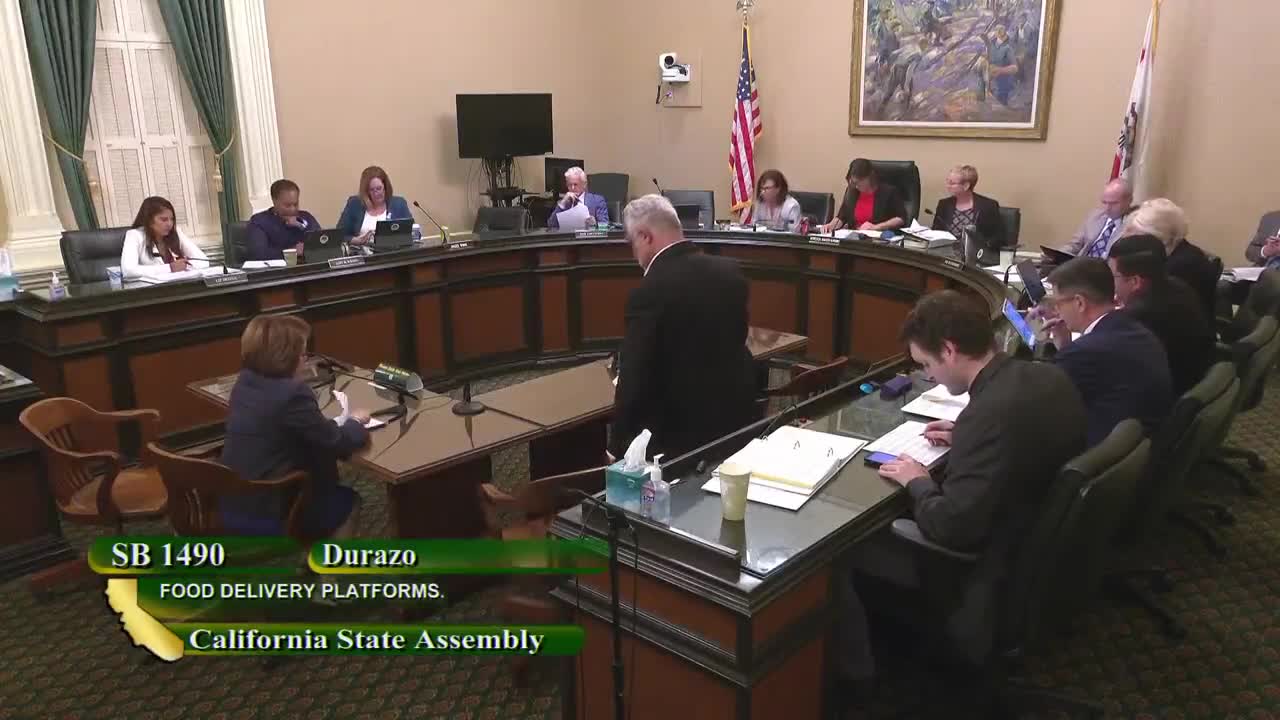 19MIN
Assembly Standing Committee on Privacy and Consumer Protection
 2MIN
Senate Floor
 18MIN
Senate Standing Committee on Business, Professions and Economic Development
 30SEC
Senate Standing Committee on Business, Professions and Economic Development
20SEC
Senate Standing Committee on Business, Professions and Economic Development
Bill Author

Bill Co-Author(s):
