AB 8: Emergency services: hit-and-run incidents.
- Session Year: 2015-2016
- House: Assembly
- Latest Version Date: 2015-09-28
Existing law authorizes use of the Emergency Alert System to inform the public of local, state, and national emergencies. Existing law requires a law enforcement agency to activate the Emergency Alert System within the appropriate area if that agency determines that a child 17 years of age or younger, or an individual with a proven mental or physical disability, has been abducted and is in imminent danger of serious bodily injury or death, and there is information available that, if disseminated to the general public, could assist in the safe recovery of that person. Existing law also authorizes the issuance and coordination of a Blue Alert following an attack upon a law enforcement officer or a Silver Alert relating to a person who is 65 years of age or older who is reported missing.
This bill would authorize a law enforcement agency to issue a Yellow Alert if a person has been killed or has suffered serious bodily injury due to a hit-and-run incident and the law enforcement agency has specified information concerning the suspect or the suspects vehicle. The bill would authorize the Department of the California Highway Patrol to activate a Yellow Alert within the requested geographic area upon request if it concurs with the law enforcement agency that specified requirements are met.
Existing law authorizes use of the Emergency Alert System to inform the public of local, state, and national emergencies. Existing law requires a law enforcement agency to activate the Emergency Alert System within the appropriate area if that agency determines that a child 17 years of age or younger, or an individual with a proven mental or physical disability, has been abducted and is in imminent danger of serious bodily injury or death, and there is information available that, if disseminated to the general public, could assist in the safe recovery of that person. Existing law also authorizes the issuance and coordination of a Blue Alert following an attack upon a law enforcement officer or a Silver Alert relating to a person who is 65 years of age or older who is reported missing.
This bill would authorize a law enforcement agency to issue a Yellow Alert if a person has been killed or has suffered serious bodily injury due to a hit-and-run incident and the law enforcement agency has specified information concerning the suspect or the suspects vehicle. The bill would require authorize the Department of the California Highway Patrol to activate a Yellow Alert within the requested geographic area upon request if it concurs with the law enforcement agency that specified requirements are met.
Existing law authorizes use of the Emergency Alert System to inform the public of local, state, and national emergencies. Existing law requires a law enforcement agency to activate the Emergency Alert System within the appropriate area if that agency determines that a child 17 years of age or younger, or an individual with a proven mental or physical disability, has been abducted and is in imminent danger of serious bodily injury or death, and there is information available that, if disseminated to the general public, could assist in the safe recovery of that person. Existing law also authorizes the issuance and coordination of a Blue Alert following an attack upon a law enforcement officer or a Silver Alert relating to a person who is 65 years of age or older who is reported missing.
This bill would authorize a law enforcement agency to issue a Yellow Alert if a person has been killed or has suffered serious bodily injury due to a hit-and-run incident and the law enforcement agency has specified information concerning the suspect or the suspects vehicle. The bill would require the Department of the California Highway Patrol to activate a Yellow Alert within the requested geographic area upon request if it concurs with the law enforcement agency that specified requirements are met.
(a)For purposes of this section, the following terms have the following meanings:
(1)Serious bodily injury means an injury that involves, either at the time of the actual injury or at a later time, a substantial risk of serious and permanent disfigurement, a substantial risk of protracted loss or impairment of the function of any part of the body, or a break, fracture, or burn of the second or third degree.
(2)Yellow Alert means a notification system, activated pursuant to subdivision (b), designed to issue and coordinate alerts with respect to a hit-and-run incident resulting in the death or injury of a person as described in Section 20001 of the Vehicle Code.
(b)(1)If a hit-and-run incident is reported to a law enforcement agency, and that agency determines that the requirements of subdivision (c) are met, the agency may request the Department of the California Highway Patrol to activate a Yellow Alert. If the Department of the California Highway Patrol concurs that the requirements of subdivision (c) are met, it may activate a Yellow Alert within the geographic area requested by the investigating law enforcement agency.
(2)Radio, television, and cable and satellite systems are encouraged, but are not required, to cooperate with disseminating the information contained in a Yellow Alert.
(3)Upon activation of a Yellow Alert, the Department of the California Highway Patrol shall assist the investigating law enforcement agency by issuing the Yellow Alert via a changeable message sign.
(4)If there are multiple Yellow Alerts requested, the Department of the California Highway Patrol may prioritize the activation of alerts based on any factor including, but not limited to, the severity of the injury, the time elapsed between a hit-and-run incident and the request, or the likelihood that an activation would reasonably lead to the apprehension of a suspect.
(c)A law enforcement agency may request that a Yellow Alert be activated if that agency determines that all of the following conditions are met in regard to the investigation of the hit-and-run incident:
(1)A person has been killed or has suffered serious bodily injury due to a hit-and-run incident.
(2)There is an indication that a suspect has fled the scene utilizing the state highway system or is likely to be observed by the public on the state highway system.
(3)The investigating law enforcement agency has additional information concerning the suspect or the suspects vehicle, including, but not limited to, any of the following:
(A)The complete license plate number of the suspects vehicle.
(B)A partial license plate number and additional unique identifying characteristics, such as the make, model, and color of the suspects vehicle, which could reasonably lead to the apprehension of the suspect.
(C)The identity of the suspect.
(4)Public dissemination of available information could either help avert further harm or accelerate apprehension of the suspect based on any factor including, but not limited to, the severity of the injury, the time elapsed between a hit-and-run incident and the request, or the likelihood that an activation would reasonably lead to the apprehension of a suspect.
(d)This section shall remain in effect only until January 1, 2019, and as of that date is repealed, unless a later enacted statute, that is enacted before January 1, 2019, deletes or extends that date.
(a)For purposes of this section, Yellow the following terms have the following meanings:
(1)Serious bodily injury means an injury that involves, either at the time of the actual injury or at a later time, a substantial risk of serious and permanent disfigurement, a substantial risk of protracted loss or impairment of the function of any part of the body, or a break, fracture, or burn of the second or third degree.
(2)Yellow Alert means a notification system, activated pursuant to subdivision (b), designed to issue and coordinate alerts with respect to a hit-and-run incident resulting in the death or injury of a person as described in Section 20001 of the Vehicle Code.
(b)(1)If a hit-and-run incident is reported to a law enforcement agency, and that agency determines that the requirements of subdivision (c) are met, the agency may request the Department of the California Highway Patrol to activate a Yellow Alert. If the Department of the California Highway Patrol concurs that the requirements of subdivision (c) are met, it shall may activate a Yellow Alert within the geographic area requested by the investigating law enforcement agency.
(2)Radio, television, and cable and satellite systems are encouraged, but are not required, to cooperate with disseminating the information contained in a Yellow Alert.
(3)Upon activation of a Yellow Alert, the Department of the California Highway Patrol shall assist the investigating law enforcement agency by issuing the Yellow Alert via a local digital sign. changeable message sign.
(4)If there are multiple Yellow Alerts requested, the Department of the California Highway Patrol may prioritize the activation of alerts based on any factor including, but not limited to, the severity of the injury, the time elapsed between a hit-and-run incident and the request, or the likelihood that an activation would reasonably lead to the apprehension of a suspect.
(c)A law enforcement agency may request that a Yellow Alert be activated if that agency determines that all of the following conditions are met in regard to the investigation of the hit-and-run incident:
(1)A person has been killed or has suffered serious bodily injury due to a hit-and-run incident.
(2)There is an indication that a suspect has fled the scene utilizing the state highway system or is likely to be observed by the public on the state highway system.
(2)
(3)The investigating law enforcement agency has additional information concerning the suspect or the suspects vehicle, including, but not limited to, any of the following:
(A)The complete license plate number of the suspects vehicle.
(B)A partial license plate number and additional unique identifying characteristics, such as the make, model, and color of the suspects vehicle. vehicle, which could reasonably lead to the apprehension of the suspect.
(C)The identity of the suspect.
(3)
(4)Public dissemination of available information could either help avert further harm or accelerate apprehension of the suspect. suspect based on any factor including, but not limited to, the severity of the injury, the time elapsed between a hit-and-run incident and the request, or the likelihood that an activation would reasonably lead to the apprehension of a suspect.
(d)This section shall remain in effect only until January 1, 2019, and as of that date is repealed, unless a later enacted statute, that is enacted before January 1, 2019, deletes or extends that date.
(a)For purposes of this section, Yellow Alert means a notification system, activated pursuant to subdivision (b), designed to issue and coordinate alerts with respect to a hit-and-run incident resulting in the death or injury of a person as described in Section 20001 of the Vehicle Code.
(b)(1)If a hit-and-run incident is reported to a law enforcement agency, and that agency determines that the requirements of subdivision (c) are met, the agency may request the Department of the California Highway Patrol to activate a Yellow Alert. If the Department of the California Highway Patrol concurs that the requirements of subdivision (c) are met, it shall activate a Yellow Alert within the geographic area requested by the investigating law enforcement agency.
(2)Radio, television, and cable and satellite systems are encouraged, but are not required, to cooperate with disseminating the information contained in a Yellow Alert.
(3)Upon activation of a Yellow Alert, the Department of the California Highway Patrol shall assist the investigating law enforcement agency by issuing the Yellow Alert via a local digital sign.
(c)A law enforcement agency may request that a Yellow Alert be activated if that agency determines that all of the following conditions are met in regard to the investigation of the hit-and-run incident:
(1)A person has been killed or has suffered serious bodily injury due to a hit-and-run incident.
(2)The investigating law enforcement agency has additional information concerning the suspect or the suspects vehicle, including, but not limited to, any of the following:
(A)The complete license plate number of the suspects vehicle.
(B)A partial license plate number and the make, model, and color of the suspects vehicle.
(C)The identity of the suspect.
(3)Public dissemination of available information could either help avert further harm or accelerate apprehension of the suspect.
|
Date
|
Status
|
|---|---|
| Sep 28, 2015 | Chaptered by Secretary of State - Chapter 326, Statutes of 2015. |
| Sep 28, 2015 | Approved by the Governor. |
| Sep 9, 2015 | Enrolled and presented to the Governor at 4 p.m. |
| Aug 31, 2015 | Senate amendments concurred in. To Engrossing and Enrolling. (Ayes 80. Noes 0. Page 2670.). |
| Aug 31, 2015 | Senate amendments concurred in. To Engrossing and Enrolling. (Ayes 80. Noes 0.). |
| Aug 27, 2015 | Read third time. Passed. Ordered to the Assembly. (Ayes 40. Noes 0. Page 2201.). |
| Aug 27, 2015 | In Assembly. Concurrence in Senate amendments pending. May be considered on or after August 30 pursuant to Assembly Rule 77. |
| Aug 27, 2015 | Read third time. Passed. Ordered to the Assembly. |
| Aug 19, 2015 | Read second time. Ordered to third reading. |
| Aug 18, 2015 | From committee: Do pass. (Ayes 7. Noes 0.) (August 17). |
| Jul 15, 2015 | From committee: Do pass and re-refer to Com. on APPR. (Ayes 7. Noes 0.) (July 14). Re-referred to Com. on APPR. |
| Jul 6, 2015 | Read second time and amended. Re-referred to Com. on PUB. S. |
| Jul 2, 2015 | From committee: Amend, and do pass as amended and re-refer to Com. on PUB. S. (Ayes 11. Noes 0.) (June 30). |
| Jun 23, 2015 | In committee: Set, first hearing. Hearing canceled at the request of author. |
| Jun 11, 2015 | Referred to Coms. on T. & H. and PUB. S. |
| Jun 2, 2015 | In Senate. Read first time. To Com. on RLS. for assignment. |
| Jun 2, 2015 | Read third time. Passed. Ordered to the Senate. (Ayes 79. Noes 0. Page 1764.) |
| Jun 2, 2015 | Read third time. Passed. Ordered to the Senate. |
| May 28, 2015 | Read second time. Ordered to third reading. |
| May 28, 2015 | From committee: Do pass. (Ayes 17. Noes 0.) (May 28). |
| May 6, 2015 | In committee: Set, first hearing. Referred to APPR. suspense file. |
| Apr 28, 2015 | From committee: Do pass and re-refer to Com. on APPR. (Ayes 7. Noes 0.) (April 28). Re-referred to Com. on APPR. |
| Mar 24, 2015 | From committee: Do pass and re-refer to Com. on PUB. S. (Ayes 16. Noes 0.) (March 23). Re-referred to Com. on PUB. S. |
| Jan 16, 2015 | Referred to Coms. on TRANS. and PUB. S. |
| Dec 2, 2014 | From printer. May be heard in committee January 1. |
| Dec 1, 2014 | Read first time. To print. |
|
Date
|
Description
|
Location
|
Votes
|
|
|---|---|---|---|---|
| Aug 31, 2015 | AB 8 GATTO Concurrence in Senate Amendments | Assembly Floor |
Passed |
|
| Aug 27, 2015 | Assembly 3rd Reading AB8 Gatto By Allen | Senate Floor |
Passed |
|
| Aug 17, 2015 | Do pass | Senate Standing Committee on Appropriations |
Passed |
|
| Jul 14, 2015 | Do pass, but first be re-referred to the Committee on [Appropriations] | Senate Standing Committee on Public Safety |
Passed |
|
| Jun 30, 2015 | Do pass as amended, but first amend, and re-refer to the Committee on [Public Safety] | Senate Standing Committee on Transportation and Housing |
Passed |
|
| Jun 2, 2015 | AB 8 GATTO Assembly Third Reading | Assembly Floor |
Passed |
|
| May 28, 2015 | Do pass. | Assembly Standing Committee on Appropriations |
Passed |
|
| Apr 28, 2015 | Do pass and be re-referred to the Committee on [Appropriations] | Assembly Standing Committee on Public Safety |
Passed |
|
| Mar 23, 2015 | Do pass and be re-referred to the Committee on [Public Safety] | Assembly Standing Committee on Transportation |
Passed |
This list shows positions taken on this bill by organizations on the date displayed, which is linked to the original source.
Positions by individuals are not included.
AB 8
Page 3
CONCURRENCE IN SENATE AMENDMENTS
AB 8
(Gatto)
As Amended July 6, 2015
Majority vote
ASSEMBLY: |
79-0 |
(June 2, 2015) |
SENATE: |
38-0 |
(August 27, 2015) |
Original Committee Reference: TRANS.
SUMMARY: Establishes the "Yellow Alert" notification system (similar to "Amber Alert") and authorizes activation of the system for certain hit-and-run incidents.
The Senate amendments:
Authorize, rather than require, the California Highway Patrol (CHP) to activate the Yellow Alert system, if certain requirements are met.
Authorize CHP to prioritize activation of the Yellow Alert system, based on certain factors, if multiple Yellow Alerts are requested.
Add "indication that a hit-and-run suspect has fled the scene utilizing the state highway system or is likely to be observed by the public on the state highway system" as one of the conditions that must be met before law enforcement can request activation of the Yellow Alert system.
Add a sunset date of January 1, 2019.
Make related, clarifying amendments and defines additional terms.
AS PASSED BY THE ASSEMBLY, this bill:
Defined a "Yellow Alert" as a notification system designed to issue and coordinate alerts that enlist the public in locating hit-and-run suspects when a hit-and-run incident results in death or injury.
Authorized a law enforcement agency to request that the CHP activate a Yellow Alert if certain identifying information about the hit-and-run suspect or the suspect's vehicle is available and if law enforcement believes that public dissemination of the available information will aid in apprehending the suspect or averting further harm.
Required CHP, if they concur that Yellow Alert activation requirements are met, to issue a Yellow Alert via local digital signs within the geographic area requested by the investigating law enforcement agency.
FISCAL EFFECT: According to the Senate Appropriations Committee:
Estimated one-time CHP costs of approximately $100,000 to develop policies and procedures, provide training, and develop resource materials for staff and law enforcement agencies for the new alert. (Motor Vehicle Account)
Non-reimbursable local law enforcement costs to determine whether specified conditions are met in order to request activation of a Yellow Alert. (local funds)
Minor and absorbable ongoing CHP costs to confirm specified conditions are met and issue Yellow Alerts on changeable message signs. (Motor Vehicle Account)
COMMENTS: The National Highway Traffic Safety Administration reports that the number of hit-and-run accidents is increasing nationally. According to the American Automobile Association Foundation for Traffic Safety, one in five of all pedestrian fatalities involve hit-and-run accidents and 60% of hit-and-run fatalities have pedestrian victims. Additionally, USA Today writes that in 2013 an estimated 20,000 hit-and-run incidents occur each year in the City of Los Angeles alone and 4,000 of these incidents involved injuries or death.
To address this problem, the author has introduced this bill, which is modeled after legislation in Colorado ("Medina Alert") that has been instrumental in locating hit-and-run suspects. Specifically, this bill would create a "Yellow Alert" notification system, similar to California's successful "Amber Alert" system, that would authorize CHP to activate digital highway signage (as well as other electronic messaging systems) when there is information available to locate hit-and-run suspects. The "Yellow Alert" notification system would provide the public with information about the hit-and-run suspect and/or the suspect's vehicle and request that the public be on the lookout and report information to law enforcement.
There are a number of similar alert systems already in use in California. The first alert system developed in California was "Amber Alert", established by AB 415 (Runner), Chapter 517, Statutes of 2002, that authorized law enforcement agencies to use the digital messaging on overhead roadway signs to assist in recovery efforts for child abduction cases. Following on the success of the "Amber Alert" program, the "Blue Alert" and the "Silver Alert" notification systems were developed. The "Blue Alert" system, established by SB 839 (Runner), Chapter 311, Statutes of 2010, provides for public notification when a law enforcement officer has been attacked and the "Silver Alert" notification system, established by SB 1047 (Alquist), Chapter 651, Statutes of 2012, provides for public notification when a person age 65 years or older is missing. The "Silver Alert" system was recently broadened with the passage of SB 1127 (Torres) Chapter 440, Statutes of 2014, to include missing persons who are developmentally disabled or cognitively impaired.
This bill is identical to AB 47 (Gatto) of the 2013-14 Regular Session, which passed with bi-partisan support but was vetoed by the Governor. In his veto message, Governor Brown noted that since SB 1127 added a new class of individuals to the existing alert system, adding yet another category (hit-and-run suspects) could overload the alert system, thereby diluting its effectiveness. Given that SB 1127 just recently took effect (January 1, 2015), it is unclear what result adding this new category of individuals (developmentally disabled or cognitively impaired) will have. According to CHP, there has been only one "Silver Alert" system activation to date under the new law but it remains to be seen if there will be an increase over time.
Supporters of this bill include local jurisdictions as well as a number bicycle and pedestrian groups. Bicycle and pedestrian groups, note that using California's network of changeable message signs to locate hit-and-run suspects would provide a simple yet effective way to solve, and possibly deter, this type of crime. Also writing in support of this bill, Eric Garcetti, Mayor of the City of Los Angeles, notes that the "Medina Alert" system in Colorado has led to the arrest of 76% of hit-and-run fugitives and that this bill would help local law enforcement achieve similar results and give hope to families and victims of hit-and-run accidents.
There is no opposition on file.
Analysis Prepared by: Victoria Alvarez / TRANS. / (916) 319-2093 FN: 0001427
AB 8
Page 9
|
Office of Senate Floor Analyses (916) 651-1520 Fax: (916) 327-4478 |
THIRD READING
Bill No: AB 8
Amended: 7/6/15 in Senate
SENATE TRANS. & HOUSING COMMITTEE: 11-0, 6/30/15
AYES: Beall, Cannella, Allen, Bates, Gaines, Galgiani, Leyva, McGuire, Mendoza, Roth, Wieckowski
SENATE PUBLIC SAFETY COMMITTEE: 7-0, 7/14/15
AYES: Hancock, Anderson, Glazer, Leno, Liu, Monning, Stone
SENATE APPROPRIATIONS COMMITTEE: 7-0, 8/17/15
AYES: Lara, Bates, Beall, Hill, Leyva, Mendoza, Nielsen
ASSEMBLY FLOOR: 79-0, 6/2/15 - See last page for vote
SUBJECT: Emergency services: hit-and-run incidents
DIGEST: This bill establishes the “Yellow Alert” notification system and authorizes the California Highway Patrol (CHP) to activate the system for certain hit-and-run incidents.
Existing law:
Authorizes use of the Emergency Alert System (EAS), a national public warning system that requires broadcasters and others to promulgate important information for “AMBER Alerts,” a program designed to aid in the recovery of an abducted child or an individual with a proven mental or physical disability when all of the following conditions have been met:
A law enforcement agency determines that the victim is in imminent danger of serious bodily injury or death; and
There is information available that, if disseminated to the general public, could assist in the safe recovery of the victim.
Requires CHP, in consultation with others, to develop policies and procedures to instruct agencies how to carry out an AMBER Alert.
Authorizes use of the EAS for “Blue Alerts,” a quick-response system designed to issue and coordinate alerts when a law enforcement officer has been killed or is seriously injured and when all the following conditions have been met:
The suspect has fled the scene and poses an imminent threat to public safety;
A detailed description of the suspect’s vehicle or license plate is available for broadcasting; and
There is information available that, if disseminated to the general public, could help avert further harm or accelerate apprehension of the suspect.
Establishes a “Silver Alert” notification system, designed to issue and coordinate alerts if a person that is age 65 years or older, developmentally disabled, or cognitively impaired is missing and if the following conditions have been met:
A law enforcement agency has used all available local resources to locate the missing person;
The missing person is believed to be in danger because of, for example, health or weather conditions; and
It has been determined that the public dissemination of information may lead to a safe recovery of the missing person.
This bill:
Establishes the “Yellow Alert” notification system and authorizes CHP to activate the system for certain hit-and-run incidents.
Defines a Yellow Alert as a notification designed to issue and coordinate alerts that enlist the public in locating hit-and-run suspects when a hit-and-run incident results in death or injury.
Authorizes a law enforcement agency to request that CHP activate a Yellow Alert if all of the following conditions are met:
There is an indication that a suspect has fled the scene utilizing the state highway system;
Certain identifying information about the hit-and-run suspect or the suspect’s vehicle is available, such as a complete license plate number or the identity of the suspect; and
If law enforcement believes that public dissemination of the available information will aid in apprehending the suspect or averting further harm.
Authorizes the CHP, if it concurs that Yellow Alert activation requirements are met, to issue a Yellow Alert via local digital signs within the geographic area requested by the investigating law enforcement agency.
Allows the CHP to prioritize activation of alerts based on any factor.
Sunsets on January 1, 2019.
Comments
Purpose. The National Highway Traffic Safety Administration reports that the number of hit-and-run accidents is increasing nationally. According to the AAA Foundation for Traffic Safety, one in five of all pedestrian fatalities involve hit-and-run accidents and 60% of hit-and-run fatalities have pedestrian victims. Additionally, USA Today writes that in 2013 an estimated 20,000 hit-and-run incidents occur each year in the City of Los Angeles alone, and 4,000 of these incidents involved injuries or death.
To address this problem, the author has introduced this bill, which is modeled after legislation in Colorado (Medina Alert) that has been instrumental in locating hit-and-run suspects. Specifically, this bill would create a Yellow Alert notification system, similar to California’s successful AMBER Alert system, that would authorize CHP to activate digital highway signage (as well as other electronic messaging systems) when there is information available to locate hit-and-run suspects. The Yellow Alert notification system would provide the public with information about the hit-and-run suspect and/or the suspect’s vehicle and request that the public be on the lookout and report information to law enforcement.
Emergency alert system background. The nation’s first AMBER Alert was established in 1996, and named after 9-year-old Amber Hagerman who was kidnapped while riding her bicycle and brutally murdered in Arlington, Texas. The alert system was intended to help inform local residents to search for a child who was abducted nearby. AMBER is an acronym for America’s Missing: Broadcast Emergency Response.
The alerts were initially issued over broadcasting channels designed to alert residents of dangerous weather events, but since then they have grown to include highway billboard signs, text messages, and other notification methods. Although the federal government does not have direct control over the system, several federal agencies have urged states to implement it. The U.S. Department of Justice created an AMBER Alert page and issued guidance to states to establish criteria before issuing an alert, including that the victim be at risk of serious bodily injury or death, that a sufficient description to be informative is included, and that law enforcement must confirm there was an abduction, among others.
California began the AMBER Alert as a regional program in 1999, and in 2002 the Legislature passed AB 415 (Runner, Chapter 517), establishing it statewide. As of February 2014, there have been 219 activations in California, 255 recovered victims, and 131 suspects arrested. The CHP is responsible for statewide coordination of the AMBER Alert system.
In 2010, SB 839 (Runner, Chapter 311) expanded the alert system to include Blue Alerts, which allow the CHP to initiate a quick response to coordinate alerts following an attack on a law enforcement officer if the officer was killed, suffered serious bodily injury, or was assaulted with a deadly weapon and the suspect remains at large.
Finally, in 2012 the Legislature established the Silver Alert program through SB 1047 (Alquist, Chapter 651), to coordinate communication after the unexplained or suspicious disappearance of an elderly person. The system is intended to provide immediate attention to the public about the missing person, including photographs, descriptions, and information about the last time and location they were seen. The Legislature has since expanded the program to include any developmentally disabled or cognitively impaired individual that otherwise meets the requirements, regardless of the person’s age.
Are hit-and-runs appropriate for the alert system? For cases in which current law authorizes an emergency alert, the primary imperative is to prevent imminent danger. For an AMBER Alert to be issued, a law enforcement agency must first assess if the victim is “in imminent danger of serious bodily injury or death” and whether the widespread dissemination of pertinent information to the public would assist in the safe recovery of the victim. Similarly, a Silver Alert can only be issued when a person 65 years of age or older or a developmentally disabled or cognitively impaired individual is reported missing and determined by the law enforcement agency to be in potential danger due to age or a variety of other factors. Additionally, an offending suspect needs to be considered an imminent threat to the public or other law enforcement personnel before a Blue Alert can be initiated after a violent attack on a law enforcement officer. Alternatively, law enforcement suggests that hit-and-run offenders typically try to hide and hope they cannot be identified. This appears to be one example of how hit-and-run incidents may not be appropriate for the alert system.
Further, the inherent nature of hit-and-run incidents leads to information about the suspect or the suspect’s vehicle being unavailable or unverifiable. In a missing persons case, once a law enforcement agency decides to request an AMBER or Silver Alert, the agency often has access to an accurate description of the missing person, if not a photograph or digital image, that confers a high degree of certainty in the information being disseminated to the public about the missing person. In essence, it is easier to identify and verify the person for whom the public should be on alert. For hit-and-run incidents, the investigating law enforcement agency may have limited information available that cannot be verified. If law enforcement has the suspect’s identifying information necessary to institute a Yellow Alert, it seems reasonable that law enforcement can use that information to apprehend the suspect without needing to post the information on a changeable message sign. Given this, it is unclear how hit-and-runs are appropriate for the state’s alert system.
Distracted driving concerns. A variety of constituencies have conducted distracted driving studies focused on a number of potential distractions. There are studies that use data to prove illuminated billboards do not lead to negative outcomes, and other studies that refute these conclusions. Nearly all studies admit that, in most instances, it is very difficult to identify one single factor that led to an adverse incident such as an automobile accident. Research tends to show that accidents arise from an accumulation of factors, including distractions in the vehicle and outside, weather conditions, and even distracting thoughts within the driver’s mind.
It is clear, however, that billboards by their very nature capture a driver’s attention. Advertising is intended to communicate a message to the recipient, which requires some attention. One recent study of driver behavior conducted by the Accident Research Center at Monash University concluded that “the presence of billboards changed drivers’ pattern of visual attention, increased the amount of time needed for drivers to respond to road signs, and increased the number of errors in the driving task.” Other studies using naturalistic driving data have found that, of all the various distractions contributing to poor driving outcomes, visual distraction is the primary concern in driver distraction.
This bill proposes that the state use its digital billboards to advertise to the public an alert. While illuminated billboards may not by themselves lead to adverse safety impacts, it is clear that they contribute to the multiple distractions drivers navigate each day. Adding distractions, especially ones that are particularly effective at drawing one’s attention, can only increase the risk of negative outcomes. The question is not whether these alerts on the state’s changeable message signs cause accidents and other negative consequences, but how many distractions are enough to create an environment potentially too risky and dangerous for people traveling from one place to another.
Former CHP opposition. In a letter dated May 15, 2015, the CHP Commissioner informed the author that CHP opposed this bill. On August 25, 2015, the CHP informed the Senate that it no longer opposes the bill. CHP was concerned that this bill would significantly increase the total number of alerts displayed on the state’s changeable message signs. CHP asserts that this will decrease the effectiveness of the AMBER Alert system, as it will desensitize the public and reduce its attention to the most serious child abduction cases for which the alert system is currently deployed. The increased number of alerts could also lead to increased driver distraction and more dangerous highways. Recent amendments to the bill help address this concern somewhat, as the bill now limits the number of Yellow Alerts that might make it onto the state’s changeable message signs.
In addition, CHP expressed concern that nothing in statute prioritizes the various alerts, and that can become problematic for CHP if they are put in the position of determining which alert to post on a changeable message sign when they get more than one at a time. Recent amendments clarify that CHP can prioritize alerts based on any factors they deem appropriate and therefore address this concern.
Previously vetoed legislation. AB 47 (Gatto, 2014), which was similar to this bill, was vetoed by Governor Brown on the grounds that similar legislation adding developmentally disabled persons to the alert system had just been signed. The Governor pointed out in his veto message that expansion of the system should be tested before other categories of individuals are added.
Related Legislation
AB 47 (Gatto, 2014) — which was similar to this bill, was vetoed by Governor Brown. The Governor pointed out in his veto message that expansion of the system should be tested before other categories of individuals are added.
SB 1127 (Torres, Chapter 440, Statutes of 2014) included a missing person who is developmentally disabled or cognitively impaired among persons who may be the subject of a Silver Alert.
SB 1047 (Alquist, Chapter 651, Statutes of 2012) established California’s Silver Alert System.
SB 839 (Runner, Chapter 311, Statutes of 2010) established California’s Blue Alert System.
FISCAL EFFECT: Appropriation: No Fiscal Com.: Yes Local: No
According to the Senate Appropriations Committee, this bill will incur estimated one-time CHP costs of approximately $100,000 to develop policies and procedures, provide training, and develop resource materials for staff and law enforcement agencies for the new alert; non-reimbursable local law enforcement costs to determine whether specified conditions are met in order to request activation of a Yellow Alert; and minor and absorbable ongoing CHP costs to confirm specified conditions are met and issue Yellow Alerts on changeable message signs.
ABATE of California
American Federation of State, County and Municipal Employees
American Motorcyclist Association
Association of Orange County Deputy Sheriffs
California Bicycle Coalition
California Council of the Blind
California Police Chiefs Association
California State Firefighters’ Association
California Walks
City of Los Angeles, Office of the Mayor
Emergency Nurses Association
Inland Empire Biking Alliance
Los Angeles County Bicycle Coalition
Los Angeles Walks
Matco Inc. Construction and Restoration
Nick’s Computer Works
People Power of Santa Cruz County
Rails to Trails Conservancy
Sacramento Area Bicycle Advocates
Safe Routes to School National Partnership
San Diego County Bicycle Coalition
San Francisco Bicycle Coalition
San Luis Obispo County Bicycle Coalition
Shasta Living Streets
Silicon Valley Bicycle Coalition
Transportation Authority of Marin
Walk and Bike Mendocino
Walk San Francisco
15 individuals
OPPOSITION: (Verified 8/26/15)
None received
ASSEMBLY FLOOR: 79-0, 6/2/15
AYES: Achadjian, Alejo, Travis Allen, Baker, Bigelow, Bloom, Bonilla, Bonta, Brough, Brown, Burke, Calderon, Campos, Chang, Chau, Chiu, Chu, Cooley, Cooper, Dababneh, Dahle, Daly, Dodd, Eggman, Frazier, Beth Gaines, Gallagher, Cristina Garcia, Eduardo Garcia, Gatto, Gipson, Gomez, Gonzalez, Gordon, Gray, Grove, Hadley, Harper, Roger Hernández, Holden, Irwin, Jones, Jones-Sawyer, Kim, Lackey, Levine, Linder, Lopez, Low, Maienschein, Mathis, Mayes, McCarty, Medina, Melendez, Mullin, Nazarian, Obernolte, O'Donnell, Olsen, Patterson, Perea, Quirk, Rendon, Ridley-Thomas, Rodriguez, Salas, Santiago, Steinorth, Mark Stone, Thurmond, Ting, Wagner, Waldron, Weber, Wilk, Williams, Wood, Atkins
NO VOTE RECORDED: Chávez
Prepared by: Eric Thronson / T. & H. / (916) 651-4121
8/26/15 10:33:40
**** END ****
AB 8
Page 9
|
Office of Senate Floor Analyses (916) 651-1520 Fax: (916) 327-4478 |
THIRD READING
Bill No: AB 8
Amended: 7/6/15 in Senate
SENATE TRANS. & HOUSING COMMITTEE: 11-0, 6/30/15
AYES: Beall, Cannella, Allen, Bates, Gaines, Galgiani, Leyva, McGuire, Mendoza, Roth, Wieckowski
SENATE PUBLIC SAFETY COMMITTEE: 7-0, 7/14/15
AYES: Hancock, Anderson, Glazer, Leno, Liu, Monning, Stone
SENATE APPROPRIATIONS COMMITTEE: 7-0, 8/17/15
AYES: Lara, Bates, Beall, Hill, Leyva, Mendoza, Nielsen
ASSEMBLY FLOOR: 79-0, 6/2/15 - See last page for vote
SUBJECT: Emergency services: hit-and-run incidents
DIGEST: This bill establishes the “Yellow Alert” notification system and authorizes the California Highway Patrol (CHP) to activate the system for certain hit-and-run incidents.
Existing law:
Authorizes use of the Emergency Alert System (EAS), a national public warning system that requires broadcasters and others to promulgate important information for “AMBER Alerts,” a program designed to aid in the recovery of an abducted child or an individual with a proven mental or physical disability when all of the following conditions have been met:
A law enforcement agency determines that the victim is in imminent danger of serious bodily injury or death; and
There is information available that, if disseminated to the general public, could assist in the safe recovery of the victim.
Requires CHP, in consultation with others, to develop policies and procedures to instruct agencies how to carry out an AMBER Alert.
Authorizes use of the EAS for “Blue Alerts,” a quick-response system designed to issue and coordinate alerts when a law enforcement officer has been killed or is seriously injured and when all the following conditions have been met:
The suspect has fled the scene and poses an imminent threat to public safety;
A detailed description of the suspect’s vehicle or license plate is available for broadcasting; and
There is information available that, if disseminated to the general public, could help avert further harm or accelerate apprehension of the suspect.
Establishes a “Silver Alert” notification system, designed to issue and coordinate alerts if a person that is age 65 years or older, developmentally disabled, or cognitively impaired is missing and if the following conditions have been met:
A law enforcement agency has used all available local resources to locate the missing person;
The missing person is believed to be in danger because of, for example, health or weather conditions; and
It has been determined that the public dissemination of information may lead to a safe recovery of the missing person.
This bill:
Establishes the “Yellow Alert” notification system and authorizes CHP to activate the system for certain hit-and-run incidents.
Defines a Yellow Alert as a notification designed to issue and coordinate alerts that enlist the public in locating hit-and-run suspects when a hit-and-run incident results in death or injury.
Authorizes a law enforcement agency to request that CHP activate a Yellow Alert if all of the following conditions are met:
There is an indication that a suspect has fled the scene utilizing the state highway system;
Certain identifying information about the hit-and-run suspect or the suspect’s vehicle is available, such as a complete license plate number or the identity of the suspect; and
If law enforcement believes that public dissemination of the available information will aid in apprehending the suspect or averting further harm.
Authorizes the CHP, if it concurs that Yellow Alert activation requirements are met, to issue a Yellow Alert via local digital signs within the geographic area requested by the investigating law enforcement agency.
Allows the CHP to prioritize activation of alerts based on any factor.
Sunsets on January 1, 2019.
Comments
Purpose. The National Highway Traffic Safety Administration reports that the number of hit-and-run accidents is increasing nationally. According to the AAA Foundation for Traffic Safety, one in five of all pedestrian fatalities involve hit-and-run accidents and 60% of hit-and-run fatalities have pedestrian victims. Additionally, USA Today writes that in 2013 an estimated 20,000 hit-and-run incidents occur each year in the City of Los Angeles alone, and 4,000 of these incidents involved injuries or death.
To address this problem, the author has introduced this bill, which is modeled after legislation in Colorado (Medina Alert) that has been instrumental in locating hit-and-run suspects. Specifically, this bill would create a Yellow Alert notification system, similar to California’s successful AMBER Alert system, that would authorize CHP to activate digital highway signage (as well as other electronic messaging systems) when there is information available to locate hit-and-run suspects. The Yellow Alert notification system would provide the public with information about the hit-and-run suspect and/or the suspect’s vehicle and request that the public be on the lookout and report information to law enforcement.
Emergency alert system background. The nation’s first AMBER Alert was established in 1996, and named after 9-year-old Amber Hagerman who was kidnapped while riding her bicycle and brutally murdered in Arlington, Texas. The alert system was intended to help inform local residents to search for a child who was abducted nearby. AMBER is an acronym for America’s Missing: Broadcast Emergency Response.
The alerts were initially issued over broadcasting channels designed to alert residents of dangerous weather events, but since then they have grown to include highway billboard signs, text messages, and other notification methods. Although the federal government does not have direct control over the system, several federal agencies have urged states to implement it. The U.S. Department of Justice created an AMBER Alert page and issued guidance to states to establish criteria before issuing an alert, including that the victim be at risk of serious bodily injury or death, that a sufficient description to be informative is included, and that law enforcement must confirm there was an abduction, among others.
California began the AMBER Alert as a regional program in 1999, and in 2002 the Legislature passed AB 415 (Runner, Chapter 517), establishing it statewide. As of February 2014, there have been 219 activations in California, 255 recovered victims, and 131 suspects arrested. The CHP is responsible for statewide coordination of the AMBER Alert system.
In 2010, SB 839 (Runner, Chapter 311) expanded the alert system to include Blue Alerts, which allow the CHP to initiate a quick response to coordinate alerts following an attack on a law enforcement officer if the officer was killed, suffered serious bodily injury, or was assaulted with a deadly weapon and the suspect remains at large.
Finally, in 2012 the Legislature established the Silver Alert program through SB 1047 (Alquist, Chapter 651), to coordinate communication after the unexplained or suspicious disappearance of an elderly person. The system is intended to provide immediate attention to the public about the missing person, including photographs, descriptions, and information about the last time and location they were seen. The Legislature has since expanded the program to include any developmentally disabled or cognitively impaired individual that otherwise meets the requirements, regardless of the person’s age.
Are hit-and-runs appropriate for the alert system? For cases in which current law authorizes an emergency alert, the primary imperative is to prevent imminent danger. For an AMBER Alert to be issued, a law enforcement agency must first assess if the victim is “in imminent danger of serious bodily injury or death” and whether the widespread dissemination of pertinent information to the public would assist in the safe recovery of the victim. Similarly, a Silver Alert can only be issued when a person 65 years of age or older or a developmentally disabled or cognitively impaired individual is reported missing and determined by the law enforcement agency to be in potential danger due to age or a variety of other factors. Additionally, an offending suspect needs to be considered an imminent threat to the public or other law enforcement personnel before a Blue Alert can be initiated after a violent attack on a law enforcement officer. Alternatively, law enforcement suggests that hit-and-run offenders typically try to hide and hope they cannot be identified. This appears to be one example of how hit-and-run incidents may not be appropriate for the alert system.
Further, the inherent nature of hit-and-run incidents leads to information about the suspect or the suspect’s vehicle being unavailable or unverifiable. In a missing persons case, once a law enforcement agency decides to request an AMBER or Silver Alert, the agency often has access to an accurate description of the missing person, if not a photograph or digital image, that confers a high degree of certainty in the information being disseminated to the public about the missing person. In essence, it is easier to identify and verify the person for whom the public should be on alert. For hit-and-run incidents, the investigating law enforcement agency may have limited information available that cannot be verified. If law enforcement has the suspect’s identifying information necessary to institute a Yellow Alert, it seems reasonable that law enforcement can use that information to apprehend the suspect without needing to post the information on a changeable message sign. Given this, it is unclear how hit-and-runs are appropriate for the state’s alert system.
Distracted driving concerns. A variety of constituencies have conducted distracted driving studies focused on a number of potential distractions. There are studies that use data to prove illuminated billboards do not lead to negative outcomes, and other studies that refute these conclusions. Nearly all studies admit that, in most instances, it is very difficult to identify one single factor that led to an adverse incident such as an automobile accident. Research tends to show that accidents arise from an accumulation of factors, including distractions in the vehicle and outside, weather conditions, and even distracting thoughts within the driver’s mind.
It is clear, however, that billboards by their very nature capture a driver’s attention. Advertising is intended to communicate a message to the recipient, which requires some attention. One recent study of driver behavior conducted by the Accident Research Center at Monash University concluded that “the presence of billboards changed drivers’ pattern of visual attention, increased the amount of time needed for drivers to respond to road signs, and increased the number of errors in the driving task.” Other studies using naturalistic driving data have found that, of all the various distractions contributing to poor driving outcomes, visual distraction is the primary concern in driver distraction.
This bill proposes that the state use its digital billboards to advertise to the public an alert. While illuminated billboards may not by themselves lead to adverse safety impacts, it is clear that they contribute to the multiple distractions drivers navigate each day. Adding distractions, especially ones that are particularly effective at drawing one’s attention, can only increase the risk of negative outcomes. The question is not whether these alerts on the state’s changeable message signs cause accidents and other negative consequences, but how many distractions are enough to create an environment potentially too risky and dangerous for people traveling from one place to another.
CHP opposition. In a letter dated May 15, 2015, the CHP Commissioner informed the author that CHP opposes this bill for three reasons. First, CHP is concerned that this bill would significantly increase the total number of alerts displayed on the state’s changeable message signs. CHP asserts that this will decrease the effectiveness of the AMBER Alert system, as it will desensitize the public and reduce its attention to the most serious child abduction cases for which the alert system is currently deployed. The increased number of alerts could also lead to increased driver distraction and more dangerous highways. Recent amendments to the bill help address this concern somewhat, as the bill now limits the number of Yellow Alerts that might make it onto the state’s changeable message signs.
Second, CHP states that it anticipates a significant decrease in the number of hit-and-run collisions due to the implementation of legislation allowing previously unlicensed drivers the ability to obtain a driver’s license. Having in possession a driver’s license reduces the incentive for fleeing an accident, and therefore there should be fewer hit-and-runs.
Finally, CHP expresses concern that nothing in statute prioritizes the various alerts, and that can become problematic for CHP if they are put in the position of determining which alert to post on a changeable message sign when they get more than one at a time. Recent amendments clarify that CHP can prioritize alerts based on any factors they deem appropriate and therefore address this concern.
Previously vetoed legislation. AB 47 (Gatto, 2014), which was similar to this bill, was vetoed by Governor Brown on the grounds that similar legislation adding developmentally disabled persons to the alert system had just been signed. The Governor pointed out in his veto message that expansion of the system should be tested before other categories of individuals are added.
Related Legislation
AB 47 (Gatto, 2014), which was similar to this bill, was vetoed by Governor Brown. The Governor pointed out in his veto message that expansion of the system should be tested before other categories of individuals are added.
SB 1127 (Torres, Chapter 440, Statutes of 2014) included a missing person who is developmentally disabled or cognitively impaired among persons who may be the subject of a Silver Alert.
SB 1047 (Alquist, Chapter 651, Statutes of 2012) established California’s Silver Alert System.
SB 839 (Runner, Chapter 311, Statutes of 2010) established California’s Blue Alert System.
FISCAL EFFECT: Appropriation: No Fiscal Com.: Yes Local: No
According to the Senate Appropriations Committee, this bill will incur estimated one-time CHP costs of approximately $100,000 to develop policies and procedures, provide training, and develop resource materials for staff and law enforcement agencies for the new alert; non-reimbursable local law enforcement costs to determine whether specified conditions are met in order to request activation of a Yellow Alert; and minor and absorbable ongoing CHP costs to confirm specified conditions are met and issue Yellow Alerts on changeable message signs.
ABATE of California
American Federation of State, County and Municipal Employees
American Motorcyclist Association
Association of Orange County Deputy Sheriffs
California Bicycle Coalition
California Council of the Blind
California Police Chiefs Association
California State Firefighters’ Association
California Walks
City of Los Angeles, Office of the Mayor
Emergency Nurses Association
Inland Empire Biking Alliance
Los Angeles County Bicycle Coalition
Los Angeles Walks
Matco Inc. Construction and Restoration
Nick’s Computer Works
People Power of Santa Cruz County
Rails to Trails Conservancy
Sacramento Area Bicycle Advocates
Safe Routes to School National Partnership
San Diego County Bicycle Coalition
San Francisco Bicycle Coalition
San Luis Obispo County Bicycle Coalition
Shasta Living Streets
Silicon Valley Bicycle Coalition
Transportation Authority of Marin
Walk and Bike Mendocino
Walk San Francisco
15 individuals
OPPOSITION: (Verified 8/18/15)
California Highway Patrol
ASSEMBLY FLOOR: 79-0, 6/2/15
AYES: Achadjian, Alejo, Travis Allen, Baker, Bigelow, Bloom, Bonilla, Bonta, Brough, Brown, Burke, Calderon, Campos, Chang, Chau, Chiu, Chu, Cooley, Cooper, Dababneh, Dahle, Daly, Dodd, Eggman, Frazier, Beth Gaines, Gallagher, Cristina Garcia, Eduardo Garcia, Gatto, Gipson, Gomez, Gonzalez, Gordon, Gray, Grove, Hadley, Harper, Roger Hernández, Holden, Irwin, Jones, Jones-Sawyer, Kim, Lackey, Levine, Linder, Lopez, Low, Maienschein, Mathis, Mayes, McCarty, Medina, Melendez, Mullin, Nazarian, Obernolte, O'Donnell, Olsen, Patterson, Perea, Quirk, Rendon, Ridley-Thomas, Rodriguez, Salas, Santiago, Steinorth, Mark Stone, Thurmond, Ting, Wagner, Waldron, Weber, Wilk, Williams, Wood, Atkins
NO VOTE RECORDED: Chávez
Prepared by: Eric Thronson / T. & H. / (916) 651-4121
8/20/15 13:55:29
**** END ****
AB 8 (Gatto) Page 3 of 3
SENATE COMMITTEE ON APPROPRIATIONS
Senator Ricardo Lara, Chair
2015 - 2016 Regular Session
AB 8 (Gatto) - Emergency services: hit-and-run incidents
|
|
Version: July 6, 2015 |
Policy Vote: T. & H. 11 - 0, PUB. S. 7 - 0 |
Urgency: No |
Mandate: No |
Hearing Date: August 17, 2015 |
Consultant: Mark McKenzie |
This bill does not meet the criteria for referral to the Suspense File.
Bill Summary:
AB 8 would establish a “Yellow Alert” notification system until January 1, 2019 to issue public alerts to aid in the apprehension of a suspect following a serious hit-and-run incident. If a law enforcement agency determines that specified conditions regarding an incident are met, the agency can request that the California Highway Patrol (CHP) issue the alert on changeable message signs to assist in the apprehension of the suspect.
Fiscal Impact:
Estimated one-time CHP costs of approximately $100,000 to develop policies and procedures, provide training, and develop resource materials for staff and law enforcement agencies for the new alert. (Motor Vehicle Account)
Non-reimbursable local law enforcement costs to determine whether specified conditions are met in order to request activation of a Yellow Alert. (local funds)
Minor and absorbable ongoing CHP costs to confirm specified conditions are met and issue Yellow Alerts on changeable message signs. (Motor Vehicle Account)
Background:
Existing law provides for an emergency alert system, commonly known as the “Amber Alert” system, authorizing law enforcement to request the activation of the Emergency Alert System (EAS) when a child 17 years of age or younger, or an individual with a proven mental or physical disability, has been reported as abducted, and is in imminent danger of serious bodily injury or death, and there is information available that, if disseminated to the public, could assist in the safe recovery of the individual. CHP is required to activate the EAS for Amber Alerts, upon request of a law enforcement agency.
Existing law also provides for a "Blue Alert" system to issue and coordinate alerts following an attack upon a law enforcement officer. Under the Blue Alert system, CHP must activate the EAS upon the request of a law enforcement agency that is investigating an offense in which all of the following conditions are met: (1) a law enforcement officer has been killed, suffers serious bodily injury, or is assaulted with a deadly weapon; (2) the suspect has fled the scene of the offense and is determined an imminent threat to the public or others; (3) a detailed description of the suspect's vehicle or license plate is available; and (4) public dissemination of available information may help avert further harm or accelerate apprehension of the suspect. The Blue Alert system must utilize the state-controlled Emergency Digital Information System, local digital signs, focused text, or other technologies, as appropriate.
In addition, existing law provides for a "Silver Alert" system to issue and coordinate alerts with respect to a person reported missing who is 65 years of age or older, developmentally disabled, or cognitively impaired. A law enforcement agency may request a Silver Alert if that agency determines that all of the following conditions are met in regard to the investigation of the missing person: (1) The investigating law agency has utilized all available local resources and the person is missing under unexplained circumstances; (2) the agency believes the person is in danger because of age, health, mental or physical disability, environment or weather conditions, or other circumstances; and (3) there is available information that, if disseminated, could assist in the safe recovery of the missing person. Upon activation of a Silver Alert, CHP is required to issue a “be-on-the-lookout” alert, an Emergency Digital Information Service message, or an electronic flyer.
Proposed Law:
AB 8 would establish a “Yellow Alert” system to issue and coordinate alerts following hit-and-run incidents until January 1, 2019. Specifically this bill would:
Authorize a law enforcement agency to request activation of a Yellow Alert if all of the following conditions are met:
A person has been killed or suffered serious bodily injury, as defined, due to a hit-and-run incident.
There is an indication that the suspect fled using the state highway system or is likely to be observed on a highway.
The investigating law enforcement agency has information concerning the suspect or specified identifying information of the suspect’s vehicle that could reasonably lead to the apprehension of the suspect, as specified.
Public dissemination of available information could help avert further harm or accelerate apprehension of the suspect.
Authorize CHP, upon request of a law enforcement agency and if it concurs that all conditions are met, to activate a Yellow Alert within the requested geographic area. Upon activation, CHP must issue the Yellow Alert via changeable message signs.
Authorize CHP, if multiple alerts are requested, to prioritize the activation of alerts based upon any factors, including severity of the injury, the time elapsed since the incident, or likelihood that activation would reasonably lead to apprehension of a suspect.
Encourage radio, television, and cable and satellite systems to cooperate with disseminating information contained in a Yellow Alert.
Sunset the Yellow Alert system on January 1, 2019.
Related Legislation:
AB 47 (Gatto), which was vetoed by Governor Brown last year, would have required, rather than authorized CHP to issue Yellow Alerts under certain criteria that are less stringent than the conditions specified in this bill. The veto message for AB 47 stated the following:
This bill would establish a
"Yellow Alert" notification system, which could be
activated in response to a hit-and-run incident.
I have just
signed SB 1127, to add developmentally disabled persons to the
missing persons alert system. This expansion should be tested before
adding more categories of individuals that could overload the system.
Staff Comments:
The CHP’s Emergency Notification and Tactical Alert Center (ENTAC) was created as a result of the implementation of the AMBER Alert system in August of 2002 and utilizes one full-time sergeant and two full-time officers to manage the program. The ENTAC is responsible for the activation of AMBER Alerts, Silver Alerts, and Blue Alerts. The CHP indicates that staffing for the program was not increased following the addition of Silver Alert and Blue Alert activation systems.
Data from the Statewide Integrated Traffic Record System indicates over 10,000 hit-and-run traffic collisions resulting in injury or death every year in California. While the data does not indicate the degree of injury sustained by victims in the incidents, about two percent of hit-and-run collisions resulted in death. It is unknown how many potential Yellow Alerts will be requested by law enforcement and ultimately activated by the CHP. Apart from the severity of the hit-and-run incident, the bill also requires an investigating law enforcement agency to determine that a suspect has fled the scene using the state highway system, or is likely to be observed by the public on the state highway system, and to make a reasonable determination that activation of an alert would lead to the apprehension of a suspect before requesting activation. The bill also gives discretion to CHP to activate an alert, following a law enforcement request and a review of circumstances. As such, CHP expects that any new ongoing workload related to the activation of alerts would be minor and absorbable.
-- END --
AB 8 (Gatto ) Page 8 of 8
SENATE COMMITTEE ON PUBLIC SAFETY
Senator Loni Hancock, Chair
2015 - 2016 Regular
Bill No: AB 8 Hearing Date: July 14, 2015
Author: |
Gatto |
||
Version: |
July 6, 2015 |
||
Urgency: |
No |
Fiscal: |
Yes |
Consultant: |
JM |
||
Subject: Emergency Services: Hit-and-Run Incidents
HISTORY
Source: Author
Prior Legislation: SB 1047 (Alquist) – Ch. 651, Stats. 2012
SB 839 (Runner) – Ch. 311, Stats. 2010
SB 38 (Alquist) – died in Assembly Appropriations, 2009
SB 415 (Runner) –Ch. 517, Stats. 2002
SB 6 (Rainey) – Ch. 507, Stats. 1999
Support: Transportation Authority of Marin; California Police Chiefs Association; San Francisco Bicycle Coalition; Association of Orange County Deputy Sheriffs; California State Firefighter’s Association; Los Angeles County Bicycle Coalition; California Walks; Emergency Nurses Association; Matco, Inc. Construction & Restoration; Sacramento Area Bicycle Advocates; AFSCME, AFL-CIO; San Luis Obispo County Bicycle Coalition; California Council of the Blind; American Motorcyclist Association; California Bicycle Coalition; ABATE of California; San Diego County Bicycle Coalition; People Power of Santa Cruz County; Safe Routes to School National Partnership; Inland Empire Biking Alliance; Los Angeles Walks; Shasta Living Streets; Nick’s Computer Works; Silicon Valley Bicycle Coalition; Walk & Bike Mendocino; AOCDS; Puma Construction & Restoration; several individuals
Opposition: California Highway Patrol
Assembly Floor Vote: 79 - 0
PURPOSE
The purpose of this bill is to create a “Yellow Alert” system to notify the public when a hit and run incident has occurred to aid in the apprehension of the suspect, as specified.
Existing law provides that if a law enforcement agency determines that a child, 17 years of age or younger, or an individual with a proven mental or physical disability has been abducted and is in imminent danger of serious bodily injury or death and there is information available that, if disseminated to the general public, could assist in the safe recovery of the victim, the agency shall request the activation of the Emergency Alert System (EAS) within the appropriate local area, commonly known as the “Amber Alert.” (Government Code § 8594(a).)
Existing law provides that the California Highway Patrol (CHP) in consultation with the Department of Justice (DOJ) as well as a representative from the California State Sheriffs’ Association, the California Police Chiefs Association and the California Peace Officers Association shall develop policies and procedures providing instruction specifying how law enforcement agencies, broadcasters participating in the EAS, and where appropriate, other supplemental warning systems, shall proceed after a qualifying abduction has been reported to a law enforcement agency. (Government Code § 8594(b).)
Existing law defines “Blue Alert” to mean a quick response system designed to issue and coordinate alerts following an attack upon a law enforcement officer. (Government Code § 8594.5(a).)
Existing law provides that upon the request of an authorized person at a law enforcement agency that is investigating an offense where a law enforcement officers has been killed, suffers serious bodily injury, or is assaulted with a deadly weapon; the suspect has fled the scene of the offense and is determined an imminent threat to the public or others; a detailed description of the suspect’s vehicle or license plate is available; and public dissemination of available information may help avert further harm or accelerate apprehension of the suspect, then CHP shall activate the EAS and issue a Blue Alert, as specified. (Government Code § 8594.5(b).)
Existing law provides that the Blue Alert incorporate a variety of notification resources and developing technologies that may be tailored to the circumstances and geography of the underlying attacking. The Blue Alert system must utilize the state-controlled Emergency Digital Information System, local digital signs, focused text, or other technologies, as appropriate. (Government Code § 8594.5(c).)
Existing law defines “Silver Alert” to mean a notification system designed to issue and coordinate alerts with respect to a person reported missing who is 65 years of age or older. (Government Code § 8594.10(a).)
Existing law provides that when a person 65 years of age or older is reported missing under unexplained or suspicious circumstances and the investigating law enforcement agency determines that person is in potential danger, as specified, the law enforcement agency must request that CHP activate a Silver Alert if disseminating information to the public could assist in the safe recovery of the missing person. (Government Code § 8594.10(c).)
This bill would define “serious bodily injury” to mean, “an injury that involves, either at the time of the actual injury or at a later time, a substantial risk of serious and permanent disfigurement, a substantial risk of protracted loss or impairment of the function of any part of the body, or a break, fracture, or burn of the second or third degree.”
This bill would define “Yellow Alert” to mean “a notification system…designed to issue and coordinate alerts with respect to a hit-and-run incident resulting in the death or injury of a person…”
This bill would authorize a law enforcement agency to request that CHP activate a Yellow Alert if the law enforcement agency determines that the following conditions are met:
A person has been killed or has suffered serious bodily injury due to a hit-and-run incident;
There is an indication that a suspect has fled the scene utilizing the state highway system or is likely to be observed by the public on the state highway system; or
The investigating law enforcement agency has additional information concerning the suspect or the suspect’s vehicle, including, but not limited to any of the following:
The complete license plate number of the suspect’s vehicle;
A partial license plate number and additional unique identifying characteristics such as the make, model, and color of the suspect’s vehicle, which could reasonably lead to the apprehension of the suspect; or,
The identity of the suspect.
This bill would authorize CHP to activate a Yellow Alert within the geographic area requested by the investigating law enforcement agency if the law enforcement agency and CHP concur that the aforementioned conditions are met. Upon activating a Yellow Alert, CHP shall assist the investigating law enforcement agency by issuing the Yellow Alert via a changeable message sign.
This bill would encourage radio, television, and cable and satellite systems to cooperate with disseminating the information contained in a Yellow Alert.
This bill would authorize CHP to prioritize the activation of alerts, if there are multiple alerts requested, based on any factor including, but not limited to, the severity of the injury, the time elapsed between a hit-and-run incident and the request, or the likelihood that an activation would reasonably lead to the apprehension of a suspect.
This bill states, “public dissemination of available information could either help avert further harm or accelerate apprehension of the suspect based on any factor including, but not limited to, the severity of the injury, the time elapsed between a hit-and-run incident and the request, or the likelihood, that an activation would reasonably lead to the apprehension of the suspect based on any factor including, but not limited to, the severity of the injury, the time elapsed between a hit-an-run incident and the request, or the likelihood that an activation would reasonably lead to the apprehension of a suspect.”
This bill states that “this section shall remain in effect only until January 1, 2019, and as of that date is repealed, unless a later enacted statute that is enacted before January 1, 2019 deletes or extends that date.”
RECEIVERSHIP/OVERCROWDING CRISIS AGGRAVATION
For the past eight years, this Committee has scrutinized legislation referred to its jurisdiction for any potential impact on prison overcrowding. Mindful of the United States Supreme Court ruling and federal court orders relating to the state’s ability to provide a constitutional level of health care to its inmate population and the related issue of prison overcrowding, this Committee has applied its “ROCA” policy as a content-neutral, provisional measure necessary to ensure that the Legislature does not erode progress in reducing prison overcrowding.
On February 10, 2014, the federal court ordered California to reduce its in-state adult institution population to 137.5% of design capacity by February 28, 2016, as follows:
143% of design bed capacity by June 30, 2014;
141.5% of design bed capacity by February 28, 2015; and,
137.5% of design bed capacity by February 28, 2016.
In February of this year the administration reported that as “of February 11, 2015, 112,993 inmates were housed in the State’s 34 adult institutions, which amounts to 136.6% of design bed capacity, and 8,828 inmates were housed in out-of-state facilities. This current population is now below the court-ordered reduction to 137.5% of design bed capacity.”( Defendants’ February 2015 Status Report In Response To February 10, 2014 Order, 2:90-cv-00520 KJM DAD PC, 3-Judge Court, Coleman v. Brown, Plata v. Brown (fn. omitted).
While significant gains have been made in reducing the prison population, the state now must stabilize these advances and demonstrate to the federal court that California has in place the “durable solution” to prison overcrowding “consistently demanded” by the court. (Opinion Re: Order Granting in Part and Denying in Part Defendants’ Request For Extension of December 31, 2013 Deadline, NO. 2:90-cv-0520 LKK DAD (PC), 3-Judge Court, Coleman v. Brown, Plata v. Brown (2-10-14). The Committee’s consideration of bills that may impact the prison population therefore will be informed by the following questions:
Whether a proposal erodes a measure which has contributed to reducing the prison population;
Whether a proposal addresses a major area of public safety or criminal activity for which there is no other reasonable, appropriate remedy;
Whether a proposal addresses a crime which is directly dangerous to the physical safety of others for which there is no other reasonably appropriate sanction;
Whether a proposal corrects a constitutional problem or legislative drafting error; and
Whether a proposal proposes penalties which are proportionate, and cannot be achieved through any other reasonably appropriate remedy.
COMMENTS
Need for This Legislation
According to the author:
Hit-and-run accidents are epidemic throughout California, with law enforcement as well as biking and walking advocates looking for ways to hold the cowards who commit these crimes accountable for their actions. These accidents are especially difficult to solve because they leave little or no evidence and drivers involved in the accidents often cover their tracks by repairing their vehicles. In the Los Angeles area, only 20% of the hit-and-runs recorded by the LAPD are solved. This bill would give law enforcement officials another tool that would provide them with more information they need to solve hit-and-runs. The measure would create a “Yellow Alert” that would allow local law enforcement to ask the California Highway Patrol to access the existing network of the state’s changeable message signs, on a regional level, when there is a hit-and-run accident…
This measure is based on legislation that was recently enacted in the state of Colorado, where a rise in hit-and-runs, as well as the tragic hit-and-run death of Denver valet Jose Medina just days before his wedding, prompted the creation of the Medina Alert for hit-and-run accidents. In the period of time these alerts were used in the city of Denver, before statewide enactment, 13 of 17 hit-and-runs that triggered these alerts were solved—a nearly 76% success rate.
2. Background: Hit and Run Incidents are on the Rise
According to the author, hit-and-run accidents have drastically increased over the past several years with a significant number of these accidents involving pedestrians and bicyclists.
A number of agencies and organizations collect data on hit and run accidents. For example, the National Highway Traffic Safety Administration (NHTSA) statistics indicate that, at the national level, hit and run accidents have increased over the years from 1,274 in 2009 to 1,449 in 2011 (the last year recorded). The AAA Foundation for Traffic Safety also found that one in five of all pedestrian fatalities are hit and runs and that 60 percent of hit and run fatalities have pedestrians as victims. According to a 2013 article in USA Today, an estimated 20,000 hit and run incidents occur in the city of Los Angeles each year with 4,000 resulting in injuries or death.
3. Effect of This Legislation
AB 8 would establish a “Yellow Alert” system of public notification relating to hit-and-run incidences modeled after the Silver Alert and a similar piece of legislation passed in Colorado. If a hit-and-run incident is reported to a law enforcement agency, the investigating law enforcement agency may request that CHP issue a Yellow Alert within a certain geographic area if:
A person has been killed or has suffered serious bodily injury due to a hit-and-run incident;
There is an indication that a suspect has fled the scene utilizing the state highway system or is likely to be observed by the public on the state highway system; or,
The investigating law enforcement agency has additional information concerning the suspect or the suspect’s vehicle, including, but not limited to, any of the following:
The complete license plate number of the suspect’s vehicle;
A partial license plate number and additional unique identifying characteristics, such as the make, model, and color of the suspect’s vehicle, which could reasonably lead to the apprehension of the suspect; or,
The identity of the suspect.
To assist the investigating law enforcement agency, CHP may issue a Yellow Alert via a changeable message sign within the geographic area requested by the investigating law enforcement agency if CHP concurs that the above conditions are met.
4. Comparing Yellow Alerts with Existing Emergency Alert Systems
Under existing law, CHP is authorized to initiate an emergency alert response under the following circumstances:
Amber Alerts:
May be issued when a law enforcement agency determines that a child, 17 years of age or younger, or an individual with a proven mental or physical disability has been abducted and is in imminent danger, as specified.
Silver Alerts:
May be issued if a law enforcement agency determines that a person 65 years or older, reported missing under unexplained or suspicious circumstances, may be in potential danger, as specified.
Blue Alerts:
May be issued when a law enforcement officer is a victim of a violent crime and the suspect, who has fled the scene of the offense, is determined by a law enforcement agency to be an imminent threat to the public or other law enforcement personnel, as specified.
For cases in which current law authorizes an emergency alert, the primary imperative is to prevent imminent danger. For an Amber Alert to be issued, a law enforcement agency must first assess if the victim is “in imminent danger of serious bodily injury or death” and whether the widespread dissemination of pertinent information to the public would assist in the safe recovery of the victim. Similarly, a Silver Alert can only be issued when a person 65 years of age or older is reported missing and determined by the law enforcement agency to be in potential danger due to age or a variety of other factors. Additionally, an offending suspect needs to be considered an imminent threat to the public or other law enforcement personnel before a Blue Alert can be initiated after a violent attack on a law enforcement officer. The Committee may wish to discuss the extent to which the Yellow Alert system would be consistent with the established purposes and uses of emergency alerts.
Given the inherent nature of hit-and-run incidents, information about the suspect or the suspect’s vehicle may be unavailable or unverifiable. In a missing person’s case, once a law enforcement agency decides to request an Amber or Silver Alert, the agency often has access to an accurate description of the missing person, if not a photograph or digital image, that confers a high degree of certainty in the information being disseminated to the public about the missing person. In essence, it is easier to identify and verify the person for whom the public should be on alert. For hit-and-run incidents, the investigating law enforcement agency may have limited information available that cannot be verified. The Committee may wish to discuss if the safeguards provided in this bill would adequately prevent the misidentification of a suspect.
WOULD THE USE OF YELLOW ALERTS BE ALIGNED WITH THE PURPOSE OF EMERGENCY ALERT SYSTEMS?
WHAT POSSIBLE SAFEGUARDS PREVENT THE MISIDENTIFICATION OF A SUSPECT?
5. Colorado: The Medina Alert
On March 25, 2014, Colorado passed legislation, HB 14-1191, authorizing an emergency alert system for hit and run incidents similar to AB 47, called the Medina Alert. According to an article from the Denver Post:
Jose Medina was killed in a hit-and-run crash two years ago when he was struck by an SUV on Lincoln Street on the first day of his job as a valet at a Denver nightclub.
Two years ago, the 21-year-old Medina was on the first day of his job as a valet, parking cars outside a Denver nightclub, when he was struck and killed by a sport utility vehicle that sped away.
That night, a taxi driver who saw the incident followed the fleeing vehicle, wrote down the license-plate number and helped provide authorities with enough information that everyone involved was eventually arrested.
A year later, the Medina Alert was created. The notification goes to all patrol cars, cabdrivers, news outlets, truck drivers and pedicab operators. A message is displayed on traffic reader boards and on Crime Stoppers’Twitter and Facebook accounts.
“When we have a collision and we need to get the information out to the public who act as our eyes and ears ... the Medina Alert is one of the many tools,” said Denver police Sgt. Michael Farr, who works in the traffic-investigations unit. “Unlike using Crime Stoppers and the media, the advantage is that it is tied to the Colorado Department of Transportation's overhead message boards.”
In 2012, Denver created and implemented the protocol for the Medina Alert. Since then, 17 cases have prompted a Medina Alert, and 13 have been solved. However, it remains unclear how instrumental the Medina Alert was in solving the 13 cases. For example, in the incident that inspired the creation of the Medina Alert, described above, a witness was able to provide law enforcement with a license plate number, which aided in the apprehension of suspects. It is questionable how helpful a Medina Alert would have been given that accurate and full information was captured in the critical moments immediately following the hit and run incident. The same concern exists when the identity of a suspect is known. Although hit and run incidents are tragic and unjust, the capacity of the Yellow Alert to truly assist in solving these cases may be limited by the frequent lack of accurate and available information about the suspect during such momentary, but potentially fatal, crimes.
6. Argument in Opposition
The California Highway Patrol states in part:
The alerts proposed…would significantly increase the total number of alerts displayed on highway Changeable Message Signs (CMS). We believe this will decrease the effectiveness of California’s AMBER alert system…These alerts are rare and reserved for the most serious child abduction cases. An increase in the total number of alerts displayed on CMS will likely desensitize the public and law enforcement agencies.
Furthermore, with the implementation of AB 60 (Alejo, Chapter 524, Statutes of 2013), it is anticipated that hit-and-run collisions will significantly decrease because many previously unlicensed drivers are now able to obtain a valid driver license after demonstrating proficiency behind the wheel and a basic knowledge of California traffic laws. It seems prudent to consider the effects of AB 60 before a hit-and-run alert system is implemented.
Finally, although the Department coordinates the activation of AMBER Alerts, Blue Alerts, and Silver Alerts, there is nothing in statute that determines which alert takes priority if multiple alerts are activated at the same time.
-- END –
AB 8 (Gatto) Page 8 of 8
SENATE COMMITTEE ON TRANSPORTATION AND HOUSING
Senator Jim Beall, Chair
2015 - 2016 Regular
Bill No: AB 8 Hearing Date: 6/30/2015
Author: |
Gatto |
||
Version: |
12/1/2014 |
||
Urgency: |
No |
Fiscal: |
Yes |
Consultant: |
Eric Thronson |
||
SUBJECT: Emergency services: hit-and-run incidents
DIGEST: This bill establishes the “Yellow Alert” notification system and authorizes the California Highway Patrol (CHP) to activate the system for certain hit-and-run incidents.
ANALYSIS:
Existing law:
Authorizes use of the Emergency Alert System (EAS), a national public warning system that requires broadcastersand others to promulgate important information for “AMBER Alerts,” a program designed to aid in the recovery of an abducted child or an individual with a proven mental or physical disability when all of the following conditions have been met:
A law enforcement agency determines that the victim is in imminent danger of serious bodily injury or death; and
There is information available that, if disseminated to the general public, could assist in the safe recovery of the victim.
Requires CHP, in consultation with others, to develop policies and procedures to instruct agencies how to carry out an AMBER Alert.
Authorizes use of the EAS for “Blue Alerts,” a quick-response system designed to issue and coordinate alerts when a law enforcement officer has been killed or is seriously injured and when all the following conditions have been met:
The suspect has fled the scene and poses an imminent threat to public safety;
A detailed description of the suspect’s vehicle or license plate is available for broadcasting; and
There is information available that, if disseminated to the general public, could help avert further harm or accelerate apprehension of the suspect.
Establishes a “Silver Alert” notification system, designed to issue and coordinate alerts if a person that is age 65 years or older, developmentally disabled, or cognitively impaired is missing and if the following conditions have been met:
A law enforcement agency has used all available local resources to locate the missing person;
The missing person is believed to be in danger because of, for example, health or weather conditions; and
It has been determined that the public dissemination of information may lead to a safe recovery of the missing person.
This bill:
Establishes the “Yellow Alert” notification system and authorizes CHP to activate the system for certain hit-and-run incidents.
Defines a Yellow Alert as a notification designed to issue and coordinate alerts that enlist the public in locating hit-and-run suspects when a hit-and-run incident results in death or injury.
Authorizes a law enforcement agency to request that CHP activate a Yellow Alert if certain identifying information about the hit-and-run suspect or the suspect’s vehicle is available and if law enforcement believes that public dissemination of the available information will aid in apprehending the suspect or averting further harm.
Requires the CHP, if it concurs that Yellow Alert activation requirements are met, to issue a Yellow Alert via local digital signs within the geographic area requested by the investigating law enforcement agency.
COMMENTS:
Purpose. The National Highway Traffic Safety Administration reports that the number of hit-and-run accidents is increasing nationally. According to the AAA Foundation for Traffic Safety, one in five of all pedestrian fatalities involve hit-and-run accidents and 60% of hit-and-run fatalities have pedestrian victims. Additionally, USA Today writes that in 2013 an estimated 20,000 hit-and-run incidents occur each year in the City of Los Angeles alone and 4,000 of these incidents involved injuries or death.
To address this problem, the author has introduced this bill, which is modeled after legislation in Colorado (Medina Alert) that has been instrumental in locating hit-and-run suspects. Specifically, this bill would create a Yellow Alert notification system, similar to California’s successful AMBER Alert system, that would authorize CHP to activate digital highway signage (as well as other electronic messaging systems) when there is information available to locate hit-and-run suspects. The Yellow Alert notification system would provide the public with information about the hit-and-run suspect and/or the suspect’s vehicle and request that the public be on the lookout and report information to law enforcement.
Emergency alert system background. The nation’s first AMBER Alert was established in 1996, and named after 9-year-old Amber Hagerman who was kidnapped while riding her bicycle and brutally murdered in Arlington, Texas. The alert system was intended to help inform local residents to search for a child who was abducted nearby. AMBER is an acronym for America’s Missing: Broadcast Emergency Response.
The alerts were initially issued over broadcasting channels designed to alert residents of dangerous weather events, but since then they have grown to include highway billboard signs, text messages, and other notification methods. Although the federal government does not have direct control over the system, several federal agencies have urged states to implement it. The U.S. Department of Justice created an AMBER Alert page and issued guidance to states to establish criteria before issuing an alert, including that the victim be at risk of serious bodily injury or death, that a sufficient description to be informative is included, and that law enforcement must confirm there was an abduction, among others.
California began the AMBER Alert as a regional program in 1999, and in 2002 the Legislature passed AB 415 (Runner, Chapter 517) establishing it statewide. As of February 2014, there have been 219 activations in California, 255 recovered victims and 131 suspects arrested. The CHP is responsible for statewide coordination of the AMBER Alert system.
In 2010, SB 839 (Runner, Chapter 311) expanded the alert system to include Blue Alerts, which allow the CHP to initiate a quick response to coordinate alerts following an attack on a law enforcement officer if the officer was killed, suffered serious bodily injury, or was assaulted with a deadly weapon and the suspect remains at large.
Finally, in 2012 the Legislature established the Silver Alert program through SB 1047 (Alquist, Chapter 651), to coordinate communication after the unexplained or suspicious disappearance of an elderly person. The system is intended to provide immediate attention to the public about the missing person, including photographs, descriptions, and information about the last time and location they were seen. The Legislature has since expanded the program to include any developmentally disabled or cognitively impaired individual that otherwise meets the requirements, regardless of the person’s age.
Are hit-and-runs appropriate for the alert system? For cases in which current law authorizes an emergency alert, the primary imperative is to prevent imminent danger. For an AMBER Alert to be issued, a law enforcement agency must first assess if the victim is “in imminent danger of serious bodily injury or death” and whether the widespread dissemination of pertinent information to the public would assist in the safe recovery of the victim. Similarly, a Silver Alert can only be issued when a person 65 years of age or older is reported missing and determined by the law enforcement agency to be in potential danger due to age or a variety of other factors. Additionally, an offending suspect needs to be considered an imminent threat to the public or other law enforcement personnel before a Blue Alert can be initiated after a violent attack on a law enforcement officer. Alternatively, law enforcement suggests that hit-and-run offenders typically try to hide and hope they cannot be identified. This appears to be one example of how hit-and-run incidents may not be appropriate for the alert system.
Further, the inherent nature of hit-and-run incidents leads to information about the suspect or the suspect’s vehicle being unavailable or unverifiable. In a missing person’s case, once a law enforcement agency decides to request an AMBER or Silver Alert, the agency often has access to an accurate description of the missing person, if not a photograph or digital image, that confers a high degree of certainty in the information being disseminated to the public about the missing person. In essence, it is easier to identify and verify the person for whom the public should be on alert. For hit-and-run incidents, the investigating law enforcement agency may have limited information available that cannot be verified. If law enforcement has the suspect’s identifying information necessary to institute a Yellow Alert, it seems reasonable that law enforcement can use that information to apprehend the suspect without needing to post the information on a changeable message sign. Given this, it is unclear how hit-and-runs are appropriate for the state’s alert system.
Distracted driving concerns. A variety of constituencies have conducted distracted driving studies focused on a number of potential distractions. There are studies that use data to prove illuminated billboards do not lead to negative outcomes, and other studies that refute these conclusions. Nearly all studies admit that, in most instances, it is very difficult to identify one single factor that led to an adverse incident such as an automobile accident. Research tends to show that accidents arise from an accumulation of factors, including distractions in the vehicle and outside, weather conditions, and even distracting thoughts within the driver’s mind.
It is clear, however, that billboards by their very nature capture a driver’s attention. Advertising is intended to communicate a message to the recipient, which requires some attention. One recent study of driver behavior conducted by the Accident Research Center at Monash University concluded that “the presence of billboards changed drivers’ pattern of visual attention, increased the amount of time needed for drivers to respond to road signs, and increased the number of errors in the driving task.” Other studies using naturalistic driving data have found that, of all the various distractions contributing to poor driving outcomes, visual distraction is the primary concern in driver distraction.
This bill proposes that the state use its digital billboards to advertise to the public an alert. While illuminated billboards may not by themselves lead to adverse safety impacts, it is clear that they contribute to the multiple distractions drivers navigate each day. Adding distractions, especially ones that are particularly effective at drawing one’s attention, can only increase the risk of negative outcomes. The question is not whether these alerts on the state’s changeable message signs cause accidents and other negative consequences, but how many distractions are enough to create an environment potentially too risky and dangerous for people traveling from one place to another.
CHP opposition. In a letter dated May 15, 2015, the CHP Commissioner informed the author that CHP opposes this bill for three reasons. First, CHP is concerned that this bill would significantly increase the total number of alerts displayed on the state’s changeable message signs. CHP asserts that this will decrease the effectiveness of the AMBER Alert system, as it will desensitize the public and reduce its attention to the most serious child abduction cases for which the alert system is currently deployed. The increased number of alerts could also lead to increased driver distraction and more dangerous highways.
Second, CHP states that it anticipates a significant decrease in the number of hit-and-run collisions due to the implementation of legislation allowing previously unlicensed drivers the ability to obtain a driver’s license. Having in possession a driver’s license reduces the incentive for fleeing an accident, and therefore there should be fewer hit-and-runs.
Finally, CHP expresses concern that nothing in statute prioritizes the various alerts, and that can become problematic for CHP if they are put in the position of determining which alert to post on a changeable message sign when they get more than one at a time.
Previously vetoed legislation. AB 47 (Gatto, 2014), which was identical to this bill, was vetoed by Governor Brown on the grounds that similar legislation adding developmentally disabled persons to the alert system had just been signed. The Governor pointed out in his veto message that expansion of the system should be tested before other categories of individuals are added. In light of Governor Brown’s apparent feeling about expanding the alert system, the committee may wish to consider why this bill may have a different fate than last year’s effort.
Proposed amendments. As noted previously, if CHP concurs that certain conditions are met, this bill requires them to issue the Yellow Alert on local digital signs. In other “alert” legislation, CHP is given the option to use digital signs but is not mandated to do so. There are certainly instances in which CHP may determine that posting these messages on digital signs serves no real purpose, and yet under this bill CHP has no discretion in the matter. If the committee chooses to pass this bill, to resolve this issue and to be consistent with other “alert” legislation, the committee may wish to amend the bill to give CHP the discretion to determine when to post the alert on digital signs.
This bill references local digital signs for use with these Yellow Alerts. It isn’t entirely clear what local digital signs are, however, because in statute and practice we have no definition for such. If the author means for CHP to activate the changeable message signs operated by Caltrans on the state highway system, then the bill should be specific. If the committee chooses to pass this bill, it may wish to amend the bill to replace “local digital signs” with “changeable message signs.”
Double-referred. The Rules Committee has referred this bill to both this committee and the Public Safety Committee. Therefore, if the bill passes this committee, it will be referred to the Committee on Public Safety.
Related Legislation:
AB 400 (Alejo) — authorizes the use of changeable message signs for voter registration and Election Day reminders. This bill is pending in the Senate Appropriations Committee.
AB 643 (Nazarian) — authorizes the CHP, upon activation of a Silver Alert, to communicate the Alert on highway changeable message signs under certain conditions. This bill is pending in the Senate Appropriations Committee.
AB 47 (Gatto, Statutes of 2014) — which was identical to this bill, was vetoed by Governor Brown. The Governor pointed out in his veto message that expansion of the system should be tested before other categories of individuals are added.
SB 1127 (Torres, Chapter 440, Statutes of 2014) — included a missing person who is developmentally disabled or cognitively impaired among persons who may be the subject of a Silver Alert.
SB 1047 (Alquist, Chapter 651, Statutes of 2012) — established California’s Silver Alert System.
SB 839 (Runner, Chapter 311, Statutes of 2010) — established California’s Blue Alert System.
Assembly Votes:
Floor: 79-0
Appr: 17-0
Pub S: 7-0
Trans: 16-0
FISCAL EFFECT: Appropriation: No Fiscal Com.: Yes Local: No
POSITIONS: (Communicated to the committee before noon on Wednesday,
June 24, 2015.)
SUPPORT:
ABATE of California
American Federation of State, County and Municipal Employees
American Motorcyclist Association
Association of Orange County Deputy Sheriffs
California Bicycle Coalition
California Council of the Blind
California Police Chiefs Association
California State Firefighters’ Association
California Walks
City of Los Angeles, Office of the Mayor
Emergency Nurses Association
Inland Empire Biking Alliance
Los Angeles County Bicycle Coalition
Los Angeles Walks
Matco Inc. Construction and Restoration
Nick’s Computer Works
People Power of Santa Cruz County
Rails to Trails Conservancy
Sacramento Area Bicycle Advocates
Safe Routes to School National Partnership
San Diego County Bicycle Coalition
San Francisco Bicycle Coalition
San Luis Obispo County Bicycle Coalition
Shasta Living Streets
Silicon Valley Bicycle Coalition
Transportation Authority of Marin
Walk and Bike Mendocino
Walk San Francisco
15 individuals
OPPOSITION:
California Highway Patrol
-- END --
AB 8 (Gatto) Page 8 of 8
SENATE COMMITTEE ON TRANSPORTATION AND HOUSING
Senator Jim Beall, Chair
2015 - 2016 Regular
Bill No: AB 8 Hearing Date: 6/23/2015
Author: |
Gatto |
||
Version: |
12/1/2014 REVISED |
||
Urgency: |
No |
Fiscal: |
Yes |
Consultant: |
Eric Thronson |
||
SUBJECT: Emergency services: hit-and-run incidents
DIGEST: This bill establishes the “Yellow Alert” notification system and authorizes the California Highway Patrol (CHP) to activate the system for certain hit-and-run incidents.
ANALYSIS:
Existing law:
Authorizes use of the Emergency Alert System (EAS), a national public warning system that requires broadcasters, cable television systems, wireless cable systems, satellite digital audio radio service providers, and direct broadcast satellite providers, for “AMBER Alerts,” a program designed to aid in the recovery of an abducted child or an individual with a proven mental or physical disability when all of the following conditions have been met:
A law enforcement agency determines that the victim is in imminent danger of serious bodily injury or death; and
There is information available that, if disseminated to the general public, could assist in the safe recovery of the victim.
Requires CHP, in consultation with others, to develop policies and procedures to instruct agencies how to carry out an AMBER Alert.
Authorizes use of the EAS for “Blue Alerts,” a quick-response system designed to issue and coordinate alerts when a law enforcement officer has been killed or is seriously injured and when all the following conditions have been met:
The suspect has fled the scene and poses an imminent threat to public safety;
A detailed description of the suspect’s vehicle or license plate is available for broadcasting; and
There is information available that, if disseminated to the general public, could help avert further harm or accelerate apprehension of the suspect.
Establishes a “Silver Alert” notification system, designed to issue and coordinate alerts if a person that is age 65 years or older, developmentally disabled, or cognitively impaired is missing and if the following conditions have been met:
A law enforcement agency has used all available local resources to locate the missing person;
The missing person is believed to be in danger because of, for example, health or weather conditions; and
It has been determined that the public dissemination of information may lead to a safe recovery of the missing person.
This bill:
Establishes the “Yellow Alert” notification system and authorizes CHP to activate the system for certain hit-and-run incidents.
Defines a Yellow Alert as a notification designed to issue and coordinate alerts that enlist the public in locating hit-and-run suspects when a hit-and-run incident results in death or injury.
Authorizes a law enforcement agency to request that CHP activate a Yellow Alert if certain identifying information about the hit-and-run suspect or the suspect's vehicle is available and if law enforcement believes that public dissemination of the available information will aid in apprehending the suspect or averting further harm.
Requires the CHP, if it concurs that Yellow Alert activation requirements are met, to issue a Yellow Alert via local digital signs within the geographic area requested by the investigating law enforcement agency.
COMMENTS:
Purpose. The National Highway Traffic Safety Administration reports that the number of hit-and-run accidents is increasing nationally. According to the AAA Foundation for Traffic Safety, one in five of all pedestrian fatalities involve hit-and-run accidents and 60% of hit-and-run fatalities have pedestrian victims. Additionally, USA Today writes that in 2013 an estimated 20,000 hit-and-run incidents occur each year in the City of Los Angeles alone and 4,000 of these incidents involved injuries or death.
To address this problem, the author has introduced this bill, which is modeled after legislation in Colorado (Medina Alert) that has been instrumental in locating hit-and-run suspects. Specifically, this bill would create a Yellow Alert notification system, similar to California's successful AMBER Alert system, that would authorize CHP to activate digital highway signage (as well as other electronic messaging systems) when there is information available to locate hit-and-run suspects. The Yellow Alert notification system would provide the public with information about the hit-and-run suspect and/or the suspect’s vehicle and request that the public be on the lookout and report information to law enforcement.
Emergency alert system background. The nation’s first AMBER Alert was established in 1996, and named after 9-year-old Amber Hagerman who was kidnapped while riding her bicycle and brutally murdered in Arlington, Texas. The alert system was intended to help inform local residents to search for a child who was abducted nearby. AMBER is an acronym for America’s Missing: Broadcast Emergency Response.
The alerts were initially issued over broadcasting channels designed to alert residents of dangerous weather events, but since then they have grown to include highway billboard signs, text messages, and other notification methods. Although the federal government does not have direct control over the system, several federal agencies have urged states to implement it. The U.S. Department of Justice created an AMBER Alert page, and issued guidance to states to establish criteria before issuing an alert, including that the victim be at risk of serious bodily injury or death, a sufficient description to be informative is included, and that law enforcement must confirm there was an abduction, among others.
California began the AMBER Alert as a regional program in 1999, and in 2002 the Legislature passed AB 415 (Runner, Chapter 517) establishing it statewide. As of February 2014, there have been 219 activations in California, 255 recovered victims and 131 suspects arrested. The CHP is responsible for statewide coordination of the AMBER Alert system.
In 2010, SB 839 (Runner, Chapter 311) expanded the alert system to include Blue Alerts which allow the CHP to initiate a quick response to coordinate alerts following an attack on a law enforcement officer if the officer was killed, suffered serious bodily injury, or was assaulted with a deadly weapon and the suspect remains at large.
Finally, in 2012 the Legislature established the Silver Alert program through SB 1047 (Alquist, Chapter 651), to coordinate communication after the unexplained or suspicious disappearance of an elderly person. The system is intended to provide immediate attention to the public about the missing person, including photographs, descriptions, and information about the last time and location they were seen. The Legislature has since expanded the program to include any developmentally disabled or cognitively impaired individual that otherwise meets the requirements, regardless of the person’s age.
Are hit-and-runs appropriate for the alert system? For cases in which current law authorizes an emergency alert, the primary imperative is to prevent imminent danger. For an AMBER Alert to be issued, a law enforcement agency must first assess if the victim is “in imminent danger of serious bodily injury or death” and whether the widespread dissemination of pertinent information to the public would assist in the safe recovery of the victim. Similarly, a Silver Alert can only be issued when a person 65 years of age or older is reported missing and determined by the law enforcement agency to be in potential danger due to age or a variety of other factors. Additionally, an offending suspect needs to be considered an imminent threat to the public or other law enforcement personnel before a Blue Alert can be initiated after a violent attack on a law enforcement officer. Alternatively, law enforcement suggests that hit-and-run offenders typically try to hide and hope they cannot be identified. This appears to be one example of how hit-and-run incidents may not be appropriate for the alert system.
Further, the inherent nature of hit-and-run incidents leads to information about the suspect or the suspect’s vehicle being unavailable or unverifiable. In a missing person’s case, once a law enforcement agency decides to request an Amber or Silver Alert, the agency often has access to an accurate description of the missing person, if not a photograph or digital image, that confers a high degree of certainty in the information being disseminated to the public about the missing person. In essence, it is easier to identify and verify the person for whom the public should be on alert. For hit-and-run incidents, the investigating law enforcement agency may have limited information available that cannot be verified. If law enforcement has the suspect’s identifying information necessary to institute a Yellow Alert, it seems reasonable that law enforcement can use that information to apprehend the suspect without needing to post the information on a changeable message sign. Given this, it is unclear how hit-and-runs are appropriate for the state’s alert system.
Distracted driving concerns. A variety of constituencies have conducted distracted driving studies focused on a number of potential distractions. There are studies that use data to prove illuminated billboards do not lead to negative outcomes, and other studies that refute these conclusions. Nearly all studies admit that, in most instances, it is very difficult to identify one single factor that led to an adverse incident such as an automobile accident. Research tends to show that accidents arise from an accumulation of factors, including distractions in the vehicle and outside, weather conditions, and even distracting thoughts within the driver’s mind.
It is clear, however, that billboards by their very nature capture a driver’s attention. Advertising is intended to communicate a message to the recipient, which requires some attention. One recent study of driver behavior conducted by the Accident Research Center at Monash University concluded that “the presence of billboards changed drivers’ pattern of visual attention, increased the amount of time needed for drivers to respond to road signs, and increased the number of errors in the driving task.” Other studies using naturalistic driving data have found that, of all the various distractions contributing to poor driving outcomes, visual distraction is the primary concern in driver distraction.
This bill proposes that the state use its digital billboards to advertise to the public an alert. While illuminated billboards may not by themselves lead to adverse safety impacts, it is clear that they contribute to the multiple distractions drivers navigate each day. Adding distractions, especially ones that are particularly effective at drawing one’s attention, can only increase the risk of negative outcomes. The question is not whether these alerts on the state’s changeable message signs cause accidents and other negative consequences, but how many distractions are enough to create an environment potentially too risky and dangerous for people traveling from one place to another.
CHP opposition. In a letter dated May 15, 2015, the CHP Commissioner informed the author that CHP opposes this bill for three reasons. First, CHP is concerned that this bill would significantly increase the total number of alerts displayed on the state’s changeable message signs. CHP asserts that this will decrease the effectiveness of the AMBER Alert system, as it will desensitize the public and reduce its attention to the most serious child abduction cases for which the alert system is currently deployed. The increased number of alerts could also lead to increased driver distraction and more dangerous highways.
Second, CHP states that it anticipates a significant decrease in the number of hit-and-run collisions due to the implementation of legislation allowing previously unlicensed drivers the ability to obtain a driver’s license. Having in possession a driver’s license reduces the incentive for fleeing an accident, and therefore there should be fewer hit-and-runs.
Finally, CHP expresses concern that nothing in statute prioritizes the various alerts, and that can become problematic for CHP if they are put in the position of determining which alert to post on a changeable message sign when they get more than one at a time.
Previously vetoed legislation. AB 47 (Gatto) of 2014, which was identical to this bill, was vetoed by Governor Brown on the grounds that similar legislation adding developmentally disabled persons to the alert system had just been signed. The Governor pointed out in his veto message that expansion of the system should be tested before other categories of individuals are added. In light of Governor Brown’s apparent feeling about expanding the alert system, the committee may wish to consider why this bill may have a different fate than last year’s effort.
Proposed amendments. As noted previously, if CHP concurs that certain conditions are met, this bill requires them to issue the Yellow Alert on local digital signs. In other “alert” legislation, CHP is given the option to use digital signs but is not mandated to do so. There are certainly instances in which CHP may determine that posting these messages on digital signs serves no real purpose, and yet under this bill CHP has no discretion in the matter. If the committee chooses to pass this bill, to resolve this issue and to be consistent with other “alert” legislation, the committee may wish to amend the bill to give CHP the discretion to determine when to post the alert on digital signs.
This bill references local digital signs for use with these Yellow Alerts. It isn’t entirely clear what local digital signs are, however, because in statute and practice we have no definition for such. If the author means for CHP to activate the changeable message signs operated by Caltrans on the state highway system, then the bill should be specific. If the committee chooses to pass this bill, it may wish to amend the bill to replace “local digital signs” with “changeable message signs.”
Double-referral. The Rules Committee has referred this bill to both this committee and the Public Safety Committee. Therefore, if the bill passes this committee, it will be referred to the Committee on Public Safety.
Related Legislation:
AB 400 (Alejo) — authorizes the use of changeable message signs for voter registration and Election Day reminders. This bill is also being heard in this committee today.
AB 643 (Nazarian) — authorizes the CHP, upon activation of a Silver Alert, to communicate the Alert on highway changeable message signs under certain conditions. This bill is also being heard in this committee today.
AB 47 (Gatto, Statutes of 2014) — which was identical to this bill, was vetoed by Governor Brown. The Governor pointed out in his veto message that expansion of the system should be tested before other categories of individuals are added.
SB 1127 (Torres, Chapter 440, Statutes of 2014) — included a missing person who is developmentally disabled or cognitively impaired among persons who may be the subject of a Silver Alert.
SB 1047 (Alquist, Chapter 651, Statutes of 2012) — established California’s Silver Alert System.
SB 839 (Runner, Chapter 311 of 2010) – established California’s Blue Alert System.
Assembly Votes:
Floor: 79-0
Appr: 17-0
Pub S: 7-0
Trans: 16-0
FISCAL EFFECT: Appropriation: No Fiscal Com.: Yes Local: No
POSITIONS: (Communicated to the committee before noon on Wednesday,
June 17, 2015.)
SUPPORT:
ABATE of California
American Federation of State, County and Municipal Employees
American Motorcyclist Association
Association of Orange County Deputy Sheriffs
California Bicycle Coalition
California Council of the Blind
California Police Chiefs Association
California State Firefighters’ Association
California Walks
City of Los Angeles, Office of the Mayor
Emergency Nurses Association
Inland Empire Biking Alliance
Los Angeles County Bicycle Coalition
Los Angeles Walks
Matco Inc. Construction and Restoration
Nick’s Computer Works
People Power of Santa Cruz County
Sacramento Area Bicycle Advocates
Safe Routes to Shool National Partnership
San Diego County Bicycle Coalition
San Francisco Bicycle Coalition
San Luis Obispo County Bicycle Coalition
Shasta Living Streets
Silicon Valley Bicycle Coalition
Transportation Authority of Marin
Walk and Bike Mendocino
6 individuals
OPPOSITION:
California Highway Patrol
-- END --
AB 8 (Gatto) Page 8 of 8
SENATE COMMITTEE ON TRANSPORTATION AND HOUSING
Senator Jim Beall, Chair
2015 - 2016 Regular
Bill No: AB 8 Hearing Date: 6/23/2015
Author: |
Gatto |
||
Version: |
12/1/2014 |
||
Urgency: |
No |
Fiscal: |
Yes |
Consultant: |
Eric Thronson |
||
SUBJECT: Emergency services: hit-and-run incidents
DIGEST: This bill establishes the “Yellow Alert” notification system and authorizes the California Highway Patrol (CHP) to activate the system for certain hit-and-run incidents.
ANALYSIS:
Existing law:
Authorizes use of the Emergency Alert System (EAS), a national public warning system that requires broadcasters, cable television systems, wireless cable systems, satellite digital audio radio service providers, and direct broadcast satellite providers, for “AMBER Alerts,” a program designed to aid in the recovery of an abducted child or an individual with a proven mental or physical disability when all of the following conditions have been met:
A law enforcement agency determines that the victim is in imminent danger of serious bodily injury or death; and
There is information available that, if disseminated to the general public, could assist in the safe recovery of the victim.
Requires CHP, in consultation with others, to develop policies and procedures to instruct agencies how to carry out an AMBER Alert.
Authorizes use of the EAS for “Blue Alerts,” a quick-response system designed to issue and coordinate alerts when a law enforcement officer has been killed or is seriously injured and when all the following conditions have been met:
The suspect has fled the scene and poses an imminent threat to public safety;
A detailed description of the suspect’s vehicle or license plate is available for broadcasting; and
There is information available that, if disseminated to the general public, could help avert further harm or accelerate apprehension of the suspect.
Establishes a “Silver Alert” notification system, designed to issue and coordinate alerts if a person that is age 65 years or older, developmentally disabled, or cognitively impaired is missing and if the following conditions have been met:
A law enforcement agency has used all available local resources to locate the missing person;
The missing person is believed to be in danger because of, for example, health or weather conditions; and
It has been determined that the public dissemination of information may lead to a safe recovery of the missing person.
This bill:
Establishes the “Yellow Alert” notification system and authorizes CHP to activate the system for certain hit-and-run incidents.
Defines a Yellow Alert as a notification designed to issue and coordinate alerts that enlist the public in locating hit-and-run suspects when a hit-and-run incident results in death or injury.
Authorizes a law enforcement agency to request that CHP activate a Yellow Alert if certain identifying information about the hit-and-run suspect or the suspect's vehicle is available and if law enforcement believes that public dissemination of the available information will aid in apprehending the suspect or averting further harm.
Requires the CHP, if it concurs that Yellow Alert activation requirements are met, to issue a Yellow Alert via local digital signs within the geographic area requested by the investigating law enforcement agency.
COMMENTS:
Purpose. The National Highway Traffic Safety Administration reports that the number of hit-and-run accidents is increasing nationally. According to the AAA Foundation for Traffic Safety, one in five of all pedestrian fatalities involve hit-and-run accidents and 60% of hit-and-run fatalities have pedestrian victims. Additionally, USA Today writes that in 2013 an estimated 20,000 hit-and-run incidents occur each year in the City of Los Angeles alone and 4,000 of these incidents involved injuries or death.
To address this problem, the author has introduced this bill, which is modeled after legislation in Colorado (Medina Alert) that has been instrumental in locating hit-and-run suspects. Specifically, this bill would create a Yellow Alert notification system, similar to California's successful AMBER Alert system, that would authorize CHP to activate digital highway signage (as well as other electronic messaging systems) when there is information available to locate hit-and-run suspects. The Yellow Alert notification system would provide the public with information about the hit-and-run suspect and/or the suspect’s vehicle and request that the public be on the lookout and report information to law enforcement.
Emergency alert system background. The nation’s first AMBER Alert was established in 1996, and named after 9-year-old Amber Hagerman who was kidnapped while riding her bicycle and brutally murdered in Arlington, Texas. The alert system was intended to help inform local residents to search for a child who was abducted nearby. AMBER is an acronym for America’s Missing: Broadcast Emergency Response.
The alerts were initially issued over broadcasting channels designed to alert residents of dangerous weather events, but since then they have grown to include highway billboard signs, text messages, and other notification methods. Although the federal government does not have direct control over the system, several federal agencies have urged states to implement it. The U.S. Department of Justice created an AMBER Alert page, and issued guidance to states to establish criteria before issuing an alert, including that the victim be at risk of serious bodily injury or death, a sufficient description to be informative is included, and that law enforcement must confirm there was an abduction, among others.
California began the AMBER Alert as a regional program in 1999, and in 2002 the Legislature passed AB 415 (Runner, Chapter 517) establishing it statewide. As of February 2014, there have been 219 activations in California, 255 recovered victims and 131 suspects arrested. The CHP is responsible for statewide coordination of the AMBER Alert system.
In 2010, SB 839 (Runner, Chapter 311) expanded the alert system to include Blue Alerts which allow the CHP to initiate a quick response to coordinate alerts following an attack on a law enforcement officer if the officer was killed, suffered serious bodily injury, or was assaulted with a deadly weapon and the suspect remains at large.
Finally, in 2012 the Legislature established the Silver Alert program through SB 1047 (Alquist, Chapter 651), to coordinate communication after the unexplained or suspicious disappearance of an elderly person. The system is intended to provide immediate attention to the public about the missing person, including photographs, descriptions, and information about the last time and location they were seen. The Legislature has since expanded the program to include any developmentally disabled or cognitively impaired individual that otherwise meets the requirements, regardless of the person’s age.
Are hit-and-runs appropriate for the alert system? For cases in which current law authorizes an emergency alert, the primary imperative is to prevent imminent danger. For an AMBER Alert to be issued, a law enforcement agency must first assess if the victim is “in imminent danger of serious bodily injury or death” and whether the widespread dissemination of pertinent information to the public would assist in the safe recovery of the victim. Similarly, a Silver Alert can only be issued when a person 65 years of age or older is reported missing and determined by the law enforcement agency to be in potential danger due to age or a variety of other factors. Additionally, an offending suspect needs to be considered an imminent threat to the public or other law enforcement personnel before a Blue Alert can be initiated after a violent attack on a law enforcement officer. Alternatively, law enforcement suggests that hit-and-run offenders typically try to hide and hope they cannot be identified. This appears to be one example of how hit-and-run incidents may not be appropriate for the alert system.
Further, the inherent nature of hit-and-run incidents leads to information about the suspect or the suspect’s vehicle being unavailable or unverifiable. In a missing person’s case, once a law enforcement agency decides to request an Amber or Silver Alert, the agency often has access to an accurate description of the missing person, if not a photograph or digital image, that confers a high degree of certainty in the information being disseminated to the public about the missing person. In essence, it is easier to identify and verify the person for whom the public should be on alert. For hit-and-run incidents, the investigating law enforcement agency may have limited information available that cannot be verified. If law enforcement has the suspect’s identifying information necessary to institute a Yellow Alert, it seems reasonable that law enforcement can use that information to apprehend the suspect without needing to post the information on a changeable message sign. Given this, it is unclear how hit-and-runs are appropriate for the state’s alert system.
Distracted driving concerns. A variety of constituencies have conducted distracted driving studies focused on a number of potential distractions. There are studies that use data to prove illuminated billboards do not lead to negative outcomes, and other studies that refute these conclusions. Nearly all studies admit that, in most instances, it is very difficult to identify one single factor that led to an adverse incident such as an automobile accident. Research tends to show that accidents arise from an accumulation of factors, including distractions in the vehicle and outside, weather conditions, and even distracting thoughts within the driver’s mind.
It is clear, however, that billboards by their very nature capture a driver’s attention. Advertising is intended to communicate a message to the recipient, which requires some attention. One recent study of driver behavior conducted by the Accident Research Center at Monash University concluded that “the presence of billboards changed drivers’ pattern of visual attention, increased the amount of time needed for drivers to respond to road signs, and increased the number of errors in the driving task.” Other studies using naturalistic driving data have found that, of all the various distractions contributing to poor driving outcomes, visual distraction is the primary concern in driver distraction.
This bill proposes that the state use its digital billboards to advertise to the public an alert. While illuminated billboards may not by themselves lead to adverse safety impacts, it is clear that they contribute to the multiple distractions drivers navigate each day. Adding distractions, especially ones that are particularly effective at drawing one’s attention, can only increase the risk of negative outcomes. The question is not whether these alerts on the state’s changeable message signs cause accidents and other negative consequences, but how many distractions are enough to create an environment potentially too risky and dangerous for people traveling from one place to another.
CHP opposition. In a letter dated May 15, 2015, the CHP Commissioner informed the author that CHP opposes this bill for three reasons. First, CHP is concerned that this bill would significantly increase the total number of alerts displayed on the state’s changeable message signs. CHP asserts that this will decrease the effectiveness of the AMBER Alert system, as it will desensitize the public and reduce its attention to the most serious child abduction cases for which the alert system is currently deployed. The increased number of alerts could also lead to increased driver distraction and more dangerous highways.
Second, CHP states that it anticipates a significant decrease in the number of hit-and-run collisions due to the implementation of legislation allowing previously unlicensed drivers the ability to obtain a driver’s license. Having in possession a driver’s license reduces the incentive for fleeing an accident, and therefore there should be fewer hit-and-runs.
Finally, CHP expresses concern that nothing in statute prioritizes the various alerts, and that can become problematic for CHP if they are put in the position of determining which alert to post on a changeable message sign when they get more than one at a time.
Previously vetoed legislation. AB 47 (Gatto) of 2014, which was identical to this bill, was vetoed by Governor Brown on the grounds that similar legislation adding developmentally disabled persons to the alert system had just been signed. The Governor pointed out in his veto message that expansion of the system should be tested before other categories of individuals are added. In light of Governor Brown’s apparent feeling about expanding the alert system, the committee may wish to consider why this bill may have a different fate than last year’s effort.
Proposed amendments. As noted previously, if CHP concurs that certain conditions are met, this bill requires them to issue the Yellow Alert on local digital signs. In other “alert” legislation, CHP is given the option to use digital signs but is not mandated to do so. There are certainly instances in which CHP may determine that posting these messages on digital signs serves no real purpose, and yet under this bill CHP has no discretion in the matter. If the committee chooses to pass this bill, to resolve this issue and to be consistent with other “alert” legislation, the committee may wish to amend the bill to give CHP the discretion to determine when to post the alert on digital signs.
This bill references local digital signs for use with these Yellow Alerts. It isn’t entirely clear what local digital signs are, however, because in statute and practice we have no definition for such. If the author means for CHP to activate the changeable message signs operated by Caltrans on the state highway system, then the bill should be specific. If the committee chooses to pass this bill, it may wish to amend the bill to replace “local digital signs” with “changeable message signs.”
Double-referral. The Rules Committee has referred this bill to both this committee and the Public Safety Committee. Therefore, if the bill passes this committee, it will be referred to the Committee on Public Safety.
Related Legislation:
AB 400 (Alejo) — authorizes the use of changeable message signs for voter registration and Election Day reminders. This bill is also being heard in this committee today.
AB 643 (Nazarian) — authorizes the CHP, upon activation of a Silver Alert, to communicate the Alert on highway changeable message signs under certain conditions. This bill is also being heard in this committee today.
AB 47 (Gatto, Statutes of 2014) — which was identical to this bill, was vetoed by Governor Brown. The Governor pointed out in his veto message that expansion of the system should be tested before other categories of individuals are added.
SB 1127 (Torres, Chapter 440, Statutes of 2014) — included a missing person who is developmentally disabled or cognitively impaired among persons who may be the subject of a Silver Alert.
SB 1047 (Alquist, Chapter 651, Statutes of 2012) — established California’s Silver Alert System.
SB 839 (Runner, Chapter 311 of 2010) – established California’s Blue Alert System.
Assembly Votes:
Floor: 79-0
Appr: 17-0
Pub S: 7-0
Trans: 16-0
FISCAL EFFECT: Appropriation: No Fiscal Com.: Yes Local: No
POSITIONS: (Communicated to the committee before noon on Wednesday,
June 17, 2015.)
SUPPORT:
American Federation of State, County and Municipal Employees
OPPOSITION:
California Highway Patrol
-- END --
AB 8
Page 2
ASSEMBLY THIRD READING
AB 8
(Gatto)
As Introduced December 1, 2014
Majority vote
Committee |
Votes |
Ayes |
Noes |
Transportation |
16-0 |
Frazier, Achadjian, Baker, Bloom, Campos, Chu, Daly, Dodd, Eduardo Garcia, Gomez, Kim, Linder, Medina, Melendez, Nazarian, O'Donnell |
|
Public Safety |
7-0 |
Quirk, Melendez, Jones-Sawyer, Lackey, Low, Santiago, Weber |
|
Appropriations |
17-0 |
Gomez, Bigelow, Bonta, Calderon, Chang, Daly, Eggman, Gallagher, Eduardo Garcia, Gordon, Holden, Jones, Quirk, Rendon, Wagner, Weber, Wood |
|
SUMMARY: Establishes the "Yellow Alert" notification system (similar to "Amber Alert") and authorizes activation of the system for certain hit-and-run incidents. Specifically, this bill:
Defines a "Yellow Alert" as a notification system designed to issue and coordinate alerts that enlist the public in locating hit-and-run suspects when a hit-and-run incident results in death or injury.
Authorizes a law enforcement agency to request that the California Highway Patrol (CHP) activate a Yellow Alert if certain identifying information about the hit-and-run suspect or the suspect's vehicle is available and if law enforcement believes that public dissemination of the available information will aid in apprehending the suspect or averting further harm.
Requires CHP, if they concur that Yellow Alert activation requirements are met, to issue a Yellow Alert via local digital signs within the geographic area requested by the investigating law enforcement agency.
FISCAL EFFECT: According to the Assembly Appropriations Committee:
One-time special fund costs of around $100,000 for the CHP to develop policies and procedures, provide training, and develop resource materials for staff and law enforcement agencies for the new alert. [Motor Vehicle Account (MVA)]
First-year MVA costs of $500,000 and ongoing costs of $340,000 to the CHP for two positions to confirm information, as well as activate and staff Yellow Alerts upon request of local law enforcement agencies. Costs would be dependent on the volume of hit and run accidents triggering Yellow Alert activation requests.
COMMENTS: The National Highway Traffic Safety Administration reports that the number of hit-and-run accidents is increasing nationally. According to the American Automobile Association Foundation for Traffic Safety, one in five of all pedestrian fatalities involve hit-and-run accidents and 60% of hit-and-run fatalities have pedestrian victims. Additionally, USA Today writes that in 2013 an estimated 20,000 hit-and-run incidents occur each year in the City of Los Angeles alone and 4,000 of these incidents involved injuries or death.
To address this problem, the author has introduced this bill, which is modeled after legislation in Colorado ("Medina Alert") that has been instrumental in locating hit-and-run suspects. Specifically, this bill would create a "Yellow Alert" notification system, similar to California's successful "Amber Alert" system, that would authorize CHP to activate digital highway signage (as well as other electronic messaging systems) when there is information available to locate hit-and-run suspects. The "Yellow Alert" notification system would provide the public with information about the hit-and-run suspect and/or the suspect's vehicle and request that the public be on the lookout and report information to law enforcement.
There are a number of similar alert systems already in use in California. The first alert system developed in California was "Amber Alert", established by AB 415 (Runner), Chapter 517, Statutes of 2002, that authorized law enforcement agencies to use the digital messaging on overhead roadway signs to assist in recovery efforts for child abduction cases. Following on the success of the "Amber Alert" program, the "Blue Alert" and the "Silver Alert" notification systems were developed. The "Blue Alert" system, established by SB 839 (Runner), Chapter 311, Statutes of 2010, provides for public notification when a law enforcement officer has been attacked and the "Silver Alert" notification system, established by SB 1047 (Alquist), Chapter 651, Statutes of 2012, provides for public notification when a person age 65 years or older is missing. The "Silver Alert" system was recently broadened with the passage of SB 1127 (Torres) Chapter 440, Statutes of 2014, to include missing persons who are developmentally disabled or cognitively impaired.
This bill is identical to AB 47 (Gatto), of 2014, which passed with bi-partisan support but was vetoed by the Governor. In his veto message, Governor Brown noted that since SB 1127 added a new class of individuals to the existing alert system, adding yet another category (hit-and-run suspects) could overload the alert system, thereby diluting its effectiveness. Given that SB 1127 just recently took effect (January 1, 2015), it is unclear what result adding this new category of individuals (developmentally disabled or cognitively impaired) will have. According to CHP, there has been only one "Silver Alert" system activation to date under the new law but it remains to be seen if there will be an increase over time.
Supporters of the bill include local jurisdictions as well as a number bicycle and pedestrian groups. Bicycle and pedestrian groups, note that using California's network of changeable message signs to locate hit-and-run suspects would provide a simple yet effective way to solve, and possibly deter, this type of crime. Also writing in support of the bill, Eric Garcetti, Mayor of the City of Los Angeles, notes that the "Medina Alert" system in Colorado has led to the arrest of 76 percent of hit-and-run fugitives and that this bill would help local law enforcement achieve similar results and give hope to families and victims of hit-and-run accidents.
Please see the policy committee analysis for full discussion of this bill.
Analysis Prepared by: Victoria Alvarez / TRANS. / (916) 319-2093 FN: 0000585
AB 8
Page 2
Date of Hearing: May 6, 2015
ASSEMBLY COMMITTEE ON APPROPRIATIONS
Jimmy Gomez, Chair
AB 8
(Gatto) – As Introduced December 1, 2014
Policy Committee: |
Transportation |
Vote: |
16 - 0 |
|
Public Safety |
|
7 - 0 |
|
|
|
|
Urgency: No State Mandated Local Program: No Reimbursable: No
SUMMARY:
This bill establishes the "Yellow Alert" notification system (similar to "Amber Alert") to issue and coordinate alerts that enlist the public in locating hit-and-run suspects when a hit-and-run incident results in death or serious injury. This bill:
Authorizes a law enforcement agency to request that the CHP activate a Yellow Alert if certain identifying information about the hit-and-run suspect or the suspect's vehicle is available and if law enforcement believes that public dissemination of the available information will aid in apprehending the suspect or averting further harm.
Requires CHP, if they concur that Yellow Alert activation requirements are met, to issue a Yellow Alert via local digital signs within the geographic area requested by the investigating law enforcement agency
FISCAL EFFECT:
One-time special fund costs of around $100,000 for the CHP to develop policies and procedures, provide training, and develop resource materials for staff and law enforcement agencies for the new alert. [Motor Vehicle Account (MVA)]
First-year MVA costs of $500,000 and ongoing costs of $340,000 to the CHP for two positions to confirm information, as well as activate and staff Yellow Alerts upon request of local law enforcement agencies. Costs would be dependent on the volume of hit and run accidents triggering Yellow Alert activation requests.
(The CHP indicate that there are over 10,000 hit-an-run traffic collisions resulting in injury or death each year in California, though the data does not indicate the degree of injury. The cost estimate assumes up to five percent of these accidents would meet the criteria for Yellow Alert activation, which would almost triple the current workload associated with other Alerts.)
COMMENTS:
Background. The National Highway Traffic Safety Administration reports that the number of hit-and-run accidents is increasing nationally. According to the AAA Foundation for Traffic Safety, one in five of all pedestrian fatalities involve hit-and-run accidents and 60% of hit-and-run fatalities have pedestrian victims. Additionally, USA Today writes that in 2013 an estimated 20,000 hit-and-run incidents occur each year in the City of Los Angeles alone and 4,000 of these incidents involved injuries or death.
This bill is modeled after legislation in Colorado ("Medina Alert") that has been instrumental in locating hit-and-run suspects. This bill is identical to AB 47 (Gatto), of 2014, which was vetoed. In his veto message, the Governor noted that, since legislation he had recently signed (SB 1127, Torres) added a new class of individuals to the existing alert system, adding yet another category (hit-and-run suspects) could overload the alert system, thereby diluting its effectiveness. According to the CHP, there has been only one SB 1127-related "Silver Alert" system activation to date since the law took effect this year.
Prior Legislation. AB 415 (Runner)/Chapter 517, Statutes of 2002, created California's Amber Alert program and authorized law enforcement agencies to use the national EAS to disseminate relevant child abduction information. SB 839 (Runner)/Chapter 311, Statutes of 2010, established the Blue Alert program, which also uses the EAS to provide for public notification when a law enforcement officer has been attacked. The Silver Alert program, originally established by SB 1047 (Alquist)/Chapter 651, Statutes of 2012, provides for public notification when a person who is age 65 years or older, developmentally disabled, or cognitively impaired is missing.
Related Legislation. AB 643 (Nazarian), also on today's committee agenda, authorizes the CHP to activate messages on changeable message signs when a law enforcement agency determines that a Silver Alert subject may be in a vehicle, and specific information about that vehicle is available for public dissemination.
Analysis Prepared by: Chuck Nicol / APPR. / (916) 319-2081
AB 8
Page 6
Date of Hearing: April 28, 2015
Chief Counsel: Gregory Pagan
ASSEMBLY COMMITTEE ON PUBLIC SAFETY
Bill Quirk, Chair
AB 8
(Gatto) – As Introduced December 1, 2014
SUMMARY:
Authorizes a law enforcement agency to issue a "Yellow Alert"
if a person has been killed or has suffered serious bodily injury due
to a hit-and-run incident, and the law enforcement agency has
specified information regarding the suspect or the suspect's
vehicle.
Specifically, this bill:
Provide that if a hit-and-run incident is reported to a law enforcement agency and that agency determines that specified requirements are met, the agency may request the California Highway Patrol (CHP) to activate a Yellow Alert. If the CHP concurs that the specified requirements are met, it shall activate a Yellow Alert in the geographic area requested by the investigating agency.
Define a "Yellow Alert" to mean a notification system activated by the CHP, at the request of a local law enforcement agency, designed to issue and coordinate alerts with respect to a hit-and-run incident resulting in death or serious bodily injury to a person.
Authorizes a law enforcement agency to request that a Yellow Alert be activated if the agency determines the following conditions are met in regard to the investigation of the hit-and-run incident:
A person has been killed or has suffered serious bodily injury due to a hit-and-run incident;
The investigating law enforcement agency has additional information concerning the suspect or the suspect's vehicle, including, but not limited to, any of the following:
The complete license plate number of the suspect's vehicle;
A partial license plate number and the make, model, and color of the suspect's vehicle; or,
The identity of the suspect.
Public dissemination of available information could either help avert further harm or accelerate the apprehension of the suspect.
State that radio, television, and cable and satellite systems are encouraged, but are not required, to cooperate with disseminating the information contained in a Yellow Alert.
Require the CHP, upon activation of a Yellow Alert, to assist the investigating law enforcement agency by issuing the Yellow Alert via a local digital sign.
EXISTING LAW:
States that if an abduction has been reported to a law enforcement agency and the agency determines that a child 17 years of age or younger, or an individual with a proven mental or physical disability, has been abducted and is in imminent danger of serious bodily injury or death and there is information available that, if disseminated to the general public, could assist in the safe recovery of the victim, the agency, through a person authorized to activate the Emergency Alert System (EAS), shall request the activation of the EAS within the appropriate local area. (Gov. Code, § 8594, subd. (a).)
Provides that California Highway Patrol (CHP) in consultation with the Department of Justice, as well as a representative from the California State Sheriffs' Association, the California Police Chiefs' Association and the California Police Officers' Association shall develop policies and procedures providing instructions specifying how law enforcement agencies, broadcasters participating in the EAS, and where appropriate, other supplemental warning systems, shall proceed after qualifying abduction has been reported to a law enforcement agency. (Gov. Code, § 8594, subd. (b).)
Defines a “Blue Alert” as a quick response system designed to issue and coordinate alerts following an attack upon a law enforcement officer, as specified. (Gov. Code, § 8594.5, subd. (a).)
Provides that in addition to the circumstances described under existing law relating to "Amber Alerts", upon the request of an authorized person at a law enforcement agency that is investigating an offense, the CHP shall activate the EAS and issue a blue alert if all of the following conditions are met:
A law enforcement officer has been killed, suffers serious bodily injury, or is assaulted with a deadly weapon, and the suspect has fled the scene of the offense;
A law enforcement agency investigating the offense has determined that the suspect poses an imminent threat to the public or other law enforcement personnel;
A detailed description of the suspect’s vehicle or license plate is available for broadcast;
Public dissemination of available information may help avert further harm or accelerate apprehension of the suspect; and,
The CHP has been designated to use the federally authorized EAS for the issuance of blue alerts. (Gov. Code, § 8594.5, subd. (b).)
Provides that the "Blue Alert" system incorporates a variety of notification resources and developing technologies that may be tailored to the circumstances and geography of the underlying attack. The blue alert system shall utilize the state-controlled Emergency Digital Information System, (EDIS) local digital signs, focused text, or other technologies, as appropriate, in addition to the federal EAS, if authorized and under conditions permitted by the federal government. (Gov. Code, § 8594.5, subd. (c).)
Defines a "Silver Alert" as a notification system, that can be activated as specified, and is designed to issue and coordinate alerts with respect to a person 65 years of age or older who is reported missing. (Gov. Code, § 8594.10, subd. (a).
Provides that if a person is reported missing to a law enforcement agency, and that agency determines that specified requirements are met, The agency may request the CHP to activate a "Silver Alert". If the CHP concurs that the specified requirements are met, it shall activate a "Silver Alert" within the geographical area requested by the investigating law enforcement agency. (Gov. Code, § 8594.10, subd. (c).)
States that a law enforcement agency may request a "Silver Alert" be activated if that agency determines that all of the following conditions are met in regard to the investigation of the missing person:
The missing person is 65 years of age or older.
The investigating law enforcement agency has utilized all available local resources.
The law enforcement agency determines that that the person has gone missing under unexplained or suspicious circumstances.
The law enforcement agency believes that the person is in danger because of age, health, mental or physical disability, environment or weather conditions, that the person is in the company of a potentially dangerous person, or there are other factors indicating that the person may be in peril.
There is information available that, if disseminated to the public, could assist in the safe recovery of the missing person. (Gov. Code, § 8594.10, subd. (c).)
FISCAL EFFECT:
Unknown
COMMENTS:
Author's Statement: According to the author, "These are crimes which, by their nature, occur at a high rate of speed and with clear means for fleeing the scene. The public is almost always needed to catch those who leave fellow citizens dying on the side of the road, and AB 47 will allow us to do so promptly, before the perpetrator can get away and cover up the evidence.
"Nationwide, less than half of all hit-and-run offenders are apprehended. In Los Angeles, the arrest rate for fatal hit-and-runs is only 20%. Denver, Colorado created a similar alert system in 2012, which it called the “Medina Alert,” named for Jose Medina, the victim of a deadly hit-and-run in 2011. Of the seventeen cases that have prompted Medina Alerts in Denver, thirteen have been solved, an incredible 76% success rate. On March 25, Colorado’s Governor signed legislation expanding the Medina Alert statewide.
"Accidents happen, but if you don't stop, it becomes a crime. This is a sensible bill that will use extant public-information systems to make our streets safer."
Background: The National Highway Traffic Safety Administration reports that the number of hit-and-run accidents is increasing nationally. According to the AAA Foundation for Traffic Safety, one in five of all pedestrian fatalities involve hit-and-run accidents and 60% of hit-and-run fatalities have pedestrian victims. Additionally, USA Today writes that in 2013 an estimated 20,000 hit-and-run incidents occur each year in the City of Los Angeles alone and 4,000 of these incidents involved injuries or death.
To address this problem, the author has introduced this bill, which is modeled after legislation in Colorado ("Medina Alert") that has been instrumental in locating hit-and-run suspects. Specifically, this bill would create a "Yellow Alert" notification system, similar to California's successful "Amber Alert" system, that would authorize CHP to activate digital highway signage (as well as other electronic messaging systems) when there is information available to locate hit-and-run suspects. The "Yellow Alert" notification system would provide the public with information about the hit-and-run suspect and/or the suspect's vehicle and request that the public be on the lookout and report information to law enforcement.
There
are a number of similar alert systems already in use in California.
The first alert system developed in California was "Amber
Alert", established by AB
415, (Runner) Chapter 517, Statutes of 2002, that authorized law
enforcement agencies to use the digital messaging on overhead roadway
signs to assist in recovery efforts for child abduction cases.
Following on the success of the "Amber Alert" program, the
"Blue Alert" and the "Silver Alert" notification
systems were developed. The "Blue Alert" system,
established by SB 839 (Runner), Chapter 311, Statutes of 2010,
provides for public notification when a law enforcement officer has
been attacked and the "Silver Alert" notification system,
established by SB 1047 (Alquist), Chapter 651, Statutes of 2012,
provides for public notification when a person age 65 years or older
is missing. The "Silver Alert" system was recently
broadened with the passage of SB
1127 (Torres) Chapter 440, Statutes of 2014, to include missing
persons who are developmentally disabled or cognitively impaired.
Supporters of the bill include local jurisdictions as well as a number bicycle and pedestrian groups. Bicycle and pedestrian groups, note that using California's network of changeable message signs to locate hit-and-run suspects would provide a simple yet effective way to solve, and possibly deter, this type of crime. Also writing in support of the bill, Eric Garcetti, Mayor of the City of Los Angeles, notes that the "Medina Alert" system in Colorado has led to the arrest of 76 percent of hit-and-run fugitives and that this bill would help local law enforcement achieve similar results and give hope to families and victims of hit-and-run accidents.
Commenting on AB 47 (Gatto, 2014) last year, the Department of Finance noted that creating a "Yellow Alert" notification system would be duplicative of current “Be On the Look Out” and "APBnet” systems already in use. Specifically, these systems enable officers to quickly create photo bulletins and distribute them to any number of targeted recipients including law enforcement agencies and individuals in specific communities (city, county, state). Systems such as APBnet are widely available to law enforcement and have been in use since 1995. APBnet allows photo bulletins (with photos and information about suspects, stolen property, etc.) to be sent across multiple jurisdictions and to communities to help solve crimes and arrest suspected criminals.
Governor's Veto Message: AB 47 (Gatto) of the 2014 Legislative Session was identical to this bill and was vetoed by the Governor. The Governor, in his veto message stated, "I am returning Assembly Bill AB 47 without my signature."
"This bill would establish a 'Yellow Alert' notification system, which could be activated in response to a hit-and-run incident."
"I have just signed SB 1127, to add developmentally disabled persons to the missing
persons alert system. This expansion should be tested before adding more categories of individuals that could overload the system."Prior Legislation:
SB 1127 (Torres), Chapter 440, Statutes of 2014, authorized a law enforcement agency to request the CHP to activate a "Silver Alert" when a developmentally disabled or cognitively impaired person is reported missing, and specified conditions are met.
AB 535 (Quirk), Chapter 328, Statutes of 2013, provided that for the activation of the EAS where law enforcement receives a report that an abduction has occurred. An abductor may include a custodial parent or guardian where the abducted child is in imminent danger of serious bodily injury or death.
SB 1047 (Alquist), Chapter 651, Statutes of 2012, authorized a law enforcement agency to request CHP to activate a "Silver Alert" if a person 65 years of age or older is missing.
SB 839 (Runner), Chapter 311, Statutes of 2010, required the CHP, at the request of an authorized person at a law enforcement agency, to activate the EAS and issue a "Blue Alert", as defined, if a law enforcement officer has been killed, suffers serious bodily injury, or is assaulted with a deadly weapon, the suspect has fled the scene of the offense, and other specified conditions are met.
SB 38 (Alquist), of the 2009-2010 Legislative Session, would have authorized a law enforcement agency to request the CHP to activate the EAS and issue a "Silver Alert" if a person 65 years of age or older is missing. SB 38 was held on the Assembly Appropriations Committee's Suspense File.
AB 415 (Runner), Chapter 517, Statutes of 2002, required law enforcement to activate the EAS and issue an "Amber Alert" to assist recovery efforts in child abduction cases by disseminating Information to the general public.
REGISTERED SUPPORT / OPPOSITION:
Support
Association
of Orange County Deputy Sheriffs
Los Angeles County Bicycle
Coalition
San Diego County Bicycle Coalition
California
Walks
ABATE of California
California Bicycle
Coalition
Inland Empire Biking Alliance
People Power of
Santa Cruz County
Sacramento Area Bicycle Advocates
Safe
Routes to School National Partnership
Coalition for Sustainable
Transportation
Silicon Valley Bicycle Coalition
Marin
County Bicycle Coalition
Eric Garcetti, Mayor of the City of Los
Angeles
Walk & Bike Mendocino
Opposition
None
Analysis Prepared by:
Gregory Pagan / PUB. S. / (916) 319-3744
AB 8
Page 4
Date of Hearing: March 23, 2015
ASSEMBLY COMMITTEE ON TRANSPORTATION
Jim Frazier, Chair
AB 8
(Gatto) – As Introduced December 1, 2014
SUBJECT: Emergency services: hit-and-run incidents
SUMMARY: Establishes the "Yellow Alert" notification system (similar to "Amber Alert") and authorizes activation of the system for certain hit-and-run incidents. Specifically, this bill:
Defines a "Yellow Alert" as a notification system designed to issue and coordinate alerts that enlist the public in locating hit-and-run suspects when a hit-and-run incident results in death or injury.
Authorizes a law enforcement agency to request that the California Highway Patrol (CHP) activate a Yellow Alert if certain identifying information about the hit-and-run suspect or the suspect's vehicle is available and if law enforcement believes that public dissemination of the available information will aid in apprehending the suspect or averting further harm.
Requires CHP, if they concur that Yellow Alert activation requirements are met, to issue a Yellow Alert via local digital signs within the geographic area requested by the investigating law enforcement agency
EXISTING LAW:
Requires a driver who is involved in an accident resulting in injury or death to a person other than himself to immediately stop the vehicle at the scene of the accident and render assistance as well as provide specified information to an officer on the scene or report the information to law enforcement within 24 hours of the incident if no officer is present.
Provides that drivers who fail to stop at the scene of an accident resulting in injury or death shall be punished by fine or imprisonment, or both.
Establishes the Emergency Alert System, nicknamed "Amber Alert," which may be activated if a law enforcement agency receives a report of a child abduction and the victim is in imminent danger of serious bodily injury or death, and there is information available that, if disseminated to the general public, could assist in the safe recovery of the victim.
Establishes the "Blue Alert" notification system, designed to issue and coordinate alerts if a law enforcement officer has been killed or is seriously injured by a suspect who has fled the scene and poses an imminent threat to public safety.
Establishes a "Silver Alert" notification system, designed to issue and coordinate alerts if a person age 65 or older is missing.
Includes developmentally disabled or cognitively impaired persons on the list of persons who qualify under the "Silver Alert" notification system.
FISCAL EFFECT: Unknown
COMMENTS: The National Highway Traffic Safety Administration reports that the number of hit-and-run accidents is increasing nationally. According to the AAA Foundation for Traffic Safety, one in five of all pedestrian fatalities involve hit-and-run accidents and 60% of hit-and-run fatalities have pedestrian victims. Additionally, USA Today writes that in 2013 an estimated 20,000 hit-and-run incidents occur each year in the City of Los Angeles alone and 4,000 of these incidents involved injuries or death.
To address this problem, the author has introduced this bill, which is modeled after legislation in Colorado ("Medina Alert") that has been instrumental in locating hit-and-run suspects. Specifically, this bill would create a "Yellow Alert" notification system, similar to California's successful "Amber Alert" system, that would authorize CHP to activate digital highway signage (as well as other electronic messaging systems) when there is information available to locate hit-and-run suspects. The "Yellow Alert" notification system would provide the public with information about the hit-and-run suspect and/or the suspect's vehicle and request that the public be on the lookout and report information to law enforcement.
There are a number of similar alert systems already in use in California. The first alert system developed in California was "Amber Alert", established by AB 415, (Runner) Chapter 517, Statutes of 2002, that authorized law enforcement agencies to use the digital messaging on overhead roadway signs to assist in recovery efforts for child abduction cases. Following on the success of the "Amber Alert" program, the "Blue Alert" and the "Silver Alert" notification systems were developed. The "Blue Alert" system, established by SB 839 (Runner), Chapter 311, Statutes of 2010, provides for public notification when a law enforcement officer has been attacked and the "Silver Alert" notification system, established by SB 1047 (Alquist), Chapter 651, Statutes of 2012, provides for public notification when a person age 65 years or older is missing. The "Silver Alert" system was recently broadened with the passage of SB 1127 (Torres) Chapter 440, Statutes of 2014, to include missing persons who are developmentally disabled or cognitively impaired.
This bill is identical to AB 47 (Gatto), of 2014, which passed with bi-partisan support but was vetoed by the Governor. In his veto message, Governor Brown noted that since SB 1127 added a new class of individuals to the existing alert system, adding yet another category (hit-and-run suspects) could overload the alert system, thereby diluting its effectiveness. Given that SB 1127 just recently took effect (January 1, 2015), it is unclear what result adding this new category of individuals (developmentally disabled or cognitively impaired) will have. According to CHP, there has been only one "Silver Alert" system activation to date under the new law but it remains to be seen if there will be an increase over time.
Supporters of the bill include local jurisdictions as well as a number bicycle and pedestrian groups. Bicycle and pedestrian groups, note that using California's network of changeable message signs to locate hit-and-run suspects would provide a simple yet effective way to solve, and possibly deter, this type of crime. Also writing in support of the bill, Eric Garcetti, Mayor of the City of Los Angeles, notes that the "Medina Alert" system in Colorado has led to the arrest of 76 percent of hit-and-run fugitives and that this bill would help local law enforcement achieve similar results and give hope to families and victims of hit-and-run accidents.
Commenting on AB 47 (Gatto, 2014) last year, the Department of Finance noted that creating a "Yellow Alert" notification system would be duplicative of current “Be On the Look Out” and APBnet” systems already in use. Specifically, these systems enable officers to quickly create photo bulletins and distribute them to any number of targeted recipients including law enforcement agencies and individuals in specific communities (city, county, state). Systems such as APBnet are widely available to law enforcement and have been in use since 1995. APBnet allows photo bulletins (with photos and information about suspects, stolen property, etc.) to be sent across multiple jurisdictions and to communities to help solve crimes and arrest suspected criminals.
Previous legislation: AB 47 (Gatto), of 2014, which was identical to this bill, was vetoed by Governor Brown on the grounds similar legislation adding developmentally disabled persons to the alert system had just been signed. The Governor pointed out in his veto message that expansion of the system should be tested before other categories of individuals are added.
SB 1127 (Torres) Chapter 440, Statutes of 2014, included a missing person who is developmentally disabled or cognitively impaired among persons who may be the subject of a "Silver Alert."
SB 1047 (Alquist), Chapter 651, Statutes of 2012, created the "Silver Alert" notification system designed to issue and coordinate alerts to inform the public when a person who is age 65 years or older is missing.
SB 839 (Runner) Chapter 311, Statutes of 2010, created the "Blue Alert" notification system to notify the public when a law enforcement office has been attacked.
AB 415 (Runner) Chapter 517, Statutes of 2002, established "Amber Alert" system which authorized law enforcement agencies to use the emergency alert system to assist recovery efforts in child abduction cases.
REGISTERED SUPPORT / OPPOSITION:
Support
ABATE of California
American Federation of State, County and Municipal Employees, AFL-CIO
American Motorcyclist Association
Association of Orange County Deputy Sheriffs
California Bicycle Coalition
Coalition for Sustainable Transportation
Honorable Eric Garcetti, Mayor, City of Los Angeles
Inland Empire Biking Alliance
Los Angeles Walks
Marin County Bicycle Coalition
Nick's Computer Works
People Power: Sensible Transportation for Santa Cruz County
Safe Routes to School National Partnership
San Diego County Bicycle Coalition
Shasta Living Streets
Silicon Valley Bicycle Coalition
Walk & Bike Mendocino
Opposition
None on file
Analysis Prepared by: Victoria Alvarez / TRANS. / (916) 319-2093
Discussed in Hearing
 49SEC
Assembly Floor
 2MIN
Senate Floor
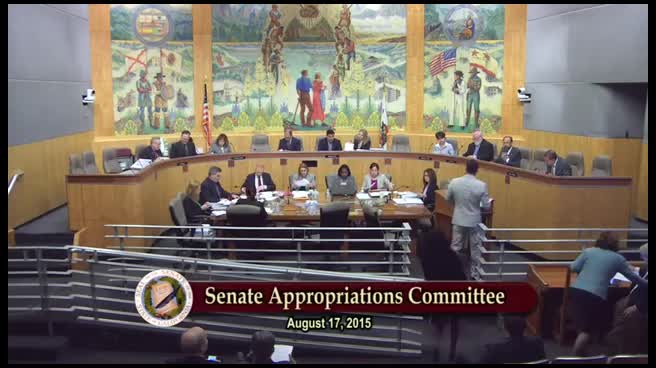 2MIN
Senate Standing Committee on Appropriations
 5MIN
Senate Standing Committee on Appropriations
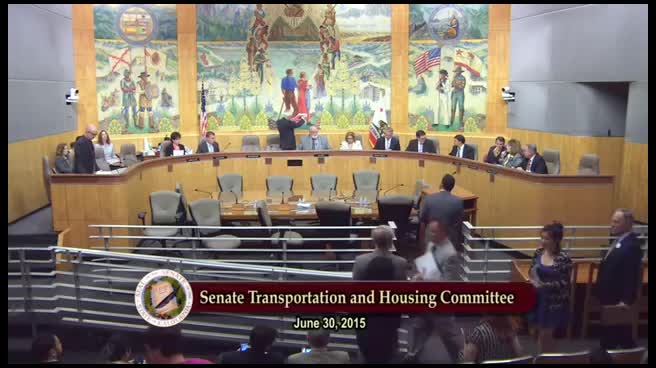 21MIN
Senate Standing Committee on Transportation and Housing
 3MIN
Assembly Floor
 8MIN
Assembly Standing Committee on Transportation
Bill Author

Bill Co-Author(s):