SB 233: Practice of medicine: Arizona physicians: abortions and abortion-related care for Arizona patients.
- Session Year: 2023-2024
- House: Senate
- Latest Version Date: 2024-05-23
Current Status:
Passed
(2024-05-23: Chaptered by Secretary of State. Chapter 11, Statutes of 2024.)
Introduced
In Committee
First Chamber
In Committee
Second Chamber
Enacted
Existing law, the Medical Practice Act, establishes the Medical Board of California and the Osteopathic Medical Board of California to license and regulate the practice of medicine, and establishes examination, training, and other requirements for licensure as a physician and surgeon. A violation of the act is a misdemeanor.
This bill, through November 30, 2024, would authorize a physician licensed to practice medicine in Arizona who meets certain requirements to practice medicine in California for the purpose of providing abortions and abortion-related care to patients who are Arizona residents traveling from Arizona, upon application for registration with the Medical Board of California or the Osteopathic Medical Board of California, as applicable. The bill would prohibit the physician from providing care or consultation for other purposes or to other patients, except under specified circumstances. The bill would require an Arizona physician, before practicing in California, to submit specified information to the Medical Board of California or the Osteopathic Medical Board of California, as applicable, including, among other information, written verification from the Arizona Medical Board or the Arizona Board of Osteopathic Examiners in Medicine and Surgery, or documentation printed from an online licensing system, that the physicians Arizona license to practice medicine is in good standing and confers on the physician the authority to practice abortions and abortion-related care. The bill would require the applicant to provide an affidavit attesting that, among other things, the applicant meets all of the requirements for registration, as specified, and would make it a misdemeanor for a person to provide false information. The bill would limit the information the California boards are required to disclose about a registrant. The bill would deem a physician registered pursuant to the bills provisions a licensee of the applicable board, would authorize the applicable board to take enforcement against a person registered pursuant to the bills provisions, and would prohibit the applicable boards from collecting any fees for registration. By creating a new crime, the bill would impose a state-mandated local program. The bill would repeal the bills provisions on January 1, 2025.
The California Constitution requires the state to reimburse local agencies and school districts for certain costs mandated by the state. Statutory provisions establish procedures for making that reimbursement.
This bill would provide that no reimbursement is required by this act for a specified reason.
This bill would declare that it is to take effect immediately as an urgency statute.
Existing constitutional provisions require that a statute that limits the right of access to the meetings of public bodies or the writings of public officials and agencies be adopted with findings demonstrating the interest protected by the limitation and the need for protecting that interest.
This bill would make legislative findings to that effect.
Existing law, the Medical Practice Act, establishes the Medical Board of California and the Osteopathic Medical Board of California to license and regulate the practice of medicine, and establishes examination, training, and other requirements for licensure as a physician and surgeon. A violation of the act is a misdemeanor.
This bill, through November 30, 2024, would authorize a physician licensed to practice medicine in Arizona who meets certain requirements to practice medicine in California for the purpose of providing abortions and abortion-related care to patients who are traveling from Arizona, upon application for registration with the Medical Board of California or the Osteopathic Medical Board of California, as applicable. The bill would prohibit the physician from providing care or consultation for other purposes or to other patients, except under specified circumstances. The bill would require an Arizona physician, before practicing in California, to submit specified information to the Medical Board of California or the Osteopathic Medical Board of California, as applicable, including, among other information, written verification from the Arizona Medical Board or the Arizona Board of Osteopathic Examiners in Medicine and Surgery, or documentation printed from an online licensing system, that the physicians Arizona license to practice medicine is in good standing and confers on the physician the authority to practice abortions and abortion-related care. The bill would require the applicant to provide an affidavit attesting that, among other things, the applicant meets all of the requirements for registration, as specified, and would make it a misdemeanor for a person to provide false information. The bill would deem a physician registered pursuant to the bills provisions a licensee of the applicable board, would authorize the applicable board to take enforcement against a person registered pursuant to the bills provisions, and would prohibit the applicable boards from collecting any fees for registration. By creating a new crime, the bill would impose a state-mandated local program. The bill would repeal the bills provisions on January 1, 2025.
The California Constitution requires the state to reimburse local agencies and school districts for certain costs mandated by the state. Statutory provisions establish procedures for making that reimbursement.
This bill would provide that no reimbursement is required by this act for a specified reason.
This bill would declare that it is to take effect immediately as an urgency statute.
Existing law requires the State Energy Resources Conservation and Development Commission (Energy Commission) to undertake various actions in furtherance of meeting the states clean energy and pollution reduction objectives, including actions related to electric vehicles. Existing law requires the Energy Commission, working with the State Air Resources Board (state board) and the Public Utilities Commission (PUC), to prepare a statewide assessment of the electric vehicle charging infrastructure needed to support the levels of electric vehicle adoption required for the state to meet its goals of putting at least 5,000,000 zero-emission vehicles on California roads by 2030, and of reducing the emissions of greenhouse gases to 40% below 1990 levels by 2030. Existing law requires the state board, in conjunction with the Energy Commission, to develop and administer a program to provide grants to individuals, local governments, public agencies, nonprofit organizations, and private businesses to encourage the purchase or lease of a new zero-emission vehicle.This bill would require the Energy Commission, in consultation with the state board and the PUC, on or before June 30, 2024, to convene a stakeholder workgroup to examine challenges and opportunities associated with using a battery electric vehicle and bidirectional electric vehicle service equipment as a mobile battery to power a home or building or to provide electricity to the electrical grid, and require the Energy Commission, in consultation with the stakeholder workgroup, on or before January 1, 2026, to submit a report to the Governor and Legislature that includes, among other things, specified information related to the bidirectional capability of battery electric vehicles and electric vehicle service equipment, as specified.This bill would authorize the state board, in consultation with the Energy Commission and the PUC, to require any weight class of battery electric vehicle to be bidirectional capable if the state board determines there is a sufficiently compelling beneficial bidirectional-capable use case to the battery electric vehicle operator and electrical grid.Existing law requires the State Energy Resources Conservation and Development Commission (Energy Commission) to undertake various actions in furtherance of meeting the states clean energy and pollution reduction objectives, including actions related to electric vehicles. Existing law requires the Energy Commission, working with the State Air Resources Board (state board) and the Public Utilities Commission (PUC), to prepare a statewide assessment of the electric vehicle charging infrastructure needed to support the levels of electric vehicle adoption required for the state to meet its goals of putting at least 5,000,000 zero-emission vehicles on California roads by 2030, and of reducing the emissions of greenhouse gases to 40% below 1990 levels by 2030. Existing law requires the state board, in conjunction with the Energy Commission, to develop and administer a program to provide grants to individuals, local governments, public agencies, nonprofit organizations, and private businesses to encourage the purchase or lease of a new zero-emission vehicle.
This bill would require the Energy Commission, in consultation with the state board, board and the PUC, on or before June 30, 2024, to convene a stakeholder workgroup to examine challenges and opportunities associated with using an a battery electric vehicle and bidirectional electric vehicle service equipment as a mobile battery to power a home or building or to provide electricity to the electrical grid, and require the Energy Commission, in consultation with the stakeholder workgroup, on or before January 1, 2026, to submit a report to the Governor and Legislature that includes, among other things, specified information related to the bidirectional capability of battery electric vehicles and electric vehicle service equipment, as specified.
This bill would require that, beginning in model year 2030, all new electric light-duty motor vehicles and schoolbuses sold in California be bidirectional capable. If authorize the state board board, in consultation with the Energy Commission and the PUC, to require any weight class of battery electric vehicle to be bidirectional capable if the state board determines there is a sufficiently compelling beneficial bidirectional-capable use case to warrant imposing a bidirectional-capable mandate on another vehicle type, the bill would authorize the state board to require that vehicle type to be bidirectional capable beginning in, or after, model year 2030. the battery electric vehicle operator and electrical grid.
Existing law requires the State Energy Resources Conservation and Development Commission (Energy Commission) to undertake various actions in furtherance of meeting the states clean energy and pollution reduction objectives, including actions related to electric vehicles. Existing law requires the Energy Commission, working with the State Air Resources Board (state board) and the Public Utilities Commission (PUC), to prepare a statewide assessment of the electric vehicle charging infrastructure needed to support the levels of electric vehicle adoption required for the state to meet its goals of putting at least 5,000,000 zero-emission vehicles on California roads by 2030, and of reducing the emissions of greenhouse gases to 40% below 1990 levels by 2030. Existing law requires the state board, in conjunction with the Energy Commission, to develop and administer a program to provide grants to individuals, local governments, public agencies, nonprofit organizations, and private businesses to encourage the purchase or lease of a new zero-emission vehicle.
This bill would require the Energy Commission, in consultation with the state board, on or before June 30, 2024, to convene a stakeholder workgroup to examine challenges and opportunities associated with using an electric vehicle as a mobile battery to power a home or building or providing to provide electricity to the electrical grid, and require the Energy Commission, in consultation with the stakeholder workgroup, on or before January 1, 2026, to submit a report to the Governor and Legislature that includes includes, among other things, specified information related to the bidirectional capability of electric vehicles and electric vehicle service equipment, as specified.
This bill would require that, beginning in model year 2030, all new electric vehicles light-duty motor vehicles and schoolbuses sold in California be bidirectional capable, including light-duty motor vehicles and schoolbuses, except as exempted by the state board. capable. If the state board determines there is a sufficiently compelling beneficial bidirectional-capable use case to warrant imposing a bidirectional-capable mandate on another vehicle type, the bill would authorize the state board to require that vehicle type to be bidirectional capable beginning in, or after, model year 2030.
Existing law requires the State Energy Resources Conservation and Development Commission (Energy Commission) to undertake various actions in furtherance of meeting the states clean energy and pollution reduction objectives, including actions related to electric vehicles. Existing law requires the Energy Commission, working with the State Air Resources Board (state board) and the Public Utilities Commission (PUC), to prepare a statewide assessment of the electric vehicle charging infrastructure needed to support the levels of electric vehicle adoption required for the state to meet its goals of putting at least 5,000,000 zero-emission vehicles on California roads by 2030, and of reducing the emissions of greenhouse gases to 40% below 1990 levels by 2030. Existing law requires the state board, in conjunction with the Energy Commission, to develop and administer a program to provide grants to individuals, local governments, public agencies, nonprofit organizations, and private businesses to encourage the purchase or lease of a new zero-emission vehicle.
This bill would require the Energy Commission, in consultation with the state board, on or before June 30, 2024, to convene a stakeholder workgroup to examine challenges and opportunities associated with using an electric vehicle as a mobile battery to power a home or building or providing electricity to the electrical grid, and require the Energy Commission, in consultation with the stakeholder workgroup, on or before January 1, 2025, 2026, to submit a report to the Governor and Legislature that includes specified information related to the bidirectional capability of electric vehicles and electric vehicle service equipment, as specified.
This bill would require that, beginning in model year 2027, 2030, all new electric vehicles sold in California be bidirectional capable, including light-duty motor vehicles and schoolbuses, except as exempted by the state board.
Existing law requires the State Energy Resources Conservation and Development Commission (Energy Commission) to undertake various actions in furtherance of meeting the states clean energy and pollution reduction objectives, including actions related to electric vehicles. Existing law requires the Energy Commission, working with the State Air Resources Board (state board) and the Public Utilities Commission (PUC), to prepare a statewide assessment of the electric vehicle charging infrastructure needed to support the levels of electric vehicle adoption required for the state to meet its goals of putting at least 5,000,000 zero-emission vehicles on California roads by 2030, and of reducing the emissions of greenhouse gases to 40% below 1990 levels by 2030. Existing law requires the state board, in conjunction with the Energy Commission, to develop and administer a program to provide grants to individuals, local governments, public agencies, nonprofit organizations, and private businesses to encourage the purchase or lease of a new zero-emission vehicle.
This bill would require the Energy Commission, in consultation with the state board, on or before June 30, 2024, to establish state goals to accelerate the use of vehicle-to-home, vehicle-to-building, and vehicle-to-grid, as described, in order to support emergency backup, electrical grid reliability, electric vehicle grid integration, and any other key metrics identified by the Energy Commission, convene a stakeholder workgroup to examine challenges and opportunities associated with using an electric vehicle as a mobile battery to power a home or building or providing electricity to the electrical grid, and require the Energy Commission, in consultation with the stakeholder workgroup, on or before January 1, 2025, to submit a report to the Governor and Legislature that includes specified information related to the bidirectional capability of electric vehicles and electric vehicle service equipment, as specified. The bill would require the Energy Commission, in consultation with the PUC and the state board, to solicit a third party to organize and hold quarterly interoperability testing events where companies can come together to share products and information and test the interoperability of electric vehicles, electric vehicle supply equipment, and emerging vehicle-to-everything technology. The bill would require the Energy Commission and state board to allocate moneys appropriated for purposes of funding electric vehicles and electric vehicle service equipment to provide higher incentive levels for bidirectional capable, as defined, electric vehicles and electric vehicle service equipment, and, in administering programs that incentivize electric vehicle and electric vehicle service equipment deployment, to ensure that disadvantaged communities, as defined, receive meaningful health, economic, and clean energy resilience benefits from state electric vehicle and electric vehicle service equipment funding.
This bill would require that, beginning in model year 2027, all new electric vehicles sold in California be bidirectional capable, including light-duty motor vehicles and school buses, schoolbuses, except as exempted by the state board, and all new bidirectional-capable electric vehicles sold in California be interoperable with one or more other models of bidirectional electric vehicle service equipment that use the same standard protocols. The bill would require that all electric vehicle service equipment installed on or after January 1, 2027, be bidirectional capable, except publicly available electric vehicle service equipment, direct current fast chargers, and other electric vehicle service equipment that the Energy Commission determines is not likely to have a significant beneficial bidirectional-capable use case, as defined. board.
Existing law requires the State Energy Resources Conservation and Development Commission (Energy Commission) to undertake various actions in furtherance of meeting the states clean energy and pollution reduction objectives, including actions related to electric vehicles. Existing law requires the Energy Commission, working with the State Air Resources Board (state board) and the Public Utilities Commission, Commission (PUC), to prepare a statewide assessment of the electric vehicle charging infrastructure needed to support the levels of electric vehicle adoption required for the state to meet its goals of putting at least 5,000,000 zero-emission vehicles on California roads by 2030, and of reducing the emissions of greenhouse gases to 40% below 1990 levels by 2030. Existing law requires the state board, in conjunction with the Energy Commission, to develop and administer a program to provide grants to individuals, local governments, public agencies, nonprofit organizations, and private businesses to encourage the purchase or lease of a new zero-emission vehicle.
This bill would require the Energy Commission, in consultation with the state board, to establish state goals to accelerate the use of vehicle-to-home, vehicle-to-building, and vehicle-to-grid, as described, in order to support emergency backup, electrical grid reliability, electric vehicle grid integration, and any other key metrics identified by the Energy Commission, as specified. The bill would require the Energy Commission, in consultation with the PUC and the state board, to solicit a third party to organize and hold quarterly interoperability testing events where companies can come together to share products and information and test the interoperability of electric vehicles, electric vehicle supply equipment, and emerging vehicle-to-everything technology. The bill would require the Energy Commission and state board to allocate moneys appropriated for purposes of funding electric vehicles and electric vehicle service equipment to provide higher incentive levels for bidirectional capable, as defined, electric vehicles and electric vehicle service equipment, and, in administering programs that incentivize electric vehicle and electric vehicle service equipment deployment, to ensure that disadvantaged communities, as defined, receive meaningful health, economic, and clean energy resilience benefits from state electric vehicle and electric vehicle service equipment funding.
This bill would require that, beginning in model year 2027, all new electric vehicles sold in California be bidirectional capable, including light-duty passenger motor vehicles and school buses, except as exempted by the state board. board, and all new bidirectional-capable electric vehicles sold in California be interoperable with one or more other models of bidirectional electric vehicle service equipment that use the same standard protocols. The bill would require that all electric vehicle service equipment installed on or after January 1, 2027, be bidirectional capable, except as exempted by the Energy Commission. publicly available electric vehicle service equipment, direct current fast chargers, and other electric vehicle service equipment that the Energy Commission determines is not likely to have a significant beneficial bidirectional-capable use case, as defined.
Existing law requires the State Energy Resources Conservation and Development Commission (Energy Commission) to undertake various actions in furtherance of meeting the states clean energy and pollution reduction objectives, including actions related to electric vehicles. Existing law requires the Energy Commission, working with the State Air Resources Board and the Public Utilities Commission, to prepare a statewide assessment of the electric vehicle charging infrastructure needed to support the levels of electric vehicle adoption required for the state to meet its goals of putting at least 5,000,000 zero-emission vehicles on California roads by 2030, and of reducing the emissions of greenhouse gases to 40% below 1990 levels by 2030. Existing law requires the state board, in conjunction with the Energy Commission, to develop and administer a program to provide grants to individuals, local governments, public agencies, nonprofit organizations, and private businesses to encourage the purchase or lease of a new zero-emission vehicle.
This bill would state the Legislatures intent to enact future legislation to mandate that all new zero-emission vehicles and electric vehicle supply equipment sold in California have bidirectional capability by January 1, 2027, to the extent practical as determined by the commission. require the Energy Commission, in consultation with the state board, to establish state goals to accelerate the use of vehicle-to-home, vehicle-to-building, and vehicle-to-grid, as described, in order to support emergency backup, electrical grid reliability, electric vehicle grid integration, and any other key metrics identified by the Energy Commission, as specified. The bill would require the Energy Commission and state board to allocate moneys appropriated for purposes of funding electric vehicles and electric vehicle service equipment to provide higher incentive levels for bidirectional capable, as defined, electric vehicles and electric vehicle service equipment, and, in administering programs that incentivize electric vehicle and electric vehicle service equipment deployment, to ensure that disadvantaged communities, as defined, receive meaningful health, economic, and clean energy resilience benefits from state electric vehicle and electric vehicle service equipment funding.
This bill would require that, beginning in model year 2027, all new electric vehicles sold in California be bidirectional capable, including light-duty passenger vehicles and school buses, except as exempted by the state board. The bill would require that all electric vehicle service equipment installed on or after January 1, 2027, be bidirectional capable, except as exempted by the Energy Commission.
Existing law requires the State Energy Resources Conservation and Development Commission to undertake various actions in furtherance of meeting the states clean energy and pollution reduction objectives, including actions related to electric vehicles.
This bill would state the Legislatures intent to enact future legislation to mandate that all new zero-emission vehicles and electric vehicle supply equipment sold in California have bidirectional capability by January 1, 2027, to the extent practical as determined by the commission.
(a)(1)Notwithstanding any other law, a physician who meets the requirements set forth in subdivision (b) shall register and may practice medicine in California through November 30, 2024, solely for the purpose of providing abortions, as defined in Section 123464 of the Health and Safety Code, and abortion-related care to patients who are Arizona residents traveling from Arizona seeking abortions or abortion-related care in California.
(2)Except as provided in Section 2058 or 2060, the physician shall not provide care or consultation to any patient that is not related to either performing an abortion or abortion-related care, and shall not provide care or consultation for an abortion or abortion-related care to any patient unless they are Arizona residents who have traveled from Arizona to California for that care or consultation.
(b)The physician shall:
(1)Hold a medical license in good standing in Arizona that confers on the physician the authority to practice abortions and abortion-related care within a similar scope as defined in subdivision (a) of Section 123464 of the Health and Safety Code.
(2)Have performed at least one activity within the scope of subdivision (a) of Section 123464 of the Health and Safety Code under the authority of their Arizona medical license during the two years immediately preceding their registration submission to the applicable board pursuant to paragraph (3).
(3)Submit to the Medical Board of California or the Osteopathic Medical Board of California, as applicable, written verification from the Arizona Medical Board or the Arizona Board of Osteopathic Examiners in Medicine and Surgery, as applicable, or documentation printed from an online licensing system, that the physicians Arizona license is in good standing.
(4)For a physician provider who is licensed in more than one jurisdiction, the physician shall:
(A)Maintain an Arizona medical license in good standing.
(B)Submit to the Medical Board of California or the Osteopathic Medical Board of California, as applicable, written verification from the state licensing board, or documentation printed from an online licensing system, for each jurisdiction that the registrants license is in good standing in that jurisdiction.
(5)Submit to the Medical Board of California or the Osteopathic Medical Board of California, as applicable, their Arizona address of record, their temporary California address of record, if any, and an affidavit attesting to both of the following:
(A)The provider meets all of the requirements for registration under this section.
(B)The information submitted to the applicable board pursuant to this section is accurate to the best of the providers knowledge.
(c)Any person who provides false information in the affidavit required pursuant to paragraph (5) of subdivision (b) is guilty of a public offense, punishable by a fine not exceeding ten thousand dollars ($10,000), by imprisonment pursuant to subdivision (h) of Section 1170 of the Penal Code, by imprisonment in a county jail not exceeding one year, or by both the fine and imprisonment.
(d)(1)The Medical Board of California or the Osteopathic Medical Board of California, as applicable, shall register a physician who meets the requirements of subdivision (b) within five business days of receiving all applicable documentation described in that subdivision. The registration shall expire on November 30, 2024.
(2)The applicable board shall not register any physician who fails to provide all applicable documentation described in subdivision (b) and shall deem the physicians request for registration incomplete.
(3)If the applicable board deems the registration incomplete or that the physician does not meet the requirements of subdivision (b), the physician shall not engage in the practice of medicine in California pursuant to this section unless the applicable board later deems the physicians registration complete.
(e)A physician registered pursuant to this section shall not practice medicine in California until they submit to the applicable board the street address of a location in this state at which the physician will practice medicine. The registered physician shall submit to the applicable board the street address of each location in this state at which the physician will practice medicine.
(f)The applicable board shall not post information on its internet website regarding physicians registered pursuant to this section. Upon request, the applicable board shall disclose only the following information about persons registered pursuant to this section: the registrants name, registration status, and the Arizona license number. Other records and information submitted to the applicable board pursuant to this section shall be exempt from disclosure pursuant to the California Public Records Act (Division 10 (commencing with Section 7920.000) of Title 1 of the Government Code).
(g)A physician registered pursuant to this section shall be deemed to be a licensee of the applicable board for purposes of the laws administered by that board relating to standards of practice and discipline, for the duration of the registration. The physician shall be exempt from the requirements of the Radiologic Technology Act, as defined in Section 27 of the Health and Safety Code, relating to the use and supervision of use of radiographic or fluoroscopic x-ray equipment for diagnostic purposes but not therapeutic purposes. A physician registered pursuant to this section may only practice medicine within the scope described in subdivision (a).
(h)The applicable board may take appropriate enforcement action against a person registered pursuant to this section, including, but not limited to, revoking or suspending the registration of a person who does not meet the requirements of subdivision (b) or the laws applicable to licensees pursuant to subdivision (g).
(i)The applicable board shall not collect or require a fee for registration pursuant to this section.
(j)The applicable board may develop and publish guidance to implement this section.
(k)For purposes of this section, good standing means an active license to practice medicine with no restrictions or limitations on that license in effect and no accusation, or similar filing initiating disciplinary action, is pending, unless that accusation or filing is for an offense solely related to the performance of an abortion in that state.
(l)This section shall become inoperative on December 1, 2024, and, as of January 1, 2025, is repealed.
SEC. 2.No reimbursement is required by this act pursuant to Section 6 of Article XIIIB of the California Constitution because the only costs that may be incurred by a local agency or school district will be incurred because this act creates a new crime or infraction, eliminates a crime or infraction, or changes the penalty for a crime or infraction, within the meaning of Section 17556 of the Government Code, or changes the definition of a crime within the meaning of Section 6 of Article XIIIB of the California Constitution.
SEC. 3.This act is an urgency statute necessary for the immediate preservation of the public peace, health, or safety within the meaning of Article IV of the California Constitution and shall go into immediate effect. The facts constituting the necessity are:
Following the Arizona Supreme Court ruling of April 9, 2024, authorizing the states 1864 law, access to abortion care for Arizonans will be almost entirely eliminated. In order to increase access to abortion care following this ruling for Arizonans by increasing the ability for Arizonans to see an Arizona provider in California, it is necessary for the act to take effect immediately.
SEC. 4.The Legislature finds and declares that Section 1 of this act, which adds Section 2076.6 to the Business and Professions Code, imposes a limitation on the publics right of access to the meetings of public bodies or the writings of public officials and agencies within the meaning of Section 3 of Article I of the California Constitution. Pursuant to that constitutional provision, the Legislature makes the following findings to demonstrate the interest protected by this limitation and the need for protecting that interest:
In order to ensure the privacy and safety of registered Arizona physicians, it is necessary that this act limit the publics right of access to that information.
(a)(1)Notwithstanding any other law, a physician who meets the requirements set forth in subdivision (b) shall register and may practice medicine in California through November 30, 2024, solely for the purpose of providing abortions, as defined in Section 123464 of the Health and Safety Code, and abortion-related care to patients who are Arizona residents traveling from Arizona seeking abortions or abortion-related care in California.
(2)Except as provided in Section 2058 or 2060, the physician shall not provide care or consultation to any patient that is not related to either performing an abortion or abortion-related care, and shall not provide care or consultation for an abortion or abortion-related care to any patient unless they are Arizona residents who have traveled from Arizona to California for that care or consultation.
(b)The physician shall:
(1)Hold a medical license in good standing in Arizona that confers on the physician the authority to practice abortions and abortion-related care within a similar scope as defined in subdivision (a) of Section 123464 of the Health and Safety Code.
(2)Have performed at least one activity within the scope of subdivision (a) of Section 123464 of the Health and Safety Code under the authority of their Arizona medical license during the two years immediately preceding their registration submission to the applicable board pursuant to paragraph (3).
(3)Submit to the Medical Board of California or the Osteopathic Medical Board of California, as applicable, written verification from the Arizona Medical Board or the Arizona Board of Osteopathic Examiners in Medicine and Surgery, as applicable, or documentation printed from an online licensing system, that the physicians Arizona license is in good standing.
(4)For a physician provider who is licensed in more than one jurisdiction, the physician shall:
(A)Maintain an Arizona medical license in good standing.
(B)Submit to the Medical Board of California or the Osteopathic Medical Board of California, as applicable, written verification from the state licensing board, or documentation printed from an online licensing system, for each jurisdiction that the registrants license is in good standing in that jurisdiction.
(5)Submit to the Medical Board of California or the Osteopathic Medical Board of California, as applicable, the address of their permanent residence in Arizona, their Arizona address of record, their temporary California address of record, if any, and an affidavit attesting to both of the following:
(A)The provider meets all of the requirements for registration under this section.
(B)The information submitted to the applicable board pursuant to this section is accurate to the best of the providers knowledge.
(c)Any person who provides false information in the affidavit required pursuant to paragraph (5) of subdivision (b) is guilty of a public offense, punishable by a fine not exceeding ten thousand dollars ($10,000), by imprisonment pursuant to subdivision (h) of Section 1170 of the Penal Code, by imprisonment in a county jail not exceeding one year, or by both the fine and imprisonment.
(d)(1)The Medical Board of California or the Osteopathic Medical Board of California, as applicable, shall register a physician who meets the requirements of subdivision (b) within 15 calendar five business days of receiving all applicable documentation described in that subdivision. A physician who meets the requirements of subdivision (b) may provide abortions and abortion-related care while their registration is pending. The registration shall expire on November 30, 2024.
(2)The applicable board shall not register any physician who fails to provide all applicable documentation described in subdivision (b) and shall deem the physicians request for registration incomplete.
(3)If the applicable board deems the registration incomplete or that the physician does not meet the requirements of subdivision (b), the physician shall immediately cease not engage in the practice of medicine in California pursuant to this section unless the applicable board later deems the physicians registration complete.
(e)A physician registered pursuant to this section shall not practice medicine in California until they submit to the applicable board the street address of a location in this state at which the physician will practice medicine. The registered physician shall submit to the applicable board the street address of each location in this state at which the physician will practice medicine.
(e)(f)The applicable board shall not post information on its internet website regarding physicians registered pursuant to this section. Upon request, the applicable board shall disclose only the following information about persons registered pursuant to this section: the registrants name, registration status, and the Arizona license number. Other records and information submitted to the applicable board pursuant to this section shall be exempt from disclosure pursuant to the California Public Records Act (Division 10 (commencing with Section 7920.000) of Title 1 of the Government Code).
(f)(g)A physician registered pursuant to this section shall be deemed to be a licensee of the applicable board for purposes of the laws administered by that board relating to standards of practice and discipline, for the duration of the registration. The physician shall be exempt from the requirements of the Radiologic Technology Act, as defined in Section 27 of the Health and Safety Code, relating to the use and supervision of use of radiographic or fluoroscopic x-ray equipment for diagnostic purposes but not therapeutic purposes. A physician registered pursuant to this section may only practice medicine within the scope described in subdivision (a).
(g)(h)The applicable board may take appropriate enforcement action against a person registered pursuant to this section, including, but not limited to, revoking or suspending the registration of a person who does not meet the requirements of subdivision (b) or the laws applicable to licensees pursuant to subdivision (f). (g).
(h)(i)The applicable board shall not collect or require a fee for registration pursuant to this section.
(i)(j)The applicable board may develop and publish guidance to implement this section.
(j)(k)For purposes of this section, good standing means an active license to practice medicine with no restrictions or limitations on that license in effect and no accusation, or similar filing initiating disciplinary action, is pending, unless that accusation or filing is for an offense solely related to the performance of an abortion in that state.
(k)(l)This section shall become inoperative on December 1, 2024, and, as of January 1, 2025, is repealed.
SEC. 2.No reimbursement is required by this act pursuant to Section 6 of Article XIIIB of the California Constitution because the only costs that may be incurred by a local agency or school district will be incurred because this act creates a new crime or infraction, eliminates a crime or infraction, or changes the penalty for a crime or infraction, within the meaning of Section 17556 of the Government Code, or changes the definition of a crime within the meaning of Section 6 of Article XIIIB of the California Constitution.
SEC. 3.This act is an urgency statute necessary for the immediate preservation of the public peace, health, or safety within the meaning of Article IV of the California Constitution and shall go into immediate effect. The facts constituting the necessity are:
Following the April 9 Arizona Supreme Court ruling of April 9, 2024, authorizing the states 1864 law, access to abortion care for Arizonans will be almost entirely eliminated. In order to increase access to abortion care following this ruling for Arizonans by increasing the ability for Arizonans to see an Arizona provider in California, it is necessary for the act to take effect immediately.
SEC. 4.The Legislature finds and declares that Section 1 of this act, which adds Section 2076.6 to the Business and Professions Code, imposes a limitation on the publics right of access to the meetings of public bodies or the writings of public officials and agencies within the meaning of Section 3 of Article I of the California Constitution. Pursuant to that constitutional provision, the Legislature makes the following findings to demonstrate the interest protected by this limitation and the need for protecting that interest:
In order to ensure the privacy and safety of registered Arizona physicians, it is necessary that this act limit the publics right of access to that information.
REVISIONS: HeadingLines 8, 12, and 13.(a)(1)Notwithstanding any other law, a physician who meets the requirements set forth in subdivision (b) may practice medicine in California through November 30, 2024, solely for the purpose of providing abortions, as defined in Section 123464 of the Health and Safety Code, and abortion-related care to patients traveling from Arizona seeking abortions or abortion-related care in California.
(2)Except as provided in Section 2058 or 2060, the physician shall not provide care or consultation to any patient that is not related to either performing an abortion or abortion-related care, and shall not provide care or consultation for an abortion or abortion-related care to any patient unless they have traveled from Arizona to California for that care or consultation.
(b)The physician shall:
(1)Hold a medical license in good standing in Arizona that confers on the physician the authority to practice abortions and abortion-related care within a similar scope as defined in subdivision (a) of Section 123464 of the Health and Safety Code.
(2)Have performed at least one activity within the scope of subdivision (a) of Section 123464 of the Health and Safety Code under the authority of their Arizona medical license during the two years immediately preceding their registration submission to the applicable board pursuant to paragraph (3).
(3)Submit to the Medical Board of California or the Osteopathic Medical Board of California, as applicable, written verification from the Arizona Medical Board or the Arizona Board of Osteopathic Examiners in Medicine and Surgery, as applicable, or documentation printed from an online licensing system, that the physicians Arizona license is in good standing.
(4)For a physician provider who is licensed in more than one jurisdiction, the physician shall:
(A)Maintain an Arizona medical license in good standing.
(B)Submit to the Medical Board of California or the Osteopathic Medical Board of California, as applicable, written verification from the state licensing board, or documentation printed from an online licensing system, for each jurisdiction that the registrants license is in good standing in that jurisdiction.
(5)Submit to the Medical Board of California or the Osteopathic Medical Board of California, as applicable, the address of their permanent residence in Arizona, their temporary California address of record, if any, and an affidavit attesting to both of the following:
(A)The provider meets all of the requirements for registration under this section.
(B)The information submitted to the applicable board pursuant to this section is accurate to the best of the providers knowledge.
(c)Any person who provides false information in the affidavit required pursuant to paragraph (5) of subdivision (b) is guilty of a public offense, punishable by a fine not exceeding ten thousand dollars ($10,000), by imprisonment pursuant to subdivision (h) of Section 1170 of the Penal Code, by imprisonment in a county jail not exceeding one year, or by both the fine and imprisonment.
(d)(1)The Medical Board of California or the Osteopathic Medical Board of California, as applicable, shall register a physician who meets the requirements of subdivision (b) within 15 calendar days of receiving all applicable documentation described in that subdivision. A physician who meets the requirements of subdivision (b) may provide abortions and abortion-related care while their registration is pending. The registration shall expire on November 30, 2024.
(2)The applicable board shall not register any physician who fails to provide all applicable documentation described in subdivision (b) and shall deem the physicians request for registration incomplete.
(3)If the applicable board deems the registration incomplete or that the physician does not meet the requirements of subdivision (b), the physician shall immediately cease the practice of medicine in California unless the applicable board later deems the physicians registration complete.
(e)The applicable board shall not post information on its internet website regarding physicians registered pursuant to this section.
(f)A physician registered pursuant to this section shall be deemed to be a licensee of the applicable board for purposes of the laws administered by that board relating to standards of practice and discipline, for the duration of the registration. A physician registered pursuant to this section may only practice medicine within the scope described in subdivision (a).
(g)The applicable board may take appropriate enforcement action against a person registered pursuant to this section, including, but not limited to, revoking or suspending the registration of a person who does not meet the requirements of subdivision (b) or the laws applicable to licensees pursuant to subdivision (f).
(h)The applicable board shall not collect or require a fee for registration pursuant to this section.
(i)The applicable board may develop and publish guidance to implement this section.
(j)For purposes of this section, good standing means an active license to practice medicine with no restrictions or limitations on that license in effect and no accusation, or similar filing initiating disciplinary action, is pending, unless that accusation or filing is for an offense solely related to the performance of an abortion in that state.
(k) This section shall become inoperative on December 1, 2024, and, as of January 1, 2025, is repealed.
SEC. 2.No reimbursement is required by this act pursuant to Section 6 of Article XIIIB of the California Constitution because the only costs that may be incurred by a local agency or school district will be incurred because this act creates a new crime or infraction, eliminates a crime or infraction, or changes the penalty for a crime or infraction, within the meaning of Section 17556 of the Government Code, or changes the definition of a crime within the meaning of Section 6 of Article XIIIB of the California Constitution.
SEC. 3.This act is an urgency statute necessary for the immediate preservation of the public peace, health, or safety within the meaning of Article IV of the California Constitution and shall go into immediate effect. The facts constituting the necessity are:
Following the April 9 Arizona Supreme Court ruling authorizing the states 1864 law, access to abortion care for Arizonans will be almost entirely eliminated. In order to increase access to abortion care following this ruling for Arizonans by increasing the ability for Arizonans to see an Arizona provider in California, it is necessary for the act to take effect immediately.
SECTION 1.Chapter 8.8 (commencing with Section 44269) is added to Part 5 of Division 26 of the Health and Safety Code, to read:8.8.Electric Vehicles44269.For purposes of this chapter, the following definitions apply, unless updated pursuant to Section 44269.3:(a)Battery electric vehicle means a vehicle that operates solely by use of an electric battery or battery pack, or that is powered primarily through the use of an electric battery or battery pack but uses a flywheel or capacitor that stores energy produced by the electric motor or through regenerative braking to assist in vehicle operation.(b)Beneficial bidirectional-capable use case means the usage of bidirectional-capable battery electric vehicles and bidirectional electric vehicle service equipment in a manner that results in electrical reliability and resiliency benefits and cost savings to the battery electric vehicle operator and is compatible with battery electric vehicle operator needs.(c)Bidirectional capable means the ability of a battery electric vehicle or electric vehicle service equipment to both charge and discharge electricity.(d)Bidirectional charging means a charging capability that enables a battery electric vehicle to either be charged by the electrical grid or an onsite clean energy resource, and discharge stored energy capacity through electric vehicle service equipment to either serve load or export it to the electrical grid.(e)Bidirectional electric vehicle service equipment means electric vehicle service equipment capable of both charging and discharging electricity from a battery electric vehicle.(f)Board means the State Air Resources Board.(g)Commission means the State Energy Resources Conservation and Development Commission.(h)Electric vehicle service equipment has the same meaning as defined in Section 44268.(i)Interoperability has the same meaning as described in Section 680.108 of Title 23 of the Code of Federal Regulations.44269.1.(a)The commission, in consultation with the board and the Public Utilities Commission, shall, on or before June 30, 2024, convene a stakeholder workgroup to examine challenges and opportunities associated with using a battery electric vehicle and bidirectional electric vehicle service equipment as a mobile battery to power a home (vehicle-to-home) or building (vehicle-to-building) or to provide electricity to the electrical grid (vehicle-to-grid).(b)The commission, in consultation with the stakeholder workgroup, on or before January 1, 2026, shall submit a report to the Governor and Legislature that includes all of the following:(1)Potential benefits, and costs to consumers and ratepayers, associated with requiring bidirectional capability for electric vehicle service equipment.(2)Mechanisms to ensure interoperability between bidirectional capable battery electric vehicles and bidirectional electric vehicle service equipment.(3)The resources, including, but not limited to, technological innovation or infrastructure upgrades, needed from entities that operate in the electricity sector, including, but not limited to, electrical corporations and local publicly owned electric utilities, to facilitate vehicle-to-home, vehicle-to-building, and vehicle-to-grid practices.(4)The estimated impacts of requiring bidirectional capability for various battery electric vehicle weight classes on the states existing zero-emission vehicle programs and goals, which considers the equity impact of requiring bidirectional capability on those programs and goals.(c)(1)The report to be submitted pursuant to subdivision (b) shall be submitted in compliance with Section 9795 of the Government Code.(2)Pursuant to Section 10231.5 of the Government Code, this section is repealed on January 1, 2029.44269.3.The board may periodically update the definitions provided in Section 44269 to ensure the definitions align with current technologies in bidirectional charging and account for ongoing innovation.44269.4.(a)The board, in consultation with the commission and the Public Utilities Commission, may require any weight class of battery electric vehicle to be bidirectional capable if it determines there is a sufficiently compelling beneficial bidirectional-capable use case to the battery electric vehicle operator and electrical grid.(b)This section does not prohibit the board from crediting a manufacturer of a battery electric vehicle that voluntarily includes bidirectional capability for that battery electric vehicle weight class.(a)For purposes of this chapter, the following definitions apply: apply, unless updated pursuant to Section 44269.3:
(a)Battery electric vehicle means a vehicle that operates solely by use of an electric battery or battery pack, or that is powered primarily through the use of an electric battery or battery pack but uses a flywheel or capacitor that stores energy produced by the electric motor or through regenerative braking to assist in vehicle operation.
(1)(b)Beneficial bidirectional-capable use case means the usage of bidirectional-capable battery electric vehicles and bidirectional electric vehicle service equipment in a manner that results in electrical reliability and resiliency benefits. benefits and cost savings to the battery electric vehicle operator and is compatible with battery electric vehicle operator needs.
(2)(c)Bidirectional capable means the ability of an a battery electric vehicle or electric vehicle service equipment to both charge and discharge electricity through electric vehicle service equipment, as modified pursuant to Section 44269.3. electricity.
(3)(d)Bidirectional charging means a charging capability that enables an a battery electric vehicle to either be charged by the electrical grid or an onsite clean energy resource, and discharge stored energy capacity through electric vehicle service equipment to either serve a local energy load, such as an adjacent home or building, load or export it to the electrical grid.
(4)(e)Bidirectional electric vehicle service equipment means electric vehicle service equipment capable of both charging and discharging electricity from an a battery electric vehicle.
(5)(f)Board means the State Air Resources Board.
(6)(g)Commission means the State Energy Resources Conservation and Development Commission.
(7)Electric vehicle means a battery electric or hybrid vehicle that uses an electric battery and electric motor for mobility.(8)(h)Electric vehicle service equipment has the same meaning as defined in Section 44268.
(9)(i)Interoperability has the same meaning as described in Section 680.108 of Title 23 of the Code of Federal Regulations.
(10)Light-duty motor vehicle has the same meaning as defined in Section 2211 of Title 13 of the California Code of Regulations.(b)The definitions provided in this section may be modified or updated pursuant to Section 44269.3.44269.1.(a)The commission, in consultation with the board, board and the Public Utilities Commission, shall, on or before June 30, 2024, convene a stakeholder workgroup to examine challenges and opportunities associated with using an a battery electric vehicle and bidirectional electric vehicle service equipment as a mobile battery to power a home (vehicle-to-home) or building (vehicle-to-building) or to provide electricity to the electrical grid (vehicle-to-grid).
(b)The commission, in consultation with the stakeholder workgroup, on or before January 1, 2026, shall submit a report to the Governor and Legislature that includes all of the following:
(1)Potential benefits, and costs to consumers and ratepayers, associated with requiring bidirectional capability for electric vehicle service equipment.
(2)Mechanisms to ensure interoperability between bidirectional capable battery electric vehicles and bidirectional electric vehicle service equipment.
(3)The resources, including, but not limited to, technological innovation or infrastructure upgrades, needed from entities that operate in the electricity sector, including, but not limited to, electrical corporations and local publicly owned electric utilities, to facilitate vehicle-to-home, vehicle-to-building, and vehicle-to-grid practices.
(4)The estimated impacts of requiring bidirectional capability for various battery electric vehicle weight classes on the states existing zero-emission vehicle programs and goals, which considers the equity impact of requiring bidirectional capability on those programs and goals.
(c)(1)The report to be submitted pursuant to subdivision (b) shall be submitted in compliance with Section 9795 of the Government Code.
(2)Pursuant to Section 10231.5 of the Government Code, this section is repealed on January 1, 2029.
44269.3.(a)On or before December 31, 2026, the board, in consultation with the commission and the Public Utilities Commission, shall, by regulation, modify the definition of bidirectional capable for electric vehicles in order to specify nonproprietary technical interoperability requirements to support electrical grid reliability and resilience by providing emergency backup electricity or electrical grid services to comply with this chapter. As part of that modified definition, at the time of sale, all necessary electric vehicle components, and their operational parameters, shall be required to support and enable bidirectional capability for purposes of compliance with this chapter.(b)The board may periodically update the definition of bidirectional capable and other definitions, including those provided in Section 44269, to ensure the definitions align with current technologies in bidirectional charging and account for ongoing innovation.(c)On or before December 31, 2026, the board, in consultation with the commission and the Public Utilities Commission, shall, by regulation, modify and further clarify the definition of beneficial bidirectional-capable use case for electric vehicles in order to provide additional guidance for determining which electric vehicles are required to comply with Section 44269.4.44269.3.The board may periodically update the definitions provided in Section 44269 to ensure the definitions align with current technologies in bidirectional charging and account for ongoing innovation.
44269.4.(a)Beginning in model year 2030, all new electric light-duty motor vehicles and schoolbuses sold in California shall The board, in consultation with the commission and the Public Utilities Commission, may require any weight class of battery electric vehicle to be bidirectional capable.
(b)If the board capable if it determines there is a sufficiently compelling beneficial bidirectional-capable use case to warrant imposing a bidirectional-capable mandate on another vehicle type, the board may require that vehicle type to be bidirectional capable beginning in, or after, model year 2030. the battery electric vehicle operator and electrical grid.
(c)(b)This section does not prohibit the board from crediting a manufacturer of a battery electric vehicle type that the board does not require to be bidirectional capable pursuant to subdivision (b) for voluntary adoption of that voluntarily includes bidirectional capability for that battery electric vehicle type. weight class.
The Legislature finds and declares all of the following:
(a)California was the first state to adopt an energy storage procurement mandate to assist renewable energy integration and electrical grid reliability.
(b)Batteries in electric vehicles are storage resources and have the potential to be deployed to assist in renewable energy integration and electrical grid reliability and during emergencies, including power outages.
(c)Wildfires, heatwaves, and other climate change-fueled extreme weather events pose an increasing threat to the reliability of Californias electrical grid.
(d)One response to power outages in California has been to rely on fossil-fueled backup generators, which contribute to the emissions of greenhouse gases and local air pollution.
(e)Development of bidirectional electric vehicle infrastructure will provide access to a significant reserve of dispatchable electricity that will help ensure continuous electrical service for California. In 2022, the State Air Resources Board adopted the Advanced Clean Cars II rule that requires 100 percent of electric vehicle sales to be electric vehicles by 2035 and, in 2020, the State Air Resources Board adopted the Advanced Clean Truck rule that requires increasing percentages of electric vehicle sales starting in 2024. These electric vehicles could provide critical electricity to the electrical grid if enabled to do so.
(f)As California builds out electric vehicle service equipment in order to meet the charging needs of an anticipated 8,000,000 electric vehicles by 2030, there is a unique opportunity to leverage significant federal, state, and private sector investments in electric vehicles and electric vehicle service equipment to ensure they are bidirectionally capable.
(g)Peak electricity demand is the primary driver behind the use of fossil fuel peaker powerplants, the emissions of which disproportionately impact disadvantaged communities.
(h)The charging cycle of bidirectional-capable electric vehicles can be scheduled away from peak demand times to periods with excess and lower cost renewable electricity generation, allowing the dispatchable energy capacity of bidirectional-capable electric vehicles to serve as an alternative to fossil fuel peaker powerplants, mitigating the air pollution and public health impacts on disadvantaged communities.
(i)Supporting market scalability of bidirectional charging has the potential to lower electricity costs in California and maximize reliability and resilience benefits to consumers and the electrical grid, especially when bidirectional-capable electric vehicles are colocated with distributed onsite energy resources.
SEC. 2.Chapter 8.8 (commencing with Section 44269) is added to Part 5 of Division 26 of the Health and Safety Code, to read:8.8.Electric Vehicles44269.(a)For purposes of this chapter, the following definitions apply:
(1)Beneficial bidirectional-capable use case means the usage of bidirectional-capable electric vehicles and bidirectional electric vehicle service equipment in a manner that results in electrical reliability and resiliency benefits.
(2)Bidirectional capable means the ability of an electric vehicle to both charge and discharge electricity through electric vehicle service equipment, as modified pursuant to Section 44269.3.
(3)Bidirectional charging means charging capability that enables an electric vehicle to either be charged by the electrical grid or an onsite energy resource, or and discharge stored energy capacity to the electrical grid or to serve an adjacent home or building. through electric vehicle service equipment to either serve a local energy load, such as an adjacent home or building, or export it to the electrical grid.
(4)Bidirectional electric vehicle service equipment means electric vehicle service equipment capable of both charging and discharging electricity from an electric vehicle.
(5)Board means the State Air Resources Board.
(6)Commission means the State Energy Resources Conservation and Development Commission.
(7)Electric vehicle means a battery electric or hybrid vehicle that uses an electric battery and electric motor for mobility.
(8)Electric vehicle service equipment has the same meaning as defined in Section 44268.
(9)Interoperability has the same meaning as described in Section 680.108 of Title 23 of the Code of Federal Regulations.
(10)Light-duty motor vehicle has the same meaning as defined in Section 2211 of Title 13 of the California Code of Regulations.
(b)The definitions provided in this section may be modified or updated pursuant to Section 44269.3.
44269.1.(a)The commission, in consultation with the board, shall, on or before June 30, 2024, convene a stakeholder workgroup to examine challenges and opportunities associated with using an electric vehicle as a mobile battery to power a home (vehicle-to-home) or building (vehicle-to-building) or providing to provide electricity to the electrical grid (vehicle-to-grid).
(b)The commission, in consultation with the stakeholder workgroup, on or before January 1, 2026, shall submit a report to the Governor and Legislature that includes all of the following:
(1)Potential costs and benefits benefits, and costs to consumers and ratepayers, associated with requiring bidirectional capability for electric vehicle service equipment.
(2)Mechanisms to ensure interoperability between bidirectional capable electric vehicles and bidirectional electric vehicle service equipment.
(3)The resources resources, including, but not limited to, technological innovation or infrastructure upgrades, needed from entities that operate in the electricity sector sector, including, but not limited to, electrical corporations and local publicly owned electric utilities, to facilitate vehicle-to-building vehicle-to-home, vehicle-to-building, and vehicle-to-grid practices.
(4)The estimated impacts of requiring bidirectional capability for various vehicle weight classes on the states existing zero-emission vehicle programs and goals. goals, which considers the equity impact of requiring bidirectional capability on those programs and goals.
(c)(1)The report to be submitted pursuant to subdivision (b) shall be submitted in compliance with Section 9795 of the Government Code.
(2)Pursuant to Section 10231.5 of the Government Code, this section is repealed on January 1, 2029.
44269.3.(a)On or before December 31, 2026, the board, in consultation with the commission and the Public Utilities Commission, shall, by regulation, modify the definition of bidirectional capable for electric vehicles in order to specify nonproprietary technical interoperability requirements to support electrical grid reliability and resilience by providing emergency backup electricity or electrical grid services to comply with this chapter. As part of that modified definition, at the time of sale, all necessary electric vehicle components, and their operational parameters, shall be required to support and enable bidirectional capability for purposes of compliance with this chapter.
(b)The board may periodically update the definition of bidirectional capable and other definitions, including those provided in Section 44269, to ensure the definitions align with current technologies in bidirectional charging and account for ongoing innovation.
(c)On or before December 31, 2026, the board, in consultation with the commission and the Public Utilities Commission, shall, by regulation, modify and further clarify the definition of beneficial bidirectional-capable use case for electric vehicles in order to provide additional guidance for determining which electric vehicles are required to comply with Section 44269.4.
44269.4.(a)Beginning in model year 2030, all new electric vehicles light-duty motor vehicles and schoolbuses sold in California shall be bidirectional capable, including light-duty motor vehicles and schoolbuses, except as specified in subdivision (b). capable.
(b)The board may exempt from this section vehicles for which it determines there is not a likely beneficial bidirectional-capable use case.(b)If the board determines there is a sufficiently compelling beneficial bidirectional-capable use case to warrant imposing a bidirectional-capable mandate on another vehicle type, the board may require that vehicle type to be bidirectional capable beginning in, or after, model year 2030.
(c)This section does not prohibit the board from crediting a manufacturer of a vehicle type that the board does not require to be bidirectional capable pursuant to subdivision (b) for voluntary adoption of bidirectional capability for that vehicle type.
The Legislature finds and declares all of the following:
(a)California was the first state to adopt an energy storage procurement mandate to assist renewable energy integration and electrical grid reliability.
(b)Batteries in electric vehicles are storage resources and have the potential to be deployed to assist in renewable energy integration and electrical grid reliability and during emergencies, including power outages.
(c)Wildfires, heatwaves, and other climate change-fueled extreme weather events pose an increasing threat to the reliability of Californias electrical grid.
(d)One response to power outages in California has been to rely on fossil-fueled backup generators, which contribute to the emissions of greenhouse gases and local air pollution.
(e)Development of bidirectional electric vehicle infrastructure will provide access to a significant reserve of dispatchable electricity that will help ensure continuous electrical service for California. In 2022, the State Air Resources Board adopted the Advanced Clean Cars II rule that requires 100 percent of electric vehicle sales by 2035 and, in 2020, the State Air Resources Board adopted the Advanced Clean Truck rule that requires increasing percentages of electric vehicle sales starting in 2024. These electric vehicles could provide critical electricity to the electrical grid if enabled to do so.
(f)As California builds out electric vehicle service equipment in order to meet the charging needs of an anticipated 8,000,000 electric vehicles by 2030, there is a unique opportunity to leverage significant federal, state, and private sector investments in electric vehicles and electric vehicle service equipment to ensure they are bidirectionally capable.
(g)Peak electricity demand is the primary driver behind the use of fossil fuel peaker power plants, powerplants, the emissions of which disproportionately impact disadvantaged communities.
(h)The charging cycle of bidirectional-capable electric vehicles can be scheduled away from peak demand times to periods with excess and lower cost renewable electricity generation, allowing the dispatchable energy capacity of bidirectional-capable electric vehicles to serve as an alternative to fossil fuel peaker power plants, powerplants, mitigating the air pollution and public health impacts on disadvantaged communities.
(i)Supporting market scalability of bidirectional charging has the potential to lower electricity costs in California and maximize reliability and resilience benefits to consumers and the electrical grid, especially when bidirectional-capable electric vehicles are colocated with distributed onsite energy resources.
SEC. 2.Chapter 8.8 (commencing with Section 44269) is added to Part 5 of Division 26 of the Health and Safety Code, to read:8.8.Electric Vehicles44269.(a)For purposes of this chapter, the following definitions apply:
(1)Beneficial bidirectional-capable use case means the usage of bidirectional-capable electric vehicles and bidirectional electric vehicle service equipment in a manner that results in electrical reliability and resiliency benefits.
(2)Bidirectional capable means the ability of an electric vehicle to both charge and discharge electricity through electric vehicle service equipment, as modified pursuant to Section 44269.3.
(3)Bidirectional charging means charging capability that enables an electric vehicle to either be charged by the electrical grid or an onsite energy resource, or discharge stored energy capacity to the electrical grid or to serve an adjacent home or building.
(4)Bidirectional electric vehicle service equipment means electric vehicle service equipment capable of both charging and discharging electricity from an electric vehicle.
(5)Board means the State Air Resources Board.
(6)Commission means the State Energy Resources Conservation and Development Commission.
(7)Electric vehicle means a battery electric or hybrid vehicle that uses an electric battery and electric motor for mobility.
(8)Electric vehicle service equipment has the same meaning as defined in Section 44268.
(9)Interoperability has the same meaning as described in Section 680.108 of Title 23 of the Code of Federal Regulations.
(10)Light-duty motor vehicle has the same meaning as defined in Section 2211 of Title 13 of the California Code of Regulations.
(b)The definitions provided in this section may be modified or updated pursuant to Section 44269.3.
44269.1.(a)The commission, in consultation with the board, shall, on or before June 30, 2024, convene a stakeholder workgroup to examine challenges and opportunities associated with using an electric vehicle as a mobile battery to power a home (vehicle-to-home) or building (vehicle-to-building) or providing electricity to the electrical grid (vehicle-to-grid).
(b)The commission, in consultation with the stakeholder workgroup, on or before January 1, 2025, 2026, shall submit a report to the Governor and Legislature that includes all of the following:
(1)Potential costs and benefits associated with requiring bidirectional capability for electric vehicle service equipment.
(2)Mechanisms to ensure interoperability between bidirectional capable electric vehicles and bidirectional electric vehicle service equipment.
(3)The resources needed from the electricity sector to facilitate vehicle-to-building and vehicle-to-grid practices.
(4)The estimated impacts of requiring bidirectional capability for various vehicle weight classes on the states existing zero-emission vehicle programs and goals.
(c)(1)The report to be submitted pursuant to subdivision (b) shall be submitted in compliance with Section 9795 of the Government Code.
(2)Pursuant to Section 10231.5 of the Government Code, this section is repealed on January 1, 2028. 2029.
44269.3.(a)On or before December 31, 2024, 2026, the board, in consultation with the commission and the Public Utilities Commission, shall, by regulation, modify the definition of bidirectional capable for electric vehicles in order to specify nonproprietary technical interoperability requirements to support electrical grid reliability and resilience by providing emergency backup electricity or electrical grid services to comply with this chapter. As part of that modified definition, at the time of sale, all necessary electric vehicle components, and their operational parameters, shall be required to support and enable bidirectional capability for purposes of compliance with this chapter.
(b)The board may periodically update the definition of bidirectional capable and other definitions, including those provided in Section 44269, to ensure the definitions align with current technologies in bidirectional charging and account for ongoing innovation.
(c)On or before December 31, 2024, 2026, the board, in consultation with the commission and the Public Utilities Commission, shall, by regulation, modify and further clarify the definition of beneficial bidirectional-capable use case for electric vehicles in order to provide additional guidance for determining which electric vehicles are required to comply with Section 44269.4.
44269.4.(a)Beginning in model year 2027, 2030, all new electric vehicles sold in California shall be bidirectional capable, including light-duty motor vehicles and schoolbuses, except as specified in subdivision (b).
(b)The board may exempt from this section vehicles for which it determines there is not a likely beneficial bidirectional-capable use case.
The Legislature finds and declares all of the following:
(a)California was the first state to adopt an energy storage procurement mandate to assist renewable energy integration and electrical grid reliability.
(b)Batteries in electric vehicles are storage resources and have the potential to be deployed to assist in renewable energy integration and electrical grid reliability and during emergencies, including power outages.
(c)Wildfires, heatwaves, and other climate change-fueled extreme weather events pose an increasing threat to the reliability of Californias electrical grid.
(d)One response to power outages in California has been to rely on fossil-fueled backup generators, which contribute to the emissions of greenhouse gases and local air pollution.
(e)Development of bidirectional electric vehicle infrastructure will provide access to a significant reserve of dispatchable electricity that will help ensure continuous electrical service for California. In 2022, the State Air Resources Board adopted the Advanced Clean Cars II rule that requires 100 percent of electric vehicle sales by 2035 and, in 2020, the State Air Resources Board adopted the Advanced Clean Truck rule that requires increasing percentages of electric vehicle sales starting in 2024. These electric vehicles could provide critical electricity to the electrical grid if enabled to do so.
(f)As California builds out electric vehicle service equipment in order to meet the charging needs of an anticipated 8,000,000 electric vehicles by 2030, there is a unique opportunity to leverage significant federal, state, and private sector investments in electric vehicles and electric vehicle service equipment to ensure they are bidirectionally capable.
(g)Peak electricity demand is the primary driver behind the use of fossil fuel peaker power plants, the emissions of which disproportionately impact disadvantaged communities.
(h)The charging cycle of bidirectional-capable electric vehicles can be scheduled away from peak demand times to periods with excess and lower cost renewable electricity generation, allowing the dispatchable energy capacity of bidirectional-capable electric vehicles to serve as an alternative to fossil fuel peaker power plants, mitigating the air pollution and public health impacts on disadvantaged communities.
(i)Supporting market scalability of bidirectional charging has the potential to lower electricity costs in California and maximize reliability and resilience benefits to consumers and the electrical grid, especially when bidirectional-capable electric vehicles are colocated with distributed onsite energy resources.
SEC. 2.Chapter 8.8 (commencing with Section 44269) is added to Part 5 of Division 26 of the Health and Safety Code, to read:8.8.Electric Vehicles44269.(a)For purposes of this chapter, the following definitions apply:
(1)Beneficial bidirectional-capable use case means the usage of bidirectional-capable electric vehicles and bidirectional electric vehicle service equipment in a manner that results in electrical reliability and resiliency benefits.
(2)Bidirectional capable means the ability of an electric vehicle to both charge and discharge electricity through electric vehicle service equipment, as modified pursuant to Section 44269.3.
(3)Bidirectional charging means charging capability that enables an electric vehicle to either be charged by the electrical grid or an onsite energy resource, or discharge stored energy capacity to the electrical grid or to serve an adjacent home or building.
(4)Bidirectional electric vehicle service equipment means electric vehicle service equipment capable of both charging and discharging electricity from an electric vehicle.
(5)Board means the State Air Resources Board.
(6)Commission means the State Energy Resources Conservation and Development Commission.
(7)Disadvantaged communities means communities identified as disadvantaged communities pursuant to Section 39711.(8)(7)Electric vehicle means a battery electric or hybrid vehicle that uses an electric battery and electric motor for mobility.
(9)(8)Electric vehicle service equipment has the same meaning as defined in Section 44268.
(10)(9)Interoperability has the same meaning as described in Section 680.108 of Title 23 of the Code of Federal Regulations.
(11)(10)Light-duty motor vehicle has the same meaning as defined in Section 2211 of Title 13 of the California Code of Regulations.
(12)Publicly available has the same definition as publicly available parking space as defined in Section 44268.(13)Vehicle-to-everything refers to the energy technology through which an electric vehicle is used as a mobile battery and the batterys stored energy can be used for benefits, including powering a home (vehicle-to-home), a building (vehicle-to-building), a microgrid, or another vehicle, or providing electricity to the electrical grid (vehicle-to-grid).(b)The definitions provided in this section may be modified or updated pursuant to Section 44269.3.
44269.1.(a)The commission, in consultation with the board, shall establish state goals to accelerate the use of vehicle-to-home, vehicle-to-building, and vehicle-to-grid, as those terms are used in Section 44269, in order to support emergency backup, electrical grid reliability, electric vehicle grid integration, as defined in Section 740.16 of the Public Utilities Code and Public Utilities Commission Decision 20-12-029 (December 21, 2020), Decision Concerning Implementation of Senate Bill 676 and Vehicle-Grid Integration Strategies, and any other key metrics identified by the commission. In establishing the state goals, the commission and board shall prioritize investments in disadvantaged communities so that disadvantaged communities receive meaningful health, economic, and clean energy resilience benefits of vehicle-to-everything. shall, on or before June 30, 2024, convene a stakeholder workgroup to examine challenges and opportunities associated with using an electric vehicle as a mobile battery to power a home (vehicle-to-home) or building (vehicle-to-building) or providing electricity to the electrical grid (vehicle-to-grid).
(b)The commission, in consultation with the Public Utilities Commission and state board, shall solicit a third party to organize and hold quarterly interoperability testing events where companies can come together to share products and information and test the interoperability of electric vehicles, electric vehicle supply equipment, and emerging vehicle-to-everything technology. These interoperability testing events shall focus on improving safety and reliability and shall help develop standards for electric vehicles, electric vehicle supply equipment, and vehicle-to-everything hardware and software.(c)Beginning in model year 2027, all new bidirectional-capable electric vehicles sold in California shall be interoperable with one or more other models of bidirectional electric vehicle service equipment that use the same standard protocols, irrespective of the manufacturer or relationship with the manufacturer of that electric vehicle service equipment.(b)The commission, in consultation with the stakeholder workgroup, on or before January 1, 2025, shall submit a report to the Governor and Legislature that includes all of the following:
(1)Potential costs and benefits associated with requiring bidirectional capability for electric vehicle service equipment.
(2)Mechanisms to ensure interoperability between bidirectional capable electric vehicles and bidirectional electric vehicle service equipment.
(3)The resources needed from the electricity sector to facilitate vehicle-to-building and vehicle-to-grid practices.
(c)(1)The report to be submitted pursuant to subdivision (b) shall be submitted in compliance with Section 9795 of the Government Code.
(2)Pursuant to Section 10231.5 of the Government Code, this section is repealed on January 1, 2028.
44269.2.(a)To the extent authorized under state law, the commission and the board shall allocate moneys appropriated for purposes of funding electric vehicles and electric vehicle service equipment to provide higher incentive levels for bidirectional-capable electric vehicles and electric vehicle service equipment.(b)It is the intent of the Legislature that, on and after July 1, 2024, state moneys appropriated for electric vehicles and electric vehicle service equipment incentives prioritize bidirectional capability.(c)In administering programs that incentivize electric vehicle and electric vehicle service equipment deployment, the commission and board shall ensure that disadvantaged communities receive meaningful health, economic, and clean energy resilience benefits from state electric vehicle and electric vehicle service equipment funding.(d)This section does not authorize a delay in the provision of state incentives for electric vehicles and electric vehicle service equipment.44269.3.(a)On or before December 31, 2024, the commission and board, in consultation with the commission and the Public Utilities Commission, shall, by regulation, modify the definition of bidirectional capable for electric vehicles and electric vehicle service equipment in order to specify nonproprietary technical interoperability requirements to support electrical grid reliability and resilience by providing emergency backup electricity or electrical grid services to comply with this chapter. As part of that modified definition, at the time of sale, all necessary electric vehicle and electric vehicle service equipment components, and their operational parameters, shall be required to support and enable bidirectional capability for purposes of compliance with this chapter.
(b)The commission and board may periodically update the definition of bidirectional capable and other definitions, including those provided in Section 44269, to ensure the definitions align with current technologies in bidirectional charging and account for ongoing innovation.
(c)On or before December 31, 2024, the commission and state board, in consultation with the commission and the Public Utilities Commission, shall, by regulation, modify and further clarify the definition of beneficial bidirectional-capable use case for electric vehicles and electric vehicle service equipment in order to provide additional guidance for determining which electric vehicles and electric vehicle service equipment are required to comply with Sections 44269.4 and 44269.5. Section 44269.4.
44269.4.(a)Beginning in model year 2027, all new electric vehicles sold in California shall be bidirectional capable, including light-duty motor vehicles and school buses, schoolbuses, except as specified in subdivision (b).
(b)The board may exempt from this section vehicles for which it determines there is not a likely beneficial bidirectional-capable use case.
44269.5.(a)All electric vehicle service equipment installed on or after January 1, 2027, shall be bidirectional capable, except as specified in subdivision (b).(b)Publicly available electric vehicle service equipment, direct current fast chargers, and other electric vehicle service equipment that the commission determines is not likely to have a significant beneficial bidirectional-capable use case shall be exempt from this section. This section does not restrict access to incentives by the manufacturers of bidirectional direct current fast chargers.The Legislature finds and declares all of the following:
(a)California was the first state to adopt an energy storage procurement mandate to assist renewable energy integration and electrical grid reliability.
(b)Batteries in electric vehicles are storage resources and have the potential to be deployed to assist in renewable energy integration and electrical grid reliability and during emergencies, including power outages.
(c)Wildfires, heatwaves, and other climate change-fueled extreme weather events pose an increasing threat to the reliability of Californias electrical grid.
(d)One response to power outages in California has been to rely on fossil-fueled backup generators, which contribute to the emissions of greenhouse gases and local air pollution.
(e)Development of bidirectional electric vehicle infrastructure will provide access to a significant reserve of dispatchable electricity that will help ensure continuous electrical service for California. In 2022, the State Air Resources Board adopted the Advanced Clean Cars II rule that requires 100 percent of electric vehicles vehicle sales by 2035 and, in 2020, the State Air Resources Board adopted the Advanced Clean Truck rule that requires increasing percentages of electric vehicle sales starting in 2024. These electric vehicles could provide critical electricity to the electrical grid if enabled to do so.
(f)As California builds out electric vehicle service equipment in order to meet the charging needs of an anticipated 8,000,000 electric vehicles by 2030, there is a unique opportunity to leverage significant federal, state, and private sector investments in electric vehicles and electric vehicle service equipment to ensure they are bidirectionally capable.
(g)Peak electricity demand is the primary driver behind the use of fossil fuel peaker power plants, the emissions of which disproportionately impact disadvantaged communities.
(h)The charging cycle of bidirectional capable bidirectional-capable electric vehicles can be scheduled away from peak demand times to periods with excess and lower-cost lower cost renewable electricity generation, allowing the dispatchable energy capacity of bidirectional capable bidirectional-capable electric vehicles to serve as an alternative to fossil fuel peaker power plants, mitigating the air pollution and public health impacts on disadvantaged communities.
(i)Supporting market scalability of bidirectional charging has the potential to lower electricity costs in California and maximize reliability and resilience benefits to consumers and the electrical grid, especially when bidirectional capable bidirectional-capable electric vehicles are colocated with distributed onsite energy resources.
SEC. 2.Chapter 8.8 (commencing with Section 44269) is added to Part 5 of Division 26 of the Health and Safety Code, to read:8.8.Electric Vehicles44269.(a)For purposes of this chapter, the following definitions apply:
(1)Beneficial bidirectional-capable use case means the usage of bidirectional-capable electric vehicles and bidirectional electric vehicle service equipment in a manner that results in electrical reliability and resiliency benefits.
(1)(2)Bidirectional capable means the ability of an electric vehicle to both charge and discharge electricity through electric vehicle service equipment, as modified pursuant to Section 44269.3.
(2)(3)Bidirectional charging means charging capability that enables an electric vehicle to either be charged by the electrical grid or an onsite energy resource, or discharge stored energy capacity to the electrical grid or to serve an adjacent home or building.
(3)(4)Bidirectional electric vehicle service equipment means electric vehicle service equipment capable of both charging and discharging electricity from an electric vehicle.
(4)(5)Board means the State Air Resources Board.
(5)(6)Commission means the State Energy Resources Conservation and Development Commission.
(6)(7)Disadvantaged communities means communities identified as disadvantaged communities pursuant to Section 39711.
(7)(8)Electric vehicle means a battery electric or hybrid vehicle that uses an electric battery and electric motor for mobility.
(8)(9)Electric vehicle service equipment has the same meaning as defined in Section 44268.
(9)(10)Interoperability means the ability of electric vehicle and electric vehicle service equipment products to access a common platform for delivering the full spectrum of distributed energy benefits and electrical grid services. has the same meaning as described in Section 680.108 of Title 23 of the Code of Federal Regulations.
(11)Light-duty motor vehicle has the same meaning as defined in Section 2211 of Title 13 of the California Code of Regulations.
(10)(12)Publicly available has the same definition as publicly available parking space as defined in Section 44268.
(11)Unidirectional electric vehicle service equipment means electric vehicle service equipment only capable of charging, but not discharging electricity from, an electric vehicle.(12)(13)Vehicle-to-everything refers to the energy technology through which an electric vehicle is used as a mobile battery and the batterys stored energy can be used for benefits, including powering a home (vehicle-to-home), a building (vehicle-to-building), a microgrid, or another vehicle, or providing electricity to the electrical grid (vehicle-to-grid).
(b)The definitions provided in this section may be modified or updated pursuant to Section 44269.3.
44269.1.(a)The commission, in consultation with the board, shall establish state goals to accelerate the use of vehicle-to-home, vehicle-to-building, and vehicle-to-grid, as those terms are used in Section 44269, in order to support emergency backup, electrical grid reliability, electric vehicle grid integration, as defined in Section 740.16 of the Public Utilities Code and Public Utilities Commission Decision 20-12-029 (December 21, 2020), Decision Concerning Implementation of Senate Bill 676 and Vehicle-Grid Integration Strategies, and any other key metrics identified by the commission. In establishing the state goals, the commission and board shall prioritize investments in disadvantaged communities so that disadvantaged communities receive meaningful health, economic, and clean energy resilience benefits of vehicle-to-everything.
(b)The commission, in consultation with the Public Utilities Commission and state board, shall solicit a third party to organize and hold quarterly interoperability testing events where companies can come together to share products and information and test the interoperability of electric vehicles, electric vehicle supply equipment, and emerging vehicle-to-everything technology. These interoperability testing events shall focus on improving safety and reliability and shall help develop standards for electric vehicles, electric vehicle supply equipment, and vehicle-to-everything hardware and software.
(c)Beginning in model year 2027, all new bidirectional-capable electric vehicles sold in California shall be interoperable with one or more other models of bidirectional electric vehicle service equipment that use the same standard protocols, irrespective of the manufacturer or relationship with the manufacturer of that electric vehicle service equipment.
44269.2.(a)To the extent authorized under state law, the commission and the board shall allocate moneys appropriated for purposes of funding electric vehicles and electric vehicle service equipment to provide higher incentive levels for bidirectional capable bidirectional-capable electric vehicles and electric vehicle service equipment.
(b)It is the intent of the Legislature that, on and after July 1, 2024, state moneys appropriated for electric vehicles and electric vehicle service equipment incentives prioritize bidirectional capability.
(c)In administering programs that incentivize electric vehicle and electric vehicle service equipment deployment, the commission and board shall ensure that disadvantaged communities receive meaningful health, economic, and clean energy resilience benefits from state electric vehicle and electric vehicle service equipment funding.
(d)This section does not authorize a delay in the provision of state incentives for electric vehicles and electric vehicle service equipment.
44269.3.(a)On or before December 31, 2024, the commission and board, in consultation with the Public Utilities Commission, shall, by regulation, modify the definition of bidirectional capable for electric vehicles and electric vehicle service equipment in order to specify nonproprietary technical interoperability requirements to support electrical grid reliability and resilience by providing emergency backup electricity or electrical grid services to comply with this chapter. As part of that modified definition, at the time of sale, all necessary electric vehicle and electric vehicle service equipment components, and their operational parameters, shall be required to support and enable bidirectional capability for purposes of compliance with this chapter.
(b)The commission and board may periodically update the definition of bidirectional capable and other definitions, including those provided in Section 44269, to ensure the definitions align with current technologies in bidirectional charging and account for ongoing innovation.
(c)On or before December 31, 2024, the commission and state board, in consultation with the Public Utilities Commission, shall, by regulation, modify and further clarify the definition of beneficial bidirectional-capable use case for electric vehicles and electric vehicle service equipment in order to provide additional guidance for determining which electric vehicles and electric vehicle service equipment are required to comply with Sections 44269.4 and 44269.5.
44269.4.(a)Beginning in model year 2027, all new electric vehicles sold in California shall be bidirectional capable, including light-duty passenger motor vehicles and school buses, except as specified in subdivision (b).
(b)The board may exempt from this section vehicles for which it determines there is not a likely beneficial bidirectional-capable use case.
44269.5.(a)All electric vehicle service equipment installed on or after January 1, 2027, shall be bidirectional capable, except as specified in subdivision (b).
(b)The commission may exempt from this section electric vehicle service equipment for which it determines there is not a likely beneficial bidirectional-capable use case.(b)Publicly available electric vehicle service equipment, direct current fast chargers, and other electric vehicle service equipment that the commission determines is not likely to have a significant beneficial bidirectional-capable use case shall be exempt from this section. This section does not restrict access to incentives by the manufacturers of bidirectional direct current fast chargers.
The Legislature finds and declares all of the following:
(a)California was the first state to adopt an energy storage procurement mandate to assist renewable energy integration and electrical grid reliability.
(b)Batteries in electric vehicles are storage resources and have the potential to be deployed to assist in renewable energy integration and electrical grid reliability and during emergencies, including power outages.
(c)Wildfires, heatwaves, and other climate change-fueled extreme weather events pose an increasing threat to the reliability of Californias electrical grid.
(d)One response to power outages in California has been to rely on fossil-fueled backup generators, which contribute to the emissions of greenhouse gases and local air pollution.
(e)Development of bidirectional electric vehicle infrastructure will provide access to a significant reserve of dispatchable electricity that will help ensure continuous electrical service for California. In 2022, the State Air Resources Board adopted the Advanced Clean Cars II rule that requires 100 percent of electric vehicles sales by 2035 and, in 2020, the State Air Resources Board adopted the Advanced Clean Truck rule that requires increasing percentages of electric vehicle sales starting in 2024. These electric vehicles could provide critical electricity to the electrical grid if enabled to do so.
(f)As California builds out electric vehicle service equipment in order to meet the charging needs of an anticipated 8,000,000 electric vehicles by 2030, there is a unique opportunity to leverage significant federal, state, and private sector investments in electric vehicles and electric vehicle service equipment to ensure they are bidirectionally capable.
(g)Peak electricity demand is the primary driver behind the use of fossil fuel peaker power plants, the emissions of which disproportionately impact disadvantaged communities.
(h)The charging cycle of bidirectional capable electric vehicles can be scheduled away from peak demand times to periods with excess and lower-cost renewable electricity generation, allowing the dispatchable energy capacity of bidirectional capable electric vehicles to serve as an alternative to fossil fuel peaker power plants, mitigating the air pollution and public health impacts on disadvantaged communities.
(i)Supporting market scalability of bidirectional charging has the potential to lower electricity costs in California and maximize reliability and resilience benefits to consumers and the electrical grid, especially when bidirectional capable electric vehicles are colocated with distributed onsite energy resources.
SEC. 2.Chapter 8.8 (commencing with Section 44269) is added to Part 5 of Division 26 of the Health and Safety Code, to read:8.8.Electric Vehicles44269.(a)For purposes of this chapter, the following definitions apply:
(1)Bidirectional capable means the ability of an electric vehicle to both charge and discharge electricity through electric vehicle service equipment, as modified pursuant to Section 44269.3.
(2)Bidirectional charging means charging capability that enables an electric vehicle to either be charged by the electrical grid or an onsite energy resource, or discharge stored energy capacity to the electrical grid or to serve an adjacent home or building.
(3)Bidirectional electric vehicle service equipment means electric vehicle service equipment capable of both charging and discharging electricity from an electric vehicle.
(4)Board means the State Air Resources Board.
(5)Commission means the State Energy Resources Conservation and Development Commission.
(6)Disadvantaged communities means communities identified as disadvantaged communities pursuant to Section 39711.
(7)Electric vehicle means a battery electric or hybrid vehicle that uses an electric battery and electric motor for mobility.
(8)Electric vehicle service equipment has the same meaning as defined in Section 44268.
(9)Interoperability means the ability of electric vehicle and electric vehicle service equipment products to access a common platform for delivering the full spectrum of distributed energy benefits and electrical grid services.
(10)Publicly available has the same definition as publicly available parking space as defined in Section 44268.
(11)Unidirectional electric vehicle service equipment means electric vehicle service equipment only capable of charging, but not discharging electricity from, an electric vehicle.
(12)Vehicle-to-everything refers to the energy technology through which an electric vehicle is used as a mobile battery and the batterys stored energy can be used for benefits, including powering a home (vehicle-to-home), a building (vehicle-to-building), a microgrid, or another vehicle, or providing electricity to the electrical grid (vehicle-to-grid).
(b)The definitions provided in this section may be modified or updated pursuant to Section 44269.3.
44269.1.The commission, in consultation with the board, shall establish state goals to accelerate the use of vehicle-to-home, vehicle-to-building, and vehicle-to-grid, as those terms are used in Section 44269, in order to support emergency backup, electrical grid reliability, electric vehicle grid integration, as defined in Section 740.16 of the Public Utilities Code and Public Utilities Commission Decision 20-12-029 (December 21, 2020), Decision Concerning Implementation of Senate Bill 676 and Vehicle-Grid Integration Strategies, and any other key metrics identified by the commission. In establishing the state goals, the commission and board shall prioritize investments in disadvantaged communities so that disadvantaged communities receive meaningful health, economic, and clean energy resilience benefits of vehicle-to-everything.
44269.2.(a)To the extent authorized under state law, the commission and the board shall allocate moneys appropriated for purposes of funding electric vehicles and electric vehicle service equipment to provide higher incentive levels for bidirectional capable electric vehicles and electric vehicle service equipment.
(b)It is the intent of the Legislature that, on and after July 1, 2024, state moneys appropriated for electric vehicles and electric vehicle service equipment incentives prioritize bidirectional capability.
(c)In administering programs that incentivize electric vehicle and electric vehicle service equipment deployment, the commission and board shall ensure that disadvantaged communities receive meaningful health, economic, and clean energy resilience benefits from state electric vehicle and electric vehicle service equipment funding.
(d)This section does not authorize a delay in the provision of state incentives for electric vehicles and electric vehicle service equipment.
44269.3.(a)On or before December 31, 2024, the commission and board, in consultation with the Public Utilities Commission, shall, by regulation, modify the definition of bidirectional capable for electric vehicles and electric vehicle service equipment in order to specify nonproprietary technical interoperability requirements to support electrical grid reliability and resilience by providing emergency backup electricity or electrical grid services to comply with this chapter. As part of that modified definition, at the time of sale, all necessary electric vehicle and electric vehicle service equipment components, and their operational parameters, shall be required to support and enable bidirectional capability for purposes of compliance with this chapter.
(b)The commission and board may periodically update the definition of bidirectional capable and other definitions, including those provided in Section 44269, to ensure the definitions align with current technologies in bidirectional charging and account for ongoing innovation.
44269.4.(a)Beginning in model year 2027, all new electric vehicles sold in California shall be bidirectional capable, including light-duty passenger vehicles and school buses, except as specified in subdivision (b).
(b)The board may exempt from this section vehicles for which it determines there is not a likely beneficial bidirectional-capable use case.
44269.5.(a)All electric vehicle service equipment installed on or after January 1, 2027, shall be bidirectional capable, except as specified in subdivision (b).
(b)The commission may exempt from this section electric vehicle service equipment for which it determines there is not a likely beneficial bidirectional-capable use case.
SECTION 1.(a)This act shall be known, and may be cited, as the Electric Vehicle Energy Reliability Green (EVERGreen) Act of 2023.(b)The Legislature finds and declares all of the following:(1)Wildfires, heatwaves, and other climate change-fueled extreme weather events pose an increasing threat to the reliability of Californias electrical grid.(2)The primary response to power outages in California has been to rely on fossil-fueled backup generators, which contribute to the emissions of greenhouse gases and local air pollution.(3)Disadvantaged communities suffer disproportionately from power outages and should be prioritized for state energy resiliency efforts.(4)Development of bidirectional electric vehicle infrastructure will provide access to a significant reserve of dispatchable electricity that will help ensure continuous electrical service for California.(5)Bidirectional electric vehicles can offer flexible grid capacity as power plants on wheels to power homes, schools, community centers, and essential services during blackouts.(6)Peak electricity demand is the primary driver behind the use of fossil fuel peaker power plants, the emissions of which disproportionately impact disadvantaged communities.(7)The charging cycle of bidirectional electric vehicles can be scheduled away from peak demand times on the electrical grid and the dispatchable energy capacity of bidirectional electric vehicles can serve as an alternative to fossil fuel peaker power plants, thereby mitigating the air pollution in, and public health impacts on, disadvantaged communities.(8)Supporting market scalability of bidirectional charging will lower electricity costs for California and maximize benefits to the electrical grid.(9)Supporting workforce development and training is critical to achieving Californias clean energy future.SEC. 2.It is the intent of the Legislature to enact future legislation to mandate that all new zero-emission vehicles and electric vehicle supply equipment sold in California have bidirectional capability by January 1, 2027, to the extent practical as determined by the State Energy Resources Conservation and Development Commission.(a)This act shall be known, and may be cited, as the Electric Vehicle Energy Reliability Green (EVERGreen) Act of 2023.
(b)The Legislature finds and declares all of the following:
(1)Wildfires, heatwaves, and other climate change-fueled extreme weather events pose an increasing threat to the reliability of Californias electrical grid.
(2)The primary response to power outages in California has been to rely on fossil-fueled backup generators, which contribute to the emissions of greenhouse gases and local air pollution.
(3)Disadvantaged communities suffer disproportionately from power outages and should be prioritized for state energy resiliency efforts.
(4)Development of bidirectional electric vehicle infrastructure will provide access to a significant reserve of dispatchable electricity that will help ensure continuous electrical service for California.
(5)Bidirectional electric vehicles can offer flexible grid capacity as power plants on wheels to power homes, schools, community centers, and essential services during blackouts.
(6)Peak electricity demand is the primary driver behind the use of fossil fuel peaker power plants, the emissions of which disproportionately impact disadvantaged communities.
(7)The charging cycle of bidirectional electric vehicles can be scheduled away from peak demand times on the electrical grid and the dispatchable energy capacity of bidirectional electric vehicles can serve as an alternative to fossil fuel peaker power plants, thereby mitigating the air pollution in, and public health impacts on, disadvantaged communities.
(8)Supporting market scalability of bidirectional charging will lower electricity costs for California and maximize benefits to the electrical grid.
(9)Supporting workforce development and training is critical to achieving Californias clean energy future.
SEC. 2.It is the intent of the Legislature to enact future legislation to mandate that all new zero-emission vehicles and electric vehicle supply equipment sold in California have bidirectional capability by January 1, 2027, to the extent practical as determined by the State Energy Resources Conservation and Development Commission.
|
Date
|
Status
|
|---|---|
| May 23, 2024 | Chaptered by Secretary of State. Chapter 11, Statutes of 2024. |
| May 23, 2024 | Approved by the Governor. |
| May 22, 2024 | Enrolled and presented to the Governor at 10 a.m. |
| May 21, 2024 | Assembly amendments concurred in. (Ayes 31. Noes 8. Page 4049.) Ordered to engrossing and enrolling. |
| May 21, 2024 | Urgency clause adopted. |
| May 15, 2024 | From committee: That the Assembly amendments be concurred in. (Ayes 9. Noes 3. Page 3911.) |
| May 14, 2024 | Set for hearing May 15. |
| May 13, 2024 | From committee: Be re-referred to Com. on B., P. & E. D. pursuant to Senate Rule 29.10(d). (Ayes 3. Noes 0. Page 3898.) Re-referred to Com. on B., P. & E. D. |
| May 13, 2024 | Re-referred to Com. on RLS pursuant to Senate Rule 29.10(d). |
| May 13, 2024 | In Senate. Concurrence in Assembly amendments pending. |
| May 13, 2024 | Read third time. Urgency clause adopted. Passed. (Ayes 61. Noes 13. Page 5178.) Ordered to the Senate. |
| May 8, 2024 | Read second time. Ordered to third reading. |
| May 7, 2024 | From committee: Do pass. (Ayes 13. Noes 2.) (May 6). |
| May 7, 2024 | Coauthors revised. |
| May 2, 2024 | From committee with author's amendments. Read second time and amended. Re-referred to Com. on B. & P. |
| Apr 25, 2024 | Re-referred to Com. on B. & P. pursuant to Assembly Rule 77.2. |
| Apr 25, 2024 | Ordered to third reading. |
| Apr 25, 2024 | Read third time and amended. (Ayes 60. Noes 12. Page 4995.) |
| Apr 24, 2024 | Ordered to third reading. |
| Apr 24, 2024 | From inactive file. |
| Apr 23, 2024 | Notice of intention to remove from inactive file given by Assembly Member Aguiar-Curry. |
| Sep 13, 2023 | Ordered to inactive file on request of Assembly Member Weber. |
| Sep 5, 2023 | Read second time. Ordered to third reading. |
| Sep 1, 2023 | Read second time and amended. Ordered to second reading. |
| Sep 1, 2023 | From committee: Do pass as amended. (Ayes 11. Noes 4.) (September 1). |
| Aug 23, 2023 | August 23 set for first hearing. Placed on suspense file. |
| Aug 14, 2023 | Read second time and amended. Re-referred to Com. on APPR. |
| Jul 13, 2023 | From committee: Do pass as amended and re-refer to Com. on APPR. (Ayes 10. Noes 4.) (July 12). |
| Jul 6, 2023 | From committee: Do pass and re-refer to Com. on U. & E. (Ayes 9. Noes 4.) (July 5). Re-referred to Com. on U. & E. |
| Jun 15, 2023 | Referred to Coms. on TRANS. and U. & E. |
| May 31, 2023 | In Assembly. Read first time. Held at Desk. |
| May 30, 2023 | Read third time. Passed. (Ayes 29. Noes 9. Page 1358.) Ordered to the Assembly. |
| May 22, 2023 | Read second time. Ordered to third reading. |
| May 18, 2023 | From committee: Do pass as amended. (Ayes 5. Noes 2. Page 1161.) (May 18). |
| May 18, 2023 | Read second time and amended. Ordered to second reading. |
| May 16, 2023 | Set for hearing May 18. |
| May 15, 2023 | May 15 hearing: Placed on APPR suspense file. |
| May 5, 2023 | Set for hearing May 15. |
| May 2, 2023 | Read second time and amended. Re-referred to Com. on APPR. |
| May 1, 2023 | From committee: Do pass as amended and re-refer to Com. on APPR. (Ayes 11. Noes 3. Page 903.) (April 25). |
| Apr 20, 2023 | Set for hearing April 25. |
| Apr 18, 2023 | From committee: Do pass and re-refer to Com. on TRANS. (Ayes 12. Noes 1. Page 768.) (April 18). Re-referred to Com. on TRANS. |
| Apr 10, 2023 | From committee with author's amendments. Read second time and amended. Re-referred to Com. on E., U. & C. |
| Apr 10, 2023 | Set for hearing April 18. |
| Mar 29, 2023 | Re-referred to Coms. on E., U. & C. and TRANS. |
| Mar 20, 2023 | From committee with author's amendments. Read second time and amended. Re-referred to Com. on RLS. |
| Feb 1, 2023 | Referred to Com. on RLS. |
| Jan 25, 2023 | From printer. May be acted upon on or after February 24. |
| Jan 24, 2023 | Introduced. Read first time. To Com. on RLS. for assignment. To print. |
|
Date
|
Description
|
Location
|
Votes
|
|
|---|---|---|---|---|
| May 21, 2024 | Unfinished Business SB233 Skinner et al. Urgency Clause Concurrence | Senate Floor |
Passed |
|
| May 15, 2024 | That the Assembly amendments be concurred in | Senate Standing Committee on Business, Professions and Economic Development |
Passed |
|
| May 13, 2024 | SB 233 Skinner Third Reading Urgency By Aguiar-Curry | Assembly Floor |
Passed |
|
| May 6, 2024 | Do pass. | Assembly Standing Committee on Business and Professions |
Passed |
|
| Apr 25, 2024 | SB 233 Skinner Senate Third Reading By Aguiar-Curry Amendment Set #1 | Assembly Floor |
Passed |
|
| Sep 1, 2023 | Do pass as amended. | Assembly Standing Committee on Appropriations |
Passed |
|
| Jul 12, 2023 | Do pass as amended and be re-referred to the Committee on [Appropriations] | Assembly Standing Committee on Utilities and Energy |
Passed |
|
| Jul 5, 2023 | Do pass and be re-referred to the Committee on [Utilities and Energy] | Assembly Standing Committee on Transportation |
Passed |
|
| May 30, 2023 | Senate 3rd Reading SB233 Skinner | Senate Floor |
Passed |
|
| May 18, 2023 | Do pass as amended | Senate Standing Committee on Appropriations |
Passed |
|
| May 15, 2023 | Placed on suspense file | Senate Standing Committee on Appropriations |
Passed |
|
| Apr 25, 2023 | Do pass as amended, but first amend, and re-refer to the Committee on [Appropriations] | Senate Standing Committee on Transportation |
Passed |
|
| Apr 18, 2023 | Do pass, but first be re-referred to the Committee on [Transportation] | Senate Standing Committee on Energy, Utilities and Communications |
Passed |
This list shows positions taken on this bill by organizations on the date displayed, which is linked to the original source.
Positions by individuals are not included.
|
Organization
|
Position
|
Date
|
|---|---|---|
| 1000 Grandmothers for Future Generations | ** Support | |
| 350 Bay Area | ** Support | |
| 350 Bay Area Action | ** Support | |
| 350 Conejo | ** Support | |
| 350 Humboldt | ** Support | |
| 350 Humboldt: Grass Roots Climate Action | ** Support | |
| 350 South Bay LA | ** Support | |
| 350 Southland Legislative Alliance | ** Support | |
| 350 Ventura County Climate Hub | ** Support | |
| Active San Gabriel Valley | ** Support | |
| Adopt a Charger | ** Support | |
| Alameda County Democratic Party | ** Support | |
| Alliance For Automotive Innovation | ** Against | |
| Alliance of Nurses for Healthy Environments | ** Support | |
| All Rise Alameda | ** Support | |
| Better World Group | ** Support | |
| Better World Group; the | ** Support | |
| Building the Base Face to Face | ** Support | |
| Cahdemo Association | ** Support | |
| CalChamber | ** Against | |
| California Business Alliance For A Clean Economy | ** Support | |
| California Catholic Conference | ** Against | |
| California Climate Voters | ** Support | |
| California Electric Transportation Coalition | ** Against | |
| California Environmental Voters | ** Support | |
| California Interfaith Power & Light | ** Support | |
| California Native Plant Society, Alta Peak Chapter | ** Support | |
| California Nurses for Environmental Health and Justice | ** Support | |
| California Religious Action Center Of Reform Judaism | ** Support | |
| California State Treasurer Fiona Ma | ** Support | |
| California Trucking Association | ** Against | |
| Calstart | ** Against | |
| Center For Biological Diversity | ** Support | |
| Center for Community Action and Environmental Justice | ** Support | |
| Center for Community Action & Environmental Justice | ** Support | |
| Center for Community Energy | ** Support | |
| Center For Environmental Health | ** Support | |
| Central California Asthma Collaborative | ** Support | |
| Central Coast Climate Justice Network | ** Support | |
| CHAdeMO Association | ** Support | |
| CHAdmMO Association | ** Support | |
| Change Begins With Me | ** Support | |
| Chargepoint, Inc | ** Against | |
| Citizens Climate Lobby | ** Support | |
| City of Berkeley | ** Support | |
| City Of Del Mar | ** Support | |
| City of Port Hueneme | ** Support | |
| City of West Hollywood | ** Support | |
| CivicWell | ** Support | |
| Clean Coalition | ** Support | |
| Clean Coalition, the | ** Support | |
| cleanearth4kids.org | ** Support | |
| Clean Power Campaign | ** Support | |
| CleanTech San Diego | ** Support | |
| Climate Action California | ** Support | |
| Climate Center The | ** Support | |
| Climate Equity Policy Center | ** Support | |
| Climate Health Now | ** Support | |
| Climate Reality Project, Los Angeles Chapter | ** Support | |
| Climate Reality Project, San Fernando Valley | ** Support | |
| Climate Reality Project – Silicon Valley Chapter | ** Support | |
| Climate Reality San Fernando Valley, CA Chapter | ** Support | |
| Climate Resolve | ** Support | |
| Cloverdale Indivisible | ** Support | |
| Coalition For Clean Air | ** Support | |
| Community Environmental Council | ** Support | |
| Contra Costa Move On | ** Support | |
| Cool Davis | ** Support | |
| Courage California | ** Support | |
| DCBEL | ** Support | |
| Defending Our Future | ** Support | |
| Defending Our Future: Indivisible in CA | ** Support | |
| Delores Huerta Foundation | ** Support | |
| Democrats of Rossmoor | ** Support | |
| Dolores Huerta Foundation | ** Support | |
| East Valley Indivisibles | ** Support | |
| El Cerrito Progressives | ** Support | |
| Elders Climate Action, Norcal and Socal Chapters | ** Support | |
| Electrify Now | ** Support | |
| Endangered Habitats League | ** Support | |
| Environmental Working Group | ** Support | |
| Environment California | ** Support | |
| EV-SEg | ** Support | |
| Feminists In Action | ** Support | |
| Feminists In Action Los Angeles | ** Support | |
| Fierce Courage Consulting | ** Support | |
| Fossil Free California | ** Support | |
| Friends Committee On Legislation Of California | ** Support | |
| Friends of the Eel River | ** Support | |
| Glendale Environmental Coalition | ** Support | |
| Governor Gavin Newsom | ** Support | |
| GreenLatinos | ** Support | |
| Green Latinos | ** Support | |
| Greenpeace Usa | ** Support | |
| Grid Alternatives | ** Support | |
| High Noon Advisors | ** Support | |
| Hillcrest Indivisible | ** Support | |
| Human Impact Partners | ** Support | |
| Indian Valley Indivisibles | ** Support | |
| Indi Squared | ** Support | |
| Indivisible 30/Keep Sherman Accountable | ** Support | |
| Indivisible 36 | ** Support | |
| Indivisible 41 | ** Support | |
| Indivisible Auburn Ca | ** Support | |
| Indivisible Beach Cities | ** Support | |
| Indivisible Ca-25 Simi Valley Porter Ranch | ** Support | |
| Indivisible CA-29 | ** Support | |
| Indivisible Ca-33 | ** Support | |
| Indivisible CA-37 | ** Support | |
| Indivisible Ca-39 | ** Support | |
| Indivisible Ca-43 | ** Support | |
| Indivisible Ca Statestrong | ** Support | |
| Indivisible Ca: Statestrong | ** Support | |
| Indivisible Claremont / Inland Valley | ** Support | |
| Indivisible Colusa County | ** Support | |
| Indivisible East Bay | ** Support | |
| Indivisible El Dorado Hills | ** Support | |
| Indivisible Elmwood | ** Support | |
| Indivisible Euclid | ** Support | |
| Indivisible Lorin | ** Support | |
| Indivisible Los Angeles | ** Support | |
| Indivisible Manteca | ** Support | |
| Indivisible Marin | ** Support | |
| Indivisible Media City Burbank | ** Support | |
| Indivisible Mendocino | ** Support | |
| Indivisible Normal Heights | ** Support | |
| Indivisible North Oakland Resistance | ** Support | |
| Indivisible North San Diego County | ** Support | |
| Indivisible OC 46 | ** Support | |
| Indivisible OC 48 | ** Support | |
| Indivisible Petaluma | ** Support | |
| Indivisible Sacramento | ** Support | |
| Indivisible San Bernardino | ** Support | |
| Indivisible: San Diego Central | ** Support | |
| Indivisible San Jose | ** Support | |
| Indivisible San Pedro | ** Support | |
| Indivisible Santa Barbara | ** Support | |
| Indivisible Santa Cruz County | ** Support | |
| Indivisible Sausalito | ** Support | |
| Indivisible Sebastopol | ** Support | |
| Indivisible Sf | ** Support | |
| Indivisible Sf Peninsula And Ca-14 | ** Support | |
| Indivisibles Of Sherman Oaks | ** Support | |
| Indivisible Sonoma County | ** Support | |
| Indivisible South Bay LA | ** Support | |
| Indivisible Stanislaus | ** Support | |
| Indivisible Suffragists | ** Support | |
| indivisible ventura | ** Support | |
| Indivisible Westside L.a. | ** Support | |
| Indivisible Windsor | ** Support | |
| Indivisible Yolo | ** Support | |
| Joint Venture Silicon Valley | ** Support | |
| Kaluza | ** Support | |
| KLM Consulting | ** Support | |
| LEAP | ** Support | |
| Legacy Solutions | ** Support | |
| Legislative Alliance, and Ventura County Climate Hub | ** Support | |
| Legislative Women’s Caucus | ** Support | |
| Let's Green Ca! | ** Support | |
| Livermore Indivisible | ** Support | |
| Local Clean Energy Alliance | ** Support | |
| Long Beach Alliance for Clean Energy | ** Support | |
| Los Angeles Business Council | ** Support | |
| Los Angeles Regional Collaborative for Climate Action and Sustainability | ** Support | |
| Lutheran Office Of Public Policy - California | ** Support | |
| Marin Clean Energy | ** Support | |
| mill valley community action network | ** Support | |
| morongo basin conservation association | ** Support | |
| Mountain Progressives | ** Support | |
| Move LA | ** Support | |
| National Women's Political Caucus of California | ** Support | |
| North Bay Electric Auto Association | ** Support | |
| Nothing Rhymes With Orange | ** Support | |
| NUVVE | ** Support | |
| Nuvvee | ** Support | |
| Nuvve Holding Corp | ** Support | |
| Occidental Arts and Ecology Center | ** Support | |
| Office of Lieutenant Governor Eleni Kounalakis | ** Support | |
| Orchard City Indivisible | ** Support | |
| Orinda Progressive Action Alliance | ** Support | |
| our revolution, long beach | ** Support | |
| peninsula interfaith climate action | ** Support | |
| Planned Parenthood Affiliates Of California | ** Support | |
| Plug In America | ** Support | |
| Queers 4 Climate | ** Support | |
| recolte energy | ** Support | |
| Redwood Coalition for Climate and Environmental Responsibility | ** Support | |
| Reproductive Freedom for All California | ** Support | |
| Restore the Delta | ** Support | |
| Riseup | ** Support | |
| Rising Sun Center for Opportunity | ** Support | |
| Romero Institute | ** Support | |
| Rooted in Resistance | ** Support | |
| Ross Valley Indivisible | ** Support | |
| Sacramento Electric Vehicle Association | ** Support | |
| San Diego Indivisible Downtown | ** Support | |
| San Francisco Bay Physicians for Social Responsibility | ** Support | |
| Santa Barbara Standing Rock Coalition | ** Support | |
| Santa Cruz Climate Action Network | ** Support | |
| Secretary of State Shirley N. Weber, Ph.D. | ** Support | |
| SFV Indivisible | ** Support | |
| Sierra Club | ** Support | |
| Sierra Club California | ** Support | |
| Silicon Valley Leadership Group | ** Against | |
| Silicon Valley Youth Climate Action | ** Support | |
| Stand.earth | ** Support | |
| Sunflower Alliance | ** Support | |
| SunPower Corporation | ** Support | |
| Sustainable Claremont | ** Support | |
| Sustainable Rossmoor | ** Support | |
| Synergistic Solutions | ** Support | |
| Tehama Indivisible | ** Support | |
| Terraverde Energy | ** Support | |
| The Climate Center | ** Support | |
| The Climate Council | ** Support | |
| The Phoenix Group | ** Support | |
| The Resistance Northridge-indivisible | ** Support | |
| Together We Will Contra Costa | ** Support | |
| Tww/indivisible - Los Gatos | ** Support | |
| Union Of Concerned Scientists | ** Support | |
| Vallejo-Benicia Indivisible | ** Support | |
| Venice Resistance | ** Support | |
| Voices for Progress | ** Support | |
| Vote Solar | ** Support | |
| Women's Alliance Los Angeles | ** Support | |
| World Business Academy | ** Support | |
| Yalla Indivisible | ** Support | |
| Yolo Interfaith Alliance for Climate Justice | ** Support |
SENATE RULES COMMITTEE Office of Senate Floor Analyses (916) 651-1520 Fax: (916) 327-4478 | SB 233 |
UNFINISHED BUSINESS
Bill No: SB 233
Author: Skinner (D) and Aguiar-Curry (D), et al.
Amended: 5/2/24
Vote: 27 - Urgency
PRIOR VOTES NOT RELEVANT
SENATE BUS., PROF. & ECON. DEV. COMMITTEE: 9-3, 5/15/24
AYES: Ashby, Alvarado-Gil, Archuleta, Becker, Dodd, Glazer, Menjivar, Roth, Smallwood-Cuevas
NOES: Nguyen, Niello, Wilk
NO VOTE RECORDED: Eggman
ASSEMBLY FLOOR: 61-13, 5/13/24 - See last page for vote
SUBJECT: Practice of medicine: Arizona physicians: abortions and abortion-related care for Arizona patients
SOURCE: Governor Gavin Newsom
California State Treasurer Fiona Ma
Legislative Women’s Caucus
Office of Lieutenant Governor Eleni Kounalakis
Secretary of State Shirley N. Weber, Ph.D
DIGEST:
This bill is an urgency measure which authorizes a physician licensed in Arizona who meets specified requirements to practice medicine in California through a registration program under either the Medical Board of California (MBC) or Osteopathic Medical Board of California (OMBC), through November 30, 2024, solely for the purpose of providing abortions and abortion-related care to patients who are Arizona residents traveling from Arizona seeking abortions or abortion-related care in California.
Assembly Amendments remove the provisions of the measure as passed by the Senate and create a new bill.
ANALYSIS:
Existing law:
- Establishes various practice acts in the Business and Professions Code (BPC) governed by various boards within the Department of Consumer Affairs (DCA) which provide for the licensing and regulation of health care professionals including: physicians and surgeons (under the Medical Practice Act); osteopathic physicians and surgeons (under the Osteopathic Medical Practice Act); nurse practitioners (NPs) and certified nurse-midwives (CNMs) (under the Nursing Practice Act); and physician assistants (PA) (under the Physician Assistant Practice Act). (Business and Professions Code (BPC) §§ 2000 et seq.; 2099.5 et seq.; 2700 et seq.; 3500 et seq.)
- Establishes the Reproductive Privacy Act, which finds and declares that every individual possesses a fundamental right of privacy with respect to personal reproductive decisions, and states that it is the public policy of the State of California that:
- Every individual has the fundamental right to choose or refuse birth control;
- Every woman has the fundamental right to choose to bear a child or to choose and to obtain an abortion, except as specifically limited by law; and,
- The state cannot deny or interfere with a woman’s fundamental right to choose to bear a child or to choose to obtain an abortion, except as specifically permitted by law. (Health and Safety Code (HSC) § 123462)
- Provides that the State may not deny or interfere with a woman's right to choose or obtain an abortion prior to viability of the fetus, or when the abortion is necessary to protect the life or health of the woman. (HSC § 123466)
- Provides that failure to comply with the Reproductive Privacy Act in performing, assisting, procuring or aiding, abetting, attempting, agreeing or offering to procure an illegal abortion constitutes unprofessional conduct. (BPC § 2253(a))
- Requires the MBC, OMBC, Physician Assistant Board (PAB), and Board of Registered Nursing (BRN) to expedite the licensure process for an applicant who demonstrates that they intend to provide abortions within the scope of practice of their license. (BPC § 870)
This bill:
- Authorizes a physician licensed in Arizona who meets specified requirements to practice medicine in California through a registration program under either the MBC or the OMBC, through November 30, 2024, solely for the purpose of providing abortions and abortion-related care to patients who are Arizona residents traveling from Arizona seeking abortions or abortion-related care in California.
- Requires the MBC or the OMBC to register a physician who meets the requirements within five business days of receiving all applicable documentation.
- Requires registered physicians from Arizona to submit the street address of each location in California at which the physician will practice medicine to the applicable board.
- Prohibits the MBC or the OMBC from posting information on their websites regarding registered physicians from Arizona and prohibits public disclosure of any information about registrants beyond the registrant's name, registration status, and Arizona license number.
- Authorizes the MBC or the OMBC to take appropriate enforcement action against a registered physician from Arizona revoking or suspending their registration.
- Provides that all registrations shall expire on November 30, 2024 and subjects the bill to inoperability on December 1, 2024, and to repeal on January 1, 2025.
Background
The Reproductive Privacy Act codified the constitutional principles of Roe v. Wade and replaced in its entirety the Therapeutic Abortion Act. In 1967, Governor Ronald Reagan signed the Therapeutic Abortion Act, which expanded legal abortion in California under very restrictive criteria. Most of those restrictions were subsequently ruled unconstitutional in the 1972 California Supreme Court case, People v. Barksdale (1972) 8 Cal.3d 320, 105 Cal.Rptr 1. The United States Supreme Court (Court) issued its landmark Roe v. Wade (1973) 410 U.S. 959, 35 L.Ed.2d 694, and Doe v. Bolton, decisions in 1973, which invalidated two of the three remaining provisions of the Therapeutic Abortion Act.
Although Roe and Barksdale rendered much of the Therapeutic Abortion Act obsolete, the Therapeutic Abortion Act itself was not repealed by the Legislature until 2003, pursuant to SB 1301 (Kuehl, Chapter 385, Statutes of 2002) the Reproductive Privacy Act. One rationale for the passage of this Act was the concern that the Court may overturn Roe v. Wade, and it would, therefore, be important to have a state law which would protect reproductive rights in the State of California. The Reproductive Privacy Act expressly granted every woman in California with the fundamental right to choose to bear a child or to choose to obtain an abortion. Under the Reproductive Privacy Act, the state may not deny or interfere with a woman’s right to choose or obtain an abortion prior to viability of the fetus, or when the abortion is necessary to protect the life or health of the woman.
In 2021, the Texas Legislature passed Senate Bill 8, which criminalized abortion after the detection of embryonic or fetal cardiac activity, essentially banning abortion after approximately six weeks. The constitutionality of the law was challenged in Whole Woman’s Health v. Jackson, which sought to enforce the Roe precedent and overturn Senate Bill 8. However, the Court declined to enjoin the law, which many pro-choice advocates viewed as portending a future decision by the Court to overturn or severely diminish the constitutional rights guaranteed under Roe.
Subsequently, on December 1, 2021, the Court heard oral arguments in Dobbs v. Jackson Women’s Health Organization, a case regarding a 2018 law in the State of Mississippi that banned abortion after 15 weeks of pregnancy. Dobbs was a direct challenge to the legal precedents set in Roe and Casey and was the first time the Court ruled on the constitutional right to pre-viability abortion since Roe. On June 24, 2022, the Court published its ruling that abortion is not a right protected under the Constitution of the United States. This decision effectively overturned Roe and left the question of whether to ban abortion and other forms of reproductive care up to individual states.
Immediately following the Court’s decision, State Senate President pro Tempore Toni Atkins sponsored Senate Constitutional Amendment 10, which placed a proposition on the 2022 ballot titled Constitutional Right to Reproductive Freedom. Proposition 1 explicitly made abortion and access to contraceptives a constitutional right in California. The ballot proposition passed with over 66 percent of voters in favor, formally enshrining the protections of Roe into the state’s constitution and securing essential reproductive rights for pregnant people in California.
Several states have attempted to impose their abortion laws on their residents even when the services are performed in states that have remained consistent with the protections of Roe. The legislatures in Arkansas, South Carolina, Texas, Ohio, Missouri, and Alabama, for example, have all proposed or enacted laws to criminalize residents seeking or assisting those seeking abortions out-of-state. These state laws are arguably unconstitutional; in 2023, the United States Department of Justice filed a statement of interest in two consolidated lawsuits seeking to protect the right to interstate travel, including the right to travel to another state to obtain an abortion that is legal in the destination state. On the day that the Dobbs decision was officially published, the governors of California, Oregon and Washington announced a “Multi-State Commitment to defend access to reproductive health care, including abortion and contraceptives, and committed to protecting patients and doctors against efforts by other states to export their abortion bans to our states.”
Comments
According to the author, “On April 9, 2024, the Arizona Supreme Court ruled that a state law passed in 1864, enacted when Arizona was just a territory, would be allowed to take effect on June 8, 2024. This nearly two hundred year old law states that ‘anyone who provides, supplies, or administers’ an abortion or abortion drugs will be subject to state prison sentences of two to five years. In addition to denying patients essential health care, this law severely compromises medical professionals’ ability to deliver appropriate and necessary medical care. In the wake of the US Supreme Court’s overturning of Roe V. Wade, pregnant individuals are increasingly having to cross state lines for safe and legal abortion access. Studies estimate that 1 in 5 abortion patients nationwide travelled out of state to obtain abortion care in the first six months of 2023. Research also projects that state abortion bans will result in hundreds of women dying from abortion related causes each year.”
According to the author’s office, under the Arizona Constitution, a fully enacted repeal of the 1864 law doesn’t go into effect until 90 days after a legislative session concludes, unless it was passed by a supermajority in both legislative chambers, so it’s possible, even with the repeal, that SB 233 will still be vital for most of its effective time, and may actually be fully important for the full duration. According to the Author’s office, once the 1864 abortion ban is repealed, a 15-week abortion ban will go into effect, which means SB 233 would still help for that short period of time after the repeal of the 1864 law but before the provisions of SB 233 expire. The Author’s office notes that without 233, abortion will be completely illegal in Arizona until the effective date of the repeal, so the provider barriers are fairly serious. The author’s office notes that “This urgent but temporary measure will ensure Arizonans have an option to seek out abortion related services, and protect their physicians delivering this care in California from criminal prosecution.”
FISCAL EFFECT: Appropriation: No Fiscal Com.: Yes Local: Yes
SUPPORT: (Verified 5/15/24)
Governor Gavin Newsom (co-source)
California State Treasurer Fiona Ma (co-source)
Legislative Women’s Caucus (co-source)
Office of Lieutenant Governor Eleni Kounalakis (co-source)
Secretary of State Shirley N. Weber, Ph.D (co-source)
City of West Hollywood
National Women's Political Caucus of California
Planned Parenthood Affiliates of California
Reproductive Freedom for All California
OPPOSITION: (Verified 5/15/24)
California Catholic Conference
ARGUMENTS IN SUPPORT: According to Planned Parenthood Affiliates of California, “Many people are and will continue to travel to California for care, increasing demand for abortion access and putting pressure on existing access to care. Though California has enacted extensive protections for abortion within the state, there are still major gaps when people come to California or when Californians themselves seek health care.”
According to the National Women’s Political Caucus, “The strategy to quickly empower qualified medical providers from Arizona to serve Arizona patients in California while efforts go on to eliminate Arizona’s ban is truly a model for how we can make this critical reproductive health service available close enough to Arizona to provide a meaningful support for women’s needs.”
Lieutenant Governor Eleni Kounalakis writes that “This urgent but temporary measure will ensure Arizonans have the option to seek out abortion-related services and protect their physicians delivering this care in California from criminal prosecution.”
State Treasurer Fiona Ma notes that “by facilitating a pathway for patients seeking abortion services, California has the opportunity to save lives and uphold reproductive freedoms.”
Secretary of State Shirley N. Weber, Ph. D., states that “At this critical moment in history, [this bill] may well prove vital to the well-being and to the very lives of countless women seeking to retain control of one of the most important health care decisions they will ever confront.”
ARGUMENTS IN OPPOSITION: California Catholic Conference writes that it opposes “inviting physicians to cross state lines solely for abortion at the expense of every other kind of reproductive healthcare. This will only worsen gender biases and the outcomes for women’s and maternal health. Abortion is already free and ubiquitous in California - performed by doctors, nurse practitioners, midwives, and physician assistants, at 400 facilities, on college campuses, and via telehealth and a dozen sources by mail.”
ASSEMBLY FLOOR: 61-13, 5/13/24
AYES: Addis, Aguiar-Curry, Alanis, Alvarez, Arambula, Bains, Bennett, Berman, Boerner, Bonta, Bryan, Calderon, Juan Carrillo, Wendy Carrillo, Cervantes, Connolly, Mike Fong, Friedman, Gabriel, Garcia, Gipson, Haney, Hart, Holden, Irwin, Jackson, Jones-Sawyer, Kalra, Lee, Low, Lowenthal, Maienschein, McCarty, McKinnor, Muratsuchi, Stephanie Nguyen, Ortega, Pacheco, Papan, Pellerin, Petrie-Norris, Ramos, Rendon, Reyes, Luz Rivas, Rodriguez, Blanca Rubio, Santiago, Schiavo, Soria, Ting, Valencia, Villapudua, Wallis, Ward, Weber, Wicks, Wilson, Wood, Zbur, Robert Rivas
NOES: Davies, Dixon, Essayli, Flora, Vince Fong, Gallagher, Hoover, Lackey, Jim Patterson, Joe Patterson, Sanchez, Ta, Waldron
NO VOTE RECORDED: Bauer-Kahan, Chen, Megan Dahle, Grayson, Mathis, Quirk-Silva
Prepared by: Sarah Mason / B., P. & E.D. /
5/15/24 15:22:28
SENATE COMMITTEE ON
BUSINESS, PROFESSIONS AND ECONOMIC DEVELOPMENT
Senator Angelique Ashby, Chair
2023 - 2024 Regular
Bill No: Hearing Date: May 15, 2024
Author: | |||
Version: | May 2, 2024 | ||
Urgency: | Yes | Fiscal: | Yes |
Consultant: | Sarah Mason | ||
Subject:
SUMMARY:
An urgency measure which authorizes a physician licensed in Arizona who meets specified requirements to practice medicine in California through a registration program under either the Medical Board of California (MBC) or Osteopathic Medical Board of California (OMBC), through November 30, 2024, solely for the purpose of providing abortions and abortion-related care to patients who are Arizona residents traveling from Arizona seeking abortions or abortion-related care in California.
NOTE: The Assembly amendments create a new bill and this measure has been referred to the Committee pursuant to Senate Rule 29.10 (d) for consideration. The Committee may, by a vote of the majority, either: (1) hold the bill, or (2) return the bill to the Senate floor for consideration of the bill as amended in the Assembly.
Existing law:
- Establishes various practice acts in the Business and Professions Code (BPC) governed by various boards within the Department of Consumer Affairs (DCA) which provide for the licensing and regulation of health care professionals including: physicians and surgeons (under the Medical Practice Act); osteopathic physicians and surgeons (under the Osteopathic Medical Practice Act); nurse practitioners (NPs) and certified nurse-midwives (CNMs) (under the Nursing Practice Act); and physician assistants (PA) (under the Physician Assistant Practice Act). (Business and Professions Code (BPC) §§ 2000 et seq.; 2099.5 et seq.; 2700 et seq.; 3500 et seq.)
- Establishes the Reproductive Privacy Act, which finds and declares that every individual possesses a fundamental right of privacy with respect to personal reproductive decisions, and states that it is the public policy of the State of California that:
- Every individual has the fundamental right to choose or refuse birth control;
- Every woman has the fundamental right to choose to bear a child or to choose and to obtain an abortion, except as specifically limited by law; and,
- The state cannot deny or interfere with a woman’s fundamental right to choose to bear a child or to choose to obtain an abortion, except as specifically permitted by law. (Health and Safety Code (HSC) § 123462)
- Defines the following for purposes of the Reproductive Privacy Act:
- “Abortion” means any medical treatment intended to induce the termination of a pregnancy except for the purpose of producing a live birth;
- “Pregnancy” means the human reproductive process, beginning with the implantation of an embryo;
- “State” means the State of California, and every county, city, town and municipal corporation, and quasi-municipal corporation in the state; and,
- “Viability” means the point in a pregnancy when, in the good faith medical judgment of a physician, on the particular facts of the case before that physician, there is a reasonable likelihood of the fetus’ sustained survival outside the uterus without the application of extraordinary medical measures. (HSC § 123464)
- Provides that the State may not deny or interfere with a woman's right to choose or obtain an abortion prior to viability of the fetus, or when the abortion is necessary to protect the life or health of the woman. (HSC § 123466)
- Provides that failure to comply with the Reproductive Privacy Act in performing, assisting, procuring or aiding, abetting, attempting, agreeing or offering to procure an illegal abortion constitutes unprofessional conduct. (BPC § 2253(a))
- Requires The MBC, OMBC, Physician Assistant Board (PAB), and Board of Registered Nursing (BRN) to expedite the licensure process for an applicant who demonstrates that they intend to provide abortions within the scope of practice of their license. (BPC § 870)
This bill:
- Authorizes a physician licensed in Arizona who meets specified requirements to practice medicine in California through a registration program under either the MBC or the OMBC, through November 30, 2024, solely for the purpose of providing abortions and abortion-related care to patients who are Arizona residents traveling from Arizona seeking abortions or abortion-related care in California.
- Establishes specified requirements that a physician from Arizona must meet to be eligible for registration to provide care in California, including requirements that the physician must:
- Hold a medical license in good standing in Arizona that confers on the physician the authority to practice abortions and abortion-related care within a similar scope as defined in the Reproductive Privacy Act.
- Have performed at least one activity within the scope of the Reproductive Privacy Act under the authority of their Arizona medical license during the two years immediately preceding their registration submission to the MBC or the OMBC,
- Submit to the MBC or the OMBC written verification from the Arizona Medical Board or the Arizona Board of Osteopathic Examiners in Medicine and Surgery, as applicable, or documentation printed from an online licensing system, that the physician's Arizona license is in good standing.
- For a physician provider who is licensed in more than one jurisdiction, maintain an Arizona medical license in good standing and submit to the MBC or the OMBC written verification from the state licensing board, or documentation printed from an online licensing system, for each jurisdiction that the registrant's license is in good standing.
- Submit to the MBC or the OMBC their Arizona address of record, their temporary California address of record, if any, and an affidavit attesting that the provider meets all of the requirements for registration and the information submitted to the MBC or the OMBC is accurate to the best of the provider's knowledge.
- Requires the MBC or the OMBC to register a physician who meets the requirements within 5 business days of receiving all applicable documentation.
- Requires registered physicians from Arizona to submit the street address of each location in California at which the physician will practice medicine to the applicable board.
- Prohibits the MBC or the OMBC from posting information on their websites regarding registered physicians from Arizona and prohibits public disclosure of any information about registrants beyond the registrant's name, registration status, and Arizona license number.
- Exempts registered physicians from Arizona from the Radiologic Technology Act's requirements relating to the use of X-ray equipment for diagnostic purposes.
- Authorizes the MBC or the OMBC to take appropriate enforcement action against a registered physician from Arizona revoking or suspending their registration.
- Provides that all registrations shall expire on November 30, 2024 and subjects the bill to inoperability on December 1, 2024, and to repeal on January 1, 2025.
FISCAL EFFECT:
Unknown. This bill is keyed fiscal by Legislative Counsel.
COMMENTS:
- Purpose. This bill is co-sponsored Governor Gavin Newsom, The Legislative Women’s Caucus, Lieutenant Governor Eleni Kounalakis, California Treasurer Fiona Ma, and California Secretary of State Shirley N. Weber, Ph.D. According to the Author, “On April 9, 2024, the Arizona Supreme Court ruled that a state law passed in 1864, enacted when Arizona was just a territory, would be allowed to take effect on June 8, 2024. This nearly two hundred year old law states that ‘anyone who provides, supplies, or administers’ an abortion or abortion drugs will be subject to state prison sentences of two to five years. In addition to denying patients essential health care, this law severely compromises medical professionals’ ability to deliver appropriate and necessary medical care. In the wake of the US Supreme Court’s overturning of Roe V. Wade, pregnant individuals are increasingly having to cross state lines for safe and legal abortion access. Studies estimate that 1 in 5 abortion patients nationwide travelled out of state to obtain abortion care in the first six months of 2023. Research also projects that state abortion bans will result in hundreds of women dying from abortion related causes each year.”
According to the Author’s office, under the Arizona Constitution, a fully enacted repeal of the 1864 law doesn’t go into effect until 90 days after a legislative session concludes, unless it was passed by a supermajority in both legislative chambers, so it’s possible, even with the repeal, that SB 233 will still be vital for most of its effective time, and may actually be fully important for the full duration. According to the Author’s office, once the 1864 abortion ban is repealed, a 15-week abortion ban will go into effect, which means SB 233 would still help for that short period of time after the repeal of the 1864 law but before the provisions of SB 233 expire. The Author’s office notes that without 233, abortion will be completely illegal in Arizona until the effective date of the repeal, so the provider barriers are fairly serious. The Author’s office notes that “This urgent but temporary measure will ensure Arizonans have an option to seek out abortion related services, and protect their physicians delivering this care in California from criminal prosecution.”
- Background. The Reproductive Privacy Act codified the constitutional principles of Roe v. Wade and replaced in its entirety the Therapeutic Abortion Act. In 1967, Governor Ronald Reagan signed the Therapeutic Abortion Act, which expanded legal abortion in California under very restrictive criteria. Most of those restrictions were subsequently ruled unconstitutional in the 1972 California Supreme Court case, People v. Barksdale (1972) 8 Cal.3d 320, 105 Cal.Rptr 1. The United States Supreme Court (Court) issued its landmark Roe v. Wade (1973) 410 U.S. 959, 35 L.Ed.2d 694, and Doe v. Bolton, decisions in 1973, which invalidated two of the three remaining provisions of the Therapeutic Abortion Act.
Although Roe and Barksdale rendered much of the Therapeutic Abortion Act obsolete, the Therapeutic Abortion Act itself was not repealed by the Legislature until 2003, pursuant to SB 1301 (Kuehl, Chapter 385, Statutes of 2002) the Reproductive Privacy Act. One rationale for the passage of this Act was the concern that the Court may overturn Roe v. Wade, and it would, therefore, be important to have a state law which would protect reproductive rights in the State of California. The Reproductive Privacy Act expressly granted every woman in California with the fundamental right to choose to bear a child or to choose to obtain an abortion. Under the Reproductive Privacy Act, the state may not deny or interfere with a woman’s right to choose or obtain an abortion prior to viability of the fetus, or when the abortion is necessary to protect the life or health of the woman.
In 2021, the Texas Legislature passed Senate Bill 8, which criminalized abortion after the detection of embryonic or fetal cardiac activity, essentially banning abortion after approximately six weeks. The constitutionality of the law was challenged in Whole Woman’s Health v. Jackson, which sought to enforce the Roe precedent and overturn Senate Bill 8. However, the Court declined to enjoin the law, which many pro-choice advocates viewed as portending a future decision by the Court to overturn or severely diminish the constitutional rights guaranteed under Roe.
Subsequently, on December 1, 2021, the Court heard oral arguments in Dobbs v. Jackson Women’s Health Organization, a case regarding a 2018 law in the State of Mississippi that banned abortion after 15 weeks of pregnancy. Dobbs was a direct challenge to the legal precedents set in Roe and Casey and was the first time the Court ruled on the constitutional right to pre-viability abortion since Roe. On June 24, 2022, the Court published its ruling that abortion is not a right protected under the Constitution of the United States. This decision effectively overturned Roe and left the question of whether to ban abortion and other forms of reproductive care up to individual states.
Immediately following the Court’s decision, State Senate President pro Tempore Toni Atkins sponsored Senate Constitutional Amendment 10, which placed a proposition on the 2022 ballot titled Constitutional Right to Reproductive Freedom. Proposition 1 explicitly made abortion and access to contraceptives a constitutional right in California. The ballot proposition passed with over 66 percent of voters in favor, formally enshrining the protections of Roe into the state’s constitution and securing essential reproductive rights for pregnant people in California.
Several states have attempted to impose their abortion laws on their residents even when the services are performed in states that have remained consistent with the protections of Roe. The legislatures in Arkansas, South Carolina, Texas, Ohio, Missouri, and Alabama, for example, have all proposed or enacted laws to criminalize residents seeking or assisting those seeking abortions out-of-state. These state laws are arguably unconstitutional; in 2023, the United States Department of Justice filed a statement of interest in two consolidated lawsuits seeking to protect the right to interstate travel, including the right to travel to another state to obtain an abortion that is legal in the destination state. On the day that the Dobbs decision was officially published, the governors of California, Oregon and Washington announced a “Multi-State Commitment to defend access to reproductive health care, including abortion and contraceptives, and committed to protecting patients and doctors against efforts by other states to export their abortion bans to our states.”
- Provider Licensure.
Expedited and Priority Licensing. The DCA currently requires that three populations receive priority review for licensure from DCA entities: (1) members of the Armed Forces who have served on active duty and were honorably discharged, (2) spouses or domestic partners of active duty members of the Armed Forces who are currently assigned to a duty station in California under official active duty military orders, and (3) refugees who have been granted asylum by the Secretary of Homeland Security or the Attorney General of the United States or those with an SIV. In addition, the MBC also grants expedited licensure review to physician and surgeon’s certificate applicants who can demonstrate that they intend to practice in a medically underserved area or serve a medically underserved population. Applicants of MBC, OMBC, the PAB, and BRN who demonstrate that they intend to provide abortions within the scope of practice of their license are also eligible for an expedited license.
MBC Licensing. Physician applicants for licensure by MBC must pass nationally recognized examinations, the United States Medical Licensing Examination (USMLE) Step 1, Step 2 Clinical Knowledge (CK) and Step 3. Effective February 4, 2021, the Federation of State Medical Boards (FSMB) discontinued the USMLE Step 2 Clinical Skills (CS) examination that was suspended May 2020, due to COVID-19. The examination encompasses basic sciences, medical knowledge, patient diagnosis and treatment as well as practical knowledge by testing core areas of medicine, surgery, psychiatry, obstetrics/gynecology, pediatrics and family medicine. Examinations are offered throughout the world on an ongoing basis, although USMLE Step 3 is offered only in the US as a computer-based and mock patient-based. Applicants are eligible for USMLE Steps 1 and 2 CK upon satisfactory completion of specific basic science curriculum coursework. At the time of eligibility, the applicant participates in and completes the application process, ultimately gaining admittance to the examinations. Once the scores are released and the applicant has passed Step 1 and Steps 2 CK, the applicant continues with their medical education. The applicant is eligible for Step 3 immediately upon graduation from medical school. However, as this examination is practical and clinical based, many graduates prefer to complete at least one year of postgraduate training prior to attempting the Step 3 examination. Per USMLE requirements, applicants must complete the entire examination series, Steps 1 through 3, within seven years from the date of the first passing examination.
MBC requires documents be sent directly from medical schools, postgraduate training programs, other state medical boards and other sources to MBC as means of verifying proof of attendance, completion, licensure in another state and other evidence that is necessary to consider for licensure. MBC notes that approximately 88 percent of the applications it receives and reviews are deficient at the time of review.
All applicants must obtain fingerprint criminal record checks from both the Department of Justice (DOJ) and the Federal Bureau of Investigation (FBI) prior to the issuance of a physician’s medical license in California. If applicants respond affirmatively to a series of questions on the application related to issues during postgraduate training, unusual circumstances during medical school, or discipline, the applicant is able to provide narrative information to MBC and MBC requires that documentation supporting the applicant’s assertion be provided directly to MBC. MBC also requires documentation to be provided directly to the board for proof of residency from medical education providers and previous medical licensure from the licensing agency. MBC queries the National Practitioner Databank (NPDB), a confidential information clearinghouse created by Congress to improve health care quality, protect the public, and reduce health care fraud and abuse in the U.S., for certain applicants with issues of concern disclosed on the application or during the application process as well as applicants who disclose that he or she holds a license in another state, territory or province. MBC also queries all applicants in the FSMB database, which contains a record of disciplinary actions taken by other states and jurisdictions, as well as any inappropriate behavior in another state or jurisdiction during an examination. MBC does not recognize true reciprocity in that applicants for licensure in California must still adhere to certain medical school education requirements not present in all other states or jurisdictions.
OMBC Licensing. D.O. applicants for licensure must graduate from an accredited college of osteopathic medicine, complete 36 months of postgraduate training, which includes a minimum of four months of medicine and successfully complete all levels of a national exam. The exam is, generated and administered by the National Board of Osteopathic Medical Examiners (NBOME), is known as the NBOME Comprehensive Osteopathic Medical Licensing Examination (COMLEX-USA) and serves as the recognized national evaluative instrument for osteopathic students and graduates. The examination consists of three levels: COMLEX Level 1 is a problem-based assessment which integrates the foundational and basic biomedical sciences of anatomy, behavioral science, biochemistry microbiology, osteopathic principles, pathology, pharmacology, physiology and other areas of medical knowledge as they relate to solving clinical problems and in providing osteopathic medical care to patients. COMLEX Level 2 Cognitive Evaluation is a problem-based and symptoms-based assessment, which integrates the clinical disciplines of emergency medicine, family medicine, internal medicine, obstetrics/gynecology, osteopathic principles and neuromusculoskeletal medicine, pediatrics, psychiatry, surgery, and other areas relevant to solving clinical problems in proving osteopathic medical care to patients. COMLEX-USA Level 2-Performance Evaluation is a one-day examination of clinical skills where each candidate encounters 12 standardized patients over the course of a seven-hour examination day. Clinical skills tested include: physician-patient communication, interpersonal skills and professionalism, medical history-taking and physical examination skills, osteopathic principles and osteopathic manipulative treatment, and documentation skills. COMLEX Level 3 is also a problem-based and symptoms-based assessment which integrates the clinical disciplines of emergency medicine, family medicine, internal medicine, obstetrics/gynecology, osteopathic principles and neuromusculoskeletal medicine, pediatrics, psychiatry, surgery, and other areas relevant to solving clinical problems in proving osteopathic medical care to patients. The COMLEX-USA is only offered in English.
OMBC requires documents be sent directly from osteopathic schools, postgraduate training programs, other state medical boards, COMLEX-USA and others to OMBC as means of gauging proof of attendance, completion, licensure in another state and other evidence that is necessary to consider for licensure. OMBC does not accept foreign graduates for licensure.
Like MBC applicants, all OMBC applicants must obtain fingerprint criminal record checks from both DOJ and FBI; OMBC also queries the NPDB and; OMBC queries all applicants in the FSMB database, which contains a record of disciplinary actions taken by other states and jurisdictions, as well as any inappropriate behavior in another state or jurisdiction during an examination.
OMBC has established performance targets for the D.O. license application process at 75 days from the receipt of the application until the issuance of the license. OMBC asserts that all applications are deficient in some way, typically because documents required from primary sources have not been received at the time an application is received.
- Related Legislation. SB 385 (Atkins, Chapter 178, Statutes of 2023) expanded the training options for physician assistants seeking to perform abortions by aspiration techniques.
AB 1707 (Pacheco, Chapter 258, Statutes of 2023) prohibited licensed health care professionals, clinics, and health facilities from being denied a license or subjected to discipline on the basis of a civil judgment, criminal conviction, or disciplinary action imposed by another state based solely on the application of a law that interferes with a person's right to receive sensitive services that would be lawful in California.
AB 1369 (Bauer-Kahan, Chapter 837, Statutes of 2023) authorized an out-of-state physician to practice medicine in California without a California license if the practice is limited to delivering health care via telehealth to a patient who has an immediate life-threatening disease or condition.
AB 1666 (Bauer-Kahan, Chapter 42, Statutes of 2022) declared that another state’s law authorizing a civil action against a person or entity that receives or seeks, performs or induces, or aids or abets the performance of an abortion, or who attempts or intends to engage in those actions, is contrary to the public policy of this state.
AB 657 (Cooper, Chapter 560, Statutes of 2022) required the MBC, the OMBC, the Board of Registered Nursing, and the Physician Assistant Board to expedite the license application for an applicant who demonstrates that they intend to provide abortions.
AB 2626 (Calderon, Chapter 565, Statutes of 2022) prohibited specified licensing boards from suspending, revoking, or denying a license solely for performing an abortion that is lawful in California in accordance with the licensee’s practice act.
AB 1242 (Bauer-Kahan, Chapter 627, Statutes of 2022) prohibited law enforcement and specified corporations from providing information to out-of-state entities regarding a lawful abortion under California law.
AB 2091 (Bonta, Chapter 628, Statutes of 2022) protected the private information of individuals who seek or consider an abortion, including a prohibition against the sharing of reproductive health care information in response to subpoenas related to out-of-state anti-abortion statutes.
SCA 10 (Atkins, Res. Chapter 97, Statutes of 2022) enacted a constitutional amendment to provide that the state shall not deny or interfere with an individual's reproductive freedom in their most intimate decisions, which includes their fundamental right to have an abortion.
SB 1301 (Kuehl, Chapter 385, Statutes of 2002) enacted the Reproductive to Privacy Act to prohibit the state’s denial or interference with a woman’s right to choose or obtain an abortion prior to viability of the fetus, or when necessary to protect the life or health of the woman.
- Arguments in Support. According to Planned Parenthood Affiliates of California, “The right to access health care is increasingly determined by where someone lives. This is particularly true in the realm of reproductive care. States across the country are taking unprecedented steps to penalize and bar access to abortion. Since the Dobbs decision, abortion access for 25 million people has been either criminalized or limited and this soon will include our neighbor state, Arizona. Many people are and will continue to travel to California for care, increasing demand for abortion access and putting pressure on existing access to care. Though California has enacted extensive protections for abortion within the state, there are still major gaps when people come to California or when Californians themselves seek health care.”
According to the National Women’s Political Caucus, The strategy to quickly empower qualified medical providers from Arizona to serve Arizona patients in California while efforts go on to eliminate Arizona’s ban is truly a model for how we can make this critical reproductive health service available close enough to Arizona to provide a meaningful support for women’s needs. Eliminating unnecessary red tape to allow providers to continue serving their patients in a safe state could be a model for other pro-choice states. In the meantime, it will fill a vital need for our neighbors in a state where women’s rights have been rolled back to 1864.”
Lieutenant Governor Eleni Kounalakis writes that “This urgent but temporary measure will ensure Arizonans have the option to seek out abortion-related services and protect their physicians delivering this care in California from criminal prosecution.”
State Treasurer Fiona Ma notes that “by facilitating a pathway for patients seeking abortion services, California has the opportunity to save lives and uphold reproductive freedoms.”
Secretary of State Shirley N. Weber, Ph. D., states that “At this critical moment in history, [this bill] may well prove vital to the well-being and to the very lives of countless women seeking to retain control of one of the most important health care decisions they will ever confront.”
- Arguments in Opposition. California Catholic Conference writes that it opposes “inviting physicians to cross state lines solely for abortion at the expense of every other kind of reproductive healthcare. This will only worsen gender biases and the outcomes for women’s and maternal health. Abortion is already free and ubiquitous in California - performed by doctors, nurse practitioners, midwives, and physician assistants, at 400 facilities, on college campuses, and via telehealth and a dozen sources by mail.”
SUPPORT AND OPPOSITION:
Support:
California State Treasurer Fiona Ma
City of West Hollywood
Secretary of State Shirley N. Weber, Ph.D.
National Women's Political Caucus of California
Office of Lieutenant Governor Eleni Kounalakis
Planned Parenthood Affiliates of California
Reproductive Freedom for All California
West Hollywood
Opposition:
California Catholic Conference
-- END --
SENATE THIRD READING
STR Bill Id:SB 233
Author:(Skinner and Aguiar-Curry)
As Amended Ver:May 2, 2024
2/3 vote. Urgency
SUMMARY
Establishes a temporary registration program under the Medical Board of California (MBC) and the Osteopathic Medical Board of California (OMBC) to allow for physicians licensed to practice medicine in Arizona to perform abortions or provide abortion-related care in California to patients traveling from Arizona for that care.
Major Provisions
- Authorizes a physician licensed in Arizona who meets specified requirements to practice medicine in California through a registration program under either the MBC or the OMBC, through November 30, 2024, solely for the purpose of providing abortions and abortion-related care to patients who are Arizona residents traveling from Arizona seeking abortions or abortion-related care in California.
- Establishes specified requirements that a physician from Arizona must meet to be eligible for registration to provide care in California, including requirements that the physician must:
- Hold a medical license in good standing in Arizona that confers on the physician the authority to practice abortions and abortion-related care within a similar scope as defined in the Reproductive Privacy Act.
- Have performed at least one activity within the scope of the Reproductive Privacy Act under the authority of their Arizona medical license during the two years immediately preceding their registration submission to the MBC or the OMBC.
- Submit to the MBC or the OMBC written verification from the Arizona Medical Board or the Arizona Board of Osteopathic Examiners in Medicine and Surgery, as applicable, or documentation printed from an online licensing system, that the physician's Arizona license is in good standing.
- For a physician provider who is licensed in more than one jurisdiction, maintain an Arizona medical license in good standing and submit to the MBC or the OMBC written verification from the state licensing board, or documentation printed from an online licensing system, for each jurisdiction that the registrant's license is in good standing.
- Submit to the MBC or the OMBC their Arizona address of record, their temporary California address of record, if any, and an affidavit attesting that the provider meets all of the requirements for registration and the information submitted to the MBC or the OMBC is accurate to the best of the provider's knowledge.
- Requires the MBC or the OMBC to register a physician who meets the requirements within 5 business days of receiving all applicable documentation.
- Requires registered physicians from Arizona to submit the street address of each location in California at which the physician will practice medicine to the applicable board.
- Prohibits the MBC or the OMBC from posting information on their websites regarding registered physicians from Arizona and prohibits public disclosure of any information about registrants beyond the registrant's name, registration status, and Arizona license number.
- Exempts registered physicians from Arizona from the Radiologic Technology Act's requirements relating to the use of X-ray equipment for diagnostic purposes.
- Authorizes the MBC or the OMBC to take appropriate enforcement action against a registered physician from Arizona revoking or suspending their registration.
- Provides that all registrations shall expire on November 30, 2024 and subjects the bill to inoperability on December 1, 2024, and to repeal on January 1, 2025.
COMMENTS
In 2002, the Legislature enacted the Reproductive Privacy Act, which recognized that every woman in California has a fundamental right to choose to bear a child or to choose and obtain an abortion. Under the Reproductive Privacy Act, the state may not deny or interfere with a woman's right to choose or obtain an abortion prior to viability of the fetus, or when the abortion is necessary to protect the life or health of the woman. The Reproductive Privacy Act codified the right to choose whether to have an abortion as a form of exercising the implicit right to privacy under the Fourteenth Amendment of the United States Constitution, as previously affirmed by the Supreme Court of the United States in Roe v. Wade, which found that Texas's criminal abortion statute violated the Due Process Clause.
However, recent judicial activism within the Court nationally imperiled the constitutional protections previously recognized in Roe. On June 24, 2022, the Court published its ruling in Dobbs v. Jackson Women's Health Organization, a case regarding a 2018 law in the State of Mississippi that banned abortion after 15 weeks of pregnancy. The Court ruled in Dobbs that abortion is not a right protected under the Constitution of the United States, overturning Roe and leaving whether to ban abortion and other forms of reproductive care up to individual states.
The Guttmacher Institute estimated that approximately 26 states would seek to ban abortion with Roe overturned, resulting in 36 million people losing access to abortion care nationwide. Following reports that the Court was likely to overturn Roe, Governor Gavin Newsom announced that California would "maintain and improve availability of safe and accessible reproductive health care services and prepare for a potential influx of people from other states seeking reproductive health care and abortion services." The governors of California, Oregon and Washington announced a "Multi-State Commitment to defend access to reproductive health care, including abortion and contraceptives, and committed to protecting patients and doctors against efforts by other states to export their abortion bans to our states."
While numerous states across the country imposed total or partial bans on abortion following the Court's decision to overturn Roe, considerable attention has recently been directed to Arizona and a law enacted in that state during the Civil War era. In 1864, the first legislative assembly of the Arizona Territory enacted what is referred to as the Howell Code, named for a judge appointed by President Abraham Lincoln to establish a comprehensive set of laws for the territory following its segmentation from the New Mexico Territory. While the majority of the Howell Code has been superseded by modern statutes following statehood, one previously dormant section of that law relating to abortion was reactivated following the Dobbs decision.
The Howell Code represents one of the country's oldest abortion bans on record. It does not contain any exceptions beyond cases where the mother's life is in immediate jeopardy. Further, the penalty for violating the statute is imprisonment for at least two years. While the 1864 law was recodified in 1901 and 1913 and was never subsequently repealed, its language was long considered inoperative and unenforceable following the Court's decision in Roe in 1973.
At the time of the Dobbs decision, Arizona's legislature had more recently enacted a law in 2021 that prohibited most abortions after 15 weeks of pregnancy; this law was initially blocked based on Roe protections but subsequently considered enforceable following the Court's decision to overturn that decision. However, in 2022, then-Arizona Attorney General Mark Brnovich sought an injunction to reactivate the stricter 1864 ban, with Dr. Eric Hazelrigg, an anti-abortion physician, taking over as intervenor following the election of pro-choice Democrat Kris Mayes as Arizona's new Attorney General. On April 9, 2024, the Arizona Supreme Court ruled in Planned Parenthood Arizona v. Mayes that the 1864 abortion ban was in fact still enforceable, notwithstanding the 2021 law or any previously recognized constitutional protections.
The Arizona Supreme Court found that "the legislature has demonstrated its consistent design to restrict elective abortion to the degree permitted by the Supremacy Clause and an unwavering intent since 1864 to proscribe elective abortions absent a federal constitutional right." In reaching this conclusion, the Arizona Supreme Court argued that "the abortion issue implicates morality and public policy concerns, and invariably inspires spirited debate and engenders passionate disagreements among citizens. A policy matter of this gravity must ultimately be resolved by our citizens through the legislature or the initiative process."
Arizona Attorney General Mayes motioned for reconsideration of the Arizona Supreme Court's decision, but this motion was denied. However, a prior decision issued by the Arizona Supreme Court in a related case, Isaacson v. State of Arizona, had previously prohibited the state from enforcing the 1864 ban until 45 days following the issuance of a final mandate in the Planned Parenthood Arizona v. Mayes decision, which was procedurally issued 15 days following publication of the decision. As a result, it is understood that the 1864 law does not officially become reactivated and enforceable until June 27, 2024.
As the impending enforceability of the 1864 abortion ban in Arizona looms, a ballot committee, Arizona for Abortion Access, has been working to place a citizen's initiative for a constitutional amendment to establish a "fundamental right to abortion" in Arizona. This initiative would effectively repeal both the 1864 law and the 15-week ban by prohibiting any denial, restriction, or interference with the right to abortion before fetal viability "unless justified by a compelling state interest that is achieved by the least restrictive means." The Arizona Right to Abortion Initiative, which is supported by Arizona Governor Katie Hobbs, appears likely to appear on the ballot during the state's November 5, 2024 election, and polling suggests it is likely to pass.
The legislature in Arizona has also recently taken action to legislative repeal the 1864 abortion ban. After several prior failed attempts, on April 24, 2024 the Arizona House of Representatives voted 32-28 to repeal the law, and on May 1, 2024 the Arizona State Senate voted 16-14 to pass the bill, which Arizona Governor Hobbs signed into law on May 2, 2024. However, legislation enacted in Arizona typically does not take effect until 90 days following the end of the legislative session; this means that the 1864 ban will remain enforceable for a considerable amount of time even following its repeal by the Arizona State Legislature.
California and Arizona share a border that is several hundred miles long. In the days following the Arizona Supreme Court's decision to reactivate the 1864 abortion ban, Arizona Attorney General Mayes told media outlets: "One of my visions is that potentially we could have a safe haven in California for our doctors, nurses and abortion providers." In response, Governor Newsom issued this statement: "We are also working in close coordination with the Arizona Governor's office to ensure Arizonans know that California has their back and have resources available should they seek care in our state."
On April 24, 2024, Governor Newsom joined the California Legislative Women's Caucus and other legislative leaders and health care advocates to announce plans to sponsor "urgency legislation to allow Arizona abortion providers to temporarily provide abortion care to patients from Arizona who travel to California for care." The proposal, contained in this bill, is intended to be a "stopgap" for Arizona physicians to be able to provide their patients with abortion services between the date the 1864 ban becomes enforceable in June and the date the 1864 ban is expected to be repealed, either by a ballot initiative or through action by Arizona's legislature. This bill would go into effect immediately and become inoperative on December 1, 2024.
Modeled after language recently enacted through a budget trailer bill to comply with federal law requiring state license portability for military spouses, this bill would require the two regulatory boards responsible for licensing physicians and surgeons—the MBC and the OMBC—to establish temporary registration programs for doctors from Arizona. Registration under either board would allow an Arizona physician to practice medicine in California without going through the process of obtaining a full renewable license. Registered physicians would only be authorized to provide abortions, as defined under the Reproductive Privacy Act, and abortion-related care. Furthermore, registered physicians from Arizona would only be allowed to provide that care to patients who are Arizona residents traveling from Arizona.
The intent of this legislation is not to permanently relocate Arizona physicians to California, or to replace existing processes for expediting licensure of abortion providers by healing arts boards. This bill would instead allow physicians licensed in Arizona to continue to provide needed reproductive health care to their patients during a period of time when Arizona law will restrict access to that care. While it is uncertain how many physicians from Arizona will take advantage of this program, those who do will be afforded a safe haven to provide services to their patients, who will benefit from continuity of care as they exercise their essential reproductive rights in a state that has maintained the protections previously enshrined in Roe.
According to the Author
"A recent Arizona Supreme Court decision upholding an 1864 abortion ban will result in Arizonans effectively losing all access to abortion care within their state as of June 8, 2024, and will reinstate criminal punishments to any and all providers of abortion related services or abortion related drugs with a state prison sentence of two to five years. In response, Assemblymember Aguiar-Curry and I are jointly authoring SB 233, a bill sponsored by Governor Newsom and the Legislative Women's Caucus. SB 233 will temporarily allow (through November 30, 2024) licensed Arizona doctors to provide abortion and abortion related care to patients in California. These provisions are comparable to the medical licensing California granted to military spouses with the passage of AB 107 last year. Under SB 233 Arizona doctors who provide abortion services within California will be under the oversight of California's Medical and Osteopathic Medical Boards, and would be required to provide registration information to those boards to ensure safety and accountability. All information related to doctors registered under this program will remain private. This urgent but temporary measure will ensure Arizonans have an option to seek out abortion related services, and protect their physicians delivering this care in California from criminal prosecution."
Arguments in Support
Planned Parenthood Affiliates of California (PPAC) writes in support of this bill: "The right to access health care is increasingly determined by where someone lives. This is particularly true in the realm of reproductive care. States across the country are taking unprecedented steps to penalize and bar access to abortion. Since the Dobbs decision, abortion access for 25 million people has been either criminalized or limited and this soon will include our neighbor state, Arizona. Many people are and will continue to travel to California for care, increasing demand for abortion access and putting pressure on existing access to care. Though California has enacted extensive protections for abortion within the state, there are still major gaps when people come to California or when Californians themselves seek health care."
Arguments in Opposition
The California Catholic Conference writes in opposition to this bill: "We always oppose the violence of abortion. Specific to SB 233, we oppose inviting physicians to cross state lines solely for abortion at the expense of every other kind of reproductive healthcare. This will only worsen gender biases and the outcomes for women's and maternal health." The Conference further argues that "pushing unwanted abortion on our communities is exploitative and is reproductive coercion. Legislators should consider the immense costs of providing physicians and nurses for maternity wards and address these healthcare shortages by incentivizing solutions to OBGYN training, lowering c-section rates and maternal mortality, increasing prenatal care options, and addressing social determinants of health."
FISCAL COMMENTS
Unknown.
VOTES
SENATE FLOOR: 29-9-2
YES: Allen, Archuleta, Ashby, Atkins, Becker, Blakespear, Bradford, Caballero, Cortese, Dodd, Durazo, Eggman, Glazer, Gonzalez, Laird, Limón, McGuire, Menjivar, Min, Padilla, Portantino, Roth, Rubio, Skinner, Smallwood-Cuevas, Stern, Umberg, Wahab, Wiener
NO: Alvarado-Gil, Dahle, Grove, Jones, Nguyen, Niello, Ochoa Bogh, Seyarto, Wilk
ABS, ABST OR NV: Hurtado, Newman
ASM TRANSPORTATION: 9-4-2
YES: Friedman, Berman, Juan Carrillo, Gipson, Hart, Kalra, Stephanie Nguyen, Ward, Wicks
NO: Vince Fong, Davies, Sanchez, Wallis
ABS, ABST OR NV: Alvarez, Jackson
ASM UTILITIES AND ENERGY: 10-4-1
YES: Bauer-Kahan, Wendy Carrillo, Connolly, Hart, Muratsuchi, Reyes, Santiago, Schiavo, Ting, Wood
NO: Jim Patterson, Chen, Mathis, Wallis
ABS, ABST OR NV: Garcia
ASM APPROPRIATIONS: 11-4-1
YES: Holden, Bryan, Calderon, Wendy Carrillo, Mike Fong, Hart, Lowenthal, Papan, Pellerin, Weber, Wilson
NO: Megan Dahle, Dixon, Mathis, Sanchez
ABS, ABST OR NV: Soria
ASSEMBLY FLOOR: 60-12-8
YES: Addis, Aguiar-Curry, Alvarez, Arambula, Bains, Bauer-Kahan, Bennett, Berman, Boerner, Bonta, Bryan, Calderon, Juan Carrillo, Wendy Carrillo, Cervantes, Connolly, Mike Fong, Friedman, Gabriel, Garcia, Gipson, Haney, Holden, Irwin, Jackson, Jones-Sawyer, Kalra, Lee, Low, Lowenthal, Maienschein, McCarty, McKinnor, Muratsuchi, Stephanie Nguyen, Ortega, Pacheco, Papan, Pellerin, Petrie-Norris, Quirk-Silva, Ramos, Rendon, Reyes, Luz Rivas, Rodriguez, Blanca Rubio, Santiago, Schiavo, Soria, Ting, Valencia, Villapudua, Ward, Weber, Wicks, Wilson, Wood, Zbur, Robert Rivas
NO: Chen, Dixon, Essayli, Flora, Vince Fong, Hoover, Lackey, Jim Patterson, Joe Patterson, Sanchez, Ta, Waldron
ABS, ABST OR NV: Alanis, Megan Dahle, Davies, Gallagher, Grayson, Hart, Mathis, Wallis
ASM BUSINESS AND PROFESSIONS: 13-2-3
YES: Berman, Alanis, Bains, Juan Carrillo, Irwin, Jackson, Low, Lowenthal, McKinnor, Stephanie Nguyen, Pellerin, Soria, Zbur
NO: Flora, Sanchez
ABS, ABST OR NV: Chen, Dixon, Grayson
UPDATED
VERSION: May 2, 2024
CONSULTANT: Robert Sumner / B. & P. / (916) 319-3301 FN: 0002880
Date of Hearing: May 6, 2024
ASSEMBLY COMMITTEE ON BUSINESS AND PROFESSIONS
Marc Berman, Chair
SBPCA Bill Id:SB 233
Author:(Skinner) – As Amended Ver:May 2, 2024
SENATE VOTE: 29-9
SUBJECT: Practice of medicine: Arizona physicians: abortions and abortion-related care for Arizona patients
SUMMARY: Establishes a temporary registration program under the Medical Board of California (MBC) and the Osteopathic Medical Board of California (OMBC) to allow for physicians licensed to practice medicine in Arizona to perform abortions or provide abortion-related care in California to patients traveling from Arizona for that care.
EXISTING LAW:
- Establishes the Department of Consumer Affairs (DCA) within the Business, Consumer Services, and Housing Agency. (Business and Professions Code (BPC) § 100)
- Enumerates various regulatory boards, bureaus, committees, and commissions under the DCA’s jurisdiction, including healing arts boards under Division 2. (BPC § 101)
- Requires each board under the DCA to register an applicant who is a servicemember or spouse of a servicemember and who holds a professional license in another state, and provides that once registered, the applicant is deemed a licensee for the duration of the servicemember’s military orders in California. (BPC § 115.10)
- Establishes the MBC, which regulates physicians and surgeons under the Medical Practice Act. (BPC §§ 2000 et seq.)
- Establishes the OMBC, which regulates physicians and surgeons under the Osteopathic Act who possess the same privileges as licensees regulated by the MBC. (BPC § 2450)
- Authorizes the MBC to take action against persons guilty of violating the Medical Practice Act. (BPC § 2220)
- Authorizes the MBC to either deny an application for licensure as a physician and surgeon or issue a probationary license, subject to specified conditions and limitations. (BPC § 2221)
- Requires the MBC, the OMBC, the Board of Registered Nursing, and the Physician Assistant Board to expedite the licensure process for applicants who demonstrate that they intend to provide abortions within the scope of practice of their license. (BPC § 870)
- Provides that the revocation, suspension, or other discipline, restriction, or limitation imposed by another state upon a license to practice medicine issued by that state, that would have been grounds for discipline in California by the MBC, constitutes grounds for disciplinary action for unprofessional conduct in California. (BPC § 2305)
- Prohibits healing arts boards under the DCA from denying an application for licensure or disciplining a licensee on the basis of a civil judgment, criminal conviction, or disciplinary action in another state that was based solely on the application of another state’s law that interferes with a person’s right to receive sensitive services, including sexual and reproductive health care, that would be lawful in California, regardless of the patient’s location. (BPC § 850.1)
- Prohibits the MBC and the OMBC from denying an application for licensure or suspending or revoking the license of a physician and surgeon solely for performing an abortion in accordance with the provisions of the Medical Practice Act and the Reproductive Privacy Act, including in other states that have banned or restricted abortion. (BPC § 2253)
- Enacts the Reproductive Privacy Act. (Health and Safety Code (HSC) §§ 123460 et seq.)
- Finds and declares that every individual possesses a fundamental right of privacy with respect to personal reproductive decisions, including whether to choose to bear a child or to choose to obtain an abortion. (HSC § 123462)
- Defines “abortion” as any medical treatment intended to induce the termination of a pregnancy except for the purpose of producing a live birth. (HSC § 123464)
- Prohibits the state from denying or interfering with a woman’s right to choose or obtain an abortion prior to viability of the fetus, or when the abortion is necessary to protect the life or health of the woman. (HSC § 123466)
- Protects individuals from civil or criminal liability based solely on their actions to aid or assist a pregnant person in exercising their rights under the Reproductive Privacy Act with the pregnant person’s voluntary consent. (HSC § 123467)
- Provides that a law of another state is contrary to the public policy of California if the law authorizes a person to bring a civil action against a person who receives or seeks an abortion; performs, provides, or induces an abortion; or engages in related acts. (HSC § 123467.5)
- Expressly provides that an abortion is unauthorized if performed by someone other than the pregnant person or a health care provider authorized to perform an abortion pursuant to state law, or if the fetus is considered viable, and the continuation of the pregnancy posed no risk to life or health of the pregnant person, in the good faith medical judgment of the physician. (HSC § 123468)
- Provides that California law governs in any action in the state against a person who provides or receives reproductive health care services if the provider was located in California or any other state where the care was legal at the time of the challenged conduct. (HSC § 123468.5)
- Provides that the State of California shall not deny or interfere with an individual’s reproductive freedom in their most intimate decisions, which includes their fundamental right to choose to have an abortion and their fundamental right to choose or refuse contraceptives. (California Constitution, Article I, § 1.1)
THIS BILL:
- Authorizes a physician licensed in Arizona who meets specified requirements to practice medicine in California through a registration program under either the MBC or the OMBC, through November 30, 2024, solely for the purpose of providing abortions and abortion-related care to patients who are Arizona residents traveling from Arizona seeking abortions or abortion-related care in California.
- Prohibits registered physicians from Arizona from providing care or consultation to any patient that is not related to either performing an abortion or abortion-related care, or from providing care or consultation to any patient unless they are Arizona residents who have traveled from Arizona to California for that care or consultation.
- Establishes specified requirements that a physician from Arizona must meet to be eligible for registration to provide care in California, including requirements that the physician must:
- Hold a medical license in good standing in Arizona that confers on the physician the authority to practice abortions and abortion-related care within a similar scope as defined in the Reproductive Privacy Act.
- Have performed at least one activity within the scope of the Reproductive Privacy Act under the authority of their Arizona medical license during the two years immediately preceding their registration submission to the MBC or the OMBC.
- Submit to the MBC or the OMBC written verification from the Arizona Medical Board or the Arizona Board of Osteopathic Examiners in Medicine and Surgery, as applicable, or documentation printed from an online licensing system, that the physician’s Arizona license is in good standing.
- For a physician provider who is licensed in more than one jurisdiction, maintain an Arizona medical license in good standing and submit to the MBC or the OMBC written verification from the state licensing board, or documentation printed from an online licensing system, for each jurisdiction that the registrant’s license is in good standing.
- Submit to the MBC or the OMBC their Arizona address of record, their temporary California address of record, if any, and an affidavit attesting that the provider meets all of the requirements for registration and the information submitted to the MBC or the OMBC is accurate to the best of the provider’s knowledge.
- Penalizes any person who provides false information in the required affidavit with a fine not exceeding $10,000, by imprisonment in a county jail not exceeding one year, or by both.
- Requires the MBC or the OMBC to register a physician who meets the requirements within 5 business days of receiving all applicable documentation.
- Requires registered physicians from Arizona to submit the street address of each location in California at which the physician will practice medicine to the applicable board.
- Provides that all registrations shall expire on November 30, 2024.
- Prohibits the MBC or the OMBC from registering any physician from Arizona who fails to provide all applicable documentation and requires the applicable board to deem the physician’s request for registration incomplete, at which time the physician may not engage in the practice of medicine in California unless the board later deems the physician’s registration complete.
- Prohibits the MBC or the OMBC from posting information on their websites regarding registered physicians from Arizona and prohibits public disclosure of any information about registrants beyond the registrant’s name, registration status, and Arizona license number.
- Provides that a registered physician from Arizona shall be deemed to be a licensee of the MBC or the OMBC for purposes of the laws administered by the applicable board relating to standards of practice and discipline, for the duration of the registration.
- Exempts registered physicians from Arizona from the Radiologic Technology Act’s requirements relating to the use of X-ray equipment for diagnostic purposes.
- Restricts a registered physician from Arizona to only practice medicine within the scope of providing abortions and abortion-related care to patients traveling from Arizona seeking abortions or abortion-related care in California.
- Authorizes the MBC or the OMBC to take appropriate enforcement action against a registered physician from Arizona, including, but not limited to, revoking or suspending the registration of a person who does not meet the registration requirements or the laws applicable to licensees pursuant to either the Medical Practice Act or the Osteopathic Act.
- Prohibits the MBC or the OMBC from imposing a fee for the registration program for physicians from Arizona.
- Allows the MBC and the OMBC to develop and publish guidance to implement the bill.
- Defines “good standing” as an active license to practice medicine with no restrictions or limitations on that license in effect and no accusation, or similar filing initiating disciplinary action, is pending, unless that accusation or filing is for an offense solely related to the performance of an abortion in that state.
- Subjects the bill to inoperability on December 1, 2024, and to repeal on January 1, 2025.
- Declares that it is necessary for the bill’s provisions to take effect immediately in order to increase access to abortion care for Arizonans following the recent Arizona Supreme Court ruling law by increasing the ability for Arizonans to see an Arizona provider in California.
FISCAL EFFECT: Unknown.
COMMENTS:
Purpose. This bill is sponsored by Governor Gavin Newsom and the California Legislative Women’s Caucus, along with co-sponsors Lieutenant Governor Eleni Kounalakis, Secretary of State Shirley N. Weber, Ph.D., and State Treasurer Fiona Ma. According to the author:
“A recent Arizona Supreme Court decision upholding an 1864 abortion ban will result in Arizonans effectively losing all access to abortion care within their state as of June 8, 2024, and will reinstate criminal punishments to any and all providers of abortion related services or abortion related drugs with a state prison sentence of two to five years. In response, Assemblymember Aguiar-Curry and I are jointly authoring SB 233, a bill sponsored by Governor Newsom and the Legislative Women’s Caucus. SB 233 will temporarily allow (through November 30, 2024) licensed Arizona doctors to provide abortion and abortion related care to patients in California. These provisions are comparable to the medical licensing California granted to military spouses with the passage of AB 107 last year. Under SB 233 Arizona doctors who provide abortion services within California will be under the oversight of California’s Medical and Osteopathic Medical Boards, and would be required to provide registration information to those boards to ensure safety and accountability. All information related to doctors registered under this program will remain private. This urgent but temporary measure will ensure Arizonans have an option to seek out abortion related services, and protect their physicians delivering this care in California from criminal prosecution.”
Background.
Medical Board of California. The first Medical Practice Act in California was enacted in 1876. Early iterations of the MBC consisted of members appointed by professional medical societies; in 1901, the Act was completely rewritten and a Board of Examinations was established, and further significant changes to the Act were made in 1976. The MBC underwent more structural reform in 2008 with the elimination of its Divisions of Licensing and Medical Quality and the creation of a unified board. Today, the MBC is comprised of 15 members: eight physician members and seven public members. Protection of the public is the MBC’s highest priority.
The MBC is primarily responsible for licensing and regulating physicians and surgeons, whose certificates authorize the plenary practice of all recognized fields of medicine. The MBC also has jurisdiction over special program registrants and organizations and special faculty permits, which allow those who are not MBC licensees but who meet certain licensure exemption criteria to perform duties in specified settings. The MBC also has authority over licensed midwives, medical assistants, and registered polysomnographic professionals. The MBC additionally approves accreditation agencies that accredit outpatient surgery settings and issues fictitious name permits to physicians practicing under a name other than their own.
Osteopathic Medical Board of California. The Osteopathic Initiative Act was approved by California voters in 1922, establishing a Board of Osteopathic Examiners tasked with licensing osteopathic physicians and surgeons. In 2002, the OMBC volunteered to be included under the umbrella of the DCA. The OMBC is responsible for licensing and regulating physicians and surgeons who received their training as Doctors of Osteopathic Medicine (D.O.s). Osteopathic physicians and surgeons are authorized to prescribe medication and to practice in all the same medical and surgical specialty areas as Medical Doctors (M.D.s) licensed by the MBC, but are trained to consider the health of the whole person and use their hands in an integrated approach to help diagnose and treat their patient. As of Fiscal Year 2022-23 there were approximately 14,478 osteopathic physicians and surgeons licensed by the OMBC in California, in comparison to approximately 156,418 physicians and surgeons licensed by the MBC.
Abortion Rights in California. In 2002, the Legislature enacted the Reproductive Privacy Act, which recognized that every woman in California possessed the fundamental right to choose to bear a child or to choose and obtain an abortion. Under the Reproductive Privacy Act, the state may not deny or interfere with a woman’s right to choose or obtain an abortion prior to viability of the fetus, or when the abortion is necessary to protect the life or health of the woman. The only restriction on abortion is when, in the good faith medical judgment of a physician, the fetus is viable and there is no risk to the life or health of the pregnant woman associated with the continuation of the pregnancy. Currently in California, medical providers who can perform abortions within their scope of practice are physicians and, under physician supervision, nurse practitioners, certified nurse-midwives, and physician assistants.
The Reproductive Privacy Act codified the right to choose whether to have an abortion as a form of exercising the implicit right to privacy under the Fourteenth Amendment of the United States Constitution, as previously affirmed by the Supreme Court of the United States in Roe v. Wade, which found that Texas’s criminal abortion statute violated the Due Process Clause. The Court ruled in Roe that during the first trimester, “the abortion decision and its effectuation must be left to the medical judgment of the pregnant woman’s attending physician.” The Court ruled that during the second trimester, a state may only choose to “regulate the abortion procedure in ways that are reasonably related to maternal health,” but that states may ban abortion altogether during the third trimester, “except where it is necessary, in appropriate medical judgment, for the preservation of the life or health of the mother.”[1] This holding was later expanded upon in the Court’s 1992 decision in Planned Parenthood v. Casey, which declared state laws to be unconstitutional if they placed an “undue burden” on access to abortion before fetal viability.[2]
However, recent judicial activism within the Court nationally imperiled the constitutional protections previously recognized in Roe. In 2021, the Texas Legislature passed Senate Bill 8, referred to as the Texas Heartbeat Act. That bill criminalized abortion after the detection of embryonic or fetal cardiac activity, essentially banning abortion after approximately six weeks. The constitutionality of the Texas Heartbeat Act was challenged in Whole Woman’s Health v. Jackson, which sought to enforce the Roe precedent and overturn Senate Bill 8. However, the Court declined to enjoin the Texas Heartbeat Act, which many pro-choice advocates viewed as portending a future decision by the Court to overturn or severely diminish the constitutional rights guaranteed under Roe.
Subsequently, on December 1, 2021, the Court heard oral arguments in Dobbs v. Jackson Women’s Health Organization, a case regarding a 2018 law in the State of Mississippi that banned abortion after 15 weeks of pregnancy. Dobbs was a direct challenge to the legal precedents set in Roe and Casey and was the first time the Court ruled on the constitutional right to pre-viability abortion since Roe. On June 24, 2022, the Court published its ruling that abortion is not a right protected under the Constitution of the United States. This decision effectively overturned Roe and left the question of whether to ban abortion and other forms of reproductive care up to individual states.[3]
Immediately following the Court’s decision, State Senate President pro Tempore Toni Atkins sponsored Senate Constitutional Amendment 10, which placed a proposition on the 2022 ballot titled Constitutional Right to Reproductive Freedom. Proposition 1 explicitly made abortion and access to contraceptives a constitutional right in California. The ballot proposition passed with over 66 percent of voters in favor, formally enshrining the protections of Roe into the state’s constitution and securing essential reproductive rights for pregnant people in California.
Access to Abortion in Other States. While California law protects a pregnant person’s right to choose in a manner consistent with Roe, the Guttmacher Institute initially estimated that approximately 26 states would likely seek to ban abortion with Roe overturned, resulting in 36 million women and other people who may become pregnant losing access to abortion care nationwide.[4] This included 13 states with so-called “trigger ban” statutes, designed to immediately take effect following the Court’s invalidation of Roe protections, and a number of additional states with pre-Roe laws restricting abortion still in place.[5]
In spite of efforts by numerous states to ban or significantly restrict access to abortion, some medical professionals may still choose to provide abortions in defiance of those state laws, potentially including professionals licensed in California who may travel to other states to provide those health care services. Additionally, many residents of states that have limited abortion access may travel to states like California, where their rights remain undiminished.[6] Following news reports that the impending decision in Dobbs was likely to overturn the protections of Roe, Governor Gavin Newsom announced that California would “maintain and improve availability of safe and accessible reproductive health care services and prepare for a potential influx of people from other states seeking reproductive health care and abortion services.” This announcement included $1 million to launch a state-sponsored website, abortion.ca.gov, which provides both California residents and travelers from other states with information about their reproductive rights and how to seek abortion services in California.
Several states have attempted to impose their abortion laws on their residents even when the services are performed in states that have remained consistent with the protections of Roe. The legislatures in Arkansas, South Carolina, Texas, Ohio, Missouri, and Alabama, for example, have all proposed or enacted laws to criminalize residents seeking or assisting those seeking abortions out-of-state. These state laws are arguably unconstitutional; in 2023, the United States Department of Justice filed a statement of interest in two consolidated lawsuits seeking to protect the right to interstate travel, including the right to travel to another state to obtain an abortion that is legal in the destination state. On the day that the Dobbs decision was officially published, the governors of California, Oregon and Washington announced a “Multi-State Commitment to defend access to reproductive health care, including abortion and contraceptives, and committed to protecting patients and doctors against efforts by other states to export their abortion bans to our states.”
To prepare for an anticipated surge in demand for abortion services following the Court’s decision in Dobbs, including from patients traveling from restrictive states, the California State Legislature enacted Assembly Bill 657 (Cooper) in 2022, sponsored by the American College of Obstetricians and Gynecologists – District IX. AB 567 requires the MBC, the OMBC, the Board of Registered Nursing, and the Physician Assistant Board to expedite the license application for applicants who intend to provide abortions. Under this expedited licensing program, the applicant must provide a letter declaring the applicant’s intention to provide abortions and a letter from an employer or health care entity indicating that the applicant has accepted employment or entered into a contract to provide abortions, the applicant’s starting date, the location where the applicant will be providing abortions, and that the applicant will be providing abortions within the scope of practice of their license in accordance with the Reproductive Privacy Act.
The Legislature also enacted Assembly Bill 2626 (Calderon) in 2022 to provide reassurance to California health care professionals that they would not be subjected to discipline for continuing to provide abortion care and other reproductive services following the ruling in Dobbs. That bill reiterated that licensing boards may not subject licensed health care professionals to serious discipline for performing an abortion that is legal under California law, protecting the license of those who provide abortions in states that have banned abortion or to patients who have traveled from those states to California to seek care. While California licensing boards do not have direct jurisdiction over care provided in other states, they are notified when a licensee was either convicted of a crime in another state or subjected to discipline by another state’s licensing board. When notified, the California boards may decide whether to take disciplinary action. AB 2626 prohibited boards from suspending or revoking a license solely because the licensee performed an abortion in accordance with California law.
In 2023, Assembly Bill 1707 (Pacheco) was enacted to further protect health care professionals who perform abortions and other forms of care prohibited in other states that patients would have a right to receive in California. Specifically, the bill prohibited healing arts boards from denying or disciplining a licensee on the basis of a civil judgment, criminal conviction, or disciplinary action in another state based solely on the application of another state’s law that interferes with a person’s right to receive sensitive services that would be lawful if provided in California, including sexual and reproductive health care and gender affirming care. The bill also enacted similar prohibitions against discipline against health professionals by the California Department of Public Health and licensed health facilities.
Access to Abortion in Arizona. While numerous states across the country imposed total or partial bans on abortion following the Court’s decision to overturn Roe, considerable attention has recently been directed to Arizona and a law enacted in that state during the Civil War era. In 1864, the first legislative assembly of the Arizona Territory enacted what is referred to as the Howell Code, named for a judge appointed by President Abraham Lincoln to establish a comprehensive set of laws for the territory following its segmentation from the New Mexico Territory. While the majority of the Howell Code has been superseded by modern statutes following statehood, one previously dormant section of that law relating to abortion was reactivated following the Dobbs decision. Section 45 of the Howell Code reads, in part:
[E]very person who shall administer or cause to be administered or taken, any medicinal substances, or shall use or cause to be used any instruments whatever, with the intention to procure the miscarriage of any woman then being with child, and shall be thereof duly convicted, shall be punished by imprisonment in the Territorial prison for a term not less than two years nor more than five years: Provided, that no physician shall be affected by the last clause of this section, who in the discharge of his professional duties deems it necessary to produce the miscarriage of any woman in order to save her life.[7]
This relatively short statute—which immediately follows a series of statutes governing the Arizona Territory’s laws relating to dueling—represents one of the country’s oldest abortion bans on record. It does not contain any exceptions beyond cases where the mother’s life is in immediate jeopardy. Further, the penalty for violating the statute is imprisonment for at least two years. While the 1864 law was recodified in 1901 and 1913 and was never subsequently repealed, its language was long considered inoperative and unenforceable following the Court’s decision in Roe in 1973.
At the time of the Dobbs decision, Arizona’s legislature had more recently enacted a law in 2021 that prohibited most abortions after 15 weeks of pregnancy; this law was initially blocked based on Roe protections but subsequently considered enforceable following the Court’s decision to overturn that decision. However, in 2022, then-Arizona Attorney General Mark Brnovich sought an injunction to reactivate the stricter 1864 ban, with Dr. Eric Hazelrigg, an anti-abortion physician, taking over as intervenor following the election of pro-choice Democrat Kris Mayes as Arizona’s new Attorney General. On April 9, 2024, the Arizona Supreme Court ruled in Planned Parenthood Arizona v. Mayes that the 1864 abortion ban was in fact still enforceable, notwithstanding the 2021 law or any previously recognized constitutional protections.
The Arizona Supreme Court found that “the legislature has demonstrated its consistent design to restrict elective abortion to the degree permitted by the Supremacy Clause and an unwavering intent since 1864 to proscribe elective abortions absent a federal constitutional right.” In reaching this conclusion, the Arizona Supreme Court argued that “the abortion issue implicates morality and public policy concerns, and invariably inspires spirited debate and engenders passionate disagreements among citizens. A policy matter of this gravity must ultimately be resolved by our citizens through the legislature or the initiative process.”[8]
Immediately following this decision, Arizona Attorney General Mayes issued, in part, the following statement:
“Today’s decision to reimpose a law from a time when Arizona wasn’t a state, the Civil War was raging, and women couldn’t even vote will go down in history as a stain on our state. This is far from the end of the debate on reproductive freedom, and I look forward to the people of Arizona having their say in the matter. And let me be completely clear, as long as I am Attorney General, no woman or doctor will be prosecuted under this draconian law in this state.”
Arizona Attorney General Mayes motioned for reconsideration of the Arizona Supreme Court’s decision, but this motion was denied. However, a prior decision issued by the Arizona Supreme Court in a related case, Isaacson v. State of Arizona, had previously prohibited the state from enforcing the 1864 ban until 45 days following the issuance of a final mandate in the Planned Parenthood Arizona v. Mayes decision, which was procedurally issued 15 days following publication of the decision.[9] As a result, it is understood that the 1864 law does not officially become reactivated and enforceable until June 27, 2024.
As the impending enforceability of the 1864 abortion ban in Arizona looms, a ballot committee, Arizona for Abortion Access, has been working to place a citizen’s initiative for a constitutional amendment to establish a “fundamental right to abortion” in Arizona. This initiative would effectively repeal both the 1864 law and the 15-week ban by prohibiting any denial, restriction, or interference with the right to abortion before fetal viability “unless justified by a compelling state interest that is achieved by the least restrictive means.” The Arizona Right to Abortion Initiative, which is supported by Arizona Governor Katie Hobbs, appears likely to appear on the ballot during the state’s November 5, 2024 election, and polling indicates it has favorable odds of passing.
The legislature in Arizona has also recently taken action to legislative repeal the 1864 abortion ban. After several prior failed attempts, on April 24, 2024 the Arizona House of Representatives voted 32-28 to repeal the law, and on May 1, 2024 the Arizona State Senate voted 16-14 to pass the bill, which Arizona Governor Hobbs signed into law on May 2, 2024. However, legislation enacted in Arizona typically does not take effect until 90 days following the end of the legislative session; this means that the 1864 ban will remain enforceable for a considerable amount of time even following its repeal by the Arizona State Legislature.
California Efforts to Assist Arizona Residents. California and Arizona share a border that is several hundred miles long. In the days following the Arizona Supreme Court’s decision to reactivate the 1864 abortion ban, Arizona Attorney General Mayes told media outlets: “One of my visions is that potentially we could have a safe haven in California for our doctors, nurses and abortion providers.” In response, Governor Newsom issued this statement: “We are also working in close coordination with the Arizona Governor’s office to ensure Arizonans know that California has their back and have resources available should they seek care in our state.”
On April 24, 2024, Governor Newsom joined the California Legislative Women’s Caucus and other legislative leaders and health care advocates to announce plans to sponsor “urgency legislation to allow Arizona abortion providers to temporarily provide abortion care to patients from Arizona who travel to California for care.” The proposal, contained in this bill, is intended to be a “stopgap” for Arizona physicians to be able to provide their patients with abortion services between the date the 1864 ban becomes enforceable in June and the date the 1864 ban is expected to be repealed, either by a ballot initiative or through action by Arizona’s legislature. This bill would go into effect immediately and become inoperative on December 1, 2024.
Modeled after language recently enacted through a budget trailer bill to comply with federal law requiring state license portability for military spouses, this bill would require the two regulatory boards responsible for licensing physicians and surgeons—the MBC and the OMBC—to establish temporary registration programs for doctors from Arizona. Registration under either board would allow an Arizona physician to practice medicine in California without going through the process of obtaining a full renewable license. Registered physicians would only be authorized to provide abortions, as defined under the Reproductive Privacy Act, and abortion-related care. Furthermore, registered physicians from Arizona would only be allowed to provide that care to patients who are Arizona residents traveling from Arizona.
The intent of this legislation is not to permanently relocate Arizona physicians to California, or to replace existing processes for expediting licensure of abortion providers by healing arts boards. This bill would instead allow physicians licensed in Arizona to continue to provide needed reproductive health care to their patients during a period of time when Arizona law will restrict access to that care. While it is uncertain how many physicians from Arizona will ultimately take advantage of this registration program, those who do will be afforded a safe haven to counsel and provide abortion services to their patients, who will undoubtedly benefit from continuity of care as they exercise their essential reproductive rights in a state that has maintained the protections previously enshrined in Roe.
Current Related Legislation.
AB 2670 (Schiavo) would require the California Department of Public Health to develop an awareness campaign to publicize the internet website “abortion.ca.gov.” This bill is pending in the Assembly Committee on Appropriations.
Prior Related Legislation.
SB 385 (Atkins, Chapter 178, Statutes of 2023) expanded the training options for physician assistants seeking to perform abortions by aspiration techniques.
AB 1707 (Pacheco, Chapter 258, Statutes of 2023) prohibited licensed health care professionals, clinics, and health facilities from being denied a license or subjected to discipline on the basis of a civil judgment, criminal conviction, or disciplinary action imposed by another state based solely on the application of a law that interferes with a person's right to receive sensitive services that would be lawful in California.
AB 1369 (Bauer-Kahan, Chapter 837, Statutes of 2023) authorized an out-of-state physician to practice medicine in California without a California license if the practice is limited to delivering health care via telehealth to a patient who has an immediate life-threatening disease or condition.
AB 1666 (Bauer-Kahan, Chapter 42, Statutes of 2022) declared that another state’s law authorizing a civil action against a person or entity that receives or seeks, performs or induces, or aids or abets the performance of an abortion, or who attempts or intends to engage in those actions, is contrary to the public policy of this state.
AB 657 (Cooper, Chapter 560, Statutes of 2022) required the MBC, the OMBC, the Board of Registered Nursing, and the Physician Assistant Board to expedite the license application for an applicant who demonstrates that they intend to provide abortions.
AB 2626 (Calderon, Chapter 565, Statutes of 2022) prohibited specified licensing boards from suspending, revoking, or denying a license solely for performing an abortion that is lawful in California in accordance with the licensee’s practice act.
AB 1242 (Bauer-Kahan, Chapter 627, Statutes of 2022) prohibited law enforcement and specified corporations from providing information to out-of-state entities regarding a lawful abortion under California law.
AB 2091 (Bonta, Chapter 628, Statutes of 2022) protected the private information of individuals who seek or consider an abortion, including a prohibition against the sharing of reproductive health care information in response to subpoenas related to out-of-state anti-abortion statutes.
SCA 10 (Atkins, Res. Chapter 97, Statutes of 2022) enacted a constitutional amendment to provide that the state shall not deny or interfere with an individual's reproductive freedom in their most intimate decisions, which includes their fundamental right to have an abortion.
SB 1301 (Kuehl, Chapter 385, Statutes of 2002) enacted the Reproductive to Privacy Act to prohibit the state’s denial or interference with a woman’s right to choose or obtain an abortion prior to viability of the fetus, or when necessary to protect the life or health of the woman.
ARGUMENTS IN SUPPORT:
Planned Parenthood Affiliates of California (PPAC) writes in support of this bill: “The right to access health care is increasingly determined by where someone lives. This is particularly true in the realm of reproductive care. States across the country are taking unprecedented steps to penalize and bar access to abortion. Since the Dobbs decision, abortion access for 25 million people has been either criminalized or limited and this soon will include our neighbor state, Arizona. Many people are and will continue to travel to California for care, increasing demand for abortion access and putting pressure on existing access to care. Though California has enacted extensive protections for abortion within the state, there are still major gaps when people come to California or when Californians themselves seek health care.”
Reproductive Freedom for All California also supports this bill, writing: “The provisions in SB 233 that allow Arizona doctors to be temporarily licensed in California are comparable to the licensing California granted to military spouses under last year’s AB 107. Arizona doctors who are licensed under SB 233 will be under the oversight of California’s Medical and Osteopathic Medical Boards and will be required to provide registration information to ensure safety and accountability. This urgent but temporary measure will ensure Arizonans have additional options to seek out abortion related services and protect their physicians delivering this care in California from criminal prosecution.
ARGUMENTS IN OPPOSITION:
None on file.
REGISTERED SUPPORT:
Lieutenant Governor Eleni Kounalakis (Co-Sponsor)
Planned Parenthood Affiliates of California
Reproductive Freedom for All California
REGISTERED OPPOSITION:
None on file.
Analysis Prepared by: Robert Sumner / B. & P. / (916) 319-3301
Roe v. Wade, 410 U.S. 113 (1973) ↑
Planned Parenthood v. Casey, 505 U.S. 833 (1992) ↑
Dobbs v. Jackson Women’s Health Organization, 597 U.S. 215 (2022) ↑
https://www.guttmacher.org/article/2021/10/26-states-are-certain-or-likely-ban-abortion-without-roe-heres-which-ones-and-why ↑
https://www.guttmacher.org/article/2022/06/13-states-have-abortion-trigger-bans-heres-what-happens-when-roe-overturned ↑
https://www.guttmacher.org/2023/12/high-toll-us-abortion-bans-nearly-one-five-patients-now-traveling-out-state-abortion-care ↑
https://azmemory.azlibrary.gov/nodes/view/38227 ↑
Planned Parenthood Arizona, Inc. v. Mayes, No. CV-23-0005-PR (Ariz. Apr. 9, 2024) ↑
On April 30, 2024, Arizona Attorney General Mayes motioned for the Arizona Supreme Court to stay the issuance of the mandate for 90 days pending the Attorney General’s consideration of an appeal to the Supreme Court of the United States; this motion is currently pending at the time of this analysis. ↑
SENATE THIRD READING
STR Bill Id:SB 233
Author:(Skinner)
As Amended Ver:September 1, 2023
Majority vote
SUMMARY
Requires the California Energy Commission (CEC), in consultation with the State Air Resources Board (CARB) and the Public Utilities Commission (CPUC), to submit a report to the Legislature related to the bidirectional capability of electric vehicles and electric service equipment by January 1, 2026 and conditionally authorizes CARB to require any weight class of battery electric vehicle to be bidirectional capable.
Major Provisions
- Require CEC, in consultation with CARB and CPUC, to convene a bidirectional capability stakeholder workgroup on or before June 30, 2024.
- Require the workgroup to examine challenges and opportunities associated with using a battery electric vehicle and bidirectional electric vehicle service equipment (EVSE) as a mobile battery to power a home (vehicle-to-home) or building (vehicle-to-building) or providing electricity to the electrical grid (vehicle-to-grid) and submit a report to the Governor and Legislature on or before January 1, 2026, including all of the following:
- Potential costs and benefits associated with requiring bidirectional capability for EVSE;
- Mechanisms to ensure interoperability between bidirectional capable battery electric vehicles and bidirectional EVSE;
- The resources needed from the electricity sector to facilitate vehicle-to-building and vehicle-to-grid practices; and,
- The estimated impacts of requiring bidirectional capability for various battery electric vehicle weight classes on the state's existing zero-emission vehicle programs and goals.
- Authorize CARB, in consultation with CEC and CPUC, to require any weight class of battery electric vehicle to be bidirectional capable if it determines that there is a sufficiently compelling use case to the vehicle operator and electric grid.
- Create definitions related to bidirectional capability and authorize CARB to periodically update the definitions to ensure alignment with current technologies and account for ongoing innovation.
COMMENTS
California has seen increasing sales of electric vehicles in recent years. In April 2023, the state surpassed 1.5 million zero-emission vehicles sold, eclipsing the 2025 goal set in EO B-16-12. 21.1% of California new vehicle sales were zero-emission in the first quarter of 2023. The author has introduced this bill because the battery storage capability of electric vehicles offers an opportunity for California's increasing fleet of electric vehicles to "give back" to the grid or homeowners in times of need.
Zero-emission vehicles are a part of California's climate portfolio. California's climate goals require incremental GHG emissions reductions, and carbon neutrality by no later than 2045. Transportation is the single largest source of GHG emissions, and one strategy for reducing emissions from the transportation sector includes an aggressive reduction in the use of fossil fuels. To this end, CARB adopted the ACC 2 regulation, requiring an increasing percentage of new car sales to be zero-emission, culminating in 100% by 2035 as required by EO N-79-20. CARB's Advanced Clean Fleet (ACF) regulation addresses medium- and heavy-duty vehicles, requiring 100% of these vehicle classes to be zero-emission by 2045 for all operations where feasible and by 2035 for drayage trucks.
ACC 2 battery requirements. ACC 2 requires vehicle manufacturers to provide ZEV assurance measures, that include battery minimum warranty and durability requirements, increased serviceability, and facilitate charging and battery labeling. For example, by model year 2030, ACC 2 rules require vehicles to maintain at least 80% of electric range for 10 years or 150,000 miles. By model year 2031, individual vehicle battery packs are warranted to maintain 75% of their energy for eight years or 100,000 miles.
Bidirectional charging. A typical battery electric vehicle refuels by receiving electricity from a power source. Bidirectional capable electric vehicles can both receive energy (charge) from electric vehicle supply equipment (EVSE) and provide energy to an external load (discharge). Bidirectional vehicles could provide backup power to specific loads, sometimes as part of a microgrid, though vehicle to building or vehicle to home (V2B or V2H) charging, or provide power to the grid through vehicle to grid (V2G) charging. An electric vehicle battery is typically 60 kilowatt-hours (kWh), compared to the average daily home energy usage of 30 kWh, which means a V2H situation could theoretically power a home for two days. Most of today's vehicle chargers, or EVSE, are not capable of bidirectional operations. A bidirectional EVSE must contain an internal converter to handle the electric conversion from direct current (DC) of the vehicle to alternating current (AC), which is what the grid runs on. In other words, bidirectional charging requires compatible vehicles and compatible chargers.
Battery storage could address grid uncertainty. Over the last few years, California has experienced events such as wildfires and extreme heat that highlight our energy system's vulnerabilities. These have resulted in public safety power shutoffs where California's utilities can shut off power to electric lines to prevent causing a fire to ignite. The state has called for flex alerts asking consumers to voluntarily conserve electricity when there is a predicted shortage of electricity. The increasing number of battery electric vehicles projected in the future has led to consideration of utilizing the storage capability of BEVs to feed power back to multiple sources during times of electricity uncertainty.
School buses have been cited as an optimal use case for bidirectional charging. They can be charged overnight when energy demand is low and feed energy back to the school or the grid when the bus is parked during the day. Working with San Diego Gas & Electric (SDG&E) and Nuvve, a technology company, California's Cajon Valley Union School District deployed a V2G project that allows eight electric school buses to send power back to the grid when needed on hot summer days. [Note: Nuvve is a sponsor of this bill.]
V2G Integration. Recently, the California Independent System Operator (Cal ISO), CEC, CARB, and CPUC jointly created the Vehicle Grid Integration (VGI) Working Group tasked with addressing the following question: 1) What VGI use cases can provide value now, and how can that value be captured? 2) What policies need to be changed or adopted to allow additional use cases to be deployed in the future? 3) How does the value of VGI use cases compare to other storage or demand energy response? What emerged was 320 different VGI use cases across a wide range of sectors (residential, commercial, rideshare, and fleets), applications, and types of charging for both light-duty vehicles and medium- and heavy-duty vehicles. However, the value perceived by Working Group participants for these use cases varied widely. The final report also admitted to limitations in fully assessing barriers to VGI, including customer interest and acceptance.
The working group developed a set of 92 individual recommendations for policy actions that California state agencies, utilities, and community choice aggregators, and CAISO could undertake to advance VGI in the short-term (2020-22), medium-term (2023-2025), and long-term (2026-2030). It is unclear how many of these policies have been taken up for action.
Comments:
This bill provides that if CARB determines there is a sufficiently compelling beneficial bidirectional–capable use case to the battery electric vehicle operator and electrical grid then it can require those vehicles to be bidirectional capable. There are several issues that CARB will have to consider as it makes its determination.
Adding bidirectional capability to a vehicle increases vehicle cost. CARB ACC 2 rules require electric vehicle manufacturers to warrant minimum battery performance requirements, and to satisfy these requirements they will need to install larger batteries. Batteries are the most expensive component of electric vehicles, therefore price increase could be substantial. Other hardware upgrades may also be required, such as additional circuit breakers and upgraded communications semiconductors. The requirement for bidirectional charging by model year 2030 may also restrict the available supply of electric vehicles as manufacturers may be reluctant to add the capability to its California vehicles if other states and countries do not also require it.
Bidirectionality may not be for everyone. It is unlikely that all electric vehicle owners will want to take advantage of bidirectionality. In addition to owning an electric vehicle, electric vehicle owners would also need to make electrical upgrades to their home to take advantage of energy stored in their vehicle. Such upgrades may be costly. Moreover, using a vehicle to charge their home could also strand a family and leave them without a vehicle during a time where there are also electricity shortages. This option would most likely only benefit families with more than one electric vehicle or a second vehicle that is not electric.
Medium- and heavy-duty vehicles may be less ideal for energy storage and bidirectional capability. The bigger battery size of larger vehicles would seem to provide an appealing use case for bidirectional charging. However, medium and heavy duty trucks, unlike school buses and cars, may not spend long periods of time idle during any particular day, or part of the year. This could make battery electric trucks poor candidates for demand response, as they will either be charging or on the road with little expected downtime during peak electricity demand hours.
Putting the car before the grid. Amendments taken in the Senate Energy, Utilities, and Communications committee removed the requirement that all EVSE be bidirectional. There is also no requirement in the bill that the electric grid be made capable of handling bidirectional charging. Without these complementary capabilities an electric vehicle owner will pay for bidirectionality features that may not be useful for many years.
According to the Author
"There are plenty of good reasons to rely on electric vehicles for more than transportation. [This bill] will ensure that new electric vehicles are equipped with bidirectional charging so that electric vehicle batteries have the ability to power homes or other facilities when electricity demand is at its peak and prices are high. With bidirectional charging, electric vehicles also have the potential to help power the grid. [This bill] will also help slash energy bills for electric vehicle owners and give California the opportunity to harness electric vehicles as mini-power plants on wheels."
Arguments in Support
In support the Electric Vehicle Association Sacramento Chapter writes, "[This bill] will enable California to address multiple challenges at once by harnessing the untapped battery storage capacity of electric vehicles through bidirectional charging. The electrification of transportation creates a once-in-a-generation opportunity for electric vehicles to not only decarbonize transportation, but also help keep the lights on during power outages, lower energy bills for Californians, and make our electric system more reliable on a daily basis. By utilizing bidirectional charging, electric vehicle batteries can store abundant renewable energy when available and provide peak power when the grid needs it most. Widespread adoption of bidirectional charging in electric vehicles will help California phase out fossil fuel-powered backup generators and reduce reliance on polluting power plants, half of which are sited in low-income neighborhoods."
Arguments in Opposition
In opposition the Silicon Valley Leadership Group writes, "Bidirectional charging wears down the battery of the electric vehicle. To accommodate for battery degradation, electric vehicles will have to be manufactured with larger batteries, requiring more critical materials and driving up the cost of the vehicle and any battery replacements. Anyone hoping to use bidirectional charging will not only have to accept the strain that it will place on their car battery, but will have to purchase or have access to compatible bidirectional-capable chargers. This may be impossible for many families or companies already managing the cost of purchasing an electric vehicle, or for those who live in multi-family dwellings without access to the necessary equipment. In short, [this bill] is creating a mandate that will drive up electric vehicle costs for all consumers, regardless of whether they need to, are able to, or even want to bidirectionally charge their vehicle."
FISCAL COMMENTS
According to the Assembly Appropriations Committee:
- Costs to the CEC to convene the workgroup and produce a report will likely range in the hundreds of thousands of dollars, one time. The most likely fund source is the Energy Resource Program Account (ERPA); however, the CEC notes ERPA is in a structural deficit and, as a result, the CEC has overspent revenues by more than $17.4 million since fiscal year 2014-15. This structural deficit limits ERPA's ability to support new programs.
- Costs to CARB and to CPUC to coordinate with CEC should range from minor and absorbable to the low hundreds of thousands of dollars each, one time.
VOTES
SENATE FLOOR: 29-9-2
YES: Allen, Archuleta, Ashby, Atkins, Becker, Blakespear, Bradford, Caballero, Cortese, Dodd, Durazo, Eggman, Glazer, Gonzalez, Laird, Limón, McGuire, Menjivar, Min, Padilla, Portantino, Roth, Rubio, Skinner, Smallwood-Cuevas, Stern, Umberg, Wahab, Wiener
NO: Alvarado-Gil, Dahle, Grove, Jones, Nguyen, Niello, Ochoa Bogh, Seyarto, Wilk
ABS, ABST OR NV: Hurtado, Newman
ASM TRANSPORTATION: 9-4-2
YES: Friedman, Berman, Juan Carrillo, Gipson, Hart, Kalra, Stephanie Nguyen, Ward, Wicks
NO: Vince Fong, Davies, Sanchez, Wallis
ABS, ABST OR NV: Alvarez, Jackson
ASM UTILITIES AND ENERGY: 10-4-1
YES: Bauer-Kahan, Wendy Carrillo, Connolly, Hart, Muratsuchi, Reyes, Santiago, Schiavo, Ting, Wood
NO: Jim Patterson, Chen, Mathis, Wallis
ABS, ABST OR NV: Garcia
ASM APPROPRIATIONS: 11-4-1
YES: Holden, Bryan, Calderon, Wendy Carrillo, Mike Fong, Hart, Lowenthal, Papan, Pellerin, Weber, Wilson
NO: Megan Dahle, Dixon, Mathis, Sanchez
ABS, ABST OR NV: Soria
UPDATED
VERSION: September 1, 2023
CONSULTANT: Christine Casey / TRANS. / (916) 319-2093 FN: 0001648
Date of Hearing: August 23, 2023
ASSEMBLY COMMITTEE ON APPROPRIATIONS
Chris Holden, Chair
SBPCA Bill Id:SB 233
Author:(Skinner) – As Amended Ver:August 14, 2023
Policy Committee: | Transportation | Vote: | 9 - 4 |
Utilities and Energy | 10 - 4 | ||
|
|
Urgency: No State Mandated Local Program: No Reimbursable: No
SUMMARY:
This bill requires every new electric light-duty vehicle and every new electric schoolbus sold in California be bidirectional capable.
Specifically, this bill requires every new electric light-duty motor vehicle (EV) and every new electric schoolbus sold in California, beginning with the 2030 model year, be bidirectional capable, meaning the vehicle or bus is capable of charging from an energy source and discharging energy to an adjacent load, such as a building, or export it to the electrical grid.
The bill also requires California Energy Commission (CEC), in consultation with the Air Resources Board (ARB), on or before June 30, 2024, convene a stakeholder working group to examine challenges and opportunities associated with using an EV to power a home or building or to provide electricity to the electrical grid and report its findings to the Legislature and the Governor by January 1, 2026.
In addition, the bill requires ARB, in consultation with the CEC and the California Public Utilities Commission (CPUC), adopt regulations by December 31, 2026, to implement the bill’s technical requirements.
FISCAL EFFECT:
This bill will require significant new resources for ARB, mainly to develop regulations as required by this bill and to modify ARB’s existing regulations, and for the CEC to convene the stakeholder workgroup and produce a report.
- For its part, ARB estimates needing ten new permanent positions at $2.2 million ongoing. ARB describes the work of these ten positions, generally, as modifying existing EV regulations, auditing and enforcement, tracking battery performance and customer behavior, developing a database and conducting legal and regulatory work, for which ARB identifies the General Fund as the most likely fund source.
- The CEC did not provide to the committee an estimate of its costs to implement this bill. Costs to the CEC to convene the workgroup and produce a report will likely range in the hundreds of thousands of dollars, one time. The most likely fund source is the Energy Resource Program Account (ERPA); however, the CEC notes ERPA is in a structural deficit and, as a result, the CEC has overspent revenues by more than $17.4 million since fiscal year 2014-15. This structural deficit limits ERPA’s ability to support new programs.
- The CPUC anticipates costs to be minor and absorbable.
COMMENTS:
- Purpose. The author intends this bill to ensure all EVs and electric schoolbuses are bidirectional capable so that Californians may use these vehicles to support the electric grid and ensure power to homes and buildings in times of need. According to the author:
There are plenty of good reasons to rely on EVs for more than transportation. SB 233 will ensure that new EVs are equipped with bidirectional charging so that EV batteries have the ability to power homes or other facilities when electricity demand is at its peak and prices are high. With bidirectional charging, EVs also have the potential to help power the grid. SB 233 will also help slash energy bills for EV owners and give California the opportunity to harness EVs as mini-power plants on wheels.
- Background. California law requires the dramatic reduction in the state’s emissions of greenhouse gases. One of the state’s principal strategies for achieving this reduction of GHGs is the widespread deployment of zero-emission vehicles (ZEVs) and, eventually, largely replacing internal combustion engines on California roadways with ZEVs. To further realization of this goal, Governor Newsom issued Executive Order (EO) N79-20 to require 100% of in-state sales of new passenger cars and trucks to be zero emission by 2035. ARB, consistent with the EO, and with its existing statutory authority, adopted the Advanced Clean Cars 2 regulation, which requires an increasing percentage of new car sales to be ZEVs, culminating in 100% by 2035. Similarly, ARB’s Advanced Clean Fleet regulation requires 100% of medium- and heavy-duty vehicle be ZEVs by 2045, where feasible, and by 2035 for drayage trucks.
EV are ZEVs powered by electricity. Generally, such a vehicle receives electricity from the electrical grid and stores it in an onboard battery. The battery discharges the electricity to power the vehicle—to make vehicle move, for example. But EVs can be configured so that their batteries may discharge to loads other than the vehicle itself. For example, to a home or even back to the electrical grid in what is often termed “vehicle-to-grid integration” of “V2G.” Several models of commercially available EVs come equipped with such bidirectional charging capabilities.
The state has considered benefits of bidirectional charging which, potentially, are many. And there are a number of V2G pilot programs underway in California and elsewhere. It would seem reasonable to await the results of those pilots, as well as additional studies, before mandating inclusion bidirectional charging capability in EVs and electric schoolbuses. This is especially true when inclusion of such capability might increase the cost of an EV, all else being equal, and given concerns that use of an EV battery to feed the grid may diminish the overall life of the battery. And, many EV models include, or will include bidirectional charging, so it seems the market provides this option to consumers who want it. Or, as stated by CALSTART, a clean transportation technology consortium, which writes “CALSTART believes this bill will make ZEVs more expensive, push unproven policy recommendations into law, and produce expensive mandates for ZEV manufacturers that will ultimately be passed down to the consumers.”
Bill supporters counter in several ways, including:
- Bidirectional capability does not add to vehicle cost, as evidenced by the many and growing variety of EVs that offer the capability.
- Studies show that, when properly managed with software, bidirectional charging can protect battery health and even extend battery life.
- Bidirectional charging can provide a public benefit by supporting the electrical grid, as well as a private benefit in the form of compensation for electricity fed to the grid, and that all consumers should be able realize this benefit. In this way, bill proponents liken bidirectional charging to a seatbelt—a standard feature rightly available to all—not a luxury add-on available only to some.
Analysis Prepared by: Jay Dickenson / APPR. / (916) 319-2081
Date of Hearing: July 12, 2023
ASSEMBLY COMMITTEE ON UTILITIES AND ENERGY
Eduardo Garcia, Chair
SBPCA Bill Id:SB 233
Author:(Skinner) – As Amended Ver:May 18, 2023
SENATE VOTE: 29-9
SUBJECT: Electric vehicles and electric vehicle supply equipment: bidirectional capability
SUMMARY: Requires the California Energy Commission (CEC) to convene a stakeholder working group to make recommendations on the costs and benefits of bidirectional charging and submit a report to the Governor and Legislature by January 1, 2026. Also requires all electric vehicles (EVs) sold in California, with potential exemptions for certain vehicle types as determined by the California Air Resources Board (CARB), to be capable of bidirectional charging beginning with the 2030 model year.
EXISTING LAW:
- Defines EV grid integration as any method of altering the time, charging level, or location at which grid-connected EVs charge or discharge, in a manner that optimizes plug-in EV interaction with the electrical grid and provides benefits to ratepayers by doing any of the following: increasing electrical grid asset utilization, avoiding otherwise necessary distribution infrastructure upgrades, integrating renewable energy resources, reducing the cost of electricity supply, or offering specified electric reliability services. (Public Utilities Code § 740.16)
- Requires the California Public Utilities Commission (CPUC) to establish by December 31, 2020, strategies and metrics to maximize the use of vehicle grid integration (VGI) by January 1, 2030. Existing law specifies certain requirements for the strategies, including, but not limited to requiring ratepayer-funded EV integration activities to be in the best interests of ratepayers. (Public Utilities Code § 740.16)
- Requires electrical corporations to quantify how ratepayer-funded vehicle electrification investments support VGI strategies. Existing law also requires local publicly-owned electric utilities (POUs) to consider EV-grid integration strategies in their integrated resource plans (IRPs) and requires community choice aggregators (CCAs) to report specified information to the CPUC regarding EV-grid integration activities. (Public Utilities Code § 740.16)
- Requires the CEC to conduct a statewide assessment every two years of EV charging infrastructure needed to support the levels of EV adoption required for the state to meet its goals of putting at least five million zero-emission vehicles (ZEVs) on California roads by 2030, and of reducing emissions of greenhouse gases (GHG) to 40% below 1990 levels by 2030. (Public Resources Code § 25229)
- Establishes the Clean Transportation Program (CTP) at the CEC to provide grants, loans, and other funding opportunities to develop and deploy innovative fuel and vehicle technologies to support California’s climate change policies. (Health and Safety Code § 44272)
- Establishes the Clean Vehicle Rebate Project (CVRP) under the Air Quality Improvement Program (AQIP) to provide rebates to qualified individuals, businesses, public agencies and entities, and nonprofit organizations for the purchase or lease of eligible ZEVs. (Health and Safety Code § 44274 et. seq.)
- Establishes, through Executive Order, a goal that 100% of in-state sales of new passenger cars and trucks will be zero-emission by 2035, and that 100% of medium-and heavy-duty vehicles be zero-emission by 2045 for all operations where feasible and by 2035 for drayage trucks. (EO N-79-20)
FISCAL EFFECT: According to the Senate Committee on Appropriations, this bill may impose unknown costs for CARB to revise existing regulations, evaluate vehicle grid integration, certify and enforce vehicle compliance, among other things, as well as potentially significant costs for the CEC to convene a stakeholder working group.
BACKGROUND:
ZEVerything, ZEVerywhere, All At Once? – California’s transportation sector is currently the largest source of GHG emissions in the state and, in the interest of meeting the state’s emissions reduction targets, California has set a goal that 100% of new passenger vehicle sales will be ZEVs by 2035.[1] ZEV is an umbrella term encompassing battery electric vehicles (BEVs), plug-in hybrid electric vehicles, and hydrogen fuel cell electric vehicles. Meeting the state’s ZEV goals will require a significant increase in the number of light-, medium-, and heavy-duty ZEVs on the road and a drastic increase in the infrastructure to support these vehicles. Cumulative sales of ZEVs in California recently reached 1.5 million, with ZEVs accounting for around 20% of new car sales in California in 2022. California accounted for 40% of overall ZEV sales nationwide in 2022.[2],[3]
Both Sides Now – Bidirectional charging is a process by which a BEV works with a specified charger to cycle the BEV’s battery and use its current to power devices in a home, building, or elsewhere. The most straightforward manifestation of bidirectional charging is known as vehicle to home (V2H), in that it requires only the vehicle and charger to be bidirectionally capable. The batteries powering BEVs have substantial energy storage capacity, typically 60 kilowatt-hours (kWh) or more. The average daily home usage is about 20 kWh, meaning that a fully charged BEV could theoretically power a typical home for three days should the home’s electricity service be disrupted.[4]
Alternatively, bidirectional charging may be used for pricing arbitrage, either through V2H or through a more complicated process known as vehicle to grid (V2G). In V2H, electricity is drawn from the BEV’s battery during times of peak demand (such as 4-9 p.m.), when electricity rates are at their highest, to reduce the amount of electricity otherwise being drawn from the grid. The BEV battery may then be recharged at a time of lower demand and correspondingly lower electricity rates. Such BEV usage may be viewed as load reduction or demand response, and would likely correspond to lower energy bills for customers. In V2G, BEVs not only reduce local energy usage but actually send electricity back to the grid, netting the BEV owner a profit.[5] Widespread engagement in V2G is theorized to increase grid reliability by supplementing existing energy generation during periods of peak load as well as reduce the need for certain generation resources, particularly “peaker” natural gas plants.[6]
V2H and V2G fall under the umbrella of vehicle grid integration (VGI), which has the potential for ratepayer savings, improved grid reliability, and a financial return to BEV owners.[7] As shown in Figure 1, VGI includes a range of strategies, rate designs, and technologies aimed at helping BEV owners optimize their charging behavior to increase the reliability of electric supply, avoid certain costs to the electric system, and help owners charge when electricity rates provide the best value.[8]
Figure 1 – The Process and Potential Benefits of Bidirectional Changing.[9]

In 2019, the CPUC, CEC, CARB, the California Independent System Operator (CAISO) and a variety of stakeholders jointly launched the VGI Working Group.[10] The group was tasked with assessing the potential benefits of VGI, weighing those benefits against alternative methods of meeting energy demand, identifying policies which would realize those potential benefits, and reporting the results. The working group evaluated 320 different VGI use cases spanning multiple sectors (residential, commercial, rideshare, and fleets), applications, and types of charging across vehicle types, and found widely varying benefits across use cases. The final report admitted to limitations in fully assessing barriers to VGI, including customer interest and acceptance, suggesting that further study may be necessary. The working group developed a set of 92 individual recommendations for policy actions that state agencies, investor-owned utilities (IOUs), community choice aggregators (CCAs), and CAISO could undertake to advance VGI in the short-term (2020-22), medium-term (2023-2025), and long-term (2026-2030).[11]
A number of electric utilities, including California’s three largest IOUs (Pacific Gas & Electric, Southern California Edison, and San Diego Gas & Electric), have adopted specialized rates for BEV owners to help incentivize BEV charging during off-peak demand periods. Pursuant to SB 676 (Bradford, Chapter 484, Statutes of 2019), a number of electric utilities have undertaken VGI pilot projects to deploy options for optimizing BEV charging with grid needs.[12]
Test Drives – The potential benefits of integrating BEVs with the electric grid are substantial. In 2020, the CPUC issued a decision adopting strategies and metrics to further the integration of EVs as electric grid resources. As part of that decision the CPUC authorized electric utilities to propose pilot projects that use EVs in a demand response capacity to shift or curtail load, explore managed charging, and examine the various use cases of V2G, with a focus on aspects of VGI that are technically feasible but not yet commercially available.[13] Numerous pilot projects are underway throughout California – PG&E alone has 14 – with others soon to launch and still others pending CPUC approval.
As an example, in May 2022, PG&E announced the creation of three pilot projects to test bidirectional charging in homes, businesses and with local microgrids in select high fire-threat areas.[14],[15] These pilots are intended to test a BEVs’ ability to send power back to the grid and provide backup power during an outage. However, while a number of California electric utilities are testing the capabilities of bidirectional charging through pilot studies, these programs are not mandatory and do not force customers to invest in bidirectional technology. Importantly, the bidirectional charging technology necessary to conduct these pilots is largely paid for by the utilities through financial incentives for customer participation.[16],[17]
California’s three largest investor-owned utilities (IOUs), the Sacramento Municipal Utility District (SMUD), the Los Angeles Department of Water and Power (LADWP) and Lancaster Energy have entered into a memorandum of understanding led by the federal Department of Energy to collaborate with other partners to identify barriers and opportunities for bidirectional charging.[18]
Short Circuit – There are significant barriers to the effective, widespread implementation of bidirectional charging related to the capabilities of the vehicles themselves, BEV charging equipment, and the electric grid. On the vehicle side, there are multiple BEVs available with bidirectional charging capability and manufacturers have announced plans to add bidirectional capability to a wider variety of models in the coming years.[19],[20] A bidirectional charging impact analysis conducted by staff at the Hawai‘i Natural Energy Institute suggests that consistent bidirectional cycling of a BEV battery can be detrimental to battery performance of the vehicle and can substantially shorten the lifespan of a BEV battery.[21] Additionally, researchers from the Rocky Mountain Institute have indicated that more demonstrations are needed and that many of the grid-level benefits from VGI can be obtained without bidirectional charging.[22]
In terms of charging equipment, only a small portion of those available are bidirectional and, to the knowledge of this committee, no publicly available level 2 (240V) or direct current (DC) fast chargers in the state possess bidirectional capability. Ford recently introduced a bidirectional charger to pair with its F-150 Lightning electric pickup truck. However, the charger retails for $1,310, substantially more than the $550 price for Tesla’s non-bidirectional charger.[23] Bidirectional BEV charging equipment will likely drop in price over time with further development and scaling, but presently bidirectional chargers are significantly more expensive than traditional chargers technologies.[24]
For the electric grid, challenges persist with electricity from BEVs going onto the grid, similar to the complexities of converting a one-way street to accommodate two-way traffic. Homes will likely require upgrades to electric panels to safely accept and manage power supplied from the BEV to the wall outlet. The electric distribution grid must be capable of transferring electricity, which may be greater than or from a different direction than the grid is designed to handle. There are safety concerns for electrical workers, who need to know in which direction electricity is flowing to effectively isolate circuits and ensure safety during maintenance.[25],[26]
COMMENTS:
- Author’s Statement. According to the author, “There are plenty of good reasons to rely on EVs for more than transportation. SB 233 will ensure that new EVs are equipped with bidirectional charging so that EV batteries have the ability to power homes or other facilities when electricity demand is at its peak and prices are high. With bidirectional charging, EVs also have the potential to help power the grid. SB 233 will also help slash energy bills for EV owners and give California the opportunity to harness EVs as mini-power plants on wheels.”
- Proposed Amendments. As currently drafted, this bill includes a mandate for all BEVs—light-, medium-, and heavy-duty—sold in California beginning with the 2030 model year to be capable of bidirectional charging, with potential exemptions for certain vehicle types as determined by CARB. Proposed amendments from the Assembly Committee on Transportation seek to exclude medium- and heavy-duty vehicles from this bill’s bidirectional capability mandate. The author accepted these amendments when the bill was before the Transportation Committee, however, due to the tight legislative timeline, these amendments are proposed to be adopted in our hearing to facilitate this bill being heard.
- If You Build It, They Will Charge. This bill, even with the Assembly Committee on Transportation amendments, creates a new mandate for all light-duty BEVs sold in the state beginning with model year 2030 vehicles to be bidirectional. The effectiveness of such a mandate on just the vehicles without (1) requirements for corresponding capability in the charging equipment or (2) consideration of necessary distribution grid upgrades required to safely and effectively implement V2G is uncertain. Supporters of the bill assert that bidirectional capability is less costly to install in vehicles than the associated charging or grid infrastructure upgrades and, to eventually move toward the widespread implementation of V2H and V2G, that makes the vehicles a logical place to start. While the substantial cost of bidirectional charging equipment has been documented,[27],[28] the cost to consumers of mandating bidirectional charging capability for vehicles remains unclear.[29],[30] Implicit in this assertion is the assumption that once a large proportion of BEVs in California have bidirectional capability, BEV charging equipment manufacturers and utilities will be strongly incentivized to make whatever changes necessary to take advantage of this new resource. This would be an “if you build it, they will come” approach to a multi-step process with a wide variety of stakeholders, markets, and regulators, many of which would be required to consider the financial impacts, environmental benefits, resource allocations, and safety of bidirectional charging, among other factors. Such a diverse group may also weigh these factors differently. While a mandate for bidirectional capability in vehicles may spur the accelerated deployment of bidirectional capable charging equipment and the necessary support infrastructure, that outcome is far from certain; and in the meantime would likely increase vehicle costs while adding little benefit until the necessary equipment and grid upgrades arrive.
- Defined Timelines. The timeline specified in the bill, with bidirectional capability mandated for all vehicles by model year 2030, has raised concerns among stakeholders. The design process for vehicles of a given model year begins years in advance, meaning that, under this bill, manufacturers would need to begin development and design for bidirectional capable vehicles long before 2030. CARB is empowered in the bill to designate specific exceptions to the mandate based on their assessment of the benefits of vehicle type-specific use cases being beneficial for grid resilience. Though CARB is given the authority to update the definition used to exempt certain vehicle types from the mandate, there is a requirement that the exemption be clarified by the end of 2026. This could put vehicle manufacturers in limbo, as they may need to prepare as if the vehicles will be required to have bidirectional capability in their regular development and design timeline for model year 2030 prior to the announcement of which vehicle types will be exempted from the mandate.
- Opportunity Cost. The mandate for all new EVs sold in California to be bidirectional capable by 2030 has raised concerns from a wide variety of stakeholders. These concerns relate to cost, utility, and timing. Questions have been raised as to whether mandating bidirectional capability would increase the cost of producing BEVs, which would inevitably be passed on to consumers. The cost directly associated with incorporating bidirectional capability, from the information this committee has gathered, would likely raise the price of a BEV by a few hundred dollars. However, indirect cost impacts may also arise. For example, CARB’s Advanced Clear Cars II regulations require that BEVs maintain at least 80% of electric range for 10 years or 150,000 miles by model year 2030.[31] These regulations set a baseline for BEV battery longevity but assume that the only wear on the battery will be from driving, which is reflected in the mileage requirement. If an EV was regularly being used for V2H or V2G, the additional use may degrade the battery in a way that would not be reflected in mileage. As a result, a battery which would have lasted for 150,000 miles if it were only being used for driving may not reach that mileage threshold, which would leave the manufacturer out of compliance with CARB regulations. Manufacturers would need to increase the capacity of BEV batteries to maintain mileage-based compliance, which would increase the price of BEVs. Alternatively, if California were to require bidirectional charging capability and other states and countries did not follow suit, this may have an islanding effect on the California EV market, analogous to that of the market for California’s unique CARB reformulated gasoline blend; if only a subset of EVs manufactured met the bidirectional mandate in the California market, the limited supply might increase volatility in price and/or availability in California’s EV market. Any significant increase in EV prices will disincentivize customers from buying EVs, potentially slowing the pace of EV adoption in California when rapid EV deployment is central to achieving California’s emission reduction goals.
- Charge-22. The potential for a mandate on bidirectional capability to raise the price of BEVs also introduces an equity issue in which any increase in price may disproportionately dissuade lower-income BEV buyers relative to higher-income buyers. One of potential benefits of the V2G process of bidirectional charging is that it can provide financial benefit to the BEV owner, should the BEV be effectively integrated into the grid and an effective reimbursement framework is established for the power sent back to the grid. This financial benefit could be particularly relevant to a low-income household and may over time outweigh the marginal additional cost of adding bidirectional capability to the vehicle. However, this is highly assumptive that such a reimbursement scenario—i.e., a utility tariff—would be structured in such a way as to appropriately incentivize V2G and not lead to cost-shifts amongst customer classes or non-adopters, as has often been discussed in the rooftop solar market.
In addition to a bidirectionally capable BEV, this scenario also necessitates a bidirectional capable charging station, which is a substantial cost burden, and sufficient grid infrastructure upgrades to enable the grid integration of the vehicle. Those grid upgrades would likely be borne by all utility ratepayers, further exacerbating costs between early adopters and non-adopters of this equipment. While the potential benefits of bidirectional capability via V2G could be most impactful for low-income EV buyers, they would also experience the increased upfront costs most acutely – perhaps to the point of precluding the purchase of an EV altogether. As such, the author and committee may wish to consider amendments to specify that the report called for under this bill should specifically consider the potential impacts of requiring bidirectional capability for various vehicle types on the equitable achievement of the state’s zero-emission vehicle goals.
- V to What? The different end uses for the electricity derived from bidirectional capacity (V2H, V2B, and V2G) are grouped in the bill and almost treated synonymously, but would have significantly different requirements to functionally implement. The major requirement to enable V2H would be purchasing a bidirectional capable charger, while effectively implementing V2G could require extensive infrastructure upgrades and regulatory action to set parameters for the routing of, as well as reimbursement for, the electricity. As such, the author and committee may wish to consider amendments to specify aspects of the report related to cost impacts and the resources required from the electricity sector to implement these various modes of bidirectional charging.
- Related Legislation.
SB 493 (Min), would require the CEC to assess the energy resources, including hydrogen fuel production, storage, and transport, as well as electricity generation and infrastructure, needed to meet state goals to transition medium and heavy-duty vehicles to ZEVs, as well as require CARB to use the CEC’s assessment to create a strategic plan to achieve this transition. Status: set for hearing in this committee on July 12, 2023.
- Prior Legislation.
SB 676 (Bradford) required the CPUC to establish EV-grid integration strategies for certain load-serving entities. The bill also required POUs to consider EV-grid integration strategies in their IRPs and required CCAs to report specified information to the CPUC regarding EV-grid integration activities. Status: Chapter 484, Statutes of 2019.
SB 1000 (Lara) required the CEC to evaluate the extent to which charging infrastructure is proportionately deployed and use funds to more proportionately deploy chargers as needed. The bill also required the CPUC to explore facilitating the development of technologies that promote grid integration and adopting a tariff for heavy-duty EVs that encourages charging during periods of excess grid capacity. Status: Chapter 368, Statutes of 2018.
AB 2127 (Ting) required the CEC to conduct a statewide assessment of vehicle charging infrastructure needed to support the state’s ZEV deployment goals. Status: Chapter 365, Statutes of 2018.
- Double Referral. This bill was previously heard in the Assembly Committee on Transportation on July 5, 2023, where it passed with a 9-4-2 vote.
REGISTERED SUPPORT / OPPOSITION:
Support
Nuvve (co-sponsor)
The Climate Center (co-sponsor)
Union of Concerned Scientists (co-sponsor)
1000 Grandmothers for Future Generations
350 Bay Area
350 Bay Area Action
350 Conejo
350 Humboldt
350 Humboldt: Grass Roots Climate Action
350 South Bay LA
350 Southland Legislative Alliance
350 Ventura County Climate Hub
52nd District
Active San Gabriel Valley
Adopt a Charger
Alameda County Democratic Party
All Rise Alameda
Alliance of Nurses for Healthy Environments
Better World Group; the
Building the Base Face to Face
Cahdemo Association
California Business Alliance for A Clean Economy
California Climate Voters
California Environmental Voters
California Environmental Voters (formerly Clcv)
California Interfaith Power & Light
California Native Plant Society, Alta Peak Chapter
California Nurses for Environmental Health and Justice
California Religious Action Center of Reform Judaism
Center for Biological Diversity
Center for Community Action & Environmental Justice
Center for Community Action and Environmental Justice
Center for Community Energy
Center for Environmental Health
Central California Asthma Collaborative
Central Coast Climate Justice Network
Chademo Association
Change Begins With Me (INDIVISIBLE)
Citizens Climate Lobby
City of Berkeley
City of Del Mar
City of Port Hueneme
City of West Hollywood
Civicwell
Clean Coalition, the
Clean Coaliton
Clean Power Campaign
Cleanearth4kids.org
Cleantech San Diego
Climate Action California
Climate Center; the
Climate Equity Policy Center
Climate Health Now
Climate Reality Project - Silicon Valley Chapter
Climate Reality Project, Los Angeles Chapter
Climate Reality Project, San Fernando Valley
Climate Reality San Fernando Valley, CA Chapter
Climate Resolve
Cloverdale Indivisible
Coalition for Clean Air
Community Environmental Council
Contra Costa Moveon
Cool Davis
Courage California
Dcbel
Defending Our Future: Indivisible in Ca
Delores Huerta Foundation
Democrats of Rossmoor
Dolores Huerta Foundation
East Valley Indivisibles
El Cerrito Progressives
Elders Climate Action, Norcal and Socal Chapters
Electrify Now
Endangered Habitats League
Environment California
Environmental Working Group
Ev-seg
Feminists in Action (formerly Indivisible CA 34 Womens)
Feminists in Action Los Angeles
Fierce Courage Consulting
Fossil Free California
Friends Committee on Legislation of California
Friends of The Eel River
Glendale Environmental Coalition
Green Latinos
Greenlatinos
Greenpeace USA
Grid Alternatives
High Noon Advisors
Hillcrest Indivisible
Human Impact Partners
Indi Squared
Indian Valley Indivisibles
Indivisible 30/keep Sherman Accountable
Indivisible 36
Indivisible 41
Indivisible Auburn CA
Indivisible Beach Cities
Indivisible CA Statestrong
Indivisible Ca-25 Simi Valley-porter Ranch
Indivisible Ca-29
Indivisible Ca-3
Indivisible Ca-37
Indivisible Ca-39
Indivisible Ca-43
Indivisible Ca-7
Indivisible Ca: Statestrong
Indivisible Claremont/inland Valley
Indivisible Colusa County
Indivisible East Bay
Indivisible El Dorado Hills
Indivisible Elmwood
Indivisible Euclid
Indivisible Lorin
Indivisible Los Angeles
Indivisible Manteca
Indivisible Marin
Indivisible Media City Burbank
Indivisible Mendocino
Indivisible Normal Heights
Indivisible North Oakland Resistance
Indivisible North San Diego County
Indivisible Oc 46
Indivisible Oc 48
Indivisible Petaluma
Indivisible Sacramento
Indivisible San Bernardino
Indivisible San Jose
Indivisible San Pedro
Indivisible Santa Barbara
Indivisible Santa Cruz County
Indivisible Sausalito
Indivisible Sebastopol
Indivisible Sf
Indivisible Sf Peninsula and Ca-14
Indivisible Sonoma County
Indivisible South Bay LA
Indivisible Stanislaus
Indivisible Suffragists
Indivisible Ventura
Indivisible Westside L.a.
Indivisible Windsor
Indivisible Yolo
Indivisible: San Diego Central
Indivisibles of Sherman Oaks
Joint Venture Silicon Valley
Kaluza
Klm Consulting
Leap
Legacy Solutions
Let's Green Ca!
Livermore Indivisible
Local Clean Energy Alliance
Long Beach Alliance for Clean Energy
Los Angeles Business Council
Los Angeles Regional Collaborative for Climate Action and Sustainability
Lutheran Office of Public Policy - California
Marin Clean Energy (MCE)
Mill Valley Community Action Network
Morongo Basin Conservation Association
Mountain Progressives
Move LA
North Bay Electric Auto Association
Nothing Rhymes With Orange
Occidental Arts and Ecology Center
Orchard City Indivisible
Orinda Progressive Action Alliance
Our Revolution Long Beach
Peninsula Interfaith Climate Action
Plug in America
Queers 4 Climate
Recolte Energy
Redwood Coalition for Climate and Environmental Responsibility
Restore the Delta
Riseup
Rising Sun Center for Opportunity
Romero Institute
Rooted in Resistance
Ross Valley Indivisible
Sacramento Electric Vehicle Association
San Diego Indivisible Downtown
San Francisco Bay Physicians for Social Responsibility
Santa Barbara Standing Rock Coalition
Santa Cruz Climate Action Network
Sfv Indivisible
Sierra Club
Sierra Club California
Silicon Valley Youth Climate Action
Stand.earth
Sunflower Alliance
Sunpower Corporation
Sustainable Claremont
Sustainable Rossmoor
Synergistic Solutions
Tehama Indivisible
Terraverde Energy
The Climate Council
The Phoenix Group
The Resistance Northridge-indivisible
Together We Will Contra Costa
Tww/indivisible - Los Gatos
Vallejo-benicia Indivisible
Venice Resistance
Voices for Progress
Vote Solar
Women's Alliance Los Angeles
World Business Academy
Yalla Indivisible
Yolo Interfaith Alliance for Climate Justice
Opposition
Alliance for Automotive Innovation
Calchamber
California Electric Transportation Coalition
California Trucking Association
Calstart
Chargepoint, INC
Silicon Valley Leadership Group
Analysis Prepared by: Samuel Mahanes / U. & E. / (916) 319-2083
Executive Order N-79-20 ↑
Office of Governor Gavin Newsom; “California Surpasses 1.5 Million ZEVs Goal Two Years Ahead of Schedule”; April 2023; https://www.gov.ca.gov/2023/04/21/california-surpasses-1-5-million-zevs-goal-two-years-ahead-of-schedule/ ↑
Reuters; “California accounted for 40% of U.S. zero-emission vehicle sales in 2022”; January 2023; https://www.reuters.com/business/autos-transportation/california-accounted-40-us-zero-emission-vehicle-sales-2022-2023-01-23/ ↑
The Washington Post; “Electric vehicles can now power your home for three days”; February 2023; https://www.washingtonpost.com/climate-environment/2023/02/07/ev-battery-power-your-home/ ↑
U.S. Department of Energy; “Bidirectional Charging and Electric Vehicles for Mobile Storage”; https://www.energy.gov/femp/bidirectional-charging-and-electric-vehicles-mobile-storage ↑
Fast Company; “How California is looking to use EVs as a solution for blackouts”; May 2023; https://www.fastcompany.com/90892534/california-bill-evs-solution-blackouts-bidirectional-charging ↑
U.S. Department of Energy; “Bidirectional Charging and Electric Vehicles for Mobile Storage”; https://www.energy.gov/femp/bidirectional-charging-and-electric-vehicles-mobile-storage ↑
CEC; “Vehicle-Grid Integration Program”; https://www.energy.ca.gov/programs-and-topics/programs/vehicle-grid-integration-program ↑
U.S. Department of Energy; “Bidirectional Charging and Electric Vehicles for Mobile Storage”; https://www.energy.gov/femp/bidirectional-charging-and-electric-vehicles-mobile-storage ↑
CPUC; “VGI Policy, Pilots, and Technology Enablement”; https://www.cpuc.ca.gov/industries-and-topics/electrical-energy/infrastructure/transportation-electrification/vehicle-grid-integration-activities ↑
CPUC; “Final Report of the California Joint Agencies Vehicle-Grid Integration Working Group”; June 2020 ↑
Tech Brew; “California’s vehicle-to-grid experiments offer a glimpse of the future”; March 2022; https://www.emergingtechbrew.com/stories/2022/03/18/california-s-vehicle-to-grid-experiments-offer-a-glimpse-of-the-future ↑
D. 20-12-029 ↑
CPUC; “CPUC Supports Transportation Electrification With Approval of PG&E Vehicle-Grid Integration Pilot Programs”; https://www.cpuc.ca.gov/news-and-updates/all-news/cpuc-supports-transportation-electrification-with-approval-of-pge-vgi-pilots ↑
PV Magazine; “PG&E $11 million pilot programs to accelerate vehicle-to-everything technologies”; May 2022; https://pv-magazine-usa.com/2022/05/09/pge-11-million-pilot-programs-to-accelerate-vehicle-to-everything-technologies/ ↑
PG&E; “Vehicle to Everything pilot programs”; https://www.pge.com/en_US/residential/solar-and-vehicles/options/clean-vehicles/vgi/v2x-pilots.page ↑
SDG&E; “Power Your Drive for Fleets”; https://www.sdge.com/business/electric-vehicles/power-your-drive-for-fleets ↑
SMUD; “California Utilities Join to Support Regional Electric Vehicle Charging Network”; January 2022; https://www.smud.org/en/Corporate/About-us/News-and-Media/2022/2022/California-Utilities-Join-to-Support-Regional-Electric-Vehicle--Charging-Network ↑
Make Use Of; “10 Electric Vehicles Available With Bidirectional Charging Capabilities”; June 2023; https://www.makeuseof.com/electric-vehicles-bidirectional-charging/ ↑
Electrek; “Tesla says it could have bidirectional charging in two years, but will it?”; March 2023; https://electrek.co/2023/03/01/tesla-says-it-could-have-bidirectional-charging-in-two-years-but-will-it/ ↑
Green Car Congress; “Hawaii study finds vehicle-to-grid discharge detrimental to EV batteries”; May 2017; https://www.greencarcongress.com/2017/05/20170515-v2g.html ↑
Rocky Mountain Institute; “Electric Vehicles As Distributed Energy Resources”; June 2016. ↑
Electrek; “Ford launches its bi-directional home charging station at a surprisingly good price”; March 2022; https://electrek.co/2022/03/01/ford-launches-bi-directional-home-charging-station-surprisingly-good-price/ ↑
Clean Energy Reviews; “Bidirectional Chargers Explained - V2G Vs V2H Vs V2L”; June 2023; https://www.cleanenergyreviews.info/blog/bidirectional-ev-charging-v2g-v2h-v2l ↑
Kempton et. al; “Vehicle-to-Grid Power: Battery, Hybrid, and Fuel Cell Vehicles as Resources for Distributed Electric Power in California”; June 2001. ↑
Idaho National Laboratory; “Vehicle-to-Grid (V2G) Power Flow Regulations and Building Codes Review by the AVTA”; September 2012. ↑
Clean Energy Reviews; “Bidirectional Chargers Explained - V2G Vs V2H Vs V2L”; June 2023; https://www.cleanenergyreviews.info/blog/bidirectional-ev-charging-v2g-v2h-v2l ↑
Motortrend; “For Us, It’ll Cost $18K to Power a House With Our Ford F-150 Lightning”; January 2023; https://www.motortrend.com/reviews/2022-ford-f-150-lightning-yearlong-review-update-1-sunrun-backup-power/ ↑
GreenBiz; “Is bidirectional charging becoming more accessible?”; November 2022; https://www.greenbiz.com/article/bidirectional-charging-becoming-more-accessible ↑
Canary Media; “A California bill could help EVs prevent blackouts”; May 2023; https://www.canarymedia.com/articles/ev-charging/a-california-bill-could-help-evs-prevent-blackouts ↑
CARB; “California moves to accelerate to 100% new zero-emission vehicle sales by 2035”; August 2022. ↑
Date of Hearing: July 5, 2023
ASSEMBLY COMMITTEE ON TRANSPORTATION
Laura Friedman, Chair
SBPCA Bill Id:SB 233
Author:(Skinner) – As Amended Ver:May 18, 2023
SENATE VOTE:
SUBJECT: Electric vehicles and electric vehicle supply equipment: bidirectional capability
SUMMARY: Requires the California Energy Commission (CEC), in consultation with the State Air Resources Board (CARB) to submit a report to the Legislature related to the bidirectional capability of electric vehicles and electric service equipment by January 1, 2026 and requires all new electric vehicles sold in California to be bidirectional beginning in model year 2030, except as exempted by CARB. Specifically, this bill:
- Requires CEC, in consultation CARB, to convene a bidirectional capability stakeholder workgroup on or before June 30, 2024.
- Requires the workgroup to examine challenges and opportunities associated with using an electric vehicle as a mobile battery to power a home (vehicle-to-home) or building (vehicle-to-building) or providing electricity to the electrical grid (vehicle-to-grid) and submit a report to the Legislature on or before January 1, 2026, including all of the following:
- Potential costs and benefits associated with requiring bidirectional capability for electric vehicle service equipment (EVSE);
- Mechanisms to ensure interoperability between bidirectional capable electric vehicles and bidirectional EVSE;
- The resources needed from the electricity sector to facilitate vehicle-to-building and vehicle-to-grid practices; and,
- The estimated impacts of requiring bidirectional capability for various vehicle weight classes on the state’s existing zero-emission vehicle programs and goals.
- Authorizes CARB to identify vehicles that do not have a likely beneficial bidirectional-capable use and exempt them from the 2030 bidirectional capable sales requirement.
- Requires CARB, on or before December 31, 2026, in consultation with the CEC and the Public Utilities Commission (CPUC) to modify, by regulation, the definition of “bidirectional capable” for electric vehicles, and to periodically update the definition. Requires as a part of that modified definition, at the time of sale, all necessary electric vehicle components, and their operational parameters, to support and enable bidirectional capability.
- Requires CARB, on or before December 31, 2026, in consultation with the CEC and CPUC, to modify, by regulation, the definition of “beneficial bidirectional-capable use case” for electric vehicles to determine which electric vehicles are subject to the 2030 bidirectional capable sales requirement.
EXISTING LAW:
- Provides, pursuant to the California Climate Crisis Act (AB 1279 (Muratsuchi), Chapter 337, Statutes of 2022) that it is the policy of the state to do both of the following:
- Achieve net zero GHG emissions as soon as possible but no later than 2045; and,
- Ensure that by 2045, GHG emissions are reduced to at least 85% below 1990 levels. (Health and Safety Code (HSC) 38562.2)
- Defines EVSE as an electric component assembly or cluster of component assemblies designed specifically to charge batteries within electric vehicles by permitting the transfer of electric energy to a battery or other storage device in an electric vehicle. (HSC 44268)
- Requires CPUC, December 31, 2020, to establish strategies and quantifiable metrics to maximize the use of feasible and cost-effective electric vehicle grid integration by January 1, 2030. (Public Utilities Code 740.16)
Executive Order (EO)
- EO N-79-20 orders that the following shall be goals of the state, and directs CARB to develop regulations meeting these goals:
- 100% of in-state sales of new passenger cars and trucks will be zero-emission by 2035.
- 100% of medium- and heavy-duty vehicles in the state be zero-emission by 2045 for all operations where feasible and by 2035 for drayage trucks.
- Transition to 100% zero-emission off-road vehicles and equipment by 2035 where feasible.
FISCAL EFFECT: According to the Senate Appropriations Committee:
- Unknown costs, likely in the low millions of dollars annually (General Fund), for CARB to revise its regulations related to Advanced Clean Cars 2 (ACC 2) Zero-Emission Vehicle (ZEV) and Zero Emission Powertrain Certification, evaluate vehicle grid integration, certify and enforce vehicle compliance, conduct consumer outreach, and participate in the stakeholder working group, among other things.
- Unknown, potentially significant costs (General Fund or special fund) for the CEC to convene a stakeholder working group.
- To the extent that the bidirectional charging requirements result in any increases to electric vehicle prices, potential ongoing costs of an unknown amount (various funds) for state purchases of electric vehicles priced higher than what they otherwise would be absent this bill.
COMMENTS:
California has seen increasing sales of electric vehicles in recent years. In April 2023, the state surpassed 1.5 million ZEVs sold, eclipsing the 2025 goal set in EO B-16-12. 21.1% of California new vehicle sales were zero-emission in the first quarter of 2023. The author has introduced this bill because the battery storage capability of electric vehicles offers an opportunity for California’s increasing fleet of electric vehicles to “give back” to the grid or homeowners in times of need.
Zero-emission vehicles are a part of California’s climate portfolio. California’s climate goals require incremental GHG emissions reductions, and carbon neutrality by no later than 2045. Transportation is the single largest source of GHG emissions, and one strategy for reducing emissions from the transportation sector includes an aggressive reduction in the use of fossil fuels. To this end, CARB adopted the ACC 2 regulation, requiring an increasing percentage of new car sales to be zero-emission, culminating in 100% by 2035 as required by EO N-79-20. CARB’s Advanced Clean Fleet (ACF) regulation addresses medium- and heavy-duty vehicles, requiring 100% of these vehicle classes to be zero-emission by 2045 for all operations where feasible and by 2035 for drayage trucks.
ACC 2 battery requirements. ACC 2 requires vehicle manufacturers to provide ZEV assurance measures, that include battery minimum warranty and durability requirements, increased serviceability, and facilitate charging and battery labeling. For example, by model year 2030, ACC 2 rules require vehicles to maintain at least 80% of electric range for 10 years or 150,000 miles. By model year 2031, individual vehicle battery packs are warranted to maintain 75% of their energy for eight years or 100,000 miles.
Bidirectional charging. A typical battery electric vehicle refuels by receiving electricity from a power source. Bidirectional capable electric vehicles can both receive energy (charge) from electric vehicle supply equipment (EVSE) and provide energy to an external load (discharge). Bidirectional vehicles could provide backup power to specific loads, sometimes as part of a microgrid, though vehicle to building or vehicle to home (V2B or V2H) charging, or provide power to the grid through vehicle to grid (V2G) charging. An electric vehicle battery is typically 60 kilowatt-hours (kWh), compared to the average daily home energy usage of 30 kWh, which means a V2H situation could theoretically power a home for two days. Most of today’s vehicle chargers, or EVSE, are not capable of bidirectional operations. A bidirectional EVSE must contain an internal converter to handle the electric conversion from direct current (DC) of the vehicle to alternating current (AC), which is what the grid runs on. In other words, bidirectional charging requires compatible vehicles and compatible chargers.
Battery storage could address grid uncertainty. Over the last few years, California has experienced events such as wildfires and extreme heat that highlight our energy system’s vulnerabilities. These have resulted in public safety power shutoffs where California’s utilities can shut off power to electric lines to prevent causing a fire to ignite. The state has called for flex alerts asking consumers to voluntarily conserve electricity when there is a predicted shortage of electricity. The increasing number of battery electric vehicles projected in the future has led to consideration of utilizing the storage capability of BEVs to feed power back to multiple sources during times of electricity uncertainty.
School buses have been cited as an optimal use case for bidirectional charging. They can be charged overnight when energy demand is low and feed energy back to the school or the grid when the bus is parked during the day. Working with San Diego Gas & Electric (SDG&E) and Nuvve, a technology company, California’s Cajon Valley Union School District deployed a V2G project that allows eight electric school buses to send power back to the grid when needed on hot summer days. [Note: Nuvve is a sponsor of this bill.]
V2G Integration. Recently, the California Independent System Operator (Cal ISO), CEC, CARB, and CPUC jointly created the Vehicle Grid Integration (VGI) Working Group tasked with addressing the following question: (a) What VGI use cases can provide value now, and how can that value be captured? (b) What policies need to be changed or adopted to allow additional use cases to be deployed in the future? (c) How does the value of VGI use cases compare to other storage or demand energy response? What emerged was 320 different VGI use cases across a wide range of sectors (residential, commercial, rideshare, and fleets), applications, and types of charging for both light-duty vehicles and medium- and heavy-duty vehicles. However, the value perceived by Working Group participants for these use cases varied widely. The final report also admitted to limitations in fully assessing barriers to VGI, including customer interest and acceptance.
The working group developed a set of 92 individual recommendations for policy actions that California state agencies, utilities, and community choice aggregators, and CAISO could undertake to advance VGI in the short-term (2020-22), medium-term (2023-2025), and long-term (2026-2030). It is unclear how many of these policies have been taken up for action.
Staff comments:
In addition, to studying V2H and V2G further, this bill would require all new electric vehicles sold in California beginning in model year 2030 to be bidirectional capable.
Adding bidirectional capability to a vehicle increases vehicle cost. CARB ACC 2 rules require electric vehicle manufacturers to warrant minimum battery performance requirements, and to satisfy these requirements they will need to install larger batteries. Batteries are the most expensive component of electric vehicles, therefore price increase could be substantial. Other hardware upgrades may also be required, such as additional circuit breakers and upgraded communications semiconductors. The requirement for bidirectional charging by model year 2030 may also restrict the available supply of electric vehicles as manufacturers may be reluctant to add the capability to its California vehicles if other states and countries do not also require it.
Bidirectionality may not be for everyone. It is unlikely that all electric vehicle owners will want to take advantage of bidirectionality. In addition to owning an electric vehicle, electric vehicle owners would also need to make electrical upgrades to their home to take advantage of energy stored in their vehicle. Such upgrades may be costly. Moreover, using a vehicle to charge their home could also strand a family and leave them without a vehicle during a time where there are also electricity shortages. This option would most likely only benefit families with more than one electric vehicle or a second vehicle that is not electric.
Medium- and heavy-duty vehicles may be less ideal for energy storage and bidirectional capability. The bigger battery size of larger vehicles would seem to provide an appealing use case for bidirectional charging. However, medium and heavy duty trucks, unlike school buses and cars, may not spend long periods of time idle during any particular day, or part of the year. This could make battery electric trucks poor candidates for demand response, as they will either be charging or on the road with little expected downtime during peak electricity demand hours.
Putting the car before the grid. Amendments taken in the Senate Energy, Utilities, and Communications committee removed the requirement that all EVSE be bidirectional. There is also no requirement in the bill that the electric grid be made capable of handling bidirectional charging. Without these complementary capabilities an electric vehicle owner will pay for bidirectionality features that may not be useful for many years.
If we mandate it, will they come? Proponents say that with bidirectional vehicles the rest will fall into place. According to background materials provided by the author, “Once this resource becomes widely available, regulatory agencies and utilities will make the changes to take advantage of this resource, and develop incentive plans to help them and everyone benefit from it.” However, the feature has been built into the Nissan Leaf since 2012, and only just recently has a compatible charger been made available. There are additional interconnection reforms that likely need to happen in order for this vision to come to fruition. This bill is double referred to the Assembly Utilities and Energy Committee which deals with these issues.
According to the author, “There are plenty of good reasons to rely on electric vehicles for more than transportation. [This bill] will ensure that new electric vehicles are equipped with bidirectional charging so that electric vehicle batteries have the ability to power homes or other facilities when electricity demand is at its peak and prices are high. With bidirectional charging, electric vehicles also have the potential to help power the grid. [This bill] will also help slash energy bills for electric vehicle owners and give California the opportunity to harness electric vehicles as mini-power plants on wheels.”
In support the Electric Vehicle Association Sacramento Chapter writes, “[This bill] will enable California to address multiple challenges at once by harnessing the untapped battery storage capacity of electric vehicles through bidirectional charging. The electrification of transportation creates a once-in-a-generation opportunity for electric vehicles to not only decarbonize transportation, but also help keep the lights on during power outages, lower energy bills for Californians, and make our electric system more reliable on a daily basis. By utilizing bidirectional charging, electric vehicle batteries can store abundant renewable energy when available and provide peak power when the grid needs it most. Widespread adoption of bidirectional charging in electric vehicles will help California phase out fossil fuel-powered backup generators and reduce reliance on polluting power plants, half of which are sited in low-income neighborhoods.”
In opposition the Silicon Valley Leadership Group writes, “Bidirectional charging wears down the battery of the electric vehicle. To accommodate for battery degradation, electric vehicles will have to be manufactured with larger batteries, requiring more critical materials and driving up the cost of the vehicle and any battery replacements. Anyone hoping to use bidirectional charging will not only have to accept the strain that it will place on their car battery, but will have to purchase or have access to compatible bidirectional-capable chargers. This may be impossible for many families or companies already managing the cost of purchasing an electric vehicle, or for those who live in multi-family dwellings without access to the necessary equipment. In short, [this bill] is creating a mandate that will drive up electric vehicle costs for all consumers, regardless of whether they need to, are able to, or even want to bidirectionally charge their vehicle.”
Double referral: This bill is double referred to the Assembly Utilities and Energy Committee and will be heard by that Committee as it relates to issues under its jurisdiction.
Previous legislation: SB 676 (Bradford), Chapter 484, Statutes of 2019 requires CPUC to establish electric vehicle-grid integration strategies for certain load-serving entities. This bill also requires local publicly owned electric utilities to consider electric vehicle-grid integration strategies in their integrated resources plans and requires Community Choice Aggregators to report specified information to the CPUC regarding electric vehicle-grid integration activities.
REGISTERED SUPPORT / OPPOSITION:
Support
Nuvvee (sponsor)
The Climate Center (sponsor)
Union of Concerned Scientists (sponsor)
1000 Grandmothers for Future Generations
350 Bay Area
350 Bay Area Action
350 Conejo
350 Humboldt
350 Humboldt: Grass Roots Climate Action
350 South Bay LA
350 Southland Legislative Alliance
350 Ventura County Climate Hub
52nd District
Active San Gabriel Valley
Adopt a Charger
Alameda County Democratic Party
All Rise Alameda
Alliance of Nurses for Healthy Environments
Better World Group
Building the Base Face to Face
California Business Alliance for A Clean Economy
California Climate Voters
California Environmental Voters
California Interfaith Power & Light
California Native Plant Society, Alta Peak Chapter
California Nurses for Environmental Health and Justice
California Religious Action Center of Reform Judaism
Center for Biological Diversity
Center for Community Action and Environmental Justice
Center for Community Energy
Center for Environmental Health
Central California Asthma Collaborative
Central Coast Climate Justice Network
Chademo Association
Change Begins With Me
Citizens Climate Lobby
City of Berkeley
City of Port Hueneme
City of West Hollywood
Civicwell
Clean Coalition
Clean Power Campaign
Cleanearth4kids.org
Climate Action California
Climate Equity Policy Center
Climate Health Now
Climate Reality Project, Silicon Valley Chapter
Climate Reality Project, Los Angeles Chapter
Climate Reality Project, San Fernando Valley
Climate Resolve
Cloverdale Indivisible
Coalition for Clean Air
Community Environmental Council
Contra Costa Move On
Cool Davis
Courage California
DCBEL
Defending Our Future
Democrats of Rossmoor
Dolores Huerta Foundation
East Valley Indivisibles
El Cerrito Progressives
Elders Climate Action, Nor-Cal and So-Cal Chapters
Electrify Now
Endangered Habitats League
Environment California
Environmental Working Group
Ev-Seg
Feminists in Action
Feminists in Action Los Angeles
Fierce Courage Consulting
Fossil Free California
Friends Committee on Legislation of California
Friends of the Eel River
Glendale Environmental Coalition
Greenlatinos
Greenpeace USA
Grid Alternatives
High Noon Advisors
Hillcrest Indivisible
Human Impact Partners
Indi Squared
Indian Valley Indivisibles
Indivisible 30/Keep Sherman Accountable
Indivisible 36
Indivisible 41
Indivisible Auburn, CA
Indivisible Beach Cities
Indivisible CA Statestrong
Indivisible CA-25 Simi Valley-Porter Ranch
Indivisible CA-29
Indivisible CA-3
Indivisible CA-37
Indivisible CA-39
Indivisible CA-43
Indivisible CA-7
Indivisible CA: Statestrong
Indivisible Claremont/inland Valley
Indivisible Colusa County
Indivisible East Bay
Indivisible El Dorado Hills
Indivisible Elmwood
Indivisible Euclid
Indivisible Lorin
Indivisible Los Angeles
Indivisible Manteca
Indivisible Marin
Indivisible Media City Burbank
Indivisible Mendocino
Indivisible Normal Heights
Indivisible North Oakland Resistance
Indivisible North San Diego County
Indivisible OC 46
Indivisible OC 48
Indivisible Petaluma
Indivisible Sacramento
Indivisible San Bernardino
Indivisible San Jose
Indivisible San Pedro
Indivisible Santa Barbara
Indivisible Santa Cruz County
Indivisible Sausalito
Indivisible Sebastopol
Indivisible SF
Indivisible SF Peninsula and CA-14
Indivisible Sonoma County
Indivisible South Bay LA
Indivisible Stanislaus
Indivisible Suffragists
Indivisible Ventura
Indivisible Westside L.A.
Indivisible Windsor
Indivisible Yolo
Indivisible: San Diego Central
Indivisibles of Sherman Oaks
Joint Venture Silicon Valley
KLM Consulting
Leap
Legacy Solutions
Let's Green Ca!
Livermore Indivisible
Local Clean Energy Alliance
Long Beach Alliance for Clean Energy
Los Angeles Business Council
Los Angeles Regional Collaborative for Climate Action and Sustainability
Lutheran Office of Public Policy - California
Mill Valley Community Action Network
Morongo Basin Conservation Association
Mountain Progressives
Move LA
North Bay Electric Auto Association
Nothing Rhymes With Orange
Orchard City Indivisible
Orinda Progressive Action Alliance
Our Revolution Long Beach
Peninsula Interfaith Climate Action
Plug in America
Queers 4 Climate
Recolte Energy
Redwood Coalition for Climate and Environmental Responsibility
Restore the Delta
Riseup
Rising Sun Center for Opportunity
Romero Institute
Rooted in Resistance
Ross Valley Indivisible
Sacramento Electric Vehicle Association
San Diego Indivisible Downtown
San Francisco Bay Physicians for Social Responsibility
Santa Barbara Standing Rock Coalition
Santa Cruz Climate Action Network
San Fernando Valley Indivisible
Sierra Club California
Silicon Valley Youth Climate Action
Stand.Earth
Sunflower Alliance
Sustainable Claremont
Sustainable Rossmoor
Synergistic Solutions
Tehama Indivisible
Terraverde Energy
The Phoenix Group
The Resistance Northridge-indivisible
Together We Will Contra Costa
TWW/Indivisible - Los Gatos
Vallejo-Benicia Indivisible
Venice Resistance
Voices for Progress
Vote Solar
Women's Alliance Los Angeles
World Business Academy
Yalla Indivisible
Yolo Interfaith Alliance for Climate Justice
Opposition (unless amended)
Alliance for Automotive Innovation
CalChamber
California Electric Transportation Coalition
California Trucking Association
CALSTART
Silicon Valley Leadership Group
Analysis Prepared by: Christine Casey / TRANS. / (916) 319-2093
SENATE RULES COMMITTEE Office of Senate Floor Analyses (916) 651-1520 Fax: (916) 327-4478 | SB 233 |
THIRD READING
Bill No: SB 233
Author: Skinner (D)
Amended: 5/18/23
Vote: 21
SENATE ENERGY, U. & C. COMMITTEE: 12-1, 4/18/23
AYES: Bradford, Ashby, Becker, Caballero, Dodd, Durazo, Eggman, Gonzalez, McGuire, Min, Rubio, Skinner
NOES: Seyarto
NO VOTE RECORDED: Dahle, Grove, Newman, Stern, Wilk
SENATE TRANSPORTATION COMMITTEE: 11-3, 4/25/23
AYES: Gonzalez, Allen, Archuleta, Becker, Blakespear, Cortese, Dodd, Limón, McGuire, Umberg, Wahab
NOES: Niello, Dahle, Seyarto
NO VOTE RECORDED: Newman, Nguyen
SENATE APPROPRIATIONS COMMITTEE: 5-2, 5/18/23
AYES: Portantino, Ashby, Bradford, Wahab, Wiener
NOES: Jones, Seyarto
SUBJECT: Electric vehicles and electric vehicle supply equipment: bidirectional capability
SOURCE: The Climate Center
DIGEST:
This bill requires all electric vehicles (EVs) offered for sale to be capable of bidirectional charging, starting with the 2030 vehicle model year. This bill also requires the California Energy Commission (CEC) to convene a stakeholder workgroup to examine challenges and opportunities associated with bidirectional charging.
ANALYSIS:
Existing law:
- Defines EV grid integration as any method of altering the time, charging level, or location at which grid-connected EVs charge or discharge, in a manner that optimizes plug-in EV interaction with the electrical grid and provides benefits to ratepayers by doing any of the following:
- Increasing electrical grid asset utilization.
- Avoiding otherwise necessary distribution infrastructure upgrades.
- Integrating renewable energy resources.
- Reducing the cost of electricity supply.
- Offering specified electric reliability services. (Public Utilities Code §740.16)
- Requires the California Public Utilities Commission (CPUC) to establish by December 31, 2020, strategies and metrics to maximize the use of vehicle grid integration (VGI) by January 1, 2030. Existing law specifies certain requirements for the strategies, including, but not limited to requiring ratepayer-funded EV integration activities to be in the best interests of ratepayers. (Public Utilities Code §740.16)
- Requires electrical corporations to quantify how ratepayer-funded vehicle electrification investments support VGI strategies. Existing law also requires local publicly-owned electric utilities (POUs) to consider EV-grid integration strategies in their integrated resource plans (IRPs) and requires community choice aggregators (CCAs) to report specified information to the CPUC regarding EV-grid integration activities. (Public Utilities Code §740.16)
- Requires the CEC to conduct a statewide assessment every two years of EV charging infrastructure needed to support the levels of EV adoption required for the state to meet its goals of putting at least five million zero-emission vehicles (ZEVs) on California roads by 2030, and of reducing emissions of greenhouse gases (GHG) to 40 percent below 1990 levels by 2030. (Public Resources Code §25229)
- Establishes the Clean Transportation Program (CTP) at the CEC to provide grants, loans, and other funding opportunities to develop and deploy innovative fuel and vehicle technologies to support California’s climate change policies. (Health and Safety Code §44272(a))
- Establishes the Clean Vehicle Rebate Project under the Air Quality Improvement Program to provide rebates to qualified individuals, businesses, public agencies and entities, and nonprofit organizations for the purchase or lease of eligible ZEVs. (Health and Safety Code §44274 et. seq.)
This bill:
- Prohibits the sale of new EV vehicles that are not capable of bidirectional charging, starting with the 2030 model year.
- Authorizes California Air Resources Board (CARB) to exempt certain types of EVs from this bill’s bidirectional mandate.
- Establishes various definitions for the purpose of this bill, including the following:
- “Bidirectional capable” means the ability of an EV to both charge and discharge electricity through EV service equipment, or as this definition is modified by CARB pursuant to this bill.
- “Bidirectional charging” means charging capability that enables an EV to either be charged by the electrical grid or an onsite energy resource, or discharge stored energy capacity to the electrical grid or to serve an adjacent home or building.
- “Vehicle-to-everything” means the energy technology through which an EV is used as a mobile battery and the battery’s stored energy can be used for benefits, including powering a home (vehicle-to-home), a building (vehicle-to-building), a microgrid, or another vehicle, or providing electricity to the electrical grid (vehicle-to-grid).
- Requires CARB to revise this bill’s definition of “bidirectional capable” EVs by December 31, 2026, to specify certain technical requirements for interoperability and enabling EV batteries to provide emergency backup power or grid services. This bill specifies that EV components must comply with the bidirectional capability, as defined, at the time of sale. This bill authorizes CARB to modify the definitions established by this bill as needed.
- Requires CARB to revise the definition of a “beneficial bidirectional-capable use case” by December 31, 2026, to clarify which vehicles must be bidirectional. This bill authorizes CARB to exempt certain types of vehicles from the requirement to be bidirectional-capable if CARB determines that bidirectionality is not beneficial for that type of vehicle.
- Requires the CEC to convene a stakeholder workgroup by June 30, 2024, to examine challenges and opportunities associated with using EVs as a mobile batteries to power homes or buildings or feed electricity back to the electrical grid.
- Requires the CEC to submit a report by January 1, 2026, on the following:
- Costs and benefits associated with requiring bidirectional charging for EV charging infrastructure.
- Mechanisms to ensure interoperability between bidirectional capable vehicles and bidirectional chargers.
- Resources needed from the electric sector to facilitate vehicle-to-building and vehicle-to-grid practices.
- The estimated impacts of requiring bidirectional capability for various vehicle weight classes on the state’s existing ZEV programs and goals.
Background
What is bidirectional charging? Bidirectional charging is a process by which a bidirectional capable EV works with a bidirectional charger to cycle the car’s battery and discharge the electrical current from the car to operate other electrical devices in a home, building or elsewhere. Federal and state agencies have recently launched projects to help better evaluate the costs and benefits associated with bidirectional charging; however, these projects have only recently started and outcomes are unclear at this time. In May 2022, Pacific Gas and Electric (PG&E) announced the creation of three pilot projects to test bidirectional charging in homes, businesses and with local microgrids in select high fire-threat areas. These pilots are intended to test EVs’ ability to respond to electrical grid needs and provide backup power during a power outage. California’s three largest investor-owned utilities, the Sacramento Municipal Utility District, the Los Angeles Department of Water and Power and Lancaster Energy have entered into a memorandum of understanding led by the federal Department of Energy to collaborate with other partners to identify barriers and opportunities for bidirectional charging. In March 2023, PG&E submitted an interim report with updates on the status of its bidirectional charging pilot. This interim report indicated that bidirectional charging was significantly more expensive than anticipated, with the cost for chargers and installation of those chargers substantially exceeding expected costs.
Cart before horse? This bill establishes a mandate for the EV market to transition to bidirectional capabilities; however, it is not clear that bidirectional charging is sufficiently developed to be so widely deployed. Bidirectional charging may be emerging in the market as a resource to maximize the economic benefits of EV ownership; however initial costs to consumers may exceed potential returns-on-investment. This bill would require all EVs sold in California to be bidirectional capable by the 2030 model year; however, consumers may only realize the economic benefits associated with this functionality if they also invest in the electrical panel upgrades and charging infrastructure to support their ability to reduce their electrical load at peak electrical rates. It is not clear if these electric bill savings will be sufficient to recoup the additional costs for the EV, infrastructure, and panel upgrades. To the extent that all EVs transition to bidirectional charging, additional upgrades may be needed to distribution systems to accommodate for load fluctuations from bidirectional practices. Any distribution upgrades would likely be incorporated into electric utility rates.
Relatively few EVs and charger models on the existing market support bidirectional charging. While some aftermarket chargers may exist to help facilitate bidirectional charging with vehicles that are already capable of this type of battery cycling, reports also indicate that bidirectional charging must be carefully calibrated and used with software that senses battery and voltage conditions to prevent the EV battery from degrading too quickly. A bidirectional charging impact analysis conducted by staff at the Hawai‘i Natural Energy Institute at the University of Hawai‘i indicates that consistent bidirectional cycling of an EV battery – particularly when done twice each day – can shorten the lifespan of an EV battery to as little as five years. The use of EV batteries as distributed energy resources may be an attractive selling point for some potential EV owners; however, researchers from the Rocky Mountain Institute have indicated that more demonstrations are needed and that most grid-level benefits from VGI can be obtained without bidirectional charging.
Bill may exacerbate equity concerns regarding EV deployment. California has ambitious goals to transition to ZEVs; however, making that transition will require substantially increasing lower and middle income consumers’ access to EVs. CEC data on EV deployment indicate that EV adoption closely follows income, with the highest median income zip codes seeing the highest rates of EV adoption. The relative cost of EVs has made it challenging for lower income Californians and smaller businesses to access this market, even with taxpayer and ratepayer-funded incentives. Requiring manufacturers to ensure that new EVs meet this bill’s bidirectional requirements within the next four years could increase the cost of these vehicles, limiting the EV sector’s ability to better reach new customers. Even in circumstances where a consumer may be able to access a bidirectional EV, only those consumers who can also afford the associated infrastructure and installation costs will be able to realize economic benefits from bidirectional EVs. Generally, load-shaping benefits provided by VGI are not experienced by residents of multifamily properties where chargers and parking are not linked to residents’ electric utility accounts.
Bill’s flexible definitions may complicate manufacturer and retailer compliance efforts. This bill defines “bidirectional capable” as the ability of an EV to both charge and discharge electricity through EV service equipment. However, this bill also directs CARB to modify the definition of bidirectional capable by the end of the 2026 calendar year. This bill also authorizes CARB to periodically modify other definitions established by this bill. Any changes to these definitions may affect what products can be offered for sale in California at the time those new definitions are adopted. It is unclear how EV manufacturers can engineer and bring compliant products to the marketplace if the specifications for those products changes during the development of the product. It is also unclear how retailers must treat existing stock of EVs on their lots when regulations change the specifications of what may be offered for sale. This bill is silent on how CARB will enforce this bill’s mandate at the point of sale.
Bill’s mandate follows vehicle model year. This bill specifies that new EVs sold in California must be capable of bidirectional charging, starting with the 2030 model year. Vehicle model years do not follow calendar year cycles and vary based on a number of factors, including schedules set by manufacturers. In most cases, model years are made available for sale in the second half of the preceding year. In some cases, model years are sold nearly 12 months earlier than the calendar year. Goods movement challenges resulting from the Covid-19 pandemic resulted in substantial changes to certain model year release dates. For example, Honda released its 2022 Odyssey minivan for sale early in the 2021 calendar year as a result of a supply chain issue.
Related/Prior Legislation
SB 493 (Min, 2023) requires the CEC to assess the energy sector resourced needed to meet the Advanced Clean Fleets regulations to transition fleets to ZEVs. The bill would also require CARB to incorporate CEC’s assessment findings into a strategic plan to meet the deadlines for fleets’ ZEV transition. At the time of printing, the bill is pending in the Senate.
SB 676 (Bradford, Chapter 484, Statutes of 2019) required the CPUC to establish EV-grid integration strategies for certain load-serving entities. The bill also required POUs to consider EV-grid integration strategies in their IRPs and required CCAs to report specified information to the CPUC regarding EV-grid integration activities.
AB 2127 (Ting, Chapter 365, Statutes of 2018) required the CEC to conduct a statewide assessment of vehicle charging infrastructure needed to support the state’s ZEV deployment goals.
SB 1000 (Lara, Chapter 368, Statutes of 2018) required the CEC to evaluate the extent to which charging infrastructure is proportionately deployed and use funds to more proportionately deploy chargers as needed. The bill also required the CPUC to explore facilitating the development of technologies that promote grid integration and adopting a tariff for heavy-duty EVs that encourages charging during periods of excess grid capacity.
FISCAL EFFECT: Appropriation: No Fiscal Com.: Yes Local: No
According to the Senate Appropriations Committee:
- Unknown costs, likely in the low millions of dollars annually (General Fund), for the Air Resources Board (ARB) to revise its regulations related to Advanced Clean Cars (ACC) ZEV and Zero Emission Powertrain Certification, evaluate vehicle grid integration, certify and enforce vehicle compliance, conduct consumer outreach, and participate in the stakeholder working group, among other things.
- Unknown, potentially significant costs (General Fund or special fund) for the CEC to convene a stakeholder working group.
- To the extent that the bidirectional charging requirements result in any increases to EV prices, potential ongoing costs of an unknown amount (various funds) for state purchases of EVs priced higher than what they otherwise would be absent this bill.
SUPPORT: (Verified 5/18/23)
The Climate Center (source)
350: Bay Area Action, Humboldt: Grass Roots Climate Action, Southland
Legislative Alliance, and Ventura County Climate Hub
Active San Gabriel Valley
Adopt a Charger
Alameda County Democratic Party
Alliance of Nurses for Healthy Environments
Better World Group
CHAdmMO Association
California Business Alliance for A Clean Economy
California Environmental Voters
California Native Plant Society, Alta Peak Chapter
California Nurses for Environmental Health and Justice
Center for Biological Diversity
Center for Community Action and Environmental Justice
Center for Community Energy
Central California Asthma Collaborative
Central Coast Climate Justice Network
CHAdeMO Association
City of Del Mar
CivicWell
Cleanearth4kids.org
Climate Action California
Climate Equity Policy Center
Climate Reality Project – Silicon Valley Chapter
Coalition for Clean Air
Community Environmental Council
Cool Davis
DCBEL
Democrats of Rossmoor
Dolores Huerta Foundation
Endangered Habitats League
Environment California
Environmental Working Group
EV-SEG
Fierce Courage Consulting
Fossil Free California
Friends Committee on Legislation of California
Friends of the Eel River
GreenLatinos
Greenpeace USA
GRID Alternatives
High Noon Advisors
Indivisible CA: StateStrong
Indivisible Marin
Joint Venture Silicon Valley
Leap
Legacy Solutions
Let's Green CA!
Local Clean Energy Alliance
Los Angeles Business Council
Marin Clean Energy
Morongo Basin Conservation Association
North Bay Electric Auto Association
NUVVE
Peninsula Interfaith Climate Action
Plug in America
Récolte Energy
San Francisco Bay Physicians for Social Responsibility
Santa Barbara Standing Rock Coalition
Santa Cruz Climate Action Network
Sierra Club California
Silicon Valley Youth Climate Action
Sunflower Alliance
SunPower Corporation
Sustainable Claremont
Sustainable Rossmoor
Synergistic Solutions
The Clean Coalition
The Climate Council
The Climate Reality Project: Los Angeles Chapter, San Fernando Valley, and
Silicon Valley
The Phoenix Group
Union of Concerned Scientists
Voices for Progress
World Business Academy
Yolo Interfaith Alliance for Climate Justice
Three Individuals
OPPOSITION: (Verified 5/18/23)
Alliance for Automotive Innovation
California Chamber of Commerce
California Electric Transportation Coalition
CALSTART
Silicon Valley Leadership Group
ARGUMENTS IN SUPPORT: According to the author:
There are plenty of good reasons to rely on EVs for more than transportation. SB 233 will ensure that new EVs are equipped with bidirectional charging so that EV batteries have the ability to power homes or other facilities when electricity demand is at its peak and prices are high. With bidirectional charging, EVs also have the potential to help power the grid. SB 233 will also help slash energy bills for EV owners and give California the opportunity to harness EVs as mini-power plants on wheels.
ARGUMENTS IN OPPOSITION: Opponents largely oppose this bill unless it is amended to remove the mandate for bidirectionality. In opposition, the California Electric Transportation Coalition (CalETC) states:
The ramifications of setting a mandatory deadline requiring EVs to be bidirectional capable will be detrimental to the EV market and will increase costs at a time when zero-emission technology needs to be more accessible to consumers, especially equity communities. The V2G and bidirectional charging technology market is still nascent, and it is unclear which use cases justify the costs. Further, the lion’s share of benefits to grid stability and resiliency are expected to be realized with managed charging through V1G technology in the near to medium term and at much lower cost.
Prepared by: Sarah Smith / E., U. & C. / (916) 651-4107
5/23/23 11:55:26
**** END ****
SENATE COMMITTEE ON
Senator Anthony Portantino, Chair
2023 - 2024 Regular Session
SB 233 (Skinner) - Electric vehicles and electric vehicle supply equipment: bidirectional capability
Version: | Policy Vote: |
Urgency: | Mandate: |
Hearing Date: | Consultant: |
Bill Summary:
This bill would require all electric vehicles (EVs) sold in California to be capable of bidirectional charging, and that the California Energy Commission (CEC) convene a stakeholder working group on the costs and benefits of bidirectional charging.
*********** ANALYSIS ADDENDUM – SUSPENSE FILE ***********
The following information is revised to reflect amendments
adopted by the committee on May 18, 2023
Fiscal Impact:
- Unknown costs, likely in the low millions of dollars annually (General Fund), for the Air Resources Board (ARB) to revise its regulations related to Advanced Clean Cars (ACC) ZEV and Zero Emission Powertrain Certification, evaluate vehicle grid integration, certify and enforce vehicle compliance, conduct consumer outreach, and participate in the stakeholder working group, among other things.
- Unknown, potentially significant costs (General Fund or special fund) for the CEC to convene a stakeholder working group.
- To the extent that the bidirectional charging requirements result in any increases to EV prices, potential ongoing costs of an unknown amount (various funds) for state purchases of EVs priced higher than what they otherwise would be absent this bill.
Committee Amendments:
These amendments would require all new electric vehicles sold in California be bidirectional capable beginning in model year 2030, rather than model year 2027, and would require the report to include estimated impacts of requiring bidirectional capability for various vehicle weight classes on the state’s existing zero-emission vehicle programs and goals.
-- END --
SENATE COMMITTEE ON APPROPRIATIONS
Senator Anthony Portantino, Chair
2023 - 2024 Regular Session
SB 233 (Skinner) - Electric vehicles and electric vehicle supply equipment: bidirectional capability
Version: May 2, 2023 | Policy Vote: E., U. & C. 12 - 1, TRANS. 11 - 3 |
Urgency: No | Mandate: No |
Hearing Date: May 15, 2023 | Consultant: Ashley Ames |
Bill Summary:
This bill would require all electric vehicles (EVs) sold in California to be capable of bidirectional charging, and that the California Energy Commission (CEC) convene a stakeholder working group on the costs and benefits of bidirectional charging.
Fiscal Impact:
- The California Air Resources Board (ARB) estimates ongoing costs of about $2.2 million annually (General Fund) to revise its regulations related to Advanced Clean Cars (ACC) ZEV and Zero Emission Powertrain Certification, evaluate vehicle grid integration, certify and enforce vehicle compliance, conduct consumer outreach, and participate in the stakeholder working group, among other things.
- Unknown, potentially significant costs (General Fund or special fund) for the CEC to convene a stakeholder working group.
- To the extent that the bidirectional charging requirements result in any increases to EV prices, potential ongoing costs of an unknown amount (various funds) for state purchases of EVs priced higher than what they otherwise would be absent this bill.
Background:
The batteries powering EVs are large, typically 60 kilowatt-hours (kwh) or more. As the average daily home usage is about 30 kwh an EV could theoretically power a home for two days, an attractive feature during blackouts. With about 1 million EVs on the road the potential is large. Moreover, the cost of using EVs as electric grid storage may be less than utility-owned storage. It’s also easy to envision EVs sending electricity back to the grid when power is expensive and recharging when the power is cheap, netting the EV owner a small profit. If enough EVs could be reliably called upon, there’s even the possibility of avoiding the cost of building a power plant, energy storage system, or other electric infrastructure. The integration of EVs into the electric grid holds potential for ratepayer savings, improved grid reliability and a financial return to EV owners. But to realize that potential there are significant issues to address regarding the capabilities of the EVs, the EV charging equipment, and the electric grid.
EVs and Bidirectional Charging. Meeting California’s ambitious ZEV goals is a huge challenge and a primary focus of California policymaking. Having more models of EVs available at the lowest possible prices is important to meeting those goals, a task made more difficult as we focus on adoption by lower income households. The relative cost of EVs has made it challenging for lower income Californians and smaller businesses to access this market, even with taxpayer and ratepayer-funded incentives.
Adding the bidirectional capability to the vehicle may raise the cost of the vehicle. That’s because CARB rules establish minimum battery performance requirements. Battery performance is degraded as the battery charges and discharges which means that EV manufacturers will need to use larger batteries. As batteries are the most expensive component of EVs the price increase could be substantial. Other hardware upgrades may also be required, such as additional circuit breakers and upgraded communications semiconductors. The requirement for bidirectional charging by model year 2027 may also restrict the available supply of EVs as manufacturers may be reluctant to add the capability to its California vehicles if other jurisdictions don’t also require it.
Electric Grid and Bidirectional Charging. Returning electricity back to the grid is not as simple as plugging the EV into any available outlet. There are safety concerns for electrical workers, who need to know where electric supply is coming from so that the part of the grid being worked can be properly isolated. Homes may need to upgrade their electric panels to safely accept and manage power supplied from the EV to the wall outlet. The electric distribution grid has to be able to handle the power flow, which may be greater than, or from a different direction, than designed. Standards for communication between the vehicle, EV charging equipment, and the grid must be agreed upon and established. Billing protocols must be created. There will be issues about where and when the grid can accept power and how to credit the seller for the power delivered. It is a complicated analysis, probably much more so than for EVs and EV charging equipment, with safety, economic and engineering considerations.
Ongoing trials. The potential benefits of integrating EVs with the electric grid are substantial. An analysis by state agencies identified 320 potential use cases.[1] In December 2020 the CPUC issued a decision adopting strategies and metrics to further the integration of EVs as electric grid resources.[2] As part of that decision the CPUC authorized electric utilities to propose appropriate pilots. Numerous pilot projects are underway throughout California -- PG&E alone has 14 – with others soon to launch and still others pending CPUC approval. (One preliminary result is that the cost of the EV charging equipment and installation was higher than anticipated.)[3]
California’s three largest investor-owned utilities (IOUs), the Sacramento Municipal Utility District (SMUD), the Los Angeles Department of Water and Power (LADWP) and Lancaster Energy have entered into a memorandum of understanding led by the federal Department of Energy to collaborate with other partners to identify barriers and opportunities for bidirectional charging. Under the MOU, dated April 20, 2022, the parties intend to begin the collaboration effort as soon as possible.
Proposed Law:
This bill would require all EVs sold in California to be capable of bidirectional charging beginning with the 2027 model year. It would also require the CEC to convene a stakeholder working group in order to make recommendations on the costs and benefits of bidirectional charging with a report to the Governor and Legislature by January 1, 2025. Specifically, this bill would:
- Require all new EVs sold to be bidirectional capable beginning in Model year 2027, and authorize CARB to exempt certain types of EVs from this bill’s bidirectional mandate.
- Require the CEC, in consultation with the California Air Resources Board (CARB), to convene a stakeholder working group by June 30, 2024 to examine challenges and opportunities associated with using an electric vehicle as a mobile battery to power a home or building or providing electricity to the electrical grid, and require the CEC, in consultation with the stakeholder workgroup, on or before January 1, 2025, to submit a report to the Governor and Legislature that includes specified information related to the bidirectional capability of electric vehicles and electric vehicle service equipment, as specified..
- Allow ARB, in consultation with the CEC and CPUC, to periodically update the definition of “bidirectional capable” and other definitions, as specified.
Related Legislation:
SB 676 (Bradford, Chapter 484, Statutes of 2019) – Required the CPUC to establish EV-grid integration strategies for certain load-serving entities. The bill also required POUs to consider EV-grid integration strategies in their IRPs and required CCAs to report specified information to the CPUC regarding EV-grid integration activities.
AB 2127 (Ting, Chapter 365, Statutes of 2018) – Required the CEC to conduct a statewide assessment of vehicle charging infrastructure needed to support the state’s ZEV deployment goals.
Staff Comments:
According to stakeholders that spoke with the Department of General Services (DGS), the state purchases approximately 2,300 cars each year. Given the various laws, executive orders, and regulatory mandates, virtually all light duty vehicles purchased by the state will be EVs by the time this bill’s provisions would take effect. If the state were purchasing roughly 2,300 EVs annually, increasing EV prices by as little as $20 per vehicle would result in state costs that meet the Suspense threshold.
-- END --
SENATE COMMITTEE ON TRANSPORTATION
Senator Lena Gonzalez, Chair
2023 - 2024 Regular
Bill No: Hearing Date: 4/25/2023
Author: | Skinner | ||
Version: | 4/10/2023 | ||
Urgency: | No | Fiscal: | Yes |
Consultant: | Randy Chinn | ||
SUBJECT:
DIGEST: This bill requires all electric vehicles (EVs) sold in California to be capable of bidirectional charging beginning with the 2027 model year. This bill also requires the California Energy Commission (CEC) to convene a stakeholder working group to make recommendations on the costs and benefits of bidirectional charging with a report to the Governor and Legislature by January 1, 2025.
ANALYSIS:
Existing law:
- Establishes, through Executive Order, a goal of the State that 100 percent of in-state sales of new passenger cars and trucks will be zero-emission by 2035, that 100 percent of medium-and heavy-duty vehicles in the State be zero-emission by 2045 for all operations where feasible and by 2035 for drayage trucks. (EO N-79-20)
- Requires the California Public Utilities Commission (CPUC) to establish by December 31, 2020, strategies and metrics to maximize the use of vehicle grid integration (VGI) by January 1, 2030. Existing law specifies certain requirements for the strategies, including, but not limited to requiring ratepayer-funded EV integration activities to be in the best interests of ratepayers. (Public Utilities Code §740.16)
This bill:
(This description reflects amendments that the author agreed to adopt when it was heard and approved by the Senate Energy, Utilities and Communications Committee on April 18, 2023.)
- Requires all new EVs sold to be bidirectional capable beginning in Model year 2027, and authorizes CARB to exempt certain types of EVs from this bill’s bidirectional mandate.
- Requires the CEC, in consultation with the California Air Resources Board (CARB), to convene a stakeholder working group by June 30, 2024 to examine vehicle-to-home, vehicle-to-buildings, and vehicle-to-grid and to submit a report to the Governor and Legislature by January 1, 2025 making recommendations on a) the potential costs and benefits associated with requiring bidirectional capability for electric vehicle charging equipment, b) mechanisms to ensure interoperability between bidirectional electric vehicles and charging equipment, and c) identification of the resources needed from the electricity sector to facilitate vehicle-to-buildings and vehicle-to-grid.
- Requires the CEC and CARB to revise by December 31, 2024, this bill’s definition of “bidirectional capable” EVs and chargers to specify certain technical requirements for interoperability and enable EV batteries to provide emergency backup power or grid services. This bill specifies that EV and charger components must comply with the bidirectional capability, as defined, at the time of sale. This bill authorizes the CEC and CARB to periodically update the definition of “bidirectional capable” and other terms related to EV and charger functionality.
- Establishes various definitions for purposes of this bill, including the following:
- “Bidirectional capable” means the ability of an EV to both charge and discharge electricity through EV service equipment, or as this definition is modified by the CEC and CARB pursuant to this bill.
- “Bidirectional charging” means charging capability that enables an EV to either be charged by the electrical grid or an onsite energy resource, or discharge stored energy capacity to the electrical grid or to serve an adjacent home or building.
- “Vehicle-to-everything” means the energy technology through which an EV is used as a mobile battery and the battery’s stored energy can be used for benefits, including powering a home (vehicle-to-home), a building (vehicle-to-building), a microgrid, or another vehicle, or providing electricity to the electrical grid (vehicle-to-grid).
COMMENTS:
- Author’s Statement. “There are plenty of good reasons to rely on EVs for more than transportation. SB 233 will ensure that new EVs are equipped with bidirectional charging so that EV batteries have the ability to power homes or other facilities when electricity demand is at its peak and prices are high. With bidirectional charging, EVs also have the potential to help power the grid. SB 233 will also help slash energy bills for EV owners and give California the opportunity to harness EVs as mini-power plants on wheels.”
- Background. The batteries powering EVs are large, typically 60 kilowatt-hours (kwh) or more. As the average daily home usage is about 30 kwh an EV could theoretically power a home for two days, an attractive feature during blackouts. With about 1 million EVs on the road the potential is large. Moreover, the cost of using EVs as electric grid storage may be less than utility-owned storage. It’s also easy to envision EVs sending electricity back to the grid when power is expensive and recharging when the power is cheap, netting the EV owner a small profit. If enough EVs could be reliably called upon, there’s even the possibility of avoiding the cost of building a power plant, energy storage system, or other electric infrastructure. The integration of EVs into the electric grid holds potential for ratepayer savings, improved grid reliability and a financial return to EV owners. But to realize that potential there are significant issues to address regarding the capabilities of the EVs, the EV charging equipment, and the electric grid.
- EVs and Bidirectional Charging. Meeting California’s ambitious ZEV goals is a huge challenge and a primary focus of California policymaking. Having more models of EVs available at the lowest possible prices is important to meeting those goals, a task made more difficult as we focus on adoption by lower income households. How does this bill impact California’s ability to meet those goals?
This bill requires all EVs sold in California to be bidirectional capable beginning in model year 2027 unless exempted by the CARB. Currently, few EVs have bidirectional capability: Nissan’s Leaf is currently capable of bidirectionality, and some manufacturers have announced plans to equip EVs with bidirectional charging capability.
Adding the bidirectional capability to the vehicle may raise the cost of the vehicle. That’s because CARB rules establish minimum battery performance requirements.[1] Battery performance is degraded as the battery charges and discharges[2] which means that EV manufacturers will need to use larger batteries. As batteries are the most expensive component of EVs the price increase could be substantial. Other hardware upgrades may also be required, such as additional circuit breakers and upgraded communications semiconductors. The requirement for bidirectional charging by model year 2027 may also restrict the available supply of EVs as manufacturers may be reluctant to add the capability to its California vehicles if other jurisdictions don’t also require it.
Not all EV owners want to take advantage of the bidirectionality. The financial benefit will be offset by the hassle of recharging the EV and the wear and tear on the battery. Much will depend on how convenient it is: Can the EV be plugged in anywhere or only in select locations? Can the EV plug in anytime or is it restricted? The EV bidirectionality requirement may not be beneficial for residents of multifamily dwellings. Typically the property owner pays for the electricity in the common areas like the garage, so the tenant, who is incurring the cost of the EV, won’t receive any benefit from selling electricity back to the grid.
There is no requirement in the bill that EV charging equipment or the electric grid be made capable to handle bidirectional charging. Without these complementary capabilities an EV owner will pay for bidirectionality features that may not be useful for years.
This bill also applies the MY 2027 bidirectional mandate to medium- and heavy-duty trucks, unless exempted by CARB. The market for these big EVs lags far behind the market for passenger car EVs. Few are on the road. Given the potential impact on our ZEV deployment goals because of cost and potentially restricted availability, the author and committee may wish to consider whether an EV mandate is appropriate.
- EV Charging Equipment and Bidirectional Charging. The amendments committed to in the Energy, Utilities, and Communications Committee hearing remove the requirement that all EV charging equipment be bidirectional. Like EVs, little EV charging equipment, and no publicly available level 2 (240 volt) and DC fast chargers, are bidirectional. Bidirectional EV charging equipment is in development though it will be significantly more expensive that traditional chargers.
- Electric Grid and Bidirectional Charging. Returning electricity back to the grid is not as simple as plugging the EV into any available outlet. There are safety concerns for electrical workers, who need to know where electric supply is coming from so that the part of the grid being worked can be properly isolated. Homes may need to upgrade their electric panels to safely accept and manage power supplied from the EV to the wall outlet. The electric distribution grid has to be able to handle the power flow, which may be greater than, or from a different direction, than designed. Standards for communication between the vehicle, EV charging equipment, and the grid must be agreed upon and established. Billing protocols must be created. There will be issues about where and when the grid can accept power and how to credit the seller for the power delivered. It is a complicated analysis, probably much more so than for EVs and EV charging equipment, with safety, economic and engineering considerations.
The bill requires the CEC to convene a stakeholder workgroup to examine several aspects of bidirectionality, including the impact on the electric grid. Some of these aspects are the purview of the CEC, but the impact on the grid is the expertise of the CPUC. The author and committee may wish to consider revising the bill accordingly.
- Ongoing Trials. The potential benefits of integrating EVs with the electric grid are substantial. An analysis by state agencies identified 320 potential use cases.[3] In December 2020 the CPUC issued a decision adopting strategies and metrics to further the integration of EVs as electric grid resources.[4] As part of that decision the CPUC authorized electric utilities to propose appropriate pilots. Numerous pilot projects are underway throughout California -- PG&E alone has 14 – with others soon to launch and still others pending CPUC approval. (One preliminary result is that the cost of the EV charging equipment and installation was higher than anticipated.)[5]
California’s three largest investor-owned utilities (IOUs), the Sacramento Municipal Utility District (SMUD), the Los Angeles Department of Water and Power (LADWP) and Lancaster Energy have entered into a memorandum of understanding led by the federal Department of Energy to collaborate with other partners to identify barriers and opportunities for bidirectional charging. Under the MOU, dated April 20, 2022, the parties intend to begin the collaboration effort as soon as possible.
California and the federal government are actively and aggressively considering how to integrate EVs into the electric system. There are many questions to answer, but progress is being made and trials are ongoing. Given the uncertainty over the practical implications of bidirectionality and the potential for the requirement to jeopardize California’s ZEV deployment goals, the author and committee may wish to consider whether this mandate is premature. This wouldn’t slow progress towards bidirectionality. Pilot projects and trials would continue and EV manufacturers could choose to offer it. But it would give policymakers the opportunity to better understand the costs and benefits of bidirectionality on vehicles, charging infrastructure and the electric grid.
- H2 too? Hydrogen powered vehicles are also electric: A fuel cell converts hydrogen into electricity. One of the advantages of hydrogen vehicles is that they are relatively quickly refilled and potentially have longer range, both of which make hydrogen fuel cell vehicles a better backup power source than EVs. This bill does not include hydrogen vehicles in the bidirectional mandate.
- Double Referral. This bill was heard by the Senate Energy, Utilities and Communications Committee on April 18, 2023 and approved 12-1.
Related Legislation:
SB 676 (Bradford, Chapter 484, Statutes of 2019) – Required the CPUC to establish EV-grid integration strategies for certain load-serving entities. The bill also required POUs to consider EV-grid integration strategies in their IRPs and required CCAs to report specified information to the CPUC regarding EV-grid integration activities.
AB 2127 (Ting, Chapter 365, Statutes of 2018) – Required the CEC to conduct a statewide assessment of vehicle charging infrastructure needed to support the state’s ZEV deployment goals.
FISCAL EFFECT: Appropriation: No Fiscal Com.: Yes Local: No
Unknown.
POSITIONS: (Communicated to the committee before noon on Wednesday, April 19, 2023.)
SUPPORT:
350 Bay Area
350 Bay Area Action
350 Humboldt: Grass Roots Climate Action
350 Southland Legislative Alliance
350 Ventura County Climate Hub
Active San Gabriel Valley
Adopt a Charger
Alliance of Nurses for Healthy Environments
Better World Group; the
Cahdemo Association
California Business Alliance for A Clean Economy
California Environmental Voters
California Environmental Voters (formerly Clcv)
California Native Plant Society, Alta Peak Chapter
California Nurses for Environmental Health and Justice
Center for Biological Diversity
Center for Community Action & Environmental Justice
Center for Community Energy
Central California Asthma Collaborative
Central Coast Climate Justice Network
Civicwell
Clean Coaliton
Cleanearth4kids.org
Climate Action California
Climate Equity Policy Center
Climate Reality Project, Los Angeles Chapter
Climate Reality Project, San Fernando Valley
Climate Reality Project, Silicon Valley
Coalition for Clean Air
Cool Davis
Delores Huerta Foundation
Endangered Habitats League
Environment California
Environmental Working Group
Ev-seg
Fierce Courage Consulting
Fossil Free California
Friends Committee on Legislation of California
Friends of The Eel River
Greenlatinos
Greenpeace USA
Grid Alternatives
High Noon Advisors
Indivisible CA Statestrong
Indivisible Marin
Joint Venture Silicon Valley
Legacy Solutions
Let's Green Ca!
Local Clean Energy Alliance
Morongo Basin Conservation Association
North Bay Electric Auto Association
Nuvve Holding Corp
Peninsula Interfaith Climate Action
Plug in America
Recolte Energy
San Francisco Bay Physicians for Social Responsibility
Santa Barbara Standing Rock Coalition
Santa Cruz Climate Action Network
Sierra Club California
Silicon Valley Youth Climate Action
Sunflower Alliance
Sustainable Claremont
Sustainable Rossmoor
Synergistic Solutions
The Climate Center
The Phoenix Group
Union of Concerned Scientists
Voices for Progress
World Business Academy
Yolo Interfaith Alliance for Climate Justice
OPPOSITION:
Alliance for Automotive Innovation
Calchamber
California Electric Transportation Coalition
Chargepoint, Inc
-- END --
CARB Advanced Clean Cars II -- Section 1962.8(c)(3): Battery Warranty. The vehicle manufacturer of each battery electric vehicle and plug-in hybrid electric vehicle shall warrant to the ultimate purchaser and each subsequent purchaser that the vehicle’s battery is free from defects in materials and workmanship which cause the battery state of health, as described in CCR, title 13, section 1962.5(c)(4)(A)4.c. and d., to deteriorate to less than 70% for a warranty period of eight years or 100,000 miles, whichever first occurs, for 2026 through 2030 model years, and 75% for a warranty period of eight years or 100,000 miles, whichever first occurs, for 2031 and subsequent model years. ↑
The Senate Energy, Utilities and Communications Committee analysis notes an analysis by the Hawai‘i Natural Energy Institute at the University of Hawai‘i which indicates that consistent bidirectional cycling of an EV battery – particularly when done twice per day – can shorten the lifespan of an EV battery to as little as five years. ↑
Final Report of the California Joint Agencies Vehicle-Grid Integration working Group; June 30, 2020; CPUC DRIVE OIR Rulemaking (R.18-12.006). ↑
Decision 20-12-029. ↑
Vehicle Grid Integration Report by PG&E; submitted to the CPUC on March 15, 2023. ↑
SENATE COMMITTEE ON ENERGY, UTILITIES AND COMMUNICATIONS
Senator Steven Bradford, Chair
2023 - 2024 Regular
Bill No: Hearing Date: 4/18/2023
Author: | |||
Version: | Amended | ||
Urgency: | Fiscal: | ||
Consultant: | |||
SUBJECT:
DIGEST: This bill requires all electric vehicles (EVs) and electric vehicle service equipment sold in California after January 1, 2027, to be capable of bidirectional charging. This bill also requires the California Energy Commission (CEC) and California Air Resources Board (CARB) to modify existing EV incentives to provide more incentives for bidirectional EVs and chargers.
ANALYSIS:
Existing law:
- Defines EV grid integration as any method of altering the time, charging level, or location at which grid-connected EVs charge or discharge, in a manner that optimizes plug-in EV interaction with the electrical grid and provides benefits to ratepayers by doing any of the following:
- Increasing electrical grid asset utilization.
- Avoiding otherwise necessary distribution infrastructure upgrades.
- Integrating renewable energy resources.
- Reducing the cost of electricity supply.
- Offering specified electric reliability services. (Public Utilities Code §740.16)
- Requires the California Public Utilities Commission (CPUC) to establish by December 31, 2020, strategies and metrics to maximize the use of vehicle grid integration (VGI) by January 1, 2030. Existing law specifies certain requirements for the strategies, including, but not limited to requiring ratepayer-funded EV integration activities to be in the best interests of ratepayers. (Public Utilities Code §740.16)
- Requires electrical corporations to quantify how ratepayer-funded vehicle electrification investments support VGI strategies. Existing law also requires local publicly-owned electric utilities (POUs) to consider EV-grid integration strategies in their integrated resource plans (IRPs) and requires community choice aggregators (CCAs) to report specified information to the CPUC regarding EV-grid integration activities. (Public Utilities Code §740.16)
- Requires the CEC to conduct a statewide assessment every two years of EV charging infrastructure needed to support the levels of EV adoption required for the state to meet its goals of putting at least five million zero-emission vehicles (ZEVs) on California roads by 2030, and of reducing emissions of greenhouse gases (GHG) to 40 percent below 1990 levels by 2030. (Public Resources Code §25229)
- Establishes the Clean Transportation Program (CTP) at the CEC to provide grants, loans, and other funding opportunities to develop and deploy innovative fuel and vehicle technologies to support California’s climate change policies. (Health and Safety Code §44272(a))
- Establishes the Clean Vehicle Rebate Project (CVRP) under the Air Quality Improvement Program (AQIP) to provide rebates to qualified individuals, businesses, public agencies and entities, and nonprofit organizations for the purchase or lease of eligible ZEVs. (Health and Safety Code §44274 et. seq.)
This bill:
- Establishes various definitions for the purpose of the bill, including the following:
- “Bidirectional capable” means the ability of an EV to both charge and discharge electricity through EV service equipment, or as this definition is modified by the CEC and CARB pursuant to this bill.
- “Bidirectional charging” means charging capability that enables an EV to either be charged by the electrical grid or an onsite energy resource, or discharge stored energy capacity to the electrical grid or to serve an adjacent home or building.
- “Bidirectional electric vehicle service equipment” means EV service equipment capable of both charging and discharging electricity from an EV.
- “Vehicle-to-everything” means the energy technology through which an EV is used as a mobile battery and the battery’s stored energy can be used for benefits, including powering a home (vehicle-to-home), a building (vehicle-to-building), a microgrid, or another vehicle, or providing electricity to the electrical grid (vehicle-to-grid).
- Requires the CEC to establish goals to accelerate the ability to use vehicles as energy storage to power homes, buildings, and export electricity to the electrical grid to support grid reliability, backup power use, and other beneficial uses determined by the CEC. This bill requires the CEC to prioritize investments in disadvantaged communities.
- Requires the CEC to solicit a third-party entity to hold quarterly interoperability testing events to share products and test the interoperability of EVs, chargers and other technologies that enable the EV’s battery to power things other than the car. These interoperability testing events must focus on improving safety and reliability.
- Prohibits the sale of new EV vehicles that are not capable of bidirectional charging, starting with the 2027 model year. This bill also requires all bidirectional EVs sold in California to be interoperable with one or more bidirectional chargers, starting with the 2027 model year.
- Authorizes CARB to exempt certain types of EVs from this bill’s bidirectional mandate and requires the CEC to exempt publicly available chargers, direct current fast chargers, and other types of chargers, as determined by the CEC, from the bill’s bidirectional mandate.
- Requires the CEC and CARB to allocate existing EVs and chargers funding to provide more incentives for EVs and chargers that are capable of bidirectional charging. This bill expresses legislative intent that EV and charger incentives should prioritize incentives for bidirectional EVs and chargers starting July 1, 2024.
- Requires the CEC and CARB to revise by December 31, 2024, this bill’s definition of “bidirectional capable” EVs and chargers to specify certain technical requirements for interoperability and enabling EV batteries to provide emergency backup power or grid services. This bill specifies that EV and charger components must comply with the bidirectional capability, as defined, at the time of sale. This bill authorizes the CEC and CARB to periodically update the definition of “bidirectional capable” and other terms related to EV and charger functionality.
Background
What are Vehicle Grid Integration (VGI) and bidirectional charging? Existing law defines EV grid integration as any method of altering EV charging and discharging in a manner that optimizes a vehicle’s interaction with the grid and provides ratepayer benefits. VGI includes a range of strategies, rate designs, and technologies aimed helping EV owners optimize their charging behavior to increase the reliability of electric supply, avoid certain costs to the electric system, and help owners charge when their rates provide the best value for charging. A number of electric utilities have adopted specialized rates for EV owners to help incentivize EV ownership and EV charging that limits the addition of new load at peak demand periods. Many EV charging manufacturers work with software developers to create tools EV owners can use to manage their charging. Pursuant to SB 676 (Bradford, Chapter 484, Statutes of 2019), a number of electric utilities have undertaken VGI pilot projects to deploy options for optimizing EV charging with grid needs.
Bidirectional charging is a process by which a bidirectional capable EV works with a bidirectional charger to cycle the car’s battery and discharge the electrical current from the car to operate other electrical devices in a home, building or elsewhere. Bidirectional charging is a form of VGI known as vehicle-to-grid (V2G). In May 2022, Pacific Gas and Electric (PG&E) announced the creation of three pilot projects to test bidirectional charging in homes, businesses and with local microgrids in select high fire-threat areas. These pilots are intended to test EVs’ ability to send power back to the grid and provide backup power during an outage. California’s three largest investor-owned utilities (IOUs), the Sacramento Municipal Utility District (SMUD), the Los Angeles Department of Water and Power (LADWP) and Lancaster Energy have entered into a memorandum of understanding led by the federal Department of Energy to collaborate with other partners to identify barriers and opportunities for bidirectional charging.
Cart before horse? This bill establishes a mandate for the EV and EV charger market to transition to bidirectional capabilities; however, it is not clear that bidirectional charging is sufficiently developed to be so widely deployed. While a number of California electric utilities are testing the capabilities of bidirectional charging through pilot programs, these pilots are not mandatory and do not force customers or other companies to invest in bidirectional technology. Bidirectional charging may be emerging in the market as a resource to maximize the economic benefits of EV ownership; however relatively few EVs and charger models on the existing market support bidirectional charging. While some aftermarket chargers may exist to help facilitate bidirectional charging with vehicles that are already capable of this type of battery cycling, reports also indicate that bidirectional charging must be carefully calibrated and used with software that senses battery and voltage conditions to prevent the EV battery from degrading too quickly. A bidirectional charging impact analysis conducted by staff at the Hawai‘i Natural Energy Institute at the University of Hawai‘i indicate that consistent bidirectional cycling of an EV battery – particularly when done twice per day – can shorten the lifespan of an EV battery to as little as five years. The use of EV batteries as distributed energy resources may be an attractive selling point for some potential EV owners; however, researchers from the Rocky Mountain Institute have indicated that more demonstrations are needed and that most grid-level benefits from VGI can be obtained without bidirectional charging.
Bill may exacerbate equity concerns regarding EV and charger deployment. California has ambitious goals to transition to ZEVs; however, making that transition will require substantially increasing lower and middle income consumers’ access to EVs and EV chargers. According to information from Consumer Reports, most new EVs sold nationwide cost at least $61,000. The relative cost of EVs has made it challenging for lower income Californians and smaller businesses to access this market, even with taxpayer and ratepayer-funded incentives. Requiring manufacturers to ensure that new EVs meet this bill’s bidirectional requirements within the next four years could increase the cost of these vehicles and the associated charging infrastructure, limiting the EV sector’s ability to better reach new customers. Bidirectional chargers are also generally more expensive than standard chargers. Generally, EV batteries are significantly larger than home energy storage batteries and have differing voltages. To the extent that homeowners are seeking to facilitate bidirectional charging to their homes, these homeowners may also need to undertake electrical upgrades to facilitate the safe flow of voltage from the vehicle’s battery to the home.
Bill’s definitions are unclear and may limit manufacturers’ ability to comply with mandates. This bill defines “bidirectional capable” as the ability of an EV to both charge and discharge electricity through EV service equipment. This bill also defines various other terms that specify the functionality that EVs and chargers must have to be sold after January 1, 2027. However, this bill also directs the CEC and CARB to modify the definition of bidirectional capable by the end of the 2024 calendar year. This bill also authorizes CARB and the CEC to periodically modify other definitions established by this bill. It is unclear how EV and charger manufacturers can engineer and bring compliant products to the marketplace if the specifications for those products changes during the development of the product. It is also unclear how existing stock on the market will be treated when regulations change the specifications of what may be offered for sale. To the extent that specifications change the make-ready electric infrastructure needed for chargers, it is unclear if utilities will have sufficient lead time to plan the interconnection of these bidirectional chargers.
While this bill sets a specific date by which EV chargers sold in California must be capable of bidirectional charging, this bill does not set a clear date prohibiting the sale of EVs that lack bidirectional charging capability. Instead, this bill specifies that new EVs sold in California must be capable of bidirectional charging, starting with the 2027 model year. Vehicle model years do not follow calendar year cycles and vary based on a number of factors, including schedules set by manufacturers. In most cases, model years are made available for sale in the second half of the preceding year. In some cases, model years are sold nearly 12 months earlier than the calendar year. Goods movement challenges resulting from the Covid-19 pandemic resulted in substantial changes to certain model year release dates. For example, Honda released its 2022 Odyssey minivan for sale early in the 2021 calendar year as a result of a supply chain issue. Model years are typically planned far ahead of their release dates, and it is not clear that all manufacturers will be able to switch their design, manufacturing, and assembly productions to produce bidirectional vehicles to meet this bill’s deadline for the 2027 model year.
Need for amendments. As currently written, this bill mandates the transition to EVs and EV chargers that facilitate bidirectional charging; however, it is unclear if a sufficient amount or variety of bidirectional EVs and chargers exist or will exist to meet this bill’s mandate. Additionally, this bill’s mandate and the lack of a clear definition of bidirectional EV charging may lead to substantial unintended utility and consumer costs, which could disproportionately impact efforts to deploy EVs and EV chargers to lower income communities. As a result, the author and committee may wish to amend this bill to delete this bill’s existing mandatory requirements and instead direct the CEC to work with CARB to examine the extent to which bidirectional EVs and chargers are available in the light, medium, and heavy-duty vehicle marketplace, the costs and benefits associated with behind-the-meter bidirectional EV and charger use, and the costs and benefits associated with bidirectional EV and charger use that sends electricity back to the distribution system on the utility side of the meter.
Dual Referral. Should this bill be approved by this committee, it will be re-referred to the Senate Committee on Transportation.
Prior/Related Legislation
SB 493 (Min, 2023) would require the CEC to assess the energy sector resourced needed to meet the Advanced Clean Fleets regulations to transition fleets to ZEVs. The bill would also require CARB to incorporate CEC’s assessment findings into a strategic plan to meet the deadlines for fleets’ ZEV transition. At the time of printing, the bill is pending in the Senate Environmental Quality Committee.
SB 676 (Bradford, Chapter 484, Statutes of 2019) required the CPUC to establish EV-grid integration strategies for certain load-serving entities. The bill also required POUs to consider EV-grid integration strategies in their IRPs and required CCAs to report specified information to the CPUC regarding EV-grid integration activities.
AB 2127 (Ting, Chapter 365, Statutes of 2018) required the CEC to conduct a statewide assessment of vehicle charging infrastructure needed to support the state’s ZEV deployment goals.
SB 1000 (Lara, Chapter 368, Statutes of 2018) required the CEC to evaluate the extent to which charging infrastructure is proportionately deployed and use funds to more proportionately deploy chargers as needed. The bill also required the CPUC to explore facilitating the development of technologies that promote grid integration and adopting a tariff for heavy-duty EVs that encourages charging during periods of excess grid capacity.
FISCAL EFFECT: Appropriation: Fiscal Com.: Local:
SUPPORT:
The Climate Center, Sponsor
350 Bay Area Action
350 Humboldt: Grass Roots Climate Action
350 Southland Legislative Alliance
350 Ventura County Climate Hub
Active San Gabriel Valley
Adopt a Charger
Alliance of Nurses for Healthy Environments
Better World Group
CHAdmMO Association
California Business Alliance for A Clean Economy
California Environmental Voters
California Native Plant Society, Alta Peak Chapter
California Nurses for Environmental Health and Justice
Center for Biological Diversity
Center for Community Action and Environmental Justice
Center for Community Energy
Central California Asthma Collaborative
Central Coast Climate Justice Network
CivicWell
Cleanearth4kids.org
Climate Action California
Climate Equity Policy Center
Coalition for Clean Air
Cool Davis
Endangered Habitats League
Environmental Working Group
EV-SEg
Fossil Free California
Friends Committee on Legislation of California
Friends of The Eel River
Green Latinos
Greenpeace USA
GRID Alternatives
High Noon Advisors
Indivisible CA: StateStrong
Joint Venture Silicon Valley
Legacy Solutions
Let's Green CA!
Local Clean Energy Alliance
Los Angeles Business Council
Marin Clean Energy
Morongo Basin Conservation Association
North Bay Electric Auto Association
Peninsula Interfaith Climate Action
Plug in America
Récolte Energy
San Francisco Bay Physicians for Social Responsibility
Santa Barbara Standing Rock Coalition
Santa Cruz Climate Action Network
Sierra Club California
Silicon Valley Youth Climate Action
Sunflower Alliance
SunPower Corporation
Sustainable Claremont
Sustainable Rossmoor
Synergistic Solutions
The Clean Coalition
The Climate Council
The Climate Reality Project, Los Angeles Chapter
The Climate Reality Project, San Fernando Valley
The Climate Reality Project, Silicon Valley
The Phoenix Group
Union of Concerned Scientists
Voices for Progress
World Business Academy
Yolo Interfaith Alliance for Climate Justice
Two Individuals
OPPOSITION, unless amended:
Alliance for Automotive Innovation
California Chamber of Commerce
California Electric Transportation Coalition
CALSTART
ARGUMENTS IN SUPPORT: According to the author:
There are plenty of good reasons to rely on EVs for more than transportation. SB 233 will ensure that new EVs are equipped with bidirectional charging so that EV batteries have the ability to power homes or other facilities when electricity demand is at its peak and prices are high. With bidirectional charging, EVs also have the potential to help power the grid. SB 233 will also help slash energy bills for EV owners and give California the opportunity to harness EVs as mini-power plants on wheels.
ARGUMENTS IN OPPOSITION: Opponents largely oppose this bill unless it is amended to remove the mandate for bidirectionality and include an analysis of the potential impacts and benefits of various forms of bidirectional charging. In opposition, the California Electric Transportation Coalition (CalETC) states:
The ramifications of setting a mandatory deadline requiring EVs and chargers to be bidirectional capable will be detrimental to the EV market and risks increasing costs at a time when zero-emission technology needs to be more accessible to consumers, especially equity communities. The V2G and bidirectional charging technology market is still nascent, and it is unclear which use cases justify the costs. Further, the lion’s share of benefits to grid stability and resiliency are expected to be realized with managed charging through V1G technology in the near to medium term and at much lower cost. Moreover, a bidirectional EVSE mandate would trigger handling of home charger installations through grid interconnection processes similar to home solar and battery storage projects. This would add cost and extend completion timelines for all projects, regardless of whether bidirectionality contributes value for the customer or the utility.
-- END --
Discussed in Hearing
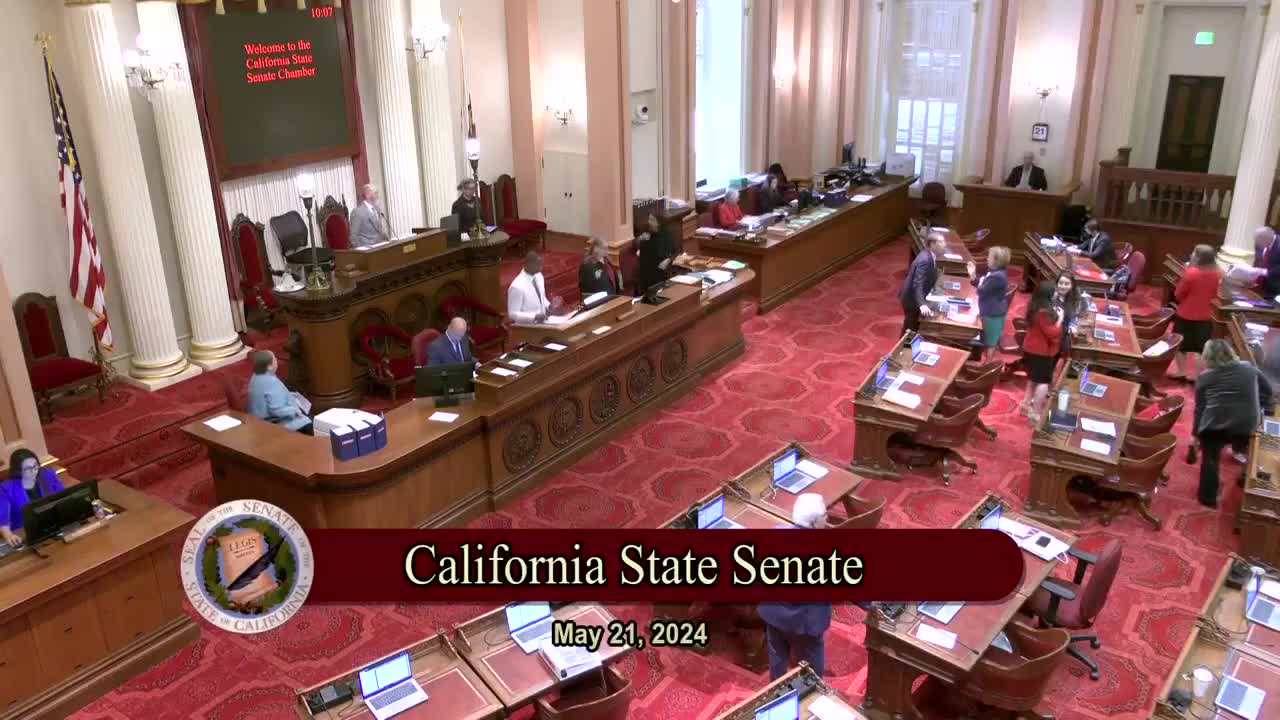 8MIN
Senate Floor
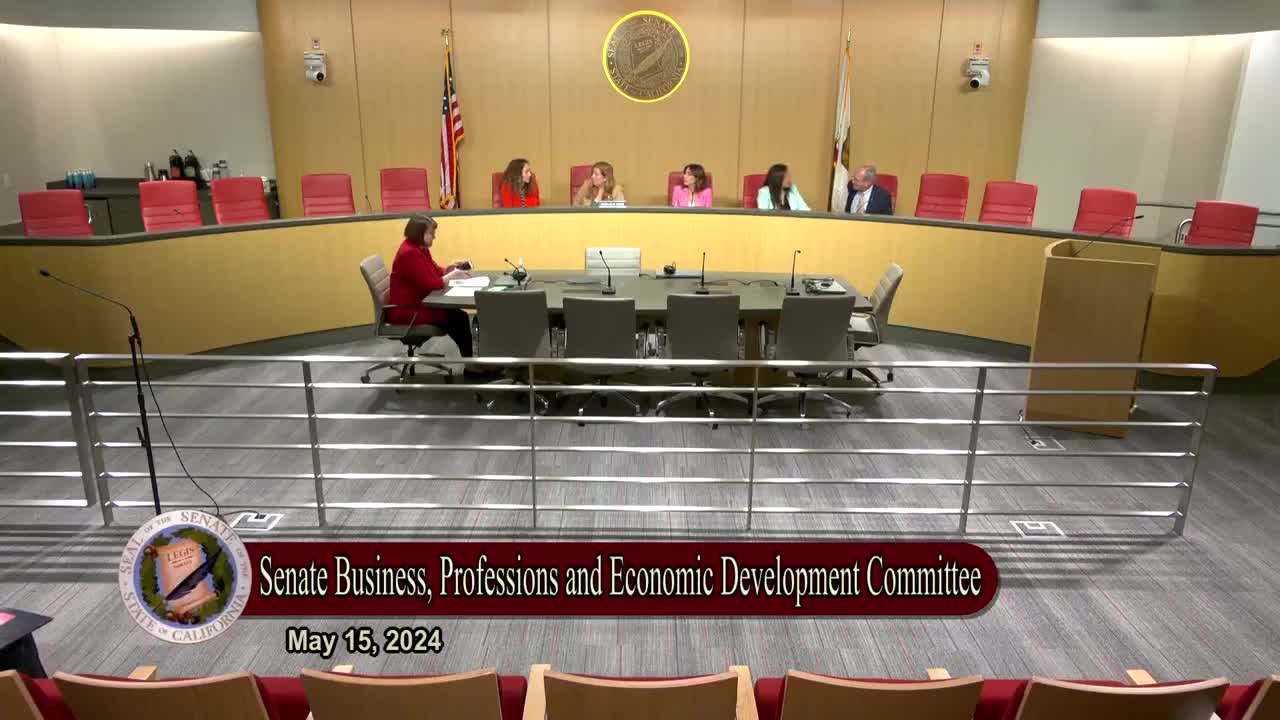 29MIN
Senate Standing Committee on Business, Professions and Economic Development
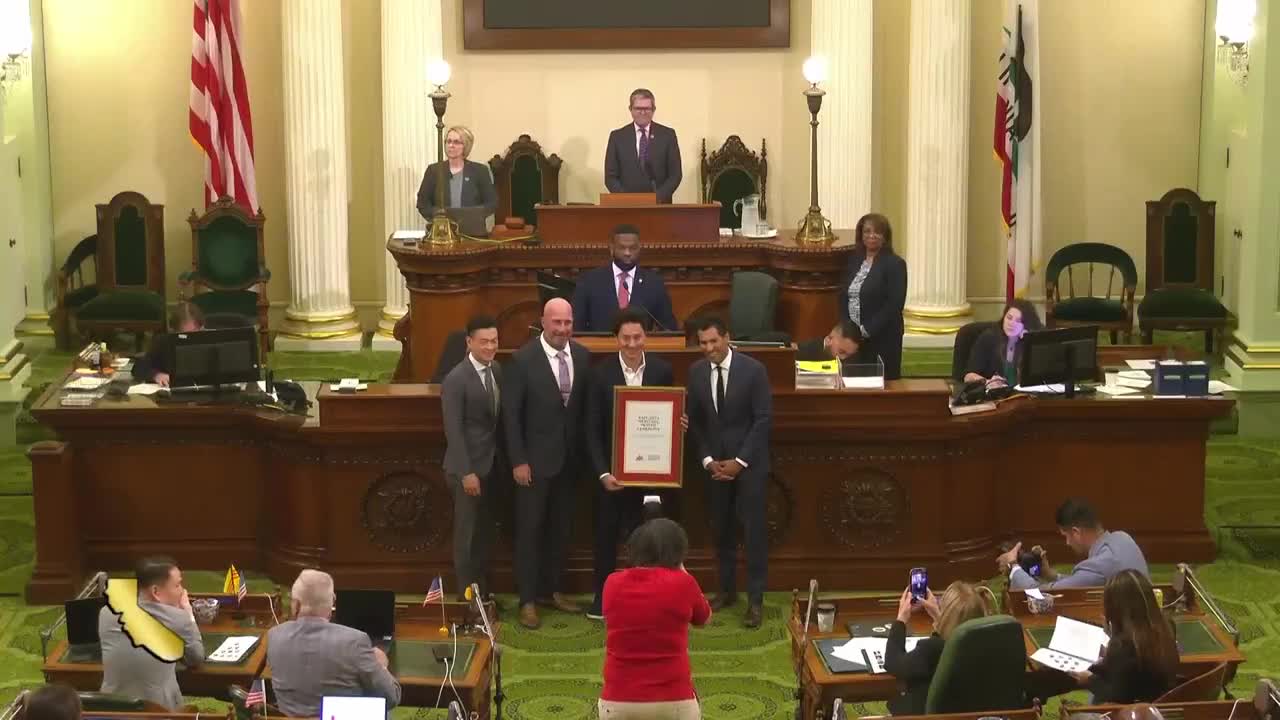 5MIN
Assembly Floor
 18MIN
Assembly Standing Committee on Business and Professions
 3MIN
Assembly Floor
 34MIN
Assembly Standing Committee on Utilities and Energy
 55MIN
Assembly Standing Committee on Transportation
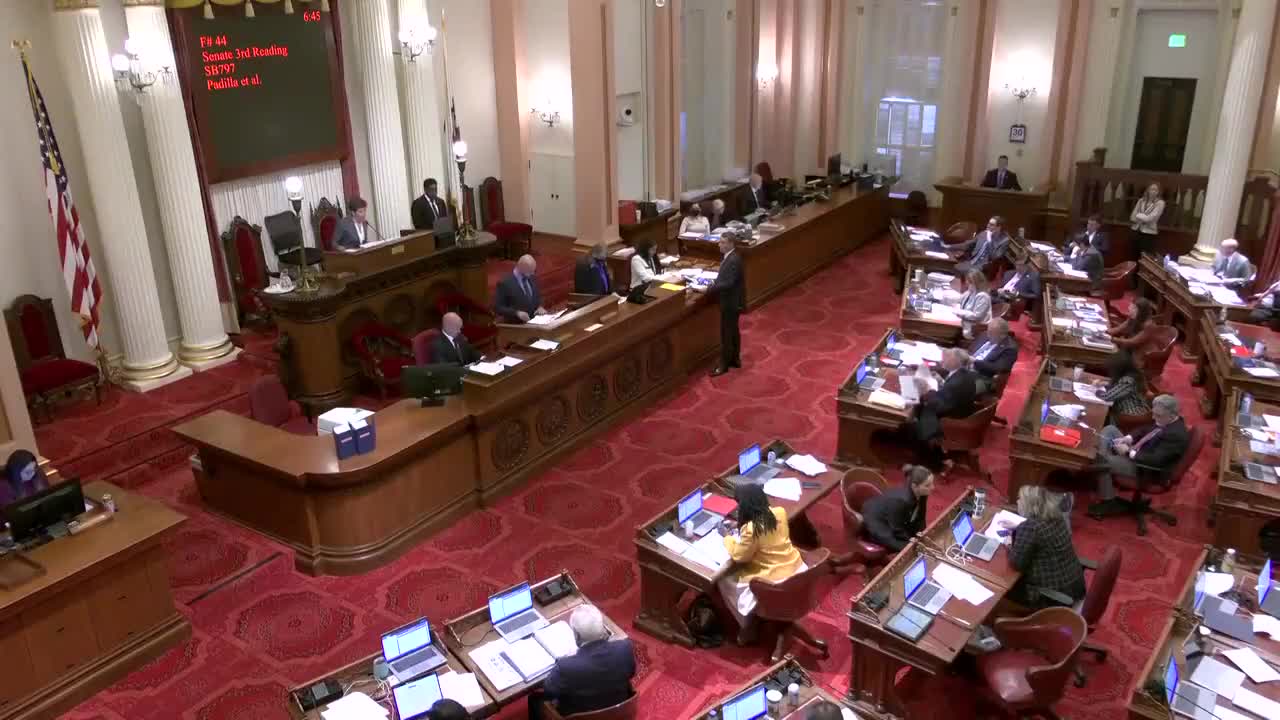 4MIN
Senate Floor


Bill Co-Author(s):