SB 254: Correctional facilities: media access.
- Session Year: 2023-2024
- House: Senate
- Latest Version Date: 2024-09-03
Current Status:
Failed
(2024-09-27: In Senate. Consideration of Governor's veto pending.)
Introduced
In Committee
First Chamber
In Committee
Second Chamber
Enacted
Existing law grants certain rights to inmates in state prisons. Existing regulation allows media representatives access to state prisons with prior approval, and allows unscheduled interviews with inmates.
This bill would, beginning January 1, 2027, require the Department of Corrections and Rehabilitation to permit representatives of the news media to tour a facility or interview incarcerated persons in person, as specified. The bill would prohibit retaliation against an incarcerated person for participating in a visit by, or communicating with, a representative of the news media.
The bill would require all Department of Corrections and Rehabilitation facilities to allow state officials, as specified, to visit those facilities at any time and meet with incarcerated people upon request, beginning January 1, 2027.
Existing law grants certain rights to inmates in state prisons. Existing regulation allows media representatives access to state prisons with prior approval, and allows unscheduled interviews with inmates.
This bill would would, beginning January 1, 2027, require the Department of Corrections and Rehabilitation to permit representatives of the news media to tour a facility or interview prisoners incarcerated persons in person, as specified. The bill would prohibit retaliation against an incarcerated person for participating in a visit by, or communicating with, a representative of the news media.
The bill would require all Department of Corrections and Rehabilitation facilities to allow state officials, as specified, to visit those facilities at any time and meet with incarcerated people upon request. request, beginning January 1, 2027.
Existing law grants certain rights to inmates in state prisons. Existing regulation allows media representatives access to state prisons with prior approval, and allows unscheduled interviews with inmates.
This bill would require the Department of Corrections and Rehabilitation to permit representatives of the news media to tour a facility or interview prisoners in person, as specified. The bill would prohibit retaliation against an incarcerated person for participating in a visit by, or communicating with, a representative of the news media.
The bill would require all Department of Corrections and Rehabilitation facilities to allow state officials, as specified, to visit those facilities at any time and meet with incarcerated people upon request.
Existing law grants certain rights to inmates in state prisons. Existing regulation allows media representatives access to state prisons with prior approval, and allows unscheduled interviews with inmates.
This bill would require the Department of Corrections and Rehabilitation and all county and city jails in California to permit representatives of the news media to tour a facility or interview prisoners in person, as specified. The bill would prohibit retaliation against an incarcerated person for participating in a visit by, or communicating with, a representative of the news media.
The bill would require all Department of Corrections and Rehabilitation facilities and county jails to allow state officials, as specified, to visit those facilities at any time and meet with incarcerated people upon request.
By imposing new duties on local correctional facilities, this bill would impose a state-mandated local program.The California Constitution requires the state to reimburse local agencies and school districts for certain costs mandated by the state. Statutory provisions establish procedures for making that reimbursement.This bill would provide that, if the Commission on State Mandates determines that the bill contains costs mandated by the state, reimbursement for those costs shall be made pursuant to the statutory provisions noted above.Existing law grants certain rights to inmates in state prisons. Existing regulation allows media representatives access to state prisons with prior approval, and allows unscheduled interviews with inmates.
This bill would require the Department of Corrections and Rehabilitation and all county and city jails in California to permit representatives of the news media to tour a facility or interview prisoners in person, as specified. The bill would prohibit retaliation against an incarcerated person for participating in a visit by, or communicating with, a representative of the news media.
The bill would require all Department of Corrections and Rehabilitation facilities and county jails to allow state officials, as specified, to visit those facilities at any time and meet with incarcerated people upon request.
By imposing new duties on local correctional facilities, this bill would impose a state-mandated local program.
The California Constitution requires the state to reimburse local agencies and school districts for certain costs mandated by the state. Statutory provisions establish procedures for making that reimbursement.
This bill would provide that, if the Commission on State Mandates determines that the bill contains costs mandated by the state, reimbursement for those costs shall be made pursuant to the statutory provisions noted above.
(a)The Department of Corrections and Rehabilitation shall permit representatives of the news media to tour a facility or interview incarcerated people in person, including prearranged interviews with specified incarcerated people and individuals encountered by a representative of the news media while covering a facility tour, activity, event, or program. Representatives of the news media shall also be allowed to document conditions that exist within the prison while interviewing incarcerated people in person or covering a facility tour, activity, event, or program.
(b)During any tour or interview with an incarcerated person, a representative of the news media may use materials and equipment necessary to conduct the tour or interview, including, but not limited to, pens, pencils, papers, and audio and video recording devices. These items may be subject to search only for the purpose of protecting against a threat to the security of the institution.
(c)A news media representative who desires to tour or conduct an interview at an institution shall make the request prior to the tour or interview in writing to the warden or the institutions public information office.
(d)Staff shall notify an incarcerated person of each interview request, and no interview shall be permitted without the incarcerated persons consent.
(e)An incarcerated person shall not receive compensation for interviews with the news media.
(f)The warden may deny a tour or interview with a particular incarcerated person if it is determined that the tour or interview would pose a threat to the security of the institution or jeopardize safety or prison operations. This notification shall be given to the requestor within 10 days of receiving the request. The representative of the news media shall receive an explanation of the specific reasons for the denial no later than 10 days after the notification.
(g)In order to ensure the security of the institution, the physical safety of the public, and the efficient administration of news media interviews, the Department of Corrections and Rehabilitation may establish reasonable time, place, and manner restrictions for prison interviews, including limitations on the number of interviews per incarcerated person in a specified time period, limitations on the amount of audio, video, and film equipment entering the facility for the interview, and arrangements for pool interviews if the number of journalists requesting to interview any one incarcerated person is excessive.
(h)No incarcerated person may have their visitation limited or revoked because of a visit or potential visit from a representative of the news media, nor may an incarcerated person be punished, reclassified, disciplined, transferred to another prison against their wishes, or otherwise retaliated against, for participating in a visit by, or communicating with, a representative of the news media.
(i)Interviews, whether in person or via telephone or video conferencing, shall not be subject to audio or video monitoring or recording by anyone other than the representative of the news media.
(j)For the purposes of this section, representative of the news media means a duly authorized representative of any news service, online news service, newspaper, or radio or television station or network.
(k)While news media is conducting an interview in person or covering a facility tour, activity, event, or program, photography or video that captures identifying images of any person, including, but not limited to, an incarcerated person, visitor, or Department of Corrections and Rehabilitation staff or contractor, shall not be published or displayed without the persons prior consent. If a person does not consent to the use of their image, the identifying image shall be excluded or obscured in order to conceal the identity of the individual.
(l)This section shall become operative on January 1, 2027.
SEC. 2.Section 6357.1 is added to the Penal Code, to read:6357.1.(a)The following persons shall be authorized to visit at their pleasure all Department of Corrections and Rehabilitation facilities and meet with incarcerated people upon request:
(1)The Governor and all Cabinet members.
(2)Members of the Legislature and up to one staff member per legislator.
(3)Current and retired judges of the State of California.
(4)Members of the Committee on the Revision of the Penal Code and committee staff.
(b)This section shall become operative on January 1, 2027.
(a)The Department of Corrections and Rehabilitation shall permit representatives of the news media to tour a facility or interview incarcerated people in person, including prearranged interviews with specified incarcerated people and individuals encountered by a representative of the news media while covering a facility tour, activity, event, or program. Representatives of the news media shall also be allowed to document conditions that exist within the prison in areas that are accessible by incarcerated people. while interviewing incarcerated people in person or covering a facility tour, activity, event, or program.
(b)During any tour or interview with an incarcerated person, a representative of the news media may use materials and equipment necessary to conduct the tour or interview, including, but not limited to, pens, pencils, papers, and audio and video recording devices. These items may be subject to search only for the purpose of protecting against an immediate and direct a threat to the security of the institution. The contents of the information that representatives of the news media collect during a tour or interview, including notes, papers, and audio and video recordings, shall not be reviewed or copied by representatives of the institution.
(c)A news media representative who desires to tour or conduct an interview at an institution shall make the request prior to the tour or interview in writing to the warden or the institutions public information office.
(d)Staff shall notify an incarcerated person of each interview request, and no interview shall be permitted without the incarcerated persons consent.
(e)An incarcerated person shall not receive compensation for interviews with the news media.
(f)The warden may deny a tour or interview with a particular incarcerated person if it is determined that the tour or interview would pose an immediate and direct a threat to the security of the institution or the physical safety of a member of the public. jeopardize safety or prison operations. This notification shall be given to the requestor within 48 hours 10 days of receiving the request. The representative of the news media shall receive an explanation of the specific reasons for the denial no later than five 10 days after the notification.
(g)In order to ensure the security of the institution, the physical safety of the public, and the efficient administration of news media interviews, the Department of Corrections and Rehabilitation may establish reasonable time, place, and manner restrictions for prison interviews, including limitations on the number of interviews per prisoner incarcerated person in a specified time period, limitations on the amount of audio, video, and film equipment entering the facility for the interview, and arrangements for pool interviews if the number of journalists requesting to interview any one prisoner incarcerated person is excessive.
(h)No incarcerated person may have their visitation limited or revoked because of a visit or potential visit from a representative of the news media, nor may a prisoner an incarcerated person be punished, reclassified, disciplined, transferred to another prison against their wishes, or otherwise retaliated against, for participating in a visit by, or communicating with, a representative of the news media.
(i)Interviews, whether in person or via telephone or video conferencing, shall not be subject to audio or video monitoring or recording by anyone other than the representative of the news media.
(j)For the purposes of this section, representative of the news media means a duly authorized representative of any news service, online news service, newspaper, or radio or television station or network.
(k)While news media is conducting an interview in person or covering a facility tour, activity, event, or program, photography or video that captures identifying images of any person, including, but not limited to, an incarcerated person, visitor, or Department of Corrections and Rehabilitation staff or contractor, shall not be published or displayed without the persons prior consent. If a person does not consent to the use of their image, the identifying image shall be excluded or obscured in order to conceal the identity of the individual.
(l)This section shall become operative on January 1, 2027.
SEC. 2.Section 6357.1 is added to the Penal Code, to read:6357.1.(a)The following persons shall be authorized to visit at their pleasure all Department of Corrections and Rehabilitation facilities and meet with incarcerated people upon request:
(a)(1)The Governor and all Cabinet members.
(b)(2)Members of the Legislature and up to one staff member per legislator.
(c)(3)Current and retired judges of the State of California.
(d)(4)Members of the Committee on the Revision of the Penal Code and committee staff.
(b)This section shall become operative on January 1, 2027.
(a)The Department of Corrections and Rehabilitation shall permit representatives of the news media to tour a facility or interview incarcerated people in person, including prearranged interviews with specified incarcerated people and individuals encountered by a representative of the news media while covering a facility tour, activity, event, or program. Representatives of the news media shall also be allowed to document conditions that exist within the prison or jail in areas that are accessible by incarcerated people.
(b)During any tour or interview with an incarcerated person, a representative of the news media may use materials and equipment necessary to conduct the tour or interview, including, but not limited to, pens, pencils, papers, and audio and video recording devices. These items may be subject to search only for the purpose of protecting against an immediate and direct threat to the security of the institution. The contents of the information that representatives of the news media collect during a tour or interview, including notes, papers, and audio and video recordings, shall not be reviewed or copied by representatives of the institution.
(c)A news media representative who desires to tour or conduct an interview at an institution shall make the request prior to the tour or interview in writing to the warden or the institutions public information office.
(d)Staff shall notify an incarcerated person of each interview request, and no interview shall be permitted without the incarcerated persons consent.
(e)An incarcerated person shall not receive compensation for interviews with the news media.
(f)The warden may deny a tour or interview with a particular incarcerated person if it is determined that the tour or interview would pose an immediate and direct threat to the security of the institution or the physical safety of a member of the public. This notification shall be given to the requestor within 48 hours of receiving the request. The representative of the news media shall receive an explanation of the specific reasons for the denial no later than five days after the notification.
(g)In order to ensure the security of the institution, the physical safety of the public, and the efficient administration of news media interviews, the Department of Corrections and Rehabilitation may establish reasonable time, place, and manner restrictions for prison interviews, including limitations on the number of interviews per prisoner in a specified time period, limitations on the amount of audio, video, and film equipment entering the facility for the interview, and arrangements for pool interviews if the number of journalists requesting to interview any one prisoner is excessive.
(h)No incarcerated person may have their visitation limited or revoked because of a visit or potential visit from a representative of the news media, nor may a prisoner be punished, reclassified, disciplined, transferred to another prison against their wishes, or otherwise retaliated against, for participating in a visit by, or communicating with, a representative of the news media.
(i)Interviews, whether in person or via telephone or video conferencing, shall not be subject to audio or video monitoring or recording by anyone other than the representative of the news media.
(j)For the purposes of this section, representative of the news media means a duly authorized representative of any news service, online news service, newspaper, or radio or television station or network.
SEC. 2.Section 6357.1 is added to the Penal Code, to read:6357.1.The following persons shall be authorized to visit at their pleasure all Department of Corrections and Rehabilitation facilities and meet with incarcerated people upon request:
(a)The Governor and all Cabinet members.
(b)Members of the Legislature and up to one staff member per legislator.
(c)Current and retired judges of the State of California.
(d)Members of the Committee on the Revision of the Penal Code and committee staff.
(a)The Department of Corrections and Rehabilitation and all county and city jails in California shall permit representatives of the news media to tour a facility or interview incarcerated people in person, including prearranged interviews with specified incarcerated people and individuals encountered by a representative of the news media while covering a facility tour, activity, event, or program. Representatives of the news media shall also be allowed to document conditions that exist within the prison or jail in areas that are accessible by incarcerated people.
(b)During any tour or interview with an incarcerated person, a representative of the news media may use materials and equipment necessary to conduct the tour or interview, including, but not limited to, pens, pencils, papers, and audio and video recording devices. These items may be subject to search only for the purpose of protecting against an immediate and direct threat to the security of the institution. The contents of the information that representatives of the news media collect during a tour or interview, including notes, papers, and audio and video recordings, shall not be reviewed or copied by representatives of the institution.
(c)A news media representative who desires to tour or conduct an interview at an institution shall make the request prior to the tour or interview in writing to the warden, sheriff, chief or director of corrections, or chief of police or through contact with the institutions public relations warden or the institutions public information office.
(d)Staff shall notify an incarcerated person of each interview request, and no interview shall be permitted without the incarcerated persons consent.
(e)An incarcerated person may shall not receive compensation for interviews with the news media.
(f)After the warden, sheriff, chief or director of corrections, or chief of police or their designee receives a request for a tour or interview, staff shall, at least two business days prior to the interview, notify the incarcerated persons attorney of record.(g)(f)The warden, sheriff, chief or director of corrections, or chief of police or their designee warden may deny a tour or interview with a particular incarcerated person if it is determined that the tour or interview would pose an immediate and direct threat to the security of the institution or the physical safety of a member of the public. This notification shall be given to the requestor within 48 hours of receiving the request. The representative of the news media shall receive an explanation of the specific reasons for the denial no later than five days after the notification.
(h)(g)In order to ensure the security of the institution, the physical safety of the public, and the efficient administration of news media interviews, the Department of Corrections and Rehabilitation or county or city jail may establish reasonable time, place, and manner restrictions for prison interviews, including limitations on the number of interviews per prisoner in a specified time period, limitations on the amount of audio, video, and film equipment entering the facility for the interview, and arrangements for pool interviews if the number of journalists requesting to interview any one prisoner is excessive.
(i)(h)No incarcerated person or parolee may have their visitation limited or revoked because of a visit or potential visit from a representative of the news media, nor may a prisoner or parolee be punished, reclassified, disciplined, transferred to another prison against their wishes, or otherwise retaliated against, for participating in a visit by, or communicating with, a representative of the news media.
(j)(i)Interviews, whether in person or via telephone or video conferencing, shall not be subject to audio or video monitoring or recording by anyone other than the representative of the news media.
(k)(j)For the purposes of this section, representative of the news media means a duly authorized representative of any news service, online news service, newspaper, or radio or television station or network.
SEC. 2.Section 6357.1 is added to the Penal Code, to read:6357.1.The following persons shall be authorized to visit at their pleasure all Department of Corrections and Rehabilitation facilities and county jails and meet with incarcerated people upon request:
(a)The Governor and all Cabinet members.
(b)Members of the Legislature and up to one staff member per legislator.
(c)Current and retired judges of the State of California.
(d)Members of the Committee on the Revision of the Penal Code and committee staff.
SEC. 3.If the Commission on State Mandates determines that this act contains costs mandated by the state, reimbursement to local agencies and school districts for those costs shall be made pursuant to Part 7 (commencing with Section 17500) of Division 4 of Title 2 of the Government Code.(a)The Department of Corrections and Rehabilitation and all county and city jails in California shall permit representatives of the news media to tour a facility or interview incarcerated people in person, including prearranged interviews with specified incarcerated people and individuals encountered by a representative of the news media while covering a facility tour, activity, event, or program. Representatives of the news media shall also be allowed to document conditions that exist within the prison or jail in areas that are accessible by incarcerated people.
(b)During any tour or interview with an incarcerated person, a representative of the news media may use materials and equipment necessary to conduct the tour or interview, including, but not limited to, pens, pencils, papers, and audio and video recording devices. These items may be subject to search only for the purpose of protecting against an immediate and direct threat to the security of the institution. The contents of the information that representatives of the news media collect during a tour or interview, including notes, papers, and audio and video recordings, shall not be reviewed or copied by representatives of the institution.
(c)A news media representative who desires to tour or conduct an interview at an institution shall make the request prior to the tour or interview in writing to the warden, sheriff, chief or director of corrections, or chief of police or through contact with the institutions public relations office.
(d)Staff shall notify an incarcerated person of each interview request, and no interview shall be permitted without the incarcerated persons consent.
(e)An incarcerated person may not receive compensation for interviews with the news media.
(f)After the warden, sheriff, chief or director of corrections, or chief of police or their designee receives a request for a tour or interview, staff shall, at least two business days prior to the interview, notify the incarcerated persons attorney of record.
(g)The warden, sheriff, chief or director of corrections, or chief of police or their designee may deny a tour or interview with a particular incarcerated person if it is determined that the tour or interview would pose an immediate and direct threat to the security of the institution or the physical safety of a member of the public. This notification shall be given to the requestor within 48 hours of receiving the request. The representative of the news media shall receive an explanation of the specific reasons for the denial no later than five days after the notification.
(h)In order to ensure the security of the institution, the physical safety of the public, and the efficient administration of news media interviews, the Department of Corrections and Rehabilitation or county or city jail may establish reasonable time, place, and manner restrictions for prison interviews, including limitations on the number of interviews per prisoner in a specified time period, limitations on the amount of audio, video, and film equipment entering the facility for the interview, and arrangements for pool interviews if the number of journalists requesting to interview any one prisoner is excessive.
(i)No incarcerated person or parolee may have their visitation limited or revoked because of a visit or potential visit from a representative of the news media, nor may a prisoner or parolee be punished, reclassified, disciplined, transferred to another prison against their wishes, or otherwise retaliated against, for participating in a visit by, or communicating with, a representative of the news media.
(j)Interviews, whether in person or via telephone or video conferencing, shall not be subject to audio or video monitoring or recording by anyone other than the representative of the news media.
(k)For the purposes of this section, representative of the news media means a duly authorized representative of any news service, online news service, newspaper, or radio or television station or network.
SEC. 2.Section 6357.1 is added to the Penal Code, to read:6357.1.The following persons shall be authorized to visit at their pleasure all Department of Corrections and Rehabilitation facilities and county jails and meet with incarcerated people upon request:
(a)The Governor and all Cabinet members.
(b)Members of the Legislature and up to one staff member per legislator.
(c)Current and retired judges of the State of California.
(d)Members of the Committee on the Revision of the Penal Code and committee staff.
SEC. 3.If the Commission on State Mandates determines that this act contains costs mandated by the state, reimbursement to local agencies and school districts for those costs shall be made pursuant to Part 7 (commencing with Section 17500) of Division 4 of Title 2 of the Government Code.
|
Date
|
Status
|
|---|---|
| Sep 27, 2024 | In Senate. Consideration of Governor's veto pending. |
| Sep 27, 2024 | Vetoed by the Governor. |
| Sep 9, 2024 | Enrolled and presented to the Governor at 3 p.m. |
| Aug 29, 2024 | Assembly amendments concurred in. (Ayes 30. Noes 10. Page 5634.) Ordered to engrossing and enrolling. |
| Aug 28, 2024 | In Senate. Concurrence in Assembly amendments pending. |
| Aug 28, 2024 | Read third time. Passed. (Ayes 72. Noes 0. Page 6709.) Ordered to the Senate. |
| Aug 20, 2024 | Read second time. Ordered to third reading. |
| Aug 19, 2024 | Read second time and amended. Ordered to second reading. |
| Aug 15, 2024 | From committee: Do pass as amended. (Ayes 11. Noes 1.) (August 15). |
| Jul 2, 2024 | July 2 set for first hearing. Placed on suspense file. |
| Jun 4, 2024 | From committee: Do pass and re-refer to Com. on APPR. (Ayes 7. Noes 0.) (June 4). Re-referred to Com. on APPR. |
| Apr 29, 2024 | Referred to Com. on PUB. S. |
| Jan 30, 2024 | In Assembly. Read first time. Held at Desk. |
| Jan 30, 2024 | Read third time. Passed. (Ayes 29. Noes 8. Page 3061.) Ordered to the Assembly. |
| Jan 25, 2024 | Read second time. Ordered to third reading. |
| Jan 24, 2024 | Ordered to second reading. |
| Jan 24, 2024 | Read third time and amended. |
| Jan 22, 2024 | Read second time and amended. Ordered to third reading. |
| Jan 18, 2024 | From committee: Do pass as amended. (Ayes 4. Noes 2. Page 3011.) (January 18). |
| Jan 12, 2024 | Set for hearing January 18. |
| May 18, 2023 | May 18 hearing: Held in committee and under submission. |
| May 12, 2023 | Set for hearing May 18. |
| Apr 17, 2023 | April 17 hearing: Placed on APPR suspense file. |
| Apr 10, 2023 | Set for hearing April 17. |
| Mar 29, 2023 | From committee: Do pass and re-refer to Com. on APPR. (Ayes 4. Noes 1. Page 578.) (March 28). Re-referred to Com. on APPR. |
| Mar 6, 2023 | Set for hearing March 28. |
| Feb 9, 2023 | Referred to Com. on PUB S. |
| Jan 31, 2023 | From printer. May be acted upon on or after March 2. |
| Jan 30, 2023 | Introduced. Read first time. To Com. on RLS. for assignment. To print. |
|
Date
|
Description
|
Location
|
Votes
|
|
|---|---|---|---|---|
| Aug 29, 2024 | Unfinished Business SB254 Skinner Concurrence | Senate Floor |
Passed |
|
| Aug 28, 2024 | SB 254 Skinner Senate Third Reading By Wicks | Assembly Floor |
Passed |
|
| Aug 15, 2024 | Do pass as amended. | Assembly Standing Committee on Appropriations |
Passed |
|
| Jun 4, 2024 | Do pass and be re-referred to the Committee on [Appropriations] | Assembly Standing Committee on Public Safety |
Passed |
|
| Jan 30, 2024 | Senate 3rd Reading SB254 Skinner | Senate Floor |
Passed |
|
| Jan 18, 2024 | Do pass as amended | Senate Standing Committee on Appropriations |
Passed |
|
| Apr 17, 2023 | Placed on suspense file | Senate Standing Committee on Appropriations |
Passed |
|
| Mar 28, 2023 | Do pass, but first be re-referred to the Committee on [Appropriations] | Senate Standing Committee on Public Safety |
Passed |
This list shows positions taken on this bill by organizations on the date displayed, which is linked to the original source.
Positions by individuals are not included.
|
Organization
|
Position
|
Date
|
|---|---|---|
| Aclu California Action | ** Support | |
| California Black Media | ** Support | |
| California Broadcasters Association | ** Support | |
| California News Publishers Association | ** Support | |
| Californians Aware | ** Support | |
| Californians for Safety and Justice | ** Support | |
| California Public Defenders Association | ** Support | |
| California State Sheriffs Association | ** Against | |
| CCNMA Latino Journalists of California | ** Support | |
| Communities United for Restorative Youth Justice | ** Support | |
| Disability Rights California | ** Support | |
| East Bay Community Law Center | ** Support | |
| Ethnic Media Services | ** Support | |
| Families Against Mandatory Minimums Foundation | ** Support | |
| First Amendment Coalition | ** Support | |
| Friends Committee On Legislation Of California | ** Support | |
| Grip Training Institute | ** Support | |
| Initiate Justice | ** Support | |
| Interfaith Movement for Human Integrity | ** Support | |
| Los Angeles County SheriffS Department | ** Against | |
| Media Alliance | ** Support | |
| National Press Photographers Association | ** Support | |
| National Writers Union | ** Support | |
| Oakland Privacy | ** Support | |
| Orange County Press Club | ** Support | |
| Pacific Media Workers Guild, the Newsguild-Communications Workers of America Local 39521 | ** Support | |
| Riverside All of Us or None | ** Support | |
| Riverside County Sheriff’s Office | ** Against | |
| Rubicon Programs | ** Support | |
| Sister Warriors Freedom Coalition | ** Support | |
| Smart Justice California | ** Support | |
| Society of Professional Journalists, Los Angeles Chapter | ** Support | |
| Society of Professional Journalists, San Diego Pro Chapter | ** Support |
SENATE RULES COMMITTEE Office of Senate Floor Analyses (916) 651-1520 Fax: (916) 327-4478 | SB 254 |
VETO
Bill No: SB 254
Author: Skinner (D)
Amended: 8/19/24
Vote: 21
SENATE PUBLIC SAFETY COMMITTEE: 4-1, 3/28/23
AYES: Wahab, Bradford, Skinner, Wiener
NOES: Ochoa Bogh
SENATE APPROPRIATIONS COMMITTEE: 4-2, 1/18/24
AYES: Portantino, Bradford, Wahab, Wiener
NOES: Jones, Seyarto
NO VOTE RECORDED: Ashby
SENATE FLOOR: 29-8, 1/30/24
AYES: Allen, Archuleta, Ashby, Atkins, Becker, Blakespear, Bradford, Caballero, Cortese, Dodd, Durazo, Eggman, Glazer, Laird, Limón, McGuire, Menjivar, Min, Newman, Padilla, Portantino, Roth, Rubio, Skinner, Smallwood-Cuevas, Stern, Umberg, Wahab, Wiener
NOES: Dahle, Grove, Jones, Nguyen, Niello, Ochoa Bogh, Seyarto, Wilk
NO VOTE RECORDED: Alvarado-Gil, Gonzalez, Hurtado
SENATE FLOOR: 30-10, 8/29/24
AYES: Allen, Archuleta, Ashby, Atkins, Becker, Blakespear, Bradford, Caballero, Cortese, Dodd, Durazo, Eggman, Glazer, Gonzalez, Laird, Limón, McGuire, Menjivar, Min, Newman, Padilla, Portantino, Roth, Rubio, Skinner, Smallwood-Cuevas, Stern, Umberg, Wahab, Wiener
NOES: Alvarado-Gil, Dahle, Grove, Hurtado, Jones, Nguyen, Niello, Ochoa Bogh, Seyarto, Wilk
ASSEMBLY FLOOR: 72-0, 8/28/24 - See last page for vote
SUBJECT: Correctional facilities: media access
SOURCE: California Broadcasters Association;
California News Publishers Association
DIGEST:
This bill (1) requires the California Department of Corrections and Rehabilitation (CDCR) to permit representatives of the news media to tour a facility or interview incarcerated individuals in person; (2) prohibits retaliation against an incarcerated person for participating in a visit by, or communicating with, a representative of the news media; and (3) requires all CDCR facilities to allow state officials, as specified, to visit those facilities at any time and meet with incarcerated people upon request.
ANALYSIS:
Existing law:
- Vests the Secretary of the CDCR with the supervision, management and control of state prisons. Provides that the Secretary of the CDCR is also responsible for the care, custody, treatment, training, discipline and employment of a person confined in those prisons. (Pen. Code, § 5054.)
- Provides that the Secretary of the CDCR may prescribe and amend the rules and regulations for the administration of the prisons. (Pen. Code, § 5058.)
- Delineates the civil rights that persons incarcerated in the state’s prisons or who are imprisoned pursuant to Penal Code Section 1170(h) possess. (Pen. Code, § 2601.)
- Provides that a person sentenced to imprisonment in a state prison or who are imprisoned pursuant to Penal Code Section 1170(h) may only be deprived of such rights, and only such rights, as is related to legitimate penological interests. (Pen. Code, § 2600.)
- Provides that (a) correctional facilities and programs are operated at public expense for the protection of society; (b) the public has a right and a duty to know how such facilities and programs are being conducted; (c) it is the policy of CDCR to make known to the public, through the news media, through contact with public groups and individuals, and by making its public records available for review by interested persons, all relevant information pertaining to operations of the CDCR and facilities; (d) due consideration will be given to all factors which might threaten the safety of the facility in any way, or unnecessarily intrude upon the personal privacy of inmates and staff; and (e) the public must be given a true and accurate picture of CDCR institutions and parole operations. (Cal. Code Regs., tit. 15, § 3260.)
- Defines “news media representative” is a journalist who works for, or is under contract to, a newspaper, magazine, wire service, book publisher, website, podcast, radio or television program or station or who, through press passes issued by a governmental or police agency, can demonstrate that they are a bona fide journalist engaged in the gathering of information for distribution to the public. (Cal. Code Regs., tit. 15, § 3261.5, subd. (a)(1).)
- Defines “non-news media representatives” means individuals in the publishing and broadcasting media not included in California Code of Regulations Subsection 3261.5(a)(1), and may include editorial researchers, freelance writers, authors of books and independent film makers involved with the production of broadcast or print endeavors including, but not limited to, features, documentaries, commercials, and pilots for proposed news, or entertainment programs. (Cal. Code Regs., tit. 15, § 3261.5, subd. (a)(2).)
- Requires prior approval for access to a CDCR facility or contract facility for a news media representative, as defined, by either the institution head or the CDCR Assistant Secretary of Communications or designee. Requires prior approval of both the institution head and the CDCR Assistant Secretary of Communications or their designees for access to a CDCR facility for a non-news media representative, as defined. (Cal. Code Regs., tit. 15, § 3261.1, subd. (a).)
- Permits the institution head or designee to impose limitations on or set conditions for access should any news media or non-news media representative access to a facility constitute an immediate threat to safety and security, or generate serious operational problems. (Cal. Code Regs., tit. 15, § 3261.1, subd. (a)(2).)
- Requires that news media and non-news media representatives be allowed to interview inmates in person in accordance with the visiting requirements, as described. (Cal. Code Regs., tit. 15, § 3261.5, subd. (b).)
- Provides that news media and non-news media representatives be allowed to bring up to three pens, three pencils and one pad of paper into the facility during an interview. Requires that these items be searched to protect against an immediate and direct threat to the security of the institution. (Cal. Code Regs., tit. 15, § 3261.5, subd. (b)(2).)
- Requires that phone calls to news media and non-news media representatives from incarcerated persons are allowed, as provided, and may be recorded by the media representative with the incarcerated individual’s consent. (Cal. Code Regs., tit. 15, § 3261.5, subd. (c).)
- Permits news media and non-news media representatives to conduct random face-to-face interviews with incarcerated individuals housed in facilities under the jurisdiction of the CDCR, and random or specific-person face-to-face interviews with staff. Requires such interviews to be conducted as stipulated by the institution head, including restricting the time, place and duration of interviews, and size of technical crews. (Cal. Code Regs., tit. 15, § 3261.5, subd. (f).)
- Prohibits an incarcerated person from participating in specific-person face-to-face interviews except as provided. (Cal. Code Regs., tit. 15, § 3261.5, subd. (f)(2).)
- Requires prior approval from the institution head or designee for the use of cameras or recording equipment. Permits photographs, films, or video recording of incarcerated individuals, as provided. (Cal. Code Regs., tit. 15, § 3261.5, subd. (g).)
- Requires, generally, a public official of another governmental department or agency who needs to interview staff or incarcerated individuals or to conduct an inspection to request permission of the institution head at least 24 hours before the date and time of their desired arrival, stating the purpose of the proposed visit. (Cal. Code Regs., tit. 15, § 3267, subd. (a).)
- Provides that an elected state official’s access may be denied only during an emergency with the approval of the Secretary of CDCR. Provides that access by the guests or staff of such officials may be denied when they have not been previously approved by the institution head. (Cal. Code Regs., tit. 15, § 3267, subd. (b).)
- Provides that in cases of immediate need, and upon notification by the Secretary of CDCR in writing, any prohibitions regarding access to inmates by public officials, their guests or staff may be suspended to assist in the interest of public understanding of CDCR operations and responsibilities. (Cal. Code Regs., tit. 15, § 3267, subd. (c).)
This bill:
- Requires CDCR to permit representatives of the news media to tour a facility or interview incarcerated people in person, including prearranged interviews with specified incarcerated people and individuals encountered by a representative of the news media while covering a facility tour, activity, event, or program.
- Requires that representatives of the news media also be allowed to document conditions that exist within the prison in areas that are accessible by incarcerated people.
- Provides that during any tour or interview with an incarcerated person, a representative of the news media may use materials and equipment necessary to conduct the tour or interview, including, but not limited to, pens, pencils, papers, and audio and video recording devices. Provides that these items may be subject to search only for the purpose of protecting against an immediate and direct threat to the security of the institution.
- Requires a news media representative who desires to tour or conduct an interview at an institution to make the request prior to the tour or interview in writing to the warden or the institution’s public information office.
- Requires staff to notify an incarcerated person of each interview request, and prohibits an interview from being permitted without the incarcerated person’s consent.
- Prohibits an incarcerated person from receiving compensation for interviews with the news media.
- Provides that the warden may deny a tour or interview with a particular incarcerated person if it is determined that the tour or interview would pose a threat to the security of jeopardize safety or prison operations. Requires notice of a denial to be given to the requestor. Requires the representative of the news media to receive an explanation of the specific reasons for the denial.
- Authorizes CDCR, in order to ensure the security of the institution, the physical safety of the public, and the efficient administration of news media interviews, to establish reasonable time, place, and manner restrictions for prison interviews, including limitations on the number of interviews per prisoner in a specified time period, limitations on the amount of audio, video, and film equipment entering the facility for the interview, and arrangements for pool interviews if the number of journalists requesting to interview any one prisoner is excessive.
- Prohibits an incarcerated person from having their visitation limited or revoked because of a visit or potential visit from a representative of the news media. Prohibits an incarcerated person from being punished, reclassified, disciplined, transferred to another prison against their wishes, or otherwise retaliated against, for participating in a visit by, or communicating with, a representative of the news media.
- Prohibits interviews, whether in person or via phone or video conferencing, from being subject to audio or video monitoring or recording by anyone other than the representative of the news media.
- Defines “representative of the news media” as a duly authorized representative of any news service, online news service, newspaper, or radio or television station or network.
- Provides that the following persons are authorized to visit at their pleasure all CDCR facilities and meet with incarcerated people upon request: the Governor and all Cabinet members; members of the Legislature and up to one staff member per legislator; current and retired state judges; and members of the Committee on the Revision of the Penal Code and committee staff.
Background
Pre-Arranged Interviews by Media Representatives. Current CDCR regulations prohibit an incarcerated person from participating in specific-person face-to-face interviews. (Cal. Code Regs., tit. 15, § 3261.5, subd. (f)(2).) The only exception is that an incarcerated person may participate in an interview that takes place during a visit and complies with the CDCR’s visitation policy. (Id.) Pre-arranged interviews by the institutions are prohibited. Journalists who would like to interview a specific incarcerated person may write to the individual and become an approved visitor to meet face-to-face or arrange a video visit, or provide a phone number to the incarcerated person where the journalist can be reached. (https://www.cdcr.ca.gov/media-policies/)
Media Equipment. Current CDCR regulations require prior approval from the institution head or designee for the possession or use of cameras or recording equipment while within a CDCR facility. (Cal. Code Regs., tit. 15, § 3261.5, subds. (e), (g).) Cameras and recording devices are prohibited during journalists’ visits with an incarcerated person.
Tours of State Prisons by Specified Categories of Non-Media Representatives. Existing CDCR regulations generally require a public official of another governmental department or agency who needs to interview staff or incarcerated individuals or to conduct an inspection to request permission of the institution head at least 24 hours before the date and time of their desired arrival, stating the purpose of the proposed visit. (Cal. Code Regs., tit. 15, § 3267, subd. (a).) Regulations permit the denial of an elected state official’s access but only during an emergency with the approval of the Secretary of CDCR. (Cal. Code Regs., tit. 15, § 3267, subd. (b).) Regulations further provides that access by the guests or staff of such officials may be denied when they have not been previously approved by the institution head. (Id.) Finally, regulations specify that any prohibitions regarding access to incarcerated individuals by public officials, their guests or staff may be suspended to assist in the interest of public understanding of CDCR operations and responsibilities in cases of immediate need and upon notification by the Secretary of the CDCR in writing. (Cal. Code Regs., tit. 15, § 3267, subd. (c).)
FISCAL EFFECT: Appropriation: No Fiscal Com.: Yes Local: No
According to the Assembly Appropriations Committee:
Costs (General Fund) to CDCR for increased staffing to facilitate additional media tours and interviews required by this bill, possibly in the low millions of dollars annually. CDCR reports estimated staffing costs between $3.5 million and $5 million annually ongoing. The department anticipates a significant workload increase due to an influx of tour and interview requests from media representatives, particularly at institutions that house high-notoriety incarcerated people or implement high-profile programs that generate significant media interest. CDCR expects needing additional public information officers to provide tours and facilitate interviews at the institutions that receive the highest volume of media requests, overtime for existing communications staff at other institutions, and an additional information officer to work at CDCR’s headquarters in Sacramento.
CDCR also anticipates that additional custody staffing will be needed to facilitate in-person interviews conducted outside of existing visitation times and spaces. CDCR may be able to mitigate some of these staffing costs by establishing reasonable time, place, and manner restrictions on in-prison interviews, as permitted under the bill.
SUPPORT: (Verified 10/7/24)
California Broadcasters Association (co-source)
California News Publishers Association (co-source)
ACLU California Action
California Black Media
California Public Defenders Association
Californians Aware
Californians for Safety and Justice
CCNMA: Latino Journalists of California
Communities United for Restorative Youth Justice
Disability Rights California
East Bay Community Law Center
Ethnic Media Services
Families Against Mandatory Minimums Foundation
First Amendment Coalition
Friends Committee on Legislation of California
GRIP Training Institute
Initiate Justice
Interfaith Movement for Human Integrity
Media Alliance
National Press Photographers Association
National Writers Union
Oakland Privacy
Orange County Press Club
Pacific Media Workers Guild, the Newsguild-Communications Workers of America Local 39521
Riverside All of Us or None
Rubicon Programs
Sister Warriors Freedom Coalition
Smart Justice California
Society of Professional Journalists, Los Angeles Chapter
Society of Professional Journalists, San Diego Pro Chapter
OPPOSITION: (Verified 10/7/24)
None received
GOVERNOR'S VETO MESSAGE:
Beginning January 1, 2027, this bill would require the California Department of Corrections and Rehabilitation (CDCR) to permit representatives of the news media to interview incarcerated people in person, including both pre-arranged interviews with specified incarcerated people and individuals encountered by a representative of the news media while covering a facility tour, activity, event, or program.
While I appreciate the author's intent to provide greater media access to the state prison system, this bill's expansive provisions risk significant unintended consequences for public safety and victims of crime. Existing CDCR regulations already enable access by the media and state officials to tour facilities and take photos and video. Regulations also allow incarcerated persons to participate in media interviews under appropriate conditions. By removing nearly all discretion to limit media interviews of specific incarcerated individuals, this bill could have the unintended consequence of creating or elevating the celebrity status of certain incarcerated individuals through repeated media appearances, including on television and social media, which could glorify their actions and hurt victims and their families.
Further, this bill would require significant, ongoing resources for CDCR to manage the influx of media requests, ensure the safety of media representatives and incarcerated people while interviews are conducted, prevent the introduction of contraband into facilities, and secure an area in which these interviews would be conducted.
In partnership with the Legislature this year, my Administration has enacted a balanced budget that avoids deep program cuts to vital services and protected investments in education, health care, climate, public safety, housing, and social service programs that millions of Californians rely on. It is important to remain disciplined when considering bills with significant fiscal implications that are not included in the budget, such as this measure.
ASSEMBLY FLOOR: 72-0, 8/28/24
AYES: Addis, Aguiar-Curry, Alanis, Alvarez, Arambula, Bains, Bauer-Kahan, Bennett, Berman, Boerner, Bonta, Bryan, Calderon, Juan Carrillo, Wendy Carrillo, Chen, Connolly, Davies, Dixon, Flora, Mike Fong, Friedman, Gabriel, Gallagher, Garcia, Gipson, Grayson, Haney, Hart, Holden, Hoover, Irwin, Jackson, Jones-Sawyer, Kalra, Lee, Low, Lowenthal, Maienschein, Mathis, McCarty, McKinnor, Muratsuchi, Stephanie Nguyen, Pacheco, Papan, Jim Patterson, Pellerin, Petrie-Norris, Quirk-Silva, Ramos, Rendon, Reyes, Luz Rivas, Rodriguez, Blanca Rubio, Sanchez, Santiago, Schiavo, Soria, Ting, Valencia, Villapudua, Waldron, Wallis, Ward, Weber, Wicks, Wilson, Wood, Zbur, Robert Rivas
NO VOTE RECORDED: Cervantes, Megan Dahle, Essayli, Lackey, Ortega, Joe Patterson, Ta
Prepared by: Stephanie Jordan / PUB. S. /
10/16/24 13:56:02
**** END ****
SENATE RULES COMMITTEE Office of Senate Floor Analyses (916) 651-1520 Fax: (916) 327-4478 | SB 254 |
UNFINISHED BUSINESS
Bill No: SB 254
Author: Skinner (D)
Amended: 8/19/24
Vote: 21
SENATE PUBLIC SAFETY COMMITTEE: 4-1, 3/28/23
AYES: Wahab, Bradford, Skinner, Wiener
NOES: Ochoa Bogh
SENATE APPROPRIATIONS COMMITTEE: 4-2, 1/18/24
AYES: Portantino, Bradford, Wahab, Wiener
NOES: Jones, Seyarto
NO VOTE RECORDED: Ashby
SENATE FLOOR: 29-8, 1/30/24
AYES: Allen, Archuleta, Ashby, Atkins, Becker, Blakespear, Bradford, Caballero, Cortese, Dodd, Durazo, Eggman, Glazer, Laird, Limón, McGuire, Menjivar, Min, Newman, Padilla, Portantino, Roth, Rubio, Skinner, Smallwood-Cuevas, Stern, Umberg, Wahab, Wiener
NOES: Dahle, Grove, Jones, Nguyen, Niello, Ochoa Bogh, Seyarto, Wilk
NO VOTE RECORDED: Alvarado-Gil, Gonzalez, Hurtado
ASSEMBLY FLOOR: 72-0, 8/28/24 - See last page for vote
SUBJECT: Correctional facilities: media access
SOURCE: California Broadcasters Association
California News Publishers Association
DIGEST:
This bill (1) requires the California Department of Corrections and Rehabilitation (CDCR) to permit representatives of the news media to tour a facility or interview incarcerated individuals in person; (2) prohibits retaliation against an incarcerated person for participating in a visit by, or communicating with, a representative of the news media; and (3) requires all CDCR facilities to allow state officials, as specified, to visit those facilities at any time and meet with incarcerated people upon request.
Assembly Amendments
require the consent of any person captured via photo or video prior to publishing the image; extend the amount of time the warden has to notify the requestor of a tour or interview that the request has been denied and for providing a representative of the news media with an explanation of the specific reason for the denial; remove the provision that prohibited institution staff from reviewing or copying information collected by representatives of the news media during a tour or interview; and delay the bill’s operability date to January 1, 2027.
ANALYSIS:
Existing law:
- Vests the Secretary of the CDCR with the supervision, management and control of state prisons. Provides that the Secretary of the CDCR is also responsible for the care, custody, treatment, training, discipline and employment of a person confined in those prisons. (Pen. Code, § 5054.)
- Provides that the Secretary of the CDCR may prescribe and amend the rules and regulations for the administration of the prisons. (Pen. Code, § 5058.)
- Delineates the civil rights that persons incarcerated in the state’s prisons or who are imprisoned pursuant to Penal Code Section 1170(h) possess. (Pen. Code, § 2601.)
- Provides that a person sentenced to imprisonment in a state prison or who are imprisoned pursuant to Penal Code Section 1170(h) may only be deprived of such rights, and only such rights, as is related to legitimate penological interests. (Pen. Code, § 2600.)
- Provides that (a) correctional facilities and programs are operated at public expense for the protection of society; (b) the public has a right and a duty to know how such facilities and programs are being conducted; (c) it is the policy of CDCR to make known to the public, through the news media, through contact with public groups and individuals, and by making its public records available for review by interested persons, all relevant information pertaining to operations of the CDCR and facilities; (d) due consideration will be given to all factors which might threaten the safety of the facility in any way, or unnecessarily intrude upon the personal privacy of inmates and staff; and (e) the public must be given a true and accurate picture of CDCR institutions and parole operations. (Cal. Code Regs., tit. 15, § 3260.)
- Defines “news media representative” is a journalist who works for, or is under contract to, a newspaper, magazine, wire service, book publisher, website, podcast, radio or television program or station or who, through press passes issued by a governmental or police agency, can demonstrate that they are a bona fide journalist engaged in the gathering of information for distribution to the public. (Cal. Code Regs., tit. 15, § 3261.5, subd. (a)(1).)
- Defines “non-news media representatives” means individuals in the publishing and broadcasting media not included in California Code of Regulations Subsection 3261.5(a)(1), and may include editorial researchers, freelance writers, authors of books and independent film makers involved with the production of broadcast or print endeavors including, but not limited to, features, documentaries, commercials, and pilots for proposed news, or entertainment programs. (Cal. Code Regs., tit. 15, § 3261.5, subd. (a)(2).)
- Requires prior approval for access to a CDCR facility or contract facility for a news media representative, as defined, by either the institution head or the CDCR Assistant Secretary of Communications or designee. Requires prior approval of both the institution head and the CDCR Assistant Secretary of Communications or their designees for access to a CDCR facility for a non-news media representative, as defined. (Cal. Code Regs., tit. 15, § 3261.1, subd. (a).)
- Permits the institution head or designee to impose limitations on or set conditions for access should any news media or non-news media representative access to a facility constitute an immediate threat to safety and security, or generate serious operational problems. (Cal. Code Regs., tit. 15, § 3261.1, subd. (a)(2).)
- Requires that news media and non-news media representatives be allowed to interview inmates in person in accordance with the visiting requirements, as described. (Cal. Code Regs., tit. 15, § 3261.5, subd. (b).)
- Provides that news media and non-news media representatives be allowed to bring up to three pens, three pencils and one pad of paper into the facility during an interview. Requires that these items be searched to protect against an immediate and direct threat to the security of the institution. (Cal. Code Regs., tit. 15, § 3261.5, subd. (b)(2).)
- Requires that phone calls to news media and non-news media representatives from incarcerated persons are allowed, as provided, and may be recorded by the media representative with the incarcerated individual’s consent. (Cal. Code Regs., tit. 15, § 3261.5, subd. (c).)
- Permits news media and non-news media representatives to conduct random face-to-face interviews with incarcerated individuals housed in facilities under the jurisdiction of the CDCR, and random or specific-person face-to-face interviews with staff. Requires such interviews to be conducted as stipulated by the institution head, including restricting the time, place and duration of interviews, and size of technical crews. (Cal. Code Regs., tit. 15, § 3261.5, subd. (f).)
- Prohibits an incarcerated person from participating in specific-person face-to-face interviews except as provided. (Cal. Code Regs., tit. 15, § 3261.5, subd. (f)(2).)
- Requires prior approval from the institution head or designee for the use of cameras or recording equipment. Permits photographs, films, or video recording of incarcerated individuals, as provided. (Cal. Code Regs., tit. 15, § 3261.5, subd. (g).)
- Requires, generally, a public official of another governmental department or agency who needs to interview staff or incarcerated individuals or to conduct an inspection to request permission of the institution head at least 24 hours before the date and time of their desired arrival, stating the purpose of the proposed visit. (Cal. Code Regs., tit. 15, § 3267, subd. (a).)
- Provides that an elected state official’s access may be denied only during an emergency with the approval of the Secretary of CDCR. Provides that access by the guests or staff of such officials may be denied when they have not been previously approved by the institution head. (Cal. Code Regs., tit. 15, § 3267, subd. (b).)
- Provides that in cases of immediate need, and upon notification by the Secretary of CDCR in writing, any prohibitions regarding access to inmates by public officials, their guests or staff may be suspended to assist in the interest of public understanding of CDCR operations and responsibilities. (Cal. Code Regs., tit. 15, § 3267, subd. (c).)
This bill:
- Requires CDCR to permit representatives of the news media to tour a facility or interview incarcerated people in person, including prearranged interviews with specified incarcerated people and individuals encountered by a representative of the news media while covering a facility tour, activity, event, or program.
- Requires that representatives of the news media also be allowed to document conditions that exist within the prison in areas that are accessible by incarcerated people.
- Provides that during any tour or interview with an incarcerated person, a representative of the news media may use materials and equipment necessary to conduct the tour or interview, including, but not limited to, pens, pencils, papers, and audio and video recording devices. Provides that these items may be subject to search only for the purpose of protecting against an immediate and direct threat to the security of the institution.
- Requires a news media representative who desires to tour or conduct an interview at an institution to make the request prior to the tour or interview in writing to the warden or the institution’s public information office.
- Requires staff to notify an incarcerated person of each interview request, and prohibits an interview from being permitted without the incarcerated person’s consent.
- Prohibits an incarcerated person from receiving compensation for interviews with the news media.
- Provides that the warden may deny a tour or interview with a particular incarcerated person if it is determined that the tour or interview would pose a threat to the security of jeopardize safety or prison operations. Requires notice of a denial to be given to the requestor. Requires the representative of the news media to receive an explanation of the specific reasons for the denial.
- Authorizes CDCR, in order to ensure the security of the institution, the physical safety of the public, and the efficient administration of news media interviews, to establish reasonable time, place, and manner restrictions for prison interviews, including limitations on the number of interviews per prisoner in a specified time period, limitations on the amount of audio, video, and film equipment entering the facility for the interview, and arrangements for pool interviews if the number of journalists requesting to interview any one prisoner is excessive.
- Prohibits an incarcerated person from having their visitation limited or revoked because of a visit or potential visit from a representative of the news media. Prohibits an incarcerated person from being punished, reclassified, disciplined, transferred to another prison against their wishes, or otherwise retaliated against, for participating in a visit by, or communicating with, a representative of the news media.
- Prohibits interviews, whether in person or via phone or video conferencing, from being subject to audio or video monitoring or recording by anyone other than the representative of the news media.
- Defines “representative of the news media” as a duly authorized representative of any news service, online news service, newspaper, or radio or television station or network.
- Provides that the following persons are authorized to visit at their pleasure all CDCR facilities and meet with incarcerated people upon request: the Governor and all Cabinet members; members of the Legislature and up to one staff member per legislator; current and retired state judges; and members of the Committee on the Revision of the Penal Code and committee staff.
Background
Pre-Arranged Interviews by Media Representatives. Current CDCR regulations prohibit an incarcerated person from participating in specific-person face-to-face interviews. (Cal. Code Regs., tit. 15, § 3261.5, subd. (f)(2).) The only exception is that an incarcerated person may participate in an interview that takes place during a visit and complies with the CDCR’s visitation policy. (Id.) Pre-arranged interviews by the institutions are prohibited. Journalists who would like to interview a specific incarcerated person may write to the individual and become an approved visitor to meet face-to-face or arrange a video visit, or provide a phone number to the incarcerated person where the journalist can be reached. (https://www.cdcr.ca.gov/media-policies/)
Media Equipment. Current CDCR regulations require prior approval from the institution head or designee for the possession or use of cameras or recording equipment while within a CDCR facility. (Cal. Code Regs., tit. 15, § 3261.5, subds. (e), (g).) Cameras and recording devices are prohibited during journalists’ visits with an incarcerated person.
Tours of State Prisons by Specified Categories of Non-Media Representatives. Existing CDCR regulations generally require a public official of another governmental department or agency who needs to interview staff or incarcerated individuals or to conduct an inspection to request permission of the institution head at least 24 hours before the date and time of their desired arrival, stating the purpose of the proposed visit. (Cal. Code Regs., tit. 15, § 3267, subd. (a).) Regulations permit the denial of an elected state official’s access but only during an emergency with the approval of the Secretary of CDCR. (Cal. Code Regs., tit. 15, § 3267, subd. (b).) Regulations further provides that access by the guests or staff of such officials may be denied when they have not been previously approved by the institution head. (Id.) Finally, regulations specify that any prohibitions regarding access to incarcerated individuals by public officials, their guests or staff may be suspended to assist in the interest of public understanding of CDCR operations and responsibilities in cases of immediate need and upon notification by the Secretary of the CDCR in writing. (Cal. Code Regs., tit. 15, § 3267, subd. (c).)
FISCAL EFFECT: Appropriation: No Fiscal Com.: Yes Local: No
According to the Assembly Appropriations Committee:
Costs (General Fund) to CDCR for increased staffing to facilitate additional media tours and interviews required by this bill, possibly in the low millions of dollars annually. CDCR reports estimated staffing costs between $3.5 million and $5 million annually ongoing. The department anticipates a significant workload increase due to an influx of tour and interview requests from media representatives, particularly at institutions that house high-notoriety incarcerated people or implement high-profile programs that generate significant media interest. CDCR expects needing additional public information officers to provide tours and facilitate interviews at the institutions that receive the highest volume of media requests, overtime for existing communications staff at other institutions, and an additional information officer to work at CDCR’s headquarters in Sacramento. CDCR also anticipates that additional custody staffing will be needed to facilitate in-person interviews conducted outside of existing visitation times and spaces. CDCR may be able to mitigate some of these staffing costs by establishing reasonable time, place, and manner restrictions on in-prison interviews, as permitted under the bill.
SUPPORT: (Verified 8/29/24)
California Broadcasters Association (co-source)
California News Publishers Association (co-source)
ACLU California Action
California Black Media
California Public Defenders Association
Californians Aware
Californians for Safety and Justice
CCNMA: Latino Journalists of California
Communities United for Restorative Youth Justice
Disability Rights California
East Bay Community Law Center
Ethnic Media Services
Families Against Mandatory Minimums Foundation
First Amendment Coalition
Friends Committee on Legislation of California
GRIP Training Institute
Initiate Justice
Interfaith Movement for Human Integrity
Media Alliance
National Press Photographers Association
National Writers Union
Oakland Privacy
Orange County Press Club
Pacific Media Workers Guild, the Newsguild-Communications Workers of America Local 39521
Riverside All of Us or None
Rubicon Programs
Sister Warriors Freedom Coalition
Smart Justice California
Society of Professional Journalists, Los Angeles Chapter
Society of Professional Journalists, San Diego Pro Chapter
OPPOSITION: (Verified 8/29/24)
None received
ASSEMBLY FLOOR: 72-0, 8/28/24
AYES: Addis, Aguiar-Curry, Alanis, Alvarez, Arambula, Bains, Bauer-Kahan, Bennett, Berman, Boerner, Bonta, Bryan, Calderon, Juan Carrillo, Wendy Carrillo, Chen, Connolly, Davies, Dixon, Flora, Mike Fong, Friedman, Gabriel, Gallagher, Garcia, Gipson, Grayson, Haney, Hart, Holden, Hoover, Irwin, Jackson, Jones-Sawyer, Kalra, Lee, Low, Lowenthal, Maienschein, Mathis, McCarty, McKinnor, Muratsuchi, Stephanie Nguyen, Pacheco, Papan, Jim Patterson, Pellerin, Petrie-Norris, Quirk-Silva, Ramos, Rendon, Reyes, Luz Rivas, Rodriguez, Blanca Rubio, Sanchez, Santiago, Schiavo, Soria, Ting, Valencia, Villapudua, Waldron, Wallis, Ward, Weber, Wicks, Wilson, Wood, Zbur, Robert Rivas
NO VOTE RECORDED: Cervantes, Megan Dahle, Essayli, Lackey, Ortega, Joe Patterson, Ta
Prepared by: Stephanie Jordan / PUB. S. /
8/29/24 8:44:19
**** END ****
SENATE RULES COMMITTEE Office of Senate Floor Analyses (916) 651-1520 Fax: (916) 327-4478 | SB 254 |
UNFINISHED BUSINESS
Bill No: SB 254
Author: Skinner (D)
Amended: 8/19/24
Vote: 21
SENATE PUBLIC SAFETY COMMITTEE: 4-1, 3/28/23
AYES: Wahab, Bradford, Skinner, Wiener
NOES: Ochoa Bogh
SENATE APPROPRIATIONS COMMITTEE: 4-2, 1/18/24
AYES: Portantino, Bradford, Wahab, Wiener
NOES: Jones, Seyarto
NO VOTE RECORDED: Ashby
SENATE FLOOR: 29-8, 1/30/24
AYES: Allen, Archuleta, Ashby, Atkins, Becker, Blakespear, Bradford, Caballero, Cortese, Dodd, Durazo, Eggman, Glazer, Laird, Limón, McGuire, Menjivar, Min, Newman, Padilla, Portantino, Roth, Rubio, Skinner, Smallwood-Cuevas, Stern, Umberg, Wahab, Wiener
NOES: Dahle, Grove, Jones, Nguyen, Niello, Ochoa Bogh, Seyarto, Wilk
NO VOTE RECORDED: Alvarado-Gil, Gonzalez, Hurtado
ASSEMBLY FLOOR: 72-0, 8/28/24 - See last page for vote
SUBJECT: Correctional facilities: media access
SOURCE: California Broadcasters Association
California News Publishers Association
DIGEST:
This bill (1) requires the California Department of Corrections and Rehabilitation (CDCR) to permit representatives of the news media to tour a facility or interview incarcerated individuals in person; (2) prohibits retaliation against an incarcerated person for participating in a visit by, or communicating with, a representative of the news media; and (3) requires all CDCR facilities to allow state officials, as specified, to visit those facilities at any time and meet with incarcerated people upon request.
Assembly Amendments
require the consent of any person captured via photo or video prior to publishing the image; extend the amount of time the warden has to notify the requestor of a tour or interview that the request has been denied and for providing a representative of the news media with an explanation of the specific reason for the denial; remove the provision that prohibited institution staff from reviewing or copying information collected by representatives of the news media during a tour or interview; and delay the bill’s operability date to January 1, 2027.
ANALYSIS:
Existing law:
- Vests the Secretary of the CDCR with the supervision, management and control of state prisons. Provides that the Secretary of the CDCR is also responsible for the care, custody, treatment, training, discipline and employment of a person confined in those prisons. (Pen. Code, § 5054.)
- Provides that the Secretary of the CDCR may prescribe and amend the rules and regulations for the administration of the prisons. (Pen. Code, § 5058.)
- Delineates the civil rights that persons incarcerated in the state’s prisons or who are imprisoned pursuant to Penal Code Section 1170(h) possess. (Pen. Code, § 2601.)
- Provides that a person sentenced to imprisonment in a state prison or who are imprisoned pursuant to Penal Code Section 1170(h) may only be deprived of such rights, and only such rights, as is related to legitimate penological interests. (Pen. Code, § 2600.)
- Provides that (a) correctional facilities and programs are operated at public expense for the protection of society; (b) the public has a right and a duty to know how such facilities and programs are being conducted; (c) it is the policy of CDCR to make known to the public, through the news media, through contact with public groups and individuals, and by making its public records available for review by interested persons, all relevant information pertaining to operations of the CDCR and facilities; (d) due consideration will be given to all factors which might threaten the safety of the facility in any way, or unnecessarily intrude upon the personal privacy of inmates and staff; and (e) the public must be given a true and accurate picture of CDCR institutions and parole operations. (Cal. Code Regs., tit. 15, § 3260.)
- Defines “news media representative” is a journalist who works for, or is under contract to, a newspaper, magazine, wire service, book publisher, website, podcast, radio or television program or station or who, through press passes issued by a governmental or police agency, can demonstrate that they are a bona fide journalist engaged in the gathering of information for distribution to the public. (Cal. Code Regs., tit. 15, § 3261.5, subd. (a)(1).)
- Defines “non-news media representatives” means individuals in the publishing and broadcasting media not included in California Code of Regulations Subsection 3261.5(a)(1), and may include editorial researchers, freelance writers, authors of books and independent film makers involved with the production of broadcast or print endeavors including, but not limited to, features, documentaries, commercials, and pilots for proposed news, or entertainment programs. (Cal. Code Regs., tit. 15, § 3261.5, subd. (a)(2).)
- Requires prior approval for access to a CDCR facility or contract facility for a news media representative, as defined, by either the institution head or the CDCR Assistant Secretary of Communications or designee. Requires prior approval of both the institution head and the CDCR Assistant Secretary of Communications or their designees for access to a CDCR facility for a non-news media representative, as defined. (Cal. Code Regs., tit. 15, § 3261.1, subd. (a).)
- Permits the institution head or designee to impose limitations on or set conditions for access should any news media or non-news media representative access to a facility constitute an immediate threat to safety and security, or generate serious operational problems. (Cal. Code Regs., tit. 15, § 3261.1, subd. (a)(2).)
- Requires that news media and non-news media representatives be allowed to interview inmates in person in accordance with the visiting requirements, as described. (Cal. Code Regs., tit. 15, § 3261.5, subd. (b).)
- Provides that news media and non-news media representatives be allowed to bring up to three pens, three pencils and one pad of paper into the facility during an interview. Requires that these items be searched to protect against an immediate and direct threat to the security of the institution. (Cal. Code Regs., tit. 15, § 3261.5, subd. (b)(2).)
- Requires that phone calls to news media and non-news media representatives from incarcerated persons are allowed, as provided, and may be recorded by the media representative with the incarcerated individual’s consent. (Cal. Code Regs., tit. 15, § 3261.5, subd. (c).)
- Permits news media and non-news media representatives to conduct random face-to-face interviews with incarcerated individuals housed in facilities under the jurisdiction of the CDCR, and random or specific-person face-to-face interviews with staff. Requires such interviews to be conducted as stipulated by the institution head, including restricting the time, place and duration of interviews, and size of technical crews. (Cal. Code Regs., tit. 15, § 3261.5, subd. (f).)
- Prohibits an incarcerated person from participating in specific-person face-to-face interviews except as provided. (Cal. Code Regs., tit. 15, § 3261.5, subd. (f)(2).)
- Requires prior approval from the institution head or designee for the use of cameras or recording equipment. Permits photographs, films, or video recording of incarcerated individuals, as provided. (Cal. Code Regs., tit. 15, § 3261.5, subd. (g).)
- Requires, generally, a public official of another governmental department or agency who needs to interview staff or incarcerated individuals or to conduct an inspection to request permission of the institution head at least 24 hours before the date and time of their desired arrival, stating the purpose of the proposed visit. (Cal. Code Regs., tit. 15, § 3267, subd. (a).)
- Provides that an elected state official’s access may be denied only during an emergency with the approval of the Secretary of CDCR. Provides that access by the guests or staff of such officials may be denied when they have not been previously approved by the institution head. (Cal. Code Regs., tit. 15, § 3267, subd. (b).)
- Provides that in cases of immediate need, and upon notification by the Secretary of CDCR in writing, any prohibitions regarding access to inmates by public officials, their guests or staff may be suspended to assist in the interest of public understanding of CDCR operations and responsibilities. (Cal. Code Regs., tit. 15, § 3267, subd. (c).)
This bill:
- Requires CDCR to permit representatives of the news media to tour a facility or interview incarcerated people in person, including prearranged interviews with specified incarcerated people and individuals encountered by a representative of the news media while covering a facility tour, activity, event, or program.
- Requires that representatives of the news media also be allowed to document conditions that exist within the prison in areas that are accessible by incarcerated people.
- Provides that during any tour or interview with an incarcerated person, a representative of the news media may use materials and equipment necessary to conduct the tour or interview, including, but not limited to, pens, pencils, papers, and audio and video recording devices. Provides that these items may be subject to search only for the purpose of protecting against an immediate and direct threat to the security of the institution.
- Requires a news media representative who desires to tour or conduct an interview at an institution to make the request prior to the tour or interview in writing to the warden or the institution’s public information office.
- Requires staff to notify an incarcerated person of each interview request, and prohibits an interview from being permitted without the incarcerated person’s consent.
- Prohibits an incarcerated person from receiving compensation for interviews with the news media.
- Provides that the warden may deny a tour or interview with a particular incarcerated person if it is determined that the tour or interview would pose a threat to the security of jeopardize safety or prison operations. Requires notice of a denial to be given to the requestor. Requires the representative of the news media to receive an explanation of the specific reasons for the denial.
- Authorizes CDCR, in order to ensure the security of the institution, the physical safety of the public, and the efficient administration of news media interviews, to establish reasonable time, place, and manner restrictions for prison interviews, including limitations on the number of interviews per prisoner in a specified time period, limitations on the amount of audio, video, and film equipment entering the facility for the interview, and arrangements for pool interviews if the number of journalists requesting to interview any one prisoner is excessive.
- Prohibits an incarcerated person from having their visitation limited or revoked because of a visit or potential visit from a representative of the news media. Prohibits an incarcerated person from being punished, reclassified, disciplined, transferred to another prison against their wishes, or otherwise retaliated against, for participating in a visit by, or communicating with, a representative of the news media.
- Prohibits interviews, whether in person or via phone or video conferencing, from being subject to audio or video monitoring or recording by anyone other than the representative of the news media.
- Defines “representative of the news media” as a duly authorized representative of any news service, online news service, newspaper, or radio or television station or network.
- Provides that the following persons are authorized to visit at their pleasure all CDCR facilities and meet with incarcerated people upon request: the Governor and all Cabinet members; members of the Legislature and up to one staff member per legislator; current and retired state judges; and members of the Committee on the Revision of the Penal Code and committee staff.
Background
Pre-Arranged Interviews by Media Representatives. Current CDCR regulations prohibit an incarcerated person from participating in specific-person face-to-face interviews. (Cal. Code Regs., tit. 15, § 3261.5, subd. (f)(2).) The only exception is that an incarcerated person may participate in an interview that takes place during a visit and complies with the CDCR’s visitation policy. (Id.) Pre-arranged interviews by the institutions are prohibited. Journalists who would like to interview a specific incarcerated person may write to the individual and become an approved visitor to meet face-to-face or arrange a video visit, or provide a phone number to the incarcerated person where the journalist can be reached. (https://www.cdcr.ca.gov/media-policies/)
Media Equipment. Current CDCR regulations require prior approval from the institution head or designee for the possession or use of cameras or recording equipment while within a CDCR facility. (Cal. Code Regs., tit. 15, § 3261.5, subds. (e), (g).) Cameras and recording devices are prohibited during journalists’ visits with an incarcerated person.
Tours of State Prisons by Specified Categories of Non-Media Representatives. Existing CDCR regulations generally require a public official of another governmental department or agency who needs to interview staff or incarcerated individuals or to conduct an inspection to request permission of the institution head at least 24 hours before the date and time of their desired arrival, stating the purpose of the proposed visit. (Cal. Code Regs., tit. 15, § 3267, subd. (a).) Regulations permit the denial of an elected state official’s access but only during an emergency with the approval of the Secretary of CDCR. (Cal. Code Regs., tit. 15, § 3267, subd. (b).) Regulations further provides that access by the guests or staff of such officials may be denied when they have not been previously approved by the institution head. (Id.) Finally, regulations specify that any prohibitions regarding access to incarcerated individuals by public officials, their guests or staff may be suspended to assist in the interest of public understanding of CDCR operations and responsibilities in cases of immediate need and upon notification by the Secretary of the CDCR in writing. (Cal. Code Regs., tit. 15, § 3267, subd. (c).)
FISCAL EFFECT: Appropriation: No Fiscal Com.: Yes Local: No
According to the Assembly Appropriations Committee:
Costs (General Fund) to CDCR for increased staffing to facilitate additional media tours and interviews required by this bill, possibly in the low millions of dollars annually. CDCR reports estimated staffing costs between $3.5 million and $5 million annually ongoing. The department anticipates a significant workload increase due to an influx of tour and interview requests from media representatives, particularly at institutions that house high-notoriety incarcerated people or implement high-profile programs that generate significant media interest. CDCR expects needing additional public information officers to provide tours and facilitate interviews at the institutions that receive the highest volume of media requests, overtime for existing communications staff at other institutions, and an additional information officer to work at CDCR’s headquarters in Sacramento. CDCR also anticipates that additional custody staffing will be needed to facilitate in-person interviews conducted outside of existing visitation times and spaces. CDCR may be able to mitigate some of these staffing costs by establishing reasonable time, place, and manner restrictions on in-prison interviews, as permitted under the bill.
SUPPORT: (Verified 8/26/24)
California Broadcasters Association (co-source)
California News Publishers Association (co-source)
ACLU California Action
California Black Media
California Public Defenders Association
Californians Aware
Californians for Safety and Justice
CCNMA: Latino Journalists of California
Communities United for Restorative Youth Justice
Disability Rights California
East Bay Community Law Center
Ethnic Media Services
Families Against Mandatory Minimums Foundation
First Amendment Coalition
Friends Committee on Legislation of California
GRIP Training Institute
Initiate Justice
Interfaith Movement for Human Integrity
Media Alliance
National Press Photographers Association
National Writers Union
Oakland Privacy
Orange County Press Club
Pacific Media Workers Guild, the Newsguild-Communications Workers of America Local 39521
Riverside All of Us or None
Rubicon Programs
Sister Warriors Freedom Coalition
Smart Justice California
Society of Professional Journalists, Los Angeles Chapter
Society of Professional Journalists, San Diego Pro Chapter
OPPOSITION: (Verified 8/26/24)
Los Angeles County Sheriff’s Department
Riverside County Sheriff’s Office
ASSEMBLY FLOOR: 72-0, 8/28/24
AYES: Addis, Aguiar-Curry, Alanis, Alvarez, Arambula, Bains, Bauer-Kahan, Bennett, Berman, Boerner, Bonta, Bryan, Calderon, Juan Carrillo, Wendy Carrillo, Chen, Connolly, Davies, Dixon, Flora, Mike Fong, Friedman, Gabriel, Gallagher, Garcia, Gipson, Grayson, Haney, Hart, Holden, Hoover, Irwin, Jackson, Jones-Sawyer, Kalra, Lee, Low, Lowenthal, Maienschein, Mathis, McCarty, McKinnor, Muratsuchi, Stephanie Nguyen, Pacheco, Papan, Jim Patterson, Pellerin, Petrie-Norris, Quirk-Silva, Ramos, Rendon, Reyes, Luz Rivas, Rodriguez, Blanca Rubio, Sanchez, Santiago, Schiavo, Soria, Ting, Valencia, Villapudua, Waldron, Wallis, Ward, Weber, Wicks, Wilson, Wood, Zbur, Robert Rivas
NO VOTE RECORDED: Cervantes, Megan Dahle, Essayli, Lackey, Ortega, Joe Patterson, Ta
Prepared by: Stephanie Jordan / PUB. S. /
8/28/24 22:25:46
**** END ****
SENATE THIRD READING
STR Bill Id:SB 254
Author:(Skinner)
As Amended Ver:August 19, 2024
Majority vote
SUMMARY
Requires the California Department of Corrections and Rehabilitation (CDCR) to allow representatives of the media to conduct prearranged interviews with specified prisoners, and, also, they would be allowed to document conditions that exist within the prison while interviewing incarcerated people in person or covering a tour event or program.
Major Provisions
- Requires CDCR to permit representatives of the news media to tour a facility or interview incarcerated people in person, including prearranged interviews with specified incarcerated people and individuals encountered by a representative of the news media while covering a facility tour, activity, event, or program.
- Requires that representatives of the news media also be allowed to document conditions that exist within the prison that are accessible by incarcerated people.
- Provides that during any tour or interview with an incarcerated person, a representative of the news media may use materials and equipment necessary to conduct the tour or interview, including, but not limited to, pens, pencils, papers, and audio and video recording devices. Provides that these items may be subject to search only for the purpose of protecting against a threat to the security of the institution.
- Requires a news media representative who desires to tour or conduct an interview at an institution to make the request prior to the tour or interview in writing to the warden, through contact with the institution's public relations office.
- Requires staff to notify an incarcerated person of each interview request, and prohibits an interview from being permitted without the incarcerated person's consent.
- Prohibits an incarcerated person from receiving compensation for interviews with the news media.
- Provides that the warden may deny a tour or interview with a particular incarcerated person if it is determined that the tour or interview would pose a threat to the security of the institution or jeopardize safety or prison operations. Requires this notification to be given to the requestor within 10 days of receiving the request. Requires the representative of the news media to receive an explanation of the specific reasons for the denial no later than five days after the notification.
- Authorizes CDCR in order to ensure the security of the institution, the physical safety of the public, and the efficient administration of news media interviews, to establish reasonable time, place, and manner restrictions for prison interviews, including limitations on the number of interviews per incarcerated person in a specified time period, limitations on the amount of audio, video, and film equipment entering the facility for the interview, and arrangements for pool interviews if the number of journalists requesting to interview any one incarcerated person is excessive.
- Prohibits an incarcerated person or parolee from having their visitation limited or revoked because of a visit or potential visit from a representative of the news media. Prohibits an incarcerated person or parolee from being punished, reclassified, disciplined, transferred to another prison against their wishes, or otherwise retaliated against, for participating in a visit by, or communicating with, a representative of the news media.
- Prohibits interviews, whether in person or via phone or video conferencing, from being subject to audio or video monitoring or recording by anyone other than the representative of the news media.
- Defines "representative of the news media" as a duly authorized representative of any news service, online news service, newspaper, or radio or television station or network.
- States that while news media is conducting an interview in person or covering a facility tour activity event or program, photography or video that captures identifying images of any person, including but not limited to, an incarcerated person, visitor, or CDCR staff or contractor, shall not be published or displayed without the person's prior consent. If a person does not consent to the use of their image, the identifying image shall be excluded or obscured in order to conceal the identity of the individual.
- Delays implementation of these provisions until January 1, 2027.
- Provides that the following persons are authorized to visit at their pleasure all CDCR facilities and meet with incarcerated people upon request:
- The Governor and all Cabinet members;
- Members of the Legislature and up to one staff member per legislator;
- Current and retired judges of the State of California; and,
- Members of the Committee on the Revision of the Penal Code and committee staff.
COMMENTS
Background: In 1971, CDCR adopted a regulation prohibiting media access to specifically named incarcerated individuals. This restriction was imposed following an escape attempt at San Quentin during which three staff members and two incarcerated individuals were killed. Corrections officials believed that the incident was at least partially attributable to the prior media access policy which "had resulted in press attention being concentrated on a relatively small number of inmates, who, as a result, became virtual 'public figures' within the prison society and gained a disproportionate degree of notoriety and influence among their fellow inmates… [and that] these inmates often became the source of severe disciplinary problems." (Pell v. Procunier (1974) 417 U.S. 817, 831-32.) The regulation was upheld by the U.S. Supreme Court which found that an incarcerated person retains those First Amendment rights that are not inconsistent with his or her status as an incarcerated person and with the legitimate penological objectives of the corrections system, and the rights of the media under the First and Fourteenth Amendments are not infringed since the media can still tour prisons and talk to incarcerated individuals at random. (Id. at pp. 828, 835.)
In 1975, the Legislature repealed some provisions of law and enacted Penal Code sections 2600 and 2601. (Sen. Com. on Pub. Safety, Analysis of Sen. Bill 1164 (2003-2004 Reg. Sess.) as introduced Mar. 2, 2004, p. 6.) The new Penal Code section 2600 provided that during any periods of confinement, incarcerated individuals may only be deprived of rights "as is necessary in order to provide for the reasonable security of the institutions . . . and for the reasonable protection of the public." (Ibid.) After this section was enacted, CDCR again allowed media access to specifically named incarcerated individuals. (Id. at p. 7.) For nearly twenty years, a "deprivation of rights" analysis was used to evaluate the claims of incarcerated individuals alleging that their civil rights had been violated.
In 1994, Penal Code section 2600 was amended to adopt a different test for evaluating restrictions imposed on incarcerated individuals' rights. (Ibid.) As amended, Section 2600 read: "A person sentenced to imprisonment in a state prison may during that period of confinement be deprived of such rights, and only such rights, as is reasonably related to legitimate penological interests." This change in statute prompted CDCR to issue emergency regulations in 1996 that deleted news media from the confidential correspondence authority and deleted authority for "specific person" media interviews along with the procedures that had existed to facilitate such interviews (and added language that "inmates may not participate in specific-person face-to-face interviews"). (Id. at pp.7-8.)
According to the Author
"The news media plays a vital role in providing information to the public and policymakers about how our government operates. California used to allow the news media much greater access to state prisons, enabling us to learn more about prison conditions. But for the past three decades, California prisons have been among the least transparent in the nation. SB 254 would restore media access to prisons so we can collect more — and better — information about how one of our largest state programs functions.
"SB 254 would also open access for California legislators and other state officials to provide policymakers with the information they need for effective oversight.
"Specifically, SB 254 would allow news media representatives to tour prisons and interview incarcerated people during tours or in prearranged interviews — as long as the incarcerated person consents to being interviewed and unless the tour or interview would pose an immediate and direct threat to the security of the institution. It would also allow representatives of the news media to use video cameras and other recording devices, which are now mostly prohibited.
"California prides itself on operating a transparent and open government. SB 254 will allow us to live up to that ideal when it comes to our prisons and jails."
Arguments in Support
According to Initiate Justice, "SB 254 will reopen media access to prisons so that the press can report on a wide range of prison issues. California prisons currently are among the least transparent in the nation. But prior to the1990's, state prisons were much more accessible to the news media, enabling the public and policymakers to know more about prison conditions.
"By restoring media access to prisons, SB 254 will once again allow the press to report on the effectiveness of rehabilitation programs, the quality and accessibility of health care and mental health care, and the use of solitary confinement and disciplinary practices – high profile issues that have become increasingly controversial and need more transparency."
Arguments in Opposition
None submitted.
FISCAL COMMENTS
According to the Assembly Appropriations Committee, "Costs (General Fund) to CDCR for increased staffing to facilitate additional media tours and interviews required by this bill, possibly in the low millions of dollars annually. The department anticipates a significant workload increase for custody staff and public information staff due to an influx of tour and interview requests from media representatives, particularly at institutions that house high-notoriety incarcerated people or implement high-profile programs that generate significant media interest. CDCR may be able to mitigate some of these staffing costs by establishing reasonable time, place, and manner restrictions on in-prison interviews, as permitted under the bill."
VOTES
SENATE FLOOR: 29-8-3
YES: Allen, Archuleta, Ashby, Atkins, Becker, Blakespear, Bradford, Caballero, Cortese, Dodd, Durazo, Eggman, Glazer, Laird, Limón, McGuire, Menjivar, Min, Newman, Padilla, Portantino, Roth, Rubio, Skinner, Smallwood-Cuevas, Stern, Umberg, Wahab, Wiener
NO: Dahle, Grove, Jones, Nguyen, Niello, Ochoa Bogh, Seyarto, Wilk
ABS, ABST OR NV: Alvarado-Gil, Gonzalez, Hurtado
ASM PUBLIC SAFETY: 7-0-1
YES: McCarty, Alanis, Stephanie Nguyen, Holden, Ting, Wilson, Zbur
ABS, ABST OR NV: Gallagher
ASM APPROPRIATIONS: 11-1-3
YES: Wicks, Arambula, Bryan, Calderon, Wendy Carrillo, Mike Fong, Grayson, Haney, Hart, Pellerin, Villapudua
NO: Ta
ABS, ABST OR NV: Sanchez, Dixon, Jim Patterson
UPDATED
VERSION: August 19, 2024
CONSULTANT: Gregory Pagan / PUB. S. / (916) 319-3744 FN: 0004012
Date of Hearing: July 2, 2024
ASSEMBLY COMMITTEE ON APPROPRIATIONS
Buffy Wicks, Chair
SBPCA Bill Id:SB 254
Author:(Skinner) – As Amended Ver:January 24, 2024
Policy Committee: | Public Safety | Vote: | 7 - 0 |
|
| ||
|
|
Urgency: No State Mandated Local Program: No Reimbursable: No
SUMMARY:
This bill requires the California Department of Corrections and Rehabilitation (CDCR) to allow expanded access for a representative of the news media to document prison conditions and interview people incarcerated in prison.
Specifically, this bill:
- Requires CDCR to permit a representative of the news media to tour a facility or interview an incarcerated person in person, including prearranged interviews with a specified incarcerated person and incarcerated people encountered during a facility tour, activity, event, or program.
- Requires CDCR to permit representatives of the news media to document conditions in areas of a prison that are accessible by incarcerated people.
- Permits a representative of the news media to use materials and equipment necessary to conduct a tour or interview and limits CDCR’s ability to search such items.
- Permits a prison warden to deny a tour or interview with a particular incarcerated person if it is determined that the tour or interview would pose an immediate and direct threat to the security of the institution or the physical safety of a member of the public, and specifies procedures for notifying a requestor and providing an explanation for such a denial.
- Permits CDCR to establish reasonable time, place, and manner restrictions for prison interviews, as specified.
- Prohibits an incarcerated person from having their visitation limited or revoked, or otherwise being punished, because of a visit or potential visit from a representative of the news media.
- Prohibits interviews, whether in person or via phone or video conferencing, from being subject to audio or video monitoring or recording by anyone other than the representative of the news media.
FISCAL EFFECT:
Costs (General Fund) to CDCR for increased staffing to facilitate additional media tours and interviews required by this bill, possibly in the low millions of dollars annually. CDCR reports estimated staffing costs between $3.5 million and $5 million annually ongoing. The department anticipates a significant workload increase due to an influx of tour and interview requests from media representatives, particularly at institutions that house high-notoriety incarcerated people or implement high-profile programs that generate significant media interest. CDCR expects needing additional public information officers to provide tours and facilitate interviews at the institutions that receive the highest volume of media requests, overtime for existing communications staff at other institutions, and an additional information officer to work at CDCR’s headquarters in Sacramento. CDCR also anticipates that additional custody staffing will be needed to facilitate in-person interviews conducted outside of existing visitation times and spaces. CDCR may be able to mitigate some of these staffing costs by establishing reasonable time, place, and manner restrictions on in-prison interviews, as permitted under the bill.
According to the Legislative Analyst’s Office, the General Fund faces a structural deficit in the tens of billions of dollars over the next several fiscal years.
COMMENTS:
- Purpose. According to the author:
The news media plays a vital role in providing information to the public and policymakers about how our government operates. California used to allow the news media much greater access to state prisons, enabling us to learn more about prison conditions. But for the past three decades, California prisons have been among the least transparent in the nation. SB 254 would restore media access to prisons so we can collect more — and better — information about how one of our largest state programs functions.
- Background. Existing regulations give CDCR broad discretion over media access to state prisons and the people incarcerated there. While members of the press are permitted to conduct random interviews with incarcerated people during prearranged tours of CDCR facilities, generally, all media access is subject to pre-approval by the head of each prison facility. CDCR does not arrange media interviews with specific individual incarcerated people; if a reporter wants to conduct an in-person interview of a particular incarcerated person, the reporter must contact the incarcerated person, be added to their list of approved visitors, and conduct the interview during normal visitation hours, subject to the prison’s visitation rules.
This bill expands media access in state prisons as described above and permits members of the press conduct prearranged interviews with specified incarcerated people. The bill also grants the Governor, members of the Governor’s cabinet, members of the Legislature, judges, and members and staff of the Committee on the Revision of the Penal Code authority to visit CDCR and meet with incarcerated people at their pleasure.
- Prior Legislation. Several prior versions of this bill have been vetoed, including, most recently, SB 304 (Romero), of the 2007-2008 Legislative Session. In his veto message regarding SB 304, Governor Schwarzenegger wrote,
For the past two years I have vetoed similar measures because these bills would allow the media to glamorize murderers and thereby once again traumatize crime victims and their families. This year I directed the California Department of Corrections and Rehabilitation to address the media access issues by adopting new regulations…While the regulations do not go as far as the provisions in this bill, I believe the regulations provide more clear and appropriate access to our prisons and preserve the balance with crime victims and their families. I believe these regulations should be given a chance to work.
Analysis Prepared by: Annika Carlson / APPR. / (916) 319-2081
Date of Hearing: June 4, 2024
Chief Counsel: Gregory Pagan
ASSEMBLY COMMITTEE ON PUBLIC SAFETY
Kevin McCarty, Chair
SBPCA Bill Id:SB 254
Author:(Skinner) – As Amended Ver:January 24, 2024
CORRECTED
SUMMARY: Requires the California Department of Corrections and Rehabilitation (CDCR) to allow representatives of the media to conduct prearranged interviews with specified prisoners, and, also, they would be allowed to document conditions that exist within the prison that are accessible by the inmates. Specifically, this bill:
- Requires CDCR to permit representatives of the news media to tour a facility or interview incarcerated people in person, including prearranged interviews with specified incarcerated people and individuals encountered by a representative of the news media while covering a facility tour, activity, event, or program.
- Requires that representatives of the news media also be allowed to document conditions that exist within the prison that are accessible by incarcerated people.
- Provides that during any tour or interview with an incarcerated person, a representative of the news media may use materials and equipment necessary to conduct the tour or interview, including, but not limited to, pens, pencils, papers, and audio and video recording devices. Provides that these items may be subject to search only for the purpose of protecting against an immediate and direct threat to the security of the institution. Prohibits the contents of the information that representatives of the news media collect during a tour or interview, including notes, papers, and audio and video recordings, to be reviewed or copied by representatives of the institution.
- Requires a news media representative who desires to tour or conduct an interview at an institution to make the request prior to the tour or interview in writing to the warden, or director of corrections, through contact with the institution’s public relations office.
- Requires staff to notify an incarcerated person of each interview request, and prohibits an interview from being permitted without the incarcerated person’s consent.
- Prohibits an incarcerated person from receiving compensation for interviews with the news media.
- Provides that the warden may deny a tour or interview with a particular incarcerated person if it is determined that the tour or interview would pose an immediate and direct threat to the security of the institution or the physical safety of a member of the public. Requires this notification to be given to the requestor within 48 hours of receiving the request. Requires the representative of the news media to receive an explanation of the specific reasons for the denial no later than five days after the notification.
- Authorizes CDCR in order to ensure the security of the institution, the physical safety of the public, and the efficient administration of news media interviews, to establish reasonable time, place, and manner restrictions for prison interviews, including limitations on the number of interviews per prisoner in a specified time period, limitations on the amount of audio, video, and film equipment entering the facility for the interview, and arrangements for pool interviews if the number of journalists requesting to interview any one prisoner is excessive.
- Prohibits an incarcerated person or parolee from having their visitation limited or revoked because of a visit or potential visit from a representative of the news media. Prohibits an incarcerated person or parolee from being punished, reclassified, disciplined, transferred to another prison against their wishes, or otherwise retaliated against, for participating in a visit by, or communicating with, a representative of the news media.
- Prohibits interviews, whether in person or via phone or video conferencing, from being subject to audio or video monitoring or recording by anyone other than the representative of the news media.
- Defines “representative of the news media” as a duly authorized representative of any news service, online news service, newspaper, or radio or television station or network.
- Provides that the following persons are authorized to visit at their pleasure all CDCR facilities and meet with incarcerated people upon request:
- The Governor and all Cabinet members;
- Members of the Legislature and up to one staff member per legislator;
- Current and retired judges of the State of California; and,
- Members of the Committee on the Revision of the Penal Code and committee staff.
- The Governor and all Cabinet members;
EXISTING LAW:
- Vests the Secretary of the CDCR with the supervision, management and control of state prisons. Provides that the Secretary is also responsible for the care, custody, treatment, training, discipline and employment of a person confined in those prisons. (Pen. Code, § 5054.)
- Provides that the Secretary may prescribe and amend the rules and regulations for the administration of the prisons. (Pen. Code, § 5058.)
- Provides that a person sentenced to imprisonment in a state prison or who are imprisoned pursuant to Penal Code section 1170(h) may only be deprived of such rights, and only such rights, as is related to legitimate penological interests. (Pen. Code, § 2600.)
- Delineates the civil rights that persons incarcerated in the state’s prisons or who are imprisoned pursuant to Penal Code section 1170(h) possess. (Pen. Code, § 2601.)
- Provides that correctional facilities and programs are operated at public expense for the protection of society. Provides that the public has a right and a duty to know how such facilities and programs are being conducted. Provides that it is the policy of CDCR to make known to the public, through the news media, through contact with public groups and individuals, and by making its public records available for review by interested persons, all relevant information pertaining to operations of the department and facilities. Provides that due consideration will be given to all factors which might threaten the safety of the facility in any way, or unnecessarily intrude upon the personal privacy of inmates and staff. Provides that the public must be given a true and accurate picture of department institutions and parole operations. (Cal. Code Regs., tit. 15, § 3260.)
- Requires prior approval for access to a CDCR facility or contract facility for a news media representative, as defined, by either the institution head or the Assistant Secretary of Communications or designee. Requires prior approval of both the institution head and the Assistant Secretary of Communications or their designees for access to a CDCR facility for a non-news media representative, as defined. (Cal. Code Regs., tit. 15, § 3261.1, subd. (a).)
- Requires the institution head or the Office of Public and Employee Communications to provide an initial response back within two working days for each request for access from a news media representative or a non-news media representative. Requires the institution head to secure advance authorization from the Secretary of CDCR or designee in order to deny an access request for a news media or a non-news media representative. (Cal. Code Regs., tit. 15, § 3261.1, subd. (a).)
- Permits the institution head or designee to impose limitations on or set conditions for access should any news media or non-news media representative access to a facility constitute an immediate threat to safety and security, or generate serious operational problems. (Cal. Code Regs., tit. 15, § 3261.1, subd. (a)(2).)
- Requires news media and non-news media representatives within a facility to be under the direct supervision of the facility’s or regional Public Information Officer or their designee as determined by the institution head, except as provided. (Cal. Code Regs., tit. 15, § 3261.1, subd. (b).)
- Prohibits an incarcerated person from having his or her visitation limited or revoked solely because of a visit or potential visit from a news media or non-news media representative. Prohibits an incarcerated person from being punished, reclassified, disciplined, transferred to another prison against his or her wishes, or otherwise retaliated against, solely for participating in a visit by, or communicating with, a news media or non-news media representative. (Cal. Code Regs., tit. 15, § 3261.5, subd. (b)(1).)
- Requires that phone calls to news media and non-news media representatives from incarcerated persons are allowed, as provided, and may be recorded by the media representative with the incarcerated individual’s consent. (Cal. Code Regs., tit. 15, § 3261.5, subd. (c).)
- Requires prior approval for access by news media and non-news media representatives to department institutions and contract facilities and equipment, except as provided. (Cal. Code Regs., tit. 15, § 3261.5, subd. (d).)
FISCAL EFFECT: Unknown
COMMENTS:
- Author's Statement: According to the author, "The news media plays a vital role in providing information to the public and policymakers about how our government operates. California used to allow the news media much greater access to state prisons, enabling us to learn more about prison conditions. But for the past three decades, California prisons have been among the least transparent in the nation. SB 254 would restore media access to prisons so we can collect more — and better — information about how one of our largest state programs functions.
“SB 254 also would apply to local jails and would bring California back up to par with other states that provide the media and public officials with greater access to carceral facilities. SB 254 would also open access for California legislators and other state officials to provide policymakers with the information they need for effective oversight.
“Specifically, SB 254 would allow news media representatives to tour prisons and jails and interview incarcerated people during tours or in prearranged interviews — as long as the incarcerated person consents to being interviewed and unless the tour or interview would pose an immediate and direct threat to the security of the institution. It would also allow representatives of the news media to use video cameras and other recording devices, which are now mostly prohibited.
“California prides itself on operating a transparent and open government. SB 254 will allow us to live up to that ideal when it comes to our prisons and jails.”
- Background: In 1971, CDCR adopted a regulation prohibiting media access to specifically named incarcerated individuals. This restriction was imposed following an escape attempt at San Quentin during which three staff members and two incarcerated individuals were killed. Corrections officials believed that the incident was at least partially attributable to the prior media access policy which “had resulted in press attention being concentrated on a relatively small number of inmates, who, as a result, became virtual ‘public figures’ within the prison society and gained a disproportionate degree of notoriety and influence among their fellow inmates… [and that] these inmates often became the source of severe disciplinary problems.” (Pell v. Procunier (1974) 417 U.S. 817, 831-32.) The regulation was upheld by the U.S. Supreme Court which found that an incarcerated person retains those First Amendment rights that are not inconsistent with his or her status as an incarcerated person and with the legitimate penological objectives of the corrections system, and the rights of the media under the First and Fourteenth Amendments are not infringed since the media can still tour prisons and talk to incarcerated individuals at random. (Id. at pp. 828, 835.)
In 1975, the Legislature repealed some provisions of law and enacted Penal Code sections 2600 and 2601. (Sen. Com. on Pub. Safety, Analysis of Sen. Bill 1164 (2003-2004 Reg. Sess.) as introduced Mar. 2, 2004, p. 6.) The new Penal Code section 2600 provided that during any periods of confinement, incarcerated individuals may only be deprived of rights “as is necessary in order to provide for the reasonable security of the institutions . . . and for the reasonable protection of the public.” (Ibid.) After this section was enacted, CDCR again allowed media access to specifically named incarcerated individuals. (Id. at p. 7.) For nearly twenty years, a “deprivation of rights” analysis was used to evaluate the claims of incarcerated individuals alleging that their civil rights had been violated.
In 1994, Penal Code section 2600 was amended to adopt a different test for evaluating restrictions imposed on incarcerated individuals’ rights. (Ibid.) As amended, Section 2600 read: “A person sentenced to imprisonment in a state prison may during that period of confinement be deprived of such rights, and only such rights, as is reasonably related to legitimate penological interests.” This change in statute prompted CDCR to issue emergency regulations in 1996 that deleted news media from the confidential correspondence authority and deleted authority for “specific person” media interviews along with the procedures that had existed to facilitate such interviews (and added language that “inmates may not participate in specific-person face-to-face interviews”). (Id. at pp.7-8.)
- Prearranged Interviews by Media Representatives. Current CDCR regulations prohibit an incarcerated person from participating in specific-person face-to-face interviews. (Cal.Code Regs., tit. 15, § 3261.5, subd. (f)(2).) The only exception is that an incarcerated person may participate in an interview that takes place during a visit and complies with the department’s visitation policy. (Id.) Pre-arranged interviews by the institutions are prohibited. Journalists who would like to interview a specific incarcerated person may write to the individual and become an approved visitor to meet face-to-face or arrange a video visit, or provide a phone number to the incarcerated person where the journalist can be reached. (https://www.cdcr.ca.gov/media-policies/)
This bill requires CDCR to permit representatives of the news media to tour facilities and interview incarcerated people in person, including prearranged interviews with specified incarcerated people. The bill permits the warden, sheriff, chief or director of corrections, or chief of police or their designee to deny a tour or interview with a particular incarcerated person if it is determined that the tour or interview would pose an immediate and direct threat to the security of the institution or the physical safety of a member of the public. The bill additionally requires notification of the denial of a tour or interview to the requestor within 48 hours of receiving the request, and the representative of the news media must receive an explanation of the specific reasons for the denial no later than five days after the notification.
This bill also permits CDCR to establish reasonable time, place, and manner restrictions for interviews, including limitations on the number of interviews per prisoner in a specified time period, limitations on the amount of audio, video, and film equipment entering the facility for the interview, and arrangements for pool interviews if the number of journalists requesting to interview any one prisoner is excessive.
This bill prohibits interviews, whether in person or via phone or video conferencing, from being subject to audio or video monitoring or recording by anyone other than the representative of the news media. This bill additionally defines “representative of the news media” as a duly authorized representative of any news service, online news service, newspaper, or radio or television station or network. This definition was codified by SB 98 (McGuire, Chapter 759, Statutes of 2021) and found in Penal Code section 409.7.
- Argument in Support: According to Initiate Justice, “SB 254 will reopen media access to prisons so that the press can report on a wide range of prison issues. California prisons currently are among the least transparent in the nation. But prior to the1990’s, state prisons were much more accessible to the news media, enabling the public and policymakers to know more about prison conditions.
“By restoring media access to prisons, SB 254 will once again allow the press to report on the effectiveness of rehabilitation programs, the quality and accessibility of health care and mental health care, and the use of solitary confinement and disciplinary practices – high profile issues that have become increasingly controversial and need more transparency.” - Prior Legislation:
- SB 304 (Romero), of the 2007-08 Legislative Session, was identical to this bill and would have allowed representatives of the news media to conduct prearranged interviews with specified prisoners incarcerated in the CDCR. SB 304 was vetoed.
- SB 1521 (Romero), of the 2005-06 Legislative Session, was identical to this bill and would have allowed representatives of the news media to conduct prearranged interviews with specified prisoners incarcerated in the CDCR. SB 1521 was vetoed.
- SB 239 (Romero), of the 2005-06 Legislative Session was identical to this bill and would have allowed representatives of the news media to conduct prearranged interviews with specified prisoners incarcerated in the CDCR. SB 239 was vetoed.
- SB 1164 (Romero), of the 2003-04 Legislative Session, would have allowed representatives of the news media to conduct prearranged interviews with specified prisoners incarcerated in the CDCR. SB 1164 was vetoed.
- AB 1440 (Migden), of the 1999-2000 Legislative Session, would have repealed regulations issued by the CDCR restricting media access to prisoners. AB 1440 was vetoed.AB 2101 (Migden), of the 1999-2000 Legislative Session, was identical to AB 1440. AB 2101 was vetoed.
- AB 2101 (Migden), of the 1999-2000 Legislative Session, was identical to AB 1440. AB 2101 was vetoed.
- SB 304 (Romero), of the 2007-08 Legislative Session, was identical to this bill and would have allowed representatives of the news media to conduct prearranged interviews with specified prisoners incarcerated in the CDCR. SB 304 was vetoed.
REGISTERED SUPPORT / OPPOSITION:
Support
ACLU California Action
California Black Media
California Broadcasters Association
California News Publishers Association
California Public Defenders Association
Californians Aware
Californians Aware: the Center for Public Forum Rights
Californians for Safety and Justice
Ccnma: Latino Journalists of California
Communities United for Restorative Youth Justice
Disability Rights California
East Bay Community Law Center
Ethnic Media Services
Families Against Mandatory Minimums Foundation
Famm
First Amendment Coalition
Friends Committee on Legislation of California
Grip Training Institute
Initiate Justice
Interfaith Movement for Human Integrity
LA Defensa
Media Alliance
National Association of Social Workers, California Chapter
National Press Photographers Association
National Writers Union
Nlgja: Association of Lgbtq+ Journalists
Oakland Privacy
Orange County Press Club
Pacific Media Workers Guild, the Newsguild-communications Workers of America Local 39521
Radio Television Digital News Association
Riverside All of Us or None
Rubicon Programs
San Diego Pro Chapter of The Society of Professional Journalists
Sister Warriors Freedom Coalition
Smart Justice California
Smart Justice California, a Project of Tides Advocacy
Society of Professional Journalists, Greater Los Angeles Chapter
Society of Professional Journalists, Northern California Chapter
Starting Over, INC.
Opposition
None
Analysis Prepared by: Gregory Pagan / PUB. S. / (916) 319-3744
Date of Hearing: June 4, 2024
Chief Counsel: Gregory Pagan
ASSEMBLY COMMITTEE ON PUBLIC SAFETY
Kevin McCarty, Chair
SBPCA Bill Id:SB 254
Author:(Skinner) – As Amended Ver:January 24, 2024
SUMMARY: Requires the California Department of Corrections and Rehabilitation (CDCR) to allow representatives of the media to conduct prearranged interviews with specified prisoners, and, also, they would be allowed to document conditions that exist within the prison that are accessible by the inmates. Specifically, this bill:
- Requires CDCR to permit representatives of the news media to tour a facility or interview incarcerated people in person, including prearranged interviews with specified incarcerated people and individuals encountered by a representative of the news media while covering a facility tour, activity, event, or program.
- Requires that representatives of the news media also be allowed to document conditions that exist within the prison that are accessible by incarcerated people.
- Provides that during any tour or interview with an incarcerated person, a representative of the news media may use materials and equipment necessary to conduct the tour or interview, including, but not limited to, pens, pencils, papers, and audio and video recording devices. Provides that these items may be subject to search only for the purpose of protecting against an immediate and direct threat to the security of the institution. Prohibits the contents of the information that representatives of the news media collect during a tour or interview, including notes, papers, and audio and video recordings, to be reviewed or copied by representatives of the institution.
- Requires a news media representative who desires to tour or conduct an interview at an institution to make the request prior to the tour or interview in writing to the warden, or director of corrections, through contact with the institution’s public relations office.
- Requires staff to notify an incarcerated person of each interview request, and prohibits an interview from being permitted without the incarcerated person’s consent.
- Prohibits an incarcerated person from receiving compensation for interviews with the news media.
- Provides that the warden may deny a tour or interview with a particular incarcerated person if it is determined that the tour or interview would pose an immediate and direct threat to the security of the institution or the physical safety of a member of the public. Requires this notification to be given to the requestor within 48 hours of receiving the request. Requires the representative of the news media to receive an explanation of the specific reasons for the denial no later than five days after the notification.
- Authorizes CDCR in order to ensure the security of the institution, the physical safety of the public, and the efficient administration of news media interviews, to establish reasonable time, place, and manner restrictions for prison interviews, including limitations on the number of interviews per prisoner in a specified time period, limitations on the amount of audio, video, and film equipment entering the facility for the interview, and arrangements for pool interviews if the number of journalists requesting to interview any one prisoner is excessive.
- Prohibits an incarcerated person or parolee from having their visitation limited or revoked because of a visit or potential visit from a representative of the news media. Prohibits an incarcerated person or parolee from being punished, reclassified, disciplined, transferred to another prison against their wishes, or otherwise retaliated against, for participating in a visit by, or communicating with, a representative of the news media.
- Prohibits interviews, whether in person or via phone or video conferencing, from being subject to audio or video monitoring or recording by anyone other than the representative of the news media.
- Defines “representative of the news media” as a duly authorized representative of any news service, online news service, newspaper, or radio or television station or network.
- Provides that the following persons are authorized to visit at their pleasure all CDCR facilities and county jails and meet with incarcerated people upon request:
- The Governor and all Cabinet members;
- Members of the Legislature and up to one staff member per legislator;
- Current and retired judges of the State of California; and,
- Members of the Committee on the Revision of the Penal Code and committee staff.
- The Governor and all Cabinet members;
EXISTING LAW:
- Vests the Secretary of the CDCR with the supervision, management and control of state prisons. Provides that the Secretary is also responsible for the care, custody, treatment, training, discipline and employment of a person confined in those prisons. (Pen. Code, § 5054.)
- Provides that the Secretary may prescribe and amend the rules and regulations for the administration of the prisons. (Pen. Code, § 5058.)
- Provides that a person sentenced to imprisonment in a state prison or who are imprisoned pursuant to Penal Code section 1170(h) may only be deprived of such rights, and only such rights, as is related to legitimate penological interests. (Pen. Code, § 2600.)
- Delineates the civil rights that persons incarcerated in the state’s prisons or who are imprisoned pursuant to Penal Code section 1170(h) possess. (Pen. Code, § 2601.)
- Provides that correctional facilities and programs are operated at public expense for the protection of society. Provides that the public has a right and a duty to know how such facilities and programs are being conducted. Provides that it is the policy of CDCR to make known to the public, through the news media, through contact with public groups and individuals, and by making its public records available for review by interested persons, all relevant information pertaining to operations of the department and facilities. Provides that due consideration will be given to all factors which might threaten the safety of the facility in any way, or unnecessarily intrude upon the personal privacy of inmates and staff. Provides that the public must be given a true and accurate picture of department institutions and parole operations. (Cal. Code Regs., tit. 15, § 3260.)
- Requires prior approval for access to a CDCR facility or contract facility for a news media representative, as defined, by either the institution head or the Assistant Secretary of Communications or designee. Requires prior approval of both the institution head and the Assistant Secretary of Communications or their designees for access to a CDCR facility for a non-news media representative, as defined. (Cal. Code Regs., tit. 15, § 3261.1, subd. (a).)
- Requires the institution head or the Office of Public and Employee Communications to provide an initial response back within two working days for each request for access from a news media representative or a non-news media representative. Requires the institution head to secure advance authorization from the Secretary of CDCR or designee in order to deny an access request for a news media or a non-news media representative. (Cal. Code Regs., tit. 15, § 3261.1, subd. (a).)
- Permits the institution head or designee to impose limitations on or set conditions for access should any news media or non-news media representative access to a facility constitute an immediate threat to safety and security, or generate serious operational problems. (Cal. Code Regs., tit. 15, § 3261.1, subd. (a)(2).)
- Requires news media and non-news media representatives within a facility to be under the direct supervision of the facility’s or regional Public Information Officer or their designee as determined by the institution head, except as provided. (Cal. Code Regs., tit. 15, § 3261.1, subd. (b).)
- Prohibits an incarcerated person from having his or her visitation limited or revoked solely because of a visit or potential visit from a news media or non-news media representative. Prohibits an incarcerated person from being punished, reclassified, disciplined, transferred to another prison against his or her wishes, or otherwise retaliated against, solely for participating in a visit by, or communicating with, a news media or non-news media representative. (Cal. Code Regs., tit. 15, § 3261.5, subd. (b)(1).)
- Requires that phone calls to news media and non-news media representatives from incarcerated persons are allowed, as provided, and may be recorded by the media representative with the incarcerated individual’s consent. (Cal. Code Regs., tit. 15, § 3261.5, subd. (c).)
- Requires prior approval for access by news media and non-news media representatives to department institutions and contract facilities and equipment, except as provided. (Cal. Code Regs., tit. 15, § 3261.5, subd. (d).)
FISCAL EFFECT: Unknown
COMMENTS:
- Author's Statement: According to the author, "The news media plays a vital role in providing information to the public and policymakers about how our government operates. California used to allow the news media much greater access to state prisons, enabling us to learn more about prison conditions. But for the past three decades, California prisons have been among the least transparent in the nation. SB 254 would restore media access to prisons so we can collect more — and better — information about how one of our largest state programs functions.
“SB 254 also would apply to local jails and would bring California back up to par with other states that provide the media and public officials with greater access to carceral facilities. SB 254 would also open access for California legislators and other state officials to provide policymakers with the information they need for effective oversight.
“Specifically, SB 254 would allow news media representatives to tour prisons and jails and interview incarcerated people during tours or in prearranged interviews — as long as the incarcerated person consents to being interviewed and unless the tour or interview would pose an immediate and direct threat to the security of the institution. It would also allow representatives of the news media to use video cameras and other recording devices, which are now mostly prohibited.
“California prides itself on operating a transparent and open government. SB 254 will allow us to live up to that ideal when it comes to our prisons and jails.”
- Background: In 1971, CDCR adopted a regulation prohibiting media access to specifically named incarcerated individuals. This restriction was imposed following an escape attempt at San Quentin during which three staff members and two incarcerated individuals were killed. Corrections officials believed that the incident was at least partially attributable to the prior media access policy which “had resulted in press attention being concentrated on a relatively small number of inmates, who, as a result, became virtual ‘public figures’ within the prison society and gained a disproportionate degree of notoriety and influence among their fellow inmates… [and that] these inmates often became the source of severe disciplinary problems.” (Pell v. Procunier (1974) 417 U.S. 817, 831-32.) The regulation was upheld by the U.S. Supreme Court which found that an incarcerated person retains those First Amendment rights that are not inconsistent with his or her status as an incarcerated person and with the legitimate penological objectives of the corrections system, and the rights of the media under the First and Fourteenth Amendments are not infringed since the media can still tour prisons and talk to incarcerated individuals at random. (Id. at pp. 828, 835.)
In 1975, the Legislature repealed some provisions of law and enacted Penal Code sections 2600 and 2601. (Sen. Com. on Pub. Safety, Analysis of Sen. Bill 1164 (2003-2004 Reg. Sess.) as introduced Mar. 2, 2004, p. 6.) The new Penal Code section 2600 provided that during any periods of confinement, incarcerated individuals may only be deprived of rights “as is necessary in order to provide for the reasonable security of the institutions . . . and for the reasonable protection of the public.” (Ibid.) After this section was enacted, CDCR again allowed media access to specifically named incarcerated individuals. (Id. at p. 7.) For nearly twenty years, a “deprivation of rights” analysis was used to evaluate the claims of incarcerated individuals alleging that their civil rights had been violated.
In 1994, Penal Code section 2600 was amended to adopt a different test for evaluating restrictions imposed on incarcerated individuals’ rights. (Ibid.) As amended, Section 2600 read: “A person sentenced to imprisonment in a state prison may during that period of confinement be deprived of such rights, and only such rights, as is reasonably related to legitimate penological interests.” This change in statute prompted CDCR to issue emergency regulations in 1996 that deleted news media from the confidential correspondence authority and deleted authority for “specific person” media interviews along with the procedures that had existed to facilitate such interviews (and added language that “inmates may not participate in specific-person face-to-face interviews”). (Id. at pp.7-8.)
- Prearranged Interviews by Media Representatives. Current CDCR regulations prohibit an incarcerated person from participating in specific-person face-to-face interviews. (Cal.Code Regs., tit. 15, § 3261.5, subd. (f)(2).) The only exception is that an incarcerated person may participate in an interview that takes place during a visit and complies with the department’s visitation policy. (Id.) Pre-arranged interviews by the institutions are prohibited. Journalists who would like to interview a specific incarcerated person may write to the individual and become an approved visitor to meet face-to-face or arrange a video visit, or provide a phone number to the incarcerated person where the journalist can be reached. (https://www.cdcr.ca.gov/media-policies/)
This bill requires CDCR to permit representatives of the news media to tour facilities and interview incarcerated people in person, including prearranged interviews with specified incarcerated people. The bill permits the warden, sheriff, chief or director of corrections, or chief of police or their designee to deny a tour or interview with a particular incarcerated person if it is determined that the tour or interview would pose an immediate and direct threat to the security of the institution or the physical safety of a member of the public. The bill additionally requires notification of the denial of a tour or interview to the requestor within 48 hours of receiving the request, and the representative of the news media must receive an explanation of the specific reasons for the denial no later than five days after the notification.
This bill also permits CDCR to establish reasonable time, place, and manner restrictions for interviews, including limitations on the number of interviews per prisoner in a specified time period, limitations on the amount of audio, video, and film equipment entering the facility for the interview, and arrangements for pool interviews if the number of journalists requesting to interview any one prisoner is excessive.
This bill prohibits interviews, whether in person or via phone or video conferencing, from being subject to audio or video monitoring or recording by anyone other than the representative of the news media. This bill additionally defines “representative of the news media” as a duly authorized representative of any news service, online news service, newspaper, or radio or television station or network. This definition was codified by SB 98 (McGuire, Chapter 759, Statutes of 2021) and found in Penal Code section 409.7.
- Argument in Support: According to Initiate Justice, “SB 254 will reopen media access to prisons so that the press can report on a wide range of prison issues. California prisons currently are among the least transparent in the nation. But prior to the1990’s, state prisons were much more accessible to the news media, enabling the public and policymakers to know more about prison conditions.
“By restoring media access to prisons, SB 254 will once again allow the press to report on the effectiveness of rehabilitation programs, the quality and accessibility of health care and mental health care, and the use of solitary confinement and disciplinary practices – high profile issues that have become increasingly controversial and need more transparency.” - Prior Legislation:
- SB 304 (Romero), of the 2007-08 Legislative Session, was identical to this bill and would have allowed representatives of the news media to conduct prearranged interviews with specified prisoners incarcerated in the CDCR. SB 304 was vetoed.
- SB 1521 (Romero), of the 2005-06 Legislative Session, was identical to this bill and would have allowed representatives of the news media to conduct prearranged interviews with specified prisoners incarcerated in the CDCR. SB 1521 was vetoed.
- SB 239 (Romero), of the 2005-06 Legislative Session was identical to this bill and would have allowed representatives of the news media to conduct prearranged interviews with specified prisoners incarcerated in the CDCR. SB 239 was vetoed.
- SB 1164 (Romero), of the 2003-04 Legislative Session, would have allowed representatives of the news media to conduct prearranged interviews with specified prisoners incarcerated in the CDCR. SB 1164 was vetoed.
- AB 1440 (Migden), of the 1999-2000 Legislative Session, would have repealed regulations issued by the CDCR restricting media access to prisoners. AB 1440 was vetoed.AB 2101 (Migden), of the 1999-2000 Legislative Session, was identical to AB 1440. AB 2101 was vetoed.
- AB 2101 (Migden), of the 1999-2000 Legislative Session, was identical to AB 1440. AB 2101 was vetoed.
- SB 304 (Romero), of the 2007-08 Legislative Session, was identical to this bill and would have allowed representatives of the news media to conduct prearranged interviews with specified prisoners incarcerated in the CDCR. SB 304 was vetoed.
REGISTERED SUPPORT / OPPOSITION:
Support
ACLU California Action
California Black Media
California Broadcasters Association
California News Publishers Association
California Public Defenders Association
Californians Aware
Californians Aware: the Center for Public Forum Rights
Californians for Safety and Justice
Ccnma: Latino Journalists of California
Communities United for Restorative Youth Justice
Disability Rights California
East Bay Community Law Center
Ethnic Media Services
Families Against Mandatory Minimums Foundation
Famm
First Amendment Coalition
Friends Committee on Legislation of California
Grip Training Institute
Initiate Justice
Interfaith Movement for Human Integrity
LA Defensa
Media Alliance
National Association of Social Workers, California Chapter
National Press Photographers Association
National Writers Union
Nlgja: Association of Lgbtq+ Journalists
Oakland Privacy
Orange County Press Club
Pacific Media Workers Guild, the Newsguild-communications Workers of America Local 39521
Radio Television Digital News Association
Riverside All of Us or None
Rubicon Programs
San Diego Pro Chapter of The Society of Professional Journalists
Sister Warriors Freedom Coalition
Smart Justice California
Smart Justice California, a Project of Tides Advocacy
Society of Professional Journalists, Greater Los Angeles Chapter
Society of Professional Journalists, Northern California Chapter
Starting Over, INC.
Opposition
None
Analysis Prepared by: Gregory Pagan / PUB. S. / (916) 319-3744
SENATE RULES COMMITTEE Office of Senate Floor Analyses (916) 651-1520 Fax: (916) 327-4478 | SB 254 |
THIRD READING
Bill No: SB 254
Author: Skinner (D)
Amended: 1/24/24
Vote: 21
SENATE PUBLIC SAFETY COMMITTEE: 4-1, 3/28/23
AYES: Wahab, Bradford, Skinner, Wiener
NOES: Ochoa Bogh
SENATE APPROPRIATIONS COMMITTEE: 4-2, 1/18/24
AYES: Portantino, Bradford, Wahab, Wiener
NOES: Jones, Seyarto
NO VOTE RECORDED: Ashby
SUBJECT: Correctional facilities: media access
SOURCE: California Broadcasters Association
California News Publishers Association
DIGEST:
This bill (1) requires the California Department of Corrections and Rehabilitation (CDCR) to permit representatives of the news media to tour a facility or interview incarcerated individuals in person; (2) prohibits retaliation against an incarcerated person for participating in a visit by, or communicating with, a representative of the news media; and (3) requires all CDCR facilities to allow state officials, as specified, to visit those facilities at any time and meet with incarcerated people upon request.
Senate Floor Amendments of 1/24/24 fix a drafting error to ensure that all references to jail are removed from this bill.
ANALYSIS:
Existing law:
- Vests the Secretary of the CDCR with the supervision, management and control of state prisons. Provides that the Secretary of the CDCR is also responsible for the care, custody, treatment, training, discipline and employment of a person confined in those prisons. (Pen. Code, § 5054.)
- Provides that the Secretary of the CDCR may prescribe and amend the rules and regulations for the administration of the prisons. (Pen. Code, § 5058.)
- Delineates the civil rights that persons incarcerated in the state’s prisons or who are imprisoned pursuant to Penal Code Section 1170(h) possess. (Pen. Code, § 2601.)
- Provides that a person sentenced to imprisonment in a state prison or who are imprisoned pursuant to Penal Code Section 1170(h) may only be deprived of such rights, and only such rights, as is related to legitimate penological interests. (Pen. Code, § 2600.)
- Provides that (a) correctional facilities and programs are operated at public expense for the protection of society; (b) the public has a right and a duty to know how such facilities and programs are being conducted; (c) it is the policy of CDCR to make known to the public, through the news media, through contact with public groups and individuals, and by making its public records available for review by interested persons, all relevant information pertaining to operations of the CDCR and facilities; (d) due consideration will be given to all factors which might threaten the safety of the facility in any way, or unnecessarily intrude upon the personal privacy of inmates and staff; and (e) the public must be given a true and accurate picture of CDCR institutions and parole operations. (Cal. Code Regs., tit. 15, § 3260.)
- Defines “news media representative” is a journalist who works for, or is under contract to, a newspaper, magazine, wire service, book publisher, website, podcast, radio or television program or station or who, through press passes issued by a governmental or police agency, can demonstrate that they are a bona fide journalist engaged in the gathering of information for distribution to the public. (Cal. Code Regs., tit. 15, § 3261.5, subd. (a)(1).)
- Defines “non-news media representatives” means individuals in the publishing and broadcasting media not included in California Code of Regulations Subsection 3261.5(a)(1), and may include editorial researchers, freelance writers, authors of books and independent film makers involved with the production of broadcast or print endeavors including, but not limited to, features, documentaries, commercials, and pilots for proposed news, or entertainment programs. (Cal. Code Regs., tit. 15, § 3261.5, subd. (a)(2).)
- Requires prior approval for access to a CDCR facility or contract facility for a news media representative, as defined, by either the institution head or the CDCR Assistant Secretary of Communications or designee. Requires prior approval of both the institution head and the CDCR Assistant Secretary of Communications or their designees for access to a CDCR facility for a non-news media representative, as defined. (Cal. Code Regs., tit. 15, § 3261.1, subd. (a).)
- Permits the institution head or designee to impose limitations on or set conditions for access should any news media or non-news media representative access to a facility constitute an immediate threat to safety and security, or generate serious operational problems. (Cal. Code Regs., tit. 15, § 3261.1, subd. (a)(2).)
- Requires that news media and non-news media representatives be allowed to interview inmates in person in accordance with the visiting requirements, as described. (Cal. Code Regs., tit. 15, § 3261.5, subd. (b).)
- Provides that news media and non-news media representatives be allowed to bring up to three pens, three pencils and one pad of paper into the facility during an interview. Requires that these items be searched to protect against an immediate and direct threat to the security of the institution. (Cal. Code Regs., tit. 15, § 3261.5, subd. (b)(2).)
- Requires that phone calls to news media and non-news media representatives from incarcerated persons are allowed, as provided, and may be recorded by the media representative with the incarcerated individual’s consent. (Cal. Code Regs., tit. 15, § 3261.5, subd. (c).)
- Permits news media and non-news media representatives to conduct random face-to-face interviews with incarcerated individuals housed in facilities under the jurisdiction of the CDCR, and random or specific-person face-to-face interviews with staff. Requires such interviews to be conducted as stipulated by the institution head, including restricting the time, place and duration of interviews, and size of technical crews. (Cal. Code Regs., tit. 15, § 3261.5, subd. (f).)
- Prohibits an incarcerated person from participating in specific-person face-to-face interviews except as provided. (Cal. Code Regs., tit. 15, § 3261.5, subd. (f)(2).)
- Requires prior approval from the institution head or designee for the use of cameras or recording equipment. Permits photographs, films, or video recording of incarcerated individuals, as provided. (Cal. Code Regs., tit. 15, § 3261.5, subd. (g).)
- Requires, generally, a public official of another governmental department or agency who needs to interview staff or incarcerated individuals or to conduct an inspection to request permission of the institution head at least 24 hours before the date and time of their desired arrival, stating the purpose of the proposed visit. (Cal. Code Regs., tit. 15, § 3267, subd. (a).)
- Provides that an elected state official’s access may be denied only during an emergency with the approval of the Secretary of CDCR. Provides that access by the guests or staff of such officials may be denied when they have not been previously approved by the institution head. (Cal. Code Regs., tit. 15, § 3267, subd. (b).)
- Provides that in cases of immediate need, and upon notification by the Secretary of CDCR in writing, any prohibitions regarding access to inmates by public officials, their guests or staff may be suspended to assist in the interest of public understanding of CDCR operations and responsibilities. (Cal. Code Regs., tit. 15, § 3267, subd. (c).)
This bill:
- Requires CDCR to permit representatives of the news media to tour a facility or interview incarcerated people in person, including prearranged interviews with specified incarcerated people and individuals encountered by a representative of the news media while covering a facility tour, activity, event, or program.
- Requires that representatives of the news media also be allowed to document conditions that exist within the prison in areas that are accessible by incarcerated people.
- Provides that during any tour or interview with an incarcerated person, a representative of the news media may use materials and equipment necessary to conduct the tour or interview, including, but not limited to, pens, pencils, papers, and audio and video recording devices. Provides that these items may be subject to search only for the purpose of protecting against an immediate and direct threat to the security of the institution. Prohibits the contents of the information that representatives of the news media collect during a tour or interview, including notes, papers, and audio and video recordings, to be reviewed or copied by representatives of the institution.
- Requires a news media representative who desires to tour or conduct an interview at an institution to make the request prior to the tour or interview in writing to the warden or the institution’s public information office.
- Requires staff to notify an incarcerated person of each interview request, and prohibits an interview from being permitted without the incarcerated person’s consent.
- Prohibits an incarcerated person from receiving compensation for interviews with the news media.
- Provides that the warden may deny a tour or interview with a particular incarcerated person if it is determined that the tour or interview would pose an immediate and direct threat to the security of the institution or the physical safety of a member of the public. Requires this notification to be given to the requestor within 48 hours of receiving the request. Requires the representative of the news media to receive an explanation of the specific reasons for the denial no later than five days after the notification.
- Authorizes CDCR, in order to ensure the security of the institution, the physical safety of the public, and the efficient administration of news media interviews, to establish reasonable time, place, and manner restrictions for prison interviews, including limitations on the number of interviews per prisoner in a specified time period, limitations on the amount of audio, video, and film equipment entering the facility for the interview, and arrangements for pool interviews if the number of journalists requesting to interview any one prisoner is excessive.
- Prohibits an incarcerated person from having their visitation limited or revoked because of a visit or potential visit from a representative of the news media. Prohibits an incarcerated person from being punished, reclassified, disciplined, transferred to another prison against their wishes, or otherwise retaliated against, for participating in a visit by, or communicating with, a representative of the news media.
- Prohibits interviews, whether in person or via phone or video conferencing, from being subject to audio or video monitoring or recording by anyone other than the representative of the news media.
- Defines “representative of the news media” as a duly authorized representative of any news service, online news service, newspaper, or radio or television station or network.
- Provides that the following persons are authorized to visit at their pleasure all CDCR facilities and meet with incarcerated people upon request: the Governor and all Cabinet members; members of the Legislature and up to one staff member per legislator; current and retired state judges; and members of the Committee on the Revision of the Penal Code and committee staff.
Background
Pre-Arranged Interviews by Media Representatives. Current CDCR regulations prohibit an incarcerated person from participating in specific-person face-to-face interviews. (Cal. Code Regs., tit. 15, § 3261.5, subd. (f)(2).) The only exception is that an incarcerated person may participate in an interview that takes place during a visit and complies with the CDCR’s visitation policy. (Id.) Pre-arranged interviews by the institutions are prohibited. Journalists who would like to interview a specific incarcerated person may write to the individual and become an approved visitor to meet face-to-face or arrange a video visit, or provide a phone number to the incarcerated person where the journalist can be reached. (https://www.cdcr.ca.gov/media-policies/)
This bill requires CDCR to permit representatives of the news media to tour facilities and interview incarcerated people in person, including prearranged interviews with specified incarcerated people. This bill permits the warden to deny a tour or interview with a particular incarcerated person if it is determined that the tour or interview would pose an immediate and direct threat to the security of the institution or the physical safety of a member of the public. This bill additionally requires notification of the denial of a tour or interview to the requestor within 48 hours of receiving the request, and the representative of the news media must receive an explanation of the specific reasons for the denial no later than five days after the notification.
This bill also permits CDCR to establish reasonable time, place, and manner restrictions for interviews, including limitations on the number of interviews per prisoner in a specified time period, limitations on the amount of audio, video, and film equipment entering the facility for the interview, and arrangements for pool interviews if the number of journalists requesting to interview any one prisoner is excessive.
This bill prohibits interviews, whether in person or via phone or video conferencing, from being subject to audio or video monitoring or recording by anyone other than the representative of the news media. This bill additionally defines “representative of the news media” as a duly authorized representative of any news service, online news service, newspaper, or radio or television station or network. This definition was codified by SB 98 (McGuire, Chapter 759, Statutes of 2021) and found in Penal Code Section 409.7.
Media Equipment. Current CDCR regulations require prior approval from the institution head or designee for the possession or use of cameras or recording equipment while within a CDCR facility. (Cal. Code Regs., tit. 15, § 3261.5, subds. (e), (g).) Cameras and recording devices are prohibited during journalists’ visits with an incarcerated person.
This bill permits a representative of the news media to use materials and equipment necessary to conduct a tour or interview, including, but not limited to, pens, pencils, papers, and audio and video recording devices. This bill additionally provides that these items may be subject to search only for the purpose of protecting against an immediate and direct threat to the security of the institution. This bill also prohibits the contents of the information that representatives of the news media collect during a tour or interview, including notes, papers, and audio and video recordings, from being reviewed or copied by representatives of the institution.
Tours of State Prisons by Specified Categories of Non-Media Representatives. Existing CDCR regulations generally require a public official of another governmental department or agency who needs to interview staff or incarcerated individuals or to conduct an inspection to request permission of the institution head at least 24 hours before the date and time of their desired arrival, stating the purpose of the proposed visit. (Cal. Code Regs., tit. 15, § 3267, subd. (a).) Regulations permit the denial of an elected state official’s access but only during an emergency with the approval of the Secretary of CDCR. (Cal. Code Regs., tit. 15, § 3267, subd. (b).) Regulations further provides that access by the guests or staff of such officials may be denied when they have not been previously approved by the institution head. (Id.) Finally, regulations specify that any prohibitions regarding access to incarcerated individuals by public officials, their guests or staff may be suspended to assist in the interest of public understanding of CDCR operations and responsibilities in cases of immediate need and upon notification by the Secretary of the CDCR in writing. (Cal. Code Regs., tit. 15, § 3267, subd. (c).)
This bill provides that the following individuals are authorized to visit at their pleasure all CDCR facilities and meet with incarcerated people upon request: the Governor and all Cabinet members; members of the Legislature and up to one staff member per legislator; current and retired state judges; members of the Committee on the Revision of the Penal Code and committee staff.
FISCAL EFFECT: Appropriation: No Fiscal Com.: Yes Local: No
According to the Senate Appropriations Committee:
CDCR staff notes unknown, ongoing and potentially significant costs as a result of increased workload to accommodate increased requests for prearranged interviews with inmates. To the extent the number of interview requests increases dramatically, costs for overtime and/or additional staffing could be required, resulting in ongoing increased costs in the hundreds of thousands to low millions. (General Fund).
SUPPORT: (Verified 1/29/24)
California Broadcasters Association (co-source)
California News Publishers Association (co-source)
ACLU California Action
California Black Media
California Public Defenders Association
Californians Aware
Californians for Safety and Justice
CCNMA: Latino Journalists of California
Communities United for Restorative Youth Justice
Disability Rights California
East Bay Community Law Center
Ethnic Media Services
Families Against Mandatory Minimums Foundation
First Amendment Coalition
Friends Committee on Legislation of California
Initiate Justice
Interfaith Movement for Human Integrity
Media Alliance
National Press Photographers Association
National Writers Union
Oakland Privacy
Orange County Press Club
Pacific Media Workers Guild, the Newsguild-Communications Workers of America Local 39521
Riverside All of Us or None
Rubicon Programs
Sister Warriors Freedom Coalition
Smart Justice California
Society of Professional Journalists, Los Angeles Chapter
Society of Professional Journalists, San Diego Pro Chapter
OPPOSITION: (Verified 1/29/24)
Los Angeles County Sheriff’s Department
Riverside County Sheriff’s Office
Prepared by: Stephanie Jordan / PUB. S. /
1/29/24 15:16:28
**** END ****
SENATE COMMITTEE ON APPROPRIATIONS
Senator Anthony Portantino, Chair
2023 - 2024 Regular Session
SB 254 (Skinner) - Correctional facilities: media access
Version: January 30, 2023 | Policy Vote: PUB. S. 4 - 1 |
Urgency: No | Mandate: Yes |
Hearing Date: January 18, 2024 | Consultant: Robert Ingenito |
Bill Summary:
SB 254 would require the California Department of Corrections and Rehabilitation (CDCR) and all county and city jails to permit representatives of the news media to tour a facility or interview prisoners in person, and require all CDCR facilities and county jails to allow specified state officials to visit those facilities at any time and meet with incarcerated people upon request.
*********** ANALYSIS ADDENDUM – SUSPENSE FILE ***********
The following information is revised to reflect amendments
adopted by the committee on January 18, 2024
Fiscal Impact:
CDCR staff notes unknown, ongoing and potentially significant costs as a result of increased workload to accommodate increased requests for prearranged interviews with inmates. To the extent the number of interview requests increases dramatically, costs for overtime and/or additional staffing could be required, resulting in ongoing increased costs in the hundreds of thousands to low millions (General Fund).
Author Amendments:
Remove any requirement that a city or county jail allow access by the media to tour the facility or to interview an incarcerated person.
-- END --
SENATE COMMITTEE ON
Senator Anthony Portantino, Chair
2023 - 2024 Regular Session
SB 254 (Skinner) - Correctional facilities: media access
Version: | Policy Vote: |
Urgency: | Mandate: |
Hearing Date: | Consultant: |
Bill Summary:
SB 254 would require the California Department of Corrections and Rehabilitation (CDCR) and all county and city jails to permit representatives of the news media to tour a facility or interview prisoners in person, and require all CDCR facilities and county jails to allow specified state officials to visit those facilities at any time and meet with incarcerated people upon request.
Fiscal Impact:
- CDCR: Staff notes unknown, ongoing and potentially significant costs to CDCR as a result of increased workload to accommodate increased requests for prearranged interviews with inmates. To the extent the number of interview requests increases dramatically, costs for overtime and/or additional staffing could be required, resulting in ongoing increased costs in the hundreds of thousands to low millions (General Fund).
- County and City Jails: Unknown, potentially reimbursable costs for city and county jails that may also receive increased requests for prearranged interviews with inmates (Local Funds, General Funds). Impact to the General Fund will depend on whether SB 254 creates a reimbursable state mandate as determined by the Commission on State Mandates.
Background:
In 1971, CDCR adopted a regulation prohibiting media access to specifically named incarcerated individuals. This restriction was imposed following an escape attempt at San Quentin during which three staff members and two incarcerated individuals were killed. Corrections officials believed that the incident was at least partially attributable to the prior media access policy. In 1975, the Legislature enacted laws that provided that during any periods of confinement, incarcerated individuals may only be deprived of rights as necessary to provide for the reasonable security of the institutions and for the reasonable protection of the public. After this section was enacted, CDCR again allowed media access to specifically named incarcerated individuals. For nearly twenty years, a “deprivation of rights” analysis was used to evaluate the claims of incarcerated individuals alleging that their civil rights had been violated. That analysis was later changed.
Current CDCR regulations prohibit an incarcerated person from participating in specific-person face-to-face interviews. The only exception is that an incarcerated person may participate in an interview that takes place during a visit and complies with the department’s visitation policy. Pre-arranged interviews by the institutions are prohibited. Journalists who would like to interview a specific incarcerated person may write to the individual and become an approved visitor to meet face-to-face or arrange a video visit, or provide a phone number to the incarcerated person where the journalist can be reached.
This bill requires CDCR and all county and city jails to permit representatives of the news media to tour facilities and interview incarcerated people in person, including prearranged interviews with specified incarcerated people. The bill would also prohibit retaliation against an inmate for participating in such an interview. Additionally the bill requires all CDCR facilities and county jails to allow state officials, as specified, to visit those facilities at any time and meet with incarcerated people upon request.
Proposed Law:
- Requires CDCR and all county and city jails in California to permit representatives of the news media to tour a facility or interview incarcerated people in person, including prearranged interviews with specified incarcerated people and individuals encountered by a representative of the news media while covering a facility tour, activity, event, or program.
- Requires that representatives of the news media also be allowed to document conditions that exist within the prison or jail in areas that are accessible by incarcerated people.
- Provides that during any tour or interview with an incarcerated person, a representative of the news media may use materials and equipment necessary to conduct the tour or interview. Provides that these items may be subject to search only for the purpose of protecting against an immediate and direct threat to the security of the institution. Prohibits the contents of the information that representatives of the news media collect during a tour or interview, including notes, papers, and audio and video recordings, to be reviewed or copied by representatives of the institution.
- Requires a news media representative who desires to tour or conduct an interview at an institution to make the request prior to the tour or interview in writing to the warden, sheriff, chief or director of corrections, or chief of police or through contact with the institution’s public relations office.
- Requires staff to notify an incarcerated person of each interview request, and prohibits an interview from being permitted without the incarcerated person’s consent.
- Prohibits an incarcerated person from receiving compensation for interviews with the news media.
- Requires staff to notify the incarcerated person’s attorney of record after the warden, sheriff, chief or director of corrections, or chief of police or their designee receives a request for a tour or interview, and at least two business days prior to the interview.
- Provides that the warden, sheriff, chief or director of corrections, or chief of police or their designee may deny a tour or interview with a particular incarcerated person if it is determined that the tour or interview would pose an immediate and direct threat to the security of the institution or the physical safety of a member of the public. Requires this notification to be given to the requestor within 48 hours of receiving the request. Requires the representative of the news media to receive an explanation of the specific reasons for the denial no later than five days after the notification.
- Authorizes CDCR or county or city jail, in order to ensure the security of the institution, the physical safety of the public, and the efficient administration of news media interviews, to establish reasonable time, place, and manner restrictions for prison interviews, including limitations on the number of interviews per prisoner in a specified time period, limitations on the amount of audio, video, and film equipment entering the facility for the interview, and arrangements for pool interviews if the number of journalists requesting to interview any one prisoner is excessive.
- Prohibits an incarcerated person or parolee from having their visitation limited or revoked because of a visit or potential visit from a representative of the news media. Prohibits an incarcerated person or parolee from being punished, reclassified, disciplined, transferred to another prison against their wishes, or otherwise retaliated against, for participating in a visit by, or communicating with, a representative of the news media.
- Prohibits interviews, whether in person or via phone or video conferencing, from being subject to audio or video monitoring or recording by anyone other than the representative of the news media.
- This bill provides that the following persons are authorized to visit at their pleasure all CDCR facilities and county jails and meet with incarcerated people upon request:
- The Governor and all Cabinet members.
- Members of the Legislature and up to one staff member per legislator.
- Current and retired judges of the State of California.
- Members of the Committee on the Revision of the Penal Code and committee staff.
Related Legislation:
- SB 1139 (Kamlager) Ch. 837, Stats. of 2022 required the California Department of Corrections and Rehabilitation (CDCR) to make emergency phone calls available to an incarcerated person and specified people outside of CDCR when the incarcerated person has been hospitalized for a serious or critical medical condition or when the incarcerated person's family member has become critically ill or died while the person has been incarcerated.
- AB 1270 (Ammiano, 2012) was similar to this bill in that it would have required CDCR, upon reasonable notice, to permit representatives of the news media to interview prisoners in person and would have prohibited retaliation against an inmate for participating.
-- END --
SENATE COMMITTEE ON PUBLIC SAFETY
Senator Aisha Wahab, Chair
2023 - 2024 Regular
Bill No: SB 254 Hearing Date: March 28, 2023
Author: | Skinner | ||
Version: | January 30, 2023 | ||
Urgency: | No | Fiscal: | Yes |
Consultant: | SJ | ||
Subject: Correctional facilities: media access
HISTORY
Source: California Broadcasters Association
California News Publishers Association
Prior Legislation: AB 1270 (Ammiano), vetoed in 2012
SB 304 (Romero), vetoed in 2007
SB 1521 (Romero), vetoed in 2006
SB 239 (Romero), vetoed in 2005
AB 698 (Haynes), vetoed in 2005
SB 1164 (Romero), vetoed in 2004
AB 2101 (Migden), vetoed in 2000
AB 1440 (Migden), vetoed in 1999
SB 434 (Kopp), vetoed in 1997
Support: ACLU California Action; California Black Media; California Broadcasters Association; California News Publishers Association; California Public Defenders Association; Californians Aware; Californians for Safety and Justice; CCNMA: Latino Journalists of California; Communities United for Restorative Youth Justice; Disability Rights California; East Bay Community Law Center; Ethnic Media Services; Families Against Mandatory Minimums Foundation; First Amendment Coalition; Friends Committee on Legislation of California; Initiate Justice; Interfaith Movement for Human Integrity; Media Alliance; National Press Photographers Association; National Writers Union; Oakland Privacy; Orange County Press Club; Pacific Media Workers Guild, the Newsguild-Communications Workers of America Local 39521; Riverside All of Us or None; Rubicon Programs; Sister Warriors Freedom Coalition; Smart Justice California; Society of Professional Journalists, Los Angeles Chapter; Society of Professional Journalists, San Diego Pro Chapter
Opposition: California State Sheriffs’ Association; Los Angeles County Sheriff’s Department; Riverside County Sheriff’s Office
PURPOSE
The purpose of this bill is to: (1) require the California Department of Corrections and Rehabilitation (CDCR) and all county and city jails in the state to permit representatives of the news media to tour a facility or interview prisoners in person; (2) prohibit retaliation against an incarcerated person for participating in a visit by, or communicating with, a representative of the news media; and (3) require all CDCR facilities and county jails to allow state officials, as specified, to visit those facilities at any time and meet with incarcerated people upon request.
Existing law vests the Secretary of the CDCR with the supervision, management and control of state prisons. Provides that the Secretary is also responsible for the care, custody, treatment, training, discipline and employment of a person confined in those prisons. (Pen. Code, § 5054.)
Existing law provides that the Secretary may prescribe and amend the rules and regulations for the administration of the prisons. (Pen. Code, § 5058.)
Existing law delineates the civil rights that persons incarcerated in the state’s prisons or who are imprisoned pursuant to Penal Code section 1170(h) possess. (Pen. Code, § 2601.)
Existing law provides that a person sentenced to imprisonment in a state prison or who are imprisoned pursuant to Penal Code section 1170(h) may only be deprived of such rights, and only such rights, as is related to legitimate penological interests. (Pen. Code, § 2600.)
Existing law provides that correctional facilities and programs are operated at public expense for the protection of society. Provides that the public has a right and a duty to know how such facilities and programs are being conducted. Provides that it is the policy of CDCR to make known to the public, through the news media, through contact with public groups and individuals, and by making its public records available for review by interested persons, all relevant information pertaining to operations of the department and facilities. Provides that due consideration will be given to all factors which might threaten the safety of the facility in any way, or unnecessarily intrude upon the personal privacy of inmates and staff. Provides that the public must be given a true and accurate picture of department institutions and parole operations. (Cal. Code Regs., tit. 15, § 3260.)
Existing law defines “news media representative” is a journalist who works for, or is under contract to, a newspaper, magazine, wire service, book publisher, website, podcast, radio or television program or station or who, through press passes issued by a governmental or police agency, can demonstrate that they are a bona fide journalist engaged in the gathering of information for distribution to the public. (Cal. Code Regs., tit. 15, § 3261.5, subd. (a)(1).)
Existing law defines “non-news media representatives” means individuals in the publishing and broadcasting media not included in subsection 3261.5(a)(1), and may include editorial researchers, freelance writers, authors of books and independent film makers involved with the production of broadcast or print endeavors including, but not limited to, features, documentaries, commercials, and pilots for proposed news, or entertainment programs. (Cal. Code Regs., tit. 15, § 3261.5, subd. (a)(2).)
Existing law requires prior approval for access to a CDCR facility or contract facility for a news media representative, as defined, by either the institution head or the Assistant Secretary of Communications or designee. Requires prior approval of both the institution head and the Assistant Secretary of Communications or their designees for access to a CDCR facility for a non-news media representative, as defined. (Cal. Code Regs., tit. 15, § 3261.1, subd. (a).)
Existing law requires the institution head or the Office of Public and Employee Communications to provide an initial response back within two working days for each request for access from a news media representative or a non-news media representative. Requires the institution head to secure advance authorization from the Secretary of CDCR or designee in order to deny an access request for a news media or a non-news media representative. (Cal. Code Regs., tit. 15, § 3261.1, subd. (a).)
Existing law prohibits facilities, on-duty staff, inmates or records under control of the department from being used in conjunction with filmmaking, radio or television programs, or the writing of books, magazine articles or syndicated stories without prior approval of the Secretary or designee. (Cal. Code Regs., tit. 15, § 3261.1, subd. (a)(1).)
Existing law permits the institution head or designee to impose limitations on or set conditions for access should any news media or non-news media representative access to a facility constitute an immediate threat to safety and security, or generate serious operational problems. (Cal. Code Regs., tit. 15, § 3261.1, subd. (a)(2).)
Existing law requires news media and non-news media representatives within a facility to be under the direct supervision of the facility’s or regional Public Information Officer or their designee as determined by the institution head, except as provided. (Cal. Code Regs., tit. 15, § 3261.1, subd. (b).)
Existing law prohibits news media and non-news media representatives from entering condemned units, the execution chamber, or any area currently affected by an emergency situation without approval of the Secretary or designee. (Cal. Code Regs., tit. 15, § 3261.1, subd. (c).)
Existing law requires that news media and non-news media representatives be allowed to interview inmates in person in accordance with the visiting requirements, as described. (Cal. Code Regs., tit. 15, § 3261.5, subd. (b).)
Existing law prohibits an incarcerated person from having his or her visitation limited or revoked solely because of a visit or potential visit from a news media or non-news media representative. Prohibits an incarcerated person from being punished, reclassified, disciplined, transferred to another prison against his or her wishes, or otherwise retaliated against, solely for participating in a visit by, or communicating with, a news media or non-news media representative. (Cal. Code Regs., tit. 15, § 3261.5, subd. (b)(1).)
Existing law provides that news media and non-news media representatives be allowed to bring up to three pens, three pencils and one pad of paper into the facility during an interview. Requires that these items be searched to protect against an immediate and direct threat to the security of the institution. (Cal. Code Regs., tit. 15, § 3261.5, subd. (b)(2).)
Existing law requires that phone calls to news media and non-news media representatives from incarcerated persons are allowed, as provided, and may be recorded by the media representative with the incarcerated individual’s consent. (Cal. Code Regs., tit. 15, § 3261.5, subd. (c).)
Existing law requires prior approval for access by news media and non-news media representatives to department institutions and contract facilities and equipment, except as provided. (Cal. Code Regs., tit. 15, § 3261.5, subd. (d).)
Existing law requires non-news media representatives to provide proof of employment by a bona fide publication or production company, or have evidence that such a company has contracted to purchase the completed project prior to approval. (Cal. Code Regs., tit. 15, § 3261.5, subd. (d)(1).)
Existing law requires non-news media representative requests for access to departmental facilities, on-duty staff or inmates to include project and production details as necessary to determine security and operational impacts. Requires non-news media representative film productions require a California Film Commission permit, evidence of financial responsibility and general and automobile liability insurance, and Workers Compensation and Employers’ Liability, as applicable. (Cal. Code Regs., tit. 15, § 3261.5, subd. (d)(2) & (3).)
Existing law provides that news media and non-news media representatives may be allowed access to security housing units and administrative segregation with the prior approval of the institution head, as provided. (Cal. Code Regs., tit. 15, § 3261.5, subd. (e).)
Existing law permits news media and non-news media representatives to conduct random face-to-face interviews with incarcerated individuals housed in facilities under the jurisdiction of the department, and random or specific-person face-to-face interviews with staff. Requires such interviews to be conducted as stipulated by the institution head, including restricting the time, place and duration of interviews, and size of technical crews. (Cal. Code Regs., tit. 15, § 3261.5, subd. (f).)
Existing law prohibits an incarcerated person from participating in specific-person face-to-face interviews except as provided. (Cal. Code Regs., tit. 15, § 3261.5, subd. (f)(2).)
Existing law requires prior approval from the institution head or designee for the use of cameras or recording equipment. Permits photographs, films, or video recording of incarcerated individuals, as provided. (Cal. Code Regs., tit. 15, § 3261.5, subd. (g).)
Existing law prohibits the possession of any camera or other recording device within a facility unless specifically authorized by the institution head. (Cal. Code Regs., tit. 15, § 3261.7, subd. (e).)
Existing law generally requires a public official of another governmental department or agency who needs to interview staff or incarcerated individuals or to conduct an inspection to request permission of the institution head at least 24 hours before the date and time of their desired arrival, stating the purpose of the proposed visit. Provides that the official’s access is subject to the following requirements:
- Requires the official to produce their picture identification and consent to a search.
- Requires the official to be escorted by staff at all times within the facility’s security area.
- Requires any equipment required by the official to be searched and under the control of staff while it is within the facility’s security area.
(Cal. Code Regs., tit. 15, § 3267, subd. (a).)
Existing law provides that an elected state official’s access may be denied only during an emergency with the approval of the Secretary. Provides that access by the guests or staff of such officials may be denied when they have not been previously approved by the institution head. (Cal. Code Regs., tit. 15, § 3267, subd. (b).)
Existing law provides that in cases of immediate need, and upon notification by the Secretary in writing, any prohibitions regarding access to inmates by public officials, their guests or staff may be suspended to assist in the interest of public understanding of departmental operations and responsibilities. (Cal. Code Regs., tit. 15, § 3267, subd. (c).)
This bill requires CDCR and all county and city jails in California to permit representatives of the news media to tour a facility or interview incarcerated people in person, including prearranged interviews with specified incarcerated people and individuals encountered by a representative of the news media while covering a facility tour, activity, event, or program.
This bill requires that representatives of the news media also be allowed to document conditions that exist within the prison or jail in areas that are accessible by incarcerated people.
This bill provides that during any tour or interview with an incarcerated person, a representative of the news media may use materials and equipment necessary to conduct the tour or interview, including, but not limited to, pens, pencils, papers, and audio and video recording devices. Provides that these items may be subject to search only for the purpose of protecting against an immediate and direct threat to the security of the institution. Prohibits the contents of the information that representatives of the news media collect during a tour or interview, including notes, papers, and audio and video recordings, to be reviewed or copied by representatives of the institution.
This bill requires a news media representative who desires to tour or conduct an interview at an institution to make the request prior to the tour or interview in writing to the warden, sheriff, chief or director of corrections, or chief of police or through contact with the institution’s public relations office.
This bill requires staff to notify an incarcerated person of each interview request, and prohibits an interview from being permitted without the incarcerated person’s consent.
This bill prohibits an incarcerated person from receiving compensation for interviews with the news media.
This bill requires staff to notify the incarcerated person’s attorney of record after the warden, sheriff, chief or director of corrections, or chief of police or their designee receives a request for a tour or interview, and at least two business days prior to the interview.
This bill provides that the warden, sheriff, chief or director of corrections, or chief of police or their designee may deny a tour or interview with a particular incarcerated person if it is determined that the tour or interview would pose an immediate and direct threat to the security of the institution or the physical safety of a member of the public. Requires this notification to be given to the requestor within 48 hours of receiving the request. Requires the representative of the news media to receive an explanation of the specific reasons for the denial no later than five days after the notification.
This bill authorizes CDCR or county or city jail, in order to ensure the security of the institution, the physical safety of the public, and the efficient administration of news media interviews, to establish reasonable time, place, and manner restrictions for prison interviews, including limitations on the number of interviews per prisoner in a specified time period, limitations on the amount of audio, video, and film equipment entering the facility for the interview, and arrangements for pool interviews if the number of journalists requesting to interview any one prisoner is excessive.
This bill prohibits an incarcerated person or parolee from having their visitation limited or revoked because of a visit or potential visit from a representative of the news media. Prohibits an incarcerated person or parolee from being punished, reclassified, disciplined, transferred to another prison against their wishes, or otherwise retaliated against, for participating in a visit by, or communicating with, a representative of the news media.
This bill prohibits interviews, whether in person or via phone or video conferencing, from being subject to audio or video monitoring or recording by anyone other than the representative of the news media.
This bill defines “representative of the news media” as a duly authorized representative of any news service, online news service, newspaper, or radio or television station or network.
This bill provides that the following persons are authorized to visit at their pleasure all CDCR facilities and county jails and meet with incarcerated people upon request:
- The Governor and all Cabinet members.
- Members of the Legislature and up to one staff member per legislator.
- Current and retired judges of the State of California.
- Members of the Committee on the Revision of the Penal Code and committee staff.
COMMENTS
- Need For This Bill
According to the author:
The news media plays a vital role in providing information to the public and policymakers about how our government operates. California used to allow the news media much greater access to state prisons, enabling us to learn more about prison conditions. But for the past three decades, California prisons have been among the least transparent in the nation. SB 254 would restore media access to prisons so we can collect more — and better — information about how one of our largest state programs functions.
SB 254 also would apply to local jails and would bring California back up to par with other states that provide the media and public officials with greater access to carceral facilities. SB 254 would also open access for California legislators and other state officials to provide policymakers with the information they need for effective oversight.
Specifically, SB 254 would allow news media representatives to tour prisons and jails and interview incarcerated people during tours or in prearranged interviews — as long as the incarcerated person consents to being interviewed and unless the tour or interview would pose an immediate and direct threat to the security of the institution. It would also allow representatives of the news media to use video cameras and other recording devices, which are now mostly prohibited.
California prides itself on operating a transparent and open government. SB 254 will allow us to live up to that ideal when it comes to our prisons and jails.
- Background
In 1971, CDCR adopted a regulation prohibiting media access to specifically named incarcerated individuals. This restriction was imposed following an escape attempt at San Quentin during which three staff members and two incarcerated individuals were killed. Corrections officials believed that the incident was at least partially attributable to the prior media access policy which “had resulted in press attention being concentrated on a relatively small number of inmates, who, as a result, became virtual ‘public figures’ within the prison society and gained a disproportionate degree of notoriety and influence among their fellow inmates… [and that] these inmates often became the source of severe disciplinary problems.” (Pell v. Procunier (1974) 417 U.S. 817, 831-32.) The regulation was upheld by the U.S. Supreme Court which found that an incarcerated person retains those First Amendment rights that are not inconsistent with his or her status as an incarcerated person and with the legitimate penological objectives of the corrections system, and the rights of the media under the First and Fourteenth Amendments are not infringed since the media can still tour prisons and talk to incarcerated individuals at random. (Id. at pp. 828, 835.)
In 1975, the Legislature repealed some provisions of law and enacted Penal Code sections 2600 and 2601. (Sen. Com. on Pub. Safety, Analysis of Sen. Bill 1164 (2003-2004 Reg. Sess.) as introduced Mar. 2, 2004, p. 6.) The new Penal Code section 2600 provided that during any periods of confinement, incarcerated individuals may only be deprived of rights “as is necessary in order to provide for the reasonable security of the institutions . . . and for the reasonable protection of the public.” (Ibid.) After this section was enacted, CDCR again allowed media access to specifically named incarcerated individuals. (Id. at p. 7.) For nearly twenty years, a “deprivation of rights” analysis was used to evaluate the claims of incarcerated individuals alleging that their civil rights had been violated.
In 1994, Penal Code section 2600 was amended to adopt a different test for evaluating restrictions imposed on incarcerated individuals’ rights. (Ibid.) As amended, Section 2600 read: “A person sentenced to imprisonment in a state prison may during that period of confinement be deprived of such rights, and only such rights, as is reasonably related to legitimate penological interests.” This change in statute prompted CDCR to issue emergency regulations in 1996 that deleted news media from the confidential correspondence authority and deleted authority for “specific person” media interviews along with the procedures that had existed to facilitate such interviews (and added language that “inmates may not participate in specific-person face-to-face interviews”). (Id. at pp.7-8.)
- Pre-Arranged Interviews by Media Representatives
Current CDCR regulations prohibit an incarcerated person from participating in specific-person face-to-face interviews. (Cal. Code Regs., tit. 15, § 3261.5, subd. (f)(2).) The only exception is that an incarcerated person may participate in an interview that takes place during a visit and complies with the department’s visitation policy. (Id.) Pre-arranged interviews by the institutions are prohibited. Journalists who would like to interview a specific incarcerated person may write to the individual and become an approved visitor to meet face-to-face or arrange a video visit, or provide a phone number to the incarcerated person where the journalist can be reached. (https://www.cdcr.ca.gov/media-policies/)
This bill requires CDCR and all county and city jails to permit representatives of the news media to tour facilities and interview incarcerated people in person, including prearranged interviews with specified incarcerated people. The bill permits the warden, sheriff, chief or director of corrections, or chief of police or their designee to deny a tour or interview with a particular incarcerated person if it is determined that the tour or interview would pose an immediate and direct threat to the security of the institution or the physical safety of a member of the public. The bill additionally requires notification of the denial of a tour or interview to the requestor within 48 hours of receiving the request, and the representative of the news media must receive an explanation of the specific reasons for the denial no later than five days after the notification.
This bill also permits CDCR or county or city jail to establish reasonable time, place, and manner restrictions for interviews, including limitations on the number of interviews per prisoner in a specified time period, limitations on the amount of audio, video, and film equipment entering the facility for the interview, and arrangements for pool interviews if the number of journalists requesting to interview any one prisoner is excessive.
This bill prohibits interviews, whether in person or via phone or video conferencing, from being subject to audio or video monitoring or recording by anyone other than the representative of the news media. This bill additionally defines “representative of the news media” as a duly authorized representative of any news service, online news service, newspaper, or radio or television station or network. This definition was codified by SB 98 (McGuire, Chapter 759, Statutes of 2021) and found in Penal Code section 409.7.
- Media Equipment
Current CDCR regulations require prior approval from the institution head or designee for the possession or use of cameras or recording equipment while within a CDCR facility. (Cal. Code Regs., tit. 15, § 3261.5, subds. (e), (g).) Cameras and recording devices are prohibited during journalists’ visits with an incarcerated person.
This bill permits a representative of the news media to use materials and equipment necessary to conduct a tour or interview, including, but not limited to, pens, pencils, papers, and audio and video recording devices. This bill additionally provides that these items may be subject to search only for the purpose of protecting against an immediate and direct threat to the security of the institution. This bill also prohibits the contents of the information that representatives of the news media collect during a tour or interview, including notes, papers, and audio and video recordings, from being reviewed or copied by representatives of the institution.
- Tours of Correctional Facilities by Specified Categories of Non-Media Representatives
Existing CDCR regulations generally require a public official of another governmental department or agency who needs to interview staff or incarcerated individuals or to conduct an inspection to request permission of the institution head at least 24 hours before the date and time of their desired arrival, stating the purpose of the proposed visit. The official’s access is subject to the following requirements: the official must produce their picture identification and consent to a search; the official must be escorted by staff at all times within the facility’s security area; and any equipment required by the official must be searched and under the control of staff while it is within the facility’s security area. (Cal. Code Regs., tit. 15, § 3267, subd. (a).)
Regulations permit the denial of an elected state official’s access but only during an emergency with the approval of the Secretary of CDCR. (Cal. Code Regs., tit. 15, § 3267, subd. (b).) Regulations further provides that access by the guests or staff of such officials may be denied when they have not been previously approved by the institution head. (Id.) Finally, regulations specify that any prohibitions regarding access to incarcerated individuals by public officials, their guests or staff may be suspended to assist in the interest of public understanding of departmental operations and responsibilities in cases of immediate need and upon notification by the Secretary in writing. (Cal. Code Regs., tit. 15, § 3267, subd. (c).)
This bill provides that the following individuals are authorized to visit at their pleasure all CDCR facilities and county jails and meet with incarcerated people upon request:
- The Governor and all Cabinet members.
- Members of the Legislature and up to one staff member per legislator.
- Current and retired judges of the State of California.
- Members of the Committee on the Revision of the Penal Code and committee staff.
- Argument in Support
A coalition of press groups and open-government organizations, including the California News Publishers Association, First Amendment Coalition, California Black Media, and National Writers Union supports the bill writing:
California prisons currently are among the least transparent in the nation. But prior to the 1990s, state prisons were much more accessible to the news media, enabling the public and policymakers to know more about conditions for those incarcerated and working in jails and prisons.
In the absence of effective and impartial outside scrutiny, the public is left to rely on limited information that law enforcement is willing to release and what any individual incarcerated person or corrections employees relay. Ensuring members of the press have a meaningful process to tour facilities and conduct in-person interviews is a way to help give the public a more complete picture of issues affecting incarcerated people and workers alike.
In addition … SB 254 will open access for legislators and other state officials, allowing them to provide policymakers with the information they need for effective oversight. This will help California’s elected and appointed leaders more fully understand the impact and effectiveness of the many decisions and changes from within CDCR.
…
Journalists require access to those who are incarcerated to properly investigate newsworthy events and tell more complete stories. For over 20 years, CDCR allowed journalists to conduct face-to-face interviews. The publication of the resulting stories helped inform the public and initiate important policy changes necessary to achieve the efficient administration of the prison system and to provide accountability for one of California’s largest and most expensive public institutions. CNPA is not aware of a single incident in which a journalist’s interview or use of confidential correspondence with an incarcerated person posed a threat to the security of any of California’s prisons.
In addition to ensuring meaningful access to state prisons, the bill covers city and county jails. Local jails are a critically important part of the criminal legal system, and the public deserves to have a more complete picture of operations and conditions of these facilities. Importantly, the bill also directly prohibits any retaliation toward incarcerated people who speak to the media, which further increases transparency by creating conditions that help journalists do their important work of informing their communities.
Opponents of this bill may argue that interviews with incarcerated people only serve to publicize crimes or make celebrities of people serving time for serious crimes. But the public has shown, through protests and action across the country, that they demand more insight into our criminal legal system, not less. Such concerns over news coverage they may not like should not trump the public’s right to information. Access is about accountability and a more complete story. Notably, many journalistic interviews are conducted to obtain information and to inform the public about the policies and procedures of the CDCR or local jails, which the public deserves to know about.
… SB 254 would accomplish twin aims bringing more transparency to one of the most crucial parts of California’s criminal legal system and aiding advocates and policy makers in considering possible reforms. The free flow of information is an invaluable component – and precursor – of any effective reforms.
- Argument in Opposition
The Riverside County Sheriff’s Office writes:
SB 254 would requires state, county, and city correctional facilities to permit representatives of the news media to tour a facility or interview incarcerated people in person. SB 254 would also allow state officials to visit correctional facilities at any time and meet with incarcerated persons upon request.
Existing law and court mandates already require tours of our correctional facilities by government agencies and advocacy groups. Members of the Board of State and Community Corrections (BSCC), the Prison Law Office (PLO), as well as our internal department’s Quality Assurance Team (QAT) routinely tour and inspect our facilities. These tours and inspections ensure that our facilities are complying with applicable local, state, and federal laws, and court mandates.
Unlike the BSCC, PLO, and our internal QAT, media organizations are not regulatory agencies and have no authority to inspect or report their findings to the state and federal governments. The desire to add yet another layer of transparency falls flat because there are already rigorous and stringent policies, regulations, and procedures in place for monitoring and inspecting facilities by vested parties.
In addition, members of the media are not pre-screened, and they are not subject to a background check like representatives from those organizations listed above. Background checks are required on all those who enter our facilities to ensure they are not otherwise prohibited from entering. …
Granting media access to areas accessed by the incarcerated population, with little to no advanced warning, poses a significant security risk because we would not have adequate time to prepare security measures to protect media personnel, the incarcerated population, and our staff. Access to these secured areas of the facility would require an increase in staffing … needed for escorting members of the media ensuring the safety of those entering the facility. …
SB 254 prohibits our staff from reviewing information collected during the tour or interviews … Although most content within an interview could be considered benign, denying custody staff the ability to review that content poses a direct threat to the facility, staff, and incarcerated population. Members of the media do not have attorney-client privilege with the incarcerated population … [and] an incarcerated person has no expectation of privacy during their custody stay. … It is our responsibility to ensure the safety of those within the confines of our facilities. At minimum, a review of the content of the interview or recording, and the video recording of the interview in a pre-designated area of the facility should be considered. A review of the interview ensures the incarcerated person did not divulge information related to an unreported crime or incident to the interviewer. … Disclosure of sensitive information would pose a potential security risk to the facility.
This bill would require our staff to notify the incarcerated person’s attorney of record. Currently, we do not notify an incarcerated person’s attorney of record when a member of the media requests a visit. Members of the media are already allowed to schedule visits with our incarcerated population. The decision to participate in that interview, or “visit,” is at the discretion of the incarcerated person. We do not keep track of the incarcerated person’s attorney of record, nor should we be responsible for notifying their attorney – that responsibility should rest upon the shoulders of the incarcerated person, not us. …
“[R]epresentatives of the news media” is defined as a duly authorized representative of any [emphasis added] news service, online news service, newspaper, or radio or television station or network. … [T]he definition of “news
media” is overly broad … This definition would allow for anyone with a social media or YouTube account to claim this privilege. This … would present substantial security risks to our facilities and staff by requiring us to allow just about anyone inside our facilities.
Although it is important to maintain a level of transparency with the public, it is also just as important to maintain the safety and security of our facilities. …SB 254 contains language that could compromise the safety of our staff and incarcerated population.
-- END --
Discussed in Hearing
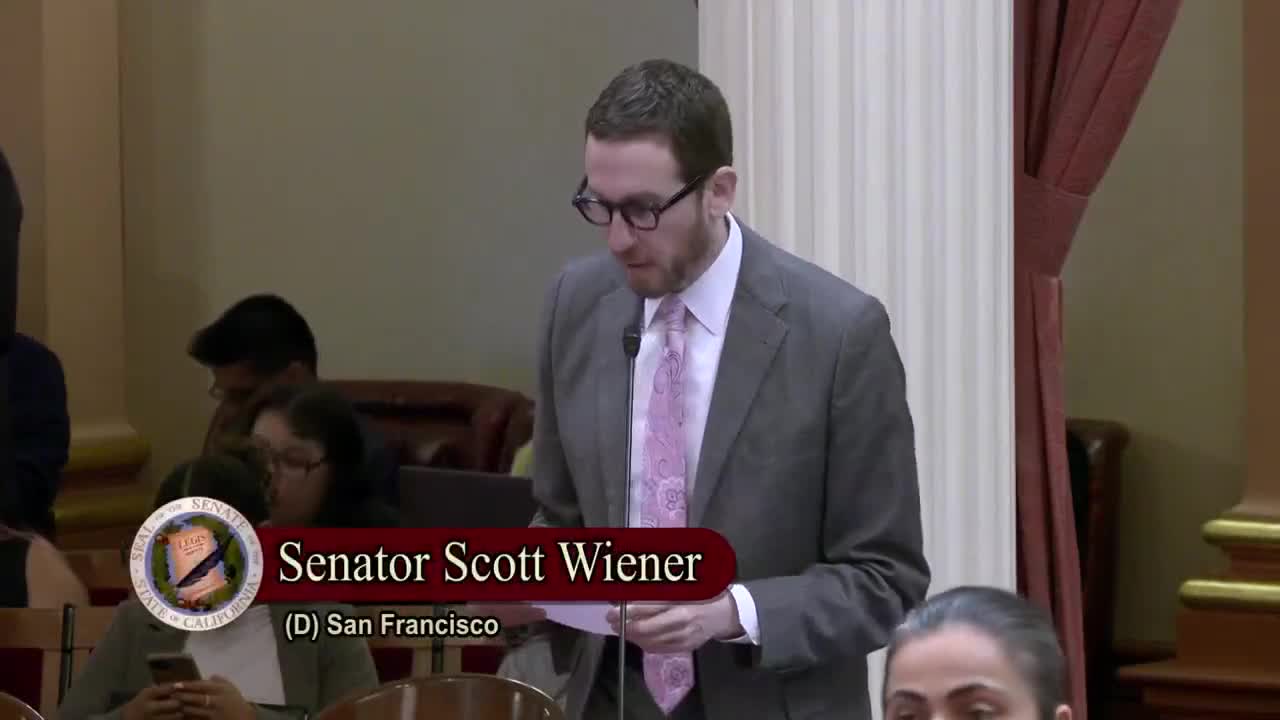 2MIN
Senate Floor
 1MIN
Assembly Floor
 11MIN
Assembly Standing Committee on Public Safety
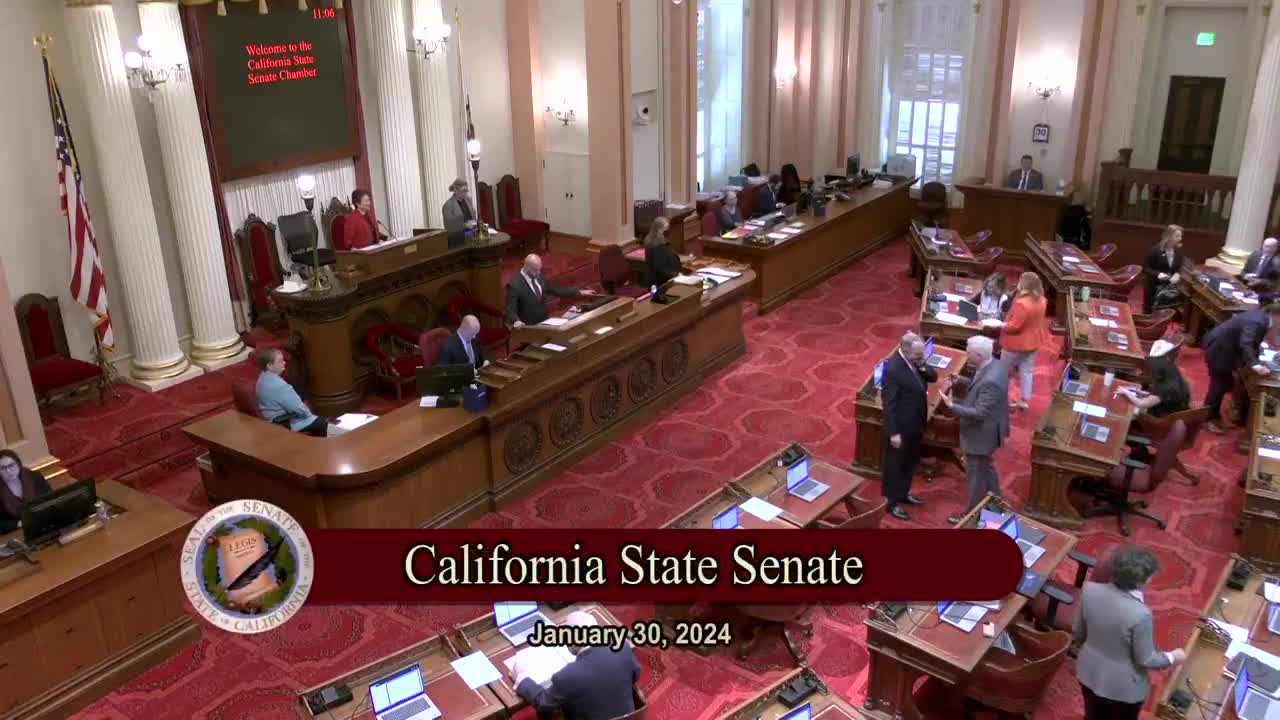 12MIN
Senate Floor
 10MIN
Senate Standing Committee on Public Safety
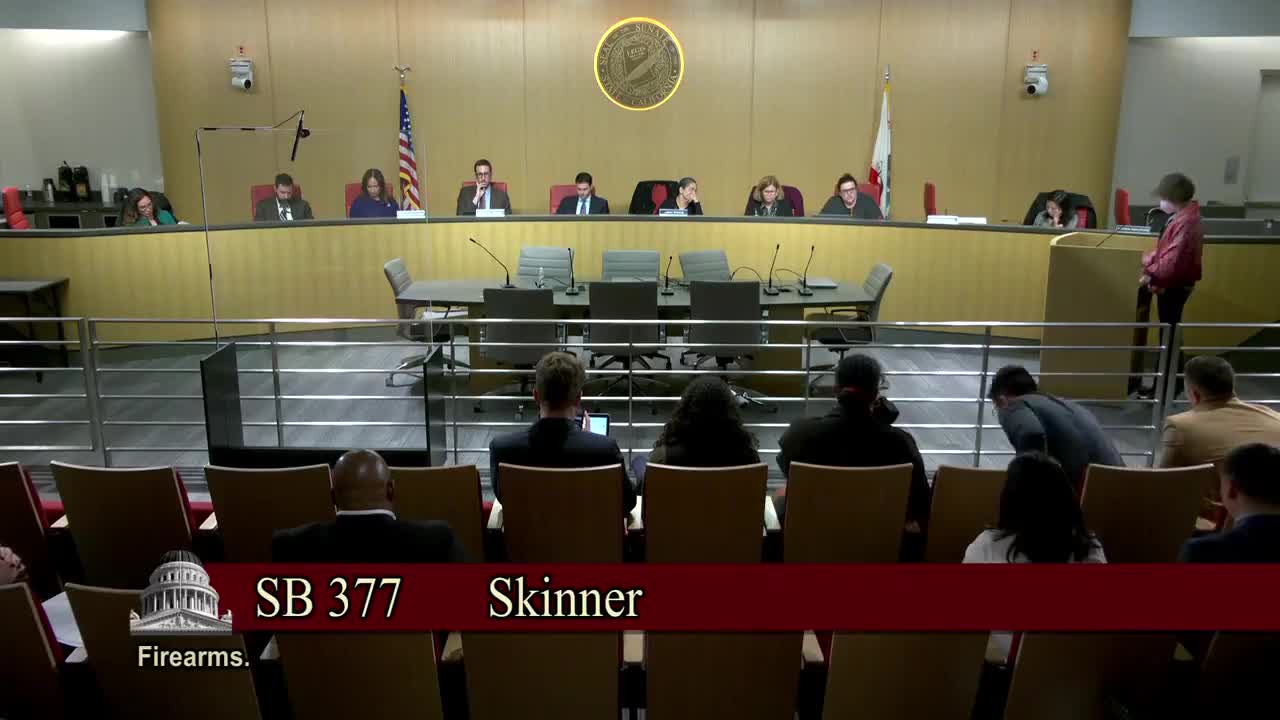 31SEC
Senate Standing Committee on Public Safety
Bill Author

Bill Co-Author(s):