SB 264: Income taxes: deduction: disaster losses.
- Session Year: 2023-2024
- House: Senate
- Latest Version Date: 2023-09-30
Current Status:
Passed
(2023-09-30: Chaptered by Secretary of State. Chapter 285, Statutes of 2023.)
Introduced
In Committee
First Chamber
In Committee
Second Chamber
Enacted
The Personal Income Tax Law and the Corporation Tax Law, in conformity or modified conformity with federal income tax laws, allows various deductions in computing the income that is subject to the taxes imposed by those laws, including a deduction, for taxable years beginning on or after January 1, 2014, and before January 1, 2024, for disaster losses in any city, county, or city and county that is proclaimed by the Governor to be in a state of emergency, as specified. Existing law additionally provides that any law that suspends, defers, reduces, or otherwise diminishes the deduction of a net operating loss, other than those variations already imposed in existing law, shall not apply to a net operating loss attributable to these specified disaster losses.
This bill would extend the deduction for disaster losses, as described above, to taxable years beginning before January 1, 2029, and would extend for those taxable years the provision prohibiting any law that suspends, defers, reduces, or otherwise diminishes the deduction of a net operating loss, as described above, from applying to these specified disaster losses.
Existing law requires any bill authorizing a new tax expenditure to contain, among other things, specific goals, purposes, and objectives that the tax expenditure will achieve, detailed performance indicators, and data collection requirements.
This bill would also include additional information required for any bill authorizing a new tax expenditure.
This bill would take effect immediately as a tax levy.
The Personal Income Tax Law and the Corporation Tax Law, in conformity or modified conformity with federal income tax laws, allows various deductions in computing the income that is subject to the taxes imposed by those laws, including a deduction, for taxable years beginning on or after January 1, 2014, and before January 1, 2024, for disaster losses in any city, county, or city and county that is proclaimed by the Governor to be in a state of emergency, as specified. Existing law additionally provides that any law that suspends, defers, reduces, or otherwise diminishes the deduction of a net operating loss, other than those variations already imposed in existing law, shall not apply to a net operating loss attributable to these specified disaster losses.
This bill would extend the deduction for disaster losses, as described above, to taxable years beginning before January 1, 2029, and would extend for those taxable years the provision prohibiting any law that suspends, defers, reduces, or otherwise diminishes the deduction of a net operating loss, as described above, from applying to these specified disaster losses.
Existing law requires any bill authorizing a new tax expenditure to contain, among other things, specific goals, purposes, and objectives that the tax expenditure will achieve, detailed performance indicators, and data collection requirements.
This bill would also include additional information required for any bill authorizing a new tax expenditure.
This bill would take effect immediately as a tax levy.
The Personal Income Tax Law and the Corporation Tax Law, in conformity or modified conformity with federal income tax laws, allows various deductions in computing the income that is subject to the taxes imposed by those laws, including a deduction, for taxable years beginning on or after January 1, 2014, and before January 1, 2024, for disaster losses in any city, county, or city and county that is proclaimed by the Governor to be in a state of emergency, as specified. Existing law additionally provides that any law that suspends, defers, reduces, or otherwise diminishes the deduction of a net operating loss, other than those variations already imposed in existing law, shall not apply to a net operating loss attributable to these specified disaster losses.
This bill would extend the deduction for disaster losses, as described above, to taxable years beginning before January 1, 2029, and would extend for those taxable years the provision prohibiting any law that suspends, defers, reduces, or otherwise diminishes the deduction of a net operating loss, as described above, from applying to these specified disaster losses.
Existing law requires any bill authorizing a new tax expenditure to contain, among other things, specific goals, purposes, and objectives that the tax expenditure will achieve, detailed performance indicators, and data collection requirements.
This bill would also include additional information required for any bill authorizing a new tax expenditure.
This bill would take effect immediately as a tax levy.
The Personal Income Tax Law and the Corporation Tax Law, in conformity or modified conformity with federal income tax laws, allows various deductions in computing the income that is subject to the taxes imposed by those laws, including a deduction, for taxable years beginning on or after January 1, 2014, and before January 1, 2024, for disaster losses in any city, county, or city and county that is proclaimed by the Governor to be in a state of emergency, as specified. Existing law additionally provides that any law that suspends, defers, reduces, or otherwise diminishes the deduction of a net operating loss, other than those variations already imposed in existing law, shall not apply to a net operating loss attributable to these specified disaster losses.
This bill would extend the deduction for disaster losses, as described above, to taxable years beginning before January 1, 2029, and would extend for those taxable years the provision prohibiting any law that suspends, defers, reduces, or otherwise diminishes the deduction of a net operating loss, as described above, from applying to these specified disaster losses.
Existing law requires any bill authorizing a new tax expenditure to contain, among other things, specific goals, purposes, and objectives that the tax expenditure will achieve, detailed performance indicators, and data collection requirements.
This bill also would state the intent of the Legislature to comply with the additional information requirement for any bill authorizing a tax expenditure.This bill would also include additional information required for any bill authorizing a new tax expenditure.
This bill would take effect immediately as a tax levy.
The Personal Income Tax Law and the Corporation Tax Law, in conformity or modified conformity with federal income tax laws, allows various deductions in computing the income that is subject to the taxes imposed by those laws, including a deduction, for taxable years beginning on or after January 1, 2014, and before January 1, 2024, for disaster losses in any city, county, or city and county that is proclaimed by the Governor to be in a state of emergency, as specified. Existing law additionally provides that any law that suspends, defers, reduces, or otherwise diminishes the deduction of a net operating loss, other than those variations already imposed in existing law, shall not apply to a net operating loss attributable to these specified disaster losses.
This bill would extend the deduction for disaster losses, as described above, to taxable years beginning before January 1, 2029, and would extend for those taxable years the provision prohibiting any law that suspends, defers, reduces, or otherwise diminishes the deduction of a net operating loss, as described above, from applying to these specified disaster losses.
Existing law requires any bill authorizing a new tax expenditure to contain, among other things, specific goals, purposes, and objectives that the tax expenditure will achieve, detailed performance indicators, and data collection requirements.
This bill also would state the intent of the Legislature to comply with the additional information requirement for any bill authorizing a tax expenditure.
This bill would take effect immediately as a tax levy.
(a)For taxable years beginning on or after January 1, 2014, and before January 1, 2029, Section 165(i) of the Internal Revenue Code, relating to disaster losses, shall be applicable to any loss sustained as a result of any disaster occurring in any city, county, or city and county in this state that is proclaimed by the Governor to be in a state of emergency.
(b)(1)For losses described in subdivision (a), the election under Section 165(i) of the Internal Revenue Code, relating to disaster losses, may be made on a return or amended return filed on or before the due date of the return, determined with regard to any extension of time for filing the return, for the taxable year in which the disaster occurred.
(2)Notwithstanding Section 18572, this subdivision shall apply to any loss described in subdivision (a).
(c)Unless specifically provided otherwise, any law, other than Section 17276, that suspends, defers, reduces, or otherwise diminishes the deduction of a net operating loss shall not apply to a net operating loss attributable to the loss described in subdivision (a).
(d)(1)For purposes of complying with Section 41, as it applies to the deduction allowed by this section and Section 24347.14, the Legislature finds and declares as follows:
(A)The specific goal, purpose, and objective of the deduction is to support taxpayers whose business or personal property is completely or partially destroyed due to a disaster.
(B)The performance indicator for the Legislature to use in determining if the deduction achieves its stated purpose is the number of taxpayers allowed a deduction pursuant to this section or Section 24347.14.
(2)(A)By May 1, 2025, and annually thereafter, the Franchise Tax Board shall submit a report to the Legislature, in accordance with Section 9795 of the Government Code, detailing the number of taxpayers allowed a deduction pursuant to this section and Section 24347.14.
(B)The disclosure provisions of this paragraph shall be treated as an exception to Section 19542.
(e)This section shall remain in effect only until December 1, 2029, and as of that date is repealed.
SEC. 2.Section 24347.14 of the Revenue and Taxation Code is amended to read:24347.14.(a)For taxable years beginning on or after January 1, 2014, and before January 1, 2029, Section 165(i) of the Internal Revenue Code, relating to disaster losses, shall be applicable to any loss sustained as a result of any disaster occurring in any city, county, or city and county in this state that is proclaimed by the Governor to be in a state of emergency.
(b)(1)For losses described in subdivision (a), the election under Section 165(i) of the Internal Revenue Code, relating to disaster losses, may be made on a return or amended return filed on or before the due date of the return, determined with regard to any extension of time for filing the return, for the taxable year in which the disaster occurred.
(2)Notwithstanding Section 18572, this subdivision shall apply to any loss described in subdivision (a).
(c)Unless specifically provided otherwise, any law, other than Section 24416, that suspends, defers, reduces, or otherwise diminishes the deduction of a net operating loss shall not apply to a net operating loss attributable to the loss described in subdivision (a).
(d)This section shall remain in effect only until December 1, 2029, and as of that date is repealed.
SEC. 3.This act provides for a tax levy within the meaning of Article IV of the California Constitution and shall go into immediate effect.
(a)For taxable years beginning on or after January 1, 2014, and before January 1, 2029, Section 165(i) of the Internal Revenue Code, relating to disaster losses, shall be applicable to any loss sustained as a result of any disaster occurring in any city, county, or city and county in this state that is proclaimed by the Governor to be in a state of emergency.
(b)(1)For losses described in subdivision (a), the election under Section 165(i) of the Internal Revenue Code, relating to disaster losses, may be made on a return or amended return filed on or before the due date of the return, determined with regard to any extension of time for filing the return, for the taxable year in which the disaster occurred.
(2)Notwithstanding Section 18572, this subdivision shall apply to any loss described in subdivision (a).
(c)Unless specifically provided otherwise, any law, other than Section 17276, that suspends, defers, reduces, or otherwise diminishes the deduction of a net operating loss shall not apply to a net operating loss attributable to the loss described in subdivision (a).
(d)(1)For purposes of complying with Section 41, as it applies to the deduction allowed by this section and Section 24347.14, the Legislature finds and declares as follows:
(A)The specific goal, purpose, and objective of the deduction is to support taxpayers whose business or personal property is completely or partially destroyed due to a disaster.
(B)The performance indicator for the Legislature to use in determining if the deduction achieves its stated purpose is the number of taxpayers allowed a deduction pursuant to this section or Section 24347.14.
(2)(A)By May 1, 2025, and annually thereafter, the Franchise Tax Board shall submit a report to the Legislature, in accordance with Section 9795 of the Government Code, detailing the number of taxpayers allowed a deduction pursuant to this section and Section 24347.14.
(B)The disclosure provisions of this paragraph shall be treated as an exception to Section 19542.
(e)This section shall remain in effect only until December 1, 2029, and as of that date is repealed.
SEC. 2.Section 24347.14 of the Revenue and Taxation Code is amended to read:24347.14.(a)For taxable years beginning on or after January 1, 2014, and before January 1, 2029, Section 165(i) of the Internal Revenue Code, relating to disaster losses, shall be applicable to any loss sustained as a result of any disaster occurring in any city, county, or city and county in this state that is proclaimed by the Governor to be in a state of emergency.
(b)(1)For losses described in subdivision (a), the election under Section 165(i) of the Internal Revenue Code, relating to disaster losses, may be made on a return or amended return filed on or before the due date of the return, determined with regard to any extension of time for filing the return, for the taxable year in which the disaster occurred.
(2)Notwithstanding Section 18572, this subdivision shall apply to any loss described in subdivision (a).
(c)Unless specifically provided otherwise, any law, other than Section 24416, that suspends, defers, reduces, or otherwise diminishes the deduction of a net operating loss shall not apply to a net operating loss attributable to the loss described in subdivision (a).
(d)This section shall remain in effect only until December 1, 2029, and as of that date is repealed.
SEC. 3.This act provides for a tax levy within the meaning of Article IV of the California Constitution and shall go into immediate effect.
(a)For taxable years beginning on or after January 1, 2014, and before January 1, 2029, Section 165(i) of the Internal Revenue Code, relating to disaster losses, shall be applicable to any loss sustained as a result of any disaster occurring in any city, county, or city and county in this state that is proclaimed by the Governor to be in a state of emergency.
(b)(1)For losses described in subdivision (a), the election under Section 165(i) of the Internal Revenue Code, relating to disaster losses, may be made on a return or amended return filed on or before the due date of the return, determined with regard to any extension of time for filing the return, for the taxable year in which the disaster occurred.
(2)Notwithstanding Section 18572, this subdivision shall apply to any loss described in subdivision (a).
(c)Unless specifically provided otherwise, any law, other than Section 17276, that suspends, defers, reduces, or otherwise diminishes the deduction of a net operating loss shall not apply to a net operating loss attributable to the loss described in subdivision (a).
(d)(1)For purposes of complying with Section 41, as it applies to the deduction allowed by this section and Section 24347.14, the Legislature finds and declares as follows:
(A)The specific goal, purpose, and objective of the deduction is to support taxpayers whose business or personal property is completely or partially destroyed due to a disaster.
(B)The performance indicator for the Legislature to use in determining if the deduction achieves its stated purpose is the number of taxpayers allowed a deduction pursuant to this section or Section 24347.14.
(2)(A)By May 1, 2025, and annually thereafter, the Franchise Tax Board shall submit a report to the Legislature, in accordance with Section 9795 of the Government Code, detailing the number of taxpayers allowed a deduction pursuant to this section and Section 24347.14.
(B)The disclosure provisions of this paragraph shall be treated as an exception to Section 19542.
(e)This section shall remain in effect only until December 1, 2029, and as of that date is repealed.
SEC. 2.Section 24347.14 of the Revenue and Taxation Code is amended to read:24347.14.(a)For taxable years beginning on or after January 1, 2014, and before January 1, 2029, Section 165(i) of the Internal Revenue Code, relating to disaster losses, shall be applicable to any loss sustained as a result of any disaster occurring in any city, county, or city and county in this state that is proclaimed by the Governor to be in a state of emergency.
(b)(1)For losses described in subdivision (a), the election under Section 165(i) of the Internal Revenue Code, relating to disaster losses, may be made on a return or amended return filed on or before the due date of the return, determined with regard to any extension of time for filing the return, for the taxable year in which the disaster occurred.
(2)Notwithstanding Section 18572, this subdivision shall apply to any loss described in subdivision (a).
(c)Unless specifically provided otherwise, any law, other than Section 24416, that suspends, defers, reduces, or otherwise diminishes the deduction of a net operating loss shall not apply to a net operating loss attributable to the loss described in subdivision (a).
(d)This section shall remain in effect only until December 1, 2029, and as of that date is repealed.
SEC. 3.It is the intent of the Legislature to comply with Section 41 of the Revenue and Taxation Code.SEC. 4.SEC. 3.This act provides for a tax levy within the meaning of Article IV of the California Constitution and shall go into immediate effect.
(a)For taxable years beginning on or after January 1, 2014, and before January 1, 2029, Section 165(i) of the Internal Revenue Code, relating to disaster losses, shall be applicable to any loss sustained as a result of any disaster occurring in any city, county, or city and county in this state that is proclaimed by the Governor to be in a state of emergency.
(b)(1)For losses described in subdivision (a), the election under Section 165(i) of the Internal Revenue Code, relating to disaster losses, may be made on a return or amended return filed on or before the due date of the return, determined with regard to any extension of time for filing the return, for the taxable year in which the disaster occurred.
(2)Notwithstanding Section 18572, this subdivision shall apply to any loss described in subdivision (a).
(c)Unless specifically provided otherwise, any law, other than Section 17276, that suspends, defers, reduces, or otherwise diminishes the deduction of a net operating loss shall not apply to a net operating loss attributable to the loss described in subdivision (a).
(d)(1)For purposes of complying with Section 41, as it applies to the deduction allowed by this section and Section 24347.14, the Legislature finds and declares as follows:
(A)The specific goal, purpose, and objective of the deduction is to support taxpayers whose business or personal property is completely or partially destroyed due to a disaster.
(B)The performance indicator for the Legislature to use in determining if the deduction achieves its stated purpose is the number of taxpayers allowed a deduction pursuant to this section or Section 24347.14.
(2)(A)By May 1, 2025, and annually thereafter, the Franchise Tax Board shall submit a report to the Legislature, in accordance with Section 9795 of the Government Code, detailing the number of taxpayers allowed a deduction pursuant to this section and Section 24347.14.
(B)The disclosure provisions of this paragraph shall be treated as an exception to Section 19542.
(d)(e)This section shall remain in effect only until December 1, 2029, and as of that date is repealed.
SEC. 2.Section 24347.14 of the Revenue and Taxation Code is amended to read:24347.14.(a)For taxable years beginning on or after January 1, 2014, and before January 1, 2029, Section 165(i) of the Internal Revenue Code, relating to disaster losses, shall be applicable to any loss sustained as a result of any disaster occurring in any city, county, or city and county in this state that is proclaimed by the Governor to be in a state of emergency.
(b)(1)For losses described in subdivision (a), the election under Section 165(i) of the Internal Revenue Code, relating to disaster losses, may be made on a return or amended return filed on or before the due date of the return, determined with regard to any extension of time for filing the return, for the taxable year in which the disaster occurred.
(2)Notwithstanding Section 18572, this subdivision shall apply to any loss described in subdivision (a).
(c)Unless specifically provided otherwise, any law, other than Section 24416, that suspends, defers, reduces, or otherwise diminishes the deduction of a net operating loss shall not apply to a net operating loss attributable to the loss described in subdivision (a).
(d)This section shall remain in effect only until December 1, 2029, and as of that date is repealed.
SEC. 3.It is the intent of the Legislature to comply with Section 41 of the Revenue and Taxation Code.
SEC. 4.This act provides for a tax levy within the meaning of Article IV of the California Constitution and shall go into immediate effect.
(a)For taxable years beginning on or after January 1, 2014, and before January 1, 2024, 2029, Section 165(i) of the Internal Revenue Code, relating to disaster losses, shall be applicable to any loss sustained as a result of any disaster occurring in any city, county, or city and county in this state that is proclaimed by the Governor to be in a state of emergency.
(b)(1)For losses described in subdivision (a), the election under Section 165(i) of the Internal Revenue Code, relating to disaster losses, may be made on a return or amended return filed on or before the due date of the return, determined with regard to any extension of time for filing the return, for the taxable year in which the disaster occurred.
(2)Notwithstanding Section 18572, this subdivision shall apply to any loss described in subdivision (a).
(c)Unless specifically provided otherwise, any law, other than Section 17276.20, 17276, that suspends, defers, reduces, or otherwise diminishes the deduction of a net operating loss shall not apply to a net operating loss attributable to the loss described in subdivision (a).
(d)This section shall remain in effect only until December 1, 2024, 2029, and as of that date is repealed.
SEC. 2.Section 24347.14 of the Revenue and Taxation Code is amended to read:24347.14.(a)For taxable years beginning on or after January 1, 2014, and before January 1, 2024, 2029, Section 165(i) of the Internal Revenue Code, relating to disaster losses, shall be applicable to any loss sustained as a result of any disaster occurring in any city, county, or city and county in this state that is proclaimed by the Governor to be in a state of emergency.
(b)(1)For losses described in subdivision (a), the election under Section 165(i) of the Internal Revenue Code, relating to disaster losses, may be made on a return or amended return filed on or before the due date of the return, determined with regard to any extension of time for filing the return, for the taxable year in which the disaster occurred.
(2)Notwithstanding Section 18572, this subdivision shall apply to any loss described in subdivision (a).
(c)Unless specifically provided otherwise, any law, other than Section 24416.20, 24416, that suspends, defers, reduces, or otherwise diminishes the deduction of a net operating loss shall not apply to a net operating loss attributable to the loss described in subdivision (a).
(d)This section shall remain in effect only until December 1, 2024, 2029, and as of that date is repealed.
SEC. 3.It is the intent of the Legislature to comply with Section 41 of the Revenue and Taxation Code.
SEC. 4.This act provides for a tax levy within the meaning of Article IV of the California Constitution and shall go into immediate effect.
|
Date
|
Status
|
|---|---|
| Sep 30, 2023 | Chaptered by Secretary of State. Chapter 285, Statutes of 2023. |
| Sep 30, 2023 | Approved by the Governor. |
| Sep 21, 2023 | Enrolled and presented to the Governor at 4 p.m. |
| Sep 14, 2023 | Assembly amendments concurred in. (Ayes 40. Noes 0. Page 2835.) Ordered to engrossing and enrolling. |
| Sep 11, 2023 | In Senate. Concurrence in Assembly amendments pending. |
| Sep 11, 2023 | Read third time. Passed. (Ayes 80. Noes 0. Page 3150.) Ordered to the Senate. |
| Sep 5, 2023 | Read second time. Ordered to third reading. |
| Sep 1, 2023 | From committee: Do pass. (Ayes 16. Noes 0.) (September 1). |
| Jul 12, 2023 | July 12 set for first hearing. Placed on APPR. suspense file. |
| Jun 19, 2023 | Read second time and amended. Re-referred to Com. on APPR. |
| Jun 15, 2023 | From committee: Do pass as amended and re-refer to Com. on APPR. (Ayes 11. Noes 0.) (June 12). |
| May 26, 2023 | Referred to Com. on REV. & TAX. |
| May 18, 2023 | In Assembly. Read first time. Held at Desk. |
| May 18, 2023 | Read third time. Passed. (Ayes 38. Noes 0. Page 1103.) Ordered to the Assembly. |
| May 16, 2023 | Read second time. Ordered to consent calendar. |
| May 15, 2023 | From committee: Be ordered to second reading pursuant to Senate Rule 28.8 and ordered to consent calendar. |
| May 9, 2023 | Set for hearing May 15. |
| May 4, 2023 | Read second time and amended. Re-referred to Com. on APPR. |
| May 3, 2023 | From committee: Do pass as amended and re-refer to Com. on APPR with recommendation: To consent calendar. (Ayes 7. Noes 0. Page 993.) (May 3). |
| Apr 20, 2023 | Set for hearing May 3. |
| Feb 9, 2023 | Referred to Com. on GOV. & F. |
| Feb 1, 2023 | From printer. May be acted upon on or after March 3. |
| Jan 31, 2023 | Introduced. Read first time. To Com. on RLS. for assignment. To print. |
|
Date
|
Description
|
Location
|
Votes
|
|
|---|---|---|---|---|
| Sep 14, 2023 | Unfinished Business SB264 Niello Concurrence | Senate Floor |
Passed |
|
| Sep 11, 2023 | SB 264 Niello Senate Third Reading By Kalra | Assembly Floor |
Passed |
|
| Sep 1, 2023 | Do pass. | Assembly Standing Committee on Appropriations |
Passed |
|
| Jun 12, 2023 | Do pass as amended and be re-referred to the Committee on [Appropriations] | Assembly Standing Committee on Revenue and Taxation |
Passed |
|
| May 18, 2023 | Consent Calendar SB264 Niello | Senate Floor |
Passed |
|
| May 3, 2023 | Do pass as amended, but first amend, and re-refer to the Committee on [Appropriations] with the recommendation: To Consent Calendar | Senate Standing Committee on Governance and Finance |
Passed |
This list shows positions taken on this bill by organizations on the date displayed, which is linked to the original source.
Positions by individuals are not included.
|
Organization
|
Position
|
Date
|
|---|---|---|
| California Farm Bureau Federation | ** Support |
SENATE RULES COMMITTEE Office of Senate Floor Analyses (916) 651-1520 Fax: (916) 327-4478 | SB 264 |
UNFINISHED BUSINESS
Bill No: SB 264
Author: Niello (R)
Amended: 6/19/23
Vote: 21- Urgency
SENATE GOVERNANCE & FIN. COMMITTEE: 7-0, 5/3/23
AYES: Caballero, Seyarto, Dahle, Durazo, Glazer, Skinner, Wiener
NO VOTE RECORDED: Blakespear
SENATE APPROPRIATIONS COMMITTEE: Senate Rule 28.8
SENATE FLOOR: 38-0, 5/18/23 (Consent)
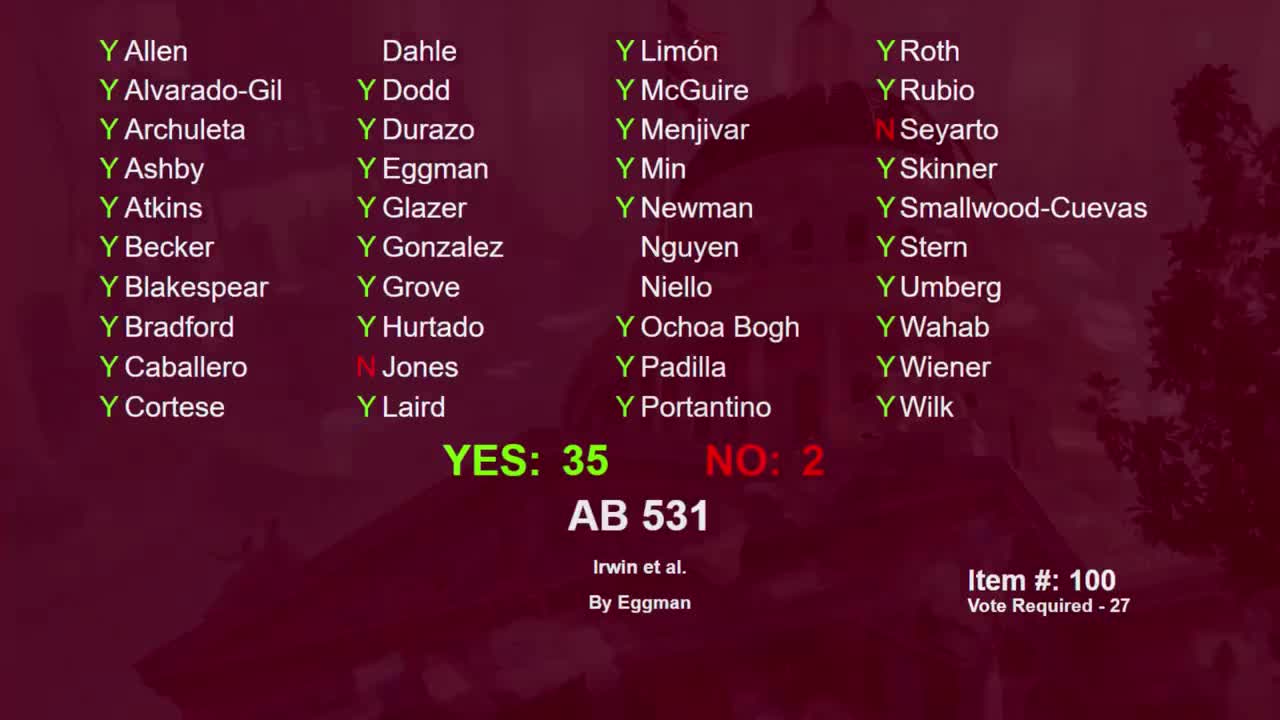
AYES: Allen, Alvarado-Gil, Archuleta, Ashby, Atkins, Becker, Blakespear, Bradford, Caballero, Cortese, Dahle, Durazo, Eggman, Glazer, Grove, Hurtado, Jones, Laird, Limón, McGuire, Menjivar, Min, Newman, Nguyen, Niello, Ochoa Bogh, Padilla, Portantino, Roth, Rubio, Seyarto, Skinner, Smallwood-Cuevas, Stern, Umberg, Wahab, Wiener, Wilk
NO VOTE RECORDED: Dodd, Gonzalez
ASSEMBLY FLOOR: 80-0, 9/11/23 - See last page for vote
SUBJECT: Income taxes: deduction: disaster losses
SOURCE: Author
DIGEST:
This bill extends the sunset on the ability for taxpayers to deduct disaster losses until the 2028 taxable year.
Assembly Amendments
delete an unnecessary section.
ANALYSIS:
Existing law:
- Allows various income tax credits, deductions, exemptions, and exclusions.
- Establishes that it does not automatically conform to changes in federal tax law, except for specific retirement provisions; instead, the Legislature must affirmatively conform to federal changes.
- Allows, in conformity with federal law, taxpayers to elect to claim a loss sustained from a disaster, either in the year the loss occurs or in the year preceding the loss (SB 35 (Wolk, Chapter 230, Statutes of 2015)).
- Permits the deduction under both the Personal Income and Corporation Taxes.
- Specifies that for state tax purposes, the disaster must occur in any city, county, or city and county in this state that is proclaimed by the Governor to be in a state of emergency
- Provides that any loss claimed as a deduction cannot be compensated for by insurance or otherwise.
- Allows taxpayers to claim the loss notwithstanding any tax filing deadline extension, or suspension of net operating losses for the taxable year where the taxpayer claims the deduction, with one exception, and updates the cross reference for the exception.
- Sunsets its provisions after the 2023 taxable year, and repeals the section on December 1, 2024.
This bill:
- Extends the sunset on California’s conformity to federal disaster loss treatment in the Personal Income and Corporation Tax Laws until the 2028 taxable year, and its repeal date until December 1, 2029.
- Contains legislative findings and declarations to comply with Section 41 of the Revenue and Taxation Code.
Background
There have been many Governor-proclaimed disasters in recent years. Over the past few months, the Governor has proclaimed the following disasters:
- April 2023 – severe winter storms in the counties of Contra Costa, Riverside, San Diego, and Yolo
- February/March 2023 – severe winter storms in the counties of Alameda, Alpine, Amador, Butte, Calaveras, Del Norte, El Dorado, Fresno, Glenn, Humboldt, Imperial, Inyo, Kern, Kings, Lake, Los Angeles, Madera, Marin, Mariposa, Mendocino, Merced, Modoc, Mono, Monterey, Napa, Nevada, Orange, Placer, Plumas, Sacramento, San Benito, San Bernardino, San Francisco, San Joaquin, San Luis Obispo, San Mateo, Santa Barbara, Santa Clara, Santa Cruz, Shasta, Sierra, Sonoma, Stanislaus, Trinity, Tulare, Tuolumne, and Yuba
- December 2022/January 2022 – severe winter storms in all counties
- December 2022 – earthquake in Humboldt county
- September 2022 – tropical storm in the counties of Imperial, Inyo, Los Angeles, Riverside, and San Bernardino
This bill extends California’s conformity with federal law to allow taxpayers to claim disaster loss deductions resulting from future disasters in either the current or previous taxable year, thereby allowing taxpayers file an amended return claiming the loss, and receive an immediate tax refund.
FISCAL EFFECT: Appropriation: No Fiscal Com.: Yes Local: No
According to the Assembly Appropriations Committee:
- General Fund (GF) revenue loss of approximately $6,000 per disaster, based on historical data. For reference, the Governor issued 19 emergency proclamations in 2021 related to multi-county drought, fires, heat waves, high winds, and winter storms, as well as a pipeline spill. However, as the frequency and severity of disasters continue to increase in California, there will likely be a corresponding increase in GF revenue loss. To the extent there are more than 25 relevant disasters in a year, GF revenue loss could exceed $150,000 that year.
- GF revenue loss stems from affected taxpayers electing to claim a disaster loss and amend their prior year tax returns instead of waiting to claim a casualty loss when filing their current year tax returns. FTB assumes a taxpayer would choose the loss reporting option most beneficial to their financial situation.
- Minor and absorbable costs to FTB to continue administering the deduction and report specified data to the Legislature.
SUPPORT: (Verified 9/11/23)
California Farm Bureau Federation
OPPOSITION: (Verified 9/11/23)
None received
ARGUMENTS IN SUPPORT: According to the author, “California has seen numerous types of disasters in recent years ranging from wildfires, winter flooding and earthquakes. Current law has helped provide tax relief automatically when the Governor or President proclaims a state of emergency but will expire next year. SB 264 extends the sunset date for the Disaster Loss Tax Deduction for 5 years, allowing individuals impacted by disasters to continue receiving tax relief.”
ASSEMBLY FLOOR: 80-0, 9/11/23
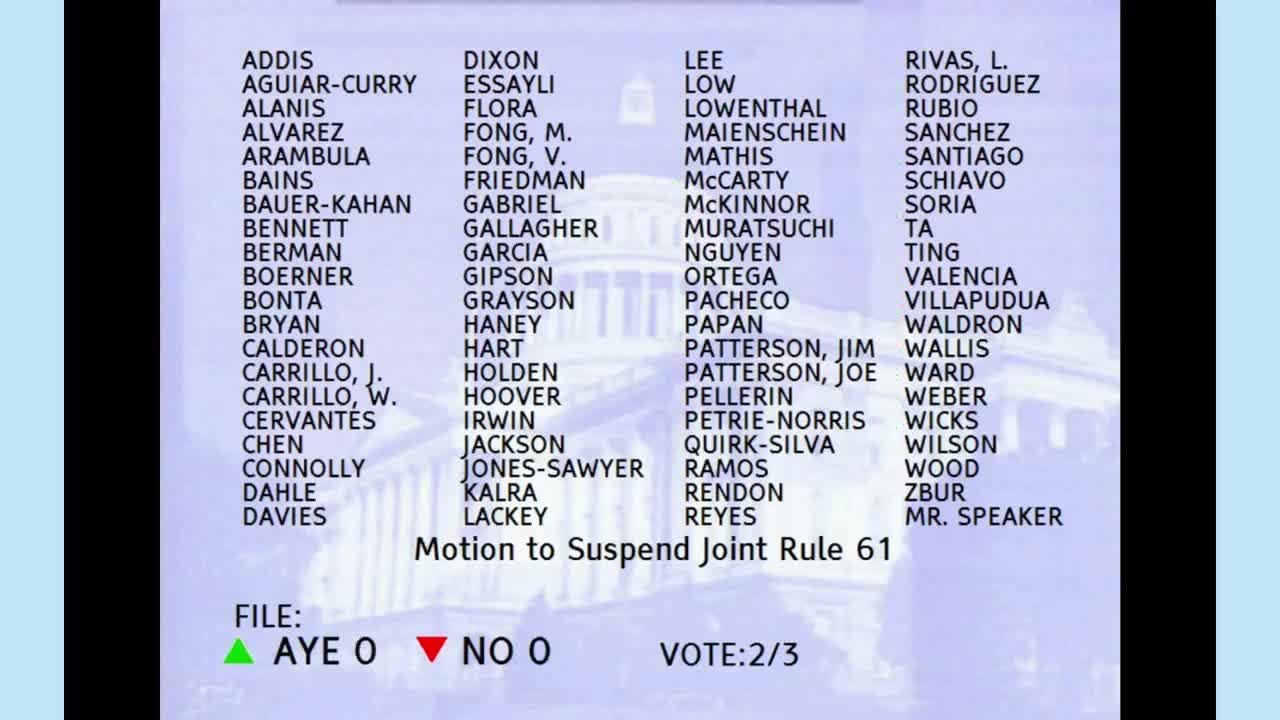
AYES: Addis, Aguiar-Curry, Alanis, Alvarez, Arambula, Bains, Bauer-Kahan, Bennett, Berman, Boerner, Bonta, Bryan, Calderon, Juan Carrillo, Wendy Carrillo, Cervantes, Chen, Connolly, Megan Dahle, Davies, Dixon, Essayli, Flora, Mike Fong, Vince Fong, Friedman, Gabriel, Gallagher, Garcia, Gipson, Grayson, Haney, Hart, Holden, Hoover, Irwin, Jackson, Jones-Sawyer, Kalra, Lackey, Lee, Low, Lowenthal, Maienschein, Mathis, McCarty, McKinnor, Muratsuchi, Stephanie Nguyen, Ortega, Pacheco, Papan, Jim Patterson, Joe Patterson, Pellerin, Petrie-Norris, Quirk-Silva, Ramos, Rendon, Reyes, Luz Rivas, Rodriguez, Blanca Rubio, Sanchez, Santiago, Schiavo, Soria, Ta, Ting, Valencia, Villapudua, Waldron, Wallis, Ward, Weber, Wicks, Wilson, Wood, Zbur, Robert Rivas
Prepared by: Colin Grinnell / GOV. & F. / (916) 651-4119
9/11/23 20:12:40
**** END ****
SENATE THIRD READING
STR Bill Id:SB 264
Author:(Niello)
As Amended Ver:June 19, 2023
Majority vote
SUMMARY
Extends by five years the existing deduction for disaster losses.
Major Provisions
- Extends, from taxable years beginning before January 1, 2024, to taxable years beginning before January 1, 2029, the sunset on the existing deduction for disaster losses under the Personal Income Tax Law and the Corporation Tax Law.
- Makes findings and declarations in compliance with Revenue and Taxation Code Section 41.
- Requires the Franchise Tax Board to annually submit the number of taxpayers allowed this bill's deduction beginning on May 1, 2025.
- Repeals this bill's provisions on December 1, 2029.
- Takes immediate effect as a tax levy.
COMMENTS
Automatic disaster loss relief: Prior to 2015, California taxpayers residing in disaster areas could not automatically deduct the losses resulting from a Governor-proclaimed state of emergency on their state tax return. Rather, California taxpayers could only deduct those losses resulting from a state of emergency proclaimed by the President without action by the state Legislature, and any Governor-proclaimed disaster would benefit from a loss deduction only if the Legislature chose to authorize the deduction for specific areas. Subsequently, the Legislature enacted SB 35 (Wolk), Chapter 230, Statutes of 2015, which provided modified conformity to federal law by allowing a loss deduction for disaster areas under a state of emergency as proclaimed by the Governor, thereby automatically authorizing California taxpayers a disaster loss deduction for Governor-proclaimed disasters. The existing deduction sunsets on January 1, 2024, and this bill would extend that sunset by five years.
According to the Author
California has seen numerous types of disasters in recent years ranging from wildfires, to winter flooding and earthquakes. Current law has helped provide tax relief automatically when the Governor or President proclaims a state of emergency but will expire next year. SB 264 extends the sunset date for the Disaster Loss Tax Deduction for five years, allowing individuals impacted by disasters to continue receiving tax relief.
Arguments in Support
The California Farm Bureau Federation, writing in support of a previous, but substantively similar, version of this bill, states, in part:
This past winter brought historic amounts of precipitation to California, inundating the state with more water than the land and infrastructure could handle. The result from relentless atmospheric river events has been devastating flooding across farms and ranches. Even more flooding is possible, as the state's historic snowpack begins to melt. Farmers and ranchers have taken dramatic actions to try to save their crops and livestock during these disasters, and the ability to recover some losses through the Disaster Loss Tax Deduction is an important tool to sustain the impact from disasters.
Arguments in Opposition
None on file
FISCAL COMMENTS
According to the Assembly Appropriations Committee:
- General Fund (GF) revenue loss of approximately $6,000 per disaster, based on historical data. For reference, the Governor issued 19 emergency proclamations in 2021 related to multi-county drought, fires, heat waves, high winds, and winter storms, as well as a pipeline spill. However, as the frequency and severity of disasters continue to increase in California, there will likely be a corresponding increase in GF revenue loss. To the extent there are more than 25 relevant disasters in a year, GF revenue loss could exceed $150,000 that year.
As Comment 2 discusses in greater detail below, GF revenue loss stems from affected taxpayers electing to claim a disaster loss and amend their prior year tax returns instead of waiting to claim a casualty loss when filing their current year tax returns. The Franchise Tax Board (FTB) assumes a taxpayer would choose the loss reporting option most beneficial to their financial situation.
- Minor and absorbable costs to FTB to continue administering the deduction and report specified data to the Legislature.
VOTES
SENATE FLOOR: 38-0-2
YES: Allen, Alvarado-Gil, Archuleta, Ashby, Atkins, Becker, Blakespear, Bradford, Caballero, Cortese, Dahle, Durazo, Eggman, Glazer, Grove, Hurtado, Jones, Laird, Limón, McGuire, Menjivar, Min, Newman, Nguyen, Niello, Ochoa Bogh, Padilla, Portantino, Roth, Rubio, Seyarto, Skinner, Smallwood-Cuevas, Stern, Umberg, Wahab, Wiener, Wilk
ABS, ABST OR NV: Dodd, Gonzalez
ASM REVENUE AND TAXATION: 11-0-0
YES: Irwin, Wallis, Bains, Grayson, Pacheco, Jim Patterson, Petrie-Norris, Luz Rivas, Ta, Valencia, Zbur
ASM APPROPRIATIONS: 16-0-0
YES: Holden, Megan Dahle, Bryan, Calderon, Wendy Carrillo, Dixon, Mike Fong, Hart, Lowenthal, Mathis, Papan, Pellerin, Sanchez, Soria, Weber, Wilson
UPDATED
VERSION: June 19, 2023
CONSULTANT: Harrison Bowlby / REV. & TAX. / (916) 319-2098 FN: 0001531
Date of Hearing: July 12, 2023
ASSEMBLY COMMITTEE ON APPROPRIATIONS
Chris Holden, Chair
SBPCA Bill Id:SB 264
Author:(Niello) – As Amended Ver:June 19, 2023
Policy Committee: | Revenue and Taxation | Vote: | 11 - 0 |
|
| ||
|
|
Urgency: No State Mandated Local Program: No Reimbursable: No
SUMMARY:
This bill extends, for five years, the deduction under the Personal Income Tax Law and Corporation Tax Law for disaster losses.
This bill also declares the purpose of extending the tax deduction and requires, by May 1, 2025, and annually thereafter, the Franchise Tax Board (FTB) to submit specified performance indicator data to the Legislature.
FISCAL EFFECT:
- General Fund (GF) revenue loss of approximately $6,000 per disaster, based on historical data. For reference, the Governor issued 19 emergency proclamations in 2021 related to multi-county drought, fires, heat waves, high winds, and winter storms, as well as a pipeline spill. However, as the frequency and severity of disasters continue to increase in California, there will likely be a corresponding increase in GF revenue loss. To the extent there are more than 25 relevant disasters in a year, GF revenue loss could exceed $150,000 that year.
As Comment 2 discusses in greater detail below, GF revenue loss stems from affected taxpayers electing to claim a disaster loss and amend their prior year tax returns instead of waiting to claim a casualty loss when filing their current year tax returns. FTB assumes a taxpayer would choose the loss reporting option most beneficial to their financial situation.
- Minor and absorbable costs to FTB to continue administering the deduction and report specified data to the Legislature.
COMMENTS:
- Purpose. The author notes “California has seen numerous types of disasters in recent years ranging from wildfires, winter flooding and earthquakes.” The author intends this bill to extend, for five years, the sunset date on current law set to expire next year that “has helped provide tax relief automatically when the Governor or President proclaims a state of emergency.” This bill is supported by the California Farm Bureau Federation.
- Casualty and Disaster Losses. A casualty loss occurs when property is lost or damaged due to an earthquake, fire, flood, or similar event that is sudden, unexpected, or unusual. A taxpayer generally qualifies for a casualty loss deduction under federal and state law when insurance or other reimbursements do not cover the property damage amount. The casualty loss deduction can be claimed in the taxable year the loss occurs.
Existing state law allows, for taxable years beginning before January 1, 2024, a casualty loss to be taken as a disaster loss when the loss is sustained in an area the President or Governor declares a state of emergency and because of the declared disaster. The taxpayer may elect to claim the disaster loss in either the year the loss occurs, similar to a casualty loss, or the year preceding the loss by filing an amended return for the prior year. If the deduction reduces prior year tax liability, FTB can issue a more immediate tax refund, thus providing the taxpayer with cash relief to help rebuild. This bill extends the disaster loss deduction’s sunset date for five additional years through taxable years beginning before January 1, 2029.
Analysis Prepared by: Irene Ho / APPR. / (916) 319-2081
Date of Hearing: June 12, 2023
ASSEMBLY COMMITTEE ON REVENUE AND TAXATION
Jacqui Irwin, Chair
SBPCA Bill Id:SB 264
Author:(Niello) – As Amended Ver:May 4, 2023
Majority vote. Tax levy. Fiscal committee.
SENATE VOTE: 38-0
SUBJECT: Income taxes: deduction: disaster losses
SUMMARY: Extends by five years the existing deduction for disaster losses. Specifically, this bill:
- Extends, from taxable years beginning before January 1, 2024, to taxable years beginning before January 1, 2029, the sunset on the existing deduction for disaster losses under the Personal Income Tax (PIT) Law and the Corporation Tax (CT) Law.
- Finds and declares, for the purposes of complying with Revenue and Taxation Code (R&TC) Section 41, that the goal of this deduction is to support taxpayers whose business or personal property is completely or partially destroyed due to a disaster, which may be determined by the Legislature based on the number of taxpayers allowed this bill's deduction.
- Requires the Franchise Tax Board (FTB) to annually submit the number of taxpayers allowed this bill's deduction beginning on May 1, 2025.
- Provides that this bill shall remain in effect only until December 1, 2029, and is repealed as of that date.
- Takes immediate effect as a tax levy.
EXISTING FEDERAL LAW:
- Provides that all income from whatever source derived is taxable, unless specifically excluded. (Internal Revenue Code (IRC) Section 61.)
- Authorizes a deduction on unreimbursed amounts of loss resulting from a disaster in an area declared to be under a state of emergency by the President. A taxpayer may take the loss in the year preceding the taxable year in which the disaster occurred. (IRC Section 165(i).) A deduction is allowed only on amounts of loss that exceed $100 and if the aggregate losses are more than 10% of the taxpayer's adjusted gross income for that taxable year. (IRC Section 165(h).)
EXISTING STATE LAW:
- Conforms, for taxable years beginning on or after January 1, 2014, and before January 1, 2024, to IRC Section 165(i) for any loss resulting from a disaster that occurs in an area declared to be under a state of emergency by the Governor. This type of loss is commonly referred to as a disaster loss and is authorized under the PIT Law and the CT Law. (R&TC Sections 17207.14 and 24347.14.)
- Provides that any law that suspends, defers, reduces, or otherwise diminishes the deduction of a net operating loss (NOL) that is a disaster loss shall not apply, except those provisions that provide for modified conformity to federal law regarding the general treatment of a NOL. (R&TC Sections 17207.14(c) and 24347.14 (c).)
FISCAL EFFECT: The FTB, using historical data, estimates a revenue loss of $6,000 per disaster.
COMMENTS:
- The author has provided the following statement in support of this bill:
California has seen numerous types of disasters in recent years ranging from wildfires, winter flooding and earthquakes. Current law has helped provide tax relief automatically when the Governor or President proclaims a state of emergency but will expire next year. SB 264 extends the sunset date for the Disaster Loss Tax Deduction for five years, allowing individuals impacted by disasters to continue receiving tax relief.
- The California Farm Bureau Federation, writing in support of a previous, but substantively similar, version of this bill, states, in part:
This past winter brought historic amounts of precipitation to California, inundating the state with more water than the land and infrastructure could handle. The result from relentless atmospheric river events has been devastating flooding across farms and ranches. Even more flooding is possible, as the state's historic snowpack begins to melt. Farmers and ranchers have taken dramatic actions to try to save their crops and livestock during these disasters, and the ability to recover some losses through the Disaster Loss Tax Deduction is an important tool to sustain the impact from disasters.
- Committee Staff Comments:
- Automatic disaster loss relief: Prior to 2015, California taxpayers residing in disaster areas could not automatically deduct the losses resulting from a Governor-proclaimed state of emergency. Rather, California taxpayers could only deduct those losses resulting from a state of emergency proclaimed by the President without action by the state Legislature, and any Governor-proclaimed disaster would benefit from a loss deduction only if the Legislature chose to authorize the deduction for specific areas. Subsequently, the Legislature enacted SB 35 (Wolk), Chapter 230, Statutes of 2015, which provided modified conformity to federal law by allowing a loss deduction for disaster areas under a state of emergency as proclaimed by the Governor, thereby automatically authorizing California taxpayers a disaster loss deduction for Governor-proclaimed disasters.
- Governor-proclaimed disasters: In the past six months, the following states of emergency have been proclaimed:
- February and March 2023: Severe winter storms in the Counties of Alameda, Alpine, Amador, Butte, Calaveras, Contra Costa, Del Norte, El Dorado, Fresno, Glenn, Humboldt, Imperial, Inyo, Kern, Kings, Lake, Los Angeles, Madera, Marin, Mariposa, Mendocino, Merced, Modoc, Mono, Monterey, Napa, Nevada, Orange, Placer, Plumas, Riverside, Sacramento, San Benito, San Bernardino, San Diego, San Francisco, San Joaquin, San Luis Obispo, San Mateo, Santa Barbara, Santa Clara, Santa Cruz, Shasta, Sierra, Sonoma, Stanislaus, Trinity, Tulare, Tuolumne, Yolo, and Yuba;
- December 2022 and January, 2023: Severe winter storms in all counties;
- December 2022: Earthquake in Humboldt County; and,
- November 2022: Route Fire of August 2022 in Los Angeles County.
- What is a "tax expenditure"? Existing law provides various credits, deductions, exclusions, and exemptions for particular taxpayer groups. In the late 1960s, United States Treasury officials began arguing that these features of the tax law should be referred to as "expenditures" since they are generally enacted to accomplish some governmental purpose and there is a determinable cost associated with each of them (in the form of forgone revenues). This bill extends the existing disaster loss deduction, thereby qualifying as a tax expenditure under this Committee's rules.
- Committee's tax expenditure policy: SB 1335 (Leno), Chapter 845, Statutes of 2014, added R&TC Section 41, which recognized that the Legislature should apply the same level of review used for government spending programs to tax credits introduced on or after January 1, 2015. AB 263 (Burke), Chapter 743, Statutes of 2019, extended the requirements in R&TC Section 41 to all tax expenditure measures under the PIT Law, the CT Law, and the Sales and Use Tax Law introduced on or after January 1, 2020. A tax expenditure proposal must outline specific goals, purposes, and objectives that the tax expenditure will achieve, along with detailed performance indicators for the Legislature to use when measuring whether the tax expenditure meets those stated goals, purposes, and objectives. In addition to the R&TC Section 41 requirements, this Committee's policy also requires that all tax expenditure proposals contain an appropriate sunset provision to be eligible for a vote[1]. Sunsets are required because eliminating a tax expenditure generally requires a 2/3rd vote. These requirements must be satisfied before a bill can receive a vote in this Committee. This bill contains a five-year sunset and complies with the requirements of R&TC Section 41.
- Technical amendment: As currently drafted, this bill states its intent to comply with R&TC Section 41, and includes provisions to comply with R&TC Section 41. The author and Committee may wish to consider striking Section 3 of this bill.
REGISTERED SUPPORT / OPPOSITION:
Support
California Farm Bureau Federation
Opposition
None on file
Analysis Prepared by: Harrison Bowlby / REV. & TAX. / (916) 319-2098
An "appropriate sunset provision" shall mean five years, except in the case of a tax expenditure measure providing relief to California veterans, in which case "appropriate sunset provision" shall mean 10 years. ↑
SENATE RULES COMMITTEE Office of Senate Floor Analyses (916) 651-1520 Fax: (916) 327-4478 | SB 264 |
CONSENT
Bill No: SB 264
Author: Niello (R)
Amended: 5/4/23
Vote: 21- Urgency
SENATE GOVERNANCE & FIN. COMMITTEE: 7-0, 5/3/23
AYES: Caballero, Seyarto, Dahle, Durazo, Glazer, Skinner, Wiener
NO VOTE RECORDED: Blakespear
SENATE APPROPRIATIONS COMMITTEE: Senate Rule 28.8
SUBJECT: Income taxes: deduction: disaster losses
SOURCE: Author
DIGEST:
This bill extends the sunset on the ability for taxpayers to deduct disaster losses until the 2028 taxable year.
ANALYSIS:
Existing law:
- Allows various income tax credits, deductions, exemptions, and exclusions.
- Does not automatically conform to changes in federal tax law, except for specific retirement provisions; instead, the Legislature must affirmatively conform to federal changes.
- Allows, in conformity with federal law, taxpayers to elect to claim a loss sustained from a disaster, either in the year the loss occurs or in the year preceding the loss (SB 35, Wolk, Chapter 230, Statutes of 2015).
- Permits the deduction under both the Personal Income and Corporation Taxes.
- Specifies that for state tax purposes, the disaster must occur in any city, county, or city and county in this state that is proclaimed by the Governor to be in a state of emergency
- Provides that any loss claimed as a deduction cannot be compensated for by insurance or otherwise.
- Allows taxpayers to claim the loss notwithstanding any tax filing deadline extension, or suspension of net operating losses for the taxable year where the taxpayer claims the deduction, with one exception, and updates the cross reference for the exception.
- Sunsets its provisions after the 2023 taxable year, and repeals the section on December 1, 2024.
This bill:
- Extends the sunset on California’s conformity to federal disaster loss treatment in the Personal Income and Corporation Tax Laws until the 2028 taxable year, and its repeal date until December 1, 2029.
- Contains legislative findings and declarations to comply with Section 41 of the Revenue and Taxation Code.
Background
There have been many Governor-proclaimed disasters in recent years. Over the past few months, the Governor has proclaimed the following disasters:
- April 2023 – severe winter storms in the counties of Contra Costa, Riverside, San Diego, and Yolo
- February/March 2023 – severe winter storms in the counties of Alameda, Alpine, Amador, Butte, Calaveras, Del Norte, El Dorado, Fresno, Glenn, Humboldt, Imperial, Inyo, Kern, Kings, Lake, Los Angeles, Madera, Marin, Mariposa, Mendocino, Merced, Modoc, Mono, Monterey, Napa, Nevada, Orange, Placer, Plumas, Sacramento, San Benito, San Bernardino, San Francisco, San Joaquin, San Luis Obispo, San Mateo, Santa Barbara, Santa Clara, Santa Cruz, Shasta, Sierra, Sonoma, Stanislaus, Trinity, Tulare, Tuolumne, and Yuba
- December 2022/January 2022 – severe winter storms in all counties
- December 2022 – earthquake in Humboldt county
- September 2022 – tropical storm in the counties of Imperial, Inyo, Los Angeles, Riverside, and San Bernardino
SB 264 would extend California’s conformity with federal law to allow taxpayers to claim disaster loss deductions resulting from future disasters in either the current or previous taxable year, thereby allowing taxpayers file an amended return claiming the loss, and receive an immediate tax refund.
FISCAL EFFECT: Appropriation: No Fiscal Com.: Yes Local: No
SUPPORT: (Verified 5/17/23)
California Farm Bureau Federation
OPPOSITION: (Verified 5/17/23)
None received
ARGUMENTS IN SUPPORT: According to the author, “California has seen numerous types of disasters in recent years ranging from wildfires, winter flooding and earthquakes. Current law has helped provide tax relief automatically when the Governor or President proclaims a state of emergency but will expire next year. SB 264 extends the sunset date for the Disaster Loss Tax Deduction for 5 years, allowing individuals impacted by disasters to continue receiving tax relief.”
Prepared by: Jessica Deitchman & Colin Grinnell / GOV. & F. / (916) 651-4119
5/17/23 15:09:32
**** END ****
SENATE COMMITTEE ON GOVERNANCE AND FINANCE
Senator Anna M. Caballero, Chair
2023 - 2024 Regular
Bill No: | SB 264 | Hearing Date: | 5/3/23 |
Author: | Niello | Tax Levy: | Yes |
Version: | 1/31/23 | Fiscal: | Yes |
Consultant: | Deitchman | ||
Income taxes: deduction: disaster losses
Extends the sunset for taxpayers to deduct disaster losses from 2024 to 2029.
Background
Tax expenditures. California law allows various income tax credits, deductions, exemptions, and exclusions. The Legislature enacts such tax incentives either to compensate taxpayers for incurring certain expenses, such as child adoption, or to influence certain behavior, such as charitable giving. The Legislature uses tax incentives to encourage taxpayers to do something that but for the tax credit, they would otherwise not do. The Department of Finance is required annually to publish a list of tax expenditures, currently totaling around $87 billion per year.
Conformity. State law does not automatically conform to changes in federal tax law, except for specific retirement provisions. Instead, the Legislature must affirmatively conform to federal changes, which it can do in two different ways. First, the Legislature can pass an individual tax bill that conforms to a specific federal provision, such as the Regulated Investment Company Modernization Act (AB 1423, Perea, 2011). Second, the Legislature can pass one omnibus bill that provides that state law conforms to federal law as of a specified date. Currently state law generally conforms to federal tax law as of January 1, 2015 (AB 154, Ting, 2015).
Disaster Losses. Under federal and state tax law, a taxpayer may elect to claim a loss sustained from a disaster, either in the year the loss occurs or in the year preceding the loss. This election allows the taxpayer to file an amended return immediately for the prior taxable year so that they can claim the loss immediately, and receive a tax refund. A disaster loss that is not reimbursed by insurance or another sources, can be deducted to the extent that each loss exceeds $100 and aggregate net losses for the taxable year exceed 10 percent of adjusted gross income. Business and income-producing property are not subject to these limitations.
Under current state law, for taxable years beginning on or after January 1, 2014, and before January 1, 2024, a taxpayer may elect the same disaster loss treatment for state law available under federal for any loss sustained from a disaster in any city, county, or city and county in California that the Governor has proclaimed to be in a state of emergency (SB 35, Wolk, 2015,).
The author wants to extend the current sunset date on disaster loss treatment subject to Governor-proclaimed disasters to allow taxpayers to be able to claim a disaster loss beyond 2024.
Proposed Law
Senate Bill 264 extends for five years, the disaster loss tax deduction allowed for Governor- proclaimed disasters to taxable years beginning before January 1, 2029.
The bill makes a technical change by updating a cross reference, relating to the net operating loss (NOL) deduction.
The measure states that it is the intent of the Legislature to comply with the requirements of Section 41 of the Revenue and Taxation Code.
SB 264 repeals the deduction on December 1, 2029.
State Revenue Impact
According to the Franchise Tax Board, “The revenue impact associated with this bill is primarily attributed to timing differences and therefore, the net revenue loss is minimal.”
Comments
1. Purpose of the bill. According to the author, “California has seen numerous types of disasters in recent years ranging from wildfires, winter flooding and earthquakes. Current law has helped provide tax relief automatically when the Governor or President proclaims a state of emergency but will expire next year. SB 264 extends the sunset date for the Disaster Loss Tax Deduction for 5 years, allowing individuals impacted by disasters to continue receiving tax relief.”
2. Recent Disasters. There have been many Governor-proclaimed disasters in recent years. Over the past few months, the Governor has proclaimed the following disasters:
- April 2023 – severe winter storms in the counties of Contra Costa, Riverside, San Diego, and Yolo
- February/March 2023 – severe winter storms in the counties of Alameda, Alpine, Amador, Butte, Calaveras, Del Norte, El Dorado, Fresno, Glenn, Humboldt, Imperial, Inyo, Kern, Kings, Lake, Los Angeles, Madera, Marin, Mariposa, Mendocino, Merced, Modoc, Mono, Monterey, Napa, Nevada, Orange, Placer, Plumas, Sacramento, San Benito, San Bernardino, San Francisco, San Joaquin, San Luis Obispo, San Mateo, Santa Barbara, Santa Clara, Santa Cruz, Shasta, Sierra, Sonoma, Stanislaus, Trinity, Tulare, Tuolumne, and Yuba
- December 2022/January 2022 – severe winter storms in all counties
- December 2022 – earthquake in Humboldt county
- September 2022 – tropical storm in the counties of Imperial, Inyo, Los Angeles, Riverside, and San Bernardino
3. Missing Section 41. Section 41 of the Revenue and Taxation Code, requires any bill authorizing a new tax expenditure to contain, among other things, specific goals, purposes, and objectives that the tax expenditure will achieve, and detailed performance indicators, along with data collection and reporting requirements (SB 1335, Leno, 2014). SB 264 does not include the reporting metrics needed to comply with Section 41, however it does include language that states that it plans to comply with the provisions. The Committee may wish to consider amending the bill to add the Section 41 reporting requirements.
Support and Opposition
(4/28/23)
Support: California Farm Bureau Federation
Opposition: None submitted.
-- END --
Discussed in Hearing
 4MIN
Senate Floor
 28SEC
Assembly Floor
 14MIN
Assembly Standing Committee on Revenue and Taxation
Bill Author

Bill Co-Author(s):