SB 278: Elder abuse: emergency financial contact program.
- Session Year: 2023-2024
- House: Senate
- Latest Version Date: 2024-09-03
Current Status:
Failed
(2024-09-28: In Senate. Consideration of Governor's veto pending.)
Introduced
In Committee
First Chamber
In Committee
Second Chamber
Enacted
Existing law, the Elder Abuse and Dependent Adult Civil Protection Act, establishes various procedures for the reporting, investigation, and prosecution of elder and dependent adult abuse. Existing law defines financial abuse for those purposes and provides that it occurs when, among other instances, a person or entity takes, secretes, appropriates, obtains, or retains, or assists in taking, secreting, appropriating, obtaining, or retaining, real or personal property of an elder or dependent adult for a wrongful use or with intent to defraud, or both. Existing law requires a person or entity to be deemed to have taken, secreted, appropriated, obtained, or retained property for a wrongful use if, among other things, the person or entity takes the property and the person or entity knew or should have known that the conduct is likely to be harmful to the elder or dependent adult. Existing law requires the court to award specified costs if a defendant is found liable for financial abuse, as specified.
Existing law makes the failure to report, or impeding or inhibiting a report of, among other things, financial abuse of an elder or dependent adult, in violation of certain reporting requirements a misdemeanor.
This bill, commencing January 1, 2026, would require a covered person or entity, as defined, to establish an emergency financial contact program for covered accountholders, as specified. The bill would require a covered person or entity to notify a joint accountholder or an emergency financial contact, if one has been provided, if the covered person or entity should reasonably suspect a covered transaction requested by the covered accountholder is the result of financial abuse. The bill would also require a covered person or entity to delay, by at least 3 business days, a covered transaction initiated by a covered accountholder if the covered person or entity should reasonably suspect the transaction is the result of financial abuse and would make a covered person or entity immune from administrative, civil, or other liability that might arise from a delayed or refused transaction. The bill would authorize a covered person or entity to implement an emergency financial contact program for an accountholder who is not an elder or dependent adult, as specified.
Existing law provides for the award of attorneys fees and costs, and damages, to a plaintiff when it is proven by a preponderance of the evidence that the defendant is liable for financial abuse of an elder or dependent adult.
This bill would, if proven by a preponderance of the evidence, subject a covered person or entity to liability for actual and noneconomic damages, for certain specified violations. The bill would prohibit a nonmanagerial employee of a covered entity or a covered person who is an employee of a covered entity who meets certain specifications from being held personally liable in their individual capacity for specified violations. The bill would make these provisions severable, except as specified.
Existing law, the Elder Abuse and Dependent Adult Civil Protection Act, establishes various procedures for the reporting, investigation, and prosecution of elder and dependent adult abuse. Existing law defines financial abuse for those purposes and provides that it occurs when, among other instances, a person or entity takes, secretes, appropriates, obtains, or retains, or assists in taking, secreting, appropriating, obtaining, or retaining, real or personal property of an elder or dependent adult for a wrongful use or with intent to defraud, or both. Existing law requires a person or entity to be deemed to have taken, secreted, appropriated, obtained, or retained property for a wrongful use if, among other things, the person or entity takes the property and the person or entity knew or should have known that the conduct is likely to be harmful to the elder or dependent adult. Existing law requires the court to award specified costs if a defendant is found liable for financial abuse, as specified.
Existing law makes the failure to report, or impeding or inhibiting a report of, among other things, financial abuse of an elder or dependent adult, in violation of certain reporting requirements a misdemeanor.
This bill, commencing January 1, 2026, would require a covered person or entity, as defined, to establish an emergency financial contact program for covered accountholders, as specified. The bill would require a covered person or entity to notify a joint accountholder or an emergency financial contact, if one has been provided, if the covered person or entity should reasonably suspect a covered transaction requested by the covered accountholder is the result of financial abuse. The bill would also require a covered person or entity to delay, by at least 3 business days, a covered transaction initiated by a covered accountholder if the covered person or entity should reasonably suspect the transaction is the result of financial abuse and would make a covered person or entity immune from administrative, civil, or other liability that might arise from a delayed or refused transaction. The bill would authorize a covered person or entity to implement an emergency financial contact program for an accountholder who is not an elder or dependent adult, as specified.
Existing law provides for the award of attorneys fees and costs, and damages, to a plaintiff when it is proven by a preponderance of the evidence that the defendant is liable for financial abuse of an elder or dependent adult.
This bill would, if proven by a preponderance of the evidence, subject a covered person or entity to liability for actual and noneconomic damages, for certain specified violations. The bill would prohibit a nonmanagerial employee of a covered entity or a covered person who is an employee of a covered entity who meets certain specifications from being held personally liable in their individual capacity for specified violations. The bill would make these provisions severable, except as specified.
Existing law, the Elder Abuse and Dependent Adult Civil Protection Act, establishes various procedures for the reporting, investigation, and prosecution of elder and dependent adult abuse. Existing law defines financial abuse for those purposes and provides that it occurs when, among other instances, a person or entity takes, secretes, appropriates, obtains, or retains, or assists in taking, secreting, appropriating, obtaining, or retaining, real or personal property of an elder or dependent adult for a wrongful use or with intent to defraud, or both. Existing law requires a person or entity to be deemed to have taken, secreted, appropriated, obtained, or retained property for a wrongful use if, among other things, the person or entity takes the property and the person or entity knew or should have known that the conduct is likely to be harmful to the elder or dependent adult. Existing law requires the court to award specified costs if a defendant is found liable for financial abuse, as specified.
Existing law makes the failure to report, or impeding or inhibiting a report of, among other things, financial abuse of an elder or dependent adult, in violation of certain reporting requirements a misdemeanor.
This bill, commencing January 1, 2026, would require a covered person or entity, as defined, to establish an emergency financial contact program for covered accountholders, as specified. The bill would require a covered person or entity to notify a joint accountholder or an emergency financial contact, if one has been provided, if the covered person or entity should reasonably suspect a covered transaction requested by the covered accountholder is the result of financial abuse. The bill would also require a covered person or entity to delay, by at least 3 business days, a covered transaction initiated by a covered accountholder if the covered person or entity should reasonably suspect the transaction is the result of financial abuse and would make a covered person or entity immune from administrative, civil, or other liability that might arise from a delayed or refused transaction. The bill would authorize a covered person or entity to implement an emergency financial contact program for an accountholder who is not an elder or dependent adult, as specified.
Existing law provides for the award of attorneys fees and costs, and damages, to a plaintiff when it is proven by a preponderance of the evidence that the defendant is liable for financial abuse of an elder or dependent adult.
The bill would subject a covered person or entity to a civil penalty not to exceed $5,000 for a violation of specified provisions, including failing to notify a joint accountholder or emergency financial contact if they reasonably suspect a covered transaction is the result of financial abuse. The bill would also, when provenThis bill would, if proven by a preponderance of the evidence, subject a covered person or entity to liability for damages of up to 3 times the actual damages, as well as actual and noneconomic damages, for certain specified violations. The bill would prohibit a nonsupervisory nonmanagerial employee of a covered entity or a covered person who is an employee of a covered entity who meets certain specifications from being held personally liable in their individual capacity for specified violations.
Existing law, the Elder Abuse and Dependent Adult Civil Protection Act, establishes various procedures for the reporting, investigation, and prosecution of elder and dependent adult abuse. Existing law defines financial abuse for those purposes and provides that it occurs when, among other instances, a person or entity takes, secretes, appropriates, obtains, or retains, or assists in taking, secreting, appropriating, obtaining, or retaining, real or personal property of an elder or dependent adult for a wrongful use or with intent to defraud, or both. Existing law requires a person or entity to be deemed to have taken, secreted, appropriated, obtained, or retained property for a wrongful use if, among other things, the person or entity takes the property and the person or entity knew or should have known that the conduct is likely to be harmful to the elder or dependent adult. Existing law requires the court to award specified costs if a defendant is found liable for financial abuse, as specified.
Existing law makes the failure to report, or impeding or inhibiting a report of, among other things, financial abuse of an elder or dependent adult, in violation of certain reporting requirements a misdemeanor.
This bill, commencing January 1, 2026, would require a covered person or entity, as defined, to establish an emergency financial contact program for covered accountholders, as specified. The bill would require a covered person or entity to notify a joint accountholder or an emergency financial contact, if one has been provided, if the covered person or entity should reasonably suspect a covered transaction requested by the covered accountholder is the result of financial abuse. The bill would also require a covered person or entity to delay, by at least 3 business days, a covered transaction initiated by a covered accountholder if the covered person or entity should reasonably suspect the transaction is the result of financial abuse and would make a covered person or entity immune from administrative, civil, or other liability that might arise from a delayed or refused transaction. The bill would authorize a covered person or entity to implement an emergency financial contact program for an accountholder who is not an elder or dependent adult, as specified.
Existing law provides for the award of attorneys fees and costs, and damages, to a plaintiff when it is proven by a preponderance of the evidence that the defendant is liable for financial abuse of an elder or dependent adult.
The bill would subject a covered person or entity to a civil penalty not to exceed $5,000 for a violation of specified provisions, including failing to notify a joint accountholder or emergency financial contact if they reasonably suspect a covered transaction is the result of financial abuse. The bill would also, when proven by a preponderance of the evidence, subject a covered person or entity to liability for damages of up to 3 times the actual damages, as well as noneconomic damages, for certain specified violations. The bill would prohibit a nonsupervisory employee of a covered entity from being held personally liable in their individual capacity for specified violations.
Existing law, the Elder Abuse and Dependent Adult Civil Protection Act, establishes various procedures for the reporting, investigation, and prosecution of elder and dependent adult abuse. Existing law defines financial abuse for those purposes and provides that it occurs when, among other instances, a person or entity takes, secretes, appropriates, obtains, or retains, or assists in taking, secreting, appropriating, obtaining, or retaining, real or personal property of an elder or dependent adult for a wrongful use or with intent to defraud, or both. Existing law requires a person or entity to be deemed to have taken, secreted, appropriated, obtained, or retained property for a wrongful use if, among other things, the person or entity takes the property and the person or entity knew or should have known that the conduct is likely to be harmful to the elder or dependent adult. Existing law requires the court to award specified costs if a defendant is found liable for financial abuse, as specified.
Existing law makes the failure to report, or impeding or inhibiting a report of, among other things, financial abuse of an elder or dependent adult, in violation of certain reporting requirements a misdemeanor.
This bill would add to the definition of financial abuse knowingly aiding and abetting in the taking, secreting, appropriating, obtaining, or retaining real or personal property of an elder or dependent adult for a wrongful use or with intent to defraud, or both. The bill would also define assists for those purposes. The bill would also specifically state that the above-described provision regarding when a person or entity is deemed to have taken property for a wrongful use includes when a person or entity assisted in taking, secreting, appropriating, obtaining, or retaining property for a wrongful use. The changes made by this bill would not apply to criminal prosecutions and, therefore, the bill would not expand the above-described crime. The bill would make the provisions severable.This bill, commencing January 1, 2026, would require a covered person or entity, as defined, to establish an emergency financial contact program for covered accountholders, as specified. The bill would require a covered person or entity to notify a joint accountholder or an emergency financial contact, if one has been provided, if the covered person or entity should reasonably suspect a covered transaction requested by the covered accountholder is the result of financial abuse. The bill would also require a covered person or entity to delay, by at least 3 business days, a covered transaction initiated by a covered accountholder if the covered person or entity should reasonably suspect the transaction is the result of financial abuse and would make a covered person or entity immune from administrative, civil, or other liability that might arise from a delayed or refused transaction. The bill would authorize a covered person or entity to implement an emergency financial contact program for an accountholder who is not an elder or dependent adult, as specified.
Existing law, the Elder Abuse and Dependent Adult Civil Protection Act, establishes various procedures for the reporting, investigation, and prosecution of elder and dependent adult abuse. Existing law defines financial abuse for those purposes and provides that it occurs when, among other instances, a person or entity takes, secretes, appropriates, obtains, or retains, or assists in taking, secreting, appropriating, obtaining, or retaining, real or personal property of an elder or dependent adult for a wrongful use or with intent to defraud, or both. Existing law requires a person or entity to be deemed to have taken, secreted, appropriated, obtained, or retained property for a wrongful use if, among other things, the person or entity takes the property and the person or entity knew or should have known that the conduct is likely to be harmful to the elder or dependent adult. Existing law requires the court to award specified costs if a defendant is found liable for financial abuse, as specified.
Existing law makes the failure to report, or impeding or inhibiting a report of, among other things, financial abuse of an elder or dependent adult, in violation of certain reporting requirements a misdemeanor.
This bill would add to the definition of financial abuse knowingly aiding and abetting in the taking, secreting, appropriating, obtaining, or retaining real or personal property of an elder or dependent adult for a wrongful use or with intent to defraud, or both. The bill would also define assists for those purposes. The bill would also specifically state that the above-described provision regarding when a person or entity is deemed to have taken property for a wrongful use includes when a person or entity assisted in taking, secreting, appropriating, obtaining, or retaining property for a wrongful use. The changes made by this bill would not apply to criminal prosecutions and, therefore, the bill would not expand the above-described crime. The bill would make the provisions severable.
Existing law, the Elder Abuse and Dependent Adult Civil Protection Act, establishes various procedures for the reporting, investigation, and prosecution of elder and dependent adult abuse. Existing law defines financial abuse for those purposes and provides that it occurs when, among other instances, a person or entity takes, secretes, appropriates, obtains, or retains, or assists in taking, secreting, appropriating, obtaining, or retaining, real or personal property of an elder or dependent adult for a wrongful use or with intent to defraud, or both. Existing law requires a person or entity to be deemed to have taken, secreted, appropriated, obtained, or retained property for a wrongful use if, among other things, the person or entity takes the property and the person or entity knew or should have known that the conduct is likely to be harmful to the elder or dependent adult. Existing law requires the court to award specified costs if a defendant is found liable for financial abuse, as specified.
Existing law makes the failure to report, or impeding or inhibiting a report of, among other things, financial abuse of an elder or dependent adult, in violation of certain reporting requirements a misdemeanor.
This bill would add to the definition of financial abuse knowingly aiding or and abetting in the taking, secreting, appropriating, obtaining, or retaining real or personal property of an elder or dependent adult for a wrongful use or with intent to defraud, or both. The bill would also define assists for those purposes. The bill would also specifically state that the above-described provision regarding when a person or entity is deemed to have taken property for a wrongful use includes when a person or entity assisted in taking, secreting, appropriating, obtaining, or retaining property for a wrongful use. The changes made by this bill would not apply to criminal prosecutions and, therefore, the bill would not expand the above-described crime.
Existing law, the Elder Abuse and Dependent Adult Civil Protection Act, establishes various procedures for the reporting, investigation, and prosecution of elder and dependent adult abuse. Existing law defines financial abuse for those purposes and provides that it occurs when, among other instances, a person or entity takes, secretes, appropriates, obtains, or retains, or assists in taking, secreting, appropriating, obtaining, or retaining, real or personal property of an elder or dependent adult for a wrongful use or with intent to defraud, or both. Existing law requires a person or entity to be deemed to have taken, secreted, appropriated, obtained, or retained property for a wrongful use if, among other things, the person or entity takes the property and the person or entity knew or should have known that the conduct is likely to be harmful to the elder or dependent adult. Existing law requires the court to award specified costs if a defendant is found liable for financial abuse, as specified.
Existing law makes the failure to report, or impeding or inhibiting a report of, among other things, financial abuse of an elder or dependent adult, in violation of certain reporting requirements a misdemeanor.
This bill would add to the definition of financial abuse knowingly aiding or abetting in the taking, secreting, appropriating, obtaining, or retaining real or personal property of an elder or dependent adult for a wrongful use or with intent to defraud, or both. The bill would also define assists for those purposes. The bill would also specifically state that the above-described provision regarding when a person or entity is deemed to have taken property for a wrongful use includes when a person or entity assisted in taking, secreting, appropriating, obtaining, or retaining property for a wrongful use. The bill would state that its provisions are declaratory of existing law. The changes made by this bill would not apply to criminal prosecutions and, therefore, the bill would not expand the above-described crime.
Existing law, the Elder Abuse and Dependent Adult Civil Protection Act, establishes various procedures for the reporting, investigation, and prosecution of elder and dependent adult abuse. Existing law defines financial abuse for those purposes and provides that it occurs when, among other instances, a person or entity takes, secretes, appropriates, obtains, or retains, or assists in taking, secreting, appropriating, obtaining, or retaining, real or personal property of an elder or dependent adult for a wrongful use or with intent to defraud, or both. Existing law requires a person or entity to be deemed to have taken, secreted, appropriated, obtained, or retained property for a wrongful use if, among other things, the person or entity takes the property and the person or entity knew or should have known that the conduct is likely to be harmful to the elder or dependent adult. Existing law requires the court to award specified costs if a defendant is found liable for financial abuse, as specified.
This bill would specifically state that the above-described provision regarding when a person or entity is deemed to have taken property for a wrongful use includes when a person or entity assisted in taking, secreting, appropriating, obtaining, or retaining property for a wrongful use. The bill would state that its provisions are declaratory of existing law.
As used in this article, the following definitions apply:
(a)Covered accountholder means an accountholder who is an elder or dependent adult if the covered person or entity has actual knowledge that the accountholder is a dependent adult.
(b)Covered person or entity means a person who is a mandated reporter of suspected financial abuse of an elder or dependent adult under Section 15630.1 or their employer.
(c)Covered transaction means a transaction initiated by a covered accountholder of a covered person or entity described in subdivision (b) that meets all of the following criteria:
(1)The transaction, including the withdrawal of cash, is five thousand dollars ($5,000) or more.
(2)The elder or dependent adult interacts with one or more employees of the covered person or entity in the process of requesting, initiating, or completing the transaction.
(3)The transaction is requested, initiated, or completed in California.
(d)Elder or dependent adult has the same meaning as defined in Sections 15610.23 and 15610.27.
(e)Emergency financial contact means an individual who is at least 18 years of age and who, once authorized by an accountholder, may be contacted by a covered person or entity for the purpose of disclosing information about the account or the accountholder regarding the suspected financial abuse.
(f)Financial abuse has the same meaning as described in Section 15610.30.
15666.(a)(1)A covered person or entity shall establish an emergency financial contact program for covered accountholders.
(2)This program shall include outreach, using the accountholders designated method of contact, to all existing covered accountholders, and during account origination for new covered accountholders, requesting that they designate an emergency financial contact who a covered person or entity can alert if the covered person or entity suspects that a covered transaction is the result of financial abuse.
(b)If an emergency financial contact is not provided by a covered accountholder, a covered person or entity shall attempt to contact the covered accountholder annually to request that they designate an emergency financial contact.
(c)A covered person or entity shall maintain records of emergency financial contact information provided by the covered accountholder and shall attempt to confirm with the covered accountholder the accuracy of those records annually.
15667.(a)A covered person or entity shall notify a joint accountholder or an emergency financial contact, if one has been provided by a covered accountholder, if the covered person or entity should reasonably suspect a covered transaction requested by the covered accountholder is the result of financial abuse unless the covered person or entity reasonably believes that the joint accountholder or emergency financial contact is participating in the financial abuse.
(b)A covered person or entity may notify, or attempt to notify, the joint accountholder or emergency financial contact before or any time during the three-day hold required under Section 15668.
(c)A covered person or entity that, in good faith and exercising reasonable care, contacts, attempts to contact, or makes a disclosure to a joint accountholder or an emergency financial contact shall be immune from administrative, civil, or other liability that might otherwise arise from that contact, attempted contact, or disclosure.
15668.(a)A covered person or entity shall delay, by three business days, a covered transaction initiated by a covered accountholder if the covered person or entity should reasonably suspect the transaction is the result of financial abuse.
(b)This section does not prevent a covered person or entity from delaying a transaction beyond three business days or from refusing a transaction if the covered person or entity reasonably suspects the requested transaction is the result of financial abuse.
(c)A covered person or entity that delays or refuses a transaction based on suspected financial abuse shall be immune from administrative, civil, or other liability, including, but not limited to, liability under Division 11 (commencing with Section 11101) of the Commercial Code, that might arise from that delay or refusal.
15669.A covered person or entity may implement an emergency financial contact program for an accountholder who is not an elder or dependent adult and may notify the emergency financial contact, if one has been provided, if the covered person or entity reasonably suspects a transaction requested by the accountholder is the result of financial exploitation unless the covered person or entity reasonably believes that the emergency financial contact is participating in the financial exploitation.
15669.1.(a)If it is proven by a preponderance of the evidence that the covered person or entity has violated Section 15667 or 15668 on multiple occasions per covered accountholder and, as a result, the covered accountholder suffered financial abuse, the covered person or entity shall be subject to liability for actual and noneconomic damages.
(b)If it is proven by a preponderance of the evidence that the covered accountholder suffered financial abuse as a result of the covered person or entitys reckless disregard for the obligations imposed by Section 15667 or 15668, the covered person or entity shall be subject to liability for actual and noneconomic damages. Inadvertence, incompetence, unskillfulness, or a failure to take precautions shall not be considered reckless disregard for the purposes of this subdivision.
(c)A prevailing plaintiff in an action brought pursuant to this section shall be entitled to reasonable attorneys fees and costs.
(d)A nonmanagerial employee of a covered entity may not be held personally liable in their individual capacity for violations of Section 15667 or 15668. However, this section does not affect the liability of the covered entity for its own acts or under the theory of respondeat superior.
(e)Notwithstanding anything to the contrary in this article, a covered person who is an employee of a covered entity whose principal place of business is in California or whose activities are localized in California or whose main office, as designated in its articles of association, is located in California shall not be held personally liable in their individual capacity for violations of Section 15667 or 15668. However, this section does not affect the liability of the covered entity for its own acts or under the theory of respondeat superior.
(f)The remedies specified in this section are in addition to any other remedy provided by law, and nothing in this section shall be construed to limit, expand, or otherwise modify any civil liability or remedy that may exist under any other law.
(g)The provisions of this section are severable. If a provision of this section or its application is held invalid, that invalidity shall not affect other provisions or applications that can be given effect without the invalid provision or application. However, if a provision of this section or its application is held invalid as to any covered entity, it shall be invalid as to all covered entities.
15669.5.The Legislature finds and declares that this article does not prevent or significantly interfere with a financial institutions exercise of its powers under federal law.
15669.9.This article shall become operative on January 1, 2026.
As used in this article, the following definitions apply:
(a)Covered accountholder means an accountholder who is an elder or dependent adult if the covered person or entity has actual knowledge that the accountholder is a dependent adult.
(b)Covered person or entity means a person who is a mandated reporter of suspected financial abuse of an elder or dependent adult under Section 15630.1 or their employer.
(c)Covered transaction means a transaction initiated by a covered accountholder of a covered person or entity described in subdivision (b) that meets all of the following criteria:
(1)The transaction, including the withdrawal of cash, is five thousand dollars ($5,000) or more.
(2)The elder or dependent adult interacts with one or more employees of the covered person or entity in the process of requesting, initiating, or completing the transaction.
(3)The transaction is requested, initiated, or completed in California.
(d)Elder or dependent adult has the same meaning as defined in Sections 15610.23 and 15610.27.
(e)Emergency financial contact means an individual who is at least 18 years of age and who, once authorized by an accountholder, may be contacted by a covered person or entity for the purpose of disclosing information about the account or the accountholder regarding the suspected financial abuse.
(f)Financial abuse has the same meaning as described in Section 15610.30.
15666.(a)(1)A covered person or entity shall establish an emergency financial contact program for covered accountholders.
(2)This program shall include outreach, using the accountholders designated method of contact, to all existing covered accountholders, and during account origination for new covered accountholders, requesting that they designate an emergency financial contact who a covered person or entity can alert if the covered person or entity suspects that a covered transaction is the result of financial abuse.
(b)If an emergency financial contact is not provided by a covered accountholder, a covered person or entity shall attempt to contact the covered accountholder annually to request that they designate an emergency financial contact.
(c)A covered person or entity shall maintain records of emergency financial contact information provided by the covered accountholder and shall attempt to confirm with the covered accountholder the accuracy of those records annually.
15667.(a)A covered person or entity shall notify a joint accountholder or an emergency financial contact, if one has been provided by a covered accountholder, if the covered person or entity should reasonably suspect a covered transaction requested by the covered accountholder is the result of financial abuse unless the covered person or entity reasonably believes that the joint accountholder or emergency financial contact is participating in the financial abuse.
(b)A covered person or entity may notify, or attempt to notify, the joint accountholder or emergency financial contact before or any time during the three-day hold required under Section 15668.
(c)A covered person or entity that, in good faith and exercising reasonable care, contacts, attempts to contact, or makes a disclosure to a joint accountholder or an emergency financial contact shall be immune from administrative, civil, or other liability that might otherwise arise from that contact, attempted contact, or disclosure.
15668.(a)A covered person or entity shall delay, by three business days, a covered transaction initiated by a covered accountholder if the covered person or entity should reasonably suspect the transaction is the result of financial abuse.
(b)This section does not prevent a covered person or entity from delaying a transaction beyond three business days or from refusing a transaction if the covered person or entity reasonably suspects the requested transaction is the result of financial abuse.
(c)A covered person or entity that delays or refuses a transaction based on suspected financial abuse shall be immune from administrative, civil, or other liability, including, but not limited to, liability under Division 11 (commencing with Section 11101) of the Commercial Code, that might arise from that delay or refusal.
15669.A covered person or entity may implement an emergency financial contact program for an accountholder who is not an elder or dependent adult and may notify the emergency financial contact, if one has been provided, if the covered person or entity reasonably suspects a transaction requested by the accountholder is the result of financial exploitation unless the covered person or entity reasonably believes that the emergency financial contact is participating in the financial exploitation.
15669.1.(a)If it is proven by a preponderance of the evidence that the covered person or entity has violated Section 15667 or 15668 on multiple occasions per covered accountholder and, as a result, the covered accountholder suffered financial abuse, the covered person or entity shall be subject to liability for actual and noneconomic damages.
(b)If it is proven by a preponderance of the evidence that the covered accountholder suffered financial abuse as a result of the covered person or entitys reckless disregard for the obligations imposed by Section 15667 or 15668, the covered person or entity shall be subject to liability for actual and noneconomic damages. Inadvertence, incompetence, unskillfulness, or a failure to take precautions shall not be considered reckless disregard for the purposes of this subdivision.
(c)A prevailing plaintiff in an action brought pursuant to this section shall be entitled to reasonable attorneys fees and costs.
(d)A nonmanagerial employee of a covered entity may not be held personally liable in their individual capacity for violations of Section 15667 or 15668. However, this section does not affect the liability of the covered entity for its own acts or under the theory of respondeat superior.
(e)Notwithstanding anything to the contrary in this article, a covered person who is an employee of a covered entity whose principal place of business is in California or whose activities are localized in California or whose main office, as designated in its articles of association, is located in California shall not be held personally liable in their individual capacity for violations of Section 15667 or 15668. However, this section does not affect the liability of the covered entity for its own acts or under the theory of respondeat superior.
(f)The remedies specified in this section are in addition to any other remedy provided by law, and nothing in this section shall be construed to limit, expand, or otherwise modify any civil liability or remedy that may exist under any other law.
(g)The provisions of this section are severable. If a provision of this section or its application is held invalid, that invalidity shall not affect other provisions or applications that can be given effect without the invalid provision or application. However, if a provision of this section or its application is held invalid as to any covered entity, it shall be invalid as to all covered entities.
15669.5.The Legislature finds and declares that this article does not prevent or significantly interfere with a financial institutions exercise of its powers under federal law.
15669.9.This article shall become operative on January 1, 2026.
As used in this article, the following definitions apply:
(a)Covered accountholder means an accountholder who is an elder or dependent adult if the covered person or entity has actual knowledge that the accountholder is a dependent adult.
(b)Covered person or entity means a person who is a mandated reporter of suspected financial abuse of an elder or dependent adult under Section 15630.1 or their employer.
(c)Covered transaction means a transaction initiated by a covered accountholder of a covered person or entity described in subdivision (b) that meets all of the following criteria:
(1)The transaction, including the withdrawal of cash, is five thousand dollars ($5,000) or more.
(2)The elder or dependent adult interacts with one or more employees of the covered person or entity in the process of requesting, initiating, or completing the transaction.
(3)The transaction is requested, initiated, or completed in California.
(d)Elder or dependent adult has the same meaning as defined in Sections 15610.23 and 15610.27.
(e)Emergency financial contact means an individual who is at least 18 years of age and who, once authorized by an accountholder, may be contacted by a covered person or entity for the purpose of disclosing information about the account or the accountholder regarding the suspected financial abuse.
(f)Financial abuse has the same meaning as described in Section 15610.30.
15666.(a)(1)A covered person or entity shall establish an emergency financial contact program for covered accountholders.
(2)This program shall include outreach, using the accountholders designated method of contact, to all existing covered accountholders, and during account origination for new covered accountholders, requesting that they designate an emergency financial contact who a covered person or entity can alert if the covered person or entity suspects that a covered transaction is the result of financial abuse.
(b)If an emergency financial contact is not provided by a covered accountholder, a covered person or entity shall attempt to contact the covered accountholder annually to request that they designate an emergency financial contact.
(c)A covered person or entity shall maintain records of emergency financial contact information provided by the covered accountholder and shall attempt to confirm with the covered accountholder the accuracy of those records annually.
15667.(a)A covered person or entity shall notify a joint accountholder or an emergency financial contact, if one has been provided by a covered accountholder, if the covered person or entity should reasonably suspect a covered transaction requested by the covered accountholder is the result of financial abuse unless the covered person or entity reasonably believes that the joint accountholder or emergency financial contact is participating in the financial abuse.
(b)A covered person or entity may notify, or attempt to notify, the joint accountholder or emergency financial contact before or any time during the three-day hold required under Section 15668.
(c)A covered person or entity that, in good faith and exercising reasonable care, contacts, attempts to contact, or makes a disclosure to a joint accountholder or an emergency financial contact shall be immune from administrative, civil, or other liability that might otherwise arise from that contact, attempted contact, or disclosure.
15668.(a)A covered person or entity shall delay, by three business days, a covered transaction initiated by a covered accountholder if the covered person or entity should reasonably suspect the transaction is the result of financial abuse.
(b)This subdivision section does not prevent a covered person or entity from delaying a transaction beyond three business days or from refusing a transaction if the covered person or entity reasonably suspects the requested transaction is the result of financial abuse.
(c)A covered person or entity that delays or refuses a transaction based on suspected financial abuse shall be immune from administrative, civil, or other liability, including, but not limited to, liability under Section 11101 Division 11 (commencing with Section 11101) of the Commercial Code, that might arise from that delay or refusal.
15669.A covered person or entity may implement an emergency financial contact program for an accountholder who is not an elder or dependent adult and may notify the emergency financial contact, if one has been provided, if the covered person or entity reasonably suspects a transaction requested by the accountholder is the result of financial exploitation unless the covered person or entity reasonably believes that the emergency financial contact is participating in the financial exploitation.
15669.1.(a)Failure to comply with Section 15667 or 15668 shall subject a covered person or entity to a civil penalty not to exceed five thousand dollars ($5,000) per violation, and any other relief that the court deems proper.(b)When15669.1.(a)If it is proven by a preponderance of the evidence that the covered person or entity has repeatedly violated Section 15667 or 15668, 15668 on multiple occasions per covered accountholder and, as a result, the covered accountholder suffered financial abuse, the covered person or entity may shall be subject to liability for damages, as determined by the court, of up to three times the actual damages as well as actual and noneconomic damages.
(c)When(b)If it is proven by a preponderance of the evidence that the covered accountholder suffered financial abuse as a result of the covered person or entitys reckless disregard for the obligations imposed by Section 15667 or 15668, the covered person or entity shall be subject to liability for damages of three times the actual damages as well as actual and noneconomic damages. Inadvertence, incompetence, unskillfulness, or a failure to take precautions shall not be considered reckless disregard for the purposes of this subdivision.
(d)(c)A prevailing plaintiff in an action brought pursuant to this section shall be entitled to reasonable attorneys fees and costs.
(e)(d)A nonsupervisory nonmanagerial employee of a covered entity may not be held personally liable in their individual capacity for violations of Section 15667 or 15668. However, this section does not affect the liability of the covered entity for its own acts or under the theory of respondeat superior.
(e)Notwithstanding anything to the contrary in this article, a covered person who is an employee of a covered entity whose principal place of business is in California or whose activities are localized in California or whose main office, as designated in its articles of association, is located in California shall not be held personally liable in their individual capacity for violations of Section 15667 or 15668. However, this section does not affect the liability of the covered entity for its own acts or under the theory of respondeat superior.
(f)The remedies specified in this section are in addition to any other remedy provided by law, and nothing in this section shall be construed to limit, expand, or otherwise modify any civil liability or remedy that may exist under any other law.
(g)The provisions of this section are severable. If a provision of this section or its application is held invalid, that invalidity shall not affect other provisions or applications that can be given effect without the invalid provision or application.
15669.5.The Legislature finds and declares that this article does not prevent or significantly interfere with a financial institutions exercise of its powers under federal law.
15669.9.This article shall become operative on January 1, 2026.
As used in this article, the following definitions apply:
(a)Covered accountholder means an accountholder who is an elder or dependent adult if the covered person or entity has actual knowledge that the accountholder is a dependent adult.
(b)Covered person or entity means a person who is a mandated reporter of suspected financial abuse of an elder or dependent adult under Section 15630.1 or their employer.
(c)Covered transaction means a transaction initiated by a covered accountholder of a covered person or entity described in subdivision (b) that meets the following criteria:
(1)The transaction, including the withdrawal of cash, is five thousand dollars ($5,000) or more.
(2)The elder or dependent adult interacts with one or more employees of the covered person or entity in the process of requesting, initiating, or completing the transaction.
(d)Elder or dependent adult has the same meaning as defined in Sections 15610.23 and 15610.27.
(e)Emergency financial contact means an individual who is at least 18 years of age and who, once authorized by an accountholder, may be contacted by a covered person or entity for the purpose of disclosing information about the account or the accountholder regarding the suspected financial abuse.
(f)Financial abuse has the same meaning as described in Section 15610.30.
15666.(a)(1)A covered person or entity shall establish an emergency financial contact program for covered accountholders.
(2)This program shall include outreach, using the accountholders designated method of contact, to all existing covered accountholders, and during account origination for new covered accountholders, requesting that they designate an emergency financial contact who a covered person or entity can alert if the covered person or entity suspects that a covered transaction is the result of financial abuse.
(b)If an emergency financial contact is not provided by a covered accountholder, a covered person or entity shall attempt to contact the covered accountholder annually to request that they designate an emergency financial contact.
(c)A covered person or entity shall maintain records of emergency financial contact information provided by the covered accountholder and shall attempt to confirm with the covered accountholder the accuracy of those records annually.
15667.(a)A covered person or entity shall notify a joint accountholder or an emergency financial contact, if one has been provided by a covered accountholder, if the covered person or entity should reasonably suspect a covered transaction requested by the covered accountholder is the result of financial abuse unless the covered person or entity reasonably believes that the joint accountholder or emergency financial contact is participating in the financial abuse.
(b)A covered person or entity may notify, or attempt to notify, the joint accountholder or emergency financial contact before or any time during the three-day hold required under Section 15668.
(c)A covered person or entity that, in good faith and exercising reasonable care, contacts, attempts to contact, or makes a disclosure to a joint accountholder or an emergency financial contact shall be immune from administrative, civil, or other liability that might otherwise arise from that contact, attempted contact, or disclosure.
15668.(a)A covered person or entity shall delay, by three business days, a covered transaction initiated by a covered accountholder if the covered person or entity should reasonably suspect the transaction is the result of financial abuse.
(b)This subdivision does not prevent a covered person or entity from delaying a transaction beyond three business days or from refusing a transaction if the covered person or entity reasonably suspects the requested transaction is the result of financial abuse.
(c)A covered person or entity that delays or refuses a transaction based on suspected financial abuse shall be immune from administrative, civil, or other liability, including, but not limited to, liability under Section 11101 of the Commercial Code, that might arise from that delay or refusal.
15669.A covered person or entity may implement an emergency financial contact program for an accountholder who is not an elder or dependent adult and may notify the emergency financial contact, if one has been provided, if the covered person or entity reasonably suspects a transaction requested by the accountholder is the result of financial exploitation unless the covered person or entity reasonably believes that the emergency financial contact is participating in the financial exploitation.
15669.1.(a)Failure to comply with Section 15667 or 15668 shall subject a covered person or entity to a civil penalty not to exceed five thousand dollars ($5,000) per violation, and any other relief that the court deems proper.
(b)When it is proven by a preponderance of the evidence that the covered person or entity has repeatedly violated Section 15667 or 15668, the covered person or entity may be subject to liability for damages, as determined by the court, of up to three times the actual damages as well as noneconomic damages.
(c)When it is proven by a preponderance of the evidence that the covered accountholder suffered financial abuse as a result of the covered person or entitys reckless disregard for the obligations imposed by Section 15667 or 15668, the covered person or entity shall be subject to liability for damages of three times the actual damages as well as noneconomic damages.
(d)A prevailing plaintiff in an action brought pursuant to this section shall be entitled to reasonable attorneys fees and costs.
(e)A nonsupervisory employee of a covered entity may not be held personally liable in their individual capacity for violations of Section 15667 or 15668. However, this section does not affect the liability of the covered entity for its own acts or under the theory of respondeat superior.
(f)The remedies specified in this section are in addition to any other remedy provided by law, and nothing in this section shall be construed to limit, expand, or otherwise modify any civil liability or remedy that may exist under any other law.
15669.5.The Legislature finds and declares that this article does not prevent or significantly interfere with a financial institutions exercise of its powers under federal law.
15669.9.This article shall become operative on January 1, 2026.
As used in this article, the following definitions apply:
(a)Covered accountholder means an accountholder who is an elder or dependent adult if the covered person or entity has actual knowledge that the accountholder is a dependent adult.
(b)Covered person or entity means a person who is a mandated reporter of suspected financial abuse of an elder or dependent adult under Section 15630.1 or their employer.
(c)Covered transaction means a transaction initiated by a covered accountholder of a covered person or entity described in subdivision (b) that meets the following criteria:
(1)The transaction, including the withdrawal of cash, is five thousand dollars ($5,000) or more.
(2)The elder or dependent adult interacts with one or more employees of the covered person or entity in the process of requesting, initiating, or completing the transaction.
(d)Elder or dependent adult has the same meaning as defined in Sections 15610.23 and 15610.27.
(e)Emergency financial contact means an individual who is at least 18 years of age and who, once authorized by an accountholder, may be contacted by a covered person or entity for the purpose of disclosing information about the account or the accountholder regarding the suspected financial abuse.
(f)Financial abuse has the same meaning as described in Section 15610.30.
15666.(a)(1)A covered person or entity shall establish an emergency financial contact program for covered accountholders.
(2)This program shall include outreach, using the accountholders designated method of contact, to all existing covered accountholders, and during account origination for new covered accountholders, requesting that they designate an emergency financial contact who a covered person or entity can alert if the covered person or entity suspects that a covered transaction is the result of financial abuse.
(b)If an emergency financial contact is not provided by a covered accountholder, a covered person or entity shall attempt to contact the covered accountholder annually to request that they designate an emergency financial contact.
(c)A covered person or entity shall maintain records of emergency financial contact information provided by the covered accountholder and shall attempt to confirm with the covered accountholder the accuracy of those records annually.
15667.(a)A covered person or entity shall notify a joint accountholder or an emergency financial contact, if one has been provided by a covered accountholder, if the covered person or entity should reasonably suspect a covered transaction requested by the covered accountholder is the result of financial abuse unless the covered person or entity reasonably believes that the joint accountholder or emergency financial contact is participating in the financial abuse.
(b)A covered person or entity may notify, or attempt to notify, the joint accountholder or emergency financial contact before or any time during the three-day hold required under Section 15668.
(c)A covered person or entity that, in good faith and exercising reasonable care, contacts, attempts to contact, or makes a disclosure to a joint accountholder or an emergency financial contact shall be immune from administrative, civil, or other liability that might otherwise arise from that contact, attempted contact, or disclosure.
15668.(a)A covered person or entity shall delay, by three business days, a covered transaction initiated by a covered accountholder if the covered person or entity should reasonably suspect the transaction is the result of financial abuse.
(b)This subdivision does not prevent a covered person or entity from delaying a transaction beyond three business days or from refusing a transaction if the covered person or entity reasonably suspects the requested transaction is the result of financial abuse.
(c)A covered person or entity that delays or refuses a transaction based on suspected financial abuse shall be immune from administrative, civil, or other liability, including, but not limited to, liability under Section 11101 of the Commercial Code, that might arise from that delay or refusal.
15669.A covered person or entity may implement an emergency financial contact program for an accountholder who is not an elder or dependent adult and may notify the emergency financial contact, if one has been provided, if the covered person or entity reasonably suspects a transaction requested by the accountholder is the result of financial exploitation unless the covered person or entity reasonably believes that the emergency financial contact is participating in the financial exploitation.
15669.5.The Legislature finds and declares that this article does not prevent or significantly interfere with a financial institutions exercise of its powers under federal law.
15669.9.This article shall become operative on January 1, 2026.
SECTION 1.Section 15610.30 of the Welfare and Institutions Code is amended to read:15610.30.(a)Financial abuse of an elder or dependent adult occurs when a person or entity does any of the following:(1)Takes, secretes, appropriates, obtains, or retains real or personal property of an elder or dependent adult for a wrongful use or with intent to defraud, or both.(2)Assists in taking, secreting, appropriating, obtaining, or retaining real or personal property of an elder or dependent adult for a wrongful use or with intent to defraud, or both.(3)Knowingly aids and abets in the taking, secreting, appropriating, obtaining, or retaining real or personal property of an elder or dependent adult for a wrongful use or with intent to defraud, or both.(4)Takes, secretes, appropriates, obtains, or retains, or assists in taking, secreting, appropriating, obtaining, or retaining, real or personal property of an elder or dependent adult by undue influence, as defined in Section 15610.70.(b)A person or entity shall be deemed to have taken, secreted, appropriated, obtained, or retained property for a wrongful use or assisted in taking, secreting, appropriating, obtaining, or retaining property for a wrongful use, if, among other things, the person or entity takes, secretes, appropriates, obtains, or retains the property or assists in taking, secreting, appropriating, obtaining, or retaining the property and the person or entity knew or should have known that this conduct is likely to be harmful to the elder or dependent adult.(c)For purposes of this section, a person or entity takes, secretes, appropriates, obtains, or retains real or personal property when an elder or dependent adult is deprived of any property right, including by means of an agreement, donative transfer, or testamentary bequest, regardless of whether the property is held directly or by a representative of an elder or dependent adult.(d)For purposes of this section, representative means a person or entity that is either of the following:(1)A conservator, trustee, or other representative of the estate of an elder or dependent adult.(2)An attorney-in-fact of an elder or dependent adult who acts within the authority of the power of attorney.(e)(1)For the purposes of this section, when the person or entity is a mandatory reporter pursuant to this chapter, assists means to engage in either of the following:(A)For a person or entity described in Section 15630.1 or 15630.2, executing a transaction with or processing a transaction on behalf of an elder or dependent adult for which both of the following apply:(i)The elder or dependent adult interacts with one or more employees of the entity described in subdivision (b) of Section 15630.1 or a person listed in subdivision (a) of Section 15630.2 in the process of requesting, initiating, or completing the transaction.(ii)(I)The person or entity fails to act as a reasonable person or entity in a like position would, considering the surrounding facts and circumstances, including the transaction history of the elder or dependent adult, whether the transaction is aligned with prevailing business practices, and whether the elder or dependent adult exhibits multiple red flags, in executing the transaction with or processing the transaction on behalf of the elder or dependent adult.(II)For the purposes of this subparagraph, red flags refers to the behavioral and financial red flags enumerated in Elder Financial Exploitation Advisory in FinCEN Advisory FIN-2022-A002 by the United States Department of the Treasury.(B)For a mandated reporter pursuant to Section 15630, the mandated reporter fails to act as a reasonable person in a like position would, considering the surrounding facts and circumstances, including, but not limited to, any of the following:(i)The vulnerability of the elder or dependent adult, taking into account the evidence described in paragraph (1) of subdivision (a) of Section 15610.70.(ii)The extent to which the elder or dependent adult relied on the mandated reporter to handle their finances or for financial advice or financial decisions.(iii)Any information the elder or dependent adult provided to the mandated reporter about the situation.(iv)The mandated reporters past interactions with the elder or dependent adult and whether the elder or dependent adults behavior was markedly different than in their prior interactions with the mandated reporter.(v)Whether the mandated reporter has a fiduciary duty to the elder or dependent adult.(vi)Any instructions or information the mandated reporter has been given about the elder or dependent adults capacity or ability to make decisions.(vii)Any trainings the mandated reporter has taken or should have taken, or information the mandated reporter has received or should have received, on the subjects of elder or dependent adult abuse and financial abuse.(2)This subdivision does not affect the reporting requirements set forth in Sections 15630 to 15630.2, inclusive.(f)(1)For purposes of subparagraph (A) of paragraph (1) of subdivision (e), a person or entity shall be deemed to have acted reasonably if the person or entity proves that, at the time that the transaction was requested, the person or entity gave the elder or dependent adult an explanation and warning, verbally and in writing, regarding the persons or entitys knowledge of, or suspicion of, financial abuse occurring with respect to that transaction, and if either of the following is met:(A)If the elder or dependent adult has designated a trusted contact person to receive notification of any known or suspected financial abuse, or there is a joint holder on the account for which the transaction is requested, the person or entity contacted the trusted contact person or joint account holder and obtained their consent for the transaction.(B)(i)If the person or entity was unable to communicate with and obtain the consent of a secondary authorized account holder or trusted contact person, or there was no joint account holder or designated trusted contact person, the person or entity refused the transaction, or notified the local adult protective services agency and law enforcement and held the transaction for 15 business days or until the local adult protective services agency or law enforcement informed the person or entity that the transaction should be completed. If, at any time during the 15-day period, the elder or dependent adult informs the person or entity that they do not wish to complete the transaction, the person or entity does not act reasonably if they complete the transaction anyway.(ii)Notwithstanding any other law, for the purposes of clause (i), a person or entity is authorized to delay or refuse a requested transaction if the person or entity notified the local adult protective services agency and law enforcement.(2)For the purposes of subparagraph (A) of paragraph (1) of subdivision (e), a nonsupervisory employee of an entity listed in subdivision (b) of Section 15630.1 may not be held personally liable in their individual capacity for violations of this section. However, this section does not affect the liability of the entity for its own acts or under the theory of respondeat superior.(g)The changes made by the act that added this subdivision do not apply to criminal prosecutions pursuant to Section 15630.(h)Nothing in this section is intended to, nor shall it be construed to, prevent or significantly interfere with any financial institutions exercise of its powers under federal law.(i)The provisions of this section are severable. If any provision of this section or its application is held invalid, that invalidity shall not affect other provisions or applications that can be given effect without the invalid provision or application.(a)Financial abuse of an elder or dependent adult occurs when a person or entity does any of the following:
(1)Takes, secretes, appropriates, obtains, or retains real or personal property of an elder or dependent adult for a wrongful use or with intent to defraud, or both.
(2)Assists in taking, secreting, appropriating, obtaining, or retaining real or personal property of an elder or dependent adult for a wrongful use or with intent to defraud, or both.
(3)Knowingly aids and abets in the taking, secreting, appropriating, obtaining, or retaining real or personal property of an elder or dependent adult for a wrongful use or with intent to defraud, or both.
(4)Takes, secretes, appropriates, obtains, or retains, or assists in taking, secreting, appropriating, obtaining, or retaining, real or personal property of an elder or dependent adult by undue influence, as defined in Section 15610.70.
(b)A person or entity shall be deemed to have taken, secreted, appropriated, obtained, or retained property for a wrongful use or assisted in taking, secreting, appropriating, obtaining, or retaining property for a wrongful use, if, among other things, the person or entity takes, secretes, appropriates, obtains, or retains the property or assists in taking, secreting, appropriating, obtaining, or retaining the property and the person or entity knew or should have known that this conduct is likely to be harmful to the elder or dependent adult.
(c)For purposes of this section, a person or entity takes, secretes, appropriates, obtains, or retains real or personal property when an elder or dependent adult is deprived of any property right, including by means of an agreement, donative transfer, or testamentary bequest, regardless of whether the property is held directly or by a representative of an elder or dependent adult.
(d)For purposes of this section, representative means a person or entity that is either of the following:
(1)A conservator, trustee, or other representative of the estate of an elder or dependent adult.
(2)An attorney-in-fact of an elder or dependent adult who acts within the authority of the power of attorney.
(e)(1)For the purposes of this section, when the person or entity is a mandatory reporter pursuant to this chapter, assists means to engage in either of the following:
(1)If a person is a mandated reporter pursuant to(A)For a person or entity described in Section 15630.1 or 15630.2, executing a transaction with or processing a transaction on behalf of an elder or dependent adult for which both of the following apply:
(A)(i)The elder or dependent adult interacts with the person who is a mandated reporter one or more employees of the entity described in subdivision (b) of Section 15630.1 or a person listed in subdivision (a) of Section 15630.2 in the process of requesting, initiating, or completing the transaction.
(B)(i)The mandated reporter fails(ii)(I)The person or entity fails to act as a reasonable person or entity in a like position would, considering the surrounding facts and circumstances, including the transaction history of the elder or dependent adult, whether the transaction is aligned with prevailing business practices, and whether the elder or dependent adult exhibits multiple red flags, in executing the transaction with or processing the transaction on behalf of the elder or dependent adult.
(ii)(II)For the purposes of this subparagraph, red flags refers to the behavioral and financial red flags enumerated in Elder Financial Exploitation Advisory in FinCEN Advisory FIN-2022-A002 by the United States Department of the Treasury.
(2)If a person is a mandated report(B)For a mandated reporter pursuant to Section 15630, the mandated reporter fails to act as a reasonable person in a like position would, considering the surrounding facts and circumstances, including, but not limited to, any of the following:
(A)(i)The vulnerability of the elder or dependent adult, taking into account the evidence described in paragraph (1) of subdivision (a) of Section 15610.70.
(B)(ii)The extent to which the elder or dependent adult relied on the mandated reporter to handle their finances or for financial advice or financial decisions.
(C)(iii)Any information the elder or dependent adult provided to the mandated reporter about the situation.
(D)(iv)The mandated reporters past interactions with the elder or dependent adult and whether the elder or dependent adults behavior was markedly different than in their prior interactions with the mandated reporter.
(E)(v)Whether the mandated reporter has a fiduciary duty to the elder or dependent adult.
(F)(vi)Any instructions or information the mandated reporter has been given about the elder or dependent adults capacity or ability to make decisions.
(G)(vii)Any trainings the mandated reporter has taken or should have taken, or information the mandated reporter has received or should have received, on the subjects of elder or dependent adult abuse and financial abuse.
(2)This subdivision does not affect the reporting requirements set forth in Sections 15630 to 15630.2, inclusive.
(f)(1)For purposes of subparagraph (A) of paragraph (1) of subdivision (e), a person or entity shall be deemed to have acted reasonably if the person or entity proves that, at the time that the transaction was requested, the person or entity gave the elder or dependent adult an explanation and warning, verbally and in writing, regarding the persons or entitys knowledge of, or suspicion of, financial abuse occurring with respect to that transaction, and if either of the following is met:
(A)If the elder or dependent adult has designated a trusted contact person to receive notification of any known or suspected financial abuse, or there is a joint holder on the account for which the transaction is requested, the person or entity contacted the trusted contact person or joint account holder and obtained their consent for the transaction.
(B)(i)If the person or entity was unable to communicate with and obtain the consent of a secondary authorized account holder or trusted contact person, or there was no joint account holder or designated trusted contact person, the person or entity refused the transaction, or notified the local adult protective services agency and law enforcement and held the transaction for 15 business days or until the local adult protective services agency or law enforcement informed the person or entity that the transaction should be completed. If, at any time during the 15-day period, the elder or dependent adult informs the person or entity that they do not wish to complete the transaction, the person or entity does not act reasonably if they complete the transaction anyway.
(ii)Notwithstanding any other law, for the purposes of clause (i), a person or entity is authorized to delay or refuse a requested transaction if the person or entity notified the local adult protective services agency and law enforcement.
(2)For the purposes of subparagraph (A) of paragraph (1) of subdivision (e), a nonsupervisory employee of an entity listed in subdivision (b) of Section 15630.1 may not be held personally liable in their individual capacity for violations of this section. However, this section does not affect the liability of the entity for its own acts or under the theory of respondeat superior.
(f)(g)The changes made by the act that added this subdivision do not apply to criminal prosecutions pursuant to Section 15630.
(g)(h)Nothing in this section is intended to, nor shall it be construed to, prevent or significantly interfere with any financial institutions exercise of its powers under federal law.
(i)The provisions of this section are severable. If any provision of this section or its application is held invalid, that invalidity shall not affect other provisions or applications that can be given effect without the invalid provision or application.
(a)Financial abuse of an elder or dependent adult occurs when a person or entity does any of the following:
(1)Takes, secretes, appropriates, obtains, or retains real or personal property of an elder or dependent adult for a wrongful use or with intent to defraud, or both.
(2)Assists in taking, secreting, appropriating, obtaining, or retaining real or personal property of an elder or dependent adult for a wrongful use or with intent to defraud, or both.
(3)Knowingly aids or and abets in the taking, secreting, appropriating, obtaining, or retaining real or personal property of an elder or dependent adult for a wrongful use or with intent to defraud, or both.
(4)Takes, secretes, appropriates, obtains, or retains, or assists in taking, secreting, appropriating, obtaining, or retaining, real or personal property of an elder or dependent adult by undue influence, as defined in Section 15610.70.
(b)A person or entity shall be deemed to have taken, secreted, appropriated, obtained, or retained property for a wrongful use or assisted in taking, secreting, appropriating, obtaining, or retaining property for a wrongful use, if, among other things, the person or entity takes, secretes, appropriates, obtains, or retains the property or assists in taking, secreting, appropriating, obtaining, or retaining the property and the person or entity knew or should have known that this conduct is likely to be harmful to the elder or dependent adult.
(c)For purposes of this section, a person or entity takes, secretes, appropriates, obtains, or retains real or personal property when an elder or dependent adult is deprived of any property right, including by means of an agreement, donative transfer, or testamentary bequest, regardless of whether the property is held directly or by a representative of an elder or dependent adult.
(d)For purposes of this section, representative means a person or entity that is either of the following:
(1)A conservator, trustee, or other representative of the estate of an elder or dependent adult.
(2)An attorney-in-fact of an elder or dependent adult who acts within the authority of the power of attorney.
(e)For the purposes of this section, assists means engaging in any of the following acts by a person who is a mandated reporter pursuant to Section 15630, 15630.1, or 15630.2: to engage in either of the following:
(1)Executing If a person is a mandated reporter pursuant to Section 15630.1 or 15630.2, executing a transaction with or processing a transaction on behalf of an elder or dependent adult for which both of the following apply:
(A)The elder or dependent adult interacts with the person who is a mandated reporter in the process of requesting, initiating, or completing the transaction.
(B)(i)The mandated reporter fails to act as a reasonable person in a like position would, considering the surrounding facts and circumstances, including the transaction history of the elder or dependent adult, whether the transaction is aligned with prevailing business practices, and whether the elder or dependent adult exhibits multiple red flags, in executing the transaction with or processing the transaction on behalf of the elder or dependent adult.
(ii)For the purposes of this subparagraph, red flags refers to the behavioral and financial red flags enumerated in Elder Financial Exploitation Advisory in FinCEN Advisory FIN-2022-A002 by the United States Department of the Treasury.
(2)The If a person is a mandated report pursuant to Section 15630, the mandated reporter fails to act as a reasonable person in a like position would, considering the surrounding facts and circumstances, including their past interactions with the elder or dependent adult, the degree to which the elder or dependent adults behavior appeared different or suspicious, and any information the elder or dependent adult provided to the mandated reporter, as well as any trainings the mandated reporter has taken or should have taken on the subjects of elder or dependent adult abuse and financial abuse. including, but not limited to, any of the following:
(A)The vulnerability of the elder or dependent adult, taking into account the evidence described in paragraph (1) of subdivision (a) of Section 15610.70.
(B)The extent to which the elder or dependent adult relied on the mandated reporter to handle their finances or for financial advice or financial decisions.
(C)Any information the elder or dependent adult provided to the mandated reporter about the situation.
(D)The mandated reporters past interactions with the elder or dependent adult and whether the elder or dependent adults behavior was markedly different than in their prior interactions with the mandated reporter.
(E)Whether the mandated reporter has a fiduciary duty to the elder or dependent adult.
(F)Any instructions or information the mandated reporter has been given about the elder or dependent adults capacity or ability to make decisions.
(G)Any trainings the mandated reporter has taken or should have taken, or information the mandated reporter has received or should have received, on the subjects of elder or dependent adult abuse and financial abuse.
(f)The changes made by the act that added this subdivision do not apply to criminal prosecutions pursuant to Section 15630.
(g)Nothing in this section is intended to, nor shall it be construed to, prevent or significantly interfere with any financial institutions exercise of its powers under federal law.
(a)Financial abuse of an elder or dependent adult occurs when a person or entity does any of the following:
(1)Takes, secretes, appropriates, obtains, or retains real or personal property of an elder or dependent adult for a wrongful use or with intent to defraud, or both.
(2)Assists in taking, secreting, appropriating, obtaining, or retaining real or personal property of an elder or dependent adult for a wrongful use or with intent to defraud, or both.
(3)Knowingly aids or abets in the taking, secreting, appropriating, obtaining, or retaining real or personal property of an elder or dependent adult for a wrongful use or with intent to defraud, or both.
(3)(4)Takes, secretes, appropriates, obtains, or retains, or assists in taking, secreting, appropriating, obtaining, or retaining, real or personal property of an elder or dependent adult by undue influence, as defined in Section 15610.70.
(b)(1)A person or entity shall be deemed to have taken, secreted, appropriated, obtained, or retained property for a wrongful use or assisted in taking, secreting, appropriating, obtaining, or retaining property for a wrongful use, if, among other things, the person or entity takes, secretes, appropriates, obtains, or retains the property or assists in taking, secreting, appropriating, obtaining, or retaining the property and the person or entity knew or should have known that this conduct is likely to be harmful to the elder or dependent adult.
(2)The Legislature finds and declares that the changes made to paragraph (1) by the act that added this paragraph are declaratory of existing law.(c)For purposes of this section, a person or entity takes, secretes, appropriates, obtains, or retains real or personal property when an elder or dependent adult is deprived of any property right, including by means of an agreement, donative transfer, or testamentary bequest, regardless of whether the property is held directly or by a representative of an elder or dependent adult.
(d)For purposes of this section, representative means a person or entity that is either of the following:
(1)A conservator, trustee, or other representative of the estate of an elder or dependent adult.
(2)An attorney-in-fact of an elder or dependent adult who acts within the authority of the power of attorney.
(e)For the purposes of this section, assists means engaging in any of the following acts by a person who is a mandated reporter pursuant to Section 15630, 15630.1, or 15630.2:
(1)Executing a transaction with or processing a transaction on behalf of an elder or dependent adult for which both of the following apply:
(A)The elder or dependent adult interacts with the person who is a mandated reporter in the process of requesting, initiating, or completing the transaction.
(B)(i)The mandated reporter fails to act as a reasonable person in a like position would, considering the surrounding facts and circumstances, including the transaction history of the elder or dependent adult, whether the transaction is aligned with prevailing business practices, and whether the elder or dependent adult exhibits multiple red flags, in executing the transaction with or processing the transaction on behalf of the elder or dependent adult.
(ii)For the purposes of this subparagraph, red flags refers to the behavioral and financial red flags enumerated in Elder Financial Exploitation Advisory in FinCEN Advisory FIN-2022-A002 by the United States Department of Treasury.
(2)The mandated reporter fails to act as a reasonable person in a like position would, considering the surrounding facts and circumstances, including their past interactions with the elder or dependent adult, the degree to which the elder or dependent adults behavior appeared different or suspicious, and any information the elder or dependent adult provided to the mandated reporter, as well as any trainings the mandated reporter has taken or should have taken on the subjects of elder or dependent adult abuse and financial abuse.
(f)The changes made by the act that added this subdivision do not apply to criminal prosecutions pursuant to Section 15630.
(g)Nothing in this section is intended to, nor shall it be construed to, prevent or significantly interfere with any financial institutions exercise of its powers under federal law.
(a)Financial abuse of an elder or dependent adult occurs when a person or entity does any of the following:
(1)Takes, secretes, appropriates, obtains, or retains real or personal property of an elder or dependent adult for a wrongful use or with intent to defraud, or both.
(2)Assists in taking, secreting, appropriating, obtaining, or retaining real or personal property of an elder or dependent adult for a wrongful use or with intent to defraud, or both.
(3)Takes, secretes, appropriates, obtains, or retains, or assists in taking, secreting, appropriating, obtaining, or retaining, real or personal property of an elder or dependent adult by undue influence, as defined in Section 15610.70.
(b)(1)A person or entity shall be deemed to have taken, secreted, appropriated, obtained, or retained property for a wrongful use or assisted in taking, secreting, appropriating, obtaining, or retaining property for a wrongful use, if, among other things, the person or entity takes, secretes, appropriates, obtains, or retains the property or assists in taking, secreting, appropriating, obtaining, or retaining the property and the person or entity knew or should have known that this conduct is likely to be harmful to the elder or dependent adult.
(2)The Legislature finds and declares that the changes made to paragraph (1) by the act that added this paragraph are declaratory of existing law.
(c)For purposes of this section, a person or entity takes, secretes, appropriates, obtains, or retains real or personal property when an elder or dependent adult is deprived of any property right, including by means of an agreement, donative transfer, or testamentary bequest, regardless of whether the property is held directly or by a representative of an elder or dependent adult.
(d)For purposes of this section, representative means a person or entity that is either of the following:
(1)A conservator, trustee, or other representative of the estate of an elder or dependent adult.
(2)An attorney-in-fact of an elder or dependent adult who acts within the authority of the power of attorney.
|
Date
|
Status
|
|---|---|
| Sep 28, 2024 | In Senate. Consideration of Governor's veto pending. |
| Sep 28, 2024 | Vetoed by the Governor. |
| Sep 9, 2024 | Enrolled and presented to the Governor at 3 p.m. |
| Aug 29, 2024 | Assembly amendments concurred in. (Ayes 33. Noes 1. Page 5633.) Ordered to engrossing and enrolling. |
| Aug 28, 2024 | From committee: That the Assembly amendments be concurred in. (Ayes 5. Noes 0. Page 5621.) |
| Aug 28, 2024 | Set for hearing August 28. |
| Aug 26, 2024 | Re-referred to Com. on RLS pursuant to Senate Rule 29.10(d). |
| Aug 26, 2024 | In Senate. Concurrence in Assembly amendments pending. |
| Aug 26, 2024 | From committee: Be re-referred to Com. on B. & F.I. pursuant to Senate Rule 29.10(d). (Ayes 5. Noes 0. Page 5416.) Re-referred to Com. on B. & F.I. |
| Aug 26, 2024 | Read third time. Passed. (Ayes 75. Noes 0. Page 6542.) Ordered to the Senate. |
| Aug 22, 2024 | Ordered to third reading. |
| Aug 22, 2024 | Read third time and amended. |
| Aug 20, 2024 | Read second time. Ordered to third reading. |
| Aug 19, 2024 | Read second time and amended. Ordered to second reading. |
| Aug 15, 2024 | From committee: Do pass as amended. (Ayes 11. Noes 2.) (August 15). |
| Aug 7, 2024 | August 7 set for first hearing. Placed on suspense file. |
| Jun 27, 2024 | Re-referred to Com. on APPR. pursuant to Joint Rule 10.5. |
| Jun 27, 2024 | Read second time. Ordered to third reading. |
| Jun 26, 2024 | Read second time and amended. Ordered to second reading. |
| Jun 25, 2024 | From committee: Do pass as amended. (Ayes 9. Noes 2.) (June 25). |
| Jun 18, 2024 | From committee: Do pass and re-refer to Com. on JUD. (Ayes 8. Noes 0.) (June 17). Re-referred to Com. on JUD. |
| Jun 4, 2024 | From committee with author's amendments. Read second time and amended. Re-referred to Com. on B. & F. |
| Jul 6, 2023 | July 10 hearing postponed by committee. |
| Jul 6, 2023 | Assembly Rule 56 suspended. |
| Jun 19, 2023 | June 26 hearing postponed by committee. |
| Jun 1, 2023 | Referred to Coms. on B. & F. and JUD. |
| May 23, 2023 | In Assembly. Read first time. Held at Desk. |
| May 22, 2023 | Read third time. Passed. (Ayes 33. Noes 5. Page 1216.) Ordered to the Assembly. |
| May 17, 2023 | Read second time. Ordered to third reading. |
| May 16, 2023 | Ordered to second reading. |
| May 16, 2023 | Read third time and amended. |
| May 4, 2023 | Read second time and amended. Ordered to third reading. |
| May 3, 2023 | From committee: Do pass as amended. (Ayes 10. Noes 1. Page 1011.) (May 2). |
| Apr 21, 2023 | Set for hearing May 2. |
| Apr 20, 2023 | April 25 set for first hearing canceled at the request of author. |
| Apr 20, 2023 | From committee: Do pass and re-refer to Com. on JUD. (Ayes 4. Noes 1. Page 830.) (April 19). Re-referred to Com. on JUD. |
| Apr 12, 2023 | Set for hearing April 25 in JUD. pending receipt. |
| Apr 10, 2023 | From committee with author's amendments. Read second time and amended. Re-referred to Com. on B. & F.I. |
| Apr 3, 2023 | Set for hearing April 19. |
| Mar 27, 2023 | March 29 hearing postponed by committee. |
| Feb 28, 2023 | Set for hearing March 29. |
| Feb 9, 2023 | Referred to Coms. on B. & F.I. and JUD. |
| Feb 2, 2023 | From printer. May be acted upon on or after March 4. |
| Feb 1, 2023 | Introduced. Read first time. To Com. on RLS. for assignment. To print. |
|
Date
|
Description
|
Location
|
Votes
|
|
|---|---|---|---|---|
| Aug 29, 2024 | Unfinished Business SB278 Dodd et al. Concurrence | Senate Floor |
Passed |
|
| Aug 28, 2024 | That the Assembly amendments be concurred in | Senate Standing Committee on Banking and Financial Institutions |
Passed |
|
| Aug 26, 2024 | SB 278 Dodd Senate Third Reading By Grayson | Assembly Floor |
Passed |
|
| Aug 15, 2024 | Do pass as amended. | Assembly Standing Committee on Appropriations |
Passed |
|
| Jun 25, 2024 | Do pass as amended. | Assembly Standing Committee on Judiciary |
Passed |
|
| Jun 17, 2024 | Do pass and be re-referred to the Committee on [Judiciary] | Assembly Standing Committee on Banking and Finance |
Passed |
|
| May 22, 2023 | Senate 3rd Reading SB278 Dodd et al. | Senate Floor |
Passed |
|
| May 2, 2023 | Do pass as amended | Senate Standing Committee on Judiciary |
Passed |
|
| Apr 19, 2023 | Do pass, but first be re-referred to the Committee on [Judiciary] | Senate Standing Committee on Banking and Financial Institutions |
Passed |
This list shows positions taken on this bill by organizations on the date displayed, which is linked to the original source.
Positions by individuals are not included.
|
Organization
|
Position
|
Date
|
|---|---|---|
| AARP | ** Support | |
| Bay Area Council | ** Against | |
| Bet Tzedek Legal Services | ** Support | |
| Cal Chamber | ** Against | |
| California Advocates for Nursing Home Reform | ** Support | |
| California Alliance For Retired Americans | ** Support | |
| California Bankers Association | ** Against | |
| California Business Properties Association | ** Against | |
| California Business Roundtable | ** Against | |
| California Chamber Of Commerce | ** Against | |
| California Commission on Aging | ** Support | |
| California Community Banking Network | ** Against | |
| California Credit Union League | ** Against | |
| California District Attorneys Association | ** Support | |
| California Elder Justice Coalition | ** Support | |
| California Financial Services Association | ** Against | |
| California Health Advocates | ** Support | |
| California Long-Term Care Ombudsman Association | ** Support | |
| California Low-Income Consumer Coalition | ** Support | |
| California Mortgage Bankers Association | ** Against | |
| California Office Of The State Long-Term Care Ombudsman | ** Support | |
| California Senior Legislature | ** Support | |
| Canhr | ** Support | |
| Choice in Aging | ** Support | |
| City of Alhambra | ** Support | |
| Civil Justice Association Of California | ** Against | |
| Community Legal Services in East Palo Alto | ** Support | |
| Consumer Attorneys Of California | ** Support | |
| Consumer Federation Of California | ** Support | |
| Consumer Reports | ** Support | |
| Consumers For Auto Reliability & Safety | ** Support | |
| Consumer Watchdog | ** Support | |
| Disability Law | ** Support | |
| Disability Rights Advocates | ** Support | |
| Disability Rights California | ** Support | |
| East Bay Community Law Center | ** Support | |
| Elder Law And Advocacy | ** Support | |
| Empowered Aging | ** Support | |
| Fund Her | ** Support | |
| Housing & Economic Right Advocates | ** Support | |
| Institute on Aging | ** Support | |
| Jeffrey Rosen, District Attorney, Santa Clara County | ** Support | |
| Justice in Aging | ** Support | |
| La Raza Centro Legal | ** Support | |
| Legal Assistance for Seniors | ** Support | |
| Legal Assistance for the Elderly | ** Support | |
| mayor darrell steinberg, city of sacramento | ** Support | |
| Meals on Wheels Diablo Valley Region | ** Support | |
| National Consumer Law Center, INC. | ** Support | |
| Open Door Legal | ** Support | |
| Orange County Taxpayers Association | ** Against | |
| Peace Officers Research Association Of California | ** Support | |
| Public Counsel | ** Support | |
| Public Law Center | ** Support | |
| Riverside Legal Aid | ** Support | |
| Securities Industry And Financial Markets Association | ** Against | |
| SEIU California | ** Support |
SENATE RULES COMMITTEE Office of Senate Floor Analyses (916) 651-1520 Fax: (916) 327-4478 | SB 278 |
VETO
Bill No: SB 278
Author: Dodd (D), et al.
Enrolled: 9/3/24
Vote: 27
PRIOR SENATE VOTES NOT RELEVANT
SENATE BANKING & F.I. COMMITTEE: 5-0, 8/28/24 (Pursuant to Senate Rule 29.10)
AYES: Limón, Bradford, Caballero, Min, Portantino
NO VOTE RECORDED: Niello, Nguyen
SENATE FLOOR: 33-1, 8/29/24
AYES: Allen, Alvarado-Gil, Archuleta, Ashby, Atkins, Becker, Blakespear, Bradford, Caballero, Cortese, Dodd, Durazo, Eggman, Glazer, Gonzalez, Hurtado, Laird, Limón, McGuire, Menjivar, Min, Newman, Padilla, Portantino, Roth, Rubio, Skinner, Smallwood-Cuevas, Stern, Umberg, Wahab, Wiener, Wilk
NOES: Jones
NO VOTE RECORDED: Dahle, Grove, Nguyen, Niello, Ochoa Bogh, Seyarto
ASSEMBLY FLOOR: 75-0, 8/26/24 - See last page for vote
SUBJECT: Elder abuse: emergency financial contact program
SOURCE: California Low-income Consumer Coalition
Consumer Attorneys of California
Elder Law and Advocacy
DIGEST:
This bill requires financial institutions to take specified actions intended to deter financial abuse of elder or dependent adults.
ANALYSIS:
Existing law:
- Provides the Elder Abuse and Dependent Adult Civil Protection Act (EADACPA) that generally provides civil protections and remedies for victims of elder and dependent adult abuse and neglect. (Welfare and Institutions Code Section 15600 et seq.)
- Provides that “financial abuse” of an elder or dependent adults occurs when a person or entity does any of the following:
- Takes, secretes, appropriates, obtains, or retains real or personal property of an elder or dependent adult for a wrongful use or with intent to defraud, or both, or assists in any such acts.
- Takes, secretes, appropriates, obtains, or retains, or assists in taking, secreting, appropriating, obtaining, or retaining, real or personal property of an elder or dependent adult by undue influence, as defined. (Welfare and Institutions Code Section 15610.30(a))
- Provides that a person or entity shall be deemed to have taken, secreted, appropriated, obtained, or retained property for a wrongful use if, among other things, the person or entity takes, secretes, appropriates, obtains, or retains the property and the person or entity knew or should have known that this conduct is likely to be harmful to the elder or dependent adult. (Welfare and Institutions Code Section 15610.30(b))
- Defines a “mandated reporter” as any person who has assumed the care or custody of an elder or dependent adult, including administrators, supervisors, or licensed staff of a public or private facility that provides care to elder or dependent adults, any elder or dependent adult care custodian, health practitioner, clergy member, or employee of a county adult protective services agency or a local law enforcement agency. (Welfare and Institutions Code Section 15630(a))
- Requires a mandated reporter who, within the scope of his/her employment, observes or has knowledge of physical abuse, financial abuse or neglect, or is told by an elder or dependent adult that he/she has experienced abuse, or reasonably suspects abuse, to immediately report the known or suspected abuse, as specified. (Welfare and Institutions Code Section 15630(b))
- Provides the following related to mandated reporting of suspected financial abuse of an elder or dependent adult:
- Defines “mandated reporter of suspected financial abuse of an elder or dependent adult” as all officers and employees of financial institutions, including banks, credit unions, and other depository institutions.
- Requires a person described in (a) to report known or suspected financial abuse to an adult protective services agency or local law enforcement agency as soon as practicably possible if the person has direct contact with the elder or dependent adult or reviews or approves the elder or dependent adult’s financial documents, records, or transactions, or who has observed or has knowledge of an incident that reasonably appears to be financial abuse, or who reasonably suspects that abuse.
- Provides that a mandated reporter of financial abuse who fails to make a report, as required, is subject to a civil penalty not to exceed $1,000, unless the failure is deemed willful, then a civil penalty not to exceed $5,000, which shall be paid by the employer of the mandated reporter, as specified. (Welfare and Institutions Code Section 15630.1)
This bill:
- Defines the following terms:
- “Covered accountholder” means an accountholder who is an elder or dependent adult, as specified.
- “Covered person or entity” means a person who is a mandated reporter of suspected financial abuse of an elder or dependent adult, as specified.
- “Covered transaction” means a transaction initiated by a covered accountholder where the transaction is $5,000 or more; the covered accountholder interacts with one or more employees of the covered person or entity; and the transaction is requested, initiated, or completed in California.
- “Emergency financial contact” means an individual who is at least 18 years old and who may be contacted by a covered person or entity for the purpose of disclosing information about the account or the accountholder regarding suspected financial abuse.
- Requires a covered person or entity to establish an emergency financial contact program for covered accountholders, as specified, who can be contacted if a covered person or entity suspects that a covered transaction is the result of financial abuse.
- Requires a covered person or entity to notify a joint accountholder or an emergency financial contact if the covered person or entity should reasonably suspect a covered transaction requested by the covered accountholder is the result of financial abuse, as specified.
- Requires a covered person or entity to delay, by three business days, a covered transaction initiated by a covered accountholder if the covered person or entity should reasonably suspect the transaction is the result of financial abuse.
- Provides immunity from liability to a covered person or entity that engages in activities described in 3) or 4).
- Establishes liability for a covered person or entity who does either of the following:
- Violates the requirements described in 3) or 4) on multiple occasions per covered accountholder and, as a result, the covered accountholder suffered financial abuse.
- Shows reckless disregard of the requirements described in 3) or 4) that results in financial abuse of a covered accountholder.
- Provides that the following natural persons may not be held personally liable for violations of this bill:
- A nonmanagerial employee of a covered entity.
- An employee of a covered entity whose principal place of business is in California or whose main office is located in California.
- Provides that if a provision of this bill or its application is held invalid as to any covered entity, it shall be invalid as to all covered entities.
Background
Elder financial exploitation is a large and growing problem. Elder financial exploitation refers to the illegal use of an older adult’s funds, property, or assets, and it is the most common form of elder abuse. The FBI estimates that millions of elder Americans fall victim to some type of financial fraud each year, leading to more than $3 billion in losses annually.[1] Data analyzed by the Consumer Financial Protection Bureau shows an elevated rate of suspected elder financial exploitation reported by financial institutions, with the total amount reported in 2020 reaching $3.4 billion, nearly tripling over a five year span.[2] This trend is only expected to worsen over the coming years.
Several factors converge to make elder financial exploitation an increasingly concerning problem. Most prominently, the United States faces a demographic wave as the Baby Boomer generation enters retirement age. According to the US Census Bureau, older Americans will make up 21% of the total population by the end of the decade, and by 2034, there will be 77 million adults above the age of 65, exceeding the number of children under age 18 for the first time in US history.[3] Secondly, older Americans, in aggregate, have accumulated a tremendous amount of wealth. Americans age 70 and above had a net worth of nearly $35 trillion, or 27% of all U.S. wealth, as of 2021.[4] Lastly, common health effects of aging include cognitive and physical changes that elevate the risks of financial exploitation.
Financial institutions find themselves on the front lines of elder financial exploitation due to their roles in offering savings, payments, lending, and investment products and services that help consumers manage their financial lives. These financial institutions end up standing in between their customers and the criminals who are constantly trying to rip them off. In the large majority of these cases, the financial institution does not have actual knowledge that a given customer is being defrauded, nor does the financial institution have an incentive to allow the fraud to take place – the transfer of deposits or investments out of a customer’s account and into a fraudster’s account at another institution rarely benefits the customer’s financial institution. Tension arises, however, when a financial institution’s desire to protect a customer conflicts with the institution’s desire to serve the customer’s expressed instructions to execute specific transactions.
Comments
- Purpose. According to the author:
Elder financial abuse is an epidemic. Losses equal $28 billion dollars annually, across the U.S. The breadth of predatory practices is staggering. According to the U.S. Treasury, older adults are targets for financial exploitation due to their income and accumulated life-long savings, in addition to the possibility that they may face declining cognitive abilities, isolation, and lack of familiarity with technology. As mandated reporters, care custodians, investment advisers, banks, credit unions, and other financial institutions are well positioned to detect when an elder might be the victim of a scam or other financial abuse – and take action to protect elders from the devastating loss of their life savings. SB 278 makes clear what are the prudent actions financial institutions should take when they reasonably suspect financial abuse against and elderly customer is happening.
- Assembly Rewrite Of This Bill. After passing the Senate, this bill was rewritten in the Assembly, taking a markedly different approach than the version passed by the Senate. The current version of the bill sets forth several affirmative obligations of depository institutions (i.e., banks and credit unions). A depository institution must establish an emergency financial contact program for elder and dependent adult accountholders. The purpose of this program is to collect contact information of trusted third-parties who the financial institution can contact if they suspect a transaction is the result of financial abuse. The bill requires a depository institution to notify a joint accountholder or emergency financial contact, if one has been provided, when the depository institution should reasonably expect a transaction is the result of financial abuse. Additionally, the depository institution must delay, by three business days, a transaction suspected to be the result of financial abuse.
The requirement that a depository institution delay a transaction by three business days may result in elder and dependent adults who are frustrated that they are unable to complete a desired transaction. In order to avoid liability under this bill, depository institutions may delay transactions show any risk of being related to financial abuse, which will likely cause some legitimate transactions to be delayed.
- Enforcement And Preemption. As discussed in the previous comment, this bill imposes obligations on financial institutions that offer deposit accounts, as it is often through deposit accounts that elder or dependent adults withdraw cash, transfer funds, or otherwise make payments related to financial abuse. In order to prevent such financial abuse, the author and supporters of this bill argue that depository institutions should take action to prevent financial abuse or, if they do not take preventative action, face liability for losses stemming from financial abuse.
A significant challenge in drafting this bill is navigating the barriers imposed by the National Bank Act, which precludes states from enforcing a law that “prevents or significantly interferes with the exercise by the national bank of its powers.” Administering deposit accounts and effecting payments from those accounts are fundamental powers of a national bank. In determining whether a provision of this bill can be enforced against a national bank, a court’s analysis would need to follow a recent Supreme Court decision in Cantero v. Bank of America, N.A., decided on May 30, 2024.[5] In that decision, the Court held that the analysis required to determine if a state law significantly interferes with the powers of a national bank requires “a practical assessment of the nature and degree of the interference caused by state law.” Given the specificity and materiality of the requirements proposed by this bill, including the mandatory three-day hold on executing a transaction initiated by an accountholder, one or more provisions of this bill may be deemed to significantly interfere with the power of a national bank, making such a provision unenforceable against a national bank.
Most of the large banks that collectively dominate the market for consumer transaction accounts are organized as national banks. In response to a previous version of this bill, community banks – which are more likely to be organized as state-chartered banks than national banks – expressed concern that this bill would impose requirements and associated liability on state-chartered banks, while national banks may not comply with those requirements yet still avoid liability due to preemption. The author and sponsors agreed to an amendment contained in this version of the bill that would make any provision of the bill invalid if the provision or its application is held invalid as to any depository institution. The intent of this amendment is to ensure that any provision that is unenforceable against a national bank will not be enforceable against a state-chartered bank.
FISCAL EFFECT: Appropriation: No Fiscal Com.: No Local: No
According to the Assembly Appropriations Committee:
- Minor and absorbable costs to the Department of Financial Protection and Innovation to update informational materials to reflect mandated reporting laws licensees must follow.
- Annual cost pressures (General Fund (GF) or Trial Court Trust Fund (TCTF)) of an unknown amount, potentially up to $150,000, to the courts in additional workload. This bill creates new requirements for mandated reporters of financial abuse and subjects a covered entity in violation to specified civil penalties and damages through the courts. It is unclear how many actions may be filed statewide, but the estimated workload cost of one hour of court time is $1,000. Although courts are not funded on the basis of workload, increased pressure on staff and the TCTF may create a need for increased court funding from the GF to perform existing duties. The Budget Act of 2024 includes $37.3 million ongoing GF to backfill declining TCTF revenue.
SUPPORT: (Verified 8/28/24)
California Low-income Consumer Coalition (co-source)
Consumer Attorneys of California (co-source)
Elder Law and Advocacy (co-source)
AARP
Bet Tzedek Legal Services
California Advocates for Nursing Home Reform
California Alliance for Retired Americans
California Commission on Aging
California District Attorneys Association
California Elder Justice Coalition
California Health Advocates
California Long-term Care Ombudsman Association
California Office of The State Long-term Care Ombudsman
California Senior Legislature
Choice in Aging
City of Alhambra
Community Legal Services in East Palo Alto
Consumer Federation of California
Consumer Reports
Consumer Watchdog
Consumers for Auto Reliability & Safety
Disability Rights Advocates
Disability Rights California
East Bay Community Law Center
Fund Her
Housing & Economic Right Advocates
Institute on Aging
Jeff Rosen, District Attorney, Santa Clara County
Justice in Aging
LA Raza Centro Legal
Legal Assistance for Seniors
Mayor Darrell Steinberg, City of Sacramento
Meals on Wheels Diablo Valley Region
National Consumer Law Center, INC.
Open Door Legal
Peace Officers Research Association of California
Public Counsel
Public Law Center
Riverside Legal Aid
SEIU California
OPPOSITION: (Verified 8/28/24)
None received
ARGUMENTS IN SUPPORT: Consumer Attorneys of California, Elder Law and Advocacy, and California Low-income Consumers Coalition write, as co-sponsors:
SB 278 is a precedent setting measure that will incentivize best practices for banks and credit unions and their most vulnerable customers. It will help stop scams before the money is lost and will make California a less attractive target for scammers. The bill strikes an important balance by ensuring that banks and credit unions have clear guidance on what to do when they suspect elder financial exploitation is occurring and that they feel empowered to take necessary steps to prevent the loss of a senior’s money.
GOVERNOR'S VETO MESSAGE:
This bill would require financial institutions to take specified actions, including establishing an emergency financial contact program and delaying transactions reasonably suspected to be the result of financial abuse, with the aim of preventing financial abuse of elder and dependent adult account holders.
While the intent of this bill is commendable, it raises several concerns. The mandatory three-day hold on transactions suspected of abuse could lead to unintended consequences, such as delaying legitimate transactions and restricting access to funds, thereby undermining the financial independence of affected account holders. Furthermore, the proposed enforcement provisions need further review to ensure they are legally sound and minimize the risk of costly litigation - a burden that would ultimately fall on taxpayers and diminish the overall effectiveness of the bill.
I encourage the Legislature to continue refining this concept to ensure it is both implementable and strikes a better balance between consumer protection and individual rights.
For these reasons, I cannot sign this bill.
ASSEMBLY FLOOR: 75-0, 8/26/24
AYES: Addis, Aguiar-Curry, Alanis, Alvarez, Arambula, Bains, Bauer-Kahan, Bennett, Berman, Boerner, Bonta, Bryan, Calderon, Juan Carrillo, Wendy Carrillo, Chen, Connolly, Megan Dahle, Davies, Dixon, Essayli, Flora, Mike Fong, Friedman, Gabriel, Gallagher, Garcia, Gipson, Grayson, Haney, Hart, Holden, Hoover, Irwin, Jackson, Jones-Sawyer, Kalra, Lee, Low, Lowenthal, Maienschein, Mathis, McCarty, McKinnor, Muratsuchi, Stephanie Nguyen, Pacheco, Papan, Jim Patterson, Joe Patterson, Pellerin, Petrie-Norris, Quirk-Silva, Ramos, Rendon, Reyes, Luz Rivas, Rodriguez, Blanca Rubio, Sanchez, Santiago, Schiavo, Soria, Ting, Valencia, Villapudua, Waldron, Wallis, Ward, Weber, Wicks, Wilson, Wood, Zbur, Robert Rivas
NO VOTE RECORDED: Cervantes, Lackey, Ortega, Ta
Prepared by: Michael Burdick / B. & F.I. /
10/16/24 13:56:03
**** END ****
https://www.consumerfinance.gov/data-research/research-reports/data-spotlight-suspicious-activity-reports-on-elder-financial-exploitation/full-report/ ↑
https://www.census.gov/library/stories/2018/03/graying-america.html#:~:text=Starting%20in%202030%2C%20when%20all,add%20a%20half%20million%20centenarians. ↑
https://www.wsj.com/articles/older-americans-35-trillion-wealth-giving-away-heirs-philanthropy-11625234216 ↑
https://www.supremecourt.gov/opinions/23pdf/22-529_1b7d.pdf ↑
SENATE RULES COMMITTEE Office of Senate Floor Analyses (916) 651-1520 Fax: (916) 327-4478 | SB 278 |
UNFINISHED BUSINESS
Bill No: SB 278
Author: Dodd (D), et al.
Amended: 8/22/24
Vote: 21
PRIOR SENATE VOTES NOT RELEVANT
SENATE BANKING & F.I. COMMITTEE: 5-0, 8/28/24
AYES: Limón, Bradford, Caballero, Min, Portantino
NO VOTE RECORDED: Niello, Nguyen
ASSEMBLY FLOOR: 75-0, 8/26/24 - See last page for vote
SUBJECT: Elder abuse: emergency financial contact program
SOURCE: California Low-income Consumer Coalition
Consumer Attorneys of California
Elder Law and Advocacy
DIGEST:
This bill requires financial institutions to take specified actions intended to deter financial abuse of elder or dependent adults.
Assembly Amendments
rewrite the bill, requiring a depository institution to establish an emergency financial contact program for elder and dependent adult accountholders, to notify a joint accountholder or emergency financial contact, if one has been provided, when the depository institution should reasonably expect a transaction is the result of financial abuse, and to delay, by three business days, a transaction suspected to be the result of financial abuse.
ANALYSIS:
Existing law:
- Provides the Elder Abuse and Dependent Adult Civil Protection Act (EADACPA) that generally provides civil protections and remedies for victims of elder and dependent adult abuse and neglect. (Welfare and Institutions Code Section 15600 et seq.)
- Provides that “financial abuse” of an elder or dependent adults occurs when a person or entity does any of the following:
- Takes, secretes, appropriates, obtains, or retains real or personal property of an elder or dependent adult for a wrongful use or with intent to defraud, or both, or assists in any such acts.
- Takes, secretes, appropriates, obtains, or retains, or assists in taking, secreting, appropriating, obtaining, or retaining, real or personal property of an elder or dependent adult by undue influence, as defined. (Welfare and Institutions Code Section 15610.30(a))
- Provides that a person or entity shall be deemed to have taken, secreted, appropriated, obtained, or retained property for a wrongful use if, among other things, the person or entity takes, secretes, appropriates, obtains, or retains the property and the person or entity knew or should have known that this conduct is likely to be harmful to the elder or dependent adult. (Welfare and Institutions Code Section 15610.30(b))
- Defines a “mandated reporter” as any person who has assumed the care or custody of an elder or dependent adult, including administrators, supervisors, or licensed staff of a public or private facility that provides care to elder or dependent adults, any elder or dependent adult care custodian, health practitioner, clergy member, or employee of a county adult protective services agency or a local law enforcement agency. (Welfare and Institutions Code Section 15630(a))
- Requires a mandated reporter who, within the scope of his/her employment, observes or has knowledge of physical abuse, financial abuse or neglect, or is told by an elder or dependent adult that he/she has experienced abuse, or reasonably suspects abuse, to immediately report the known or suspected abuse, as specified. (Welfare and Institutions Code Section 15630(b))
- Provides the following related to mandated reporting of suspected financial abuse of an elder or dependent adult:
- Defines “mandated reporter of suspected financial abuse of an elder or dependent adult” as all officers and employees of financial institutions, including banks, credit unions, and other depository institutions.
- Requires a person described in (a) to report known or suspected financial abuse to an adult protective services agency or local law enforcement agency as soon as practicably possible if the person has direct contact with the elder or dependent adult or reviews or approves the elder or dependent adult’s financial documents, records, or transactions, or who has observed or has knowledge of an incident that reasonably appears to be financial abuse, or who reasonably suspects that abuse.
- Provides that a mandated reporter of financial abuse who fails to make a report, as required, is subject to a civil penalty not to exceed $1,000, unless the failure is deemed willful, then a civil penalty not to exceed $5,000, which shall be paid by the employer of the mandated reporter, as specified. (Welfare and Institutions Code Section 15630.1)
This bill:
- Defines the following terms:
- “Covered accountholder” means an accountholder who is an elder or dependent adult, as specified.
- “Covered person or entity” means a person who is a mandated reporter of suspected financial abuse of an elder or dependent adult, as specified.
- “Covered transaction” means a transaction initiated by a covered accountholder where the transaction is $5,000 or more; the covered accountholder interacts with one or more employees of the covered person or entity; and the transaction is requested, initiated, or completed in California.
- “Emergency financial contact” means an individual who is at least 18 years old and who may be contacted by a covered person or entity for the purpose of disclosing information about the account or the accountholder regarding suspected financial abuse.
- Requires a covered person or entity to establish an emergency financial contact program for covered accountholders, as specified, who can be contacted if a covered person or entity suspects that a covered transaction is the result of financial abuse.
- Requires a covered person or entity to notify a joint accountholder or an emergency financial contact if the covered person or entity should reasonably suspect a covered transaction requested by the covered accountholder is the result of financial abuse, as specified.
- Requires a covered person or entity to delay, by three business days, a covered transaction initiated by a covered accountholder if the covered person or entity should reasonably suspect the transaction is the result of financial abuse.
- Provides immunity from liability to a covered person or entity that engages in activities described in 3) or 4).
- Establishes liability for a covered person or entity who does either of the following:
- Violates the requirements described in 3) or 4) on multiple occasions per covered accountholder and, as a result, the covered accountholder suffered financial abuse.
- Shows reckless disregard of the requirements described in 3) or 4) that results in financial abuse of a covered accountholder.
- Provides that the following natural persons may not be held personally liable for violations of this bill:
- A nonmanagerial employee of a covered entity.
- An employee of a covered entity whose principal place of business is in California or whose main office is located in California.
- Provides that if a provision of this bill or its application is held invalid as to any covered entity, it shall be invalid as to all covered entities.
Background
Elder financial exploitation is a large and growing problem. Elder financial exploitation refers to the illegal use of an older adult’s funds, property, or assets, and it is the most common form of elder abuse. The FBI estimates that millions of elder Americans fall victim to some type of financial fraud each year, leading to more than $3 billion in losses annually.[1] Data analyzed by the Consumer Financial Protection Bureau shows an elevated rate of suspected elder financial exploitation reported by financial institutions, with the total amount reported in 2020 reaching $3.4 billion, nearly tripling over a five year span.[2] This trend is only expected to worsen over the coming years.
Several factors converge to make elder financial exploitation an increasingly concerning problem. Most prominently, the United States faces a demographic wave as the Baby Boomer generation enters retirement age. According to the US Census Bureau, older Americans will make up 21% of the total population by the end of the decade, and by 2034, there will be 77 million adults above the age of 65, exceeding the number of children under age 18 for the first time in US history.[3] Secondly, older Americans, in aggregate, have accumulated a tremendous amount of wealth. Americans age 70 and above had a net worth of nearly $35 trillion, or 27% of all U.S. wealth, as of 2021.[4] Lastly, common health effects of aging include cognitive and physical changes that elevate the risks of financial exploitation.
Financial institutions find themselves on the front lines of elder financial exploitation due to their roles in offering savings, payments, lending, and investment products and services that help consumers manage their financial lives. These financial institutions end up standing in between their customers and the criminals who are constantly trying to rip them off. In the large majority of these cases, the financial institution does not have actual knowledge that a given customer is being defrauded, nor does the financial institution have an incentive to allow the fraud to take place – the transfer of deposits or investments out of a customer’s account and into a fraudster’s account at another institution rarely benefits the customer’s financial institution. Tension arises, however, when a financial institution’s desire to protect a customer conflicts with the institution’s desire to serve the customer’s expressed instructions to execute specific transactions.
Comments
- Purpose. According to the author:
Elder financial abuse is an epidemic. Losses equal $28 billion dollars annually, across the U.S. The breadth of predatory practices is staggering. According to the U.S. Treasury, older adults are targets for financial exploitation due to their income and accumulated life-long savings, in addition to the possibility that they may face declining cognitive abilities, isolation, and lack of familiarity with technology. As mandated reporters, care custodians, investment advisers, banks, credit unions, and other financial institutions are well positioned to detect when an elder might be the victim of a scam or other financial abuse – and take action to protect elders from the devastating loss of their life savings. SB 278 makes clear what are the prudent actions financial institutions should take when they reasonably suspect financial abuse against and elderly customer is happening.
- Assembly Rewrite Of This Bill
After passing the Senate, this bill was rewritten in the Assembly, taking a markedly different approach than the version passed by the Senate. The current version of the bill sets forth several affirmative obligations of depository institutions (i.e., banks and credit unions). A depository institution must establish an emergency financial contact program for elder and dependent adult accountholders. The purpose of this program is to collect contact information of trusted third-parties who the financial institution can contact if they suspect a transaction is the result of financial abuse. The bill requires a depository institution to notify a joint accountholder or emergency financial contact, if one has been provided, when the depository institution should reasonably expect a transaction is the result of financial abuse. Additionally, the depository institution must delay, by three business days, a transaction suspected to be the result of financial abuse.
The requirement that a depository institution delay a transaction by three business days may result in elder and dependent adults who are frustrated that they are unable to complete a desired transaction. In order to avoid liability under this bill, depository institutions may delay transactions show any risk of being related to financial abuse, which will likely cause some legitimate transactions to be delayed.
- Enforcement And Preemption. As discussed in the previous comment, this bill imposes obligations on financial institutions that offer deposit accounts, as it is often through deposit accounts that elder or dependent adults withdraw cash, transfer funds, or otherwise make payments related to financial abuse. In order to prevent such financial abuse, the author and supporters of this bill argue that depository institutions should take action to prevent financial abuse or, if they do not take preventative action, face liability for losses stemming from financial abuse.
A significant challenge in drafting this bill is navigating the barriers imposed by the National Bank Act, which precludes states from enforcing a law that “prevents or significantly interferes with the exercise by the national bank of its powers.” Administering deposit accounts and effecting payments from those accounts are fundamental powers of a national bank. In determining whether a provision of this bill can be enforced against a national bank, a court’s analysis would need to follow a recent Supreme Court decision in Cantero v. Bank of America, N.A., decided on May 30, 2024.[5] In that decision, the Court held that the analysis required to determine if a state law significantly interferes with the powers of a national bank requires “a practical assessment of the nature and degree of the interference caused by state law.” Given the specificity and materiality of the requirements proposed by this bill, including the mandatory three-day hold on executing a transaction initiated by an accountholder, one or more provisions of this bill may be deemed to significantly interfere with the power of a national bank, making such a provision unenforceable against a national bank.
Most of the large banks that collectively dominate the market for consumer transaction accounts are organized as national banks. In response to a previous version of this bill, community banks – which are more likely to be organized as state-chartered banks than national banks – expressed concern that this bill would impose requirements and associated liability on state-chartered banks, while national banks may not comply with those requirements yet still avoid liability due to preemption. The author and sponsors agreed to an amendment contained in this version of the bill that would make any provision of the bill invalid if the provision or its application is held invalid as to any depository institution. The intent of this amendment is to ensure that any provision that is unenforceable against a national bank will not be enforceable against a state-chartered bank.
FISCAL EFFECT: Appropriation: No Fiscal Com.: No Local: No
According to the Assembly Appropriations Committee:
- Minor and absorbable costs to the Department of Financial Protection and Innovation to update informational materials to reflect mandated reporting laws licensees must follow.
- Annual cost pressures (General Fund (GF) or Trial Court Trust Fund (TCTF)) of an unknown amount, potentially up to $150,000, to the courts in additional workload. This bill creates new requirements for mandated reporters of financial abuse and subjects a covered entity in violation to specified civil penalties and damages through the courts. It is unclear how many actions may be filed statewide, but the estimated workload cost of one hour of court time is $1,000. Although courts are not funded on the basis of workload, increased pressure on staff and the TCTF may create a need for increased court funding from the GF to perform existing duties. The Budget Act of 2024 includes $37.3 million ongoing GF to backfill declining TCTF revenue.
SUPPORT: (Verified 8/28/224)
California Low-income Consumer Coalition (co-source)
Consumer Attorneys of California (co-source)
Elder Law and Advocacy (co-source)
AARP
Bet Tzedek Legal Services
California Alliance for Retired Americans
California Commission on Aging
California District Attorneys Association
California Elder Justice Coalition (CEJC)
California Health Advocates
California Long-term Care Ombudsman Association
California Office of The State Long-term Care Ombudsman
California Senior Legislature
CANHR
Choice in Aging
City of Alhambra
Community Legal Services in East Palo Alto
Consumer Federation of California
Consumer Reports
Consumer Watchdog
Consumers for Auto Reliability & Safety
Disability Rights Advocates
Disability Rights California
East Bay Community Law Center
Fund Her
Housing & Economic Right Advocates
Institute on Aging
Jeff Rosen, District Attorney, Santa Clara County
Justice in Aging
LA Raza Centro Legal
Legal Assistance for Seniors
Mayor Darrell Steinberg, City of Sacramento
Meals on Wheels Diablo Valley Region
National Consumer Law Center, INC.
Open Door Legal
Peace Officers Research Association of California (PORAC)
Public Counsel
Public Law Center
Riverside Legal Aid
SEIU California
OPPOSITION: (Verified 8/28/2024)
None received
ARGUMENTS IN SUPPORT: Consumer Attorneys of California, Elder Law and Advocacy, and California Low-income Consumers Coalition write, as co-sponsors:
SB 278 is a precedent setting measure that will incentivize best practices for banks and credit unions and their most vulnerable customers. It will help stop scams before the money is lost and will make California a less attractive target for scammers. The bill strikes an important balance by ensuring that banks and credit unions have clear guidance on what to do when they suspect elder financial exploitation is occurring and that they feel empowered to take necessary steps to prevent the loss of a senior’s money.
ASSEMBLY FLOOR: 75-0, 8/26/24
AYES: Addis, Aguiar-Curry, Alanis, Alvarez, Arambula, Bains, Bauer-Kahan, Bennett, Berman, Boerner, Bonta, Bryan, Calderon, Juan Carrillo, Wendy Carrillo, Chen, Connolly, Megan Dahle, Davies, Dixon, Essayli, Flora, Mike Fong, Friedman, Gabriel, Gallagher, Garcia, Gipson, Grayson, Haney, Hart, Holden, Hoover, Irwin, Jackson, Jones-Sawyer, Kalra, Lee, Low, Lowenthal, Maienschein, Mathis, McCarty, McKinnor, Muratsuchi, Stephanie Nguyen, Pacheco, Papan, Jim Patterson, Joe Patterson, Pellerin, Petrie-Norris, Quirk-Silva, Ramos, Rendon, Reyes, Luz Rivas, Rodriguez, Blanca Rubio, Sanchez, Santiago, Schiavo, Soria, Ting, Valencia, Villapudua, Waldron, Wallis, Ward, Weber, Wicks, Wilson, Wood, Zbur, Robert Rivas
NO VOTE RECORDED: Cervantes, Lackey, Ortega, Ta
Prepared by: Michael Burdick / B. & F.I. /
8/28/24 19:55:02
**** END ****
https://www.consumerfinance.gov/data-research/research-reports/data-spotlight-suspicious-activity-reports-on-elder-financial-exploitation/full-report/ ↑
https://www.census.gov/library/stories/2018/03/graying-america.html#:~:text=Starting%20in%202030%2C%20when%20all,add%20a%20half%20million%20centenarians. ↑
https://www.wsj.com/articles/older-americans-35-trillion-wealth-giving-away-heirs-philanthropy-11625234216 ↑
https://www.supremecourt.gov/opinions/23pdf/22-529_1b7d.pdf ↑
SENATE COMMITTEE ON
BANKING AND FINANCIAL INSTITUTIONS
Senator Monique Limón, Chair
2023 - 2024 Regular
Bill No: SB 278 Hearing Date: August 28, 2024
Author: | Dodd | ||
Version: | August 22, 2024 Amended | ||
Urgency: | No | Fiscal: | No |
Consultant: | Michael Burdick | ||
Subject: Elder abuse
SUMMARY
This bill requires financial institutions to take specified actions intended to deter financial abuse of elder or dependent adults.
EXISTING LAW
- Provides the Elder Abuse and Dependent Adult Civil Protection Act (EADACPA) that generally provides civil protections and remedies for victims of elder and dependent adult abuse and neglect. (Welfare and Institutions Code Section 15600 et seq.)
- Provides that “financial abuse” of an elder or dependent adults occurs when a person or entity does any of the following:
- Takes, secretes, appropriates, obtains, or retains real or personal property of an elder or dependent adult for a wrongful use or with intent to defraud, or both, or assists in any such acts.
- Takes, secretes, appropriates, obtains, or retains, or assists in taking, secreting, appropriating, obtaining, or retaining, real or personal property of an elder or dependent adult by undue influence, as defined. (Welfare and Institutions Code Section 15610.30(a))
- Provides that a person or entity shall be deemed to have taken, secreted, appropriated, obtained, or retained property for a wrongful use if, among other things, the person or entity takes, secretes, appropriates, obtains, or retains the property and the person or entity knew or should have known that this conduct is likely to be harmful to the elder or dependent adult. (Welfare and Institutions Code Section 15610.30(b))
- Defines a “mandated reporter” as any person who has assumed the care or custody of an elder or dependent adult, including administrators, supervisors, or licensed staff of a public or private facility that provides care to elder or dependent adults, any elder or dependent adult care custodian, health practitioner, clergy member, or employee of a county adult protective services agency or a local law enforcement agency. (Welfare and Institutions Code Section 15630(a))
- Requires a mandated reporter who, within the scope of his/her employment, observes or has knowledge of physical abuse, financial abuse or neglect, or is told by an elder or dependent adult that he/she has experienced abuse, or reasonably suspects abuse, to immediately report the known or suspected abuse, as specified. (Welfare and Institutions Code Section 15630(b))
- Provides the following related to mandated reporting of suspected financial abuse of an elder or dependent adult:
- Defines “mandated reporter of suspected financial abuse of an elder or dependent adult” as all officers and employees of financial institutions, including banks, credit unions, and other depository institutions.
- Requires a person described in (a) to report known or suspected financial abuse to an adult protective services agency or local law enforcement agency as soon as practicably possible if the person has direct contact with the elder or dependent adult or reviews or approves the elder or dependent adult’s financial documents, records, or transactions, or who has observed or has knowledge of an incident that reasonably appears to be financial abuse, or who reasonably suspects that abuse.
- Provides that a mandated reporter of financial abuse who fails to make a report, as required, is subject to a civil penalty not to exceed $1,000, unless the failure is deemed willful, then a civil penalty not to exceed $5,000, which shall be paid by the employer of the mandated reporter, as specified. (Welfare and Institutions Code Section 15630.1)
THIS BILL
- Defines the following terms:
- “Covered accountholder” means an accountholder who is an elder or dependent adult, as specified.
- “Covered person or entity” means a person who is a mandated reporter of suspected financial abuse of an elder or dependent adult, as specified.
- “Covered transaction” means a transaction initiated by a covered accountholder where the transaction is $5,000 or more; the covered accountholder interacts with one or more employees of the covered person or entity; and the transaction is requested, initiated, or completed in California.
- “Emergency financial contact” means an individual who is at least 18 years old and who may be contacted by a covered person or entity for the purpose of disclosing information about the account or the accountholder regarding suspected financial abuse.
- Requires a covered person or entity to establish an emergency financial contact program for covered accountholders, as specified, who can be contacted if a covered person or entity suspects that a covered transaction is the result of financial abuse.
- Requires a covered person or entity to notify a joint accountholder or an emergency financial contact if the covered person or entity should reasonably suspect a covered transaction requested by the covered accountholder is the result of financial abuse, as specified.
- Requires a covered person or entity to delay, by three business days, a covered transaction initiated by a covered accountholder if the covered person or entity should reasonably suspect the transaction is the result of financial abuse.
- Provides immunity from liability to a covered person or entity that engages in activities described in #3 or #4.
- Establishes liability for a covered person or entity who does either of the following:
- Violates the requirements described in #3 or #4 on multiple occasions per covered accountholder and, as a result, the covered accountholder suffered financial abuse.
- Shows reckless disregard of the requirements described in #3 or #4 that results in financial abuse of a covered accountholder.
- Provides that the following natural persons may not be held personally liable for violations of this bill:
- A nonmanagerial employee of a covered entity.
- An employee of a covered entity whose principal place of business is in California or whose main office is located in California.
- Provides that if a provision of this bill or its application is held invalid as to any covered entity, it shall be invalid as to all covered entities.
COMMENTS
- PURPOSE
According to the author:
Elder financial abuse is an epidemic. Losses equal $28 billion dollars annually, across the U.S. The breadth of predatory practices is staggering. According to the U.S. Treasury, older adults are targets for financial exploitation due to their income and accumulated life-long savings, in addition to the possibility that they may face declining cognitive abilities, isolation, and lack of familiarity with technology. As mandated reporters, care custodians, investment advisers, banks, credit unions, and other financial institutions are well positioned to detect when an elder might be the victim of a scam or other financial abuse – and take action to protect elders from the devastating loss of their life savings. SB 278 makes clear what are the prudent actions financial institutions should take when they reasonably suspect financial abuse against and elderly customer is happening.
- BACKGROUND
Elder financial exploitation is a large and growing problem. Elder financial exploitation refers to the illegal use of an older adult’s funds, property, or assets, and it is the most common form of elder abuse. The FBI estimates that millions of elder Americans fall victim to some type of financial fraud each year, leading to more than $3 billion in losses annually.[1] Data analyzed by the Consumer Financial Protection Bureau shows an elevated rate of suspected elder financial exploitation reported by financial institutions, with the total amount reported in 2020 reaching $3.4 billion, nearly tripling over a five year span.[2] This trend is only expected to worsen over the coming years.
Several factors converge to make elder financial exploitation an increasingly concerning problem. Most prominently, the United States faces a demographic wave as the Baby Boomer generation enters retirement age. According to the US Census Bureau, older Americans will make up 21% of the total population by the end of the decade, and by 2034, there will be 77 million adults above the age of 65, exceeding the number of children under age 18 for the first time in US history.[3] Secondly, older Americans, in aggregate, have accumulated a tremendous amount of wealth. Americans age 70 and above had a net worth of nearly $35 trillion, or 27% of all U.S. wealth, as of 2021.[4] Lastly, common health effects of aging include cognitive and physical changes that elevate the risks of financial exploitation.
Adding to these factors, criminals are using technology to design and perpetrate ever more convincing frauds and scams that create an increasingly threatening and risky environment for vulnerable populations. The FBI Internet Crime Complaint Center (IC3) reported a sharp increase in complaints since the onset of the pandemic, with the number of victims up by about half over the last two years and reported losses ballooning to $1.7 billion, a more than fourfold increase from 2017 to 2021.[5] The most common crime types are tech support scams,[6] non-payment/non-delivery (e.g., ordering and paying for a good online, but never receiving it), identity theft, and romance frauds. Fraudster often initiate these crimes online or over the phone, but may ultimately take money from victims by tricking them into sending wires from physical bank branches.
Financial institutions find themselves on the front lines of elder financial exploitation due to their roles in offering savings, payments, lending, and investment products and services that help consumers manage their financial lives. These financial institutions end up standing in between their customers and the criminals who are constantly trying to rip them off. In the large majority of these cases, the financial institution does not have actual knowledge that a given customer is being defrauded, nor does the financial institution have an incentive to allow the fraud to take place – the transfer of deposits or investments out of a customer’s account and into a fraudster’s account at another institution rarely benefits the customer’s financial institution. Tension arises, however, when a financial institution’s desire to protect a customer conflicts with the institution’s desire to serve the customer’s expressed instructions to execute specific transactions.
- ASSEMBLY REWRITE OF THIS BILL
This committee heard and passed a previous version of this bill in April 2023. The version passed last year by this committee sought to clarify the definition of “financial abuse” in the Elder Abuse and Dependent Adult Civil Protection Act, with the intended effect of covering, in particular, negligent acts of a financial institution in relation to fraud perpetrated against an elder accountholder of the financial institution. During the hearing of that bill, members of this committee raised several concerns about how the bill, if enacted into law, would be interpreted and enforced. Those concerns included uncertainty around the reliance on a “reasonable person” standard to determine whether an employee at a financial institution acted in a manner that would avoid liability under the law and whether the bill should include a clearly defined safe harbor that would relieve a person of liability so long as they undertook specific actions. Committee members also expressed concern that this bill could push a financial institution to be overly conservative in delaying or rejecting a transaction initiated by an elder or dependent adult, resulting in discriminatory treatment against older customers.
After passing the Senate, the bill was rewritten in the Assembly, taking a markedly different approach than the version adopted by the Senate. The current version of the bill sets forth several affirmative obligations of depository institutions (i.e., banks and credit unions). A depository institution must establish an emergency financial contact program for elder and dependent adult accountholders. The purpose of this program is to collect contact information of trusted third-parties who the financial institution can contact if they suspect a transaction is the result of financial abuse. The bill requires a depository institution to notify a joint accountholder or emergency financial contact, if one has been provided, when the depository institution should reasonably expect a transaction is the result of financial abuse. Additionally, the depository institution must delay, by three business days, a transaction suspected to be the result of financial abuse.
The requirement that a depository institution delay a transaction by three business days may result in elder and dependent adults who are frustrated that they are unable to complete a desired transaction. In order to avoid liability under this bill, depository institutions may delay transactions show any risk of being related to financial abuse, which will likely cause some legitimate transactions to be delayed. While the amendments taken in the Assembly address some of the concerns expressed by this committee in April 2023 related to liability on financial institutions, the risks that depository institutions will be overly conservative in delaying transactions and that older customers will be treated differently than younger ones remain with the current version of the bill.
- ENFORCEMENT AND PREEMPTION
As discussed in the previous comment, this bill imposes obligations on financial institutions that offer deposit accounts, as it is often through deposit accounts that elder or dependent adults withdraw cash, transfer funds, or otherwise make payments related to financial abuse. In order to prevent such financial abuse, the author and supporters of this bill argue that depository institutions should take action to prevent financial abuse or, if they do not take preventative action, face liability for losses stemming from financial abuse.
A significant challenge in drafting this bill is navigating the barriers imposed by the National Bank Act, which precludes states from enforcing a law that “prevents or significantly interferes with the exercise by the national bank of its powers.” Administering deposit accounts and effecting payments from those accounts are fundamental powers of a national bank. In determining whether a provision of this bill can be enforced against a national bank, a court’s analysis would need to follow a recent Supreme Court decision in Cantero v. Bank of America, N.A., decided on May 30, 2024.[7] In that decision, the Court held that the analysis required to determine if a state law significantly interferes with the powers of a national bank requires “a practical assessment of the nature and degree of the interference caused by state law.” Given the specificity and materiality of the requirements proposed by this bill, including the mandatory three-day hold on executing a transaction initiated by an accountholder, one or more provisions of this bill may be deemed to significantly interfere with the power of a national bank, making such a provision unenforceable against a national bank.
Most of the large banks that collectively dominate the market for consumer transaction accounts are organized as national banks. In response to a previous version of this bill, community banks – which are more likely to be organized as state-chartered banks than national banks – expressed concern that this bill would impose requirements and associated liability on state-chartered banks, while national banks may not comply with those requirements yet still avoid liability due to preemption. The author and sponsors agreed to an amendment contained in this version of the bill that would make any provision of the bill invalid if the provision or its application is held invalid as to any depository institution. The intent of this amendment is to ensure that any provision that is unenforceable against a national bank will not be enforceable against a state-chartered bank.
- ARGUMENTS IN SUPPORT
Consumer Attorneys of California, Elder Law and Advocacy, and California Low-income Consumers Coalition write, as co-sponsors:
SB 278 is a precedent setting measure that will incentivize best practices for banks and credit unions and their most vulnerable customers. It will help stop scams before the money is lost and will make California a less attractive target for scammers. The bill strikes an important balance by ensuring that banks and credit unions have clear guidance on what to do when they suspect EFE is occurring and that they feel empowered to take necessary steps to prevent the loss of a senior’s money.
LIST OF REGISTERED SUPPORT/OPPOSITION
Support
California Low-income Consumer Coalition (co-sponsor)
Consumer Attorneys of California (co-sponsor)
Elder Law and Advocacy (co-sponsor)
AARP
Bet Tzedek Legal Services
California Alliance for Retired Americans
California Commission on Aging
California District Attorneys Association
California Elder Justice Coalition (CEJC)
California Health Advocates
California Long-term Care Ombudsman Association
California Office of The State Long-term Care Ombudsman
California Senior Legislature
CANHR
Choice in Aging
City of Alhambra
Community Legal Services in East Palo Alto
Consumer Federation of California
Consumer Reports
Consumer Watchdog
Consumers for Auto Reliability & Safety
Disability Rights Advocates
Disability Rights California
East Bay Community Law Center
Fund Her
Housing & Economic Right Advocates
Institute on Aging
Jeff Rosen, District Attorney, Santa Clara County
Justice in Aging
LA Raza Centro Legal
Legal Assistance for Seniors
Mayor Darrell Steinberg, City of Sacramento
Meals on Wheels Diablo Valley Region
National Consumer Law Center, INC.
Open Door Legal
Peace Officers Research Association of California (PORAC)
Public Counsel
Public Law Center
Riverside Legal Aid
SEIU California
Opposition
None received
-- END --
https://www.consumerfinance.gov/data-research/research-reports/data-spotlight-suspicious-activity-reports-on-elder-financial-exploitation/full-report/ ↑
https://www.census.gov/library/stories/2018/03/graying-america.html#:~:text=Starting%20in%202030%2C%20when%20all,add%20a%20half%20million%20centenarians. ↑
https://www.wsj.com/articles/older-americans-35-trillion-wealth-giving-away-heirs-philanthropy-11625234216 ↑
https://www.ic3.gov/Media/PDF/AnnualReport/2021_IC3ElderFraudReport.pdf ↑
Tech support scammers impersonate well-known tech companies, offering to fix non-existent technology issues or renewing fraudulent software or security subscriptions. In 2021, the IC3 observed an increase in complaints reporting the impersonation of customer support, which has taken on a variety of forms, such as financial and banking institutions, utility companies, or crypto exchanges. Many victims report being directed to make wire transfers to overseas accounts, purchase large amounts of prepaid cards, or mail large amounts of cash via overnight or express services. ↑
https://www.supremecourt.gov/opinions/23pdf/22-529_1b7d.pdf ↑
SENATE THIRD READING
STR Bill Id:SB 278
Author:(Dodd)
As Amended Ver:August 22, 2024
Majority vote
SUMMARY
Requires a financial institution to take specified actions to help deter financial abuse of elder or dependent adults.
Major Provisions
- Defines a "covered person or entity" ("covered entity") to mean a mandated reporter of suspected financial abuse of an elder or dependent adult at a financial institution (generally, a bank or credit union) and defines a "covered accountholder" to mean an accountholder who the covered entity actually knows to be an elder or dependent adult.
- Requires, beginning January 1, 2026, a covered entity to establish an emergency financial contact program for covered accountholders. The covered entity must notify a joint accountholder or emergency financial contact if the covered entity should reasonably suspect a requested transaction of $5,000 or more by a covered accountholder is the result of financial abuse, as well as delay the transaction by at least three business days.
- Provides that the covered entity is immune from administrative, civil, or other liability arising from the emergency financial contact program and a delayed or refused transaction.
- Subjects the covered entity to liability for actual and noneconomic challenges if it is proven by a preponderance of the evidence that the covered entity violated specified provisions of this bill and as a result, the covered accountholder suffered financial abuse. If it is proven by a preponderance of evidence that the financial abuse is the result of a covered entity's reckless disregard for its obligations, the covered entity shall be subject to liability for actual and noneconomic damages.
- States that no nonmanagerial employee may not be held personally viability in their individual capacity and that an employee of a covered entity whose principal place of business is in California shall not be held personally liable in their individual capacity.
- Includes a severability provision stating that if a provision of a specified section or its application is held invalid, that invalidity shall not affect other provisions or applications that can be given effect without the invalid provision or application. However, if a provision is held invalid as to any covered entity, it shall be invalid to all covered entities.
COMMENTS
- Elder financial abuse
Elder financial abuse can take on many forms and can be committed by strangers or by friends and family. Forms of financial abuse include taking money or property from an elder or dependent adult, borrowing money and not paying it back, or selling their possessions without permission. The impact of financial abuse on a senior can be severe. In some cases, they are unable to rebuild their financial independence.
Not only is elder financial abuse harmful to the victims, it also appears to be a growing problem. According to the American Association of Retired Persons, the rate of elder financial exploitation more than doubled during the COVID-19 pandemic. Moreover, new scams and strategies increasingly target seniors, including "smishing" efforts in which perpetrators text potential victims posing as a legitimate business to gain access to their money.
New technology and faster payments make fraud and financial abuse more difficult to prevent. Peer-to-peer payment apps, crypto assets, and other financial technology services allow scammers to move cash quickly once it leaves a victim's bank. The availability of private data and artificial intelligence software allow scammers to easily develop new and complex strategies to rob victims of their money. Many of the scams perpetuated against seniors could fool an intelligent person of any age, but seniors are often targeted for a number of reasons. First, the elderly are more likely to have diminished capacities as a result of their advanced age, which makes them more vulnerable. Second, seniors tend to hold more wealth and have more access to liquid assets like cash, making them a lucrative target.
- Elder Abuse and Dependent Adult Civil Protection Act (EADACPA)
The EADACPA creates criminal and civil causes of action that may be brought against a person who engages in abusive and neglectful acts, including financial abuse, against an elder or dependent adult. Financial abuse of an elder or dependent adult occurs when someone takes, or "assists in taking," the property of an elder or dependent adult for a wrongful use or with intent to defraud, or both. A "wrongful use" is defined as an instance where the offender knew or should have known that the conduct was likely to be harmful to the elder or dependent adult. The EADACPA provides that a person who has committed financial abuse of an elder of dependent adult is liable in a civil action for compensatory damages, reasonable attorney fees and costs, and punitive damages.
While the EADACPA has gone through a number of significant changes over the years, some of its provisions remain a source of conflict. For instance, the courts have inconsistently interpreted when and how a person "assists in taking" the property of an elder or dependent adult for wrongful use and whether such an action constitutes financial abuse. Specifically, there is ambiguity about whether a person can be liable for assisting in abuse if they are not part of the scam but play an essential part in the scam's success, such as when a bank employee allows a transaction to be completed even if they knew it was the result of fraud.
The EADACPA also requires certain employees of health care facilities, residential facilities, hospitals, or entities that counsel, care for, or handle the finances of seniors and dependent adults to report suspected abuse to the authorities. This "mandated reporter" requirement applies to a wide range of people with full or occasional responsibility for an elder or dependent adult or their finances.
- What does this bill do?
SB 278 requires a depository institution to establish an Emergency Financial Contact Program, often referred to as a "trusted contact" program, and requires a financial institution or its employees to reach out to an emergency financial contact and delay a transaction by three days when the requested transaction is suspected financial abuse. These interventions, initially included in SB 278's safe harbor language in prior iterations of the bill, are based on lessons learned from other areas of financial services or other states.
- Trusted contact programs
In response to this distrust and an inability to reach or influence customers, some financial services companies have deployed so-called "trusted contact" programs to connect the customer to someone they know personally. Often, the customer's trusted contact can break through with the customer and talk to them about pausing or foregoing the transaction. While a bank can notify a trusted contact of a suspected fraudulent transaction, the trusted contact has no official authority over the account. SB 278 would require financial institutions to create and use a similar type of "trusted contact" program.
- Transaction delays
Advocates believe one of the most effective interventions in elder scams is time. Now that financial technology allows money to move faster than ever, there is an acknowledgment that increased transaction speed introduces new risks for customers. Slowing down a transaction gives the victim more time to calm down and adds new friction for the scammer. SB 278 requires a depository institution or its employees to delay by three days a transaction that they should reasonably suspect is the result of financial abuse.
According to the Author
"Elder financial abuse is an epidemic. Losses equal $28 billion dollars annually, across the U.S. The breadth of predatory practices is staggering. According to the U.S. Treasury, older adults are targets for financial exploitation due to their income and accumulated life-long savings, in addition to the possibility that they may face declining cognitive abilities, isolation, and lack of familiarity with technology. As mandated reporters, care custodians, investment advisers, banks, credit unions, and other financial institutions are well positioned to detect when an elder might be the victim of a scam or other financial abuse – and take action to protect elders from the devastating loss of their life savings. SB 278 makes clear what are the prudent actions financial institutions should take when they reasonably suspect financial abuse against and elderly customer is happening."
Arguments in Support
The Consumer Attorneys of California, the California Low-Income Coalition, and Elder Law & Advocacy are co-sponsors of this measure. Their letter states:
"SB 278 will enact key recommendations by the CFPB and the FBI including enabling senior account holders to consent to information sharing with trusted third parties. It will help establish procedures so consumers can provide advanced consent to sharing account information with a designated trusted third party when the financial institution reasonably believes that the consumer may be at risk of financial abuse. Another key recommendation enacted by SB 278 is to enable financial institutions to delay or refuse a transaction, by up to three days, where there is suspected abuse. The bill strikes an important balance by ensuring that banks and credit unions have clear guidance on what to do when they suspect EFE [elder financial exploitation] is occurring and that they feel empowered to take necessary steps to prevent the loss of a senior's money."
Arguments in Opposition
None on file.
FISCAL COMMENTS
According to Assembly Appropriations Committee:
- Minor and absorbable costs to the Department of Financial Protection and Innovation to update informational materials to reflect mandated reporting laws licensees must follow.
- Annual cost pressures (General Fund (GF) or Trial Court Trust Fund (TCTF)) of an unknown amount, potentially up to $150,000, to the courts in additional workload. This bill creates new requirements for mandated reporters of financial abuse and subjects a covered entity in violation to civil penalties and damages through the courts. It is unclear how many actions may be filed statewide, but the estimated workload cost of one hour of court time is $1,000. Although courts are not funded on the basis of workload, increased pressure on staff and the TCTF may create a need for increased court funding from the GF to perform existing duties. The Budget Act of 2024 includes $37.3 million ongoing GF to backfill declining TCTF revenue.
VOTES
SENATE FLOOR: 33-5-2
YES: Allen, Alvarado-Gil, Archuleta, Ashby, Atkins, Becker, Blakespear, Bradford, Caballero, Cortese, Dodd, Durazo, Eggman, Glazer, Gonzalez, Hurtado, Laird, Limón, McGuire, Menjivar, Min, Newman, Padilla, Portantino, Roth, Rubio, Skinner, Smallwood-Cuevas, Stern, Umberg, Wahab, Wiener, Wilk
NO: Dahle, Grove, Jones, Niello, Seyarto
ABS, ABST OR NV: Nguyen, Ochoa Bogh
ASM BANKING AND FINANCE: 8-0-1
YES: Grayson, Cervantes, Dixon, Mike Fong, Maienschein, Petrie-Norris, Blanca Rubio, Soria
ABS, ABST OR NV: Chen
ASM JUDICIARY: 9-2-1
YES: Kalra, Bauer-Kahan, Bryan, Connolly, Haney, Maienschein, McKinnor, Pacheco, Reyes
NO: Dixon, Sanchez
ABS, ABST OR NV: Joe Patterson
ASM APPROPRIATIONS: 11-2-2
YES: Wicks, Arambula, Bryan, Calderon, Wendy Carrillo, Mike Fong, Grayson, Haney, Hart, Pellerin, Villapudua
NO: Sanchez, Dixon
ABS, ABST OR NV: Jim Patterson, Ta
UPDATED
VERSION: August 22, 2024
CONSULTANT: Luke Reidenbach / B. & F. / (916) 319-3081 FN: 0004329
SENATE THIRD READING
STR Bill Id:SB 278
Author:(Dodd)
As Amended Ver:August 19, 2024
Majority vote
SUMMARY
Requires a financial institution to take specified actions to help deter financial abuse of elder or dependent adults.
Major Provisions
- Defines a "covered person or entity" ("covered entity") to mean a mandated reporter of suspected financial abuse of an elder or dependent adult at a financial institution (generally, a bank or credit union) and defines a "covered accountholder" to mean an accountholder who the covered entity actually knows to be an elder or dependent adult.
- Requires, beginning January 1, 2026, a covered entity to establish an emergency financial contact program for covered accountholders. The covered entity must notify a joint accountholder or emergency financial contact if the covered entity should reasonably suspect a requested transaction of $5,000 or more by a covered accountholder is the result of financial abuse, as well as delay the transaction by at least three business days.
- Provides that the covered entity is immune from administrative, civil, or other liability arising from the emergency financial contact program and a delayed or refused transaction.
- Subjects the covered entity to liability for actual and noneconomic challenges if it is proven by a preponderance of the evidence that the covered entity violated specified provisions of this bill and as a result, the covered accountholder suffered financial abuse. If it is proven by a preponderance of evidence that the financial abuse is the result of a covered entity's reckless disregard for its obligations, the covered entity shall be subject to liability for actual and noneconomic damages.
- States that no nonmanagerial employee may not be held personally viability in their individual capacity and that an employee of a covered entity whose principal place of business is in California shall not be held personally liable in their individual capacity.
COMMENTS
- Elder financial abuse
Elder financial abuse can take on many forms and can be committed by strangers or by friends and family. Forms of financial abuse include taking money or property from an elder or dependent adult, borrowing money and not paying it back, or selling their possessions without permission. The impact of financial abuse on a senior can be severe. In some cases, they are unable to rebuild their financial independence.
Not only is elder financial abuse harmful to the victims, it also appears to be a growing problem. According to the American Association of Retired Persons, the rate of elder financial exploitation more than doubled during the COVID-19 pandemic. Moreover, new scams and strategies increasingly target seniors, including "smishing" efforts in which perpetrators text potential victims posing as a legitimate business to gain access to their money.
New technology and faster payments make fraud and financial abuse more difficult to prevent. Peer-to-peer payment apps, crypto assets, and other financial technology services allow scammers to move cash quickly once it leaves a victim's bank. The availability of private data and artificial intelligence software allow scammers to easily develop new and complex strategies to rob victims of their money. Many of the scams perpetuated against seniors could fool an intelligent person of any age, but seniors are often targeted for a number of reasons. First, the elderly are more likely to have diminished capacities as a result of their advanced age, which makes them more vulnerable. Second, seniors tend to hold more wealth and have more access to liquid assets like cash, making them a lucrative target.
- Elder Abuse and Dependent Adult Civil Protection Act (EADACPA)
The EADACPA creates criminal and civil causes of action that may be brought against a person who engages in abusive and neglectful acts, including financial abuse, against an elder or dependent adult. Financial abuse of an elder or dependent adult occurs when someone takes, or "assists in taking," the property of an elder or dependent adult for a wrongful use or with intent to defraud, or both. A "wrongful use" is defined as an instance where the offender knew or should have known that the conduct was likely to be harmful to the elder or dependent adult. The EADACPA provides that a person who has committed financial abuse of an elder of dependent adult is liable in a civil action for compensatory damages, reasonable attorney fees and costs, and punitive damages.
While the EADACPA has gone through a number of significant changes over the years, some of its provisions remain a source of conflict. For instance, the courts have inconsistently interpreted when and how a person "assists in taking" the property of an elder or dependent adult for wrongful use and whether such an action constitutes financial abuse. Specifically, there is ambiguity about whether a person can be liable for assisting in abuse if they are not part of the scam but play an essential part in the scam's success, such as when a bank employee allows a transaction to be completed even if they knew it was the result of fraud.
The EADACPA also requires certain employees of health care facilities, residential facilities, hospitals, or entities that counsel, care for, or handle the finances of seniors and dependent adults to report suspected abuse to the authorities. This "mandated reporter" requirement applies to a wide range of people with full or occasional responsibility for an elder or dependent adult or their finances.
- What does this bill do?
This bill requires a depository institution to establish an Emergency Financial Contact Program, often referred to as a "trusted contact" program, and requires a financial institution or its employees to reach out to an emergency financial contact and delay a transaction by three days when the requested transaction is suspected financial abuse. These interventions, initially included in SB 278's safe harbor language in prior iterations of the bill, are based on lessons learned from other areas of financial services or other states.
- Trusted contact programs
In response to this distrust and an inability to reach or influence customers, some financial services companies have deployed so-called "trusted contact" programs to connect the customer to someone they know personally. Often, the customer's trusted contact can break through with the customer and talk to them about pausing or foregoing the transaction. While a bank can notify a trusted contact of a suspected fraudulent transaction, the trusted contact has no official authority over the account. This bill would require financial institutions to create and use a similar type of "trusted contact" program.
- Transaction delays
Advocates believe one of the most effective interventions in elder scams is time. Now that financial technology allows money to move faster than ever, there is an acknowledgment that increased transaction speed introduces new risks for customers. Slowing down a transaction gives the victim more time to calm down and adds new friction for the scammer. This bill requires a depository institution or its employees to delay by three days a transaction that they should reasonably suspect is the result of financial abuse.
According to the Author
"Elder financial abuse is an epidemic. Losses equal $28 billion dollars annually, across the U.S. The breadth of predatory practices is staggering. According to the U.S. Treasury, older adults are targets for financial exploitation due to their income and accumulated life-long savings, in addition to the possibility that they may face declining cognitive abilities, isolation, and lack of familiarity with technology. As mandated reporters, care custodians, investment advisers, banks, credit unions, and other financial institutions are well positioned to detect when an elder might be the victim of a scam or other financial abuse – and take action to protect elders from the devastating loss of their life savings. SB 278 makes clear what are the prudent actions financial institutions should take when they reasonably suspect financial abuse against and elderly customer is happening."
Arguments in Support
The Consumer Attorneys of California, the California Low-Income Coalition, and Elder Law & Advocacy are co-sponsors of this measure. Their letter states:
"SB 278 will enact key recommendations by the CFPB and the FBI including enabling senior account holders to consent to information sharing with trusted third parties. It will help establish procedures so consumers can provide advanced consent to sharing account information with a designated trusted third party when the financial institution reasonably believes that the consumer may be at risk of financial abuse. Another key recommendation enacted by SB 278 is to enable financial institutions to delay or refuse a transaction, by up to three days, where there is suspected abuse. The bill strikes an important balance by ensuring that banks and credit unions have clear guidance on what to do when they suspect EFE [elder financial exploitation] is occurring and that they feel empowered to take necessary steps to prevent the loss of a senior's money."
Arguments in Opposition
None on file pertinent to the newest version of the bill.
FISCAL COMMENTS
According to Assembly Appropriations Committee:
- Minor and absorbable costs to the Department of Financial Protection and Innovation to update informational materials to reflect mandated reporting laws licensees must follow.
- Annual cost pressures (General Fund (GF) or Trial Court Trust Fund (TCTF)) of an unknown amount, potentially up to $150,000, to the courts in additional workload. This bill creates new requirements for mandated reporters of financial abuse and subjects a covered entity in violation to civil penalties and damages through the courts. It is unclear how many actions may be filed statewide, but the estimated workload cost of one hour of court time is $1,000. Although courts are not funded on the basis of workload, increased pressure on staff and the TCTF may create a need for increased court funding from the GF to perform existing duties. The Budget Act of 2024 includes $37.3 million ongoing GF to backfill declining TCTF revenue.
VOTES
SENATE FLOOR: 33-5-2
YES: Allen, Alvarado-Gil, Archuleta, Ashby, Atkins, Becker, Blakespear, Bradford, Caballero, Cortese, Dodd, Durazo, Eggman, Glazer, Gonzalez, Hurtado, Laird, Limón, McGuire, Menjivar, Min, Newman, Padilla, Portantino, Roth, Rubio, Skinner, Smallwood-Cuevas, Stern, Umberg, Wahab, Wiener, Wilk
NO: Dahle, Grove, Jones, Niello, Seyarto
ABS, ABST OR NV: Nguyen, Ochoa Bogh
ASM BANKING AND FINANCE: 8-0-1
YES: Grayson, Cervantes, Dixon, Mike Fong, Maienschein, Petrie-Norris, Blanca Rubio, Soria
ABS, ABST OR NV: Chen
ASM JUDICIARY: 9-2-1
YES: Kalra, Bauer-Kahan, Bryan, Connolly, Haney, Maienschein, McKinnor, Pacheco, Reyes
NO: Dixon, Sanchez
ABS, ABST OR NV: Joe Patterson
ASM APPROPRIATIONS: 11-2-2
YES: Wicks, Arambula, Bryan, Calderon, Wendy Carrillo, Mike Fong, Grayson, Haney, Hart, Pellerin, Villapudua
NO: Sanchez, Dixon
ABS, ABST OR NV: Jim Patterson, Ta
UPDATED
VERSION: August 19, 2024
CONSULTANT: Luke Reidenbach / B. & F. / (916) 319-3081 FN: 0004106
Date of Hearing: August 7, 2024
ASSEMBLY COMMITTEE ON APPROPRIATIONS
Buffy Wicks, Chair
SBPCA Bill Id:SB 278
Author:(Dodd) – As Amended Ver:June 26, 2024
Policy Committee: | Banking and Finance | Vote: | 8 - 0 |
Judiciary | 9 - 2 | ||
|
|
Urgency: No State Mandated Local Program: No Reimbursable: No
SUMMARY:
This bill requires a financial institution to take specified actions to help deter financial abuse of an elder or dependent adult.
Specifically, this bill:
- Defines a “covered person or entity” (“covered entity”) to mean a mandated reporter of suspected financial abuse of an elder or dependent adult at a financial institution (generally, a bank or credit union) and defines a “covered accountholder” to mean an accountholder who the covered entity actually knows to be an elder or dependent adult.
- Requires, beginning January 1, 2026, a covered entity to establish an emergency financial contact program for covered accountholders. The covered entity must attempt to contact the accountholder annually to request a designated contact if a contact is not provided, as well as annually confirm the accuracy of an existing contact.
- Requires a covered entity to notify a joint accountholder or emergency financial contact if the covered entity should reasonably suspect a requested transaction of $5,000 or more by a covered accountholder is the result of financial abuse, as well as delay the transaction by at least three business days.
- Provides that the covered entity is immune from administrative, civil, or other liability arising from the emergency financial contact program and a delayed or refused transaction.
- Subjects a covered entity to a civil penalty of $5,000 or less, as well as any other relief the court deems proper, for violations of the above-described provisions when the covered entity should reasonably suspect financial abuse. A covered entity is liable for damages of up to three times the actual damages, as well as non-economic damages, when a preponderance of the evidence proves repeated violations by the covered entity. Treble damages must attach when reckless disregard by a covered entity results in proven financial abuse.
- Entitles a prevailing plaintiff to attorney’s fees and prohibits a nonsupervisory employee of a covered entity from being held personally liable for the above-described violations.
FISCAL EFFECT:
- Minor and absorbable costs to the Department of Financial Protection and Innovation to update informational materials to reflect mandated reporting laws licensees must follow.
- Annual cost pressures (General Fund (GF) or Trial Court Trust Fund (TCTF)) of an unknown amount, potentially up to $150,000, to the courts in additional workload. This bill creates new requirements for mandated reporters of financial abuse and subjects a covered entity in violation to specified civil penalties and damages through the courts. It is unclear how many actions may be filed statewide, but the estimated workload cost of one hour of court time is $1,000. Although courts are not funded on the basis of workload, increased pressure on staff and the TCTF may create a need for increased court funding from the GF to perform existing duties. The Budget Act of 2024 includes $37.3 million ongoing GF to backfill declining TCTF revenue.
According to the Legislative Analyst’s Office, the GF faces a structural deficit in the tens of billions of dollars over the next several fiscal years.
COMMENTS:
- Purpose. The author notes that financial abuse against elders is an epidemic, with estimates of annual economic losses of $3 billion. According to the author, “As mandated reporters, banks, credit unions, and other financial institutions are uniquely positioned to detect when a customer might be the victim of a scam or other financial abuse – and take action to protect elders from the devastating loss of their life savings.”
- Support and Opposition. This bill is co-sponsored by the Consumer Attorneys of California, California Low-Income Consumer Coalition, and Elder Law and Advocacy, which argue this bill “will enact key recommendations by the [Consumer Financial Protection Bureau] and the [Federal Bureau of Investigation] including enabling senior account holders to consent to information sharing with trusted third parties” and “financial institutions to delay or refuse a transaction, by up to three days, where there is suspected abuse.” This bill is also supported by other consumer and legal aid groups.
This bill is opposed by financial institution associations, which argue, “The onerous enforcement provisions added to this bill may require some banks and credit unions to reevaluate their customer relationships with senior accountholders or take an overly aggressive approach in holding transactions” to avoid “significant liability.”
- Background.
Elder Abuse and Dependent Adult Civil Protection Act (Act). The Act creates criminal and civil causes of action that may be brought against a person who engages in abusive and neglectful acts, including financial abuse, against an elder or dependent adult. Financial abuse occurs when someone takes or assists in taking the property of an elder or dependent adult for a wrongful use or with intent to defraud. However, courts have inconsistently interpreted whether a person can be liable for assisting in abuse if the person is not part of the fraud but plays an essential part in the fraud’s success, such as when a bank employee allows a transaction to be completed even if they knew the transaction is likely the result of fraud.
Preventing Elder Financial Abuse. The Act requires certain employees of entities that counsel, care for, or handle the finances of seniors and dependent adults to serve as “mandated reporters” who report suspected abuse to the authorities, with a civil penalty of up to $1,000 for failure to report and $5,000 for willful failure to report. The penalty must be paid by the financial institution employing the mandated reporter, to the party bringing the civil action.
Nevertheless, financial institutions often struggle to convince a customer that a requested transaction stems from a scam or fraud. This bill requires a financial institution to establish a trusted contact program, through which an employee must notify the emergency financial contact of an elder or dependent adult when the employee reasonably suspects a requested transaction of $5,000 or more by the covered accountholder is the result of financial abuse, in hopes the trusted contact can convince the covered accountholder to pause or forego the transaction. This bill also requires a financial institution to delay a suspicious transaction by at least three business days, as a common feature in a scam or fraud is to create a false sense of urgency.
Recent Amendments Add Enforcement Mechanism. When this bill passed the Assembly Banking and Finance Committee, there was no enforcement mechanism for the proposed requirements on financial institutions. However, this bill was amended by the Assembly Judiciary Committee to include liability for a financial institution that does not comply with the proposed law. This bill now establishes a tired enforcement framework outside of the Act, as the Assembly Judiciary Committee’s analysis of this bill notes opponents had argued linking the two could make accidental failure to comply with trusted contact provisions “tantamount” to the originating financial abuse.
The following tiers applicable to a covered entity provide: (a) no civil liability for failing to establish a trusted contact program and other administrative violations, (b) penalties of up to $5,000 per violation for failure to intervene by notifying a trusted contact or delaying the transaction when the covered entity should reasonably suspect a covered accountholder’s request stems from financial abuse, (c) penalties of up to three times the actual damages for repeated violations, and (d) penalties of three times the actual damages for reckless disregard of obligations resulting in the covered accountholder suffering financial abuse. This bill also entitles a prevailing plaintiff to reasonable attorney’s fees and other specified awards.
Analysis Prepared by: Irene Ho / APPR. / (916) 319-2081
Date of Hearing: June 25, 2024
ASSEMBLY COMMITTEE ON JUDICIARY
Ash Kalra, Chair
SBPCA Bill Id:SB 278
Author:(Dodd) – As Amended Ver:June 4, 2024
As Proposed to be Amended
SENATE VOTE: 33-5
SUBJECT: Elder abuse: emergency financial contact program
KEY ISSUES:
- SHOULD FINANCIAL INSTITUTIONS BE REQUIRED TO CREATE AN EMERGENCY FINANCIAL CONTACT PROGRAM, AS DEFINED, AND NOTIFY THE DESIGNATED CONTACT AND DELAY BY THREE DAYS SPECIFIED TRANSACTIONS THAT THE FINANCIAL INSTITUTION REASONABLY SUSPECTS IS THE RESULT OF ELDER FINANCIAL ABUSE?
- SHOULD FINANCIAL INSTITUTIONS BE PENALIZED FOR FAILING TO COMPLY WITH THE ABOVE IMPOSED REQUIREMENTS, AND SHOULD THEY BE SUBJECT TO DAMAGES IF THEY REPEATEDLY VIOLATE THE REQUIREMENTS, OR IF THEIR RECKLESS DISREGARD OF THE REQUIREMENTS RESULT IN FINANCIAL ABUSE?
SYNOPSIS
Elder financial abuse presents a pressing societal challenge, where vulnerable seniors are targeted for their financial resources through deceit, coercion, or exploitation. Mandated reporters, such as banks, credit unions, and other financial institutions are uniquely positioned to detect when an elder or dependent adult might be the victim of a scam or other form of financial abuse – and take action to protect them from the devastating loss of their life savings. Existing law, California’s Elder and Dependent Adult Civil Protection Act (EADACPA), has been largely ineffective at holding banks accountable for their failure to stop financial abuse. What first started as a bill to clarify the standard for financial abuse, SB 278 has now evolved into a precedent setting compliance framework for financial institutions that offers meaningful protections for seniors. Over the past 18 months, the author and sponsors have worked collaboratively with financial institutions and the Assembly’s Committee on Banking and Finance to craft this first-in-the-nation measure, which requires financial institution to create an emergency financial contact program and to delay by three days a specified transaction that the financial institution reasonably suspects is the result of elder financial abuse. The bill in print includes “safe harbors” requested by industry for complying with the law—but is entirely silent on what liability attaches when a financial institution does not comply with the law. In order to better incentivize compliance, the author’s proposed amendments, analyzed below and reflected in the SUMMARY, establish a tiered enforcement framework, ranging from low-level penalties for isolated, and potentially accidental incidences, of noncompliance to treble damages for systemic noncompliance with the obligations triggered by a financial institution’s “reasonable suspicion of financial fraud.” SB 278 is co-sponsored by the Consumer Attorneys of California, the California Low-Income Consumer Coalition, and Elder Law & Advocacy. The California Bankers Association, Community Banking Network, and Credit Union League oppose some of the enforcement provisions included in the proposed amendments, arguing that it will inject “massive liability.” Their concerns are discussed and addressed throughout this analysis. The bill in print passed out of the Banking Committee without any “no” votes.
SUMMARY: Requires, starting on January 1, 2026, a financial institution to create an emergency financial contact program, as defined, and to delay by three days specified transactions that the financial institution reasonably suspects is the result of elder financial abuse. Establishes a tiered enforcement framework. Specifically, this bill:
- Defines the following terms:
- “Covered person or entity” means an officer or employee of a bank, credit union, and other depository institution, or that person’s employer;
- “Covered accountholder” means an accountholder who is an elder or dependent adult, if the covered person or entity has actual knowledge that the accountholder is a dependent adult;
- “Covered transaction” means a transaction initiated by a covered accountholder of a covered person or entity that is at least $5,000 and that involves the accountholder interacting with one or more employees of the financial institution during the process of initiating the transaction; and
- “Emergency financial contact” means an individual who is at least 18 years old and who, once authorized by an accountholder, may be contacted by a covered person or entity for the purpose of disclosing information about the account or the accountholder regarding suspected financial abuse.
- Requires a covered person or entity to establish an emergency financial contact program for covered accountholders, which must include specified outreach and maintenance of records.
- Requires a covered person or entity to notify a joint accountholder or an emergency financial contact, if one has been provided, if the covered person or entity should reasonably suspect the transaction is the result of financial abuse, unless the covered person or entity reasonably believes that the joint accountholder or emergency financial contact is participating in the financial abuse.
- Requires a covered person or entity to delay, by three business days, a covered transaction if the covered person or entity should reasonably suspect the transaction is the result of financial abuse.
- States that a covered person or entity that delays or refuses a transaction based on suspected financial abuse is immune from administrative, civil, or other liability that might arise from that delay or refusal.
- Establishes that the failure to comply with 3) and 4) subjects a covered person or entity, as defined, to a civil penalty of up to $5,000 per violation, and any other relief the court deems proper.
- Establishes that a repeated failure to comply with 3) and 4) may subject a covered person or entity, as defined, to damages, as determined by the court, of up to three times the actual damages as well as non-economic damages.
- Establishes that a reckless disregard of the obligations imposed by 3) and 4), and that result in financial abuse, shall subject a covered person or entity, as defined, to liability for damages of three times the actual damages as well as non-economic damages.
- Establishes that a prevailing plaintiff is entitled to reasonable attorney’s fees and costs.
- Establishes that a nonsupervisory employee of a covered entity may not be held personally liable in their individual capacity for violations of 3) and 4).
- Clarifies that this legislation does not affect the liability of the covered entity for its own acts under the theory of respondeat superior.
- Declares that this legislation does not prevent or significantly interfere with a financial institution’s exercise of its powers under federal law.
- Makes the provisions of this legislation operative on January 1, 2026.
EXISTING LAW:
- Provides the Elder Abuse and Dependent Adult Civil Protection Act (EADACPA) that generally provides civil protections and remedies for victims of elder and dependent adult abuse and neglect. (Welfare and Institutions Code Section 15600 et seq. All further statutory references are to the Welfare and Institutions Code, unless otherwise indicated.)
- Provides that “financial abuse” of an elder or dependent adults occurs when a person or entity does any of the following:
- Takes, secretes, appropriates, obtains, or retains real or personal property of an elder or dependent adult for wrongful use or with intent to defraud, or both;
- Assists in taking, secreting, appropriating, obtaining, or retaining real or personal property of an elder or dependent adult for a wrongful use or with intent to defraud, or both; or
- Takes, secretes, appropriates, obtains, or retains, or assists in taking, secreting, appropriating, obtaining, or retaining, real or personal property of an elder or dependent adult by undue influence, as defined. (Section 15610.30 (a).)
- Provides that a person or entity is deemed to have taken, secreted, appropriated, obtained, or retained property for a wrongful use if, among other things, the person or entity takes, secretes, appropriates, obtains, or retains the property and the person or entity knew or should have known that this conduct is likely to be harmful to the elder or dependent adult. (Section 15610.30 (b).)
- Defines a “mandated reporter” as any person who has assumed the care or custody of an elder or dependent adult, including administrators, supervisors, or licensed staff of a public or private facility that provides care to elder or dependent adults, any elder or dependent adult care custodian, health practitioner, clergy member, or employee of a county adult protective services agency or a local law enforcement agency. (Section 15630 (a).)
- Requires a mandated reporter who, within the scope of their employment, observes or has knowledge of physical abuse, financial abuse, or neglect, or is told by an elder or dependent adult that they have experienced abuse, or reasonably suspects abuse, to immediately report the known or suspected abuse, as specified. (Section 15630 (b).)
- Provides the following related to mandated reporting of suspected financial abuse of an elder or dependent adult:
- Defines “mandated reporter of suspected financial abuse of an elder or dependent adult” as all officers and employees of financial institutions, including banks, credit unions, and other depository institutions, a broker-dealer, or an investment adviser;
- Requires a person described in a) to report known or suspected financial abuse to an adult protective services agency or local law enforcement agency as soon as practicably possible if the person has direct contact with the elder or dependent adult or reviews or approves the elder or dependent adult’s financial documents, records, or transactions, or who has observed or has knowledge of an incident that reasonably appears to be financial abuse, or who reasonably suspects that abuse; and
- Provides that a mandated reporter of financial abuse who fails to make a report, as required, is subject to a civil penalty not to exceed $1,000, unless the failure is deemed willful, then a civil penalty not to exceed $5,000, which shall be paid by the employer of the mandated reporter, as specified. (Sections 15630.1 and 15630.2.)
FISCAL EFFECT: As currently in print this bill is keyed non-fiscal.
COMMENTS: Elder financial abuse presents a pressing societal challenge, where vulnerable seniors are targeted for their financial resources through deceit, coercion, or exploitation. Mandated reporters, such as banks, credit unions, and other financial institutions are uniquely positioned to detect when an elder or dependent adult might be the victim of a scam or other form of financial abuse – and take action to protect them from the devastating loss of their life savings. Existing law, California’s Elder and Dependent Adult Civil Protection Act (EADACPA), has been largely ineffective at holding banks accountable for their failure to stop financial abuse. What first started as a bill to clarify the standard for financial abuse, SB 278 has successfully evolved into a precedential compliance framework for financial institutions that offers meaningful protections for seniors. Over the past 18 months, the author and sponsors have worked collaboratively with financial institutions and the Assembly’s Committee on Banking and Finance to craft this first-in-the-nation measure, which requires financial institution to create an emergency financial contact program and to delay by three days a specified transaction that the financial institution reasonably suspects is the result of elder financial abuse. The bill in print includes “safe harbors” requested by industry for complying with the law—but is entirely silent on what liability attaches when a financial institution does not comply with the law. In order to properly incentivize compliance, the author’s proposed amendments establish a tiered enforcement framework, ranging from penalties to treble damages for noncompliance with the obligations triggered by a financial institution’s “reasonable suspicion of financial fraud.”
Elder financial abuse is a serious—and growing— problem. Elder Financial Abuse is a fast-growing form of abuse of seniors and adults with disabilities. California currently has more than 4.2 million people aged 65 and older, the highest amount of elders of any state, amounting to 11% of the state’s population. That number is expected to grow to 20% within the next 20 years. (Elder Financial Abuse, California Board of Accountancy, available at https://www.dca.ca.gov/cba/consumers/elder-financial-abuse.shtml (last visited Jun. 21, 2024).)
The author explains why he brought this measure:
Financial elder abuse, including fraud and scams against elders, is on the rise in California. Too often the finance industry is turning a blind eye while scammers rob older Californians of their life savings.
Often called the “crime of the 21st Century,” financial abuse against elders is an epidemic, with estimates of annual economic losses of $3 billion dollars. Victims come from all socioeconomic backgrounds. This form of financial exploitation robs victims of their resources, dignity, and quality of life. Perpetrators can be family members, trusted financial professionals, or unknown scam artists. Once an aging adult falls prey to financial fraud, they may never recover.
As mandated reporters, banks, credit unions, and other financial institutions are uniquely positioned to detect when a customer might be the victim of a scam or other financial abuse – and take action to protect elders from the devastating loss of their life savings.
Existing law – Elder Abuse and Dependent Civil Protection Act. In 1982, the Legislature enacted EADACPA, found in the Welfare and Institutions Code commencing at Section 15600 et seq. By passing EADACPA, the Legislature recognized that “elders and dependent adults may be subjected to abuse, neglect, or abandonment, and that this state has a responsibility to protect these persons.” (Section 15600.) EADACPA defines “abuse of an elder or a dependent adult” to include physical abuse, neglect, abandonment, isolation, abduction, or other treatment with resulting physical harm or pain or mental suffering; the deprivation by a care custodian of goods or services that are necessary to avoid physical harm or mental suffering; and financial abuse. (Section 15610.07.) Financial abuse of an elder or dependent adult occurs when someone takes, or “assists in taking,” real or personal property of an elder or dependent adult for a wrongful use or with intent to defraud, or both. (Section 15610.30 (a).)
Existing law establishes that a person or entity is “deemed to have taken …property …for a wrongful use” if the person or entity “knew or should have known” that the conduct is likely to be harmful. (Id.at (b).) Under existing law, the “knew or should have known” standard does not expressly extend to those “assisting” in the alleged abuse; courts have interpreted this to mean that “assisting” requires a person to have “actual knowledge” in order to be actionable. (See, e.g., Das v. Bank of America, N.A., 186 Cal. App. 4th 727.) A person or entity found liable of financial abuse under EADACPA is subject to compensatory damages, reasonable attorney fees and costs, and potential punitive damages. (Section 15657.5.) EADACPA also makes all officers and employees of financial institutions “mandated reporters,” requiring that they report financial abuse, or face penalties of up to $5,000 for willful violations. Notably, violations of the mandated reporter law are rarely brought in court, and because the statutory language of existing law remains ambiguous regarding a bank’s liability for “assisting” in the financial abuse, elders face great difficulty in bringing their claims, and there is insufficient incentive for financial institutions to impose effective interventions.
The introduced version of SB 278 would have clarified that “assisting” in the abuse means that they “knew or should have known” that the conduct would likely be harmful to the elder. It would have also made the enforcement provisions—including compensatory damages, attorney’s fees and punitive damages—applicable to anyone who “assists” in the financial abuse. That version of the bill was strongly opposed by financial institutions, who argued that applying the “knew or should have known” standard to financial institutions would “establish a de facto fiduciary or conservator relationship.” By exposing them to liability for financial abuse that they “should have” known about, they argued, financial institutions “will be forced to make very conservative decisions about transactions initiated by seniors and this will lead to processing delays that will impair …transactions.”
This bill was completely re-constructed in the Assembly Banking Committee, in large part responding to the concerns raised by the financial institutions. The new approach, reflected in the bill in print, requires financial institutions to establish an Emergency Financial Contact Program and take specific and concrete action to intervene if they reasonably suspect financial abuse in connection with transactions of $5,000 or more. The requirements of the bill are based on lessons learned from other areas of financial services or other states. In sum, this bill requires financial institutions to do the following:
Establish an Emergency Financial Contact Program for elder and dependent accountholders, whereby they request that elders and dependents designate an emergency financial contact (i.e., trusted contact).
Annually request a trusted contact, if one has not yet been designated.
Maintain records of trusted contact information and attempt to confirm accuracy of records annually.
Notify a joint accountholder or trusted contact, if one has been designated, if the financial institution “should reasonably suspect” that a transaction requested by the elder accountholder is the result of financial abuse. (Unless they reasonably believe the joint accountholder/trusted contact is participating in the abuse.)
Delay, by three business days (or more), a transaction they “should reasonably suspect” is the result of financial abuse.
Recognizing the friction that these requirements will necessarily have on certain transactions, the bill includes “safe harbors,” shielding financial institutions from liability for complying with these requirements. In other words, if a bank should reasonably suspect that a requested transaction is the result of financial fraud and takes one of the interventions required by this measure, the aggrieved elder customer cannot sue them for interfering with the transaction, even if there ended up being no fraud at all.
The policy justifications for these requirements and their intended result, as well as a deeper history of the negotiations between the sponsors and the opposition, is more fully discussed in the Assembly Committee on Banking and Finance’s analysis of this bill, available here: https://leginfo.legislature.ca.gov/faces/billAnalysisClient.xhtml?bill_id=202320240SB278#.
A tiered enforcement framework. As discussed above, the bill in print provides “safe harbors” from liability to financial institutions for complying with the law—but it is entirely silent on what liability attaches when a financial institution does not comply with the law. Various iterations of the possible enforcement language have been exchanged between all stakeholders (as well as staff of all relevant policy committees) and contemplated. Some earlier proposals included linking these requirements to the existing EADACPA enforcement language to which opponents of this measure argued would make their conduct—which could include mistakenly releasing funds without contacting a trusted contact despite reasonably suspecting abuse, for example—tantamount to financial abuse perpetuated by the actual abuser. In response to those concerns, the author, after consulting with this Committee, is proposing amendments that impose a tiered enforcement approach, reflected in the Author’s Amendments below.
SB 278 imposes two sets of obligations: 1) general obligations imposed on financial institutions; and 2) obligations imposed if the financial institution “reasonably suspects financial abuse.” Under the proposed amendments, violations of the first set of obligations, which impose administrative requirements, such as creating an emergency contact system and updating it annually, would not result in civil liability under this bill. Rather, liability would only attach for violations of the second category of obligations –contacting a trusted contact and a 3-day hold if there is a reasonable suspicious of fraud.
Tier 1: Penalties for violation of the statute. The bill imposes penalties of up to $5,000 per violation. So for example, if an employee or officer of a financial institution reasonably suspects that a requested transaction over $5,000 by an elder is a result of financial abuse and nevertheless does not trigger an intervention—for whatever reason—they are subject to penalties. The opposition laments that the penalty is triggered “even if there is no resulting financial abuse.” They are correct – that is the very nature of a penalty: to enforce compliance with laws. In the same way that one may receive a ticket for speeding, even if no one was injured, the purpose of this penalty is to ensure compliance with the law. This measure has been carefully crafted—with significant consultation with the financial institutions themselves—to ensure that financial institutions protect their elder customers from financial abuse.
Tier 2: Repeated violations may result in damages, up to three times actual damages. The next tier of enforcement is reserved for repeat violations. If a financial institution repeatedly violates the obligations imposed by this measure they may be subject to liability for damages up to three times the actual damages as well as non-economic damages. “Repeated” violation is intentionally undefined to provide courts with the discretion to determine whether the conduct amounts to liability, and how much damages, if any, to impose. A court would consider the factual record of how many, how often, and of what character the violations were that gave rise to the claim. California codes reference “repeated violations” without quantifying or qualifying the violations as a basis for a broad range of enforcement: revocation of professional licenses (e.g., Business and Professions Code Section 1683), imposition of penalties for violations of law concerning the use of carcinogens (Labor Code Section 9061) and occupational safety standards (Labor Code Section 9423), and impounding a vehicle for repeated parking tickets (Vehicle Code Section 22651) are only a handful of statutory examples of consequences for undefined “repeated violations.”
Tier 3: Reckless disregard shall result in economic and non-economic damages up to three times actual damages. The final and most punitive consequence for a violation of this law is, appropriately, extremely hard to prove. A plaintiff would need to prove that the financial institution acted with “reckless disregard” of its obligations under this statute, and that such conduct resulted in financial abuse. Pursuant to the Judicial Council of California’s Civil Jury Instruction No. 3113, in order to prove “recklessness” in an EADACPA claim, a plaintiff must prove that the defendant “knew it was highly probable that their conduct would cause harm and they knowingly disregarded the risk.” “‘Recklessness’ refers to a subjective state of culpability greater than simple negligence, which has been described as a ‘deliberate disregard’ of the ‘high degree of probability’ that an injury will occur. Recklessness, unlike negligence, involves more than ‘inadvertence, incompetence, unskillfulness, or a failure to take precautions’ but rather rises to the level of a ‘conscious choice of a course of action . . . with knowledge of the serious danger to others involved in it.’ ” (Delaney v. Baker (1999) 20 Cal.4th 23, 31-32.)
Treble damages (3x damages) are not uncommon in situations such as this, where the purpose is to deter egregious behavior that would severely impact a particularly vulnerable population such as elders. For example, Civil Code Section 3345 allows for treble damages when a defendant engages in unfair or deceptive acts or practices or unfair methods of competition and the defendant knew or should have known that their conduct was directed to one or more senior citizens, disabled persons, or veterans and they did in fact suffer harm as a result.
Under SB 278, a financial institution would only be liable for treble damages if a plaintiff proved the following elements by a preponderance of the evidence:
- The plaintiff was a “covered accountholder” (i.e., over 65 or a “dependent”);
- The transaction at issue was more than $5,000;
- The covered entity or person (i.e., the financial institution or its employee) reasonably suspected that the transaction was a result of financial abuse;
- The covered entity or person did not impose a 3-day hold and/or did not notify a trusted contact;
- The covered entity or person “knew it was highly probable that their conduct would cause harm and they knowingly disregarded the risk” when they did not comply with their obligations; and
- Financial abuse occurred.
In practice, any real world fact pattern that would meet these elements would have to be so egregious, that imposing significant damages on a financial institution for such conduct is entirely appropriate.
The enforcement mechanism awards attorney’s fees. The proposed amendments’ enforcement structure – including its attorney’s fees provision—is consistent with EADACPA. The Legislature enacted the Elder Abuse Act “to protect elders by providing enhanced remedies which encourage private, civil enforcement of laws against elder abuse and neglect.” (Negrete v. Fid. & Guar. Life Ins. Co. (C.D.Cal. 2006) 444 F.Supp.2d 998, 1001.) These remedies include reasonable attorney fees and costs. (Sections 15657 (a), 15657.5 (a).)
Limits on non-supervisor liability. Existing law imposes obligations on mandated reporters, which includes officers and employees of financial institutions. Likewise, SB 278 imposes obligations on a “covered person or entity,” which is defined as mandated reporters and their employers. The author has insisted that non-supervisory employees, such as bank tellers, are shielded from any liability, and those amendments are reflected in the Author’s Amendments below. These amendments should assuage many of opposition’s concerns about liability for rank and file employees. Furthermore, these financial institutions could ensure that their employees—non-supervisory or otherwise—are shielded from liability by simply indemnifying them in the employment contracts they enter into at the commencement of employment.
Author’s Amendments establish a tiered enforcement framework discussed above, and impose liability on financial institutions for failure to comply with Section 15667 (trusted contact) or Section 15668 (3-day hold) if they “should reasonably suspect financial abuse.”
15669.1(a) Failure to comply with Section 15667 or 15668 shall subject a covered person or entity to a civil penalty not exceeding five thousand dollars ($5,000) per violation, and any other relief that the court deems proper.
(b) Where it is proven by a preponderance of the evidence that the covered person or entity has repeatedly violated Section 15667 or 15668, the covered person or entity may be subject to liability for damages, as determined by the court, of up to three times the actual damages as well as non-economic damages.
(c) Where it is proven by a preponderance of the evidence that the covered account holder suffered financial abuse as a result of the covered person or entity’s reckless disregard for the obligations imposed by Sections 15667 or 15668, the covered person or entity shall be subject to liability for damages of three times the actual damages as well as non-economic damages.
(d) A prevailing plaintiff in an action brought pursuant to this section shall be entitled to reasonable attorney’s fees and costs.
(e) A nonsupervisory employee of a covered entity may not be held personally liable in their individual capacity for violations of Section 156667 or 15668. However, this section does not affect the liability of the covered entity for its own acts or under the theory of respondeat superior.
(f) The remedies specified in this section are in addition to any other remedy provided by law, and nothing in this section shall be construed to limit, expand, or otherwise modify any civil liability or remedy that may exist under any other law.
ARGUMENTS IN SUPPORT: The co-sponsors of SB 278, Consumer Attorneys of California, the California Low-Income Consumer Coalition, and Elder Law & Advocacy, explain the need for this measure:
According to the Consumer Financial Protection Bureau (CFPB), “(f)inancial institutions play a vital role in preventing and responding to this type of elder abuse. Banks and credit unions are uniquely positioned to detect that an elder account holder has been targeted or victimized, and to take action.”(3). Existing law requires certain persons to report actual or suspected physical abuse, abandonment, isolation, financial abuse, or neglect which is observed, evident, or described. Officers and employees of financial institutions are mandated reporters of this type of abuse. (see WIC § 15630.1). Unfortunately, there is no consumer enforcement for violations of the mandated reporter law, and as a result, it is hardly enforced.
Further, California’s current financial elder abuse statute (Welfare & Institutions Code § 15610.30) is unclear as to what qualifies is “assisting in financial abuse.” As a result, recent federal court rulings have made it next to impossible to meet the “actual knowledge” standard imposed on victims.
…
SB 278 will enact key recommendations by the CFPB and the FBI including enabling senior account holders to consent to information sharing with trusted third parties. It will help establish procedures so consumers can provide advanced consent to sharing account information with a designated trusted third party when the financial institution reasonably believes that the consumer may be at risk of financial abuse. Another key recommendation enacted by SB 278 is to enable financial institutions to delay or refuse a transaction, by up to three days, where there is suspected abuse. The bill strikes an important balance by ensuring that banks and credit unions have clear guidance on what to do when they suspect EFE is occurring and that they feel empowered to take necessary steps to prevent the loss of a senior’s money.
ARGUMENTS IN OPPOSITION: The California Bankers Association, the California Credit Union League, and the California Community Banking Network explain their opposition to the enforcement provisions in the proposed amendments:
As one of the most heavily regulated industries, financial service providers are adept at mitigating risk and tend to take the most direct path to compliance. The onerous enforcement provisions added to this bill may require some banks and credit unions to reevaluate their customer relationships with senior accountholders or take an overly aggressive approach in holding transactions. Banks and credit unions are already mandated reporters under current law and spend considerable resources to prevent fraud. We believe the proposed amendments … will frustrate senior accountholders and impede their access to funds as financial institutions operationalize procedures to avoid the significant liability imposed.
REGISTERED SUPPORT / OPPOSITION:
Support
Consumer Attorneys of California (co-sponsor)
California Low-Income Consumer Coalition (co-sponsor)
Elder Law & Advocacy-San Diego (co-sponsor)
Bet Tzedek Legal Services
California Advocates for Nursing Home Reform
California Alliance for Retired Americans
Choice in Aging
Community Legal Services in East Palo Alto
Consumers for Auto Reliability and Safety
Contra Costa Senior Legal Services
Disability Rights Advocates
East Bay Community Law Center
Empowered Aging
Faith Action for All
Institute on Aging
Justice in Aging
LA Raza Centro Legal
Legal Aid Association of California
Legal Aid of Marin
Legal Aid Society of San Bernardino
Legal Assistance for Seniors
Legal Assistance for The Elderly
Meals on Wheels Diablo Valley Region
National Consumer Law Center, INC.
Open Door Legal
Public Counsel
Public Law Center
Riverside Legal Aid
Watsonville Law Center
Opposition
California Bankers Association
California Community Banking Network
California Credit Union League
Securities Industry and Financial Markets Association (other)
Analysis Prepared by: Shiran Zohar / JUD. / (916) 319-2334
Date of Hearing: June 17, 2024
ASSEMBLY COMMITTEE ON BANKING AND FINANCE
Timothy Grayson, Chair
SBPCA Bill Id:SB 278
Author:(Dodd) – As Amended Ver:June 4, 2024
SENATE VOTE: 33-5
SUBJECT: Elder abuse: emergency financial contact program
SUMMARY: Requires, starting on January 1, 2026, a financial institution to create an emergency financial contact program, as defined, and to delay by three days a specified transaction that the financial institution reasonably suspects is the result of elder financial abuse.
Specifically, this bill:
- Makes the following definitions:
- “Covered person or entity” means an officer or employee of a bank, credit union, and other depository institution, or that person’s employer.
- “Covered accountholder” means an accountholder who is an elder or dependent adult, if the covered person or entity has actual knowledge that the accountholder is a dependent adult.
- “Covered transaction” means a transaction initiated by a covered accountholder of a covered person or entity that is at least $5,000 and that involves the accountholder interacting with one or more employees of the financial institution during the process of initiating the transaction.
- “Emergency financial contact” means an individual who is at least 18 years old and who, once authorized by an accountholder, may be contacted by a covered person or entity for the purpose of disclosing information about the account or the accountholder regarding suspected financial abuse.
- Requires a covered person or entity to establish an emergency financial contact program for covered accountholders, which must include specified outreach and maintenance of records.
- Requires a covered person or entity to notify a joint accountholder or an emergency financial contact, if one has been provided, if the covered person or entity should reasonably suspect the transaction is the result of financial abuse, unless the covered person or entity reasonably believes that the joint accountholder or emergency financial contact is participating in the financial abuse.
- Requires a covered person or entity to delay, by three business days, a covered transaction if the covered person or entity should reasonably suspect the transaction is the result of financial abuse.
- States that a covered person or entity that delays or refuses a transaction based on suspected financial abuse shall be immune from administrative, civil, or other liability that might arise from that delay or refusal.
- Makes the provisions of this legislation operative on January 1, 2026.
EXISTING LAW:
- Provides the Elder Abuse and Dependent Adult Civil Protection Act (EADACPA) that generally provides civil protections and remedies for victims of elder and dependent adult abuse and neglect. (Welfare and Institutions Code Section 15600 et seq.)
- Provides that “financial abuse” of an elder or dependent adults occurs when a person or entity does any of the following:
- Takes, secretes, appropriates, obtains, or retains real or personal property of an elder or dependent adult for wrongful use or with intent to defraud, or both.
- Assists in taking, secreting, appropriating, obtaining, or retaining real or personal property of an elder or dependent adult for a wrongful use or with intent to defraud, or both.
- Takes, secretes, appropriates, obtains, or retains, or assists in taking, secreting, appropriating, obtaining, or retaining, real or personal property of an elder or dependent adult by undue influence, as defined. (Welfare and Institutions Code Section 15610.30(a))
- Provides that a person or entity shall be deemed to have taken, secreted, appropriated, obtained, or retained property for a wrongful use if, among other things, the person or entity takes, secretes, appropriates, obtains, or retains the property and the person or entity knew or should have known that this conduct is likely to be harmful to the elder or dependent adult. (Welfare and Institutions Code Section 15610.30(b))
- Defines a “mandated reporter” as any person who has assumed the care or custody of an elder or dependent adult, including administrators, supervisors, or licensed staff of a public or private facility that provides care to elder or dependent adults, any elder or dependent adult care custodian, health practitioner, clergy member, or employee of a county adult protective services agency or a local law enforcement agency. (Welfare and Institutions Code Section 15630(a))
- Requires a mandated reporter who, within the scope of his/her employment, observes or has knowledge of physical abuse, financial abuse, or neglect, or is told by an elder or dependent adult that he/she has experienced abuse, or reasonably suspects abuse, to immediately report the known or suspected abuse, as specified. (Welfare and Institutions Code Section 15630(b))
- Provides the following related to mandated reporting of suspected financial abuse of an elder or dependent adult:
- Defines “mandated reporter of suspected financial abuse of an elder or dependent adult” as all officers and employees of financial institutions, including banks, credit unions, and other depository institutions, a broker-dealer, or an investment adviser.
- Requires a person described in (a) to report known or suspected financial abuse to an adult protective services agency or local law enforcement agency as soon as practicably possible if the person has direct contact with the elder or dependent adult or reviews or approves the elder or dependent adult’s financial documents, records, or transactions, or who has observed or has knowledge of an incident that reasonably appears to be financial abuse, or who reasonably suspects that abuse.
- Provides that a mandated reporter of financial abuse who fails to make a report, as required, is subject to a civil penalty not to exceed $1,000, unless the failure is deemed willful, then a civil penalty not to exceed $5,000, which shall be paid by the employer of the mandated reporter, as specified. (Welfare and Institutions Code Section 15630.1 and 15630.2)
FISCAL EFFECT: Unknown. This bill is keyed Nonfiscal by Legislative Counsel.
COMMENTS:
- Purpose
According to the author:
Elder financial abuse is an epidemic. Losses equal $28 billion dollars annually, across the U.S. The breadth of predatory practices is staggering. According to the U.S. Treasury, older adults are targets for financial exploitation due to their income and accumulated life-long savings, in addition to the possibility that they may face declining cognitive abilities, isolation, and lack of familiarity with technology. As mandated reporters, care custodians, investment advisers, banks, credit unions, and other financial institutions are well positioned to detect when an elder might be the victim of a scam or other financial abuse – and take action to protect elders from the devastating loss of their life savings. SB 278 makes clear what are the prudent actions financial institutions should take when they reasonably suspect financial abuse against and elderly customer is happening.
- Elder financial abuse
Elder financial abuse can take on many forms and can be committed by strangers or by friends and family. Forms of financial abuse include taking money or property from an elder or dependent adult, borrowing money and not paying it back, or selling their possessions without permission. The impact of financial abuse on a senior can be severe. In some cases, they are unable to rebuild their financial independence.
Not only is elder financial abuse harmful to the victims, it also appears to be a growing problem. According to the American Association of Retired Persons, the rate of elder financial exploitation more than doubled during the COVID-19 pandemic.[1] Moreover, new scams and strategies increasingly target seniors, including “smishing” efforts in which perpetrators text potential victims posing as legitimate business to gain access to their money.
New technology and faster payments make fraud and financial abuse more difficult to prevent. Peer-to-peer payment apps, crypto assets, and other financial technology services allow scammers to move cash quickly once it leaves a victim’s bank. The availability of private data and artificial intelligence software allow scammers to easily develop new and complex strategies to rob victims of their money. Many of the scams perpetuated against seniors could fool an intelligent person of any age, but seniors are often targeted for a number of reasons. First, the elderly are more likely to have diminished capacities as a result of their advanced age, which makes them more vulnerable. Second, seniors tend to hold more wealth and have more access to liquid assets like cash, making them a lucrative target.
- Elder Abuse and Dependent Adult Civil Protection Act (EADACPA)
The EADACPA creates criminal and civil causes of action that may be brought against a person who engages in abusive and neglectful acts, including financial abuse, against an elder or dependent adult. Financial abuse of an elder or dependent adult occurs when someone takes, or “assists in taking,” the property of an elder or dependent adult for a wrongful use or with intent to defraud, or both. A “wrongful use” is defined as an instance where the offender knew or should have known that the conduct was likely to be harmful to the elder or dependent adult. The EADACPA provides that a person who has committed financial abuse of an elder of dependent adult is liable in a civil action for compensatory damages, reasonable attorney fees and costs, and punitive damages.
While the EADACPA has gone through a number of significant changes over the years, some of its provisions remain a source of conflict. For instance, the courts have inconsistently interpreted when and how a person “assists in taking” the property of an elder or dependent adult for wrongful use and whether such an action constitutes financial abuse. Specifically, there is ambiguity about whether a person can be liable for assisting in abuse if they are not part of the scam but play an essential part in the scam’s success, such as when a bank employee allows a transaction to be completed even if they knew it were likely the result of fraud.
The EADACPA also requires certain employees of health care facilities, residential facilities, hospitals, or entities that counsel, care for, or handle the finances of seniors and dependent adults to report suspected abuse to the authorities. This “mandated reporter” requirement applies to a wide range of people with full or occasional responsibility for an elder or dependent adult or their finances.
Mandated reporters who are employees or officers of financial institutions face various penalties for failure to report. Importantly, failing to make a mandated report is not considered “financial abuse” and thus is not subject to EADACPA’s other civil causes of action. A mandated reporter who fails to report financial abuse is subject to a civil penalty not exceeding $1,000. Individuals who willfully fail to report financial abuse of an elder or dependent adult are subject to a civil penalty not exceeding $5,000. These civil penalties must be paid by the financial institution that employs the mandated reporter, rather than the individual employee, to the party bringing the action.
The EADACPA’s mandatory reporting requirement is one of the state’s primary tools to combat elder abuse, but practitioners and advocates argue it has had limited benefit because of incomplete reporting and a weak response from local agencies and law enforcement. Perhaps due to a lack of resources, advocates note that these reports rarely generate responses or resolutions. One practitioner told committee staff the mandated reporting process felt akin to dropping a piece of paper into a well.
- Some recent history on SB 278
SB 278 was introduced to address cases that arise when a bank allows a fraudulent transaction initiated by a senior customer to be processed despite signs that the elder was being defrauded. These cases suggest that banks are either not paying enough attention or observing warning signs of abuse but deferring to the customer’s wishes. Supporters of SB 278 contend that in either situation, banks enable or assist the fraud by not refusing the transaction or otherwise intervening to convince the customer to stop the transaction.
As originally introduced, SB 278 clarified the EADACPA’s “assister” liability so that financial institutions could no longer avoid liability in cases where they ignored clear warnings that a transaction was likely fraudulent and processed the transaction anyway. Specifically, SB 278 included in the definition of “assists” instances when a bank employee executes a transaction on behalf of an elder or dependent adult and failed to act as a reasonable person in a like position would have acted, given the surrounding facts and circumstances. In other words, the definition made a bank civilly liable for processing a transaction when the bank should have known that it was elder financial abuse.
In Senate hearings, industry representatives expressed concerns that the “should have known” standard and the bill’s unclear terms, combined with EADACPA’s civil causes of action for those committing elder financial abuse, would force banks into a defensive posture vis-a-vis their senior customers. As their opposition letter stated, “This measure forces financial institutions to treat their seniors differently and requires heightened scrutiny of their financial decisions, injecting uncertainty into a process that is supposed to be quick, predictable, and final.” One recurring theme in these discussions was that a bank, in the face of potential litigation, would opt to hold a transaction altogether rather than allow it to proceed if there was even a modicum of doubt about the transaction’s validity. This would result in many seniors experiencing unnecessary disruption in their banking experience.
Financial institutions tend to take comfort in checklists and objective “to do” lists, and as the bill moved forward they continued to argue that SB 278’s requirements were overly subjective and required employees to exercise too much discretion to determine whether a potentially fraudulent transaction must be reported. The stakeholder debate then turned to whether the bill needed to include an itemized list of actions a bank could take to avoid liability, commonly known as a “safe harbor” provision. Rather than a productive discussion about how a bank could protect seniors, the discussion devolved into how a bank could protect itself from the legal consequences of processing fraudulent transactions. In response to these concerns, the author amended SB 278 to include a safe harbor for a bank that takes certain steps when there is suspected financial abuse. These safe harbor interventions, described in detail in Comment #5, became the basis for the current version of the bill being heard in committee on June 17, 2024.
- What does this bill do?
SB 278 requires a depository institution to establish an Emergency Financial Contact Program, often referred to as a “trusted contact” program, and requires a financial institution or its employees to reach out to an emergency financial contact and delay a transaction by three days when the requested transaction is suspected financial abuse. These interventions, initially included in SB 278’s safe harbor language in prior iterations of the bill, are based on lessons learned from other areas of financial services or other states.
- Trusted contact programs
Banks often struggle to convince a customer that a requested transaction is the result of a scam or fraud. Often, this is because the customer does not trust the bank or they have been told by the scammer that the bank is the one committing the harm. In other cases, a customer will simply not pay attention to outreach from a bank employee. Moreover, a scammer will often manufacturer a sense of urgency to pressure the victim to move quickly and disregard whatever warnings they receive from their bank.
In response to this distrust and an inability to reach or influence customers, some financial services companies have deployed so-called “trusted contact” programs to connect the customer to someone they know personally. Often, the customer’s trusted contact can break through with the customer and talk to them about pausing or foregoing the transaction. While a bank can notify a trusted contact of a suspected fraudulent transaction, the trusted contact has no official authority over the account. The Consumer Financial Protection Bureau describes the following scenario to help illustrate how a trusted contact program can help:
Imagine you have a friend named Lara. Lara listed her adult daughter as a trusted contact with her credit union. Lara provided her formal consent for the credit union to contact her daughter if the credit union has trouble reaching Lara or believes she is experiencing financial exploitation.
Today, the credit union notices a large withdrawal from Lara’s account. Lara does not usually make large withdrawals, so the credit union suspects the transaction may be fraudulent. The credit union calls Lara and sends her an email alert, but Lara doesn’t respond.
A credit union staff member then reaches out to Lara’s daughter, the trusted contact, about their concerns. Lara’s daughter informs the staff member that Lara has had a recent health crisis and is not able to use her cell phone.
Once she knows about the situation, Lara’s daughter might help Lara by:
- Stopping by to see Lara in person to ask Lara if she knows about the withdrawal and to encourage Lara to contact her credit union to address the situation
- Coming into a local branch in person with Lara, so Lara can confirm that the withdrawal was fraudulent and talk to staff about next steps
- Helping Lara find out whether anyone else has accessed Lara’s financial information
Trusted contact programs are often used by brokers and investment advisors. The Financial Institution Regulatory Authority (FINRA) Rule 4512(a)(1)(F) requires firms, for each of their non-institutional accounts, to make a reasonable effort to obtain trusted person information.[2] As FINRA notes, the trusted contact is intended to be a resource for brokers in administering a customer’s account, protecting their assets, and responding to possible financial exploitation.
SB 278 requires each employer of certain mandated reporters – effectively, banks and credit unions and associated depository institutions – to build out a trusted contact programs over the next year. By January 1, 2026, these institutions must reach out to a trusted contact, if one has been provided when they should reasonably suspect a transaction from a senior or dependent adult is the result of financial abuse.
- Transaction delays
As noted above, a common feature in financial fraud or scams is to create a false sense of urgency so the victim moves quickly and disregards the warning signs that they are being scammed. For example, one identified scam is when a person pretending to be a bank employee calls and informs the victim that a criminal is attempting to drain their bank account online and that the victim must immediately go to their local branch to transfer their funds to an outside account. In such a case, the victim feels they must move immediately or else their life savings will disappear.
In a scenario like this, advocates believe one of the most effective interventions is time. Now that financial technology allows money to move faster than ever, there is an acknowledgment that increased transaction speed introduces new risks for customers. Slowing down a transaction gives the victim more time to calm down and adds new friction for the scammer.
Other states have passed laws encouraging or requiring banks to delay transactions when they suspect financial abuse. For example, Connecticut law authorizes a bank to temporarily suspend or hold transactions if they think a senior is being financially exploited and grants liability protection for institutions that do so in good faith. In Minnesota, a financial institution must refer a suspicious transaction to the state financial services regulator, which reviews it and alerts the bank if it agrees the transaction is fraudulent. The bank must then delay the transaction by up to 15 days.
SB 278 requires a depository institution or its employees to delay by three days a transaction that they should reasonably suspect is the result of financial abuse. Unlike the Connecticut law, SB 278 requires this step rather than encourages it through a liability shield. And unlike Minnesota, there is no outside review of such a transaction by a state agency.
- Policy considerations
Members of the committee may wish to consider the following unresolved issues in this area:
- Enforcement
SB 278 is currently silent on how the new requirements will be enforced. Because the enforcement mechanisms in the EADACPA involve civil causes of action or civil penalties, this issue will be resolved in the Assembly Judiciary Committee.
The topic of enforcement remains challenging. These institutions need to do more to protect their customers, as evidenced by the cases that have inspired this bill, including those who have lost significant portions of their life savings in transactions that any reasonable person would flag as fraudulent. If the penalty for noncompliance is too small, it is unclear if banks would carry out their duties as aggressively as SB 278 envisions.
At the same time, when faced with significant consequences for not treating certain customers’ accounts in a certain way, banks have already demonstrated a willingness to worsen those customers’ banking experience or to walk away from those customers altogether.[3] For example, a recent CBS News story explained that banks move quickly to close down accounts when they suspect some form of fraud because the threat of being penalized by federal regulators for doing nothing is greater than taking action against the accountholder, even if that action was in error or poorly justified.[4] This bill presents genuine trade-offs between safety and the customer service experience, and enforcement will play a key role in how these trade-offs play out.
- Online transactions.
SB 278 requires a three-day delay or outreach to an emergency financial contact for transactions involving some type of interaction with a financial institution employee. While nothing prevents the bank or credit union from intervening with transactions initiated entirely online or over a mobile application, stakeholders expressed concerns about requiring an institution to deploy SB 278’s interventions, which require some judgment from the institution, in the absence of a trained professional evaluating the situation. This, combined with the general tendency of seniors to go to physical branches, resulted in the bill’s requirements applying to a portion of transactions.
In future years, the Legislature will need to revisit this issue. Online transactions will eventually become the vast majority of bank and credit union transactions, even for seniors, and appropriate interventions will need to be taken. Because of this, SB 278 can best be read as laying the foundation for
- Support
The Consumer Attorneys of California, the California Low-income Consumer Coalition, and Elder Law & Advocacy are co-sponsors of SB 278 and write the following in support:
SB 278 will enact key recommendations by the CFPB and the FBI including enabling senior account holders to consent to information sharing with trusted third parties. It will help establish procedures so consumers can provide advanced consent to sharing account information with a designated trusted third party when the financial institution reasonably believes that the consumer may be at risk of financial abuse. Another key recommendation enacted by SB 278 is to enable financial institutions delay or refuse a transaction, by up to three days, where there is suspected abuse. This bill strikes an important balance by ensuring that banks and credit unions have guidance on what to do when they suspect elder financial exploitation is occurring and that they feel empowered to take necessary steps to prevent the loss of a senior’s money.
- Other
The California Bankers Association (CBA) has submitted a letter removing their opposition to SB 278, though CBA does express possible drawbacks from the bill’s proposed interventions. CBA argues:
We believe that the author amendments on June 4th help address the significant challenges presented by the previous version of the measure, which was focused exclusively on litigation. The prior measure fundamentally changed how financial institutions engage in commerce with seniors by establishing a de facto fiduciary or conservator relationship, with ensuing legal liability if a bank or credit union fails to identify fraudulent transactions. The current version, however, is focused on prevention and helps ensure appropriate intervention before vital funds are lost to fraudsters.
We do wish to point out the unintended consequence of the amended measure, however. The new amendments require banks to hold transactions of $5,000 or more when there is a reasonable suspicion of fraud. While this new requirement will stop some fraud, it is likely that many time-sensitive transactions will also be held, even if they are not the result of a scam. This overcorrection is likely to frustrate some senior accountholders.
REGISTERED SUPPORT / OPPOSITION:
Support
California Low-income Consumer Coalition (Co-Sponsor)
Consumer Attorneys of California (Co-Sponsor)
Elder Law & Advocacy (Co-Sponsor)
Bet Tzedek Legal Services
California Advocates for Nursing Home Reform
California Alliance for Retired Americans
California Long Term Care Ombudsman Association (CLTCOA)
Choice in Aging
Community Legal Services in East Palo Alto
Consumers for Auto Reliability and Safety
Contra Costa Senior Legal Services
Disability Rights Advocates
East Bay Community Law Center
Elderly Care Everywhere
Empowered Aging
Faith Action for All
Institute on Aging
Justice in Aging
LA Raza Centro Legal
Legal Aid Association of California
Legal Aid of Marin
Legal Aid Society of San Bernardino
Legal Assistance for Seniors
Legal Assistance for The Elderly
Meals on Wheels Diablo Valley Region
National Consumer Law Center, INC.
Open Door Legal
Peace Officers Research Association of California (PORAC)
Public Counsel
Public Law Center
Riverside Legal Aid
Watsonville Law Center
Other
California Bankers Association
Opposition
None on file.
Analysis Prepared by: Luke Reidenbach / B. & F. / (916) 319-3081
https://www.aarp.org/content/dam/aarp/money/scams_fraud/2022/10/aarp-banksafe-pandemic-report-10-3-22.pdf ↑
https://www.finra.org/rules-guidance/rulebooks/finra-rules/4512 ↑
https://www.nytimes.com/2023/04/08/your-money/bank-account-suspicious-activity.html ↑
https://www.cbsnews.com/losangeles/news/on-your-side-bank-customers-report-unexpected-account-closures/ ↑
SENATE RULES COMMITTEE Office of Senate Floor Analyses (916) 651-1520 Fax: (916) 327-4478 | SB 278 |
THIRD READING
Bill No: SB 278
Author: Dodd (D), et al.
Amended: 5/16/23
Vote: 21
SENATE BANKING & F.I. COMMITTEE: 4-1, 4/19/23
AYES: Limón, Caballero, Min, Portantino
NOES: Niello
NO VOTE RECORDED: Bradford, Nguyen
SENATE JUDICIARY COMMITTEE: 10-1, 5/2/23
AYES: Umberg, Wilk, Allen, Ashby, Caballero, Durazo, Laird, Min, Stern, Wiener
NOES: Niello
SUBJECT: Elder abuse
SOURCE: Consumer Attorneys of California
California Low-Income Consumer Coalition
Elder Law & Advocacy
DIGEST:
This bill provides that a person who assists in taking, secreting, appropriating, obtaining, or retaining property for a wrongful use has committed financial abuse, if the person knew or should have known that this conduct is likely to be harmful to the elder or dependent adult.
Senate Floor Amendments of 5/16/23 establish a safe harbor for persons who may be liable for assisting in the taking of property from an elder or dependent adult, clarify the applicability of certain actions deemed to be assisting in the taking of property, and clarify the intent of the author that the bill does not make a nonsupervisory employee of a financial institution individually liable for acts related to assisting in the taking of property.
ANALYSIS:
Existing law:
- Provides the Elder Abuse and Dependent Adult Civil Protection Act (EADACPA) that generally provides civil protections and remedies for victims of elder and dependent adult abuse and neglect. (Welfare and Institutions Code Section 15600 et seq.)
- Provides that “financial abuse” of an elder or dependent adults occurs when a person or entity does any of the following:
- Takes, secretes, appropriates, obtains, or retains real or personal property of an elder or dependent adult for a wrongful use or with intent to defraud, or both, or assists in any such acts.
- Takes, secretes, appropriates, obtains, or retains, or assists in taking, secreting, appropriating, obtaining, or retaining, real or personal property of an elder or dependent adult by undue influence, as defined. (Welfare and Institutions Code Section 15610.30(a))
- Provides that a person or entity shall be deemed to have taken, secreted, appropriated, obtained, or retained property for a wrongful use if, among other things, the person or entity takes, secretes, appropriates, obtains, or retains the property and the person or entity knew or should have known that this conduct is likely to be harmful to the elder or dependent adult. (Welfare and Institutions Code Section 15610.30(b))
- Defines a “mandated reporter” as any person who has assumed the care or custody of an elder or dependent adult, including administrators, supervisors, or licensed staff of a public or private facility that provides care to elder or dependent adults, any elder or dependent adult care custodian, health practitioner, clergy member, or employee of a county adult protective services agency or a local law enforcement agency. (Welfare and Institutions Code Section 15630(a))
- Requires a mandated reporter who, within the scope of his/her employment, observes or has knowledge of physical abuse, financial abuse or neglect, or is told by an elder or dependent adult that he/she has experienced abuse, or reasonably suspects abuse, to immediately report the known or suspected abuse, as specified. (Welfare and Institutions Code Section 15630(b))
- Provides the following related to mandated reporting of suspected financial abuse of an elder or dependent adult:
- Defines “mandated reporter of suspected financial abuse of an elder or dependent adult” as all officers and employees of financial institutions, including banks, credit unions, and other depository institutions, a broker-dealer, or an investment adviser.
- Requires a person described in (a) to report known or suspected financial abuse to an adult protective services agency or local law enforcement agency as soon as practicably possible if the person has direct contact with the elder or dependent adult or reviews or approves the elder or dependent adult’s financial documents, records, or transactions, or who has observed or has knowledge of an incident that reasonably appears to be financial abuse, or who reasonably suspects that abuse.
- Provides that a mandated reporter of financial abuse who fails to make a report, as required, is subject to a civil penalty not to exceed $1,000, unless the failure is deemed willful, then a civil penalty not to exceed $5,000, which shall be paid by the employer of the mandated reporter, as specified. (Welfare and Institutions Code Section 15630.1 and 15630.2)
This bill:
- Provides that a person or entity shall be deemed to have assisted in taking, secreting, appropriating, obtaining, or retaining property for a wrongful use if, among other things, the person or entity assists in taking, secreting, appropriating, obtaining, or retaining the property and the person or entity knew or should have known that this conduct is likely to be harmful to the elder or dependent adult.
- Provides that “financial abuse” of an elder or dependent adult includes knowingly aiding or abetting in the taking, secreting, appropriating, obtaining, or retaining real or personal property of an elder or dependent adult for a wrongful use or with intent to defraud, or both.
- Defines “assists” to mean engaging in any of the following acts by a person or entity who is a mandated reporter:
- For a financial institution, broker-dealer, or investment adviser, executing a transaction with or processing a transaction on behalf of an elder or dependent adult for which both of the following apply:
- The elder or dependent adult interacts with the person who is a mandated report in the process of requesting, initiating, or completing the transaction.
- The mandated reporter fails to acts as a reasonable person in a like position would, considering the surrounding facts and circumstances, including the transaction history of the elder or dependent adult, whether the transaction is aligned with prevailing business practices, and whether the elder or dependent adult exhibits multiple behavioral or financial red flags, as enumerated by a specified federal guidance document, in executing the transaction with or processing the transaction on behalf of the elder or dependent adult. Provides that a person or entity shall be deemed to have acted reasonably if:
- The person or entity proves that they gave the elder or dependent adult an explanation and warning, verbally and in writing, related to the suspected financial abuse, and
- The person or entity either:
- Obtained the consent of a trusted contact person to proceed with the transaction, as specified, or
- The person or entity refused the transaction or notified the local adult protective services agency and law enforcement and held the transaction for 15 days or until the local adult protective services agency or law enforcement cleared the transaction for processing, as specified.
- For a mandated reported described in #4 under Existing Law section above, the mandated reporter fails to act as a reasonable person in a like position would, considering the surrounding facts and circumstances, as specified.
- For a financial institution, broker-dealer, or investment adviser, executing a transaction with or processing a transaction on behalf of an elder or dependent adult for which both of the following apply:
- Authorizes a person or entity to delay or refuse a requested transaction if the person or entity notified the local adult protective services agency or law enforcement.
- Provides that a nonsupervisory employee of an entity listed in subdivision (b) of a financial institution may not be held personally liable in their individual capacity for violations of the law related to financial abuse of an elder or dependent adult, as specified.
- Provides that the provisions of the definition of “financial abuse” are severable.
- Provides that the changes made by this bill to the Elder Abuse and Dependent Adult Civil Protection Act do not apply to criminal prosecutions.
- Provides legislative intent that this law is not intended to, nor shall it be construed to, prevent or significantly interfere with any financial institution’s exercise of its powers under federal law.
Comments
- Purpose of the Bill
According to the author:
Financial scams against elders are on the rise in California, and too often those tasked with protecting elders are turning a blind eye while scammers rob older Californians of their life savings. Often called the "crime of the 21st Century," financial scams against elders are an epidemic, with estimates of annual economic losses of $3 billion dollars…This bill is a necessary statutory clarification so that elders and dependent adults know what they must prove in cases against persons or entities who assist in financial elder abuse and so that those who assist in financial elder abuse will be discouraged from continuing to turn a blind eye as scammers rob elder Californians.
- Elder Financial Exploitation is a Big Problem
Elder financial exploitation is a large and growing problem. Elder financial exploitation refers to the illegal use of an older adult’s funds, property, or assets, and it is the most common form of elder abuse. The FBI estimates that millions of elder Americans fall victim to some type of financial fraud each year, leading to more than $3 billion in losses annually.[1] Data analyzed by the Consumer Financial Protection Bureau shows an elevated rate of suspected elder financial exploitation reported by financial institutions, with the total amount reported in 2020 reaching $3.4 billion, nearly tripling over a five year span.[2] This trend is only expected to worsen over the coming years.
- California’s Efforts to Mitigate Elder Financial Exploitation The state of California has recognized for decades that elders and dependent adults face risks of abuse and negligence that calls for heightened responsibilities of the people who care for them and their property. One of the state’s first substantive actions came in 1985, when it enacted mandated reporting requirements for adult care custodians, health practitioners, and employees of a county adult protective services agency or a local law enforcement agency, if those persons knew about or had reason to suspect that an elder or dependent adult had been the victim of physical abuse.[3] In 1991, the Legislature added a cause of action related to fiduciary abuse to the Elder Abuse and Dependent Adult Civil Protection Act (EADACPA). The concept of “fiduciary abuse” would evolve to “financial abuse” in 1998 as the Legislature acted to strengthen laws against elder abuse by broadening mandated reporting requirements and imposing penalties for crimes involving financial abuse.[4]
Two years later, the definition of “financial abuse” in the EADACPA was amended to include the act of “assist[ing] in taking, secreting, appropriating, or retaining real or personal property of an elder or dependent adult to a wrongful use or with intent to defraud, or both.”[5] The last significant legislative effort relevant to this bill was SB 1140 (Steinberg, Chapter 475, Statutes of 2012), which, among other things, created a presumption that a person has taken or appropriated property of an elder or dependent adult for a wrongful use, if the person knew or should have known that their conduct is likely to be harmful to the elder or dependent adult. SB 1140 did not clearly establish this same presumption for someone who “assists” in the taking of property.[6]
- Existing Law Does Not Define the Concept of “Assist”
Existing statute is unclear in its meaning of “assist,” which poses challenges for the application and enforcement of the law. As specified in part (b) of #2 in the Existing Law section above, the term “financial abuse” includes an act where a person or entity “assists” in taking the property of an elder or dependent adult for a wrongful use or with intent to defraud. The statute does not define “assist,” nor does it clearly specify whether someone who “assists” in the taking of property must have actual knowledge that they are assisting a third-party in the taking of property.
The lack of statutory clarity has led to uneven application of the law. In several unpublished state court rulings provided by the author’s office, judges have not held alleged assisters to an actual knowledge standard. While noting that the statutory language is unclear and there is no case law on the point, these judges interpreted the law to allow for the application of a “knew or should have known” standard. Conversely, federal judges have interpreted “assist” to most closely resemble “aiding and abetting” for which those judges hold that California law applies an actual knowledge standard.[7]
- How This Bill Seeks to Clarify the Law
This bill seeks to clarify the law in a manner that results in greater protections for elder and dependent adults, while also providing more clarity on how people or entities can avoid triggering the “assistance” prong of the financial abuse definition. The bill does three primary things:
- Applies the “knew or should have known” standard to the act of assisting in the taking of property in the definition of financial abuse.
- Defines “assist,” as it relates to taking of property, in a manner that (i) limits persons who can provide assistance to mandated reporters under the Elder Abuse and Dependent Adult Civil Protection Act (EADACPA), (ii) within the context of executing a transaction, limits the potential application of assistance to those transactions where the mandated reporter interacts with the elder or dependent adult (in other words, transactions initiated only online or through a mobile application would not subject the mandated reporter to potential liability), (iii) within the context of executing a transaction, provides clarity around the set of factors that would be assessed in determining whether a reasonable person “knew or should have known” that they were assisting in the taking of property and provides a specified set of actions that would be deemed to be reasonable actions, and (iv) outside of the context of executing a transaction, provides clarity around the set of factors that would be assessed in determining whether a reasonable person knew or should have known that they were assisting in the taking of property.
- Adds the action of a person who “knowingly aids and abets” in the taking of property to the definition of financial abuse.
If enacted, this bill would continue the trend of expanding protections for elder and dependent adults and raising the expected duty of care that applies to persons who already have mandated reporting obligations under the EADACPA. Mandated reporters include workers at elder care facilities, custodians, health practitioners, clergy members, employees of a county adult protective services agency or local law enforcement agency, depository institutions, broker-dealers, and investment advisers. To avoid potential liability for assisting in the taking of property, these persons and entities will need to actively seek out signs of potential financial abuse and respond to those signs in a manner that seeks to protect the elder or dependent adult from the taking of their property by another person.
- How This Bill May Affect Financial Institutions
Financial institutions find themselves on the front lines of elder financial exploitation due to their roles in offering savings, payments, lending, and investment products and services that help consumers manage their financial lives. These financial institutions end up standing in between their customers and the criminals who are constantly trying to rip them off. In the large majority of these cases, the financial institution does not have actual knowledge that a given customer is being defrauded, nor does the financial institution have an incentive to allow the fraud to take place – the transfer of deposits or investments out of a customer’s account and into a fraudster’s account at another institution rarely benefits the customer’s financial institution. Tension arises, however, when a financial institution’s desire to protect a customer conflicts with the institution’s desire to serve the customer’s expressed instructions to execute specific transactions.
Supporters of this bill want financial institutions to act more proactively in preventing elder financial exploitation before it happens, even if that means refusing to process certain suspicious transactions. The financial institutions, on the other hand, are generally inclined to honor the requests of their customers. While financial institutions have policies and procedures in place to detect and prevent fraudulent transactions and may have the contractual right to refuse to process suspicious transactions, employees at financial institutions may find it difficult to refuse a customer who is insistent on processing a transaction, even after being warned about the likelihood that the transaction is connected to fraud.[8] This bill will likely cause financial institutions to implement more conservative policies and procedures for handling transactions of elder customers, especially transactions of higher amounts and less routine transactions.
FISCAL EFFECT: Appropriation: No Fiscal Com.: No Local: No
SUPPORT: (Verified 5/17/23)
Consumer Attorneys of California (co-source)
California Low-income Consumer Coalition (co-source)
Elder Law & Advocacy (co-source)
AARP
Bet Tzedek Legal Services
California Alliance for Retired Americans
California Commission on Aging
California District Attorneys Association
California Elder Justice Coalition
California Health Advocates
California Long-term Care Ombudsman Association
California Office of the State Long-term Care Ombudsman
California Senior Legislature
CANHR
Choice in Aging
Choice in Aging
Community Legal Services in East Palo Alto
Consumer Federation of California
Consumer Reports
Consumer Watchdog
Consumers for Auto Reliability & Safety
Disability Rights Advocates
Disability Rights California
East Bay Community Law Center
Fund Her
Housing & Economic Right Advocates
Institute on Aging
Justice in Aging
LA Raza Centro Legal
Legal Assistance for Seniors
Mayor Darrell Steinberg, City of Sacramento
Meals on Wheels Diablo Valley Region
National Consumer Law Center, INC.
Open Door Legal
Peace Officers Research Association of California
Public Counsel
Public Law Center
Riverside Legal Aid
SEIU California
OPPOSITION: (Verified 5/17/23)
Bay Area Council
Cal Chamber
California Bankers Association
California Business Properties Association
California Business Roundtable
California Chamber of Commerce
California Community Banking Network
California Credit Union League
California Financial Services Association
California Mortgage Bankers Association
Civil Justice Association of California
Orange County Taxpayers Association
Securities Industry and Financial Markets Association
ARGUMENTS IN SUPPORT: The Consumer Attorneys of California, California Low-Income Consumers Coalition, and Elder Law & Advocacy write in support, as co-sponsors of the bill:
[T]his measure will provide important clarity to existing law on financial elder abuse and will assure justice for countless elderly victims of financial scams… [S]ome recent federal court rulings have diverged from the intent of the original law and have established a near-impossible standard of proof required to hold actors accountable for assisting scammers… We believe this bill is a necessary statutory clarification so that elderly victims of financial abuse will know what they must prove in cases against people or entities who turn a blind eye and assist scammers who rob elder Californians of their hard-earned life savings, as intended by the law.
ARGUMENTS IN OPPOSITION: A coalition of financial services trade associations and other business groups writes in opposition, raising concerns about the lack of specificity and undefined terms in the bill. The letter raises concerns
about how the bill will change how certain businesses serve elder adults, stating:
This measure fundamentally changes how businesses engage in commerce with seniors by establishing a de facto fiduciary or conservator relationship… Financial institutions, for example, will be forced to make very conservative decisions about transactions initiated by seniors, and this may lead to processing delays that will impair anything from the most routine financial transactions to time-sensitive real estate transactions… Unfortunately, this measure forces financial institutions to treat their seniors differently and requires heightened scrutiny of their financial decisions, injecting uncertainty into a process that is supposed to be quick, predictable, and final.
Prepared by: Michael Burdick / B. & F.I. /
5/17/23 15:09:33
**** END ****
https://www.consumerfinance.gov/data-research/research-reports/data-spotlight-suspicious-activity-reports-on-elder-financial-exploitation/full-report/ ↑
Chapters 1120 and 1164, Statutes of 1985 ↑
AB 1780 (Murray, Chapter 980, Statutes of 1998), SB 1715 (Calderon, Chapter 935, Statutes of 1998), and SB 2199 (Lockyer, Chapter 946, Statutes of 1998). ↑
AB 2107 (Scott, Chapter 442, Statutes of 2000) ↑
Any instances of “taking of property” in this analysis should be understood to mean “taking, secreting, appropriating, or retaining real or personal property of an elder or dependent adult to a wrongful use or with intent to defraud, or both.” ↑
See, e.g., Das v. Bank of America, N.A., 186 Cal. App. 4th 727, 745 (2010). ↑
It is standard practice for financial institutions to include language in their agreements with customers that the financial institution may block, restrict, delay, or refuse to process transactions that may be suspicious, unauthorized, fraudulent, or otherwise unlawful. See, e.g., page 22 of Chase’s deposit account agreement: https://www.chase.com/content/dam/chase-ux/documents/personal/checking/deposit-account-agreement.pdf ↑
SENATE RULES COMMITTEE Office of Senate Floor Analyses (916) 651-1520 Fax: (916) 327-4478 | SB 278 |
THIRD READING
Bill No: SB 278
Author: Dodd (D), et al.
Amended: 5/4/23
Vote: 21
SENATE BANKING & F.I. COMMITTEE: 4-1, 4/19/23
AYES: Limón, Caballero, Min, Portantino
NOES: Niello
NO VOTE RECORDED: Bradford, Nguyen
SENATE JUDICIARY COMMITTEE: 10-1, 5/2/23
AYES: Umberg, Wilk, Allen, Ashby, Caballero, Durazo, Laird, Min, Stern, Wiener
NOES: Niello
SUBJECT: Elder abuse
SOURCE: Consumer Attorneys of California
California Low-Income Consumer Coalition
Elder Law & Advocacy
DIGEST:
This bill provides that a person who assists in taking, secreting, appropriating, obtaining, or retaining property for a wrongful use has committed financial abuse, if the person knew or should have known that this conduct is likely to be harmful to the elder or dependent adult.
ANALYSIS:
Existing law:
- Provides the Elder Abuse and Dependent Adult Civil Protection Act (EADACPA) that generally provides civil protections and remedies for victims of elder and dependent adult abuse and neglect. (Welfare and Institutions Code Section 15600 et seq.)
- Provides that “financial abuse” of an elder or dependent adults occurs when a person or entity does any of the following:
- Takes, secretes, appropriates, obtains, or retains real or personal property of an elder or dependent adult for a wrongful use or with intent to defraud, or both.
- Assists in taking, secreting, appropriating, obtaining, or retaining real or personal property of an elder or dependent adult for a wrongful use or with intent to defraud, or both.
- Takes, secretes, appropriates, obtains, or retains, or assists in taking, secreting, appropriating, obtaining, or retaining, real or personal property of an elder or dependent adult by undue influence, as defined. (Welfare and Institutions Code Section 15610.30(a))
- Provides that a person or entity shall be deemed to have taken, secreted, appropriated, obtained, or retained property for a wrongful use if, among other things, the person or entity takes, secretes, appropriates, obtains, or retains the property and the person or entity knew or should have known that this conduct is likely to be harmful to the elder or dependent adult. (Welfare and Institutions Code Section 15610.30(b))
- Defines a “mandated reporter” as any person who has assumed the care or custody of an elder or dependent adult, including administrators, supervisors, or licensed staff of a public or private facility that provides care to elder or dependent adults, any elder or dependent adult care custodian, health practitioner, clergy member, or employee of a county adult protective services agency or a local law enforcement agency. (Welfare and Institutions Code Section 15630(a))
- Requires a mandated reporter who, within the scope of his/her employment, observes or has knowledge of physical abuse, financial abuse or neglect, or is told by an elder or dependent adult that he/she has experienced abuse, or reasonably suspects abuse, to immediately report the known or suspected abuse, as specified. (Welfare and Institutions Code Section 15630(b))
- Provides the following related to mandated reporting of suspected financial abuse of an elder or dependent adult:
- Defines “mandated reporter of suspected financial abuse of an elder or dependent adult” as all officers and employees of financial institutions, including banks, credit unions, and other depository institutions, a broker-dealer, or an investment adviser.
- Requires a person described in a) to report known or suspected financial abuse to an adult protective services agency or local law enforcement agency as soon as practicably possible if the person has direct contact with the elder or dependent adult or reviews or approves the elder or dependent adult’s financial documents, records, or transactions, or who has observed or has knowledge of an incident that reasonably appears to be financial abuse, or who reasonably suspects that abuse.
- Provides that a mandated reporter of financial abuse who fails to make a report, as required, is subject to a civil penalty not to exceed $1,000, unless the failure is deemed willful, then a civil penalty not to exceed $5,000, which shall be paid by the employer of the mandated reporter, as specified. (Welfare and Institutions Code Section 15630.1 and 15630.2)
This bill:
- Provides that a person or entity shall be deemed to have assisted in taking, secreting, appropriating, obtaining, or retaining property for a wrongful use if, among other things, the person or entity assists in taking, secreting, appropriating, obtaining, or retaining the property and the person or entity knew or should have known that this conduct is likely to be harmful to the elder or dependent adult.
- Provides that “financial abuse” of an elder or dependent adult includes knowingly aiding or abetting in the taking, secreting, appropriating, obtaining, or retaining real or personal property of an elder or dependent adult for a wrongful use or with intent to defraud, or both.
- Defines “assists” to mean engaging in any of the following acts by a person who is a mandated reporter:
- Executing a transaction with or processing a transaction on behalf of an elder or dependent adult for which both of the following apply:
- The elder or dependent adult interacts with the person who is a mandated report in the process of requesting, initiating, or completing the transaction.
- The mandated reporter fails to acts as a reasonable person in a like position would, considering the surrounding facts and circumstances, including the transaction history of the elder or dependent adult, whether the transaction is aligned with prevailing business practices, and whether the elder or dependent adult exhibits multiple behavioral or financial red flags, as enumerated by a specified federal guidance document, in executing the transaction with or processing the transaction on behalf of the elder or dependent adult.
- The mandated reporter fails to act as a reasonable person in a like position would, considering the surrounding facts and circumstances, as specified.
- Executing a transaction with or processing a transaction on behalf of an elder or dependent adult for which both of the following apply:
- Provides that the changes made by this bill to the Elder Abuse and Dependent Adult Civil Protection Act do not apply to criminal prosecutions.
- Provides legislative intent that this law is not intended to, nor shall it be construed to, prevent or significantly interfere with any financial institution’s exercise of its powers under federal law.
Comments
- Purpose of the Bill
According to the author:
Financial scams against elders are on the rise in California, and too often those tasked with protecting elders are turning a blind eye while scammers rob older Californians of their life savings. Often called the "crime of the 21st Century," financial scams against elders are an epidemic, with estimates of annual economic losses of $3 billion dollars…This bill is a necessary statutory clarification so that elders and dependent adults know what they must prove in cases against persons or entities who assist in financial elder abuse and so that those who assist in financial elder abuse will be discouraged from continuing to turn a blind eye as scammers rob elder Californians.
- Elder Financial Exploitation is a Big Problem
Elder financial exploitation is a large and growing problem. Elder financial exploitation refers to the illegal use of an older adult’s funds, property, or assets, and it is the most common form of elder abuse. The FBI estimates that millions of elder Americans fall victim to some type of financial fraud each year, leading to more than $3 billion in losses annually.[1] Data analyzed by the Consumer Financial Protection Bureau shows an elevated rate of suspected elder financial exploitation reported by financial institutions, with the total amount reported in 2020 reaching $3.4 billion, nearly tripling over a five year span.[2] This trend is only expected to worsen over the coming years.
- California’s Efforts to Mitigate Elder Financial Exploitation
The state of California has recognized for decades that elders and dependent adults face risks of abuse and negligence that calls for heightened responsibilities of the people who care for them and their property. One of the state’s first substantive actions came in 1985, when it enacted mandated reporting requirements for adult care custodians, health practitioners, and employees of a county adult protective services agency or a local law enforcement agency, if those persons knew about or had reason to suspect that an elder or dependent adult had been the victim of physical abuse.[3] In 1991, the Legislature added a cause of action related to fiduciary abuse to the Elder Abuse and Dependent Adult Civil Protection Act (EADACPA). The concept of “fiduciary abuse” would evolve to “financial abuse” in 1998 as the Legislature acted to strengthen laws against elder abuse by broadening mandated reporting requirements and imposing penalties for crimes involving financial abuse.[4]
Two years later, the definition of “financial abuse” in the EADACPA was amended to include the act of “assist[ing] in taking, secreting, appropriating, or retaining real or personal property of an elder or dependent adult to a wrongful use or with intent to defraud, or both.”[5] The last significant legislative effort relevant to this bill was SB 1140 (Steinberg, Chapter 475, Statutes of 2012), which, among other things, created a presumption that a person has taken or appropriated property of an elder or dependent adult for a wrongful use, if the person knew or should have known that their conduct is likely to be harmful to the elder or dependent adult. SB 1140 did not clearly establish this same presumption for someone who “assists” in the taking of property.[6]
- Existing Law Does Not Define the Concept o “Assist”
Existing statute is unclear in its meaning of “assist,” which poses challenges for the application and enforcement of the law. As specified in part b) of 2) in the Existing law section above, the term “financial abuse” includes an act where a person or entity “assists” in taking the property of an elder or dependent adult for a wrongful use or with intent to defraud. The statute does not define “assist,” nor does it clearly specify whether someone who “assists” in the taking of property must have actual knowledge that they are assisting a third-party in the taking of property.
The lack of statutory clarity has led to uneven application of the law. In several unpublished state court rulings provided by the author’s office, judges have not held alleged assisters to an actual knowledge standard. While noting that the statutory language is unclear and there is no case law on the point, these judges interpreted the law to allow for the application of a “knew or should have known” standard. Conversely, federal judges have interpreted “assist” to most closely resemble “aiding and abetting” for which those judges hold that California law applies an actual knowledge standard.[7]
- How This Bill Seeks to Clarify the Law
This bill seeks to clarify the law in a manner that results in greater protections for elder and dependent adults, while also providing more clarity on how people or entities can avoid triggering the “assistance” prong of the financial abuse definition. The bill does three primary things:
- Applies the “knew or should have known” standard to the act of assisting in the taking of property in the definition of financial abuse.
- Defines “assist,” as it relates to taking of property, in a manner that (i) limits persons who can provide assistance to mandated reporters under the Elder Abuse and Dependent Adult Civil Protection Act (EADACPA), (ii) within the context of executing a transaction, limits the potential application of assistance to those transactions where the mandated reporter interacts with the elder or dependent adult (in other words, transactions initiated only online or through a mobile application would not subject the mandated reporter to potential liability), (iii) within the context of executing a transaction, provides clarity around the set of factors that would be assessed in determining whether a reasonable person “knew or should have known” that they were assisting in the taking of property, and (iv) outside of the context of executing a transaction, provides clarity around the set of factors that would be assessed in determining whether a reasonable person knew or should have known that they were assisting in the taking of property.
- Adds the action of a person who “knowingly aids and abets” in the taking of property to the definition of financial abuse.
If enacted, this bill would continue the trend of expanding protections for elder and dependent adults and raising the expected duty of care that applies to persons who already have mandated reporting obligations under the EADACPA. Mandated reporters include workers at elder care facilities, custodians, health practitioners, clergy members, employees of a county adult protective services agency or local law enforcement agency, depository institutions, broker-dealers, and investment advisers. To avoid potential liability for assisting in the taking of property, these persons and entities will need to actively seek out signs of potential financial abuse and respond to those signs in a manner that seeks to protect the elder or dependent adult from the taking of their property by another person.
- How This Bill May Affect Financial Institutions
The EADACPA places responsibility on, and holds liable for certain actions, a variety of entities, as mentioned in the previous comment. Given the jurisdiction of this committee, however, the focus of this comment will be on the potential effects of this bill on banks, credit unions, broker-dealers, and investment advisers, which will be referred to as “financial institutions.”
Financial institutions find themselves on the front lines of elder financial exploitation due to their roles in offering savings, payments, lending, and investment products and services that help consumers manage their financial lives. These financial institutions end up standing in between their customers and the criminals who are constantly trying to rip them off. In the large majority of these cases, the financial institution does not have actual knowledge that a given customer is being defrauded, nor does the financial institution have an incentive to allow the fraud to take place – the transfer of deposits or investments out of a customer’s account and into a fraudster’s account at another institution rarely benefits the customer’s financial institution. Tension arises, however, when a financial institution’s desire to protect a customer conflicts with the institution’s desire to serve the customer’s expressed instructions to execute specific transactions.
Supporters of this bill want financial institutions to act more proactively in preventing elder financial exploitation before it happens, even if that means refusing to process certain suspicious transactions. The financial institutions, on the other hand, are generally inclined to honor the requests of their customers. While financial institutions have policies and procedures in place to detect and prevent fraudulent transactions and may have the contractual right to refuse to process suspicious transactions, employees at financial institutions may find it difficult to refuse a customer who is insistent on processing a transaction, even after being warned about the likelihood that the transaction is connected to fraud.[8] This bill will likely cause financial institutions to implement more conservative policies and procedures for handling transactions of elder customers, especially transactions of higher amounts and less routine transactions.
FISCAL EFFECT: Appropriation: No Fiscal Com.: No Local: No
SUPPORT: (Verified 5/4/23)
Consumer Attorneys of California (co-source)
California Low-income Consumer Coalition (co-source)
Elder Law & Advocacy (co-source)
AARP
Bet Tzedek Legal Services
California Alliance for Retired Americans
California Commission on Aging
California District Attorneys Association
California Elder Justice Coalition
California Health Advocates
California Long-Term Care Ombudsman Association
California Office of the State Long-Term Care Ombudsman
California Senior Legislature
CANHR
Choice in Aging
Community Legal Services in East Palo Alto
Consumer Federation of California
Consumer Reports
Consumer Watchdog
Consumers for Auto Reliability & Safety
Disability Rights Advocates
Disability Rights California
East Bay Community Law Center
Fund Her
Housing & Economic Right Advocates
Institute on Aging
Justice in Aging
LA Raza Centro Legal
Legal Assistance for Seniors
Mayor Darrell Steinberg, City of Sacramento
Meals on Wheels Diablo Valley Region
National Consumer Law Center, Inc.
Open Door Legal
Peace Officers Research Association of California
Public Counsel
Public Law Center
Riverside Legal Aid
SEIU California
Bay Area Council
CalChamber
California Bankers Association
California Business Properties Association
California Business Roundtable
California Chamber of Commerce
California Community Banking Network
California Credit Union League
California Financial Services Association
California Mortgage Bankers Association
Civil Justice Association of California
Orange County Taxpayers Association
Securities Industry and Financial Markets Association
ARGUMENTS IN SUPPORT: The Consumer Attorneys of California, California Low-Income Consumers Coalition, and Elder Law & Advocacy write in support, as co-sponsors of this bill:
[T]his measure will provide important clarity to existing law on financial elder abuse and will assure justice for countless elderly victims of financial scams… [S]ome recent federal court rulings have diverged from the intent of the original law and have established a near-impossible standard of proof required to hold actors accountable for assisting scammers… We believe this bill is a necessary statutory clarification so that elderly victims of financial abuse will know what they must prove in cases against people or entities who turn a blind eye and assist scammers who rob elder Californians of their hard-earned life savings, as intended by the law.
ARGUMENTS IN OPPOSITION: A coalition of financial services trade associations and other business groups writes in opposition, raising concerns about the lack of specificity and undefined terms in the bill. The letter raises concerns about how this bill will change how certain businesses serve elder adults, stating:
This measure fundamentally changes how businesses engage in commerce with seniors by establishing a de facto fiduciary or conservator relationship… Financial institutions, for example, will be forced to make very conservative decisions about transactions initiated by seniors, and this may lead to processing delays that will impair anything from the most routine financial transactions to time-sensitive real estate transactions… Unfortunately, this measure forces financial institutions to treat their seniors differently and requires heightened scrutiny of their financial decisions, injecting uncertainty into a process that is supposed to be quick, predictable, and final.
Prepared by: Michael Burdick / B. & F.I. /
5/5/23 13:17:51
**** END ****
https://www.consumerfinance.gov/data-research/research-reports/data-spotlight-suspicious-activity-reports-on-elder-financial-exploitation/full-report/ ↑
Chapters 1120 and 1164, Statutes of 1985 ↑
AB 1780 (Murray, Chapter 980, Statutes of 1998), SB 1715 (Calderon, Chapter 935, Statutes of 1998), and SB 2199 (Lockyer, Chapter 946, Statutes of 1998). ↑
AB 2107 (Scott, Chapter 442, Statutes of 2000) ↑
Any instances of “taking of property” in this analysis should be understood to mean “taking, secreting, appropriating, or retaining real or personal property of an elder or dependent adult to a wrongful use or with intent to defraud, or both.” ↑
See, e.g., Das v. Bank of America, N.A., 186 Cal. App. 4th 727, 745 (2010). ↑
It is standard practice for financial institutions to include language in their agreements with customers that the financial institution may block, restrict, delay, or refuse to process transactions that may be suspicious, unauthorized, fraudulent, or otherwise unlawful. See, e.g., page 22 of Chase’s deposit account agreement: https://www.chase.com/content/dam/chase-ux/documents/personal/checking/deposit-account-agreement.pdf ↑
Senator Thomas Umberg, Chair
2023-2024 Regular Session
Bill No: SB 278 (Author:Dodd)
Version: April 10, 2023
Hearing Date: May 2, 2023
Fiscal: No
Urgency: No
Consultant: AWM
SUBJECT
Elder abuse
DIGEST
This bill clarifies when a person or entity may be liable for assisting in acts constituting financial abuse of an elder or dependent adult under the Elder Abuse and Dependent Adult Civil Protection Act.
EXECUTIVE SUMMARY
The Elder Abuse and Dependent Adult Civil Protection Act (the Act) creates criminal and civil causes of action against persons who engage in a range of abusive and neglectful acts against an elder or dependent adult, including financial abuse. Financial abuse of an elder or dependent adult occurs when someone takes the property of an elder or dependent adult for a wrongful use or with intent to defraud; a “wrongful use” is defined as an instance where the offender knew or should have known that the conduct was likely to be harmful to the elder or dependent adult.
The Act also provides that a person can be liable for assisting in taking the property of an elder for a wrongful use. The Act, however, does not define the mental state necessary for “assister” liability. There is currently disagreement between some federal courts and state courts about the proper mental state. According to the author and sponsors, this disagreement is permitting financial institutions to avoid liability in cases where they ignored their own institutional red flags and processed transactions that were clearly scams against the elder or dependent adult.
This bill clarifies the nature of “assister” liability in two ways. First, it clarifies that a person can be liable for knowingly aiding and abetting in taking property for a wrongful use or intent to defraud; this new prong makes clear that any person who is intentionally participating in the financial abuse can be liable for the harm. Second, the bill clarifies that “assister” liability is limited to persons and entities who are already mandated reporters under the Act, and establishes a two-pronged set of factors—one for financial institutions, one for other caregivers—to establish whether the mandated reporter had so much information about the financial abuse scheme that they should be held liable for the losses, even though they were not a participant in the scheme. The author has agreed to amendments to clarify when a mandated reporter who is not connected to a financial institution will be deemed to have assisted in financial abuse. The author has committed to continue working with stakeholders on a safe harbor for financial institutions and on language to ensure that individual bank tellers and similar low-level employees will not be personally liable for assisting liability.
This bill is sponsored by the California Low-Income Consumer Coalition, Consumer Attorneys of California, and Elder Law & Advocacy San Diego, and is supported by over 30 organizations, including organizations dedicated to the rights of seniors and persons with disabilities, labor organizations, and legal aid groups. This bill is opposed by a coalition of 12 financial services organizations, including the California Bankers Association and the California Credit Union League. The Senate Banking and Financial Institutions Committee passed this bill with a vote of 4-1.
PROPOSED CHANGES TO THE LAW
Existing law:
- Establishes the Elder Abuse and Dependent Adult Civil Protection Act. (Welf. & Inst. Code, div. 9, pt, 3., ch. 11, §§ 15600 et seq.)
- Defines the following terms for purposes of the Act:
- “Abuse of an elder or a dependent adult” means (1) physical abuse, neglect, abandonment, isolation, abduction, or other treatment with resulting physical harm or pain or mental suffering; (2) the deprivation by a care custodian of goods or services that are necessary to avoid physical harm or mental suffering, or (3) financial abuse. (Welf. & Inst. Code, § 15610.07.)
- “Dependent adult” means a person, regardless of whether the person lives independently, between the ages of 18 and 64 years who resides in this state and who has physical or mental limitations that restrict their ability to carry out normal activities or to protect their rights, including, but not limited to, persons who have physical or developmental disabilities, or whose physical or mental abilities have diminished because of age, including a person who is admitted as an impatient to specified 24-hour health care facilities. (Welf. & Inst. Code, § 15610.23.)
- “Elder” means any person residing in this state, 65 years of age or older. (Welf. & Inst. Code, § 15610.27.)
- “Undue influence” means excessive persuasion that causes another person to act or refrain from acting by overcoming that person’s free will and results in inequity. In determining whether a result was produced by undue influence, all of the following shall be considered:
- The vulnerability of the victim, evidence of which may include incapacity, illness, disability, injury, age, education, impaired cognitive function, emotional distress, isolation, or dependency, and whether the influencer knew or should have known of the alleged victim’s vulnerability.
- The influencer’s apparent authority, evidence of which may include status as a fiduciary, family member, care provider, health care professional, legal professional, spiritual advisor, expert, or other qualification.
- The actions or tactics used by the influencer, which may include controlling the elder’s necessities of life, interactions with others, access to information, or sleep; use of affection, intimidation, or coercion; or initiation of changes in personal or property rights, use of haste or secrecy in effecting those changes, effecting changes at inappropriate times or places, and claims of expertise in effecting changes.
- The equity of the result, evidence of which may include the economic consequences to the victim, any divergence from the victim’s prior intent or course of conduct or dealing, the relationship of the value conveyed to the value of any services or consideration received, or the appropriateness of the change in light of the length and nature of the relationship. Evidence of an inequitable result, without more, is not sufficient to prove undue influence. (Welf. & Inst. Code, § 15610.70.)
- Provides that financial abuse of an elder or dependent adult, for purposes of 2)(a), occurs when a person or entity does any of the following:
- Takes, secretes, appropriates, obtains, or retains real or personal property of an elder or dependent adult for a wrongful use or with intent to defraud, or both.
- Assists in taking, secreting, appropriating, obtaining, or retaining real or personal property of an elder or dependent adult for a wrongful use or with intent to defraud, or both.
- Takes, secretes, appropriates, obtains, or retains, or assists in taking, secreting, appropriating, obtaining, or retaining, real or personal property of an elder or dependent adult by undue influence. (Welf. & Inst. Code, § 15610.30(a).)
- Provides that a person or entity shall be deemed to have taken, secreted, appropriated, obtained, or retained property for a wrongful use pursuant to 3) if, among other things, the person or entity takes, secretes, appropriates, obtains, or retains the property and the person or entity knew or should have known that this conduct was likely to be harmful or the elder adult. (Welf. & Inst. Code, § 15610.30(c).)
- Provides that taking, secreting, appropriating, obtaining, or retaining real or personal property occurs pursuant to 3) when an elder or dependent adult is deprived of any property right, including by means of an agreement, donative transfer, or testamentary bequest, regardless whether the property is held directly or by a representative of an elder or dependent adult. “Representative” means a person that is either (1) a conservator, trustee, or other representative of the estate of an elder or dependent adult, or (2) an attorney-in-fact of an elder or dependent adult who acts within the authority of the power of attorney. (Welf. & Inst. Code, § 15610.30(c), (d).)
- Permits an elder or dependent adult, or their representative, who lacks capacity or is of unsound mind but not entirely without understanding, to request the return of property taken, secreted, appropriated, obtained, or retained; if the person or entity fails to return the property, the elder or dependent adult shall be entitled to the remedies set forth in 7). (Welf. & Inst. Code, § 15657.6.)
- Provides that a person who commits financial abuse of an elder or dependent person under 3) is liable in a civil action for:
- Compensatory damages and all other remedies otherwise provided by law; where it is proven by clear and convincing evidence that the defendant was guilty of recklessness, oppression, fraud, or malice in the commission of the abuse, the damages are not subject to existing law capping damages on an action brought by a decedent’s personal representative or successor in interest.
- Reasonable attorney fees and costs, including reasonable fees for the services of a conservator, if any, devoted to the litigation of a claim brought under the Act.
- Punitive damages, pursuant to the general statutes governing the award of punitive damages in a civil case, including the prerequisites for imposing punitive damages against an employer for the acts of an employee. (Welf. & Inst. Code, § 15657.5; see Civ. Code, § 3294.)
- Permits, notwithstanding other law, an attachment to be issued in an action for damages under 7). (Welf. & Inst. Code, § 15657.01.)
- Requires an action for damages under 7) to be commenced within four years after the plaintiff discovers or, through the exercise of reasonable diligence, should have discovered, the facts constituting the financial abuse. (Welf. & Inst. Code, § 15657.7.)
- Provides that a person or entity is a mandatory reporter under the Act if they are any of the following:
- A person who has assumed full or intermittent responsibility for the care or custody of an elder or dependent adult, whether or not they receive compensation, including administrators, supervisors, and any licensed staff of a public or private facility that provides care or services for elder or dependent adults, or any elder or dependent adult care custodian, health practitioner, clergy member, or employee of a county adult protective services or a local law enforcement agency. (Welf. & Inst. Code, § 15630.)
- For purposes of suspected financial abuse of an elder or dependent adult, all officers and employees of financial institutions, as defined, a broker dealer, and an investment advisor. (Welf. & Inst. Code, §§ 15630.1, 15630.2.)
This bill:
- Adds, to the list of conduct constituting financial abuse of an elder or dependent adult, knowingly aiding and abetting in the taking, secreting, appropriating, obtaining, or retaining real or personal property of an elder or dependent adult for a wrongful use or with intent to defraud, or both.
- Defines “assists,” for purposes of determining liability for assisting financial abuse of an elder or dependent adult, to mean engaging in any of the following acts by a person who is a mandated reporter under 10), above:
- Executing a transaction with or processing a transaction on behalf of an elder or dependent adult for which both of the following apply:
- The elder or dependent adult interacts with the person who is a mandated reporter in the process of requesting, initiating, or completing the transaction.
- The mandated reporter fails to act as a reasonable person in a like position would, considering the surrounding facts and circumstances, including the transaction history of the elder or dependent adult, whether the transaction is aligned with prevailing business practices, and whether the elder dependent exhibits multiple red flags, in executing or processing the transaction on behalf of the elder or dependent adult. “Red flags” refers to the behavioral and financial red flags enumerated in FinCEN Advisory FIN-2022-A002.
- The mandated reporter fails to act as a reasonable person in a like position would, considering the surrounding facts and circumstances, including their past interactions with the elder or dependent adult, the degree to which the elder or dependent adult’s behavior appeared different or suspicious, and any information the elder or dependent adult provided to the mandated reporter, as well as any trainings the mandated reporter has taken or should have taken on the subjects of elder or dependent adult abuse and financial abuse.
- Executing a transaction with or processing a transaction on behalf of an elder or dependent adult for which both of the following apply:
- Provides that the changes in 1)-2) do not apply to criminal prosecutions under the mandated reporter statute.
- Provides that noting in 1)-3) is intended to, nor shall it be construed to, prevent or significantly interfere with any financial institution’s exercise of its powers under federal law.
COMMENTS
- Author’s comment
According to the author:
Financial scams against elders are on the rise in California, and too often banks are turning a blind eye while scammers rob older Californians of their life savings. Often called the "crime of the 21st Century," financial scams against elders are an epidemic, with estimates of annual economic losses of $3 billion dollars. Victims come from all socioeconomic backgrounds. This form of financial exploitation robs victims of their resources, dignity, and quality of life. Perpetrators can be family members, trusted financial professionals, or unknown scam artists. Once an aging adult falls prey to financial fraud, they may never recover.
As mandated reporters, banks, credit unions, and other financial institutions are uniquely positioned to detect when a customer might be the victim of a scam or other financial abuse – and take action to protect elders from the devastating loss of their life savings. Unfortunately, the language of California’s current financial elder abuse statute (Welfare & Institutions Code § 15610.30) is unclear. As a result, recent court rulings are in conflict with the law and some federal courts have set an impossible standard of proof required to hold banks accountable for assisting scammers.
This bill would clarify that the definition of the term “wrongful use” as it currently appears in Welfare & Institutions Code § 15610.30(b) applies not only to direct taking claims under Welfare & Institutions Code § 15610.30(a)(1) but also applies to assisting claims under Welfare & Institutions Code § 15610.30(a)(2). This will help elderly victims of financial elder abuse in meeting their burden of proof against financial institutions when they assist in financial elder abuse, as intended by the law. By adding a simple clarification to existing law – SB 278 will assure justice for the countless elderly victims of financial scams whose banks should have protected them.
2. Financial scams and the harm to elder and dependent adults
According to the Financial Crimes Enforcement Network (FinCEN), millions of older adults lose billions to financial fraud annually in the United States.[1] Yet despite the prevalence of financial abuse, victims often do not come forward out of fear, embarrassment, or lack of resources.[2] Financial scams, in which a scammer (often a stranger outside the United States) defrauds victims into sending payments and/or disclosing personal identifying information under false pretenses or for promised benefits the victim will never receive, are common.[3] Common typologies of scams include government imposter scams, “romance” scams, lottery scams, and tech/customer support scams.[4]
According to the United States Census Bureau, 15.2 percent of California’s population is aged 65 years and older.[5] As the state continues to age, the threat posed by elder abuse scams will continue to grow.
3. Current law does not clearly establish when a person “assists” in the financial abuse of an elder or dependent person for purposes of liability under the Act
The Elder Abuse and Dependent Adult Civil Protection Act was first enacted in 1994.[6] The financial abuse provisions have gone through multiple amendments, including amendments that have refined the provisions establishing civil liability for the financial abuse of an elder or dependent adult; the most recent iteration was put in place through SB 1140 in 2008.[7]
Under current law, financial abuse of an elder or dependent adult occurs when a person or entity takes, secretes, appropriates, obtains, or retains (shortened here to “takes”) the real or personal property of the elder or dependent adult for a wrongful use or with intent to defraud; assists in taking the real or personal property of an elder or dependent adult for wrongful use or with intent to defraud; or takes the real or personal property of an elder or dependent adult by undue influence.[8] A person or entity takes property for “a wrongful purpose” when the person or entity that took the property knew or should have known that the conduct was likely to be harmful to the elder or dependent adult.[9] This “knew or should have known of likely harm” standard was put in place in 2008; before that, liability for financial abuse required a finding that a person or entity taking property did so in “bad faith.”[10]
In redefining the mental state for liability for financial abuse of an elder or a dependent adult, SB 1140 did not expressly define the necessary mental state for the liability of a person who “assists” in a wrongful taking.[11] As such, there is some ambiguity as to whether a person can be liable for “assisting” in financial abuse if they, themselves, are not part of the scam but play a part essential to the scam’s success—such a bank teller who facilitates a wire transfer from an elder’s bank account to an account held by the scammer, when there were red flags that meant the teller “knew or should have known” that the elder was the victim of a scam.
According to the sponsors of the bill, the ambiguity has led to contradictory results in financial abuse cases in state and federal courts. State courts appear to consistently interpret “assister” liability to require only that the assister knew or should have known that the scammer was acting with a wrongful purpose, even if the assister was not actively aiding and abetting the scammer. Federal courts, however, have required a more culpable mental state and have, accordingly, granted motions to dismiss in financial abuse cases when the plaintiff did not plead that the assister was involved in the scam.
4. This bill clarifies the scope of assister liability under the Act
This bill is intended to resolve the courts’ inconsistent application of the “assisting” cause of action under the Act by providing clear guidance on the mental state necessary for liability.
First, the bill adds a new provision to clarify that persons who knowingly aid and abet financial abuse, i.e., are in on the scam, are liable under the Act. This change is to ensure that the new provisions for “assisting” liability do not inadvertently prevent liability from attaching to someone who knowingly participates in the financial abuse.
Second, the bill implements a new framework for when a person can be liable for assisting in financial abuse despite not being a knowing participant in the scheme. The bill restricts “assisting” liability to persons who are mandatory reporters under the Act and knew or should have known that another person was wrongfully taking the elder or dependent adult’s money, and divides liability into two categories: liability for a financial institution that assists by processing the transactions that constitute financial abuse, and liability for persons in an elder or dependent adult’s life who are not connected to a financial institution and assist in the financial abuse some other way.
For entities whose employees are mandated reporters at a specified financial institutions—who have an existing duty to report suspected financial abuse—an entity can be liable for executing or processing a transaction under the “knew or should have known” standard provided that the person (1) interacted with the elder or dependent adult in the course of the transaction, and (2) failed to act as a reasonable person in like circumstances would have in executed or processing the transaction. The determination of whether the entity acted as a reasonable entity would have is based on all of the surrounding facts and circumstances of the transaction, including the transaction history of the elder or dependent adult, whether the transaction is aligned with prevailing business practices, and whether the elder or dependent adult exhibits multiple red flags as identified by FinCEN in its 2022 guidance on financial exploitation of elders. This prong falls primarily within the jurisdiction of the Senate Banking and Financial Institutions Committee, whose analysis is incorporated herein by reference. The author is continuing to work with stakeholders on amendments to provide better guidance for financial institutions on how to avoid liability, potentially in the form of a safe harbor or affirmative defense. The author is also continuing to work on language to ensure that individual tellers and other non-supervisory employees will not be personally liable for assisting under this bill.
For persons who are mandatory reporters by virtue of a caretaking relationship with the elder or dependent adult, a person can be liable if they knew or should have known that another person was wrongfully taking the elder or dependent adult’s funds and they failed to act as a reasonable person under the circumstances. Whether a person acted as a reasonable person is, as with financial institutions, determined based on all the surrounding facts and circumstances. The author has agreed to amendments to strengthen the specific factors of the surrounding facts and circumstances listed in the bill, which, as amended, will include:
- The vulnerability of the elder or dependent adult.
- The extent to which the elder or dependent adult relied on the mandated reporter to handle their finances or for financial advice or financial decisions.
- Any information the elder or dependent adult provided to the mandated reporter about the situation.
- The mandated reporter’s past interactions with the elder or dependent adult and whether the elder or dependent adult’s behavior was markedly different than in their prior interactions with the mandated reporter.
- Whether the mandated reporter has a fiduciary duty to the elder or dependent adult.
- Any instructions or information the mandated reporter has been given about the elder or dependent adult’s capacity or ability to make decisions.
- Any trainings the mandated reporter has taken or should have taken, or information the mandated reporter has received or should have received, on the subjects of elder or dependent adult abuse and financial abuse.
For both categories of liability, the enumerated factors are intended to make clear that, for “assister” liability to attach, the mandated reporter had to have ignored warning signs that, based on their degree of financial knowledge and sophistication, would have sent a clear message that the elder or dependent adult was being scammed. Persons should not be liable for serving as an assister simply because, post hoc, the financial abuse was obvious; there must be actual evidence that, given what the mandated reporter knew at the time, in the context of their personal and financial experience, the mandated reporter should have had strong suspicions that the elder or dependent adult was being harmed yet chose to remain silent.
5. Possible unintended consequences and matters to address going forward
The bill’s opponents argue that the bill’s imposition of liability based on a “knew or should have known standard,” determined based on what a “reasonable person” would have known or should have known based on all the circumstances, is overly vague and fails to provide financial institutions with clear guidance for how to avoid liability in transactions with elder and dependent adult customers. As explained in the Senate Banking and Financial Institutions Committee analysis:
Financial institutions find themselves on the front lines of elder financial exploitation due to their roles in offering savings, payments, lending, and investment products and services that help consumers manage their financial lives. These financial institutions end up standing in between their customers and the criminals who are constantly trying to rip them off. In the large majority of these cases, the financial institution does not have actual knowledge that a given customer is being defrauded, nor does the financial institution have an incentive to allow the fraud to take place – the transfer of deposits or investments out of a customer’s account and into a fraudster’s account at another institution rarely benefits the customer’s financial institution. Tension arises, however, when a financial institution’s desire to protect a customer conflicts with the institution’s desire to serve the customer’s expressed instructions to execute specific transactions.
Supporters of this bill want financial institutions to act more proactively in preventing elder financial exploitation before it happens, even if that means refusing to process certain suspicious transactions. The financial institutions, on the other hand, are generally inclined to honor the requests of their customers. While financial institutions have policies and procedures in place to detect and prevent fraudulent transactions and have the contractual right to refuse to process suspicious transactions, employees at financial institutions may find it difficult to refuse a customer who is insistent on processing a transaction, even after being warned about the likelihood that the transaction is connected to fraud.[12] This bill will likely cause financial institutions to implement more conservative policies and procedures for handling transactions of elder customers, especially transactions of higher amounts and less routine transactions.
The author and Committee staff have engaged in multiple discussions with the sponsors and stakeholders on how to address these concerns. The author has committed to continuing this effort going forward and amend the bill to include:
- A safe harbor or similar mechanism to clearly outline what steps a financial institution may take in response to a suspicious transaction in order to avoid liability. This may include steps such as giving the elder or dependent adult a warning about the potential fraud and/or holding the transaction and referring the matter to adult protective services and/or law enforcement.
- Language to ensure that low-level employees, such as tellers, are not personally liable for the fraud.
These changes should help financial institutions devise procedures for interacting with their customers who are elders or dependent adults. It is unlikely, however, that any amendments in this space will completely eliminate financial institutions’ need to slow down certain transactions involving elder Californians and dependent adults. At the end of the day, this bill reflects a policy choice that preventing a greater number of instances of elder financial abuse—or giving elders the right to recover from banks who turn a blind eye—is worth adding friction to a greater number of elders’ financial transactions. Given the prevalence of financial scams, there is little question that this bill will serve to prevent scams or provide recovery where a financial institution failed to stop an obvious scam. But some of the transactions halted by the financial institutions seeking to avoid liability will not be fraudulent; and in both cases, it is likely that the affected elder adults will be extremely frustrated that their financial institutions will not allow them access to their own funds. The question of whether this trade-off is worthwhile is at the heart of this bill.
6. Amendments
As noted above, the author has agreed to amendments to clarify the factors to be considered in determining whether a mandated reporter, other than a financial institution, is liable for assisting in the financial abuse of an elder or dependent adult. The amendments are as follows, subject to any nonsubstantive changes the Office of Legislative Counsel may make:
Amendment 1
On page 2, in line 11, strike out “or” and insert “and”
Amendment 2
On page 3, in line 25, strike out lines 26 and 27 and insert “to engage in either of the following”
Amendment 3
On page 3, in line 28, strike out “Executing” and insert “If a person is a mandated reporter pursuant to Section 15630.1 or 15630.1, executing”
Amendment 4
On page 4, in line 6, after “of” insert “the”
Amendment 5
On page 4, in line 7, strike out “The” and insert “If a person is a mandated reporter pursuant to Section 15630, the”
Amendment 6
On page 4, in line 9, strike out “including their past interactions with the elder or”, strike out lines 10 to 15, inclusive, and insert:
including, but not limited to, any of the following:
(A) The vulnerability of the elder or dependent adult, taking into account the evidence described in paragraph (1) of subdivision (a) of Section 15610.70.
(B) The extent to which the elder or dependent adult relied on the mandated reporter to handle their finances or for financial advice or financial decisions.
(C) Any information the elder or dependent adult provided to the mandated reporter about the situation.
(D) The mandated reporter’s past interactions with the elder or dependent adult and whether the elder or dependent adult’s behavior was markedly different than in their prior interactions with the mandated reporter.
(E) Whether the mandated reporter has a fiduciary duty to the elder or dependent adult.
(F) Any instructions or information the mandated reporter has been given about the elder or dependent adult’s capacity or ability to make decisions.
(G) Any trainings the mandated reporter has taken or should have taken, or information the mandated reporter has received or should have received, on the subjects of elder or dependent adult abuse and financial abuse.
7. Arguments in support
According to the sponsors of the bill, the California Low-Income Consumer Coalition,
Consumer Attorneys of California, and Elder Law & Advocacy:
Financial scams against elders are on the rise in California, and too often those tasked with protecting elders are turning a blind eye while scammers rob older Californians of their life savings. Often called the “crime of the 21st Century,” financial scams against elders are an epidemic, with estimates of annual economic losses of $3 billion dollars. Victims come from all socioeconomic backgrounds. This form of financial exploitation robs victims of their resources, dignity, and quality of life. Perpetrators can be family members, caregivers, trusted financial professionals, or unknown scam artists. Once an aging adult falls prey to financial fraud, they may never recover…
SB 278 would clarify that the term “wrongful use” as defined in Welfare & Institutions Code § 15610.30(b) applies not only when a person “takes” property under Welfare & Institutions Code § 15610.30(a)(1) but also when a person “assists in taking” property under Welfare & Institutions Code § 15610.30(a)(2). By clarifying that the standard is whether the assister “knew or should have known” that the conduct would result in harm to the elder or dependent adult, this bill will help victims of financial elder abuse hold perpetrators of the abuse responsible, as intended by the law.
8. Arguments in opposition
According to the California Business Properties Association and the California Business Roundtable, writing in opposition:
SB 278 is presented as a bill to protect seniors and dependent adults. However, by requiring banks and any other business involved in a transaction to scrutinize their elder and dependent adult customers’ decisions to avoid legal liability, the measure would harm the very customers it is intended to protect. It would also lead to an increased burden on businesses to verify the legitimacy of every transaction initiated by senior customers, which could slow down the transaction process and potentially lead to frustration for customers. It could potentially stigmatize senior and dependent adult customers as being more prone to fraud, which could negatively impact their experience as customers and erode their sense of independence. Furthermore, it is our view that SB 278 will likely lead banks to reconsider their willingness to serve senior customers, given the litigation risk involved. While it is important for businesses to take steps to prevent financial abuse against seniors, it is also important to balance these efforts with the need to maintain a positive customer experience and respect the autonomy and independence of all customers.
SUPPORT
California Low-Income Consumer Coalition (co-sponsor)
Consumer Attorneys of California (co-sponsor)
Elder Law & Advocacy (co-sponsor)
AARP
Bet Tzedek Legal Services
California Advocates for Nursing Home Reform
California Alliance for Retired Americans
California District Attorneys Association
California Elder Justice Coalition
California Health Advocates
California Long-Term Care Ombudsman Association
California Senior Legislature
Choice in Aging
Community Legal Services of East Palo Alto
Consumer Federation of California
Consumer Reports
Consumers for Auto Reliability and Safety
Darrell Steinberg, Mayor of the City of Sacramento
Disability Law
Disability Rights Advocates
Disability Rights California
East Bay Community Law Center
Empowered Aging
Fund Her
Housing and Economic Rights Advocates
Institute on Aging
Justice in Aging
La Raza Centro Legal
Legal Assistance for Seniors
Legal Assistance for the Elderly
Meals on Wheels Diablo Valley Region
National Consumer Law Center
Office of the State Long Term-Care Ombudsman
Open Door Legal
Peace Officers’ Research Association of California
Public Counsel
Public Law Center
Riverside Legal Aid
SEIU California
One individual
OPPOSITION
California Bankers Association
Bay Area Council
California Chamber of Commerce
California Business Properties Association
California Business Roundtable
California Community Banking Network
California Credit Union League
California Financial Services Association
California Mortgage Bankers Association
Civil Justice Association of California
Orange County Taxpayers Association
Securities Industry and Financial Markets Association
RELATED LEGISLATION
Pending Legislation:
AB 1417 (Wood, 2023) reorganizes and modifies the existing provisions for caregivers, family, and law enforcement, health practitioner, and clergy who are mandated reporters under the Elder Abuse and Dependent Adult Civil Protection Act, including modifying the timeframes in which a report of suspected abuse may be made and the conditions that give rise to a larger or smaller reporting window. AB 1417 is pending before the Assembly Aging and Long-Term Care Committee.
AB 386 (Stephanie Nguyen, 2023) expands the types of information that law enforcement or a county APS agency may obtain from a financial institution when a law enforcement agency certifies that the information is needed in connection with a criminal report of financial abuse of an elder. AB 386 is pending on the Assembly Floor.
Prior Legislation:
AB 170 (Dickinson, Ch. 668, Stats. 2013) modified the definition of “undue influence” for purposes of financial abuse of an elder to be a multi-factor test that considers the specific circumstances of the elder and the tactics used by the alleged abuser.
SB 1140 (Steinberg, Ch. 475, Stats. 2008) expanded the cause of action for financial abuse of an elder or dependent adult by, among other things, expanding the definition of “financial abuse” and specifying that a person is deemed to have taken, secreted, appropriated, or obtained, or retained property for a wrongful use if the person doing so knew or should have known that it was likely to be harmful to the elder or dependent adult.
PRIOR VOTES:
Senate Banking & Financial Institutions Committee (Ayes 4, Noes 1)
**************
FinCEN, Advisory on Elder Financial Exploitation, FIN-2022-A002 (Jun. 15, 2022). P. 1. ↑
Id. at p. 2. ↑
Id. at p. 5. ↑
Id. at pp. 6-7. ↑
United States Census Bureau, Quick Facts California, https://www.census.gov/quickfacts/fact/table/CA/RHI125221. All links in this analysis are current as of April 28, 2023. ↑
SB 1681 (Mello, Ch. 594, Stats. 1994). ↑
SB 1140 (Steinberg, Ch. 475, Stats. 2008). The relevant statute was amended in 2013 to reflect a new definition of “undue influence,” but the elements of the definition remained the same. (See AB 140 (Dickinson, Ch. 668, Stats. 2013).) ↑
Welf. & Inst. Code, § 15610.30(a). ↑
Id., § 15610.30(b). ↑
SB 1140 (Steinberg, Ch. 475, Stats. 2008). ↑
See Welf. & Inst. Code, § 15610.30. ↑
It is standard practice for financial institutions to include language in their agreements with customers that the financial institution may block, restrict, delay, or refuse to process transactions that may be suspicious, unauthorized, fraudulent, or otherwise unlawful. See, e.g., page 22 of Chase’s deposit account agreement: https://www.chase.com/content/dam/chase-ux/documents/personal/checking/deposit-account-agreement.pdf. ↑
SENATE COMMITTEE ON
BANKING AND FINANCIAL INSTITUTIONS
Senator Monique Limón, Chair
2023 - 2024 Regular
Bill No: SB 278 Hearing Date: April 19, 2023
Author: | Dodd | ||
Version: | April 10, 2023 Amended | ||
Urgency: | No | Fiscal: | No |
Consultant: | Michael Burdick | ||
Subject: Elder abuse
SUMMARY
This bill provides that a person who assists in taking, secreting, appropriating, obtaining, or retaining property for a wrongful use has committed financial abuse, if the person knew or should have known that this conduct is likely to be harmful to the elder or dependent adult.
EXISTING LAW
- Provides the Elder Abuse and Dependent Adult Civil Protection Act (EADACPA) that generally provides civil protections and remedies for victims of elder and dependent adult abuse and neglect. (Welfare and Institutions Code Section 15600 et seq.)
- Provides that “financial abuse” of an elder or dependent adults occurs when a person or entity does any of the following:
- Takes, secretes, appropriates, obtains, or retains real or personal property of an elder or dependent adult for a wrongful use or with intent to defraud, or both.
- Assists in taking, secreting, appropriating, obtaining, or retaining real or personal property of an elder or dependent adult for a wrongful use or with intent to defraud, or both.
- Takes, secretes, appropriates, obtains, or retains, or assists in taking, secreting, appropriating, obtaining, or retaining, real or personal property of an elder or dependent adult by undue influence, as defined. (Welfare and Institutions Code Section 15610.30(a))
- Provides that a person or entity shall be deemed to have taken, secreted, appropriated, obtained, or retained property for a wrongful use if, among other things, the person or entity takes, secretes, appropriates, obtains, or retains the property and the person or entity knew or should have known that this conduct is likely to be harmful to the elder or dependent adult. (Welfare and Institutions Code Section 15610.30(b))
- Defines a “mandated reporter” as any person who has assumed the care or custody of an elder or dependent adult, including administrators, supervisors, or licensed staff of a public or private facility that provides care to elder or dependent adults, any elder or dependent adult care custodian, health practitioner, clergy member, or employee of a county adult protective services agency or a local law enforcement agency. (Welfare and Institutions Code Section 15630(a))
- Requires a mandated reporter who, within the scope of his/her employment, observes or has knowledge of physical abuse, financial abuse or neglect, or is told by an elder or dependent adult that he/she has experienced abuse, or reasonably suspects abuse, to immediately report the known or suspected abuse, as specified. (Welfare and Institutions Code Section 15630(b))
- Provides the following related to mandated reporting of suspected financial abuse of an elder or dependent adult:
- Defines “mandated reporter of suspected financial abuse of an elder or dependent adult” as all officers and employees of financial institutions, including banks, credit unions, and other depository institutions, a broker-dealer, or an investment adviser.
- Requires a person described in (a) to report known or suspected financial abuse to an adult protective services agency or local law enforcement agency as soon as practicably possible if the person has direct contact with the elder or dependent adult or reviews or approves the elder or dependent adult’s financial documents, records, or transactions, or who has observed or has knowledge of an incident that reasonably appears to be financial abuse, or who reasonably suspects that abuse.
- Provides that a mandated reporter of financial abuse who fails to make a report, as required, is subject to a civil penalty not to exceed $1,000, unless the failure is deemed willful, then a civil penalty not to exceed $5,000, which shall be paid by the employer of the mandated reporter, as specified. (Welfare and Institutions Code Section 15630.1 and 15630.2)
THIS BILL
- Provides that a person or entity shall be deemed to have assisted in taking, secreting, appropriating, obtaining, or retaining property for a wrongful use if, among other things, the person or entity assists in taking, secreting, appropriating, obtaining, or retaining the property and the person or entity knew or should have known that this conduct is likely to be harmful to the elder or dependent adult.
- Provides that “financial abuse” of an elder or dependent adult includes knowingly aiding or abetting in the taking, secreting, appropriating, obtaining, or retaining real or personal property of an elder or dependent adult for a wrongful use or with intent to defraud, or both.
- Defines “assists” to mean engaging in any of the following acts by a person who is a mandated reporter:
- Executing a transaction with or processing a transaction on behalf of an elder or dependent adult for which both of the following apply:
- The elder or dependent adult interacts with the person who is a mandated report in the process of requesting, initiating, or completing the transaction.
- The mandated reporter fails to acts as a reasonable person in a like position would, considering the surrounding facts and circumstances, including the transaction history of the elder or dependent adult, whether the transaction is aligned with prevailing business practices, and whether the elder or dependent adult exhibits multiple behavioral or financial red flags, as enumerated by a specified federal guidance document, in executing the transaction with or processing the transaction on behalf of the elder or dependent adult.
- The mandated reporter fails to act as a reasonable person in a like position would, considering the surrounding facts and circumstances, including their past interactions with the elder or dependent adult, the degree to which the elder or dependent adult’s behavior appears different or suspicious, and any information the elder or dependent adult provided to the mandated reporter, as well as any training the mandated reporter has taken or should have taken on the subjects of elder or dependent adult abuse and financial abuse.
- Executing a transaction with or processing a transaction on behalf of an elder or dependent adult for which both of the following apply:
- Provides that the changes made by this bill to the Elder Abuse and Dependent Adult Civil Protection Act do not apply to criminal prosecutions.
- Provides legislative intent that this law is not intended to, nor shall it be construed to, prevent or significantly interfere with any financial institution’s exercise of its powers under federal law.
COMMENTS
- PURPOSE
According to the author:
Financial scams against elders are on the rise in California, and too often those tasked with protecting elders are turning a blind eye while scammers rob older Californians of their life savings. Often called the "crime of the 21st Century," financial scams against elders are an epidemic, with estimates of annual economic losses of $3 billion dollars. Victims come from all socioeconomic backgrounds. This form of financial exploitation robs victims of their resources, dignity, and quality of life…This bill is a necessary statutory clarification so that elders and dependent adults know what they must prove in cases against persons or entities who assist in financial elder abuse and so that those who assist in financial elder abuse will be discouraged from continuing to turn a blind eye as scammers rob elder Californians.
- ELDER FINANCIAL EXPLOITATION IS A BIG PROBLEM
Elder financial exploitation is a large and growing problem. Elder financial exploitation refers to the illegal use of an older adult’s funds, property, or assets, and it is the most common form of elder abuse. The FBI estimates that millions of elder Americans fall victim to some type of financial fraud each year, leading to more than $3 billion in losses annually.[1] Data analyzed by the Consumer Financial Protection Bureau shows an elevated rate of suspected elder financial exploitation reported by financial institutions, with the total amount reported in 2020 reaching $3.4 billion, nearly tripling over a five year span.[2] This trend is only expected to worsen over the coming years.
Several factors converge to make elder financial exploitation an increasingly concerning problem. Most prominently, the United States faces a demographic wave as the Baby Boomer generation enters retirement age. According to the US Census Bureau, older Americans will make up 21% of the total population by the end of the decade, and by 2034, there will be 77 million adults above the age of 65, exceeding the number of children under age 18 for the first time in US history.[3] Secondly, older Americans, in aggregate, have accumulated a tremendous amount of wealth. Americans age 70 and above had a net worth of nearly $35 trillion, or 27% of all U.S. wealth, as of 2021.[4] Lastly, common health effects of aging include cognitive and physical changes that elevate the risks of financial exploitation.
Adding to these factors, criminals are using technology to design and perpetrate ever more convincing frauds and scams that create an increasingly threatening and risky environment for vulnerable populations. The FBI Internet Crime Complaint Center (IC3) reported a sharp increase in complaints since the onset of the pandemic, with the number of victims up by about half over the last two years and reported losses ballooning to $1.7 billion, a more than fourfold increase from 2017 to 2021.[5] The most common crime types are tech support scams,[6] non-payment/non-delivery (e.g., ordering and paying for a good online, but never receiving it), identity theft, and romance frauds. Fraudster often initiate these crimes online or over the phone, but may ultimately take money from victims by tricking them into sending wires from physical bank branches.
- CALIFORNIA’S EFFORTS TO MITIGATE ELDER FINANCIAL EXPLOITATION
The state of California has recognized for decades that elders and dependent adults face risks of abuse and negligence that calls for heightened responsibilities of the people who care for them and their property. One of the state’s first substantive actions came in 1985, when it enacted mandated reporting requirements for adult care custodians, health practitioners, and employees of a county adult protective services agency or a local law enforcement agency, if those persons knew about or had reason to suspect that an elder or dependent adult had been the victim of physical abuse.[7] The law required these mandated reporters to make their reports to adult protective services or local law enforcement immediately, or as soon as possible, by telephone and to prepare and send a written report within 36 hours.
Over time, as the Legislature learned more about the propensity and kinds of abuse perpetrated against elders and dependent adults, the law has expanded. In 1991, the Legislature added a cause of action related to fiduciary abuse to the Elder Abuse and Dependent Adult Civil Protection Act (EADACPA), as this area of law became to be known. The concept of “fiduciary abuse” would evolve to “financial abuse” in 1998 as the Legislature acted to strengthen laws against elder abuse by broadening mandated reporting requirements and imposing penalties for crimes involving financial abuse.[8]
Two years later, the definition of “financial abuse” in the EADACPA was amended to include the act of “assist[ing] in taking, secreting, appropriating, or retaining real or personal property of an elder or dependent adult to a wrongful use or with intent to defraud, or both.”[9] The Senate Judiciary Committee analysis of the bill called attention to this expansion of the definition of “financial abuse,” stating:
This bill would…add "retaining of property" as a form of taking, appropriating or secreting of property that would constitute financial abuse, if done to a wrongful use or with intent to defraud, and include not only the persons committing the prohibited acts but also anyone who assists in committing the prohibited acts… The bill would…modify the condition under which a person or entity will be deemed to have known of the elder's right to transfer or make available the property, by basing such knowledge on information received by the person or entity that would have made it obvious to a reasonable person that the elder or dependent adult had such right. The changes to the definition are intended to make it easier to prosecute financial abuse of the elderly and dependent adults.[10] [emphasis added]
Anticipating that elder financial exploitation would increase in prevalence, the Legislature expanded the scope of mandated reporter requirements to financial institutions in 2005.[11] The author of the legislation argued that:
Because financial abuse often occurs in transactions at banks, savings and loans, and credit unions, employees there are well situated to identify and prevent financial abuse. Many times, a financial institution is the only potential defense against elder financial abuse. If they do not report elder financial abuse, those incidents may not be found or may be caught too late to recover lost assets or prevent complete depletion of elders' funds.[12]
The last significant legislative effort relevant to this bill was SB 1140 (Steinberg, Chapter 475, Statutes of 2012), which, among other things, created a presumption that a person has taken or appropriated property of an elder or dependent adult for a wrongful use, if the person knew or should have known that their conduct is likely to be harmful to the elder or dependent adult. SB 1140 did not clearly establish this same presumption for someone who “assists” in the taking of property.[13]
- EXISTING LAW DOES NOT DEFINE THE CONCEPT OF “ASSIST”
Existing statute is unclear in its meaning of “assist,” which poses challenges for the application and enforcement of the law. As specified in part (b) of #2 in the Existing Law section above, the term “financial abuse” includes an act where a person or entity “assists” in taking the property of an elder or dependent adult for a wrongful use or with intent to defraud. The statute does not define “assist,” nor does it clearly specify whether someone who “assists” in the taking of property must have actual knowledge that they are assisting a third-party in the taking of property.
The lack of statutory clarity has led to uneven application of the law. In several unpublished state court rulings provided by the author’s office, judges have not held alleged assisters to an actual knowledge standard. While noting that the statutory language is unclear and there is no case law on the point, these judges interpreted the law to allow for the application of a “knew or should have known” standard. Conversely, federal judges have interpreted “assist” to most closely resemble “aiding and abetting” for which those judges hold that California law applies an actual knowledge standard.[14]
- HOW THIS BILL SEEKS TO CLARIFY THE LAW
This bill seeks to clarify the law in a manner that results in greater protections for elder and dependent adults, while also providing more clarity on how people or entities can avoid triggering the “assistance” prong of the financial abuse definition. The bill does three primary things:
- Applies the “knew or should have known” standard to the act of assisting in the taking of property in the definition of financial abuse.
- Defines “assist,” as it relates to taking of property, in a manner that (i) limits persons who can provide assistance to mandated reporters under the Elder Abuse and Dependent Adult Civil Protection Act (EADACPA), (ii) within the context of executing a transaction, limits the potential application of assistance to those transactions where the mandated reporter interacts with the elder or dependent adult (in other words, transactions initiated only online or through a mobile application would not subject the mandated reporter to potential liability), (iii) within the context of executing a transaction, provides clarity around the set of factors that would be assessed in determining whether a reasonable person “knew or should have known” that they were assisting in the taking of property, and (iv) outside of the context of executing a transaction, provides clarity around the set of factors that would be assessed in determining whether a reasonable person knew or should have known that they were assisting in the taking of property.
- Adds the action of a person who “knowingly aids or abets” in the taking of property to the definition of financial abuse.
If enacted, this bill would continue the trend of expanding protections for elder and dependent adults and raising the expected duty of care that applies to persons who already have mandated reporting obligations under the EADACPA. Mandated reporters include workers at elder care facilities, custodians, health practitioners, clergy members, employees of a county adult protective services agency or local law enforcement agency, depository institutions, broker-dealers, and investment advisers. To avoid potential liability for assisting in the taking of property, these persons and entities will need to actively seek out signs of potential financial abuse and respond to those signs in a manner that seeks to protect the elder or dependent adult from the taking of their property by another person.
The provision of the bill that applies to processing or executing transactions borrows language from a 2022 advisory issued by the federal Financial Crimes Enforcement Network (FinCEN), an office of the U.S. Treasury Department.[15] The advisory is addressed to financial institutions and aimed at mitigating elder financial exploitation. In the advisory, FinCEN identifies behavioral and financial red flags to help financial institutions detect, prevent, and report suspicious activity related to elder financial exploitation. The advisory states:
As no single red flag is determinative of illicit or suspicious activity, financial institutions should consider the surrounding facts and circumstances, such as a customer’s historical financial activity, whether the transactions are in line with prevailing business practices, and whether the customer exhibits multiple red flags, before determining if a behavior or transaction is suspicious or otherwise indicative of [elder financial exploitation].
The advisory goes on to list two dozen red flags, covering information or observations that would be known or knowable to the financial institutional. A few examples of behavioral red flags include sudden or unusual changes in the customer’s contact information or connection to emails, phone numbers, or accounts that originate overseas; during a transaction, the elder customer appears to be taking direction from someone on their cell phone and appears nervous or unwilling to hang up; or an elder customer shows an unusual degree of fear or submissiveness toward a caregiver. Examples of financial red flags include dormant accounts with large balances that begin to show constant withdrawals, uncharacteristic attempts to wire large amounts of money, or sending multiple checks or wire transfers with descriptors in the memo line such as “tech support services,” “winnings,” or “taxes.”
- HOW THIS BILL MAY AFFECT FINANCIAL INSTITUTIONS
The EADACPA places responsibility on, and holds liable for certain actions, a variety of entities, as mentioned in the previous comment. Given the jurisdiction of this committee, however, the focus of this comment will be on the potential effects of this bill on banks, credit unions, broker-dealers, and investment advisers, which will be referred to as “financial institutions.”
Financial institutions find themselves on the front lines of elder financial exploitation due to their roles in offering savings, payments, lending, and investment products and services that help consumers manage their financial lives. These financial institutions end up standing in between their customers and the criminals who are constantly trying to rip them off. In the large majority of these cases, the financial institution does not have actual knowledge that a given customer is being defrauded, nor does the financial institution have an incentive to allow the fraud to take place – the transfer of deposits or investments out of a customer’s account and into a fraudster’s account at another institution rarely benefits the customer’s financial institution. Tension arises, however, when a financial institution’s desire to protect a customer conflicts with the institution’s desire to serve the customer’s expressed instructions to execute specific transactions.
Supporters of this bill want financial institutions to act more proactively in preventing elder financial exploitation before it happens, even if that means refusing to process certain suspicious transactions. The financial institutions, on the other hand, are generally inclined to honor the requests of their customers. While financial institutions have policies and procedures in place to detect and prevent fraudulent transactions and have the contractual right to refuse to process suspicious transactions, employees at financial institutions may find it difficult to refuse a customer who is insistent on processing a transaction, even after being warned about the likelihood that the transaction is connected to fraud.[16] This bill will likely cause financial institutions to implement more conservative policies and procedures for handling transactions of elder customers, especially transactions of higher amounts and less routine transactions.
- ARGUMENTS IN SUPPORT
The Consumer Attorneys of California, California Low-Income Consumers Coalition, and Elder Law & Advocacy write in support, as co-sponsors of the bill:
[T]his measure will provide important clarity to existing law on financial elder abuse and will assure justice for countless elderly victims of financial scams… [S]ome recent federal court rulings have diverged from the intent of the original law and have established a near-impossible standard of proof required to hold actors accountable for assisting scammers… We believe this bill is a necessary statutory clarification so that elderly victims of financial abuse will know what they must prove in cases against people or entities who turn a blind eye and assist scammers who rob elder Californians of their hard-earned life savings, as intended by the law.
- ARGUMENTS IN OPPOSITION
A coalition of financial services trade associations and other business groups writes in opposition, raising concerns about the lack of specificity and undefined terms in the bill. The letter raises concerns about how the bill will change how certain businesses serve elder adults, stating:
This measure fundamentally changes how businesses engage in commerce with seniors by establishing a de facto fiduciary or conservator relationship… Financial institutions, for example, will be forced to make very conservative decisions about transactions initiated by seniors, and this may lead to processing delays that will impair anything from the most routine financial transactions to time-sensitive real estate transactions… Unfortunately, this measure forces financial institutions to treat their seniors differently and requires heightened scrutiny of their financial decisions, injecting uncertainty into a process that is supposed to be quick, predictable, and final.
- DOUBLE REFERRAL
This bill is double-referred to the Committee on Judiciary.
The author’s office has worked with Judiciary Committee staff on amendments to the proposed definition of “assist” to clarify that paragraph (1) of subdivision (e) in Section 15610.30 in the bill applies to mandated reporters pursuant to WIC Sections 15630.1 and 15630.2 (i.e., depository institutions, broker-dealers, and investment advisers), while paragraph (2) of subdivision (e) applies to mandated reporters pursuant to WIC Section 15630 (covering various caregiver settings). Judiciary Committee staff is also working to refine the language in that paragraph (2). Any such amendments will be taken in the Judiciary Committee.
- PRIOR AND RELATED LEGISLATION
SB 1140 (Steinberg, Chapter 475, Statutes of 2012), among other things, provides that the taking or appropriation of property by undue influence is considered financial abuse of an elder or dependent adult and establishes a presumption that a person has taken or appropriated property of an elder or dependent adult for a wrongful use, if the person knew or should have known that their conduct is likely to be harmful to the elder or dependent adult.
SB 1018 (Simitian, Chapter 140, Statutes of 2005) enacted the Financial Elder Abuse Reporting Act of 2005, which established requirements of officials and employees of financial institutions to report known or suspected financial abuse of an elder or dependent adult to an adult protective services agency or local law enforcement agency as soon as practicably possible.
AB 2107 (Scott, Chapter 442, Statutes of 2000), among other things, amended the definition of “financial abuse” to include assisting in the taking, secreting, appropriating, or retaining real or personal property of an elder or dependent adult to a wrongful use or with intent to defraud, or both.
LIST OF REGISTERED SUPPORT/OPPOSITION
Support
AARP
Bet Tzedek Legal Services
California Alliance for Retired Americans
California Commission on Aging
California District Attorneys Association
California Elder Justice Coalition (CEJC)
California Health Advocates
California Long-term Care Ombudsman Association
California Low-income Consumer Coalition
California Office of The State Long-term Care Ombudsman
California Senior Legislature
Canhr
Choice in Aging
Choice in Aging (UNREG)
Community Legal Services in East Palo Alto
Consumer Attorneys of California
Consumer Federation of California
Consumer Reports
Consumers for Auto Reliability & Safety
Disability Rights Advocates
Disability Rights California
East Bay Community Law Center
Housing & Economic Right Advocates
Institute on Aging
LA Raza Centro Legal
Legal Assistance for Seniors
Mayor Darrell Steinberg, City of Sacramento
Meals on Wheels Diablo Valley Region
National Consumer Law Center, INC.
Open Door Legal
Peace Officers Research Association of California (PORAC)
Public Counsel
Public Law Center
Riverside Legal Aid
Seiu California
10 letters from individuals
Opposition
Bay Area Council
California Bankers Association
California Business Properties Association
California Business Roundtable
California Chamber of Commerce
California Community Banking Network
California Credit Union League
California Financial Services Association
California Mortgage Bankers Association
Civil Justice Association of California
Orange County Taxpayers Association
-- END --
https://www.consumerfinance.gov/data-research/research-reports/data-spotlight-suspicious-activity-reports-on-elder-financial-exploitation/full-report/ ↑
https://www.census.gov/library/stories/2018/03/graying-america.html#:~:text=Starting%20in%202030%2C%20when%20all,add%20a%20half%20million%20centenarians. ↑
https://www.wsj.com/articles/older-americans-35-trillion-wealth-giving-away-heirs-philanthropy-11625234216 ↑
https://www.ic3.gov/Media/PDF/AnnualReport/2021_IC3ElderFraudReport.pdf ↑
Tech support scammers impersonate well-known tech companies, offering to fix non-existent technology issues or renewing fraudulent software or security subscriptions. In 2021, the IC3 observed an increase in complaints reporting the impersonation of customer support, which has taken on a variety of forms, such as financial and banking institutions, utility companies, or crypto exchanges. Many victims report being directed to make wire transfers to overseas accounts, purchase large amounts of prepaid cards, or mail large amounts of cash via overnight or express services. ↑
Chapters 1120 and 1164, Statutes of 1985 ↑
AB 1780 (Murray, Chapter 980, Statutes of 1998), SB 1715 (Calderon, Chapter 935, Statutes of 1998), and SB 2199 (Lockyer, Chapter 946, Statutes of 1998). ↑
AB 2107 (Scott, Chapter 442, Statutes of 2000) ↑
Senate Committee on Judiciary on Assembly Bill 2107 (1999-2000 Regular Session), August 8, 2000, p. 9. ↑
SB 1018 (Simitian, Chapter 140, Statutes of 2005) ↑
Assembly Committee on Judiciary on Senate Bill 1018 (2005-2006 Regular Session), July 7, 2005, p. 5. ↑
Any instances of “taking of property” in this analysis should be understood to mean “taking, secreting, appropriating, or retaining real or personal property of an elder or dependent adult to a wrongful use or with intent to defraud, or both.” ↑
See, e.g., Das v. Bank of America, N.A., 186 Cal. App. 4th 727, 745 (2010). ↑
https://www.fincen.gov/sites/default/files/advisory/2022-06-15/FinCEN%20Advisory%20Elder%20Financial%20Exploitation%20FINAL%20508.pdf ↑
It is standard practice for financial institutions to include language in their agreements with customers that the financial institution may block, restrict, delay, or refuse to process transactions that may be suspicious, unauthorized, fraudulent, or otherwise unlawful. See, e.g., page 22 of Chase’s deposit account agreement: https://www.chase.com/content/dam/chase-ux/documents/personal/checking/deposit-account-agreement.pdf ↑
Discussed in Hearing
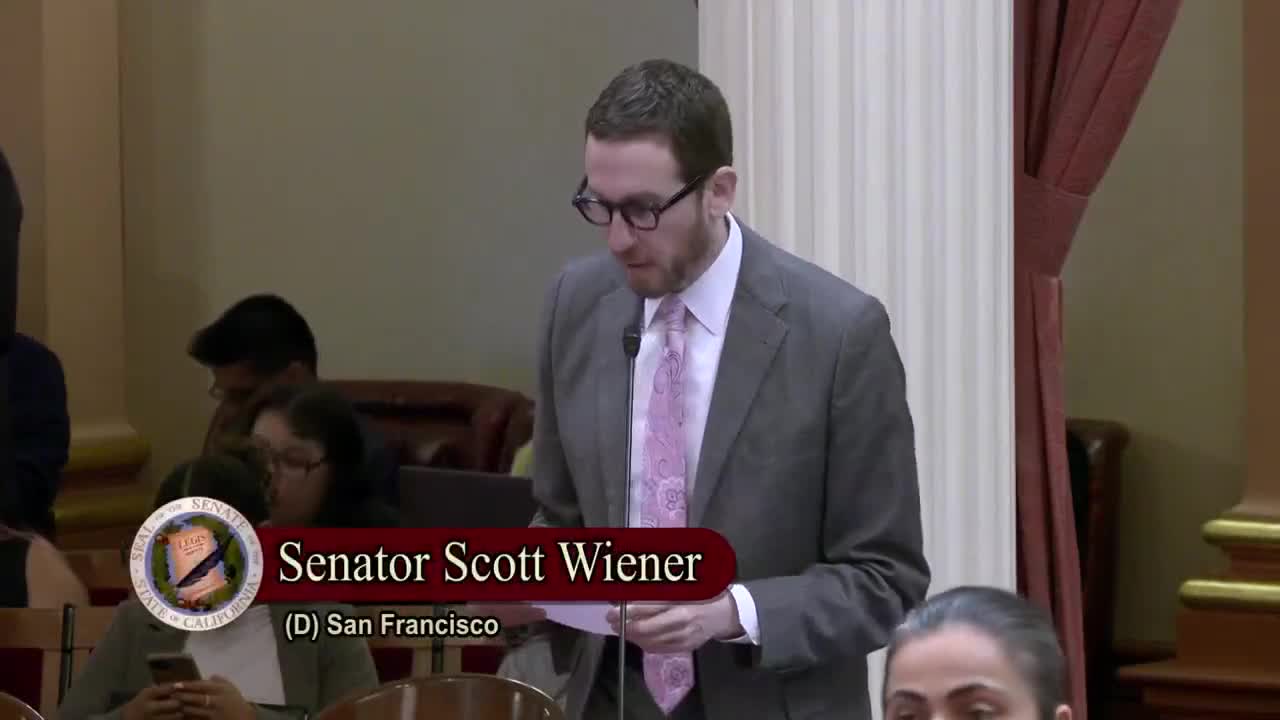 3MIN
Senate Floor
 16MIN
Senate Standing Committee on Banking and Financial Institutions
 2MIN
Assembly Floor
 36SEC
Assembly Floor
 29MIN
Assembly Standing Committee on Judiciary
 21MIN
Assembly Standing Committee on Banking and Finance
 3MIN
Senate Floor
 29MIN
Senate Standing Committee on Judiciary
Bill Author