SB 280: Review of conservatorships: care plans.
- Session Year: 2023-2024
- House: Senate
- Latest Version Date: 2023-10-10
Current Status:
Passed
(2023-10-10: Chaptered by Secretary of State. Chapter 705, Statutes of 2023.)
Introduced
In Committee
First Chamber
In Committee
Second Chamber
Enacted
Existing law generally provides for the establishment, review, and termination of conservatorships. Existing law specifies the persons who may be appointed as a conservator and requires the court to review a conservatorship 6 months after the initial appointment of the conservator, one year after the appointment of the conservator, and annually thereafter. Existing law sets forth the powers and duties of a conservator for the care, custody, and control of a conservatee.
This bill, commencing January 1, 2025, would require a conservator, within 120 calendar days of appointment and not later than 10 days before a hearing to determine the continuation or termination of an existing conservatorship, and to file a care plan regarding the care, custody, and control of the conservatee. The bill would require delivery of the care plan to specified persons, including the conservatee and their attorney, but would otherwise make the care plan confidential, except as specified, thereby limiting public access to the records. The bill would require the Judicial Council to develop a mandatory form for the care plan, which would be required to include specified information, including descriptions of the conservatees living arrangement and level of care and any plans to modify those within the next 12 months. The bill would impose sanctions for a conservators failure to timely file a care plan, including authorizing the court to impose a civil penalty in any amount up to $500, payable to the estate of the conservatee, and authorizing the court to remove a conservator for failure to file a care plan. The bill would require an investigator to review the most recent care plan as part of an investigation.
Existing law requires a conservator, upon appointment, to determine the appropriate level of care for the conservatee and to make that determination in writing, signed by the conservator under penalty of perjury, and requires it to be submitted to the court within 60 days of appointment as conservator.
This bill would remove the requirements that the determination be provided in writing and signed under penalty of perjury, as well as the delivery timeline, and would instead require that it be included in the care plan.
Existing constitutional provisions require that a statute that limits the right of access to the meetings of public bodies or the writings of public officials and agencies be adopted with findings demonstrating the interest protected by the limitation and the need for protecting that interest.
This bill would make legislative findings to that effect.
Existing law generally provides for the establishment, review, and termination of conservatorships. Existing law specifies the persons who may be appointed as a conservator and requires the court to review a conservatorship 6 months after the initial appointment of the conservator, one year after the appointment of the conservator, and annually thereafter. Existing law sets forth the powers and duties of a conservator for the care, custody, and control of a conservatee.
This bill, commencing January 1, 2025, would require a conservator, within 120 calendar days of appointment and not later than 10 days before a hearing to determine the continuation or termination of an existing conservatorship, and to file a care plan regarding the care, custody, and control of the conservatee. The bill would require notice delivery of the care plan to be delivered to specified persons, including the conservatee and their attorney, but would otherwise make the care plan confidential, except as specified, thereby limiting public access to the records. The bill would require the Judicial Council to develop a mandatory form for the care plan, which would be required to include specified information, including descriptions of the conservatees living arrangement and level of care and any plans to modify those within the next 12 months. The bill would impose sanctions for a conservators failure to timely file a care plan, including authorizing the court to impose a civil penalty in any amount up to $500, payable to the estate of the conservatee, and authorizing the court to remove a conservator for failure to file a care plan. The bill would require an investigator to review the most recent care plan as part of an investigation.
Existing law requires a conservator, upon appointment, to determine the appropriate level of care for the conservatee and to make that determination in writing, signed by the conservator under penalty of perjury, and requires it to be submitted to the court within 60 days of appointment as conservator.
This bill would remove the requirements that the determination be provided in writing and signed under penalty of perjury, as well as the delivery timeline, and would instead require that it be included in the care plan.
Existing constitutional provisions require that a statute that limits the right of access to the meetings of public bodies or the writings of public officials and agencies be adopted with findings demonstrating the interest protected by the limitation and the need for protecting that interest.
This bill would make legislative findings to that effect.
Existing law generally provides for the establishment, review, and termination of conservatorships. Existing law specifies the persons who may be appointed as a conservator and requires the court to review a conservatorship 6 months after the initial appointment of the conservator, one year after the appointment of the conservator, and annually thereafter. Existing law sets forth the powers and duties of a conservator for the care, custody, and control of a conservatee.
This bill, commencing January 1, 2025, would require a conservator, within 120 calendar days of appointment and not later than 10 days before a hearing to determine the continuation or termination of an existing conservatorship, and to file a care plan regarding the care, custody, and control of the conservatee. The bill would require notice of the care plan to be delivered to specified persons, including the conservatee and their attorney, but would otherwise make the care plan confidential, except as specified, thereby limiting public access to the records. The bill would require the Judicial Council to develop a mandatory form for the care plan, which would be required to include specified information, including descriptions of the conservatees living arrangement and level of care and any plans to modify those within the next 12 months. The bill would impose sanctions for a conservators failure to timely file a care plan, including authorizing the court to impose a civil penalty in any amount up to $1,000, $500, payable to the estate of the conservatee, and authorizing the court to remove a conservator for failure to file a care plan. The bill would require an investigator to review the most recent care plan as part of an investigation.
Existing law requires a conservator, upon appointment, to determine the appropriate level of care for the conservatee and to make that determination in writing, signed by the conservator under penalty of perjury, and requires it to be submitted to the court within 60 days of appointment as conservator.
This bill would remove the requirements that the determination be provided in writing and signed under penalty of perjury, as well as the delivery timeline, and would instead require that it be included in the care plan.
Existing constitutional provisions require that a statute that limits the right of access to the meetings of public bodies or the writings of public officials and agencies be adopted with findings demonstrating the interest protected by the limitation and the need for protecting that interest.
This bill would make legislative findings to that effect.
Existing law generally provides for the establishment, review, and termination of conservatorships. Existing law specifies the persons who may be appointed as a conservator and requires the court to review a conservatorship 6 months after the initial appointment of the conservator, one year after the appointment of the conservator, and annually thereafter. Existing law sets forth the powers and duties of a conservator for the care, custody, and control of a conservatee.
This bill, commencing January 1, 2025, would require a conservator, within 120 calendar days of appointment and not later than 10 days before a hearing to determine the continuation or termination of an existing conservatorship, and to file a care plan regarding the care, custody, and control of the conservatee. The bill would require the care plan to be delivered to specified persons, including the conservatee and their attorney, but would otherwise make the care plan confidential, except as specified, thereby limiting public access to the records. The bill would require the Judicial Council to develop a mandatory form for the care plan, which would be required to include specified information, including descriptions of the conservatees living arrangement and level of care and any plans to modify those within the next 12 months. The bill would impose sanctions for a conservators failure to timely file a care plan, including authorizing the court to impose a civil penalty in any amount up to $1,000, payable to the estate of the conservatee, and authorizing the court to remove a conservator for failure to file a care plan. The bill would require an investigator to review the most recent care plan as part of an investigation.
Existing law requires a conservator, upon appointment, to determine the appropriate level of care for the conservatee and to make that determination in writing, signed by the conservator under penalty of perjury, and requires it to be submitted to the court within 60 days of appointment as conservator.
This bill would remove the requirements that the determination be provided in writing and signed under penalty of perjury, as well as the delivery timeline, and would instead require that it be included in the care plan.
Existing constitutional provisions require that a statute that limits the right of access to the meetings of public bodies or the writings of public officials and agencies be adopted with findings demonstrating the interest protected by the limitation and the need for protecting that interest.
This bill would make legislative findings to that effect.
(a)(1)Within 120 calendar days of appointment by the court and no later than 10 days before a hearing to determine the continuation or termination of an existing conservatorship, a conservator granted powers under this chapter shall file with the clerk of the court a care plan for the care, custody, and control of the conservatee as provided in this section. The court may require a conservator to update the care plan at any time. The court shall review the most recent care plan in determining the continuation or termination of the conservatorship.
(2)(A)The conservator shall deliver, pursuant to Section 1215, a copy of any care plan filed pursuant to paragraph (1) to the conservator of the estate, if a separate conservator is appointed, and that conservators attorney, the attorney for the conservator, the attorney for the conservatee, and the conservatee. The conservator shall also deliver a copy of the care plan to the conservatees spouse or registered domestic partner and relatives within the first degree unless the court determines that delivery of the care plan will result in harm to the conservatee. If the conservatee does not have a spouse, registered domestic partner, or relatives within the first degree, to the greatest extent possible, the conservator shall deliver the care plan to the conservatees relatives within the second degree, unless the court determines that the delivery of the care plan will result in harm to the conservatee.
(B)Confidential medical information in a care plan shall be redacted in compliance with applicable state and federal medical privacy laws before transmission to a spouse, registered domestic partner, or relative, as described in paragraph (1).
(b)The care plan shall include, but not be limited to, all of the following:
(1)A description of the current living arrangement for the conservatee and any plans to modify this living arrangement within the next 12 months.
(2)A description of the conservatees current level of care and any plans to modify the level of care within the next 12 months.
(3)A description of the status of the conservatees health that lists medications currently prescribed for the conservatee, and any medical treatments, supports, or devices.
(4)A description of the conservators schedule of visitation with the conservatee and actions to ensure the conservatee is able to exercise their rights to visitation and communications.
(5)A description of the normal activities of the conservatee, including outings and social and recreational activities.
(6)A description of any special problems raised by the court investigator, the court, or any other interested person, and a description of how the conservator has addressed or intends to address those problems.
(7)A description of the conservatees financial needs, stating the conservatees estimated monthly expenses, including food, entertainment, rent or mortgage, transportation, utilities, medication, clothing, and other relevant health care and living expenses, to the extent the conservator has that information.
(8)A list of all health care providers who provide care for the conservatee, including the providers name, contact information, license type and number, and a description of the treatment provided by each provider.
(c)The Judicial Council shall, by January 1, 2025, develop and adopt a mandatory form to be used in preparing the care plan required by subdivision (a) with, at a minimum, all of the information required by subdivision (b). The form shall be combined with the information or form required to be submitted to the court by subdivision (c) of Section 2352.5.
(d)(1) If a conservator does not file a care plan as required by subdivision (a), the court may impose a civil penalty in any amount up to five hundred dollars ($500), payable to the estate of the conservatee.
(2)If the conservator is a professional fiduciary, in addition to the civil penalty imposed pursuant to paragraph (1), the court may find a failure to file a care plan is a separate and independent reason to refer the conservator to the Professional Fiduciaries Bureau for investigation.
(3)The court may remove the conservator for failure to file a care plan as required by this section.
(e)The care plan shall be confidential and shall be made available only as provided in this section. The court shall have discretion to release the care plan to other persons if it would serve the best interests of the conservatee. The clerk of the court shall make provision for limiting disclosure of the care plan exclusively to persons entitled thereto under this section.
(f)The court investigator shall review the most recent care plan when conducting an investigation pursuant to Section 1851.
(g)The requirement to file a care plan is effective January 1, 2025.
(h)This section does not apply to a limited conservator appointed for a developmentally disabled adult, as set forth in subdivision (d) of Section 1801, if the limited conservator is a relative within the first degree of the conservatee.
SEC. 2.Section 2352.5 of the Probate Code is amended to read:2352.5.(a)It shall be presumed that the personal residence of the conservatee at the time of commencement of the proceeding is the least restrictive appropriate residence for the conservatee. In any hearing to determine if removal of the conservatee from the conservatees personal residence is appropriate, that presumption may be overcome by clear and convincing evidence.
(b)Upon appointment, the conservator shall determine the appropriate level of care for the conservatee.
(1)That determination shall include an evaluation of the level of care existing at the time of commencement of the proceeding and the measures that would be necessary to keep the conservatee in their personal residence.
(2)If the conservatee is living at a location other than the conservatees personal residence at the commencement of the proceeding, that determination shall either include a plan to return the conservatee to their personal residence or an explanation of the limitations or restrictions on a return of the conservatee to their personal residence in the foreseeable future.
(c)The determination made by the conservator pursuant to subdivision (b) shall be included in the care plan as required by Section 2351.2.
(d)The conservator shall evaluate the conservatees placement and level of care if there is a material change in circumstances affecting the conservatees needs for placement and care.
(e)(1)This section shall not apply to a conservatee with developmental disabilities for whom the Director of Developmental Services or a regional center for the developmentally disabled, established pursuant to Chapter 5 (commencing with Section 4620) of Division 4.5 of the Welfare and Institutions Code, acts as the conservator and who receives services from a regional center pursuant to the Lanterman Developmental Disabilities Act (Division 4.5 (commencing with Section 4500) of the Welfare and Institutions Code).
(2)Services, including residential placement, for a conservatee described in paragraph (1) who is a consumer, as defined in Section 4512 of the Welfare and Institutions Code, shall be identified, delivered, and evaluated consistent with the individual program plan process described in Article 2 (commencing with Section 4640) of Chapter 5 of Division 4.5 of the Welfare and Institutions Code.
SEC. 3.The Legislature finds and declares that Section 1 of this act, which adds Section 2351.2 to the Probate Code, imposes a limitation on the publics right of access to the meetings of public bodies or the writings of public officials and agencies within the meaning of Section 3 of Article I of the California Constitution. Pursuant to that constitutional provision, the Legislature makes the following findings to demonstrate the interest protected by this limitation and the need for protecting that interest:
The care plans required by this section contain information about a conservatees finances, assets, and health that could be used to harm people in a vulnerable population and should therefor not be released to the public.
(a)(1)Within 120 calendar days of appointment by the court and no later than 10 days before a hearing to determine the continuation or termination of an existing conservatorship, a conservator granted powers under this chapter shall file with the clerk of the court a care plan for the care, custody, and control of the conservatee as provided in this section. The court may require a conservator to update the care plan at any time. The court shall review the most recent care plan in determining the continuation or termination of the conservatorship.
(2)(A)A The conservator shall deliver, pursuant to Section 1215, a copy of any care plan filed pursuant to paragraph (1) shall be delivered, pursuant to Section 1215, to the conservator of the estate, if a separate conservator is appointed, and that conservators attorney, the attorney for the conservator, the attorney for the conservatee, and the conservatee. The conservator shall also deliver a copy of the care plan shall also be delivered to the conservatees spouse or registered domestic partner and relatives within the first degree unless the court determines that notice delivery of the care plan will result in harm to the conservatee. If the conservatee does not have a spouse, registered domestic partner, or relatives within the first degree, to the greatest extent possible, the conservator shall deliver the care plan to the conservatees relatives within the second degree, unless the court determines that the notice delivery of the care plan will result in harm to the conservatee.
(B)Confidential medical information in a care plan shall be redacted in compliance with applicable state and federal medical privacy laws before transmission to a spouse, registered domestic partner, or relative, as described in paragraph (1).
(b)The care plan shall include, but not be limited to, all of the following:
(1)A description of the current living arrangement for the conservatee and any plans to modify this living arrangement within the next 12 months.
(2)A description of the conservatees current level of care and any plans to modify the level of care within the next 12 months.
(3)A description of the status of the conservatees health that lists medications currently prescribed for the conservatee, and any medical treatments, supports, or devices.
(4)A description of the conservators schedule of visitation with the conservatee and actions to ensure the conservatee is able to exercise their rights to visitation and communications.
(5)A description of the normal activities of the conservatee, including outings and social and recreational activities.
(6)A description of any special problems raised by the court investigator, the court, or any other interested person, and a description of how the conservator has addressed or intends to address those problems.
(7)A description of the conservatees financial needs, stating the conservatees estimated monthly expenses, including food, entertainment, rent or mortgage, transportation, utilities, medication, clothing, and other relevant health care and living expenses, to the extent the conservator has that information.
(8)A list of all health care providers who provide care for the conservatee, including the providers name, contact information, license type and number, and a description of the treatment provided by each provider.
(c)The Judicial Council shall, by January 1, 2025, develop and adopt a mandatory form to be used in preparing the care plan required by subdivision (a) with, at a minimum, all of the information required by subdivision (b). The form shall be combined with the information or form required to be submitted to the court by subdivision (c) of Section 2352.5.
(d)(1) If a conservator does not file a care plan as required by subdivision (a), the court may impose a civil penalty in any amount up to five hundred dollars ($500), payable to the estate of the conservatee.
(2)If the conservator is a professional fiduciary, in addition to the civil penalty imposed pursuant to paragraph (1), the court may find a failure to file a care plan is a separate and independent reason to refer the conservator to the Professional Fiduciaries Bureau for investigation.
(3)The court may remove the conservator for failure to file a care plan as required by this section.
(e)The care plan shall be confidential and shall be made available only as provided in this section. The court shall have discretion to release the care plan to other persons if it would serve the best interests of the conservatee. The clerk of the court shall make provision for limiting disclosure of the care plan exclusively to persons entitled thereto under this section.
(f)The court investigator shall review the most recent care plan when conducting an investigation pursuant to Section 1851.
(g)The requirement to file a care plan is effective January 1, 2025.
(h)This section does not apply to a limited conservator appointed for a developmentally disabled adult, as set forth in subdivision (b) (d) of Section 1801, if the limited conservator is a relative within the first degree of the conservatee.
SEC. 2.Section 2352.5 of the Probate Code is amended to read:2352.5.(a)It shall be presumed that the personal residence of the conservatee at the time of commencement of the proceeding is the least restrictive appropriate residence for the conservatee. In any hearing to determine if removal of the conservatee from the conservatees personal residence is appropriate, that presumption may be overcome by clear and convincing evidence.
(b)Upon appointment, the conservator shall determine the appropriate level of care for the conservatee.
(1)That determination shall include an evaluation of the level of care existing at the time of commencement of the proceeding and the measures that would be necessary to keep the conservatee in their personal residence.
(2)If the conservatee is living at a location other than the conservatees personal residence at the commencement of the proceeding, that determination shall either include a plan to return the conservatee to their personal residence or an explanation of the limitations or restrictions on a return of the conservatee to their personal residence in the foreseeable future.
(c)The determination made by the conservator pursuant to subdivision (b) shall be included in the care plan as required by Section 2351.2.
(d)The conservator shall evaluate the conservatees placement and level of care if there is a material change in circumstances affecting the conservatees needs for placement and care.
(e)(1)This section shall not apply to a conservatee with developmental disabilities for whom the Director of Developmental Services or a regional center for the developmentally disabled, established pursuant to Chapter 5 (commencing with Section 4620) of Division 4.5 of the Welfare and Institutions Code, acts as the conservator and who receives services from a regional center pursuant to the Lanterman Developmental Disabilities Act (Division 4.5 (commencing with Section 4500) of the Welfare and Institutions Code).
(2)Services, including residential placement, for a conservatee described in paragraph (1) who is a consumer, as defined in Section 4512 of the Welfare and Institutions Code, shall be identified, delivered, and evaluated consistent with the individual program plan process described in Article 2 (commencing with Section 4640) of Chapter 5 of Division 4.5 of the Welfare and Institutions Code.
SEC. 3.The Legislature finds and declares that Section 1 of this act, which adds Section 2351.2 to the Probate Code, imposes a limitation on the publics right of access to the meetings of public bodies or the writings of public officials and agencies within the meaning of Section 3 of Article I of the California Constitution. Pursuant to that constitutional provision, the Legislature makes the following findings to demonstrate the interest protected by this limitation and the need for protecting that interest:
The care plans required by this section contain information about a conservatees finances, assets, and health that could be used to harm people in a vulnerable population and should therefor not be released to the public.
(a)(1)Within 120 calendar days of appointment by the court and no later than 10 days before a hearing to determine the continuation or termination of an existing conservatorship, a conservator granted powers under this chapter shall file with the clerk of the court a care plan for the care, custody, and control of the conservatee as provided in this section. The court may require a conservator to update the care plan at any time. The court shall review the most recent care plan in determining the continuation or termination of the conservatorship.
(2)(A)A care plan filed pursuant to paragraphs (1) and (2) paragraph (1) shall be delivered, pursuant to Section 1215, to the conservator of the estate, if a separate conservator is appointed, and that conservators attorney, the attorney for the conservator, the attorney for the conservatee, the conservatee, and and the conservatee. The care plan shall also be delivered to the conservatees spouse or registered domestic partner and relatives within the first degree. degree unless the court determines that notice of the care plan will result in harm to the conservatee. If the conservatee does not have a spouse, registered domestic partner, or relatives within the first degree, to the greatest extent possible, the conservator shall deliver the care plan to the conservatees relatives within the second degree, unless the court determines that the delivery notice of the care plan will result in harm to the conservatee.
(B)Confidential medical information in a care plan shall be redacted in compliance with applicable state and federal medical privacy laws before transmission to a spouse, registered domestic partner, or relative, as described in paragraph (1).
(b)The care plan shall include, but not be limited to, all of the following:
(1)A description of the current living arrangement for the conservatee and any plans to modify this living arrangement within the next 12 months.
(2)A description of the conservatees current level of care and any plans to modify the level of care within the next 12 months.
(3)A description of the status of the conservatees health that lists medications currently prescribed for the conservatee, and any medical treatments, supports, or devices.
(4)A description of the conservators schedule of visitation with the conservatee and actions to ensure the conservatee is able to exercise their rights to visitation and communications.
(5)A description of the normal activities of the conservatee, including outings and social and recreational activities.
(6)A description of any special problems raised by the court investigator, the court, or any other interested person, and a description of how the conservator has addressed or intends to address those problems.
(7)A description of the conservatees financial needs, stating the conservatees estimated monthly expenses, including food, entertainment, rent or mortgage, transportation, utilities, medication, clothing, and other relevant health care and living expenses, to the extent the conservator has that information.
(8)A list of all health care providers who provide care for the conservatee, including the providers name, contact information, license type and number, and a description of the treatment provided by each provider.
(c)The Judicial Council shall, by January 1, 2025, develop and adopt a mandatory form to be used in preparing the care plan required by subdivision (a) with, at a minimum, all of the information required by subdivision (b). The form shall be combined with the information or form required to be submitted to the court by subdivision (c) of Section 2352.5.
(d)(1) If a conservator does not file a care plan as required by subdivision (a), the court may impose a civil penalty in any amount up to one thousand dollars ($1,000), five hundred dollars ($500), payable to the estate of the conservatee.
(2)If the conservator is a professional fiduciary, in addition to the civil penalty imposed pursuant to paragraph (1), the court may find a failure to file a care plan is a separate and independent reason to refer the conservator to the Professional Fiduciaries Bureau for investigation.
(3)The court may remove the conservator for failure to file a care plan as required by this section.
(e)The care plan shall be confidential and shall be made available only as provided in this section. The court shall have discretion to release the care plan to other persons if it would serve the best interests of the conservatee. The clerk of the court shall make provision for limiting disclosure of the care plan exclusively to persons entitled thereto under this section.
(f)The court investigator shall review the most recent care plan when conducting an investigation pursuant to Section 1851.
(g)The requirement to file a care plan is effective January 1, 2025.
(h)This section does not apply to a limited conservator appointed for a developmentally disabled adult, as set forth in subdivision (b) of Section 1801, if the limited conservator is a relative within the first degree of the conservatee.
SEC. 2.Section 2352.5 of the Probate Code is amended to read:2352.5.(a)It shall be presumed that the personal residence of the conservatee at the time of commencement of the proceeding is the least restrictive appropriate residence for the conservatee. In any hearing to determine if removal of the conservatee from the conservatees personal residence is appropriate, that presumption may be overcome by clear and convincing evidence.
(b)Upon appointment, the conservator shall determine the appropriate level of care for the conservatee.
(1)That determination shall include an evaluation of the level of care existing at the time of commencement of the proceeding and the measures that would be necessary to keep the conservatee in their personal residence.
(2)If the conservatee is living at a location other than the conservatees personal residence at the commencement of the proceeding, that determination shall either include a plan to return the conservatee to their personal residence or an explanation of the limitations or restrictions on a return of the conservatee to their personal residence in the foreseeable future.
(c)The determination made by the conservator pursuant to subdivision (b) shall be included in the care plan as required by Section 2351.2.
(d)The conservator shall evaluate the conservatees placement and level of care if there is a material change in circumstances affecting the conservatees needs for placement and care.
(e)(1)This section shall not apply to a conservatee with developmental disabilities for whom the Director of Developmental Services or a regional center for the developmentally disabled, established pursuant to Chapter 5 (commencing with Section 4620) of Division 4.5 of the Welfare and Institutions Code, acts as the conservator and who receives services from a regional center pursuant to the Lanterman Developmental Disabilities Act (Division 4.5 (commencing with Section 4500) of the Welfare and Institutions Code).
(2)Services, including residential placement, for a conservatee described in paragraph (1) who is a consumer, as defined in Section 4512 of the Welfare and Institutions Code, shall be identified, delivered, and evaluated consistent with the individual program plan process described in Article 2 (commencing with Section 4640) of Chapter 5 of Division 4.5 of the Welfare and Institutions Code.
SEC. 3.The Legislature finds and declares that Section 1 of this act, which adds Section 2351.2 to the Probate Code, imposes a limitation on the publics right of access to the meetings of public bodies or the writings of public officials and agencies within the meaning of Section 3 of Article I of the California Constitution. Pursuant to that constitutional provision, the Legislature makes the following findings to demonstrate the interest protected by this limitation and the need for protecting that interest:
The care plans required by this section contain information about a conservatees finances, assets, and health that could be used to harm people in a vulnerable population and should therefor not be released to the public.
(a)(1)Within 120 calendar days of appointment by the court and no later than 10 days before a hearing to determine the continuation or termination of an existing conservatorship, a conservator granted powers under this chapter shall file a care plan for the care, custody, and control of the conservatee as provided in this section. The court may require a conservator to update the care plan at any time. The court shall review the most recent care plan in determining the continuation or termination of the conservatorship.
(2)(A)A care plan filed pursuant to paragraphs (1) and (2) shall be delivered, pursuant to Section 1215, to the conservator of the estate, if a separate conservator is appointed, and that conservators attorney, the attorney for the conservator, the attorney for the conservatee, the conservatee, and the conservatees spouse or registered domestic partner and relatives within the first degree. If the conservatee does not have a spouse, registered domestic partner, or relatives within the first degree, to the greatest extent possible, the conservator shall deliver the care plan to the conservatees relatives within the second degree, unless the court determines that the delivery will result in harm to the conservatee.
(B)Confidential medical information in a care plan shall be redacted in compliance with applicable state and federal medical privacy laws before transmission to a spouse, registered domestic partner, or relative, as described in paragraph (1).
(b)The care plan shall include, but not be limited to, all of the following:
(1)A description of the current living arrangement for the conservatee and any plans to modify this living arrangement within the next 12 months.
(2)A description of the conservatees current level of care and any plans to modify the level of care within the next 12 months.
(3)A description of the status of the conservatees health that lists medications currently prescribed for the conservatee, and any medical treatments, supports, or devices.
(4)A description of the conservators schedule of visitation with the conservatee and actions to ensure the conservatee is able to exercise their rights to visitation and communications.
(5)A description of the normal activities of the conservatee, including outings and social and recreational activities.
(6)A description of any special problems raised by the court investigator, the court, or any other interested person, and a description of how the conservator has addressed or intends to address those problems.
(7)A description of the conservatees financial needs, stating the conservatees estimated monthly expenses, including food, entertainment, rent or mortgage, transportation, utilities, medication, clothing, and other relevant health care and living expenses, to the extent the conservator has that information.
(8)A list of all health care providers who provide care for the conservatee, including the providers name, contact information, license type and number, and a description of the treatment provided by each provider.
(c)The Judicial Council shall, by January 1, 2025, develop and adopt a mandatory form to be used in preparing the care plan required by subdivision (a) with, at a minimum, all of the information required by subdivision (b). The form shall be combined with the information or form required to be submitted to the court by subdivision (c) of Section 2352.5.
(d)(1) If a conservator does not file a care plan as required by subdivision (a), the court may impose a civil penalty in any amount up to one thousand dollars ($1,000), payable to the estate of the conservatee.
(2)If the conservator is a professional fiduciary, in addition to the civil penalty imposed pursuant to paragraph (1), the court may find a failure to file a care plan is a separate and independent reason to refer the conservator to the Professional Fiduciaries Bureau for investigation.
(3)The court may remove the conservator for failure to file a care plan as required by this section.
(e)The care plan shall be confidential and shall be made available only as provided in this section. The court shall have discretion to release the care plan to other persons if it would serve the best interests of the conservatee. The clerk of the court shall make provision for limiting disclosure of the care plan exclusively to persons entitled thereto under this section.
(f)The court investigator shall review the most recent care plan when conducting an investigation pursuant to Section 1851.
(g)The requirement to file a care plan is effective January 1, 2025.
SEC. 2.Section 2352.5 of the Probate Code is amended to read:2352.5.(a)It shall be presumed that the personal residence of the conservatee at the time of commencement of the proceeding is the least restrictive appropriate residence for the conservatee. In any hearing to determine if removal of the conservatee from the conservatees personal residence is appropriate, that presumption may be overcome by clear and convincing evidence.
(b)Upon appointment, the conservator shall determine the appropriate level of care for the conservatee.
(1)That determination shall include an evaluation of the level of care existing at the time of commencement of the proceeding and the measures that would be necessary to keep the conservatee in their personal residence.
(2)If the conservatee is living at a location other than the conservatees personal residence at the commencement of the proceeding, that determination shall either include a plan to return the conservatee to their personal residence or an explanation of the limitations or restrictions on a return of the conservatee to their personal residence in the foreseeable future.
(c)The determination made by the conservator pursuant to subdivision (b) shall be in writing, signed under penalty of perjury, and submitted to the court within 60 days of appointment as conservator. included in the care plan as required by Section 2351.2.
(d)The conservator shall evaluate the conservatees placement and level of care if there is a material change in circumstances affecting the conservatees needs for placement and care.
(e)(1)This section shall not apply to a conservatee with developmental disabilities for whom the Director of Developmental Services or a regional center for the developmentally disabled, established pursuant to Chapter 5 (commencing with Section 4620) of Division 4.5 of the Welfare and Institutions Code, acts as the conservator and who receives services from a regional center pursuant to the Lanterman Developmental Disabilities Act (Division 4.5 (commencing with Section 4500) of the Welfare and Institutions Code).
(2)Services, including residential placement, for a conservatee described in paragraph (1) who is a consumer, as defined in Section 4512 of the Welfare and Institutions Code, shall be identified, delivered, and evaluated consistent with the individual program plan process described in Article 2 (commencing with Section 4640) of Chapter 5 of Division 4.5 of the Welfare and Institutions Code.
SEC. 3.The Legislature finds and declares that Section 1 of this act, which adds Section 2351.2 to the Probate Code, imposes a limitation on the publics right of access to the meetings of public bodies or the writings of public officials and agencies within the meaning of Section 3 of Article I of the California Constitution. Pursuant to that constitutional provision, the Legislature makes the following findings to demonstrate the interest protected by this limitation and the need for protecting that interest:
The care plans required by this section contain information about a conservatees finances, assets, and health that could be used to harm people in a vulnerable population and should therefor not be released to the public.
|
Date
|
Status
|
|---|---|
| Oct 10, 2023 | Chaptered by Secretary of State. Chapter 705, Statutes of 2023. |
| Oct 10, 2023 | Approved by the Governor. |
| Sep 11, 2023 | Enrolled and presented to the Governor at 3 p.m. |
| Sep 6, 2023 | Assembly amendments concurred in. (Ayes 40. Noes 0. Page 2420.) Ordered to engrossing and enrolling. |
| Aug 29, 2023 | In Senate. Concurrence in Assembly amendments pending. |
| Aug 28, 2023 | Read third time. Passed. (Ayes 76. Noes 0. Page 2830.) Ordered to the Senate. |
| Aug 14, 2023 | Ordered to third reading. |
| Aug 14, 2023 | Read third time and amended. (Ayes 73. Noes 0. Page 2680.) |
| Jul 3, 2023 | Ordered to third reading. |
| Jul 3, 2023 | From consent calendar on motion of Assembly Member Reyes. |
| Jun 29, 2023 | Read second time. Ordered to consent calendar. |
| Jun 28, 2023 | From committee: Do pass. Ordered to consent calendar. (Ayes 14. Noes 0.) (June 28). |
| Jun 14, 2023 | Read second time and amended. Re-referred to Com. on APPR. |
| Jun 13, 2023 | From committee: Do pass as amended and re-refer to Com. on APPR. (Ayes 11. Noes 0.) (June 13). |
| Jun 1, 2023 | June 6 hearing postponed by committee. |
| May 4, 2023 | Referred to Com. on JUD. |
| Apr 24, 2023 | In Assembly. Read first time. Held at Desk. |
| Apr 24, 2023 | Read third time. Passed. (Ayes 39. Noes 0. Page 849.) Ordered to the Assembly. |
| Apr 11, 2023 | Read second time. Ordered to third reading. |
| Apr 10, 2023 | From committee: Be ordered to second reading pursuant to Senate Rule 28.8. |
| Apr 3, 2023 | Set for hearing April 10. |
| Mar 29, 2023 | From committee: Do pass and re-refer to Com. on APPR. (Ayes 10. Noes 0. Page 576.) (March 28). Re-referred to Com. on APPR. |
| Mar 6, 2023 | Set for hearing March 28. |
| Feb 9, 2023 | Referred to Com. on JUD. |
| Feb 2, 2023 | From printer. May be acted upon on or after March 4. |
| Feb 1, 2023 | Introduced. Read first time. To Com. on RLS. for assignment. To print. |
|
Date
|
Description
|
Location
|
Votes
|
|
|---|---|---|---|---|
| Sep 6, 2023 | Unfinished Business SB280 Laird Concurrence | Senate Floor |
Passed |
|
| Aug 28, 2023 | SB 280 Laird Senate Third Reading By Maienschein | Assembly Floor |
Passed |
|
| Aug 14, 2023 | SB 280 Laird Senate Third Reading By Maienschein Amendment Set #1 | Assembly Floor |
Passed |
|
| Jun 28, 2023 | Do pass. To Consent Calendar. | Assembly Standing Committee on Appropriations |
Passed |
|
| Jun 13, 2023 | Do pass as amended and be re-referred to the Committee on [Appropriations] | Assembly Standing Committee on Judiciary |
Passed |
|
| Apr 24, 2023 | Senate 3rd Reading SB280 Laird | Senate Floor |
Passed |
|
| Mar 28, 2023 | Do pass, but first be re-referred to the Committee on [Appropriations] | Senate Standing Committee on Judiciary |
Passed |
This list shows positions taken on this bill by organizations on the date displayed, which is linked to the original source.
Positions by individuals are not included.
|
Organization
|
Position
|
Date
|
|---|---|---|
| California Judges Association | ** Support | |
| California State Association of Psychiatrists | ** Support | |
| California State Association Of Public Administrators, Public Guardians, And Public Conservators | ** Against | |
| Professional Fiduciary Association Of California | ** Support | |
| Protect Our Loved Ones | ** Support | |
| The Arc Of California | ** Against | |
| United Cerebral Palsy California Collaboration | ** Against |
SENATE RULES COMMITTEE Office of Senate Floor Analyses (916) 651-1520 Fax: (916) 327-4478 | SB 280 |
UNFINISHED BUSINESS
Bill No: SB 280
Author: Laird (D)
Amended: 8/14/23
Vote: 21
SENATE JUDICIARY COMMITTEE: 10-0, 3/28/23
AYES: Umberg, Wilk, Allen, Ashby, Caballero, Durazo, Laird, Min, Niello, Wiener
NO VOTE RECORDED: Stern
SENATE APPROPRIATIONS COMMITTEE: Senate Rule 28.8
SENATE FLOOR: 39-0, 4/24/23
AYES: Allen, Alvarado-Gil, Archuleta, Ashby, Atkins, Becker, Blakespear, Bradford, Caballero, Cortese, Dodd, Durazo, Eggman, Glazer, Gonzalez, Grove, Hurtado, Jones, Laird, Limón, McGuire, Menjivar, Min, Newman, Nguyen, Niello, Ochoa Bogh, Padilla, Portantino, Roth, Rubio, Seyarto, Skinner, Smallwood-Cuevas, Stern, Umberg, Wahab, Wiener, Wilk
NO VOTE RECORDED: Dahle
ASSEMBLY FLOOR: 76-0, 8/28/23 - See last page for vote
SUBJECT: Review of conservatorships: care plans
SOURCE: Author
DIGEST:
This bill requires probate conservators to submit to the court, at specified points, comprehensive care plans for the care of conservatees and the management of their estates.
Assembly Amendments
clarify that a care plan shall not be delivered to the conservatee’s relatives unless the court determines that notice will result in harm to the conservatee; reduce the daily penalty for failing to file a care plan from $1,000 to $500; and exempt, from the requirement to file a care plan, a limited conservator for a developmentally disabled adult if the limited conservator is a relative within the first degree of the conservatee.
ANALYSIS:
Existing law:
- Authorizes a court to appoint a conservator of the person or estate of an adult, or both, provided that the conservatorship is the least-restrictive alternative needed for the protection of the conservatee. (Prob. Code, § 1800.3.)
- A conservator of the person may be appointed for a person who is unable to provide properly for their personal needs for physical health, food, clothing, or shelter. (Prob. Code, § 1801(a).)
- A conservator of the estate may be appointed for a person who is substantially unable to manage their own financial resources or resist fraud or undue influence. (Prob. Code, § 1801 (b).)
- Requires a conservator to submit an inventory and appraisal of the conservatee’s assets within 90 days of appointment. (Prob. Code, § 2610.)
- Establishes a presumption that the personal residence of a conservatee is the least restrictive appropriate residence for the conservatee; this presumption may be overcome by clear and convincing evidence. (Prob. Code, § 2352.5(a).)
- Requires a conservator, upon appointment, to determine the appropriate level of care for the conservatee, which includes information related to the plan for keeping or returning their personal residence or an explanation of the limitations or restrictions on a return of the conservatee to their personal residence in the foreseeable future, and submit this information in writing to the court within 60 days of their appointment. (Prob. Code, § 2352.5(b), (c).)
This bill:
- Requires, beginning January 1, 2025, a conservator of the person, within 120 days of appointment and 10 days before a hearing to determine the continuation or termination of an existing conservatorship, to file with the clerk of the court a care plan for the care, custody, and control of the conservatee.
- This obligation does not apply to a limited conservator appointed for a developmentally disabled adult if the limited conservator is a relative within the first degree of the conservatee.
- Requires a conservator to deliver a care plan filed pursuant to 1) to:
- The conservator of the estate, if a separate conservator has been appointed;
- The conservator’s attorney and the attorney of the conservator of the estate, if any;
- The attorney for the conservatee;
- The conservatee;
- The conservatee’s spouse or domestic partner and relatives within the first degree, if any; if the conservatee does not have any such family members, the conservator shall deliver the care plan to relatives within the second degree. The care plan shall not be delivered to the conservatee’s spouse or relatives if the court determines that notice of the care plan will result in harm to the consrvatee.
- Requires the conservatee to redact confidential medical information included in the care plan in compliance with applicable state and federal medical privacy laws before transmitting the care plan to the conservatee’s spouse, domestic partner, and/or relative pursuant to 2)(e).
- Requires the care plan to include all of the following:
- A description of the conservatee’s current living arrangement and any plans to modify the arrangement within the next year;
- A description of the conservatee’s current level of care and any plans to modify this level of care within the next 12 months;
- A description of the conservatee’s health status, including medications currently prescribed and any medical treatments, supports, or devices used;
- The conservator’s schedule of visitation with the conservatee and actions taken to ensure the conservatee is able to exercise their rights to visitation and communications;
- A description of the conservatee’s normal activities, including outings and recreational activities;
- A description of any special problems raised by the court investigator, the court, or by any other interested person, and how the conservator addressed or intends to address those problems.
- The conservatee’s financial needs, including the conservatee’s estimated monthly income and expenses including for food, entertainment, rent or mortgage, transportation, utilities, medication, clothing, and other relevant health care and living expenses, to the extent the conservator has that information; and
- A list of all health care providers who provide care for the conservatee, including certain identifying and licensure information for each provider.
- Requires the Judicial Council to develop and adopt a mandatory form to be used in preparing the care plan by January 1, 2025.
- Provides, if a conservator fails to file a care plan as required:
- The court may impose a civil penalty upon the conservator in any amount up to $500, payable to the estate of the conservatee.
- If the conservator is a professional fiduciary, the court may, in addition to the civil penalty in 6)(a), find that the failure to file a care plan is a separate and independent reason to refer the conservator to the Professional Fiduciaries Bureau for Investigation.
- The court may remove the conservator.
- Provides that the care plan must be confidential and made available only as provided in 1)-6) above, except that the court has the discretion to release the care plan to other persons if it would serve the best interests of the conservatee.
- Requires the clerk of the court to make provision for limiting disclosure of the care plan exclusively to persons entitled to the care plan pursuant to 1)-7).
- Provides that a court investigator conducting an investigation of the conservatorship pursuant to Probate Code section 1851 shall review the most recent care plan.
Comments
In 2006, then-Chief Justice Ron George appointed a Probate Conservatorship Task Force to evaluate the court’s role in the conservatorship system and to make recommendations for reform, if necessary.[1] Composed of representatives from the courts, advocacy organizations, the Attorney General, legislative staff, practitioners in the conservatorship area, conservators, and other judicial officers, the Task Force held several public hearings and released its final report in October of 2007. The report detailed 85 recommendations and included items that needed further review, additional funding, changes in legislation or rules of court, and preparation of training materials and guidelines for the courts.
This bill implements one of the outstanding recommendations—requiring a conservator of the person to submit a care plan with certain information about their conservatee at specified intervals—with certain modifications made in response to stakeholder concerns. Under this bill, conservators would, beginning January 1, 2025, be required to file a care plan 120 days after appointment and at least 10 days prior to a hearing to determine the continuation or termination of an existing conservatorship. Limited conservators who are a relative within the first degree of the conservatee are exempted from the requirement to file a care plan. This bill further sets forth the information that must be contained in a care plan, including specified details about the conservatee’s health, activities, and level of care. The conservator must provide the plan to the conservatee’s attorney as well as to specified relatives, unless the court determines that the delivery would harm the conservatee To preserve the conservatee’s privacy, the bill provides that the care plan is confidential; the clerk of the court must take steps to ensure the filed version remains confidential, and the conservator must redact confidential medical information in a care plan provided to relatives. The bill also provides that the court may impose a civil penalty of up to $500 if a conservatee fails to file a care plan and remove the conservator if necessary. Finally, the bill requires the Judicial Council to establish a mandatory form for care plans, which must be adopted on or before January 1, 2025.
FISCAL EFFECT: Appropriation: No Fiscal Com.: Yes Local: No
According to the Assembly Appropriations Committee:
- Minor and absorbable costs (Trial Court Trust Fund) to Judicial Council to create the new form required by this bill and conduct related staff training. Per Judicial Council, existing law already requires a court investigator to review documents for each conservator case, so staffing costs for validating the content of this new form will also be minor and absorbable.
- Non-reimbursable local costs to county departments that fund public guardians, public conservators, and public administrators. These local departments do not receive state funds for increased conservatorship duties
SUPPORT: (Verified 8/28/23)
California Judges Association
California State Association of Psychiatrists
Professional Fiduciary Association of California
Protect Our Loved Ones
OPPOSITION: (Verified 8/28/23)
California Association of Public Administrators, Public Guardians, and Public Conservators
ARGUMENTS IN SUPPORT: According to the California Judges Association:
SB 280 seeks to require conservators to file a care plan that sets forth certain information relating to the care, custody, and control of the conservatee. This information would include the conservatee's medical and financial needs, as well as the conservator's plans for meeting those needs. The bill also requires the courts to review the care plan and to ensure that it is in the best interests of the conservatee. CJA believes that this filing will help to ensure that conservators are held accountable for their actions and that the conservatee's rights are protected.
SB 280 is a common-sense bill that would help to ensure that conservatees receive the care and protection they need while being treated fairly and with dignity. CJA appreciates the author and his staff’s willingness to work on several concerns last year on SB 602. Unfortunately, SB 602 was held on the Assembly Appropriations Committee’s suspense file before we could express our appreciation and support. Given that SB 280 incorporates our feedback from last year, we are supportive of this year’s measure.
ARGUMENTS IN OPPOSITION: According to the California Association of Public Administrators, Public Guardians, and Public Conservators:
CA|PA|PG|PC supports efforts to eliminate all incidences of predatory conservatorships or guardianships by unscrupulous third parties and strangers. While this may be the intent behind SB 280 we take strong exception to applying these concerns to the county public servants who serve as public guardians and public conservators. Individuals who serve as public guardians or conservators must be certified by our organization and receive at least forty hours of continuing education every four years. We hold ourselves to high professional standards of integrity, a code of ethics, and are diligent to follow all statutory requirements in performing our role…
However, SB 280 creates unrealistic timeframes to identify particular details in conservatorship care plans. Specifically, it may not be possible to submit a comprehensive care plan to the court within 120 days of appointment or 10 days before a hearing to determine the continuation or termination of an existing conservatorship. In many counties, it can take as long as 90 days for the conservator to receive the Superior Court’s orders and Letters of Conservatorship, leaving only 30 days to prepare all the information required for the care plan. Letters of Conservatorship specify the court’s appointment of a specific individual to serve as guardian for a person and/or estate and specify the powers of the guardianship, including care, custody, and taking possession of conservatees’ property or money; without these letters, our members have no authority to act.
ASSEMBLY FLOOR: 76-0, 8/28/23
AYES: Addis, Aguiar-Curry, Alanis, Alvarez, Arambula, Bains, Bauer-Kahan, Bennett, Boerner, Bonta, Bryan, Calderon, Juan Carrillo, Wendy Carrillo, Chen, Connolly, Megan Dahle, Davies, Dixon, Essayli, Flora, Mike Fong, Vince Fong, Friedman, Gabriel, Gallagher, Garcia, Gipson, Grayson, Haney, Hart, Holden, Hoover, Irwin, Jackson, Jones-Sawyer, Kalra, Lackey, Lee, Low, Lowenthal, Maienschein, Mathis, McKinnor, Muratsuchi, Stephanie Nguyen, Ortega, Pacheco, Papan, Jim Patterson, Joe Patterson, Pellerin, Petrie-Norris, Quirk-Silva, Ramos, Reyes, Luz Rivas, Rodriguez, Blanca Rubio, Sanchez, Santiago, Schiavo, Soria, Ta, Ting, Valencia, Villapudua, Waldron, Wallis, Ward, Weber, Wicks, Wilson, Wood, Zbur, Robert Rivas
NO VOTE RECORDED: Berman, Cervantes, McCarty, Rendon
Prepared by: Allison Whitt Meredith / JUD. / (916) 651-4113
8/31/23 10:26:05
**** END ****
Judicial Council of California, Probate Conservatorship Task Force, Final Report of the Probate Conservatorship Task Force (Oct. 26, 2007) https://www.courts.ca.gov/documents/102607itemD.pdf. ↑
SENATE THIRD READING
STR Bill Id:SB 280
Author:(Laird)
As Amended Ver:August 14, 2023
Majority vote
SUMMARY
Requires conservators to submit a "care plan," with prescribed elements, with the court and to deliver a copy of the plan to designated persons.
Major Provisions
- Requires, as of January 1, 2025, a conservator, within 120 days of appointment by the court and within 10 days before a hearing to continue or terminate an existing conservatorship, to file with the court clerk a plan for the care, custody, and control of the conservatee. Allows the court to require that the plan be updated at any time.
- Requires that the plan include, but is not limited to, a description of the following:
- The current living arrangement for the conservatee and any plans to modify this arrangement within the next 12 months.
- The conservatee's current level of care and any plans to modify this level of care within the next 12 months.
- The conservatee's health status, including medications and any medical treatments, support, or medical devices the conservatee needs.
- The conservator's schedule of visitation with the conservatee, and actions taken to ensure the conservatee is able to exercise rights to visitation and communication.
- The conservatee's normal activities, including outings and other activities.
- Any problems raised by the court investigator, the court, or by any interested person, and how the conservator has addressed, or intends to address, these problems.
- The conservatee's monthly income and financial needs.
- The name, license type, and contact information of all health care providers who provide care for the conservatee.
- Requires the Judicial Council, by January 1, 2025, to develop a mandatory form to be used in preparing the care plan.
- Requires that the care plan be filed with the court and delivered by the conservator to any other conservator, if a different one is appointed, and their attorney, the conservatee and their attorney, and the conservatee's spouse or registered domestic partner and relatives within the first degree, unless the court determines that notice of the care plan will result in harm to the conservatee. If the conservatee does not have a spouse, registered domestic partner, or relatives within the first degree, the conservator shall, if possible, submit the care plan to the conservatee's relatives within the second degree, unless the court determines that notice of the care plan will result in harm to the conservatee.
- Requires that confidential medical information be redacted in compliance with applicable medical privacy laws, prior to transmission of the care plan to family members.
- Requires the court to review the most recent care plan when determining the continuation or termination of the conservatorship.
- Requires the court investigator to review the most recent care plan when conducting required investigations.
- Subjects a conservator to a civil penalty of up to $500 for failure to comply with the requirements of this bill, unless the court finds good cause not to impose the penalty; the penalty is payable to the estate of the conservatee. Provides that a failure to timely submit the care plan is also a basis for removal of the conservator. If the conservator is a professional fiduciary, the court may refer the violation to the Professional Fiduciaries Bureau for investigation.
- Provides that the care plan is confidential and shall only be made available as provided in this bill. Provides the court with discretion to release the care plan to others if it would serve the best interests of the conservatee.
- Exempts from the requirements above a limited conservator appointed for a developmentally disabled adult, as specified, if the limited conservator is a relative within the first degree of the conservatee.
COMMENTS
This bill requires conservators to develop a comprehensive care plan. The plans must include, at a minimum, a description of the following eight elements: 1) the current living arrangement for the conservatee and any plans to modify this arrangement within the next year; 2) the conservatee's current level of care and any plans to modify this level of care within the next year; 3) the conservatee's health status, including current medications or treatments; 4) the conservator's schedule of visitation with the conservatee, and actions to ensure the conservatee is able to exercise rights to visitation and communication; 5) the conservatee's normal activities, including outings and social and recreational activities; 6) any problems raised by the court investigator, the court, or by any interested person, and how the conservator has addressed, or intends to address, these problems; 7) the conservatee's monthly income from all sources, and the conservatee's financial needs, including the conservatee's estimated expenses; and 8) the names, license types, and contact information of the conservatee's health care providers.
In addition to filing the care plan with the court, the conservator must deliver copies to the conservatee, any other conservator, any attorneys for the conservatee or conservator, the conservatee's spouse or registered domestic partner, and relatives within the first degree. If the conservatee does not have a spouse, registered domestic partner, or relative within the first degree, the conservator, to the greatest extent possible, must deliver the care plan to the conservatee's relatives within the second degree. These deliveries must occur unless the court determines that delivery will result in harm to the conservatee. In order to protect the privacy of the conservatee, the bill also requires the redaction of confidential medical information.
The bill subjects a conservator who fails to submit a care plan in a timely manner to a civil penalty of up to $500 that is payable to the conservatee's estate, unless the court finds good cause not to impose the penalty. The failure to submit the care plan could also result in removal of the conservator. Professional conservators who fail to submit their required care plans may be reported to the Professional Fiduciaries Bureau for investigation. Finally, the bill exempts from its requirements a limited conservator appointed for a developmentally disabled adult, as specified, if the limited conservator is a relative within the first degree of the conservatee.
According to the Author
According to the author, society "has a responsibility to care for and protect the most vulnerable among us and nowhere is the responsibility of that more apparent than in conservatorships. With SB 280, we ensure care plans are properly detailed and reviewed by courts, certifying transparent fairness for those living under conservatorships."
Arguments in Support
According to California Judges Association (CJA):
SB 280 seeks to require conservators to file a care plan that sets forth certain information relating to the care, custody, and control of the conservatee. This information would include the conservatee's medical and financial needs, as well as the conservator's plans for meeting those needs. The bill also requires the courts to review the care plan and to ensure that it is in the best interests of the conservatee. CJA believes that this filing will help to ensure that conservators are held accountable for their actions and that the conservatee's rights are protected.
SB 280 is a common-sense bill that would help to ensure that conservatees receive the care and protection they need while being treated fairly and with dignity. CJA appreciates the author and his staff's willingness to work on several concerns last year on SB 602. Unfortunately, SB 602 was held on the Assembly Appropriations Committee's suspense file before we could express our appreciation and support. Given that SB 280 incorporates our feedback from last year, we are supportive of this year's measure.
Arguments in Opposition
While California Association of Public Administrators, Public Guardians, and Public Conservators (CA|PA|PG|PC) supports efforts "to eliminate all instances of predatory conservatorships," they "take strong exception to applying these concerns to the county public servants who serve as public guardians and public conservators. Individuals who serve as public guardians or conservators must be certified by our organization and receive at least forty hours of continuing education every four years. We hold ourselves to high professional standards of integrity, a code of ethics, and are diligent to follow all statutory requirements in performing our role." However, CA|PA|PG|PC contends, this bill creates requirements that are duplicative of existing law. Specifically, CA|PA|PG|PC points to various sections of the Probate Code that already require a conservator to do the following: submit an inventory and appraisal of the conservatee's assets (Section 1456.5); obtain authorization, confirmation, or direction of the court to sell the conservatee's residence (Sections 2540 and 2541); require the conservator, upon appointment, to determine the least restrictive level of care, and to provide information relating to the plans strategy for keeping a conservatee in their personal residence, and the Judicial Council already provides forms to provide this information (Section 2352.5). In addition to these provisions, CA|PA|PG|PC cites numerous other existing law provisions that give the court mechanisms to oversee the financial needs and expenditures of the conservatee, and that require the conservator to keep detailed financial records.
CA|PA|PG|PC also opposes the provisions that allow the court to impose fines for failure to comply. CA|PA|PG|PC believes that public conservators and guardians "should be exempt from this provision, as county employees are already subject to oversight by the court, and the county is not in a position to provide public funds to an estate." Finally, CA|PA|PG|PC points out that public conservator's "caseloads are increasing, and funding has been inadequate for many years. To our knowledge, public guardians and conservators are the only group that does not receive state funding. Efforts to fully fund the public guardians and conservators have been unsuccessful. This bill would require considerable time and resources, and without additional funding, would exacerbate significant funding and staffing issues."
FISCAL COMMENTS
According to the Assembly Appropriations Committee:
- Minor and absorbable costs (Trial Court Trust Fund) to Judicial Council to create the new form required by this bill and conduct related staff training. Per Judicial Council, existing law already requires a court investigator to review documents for each conservator case, so staffing costs for validating the content of this new form will also be minor and absorbable.
- Non-reimbursable local costs to county departments that fund public guardians, public conservators, and public administrators. These local departments do not receive state funds for increased conservatorship duties.
VOTES
SENATE FLOOR: 39-0-1
YES: Allen, Alvarado-Gil, Archuleta, Ashby, Atkins, Becker, Blakespear, Bradford, Caballero, Cortese, Dodd, Durazo, Eggman, Glazer, Gonzalez, Grove, Hurtado, Jones, Laird, Limón, McGuire, Menjivar, Min, Newman, Nguyen, Niello, Ochoa Bogh, Padilla, Portantino, Roth, Rubio, Seyarto, Skinner, Smallwood-Cuevas, Stern, Umberg, Wahab, Wiener, Wilk
ABS, ABST OR NV: Dahle
ASM JUDICIARY: 11-0-0
YES: Maienschein, Essayli, Connolly, Dixon, Haney, Kalra, Pacheco, Papan, Reyes, Robert Rivas, Sanchez
ASM APPROPRIATIONS: 14-0-2
YES: Holden, Megan Dahle, Bryan, Calderon, Wendy Carrillo, Dixon, Mike Fong, Hart, Lowenthal, Mathis, Papan, Sanchez, Weber, Wilson
ABS, ABST OR NV: Pellerin, Robert Rivas
UPDATED
VERSION: August 14, 2023
CONSULTANT: Tom Clark / JUD. / (916) 319-2334 FN: 0001241
SENATE THIRD READING
STR Bill Id:SB 280
Author:(Laird)
As Amended Ver:June 14, 2023
Majority vote
SUMMARY
Requires conservators to submit a "care plan," with prescribed elements, to the court and other designated persons.
Major Provisions
- Requires, as of January 1, 2025, a conservator, within 120 days of appointment by the court and within 10 days before a hearing to continue or terminate an existing conservatorship, to file with the court clerk a plan for the care, custody, and control of the conservatee. Allows the court to require that the plan be updated at any time.
- Requires that the plan include, but is not limited to, a description of the following:
- The current living arrangement for the conservatee and any plans to modify this arrangement within the next 12 months.
- The conservatee's current level of care and any plans to modify this level of care within the next 12 months.
- The conservatee's health status, including medications and any medical treatments, support, or medical devices the conservatee needs.
- The conservator's schedule of visitation with the conservatee, and actions taken to ensure the conservatee is able to exercise rights to visitation and communication.
- The conservatee's normal activities, including outings and social and recreational activities.
- Any problems raised by the court investigator, the court, or by any interested person, and how the conservator has addressed, or intends to address, these problems.
- The conservatee's monthly income from all sources.
- The conservatee's financial needs, including the conservatee's estimated expenses.
- The name, license type, and contact information of all health care providers who provide care for the conservatee.
- Requires the Judicial Council, by January 1, 2025, to develop a mandatory form to be used in preparing the care plan.
- Requires that the care plan be filed with the court and delivered by the conservator to any other conservator, if a different one is appointed, and their attorney, the conservatee and their attorney, and the conservatee's spouse or registered domestic partner and relatives within the first degree, unless the court determines that notice of the care plan will result in harm to the conservatee. If the conservatee does not have a spouse, registered domestic partner, or relatives within the first degree, the conservator shall, if possible, submit the care plan to the conservatee's relatives within the second degree, unless the court determines that notice of the care plan will result in harm to the conservatee.
- Requires that confidential medical information be redacted in compliance with applicable state and federal medical privacy laws, prior to transmission of the care plan to family members.
- Requires the court to review the most recent care plan when determining the continuation or termination of the conservatorship.
- Requires the court investigator to review the most recent care plan when conducting required investigations.
- Subjects a conservator to a civil penalty of up to $500 for failure to comply with the requirements of this bill, unless the court finds good cause not to impose the penalty; the penalty is payable to the estate of the conservatee. Provides that a failure to timely submit the care plan is also a basis for removal of the conservator. If the conservator is a professional fiduciary, the court may refer the violation to the Professional Fiduciaries Bureau for investigation.
- Provides that the care plan is confidential and shall only be made available as provided in this bill. Provides the court with discretion to release the care plan to others if it would serve the best interests of the conservatee.
- Exempts from the requirements above a limited conservator appointed for a developmentally disabled adult, as specified, if the limited conservator is a relative within the first degree of the conservatee.
COMMENTS
This bill requires conservators to develop a comprehensive care plan. The plans must include, at a minimum, a description of the following eight elements: 1) the current living arrangement for the conservatee and any plans to modify this arrangement within the next year; 2) the conservatee's current level of care and any plans to modify this level of care within the next year; 3) the conservatee's health status, including current medications or treatments; 4) the conservator's schedule of visitation with the conservatee, and actions to ensure the conservatee is able to exercise rights to visitation and communication; 5) the conservatee's normal activities, including outings and social and recreational activities; 6) any problems raised by the court investigator, the court, or by any interested person, and how the conservator has addressed, or intends to address, these problems; 7) the conservatee's monthly income from all sources, and the conservatee's financial needs, including the conservatee's estimated expenses; and 8) the names, license types, and contact information of the conservatee's health care providers.
In addition to filing the care plan with the court, the conservator must deliver copies of the care plan to the conservatee, any other conservator, any attorneys for the conservatee or conservator, the conservatee's spouse or registered domestic partner, and relatives within the first degree. If the conservatee does not have a spouse, registered domestic partner, or relative within the first degree, the conservator, to the greatest extent possible, must submit the care plan to the conservatee's relatives within the second degree. These deliveries must occur unless the court determines that delivery will result in harm to the conservatee. In order to protect the privacy of the conservatee, the bill also requires the redaction of confidential medical information, consistent with state and federal law, prior to transmission of the care plan to family members.
The bill subjects a conservator who fails to submit a care plan in a timely manner to a civil penalty of up to $500 that is payable to the conservatee's estate, unless the court finds good cause not to impose the penalty. The failure to submit the care plan could also result in removal of the conservator. Professional conservators who fail to submit their required care plans may be reported to the Professional Fiduciaries Bureau for investigation. Finally, the bill exempts from its requirements a limited conservator appointed for a developmentally disabled adult, as specified, if the limited conservator is a relative within the first degree of the conservatee.
According to the Author
According to the author, society "has a responsibility to care for and protect the most vulnerable among us and nowhere is the responsibility of that more apparent than in conservatorships. With SB 280, we ensure care plans are properly detailed and reviewed by courts, certifying transparent fairness for those living under conservatorships."
Arguments in Support
According to California Judges Association (CJA):
SB 280 seeks to require conservators to file a care plan that sets forth certain information relating to the care, custody, and control of the conservatee. This information would include the conservatee's medical and financial needs, as well as the conservator's plans for meeting those needs. The bill also requires the courts to review the care plan and to ensure that it is in the best interests of the conservatee. CJA believes that this filing will help to ensure that conservators are held accountable for their actions and that the conservatee's rights are protected.
SB 280 is a common-sense bill that would help to ensure that conservatees receive the care and protection they need while being treated fairly and with dignity. CJA appreciates the author and his staff's willingness to work on several concerns last year on SB 602. Unfortunately, SB 602 was held on the Assembly Appropriations Committee's suspense file before we could express our appreciation and support. Given that SB 280 incorporates our feedback from last year, we are supportive of this year's measure.
The Professional Fiduciary Association of California (PFAC) and Protect Our Loved Ones support SB 280 for substantially similar reasons.
Arguments in Opposition
While California Association of Public Administrators, Public Guardians, and Public Conservators (CA|PA|PG|PC) supports efforts "to eliminate all instances of predatory conservatorships," they "take strong exception to applying these concerns to the county public servants who serve as public guardians and public conservators. Individuals who serve as public guardians or conservators must be certified by our organization and receive at least forty hours of continuing education every four years. We hold ourselves to high professional standards of integrity, a code of ethics, and are diligent to follow all statutory requirements in performing our role." However, CA|PA|PG|PC contends, this bill creates requirements that are duplicative of existing law. Specifically, CA|PA|PG|PC points to various sections of the Probate Code that already require a conservator to do the following: submit an inventory and appraisal of the conservatee's assets (Section 1456.5); obtain authorization, confirmation, or direction of the court to sell the conservatee's residence (Sections 2540 and 2541); require the conservator, upon appointment, to determine the least restrictive level of care, and to provide information relating to the plans strategy for keeping a conservatee in their personal residence, and the Judicial Council already provides forms to provide this information (Section 2352.5). In addition to these provisions, CA|PA|PG|PC cites numerous other existing law provisions that give the court mechanisms to oversee the financial needs and expenditures of the conservatee, and that require the conservator to keep detailed financial records.
CA|PA|PG|PC also opposes the provisions that allow the court to impose fines for failure to comply. CA|PA|PG|PC believes that public conservators and guardians "should be exempt from this provision, as county employees are already subject to oversight by the court, and the county is not in a position to provide public funds to an estate." Finally, CA|PA|PG|PC points out that public conservator's "caseloads are increasing, and funding has been inadequate for many years. To our knowledge, public guardians and conservators are the only group that does not receive state funding. Efforts to fully fund the public guardians and conservators have been unsuccessful. This bill would require considerable time and resources, and without additional funding, would exacerbate significant funding and staffing issues."
FISCAL COMMENTS
According to the Assembly Appropriations Committee:
- Minor and absorbable costs (Trial Court Trust Fund) to Judicial Council to create the new form required by this bill and conduct related staff training. Per Judicial Council, existing law already requires a court investigator to review documents for each conservator case, so staffing costs for validating the content of this new form will also be minor and absorbable.
- Non-reimbursable local costs to county departments that fund public guardians, public conservators, and public administrators. These local departments do not receive state funds for increased conservatorship duties.
VOTES
SENATE FLOOR: 39-0-1
YES: Allen, Alvarado-Gil, Archuleta, Ashby, Atkins, Becker, Blakespear, Bradford, Caballero, Cortese, Dodd, Durazo, Eggman, Glazer, Gonzalez, Grove, Hurtado, Jones, Laird, Limón, McGuire, Menjivar, Min, Newman, Nguyen, Niello, Ochoa Bogh, Padilla, Portantino, Roth, Rubio, Seyarto, Skinner, Smallwood-Cuevas, Stern, Umberg, Wahab, Wiener, Wilk
ABS, ABST OR NV: Dahle
ASM JUDICIARY: 11-0-0
YES: Maienschein, Essayli, Connolly, Dixon, Haney, Kalra, Pacheco, Papan, Reyes, Robert Rivas, Sanchez
ASM APPROPRIATIONS: 14-0-2
YES: Holden, Megan Dahle, Bryan, Calderon, Wendy Carrillo, Dixon, Mike Fong, Hart, Lowenthal, Mathis, Papan, Sanchez, Weber, Wilson
ABS, ABST OR NV: Pellerin, Robert Rivas
UPDATED
VERSION: June 14, 2023
CONSULTANT: Tom Clark / JUD. / (916) 319-2334 FN: 0001199
Date of Hearing: June 28, 2023
ASSEMBLY COMMITTEE ON APPROPRIATIONS
Chris Holden, Chair
SBPCA Bill Id:SB 280
Author:(Laird) – As Amended Ver:June 14, 2023
Policy Committee: | Judiciary | Vote: | 11 - 0 |
|
| ||
|
|
Urgency: No State Mandated Local Program: No Reimbursable: No
SUMMARY:
This bill requires a conservator to file a care plan with the court describing the care, custody, and control of a conservatee within 120 days of the conservator’s appointment by the court and no later than 10 days before a court hearing about the continuation or termination of the conservatorship.
FISCAL EFFECT:
- Minor and absorbable costs (Trial Court Trust Fund) to Judicial Council to create the new form required by this bill and conduct related staff training. Per Judicial Council, existing law already requires a court investigator to review documents for each conservator case, so staffing costs for validating the content of this new form will also be minor and absorbable.
- Non-reimbursable local costs to county departments that fund public guardians, public conservators, and public administrators. These local departments do not receive state funds for increased conservatorship duties.
COMMENTS
- Purpose. According to the author:
Society has a responsibility to care for and protect the most vulnerable among us and nowhere is the responsibility of that more apparent than in conservatorships. With SB 280, we ensure care plans are properly detailed and reviewed by courts, certifying transparent fairness for those living under conservatorships
- Background. A conservatorship occurs when a court appoints someone (a conservator) to care for another adult (a conservatee) who cannot live independently. A court may appoint a conservator of an adult if the court finds clear and convincing evidence that the adult is unable to provide for their own physical health, food, shelter, or other essential needs. A court may appoint a conservator of an estate for an adult if there is sufficient evidence that they are unable to manage their own financial resources, resist fraud, or resist undue influence. As detailed in the analysis of this bill by the Assembly Committee on Judiciary, California’s conservatorship system has been plagued by significant and longstanding abuses, including conservators who have mismanaged or outright stolen money from their conservatees.
In an effort to improve transparency and achieve more diligent conservatorships, this bill requires a professional conservator to file a comprehensive care plan with the court soon after the conservator is appointed to care for a conservatee. The bill specifies topics that must be covered in each care plan, including the conservatee’s health, level of care, finances, and living arrangements. The care plan must describe the conservatee’s current status and any plans to modify their affairs within the next twelve months. The conservator is also required to provide copies of the care plan to the conservatee and important people in the conservatee’s life, including any other conservators involved, the conservatee’s attorney, the conservatee’s spouse, and the conservatee’s closest relatives. If a conservator fails to file the care plan, the court may remove them from the conservatorship and may impose a civil penalty up to $500, which is paid to the estate of the conservatee. This bill’s requirements expressly do not apply to a limited conservator appointed for a developmentally disabled adult if the limited conservator is a close family member of the conservatee.
- Support and Opposition. In support of this bill, the California Judges Association writes,
SB 280 is a common-sense bill that would help to ensure that conservatees receive the care and protection they need while being treated fairly and with dignity. CJA appreciates the author and his staff’s willingness to work on several concerns last year on SB 602. Unfortunately, SB 602 was held on the Assembly Appropriations Committee’s suspense file before we could express our appreciation and support. Given that SB 280 incorporates our feedback from last year, we are supportive of this year’s measure.
The California Association of Public Administrators, Public Guardians, and Public Conservators opposes the bill, arguing that conservators cannot meet the timelines established by the bill and existing law contains sufficient oversight mechanisms for conservatorships. The association additionally writes:
[P]ublic guardians’ caseloads are increasing, and funding has been inadequate for many years. To our knowledge, public guardians and conservators are the only group that does not receive state funding. Efforts to fully fund public guardians and conservators have been unsuccessful. This bill would require considerable time and resources, and without additional funding, would exacerbate significant funding and staffing issues.
- Prior Legislation. SB 602 (Laird), of the 2021-2022 Legislative Session, was substantially similar to this bill but required a shorter timeline for a conservator to file a care plan and authorized a larger civil fine for failure to do so. SB 602 was held on this committee’s suspense file.
Analysis Prepared by: Annika Carlson / APPR. / (916) 319-2081
Date of Hearing: June 13, 2023
ASSEMBLY COMMITTEE ON JUDICIARY
Brian Maienschein, Chair
SBPCA Bill Id:SB 280
Author:(Laird) – As Introduced Ver:February 1, 2023
As Proposed to be Amended
SENATE VOTE: 39-0
SUBJECT: Review of conservatorships: care plans
KEY ISSUE: in order to provide better oversight of probate conservatorships, should professional conservators be required to provide a comprehensive plan for the care of their conservatees to the court and interested parties?
SYNOPSIS
In California, a conservatorship results from a court order appointing a person (conservator) to care for another adult (conservatee). There are two basic types of conservatorships: probate conservatorships, which are the subject of this bill, and Lanterman-Petris-Short (LPS) conservatorships, which are not the subject of this bill. This bill builds on past reform efforts, as well as the recommendations issued by the Probate Conservatorship Task Force in 2007. Specifically, the bill requires a professional conservator to file a comprehensive “care plan” with the court and to deliver copies of the plan to interested parties within 120 days of initial appointment and not later than 10 days before a hearing to continue or terminate an existing conservatorship. Failure to file and deliver an adequate care plan, or failure to file and deliver it on time, is punishable by fine of up to $500. The author and supporters contend that this will help ensure that all relevant persons and entities – the conservator, attorneys, the court, the investigator, and the conservatee’s relatives – have the best information possible to ensure that the conservator is focused the best interests on the conservatee.
This bill is supported by the California Judges Association, the Professional Fiduciary Association of California, and Protect Our Loved Ones, an advocacy group for conservatees. It is opposed by the California Association of Public Administrators, Public Guardians, and Public Conservators, who believe that the care plans duplicate much information that is already provided to the courts and that the fine is not appropriate for public conservators. The author will take amendments in this Committee to exempt certain family-member conservators, an amendment that removes the opposition of the ARC and United Cerebral Palsy Collaboration. Those amendments are reflected in the bill summary and discussed in the analysis. The bill passed off the Senate Floor on a 39-0 vote and has not received any “no” votes thus far.
SUMMARY: Requires conservators to submit a “care plan,” with prescribed elements, to the court and other designated persons. Specifically, this bill:
- Requires, as of January 1, 2025, a conservator, within 120 days of appointment by the court and within 10 days before a hearing to continue or terminate an existing conservatorship, to file with the court clerk a plan for the care, custody, and control of the conservatee. Allows the court to require that the plan be updated at any time.
- Requires that the plan include, but is not limited to, a description of the following:
- The current living arrangement for the conservatee and any plans to modify this arrangement within the next 12 months.
- The conservatee’s current level of care and any plans to modify this level of care within the next 12 months.
- The conservatee’s health status, including medications and any medical treatments, support, or medical devices the conservatee needs.
- The conservator’s schedule of visitation with the conservatee, and actions taken to ensure the conservatee is able to exercise rights to visitation and communication.
- The conservatee’s normal activities, including outings and social and recreational activities.
- Any problems raised by the court investigator, the court, or by any interested person, and how the conservator has addressed, or intends to address, these problems.
- The conservatee’s monthly income from all sources.
- The conservatee’s financial needs, including the conservatee’s estimated expenses.
- The name, license type, and contact information of all health care providers who provide care for the conservatee.
- Requires the Judicial Council, by January 1, 2025, to develop a mandatory form to be used in preparing the care plan.
- Requires that the care plan be filed with the court and delivered to any other conservator, if a different one is appointed, and their attorney, the conservatee and their attorney, and the conservatee’s spouse or registered domestic partner and relatives within the first degree, unless the court determines that notice of the care plan will result in harm to the conservatee. If the conservatee does not have a spouse, registered domestic partner, or relatives within the first degree, the conservator shall, if possible, submit the care plan to the conservatee’s relatives within the second degree, unless the court determines that notice of the care plan will result in harm to the conservatee.
- Requires that confidential medical information be redacted in compliance with applicable state and federal medical privacy laws, prior to transmission of the care plan to family members.
- Requires the court to review the most recent care plan when determining the continuation or termination of the conservatorship.
- Requires the court investigator to review the most recent care plan when conducting required investigations.
- Subjects a conservator to a civil penalty of up to $500 for failure to comply with the requirements of this bill, unless the court finds good cause not to impose the penalty; the penalty is payable to the estate of the conservatee. Provides that a failure to timely submit the care plan is also a basis for removal of the conservator. If the conservator is a professional fiduciary, the court may refer the violation to the Professional Fiduciaries Bureau for investigation.
- Provides that the care plan is confidential and shall only be made available as provided in this bill. Provides the court with discretion to release the care plan to others if it would serve the best interests of the conservatee.
EXISTING LAW:
- Permits a court to appoint a conservator of the person for a person who is unable to provide properly for their personal needs for physical health, food, clothing, or shelter, as provided. Permits a court to appoint a conservator of the estate for a person who is substantially unable to manage their own financial resources or resist fraud or undue influence, except as provided. Provides that a conservatorship cannot be granted unless the court makes an express finding that the conservatorship is the least restrictive alternative needed for protection of the conservatee. (Probate Code Sections 1800.3, 1801. Unless otherwise stated, all further statutory references are to the Probate Code.)
- Requires a conservator, within 90 days of appointment as provided, to submit an inventory and appraisal of the conservatee’s estate to the court, the conservatee and the conservatee’s spouse or registered domestic partner and relatives within the first degree. If the conservatee does not have a spouse, registered domestic partner, or relatives within the first degree, requires the inventory and appraisal to be submitted to the conservatee’s relatives within the second degree, unless the court determines that the submission will result in harm to the conservatee. (Section 2610.)
- Establishes a presumption that the personal residence of a conservatee is the least restrictive appropriate residence for the conservatee. Provides that this presumption may be overcome by clear and convincing evidence. (Section 2352.5 (a).)
- Provides that, upon appointment, a conservator must determine the appropriate level of care for the conservatee, which includes information related to the plan for keeping them in, or returning them to, their personal residence or an explanation of the limitations or restrictions on a return of the conservatee to their personal residence in the foreseeable future. Requires the conservator to submit this information to the court in writing, signed under penalty of perjury, within 60 days of appointment. (Section 2352.5 (b), (c).)
- Requires that the probate court review conservatorships at a noticed hearing six months after appointment of the conservator and annually thereafter, as specified, and requires the court to terminate the conservatorship unless the conservatee still meets the criteria for appointment of a conservator and the conservatorship remains the least restrictive alternative. Specifies, however, that the court is not required to implement these requirements until the Legislature makes an appropriation identified for that purpose. (Sections 1850, 1863.)
- Requires the court investigator to investigate a conservatorship prior to every court review, as provided. (Section 1851.)
- Requires the petition for appointment of a conservator, or appointment of a temporary conservator, if filed by or on behalf of a professional fiduciary, to include, among other things, the petitioner’s proposed hourly fee schedule or other statement of their proposed compensation. (Sections 1821, 2250.)
- Requires a professional fiduciary, who is serving as a guardian or conservator, to file, concurrently with the required inventory and appraisal, the fiduciary’s proposed hourly fee schedule or other statement of their proposed compensation, but this does not preclude the court from later reducing the fiduciary’s fees or other compensation. (Section 2614.7.)
FISCAL EFFECT: As currently in print this bill is keyed fiscal.
COMMENTS: According to the author, society “has a responsibility to care for and protect the most vulnerable among us and nowhere is the responsibility of that more apparent than in conservatorships. With SB 280, we ensure care plans are properly detailed and reviewed by courts, certifying transparent fairness for those living under conservatorships.”
This bill would require conservators to develop a comprehensive care plan. The plans must include, at a minimum, a description of the following eight elements: (1) the current living arrangement for the conservatee and any plans to modify this arrangement within the next year; (2) the conservatee’s current level of care and any plans to modify this level of care within the next year; (3) the conservatee’s health status, including current medications or treatments; (4) the conservator’s schedule of visitation with the conservatee, and actions to ensure the conservatee is able to exercise rights to visitation and communication; (5) the conservatee’s normal activities, including outings and social and recreational activities; (6) any problems raised by the court investigator, the court, or by any interested person, and how the conservator has addressed, or intends to address, these problems; (7) the conservatee’s monthly income from all sources, and the conservatee’s financial needs, including the conservatee’s estimated expenses; and (8) the names, license types, and contact information of the conservatee’s health care providers.
In addition to filing the care plan with the court, the conservator must deliver copies of the care plan to the conservatee, any other conservator, any attorneys for the conservatee or conservator, the conservatee’s spouse or registered domestic partner, and relatives within the first degree. If the conservatee does not have a spouse, registered domestic partner, or relative within the first degree, the conservator, to the greatest extent possible, must submit the care plan to the conservatee’s relatives within the second degree. These deliveries must occur unless the court determines that delivery will result in harm to the conservatee. In order to protect the privacy of the conservatee, the bill also requires the redaction of confidential medical information, consistent with state and federal law, prior to transmission of the care plan to family members.
Finally, the bill subjects a conservator who fails to submit a care plan in a timely manner to a civil penalty of up to $500 that is payable to the conservatee’s estate, unless the court finds good cause not to impose the penalty. The failure to submit the care plan could also result in removal of the conservator. Professional conservators who fail to submit their required care plans may be reported to the Professional Fiduciaries Bureau for investigation.
Exemption for family members in limited conservatorships. In response to concerns raised by groups that work with persons with intellectual and developmental disabilities (IDD) and their families, the author will take amendments in this Committee to exempt a limited conservator appointed for a developmentally disabled adult (as set forth in subdivision (b) of Section 180 of the Probate Code), if the conservator is a relative “within the first degree” of the conservatee. Relatives within the first degree include parents, siblings, and children. According to ARC and United Cerebral Palsy California Collaboration, the bill fails to take into consideration the needs of IDD conservatees and their conservators, who are most often a parent or sibling. Parents and siblings of developmentally disabled adults already face extraordinary burdens and, unlike professional conservators, they often lack the resources, experience, and expertise to readily take on additional burdens. Indeed, existing policy favors the appointment of family members as conservators, and imposing additional burdens – enforced by substantial fines for failure to comply – may make family members more reluctant to take on an already heavy burden.
Background on probate conservatorships in California. California adopted its first conservatorship statute in 1957. Prior to that time, the court appointed a "guardian" for any person, child or adult, who was deemed "incompetent" to manage their daily affairs. After 1957, the law distinguished between a "guardianship," created for a minor, and a "conservatorship," created for an adult. There are also special types of conservatorships for individuals with developmental disabilities, called limited conservatorships, and special “dementia powers” that may be obtained for conservators of people with major neurocognitive disorders. None of these “probate conservatorships” should be confused with the Lanterman-Petris-Short (LPS) conservatorships provided for under the Welfare & Institutions Code (Sections 5150 to 5350.) LPS conservatorships are ordered for persons considered "gravely disabled" by reason of mental illness or chronic alcoholism and are subject to confinement in a locked psychiatric facility. LPS conservatorship are not affected by the bill now before the Committee.
A court orders a probate conservatorship “of the person” for an adult if, based on clear and convincing evidence, the adult is unable to provide for their physical health, food, clothing, shelter, or other essential personal needs. A probate conservatorship “of the estate” is ordered for an adult who is, based on clear and convincing evidence, substantially unable to manage their own financial resources or resist fraud or undue influence. In some cases, a single person may act as conservator of the person and the estate. In either case, a probate conservatorship cannot be granted unless the court makes an express finding that granting a conservatorship is the “least restrictive” means of protecting the conservatee. The appointment process requires an investigation by a court investigator and approval by the court. The conservator can be a family member, friend, a professional fiduciary, or a Public Conservator or Public Guardian. Historically, a conservatorship lasted until the death of the conservatee or a court order terminating it, based on someone seeking a petition for termination. However, AB 1194 (Chap. 417, Stats. 2021), required that these conservatorships be reviewed annually by the probate court and terminated unless the court can legally reestablish them. Unfortunately, AB 1194 cannot be fully implemented until the Legislature specifically allocates funding for it. As discussed below, the lack of funding to implement recent reforms remains a problem more generally.
Prior legislative responses and the problem of funding. In response to revelations of abuse revealed in a 2005 Los Angeles Times series, the Legislature passed the Omnibus Conservatorship and Guardianship Reform Act of 2006, a landmark package of bills to overhaul California's conservatorship system. These measures included the following:
AB 1363 (Chap. 493, Stats. 2006) requires much stronger and frequent reviews and responsibility of conservators by probate courts, along with uniform standards of conduct that conservators must follow, new training rules for all professionals involved in the system, and a new requirement that Public Guardians take the cases of all those at imminent risk of harm.
SB 1116 (Chap. 490, Stats. 2006) requires stronger reviews and protections before a conservator can sell the personal residence of a conservatee.
SB 1550 (Chap. 491, Stats. 2006) created the Professional Fiduciaries Bureau within the Department of Consumer Affairs to license and regulate professional fiduciaries, including conservators, guardians, and trustees.
Unfortunately, while the Professional Fiduciaries Bureau within the Department of Consumer Affairs now licenses and regulates professional fiduciaries, the important new court oversights were never funded and, as a result of action taken by the Judicial Council, new responsibilities without additional funding are not mandated. For example, AB 1194 (Chap. 417, Stats. 2021), on its face, provides additional protections and rights for conservatees and requires better coordination between the courts and the Professional Fiduciaries Bureau. AB 1194 also enhanced the Professional Fiduciaries Bureau’s ability to impose discipline on professional conservators and enhanced the remedies available to conservatees who have been victimized by their conservator. Finally, AB 1194 sought to improve the legal representation of conservatees or proposed conservatees by making legal counsel mandatory in certain types of cases. Unfortunately, the key court oversight aspects of AB 1194 are not effective until specifically funded.
Conservatorship Task Force previously recommended use of care plans. In addition to the legislative responses, the revelations by the Los Angeles Times prompted then-Chief Justice of the California Supreme Court, Ronald George, to appoint a Probate Conservatorship Task Force in 2007 to evaluate the court’s role in the conservatorship system and to make recommendations for reform. Among the Task Force’s recommendations was a requirement for the submission of a care plan by the conservator. The Task Force also recommended requiring follow-up reports, which may be reviewed by examiners or investigators to make a recommendation as to whether the judicial officer should set a hearing to review the plan. Finally, the Task Force recommended adopting a uniform, mandatory Judicial Council form for the submission of the care plan, and to combine existing level-of-care evaluations with the care plan in one form. The Task Force determined that a care plan would give the court a critical baseline of information by which it could evaluate the progress and effectiveness of the conservatorship. (Judicial Council, Final Report of the Probate Conservatorship Task Force (Oct. 26, 2007), available at https://www.courts.ca.gov/documents/102607itemD.pdf)
The Legislature has twice attempted to implement the Task Force recommendation on care plans. SB 800 (Corbett, 2007) would have codified the care plan by requiring a “general plan for the care, custody, and control of the conservatee, including a plan for meeting the conservatee’s financial needs.” Similar to the bill now under review, SB 800 would have required the conservator to deliver the plan to the conservatee’s attorney, spouse, and close relatives. Although the bill passed unanimously off the Senate Floor, it was held in the Assembly Appropriations Committee. Last year’s SB 602 (Laird) was nearly identical to the bill now before the Committee, except that the current version extends the time for filing and delivering the plan from 60 days to 120 days after appointment. SB 602 suffered the same fate as the earlier SB 800, dying in the Assembly Appropriations Committee notwithstanding a unanimous Senate Floor vote. The author and co-sponsors hope that extending the time for filing from 60 days to 120 days after appointment will help the bill reach the Governor’s desk for signature.
Does this bill duplicate existing requirements, and without offering additional funds? The California Association of Public Administrators, Public Guardians, and Public Conservators (public conservators) oppose the bill, in part, they claim, because it will lead to unnecessary and duplicative reporting and filing. For example, existing law requires certain disclosures to the court relating to the conservatee’s care and assets. A conservator of the estate must submit an inventory and appraisal of the conservatee’s assets within 90 days of appointment (Section 2610), and the courts must take steps to ensure that conservator files the inventory and appraisal (Section 1456.5). Additionally, upon appointment, a conservator must determine the appropriate level of care for the conservatee, including information about how the plan will keep the conservatee in their personal residence, or return the conservatee to their personal residence. The conservator must submit this information in writing to the court within 60 days of their appointment. (Id. at (b) and (c).) The public conservators site several other existing statutes that already require providing much of the information that, under this bill, must also be provided in the care plan.
Making these duplicative requirements worse, the public conservators point out that these new requirements come even as their offices remain underfunded. In addition to the lack of additional funding, public conservators will be subject to fines if they fail to submit the care plans on time. As such, the public conservators have proposed to the Committee that, if they are required to include this duplicative information in a new care plan, then they should be deemed to have met the requirements for purposes of the other sections of the Probate Code that require the same information. Because the requirements in the other sections are triggered by specified events, and thus could be required at different times or not all, a global statement that completing the care plan fulfills these other requirements may not be practical. Nonetheless, if the bill moves out of this Committee, the author may wish to continue working with opponents to develop amendments that could prevent unnecessarily duplicative requirements, especially given the lack of funding for recent requirements.
Proposed amendments. The author wishes to take the following amendments in this Committee. In addition to clarifying some existing language, the amendments make two substantive changes: (1) reduce the fine for noncompliance from $1000 to $500; and (2) exempt family members appointed to a limited conservatorship for a developmentally disabled adult.
- On page 2, in line 6, after “file” insert: with the clerk of the court
- On page 2, in line 12, strike out “paragraphs (1) and (2) and insert: paragraph (1)
- On page 2, in line 16, strike out “the conservatee, and” and insert: and the conservatee. The care plan shall also be delivered to
- On page 2, in line 17, strike out “degree.” and insert: degree unless the court determines that notice of the care plan will result in harm to the conservatee
- On page 3, in line 5, strike out “delivery” and insert: notice of the care plan
- On page 4, in line 6, strike out “one thousand dollars ($1,000) and insert: five hundred dollars ($500),
- On page 4, between lines 24 and 25, insert: (h) This section does not apply to a limited conservator appointed for a developmentally disable adult, as set forth in subdivision (b) of Section 1801, if the limited conservator is a relative within the first degree of the conservatee.
Arguments in Support. According to California Judges Association (CJA):
SB 280 seeks to require conservators to file a care plan that sets forth certain information relating to the care, custody, and control of the conservatee. This information would include the conservatee's medical and financial needs, as well as the conservator's plans for meeting those needs. The bill also requires the courts to review the care plan and to ensure that it is in the best interests of the conservatee. CJA believes that this filing will help to ensure that conservators are held accountable for their actions and that the conservatee's rights are protected.
SB 280 is a common-sense bill that would help to ensure that conservatees receive the care and protection they need while being treated fairly and with dignity. CJA appreciates the author and his staff’s willingness to work on several concerns last year on SB 602. Unfortunately, SB 602 was held on the Assembly Appropriations Committee’s suspense file before we could express our appreciation and support. Given that SB 280 incorporates our feedback from last year, we are supportive of this year’s measure.
The Professional Fiduciary Association of California (PFAC) and Protect Our Loved Ones support SB 280 for substantially similar reasons.
Arguments in Opposition. While California Association of Public Administrators, Public Guardians, and Public Conservators (CA|PA|PG|PC) supports efforts “to eliminate all instances of predatory conservatorships,” they “take strong exception to applying these concerns to the county public servants who serve as public guardians and public conservators. Individuals who serve as public guardians or conservators must be certified by our organization and receive at least forty hours of continuing education every four years. We hold ourselves to high professional standards of integrity, a code of ethics, and are diligent to follow all statutory requirements in performing our role.” However, CA|PA|PG|PC contends, this bill creates requirements that are duplicative of existing law. Specifically, CA|PA|PG|PC points to various sections of the Probate Code that already require a conservator to do the following: submit an inventory and appraisal of the conservatee’s assets (Section 1456.5); obtain authorization, confirmation, or direction of the court to sell the conservatee’s residence (Sections 2540 and 2541); require the conservator, upon appointment, to determine the least restrictive level of care, and to provide information relating to the plans strategy for keeping a conservatee in their personal residence, and the Judicial Council already provides forms to provide this information (Section 2352.5). In addition to these provisions, CA|PA|PG|PC cites numerous other existing law provisions that give the court mechanisms to oversee the financial needs and expenditures of the conservatee, and that require the conservator to keep detailed financial records.
CA|PA|PG|PC also opposes the provisions that allow the court to impose fines for failure to comply. CA|PA|PG|PC believes that public conservators and guardians “should be exempt from this provision, as county employees are already subject to oversight by the court, and the county is not in a position to provide public funds to an estate.”
Finally, CA|PA|PG|PC points out that public conservator’s “caseloads are increasing, and funding has been inadequate for many years. To our knowledge, public guardians and conservators are the only group that does not receive state funding. Efforts to fully fund the public guardians and conservators have been unsuccessful. This bill would require considerable time and resources, and without additional funding, would exacerbate significant funding and staffing issues.”
Arguments in Opposition, unless amended. As noted in the analysis, the ARC and United Cerebral Palsy California Collaboration opposed this bill unless amended to exempt family members who act as conservators for developmentally disabled adults. Because the author has agreed to take that amendment in this Committee, the group has notified the Committee of their intent to formally remove their opposition.
REGISTERED SUPPORT / OPPOSITION:
Support
California Judges Association
Professional Fiduciary Association of California
Protect Our Loved Ones
Opposition
California Association of Public Administrators, Public Guardians, and Public Conservators
Oppose Unless Amended (to prior amended bill)
The ARC of California
United Cerebral Palsy California Collaboration
Analysis Prepared by: Tom Clark / JUD. / (916) 319-2334
SENATE RULES COMMITTEE Office of Senate Floor Analyses (916) 651-1520 Fax: (916) 327-4478 | SB 280 |
THIRD READING
Bill No: SB 280
Author: Laird (D)
Introduced: 2/1/23
Vote: 21
SENATE JUDICIARY COMMITTEE: 10-0, 3/28/23
AYES: Umberg, Wilk, Allen, Ashby, Caballero, Durazo, Laird, Min, Niello, Wiener
NO VOTE RECORDED: Stern
SENATE APPROPRIATIONS COMMITTEE: Senate Rule 28.8
SUBJECT: Review of conservatorships: care plans
SOURCE: Author
DIGEST:
This bill requires probate conservators to submit, at specified points, comprehensive care plans for the care of conservatees and the management of their estates.
ANALYSIS:
Existing law:
- Authorizes a court to appoint a conservator of the person or estate of an adult, or both, provided that the conservatorship is the least-restrictive alternative needed for the protection of the conservatee. (Prob. Code, § 1800.3.)
- A conservator of the person may be appointed for a person who is unable to provide properly for their personal needs for physical health, food, clothing, or shelter. (Prob. Code, § 1801(a).)
- A conservator of the estate may be appointed for a person who is substantially unable to manage their own financial resources or resist fraud or undue influence. (Prob. Code, § 1801 (b).)
- Requires a conservator to submit an inventory and appraisal of the conservatee’s assets within 90 days of appointment. (Prob. Code, § 2610.)
- Establishes a presumption that the personal residence of a conservatee is the least restrictive appropriate residence for the conservatee; this presumption may be overcome by clear and convincing evidence. (Prob. Code, § 2352.5(a).)
- Requires a conservator, upon appointment, to determine the appropriate level of care for the conservatee, which includes information related to the plan for keeping or returning their personal residence or an explanation of the limitations or restrictions on a return of the conservatee to their personal residence in the foreseeable future, and submit this information in writing to the court within 60 days of their appointment. (Prob. Code, § 2352.5(b), (c).)
This bill:
- Requires, beginning January 1, 2025, a conservator of the person, within 120 days of appointment and 10 days before a hearing to determine the continuation or termination of an existing conservatorship, to submit a care plan for the care, custody, and control of the conservatee.
- Requires a conservator to deliver a care plan filed pursuant to 1) to:
- The conservator of the estate, if a separate conservator has been appointed;
- The conservator’s attorney and the attorney of the conservator of the estate, if any;
- The attorney for the conservatee;
- The conservatee;
- The conservatee’s spouse or domestic partner and relatives within the first degree, if any. If the conservatee does not have any such family members, the conservator shall deliver the care plan to relatives within the second degree unless the conservator determines that doing so will result in harm to the conservatee.
- Requires the conservatee to redact confidential medical information included in the care plan in compliance with applicable state and federal medical privacy laws before transmitting the care plan to the conservatee’s spouse, domestic partner, and/or relative pursuant to 2)(e).
- Requires the care plan to include all of the following:
- A description of the conservatee’s current living arrangement and any plans to modify the arrangement within the next year;
- A description of the conservatee’s current level of care and any plans to modify this level of care within the next 12 months;
- A description of the conservatee’s health status, including medications currently prescribed and any medical treatments, supports, or devices used;
- The conservator’s schedule of visitation with the conservatee and actions taken to ensure the conservatee is able to exercise their rights to visitation and communications;
- A description of the conservatee’s normal activities, including outings and recreational activities;
- A description of any special problems raised by the court investigator, the court, or by any other interested person, and how the conservator addressed or intends to address those problems.
- The conservatee’s financial needs, including the conservatee’s estimated monthly income and expenses including for food, entertainment, rent or mortgage, transportation, utilities, medication, clothing, and other relevant health care and living expenses, to the extent the conservator has that information; and
- A list of all health care providers who provide care for the conservatee, including certain identifying and licensure information for each provider.
- Requires the Judicial Council to develop and adopt a mandatory form to be used in preparing the care plan by January 1, 2025.
- Provides, if a conservator fails to file a care plan as required:
- The court may impose a civil penalty upon the conservator in any amount up to $1,000, payable to the estate of the conservatee.
- If the conservator is a professional fiduciary, the court may, in addition to the civil penalty in 6)(a), find that the failure to file a care plan is a separate and independent reason to refer the conservator to the Professional Fiduciaries Bureau for Investigation.
- The court may remove the conservator.
- Provides that the care plan must be confidential and made available only as provided in 1)-6) above, except that the court has the discretion to release the care plan to other persons if it would serve the best interests of the conservatee.
- Requires the clerk of the court to make provision for limiting disclosure of the care plan exclusively to persons entitled to the care plan pursuant to 1)-7).
- Provides that a court investigator conducting an investigation of the conservatorship pursuant to Probate Code section 1851 shall review the most recent care plan.
Comments
In 2006, then-Chief Justice Ron George appointed a Probate Conservatorship Task Force to evaluate the court’s role in the conservatorship system and to make recommendations for reform, if necessary.[1] Composed of representatives from the courts, advocacy organizations, the Attorney General, legislative staff, practitioners in the conservatorship area, conservators, and other judicial officers, the Task Force held several public hearings and released its final report in October of 2007. The report detailed 85 recommendations and included items that needed further review, additional funding, changes in legislation or rules of court, and preparation of training materials and guidelines for the courts.
This bill implements one of the outstanding recommendations—requiring a conservator of the person to submit a care plan with certain information about their conservatee at specified intervals—with certain modifications made in response to stakeholder concerns. Under this bill, conservators would, beginning January 1, 2025, be required to file a care plan 120 days after appointment and at least 10 days prior to a hearing to determine the continuation or termination of an existing conservatorship; the conservator must also provide the plan to the conservatee’s attorney as well as specified relatives. This bill sets forth the information that must be contained in the care plan, including specified details about the conservatee’s health, activities, and level of care. To preserve the conservatee’s privacy, the bill provides that the care plan is confidential; the clerk of the court must take steps to ensure the filed version remains confidential, and the conservator must redact confidential medical information in the care plans provided to relatives. This bill requires that the Judicial Council establish a mandatory form for care plans, which must be adopted on or before January 1, 2025.
FISCAL EFFECT: Appropriation: No Fiscal Com.: Yes Local: No
SUPPORT: (Verified 4/10/23)
Professional Fiduciary Association of California
OPPOSITION: (Verified 4/10/23)
California Association of Public Administrators, Public Guardians, and Public Conservators
Prepared by: Allison Whitt Meredith / JUD. / (916) 651-4113
4/14/23 9:24:26
**** END ****
Judicial Council of California, Probate Conservatorship Task Force, Final Report of the Probate Conservatorship Task Force (Oct. 26, 2007) https://www.courts.ca.gov/documents/102607itemD.pdf. ↑
Senator Thomas Umberg, Chair
2023-2024 Regular Session
Bill No: SB 280 (Author:Laird)
Version: February 1, 2023
Hearing Date: March 28, 2023
Fiscal: Yes
Urgency: No
Consultant: AWM
SUBJECT
Review of conservatorships: care plans
DIGEST
This bill requires probate conservators to submit, at specified points, comprehensive care plans for the care of conservatees and the management of their estates.
EXECUTIVE SUMMARY
Following a 2005 Los Angeles Times investigative series that exposed numerous abuses by probate conservators, a major reform effort was undertaken. While some important changes were made, the Great Recession scuttled much of the effort’s momentum, leaving numerous potential reforms unrealized. One such reform was the creation of a general plan for the care, custody, and control of the conservatee, including a plan for meeting the conservatee’s financial needs. The plan was proposed by a Probate Conservatorship Task Force, which was appointed by then-Chief Justice Ronald George to make recommendations to improve the management of probate conservatorship cases in California trial courts. SB 800 (Corbett, 2007) took up this idea, among others. However, the bill died in the Assembly Appropriations Committee after passing policy committees and the Senate floor with zero no votes.
Subsequent journalistic investigations into the problems with conservatorships, as well as public attention to the conservatorship of pop star Britney Spears, resulted in renewed Legislative attention to conservatorship reforms over the past few years. In 2021, the Legislature enacted AB 1194 (Low, Ch. 1194, Stats. 2021), which implemented several additional conservatorship reforms and requires the Judicial Council of California to report to the Legislature by January 1, 2024, the findings of a study measuring court effectiveness in conservatorships. The same year, this bill’s author resurrected the care plan concept and authored SB 602 (Laird, 2021). SB 602 was passed by this Committee with a vote of 10-0 and never received a single “no” vote. Nevertheless, like SB 800, the bill died in the Assembly Appropriations Committee.
This bill, SB 280, is substantially similar to SB 602 but makes certain changes to the timing and content of the care plan to address stakeholder concerns about SB 602. Under this bill, a conservator, within 120 days of appointment or 10 days before a hearing to determine the continuation or termination of an existing conservatorship, must file a care plan that sets forth certain information relating to the care, custody, and the control of the conservatee. The obligation to file a care plan will commence on January 1, 2025, giving the Judicial Council time to draft and adopt a form on which the care plan must be submitted. The bill provides that confidential information, including medical information, must be kept confidential by the courts and provided only to specified persons under specified conditions. The bill further provides for potential penalties that can be levied against a conservator who fails to file the plan, including a civil penalty of up to $1,000 and removal as the conservator.
This bill is sponsored by the author. This bill is opposed by the California Association of Public Administrators, Public Guardians, and Public Conservators.
PROPOSED CHANGES TO THE LAW
Existing law:
- Authorizes a court to appoint a conservator of the person or estate of an adult, or both, provided that the conservatorship is the least-restrictive alternative needed for the protection of the conservatee. (Prob. Code, § 1800.3.)
- A conservator of the person may be appointed for a person who is unable to provide properly for their personal needs for physical health, food, clothing, or shelter. (Prob. Code, § 1801(a).)
- A conservator of the estate may be appointed for a person who is substantially unable to manage their own financial resources or resist fraud or undue influence. (Prob. Code, § 1801 (b).)
- Requires a conservator to submit an inventory and appraisal of the conservatee’s assets within 90 days of appointment. (Prob. Code, § 2610.)
- Establishes a presumption that the personal residence of a conservatee is the least restrictive appropriate residence for the conservatee; this presumption may be overcome by clear and convincing evidence. (Prob. Code, § 2352.5(a).)
- Requires a conservator, upon appointment, to determine the appropriate level of care for the conservatee, which includes information related to the plan for keeping or returning their personal residence or an explanation of the limitations or restrictions on a return of the conservatee to their personal residence in the foreseeable future, and submit this information in writing to the court within 60 days of their appointment. (Prob. Code, § 2352.5(b), (c).)
This bill:
- Beginning January 1, 2025, requires a conservator of the person, within 120 days of appointment or 10 days before a hearing to determine the continuation or termination of an existing conservatorship, to submit a care plan for the care, custody, and control of the conservatee.
- Requires a conservator to deliver a care plan filed pursuant to 1) to:
- The conservator of the estate, if a separate conservator has been appointed;
- The conservator’s attorney and the attorney of the conservator of the estate, if any;
- The attorney for the conservatee;
- The conservatee;
- The conservatee’s spouse or domestic partner and relatives within the first degree, if any. If the conservatee does not have any such family members, the conservator shall deliver the care plan to relatives within the second degree unless the conservator determines that doing so will result in harm to the conservatee.
- Requires the conservatee to redact confidential medical information included in the care plan in compliance with applicable state and federal medical privacy laws before transmitting the care plan to the conservatee’s spouse, domestic partner, and/or relative pursuant to 2)(e).
- Requires the care plan to include all of the following:
- A description of the conservatee’s current living arrangement and any plans to modify the arrangement within the next year;
- A description of the conservatee’s current level of care and any plans to modify this level of care within the next 12 months;
- A description of the conservatee’s health status, including medications currently prescribed and any medical treatments, supports, or devices used;
- The conservator’s schedule of visitation with the conservatee and actions taken to ensure the conservatee is able to exercise their rights to visitation and communications;
- A description of the conservatee’s normal activities, including outings and recreational activities;
- A description of any special problems raised by the court investigator, the court, or by any other interested person, and how the conservator addressed or intends to address those problems.
- The conservatee’s financial needs, including the conservatee’s estimated monthly income and expenses including for food, entertainment, rent or mortgage, transportation, utilities, medication, clothing, and other relevant health care and living expenses, to the extent the conservator has that information; and
- A list of all health care providers who provide care for the conservatee, including certain identifying and licensure information for each provider.
- Requires the Judicial Council to develop and adopt a mandatory form to be used in preparing the care plan by January 1, 2025.
- Provides, if a conservator fails to file a care plan as required:
- The court may impose a civil penalty upon the conservator in any amount up to $1,000, payable to the estate of the conservatee.
- If the conservator is a professional fiduciary, the court may, in addition to the civil penalty in 6)(a), find that the failure to file a care plan is a separate and independent reason to refer the conservator to the Professional Fiduciaries Bureau for Investigation.
- The court may remove the conservator.
- Provides that the care plan must be confidential and made available only as provided in 1)-6) above, except that the court has the discretion to release the care plan to other persons if it would serve the best interests of the conservatee.
- Requires the clerk of the court to make provision for limiting disclosure of the care plan exclusively to persons entitled to the care plan pursuant to 1)-7).
- Provides that a court investigator conducting an investigation of the conservatorship pursuant to Probate Code section 1851 shall review the most recent care plan.
COMMENTS
- Author’s comment
According to the author:
Society has a responsibility to care for and protect the most vulnerable among us and nowhere is the responsibility of that more apparent than in conservatorships. With SB 280, we ensure care plans are properly detailed and reviewed by courts, certifying transparent fairness for those living under conservatorships.
2. Recent reforms and attempted reforms to the conservatorship system[1]
In 2005, the Los Angeles Times published an award-winning series of articles highlighting flaws in California’s conservatorship system.[2] The Times articles included stories of private conservators who misused the system to get appointed inappropriately and then either steal or mismanage conservatee assets; public guardians who did not have the resources to help vulnerable individuals in need of assistance; probate courts that lacked sufficient resources to provide adequate oversight to catch the abuses; and a system that provided no recourse for those who needed help. The Times editorial that ran at the end of the series exhorted courts and elected officials to “turn this abusive system into the honest guardianship it was meant to be.”[3]
In response to the series, the Legislature passed the Omnibus Conservatorship and Guardianship Reform Act of 2006, a package of bills to reform the conservatorship system. SB 1116 (Scott, Ch. 490, Stats. 2006) imposed requirements related to the sale of a conservatee’s personal residence. SB 1550 (Figueroa, Ch. 491, Stats. 2006) established the Professional Fiduciaries Act for the licensing and oversight of professional fiduciaries. SB 1716 (Bowen, Ch. 492, Stats. 2006) expanded the scope of evaluations conducted by court investigators and established a protocol for ex parte communication with the court about a conservatorship. AB 1363 (Jones, Ch. 493, Stats. 2006) reformed certain aspects of the courts’ oversight of conservatorships. However, when the Great Recession hit, SB 78 (Committee on Budget and Fiscal Review, Ch. 10, Stats. 2011) was enacted to suspend superior court duties added by the 2006 reforms until the Legislature makes an appropriation for these purposes, which to date has not occurred. Thus, it is possible that some of the same abuses that took place before the 2006 reforms could still be occurring today and that courts simply lack the oversight resources to detect these abuses.
Also in 2006, then-Chief Justice Ron George appointed a Probate Conservatorship Task Force to evaluate the court’s role in the conservatorship system and to make recommendations for reform, if necessary.[4] Composed of representatives from the courts, advocacy organizations, the Attorney General, legislative staff, practitioners in the conservatorship area, conservators, and other judicial officers, the Task Force held several public hearings and released its final report in October of 2007. The report detailed 85 recommendations and included items that needed further review, additional funding, changes in legislation or rules of court, and preparation of training materials and guidelines for the courts. In 2008, the Task Force reported that 22 of its recommendations had been implemented through various means, including the Omnibus Act described above.[5]
One Task Force recommendation that remains unimplemented is the creation of a requirement for the submission of a care plan by the conservator of the person and/or estate that includes an estimate of the conservator’s fees for the first year, which can enable courts to discern whether fees billed exceed that amount. [6] The Task Force also recommended requiring follow-up reports, which may be reviewed by examiners or investigators to make a recommendation as to whether the judicial officer should set a hearing to review the plan.[7] Additionally, it was recommended that the plan, along with the inventory and appraisal, be filed and served within 90 days on all persons required to be listed in the original petition or an order to show cause will automatically issue.[8] Finally, the Task Force recommended adopting a uniform, mandatory Judicial Council form for the submission of the care plan, and combining existing level-of-care evaluations with the care plan in one form.[9] The Task Force argued a care plan would give court information on what to expect and a baseline of data to compare against subsequent experience in each case.[10] The Legislature considered SB 800 (Corbett, 2007) to codify the care plan recommendation, but it was held in the Assembly Appropriations Committee.
Unfortunately, the Task Force reforms that were implemented did not resolve problems within the conservatorship system. A 2012 Mercury News series exposed problems with exorbitant fee petitions. The article reported that “a six-month investigation by this newspaper found a small group of [Santa Clara] [C]ounty’s court-appointed personal and estate managers are handing out costly and questionable bills—and charging even more if they are challenged. The troubling trend is enriching these private professionals—working as conservators and trustees—and their attorneys, with eye-popping rates that threaten to force their vulnerable clients onto government assistance to survive.”[11] And in 2018, the Orange County Register reported on the lack of judicial oversight into conservatorships, abandoning vulnerable seniors to the care of professional conservators who neglect their charges while making off with their life savings.[12] The recently terminated conservatorship of iconic pop star Britney Spears also shone a light on the lack of oversight into conservatorships after they are established, and how difficult it is for a conservatee to emerge from the system after their circumstances have changed and they are able to care for themselves again. Additionally, many conservatorship reforms remain unfunded.
In 2021, the Legislature enacted AB 1194 (Low, Ch. 1194, Stats. 2021), which included a requirement that the Judicial Council report to the Legislature, by January 1, 2024, the results of a three-court review of the use of Probate Code conservatorships that must include caseload statistics, information about compliance with statutory timeframes, and the operational differences between courts.[13] The same year, this bill’s author authored SB 602 (Laird, 2021), which attempted to revive the case plan recommendation from the Task Force. As with SB 800, SB 602 did not receive a single “no” vote in committee or on the Senate Floor, but it was held in the Assembly Appropriations Committee.
3. This bill implements a compensative care plan requirement and reflects changes to address stakeholder concerns about SB 602
Existing law requires a limited set of disclosures to the court relating to the conservatee’s care and assets. A conservator of the estate must submit an inventory and appraisal of the conservatee’s assets within 90 days of appointment,[14] and courts must take steps to ensure compliance with these provisions.[15] Existing law also establishes a presumption that the personal residence of a conservatee is the least restrictive appropriate residence for the conservatee, but this presumption may be overcome by clear and convincing evidence.[16] Accordingly, upon appointment, a conservator must determine the appropriate level of care for the conservatee that includes information related to the plan for keeping or returning their personal residence or an explanation of the limitations or restrictions on a return of the conservatee to their personal residence in the foreseeable future.[17] The conservator must submit this information in writing to the court within 60 days of their appointment.[18] These provisions were on the books when the Task Force recommended creating a more comprehensive care plan, and the information vacuum that the Task Force identified continues to exist.
This bill establishes a modified version of the care plan recommended by the Task Force. Under the bill, conservators would, beginning January 1, 2025, be required to file a care plan 120 days after appointment and at least 10 days prior to a hearing to determine the continuation or termination of an existing conservatorship; the conservator must also provide the plan to the conservatee’s attorney as well as specified relatives. The bill sets forth the information that must be contained in the care plan, including specified details about the conservatee’s health, activities, and level of care. To preserve the conservatee’s privacy, the bill provides that the care plan is confidential; the clerk of the court must take steps to ensure the filed version remains confidential, and the conservator must redact confidential medical information in the care plans provided to relatives. The bill requires that the Judicial Council establish a mandatory form for care plans, which must be adopted on or before January 1, 2025.
Certain elements of this bill—such as requiring the care plan to be filed 120 days after appointment and at least 10 days prior to a hearing—were made to accommodate stakeholders’ concerns with SB 602. The Committee received late opposition from the California Association of Public Administrators, Public Guardians, and Public Conservators; the author is reviewing their concerns and is committed to working with them moving forward.
SUPPORT
None known
OPPOSITION
California Association of Public Administrators, Public Guardians, and Public Conservators
RELATED LEGISLATION
Pending Legislation: None known.
Prior Legislation:
SB 602 (Laird, 2021) was substantially similar to this bill, except that it would have required the initial care plan to be filed 90 days following the establishment of a conservatorship, and required care plans to include more detailed information. SB 602 died in the Assembly Appropriations Committee.
AB 1194 (Low, Ch. 417, Stats. 2021) with respect to guardians and conservators, enhanced oversight and investigations, augmented remedies and penalties for misconduct, and imposed certain restrictions on fees and compensation, with some measures conditioned on an appropriation for the specific purpose. The bill also required the Judicial Council, by January 1, 2024, to conduct a study regarding conservatorship cases.
SB 156 (Beall, 2013) would have prohibited a guardian or conservator from being compensated from the estate for any costs or fees, including attorney fees, incurred in defending the compensation in the petition, where the court reduced or denied the compensation requested in the petition. SB 156 was vetoed by Governor Brown, who stated in his veto message that he believed the bill unduly limited judicial discretion governing compensation for defense costs in an evenhanded way.
SB 800 (Corbett, 2007) was substantially similar to this bill and would have provided for a “general plan for the care, custody, and control of the conservatee, including a plan for meeting the conservatee’s financial needs.” The bill died in the Assembly Appropriations Committee.
**************
This bill addresses conservatorships established under the Probate Code for adults unable to care for themselves generally, which are distinct from conservatorships established under the Lanterman-Petris-Short Act for persons gravely disabled as a result of a mental health disorder or impairment due to chronic alcoholism. (See generally Welf. & Inst. Code, div. 5, pt. 1.) ↑
Robin Fields, Evelyn Larrubia, and Jack Leonard, Guardians for Profit series (Nov. 13-17, 2005) Los Angeles Times. ↑
Deserving of Care (Nov. 17, 2005) Los Angeles Times, https://www.latimes.com/archives/la-xpm-2005-nov-17-ed-conservators17-story.html. All links in this analysis are current as of March 23, 2023. ↑
Judicial Council of California, Probate Conservatorship Task Force, Final Report of the Probate Conservatorship Task Force (Oct. 26, 2007) https://www.courts.ca.gov/documents/102607itemD.pdf. ↑
Judicial Council of California, Probate Conservatorship Task Force, Probate Conservatorship Task Force Recommendations to the Judicial Council: Status of Implementation (Dec. 9, 2008) https://www.courts.ca.gov/documents/120908item10.pdf. ↑
Final Report of the Probate Conservatorship Task Force, supra, n. 4, at pp. 13, 16. ↑
Id. at 13, 16. ↑
Id. at 13. ↑
Id. ↑
Id. at 45. ↑
de Sá, Santa Clara County’s court-appointed personal and estate managers are handing out costly and questionable bills, Mercury News (Jun. 30, 2012). ↑
Saavedra, Money-draining probate system “like a plague on our senior citizens,” Orange County Register (Sept. 23, 2018). ↑
Prob. Code, § 1498. ↑
Prob. Code, § 2610. ↑
Id., § 1456.5. ↑
Id., § 2352.5. ↑
Ibid. ↑
Ibid. The Judicial Council has adopted Form GC-355 to effectuate these provisions. Judicial Council website, https://www.courts.ca.gov/documents/gc355.pdf. Some courts, such as the Los Angeles Superior Court, have developed more detailed care plan forms. (Conservatorship Care Plan http://www.lacourt.org/forms/pdf/PRO023.pdf.) ↑



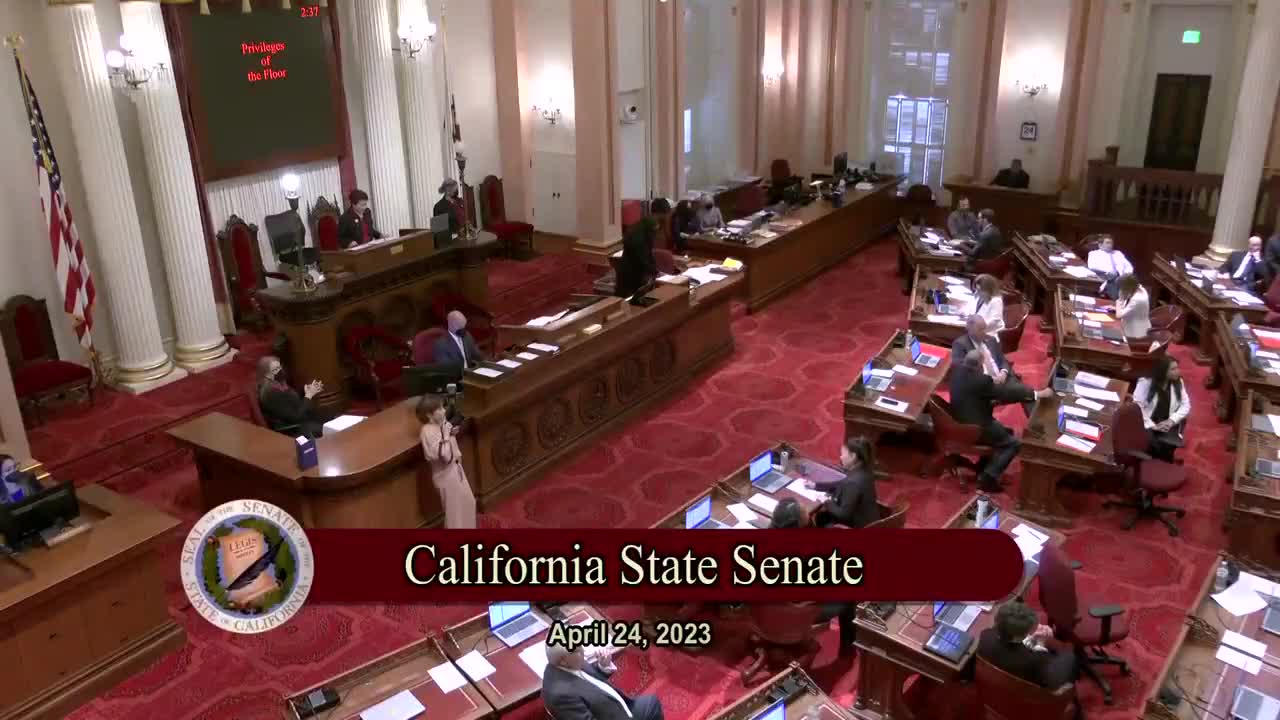
Bill Author

Bill Co-Author(s):