SB 336: State grant programs: negotiated indirect cost rates.
- Session Year: 2023-2024
- House: Senate
- Latest Version Date: 2024-09-04
Current Status:
Failed
(2024-09-29: In Senate. Consideration of Governor's veto pending.)
Introduced
In Committee
First Chamber
In Committee
Second Chamber
Enacted
Existing law establishes the Department of General Services in the Government Operations Agency for purposes of providing centralized services of state government. Existing law establishes various state grant programs. Existing federal law provides uniform administrative requirements, cost principles, and audit requirements for federal grant awards to nonfederal entities and provides guidelines for determining direct and indirect costs, as defined, charged to federal awards.
This bill would require, unless prohibited by any other state or federal law, a state agency administering a grant program to reimburse, when awarding a grant, the grantees indirect costs, as defined, at one of specified rates as requested by the grantee, as defined, if the grantee disclosed the requested rate amount in their grant program application. The bill would require distribution of indirect cost pools, as specified, if established. The bill would also authorize, unless prohibited by any other state or federal law, any applicant for a grant administered by a state agency to opt, when applying for the grant, to be reimbursed for its indirect costs at one of specified rates, if the applicant is selected as a grantee and if the applicant discloses the requested rate amount in their grant program application. The bill would make these provisions applicable to any grant program administered by a state agency, regardless of whether the funding source of the grant is state funds, federal funds, or a combination thereof.
Existing law establishes the Department of General Services in the Government Operations Agency for purposes of providing centralized services of state government. Existing law establishes various state grant programs. Existing federal law provides uniform administrative requirements, cost principles, and audit requirements for federal grant awards to nonfederal entities and provides guidelines for determining direct and indirect costs, as defined, charged to federal awards.
This bill would require, unless prohibited by any other state or federal law, a state agency administering a grant program to reimburse, when awarding a grant, the grantees indirect costs, as defined, at one of specified rates as requested by the grantee, as defined, if the grantee disclosed the requested rate amount in their grant program application. The bill would authorize establishment of indirect cost pools and would require distribution of the pools, as specified, if established. The bill would also authorize, unless prohibited by any other state or federal law, any applicant for a grant administered by a state agency to opt, when applying for the grant, to be reimbursed for its indirect costs at one of specified rates, if the applicant is selected as a grantee and if the applicant discloses the requested rate amount in their grant program application. The bill would make these provisions applicable to any grant program administered by a state agency, regardless of whether the funding source of the grant is state funds, federal funds, or a combination thereof.
Existing law establishes the Department of General Services in the Government Operations Agency for purposes of providing centralized services of state government. Existing law establishes various state grant programs. Existing federal law provides uniform administrative requirements, cost principles, and audit requirements for federal grant awards to nonfederal entities and provides guidelines for determining direct and indirect costs, as defined, charged to federal awards.
This bill would require, unless prohibited by any other state or federal law, a state agency administering a grant program to reimburse, when awarding a grant, the grantees indirect costs, as defined, at one of specified rates as requested by the grantee. grantee, as defined, if the grantee disclosed the requested rate amount in their grant program application. The bill would authorize establishment of indirect cost pools and would require distribution of the pools, as specified. specified, if established. The bill would also authorize, unless prohibited by any other state or federal law, any applicant for a grant administered by a state agency to opt, when applying for the grant, to be reimbursed for its indirect costs at one of the specified rates. rates, if the applicant is selected as a grantee and if the applicant discloses the requested rate amount in their grant program application. The bill would make these provisions applicable to any grant program administered by a state agency, regardless of whether the funding source of the grant is state funds, federal funds, or a combination thereof.
Existing law establishes the Department of General Services in the Government Operations Agency for purposes of providing centralized services of state government. Existing law establishes various state grant programs. Existing federal law provides uniform administrative requirements, cost principles, and audit requirements for federal grant awards to nonfederal entities and provides guidelines for determining direct and indirect costs, as defined, charged to federal awards.
This bill would require, unless prohibited by any other state or federal law, a state agency administering a grant program to reimburse, when awarding a grant, the grantees indirect costs, as defined, at one of specified rates as requested by the grantee. The bill would authorize establishment of indirect cost pools and would require distribution of the pools, as specified. The bill would also authorize, unless prohibited by any other state or federal law, any applicant for a grant administered by a state agency to opt, when applying for the grant, to be reimbursed for its indirect costs at one of the specified rates. The bill would make these provisions applicable to any grant program administered by a state agency, regardless of whether the funding source of the grant is state funds, federal funds, or a combination thereof.
Existing law establishes the Department of General Services in the Government Operations Agency for purposes of providing centralized services of state government. Existing law establishes various state grant programs. Existing federal law provides uniform administrative requirements, cost principles, and audit requirements for federal grant awards to nonfederal entities and provides guidelines for determining direct and indirect costs, as defined, charged to federal awards.
This bill would require, unless prohibited by any other state or federal law, a state agency or other state entity administering a grant program to reimburse, when awarding a grant, the grantees indirect costs costs, as defined, at one of specified rates as requested by the grantee. The bill would authorize establishment of indirect cost pools and would require distribution of the pools, as specified. The bill would also authorize, unless prohibited by any other state or federal law, any applicant for a grant administered by a state agency or other state entity to opt, when applying for the grant, to be reimbursed for its indirect costs at one of the specified rates. The bill would make these provisions applicable to any grant program administered by a state agency or other state entity, agency, regardless of whether the funding source of the grant is state funds, federal funds, or a combination thereof.
Existing law establishes the Department of General Services in the Government Operations Agency for purposes of providing centralized services of state government. Existing law establishes various state grant programs. Existing federal law provides uniform administrative requirements, cost principles, and audit requirements for federal grant awards to nonfederal entities and provides guidelines for determining direct and indirect costs, as defined, charged to federal awards.
This bill would require, to the extent authorized by state and federal law, the Department of General Services to establish, by July 1, 2024, a process by which nonprofits may negotiate a state standard negotiated cost agreement, as defined, for state grants that are awarded on or after October 1, 2024. The bill would require, to the extent authorized by state and federal law, a state agency or other state entity administering a state grant program to use the same terms as contained in the grantees existing negotiated indirect cost rate agreements, as defined, and cost allocation policies approved by the federal government, the same terms as contained in the grantees state standard negotiated cost agreement, or a 10% de minimis indirect cost rate on direct costs, for reimbursement of direct and indirect costs, as provided.This bill would require, unless prohibited by any other state or federal law, a state agency or other state entity administering a grant program to reimburse, when awarding a grant, the grantees indirect costs at one of specified rates as requested by the grantee. The bill would also authorize, unless prohibited by any other state or federal law, any applicant for a grant administered by a state agency or other state entity to opt, when applying for the grant, to be reimbursed for its indirect costs at one of the specified rates. The bill would make these provisions applicable to any grant program administered by a state agency or other state entity, regardless of whether the funding source of the grant is state funds, federal funds, or a combination thereof.
Existing law establishes the Department of General Services in the Government Operations Agency for purposes of providing centralized services of state government. Existing law establishes various state grant programs. Existing federal law provides uniform administrative requirements, cost principles, and audit requirements for federal grant awards to nonfederal entities and provides guidelines for determining direct and indirect costs, as defined, charged to federal awards.
This bill would require, to the extent authorized by state and federal law, the Department of General Services to establish, by July 1, 2024, a process by which nonprofits may negotiate a state standard negotiated cost agreement, as defined, for state grants that are awarded on or after October 1, 2024. The bill would require, to the extent authorized by state and federal law, a state agency or other state entity administering a state grant program to use the same terms as contained in the grantees existing negotiated indirect cost rate agreements, as defined, and cost allocation policies approved by the federal government, the same terms as contained in the grantees state standard negotiated cost agreement, or a 10% de minimis indirect cost rate on direct costs, for reimbursement of direct and indirect costs, as provided.
It is the intent of the Legislature in enacting this act to ensure that nonprofit organizations and other eligible entities are fairly compensated by the state for the full cost of providing services funded by grants. For grant programs using state funds, the Legislature finds and declares that California state agencies should allow for reimbursement of administrative expenses for nonprofit organizations and other eligible entities that are consistent with each organizations federally approved negotiated indirect cost rate agreement and cost allocation policy.
SEC. 2.Chapter 17.5 (commencing with Section 8900) is added to Division 1 of Title 2 of the Government Code, to read:17.5.Uniform Cost Agreement for State Grants8900.(a)For purposes of this section, the following definitions apply:
(1)Grantee means an applicant for a grant program that is administered by a state agency that is selected by the state agency to be awarded a grant under that program.
(2)Existing state rate means a rate utilized by the grantee with a state agency within the last five years.
(3)Indirect costs means those costs incurred for a common or joint purpose benefiting more than one objective, and not readily assignable to the cost objectives specifically benefited, without effort disproportionate to the results achieved.
(4)Negotiated indirect cost rate agreement means an agreement pursuant to Part 200 of Title 2 of the Code of Federal Regulations that is approved by the federal government.
(b)Unless prohibited by any other state or federal law, a state agency administering a grant program shall, when awarding a grant, reimburse the grantees indirect costs at one of the following rates, as requested by the grantee, if the grantee disclosed the requested rate amount in their grant program application:
(1)The grantees negotiated indirect cost rate, pursuant to its negotiated indirect cost rate agreement.
(2)The de minimis indirect cost rate specified in Part 200 of Title 2 of the Code of Federal Regulations.
(3)Either of the following:
(A)An existing state rate.
(B)If the grantee does not have an existing state rate, a rate proposed by the grantee in the grantees program application with the administering state agency.
(c)Unless prohibited by any other state or federal law, any applicant for a grant administered by a state agency may opt, when applying for the grant, to be reimbursed for its indirect costs at one of the rates described in subdivision (b), if the applicant is selected as a grantee and if the applicant discloses the requested rate amount in their grant program application.
(d)For purposes of calculating indirect costs and to facilitate equitable distribution of indirect expenses to the cost objectives served, it may be necessary to establish a number of pools of indirect costs. Any indirect cost pools established shall be distributed to benefited cost objectives on bases that will produce an equitable result in consideration of relative benefits derived.
(e)This section applies to any grant program administered by a state agency, regardless of whether the funding source of the grant is state funds, federal funds, or a combination thereof.
It is the intent of the Legislature in enacting this act to ensure that nonprofit organizations and other eligible entities are fairly compensated by the state for the full cost of providing services funded by grants. For grant programs using state funds, the Legislature finds and declares that California state agencies should allow for reimbursement of administrative expenses for nonprofit organizations and other eligible entities that are consistent with each organizations federally approved negotiated indirect cost rate agreement and cost allocation policy.
SEC. 2.Chapter 17.5 (commencing with Section 8900) is added to Division 1 of Title 2 of the Government Code, to read:17.5.Uniform Cost Agreement for State Grants8900.(a)For purposes of this section, the following definitions apply:
(1)Grantee means an applicant for a grant program that is administered by a state agency that is selected by the state agency to be awarded a grant under that program.
(2)Existing state rate means a rate utilized by the grantee with a state agency within the last five years.
(2)(3)Indirect costs means those costs incurred for a common or joint purpose benefiting more than one objective, and not readily assignable to the cost objectives specifically benefited, without effort disproportionate to the results achieved.
(3)(4)Negotiated indirect cost rate agreement means an agreement pursuant to Part 200 of Title 2 of the Code of Federal Regulations that is approved by the federal government.
(b)Unless prohibited by any other state or federal law, a state agency administering a grant program shall, when awarding a grant, reimburse the grantees indirect costs at one of the following rates, as requested by the grantee, if the grantee disclosed the requested rate amount in their grant program application:
(1)The grantees negotiated indirect cost rate, pursuant to its negotiated indirect cost rate agreement.
(2)A 10-percent The de minimis indirect cost rate on direct costs. specified in Part 200 of Title 2 of the Code of Federal Regulations.
(3)A rate negotiated by the grantee with another state agency within the last five years.(3)Either of the following:
(A)An existing state rate.
(B)If the grantee does not have an existing state rate, a rate proposed by the grantee in the grantees program application with the administering state agency.
(c)Unless prohibited by any other state or federal law, any applicant for a grant administered by a state agency may opt, when applying for the grant, to be reimbursed for its indirect costs at one of the rates described in subdivision (b), if the applicant is selected as a grantee and if the applicant discloses the requested rate amount in their grant program application.
(d)For purposes of calculating indirect costs and to facilitate equitable distribution of indirect expenses to the cost objectives served, it may be necessary to establish a number of pools of indirect costs. Any indirect cost pools established shall be distributed to benefited cost objectives on bases that will produce an equitable result in consideration of relative benefits derived.
(e)This section applies to any grant program administered by a state agency, regardless of whether the funding source of the grant is state funds, federal funds, or a combination thereof.
It is the intent of the Legislature in enacting this act to ensure that nonprofit organizations and other eligible entities are fairly compensated by the state for the full cost of providing services funded by grants. For grant programs using state funds, the Legislature finds and declares that California state agencies should allow for reimbursement of administrative expenses for nonprofit organizations and other eligible entities that are consistent with each organizations federally approved negotiated indirect cost rate agreement and cost allocation policy.
SEC. 2.Chapter 17.5 (commencing with Section 8900) is added to Division 1 of Title 2 of the Government Code, to read:17.5.Uniform Cost Agreement for State Grants8900.(a)For purposes of this section, the following definitions apply:
(1)Grantee means an applicant for a grant program that is administered by a state agency that is selected by the state agency to be awarded a grant under that program.
(2)Indirect costs means those costs incurred for a common or joint purpose benefiting more than one objective, and not readily assignable to the cost objectives specifically benefited, without effort disproportionate to the results achieved.
(1)(3)Negotiated indirect cost rate agreement means an agreement pursuant to Part 200 of Title 2 of the Code of Federal Regulations that is approved by the federal government.
(2)Indirect costs means those costs incurred for a common or joint purpose benefiting more than one objective, and not readily assignable to the cost objectives specifically benefited, without effort disproportionate to the results achieved.(b)Unless prohibited by any other state or federal law, a state agency administering a grant program shall, when awarding a grant, reimburse the grantees indirect costs at one of the following rates, as requested by the grantee: grantee, if the grantee disclosed the requested rate amount in their grant program application:
(1)The grantees negotiated indirect cost rate, pursuant to its negotiated indirect cost rate agreement.
(2)A 10-percent de minimis indirect cost rate on direct costs.
(3)A rate negotiated by the grantee with another state agency within the last five years.
(c)Unless prohibited by any other state or federal law, any applicant for a grant administered by a state agency may opt, when applying for the grant, to be reimbursed for its indirect costs at one of the rates described in subdivision (b). (b), if the applicant is selected as a grantee and if the applicant discloses the requested rate amount in their grant program application.
(d)For purposes of calculating indirect costs and to facilitate equitable distribution of indirect expenses to the cost objectives served, it may be necessary to establish a number of pools of indirect costs. Indirect Any indirect cost pools established shall be distributed to benefited cost objectives on bases that will produce an equitable result in consideration of relative benefits derived.
(e)This section applies to any grant program administered by a state agency, regardless of whether the funding source of the grant is state funds, federal funds, or a combination thereof.
It is the intent of the Legislature in enacting this act to ensure that nonprofit organizations and other eligible entities are fairly compensated by the state for the full cost of providing services funded by grants. For grant programs using state funds, the Legislature finds and declares that California state agencies should allow for reimbursement of administrative expenses for nonprofit organizations and other eligible entities that are consistent with each organizations federally approved negotiated indirect cost rate agreement and cost allocation policy.
SEC. 2.Chapter 17.5 (commencing with Section 8900) is added to Division 1 of Title 2 of the Government Code, to read:17.5.Uniform Cost Agreement for State Grants8900.(a)For purposes of this section, the following definitions apply:
(1)Negotiated indirect cost rate agreement means an agreement pursuant to Part 200 of Title 2 of the Code of Federal Regulations that is approved by the federal government.
(2)Indirect costs means those costs incurred for a common or joint purpose benefiting more than one objective, and not readily assignable to the cost objectives specifically benefited, without effort disproportionate to the results achieved. To facilitate equitable distribution of indirect expenses to the cost objectives served, it may be necessary to establish a number of pools of indirect costs. Indirect cost pools shall be distributed to benefited cost objectives on bases that will produce an equitable result in consideration of relative benefits derived.
(b)Unless prohibited by any other state or federal law, a state agency administering a grant program shall, when awarding a grant, reimburse the grantees indirect costs at one of the following rates, as requested by the grantee:
(1)The grantees negotiated indirect cost rate, pursuant to its negotiated indirect cost rate agreement.
(2)A 10-percent de minimis indirect cost rate on direct costs.
(3)A rate negotiated by the grantee with another state agency within the last five years.
(c)Unless prohibited by any other state or federal law, any applicant for a grant administered by a state agency may opt, when applying for the grant, to be reimbursed for its indirect costs at one of the rates described in subdivision (b).
(d)For purposes of calculating indirect costs and to facilitate equitable distribution of indirect expenses to the cost objectives served, it may be necessary to establish a number of pools of indirect costs. Indirect cost pools shall be distributed to benefited cost objectives on bases that will produce an equitable result in consideration of relative benefits derived.
(d)(e)This section applies to any grant program administered by a state agency, regardless of whether the funding source of the grant is state funds, federal funds, or a combination thereof.
It is the intent of the Legislature in enacting this act to ensure that nonprofit organizations and other eligible entities are fairly compensated by the state for the full cost of providing services funded by grants. For grant programs using state funds, the Legislature finds and declares that California state agencies should allow for reimbursement of administrative expenses for nonprofit organizations and other eligible entities that are consistent with each organizations federally approved negotiated indirect cost rate agreement and cost allocation policy.
SEC. 2.Chapter 17.5 (commencing with Section 8900) is added to Division 1 of Title 2 of the Government Code, to read:17.5.Uniform Cost Agreement for State Grants8900.(a)For purposes of this section, negotiated the following definitions apply:
(1)Negotiated indirect cost rate agreement means an agreement pursuant to Part 200 of Title 2 of the Code of Federal Regulations that is approved by the federal government.
(2)Indirect costs means those costs incurred for a common or joint purpose benefiting more than one objective, and not readily assignable to the cost objectives specifically benefited, without effort disproportionate to the results achieved. To facilitate equitable distribution of indirect expenses to the cost objectives served, it may be necessary to establish a number of pools of indirect costs. Indirect cost pools shall be distributed to benefited cost objectives on bases that will produce an equitable result in consideration of relative benefits derived.
(b)Unless prohibited by any other state or federal law, a state agency or other state entity administering a grant program shall, when awarding a grant, reimburse the grantees indirect costs at one of the following rates, as requested by the grantee:
(1)The grantees negotiated indirect cost rate, pursuant to its negotiated indirect cost rate agreement.
(2)A 10-percent de minimis indirect cost rate on direct costs.
(3)A rate negotiated by the grantee with another state agency or other state entity within the last five years.
(c)Unless prohibited by any other state or federal law, any applicant for a grant administered by a state agency or other state entity may opt, when applying for the grant, to be reimbursed for its indirect costs at one of the rates described in subdivision (b).
(d)This section applies to any grant program administered by a state agency or other state entity, agency, regardless of whether the funding source of the grant is state funds, federal funds, or a combination thereof.
It is the intent of the Legislature in enacting this act to ensure that nonprofit organizations and other eligible entities are fairly compensated by the state for the full cost of providing services funded by grants. For grant programs using state funds, the Legislature finds and declares that California state agencies should allow for reimbursement of administrative expenses for nonprofit organizations and other eligible entities that are consistent with each nonprofit organizations federally approved negotiated indirect cost rate agreement and cost allocation policy.
SEC. 2.Chapter 17.5 (commencing with Section 8900) is added to Division 1 of Title 2 of the Government Code, to read:17.5.Uniform Cost Agreement for State Grants8900.(a)For purposes of this section, the following definitions apply: negotiated indirect cost rate agreement means an agreement pursuant to Part 200 of Title 2 of the Code of Federal Regulations that is approved by the federal government.
(1)Negotiated indirect cost rate agreement means an agreement pursuant to Section 200.414 of Title 2 of the Code of Federal Regulations.(2)State standard negotiated cost agreement means an agreement that reflects an indirect cost rate negotiated between the Department of General Services and a nonprofit grant awardee, which is used to calculate an awardees compensation by state agencies for indirect costs.(b)To the extent authorized by state and federal law, a state agency or other state entity administering a state grant program shall use, for grants awarded to a nonprofit grantee on or after October 1, 2024, one of the following methods, as selected by the nonprofit grantee, for reimbursement of direct and indirect costs:(1)The same terms as contained in the grantees existing negotiated indirect cost rate agreements and cost allocation policies approved by the federal government.(2)The same terms as contained in the grantees state standard negotiated cost agreement, as created pursuant to subdivision (c).(3)A 10 percent de minimis indirect cost rate on direct costs.(c)To the extent authorized by state and federal law, the Department of General Services shall establish, by July 1, 2024, a process by which nonprofits may negotiate a state standard negotiated cost agreement for state grants that are awarded on or after October 1, 2024.(d)For purposes of this section, the term state grant program does not include federally sourced or derived funding, state funds used as a match for federal funding, and forms of subsidy other than a grant. This section shall not be construed to limit a state agency or other state entity administering a financial assistance program other than a state grant program from using the terms of a recipients existing negotiated indirect cost rate agreement and cost allocation policies approved by the federal government or a state standard negotiated cost agreement, as created pursuant to subdivision (c), to the extent authorized under state and federal law.(b)Unless prohibited by any other state or federal law, a state agency or other state entity administering a grant program shall, when awarding a grant, reimburse the grantees indirect costs at one of the following rates, as requested by the grantee:
(1)The grantees negotiated indirect cost rate, pursuant to its negotiated indirect cost rate agreement.
(2)A 10-percent de minimis indirect cost rate on direct costs.
(3)A rate negotiated by the grantee with another state agency or other state entity within the last five years.
(c)Unless prohibited by any other state or federal law, any applicant for a grant administered by a state agency or other state entity may opt, when applying for the grant, to be reimbursed for its indirect costs at one of the rates described in subdivision (b).
(d)This section applies to any grant program administered by a state agency or other state entity, regardless of whether the funding source of the grant is state funds, federal funds, or a combination thereof.
It is the intent of the Legislature in enacting this act to ensure that nonprofit organizations are fairly compensated by the state for the full cost of providing services funded by grants. For grant programs using state funds, the Legislature finds and declares that California state agencies should allow for reimbursement of administrative expenses for nonprofit organizations that are consistent with each nonprofit organizations federally approved negotiated indirect cost rate agreement and cost allocation policy.
SEC. 2.Chapter 17.5 (commencing with Section 8900) is added to Division 1 of Title 2 of the Government Code, to read:17.5.Uniform Cost Agreement for State Grants8900.(a)For purposes of this section, the following definitions apply:
(1)Negotiated indirect cost rate agreement means an agreement pursuant to Section 200.414 of Title 2 of the Code of Federal Regulations.
(2)State standard negotiated cost agreement means an agreement that reflects an indirect cost rate negotiated between the Department of General Services and a nonprofit grant awardee, which is used to calculate an awardees compensation by state agencies for indirect costs.
(b)To the extent authorized by state and federal law, a state agency or other state entity administering a state grant program shall use, for grants awarded to a nonprofit grantee on or after October 1, 2024, one of the following methods, as selected by the nonprofit grantee, for reimbursement of direct and indirect costs:
(1)The same terms as contained in the grantees existing negotiated indirect cost rate agreements and cost allocation policies approved by the federal government.
(2)The same terms as contained in the grantees state standard negotiated cost agreement, as created pursuant to subdivision (c).
(3)A 10 percent de minimis indirect cost rate on direct costs.
(c)To the extent authorized by state and federal law, the Department of General Services shall establish, by July 1, 2024, a process by which nonprofits may negotiate a state standard negotiated cost agreement for state grants that are awarded on or after October 1, 2024.
(d)For purposes of this section, the term state grant program does not include federally sourced or derived funding, state funds used as a match for federal funding, and forms of subsidy other than a grant. This section shall not be construed to limit a state agency or other state entity administering a financial assistance program other than a state grant program from using the terms of a recipients existing negotiated indirect cost rate agreement and cost allocation policies approved by the federal government or a state standard negotiated cost agreement, as created pursuant to subdivision (c), to the extent authorized under state and federal law.
|
Date
|
Status
|
|---|---|
| Sep 29, 2024 | In Senate. Consideration of Governor's veto pending. |
| Sep 29, 2024 | Vetoed by the Governor. |
| Sep 10, 2024 | Enrolled and presented to the Governor at 4 p.m. |
| Aug 30, 2024 | Assembly amendments concurred in. (Ayes 40. Noes 0. Page 5727.) Ordered to engrossing and enrolling. |
| Aug 30, 2024 | In Senate. Concurrence in Assembly amendments pending. |
| Aug 29, 2024 | Read third time. Passed. (Ayes 75. Noes 0. Page 6889.) Ordered to the Senate. |
| Aug 22, 2024 | Ordered to third reading. |
| Aug 22, 2024 | Read third time and amended. |
| Aug 22, 2024 | Assembly Rule 63 and 69 suspended. |
| Aug 22, 2024 | Action rescinded whereby bill was read third time, passed, and ordered to the Senate. |
| Aug 22, 2024 | In Assembly. Held at Desk. |
| Aug 22, 2024 | Ordered to the Assembly. |
| Aug 20, 2024 | In Senate. Concurrence in Assembly amendments pending. |
| Aug 19, 2024 | Read third time. Passed. (Ayes 74. Noes 0. Page 6378.) Ordered to the Senate. |
| Aug 6, 2024 | Ordered to third reading. |
| Aug 6, 2024 | From inactive file. |
| Aug 5, 2024 | Notice of intention to remove from inactive file given by Assembly Member Stephanie Nguyen. |
| Sep 11, 2023 | Ordered to inactive file on request of Assembly Member Stephanie Nguyen. |
| Sep 5, 2023 | Read second time. Ordered to third reading. |
| Sep 1, 2023 | Read second time and amended. Ordered to second reading. |
| Sep 1, 2023 | From committee: Do pass as amended. (Ayes 11. Noes 0.) (September 1). |
| Aug 23, 2023 | August 23 set for first hearing. Placed on suspense file. |
| Jul 6, 2023 | Read second time and amended. Re-referred to Com. on APPR. |
| Jul 5, 2023 | From committee: Do pass as amended and re-refer to Com. on APPR. (Ayes 6. Noes 0.) (July 5). |
| Jun 30, 2023 | From committee with author's amendments. Read second time and amended. Re-referred to Com. on A. & A.R. |
| Jun 26, 2023 | From committee with author's amendments. Read second time and amended. Re-referred to Com. on A. & A.R. |
| Jun 21, 2023 | June 21 set for first hearing canceled at the request of author. |
| Jun 8, 2023 | Referred to Com. on A. & A.R. |
| May 25, 2023 | In Assembly. Read first time. Held at Desk. |
| May 25, 2023 | Read third time. Passed. (Ayes 40. Noes 0. Page 1298.) Ordered to the Assembly. |
| May 23, 2023 | Ordered to special consent calendar. |
| May 18, 2023 | From committee: Do pass. (Ayes 7. Noes 0. Page 1166.) (May 18). |
| May 18, 2023 | Read second time. Ordered to third reading. |
| May 12, 2023 | Set for hearing May 18. |
| Apr 10, 2023 | April 10 hearing: Placed on APPR suspense file. |
| Mar 28, 2023 | Set for hearing April 10. |
| Mar 14, 2023 | From committee: Do pass and re-refer to Com. on APPR. (Ayes 13. Noes 0. Page 340.) (March 14). Re-referred to Com. on APPR. |
| Feb 28, 2023 | Set for hearing March 14. |
| Feb 15, 2023 | Referred to Com. on G.O. |
| Feb 8, 2023 | From printer. May be acted upon on or after March 10. |
| Feb 7, 2023 | Introduced. Read first time. To Com. on RLS. for assignment. To print. |
|
Date
|
Description
|
Location
|
Votes
|
|
|---|---|---|---|---|
| Aug 30, 2024 | Unfinished Business SB336 Umberg Concurrence | Senate Floor |
Passed |
|
| Aug 29, 2024 | SB 336 Umberg Senate Third Reading By Stephanie Nguyen | Assembly Floor |
Passed |
|
| Aug 19, 2024 | SB 336 Umberg Senate Third Reading By Stephanie Nguyen | Assembly Floor |
Passed |
|
| Sep 1, 2023 | Do pass as amended. | Assembly Standing Committee on Appropriations |
Passed |
|
| Jul 5, 2023 | Do pass as amended and be re-referred to the Committee on [Appropriations] | Assembly Standing Committee on Accountability and Administrative Review |
Passed |
|
| May 25, 2023 | Special Consent SB336 Umberg | Senate Floor |
Passed |
|
| May 18, 2023 | Do pass | Senate Standing Committee on Appropriations |
Passed |
|
| Apr 10, 2023 | Placed on suspense file | Senate Standing Committee on Appropriations |
Passed |
|
| Mar 14, 2023 | Do pass, but first be re-referred to the Committee on [Appropriations] | Senate Standing Committee on Governmental Organization |
Passed |
This list shows positions taken on this bill by organizations on the date displayed, which is linked to the original source.
Positions by individuals are not included.
|
Organization
|
Position
|
Date
|
|---|---|---|
| Amigos de los Rios | ** Support | |
| Amity Foundation | ** Support | |
| Angelenos for Trees | ** Support | |
| Arts District Community Council LA | ** Support | |
| Bay Area Urban Forest Ecosystem Council | ** Support | |
| Big Brothers Big Sisters | ** Support | |
| California Association Of Nonprofits | ** Support | |
| California Coalition for Community Investment | ** Support | |
| California Coalition For Youth | ** Support | |
| California Community Economic Development Association | ** Support | |
| California Council Of Community Behavioral Health Agencies | ** Support | |
| California Family Resource Association | ** Support | |
| California Partnership To End Domestic Violence | ** Support | |
| California Releaf | ** Support | |
| California Urban Forests Council | ** Support | |
| Cameo - California Association for Micro Enterprise Opportunity | ** Support | |
| Canopy | ** Support | |
| Center for Nonprofit Management | ** Support | |
| Central Coast Urban Forests Council | ** Support | |
| Child Abuse Prevention Center | ** Support | |
| Children's Bureau of Southern California | ** Support | |
| ChildrenS Institute | ** Support | |
| Clean & Green Pomona | ** Support | |
| Climate Action Now | ** Support | |
| Community Alliance With Family Farmers | ** Support | |
| Community Bridges | ** Support | |
| Community Forest Advisory Committee | ** Support | |
| Disability Rights California | ** Support | |
| El Concilio | ** Support | |
| El Concilio of Stockton | ** Support | |
| fresno building healthy communities | ** Support | |
| Growing Together | ** Support | |
| Health Right 360 | ** Support | |
| HealthRight 360 | ** Support | |
| Industrial District Green | ** Support | |
| Inland Empire Community Collaborative | ** Support | |
| Inland Southern California United Way | ** Support | |
| Inland Urban Forest Council | ** Support | |
| International Society of Arboriculture, Western Chapter | ** Support | |
| Koreatown Youth and Community Center INC. | ** Support | |
| Koreatown Youth + Community Center | ** Support | |
| Los Angeles Beautification Team | ** Support | |
| los angeles homeless services authority | ** Support | |
| Los Angeles Neighborhood Land Trust | ** Support | |
| Lumber Cycle | ** Support | |
| Madera Coalition for Community Justice | ** Support | |
| Meals On Wheels California | ** Support | |
| Meals on Wheels Orange County | ** Support | |
| Nonprofit Finance Fund | ** Support | |
| North East Trees | ** Support | |
| Path | ** Support | |
| Rural Community Assistance Corporation | ** Support | |
| Sacramento Tree Foundation | ** Support | |
| Sacramento Urban Forest Council | ** Support | |
| San Diego Regional Urban Forests Council | ** Support | |
| San Francisco Estuary Institute | ** Support | |
| Santa Cruz Volunteer Center | ** Support | |
| Self-Help Enterprises | ** Support | |
| Street Tree Seminar | ** Support | |
| Sustainable Claremont | ** Support | |
| The Climate Center | ** Support | |
| The Nature Conservancy | ** Support | |
| Tree Fresno | ** Support | |
| Treepeople | ** Support | |
| United Way California Capital Region | ** Support | |
| United Ways Of California | ** Support | |
| Urban Ecos | ** Support | |
| Watsonville Wetlands Watch | ** Support | |
| Westcare California Inc | ** Support | |
| Your Childrens Trees | ** Support |
SENATE RULES COMMITTEE Office of Senate Floor Analyses (916) 651-1520 Fax: (916) 327-4478 | SB 336 |
VETO
Bill No: SB 336
Author: Umberg (D)
Enrolled: 9/4/24
Vote: 27
SENATE GOVERNMENTAL ORG. COMMITTEE: 13-0, 3/14/23
AYES: Dodd, Wilk, Alvarado-Gil, Archuleta, Ashby, Bradford, Glazer, Jones, Nguyen, Padilla, Portantino, Roth, Seyarto
NO VOTE RECORDED: Ochoa Bogh, Rubio
SENATE APPROPRIATIONS COMMITTEE: 7-0, 5/18/23
AYES: Portantino, Jones, Ashby, Bradford, Seyarto, Wahab, Wiener
SENATE FLOOR: 40-0, 5/25/23
AYES: Allen, Alvarado-Gil, Archuleta, Ashby, Atkins, Becker, Blakespear, Bradford, Caballero, Cortese, Dahle, Dodd, Durazo, Eggman, Glazer, Gonzalez, Grove, Hurtado, Jones, Laird, Limón, McGuire, Menjivar, Min, Newman, Nguyen, Niello, Ochoa Bogh, Padilla, Portantino, Roth, Rubio, Seyarto, Skinner, Smallwood-Cuevas, Stern, Umberg, Wahab, Wiener, Wilk
SENATE FLOOR: 40-0, 8/30/24
AYES: Allen, Alvarado-Gil, Archuleta, Ashby, Atkins, Becker, Blakespear, Bradford, Caballero, Cortese, Dahle, Dodd, Durazo, Eggman, Glazer, Gonzalez, Grove, Hurtado, Jones, Laird, Limón, McGuire, Menjivar, Min, Newman, Nguyen, Niello, Ochoa Bogh, Padilla, Portantino, Roth, Rubio, Seyarto, Skinner, Smallwood-Cuevas, Stern, Umberg, Wahab, Wiener, Wilk
ASSEMBLY FLOOR: 75-0, 8/29/24 - See last page for vote
SUBJECT: State grant programs: negotiated indirect cost rates
SOURCE: Rural Community Assistance Corporation
Self-Help Enterprises
DIGEST:
This bill requires state agencies administering a grant program to reimburse a grantee’s indirect costs at one of three specified rates requested by the grantee in its state grant program application, as specified.
ANALYSIS:
Existing law:
- Establishes the Department of General Services (DGS) for purposes of providing centralized services of state government, and establishes various state grant programs, as specified.
- Provides, pursuant to federal law, uniform administrative requirements, cost principles, and audit requirements for federal grant awards to nonfederal entities and provides guidelines for determining direct and indirect costs, as defined, charged to federal awards.
This bill:
- Requires a state agency administering a grant program, unless prohibited by any other state or federal law, to reimburse the grantee’s indirect costs at one of the following rates, as requested by the grantee, if the grantee disclosed the requested rate amount in their grant program application:
- The grantee’s negotiated indirect cost rate, pursuant to its negotiated indirect cost rate agreement.
- The de minimis indirect cost rate specified in Part 200 of Title 2 of the Code of Federal Regulations.
- Either of the following: an existing state rate; or, if the grantee does not have an existing state rate, a rate proposed by the grantee in the grantee’s program application with the administering agency.
- Authorizes any applicant for a grant administered by a state agency, unless prohibited by any other state or federal law, to opt to be reimbursed for its indirect costs at one of the rates described above, if the applicant is selected as a grantee and if the applicant discloses the requested rate amount in their grant program application.
- Requires that any indirect costs pools established for purposes of calculating indirect costs and to facilitate equitable distribution of indirect expenses to the cost objectives served, be distributed to benefited cost objectives on bases that will produce an equitable result in consideration of relative benefits derived.
- Provides that this bill applies to any grant program administered by a state agency, regardless of whether the funding source of the grant is state funds, federal funds, or a combination thereof.
- Defines “grantee” to mean an applicant for a grant program that is administered by a state agency that is selected by the state agency to be awarded a grant under that program.
- Defines “existing state rate,” to mean a rate utilized by the grantee with a state agency within the last five years.
- Defines “indirect costs” to mean those costs incurred for a common or joint purpose benefiting more than one objective, and not readily assignable to the cost objectives specifically benefited, without effort disproportionate to the results achieved.
- Defines “negotiated indirect cost rate agreement” to mean an agreement pursuant to Part 200 of Title 2 of the Code of Federal Regulations that is approved by the federal government.
Background
Purpose of the Bill. According to the author’s office, “SB 336 will create parity with the federal government and respectfully honor (nonprofits’) efforts by establishing a process by which nonprofits may negotiate a uniform state indirect cost agreement to cover reimbursement of indirect costs for state funded grants. This ensures that nonprofits are fairly compensated by the state for the full cost of providing services, and strengthens California’s partnership with nonprofits in our mission to continue improving the quality of life for all Californians.”
Negotiated Indirect Cost Rate Agreements. The federal Office of Management and Budget (OMB) issued rules in 2014 that requires governments that hire nonprofits at all levels – local, state, and federal – to reimburse those nonprofits for their reasonable indirect costs when federal dollars are part of the funding stream. The federally negotiated indirect cost rate (NICRA) allows the Grants or Contracting officer to calculate the appropriate allocation of indirect costs associated and streamline the process. In addition, the OMB Uniform Guidance streamlines and clarifies cost allocation and other rules related to government grants and contracts, removing some areas of confusion and inconsistency while treating more of a nonprofit’s expenses as direct costs. The Uniform Guidance expressly requires pass-through entities (typically states and local governments) using federal funds and all federal departments/agencies to reimburse a nonprofit for the reasonable indirect costs it incurs. Nonprofits that have never had a federally approved NICRA can elect either the de minimis rate of 10% of their modified total directs costs or negotiate a higher rate in accordance with the federal cost principles. Nonprofits that have already negotiated a federal NICRA must be paid that amount. Generally, the mandate to pay indirect costs applies to most federal grant funds.
This bill similarly outlines guidelines for state agencies administering grant programs to reimburse grantees for their indirect costs. Grantees can choose from one of the three rates for reimbursement outlined in the bill: their federal NICRA, a flat 10% rate on direct costs, or a rate negotiated with another state agency within the last five years.
Currently, unless specified in the authorizing statute, a state agency administering a grant program has full discretion to define the terms of the grant award. This bill extends this indirect cost reimbursement option to all grantees, not just nonprofit grantees. This bill applies to any grant program administered by a state agency, irrespective of the funding sources.
Déjà Vu All Over Again. SB 1069 (Umberg, 2022) of two years ago was significantly similar to this bill, and would have required DGS, to the extent possible and permitted by federal law, to establish a state standard negotiated cost agreement for awarding state contracts to grantees that do not have an existing NICRA. SB 1069 was adopted by the Senate Governmental Organization Committee (13-0) but was ultimately held on the Assembly Appropriations Committee Suspense File.
Related/Prior Legislation
SB 1246 (Limon, 2024) would have deleted, for the purposes of the California Prompt Payment Act (PPA), the definition of the term “grant” from the PPA and deleted the $500,000 exception in existing law and provides that only specified late payment penalties apply to a signed final agreement for a grant, as specified, or a grant by any state agency to a nonprofit organization. (Vetoed by Governor Newsom)
SB 1069 (Umberg, 2022) would have required DGS to establish a state standard negotiated cost agreement for awarding state grants to grantees that do not have an existing NICRA, as specified, and requires state agencies to use the previously negotiated terms if a grantee has an existing NICRA approved by the federal government, as specified. (Held on the Assembly Appropriations Committee Suspense File)
FISCAL EFFECT: Appropriation: No Fiscal Com.: Yes Local: No
According to the Assembly Appropriations Committee, costs of an unknown, but potentially significant, amount across state agencies by allowing grantees to select different indirect cost reimbursement rates. Depending on the number of grant programs and grantees managed by the state agency, additional staff positions may be needed to accommodate multiple new types of grant payment structures (General Fund (GF) or special fund, depending on the grant program).
Cost pressures of an unknown, but potentially significant, amount across state agencies by likely increasing the portion of grant funding used for a grantee’s indirect costs. DGS notes that under existing law and administrative practice, state grant programs typically set a cap on the percentage of grant funds that can be used for indirect costs. Although this bill does not increase the amount of funds available for individual grant programs, holding overall funding constant while increasing overhead reimbursement means less money is available for the grant program’s authorized legislative purpose (GF or special fund, depending on the grant program).
SUPPORT: (Verified 9/30/24)
Rural Community Assistance Corporation (co-source)
Self-Help Enterprises (co-source)
Amigos De Los Rios
Amity Foundation
Angelenos for Trees
Arts District Community Council LA
Bay Area Urban Forest Ecosystem Council
California Association of Nonprofits
California Coalition for Community Investment
California Coalition for Youth
California Community Economic Development Association
California Council of Community Behavioral Health Agencies
California Family Resource Association
California Partnership to End Domestic Violence
California ReLeaf
California Urban Forests Council
Cameo - California Association for Micro Enterprise Opportunity
Canopy
Center for Nonprofit Management
Central Coast Urban Forests Council
Child Abuse Prevention Center
Children's Bureau of Southern California
Children's Institute
Clean & Green Pomona
Climate Action Now
Community Alliance With Family Farmers
Community Bridges
Community Forest Advisory Committee
Disability Rights California
El Concilio
El Concilio of Stockton
Fresno Building Healthy Communities
Growing Together
Health Right 360
HealthRight 360
Industrial District Green
Inland Empire Community Collaborative
Inland Southern California United Way
Inland Urban Forest Council
International Society of Arboriculture Western Chapter
Koreatown Youth + Community Center
Koreatown Youth and Community Center INC.
Los Angeles Beautification Team
Los Angeles Homeless Services Authority
Los Angeles Neighborhood Land Trust
Lumber Cycle
Madera Coalition for Community Justice
Meals on Wheels California
Meals on Wheels Orange County
Nonprofit Finance Fund
North East Trees
Path
Sacramento Tree Foundation
Sacramento Urban Forest Council
San Diego Regional Urban Forests Council
San Francisco Estuary Institute
Santa Cruz Volunteer Center
Street Tree Seminar
Sustainable Claremont
The Climate Center
The Nature Conservancy
Tree Fresno
TreePeople
United Way California Capital Region
United Ways of California
United Ways of California
Urban Ecos
Watsonville Wetlands Watch
Westcare California INC.
Your Children’s Trees
OPPOSITION: (Verified 9/30/24)
None received
ARGUMENTS IN SUPPORT: The co-sources of the bill state that, “[n]onprofits are critical partners with the state. State agencies have long turned to nonprofit, mission-driven entities to assist the state in addressing critical social issues and delivering publicly funded programs and services to the communities that need it the most. However, for too long governmental entities have “stretched” funding by limiting payments to nonprofits under grants and contracts only to direct costs, leaving nonprofits to search for additional funding to supplement the project in order to defray the costs of indirect costs that are essential to completing the work for the state. The federal government has solved this issue through a process known as the Negotiated Indirect Cost Rate Agreement (NICRA) to guide how it allocates billions of dollars in indirect costs to nonprofits, international NGOs and universities. To the extent that indirect costs are reasonable, allocable and allowable as defined by federal rules, the government considers them a legitimate cost of doing business payable under a government contract. Under the federal system, a nonprofit works with the federal agency that supplies most of its funding to develop its negotiated indirect cost rate. The resulting NICRA is then binding on every government agency that funds the organization.”
Further, “SB 336 will save money for both the state and nonprofits. The amount of time spent negotiating treatment of indirect and similar expenses is time wasted both for state agency staff and for grantees. Since the state negotiates separate indirect rates for each grant, nonprofits are often unable to bill the state for their full indirect expenses, which means they lose money when they partner with the state to carry out critical infrastructure and affordable housing projects. Consistent treatment of indirect expenses will reduce the time necessary to execute grant agreements, reduce time for grantees to submit reimbursement requests, reduce time for agency review of reimbursement requests, and will result in faster payments to grantees, allowing for greater impact for the community.”
GOVERNOR'S VETO MESSAGE:
This bill requires a state agency administering a grant program to reimburse grantees for indirect costs related to the grant program at one of four rate structures, as requested by the grantee in its state grant application.
Nonprofits provide valuable resources and services, often to our most underserved communities, which is why I signed AB 590 last year to authorize advance payments to nonprofit organizations. While funding agencies understand the need to cover indirect costs, this bill could have unintended consequences by allocating a significant amount of grant funding toward indirect costs, rather than project implementation, which would create cost pressures to balance services to Californians. I encourage the Legislature to continue working on this issue to find a balance between funding indirect costs and project implementation.
For these reasons, I cannot sign this bill.
ASSEMBLY FLOOR: 75-0, 8/29/24
AYES: Addis, Aguiar-Curry, Alanis, Alvarez, Arambula, Bains, Bauer-Kahan, Bennett, Berman, Boerner, Bonta, Bryan, Calderon, Juan Carrillo, Wendy Carrillo, Connolly, Megan Dahle, Davies, Dixon, Essayli, Flora, Mike Fong, Friedman, Gabriel, Gallagher, Garcia, Gipson, Grayson, Haney, Hart, Holden, Hoover, Irwin, Jackson, Jones-Sawyer, Kalra, Lackey, Lee, Low, Lowenthal, Maienschein, Mathis, McCarty, McKinnor, Muratsuchi, Stephanie Nguyen, Pacheco, Papan, Jim Patterson, Joe Patterson, Pellerin, Petrie-Norris, Quirk-Silva, Ramos, Rendon, Reyes, Luz Rivas, Rodriguez, Blanca Rubio, Sanchez, Santiago, Schiavo, Soria, Ta, Ting, Valencia, Villapudua, Waldron, Wallis, Ward, Weber, Wicks, Wilson, Wood, Robert Rivas
NO VOTE RECORDED: Cervantes, Chen, Ortega, Zbur
Prepared by: Brian Duke / G.O. / (916) 651-1530
10/10/24 9:35:47
**** END ****
SENATE RULES COMMITTEE Office of Senate Floor Analyses (916) 651-1520 Fax: (916) 327-4478 | SB 336 |
UNFINISHED BUSINESS
Bill No: SB 336
Author: Umberg (D)
Amended: 8/22/24
Vote: 21
SENATE GOVERNMENTAL ORG. COMMITTEE: 13-0, 3/14/23
AYES: Dodd, Wilk, Alvarado-Gil, Archuleta, Ashby, Bradford, Glazer, Jones, Nguyen, Padilla, Portantino, Roth, Seyarto
NO VOTE RECORDED: Ochoa Bogh, Rubio
SENATE APPROPRIATIONS COMMITTEE: 7-0, 5/18/23
AYES: Portantino, Jones, Ashby, Bradford, Seyarto, Wahab, Wiener
SENATE FLOOR: 40-0, 5/25/23
AYES: Allen, Alvarado-Gil, Archuleta, Ashby, Atkins, Becker, Blakespear, Bradford, Caballero, Cortese, Dahle, Dodd, Durazo, Eggman, Glazer, Gonzalez, Grove, Hurtado, Jones, Laird, Limón, McGuire, Menjivar, Min, Newman, Nguyen, Niello, Ochoa Bogh, Padilla, Portantino, Roth, Rubio, Seyarto, Skinner, Smallwood-Cuevas, Stern, Umberg, Wahab, Wiener, Wilk
ASSEMBLY FLOOR: 75-0, 8/29/24 - See last page for vote
SUBJECT: State grant programs: negotiated indirect cost rates
SOURCE: Rural Community Assistance Corporation
Self-Help Enterprises
DIGEST:
This bill requires state agencies administering a grant program to reimburse a grantee’s indirect costs at one of three specified rates requested by the grantee in its state grant program application, as specified.
Assembly Amendments
define expand applicability to any grant program administered by a state agency regardless of funding source; add definitions for “grantee,” “indirect costs,” and “existing state rate;” and, specify that the de minimis indirect cost rate is either an existing state rate or a rate proposed by the grantee in the grantee’s program application, as specified.
ANALYSIS:
Existing law:
- Establishes the Department of General Services (DGS) for purposes of providing centralized services of state government, and establishes various state grant programs, as specified.
- Provides, pursuant to federal law, uniform administrative requirements, cost principles, and audit requirements for federal grant awards to nonfederal entities and provides guidelines for determining direct and indirect costs, as defined, charged to federal awards.
This bill:
- Requires a state agency administering a grant program, unless prohibited by any other state or federal law, to reimburse the grantee’s indirect costs at one of the following rates, as requested by the grantee, if the grantee disclosed the requested rate amount in their grant program application:
- The grantee’s negotiated indirect cost rate, pursuant to its negotiated indirect cost rate agreement.
- The de minimis indirect cost rate specified in Part 200 of Title 2 of the Code of Federal Regulations.
- Either of the following: an existing state rate; or, if the grantee does not have an existing state rate, a rate proposed by the grantee in the grantee’s program application with the administering agency.
- Authorizes any applicant for a grant administered by a state agency, unless prohibited by any other state or federal law, to opt to be reimbursed for its indirect costs at one of the rates described above, if the applicant is selected as a grantee and if the applicant discloses the requested rate amount in their grant program application.
- Requires that any indirect costs pools established for purposes of calculating indirect costs and to facilitate equitable distribution of indirect expenses to the cost objectives served, be distributed to benefited cost objectives on bases that will produce an equitable result in consideration of relative benefits derived.
- Provides that this bill applies to any grant program administered by a state agency, regardless of whether the funding source of the grant is state funds, federal funds, or a combination thereof.
- Defines “grantee” to mean an applicant for a grant program that is administered by a state agency that is selected by the state agency to be awarded a grant under that program.
- Defines “existing state rate,” to mean a rate utilized by the grantee with a state agency within the last five years.
- Defines “indirect costs” to mean those costs incurred for a common or joint purpose benefiting more than one objective, and not readily assignable to the cost objectives specifically benefited, without effort disproportionate to the results achieved.
- Defines “negotiated indirect cost rate agreement” to mean an agreement pursuant to Part 200 of Title 2 of the Code of Federal Regulations that is approved by the federal government.
Background
Purpose of the Bill. According to the author’s office, “SB 336 will create parity with the federal government and respectfully honor (nonprofits’) efforts by establishing a process by which nonprofits may negotiate a uniform state indirect cost agreement to cover reimbursement of indirect costs for state funded grants. This ensures that nonprofits are fairly compensated by the state for the full cost of providing services, and strengthens California’s partnership with nonprofits in our mission to continue improving the quality of life for all Californians.”
Negotiated Indirect Cost Rate Agreements. The federal Office of Management and Budget (OMB) issued rules in 2014 that requires governments that hire nonprofits at all levels – local, state, and federal – to reimburse those nonprofits for their reasonable indirect costs when federal dollars are part of the funding stream. The federally negotiated indirect cost rate (NICRA) allows the Grants or Contracting officer to calculate the appropriate allocation of indirect costs associated and streamline the process. In addition, the OMB Uniform Guidance streamlines and clarifies cost allocation and other rules related to government grants and contracts, removing some areas of confusion and inconsistency while treating more of a nonprofit’s expenses as direct costs.
The Uniform Guidance expressly requires pass-through entities (typically states and local governments) using federal funds and all federal departments/agencies to reimburse a nonprofit for the reasonable indirect costs it incurs. Nonprofits that have never had a federally approved NICRA can elect either the de minimis rate of 10% of their modified total directs costs or negotiate a higher rate in accordance with the federal cost principles. Nonprofits that have already negotiated a federal NICRA must be paid that amount. Generally, the mandate to pay indirect costs applies to most federal grant funds.
This bill similarly outlines guidelines for state agencies administering grant programs to reimburse grantees for their indirect costs. Grantees can choose from one of the three rates for reimbursement outlined in the bill: their federal NICRA, a flat 10-percent rate on direct costs, or a rate negotiated with another state agency within the last five years.
Currently, unless specified in the authorizing statute, a state agency administering a grant program has full discretion to define the terms of the grant award. This bill extends this indirect cost reimbursement option to all grantees, not just nonprofit grantees. This bill applies to any grant program administered by a state agency, irrespective of the funding sources.
Déjà Vu All Over Again. SB 1069 (Umberg, 2022) of two years ago was significantly similar to this bill, and would have required DGS, to the extent possible and permitted by federal law, to establish a state standard negotiated cost agreement for awarding state contracts to grantees that do not have an existing NICRA. SB 1069 was adopted by the Senate Governmental Organization Committee (13-0) but was ultimately held on the Assembly Appropriations Committee Suspense File.
Related/Prior Legislation
SB 1069 (Umberg, 2022) would have required DGS to establish a state standard negotiated cost agreement for awarding state grants to grantees that do not have an existing NICRA, as specified, and requires state agencies to use the previously negotiated terms if a grantee has an existing NICRA approved by the federal government, as specified. (Held on the Assembly Appropriations Committee Suspense File)
FISCAL EFFECT: Appropriation: No Fiscal Com.: Yes Local: No
SUPPORT: (Verified 8/28/24)
Rural Community Assistance Corporation (co-source)
Self-Help Enterprises (co-source)
Amigos De Los Rios
Amity Foundation
Angelenos for Trees
Arts District Community Council LA
Bay Area Urban Forest Ecosystem Council
California Association of Nonprofits
California Coalition for Community Investment
California Coalition for Youth
California Community Economic Development Association
California Council of Community Behavioral Health Agencies
California Family Resource Association
California Partnership to End Domestic Violence
California Releaf
California Urban Forests Council
Cameo - California Association for Micro Enterprise Opportunity
Canopy
Center for Nonprofit Management
Central Coast Urban Forests Council
Child Abuse Prevention Center
Children's Bureau of Southern California
Children's Institute
Clean & Green Pomona
Climate Action Now
Community Alliance With Family Farmers
Community Bridges
Community Forest Advisory Committee
Disability Rights California
El Concilio
El Concilio of Stockton
Fresno Building Healthy Communities
Growing Together
Health Right 360
Healthright 360
Industrial District Green
Inland Empire Community Collaborative
Inland Southern California United Way
Inland Urban Forest Council
International Society of Arboriculture Western Chapter
Koreatown Youth + Community Center
Koreatown Youth and Community Center INC.
Los Angeles Beautification Team
Los Angeles Homeless Services Authority
Los Angeles Neighborhood Land Trust
Lumber Cycle
Madera Coalition for Community Justice
Meals on Wheels California
Meals on Wheels Orange County
Nonprofit Finance Fund
North East Trees
Path
Sacramento Tree Foundation
Sacramento Urban Forest Council
San Diego Regional Urban Forests Council
San Francisco Estuary Institute
Santa Cruz Volunteer Center
Street Tree Seminar
Sustainable Claremont
The Climate Center
The Nature Conservancy
Tree Fresno
Treepeople
United Way California Capital Region
United Ways of California
United Ways of California
Urban Ecos
Watsonville Wetlands Watch
Westcare California INC.
Your Childrens Trees
OPPOSITION: (Verified 8/28/24)
None received
ARGUMENTS IN SUPPORT: Click or tap here to enter text.
The co-sources of the bill state that, “[n]onprofits are critical partners with the state. State agencies have long turned to nonprofit, mission-driven entities to assist the state in addressing critical social issues and delivering publicly funded programs and services to the communities that need it the most. However, for too long governmental entities have “stretched” funding by limiting payments to nonprofits under grants and contracts only to direct costs, leaving nonprofits to search for additional funding to supplement the project in order to defray the costs of indirect costs that are essential to completing the work for the state. The federal government has solved this issue through a process known as the Negotiated Indirect Cost Rate Agreement (NICRA) to guide how it allocates billions of dollars in indirect costs to nonprofits, international NGOs and universities. To the extent that indirect costs are reasonable, allocable and allowable as defined by federal rules, the government considers them a legitimate cost of doing business payable under a government contract. Under the federal system, a nonprofit works with the federal agency that supplies most of its funding to develop its negotiated indirect cost rate. The resulting NICRA is then binding on every government agency that funds the organization.”
Further, “SB 336 will save money for both the state and nonprofits. The amount of time spent negotiating treatment of indirect and similar expenses is time wasted both for state agency staff and for grantees. Since the state negotiates separate indirect rates for each grant, nonprofits are often unable to bill the state for their full indirect expenses, which means they lose money when they partner with the state to carry out critical infrastructure and affordable housing projects. Consistent treatment of indirect expenses will reduce the time necessary to execute grant agreements, reduce time for grantees to submit reimbursement requests, reduce time for agency review of reimbursement requests, and will result in faster payments to grantees, allowing for greater impact for the community.”
ASSEMBLY FLOOR: 75-0, 8/29/24
Ayes: Addis, Aguiar-Curry, Alanis, Alvarez, Arambula, Bains, Bauer-Kahan, Bennett, Berman, Boerner, Bonta, Bryan, Calderon, Juan Carrillo, Wendy Carrillo, Connolly, Megan Dahle, Davies, Dixon, Essayli, Flora, Mike Fong, Friedman, Gabriel, Gallagher, Garcia, Gipson, Grayson, Haney, Hart, Holden, Hoover, Irwin, Jackson, Jones-Sawyer, Kalra, Lackey, Lee, Low, Lowenthal, Maienschein, Mathis, McCarty, McKinnor, Muratsuchi, Stephanie Nguyen, Pacheco, Papan, Jim Patterson, Joe Patterson, Pellerin, Petrie-Norris, Quirk-Silva, Ramos, Rendon, Reyes, Luz Rivas, Rodriguez, Blanca Rubio, Sanchez, Santiago, Schiavo, Soria, Ta, Ting, Valencia, Villapudua, Waldron, Wallis, Ward, Weber, Wicks, Wilson, Wood, Robert Rivas
Noes:
No Vote Recorded: Cervantes, Chen, Ortega, Zbur
Prepared by: Brian Duke / G.O. / (916) 651-1530
8/29/24 19:42:41
**** END ****
SENATE THIRD READING
STR Bill Id:SB 336
Author:(Umberg)
As Amended Ver:August 22, 2024
Majority vote
SUMMARY
This bill requires state agencies administering a grant program to reimburse a grantee's indirect costs at one of three specified rates requested by the grantee in its state grant program application, as specified.
Major Provisions
- Requires a state agency administering a grant program, unless prohibited by any other state or federal law, to reimburse the grantee's indirect costs at one of the following rates, as requested by the grantee, if the grantee disclosed the requested rate amount in their grant program application:
- The grantee's negotiated indirect cost rate, pursuant to its negotiated indirect cost rate agreement.
- The de minimis indirect cost rate specified in Part 200 of Title 2 of the Code of Federal Regulations.
- Either of the following:
i) An existing state rate.
ii) If the grantee does not have an existing state rate, a rate proposed by the grantee in the grantee's program application with the administering state agency.
- Authorizes any applicant for a grant administered by a state agency, unless prohibited by any other state or federal law, to opt to be reimbursed for its indirect costs at one of the rates described above, if the applicant is selected as a grantee and if the applicant discloses the requested rate amount in their grant program application.
- Requires that any indirect costs pools established for purposes of calculating indirect costs and to facilitate equitable distribution of indirect expenses to the cost objectives served, be distributed to benefited cost objectives on bases that will produce an equitable result in consideration of relative benefits derived.
- Provides that this bill applies to any grant program administered by a state agency, regardless of whether the funding source of the grant is state funds, federal funds, or a combination thereof.
- Defines "grantee" to mean an applicant for a grant program that is administered by a state agency that is selected by the state agency to be awarded a grant under that program.
- Defines "indirect costs" to mean those costs incurred for a common or joint purpose benefiting more than one objective, and not readily assignable to the cost objectives specifically benefited, without effort disproportionate to the results achieved.
- Defines "Existing state rate" to mean a rate utilized by the grantee with a state agency within the last five years.
- Defines "negotiated indirect cost rate agreement" to mean an agreement pursuant to Part 200 of Title 2 of the Code of Federal Regulations that is approved by the federal government.
EXISTING LAW:
- Establishes DGS for purposes of providing centralized services of state government, and establishes various state grant programs, as specified.
- Provides, pursuant to federal law, uniform administrative requirements, cost principles, and audit requirements for federal grant awards to nonfederal entities and provides guidelines for determining direct and indirect costs, as defined, charged to federal awards.
COMMENTS
Background:
Negotiated Indirect Cost Rate Agreements. The federal Office of Management and Budget (OMB) issued rules in 2014 that requires governments that hire nonprofits at all levels – local, state, and federal – to reimburse those nonprofits for their reasonable indirect costs when federal dollars are part of the funding stream. The federally negotiated indirect cost rate (NICRA) allows the Grants or Contracting officer to calculate the appropriate allocation of indirect costs associated and streamline the process. In addition, the OMB Uniform Guidance streamlines and clarifies cost allocation and other rules related to government grants and contracts, removing some areas of confusion and inconsistency while treating more of a nonprofit's expenses as direct costs.
The Uniform Guidance expressly requires pass-through entities (typically states and local governments) using federal funds and all federal departments/agencies to reimburse a nonprofit for the reasonable indirect costs it incurs. Nonprofits that have never had a federally approved NICRA can elect either the de minimis rate of 10% of their modified total directs costs or negotiate a higher rate in accordance with the federal cost principles. Nonprofits that have already negotiated a federal NICRA must be paid that amount. Generally, the mandate to pay indirect costs applies to most federal grant funds.
This bill similarly outlines guidelines for state agencies administering grant programs to reimburse grantees for their indirect costs. Grantees can choose from one of the three rates for reimbursement outlined in the bill: their federal NICRA, a flat 10% rate on direct costs, or a rate negotiated with another state agency within the last five years.
Currently, unless specified in the authorizing statute, a state agency administering a grant program has full discretion to define the terms of the grant award. This bill extends this indirect cost reimbursement option to all grantees, not just nonprofit grantees. This bill applies to any grant program administered by a state agency, irrespective of the funding sources.
Déjà Vu. SB 1069 (Umberg) of 2022 of 2022 was significantly similar to this bill, and would have required DGS, to the extent possible and permitted by federal law, to establish a state standard negotiated cost agreement for awarding state contracts to grantees that do not have an existing NICRA. SB 1069 was held on the Assembly Appropriations Committee Suspense File.
According to the Author
According to the author's office, "SB 336 will create parity with the federal government and respectfully honor (nonprofits') efforts by establishing a process by which nonprofits may negotiate a uniform state indirect cost agreement to cover reimbursement of indirect costs for state funded grants. This ensures that nonprofits are fairly compensated by the state for the full cost of providing services, and strengthens California's partnership with nonprofits in our mission to continue improving the quality of life for all Californians."
Arguments in Support
The co-sponsors of the bill state that, "[n]onprofits are critical partners with the state. State agencies have long turned to nonprofit, mission-driven entities to assist the state in addressing critical social issues and delivering publicly funded programs and services to the communities that need it the most. However, for too long governmental entities have "stretched" funding by limiting payments to nonprofits under grants and contracts only to direct costs, leaving nonprofits to search for additional funding to supplement the project in order to defray the costs of indirect costs that are essential to completing the work for the state. The federal government has solved this issue through a process known as the Negotiated Indirect Cost Rate Agreement (NICRA) to guide how it allocates billions of dollars in indirect costs to nonprofits, international NGOs and universities. To the extent that indirect costs are reasonable, allocable and allowable as defined by federal rules, the government considers them a legitimate cost of doing business payable under a government contract. Under the federal system, a nonprofit works with the federal agency that supplies most of its funding to develop its negotiated indirect cost rate. The resulting NICRA is then binding on every government agency that funds the organization."
Further, "SB 336 will save money for both the state and nonprofits. The amount of time spent negotiating treatment of indirect and similar expenses is time wasted both for state agency staff and for grantees. Since the state negotiates separate indirect rates for each grant, nonprofits are often unable to bill the state for their full indirect expenses, which means they lose money when they partner with the state to carry out critical infrastructure and affordable housing projects. Consistent treatment of indirect expenses will reduce the time necessary to execute grant agreements, reduce time for grantees to submit reimbursement requests, reduce time for agency review of reimbursement requests, and will result in faster payments to grantees, allowing for greater impact for the community."
Arguments in Opposition
None on file.
FISCAL COMMENTS
According to the Assembly Appropriations Committee:
- Costs of an unknown, but likely minor and absorbable, amount across state agencies by requiring program staff to consider indirect cost reimbursement rates when awarding grants (General Fund (GF) or special fund, depending on the grant program).
- Cost pressures of an unknown, but potentially significant, amount across state agencies by likely increasing the portion of grant funding used for a grantee's indirect costs. The Department of General Services (DGS) notes that under existing law and administrative practice, state grant programs typically set a cap on the percentage of grant funds that can be used for indirect costs. Although this bill does not increase the amount of funds available for individual grant programs, holding overall funding constant while increasing overhead reimbursement means less money is available for the grant program's authorized legislative purpose (GF or special fund, depending on the grant program).
VOTES
SENATE FLOOR: 40-0-0
YES: Allen, Alvarado-Gil, Archuleta, Ashby, Atkins, Becker, Blakespear, Bradford, Caballero, Cortese, Dahle, Dodd, Durazo, Eggman, Glazer, Gonzalez, Grove, Hurtado, Jones, Laird, Limón, McGuire, Menjivar, Min, Newman, Nguyen, Niello, Ochoa Bogh, Padilla, Portantino, Roth, Rubio, Seyarto, Skinner, Smallwood-Cuevas, Stern, Umberg, Wahab, Wiener, Wilk
ASM ACCOUNTABILITY AND ADMINISTRATIVE REVIEW: 6-0-1
YES: Petrie-Norris, Dixon, Davies, Stephanie Nguyen, Rodriguez, Wilson
ABS, ABST OR NV: Bains
ASM APPROPRIATIONS: 11-0-5
YES: Holden, Bryan, Calderon, Wendy Carrillo, Mike Fong, Hart, Lowenthal, Papan, Pellerin, Weber, Wilson
ABS, ABST OR NV: Megan Dahle, Dixon, Mathis, Sanchez, Soria
ASSEMBLY FLOOR: 74-0-5
YES: Addis, Aguiar-Curry, Alanis, Alvarez, Arambula, Bains, Bauer-Kahan, Bennett, Berman, Boerner, Bonta, Bryan, Juan Carrillo, Wendy Carrillo, Cervantes, Chen, Connolly, Megan Dahle, Davies, Dixon, Essayli, Flora, Mike Fong, Friedman, Gabriel, Gallagher, Garcia, Gipson, Grayson, Haney, Hart, Holden, Hoover, Irwin, Jackson, Kalra, Lackey, Lee, Low, Lowenthal, Maienschein, Mathis, McCarty, McKinnor, Muratsuchi, Stephanie Nguyen, Pacheco, Papan, Jim Patterson, Joe Patterson, Pellerin, Petrie-Norris, Quirk-Silva, Ramos, Rendon, Luz Rivas, Rodriguez, Blanca Rubio, Sanchez, Santiago, Schiavo, Soria, Ta, Ting, Valencia, Villapudua, Waldron, Wallis, Ward, Weber, Wilson, Wood, Zbur, Robert Rivas
ABS, ABST OR NV: Calderon, Jones-Sawyer, Ortega, Reyes, Wicks
UPDATED
VERSION: August 22, 2024
CONSULTANT: Eric Johnson / G.O. / (916) 319-2531 FN: 0004509
SENATE RULES COMMITTEE Office of Senate Floor Analyses (916) 651-1520 Fax: (916) 327-4478 | SB 336 |
UNFINISHED BUSINESS
Bill No: SB 336
Author: Umberg (D)
Amended: 9/1/23
Vote: 21
SENATE GOVERNMENTAL ORG. COMMITTEE: 13-0, 3/14/23
AYES: Dodd, Wilk, Alvarado-Gil, Archuleta, Ashby, Bradford, Glazer, Jones, Nguyen, Padilla, Portantino, Roth, Seyarto
NO VOTE RECORDED: Ochoa Bogh, Rubio
SENATE APPROPRIATIONS COMMITTEE: 7-0, 5/18/23
AYES: Portantino, Jones, Ashby, Bradford, Seyarto, Wahab, Wiener
SENATE FLOOR: 40-0, 5/25/23
AYES: Allen, Alvarado-Gil, Archuleta, Ashby, Atkins, Becker, Blakespear, Bradford, Caballero, Cortese, Dahle, Dodd, Durazo, Eggman, Glazer, Gonzalez, Grove, Hurtado, Jones, Laird, Limón, McGuire, Menjivar, Min, Newman, Nguyen, Niello, Ochoa Bogh, Padilla, Portantino, Roth, Rubio, Seyarto, Skinner, Smallwood-Cuevas, Stern, Umberg, Wahab, Wiener, Wilk
ASSEMBLY FLOOR: 74-0, 8/19/24 - See last page for vote
SUBJECT: State grant programs: negotiated indirect cost rates
SOURCE: Rural Community Assistance Corporation
Self-Help Enterprises
DIGEST:
This bill requires state agencies administering a grant program to reimburse a grantee’s indirect costs at one of three specified rates requested by the grantee in its state grant program application, as specified.
Assembly Amendments
expand applicability to any grant program administered by a state agency regardless of funding source, add definitions for “grantee” and “indirect costs,” authorize a reimbursement option based on a rate negotiated with another state agency within the last five years, and remove specified implementation requirements on the Department of General Services (DGS).
ANALYSIS:
Existing law:
- Establishes DGS for purposes of providing centralized services of state government, and establishes various state grant programs, as specified.
- Provides, pursuant to federal law, uniform administrative requirements, cost principles, and audit requirements for federal grant awards to nonfederal entities and provides guidelines for determining direct and indirect costs, as defined, charged to federal awards.
This bill:
- Requires a state agency administering a grant program, unless prohibited by any other state or federal law, to reimburse the grantee’s indirect costs at one of the following rates, as requested by the grantee, if the grantee disclosed the requested rate amount in their grant program application:
- The grantee’s negotiated indirect cost rate, pursuant to its negotiated indirect cost rate agreement.
- A 10-percent de minimis indirect cost rate on direct costs.
- A rate negotiated by the grantee with another state agency within the last five years.
- Authorizes any applicant for a grant administered by a state agency, unless prohibited by any other state or federal law, to opt to be reimbursed for its indirect costs at one of the rates described above, if the applicant is selected as a grantee and if the applicant discloses the requested rate amount in their grant program application.
- Requires that any indirect costs pools established for purposes of calculating indirect costs and to facilitate equitable distribution of indirect expenses to the cost objectives served, be distributed to benefited cost objectives on bases that will produce an equitable result in consideration of relative benefits derived.
- Provides that this bill applies to any grant program administered by a state agency, regardless of whether the funding source of the grant is state funds, federal funds, or a combination thereof.
- Defines “grantee” to mean an applicant for a grant program that is administered by a state agency that is selected by the state agency to be awarded a grant under that program.
- Defines “indirect costs” to mean those costs incurred for a common or joint purpose benefiting more than one objective, and not readily assignable to the cost objectives specifically benefited, without effort disproportionate to the results achieved.
- Defines “negotiated indirect cost rate agreement” to mean an agreement pursuant to Part 200 of Title 2 of the Code of Federal Regulations that is approved by the federal government.
Background
Purpose of the Bill. According to the author’s office, “SB 336 will create parity with the federal government and respectfully honor (nonprofits’) efforts by establishing a process by which nonprofits may negotiate a uniform state indirect cost agreement to cover reimbursement of indirect costs for state funded grants. This ensures that nonprofits are fairly compensated by the state for the full cost of providing services, and strengthens California’s partnership with nonprofits in our mission to continue improving the quality of life for all Californians.”
Negotiated Indirect Cost Rate Agreements. The federal Office of Management and Budget (OMB) issued rules in 2014 that requires governments that hire nonprofits at all levels – local, state, and federal – to reimburse those nonprofits for their reasonable indirect costs when federal dollars are part of the funding stream. The federally negotiated indirect cost rate (NICRA) allows the Grants or Contracting officer to calculate the appropriate allocation of indirect costs associated and streamline the process. In addition, the OMB Uniform Guidance streamlines and clarifies cost allocation and other rules related to government grants and contracts, removing some areas of confusion and inconsistency while treating more of a nonprofit’s expenses as direct costs.
The Uniform Guidance expressly requires pass-through entities (typically states and local governments) using federal funds and all federal departments/agencies to reimburse a nonprofit for the reasonable indirect costs it incurs. Nonprofits that have never had a federally approved NICRA can elect either the de minimis rate of 10% of their modified total directs costs or negotiate a higher rate in accordance with the federal cost principles. Nonprofits that have already negotiated a federal NICRA must be paid that amount. Generally, the mandate to pay indirect costs applies to most federal grant funds.
This bill similarly outlines guidelines for state agencies administering grant programs to reimburse grantees for their indirect costs. Grantees can choose from one of the three rates for reimbursement outlined in the bill: their federal NICRA, a flat 10-percent rate on direct costs, or a rate negotiated with another state agency within the last five years.
Currently, unless specified in the authorizing statute, a state agency administering a grant program has full discretion to define the terms of the grant award. This bill extends this indirect cost reimbursement option to all grantees, not just nonprofit grantees. This bill applies to any grant program administered by a state agency, irrespective of the funding sources.
Déjà Vu. SB 1069 (Umberg, 2022) of last year was significantly similar to this bill, and would have required DGS, to the extent possible and permitted by federal law, to establish a state standard negotiated cost agreement for awarding state contracts to grantees that do not have an existing NICRA. SB 1069 was adopted by the Senate Governmental Organization Committee (13-0) but was ultimately held on the Assembly Appropriations Committee Suspense File.
Related/Prior Legislation
SB 1069 (Umberg, 2022) would have required DGS to establish a state standard negotiated cost agreement for awarding state grants to grantees that do not have an existing NICRA, as specified, and requires state agencies to use the previously negotiated terms if a grantee has an existing NICRA approved by the federal government, as specified. (Held on the Assembly Appropriations Committee Suspense File)
FISCAL EFFECT: Appropriation: No Fiscal Com.: Yes Local: No
According to the Assembly Appropriations Committee, costs of an unknown, but potentially significant, amount across state agencies by allowing grantees to select different indirect cost reimbursement rates. Depending on the number of grant programs and grantees managed by the state agency, additional staff positions may be needed to accommodate multiple new types of grant payment structures (General Fund [GF] or special fund, depending on the grant program).
Cost pressures of an unknown, but potentially significant, amount across state agencies by likely increasing the portion of grant funding used for a grantee’s indirect costs. DGS notes that under existing law and administrative practice, state grant programs typically set a cap on the percentage of grant funds that can be used for indirect costs. Although this bill does not increase the amount of funds available for individual grant programs, holding overall funding constant while increasing overhead reimbursement means less money is available for the grant program’s authorized legislative purpose (GF or special fund, depending on the grant program).
SUPPORT: (Verified 8/19/24)
Rural Community Assistance Corporation (co-source)
Self-Help Enterprises (co-source)
Amigos De Los Rios
Amity Foundation
Angelenos for Trees
Arts District Community Council LA
Bay Area Urban Forest Ecosystem Council
California Association of Nonprofits
California Coalition for Community Investment
California Coalition for Youth
California Council of Community Behavioral Health Agencies
California Family Resource Association
California Partnership to End Domestic Violence
California Releaf
California Urban Forests Council
Cameo - California Association for Micro Enterprise Opportunity
Canopy
Center for Nonprofit Management
Central Coast Urban Forests Council
Child Abuse Prevention Center
Children's Bureau of Southern California
Children's Institute
Clean & Green Pomona
Climate Action Now
Community Alliance With Family Farmers
Community Bridges
Community Forest Advisory Committee
Disability Rights California
El Concilio
El Concilio of Stockton
Fresno Building Healthy Communities
Growing Together
Health Right 360
Healthright 360
Industrial District Green
Inland Empire Community Collaborative
Inland Southern California United Way
Inland Urban Forest Council
International Society of Arboriculture Western Chapter
Koreatown Youth + Community Center
Koreatown Youth and Community Center INC.
Los Angeles Beautification Team
Los Angeles Homeless Services Authority
Los Angeles Neighborhood Land Trust
Lumber Cycle
Madera Coalition for Community Justice
Meals on Wheels California
Meals on Wheels Orange County
Nonprofit Finance Fund
North East Trees
Path
Path
Sacramento Tree Foundation
Sacramento Urban Forest Council
San Diego Regional Urban Forests Council
San Francisco Estuary Institute
Santa Cruz Volunteer Center
Street Tree Seminar
Sustainable Claremont
The Climate Center
The Nature Conservancy
Tree Fresno
Treepeople
United Way California Capital Region
United Ways of California
United Ways of California
Urban Ecos
Watsonville Wetlands Watch
Westcare California INC.
Your Childrens Trees
OPPOSITION: (Verified 8/19/24)
None received
ARGUMENTS IN SUPPORT: The co-sources of the bill state that, “[n]onprofits are critical partners with the state. State agencies have long turned to nonprofit, mission-driven entities to assist the state in addressing critical social issues and delivering publicly funded programs and services to the communities that need it the most. However, for too long governmental entities have “stretched” funding by limiting payments to nonprofits under grants and contracts only to direct costs, leaving nonprofits to search for additional funding to supplement the project in order to defray the costs of indirect costs that are essential to completing the work for the state. The federal government has solved this issue through a process known as the Negotiated Indirect Cost Rate Agreement (NICRA) to guide how it allocates billions of dollars in indirect costs to nonprofits, international NGOs and universities. To the extent that indirect costs are reasonable, allocable and allowable as defined by federal rules, the government considers them a legitimate cost of doing business payable under a government contract. Under the federal system, a nonprofit works with the federal agency that supplies most of its funding to develop its negotiated indirect cost rate. The resulting NICRA is then binding on every government agency that funds the organization.”
Further, “SB 336 will save money for both the state and nonprofits. The amount of time spent negotiating treatment of indirect and similar expenses is time wasted both for state agency staff and for grantees. Since the state negotiates separate indirect rates for each grant, nonprofits are often unable to bill the state for their full indirect expenses, which means they lose money when they partner with the state to carry out critical infrastructure and affordable housing projects. Consistent treatment of indirect expenses will reduce the time necessary to execute grant agreements, reduce time for grantees to submit reimbursement requests, reduce time for agency review of reimbursement requests, and will result in faster payments to grantees, allowing for greater impact for the community.”
ASSEMBLY FLOOR: 74-0, 8/19/24
AYES: Addis, Aguiar-Curry, Alanis, Alvarez, Arambula, Bains, Bauer-Kahan, Bennett, Berman, Boerner, Bonta, Bryan, Juan Carrillo, Wendy Carrillo, Cervantes, Chen, Connolly, Megan Dahle, Davies, Dixon, Essayli, Flora, Mike Fong, Friedman, Gabriel, Gallagher, Garcia, Gipson, Grayson, Haney, Hart, Holden, Hoover, Irwin, Jackson, Kalra, Lackey, Lee, Low, Lowenthal, Maienschein, Mathis, McCarty, McKinnor, Muratsuchi, Stephanie Nguyen, Pacheco, Papan, Jim Patterson, Joe Patterson, Pellerin, Petrie-Norris, Quirk-Silva, Ramos, Rendon, Luz Rivas, Rodriguez, Blanca Rubio, Sanchez, Santiago, Schiavo, Soria, Ta, Ting, Valencia, Villapudua, Waldron, Wallis, Ward, Weber, Wilson, Wood, Zbur, Robert Rivas
NO VOTE RECORDED: Calderon, Jones-Sawyer, Ortega, Reyes, Wicks
Prepared by: Brian Duke / G.O. / (916) 651-1530
8/19/24 17:46:38
SENATE THIRD READING
STR Bill Id:SB 336
Author:(Umberg)
As Amended Ver:September 1, 2023
Majority vote
SUMMARY
Requires a state agency administering a grant program to reimburse a grantee's indirect costs at one of three specified rates requested by the grantee in its state grant program application.
Major Provisions
- Requires indirect cost reimbursement for a grantee, regardless of whether the funding source of the grant is state funds, federal funds, or a combination thereof, unless prohibited by any other state or federal law, at one of the following rates chosen by the grantee in the grant program application:
- The grantee's negotiated indirect cost rate, pursuant to its federal negotiated indirect cost rate agreement (NICRA).
- A 10% de minimis indirect cost rate on direct costs.
- A rate negotiated by the grantee with another state agency within the last five years.
- Authorizes establishment of indirect cost pools for purposes of calculating indirect costs and facilitating equitable distribution of indirect expenses to the cost objectives served.
COMMENTS
The federal Office of Management and Budget (OMB) issued rules in 2014 that require governments hiring nonprofits to reimburse those nonprofits for reasonable indirect costs, treating more of the nonprofit's overhead expenses as direct costs, when the contract is funded in part by federal funds. The OMB rules utilize a NICRA, negotiated between the contracting federal agency and the nonprofit, to calculate the appropriate allocation of indirect costs and streamline the process to reduce confusion and inconsistency. A nonprofit with a NICRA must be paid pursuant to the negotiated amount, otherwise, a nonprofit without a NICRA is reimbursed at the generally lower de minimis rate of 10% of the nonprofit’s modified total direct costs.
This bill similarly requires a state agency administering a grant program to reimburse a grantee's indirect costs. However, instead of a state agency directly negotiating such a reimbursement rate with a grantee, this bill allows a grantee, at the grantee's own discretion, to select one of three specified reimbursement rates in the grant program application: 1) the grantee's federal NICRA, 2) a 10% de minimis indirect cost rate on direct costs, and 3) a rate negotiated by the grantee with another state agency within the last five years.
Currently, unless specified in the authorizing statute, a state agency administering a grant program has full discretion to define the terms of the grant award. This bill extends this indirect cost reimbursement option to all grantees, not just nonprofit grantees.
According to the Author
"SB 336 will create parity with the federal government and respectfully honor [nonprofits'] efforts by establishing a process by which nonprofits may negotiate a uniform state indirect cost agreement to cover reimbursement of indirect costs for state funded grants. This ensures that nonprofits are fairly compensated by the state for the full cost of providing services, and strengthens California’s partnership with nonprofits in our mission to continue improving the quality of life for all Californians."
Arguments in Support
According to the co-sponsors, Rural Community Assistance Corporation and the Self-Help Enterprises, and support coalition:
Unlike the federal government, California does not have a system to provide uniform reimbursement to nonprofits for their indirect costs. As a result, many nonprofits who partner with the state are not fully compensated for necessary indirect expenses-including accounting, technology infrastructure, building and utility expenses, and other similar costs. Not reimbursing nonprofits for the true costs of providing services is harmful to the organizations, to the people they serve, and to the organizations’ partnership with state agencies. Aligning the state’s reimbursement rates with those of the federal government just makes sense, as does creating a standard negotiated state rate that is no lower than 10% of direct costs.
Arguments in Opposition
None on file.
FISCAL COMMENTS
According to the Assembly Appropriations Committee:
- Costs of an unknown, but likely minor and absorbable, amount across state agencies by requiring program staff to consider indirect cost reimbursement rates when awarding grants (General Fund (GF) or special fund, depending on the grant program).
- Cost pressures of an unknown, but potentially significant, amount across state agencies by likely increasing the portion of grant funding used for a grantee's indirect costs. The Department of General Services (DGS) notes that under existing law and administrative practice, state grant programs typically set a cap on the percentage of grant funds that can be used for indirect costs. Although this bill does not increase the amount of funds available for individual grant programs, holding overall funding constant while increasing overhead reimbursement means less money is available for the grant program's authorized legislative purpose (GF or special fund, depending on the grant program).
VOTES
SENATE FLOOR: 40-0-0
YES: Allen, Alvarado-Gil, Archuleta, Ashby, Atkins, Becker, Blakespear, Bradford, Caballero, Cortese, Dahle, Dodd, Durazo, Eggman, Glazer, Gonzalez, Grove, Hurtado, Jones, Laird, Limón, McGuire, Menjivar, Min, Newman, Nguyen, Niello, Ochoa Bogh, Padilla, Portantino, Roth, Rubio, Seyarto, Skinner, Smallwood-Cuevas, Stern, Umberg, Wahab, Wiener, Wilk
ASM ACCOUNTABILITY AND ADMINISTRATIVE REVIEW: 6-0-1
YES: Petrie-Norris, Dixon, Davies, Stephanie Nguyen, Rodriguez, Wilson
ABS, ABST OR NV: Bains
ASM APPROPRIATIONS: 11-0-5
YES: Holden, Bryan, Calderon, Wendy Carrillo, Mike Fong, Hart, Lowenthal, Papan, Pellerin, Weber, Wilson
ABS, ABST OR NV: Megan Dahle, Dixon, Mathis, Sanchez, Soria
UPDATED
VERSION: September 1, 2023
CONSULTANT: Bernie Orozco / A. & A.R. / (916) 319-3600 FN: 0001621
Date of Hearing: August 23, 2023
ASSEMBLY COMMITTEE ON APPROPRIATIONS
Chris Holden, Chair
SBPCA Bill Id:SB 336
Author:(Umberg) – As Amended Ver:July 6, 2023
Policy Committee: | Accountability and Administrative Review | Vote: | 6 - 0 |
|
| ||
|
|
Urgency: No State Mandated Local Program: No Reimbursable: No
SUMMARY:
This bill requires a state agency administering a grant program to reimburse a grantee’s indirect costs at one of three specified rates requested by the grantee.
Specifically, this bill:
- Requires indirect cost reimbursement for a grantee, regardless of whether the funding source of the grant is state funds, federal funds, or a combination thereof, unless prohibited by any other state or federal law, at one of the following rates chosen by the grantee:
- The grantee’s negotiated indirect cost rate, pursuant to its negotiated indirect cost rate agreement (NICRA).
- A 10% de minimis indirect cost rate on direct costs.
- A rate negotiated by the grantee with another state agency within the last five years.
- Authorizes establishment of indirect cost pools for purposes of calculating indirect costs and facilitating equitable distribution of indirect expenses to the cost objectives served.
FISCAL EFFECT:
- Costs of an unknown, but potentially significant, amount across state agencies by allowing grantees to select different indirect cost reimbursement rates. Depending on the number of grant programs and grantees managed by the state agency, additional staff positions may be needed to accommodate multiple new types of grant payment structures (General Fund (GF) or special fund, depending on the grant program).
- Cost pressures of an unknown, but potentially significant, amount across state agencies by likely increasing the portion of grant funding used for a grantee’s indirect costs. The Department of General Services (DGS) notes that under existing law and administrative practice, state grant programs typically set a cap on the percentage of grant funds that can be used for indirect costs. Although this bill does not increase the amount of funds available for individual grant programs, holding overall funding constant while increasing overhead reimbursement means less money is available for the grant program’s authorized legislative purpose (GF or special fund, depending on the grant program).
COMMENTS:
- Purpose. According to the author:
SB 336 will create parity with the federal government and respectfully honor [nonprofits’] efforts by establishing a process by which nonprofits may negotiate a uniform state indirect cost agreement to cover reimbursement of indirect costs for state funded grants. This ensures that nonprofits are fairly compensated by the state for the full cost of providing services, and strengthens California’s partnership with nonprofits in our mission to continue improving the quality of life for all Californians.
This bill is co-sponsored by the Rural Community Assistance Corporation and Self-Help Enterprises. Additionally, this bill is part of the California Nonprofit Equity Initiative, a package of legislation developed by the California Association of Nonprofits (CalNonprofits) intended to improve how state government contracts with nonprofits. This bill is supported by CalNonprofits and a range of individual nonprofit organizations.
- Background.
NICRA. The federal Office of Management and Budget (OMB) issued rules in 2014 that require governments hiring nonprofits to reimburse those nonprofits for reasonable indirect costs, thus treating more of the nonprofit’s expenses as direct costs, when the contract is funded in part by federal dollars. The OMB rules utilize a NICRA, negotiated between the contracting federal agency and the nonprofit, to calculate the appropriate allocation of indirect costs and streamline the process to reduce confusion and inconsistency. A nonprofit with a NICRA must be paid pursuant to the negotiated amount; otherwise, a nonprofit without a NICRA is reimbursed at the generally lower de minimis rate of 10% of the nonprofit’s modified total direct costs.
Scope of This Bill. This bill similarly requires a state agency administering a grant program to reimburse a grantee’s indirect costs. However, instead of a state agency directly negotiating such a reimbursement rate with a grantee, this bill allows a grantee to select one of three specified reimbursement rates, with the grantee presumably choosing the rate resulting in the highest reimbursement, over which the granting agency has no control: (a) the grantee’s federal NICRA, (b) a 10% de minimis indirect cost rate on direct costs, and (c) a rate negotiated by the grantee with another state agency within the last five years. Currently, unless specified in the authorizing statute, a state agency administering a grant program has full discretion to define the terms of the grant award. This bill also extends indirect reimbursements to all grantees, not just nonprofit grantees.
- Prior Legislation. SB 1069 (Umberg), of the 2021-22 Legislative Session, was similar to this bill, but would have required DGS to establish a state standard negotiated cost rate agreement for indirect cost reimbursements for grantees that did not have an existing NICRA. SB 1069 was held on this committee’s suspense file.
Analysis Prepared by: Irene Ho / APPR. / (916) 319-2081
Date of Hearing: July 5, 2023
ASSEMBLY COMMITTEE ON ACCOUNTABILITY AND ADMINISTRATIVE REVIEW
Cottie Petrie-Norris, Chair
SBPCA Bill Id:SB 336
Author:(Umberg) – As Amended Ver:June 30, 2023
SENATE VOTE: 40-0
SUBJECT: State grant programs: negotiated indirect cost rates
SUMMARY: This bill requires a state agency administering a grant program to reimburse, when awarding a grant, the grantee’s indirect costs for the grant program. Specifically, this bill:
- Defines the following:
- “Negotiated indirect cost rate agreement” (NICRA) means an agreement that estimates the indirect cost rate negotiated between the federal government and a grantee organization that reflects indirect costs incurred by the organization that the federal government may reimburse pursuant to Part 200 of Title 2 of the Code of Federal Regulations.
- “Indirect Costs” means those costs incurred for a common or joint purpose benefiting more than one objective, and not readily assignable to the cost objectives specifically benefited, without effect disproportionate to the results achieved.
- Requires a state agency administering a state grant program to use one of the following methods, as selected by the grantee, to reimburse the grantee’s indirect costs:
- The grantee’s indirect cost rate pursuant to its NICRA.
- A 10% de minimis indirect cost rate on direct costs.
- A rate negotiated by the grantee with another state agency within the last five years.
EXISTING LAW:
- Establishes the Department of General Services (DGS) for the purpose of providing centralized services of state government, and establishes various state grant programs, as specified.
- Federal law provides uniform administrative requirements, cost principles, and audit requirements for federal grant awards to nonfederal entities and provides guidelines for determining direct and indirect costs, as defined, charged to federal awards.
FISCAL EFFECT: Unknown, this version of this bill has not been analyzed by a fiscal committee. DGS has noted that holding overall funding constant while increasing indirect cost reimbursement would mean less money available for the legislative purposes for which the grants were authorized.
COMMENTS:
- According to the Author:
“Nonprofits have long served their communities by providing services and support that improve the quality of life for all Californians, and also serve as crucial partners to the state in achieving its goals and objectives. Currently, there are various state grants available to nonprofit organizations who are looking to partner with California. These grants typically cover direct expenditures and the costs of completing their respective projects. However, they often do not cover indirect costs which are necessary to operate.
In 2014, the federal Office of Management and Budget (OMB) issued its Uniform Guidance rules, requires governments that hire non-profits at all levels—local, state, federal—to reimburse those nonprofits for their indirect costs if they have a negotiated indirect cost rate agreement (NICRA) with the federal government, which allows for the appropriate allocation of indirect costs. However, there is currently no process for a nonprofit organization to acquire a state indirect cost rate agreement with state agencies in California.
The demand for public services of all kinds has steadily increased (food services, veterans programs, healthcare, environmental services, transportation infrastructure, community programming, etc.) over the last two decades. Paradoxically, this dovetails with both a shrinking of government budgets and a belief amongst people that smaller government is preferred. What many don’t realize is that nonprofit organizations have bloomed into this gap in incredible fashion. During COVID-19, it was largely nonprofit organizations that used state and federal funding to operate testing centers and provide vaccine clinics. While we conducted the 2020 Census, community groups across California provided the staff and volunteers to knock on doors and make phone calls. During our wildfire season and our recent bout of winter storms, nonprofit groups have jumped in to help clear debris, feed and shelter those who were evacuated and assist our first responders. It is shameful that California does not fully reimburse our incredible non-profits for the work they do on the ground daily to help keep our state functioning.
SB 336 will create parity with the federal government and respectfully honor these efforts by establishing a process by which nonprofits may negotiate a uniform state indirect cost agreement to cover reimbursement of indirect costs for state funded grants. This ensures that nonprofits are fairly compensated by the state for the full cost of providing services, and strengthens California’s partnership with nonprofits in our mission to continue improving the quality of life for all Californians.”
- Genesis of the OMB Uniform Guidance Rules:
The OMB established the Uniform Guidance Rules to ensure that the federal government pays its fair share of the indirect costs nonprofits incur with entering into agreements with the federal government for public services. An organization’s indirect costs, often referred to as overhead, include administrative and facilities costs. OMB noted that the NICRA process has greatly reduced the total volume of financial management regulations for administering federal grant programs. The NICRA process allows the grants or contracting officer to quickly calculate the appropriate allocation of indirect costs associated with any one project and this streamlines the entire process.
The Uniform Guidance Rules also provides that a nonprofit that has never had a federally approved indirect cost rate can either elect the 10% de minimis rate or negotiate a higher rate. No documentation is required to justify the 10% de minimis indirect cost rate.
- Reimbursement of Indirect Costs in State Grants or Contracts:
California procurement laws and regulations do not have uniform standards for reimbursing grantees’ or contractors’ indirect costs. DGS is the state’s control agency with general authority to approve non-IT services contracts and delegated purchasing authority for contracts for non-IT goods and services in accordance with the Public Contract Code, State Contracting Manual (SCM), and other laws and regulations generally applicable to public contracts.
Public Contract Code Section 10340 provides the general competitive bidding requirements for non-IT services. A contract requires mutual agreement on terms of the contract. Contracts are generally awarded through a competitive process, which requires a fair comparison of costs between bidders. Since the law is silent on cost factors allowed in a state contract, state agencies have discretion on what cost factors to include.
The SCM and the Attorney General opinions are explicit that these uniform contracting requirements do not apply to grants. A public contract is a government transaction to procure goods or services to help an agency carry out its statutory duties, while a grant is an award of public funds by an agency to provide assistance to a third party, even if it is for a public purpose. Unless specified in the authorizing statute or budget act, a state agency administering a grant program has full discretion to define the terms of the grant award.
For both competitive contracts and grants, there is no general rule to allow or disallow for indirect costs. According to DGS, most contracts are competitively bid and the contractors are asked to include all their costs, direct and indirect, in a lump-sum bid price or a fully-loaded hourly rate.
- Arguments in Support:
According to the co-sponsors, Rural Community Assistance Corporation and the Self-Help Enterprises, and support coalition:
“Unlike the federal government, California does not have a system to provide uniform reimbursement to nonprofits for their indirect costs. As a result, many nonprofits who partner with the state are not fully compensated for necessary but indirect expenses—including accounting, technology infrastructure, building and utility expenses, and other similar costs. Not reimbursing nonprofits for the true costs of providing services is harmful to the organizations, to the people they serve, and to the organizations’ partnerships with state agencies. Aligning the state’s reimbursement rates with those of the federal government just makes sense, as does creating a standard negotiated state rate that is no lower than 10% of direct costs.
Further complicating the issue is the matter of inconsistency across the state. For example, one nonprofit reported having four different rates on four separate state contracts in the same fiscal year, increasing audit risks, adding additional accounting time and eroding compliance with Generally Acceptable Accounting Principles (GAAP) that are required for nonprofits. By aligning state reimbursement rates for nonprofits with those of the federal government, California will simplify paperwork and processes for state agencies and nonprofits alike.”
- Committee amendment:
The current definition of “indirect costs” includes guidance (operative language) that should be moved to its own section. This definition of indirect costs and the guidance for determining the indirect costs are pursuant to Part 200.1 of Title 2 of the Code of Federal Regulations. The bill should be amended as follow:
SEC 2. Section 8900(a)(2) is amended to read:
“Indirect costs” means those costs incurred for a common or joint purpose benefiting more than one objective, and not readily assignable to the cost objectives specifically benefited, without effort disproportionate to the results achieved. To facilitate equitable distribution of indirect expenses to the cost objectives served, it may be necessary to establish a number of pools of indirect costs. Indirect cost pools shall be distributed to benefited cost objectives on bases that will produce an equitable result in consideration of relative benefits derived.
SEC 2. Section 8900(e) is added to read:
To facilitate equitable distribution of indirect expenses to the cost objectives served, it may be necessary to establish a number of pools of indirect costs. Indirect cost pools shall be distributed to benefited cost objectives on bases that will produce an equitable result in consideration of relative benefits derived.
- Prior Legislation:
SB 1069 (Umberg) would have required DGS to establish, by July 1, 2023, a state standard negotiated cost agreement for awarding state grants created after that date to grantees that do not have an existing NICRA. It would have also required state agencies to use the previously negotiated terms for reimbursement of indirect costs if a grantee has an existing NICRA approved by the federal government. SB 1069 was held on the Assembly Appropriations Committee Suspense File.
REGISTERED SUPPORT / OPPOSITION:
Support
Rural Community Assistance Corporation (Co-Sponsor)
Self-Help Enterprises (Co-Sponsor)
Amigos De Los Rios
Amity Foundation
Angelenos for Trees
Arts District Community Council LA
Bay Area Urban Forest Ecosystem Council
California Association of Nonprofits
California Coalition for Youth
California Partnership to End Domestic Violence
California Releaf
California Urban Forests Council
Canopy
Center for Nonprofit Management
Central Coast Urban Forests Council
Children's Bureau of Southern California
Children's Institute
Clean & Green Pomona
Climate Action Now
Community Alliance with Family Farmers
Community Bridges
Community Forest Advisory Committee
Disability Rights California
El Concilio of Stockton
Fresno Building Healthy Communities
Growing Together
Health Right 360
Industrial District Green
Inland Empire Community Collaborative
Inland Urban Forest Council
International Society of Arboriculture Western Chapter
Koreatown Youth + Community Center
Koreatown Youth and Community Center INC.
Los Angeles Beautification Team
Los Angeles Neighborhood Land Trust
Lumber Cycle
Madera Coalition for Community Justice
Meals on Wheels California
Meals on Wheels Orange County
Nonprofit Finance Fund (NFF)
North East Trees
PATH (People Assisting the Homeless)
Sacramento Tree Foundation
Sacramento Urban Forest Council
San Diego Regional Urban Forests Council
San Francisco Estuary Institute
Santa Cruz Volunteer Center
Street Tree Seminar
Sustainable Claremont
The Climate Center
Tree Fresno
Treepeople
United Ways of California
Urban Ecos
Watsonville Wetlands Watch
Westcare California INC.
Your Childrens Trees
Opposition
None on file.
Analysis Prepared by: Bernie Orozco / A. & A.R. / (916) 319-3600
SENATE RULES COMMITTEE Office of Senate Floor Analyses (916) 651-1520 Fax: (916) 327-4478 | SB 336 |
THIRD READING
Bill No: SB 336
Author: Umberg (D)
Introduced: 2/7/23
Vote: 21
SENATE GOVERNMENTAL ORG. COMMITTEE: 13-0, 3/14/23
AYES: Dodd, Wilk, Alvarado-Gil, Archuleta, Ashby, Bradford, Glazer, Jones, Nguyen, Padilla, Portantino, Roth, Seyarto
NO VOTE RECORDED: Ochoa Bogh, Rubio
SENATE APPROPRIATIONS COMMITTEE: 7-0, 5/18/23
AYES: Portantino, Jones, Ashby, Bradford, Seyarto, Wahab, Wiener
SUBJECT: State grant programs: negotiated cost rate agreements
SOURCE: Rural Community Assistance Corporation
Self Help Enterprises
DIGEST:
This bill requires the Department of General Services (DGS) to establish a process for nonprofits to negotiate a state standard negotiated cost agreement, as defined, and requires state agencies administering grant programs to use the same terms as contained in a grantee’s existing negotiated indirect cost rate agreement (NICRA) policies approved by the federal government, or the same terms contained in the state standard negotiated cost agreement, as specified.
ANALYSIS:
Existing law:
- Establishes DGS for purposes of providing centralized services of state government, and establishes various state grant programs, as specified.
- Provides, pursuant to federal law, uniform administrative requirements, cost principles, and audit requirements for federal grant awards to nonfederal entities and provides guidelines for determining direct and indirect costs, as defined, charged to federal awards.
This bill:
- Requires a state agency or entity that is administering a state grant program to use one of the following methods, as selected by the nonprofit grantee, for grants awarded to a nonprofit grantee on or after October 1, 2024:
- The same terms as contained in the grantee’s existing NICRA and cost allocation policies approved by the federal government.
- The same terms as contained in the grantee’s state standard negotiated cost agreement, as specified.
- A 10% de minimis indirect cost rate on direct costs.
- Requires DGS to establish, by July 1, 2024, a process by which nonprofits may negotiate a state standard negotiated cost agreement for state grants that are awarded on or after October 1, 2024.
- Defines “negotiated indirect cost rate agreement” to mean negotiated Federal Agency Acceptance of Negotiated Indirect Cost Rates accepted by all Federal awarding agencies.
- Defines “state standard negotiated cost agreement” to mean an agreement that reflects an indirect cost rate negotiated between DGS and a nonprofit grant awardee, which is used to calculate an awardee’s compensation by state agencies for indirect costs.
- Provides that “state grant program” does not include federally sourced or derived funding, state funds used as a match for federal funding, and forms of subsidy other than a grant. This bill shall not be construed to limit a state agency or other state entity administering a financial assistance program other than a state grant program from using the terms of a recipient’s existing negotiated indirect cost rate agreement and cost allocation polices approved by the federal government or a state standard negotiated cost agreement, to the extent authorized under state and federal law.
Background
Purpose of the Bill. According to the author’s office, “nonprofits have long served their communities by providing services and support that improve the quality of life for all Californians, and also serve as crucial partners to the state in achieving its goals and objectives. Currently, there are various state grants available to nonprofit organizations who are looking to partner with California. These grants typically cover direct expenditures and the costs of completing their respective projects. However, they often do not cover indirect costs such as technology and equipment, administrative staff, transportation, and other related costs which are necessary to operate.”
Negotiated Indirect Cost Rate Agreements. The federal Office of Management and Budget (OMB) issued rules in 2014 that requires governments that hire nonprofits at all levels – local, state, and federal – to reimburse those nonprofits for their reasonable indirect costs when federal dollars are part of the funding stream. The NICRA allows the Grants or Contracting officer to calculate the appropriate allocation of indirect costs associated and streamline the process. In addition, the OMB Uniform Guidance streamlines and clarifies cost allocation and other rules related to government grants and contracts, removing some areas of confusion and inconsistency while treating more of a nonprofit’s expenses as direct costs.
The Uniform Guidance expressly requires pass-through entities (typically states and local governments) using federal funds and all federal departments/agencies to reimburse a nonprofit for the reasonable indirect costs it incurs. Nonprofits that have never had a federally approved NICRA can elect either the de minimis rate of 10% of their modified total directs costs or negotiate a higher rate in accordance with the federal cost principles. Nonprofits that have already negotiated a federal NICRA must be paid that amount. Generally, the mandate to pay indirect costs applies to most federal grant funds.
This bill requires DGS to establish, by July 1, 2024, a process for nonprofits to negotiate a state standard cost agreement for state grants. This bill requires state agencies to use the same terms contained in a grantee’s existing negotiated indirect cost rate agreements, and cost allocation policies approved by the federal government, the same terms as contained in the grantee’s existing state standard negotiated cost agreement, or a 10% de minimis indirect cost rate on direct costs, for reimbursement of direct and indirect costs.
Déjà Vu. SB 1069 (Umberg, 2022) of last year was significantly similar to this bill, and would have required DGS to the extent possible and permitted by federal law to establish a state standard negotiated cost agreement for awarding state contracts to grantees that do not have an existing NICRA. SB 1069 was adopted by the Senate Governmental Organization Committee (13-0) but was ultimately held on the Assembly Appropriations Committee Suspense File.
Related/Prior Legislation
SB 1069 (Umberg, 2022) would have required DGS to establish a state standard negotiated cost agreement for awarding state grants to grantees that do not have an existing NICRA, as specified, and requires state agencies to use the previously negotiated terms if a grantee has an existing NICRA approved by the federal government, as specified. (Held on the Assembly Appropriations Committee Suspense File)
FISCAL EFFECT: Appropriation: No Fiscal Com.: Yes Local: No
According to the Senate Appropriations Committee:
- Unknown, potentially significant fiscal impact for DGS to set a statewide policy for negotiated cost agreements for nonprofits that have been awarded grants from the state (General Fund).
- Unknown, potentially significant increase in the cost of grant agreements with the state (General Fund and various special funds). DGS notes that holding overall funding constant while increasing overhead reimbursement would mean less money will be available for the legislative purposes for which the grants were authorized.
SUPPORT: (Verified 5/18/23)
Rural Community Assistance Corporation (co-source)
Self Help Enterprises (co-source)
California Association of Nonprofits
California Coalition for Community Investment
California Coalition for Youth
California Council of Community Behavioral Health Agencies
California Family Resource Association
California Partnership to End Domestic Violence
California ReLeaf
CAMEO - California Association for Micro Enterprise Opportunity
Center for Nonprofit Management
Child Abuse Prevention Center
Children's Bureau of Southern California
Children's Institute
Community Alliance with Family Farmers
Community Bridges
El Concilio of Stockton
Fresno Building Healthy Communities
HealthRight 360
Inland Empire Community Collaborative
Inland Southern California United Way
Koreatown Youth + Community Center
Los Angeles Homeless Services Authority
Meals on Wheels California
Nonprofit Finance Fund
PATH (People Assisting the Homeless)
Rural Community Assistance Corporation
Santa Cruz Volunteer Center
The Nature Conservancy
TreePeople
United Way California Capital Region
United Ways of California
OPPOSITION: (Verified 5/18/23)
None received
ARGUMENTS IN SUPPORT: In support of this bill, the co-sponsors write that, “[n]onprofits are critical partners with the state. State agencies have long turned to nonprofit, mission-driven entities to assist the state in addressing critical social issues and delivering publicly funded programs and services to the communities that need it the most. However, for too long governmental entities have ‘stretched’ funding by limiting payments to nonprofits under grants and contracts only to direct costs, leaving nonprofits to search for additional funding to supplement the project in order to defray the costs of indirect costs that are essential to completing the work for the state. The federal government has solved this issue through a process known as the Negotiated Indirect Cost rate Agreement (NICRA) to guide how it allocates billions of dollars in indirect costs to nonprofits, international NGOs and universities. To the extent that indirect costs are reasonable, allocable and allowable as defined by federal rules, the government considers them a legitimate cost of doing business payable under a government contract. Under the federal system, a nonprofit works with the federal agency that supplies most of its funding to develop its negotiated indirect cost rate. The resulting NICRA is then binding on every government agency that funds the organization.”
Prepared by: Brian Duke / G.O. / (916) 651-1530
5/20/23 12:44:34
SENATE COMMITTEE ON
Senator Anthony Portantino, Chair
2023 - 2024 Regular Session
SB 336 (Umberg) - State grant programs: negotiated cost rate agreements
Version: | Policy Vote: |
Urgency: | Mandate: |
Hearing Date: April 10, 2023 | Consultant: |
Bill Summary:
SB 336 requires state agencies to use the same terms as contained in a grantee’s existing negotiated indirect cost rate agreements and cost allocation policies approved by the federal government, and in cases where a grantee does not have an existing negotiated indirect cost agreement, requires the Department of General Services to establish a state standard negotiated cost agreement, as specified.
Fiscal Impact:
- Unknown, potentially significant fiscal impact for the Department of General Services (DGS) to set a statewide policy for negotiated cost agreements for nonprofits that have been awarded grants from the state (General Fund).
- Unknown, potentially significant increase in the cost of grant agreements with the state (General Fund and various special funds). DGS notes that holding overall funding constant while increasing overhead reimbursement would mean less money will be available for the legislative purposes for which the grants were authorized.
Background:
The federal Office of Management and Budget (OMB) issued rules in 2014 that requires governments that hire nonprofits at all levels – local, state, and federal – to reimburse those nonprofits for their reasonable indirect costs when federal dollars are part of the funding stream. The negotiated indirect cost rate agreement (NICRA) allows OMB’s Grants or Contracting officer to calculate the appropriate allocation of indirect costs associated and streamline the process. In addition, the OMB Uniform Guidance streamlines and clarifies cost allocation and other rules related to government grants and contracts, removing some areas of confusion and inconsistency while treating more of a nonprofit’s expenses as direct costs.
The Uniform Guidance expressly requires pass-through entities (typically states and local governments) using federal funds and all federal departments/agencies to reimburse a nonprofit for the reasonable indirect costs it incurs. Nonprofits that have never had a federally approved NICRA can elect either the de minimis rate of 10 percent of their modified total directs costs or negotiate a higher rate in accordance with the federal cost principles. Nonprofits that have already negotiated a federal NICRA must be paid that amount. Generally, the mandate to pay indirect costs applies to most federal grant funds.
Proposed Law:
- Requires, to the extent authorized by state and federal law, a state agency or entity administering a state grant program to reimburse a nonprofit grantee using one of the following methods as selected by the nonprofit grantee:
- The same terms as contained in the grantee’s NICRA and cost allocation policies approved by the federal government.
- The same terms as contained in the grantee’s state standard negotiated cost agreement, as prescribed by the process established by DGS.
- A 10 percent de minimis indirect cost rate on direct costs.
- By July 1, 2024, requires DGS to establish a process by which nonprofits may negotiate a state standard negotiated cost agreement for state grants awarded on or after October 1, 2024.
- Establishes the following definitions for purposes of uniform cost agreements for state grants:
- Negotiated indirect cost rate agreement means an agreement pursuant to Section 200.414 of Title 2 of the Code of Federal Regulations.
- State standard negotiated cost agreement means an agreement that reflects an indirect cost rate negotiated between the DGS and a nonprofit grant awardee, which is used to calculate an awardee’s compensation by state agencies for indirect costs.
- States that the term “state grant program” does not include federally sourced or derived funding, state funds used as a match for federal funding, and forms of subsidy other than a grant.
- States legislative findings and declarations.
Related Legislation:
SB 1069 (Umberg, 2022) was substantially similar to this bill and would have required DGS to establish a state standard negotiated cost agreement for awarding state grants to grantees that do not have an existing NICRA, as specified, and would have required state agencies to use the previously negotiated terms if a grantee has an existing NICRA approved by the federal government, as specified. SB 1069 was held on the Assembly Appropriations Committee Suspense File.
Staff Comments:
DGS notes that it does not currently exercise any policy-setting or oversight role for other state agencies’ grants, and makes few grants to nonprofits itself. Additionally, as the bill currently gives a nonprofit organization the right to choose whichever indirect cost methodology is most favorable, this may create issues in making analogous comparisons among proposals for competitive grant programs.
While a cost estimate from DGS was not available at the time of this analysis, staff notes other potential fiscal impacts to DGS would include workload required to evaluate existing grant programs utilizing state funds and the grant recipients that do not currently have a NICRA or other cost sharing agreement.
-- END --
SENATE COMMITTEE ON GOVERNMENTAL ORGANIZATION
Senator Bill Dodd
Chair
2023 - 2024 Regular
Bill No: 336 Hearing Date: 3/14/2023
Author: | |||
Version: | 2/7/2023 Introduced | ||
Urgency: | No | Fiscal: | Yes |
Consultant: | Brian Duke | ||
SUBJECT: State grant programs: negotiated cost rate agreements
DIGEST: This bill requires the Department of General Services (DGS) to establish a process for nonprofits to negotiate a state standard negotiated cost agreement, as defined, and requires state agencies administering grant programs to use the same terms as contained in a grantee’s existing negotiated indirect cost rate agreement (NICRA) policies approved by the federal government, or the same terms contained in the state standard negotiated cost agreement, as specified.
ANALYSIS:
Existing law:
- Establishes DGS for purposes of providing centralized services of state government, and establishes various state grant programs, as specified.
- Federal law provides uniform administrative requirements, cost principles, and audit requirements for federal grant awards to nonfederal entities and provides guidelines for determining direct and indirect costs, as defined, charged to federal awards.
This bill:
- Requires a state agency or entity that is administering a state grant program to use one of the following methods, as selected by the nonprofit grantee, for grants awarded to a nonprofit grantee on or after October 1, 2024:
- The same terms as contained in the grantee’s existing NICRA and cost allocation policies approved by the federal government.
- The same terms as contained in the grantee’s state standard negotiated cost agreement, as specified.
- A 10% de minimis indirect cost rate on direct costs.
- Requires DGS to establish, by July 1, 2024, a process by which nonprofits may negotiate a state standard negotiated cost agreement for state grants that are awarded on or after October 1, 2024.
- Defines “negotiated indirect cost rate agreement” to mean negotiated Federal Agency Acceptance of Negotiated Indirect Cost Rates accepted by all Federal awarding agencies.
- Defines “state standard negotiated cost agreement” to mean an agreement that reflects an indirect cost rate negotiated between DGS and a nonprofit grant awardee, which is used to calculate an awardee’s compensation by state agencies for indirect costs.
- Provides that “state grant program” does not include federally sourced or derived funding, state funds used as a match for federal funding, and forms of subsidy other than a grant. This bill shall not be construed to limit a state agency or other state entity administering a financial assistance program other than a state grant program from using the terms of a recipient’s existing negotiated indirect cost rate agreement and cost allocation polices approved by the federal government or a state standard negotiated cost agreement, to the extent authorized under state and federal law.
Background
Purpose of the Bill. According to the author’s office, “nonprofits have long served their communities by providing services and support that improve the quality of life for all Californians, and also serve as crucial partners to the state in achieving its goals and objectives. Currently, there are various state grants available to nonprofit organizations who are looking to partner with California. These grants typically cover direct expenditures and the costs of completing their respective projects. However, they often do not cover indirect costs such as technology and equipment, administrative staff, transportation, and other related costs which are necessary to operate.”
Negotiated Indirect Cost Rate Agreements. The federal Office of Management and Budget (OMB) issued rules in 2014 that requires governments that hire nonprofits at all levels – local, state, and federal – to reimburse those nonprofits for their reasonable indirect costs when federal dollars are part of the funding stream. The NICRA allows the Grants or Contracting officer to calculate the appropriate allocation of indirect costs associated and streamline the process. In addition, the OMB Uniform Guidance streamlines and clarifies cost allocation and other rules related to government grants and contracts, removing some areas of confusion and inconsistency while treating more of a nonprofit’s expenses as direct costs.
The Uniform Guidance expressly requires pass-through entities (typically states and local governments) using federal funds and all federal departments/agencies to reimburse a nonprofit for the reasonable indirect costs it incurs. Nonprofits that have never had a federally approved NICRA can elect either the de minimis rate of 10% of their modified total directs costs or negotiate a higher rate in accordance with the federal cost principles. Nonprofits that have already negotiated a federal NICRA must be paid that amount. Generally, the mandate to pay indirect costs applies to most federal grant funds.
This bill requires DGS to establish, by July 1, 2024, a process for nonprofits to negotiate a state standard cost agreement for state grants. The bill requires state agencies to use the same terms contained in a grantee’s existing negotiated indirect cost rate agreements, and cost allocation policies approved by the federal government, the same terms as contained in the grantee’s existing state standard negotiated cost agreement, or a 10% de minimis indirect cost rate on direct costs, for reimbursement of direct and indirect costs.
Déjà Vu. SB 1069 (Umberg, 2022) of last year was significantly similar to this bill, and would have required DGS to the extent possible and permitted by federal law to establish a state standard negotiated cost agreement for awarding state contracts to grantees that do not have an existing NICRA. SB 1069 was adopted by this committee (13-0) but was ultimately held on the Assembly Appropriations Committee Suspense File.
Prior/Related Legislation
SB 1069 (Umberg, 2022) would have required DGS to establish a state standard negotiated cost agreement for awarding state grants to grantees that do not have an existing NICRA, as specified, and requires state agencies to use the previously negotiated terms if a grantee has an existing NICRA approved by the federal government, as specified. (Held on the Assembly Appropriations Committee Suspense File)
FISCAL EFFECT: Appropriation: Fiscal Com.: Local:
SUPPORT:
Rural Community Assistance Corporation (Co-source)
Self-Help Enterprises (Co-Source)
Big Brothers Big Sisters
California Association of Nonprofits
Community Bridges
Koreatown Youth and Community Center
OPPOSITION:
None received
ARGUMENTS IN SUPPORT: The co-sponsors of the bill write that, “[n]onprofits are critical partners with the state. State agencies have long turned to nonprofit, mission-driven entities to assist the state in addressing critical social issues and delivering publicly funded programs and services to the communities that need it the most. However, for too long governmental entities have ‘stretched’ funding by limiting payments to nonprofits under grants and contracts only to direct costs, leaving nonprofits to search for additional funding to supplement the project in order to defray the costs of indirect costs that are essential to completing the work for the state. The federal government has solved this issue through a process known as the Negotiated Indirect Cost Rate Agreement (NICRA) to guide how it allocates billions of dollars in indirect costs to nonprofits, international NGOs and universities. To the extent that indirect costs are reasonable, allocable and allowable as defined by federal rules, the government considers them a legitimate cost of doing business payable under a government contract. Under the federal system, a nonprofit works with the federal agency that supplies most of its funding to develop its negotiated indirect cost rate. The resulting NICRA is then binding on every government agency that funds the organization.”
Further, the co-sponsors state that, “SB 336 will save money for both the state and nonprofits. The amount of time spent negotiating treatment of indirect and similar expenses is time wasted both for state agency staff and for grantees. Since the state negotiates separate indirect rates for each grant, nonprofits are often unable to bill the state for their full indirect expenses, which means they lose money when they partner with the state to carry out critical infrastructure and affordable housing projects. Consistent treatment of indirect expenses will reduce the time necessary to execute grant agreements, reduce time for grantees to submit reimbursement requests, reduce time for agency review of reimbursement requests, and will result in faster payments to grantees, allowing for greater impact for the community.”
Discussed in Hearing
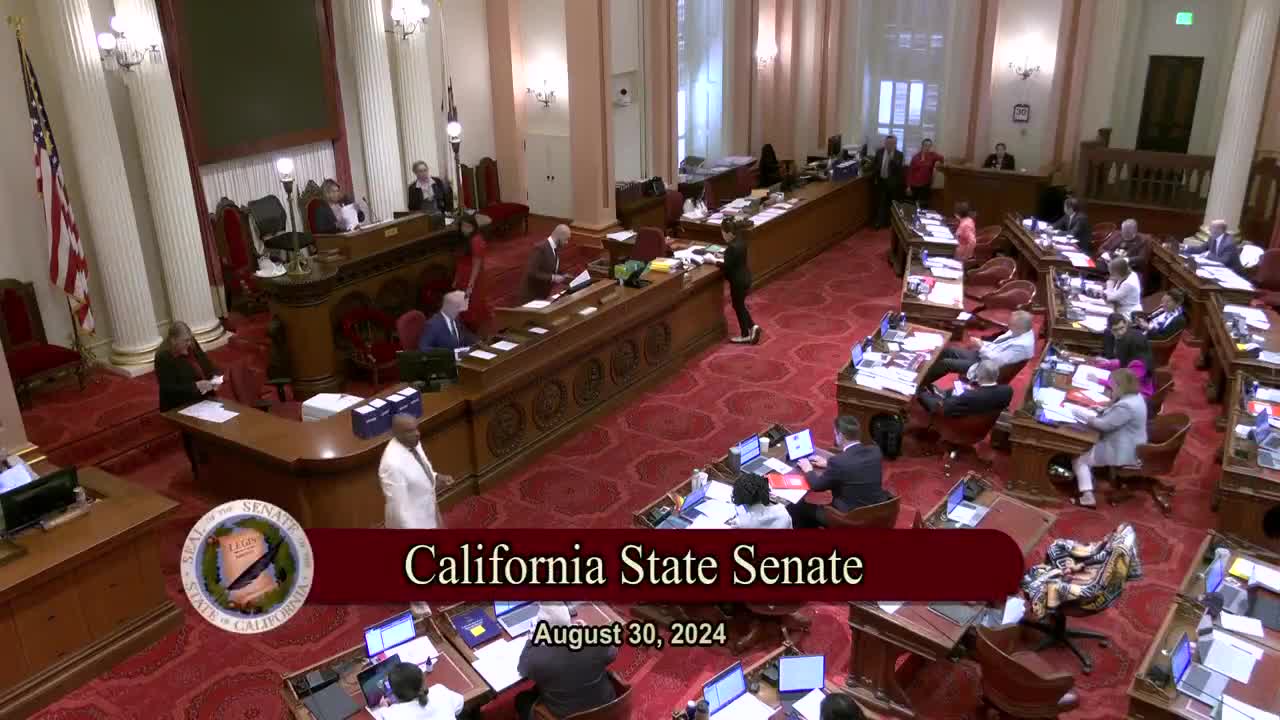 52SEC
Senate Floor
 4MIN
Assembly Floor
 1MIN
Assembly Floor
 10MIN
Senate Standing Committee on Governmental Organization
Bill Author
Bill Co-Author(s):