SB 337: Environmental protection: lands and coastal waters conservation goal.
- Session Year: 2023-2024
- House: Senate
- Latest Version Date: 2023-10-07
Current Status:
Passed
(2023-10-07: Chaptered by Secretary of State. Chapter 392, Statutes of 2023.)
Introduced
In Committee
First Chamber
In Committee
Second Chamber
Enacted
By Executive Order No. N-82-20, Governor Gavin Newsom directed the Natural Resources Agency to combat the biodiversity and climate crises by, among other things, establishing the California Biodiversity Collaborative and conserving at least 30% of Californias lands and coastal waters by 2030. Existing law requires the Secretary of the Natural Resources Agency to prepare and submit, on or before March 31, 2024, and annually thereafter, a report to the Legislature on the progress made in the prior calendar year toward achieving the goal to conserve 30% of Californias lands and coastal waters by 2030.
This bill would codify the goal of the state to conserve at least 30% of Californias lands and coastal waters by 2030.
By Executive Order No. N-82-20, Governor Gavin Newsom directed the Natural Resources Agency to combat the biodiversity and climate crises by, among other things, establishing the California Biodiversity Collaborative and conserving at least 30% of the states Californias lands and coastal waters by 2030. Existing law requires the Secretary of the Natural Resources Agency to prepare and submit, on or before March 31, 2024, and annually thereafter, a report to the Legislature on the progress made in the prior calendar year toward achieving the goal to conserve 30% of state Californias lands and coastal waters by 2030.
This bill would provide that it is the goal of the state to conserve at least 30% of state Californias lands and coastal waters by 2030, and require the secretary to post the report described above on the agencys internet website, as provided. 2030.
By Executive Order No. N-82-20, Governor Gavin Newsom directed the Natural Resources Agency to combat the biodiversity and climate crises by, among other things, establishing the California Biodiversity Collaborative and conserving at least 30% of the states lands and coastal waters by 2030. Existing law requires the Secretary of the Natural Resources Agency to prepare and submit, on or before March 31, 2024, and annually thereafter, a report to the Legislature on the progress made in the prior calendar year toward achieving the goal to conserve 30% of state lands and coastal waters by 2030.
This bill would provide that it is the goal of the state to conserve at least 30% of state lands and coastal waters by 2030, and require the secretary to post the report described above on the agencys internet website, as provided.
By Executive Order No. N-82-20, Governor Gavin Newsom directed the Natural Resources Agency to combat the biodiversity and climate crises by, among other things, establishing the California Biodiversity Collaborative and conserving at least 30% of the states lands and coastal waters by 2030. Existing law requires the Secretary of the Natural Resources Agency to prepare and submit, on or before March 31, 2024, and annually thereafter, a report to the Legislature on the progress made in the prior calendar year toward achieving the goal to conserve 30% of state lands and coastal waters by 2030.
This bill would require the secretary to post the report on the agencys internet website, as provided.
(a)For the purposes of this part, the following definitions apply:
(1)30x30 goal means the goal to conserve 30 percent of Californias lands and coastal waters by 2030 established in subdivision (b) and by Executive Order No. N-82-20.
(2)Pathways to 30x30 Report means the report entitled Pathways to 30x30 California: Accelerating Conservation of Californias Nature that was issued by the Natural Resources Agency on April 22, 2022.
(b)It is the goal of the state to conserve at least 30 percent of Californias lands and coastal waters by 2030.
(a)For the purposes of this part, the following definitions apply:
(1)30x30 goal means the goal to conserve 30 percent of state Californias lands and coastal waters by 2030 established in subdivision (b) and by Executive Order No. N-82-20.
(2)Pathways to 30x30 Report means the report entitled Pathways to 30x30 California: Accelerating Conservation of Californias Nature that was issued by the Natural Resources Agency on April 22, 2022.
(b)It is the goal of the state to conserve at least 30 percent of Californias land lands and coastal waters by 2030.
SEC. 2.Section 71452 of the Public Resources Code is amended to read:71452.(a)Notwithstanding Section 10231.5 of the Government Code, the Secretary of the Natural Resources Agency shall prepare and submit, on or before March 31, 2024, and annually thereafter, a report to the Legislature on the progress made in the prior calendar year toward achieving the 30x30 goal. The report shall include, but is not limited to, all of the following information:(1)The number of acres conserved in the prior calendar year and the number of acres remaining that need to be conserved to meet the 30x30 goal, including information on how that goal is conserving Californias imperiled biodiversity.(2)A summary of the progress made in the prior calendar year to advance toward the 30x30 goal and the near-term priority actions identified in the Pathways to 30x30 Report.(3)How and where state funding that was expended in the prior calendar year was used in furtherance of the 30x30 goal, including the amount of funding expended for land and water conservation, science and research, public outreach and engagement, and managing, monitoring, and restoring conserved lands and water.(4)The progress made by the 30x30 Partnership in the prior calendar year, including by the 30x30 Coordinating Committee, California Biodiversity Council, and California Biodiversity Network.(5)The status of, and progress made by, CA Nature, which is the suite of interactive mapping and visualization tools developed pursuant to the 30x30 goal, and other scientific research or tools developed in the prior calendar year to support the 30x30 goal.(6)The coordination between local, state, and federal agencies in support of the 30x30 goal.(7)The progress made in the prior calendar year to address equity as part of the 30x30 goal, including state funding invested in community engagement, planning, acquisition and restoration, and expenditures for efforts by tribes or community-based groups.(8)Identified barriers to implementing the 30x30 goal and recommended actions taken or needed to address those barriers.(9)Interim benchmarks for the next calendar year to help meet the 30x30 goal and specific actions to implement the 30x30 goal.(b)A report to be submitted pursuant to this section shall be submitted in compliance with Section 9795 of the Government Code.(c)The Secretary of the Natural Resources Agency shall post the report on the Natural Resources Agencys internet website where it shall be publicly accessible.For (a)For the purposes of this part, the following definitions apply:
(a)(1)30x30 goal means the goal to conserve 30 percent of state lands and coastal waters by 2030 established in subdivision (b) and by Executive Order No. N-82-20.
(b)(2)Pathways to 30x30 Report means the report entitled Pathways to 30x30 California: Accelerating Conservation of Californias Nature that was issued by the Natural Resources Agency on April 22, 2022.
(b)It is the goal of the state to conserve at least 30 percent of Californias land and coastal waters by 2030.
SECTION 1.SEC. 2.Section 71452 of the Public Resources Code is amended to read:71452.(a)Notwithstanding Section 10231.5 of the Government Code, the Secretary of the Natural Resources Agency shall prepare and submit, on or before March 31, 2024, and annually thereafter, a report to the Legislature on the progress made in the prior calendar year toward achieving the 30x30 goal. The report shall include, but is not limited to, all of the following information:
(1)The number of acres conserved in the prior calendar year and the number of acres remaining that need to be conserved to meet the 30x30 goal, including information on how that goal is conserving Californias imperiled biodiversity.
(2)A summary of the progress made in the prior calendar year to advance toward the 30x30 goal and the near-term priority actions identified in the Pathways to 30x30 Report.
(3)How and where state funding that was expended in the prior calendar year was used in furtherance of the 30x30 goal, including the amount of funding expended for land and water conservation, science and research, public outreach and engagement, and managing, monitoring, and restoring conserved lands and water.
(4)The progress made by the 30x30 Partnership in the prior calendar year, including by the 30x30 Coordinating Committee, California Biodiversity Council, and California Biodiversity Network.
(5)The status of, and progress made by, CA Nature, which is the suite of interactive mapping and visualization tools developed pursuant to the 30x30 goal, and other scientific research or tools developed in the prior calendar year to support the 30x30 goal.
(6)The coordination between local, state, and federal agencies in support of the 30x30 goal.
(7)The progress made in the prior calendar year to address equity as part of the 30x30 goal, including state funding invested in community engagement, planning, acquisition and restoration, and expenditures for efforts by tribes or community-based groups.
(8)Identified barriers to implementing the 30x30 goal and recommended actions taken or needed to address those barriers.
(9)Interim benchmarks for the next calendar year to help meet the 30x30 goal and specific actions to implement the 30x30 goal.
(b)A report to be submitted pursuant to this section shall be submitted in compliance with Section 9795 of the Government Code.
(c)The Secretary of the Natural Resources Agency shall post the report on the Natural Resources Agencys internet website where it shall be publicly accessible.
(a)Notwithstanding Section 10231.5 of the Government Code, the Secretary of the Natural Resources Agency shall prepare and submit, on or before March 31, 2024, and annually thereafter, a report to the Legislature on the progress made in the prior calendar year toward achieving the 30x30 goal. The report shall include, but is not limited to, all of the following information:
(1)The number of acres conserved in the prior calendar year and the number of acres remaining that need to be conserved to meet the 30x30 goal, including information on how that goal is conserving Californias imperiled biodiversity.
(2)A summary of the progress made in the prior calendar year to advance toward the 30x30 goal and the near-term priority actions identified in the Pathways to 30x30 Report.
(3)How and where state funding that was expended in the prior calendar year was used in furtherance of the 30x30 goal, including the amount of funding expended for land and water conservation, science and research, public outreach and engagement, and managing, monitoring, and restoring conserved lands and water.
(4)The progress made by the 30x30 Partnership in the prior calendar year, including by the 30x30 Coordinating Committee, California Biodiversity Council, and California Biodiversity Network.
(5)The status of, and progress made by, CA Nature, which is the suite of interactive mapping and visualization tools developed pursuant to the 30x30 goal, and other scientific research or tools developed in the prior calendar year to support the 30x30 goal.
(6)The coordination between local, state, and federal agencies in support of the 30x30 goal.
(7)The progress made in the prior calendar year to address equity as part of the 30x30 goal, including state funding invested in community engagement, planning, acquisition and restoration, and expenditures for efforts by tribes or community-based groups.
(8)Identified barriers to implementing the 30x30 goal and recommended actions taken or needed to address those barriers.
(9)Interim benchmarks for the next calendar year to help meet the 30x30 goal and specific actions to implement the 30x30 goal.
(b)A report to be submitted pursuant to this section shall be submitted in compliance with Section 9795 of the Government Code.
(c)The Secretary of the Natural Resources Agency shall post the report on the Natural Resources Agencys internet website where it shall be publicly accessible.
|
Date
|
Status
|
|---|---|
| Oct 7, 2023 | Chaptered by Secretary of State. Chapter 392, Statutes of 2023. |
| Oct 7, 2023 | Approved by the Governor. |
| Sep 15, 2023 | Enrolled and presented to the Governor at 3 p.m. |
| Sep 11, 2023 | In Senate. Ordered to engrossing and enrolling. |
| Sep 11, 2023 | Read third time. Passed. (Ayes 69. Noes 7. Page 3155.) Ordered to the Senate. |
| Sep 5, 2023 | Read second time. Ordered to third reading. |
| Sep 1, 2023 | From committee: Do pass. (Ayes 13. Noes 3.) (September 1). |
| Aug 16, 2023 | August 16 set for first hearing. Placed on suspense file. |
| Jun 13, 2023 | From committee: Do pass and re-refer to Com. on APPR. (Ayes 8. Noes 0.) (June 12). Re-referred to Com. on APPR. |
| May 26, 2023 | Referred to Com. on NAT. RES. |
| May 15, 2023 | In Assembly. Read first time. Held at Desk. |
| May 15, 2023 | Read third time. Passed. (Ayes 29. Noes 5. Page 1075.) Ordered to the Assembly. |
| May 2, 2023 | Read second time. Ordered to third reading. |
| May 1, 2023 | From committee: Be ordered to second reading pursuant to Senate Rule 28.8. |
| Apr 25, 2023 | Set for hearing May 1. |
| Apr 20, 2023 | Read second time and amended. Re-referred to Com. on APPR. |
| Apr 19, 2023 | From committee: Do pass as amended and re-refer to Com. on APPR. (Ayes 7. Noes 2. Page 801.) (April 18). |
| Apr 10, 2023 | Set for hearing April 18. |
| Mar 15, 2023 | From committee with author's amendments. Read second time and amended. Re-referred to Com. on N.R. & W. |
| Feb 15, 2023 | Referred to Com. on N.R. & W. |
| Feb 8, 2023 | From printer. May be acted upon on or after March 10. |
| Feb 7, 2023 | Introduced. Read first time. To Com. on RLS. for assignment. To print. |
|
Date
|
Description
|
Location
|
Votes
|
|
|---|---|---|---|---|
| Sep 11, 2023 | SB 337 Min Senate Third Reading By Kalra | Assembly Floor |
Passed |
|
| Sep 1, 2023 | Do pass. | Assembly Standing Committee on Appropriations |
Passed |
|
| Jun 12, 2023 | Do pass and be re-referred to the Committee on [Appropriations] | Assembly Standing Committee on Natural Resources |
Passed |
|
| May 15, 2023 | Senate 3rd Reading SB337 Min et al. | Senate Floor |
Passed |
|
| Apr 18, 2023 | Do pass as amended, but first amend, and re-refer to the Committee on [Appropriations] | Senate Standing Committee on Natural Resources and Water |
Passed |
This list shows positions taken on this bill by organizations on the date displayed, which is linked to the original source.
Positions by individuals are not included.
|
Organization
|
Position
|
Date
|
|---|---|---|
| 1000 Grandmothers for Future Generations | ** Support | |
| Active San Gabriel Valley | ** Support | |
| Audubon California | ** Support | |
| Azul | ** Support | |
| Bear Yuba Land Trust | ** Support | |
| Big Sur Land Trust | ** Support | |
| California Coastal Protection Network | ** Support | |
| California Council Of Land Trusts | ** Support | |
| California Environmental Voters | ** Support | |
| California Institute for Biodiversity | ** Support | |
| California Native Plant Society | ** Support | |
| California State Parks Foundation | ** Support | |
| CALPIRG Students | ** Support | |
| Center For Biological Diversity | ** Support | |
| Citizens Committee to Complete the Refuge | ** Support | |
| Climate Action California | ** Support | |
| County of Nevada | ** Support | |
| County Of Placer | ** Support | |
| Defenders Of Wildlife | ** Support | |
| Eastern Sierra Land Trust | ** Support | |
| Elders Climate Action Norcal Chapter | ** Support | |
| Elders Climate Action Socal Chapter | ** Support | |
| Endangered Habitats League | ** Support | |
| Environmental Center of San Diego | ** Support | |
| Environmental Protection Information Center | ** Support | |
| Escondido Neighbors United | ** Support | |
| Feather River Land Trust | ** Support | |
| Forests Forever | ** Support | |
| Friends of Harbors, Beaches and Parks | ** Support | |
| Friends of the Dunes | ** Support | |
| Hills for Everyone | ** Support | |
| Hispanic Access Foundation | ** Support | |
| Los Padres Forest Watch | ** Support | |
| Midpeninsula Regional Open Space District | ** Support | |
| Mojave Desert Land Trust | ** Support | |
| Mono Lake Committee | ** Support | |
| morongo basin conservation association | ** Support | |
| Mother Lode Land Trust | ** Support | |
| National Audubon Society | ** Support | |
| Natural Resources Defense Council | ** Support | |
| North Fork American River Alliance | ** Support | |
| Outdoor Alliance California | ** Support | |
| Outdoor Outreach | ** Support | |
| Pacific Crest Trail Association | ** Support | |
| Pacific Forest Trust | ** Support | |
| Peninsula Open Space Trust | ** Support | |
| People’s Collective for Environmental Justice | ** Support | |
| Placer Land Trust | ** Support | |
| Planning And Conservation League | ** Support | |
| River Partners | ** Support | |
| Santa Clara Valley Audubon Society | ** Support | |
| Santa Cruz Climate Action Network | ** Support | |
| Save the Redwoods League | ** Support | |
| Sequoia Riverlands Trust | ** Support | |
| Sierra Business Council | ** Support | |
| Sierra Club California | ** Support | |
| Sierra Consortium | ** Support | |
| Sierra County Land Trust | ** Support | |
| Sierra Foothill Conservancy | ** Support | |
| Sierra Nevada Alliance | ** Support | |
| Sonoma Land Trust | ** Support | |
| The Climate Center | ** Support | |
| The Phoenix Group | ** Support | |
| The Wilderness Society | ** Support | |
| The Wildlands Conservancy | ** Support | |
| Truckee Donner Land Trust | ** Support | |
| Wildlands Network | ** Support |
SENATE THIRD READING
STR Bill Id:SB 337
Author:(Min)
As Amended Ver:April 20, 2023
Majority vote
SUMMARY
Codifies the goal of the state to conserve at least 30% of California's lands and coastal waters by 2030.
Major Provisions
COMMENTS
Within the United States, about a football field worth of natural area is converted to human development every 30 seconds. Many of California's natural systems have been damaged or destroyed. The Central California Coast alone has suffered a 92% loss of its tidal wetlands, including ecologically priceless estuaries. An estimated 7 million acres of vernal pools existed at the time of Spanish contact; less than 13% remain today. Climate change and habitat loss are also threatening our biological diversity and driving catastrophic wildfires, historic drought, flooding, extreme heat, coastal erosion, and sea level rise. Not surprisingly, the same forces that threaten plant and animal species also threaten human lives and livelihoods.
The 30x30 initiative is a global movement; scientists say protecting at least 30% of the world's oceans and lands by 2030 (and 50% by 2050) is necessary to prevent mass extinctions and ecological collapse.
In October 2020, Governor Newsom signed his Nature Based Solutions EO N-82-20, elevating the role of natural and working lands in the fight against climate change and advancing biodiversity conservation as an administration priority. As part of this EO, California is committed to the goal of conserving 30% of our lands and coastal waters by 2030.
This bill codifies the goal of the state to conserve at least 30% of California's lands and coastal waters by 2030. According to the author:
According to the Author
Conserving the Earth's lands and waters is one of the best tools we have to prevent further extinctions and protect biodiversity and ecosystem services. While the Newsom Administration has shown great leadership in adopting an ambitious goal in line with recommendations from the scientific community, the goal's deadline will extend past this Governor's term. Enshrining the goal in statute will ensure it persists until 2030.
Arguments in Support
Defenders of Wildlife, in addition to a large group of other environmental organizations, writes, "Despite all of this good work [on 30x30], one of the critical missing components is ensuring that the commitment to meet this 30x30 goal will last beyond the current administration. The next new governor can disregard executive orders. SB 337 puts the 30x30 goal into state law ensuring that future state administrations are committed to meeting this important climate and biodiversity goal."
Arguments in Opposition
None on file
FISCAL COMMENTS
According to the Assembly Appropriations Committee, this bill would result in ongoing cost pressure of an unknown but significant amount, likely in the millions of dollars, for the state to achieve the 30x30 goal (General Fund, special fund, bond funds, federal funds) through projects and strategies such as land acquisitions, conservation easements, and enhanced conservation and restoration of existing public lands and coastal waters.
VOTES
SENATE FLOOR: 29-5-6
YES: Allen, Alvarado-Gil, Archuleta, Ashby, Atkins, Becker, Blakespear, Bradford, Caballero, Cortese, Dodd, Durazo, Eggman, Glazer, Gonzalez, Laird, Limón, McGuire, Menjivar, Min, Newman, Padilla, Portantino, Roth, Skinner, Stern, Umberg, Wahab, Wiener
NO: Dahle, Grove, Jones, Nguyen, Niello
ABS, ABST OR NV: Hurtado, Ochoa Bogh, Rubio, Seyarto, Smallwood-Cuevas, Wilk
ASM NATURAL RESOURCES: 8-0-3
YES: Luz Rivas, Flora, Friedman, Muratsuchi, Pellerin, Ward, Wood, Zbur
ABS, ABST OR NV: Addis, Hoover, Mathis
ASM APPROPRIATIONS: 13-3-0
YES: Holden, Bryan, Calderon, Wendy Carrillo, Mike Fong, Hart, Lowenthal, Mathis, Papan, Pellerin, Soria, Weber, Wilson
NO: Megan Dahle, Dixon, Sanchez
UPDATED
VERSION: April 20, 2023
CONSULTANT: Paige Brokaw / NAT. RES. / (916) 319-2092 FN: 0001450
Date of Hearing: August 16, 2023
ASSEMBLY COMMITTEE ON APPROPRIATIONS
Chris Holden, Chair
SBPCA Bill Id:SB 337
Author:(Min) – As Amended Ver:April 20, 2023
Policy Committee: | Natural Resources | Vote: | 8 - 0 |
|
| ||
|
|
Urgency: No State Mandated Local Program: No Reimbursable: No
SUMMARY:
This bill codifies the goal of the state to conserve at least 30% of California’s lands and coastal waters by 2030 (30x30).
FISCAL EFFECT:
Ongoing cost pressure of an unknown but significant amount, likely in the millions of dollars, for the state to achieve the 30x30 goal (General Fund, special fund, bond funds, federal funds) through projects and strategies such as land acquisitions, conservation easements, and enhanced conservation and restoration of existing public lands and coastal waters.
COMMENTS:
1) Purpose. According to the author:
Conserving the Earth’s lands and waters is one of the best tools we have to prevent further extinctions and protect biodiversity and ecosystem services. While the Newsom Administration has shown great leadership in adopting an ambitious goal in line with recommendations from the scientific community, the goal’s deadline will extend past this Governor’s term. Enshrining the goal in statute will ensure it persists until 2030.
2) Background. The 30x30 initiative is a global movement. Scientists say protecting at least 30% of the world’s oceans and lands by 2030 (and 50% by 2050) is necessary to prevent mass extinctions and ecological collapse. At the 2022 United Nations Biodiversity Conference of the Parties in Montreal, Canada, under the Kunming-Montreal Global Biodiversity Framework, almost 200 countries agreed to protect 30% of the planet by 2030. At the federal level, the Biden administration launched the “America the Beautiful” initiative in 2021, which includes the first national conservation goal to conserve at least 30% of U.S. lands and waters by 2030. In October 2020, Governor Newsom signed his Nature Based Solutions Executive Order N-82-20, elevating the role of natural and working lands in the fight against climate change and advancing biodiversity conservation as an administration priority. The EO asserts California is committed to the goal of conserving 30% of lands and coastal waters in the state by 2030.
The California Natural Resources Agency (CNRA) released its “Pathways to 30x30 California” report (Pathways Report) in April 2022, which defines the term “conserved” for the purpose of the goal, identifies how many acres of land and coastal waters are already conserved, adopts key objectives and core commitments, identifies strategies to achieve the goal, and establishes an implementation framework to coordinate action across agencies and stakeholders.
According to the Pathways Report, approximately 24% of California’s lands and 16% of its coastal waters are already conserved. California’s strategy to conserve an additional six million acres of land and half a million acres of coastal waters is organized into ten pathways. This bill codifies the goal of the state to conserve at least 30% of California’s lands and coastal waters by 2030.
According to the Senate Natural Resources Committee analysis of this bill, in an oversight hearing convened by the committee on February 28, 2023, on the state’s 30x30 efforts, the administration noted that, rather than create new programs, it plans to implement 30x30 by investing in the state’s existing conservation programs. For example, since April 2022, the Wildlife Conservation Board had approved 18 projects that will conserve over 13,000 acres. The Department of Fish and Wildlife had invested $15 million in six fee title acquisitions to conserve 6,500 acres. In total, these projects represent 0.325% progress toward the goal. The Department of Parks and Recreation (State Parks) determined that over 80% of its 1.6 million acres of lands within the state park system qualify as “conserved” for the purpose of the goal. However, rather than add new parks to the state park system, State Parks intends to increase programming and projects on existing state park lands so that more State Parks land may be considered “conserved”. Also, State Parks has provided $500 million to local entities to create new local parks and improve services and amenities at existing local parks.
In addition to investing state resources, the Newsom administration is actively pursuing over one million acres of federal monuments and notes that a substantial share of recent private land conservation transactions involve philanthropic contributions. As part of its Pathways Report, CNRA released an appendix that identifies projects with funding committed as part of the fiscal year 2022-2023 “nature based solutions budget package” as of May 2023. Existing law requires CNRA, on or before March 31, 2024, and annually thereafter, to submit a report to the Legislature on the progress made in the prior calendar year toward achieving the 30x30 goal. This report may provide a better assessment of whether the state is on track to meet the goal and could help the Legislature determine whether and how much additional funding is needed to meet the goal.
Analysis Prepared by: Nikita Koraddi / APPR. / (916) 319-2081
Date of Hearing: June 12, 2023
ASSEMBLY COMMITTEE ON NATURAL RESOURCES
Luz Rivas, Chair
SBPCA Bill Id:SB 337
Author:(Min) – As Amended Ver:April 20, 2023
SENATE VOTE: 29-5
SUBJECT: Environmental protection: lands and coastal waters conservation goal.
SUMMARY: Codifies the goal of the state to conserve at least 30% of California’s lands and coastal waters by 2030.
EXISTING LAW:
- Directs California Natural Resources Agency (NRA) to combat the biodiversity and climate crisis by, among other things, establishing the California Biodiversity Collaborative and establishing the goal of conserving at least 30% of the state’s lands and coastal waters by 2030. (Executive Order (EO) No. N-82-20)
- Require NRA, in implementing actions to achieve the goal to conserve at least 30% of the state’s lands and coastal waters by 2030, to prioritize specified actions. Requires the Secretary of NRA to prepare and submit, beginning on or before March 31, 2024, an annual report to the Legislature on the progress made during the prior calendar year toward achieving that goal, as provided. (Public Resources Code 71451-71452)
FISCAL EFFECT: Nonfiscal
COMMENTS:
- Ecological protection. Within the United States, about a football field worth of natural area is converted to human development every 30 seconds. Globally, human activity has altered three-quarters of the Earth’s lands. Hundreds of scientists have warned that this rapid loss of natural space is resulting in a mass extinction, exacerbated by climate change.
As NRA eloquently puts it, “California’s ecosystems form the bedrock of the state’s wellbeing and prosperity. Many of these ecosystems—which are vitally important to the state’s water supply, agriculture, wildlife, and economy—are in dire health.”
Many of California’s natural systems have been damaged or destroyed. The Central California Coast alone has suffered a 92% loss of its tidal wetlands, including ecologically priceless estuaries. An estimated 7 million acres of vernal pools existed at the time of Spanish contact; less than 13% remain today. Climate change and habitat loss are also threatening our biological diversity and driving catastrophic wildfires, historic drought, flooding, extreme heat, coastal erosion, and sea level rise. Not surprisingly, the same forces that threaten plant and animal species also threaten human lives and livelihoods.
The state needs to build resilience by reconnecting watersheds to the ocean and rivers to floodplains, restoring wetlands, protecting critical habitats, and more. NRA is prioritizing restoration projects that do all of these things, while also promoting multiple benefits such as flood control, wildlife habitat, and climate adaptation.
- Climate impacts on our environment. The Legislative Analyst’s Office April 2022 report, Climate Change Impacts Across California Crosscutting Issues, found that increasing temperatures and severe weather events threaten state’s fish and wildlife, ecosystems, and native plants, and that some of these impacts already are evident. For example, an estimated 172 million trees have died in California’s forests since 2010 due to multiple years of low moisture and drought conditions, high temperatures, and resulting bark beetle infestations. These dead trees provided fuel for and likely exacerbated the severe wildfires that have occurred over the past decade, which subsequently negatively impacted those forest habitats and the wildlife they contained.
Warmer temperatures and less water runoff during dry years also impair conditions for fish, aquatic wildlife, and migratory birds that depend on the state’s rivers, streams, and wetlands. Significant declines—or potential permanent extinctions—of the state’s native fish species represent not just a loss of public trust in natural resources, but also impair the state’s fishing industry and economy, as well as dispossess some of California’s Native American communities of essential elements of their tribal culture.
- 30x30. The 30x30 initiative is a global movement; scientists say protecting at least 30% of the world’s oceans and lands by 2030 (and 50% by 2050) is necessary to prevent mass extinctions and ecological collapse.
President Biden issued Executive Order 14008 in January 2021 to address the domestic action on climate change; Section 216 of that order includes 30x30 goals by requiring the Secretary of the Interior to submit a report to achieve the goal of conserving at least 30% of our lands and waters by 2030.
In October 2020, Governor Newsom signed his Nature Based Solutions EO N-82-20, elevating the role of natural and working lands in the fight against climate change and advancing biodiversity conservation as an administration priority. As part of this EO, California is committed to the goal of conserving 30% of our lands and coastal waters by 2030.
NRA released Pathways to 30x30 California in April 2022, which describes the key objectives and core commitments that are a part of California’s 30x30 conservation framework; defines conservation for the purpose of California’s 30x30 initiative and establishes a current baseline of conserved areas; outlines strategic actions necessary to achieve 30x30; and, introduces CA Nature, a suite of publicly available applications to identify conservation opportunities and track our collective progress.
Approximately 24% of California’s lands and 16% of its coastal waters are already conserved based on the definition of 30x30 Conservation Areas. California’s strategy to conserve an additional six million acres of land and half a million acres of coastal waters is organized into ten pathways that are specific state actions that will help achieve 30x30.
- This bill. SB 337 codifies the goal of the state to conserve at least 30% of California’s lands and coastal waters by 2030. According to the author:
Conserving the Earth’s lands and waters is one of the best tools we have to prevent further extinctions and protect biodiversity and ecosystem services. While the Newsom Administration has shown great leadership in adopting an ambitious goal in line with recommendations from the scientific community, the goal’s deadline will extend past this Governor’s term. Enshrining the goal in statute will ensure it persists until 2030.
REGISTERED SUPPORT / OPPOSITION:
Support
1000 Grandmothers for Future Generation
Active San Gabriel Valley
Audubon California
Azul
Big Sur Land Trust
California Coastal Protection Network
California Council of Land Trusts
California Environmental Voters
California Institute for Biodiversity
California Native Plant Society
California State Parks Foundation
Calpirg Students
Center for Biological Diversity
Citizens Committee to Complete the Refuge
Climate Action California
Defenders of Wildlife
Eastern Sierra Land Trust
Endangered Habitats League
Environmental Center of San Diego
Environmental Protection Information Center
Escondido Neighbors United
Forests Forever
Friends of Harbors, Beaches and Parks
Friends of The Dunes
Hills for Everyone
Hispanic Access Foundation
Los Padres Forest Watch
Midpeninsula Regional Open Space District
Mojave Desert Land Trust
Mono Lake Committee
Morongo Basin Conservation Association
Mother Lode Land Trust
Natural Resources Defense Council
North Fork American River Alliance
Outdoor Alliance California
Outdoor Outreach
Pacific Crest Trail Association
Pacific Forest Trust
Peninsula Open Space Trust
People's Collective for Environmental Justice
Planning and Conservation League
River Partners
Santa Clara Valley Audubon Society
Santa Cruz Climate Action Network
Save the Redwoods League
Sequoia Riverlands Trust
Sierra Club California
Sierra County Land Trust
Sierra Nevada Alliance
Sonoma Land Trust
The Climate Center
The Phoenix Group
The Wilderness Society
The Wildlands Conservancy
Wildlands Network
Opposition
None on file
Analysis Prepared by: Paige Brokaw / NAT. RES. /
Discussed in Hearing
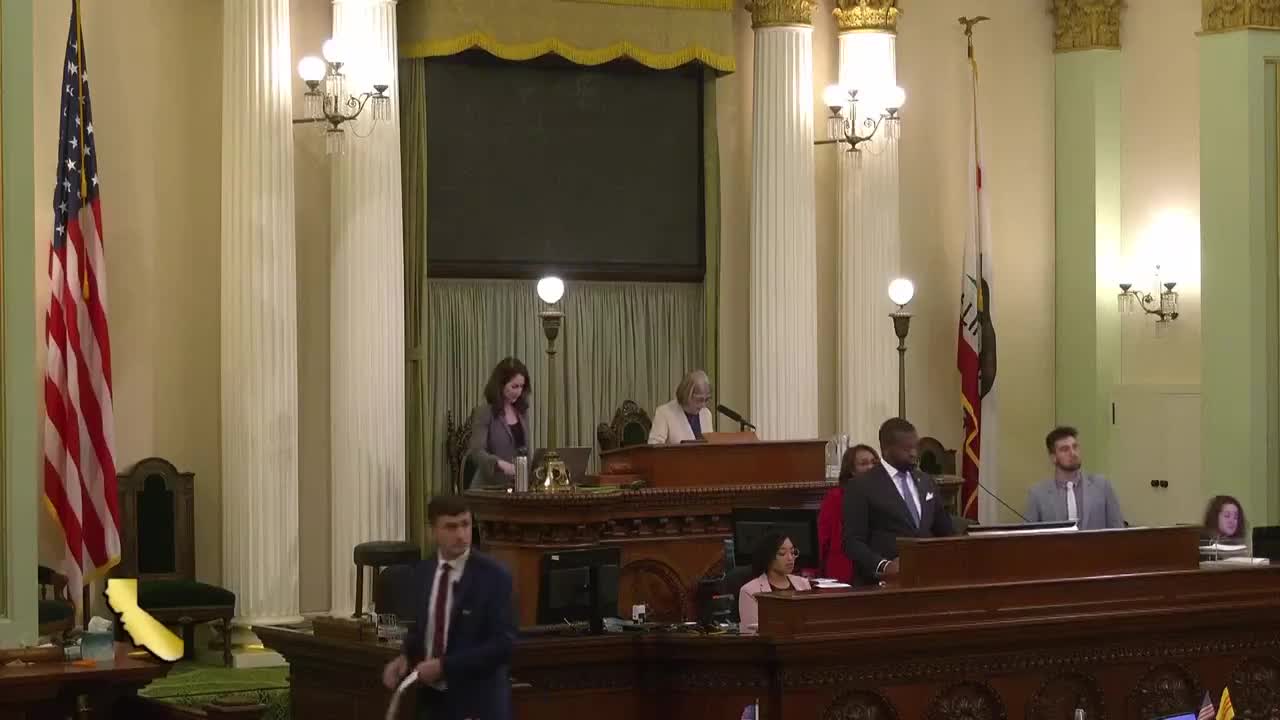 2MIN
Assembly Floor
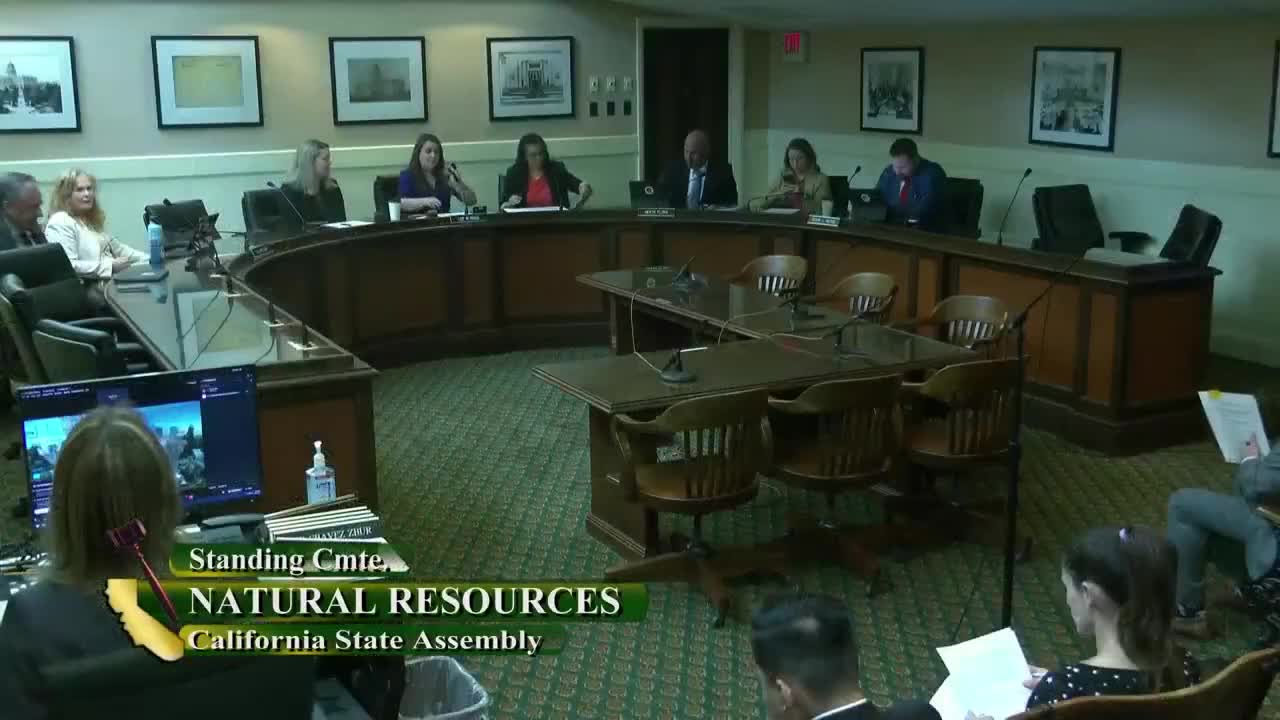 7MIN
Assembly Standing Committee on Natural Resources
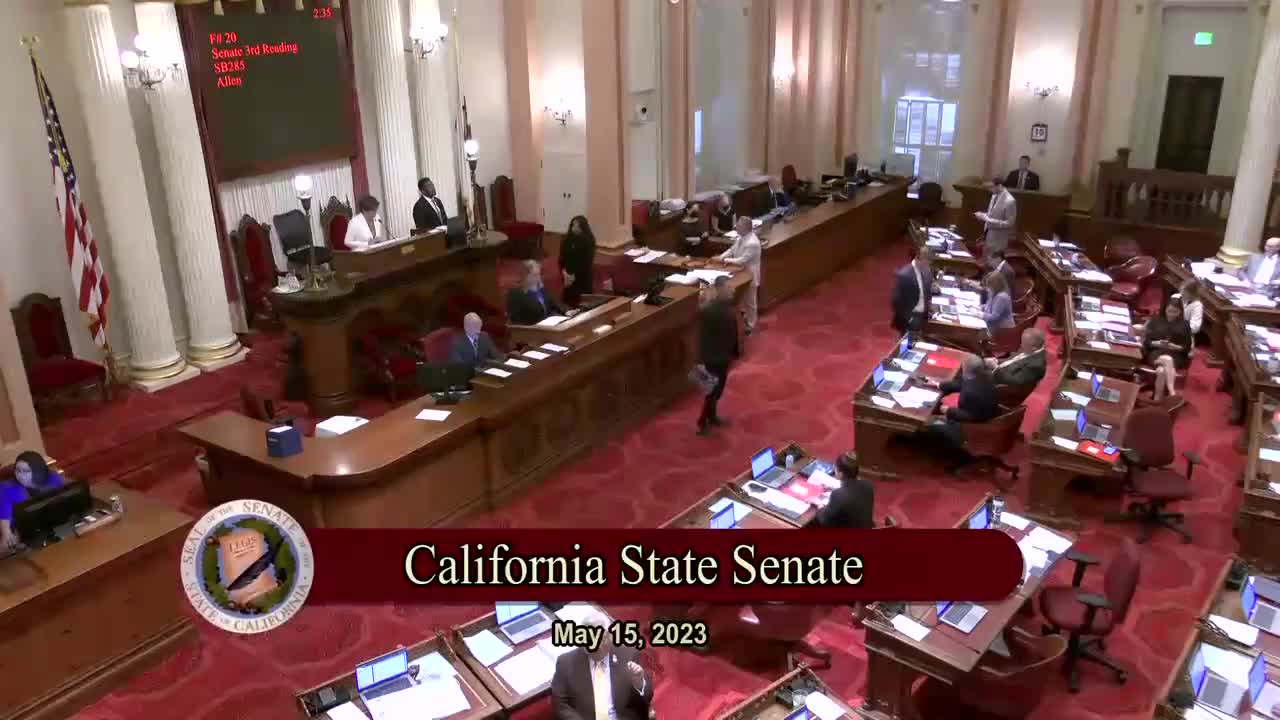 4MIN
Senate Floor
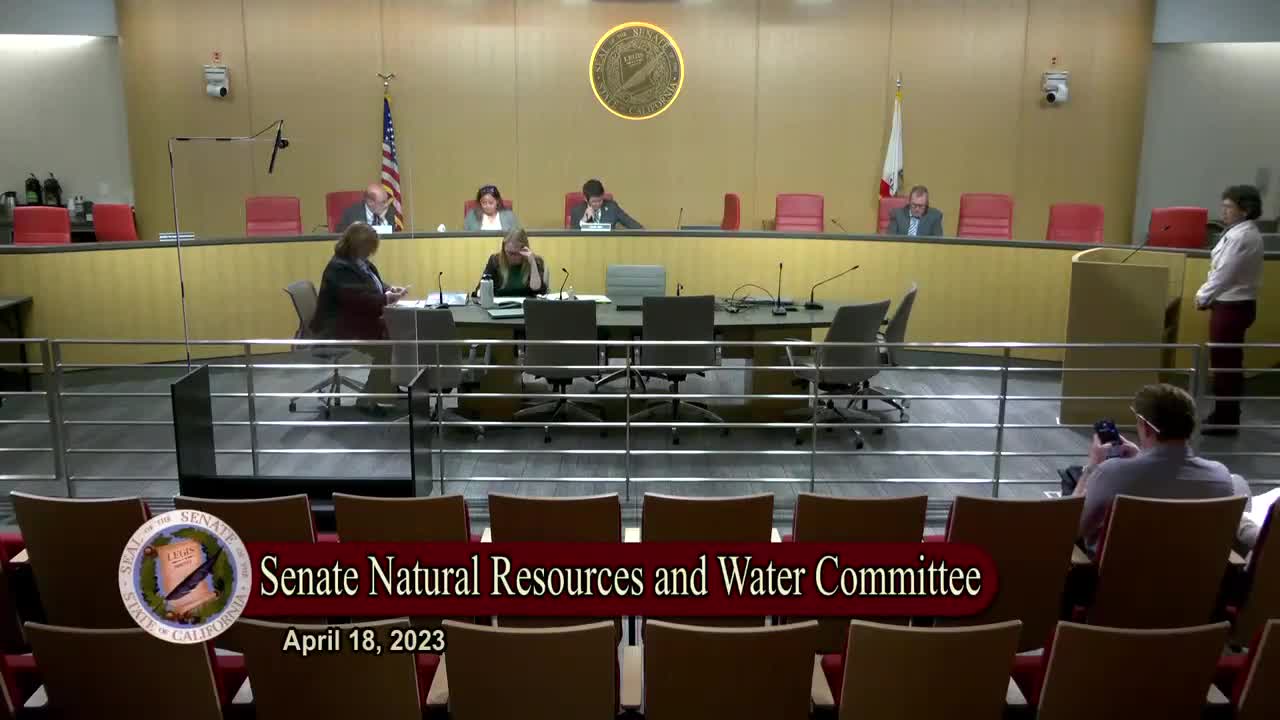 15MIN
Senate Standing Committee on Natural Resources and Water
Bill Author


