SB 339: HIV preexposure prophylaxis and postexposure prophylaxis.
- Session Year: 2023-2024
- House: Senate
- Latest Version Date: 2024-02-06
Current Status:
Passed
(2024-02-06: Chaptered by Secretary of State. Chapter 1, Statutes of 2024.)
Introduced
In Committee
First Chamber
In Committee
Second Chamber
Enacted
Existing law, the Pharmacy Law, provides for the licensure and regulation of pharmacists by the California State Board of Pharmacy. Existing law authorizes a pharmacist to furnish at least a 30-day supply of HIV preexposure prophylaxis, and up to a 60-day supply of those drugs if certain conditions are met. Existing law also authorizes a pharmacist to furnish postexposure prophylaxis to a patient if certain conditions are met.
This bill would authorize a pharmacist to furnish up to a 90-day course of preexposure prophylaxis, or preexposure prophylaxis beyond a 90-day course, if specified conditions are met. The bill would require the California State Board of Pharmacy to adopt emergency regulations to implement these provisions by October 31, 2024.
Existing law, the Knox-Keene Health Care Service Plan Act of 1975, provides for the licensure and regulation of health care service plans by the Department of Managed Health Care and makes a willful violation of the act a crime. Existing law also provides for the regulation of health insurers by the Department of Insurance. Existing law prohibits a health care service plan or health insurer from covering preexposure prophylaxis that has been furnished by a pharmacist in excess of a 60-day supply once every 2 years, except as specified.
Existing law provides for the Medi-Cal program administered by the State Department of Health Care Services and under which qualified low-income individuals receive health care services pursuant to a schedule of benefits. The existing schedule of benefits includes coverage for preexposure prophylaxis as pharmacist services, limited to no more than a 60-day supply furnished by a pharmacist once every 2 years, and includes coverage for postexposure prophylaxis, subject to approval by the federal Centers for Medicare and Medicaid Services. The Medi-Cal program is, in part, governed and funded by federal Medicaid program provisions.
This bill would require a health care service plan and health insurer to cover preexposure prophylaxis and postexposure prophylaxis furnished by a pharmacist, including the pharmacists services and related testing ordered by the pharmacist, and to pay or reimburse for the service performed by a pharmacist at an in-network pharmacy or a pharmacist at an out-of-network pharmacy if the health care service plan or health insurer has an out-of-network pharmacy benefit, except as specified. The bill would include preexposure prophylaxis furnished by a pharmacist as pharmacist services on the Medi-Cal schedule of benefits. Because a willful violation of these provisions by a health care service plan would be a crime, this bill would impose a state-mandated local program.
The California Constitution requires the state to reimburse local agencies and school districts for certain costs mandated by the state. Statutory provisions establish procedures for making that reimbursement.
This bill would provide that no reimbursement is required by this act for a specified reason.
This bill would declare that it is to take effect immediately as an urgency statute.
Existing law, the Pharmacy Law, provides for the licensure and regulation of pharmacists by the California State Board of Pharmacy. Existing law authorizes a pharmacist to furnish at least a 30-day supply of HIV preexposure prophylaxis, and up to a 60-day supply of those drugs if certain conditions are met. Existing law also authorizes a pharmacist to furnish postexposure prophylaxis to a patient if certain conditions are met.
This bill would authorize a pharmacist to furnish up to a 90-day course of preexposure prophylaxis, or preexposure prophylaxis beyond a 90-day course, if specified conditions are met. The bill would require the California State Board of Pharmacy to adopt emergency regulations to implement these provisions by October 31, 2024.
Existing law, the Knox-Keene Health Care Service Plan Act of 1975, provides for the licensure and regulation of health care service plans by the Department of Managed Health Care and makes a willful violation of the act a crime. Existing law also provides for the regulation of health insurers by the Department of Insurance. Existing law prohibits a health care service plan or health insurer from covering preexposure prophylaxis that has been furnished by a pharmacist in excess of a 60-day supply once every 2 years, except as specified.
Existing law provides for the Medi-Cal program administered by the State Department of Health Care Services and under which qualified low-income individuals receive health care services pursuant to a schedule of benefits. The existing schedule of benefits includes coverage for preexposure prophylaxis as pharmacist services, limited to no more than a 60-day supply furnished by a pharmacist once every 2 years, and includes coverage for postexposure prophylaxis, subject to approval by the federal Centers for Medicare and Medicaid Services. The Medi-Cal program is, in part, governed and funded by federal Medicaid program provisions.
This bill would require a health care service plan and health insurer to cover preexposure prophylaxis and postexposure prophylaxis furnished by a pharmacist, including the pharmacists services and related testing ordered by the pharmacist, and to pay or reimburse for the service performed by a pharmacist at an in-network pharmacy or a pharmacist at an out-of-network pharmacy if the health care service plan or health insurer has an out-of-network pharmacy benefit, except as specified. The bill would include preexposure prophylaxis furnished by a pharmacist as pharmacist services on the Medi-Cal schedule of benefits. Because a willful violation of these provisions by a health care service plan would be a crime, this bill would impose a state-mandated local program.
The California Constitution requires the state to reimburse local agencies and school districts for certain costs mandated by the state. Statutory provisions establish procedures for making that reimbursement.
This bill would provide that no reimbursement is required by this act for a specified reason.
This bill would declare that it is to take effect immediately as an urgency statute.
Existing law, the Pharmacy Law, provides for the licensure and regulation of pharmacists by the California State Board of Pharmacy. Existing law authorizes a pharmacist to furnish at least a 30-day supply of HIV preexposure prophylaxis, and up to a 60-day supply of those drugs if certain conditions are met. Existing law also authorizes a pharmacist to furnish postexposure prophylaxis to a patient if certain conditions are met.
This bill would authorize a pharmacist to furnish up to a 90-day course of preexposure prophylaxis, or preexposure prophylaxis beyond a 90-day course, if specified conditions are met. The bill would require the California State Board of Pharmacy to adopt emergency regulations to implement these provisions by July 1, October 31, 2024.
Existing law, the Knox-Keene Health Care Service Plan Act of 1975, provides for the licensure and regulation of health care service plans by the Department of Managed Health Care and makes a willful violation of the act a crime. Existing law also provides for the regulation of health insurers by the Department of Insurance. Existing law prohibits a health care service plan or health insurer from covering preexposure prophylaxis that has been furnished by a pharmacist in excess of a 60-day supply once every 2 years.
Existing law provides for the Medi-Cal program administered by the State Department of Health Care Services and under which qualified low-income individuals receive health care services pursuant to a schedule of benefits. The existing schedule of benefits includes coverage for preexposure prophylaxis as pharmacist services, limited to no more than a 60-day supply furnished by a pharmacist once every 2 years, and includes coverage for postexposure prophylaxis, subject to approval by the federal Centers for Medicare and Medicaid Services. The Medi-Cal program is, in part, governed and funded by federal Medicaid program provisions.
This bill would require a health care service plan and health insurer to cover preexposure prophylaxis and postexposure prophylaxis furnished by a pharmacist, including the pharmacists services and related testing ordered by the pharmacist, and to pay or reimburse for the service performed by a pharmacist at an in-network pharmacy or a pharmacist at an out-of-network pharmacy if the health care service plan or health insurer has an out-of-network pharmacy benefit, except as specified. The bill would include preexposure prophylaxis furnished by a pharmacist as pharmacist services on the Medi-Cal schedule of benefits. Because a willful violation of these provisions by a health care service plan would be a crime, this bill would impose a state-mandated local program.
The California Constitution requires the state to reimburse local agencies and school districts for certain costs mandated by the state. Statutory provisions establish procedures for making that reimbursement.
This bill would provide that no reimbursement is required by this act for a specified reason.
This bill would declare that it is to take effect immediately as an urgency statute.
Existing law, the Pharmacy Law, provides for the licensure and regulation of pharmacists by the California State Board of Pharmacy. Existing law authorizes a pharmacist to furnish at least a 30-day supply of HIV preexposure prophylaxis, and up to a 60-day supply of those drugs if certain conditions are met. Existing law also authorizes a pharmacist to furnish postexposure prophylaxis to a patient if certain conditions are met.
This bill would authorize a pharmacist to furnish up to a 90-day course of preexposure prophylaxis, or preexposure prophylaxis beyond a 90-day course, if specified conditions are met. The bill would require the California State Board of Pharmacy to adopt emergency regulations to implement these provisions by July 1, 2024.
Existing law, the Knox-Keene Health Care Service Plan Act of 1975, provides for the licensure and regulation of health care service plans by the Department of Managed Health Care and makes a willful violation of the act a crime. Existing law also provides for the regulation of health insurers by the Department of Insurance. Existing law prohibits a health care service plan or health insurer from covering preexposure prophylaxis that has been furnished by a pharmacist in excess of a 60-day supply once every 2 years.
Existing law provides for the Medi-Cal program administered by the State Department of Health Care Services and under which qualified low-income individuals receive health care services pursuant to a schedule of benefits. The existing schedule of benefits includes coverage for preexposure prophylaxis as pharmacist services, limited to no more than a 60-day supply furnished by a pharmacist once every 2 years, and includes coverage for postexposure prophylaxis, subject to approval by the federal Centers for Medicare and Medicaid Services. The Medi-Cal program is, in part, governed and funded by federal Medicaid program provisions.
This bill would require a health care service plan and health insurer to cover preexposure prophylaxis and postexposure prophylaxis furnished by a pharmacist, including costs for the pharmacists services and related testing ordered by the pharmacist, and to pay or reimburse the cost of for the service performed by a pharmacist at an in-network pharmacy or a pharmacist at an out-of-network pharmacy if the health care service plan or health insurer has an out-of-network pharmacy benefit. benefit, except as specified. The bill would include preexposure prophylaxis furnished by a pharmacist as pharmacist services on the Medi-Cal schedule of benefits. Because a willful violation of these provisions by a health care service plan would be a crime, this bill would impose a state-mandated local program.
The California Constitution requires the state to reimburse local agencies and school districts for certain costs mandated by the state. Statutory provisions establish procedures for making that reimbursement.
This bill would provide that no reimbursement is required by this act for a specified reason.
Existing law, the Pharmacy Law, provides for the licensure and regulation of pharmacists by the California State Board of Pharmacy. Existing law authorizes a pharmacist to furnish at least a 30-day supply of HIV preexposure prophylaxis, and up to a 60-day supply of those drugs if certain conditions are met. Existing law also authorizes a pharmacist to furnish postexposure prophylaxis to a patient if certain conditions are met.
This bill would authorize a pharmacist to furnish up to a 90-day course of preexposure prophylaxis, or preexposure prophylaxis beyond a 90-day course, if specified conditions are met. The bill would require the California State Board of Pharmacy to adopt emergency regulations to implement these provisions by July 1, 2024.
Existing law, the Knox-Keene Health Care Service Plan Act of 1975, provides for the licensure and regulation of health care service plans by the Department of Managed Health Care and makes a willful violation of the act a crime. Existing law also provides for the regulation of health insurers by the Department of Insurance. Existing law prohibits a health care service plan or health insurer from covering preexposure prophylaxis that has been furnished by a pharmacist in excess of a 60-day supply once every 2 years.
Existing law provides for the Medi-Cal program administered by the State Department of Health Care Services and under which qualified low-income individuals receive health care services pursuant to a schedule of benefits. The existing schedule of benefits includes coverage for preexposure prophylaxis as pharmacist services, limited to no more than a 60-day supply furnished by a pharmacist once every 2 years, and includes coverage for postexposure prophylaxis, subject to approval by the federal Centers for Medicare and Medicaid Services. The Medi-Cal program is, in part, governed and funded by federal Medicaid program provisions.
This bill would require a health care service plan and health insurer to cover preexposure prophylaxis and postexposure prophylaxis furnished by a pharmacist, including costs for the pharmacists services and related testing ordered by the pharmacist, and reimburse pharmacist services at 100% of the fee schedule for physician services. to pay or reimburse the cost of the service performed by a pharmacist at an in-network pharmacy or a pharmacist at an out-of-network pharmacy if the health care service plan or health insurer has an out-of-network pharmacy benefit. The bill would include preexposure prophylaxis furnished by a pharmacist as pharmacist services on the Medi-Cal schedule of benefits. Because a willful violation of these provisions by a health care service plan would be a crime, this bill would impose a state-mandated local program.
The California Constitution requires the state to reimburse local agencies and school districts for certain costs mandated by the state. Statutory provisions establish procedures for making that reimbursement.
This bill would provide that no reimbursement is required by this act for a specified reason.
Existing law, the Pharmacy Law, provides for the licensure and regulation of pharmacists by the California State Board of Pharmacy. Existing law authorizes a pharmacist to furnish at least a 30-day supply of HIV preexposure prophylaxis, and up to a 60-day supply of those drugs if certain conditions are met. Existing law also authorizes a pharmacist to furnish postexposure prophylaxis to a patient if certain conditions are met.
This bill would authorize a pharmacist to furnish up to a 90-day course of preexposure prophylaxis, or preexposure prophylaxis beyond a 90-day course, if specified conditions are met. The bill would require the California State Board of Pharmacy to adopt emergency regulations to implement these provisions by July 1, 2024.
Existing law, the Knox-Keene Health Care Service Plan Act of 1975, provides for the licensure and regulation of health care service plans by the Department of Managed Health Care and makes a willful violation of the act a crime. Existing law also provides for the regulation of health insurers by the Department of Insurance. Existing law prohibits a health care service plan or health insurer from covering preexposure prophylaxis that has been furnished by a pharmacist in excess of a 60-day supply once every 2 years.
Existing law provides for the Medi-Cal program administered by the State Department of Health Care Services and under which qualified low-income individuals receive health care services pursuant to a schedule of benefits. The existing schedule of benefits includes coverage for preexposure prophylaxis as pharmacist services, limited to no more than a 60-day supply furnished by a pharmacist once every 2 years, and includes coverage for postexposure prophylaxis, subject to approval by the federal Centers for Medicare and Medicaid Services. The Medi-Cal program is, in part, governed and funded by federal Medicaid program provisions.
This bill would require a health care service plan and health insurer to cover preexposure prophylaxis and postexposure prophylaxis furnished by a pharmacist, including costs for the pharmacists services and related testing. testing ordered by the pharmacist, and reimburse pharmacist services at 100% of the fee schedule for physician services. The bill would include preexposure prophylaxis furnished by a pharmacist as pharmacist services on the Medi-Cal schedule of benefits. Because a willful violation of these provisions by a health care service plan would be a crime, this bill would impose a state-mandated local program.
The California Constitution requires the state to reimburse local agencies and school districts for certain costs mandated by the state. Statutory provisions establish procedures for making that reimbursement.
This bill would provide that no reimbursement is required by this act for a specified reason.
Existing law, the Pharmacy Law, provides for the licensure and regulation of pharmacists by the California State Board of Pharmacy. Existing law authorizes a pharmacist to furnish at least a 30-day supply of HIV preexposure prophylaxis, and up to a 60-day supply of those drugs if certain conditions are met.
This bill would authorize a pharmacist to furnish up to a 90-day course of preexposure prophylaxis, or preexposure prophylaxis beyond a 90-day course, if specified conditions are met. The bill would require the California State Board of Pharmacy to adopt emergency regulations to implement these provisions by July 1, 2024.
Existing law, the Knox-Keene Health Care Service Plan Act of 1975, provides for the licensure and regulation of health care service plans by the Department of Managed Health Care and makes a willful violation of the act a crime. Existing law also provides for the regulation of health insurers by the Department of Insurance. Existing law prohibits a health care service plan or health insurer from covering preexposure prophylaxis that has been furnished by a pharmacist in excess of a 60-day supply once every 2 years.
Existing law provides for the Medi-Cal program administered by the State Department of Health Care Services and under which qualified low-income individuals receive health care services pursuant to a schedule of benefits. The existing schedule of benefits includes coverage for preexposure prophylaxis as pharmacist services, limited to no more than a 60-day supply furnished by a pharmacist once every 2 years, subject to approval by the federal Centers for Medicare and Medicaid Services. The Medi-Cal program is, in part, governed and funded by federal Medicaid program provisions.
This bill would require a health care service plan and health insurer to cover preexposure prophylaxis furnished by a pharmacist, including costs for the pharmacists services and related testing. The bill would include preexposure prophylaxis furnished by a pharmacist as pharmacist services on the Medi-Cal schedule of benefits. Because a willful violation of these provisions by a health care service plan would be a crime, this bill would impose a state-mandated local program.
The California Constitution requires the state to reimburse local agencies and school districts for certain costs mandated by the state. Statutory provisions establish procedures for making that reimbursement.
This bill would provide that no reimbursement is required by this act for a specified reason.
(a)Notwithstanding any other law, a pharmacist may initiate and furnish HIV preexposure prophylaxis in accordance with this section.
(b)For purposes of this section, preexposure prophylaxis means a prescription drug approved by the federal Food and Drug Administration or recommended by the federal Centers for Disease Control and Prevention to reduce a persons chance of contracting HIV.
(c)For purposes of this section, CDC guidelines means the 2017 Preexposure Prophylaxis for the Prevention of HIV Infection in the United States2017 Update: A Clinical Practice Guideline, or any subsequent guidelines or recommendations published by the federal Centers for Disease Control and Prevention.
(d)Before furnishing preexposure prophylaxis to a patient, a pharmacist shall complete a training program approved by the board, in consultation with the Medical Board of California, on the use of preexposure prophylaxis and postexposure prophylaxis. The training shall include information about financial assistance programs for preexposure prophylaxis and postexposure prophylaxis, including the HIV prevention program described in Section 120972 of the Health and Safety Code. The board shall consult with the Medical Board of California as well as relevant stakeholders, including, but not limited to, the Office of AIDS, within the State Department of Public Health, on training programs that are appropriate to meet the requirements of this subdivision.
(e)A pharmacist may furnish up to a 90-day course of preexposure prophylaxis if all of the following conditions are met:
(1)The patient is HIV negative, as documented by a negative HIV test result obtained consistent with CDC guidelines. If the patient does not provide evidence of a negative HIV test in accordance with this paragraph, the pharmacist shall order an HIV test. If the test results are not transmitted directly to the pharmacist, the pharmacist shall verify the test results to the pharmacists satisfaction. If the patient tests positive for HIV infection, the pharmacist or person administering the test shall direct the patient to a primary care provider and provide a list of providers and clinics in the region.
(2)The patient does not report any signs or symptoms of acute HIV infection on a self-reported checklist of acute HIV infection signs and symptoms.
(3)The patient does not report taking any contraindicated medications.
(4)The pharmacist provides counseling to the patient on the ongoing use of preexposure prophylaxis, which may include education about side effects, safety during pregnancy and breastfeeding, adherence to recommended dosing, and the importance of timely testing and treatment, as applicable, for HIV, renal function, hepatitis B, hepatitis C, sexually transmitted diseases, and pregnancy for individuals of childbearing capacity.
(5)The pharmacist notifies the patient that the patient may need to be seen by a primary care provider to receive subsequent prescriptions for preexposure prophylaxis and that a pharmacist may not furnish a 90-day course of preexposure prophylaxis to a single patient more than once every two years unless the pharmacist ensures that the patient receives testing and followup care consistent with CDC guidelines.
(6)The pharmacist documents, to the extent possible, the services provided by the pharmacist in the patients record in the record system maintained by the pharmacy. The pharmacist shall maintain records of preexposure prophylaxis furnished to each patient.
(7)The pharmacist does not furnish more than a 90-day course of preexposure prophylaxis to a single patient more than once every two years, unless directed otherwise by a prescriber.
(8)The pharmacist notifies the patients primary care provider that the pharmacist completed the requirements specified in this subdivision. If the patient does not have a primary care provider, or refuses consent to notify the patients primary care provider, the pharmacist shall provide the patient a list of primary care providers in the region.
(f)(1)A pharmacist may furnish preexposure prophylaxis beyond a 90-day course if all of the following conditions are met:
(A)The pharmacist ensures that the patient receives testing and followup care consistent with CDC guidelines, which may include timely testing and treatment, as applicable, for HIV, renal function, hepatitis B, hepatitis C, sexually transmitted diseases, and pregnancy for individuals of childbearing capacity.
(B)The pharmacist documents, to the extent possible, the services provided by the pharmacist in the patients record in the record system maintained by the pharmacy. The pharmacist shall maintain records of preexposure prophylaxis furnished to each patient.
(C)The pharmacist notifies the patients primary care provider that the pharmacist completed the requirements specified in this subdivision. If the patient does not have a primary care provider, or refuses consent to notify the patients primary care provider, the pharmacist shall provide the patient a list of primary care providers in the region.
(2)Notwithstanding paragraph (1), this section shall not be construed to expand the scope of practice of a pharmacist beyond that which is authorized by Sections 4052 and 4052.4.
(g)A pharmacist initiating or furnishing preexposure prophylaxis shall not permit the person to whom the drug is furnished to waive the consultation required by the board.
(h)The board, by October 31, 2024, shall adopt emergency regulations to implement this section in accordance with CDC guidelines. The adoption of regulations pursuant to this subdivision shall be deemed to be an emergency and necessary for the immediate preservation of the public peace, health, safety, or general welfare. The board shall consult with the Medical Board of California in developing regulations pursuant to this subdivision.
SEC. 2.Section 1342.74 of the Health and Safety Code is amended to read:1342.74.(a)(1)Notwithstanding Section 1342.71, a health care service plan shall not subject antiretroviral drugs that are medically necessary for the prevention of AIDS/HIV, including preexposure prophylaxis or postexposure prophylaxis, to prior authorization or step therapy, except as provided in paragraph (2).
(2)If the United States Food and Drug Administration has approved one or more therapeutic equivalents of a drug, device, or product for the prevention of AIDS/HIV, this section does not require a health care service plan to cover all of the therapeutically equivalent versions without prior authorization or step therapy, if at least one therapeutically equivalent version is covered without prior authorization or step therapy.
(b)Notwithstanding any other law, a health care service plan shall not prohibit, or permit a delegated pharmacy benefit manager to prohibit, a pharmacy provider from dispensing preexposure prophylaxis or postexposure prophylaxis.
(c)A health care service plan shall cover preexposure prophylaxis and postexposure prophylaxis that has been furnished by a pharmacist, as authorized in Sections 4052.02 and 4052.03 of the Business and Professions Code, including the pharmacists services and related testing ordered by the pharmacist. A health care service plan shall pay or reimburse, consistent with the requirements of this chapter, for the service performed by a pharmacist at an in-network pharmacy or a pharmacist at an out-of-network pharmacy if the health care service plan has an out-of-network pharmacy benefit.
(d)This section does not require a health care service plan to cover preexposure prophylaxis or postexposure prophylaxis by a pharmacist at an out-of-network pharmacy, unless the health care service plan has an out-of-network pharmacy benefit.
(e)This section shall not apply to Medi-Cal managed care plans contracting with the State Department of Health Care Services pursuant to Chapter 7 (commencing with Section 14000), Chapter 8 (commencing with Section 14200), or Chapter 8.75 (commencing with Section 14590) of Part 3 of Division 9 of the Welfare and Institutions Code, to the extent that the services described in this section are excluded from coverage under the contract between the Medi-Cal managed care plans and the State Department of Health Care Services.
SEC. 3.Section 10123.1933 of the Insurance Code is amended to read:10123.1933.(a)(1)Notwithstanding Section 10123.201, a health insurer shall not subject antiretroviral drugs that are medically necessary for the prevention of AIDS/HIV, including preexposure prophylaxis or postexposure prophylaxis, to prior authorization or step therapy, except as provided in paragraph (2).
(2)If the United States Food and Drug Administration has approved one or more therapeutic equivalents of a drug, device, or product for the prevention of AIDS/HIV, this section does not require a health insurer to cover all of the therapeutically equivalent versions without prior authorization or step therapy, if at least one therapeutically equivalent version is covered without prior authorization or step therapy.
(b)Notwithstanding any other law, a health insurer shall not prohibit, or permit a contracted pharmacy benefit manager to prohibit, a pharmacist from dispensing preexposure prophylaxis or postexposure prophylaxis.
(c)A health insurer shall cover preexposure prophylaxis and postexposure prophylaxis that has been furnished by a pharmacist, as authorized in Sections 4052.02 and 4052.03 of the Business and Professions Code, including the pharmacists services and related testing ordered by the pharmacist. A health insurer shall pay or reimburse, consistent with the requirements of this chapter, for the service performed by a pharmacist at an in-network pharmacy or a pharmacist at an out-of-network pharmacy if the health insurer has an out-of-network pharmacy benefit.
SEC. 4.Section 14132.968 of the Welfare and Institutions Code is amended to read:14132.968.(a)(1)Pharmacist services are a benefit under the Medi-Cal program, subject to approval by the federal Centers for Medicare and Medicaid Services.
(2)The department shall establish a fee schedule for the list of pharmacist services.
(3)The rate of reimbursement for pharmacist services shall be at 85 percent of the fee schedule for physician services under the Medi-Cal program, except for medication therapy management (MTM) pharmacist services as described in Section 14132.969.
(b)(1)The following services are covered pharmacist services that may be provided to a Medi-Cal beneficiary:
(A)Furnishing travel medications, as authorized in clause (3) of subparagraph (A) of paragraph (10) of subdivision (a) of Section 4052 of the Business and Professions Code.
(B)Furnishing naloxone hydrochloride, as authorized in Section 4052.01 of the Business and Professions Code.
(C)Furnishing self-administered hormonal contraception, as authorized in subdivision (a) of Section 4052.3 of the Business and Professions Code.
(D)Initiating and administering immunizations, as authorized in Section 4052.8 of the Business and Professions Code.
(E)Providing tobacco cessation counseling and furnishing nicotine replacement therapy, as authorized in Section 4052.9 of the Business and Professions Code.
(F)Initiating and furnishing preexposure prophylaxis, as authorized in Section 4052.02 of the Business and Professions Code.
(G)Initiating and furnishing postexposure prophylaxis, as authorized in Section 4052.03 of the Business and Professions Code.
(H)Providing MTM pharmacist services in conjunction with the dispensing of qualified specialty drugs, as described in Section 14132.969.
(2)Covered pharmacist services shall be subject to department protocols and utilization controls.
(c)A pharmacist shall be enrolled as an ordering, referring, and prescribing provider under the Medi-Cal program prior to rendering a pharmacist service that is submitted by a Medi-Cal pharmacy provider for reimbursement pursuant to this section.
(d)(1)The director shall seek any necessary federal approvals to implement this section. This section shall not be implemented until the necessary federal approvals are obtained and shall be implemented only to the extent that federal financial participation is available.
(2)This section neither restricts nor prohibits any services currently provided by pharmacists as authorized by law, including, but not limited to, this chapter, or the Medicaid state plan.
(e)Notwithstanding Chapter 3.5 (commencing with Section 11340) of Part 1 of Division 3 of Title 2 of the Government Code, the department may implement, interpret, or make specific this section, and any applicable federal waivers and state plan amendments, by means of all-county letters, plan letters, plan or provider bulletins, or similar instructions, without taking regulatory action. By July 1, 2021, the department shall adopt regulations in accordance with the requirements of Chapter 3.5 (commencing with Section 11340) of Part 1 of Division 3 of Title 2 of the Government Code. Commencing July 1, 2017, the department shall provide a status report to the Legislature on a semiannual basis, in compliance with Section 9795 of the Government Code, until regulations have been adopted.
SEC. 5.No reimbursement is required by this act pursuant to Section 6 of Article XIIIB of the California Constitution because the only costs that may be incurred by a local agency or school district will be incurred because this act creates a new crime or infraction, eliminates a crime or infraction, or changes the penalty for a crime or infraction, within the meaning of Section 17556 of the Government Code, or changes the definition of a crime within the meaning of Section 6 of Article XIIIB of the California Constitution.
SEC. 6.This act is an urgency statute necessary for the immediate preservation of the public peace, health, or safety within the meaning of Article IV of the California Constitution and shall go into immediate effect. The facts constituting the necessity are:
In order to stop the transmission of HIV and address the public health emergency, preexposure prophylaxis and postexposure prophylaxis must be more readily available as soon as possible.
(a)Notwithstanding any other law, a pharmacist may initiate and furnish HIV preexposure prophylaxis in accordance with this section.
(b)For purposes of this section, preexposure prophylaxis means a prescription drug approved by the federal Food and Drug Administration or recommended by the federal Centers for Disease Control and Prevention to reduce a persons chance of contracting HIV.
(c)For purposes of this section, CDC guidelines means the 2017 Preexposure Prophylaxis for the Prevention of HIV Infection in the United States2017 Update: A Clinical Practice Guideline, or any subsequent guidelines or recommendations published by the federal Centers for Disease Control and Prevention.
(d)Before furnishing preexposure prophylaxis to a patient, a pharmacist shall complete a training program approved by the board, in consultation with the Medical Board of California, on the use of preexposure prophylaxis and postexposure prophylaxis. The training shall include information about financial assistance programs for preexposure prophylaxis and postexposure prophylaxis, including the HIV prevention program described in Section 120972 of the Health and Safety Code. The board shall consult with the Medical Board of California as well as relevant stakeholders, including, but not limited to, the Office of AIDS, within the State Department of Public Health, on training programs that are appropriate to meet the requirements of this subdivision.
(e)A pharmacist may furnish up to a 90-day course of preexposure prophylaxis if all of the following conditions are met:
(1)The patient is HIV negative, as documented by a negative HIV test result obtained consistent with CDC guidelines. If the patient does not provide evidence of a negative HIV test in accordance with this paragraph, the pharmacist shall order an HIV test. If the test results are not transmitted directly to the pharmacist, the pharmacist shall verify the test results to the pharmacists satisfaction. If the patient tests positive for HIV infection, the pharmacist or person administering the test shall direct the patient to a primary care provider and provide a list of providers and clinics in the region.
(2)The patient does not report any signs or symptoms of acute HIV infection on a self-reported checklist of acute HIV infection signs and symptoms.
(3)The patient does not report taking any contraindicated medications.
(4)The pharmacist provides counseling to the patient on the ongoing use of preexposure prophylaxis, which may include education about side effects, safety during pregnancy and breastfeeding, adherence to recommended dosing, and the importance of timely testing and treatment, as applicable, for HIV, renal function, hepatitis B, hepatitis C, sexually transmitted diseases, and pregnancy for individuals of childbearing capacity.
(5)The pharmacist notifies the patient that the patient may need to be seen by a primary care provider to receive subsequent prescriptions for preexposure prophylaxis and that a pharmacist may not furnish a 90-day course of preexposure prophylaxis to a single patient more than once every two years unless the pharmacist ensures that the patient receives testing and followup care consistent with CDC guidelines.
(6)The pharmacist documents, to the extent possible, the services provided by the pharmacist in the patients record in the record system maintained by the pharmacy. The pharmacist shall maintain records of preexposure prophylaxis furnished to each patient.
(7)The pharmacist does not furnish more than a 90-day course of preexposure prophylaxis to a single patient more than once every two years, unless directed otherwise by a prescriber.
(8)The pharmacist notifies the patients primary care provider that the pharmacist completed the requirements specified in this subdivision. If the patient does not have a primary care provider, or refuses consent to notify the patients primary care provider, the pharmacist shall provide the patient a list of primary care providers in the region.
(f)(1)A pharmacist may furnish preexposure prophylaxis beyond a 90-day course if all of the following conditions are met:
(A)The pharmacist ensures that the patient receives testing and followup care consistent with CDC guidelines, which may include timely testing and treatment, as applicable, for HIV, renal function, hepatitis B, hepatitis C, sexually transmitted diseases, and pregnancy for individuals of childbearing capacity.
(B)The pharmacist documents, to the extent possible, the services provided by the pharmacist in the patients record in the record system maintained by the pharmacy. The pharmacist shall maintain records of preexposure prophylaxis furnished to each patient.
(C)The pharmacist notifies the patients primary care provider that the pharmacist completed the requirements specified in this subdivision. If the patient does not have a primary care provider, or refuses consent to notify the patients primary care provider, the pharmacist shall provide the patient a list of primary care providers in the region.
(2)Notwithstanding paragraph (1), this section shall not be construed to expand the scope of practice of a pharmacist beyond that which is authorized by Sections 4052 and 4052.4.
(g)A pharmacist initiating or furnishing preexposure prophylaxis shall not permit the person to whom the drug is furnished to waive the consultation required by the board.
(h)The board, by October 31, 2024, shall adopt emergency regulations to implement this section in accordance with CDC guidelines. The adoption of regulations pursuant to this subdivision shall be deemed to be an emergency and necessary for the immediate preservation of the public peace, health, safety, or general welfare. The board shall consult with the Medical Board of California in developing regulations pursuant to this subdivision.
SEC. 2.Section 1342.74 of the Health and Safety Code is amended to read:1342.74.(a)(1)Notwithstanding Section 1342.71, a health care service plan shall not subject antiretroviral drugs that are medically necessary for the prevention of AIDS/HIV, including preexposure prophylaxis or postexposure prophylaxis, to prior authorization or step therapy, except as provided in paragraph (2).
(2)If the United States Food and Drug Administration has approved one or more therapeutic equivalents of a drug, device, or product for the prevention of AIDS/HIV, this section does not require a health care service plan to cover all of the therapeutically equivalent versions without prior authorization or step therapy, if at least one therapeutically equivalent version is covered without prior authorization or step therapy.
(b)Notwithstanding any other law, a health care service plan shall not prohibit, or permit a delegated pharmacy benefit manager to prohibit, a pharmacy provider from dispensing preexposure prophylaxis or postexposure prophylaxis.
(c)A health care service plan shall cover preexposure prophylaxis and postexposure prophylaxis that has been furnished by a pharmacist, as authorized in Sections 4052.02 and 4052.03 of the Business and Professions Code, including the pharmacists services and related testing ordered by the pharmacist. A health care service plan shall pay or reimburse, consistent with the requirements of this chapter, for the service performed by a pharmacist at an in-network pharmacy or a pharmacist at an out-of-network pharmacy if the health care service plan has an out-of-network pharmacy benefit.
(d)This section does not require a health care service plan to cover preexposure prophylaxis or postexposure prophylaxis by a pharmacist at an out-of-network pharmacy, unless the health care service plan has an out-of-network pharmacy benefit.
(e)This section shall not apply to Medi-Cal managed care plans contracting with the State Department of Health Care Services pursuant to Chapter 7 (commencing with Section 14000), Chapter 8 (commencing with Section 14200), or Chapter 8.75 (commencing with Section 14590) of Part 3 of Division 9 of the Welfare and Institutions Code, to the extent that the services described in this section are excluded from coverage under the contract between the Medi-Cal managed care plans and the State Department of Health Care Services.
SEC. 3.Section 10123.1933 of the Insurance Code is amended to read:10123.1933.(a)(1)Notwithstanding Section 10123.201, a health insurer shall not subject antiretroviral drugs that are medically necessary for the prevention of AIDS/HIV, including preexposure prophylaxis or postexposure prophylaxis, to prior authorization or step therapy, except as provided in paragraph (2).
(2)If the United States Food and Drug Administration has approved one or more therapeutic equivalents of a drug, device, or product for the prevention of AIDS/HIV, this section does not require a health insurer to cover all of the therapeutically equivalent versions without prior authorization or step therapy, if at least one therapeutically equivalent version is covered without prior authorization or step therapy.
(b)Notwithstanding any other law, a health insurer shall not prohibit, or permit a contracted pharmacy benefit manager to prohibit, a pharmacist from dispensing preexposure prophylaxis or postexposure prophylaxis.
(c)A health insurer shall cover preexposure prophylaxis and postexposure prophylaxis that has been furnished by a pharmacist, as authorized in Sections 4052.02 and 4052.03 of the Business and Professions Code, including the pharmacists services and related testing ordered by the pharmacist. A health insurer shall pay or reimburse, consistent with the requirements of this chapter, for the service performed by a pharmacist at an in-network pharmacy or a pharmacist at an out-of-network pharmacy if the health insurer has an out-of-network pharmacy benefit.
SEC. 4.Section 14132.968 of the Welfare and Institutions Code is amended to read:14132.968.(a)(1)Pharmacist services are a benefit under the Medi-Cal program, subject to approval by the federal Centers for Medicare and Medicaid Services.
(2)The department shall establish a fee schedule for the list of pharmacist services.
(3)The rate of reimbursement for pharmacist services shall be at 85 percent of the fee schedule for physician services under the Medi-Cal program, except for medication therapy management (MTM) pharmacist services as described in Section 14132.969.
(b)(1)The following services are covered pharmacist services that may be provided to a Medi-Cal beneficiary:
(A)Furnishing travel medications, as authorized in clause (3) of subparagraph (A) of paragraph (10) of subdivision (a) of Section 4052 of the Business and Professions Code.
(B)Furnishing naloxone hydrochloride, as authorized in Section 4052.01 of the Business and Professions Code.
(C)Furnishing self-administered hormonal contraception, as authorized in subdivision (a) of Section 4052.3 of the Business and Professions Code.
(D)Initiating and administering immunizations, as authorized in Section 4052.8 of the Business and Professions Code.
(E)Providing tobacco cessation counseling and furnishing nicotine replacement therapy, as authorized in Section 4052.9 of the Business and Professions Code.
(F)Initiating and furnishing preexposure prophylaxis, as authorized in Section 4052.02 of the Business and Professions Code.
(G)Initiating and furnishing postexposure prophylaxis, as authorized in Section 4052.03 of the Business and Professions Code.
(H)Providing MTM pharmacist services in conjunction with the dispensing of qualified specialty drugs, as described in Section 14132.969.
(2)Covered pharmacist services shall be subject to department protocols and utilization controls.
(c)A pharmacist shall be enrolled as an ordering, referring, and prescribing provider under the Medi-Cal program prior to rendering a pharmacist service that is submitted by a Medi-Cal pharmacy provider for reimbursement pursuant to this section.
(d)(1)The director shall seek any necessary federal approvals to implement this section. This section shall not be implemented until the necessary federal approvals are obtained and shall be implemented only to the extent that federal financial participation is available.
(2)This section neither restricts nor prohibits any services currently provided by pharmacists as authorized by law, including, but not limited to, this chapter, or the Medicaid state plan.
(e)Notwithstanding Chapter 3.5 (commencing with Section 11340) of Part 1 of Division 3 of Title 2 of the Government Code, the department may implement, interpret, or make specific this section, and any applicable federal waivers and state plan amendments, by means of all-county letters, plan letters, plan or provider bulletins, or similar instructions, without taking regulatory action. By July 1, 2021, the department shall adopt regulations in accordance with the requirements of Chapter 3.5 (commencing with Section 11340) of Part 1 of Division 3 of Title 2 of the Government Code. Commencing July 1, 2017, the department shall provide a status report to the Legislature on a semiannual basis, in compliance with Section 9795 of the Government Code, until regulations have been adopted.
SEC. 5.No reimbursement is required by this act pursuant to Section 6 of Article XIIIB of the California Constitution because the only costs that may be incurred by a local agency or school district will be incurred because this act creates a new crime or infraction, eliminates a crime or infraction, or changes the penalty for a crime or infraction, within the meaning of Section 17556 of the Government Code, or changes the definition of a crime within the meaning of Section 6 of Article XIIIB of the California Constitution.
SEC. 6.This act is an urgency statute necessary for the immediate preservation of the public peace, health, or safety within the meaning of Article IV of the California Constitution and shall go into immediate effect. The facts constituting the necessity are:
In order to stop the transmission of HIV and address the public health emergency, preexposure prophylaxis and postexposure prophylaxis must be more readily available as soon as possible.
(a)Notwithstanding any other law, a pharmacist may initiate and furnish HIV preexposure prophylaxis in accordance with this section.
(b)For purposes of this section, preexposure prophylaxis means a prescription drug approved by the federal Food and Drug Administration or recommended by the federal Centers for Disease Control and Prevention to reduce a persons chance of contracting HIV.
(c)For purposes of this section, CDC guidelines means the 2017 Preexposure Prophylaxis for the Prevention of HIV Infection in the United States2017 Update: A Clinical Practice Guideline, or any subsequent guidelines or recommendations published by the federal Centers for Disease Control and Prevention.
(d)Before furnishing preexposure prophylaxis to a patient, a pharmacist shall complete a training program approved by the board, in consultation with the Medical Board of California, on the use of preexposure prophylaxis and postexposure prophylaxis. The training shall include information about financial assistance programs for preexposure prophylaxis and postexposure prophylaxis, including the HIV prevention program described in Section 120972 of the Health and Safety Code. The board shall consult with the Medical Board of California as well as relevant stakeholders, including, but not limited to, the Office of AIDS, within the State Department of Public Health, on training programs that are appropriate to meet the requirements of this subdivision.
(e)A pharmacist may furnish up to a 90-day course of preexposure prophylaxis if all of the following conditions are met:
(1)The patient is HIV negative, as documented by a negative HIV test result obtained consistent with CDC guidelines. If the patient does not provide evidence of a negative HIV test in accordance with this paragraph, the pharmacist shall order an HIV test. If the test results are not transmitted directly to the pharmacist, the pharmacist shall verify the test results to the pharmacists satisfaction. If the patient tests positive for HIV infection, the pharmacist or person administering the test shall direct the patient to a primary care provider and provide a list of providers and clinics in the region.
(2)The patient does not report any signs or symptoms of acute HIV infection on a self-reported checklist of acute HIV infection signs and symptoms.
(3)The patient does not report taking any contraindicated medications.
(4)The pharmacist provides counseling to the patient on the ongoing use of preexposure prophylaxis, which may include education about side effects, safety during pregnancy and breastfeeding, adherence to recommended dosing, and the importance of timely testing and treatment, as applicable, for HIV, renal function, hepatitis B, hepatitis C, sexually transmitted diseases, and pregnancy for individuals of childbearing capacity.
(5)The pharmacist notifies the patient that the patient may need to be seen by a primary care provider to receive subsequent prescriptions for preexposure prophylaxis and that a pharmacist may not furnish a 90-day course of preexposure prophylaxis to a single patient more than once every two years unless the pharmacist ensures that the patient receives testing and followup care consistent with CDC guidelines.
(6)The pharmacist documents, to the extent possible, the services provided by the pharmacist in the patients record in the record system maintained by the pharmacy. The pharmacist shall maintain records of preexposure prophylaxis furnished to each patient.
(7)The pharmacist does not furnish more than a 90-day course of preexposure prophylaxis to a single patient more than once every two years, unless directed otherwise by a prescriber.
(8)The pharmacist notifies the patients primary care provider that the pharmacist completed the requirements specified in this subdivision. If the patient does not have a primary care provider, or refuses consent to notify the patients primary care provider, the pharmacist shall provide the patient a list of primary care providers in the region.
(f)(1)A pharmacist may furnish preexposure prophylaxis beyond a 90-day course if all of the following conditions are met:
(A)The pharmacist ensures that the patient receives testing and followup care consistent with CDC guidelines, which may include timely testing and treatment, as applicable, for HIV, renal function, hepatitis B, hepatitis C, sexually transmitted diseases, and pregnancy for individuals of childbearing capacity.
(B)The pharmacist documents, to the extent possible, the services provided by the pharmacist in the patients record in the record system maintained by the pharmacy. The pharmacist shall maintain records of preexposure prophylaxis furnished to each patient.
(C)The pharmacist notifies the patients primary care provider that the pharmacist completed the requirements specified in this subdivision. If the patient does not have a primary care provider, or refuses consent to notify the patients primary care provider, the pharmacist shall provide the patient a list of primary care providers in the region.
(2)Notwithstanding paragraph (1), this section shall not be construed to expand the scope of practice of a pharmacist beyond that which is authorized by Sections 4052 and 4052.4.
(g)A pharmacist initiating or furnishing preexposure prophylaxis shall not permit the person to whom the drug is furnished to waive the consultation required by the board.
(h)The board, by July 1, October 31, 2024, shall adopt emergency regulations to implement this section in accordance with CDC guidelines. The adoption of regulations pursuant to this subdivision shall be deemed to be an emergency and necessary for the immediate preservation of the public peace, health, safety, or general welfare. The board shall consult with the Medical Board of California in developing regulations pursuant to this subdivision.
SEC. 2.Section 1342.74 of the Health and Safety Code is amended to read:1342.74.(a)(1)Notwithstanding Section 1342.71, a health care service plan shall not subject antiretroviral drugs that are medically necessary for the prevention of AIDS/HIV, including preexposure prophylaxis or postexposure prophylaxis, to prior authorization or step therapy, except as provided in paragraph (2).
(2)If the United States Food and Drug Administration has approved one or more therapeutic alternatives equivalents of a drug, device, or product for the prevention of AIDS/HIV, this section does not require a health care service plan to cover all of the therapeutically alternative equivalent versions without prior authorization or step therapy, if at least one therapeutically alternative equivalent version is covered without prior authorization or step therapy.
(b)Notwithstanding any other law, a health care service plan shall not prohibit, or permit a delegated pharmacy benefit manager to prohibit, a pharmacy provider from dispensing preexposure prophylaxis or postexposure prophylaxis.
(c)A health care service plan shall cover preexposure prophylaxis and postexposure prophylaxis that has been furnished by a pharmacist, as authorized in Sections 4052.02 and 4052.03 of the Business and Professions Code, including the pharmacists services and related testing ordered by the pharmacist. A health care service plan shall pay or reimburse, consistent with the requirements of this chapter, for the service performed by a pharmacist at an in-network pharmacy or a pharmacist at an out-of-network pharmacy if the health care service plan has an out-of-network pharmacy benefit.
(d)This section does not require a health care service plan to cover preexposure prophylaxis or postexposure prophylaxis by a pharmacist at an out-of-network pharmacy, unless the health care service plan has an out-of-network pharmacy benefit.
(e)This section shall not apply to Medi-Cal managed care plans contracting with the State Department of Health Care Services pursuant to Chapter 7 (commencing with Section 14000), Chapter 8 (commencing with Section 14200), or Chapter 8.75 (commencing with Section 14590) of Part 3 of Division 9 of the Welfare and Institutions Code, to the extent that the services described in this section are excluded from coverage under the contract between the Medi-Cal managed care plans and the State Department of Health Care Services.
SEC. 3.Section 10123.1933 of the Insurance Code is amended to read:10123.1933.(a)(1)Notwithstanding Section 10123.201, a health insurer shall not subject antiretroviral drugs that are medically necessary for the prevention of AIDS/HIV, including preexposure prophylaxis or postexposure prophylaxis, to prior authorization or step therapy, except as provided in paragraph (2).
(2)If the United States Food and Drug Administration has approved one or more therapeutic alternatives equivalents of a drug, device, or product for the prevention of AIDS/HIV, this section does not require a health insurer to cover all of the therapeutically alternative equivalent versions without prior authorization or step therapy, if at least one therapeutically alternative equivalent version is covered without prior authorization or step therapy.
(b)Notwithstanding any other law, a health insurer shall not prohibit, or permit a contracted pharmacy benefit manager to prohibit, a pharmacist from dispensing preexposure prophylaxis or postexposure prophylaxis.
(c)A health insurer shall cover preexposure prophylaxis and postexposure prophylaxis that has been furnished by a pharmacist, as authorized in Sections 4052.02 and 4052.03 of the Business and Professions Code, including the pharmacists services and related testing ordered by the pharmacist. A health insurer shall pay or reimburse, consistent with the requirements of this chapter, for the service performed by a pharmacist at an in-network pharmacy or a pharmacist at an out-of-network pharmacy if the health insurer has an out-of-network pharmacy benefit.
SEC. 4.Section 14132.968 of the Welfare and Institutions Code is amended to read:14132.968.(a)(1)Pharmacist services are a benefit under the Medi-Cal program, subject to approval by the federal Centers for Medicare and Medicaid Services.
(2)The department shall establish a fee schedule for the list of pharmacist services.
(3)The rate of reimbursement for pharmacist services shall be at 85 percent of the fee schedule for physician services under the Medi-Cal program, except for medication therapy management (MTM) pharmacist services as described in Section 14132.969.
(b)(1)The following services are covered pharmacist services that may be provided to a Medi-Cal beneficiary:
(A)Furnishing travel medications, as authorized in clause (3) of subparagraph (A) of paragraph (10) of subdivision (a) of Section 4052 of the Business and Professions Code.
(B)Furnishing naloxone hydrochloride, as authorized in Section 4052.01 of the Business and Professions Code.
(C)Furnishing self-administered hormonal contraception, as authorized in subdivision (a) of Section 4052.3 of the Business and Professions Code.
(D)Initiating and administering immunizations, as authorized in Section 4052.8 of the Business and Professions Code.
(E)Providing tobacco cessation counseling and furnishing nicotine replacement therapy, as authorized in Section 4052.9 of the Business and Professions Code.
(F)Initiating and furnishing preexposure prophylaxis, as authorized in Section 4052.02 of the Business and Professions Code.
(G)Initiating and furnishing postexposure prophylaxis, as authorized in Section 4052.03 of the Business and Professions Code.
(H)Providing MTM pharmacist services in conjunction with the dispensing of qualified specialty drugs, as described in Section 14132.969.
(2)Covered pharmacist services shall be subject to department protocols and utilization controls.
(c)A pharmacist shall be enrolled as an ordering, referring, and prescribing provider under the Medi-Cal program prior to rendering a pharmacist service that is submitted by a Medi-Cal pharmacy provider for reimbursement pursuant to this section.
(d)(1)The director shall seek any necessary federal approvals to implement this section. This section shall not be implemented until the necessary federal approvals are obtained and shall be implemented only to the extent that federal financial participation is available.
(2)This section neither restricts nor prohibits any services currently provided by pharmacists as authorized by law, including, but not limited to, this chapter, or the Medicaid state plan.
(e)Notwithstanding Chapter 3.5 (commencing with Section 11340) of Part 1 of Division 3 of Title 2 of the Government Code, the department may implement, interpret, or make specific this section, and any applicable federal waivers and state plan amendments, by means of all-county letters, plan letters, plan or provider bulletins, or similar instructions, without taking regulatory action. By July 1, 2021, the department shall adopt regulations in accordance with the requirements of Chapter 3.5 (commencing with Section 11340) of Part 1 of Division 3 of Title 2 of the Government Code. Commencing July 1, 2017, the department shall provide a status report to the Legislature on a semiannual basis, in compliance with Section 9795 of the Government Code, until regulations have been adopted.
SEC. 5.No reimbursement is required by this act pursuant to Section 6 of Article XIIIB of the California Constitution because the only costs that may be incurred by a local agency or school district will be incurred because this act creates a new crime or infraction, eliminates a crime or infraction, or changes the penalty for a crime or infraction, within the meaning of Section 17556 of the Government Code, or changes the definition of a crime within the meaning of Section 6 of Article XIIIB of the California Constitution.
SEC. 6.This act is an urgency statute necessary for the immediate preservation of the public peace, health, or safety within the meaning of Article IV of the California Constitution and shall go into immediate effect. The facts constituting the necessity are:
In order to stop the transmission of HIV and address the public health emergency, preexposure prophylaxis and postexposure prophylaxis must be more readily available as soon as possible.
(a)Notwithstanding any other law, a pharmacist may initiate and furnish HIV preexposure prophylaxis in accordance with this section.
(b)For purposes of this section, preexposure prophylaxis means a prescription drug approved by the federal Food and Drug Administration or recommended by the federal Centers for Disease Control and Prevention to reduce a persons chance of contracting HIV.
(c)For purposes of this section, CDC guidelines means the 2017 Preexposure Prophylaxis for the Prevention of HIV Infection in the United States2017 Update: A Clinical Practice Guideline, or any subsequent guidelines or recommendations published by the federal Centers for Disease Control and Prevention.
(d)Before furnishing preexposure prophylaxis to a patient, a pharmacist shall complete a training program approved by the board, in consultation with the Medical Board of California, on the use of preexposure prophylaxis and postexposure prophylaxis. The training shall include information about financial assistance programs for preexposure prophylaxis and postexposure prophylaxis, including the HIV prevention program described in Section 120972 of the Health and Safety Code. The board shall consult with the Medical Board of California as well as relevant stakeholders, including, but not limited to, the Office of AIDS, within the State Department of Public Health, on training programs that are appropriate to meet the requirements of this subdivision.
(e)A pharmacist may furnish up to a 90-day course of preexposure prophylaxis if all of the following conditions are met:
(1)The patient is HIV negative, as documented by a negative HIV test result obtained consistent with CDC guidelines. If the patient does not provide evidence of a negative HIV test in accordance with this paragraph, the pharmacist shall order an HIV test. If the test results are not transmitted directly to the pharmacist, the pharmacist shall verify the test results to the pharmacists satisfaction. If the patient tests positive for HIV infection, the pharmacist or person administering the test shall direct the patient to a primary care provider and provide a list of providers and clinics in the region.
(2)The patient does not report any signs or symptoms of acute HIV infection on a self-reported checklist of acute HIV infection signs and symptoms.
(3)The patient does not report taking any contraindicated medications.
(4)The pharmacist provides counseling to the patient on the ongoing use of preexposure prophylaxis, which may include education about side effects, safety during pregnancy and breastfeeding, adherence to recommended dosing, and the importance of timely testing and treatment, as applicable, for HIV, renal function, hepatitis B, hepatitis C, sexually transmitted diseases, and pregnancy for individuals of childbearing capacity.
(5)The pharmacist notifies the patient that the patient may need to be seen by a primary care provider to receive subsequent prescriptions for preexposure prophylaxis and that a pharmacist may not furnish a 90-day course of preexposure prophylaxis to a single patient more than once every two years unless the pharmacist ensures that the patient receives testing and followup care consistent with CDC guidelines.
(6)The pharmacist documents, to the extent possible, the services provided by the pharmacist in the patients record in the record system maintained by the pharmacy. The pharmacist shall maintain records of preexposure prophylaxis furnished to each patient.
(7)The pharmacist does not furnish more than a 90-day course of preexposure prophylaxis to a single patient more than once every two years, unless directed otherwise by a prescriber.
(8)The pharmacist notifies the patients primary care provider that the pharmacist completed the requirements specified in this subdivision. If the patient does not have a primary care provider, or refuses consent to notify the patients primary care provider, the pharmacist shall provide the patient a list of primary care providers in the region.
(f)(1)A pharmacist may furnish preexposure prophylaxis beyond a 90-day course if all of the following conditions are met:
(1)(A)The pharmacist ensures that the patient receives testing and followup care consistent with CDC guidelines, which may include timely testing and treatment, as applicable, for HIV, renal function, hepatitis B, hepatitis C, sexually transmitted diseases, and pregnancy for individuals of childbearing capacity.
(2)(B)The pharmacist documents, to the extent possible, the services provided by the pharmacist in the patients record in the record system maintained by the pharmacy. The pharmacist shall maintain records of preexposure prophylaxis furnished to each patient.
(3)(C)The pharmacist notifies the patients primary care provider that the pharmacist completed the requirements specified in this subdivision. If the patient does not have a primary care provider, or refuses consent to notify the patients primary care provider, the pharmacist shall provide the patient a list of primary care providers in the region.
(2)Notwithstanding paragraph (1), this section shall not be construed to expand the scope of practice of a pharmacist beyond that which is authorized by Sections 4052 and 4052.4.
(g)A pharmacist initiating or furnishing preexposure prophylaxis shall not permit the person to whom the drug is furnished to waive the consultation required by the board.
(h)The board, by July 1, 2024, shall adopt emergency regulations to implement this section in accordance with CDC guidelines. The adoption of regulations pursuant to this subdivision shall be deemed to be an emergency and necessary for the immediate preservation of the public peace, health, safety, or general welfare. The board shall consult with the Medical Board of California in developing regulations pursuant to this subdivision.
SEC. 2.Section 1342.74 of the Health and Safety Code is amended to read:1342.74.(a)(1)Notwithstanding Section 1342.71, a health care service plan shall not subject antiretroviral drugs that are medically necessary for the prevention of AIDS/HIV, including preexposure prophylaxis or postexposure prophylaxis, to prior authorization or step therapy, except as provided in paragraph (2).
(2)If the United States Food and Drug Administration has approved one or more therapeutic equivalents alternatives of a drug, device, or product for the prevention of AIDS/HIV, this section does not require a health care service plan to cover all of the therapeutically equivalent alternative versions without prior authorization or step therapy, if at least one therapeutically equivalent alternative version is covered without prior authorization or step therapy.
(b)Notwithstanding any other law, a health care service plan shall not prohibit, or permit a delegated pharmacy benefit manager to prohibit, a pharmacy provider from dispensing preexposure prophylaxis or postexposure prophylaxis.
(c)A health care service plan shall cover preexposure prophylaxis and postexposure prophylaxis that has been furnished by a pharmacist, as authorized in Sections 4052.02 and 4052.03 of the Business and Professions Code, including costs for the pharmacists services and related testing ordered by the pharmacist. A health care service plan shall pay or reimburse the cost of reimburse, consistent with the requirements of this chapter, for the service performed by a pharmacist at an in-network pharmacy or a pharmacist at an out-of-network pharmacy if the health care service plan has an out-of-network pharmacy benefit.
(d)This section does not require a health care service plan to cover preexposure prophylaxis or postexposure prophylaxis by a pharmacist at an out-of-network pharmacy, unless the health care service plan has an out-of-network pharmacy benefit.
(e)This section shall not apply to Medi-Cal managed care plans contracting with the State Department of Health Care Services pursuant to Chapter 7 (commencing with Section 14000), Chapter 8 (commencing with Section 14200), or Chapter 8.75 (commencing with Section 14590) of Part 3 of Division 9 of the Welfare and Institutions Code, to the extent that the services described in this section are excluded from coverage under the contract between the Medi-Cal managed care plans and the State Department of Health Care Services.
SEC. 3.Section 10123.1933 of the Insurance Code is amended to read:10123.1933.(a)(1)Notwithstanding Section 10123.201, a health insurer shall not subject antiretroviral drugs that are medically necessary for the prevention of AIDS/HIV, including preexposure prophylaxis or postexposure prophylaxis, to prior authorization or step therapy, except as provided in paragraph (2).
(2)If the United States Food and Drug Administration has approved one or more therapeutic equivalents alternatives of a drug, device, or product for the prevention of AIDS/HIV, this section does not require a health insurer to cover all of the therapeutically equivalent alternative versions without prior authorization or step therapy, if at least one therapeutically equivalent alternative version is covered without prior authorization or step therapy.
(b)Notwithstanding any other law, a health insurer shall not prohibit, or permit a contracted pharmacy benefit manager to prohibit, a pharmacist from dispensing preexposure prophylaxis or postexposure prophylaxis.
(c)A health insurer shall cover preexposure prophylaxis and postexposure prophylaxis that has been furnished by a pharmacist, as authorized in Sections 4052.02 and 4052.03 of the Business and Professions Code, including costs for the pharmacists services and related testing ordered by the pharmacist. A health insurer shall pay or reimburse the cost of reimburse, consistent with the requirements of this chapter, for the service performed by a pharmacist at an in-network pharmacy or a pharmacist at an out-of-network pharmacy if the health insurer has an out-of-network pharmacy benefit.
SEC. 4.Section 14132.968 of the Welfare and Institutions Code is amended to read:14132.968.(a)(1)Pharmacist services are a benefit under the Medi-Cal program, subject to approval by the federal Centers for Medicare and Medicaid Services.
(2)The department shall establish a fee schedule for the list of pharmacist services.
(3)The rate of reimbursement for pharmacist services shall be at 85 percent of the fee schedule for physician services under the Medi-Cal program, except for medication therapy management (MTM) pharmacist services as described in Section 14132.969.
(b)(1)The following services are covered pharmacist services that may be provided to a Medi-Cal beneficiary:
(A)Furnishing travel medications, as authorized in clause (3) of subparagraph (A) of paragraph (10) of subdivision (a) of Section 4052 of the Business and Professions Code.
(B)Furnishing naloxone hydrochloride, as authorized in Section 4052.01 of the Business and Professions Code.
(C)Furnishing self-administered hormonal contraception, as authorized in subdivision (a) of Section 4052.3 of the Business and Professions Code.
(D)Initiating and administering immunizations, as authorized in Section 4052.8 of the Business and Professions Code.
(E)Providing tobacco cessation counseling and furnishing nicotine replacement therapy, as authorized in Section 4052.9 of the Business and Professions Code.
(F)Initiating and furnishing preexposure prophylaxis, as authorized in Section 4052.02 of the Business and Professions Code.
(G)Initiating and furnishing postexposure prophylaxis, as authorized in Section 4052.03 of the Business and Professions Code.
(H)Providing MTM pharmacist services in conjunction with the dispensing of qualified specialty drugs, as described in Section 14132.969.
(2)Covered pharmacist services shall be subject to department protocols and utilization controls.
(c)A pharmacist shall be enrolled as an ordering, referring, and prescribing provider under the Medi-Cal program prior to rendering a pharmacist service that is submitted by a Medi-Cal pharmacy provider for reimbursement pursuant to this section.
(d)(1)The director shall seek any necessary federal approvals to implement this section. This section shall not be implemented until the necessary federal approvals are obtained and shall be implemented only to the extent that federal financial participation is available.
(2)This section neither restricts nor prohibits any services currently provided by pharmacists as authorized by law, including, but not limited to, this chapter, or the Medicaid state plan.
(e)Notwithstanding Chapter 3.5 (commencing with Section 11340) of Part 1 of Division 3 of Title 2 of the Government Code, the department may implement, interpret, or make specific this section, and any applicable federal waivers and state plan amendments, by means of all-county letters, plan letters, plan or provider bulletins, or similar instructions, without taking regulatory action. By July 1, 2021, the department shall adopt regulations in accordance with the requirements of Chapter 3.5 (commencing with Section 11340) of Part 1 of Division 3 of Title 2 of the Government Code. Commencing July 1, 2017, the department shall provide a status report to the Legislature on a semiannual basis, in compliance with Section 9795 of the Government Code, until regulations have been adopted.
SEC. 5.No reimbursement is required by this act pursuant to Section 6 of Article XIIIB of the California Constitution because the only costs that may be incurred by a local agency or school district will be incurred because this act creates a new crime or infraction, eliminates a crime or infraction, or changes the penalty for a crime or infraction, within the meaning of Section 17556 of the Government Code, or changes the definition of a crime within the meaning of Section 6 of Article XIIIB of the California Constitution.
(a)Notwithstanding any other law, a pharmacist may initiate and furnish HIV preexposure prophylaxis in accordance with this section.
(b)For purposes of this section, preexposure prophylaxis means a prescription drug approved by the federal Food and Drug Administration or recommended by the federal Centers for Disease Control and Prevention to reduce a persons chance of contracting HIV.
(c)For purposes of this section, CDC guidelines means the 2017 Preexposure Prophylaxis for the Prevention of HIV Infection in the United States2017 Update: A Clinical Practice Guideline, or any subsequent guidelines or recommendations published by the federal Centers for Disease Control and Prevention.
(d)Before furnishing preexposure prophylaxis to a patient, a pharmacist shall complete a training program approved by the board, in consultation with the Medical Board of California, on the use of preexposure prophylaxis and postexposure prophylaxis. The training shall include information about financial assistance programs for preexposure prophylaxis and postexposure prophylaxis, including the HIV prevention program described in Section 120972 of the Health and Safety Code. The board shall consult with the Medical Board of California as well as relevant stakeholders, including, but not limited to, the Office of AIDS, within the State Department of Public Health, on training programs that are appropriate to meet the requirements of this subdivision.
(e)A pharmacist may furnish up to a 90-day course of preexposure prophylaxis if all of the following conditions are met:
(1)The patient is HIV negative, as documented by a negative HIV test result obtained consistent with CDC guidelines. If the patient does not provide evidence of a negative HIV test in accordance with this paragraph, the pharmacist shall order an HIV test. If the test results are not transmitted directly to the pharmacist, the pharmacist shall verify the test results to the pharmacists satisfaction. If the patient tests positive for HIV infection, the pharmacist or person administering the test shall direct the patient to a primary care provider and provide a list of providers and clinics in the region.
(2)The patient does not report any signs or symptoms of acute HIV infection on a self-reported checklist of acute HIV infection signs and symptoms.
(3)The patient does not report taking any contraindicated medications.
(4)The pharmacist provides counseling to the patient on the ongoing use of preexposure prophylaxis, which may include education about side effects, safety during pregnancy and breastfeeding, adherence to recommended dosing, and the importance of timely testing and treatment, as applicable, for HIV, renal function, hepatitis B, hepatitis C, sexually transmitted diseases, and pregnancy for individuals of childbearing capacity.
(5)The pharmacist notifies the patient that the patient may need to be seen by a primary care provider to receive subsequent prescriptions for preexposure prophylaxis and that a pharmacist may not furnish a 90-day course of preexposure prophylaxis to a single patient more than once every two years unless the pharmacist ensures that the patient receives testing and followup care consistent with CDC guidelines.
(6)The pharmacist documents, to the extent possible, the services provided by the pharmacist in the patients record in the record system maintained by the pharmacy. The pharmacist shall maintain records of preexposure prophylaxis furnished to each patient.
(7)The pharmacist does not furnish more than a 90-day course of preexposure prophylaxis to a single patient more than once every two years, unless directed otherwise by a prescriber.
(8)The pharmacist notifies the patients primary care provider that the pharmacist completed the requirements specified in this subdivision. If the patient does not have a primary care provider, or refuses consent to notify the patients primary care provider, the pharmacist shall provide the patient a list of primary care providers in the region.
(f)A pharmacist may furnish preexposure prophylaxis beyond a 90-day course if all of the following conditions are met:
(1)The pharmacist ensures that the patient receives testing and followup care consistent with CDC guidelines, which may include timely testing and treatment, as applicable, for HIV, renal function, hepatitis B, hepatitis C, sexually transmitted diseases, and pregnancy for individuals of childbearing capacity.
(2)The pharmacist documents, to the extent possible, the services provided by the pharmacist in the patients record in the record system maintained by the pharmacy. The pharmacist shall maintain records of preexposure prophylaxis furnished to each patient.
(3)The pharmacist notifies the patients primary care provider that the pharmacist completed the requirements specified in this subdivision. If the patient does not have a primary care provider, or refuses consent to notify the patients primary care provider, the pharmacist shall provide the patient a list of primary care providers in the region.
(g)A pharmacist initiating or furnishing preexposure prophylaxis shall not permit the person to whom the drug is furnished to waive the consultation required by the board.
(h)The board, by July 1, 2024, shall adopt emergency regulations to implement this section in accordance with CDC guidelines. The adoption of regulations pursuant to this subdivision shall be deemed to be an emergency and necessary for the immediate preservation of the public peace, health, safety, or general welfare. The board shall consult with the Medical Board of California in developing regulations pursuant to this subdivision.
SEC. 2.Section 1342.74 of the Health and Safety Code is amended to read:1342.74.(a)(1)Notwithstanding Section 1342.71, a health care service plan shall not subject antiretroviral drugs that are medically necessary for the prevention of AIDS/HIV, including preexposure prophylaxis or postexposure prophylaxis, to prior authorization or step therapy, except as provided in paragraph (2).
(2)If the United States Food and Drug Administration has approved one or more therapeutic equivalents of a drug, device, or product for the prevention of AIDS/HIV, this section does not require a health care service plan to cover all of the therapeutically equivalent versions without prior authorization or step therapy, if at least one therapeutically equivalent version is covered without prior authorization or step therapy.
(b)Notwithstanding any other law, a health care service plan shall not prohibit, or permit a delegated pharmacy benefit manager to prohibit, a pharmacy provider from dispensing preexposure prophylaxis or postexposure prophylaxis.
(c)A health care service plan shall cover preexposure prophylaxis and postexposure prophylaxis that has been furnished by a pharmacist, as authorized in Sections 4052.02 and 4052.03 of the Business and Professions Code, including costs for the pharmacists services and related testing ordered by the pharmacist. The rate of reimbursement for pharmacist services shall be at 100 percent of the fee schedule for physician services. A health care service plan shall pay or reimburse the cost of the service performed by a pharmacist at an in-network pharmacy or a pharmacist at an out-of-network pharmacy if the health care service plan has an out-of-network pharmacy benefit.
(d)This section does not require a health care service plan to cover preexposure prophylaxis or postexposure prophylaxis by a pharmacist at an out-of-network pharmacy, unless the health care service plan has an out-of-network pharmacy benefit.
SEC. 3.Section 10123.1933 of the Insurance Code is amended to read:10123.1933.(a)(1)Notwithstanding Section 10123.201, a health insurer shall not subject antiretroviral drugs that are medically necessary for the prevention of AIDS/HIV, including preexposure prophylaxis or postexposure prophylaxis, to prior authorization or step therapy, except as provided in paragraph (2).
(2)If the United States Food and Drug Administration has approved one or more therapeutic equivalents of a drug, device, or product for the prevention of AIDS/HIV, this section does not require a health insurer to cover all of the therapeutically equivalent versions without prior authorization or step therapy, if at least one therapeutically equivalent version is covered without prior authorization or step therapy.
(b)Notwithstanding any other law, a health insurer shall not prohibit, or permit a contracted pharmacy benefit manager to prohibit, a pharmacist from dispensing preexposure prophylaxis or postexposure prophylaxis.
(c)A health insurer shall cover preexposure prophylaxis and postexposure prophylaxis that has been furnished by a pharmacist, as authorized in Sections 4052.02 and 4052.03 of the Business and Professions Code, including costs for the pharmacists services and related testing ordered by the pharmacist. The rate of reimbursement for pharmacist services shall be at 100 percent of the fee schedule for physician services. A health insurer shall pay or reimburse the cost of the service performed by a pharmacist at an in-network pharmacy or a pharmacist at an out-of-network pharmacy if the health insurer has an out-of-network pharmacy benefit.
SEC. 4.Section 14132.968 of the Welfare and Institutions Code is amended to read:14132.968.(a)(1)Pharmacist services are a benefit under the Medi-Cal program, subject to approval by the federal Centers for Medicare and Medicaid Services.
(2)The department shall establish a fee schedule for the list of pharmacist services.
(3)The rate of reimbursement for pharmacist services shall be at 85 percent of the fee schedule for physician services under the Medi-Cal program, except for medication therapy management (MTM) pharmacist services as described in Section 14132.969.
(b)(1)The following services are covered pharmacist services that may be provided to a Medi-Cal beneficiary:
(A)Furnishing travel medications, as authorized in clause (3) of subparagraph (A) of paragraph (10) of subdivision (a) of Section 4052 of the Business and Professions Code.
(B)Furnishing naloxone hydrochloride, as authorized in Section 4052.01 of the Business and Professions Code.
(C)Furnishing self-administered hormonal contraception, as authorized in subdivision (a) of Section 4052.3 of the Business and Professions Code.
(D)Initiating and administering immunizations, as authorized in Section 4052.8 of the Business and Professions Code.
(E)Providing tobacco cessation counseling and furnishing nicotine replacement therapy, as authorized in Section 4052.9 of the Business and Professions Code.
(F)Initiating and furnishing preexposure prophylaxis, as authorized in Section 4052.02 of the Business and Professions Code.
(G)Initiating and furnishing postexposure prophylaxis, as authorized in Section 4052.03 of the Business and Professions Code.
(H)Providing MTM pharmacist services in conjunction with the dispensing of qualified specialty drugs, as described in Section 14132.969.
(2)Covered pharmacist services shall be subject to department protocols and utilization controls.
(c)A pharmacist shall be enrolled as an ordering, referring, and prescribing provider under the Medi-Cal program prior to rendering a pharmacist service that is submitted by a Medi-Cal pharmacy provider for reimbursement pursuant to this section.
(d)(1)The director shall seek any necessary federal approvals to implement this section. This section shall not be implemented until the necessary federal approvals are obtained and shall be implemented only to the extent that federal financial participation is available.
(2)This section neither restricts nor prohibits any services currently provided by pharmacists as authorized by law, including, but not limited to, this chapter, or the Medicaid state plan.
(e)Notwithstanding Chapter 3.5 (commencing with Section 11340) of Part 1 of Division 3 of Title 2 of the Government Code, the department may implement, interpret, or make specific this section, and any applicable federal waivers and state plan amendments, by means of all-county letters, plan letters, plan or provider bulletins, or similar instructions, without taking regulatory action. By July 1, 2021, the department shall adopt regulations in accordance with the requirements of Chapter 3.5 (commencing with Section 11340) of Part 1 of Division 3 of Title 2 of the Government Code. Commencing July 1, 2017, the department shall provide a status report to the Legislature on a semiannual basis, in compliance with Section 9795 of the Government Code, until regulations have been adopted.
SEC. 5.No reimbursement is required by this act pursuant to Section 6 of Article XIIIB of the California Constitution because the only costs that may be incurred by a local agency or school district will be incurred because this act creates a new crime or infraction, eliminates a crime or infraction, or changes the penalty for a crime or infraction, within the meaning of Section 17556 of the Government Code, or changes the definition of a crime within the meaning of Section 6 of Article XIIIB of the California Constitution.
(a)Notwithstanding any other law, a pharmacist may initiate and furnish HIV preexposure prophylaxis in accordance with this section.
(b)For purposes of this section, preexposure prophylaxis means a prescription drug approved by the federal Food and Drug Administration or recommended by the federal Centers for Disease Control and Prevention to reduce a persons chance of contracting HIV.
(c)For purposes of this section, CDC guidelines means the 2017 Preexposure Prophylaxis for the Prevention of HIV Infection in the United States2017 Update: A Clinical Practice Guideline, or any subsequent guidelines or recommendations published by the federal Centers for Disease Control and Prevention.
(d)Before furnishing preexposure prophylaxis to a patient, a pharmacist shall complete a training program approved by the board, in consultation with the Medical Board of California, on the use of preexposure prophylaxis and postexposure prophylaxis. The training shall include information about financial assistance programs for preexposure prophylaxis and postexposure prophylaxis, including the HIV prevention program described in Section 120972 of the Health and Safety Code. The board shall consult with the Medical Board of California as well as relevant stakeholders, including, but not limited to, the Office of AIDS, within the State Department of Public Health, on training programs that are appropriate to meet the requirements of this subdivision.
(e)A pharmacist may furnish up to a 90-day course of preexposure prophylaxis if all of the following conditions are met:
(1)The patient is HIV negative, as documented by a negative HIV test result obtained consistent with CDC guidelines. If the patient does not provide evidence of a negative HIV test in accordance with this paragraph, the pharmacist shall order an HIV test. If the test results are not transmitted directly to the pharmacist, the pharmacist shall verify the test results to the pharmacists satisfaction. If the patient tests positive for HIV infection, the pharmacist or person administering the test shall direct the patient to a primary care provider and provide a list of providers and clinics in the region.
(2)The patient does not report any signs or symptoms of acute HIV infection on a self-reported checklist of acute HIV infection signs and symptoms.
(3)The patient does not report taking any contraindicated medications.
(4)The pharmacist provides counseling to the patient on the ongoing use of preexposure prophylaxis, which may include education about side effects, safety during pregnancy and breastfeeding, adherence to recommended dosing, and the importance of timely testing and treatment, as applicable, for HIV, renal function, hepatitis B, hepatitis C, sexually transmitted diseases, and pregnancy for individuals of childbearing capacity.
(5)The pharmacist notifies the patient that the patient may need to be seen by a primary care provider to receive subsequent prescriptions for preexposure prophylaxis and that a pharmacist may not furnish a 90-day course of preexposure prophylaxis to a single patient more than once every two years unless the pharmacist ensures that the patient receives testing and followup care consistent with CDC guidelines.
(6)The pharmacist documents, to the extent possible, the services provided by the pharmacist in the patients record in the record system maintained by the pharmacy. The pharmacist shall maintain records of preexposure prophylaxis furnished to each patient.
(7)The pharmacist does not furnish more than a 90-day course of preexposure prophylaxis to a single patient more than once every two years, unless directed otherwise by a prescriber.
(8)The pharmacist notifies the patients primary care provider that the pharmacist completed the requirements specified in this subdivision. If the patient does not have a primary care provider, or refuses consent to notify the patients primary care provider, the pharmacist shall provide the patient a list of primary care providers in the region.
(f)A pharmacist may furnish preexposure prophylaxis beyond a 90-day course if all of the following conditions are met:
(1)The pharmacist ensures that the patient receives testing and followup care consistent with CDC guidelines, which may include timely testing and treatment, as applicable, for HIV, renal function, hepatitis B, hepatitis C, sexually transmitted diseases, and pregnancy for individuals of childbearing capacity.
(2)The pharmacist documents, to the extent possible, the services provided by the pharmacist in the patients record in the record system maintained by the pharmacy. The pharmacist shall maintain records of preexposure prophylaxis furnished to each patient.
(3)The pharmacist notifies the patients primary care provider that the pharmacist completed the requirements specified in this subdivision. If the patient does not have a primary care provider, or refuses consent to notify the patients primary care provider, the pharmacist shall provide the patient a list of primary care providers in the region.
(g)A pharmacist initiating or furnishing preexposure prophylaxis shall not permit the person to whom the drug is furnished to waive the consultation required by the board.
(h)The board, by July 1, 2024, shall adopt emergency regulations to implement this section in accordance with CDC guidelines. The adoption of regulations pursuant to this subdivision shall be deemed to be an emergency and necessary for the immediate preservation of the public peace, health, safety, or general welfare. The board shall consult with the Medical Board of California in developing regulations pursuant to this subdivision.
SEC. 2.Section 1342.74 of the Health and Safety Code is amended to read:1342.74.(a)(1)Notwithstanding Section 1342.71, a health care service plan shall not subject antiretroviral drugs that are medically necessary for the prevention of AIDS/HIV, including preexposure prophylaxis or postexposure prophylaxis, to prior authorization or step therapy, except as provided in paragraph (2).
(2)If the United States Food and Drug Administration has approved one or more therapeutic equivalents of a drug, device, or product for the prevention of AIDS/HIV, this section does not require a health care service plan to cover all of the therapeutically equivalent versions without prior authorization or step therapy, if at least one therapeutically equivalent version is covered without prior authorization or step therapy.
(b)Notwithstanding any other law, a health care service plan shall not prohibit, or permit a delegated pharmacy benefit manager to prohibit, a pharmacy provider from dispensing preexposure prophylaxis or postexposure prophylaxis.
(c)A health care service plan shall cover preexposure prophylaxis and postexposure prophylaxis that has been furnished by a pharmacist, as authorized in Section 4052.02 Sections 4052.02 and 4052.03 of the Business and Professions Code, including costs for the pharmacists services and related testing. testing ordered by the pharmacist. The rate of reimbursement for pharmacist services shall be at 100 percent of the fee schedule for physician services.
(d)This section does not require a health care service plan to cover preexposure prophylaxis or postexposure prophylaxis by a pharmacist at an out-of-network pharmacy, unless the health care service plan has an out-of-network pharmacy benefit.
SEC. 3.Section 10123.1933 of the Insurance Code is amended to read:10123.1933.(a)(1)Notwithstanding Section 10123.201, a health insurer shall not subject antiretroviral drugs that are medically necessary for the prevention of AIDS/HIV, including preexposure prophylaxis or postexposure prophylaxis, to prior authorization or step therapy, except as provided in paragraph (2).
(2)If the United States Food and Drug Administration has approved one or more therapeutic equivalents of a drug, device, or product for the prevention of AIDS/HIV, this section does not require a health insurer to cover all of the therapeutically equivalent versions without prior authorization or step therapy, if at least one therapeutically equivalent version is covered without prior authorization or step therapy.
(b)Notwithstanding any other law, a health insurer shall not prohibit, or permit a contracted pharmacy benefit manager to prohibit, a pharmacist from dispensing preexposure prophylaxis or postexposure prophylaxis.
(c)Notwithstanding subdivision (b), a A health insurer shall cover preexposure prophylaxis and postexposure prophylaxis that has been furnished by a pharmacist, as authorized in Section 4052.02 Sections 4052.02 and 4052.03 of the Business and Professions Code, including costs for the pharmacists services and related testing. testing ordered by the pharmacist. The rate of reimbursement for pharmacist services shall be at 100 percent of the fee schedule for physician services.
SEC. 4.Section 14132.968 of the Welfare and Institutions Code is amended to read:14132.968.(a)(1)Pharmacist services are a benefit under the Medi-Cal program, subject to approval by the federal Centers for Medicare and Medicaid Services.
(2)The department shall establish a fee schedule for the list of pharmacist services.
(3)The rate of reimbursement for pharmacist services shall be at 85 percent of the fee schedule for physician services under the Medi-Cal program, except for medication therapy management (MTM) pharmacist services as described in Section 14132.969.
(b)(1)The following services are covered pharmacist services that may be provided to a Medi-Cal beneficiary:
(A)Furnishing travel medications, as authorized in clause (3) of subparagraph (A) of paragraph (10) of subdivision (a) of Section 4052 of the Business and Professions Code.
(B)Furnishing naloxone hydrochloride, as authorized in Section 4052.01 of the Business and Professions Code.
(C)Furnishing self-administered hormonal contraception, as authorized in subdivision (a) of Section 4052.3 of the Business and Professions Code.
(D)Initiating and administering immunizations, as authorized in Section 4052.8 of the Business and Professions Code.
(E)Providing tobacco cessation counseling and furnishing nicotine replacement therapy, as authorized in Section 4052.9 of the Business and Professions Code.
(F)Initiating and furnishing preexposure prophylaxis, as authorized in Section 4052.02 of the Business and Professions Code.
(G)Initiating and furnishing postexposure prophylaxis, as authorized in Section 4052.03 of the Business and Professions Code.
(H)Providing MTM pharmacist services in conjunction with the dispensing of qualified specialty drugs, as described in Section 14132.969.
(2)Covered pharmacist services shall be subject to department protocols and utilization controls.
(c)A pharmacist shall be enrolled as an ordering, referring, and prescribing provider under the Medi-Cal program prior to rendering a pharmacist service that is submitted by a Medi-Cal pharmacy provider for reimbursement pursuant to this section.
(d)(1)The director shall seek any necessary federal approvals to implement this section. This section shall not be implemented until the necessary federal approvals are obtained and shall be implemented only to the extent that federal financial participation is available.
(2)This section neither restricts nor prohibits any services currently provided by pharmacists as authorized by law, including, but not limited to, this chapter, or the Medicaid state plan.
(e)Notwithstanding Chapter 3.5 (commencing with Section 11340) of Part 1 of Division 3 of Title 2 of the Government Code, the department may implement, interpret, or make specific this section, and any applicable federal waivers and state plan amendments, by means of all-county letters, plan letters, plan or provider bulletins, or similar instructions, without taking regulatory action. By July 1, 2021, the department shall adopt regulations in accordance with the requirements of Chapter 3.5 (commencing with Section 11340) of Part 1 of Division 3 of Title 2 of the Government Code. Commencing July 1, 2017, the department shall provide a status report to the Legislature on a semiannual basis, in compliance with Section 9795 of the Government Code, until regulations have been adopted.
SEC. 5.No reimbursement is required by this act pursuant to Section 6 of Article XIIIB of the California Constitution because the only costs that may be incurred by a local agency or school district will be incurred because this act creates a new crime or infraction, eliminates a crime or infraction, or changes the penalty for a crime or infraction, within the meaning of Section 17556 of the Government Code, or changes the definition of a crime within the meaning of Section 6 of Article XIIIB of the California Constitution.
(a)Notwithstanding any other law, a pharmacist may initiate and furnish HIV preexposure prophylaxis in accordance with this section.
(b)For purposes of this section, preexposure prophylaxis means a fixed-dose combination of tenofovir disoproxil fumarate (TDF) (300 mg) with emtricitabine (FTC) (200 mg), or another drug or drug combination determined by the board to meet the same clinical eligibility recommendations provided in CDC guidelines. prescription drug approved by the federal Food and Drug Administration or recommended by the federal Centers for Disease Control and Prevention to reduce a persons chance of contracting HIV.
(c)For purposes of this section, CDC guidelines means the 2017 Preexposure Prophylaxis for the Prevention of HIV Infection in the United States2017 Update: A Clinical Practice Guideline, or any subsequent guidelines, guidelines or recommendations published by the federal Centers for Disease Control and Prevention.
(d)Before furnishing preexposure prophylaxis to a patient, a pharmacist shall complete a training program approved by the board, in consultation with the Medical Board of California, on the use of preexposure prophylaxis and postexposure prophylaxis. The training shall include information about financial assistance programs for preexposure prophylaxis and postexposure prophylaxis, including the HIV prevention program described in Section 120972 of the Health and Safety Code. The board shall consult with the Medical Board of California as well as relevant stakeholders, including, but not limited to, the Office of AIDS, within the State Department of Public Health, on training programs that are appropriate to meet the requirements of this subdivision.
(e)A pharmacist shall furnish at least a 30-day supply, and up to a 60-day supply, of may furnish up to a 90-day course of preexposure prophylaxis if all of the following conditions are met:
(1)The patient is HIV negative, as documented by a negative HIV test result obtained within the previous seven days from an HIV antigen/antibody test or antibody-only test or from a rapid, point-of-care fingerstick blood test approved by the federal Food and Drug Administration. consistent with CDC guidelines. If the patient does not provide evidence of a negative HIV test in accordance with this paragraph, the pharmacist shall order an HIV test. If the test results are not transmitted directly to the pharmacist, the pharmacist shall verify the test results to the pharmacists satisfaction. If the patient tests positive for HIV infection, the pharmacist or person administering the test shall direct the patient to a primary care provider and provide a list of providers and clinics in the region.
(2)The patient does not report any signs or symptoms of acute HIV infection on a self-reported checklist of acute HIV infection signs and symptoms.
(3)The patient does not report taking any contraindicated medications.
(4)The pharmacist provides counseling to the patient on the ongoing use of preexposure prophylaxis, which may include education about side effects, safety during pregnancy and breastfeeding, adherence to recommended dosing, and the importance of timely testing and treatment, as applicable, for HIV, renal function, hepatitis B, hepatitis C, sexually transmitted diseases, and pregnancy for individuals of childbearing capacity. The pharmacist shall notify the patient that the patient must be seen by a primary care provider to receive subsequent prescriptions for preexposure prophylaxis and that a pharmacist may not furnish a 60-day supply of preexposure prophylaxis to a single patient more than once every two years.
(5)The pharmacist notifies the patient that the patient may need to be seen by a primary care provider to receive subsequent prescriptions for preexposure prophylaxis and that a pharmacist may not furnish a 90-day course of preexposure prophylaxis to a single patient more than once every two years unless the pharmacist ensures that the patient receives testing and followup care consistent with CDC guidelines.
(5)(6)The pharmacist documents, to the extent possible, the services provided by the pharmacist in the patients record in the record system maintained by the pharmacy. The pharmacist shall maintain records of preexposure prophylaxis furnished to each patient.
(6)(7)The pharmacist does not furnish more than a 60-day supply 90-day course of preexposure prophylaxis to a single patient more than once every two years, unless directed otherwise by a prescriber.
(7)(8)The pharmacist notifies the patients primary care provider that the pharmacist completed the requirements specified in this subdivision. If the patient does not have a primary care provider, or refuses consent to notify the patients primary care provider, the pharmacist shall provide the patient a list of physicians and surgeons, clinics, or other health care service providers to contact regarding ongoing care for preexposure prophylaxis. primary care providers in the region.
(f)A pharmacist may furnish preexposure prophylaxis beyond a 90-day course if all of the following conditions are met:
(1)The pharmacist ensures that the patient receives testing and followup care consistent with CDC guidelines, which may include timely testing and treatment, as applicable, for HIV, renal function, hepatitis B, hepatitis C, sexually transmitted diseases, and pregnancy for individuals of childbearing capacity.
(2)The pharmacist documents, to the extent possible, the services provided by the pharmacist in the patients record in the record system maintained by the pharmacy. The pharmacist shall maintain records of preexposure prophylaxis furnished to each patient.
(3)The pharmacist notifies the patients primary care provider that the pharmacist completed the requirements specified in this subdivision. If the patient does not have a primary care provider, or refuses consent to notify the patients primary care provider, the pharmacist shall provide the patient a list of primary care providers in the region.
(f)(g)A pharmacist initiating or furnishing preexposure prophylaxis shall not permit the person to whom the drug is furnished to waive the consultation required by the board.
(g)(h)The board, by July 1, 2020, 2024, shall adopt emergency regulations to implement this section in accordance with CDC guidelines. The adoption of regulations pursuant to this subdivision shall be deemed to be an emergency and necessary for the immediate preservation of the public peace, health, safety, or general welfare. The board shall consult with the Medical Board of California in developing regulations pursuant to this subdivision.
SEC. 2.Section 1342.74 of the Health and Safety Code is amended to read:1342.74.(a)(1)Notwithstanding Section 1342.71, a health care service plan shall not subject antiretroviral drugs that are medically necessary for the prevention of AIDS/HIV, including preexposure prophylaxis or postexposure prophylaxis, to prior authorization or step therapy, except as provided in paragraph (2).
(2)If the United States Food and Drug Administration has approved one or more therapeutic equivalents of a drug, device, or product for the prevention of AIDS/HIV, this section does not require a health care service plan to cover all of the therapeutically equivalent versions without prior authorization or step therapy, if at least one therapeutically equivalent version is covered without prior authorization or step therapy.
(b)Notwithstanding any other law, a health care service plan shall not prohibit, or permit a delegated pharmacy benefit manager to prohibit, a pharmacy provider from dispensing preexposure prophylaxis or postexposure prophylaxis.
(c)A health care service plan shall not cover preexposure prophylaxis that has been furnished by a pharmacist, as authorized in Section 4052.02 of the Business and Professions Code, in excess of a 60-day supply to a single patient once every two years, unless the pharmacist has been directed otherwise by a prescriber. Code, including costs for the pharmacists services and related testing.
(d)This section does not require a health care service plan to cover preexposure prophylaxis or postexposure prophylaxis by a pharmacist at an out-of-network pharmacy, unless the health care service plan has an out-of-network pharmacy benefit.
SEC. 3.Section 10123.1933 of the Insurance Code is amended to read:10123.1933.(a)(1)Notwithstanding Section 10123.201, a health insurer shall not subject antiretroviral drugs that are medically necessary for the prevention of AIDS/HIV, including preexposure prophylaxis or postexposure prophylaxis, to prior authorization or step therapy, except as provided in paragraph (2).
(2)If the United States Food and Drug Administration has approved one or more therapeutic equivalents of a drug, device, or product for the prevention of AIDS/HIV, this section does not require a health insurer to cover all of the therapeutically equivalent versions without prior authorization or step therapy, if at least one therapeutically equivalent version is covered without prior authorization or step therapy.
(b)Notwithstanding any other law, a health insurer shall not prohibit, or permit a contracted pharmacy benefit manager to prohibit, a pharmacist from dispensing preexposure prophylaxis or postexposure prophylaxis.
(c)Notwithstanding subdivision (b), a health insurer shall not cover preexposure prophylaxis that has been furnished by a pharmacist, as authorized in Section 4052.02 of the Business and Professions Code, in excess of a 60-day supply to a single patient once every two years, unless the pharmacist has been directed otherwise by a prescriber. Code, including costs for the pharmacists services and related testing.
SEC. 4.Section 14132.968 of the Welfare and Institutions Code is amended to read:14132.968.(a)(1)Pharmacist services are a benefit under the Medi-Cal program, subject to approval by the federal Centers for Medicare and Medicaid Services.
(2)The department shall establish a fee schedule for the list of pharmacist services.
(3)The rate of reimbursement for pharmacist services shall be at 85 percent of the fee schedule for physician services under the Medi-Cal program, except for medication therapy management (MTM) pharmacist services as described in Section 14132.969.
(b)(1)The following services are covered pharmacist services that may be provided to a Medi-Cal beneficiary:
(A)Furnishing travel medications, as authorized in clause (3) of subparagraph (A) of paragraph (10) of subdivision (a) of Section 4052 of the Business and Professions Code.
(B)Furnishing naloxone hydrochloride, as authorized in Section 4052.01 of the Business and Professions Code.
(C)Furnishing self-administered hormonal contraception, as authorized in subdivision (a) of Section 4052.3 of the Business and Professions Code.
(D)Initiating and administering immunizations, as authorized in Section 4052.8 of the Business and Professions Code.
(E)Providing tobacco cessation counseling and furnishing nicotine replacement therapy, as authorized in Section 4052.9 of the Business and Professions Code.
(F)Initiating and furnishing preexposure prophylaxis, as authorized in Section 4052.02 of the Business and Professions Code, limited to no more than a 60-day supply of preexposure prophylaxis to a single patient once every two years. Code.
(G)Initiating and furnishing postexposure prophylaxis, as authorized in Section 4052.03 of the Business and Professions Code.
(H)Providing MTM pharmacist services in conjunction with the dispensing of qualified specialty drugs, as described in Section 14132.969.
(2)Covered pharmacist services shall be subject to department protocols and utilization controls.
(c)A pharmacist shall be enrolled as an ordering, referring, and prescribing provider under the Medi-Cal program prior to rendering a pharmacist service that is submitted by a Medi-Cal pharmacy provider for reimbursement pursuant to this section.
(d)(1)The director shall seek any necessary federal approvals to implement this section. This section shall not be implemented until the necessary federal approvals are obtained and shall be implemented only to the extent that federal financial participation is available.
(2)This section neither restricts nor prohibits any services currently provided by pharmacists as authorized by law, including, but not limited to, this chapter, or the Medicaid state plan.
(e)Notwithstanding Chapter 3.5 (commencing with Section 11340) of Part 1 of Division 3 of Title 2 of the Government Code, the department may implement, interpret, or make specific this section, and any applicable federal waivers and state plan amendments, by means of all-county letters, plan letters, plan or provider bulletins, or similar instructions, without taking regulatory action. By July 1, 2021, the department shall adopt regulations in accordance with the requirements of Chapter 3.5 (commencing with Section 11340) of Part 1 of Division 3 of Title 2 of the Government Code. Commencing July 1, 2017, the department shall provide a status report to the Legislature on a semiannual basis, in compliance with Section 9795 of the Government Code, until regulations have been adopted.
SEC. 5.No reimbursement is required by this act pursuant to Section 6 of Article XIIIB of the California Constitution because the only costs that may be incurred by a local agency or school district will be incurred because this act creates a new crime or infraction, eliminates a crime or infraction, or changes the penalty for a crime or infraction, within the meaning of Section 17556 of the Government Code, or changes the definition of a crime within the meaning of Section 6 of Article XIIIB of the California Constitution.
|
Date
|
Status
|
|---|---|
| Feb 6, 2024 | Chaptered by Secretary of State. Chapter 1, Statutes of 2024. |
| Feb 6, 2024 | Approved by the Governor. |
| Jan 29, 2024 | Enrolled and presented to the Governor at 11 a.m. |
| Jan 22, 2024 | Assembly amendments concurred in. (Ayes 39. Noes 0. Page 3018.) Ordered to engrossing and enrolling. |
| Jan 22, 2024 | Urgency clause adopted. |
| Jan 18, 2024 | In Senate. Concurrence in Assembly amendments pending. |
| Jan 18, 2024 | Read third time. Urgency clause adopted. Passed. (Ayes 68. Noes 0. Page 3885.) Ordered to the Senate. |
| Jan 8, 2024 | Ordered to third reading. |
| Jan 8, 2024 | Read third time and amended. (Ayes 59. Noes 0. Page 3806.) |
| Jan 4, 2024 | Ordered to third reading. |
| Jan 4, 2024 | From inactive file. |
| Jan 3, 2024 | Notice of intention to remove from inactive file given by Assembly Member Wood. |
| Sep 11, 2023 | Ordered to inactive file on request of Assembly Member Low. |
| Sep 5, 2023 | Read second time. Ordered to third reading. |
| Sep 1, 2023 | Read second time and amended. Ordered to second reading. |
| Sep 1, 2023 | From committee: Do pass as amended. (Ayes 11. Noes 0.) (September 1). |
| Aug 16, 2023 | August 16 set for first hearing. Placed on suspense file. |
| Jul 11, 2023 | From committee: Do pass and re-refer to Com. on APPR. (Ayes 17. Noes 0.) (July 11). Re-referred to Com. on APPR. |
| Jun 29, 2023 | Read second time and amended. Re-referred to Com. on B. & P. |
| Jun 28, 2023 | From committee: Do pass as amended and re-refer to Com. on B. & P. (Ayes 13. Noes 0.) (June 27). |
| Jun 16, 2023 | June 20 hearing postponed by committee. |
| May 26, 2023 | Referred to Coms. on HEALTH and B. & P. |
| May 23, 2023 | In Assembly. Read first time. Held at Desk. |
| May 22, 2023 | Read third time. Passed. (Ayes 40. Noes 0. Page 1218.) Ordered to the Assembly. |
| May 18, 2023 | Read second time. Ordered to third reading. |
| May 18, 2023 | From committee: Do pass. (Ayes 7. Noes 0. Page 1166.) (May 18). |
| May 12, 2023 | Set for hearing May 18. |
| May 8, 2023 | May 8 hearing: Placed on APPR suspense file. |
| May 1, 2023 | Set for hearing May 8. |
| Apr 27, 2023 | From committee: Do pass and re-refer to Com. on APPR. (Ayes 10. Noes 0. Page 940.) (April 26). Re-referred to Com. on APPR. |
| Apr 14, 2023 | Set for hearing April 26. |
| Apr 11, 2023 | From committee: Do pass and re-refer to Com. on HEALTH. (Ayes 13. Noes 0. Page 636.) (April 10). Re-referred to Com. on HEALTH. |
| Mar 14, 2023 | From committee with author's amendments. Read second time and amended. Re-referred to Com. on B., P. & E. D. |
| Mar 6, 2023 | Set for hearing April 10. |
| Feb 15, 2023 | Referred to Coms. on B., P. & E. D. and HEALTH. |
| Feb 8, 2023 | From printer. May be acted upon on or after March 10. |
| Feb 7, 2023 | Introduced. Read first time. To Com. on RLS. for assignment. To print. |
|
Date
|
Description
|
Location
|
Votes
|
|
|---|---|---|---|---|
| Jan 22, 2024 | Unfinished Business SB339 Wiener et al. Urgency Clause Concurrence | Senate Floor |
Passed |
|
| Jan 18, 2024 | SB 339 Wiener Third Reading Urgency By Low | Assembly Floor |
Passed |
|
| Jan 8, 2024 | SB 339 Wiener Senate Third Reading By Low Amendment Set #1 | Assembly Floor |
Passed |
|
| Sep 1, 2023 | Do pass as amended. | Assembly Standing Committee on Appropriations |
Passed |
|
| Jul 11, 2023 | Do pass and be re-referred to the Committee on [Appropriations] | Assembly Standing Committee on Business and Professions |
Passed |
|
| Jun 27, 2023 | Do pass as amended and be re-referred to the Committee on [Business and Professions] | Assembly Standing Committee on Health |
Passed |
|
| May 22, 2023 | Senate 3rd Reading SB339 Wiener et al. | Senate Floor |
Passed |
|
| May 18, 2023 | Do pass | Senate Standing Committee on Appropriations |
Passed |
|
| May 8, 2023 | Placed on suspense file | Senate Standing Committee on Appropriations |
Passed |
|
| Apr 26, 2023 | Do pass, but first be re-referred to the Committee on [Appropriations] | Senate Standing Committee on Health |
Passed |
|
| Apr 10, 2023 | Do pass, but first be re-referred to the Committee on [Health] | Senate Standing Committee on Business, Professions and Economic Development |
Passed |
This list shows positions taken on this bill by organizations on the date displayed, which is linked to the original source.
Positions by individuals are not included.
|
Organization
|
Position
|
Date
|
|---|---|---|
| Aclu California Action | ** Support | |
| Alliance Of Catholic Health Care Inc. | ** Support | |
| American College Of Obstetricians And Gynecologists District Ix | ** Against | |
| AmericaS Health Insurance Plans | ** Against | |
| APLA Health | ** Support | |
| Association Of California Life & Health Insurance Companies | ** Against | |
| Bienestar Human Services | ** Support | |
| Biocom California | ** Support | |
| California Association Of Health Plans | ** Against | |
| California Community Pharmacy Coalition | ** Support | |
| California Life Sciences | ** Support | |
| California Medical Association | ** Against | |
| California Pharmacists Association | ** Support | |
| California Retailers Association | ** Support | |
| California Society of Health System Pharmacists | ** Support | |
| California State Board of Pharmacy | ** Support | |
| California Transgender Advisory Council, Office of the Lieutenant Governor | ** Support | |
| Cepheid | ** Support | |
| Chapman University School of Pharmacy | ** Support | |
| City and County of San Francisco | ** Support | |
| City of Long Beach | ** Support | |
| City of West Hollywood | ** Support | |
| Color Health | ** Support | |
| Color Health, Inc. | ** Support | |
| County Health Executives Association Of California | ** Support | |
| County of Santa Clara | ** Support | |
| Desert AIDS Project | ** Support | |
| End the Epidemics: Californians Mobilizing to End Hiv, Viral Hepatitis, Stis, and Overdose | ** Support | |
| Equality California | ** Support | |
| Foundation | ** Support | |
| Glide | ** Support | |
| Instituto Familiar de la Raza | ** Support | |
| Liver Coalition of San Diego | ** Support | |
| Los Angeles LGBT Center | ** Support | |
| Medical Board of California | ** Support | |
| National Association Of Chain Drug Stores | ** Support | |
| National Association Of Social Workers, California Chapter | ** Support | |
| National Community Pharmacists Association | ** Support | |
| Parivar Bay Area | ** Support | |
| Planned Parenthood Affiliates Of California | ** Support | |
| Radiant Health Centers | ** Support | |
| REACH LA | ** Support | |
| San Francisco Aids Foundation | ** Support | |
| San Francisco Community Health Center | ** Support | |
| San Francisco Department Of Public Health | ** Support | |
| Somos Familia Valle | ** Support | |
| Stonewall Democratic Club | ** Support | |
| The Translatin@ Coalition | ** Support | |
| Western Center on Law & Poverty, INC. | ** Support |
SENATE RULES COMMITTEE Office of Senate Floor Analyses (916) 651-1520 Fax: (916) 327-4478 | SB 339 |
UNFINISHED BUSINESS
Bill No: SB 339
Author: Wiener (D), et al.
Amended: 1/8/24
Vote: 27 - Urgency
SENATE BUS., PROF. & ECON. DEV. COMMITTEE: 13-0, 4/10/23
AYES: Roth, Nguyen, Alvarado-Gil, Archuleta, Ashby, Becker, Dodd, Eggman, Glazer, Niello, Smallwood-Cuevas, Wahab, Wilk
SENATE HEALTH COMMITTEE: 10-0, 4/26/23
AYES: Eggman, Glazer, Gonzalez, Hurtado, Limón, Menjivar, Roth, Rubio, Wahab, Wiener
NO VOTE RECORDED: Nguyen, Grove
SENATE APPROPRIATIONS COMMITTEE: 7-0, 5/18/23
AYES: Portantino, Jones, Ashby, Bradford, Seyarto, Wahab, Wiener
SENATE FLOOR: 40-0, 5/22/23
AYES: Allen, Alvarado-Gil, Archuleta, Ashby, Atkins, Becker, Blakespear, Bradford, Caballero, Cortese, Dahle, Dodd, Durazo, Eggman, Glazer, Gonzalez, Grove, Hurtado, Jones, Laird, Limón, McGuire, Menjivar, Min, Newman, Nguyen, Niello, Ochoa Bogh, Padilla, Portantino, Roth, Rubio, Seyarto, Skinner, Smallwood-Cuevas, Stern, Umberg, Wahab, Wiener, Wilk
ASSEMBLY FLOOR: 59-0, 1/8/24 - See last page for vote
SUBJECT: HIV preexposure prophylaxis and postexposure prophylaxis
SOURCE: California Pharmacists Association
Equality California
San Francisco AIDS Foundation
DIGEST:
This bill authorizes a pharmacist to furnish up to a 90-day course of preexposure prophylaxis (PrEP), or beyond 90-days if specified conditions are met, and requires the Board of Pharmacy (Board) to adopt emergency regulations to implement these provisions by July 1, 2024. This bill requires a health care service plan and health insurer to cover PrEP and postexposure prophylaxis (PEP) furnished by a pharmacist, including costs for the pharmacist’s services and related testing ordered by the pharmacist.
Assembly Amendments
(1) add coauthors and an urgency clause; (2) clarify that the authority for pharmacists related to PrEP and PEP does not expand the scope of practice of a pharmacist beyond that authorized under current law; (3) exclude Medi-Cal managed care plans contracting with the Department of Health Care Services (DHCS) from the coverage provisions of the measure; and (4) strike the requirement for the rate of reimbursement for PrEP and PEP pharmacist services to be at 100% of the fee schedule for physician services to instead require a health care service plan to pay or reimburse the cost of pharmacist services at an in-network pharmacy or pharmacist services at an out-of-network pharmacy if the health care service plan has an out-of-network pharmacy benefit.
ANALYSIS:
Existing law:
- Authorizes a pharmacist to furnish specified medications according to certain training and other requirements, including self-administered hormonal contraceptives, nicotine replacement products approved by the federal Food and Drug Administration (FDA), prescription medications not requiring a diagnosis that are recommended by the federal Centers for Disease Control and Prevention (CDC), FDA-approved opioid antagonists, at least a 30-day supply, and up to a 60-day supply of HIV PrEP, and HIV PEP. (Business and Professions Code (BPC) § 4052)
- Authorizes a pharmacist to order and interpret tests for the purpose of monitoring and managing the efficacy and toxicity of drug therapies in coordination with the patient’s primary care provider or diagnosing prescriber, as specified. (BPC § 4052 (a)(12))
- Requires a pharmacist to provide an oral consultation to a patient or the patient's agent in any care setting whenever the prescription drug has not previously been dispensed to a patient; however, a pharmacist is not required to provide oral consultation when a patient or the patient's agent refuses such consultation. (Title 16 California Code of Regulations § 1707.2)
- Prohibits a health care service plan and health insurer from covering PrEP that has been furnished by a pharmacist in excess of a 60-day supply to a single patient once every two years, unless the pharmacist has been directed otherwise by a prescriber. (Health and Safety Code § 1342.74 and Insurance Code § 10123.1933)
This bill:
- Updates the definition of PrEP and authorizes a pharmacist to furnish up to a 90-day course of PrEP, or beyond 90-days if specified conditions are met. Specifies that this authority shall not be construed to expand the scope of practice of a pharmacist beyond that authorized under current law.
- Requires the Board to adopt emergency regulations to implement the provisions of the measure by July 1, 2024.
- Requires a health care service plan and health insurer to cover PrEP and PEP furnished by a pharmacist, including costs for the pharmacist’s services and related testing ordered by a pharmacist at an in-network pharmacy or a pharmacist at an out-of-network pharmacy if the health care service plan has an out-of-network pharmacy benefit. Excludes Medi-Cal managed care plans contracting with DHCS from the coverage provisions.
- Declares that the measure is an urgency statute and that in order to stop the transmission of HIV and address the public health emergency, PrEP and PEP must be more readily available as soon as possible.
Background
PrEP and PEP. On July 16, 2012, the FDA approved Truvada, a name brand daily-use drug for PrEP that can reduce the risk of sexually acquired HIV-infection in adults at high risk. According to the CDC, PrEP is “highly effective for preventing HIV if used as prescribed, but it is much less effective when not taken consistently. Daily PrEP reduces the risk of getting HIV from sex by more than 90%. Among people who inject drugs, it reduces the risk by more than 70%.”
For over 20 years, CDC has recommended PEP to protect healthcare workers who have been accidentally exposed to HIV in the workplace. The recommendation to use PEP after non-occupational exposures (such as unprotected sex or illicit drug injection) is more recent. PEP involves taking certain HIV medicines within 72 hours after a possible exposure to HIV to prevent infection. PEP involves taking HIV medications every day for 28 days, and the CDC indicates that it should be used only in emergency situations, and is not intended to replace regular use of other HIV prevention methods, such as PrEP.
CDC Clinical Guidelines for PrEP. In 2021, the CDC published Preexposure Prophylaxis for HIV Prevention in the United States – 2021 Update: A Clinical Practice Guideline, which provide comprehensive information for the use of daily oral antiretroviral PrEP to reduce the risk of acquiring HIV infection in adults. The CDC Guidelines indicate that “Daily oral PrEP … has been shown to be safe and effective in reducing the risk of sexual HIV acquisition; therefore, all sexually active adult and adolescent patients should receive information about PrEP…” In assessing an individual’s clinical eligibility prior to prescribing PrEP, CDC recommends the person have a documented negative HIV test, no signs or symptoms of acute HIV infection, normal renal function, no use of contraindicated medications, no documented hepatitis B virus infection, and a hepatitis B vaccination. The CDC further recommends that HIV infection should be assessed at least every three months while patients are taking PrEP, renal function should be assessed at baseline and monitored at least every six months, and follow-up visits at least every three months should provide the following: HIV testing, medication adherence counseling, behavioral risk reduction support, side effect assessment, and STI symptom assessment.
CDC Clinical Guidelines for PEP. The most recent CDC guidelines for PEP, Updated Guidelines for Antiretroviral Postexposure Prophylaxis After Sexual, Injection Drug Use, or Other Nonoccupational Exposure to HIV— United States, 2016, encourage health care providers to evaluate individuals for PEP when care is sought within 72 hours after a potential nonoccupational exposure that presents a substantial risk for HIV acquisition. CDC recommends individuals considering PEP take a HIV test, but if one is unavailable and PEP is otherwise indicated, PEP “should be initiated without delay and can be discontinued if the patient is later determined to have HIV infection already or the source is determined not to have HIV infection.” A complete course of PEP is 28 days of a 3-drug antiretroviral regimen. The guidelines further indicate, “All persons evaluated for possible PEP should be provided any indicated prevention, treatment, or supportive care for other exposure-associated health risks and conditions (e.g., bacterial sexually transmitted infections, traumatic injuries, hepatitis B virus and hepatitis C virus infection, or pregnancy). All persons who report behaviors or situations that place them at risk for frequently recurring HIV exposures (e.g., injection drug use, or sex without condoms) or who report receipt of [more than one] course of PEP in the past year should be provided risk-reduction counseling and intervention services, including consideration of preexposure prophylaxis.”
SB 159. In 2019, the author introduced SB 159 (Wiener, Chapter 532, Statutes of 2019) which authorized a pharmacist to initiate and furnish HIV PrEP and PEP. The final bill allowed a pharmacist to furnish at least a 30-day, up to a 60-day, supply of PrEP, and a complete course of PEP, both according to specified conditions and requirements. The measure further prohibited health care service plans and health insurers from requiring prior authorization or step therapy for PrEP or PEP and specified that neither a health plan or pharmacy benefit manager could prohibit a pharmacy provider from dispensing the therapies. SB 159 also specified that a health care service plan and health insurer shall not cover PrEP furnished by a pharmacist in excess of a 60-day supply to a single patient once every two years, unless the pharmacist has been directed otherwise by a prescriber.
Comments
Author’s statement. According to the author, “Pharmacists have reported significant barriers to implementing SB 159, particularly the limitation to a 60 day supply of PrEP and the lack of insurance reimbursement for pharmacist services. Between October to December 2022, the California HIV/AIDS Policy Research Centers (CHPRC) conducted a survey of over 900 pharmacists about the barriers experienced when attempting to implement SB 159. Half of pharmacists (53%) classified allocating staff time for PrEP as difficult given that only the medication is covered by insurance. Participants at pharmacies that do not currently furnish PrEP most often selected inadequate staff/time to add new services as the main barrier to implementation (37%). In addition, a significant number of participants (42%) believed that the 60-day limit is not enough to ensure referral to a primary care provider. As a result of these barriers, few pharmacies have implemented PrEP and PEP. The CHPRC survey found that only 11% percent of participants reported working in pharmacies where pharmacists initiate PrEP as authorized by SB 159. This increased to 13% for PEP provision through SB 159.”
FISCAL EFFECT: Appropriation: No Fiscal Com.: Yes Local: Yes
According to the Assembly Appropriations Committee:
- The Board states this bill will require the Board to provide education on the changes in the law, develop the necessary emergency and permanent regulations, coordinate Board meeting materials, and work with experts to update the Board’s current training course, at costs of $44,000 per year in fiscal years (FYs) 2024-26, and an additional $1,000 in information technology costs (Pharmacy Board Contingent Fund).
- The California Health Benefits Review Program (CHBRP) estimates a $654,000 increase in Medi-Cal expenditures per year for the 8.8 million Medi-Cal beneficiaries enrolled in DMHC-regulated plans (General Fund and federal funds). CHBRP further estimates, assuming a comparable increase for the 2 million beneficiaries enrolled in county organized health systems, additional costs of $149,000 (General Fund and federal funds).
- The Department of Insurance (CDI) estimates a cost of $6,000 in FY 2023-24 (Insurance Fund).
- The Department of Managed Health Care (DMHC) anticipates minor and absorbable costs.
- The California Public Employees Retirement System (CalPERS) estimates premiums for enrollees associated with CalPERS in DMHC-regulated plans are expected to increase total expenditures by $54,000 (0.0009%) in the first-year post mandate (Public Employees Health Care Fund).
- CHBRP estimates this bill will increase total net annual expenditures by $1.76 million or 0.0011% for enrollees with DMHC-regulated plans and CDI-regulated policies, due to a $1.64 million increase in total health insurance premiums paid by employers and enrollees for newly covered benefits, adjusted by an increase of $125,000 in enrollee expenses for covered and noncovered benefits. However, these costs are not borne by the state. CHBRP also notes potential for cost increases to be offset due to the potential avoidance of HIV infection or related conditions in the long term.
SUPPORT: (Verified 1/18/24)
California Pharmacists Association (co-source)
Equality California (co-source)
San Francisco AIDS Foundation (co-source)
ACLU California Action
Alliance of Catholic Health Care, Inc.
APLA Health
Bienestar Human Services
Biocom California
California Community Pharmacy Coalition
California Life Sciences
California Retailers Association
California Society of Health System Pharmacists
California State Board of Pharmacy
California Transgender Advisory Council, Office of the Lieutenant Governor
Cepheid
Chapman University School of Pharmacy
City and County of San Francisco
City of Long Beach
City of West Hollywood
Color Health, Inc.
County Health Executives Association of California
County of Santa Clara
Desert Aids Project
End the Epidemics: Californians Mobilizing to End HIV, Viral Hepatitis, STIs, and Overdose
GLIDE
Instituto Familiar De La Raza
Liver Coalition of San Diego
Los Angeles LGBT Center
Medical Board of California
National Association of Chain Drug Stores
National Association of Social Workers, California Chapter
National Community Pharmacists Association
Parivar Bay Area
Planned Parenthood Affiliates of California
Radiant Health Centers
REACH LA
San Francisco Community Health Center
San Francisco Department of Public Health
Somos Familia Valle
Stonewall Democratic Club
The TransLatin@ Coalition
Western Center on Law & Poverty, Inc.
OPPOSITION: (Verified 1/18/24)
America’s Health Insurance Plans
Association of California Life & Health Insurance Companies
California Association of Health Plans
ARGUMENTS IN SUPPORT: Generally, supporters argue that current law is too limiting for patient access to care, and that this bill would provide greater patient access to care. They also argue health plans aren’t reimbursing pharmacists for the care required to provide this life-saving medication, which is also contributing to this problem.
ARGUMENTS IN OPPOSITION: The California Association of Health Plans, the Association of California Life & Health Insurance Companies, and America’s Health Insurance Plans argue that bills that include mandates for health plans and insurers to cover specific services, as well as bills that eliminate cost sharing and limit utilization management, will increase costs, reduce choice and competition, and further incent some employers and individuals to avoid state regulation by seeking alternative coverage options.
ASSEMBLY FLOOR: 59-0, 1/8/24
AYES: Addis, Aguiar-Curry, Alvarez, Arambula, Bains, Bauer-Kahan, Bennett, Berman, Boerner, Bonta, Bryan, Calderon, Juan Carrillo, Cervantes, Connolly, Mike Fong, Friedman, Gabriel, Garcia, Gipson, Grayson, Hart, Holden, Jackson, Jones-Sawyer, Kalra, Lackey, Lee, Low, Lowenthal, Maienschein, Mathis, McCarty, McKinnor, Muratsuchi, Stephanie Nguyen, Ortega, Pacheco, Papan, Pellerin, Petrie-Norris, Quirk-Silva, Rendon, Reyes, Luz Rivas, Rodriguez, Blanca Rubio, Santiago, Schiavo, Soria, Valencia, Waldron, Wallis, Ward, Weber, Wicks, Wilson, Wood, Zbur
NO VOTE RECORDED: Alanis, Wendy Carrillo, Chen, Megan Dahle, Davies, Dixon, Essayli, Flora, Vince Fong, Gallagher, Haney, Hoover, Irwin, Jim Patterson, Joe Patterson, Ramos, Sanchez, Ta, Ting, Villapudua, Robert Rivas
Prepared by: Sarah Mason / B., P. & E.D. /
1/19/24 11:08:40
**** END ****
SENATE THIRD READING
STR Bill Id:SB 339
Author:(Wiener)
As Amended Ver: January 8, 2024
2/3 vote. Urgency
SUMMARY
Requires a health plan and health insurer to cover preexposure prophylaxis (PrEP) and postexposure prophylaxis (PEP) furnished by a pharmacist, including the pharmacist's services and related testing ordered by the pharmacist, and to pay or reimburse pharmacist services at an in-network pharmacy or a pharmacist at an out-of-network pharmacy if the health plan or insurer has an out-of-network pharmacy benefit. Precludes a health plan or insurer from covering all of the therapeutically equivalent versions without prior authorization or step therapy, if at least one therapeutically equivalent version is covered without prior authorization or step therapy and if the United States Food and Drug Administration (FDA) has approved one or more therapeutic equivalents of a drug, device, or product for the prevention of Acquired immunodeficiency syndrome (AIDS)/ human immunodeficiency virus (HIV). Excludes Medi-Cal managed care plans contracting with the Department of Health Care Services (DHCS), as specified, from the coverage provisions of this bill. Includes PrEP furnished by a pharmacist as pharmacist services on the Medi-Cal schedule of benefits. Authorizes a pharmacist to furnish up to a 90 day course of PrEP, or beyond a 90 day course (existing law allows for a 60 day supply), if specified conditions are met. Requires the Board of Pharmacy (BOP) to adopt emergency regulations to implement the provisions of this bill by October 31, 2024. Contains an urgency clause to ensure the provisions of this bill go into effect immediately upon enactment.
Major Provisions
COMMENTS
According to the California Health Benefits Review Program (CHBRP), preventing the transmission of HIV to the HIV-negative population has been the focus of a concerted U.S. public health effort for more than 30 years. PrEP and PEP are an essential part of the HIV prevention toolbox, which also includes education, needle exchanges, and condom programs.
Health Insurance Coverage. Existing law authorizes pharmacists to furnish certain regimens of PrEP to patients for a regimen that is a minimum of 30 days, and up to 60 days. Pharmacists must meet certain criteria in order to furnish a regimen beyond 60 days. Existing law also authorizes pharmacists to furnish certain regimens of PEP. Department of Managed Health Care (DMHC)-regulated health plans and California Department of Insurance (CDI)-regulated health policies are prohibited from requiring prior authorization or step therapy for these PrEP and PEP formulations, unless the FDA has approved one or more therapeutic equivalents of a drug, device, or product for the prevention of HIV/AIDS and the health plan or policy covers at least one without such requirements. Current law also prohibits coverage under DMHC-regulated plans and CDI-regulated policies for PrEP furnished by a pharmacist in excess of a 60 day supply to a single patient more than once every two years, unless directed by a prescriber. This bill amends existing law to allow for pharmacists to furnish a longer regimen of PrEP and require coverage of services and testing related to PrEP and PEP.
Pharmacist scope of practice provisions. Existing law authorizes pharmacists to do the following: 1) Furnish naloxone, oral contraceptives, smoking cessation products, vaccines (e.g., influenza, COVID-19) 14 via formalized guidelines; 2) Furnish specific regimens of PrEP and PEP; 3) Provide patients with consultation, training, and education about medications, disease management, and disease prevention; and, 4) Order and interpret tests for the specific purpose of monitoring and managing efficacy and toxicity of medications. Any tests orders or interpreted by a pharmacist must be done in coordination with the patient's primary care provider or diagnosing prescriber. According to CHBRP, pharmacies are set up to bill health plans and insurers for drugs, however, their billing systems are not structured to bill for services typically seen under the medical benefit, including cognitive or clinical services, such as the administration of injectable drugs or the extensive counseling related to this bill.
- CHBRP analysis.
- Impact on expenditures. CHBRP estimates this bill increases total net annual expenditures by $1,763,000 or 0.0011% for enrollees with state-regulated insurance. No offsets are projected in the first year postmandate. There is the potential of some offset to cost increases due to the potential avoidance of HIV infection or AIDS related conditions in the long term (i.e., beyond the first 12 months after implementation).
- Medi-Cal - In addition to the expected increase of $654,000 in premiums, CHBRP is estimating for the 8.8 million Medi-Cal beneficiaries enrolled in DMHC-regulated plans (represents a 0.0022% increase in premiums), it seems reasonable to assume that a population proportional increase of $149,000 would occur for the 2.0 million beneficiaries enrolled in county organized health systems managed care.
- CalPERS - For enrollees associated with CalPERS in DMHC-regulated plans, premiums are expected to increase by 0.0009% ($0.0061 per member per month (PMPM), $54,000 total increase in expenditures).
- Covered California – Individual increases among Covered California plans and policies are expected to increase, ranging from $0.0042 PMPM for CDI-regulated individual policies, to $0.0055 PMPM for DMHC regulated small-group plans.
- Number of Uninsured in California - Since the change in average premiums does not exceed 1% for any market segment, CHBRP expects no measurable change in the number of uninsured persons due to this bill.
- Utilization. At baseline, 4,462 enrollees use 14,216 oral PrEP prescriptions, 80 injectable prescriptions, and a total of 1,470 PrEP-related associated services per year. There are 2,111 enrollees who use 5,592 oral PEP prescriptions and 832 PEP-associated services per year. Postmandate, an additional 134 enrollees would use PrEP and PrEP associated services, with an increase of 426 (or 3%) in oral PrEP prescriptions, 48 (or 60%) in injectable prescriptions, and 1,481 (or 101%) in PrEP associated services per year due to expanded coverage for associated testing and services. An additional 63 enrollees would use PEP and PEP associated services, with an increase of 168 (or 3%) oral PEP prescriptions, and 1,026 (or 123%) in PEP-associated services each year. As of January 1, 2022, outpatient prescription drugs are covered on a fee-for-service basis by DHCS for all Medi-Cal beneficiaries under a program called Medi-Cal Rx. This pharmacy benefit is "carved out" of the coverage provided by DMHC-regulated Medi-Cal plans. HIV/AIDS drugs are included in the carve out for all DMHC-regulated Medi-Cal plans and are instead covered under Medi-Cal Rx. This bill would not be expected to impact benefit coverage of PrEP and PEP drugs. However, pharmacists' services and laboratory tests ordered by pharmacists, including those related to PrEP and PEP counseling and testing, are not carved out and remain a medical benefit. Thus, DMHC-regulated Medi-Cal plans would be responsible for pharmacist services and testing related to PrEP and PEP pursuant to this bill.
- Impact on expenditures. CHBRP estimates this bill increases total net annual expenditures by $1,763,000 or 0.0011% for enrollees with state-regulated insurance. No offsets are projected in the first year postmandate. There is the potential of some offset to cost increases due to the potential avoidance of HIV infection or AIDS related conditions in the long term (i.e., beyond the first 12 months after implementation).
According to the Author
This bill expands on the first-in-nation law, SB 159 (Wiener), Chapter 532, Statutes of 2019, which allows pharmacists to furnish PrEP and PEP without a physician's prescription or prior authorization. Since SB 159 went into effect in January 2020, pharmacists have reported significant barriers to implementing SB 159, particularly the limitation to a 60 day supply of PrEP and the lack of insurance reimbursement for pharmacist services in providing PrEP and PEP. As a result of these barriers, few pharmacies have implemented this component of the bill, preventing people from accessing these highly effective HIV prevention medications. Other states have followed California's lead in enacting this type of law, but unlike California, they have not erected these barriers. As a result, other states are not experiencing these same challenges. We must do everything in our power to increase access to these key prevention strategies and remove unnecessary barriers to access. The author concludes this bill does so.
Arguments in Support
The California Association of Pharmacists (CAPh), co-sponsor, writes that a pharmacist's training consists of three to four years of professional graduate level study to earn a Doctor of Pharmacy degree. During these years, student pharmacists are also required to complete a minimum of 1,500 hours of clinical practice experience in conjunction with their formal didactic education. Once the didactic and clinical hours are completed, pharmacist candidates must successfully pass two board exams: North American Pharmacist Licensure Examination and California Practice Standards and Jurisprudence Exam to be duly licensed pharmacists with the BOP. Licensed pharmacists are required to complete a minimum of 30 hours of continuing pharmacy education every two years to renew their pharmacist license within the state. It is within pharmacists' scope of practice to order and interpret tests for the purpose of monitoring and managing the efficacy and toxicity of drug therapies. Pharmacists are qualified to provide appropriate care to patients on PrEP. CAPh concludes that in order to prevent the continued spread of HIV, we must increase access points and until these issues are resolved, pharmacies will not be able to serve as those access points.
Arguments in Opposition
The American College of Obstetricians and Gynecology (ACOG) District IX contends that unfortunately, this bill now removes important patient protections, allowing a pharmacist to continuously dispense both PrEP and PEP in perpetuity without the patient ever seeing a qualified medical provider and receiving a prescription. While pharmacists may be authorized to perform certain tests, their lack of medical training does not afford them the appropriate knowledge to interpret the results of such tests, and without an appropriate follow up visit, a significant medical issue resulting from the drug may go undetected and worsen over time. ACOG concludes that this bill must find an appropriate balance that will improve access by modifying the timeframe a pharmacist may dispense the drugs but also ensuring that appropriate safeguards are in place to ensure the patient receives appropriate testing and care from a qualified health care provider.
The California Association of Health Plans and Association of California Life and Health Insurance Companies (CAHP and ACLHIC) write that prior to 2020, nearly 90% of the PrEP market was held by one brand name drug, Truvada while the other 10% of the market share was held by Descovy. Both brand name drugs were made by one drug manufacturer, allowing them to essentially charge whatever they wanted for access to PrEP. However, in late 2020, a generic version of the drug Truvada became available for use at a significantly reduced cost. However, while the use of brand name Truvada has dropped off significantly, the use generic Truvada has not risen as much as anticipated. Instead, Descovy has picked up a significant portion of the market share, primarily because health plans and insurers do not have the ability to step to the generic version Truvada before utilizing Descovy. Compared to generic Truvada, Descovy costs about $1,000 per month for each 30-day prescription. Each 1% market share shift from Descovy to generic Truvada would result in nearly $358,000 in savings. CAHP and ACLHIC anticipate that if generic Truvada was prescribed 90% of the time, similar to the market share of brand name Truvada, that we could generate millions of dollars in savings for these drugs. CAHP and ACLHIC are requesting an amendment to allow health plans to utilize generic Truvada and to remove the language requiring health plans and insurers reimburse for pharmacist's services at 100% of the fee schedule for physician services.
FISCAL COMMENTS
According to the Assembly Appropriations Committee:
- The BOP states this bill will require the BOP to provide education on the changes in the law, develop the necessary emergency and permanent regulations, coordinate Board meeting materials, and work with experts to update the Board's current training course, at costs of $44,000 per year in fiscal years (FYs) 2024-26, and an additional $1,000 in information technology costs (BOP Contingent Fund).
- CHBRP estimates a $654,000 increase in Medi-Cal expenditures per year for the 8.8 million Medi-Cal beneficiaries enrolled in DMHC-regulated plans (General Fund and federal funds). CHBRP further estimates, assuming a comparable increase for the 2 million beneficiaries enrolled in county organized health systems, additional costs of $149,000 (General Fund and federal funds).
- CDI estimates a cost of $6,000 in FY 2023-24 (Insurance Fund).
- DMHC anticipates minor and absorbable costs.
- CalPERS estimates premiums for enrollees associated with CalPERS in DMHC-regulated plans are expected to increase total expenditures by $54,000 (0.0009%) in the first-year post mandate (Public Employees Health Care Fund).
- CHBRP estimates this bill will increase total net annual expenditures by $1.76 million or 0.0011% for enrollees with DMHC-regulated plans and CDI-regulated policies, due to a $1.64 million increase in total health insurance premiums paid by employers and enrollees for newly covered benefits, adjusted by an increase of $125,000 in enrollee expenses for covered and noncovered benefits. However, these costs are not borne by the state. CHBRP also notes potential for cost increases to be offset due to the potential avoidance of HIV infection or related conditions in the long term.
VOTES
SENATE FLOOR: 40-0-0
YES: Allen, Alvarado-Gil, Archuleta, Ashby, Atkins, Becker, Blakespear, Bradford, Caballero, Cortese, Dahle, Dodd, Durazo, Eggman, Glazer, Gonzalez, Grove, Hurtado, Jones, Laird, Limón, McGuire, Menjivar, Min, Newman, Nguyen, Niello, Ochoa Bogh, Padilla, Portantino, Roth, Rubio, Seyarto, Skinner, Smallwood-Cuevas, Stern, Umberg, Wahab, Wiener, Wilk
ASM HEALTH: 13-0-2
YES: Wood, Waldron, Aguiar-Curry, Arambula, Boerner, Wendy Carrillo, Vince Fong, Maienschein, McCarty, Joe Patterson, Rodriguez, Santiago, Villapudua
ABS, ABST OR NV: Flora, Weber
ASM BUSINESS AND PROFESSIONS: 17-0-2
YES: Berman, Flora, Alanis, Aguiar-Curry, Bonta, Dixon, Gipson, Grayson, Irwin, Jackson, Lee, Lowenthal, McCarty, McKinnor, Stephanie Nguyen, Joe Patterson, Ting
ABS, ABST OR NV: Bains, Chen
ASM APPROPRIATIONS: 11-0-5
YES: Holden, Bryan, Calderon, Wendy Carrillo, Mike Fong, Hart, Lowenthal, Papan, Pellerin, Weber, Wilson
ABS, ABST OR NV: Megan Dahle, Dixon, Mathis, Sanchez, Soria
UPDATED
VERSION: Januay 8, 2024
CONSULTANT: Kristene Mapile / HEALTH / (916) 319-2097 FN: 0002571
SENATE THIRD READING
STR Bill Id:SB 339
Author:(Wiener)
As Amended Ver:September 1, 2023
Majority vote
SUMMARY
Requires a health plan and health insurer to cover preexposure prophylaxis (PrEP) and postexposure prophylaxis (PEP) furnished by a pharmacist, including the pharmacist's services and related testing ordered by the pharmacist, and to pay or reimburse pharmacist services at an in-network pharmacy or a pharmacist at an out-of-network pharmacy if the health plan or insurer has an out-of-network pharmacy benefit. Precludes a health plan or insurer from covering all of the therapeutically equivalent alternative versions without prior authorization or step therapy, if at least one therapeutically equivalent alternative version is covered without prior authorization or step therapy and if the United States Food and Drug Administration (FDA) has approved one or more therapeutic equivalents alternatives of a drug, device, or product for the prevention of AIDS/HIV. Excludes Medi-Cal managed care plans contracting with the Department of Health Care Services (DHCS), as specified, from the coverage provisions of this bill. Includes PrEP furnished by a pharmacist as pharmacist services on the Medi-Cal schedule of benefits. Authorizes a pharmacist to furnish up to a 90 day course of PrEP, or beyond a 90 day course (existing law allows for a 60 day supply), if specified conditions are met.
Major Provisions
COMMENTS
According to the California Health Benefits Review Program (CHBRP), preventing the transmission of HIV to the HIV-negative population has been the focus of a concerted U.S. public health effort for more than 30 years. PrEP and PEP are an essential part of the HIV prevention toolbox, which also includes education, needle exchanges, and condom programs.
Health Insurance Coverage. Existing law authorizes pharmacists to furnish certain regimens of PrEP to patients for a regimen that is a minimum of 30 days, and up to 60 days. Pharmacists must meet certain criteria in order to furnish a regimen beyond 60 days. Existing law also authorizes pharmacists to furnish certain regimens of PEP. Department of Managed Health Care (DMHC)-regulated health plans and California Department of Insurance (CDI)-regulated health policies are prohibited from requiring prior authorization or step therapy for these PrEP and PEP formulations, unless the FDA has approved one or more therapeutic equivalents of a drug, device, or product for the prevention of HIV/AIDS and the health plan or policy covers at least one without such requirements. Current law also prohibits coverage under DMHC-regulated plans and CDI-regulated policies for PrEP furnished by a pharmacist in excess of a 60 day supply to a single patient more than once every two years, unless directed by a prescriber. This bill amends existing law to allow for pharmacists to furnish a longer regimen of PrEP and require coverage of services and testing related to PrEP and PEP.
Pharmacist scope of practice provisions. Existing law authorizes pharmacists to do the following: 1) Furnish naloxone, oral contraceptives, smoking cessation products, vaccines (e.g., influenza, COVID-19) 14 via formalized guidelines; 2) Furnish specific regimens of PrEP and PEP; 3) Provide patients with consultation, training, and education about medications, disease management, and disease prevention; and, 4) Order and interpret tests for the specific purpose of monitoring and managing efficacy and toxicity of medications. Any tests orders or interpreted by a pharmacist must be done in coordination with the patient's primary care provider or diagnosing prescriber. According to CHBRP, pharmacies are set up to bill health plans and insurers for drugs, however, their billing systems are not structured to bill for services typically seen under the medical benefit, including cognitive or clinical services, such as the administration of injectable drugs or the extensive counseling related to this bill.
- CHBRP analysis.
- Impact on expenditures. CHBRP estimates this bill increases total net annual expenditures by $1,763,000 or 0.0011% for enrollees with state-regulated insurance. No offsets are projected in the first year postmandate. There is the potential of some offset to cost increases due to the potential avoidance of HIV infection or AIDS related conditions in the long term (i.e., beyond the first 12 months after implementation).
- Medi-Cal - In addition to the expected increase of $654,000 in premiums, CHBRP is estimating for the 8.8 million Medi-Cal beneficiaries enrolled in DMHC-regulated plans (represents a 0.0022% increase in premiums), it seems reasonable to assume that a population proportional increase of $149,000 would occur for the 2.0 million beneficiaries enrolled in county organized health systems managed care.
- CalPERS - For enrollees associated with CalPERS in DMHC-regulated plans, premiums are expected to increase by 0.0009% ($0.0061 per member per month (PMPM), $54,000 total increase in expenditures).
- Covered California – Individual increases among Covered California plans and policies are expected to increase, ranging from $0.0042 PMPM for CDI-regulated individual policies, to $0.0055 PMPM for DMHC regulated small-group plans.
- Number of Uninsured in California - Since the change in average premiums does not exceed 1% for any market segment, CHBRP expects no measurable change in the number of uninsured persons due to this bill.
- Utilization. At baseline, 4,462 enrollees use 14,216 oral PrEP prescriptions, 80 injectable prescriptions, and a total of 1,470 PrEP-related associated services per year. There are 2,111 enrollees who use 5,592 oral PEP prescriptions and 832 PEP-associated services per year. Postmandate, an additional 134 enrollees would use PrEP and PrEP associated services, with an increase of 426 (or 3%) in oral PrEP prescriptions, 48 (or 60%) in injectable prescriptions, and 1,481 (or 101%) in PrEP associated services per year due to expanded coverage for associated testing and services. An additional 63 enrollees would use PEP and PEP associated services, with an increase of 168 (or 3%) oral PEP prescriptions, and 1,026 (or 123%) in PEP-associated services each year. As of January 1, 2022, outpatient prescription drugs are covered on a fee-for-service basis by DHCS for all Medi-Cal beneficiaries under a program called Medi-Cal Rx. This pharmacy benefit is "carved out" of the coverage provided by DMHC-regulated Medi-Cal plans. HIV/AIDS drugs are included in the carve out for all DMHC-regulated Medi-Cal plans and are instead covered under Medi-Cal Rx. This bill would not be expected to impact benefit coverage of PrEP and PEP drugs. However, pharmacists' services and laboratory tests ordered by pharmacists, including those related to PrEP and PEP counseling and testing, are not carved out and remain a medical benefit. Thus, DMHC-regulated Medi-Cal plans would be responsible for pharmacist services and testing related to PrEP and PEP pursuant to this bill.
- Impact on expenditures. CHBRP estimates this bill increases total net annual expenditures by $1,763,000 or 0.0011% for enrollees with state-regulated insurance. No offsets are projected in the first year postmandate. There is the potential of some offset to cost increases due to the potential avoidance of HIV infection or AIDS related conditions in the long term (i.e., beyond the first 12 months after implementation).
According to the Author
This bill expands on the first-in-nation law, SB 159 (Wiener), Chapter 532, Statutes of 2019, which allows pharmacists to furnish PrEP and PEP without a physician's prescription or prior authorization. Since SB 159 went into effect in January 2020, pharmacists have reported significant barriers to implementing SB 159, particularly the limitation to a 60 day supply of PrEP and the lack of insurance reimbursement for pharmacist services in providing PrEP and PEP. As a result of these barriers, few pharmacies have implemented this component of the bill, preventing people from accessing these highly effective HIV prevention medications. Other states have followed California's lead in enacting this type of law, but unlike California, they have not erected these barriers. As a result, other states are not experiencing these same challenges. We must do everything in our power to increase access to these key prevention strategies and remove unnecessary barriers to access. The author concludes this bill does so.
Arguments in Support
The California Association of Pharmacists (CAPh), co-sponsor, writes that a pharmacist's training consists of three to four years of professional graduate level study to earn a Doctor of Pharmacy degree. During these years, student pharmacists are also required to complete a minimum of 1,500 hours of clinical practice experience in conjunction with their formal didactic education. Once the didactic and clinical hours are completed, pharmacist candidates must successfully pass two board exams: North American Pharmacist Licensure Examination and California Practice Standards and Jurisprudence Exam to be duly licensed pharmacists with the BOP. Licensed pharmacists are required to complete a minimum of 30 hours of continuing pharmacy education every two years to renew their pharmacist license within the state. It is within pharmacists' scope of practice to order and interpret tests for the purpose of monitoring and managing the efficacy and toxicity of drug therapies. Pharmacists are qualified to provide appropriate care to patients on PrEP. CAPh concludes that in order to prevent the continued spread of HIV, we must increase access points and until these issues are resolved, pharmacies will not be able to serve as those access points.
Arguments in Opposition Unless Amended
The American College of Obstetricians and Gynecology (ACOG) District IX contends that unfortunately, this bill now removes important patient protections, allowing a pharmacist to continuously dispense both PrEP and PEP in perpetuity without the patient ever seeing a qualified medical provider and receiving a prescription. While pharmacists may be authorized to perform certain tests, their lack of medical training does not afford them the appropriate knowledge to interpret the results of such tests, and without an appropriate follow up visit, a significant medical issue resulting from the drug may go undetected and worsen over time. ACOG concludes that this bill must find an appropriate balance that will improve access by modifying the timeframe a pharmacist may dispense the drugs but also ensuring that appropriate safeguards are in place to ensure the patient receives appropriate testing and care from a qualified health care provider.
The California Association of Health Plans and Association of California Life and Health Insurance Companies (CAHP and ACLHIC) write that prior to 2020, nearly 90% of the PrEP market was held by one brand name drug, Truvada while the other 10% of the market share was held by Descovy. Both brand name drugs were made by one drug manufacturer, allowing them to essentially charge whatever they wanted for access to PrEP. However, in late 2020, a generic version of the drug Truvada became available for use at a significantly reduced cost. However, while the use of brand name Truvada has dropped off significantly, the use generic Truvada has not risen as much as anticipated. Instead, Descovy has picked up a significant portion of the market share, primarily because health plans and insurers do not have the ability to step to the generic version Truvada before utilizing Descovy. Compared to generic Truvada, Descovy costs about $1,000 per month for each 30-day prescription. Each 1% market share shift from Descovy to generic Truvada would result in nearly $358,000 in savings. CAHP and ACLHIC anticipate that if generic Truvada was prescribed 90% of the time, similar to the market share of brand name Truvada, that we could generate millions of dollars in savings for these drugs. CAHP and ACLHIC are requesting an amendment to allow health plans to utilize generic Truvada and to remove the language requiring health plans and insurers reimburse for pharmacist's services at 100% of the fee schedule for physician services.
FISCAL COMMENTS
According to the Assembly Appropriations Committee,
- The Board of Pharmacy (Board) states this bill will require the Board to provide education on the changes in the law, develop the necessary emergency and permanent regulations, coordinate Board meeting materials, and work with experts to update the Board's current training course, at costs of $44,000 per year in fiscal years (FYs) 2024-26, and an additional $1,000 in information technology costs (Pharmacy Board Contingent Fund).
- The Medical Board of California (MBC) estimates minor and absorbable costs to collaborate with the Board to update required regulations (Contingent Fund of MBC).
- No costs to DHCS.
- CDI estimates a cost of $6,000 in FY 2023-24 (Insurance Fund).
- DMHC anticipates minor and absorbable costs.
- Costs of an unknown, but likely insignificant amount to CalPERS (Public Employees Health Care Fund).
- Based on CHBRP estimates for a previous version, this bill as amended, will likely increase total health insurance premiums paid by employers and enrollees for newly covered benefits by less than $1 million. However, these costs are not borne by the state. CHBRP also notes potential for cost increases to be offset due to the potential avoidance of HIV infection or related conditions in the long term.
VOTES
SENATE FLOOR: 40-0-0
YES: Allen, Alvarado-Gil, Archuleta, Ashby, Atkins, Becker, Blakespear, Bradford, Caballero, Cortese, Dahle, Dodd, Durazo, Eggman, Glazer, Gonzalez, Grove, Hurtado, Jones, Laird, Limón, McGuire, Menjivar, Min, Newman, Nguyen, Niello, Ochoa Bogh, Padilla, Portantino, Roth, Rubio, Seyarto, Skinner, Smallwood-Cuevas, Stern, Umberg, Wahab, Wiener, Wilk
ASM HEALTH: 13-0-2
YES: Wood, Waldron, Aguiar-Curry, Arambula, Boerner, Wendy Carrillo, Vince Fong, Maienschein, McCarty, Joe Patterson, Rodriguez, Santiago, Villapudua
ABS, ABST OR NV: Flora, Weber
ASM BUSINESS AND PROFESSIONS: 17-0-2
YES: Berman, Flora, Alanis, Aguiar-Curry, Bonta, Dixon, Gipson, Grayson, Irwin, Jackson, Lee, Lowenthal, McCarty, McKinnor, Stephanie Nguyen, Joe Patterson, Ting
ABS, ABST OR NV: Bains, Chen
ASM APPROPRIATIONS: 11-0-5
YES: Holden, Bryan, Calderon, Wendy Carrillo, Mike Fong, Hart, Lowenthal, Papan, Pellerin, Weber, Wilson
ABS, ABST OR NV: Megan Dahle, Dixon, Mathis, Sanchez, Soria
UPDATED
VERSION: September 1, 2023
CONSULTANT: Kristene Mapile / HEALTH / (916) 319-2097, 7 FN: 0001664
Date of Hearing: August 16, 2023
ASSEMBLY COMMITTEE ON APPROPRIATIONS
Chris Holden, Chair
SBPCA Bill Id:SB 339
Author:(Wiener) – As Amended Ver:June 29, 2023
Policy Committee: | Health | Vote: | 13 - 0 |
Business and Professions | 17 - 0 | ||
|
|
Urgency: No State Mandated Local Program: Yes Reimbursable: No
SUMMARY:
This bill extends the duration for which a pharmacist is authorized to furnish a course of HIV preexposure prophylaxis (PrEP), from 60 days to 90 days, or beyond a 90-day course, under specified conditions. This bill also requires a health plan or insurer to cover PrEP and postexposure prophylaxis (PEP) furnished by a pharmacist, including costs for the pharmacist’s services and related testing ordered by the pharmacist, and to reimburse pharmacist services at 100% of the fee schedule for physician services. The bill also adds PrEP furnished by a pharmacist to the Medi-Cal schedule of benefits.
FISCAL EFFECT:
- The Board of Pharmacy (Board) states this bill will require the Board to provide education on the changes in the law, develop the necessary emergency and permanent regulations, coordinate Board meeting materials, and work with experts to update the Board’s current training course, at costs of $44,000 per year in fiscal years (FYs) 2024-26, and an additional $1,000 in information technology costs (Pharmacy Board Contingent Fund).
- The California Health Benefits Review Program (CHBRP) estimates a $654,000 increase in Medi-Cal expenditures per year for the 8.8 million Medi-Cal beneficiaries enrolled in DMHC-regulated plans (General Fund and federal funds). CHBRP further estimates, assuming a comparable increase for the 2 million beneficiaries enrolled in county organized health systems, additional costs of $149,000 (General Fund and federal funds).
- The Department of Insurance (CDI) estimates a cost of $6,000 in FY 2023-24 (Insurance Fund).
- The Department of Managed Health Care (DMHC) anticipates minor and absorbable costs.
- The California Public Employees Retirement System (CalPERS) estimates premiums for enrollees associated with CalPERS in DMHC-regulated plans are expected to increase total expenditures by $54,000 (0.0009%) in the first-year post mandate (Public Employees Health Care Fund).
- CHBRP estimates this bill will increase total net annual expenditures by $1.76 million or 0.0011% for enrollees with DMHC-regulated plans and CDI-regulated policies, due to a $1.64 million increase in total health insurance premiums paid by employers and enrollees for newly covered benefits, adjusted by an increase of $125,000 in enrollee expenses for covered and noncovered benefits. However, these costs are not borne by the state. CHBRP also notes potential for cost increases to be offset due to the potential avoidance of HIV infection or related conditions in the long term.
COMMENTS:
- Purpose. This bill is sponsored by the California Pharmacists Association, Equality California, and the San Francisco AIDS Foundation. According to the author:
Senate Bill 339 expands on the first-in-nation law, Senate Bill 159, which allows pharmacists to furnish pre-exposure prophylaxis (PrEP) and post-exposure prophylaxis (PEP) without a physician’s prescription or prior authorization. Since the law went into effect in January 2020, pharmacists have reported significant barriers to implementing SB 159, particularly the limitation to a 60 day supply of PrEP and the lack of insurance reimbursement for pharmacist services in providing PrEP and PEP. As a result of these barriers, few pharmacies have implemented this component of the bill, preventing people from accessing these highly effective HIV prevention medications. Other states have followed California’s lead in enacting this type of law, but unlike California, they have not erected these barriers. As a result, other states are not experiencing these same challenges. We must do everything in our power to increase access to these key prevention strategies and remove unnecessary barriers to access. SB 339 does so.
- Background. According to CHBRP, PrEP and PEP are an essential part of the HIV prevention toolbox. Both PrEP and PEP involve using antiretroviral drugs to abort the establishment of chronic HIV infection. These medications protect the cells to eliminate the ability of HIV to replicate and destroy the immune system. The drug compounds used in PrEP and PEP regimens also may be used as part of a larger HIV treatment regimen. PrEP is a long-term regimen recommended for the population that has repeated, intimate exposure to HIV-positive individuals or other high-risk individuals of unknown HIV status. PrEP can be administered in oral or injection form. There are two federal Food and Drug Administration (FDA)-approved oral medications and one FDA-approved injection for use as PrEP. PEP is a short-term, daily therapy similar to PrEP; however, PEP is considered an emergency treatment and recommended for those with episodic suspected or confirmed exposure such as sexual assault survivors, workers with occupational exposure, men who have sex with men, and persons who inject drugs, and to prevent perinatal HIV transmission.
- Changes to Utilization. CHBRP estimates 4,462 enrollees use 14,216 oral PrEP prescriptions, 80 injectable prescriptions, and a total of 1,470 PrEP-related associated services per year at baseline. CHBRP estimates this bill will result in an additional 134 enrollees using PrEP and associated services, with an increase of 426 (or 3%) in oral PrEP prescriptions, 48 (or 60%) in injectable prescriptions, and 1,481 (or 101%) in PrEP-associated services per year.
There are 2,111 enrollees who use 5,592 oral PEP prescriptions and 832 PEP-associated services per year. CHBRP estimates this bill will result in an additional 63 enrollees using PEP and associated services, with an increase of 168 (or 3%) oral PEP prescriptions, and 1,026 (or 123%) in PEP-associated services each year. - Opposition. The American College of Obstetricians and Gynecology (ACOG) District IX contends that this bill removes important patient protections, allowing a pharmacist to continuously dispense both PrEP and PEP without the patient ever seeing a qualified medical provider and receiving a prescription.
The California Association of Health Plans and Association of California Life and Health Insurance Companies (CAHP and ACLHIC) write that health plans and insurers do not have the ability to step to the generic version of the PrEP drug Truvada before utilizing Descovy, which costs about $1,000 for each 30-day prescription. CAHP and ACLHIC contend each 1% market share shift from Descovy to generic Truvada would result in nearly $358,000 in savings. CAHP and ACLHIC anticipate that the use of generic Truvada 90% of the time (similar to the market share of brand name Truvada) could generate millions of dollars in savings for patients who use these drugs. CAHP and ACLHIC request an amendment to allow health plans to utilize generic Truvada. CAHP and ACLHIC also request the removal of the requirement that health plans and insurers reimburse for pharmacist’s services at 100% of the fee schedule for physician services.
- Related Legislation.
- AB 317 (Weber) requires a health plan or insurer that offers coverage for a service within the scope of practice of a licensed pharmacist to pay or reimburse the cost of services performed by a pharmacist at an in-network pharmacy or by a pharmacist at an out-of-network pharmacy if the health plan or insurer has an out-of-network pharmacy benefit. AB 317 is pending concurrence in Senate amendments.
- SB 427 (Portantino) prohibits a health plan or insurer from subjecting antiretroviral drugs, devices, or products for the prevention of AIDS/HIV to prior authorization (PA) or step therapy, unless at least one therapeutically equivalent version is covered without PA or step therapy and the insurer provides coverage for a non-covered therapeutic equivalent antiretroviral drug, device, or product without cost sharing pursuant to an exception request. SB 427 is pending in this committee.
- AB 317 (Weber) requires a health plan or insurer that offers coverage for a service within the scope of practice of a licensed pharmacist to pay or reimburse the cost of services performed by a pharmacist at an in-network pharmacy or by a pharmacist at an out-of-network pharmacy if the health plan or insurer has an out-of-network pharmacy benefit. AB 317 is pending concurrence in Senate amendments.
- Prior Legislation. SB 159 (Wiener), Chapter 532, Statutes of 2019, authorized a pharmacist to initiate and furnish a 30-day to 60-day supply of PrEP and PEP.
Analysis Prepared by: Allegra Kim / APPR. / (916) 319-2081
Date of Hearing: July 11, 2023
ASSEMBLY COMMITTEE ON BUSINESS AND PROFESSIONS
Marc Berman, Chair
SBPCA Bill Id:SB 339
Author:(Wiener) – As Amended Ver:June 29, 2023
NOTE: This bill is double referred and previously passed the Assembly Committee on Health as amended on a 13-0-2 vote.
SENATE VOTE: 40-0
SUBJECT: HIV preexposure prophylaxis and postexposure prophylaxis
SUMMARY: Authorizes a pharmacist to initiate and furnish up to a 90-day course of HIV preexposure prophylaxis (PrEP), or beyond a 90-day course, if certain conditions are met.
EXISTING LAW:
- Establishes the Pharmacy Law. (Business and Professions Code (BPC) §§ 4000 et seq.)
- Establishes the California State Board of Pharmacy (BOP) to administer and enforce the Pharmacy Law. (BPC § 4002)
- Declares that protection of the public shall be the highest priority for the BOP in exercising its licensing, regulatory, and disciplinary functions. (BPC § 4001.1)
- Defines “pharmacist” as a natural person to whom a license has been issued by the BOP, which is required for any person to practice pharmacy. (BPC § 4036)
- Declares the pharmacy practice as “a dynamic, patient-oriented health service that applies a scientific body of knowledge to improve and promote patient health by means of appropriate drug use, drug-related therapy, and communication for clinical and consultative purposes” and that the “pharmacy practice is continually evolving to include more sophisticated and comprehensive patient care activities.” (BPC § 4050)
- Prohibits an individual from manufacturing, compounding, furnishing, selling, or dispensing a dangerous drug or dangerous device, or dispensing or compounding a prescription, unless the individual is a licensed pharmacist. (BPC § 4051(a))
- Authorizes a pharmacist to initiate a prescription and provide clinical advice, services, information, or patient consultation, as long as the following conditions are met:
- The clinical advice, services, information, or patient consultation is provided to a health care professional or to a patient.
- The pharmacist has access to prescription, patient profile, or other relevant medical information for purposes of patient and clinical consultation and advice.
- Access to medical information and record is secure from unauthorized access.
(BPC § 4051(b))
- Authorizes a pharmacist to do all of the following, among other permissible activities, as part of their scope of practice:
- Provide consultation, training, and education to patients about drug therapy, disease management, and disease prevention.
- Provide professional information, including clinical or pharmacological information, advice, or consultation to other health care professionals, and participate in multidisciplinary review of patient progress, including appropriate access to medical records.
- Order and interpret tests for the purpose of monitoring and managing the efficacy and toxicity of drug therapies in coordination with the patient’s provider or prescriber.
- Administer immunizations pursuant to a protocol with a prescriber.
- Furnish emergency contraception drug therapy, self-administered hormonal contraceptives, human immunodeficiency virus (HIV) preexposure and postexposure prophylaxis, and nicotine replacement products, subject to specified requirements.
- Administer drugs and biological products that have been ordered by a prescriber.
(BPC § 4052)
- Requires a pharmacist to notify the patient’s primary care provider of medications or devices furnished to the patient, or enter the appropriate information, as permitted, in a patient record system shared with the primary care provider. (BPC § 4052(a)(10)(B))
- Authorizes a pharmacist to furnish an approved opioid antagonist in accordance with standardized procedures or protocols developed and approved by the BOP and the Medical Board of California, in consultation with stakeholders. (BPC § 4052.01)
- Authorizes a pharmacist to initiate and furnish PrEP under certain conditions. (BPC § 4052.02(a))
- Defines “preexposure prophylaxis” (PrEP) as a fixed-dose combination of tenofovir disoproxil fumarate (TDF) (300 mg) with emtricitabine (FTC) (200 mg), or another drug or drug combination determined by the board to meet the same clinical eligibility recommendations provided in Centers for Disease Control and Prevention (CDC) guidelines. (BPC § 4052.02(b))
- Defines “CDC guidelines” as the “2017 Preexposure Prophylaxis for the Prevention of HIV Infection in the United States–2017 Update: A Clinical Practice Guideline,” or any subsequent guidelines, published by the federal CDC. (BPC § 4052.02(c))
- Authorizes a pharmacist to furnish the medication only upon completion of a training program approved by the BOP, in consultation with the Medical Board of California. (BPC § 4052.02(d))
- Requires a pharmacist to furnish at least a 30 day supply of PrEP, and authorizes a pharmacist to furnish up to a 60 day supply of PrEP, as long as the patient provides negative HIV test results from within the previous seven days, does not report signs or symptoms of HIV, and does not report contraindicated medications; additionally requires that the pharmacist provides specified counseling to the patient on the ongoing use of PrEP and complies with specified record keeping requirements. (BPC § 4052.02(e))
- Prohibits a pharmacist from furnishing more than a 60-day course of PrEP to a single patient more than once every two years, unless directed by a prescriber. (BPC § 4052.02(e)(6))
- Requires a pharmacist to notify the patient’s primary care provider that the pharmacist completed the requirements; if the patient does not have a primary care provider, or refuses consent to notify the patient’s primary care provider, requires the pharmacist to provide the patient a list of physicians and surgeons, clinics, or other health care service providers to contact regarding ongoing care for PrEP. (BPC § 4052.02(e)(7))
- Requires the BOP to adopt emergency regulations in accordance with CDC guidelines no later than July 1, 2020. (BPC § 4052.02(g))
- Authorizes a pharmacist to perform skin puncture in the course of performing routine patient assessment procedures. (BPC § 4052.4)
- Authorizes a pharmacist to initiate, adjust, or discontinue drug therapy for a patient under a collaborative practice agreement with any health care provider with appropriate prescriptive authority. (BPC § 4052.6(b))
- Authorizes a pharmacist to independently initiate and administer any vaccine that has been approved or authorized by the federal Food and Drug Administration and received a federal Advisory Committee on Immunization Practices individual vaccine recommendation published by the federal Centers for Disease Control and Prevention for persons three years of age and older. (BPC § 4052.8)
- Prohibits a health care service plan or health insurer from covering PrEP that has been furnished by a pharmacist in excess of a 60-day supply to a single patient once every two years, unless the pharmacist has been directed otherwise by a prescriber. (Health and Safety Code § 1342.74; Insurance Code § 10123.1933)
- Requires a fee schedule to be established for the list of pharmacist services, including initiating and furnishing PrEP, limited to no more than a 60-day supply to a single patient once every two years. (Welfare and Institutions Code § 14132.968)
THIS BILL:
- Expands the definition of PrEP to include any prescription drugs approved by the U.S. Food and Drug Administration (FDA) or recommended by the CDC to reduce a person’s chance of contracting HIV.
- Updates the definition of “CDC guidelines” to include published recommendations.
- Extends the authority of a pharmacist to furnish PrEP from up to a 60-day course to up to a 90-day course, as long as established and existing safety protocols are followed by the pharmacist.
- Removes the requirement that the patient have a documented negative HIV test result obtained within the previous seven days but instead simply requires that the test be obtained consistent with CDC guidelines.
- Updates the required notification to patients to require a notice that the patient may need to be seen by a primary care provider to receive subsequent prescriptions for PrEP and that a pharmacist may not furnish a 90-day course of PrEP to a single patient more than once every two years unless the pharmacist ensures that the patient receives testing and follow up care consistent with CDC guidelines.
- Authorizes a pharmacist to furnish PrEP beyond a 90-day course if all of the following conditions are met:
- The pharmacist ensures that the patient receives testing and follow up care consistent with CDC guidelines, which may include timely testing and treatment, as applicable, for HIV, renal function, hepatitis B, hepatitis C, sexually transmitted diseases, and pregnancy for individuals of childbearing capacity.
- The pharmacist documents, to the extent possible, the services provided by the pharmacist in the patient’s record in the record system maintained by the pharmacy. The pharmacist shall maintain records of preexposure prophylaxis furnished to each patient.
- The pharmacist notifies the patient’s primary care provider that the pharmacist completed the requirements specified in this subdivision. If the patient does not have a primary care provider, or refuses consent to notify the patient’s primary care provider, the pharmacist shall provide the patient a list of primary care providers in the region.
- Requires the California State Board of Pharmacy (BOP) adopt new emergency regulations by July 1, 2024 to implement the provisions of this measure.
- Directs health plans regulated by the California Department of Managed Health Care (DMHC) and health policies regulated by the California Department of Insurance (CDI) to reimburse the costs incurred for PrEP and postexposure prophylaxis (PEP) furnished by a pharmacist, as well as services and related testing that is administered by pharmacists.
FISCAL EFFECT: According to the Senate Appropriations Committee, the BOP anticipates needing a two-year, limited term staff position at $44,000 in Fiscal Year (FY) 2024-25 and $44,000 in FY 2025-26, and the Health Benefits Review Program (CHBRP) estimates a $654,000 increase in Medi-Cal expenditures per year. The fiscal analysis also notes the possibility of an unknown and potentially significant increase in California Public Employees’ Retirement System health care premiums and possible unknown regulatory costs for the DMHC and $6,000 in administrative costs to the CDI.
COMMENTS:
Purpose. This bill is sponsored by the California Pharmacists Association, Equality California, and the San Francisco AIDS Foundation. According to the author:
“Senate Bill 339 expands on the first-in-nation law, Senate Bill 159, which allows pharmacists to furnish pre-exposure prophylaxis (PrEP) and post-exposure prophylaxis (PEP) without a physician’s prescription or prior authorization. Since the law went into effect in January 2020, pharmacists have reported significant barriers to implementing SB 159, particularly the limitation to a 60-day supply of PrEP and the lack of insurance reimbursement for pharmacist services in providing PrEP and PEP. As a result of these barriers, few pharmacies have implemented this component of the bill, preventing people from accessing these highly effective HIV prevention medications. Other states have followed California’s lead in enacting this type of law, but unlike California, they have not erected these barriers. As a result, other states are not experiencing these same challenges. We must do everything in our power to increase access to these key prevention strategies and remove unnecessary barriers to access. SB 339 does so.”
Background.
HIV/AIDS. Human immunodeficiency virus (HIV) is an infection that attacks the body’s immune system. Acquired immunodeficiency syndrome (AIDS) is the advanced stage of the disease. HIV targets the body’s white blood cells, weakening the immune system. When the body’s immune system is compromised, there is a greater risk of becoming sick with diseases like tuberculosis, infections, and some cancers. HIV is contracted from body fluids of an infected person, which includes blood, breast milk, semen, vaginal fluids, and drug related activities involving sharing needles or syringes with an infected individual. Individuals living with an undetected and untreated HIV status for years eventually experience the disease progressing to AIDS. According to the CDC, by the end of 2021, an estimated 1.2 million people in the United States had HIV. Of that population of people, about 87% knew they had HIV. The CDC’s Division of HIV Prevention reports that in 2021, HIV rates accounts for 40% (14,528) of new HIV diagnoses. The CDC’s recent report recognized this population comprised of individuals with a new HIV diagnosis disproportionally affect Black/African American individuals. The CDC also identified that Hispanic/Latino individuals are strongly affected and comprise 29% (10,467) of all new HIV diagnoses.
Deadly Epidemic Creates Damaging Stigma. Since 1981 in the United States, over 700,000 lives have been lost to HIV. More than 1.1 million Americans are currently living with HIV and large populations are still at risk of contracting HIV. According to the CDC, HIV stigma and discrimination affect the emotional well-being and mental health of people living with HIV. People living with HIV often internalize the stigma they experience and begin to develop a negative self-image. In some cases, many individuals living with HIV fear they will be discriminated against or judged negatively if their positive status is revealed. “Internalized stigma” or “self-stigma” happens when a person takes in the negative ideas and stereotypes about people living with HIV and start to apply them to themselves. HIV internalized stigma can lead to feelings of shame, fear of disclosure, isolation, and despair. These feelings can keep individuals from seeking testing, obtaining preventive medications, and treatment for HIV. Since the beginning of this deadly pandemic and identification of the disease, understanding how the disease is transmitted, and the negative health impact on public health, AIDS has caused the death of 40.1 million people.
Populations at Risk for HIV in California. Specific populations in California are considered at high risk for contracting the disease are eligible and encouraged to meet the CDC’s indications for PrEP. More specifically, MSM, high risk heterosexuals (i.e., individuals who engage in sex with two or more opposite sex partners in the past six months and engage in sex with an HIV-infected partner or condomless sex in the past four weeks or sex with a high-risk partner), and PWID. Black/African American and Latino individuals have the highest prevalence of HIV and continue to be at highest risk for contracting HIV.
PrEP. In 2012, the federal FDA approved the first pharmaceutical drug intended to prevent HIV. Emtricitabine/tenofovir is a combination of two antiretroviral medications that significantly reduce the risk of contracting HIV in high-risk individuals. The use of these drugs is referred to as “pre-exposure prophylaxis,” or PrEP. The FDA recommends PrEP for HIV-negative gay or bisexual men who have unprotected sex; heterosexual women who regularly have unprotected sex with partners who are at risk of HIV; and individuals who engage in the use of injectable drugs using shared needles.
Currently, the only recommended PrEP drug approved by the FDA is marketed under the brand name Truvada. According to studies and clinical trials cited by the CDC, PrEP can reduce the risk of HIV infection in people who are at high risk by as much as 92%. The CDC recommends that PrEP users additionally practice safe sex and other preventative methods.
The efficacy of PrEP diminishes significantly if it is not taken consistently. The CDC urges individuals who are on PrEP to take the drug every single day and see a health care provider every three months. Because missing a dose of PrEP can jeopardize its effectiveness in preventing HIV, advocates including the sponsors of this bill have pushed to increase the availability and accessibility of the drug, which can currently only be obtained with a prescription from a health provider such as a physician and surgeon.
Pharmacists Scope of Practice. The Pharmacy Law provides for the licensing and regulation of pharmacists by the BOP within the Department of Consumer Affairs. The law specifies the functions pharmacists are authorized to perform, including to administer, orally or topically, drugs and biologicals pursuant to a prescriber’s order, and to administer immunizations pursuant to a protocol with a prescriber. Pharmacists may also furnish emergency contraception drug therapy pursuant to standardized procedures if they have completed a training program. A violation of the Pharmacy Law is a crime.
Prior Legislation. In 2019, the Legislature enacted SB 159 (Wiener), which required a pharmacist who has completed specified training to furnish at least a 30 day supply of PrEP, and authorized a pharmacist to furnish up to a 60 day supply of PrEP, under certain conditions. SB 159 required the patient to provide negative HIV test results from within the previous seven days, have no signs or symptoms of HIV, and not have any reported contraindicated medications, SB 159 also required that the pharmacist provide specified counseling to the patient on the ongoing use of PrEP and comply with specified record keeping requirements. Under SB 159, a pharmacist is prohibited from furnishing more than a 60-day course of PrEP to a single patient more than once every two years, unless directed by a prescriber.
According to the National Alliance of State & Territorial AIDS Directors (NASTAD), pharmacy-initiated PrEP and PEP provides significantly improved access for patients in need of those medications. The accessibility of community pharmacies and pharmacists, coupled with patient trust for pharmacists, make community pharmacies and pharmacists ideal providers of PrEP and PEP for individuals in communities where these medications are most needed, and barriers to access are most significant. Instead of having to schedule an appointment with a primary care provider or practitioner, individuals can go to their local pharmacy and engage about PrEP and PEP with someone they regularly speak with about their health. An individual can drive to their local pharmacy without scheduling an appointment at almost any time, even on the weekend, and can get treatment in a timely fashion from someone they know and trust. The availability of pharmacist-led care is particularly salient for those who need PEP, as pharmacies may be better situated to provide emergency medications within the required 72-hour window. Many of the barriers to access are therefore eliminated through using pharmacies, rather than primary care providers, as the starting point for providing PrEP and PEP treatments.
Since the passage of SB 159, several states have followed California’s lead and have passed legislation without the same barriers that SB 159 included. Colorado, Nevada, and Utah opted not to limit the amount of HIV preventive medications a pharmacist can provide. In Colorado, health plans must reimburse a pharmacist employed by an in-network pharmacy for prescribing and dispensing PrEP and PEP to a covered person, and they must provide an adequate consultation fee to those pharmacists. In Nevada, both public and private plans must include coverage for PrEP and PEP and reimburse for laboratory testing, prescribing, dispensing, and administering these medications by a pharmacist at a rate equal to that of a physician.
This bill seeks to expand the provisions of SB 159 by allowing pharmacists to furnish up to a 90-day course of PrEP within the current parameters and safeguards. The bill would further allow pharmacists to furnish beyond a 90-day course under certain additional conditions. Specifically, the pharmacist would be required to ensure that the patient receives testing and follow up care consistent with CDC guidelines, which may include timely testing and treatment, as applicable, for HIV, renal function, hepatitis B, hepatitis C, sexually transmitted diseases, and pregnancy for individuals of childbearing capacity. Services provided would be documented in the patient’s record, and the pharmacist would be additionally required to notify the patient’s primary care provider.
The author believes that expanding the ability for a patient to receive PrEP from a pharmacy beyond the limitations of current law will meaningfully expand access to that medication and help prevent those patients from contracting HIV. Additional provisions in the bill relate to how health plans and insurers reimburse pharmacists for services involving the furnishing of PrEP and PEP and related testing. These provisions were previously discussed in the Assembly Committee on Health.
Current Related Legislation.
AB 317 (Weber) would require a health plan and disability insurers that offer coverage for a service that is within the scope of practice of a duly licensed pharmacist to pay or reimburse the cost of services performed by a pharmacist at an in-network pharmacy or by a pharmacist at an out-of-network pharmacy if the health care service plan or insurer has an out-of-network pharmacy benefit. AB 317 is currently pending concurrence in Senate Amendments on the Assembly Floor.
AB 1645 (Zbur) would prohibit a group or individual health plan contract or health insurance policy issued, amended, or renewed on or after January 1, 2024, from imposing a cost-sharing requirement for office visits for preventive care services and screenings and for items or services that are integral to their provision. Prohibits contracts and policies from imposing a cost-sharing requirement, utilization review, or other specified limits on a recommended sexually transmitted infections screening, and from imposing a cost-sharing requirement for any items and services integral to a sexually transmitted infections screening, as specified. AB 1645 is set to be heard in Senate Health Committee on July 12, 2023.
SB 427 (Portantino) would prohibit a health plan or health insurer from subjecting antiretroviral drugs, devices, or products that are either approved by the FDA or recommended by the CDC for the prevention of AIDS/HIV to prior authorization or step therapy, but authorizes prior authorization or step therapy if at least one therapeutically equivalent version is covered without prior authorization or step therapy and the insurer provides coverage for a non-covered therapeutic equivalent antiretroviral drug, device, or product without cost sharing pursuant to an exception request. SB 427 is set to be heard in Assembly Health Committee on July 11, 2023.
Prior Related Legislation.
SB 159 (Wiener, Chapter 532, Statutes of 2019) authorized a pharmacist to initiate and furnish HIV preexposure prophylaxis (PrEP) and postexposure prophylaxis (PEP) at least a 30-day and up to a 60-day supply.
SB 493 (Hernandez, Chapter 469, Statutes of 2013) updated the Pharmacy Law to authorize pharmacists to perform certain functions according to specified requirements; established advanced practice pharmacist (APP) recognition; and authorized the BOP to set the fee, not to exceed $300, for the issuance and renewal of APP recognition.
ARGUMENTS IN SUPPORT:
The California Pharmacists Association, one of the bill’s co-sponsors, writes the following in support: “The California Pharmacists Association (CPhA) is pleased to co-sponsor SB 339 (Wiener) and respectfully requests your support. This bill is intended to remove barriers to a patient’s ability to receive HIV PrEP and PEP from a community pharmacy. Under current law, once specific requirements are met, pharmacists are authorized to initiate and provide HIV preexposure prophylaxis (PrEP) for a 60-day supply. After that time, the patient is required to see a prescriber. This limitation has proven to be a barrier to care. Additionally, health plans aren’t reimbursing pharmacists for the care required to provide this life-saving medication which is also contributing to this problem. This bill seeks to remedy these issues. This bill will allow pharmacists to provide PrEP for 90 days and if the patient wishes to continue receiving this medication from their pharmacist, the pharmacists may provide ongoing care following CDC guidelines. The bill will also require health plans reimburse for the pharmacist’s services and related testing ordered by the pharmacist, and reimburse pharmacist services at 100% of the fee schedule for physician services.”
Equality California, also a co-sponsor, writes the following in support of the bill: “SB 339 will remove barriers that are preventing pharmacists from fully implementing SB 159 and expand access to PrEP and PEP for Californians at risk of contracting HIV. Specifically, SB 339 builds on SB 159 by: (1) Requiring health plans to cover PrEP and PEP that has been furnished by a pharmacist, including costs for pharmacist’s services and testing, and (2) Increasing the amount of PrEP a pharmacist can furnish from 60 to 90 days or on an ongoing basis provided the patient receives testing and follow up care consistent with CDC guidelines. By doing so, SB 339 ensures that the state is doing everything in its power to improve access to these critical HIV prevention medications. For these reasons, Equality California is proud to cosponsor SB 339.”
ARGUMENTS IN OPPOSITION:
The American College of Obstetricians and Gynecologists District IX (ACOG) has an Opposed Unless Amended position and writes the following: “Unfortunately, SB 339 now removes important patient protections, allowing a pharmacist to continuously dispense both PrEP and PEP in perpetuity without the patient ever seeing a qualified medical provider and receiving a prescription. While pharmacists may be authorized to perform certain tests, their lack of medical training does not afford them the appropriate knowledge to interpret the results of such tests, and without an appropriate follow up visit, a significant medical issue resulting from the drug may go undetected and worsen over time. Again, we fully support the author’s goal to improve access to these important drugs. However, we must find an appropriation balance that will improve access by modifying the timeframe a pharmacist may dispense the drugs but also ensuring that appropriate safeguards are in place to ensure the patient receives appropriate testing and care from a qualified health care provider.
POLICY ISSUES:
This measure, as proposed, would expand the quantity of PrEP that can be independently furnished by a licensed California pharmacist. Under the bill’s provisions, a pharmacist would be authorized to furnish up to a 90-day course of medication and continue to supply this medication, which is highly effective when taken regularly and with consistency. However, there are remaining concerns when considering if this expansion would inadvertently allow individuals to have the medication continuously dispensed without any contact with their primary care physician or another qualified health care provider. The author may wish to consider expressly requiring pharmacists to verify that the patient is continuing to receive testing and followup care from a qualified health care provider within their scope of practice. The author may also wish to additionally clarify in references to the patient receiving testing and treatment that they receive this from a qualified health care provider within their scope of practice.
REGISTERED SUPPORT:
California Pharmacists Association (Co-Sponsor)
Equality California (Co-Sponsor)
San Francisco Aids Foundation (Co-Sponsor)
ACLU California Action
Alliance of Catholic Health Care
APLA Health
Bienestar Human Services
Biocom California
California Community Pharmacy Coalition
California Life Sciences
California Retailers Association
California Society of Health System Pharmacists
Cepheid
City and County of San Francisco
City of Long Beach
City of West Hollywood
Color Health
County Health Executives Association of California
County of Santa Clara
Desert Aids Project
End the Epidemics
Instituto Familiar De LA Raza
Liver Coalition of San Diego
Medical Board of California
National Association of Social Workers, California Chapter
National Community Pharmacists Association
Parivar Bay Area
Planned Parenthood Affiliates of California
Radiant Health Centers
Reach LA
San Francisco Community Health Center
San Francisco Department of Public Health
Somos Familia Valle
Stonewall Democratic Club
Western Center on Law & Poverty
OPPOSE UNLESS AMENDED
American College of Obstetricians and Gynecologists District Ix
America’s Health Insurance Plans
Association of California Life & Health Insurance Companies
California Association of Health Plans
California Medical Association
REGISTERED OPPOSITION:
None on file.
Analysis Prepared by: Annabel Smith / B. & P. / (916) 319-3301
Date of Hearing: June 27, 2023
ASSEMBLY COMMITTEE ON HEALTH
Jim Wood, Chair
SBPCA Bill Id:SB 339
Author:(Wiener) – As Amended Ver:March 14, 2023
SENATE VOTE: 40-0
SUBJECT: HIV preexposure prophylaxis and postexposure prophylaxis.
SUMMARY: Requires a health plan and health insurer to cover preexposure prophylaxis (PrEP) and postexposure prophylaxis (PEP) furnished by a pharmacist, including costs for the pharmacist’s services and related testing ordered by the pharmacist, and to reimburse pharmacist services at 100% of the fee schedule for physician services. Includes PrEP furnished by a pharmacist as pharmacist services on the Medi-Cal schedule of benefits. Authorizes a pharmacist to furnish up to a 90 day course of PrEP, or beyond a 90 day course (existing law allows for a 60 day supply), if specified conditions are met. Specifically, this bill:
- Requires a health plan and insurer to cover PrEP and PEP that has been furnished by a pharmacist, as authorized in 4) and 5) below, including costs for the pharmacist’s services and related testing ordered by the pharmacist. Requires the rate of pharmacist services rate of reimbursement to be at 100% of the fee schedule for physician services.
- Deletes the limitation in Medi-Cal’s schedule of benefits, of coverage to a 60 day supply to a single patient once every two years, unless the pharmacist has been directed otherwise by a prescriber, to instead require coverage pursuant to 4) and 5) below.
- Amends the definition of PrEP to mean a prescription drug approved by the federal Food and Drug Administration (FDA) or recommended by the federal Centers for Disease Control and Prevention (CDC) to reduce a person’s chance of contracting HIV.
- Permits a pharmacist to furnish up to a 90 day course of PrEP if specified conditions in existing law are met, in addition to requiring the following:
- The pharmacist to notify the patient that the patient may need to be seen by a primary care provider (PCP) to receive subsequent prescriptions for PrEP and that a pharmacist may not furnish a 90 day course of PrEP to a single patient more than once every two years unless the pharmacist ensures that the patient receives testing and follow-up care consistent with CDC guidelines; and,
- The pharmacist to provide the patient a list of PCPs in the region if the patient does not have a PCP.
- Permits a pharmacist to furnish PrEP beyond a 90 day course if all of the following conditions are met:
- The pharmacist ensures that the patient receives testing and follow-up care consistent with CDC guidelines, which may include timely testing and treatment, as applicable, for HIV, renal function, hepatitis B, hepatitis C, sexually transmitted diseases (STDs), and pregnancy for individuals of childbearing capacity;
- The pharmacist documents, to the extent possible, the services provided by the pharmacist in the patient’s record in the record system maintained by the pharmacy, and to maintain records of PrEP furnished to each patient; and,
- The pharmacist notifies the patient’s PCP that the pharmacist completed the requirements specified in this bill. Requires the pharmacist to provide the patient a list of primary care providers in the region if the patient does not have a PCP, or refuses consent to notify the patient’s PCP.
- Requires the Board of Pharmacy (BOP), by July 1, 2024, to adopt emergency regulations to implement this bill in accordance with CDC guidelines.
EXISTING LAW:
- Establishes the Department of Managed Health Care (DMHC) to regulate health plans under the Knox-Keene Health Care Service Plan Act of 1975 (Knox-Keene Act); California Department of Insurance (CDI) to regulate health and other insurance; and, the Department of Health Care Services (DHCS) to administer the Medi-Cal program. [Health & Safety Code (HSC) §1340, et seq., Insurance Code (INS) §106, et seq., and Welfare and Institutions Code §14000, et seq.]
- Establishes as California's essential health benefits (EHBs) benchmark under the Patient Protection and Affordable Care Act (ACA), the Kaiser Small Group Health Maintenance Organization, existing California health insurance mandates, and the 10 ACA mandated benefits, including prescription drug coverage. [HSC §1367.005 and INS §10112.27]
- Requires health plans and insurers, at a minimum, to provide coverage for and prohibits any cost-sharing requirements for several services including, but not limited to evidence-based items or services that have in effect a rating of “A” or “B in the recommendations of the United States Preventive Services Taskforce and immunizations that have in effect a recommendation from the Advisory Committee on Immunization Practicesof the CDC. [HSC §1367.002 and INS §10112.2]
- Requires health plans and insurers to provide coverage for home test kits for STDs, as defined, and the laboratory costs for processing those kits, that are deemed medically necessary or appropriate and ordered directly by a health care provider or furnished through a standing order for patient use based on clinical guidelines and individual patient health needs. [HSC §1367.34 and INS §10123.208]
- Prohibits a health plan or insurer from subjecting antiretroviral drugs that are medically necessary for the prevention of AIDS/HIV, including PrEP or PEP, to prior authorization or step therapy. Permits a health plan or insurer not to cover all of the therapeutically equivalent versions without prior authorization or step therapy, if at least one therapeutically equivalent version is covered without prior authorization or step therapy, if the FDA has approved one or more therapeutic equivalents of a drug, device, or product for the prevention of AIDS/HIV. Limits coverage to a 60 day supply to a single patient once every two years, unless the pharmacist has been directed otherwise by a prescriber. [HSC §1342.74, INS §10123.1933]
- Allows a health plan or insurer, as specified, that offers coverage for a service that is within the scope of practice of a duly licensed pharmacist to pay or reimburse the cost of the service by a pharmacist for the plan or insurer if the pharmacist otherwise provides services for the plan or insurer. Authorizes payment or reimbursement for a service performed by a duly licensed pharmacist only when all of the following conditions are met:
- The service performed is within the lawful scope of practice of the pharmacist; and,
- The coverage otherwise provides reimbursement for identical services performed by other licensed health care providers. [HSC §1368.5, INS §10125.1]
- Establishes licensure for an advanced practice pharmacist (APP) and requires the person to meet all of the following:
- Hold an active license to practice pharmacy issued that is in good standing; and,
- Satisfy any two of the following criteria:
- Earn certification in a relevant area of practice, including, but not limited to, ambulatory care, critical care, geriatric pharmacy, nuclear pharmacy, nutrition support pharmacy, oncology pharmacy, pediatric pharmacy, pharmacotherapy, or psychiatric pharmacy, from an organization recognized by the Accreditation Council for Pharmacy Education or another entity recognized by Board of Pharmacy (BOP);
- Complete a postgraduate residency through an accredited postgraduate institution where at least 50% of the experience includes the provision of direct patient care services with interdisciplinary teams; or,
- Have provided clinical services to patients for at least one year under a collaborative practice agreement or protocol with a physician, APP, pharmacist practicing collaborative drug therapy management, or health system. [Business and Professions Code (B&P) §4210]
- Allows a pharmacist recognized by BOP as an APP to do all of the following:
- Perform patient assessments;
- Order and interpret drug therapy-related tests;
- Refer patients to other health care providers;
- Participate in the evaluation and management of diseases and health conditions in collaboration with other health care providers; and,
- Initiate, adjust, or discontinue drug therapy in the manner, as specified. [B&P §1052.6]
- Requires a pharmacist to furnish at least a 30 day supply, and up to a 60 day supply, of PrEP if all of the following conditions are met:
- The patient is HIV negative, as documented by a negative HIV test result obtained within the previous seven days from an HIV antigen/antibody test or antibody-only test or from a rapid, point-of-care fingerstick blood test approved by FDA;
- The patient does not report any signs or symptoms of acute HIV infection on a self-reported checklist of acute HIV infection signs and symptoms;
- The patient does not report taking any contraindicated medications;
- The pharmacist provides counseling to the patient on the ongoing use of PrEP, which may include education about side effects, safety during pregnancy and breastfeeding, adherence to recommended dosing, and the importance of timely testing and treatment, as applicable, for HIV, renal function, hepatitis B, hepatitis C, STD, and pregnancy for individuals of childbearing capacity. Requires the pharmacist to notify the patient that the patient must be seen by a PCP to receive subsequent prescriptions for PrEP and that a pharmacist may not furnish a 60 day supply of PrEP to a single patient more than once every two years. [B&P §4052.02]
FISCAL EFFECT: According to the Senate Appropriations Committee, the BOP anticipates the need for a two-year, limited term staff position at a cost of $44,000 in Fiscal Year (FY) 2024-25 and $44,000 in FY 2025-26 and the California Health Benefits Review Program (CHBRP) estimates a $654,000 increase in Medi-Cal expenditures per year. This bill may also result in unknown, potentially significant, increases in California Public Employees’ Retirement System (CalPERS) health care premiums, unknown regulatory costs for DMHC and $6000 in CDI administrative costs.
COMMENTS:
- PURPOSE OF THIS BILL. According to the author, this bill expands on the first-in-nation law, SB 159 (Wiener), Chapter 532, Statutes of 2019, which allows pharmacists to furnish PrEP and PEP without a physician’s prescription or prior authorization. Since SB 159 went into effect in January 2020, pharmacists have reported significant barriers to implementing SB 159, particularly the limitation to a 60 day supply of PrEP and the lack of insurance reimbursement for pharmacist services in providing PrEP and PEP. As a result of these barriers, few pharmacies have implemented this component of the bill, preventing people from accessing these highly effective HIV prevention medications. Other states have followed California’s lead in enacting this type of law, but unlike California, they have not erected these barriers. As a result, other states are not experiencing these same challenges. We must do everything in our power to increase access to these key prevention strategies and remove unnecessary barriers to access. The author concludes this bill does so.
- BACKGROUND. According to CHBRP, preventing the transmission of HIV to the HIV-negative population has been the focus of a concerted U.S. public health effort for more than 30 years. PrEP and PEP are an essential part of the HIV prevention toolbox, which also includes education, needle exchanges, and condom programs. Both strategies involve using antiretroviral drugs to abort the establishment of chronic HIV infection. By protecting the cells, these medications eliminate the ability of HIV to replicate and destroy the immune system. The drug compounds used in PrEP and PEP regimens also may be used as part of a larger HIV treatment regimen. PrEP is a long-term regimen recommended for the population that has repeated, intimate exposure to HIV-positive individuals or other high-risk individuals of unknown HIV status. PrEP can be administered in oral (i.e., pill) or injection form. At present, there are two FDA-approved oral medications for use as PrEP and one FDA-approved injection for use as PrEP. PEP is a short-term, daily therapy similar to PrEP. PEP is considered an emergency treatment and recommended for those with episodic suspected or confirmed exposure such as sexual assault survivors, workers with occupational exposure, men who have sex with men (MSM), persons who inject drugs (PWID), as well as for the prevention of perinatal HIV transmission.
Health Insurance Coverage. Existing law authorizes pharmacists to furnish certain regimens of PrEP to patients for a regimen that is a minimum of 30 days, and up to 60 days. Pharmacists must meet certain criteria in order to furnish a regimen beyond 60 days. Existing law also authorizes pharmacists to furnish certain regimens of PEP. DMHC-regulated health plans and CDI-regulated health policies are prohibited from requiring prior authorization or step therapy for these PrEP and PEP formulations, unless the FDA has approved one or more therapeutic equivalents of a drug, device, or product for the prevention of HIV/AIDS and the health plan or policy covers at least one without such requirements. Current law also prohibits coverage under DMHC-regulated plans and CDI-regulated policies for PrEP furnished by a pharmacist in excess of a 60 day supply to a single patient more than once every two years, unless directed by a prescriber. This bill amends existing law to allow for pharmacists to furnish a longer regimen of PrEP and require coverage of services and testing related to PrEP and PEP.
Pharmacist scope of practice provisions. Existing law authorizes pharmacists to do the following: a) Furnish naloxone, oral contraceptives, smoking cessation products, vaccines (e.g., influenza, COVID-19) 14 via formalized guidelines; b) Furnish specific regimens of PrEP and PEP; c) Provide patients with consultation, training, and education about medications, disease management, and disease prevention; and, d) Order and interpret tests for the specific purpose of monitoring and managing efficacy and toxicity of medications. Any tests orders or interpreted by a pharmacist must be done in coordination with the patient’s primary care provider or diagnosing prescriber.
According to CHBRP, pharmacies are set up to bill health plans and insurers for drugs, however, their billing systems are not structured to bill for services typically seen under the medical benefit, including cognitive or clinical services, such as the administration of injectable drugs or the extensive counseling related to this bill.
Population at Risk for HIV in California. The population of highest interest for this provision is the pool of Californians that meet the CDC’s indications for PrEP. More specifically, MSM, high risk heterosexuals (i.e., individuals who engage in sex with two or more opposite sex partners in the past six months and engage in sex with an HIV-infected partner or condomless sex in the past four weeks or sex with a high-risk partner), and PWID. Black and Latino persons have the highest prevalence of HIV and continue to be at highest risk for contracting HIV.
- CHBRP analysis. AB 1996 (Thomson), Chapter 795, Statutes of 2002, requests the University of California to assess legislation proposing a mandated benefit or service and prepare a written analysis with relevant data on the medical, economic, and public health impacts of proposed health plan and health insurance benefit mandate legislation. CHBRP was created in response to AB 1996. SB 125 (Hernandez), Chapter 9, Statutes of 2015, added an impact assessment on EHBs, and legislation that impacts health insurance benefit designs, cost sharing, premiums, and other health insurance topics. CHBRP states the following in its analysis of this bill:
- Impact on expenditures. CHBRP estimates this bill increases total net annual expenditures by $1,763,000 or 0.0011% for enrollees with state-regulated insurance. No offsets are projected in the first year postmandate. There is the potential of some offset to cost increases due to the potential avoidance of HIV infection or AIDS related conditions in the long term (i.e., beyond the first 12 months after implementation).
- Medi-Cal - In addition to the expected increase of $654,000 in premiums, CHBRP is estimating for the 8.8 million Medi-Cal beneficiaries enrolled in DMHC-regulated plans (represents a 0.0022% increase in premiums), it seems reasonable to assume that a population proportional increase of $149,000 would occur for the 2.0 million beneficiaries enrolled in county organized health systems managed care.
- CalPERS - For enrollees associated with CalPERS in DMHC-regulated plans, premiums are expected to increase by 0.0009% ($0.0061 per member per month (PMPM), $54,000 total increase in expenditures).
- Covered California – Individual increases among Covered California plans and policies are expected to increase, ranging from $0.0042 PMPM for CDI-regulated individual policies, to $0.0055 PMPM for DMHC regulated small-group plans.
- Number of Uninsured in California - Since the change in average premiums does not exceed 1% for any market segment, CHBRP expects no measurable change in the number of uninsured persons due to this bill.
- EHBs. This bill does not exceed the definition of EHBs in California.
- Utilization. At baseline, 4,462 enrollees use 14,216 oral PrEP prescriptions, 80 injectable prescriptions, and a total of 1,470 PrEP-related associated services per year. There are 2,111 enrollees who use 5,592 oral PEP prescriptions and 832 PEP-associated services per year. Postmandate, an additional 134 enrollees would use PrEP and PrEP associated services, with an increase of 426 (or 3%) in oral PrEP prescriptions, 48 (or 60%) in injectable prescriptions, and 1,481 (or 101%) in PrEP associated services per year due to expanded coverage for associated testing and services. An additional 63 enrollees would use PEP and PEP associated services, with an increase of 168 (or 3%) oral PEP prescriptions, and 1,026 (or 123%) in PEP-associated services each year. As of January 1, 2022, outpatient prescription drugs are covered on a fee-for-service basis by DHCS for all Medi-Cal beneficiaries under a program called Medi-Cal Rx. This pharmacy benefit is “carved out” of the coverage provided by DMHC-regulated Medi-Cal plans. HIV/AIDS drugs are included in the carve out for all DMHC-regulated Medi-Cal plans and are instead covered under Medi-Cal Rx. This bill would not be expected to impact benefit coverage of PrEP and PEP drugs. However, pharmacists’ services and laboratory tests ordered by pharmacists, including those related to PrEP and PEP counseling and testing, are not carved out and remain a medical benefit. Thus, DMHC-regulated Medi-Cal plans would be responsible for pharmacist services and testing related to PrEP and PEP pursuant to this bill.
- Medical effectiveness. CHBRP’s medical effectiveness review summarizes findings from evidence on the effectiveness of PrEP/PEP in preventing HIV/AIDS, the ability of pharmacists to prescribe PrEP/PEP safely and effectively, as well as any harms or adverse events associated with PrEP/PEP. CHBRP’s literature review for PrEP focused on the three FDA-approved medications for PrEP in the United States. Health outcomes such as HIV incidence, risk of contracting HIV, and HIV transmission were explored specifically in relation to PrEP/PEP. CHBRP’s literature search did not focus on investigating these outcomes in comparison to other means of HIV/AIDS prevention (e.g., safe sexual practices, sexually transmitted infections testing). CHBRP found the following:
- There is clear and convincing evidence that PrEP is effective in preventing HIV transmission and lowering the risk of HIV among users with moderate or high adherence, as both are associated with high protection from PrEP;
- There is limited evidence that PEP is effective in preventing HIV transmission following occupational and nonoccupational exposures;
- There is limited evidence that pharmacists can safely and effectively furnish daily oral PrEP. There is insufficient evidence that pharmacists can safely and effectively furnish CAB-LA (injectable form of PrEP);
- There is insufficient evidence that pharmacists can safely and effectively furnish PEP; and,
- There is insufficient evidence that shows a difference in safety and effectiveness between a 60 day and 90 day supply of pharmacistfurnished PrEP and PEP. There are adverse events associated with PrEP and PEP, however, the CDC asserts that the benefits of PrEP and PEP medication use outweigh their reported risks and that the schedule of follow-up monitoring visits is designed to address any potential medication-related harm in a timely manner.
- Public Health. Given the anticipated increase in utilization postmandate, this bill would result in an increase in the number of the individuals screened for HIV, a small reduction in the number of new HIV infections, as well as a small reduction in the number of future HIV transmissions (i.e., a reduction in HIV transmission from an HIV-positive individual to an HIV-negative individual). CHBRP is unable to estimate short-term impacts of this bill on the impact of disparities for utilization of PrEP due to lack of data.
- Long-term impacts. CHBRP estimates utilization of PrEP and PEP would continue to increase after the first year postmandate as pharmacists obtain the required certification to initiate and furnish PrEP and PEP for prevention; pharmacist awareness of PrEP and PEP continues to grow; and, pharmacies develop and implement the billing mechanism to bill for associated medical services, eventually leveling out. Therefore, the number of enrollees who would avoid contracting HIV would increase over time and subsequently, the number of future HIV transmissions would decrease over time. Expected increases in costs would be proportional to any further increases in utilization. If those potential utilization increases do not materialize in the long term due to the limiting factor of enrollees who are eligible for and interested in taking PrEP or PEP, then the costs would also remain constant postmandate.
- Impact on expenditures. CHBRP estimates this bill increases total net annual expenditures by $1,763,000 or 0.0011% for enrollees with state-regulated insurance. No offsets are projected in the first year postmandate. There is the potential of some offset to cost increases due to the potential avoidance of HIV infection or AIDS related conditions in the long term (i.e., beyond the first 12 months after implementation).
- CHBRP analysis. AB 1996 (Thomson), Chapter 795, Statutes of 2002, requests the University of California to assess legislation proposing a mandated benefit or service and prepare a written analysis with relevant data on the medical, economic, and public health impacts of proposed health plan and health insurance benefit mandate legislation. CHBRP was created in response to AB 1996. SB 125 (Hernandez), Chapter 9, Statutes of 2015, added an impact assessment on EHBs, and legislation that impacts health insurance benefit designs, cost sharing, premiums, and other health insurance topics. CHBRP states the following in its analysis of this bill:
- SUPPORT. The California Association of Pharmacists (CAPh), co-sponsor, writes that a pharmacist’s training consists of 3-4 years of professional graduate level study to earn a Doctor of Pharmacy degree. During these years, student pharmacists are also required to complete a minimum of 1,500 hours of clinical practice experience in conjunction with their formal didactic education. Once the didactic and clinical hours are completed, pharmacist candidates must successfully pass two board exams: North American Pharmacist Licensure Examination and California Practice Standards and Jurisprudence Exam to be duly licensed pharmacists with the BOP. Licensed pharmacists are required to complete a minimum of 30 hours of continuing pharmacy education every two years to renew their pharmacist license within the state. It is within pharmacists’ scope of practice to order and interpret tests for the purpose of monitoring and managing the efficacy and toxicity of drug therapies. Pharmacists are qualified to provide appropriate care to patients on PrEP. CAPh concludes that in order to prevent the continued spread of HIV, we must increase access points and until these issues are resolved, pharmacies will not be able to serve as those access points.
- OPPOSE UNLESS AMENDED. The American College of Obstetricians and Gynecology (ACOG) District IX contends that unfortunately, this bill now removes important patient protections, allowing a pharmacist to continuously dispense both PrEP and PEP in perpetuity without the patient ever seeing a qualified medical provider and receiving a prescription. While pharmacists may be authorized to perform certain tests, their lack of medical training does not afford them the appropriate knowledge to interpret the results of such tests, and without an appropriate follow up visit, a significant medical issue resulting from the drug may go undetected and worsen over time. ACOG concludes that this bill must find an appropriate balance that will improve access by modifying the timeframe a pharmacist may dispense the drugs but also ensuring that appropriate safeguards are in place to ensure the patient receives appropriate testing and care from a qualified health care provider.
The California Association of Health Plans and Association of California Life and Health Insurance Companies (CAHP and ACLHIC) write that prior to 2020, nearly 90% of the PrEP market was held by one brand name drug, Truvada while the other 10% of the market share was held by Descovy. Both brand name drugs were made by one drug manufacturer, allowing them to essentially charge whatever they wanted for access to PrEP. However, in late 2020, a generic version of the drug Truvada became available for use at a significantly reduced cost. However, while the use of brand name Truvada has dropped off significantly, the use generic Truvada has not risen as much as anticipated. Instead, Descovy has picked up a significant portion of the market share, primarily because health plans and insurers do not have the ability to step to the generic version Truvada before utilizing Descovy. Compared to generic Truvada, Descovy costs about $1,000 per month for each 30-day prescription. Each 1% market share shift from Descovy to generic Truvada would result in nearly $358,000 in savings. CAHP and ACLHIC anticipate that if generic Truvada was prescribed 90% of the time, similar to the market share of brand name Truvada, that we could generate millions of dollars in savings for these drugs. CAHP and ACLHIC are requesting an amendment to allow health plans to utilize generic Truvada and to remove the language requiring health plans and insurers reimburse for pharmacist’s services at 100% of the fee schedule for physician services.
- RELATED LEGISLATION.
- AB 317 (Weber) requires a health plan and disability insurers that offer coverage for a service that is within the scope of practice of a duly licensed pharmacist to pay or reimburse the cost of services performed by a pharmacist at an in-network pharmacy or by a pharmacist at an out-of-network pharmacy if the health care service plan or insurer has an out-of-network pharmacy benefit. AB 317 is pending in Senate Appropriations Committee.
- AB 1645 (Zbur) prohibits a group or individual health plan contract or health insurance policy issued, amended, or renewed on or after January 1, 2024, from imposing a cost-sharing requirement for office visits for preventive care services and screenings and for items or services that are integral to their provision. Prohibits contracts and policies from imposing a cost-sharing requirement, utilization review, or other specified limits on a recommended sexually transmitted infections screening, and from imposing a cost-sharing requirement for any items and services integral to a sexually transmitted infections screening, as specified. AB 1645 is pending in Senate Health Committee.
- SB 427 (Portantino) prohibits a health plan or health insurer from subjecting antiretroviral drugs, devices, or products that are either approved by the FDA or recommended by the CDC for the prevention of AIDS/HIV to prior authorization or step therapy, but authorizes prior authorization or step therapy if at least one therapeutically equivalent version is covered without prior authorization or step therapy and the insurer provides coverage for a noncovered therapeutic equivalent antiretroviral drug, device, or product without cost sharing pursuant to an exception request. AB 427 is pending in Assembly Health Committee.
- PREVIOUS LEGISLATION.
- SB 306 (Pan), Chapter 486, Statutes of 2021, permits pharmacists to dispense a drug, without the name of an individual for whom the drug is intended, when prescribed for the sexual partner of someone who has been diagnosed with a STD; prohibits health care providers who prescribe, dispense, or furnish such a drug from being subject to, civil, criminal, or administrative penalties, as specified; requires a syphilis blood test, during the third trimester of pregnancy and at delivery, as specified; requires public and commercial health coverage of home STD test kits; and adds rapid STD tests to existing law which permits HIV counselors to perform rapid HIV and hepatitis C tests.
- SB 159 (Wiener), Chapter 532, Statutes of 2019, authorizes a pharmacist to initiate and furnish HIV PrEP and PEP, as specified.
- DOUBLE REFERRAL. This bill is double referred, upon passage of this committee; it will be referred to the Assembly Committee on Business and Professions.
- COMMITTEE AMENDMENTS. To address concerns that this bill includes a specified rate for the reimbursement of pharmacist services, the author agreed to amend this bill as follows:
A health care service plan shall cover preexposure prophylaxis and postexposure prophylaxis that has been furnished by a pharmacist, as authorized in Sections 4052.02 and 4052.03 of the Business and Professions Code, including costs for the pharmacist’s services and related testing ordered by the pharmacist. The rate of reimbursement for pharmacist services shall be at 100 percent of the fee schedule for physician services. A health care service plan shall pay or reimburse the cost of the service performed by a pharmacist at an in-network pharmacy or a pharmacist at an out-of-network pharmacy if the health care service plan has an out-of-network pharmacy benefit.
- POLICY COMMENTS.
- Patient Safety. Existing law requires the pharmacist to notify the patient that the patient must be seen by a PCP to receive subsequent prescriptions for PrEP and that a pharmacist may not furnish a 60 day supply of PrEP to a single patient more than once every two years. As this bill moves forward, the author may wish to address ACOG’s concerns regarding patient protections and the implications of allowing a pharmacist to continuously dispense both PrEP and PEP.
- Cost Containment. Existing law prohibits plans from conducting prior authorization or step therapy, which according to CAHP and ACLHIC, for each 1% market share shift from Descovy to generic Truvada, would result in nearly $358,000 in savings. In considering this bill, the Committee may wish to also consider balancing affordability concerns (as this bill prohibits health plans and insurers from conducting step therapy for generic Truvada) with consumer access.
- Patient Safety. Existing law requires the pharmacist to notify the patient that the patient must be seen by a PCP to receive subsequent prescriptions for PrEP and that a pharmacist may not furnish a 60 day supply of PrEP to a single patient more than once every two years. As this bill moves forward, the author may wish to address ACOG’s concerns regarding patient protections and the implications of allowing a pharmacist to continuously dispense both PrEP and PEP.
REGISTERED SUPPORT / OPPOSITION:
Support
Equality California (sponsor)
California Pharmacists Association (sponsor)
San Francisco AIDS Foundation (sponsor)
ACLU California Action
APLA Health
Bienestar Human Services
California Community Pharmacy Coalition
California Life Sciences
California Society of Health System Pharmacists
Color Health, INC.
County Health Executives Association of California (CHEAC)
County of Santa Clara
Liver Coalition of San Diego
Medical Board of California
National Association of Social Workers, California Chapter
National Community Pharmacists Association (UNREG)
Parivar Bay Area
Planned Parenthood Affiliates of California
Radiant Health Centers
Reach LA
Opposition
None on file.
Analysis Prepared by: Kristene Mapile / HEALTH / (916) 319-2097
SENATE RULES COMMITTEE Office of Senate Floor Analyses (916) 651-1520 Fax: (916) 327-4478 | SB 339 |
THIRD READING
Bill No: SB 339
Author: Wiener (D), et al.
Amended: 3/14/23
Vote: 21
SENATE BUS., PROF. & ECON. DEV. COMMITTEE: 13-0, 4/10/23
AYES: Roth, Nguyen, Alvarado-Gil, Archuleta, Ashby, Becker, Dodd, Eggman, Glazer, Niello, Smallwood-Cuevas, Wahab, Wilk
SENATE HEALTH COMMITTEE: 10-0, 4/26/23
AYES: Eggman, Glazer, Gonzalez, Hurtado, Limón, Menjivar, Roth, Rubio, Wahab, Wiener
NO VOTE RECORDED: Nguyen, Grove
SENATE APPROPRIATIONS COMMITTEE: 7-0, 5/18/23
AYES: Portantino, Jones, Ashby, Bradford, Seyarto, Wahab, Wiener
SUBJECT: HIV preexposure prophylaxis and postexposure prophylaxis
SOURCE: California Pharmacists Association
Equality California
San Francisco AIDS Foundation
DIGEST:
This bill authorizes a pharmacist to furnish up to a 90-day course of preexposure prophylaxis (PrEP), or beyond 90-days if specified conditions are met, and requires the Board of Pharmacy (Board or BOP) to adopt emergency regulations to implement these provisions by July 1, 2024. This bill requires a health care service plan and health insurer to cover PrEP and postexposure prophylaxis (PEP) furnished by a pharmacist, including costs for the pharmacist’s services and related testing ordered by the pharmacist.
ANALYSIS:
Existing law:
- Authorizes a pharmacist to furnish specified medications according to certain training and other requirements, including self-administered hormonal contraceptives, nicotine replacement products approved by the federal Food and Drug Administration (FDA), prescription medications not requiring a diagnosis that are recommended by the federal Centers for Disease Control and Prevention (CDC), FDA-approved opioid antagonists, at least a 30-day supply, and up to a 60-day supply of HIV PrEP, and HIV PEP. (BPC § 4052)
- Authorizes a pharmacist to order and interpret tests for the purpose of monitoring and managing the efficacy and toxicity of drug therapies in coordination with the patient’s primary care provider or diagnosing prescriber, as specified. (BPC § 4052 (a)(12))
- Requires a pharmacist to provide an oral consultation to a patient or the patient's agent in any care setting whenever the prescription drug has not previously been dispensed to a patient; however, a pharmacist is not required to provide oral consultation when a patient or the patient's agent refuses such consultation. (Title 16 California Code of Regulations § 1707.2)
- Prohibits a health care service plan and health insurer from covering PrEP that has been furnished by a pharmacist in excess of a 60-day supply to a single patient once every two years, unless the pharmacist has been directed otherwise by a prescriber. (Health and Safety Code § 1342.74 and Insurance Code § 10123.1933)
This bill:
- Authorizes a pharmacist to furnish up to a 90-day course of PrEP, or beyond 90-days if specified conditions are met, and requires the BOP to adopt emergency regulations to implement these provisions by July 1, 2024.
- Requires a health care service plan and health insurer to cover PrEP and postexposure prophylaxis (PEP) furnished by a pharmacist, including costs for the pharmacist’s services and related testing ordered by the pharmacist.
Background
PrEP and PEP. On July 16, 2012, the FDA approved Truvada, a name brand daily-use drug for PrEP that can reduce the risk of sexually acquired HIV-infection in adults at high risk. According to the CDC, PrEP is “highly effective for preventing HIV if used as prescribed, but it is much less effective when not taken consistently. Daily PrEP reduces the risk of getting HIV from sex by more than 90%. Among people who inject drugs, it reduces the risk by more than 70%.”
For over 20 years, CDC has recommended PEP to protect healthcare workers who have been accidentally exposed to HIV in the workplace. The recommendation to use PEP after non-occupational exposures (such as unprotected sex or illicit drug injection) is more recent. PEP involves taking certain HIV medicines within 72 hours after a possible exposure to HIV to prevent infection. PEP involves taking HIV medications every day for 28 days, and the CDC indicates that it should be used only in emergency situations, and is not intended to replace regular use of other HIV prevention methods, such as PrEP.
CDC Clinical Guidelines for PrEP. In 2021, the CDC published Preexposure Prophylaxis for HIV Prevention in the United States – 2021 Update: A Clinical Practice Guideline, which provide comprehensive information for the use of daily oral antiretroviral PrEP to reduce the risk of acquiring HIV infection in adults. The CDC Guidelines indicate that “Daily oral PrEP … has been shown to be safe and effective in reducing the risk of sexual HIV acquisition; therefore, all sexually active adult and adolescent patients should receive information about PrEP…” In assessing an individual’s clinical eligibility prior to prescribing PrEP, CDC recommends the person have a documented negative HIV test, no signs or symptoms of acute HIV infection, normal renal function, no use of contraindicated medications, no documented hepatitis B virus infection, and a hepatitis B vaccination. The CDC further recommends that HIV infection should be assessed at least every 3 months while patients are taking PrEP, renal function should be assessed at baseline and monitored at least every 6 months, and follow-up visits at least every 3 months should provide the following: HIV testing, medication adherence counseling, behavioral risk reduction support, side effect assessment, and STI symptom assessment.
CDC Clinical Guidelines for PEP. The most recent CDC guidelines for PEP, Updated Guidelines for Antiretroviral Postexposure Prophylaxis After Sexual, Injection Drug Use, or Other Nonoccupational Exposure to HIV— United States, 2016, encourage health care providers to evaluate individuals for PEP when care is sought within 72 hours after a potential nonoccupational exposure that presents a substantial risk for HIV acquisition. CDC recommends individuals considering PEP take a HIV test, but if one is unavailable and PEP is otherwise indicated, PEP “should be initiated without delay and can be discontinued if the patient is later determined to have HIV infection already or the source is determined not to have HIV infection.” A complete course of PEP is 28 days of a three-drug antiretroviral regimen. The guidelines further indicate, “All persons evaluated for possible PEP should be provided any indicated prevention, treatment, or supportive care for other exposure-associated health risks and conditions (e.g., bacterial sexually transmitted infections, traumatic injuries, hepatitis B virus and hepatitis C virus infection, or pregnancy). All persons who report behaviors or situations that place them at risk for frequently recurring HIV exposures (e.g., injection drug use, or sex without condoms) or who report receipt of [more than one] course of PEP in the past year should be provided risk-reduction counseling and intervention services, including consideration of preexposure prophylaxis.”
SB 159. In 2019, the author introduced SB 159 (Wiener, Chapter 532, Statutes of 2019) which authorized a pharmacist to initiate and furnish HIV PrEP and PEP. The final bill allowed a pharmacist to furnish at least a 30-day, up to a 60-day, supply of PrEP, and a complete course of PEP, both according to specified conditions and requirements. The measure further prohibited health care service plans and health insurers from requiring prior authorization or step therapy for PrEP or PEP and specified that neither a health plan or pharmacy benefit manager could prohibit a pharmacy provider from dispensing the therapies. SB 159 also specified that a health care service plan and health insurer shall not cover PrEP furnished by a pharmacist in excess of a 60-day supply to a single patient once every two years, unless the pharmacist has been directed otherwise by a prescriber.
Comments
According to the author, “pharmacists have reported significant barriers to implementing SB 159, particularly the limitation to a 60 day supply of PrEP and the lack of insurance reimbursement for pharmacist services. Between October to December 2022, the California HIV/AIDS Policy Research Centers (CHPRC) conducted a survey of over 900 pharmacists about the barriers experienced when attempting to implement SB 159. Half of pharmacists (53%) classified allocating staff time for PrEP as difficult given that only the medication is covered by insurance. Participants at pharmacies that do not currently furnish PrEP most often selected inadequate staff/time to add new services as the main barrier to implementation (37%). In addition, a significant number of participants (42%) believed that the 60-day limit is not enough to ensure referral to a primary care provider. As a result of these barriers, few pharmacies have implemented PrEP and PEP. The CHPRC survey found that only 11% percent of participants reported working in pharmacies where pharmacists initiate PrEP as authorized by SB 159. This increased to 13% for PEP provision through SB 159.”
FISCAL EFFECT: Appropriation: No Fiscal Com.: Yes Local: Yes
According to the Senate Appropriations Committee, BOP anticipates the need for a two-year, limited term staff position at a cost of $44,000 in Fiscal Year (FY) 2024-25 and $44,000 in FY 2025-26 and the California Health Benefits Review Program estimates a $654,000 increase in Medi-Cal expenditures per year This bill may also result in unknown, potentially significant, increases in California Public Employees’ Retirement System health care premiums, unknown regulatory costs for the Department of Managed Health Care and $6000 in California Department of Insurance administrative costs.
SUPPORT: (Verified 5/19/23)
California Pharmacists Association (co-source)
Equality California (co-source)
San Francisco AIDS Foundation (co-source)
ACLU California Action
Alliance of Catholic Health Care, Inc.
Biocom California
California Community Pharmacy Coalition
California Life Sciences
California Society of Health System Pharmacists
Cepheid
City and County of San Francisco
City of West Hollywood
County Health Executives Association of California
County of Santa Clara
Desert Aids Project
End the Epidemics: Californians Mobilizing to End HIV, Viral Hepatitis, STIs, and Overdose
Instituto Familiar De LA Raza
National Association of Social Workers, California Chapter
National Community Pharmacists Association
Radiant Health Centers
San Francisco Community Health Center
San Francisco Department of Public Health
Somos Familia Valle
Stonewall Democratic Club
Western Center on Law & Poverty, Inc.
OPPOSITION: (Verified 5/19/23)
America’s Health Insurance Plans
American College of Obstetricians and Gynecologists District IX
Association of California Life and Health Insurance Companies
California Association of Health Plans
California Medical Association
ARGUMENTS IN SUPPORT: Generally, supporters argue that current law is too limiting for patient access to care, and that this bill provides greater patient access to care. They also argue health plans aren’t reimbursing pharmacists for the care required to provide this life-saving medication, which is also contributing to this problem.
ARGUMENTS IN OPPOSITION: The American College of Obstetricians and Gynecologists District IX and the California Medical Association are concerned that the bill would harm patients because patients because they would not be required to see a prescriber as soon as they otherwise would under current law. They have also questioned pharmacists’ medical training as it relates to interpreting tests and providing follow-up care regarding any type of feedback related to the drug, as well as raised concerns around making sure that patients have access to the care they need that cannot be provided in pharmacy setting. They believe a prescription for the therapies must, at some point, be issued.
The California Association of Health Plans, the Association of California Life and Health Insurance Companies, and America’s Health Insurance Plans say that bills that include mandates for health plans and insurers to cover specific services, as well as bills that eliminate cost sharing and limit utilization management, will increase costs, reduce choice and competition, and further incent some employers and individuals to avoid state regulation by seeking alternative coverage options.
Prepared by: Dana Shaker / B., P. & E.D. /
5/20/23 12:44:35
**** END ****
SENATE COMMITTEE ON APPROPRIATIONS
Senator Anthony Portantino, Chair
2023 - 2024 Regular Session
SB 339 (Wiener) - HIV preexposure prophylaxis and postexposure prophylaxis
Version: March 14, 2023 | Policy Vote: B., P. & E.D. 13 - 0, HEALTH 10 - 0 |
Urgency: No | Mandate: Yes |
Hearing Date: May 8, 2023 | Consultant: Janelle Miyashiro |
Bill Summary:
SB 339 authorizes a pharmacist to furnish up to a 90-day course of HIV preexposure prophylaxis (PrEP), or beyond 90-days if specified conditions are met and requires health plans and insurers to cover PrEP and postexposure prophylaxis (PEP) furnished by a pharmacist, including costs for the pharmacist’s services and related testing.
Fiscal Impact:
- The Board of Pharmacy anticipates the need for a two-year, limited term staff position at a cost of $44,000 in Fiscal Year (FY) 2024-25 and $44,000 in FY 2025-26 (Pharmacy Board Contingency Fund). Workload would include developing the necessary emergency and permanent regulations, coordinating BOP meeting materials, and working with experts to update BOP’s current training course.
- The California Health Benefits Review Program (CHBRP) estimates a $654,000 increase in Medi-Cal expenditures per year (General Fund and federal funds).
- Unknown potentially significant increase in California Public Employees’ Retirement System health care premiums.
- Unknown regulatory costs for the Department of Managed Health Care.
- The California Department of Insurance reports administrative costs of $6,000 beginning FY 2023-24.
Background:
The Centers for Disease Control and Prevention’s (CDC’s) “Preexposure Prophylaxis for HIV Prevention in the United States – 2021 Update: A Clinical Practice Guideline,” provides comprehensive information for the use of daily oral PrEP. The CDC Guidelines state that daily oral PrEP has been shown to be safe and effective in reducing the risk of sexual HIV acquisition; therefore, all sexually active adult and adolescent patients should receive information about PrEP. In assessing an individual’s clinical eligibility prior to prescribing PrEP, CDC recommends the person have a documented negative HIV test, no signs or symptoms of acute HIV infection, normal renal function, no use of contraindicated medications, no documented hepatitis B virus infection, and a hepatitis B vaccination. The CDC further recommends that HIV infection should be assessed at least every three months while patients are taking PrEP, renal function should be assessed at baseline and monitored at least every six months, and follow-up visits at least every three months should provide the following: HIV testing, medication adherence counseling, behavioral risk reduction support, side effect assessment, and sexually transmitted infection (STI) symptom assessment.
The most recent CDC guidelines for PEP, “Updated Guidelines for Antiretroviral Postexposure Prophylaxis After Sexual, Injection Drug Use, or Other Nonoccupational Exposure to HIV— United States, 2016,” encourage health care providers to evaluate individuals for PEP when care is sought within 72 hours after a potential nonoccupational exposure that presents a substantial risk for HIV acquisition. CDC recommends individuals considering PEP take an HIV test, but if one is unavailable and PEP is otherwise indicated, PEP “should be initiated without delay and can be discontinued if the patient is later determined to have HIV infection already or the source is determined not to have HIV infection.” The guidelines further indicate, “All persons evaluated for possible PEP should be provided any indicated prevention, treatment, or supportive care for other exposure-associated health risks and conditions (e.g., bacterial STIs, traumatic injuries, hepatitis B virus and hepatitis C virus infection, or pregnancy). All persons who report behaviors or situations that place them at risk for frequently recurring HIV exposures (e.g., injection drug use, or sex without condoms) or who report receipt of [more than one] course of PEP in the past year should be provided risk-reduction counseling and intervention services, including consideration of PrEP.”
SB 159 (Wiener, Chapter 532, Statutes of 2019) authorized a pharmacist to initiate and furnish HIV PrEP and PEP. SB 159 allowed a pharmacist to furnish at least a 30-day, up to a 60-day, supply of PrEP, and a complete course of PEP, both according to specified conditions and requirements. SB 159 further prohibited health care service plans and health insurers from requiring prior authorization or step therapy for PrEP or PEP and specified that neither a health plan or pharmacy benefit manager could prohibit a pharmacy provider from dispensing the therapies. SB 159 also specified that a health care service plan and health insurer shall not cover PrEP furnished by a pharmacist in excess of a 60-day supply to a single patient once every two years, unless the pharmacist has been directed otherwise by a prescriber.
Proposed Law:
- Deletes the existing 60-day course limit on pharmacist-furnished PrEP, and instead permits a pharmacist to furnish up to a 90-day course.
- Requires the pharmacist to notify the patient they may need to be seen by a primary care provider to receive subsequent PrEP prescriptions and that a pharmacist may not furnish a 90-day course of PrEP to a single patient more than once every two years, unless the pharmacist ensures that the patient receives testing and follow-up care, consistent with CDC guidelines.
- Permits a pharmacist to furnish PrEP beyond a 90-day course if the pharmacist: ensures that the patient receives testing and follow-up care consistent with CDC guidelines (which may include timely testing and treatment for HIV, renal function, hepatitis B, hepatitis C, sexually transmitted diseases, and pregnancy for individuals of childbearing capacity); complies with certain patient record requirements; and, notifies the patient’s primary care provider that the pharmacist complied with these requirements.
- Requires health plans and insurers to cover pharmacist-furnished PrEP and PEP, including costs for the pharmacist’s services and related testing ordered by the pharmacist. Requires the rate of reimbursement for pharmacist services to be at 100% of the fee schedule for physician services.
- Requires BOP to adopt emergency regulations to implement the pharmacy provisions by July 1, 2024.
- Deletes the existing definition of PrEP and revises it to mean a prescription drug approved by the U.S. Food and Drug Administration (FDA) or recommended by the CDC to reduce a person’s chance of contracting HIV.
Staff Comments:
The boards and bureaus within the Department of Consumer Affairs are special fund agencies whose activities are funded by regulatory and license fees and generally receive no support from the General Fund. New legislative mandates, even those modest in scope, may in totality create new cost pressures and impact the entity’s operating costs, future budget requests, or license fees.
-- END --
SENATE COMMITTEE ON HEALTH
Senator Dr. Susan Talamantes Eggman, Chair
BILL NO: SB 339
AUTHOR: | Wiener | ||
VERSION: | March 14, 2023 | ||
HEARING DATE: | April 26, 2023 | ||
CONSULTANT: | Melanie Moreno | ||
SUBJECT: HIV preexposure prophylaxis and postexposure prophylaxis
SUMMARY:
Requires health plans and insurers to cover HIV preexposure prophylaxis (PrEP) and postexposure prophylaxis (PEP) furnished by a pharmacist, including costs for the pharmacist’s services and related testing. Permits a pharmacist to furnish up to a 90-day course of PrEP, or beyond 90-days if specified conditions are met.
Existing law:
- Permits a pharmacist to initiate and furnish PrEP, and requires pharmacists to furnish at least a 30-day supply, and up to a 60-day supply of PrEP, upon completion of a Board-approved training program, if the patient is HIV negative, does not report signs or symptoms of HIV, does not report contraindicated medication, and if the pharmacist adheres to specified patient counseling, consultation, and record keeping requirements. Prohibits a pharmacist from furnishing more than a 60-day supply of PrEP to a single patient more than once every two years, unless directed by a prescriber. [BPC §4052.02(e)]
- Defines “PrEP” as a fixed-dose combination of tenofovir disoproxil fumarate (TDF) (300 mg) with emtricitabine (FTC) (200 mg), or another drug or drug combination determined by the board to meet the same clinical eligibility recommendations provided in Centers for Disease Control and Prevention (CDC) guidelines. [BPC §4052.02(b)]
- Prohibits health plans and insurers from subjecting antiretroviral drugs that are medically necessary for the prevention of AIDS/HIV, including PrEP and PEP, to prior authorization or step therapy, except that if the United States Food and Drug Administration (FDA) approves one or more therapeutic equivalents of a drug, device, or product for the prevention of AIDS/HIV, health plan and insurers are not required to cover all of the therapeutically equivalent versions without prior authorization or step therapy, if at least one therapeutically equivalent version is covered without prior authorization or step therapy. [HSC §1342.71(a) and INS §10123.1933(a)]
- Prohibits health plans and insurers from covering PrEP furnished by a pharmacist, pursuant to 1) above, in excess of a 60-day supply to a single patient once every two years, unless the pharmacist has been directed otherwise by a prescriber. [HSC §1342.71(c) and INS §10123.1933(c)]
This bill:
- Deletes the existing 60-day course limit on pharmacist-furnished PrEP, and instead permits a pharmacist to furnish up to a 90-day course. Requires the pharmacist to notify the patient they may need to be seen by a primary care provider to receive subsequent PrEP prescriptions and that a pharmacist may not furnish a 90-day course of PrEP to a single patient more than once every two years, unless the pharmacist ensures that the patient receives testing and follow-up care, consistent with CDC guidelines.
- Permits a pharmacist to furnish PrEP beyond a 90-day course if the pharmacist: ensures that the patient receives testing and follow-up care consistent with CDC guidelines (which may include timely testing and treatment for HIV, renal function, hepatitis B, hepatitis C, sexually transmitted diseases, and pregnancy for individuals of childbearing capacity); complies with certain patient record requirements; and, notifies the patient’s primary care provider that the pharmacist complied with these requirements.
- Requires health plans and insurers to cover pharmacist-furnished PrEP and PEP, including costs for the pharmacist’s services and related testing ordered by the pharmacist. Requires the rate of reimbursement for pharmacist services to be at 100% of the fee schedule for physician services.
- Requires the Board of Pharmacy to adopt emergency regulations to implement the pharmacy provisions by July 1, 2024.
- Deletes the existing definition of PrEP and revises it to mean a prescription drug approved by the FDA or recommended by the CDC to reduce a person’s chance of contracting HIV.
FISCAL EFFECT:
This bill has not been analyzed by a fiscal committee.
COMMENTS:
- Author’s statement. According to the author, this bill is expanding on the work of the first-in-nation bill, SB 159 (Wiener, Chapter 532, Statutes of 2019), which allows pharmacists to prescribe PrEP and PEP without a physician’s prescription or prior authorization. Since the law went into effect in January 2020, pharmacists have reported significant barriers to implementing SB 159, particularly the limitation to a 60-day supply of PrEP and the lack of insurance reimbursement for pharmacist services in providing PrEP and PEP. As a result of these barriers, few pharmacies have implemented this component of the bill, preventing people from accessing these highly effective HIV prevention medication. We must do everything in our power to increase access to these key prevention strategies, and remove unnecessary barriers to access.
- Background. According to the California Department of Public Health (CDPH), from 2016 through 2020, the number of persons in California living with diagnosed HIV infection increased from approximately 133,126 to over 139,000. In 2020, the prevalence rate of diagnosed HIV infection was 348.1 per 100,000 population, compared to 338.7 in 2016 (an increase of 2.8%). From 2016 through 2020, the number of persons in California living with diagnosed HIV infection increased from approximately 133,126 to over 139,000. A June 2022 Health Disparities Report published by CDPH’s Office of AIDS states that HIV continues to disproportionately affect many populations. For example, the rate of new HIV diagnoses among Black/African Americans is 4.3 times higher than Whites among men and 5.4 times higher among women. Latinos are also disproportionately affected by HIV with rates of new diagnoses 2.2 times higher than Whites among men and 1.2 times higher among women. Male-to-male sexual contact (MMSC), including MMSC with injection drug use, accounted for 60% of new HIV diagnoses and 73% of all HIV cases in 2020. Although rates for transgender people are not available, evidence suggests that they are also disproportionately affected by HIV.
PrEP and PEP are effective HIV-prevention medicines. PrEP is a daily pill taken by individuals who do not have HIV to stay HIV negative. PEP is 28-day courses of medicine people take after potential exposure to HIV to prevent infection. PEP must be started within 72 hours after a possible exposure. According to the CDC, PrEP can reduce the risk of contracting HIV from injections by 74% and from sexual activity by up to 99%. It is also a key part of the federal government’s plan to reduce new HIV transmissions by 90% by 2030.
- SB 159 implementation report. According to a report published in February 2023 by the California HIV/AID Policy Research Centers, pharmacists’ expanding role in HIV prevention was formalized through SB 159. The report authors state that by removing access barriers associated with clinic-based provision of HIV prevention, PEP and PrEP initiation by pharmacists has the potential to expand the reach of these highly effective yet underutilized HIV prevention tools. To evaluate the status of implementation and understand pharmacists’ perspectives on prescribing PrEP under SB 159, researchers at UC San Francisco and UC Los Angeles conducted a survey of California pharmacists in late 2022. The report found that only 11% of those surveyed indicated that pharmacists initiate PrEP as authorized by SB 159; similarly, 13% reported providing PEP. Researchers reported that differences in the main barriers to implementation reported by those practicing in chain community pharmacies and those practicing in independent community pharmacies. For example, 53% of those at chain pharmacies selected insufficient staff/time as the main barrier to pharmacist-prescribed PrEP compared to 18% of those at independent pharmacies. Independent pharmacies more often selected lack of insurance coverage for the service (33%) and low demand among clients (24%) as the main implementation barrier. Findings were similar for PEP.
- CDC Clinical Guidelines for PrEP. The CDC’s “Preexposure Prophylaxis for HIV Prevention in the United States – 2021 Update: A Clinical Practice Guideline,” provides comprehensive information for the use of daily oral PrEP. The CDC Guidelines state that daily oral PrEP has been shown to be safe and effective in reducing the risk of sexual HIV acquisition; therefore, all sexually active adult and adolescent patients should receive information about PrEP. In assessing an individual’s clinical eligibility prior to prescribing PrEP, CDC recommends the person have a documented negative HIV test, no signs or symptoms of acute HIV infection, normal renal function, no use of contraindicated medications, no documented hepatitis B virus infection, and a hepatitis B vaccination. The CDC further recommends that HIV infection should be assessed at least every three months while patients are taking PrEP, renal function should be assessed at baseline and monitored at least every six months, and follow-up visits at least every three months should provide the following: HIV testing, medication adherence counseling, behavioral risk reduction support, side effect assessment, and sexually transmitted infection (STI) symptom assessment.
- CDC Clinical Guidelines for PEP. The most recent CDC guidelines for PEP, “Updated Guidelines for Antiretroviral Postexposure Prophylaxis After Sexual, Injection Drug Use, or Other Nonoccupational Exposure to HIV— United States, 2016,” encourage health care providers to evaluate individuals for PEP when care is sought within 72 hours after a potential nonoccupational exposure that presents a substantial risk for HIV acquisition. CDC recommends individuals considering PEP take an HIV test, but if one is unavailable and PEP is otherwise indicated, PEP “should be initiated without delay and can be discontinued if the patient is later determined to have HIV infection already or the source is determined not to have HIV infection.” The guidelines further indicate, “All persons evaluated for possible PEP should be provided any indicated prevention, treatment, or supportive care for other exposure-associated health risks and conditions (e.g., bacterial STIs, traumatic injuries, hepatitis B virus and hepatitis C virus infection, or pregnancy). All persons who report behaviors or situations that place them at risk for frequently recurring HIV exposures (e.g., injection drug use, or sex without condoms) or who report receipt of [more than one] course of PEP in the past year should be provided risk-reduction counseling and intervention services, including consideration of PrEP.”
- CHBRP analysis. AB 1996 (Thomson, Chapter 795, Statutes of 2002) requests the University of California to assess legislation proposing a mandated benefit or service and prepare a written analysis with relevant data on the medical, economic, and public health impacts of proposed health plan and health insurance benefit mandate legislation. The California Health Benefits Review Program (CHBRP) was created in response to AB 1996, and reviewed this bill. Key findings relevant to this bill include:
- Benefit Coverage. At baseline, 97% of the 22.8 million enrollees with state-regulated insurance have coverage for PrEP and PEP when furnished by a pharmacist. The 3% of enrollees who do not have coverage compliant with this bill at baseline are concentrated in DMHC-regulated individual plans. Postmandate, approximately an additional 786,000 enrollees would gain coverage for pharmacist-furnished PrEP, PEP, and related services and testing.
- Utilization. At baseline, 4,462 enrollees use 14,216 oral PrEP prescriptions, 80 cabotegravir injection PrEP medication (CAB-LA) prescriptions, and a total of 1,470 PrEP-related associated services per year. There are 2,111 enrollees who use 5,592 oral PEP prescriptions and 832 PEP-associated services per year. Postmandate, an additional 134 enrollees would use PrEP and PrEP-associated services, with an increase of 426 (or 3%) in oral PrEP prescriptions, 48 (or 60%) in CAB-LA prescriptions, and 1,481 (or 101%) in PrEP-associated services per year due to expanded coverage for associated testing and services. An additional 63 enrollees would use PEP and PEP-associated services, with an increase of 168 (or 3%) oral PEP prescriptions, and 1,026 (or 123%) in PEP-associated services each year.
- Medi-Cal. In addition to the expected increase of $654,000 in premiums CHBRP is estimating for the 8.8 million Medi-Cal beneficiaries enrolled in DMHC-regulated plans (a figure that represents a 0.0022% increase in premiums), it seems reasonable to assume that a population proportional increase of $149,000 would occur for the two million beneficiaries enrolled in county organized health systems managed care.
- CalPERS. For enrollees associated with CalPERS in DMHC-regulated plans, premiums are expected to increase by 0.0009% ($0.0061 per member per month, $54,000 total increase in expenditures).
- Covered California – Individually Purchased. Premium increases among Covered California plans and policies are expected to increase, ranging from $0.0042 per member per month for CDI-regulated individual policies, to $0.0055 per member per month for DMHC-regulated small-group plans.
- Medical Effectiveness. The medical effectiveness review summarizes findings from evidence on the effectiveness of PrEP/PEP in preventing HIV/AIDS, the ability of pharmacists to prescribe PrEP/PEP safely and effectively, as well as any harms or adverse events associated with PrEP/PEP. CHBRP’s literature review for PrEP focused on the three FDA-approved medications for PrEP. Health outcomes such as HIV incidence, risk of contracting HIV, and HIV transmission were explored specifically in relation to PrEP/PEP. The literature search did not focus on investigating these outcomes in comparison to other means of HIV/AIDS prevention (e.g., safe sexual practices, sexually transmitted infections testing). CHBRP found the following:
- There is clear and convincing evidence that PrEP is effective in preventing HIV transmission and lowering the risk of HIV among users with moderate or high adherence — as both are associated with high protection from PrEP;
- There is limited evidence that PEP is effective in preventing HIV transmission following occupational and nonoccupational exposures;
- There is limited evidence that pharmacists can safely and effectively furnish daily oral PrEP. There is insufficient evidence that pharmacists can safely and effectively furnish CAB-LA;
- There is insufficient evidence that pharmacists can safely and effectively furnish PEP; and,
- There is insufficient evidence that shows a difference in safety and effectiveness between a 60-day and 90-day supply of pharmacist-furnished PrEP and PEP.
- Public Health. The public health impact analysis estimates the short-term impact of this on utilization of PrEP and PEP; HIV risk reduction; HIV incidence and transmission; quality of life; and racial/ethnic, sexual orientation/gender identity, and geographic disparities. Given the anticipated increase in utilization postmandate, this would result in an increase in the number of the individuals screened for HIV, a small reduction in the number of new HIV infections, as well as a small reduction in the number of future HIV transmissions. CHBRP is unable to estimate short-term impacts of this bill on the impact of disparities for utilization of PrEP due to lack of data.
- Long-Term Impacts. Utilization may increase over time past the first year postmandate depending on the increase in supply and whether pharmacists are able to establish the billing systems and contractual arrangements to be able to bill for testing and services needed to furnish PrEP and PEP. If this were to occur, then potentially utilization could increase in the long term past the first year postmandate. Expected increases in costs would be proportional to any further increases in utilization. If those potential increases do not materialize in the long term due to the barriers pharmacists face in increasing supply or the limiting factor of enrollees who are eligible for and interested in taking PrEP or PEP, then the cost increases would also remain constant postmandate. CHBRP estimates utilization of PrEP and PEP would continue to increase as pharmacists obtain the required certification to initiate and furnish PrEP and PEP for prevention, pharmacist awareness of PrEP and PEP continues to grow, and pharmacies develop and implement the billing mechanism to bill for associated medical services, eventually leveling out; therefore, the number of enrollees who would avoid contracting HIV would increase over time and subsequently, the number of future HIV transmissions would decrease over time.
- Essential Health Benefits. This bill would not require coverage for a new state benefit mandate that appears to exceed the definition of essential health benefits.
- Double referral. This bill was heard in the Senate Business, Professions and Community Development Committee on April 10, 2023, and passed with a 13-0 vote.
- Related legislation. SB 427 (Portantino) Prohibits grandfathered health plans and insurers from imposing any cost-sharing or utilization review requirements for antiretroviral drugs, devices, or products that are either approved by the FDA or recommended by the CDC for the prevention of AIDS/HIV, including PrEP and PEP. SB 427 is set to be heard in this Committee on April 26, 2023.
SB 524 (Caballero) adds to the Medi-Cal schedule of benefits, ordering, performing, and reporting any test that is classified as waived pursuant to the CLIA as authorized by existing law that is used to guide diagnosis or clinical decision-making. Also adds furnishing prescriptions pursuant to the result from a test that is used to guide diagnosis or clinical decision-making to the schedule. SB 524 is set to be heard in this Committee on April 26, 2023.
- Previous legislation. SB 159 (Wiener, Chapter 532, Statutes of 2019) permits pharmacists to furnish a 60-day supply of PrEP and PEP; prohibits health plans and insurers from requiring prior authorization or step therapy for PrEP or PEP; requires coverage of pharmacist-prescribed PrEP and PEP; and, permits Medi-Cal reimbursement for pharmacists prescribing PrEP and PEP.
- Support. The California Pharmacists Association states that a pharmacist’s training consists of 3-4 years of professional graduate level study to earn a Doctor of Pharmacy (PharmD) degree. During these years, student pharmacists are also required to complete a minimum of 1,500 hours of clinical practice experience in conjunction with their formal didactic education. Once the didactic and clinical hours are completed, pharmacist candidates must successfully pass two board exams: North American Pharmacist Licensure Examination (NAPLEX) and California Practice Standards and Jurisprudence Exam (CPJE) to be duly licensed pharmacists with the California Board of Pharmacy. Licensed pharmacists are required to complete a minimum of 30 hours of continuing pharmacy education (CE) every two years to renew their pharmacist license within the state. It is within pharmacists’ scope of practice to order and interpret tests for the purpose of monitoring and managing the efficacy and toxicity of drug therapies. They are qualified to provide appropriate care to patients on PrEP. Equality California writes that while SB 159 was a major step forward, pharmacists have reported significant barriers to implementation, particularly the limitation to a 60-day supply of PrEP and the lack of insurance reimbursement for pharmacist services. Despite the incredible promise of PrEP and PEP to stop the HIV epidemic in its tracks, uptake of these medications has been slow. Preliminary data shows that in 2020 just 25% of the estimated 1.2 million people in the U.S. who have an indication for PrEP were prescribed it and there are significant disparities in PrEP use along racial, ethnic, and gender lines. For example, in 2019, Black or African American people accounted for an estimated 42% of new HIV diagnoses but just 8% of PrEP prescriptions and Latinos accounted for an estimated 29% of new HIV diagnoses but just 14% of PrEP prescriptions. The San Francisco AIDS Foundation writes that since SB 159 was signed into law, several other states have followed California’s lead, but have passed their laws without the barriers that SB 159 included. Colorado, Nevada, and Utah opted not to limit the amount of PrEP a pharmacist can provide. In Colorado, health plans must reimburse a pharmacist employed by an in-network pharmacy for dispensing PrEP and PEP, and they must provide an adequate consultation fee to those pharmacists. In Nevada, both public and private plans must include coverage for PrEP and PEP and reimburse for laboratory testing, prescribing, dispensing, and administering these medications by a pharmacist at a rate equal to that of a physician.
- Opposition. America’s Health Insurance Plans, the Association of California Life and Health Insurance Companies, and the California Association of Health Plans submitted a joint letter expressing opposition to 23 health insurance mandate bills that are before the Legislature this year, stating that these bills include mandates for health plans and insurers to cover specific services, as well as bills that eliminate cost sharing and limit utilization management, which have similar cost impacts as coverage mandates. Moreover, they will increase costs, reduce choice and competition, and further incent some employers and individuals to avoid state regulation by seeking alternative coverage options.
- Oppose unless amended. American College of Obstetricians and Gynecologists (ACOG) District IX writes that this bill permits a pharmacist to continuously dispense both PrEP and PEP in perpetuity without the patient ever seeing a qualified medical provider and receiving a prescription. ACOG states that while pharmacists may be authorized to perform certain tests, their lack of medical training does not afford them the appropriate knowledge to interpret the results of such tests, and without an appropriate follow up visit, a significant medical issue resulting from the drug may go undetected and worsen over time. ACOG requests amendments that would apply an appropriate modification to the timeframe a pharmacist may dispense the drugs while also ensuring that appropriate safeguards are in place, including that a prescription must, at some point, be issued. The California Medical Association are also requesting amendments to ensure that a prescription is required for ongoing furnishing of the drug to ensure that necessary labs and follow up care that cannot be performed within a pharmacy are provided.
The California Association of Health Plans (CAHP) and Association of California Life and Health Insurance Companies (ACLHIC) additionally write with an “oppose unless amended position,” stating: we are requesting the following amendment to Health and Safety Code 1342.74 (a)(2) (and a corresponding change in the Insurance Code) to allow health plans to utilize generic Truvada:
“If the United States Food and Drug Administration has approved one or more therapeutic equivalents alternative of a drug, device, or product for the prevention of AIDS/HIV, this section does not require a health care service plan to cover all of the therapeutically equivalents alternative versions without prior authorization or step therapy, if at least one therapeutically equivalents alternative version is covered without prior authorization or step therapy.”
CAHP and ACLHIC are also requesting an amendment to Health and Safety Code 1342.74 (c) (and a corresponding change in the Insurance Code) removing the language requiring health plans and insurers reimburse for pharmacist’s services at 100 percent of the fee schedule for physician services.
SUPPORT AND OPPOSITION:
Support: California Pharmacists Association (sponsor)
Equality California (sponsor)
San Francisco AIDS Foundation (sponsor)
ACLU California Action
Biocom California
California Community Pharmacy Coalition
California Life Sciences
California Society of Health-System Pharmacists
California Society of Health-System Pharmacists Research and Education
Foundation
City and County of San Francisco
City of West Hollywood
County Health Executives Association of California
County of Santa Clara
Desert AIDS Project
End the Epidemics
National Association of Social Workers, California Chapter
Radiant Health Centers
San Francisco Community Health Center
Somos Familia Valle
Western Center on Law & Poverty
Oppose: Association of California Life and Health Insurance Companies (unless amended)
American College of Obstetricians and Gynecologists District IX (unless amended)
America’s Health Insurance Plans
California Association of Health Plans (unless amended)
California Medical Association (unless amended)
-- END --
SENATE COMMITTEE ON
BUSINESS, PROFESSIONS AND ECONOMIC DEVELOPMENT
Senator Richard Roth, Chair
2023 - 2024 Regular
Bill No: Hearing Date: April 10, 2023
Author: | |||
Version: | March 14, 2023 | ||
Urgency: | No | Fiscal: | Yes |
Consultant: | Dana Shaker | ||
Subject:
SUMMARY:
Authorizes a pharmacist to furnish up to a 90-day course of preexposure prophylaxis (PrEP), or beyond 90-days if specified conditions are met, and requires the Board of Pharmacy (Board or BOP) to adopt emergency regulations to implement these provisions by July 1, 2024. Requires a health care service plan and health insurer to cover PrEP and postexposure prophylaxis (PEP) furnished by a pharmacist, including costs for the pharmacist’s services and related testing ordered by the pharmacist.
NOTE:
This measure is double-referred to the Senate Committee on Health, second.
Existing law:
- Authorizes a pharmacist to furnish the following medications:
- Self-administered hormonal contraceptives, in accordance with standardized procedures or protocols developed and approved by the Board and Medical Board of California (MBC). Emergency contraception drug therapy, in accordance with standardized procedures or protocols developed by the pharmacist and an authorized prescriber who is acting within his or her scope of practice or standardized procedures or protocols developed and approved by both the Board and MBC. Requires a pharmacist to complete specified training and comply with information disclosure requirements for emergency contraception furnishing. (BPC § 4052.3)
- Nicotine replacement products approved by the federal Food and Drug Administration (FDA) in accordance with standardized procedures and protocols developed and approved by both the Board and MBC and in compliance with specified certification, record keeping, prescriber communication, and continuing education requirements. (BPC § 4052.9)
- Prescription medications not requiring a diagnosis that are recommended by the federal Centers for Disease Control and Prevention (CDC) for individuals traveling outside of the United States. (BPC § 4052 (a)(10)(A)(iii)).
- FDA-approved opioid antagonists, in accordance with standardized procedures and protocols developed and approved by both the Board and MBC, and in compliance with specified training and patient consultation requirements. (BPC § 4052.01)
- At least a 30-day supply, and up to a 60-day supply of HIV PrEP, upon completion of a Board-approved training program, if the patient is HIV negative, does not report signs or symptoms of HIV, does not report contraindicated medication, and according to specified patient counseling, consultation, and record keeping requirements. Prohibits a pharmacist from furnishing more than a 60-day supply of PrEP to a single patient more than once every two years, unless directed by a prescriber. (BPC § 4052.02)
- HIV PEP upon completion of a Board-approved training program, if the pharmacist screens the patient and determines exposure occurred within the previous 72-hours, provides HIV testing, and according to specified counseling, consultation, and primary care notification requirements. (BPC § 4052.03)
- Authorizes a pharmacist to order and interpret tests for the purpose of monitoring and managing the efficacy and toxicity of drug therapies in coordination with the patient’s primary care provider or diagnosing prescriber, as specified. (BPC § 4052 (a)(12))
- Requires a pharmacist to provide an oral consultation to a patient or the patient's agent in any care setting whenever the prescription drug has not previously been dispensed to a patient; however, a pharmacist is not required to provide oral consultation when a patient or the patient's agent refuses such consultation. (Title 16 California Code of Regulations § 1707.2)
- Prohibits a health care service plan and health insurer from covering PrEP that has been furnished by a pharmacist in excess of a 60-day supply to a single patient once every two years, unless the pharmacist has been directed otherwise by a prescriber. (Health and Safety Code § 1342.74 and Insurance Code § 10123.1933)
This bill:
- Updates the definition of PrEP to mean a prescription drug approved by the FDA or recommended by the CDC to reduce a person’s chance of contracting HIV.
- Strikes the existing 60-day course limit and instead authorizes a pharmacist to furnish up to a 90-day course of PrEP and adds a requirement that the pharmacist notify the patient they may need to be seen by a primary care provider to receive subsequent PrEP prescriptions and that a pharmacist may not furnish a 90-day course of PrEP to a single patient more than once every two years, unless the pharmacist ensures that the patient receives testing and followup care, consistent with CDC guidelines.
- Authorizes a pharmacist to furnish PrEP beyond a 90-day course if: the pharmacist ensures that the patient receives testing and followup care consistent with CDC guidelines, which may include timely testing and treatment for HIV, renal function, hepatitis B, hepatitis C, sexually transmitted diseases, and pregnancy for individuals of childbearing capacity; if the pharmacist complies with certain patient record requirements and; if the pharmacist notifies the patient’s primary care provider that the pharmacist complied with these requirements.
- Requires the Board to adopt emergency regulations to implement these provisions by July 1, 2024.
- Requires a health care service plan and health insurer to cover PrEP and PEP furnished by a pharmacist, including costs for the pharmacist’s services and related testing ordered by the pharmacist, and reimburse pharmacist services at 100 percent of the fee schedule for physician services.
- Strikes the 60-day limit on initiating and furnishing PrEP as a covered pharmacist service that may be provided to a Medi-Cal beneficiary:.
- Makes other technical and conforming changes.
FISCAL EFFECT:
Unknown. This bill is keyed fiscal by the Legislative Counsel.
COMMENTS:
- Purpose. This bill is sponsored by The California Pharmacists Association, Equality California, and San Francisco AIDS Foundation. According to the Author, “SB 339 increases the time that pharmacists are authorized to furnish PrEP to 90 days and allows them to furnish PrEP on an ongoing basis so long as the patient receives appropriate testing and follow up care consistent with CDC guidelines. Additionally, SB 339 requires health plans to cover PrEP that has been furnished by a pharmacist, including costs for the pharmacist’s services and related testing.”
- Background.
PrEP and PEP. On July 16, 2012, the U.S. Food and Drug Administration approved Truvada, a name brand daily-use drug for PrEP that can reduce the risk of sexually acquired HIV-infection in adults at high risk. According to the CDC, PrEP is “highly effective for preventing HIV if used as prescribed, but it is much less effective when not taken consistently. Daily PrEP reduces the risk of getting HIV from sex by more than 90%. Among people who inject drugs, it reduces the risk by more than 70%.”
For over 20 years, CDC has recommended PEP to protect healthcare workers who have been accidentally exposed to HIV in the workplace. The recommendation to use PEP after non-occupational exposures (such as unprotected sex or illicit drug injection) is more recent. PEP involves taking certain HIV medicines within 72 hours after a possible exposure to HIV to prevent infection. PEP involves taking HIV medications every day for 28 days, and the CDC indicates that it should be used only in emergency situations, and is not intended to replace regular use of other HIV prevention methods, such as PrEP.
CDC Clinical Guidelines for PrEP. In 2021, the CDC published Preexposure Prophylaxis for HIV Prevention in the United States – 2021 Update: A Clinical Practice Guideline, which provide comprehensive information for the use of daily oral antiretroviral PrEP to reduce the risk of acquiring HIV infection in adults.
The CDC Guidelines indicate that “Daily oral PrEP … has been shown to be safe and effective in reducing the risk of sexual HIV acquisition; therefore, all sexually active adult and adolescent patients should receive information about PrEP…”
In assessing an individual’s clinical eligibility prior to prescribing PrEP, CDC recommends the person have a documented negative HIV test, no signs or symptoms of acute HIV infection, normal renal function, no use of contraindicated medications, no documented hepatitis B virus infection, and a hepatitis B vaccination.
The CDC further recommends that HIV infection should be assessed at least every 3 months while patients are taking PrEP, renal function should be assessed at baseline and monitored at least every 6 months, and follow-up visits at least every 3 months should provide the following: HIV testing, medication adherence counseling, behavioral risk reduction support, side effect assessment, and STI symptom assessment.
CDC Clinical Guidelines for PEP. The most recent CDC guidelines for PEP, Updated Guidelines for Antiretroviral Postexposure Prophylaxis After Sexual, Injection Drug Use, or Other Nonoccupational Exposure to HIV— United States, 2016, encourage health care providers to evaluate individuals for PEP when care is sought within 72 hours after a potential nonoccupational exposure that presents a substantial risk for HIV acquisition.
CDC recommends individuals considering PEP take a HIV test, but if one is unavailable and PEP is otherwise indicated, PEP “should be initiated without delay and can be discontinued if the patient is later determined to have HIV infection already or the source is determined not to have HIV infection.” A complete course of PEP is 28 days of a 3-drug antiretroviral regimen.
The guidelines further indicate, “All persons evaluated for possible PEP should be provided any indicated prevention, treatment, or supportive care for other exposure-associated health risks and conditions (e.g., bacterial sexually transmitted infections, traumatic injuries, hepatitis B virus and hepatitis C virus infection, or pregnancy). All persons who report behaviors or situations that place them at risk for frequently recurring HIV exposures (e.g., injection drug use, or sex without condoms) or who report receipt of [more than one] course of PEP in the past year should be provided risk-reduction counseling and intervention services, including consideration of preexposure prophylaxis.”
SB 159. In 2019, the Author introduced SB 159 (Wiener, Chapter 532, Statutes of 2019) which authorized a pharmacist to initiate and furnish HIV PrEP and PEP. The final bill allowed a pharmacist to furnish at least a 30-day, up to a 60-day, supply of PrEP, and a complete course of PEP, both according to specified conditions and requirements. The measure further prohibited health care service plans and health insurers from requiring prior authorization or step therapy for PrEP or PEP and specified that neither a health plan or pharmacy benefit manager could prohibit a pharmacy provider from dispensing the therapies. SB 159 also specified that a health care service plan and health insurer shall not cover PrEP furnished by a pharmacist in excess of a 60-day supply to a single patient once every two years, unless the pharmacist has been directed otherwise by a prescriber.
According to the Author, “pharmacists have reported significant barriers to implementing SB 159, particularly the limitation to a 60 day supply of PrEP and the lack of insurance reimbursement for pharmacist services. Between October to December 2022, the California HIV/AIDS Policy Research Centers (CHPRC) conducted a survey of over 900 pharmacists about the barriers experienced when attempting to implement SB 159. Half of pharmacists (53%) classified allocating staff time for PrEP as difficult given that only the medication is covered by insurance. Participants at pharmacies that do not currently furnish PrEP most often selected inadequate staff/time to add new services as the main barrier to implementation (37%). In addition, a significant number of participants (42%) believed that the 60-day limit is not enough to ensure referral to a primary care provider. As a result of these barriers, few pharmacies have implemented PrEP and PEP. The CHPRC survey found that only 11% percent of participants reported working in pharmacies where pharmacists initiate PrEP as authorized by SB 159. This increased to 13% for PEP provision through SB 159.”
- Arguments in Support. The California Pharmacists Association writes in co-sponsorship and support: “Under current law, once specific requirements are met, pharmacists are authorized to initiate and provide PrEP for a 60-day supply. After that time, the patient is required to see a prescriber. This limitation has proven to be a barrier to care. Additionally, health plans aren’t reimbursing pharmacists for the care required to provide this life-saving medication, which is also contributing to this problem. This bill seeks to remedy these issues.
According to sponsors and supporters, pharmacies are more readily accessible and approachable to patients who may choose not to go to a clinic. They note that SB 339 supports greater access to PrEP and PEP, in a targeted manner, which is particularly important for communities that are difficult to reach through traditional methods. Supporters add that this bill ensures that the state is doing everything in its power to improve access to these critical HIV prevention medications and will increase the availability of PrEP as envisioned when SB 159 was originally passed.
The City of West Hollywood writes in support: “The City of West Hollywood has recently held a public hearing about PrEP and Post-Exposure Prophylaxis (PEP) and how to expand access to these life protecting therapies. During the hearing, researchers, health services providers, PrEP navigators, and pharmacists provided eye-opening testimony. One of the messages derived from the hearing was the need to support pharmacies so that they can be reimbursed for the time pharmacists spend counseling clients and dispensing PrEP.
The City of West Hollywood has, since its incorporation in November 1984, been at the forefront of the fight against HIV. From producing one of the very first public educational campaigns on how HIV is transmitted and how it is not, to adopting in 2015 the HIV Zero Initiative aimed at informing and educating people at high risk for HIV infection as to the benefits of starting treatment as prevention and getting into an approved PrEP protocol.”
The County Health Executives Association of California write in support: “Local health departments, along with our community partners, have been active in seeking ways to expand access to PrEP and PEP. SB 339 supports greater access to PrEP and PEP, in a targeted manner, which is particularly important for communities that are difficult to reach through traditional methods.”
- Arguments in Opposition. American College of Obstetricians and Gynecologists District IX states that “Unfortunately, SB 339 now removes these important patient protections, allowing a pharmacist to continuously dispense both PrEP and PEP in perpetuity without the patient ever seeing a qualified medical provider and receiving a prescription. While pharmacists may be authorized to perform certain tests, their lack of medical training does not afford them the appropriate knowledge to interpret the results of such tests, and without an appropriate follow up visit, a significant medical issue resulting from the drug may go undetected and worsen over time”. The groups states that it supports the goal of improving access to these important drugs and is “committed to working with the author to find an appropriate modification to the timeframe a pharmacist may dispense the drugs while also ensuring that appropriate safeguards are in place, including that a prescription must, at some point, be issued.”
California Medical Association opposes this bill unless it is amended to “ensure that a prescription is required for ongoing furnishing of the drug to ensure that necessary labs and follow up care that cannot be performed within a pharmacy are provided.”
SUPPORT AND OPPOSITION:
Support:
California Pharmacists Association (co-sponsor)
Equality California (co-sponsor)
San Francisco AIDS Foundation (co-sponsor)
ACLU California Action
Biocom California
California Community Pharmacy Coalition
California Life Sciences
City and County of San Francisco
City of West Hollywood
County Health Executives Association of California
Desert Aids Project
End the Epidemics: Californians Mobilizing to End HIV, Viral Hepatitis, STIS,
and Overdose
Instituto Familiar De LA Raza
National Association of Social Workers, California Chapter
Radiant Health Centers
San Francisco Community Health Center
San Francisco Department of Public Health
Somos Familia Valle
Opposition:
American College of Obstetricians and Gynecologists District IX
California Medical Association
-- END --
Discussed in Hearing
 2MIN
Senate Floor
 2MIN
Assembly Floor
 21MIN
Assembly Standing Committee on Business and Professions
 27MIN
Assembly Standing Committee on Health
 1MIN
Senate Floor
 13MIN
Senate Standing Committee on Health
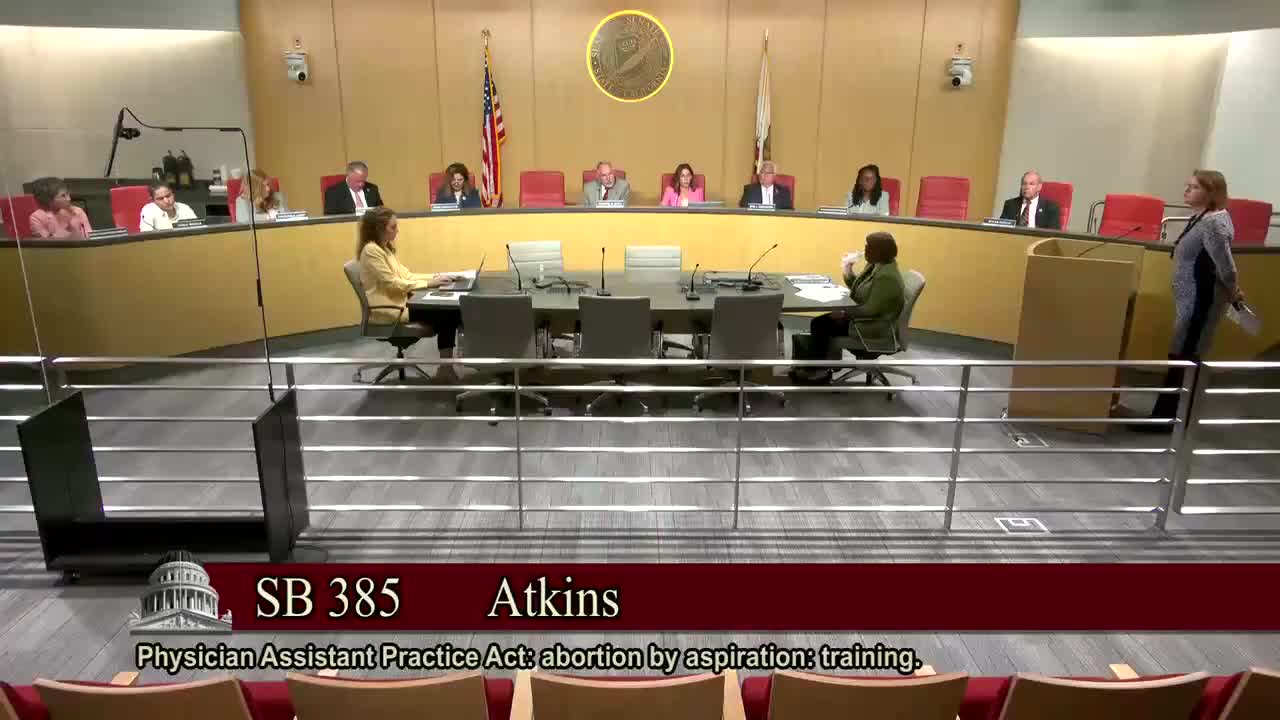 15MIN
Senate Standing Committee on Business, Professions and Economic Development
Bill Author

Bill Co-Author(s):