SB 343: Child support.
- Session Year: 2023-2024
- House: Senate
- Latest Version Date: 2023-09-22
Current Status:
Passed
(2023-09-22: Chaptered by Secretary of State. Chapter 213, Statutes of 2023.)
Introduced
In Committee
First Chamber
In Committee
Second Chamber
Enacted
(1)Existing law requires a court to make an expedited support order if specified information is filed, including the minimum amount the obligated parent or parents are required to pay pursuant to the statewide uniform guideline for support or specified minimum basic standards for adequate care.
This bill would repeal those provisions as of January 1, 2024.
(2)Existing law sets a statewide uniform guideline for determining child support and requires the Judicial Council to periodically review that guideline to recommend appropriate revisions, including economic data on the cost of raising children and an analysis of guidelines and studies from other states. Existing law further requires a court to order, as additional child support, payment of reasonable uninsured health care costs for the child and payment of childcare costs, and may order costs related to the educational or other special needs of the child, and travel expenses for visitation. Existing law requires the court, in making an order pursuant to the uninsured health care costs, to follow specified protocols.
This bill, commencing September 1, 2024, would, among other things, revise the statewide uniform guideline for determining child support, including the amount that establishes a rebuttable presumption that the obligor is entitled to a low-income adjustment. This bill would expand the above-referenced protocols with regard to issuing an order to pay uninsured health care costs to also include orders to pay for specified childcare costs, if those expenses are actually incurred.
(3)Existing law requires counties to maintain a local child support agency to promptly and effectively establish, modify, and enforce child support obligations, to enforce spousal support obligations, and to determine paternity of a child born out of wedlock. Existing law requires that the local child support agency provide notice of the amount of child support that is sought pursuant to the statewide uniform guidelines based upon the income or income history of the support obligor and that a proposed judgment be provided. Existing law requires the Judicial Council, in consultation with specified others, to develop a simplified summons, complaint, and answer forms for any action brought pursuant to those provisions. Existing law requires the simplified complaint form to be based upon the income or income history of the support obligor.
This bill, commencing January 1, 2026, would, among other things, instead require that complaint form to require the local child support agency to use specified methods to calculate income, including using earning capacity if the local child support agency has sufficient evidence to establish earning capacity. The bill would also authorize the department to implement those provisions by a child support services letter or similar instruction until permanent regulations are adopted. The bill would require the department to adopt regulations to implement those provisions by January 1, 2027. By imposing new duties on a local child support agency, the bill would impose a state-mandated local program.
Existing law requires a judgment to be entered without hearing and without other specified requirements in an action filed by the local child support agency involving the simplified procedures described above.
This bill, commencing January 1, 2026, would among other things, expand that requirement to actions based on earning capacity, as specified. The bill would require a local child support agency to conduct a review of the case to determine if there is sufficient additional evidence available to establish actual income of the defendant, as specified. By imposing new duties on a local child support agency, the bill would impose a state-mandated local program.
The bill would also require the Judicial Council, no later than September 1, 2024, to adopt and approve any forms necessary to implement those provisions. The bill would make those forms effective January 1, 2026.
(4)The California Constitution requires the state to reimburse local agencies and school districts for certain costs mandated by the state. Statutory provisions establish procedures for making that reimbursement.
This bill would provide that, if the Commission on State Mandates determines that the bill contains costs mandated by the state, reimbursement for those costs shall be made pursuant to the statutory provisions noted above.
(1)Existing law requires a court to make an expedited support order if specified information is filed, including the minimum amount the obligated parent or parents are required to pay pursuant to the statewide uniform guideline for support or specified minimum basic standards for adequate care.
This bill would repeal those provisions as of January 1, 2024.
(2)Existing law sets a statewide uniform guideline for determining child support and requires the Judicial Council to periodically review that guideline to recommend appropriate revisions, including economic data on the cost of raising children and an analysis of guidelines and studies from other states. Existing law further requires a court to order, as additional child support, payment of reasonable uninsured health care costs for the child and payment of childcare costs, and may order costs related to the educational or other special needs of the child, and travel expenses for visitation. Existing law requires the court, in making an order pursuant to the uninsured health care costs, to follow specified protocols.
This bill, commencing September 1, 2024, would, among other things, revise the statewide uniform guideline for determining child support, including the amount that establishes a rebuttable presumption that the obligor is entitled to a low-income adjustment. This bill would expand the above-referenced protocols with regard to issuing an order to pay uninsured health care costs to also include orders to pay for specified childcare costs, if those expenses are actually incurred.
(3)Existing law requires counties to maintain a local child support agency to promptly and effectively establish, modify, and enforce child support obligations, to enforce spousal support obligations, and to determine paternity of a child born out of wedlock. Existing law requires that the local child support agency provide notice of the amount of child support that is sought pursuant to the statewide uniform guidelines based upon the income or income history of the support obligor and that a proposed judgment be provided. Existing law requires the Judicial Council, in consultation with specified others, to develop a simplified summons, complaint, and answer forms for any action brought pursuant to those provisions. Existing law requires the simplified complaint form to be based upon the income or income history of the support obligor.
This bill, commencing September 1, 2024, January 1, 2026, would, among other things, instead require that complaint form to require the local child support agency to use specified methods to calculate income, including using earning capacity if the local child support agency has sufficient evidence to establish earning capacity. The bill would also authorize the department to implement those provisions by a child support services letter or similar instruction until permanent regulations are adopted. The bill would require the department to adopt regulations to implement those provisions by January 1, 2027. By imposing new duties on a local child support agency, the bill would impose a state-mandated local program.
Existing law requires a judgment to be entered without hearing and without other specified requirements in an action filed by the local child support agency involving the simplified procedures described above.
This bill, commencing September 1, 2024, January 1, 2026, would among other things, expand that requirement to actions based on earning capacity, as specified. The bill would require a local child support agency to conduct a review of the case to determine if there is sufficient additional evidence available to establish actual income of the defendant, as specified. By imposing new duties on a local child support agency, the bill would impose a state-mandated local program.
The bill would also require the Judicial Council, no later than September 1, 2024, to adopt and approve any forms necessary to implement those provisions. The bill would make those forms effective January 1, 2026.
(4)The California Constitution requires the state to reimburse local agencies and school districts for certain costs mandated by the state. Statutory provisions establish procedures for making that reimbursement.
This bill would provide that, if the Commission on State Mandates determines that the bill contains costs mandated by the state, reimbursement for those costs shall be made pursuant to the statutory provisions noted above.
(1)Existing law requires a court to make an expedited support order if specified information is filed, including the minimum amount the obligated parent or parents are required to pay pursuant to the statewide uniform guideline for support or specified minimum basic standards for adequate care.
This bill would repeal those provisions as of January 1, 2024.
(2)Existing law sets a statewide uniform guideline for determining child support and requires the Judicial Council to periodically review that guideline to recommend appropriate revisions, including economic data on the cost of raising children and an analysis of guidelines and studies from other states. Existing law further requires a court to order, as additional child support, payment of reasonable uninsured health care costs for the child and payment of childcare costs, and may order costs related to the educational or other special needs of the child, and travel expenses for visitation. Existing law requires the court, in making an order pursuant to the uninsured health care costs, to follow specified protocols.
This bill, commencing September 1, 2024, would, among other things, revise the statewide uniform guideline for determining child support, including the amount that establishes a rebuttable presumption that the obligor is entitled to a low-income adjustment. This bill would expand the above-referenced protocols with regard to issuing an order to pay uninsured health care costs to also include orders to pay for specified childcare costs, if those expenses are actually incurred.
(3)Existing law requires counties to maintain a local child support agency to promptly and effectively establish, modify, and enforce child support obligations, to enforce spousal support obligations, and to determine paternity of a child born out of wedlock. Existing law requires that the local child support agency provide notice of the amount of child support that is sought pursuant to the statewide uniform guidelines based upon the income or income history of the support obligor and that a proposed judgment be provided. Existing law requires the Judicial Council, in consultation with specified others, to develop a simplified summons, complaint, and answer forms for any action brought pursuant to those provisions. Existing law requires the simplified complaint form to be based upon the income or income history of the support obligor.
This bill, commencing September 1, 2024, would, among other things, instead require that complaint form to require the local child support agency to use specified methods to calculate income, including using earning capacity if the local child support agency has sufficient evidence to establish earning capacity. The bill would also authorize the department to implement those provisions by a child support services letter or similar instruction until permanent regulations are adopted. The bill would require the department to adopt regulations to implement those provisions by January 1, 2027. By imposing new duties on a local child support agency, the bill would impose a state-mandated local program.
Existing law requires a judgment to be entered without hearing and without other specified requirements in an action filed by the local child support agency involving the simplified procedures described above.
This bill, commencing September 1, 2024, would among other things, expand that requirement to actions based on earning capacity, as specified. The bill would require a local child support agency to conduct a review of the case to determine if there is sufficient additional evidence available to establish actual income of the defendant, as specified. By imposing new duties on a local child support agency, the bill would impose a state-mandated local program.
(4)The California Constitution requires the state to reimburse local agencies and school districts for certain costs mandated by the state. Statutory provisions establish procedures for making that reimbursement.
This bill would provide that, if the Commission on State Mandates determines that the bill contains costs mandated by the state, reimbursement for those costs shall be made pursuant to the statutory provisions noted above.
(1)Existing law requires a court to make an expedited support order if specified information is filed, including the minimum amount the obligated parent or parents are required to pay pursuant to the statewide uniform guideline for support or specified minimum basic standards for adequate care.
This bill would repeal those provisions as of January 1, 2024.
(2)Existing law sets a statewide uniform guideline for determining child support and requires the Judicial Council to periodically review that guideline to recommend appropriate revisions, including economic data on the cost of raising children and an analysis of guidelines and studies from other states. Existing law further requires a court to order, as additional child support, payment of reasonable uninsured health care costs for the child and payment of childcare costs, and may order costs related to the educational or other special needs of the child, and travel expenses for visitation. Existing law requires the court, in making an order pursuant to the uninsured health care costs, to follow specified protocols.
This bill, commencing September 1, 2024, would, among other things, revise the statewide uniform guideline for determining child support, including the amount that establishes a rebuttable presumption that the obligor is entitled to a low-income adjustment. This bill would expand the above-referenced protocols with regard to issuing an order to pay uninsured health care costs to also include orders to pay for specified childcare costs, if those expenses are actually incurred.
(3)Existing law requires counties to maintain a local child support agency to promptly and effectively establish, modify, and enforce child support obligations, to enforce spousal support obligations, and to determine paternity of a child born out of wedlock. Existing law requires that the local child support agency provide notice of the amount of child support that is sought pursuant to the statewide uniform guidelines based upon the income or income history of the support obligor and that a proposed judgment be provided. Existing law requires the Judicial Council, in consultation with specified others, to develop a simplified summons, complaint, and answer forms for any action brought pursuant to those provisions. Existing law requires the simplified complaint form to be based upon the income or income history of the support obligor.
This bill, commencing September 1, 2024, would, among other things, instead require that complaint form to require the local child support agency to use specified methods to calculate income, including using earning capacity if the local child support agency has sufficient evidence establish earning capacity. The bill would also authorize the department to implement those provisions by a child support services letter or similar instruction until permanent regulations are adopted. The bill would require the department to adopt regulations to implement those provisions by January 1, 2027. By imposing new duties on a local child support agency, the bill would impose a state-mandated local program.
Existing law requires a judgment to be entered without hearing and without other specified requirements in an action filed by the local child support agency involving the simplified procedures described above.
This bill, commencing September 1, 2024, would among other things, expand that requirement to actions based on earning capacity, as specified. The bill would require a local child support agency to conduct a review of the case to determine if there is sufficient additional evidence available to establish actual income of the defendant, as specified. By imposing new duties on a local child support agency, the bill would impose a state-mandated local program.
(4)The California Constitution requires the state to reimburse local agencies and school districts for certain costs mandated by the state. Statutory provisions establish procedures for making that reimbursement.
This bill would provide that, if the Commission on State Mandates determines that the bill contains costs mandated by the state, reimbursement for those costs shall be made pursuant to the statutory provisions noted above.
This chapter shall remain in effect only until January 1, 2024, and as of that date is repealed.
SEC. 2.Section 4055 of the Family Code is amended to read:4055.(a)The statewide uniform guideline for determining child support orders is as follows: CS = K[HN - (H%)(TN)].
(b)(1)The components of the formula are as follows:
(A)CS = child support amount.
(B)K = amount of both parents income to be allocated for child support as set forth in paragraph (3).
(C)HN = high earners net monthly disposable income.
(D)H% = approximate percentage of time that the high earner has or will have primary physical responsibility for the children compared to the other parent. In cases in which parents have different time-sharing arrangements for different children, H% equals the average of the approximate percentages of time the high earner parent spends with each child.
(E)TN = total net monthly disposable income of both parties.
(2)To compute net disposable income, see Section 4059.
(3)K (amount of both parents income allocated for child support) equals one plus H% (if H% is less than or equal to 50 percent) or two minus H% (if H% is greater than 50 percent) times the following fraction:
Total Net Disposable | K |
$0800 | 0.20 + TN/16,000 |
$8016,666 | 0.25 |
$6,66710,000 | 0.10 + 1,000/TN |
Over $10,000 | 0.12 + 800/TN |
For example, if H% equals 20 percent and the total monthly net disposable income of the parents is $1,000, K = (1 + 0.20) 0.25, or 0.30. If H% equals 80 percent and the total monthly net disposable income of the parents is $1,000, K = (2 - 0.80) 0.25, or 0.30.
(4)For more than one child, multiply CS by:
2 children | 1.6 |
3 children | 2 |
4 children | 2.3 |
5 children | 2.5 |
6 children | 2.625 |
7 children | 2.75 |
8 children | 2.813 |
9 children | 2.844 |
10 children | 2.86 |
(5)If the amount calculated under the formula results in a positive number, the higher earner shall pay that amount to the lower earner. If the amount calculated under the formula results in a negative number, the lower earner shall pay the absolute value of that amount to the higher earner.
(6)In any default proceeding where proof is by affidavit pursuant to Section 2336, or in any proceeding for child support in which a party fails to appear after being duly noticed, H% shall be set at zero in the formula if the noncustodial parent is the higher earner or at 100 if the custodial parent is the higher earner, where there is no evidence presented demonstrating the percentage of time that the noncustodial parent has primary physical responsibility for the children. H% shall not be set as described in paragraph (3) if the moving party in a default proceeding is the noncustodial parent or if the party who fails to appear after being duly noticed is the custodial parent. A statement by the party who is not in default as to the percentage of time that the noncustodial parent has primary physical responsibility for the children shall be deemed sufficient evidence.
(7)In all cases in which the net disposable income per month of the obligor is less than one thousand five hundred dollars ($1,500), adjusted annually for cost-of-living increases, there is a rebuttable presumption that the obligor is entitled to a low-income adjustment. The Judicial Council shall annually determine the amount of the net disposable income adjustment based on the change in the annual California Consumer Price Index for All Urban Consumers, published by the California Department of Industrial Relations, Division of Labor Statistics and Research. The presumption may be rebutted by evidence showing that the application of the low-income adjustment would be unjust and inappropriate in the particular case. In determining whether the presumption is rebutted, the court shall consider the principles provided in Section 4053, and the impact of the contemplated adjustment on the respective net incomes of the obligor and the obligee. The low-income adjustment shall reduce the child support amount otherwise determined under this section by an amount that is no greater than the amount calculated by multiplying the child support amount otherwise determined under this section by a fraction, the numerator of which is 1,500, adjusted annually for cost-of-living increases, minus the obligors net disposable income per month, and the denominator of which is 1,500, adjusted annually for cost-of-living increases.
(8)Unless the court orders otherwise, the order for child support shall allocate the support amount so that the amount of support for the youngest child is the amount of support for one child, and the amount for the next youngest child is the difference between that amount and the amount for two children, with similar allocations for additional children. However, this paragraph does not apply to cases in which there are different time-sharing arrangements for different children or where the court determines that the allocation would be inappropriate in the particular case.
(c)If a court uses a computer to calculate the child support order, the computer program shall not automatically default affirmatively or negatively on whether a low-income adjustment is to be applied. If the low-income adjustment is applied, the computer program shall not provide the amount of the low-income adjustment. Instead, the computer program shall ask the user whether or not to apply the low-income adjustment, and if answered affirmatively, the computer program shall provide the range of the adjustment permitted by paragraph (7) of subdivision (b).
(d)This section shall become inoperative on September 1, 2024, and, as of January 1, 2025, is repealed.
SEC. 3.Section 4055 is added to the Family Code, to read:4055.(a)The statewide uniform guideline for determining child support orders is as follows: CS = K[HN - (H%)(TN)].
(b)(1)The components of the formula are as follows:
(A)CS = child support amount.
(B)K = amount of both parents income to be allocated for child support as set forth in paragraph (3).
(C)HN = high earners net monthly disposable income.
(D)H% = approximate percentage of time that the high earner has or will have primary physical responsibility for the children compared to the other parent. In cases in which parents have different time-sharing arrangements for different children, H% equals the average of the approximate percentages of time the high earner parent spends with each child.
(E)TN = total net monthly disposable income of both parties.
(2)To compute net disposable income, see Section 4059.
(3)K (amount of both parents income allocated for child support) equals one plus H% (if H% is less than or equal to 50 percent) or two minus H% (if H% is greater than 50 percent) times the following fraction:
Total Net Disposable | K |
$02,900 | 0.165 + TN/82,857 |
$2,9015,000 | 0.131 + TN/42,149 |
$5,00110,000 | 0.250 |
$10,00115,000 | 0.10 + 1,499/TN |
Over $15,000 | 0.12 + 1,200/TN |
For example, if H% equals 20 percent and the total monthly net disposable income of the parents is $1,000, K = (1 + 0.20) (0.165 + 1,000/82,857), or 0.21. If H% equals 80 percent and the total monthly net disposable income of the parents is $1,000, K = (2 - 0.80) (0.165 + 1,000/82,857), or 0.21.
(4)For more than one child, multiply CS by:
2 children | 1.6 |
3 children | 2 |
4 children | 2.3 |
5 children | 2.5 |
6 children | 2.625 |
7 children | 2.75 |
8 children | 2.813 |
9 children | 2.844 |
10 children | 2.86 |
(5)If the amount calculated under the formula results in a positive number, the higher earner shall pay that amount to the lower earner. If the amount calculated under the formula results in a negative number, the lower earner shall pay the absolute value of that amount to the higher earner.
(6)In any default proceeding where proof is by affidavit pursuant to Section 2336, or in any proceeding for child support in which a party fails to appear after being duly noticed, H% shall be set at zero in the formula if the noncustodial parent is the higher earner or at 100 if the custodial parent is the higher earner, where there is no evidence presented demonstrating the percentage of time that the noncustodial parent has primary physical responsibility for the children. H% shall not be set as described in paragraph (3) if the moving party in a default proceeding is the noncustodial parent or if the party who fails to appear after being duly noticed is the custodial parent. A statement by the party who is not in default as to the percentage of time that the noncustodial parent has primary physical responsibility for the children shall be deemed sufficient evidence.
(7)In all cases in which the net disposable income per month of the obligor is less than the amount of monthly gross income earned from full-time minimum wage, established by Section 1182.12 of the Labor Code, at 40 hours per week, 52 weeks per year, there is a rebuttable presumption that the obligor is entitled to a low-income adjustment. The presumption may be rebutted by evidence showing that the application of the lowest amount of child support permitted pursuant to this paragraph would be unjust and inappropriate in the particular case. In determining whether the presumption is rebutted, the court shall consider the principles provided in Section 4053, and the impact of the contemplated adjustment on the respective net incomes of the obligor and the obligee. The low-income adjustment shall reduce the child support amount otherwise determined under this section by an amount that is no greater than the amount calculated by multiplying the child support amount otherwise determined under this section by a fraction, the numerator of which is the amount of monthly gross income earned from full-time minimum wage, established by Section 1182.12 of the Labor Code, at 40 hours per week, 52 weeks per year, minus the obligors net disposable income per month, and the denominator of which is the amount of monthly gross income earned from full-time minimum wage, established by Section 1182.12 of the Labor Code, at 40 hours per week, 52 weeks per year.
(8)Unless the court orders otherwise, the order for child support shall allocate the support amount so that the amount of support for the youngest child is the amount of support for one child, and the amount for the next youngest child is the difference between that amount and the amount for two children, with similar allocations for additional children. However, this paragraph does not apply to cases in which there are different time-sharing arrangements for different children or where the court determines that the allocation would be inappropriate in the particular case.
(c)If a court uses a computer to calculate the child support order and the obligors income qualifies for a low-income adjustment, the computer program shall provide the range of the adjustment permitted by paragraph (7) of subdivision (b).
(d)This section shall be operative September 1, 2024.
SEC. 4.Section 4057 of the Family Code is amended to read:4057.(a)The amount of child support established by the formula provided in subdivision (a) of Section 4055 is presumed to be the correct amount of child support to be ordered.
(b)The presumption of subdivision (a) is a rebuttable presumption affecting the burden of proof and may be rebutted by admissible evidence showing that application of the formula would be unjust or inappropriate in the particular case, consistent with the principles set forth in Section 4053, because one or more of the following factors is found to be applicable by a preponderance of the evidence, and the court states in writing or on the record the information required in subdivision (a) of Section 4056:
(1)The parties have stipulated to a different amount of child support under subdivision (a) of Section 4065.
(2)The sale of the family residence is deferred pursuant to Chapter 8 (commencing with Section 3800) of Part 1 and the rental value of the family residence where the children reside exceeds the mortgage payments, homeowners insurance, and property taxes. The amount of any adjustment pursuant to this paragraph shall not be greater than the excess amount.
(3)The parent being ordered to pay child support has an extraordinarily high income and the amount determined under the formula would exceed the needs of the children.
(4)A party is not contributing to the needs of the children at a level commensurate with that partys custodial time.
(5)Application of the formula would be unjust or inappropriate due to special circumstances in the particular case. These special circumstances include, but are not limited to, the following:
(A)Cases in which the parents have different time-sharing arrangements for different children.
(B)Cases in which both parents have substantially equal time-sharing of the children and one parent has a much lower or higher percentage of income used for housing than the other parent.
(C)Cases in which the children have special medical or other needs that could require child support that would be greater than the formula amount.
(D)Cases in which a child is found to have more than two parents.
(c)This section shall become inoperative on September 1, 2024, and, as of January 1, 2025, is repealed.
SEC. 5.Section 4057 is added to the Family Code, to read:4057.(a)The amount of child support established by the formula provided in subdivision (a) of Section 4055 is presumed to be the correct amount of child support to be ordered.
(b)The presumption of subdivision (a) is a rebuttable presumption affecting the burden of proof and may be rebutted by admissible evidence showing that application of the formula would be unjust or inappropriate in the particular case, consistent with the principles set forth in Section 4053, because one or more of the following factors is found to be applicable by a preponderance of the evidence, and the court states in writing or on the record the information required in subdivision (a) of Section 4056:
(1)The parties have stipulated to a different amount of child support under subdivision (a) of Section 4065.
(2)The sale of the family residence is deferred pursuant to Chapter 8 (commencing with Section 3800) of Part 1 and the rental value of the family residence where the children reside exceeds the mortgage payments, homeowners insurance, and property taxes. The amount of any adjustment pursuant to this paragraph shall not be greater than the excess amount.
(3)The parent being ordered to pay child support has an extraordinarily high income and the amount determined under the formula would exceed the needs of the children.
(4)A party is not contributing to the needs of the children at a level commensurate with that partys custodial time.
(5)A support obligor qualifies for the low-income adjustment pursuant to paragraph (7) of subdivision (b) of Section 4055 and the amount of child support established by the formula exceeds 50 percent of the support obligors net disposable income as defined in Section 4059 after application of the low-income adjustment. The amount of any adjustment pursuant to this paragraph shall not be greater than the amount exceeding 50 percent of the support obligors net disposable income.
(6)Application of the formula would be unjust or inappropriate due to special circumstances in the particular case. These special circumstances include, but are not limited to, the following:
(A)Cases in which the parents have different time-sharing arrangements for different children.
(B)Cases in which both parents have substantially equal time-sharing of the children and one parent has a much lower or higher percentage of income used for housing than the other parent.
(C)Cases in which the children have special medical or other needs that could require child support that would be greater than the formula amount.
(D)Cases in which a child is found to have more than two parents.
(c)If the court is made aware that a parent is subject to multiple court orders to pay child support arising from a different case or cases, the court may take steps to determine how to allocate the parents income and support obligation appropriately across the cases. A court that continues a hearing based on a partys representation that it will file an appropriate request to modify support in a related case may issue a temporary support order.
(d)This section shall be operative September 1, 2024.
SEC. 6.Section 4058 of the Family Code is amended to read:4058.(a)The annual gross income of each parent means income from whatever source derived, except as specified in subdivision (c) and includes, but is not limited to, the following:
(1)Income such as commissions, salaries, royalties, wages, bonuses, rents, dividends, pensions, interest, trust income, annuities, workers compensation benefits, unemployment insurance benefits, disability insurance benefits, social security benefits, and spousal support actually received from a person not a party to the proceeding to establish a child support order under this article.
(2)Income from the proprietorship of a business, such as gross receipts from the business reduced by expenditures required for the operation of the business.
(3)In the discretion of the court, employee benefits or self-employment benefits, taking into consideration the benefit to the employee, any corresponding reduction in living expenses, and other relevant facts.
(b)(1)The court may, in its discretion, consider the earning capacity of a parent in lieu of the parents income, consistent with the best interests of the children, taking into consideration the overall welfare and developmental needs of the children, and the time that parent spends with the children.
(2)When determining the earning capacity of the parent pursuant to this subdivision, the court shall consider the specific circumstances of the parent, to the extent known. Those circumstances include, but are not limited to, the parents assets, residence, employment and earnings history, job skills, educational attainment, literacy, age, health, criminal record and other employment barriers, and record of seeking work, as well as the local job market, the availability of employers willing to hire the parent, prevailing earnings levels in the local community, and other relevant background factors affecting the parents ability to earn.
(3)Notwithstanding any other law, the incarceration or involuntary institutionalization of a parent shall not be treated as voluntary unemployment in establishing or modifying support orders regardless of the nature of the offense. Incarcerated or involuntarily institutionalized has the same meaning as subdivision (e) of Section 4007.5.
(c)Annual gross income does not include any income derived from child support payments actually received, and income derived from any public assistance program, eligibility for which is based on a determination of need. Child support received by a party for children from another relationship shall not be included as part of that partys gross or net income.
(d)This section shall become inoperative on September 1, 2024, and, as of January 1, 2025, is repealed.
SEC. 7.Section 4058 is added to the Family Code, to read:4058.(a)The annual gross income of each parent means income from whatever source derived, except as specified in subdivision (c) and includes, but is not limited to, the following:
(1)Income such as commissions, salaries, royalties, wages, bonuses, rents, dividends, pensions, interest, trust income, annuities, workers compensation benefits, unemployment insurance benefits, disability insurance benefits, social security benefits, severance pay, veterans benefits that are not based on need, military allowances for housing and food, and spousal support actually received from a person not a party to the proceeding to establish a child support order pursuant to this article.
(2)Income from the proprietorship of a business, such as gross receipts from the business reduced by expenditures required for the operation of the business.
(3)In the discretion of the court, employee benefits or self-employment benefits, taking into consideration the benefit to the employee, any corresponding reduction in living expenses, and other relevant facts.
(b)(1)(A)In a case when a parents annual gross income is unknown, the court shall consider the earning capacity of the parent.
(B)In a case when a parents annual gross income is known, the court may, in its discretion, consider the earning capacity of a parent in lieu of the parents income, consistent with the best interests of the children, taking into consideration the overall welfare and developmental needs of the children, and the time that parent spends with the children.
(2)When determining the earning capacity of the parent pursuant to this subdivision, the court shall consider the specific circumstances of the parent, to the extent known. Those circumstances include, but are not limited to, evidence of the parents assets, residence, employment and earnings history, job skills, educational attainment, literacy, age, health, criminal record and other employment barriers, and record of seeking work, as well as the local job market, the availability of employers willing to hire the parent, prevailing earnings levels in the local community, and other relevant background factors affecting the parents ability to earn.
(3)Notwithstanding any other law, the incarceration or involuntary institutionalization of a parent shall not be treated as voluntary unemployment in establishing or modifying support orders regardless of the nature of the offense. Incarcerated or involuntarily institutionalized has the same meaning as subdivision (e) of Section 4007.5.
(c)Annual gross income does not include any income derived from child support payments actually received, and income derived from any public assistance program, eligibility for which is based on a determination of need. Child support received by a party for children from another relationship shall not be included as part of that partys gross or net income.
(d)This section shall be operative September 1, 2024.
SEC. 8.Section 4061 of the Family Code is amended to read:4061.The amounts in Section 4062 shall be considered additional support for the children and shall be computed in accordance with the following:
(a)If there needs to be an apportionment of expenses pursuant to Section 4062, the expenses shall be divided one-half to each parent, unless either parent requests a different apportionment pursuant to subdivision (b) and presents documentation which demonstrates that a different apportionment would be more appropriate.
(b)If requested by either parent, and the court determines it is appropriate to apportion expenses under Section 4062 other than one-half to each parent, the apportionment shall be as follows:
(1)The basic child support obligation shall first be computed using the formula set forth in subdivision (a) of Section 4055, as adjusted for any appropriate rebuttal factors in subdivision (b) of Section 4057.
(2)Any additional child support required for expenses pursuant to Section 4062 shall thereafter be ordered to be paid by the parents in proportion to their net disposable incomes as adjusted pursuant to subdivisions (c) and (d).
(c)In cases where spousal support is or has been ordered to be paid by one parent to the other, for purposes of allocating additional expenses pursuant to Section 4062, the gross income of the parent paying spousal support shall be decreased by the amount of the spousal support paid and the gross income of the parent receiving the spousal support shall be increased by the amount of the spousal support received for as long as the spousal support order is in effect and is paid.
(d)For purposes of computing the adjusted net disposable income of the parent paying child support for allocating any additional expenses pursuant to Section 4062, the net disposable income of the parent paying child support shall be reduced by the amount of any basic child support ordered to be paid under subdivision (a) of Section 4055. However, the net disposable income of the parent receiving child support shall not be increased by any amount of child support received.
(e)This section shall become inoperative on September 1, 2024, and, as of January 1, 2025, is repealed.
SEC. 9.Section 4061 is added to the Family Code, to read:4061.The amounts in Section 4062 shall be considered additional support for the children and shall be computed in accordance with the following:
(a)If there needs to be an apportionment of expenses pursuant to Section 4062, the expenses shall be divided in proportion to the parents net incomes as adjusted pursuant to subdivisions (c) and (d), unless a party requests or the court finds on its own motion that expenses should be divided in a different manner.
(b)(1)The basic child support obligation shall first be computed using the formula set forth in subdivision (a) of Section 4055, as adjusted for any appropriate rebuttal factors in subdivision (b) of Section 4057.
(2)Any additional child support required for expenses pursuant to Section 4062 shall thereafter be ordered to be paid by the parents in proportion to their net disposable incomes as adjusted pursuant to subdivisions (c) and (d).
(c)In cases when spousal support is or has been ordered to be paid by one parent to the other, for purposes of allocating additional expenses pursuant to Section 4062, the gross income of the parent paying spousal support shall be decreased by the amount of the spousal support paid and the gross income of the parent receiving the spousal support shall be increased by the amount of the spousal support received for as long as the spousal support order is in effect and is paid.
(d)For purposes of computing the adjusted net disposable income of the parent paying child support for allocating any additional expenses pursuant to Section 4062, the net disposable income of the parent paying child support shall be reduced by the amount of any basic child support ordered to be paid under subdivision (a) of Section 4055. However, the net disposable income of the parent receiving child support shall not be increased by any amount of child support received.
(e)This section shall be operative September 1, 2024.
SEC. 10.Section 4062 of the Family Code is amended to read:4062.(a)The court shall order the following as additional child support:
(1)Childcare costs related to employment or to reasonably necessary education or training for employment skills.
(2)The reasonable uninsured health care costs for the children as provided in Section 4063.
(b)The court may order the following as additional child support:
(1)Costs related to the educational or other special needs of the children.
(2)Travel expenses for visitation.
(c)This section shall become inoperative on September 1, 2024, and, as of January 1, 2025, is repealed.
SEC. 11.Section 4062 is added to the Family Code, to read:4062.(a)The court shall order the following as additional child support:
(1)Childcare costs, if those expenses are actually incurred, related to employment or to reasonably necessary education or training for employment skills, as described in Section 4063, unless those costs are specifically included in the guideline calculation itself.
(2)The reasonable uninsured health care costs for the children as provided in Section 4063.
(b)The court may order the following as additional child support:
(1)Costs related to the educational or other special needs of the children.
(2)Travel expenses for visitation.
(c)This section shall be operative September 1, 2024.
SEC. 12.Section 4063 of the Family Code is amended to read:4063.(a)When making an order pursuant to paragraph (2) of subdivision (a) of Section 4062, the court shall:
(1)Advise each parent, in writing or on the record, of the parents rights and liabilities, including financial responsibilities.
(2)Include in its order the time period for a parent to reimburse the other parent for the reimbursing parents share of the reasonable additional child support costs subject to the requirements of this section.
(b)Unless there has been an assignment of rights pursuant to Section 11477 of the Welfare and Institutions Code, when either parent accrues or pays costs pursuant to an order under this section, that parent shall provide the other parent with an itemized statement of the costs within a reasonable time, but not more than 30 days after accruing the costs. These costs shall then be paid as follows:
(1)If a parent has already paid all of these costs, that parent shall provide proof of payment and a request for reimbursement of that parents court-ordered share to the other parent.
(2)If a parent has paid the parents court-ordered share of the costs only, that parent shall provide proof of payment to the other parent, request the other parent to pay the remainder of the costs directly to the provider, and provide the reimbursing parent with any necessary information about how to make the payment to the provider.
(3)The other parent shall make the reimbursement or pay the remaining costs within the time period specified by the court, or, if no period is specified, within a reasonable time not to exceed 30 days from notification of the amount due, or according to any payment schedule set by the health care provider for either parent unless the parties agree in writing to another payment schedule or the court finds good cause for setting another payment schedule.
(4)If the reimbursing parent disputes a request for payment, that parent shall pay the requested amount and thereafter may seek judicial relief under this section and Section 290. If the reimbursing parent fails to pay the other parent as required by this subdivision, the other parent may seek judicial relief under this section and Section 290.
(c)Either parent may file a noticed motion to enforce an order issued pursuant to this section. In addition to the courts powers under Section 290, the court may award filing costs and reasonable attorneys fees if it finds that either party acted without reasonable cause regarding the partys obligations pursuant to this section.
(d)There is a rebuttable presumption that the costs actually paid for the uninsured health care needs of the children are reasonable, except as provided in subdivision (e).
(e)Except as provided in subdivision (g):
(1)The health care insurance coverage, including, but not limited to, coverage for emergency treatment, provided by a parent pursuant to a court order, shall be the coverage to be utilized at all times, consistent with the requirements of that coverage, unless the other parent can show that the health care insurance coverage is inadequate to meet the childs needs.
(2)If either parent obtains health care insurance coverage in addition to that provided pursuant to the court order, that parent shall bear sole financial responsibility for the costs of that additional coverage and the costs of any care or treatment obtained pursuant thereto in excess of the costs that would have been incurred under the health care insurance coverage provided for in the court order.
(f)Except as provided in subdivision (g):
(1)If the health care insurance coverage provided by a parent pursuant to a court order designates a preferred health care provider, that preferred provider shall be used at all times, consistent with the terms and requirements of that coverage.
(2)If either parent uses a health care provider other than the preferred provider inconsistent with the terms and requirements of the court-ordered health care insurance coverage, the parent obtaining that care shall bear the sole responsibility for any nonreimbursable health care costs in excess of the costs that would have been incurred under the court-ordered health care insurance coverage had the preferred provider been used.
(g)When ruling on a motion made pursuant to this section, in order to ensure that the health care needs of the child under this section are met, the court shall consider all relevant facts, including, but not limited to, the following:
(1)The geographic access and reasonable availability of necessary health care for the child that complies with the terms of the health care insurance coverage paid for by either parent pursuant to a court order. Health insurance shall be rebuttably presumed to be accessible if services to be provided are within 50 miles of the residence of the child subject to the support order. If the court determines that health insurance is not accessible, the court shall state the reason on the record.
(2)The necessity of emergency medical treatment that may have precluded the use of the health care insurance, or the preferred health care provider required under the insurance, provided by either parent pursuant to a court order.
(3)The special medical needs of the child.
(4)The reasonable inability of a parent to pay the full amount of reimbursement within a 30-day period and the resulting necessity for a court-ordered payment schedule.
(h)This section shall become inoperative on September 1, 2024, and, as of January 1, 2025, is repealed.
SEC. 13.Section 4063 is added to the Family Code, to read:4063.(a)When making an order pursuant to subdivision (a) of Section 4062, the court shall:
(1)Advise each parent, in writing or on the record, of the parents rights and liabilities, including financial responsibilities.
(2)Include in its order the time period for a parent to reimburse the other parent for the reimbursing parents share of the reasonable additional child support costs subject to the requirements of this section.
(b)Unless there has been an assignment of rights pursuant to Section 11477 of the Welfare and Institutions Code, when either parent accrues or pays costs pursuant to an order under this section, that parent shall provide the other parent with an itemized statement of the costs within a reasonable time, but not more than 90 days after accruing the costs. These costs shall then be paid as follows:
(1)If a parent has already paid all of these costs, that parent shall provide proof of payment and a request for reimbursement of that parents court-ordered share to the other parent.
(2)If a parent has paid the parents court-ordered share of the costs only, that parent shall provide proof of payment to the other parent, request the other parent to pay the remainder of the costs directly to the provider, and provide the reimbursing parent with any necessary information about how to make the payment to the provider.
(3)The other parent shall make the reimbursement or pay the remaining costs within the time period specified by the court, or, if no period is specified, within a reasonable time not to exceed 30 days from notification of the amount due, or according to any payment schedule set by the health care provider for either parent unless the parties agree in writing to another payment schedule or the court finds good cause for setting another payment schedule.
(4)If the reimbursing parent disputes a request for payment, that parent shall pay the requested amount and thereafter may seek judicial relief under this section and Section 290. If the reimbursing parent fails to pay the other parent as required by this subdivision, the other parent may seek judicial relief under this section and Section 290.
(c)Either parent may file a noticed motion to enforce an order issued pursuant to this section. In addition to the courts powers under Section 290, the court may award filing costs and reasonable attorneys fees if it finds that either party acted without reasonable cause regarding the partys obligations pursuant to this section.
(d)There is a rebuttable presumption that the costs actually paid for the uninsured health care needs of the children and for childcare that is for employment or reasonably necessary for education or training for employment skills are reasonable, except as provided in subdivision (e).
(e)Except as provided in subdivision (g):
(1)The health care insurance coverage, including, but not limited to, coverage for emergency treatment, provided by a parent pursuant to a court order, shall be the coverage to be utilized at all times, consistent with the requirements of that coverage, unless the other parent can show that the health care insurance coverage is inadequate to meet the childs needs.
(2)If either parent obtains health care insurance coverage in addition to that provided pursuant to the court order, that parent shall bear sole financial responsibility for the costs of that additional coverage and the costs of any care or treatment obtained pursuant thereto in excess of the costs that would have been incurred under the health care insurance coverage provided for in the court order.
(f)Except as provided in subdivision (g):
(1)If the health care insurance coverage provided by a parent pursuant to a court order designates a preferred health care provider, that preferred provider shall be used at all times, consistent with the terms and requirements of that coverage.
(2)If either parent uses a health care provider other than the preferred provider inconsistent with the terms and requirements of the court-ordered health care insurance coverage, the parent obtaining that care shall bear the sole responsibility for any nonreimbursable health care costs in excess of the costs that would have been incurred under the court-ordered health care insurance coverage had the preferred provider been used.
(g)When ruling on a motion made pursuant to this section, in order to ensure that the health care needs of the child and the need for childcare for employment or reasonably necessary for education or training for employment skills pursuant to this section are met, the court shall consider all relevant facts, on both of the following categories:
(1)With regard to health care, the court shall consider all relevant facts, including, but not limited to, the following:
(A)The geographic access and reasonable availability of necessary health care for the child that complies with the terms of the health care insurance coverage paid for by either parent pursuant to a court order. Health insurance shall be rebuttably presumed to be accessible if services to be provided are within 50 miles of the residence of the child subject to the support order. If the court determines that health insurance is not accessible, the court shall state the reason on the record.
(B)The necessity of emergency medical treatment that may have precluded the use of the health care insurance, or the preferred health care provider required under the insurance, provided by either parent pursuant to a court order.
(C)The special medical needs of the child.
(D)The reasonable inability of a parent to pay the full amount of reimbursement within a 30-day period and the resulting necessity for a court-ordered payment schedule.
(2)With regard to childcare costs for employment or that are reasonably necessary for education or training for employment skills, the court shall consider all relevant facts, including, but not limited to, the following:
(A)The nature and extent of job-related childcare needs, including, but not limited to, work schedule needs and the duration of education or training for employment skills.
(B)The necessity and reasonableness of the cost under the circumstances of the case.
(C)The special needs of the child.
(D)The reasonable inability of a parent to pay the full amount of reimbursement within a 30-day period and the resulting necessity for a court-ordered payment schedule.
(h)This section shall become operative September 1, 2024.
SEC. 14.Section 17400 of the Family Code is amended to read:17400.(a)(1)Each county shall maintain a local child support agency, as specified in Section 17304, that shall have the responsibility for promptly and effectively establishing, modifying, and enforcing child support obligations, including medical support, enforcing spousal support orders established by a court of competent jurisdiction, and determining paternity in the case of a child born out of wedlock. The local child support agency shall take appropriate action, including criminal action in cooperation with the district attorneys, to establish, modify, and enforce child support and, if appropriate, enforce spousal support orders if the child is receiving public assistance, including Medi-Cal, and, if requested, shall take the same actions on behalf of a child who is not receiving public assistance, including Medi-Cal.
(2)(A)Provided that no reduction in aid or payment to a custodial parent would result, the local child support agency shall cease enforcement of child support arrearages assigned to the state and other fees and costs owed to the state that the department or the local child support agency has determined to be uncollectible. If enforcement is ceased pursuant to this paragraph, cases shall be closed to the maximum extent permitted under Section 303.11 of Title 45 of the Code of Federal Regulations, as adopted under Section 118203 of Title 22 of the California Code of Regulations.
(B)In determining the meaning of uncollectible for purposes of arrearages assigned to the state and other fees and costs owed to the state, the department and the local child support agency shall consider, but not be limited to, the following factors:
(i)Income and assets available to pay the arrearage or other fees and costs.
(ii)Source of income.
(iii)Age of the arrearage or other fees and costs.
(iv)The number of support orders.
(v)Employment history.
(vi)Payment history.
(vii)Incarceration history.
(viii)Whether the order was based on imputed income.
(ix)Other readily ascertainable debts.
(C)Notwithstanding subparagraph (B), the department and a local child support agency shall deem an arrearage assigned to the state or fees and costs owed to the state as uncollectible if the noncustodial parents sole income is from any of the following:
(i)Supplemental Security Income/State Supplementary Program for the Aged, Blind, and Disabled (SSI/SSP) benefits.
(ii)A combination of SSI/SSP benefits and Social Security Disability Insurance (SSDI) benefits.
(iii)Cash Assistance Program for Aged, Blind, and Disabled Legal Immigrants (CAPI) benefits.
(iv)Veterans Administration Disability Compensation Benefits in an amount equal to or less than the amount the noncustodial parent would receive in SSI/SSP benefits.
(D)Notwithstanding the Administrative Procedure Act (Chapter 3.5 (commencing with Section 11340) of Part 1 of Division 3 of Title 2 of the Government Code), the department may implement and administer this subdivision through a child support services letter or similar instruction until regulations are adopted. Thereafter, the department shall adopt regulations to implement this subdivision by July 1, 2024.
(b)(1)Notwithstanding Sections 25203 and 26529 of the Government Code, attorneys employed within the local child support agency may direct, control, and prosecute civil actions and proceedings in the name of the county in support of child support activities of the Department of Child Support Services and the local child support agency.
(2)Notwithstanding any other law, and except for pleadings or documents required to be signed under penalty of perjury, a local child support agency may substitute original signatures of the agent of the local child support agency with any form of electronic signatures, including, but not limited to, typed, digital, or facsimile images of signatures, digital signatures, or other computer-generated signatures, on pleadings filed for the purpose of establishing, modifying, or enforcing paternity, child support, or medical support. A substituted signature used by a local child support agency shall have the same effect as an original signature, including, but not limited to, the requirements of Section 128.7 of the Code of Civil Procedure.
(3)Notwithstanding any other law, effective July 1, 2016, a local child support agency may electronically file pleadings signed by an agent of the local child support agency under penalty of perjury. An original signed pleading shall be executed prior to, or on the same day as, the day of electronic filing. Original signed pleadings shall be maintained by the local child support agency for the period of time prescribed by subdivision (a) of Section 68152 of the Government Code. A local child support agency may maintain the original signed pleading by way of an electronic copy in the Statewide Automated Child Support System. The Judicial Council, by July 1, 2016, shall develop rules to implement this subdivision.
(4)(A)Notwithstanding any other law, a local child support agency may substitute any original signatures, including, but not limited to, signatures of agents of the local child support agencies, support obligors, support obligees, other parents, witnesses, and the attorneys for the parties to the action, with a printed copy or electronic image of an electronic signature obtained in compliance with the rules of court adopted pursuant to paragraph (2) of subdivision (e) of Section 1010.6 of the Code of Civil Procedure, on pleadings or documents filed for the purpose of establishing, modifying, or enforcing paternity, child support, or medical support. If the pleading or document is signed under the penalty of perjury or the signature does not belong to an agent of the local child support agency, the local child support agency represents, by the act of filing, that the declarant electronically signed the pleading or document before, or on the same day as, the date of filing.
(B)The local child support agency shall maintain the electronic form of the pleading or document bearing the original electronic signature for the period of time prescribed by subdivision (a) of Section 68152 of the Government Code, and shall make it available for review upon the request of the court or any party to the action or proceeding in which it is filed. Printed copies or electronic images of electronic signatures used by a local child support agency in this manner shall have the same effect as an original signature, including, but not limited to, the requirements of Section 128.7 of the Code of Civil Procedure.
(c)Actions brought by the local child support agency to establish paternity or child support or to enforce child support obligations shall be completed within the time limits set forth by federal law. The local child support agencys responsibility applies to spousal support only if the spousal support obligation has been reduced to an order of a court of competent jurisdiction. In any action brought for modification or revocation of an order that is being enforced under Title IV-D of the Social Security Act (42 U.S.C. Sec. 651 et seq.), the effective date of the modification or revocation shall be as prescribed by federal law (42 U.S.C. Sec. 666(a)(9)), or any subsequent date.
(d)(1)The Judicial Council, in consultation with the department, the Senate Committee on Judiciary, the Assembly Committee on Judiciary, and a legal services organization providing representation on child support matters, shall develop simplified summons, complaint, and answer forms for any action for support brought pursuant to this section or Section 17404. The Judicial Council may combine the summons and complaint in a single form.
(2)The simplified complaint form shall provide notice of the amount of child support that is sought pursuant to the guidelines set forth in Article 2 (commencing with Section 4050) of Chapter 2 of Part 2 of Division 9 based upon the income or income history of the support obligor as known to the local child support agency. If the support obligors income or income history is unknown to the local child support agency, the complaint shall inform the support obligor that income shall be presumed to be the amount of the minimum wage, at 40 hours per week, established by the Industrial Welfare Commission pursuant to Section 1182.11 of the Labor Code unless information concerning the support obligors income is provided to the court. The complaint form shall be accompanied by a proposed judgment. The complaint form shall include a notice to the support obligor that the proposed judgment will become effective if the obligor fails to file an answer with the court within 30 days of service. Except as provided in paragraph (2) of subdivision (a) of Section 17402, if the proposed judgment is entered by the court, the support order in the proposed judgment shall be effective as of the first day of the month following the filing of the complaint.
(3)(A)The simplified answer form shall be written in simple English and shall permit a defendant to answer and raise defenses by checking applicable boxes. The answer form shall include instructions for completion of the form and instructions for proper filing of the answer.
(B)The answer form shall be accompanied by a blank income and expense declaration or simplified financial statement and instructions on how to complete the financial forms. The answer form shall direct the defendant to file the completed income and expense declaration or simplified financial statement with the answer, but shall state that the answer will be accepted by a court without the income and expense declaration or simplified financial statement.
(C)The clerk of the court shall accept and file answers, income and expense declarations, and simplified financial statements that are completed by hand provided they are legible.
(4)(A)The simplified complaint form prepared pursuant to this subdivision shall be used by the local child support agency or the Attorney General in all cases brought under this section or Section 17404.
(B)The simplified answer form prepared pursuant to this subdivision shall be served on all defendants with the simplified complaint. Failure to serve the simplified answer form on all defendants shall not invalidate any judgment obtained. However, failure to serve the answer form may be used as evidence in any proceeding under Section 17432 of this code or Section 473 of the Code of Civil Procedure.
(C)The Judicial Council shall add language to the governmental summons, for use by the local child support agency with the governmental complaint to establish parental relationship and child support, informing defendants that a blank answer form should have been received with the summons and additional copies may be obtained from either the local child support agency or the superior court clerk.
(e)In any action brought or enforcement proceedings instituted by the local child support agency pursuant to this section for payment of child or spousal support, an action to recover an arrearage in support payments may be maintained by the local child support agency at any time within the period otherwise specified for the enforcement of a support judgment, notwithstanding the fact that the child has attained the age of majority.
(f)The county shall undertake an outreach program to inform the public that the services described in subdivisions (a) to (c), inclusive, are available to persons not receiving public assistance. There shall be prominently displayed in every public area of every office of the agencies established by this section a notice, in clear and simple language prescribed by the Director of Child Support Services, that the services provided in subdivisions (a) to (c), inclusive, are provided to all individuals, whether or not they are recipients of public assistance.
(g)(1)In any action to establish a child support order brought by the local child support agency in the performance of duties under this section, the local child support agency may make a motion for an order effective during the pendency of that action, for the support, maintenance, and education of the child or children that are the subject of the action. This order shall be referred to as an order for temporary support. This order has the same force and effect as a like or similar order under this code.
(2)The local child support agency shall file a motion for an order for temporary support within the following time limits:
(A)If the defendant is the mother, a presumed father under Section 7611, or any father if the child is at least six months old when the defendant files the answer, the time limit is 90 days after the defendant files an answer.
(B)In any other case in which the defendant has filed an answer prior to the birth of the child or not more than six months after the birth of the child, then the time limit is nine months after the birth of the child.
(3)If more than one child is the subject of the action, the limitation on reimbursement shall apply only as to those children whose parental relationship and age would bar recovery were a separate action brought for support of that child or those children.
(4)If the local child support agency fails to file a motion for an order for temporary support within the time limits specified in this section, the local child support agency shall be barred from obtaining a judgment of reimbursement for any support provided for that child during the period between the date the time limit expired and the date the motion was filed, or, if no motion is filed, when a final judgment is entered.
(5)Except as provided in Section 17304, this section does not prohibit the local child support agency from entering into cooperative arrangements with other county departments as necessary to carry out the responsibilities imposed by this section pursuant to plans of cooperation with the departments approved by the Department of Child Support Services.
(6)This section does not otherwise limit the ability of the local child support agency from securing and enforcing orders for support of a spouse or former spouse as authorized under any other law.
(h)As used in this article, enforcing obligations includes, but is not limited to, all of the following:
(1)The use of all interception and notification systems operated by the department for the purpose of aiding in the enforcement of support obligations.
(2)The obtaining by the local child support agency of an initial order for child support that may include medical support or that is for medical support only, by civil or criminal process.
(3)The initiation of a motion or order to show cause to increase an existing child support order, and the response to a motion or order to show cause brought by an obligor parent to decrease an existing child support order, or the initiation of a motion or order to show cause to obtain an order for medical support, and the response to a motion or order to show cause brought by an obligor parent to decrease or terminate an existing medical support order, without regard to whether the child is receiving public assistance.
(4)The response to a notice of motion or order to show cause brought by an obligor parent to decrease an existing spousal support order if the child or children are residing with the obligee parent and the local child support agency is also enforcing a related child support obligation owed to the obligee parent by the same obligor.
(5)The referral of child support delinquencies to the department under subdivision (c) of Section 17500 in support of the local child support agency.
(i)As used in this section, out of wedlock means that the biological parents of the child were not married to each other at the time of the childs conception.
(j)(1)The local child support agency is the public agency responsible for administering wage withholding for current support for the purposes of Title IV-D of the Social Security Act (42 U.S.C. Sec. 651 et seq.).
(2)This section does not limit the authority of the local child support agency granted by other sections of this code or otherwise granted by law.
(k)In the exercise of the authority granted under this article, the local child support agency may intervene, pursuant to subdivision (b) of Section 387 of the Code of Civil Procedure, by ex parte application, in any action under this code, or other proceeding in which child support is an issue or a reduction in spousal support is sought. By notice of motion, order to show cause, or responsive pleading served upon all parties to the action, the local child support agency may request any relief that is appropriate that the local child support agency is authorized to seek.
(l)The local child support agency shall comply with all regulations and directives established by the department that set time standards for responding to requests for assistance in locating noncustodial parents, establishing paternity, establishing child support awards, and collecting child support payments.
(m)As used in this article, medical support activities that the local child support agency is authorized to perform are limited to the following:
(1)The obtaining and enforcing of court orders for health insurance coverage.
(2)Any other medical support activity mandated by federal law or regulation.
(n)(1)Notwithstanding any other law, venue for an action or proceeding under this division shall be determined as follows:
(A)Venue shall be in the superior court in the county that is currently expending public assistance.
(B)If public assistance is not currently being expended, venue shall be in the superior court in the county where the child who is entitled to current support resides or is domiciled.
(C)If current support is no longer payable through, or enforceable by, the local child support agency, venue shall be in the superior court in the county that last provided public assistance for actions to enforce arrearages assigned pursuant to Section 11477 of the Welfare and Institutions Code.
(D)If subparagraphs (A), (B), and (C) do not apply, venue shall be in the superior court in the county of residence of the support obligee.
(E)If the support obligee does not reside in California, and subparagraphs (A), (B), (C), and (D) do not apply, venue shall be in the superior court of the county of residence of the obligor.
(2)Notwithstanding paragraph (1), if the child becomes a resident of another county after an action under this part has been filed, venue may remain in the county where the action was filed until the action is completed.
(o)The local child support agency of one county may appear on behalf of the local child support agency of any other county in an action or proceeding under this part.
(p)This section shall become inoperative on January 1, 2026, and, as of January 1, 2027, is repealed.
SEC. 15.Section 17400 is added to the Family Code, to read:17400.(a)(1)Each county shall maintain a local child support agency, as specified in Section 17304, that shall have the responsibility for promptly and effectively establishing, modifying, and enforcing child support obligations, including medical support, enforcing spousal support orders established by a court of competent jurisdiction, and determining paternity in the case of a child born out of wedlock. The local child support agency shall take appropriate action, including criminal action in cooperation with the district attorneys, to establish, modify, and enforce child support and, if appropriate, enforce spousal support orders if the child is receiving public assistance, including Medi-Cal, and, if requested, shall take the same actions on behalf of a child who is not receiving public assistance, including Medi-Cal.
(2)(A)Provided that no reduction in aid or payment to a custodial parent would result, the local child support agency shall cease enforcement of child support arrearages assigned to the state and other fees and costs owed to the state that the department or the local child support agency has determined to be uncollectible. If enforcement is ceased pursuant to this paragraph, cases shall be closed to the maximum extent permitted under Section 303.11 of Title 45 of the Code of Federal Regulations, as adopted under Section 118203 of Title 22 of the California Code of Regulations.
(B)In determining the meaning of uncollectible for purposes of arrearages assigned to the state and other fees and costs owed to the state, the department and the local child support agency shall consider, but not be limited to, the following factors:
(i)Income and assets available to pay the arrearage or other fees and costs.
(ii)Source of income.
(iii)Age of the arrearage or other fees and costs.
(iv)The number of support orders.
(v)Employment history.
(vi)Payment history.
(vii)Incarceration history.
(viii)Whether the order was based on imputed income.
(ix)Other readily ascertainable debts.
(C)Notwithstanding subparagraph (B), the department and a local child support agency shall deem an arrearage assigned to the state or fees and costs owed to the state as uncollectible if the noncustodial parents sole income is from any of the following:
(i)Supplemental Security Income/State Supplementary Program for the Aged, Blind, and Disabled (SSI/SSP) benefits.
(ii)A combination of SSI/SSP benefits and Social Security Disability Insurance (SSDI) benefits.
(iii)Cash Assistance Program for Aged, Blind, and Disabled Legal Immigrants (CAPI) benefits.
(iv)Veterans Administration Disability Compensation Benefits in an amount equal to or less than the amount the noncustodial parent would receive in SSI/SSP benefits.
(D)Notwithstanding the Administrative Procedure Act (Chapter 3.5 (commencing with Section 11340) of Part 1 of Division 3 of Title 2 of the Government Code), the department may implement and administer this subdivision through a child support services letter or similar instruction until regulations are adopted. Thereafter, the department shall adopt regulations to implement this subdivision by July 1, 2024.
(b)(1)Notwithstanding Sections 25203 and 26529 of the Government Code, attorneys employed within the local child support agency may direct, control, and prosecute civil actions and proceedings in the name of the county in support of child support activities of the Department of Child Support Services and the local child support agency.
(2)Notwithstanding any other law, and except for pleadings or documents required to be signed under penalty of perjury, a local child support agency may substitute original signatures of the agent of the local child support agency with any form of electronic signatures, including, but not limited to, typed, digital, or facsimile images of signatures, digital signatures, or other computer-generated signatures, on pleadings filed for the purpose of establishing, modifying, or enforcing paternity, child support, or medical support. A substituted signature used by a local child support agency shall have the same effect as an original signature, including, but not limited to, the requirements of Section 128.7 of the Code of Civil Procedure.
(3)Notwithstanding any other law, a local child support agency may electronically file pleadings signed by an agent of the local child support agency under penalty of perjury. An original signed pleading shall be executed prior to, or on the same day as, the day of electronic filing. Original signed pleadings shall be maintained by the local child support agency for the period of time prescribed by subdivision (a) of Section 68152 of the Government Code. A local child support agency may maintain the original signed pleading by way of an electronic copy in the Statewide Automated Child Support System. The Judicial Council shall develop rules to implement this subdivision.
(4)(A)Notwithstanding any other law, a local child support agency may substitute any original signatures, including, but not limited to, signatures of agents of the local child support agencies, support obligors, support obligees, other parents, witnesses, and the attorneys for the parties to the action, with a printed copy or electronic image of an electronic signature obtained in compliance with the rules of court adopted pursuant to paragraph (2) of subdivision (e) of Section 1010.6 of the Code of Civil Procedure, on pleadings or documents filed for the purpose of establishing, modifying, or enforcing paternity, child support, or medical support. If the pleading or document is signed under the penalty of perjury or the signature does not belong to an agent of the local child support agency, the local child support agency represents, by the act of filing, that the declarant electronically signed the pleading or document before, or on the same day as, the date of filing.
(B)The local child support agency shall maintain the electronic form of the pleading or document bearing the original electronic signature for the period of time prescribed by subdivision (a) of Section 68152 of the Government Code, and shall make it available for review upon the request of the court or any party to the action or proceeding in which it is filed. Printed copies or electronic images of electronic signatures used by a local child support agency in this manner shall have the same effect as an original signature, including, but not limited to, the requirements of Section 128.7 of the Code of Civil Procedure.
(c)Actions brought by the local child support agency to establish paternity or child support or to enforce child support obligations shall be completed within the time limits set forth by federal law. The local child support agencys responsibility applies to spousal support only if the spousal support obligation has been reduced to an order of a court of competent jurisdiction. In any action brought for modification or revocation of an order that is being enforced under Title IV-D of the Social Security Act (42 U.S.C. Sec. 651 et seq.), the effective date of the modification or revocation shall be as prescribed by federal law (42 U.S.C. Sec. 666(a)(9)), or any subsequent date.
(d)(1)The Judicial Council, in consultation with the department, the Senate Committee on Judiciary, the Assembly Committee on Judiciary, and a legal services organization providing representation on child support matters, shall develop simplified summons, complaint, and answer forms for any action for support brought pursuant to this section or Section 17404. The Judicial Council may combine the summons and complaint in a single form.
(2)(A)The simplified complaint form shall provide notice of the amount of child support that is sought pursuant to the guidelines set forth in Article 2 (commencing with Section 4050) of Chapter 2 of Part 2 of Division 9 based upon one of the following methods used to determine income:
(i)If sufficient information is available to determine actual income, pursuant to subdivision (a) of Section 4058 and Section 4060, the local child support agency shall use actual income as the basis of the proposed support obligation, unless the local child support agency has sufficient information to proceed under clause (ii).
(ii)If the local child support agency has sufficient information that the earning capacity is greater than the actual income, and sufficient evidence is available to establish earning capacity pursuant to subdivision (b) of Section 4058, the local child support agency may use earning capacity as the basis of the proposed support obligation.
(iii)If the actual income of the support obligor is unknown to the local child support agency, and sufficient evidence is available to establish earning capacity pursuant to subdivision (b) of Section 4058, the local child support agency shall use earning capacity as the basis of the proposed support obligation. A complaint seeking child support under this clause shall set forth the steps first taken by the local child support agency to establish the support obligors actual income prior to considering earning capacity, which must include, but are not limited to:
(I)Attempting to contact the support obligor through telephonic, electronic, and postal means, to the extent contact information is known or can be discovered through reasonably available means. At least three attempts to contact the support obligor shall be made.
(II)Seeking information about the support obligors expenses and work history from the party seeking support.
(III)Searching in available databases for information relating to the support obligors employment, income, or both.
(B)The complaint shall inform the support obligor of the basis for the proposed support amount. If the basis of the proposed support amount is the support obligors earning capacity rather than actual income, the complaint shall inform the obligor of the factors considered by the local child support agency and used to determine the obligors earning capacity.
(C)The complaint form shall be accompanied by a proposed judgment. The complaint form shall include a notice to the support obligor that the proposed judgment may become effective if the obligor fails to file an answer with the court within 30 days of the service. If the proposed judgment is entered by the court, the support order in the proposed judgment shall be effective as of the first day of the month following the filing of the complaint.
(D)If the proposed judgment is based on the support obligors earning capacity pursuant to clause (ii) or (iii) of subparagraph (A), the local child support agency shall file a motion for judgment, as provided in subdivision (b) of Section 17404. The motion for judgment filed pursuant to this subparagraph shall be served on the defendant in compliance with Section 1013 of the Code of Civil Procedure or otherwise as provided by law. If the hearing on the motion for judgment under this subdivision is continued, the court may make a temporary order as authorized by Section 17404.
(E)Notwithstanding the Administrative Procedure Act (Chapter 3.5 (commencing with Section 11340) of Part 1 of Division 3 of Title 2 of the Government Code), the department may implement and administer this subdivision through a child support services letter or similar instruction until permanent regulations are adopted. The department shall adopt regulations to implement this subdivision by January 1, 2028.
(3)(A)The simplified answer form shall be written in simple English and shall permit a defendant to answer and raise defenses by checking applicable boxes. The answer form shall include instructions for completion of the form and instructions for proper filing of the answer.
(B)The answer form shall be accompanied by a blank income and expense declaration or simplified financial statement and instructions on how to complete the financial forms. The answer form shall direct the defendant to file the completed income and expense declaration or simplified financial statement with the answer, but shall state that the answer will be accepted by a court without the income and expense declaration or simplified financial statement.
(C)The clerk of the court shall accept and file answers, income and expense declarations, and simplified financial statements that are completed by hand provided they are legible.
(4)(A)The simplified complaint form prepared pursuant to this subdivision shall be used by the local child support agency or the Attorney General in all cases brought under this section or Section 17404.
(B)The simplified answer form prepared pursuant to this subdivision shall be served on all defendants with the simplified complaint. Failure to serve the simplified answer form on all defendants shall not invalidate any judgment obtained. However, failure to serve the answer form may be used as evidence in any proceeding under Section 17432 of this code or Section 473 of the Code of Civil Procedure.
(C)The Judicial Council shall add language to the governmental summons, for use by the local child support agency with the governmental complaint to establish parental relationship and child support, informing defendants that a blank answer form should have been received with the summons and additional copies may be obtained from either the local child support agency or the superior court clerk.
(e)In any action brought or enforcement proceedings instituted by the local child support agency pursuant to this section for payment of child or spousal support, an action to recover an arrearage in support payments may be maintained by the local child support agency at any time within the period otherwise specified for the enforcement of a support judgment, notwithstanding the fact that the child has attained the age of majority.
(f)The county shall undertake an outreach program to inform the public that the services described in subdivisions (a) to (c), inclusive, are available to persons not receiving public assistance. There shall be prominently displayed in every public area of every office of the agencies established by this section a notice, in clear and simple language prescribed by the Director of Child Support Services, that the services provided in subdivisions (a) to (c), inclusive, are provided to all individuals, whether or not they are recipients of public assistance.
(g)(1)In any action to establish a child support order brought by the local child support agency in the performance of duties under this section, the local child support agency may make a motion for an order effective during the pendency of that action, for the support, maintenance, and education of the child or children that are the subject of the action. This order shall be referred to as an order for temporary support. This order has the same force and effect as a like or similar order under this code.
(2)The local child support agency shall file a motion for an order for temporary support within the following time limits:
(A)If the defendant is the mother, a presumed father under Section 7611, or any father if the child is at least six months old when the defendant files the answer, the time limit is 90 days after the defendant files an answer.
(B)In any other case in which the defendant has filed an answer prior to the birth of the child or not more than six months after the birth of the child, then the time limit is nine months after the birth of the child.
(3)If more than one child is the subject of the action, the limitation on reimbursement shall apply only as to those children whose parental relationship and age would bar recovery were a separate action brought for support of that child or those children.
(4)If the local child support agency fails to file a motion for an order for temporary support within the time limits specified in this section, the local child support agency shall be barred from obtaining a judgment of reimbursement for any support provided for that child during the period between the date the time limit expired and the date the motion was filed, or, if no motion is filed, when a final judgment is entered.
(5)Except as provided in Section 17304, this section does not prohibit the local child support agency from entering into cooperative arrangements with other county departments as necessary to carry out the responsibilities imposed by this section pursuant to plans of cooperation with the departments approved by the Department of Child Support Services.
(6)This section does not otherwise limit the ability of the local child support agency from securing and enforcing orders for support of a spouse or former spouse as authorized under any other law.
(h)As used in this article, enforcing obligations includes, but is not limited to, all of the following:
(1)The use of all interception and notification systems operated by the department for the purpose of aiding in the enforcement of support obligations.
(2)The obtaining by the local child support agency of an initial order for child support that may include medical support or that is for medical support only, by civil or criminal process.
(3)The initiation of a motion or order to show cause to increase an existing child support order, and the response to a motion or order to show cause brought by an obligor parent to decrease an existing child support order, or the initiation of a motion or order to show cause to obtain an order for medical support, and the response to a motion or order to show cause brought by an obligor parent to decrease or terminate an existing medical support order, without regard to whether the child is receiving public assistance.
(4)The response to a notice of motion or order to show cause brought by an obligor parent to decrease an existing spousal support order if the child or children are residing with the obligee parent and the local child support agency is also enforcing a related child support obligation owed to the obligee parent by the same obligor.
(5)The referral of child support delinquencies to the department under subdivision (c) of Section 17500 in support of the local child support agency.
(i)As used in this section, out of wedlock means that the biological parents of the child were not married to each other at the time of the childs conception.
(j)(1)The local child support agency is the public agency responsible for administering wage withholding for current support for the purposes of Title IV-D of the Social Security Act (42 U.S.C. Sec. 651 et seq.).
(2)This section does not limit the authority of the local child support agency granted by other sections of this code or otherwise granted by law.
(k)In the exercise of the authority granted under this article, the local child support agency may intervene, pursuant to subdivision (b) of Section 387 of the Code of Civil Procedure, by ex parte application, in any action under this code, or other proceeding in which child support is an issue or a reduction in spousal support is sought. By notice of motion, order to show cause, or responsive pleading served upon all parties to the action, the local child support agency may request any relief that is appropriate that the local child support agency is authorized to seek.
(l)The local child support agency shall comply with all regulations and directives established by the department that set time standards for responding to requests for assistance in locating noncustodial parents, establishing paternity, establishing child support awards, and collecting child support payments.
(m)As used in this article, medical support activities that the local child support agency is authorized to perform are limited to the following:
(1)The obtaining and enforcing of court orders for health insurance coverage.
(2)Any other medical support activity mandated by federal law or regulation.
(n)(1)Notwithstanding any other law, venue for an action or proceeding under this division shall be determined as follows:
(A)Venue shall be in the superior court in the county that is currently expending public assistance.
(B)If public assistance is not currently being expended, venue shall be in the superior court in the county where the child who is entitled to current support resides or is domiciled.
(C)If current support is no longer payable through, or enforceable by, the local child support agency, venue shall be in the superior court in the county that last provided public assistance for actions to enforce arrearages assigned pursuant to Section 11477 of the Welfare and Institutions Code.
(D)If subparagraphs (A), (B), and (C) do not apply, venue shall be in the superior court in the county of residence of the support obligee.
(E)If the support obligee does not reside in California, and subparagraphs (A), (B), (C), and (D) do not apply, venue shall be in the superior court of the county of residence of the obligor.
(2)Notwithstanding paragraph (1), if the child becomes a resident of another county after an action under this part has been filed, venue may remain in the county where the action was filed until the action is completed.
(o)The local child support agency of one county may appear on behalf of the local child support agency of any other county in an action or proceeding under this part.
(p)This section shall become operative January 1, 2026.
SEC. 16.Section 17404.1 of the Family Code is amended to read:17404.1.(a)Upon receipt of a petition or comparable pleading pursuant to Part 6 (commencing with Section 5700.101) of Division 9, the local child support agency or petitioner may either (1) request the issuance of a summons or (2) request the court to issue an order requiring the respondent to appear personally at a specified time and place to show cause why an order should not be issued as prayed in the petition or comparable pleading on file.
(b)The respondent may also be served with a proposed judgment consistent with the relief sought in the petition or other comparable pleading. If the respondents income or income history is unknown to the local child support agency, the local child support agency may serve a form of proposed judgment with the petition and other documents on the respondent that shall inform the respondent that income shall be presumed to be the amount of the state minimum wage, at 40 hours per week, unless information concerning the respondents income is provided to the court. The respondent shall also receive notice that the proposed judgment will become effective if the respondent fails to file a response with the court within 30 days after service.
(c)If a summons is issued for a petition or comparable pleading pursuant to Part 6 (commencing with Section 5700.101) of Division 9, the local child support agency or petitioner shall cause a copy of the summons, petition, and other documents to be served upon the respondent according to law.
(d)If an order to show cause is issued on a petition or comparable pleading pursuant to Part 6 (commencing with Section 5700.101) of Division 9 requiring the respondent to appear at a specified time and place to respond to the petition, a copy of the order to show cause, the petition, and other documents shall be served upon the respondent at least 15 days prior to the hearing.
(e)A petition or comparable pleading served upon a respondent in accordance with this section shall be accompanied by a blank responsive form that shall permit the respondent to answer the petition and raise any defenses by checking applicable boxes and by a blank income and expense declaration or simplified financial statement together with instructions for completion of the forms.
(f)In any action pursuant to Part 6 (commencing with Section 5700.101) of Division 9 in which the judgment was obtained pursuant to presumed income, as set forth in this section, the court may set aside that part of the judgment or order concerning the amount of child support to be paid on the grounds specified and in the manner set forth in Section 17432.
(g)This section shall become inoperative on January 1, 2026, and, as of January 1, 2027, is repealed.
SEC. 17.Section 17404.1 is added to the Family Code, to read:17404.1.(a)Upon receipt of a petition or comparable pleading pursuant to Part 6 (commencing with Section 5700.101) of Division 9, the local child support agency or petitioner may either (1) request the issuance of a summons or (2) request the court to issue an order requiring the respondent to appear personally at a specified time and place to show cause why an order should not be issued as prayed in the petition or comparable pleading on file.
(b)The respondent may also be served with a proposed judgment consistent with the relief sought in the petition or other comparable pleading. The petition or other comparable pleading shall provide notice to the obligor of the amount of child support that is being sought pursuant to the guidelines set forth in Article 2 (commencing with Section 4050) of Chapter 2 of Part 2 of Division 9 based upon the methodology for determining the obligors income for purposes of a simplified complaint as required by subparagraph (A) of paragraph (2) of subdivision (d) of Section 17400.
(c)If the proposed judgment is based on the support obligors earning capacity pursuant to clause (ii) or (iii) of subparagraph (A) of paragraph (2) of subdivision (d) of Section 17400, the local child support agency shall file a motion for judgment, as provided in subdivision (b) of Section 17404.
(d)If a summons is issued for a petition or comparable pleading pursuant to Part 6 (commencing with Section 5700.101) of Division 9, the local child support agency or petitioner shall cause a copy of the summons, petition, and other documents to be served upon the respondent according to law.
(e)If an order to show cause is issued on a petition or comparable pleading pursuant to Part 6 (commencing with Section 5700.101) of Division 9 requiring the respondent to appear at a specified time and place to respond to the petition, a copy of the order to show cause, the petition, and other documents shall be served upon the respondent at least 15 days prior to the hearing.
(f)A petition or comparable pleading served upon a respondent in accordance with this section shall be accompanied by a blank responsive form that shall permit the respondent to answer the petition and raise any defenses by checking applicable boxes and by a blank income and expense declaration or simplified financial statement together with instructions for completion of the forms.
(g)This section shall become operative January 1, 2026.
SEC. 18.Section 17430 of the Family Code is amended to read:17430.(a)Notwithstanding any other law, in an action filed by the local child support agency pursuant to Section 17400, 17402, or 17404, a judgment shall be entered without hearing, without the presentation of any other evidence or further notice to the defendant, upon the filing of proof of service by the local child support agency evidencing that more than 30 days have passed since the simplified summons and complaint, proposed judgment, blank answer, blank income and expense declaration, and all notices required by this division were served on the defendant.
(b)If the defendant fails to file an answer with the court within 30 days of having been served as specified in subdivision (d) of Section 17400, or at any time before the default judgment is entered, the proposed judgment filed with the original summons and complaint shall be conformed by the court as the final judgment and a copy provided to the local child support agency, unless the local child support agency has filed a declaration and amended proposed judgment pursuant to subdivision (c).
(c)If the local child support agency receives additional financial information within 30 days of service of the complaint and proposed judgment on the defendant and the additional information would result in a support order that is different from the amount in the proposed judgment, the local child support agency shall file a declaration setting forth the additional information and an amended proposed judgment. The declaration and amended proposed judgment shall be served on the defendant in compliance with Section 1013 of the Code of Civil Procedure or otherwise as provided by law. The defendants time to answer or otherwise appear shall be extended to 30 days from the date of service of the declaration and amended proposed judgment.
(d)Upon entry of the judgment, the clerk of the court shall provide a conformed copy of the judgment to the local child support agency. The local child support agency shall mail by first-class mail, postage prepaid, a notice of entry of judgment by default and a copy of the judgment to the defendant to the address where the summons and complaint were served and last known address if different from that address.
(e)This section shall become inoperative on January 1, 2026, and, as of January 1, 2027, is repealed.
SEC. 19.Section 17430 is added to the Family Code, to read:17430.(a)(1)Notwithstanding any other law, in an action filed by the local child support agency pursuant to Section 17400, 17402, 17404, or 17404.1, in which the proposed child support amount is based on actual income, a judgment shall be entered without hearing, without the presentation of any other evidence or further notice to the defendant, upon the filing of proof of service by the local child support agency evidencing that more than 30 days have passed since the simplified summons and complaint, proposed judgment, blank answer, blank income and expense declaration, and all notices required by this division were served on the defendant.
(2)If the defendant fails to file an answer with the court within 30 days of having been served as specified in subdivision (d) of Section 17400 in an action in which the proposed child support amount is based on actual income, or at any time before the default judgment is entered, the proposed judgment filed with the original summons and complaint shall be conformed by the court as the final judgment and a copy provided to the local child support agency, unless the local child support agency has filed a declaration and amended proposed judgment pursuant to subdivision (c).
(b)(1)If the proposed judgment is based on the support obligors earning capacity pursuant to clause (ii) or (iii) of subparagraph (A) of paragraph (2) of subdivision (d) of Section 17400, the local child support agency shall file a motion for judgment, as provided in subdivision (b) of Section 17404. The motion for judgment filed pursuant to this paragraph shall be served on the defendant in compliance with Section 1013 of the Code of Civil Procedure or otherwise as provided by law.
(2)At the motion for judgment hearing, the court shall permit the appearance and participation of the defendant and the other parent in the hearing, including, but not limited to, sworn testimony and the introduction of evidence, regardless of whether the defendant has filed an answer to the complaint.
(3)If the defendant fails to file an answer with the court and does not appear at the motion for judgment hearing, the judgment shall be entered by way of default after the court considers the factors set forth in subdivision (b) of Section 4058 and states its findings on the record. When considering those factors or any other relevant matter, the court may inquire of the local child support agency regarding the factors set forth in subdivision (b) of Section 4058 or any other relevant matter. If after consideration of the factors set forth in subdivision (b) of Section 4058 and the evidence presented by the local child support agency or the other parent the court determines that child support pursuant to the guidelines set forth in Article 2 (commencing with Section 4050) of Chapter 2 of Part 2 of Division 9 would be lower than the proposed support obligation listed in the proposed judgment, the court shall enter an order for guideline child support. This paragraph does not limit the courts discretion to order an amount higher than, lower than, or equal to the proposed support obligation listed in the proposed judgment based on the evidence presented if the defendant files an answer or appears at the motion for judgment hearing.
(c)If the local child support agency receives additional information before the answer is filed and the additional information would result in a support order that is different from the amount in the proposed judgment, the local child support agency shall file a declaration setting forth the additional information and an amended proposed judgment. The local child support agency shall be permitted to file the amended proposed judgment at any time after the filing of the initial summons and complaint and before the answer is filed. The declaration and amended proposed judgment shall be served on the defendant in compliance with Section 1013 of the Code of Civil Procedure or otherwise as provided by law. The defendants time to answer or otherwise appear shall be extended to 30 days from the date of service of the declaration and amended proposed judgment.
(d)Upon entry of the judgment, the clerk of the court shall provide a conformed copy of the judgment to the local child support agency. The local child support agency shall mail by first-class mail, postage prepaid, a notice of entry of judgment by default and a copy of the judgment to the defendant to the address where the summons and complaint were served and last known address if different from that address.
(e)(1)(A)Notwithstanding any other law, if the judgment is entered by way of default from a proposed support order that is based on earning capacity pursuant to clause (iii) of subparagraph (A) of paragraph (2) of subdivision (d) of Section 17400, within one year after entry of judgment and then annually thereafter, until a modified order is entered, the local child support agency shall conduct a review of the case to determine if there is sufficient additional evidence of income or earning capacity as described by Section 4058 available to establish actual income of the defendant or a different earning capacity, as described by subdivision (b) of Section 4058, from that which was the basis of the initial support order.
(B)If after any review pursuant to subparagraph (A), the local child support agency determines sufficient additional evidence exists, the local child support agency shall file a motion to modify the support order prospectively with the court within 60 days of its determination, and additional evidence shall constitute a change in circumstances to obtain a modification of the support order. This subdivision does not prohibit the local child support agency from filing the motion to modify pursuant to this subdivision prior to the expiration of any annual review period if additional evidence is discovered sooner.
(2)(A)Notwithstanding any other law, if the judgment is entered by way of default from a proposed support order that is based on earning capacity pursuant to clause (iii) of subparagraph (A) of paragraph (2) of subdivision (d) of Section 17400, the defendant or the other parent may file a motion to modify the initial support order prospectively if sufficient additional evidence becomes available to establish actual income of the defendant or a different earning capacity.
(B)Additional evidence available pursuant to subparagraph (A) shall constitute a change in circumstances to obtain a modification of the initial support order.
(f)This section shall become operative January 1, 2026.
SEC. 20.Section 17432 of the Family Code is amended to read:17432.(a)In any action filed by the local child support agency pursuant to Section 17400, 17402, or 17404, the court may, on any terms that may be just, set aside that part of the judgment or order concerning the amount of child support to be paid. This relief may be granted after the six-month time limit of Section 473 of the Code of Civil Procedure has elapsed, based on the grounds, and within the time limits, specified in this section.
(b)This section shall apply only to judgments or orders for support that were based upon presumed income as specified in subdivision (d) of Section 17400 and that were entered after the entry of the default of the defendant under Section 17430. This section shall apply only to the amount of support ordered and not that portion of the judgment or order concerning the determination of parentage.
(c)The court may set aside the child support order contained in a judgment described in subdivision (b) if the defendants income was substantially different for the period of time during which judgment was effective compared with the income the defendant was presumed to have. A substantial difference means that amount of income that would result in an order for support that deviates from the order entered by default by 10 percent or more.
(d)Application for relief under this section shall be filed together with an income and expense declaration or simplified financial statement or other information concerning income for any relevant years. The Judicial Council may combine the application for relief under this section and the proposed answer into a single form.
(e)The burden of proving that the actual income of the defendant deviated substantially from the presumed income shall be on the party seeking to set aside the order.
(f)A motion for relief under this section shall be filed within one year of the first collection of money by the local child support agency or the obligee. The one-year time period shall run from the date that the local child support agency receives the first collection.
(g)Within three months from the date the local child support agency receives the first collection for any order established using presumed income, the local child support agency shall check all appropriate sources for income information, and if income information exists, the local child support agency shall make a determination whether the order qualifies for set aside under this section. If the order qualifies for set aside, the local child support agency shall bring a motion for relief under this section.
(h)In all proceedings under this section, before granting relief, the court shall consider the amount of time that has passed since the entry of the order, the circumstances surrounding the defendants default, the relative hardship on the child or children to whom the duty of support is owed, the caretaker parent, and the defendant, and other equitable factors that the court deems appropriate.
(i)If the court grants the relief requested, the court shall issue a new child support order using the appropriate child support guidelines currently in effect. The new order shall have the same commencement date as the order set aside.
(j)The Judicial Council shall review and modify any relevant forms for purposes of this section. Any modifications to the forms shall be effective July 1, 2005. Prior to the implementation of any modified Judicial Council forms, the local child support agency or custodial parent may file any request to set aside a default judgment under this section using Judicial Council Form FL-680 entitled Notice of Motion (Governmental) and Form FL-684 entitled Request for Order and Supporting Declaration (Governmental).
(k)This section shall become inoperative on January 1, 2026, and, as of January 1, 2027, is repealed.
SEC. 21.Section 17432 is added to the Family Code, to read:17432.(a)In any action filed by the local child support agency pursuant to Section 17400, 17402, 17404, or 17404.1, the court may, on any terms that may be just, set aside that part of the judgment or order concerning the amount of child support to be paid. This relief may be granted after the six-month time limit of Section 473 of the Code of Civil Procedure has elapsed, based on the grounds, and within the time limits, specified in this section.
(b)This section shall apply only to judgments or orders for support that were based upon presumed income or earning capacity and that were entered after the entry of the default of the support obligor as specified in Sections 17400, 17404.1, and 17430 or any predecessors of those sections in the Family Code or the Welfare and Institutions Code. This section shall apply only to the amount of support ordered and not that portion of the judgment or order concerning the determination of parentage or the obligation of medical support or health insurance.
(c)(1)The court may set aside the child support order contained in a judgment described in subdivision (b) if the support obligors income or earning capacity was substantially different for the period of time during which judgment was effective compared with the income or earning capacity the support obligor was presumed to have.
(2)For purposes of this section, substantially different means that amount of income that would result in an order for support that deviates from the order entered by default by 10 percent or more.
(d)The court, in its discretion, may set aside and reinstate child support for all or partial relevant periods of time depending on the income or earning capacity information available at the time the motion is filed. Relief setting aside the child support order for less than the full period of time that the judgment was effective shall not preclude a subsequent review within the timeframe provided pursuant to subdivision (g).
(e)Application for relief under this section shall be filed together with an income and expense declaration or simplified financial statement or other information concerning income or earning capacity for any relevant years. The Judicial Council may combine the application for relief under this section and the proposed answer into a single form.
(f)The party seeking to set aside the order has the burden of proving that the actual income or earning capacity of the support obligor was substantially different from the presumed income or earning capacity.
(g)(1)A party to the action described in subdivision (a), including the local child support agency, may file a motion for relief pursuant to this section within two years of the local child support agencys first collection of money through an earnings assignment order or an order or notice to withhold income for child support. The two-year time period shall run from the date that the local child support agency receives the first collection of money from one of the sources listed in this subdivision. Immediately upon receipt of the first collection of money from an earnings assignment order or order or notice to withhold income for child support, the local child support agency shall notify the support obligor and the support obligee in writing of the first collection, including the source of the collection, and the commencement of the two-year time period to file a motion for relief under this section.
(2)This subdivision does not prohibit any party to the action, including the local child support agency, from filing a motion for relief under this section prior to the commencement of the two-year time period.
(h)Within three months from the date the local child support agency receives the first collection for an order established using presumed income or earning capacity when the order was entered by default, the local child support agency shall check all appropriate sources for income information, and, if income information exists, the local child support agency shall determine whether the order qualifies for set aside under this section. If the order qualifies for set aside, the local child support agency shall bring a motion for relief under this section. When a party to the action, including the local child support agency, has taken subsequent legal action to modify the support prospectively, but did not address a possible set aside under this section, the subsequent modification shall not preclude the filing of a potential set aside at a later date.
(i)In all proceedings under this section, before granting relief, the court shall consider the amount of time that has passed since the entry of the order, the circumstances surrounding the support obligors default, the relative hardship on the child or children to whom the duty of support is owed, the caretaker parent, and the support obligor, and other equitable factors that the court deems appropriate.
(j)If the court grants the relief requested, the court shall issue a new child support order using the appropriate child support guidelines currently in effect. The new order shall have the same commencement date as the order set aside.
(k)This section shall become operative on January 1, 2026.
SEC. 22.Section 17432.5 is added to the Family Code, to read:17432.5.No later than September 1, 2024, the Judicial Council shall adopt and approve any forms necessary to implement Sections 17400, 17404.1, 17430, and 17432 as added by the act that added this section. Forms adopted pursuant to this section shall have an effective date of January 1, 2026.
SEC. 23.If the Commission on State Mandates determines that this act contains costs mandated by the state, reimbursement to local agencies and school districts for those costs shall be made pursuant to Part 7 (commencing with Section 17500) of Division 4 of Title 2 of the Government Code.
This chapter shall remain in effect only until January 1, 2024, and as of that date is repealed.
SEC. 2.Section 4055 of the Family Code is amended to read:4055.(a)The statewide uniform guideline for determining child support orders is as follows: CS = K[HN - (H%)(TN)].
(b)(1)The components of the formula are as follows:
(A)CS = child support amount.
(B)K = amount of both parents income to be allocated for child support as set forth in paragraph (3).
(C)HN = high earners net monthly disposable income.
(D)H% = approximate percentage of time that the high earner has or will have primary physical responsibility for the children compared to the other parent. In cases in which parents have different time-sharing arrangements for different children, H% equals the average of the approximate percentages of time the high earner parent spends with each child.
(E)TN = total net monthly disposable income of both parties.
(2)To compute net disposable income, see Section 4059.
(3)K (amount of both parents income allocated for child support) equals one plus H% (if H% is less than or equal to 50 percent) or two minus H% (if H% is greater than 50 percent) times the following fraction:
Total Net Disposable | K |
$0800 | 0.20 + TN/16,000 |
$8016,666 | 0.25 |
$6,66710,000 | 0.10 + 1,000/TN |
Over $10,000 | 0.12 + 800/TN |
For example, if H% equals 20 percent and the total monthly net disposable income of the parents is $1,000, K = (1 + 0.20) 0.25, or 0.30. If H% equals 80 percent and the total monthly net disposable income of the parents is $1,000, K = (2 - 0.80) 0.25, or 0.30.
(4)For more than one child, multiply CS by:
2 children | 1.6 |
3 children | 2 |
4 children | 2.3 |
5 children | 2.5 |
6 children | 2.625 |
7 children | 2.75 |
8 children | 2.813 |
9 children | 2.844 |
10 children | 2.86 |
(5)If the amount calculated under the formula results in a positive number, the higher earner shall pay that amount to the lower earner. If the amount calculated under the formula results in a negative number, the lower earner shall pay the absolute value of that amount to the higher earner.
(6)In any default proceeding where proof is by affidavit pursuant to Section 2336, or in any proceeding for child support in which a party fails to appear after being duly noticed, H% shall be set at zero in the formula if the noncustodial parent is the higher earner or at 100 if the custodial parent is the higher earner, where there is no evidence presented demonstrating the percentage of time that the noncustodial parent has primary physical responsibility for the children. H% shall not be set as described in paragraph (3) if the moving party in a default proceeding is the noncustodial parent or if the party who fails to appear after being duly noticed is the custodial parent. A statement by the party who is not in default as to the percentage of time that the noncustodial parent has primary physical responsibility for the children shall be deemed sufficient evidence.
(7)In all cases in which the net disposable income per month of the obligor is less than one thousand five hundred dollars ($1,500), adjusted annually for cost-of-living increases, there is a rebuttable presumption that the obligor is entitled to a low-income adjustment. The Judicial Council shall annually determine the amount of the net disposable income adjustment based on the change in the annual California Consumer Price Index for All Urban Consumers, published by the California Department of Industrial Relations, Division of Labor Statistics and Research. The presumption may be rebutted by evidence showing that the application of the low-income adjustment would be unjust and inappropriate in the particular case. In determining whether the presumption is rebutted, the court shall consider the principles provided in Section 4053, and the impact of the contemplated adjustment on the respective net incomes of the obligor and the obligee. The low-income adjustment shall reduce the child support amount otherwise determined under this section by an amount that is no greater than the amount calculated by multiplying the child support amount otherwise determined under this section by a fraction, the numerator of which is 1,500, adjusted annually for cost-of-living increases, minus the obligors net disposable income per month, and the denominator of which is 1,500, adjusted annually for cost-of-living increases.
(8)Unless the court orders otherwise, the order for child support shall allocate the support amount so that the amount of support for the youngest child is the amount of support for one child, and the amount for the next youngest child is the difference between that amount and the amount for two children, with similar allocations for additional children. However, this paragraph does not apply to cases in which there are different time-sharing arrangements for different children or where the court determines that the allocation would be inappropriate in the particular case.
(c)If a court uses a computer to calculate the child support order, the computer program shall not automatically default affirmatively or negatively on whether a low-income adjustment is to be applied. If the low-income adjustment is applied, the computer program shall not provide the amount of the low-income adjustment. Instead, the computer program shall ask the user whether or not to apply the low-income adjustment, and if answered affirmatively, the computer program shall provide the range of the adjustment permitted by paragraph (7) of subdivision (b).
(d)This section shall become inoperative on September 1, 2024, and, as of January 1, 2025, is repealed.
SEC. 3.Section 4055 is added to the Family Code, to read:4055.(a)The statewide uniform guideline for determining child support orders is as follows: CS = K[HN - (H%)(TN)].
(b)(1)The components of the formula are as follows:
(A)CS = child support amount.
(B)K = amount of both parents income to be allocated for child support as set forth in paragraph (3).
(C)HN = high earners net monthly disposable income.
(D)H% = approximate percentage of time that the high earner has or will have primary physical responsibility for the children compared to the other parent. In cases in which parents have different time-sharing arrangements for different children, H% equals the average of the approximate percentages of time the high earner parent spends with each child.
(E)TN = total net monthly disposable income of both parties.
(2)To compute net disposable income, see Section 4059.
(3)K (amount of both parents income allocated for child support) equals one plus H% (if H% is less than or equal to 50 percent) or two minus H% (if H% is greater than 50 percent) times the following fraction:
Total Net Disposable | K |
$02,900 | 0.165 + TN/82,857 |
$2,9015,000 | 0.131 + TN/42,149 |
$5,00110,000 | 0.250 |
$10,00115,000 | 0.10 + 1,499/TN |
Over $15,000 | 0.12 + 1,200/TN |
For example, if H% equals 20 percent and the total monthly net disposable income of the parents is $1,000, K = (1 + 0.20) (0.165 + 1,000/82,857), or 0.21. If H% equals 80 percent and the total monthly net disposable income of the parents is $1,000, K = (2 - 0.80) (0.165 + 1,000/82,857), or 0.21.
(4)For more than one child, multiply CS by:
2 children | 1.6 |
3 children | 2 |
4 children | 2.3 |
5 children | 2.5 |
6 children | 2.625 |
7 children | 2.75 |
8 children | 2.813 |
9 children | 2.844 |
10 children | 2.86 |
(5)If the amount calculated under the formula results in a positive number, the higher earner shall pay that amount to the lower earner. If the amount calculated under the formula results in a negative number, the lower earner shall pay the absolute value of that amount to the higher earner.
(6)In any default proceeding where proof is by affidavit pursuant to Section 2336, or in any proceeding for child support in which a party fails to appear after being duly noticed, H% shall be set at zero in the formula if the noncustodial parent is the higher earner or at 100 if the custodial parent is the higher earner, where there is no evidence presented demonstrating the percentage of time that the noncustodial parent has primary physical responsibility for the children. H% shall not be set as described in paragraph (3) if the moving party in a default proceeding is the noncustodial parent or if the party who fails to appear after being duly noticed is the custodial parent. A statement by the party who is not in default as to the percentage of time that the noncustodial parent has primary physical responsibility for the children shall be deemed sufficient evidence.
(7)In all cases in which the net disposable income per month of the obligor is less than the amount of monthly gross income earned from full-time minimum wage, established by Section 1182.12 of the Labor Code, at 40 hours per week, 52 weeks per year, there is a rebuttable presumption that the obligor is entitled to a low-income adjustment. The presumption may be rebutted by evidence showing that the application of the lowest amount of child support permitted pursuant to this paragraph would be unjust and inappropriate in the particular case. In determining whether the presumption is rebutted, the court shall consider the principles provided in Section 4053, and the impact of the contemplated adjustment on the respective net incomes of the obligor and the obligee. The low-income adjustment shall reduce the child support amount otherwise determined under this section by an amount that is no greater than the amount calculated by multiplying the child support amount otherwise determined under this section by a fraction, the numerator of which is the amount of monthly gross income earned from full-time minimum wage, established by Section 1182.12 of the Labor Code, at 40 hours per week, 52 weeks per year, minus the obligors net disposable income per month, and the denominator of which is the amount of monthly gross income earned from full-time minimum wage, established by Section 1182.12 of the Labor Code, at 40 hours per week, 52 weeks per year.
(8)Unless the court orders otherwise, the order for child support shall allocate the support amount so that the amount of support for the youngest child is the amount of support for one child, and the amount for the next youngest child is the difference between that amount and the amount for two children, with similar allocations for additional children. However, this paragraph does not apply to cases in which there are different time-sharing arrangements for different children or where the court determines that the allocation would be inappropriate in the particular case.
(c)If a court uses a computer to calculate the child support order and the obligors income qualifies for a low-income adjustment, the computer program shall provide the range of the adjustment permitted by paragraph (7) of subdivision (b).
(d)This section shall be operative September 1, 2024.
SEC. 4.Section 4057 of the Family Code is amended to read:4057.(a)The amount of child support established by the formula provided in subdivision (a) of Section 4055 is presumed to be the correct amount of child support to be ordered.
(b)The presumption of subdivision (a) is a rebuttable presumption affecting the burden of proof and may be rebutted by admissible evidence showing that application of the formula would be unjust or inappropriate in the particular case, consistent with the principles set forth in Section 4053, because one or more of the following factors is found to be applicable by a preponderance of the evidence, and the court states in writing or on the record the information required in subdivision (a) of Section 4056:
(1)The parties have stipulated to a different amount of child support under subdivision (a) of Section 4065.
(2)The sale of the family residence is deferred pursuant to Chapter 8 (commencing with Section 3800) of Part 1 and the rental value of the family residence where the children reside exceeds the mortgage payments, homeowners insurance, and property taxes. The amount of any adjustment pursuant to this paragraph shall not be greater than the excess amount.
(3)The parent being ordered to pay child support has an extraordinarily high income and the amount determined under the formula would exceed the needs of the children.
(4)A party is not contributing to the needs of the children at a level commensurate with that partys custodial time.
(5)Application of the formula would be unjust or inappropriate due to special circumstances in the particular case. These special circumstances include, but are not limited to, the following:
(A)Cases in which the parents have different time-sharing arrangements for different children.
(B)Cases in which both parents have substantially equal time-sharing of the children and one parent has a much lower or higher percentage of income used for housing than the other parent.
(C)Cases in which the children have special medical or other needs that could require child support that would be greater than the formula amount.
(D)Cases in which a child is found to have more than two parents.
(c)This section shall become inoperative on September 1, 2024, and, as of January 1, 2025, is repealed.
SEC. 5.Section 4057 is added to the Family Code, to read:4057.(a)The amount of child support established by the formula provided in subdivision (a) of Section 4055 is presumed to be the correct amount of child support to be ordered.
(b)The presumption of subdivision (a) is a rebuttable presumption affecting the burden of proof and may be rebutted by admissible evidence showing that application of the formula would be unjust or inappropriate in the particular case, consistent with the principles set forth in Section 4053, because one or more of the following factors is found to be applicable by a preponderance of the evidence, and the court states in writing or on the record the information required in subdivision (a) of Section 4056:
(1)The parties have stipulated to a different amount of child support under subdivision (a) of Section 4065.
(2)The sale of the family residence is deferred pursuant to Chapter 8 (commencing with Section 3800) of Part 1 and the rental value of the family residence where the children reside exceeds the mortgage payments, homeowners insurance, and property taxes. The amount of any adjustment pursuant to this paragraph shall not be greater than the excess amount.
(3)The parent being ordered to pay child support has an extraordinarily high income and the amount determined under the formula would exceed the needs of the children.
(4)A party is not contributing to the needs of the children at a level commensurate with that partys custodial time.
(5)A support obligor qualifies for the low-income adjustment pursuant to paragraph (7) of subdivision (b) of Section 4055 and the amount of child support established by the formula exceeds 50 percent of the support obligors net disposable income as defined in Section 4059 after application of the low-income adjustment. The amount of any adjustment pursuant to this paragraph shall not be greater than the amount exceeding 50 percent of the support obligors net disposable income.
(6)Application of the formula would be unjust or inappropriate due to special circumstances in the particular case. These special circumstances include, but are not limited to, the following:
(A)Cases in which the parents have different time-sharing arrangements for different children.
(B)Cases in which both parents have substantially equal time-sharing of the children and one parent has a much lower or higher percentage of income used for housing than the other parent.
(C)Cases in which the children have special medical or other needs that could require child support that would be greater than the formula amount.
(D)Cases in which a child is found to have more than two parents.
(c)If the court is made aware that a parent is subject to one or more court orders in the same county multiple court orders to pay child support arising from a different case or cases, the court may take steps to determine how to allocate the parents income and support obligation appropriately across the cases. A court that continues a hearing based on a partys representation that it will file an appropriate request to modify support in a related case may issue a temporary support order.
(d)This section shall be operative September 1, 2024.
SEC. 6.Section 4058 of the Family Code is amended to read:4058.(a)The annual gross income of each parent means income from whatever source derived, except as specified in subdivision (c) and includes, but is not limited to, the following:
(1)Income such as commissions, salaries, royalties, wages, bonuses, rents, dividends, pensions, interest, trust income, annuities, workers compensation benefits, unemployment insurance benefits, disability insurance benefits, social security benefits, and spousal support actually received from a person not a party to the proceeding to establish a child support order under this article.
(2)Income from the proprietorship of a business, such as gross receipts from the business reduced by expenditures required for the operation of the business.
(3)In the discretion of the court, employee benefits or self-employment benefits, taking into consideration the benefit to the employee, any corresponding reduction in living expenses, and other relevant facts.
(b)(1)The court may, in its discretion, consider the earning capacity of a parent in lieu of the parents income, consistent with the best interests of the children, taking into consideration the overall welfare and developmental needs of the children, and the time that parent spends with the children.
(2)When determining the earning capacity of the parent pursuant to this subdivision, the court shall consider the specific circumstances of the parent, to the extent known. Those circumstances include, but are not limited to, the parents assets, residence, employment and earnings history, job skills, educational attainment, literacy, age, health, criminal record and other employment barriers, and record of seeking work, as well as the local job market, the availability of employers willing to hire the parent, prevailing earnings levels in the local community, and other relevant background factors affecting the parents ability to earn.
(3)Notwithstanding any other law, the incarceration or involuntary institutionalization of a parent shall not be treated as voluntary unemployment in establishing or modifying support orders regardless of the nature of the offense. Incarcerated or involuntarily institutionalized has the same meaning as subdivision (e) of Section 4007.5.
(c)Annual gross income does not include any income derived from child support payments actually received, and income derived from any public assistance program, eligibility for which is based on a determination of need. Child support received by a party for children from another relationship shall not be included as part of that partys gross or net income.
(d)This section shall become inoperative on September 1, 2024, and, as of January 1, 2025, is repealed.
SEC. 7.Section 4058 is added to the Family Code, to read:4058.(a)The annual gross income of each parent means income from whatever source derived, except as specified in subdivision (c) and includes, but is not limited to, the following:
(1)Income such as commissions, salaries, royalties, wages, bonuses, rents, dividends, pensions, interest, trust income, annuities, workers compensation benefits, unemployment insurance benefits, disability insurance benefits, social security benefits, severance pay, veterans benefits that are not based on need, military allowances for housing and food, and spousal support actually received from a person not a party to the proceeding to establish a child support order pursuant to this article.
(2)Income from the proprietorship of a business, such as gross receipts from the business reduced by expenditures required for the operation of the business.
(3)In the discretion of the court, employee benefits or self-employment benefits, taking into consideration the benefit to the employee, any corresponding reduction in living expenses, and other relevant facts.
(b)(1)(A)In a case when a parents annual gross income is unknown, the court shall consider the earning capacity of the parent.
(B)In a case when a parents annual gross income is known, the court may, in its discretion, consider the earning capacity of a parent in lieu of the parents income, consistent with the best interests of the children, taking into consideration the overall welfare and developmental needs of the children, and the time that parent spends with the children.
(2)When determining the earning capacity of the parent pursuant to this subdivision, the court shall consider the specific circumstances of the parent, to the extent known. Those circumstances include, but are not limited to, evidence of the parents assets, residence, employment and earnings history, job skills, educational attainment, literacy, age, health, criminal record and other employment barriers, and record of seeking work, as well as the local job market, the availability of employers willing to hire the parent, prevailing earnings levels in the local community, and other relevant background factors affecting the parents ability to earn.
(3)Notwithstanding any other law, the incarceration or involuntary institutionalization of a parent shall not be treated as voluntary unemployment in establishing or modifying support orders regardless of the nature of the offense. Incarcerated or involuntarily institutionalized has the same meaning as subdivision (e) of Section 4007.5.
(c)Annual gross income does not include any income derived from child support payments actually received, and income derived from any public assistance program, eligibility for which is based on a determination of need. Child support received by a party for children from another relationship shall not be included as part of that partys gross or net income.
(d)This section shall be operative September 1, 2024.
SEC. 8.Section 4061 of the Family Code is amended to read:4061.The amounts in Section 4062 shall be considered additional support for the children and shall be computed in accordance with the following:
(a)If there needs to be an apportionment of expenses pursuant to Section 4062, the expenses shall be divided one-half to each parent, unless either parent requests a different apportionment pursuant to subdivision (b) and presents documentation which demonstrates that a different apportionment would be more appropriate.
(b)If requested by either parent, and the court determines it is appropriate to apportion expenses under Section 4062 other than one-half to each parent, the apportionment shall be as follows:
(1)The basic child support obligation shall first be computed using the formula set forth in subdivision (a) of Section 4055, as adjusted for any appropriate rebuttal factors in subdivision (b) of Section 4057.
(2)Any additional child support required for expenses pursuant to Section 4062 shall thereafter be ordered to be paid by the parents in proportion to their net disposable incomes as adjusted pursuant to subdivisions (c) and (d).
(c)In cases where spousal support is or has been ordered to be paid by one parent to the other, for purposes of allocating additional expenses pursuant to Section 4062, the gross income of the parent paying spousal support shall be decreased by the amount of the spousal support paid and the gross income of the parent receiving the spousal support shall be increased by the amount of the spousal support received for as long as the spousal support order is in effect and is paid.
(d)For purposes of computing the adjusted net disposable income of the parent paying child support for allocating any additional expenses pursuant to Section 4062, the net disposable income of the parent paying child support shall be reduced by the amount of any basic child support ordered to be paid under subdivision (a) of Section 4055. However, the net disposable income of the parent receiving child support shall not be increased by any amount of child support received.
(e)This section shall become inoperative on September 1, 2024, and, as of January 1, 2025, is repealed.
SEC. 9.Section 4061 is added to the Family Code, to read:4061.The amounts in Section 4062 shall be considered additional support for the children and shall be computed in accordance with the following:
(a)If there needs to be an apportionment of expenses pursuant to Section 4062, the expenses shall be divided in proportion to the parents net incomes as adjusted pursuant to subdivisions (c) and (d), unless a party requests or the court finds on its own motion that expenses should be divided in a different manner.
(b)(1)The basic child support obligation shall first be computed using the formula set forth in subdivision (a) of Section 4055, as adjusted for any appropriate rebuttal factors in subdivision (b) of Section 4057.
(2)Any additional child support required for expenses pursuant to Section 4062 shall thereafter be ordered to be paid by the parents in proportion to their net disposable incomes as adjusted pursuant to subdivisions (c) and (d).
(c)In cases when spousal support is or has been ordered to be paid by one parent to the other, for purposes of allocating additional expenses pursuant to Section 4062, the gross income of the parent paying spousal support shall be decreased by the amount of the spousal support paid and the gross income of the parent receiving the spousal support shall be increased by the amount of the spousal support received for as long as the spousal support order is in effect and is paid.
(d)For purposes of computing the adjusted net disposable income of the parent paying child support for allocating any additional expenses pursuant to Section 4062, the net disposable income of the parent paying child support shall be reduced by the amount of any basic child support ordered to be paid under subdivision (a) of Section 4055. However, the net disposable income of the parent receiving child support shall not be increased by any amount of child support received.
(e)This section shall be operative September 1, 2024.
SEC. 10.Section 4062 of the Family Code is amended to read:4062.(a)The court shall order the following as additional child support:
(1)Childcare costs related to employment or to reasonably necessary education or training for employment skills.
(2)The reasonable uninsured health care costs for the children as provided in Section 4063.
(b)The court may order the following as additional child support:
(1)Costs related to the educational or other special needs of the children.
(2)Travel expenses for visitation.
(c)This section shall become inoperative on September 1, 2024, and, as of January 1, 2025, is repealed.
SEC. 11.Section 4062 is added to the Family Code, to read:4062.(a)The court shall order the following as additional child support:
(1)Childcare costs, if those expenses are actually incurred, related to employment or to reasonably necessary education or training for employment skills, as described in Section 4063, unless those costs are specifically included in the guideline calculation itself.
(2)The reasonable uninsured health care costs for the children as provided in Section 4063.
(b)The court may order the following as additional child support:
(1)Costs related to the educational or other special needs of the children.
(2)Travel expenses for visitation.
(c)This section shall be operative September 1, 2024.
SEC. 12.Section 4063 of the Family Code is amended to read:4063.(a)When making an order pursuant to paragraph (2) of subdivision (a) of Section 4062, the court shall:
(1)Advise each parent, in writing or on the record, of the parents rights and liabilities, including financial responsibilities.
(2)Include in its order the time period for a parent to reimburse the other parent for the reimbursing parents share of the reasonable additional child support costs subject to the requirements of this section.
(b)Unless there has been an assignment of rights pursuant to Section 11477 of the Welfare and Institutions Code, when either parent accrues or pays costs pursuant to an order under this section, that parent shall provide the other parent with an itemized statement of the costs within a reasonable time, but not more than 30 days after accruing the costs. These costs shall then be paid as follows:
(1)If a parent has already paid all of these costs, that parent shall provide proof of payment and a request for reimbursement of that parents court-ordered share to the other parent.
(2)If a parent has paid the parents court-ordered share of the costs only, that parent shall provide proof of payment to the other parent, request the other parent to pay the remainder of the costs directly to the provider, and provide the reimbursing parent with any necessary information about how to make the payment to the provider.
(3)The other parent shall make the reimbursement or pay the remaining costs within the time period specified by the court, or, if no period is specified, within a reasonable time not to exceed 30 days from notification of the amount due, or according to any payment schedule set by the health care provider for either parent unless the parties agree in writing to another payment schedule or the court finds good cause for setting another payment schedule.
(4)If the reimbursing parent disputes a request for payment, that parent shall pay the requested amount and thereafter may seek judicial relief under this section and Section 290. If the reimbursing parent fails to pay the other parent as required by this subdivision, the other parent may seek judicial relief under this section and Section 290.
(c)Either parent may file a noticed motion to enforce an order issued pursuant to this section. In addition to the courts powers under Section 290, the court may award filing costs and reasonable attorneys fees if it finds that either party acted without reasonable cause regarding the partys obligations pursuant to this section.
(d)There is a rebuttable presumption that the costs actually paid for the uninsured health care needs of the children are reasonable, except as provided in subdivision (e).
(e)Except as provided in subdivision (g):
(1)The health care insurance coverage, including, but not limited to, coverage for emergency treatment, provided by a parent pursuant to a court order, shall be the coverage to be utilized at all times, consistent with the requirements of that coverage, unless the other parent can show that the health care insurance coverage is inadequate to meet the childs needs.
(2)If either parent obtains health care insurance coverage in addition to that provided pursuant to the court order, that parent shall bear sole financial responsibility for the costs of that additional coverage and the costs of any care or treatment obtained pursuant thereto in excess of the costs that would have been incurred under the health care insurance coverage provided for in the court order.
(f)Except as provided in subdivision (g):
(1)If the health care insurance coverage provided by a parent pursuant to a court order designates a preferred health care provider, that preferred provider shall be used at all times, consistent with the terms and requirements of that coverage.
(2)If either parent uses a health care provider other than the preferred provider inconsistent with the terms and requirements of the court-ordered health care insurance coverage, the parent obtaining that care shall bear the sole responsibility for any nonreimbursable health care costs in excess of the costs that would have been incurred under the court-ordered health care insurance coverage had the preferred provider been used.
(g)When ruling on a motion made pursuant to this section, in order to ensure that the health care needs of the child under this section are met, the court shall consider all relevant facts, including, but not limited to, the following:
(1)The geographic access and reasonable availability of necessary health care for the child that complies with the terms of the health care insurance coverage paid for by either parent pursuant to a court order. Health insurance shall be rebuttably presumed to be accessible if services to be provided are within 50 miles of the residence of the child subject to the support order. If the court determines that health insurance is not accessible, the court shall state the reason on the record.
(2)The necessity of emergency medical treatment that may have precluded the use of the health care insurance, or the preferred health care provider required under the insurance, provided by either parent pursuant to a court order.
(3)The special medical needs of the child.
(4)The reasonable inability of a parent to pay the full amount of reimbursement within a 30-day period and the resulting necessity for a court-ordered payment schedule.
(h)This section shall become inoperative on September 1, 2024, and, as of January 1, 2025, is repealed.
SEC. 13.Section 4063 is added to the Family Code, to read:4063.(a)When making an order pursuant to subdivision (a) of Section 4062, the court shall:
(1)Advise each parent, in writing or on the record, of the parents rights and liabilities, including financial responsibilities.
(2)Include in its order the time period for a parent to reimburse the other parent for the reimbursing parents share of the reasonable additional child support costs subject to the requirements of this section.
(b)Unless there has been an assignment of rights pursuant to Section 11477 of the Welfare and Institutions Code, when either parent accrues or pays costs pursuant to an order under this section, that parent shall provide the other parent with an itemized statement of the costs within a reasonable time, but not more than 90 days after accruing the costs. These costs shall then be paid as follows:
(1)If a parent has already paid all of these costs, that parent shall provide proof of payment and a request for reimbursement of that parents court-ordered share to the other parent.
(2)If a parent has paid the parents court-ordered share of the costs only, that parent shall provide proof of payment to the other parent, request the other parent to pay the remainder of the costs directly to the provider, and provide the reimbursing parent with any necessary information about how to make the payment to the provider.
(3)The other parent shall make the reimbursement or pay the remaining costs within the time period specified by the court, or, if no period is specified, within a reasonable time not to exceed 30 days from notification of the amount due, or according to any payment schedule set by the health care provider for either parent unless the parties agree in writing to another payment schedule or the court finds good cause for setting another payment schedule.
(4)If the reimbursing parent disputes a request for payment, that parent shall pay the requested amount and thereafter may seek judicial relief under this section and Section 290. If the reimbursing parent fails to pay the other parent as required by this subdivision, the other parent may seek judicial relief under this section and Section 290.
(c)Either parent may file a noticed motion to enforce an order issued pursuant to this section. In addition to the courts powers under Section 290, the court may award filing costs and reasonable attorneys fees if it finds that either party acted without reasonable cause regarding the partys obligations pursuant to this section.
(d)There is a rebuttable presumption that the costs actually paid for the uninsured health care needs of the children and for childcare that is for employment or reasonably necessary for education or training for employment skills are reasonable, except as provided in subdivision (e).
(e)Except as provided in subdivision (g):
(1)The health care insurance coverage, including, but not limited to, coverage for emergency treatment, provided by a parent pursuant to a court order, shall be the coverage to be utilized at all times, consistent with the requirements of that coverage, unless the other parent can show that the health care insurance coverage is inadequate to meet the childs needs.
(2)If either parent obtains health care insurance coverage in addition to that provided pursuant to the court order, that parent shall bear sole financial responsibility for the costs of that additional coverage and the costs of any care or treatment obtained pursuant thereto in excess of the costs that would have been incurred under the health care insurance coverage provided for in the court order.
(f)Except as provided in subdivision (g):
(1)If the health care insurance coverage provided by a parent pursuant to a court order designates a preferred health care provider, that preferred provider shall be used at all times, consistent with the terms and requirements of that coverage.
(2)If either parent uses a health care provider other than the preferred provider inconsistent with the terms and requirements of the court-ordered health care insurance coverage, the parent obtaining that care shall bear the sole responsibility for any nonreimbursable health care costs in excess of the costs that would have been incurred under the court-ordered health care insurance coverage had the preferred provider been used.
(g)When ruling on a motion made pursuant to this section, in order to ensure that the health care needs of the child and the need for childcare for employment or reasonably necessary for education or training for employment skills pursuant to this section are met, the court shall consider all relevant facts, on both of the following categories:
(1)With regard to health care, the court shall consider all relevant facts, including, but not limited to, the following:
(A)The geographic access and reasonable availability of necessary health care for the child that complies with the terms of the health care insurance coverage paid for by either parent pursuant to a court order. Health insurance shall be rebuttably presumed to be accessible if services to be provided are within 50 miles of the residence of the child subject to the support order. If the court determines that health insurance is not accessible, the court shall state the reason on the record.
(B)The necessity of emergency medical treatment that may have precluded the use of the health care insurance, or the preferred health care provider required under the insurance, provided by either parent pursuant to a court order.
(C)The special medical needs of the child.
(D)The reasonable inability of a parent to pay the full amount of reimbursement within a 30-day period and the resulting necessity for a court-ordered payment schedule.
(2)With regard to childcare costs for employment or that are reasonably necessary for education or training for employment skills, the court shall consider all relevant facts, including, but not limited to, the following:
(A)The nature and extent of job-related childcare needs, including, but not limited to, work schedule needs and the duration of education or training for employment skills.
(B)The necessity and reasonableness of the cost under the circumstances of the case.
(C)The special needs of the child.
(D)The reasonable inability of a parent to pay the full amount of reimbursement within a 30-day period and the resulting necessity for a court-ordered payment schedule.
(h)This section shall become operative September 1, 2024.
SEC. 14.Section 17400 of the Family Code is amended to read:17400.(a)(1)Each county shall maintain a local child support agency, as specified in Section 17304, that shall have the responsibility for promptly and effectively establishing, modifying, and enforcing child support obligations, including medical support, enforcing spousal support orders established by a court of competent jurisdiction, and determining paternity in the case of a child born out of wedlock. The local child support agency shall take appropriate action, including criminal action in cooperation with the district attorneys, to establish, modify, and enforce child support and, if appropriate, enforce spousal support orders if the child is receiving public assistance, including Medi-Cal, and, if requested, shall take the same actions on behalf of a child who is not receiving public assistance, including Medi-Cal.
(2)(A)Provided that no reduction in aid or payment to a custodial parent would result, the local child support agency shall cease enforcement of child support arrearages assigned to the state and other fees and costs owed to the state that the department or the local child support agency has determined to be uncollectible. If enforcement is ceased pursuant to this paragraph, cases shall be closed to the maximum extent permitted under Section 303.11 of Title 45 of the Code of Federal Regulations, as adopted under Section 118203 of Title 22 of the California Code of Regulations.
(B)In determining the meaning of uncollectible for purposes of arrearages assigned to the state and other fees and costs owed to the state, the department and the local child support agency shall consider, but not be limited to, the following factors:
(i)Income and assets available to pay the arrearage or other fees and costs.
(ii)Source of income.
(iii)Age of the arrearage or other fees and costs.
(iv)The number of support orders.
(v)Employment history.
(vi)Payment history.
(vii)Incarceration history.
(viii)Whether the order was based on imputed income.
(ix)Other readily ascertainable debts.
(C)Notwithstanding subparagraph (B), the department and a local child support agency shall deem an arrearage assigned to the state or fees and costs owed to the state as uncollectible if the noncustodial parents sole income is from any of the following:
(i)Supplemental Security Income/State Supplementary Program for the Aged, Blind, and Disabled (SSI/SSP) benefits.
(ii)A combination of SSI/SSP benefits and Social Security Disability Insurance (SSDI) benefits.
(iii)Cash Assistance Program for Aged, Blind, and Disabled Legal Immigrants (CAPI) benefits.
(iv)Veterans Administration Disability Compensation Benefits in an amount equal to or less than the amount the noncustodial parent would receive in SSI/SSP benefits.
(D)Notwithstanding the Administrative Procedure Act (Chapter 3.5 (commencing with Section 11340) of Part 1 of Division 3 of Title 2 of the Government Code), the department may implement and administer this subdivision through a child support services letter or similar instruction until regulations are adopted. Thereafter, the department shall adopt regulations to implement this subdivision by July 1, 2024.
(b)(1)Notwithstanding Sections 25203 and 26529 of the Government Code, attorneys employed within the local child support agency may direct, control, and prosecute civil actions and proceedings in the name of the county in support of child support activities of the Department of Child Support Services and the local child support agency.
(2)Notwithstanding any other law, and except for pleadings or documents required to be signed under penalty of perjury, a local child support agency may substitute original signatures of the agent of the local child support agency with any form of electronic signatures, including, but not limited to, typed, digital, or facsimile images of signatures, digital signatures, or other computer-generated signatures, on pleadings filed for the purpose of establishing, modifying, or enforcing paternity, child support, or medical support. A substituted signature used by a local child support agency shall have the same effect as an original signature, including, but not limited to, the requirements of Section 128.7 of the Code of Civil Procedure.
(3)Notwithstanding any other law, effective July 1, 2016, a local child support agency may electronically file pleadings signed by an agent of the local child support agency under penalty of perjury. An original signed pleading shall be executed prior to, or on the same day as, the day of electronic filing. Original signed pleadings shall be maintained by the local child support agency for the period of time prescribed by subdivision (a) of Section 68152 of the Government Code. A local child support agency may maintain the original signed pleading by way of an electronic copy in the Statewide Automated Child Support System. The Judicial Council, by July 1, 2016, shall develop rules to implement this subdivision.
(4)(A)Notwithstanding any other law, a local child support agency may substitute any original signatures, including, but not limited to, signatures of agents of the local child support agencies, support obligors, support obligees, other parents, witnesses, and the attorneys for the parties to the action, with a printed copy or electronic image of an electronic signature obtained in compliance with the rules of court adopted pursuant to paragraph (2) of subdivision (e) of Section 1010.6 of the Code of Civil Procedure, on pleadings or documents filed for the purpose of establishing, modifying, or enforcing paternity, child support, or medical support. If the pleading or document is signed under the penalty of perjury or the signature does not belong to an agent of the local child support agency, the local child support agency represents, by the act of filing, that the declarant electronically signed the pleading or document before, or on the same day as, the date of filing.
(B)The local child support agency shall maintain the electronic form of the pleading or document bearing the original electronic signature for the period of time prescribed by subdivision (a) of Section 68152 of the Government Code, and shall make it available for review upon the request of the court or any party to the action or proceeding in which it is filed. Printed copies or electronic images of electronic signatures used by a local child support agency in this manner shall have the same effect as an original signature, including, but not limited to, the requirements of Section 128.7 of the Code of Civil Procedure.
(c)Actions brought by the local child support agency to establish paternity or child support or to enforce child support obligations shall be completed within the time limits set forth by federal law. The local child support agencys responsibility applies to spousal support only if the spousal support obligation has been reduced to an order of a court of competent jurisdiction. In any action brought for modification or revocation of an order that is being enforced under Title IV-D of the Social Security Act (42 U.S.C. Sec. 651 et seq.), the effective date of the modification or revocation shall be as prescribed by federal law (42 U.S.C. Sec. 666(a)(9)), or any subsequent date.
(d)(1)The Judicial Council, in consultation with the department, the Senate Committee on Judiciary, the Assembly Committee on Judiciary, and a legal services organization providing representation on child support matters, shall develop simplified summons, complaint, and answer forms for any action for support brought pursuant to this section or Section 17404. The Judicial Council may combine the summons and complaint in a single form.
(2)The simplified complaint form shall provide notice of the amount of child support that is sought pursuant to the guidelines set forth in Article 2 (commencing with Section 4050) of Chapter 2 of Part 2 of Division 9 based upon the income or income history of the support obligor as known to the local child support agency. If the support obligors income or income history is unknown to the local child support agency, the complaint shall inform the support obligor that income shall be presumed to be the amount of the minimum wage, at 40 hours per week, established by the Industrial Welfare Commission pursuant to Section 1182.11 of the Labor Code unless information concerning the support obligors income is provided to the court. The complaint form shall be accompanied by a proposed judgment. The complaint form shall include a notice to the support obligor that the proposed judgment will become effective if the obligor fails to file an answer with the court within 30 days of service. Except as provided in paragraph (2) of subdivision (a) of Section 17402, if the proposed judgment is entered by the court, the support order in the proposed judgment shall be effective as of the first day of the month following the filing of the complaint.
(3)(A)The simplified answer form shall be written in simple English and shall permit a defendant to answer and raise defenses by checking applicable boxes. The answer form shall include instructions for completion of the form and instructions for proper filing of the answer.
(B)The answer form shall be accompanied by a blank income and expense declaration or simplified financial statement and instructions on how to complete the financial forms. The answer form shall direct the defendant to file the completed income and expense declaration or simplified financial statement with the answer, but shall state that the answer will be accepted by a court without the income and expense declaration or simplified financial statement.
(C)The clerk of the court shall accept and file answers, income and expense declarations, and simplified financial statements that are completed by hand provided they are legible.
(4)(A)The simplified complaint form prepared pursuant to this subdivision shall be used by the local child support agency or the Attorney General in all cases brought under this section or Section 17404.
(B)The simplified answer form prepared pursuant to this subdivision shall be served on all defendants with the simplified complaint. Failure to serve the simplified answer form on all defendants shall not invalidate any judgment obtained. However, failure to serve the answer form may be used as evidence in any proceeding under Section 17432 of this code or Section 473 of the Code of Civil Procedure.
(C)The Judicial Council shall add language to the governmental summons, for use by the local child support agency with the governmental complaint to establish parental relationship and child support, informing defendants that a blank answer form should have been received with the summons and additional copies may be obtained from either the local child support agency or the superior court clerk.
(e)In any action brought or enforcement proceedings instituted by the local child support agency pursuant to this section for payment of child or spousal support, an action to recover an arrearage in support payments may be maintained by the local child support agency at any time within the period otherwise specified for the enforcement of a support judgment, notwithstanding the fact that the child has attained the age of majority.
(f)The county shall undertake an outreach program to inform the public that the services described in subdivisions (a) to (c), inclusive, are available to persons not receiving public assistance. There shall be prominently displayed in every public area of every office of the agencies established by this section a notice, in clear and simple language prescribed by the Director of Child Support Services, that the services provided in subdivisions (a) to (c), inclusive, are provided to all individuals, whether or not they are recipients of public assistance.
(g)(1)In any action to establish a child support order brought by the local child support agency in the performance of duties under this section, the local child support agency may make a motion for an order effective during the pendency of that action, for the support, maintenance, and education of the child or children that are the subject of the action. This order shall be referred to as an order for temporary support. This order has the same force and effect as a like or similar order under this code.
(2)The local child support agency shall file a motion for an order for temporary support within the following time limits:
(A)If the defendant is the mother, a presumed father under Section 7611, or any father if the child is at least six months old when the defendant files the answer, the time limit is 90 days after the defendant files an answer.
(B)In any other case in which the defendant has filed an answer prior to the birth of the child or not more than six months after the birth of the child, then the time limit is nine months after the birth of the child.
(3)If more than one child is the subject of the action, the limitation on reimbursement shall apply only as to those children whose parental relationship and age would bar recovery were a separate action brought for support of that child or those children.
(4)If the local child support agency fails to file a motion for an order for temporary support within the time limits specified in this section, the local child support agency shall be barred from obtaining a judgment of reimbursement for any support provided for that child during the period between the date the time limit expired and the date the motion was filed, or, if no motion is filed, when a final judgment is entered.
(5)Except as provided in Section 17304, this section does not prohibit the local child support agency from entering into cooperative arrangements with other county departments as necessary to carry out the responsibilities imposed by this section pursuant to plans of cooperation with the departments approved by the Department of Child Support Services.
(6)This section does not otherwise limit the ability of the local child support agency from securing and enforcing orders for support of a spouse or former spouse as authorized under any other law.
(h)As used in this article, enforcing obligations includes, but is not limited to, all of the following:
(1)The use of all interception and notification systems operated by the department for the purpose of aiding in the enforcement of support obligations.
(2)The obtaining by the local child support agency of an initial order for child support that may include medical support or that is for medical support only, by civil or criminal process.
(3)The initiation of a motion or order to show cause to increase an existing child support order, and the response to a motion or order to show cause brought by an obligor parent to decrease an existing child support order, or the initiation of a motion or order to show cause to obtain an order for medical support, and the response to a motion or order to show cause brought by an obligor parent to decrease or terminate an existing medical support order, without regard to whether the child is receiving public assistance.
(4)The response to a notice of motion or order to show cause brought by an obligor parent to decrease an existing spousal support order if the child or children are residing with the obligee parent and the local child support agency is also enforcing a related child support obligation owed to the obligee parent by the same obligor.
(5)The referral of child support delinquencies to the department under subdivision (c) of Section 17500 in support of the local child support agency.
(i)As used in this section, out of wedlock means that the biological parents of the child were not married to each other at the time of the childs conception.
(j)(1)The local child support agency is the public agency responsible for administering wage withholding for current support for the purposes of Title IV-D of the Social Security Act (42 U.S.C. Sec. 651 et seq.).
(2)This section does not limit the authority of the local child support agency granted by other sections of this code or otherwise granted by law.
(k)In the exercise of the authority granted under this article, the local child support agency may intervene, pursuant to subdivision (b) of Section 387 of the Code of Civil Procedure, by ex parte application, in any action under this code, or other proceeding in which child support is an issue or a reduction in spousal support is sought. By notice of motion, order to show cause, or responsive pleading served upon all parties to the action, the local child support agency may request any relief that is appropriate that the local child support agency is authorized to seek.
(l)The local child support agency shall comply with all regulations and directives established by the department that set time standards for responding to requests for assistance in locating noncustodial parents, establishing paternity, establishing child support awards, and collecting child support payments.
(m)As used in this article, medical support activities that the local child support agency is authorized to perform are limited to the following:
(1)The obtaining and enforcing of court orders for health insurance coverage.
(2)Any other medical support activity mandated by federal law or regulation.
(n)(1)Notwithstanding any other law, venue for an action or proceeding under this division shall be determined as follows:
(A)Venue shall be in the superior court in the county that is currently expending public assistance.
(B)If public assistance is not currently being expended, venue shall be in the superior court in the county where the child who is entitled to current support resides or is domiciled.
(C)If current support is no longer payable through, or enforceable by, the local child support agency, venue shall be in the superior court in the county that last provided public assistance for actions to enforce arrearages assigned pursuant to Section 11477 of the Welfare and Institutions Code.
(D)If subparagraphs (A), (B), and (C) do not apply, venue shall be in the superior court in the county of residence of the support obligee.
(E)If the support obligee does not reside in California, and subparagraphs (A), (B), (C), and (D) do not apply, venue shall be in the superior court of the county of residence of the obligor.
(2)Notwithstanding paragraph (1), if the child becomes a resident of another county after an action under this part has been filed, venue may remain in the county where the action was filed until the action is completed.
(o)The local child support agency of one county may appear on behalf of the local child support agency of any other county in an action or proceeding under this part.
(p)This section shall become inoperative on September 1, 2024, January 1, 2026, and, as of January 1, 2025, 2027, is repealed.
SEC. 15.Section 17400 is added to the Family Code, to read:17400.(a)(1)Each county shall maintain a local child support agency, as specified in Section 17304, that shall have the responsibility for promptly and effectively establishing, modifying, and enforcing child support obligations, including medical support, enforcing spousal support orders established by a court of competent jurisdiction, and determining paternity in the case of a child born out of wedlock. The local child support agency shall take appropriate action, including criminal action in cooperation with the district attorneys, to establish, modify, and enforce child support and, if appropriate, enforce spousal support orders if the child is receiving public assistance, including Medi-Cal, and, if requested, shall take the same actions on behalf of a child who is not receiving public assistance, including Medi-Cal.
(2)(A)Provided that no reduction in aid or payment to a custodial parent would result, the local child support agency shall cease enforcement of child support arrearages assigned to the state and other fees and costs owed to the state that the department or the local child support agency has determined to be uncollectible. If enforcement is ceased pursuant to this paragraph, cases shall be closed to the maximum extent permitted under Section 303.11 of Title 45 of the Code of Federal Regulations, as adopted under Section 118203 of Title 22 of the California Code of Regulations.
(B)In determining the meaning of uncollectible for purposes of arrearages assigned to the state and other fees and costs owed to the state, the department and the local child support agency shall consider, but not be limited to, the following factors:
(i)Income and assets available to pay the arrearage or other fees and costs.
(ii)Source of income.
(iii)Age of the arrearage or other fees and costs.
(iv)The number of support orders.
(v)Employment history.
(vi)Payment history.
(vii)Incarceration history.
(viii)Whether the order was based on imputed income.
(ix)Other readily ascertainable debts.
(C)Notwithstanding subparagraph (B), the department and a local child support agency shall deem an arrearage assigned to the state or fees and costs owed to the state as uncollectible if the noncustodial parents sole income is from any of the following:
(i)Supplemental Security Income/State Supplementary Program for the Aged, Blind, and Disabled (SSI/SSP) benefits.
(ii)A combination of SSI/SSP benefits and Social Security Disability Insurance (SSDI) benefits.
(iii)Cash Assistance Program for Aged, Blind, and Disabled Legal Immigrants (CAPI) benefits.
(iv)Veterans Administration Disability Compensation Benefits in an amount equal to or less than the amount the noncustodial parent would receive in SSI/SSP benefits.
(D)Notwithstanding the Administrative Procedure Act (Chapter 3.5 (commencing with Section 11340) of Part 1 of Division 3 of Title 2 of the Government Code), the department may implement and administer this subdivision through a child support services letter or similar instruction until regulations are adopted. Thereafter, the department shall adopt regulations to implement this subdivision by July 1, 2024.
(b)(1)Notwithstanding Sections 25203 and 26529 of the Government Code, attorneys employed within the local child support agency may direct, control, and prosecute civil actions and proceedings in the name of the county in support of child support activities of the Department of Child Support Services and the local child support agency.
(2)Notwithstanding any other law, and except for pleadings or documents required to be signed under penalty of perjury, a local child support agency may substitute original signatures of the agent of the local child support agency with any form of electronic signatures, including, but not limited to, typed, digital, or facsimile images of signatures, digital signatures, or other computer-generated signatures, on pleadings filed for the purpose of establishing, modifying, or enforcing paternity, child support, or medical support. A substituted signature used by a local child support agency shall have the same effect as an original signature, including, but not limited to, the requirements of Section 128.7 of the Code of Civil Procedure.
(3)Notwithstanding any other law, a local child support agency may electronically file pleadings signed by an agent of the local child support agency under penalty of perjury. An original signed pleading shall be executed prior to, or on the same day as, the day of electronic filing. Original signed pleadings shall be maintained by the local child support agency for the period of time prescribed by subdivision (a) of Section 68152 of the Government Code. A local child support agency may maintain the original signed pleading by way of an electronic copy in the Statewide Automated Child Support System. The Judicial Council shall develop rules to implement this subdivision.
(4)(A)Notwithstanding any other law, a local child support agency may substitute any original signatures, including, but not limited to, signatures of agents of the local child support agencies, support obligors, support obligees, other parents, witnesses, and the attorneys for the parties to the action, with a printed copy or electronic image of an electronic signature obtained in compliance with the rules of court adopted pursuant to paragraph (2) of subdivision (e) of Section 1010.6 of the Code of Civil Procedure, on pleadings or documents filed for the purpose of establishing, modifying, or enforcing paternity, child support, or medical support. If the pleading or document is signed under the penalty of perjury or the signature does not belong to an agent of the local child support agency, the local child support agency represents, by the act of filing, that the declarant electronically signed the pleading or document before, or on the same day as, the date of filing.
(B)The local child support agency shall maintain the electronic form of the pleading or document bearing the original electronic signature for the period of time prescribed by subdivision (a) of Section 68152 of the Government Code, and shall make it available for review upon the request of the court or any party to the action or proceeding in which it is filed. Printed copies or electronic images of electronic signatures used by a local child support agency in this manner shall have the same effect as an original signature, including, but not limited to, the requirements of Section 128.7 of the Code of Civil Procedure.
(c)Actions brought by the local child support agency to establish paternity or child support or to enforce child support obligations shall be completed within the time limits set forth by federal law. The local child support agencys responsibility applies to spousal support only if the spousal support obligation has been reduced to an order of a court of competent jurisdiction. In any action brought for modification or revocation of an order that is being enforced under Title IV-D of the Social Security Act (42 U.S.C. Sec. 651 et seq.), the effective date of the modification or revocation shall be as prescribed by federal law (42 U.S.C. Sec. 666(a)(9)), or any subsequent date.
(d)(1)The Judicial Council, in consultation with the department, the Senate Committee on Judiciary, the Assembly Committee on Judiciary, and a legal services organization providing representation on child support matters, shall develop simplified summons, complaint, and answer forms for any action for support brought pursuant to this section or Section 17404. The Judicial Council may combine the summons and complaint in a single form.
(2)(A)The simplified complaint form shall provide notice of the amount of child support that is sought pursuant to the guidelines set forth in Article 2 (commencing with Section 4050) of Chapter 2 of Part 2 of Division 9 based upon one of the following methods used to determine income:
(i)If sufficient information is available to determine actual income, pursuant to subdivision (a) of Section 4058 and Section 4060, the local child support agency shall use actual income as the basis of the proposed support obligation, unless the local child support agency has sufficient information to proceed under clause (ii).
(ii)If the local child support agency has sufficient information that the earning capacity is greater than the actual income, and sufficient evidence is available to establish earning capacity pursuant to subdivision (b) of Section 4058, the local child support agency may use earning capacity as the basis of the proposed support obligation.
(iii)If the actual income of the support obligor is unknown to the local child support agency, and sufficient evidence is available to establish earning capacity pursuant to subdivision (b) of Section 4058, the local child support agency shall use earning capacity as the basis of the proposed support obligation. A complaint seeking child support under this clause shall set forth the steps first taken by the local child support agency to establish the support obligors actual income prior to considering earning capacity, which must include, but are not limited to:
(I)Attempting to contact the support obligor through telephonic, electronic, and postal means, to the extent contact information is known or can be discovered through reasonably available means. At least three attempts to contact the support obligor shall be made.
(II)Seeking information about the support obligors expenses and work history from the party seeking support and from relevant others when appropriate. support.
(III)Searching in available databases for information relating to the support obligors employment, income, or both.
(B)The complaint shall inform the support obligor of the basis for the proposed support amount. If the basis of the proposed support amount is the support obligors earning capacity rather than actual income, the complaint shall inform the obligor of the factors considered by the local child support agency and used to determine the obligors earning capacity.
(C)The complaint form shall be accompanied by a proposed judgment. The complaint form shall include a notice to the support obligor that the proposed judgment may become effective if the obligor fails to file an answer with the court within 30 days of the service. If the proposed judgment is entered by the court, the support order in the proposed judgment shall be effective as of the first day of the month following the filing of the complaint.
(D)If the proposed judgment is based on the support obligors earning capacity pursuant to clause (ii) or (iii) of subparagraph (A), the local child support agency shall file a motion for judgment, as provided in subdivision (b) of Section 17404. The motion for judgment filed pursuant to this subparagraph shall be served on the defendant in compliance with Section 1013 of the Code of Civil Procedure or otherwise as provided by law. If the hearing on the motion for judgment under this subdivision is continued, the court may make a temporary order as authorized by Section 17404.
(E)Notwithstanding the Administrative Procedure Act (Chapter 3.5 (commencing with Section 11340) of Part 1 of Division 3 of Title 2 of the Government Code), the department may implement and administer this paragraph subdivision through a child support services letter or similar instruction until permanent regulations are adopted. The department shall adopt regulations to implement this subdivision by January 1, 2027. 2028.
(3)(A)The simplified answer form shall be written in simple English and shall permit a defendant to answer and raise defenses by checking applicable boxes. The answer form shall include instructions for completion of the form and instructions for proper filing of the answer.
(B)The answer form shall be accompanied by a blank income and expense declaration or simplified financial statement and instructions on how to complete the financial forms. The answer form shall direct the defendant to file the completed income and expense declaration or simplified financial statement with the answer, but shall state that the answer will be accepted by a court without the income and expense declaration or simplified financial statement.
(C)The clerk of the court shall accept and file answers, income and expense declarations, and simplified financial statements that are completed by hand provided they are legible.
(4)(A)The simplified complaint form prepared pursuant to this subdivision shall be used by the local child support agency or the Attorney General in all cases brought under this section or Section 17404.
(B)The simplified answer form prepared pursuant to this subdivision shall be served on all defendants with the simplified complaint. Failure to serve the simplified answer form on all defendants shall not invalidate any judgment obtained. However, failure to serve the answer form may be used as evidence in any proceeding under Section 17432 of this code or Section 473 of the Code of Civil Procedure.
(C)The Judicial Council shall add language to the governmental summons, for use by the local child support agency with the governmental complaint to establish parental relationship and child support, informing defendants that a blank answer form should have been received with the summons and additional copies may be obtained from either the local child support agency or the superior court clerk.
(e)In any action brought or enforcement proceedings instituted by the local child support agency pursuant to this section for payment of child or spousal support, an action to recover an arrearage in support payments may be maintained by the local child support agency at any time within the period otherwise specified for the enforcement of a support judgment, notwithstanding the fact that the child has attained the age of majority.
(f)The county shall undertake an outreach program to inform the public that the services described in subdivisions (a) to (c), inclusive, are available to persons not receiving public assistance. There shall be prominently displayed in every public area of every office of the agencies established by this section a notice, in clear and simple language prescribed by the Director of Child Support Services, that the services provided in subdivisions (a) to (c), inclusive, are provided to all individuals, whether or not they are recipients of public assistance.
(g)(1)In any action to establish a child support order brought by the local child support agency in the performance of duties under this section, the local child support agency may make a motion for an order effective during the pendency of that action, for the support, maintenance, and education of the child or children that are the subject of the action. This order shall be referred to as an order for temporary support. This order has the same force and effect as a like or similar order under this code.
(2)The local child support agency shall file a motion for an order for temporary support within the following time limits:
(A)If the defendant is the mother, a presumed father under Section 7611, or any father if the child is at least six months old when the defendant files the answer, the time limit is 90 days after the defendant files an answer.
(B)In any other case in which the defendant has filed an answer prior to the birth of the child or not more than six months after the birth of the child, then the time limit is nine months after the birth of the child.
(3)If more than one child is the subject of the action, the limitation on reimbursement shall apply only as to those children whose parental relationship and age would bar recovery were a separate action brought for support of that child or those children.
(4)If the local child support agency fails to file a motion for an order for temporary support within the time limits specified in this section, the local child support agency shall be barred from obtaining a judgment of reimbursement for any support provided for that child during the period between the date the time limit expired and the date the motion was filed, or, if no motion is filed, when a final judgment is entered.
(5)Except as provided in Section 17304, this section does not prohibit the local child support agency from entering into cooperative arrangements with other county departments as necessary to carry out the responsibilities imposed by this section pursuant to plans of cooperation with the departments approved by the Department of Child Support Services.
(6)This section does not otherwise limit the ability of the local child support agency from securing and enforcing orders for support of a spouse or former spouse as authorized under any other law.
(h)As used in this article, enforcing obligations includes, but is not limited to, all of the following:
(1)The use of all interception and notification systems operated by the department for the purpose of aiding in the enforcement of support obligations.
(2)The obtaining by the local child support agency of an initial order for child support that may include medical support or that is for medical support only, by civil or criminal process.
(3)The initiation of a motion or order to show cause to increase an existing child support order, and the response to a motion or order to show cause brought by an obligor parent to decrease an existing child support order, or the initiation of a motion or order to show cause to obtain an order for medical support, and the response to a motion or order to show cause brought by an obligor parent to decrease or terminate an existing medical support order, without regard to whether the child is receiving public assistance.
(4)The response to a notice of motion or order to show cause brought by an obligor parent to decrease an existing spousal support order if the child or children are residing with the obligee parent and the local child support agency is also enforcing a related child support obligation owed to the obligee parent by the same obligor.
(5)The referral of child support delinquencies to the department under subdivision (c) of Section 17500 in support of the local child support agency.
(i)As used in this section, out of wedlock means that the biological parents of the child were not married to each other at the time of the childs conception.
(j)(1)The local child support agency is the public agency responsible for administering wage withholding for current support for the purposes of Title IV-D of the Social Security Act (42 U.S.C. Sec. 651 et seq.).
(2)This section does not limit the authority of the local child support agency granted by other sections of this code or otherwise granted by law.
(k)In the exercise of the authority granted under this article, the local child support agency may intervene, pursuant to subdivision (b) of Section 387 of the Code of Civil Procedure, by ex parte application, in any action under this code, or other proceeding in which child support is an issue or a reduction in spousal support is sought. By notice of motion, order to show cause, or responsive pleading served upon all parties to the action, the local child support agency may request any relief that is appropriate that the local child support agency is authorized to seek.
(l)The local child support agency shall comply with all regulations and directives established by the department that set time standards for responding to requests for assistance in locating noncustodial parents, establishing paternity, establishing child support awards, and collecting child support payments.
(m)As used in this article, medical support activities that the local child support agency is authorized to perform are limited to the following:
(1)The obtaining and enforcing of court orders for health insurance coverage.
(2)Any other medical support activity mandated by federal law or regulation.
(n)(1)Notwithstanding any other law, venue for an action or proceeding under this division shall be determined as follows:
(A)Venue shall be in the superior court in the county that is currently expending public assistance.
(B)If public assistance is not currently being expended, venue shall be in the superior court in the county where the child who is entitled to current support resides or is domiciled.
(C)If current support is no longer payable through, or enforceable by, the local child support agency, venue shall be in the superior court in the county that last provided public assistance for actions to enforce arrearages assigned pursuant to Section 11477 of the Welfare and Institutions Code.
(D)If subparagraphs (A), (B), and (C) do not apply, venue shall be in the superior court in the county of residence of the support obligee.
(E)If the support obligee does not reside in California, and subparagraphs (A), (B), (C), and (D) do not apply, venue shall be in the superior court of the county of residence of the obligor.
(2)Notwithstanding paragraph (1), if the child becomes a resident of another county after an action under this part has been filed, venue may remain in the county where the action was filed until the action is completed.
(o)The local child support agency of one county may appear on behalf of the local child support agency of any other county in an action or proceeding under this part.
(p)This section shall become operative September 1, 2024. January 1, 2026.
SEC. 16.Section 17404.1 of the Family Code is amended to read:17404.1.(a)Upon receipt of a petition or comparable pleading pursuant to Part 6 (commencing with Section 5700.101) of Division 9, the local child support agency or petitioner may either (1) request the issuance of a summons or (2) request the court to issue an order requiring the respondent to appear personally at a specified time and place to show cause why an order should not be issued as prayed in the petition or comparable pleading on file.
(b)The respondent may also be served with a proposed judgment consistent with the relief sought in the petition or other comparable pleading. If the respondents income or income history is unknown to the local child support agency, the local child support agency may serve a form of proposed judgment with the petition and other documents on the respondent that shall inform the respondent that income shall be presumed to be the amount of the state minimum wage, at 40 hours per week, unless information concerning the respondents income is provided to the court. The respondent shall also receive notice that the proposed judgment will become effective if the respondent fails to file a response with the court within 30 days after service.
(c)If a summons is issued for a petition or comparable pleading pursuant to Part 6 (commencing with Section 5700.101) of Division 9, the local child support agency or petitioner shall cause a copy of the summons, petition, and other documents to be served upon the respondent according to law.
(d)If an order to show cause is issued on a petition or comparable pleading pursuant to Part 6 (commencing with Section 5700.101) of Division 9 requiring the respondent to appear at a specified time and place to respond to the petition, a copy of the order to show cause, the petition, and other documents shall be served upon the respondent at least 15 days prior to the hearing.
(e)A petition or comparable pleading served upon a respondent in accordance with this section shall be accompanied by a blank responsive form that shall permit the respondent to answer the petition and raise any defenses by checking applicable boxes and by a blank income and expense declaration or simplified financial statement together with instructions for completion of the forms.
(f)In any action pursuant to Part 6 (commencing with Section 5700.101) of Division 9 in which the judgment was obtained pursuant to presumed income, as set forth in this section, the court may set aside that part of the judgment or order concerning the amount of child support to be paid on the grounds specified and in the manner set forth in Section 17432.
(g)This section shall become inoperative on September 1, 2024, January 1, 2026, and, as of January 1, 2025, 2027, is repealed.
SEC. 17.Section 17404.1 is added to the Family Code, to read:17404.1.(a)Upon receipt of a petition or comparable pleading pursuant to Part 6 (commencing with Section 5700.101) of Division 9, the local child support agency or petitioner may either (1) request the issuance of a summons or (2) request the court to issue an order requiring the respondent to appear personally at a specified time and place to show cause why an order should not be issued as prayed in the petition or comparable pleading on file.
(b)The respondent may also be served with a proposed judgment consistent with the relief sought in the petition or other comparable pleading. The petition or other comparable pleading shall provide notice to the obligor of the amount of child support that is being sought pursuant to the guidelines set forth in Article 2 (commencing with Section 4050) of Chapter 2 of Part 2 of Division 9 based upon the methodology for determining the obligors income for purposes of a simplified complaint as required by subparagraph (A) of paragraph (2) of subdivision (d) of Section 17400.
(c)If the proposed judgment is based on the support obligors earning capacity pursuant to clause (ii) or (iii) of subparagraph (A) of paragraph (2) of subdivision (d) of Section 17400, the local child support agency shall file a motion for judgment, as provided in subdivision (b) of Section 17404.
(d)If a summons is issued for a petition or comparable pleading pursuant to Part 6 (commencing with Section 5700.101) of Division 9, the local child support agency or petitioner shall cause a copy of the summons, petition, and other documents to be served upon the respondent according to law.
(e)If an order to show cause is issued on a petition or comparable pleading pursuant to Part 6 (commencing with Section 5700.101) of Division 9 requiring the respondent to appear at a specified time and place to respond to the petition, a copy of the order to show cause, the petition, and other documents shall be served upon the respondent at least 15 days prior to the hearing.
(f)A petition or comparable pleading served upon a respondent in accordance with this section shall be accompanied by a blank responsive form that shall permit the respondent to answer the petition and raise any defenses by checking applicable boxes and by a blank income and expense declaration or simplified financial statement together with instructions for completion of the forms.
(g)This section shall become operative September 1, 2024. January 1, 2026.
SEC. 18.Section 17430 of the Family Code is amended to read:17430.(a)Notwithstanding any other law, in an action filed by the local child support agency pursuant to Section 17400, 17402, or 17404, a judgment shall be entered without hearing, without the presentation of any other evidence or further notice to the defendant, upon the filing of proof of service by the local child support agency evidencing that more than 30 days have passed since the simplified summons and complaint, proposed judgment, blank answer, blank income and expense declaration, and all notices required by this division were served on the defendant.
(b)If the defendant fails to file an answer with the court within 30 days of having been served as specified in subdivision (d) of Section 17400, or at any time before the default judgment is entered, the proposed judgment filed with the original summons and complaint shall be conformed by the court as the final judgment and a copy provided to the local child support agency, unless the local child support agency has filed a declaration and amended proposed judgment pursuant to subdivision (c).
(c)If the local child support agency receives additional financial information within 30 days of service of the complaint and proposed judgment on the defendant and the additional information would result in a support order that is different from the amount in the proposed judgment, the local child support agency shall file a declaration setting forth the additional information and an amended proposed judgment. The declaration and amended proposed judgment shall be served on the defendant in compliance with Section 1013 of the Code of Civil Procedure or otherwise as provided by law. The defendants time to answer or otherwise appear shall be extended to 30 days from the date of service of the declaration and amended proposed judgment.
(d)Upon entry of the judgment, the clerk of the court shall provide a conformed copy of the judgment to the local child support agency. The local child support agency shall mail by first-class mail, postage prepaid, a notice of entry of judgment by default and a copy of the judgment to the defendant to the address where the summons and complaint were served and last known address if different from that address.
(e)This section shall become inoperative on September 1, 2024, January 1, 2026, and, as of January 1, 2025, 2027, is repealed.
SEC. 19.Section 17430 is added to the Family Code, to read:17430.(a)(1)Notwithstanding any other law, in an action filed by the local child support agency pursuant to Section 17400, 17402, 17404, or 17404.1, in which the proposed child support amount is based on actual income, a judgment shall be entered without hearing, without the presentation of any other evidence or further notice to the defendant, upon the filing of proof of service by the local child support agency evidencing that more than 30 days have passed since the simplified summons and complaint, proposed judgment, blank answer, blank income and expense declaration, and all notices required by this division were served on the defendant.
(2)If the defendant fails to file an answer with the court within 30 days of having been served as specified in subdivision (d) of Section 17400 in an action in which the proposed child support amount is based on actual income, or at any time before the default judgment is entered, the proposed judgment filed with the original summons and complaint shall be conformed by the court as the final judgment and a copy provided to the local child support agency, unless the local child support agency has filed a declaration and amended proposed judgment pursuant to subdivision (c).
(b)(1)If the proposed judgment is based on the support obligors earning capacity pursuant to clause (ii) or (iii) of subparagraph (A) of paragraph (2) of subdivision (d) of Section 17400, the local child support agency shall file a motion for judgment, as provided in subdivision (b) of Section 17404. The motion for judgment filed pursuant to this paragraph shall be served on the defendant in compliance with Section 1013 of the Code of Civil Procedure or otherwise as provided by law.
(2)At the motion for judgment hearing, the court shall permit the appearance and participation of the defendant and the other parent in the hearing, including, but not limited to, sworn testimony and the introduction of evidence, regardless of whether the defendant has filed an answer to the complaint.
(3)If the defendant fails to file an answer with the court and does not appear at the motion for judgment hearing, the judgment shall be entered by way of default after the court considers the factors set forth in subdivision (b) of Section 4058 and states its findings on the record. When considering those factors or any other relevant matter, the court may inquire of the local child support agency regarding the factors set forth in subdivision (b) of Section 4058 or any other relevant matter. If after consideration of the factors set forth in subdivision (b) of Section 4058 and the evidence presented by the local child support agency or the other parent the court determines that child support pursuant to the guidelines set forth in Article 2 (commencing with Section 4050) of Chapter 2 of Part 2 of Division 9 would be lower than the proposed support obligation listed in the proposed judgment, the court shall enter an order for guideline child support. This paragraph does not limit the courts discretion to order an amount higher than, lower than, or equal to the proposed support obligation listed in the proposed judgment based on the evidence presented if the defendant files an answer or appears at the motion for judgment hearing.
(c)If the local child support agency receives additional information before the answer is filed and the additional information would result in a support order that is different from the amount in the proposed judgment, the local child support agency shall file a declaration setting forth the additional information and an amended proposed judgment. The local child support agency shall be permitted to file the amended proposed judgment at any time after the filing of the initial summons and complaint and before the answer is filed. The declaration and amended proposed judgment shall be served on the defendant in compliance with Section 1013 of the Code of Civil Procedure or otherwise as provided by law. The defendants time to answer or otherwise appear shall be extended to 30 days from the date of service of the declaration and amended proposed judgment.
(d)Upon entry of the judgment, the clerk of the court shall provide a conformed copy of the judgment to the local child support agency. The local child support agency shall mail by first-class mail, postage prepaid, a notice of entry of judgment by default and a copy of the judgment to the defendant to the address where the summons and complaint were served and last known address if different from that address.
(e)(1)(A)Notwithstanding any other law, if the judgment is entered by way of default from a proposed support order that is based on earning capacity pursuant to clause (iii) of subparagraph (A) of paragraph (2) of subdivision (d) of Section 17400, within one year after entry of judgment and then annually thereafter, until a modified order is entered, the local child support agency shall conduct a review of the case to determine if there is sufficient additional evidence of income or earning capacity as described by Section 4058 available to establish actual income of the defendant or a different earning capacity, as described by subdivision (b) of Section 4058, from that which was the basis of the initial support order.
(B)If after any review pursuant to subparagraph (A), the local child support agency determines sufficient additional evidence exists, the local child support agency shall file a motion to modify the support order prospectively with the court within 60 days of its determination, and additional evidence shall constitute a change in circumstances to obtain a modification of the support order. This subdivision does not prohibit the local child support agency from filing the motion to modify pursuant to this subdivision prior to the expiration of any annual review period if additional evidence is discovered sooner.
(2)(A)Notwithstanding any other law, if the judgment is entered by way of default from a proposed support order that is based on earning capacity pursuant to clause (iii) of subparagraph (A) of paragraph (2) of subdivision (d) of Section 17400 and the defendant failed to appear at the hearing on the local child support agencys motion pursuant to subdivision (a), 17400, the defendant or the other parent may file a motion to modify the initial support order prospectively if sufficient additional evidence becomes available to establish actual income of the defendant or a different earning capacity.
(B)Additional evidence available pursuant to subparagraph (A) shall constitute a change in circumstances to obtain a modification of the initial support order.
(f)This section shall become operative September 1, 2024. January 1, 2026.
SEC. 20.Section 17432 of the Family Code is amended to read:17432.(a)In any action filed by the local child support agency pursuant to Section 17400, 17402, or 17404, the court may, on any terms that may be just, set aside that part of the judgment or order concerning the amount of child support to be paid. This relief may be granted after the six-month time limit of Section 473 of the Code of Civil Procedure has elapsed, based on the grounds, and within the time limits, specified in this section.
(b)This section shall apply only to judgments or orders for support that were based upon presumed income as specified in subdivision (d) of Section 17400 and that were entered after the entry of the default of the defendant under Section 17430. This section shall apply only to the amount of support ordered and not that portion of the judgment or order concerning the determination of parentage.
(c)The court may set aside the child support order contained in a judgment described in subdivision (b) if the defendants income was substantially different for the period of time during which judgment was effective compared with the income the defendant was presumed to have. A substantial difference means that amount of income that would result in an order for support that deviates from the order entered by default by 10 percent or more.
(d)Application for relief under this section shall be filed together with an income and expense declaration or simplified financial statement or other information concerning income for any relevant years. The Judicial Council may combine the application for relief under this section and the proposed answer into a single form.
(e)The burden of proving that the actual income of the defendant deviated substantially from the presumed income shall be on the party seeking to set aside the order.
(f)A motion for relief under this section shall be filed within one year of the first collection of money by the local child support agency or the obligee. The one-year time period shall run from the date that the local child support agency receives the first collection.
(g)Within three months from the date the local child support agency receives the first collection for any order established using presumed income, the local child support agency shall check all appropriate sources for income information, and if income information exists, the local child support agency shall make a determination whether the order qualifies for set aside under this section. If the order qualifies for set aside, the local child support agency shall bring a motion for relief under this section.
(h)In all proceedings under this section, before granting relief, the court shall consider the amount of time that has passed since the entry of the order, the circumstances surrounding the defendants default, the relative hardship on the child or children to whom the duty of support is owed, the caretaker parent, and the defendant, and other equitable factors that the court deems appropriate.
(i)If the court grants the relief requested, the court shall issue a new child support order using the appropriate child support guidelines currently in effect. The new order shall have the same commencement date as the order set aside.
(j)The Judicial Council shall review and modify any relevant forms for purposes of this section. Any modifications to the forms shall be effective July 1, 2005. Prior to the implementation of any modified Judicial Council forms, the local child support agency or custodial parent may file any request to set aside a default judgment under this section using Judicial Council Form FL-680 entitled Notice of Motion (Governmental) and Form FL-684 entitled Request for Order and Supporting Declaration (Governmental).
(k)This section shall become inoperative on September 1, 2024, January 1, 2026, and, as of January 1, 2025, 2027, is repealed.
SEC. 21.Section 17432 is added to the Family Code, to read:17432.(a)In any action filed by the local child support agency pursuant to Section 17400, Section 17402, 17404, or 17404.1, the court may, on any terms that may be just, set aside that part of the judgment or order concerning the amount of child support to be paid. This relief may be granted after the six-month time limit of Section 473 of the Code of Civil Procedure has elapsed, based on the grounds, and within the time limits, specified in this section.
(b)This section shall apply only to judgments or orders for support that were based upon presumed income or earning capacity and that were entered after the entry of the default of the support obligor as specified in Section Sections 17400, Section 17404.1, and Section 17430 or any predecessor of that section predecessors of those sections in the Family Code or the Welfare and Institutions Code. This section shall apply only to the amount of support ordered and not that portion of the judgment or order concerning the determination of parentage or the obligation of medical support or health insurance.
(c)(1)The court may set aside the child support order contained in a judgment described in subdivision (b) if the support obligors income or earning capacity was substantially different for the period of time during which judgment was effective compared with the income or earning capacity the support obligor was presumed to have.
(2)For purposes of this section, substantially different means that amount of income that would result in an order for support that deviates from the order entered by default by 10 percent or more.
(d)The court, in its discretion, may set aside and reinstate child support for all or partial relevant periods of time depending on the income or earning capacity information available at the time the motion is filed. Relief setting aside the child support order for less than the full period of time that the judgment was effective shall not preclude a subsequent review within the timeframe provided pursuant to subdivision (g).
(e)Application for relief under this section shall be filed together with an income and expense declaration or simplified financial statement or other information concerning income or earning capacity for any relevant years. The Judicial Council may combine the application for relief under this section and the proposed answer into a single form.
(f)The party seeking to set aside the order has the burden of proving that the actual income or earning capacity of the support obligor was substantially different from the presumed income or earning capacity.
(g)(1)A party to the action described in subdivision (a), including the local child support agency, may file a motion for relief pursuant to this section within two years of the local child support agencys first collection of money through an earnings assignment order or an order or notice to withhold income for child support. The two-year time period shall run from the date that the local child support agency receives the first collection of money from one of the sources listed in this subdivision. Immediately upon receipt of the first collection of money from an earnings assignment order or order or notice to withhold income for child support, the local child support agency shall notify the support obligor and the support obligee in writing of the first collection, including the source of the collection, and the commencement of the two-year time period to file a motion for relief under this section.
(2)This subdivision does not prohibit any party to the action, including the local child support agency, from filing a motion for relief under this section prior to the commencement of the two-year time period.
(h)Within three months from the date the local child support agency receives the first collection for an order established using presumed income or earning capacity when the order was entered by default, the local child support agency shall check all appropriate sources for income information, and, if income information exists, the local child support agency shall determine whether the order qualifies for set aside under this section. If the order qualifies for set aside, the local child support agency shall bring a motion for relief under this section. When a party to the action, including the local child support agency, has taken subsequent legal action to modify the support prospectively, but did not address a possible set aside under this section, the subsequent modification shall not preclude the filing of a potential set aside at a later date.
(i)In all proceedings under this section, before granting relief, the court shall consider the amount of time that has passed since the entry of the order, the circumstances surrounding the support obligors default, the relative hardship on the child or children to whom the duty of support is owed, the caretaker parent, and the support obligor, and other equitable factors that the court deems appropriate.
(j)If the court grants the relief requested, the court shall issue a new child support order using the appropriate child support guidelines currently in effect. The new order shall have the same commencement date as the order set aside.
(k)This section shall become operative on September 1, 2024. January 1, 2026.
SEC. 22.Section 17432.5 is added to the Family Code, to read:17432.5.No later than September 1, 2024, the Judicial Council shall adopt and approve any forms necessary to implement Sections 17400, 17404.1, 17430, and 17432 as added by the act that added this section. Forms adopted pursuant to this section shall have an effective date of January 1, 2026.
SEC. 22.SEC. 23.If the Commission on State Mandates determines that this act contains costs mandated by the state, reimbursement to local agencies and school districts for those costs shall be made pursuant to Part 7 (commencing with Section 17500) of Division 4 of Title 2 of the Government Code.
This chapter shall remain in effect only until January 1, 2024, and as of that date is repealed.
SEC. 2.Section 4055 of the Family Code is amended to read:4055.(a)The statewide uniform guideline for determining child support orders is as follows: CS = K[HN - (H%)(TN)].
(b)(1)The components of the formula are as follows:
(A)CS = child support amount.
(B)K = amount of both parents income to be allocated for child support as set forth in paragraph (3).
(C)HN = high earners net monthly disposable income.
(D)H% = approximate percentage of time that the high earner has or will have primary physical responsibility for the children compared to the other parent. In cases in which parents have different time-sharing arrangements for different children, H% equals the average of the approximate percentages of time the high earner parent spends with each child.
(E)TN = total net monthly disposable income of both parties.
(2)To compute net disposable income, see Section 4059.
(3)K (amount of both parents income allocated for child support) equals one plus H% (if H% is less than or equal to 50 percent) or two minus H% (if H% is greater than 50 percent) times the following fraction:
Total Net Disposable | K |
$0800 | 0.20 + TN/16,000 |
$8016,666 | 0.25 |
$6,66710,000 | 0.10 + 1,000/TN |
Over $10,000 | 0.12 + 800/TN |
For example, if H% equals 20 percent and the total monthly net disposable income of the parents is $1,000, K = (1 + 0.20) 0.25, or 0.30. If H% equals 80 percent and the total monthly net disposable income of the parents is $1,000, K = (2 - 0.80) 0.25, or 0.30.
(4)For more than one child, multiply CS by:
2 children | 1.6 |
3 children | 2 |
4 children | 2.3 |
5 children | 2.5 |
6 children | 2.625 |
7 children | 2.75 |
8 children | 2.813 |
9 children | 2.844 |
10 children | 2.86 |
(5)If the amount calculated under the formula results in a positive number, the higher earner shall pay that amount to the lower earner. If the amount calculated under the formula results in a negative number, the lower earner shall pay the absolute value of that amount to the higher earner.
(6)In any default proceeding where proof is by affidavit pursuant to Section 2336, or in any proceeding for child support in which a party fails to appear after being duly noticed, H% shall be set at zero in the formula if the noncustodial parent is the higher earner or at 100 if the custodial parent is the higher earner, where there is no evidence presented demonstrating the percentage of time that the noncustodial parent has primary physical responsibility for the children. H% shall not be set as described in paragraph (3) if the moving party in a default proceeding is the noncustodial parent or if the party who fails to appear after being duly noticed is the custodial parent. A statement by the party who is not in default as to the percentage of time that the noncustodial parent has primary physical responsibility for the children shall be deemed sufficient evidence.
(7)In all cases in which the net disposable income per month of the obligor is less than one thousand five hundred dollars ($1,500), adjusted annually for cost-of-living increases, there is a rebuttable presumption that the obligor is entitled to a low-income adjustment. The Judicial Council shall annually determine the amount of the net disposable income adjustment based on the change in the annual California Consumer Price Index for All Urban Consumers, published by the California Department of Industrial Relations, Division of Labor Statistics and Research. The presumption may be rebutted by evidence showing that the application of the low-income adjustment would be unjust and inappropriate in the particular case. In determining whether the presumption is rebutted, the court shall consider the principles provided in Section 4053, and the impact of the contemplated adjustment on the respective net incomes of the obligor and the obligee. The low-income adjustment shall reduce the child support amount otherwise determined under this section by an amount that is no greater than the amount calculated by multiplying the child support amount otherwise determined under this section by a fraction, the numerator of which is 1,500, adjusted annually for cost-of-living increases, minus the obligors net disposable income per month, and the denominator of which is 1,500, adjusted annually for cost-of-living increases.
(8)Unless the court orders otherwise, the order for child support shall allocate the support amount so that the amount of support for the youngest child is the amount of support for one child, and the amount for the next youngest child is the difference between that amount and the amount for two children, with similar allocations for additional children. However, this paragraph does not apply to cases in which there are different time-sharing arrangements for different children or where the court determines that the allocation would be inappropriate in the particular case.
(c)If a court uses a computer to calculate the child support order, the computer program shall not automatically default affirmatively or negatively on whether a low-income adjustment is to be applied. If the low-income adjustment is applied, the computer program shall not provide the amount of the low-income adjustment. Instead, the computer program shall ask the user whether or not to apply the low-income adjustment, and if answered affirmatively, the computer program shall provide the range of the adjustment permitted by paragraph (7) of subdivision (b).
(d)This section shall become inoperative on September 1, 2024, and, as of January 1, 2025, is repealed.
SEC. 3.Section 4055 is added to the Family Code, to read:4055.(a)The statewide uniform guideline for determining child support orders is as follows: CS = K[HN - (H%)(TN)].
(b)(1)The components of the formula are as follows:
(A)CS = child support amount.
(B)K = amount of both parents income to be allocated for child support as set forth in paragraph (3).
(C)HN = high earners net monthly disposable income.
(D)H% = approximate percentage of time that the high earner has or will have primary physical responsibility for the children compared to the other parent. In cases in which parents have different time-sharing arrangements for different children, H% equals the average of the approximate percentages of time the high earner parent spends with each child.
(E)TN = total net monthly disposable income of both parties.
(2)To compute net disposable income, see Section 4059.
(3)K (amount of both parents income allocated for child support) equals one plus H% (if H% is less than or equal to 50 percent) or two minus H% (if H% is greater than 50 percent) times the following fraction:
Total Net Disposable | K |
$02,900 | 0.165 + TN/82,857 |
$2,9015,000 | 0.131 + TN/42,149 |
$5,00110,000 | 0.250 |
$10,00115,000 | 0.10 + 1,499/TN |
Over $15,000 | 0.12 + 1,200/TN |
For example, if H% equals 20 percent and the total monthly net disposable income of the parents is $1,000, K = (1 + 0.20) (0.165 + 1,000/82,857), or 0.21. If H% equals 80 percent and the total monthly net disposable income of the parents is $1,000, K = (2 - 0.80) (0.165 + 1,000/82,857), or 0.21.
(4)For more than one child, multiply CS by:
2 children | 1.6 |
3 children | 2 |
4 children | 2.3 |
5 children | 2.5 |
6 children | 2.625 |
7 children | 2.75 |
8 children | 2.813 |
9 children | 2.844 |
10 children | 2.86 |
(5)If the amount calculated under the formula results in a positive number, the higher earner shall pay that amount to the lower earner. If the amount calculated under the formula results in a negative number, the lower earner shall pay the absolute value of that amount to the higher earner.
(6)In any default proceeding where proof is by affidavit pursuant to Section 2336, or in any proceeding for child support in which a party fails to appear after being duly noticed, H% shall be set at zero in the formula if the noncustodial parent is the higher earner or at 100 if the custodial parent is the higher earner, where there is no evidence presented demonstrating the percentage of time that the noncustodial parent has primary physical responsibility for the children. H% shall not be set as described in paragraph (3) if the moving party in a default proceeding is the noncustodial parent or if the party who fails to appear after being duly noticed is the custodial parent. A statement by the party who is not in default as to the percentage of time that the noncustodial parent has primary physical responsibility for the children shall be deemed sufficient evidence.
(7)In all cases in which the net disposable income per month of the obligor is less than the amount of monthly gross income earned from full-time minimum wage, established by Section 1182.12 of the Labor Code, at 40 hours per week, 52 weeks per year, there is a rebuttable presumption that the obligor is entitled to a low-income adjustment. The presumption may be rebutted by evidence showing that the application of the low-income adjustment lowest amount of child support permitted pursuant to this paragraph would be unjust and inappropriate in the particular case. In determining whether the presumption is rebutted, the court shall consider the principles provided in Section 4053, and the impact of the contemplated adjustment on the respective net incomes of the obligor and the obligee. The low-income adjustment shall reduce the child support amount otherwise determined under this section by an amount that is no greater than the amount calculated by multiplying the child support amount otherwise determined under this section by a fraction, the numerator of which is the amount of monthly gross income earned from full-time minimum wage, established by Section 1182.12 of the Labor Code, at 40 hours per week, 52 weeks per year, minus the obligors net disposable income per month, and the denominator of which is the amount of monthly gross income earned from full-time minimum wage, established by Section 1182.12 of the Labor Code, at 40 hours per week, 52 weeks per year.
(8)Unless the court orders otherwise, the order for child support shall allocate the support amount so that the amount of support for the youngest child is the amount of support for one child, and the amount for the next youngest child is the difference between that amount and the amount for two children, with similar allocations for additional children. However, this paragraph does not apply to cases in which there are different time-sharing arrangements for different children or where the court determines that the allocation would be inappropriate in the particular case.
(c)If a court uses a computer to calculate the child support order and the obligors income qualifies for a low-income adjustment, the computer program shall provide the range of the adjustment permitted by paragraph (7) of subdivision (b).
(d)This section shall be operative September 1, 2024.
SEC. 4.Section 4057 of the Family Code is amended to read:4057.(a)The amount of child support established by the formula provided in subdivision (a) of Section 4055 is presumed to be the correct amount of child support to be ordered.
(b)The presumption of subdivision (a) is a rebuttable presumption affecting the burden of proof and may be rebutted by admissible evidence showing that application of the formula would be unjust or inappropriate in the particular case, consistent with the principles set forth in Section 4053, because one or more of the following factors is found to be applicable by a preponderance of the evidence, and the court states in writing or on the record the information required in subdivision (a) of Section 4056:
(1)The parties have stipulated to a different amount of child support under subdivision (a) of Section 4065.
(2)The sale of the family residence is deferred pursuant to Chapter 8 (commencing with Section 3800) of Part 1 and the rental value of the family residence where the children reside exceeds the mortgage payments, homeowners insurance, and property taxes. The amount of any adjustment pursuant to this paragraph shall not be greater than the excess amount.
(3)The parent being ordered to pay child support has an extraordinarily high income and the amount determined under the formula would exceed the needs of the children.
(4)A party is not contributing to the needs of the children at a level commensurate with that partys custodial time.
(5)Application of the formula would be unjust or inappropriate due to special circumstances in the particular case. These special circumstances include, but are not limited to, the following:
(A)Cases in which the parents have different time-sharing arrangements for different children.
(B)Cases in which both parents have substantially equal time-sharing of the children and one parent has a much lower or higher percentage of income used for housing than the other parent.
(C)Cases in which the children have special medical or other needs that could require child support that would be greater than the formula amount.
(D)Cases in which a child is found to have more than two parents.
(c)This section shall become inoperative on September 1, 2024, and, as of January 1, 2025, is repealed.
SEC. 5.Section 4057 is added to the Family Code, to read:4057.(a)The amount of child support established by the formula provided in subdivision (a) of Section 4055 is presumed to be the correct amount of child support to be ordered.
(b)The presumption of subdivision (a) is a rebuttable presumption affecting the burden of proof and may be rebutted by admissible evidence showing that application of the formula would be unjust or inappropriate in the particular case, consistent with the principles set forth in Section 4053, because one or more of the following factors is found to be applicable by a preponderance of the evidence, and the court states in writing or on the record the information required in subdivision (a) of Section 4056:
(1)The parties have stipulated to a different amount of child support under subdivision (a) of Section 4065.
(2)The sale of the family residence is deferred pursuant to Chapter 8 (commencing with Section 3800) of Part 1 and the rental value of the family residence where the children reside exceeds the mortgage payments, homeowners insurance, and property taxes. The amount of any adjustment pursuant to this paragraph shall not be greater than the excess amount.
(3)The parent being ordered to pay child support has an extraordinarily high income and the amount determined under the formula would exceed the needs of the children.
(4)A party is not contributing to the needs of the children at a level commensurate with that partys custodial time.
(5)A support obligor qualifies for the low-income adjustment pursuant to paragraph (7) of subdivision (b) of Section 4055 and the amount of child support established by the formula exceeds 50 percent of the support obligors net disposable income as defined in Section 4059 after application of the low-income adjustment. The amount of any adjustment pursuant to this paragraph shall not be greater than the amount exceeding 50 percent of the support obligors net disposable income.
(6)Application of the formula would be unjust or inappropriate due to special circumstances in the particular case. These special circumstances include, but are not limited to, the following:
(A)Cases in which the parents have different time-sharing arrangements for different children.
(B)Cases in which both parents have substantially equal time-sharing of the children and one parent has a much lower or higher percentage of income used for housing than the other parent.
(C)Cases in which the children have special medical or other needs that could require child support that would be greater than the formula amount.
(D)Cases in which a child is found to have more than two parents.
(c)If the court is made aware that a parent is subject to one or more court orders in the same county to pay child support arising from a different case or cases, the court may take steps to determine how to allocate the parents income and support obligation appropriately across the cases. A court that continues a hearing based on a partys representation that it will file an appropriate request to modify support in a related case may issue a temporary support order.
(d)This section shall be operative September 1, 2024.
SEC. 6.Section 4058 of the Family Code is amended to read:4058.(a)The annual gross income of each parent means income from whatever source derived, except as specified in subdivision (c) and includes, but is not limited to, the following:
(1)Income such as commissions, salaries, royalties, wages, bonuses, rents, dividends, pensions, interest, trust income, annuities, workers compensation benefits, unemployment insurance benefits, disability insurance benefits, social security benefits, and spousal support actually received from a person not a party to the proceeding to establish a child support order under this article.
(2)Income from the proprietorship of a business, such as gross receipts from the business reduced by expenditures required for the operation of the business.
(3)In the discretion of the court, employee benefits or self-employment benefits, taking into consideration the benefit to the employee, any corresponding reduction in living expenses, and other relevant facts.
(b)(1)The court may, in its discretion, consider the earning capacity of a parent in lieu of the parents income, consistent with the best interests of the children, taking into consideration the overall welfare and developmental needs of the children, and the time that parent spends with the children.
(2)When determining the earning capacity of the parent pursuant to this subdivision, the court shall consider the specific circumstances of the parent, to the extent known. Those circumstances include, but are not limited to, the parents assets, residence, employment and earnings history, job skills, educational attainment, literacy, age, health, criminal record and other employment barriers, and record of seeking work, as well as the local job market, the availability of employers willing to hire the parent, prevailing earnings levels in the local community, and other relevant background factors affecting the parents ability to earn.
(3)Notwithstanding any other law, the incarceration or involuntary institutionalization of a parent shall not be treated as voluntary unemployment in establishing or modifying support orders regardless of the nature of the offense. Incarcerated or involuntarily institutionalized has the same meaning as subdivision (e) of Section 4007.5.
(c)Annual gross income does not include any income derived from child support payments actually received, and income derived from any public assistance program, eligibility for which is based on a determination of need. Child support received by a party for children from another relationship shall not be included as part of that partys gross or net income.
(d)This section shall become inoperative on September 1, 2024, and, as of January 1, 2025, is repealed.
SEC. 7.Section 4058 is added to the Family Code, to read:4058.(a)The annual gross income of each parent means income from whatever source derived, except as specified in subdivision (c) and includes, but is not limited to, the following:
(1)Income such as commissions, salaries, royalties, wages, bonuses, rents, dividends, pensions, interest, trust income, annuities, workers compensation benefits, unemployment insurance benefits, disability insurance benefits, social security benefits, capital gains, severance pay, veterans benefits that are not based on need, military allowances for housing and food, and spousal support actually received from a person not a party to the proceeding to establish a child support order pursuant to this article.
(2)Income from the proprietorship of a business, such as gross receipts from the business reduced by expenditures required for the operation of the business.
(3)In the discretion of the court, employee benefits or self-employment benefits, taking into consideration the benefit to the employee, any corresponding reduction in living expenses, and other relevant facts.
(b)(1)(A)In a case when a parents annual gross income is unknown, the court shall consider the earning capacity of the parent.
(B)In a case when a parents annual gross income is known, the court may, in its discretion, consider the earning capacity of a parent in lieu of the parents income, consistent with the best interests of the children, taking into consideration the overall welfare and developmental needs of the children, and the time that parent spends with the children.
(2)When determining the earning capacity of the parent pursuant to this subdivision, the court shall consider the specific circumstances of the parent, to the extent known. Those circumstances include, but are not limited to, evidence of the parents assets, residence, employment and earnings history, job skills, educational attainment, literacy, age, health, criminal record and other employment barriers, and record of seeking work, as well as the local job market, the availability of employers willing to hire the parent, prevailing earnings levels in the local community, and other relevant background factors affecting the parents ability to earn.
(3)Notwithstanding any other law, the incarceration or involuntary institutionalization of a parent shall not be treated as voluntary unemployment in establishing or modifying support orders regardless of the nature of the offense. Incarcerated or involuntarily institutionalized has the same meaning as subdivision (e) of Section 4007.5.
(c)Annual gross income does not include any income derived from child support payments actually received, and income derived from any public assistance program, eligibility for which is based on a determination of need. Child support received by a party for children from another relationship shall not be included as part of that partys gross or net income.
(d)This section shall be operative September 1, 2024.
SEC. 8.Section 4061 of the Family Code is amended to read:4061.The amounts in Section 4062 shall be considered additional support for the children and shall be computed in accordance with the following:
(a)If there needs to be an apportionment of expenses pursuant to Section 4062, the expenses shall be divided one-half to each parent, unless either parent requests a different apportionment pursuant to subdivision (b) and presents documentation which demonstrates that a different apportionment would be more appropriate.
(b)If requested by either parent, and the court determines it is appropriate to apportion expenses under Section 4062 other than one-half to each parent, the apportionment shall be as follows:
(1)The basic child support obligation shall first be computed using the formula set forth in subdivision (a) of Section 4055, as adjusted for any appropriate rebuttal factors in subdivision (b) of Section 4057.
(2)Any additional child support required for expenses pursuant to Section 4062 shall thereafter be ordered to be paid by the parents in proportion to their net disposable incomes as adjusted pursuant to subdivisions (c) and (d).
(c)In cases where spousal support is or has been ordered to be paid by one parent to the other, for purposes of allocating additional expenses pursuant to Section 4062, the gross income of the parent paying spousal support shall be decreased by the amount of the spousal support paid and the gross income of the parent receiving the spousal support shall be increased by the amount of the spousal support received for as long as the spousal support order is in effect and is paid.
(d)For purposes of computing the adjusted net disposable income of the parent paying child support for allocating any additional expenses pursuant to Section 4062, the net disposable income of the parent paying child support shall be reduced by the amount of any basic child support ordered to be paid under subdivision (a) of Section 4055. However, the net disposable income of the parent receiving child support shall not be increased by any amount of child support received.
(e)This section shall become inoperative on September 1, 2024, and, as of January 1, 2025, is repealed.
SEC. 9.Section 4061 is added to the Family Code, to read:4061.The amounts in Section 4062 shall be considered additional support for the children and shall be computed in accordance with the following:
(a)If there needs to be an apportionment of expenses pursuant to Section 4062, the expenses shall be divided in proportion to the parents net incomes as adjusted pursuant to subdivisions (c) and (d), unless a party requests or the court finds on its own motion that expenses should be divided in a different manner.
(b)(1)The basic child support obligation shall first be computed using the formula set forth in subdivision (a) of Section 4055, as adjusted for any appropriate rebuttal factors in subdivision (b) of Section 4057.
(2)Any additional child support required for expenses pursuant to Section 4062 shall thereafter be ordered to be paid by the parents in proportion to their net disposable incomes as adjusted pursuant to subdivisions (c) and (d).
(c)In cases when spousal support is or has been ordered to be paid by one parent to the other, for purposes of allocating additional expenses pursuant to Section 4062, the gross income of the parent paying spousal support shall be decreased by the amount of the spousal support paid and the gross income of the parent receiving the spousal support shall be increased by the amount of the spousal support received for as long as the spousal support order is in effect and is paid.
(d)For purposes of computing the adjusted net disposable income of the parent paying child support for allocating any additional expenses pursuant to Section 4062, the net disposable income of the parent paying child support shall be reduced by the amount of any basic child support ordered to be paid under subdivision (a) of Section 4055. However, the net disposable income of the parent receiving child support shall not be increased by any amount of child support received.
(e)This section shall be operative September 1, 2024.
SEC. 10.Section 4062 of the Family Code is amended to read:4062.(a)The court shall order the following as additional child support:
(1)Childcare costs related to employment or to reasonably necessary education or training for employment skills.
(2)The reasonable uninsured health care costs for the children as provided in Section 4063.
(b)The court may order the following as additional child support:
(1)Costs related to the educational or other special needs of the children.
(2)Travel expenses for visitation.
(c)This section shall become inoperative on September 1, 2024, and, as of January 1, 2025, is repealed.
SEC. 11.Section 4062 is added to the Family Code, to read:4062.(a)The court shall order the following as additional child support:
(1)Childcare costs, if those expenses are actually incurred, related to employment or to reasonably necessary education or training for employment skills, as described in Section 4063, unless those costs are specifically included in the guideline calculation itself.
(2)The reasonable uninsured health care costs for the children as provided in Section 4063.
(b)The court may order the following as additional child support:
(1)Costs related to the educational or other special needs of the children.
(2)Travel expenses for visitation.
(c)This section shall be operative September 1, 2024.
SEC. 12.Section 4063 of the Family Code is amended to read:4063.(a)When making an order pursuant to paragraph (2) of subdivision (a) of Section 4062, the court shall:
(1)Advise each parent, in writing or on the record, of the parents rights and liabilities, including financial responsibilities.
(2)Include in its order the time period for a parent to reimburse the other parent for the reimbursing parents share of the reasonable additional child support costs subject to the requirements of this section.
(b)Unless there has been an assignment of rights pursuant to Section 11477 of the Welfare and Institutions Code, when either parent accrues or pays costs pursuant to an order under this section, that parent shall provide the other parent with an itemized statement of the costs within a reasonable time, but not more than 30 days after accruing the costs. These costs shall then be paid as follows:
(1)If a parent has already paid all of these costs, that parent shall provide proof of payment and a request for reimbursement of that parents court-ordered share to the other parent.
(2)If a parent has paid the parents court-ordered share of the costs only, that parent shall provide proof of payment to the other parent, request the other parent to pay the remainder of the costs directly to the provider, and provide the reimbursing parent with any necessary information about how to make the payment to the provider.
(3)The other parent shall make the reimbursement or pay the remaining costs within the time period specified by the court, or, if no period is specified, within a reasonable time not to exceed 30 days from notification of the amount due, or according to any payment schedule set by the health care provider for either parent unless the parties agree in writing to another payment schedule or the court finds good cause for setting another payment schedule.
(4)If the reimbursing parent disputes a request for payment, that parent shall pay the requested amount and thereafter may seek judicial relief under this section and Section 290. If the reimbursing parent fails to pay the other parent as required by this subdivision, the other parent may seek judicial relief under this section and Section 290.
(c)Either parent may file a noticed motion to enforce an order issued pursuant to this section. In addition to the courts powers under Section 290, the court may award filing costs and reasonable attorneys fees if it finds that either party acted without reasonable cause regarding the partys obligations pursuant to this section.
(d)There is a rebuttable presumption that the costs actually paid for the uninsured health care needs of the children are reasonable, except as provided in subdivision (e).
(e)Except as provided in subdivision (g):
(1)The health care insurance coverage, including, but not limited to, coverage for emergency treatment, provided by a parent pursuant to a court order, shall be the coverage to be utilized at all times, consistent with the requirements of that coverage, unless the other parent can show that the health care insurance coverage is inadequate to meet the childs needs.
(2)If either parent obtains health care insurance coverage in addition to that provided pursuant to the court order, that parent shall bear sole financial responsibility for the costs of that additional coverage and the costs of any care or treatment obtained pursuant thereto in excess of the costs that would have been incurred under the health care insurance coverage provided for in the court order.
(f)Except as provided in subdivision (g):
(1)If the health care insurance coverage provided by a parent pursuant to a court order designates a preferred health care provider, that preferred provider shall be used at all times, consistent with the terms and requirements of that coverage.
(2)If either parent uses a health care provider other than the preferred provider inconsistent with the terms and requirements of the court-ordered health care insurance coverage, the parent obtaining that care shall bear the sole responsibility for any nonreimbursable health care costs in excess of the costs that would have been incurred under the court-ordered health care insurance coverage had the preferred provider been used.
(g)When ruling on a motion made pursuant to this section, in order to ensure that the health care needs of the child under this section are met, the court shall consider all relevant facts, including, but not limited to, the following:
(1)The geographic access and reasonable availability of necessary health care for the child that complies with the terms of the health care insurance coverage paid for by either parent pursuant to a court order. Health insurance shall be rebuttably presumed to be accessible if services to be provided are within 50 miles of the residence of the child subject to the support order. If the court determines that health insurance is not accessible, the court shall state the reason on the record.
(2)The necessity of emergency medical treatment that may have precluded the use of the health care insurance, or the preferred health care provider required under the insurance, provided by either parent pursuant to a court order.
(3)The special medical needs of the child.
(4)The reasonable inability of a parent to pay the full amount of reimbursement within a 30-day period and the resulting necessity for a court-ordered payment schedule.
(h)This section shall become inoperative on September 1, 2024, and, as of January 1, 2025, is repealed.
SEC. 13.Section 4063 is added to the Family Code, to read:4063.(a)When making an order pursuant to subdivision (a) of Section 4062, the court shall:
(1)Advise each parent, in writing or on the record, of the parents rights and liabilities, including financial responsibilities.
(2)Include in its order the time period for a parent to reimburse the other parent for the reimbursing parents share of the reasonable additional child support costs subject to the requirements of this section.
(b)Unless there has been an assignment of rights pursuant to Section 11477 of the Welfare and Institutions Code, when either parent accrues or pays costs pursuant to an order under this section, that parent shall provide the other parent with an itemized statement of the costs within a reasonable time, but not more than 90 days after accruing the costs. These costs shall then be paid as follows:
(1)If a parent has already paid all of these costs, that parent shall provide proof of payment and a request for reimbursement of that parents court-ordered share to the other parent.
(2)If a parent has paid the parents court-ordered share of the costs only, that parent shall provide proof of payment to the other parent, request the other parent to pay the remainder of the costs directly to the provider, and provide the reimbursing parent with any necessary information about how to make the payment to the provider.
(3)The other parent shall make the reimbursement or pay the remaining costs within the time period specified by the court, or, if no period is specified, within a reasonable time not to exceed 30 days from notification of the amount due, or according to any payment schedule set by the health care provider for either parent unless the parties agree in writing to another payment schedule or the court finds good cause for setting another payment schedule.
(4)If the reimbursing parent disputes a request for payment, that parent shall pay the requested amount and thereafter may seek judicial relief under this section and Section 290. If the reimbursing parent fails to pay the other parent as required by this subdivision, the other parent may seek judicial relief under this section and Section 290.
(c)Either parent may file a noticed motion to enforce an order issued pursuant to this section. In addition to the courts powers under Section 290, the court may award filing costs and reasonable attorneys fees if it finds that either party acted without reasonable cause regarding the partys obligations pursuant to this section.
(d)There is a rebuttable presumption that the costs actually paid for the uninsured health care needs of the children and for childcare that is for employment or reasonably necessary for education or training for employment skills are reasonable, except as provided in subdivision (e).
(e)Except as provided in subdivision (g):
(1)The health care insurance coverage, including, but not limited to, coverage for emergency treatment, provided by a parent pursuant to a court order, shall be the coverage to be utilized at all times, consistent with the requirements of that coverage, unless the other parent can show that the health care insurance coverage is inadequate to meet the childs needs.
(2)If either parent obtains health care insurance coverage in addition to that provided pursuant to the court order, that parent shall bear sole financial responsibility for the costs of that additional coverage and the costs of any care or treatment obtained pursuant thereto in excess of the costs that would have been incurred under the health care insurance coverage provided for in the court order.
(f)Except as provided in subdivision (g):
(1)If the health care insurance coverage provided by a parent pursuant to a court order designates a preferred health care provider, that preferred provider shall be used at all times, consistent with the terms and requirements of that coverage.
(2)If either parent uses a health care provider other than the preferred provider inconsistent with the terms and requirements of the court-ordered health care insurance coverage, the parent obtaining that care shall bear the sole responsibility for any nonreimbursable health care costs in excess of the costs that would have been incurred under the court-ordered health care insurance coverage had the preferred provider been used.
(g)When ruling on a motion made pursuant to this section, in order to ensure that the health care needs of the child and the need for childcare for employment or reasonably necessary for education or training for employment skills pursuant to this section are met, the court shall consider all relevant facts, on both of the following categories:
(1)With regard to health care, the court shall consider all relevant facts, including, but not limited to, the following:
(A)The geographic access and reasonable availability of necessary health care for the child that complies with the terms of the health care insurance coverage paid for by either parent pursuant to a court order. Health insurance shall be rebuttably presumed to be accessible if services to be provided are within 50 miles of the residence of the child subject to the support order. If the court determines that health insurance is not accessible, the court shall state the reason on the record.
(B)The necessity of emergency medical treatment that may have precluded the use of the health care insurance, or the preferred health care provider required under the insurance, provided by either parent pursuant to a court order.
(C)The special medical needs of the child.
(D)The reasonable inability of a parent to pay the full amount of reimbursement within a 30-day period and the resulting necessity for a court-ordered payment schedule.
(2)With regard to childcare costs for employment or that are reasonably necessary for education or training for employment skills, the court shall consider all relevant facts, including, but not limited to, the following:
(A)The nature and extent of job-related childcare needs, including, but not limited to, work schedule needs and the duration of education or training for employment skills.
(B)The necessity and reasonableness of the cost under the circumstances of the case.
(C)The special needs of the child.
(D)The reasonable inability of a parent to pay the full amount of reimbursement within a 30-day period and the resulting necessity for a court-ordered payment schedule.
(i)(h)This section shall become operative September 1, 2024.
SEC. 14.Section 17400 of the Family Code is amended to read:17400.(a)(1)Each county shall maintain a local child support agency, as specified in Section 17304, that shall have the responsibility for promptly and effectively establishing, modifying, and enforcing child support obligations, including medical support, enforcing spousal support orders established by a court of competent jurisdiction, and determining paternity in the case of a child born out of wedlock. The local child support agency shall take appropriate action, including criminal action in cooperation with the district attorneys, to establish, modify, and enforce child support and, if appropriate, enforce spousal support orders if the child is receiving public assistance, including Medi-Cal, and, if requested, shall take the same actions on behalf of a child who is not receiving public assistance, including Medi-Cal.
(2)(A)Provided that no reduction in aid or payment to a custodial parent would result, the local child support agency shall cease enforcement of child support arrearages assigned to the state and other fees and costs owed to the state that the department or the local child support agency has determined to be uncollectible. If enforcement is ceased pursuant to this paragraph, cases shall be closed to the maximum extent permitted under Section 303.11 of Title 45 of the Code of Federal Regulations, as adopted under Section 118203 of Title 22 of the California Code of Regulations.
(B)In determining the meaning of uncollectible for purposes of arrearages assigned to the state and other fees and costs owed to the state, the department and the local child support agency shall consider, but not be limited to, the following factors:
(i)Income and assets available to pay the arrearage or other fees and costs.
(ii)Source of income.
(iii)Age of the arrearage or other fees and costs.
(iv)The number of support orders.
(v)Employment history.
(vi)Payment history.
(vii)Incarceration history.
(viii)Whether the order was based on imputed income.
(ix)Other readily ascertainable debts.
(C)Notwithstanding subparagraph (B), the department and a local child support agency shall deem an arrearage assigned to the state or fees and costs owed to the state as uncollectible if the noncustodial parents sole income is from any of the following:
(i)Supplemental Security Income/State Supplementary Program for the Aged, Blind, and Disabled (SSI/SSP) benefits.
(ii)A combination of SSI/SSP benefits and Social Security Disability Insurance (SSDI) benefits.
(iii)Cash Assistance Program for Aged, Blind, and Disabled Legal Immigrants (CAPI) benefits.
(iv)Veterans Administration Disability Compensation Benefits in an amount equal to or less than the amount the noncustodial parent would receive in SSI/SSP benefits.
(D)Notwithstanding the Administrative Procedure Act (Chapter 3.5 (commencing with Section 11340) of Part 1 of Division 3 of Title 2 of the Government Code), the department may implement and administer this subdivision through a child support services letter or similar instruction until regulations are adopted. Thereafter, the department shall adopt regulations to implement this subdivision by July 1, 2024.
(b)(1)Notwithstanding Sections 25203 and 26529 of the Government Code, attorneys employed within the local child support agency may direct, control, and prosecute civil actions and proceedings in the name of the county in support of child support activities of the Department of Child Support Services and the local child support agency.
(2)Notwithstanding any other law, and except for pleadings or documents required to be signed under penalty of perjury, a local child support agency may substitute original signatures of the agent of the local child support agency with any form of electronic signatures, including, but not limited to, typed, digital, or facsimile images of signatures, digital signatures, or other computer-generated signatures, on pleadings filed for the purpose of establishing, modifying, or enforcing paternity, child support, or medical support. A substituted signature used by a local child support agency shall have the same effect as an original signature, including, but not limited to, the requirements of Section 128.7 of the Code of Civil Procedure.
(3)Notwithstanding any other law, effective July 1, 2016, a local child support agency may electronically file pleadings signed by an agent of the local child support agency under penalty of perjury. An original signed pleading shall be executed prior to, or on the same day as, the day of electronic filing. Original signed pleadings shall be maintained by the local child support agency for the period of time prescribed by subdivision (a) of Section 68152 of the Government Code. A local child support agency may maintain the original signed pleading by way of an electronic copy in the Statewide Automated Child Support System. The Judicial Council, by July 1, 2016, shall develop rules to implement this subdivision.
(4)(A)Notwithstanding any other law, a local child support agency may substitute any original signatures, including, but not limited to, signatures of agents of the local child support agencies, support obligors, support obligees, other parents, witnesses, and the attorneys for the parties to the action, with a printed copy or electronic image of an electronic signature obtained in compliance with the rules of court adopted pursuant to paragraph (2) of subdivision (e) of Section 1010.6 of the Code of Civil Procedure, on pleadings or documents filed for the purpose of establishing, modifying, or enforcing paternity, child support, or medical support. If the pleading or document is signed under the penalty of perjury or the signature does not belong to an agent of the local child support agency, the local child support agency represents, by the act of filing, that the declarant electronically signed the pleading or document before, or on the same day as, the date of filing.
(B)The local child support agency shall maintain the electronic form of the pleading or document bearing the original electronic signature for the period of time prescribed by subdivision (a) of Section 68152 of the Government Code, and shall make it available for review upon the request of the court or any party to the action or proceeding in which it is filed. Printed copies or electronic images of electronic signatures used by a local child support agency in this manner shall have the same effect as an original signature, including, but not limited to, the requirements of Section 128.7 of the Code of Civil Procedure.
(c)Actions brought by the local child support agency to establish paternity or child support or to enforce child support obligations shall be completed within the time limits set forth by federal law. The local child support agencys responsibility applies to spousal support only if the spousal support obligation has been reduced to an order of a court of competent jurisdiction. In any action brought for modification or revocation of an order that is being enforced under Title IV-D of the Social Security Act (42 U.S.C. Sec. 651 et seq.), the effective date of the modification or revocation shall be as prescribed by federal law (42 U.S.C. Sec. 666(a)(9)), or any subsequent date.
(d)(1)The Judicial Council, in consultation with the department, the Senate Committee on Judiciary, the Assembly Committee on Judiciary, and a legal services organization providing representation on child support matters, shall develop simplified summons, complaint, and answer forms for any action for support brought pursuant to this section or Section 17404. The Judicial Council may combine the summons and complaint in a single form.
(2)The simplified complaint form shall provide notice of the amount of child support that is sought pursuant to the guidelines set forth in Article 2 (commencing with Section 4050) of Chapter 2 of Part 2 of Division 9 based upon the income or income history of the support obligor as known to the local child support agency. If the support obligors income or income history is unknown to the local child support agency, the complaint shall inform the support obligor that income shall be presumed to be the amount of the minimum wage, at 40 hours per week, established by the Industrial Welfare Commission pursuant to Section 1182.11 of the Labor Code unless information concerning the support obligors income is provided to the court. The complaint form shall be accompanied by a proposed judgment. The complaint form shall include a notice to the support obligor that the proposed judgment will become effective if the obligor fails to file an answer with the court within 30 days of service. Except as provided in paragraph (2) of subdivision (a) of Section 17402, if the proposed judgment is entered by the court, the support order in the proposed judgment shall be effective as of the first day of the month following the filing of the complaint.
(3)(A)The simplified answer form shall be written in simple English and shall permit a defendant to answer and raise defenses by checking applicable boxes. The answer form shall include instructions for completion of the form and instructions for proper filing of the answer.
(B)The answer form shall be accompanied by a blank income and expense declaration or simplified financial statement and instructions on how to complete the financial forms. The answer form shall direct the defendant to file the completed income and expense declaration or simplified financial statement with the answer, but shall state that the answer will be accepted by a court without the income and expense declaration or simplified financial statement.
(C)The clerk of the court shall accept and file answers, income and expense declarations, and simplified financial statements that are completed by hand provided they are legible.
(4)(A)The simplified complaint form prepared pursuant to this subdivision shall be used by the local child support agency or the Attorney General in all cases brought under this section or Section 17404.
(B)The simplified answer form prepared pursuant to this subdivision shall be served on all defendants with the simplified complaint. Failure to serve the simplified answer form on all defendants shall not invalidate any judgment obtained. However, failure to serve the answer form may be used as evidence in any proceeding under Section 17432 of this code or Section 473 of the Code of Civil Procedure.
(C)The Judicial Council shall add language to the governmental summons, for use by the local child support agency with the governmental complaint to establish parental relationship and child support, informing defendants that a blank answer form should have been received with the summons and additional copies may be obtained from either the local child support agency or the superior court clerk.
(e)In any action brought or enforcement proceedings instituted by the local child support agency pursuant to this section for payment of child or spousal support, an action to recover an arrearage in support payments may be maintained by the local child support agency at any time within the period otherwise specified for the enforcement of a support judgment, notwithstanding the fact that the child has attained the age of majority.
(f)The county shall undertake an outreach program to inform the public that the services described in subdivisions (a) to (c), inclusive, are available to persons not receiving public assistance. There shall be prominently displayed in every public area of every office of the agencies established by this section a notice, in clear and simple language prescribed by the Director of Child Support Services, that the services provided in subdivisions (a) to (c), inclusive, are provided to all individuals, whether or not they are recipients of public assistance.
(g)(1)In any action to establish a child support order brought by the local child support agency in the performance of duties under this section, the local child support agency may make a motion for an order effective during the pendency of that action, for the support, maintenance, and education of the child or children that are the subject of the action. This order shall be referred to as an order for temporary support. This order has the same force and effect as a like or similar order under this code.
(2)The local child support agency shall file a motion for an order for temporary support within the following time limits:
(A)If the defendant is the mother, a presumed father under Section 7611, or any father if the child is at least six months old when the defendant files the answer, the time limit is 90 days after the defendant files an answer.
(B)In any other case in which the defendant has filed an answer prior to the birth of the child or not more than six months after the birth of the child, then the time limit is nine months after the birth of the child.
(3)If more than one child is the subject of the action, the limitation on reimbursement shall apply only as to those children whose parental relationship and age would bar recovery were a separate action brought for support of that child or those children.
(4)If the local child support agency fails to file a motion for an order for temporary support within the time limits specified in this section, the local child support agency shall be barred from obtaining a judgment of reimbursement for any support provided for that child during the period between the date the time limit expired and the date the motion was filed, or, if no motion is filed, when a final judgment is entered.
(5)Except as provided in Section 17304, this section does not prohibit the local child support agency from entering into cooperative arrangements with other county departments as necessary to carry out the responsibilities imposed by this section pursuant to plans of cooperation with the departments approved by the Department of Child Support Services.
(6)This section does not otherwise limit the ability of the local child support agency from securing and enforcing orders for support of a spouse or former spouse as authorized under any other law.
(h)As used in this article, enforcing obligations includes, but is not limited to, all of the following:
(1)The use of all interception and notification systems operated by the department for the purpose of aiding in the enforcement of support obligations.
(2)The obtaining by the local child support agency of an initial order for child support that may include medical support or that is for medical support only, by civil or criminal process.
(3)The initiation of a motion or order to show cause to increase an existing child support order, and the response to a motion or order to show cause brought by an obligor parent to decrease an existing child support order, or the initiation of a motion or order to show cause to obtain an order for medical support, and the response to a motion or order to show cause brought by an obligor parent to decrease or terminate an existing medical support order, without regard to whether the child is receiving public assistance.
(4)The response to a notice of motion or order to show cause brought by an obligor parent to decrease an existing spousal support order if the child or children are residing with the obligee parent and the local child support agency is also enforcing a related child support obligation owed to the obligee parent by the same obligor.
(5)The referral of child support delinquencies to the department under subdivision (c) of Section 17500 in support of the local child support agency.
(i)As used in this section, out of wedlock means that the biological parents of the child were not married to each other at the time of the childs conception.
(j)(1)The local child support agency is the public agency responsible for administering wage withholding for current support for the purposes of Title IV-D of the Social Security Act (42 U.S.C. Sec. 651 et seq.).
(2)This section does not limit the authority of the local child support agency granted by other sections of this code or otherwise granted by law.
(k)In the exercise of the authority granted under this article, the local child support agency may intervene, pursuant to subdivision (b) of Section 387 of the Code of Civil Procedure, by ex parte application, in any action under this code, or other proceeding in which child support is an issue or a reduction in spousal support is sought. By notice of motion, order to show cause, or responsive pleading served upon all parties to the action, the local child support agency may request any relief that is appropriate that the local child support agency is authorized to seek.
(l)The local child support agency shall comply with all regulations and directives established by the department that set time standards for responding to requests for assistance in locating noncustodial parents, establishing paternity, establishing child support awards, and collecting child support payments.
(m)As used in this article, medical support activities that the local child support agency is authorized to perform are limited to the following:
(1)The obtaining and enforcing of court orders for health insurance coverage.
(2)Any other medical support activity mandated by federal law or regulation.
(n)(1)Notwithstanding any other law, venue for an action or proceeding under this division shall be determined as follows:
(A)Venue shall be in the superior court in the county that is currently expending public assistance.
(B)If public assistance is not currently being expended, venue shall be in the superior court in the county where the child who is entitled to current support resides or is domiciled.
(C)If current support is no longer payable through, or enforceable by, the local child support agency, venue shall be in the superior court in the county that last provided public assistance for actions to enforce arrearages assigned pursuant to Section 11477 of the Welfare and Institutions Code.
(D)If subparagraphs (A), (B), and (C) do not apply, venue shall be in the superior court in the county of residence of the support obligee.
(E)If the support obligee does not reside in California, and subparagraphs (A), (B), (C), and (D) do not apply, venue shall be in the superior court of the county of residence of the obligor.
(2)Notwithstanding paragraph (1), if the child becomes a resident of another county after an action under this part has been filed, venue may remain in the county where the action was filed until the action is completed.
(o)The local child support agency of one county may appear on behalf of the local child support agency of any other county in an action or proceeding under this part.
(p)This section shall become inoperative on September 1, 2024, and, as of January 1, 2025, is repealed.
SEC. 15.Section 17400 is added to the Family Code, to read:17400.(a)(1)Each county shall maintain a local child support agency, as specified in Section 17304, that shall have the responsibility for promptly and effectively establishing, modifying, and enforcing child support obligations, including medical support, enforcing spousal support orders established by a court of competent jurisdiction, and determining paternity in the case of a child born out of wedlock. The local child support agency shall take appropriate action, including criminal action in cooperation with the district attorneys, to establish, modify, and enforce child support and, if appropriate, enforce spousal support orders if the child is receiving public assistance, including Medi-Cal, and, if requested, shall take the same actions on behalf of a child who is not receiving public assistance, including Medi-Cal.
(2)(A)Provided that no reduction in aid or payment to a custodial parent would result, the local child support agency shall cease enforcement of child support arrearages assigned to the state and other fees and costs owed to the state that the department or the local child support agency has determined to be uncollectible. If enforcement is ceased pursuant to this paragraph, cases shall be closed to the maximum extent permitted under Section 303.11 of Title 45 of the Code of Federal Regulations, as adopted under Section 118203 of Title 22 of the California Code of Regulations.
(B)In determining the meaning of uncollectible for purposes of arrearages assigned to the state and other fees and costs owed to the state, the department and the local child support agency shall consider, but not be limited to, the following factors:
(i)Income and assets available to pay the arrearage or other fees and costs.
(ii)Source of income.
(iii)Age of the arrearage or other fees and costs.
(iv)The number of support orders.
(v)Employment history.
(vi)Payment history.
(vii)Incarceration history.
(viii)Whether the order was based on imputed income.
(ix)Other readily ascertainable debts.
(C)Notwithstanding subparagraph (B), the department and a local child support agency shall deem an arrearage assigned to the state or fees and costs owed to the state as uncollectible if the noncustodial parents sole income is from any of the following:
(i)Supplemental Security Income/State Supplementary Program for the Aged, Blind, and Disabled (SSI/SSP) benefits.
(ii)A combination of SSI/SSP benefits and Social Security Disability Insurance (SSDI) benefits.
(iii)Cash Assistance Program for Aged, Blind, and Disabled Legal Immigrants (CAPI) benefits.
(iv)Veterans Administration Disability Compensation Benefits in an amount equal to or less than the amount the noncustodial parent would receive in SSI/SSP benefits.
(D)Notwithstanding the Administrative Procedure Act (Chapter 3.5 (commencing with Section 11340) of Part 1 of Division 3 of Title 2 of the Government Code), the department may implement and administer this subdivision through a child support services letter or similar instruction until regulations are adopted. Thereafter, the department shall adopt regulations to implement this subdivision by July 1, 2024.
(b)(1)Notwithstanding Sections 25203 and 26529 of the Government Code, attorneys employed within the local child support agency may direct, control, and prosecute civil actions and proceedings in the name of the county in support of child support activities of the Department of Child Support Services and the local child support agency.
(2)Notwithstanding any other law, and except for pleadings or documents required to be signed under penalty of perjury, a local child support agency may substitute original signatures of the agent of the local child support agency with any form of electronic signatures, including, but not limited to, typed, digital, or facsimile images of signatures, digital signatures, or other computer-generated signatures, on pleadings filed for the purpose of establishing, modifying, or enforcing paternity, child support, or medical support. A substituted signature used by a local child support agency shall have the same effect as an original signature, including, but not limited to, the requirements of Section 128.7 of the Code of Civil Procedure.
(3)Notwithstanding any other law, a local child support agency may electronically file pleadings signed by an agent of the local child support agency under penalty of perjury. An original signed pleading shall be executed prior to, or on the same day as, the day of electronic filing. Original signed pleadings shall be maintained by the local child support agency for the period of time prescribed by subdivision (a) of Section 68152 of the Government Code. A local child support agency may maintain the original signed pleading by way of an electronic copy in the Statewide Automated Child Support System. The Judicial Council shall develop rules to implement this subdivision.
(4)(A)Notwithstanding any other law, a local child support agency may substitute any original signatures, including, but not limited to, signatures of agents of the local child support agencies, support obligors, support obligees, other parents, witnesses, and the attorneys for the parties to the action, with a printed copy or electronic image of an electronic signature obtained in compliance with the rules of court adopted pursuant to paragraph (2) of subdivision (e) of Section 1010.6 of the Code of Civil Procedure, on pleadings or documents filed for the purpose of establishing, modifying, or enforcing paternity, child support, or medical support. If the pleading or document is signed under the penalty of perjury or the signature does not belong to an agent of the local child support agency, the local child support agency represents, by the act of filing, that the declarant electronically signed the pleading or document before, or on the same day as, the date of filing.
(B)The local child support agency shall maintain the electronic form of the pleading or document bearing the original electronic signature for the period of time prescribed by subdivision (a) of Section 68152 of the Government Code, and shall make it available for review upon the request of the court or any party to the action or proceeding in which it is filed. Printed copies or electronic images of electronic signatures used by a local child support agency in this manner shall have the same effect as an original signature, including, but not limited to, the requirements of Section 128.7 of the Code of Civil Procedure.
(c)Actions brought by the local child support agency to establish paternity or child support or to enforce child support obligations shall be completed within the time limits set forth by federal law. The local child support agencys responsibility applies to spousal support only if the spousal support obligation has been reduced to an order of a court of competent jurisdiction. In any action brought for modification or revocation of an order that is being enforced under Title IV-D of the Social Security Act (42 U.S.C. Sec. 651 et seq.), the effective date of the modification or revocation shall be as prescribed by federal law (42 U.S.C. Sec. 666(a)(9)), or any subsequent date.
(d)(1)The Judicial Council, in consultation with the department, the Senate Committee on Judiciary, the Assembly Committee on Judiciary, and a legal services organization providing representation on child support matters, shall develop simplified summons, complaint, and answer forms for any action for support brought pursuant to this section or Section 17404. The Judicial Council may combine the summons and complaint in a single form.
(2)(A)The simplified complaint form shall provide notice of the amount of child support that is sought pursuant to the guidelines set forth in Article 2 (commencing with Section 4050) of Chapter 2 of Part 2 of Division 9 based upon one of the following methods used to determine income:
(i)If sufficient information is available to determine actual income, pursuant to subdivision (a) of Section 4058 and Section 4060, the local child support agency shall use actual income as the basis of the proposed support obligation, unless the local child support agency has sufficient information to proceed under clause (ii).
(ii)If the local child support agency has sufficient information that the earning capacity is greater than the actual income, and sufficient evidence is available to establish earning capacity pursuant to subdivision (b) of Section 4058, the local child support agency may use earning capacity as the basis of the proposed support obligation.
(iii)If the actual income of the support obligor is unknown to the local child support agency, and sufficient evidence is available to establish earning capacity pursuant to subdivision (b) of Section 4058, the local child support agency shall use earning capacity as the basis of the proposed support obligation. A complaint seeking child support under this clause shall set forth the steps first taken by the local child support agency to establish the support obligors actual income prior to considering earning capacity, which must include, but are not limited to:
(I)Attempting to contact the support obligor through telephonic, electronic, and postal means, to the extent contact information is known or can be discovered through reasonably available means. At least three attempts to contact the support obligor shall be made.
(II)Seeking information about the support obligors expenses and work history from the party seeking support and from relevant others when appropriate.
(III)Searching in available databases for information relating to the support obligors employment, income, or both.
(B)The complaint shall inform the support obligor of the basis for the proposed support amount. If the basis of the proposed support amount is the support obligors earning capacity rather than actual income, the complaint shall inform the obligor of the factors considered by the local child support agency and used to determine the obligors earning capacity.
(C)The complaint form shall be accompanied by a proposed judgment. The complaint form shall include a notice to the support obligor that the proposed judgment may become effective if the obligor fails to file an answer with the court within 30 days of the service. If the proposed judgment is entered by the court, the support order in the proposed judgment shall be effective as of the first day of the month following the filing of the complaint.
(D)If the proposed judgment is based on the support obligors earning capacity pursuant to clause (ii) or (iii) of subparagraph (A), the local child support agency shall file a motion for judgment, as provided in subdivision (b) of Section 17404. If the hearing on the motion for judgment under this subdivision is continued, the court may make a temporary order as authorized by Section 17404.
(E)Notwithstanding the Administrative Procedure Act (Chapter 3.5 (commencing with Section 11340) of Part 1 of Division 3 of Title 2 of the Government Code), the department may implement and administer this paragraph through a child support services letter or similar instruction until permanent regulations are adopted. The department shall adopt regulations to implement this subdivision by January 1, 2027.
(3)(A)The simplified answer form shall be written in simple English and shall permit a defendant to answer and raise defenses by checking applicable boxes. The answer form shall include instructions for completion of the form and instructions for proper filing of the answer.
(B)The answer form shall be accompanied by a blank income and expense declaration or simplified financial statement and instructions on how to complete the financial forms. The answer form shall direct the defendant to file the completed income and expense declaration or simplified financial statement with the answer, but shall state that the answer will be accepted by a court without the income and expense declaration or simplified financial statement.
(C)The clerk of the court shall accept and file answers, income and expense declarations, and simplified financial statements that are completed by hand provided they are legible.
(4)(A)The simplified complaint form prepared pursuant to this subdivision shall be used by the local child support agency or the Attorney General in all cases brought under this section or Section 17404.
(B)The simplified answer form prepared pursuant to this subdivision shall be served on all defendants with the simplified complaint. Failure to serve the simplified answer form on all defendants shall not invalidate any judgment obtained. However, failure to serve the answer form may be used as evidence in any proceeding under Section 17432 of this code or Section 473 of the Code of Civil Procedure.
(C)The Judicial Council shall add language to the governmental summons, for use by the local child support agency with the governmental complaint to establish parental relationship and child support, informing defendants that a blank answer form should have been received with the summons and additional copies may be obtained from either the local child support agency or the superior court clerk.
(e)In any action brought or enforcement proceedings instituted by the local child support agency pursuant to this section for payment of child or spousal support, an action to recover an arrearage in support payments may be maintained by the local child support agency at any time within the period otherwise specified for the enforcement of a support judgment, notwithstanding the fact that the child has attained the age of majority.
(f)The county shall undertake an outreach program to inform the public that the services described in subdivisions (a) to (c), inclusive, are available to persons not receiving public assistance. There shall be prominently displayed in every public area of every office of the agencies established by this section a notice, in clear and simple language prescribed by the Director of Child Support Services, that the services provided in subdivisions (a) to (c), inclusive, are provided to all individuals, whether or not they are recipients of public assistance.
(g)(1)In any action to establish a child support order brought by the local child support agency in the performance of duties under this section, the local child support agency may make a motion for an order effective during the pendency of that action, for the support, maintenance, and education of the child or children that are the subject of the action. This order shall be referred to as an order for temporary support. This order has the same force and effect as a like or similar order under this code.
(2)The local child support agency shall file a motion for an order for temporary support within the following time limits:
(A)If the defendant is the mother, a presumed father under Section 7611, or any father if the child is at least six months old when the defendant files the answer, the time limit is 90 days after the defendant files an answer.
(B)In any other case in which the defendant has filed an answer prior to the birth of the child or not more than six months after the birth of the child, then the time limit is nine months after the birth of the child.
(3)If more than one child is the subject of the action, the limitation on reimbursement shall apply only as to those children whose parental relationship and age would bar recovery were a separate action brought for support of that child or those children.
(4)If the local child support agency fails to file a motion for an order for temporary support within the time limits specified in this section, the local child support agency shall be barred from obtaining a judgment of reimbursement for any support provided for that child during the period between the date the time limit expired and the date the motion was filed, or, if no motion is filed, when a final judgment is entered.
(5)Except as provided in Section 17304, this section does not prohibit the local child support agency from entering into cooperative arrangements with other county departments as necessary to carry out the responsibilities imposed by this section pursuant to plans of cooperation with the departments approved by the Department of Child Support Services.
(6)This section does not otherwise limit the ability of the local child support agency from securing and enforcing orders for support of a spouse or former spouse as authorized under any other law.
(h)As used in this article, enforcing obligations includes, but is not limited to, all of the following:
(1)The use of all interception and notification systems operated by the department for the purpose of aiding in the enforcement of support obligations.
(2)The obtaining by the local child support agency of an initial order for child support that may include medical support or that is for medical support only, by civil or criminal process.
(3)The initiation of a motion or order to show cause to increase an existing child support order, and the response to a motion or order to show cause brought by an obligor parent to decrease an existing child support order, or the initiation of a motion or order to show cause to obtain an order for medical support, and the response to a motion or order to show cause brought by an obligor parent to decrease or terminate an existing medical support order, without regard to whether the child is receiving public assistance.
(4)The response to a notice of motion or order to show cause brought by an obligor parent to decrease an existing spousal support order if the child or children are residing with the obligee parent and the local child support agency is also enforcing a related child support obligation owed to the obligee parent by the same obligor.
(5)The referral of child support delinquencies to the department under subdivision (c) of Section 17500 in support of the local child support agency.
(i)As used in this section, out of wedlock means that the biological parents of the child were not married to each other at the time of the childs conception.
(j)(1)The local child support agency is the public agency responsible for administering wage withholding for current support for the purposes of Title IV-D of the Social Security Act (42 U.S.C. Sec. 651 et seq.).
(2)This section does not limit the authority of the local child support agency granted by other sections of this code or otherwise granted by law.
(k)In the exercise of the authority granted under this article, the local child support agency may intervene, pursuant to subdivision (b) of Section 387 of the Code of Civil Procedure, by ex parte application, in any action under this code, or other proceeding in which child support is an issue or a reduction in spousal support is sought. By notice of motion, order to show cause, or responsive pleading served upon all parties to the action, the local child support agency may request any relief that is appropriate that the local child support agency is authorized to seek.
(l)The local child support agency shall comply with all regulations and directives established by the department that set time standards for responding to requests for assistance in locating noncustodial parents, establishing paternity, establishing child support awards, and collecting child support payments.
(m)As used in this article, medical support activities that the local child support agency is authorized to perform are limited to the following:
(1)The obtaining and enforcing of court orders for health insurance coverage.
(2)Any other medical support activity mandated by federal law or regulation.
(n)(1)Notwithstanding any other law, venue for an action or proceeding under this division shall be determined as follows:
(A)Venue shall be in the superior court in the county that is currently expending public assistance.
(B)If public assistance is not currently being expended, venue shall be in the superior court in the county where the child who is entitled to current support resides or is domiciled.
(C)If current support is no longer payable through, or enforceable by, the local child support agency, venue shall be in the superior court in the county that last provided public assistance for actions to enforce arrearages assigned pursuant to Section 11477 of the Welfare and Institutions Code.
(D)If subparagraphs (A), (B), and (C) do not apply, venue shall be in the superior court in the county of residence of the support obligee.
(E)If the support obligee does not reside in California, and subparagraphs (A), (B), (C), and (D) do not apply, venue shall be in the superior court of the county of residence of the obligor.
(2)Notwithstanding paragraph (1), if the child becomes a resident of another county after an action under this part has been filed, venue may remain in the county where the action was filed until the action is completed.
(o)The local child support agency of one county may appear on behalf of the local child support agency of any other county in an action or proceeding under this part.
(p)This section shall become operative September 1, 2024.
SEC. 16.Section 17404.1 of the Family Code is amended to read:17404.1.(a)Upon receipt of a petition or comparable pleading pursuant to Part 6 (commencing with Section 5700.101) of Division 9, the local child support agency or petitioner may either (1) request the issuance of a summons or (2) request the court to issue an order requiring the respondent to appear personally at a specified time and place to show cause why an order should not be issued as prayed in the petition or comparable pleading on file.
(b)The respondent may also be served with a proposed judgment consistent with the relief sought in the petition or other comparable pleading. If the respondents income or income history is unknown to the local child support agency, the local child support agency may serve a form of proposed judgment with the petition and other documents on the respondent that shall inform the respondent that income shall be presumed to be the amount of the state minimum wage, at 40 hours per week, unless information concerning the respondents income is provided to the court. The respondent shall also receive notice that the proposed judgment will become effective if the respondent fails to file a response with the court within 30 days after service.
(c)If a summons is issued for a petition or comparable pleading pursuant to Part 6 (commencing with Section 5700.101) of Division 9, the local child support agency or petitioner shall cause a copy of the summons, petition, and other documents to be served upon the respondent according to law.
(d)If an order to show cause is issued on a petition or comparable pleading pursuant to Part 6 (commencing with Section 5700.101) of Division 9 requiring the respondent to appear at a specified time and place to respond to the petition, a copy of the order to show cause, the petition, and other documents shall be served upon the respondent at least 15 days prior to the hearing.
(e)A petition or comparable pleading served upon a respondent in accordance with this section shall be accompanied by a blank responsive form that shall permit the respondent to answer the petition and raise any defenses by checking applicable boxes and by a blank income and expense declaration or simplified financial statement together with instructions for completion of the forms.
(f)In any action pursuant to Part 6 (commencing with Section 5700.101) of Division 9 in which the judgment was obtained pursuant to presumed income, as set forth in this section, the court may set aside that part of the judgment or order concerning the amount of child support to be paid on the grounds specified and in the manner set forth in Section 17432.
(g)This section shall become inoperative on September 1, 2024, and, as of January 1, 2025, is repealed.
SEC. 17.Section 17404.1 is added to the Family Code, to read:17404.1.(a)Upon receipt of a petition or comparable pleading pursuant to Part 6 (commencing with Section 5700.101) of Division 9, the local child support agency or petitioner may either (1) request the issuance of a summons or (2) request the court to issue an order requiring the respondent to appear personally at a specified time and place to show cause why an order should not be issued as prayed in the petition or comparable pleading on file.
(b)The respondent may also be served with a proposed judgment consistent with the relief sought in the petition or other comparable pleading. The petition or other comparable pleading shall provide notice to the obligor of the amount of child support that is being sought pursuant to the guidelines set forth in Article 2 (commencing with Section 4050) of Chapter 2 of Part 2 of Division 9 based upon the methodology for determining the obligors income for purposes of a simplified complaint as required by subparagraph (A) of paragraph (2) of subdivision (d) of Section 17400.
(c)If the proposed judgment is based on the support obligors earning capacity pursuant to clause (ii) or (iii) of subparagraph (A) of paragraph (2) of subdivision (d) of Section 17400, the local child support agency shall file a motion for judgment, as provided in subdivision (b) of Section 17404.
(d)If a summons is issued for a petition or comparable pleading pursuant to Part 6 (commencing with Section 5700.101) of Division 9, the local child support agency or petitioner shall cause a copy of the summons, petition, and other documents to be served upon the respondent according to law.
(e)If an order to show cause is issued on a petition or comparable pleading pursuant to Part 6 (commencing with Section 5700.101) of Division 9 requiring the respondent to appear at a specified time and place to respond to the petition, a copy of the order to show cause, the petition, and other documents shall be served upon the respondent at least 15 days prior to the hearing.
(f)A petition or comparable pleading served upon a respondent in accordance with this section shall be accompanied by a blank responsive form that shall permit the respondent to answer the petition and raise any defenses by checking applicable boxes and by a blank income and expense declaration or simplified financial statement together with instructions for completion of the forms.
(g)This section shall become operative September 1, 2024.
SEC. 18.Section 17430 of the Family Code is amended to read:17430.(a)Notwithstanding any other law, in an action filed by the local child support agency pursuant to Section 17400, 17402, or 17404, a judgment shall be entered without hearing, without the presentation of any other evidence or further notice to the defendant, upon the filing of proof of service by the local child support agency evidencing that more than 30 days have passed since the simplified summons and complaint, proposed judgment, blank answer, blank income and expense declaration, and all notices required by this division were served on the defendant.
(b)If the defendant fails to file an answer with the court within 30 days of having been served as specified in subdivision (d) of Section 17400, or at any time before the default judgment is entered, the proposed judgment filed with the original summons and complaint shall be conformed by the court as the final judgment and a copy provided to the local child support agency, unless the local child support agency has filed a declaration and amended proposed judgment pursuant to subdivision (c).
(c)If the local child support agency receives additional financial information within 30 days of service of the complaint and proposed judgment on the defendant and the additional information would result in a support order that is different from the amount in the proposed judgment, the local child support agency shall file a declaration setting forth the additional information and an amended proposed judgment. The declaration and amended proposed judgment shall be served on the defendant in compliance with Section 1013 of the Code of Civil Procedure or otherwise as provided by law. The defendants time to answer or otherwise appear shall be extended to 30 days from the date of service of the declaration and amended proposed judgment.
(d)Upon entry of the judgment, the clerk of the court shall provide a conformed copy of the judgment to the local child support agency. The local child support agency shall mail by first-class mail, postage prepaid, a notice of entry of judgment by default and a copy of the judgment to the defendant to the address where the summons and complaint were served and last known address if different from that address.
(e)This section shall become inoperative on September 1, 2024, and, as of January 1, 2025, is repealed.
SEC. 19.Section 17430 is added to the Family Code, to read:17430.(a)(1)Notwithstanding any other law, in an action filed by the local child support agency pursuant to Section 17400, 17402, 17404, or 17404.1, in which the proposed child support amount is based on actual income, a judgment shall be entered without hearing, without the presentation of any other evidence or further notice to the defendant, upon the filing of proof of service by the local child support agency evidencing that more than 30 days have passed since the simplified summons and complaint, proposed judgment, blank answer, blank income and expense declaration, and all notices required by this division were served on the defendant.
(2)If the defendant fails to file an answer with the court within 30 days of having been served as specified in subdivision (d) of Section 17400 in an action in which the proposed child support amount is based on actual income, or at any time before the default judgment is entered, the proposed judgment filed with the original summons and complaint shall be conformed by the court as the final judgment and a copy provided to the local child support agency, unless the local child support agency has filed a declaration and amended proposed judgment pursuant to subdivision (c).
(b)(1)If the proposed judgment is based on the support obligors earning capacity pursuant to clause (ii) or (iii) of subparagraph (A) of paragraph (2) of subdivision (d) of Section 17400, the local child support agency shall file a motion for judgment, as provided in subdivision (b) of Section 17404.
(2)At the motion for judgment hearing, the court shall permit the appearance and participation of the defendant and the other parent in the hearing, including, but not limited to, sworn testimony and the introduction of evidence, regardless of whether the defendant has filed an answer to the complaint.
(3)If the defendant does not appear at the motion for judgment hearing, the judgment shall be entered by way of default after the court considers the factors set forth in subdivision (b) of Section 4058 and states its findings on the record. When considering those factors or any other relevant matter, the court may inquire of the local child support agency regarding the factors set forth in subdivision (b) of Section 4058 or any other relevant matter. If after consideration of the factors set forth in subdivision (b) of Section 4058 and the evidence presented by the local child support agency or the other parent the court determines that child support pursuant to the guidelines set forth in set forth in Article 2 (commencing with Section 4050) of Chapter 2 of Part 2 of Division 9 would be lower than the proposed support obligation listed in the proposed judgment, the court shall enter an order for guideline child support. This paragraph does not limit the courts discretion to order an amount higher than, lower than, or equal to the proposed support obligation listed in the proposed judgment based on the evidence presented if the defendant files an answer or appears at the motion for judgment hearing.
(c)If the local child support agency receives additional information before the answer is filed and the additional information would result in a support order that is different from the amount in the proposed judgment, the local child support agency shall file a declaration setting forth the additional information and an amended proposed judgment. The local child support agency shall be permitted to file the amended proposed judgment at any time after the filing of the initial summons and complaint and before the answer is filed. The declaration and amended proposed judgment shall be served on the defendant in compliance with Section 1013 of the Code of Civil Procedure or otherwise as provided by law. The defendants time to answer or otherwise appear shall be extended to 30 days from the date of service of the declaration and amended proposed judgment.
(d)Upon entry of the judgment, the clerk of the court shall provide a conformed copy of the judgment to the local child support agency. The local child support agency shall mail by first-class mail, postage prepaid, a notice of entry of judgment by default and a copy of the judgment to the defendant to the address where the summons and complaint were served and last known address if different from that address.
(e)(1)(A)Notwithstanding any other law, if the judgment is entered from a proposed support order that is based on earning capacity pursuant to clause (iii) of subparagraph (A) of paragraph (2) of subdivision (d) of Section 17400, within one year after entry of judgment and then annually thereafter, until a modified order is entered, the local child support agency shall conduct a review of the case to determine if there is sufficient additional evidence of income or earning capacity as described by Section 4058 available to establish actual income of the defendant or a different earning capacity, as described by subdivision (b) of Section 4058, from that which was the basis of the initial support order.
(B)If after any review pursuant to subparagraph (A), the local child support agency determines sufficient additional evidence exists, the local child support agency shall file a motion to modify the support order prospectively with the court within 60 days of its determination, and additional evidence shall constitute a change in circumstances to obtain a modification of the support order. This subdivision does not prohibit the local child support agency from filing the motion to modify pursuant to this subdivision prior to the expiration of any annual review period if additional evidence is discovered sooner.
(2)(A)Notwithstanding any other law, if the judgment is entered from a proposed support order that is based on earning capacity pursuant to clause (iii) of subparagraph (A) of paragraph (2) of subdivision (d) of Section 17400 and the defendant failed to appear at the hearing on the local child support agencys motion pursuant to subdivision (a), the defendant or the other parent may file a motion to modify the initial support prospectively if sufficient additional evidence becomes available to establish actual income of the defendant or a different earning capacity.
(B)Additional evidence available pursuant to subparagraph (A) shall constitute a change in circumstances to obtain a modification of the initial support order.
(f)This section shall become operative September 1, 2024.
SEC. 20.Section 17432 of the Family Code is amended to read:17432.(a)In any action filed by the local child support agency pursuant to Section 17400, 17402, or 17404, the court may, on any terms that may be just, set aside that part of the judgment or order concerning the amount of child support to be paid. This relief may be granted after the six-month time limit of Section 473 of the Code of Civil Procedure has elapsed, based on the grounds, and within the time limits, specified in this section.
(b)This section shall apply only to judgments or orders for support that were based upon presumed income as specified in subdivision (d) of Section 17400 and that were entered after the entry of the default of the defendant under Section 17430. This section shall apply only to the amount of support ordered and not that portion of the judgment or order concerning the determination of parentage.
(c)The court may set aside the child support order contained in a judgment described in subdivision (b) if the defendants income was substantially different for the period of time during which judgment was effective compared with the income the defendant was presumed to have. A substantial difference means that amount of income that would result in an order for support that deviates from the order entered by default by 10 percent or more.
(d)Application for relief under this section shall be filed together with an income and expense declaration or simplified financial statement or other information concerning income for any relevant years. The Judicial Council may combine the application for relief under this section and the proposed answer into a single form.
(e)The burden of proving that the actual income of the defendant deviated substantially from the presumed income shall be on the party seeking to set aside the order.
(f)A motion for relief under this section shall be filed within one year of the first collection of money by the local child support agency or the obligee. The one-year time period shall run from the date that the local child support agency receives the first collection.
(g)Within three months from the date the local child support agency receives the first collection for any order established using presumed income, the local child support agency shall check all appropriate sources for income information, and if income information exists, the local child support agency shall make a determination whether the order qualifies for set aside under this section. If the order qualifies for set aside, the local child support agency shall bring a motion for relief under this section.
(h)In all proceedings under this section, before granting relief, the court shall consider the amount of time that has passed since the entry of the order, the circumstances surrounding the defendants default, the relative hardship on the child or children to whom the duty of support is owed, the caretaker parent, and the defendant, and other equitable factors that the court deems appropriate.
(i)If the court grants the relief requested, the court shall issue a new child support order using the appropriate child support guidelines currently in effect. The new order shall have the same commencement date as the order set aside.
(j)The Judicial Council shall review and modify any relevant forms for purposes of this section. Any modifications to the forms shall be effective July 1, 2005. Prior to the implementation of any modified Judicial Council forms, the local child support agency or custodial parent may file any request to set aside a default judgment under this section using Judicial Council Form FL-680 entitled Notice of Motion (Governmental) and form Form FL-684 entitled Request for Order and Supporting Declaration (Governmental).
(k)This section shall become inoperative on September 1, 2024, and, as of January 1, 2025, is repealed.
SEC. 21.Section 17432 is added to the Family Code, to read:17432.(a)In any action filed by the local child support agency pursuant to Section 17400, Section 17402, 17404, or 17404.1, the court may, on any terms that may be just, set aside that part of the judgment or order concerning the amount of child support to be paid. This relief may be granted after the six-month time limit of Section 473 of the Code of Civil Procedure has elapsed, based on the grounds, and within the time limits, specified in this section.
(b)This section shall apply only to judgments or orders for support that were based upon presumed income or earning capacity and that were entered after the entry of the default of the support obligor as specified in subdivision (d) of Section 17400, Section 17400, Section 17404.1, and Section 17430 or any predecessor of that section in the Family Code or the Welfare and Institutions Code. This section shall apply only to the amount of support ordered and not that portion of the judgment or order concerning the determination of parentage or the obligation of medical support or health insurance.
(c)(1)The court may set aside the child support order contained in a judgment described in subdivision (b) if the support obligors income or earning capacity was substantially different for the period of time during which judgment was effective compared with the income or earning capacity the support obligor was presumed to have.
(2)For purposes of this section, substantially different means that amount of income that would result in an order for support that deviates from the order entered by default by 10 percent or more.
(d)The court, in its discretion, may set aside and reinstate child support for all or partial relevant periods of time depending on the income information available at the time the motion is filed. Relief setting aside the child support order for less than the full period of time that the judgment was effective shall not preclude a subsequent review within the timeframe provided pursuant to subdivision (g).
(e)Application for relief under this section shall be filed together with an income and expense declaration or simplified financial statement or other information concerning income for any relevant years. The Judicial Council may combine the application for relief under this section and the proposed answer into a single form.
(f)The party seeking to set aside the order has the burden of proving that the actual income or earning capacity of the support obligor was substantially different from the presumed income or earning capacity.
(g)(1)A party to the action described in subdivision (a), including the local child support agency, may file a motion for relief pursuant to this section within two years of the local child support agencys first collection of money through an earnings assignment order or an order or notice to withhold income for child support. The two-year time period shall run from the date that the local child support agency receives the first collection of money from one of the sources listed in this subdivision. Immediately upon receipt of the first collection of money from an earnings assignment order or order or notice to withhold income for child support, the local child support agency shall notify the support obligor and the support obligee in writing of the first collection, including the source of the collection, and the commencement of the two-year time period to file a motion for relief under this section.
(2)This subdivision does not prohibit any party to the action, including the local child support agency, from filing a motion for relief under this section prior to the commencement of the two-year time period.
(h)Within three months from the date the local child support agency receives the first collection for an order established using presumed income or earning capacity when the order was entered by default, the local child support agency shall check all appropriate sources for income information, and, if income information exists, the local child support agency shall determine whether the order qualifies for set aside under this section. If the order qualifies for set aside, the local child support agency shall bring a motion for relief under this section. When a party to the action, including the local child support agency, has taken subsequent legal action to modify the support prospectively, but did not address a possible set aside under this section, the subsequent modification shall not preclude the filing of a potential set aside at a later date.
(i)In all proceedings under this section, before granting relief, the court shall consider the amount of time that has passed since the entry of the order, the circumstances surrounding the support obligors default, the relative hardship on the child or children to whom the duty of support is owed, the caretaker parent, and the support obligor, and other equitable factors that the court deems appropriate.
(j)If the court grants the relief requested, the court shall issue a new child support order using the appropriate child support guidelines currently in effect. The new order shall have the same commencement date as the order set aside.
(k)This section shall become operative on September 1, 2024.
SEC. 22.If the Commission on State Mandates determines that this act contains costs mandated by the state, reimbursement to local agencies and school districts for those costs shall be made pursuant to Part 7 (commencing with Section 17500) of Division 4 of Title 2 of the Government Code.
This chapter shall remain in effect only until January 1, 2024, and as of that date is repealed.
SEC. 2.Section 4055 of the Family Code is amended to read:4055.(a)The statewide uniform guideline for determining child support orders is as follows: CS = K[HN - (H%)(TN)].
(b)(1)The components of the formula are as follows:
(A)CS = child support amount.
(B)K = amount of both parents income to be allocated for child support as set forth in paragraph (3).
(C)HN = high earners net monthly disposable income.
(D)H% = approximate percentage of time that the high earner has or will have primary physical responsibility for the children compared to the other parent. In cases in which parents have different time-sharing arrangements for different children, H% equals the average of the approximate percentages of time the high earner parent spends with each child.
(E)TN = total net monthly disposable income of both parties.
(2)To compute net disposable income, see Section 4059.
(3)K (amount of both parents income allocated for child support) equals one plus H% (if H% is less than or equal to 50 percent) or two minus H% (if H% is greater than 50 percent) times the following fraction:
Total Net Disposable | K |
$0800 | 0.20 + TN/16,000 |
$8016,666 | 0.25 |
$6,66710,000 | 0.10 + 1,000/TN |
Over $10,000 | 0.12 + 800/TN |
For example, if H% equals 20 percent and the total monthly net disposable income of the parents is $1,000, K = (1 + 0.20) 0.25, or 0.30. If H% equals 80 percent and the total monthly net disposable income of the parents is $1,000, K = (2 - 0.80) 0.25, or 0.30.
(4)For more than one child, multiply CS by:
2 children | 1.6 |
3 children | 2 |
4 children | 2.3 |
5 children | 2.5 |
6 children | 2.625 |
7 children | 2.75 |
8 children | 2.813 |
9 children | 2.844 |
10 children | 2.86 |
(5)If the amount calculated under the formula results in a positive number, the higher earner shall pay that amount to the lower earner. If the amount calculated under the formula results in a negative number, the lower earner shall pay the absolute value of that amount to the higher earner.
(6)In any default proceeding where proof is by affidavit pursuant to Section 2336, or in any proceeding for child support in which a party fails to appear after being duly noticed, H% shall be set at zero in the formula if the noncustodial parent is the higher earner or at 100 if the custodial parent is the higher earner, where there is no evidence presented demonstrating the percentage of time that the noncustodial parent has primary physical responsibility for the children. H% shall not be set as described in paragraph (3) if the moving party in a default proceeding is the noncustodial parent or if the party who fails to appear after being duly noticed is the custodial parent. A statement by the party who is not in default as to the percentage of time that the noncustodial parent has primary physical responsibility for the children shall be deemed sufficient evidence.
(7)In all cases in which the net disposable income per month of the obligor is less than one thousand five hundred dollars ($1,500), adjusted annually for cost-of-living increases, there is a rebuttable presumption that the obligor is entitled to a low-income adjustment. The Judicial Council shall annually determine the amount of the net disposable income adjustment based on the change in the annual California Consumer Price Index for All Urban Consumers, published by the California Department of Industrial Relations, Division of Labor Statistics and Research. The presumption may be rebutted by evidence showing that the application of the low-income adjustment would be unjust and inappropriate in the particular case. In determining whether the presumption is rebutted, the court shall consider the principles provided in Section 4053, and the impact of the contemplated adjustment on the respective net incomes of the obligor and the obligee. The low-income adjustment shall reduce the child support amount otherwise determined under this section by an amount that is no greater than the amount calculated by multiplying the child support amount otherwise determined under this section by a fraction, the numerator of which is 1,500, adjusted annually for cost-of-living increases, minus the obligors net disposable income per month, and the denominator of which is 1,500, adjusted annually for cost-of-living increases.
(8)Unless the court orders otherwise, the order for child support shall allocate the support amount so that the amount of support for the youngest child is the amount of support for one child, and the amount for the next youngest child is the difference between that amount and the amount for two children, with similar allocations for additional children. However, this paragraph does not apply to cases in which there are different time-sharing arrangements for different children or where the court determines that the allocation would be inappropriate in the particular case.
(c)If a court uses a computer to calculate the child support order, the computer program shall not automatically default affirmatively or negatively on whether a low-income adjustment is to be applied. If the low-income adjustment is applied, the computer program shall not provide the amount of the low-income adjustment. Instead, the computer program shall ask the user whether or not to apply the low-income adjustment, and if answered affirmatively, the computer program shall provide the range of the adjustment permitted by paragraph (7) of subdivision (b).
(d)This section shall become inoperative on September 1, 2024, and, as of January 1, 2025, is repealed.
SEC. 3.Section 4055 is added to the Family Code, to read:4055.(a)The statewide uniform guideline for determining child support orders is as follows: CS = K[HN - (H%)(TN)].
(b)(1) The components of the formula are as follows:
(A)CS = child support amount.
(B)K = amount of both parents income to be allocated for child support as set forth in paragraph (3).
(C)HN = high earners net monthly disposable income.
(D)H% = approximate percentage of time that the high earner has or will have primary physical responsibility for the children compared to the other parent. In cases in which parents have different time-sharing arrangements for different children, H% equals the average of the approximate percentages of time the high earner parent spends with each child.
(E)TN = total net monthly disposable income of both parties.
(2)To compute net disposable income, see Section 4059.
(3)K (amount of both parents income allocated for child support) equals one plus H% (if H% is less than or equal to 50 percent) or two minus H% (if H% is greater than 50 percent) times the following fraction:
Total Net Disposable | K |
$02,900 | 0.165 + TN/82,857 |
$2,9015,000 | 131 + TN/42,149 0.131 + TN/42,149 |
$5,00110,000 | 0.250 |
$10,00115,000 | 0.10 + 1,499/TN |
Over $15,000 | 0.12 + 1,200/TN |
For example, if H% equals 20 percent and the total monthly net disposable income of the parents is $1,000, K = (1 + 0.20) (0.165 + 1,000/82,857), or 0.21. If H% equals 80 percent and the total monthly net disposable income of the parents is $1,000, K = (2 - 0.80) (0.165 + 1,000/82,857), or 0.21.
(4)For more than one child, multiply CS by:
2 children | 1.6 |
3 children | 2 |
4 children | 2.3 |
5 children | 2.5 |
6 children | 2.625 |
7 children | 2.75 |
8 children | 2.813 |
9 children | 2.844 |
10 children | 2.86 |
(5)If the amount calculated under the formula results in a positive number, the higher earner shall pay that amount to the lower earner. If the amount calculated under the formula results in a negative number, the lower earner shall pay the absolute value of that amount to the higher earner.
(6)In any default proceeding where proof is by affidavit pursuant to Section 2336, or in any proceeding for child support in which a party fails to appear after being duly noticed, H% shall be set at zero in the formula if the noncustodial parent is the higher earner or at 100 if the custodial parent is the higher earner, where there is no evidence presented demonstrating the percentage of time that the noncustodial parent has primary physical responsibility for the children. H% shall not be set as described in paragraph (3) if the moving party in a default proceeding is the noncustodial parent or if the party who fails to appear after being duly noticed is the custodial parent. A statement by the party who is not in default as to the percentage of time that the noncustodial parent has primary physical responsibility for the children shall be deemed sufficient evidence.
(7)In all cases in which the net disposable income per month of the obligor is less than the amount of monthly gross income earned from full-time minimum wage, established by Section 1182.12 of the Labor Code, at 40 hours per week, 52 weeks per year, there is a rebuttable presumption that the obligor is entitled to a low-income adjustment. The presumption may be rebutted by evidence showing that the application of the low-income adjustment would be unjust and inappropriate in the particular case. In determining whether the presumption is rebutted, the court shall consider the principles provided in Section 4053, and the impact of the contemplated adjustment on the respective net incomes of the obligor and the obligee. The low-income adjustment shall reduce the child support amount otherwise determined under this section by an amount that is no greater than the amount calculated by multiplying the child support amount otherwise determined under this section by a fraction, the numerator of which is the amount of monthly gross income earned from full-time minimum wage, established by Section 1182.12 of the Labor Code, at 40 hours per week, 52 weeks per year, minus the obligors net disposable income per month, and the denominator of which is the amount of monthly gross income earned from full-time minimum wage, established by Section 1182.12 of the Labor Code, at 40 hours per week, 52 weeks per year.
(8)Unless the court orders otherwise, the order for child support shall allocate the support amount so that the amount of support for the youngest child is the amount of support for one child, and the amount for the next youngest child is the difference between that amount and the amount for two children, with similar allocations for additional children. However, this paragraph does not apply to cases in which there are different time-sharing arrangements for different children or where the court determines that the allocation would be inappropriate in the particular case.
(c)If a court uses a computer to calculate the child support order and the obligors income qualifies for a low-income adjustment, the computer program shall provide the range of the adjustment permitted by paragraph (7) of subdivision (b).
(d)This section shall be operative September 1, 2024.
SEC. 4.Section 4057 of the Family Code is amended to read:4057.(a)The amount of child support established by the formula provided in subdivision (a) of Section 4055 is presumed to be the correct amount of child support to be ordered.
(b)The presumption of subdivision (a) is a rebuttable presumption affecting the burden of proof and may be rebutted by admissible evidence showing that application of the formula would be unjust or inappropriate in the particular case, consistent with the principles set forth in Section 4053, because one or more of the following factors is found to be applicable by a preponderance of the evidence, and the court states in writing or on the record the information required in subdivision (a) of Section 4056:
(1)The parties have stipulated to a different amount of child support under subdivision (a) of Section 4065.
(2)The sale of the family residence is deferred pursuant to Chapter 8 (commencing with Section 3800) of Part 1 and the rental value of the family residence where the children reside exceeds the mortgage payments, homeowners insurance, and property taxes. The amount of any adjustment pursuant to this paragraph shall not be greater than the excess amount.
(3)The parent being ordered to pay child support has an extraordinarily high income and the amount determined under the formula would exceed the needs of the children.
(4)A party is not contributing to the needs of the children at a level commensurate with that partys custodial time.
(5)Application of the formula would be unjust or inappropriate due to special circumstances in the particular case. These special circumstances include, but are not limited to, the following:
(A)Cases in which the parents have different time-sharing arrangements for different children.
(B)Cases in which both parents have substantially equal time-sharing of the children and one parent has a much lower or higher percentage of income used for housing than the other parent.
(C)Cases in which the children have special medical or other needs that could require child support that would be greater than the formula amount.
(D)Cases in which a child is found to have more than two parents.
(c)This section shall become inoperative on September 1, 2024, and, as of January 1, 2025, is repealed.
SEC. 5.Section 4057 is added to the Family Code, to read:4057.(a)The amount of child support established by the formula provided in subdivision (a) of Section 4055 is presumed to be the correct amount of child support to be ordered.
(b)The presumption of subdivision (a) is a rebuttable presumption affecting the burden of proof and may be rebutted by admissible evidence showing that application of the formula would be unjust or inappropriate in the particular case, consistent with the principles set forth in Section 4053, because one or more of the following factors is found to be applicable by a preponderance of the evidence, and the court states in writing or on the record the information required in subdivision (a) of Section 4056:
(1)The parties have stipulated to a different amount of child support under subdivision (a) of Section 4065.
(2)The sale of the family residence is deferred pursuant to Chapter 8 (commencing with Section 3800) of Part 1 and the rental value of the family residence where the children reside exceeds the mortgage payments, homeowners insurance, and property taxes. The amount of any adjustment pursuant to this paragraph shall not be greater than the excess amount.
(3)The parent being ordered to pay child support has an extraordinarily high income and the amount determined under the formula would exceed the needs of the children.
(4)A party is not contributing to the needs of the children at a level commensurate with that partys custodial time.
(5)A support obligor qualifies for the low-income adjustment pursuant to paragraph (7) of subdivision (b) of Section 4055 and the amount of child support established by the formula exceeds 50 percent of the support obligors net disposable income as defined in Section 4059 after application of the low-income adjustment. The amount of any adjustment pursuant to this paragraph shall not be greater than the amount exceeding 50 percent of the support obligors net disposable income.
(6)Application of the formula would be unjust or inappropriate due to special circumstances in the particular case. These special circumstances include, but are not limited to, the following:
(A)Cases in which the parents have different time-sharing arrangements for different children.
(B)Cases in which both parents have substantially equal time-sharing of the children and one parent has a much lower or higher percentage of income used for housing than the other parent.
(C)Cases in which the children have special medical or other needs that could require child support that would be greater than the formula amount.
(D)Cases in which a child is found to have more than two parents.
(c)If the court is made aware that a parent is subject to one or more court orders in the same county to pay child support arising from a different case or cases, the court may take steps to determine how to allocate the parents income and support obligation appropriately across the cases, including, but not limited to, coordinating the hearings in the cases when possible, reserving jurisdiction, and continuing the hearing on the motion if a party indicates that it will file an appropriate request to modify support in a related case, or considering deviating from support to the extent necessary pursuant to paragraph (6) of subdivision (b) of Section 4057 to address an inequitable allocation issue. cases. A court that continues a hearing based on a partys representation that it will fine file an appropriate request to modify support in a related case may issue a temporary support order.
(d)This section shall be operative September 1, 2024.
SEC. 6.Section 4058 of the Family Code is amended to read:4058.(a)The annual gross income of each parent means income from whatever source derived, except as specified in subdivision (c) and includes, but is not limited to, the following:
(1)Income such as commissions, salaries, royalties, wages, bonuses, rents, dividends, pensions, interest, trust income, annuities, workers compensation benefits, unemployment insurance benefits, disability insurance benefits, social security benefits, and spousal support actually received from a person not a party to the proceeding to establish a child support order under this article.
(2)Income from the proprietorship of a business, such as gross receipts from the business reduced by expenditures required for the operation of the business.
(3)In the discretion of the court, employee benefits or self-employment benefits, taking into consideration the benefit to the employee, any corresponding reduction in living expenses, and other relevant facts.
(b)(1)The court may, in its discretion, consider the earning capacity of a parent in lieu of the parents income, consistent with the best interests of the children, taking into consideration the overall welfare and developmental needs of the children, and the time that parent spends with the children.
(2)When determining the earning capacity of the parent pursuant to this subdivision, the court shall consider the specific circumstances of the parent, to the extent known. Those circumstances include, but are not limited to, the parents assets, residence, employment and earnings history, job skills, educational attainment, literacy, age, health, criminal record and other employment barriers, and record of seeking work, as well as the local job market, the availability of employers willing to hire the parent, prevailing earnings levels in the local community, and other relevant background factors affecting the parents ability to earn.
(3)Notwithstanding any other law, the incarceration or involuntary institutionalization of a parent shall not be treated as voluntary unemployment in establishing or modifying support orders regardless of the nature of the offense. Incarcerated or involuntarily institutionalized has the same meaning as subdivision (e) of Section 4007.5.
(c)Annual gross income does not include any income derived from child support payments actually received, and income derived from any public assistance program, eligibility for which is based on a determination of need. Child support received by a party for children from another relationship shall not be included as part of that partys gross or net income.
(d)This section shall become inoperative on September 1, 2024, and, as of January 1, 2025, is repealed.
SEC. 7.Section 4058 is added to the Family Code, to read:4058.(a)The annual gross income of each parent means income from whatever source derived, except as specified in subdivision (c) and includes, but is not limited to, the following:
(1)Income such as commissions, salaries, royalties, wages, bonuses, rents, dividends, pensions, interest, trust income, annuities, workers compensation benefits, unemployment insurance benefits, disability insurance benefits, social security benefits, capital gains, severance pay, veterans benefits that are not based on need, military allowances for housing and food, and spousal support actually received from a person not a party to the proceeding to establish a child support order pursuant to this article.
(2)Income from the proprietorship of a business, such as gross receipts from the business reduced by expenditures required for the operation of the business.
(3)In the discretion of the court, employee benefits or self-employment benefits, taking into consideration the benefit to the employee, any corresponding reduction in living expenses, and other relevant facts.
(b)(1)(A)In a case when a parents annual gross income is unknown, the court shall consider the earning capacity of the parent.
(B)In a case when a parents annual gross income is known, the court may, in its discretion, consider the earning capacity of a parent in lieu of the parents income, consistent with the best interests of the children, taking into consideration the overall welfare and developmental needs of the children, and the time that parent spends with the children.
(2)When determining the earning capacity of the parent pursuant to this subdivision, the court shall consider the specific circumstances of the parent, to the extent known. Those circumstances include, but are not limited to, evidence of the parents assets, residence, employment and earnings history, job skills, educational attainment, literacy, age, health, criminal record and other employment barriers, and record of seeking work, as well as the local job market, the availability of employers willing to hire the parent, prevailing earnings levels in the local community, and other relevant background factors affecting the parents ability to earn.
(3)Notwithstanding any other law, the incarceration or involuntary institutionalization of a parent shall not be treated as voluntary unemployment in establishing or modifying support orders regardless of the nature of the offense. Incarcerated or involuntarily institutionalized has the same meaning as subdivision (e) of Section 4007.5.
(c)Annual gross income does not include any income derived from child support payments actually received, and income derived from any public assistance program, eligibility for which is based on a determination of need. Child support received by a party for children from another relationship shall not be included as part of that partys gross or net income.
(d)This section shall be operative September 1, 2024.
SEC. 8.Section 4061 of the Family Code is amended to read:4061.The amounts in Section 4062 shall be considered additional support for the children and shall be computed in accordance with the following:
(a)If there needs to be an apportionment of expenses pursuant to Section 4062, the expenses shall be divided one-half to each parent, unless either parent requests a different apportionment pursuant to subdivision (b) and presents documentation which demonstrates that a different apportionment would be more appropriate.
(b)If requested by either parent, and the court determines it is appropriate to apportion expenses under Section 4062 other than one-half to each parent, the apportionment shall be as follows:
(1)The basic child support obligation shall first be computed using the formula set forth in subdivision (a) of Section 4055, as adjusted for any appropriate rebuttal factors in subdivision (b) of Section 4057.
(2)Any additional child support required for expenses pursuant to Section 4062 shall thereafter be ordered to be paid by the parents in proportion to their net disposable incomes as adjusted pursuant to subdivisions (c) and (d).
(c)In cases where spousal support is or has been ordered to be paid by one parent to the other, for purposes of allocating additional expenses pursuant to Section 4062, the gross income of the parent paying spousal support shall be decreased by the amount of the spousal support paid and the gross income of the parent receiving the spousal support shall be increased by the amount of the spousal support received for as long as the spousal support order is in effect and is paid.
(d)For purposes of computing the adjusted net disposable income of the parent paying child support for allocating any additional expenses pursuant to Section 4062, the net disposable income of the parent paying child support shall be reduced by the amount of any basic child support ordered to be paid under subdivision (a) of Section 4055. However, the net disposable income of the parent receiving child support shall not be increased by any amount of child support received.
(e)This section shall become inoperative on September 1, 2024, and, as of January 1, 2025, is repealed.
SEC. 9.Section 4061 is added to the Family Code, to read:4061.The amounts in Section 4062 shall be considered additional support for the children and shall be computed in accordance with the following:
(a)If there needs to be an apportionment of expenses pursuant to Section 4062, the expenses shall be divided in proportion to the parents net incomes as adjusted pursuant to subdivisions (c) and (d), unless a party requests or the court finds on its own motion that expenses should be divided in a different manner.
(b)(1)The basic child support obligation shall first be computed using the formula set forth in subdivision (a) of Section 4055, as adjusted for any appropriate rebuttal factors in subdivision (b) of Section 4057.
(2)Any additional child support required for expenses pursuant to Section 4062 shall thereafter be ordered to be paid by the parents in proportion to their net disposable incomes as adjusted pursuant to subdivisions (c) and (d).
(c)In cases when spousal support is or has been ordered to be paid by one parent to the other, for purposes of allocating additional expenses pursuant to Section 4062, the gross income of the parent paying spousal support shall be decreased by the amount of the spousal support paid and the gross income of the parent receiving the spousal support shall be increased by the amount of the spousal support received for as long as the spousal support order is in effect and is paid.
(d)For purposes of computing the adjusted net disposable income of the parent paying child support for allocating any additional expenses pursuant to Section 4062, the net disposable income of the parent paying child support shall be reduced by the amount of any basic child support ordered to be paid under subdivision (a) of Section 4055. However, the net disposable income of the parent receiving child support shall not be increased by any amount of child support received.
(e)This section shall be operative September 1, 2024.
SEC. 10.Section 4062 of the Family Code is amended to read:4062.(a)The court shall order the following as additional child support:
(1)Childcare costs related to employment or to reasonably necessary education or training for employment skills.
(2)The reasonable uninsured health care costs for the children as provided in Section 4063.
(b)The court may order the following as additional child support:
(1)Costs related to the educational or other special needs of the children.
(2)Travel expenses for visitation.
(c)This section shall become inoperative on September 1, 2024, and, as of January 1, 2025, is repealed.
SEC. 11.Section 4062 is added to the Family Code, to read:4062.(a)The court shall order the following as additional child support:
(1)Childcare costs, if those expenses are actually incurred, related to employment or to reasonably necessary education or training for employment skills, as described in Section 4063, unless those costs are specifically included in the guideline calculation itself.
(2)The reasonable uninsured health care costs for the children as provided in Section 4063.
(b)The court may order the following as additional child support:
(1)Costs related to the educational or other special needs of the children.
(2)Travel expenses for visitation.
(c)This section shall be operative September 1, 2024.
SEC. 12.Section 4063 of the Family Code is amended to read:4063.(a)When making an order pursuant to paragraph (2) of subdivision (a) of Section 4062, the court shall:
(1)Advise each parent, in writing or on the record, of the parents rights and liabilities, including financial responsibilities.
(2)Include in its order the time period for a parent to reimburse the other parent for the reimbursing parents share of the reasonable additional child support costs subject to the requirements of this section.
(b)Unless there has been an assignment of rights pursuant to Section 11477 of the Welfare and Institutions Code, when either parent accrues or pays costs pursuant to an order under this section, that parent shall provide the other parent with an itemized statement of the costs within a reasonable time, but not more than 30 days after accruing the costs. These costs shall then be paid as follows:
(1)If a parent has already paid all of these costs, that parent shall provide proof of payment and a request for reimbursement of that parents court-ordered share to the other parent.
(2)If a parent has paid the parents court-ordered share of the costs only, that parent shall provide proof of payment to the other parent, request the other parent to pay the remainder of the costs directly to the provider, and provide the reimbursing parent with any necessary information about how to make the payment to the provider.
(3)The other parent shall make the reimbursement or pay the remaining costs within the time period specified by the court, or, if no period is specified, within a reasonable time not to exceed 30 days from notification of the amount due, or according to any payment schedule set by the health care provider for either parent unless the parties agree in writing to another payment schedule or the court finds good cause for setting another payment schedule.
(4)If the reimbursing parent disputes a request for payment, that parent shall pay the requested amount and thereafter may seek judicial relief under this section and Section 290. If the reimbursing parent fails to pay the other parent as required by this subdivision, the other parent may seek judicial relief under this section and Section 290.
(c)Either parent may file a noticed motion to enforce an order issued pursuant to this section. In addition to the courts powers under Section 290, the court may award filing costs and reasonable attorneys fees if it finds that either party acted without reasonable cause regarding the partys obligations pursuant to this section.
(d)There is a rebuttable presumption that the costs actually paid for the uninsured health care needs of the children are reasonable, except as provided in subdivision (e).
(e)Except as provided in subdivision (g):
(1)The health care insurance coverage, including, but not limited to, coverage for emergency treatment, provided by a parent pursuant to a court order, shall be the coverage to be utilized at all times, consistent with the requirements of that coverage, unless the other parent can show that the health care insurance coverage is inadequate to meet the childs needs.
(2)If either parent obtains health care insurance coverage in addition to that provided pursuant to the court order, that parent shall bear sole financial responsibility for the costs of that additional coverage and the costs of any care or treatment obtained pursuant thereto in excess of the costs that would have been incurred under the health care insurance coverage provided for in the court order.
(f)Except as provided in subdivision (g):
(1)If the health care insurance coverage provided by a parent pursuant to a court order designates a preferred health care provider, that preferred provider shall be used at all times, consistent with the terms and requirements of that coverage.
(2)If either parent uses a health care provider other than the preferred provider inconsistent with the terms and requirements of the court-ordered health care insurance coverage, the parent obtaining that care shall bear the sole responsibility for any nonreimbursable health care costs in excess of the costs that would have been incurred under the court-ordered health care insurance coverage had the preferred provider been used.
(g)When ruling on a motion made pursuant to this section, in order to ensure that the health care needs of the child under this section are met, the court shall consider all relevant facts, including, but not limited to, the following:
(1)The geographic access and reasonable availability of necessary health care for the child that complies with the terms of the health care insurance coverage paid for by either parent pursuant to a court order. Health insurance shall be rebuttably presumed to be accessible if services to be provided are within 50 miles of the residence of the child subject to the support order. If the court determines that health insurance is not accessible, the court shall state the reason on the record.
(2)The necessity of emergency medical treatment that may have precluded the use of the health care insurance, or the preferred health care provider required under the insurance, provided by either parent pursuant to a court order.
(3)The special medical needs of the child.
(4)The reasonable inability of a parent to pay the full amount of reimbursement within a 30-day period and the resulting necessity for a court-ordered payment schedule.
(h)This section shall become inoperative on September 1, 2024, and, as of January 1, 2025, is repealed.
SEC. 13.Section 4063 is added to the Family Code, to read:4063.(a)When making an order pursuant to subdivision (a) of Section 4062, the court shall:
(1)Advise each parent, in writing or on the record, of the parents rights and liabilities, including financial responsibilities.
(2)Include in its order the time period for a parent to reimburse the other parent for the reimbursing parents share of the reasonable additional child support costs subject to the requirements of this section.
(b)Unless there has been an assignment of rights pursuant to Section 11477 of the Welfare and Institutions Code, when either parent accrues or pays costs pursuant to an order under this section, that parent shall provide the other parent with an itemized statement of the costs within a reasonable time, but not more than 90 days after accruing the costs. These costs shall then be paid as follows:
(1)If a parent has already paid all of these costs, that parent shall provide proof of payment and a request for reimbursement of that parents court-ordered share to the other parent.
(2)If a parent has paid the parents court-ordered share of the costs only, that parent shall provide proof of payment to the other parent, request the other parent to pay the remainder of the costs directly to the provider, and provide the reimbursing parent with any necessary information about how to make the payment to the provider.
(3)The other parent shall make the reimbursement or pay the remaining costs within the time period specified by the court, or, if no period is specified, within a reasonable time not to exceed 30 days from notification of the amount due, or according to any payment schedule set by the health care provider for either parent unless the parties agree in writing to another payment schedule or the court finds good cause for setting another payment schedule.
(4)If the reimbursing parent disputes a request for payment, that parent shall pay the requested amount and thereafter may seek judicial relief under this section and Section 290. If the reimbursing parent fails to pay the other parent as required by this subdivision, the other parent may seek judicial relief under this section and Section 290.
(c)Either parent may file a noticed motion to enforce an order issued pursuant to this section. In addition to the courts powers under Section 290, the court may award filing costs and reasonable attorneys fees if it finds that either party acted without reasonable cause regarding the partys obligations pursuant to this section.
(d)There is a rebuttable presumption that the costs actually paid for the uninsured health care needs of the children and for childcare that is for employment or reasonably necessary for education or training for employment skills are reasonable, except as provided in subdivision (e).
(e)Except as provided in subdivision (g):
(1)The health care insurance coverage, including, but not limited to, coverage for emergency treatment, provided by a parent pursuant to a court order, shall be the coverage to be utilized at all times, consistent with the requirements of that coverage, unless the other parent can show that the health care insurance coverage is inadequate to meet the childs needs.
(2)If either parent obtains health care insurance coverage in addition to that provided pursuant to the court order, that parent shall bear sole financial responsibility for the costs of that additional coverage and the costs of any care or treatment obtained pursuant thereto in excess of the costs that would have been incurred under the health care insurance coverage provided for in the court order.
(3)Notwithstanding any other law, costs for childcare for employment or reasonably necessary for education or training for employment skills are enforceable or reimburseable only if they are actually incurred. Either parent who has childcare costs for employment or that are reasonably necessary for education or training for employment skills shall notify the other parent, and the local child support agency if involved, of any substantial change in childcare costs, within 30 days of that change.(f)Except as provided in subdivision (g):
(1)If the health care insurance coverage provided by a parent pursuant to a court order designates a preferred health care provider, that preferred provider shall be used at all times, consistent with the terms and requirements of that coverage.
(2)If either parent uses a health care provider other than the preferred provider inconsistent with the terms and requirements of the court-ordered health care insurance coverage, the parent obtaining that care shall bear the sole responsibility for any nonreimbursable health care costs in excess of the costs that would have been incurred under the court-ordered health care insurance coverage had the preferred provider been used.
(g)When ruling on a motion made pursuant to this section, in order to ensure that the health care needs of the child and the need for childcare for employment or reasonably necessary for education or training for employment skills pursuant to this section are met, the court shall consider all relevant facts, on both of the following categories:
(1)With regard to health care, the court shall consider all relevant facts, including, but not limited to, the following:
(A)The geographic access and reasonable availability of necessary health care for the child that complies with the terms of the health care insurance coverage paid for by either parent pursuant to a court order. Health insurance shall be rebuttably presumed to be accessible if services to be provided are within 50 miles of the residence of the child subject to the support order. If the court determines that health insurance is not accessible, the court shall state the reason on the record.
(B)The necessity of emergency medical treatment that may have precluded the use of the health care insurance, or the preferred health care provider required under the insurance, provided by either parent pursuant to a court order.
(C)The special medical needs of the child.
(D)The reasonable inability of a parent to pay the full amount of reimbursement within a 30-day period and the resulting necessity for a court-ordered payment schedule.
(2)With regard to childcare costs for employment or that are reasonably necessary for education or training for employment skills, the court shall consider all relevant facts, including, but not limited to, the following:
(A)The nature and extent of job-related childcare needs, including, but not limited to, work schedule needs and the duration of education or training for employment skills.
(B)The necessity and reasonableness of the cost under the circumstances of the case.
(C)The special needs of the child.
(D)The reasonable inability of a parent to pay the full amount of reimbursement within a 30-day period and the resulting necessity for a court-ordered payment schedule.
(i)This section shall become operative September 1, 2024.
SEC. 14.Section 17400 of the Family Code is amended to read:17400.(a)(1)Each county shall maintain a local child support agency, as specified in Section 17304, that shall have the responsibility for promptly and effectively establishing, modifying, and enforcing child support obligations, including medical support, enforcing spousal support orders established by a court of competent jurisdiction, and determining paternity in the case of a child born out of wedlock. The local child support agency shall take appropriate action, including criminal action in cooperation with the district attorneys, to establish, modify, and enforce child support and, if appropriate, enforce spousal support orders if the child is receiving public assistance, including Medi-Cal, and, if requested, shall take the same actions on behalf of a child who is not receiving public assistance, including Medi-Cal.
(2)(A)Provided that no reduction in aid or payment to a custodial parent would result, the local child support agency shall cease enforcement of child support arrearages assigned to the state and other fees and costs owed to the state that the department or the local child support agency has determined to be uncollectible. If enforcement is ceased pursuant to this paragraph, cases shall be closed to the maximum extent permitted under Section 303.11 of Title 45 of the Code of Federal Regulations, as adopted under Section 118203 of Title 22 of the California Code of Regulations.
(B)In determining the meaning of uncollectible for purposes of arrearages assigned to the state and other fees and costs owed to the state, the department and the local child support agency shall consider, but not be limited to, the following factors:
(i)Income and assets available to pay the arrearage or other fees and costs.
(ii)Source of income.
(iii)Age of the arrearage or other fees and costs.
(iv)The number of support orders.
(v)Employment history.
(vi)Payment history.
(vii)Incarceration history.
(viii)Whether the order was based on imputed income.
(ix)Other readily ascertainable debts.
(C)Notwithstanding subparagraph (B), the department and a local child support agency shall deem an arrearage assigned to the state or fees and costs owed to the state as uncollectible if the noncustodial parents sole income is from any of the following:
(i)Supplemental Security Income/State Supplementary Program for the Aged, Blind, and Disabled (SSI/SSP) benefits.
(ii)A combination of SSI/SSP benefits and Social Security Disability Insurance (SSDI) benefits.
(iii)Cash Assistance Program for Aged, Blind, and Disabled Legal Immigrants (CAPI) benefits.
(iv)Veterans Administration Disability Compensation Benefits in an amount equal to or less than the amount the noncustodial parent would receive in SSI/SSP benefits.
(D)Notwithstanding the Administrative Procedure Act (Chapter 3.5 (commencing with Section 11340) of Part 1 of Division 3 of Title 2 of the Government Code), the department may implement and administer this subdivision through a child support services letter or similar instruction until regulations are adopted. Thereafter, the department shall adopt regulations to implement this subdivision by July 1, 2024.
(b)(1)Notwithstanding Sections 25203 and 26529 of the Government Code, attorneys employed within the local child support agency may direct, control, and prosecute civil actions and proceedings in the name of the county in support of child support activities of the Department of Child Support Services and the local child support agency.
(2)Notwithstanding any other law, and except for pleadings or documents required to be signed under penalty of perjury, a local child support agency may substitute original signatures of the agent of the local child support agency with any form of electronic signatures, including, but not limited to, typed, digital, or facsimile images of signatures, digital signatures, or other computer-generated signatures, on pleadings filed for the purpose of establishing, modifying, or enforcing paternity, child support, or medical support. A substituted signature used by a local child support agency shall have the same effect as an original signature, including, but not limited to, the requirements of Section 128.7 of the Code of Civil Procedure.
(3)Notwithstanding any other law, effective July 1, 2016, a local child support agency may electronically file pleadings signed by an agent of the local child support agency under penalty of perjury. An original signed pleading shall be executed prior to, or on the same day as, the day of electronic filing. Original signed pleadings shall be maintained by the local child support agency for the period of time prescribed by subdivision (a) of Section 68152 of the Government Code. A local child support agency may maintain the original signed pleading by way of an electronic copy in the Statewide Automated Child Support System. The Judicial Council, by July 1, 2016, shall develop rules to implement this subdivision.
(4)(A)Notwithstanding any other law, a local child support agency may substitute any original signatures, including, but not limited to, signatures of agents of the local child support agencies, support obligors, support obligees, other parents, witnesses, and the attorneys for the parties to the action, with a printed copy or electronic image of an electronic signature obtained in compliance with the rules of court adopted pursuant to paragraph (2) of subdivision (e) of Section 1010.6 of the Code of Civil Procedure, on pleadings or documents filed for the purpose of establishing, modifying, or enforcing paternity, child support, or medical support. If the pleading or document is signed under the penalty of perjury or the signature does not belong to an agent of the local child support agency, the local child support agency represents, by the act of filing, that the declarant electronically signed the pleading or document before, or on the same day as, the date of filing.
(B)The local child support agency shall maintain the electronic form of the pleading or document bearing the original electronic signature for the period of time prescribed by subdivision (a) of Section 68152 of the Government Code, and shall make it available for review upon the request of the court or any party to the action or proceeding in which it is filed. Printed copies or electronic images of electronic signatures used by a local child support agency in this manner shall have the same effect as an original signature, including, but not limited to, the requirements of Section 128.7 of the Code of Civil Procedure.
(c)Actions brought by the local child support agency to establish paternity or child support or to enforce child support obligations shall be completed within the time limits set forth by federal law. The local child support agencys responsibility applies to spousal support only if the spousal support obligation has been reduced to an order of a court of competent jurisdiction. In any action brought for modification or revocation of an order that is being enforced under Title IV-D of the Social Security Act (42 U.S.C. Sec. 651 et seq.), the effective date of the modification or revocation shall be as prescribed by federal law (42 U.S.C. Sec. 666(a)(9)), or any subsequent date.
(d)(1)The Judicial Council, in consultation with the department, the Senate Committee on Judiciary, the Assembly Committee on Judiciary, and a legal services organization providing representation on child support matters, shall develop simplified summons, complaint, and answer forms for any action for support brought pursuant to this section or Section 17404. The Judicial Council may combine the summons and complaint in a single form.
(2)The simplified complaint form shall provide notice of the amount of child support that is sought pursuant to the guidelines set forth in Article 2 (commencing with Section 4050) of Chapter 2 of Part 2 of Division 9 based upon the income or income history of the support obligor as known to the local child support agency. If the support obligors income or income history is unknown to the local child support agency, the complaint shall inform the support obligor that income shall be presumed to be the amount of the minimum wage, at 40 hours per week, established by the Industrial Welfare Commission pursuant to Section 1182.11 of the Labor Code unless information concerning the support obligors income is provided to the court. The complaint form shall be accompanied by a proposed judgment. The complaint form shall include a notice to the support obligor that the proposed judgment will become effective if the obligor fails to file an answer with the court within 30 days of service. Except as provided in paragraph (2) of subdivision (a) of Section 17402, if the proposed judgment is entered by the court, the support order in the proposed judgment shall be effective as of the first day of the month following the filing of the complaint.
(3)(A)The simplified answer form shall be written in simple English and shall permit a defendant to answer and raise defenses by checking applicable boxes. The answer form shall include instructions for completion of the form and instructions for proper filing of the answer.
(B)The answer form shall be accompanied by a blank income and expense declaration or simplified financial statement and instructions on how to complete the financial forms. The answer form shall direct the defendant to file the completed income and expense declaration or simplified financial statement with the answer, but shall state that the answer will be accepted by a court without the income and expense declaration or simplified financial statement.
(C)The clerk of the court shall accept and file answers, income and expense declarations, and simplified financial statements that are completed by hand provided they are legible.
(4)(A)The simplified complaint form prepared pursuant to this subdivision shall be used by the local child support agency or the Attorney General in all cases brought under this section or Section 17404.
(B)The simplified answer form prepared pursuant to this subdivision shall be served on all defendants with the simplified complaint. Failure to serve the simplified answer form on all defendants shall not invalidate any judgment obtained. However, failure to serve the answer form may be used as evidence in any proceeding under Section 17432 of this code or Section 473 of the Code of Civil Procedure.
(C)The Judicial Council shall add language to the governmental summons, for use by the local child support agency with the governmental complaint to establish parental relationship and child support, informing defendants that a blank answer form should have been received with the summons and additional copies may be obtained from either the local child support agency or the superior court clerk.
(e)In any action brought or enforcement proceedings instituted by the local child support agency pursuant to this section for payment of child or spousal support, an action to recover an arrearage in support payments may be maintained by the local child support agency at any time within the period otherwise specified for the enforcement of a support judgment, notwithstanding the fact that the child has attained the age of majority.
(f)The county shall undertake an outreach program to inform the public that the services described in subdivisions (a) to (c), inclusive, are available to persons not receiving public assistance. There shall be prominently displayed in every public area of every office of the agencies established by this section a notice, in clear and simple language prescribed by the Director of Child Support Services, that the services provided in subdivisions (a) to (c), inclusive, are provided to all individuals, whether or not they are recipients of public assistance.
(g)(1)In any action to establish a child support order brought by the local child support agency in the performance of duties under this section, the local child support agency may make a motion for an order effective during the pendency of that action, for the support, maintenance, and education of the child or children that are the subject of the action. This order shall be referred to as an order for temporary support. This order has the same force and effect as a like or similar order under this code.
(2)The local child support agency shall file a motion for an order for temporary support within the following time limits:
(A)If the defendant is the mother, a presumed father under Section 7611, or any father if the child is at least six months old when the defendant files the answer, the time limit is 90 days after the defendant files an answer.
(B)In any other case in which the defendant has filed an answer prior to the birth of the child or not more than six months after the birth of the child, then the time limit is nine months after the birth of the child.
(3)If more than one child is the subject of the action, the limitation on reimbursement shall apply only as to those children whose parental relationship and age would bar recovery were a separate action brought for support of that child or those children.
(4)If the local child support agency fails to file a motion for an order for temporary support within the time limits specified in this section, the local child support agency shall be barred from obtaining a judgment of reimbursement for any support provided for that child during the period between the date the time limit expired and the date the motion was filed, or, if no motion is filed, when a final judgment is entered.
(5)Except as provided in Section 17304, this section does not prohibit the local child support agency from entering into cooperative arrangements with other county departments as necessary to carry out the responsibilities imposed by this section pursuant to plans of cooperation with the departments approved by the Department of Child Support Services.
(6)This section does not otherwise limit the ability of the local child support agency from securing and enforcing orders for support of a spouse or former spouse as authorized under any other law.
(h)As used in this article, enforcing obligations includes, but is not limited to, all of the following:
(1)The use of all interception and notification systems operated by the department for the purpose of aiding in the enforcement of support obligations.
(2)The obtaining by the local child support agency of an initial order for child support that may include medical support or that is for medical support only, by civil or criminal process.
(3)The initiation of a motion or order to show cause to increase an existing child support order, and the response to a motion or order to show cause brought by an obligor parent to decrease an existing child support order, or the initiation of a motion or order to show cause to obtain an order for medical support, and the response to a motion or order to show cause brought by an obligor parent to decrease or terminate an existing medical support order, without regard to whether the child is receiving public assistance.
(4)The response to a notice of motion or order to show cause brought by an obligor parent to decrease an existing spousal support order if the child or children are residing with the obligee parent and the local child support agency is also enforcing a related child support obligation owed to the obligee parent by the same obligor.
(5)The referral of child support delinquencies to the department under subdivision (c) of Section 17500 in support of the local child support agency.
(i)As used in this section, out of wedlock means that the biological parents of the child were not married to each other at the time of the childs conception.
(j)(1)The local child support agency is the public agency responsible for administering wage withholding for current support for the purposes of Title IV-D of the Social Security Act (42 U.S.C. Sec. 651 et seq.).
(2)This section does not limit the authority of the local child support agency granted by other sections of this code or otherwise granted by law.
(k)In the exercise of the authority granted under this article, the local child support agency may intervene, pursuant to subdivision (b) of Section 387 of the Code of Civil Procedure, by ex parte application, in any action under this code, or other proceeding in which child support is an issue or a reduction in spousal support is sought. By notice of motion, order to show cause, or responsive pleading served upon all parties to the action, the local child support agency may request any relief that is appropriate that the local child support agency is authorized to seek.
(l)The local child support agency shall comply with all regulations and directives established by the department that set time standards for responding to requests for assistance in locating noncustodial parents, establishing paternity, establishing child support awards, and collecting child support payments.
(m)As used in this article, medical support activities that the local child support agency is authorized to perform are limited to the following:
(1)The obtaining and enforcing of court orders for health insurance coverage.
(2)Any other medical support activity mandated by federal law or regulation.
(n)(1)Notwithstanding any other law, venue for an action or proceeding under this division shall be determined as follows:
(A)Venue shall be in the superior court in the county that is currently expending public assistance.
(B)If public assistance is not currently being expended, venue shall be in the superior court in the county where the child who is entitled to current support resides or is domiciled.
(C)If current support is no longer payable through, or enforceable by, the local child support agency, venue shall be in the superior court in the county that last provided public assistance for actions to enforce arrearages assigned pursuant to Section 11477 of the Welfare and Institutions Code.
(D)If subparagraphs (A), (B), and (C) do not apply, venue shall be in the superior court in the county of residence of the support obligee.
(E)If the support obligee does not reside in California, and subparagraphs (A), (B), (C), and (D) do not apply, venue shall be in the superior court of the county of residence of the obligor.
(2)Notwithstanding paragraph (1), if the child becomes a resident of another county after an action under this part has been filed, venue may remain in the county where the action was filed until the action is completed.
(o)The local child support agency of one county may appear on behalf of the local child support agency of any other county in an action or proceeding under this part.
(p)This section shall become inoperative on September 1, 2024, and, as of January 1, 2025, is repealed.
SEC. 15.Section 17400 is added to the Family Code, to read:17400.(a)(1)Each county shall maintain a local child support agency, as specified in Section 17304, that shall have the responsibility for promptly and effectively establishing, modifying, and enforcing child support obligations, including medical support, enforcing spousal support orders established by a court of competent jurisdiction, and determining paternity in the case of a child born out of wedlock. The local child support agency shall take appropriate action, including criminal action in cooperation with the district attorneys, to establish, modify, and enforce child support and, if appropriate, enforce spousal support orders if the child is receiving public assistance, including Medi-Cal, and, if requested, shall take the same actions on behalf of a child who is not receiving public assistance, including Medi-Cal.
(2)(A)Provided that no reduction in aid or payment to a custodial parent would result, the local child support agency shall cease enforcement of child support arrearages assigned to the state and other fees and costs owed to the state that the department or the local child support agency has determined to be uncollectible. If enforcement is ceased pursuant to this paragraph, cases shall be closed to the maximum extent permitted under Section 303.11 of Title 45 of the Code of Federal Regulations, as adopted under Section 118203 of Title 22 of the California Code of Regulations.
(B)In determining the meaning of uncollectible for purposes of arrearages assigned to the state and other fees and costs owed to the state, the department and the local child support agency shall consider, but not be limited to, the following factors:
(i)Income and assets available to pay the arrearage or other fees and costs.
(ii)Source of income.
(iii)Age of the arrearage or other fees and costs.
(iv)The number of support orders.
(v)Employment history.
(vi)Payment history.
(vii)Incarceration history.
(viii)Whether the order was based on imputed income.
(ix)Other readily ascertainable debts.
(C)Notwithstanding subparagraph (B), the department and a local child support agency shall deem an arrearage assigned to the state or fees and costs owed to the state as uncollectible if the noncustodial parents sole income is from any of the following:
(i)Supplemental Security Income/State Supplementary Program for the Aged, Blind, and Disabled (SSI/SSP) benefits.
(ii)A combination of SSI/SSP benefits and Social Security Disability Insurance (SSDI) benefits.
(iii)Cash Assistance Program for Aged, Blind, and Disabled Legal Immigrants (CAPI) benefits.
(iv)Veterans Administration Disability Compensation Benefits in an amount equal to or less than the amount the noncustodial parent would receive in SSI/SSP benefits.
(D)Notwithstanding the Administrative Procedure Act (Chapter 3.5 (commencing with Section 11340) of Part 1 of Division 3 of Title 2 of the Government Code), the department may implement and administer this subdivision through a child support services letter or similar instruction until regulations are adopted. Thereafter, the department shall adopt regulations to implement this subdivision by July 1, 2024.
(b)(1)Notwithstanding Sections 25203 and 26529 of the Government Code, attorneys employed within the local child support agency may direct, control, and prosecute civil actions and proceedings in the name of the county in support of child support activities of the Department of Child Support Services and the local child support agency.
(2)Notwithstanding any other law, and except for pleadings or documents required to be signed under penalty of perjury, a local child support agency may substitute original signatures of the agent of the local child support agency with any form of electronic signatures, including, but not limited to, typed, digital, or facsimile images of signatures, digital signatures, or other computer-generated signatures, on pleadings filed for the purpose of establishing, modifying, or enforcing paternity, child support, or medical support. A substituted signature used by a local child support agency shall have the same effect as an original signature, including, but not limited to, the requirements of Section 128.7 of the Code of Civil Procedure.
(3)Notwithstanding any other law, a local child support agency may electronically file pleadings signed by an agent of the local child support agency under penalty of perjury. An original signed pleading shall be executed prior to, or on the same day as, the day of electronic filing. Original signed pleadings shall be maintained by the local child support agency for the period of time prescribed by subdivision (a) of Section 68152 of the Government Code. A local child support agency may maintain the original signed pleading by way of an electronic copy in the Statewide Automated Child Support System. The Judicial Council shall develop rules to implement this subdivision.
(4)(A)Notwithstanding any other law, a local child support agency may substitute any original signatures, including, but not limited to, signatures of agents of the local child support agencies, support obligors, support obligees, other parents, witnesses, and the attorneys for the parties to the action, with a printed copy or electronic image of an electronic signature obtained in compliance with the rules of court adopted pursuant to paragraph (2) of subdivision (e) of Section 1010.6 of the Code of Civil Procedure, on pleadings or documents filed for the purpose of establishing, modifying, or enforcing paternity, child support, or medical support. If the pleading or document is signed under the penalty of perjury or the signature does not belong to an agent of the local child support agency, the local child support agency represents, by the act of filing, that the declarant electronically signed the pleading or document before, or on the same day as, the date of filing.
(B)The local child support agency shall maintain the electronic form of the pleading or document bearing the original electronic signature for the period of time prescribed by subdivision (a) of Section 68152 of the Government Code, and shall make it available for review upon the request of the court or any party to the action or proceeding in which it is filed. Printed copies or electronic images of electronic signatures used by a local child support agency in this manner shall have the same effect as an original signature, including, but not limited to, the requirements of Section 128.7 of the Code of Civil Procedure.
(c)Actions brought by the local child support agency to establish paternity or child support or to enforce child support obligations shall be completed within the time limits set forth by federal law. The local child support agencys responsibility applies to spousal support only if the spousal support obligation has been reduced to an order of a court of competent jurisdiction. In any action brought for modification or revocation of an order that is being enforced under Title IV-D of the Social Security Act (42 U.S.C. Sec. 651 et seq.), the effective date of the modification or revocation shall be as prescribed by federal law (42 U.S.C. Sec. 666(a)(9)), or any subsequent date.
(d)(1)The Judicial Council, in consultation with the department, the Senate Committee on Judiciary, the Assembly Committee on Judiciary, and a legal services organization providing representation on child support matters, shall develop simplified summons, complaint, and answer forms for any action for support brought pursuant to this section or Section 17404. The Judicial Council may combine the summons and complaint in a single form.
(2)(A)The simplified complaint form shall provide notice of the amount of child support that is sought pursuant to the guidelines set forth in Article 2 (commencing with Section 4050) of Chapter 2 of Part 2 of Division 9 based upon one of the following methods used to determine income:
(i)If sufficient information is available to determine actual income, pursuant to subdivision (a) of Section 4058 and Section 4060, the local child support agency shall use actual income as the basis of the proposed support obligation, unless the local child support agency has sufficient information to proceed under clause (ii).
(ii)If the local child support agency has sufficient information that the earning capacity is greater than the actual income, and sufficient evidence is available to establish earning capacity pursuant to subdivision (b) of Section 4058, the local child support agency may use earning capacity as the basis of the proposed support obligation.
(iii)If the actual income of the support obligor is unknown to the local child support agency, and sufficient evidence is available to establish earning capacity pursuant to subdivision (b) of Section 4058, the local child support agency shall use earning capacity as the basis of the proposed support obligation. A complaint seeking child support under this clause shall set forth the steps first taken by the local child support agency to establish the support obligors actual income prior to considering earning capacity, which must include, but are not limited to:
(I)Attempting to contact the support obligor through telephonic, electronic, and postal means, to the extent contact information is known or can be discovered through reasonably available means. At least three attempts to contact the support obligor shall be made.
(II)Seeking information about the support obligors expenses and work history from the party seeking support and from relevant others when appropriate.
(III)Searching in available databases for information relating to the support obligors employment, income, or both.
(B)The complaint shall inform the support obligor of the basis for the proposed support amount. If the basis of the proposed support amount is the support obligors earning capacity rather than actual income, the complaint shall inform the obligor of the factors considered by the local child support agency and used to determine the obligors earning capacity.
(C)The complaint form shall be accompanied by a proposed judgment. The complaint form shall include a notice to the support obligor that the proposed judgment may become effective if the obligor fails to file an answer with the court within 30 days of the service. If the proposed judgment is entered by the court, the support order in the proposed judgment shall be effective as of the first day of the month following the filing of the complaint.
(D)If the proposed judgment is based on the support obligors earning capacity pursuant to clause (ii) or (iii) of subparagraph (A), the local child support agency shall file a motion for judgment, as provided in subdivision (b) of Section 17404. If the hearing on the motion for judgment under this subdivision is continued, the court may make a temporary order as authorized by Section 17404.
(E)Notwithstanding the Administrative Procedure Act (Chapter 3.5 (commencing with Section 11340) of Part 1 of Division 3 of Title 2 of the Government Code), the department may implement and administer this paragraph through a child support services letter or similar instruction until permanent regulations are adopted. The department shall adopt regulations to implement this subdivision by January 1, 2027.
(3)(A)The simplified answer form shall be written in simple English and shall permit a defendant to answer and raise defenses by checking applicable boxes. The answer form shall include instructions for completion of the form and instructions for proper filing of the answer.
(B)The answer form shall be accompanied by a blank income and expense declaration or simplified financial statement and instructions on how to complete the financial forms. The answer form shall direct the defendant to file the completed income and expense declaration or simplified financial statement with the answer, but shall state that the answer will be accepted by a court without the income and expense declaration or simplified financial statement.
(C)The clerk of the court shall accept and file answers, income and expense declarations, and simplified financial statements that are completed by hand provided they are legible.
(4)(A)The simplified complaint form prepared pursuant to this subdivision shall be used by the local child support agency or the Attorney General in all cases brought under this section or Section 17404.
(B)The simplified answer form prepared pursuant to this subdivision shall be served on all defendants with the simplified complaint. Failure to serve the simplified answer form on all defendants shall not invalidate any judgment obtained. However, failure to serve the answer form may be used as evidence in any proceeding under Section 17432 of this code or Section 473 of the Code of Civil Procedure.
(C)The Judicial Council shall add language to the governmental summons, for use by the local child support agency with the governmental complaint to establish parental relationship and child support, informing defendants that a blank answer form should have been received with the summons and additional copies may be obtained from either the local child support agency or the superior court clerk.
(e)In any action brought or enforcement proceedings instituted by the local child support agency pursuant to this section for payment of child or spousal support, an action to recover an arrearage in support payments may be maintained by the local child support agency at any time within the period otherwise specified for the enforcement of a support judgment, notwithstanding the fact that the child has attained the age of majority.
(f)The county shall undertake an outreach program to inform the public that the services described in subdivisions (a) to (c), inclusive, are available to persons not receiving public assistance. There shall be prominently displayed in every public area of every office of the agencies established by this section a notice, in clear and simple language prescribed by the Director of Child Support Services, that the services provided in subdivisions (a) to (c), inclusive, are provided to all individuals, whether or not they are recipients of public assistance.
(g)(1)In any action to establish a child support order brought by the local child support agency in the performance of duties under this section, the local child support agency may make a motion for an order effective during the pendency of that action, for the support, maintenance, and education of the child or children that are the subject of the action. This order shall be referred to as an order for temporary support. This order has the same force and effect as a like or similar order under this code.
(2)The local child support agency shall file a motion for an order for temporary support within the following time limits:
(A)If the defendant is the mother, a presumed father under Section 7611, or any father if the child is at least six months old when the defendant files the answer, the time limit is 90 days after the defendant files an answer.
(B)In any other case in which the defendant has filed an answer prior to the birth of the child or not more than six months after the birth of the child, then the time limit is nine months after the birth of the child.
(3)If more than one child is the subject of the action, the limitation on reimbursement shall apply only as to those children whose parental relationship and age would bar recovery were a separate action brought for support of that child or those children.
(4)If the local child support agency fails to file a motion for an order for temporary support within the time limits specified in this section, the local child support agency shall be barred from obtaining a judgment of reimbursement for any support provided for that child during the period between the date the time limit expired and the date the motion was filed, or, if no motion is filed, when a final judgment is entered.
(5)Except as provided in Section 17304, this section does not prohibit the local child support agency from entering into cooperative arrangements with other county departments as necessary to carry out the responsibilities imposed by this section pursuant to plans of cooperation with the departments approved by the Department of Child Support Services.
(6)This section does not otherwise limit the ability of the local child support agency from securing and enforcing orders for support of a spouse or former spouse as authorized under any other law.
(h)As used in this article, enforcing obligations includes, but is not limited to, all of the following:
(1)The use of all interception and notification systems operated by the department for the purpose of aiding in the enforcement of support obligations.
(2)The obtaining by the local child support agency of an initial order for child support that may include medical support or that is for medical support only, by civil or criminal process.
(3)The initiation of a motion or order to show cause to increase an existing child support order, and the response to a motion or order to show cause brought by an obligor parent to decrease an existing child support order, or the initiation of a motion or order to show cause to obtain an order for medical support, and the response to a motion or order to show cause brought by an obligor parent to decrease or terminate an existing medical support order, without regard to whether the child is receiving public assistance.
(4)The response to a notice of motion or order to show cause brought by an obligor parent to decrease an existing spousal support order if the child or children are residing with the obligee parent and the local child support agency is also enforcing a related child support obligation owed to the obligee parent by the same obligor.
(5)The referral of child support delinquencies to the department under subdivision (c) of Section 17500 in support of the local child support agency.
(i)As used in this section, out of wedlock means that the biological parents of the child were not married to each other at the time of the childs conception.
(j)(1)The local child support agency is the public agency responsible for administering wage withholding for current support for the purposes of Title IV-D of the Social Security Act (42 U.S.C. Sec. 651 et seq.).
(2)This section does not limit the authority of the local child support agency granted by other sections of this code or otherwise granted by law.
(k)In the exercise of the authority granted under this article, the local child support agency may intervene, pursuant to subdivision (b) of Section 387 of the Code of Civil Procedure, by ex parte application, in any action under this code, or other proceeding in which child support is an issue or a reduction in spousal support is sought. By notice of motion, order to show cause, or responsive pleading served upon all parties to the action, the local child support agency may request any relief that is appropriate that the local child support agency is authorized to seek.
(l)The local child support agency shall comply with all regulations and directives established by the department that set time standards for responding to requests for assistance in locating noncustodial parents, establishing paternity, establishing child support awards, and collecting child support payments.
(m)As used in this article, medical support activities that the local child support agency is authorized to perform are limited to the following:
(1)The obtaining and enforcing of court orders for health insurance coverage.
(2)Any other medical support activity mandated by federal law or regulation.
(n)(1)Notwithstanding any other law, venue for an action or proceeding under this division shall be determined as follows:
(A)Venue shall be in the superior court in the county that is currently expending public assistance.
(B)If public assistance is not currently being expended, venue shall be in the superior court in the county where the child who is entitled to current support resides or is domiciled.
(C)If current support is no longer payable through, or enforceable by, the local child support agency, venue shall be in the superior court in the county that last provided public assistance for actions to enforce arrearages assigned pursuant to Section 11477 of the Welfare and Institutions Code.
(D)If subparagraphs (A), (B), and (C) do not apply, venue shall be in the superior court in the county of residence of the support obligee.
(E)If the support obligee does not reside in California, and subparagraphs (A), (B), (C), and (D) do not apply, venue shall be in the superior court of the county of residence of the obligor.
(2)Notwithstanding paragraph (1), if the child becomes a resident of another county after an action under this part has been filed, venue may remain in the county where the action was filed until the action is completed.
(o)The local child support agency of one county may appear on behalf of the local child support agency of any other county in an action or proceeding under this part.
(p)This section shall become operative September 1, 2024.
SEC. 16.Section 17404.1 of the Family Code is amended to read:17404.1.(a)Upon receipt of a petition or comparable pleading pursuant to Part 6 (commencing with Section 5700.101) of Division 9, the local child support agency or petitioner may either (1) request the issuance of a summons or (2) request the court to issue an order requiring the respondent to appear personally at a specified time and place to show cause why an order should not be issued as prayed in the petition or comparable pleading on file.
(b)The respondent may also be served with a proposed judgment consistent with the relief sought in the petition or other comparable pleading. If the respondents income or income history is unknown to the local child support agency, the local child support agency may serve a form of proposed judgment with the petition and other documents on the respondent that shall inform the respondent that income shall be presumed to be the amount of the state minimum wage, at 40 hours per week, unless information concerning the respondents income is provided to the court. The respondent shall also receive notice that the proposed judgment will become effective if the respondent fails to file a response with the court within 30 days after service.
(c)If a summons is issued for a petition or comparable pleading pursuant to Part 6 (commencing with Section 5700.101) of Division 9, the local child support agency or petitioner shall cause a copy of the summons, petition, and other documents to be served upon the respondent according to law.
(d)If an order to show cause is issued on a petition or comparable pleading pursuant to Part 6 (commencing with Section 5700.101) of Division 9 requiring the respondent to appear at a specified time and place to respond to the petition, a copy of the order to show cause, the petition, and other documents shall be served upon the respondent at least 15 days prior to the hearing.
(e)A petition or comparable pleading served upon a respondent in accordance with this section shall be accompanied by a blank responsive form that shall permit the respondent to answer the petition and raise any defenses by checking applicable boxes and by a blank income and expense declaration or simplified financial statement together with instructions for completion of the forms.
(f)In any action pursuant to Part 6 (commencing with Section 5700.101) of Division 9 in which the judgment was obtained pursuant to presumed income, as set forth in this section, the court may set aside that part of the judgment or order concerning the amount of child support to be paid on the grounds specified and in the manner set forth in Section 17432.
(g)This section shall become inoperative on September 1, 2024, and, as of January 1, 2025, is repealed.
SEC. 17.Section 17404.1 is added to the Family Code, to read:17404.1.(a)Upon receipt of a petition or comparable pleading pursuant to Part 6 (commencing with Section 5700.101) of Division 9, the local child support agency or petitioner may either (1) request the issuance of a summons or (2) request the court to issue an order requiring the respondent to appear personally at a specified time and place to show cause why an order should not be issued as prayed in the petition or comparable pleading on file.
(b)The respondent may also be served with a proposed judgment consistent with the relief sought in the petition or other comparable pleading. The petition or other comparable pleading shall provide notice to the obligor of the amount of child support that is being sought pursuant to the guidelines set forth in Article 2 (commencing with Section 4050) of Chapter 2 of Part 2 of Division 9 based upon the methodology for determining the obligors income for purposes of a simplified complaint as required by subparagraph (A) of paragraph (2) of subdivision (d) of Section 17400.
(c)If the proposed judgment is based on the support obligors earning capacity pursuant to clause (ii) or (iii) of subparagraph (A) of paragraph (2) of subdivision (d) of Section 17400, the local child support agency shall file a motion for judgment, as provided in subdivision (b) of Section 17404.
(d)If a summons is issued for a petition or comparable pleading pursuant to Part 6 (commencing with Section 5700.101) of Division 9, the local child support agency or petitioner shall cause a copy of the summons, petition, and other documents to be served upon the respondent according to law.
(e)If an order to show cause is issued on a petition or comparable pleading pursuant to Part 6 (commencing with Section 5700.101) of Division 9 requiring the respondent to appear at a specified time and place to respond to the petition, a copy of the order to show cause, the petition, and other documents shall be served upon the respondent at least 15 days prior to the hearing.
(f)A petition or comparable pleading served upon a respondent in accordance with this section shall be accompanied by a blank responsive form that shall permit the respondent to answer the petition and raise any defenses by checking applicable boxes and by a blank income and expense declaration or simplified financial statement together with instructions for completion of the forms.
(g)This section shall become operative September 1, 2024.
SEC. 18.Section 17430 of the Family Code is amended to read:17430.(a)Notwithstanding any other law, in an action filed by the local child support agency pursuant to Section 17400, 17402, or 17404, a judgment shall be entered without hearing, without the presentation of any other evidence or further notice to the defendant, upon the filing of proof of service by the local child support agency evidencing that more than 30 days have passed since the simplified summons and complaint, proposed judgment, blank answer, blank income and expense declaration, and all notices required by this division were served on the defendant.
(b)If the defendant fails to file an answer with the court within 30 days of having been served as specified in subdivision (d) of Section 17400, or at any time before the default judgment is entered, the proposed judgment filed with the original summons and complaint shall be conformed by the court as the final judgment and a copy provided to the local child support agency, unless the local child support agency has filed a declaration and amended proposed judgment pursuant to subdivision (c).
(c)If the local child support agency receives additional financial information within 30 days of service of the complaint and proposed judgment on the defendant and the additional information would result in a support order that is different from the amount in the proposed judgment, the local child support agency shall file a declaration setting forth the additional information and an amended proposed judgment. The declaration and amended proposed judgment shall be served on the defendant in compliance with Section 1013 of the Code of Civil Procedure or otherwise as provided by law. The defendants time to answer or otherwise appear shall be extended to 30 days from the date of service of the declaration and amended proposed judgment.
(d)Upon entry of the judgment, the clerk of the court shall provide a conformed copy of the judgment to the local child support agency. The local child support agency shall mail by first-class mail, postage prepaid, a notice of entry of judgment by default and a copy of the judgment to the defendant to the address where the summons and complaint were served and last known address if different from that address.
(e)This section shall become inoperative on September 1, 2024, and, as of January 1, 2025, is repealed.
SEC. 19.Section 17430 is added to the Family Code, to read:17430.(a)(1)Notwithstanding any other law, in an action filed by the local child support agency pursuant to Section 17400, 17402, 17404, or 17404.1, in which the proposed child support amount is based on actual income, a judgment shall be entered without hearing, without the presentation of any other evidence or further notice to the defendant, upon the filing of proof of service by the local child support agency evidencing that more than 30 days have passed since the simplified summons and complaint, proposed judgment, blank answer, blank income and expense declaration, and all notices required by this division were served on the defendant.
(2)If the defendant fails to file an answer with the court within 30 days of having been served as specified in subdivision (d) of Section 17400 in an action in which the proposed child support amount is based on actual income, or at any time before the default judgment is entered, the proposed judgment filed with the original summons and complaint shall be conformed by the court as the final judgment and a copy provided to the local child support agency, unless the local child support agency has filed a declaration and amended proposed judgment pursuant to subdivision (c).
(b)(1)If the proposed judgment is based on the support obligors earning capacity pursuant to clause (ii) or (iii) of subparagraph (A) of paragraph (2) of subdivision (d) of Section 17400, the local child support agency shall file a motion for judgment, as provided in subdivision (b) of Section 17404.
(2)At the motion for judgment hearing, the court shall permit the appearance and participation of the defendant and the other parent in the hearing, including, but not limited to, sworn testimony and the introduction of evidence, regardless of whether the defendant has filed an answer to the complaint.
(3)If the defendant does not appear at the motion for judgment hearing, the judgment shall be entered by way of default after the court considers the factors set forth in subdivision (b) of Section 4058 and states its findings on the record. When considering those factors or any other relevant matter, the court may inquire of the local child support agency regarding the factors set forth in subdivision (b) of Section 4058 or any other relevant matter. If after consideration of the factors set forth in subdivision (b) of Section 4058 and the evidence presented by the local child support agency or the other parent the court determines that child support pursuant to the guidelines set forth in set forth in Article 2 (commencing with Section 4050) of Chapter 2 of Part 2 of Division 9 would be lower than the proposed support obligation listed in the proposed judgment, the court shall enter an order for guideline child support. This paragraph does not limit the courts discretion to order an amount higher than, lower than, or equal to the proposed support obligation listed in the proposed judgment based on the evidence presented if the defendant files an answer or appears at the motion for judgment hearing.
(c)If the local child support agency receives additional information before the answer is filed and the additional information would result in a support order that is different from the amount in the proposed judgment, the local child support agency shall file a declaration setting forth the additional information and an amended proposed judgment. The local child support agency shall be permitted to file the amended proposed judgment at any time after the filing of the initial summons and complaint and before the answer is filed. The declaration and amended proposed judgment shall be served on the defendant in compliance with Section 1013 of the Code of Civil Procedure or otherwise as provided by law. The defendants time to answer or otherwise appear shall be extended to 30 days from the date of service of the declaration and amended proposed judgment.
(d)Upon entry of the judgment, the clerk of the court shall provide a conformed copy of the judgment to the local child support agency. The local child support agency shall mail by first-class mail, postage prepaid, a notice of entry of judgment by default and a copy of the judgment to the defendant to the address where the summons and complaint were served and last known address if different from that address.
(e)(1)(A)Notwithstanding any other law, if the judgment is entered from a proposed support order that is based on earning capacity pursuant to clause (iii) of subparagraph (A) of paragraph (2) of subdivision (d) of Section 17400, within one year after entry of judgment and then annually thereafter, until a modified order is entered, the local child support agency shall conduct a review of the case to determine if there is sufficient additional evidence of income or earning capacity as described by Section 4058 available to establish actual income of the defendant or a different earning capacity, as described by subdivision (b) of Section 4058, from that which was the basis of the initial support order.
(B)If after any review pursuant to subparagraph (A), the local child support agency determines sufficient additional evidence exists, the local child support agency shall file a motion to modify the support order prospectively with the court within 60 days of its determination, and additional evidence shall constitute a change in circumstances to obtain a modification of the support order. This subdivision does not prohibit the local child support agency from filing the motion to modify pursuant to this subdivision prior to the expiration of any annual review period additional evidence is discovered sooner.
(2)(A)Notwithstanding any other law, if the judgment is entered from a proposed support order that is based on earning capacity pursuant to clause (iii) of subparagraph (A) of paragraph (2) of subdivision (d) of Section 17400 and the defendant failed to appear at the hearing on the local child support agencys motion pursuant to subdivision (a), the defendant or the other parent may file a motion to modify the initial support prospectively if sufficient additional evidence becomes available to establish actual income of the defendant or a different earning capacity.
(B)Additional evidence available pursuant to subparagraph (A) shall constitute a change in circumstances to obtain a modification of the initial support order.
(f)This section shall become operative September 1, 2024.
SEC. 20.Section 17432 of the Family Code is amended to read:17432.(a)In any action filed by the local child support agency pursuant to Section 17400, 17402, or 17404, the court may, on any terms that may be just, set aside that part of the judgment or order concerning the amount of child support to be paid. This relief may be granted after the six-month time limit of Section 473 of the Code of Civil Procedure has elapsed, based on the grounds, and within the time limits, specified in this section.
(b)This section shall apply only to judgments or orders for support that were based upon presumed income as specified in subdivision (d) of Section 17400 and that were entered after the entry of the default of the defendant under Section 17430. This section shall apply only to the amount of support ordered and not that portion of the judgment or order concerning the determination of parentage.
(c)The court may set aside the child support order contained in a judgment described in subdivision (b) if the defendants income was substantially different for the period of time during which judgment was effective compared with the income the defendant was presumed to have. A substantial difference means that amount of income that would result in an order for support that deviates from the order entered by default by 10 percent or more.
(d)Application for relief under this section shall be filed together with an income and expense declaration or simplified financial statement or other information concerning income for any relevant years. The Judicial Council may combine the application for relief under this section and the proposed answer into a single form.
(e)The burden of proving that the actual income of the defendant deviated substantially from the presumed income shall be on the party seeking to set aside the order.
(f)A motion for relief under this section shall be filed within one year of the first collection of money by the local child support agency or the obligee. The one-year time period shall run from the date that the local child support agency receives the first collection.
(g)Within three months from the date the local child support agency receives the first collection for any order established using presumed income, the local child support agency shall check all appropriate sources for income information, and if income information exists, the local child support agency shall make a determination whether the order qualifies for set aside under this section. If the order qualifies for set aside, the local child support agency shall bring a motion for relief under this section.
(h)In all proceedings under this section, before granting relief, the court shall consider the amount of time that has passed since the entry of the order, the circumstances surrounding the defendants default, the relative hardship on the child or children to whom the duty of support is owed, the caretaker parent, and the defendant, and other equitable factors that the court deems appropriate.
(i)If the court grants the relief requested, the court shall issue a new child support order using the appropriate child support guidelines currently in effect. The new order shall have the same commencement date as the order set aside.
(j)The Judicial Council shall review and modify any relevant forms for purposes of this section. Any modifications to the forms shall be effective July 1, 2005. Prior to the implementation of any modified Judicial Council forms, the local child support agency or custodial parent may file any request to set aside a default judgment under this section using Judicial Council Form FL-680 entitled Notice of Motion (Governmental) and form FL-684 entitled Request for Order and Supporting Declaration (Governmental).
(k)This section shall become inoperative on September 1, 2024, and, as of January 1, 2025, is repealed.
SEC. 21.Section 17432 is added to the Family Code, to read:17432.(a)In any action filed by the local child support agency pursuant to Section 17400, Section 17402, 17404, or 17404.1, the court may, on any terms that may be just, set aside that part of the judgment or order concerning the amount of child support to be paid. This relief may be granted after the six-month time limit of Section 473 of the Code of Civil Procedure has elapsed, based on the grounds, and within the time limits, specified in this section.
(b)This section shall apply only to judgments or orders for support that were based upon presumed income or earning capacity and that were entered after the entry of the default of the support obligor as specified in subdivision (d) of Section 17400, Section 17400, Section 17404.1, and Section 17430 or any predecessor of that section in the Family Code or the Welfare and Institutions Code. This section shall apply only to the amount of support ordered and not that portion of the judgment or order concerning the determination of parentage or the obligation of medical support or health insurance.
(c)(1)The court may set aside the child support order contained in a judgment described in subdivision (b) if the support obligors income or earning capacity was substantially different for the period of time during which judgment was effective compared with the income or earning capacity the support obligor was presumed to have.
(2)For purposes of this section, substantially different means that amount of income that would result in an order for support that deviates from the order entered by default by 10 percent or more.
(d)The court, in its discretion, may set aside and reinstate child support for all or partial relevant periods of time depending on the income information available at the time the motion is filed. Relief setting aside the child support order for less than the full period of time that the judgment was effective shall not preclude a subsequent review within the timeframe provided pursuant to subdivision (g).
(e)Application for relief under this section shall be filed together with an income and expense declaration or simplified financial statement or other information concerning income for any relevant years. The Judicial Council may combine the application for relief under this section and the proposed answer into a single form.
(f)The party seeking to set aside the order has the burden of proving that the actual income or earning capacity of the support obligor was substantially different from the presumed income or earning capacity.
(g)(1)A party to the action described in subdivision (a), including the local child support agency, may file a motion for relief pursuant to this section within two years of the local child support agencys first collection of money through an earnings assignment order or an order or notice to withhold income for child support. The two-year time period shall run from the date that the local child support agency receives the first collection of money from one of the sources listed in this subdivision. Immediately upon receipt of the first collection of money from an earnings assignment order or order or notice to withhold income for child support, the local child support agency shall notify the support obligor and the support obligee in writing of the first collection, including the source of the collection, and the commencement of the two-year time period to file a motion for relief under this section.
(2)This subdivision does not prohibit any party to the action, including the local child support agency, from filing a motion for relief under this section prior to the commencement of the two-year time period.
(h)Within three months from the date the local child support agency receives the first collection for an order established using presumed income or earning capacity when the order was entered by default, the local child support agency shall check all appropriate sources for income information, and, if income information exists, the local child support agency shall determine whether the order qualifies for set aside under this section. If the order qualifies for set aside, the local child support agency shall bring a motion for relief under this section. When a party to the action, including the local child support agency, has taken subsequent legal action to modify the support prospectively, but did not address a possible set aside under this section, the subsequent modification shall not preclude the filing of a potential set aside at a later date.
(i)In all proceedings under this section, before granting relief, the court shall consider the amount of time that has passed since the entry of the order, the circumstances surrounding the support obligors default, the relative hardship on the child or children to whom the duty of support is owed, the caretaker parent, and the support obligor, and other equitable factors that the court deems appropriate.
(j)If the court grants the relief requested, the court shall issue a new child support order using the appropriate child support guidelines currently in effect. The new order shall have the same commencement date as the order set aside.
(k)This section shall become operative on September 1, 2024.
SEC. 22.If the Commission on State Mandates determines that this act contains costs mandated by the state, reimbursement to local agencies and school districts for those costs shall be made pursuant to Part 7 (commencing with Section 17500) of Division 4 of Title 2 of the Government Code.
This chapter shall remain in effect only until January 1, 2024, and as of that date is repealed.
SEC. 2.Section 4055 of the Family Code is amended to read:4055.(a)The statewide uniform guideline for determining child support orders is as follows: CS = K[HN - (H%)(TN)].
(b)(1)The components of the formula are as follows:
(A)CS = child support amount.
(B)K = amount of both parents income to be allocated for child support as set forth in paragraph (3).
(C)HN = high earners net monthly disposable income.
(D)H% = approximate percentage of time that the high earner has or will have primary physical responsibility for the children compared to the other parent. In cases in which parents have different time-sharing arrangements for different children, H% equals the average of the approximate percentages of time the high earner parent spends with each child.
(E)TN = total net monthly disposable income of both parties.
(2)To compute net disposable income, see Section 4059.
(3)K (amount of both parents income allocated for child support) equals one plus H% (if H% is less than or equal to 50 percent) or two minus H% (if H% is greater than 50 percent) times the following fraction:
Total Net Disposable | K |
$0800 | 0.20 + TN/16,000 |
$8016,666 | 0.25 |
$6,66710,000 | 0.10 + 1,000/TN |
Over $10,000 | 0.12 + 800/TN |
For example, if H% equals 20 percent and the total monthly net disposable income of the parents is $1,000, K = (1 + 0.20) 0.25, or 0.30. If H% equals 80 percent and the total monthly net disposable income of the parents is $1,000, K = (2 - 0.80) 0.25, or 0.30.
(4)For more than one child, multiply CS by:
2 children | 1.6 |
3 children | 2 |
4 children | 2.3 |
5 children | 2.5 |
6 children | 2.625 |
7 children | 2.75 |
8 children | 2.813 |
9 children | 2.844 |
10 children | 2.86 |
(5)If the amount calculated under the formula results in a positive number, the higher earner shall pay that amount to the lower earner. If the amount calculated under the formula results in a negative number, the lower earner shall pay the absolute value of that amount to the higher earner.
(6)In any default proceeding where proof is by affidavit pursuant to Section 2336, or in any proceeding for child support in which a party fails to appear after being duly noticed, H% shall be set at zero in the formula if the noncustodial parent is the higher earner or at 100 if the custodial parent is the higher earner, where there is no evidence presented demonstrating the percentage of time that the noncustodial parent has primary physical responsibility for the children. H% shall not be set as described in paragraph (3) if the moving party in a default proceeding is the noncustodial parent or if the party who fails to appear after being duly noticed is the custodial parent. A statement by the party who is not in default as to the percentage of time that the noncustodial parent has primary physical responsibility for the children shall be deemed sufficient evidence.
(7)In all cases in which the net disposable income per month of the obligor is less than one thousand five hundred dollars ($1,500), adjusted annually for cost-of-living increases, there is a rebuttable presumption that the obligor is entitled to a low-income adjustment. The Judicial Council shall annually determine the amount of the net disposable income adjustment based on the change in the annual California Consumer Price Index for All Urban Consumers, published by the California Department of Industrial Relations, Division of Labor Statistics and Research. The presumption may be rebutted by evidence showing that the application of the low-income adjustment would be unjust and inappropriate in the particular case. In determining whether the presumption is rebutted, the court shall consider the principles provided in Section 4053, and the impact of the contemplated adjustment on the respective net incomes of the obligor and the obligee. The low-income adjustment shall reduce the child support amount otherwise determined under this section by an amount that is no greater than the amount calculated by multiplying the child support amount otherwise determined under this section by a fraction, the numerator of which is 1,500, adjusted annually for cost-of-living increases, minus the obligors net disposable income per month, and the denominator of which is 1,500, adjusted annually for cost-of-living increases.
(8)Unless the court orders otherwise, the order for child support shall allocate the support amount so that the amount of support for the youngest child is the amount of support for one child, and the amount for the next youngest child is the difference between that amount and the amount for two children, with similar allocations for additional children. However, this paragraph does not apply to cases in which there are different time-sharing arrangements for different children or where the court determines that the allocation would be inappropriate in the particular case.
(c)If a court uses a computer to calculate the child support order, the computer program shall not automatically default affirmatively or negatively on whether a low-income adjustment is to be applied. If the low-income adjustment is applied, the computer program shall not provide the amount of the low-income adjustment. Instead, the computer program shall ask the user whether or not to apply the low-income adjustment, and if answered affirmatively, the computer program shall provide the range of the adjustment permitted by paragraph (7) of subdivision (b).
(d)This section shall become inoperative on September 1, 2024, and, as of January 1, 2025, is repealed.
SEC. 3.Section 4055 is added to the Family Code, to read:4055.(a)The statewide uniform guideline for determining child support orders is as follows: CS = K[HN - (H%)(TN)].
(b)(1) The components of the formula are as follows:
(A)CS = child support amount.
(B)K = amount of both parents income to be allocated for child support as set forth in paragraph (3).
(C)HN = high earners net monthly disposable income.
(D)H% = approximate percentage of time that the high earner has or will have primary physical responsibility for the children compared to the other parent. In cases in which parents have different time-sharing arrangements for different children, H% equals the average of the approximate percentages of time the high earner parent spends with each child.
(E)TN = total net monthly disposable income of both parties.
(2)To compute net disposable income, see Section 4059.
(3)K (amount of both parents income allocated for child support) equals one plus H% (if H% is less than or equal to 50 percent) or two minus H% (if H% is greater than 50 percent) times the following fraction:
Total Net Disposable | K |
$02,900 | 0.165 + TN/82,857 |
$2,9015,000 | 131 + TN/42,149 |
$5,00110,000 | 0.250 |
$10,00115,000 | 0.10 + 1,499/TN |
Over $15,000 | 0.12 + 1,200/TN |
For example, if H% equals 20 percent and the total monthly net disposable income of the parents is $1,000, K = (1 + 0.20) (0.165 + 1,000/82,857), or 0.21. If H% equals 80 percent and the total monthly net disposable income of the parents is $1,000, K = (2 - 0.80) (0.165 + 1,000/82,857), or 0.21.
(4)For more than one child, multiply CS by:
2 children | 1.6 |
3 children | 2 |
4 children | 2.3 |
5 children | 2.5 |
6 children | 2.625 |
7 children | 2.75 |
8 children | 2.813 |
9 children | 2.844 |
10 children | 2.86 |
(5)If the amount calculated under the formula results in a positive number, the higher earner shall pay that amount to the lower earner. If the amount calculated under the formula results in a negative number, the lower earner shall pay the absolute value of that amount to the higher earner.
(6)In any default proceeding where proof is by affidavit pursuant to Section 2336, or in any proceeding for child support in which a party fails to appear after being duly noticed, H% shall be set at zero in the formula if the noncustodial parent is the higher earner or at 100 if the custodial parent is the higher earner, where there is no evidence presented demonstrating the percentage of time that the noncustodial parent has primary physical responsibility for the children. H% shall not be set as described in paragraph (3) if the moving party in a default proceeding is the noncustodial parent or if the party who fails to appear after being duly noticed is the custodial parent. A statement by the party who is not in default as to the percentage of time that the noncustodial parent has primary physical responsibility for the children shall be deemed sufficient evidence.
(7)In all cases in which the net disposable income per month of the obligor is less than the amount of monthly gross income earned from full-time minimum wage, established by Section 1182.12 of the Labor Code, at 40 hours per week, 52 weeks per year, there is a rebuttable presumption that the obligor is entitled to a low-income adjustment. The presumption may be rebutted by evidence showing that the application of the low-income adjustment would be unjust and inappropriate in the particular case. In determining whether the presumption is rebutted, the court shall consider the principles provided in Section 4053, and the impact of the contemplated adjustment on the respective net incomes of the obligor and the obligee. The low-income adjustment shall reduce the child support amount otherwise determined under this section by an amount that is no greater than the amount calculated by multiplying the child support amount otherwise determined under this section by a fraction, the numerator of which is the amount of monthly gross income earned from full-time minimum wage, established by Section 1182.12 of the Labor Code, at 40 hours per week, 52 weeks per year, minus the obligors net disposable income per month, and the denominator of which is the amount of monthly gross income earned from full-time minimum wage, established by Section 1182.12 of the Labor Code, at 40 hours per week, 52 weeks per year.
(8)Unless the court orders otherwise, the order for child support shall allocate the support amount so that the amount of support for the youngest child is the amount of support for one child, and the amount for the next youngest child is the difference between that amount and the amount for two children, with similar allocations for additional children. However, this paragraph does not apply to cases in which there are different time-sharing arrangements for different children or where the court determines that the allocation would be inappropriate in the particular case.
(c)If a court uses a computer to calculate the child support order and the obligors income qualifies for a low-income adjustment, the computer program shall provide the range of the adjustment permitted by paragraph (7) of subdivision (b).
(d)This section shall be operative September 1, 2024.
SEC. 4.Section 4057 of the Family Code is amended to read:4057.(a)The amount of child support established by the formula provided in subdivision (a) of Section 4055 is presumed to be the correct amount of child support to be ordered.
(b)The presumption of subdivision (a) is a rebuttable presumption affecting the burden of proof and may be rebutted by admissible evidence showing that application of the formula would be unjust or inappropriate in the particular case, consistent with the principles set forth in Section 4053, because one or more of the following factors is found to be applicable by a preponderance of the evidence, and the court states in writing or on the record the information required in subdivision (a) of Section 4056:
(1)The parties have stipulated to a different amount of child support under subdivision (a) of Section 4065.
(2)The sale of the family residence is deferred pursuant to Chapter 8 (commencing with Section 3800) of Part 1 and the rental value of the family residence where the children reside exceeds the mortgage payments, homeowners insurance, and property taxes. The amount of any adjustment pursuant to this paragraph shall not be greater than the excess amount.
(3)The parent being ordered to pay child support has an extraordinarily high income and the amount determined under the formula would exceed the needs of the children.
(4)A party is not contributing to the needs of the children at a level commensurate with that partys custodial time.
(5)Application of the formula would be unjust or inappropriate due to special circumstances in the particular case. These special circumstances include, but are not limited to, the following:
(A)Cases in which the parents have different time-sharing arrangements for different children.
(B)Cases in which both parents have substantially equal time-sharing of the children and one parent has a much lower or higher percentage of income used for housing than the other parent.
(C)Cases in which the children have special medical or other needs that could require child support that would be greater than the formula amount.
(D)Cases in which a child is found to have more than two parents.
(c)This section shall become inoperative on September 1, 2024, and, as of January 1, 2025, is repealed.
SEC. 5.Section 4057 is added to the Family Code, to read:4057.(a)The amount of child support established by the formula provided in subdivision (a) of Section 4055 is presumed to be the correct amount of child support to be ordered.
(b)The presumption of subdivision (a) is a rebuttable presumption affecting the burden of proof and may be rebutted by admissible evidence showing that application of the formula would be unjust or inappropriate in the particular case, consistent with the principles set forth in Section 4053, because one or more of the following factors is found to be applicable by a preponderance of the evidence, and the court states in writing or on the record the information required in subdivision (a) of Section 4056:
(1)The parties have stipulated to a different amount of child support under subdivision (a) of Section 4065.
(2)The sale of the family residence is deferred pursuant to Chapter 8 (commencing with Section 3800) of Part 1 and the rental value of the family residence where the children reside exceeds the mortgage payments, homeowners insurance, and property taxes. The amount of any adjustment pursuant to this paragraph shall not be greater than the excess amount.
(3)The parent being ordered to pay child support has an extraordinarily high income and the amount determined under the formula would exceed the needs of the children.
(4)A party is not contributing to the needs of the children at a level commensurate with that partys custodial time.
(5)A support obligor qualifies for the low-income adjustment pursuant to paragraph (7) of subdivision (b) of Section 4055 and the amount of child support established by the formula exceeds 50 percent of the support obligors net disposable income as defined in Section 4059 after application of the low-income adjustment. The amount of any adjustment pursuant to this paragraph shall not be greater than the thethe amount exceeding 50 percent of the of the support obligors net disposable income.
(6)Application of the formula would be unjust or inappropriate due to special circumstances in the particular case. These special circumstances include, but are not limited to, the following:
(A)Cases in which the parents have different time-sharing arrangements for different children.
(B)Cases in which both parents have substantially equal time-sharing of the children and one parent has a much lower or higher percentage of income used for housing than the other parent.
(C)Cases in which the children have special medical or other needs that could require child support that would be greater than the formula amount.
(D)Cases in which a child is found to have more than two parents.
(c)If the court is made aware that a parent is subject to one or more court orders in the same county to pay child support arising from a different case or cases, the court may take steps to determine how to allocate the parents income and support obligation appropriately across the cases, including, but not limited to, coordinating the hearings in the cases when possible, reserving jurisdiction, and continuing the hearing on the motion if a party indicates that it will file an appropriate request to modify support in a related case, or considering deviating from support to the extent necessary pursuant to paragraph (6) of subdivision (b) of Section 4057 to address an inequitable allocation issue. A court that continues a hearing based on a partys representation that it will fine an appropriate request to modify support in a related case may issue a temporary support order.
(d)This section shall be operative September 1, 2024.
SEC. 6.Section 4058 of the Family Code is amended to read:4058.(a)The annual gross income of each parent means income from whatever source derived, except as specified in subdivision (c) and includes, but is not limited to, the following:
(1)Income such as commissions, salaries, royalties, wages, bonuses, rents, dividends, pensions, interest, trust income, annuities, workers compensation benefits, unemployment insurance benefits, disability insurance benefits, social security benefits, and spousal support actually received from a person not a party to the proceeding to establish a child support order under this article.
(2)Income from the proprietorship of a business, such as gross receipts from the business reduced by expenditures required for the operation of the business.
(3)In the discretion of the court, employee benefits or self-employment benefits, taking into consideration the benefit to the employee, any corresponding reduction in living expenses, and other relevant facts.
(b)(1)The court may, in its discretion, consider the earning capacity of a parent in lieu of the parents income, consistent with the best interests of the children, taking into consideration the overall welfare and developmental needs of the children, and the time that parent spends with the children.
(2)When determining the earning capacity of the parent pursuant to this subdivision, the court shall consider the specific circumstances of the parent, to the extent known. Those circumstances include, but are not limited to, the parents assets, residence, employment and earnings history, job skills, educational attainment, literacy, age, health, criminal record and other employment barriers, and record of seeking work, as well as the local job market, the availability of employers willing to hire the parent, prevailing earnings levels in the local community, and other relevant background factors affecting the parents ability to earn.
(3)Notwithstanding any other law, the incarceration or involuntary institutionalization of a parent shall not be treated as voluntary unemployment in establishing or modifying support orders regardless of the nature of the offense. Incarcerated or involuntarily institutionalized has the same meaning as subdivision (e) of Section 4007.5.
(c)Annual gross income does not include any income derived from child support payments actually received, and income derived from any public assistance program, eligibility for which is based on a determination of need. Child support received by a party for children from another relationship shall not be included as part of that partys gross or net income.
(d)This section shall become inoperative on September 1, 2024, and, as of January 1, 2025, is repealed.
SEC. 7.Section 4058 is added to the Family Code, to read:4058.(a)The annual gross income of each parent means income from whatever source derived, except as specified in subdivision (c) and includes, but is not limited to, the following:
(1)Income such as commissions, salaries, royalties, wages, bonuses, rents, dividends, pensions, interest, trust income, annuities, workers compensation benefits, unemployment insurance benefits, disability insurance benefits, social security benefits, capital gains, severance pay, veterans benefits that are not based on need, military allowances for housing and food, and spousal support actually received from a person not a party to the proceeding to establish a child support order pursuant to this article.
(2)Income from the proprietorship of a business, such as gross receipts from the business reduced by expenditures required for the operation of the business.
(3)In the discretion of the court, employee benefits or self-employment benefits, taking into consideration the benefit to the employee, any corresponding reduction in living expenses, and other relevant facts.
(b)(1)(A)In a case when a parents annual gross income is unknown, the court shall consider the earning capacity of the parent.
(B)In a case when a parents annual gross income is known, the court may, in its discretion, consider the earning capacity of a parent in lieu of the parents income, consistent with the best interests of the children, taking into consideration the overall welfare and developmental needs of the children, and the time that parent spends with the children.
(2)When determining the earning capacity of the parent pursuant to this subdivision, the court shall consider the specific circumstances of the parent, to the extent known. Those circumstances include, but are not limited to, evidence of the parents assets, residence, employment and earnings history, job skills, educational attainment, literacy, age, health, criminal record and other employment barriers, and record of seeking work, as well as the local job market, the availability of employers willing to hire the parent, prevailing earnings levels in the local community, and other relevant background factors affecting the parents ability to earn.
(3)Notwithstanding any other law, the incarceration or involuntary institutionalization of a parent shall not be treated as voluntary unemployment in establishing or modifying support orders regardless of the nature of the offense. Incarcerated or involuntarily institutionalized has the same meaning as subdivision (e) of Section 4007.5.
(c)Annual gross income does not include any income derived from child support payments actually received, and income derived from any public assistance program, eligibility for which is based on a determination of need. Child support received by a party for children from another relationship shall not be included as part of that partys gross or net income.
(d)This section shall be operative September 1, 2024.
SEC. 8.Section 4061 of the Family Code is amended to read:4061.The amounts in Section 4062 shall be considered additional support for the children and shall be computed in accordance with the following:
(a)If there needs to be an apportionment of expenses pursuant to Section 4062, the expenses shall be divided one-half to each parent, unless either parent requests a different apportionment pursuant to subdivision (b) and presents documentation which demonstrates that a different apportionment would be more appropriate.
(b)If requested by either parent, and the court determines it is appropriate to apportion expenses under Section 4062 other than one-half to each parent, the apportionment shall be as follows:
(1)The basic child support obligation shall first be computed using the formula set forth in subdivision (a) of Section 4055, as adjusted for any appropriate rebuttal factors in subdivision (b) of Section 4057.
(2)Any additional child support required for expenses pursuant to Section 4062 shall thereafter be ordered to be paid by the parents in proportion to their net disposable incomes as adjusted pursuant to subdivisions (c) and (d).
(c)In cases where spousal support is or has been ordered to be paid by one parent to the other, for purposes of allocating additional expenses pursuant to Section 4062, the gross income of the parent paying spousal support shall be decreased by the amount of the spousal support paid and the gross income of the parent receiving the spousal support shall be increased by the amount of the spousal support received for as long as the spousal support order is in effect and is paid.
(d)For purposes of computing the adjusted net disposable income of the parent paying child support for allocating any additional expenses pursuant to Section 4062, the net disposable income of the parent paying child support shall be reduced by the amount of any basic child support ordered to be paid under subdivision (a) of Section 4055. However, the net disposable income of the parent receiving child support shall not be increased by any amount of child support received.
(e)This section shall become inoperative on September 1, 2024, and, as of January 1, 2025, is repealed.
SEC. 9.Section 4061 is added to the Family Code, to read:4061.The amounts in Section 4062 shall be considered additional support for the children and shall be computed in accordance with the following:
(a)If there needs to be an apportionment of expenses pursuant to Section 4062, the expenses shall be divided in proportion to the parents net incomes as adjusted pursuant to subdivisions (c) and (d), unless a party requests or the court finds on its own motion that expenses should be divided in a different manner.
(b)(1)The basic child support obligation shall first be computed using the formula set forth in subdivision (a) of Section 4055, as adjusted for any appropriate rebuttal factors in subdivision (b) of Section 4057.
(2)Any additional child support required for expenses pursuant to Section 4062 shall thereafter be ordered to be paid by the parents in proportion to their net disposable incomes as adjusted pursuant to subdivisions (c) and (d).
(c)In cases when spousal support is or has been ordered to be paid by one parent to the other, for purposes of allocating additional expenses pursuant to Section 4062, the gross income of the parent paying spousal support shall be decreased by the amount of the spousal support paid and the gross income of the parent receiving the spousal support shall be increased by the amount of the spousal support received for as long as the spousal support order is in effect and is paid.
(d)For purposes of computing the adjusted net disposable income of the parent paying child support for allocating any additional expenses pursuant to Section 4062, the net disposable income of the parent paying child support shall be reduced by the amount of any basic child support ordered to be paid under subdivision (a) of Section 4055. However, the net disposable income of the parent receiving child support shall not be increased by any amount of child support received.
(e)This section shall be operative September 1, 2024.
SEC. 10.Section 4062 of the Family Code is amended to read:4062.(a)The court shall order the following as additional child support:
(1)Child care Childcare costs related to employment or to reasonably necessary education or training for employment skills.
(2)The reasonable uninsured health care costs for the children as provided in Section 4063.
(b)The court may order the following as additional child support:
(1)Costs related to the educational or other special needs of the children.
(2)Travel expenses for visitation.
(c)This section shall become inoperative on September 1, 2024, and, as of January 1, 2025, is repealed.
SEC. 11.Section 4062 is added to the Family Code, to read:4062.(a)The court shall order the following as additional child support:
(1)Child care Childcare costs, if those expenses are actually incurred, related to employment or to reasonably necessary education or training for employment skills, as described in Section 4063, unless those costs are specifically included in the guideline calculation itself.
(2)The reasonable uninsured health care costs for the children as provided in Section 4063.
(b)The court may order the following as additional child support:
(1)Costs related to the educational or other special needs of the children.
(2)Travel expenses for visitation.
(c)This section shall be operative September 1, 2024.
SEC. 12.Section 4063 of the Family Code is amended to read:4063.(a)When making an order pursuant to paragraph (2) of subdivision (a) of Section 4062, the court shall:
(1)Advise each parent, in writing or on the record, of the parents rights and liabilities, including financial responsibilities.
(2)Include in its order the time period for a parent to reimburse the other parent for the reimbursing parents share of the reasonable additional child support costs subject to the requirements of this section.
(b)Unless there has been an assignment of rights pursuant to Section 11477 of the Welfare and Institutions Code, when either parent accrues or pays costs pursuant to an order under this section, that parent shall provide the other parent with an itemized statement of the costs within a reasonable time, but not more than 30 days after accruing the costs. These costs shall then be paid as follows:
(1)If a parent has already paid all of these costs, that parent shall provide proof of payment and a request for reimbursement of that parents court-ordered share to the other parent.
(2)If a parent has paid the parents court-ordered share of the costs only, that parent shall provide proof of payment to the other parent, request the other parent to pay the remainder of the costs directly to the provider, and provide the reimbursing parent with any necessary information about how to make the payment to the provider.
(3)The other parent shall make the reimbursement or pay the remaining costs within the time period specified by the court, or, if no period is specified, within a reasonable time not to exceed 30 days from notification of the amount due, or according to any payment schedule set by the health care provider for either parent unless the parties agree in writing to another payment schedule or the court finds good cause for setting another payment schedule.
(4)If the reimbursing parent disputes a request for payment, that parent shall pay the requested amount and thereafter may seek judicial relief under this section and Section 290. If the reimbursing parent fails to pay the other parent as required by this subdivision, the other parent may seek judicial relief under this section and Section 290.
(c)Either parent may file a noticed motion to enforce an order issued pursuant to this section. In addition to the courts powers under Section 290, the court may award filing costs and reasonable attorneys fees if it finds that either party acted without reasonable cause regarding the partys obligations pursuant to this section.
(d)There is a rebuttable presumption that the costs actually paid for the uninsured health care needs of the children are reasonable, except as provided in subdivision (e).
(e)Except as provided in subdivision (g):
(1)The health care insurance coverage, including, but not limited to, coverage for emergency treatment, provided by a parent pursuant to a court order, shall be the coverage to be utilized at all times, consistent with the requirements of that coverage, unless the other parent can show that the health care insurance coverage is inadequate to meet the childs needs.
(2)If either parent obtains health care insurance coverage in addition to that provided pursuant to the court order, that parent shall bear sole financial responsibility for the costs of that additional coverage and the costs of any care or treatment obtained pursuant thereto in excess of the costs that would have been incurred under the health care insurance coverage provided for in the court order.
(f)Except as provided in subdivision (g):
(1)If the health care insurance coverage provided by a parent pursuant to a court order designates a preferred health care provider, that preferred provider shall be used at all times, consistent with the terms and requirements of that coverage.
(2)If either parent uses a health care provider other than the preferred provider inconsistent with the terms and requirements of the court-ordered health care insurance coverage, the parent obtaining that care shall bear the sole responsibility for any nonreimbursable health care costs in excess of the costs that would have been incurred under the court-ordered health care insurance coverage had the preferred provider been used.
(g)When ruling on a motion made pursuant to this section, in order to ensure that the health care needs of the child under this section are met, the court shall consider all relevant facts, including, but not limited to, the following:
(1)The geographic access and reasonable availability of necessary health care for the child that complies with the terms of the health care insurance coverage paid for by either parent pursuant to a court order. Health insurance shall be rebuttably presumed to be accessible if services to be provided are within 50 miles of the residence of the child subject to the support order. If the court determines that health insurance is not accessible, the court shall state the reason on the record.
(2)The necessity of emergency medical treatment that may have precluded the use of the health care insurance, or the preferred health care provider required under the insurance, provided by either parent pursuant to a court order.
(3)The special medical needs of the child.
(4)The reasonable inability of a parent to pay the full amount of reimbursement within a 30-day period and the resulting necessity for a court-ordered payment schedule.
(h)This section shall become inoperative on September 1, 2024, and, as of January 1, 2025, is repealed.
SEC. 13.Section 4063 is added to the Family Code, to read:4063.(a)When making an order pursuant to subdivision (a) of Section 4062, the court shall:
(1)Advise each parent, in writing or on the record, of the parents rights and liabilities, including financial responsibilities.
(2)Include in its order the time period for a parent to reimburse the other parent for the reimbursing parents share of the reasonable additional child support costs subject to the requirements of this section.
(b)Unless there has been an assignment of rights pursuant to Section 11477 of the Welfare and Institutions Code, when either parent accrues or pays costs pursuant to an order under this section, that parent shall provide the other parent with an itemized statement of the costs within a reasonable time, but not more than 90 days after accruing the costs. These costs shall then be paid as follows:
(1)If a parent has already paid all of these costs, that parent shall provide proof of payment and a request for reimbursement of that parents court-ordered share to the other parent.
(2)If a parent has paid the parents court-ordered share of the costs only, that parent shall provide proof of payment to the other parent, request the other parent to pay the remainder of the costs directly to the provider, and provide the reimbursing parent with any necessary information about how to make the payment to the provider.
(3)The other parent shall make the reimbursement or pay the remaining costs within the time period specified by the court, or, if no period is specified, within a reasonable time not to exceed 30 days from notification of the amount due, or according to any payment schedule set by the health care provider for either parent unless the parties agree in writing to another payment schedule or the court finds good cause for setting another payment schedule.
(4)If the reimbursing parent disputes a request for payment, that parent shall pay the requested amount and thereafter may seek judicial relief under this section and Section 290. If the reimbursing parent fails to pay the other parent as required by this subdivision, the other parent may seek judicial relief under this section and Section 290.
(c)Either parent may file a noticed motion to enforce an order issued pursuant to this section. In addition to the courts powers under Section 290, the court may award filing costs and reasonable attorneys fees if it finds that either party acted without reasonable cause regarding the partys obligations pursuant to this section.
(d)There is a rebuttable presumption that the costs actually paid for the uninsured health care needs of the children and for child care childcare that is for employment or reasonably necessary for education or training for employment skills are reasonable, except as provided in subdivision (e).
(e)Except as provided in subdivision (g):
(1)The health care insurance coverage, including, but not limited to, coverage for emergency treatment, provided by a parent pursuant to a court order, shall be the coverage to be utilized at all times, consistent with the requirements of that coverage, unless the other parent can show that the health care insurance coverage is inadequate to meet the childs needs.
(2)If either parent obtains health care insurance coverage in addition to that provided pursuant to the court order, that parent shall bear sole financial responsibility for the costs of that additional coverage and the costs of any care or treatment obtained pursuant thereto in excess of the costs that would have been incurred under the health care insurance coverage provided for in the court order.
(3)Notwithstanding any other law, costs for child care childcare for employment or reasonably necessary for education or training for employment skills are enforceable or reimburseable only if they are actually incurred. Either parent who has child care childcare costs for employment or that are reasonably necessary for education or training for employment skills shall notify the other parent, and the local child support agency if involved, of any substantial change in child care childcare costs, within 30 days of that change.
(f)Except as provided in subdivision (g):
(1)If the health care insurance coverage provided by a parent pursuant to a court order designates a preferred health care provider, that preferred provider shall be used at all times, consistent with the terms and requirements of that coverage.
(2)If either parent uses a health care provider other than the preferred provider inconsistent with the terms and requirements of the court-ordered health care insurance coverage, the parent obtaining that care shall bear the sole responsibility for any nonreimbursable health care costs in excess of the costs that would have been incurred under the court-ordered health care insurance coverage had the preferred provider been used.
(g)When ruling on a motion made pursuant to this section, in order to ensure that the health care needs of the child and the need for child care childcare for employment or reasonably necessary for education or training for employment skills pursuant to this section are met, the court shall consider all relevant facts, on both of the following categories:
(1)With regard to health care, the court shall consider all relevant facts, including, but not limited to, the following:
(A)The geographic access and reasonable availability of necessary health care for the child that complies with the terms of the health care insurance coverage paid for by either parent pursuant to a court order. Health insurance shall be rebuttably presumed to be accessible if services to be provided are within 50 miles of the residence of the child subject to the support order. If the court determines that health insurance is not accessible, the court shall state the reason on the record.
(B)The necessity of emergency medical treatment that may have precluded the use of the health care insurance, or the preferred health care provider required under the insurance, provided by either parent pursuant to a court order.
(C)The special medical needs of the child.
(D)The reasonable inability of a parent to pay the full amount of reimbursement within a 30-day period and the resulting necessity for a court-ordered payment schedule.
(2)With regard to child care childcare costs for employment or that are reasonably necessary for education or training for employment skills, the court shall consider all relevant facts, including, but not limited to, the following:
(1)(A)The nature and extent of job-related child care childcare needs, including, but not limited to, work schedule needs and the duration of education or training for employment skills.
(2)(B)The necessity and reasonableness of the cost under the circumstances of the case.
(3)(C)The special needs of the child.
(4)(D)The reasonable inability of a parent to pay the full amount of reimbursement within a 30-day period and the resulting necessity for a court-ordered payment schedule.
(i)This section shall become operative September 1, 2024.
SEC. 14.Section 17400 of the Family Code is amended to read:17400.(a)(1)Each county shall maintain a local child support agency, as specified in Section 17304, that shall have the responsibility for promptly and effectively establishing, modifying, and enforcing child support obligations, including medical support, enforcing spousal support orders established by a court of competent jurisdiction, and determining paternity in the case of a child born out of wedlock. The local child support agency shall take appropriate action, including criminal action in cooperation with the district attorneys, to establish, modify, and enforce child support and, if appropriate, enforce spousal support orders if the child is receiving public assistance, including Medi-Cal, and, if requested, shall take the same actions on behalf of a child who is not receiving public assistance, including Medi-Cal.
(2)(A)Provided that no reduction in aid or payment to a custodial parent would result, the local child support agency shall cease enforcement of child support arrearages assigned to the state and other fees and costs owed to the state that the department or the local child support agency has determined to be uncollectible. If enforcement is ceased pursuant to this paragraph, cases shall be closed to the maximum extent permitted under Section 303.11 of Title 45 of the Code of Federal Regulations, as adopted under Section 118203 of Title 22 of the California Code of Regulations.
(B)In determining the meaning of uncollectible for purposes of arrearages assigned to the state and other fees and costs owed to the state, the department and the local child support agency shall consider, but not be limited to, the following factors:
(i)Income and assets available to pay the arrearage or other fees and costs.
(ii)Source of income.
(iii)Age of the arrearage or other fees and costs.
(iv)The number of support orders.
(v)Employment history.
(vi)Payment history.
(vii)Incarceration history.
(viii)Whether the order was based on imputed income.
(ix)Other readily ascertainable debts.
(C)Notwithstanding subparagraph (B), the department and a local child support agency shall deem an arrearage assigned to the state or fees and costs owed to the state as uncollectible if the noncustodial parents sole income is from any of the following:
(i)Supplemental Security Income/State Supplementary Program for the Aged, Blind, and Disabled (SSI/SSP) benefits.
(ii)A combination of SSI/SSP benefits and Social Security Disability Insurance (SSDI) benefits.
(iii)Cash Assistance Program for Aged, Blind, and Disabled Legal Immigrants (CAPI) benefits.
(iv)Veterans Administration Disability Compensation Benefits in an amount equal to or less than the amount the noncustodial parent would receive in SSI/SSP benefits.
(D)Notwithstanding the Administrative Procedure Act (Chapter 3.5 (commencing with Section 11340) of Part 1 of Division 3 of Title 2 of the Government Code), the department may implement and administer this subdivision through a child support services letter or similar instruction until regulations are adopted. Thereafter, the department shall adopt regulations to implement this subdivision by July 1, 2024.
(b)(1)Notwithstanding Sections 25203 and 26529 of the Government Code, attorneys employed within the local child support agency may direct, control, and prosecute civil actions and proceedings in the name of the county in support of child support activities of the Department of Child Support Services and the local child support agency.
(2)Notwithstanding any other law, and except for pleadings or documents required to be signed under penalty of perjury, a local child support agency may substitute original signatures of the agent of the local child support agency with any form of electronic signatures, including, but not limited to, typed, digital, or facsimile images of signatures, digital signatures, or other computer-generated signatures, on pleadings filed for the purpose of establishing, modifying, or enforcing paternity, child support, or medical support. A substituted signature used by a local child support agency shall have the same effect as an original signature, including, but not limited to, the requirements of Section 128.7 of the Code of Civil Procedure.
(3)Notwithstanding any other law, effective July 1, 2016, a local child support agency may electronically file pleadings signed by an agent of the local child support agency under penalty of perjury. An original signed pleading shall be executed prior to, or on the same day as, the day of electronic filing. Original signed pleadings shall be maintained by the local child support agency for the period of time prescribed by subdivision (a) of Section 68152 of the Government Code. A local child support agency may maintain the original signed pleading by way of an electronic copy in the Statewide Automated Child Support System. The Judicial Council, by July 1, 2016, shall develop rules to implement this subdivision.
(4)(A)Notwithstanding any other law, a local child support agency may substitute any original signatures, including, but not limited to, signatures of agents of the local child support agencies, support obligors, support obligees, other parents, witnesses, and the attorneys for the parties to the action, with a printed copy or electronic image of an electronic signature obtained in compliance with the rules of court adopted pursuant to paragraph (2) of subdivision (e) of Section 1010.6 of the Code of Civil Procedure, on pleadings or documents filed for the purpose of establishing, modifying, or enforcing paternity, child support, or medical support. If the pleading or document is signed under the penalty of perjury or the signature does not belong to an agent of the local child support agency, the local child support agency represents, by the act of filing, that the declarant electronically signed the pleading or document before, or on the same day as, the date of filing.
(B)The local child support agency shall maintain the electronic form of the pleading or document bearing the original electronic signature for the period of time prescribed by subdivision (a) of Section 68152 of the Government Code, and shall make it available for review upon the request of the court or any party to the action or proceeding in which it is filed. Printed copies or electronic images of electronic signatures used by a local child support agency in this manner shall have the same effect as an original signature, including, but not limited to, the requirements of Section 128.7 of the Code of Civil Procedure.
(c)Actions brought by the local child support agency to establish paternity or child support or to enforce child support obligations shall be completed within the time limits set forth by federal law. The local child support agencys responsibility applies to spousal support only if the spousal support obligation has been reduced to an order of a court of competent jurisdiction. In any action brought for modification or revocation of an order that is being enforced under Title IV-D of the Social Security Act (42 U.S.C. Sec. 651 et seq.), the effective date of the modification or revocation shall be as prescribed by federal law (42 U.S.C. Sec. 666(a)(9)), or any subsequent date.
(d)(1)The Judicial Council, in consultation with the department, the Senate Committee on Judiciary, the Assembly Committee on Judiciary, and a legal services organization providing representation on child support matters, shall develop simplified summons, complaint, and answer forms for any action for support brought pursuant to this section or Section 17404. The Judicial Council may combine the summons and complaint in a single form.
(2)The simplified complaint form shall provide notice of the amount of child support that is sought pursuant to the guidelines set forth in Article 2 (commencing with Section 4050) of Chapter 2 of Part 2 of Division 9 based upon the income or income history of the support obligor as known to the local child support agency. If the support obligors income or income history is unknown to the local child support agency, the complaint shall inform the support obligor that income shall be presumed to be the amount of the minimum wage, at 40 hours per week, established by the Industrial Welfare Commission pursuant to Section 1182.11 of the Labor Code unless information concerning the support obligors income is provided to the court. The complaint form shall be accompanied by a proposed judgment. The complaint form shall include a notice to the support obligor that the proposed judgment will become effective if the obligor fails to file an answer with the court within 30 days of service. Except as provided in paragraph (2) of subdivision (a) of Section 17402, if the proposed judgment is entered by the court, the support order in the proposed judgment shall be effective as of the first day of the month following the filing of the complaint.
(3)(A)The simplified answer form shall be written in simple English and shall permit a defendant to answer and raise defenses by checking applicable boxes. The answer form shall include instructions for completion of the form and instructions for proper filing of the answer.
(B)The answer form shall be accompanied by a blank income and expense declaration or simplified financial statement and instructions on how to complete the financial forms. The answer form shall direct the defendant to file the completed income and expense declaration or simplified financial statement with the answer, but shall state that the answer will be accepted by a court without the income and expense declaration or simplified financial statement.
(C)The clerk of the court shall accept and file answers, income and expense declarations, and simplified financial statements that are completed by hand provided they are legible.
(4)(A)The simplified complaint form prepared pursuant to this subdivision shall be used by the local child support agency or the Attorney General in all cases brought under this section or Section 17404.
(B)The simplified answer form prepared pursuant to this subdivision shall be served on all defendants with the simplified complaint. Failure to serve the simplified answer form on all defendants shall not invalidate any judgment obtained. However, failure to serve the answer form may be used as evidence in any proceeding under Section 17432 of this code or Section 473 of the Code of Civil Procedure.
(C)The Judicial Council shall add language to the governmental summons, for use by the local child support agency with the governmental complaint to establish parental relationship and child support, informing defendants that a blank answer form should have been received with the summons and additional copies may be obtained from either the local child support agency or the superior court clerk.
(e)In any action brought or enforcement proceedings instituted by the local child support agency pursuant to this section for payment of child or spousal support, an action to recover an arrearage in support payments may be maintained by the local child support agency at any time within the period otherwise specified for the enforcement of a support judgment, notwithstanding the fact that the child has attained the age of majority.
(f)The county shall undertake an outreach program to inform the public that the services described in subdivisions (a) to (c), inclusive, are available to persons not receiving public assistance. There shall be prominently displayed in every public area of every office of the agencies established by this section a notice, in clear and simple language prescribed by the Director of Child Support Services, that the services provided in subdivisions (a) to (c), inclusive, are provided to all individuals, whether or not they are recipients of public assistance.
(g)(1)In any action to establish a child support order brought by the local child support agency in the performance of duties under this section, the local child support agency may make a motion for an order effective during the pendency of that action, for the support, maintenance, and education of the child or children that are the subject of the action. This order shall be referred to as an order for temporary support. This order has the same force and effect as a like or similar order under this code.
(2)The local child support agency shall file a motion for an order for temporary support within the following time limits:
(A)If the defendant is the mother, a presumed father under Section 7611, or any father if the child is at least six months old when the defendant files the answer, the time limit is 90 days after the defendant files an answer.
(B)In any other case in which the defendant has filed an answer prior to the birth of the child or not more than six months after the birth of the child, then the time limit is nine months after the birth of the child.
(3)If more than one child is the subject of the action, the limitation on reimbursement shall apply only as to those children whose parental relationship and age would bar recovery were a separate action brought for support of that child or those children.
(4)If the local child support agency fails to file a motion for an order for temporary support within the time limits specified in this section, the local child support agency shall be barred from obtaining a judgment of reimbursement for any support provided for that child during the period between the date the time limit expired and the date the motion was filed, or, if no motion is filed, when a final judgment is entered.
(5)Except as provided in Section 17304, this section does not prohibit the local child support agency from entering into cooperative arrangements with other county departments as necessary to carry out the responsibilities imposed by this section pursuant to plans of cooperation with the departments approved by the Department of Child Support Services.
(6)This section does not otherwise limit the ability of the local child support agency from securing and enforcing orders for support of a spouse or former spouse as authorized under any other law.
(h)As used in this article, enforcing obligations includes, but is not limited to, all of the following:
(1)The use of all interception and notification systems operated by the department for the purpose of aiding in the enforcement of support obligations.
(2)The obtaining by the local child support agency of an initial order for child support that may include medical support or that is for medical support only, by civil or criminal process.
(3)The initiation of a motion or order to show cause to increase an existing child support order, and the response to a motion or order to show cause brought by an obligor parent to decrease an existing child support order, or the initiation of a motion or order to show cause to obtain an order for medical support, and the response to a motion or order to show cause brought by an obligor parent to decrease or terminate an existing medical support order, without regard to whether the child is receiving public assistance.
(4)The response to a notice of motion or order to show cause brought by an obligor parent to decrease an existing spousal support order if the child or children are residing with the obligee parent and the local child support agency is also enforcing a related child support obligation owed to the obligee parent by the same obligor.
(5)The referral of child support delinquencies to the department under subdivision (c) of Section 17500 in support of the local child support agency.
(i)As used in this section, out of wedlock means that the biological parents of the child were not married to each other at the time of the childs conception.
(j)(1)The local child support agency is the public agency responsible for administering wage withholding for current support for the purposes of Title IV-D of the Social Security Act (42 U.S.C. Sec. 651 et seq.).
(2)This section does not limit the authority of the local child support agency granted by other sections of this code or otherwise granted by law.
(k)In the exercise of the authority granted under this article, the local child support agency may intervene, pursuant to subdivision (b) of Section 387 of the Code of Civil Procedure, by ex parte application, in any action under this code, or other proceeding in which child support is an issue or a reduction in spousal support is sought. By notice of motion, order to show cause, or responsive pleading served upon all parties to the action, the local child support agency may request any relief that is appropriate that the local child support agency is authorized to seek.
(l)The local child support agency shall comply with all regulations and directives established by the department that set time standards for responding to requests for assistance in locating noncustodial parents, establishing paternity, establishing child support awards, and collecting child support payments.
(m)As used in this article, medical support activities that the local child support agency is authorized to perform are limited to the following:
(1)The obtaining and enforcing of court orders for health insurance coverage.
(2)Any other medical support activity mandated by federal law or regulation.
(n)(1)Notwithstanding any other law, venue for an action or proceeding under this division shall be determined as follows:
(A)Venue shall be in the superior court in the county that is currently expending public assistance.
(B)If public assistance is not currently being expended, venue shall be in the superior court in the county where the child who is entitled to current support resides or is domiciled.
(C)If current support is no longer payable through, or enforceable by, the local child support agency, venue shall be in the superior court in the county that last provided public assistance for actions to enforce arrearages assigned pursuant to Section 11477 of the Welfare and Institutions Code.
(D)If subparagraphs (A), (B), and (C) do not apply, venue shall be in the superior court in the county of residence of the support obligee.
(E)If the support obligee does not reside in California, and subparagraphs (A), (B), (C), and (D) do not apply, venue shall be in the superior court of the county of residence of the obligor.
(2)Notwithstanding paragraph (1), if the child becomes a resident of another county after an action under this part has been filed, venue may remain in the county where the action was filed until the action is completed.
(o)The local child support agency of one county may appear on behalf of the local child support agency of any other county in an action or proceeding under this part.
(p)This section shall become operative January 1, 2023.(p)This section shall become inoperative on September 1, 2024, and, as of January 1, 2025, is repealed.
SEC. 15.Section 17400 is added to the Family Code, to read:17400.(a)(1)Each county shall maintain a local child support agency, as specified in Section 17304, that shall have the responsibility for promptly and effectively establishing, modifying, and enforcing child support obligations, including medical support, enforcing spousal support orders established by a court of competent jurisdiction, and determining paternity in the case of a child born out of wedlock. The local child support agency shall take appropriate action, including criminal action in cooperation with the district attorneys, to establish, modify, and enforce child support and, if appropriate, enforce spousal support orders if the child is receiving public assistance, including Medi-Cal, and, if requested, shall take the same actions on behalf of a child who is not receiving public assistance, including Medi-Cal.
(2)(A)Provided that no reduction in aid or payment to a custodial parent would result, the local child support agency shall cease enforcement of child support arrearages assigned to the state and other fees and costs owed to the state that the department or the local child support agency has determined to be uncollectible. If enforcement is ceased pursuant to this paragraph, cases shall be closed to the maximum extent permitted under Section 303.11 of Title 45 of the Code of Federal Regulations, as adopted under Section 118203 of Title 22 of the California Code of Regulations.
(B)In determining the meaning of uncollectible for purposes of arrearages assigned to the state and other fees and costs owed to the state, the department and the local child support agency shall consider, but not be limited to, the following factors:
(i)Income and assets available to pay the arrearage or other fees and costs.
(ii)Source of income.
(iii)Age of the arrearage or other fees and costs.
(iv)The number of support orders.
(v)Employment history.
(vi)Payment history.
(vii)Incarceration history.
(viii)Whether the order was based on imputed income.
(ix)Other readily ascertainable debts.
(C)Notwithstanding subparagraph (B), the department and a local child support agency shall deem an arrearage assigned to the state or fees and costs owed to the state as uncollectible if the noncustodial parents sole income is from any of the following:
(i)Supplemental Security Income/State Supplementary Program for the Aged, Blind, and Disabled (SSI/SSP) benefits.
(ii)A combination of SSI/SSP benefits and Social Security Disability Insurance (SSDI) benefits.
(iii)Cash Assistance Program for Aged, Blind, and Disabled Legal Immigrants (CAPI) benefits.
(iv)Veterans Administration Disability Compensation Benefits in an amount equal to or less than the amount the noncustodial parent would receive in SSI/SSP benefits.
(D)Notwithstanding the Administrative Procedure Act (Chapter 3.5 (commencing with Section 11340) of Part 1 of Division 3 of Title 2 of the Government Code), the department may implement and administer this subdivision through a child support services letter or similar instruction until regulations are adopted. Thereafter, the department shall adopt regulations to implement this subdivision by July 1, 2024.
(b)(1)Notwithstanding Sections 25203 and 26529 of the Government Code, attorneys employed within the local child support agency may direct, control, and prosecute civil actions and proceedings in the name of the county in support of child support activities of the Department of Child Support Services and the local child support agency.
(2)Notwithstanding any other law, and except for pleadings or documents required to be signed under penalty of perjury, a local child support agency may substitute original signatures of the agent of the local child support agency with any form of electronic signatures, including, but not limited to, typed, digital, or facsimile images of signatures, digital signatures, or other computer-generated signatures, on pleadings filed for the purpose of establishing, modifying, or enforcing paternity, child support, or medical support. A substituted signature used by a local child support agency shall have the same effect as an original signature, including, but not limited to, the requirements of Section 128.7 of the Code of Civil Procedure.
(3)Notwithstanding any other law, a local child support agency may electronically file pleadings signed by an agent of the local child support agency under penalty of perjury. An original signed pleading shall be executed prior to, or on the same day as, the day of electronic filing. Original signed pleadings shall be maintained by the local child support agency for the period of time prescribed by subdivision (a) of Section 68152 of the Government Code. A local child support agency may maintain the original signed pleading by way of an electronic copy in the Statewide Automated Child Support System. The Judicial Council shall develop rules to implement this subdivision.
(4)(A)Notwithstanding any other law, a local child support agency may substitute any original signatures, including, but not limited to, signatures of agents of the local child support agencies, support obligors, support obligees, other parents, witnesses, and the attorneys for the parties to the action, with a printed copy or electronic image of an electronic signature obtained in compliance with the rules of court adopted pursuant to paragraph (2) of subdivision (e) of Section 1010.6 of the Code of Civil Procedure, on pleadings or documents filed for the purpose of establishing, modifying, or enforcing paternity, child support, or medical support. If the pleading or document is signed under the penalty of perjury or the signature does not belong to an agent of the local child support agency, the local child support agency represents, by the act of filing, that the declarant electronically signed the pleading or document before, or on the same day as, the date of filing.
(B)The local child support agency shall maintain the electronic form of the pleading or document bearing the original electronic signature for the period of time prescribed by subdivision (a) of Section 68152 of the Government Code, and shall make it available for review upon the request of the court or any party to the action or proceeding in which it is filed. Printed copies or electronic images of electronic signatures used by a local child support agency in this manner shall have the same effect as an original signature, including, but not limited to, the requirements of Section 128.7 of the Code of Civil Procedure.
(c)Actions brought by the local child support agency to establish paternity or child support or to enforce child support obligations shall be completed within the time limits set forth by federal law. The local child support agencys responsibility applies to spousal support only if the spousal support obligation has been reduced to an order of a court of competent jurisdiction. In any action brought for modification or revocation of an order that is being enforced under Title IV-D of the Social Security Act (42 U.S.C. Sec. 651 et seq.), the effective date of the modification or revocation shall be as prescribed by federal law (42 U.S.C. Sec. 666(a)(9)), or any subsequent date.
(d)(1)The Judicial Council, in consultation with the department, the Senate Committee on Judiciary, the Assembly Committee on Judiciary, and a legal services organization providing representation on child support matters, shall develop simplified summons, complaint, and answer forms for any action for support brought pursuant to this section or Section 17404. The Judicial Council may combine the summons and complaint in a single form.
(2)(A)The simplified complaint form shall provide notice of the amount of child support that is sought pursuant to the guidelines set forth in Article 2 (commencing with Section 4050) of Chapter 2 of Part 2 of Division 9 based upon one of the following methods used to determine income:
(i)If sufficient information is available to determine actual income, pursuant to subdivision (a) of Section 4058 and Section 4060, the local child support agency shall use actual income as the basis of the proposed support obligation, unless the local child support agency has sufficient information to proceed under clause (ii).
(ii)If the local child support agency has sufficient information that the earning capacity is greater than the actual income, and sufficient evidence is available to establish earning capacity pursuant to subdivision (b) of Section 4058, the local child support agency may use earning capacity as the basis of the proposed support obligation.
(iii)If the actual income of the support obligor is unknown to the local child support agency, and sufficient evidence is available to establish earning capacity pursuant to subdivision (b) of Section 4058, the local child support agency shall use earning capacity as the basis of the proposed support obligation. A complaint seeking child support under this clause shall set forth the steps first taken by the local child support agency to establish the support obligors actual income prior to considering earning capacity, which must include, but are not limited to:
(I)Attempting to contact the support obligor through telephonic, electronic, and postal means, to the extent contact information is known or can be discovered through reasonably available means. At least three attempts to contact the support obligor shall be made.
(II)Seeking information about the support obligors expenses and work history from the party seeking support and from relevant others when appropriate.
(III)Searching in available databases for information relating to the support obligors employment, income, or both.
(B)The complaint shall inform the support obligor of the basis for the proposed support amount. If the basis of the proposed support amount is the support obligors earning capacity rather than actual income, the complaint shall inform the obligor of the factors considered by the local child support agency and used to determine the obligors earning capacity.
(C)The complaint form shall be accompanied by a proposed judgment. The complaint form shall include a notice to the support obligor that the proposed judgment may become effective if the obligor fails to file an answer with the court within 30 days of the service. If the proposed judgment is entered by the court, the support order in the proposed judgment shall be effective as of the first day of the month following the filing of the complaint.
(D)If the proposed judgment is based on the support obligors earning capacity pursuant to clauses clause (ii) or (iii) of subparagraph (A), the local child support agency shall file a motion for judgment, as provided in subdivision (b) of Section 17404. If the hearing on the motion for judgment under this subdivision is continued, the court may make a temporary order as authorized by Section 17404.
(E)Notwithstanding the Administrative Procedure Act (Chapter 3.5 (commencing with Section 11340) of Part 1 of Division 3 of Title 2 of the Government Code), the department may implement and administer this paragraph through a child support services letter or similar instruction until permanent regulations are adopted. The department shall adopt regulations to implement this subdivision by January 1, 2027.
(3)(A)The simplified answer form shall be written in simple English and shall permit a defendant to answer and raise defenses by checking applicable boxes. The answer form shall include instructions for completion of the form and instructions for proper filing of the answer.
(B)The answer form shall be accompanied by a blank income and expense declaration or simplified financial statement and instructions on how to complete the financial forms. The answer form shall direct the defendant to file the completed income and expense declaration or simplified financial statement with the answer, but shall state that the answer will be accepted by a court without the income and expense declaration or simplified financial statement.
(C)The clerk of the court shall accept and file answers, income and expense declarations, and simplified financial statements that are completed by hand provided they are legible.
(4)(A)The simplified complaint form prepared pursuant to this subdivision shall be used by the local child support agency or the Attorney General in all cases brought under this section or Section 17404.
(B)The simplified answer form prepared pursuant to this subdivision shall be served on all defendants with the simplified complaint. Failure to serve the simplified answer form on all defendants shall not invalidate any judgment obtained. However, failure to serve the answer form may be used as evidence in any proceeding under Section 17432 of this code or Section 473 of the Code of Civil Procedure.
(C)The Judicial Council shall add language to the governmental summons, for use by the local child support agency with the governmental complaint to establish parental relationship and child support, informing defendants that a blank answer form should have been received with the summons and additional copies may be obtained from either the local child support agency or the superior court clerk.
(e)In any action brought or enforcement proceedings instituted by the local child support agency pursuant to this section for payment of child or spousal support, an action to recover an arrearage in support payments may be maintained by the local child support agency at any time within the period otherwise specified for the enforcement of a support judgment, notwithstanding the fact that the child has attained the age of majority.
(f)The county shall undertake an outreach program to inform the public that the services described in subdivisions (a) to (c), inclusive, are available to persons not receiving public assistance. There shall be prominently displayed in every public area of every office of the agencies established by this section a notice, in clear and simple language prescribed by the Director of Child Support Services, that the services provided in subdivisions (a) to (c), inclusive, are provided to all individuals, whether or not they are recipients of public assistance.
(g)(1)In any action to establish a child support order brought by the local child support agency in the performance of duties under this section, the local child support agency may make a motion for an order effective during the pendency of that action, for the support, maintenance, and education of the child or children that are the subject of the action. This order shall be referred to as an order for temporary support. This order has the same force and effect as a like or similar order under this code.
(2)The local child support agency shall file a motion for an order for temporary support within the following time limits:
(A)If the defendant is the mother, a presumed father under Section 7611, or any father if the child is at least six months old when the defendant files the answer, the time limit is 90 days after the defendant files an answer.
(B)In any other case in which the defendant has filed an answer prior to the birth of the child or not more than six months after the birth of the child, then the time limit is nine months after the birth of the child.
(3)If more than one child is the subject of the action, the limitation on reimbursement shall apply only as to those children whose parental relationship and age would bar recovery were a separate action brought for support of that child or those children.
(4)If the local child support agency fails to file a motion for an order for temporary support within the time limits specified in this section, the local child support agency shall be barred from obtaining a judgment of reimbursement for any support provided for that child during the period between the date the time limit expired and the date the motion was filed, or, if no motion is filed, when a final judgment is entered.
(5)Except as provided in Section 17304, this section does not prohibit the local child support agency from entering into cooperative arrangements with other county departments as necessary to carry out the responsibilities imposed by this section pursuant to plans of cooperation with the departments approved by the Department of Child Support Services.
(6)This section does not otherwise limit the ability of the local child support agency from securing and enforcing orders for support of a spouse or former spouse as authorized under any other law.
(h)As used in this article, enforcing obligations includes, but is not limited to, all of the following:
(1)The use of all interception and notification systems operated by the department for the purpose of aiding in the enforcement of support obligations.
(2)The obtaining by the local child support agency of an initial order for child support that may include medical support or that is for medical support only, by civil or criminal process.
(3)The initiation of a motion or order to show cause to increase an existing child support order, and the response to a motion or order to show cause brought by an obligor parent to decrease an existing child support order, or the initiation of a motion or order to show cause to obtain an order for medical support, and the response to a motion or order to show cause brought by an obligor parent to decrease or terminate an existing medical support order, without regard to whether the child is receiving public assistance.
(4)The response to a notice of motion or order to show cause brought by an obligor parent to decrease an existing spousal support order if the child or children are residing with the obligee parent and the local child support agency is also enforcing a related child support obligation owed to the obligee parent by the same obligor.
(5)The referral of child support delinquencies to the department under subdivision (c) of Section 17500 in support of the local child support agency.
(i)As used in this section, out of wedlock means that the biological parents of the child were not married to each other at the time of the childs conception.
(j)(1)The local child support agency is the public agency responsible for administering wage withholding for current support for the purposes of Title IV-D of the Social Security Act (42 U.S.C. Sec. 651 et seq.).
(2)This section does not limit the authority of the local child support agency granted by other sections of this code or otherwise granted by law.
(k)In the exercise of the authority granted under this article, the local child support agency may intervene, pursuant to subdivision (b) of Section 387 of the Code of Civil Procedure, by ex parte application, in any action under this code, or other proceeding in which child support is an issue or a reduction in spousal support is sought. By notice of motion, order to show cause, or responsive pleading served upon all parties to the action, the local child support agency may request any relief that is appropriate that the local child support agency is authorized to seek.
(l)The local child support agency shall comply with all regulations and directives established by the department that set time standards for responding to requests for assistance in locating noncustodial parents, establishing paternity, establishing child support awards, and collecting child support payments.
(m)As used in this article, medical support activities that the local child support agency is authorized to perform are limited to the following:
(1)The obtaining and enforcing of court orders for health insurance coverage.
(2)Any other medical support activity mandated by federal law or regulation.
(n)(1)Notwithstanding any other law, venue for an action or proceeding under this division shall be determined as follows:
(A)Venue shall be in the superior court in the county that is currently expending public assistance.
(B)If public assistance is not currently being expended, venue shall be in the superior court in the county where the child who is entitled to current support resides or is domiciled.
(C)If current support is no longer payable through, or enforceable by, the local child support agency, venue shall be in the superior court in the county that last provided public assistance for actions to enforce arrearages assigned pursuant to Section 11477 of the Welfare and Institutions Code.
(D)If subparagraphs (A), (B), and (C) do not apply, venue shall be in the superior court in the county of residence of the support obligee.
(E)If the support obligee does not reside in California, and subparagraphs (A), (B), (C), and (D) do not apply, venue shall be in the superior court of the county of residence of the obligor.
(2)Notwithstanding paragraph (1), if the child becomes a resident of another county after an action under this part has been filed, venue may remain in the county where the action was filed until the action is completed.
(o)The local child support agency of one county may appear on behalf of the local child support agency of any other county in an action or proceeding under this part.
(p)This section shall become operative September 1, 2024.
SEC. 16.Section 17404.1 of the Family Code is amended to read:17404.1.(a)Upon receipt of a petition or comparable pleading pursuant to Part 6 (commencing with Section 5700.101) of Division 9, the local child support agency or petitioner may either (1) request the issuance of a summons or (2) request the court to issue an order requiring the respondent to appear personally at a specified time and place to show cause why an order should not be issued as prayed in the petition or comparable pleading on file.
(b)The respondent may also be served with a proposed judgment consistent with the relief sought in the petition or other comparable pleading. If the respondents income or income history is unknown to the local child support agency, the local child support agency may serve a form of proposed judgment with the petition and other documents on the respondent that shall inform the respondent that income shall be presumed to be the amount of the state minimum wage, at 40 hours per week, unless information concerning the respondents income is provided to the court. The respondent shall also receive notice that the proposed judgment will become effective if the respondent fails to file a response with the court within 30 days after service.
(c)If a summons is issued for a petition or comparable pleading pursuant to Part 6 (commencing with Section 5700.101) of Division 9, the local child support agency or petitioner shall cause a copy of the summons, petition, and other documents to be served upon the respondent according to law.
(d)If an order to show cause is issued on a petition or comparable pleading pursuant to Part 6 (commencing with Section 5700.101) of Division 9 requiring the respondent to appear at a specified time and place to respond to the petition, a copy of the order to show cause, the petition, and other documents shall be served upon the respondent at least 15 days prior to the hearing.
(e)A petition or comparable pleading served upon a respondent in accordance with this section shall be accompanied by a blank responsive form that shall permit the respondent to answer the petition and raise any defenses by checking applicable boxes and by a blank income and expense declaration or simplified financial statement together with instructions for completion of the forms.
(f)In any action pursuant to Part 6 (commencing with Section 5700.101) of Division 9 in which the judgment was obtained pursuant to presumed income, as set forth in this section, the court may set aside that part of the judgment or order concerning the amount of child support to be paid on the grounds specified and in the manner set forth in Section 17432.
(g)This section shall become inoperative on September 1, 2024, and, as of January 1, 2025, is repealed.
SEC. 17.Section 17404.1 is added to the Family Code, to read:17404.1.(a)Upon receipt of a petition or comparable pleading pursuant to Part 6 (commencing with Section 5700.101) of Division 9, the local child support agency or petitioner may either (1) request the issuance of a summons or (2) request the court to issue an order requiring the respondent to appear personally at a specified time and place to show cause why an order should not be issued as prayed in the petition or comparable pleading on file.
(b)The respondent may also be served with a proposed judgment consistent with the relief sought in the petition or other comparable pleading. The petition or other comparable pleading shall provide notice to the obligor of the amount of child support that is being sought pursuant to the guidelines set forth in Article 2 (commencing with Section 4050) of Chapter 2 of Part 2 of Division 9 based upon the methodology for determining the obligors income for purposes of a simplified complaint as required by subparagraph (A) of paragraph (2) of subdivision (d) of Section 17400.
(c)(1)If the proposed judgment is based on the support obligors earning capacity pursuant to clauses clause (ii) or (iii) of subparagraph (A) of paragraph (2) of subdivision (d) of Section 17400, the local child support agency shall file a motion for judgment, as provided in subdivision (b) of Section 17404.
(d)If a summons is issued for a petition or comparable pleading pursuant to Part 6 (commencing with Section 5700.101) of Division 9, the local child support agency or petitioner shall cause a copy of the summons, petition, and other documents to be served upon the respondent according to law.
(e)If an order to show cause is issued on a petition or comparable pleading pursuant to Part 6 (commencing with Section 5700.101) of Division 9 requiring the respondent to appear at a specified time and place to respond to the petition, a copy of the order to show cause, the petition, and other documents shall be served upon the respondent at least 15 days prior to the hearing.
(f)A petition or comparable pleading served upon a respondent in accordance with this section shall be accompanied by a blank responsive form that shall permit the respondent to answer the petition and raise any defenses by checking applicable boxes and by a blank income and expense declaration or simplified financial statement together with instructions for completion of the forms.
(g)This section shall become operative September 1, 2024.
SEC. 18.Section 17430 of the Family Code is amended to read:17430.(a)Notwithstanding any other law, in an action filed by the local child support agency pursuant to Section 17400, 17402, or 17404, a judgment shall be entered without hearing, without the presentation of any other evidence or further notice to the defendant, upon the filing of proof of service by the local child support agency evidencing that more than 30 days have passed since the simplified summons and complaint, proposed judgment, blank answer, blank income and expense declaration, and all notices required by this division were served on the defendant.
(b)If the defendant fails to file an answer with the court within 30 days of having been served as specified in subdivision (d) of Section 17400, or at any time before the default judgment is entered, the proposed judgment filed with the original summons and complaint shall be conformed by the court as the final judgment and a copy provided to the local child support agency, unless the local child support agency has filed a declaration and amended proposed judgment pursuant to subdivision (c).
(c)If the local child support agency receives additional financial information within 30 days of service of the complaint and proposed judgment on the defendant and the additional information would result in a support order that is different from the amount in the proposed judgment, the local child support agency shall file a declaration setting forth the additional information and an amended proposed judgment. The declaration and amended proposed judgment shall be served on the defendant in compliance with Section 1013 of the Code of Civil Procedure or otherwise as provided by law. The defendants time to answer or otherwise appear shall be extended to 30 days from the date of service of the declaration and amended proposed judgment.
(d)Upon entry of the judgment, the clerk of the court shall provide a conformed copy of the judgment to the local child support agency. The local child support agency shall mail by first-class mail, postage prepaid, a notice of entry of judgment by default and a copy of the judgment to the defendant to the address where the summons and complaint were served and last known address if different from that address.
(e)This section shall become inoperative on September 1, 2024, and, as of January 1, 2025, is repealed.
SEC. 19.Section 17430 is added to the Family Code, to read:17430.(a)(1)Notwithstanding any other law, in an action filed by the local child support agency pursuant to Section 17400, 17402, 17404, or 17404.1, in which the proposed child support amount is based on actual income, a judgment shall be entered without hearing, without the presentation of any other evidence or further notice to the defendant, upon the filing of proof of service by the local child support agency evidencing that more than 30 days have passed since the simplified summons and complaint, proposed judgment, blank answer, blank income and expense declaration, and all notices required by this division were served on the defendant.
(2)If the defendant fails to file an answer with the court within 30 days of having been served as specified in subdivision (d) of Section 17400 in an action in which the proposed child support amount is based on actual income, or at any time before the default judgment is entered, the proposed judgment filed with the original summons and complaint shall be conformed by the court as the final judgment and a copy provided to the local child support agency, unless the local child support agency has filed a declaration and amended proposed judgment pursuant to subdivision (c).
(b)(1)If the proposed judgment is based on the support obligors earning capacity pursuant to clauses clause (ii) or (iii) of subparagraph (A) of paragraph (2) of subdivision (d) of Section 17400, the local child support agency shall file a motion for judgment, as provided in subdivision (b) of Section 17404.
(2)At the motion for judgment hearing, the court shall permit the appearance and participation of the defendant and the other parent in the hearing, including, but not limited to, sworn testimony and the introduction of evidence, regardless of whether the defendant has filed an answer to the complaint.
(3)If the defendant does not appear at the motion for judgment hearing, the judgment shall be entered by way of default after the court considers the factors set forth in subdivision (b) of Section 4058 and states its findings on the record. When considering those factors or any other relevant matter, the court may inquire of the local child support agency regarding the factors set forth in subdivision (b) of Section 4058 or any other relevant matter. If after consideration of the factors set forth in subdivision (b) of Section 4058 and the evidence presented by the local child support agency or the other parent the court determines that child support pursuant to the guidelines set forth in set forth in Article 2 (commencing with Section 4050) of Chapter 2 of Part 2 of Division 9 would be lower than the proposed support obligation listed in the proposed judgment, the court shall enter an order for guideline child support. This paragraph does not limit the courts discretion to order an amount higher than, lower than, or equal to the proposed support obligation listed in the proposed judgment based on the evidence presented if the defendant files an answer or appears at the motion for judgment hearing.
(c)If the local child support agency receives additional information before the answer is filed and the additional information would result in a support order that is different from the amount in the proposed judgment, the local child support agency shall file a declaration setting forth the additional information and an amended proposed judgment. The local child support agency shall be permitted to file the amended proposed judgment at any time after the filing of the initial summons and complaint and before the answer is filed. The declaration and amended proposed judgment shall be served on the defendant in compliance with Section 1013 of the Code of Civil Procedure or otherwise as provided by law. The defendants time to answer or otherwise appear shall be extended to 30 days from the date of service of the declaration and amended proposed judgment.
(d)Upon entry of the judgment, the clerk of the court shall provide a conformed copy of the judgment to the local child support agency. The local child support agency shall mail by first-class mail, postage prepaid, a notice of entry of judgment by default and a copy of the judgment to the defendant to the address where the summons and complaint were served and last known address if different from that address.
(e)(1)(A)Notwithstanding any other law, if the judgment is entered from a proposed support order that is based on earning capacity pursuant to clause (iii) of subparagraph (A) of paragraph (2) of subdivision (d) of Section 17400, within one year after entry of judgment and then annually thereafter, until a modified order is entered, the local child support agency shall conduct a review of the case to determine if there is sufficient additional evidence of income or earning capacity as described by Section 4058 available to establish actual income of the defendant or a different earning capacity, as described by subdivision (b) of Section 4058, from that which was the basis of the initial support order.
(B)If after any review pursuant to subparagraph (A), the local child support agency determines sufficient additional evidence exists, the local child support agency shall file a motion to modify the support order prospectively with the court within 60 days of its determination, and additional evidence shall constitute a change in circumstances to obtain a modification of the support order. This subdivision does not prohibit the local child support agency from filing the motion to modify pursuant to this subdivision prior to the expiration of any annual review period additional evidence is discovered sooner.
(2)(A)Notwithstanding any other law, if the judgment is entered from a proposed support order that is based on earning capacity pursuant to clause (iii) of subparagraph (A) of paragraph (2) of subdivision (d) of Section 17400 and the defendant failed to appear at the hearing on the local child support agencys motion pursuant to subdivision (a), the defendant or the other parent may file a motion to modify the initial support prospectively if sufficient additional evidence becomes available to establish actual income of the defendant or a different earning capacity.
(B)Additional evidence available pursuant to subparagraph (A) shall constitute a change in circumstances to obtain a modification of the initial support order.
(e)(f)This section shall become operative September 1, 2024.
SEC. 20.Section 17432 of the Family Code is amended to read:17432.(a)In any action filed by the local child support agency pursuant to Section 17400, 17402, or 17404, the court may, on any terms that may be just, set aside that part of the judgment or order concerning the amount of child support to be paid. This relief may be granted after the six-month time limit of Section 473 of the Code of Civil Procedure has elapsed, based on the grounds, and within the time limits, specified in this section.
(b)This section shall apply only to judgments or orders for support that were based upon presumed income as specified in subdivision (d) of Section 17400 and that were entered after the entry of the default of the defendant under Section 17430. This section shall apply only to the amount of support ordered and not that portion of the judgment or order concerning the determination of parentage.
(c)The court may set aside the child support order contained in a judgment described in subdivision (b) if the defendants income was substantially different for the period of time during which judgment was effective compared with the income the defendant was presumed to have. A substantial difference means that amount of income that would result in an order for support that deviates from the order entered by default by 10 percent or more.
(d)Application for relief under this section shall be filed together with an income and expense declaration or simplified financial statement or other information concerning income for any relevant years. The Judicial Council may combine the application for relief under this section and the proposed answer into a single form.
(e)The burden of proving that the actual income of the defendant deviated substantially from the presumed income shall be on the party seeking to set aside the order.
(f)A motion for relief under this section shall be filed within one year of the first collection of money by the local child support agency or the obligee. The one-year time period shall run from the date that the local child support agency receives the first collection.
(g)Within three months from the date the local child support agency receives the first collection for any order established using presumed income, the local child support agency shall check all appropriate sources for income information, and if income information exists, the local child support agency shall make a determination whether the order qualifies for set aside under this section. If the order qualifies for set aside, the local child support agency shall bring a motion for relief under this section.
(h)In all proceedings under this section, before granting relief, the court shall consider the amount of time that has passed since the entry of the order, the circumstances surrounding the defendants default, the relative hardship on the child or children to whom the duty of support is owed, the caretaker parent, and the defendant, and other equitable factors that the court deems appropriate.
(i)If the court grants the relief requested, the court shall issue a new child support order using the appropriate child support guidelines currently in effect. The new order shall have the same commencement date as the order set aside.
(j)The Judicial Council shall review and modify any relevant forms for purposes of this section. Any modifications to the forms shall be effective July 1, 2005. Prior to the implementation of any modified Judicial Council forms, the local child support agency or custodial parent may file any request to set aside a default judgment under this section using Judicial Council Form FL-680 entitled Notice of Motion (Governmental) and form FL-684 entitled Request for Order and Supporting Declaration (Governmental).
(k)This section shall become inoperative on September 1, 2024, and, as of January 1, 2025, is repealed.
SEC. 21.Section 17432 is added to the Family Code, to read:17432.(a)In any action filed by the local child support agency pursuant to Section 17400, Section 17402, 17404, or 17404.1, the court may, on any terms that may be just, set aside that part of the judgment or order concerning the amount of child support to be paid. This relief may be granted after the six-month time limit of Section 473 of the Code of Civil Procedure has elapsed, based on the grounds, and within the time limits, specified in this section.
(b)This section shall apply only to judgments or orders for support that were based upon presumed income or earning capacity and that were entered after the entry of the default of the support obligor as specified in subdivision (d) of Section 17400, Section 17400, Section 17404.1, and Section 17430 or any predecessor of that section in the Family Code or the Welfare and Institutions Code. This section shall apply only to the amount of support ordered and not that portion of the judgment or order concerning the determination of parentage or the obligation of medical support or health insurance.
(c)(1)The court may set aside the child support order contained in a judgment described in subdivision (b) if the support obligors income or earning capacity was substantially different for the period of time during which judgment was effective compared with the income or earning capacity the support obligor was presumed to have.
(2)For purposes of this section, substantially different means that amount of income that would result in an order for support that deviates from the order entered by default by 10 percent or more.
(d)The court, in its discretion, may set aside and reinstate child support for all or partial relevant periods of time depending on the income information available at the time the motion is filed. Relief setting aside the child support order for less than the full period of time that the judgment was effective shall not preclude a subsequent review within the timeframe provided pursuant to subdivision (g).
(e)Application for relief under this section shall be filed together with an income and expense declaration or simplified financial statement or other information concerning income for any relevant years. The Judicial Council may combine the application for relief under this section and the proposed answer into a single form.
(f)The party seeking to set aside the order has the burden of proving that the actual income or earning capacity of the support obligor was substantially different from the presumed income or earning capacity.
(g)(1)A party to the action described in subdivision (a), including the local child support agency, may file a motion for relief pursuant to this section within two years of the local child support agencys first collection of money through an earnings assignment order or withhold income for child support. The two-year time period shall run from the date that the local child support agency receives the first collection of money from one of the sources listed in this subdivision. Immediately upon receipt of the first collection of money from an earnings assignment order or order or notice to withhold income for child support, the local child support agency shall notify the support obligor and the support obligee in writing of the first collection, including the source of the collection, and the commencement of the two-year time period to file a motion for relief under this section.
(2)This subdivision does not prohibit any party to the action, including the local child support agency, from filing a motion for relief under this section prior to the commencement of the two-year time period.
(h)Within three months from the date the local child support agency receives the first collection for an order established using presumed income or earning capacity when the order was entered by default, the local child support agency shall check all appropriate sources for income information, and, if income information exists, the local child support agency shall determine whether the order qualifies for set aside under this section. If the order qualifies for set aside, the local child support agency shall bring a motion for relief under this section. When a party to the action, including the local child support agency, has taken subsequent legal action to modify the support prospectively, but did not address a possible set aside under this section, the subsequent modification shall not preclude the filing of a potential set aside at a later date.
(i)In all proceedings under this section, before granting relief, the court shall consider the amount of time that has passed since the entry of the order, the circumstances surrounding the support obligors default, the relative hardship on the child or children to whom the duty of support is owed, the caretaker parent, and the support obligor, and other equitable factors that the court deems appropriate.
(j)If the court grants the relief requested, the court shall issue a new child support order using the appropriate child support guidelines currently in effect. The new order shall have the same commencement date as the order set aside.
(k)This section shall become operative on September 1, 2024.
SEC. 22.If the Commission on State Mandates determines that this act contains costs mandated by the state, reimbursement to local agencies and school districts for those costs shall be made pursuant to Part 7 (commencing with Section 17500) of Division 4 of Title 2 of the Government Code.
|
Date
|
Status
|
|---|---|
| Sep 22, 2023 | Chaptered by Secretary of State. Chapter 213, Statutes of 2023. |
| Sep 22, 2023 | Approved by the Governor. |
| Sep 13, 2023 | Enrolled and presented to the Governor at 4 p.m. |
| Sep 7, 2023 | Assembly amendments concurred in. (Ayes 40. Noes 0. Page 2468.) Ordered to engrossing and enrolling. |
| Sep 6, 2023 | In Senate. Concurrence in Assembly amendments pending. |
| Sep 6, 2023 | Read third time. Passed. (Ayes 79. Noes 0. Page 2960.) Ordered to the Senate. |
| Sep 5, 2023 | Read second time. Ordered to third reading. |
| Sep 1, 2023 | From committee: Do pass. (Ayes 16. Noes 0.) (September 1). |
| Aug 16, 2023 | August 16 set for first hearing. Placed on suspense file. |
| Jul 12, 2023 | From committee: Do pass and re-refer to Com. on APPR. (Ayes 7. Noes 0.) (July 11). Re-referred to Com. on APPR. |
| Jun 28, 2023 | From committee with author's amendments. Read second time and amended. Re-referred to Com. on HUM. S. |
| Jun 13, 2023 | From committee: Do pass and re-refer to Com. on HUM. S. (Ayes 11. Noes 0.) (June 13). Re-referred to Com. on HUM. S. |
| Jun 1, 2023 | Referred to Coms. on JUD. and HUM. S. |
| May 25, 2023 | In Assembly. Read first time. Held at Desk. |
| May 24, 2023 | Read third time. Passed. (Ayes 40. Noes 0. Page 1264.) Ordered to the Assembly. |
| May 22, 2023 | Read second time. Ordered to third reading. |
| May 18, 2023 | Read second time and amended. Ordered to second reading. |
| May 18, 2023 | From committee: Do pass as amended. (Ayes 7. Noes 0. Page 1166.) (May 18). |
| May 12, 2023 | Set for hearing May 18. |
| May 8, 2023 | May 8 hearing: Placed on APPR suspense file. |
| May 1, 2023 | Set for hearing May 8. |
| Apr 25, 2023 | From committee: Do pass and re-refer to Com. on APPR. (Ayes 5. Noes 0. Page 876.) (April 24). Re-referred to Com. on APPR. |
| Apr 11, 2023 | Set for hearing April 24. |
| Mar 29, 2023 | From committee: Do pass and re-refer to Com. on HUMAN S. (Ayes 10. Noes 0. Page 576.) (March 28). Re-referred to Com. on HUMAN S. |
| Mar 20, 2023 | From committee with author's amendments. Read second time and amended. Re-referred to Com. on JUD. |
| Mar 6, 2023 | Set for hearing March 28. |
| Feb 15, 2023 | Referred to Coms. on JUD. and HUMANS S. |
| Feb 8, 2023 | From printer. May be acted upon on or after March 10. |
| Feb 7, 2023 | Introduced. Read first time. To Com. on RLS. for assignment. To print. |
|
Date
|
Description
|
Location
|
Votes
|
|
|---|---|---|---|---|
| Sep 7, 2023 | Unfinished Business SB343 Skinner Concurrence | Senate Floor |
Passed |
|
| Sep 6, 2023 | SB 343 Skinner Senate Third Reading By Maienschein | Assembly Floor |
Passed |
|
| Sep 1, 2023 | Do pass. | Assembly Standing Committee on Appropriations |
Passed |
|
| Jul 11, 2023 | Do pass and be re-referred to the Committee on [Appropriations] | Assembly Standing Committee on Human Services |
Passed |
|
| Jun 13, 2023 | Do pass and be re-referred to the Committee on [Human Services] | Assembly Standing Committee on Judiciary |
Passed |
|
| May 24, 2023 | Senate 3rd Reading SB343 Skinner | Senate Floor |
Passed |
|
| May 18, 2023 | Do pass as amended | Senate Standing Committee on Appropriations |
Passed |
|
| May 8, 2023 | Placed on suspense file | Senate Standing Committee on Appropriations |
Passed |
|
| Apr 24, 2023 | Do pass, but first be re-referred to the Committee on [Appropriations] | Senate Standing Committee on Human Services |
Passed |
|
| Mar 28, 2023 | Do pass, but first be re-referred to the Committee on [Human Services] | Senate Standing Committee on Judiciary |
Passed |
This list shows positions taken on this bill by organizations on the date displayed, which is linked to the original source.
Positions by individuals are not included.
|
Organization
|
Position
|
Date
|
|---|---|---|
| Both Sides of the Conversation | ** Support | |
| California Coalition Of Welfare Rights Organizations | ** Support | |
| California Families Rise | ** Support | |
| ChildrenS Institute | ** Support | |
| Child Support Directors Association | ** Support | |
| City and County of San Francisco | ** Support | |
| Good+ Foundation | ** Support | |
| Growing Greatness | ** Support | |
| Growing Greatness Now | ** Support | |
| Homeboy Industries | ** Support | |
| José Cisneros, Treasurer for the City and County of San Francisco | ** Support | |
| Legal Link | ** Support | |
| Legal Services for Prisoners with Children | ** Support | |
| Legal Services of Northern California | ** Support | |
| Parents Against Cps/court Corruption | ** Support | |
| Parent Voices | ** Support | |
| Root & Rebound | ** Support | |
| Rubicon Programs | ** Support | |
| San Bernardino Fatherhood | ** Support | |
| San Francisco Treasurer José Cisneros | ** Support | |
| Sister Warriors Freedom Coalition | ** Support | |
| The Maven Collaborative | ** Support | |
| The San Francisco Financial Justice Project | ** Support | |
| Truth and Justice in Child Support Coalition | ** Support | |
| western center on law & poverty | ** Support | |
| young community developers | ** Support | |
| Youth ALIVE! | ** Support |
SENATE RULES COMMITTEE Office of Senate Floor Analyses (916) 651-1520 Fax: (916) 327-4478 | SB 343 |
UNFINISHED BUSINESS
Bill No: SB 343
Author: Skinner (D)
Amended: 6/28/23
Vote: 21
SENATE JUDICIARY COMMITTEE: 10-0, 3/28/23
AYES: Umberg, Wilk, Allen, Ashby, Caballero, Durazo, Laird, Min, Niello, Wiener
NO VOTE RECORDED: Stern
SENATE HUMAN SERVICES COMMITTEE: 5-0, 4/24/23
AYES: Alvarado-Gil, Ochoa Bogh, Hurtado, Menjivar, Wahab
SENATE APPROPRIATIONS COMMITTEE: 7-0, 5/18/23
AYES: Portantino, Jones, Ashby, Bradford, Seyarto, Wahab, Wiener
SENATE FLOOR: 40-0, 5/24/23
AYES: Allen, Alvarado-Gil, Archuleta, Ashby, Atkins, Becker, Blakespear, Bradford, Caballero, Cortese, Dahle, Dodd, Durazo, Eggman, Glazer, Gonzalez, Grove, Hurtado, Jones, Laird, Limón, McGuire, Menjivar, Min, Newman, Nguyen, Niello, Ochoa Bogh, Padilla, Portantino, Roth, Rubio, Seyarto, Skinner, Smallwood-Cuevas, Stern, Umberg, Wahab, Wiener, Wilk
ASSEMBLY FLOOR: 79-0, 9/6/23 - See last page for vote
SUBJECT: Child support
SOURCE: Author
DIGEST:
This bill modifies the statewide uniform child support guideline and low-income adjustment, modifies certain related provisions relating to childcare costs and other aspects of calculating support, and makes changes to the procedures for court-ordered child support to bring California’s laws into conformity with federal requirements.
Assembly Amendments
make minor modifications to the circumstances under which a court may take steps to modify support orders when it is aware that one parent is subject to multiple support orders; and extend the implementation date to 2026 for certain provisions relating to a support order entered by default, following the receipt of confirmation from the federal Department of Health and Human Services (DHHS) that the state will not be determined out of compliance with federal requirements as a result of the extended date.
ANALYSIS:
Existing law:
- Provides that each parent of a child has an equal responsibility to support their child in the manner suitable to the child’s circumstances, and that if a parent willfully fails to so provide that support, the other parent may bring an action to enforce the duty to provide support. (Fam. Code, §§ 3900, 4000.)
- Establishes a uniform statewide guideline for calculating child support, which is based on the income of both parents and the time each parent spends with the child. (Fam. Code, § 4055.)
- Establishes, for a parent whose net disposable monthly income is less than $1,500, a rebuttable presumption that the parent is entitled to a low-income adjustment, which is determined annually by the Judicial Council based on the change in the annual California Consumer Price Index for All Urban Consumers.
- The presumptive application of the low-income adjustment may be rebutted by evidence showing that the application of the low-income adjustment would be unjust or inappropriate in the particular case.
- If the court determines that the low-income adjustment should apply, the parent’s support obligation will be reduced accordingly. (Fam. Code, § 4055(b)(7).)
- Establishes a rebuttable presumption that the amount of support calculated using the statewide guideline in 2) is the correct amount of support, and that the presumption may be rebutted based on the court’s finding that at least one of specified conditions exist, including where the parties have stipulated to a different amount of support or where the parent being ordered to pay child support has an extraordinarily high income and the amount determined under the guideline would exceed the needs of the children. (Fam. Code, § 4057.)
- Defines a parent’s gross income for purposes of calculating child support as income from whatever source derived, excluding income derived from child support payments and from any public assistance program for which eligibility is determined based on need. (Fam. Code, § 4058(a), (c).)
- Provides that a court may, in its discretion, consider the earning capacity of a parent in lieu of the parent’s income under 5), consistent with the best interests of the children, taking into consideration the overall welfare and developmental needs of the children, and the time that parent spends with the children.
- If the court elects to consider the parent’s earning capacity, the court shall consider the parent’s specific circumstances to the extent known, including, but not limited to, the parent’s assets, residence, employment and earnings history, job skills, educational attainment, literacy, age, health, criminal record and other employment barriers, and record of seeking work, as well as the local job market, the availability of employers willing to hire the parent, prevailing earnings levels in the local community, and other relevant background factors affecting the parent’s ability to earn.
- A parent’s incarceration or involuntary institutionalization shall not be treated as voluntary unemployment for the purpose of establishing or modifying a support order. (Fam. Code, § 4058(b).)
- Provides that additional child support may be ordered for childcare costs, health care needs, and other specific needs of the child. (Fam. Code, § 4062.)
- Provides that any additional support ordered under 7) shall be divided one-half to each parent unless either parent requests a different apportionment and presents documentation demonstrating that the different apportionment would be more appropriate; if the court determines that a different apportionment is appropriate, the court shall compute the basic child support obligation using the formula set forth in 2), apply the low-income adjustment in 3) if necessary, and order expenses under 7) to be paid in proportion to the parents’ net disposable income. (Fam. Code, § 4061.)
- Provides procedures for the issuance of an order that includes additional support for uninsured health costs. (Fam. Code, § 4063.)
- Provides that a support order may be modified or terminated at any time as the court determines to be necessary, pursuant to the filing of a motion or an order to show cause. (Fam. Code, § 3651.)
- Provides procedures for obtaining a support order on an expedited basis. (Fam. Code, div. 9, pt. 1, ch. 5, §§ 3620 et seq.)
- Establishes the Department of Child Support Services (DCSS) as the single statewide agency responsible for the administration and management of California’s child support enforcement program and administers the state plan for securing child support and determining paternity. (Fam. Code, § 17202.)
- Requires, at the local level, the child support enforcement program to be run by local child support agencies (LCSA), which shall have the responsibility for promptly and effectively establishing, modifying, and enforcing child support obligations. (Fam. Code, § 17400(a).)
- Establishes the procedures by which an LCSA may bring an action for child support in the name of the county on behalf of the child, children, or parent of the child or children. (Fam. Code, § 17404.)
- Requires the Judicial Council, in consultation with the relevant Legislative Committees and stakeholders, to develop simplified summons, complaint, and answer forms for actions brought under 14). (Fam. Code, § 17400(d).)
- Provides that the same procedures for a suit set forth in 14)-15) shall be used upon the receipt of a petition or comparable pleading for child support under the Uniform Interstate Family Support Act, including authorizing the LCSA, where the respondent’s income or income history is unknown to the LCSA, to calculate the obligor’s presumed income as the amount of the state minimum wage at 40 hours per week. (Fam. Code, § 17404.1)
- Provides, in an action filed by the LCSA under 14), that a judgment may be entered without a hearing if the defendant fails to file an answer with the court within 30 days of service or any time before the default judgment is entered. (Fam. Code, § 17430.)
- Permits a court, on any terms that may be just, to set aside the portion of an order issued pursuant to 17) concerning the amount of child support to be paid, for support that was based on presumed income and entered after the entry of default, as specified.
This bill:
- Removes the chapter of the Family Code authorizing and setting forth procedures for an expedited child support order.
- Revises the statewide uniform child support guideline, including modifying the formula and raising the income bands upward.
- Increases the ceiling for the low-income adjustment to a net disposable income that is less than the amount earned from full-time statewide minimum wage at 40 hours per week, 52 weeks per year, and the formula for determining the low-income adjustment to reflect the same net disposable income.
- Provides that there is a rebuttable presumption that an obligor is entitled to the low-income adjustment when their income falls below the ceiling in 3), which may be rebutted by evidence showing that the application of the lowest amount of child support permitted with the low-income adjustment would be unjust in the particular case.
- Clarifies that, in the course of a proceeding for support, if the court learns that a parent is subject to one or more orders for support involving children with parents who are not parties to the action, the court may, in its discretion, take steps to avoid an inequitable distribution of support between children.
- Expands the listed sources of income that should be counted as a parent’s annual gross income, to include severance pay, veterans benefits that are not based on need, and military allowances for housing and food.
- Requires the court, in cases where the parent’s annual gross income is unknown, to consider the earning capacity of the parent; and authorizes the court, where the parent’s annual gross income is known, to rely on earning capacity in lieu of actual income if doing so is consistent with the best interests of the children.
- Provides that an order of support for childcare and/or health care costs shall be apportioned in proportion to the parents’ income, as specified, unless the court determines that those costs should be divided in a different manner.
- Modifies the provisions for the inclusion of childcare costs related to employment or reasonably necessary education or training for employment skills actually incurred, to clarify that those costs should not be included if already specifically included in the guideline.
- Extends the window in which a parent who accrues health care costs pursuant to a support order must provide the other parent with an itemized statement of costs, from 30 to 90 days.
- Adds a rebuttable presumption that the amounts actually paid for childcare for employment or reasonably necessary for education or training for employment skills are reasonable.
- Provides that a court, when ruling on a motion for costs for childcare for employment or reasonably necessary for education or training for employment skills, should consider all relevant facts, including the nature and extent of job-related childcare needs, the necessity and reasonableness of the cost under the circumstances of the case, the special needs of the child, and the reasonable inability of a parent to pay the full amount of reimbursement within a 30-day period and the resulting necessity for a court-ordered payment schedule.
- Eliminates, for suits for child support brought by an LCSA, the ability to seek an order on the basis of “presumed income” calculated at 40 hours a week at the prevailing minimum wage, and replaces it with the requirement that the LCSA seek support on the basis of the parent’s actual income or earning capacity, as determined based on the specific circumstances of the parent.
- Requires an LCSA that seeks an order of support on the basis of income capacity to set forth in its complaint all the steps taken to determine the support obligor’s actual income, which must include, but are not limited to:
- Attempting to contact the support obligor through telephonic, electronic, and postal means, to the extent such contact information is known or can be discovered through reasonable means. The LCSA must make at least three contact attempts.
- Seeking information about the support obligor’s expenses and work history from the party seeking support and relevant others where appropriate.
- Searching available databases for information relating to the support obligor’s employment, income, or both.
- Requires a complaint filed by the LCSA to inform the support obligor of the basis for the proposed support order and, if the LCSA is seeking support based on earning capacity rather than actual income, to inform the support obligor of the factors considered by the LCSA and used to determine earning capacity.
- Modifies the procedure for entry of default in a proceeding in which the LCSA seeks child support on the basis of earning capacity to permit the court to consider the evidence presented by the LCSA and, if the court determines that the guideline amount is lower than the amount set forth in the LCSA’s complaint, enter the guideline amount.
- Requires an LCSA, where a judgment is entered by default and is based on the LCSA’s determination of earning capacity, to conduct an annual review of the case to determine if there is sufficient evidence of actual income or earning capacity to establish a modified order, as specified.
- Expands the set-aside procedure for the support portion of orders entered by default to be available for judgments entered under the Interstate Family Support Act and for judgments that established support on the basis of earning capacity, where the actual income or earning capacity is substantially different than the amount set forth in the judgment, as defined.
- Permits the court, at its discretion in a proceeding under 18), to set aside and reinstate child support for all or partial periods of time based on information available when the set-aside motion is filed; relief setting aside some of the order does not modify the ability to seek a subsequent modification under 20).
- Extends the time frame in which a set-aside may be sought to two years from the date of the LCSA’s first collection of money through an earnings assignment or withholding of income, and requires the LCSA to notify the parents in writing of the first collection and the two-year period in which a set-aside may be sought.
- Clarifies that, when a party or the LCSA has taken steps to modify a support order prospectively, it does not affect the LCSA’s obligation to check all appropriate sources of income for purposes of determining whether a set-aside is appropriate.
- Provides that 13)-21) will take effect January 1, 2026, and Judicial Council shall adopt and approve the forms necessary for these new provisions by September 1, 2024.
Comments
Every parent has an obligation to support their child. Separated parents may stipulate to different support amounts, but in the absence of such an agreement, a court will award child support calculated pursuant to the state’s uniform child support guideline and related provisions. The state’s child support guideline was put in place in 1992 and has not been significantly updated since that time.
At the end of 2016, DHHS promulgated new regulations setting forth requirements for state child support laws; states are required to comply with these regulations as a condition of receiving certain amounts of federal funding. The current deadline for California to bring its laws into compliance with the new federal regulations is September 1, 2024, but the Department of Child Care Support (DCSS) has received confirmation from DHHS that the State may take additional time to implement the changes (e.g., through the creation of forms and rules of court) if the changes are adopted in statute before the deadline.
Some of the federally required changes were implemented through the budget process last year. This bill, drafted with input from stakeholders over an extended collaborative process, makes the remaining necessary changes to the state’s child support laws. Among other things, the bill updates the child support guideline and low-income adjustment to reflect the current cost of living; modifies certain related provisions relating to a support award, such as what constitutes income and how childcare costs may be apportioned; and prevents a local child support agency from seeking support on the basis of an obligor’s presumed income, requiring instead that the support amount be based on the specific circumstances of the obligor.
FISCAL EFFECT: Appropriation: No Fiscal Com.: Yes Local: Yes
According to the Assembly Appropriations Committee:
- Costs (Trial Court Trust Fund, General Fund (GF)) to the courts to conduct additional child support hearings. The Judicial Council estimates this bill will add about 6,500 additional hearings, resulting in ongoing costs of at least $500,000 annually to the courts. One-time costs for the creation of new or updating existing child support forms are minor and absorbable. Although courts are not funded on the basis of workload, increased pressure on the Trial Court Trust Fund may create a need for increased funding for courts from the General Fund. The 2023-24 budget includes $105 million from the General Fund to backfill declining revenue to the Trial Court Trust Fund.
- Absorbable, one-time costs to the Department of Child Support Services (DCSS) to implement support guideline changes and modify existing forms.
- Potentially reimbursable, ongoing costs to LCSAs (GF, local funds, federal funds) in increased workload. This bill requires LCSAs to perform more extensive outreach when determining a parent’s income capacity. GF costs for reimbursing LCSA expenses paid by local funds will depend on whether the duties imposed by this bill constitute a reimbursable state mandate, as determined by the Commission on State Mandates.
Because this bill changes the way child support obligations are calculated, it will likely impact the total amount of child support collected in the state (GF). DCSS cannot quantify how the bill will affect the net amount of child support collected, but notes the bill may increase payment amounts to families while reducing arrears.
SUPPORT: (Verified 9/6/23)
Both Sides of the Conversation
California Coalition of Welfare Rights Organizations
California Families Rise
Children’s Institute
Good+ Foundation
Growing Greatness Now
Homeboy Industries
José Cisneros, Treasurer for the City and County of San Francisco
Legal Link
Legal Services for Prisoners with Children
Legal Services of Northern California
Parent Voices
Parents Against CPS/Court Corruption
Root & Rebound
Rubicon Programs
San Bernardino Fatherhood
Sister Warriors Freedom Coalition
The Maven Collaborative
The San Francisco Financial Justice Project
Western Center on Law & Poverty
Young Community Developers
Youth ALIVE!
OPPOSITION: (Verified 9/6/23)
One individual
ARGUMENTS IN SUPPORT: According to Both Sides of the Conversation; California Families Rise; Children’s Institute; Coalition of California Welfare Rights Organizations; Good+ Foundation; Growing Greatness Now; Homeboy Industries; Legal Link; Legal Services for Prisoners with Children; The Maven Collaborative; Parent Voices; Root & Rebound; Rubicon Programs; San Bernardino Fatherhood; The San Francisco Financial Justice Project; Sister Warriors Freedom Coalition; Western Center on Law & Poverty; Young Community Developers; Youth ALIVE! (members of the Truth and Justice in Child Support Coalition):
We believe SB 343 includes the critical pieces for California’s courts and child support program to better support parents and children by setting orders at an amount parents can afford. This bill will require court and program staff to gather actual evidence on a parent’s ability to pay and bring parents into the process to have their voices heard. More parents will receive a low-income adjustment that protects a parent’s own living expenses. Parents want to support their children, but when orders are set too high, it places tremendous pressure on them and debts quickly grow to insurmountable levels.
These federally required changes to the program will improve its ability to serve children while preventing harm to parents. It is time for the state to comply with the Final Rule, and the Truth and Justice in child Support Coalition supports the approach that SB 343 takes in achieving compliance.
ASSEMBLY FLOOR: 79-0, 9/6/23
AYES: Addis, Aguiar-Curry, Alanis, Alvarez, Arambula, Bains, Bauer-Kahan, Bennett, Berman, Boerner, Bonta, Bryan, Calderon, Juan Carrillo, Wendy Carrillo, Cervantes, Chen, Connolly, Megan Dahle, Davies, Dixon, Essayli, Flora, Mike Fong, Vince Fong, Friedman, Gabriel, Gallagher, Garcia, Gipson, Haney, Hart, Holden, Hoover, Irwin, Jackson, Jones-Sawyer, Kalra, Lackey, Lee, Low, Lowenthal, Maienschein, Mathis, McCarty, McKinnor, Muratsuchi, Stephanie Nguyen, Ortega, Pacheco, Papan, Jim Patterson, Joe Patterson, Pellerin, Petrie-Norris, Quirk-Silva, Ramos, Rendon, Reyes, Luz Rivas, Rodriguez, Blanca Rubio, Sanchez, Santiago, Schiavo, Soria, Ta, Ting, Valencia, Villapudua, Waldron, Wallis, Ward, Weber, Wicks, Wilson, Wood, Zbur, Robert Rivas
NO VOTE RECORDED: Grayson
Prepared by: Allison Whitt Meredith / JUD. / (916) 651-4113
9/6/23 18:14:29
SENATE THIRD READING
STR Bill Id:SB 343
Author:(Skinner)
As Amended Ver:June 28, 2023
Majority vote
SUMMARY
Modifies the statewide uniform child support guideline and low-income adjustment; modifies certain provisions relating to childcare costs and other aspects of calculating support; and makes procedural changes that will bring California's laws into conformity with federal requirements.
Major Provisions
- Removes the chapter of the Family Code authorizing and setting forth procedures for an expedited child support order.
- Revises the statewide uniform child support guideline, including modifying the formula to raise income bands upward and increasing the ceiling for the low-income adjustment.
- Provides that the rebuttable presumption that the guideline support amount is the correct amount of support may be rebutted by a preponderance of the evidence establishing that a support obligor qualifies for the low-income adjustment and the support established by the guideline formula exceeds 50% of the obligor's net disposable income after the application of the low-income adjustment; any adjustment made pursuant to this provision shall not be greater than the amount exceeding 50 percent of the support obligor's net disposable income.
- Clarifies that if the court, during a support proceeding, learns that a parent is subject to one or more orders for support involving children with parents who are not parties to the action, the court may, in its discretion, take steps to avoid an inequitable distribution of support between children.
- Expands the listed sources of income that should be counted as a parent's annual gross income, severance pay, veterans' benefits not based on need, and military allowances for housing and food.
- Requires the court, in cases where the parent's annual gross income is unknown, to consider the earning capacity of the parent. Authorizes the court, where the parent's annual gross income is known, to rely on earning capacity in lieu of actual income if doing so is consistent with the best interests of the children.
- Provides that an order of support for childcare or health care costs shall be apportioned in proportion to the parents' income, as specified, unless the court determines that those costs should be divided in a different manner.
- Modifies the provisions for the inclusion of childcare costs related to employment or reasonably necessary education or training to clarify that those costs should not be included if already specifically included in the guideline.
- Extends the window in which a parent who accrues health care costs pursuant to a support order must provide the other parent with an itemized statement of costs, from 30 to 90 days.
- Provides that a court, when ruling on a motion for costs for childcare for employment or reasonably necessary for education or training for employment skills, should consider all relevant facts, including the nature and extent of job-related childcare needs, the necessity and reasonableness of the cost under the circumstances of the case, the special needs of the child, and the reasonable inability of a parent to pay the full amount of reimbursement within a 30-day period and the resulting necessity for a court-ordered payment schedule.
- Eliminates, for suits for child support brought by a local child support agencies (LCSA), the ability to seek an order on the basis of "presumed income," as specified, and replaces it with the requirement that the LCSA seek support on the basis of the parent's actual income or earning capacity, as determined based on the specific circumstances of the parent.
- Requires an LCSA that seeks an order of support on the basis of income capacity to set forth in its complaint all the steps taken to determine the support obligor's actual income, as specified. Specifies that the complaint must inform the obligor of the basis for the proposed support order.
- Permits the court, at its discretion, to set aside and reinstate child support for all or partial periods of time based on information available when the set-aside motion is filed; relief setting aside some of the order does not modify the ability to seek a subsequent modification, as specified.
- Modifies the procedure for entry of default in a proceeding in which the LCSA seeks child support on the basis of earning capacity to permit the court to consider the evidence presented by the LCSA and, if the court determines that the guideline amount is lower than the amount set forth in the LCSA's complaint, enter the guideline amount.
- Extends the time frame in which a set-aside may be sought to two years from the date of the LCSA's first collection of money through an earnings assignment or withholding of income, and requires the LCSA to notify the parents in writing of the first collection and the two-year period in which a set-aside may be sought.
- Clarifies that, when a party or the LCSA has taken steps to modify a support order prospectively, it does not affect the LCSA's obligation to check all appropriate sources of income for purposes of determining whether a set-aside is appropriate.
- Requires the Judicial Council, no later than September 1, 2024, to adopt and approve any forms necessary to implement those provisions. The bill would make those forms effective January 1, 2026.
COMMENTS
Federal requirements and state law. California's Department of Child Support Services (DCSS) is the statewide agency responsible for the administration, management, and enforcement of child support orders. The California Family Code sets forth procedures for the issuance and enforcement of child support orders, and it establishes a formula for calculating the amount of child support that the noncustodial parent (the obligor) must pay. As a condition of receiving federal funds, however, state child support guidelines must comply with Title IV-D of the federal Social Security Act. Indeed, federal regulations require the states to review their guidelines every four years; in California, this task falls to the Judicial Council of California. For the most part, neither the state nor the federal requirements have changed significantly since 1992, when California adopted its existing core formula. However, in December 2016, the federal Department of Health and Human Services published the Flexibility, Efficiency, and Modernization in Child Support Enforcement Programs regulations, leading the Office of Child Support Enforcement (OCSE) to issue its "Final Rule" in January of 2017. In its most recent quadrennial review, Judicial Council concluded that, while California law already conformed to some of the requirements in the Final Rule, other provisions in state law needed to change in order to align with federal policy goals of setting more realistic orders and thereby increasing the ability of non-custodial parents to pay their child support.
This bill will bring California into compliance with the Final Rule by addressing the shortcomings identified in the Judicial Council review. The Judicial Council review process included several meetings between the Judicial Council, the Department of Social Services, several stakeholders, and consultation with family law experts. Moreover, the recommendations that grew out of these meetings were subject to opportunity for public comment. The changes recommended by the Judicial Council, and included in this bill, will not only increase the ability of non-custodial parents to pay their child support orders, but they will also meet federal requirements and secure continued federal funding to the state.
Summary of specific changes. As detailed in the bill summary, above, this bill makes several detailed changes to existing law. However, most of these modifications are fairly non-controversial changes intended to update the child support formula to better reflect a noncustodial parent's ability to meet their obligations. The several changes can be categorized in four general areas.
First, as required by federal law, the bill deletes an existing law provision authorizing child support orders on expedited grounds. Second, the bill updates California's current child support formula – which was first developed in 1992 – to better reflect current economic realities. The basic formula has long been, and continues to be, the following: Child Support [CS] = K [HN - (H%)(TN)], where the variables in the equation have the following values: K= the amount of both parents income that will be allocated to child support, as specified; HN= the higher earners net monthly disposable income; H% = approximate percentage of time that the high earner has or will have primary physical responsibility for the children compared to the other parent. TN= total net monthly disposable income of both parties.
Although this child support calculation may seem complex, the formula reflects two basic factors: the disparity of income between the parents; and the disparity in timeshare. For example, the critical "K value" varies according to the "income band" into which a parent falls. This bill, in accordance with objective of the new federal rule, updates the income bands in order to reflect the inflationary changes since the formula was developed in 1992. For example, the income bands used in the child support formula have been revised upward, so that the lowest band will increase from $0-$800 per month to $0-$2,900 per month, and higher bands will increase accordingly. Similarly, the Low-Income Adjustment (ILA) has been readjusted from a ceiling of $1,500 disposable monthly income to the amount of gross monthly income earned at 40 hours per week at the state's minimum wage (which, at $15 per hour increases the ceiling from $1,500 to $2,400.)
Third, the bill makes changes as to what qualifies as a source of parental income and how support may be calculated when a parent's actual income is unknown. This includes modifying current procedures by which a LCSA will calculate a support level when the suit for child support is filed by an LCSA. Fourth, the bill modifies the procedures for so-called "set aside" provisions when an order is entered by default. In general, the changes require the LCSA and the courts to conduct a more thorough investigation into the obligor's actual economic situation for the purpose of setting more realistic and workable orders.
According to the Author
According to the author, "Senate Bill 343 will require the Department of Child Support Services and the Judicial Council to conform to federal rule changes, resulting in the increased ability of non-custodial parents to pay their child support orders, thus increasing assistance to custodial parents and their children." In addition, by bringing state law into conformity with federal rules changes, the author believes that the bill will spare the state from fines and potential litigation for noncompliance.
Arguments in Support
The Child Support Directors Association (CSDA), an organization comprised of local child support directors in California's 58 counties, supports the aims of the federal rule and this bill. However, CSDA conditions its support on a number of suggested amendments. First, Section 4055(c) of the bill in print permits the court to use a computer to calculate the child support amount. CSDA believes that all courts should be required to use a computer and the established guideline calculator. Second, proposed Section 17430(b)(3) of the bill in print provides that nothing in the proposed changes would limit a court's discretion "to order an amount higher than, lower than, or equal to the proposed support obligation listed in the proposed judgment based on the evidence presented if the defendant files an answer or appears at the motion for judgment hearing." CSDA contends that this language is unnecessary because "the court's authority in this area is already clear." Third, CSDA proposes several changes to proposed Section 17430 relating to the process of modifying orders, including that any order based on earning capacity (as opposed to actual earnings) be reviewed annually until a modified order is entered. Finally, CSDA proposes a number of other clarifying changes to some of the language used in the bill.
Arguments in Opposition
One individual supports the general aims of this bill but opposes specific elements of the formula and the allegedly "secretive" nature in which it was developed.
FISCAL COMMENTS
According to the Assembly Appropriations Committee:
- Costs (Trial Court Trust Fund, General Fund (GF)) to the courts to conduct additional child support hearings. The Judicial Council estimates this bill will add about 6,500 additional hearings, resulting in ongoing costs of at least $500,000 annually to the courts. One-time costs for the creation of new or updating existing child support forms are minor and absorbable. Although courts are not funded on the basis of workload, increased pressure on the Trial Court Trust Fund may create a need for increased funding for courts from the General Fund. The 2023-24 budget includes $105 million from the General Fund to backfill declining revenue to the Trial Court Trust Fund.
- Absorbable, one-time costs to the Department of Child Support Services (DCSS) to implement support guideline changes and modify existing forms.
- Potentially reimbursable, ongoing costs to LCSAs (GF, local funds, federal funds) in increased workload. This bill requires LCSAs to perform more extensive outreach when determining a parent's income capacity. GF costs for reimbursing LCSA expenses paid by local funds will depend on whether the duties imposed by this bill constitute a reimbursable state mandate, as determined by the Commission on State Mandates.
Because this bill changes the way child support obligations are calculated, it will likely impact the total amount of child support collected in the state (GF). DCSS cannot quantify how the bill will affect the net amount of child support collected, but notes the bill may increase payment amounts to families while reducing arrears.
VOTES
SENATE FLOOR: 40-0-0
YES: Allen, Alvarado-Gil, Archuleta, Ashby, Atkins, Becker, Blakespear, Bradford, Caballero, Cortese, Dahle, Dodd, Durazo, Eggman, Glazer, Gonzalez, Grove, Hurtado, Jones, Laird, Limón, McGuire, Menjivar, Min, Newman, Nguyen, Niello, Ochoa Bogh, Padilla, Portantino, Roth, Rubio, Seyarto, Skinner, Smallwood-Cuevas, Stern, Umberg, Wahab, Wiener, Wilk
ASM JUDICIARY: 11-0-0
YES: Maienschein, Essayli, Connolly, Dixon, Haney, Kalra, Pacheco, Papan, Reyes, Robert Rivas, Sanchez
ASM HUMAN SERVICES: 7-0-1
YES: Jackson, Sanchez, Alanis, Arambula, Bonta, Bryan, Garcia
ABS, ABST OR NV: Calderon
ASM APPROPRIATIONS: 16-0-0
YES: Holden, Megan Dahle, Bryan, Calderon, Wendy Carrillo, Dixon, Mike Fong, Hart, Lowenthal, Mathis, Papan, Pellerin, Sanchez, Soria, Weber, Wilson
UPDATED
VERSION: June 28, 2023
CONSULTANT: Tom Clark / JUD. / (916) 319-2334 FN: 0001471
Date of Hearing: August 16, 2023
ASSEMBLY COMMITTEE ON APPROPRIATIONS
Chris Holden, Chair
SBPCA Bill Id:SB 343
Author:(Skinner) – As Amended Ver:June 28, 2023
Policy Committee: | Judiciary | Vote: | 11 - 0 |
Human Services | 7 - 0 | ||
|
|
Urgency: No State Mandated Local Program: Yes Reimbursable: Yes
SUMMARY:
This bill changes the way child support payments are calculated and makes procedural changes to conform California’s child support laws to federal requirements.
Specifically, among other provisions, this bill:
- Removes the chapter of the Family Code authorizing and setting forth procedures for an expedited child support order, as required by federal law.
- Updates the formula used to calculate child support by raising income bands upward and increasing the ceiling for the low-income adjustment.
- Adds additional sources of income that should be counted as part of a parent’s gross annual income, including severance pay, veterans’ benefits not based on need, and military allowances for housing and food.
- Changes how child support may be calculated when a parent’s actual income is unknown, including modifications for how a local child support agency (LCSA) calculates support when filing an order for child support.
- Requires a court and LCSA to conduct a more thorough investigation into a paying parent’s actual economic situation for the purpose of setting a child support order.
FISCAL EFFECT:
- Costs (Trial Court Trust Fund, General Fund (GF)) to the courts to conduct additional child support hearings. The Judicial Council estimates this bill will add about 6,500 additional hearings, resulting in ongoing costs of at least $500,000 annually to the courts. One-time costs for the creation of new or updating existing child support forms are minor and absorbable. Although courts are not funded on the basis of workload, increased pressure on the Trial Court Trust Fund may create a need for increased funding for courts from the General Fund. The 2023-24 budget includes $105 million from the General Fund to backfill declining revenue to the Trial Court Trust Fund.
- Absorbable, one-time costs to the Department of Child Support Services (DCSS) to implement support guideline changes and modify existing forms.
- Potentially reimbursable, ongoing costs to LCSAs (GF, local funds, federal funds) in increased workload. This bill requires LCSAs to perform more extensive outreach when determining a parent’s income capacity. GF costs for reimbursing LCSA expenses paid by local funds will depend on whether the duties imposed by this bill constitute a reimbursable state mandate, as determined by the Commission on State Mandates.
Because this bill changes the way child support obligations are calculated, it will likely impact the total amount of child support collected in the state (GF). DCSS cannot quantify how the bill will affect the net amount of child support collected, but notes the bill may increase payment amounts to families while reducing arrears.
COMMENTS:
- Purpose. According to the author:
Senate Bill 343 will require the Department of Child Support Services and the Judicial Council to conform to federal rule changes, resulting in the increased ability of non-custodial parents to pay their child support orders, thus increasing assistance to custodial parents and their children.
By bringing state law into conformity with federal rules changes, the author believes that the bill will spare the state from fines and potential litigation for noncompliance.
- Background. Every four years, the Judicial Council must review California’s child support guidelines to ensure they are in compliance with federal law so California can receive certain federal funds. This bill makes changes to California’s child support guidelines that were identified during the Judicial Council’s most recent review. Although the bill makes many changes to exiting law, these modifications are relatively non-controversial changes that will increase the ability of non-custodial parents to pay child support orders and ensure continued federal funding to the state.
- Related Legislation. AB 1755 (Committee on Judiciary) is identical to this bill and serves as the Assembly counterpart. AB 1755 is pending in the Senate Appropriations Committee.
Analysis Prepared by: Annika Carlson / APPR. / (916) 319-2081
Date of Hearing: July 11, 2023
ASSEMBLY COMMITTEE ON HUMAN SERVICES
Corey A. Jackson, Chair
SBPCA Bill Id:SB 343
Author:(Skinner) – As Amended Ver:June 28, 2023
SENATE VOTE: 40-0
SUBJECT: Child support
SUMMARY: Revises provisions regarding court-ordered child support to be in compliance with federal guidelines. Specifically, this bill:
- Removes the chapter of the Family Code authorizing and setting forth procedures for an expedited child support order.
- Revises the statewide uniform child support guideline, including modifying the formula and increasing the income bands.
- Increases the ceiling for the low-income adjustment to a net disposable income that is less than the amount earned from full-time statewide minimum wage at 40 hours per week, 52 weeks per year, and the formula for determining the low-income adjustment to reflect the same net disposable income.
- Provides that there is a rebuttable presumption that an obligor is entitled to the low-income adjustment when their income falls below the ceiling in 3) above, which may be rebutted by evidence showing that the application of the lowest amount of child support permitted with the low-income adjustment would be unjust in the particular case.
- Clarifies that, in the course of a proceeding for support, if the court learns that a parent is subject to one or more orders for support involving children with parents who are not parties to the action, the court may, in its discretion, take steps to avoid an inequitable distribution of support between children.
- Expands the listed sources of income that should be counted as a parent’s annual gross income, to include severance pay, veteran’s benefits that are not based on need, and military allowances for housing and food.
- Requires the court, in cases where the parent’s annual gross income is unknown, to consider the earning capacity of the parent; and authorizes the court, where the parent’s annual gross income is known, to rely on earning capacity in lieu of actual income if doing so is consistent with the best interests of the children.
- Provides that an order of support for childcare and/or health care costs shall be apportioned in proportion to the parents’ income, as specified, unless the court determines that those costs should be divided in a different manner.
- Modifies the provisions for the inclusion of childcare costs related to employment or reasonably necessary education or training for employment skills actually incurred, to clarify that those costs should not be included if already specifically included in the guideline.
- Extends the window in which a parent who accrues health care costs pursuant to a support order must provide the other parent with an itemized statement of costs, from 30 to 90 days.
- Adds a rebuttable presumption that the amounts actually paid for childcare for employment or reasonably necessary for education or training for employment skills are reasonable.
- Provides that a court, when ruling on a motion for costs for childcare for employment or reasonably necessary for education or training for employment skills, should consider all relevant facts, including the nature and extent of job-related childcare needs, the necessity and reasonableness of the cost under the circumstances of the case, the special needs of the child, and the reasonable inability of a parent to pay the full amount of reimbursement within a 30-day period and the resulting necessity for a court-ordered payment schedule.
- Eliminates, for suits for child support brought by a local child support agencies (LCSA), the ability to seek an order on the basis of “presumed income” calculated at 40 hours a week at the prevailing minimum wage, and replaces it with the requirement that the LCSA seek support on the basis of the parent’s actual income or earning capacity, as determined based on the specific circumstances of the parent.
- Requires an LCSA that seeks an order of support on the basis of income capacity to set forth in its complaint all the steps taken to determine the support obligor’s actual income, which must include, but are not limited to:
- Attempting to contact the support obligor through telephonic, electronic, and postal means, to the extent such contact information is known or can be discovered through reasonable means and requires the LCSA to make at least three contact attempts;
- Seeking information about the support obligor’s expenses and work history from the party seeking support and relevant others where appropriate; and,
- Searching available databases for information relating to the support obligor’s employment, income, or both.
- Requires a complaint filed by the LCSA to inform the support obligor of the basis for the proposed support order and, if the LCSA is seeking support based on earning capacity rather than actual income, to inform the support obligor of the factors considered by the LCSA and used to determine earning capacity.
- Modifies the procedure for entry of default in a proceeding in which the LCSA seeks child support on the basis of earning capacity to permit the court to consider the evidence presented by the LCSA and, if the court determines that the guideline amount is lower than the amount set forth in the LCSA’s complaint, enter the guideline amount.
- Requires an LCSA, where a judgment is entered by default and is based on the LCSA’s determination of earning capacity, to conduct an annual review of the case to determine if there is sufficient evidence of actual income or earning capacity to establish a modified order and clarifies the following:
- This obligation terminates when a modified order is entered;
- The LCSA must file a motion pursuant to this obligation within 60 days of determining that sufficient additional evidence exists to modify the support order; and,
- The LCSA’s obligation does not affect the ability of the defendant or other parent to file a motion for a modification if sufficient additional evidence becomes available.
- This obligation terminates when a modified order is entered;
- Expands the set-aside procedure for the support portion of orders entered by default to be available for judgments entered under the Interstate Family Support Act and for judgments that established support on the basis of earning capacity, where the actual income or earning capacity is substantially different than the amount set forth in the judgment, as defined.
- Permits the court, at its discretion in a proceeding under 18) above, to set aside and reinstate child support for all or partial periods of time based on information available when the set-aside motion is filed; relief setting aside some of the order does not modify the ability to seek a subsequent modification under 20) below.
- Extends the time frame in which a set-aside may be sought to two years from the date of the LCSA’s first collection of money through an earnings assignment or withholding of income, and requires the LCSA to notify the parents in writing of the first collection and the two-year period in which a set-aside may be sought.
- Clarifies that, when a party or the LCSA has taken steps to modify a support order prospectively, it does not affect the LCSA’s obligation to check all appropriate sources of income for purposes of determining whether a set-aside is appropriate.
- Provides that 13)-21) above will take effect January 1, 2026, and requires the Judicial Council (JCC) to adopt and approve the forms necessary for these new provisions by September 1, 2024.
EXISTING LAW:
- Sets forth, for a state with a governmental child support program through Title IV-D of the Social Security Act, minimum requirements for the state’s child support guideline. Requires a state to review its child support guideline every four years and, following completion of this quadrennial review, to modify its child support guideline as necessary to bring it in conformity with federal requirements. (45 Code of Federal Regulations 302.56(a))
- Establishes the “Department of Child Support Services” (DCSS) as the single statewide agency responsible for the administration and management of California’s child support enforcement program and administers the state plan for securing child support and determining paternity. (Family Code Section [FAM] 17202)
- Requires, at the local level, the child support enforcement program to be run by LCSA, which shall have the responsibility for promptly and effectively establishing, modifying, and enforcing child support obligations. (FAM 17400(a))
- Establishes the procedures by which an LCSA may bring an action for child support in the name of the county on behalf of the child, children, or parent of the child or children, including when the parent who has requested or is receiving support enforcement services is not necessary to the action. (FAM 17404)
- Provides that the compromise amount in the California Compromise of Arrears Program, must equal or exceed “what the state can expect to collect for reimbursement of aid paid pursuant to Chapter 2 (commencing with Section 11200) of Part 3 of Division 9 of the Welfare and Institutions Code in the absence of the compromise, based on the obligor's ability to pay.” (FAM 17560(f)(1))
- Provides that each parent of a child has an equal responsibility to support their child in the manner suitable to the child’s circumstances, and that if a parent willfully fails to so provide that support, the other parent may bring an action to enforce the duty to provide support. (FAM 3900-4000)
- Establishes a uniform statewide guideline for calculating child support, which is based on the income of both parents and the time each parent spends with the child. (FAM 4055)
- Establishes, for a parent whose net disposable monthly income is less than $1,500, a rebuttable presumption that the parent is entitled to a low-income adjustment, which is determined annually by JCC based on the change in the annual California Consumer Price Index for All Urban Consumers. (FAM 4055(b)(7))
- Establishes a rebuttable presumption that the amount of support calculated using the statewide guideline is the correct amount of support, and that the presumption may be rebutted based on the court’s finding that at least one specified conditions exist. (FAM 4057)
- Defines a parent’s gross income for purposes of calculating child support as income from whatever source derived, excluding income derived from child support payments and from any public assistance program for which eligibility is determined based on need. Provides that a court may, in its discretion, consider the earning capacity of a parent in lieu of the parent’s income consistent with the best interests of the children, taking into consideration the overall welfare and developmental needs of the children, and the time that parent spends with the children. (FAM 4058 (a)-(c).)
- Provides that additional child support may be ordered if certain conditions are met. (FAM 4061-4063)
- Provides that a support order may be modified or terminated at any time as the court determines to be necessary, pursuant to the filing of a motion or an order to show cause. Specifies that an order modifying a support order can be retroactive only to the date of the filing of the notice of the motion seeking the modification, even if the original order was inequitable when made. (FAM 3651, 3653(a))
- Provides procedures for obtaining a support order on an expedited basis. (FAM 3620 et seq.)
- Establishes procedures for a suit to be used upon the receipt of a petition or comparable pleading for child support under the Uniform Interstate Family Support Act, including authorizing the LCSA, where the respondent’s income or income history is unknown to the LCSA, to calculate the obligor’s presumed income as the amount of the state minimum wage at 40 hours per week. (FAM 17404.1)
- Provides, for purposes of the above, that in an action filed by the LCSA a judgment may be entered without a hearing if the defendant fails to file an answer with the court within 30 days of service or any time before the default judgment is entered. Specifies that the amount set forth in the complaint shall be the amount of support ordered unless the LCSA has filed a declaration and amended proposed judgment. Upon entry of the judgment, the clerk of the court must provide a copy to the LCSA, and the LCSA must serve the judgment and notice upon the defendant, as specified. Permits a court to set aside the order for enumerated reasons. (FAM 17430 and 17432.)
FISCAL EFFECT: According to the Senate Appropriations Committee on May 18, based a prior version of this bill, the Judicial Council of California (JCC) reports court workload cost pressures of approximately $500,000 annually and ongoing (Trial Court trust Fund, General Fund). This is based on an anticipated increase of existing child support hearings by roughly 6,500 per year. If funding is not provided for new workload created by this bill, it likely may result in delays and prioritization of court cases and impact access to justice.
COMMENTS:
Background: The Child Support Program was enacted in 1975 as part D of Title IV of the Social Security Act (P.L. 93-647), and according to the federal Office of the Assistant Secretary for Planning and Evaluation, is one of the largest income support programs in the country, serving more children than the Children’s Health Insurance Program, Temporary Assistance for Needy Families, and Social Security combined.
Eligibility for the Child Support Program is open to all children living apart from a parent and services include locating noncustodial parents, establishing paternity, establishing and enforcing support orders, modifying orders when appropriate, and collecting and disbursing child support payments.
In California, child support arrangements may be established privately, through the use of an attorney, during divorce proceedings, or through the state child support system, which is administered by DCSS and run locally through 47 LCSAs in partnership with local courts. The state child support program establishes child support orders and collects payments from noncustodial parents to distribute to custodial parents and their children. These state child support programs support obligations, as highlighted through recent DCSS data, fall disproportionately on low-income families.
The Final Rule and Federal Law Conformity. The federal Office of Child Support Services (OCSE), which is within the Office of the Administration of Children and Families (ACF) issued correspondence in 2017 to all state IV-D Directors regarding the Flexibility, Efficiency, and Modernization in Child Support Enforcement Programs Final Rule (Final Rule).
The Final Rule was adopted to address procedures that increase regular, on-time payments to all families and is intended to support program modernization, reduction of accumulated unpaid arrears, customer service, and management practices.
According to ACF, the Final Rule makes changes to strengthen the Child Support Enforcement program and update current practices in order to increase regular, on-time payments to all families, increase the number of noncustodial parents working and supporting their children, and reduce the accumulation of unpaid child support arrears. ACF further states that these changes remove regulatory barriers to cost-effective approaches for improving enforcement consistent with the current knowledge and practices in the field, and informed by many successful state-led innovations.
Because almost three-fourths of child support payments are collected by employers through income withholding, this rule standardizes and streamlines payment processing so that employers are not unduly burdened. The Final Rule also removes outdated barriers to electronic communication and document management, by updating existing child support regulations, which often limited methods of storing or communicating information to a written or paper format. Some of the existing rules that are amended by these updates are designed to do the following:
- Set accurate child support obligations based on the noncustodial parents’ ability to pay
- Increase consistent, on-time payments to families
- Move nonpaying cases to paying status
- Increase the number of noncustodial parents supporting their children
- Improve child support collection rates
- Reduce the accumulation of unpaid and uncollectible child support arrearages, and,
- Incorporate technological advances and evidence-based standards that support good customer service and cost-effective management practices.
States are required to comply with these regulations as a condition of receiving certain amounts of federal funding. The current deadline for California to bring its laws into compliance with the new federal regulations is September 1, 2024.
Judicial Council of California was required through the passage of AB 207 (Committee on Budget), Chapter 573, Statutes of 2022, to meet and confer with DCSS regarding child support. AB 207 required JCC and DCSS to each submit separate reports to the Assembly Committee on Budget, the Senate Committee on Budget and Fiscal Review, the Assembly Committee on Judiciary, and the Senate Judiciary Committee on what additional legislative changes are required to bring California into compliance with current federal child support regulations. JCC’s report made recommendations regarding what amendments to the Family Code are necessary to bring California into compliance with the federal regulations, taking into account the findings and recommendations made in recent guideline study.
As noted by JCC, this statutorily required process and the resulting proposal did not go through the invitation-to comment process, as public review was not required by statute.
The overriding principal of the Final Rule is that child support orders must be based on the individual circumstances of the obligor parent. This review provides a basis for the Legislature to periodically reassess California’s child support guidelines and evaluate its impact on children and families.
Author’s Statement: According to the Author, “[This bill] will require the Department of Child Support Services and the Judicial Council to conform to federal rule changes, resulting in the increased ability of non-custodial parents to pay their child support orders, thus increasing assistance to custodial parents and their children.”
Need for this bill: The provisions of this bill are seeking to conform California child support law to federal regulations. This bill will bring California into compliance with the Final Rule by addressing the recommendations identified in the JCC report. Although the bill makes many revisions, most of these modifications are fairly non-controversial changes intended to update the child support formula to better reflect a noncustodial parent’s ability to meet their obligations. The several changes can be categorized in four general areas:
First, as required by federal law, the bill deletes an existing law provision authorizing child support orders on expedited grounds.
Second, the bill updates California’s current child support formula – which was first developed in 1992 – to better reflect current economic realities. For example, the bill updates income bands in order to reflect the inflationary changes that have taken place since 1992 when the formula was developed.
Third, the bill makes changes as to what qualifies as a source of parental income and how support may be calculated when a parent’s actual income is unknown. This includes modifying current procedures by which an LCSA will calculate a support level when the suit for child support is filed by an LCSA.
Fourth, the bill modifies the procedures for so-called “set aside” provisions when an order is entered by default. In general, the changes require the LCSA and the courts to conduct a more thorough investigation into the obligor’s actual economic situation for the purpose of setting more realistic and workable orders.
Equity Implications: As noted by the Legislative Analyst Office (LAO), in federal fiscal year 2020, about 75% of child support cases generally reflected families that currently or formerly received cash aid from the California Work Opportunity and Responsibility to Kids (CalWORKs) program. Under federal law, when a parent applies for CalWORKs and is not living with the other parent, they generally are required to open a child support case and sign over a portion of their child support payments to the state. This process of retaining the child support as reimbursement for CalWORKs is referred to as CalWORKs recoupment. Data show that at least 175,000 low-income families in California are eligible for only a portion of child support because they also receive public assistance.
Child support impacts many vulnerable communities, including women, Black, Indigenous, Latino and Asian populations, individuals experiencing poverty, and populations who have been incarcerated. This disproportionality is caused by multiple factors, and exacerbated by systems and structures designed to create and reinforce long-standing inequities. The final report issued by the California Reparations Task Force states that although the Black population in California stands at less than 7%, they represent around 18% of the parents who owe child support debt. Our child support system greatly and disproportionately impacts these groups, so helping to update our laws to conform to the federal rule will help benefit these vulnerable populations to make sure more of the money paid for child support directly benefits the families and children who they are intended to benefit in the first place.
Double referral: This bill passed out of the Assembly Judiciary Committee on June 13, 2023, with an 11-0 vote.
RELATED AND PRIOR LEGISLATION:
AB 1755 (Committee on Judiciary Committee) of the current legislative session, is identical to this bill and serves as the Assembly counterpart. AB 1755 is pending before the Senate Appropriations Committee.
AB 1148 (Bonta) of the current legislative session, suspends for 18 months after a parent is released from incarceration or involuntary institutionalization, the parent’s obligation to pay child support, and requires a court, within 90 days before the obligation is reinstated, to hold a hearing to determine whether the court-ordered child support amount should be modified.
AB 1148 is set to be heard by the Senate Human Services Committee on July 13, 2023.
AB 207 (Committee on Budget), Chapter 573, Statutes 2022, among other things, required that child support be suspended effective the first day of the first full month an obligor is incarcerated or involuntarily institutionalized, as provided, to bring the state into compliance with federal requirements.
AB 2325 (Carrillo), Chapter 217, Statutes 2020, reestablished, until January 1, 2023, a program to suspend a parent’s obligation to pay child support if the parent is incarcerated or involuntarily institutionalized, unless they have the means to pay or are incarcerated for domestic violence.
REGISTERED SUPPORT / OPPOSITION:
Support
Children's Institute
Coalition of California Welfare Rights Organizations
Opposition
None on file
Analysis Prepared by: Jessica Langtry / HUM. S. / (916) 319-2089
Date of Hearing: June 13, 2023
ASSEMBLY COMMITTEE ON JUDICIARY
Brian Maienschein, Chair
SBPCA Bill Id:SB 343
Author:(Skinner) – As Amended Ver:May 18, 2023
SENATE VOTE: 40-0
SUBJECT: Child support
KEY ISSUE: SHOULD STATE LAW PROVISIONS GOVERNING COURT-ORDERED CHILD SUPPORT, INCLUDING THE FORMULA FOR CALCULATING SUPPORT AMOUNTS, BE MODIFIED TO CONFORM WITH RECENT CHANGES IN FEDERAL GUIDELINES?
SYNOPSIS
The California Family Code sets forth procedures for the issuance and enforcement of child support orders, and establishes a formula for calculating the amount of child support that the noncustodial parent (the “obligor”) must pay. As a condition of receiving federal funds, however, state child support guidelines must comply with Title IV-D of the federal Social Security Act. Indeed, federal regulations require the states to review their guidelines every four years; in California, this task falls to the Judicial Council of California. For the most part, neither the California nor the federal requirements have changed significantly since 1992, when California adopted its existing core formula. However, in December 2016, the federal Department of Health and Human Services published the Flexibility, Efficiency, and Modernization in Child Support Enforcement Programs regulations, leading the Office of Child Support Enforcement (OCSE) to issue its “Final Rule” in January of 2017. In its most recent quadrennial review, the Judicial Council identified a number of changes that must be made in California law if it is to remain compliant with the new federal regulations.
This bill will bring California into compliance with the Final Rule and its underlying policy goal of creating more realistic orders and thus making it more likely that parents will meet their child support obligations. The Judicial Council’s review process included meetings with numerous stakeholders and opportunity for public comment. The bill is supported by the City and County of San Francisco, the San Francisco Financial Justice Project, and several child and family advocacy groups. The Child Support Directors Association supports the bill if amended, and one individual opposes the bill unless amended. The bill passed of the Senate Floor on 40-0 vote and has not received any “no” votes in policy committees. The bill is virtually identical to AB 1755 (Committee on Judiciary), which passed out of this Committee on consent. Should this bill pass, it would be referred to the Human Services Committee.
SUMMARY: Modifies the statewide uniform child support guideline and low-income adjustment; modifies certain provisions relating to childcare costs and other aspects of calculating support; and makes procedural changes that will bring California’s laws into conformity with federal requirements. Specifically, this bill:
- Removes the chapter of the Family Code authorizing and setting forth procedures for an expedited child support order.
- Revises the statewide uniform child support guideline, including modifying the formula to raise income bands upward and increasing the ceiling for the low-income adjustment.
- Provides that the rebuttable presumption that the guideline support amount is the correct amount of support may be rebutted by a preponderance of the evidence establishing that a support obligor qualifies for the low-income adjustment and the support established by the guideline formula exceeds 50 percent of the obligor’s net disposable income after the application of the low-income adjustment; any adjustment made pursuant to this provision shall not be greater than the amount exceeding 50 percent of the support obligor’s net disposable income.
- Clarifies that if the court, during a support proceeding, learns that a parent is subject to one or more orders for support involving children with parents who are not parties to the action, the court may, in its discretion, take steps to avoid an inequitable distribution of support between children.
- Expands the listed sources of income that should be counted as a parent’s annual gross income, severance pay, veterans’ benefits not based on need, and military allowances for housing and food.
- Requires the court, in cases where the parent’s annual gross income is unknown, to consider the earning capacity of the parent. Authorizes the court, where the parent’s annual gross income is known, to rely on earning capacity in lieu of actual income if doing so is consistent with the best interests of the children.
- Provides that an order of support for childcare or health care costs shall be apportioned in proportion to the parents’ income, as specified, unless the court determines that those costs should be divided in a different manner.
- Modifies the provisions for the inclusion of childcare costs related to employment or reasonably necessary education or training to clarify that those costs should not be included if already specifically included in the guideline.
- Extends the window in which a parent who accrues health care costs pursuant to a support order must provide the other parent with an itemized statement of costs, from 30 to 90 days.
- Provides that a court, when ruling on a motion for costs for childcare for employment or reasonably necessary for education or training for employment skills, should consider all relevant facts, including the nature and extent of job-related childcare needs, the necessity and reasonableness of the cost under the circumstances of the case, the special needs of the child, and the reasonable inability of a parent to pay the full amount of reimbursement within a 30-day period and the resulting necessity for a court-ordered payment schedule.
- Eliminates, for suits for child support brought by a local child support agencies (LCSA), the ability to seek an order on the basis of “presumed income,” as specified, and replaces it with the requirement that the LCSA seek support on the basis of the parent’s actual income or earning capacity, as determined based on the specific circumstances of the parent.
- Requires an LCSA that seeks an order of support on the basis of income capacity to set forth in its complaint all the steps taken to determine the support obligor’s actual income, as specified. Specifies that the complaint must inform the obligor of the basis for the proposed support order.
- Permits the court, at its discretion, to set aside and reinstate child support for all or partial periods of time based on information available when the set-aside motion is filed; relief setting aside some of the order does not modify the ability to seek a subsequent modification, as specified.
- Modifies the procedure for entry of default in a proceeding in which the LCSA seeks child support on the basis of earning capacity to permit the court to consider the evidence presented by the LCSA and, if the court determines that the guideline amount is lower than the amount set forth in the LCSA’s complaint, enter the guideline amount.
- Extends the time frame in which a set-aside may be sought to two years from the date of the LCSA’s first collection of money through an earnings assignment or withholding of income, and requires the LCSA to notify the parents in writing of the first collection and the two-year period in which a set-aside may be sought.
- Clarifies that, when a party or the LCSA has taken steps to modify a support order prospectively, it does not affect the LCSA’s obligation to check all appropriate sources of income for purposes of determining whether a set-aside is appropriate.
EXISTING LAW:
- Provides that each parent of a child has an equal responsibility to support their child in the manner suitable to the child’s circumstances, and that if a parent willfully fails to so provide that support, the other parent may bring an action to enforce the duty to provide support. (Family Code Sections 3900, 4000. All subsequent section numbers refer to the Family Code unless otherwise indicated.)
- Establishes a uniform statewide guideline for calculating child support, which is based on the income of both parents and the time each parent spends with the child. (Section 4055.)
- Establishes, for a parent whose net disposable monthly income is less than $1,500, a rebuttable presumption that the parent is entitled to a low-income adjustment, which is determined annually by the Judicial Council based on the change in the annual California Consumer Price Index for All Urban Consumers. (Section 4055 (b)(7).)
- Establishes a rebuttable presumption that the amount of support calculated using the statewide guideline is the correct amount of support, and that the presumption may be rebutted based on the court’s finding that at least one of specified conditions exist. (Section 4057.)
- Defines a parent’s gross income for purposes of calculating child support as income from whatever source derived, excluding income derived from child support payments and from any public assistance program for which eligibility is determined based on need. Provides that a court may, in its discretion, consider the earning capacity of a parent in lieu of the parent’s income consistent with the best interests of the children, taking into consideration the overall welfare and developmental needs of the children, and the time that parent spends with the children. (Section 4058 (a)-(c).)
- Provides that additional child support may be ordered if certain conditions are met. (Sections 4061 to 4063.)
- Provides that a support order may be modified or terminated at any time as the court determines to be necessary, pursuant to the filing of a motion or an order to show cause. Specifies that an order modifying a support order can be retroactive only to the date of the filing of the notice of the motion seeking the modification, even if the original order was inequitable when made. (Sections 3651, 3653 (a).)
- Provides procedures for obtaining a support order on an expedited basis. (Section 3620 et seq.)
- Establishes the Department of Child Support Services (DCSS) as the single statewide agency responsible for the administration and management of California’s child support enforcement program and administers the state plan for securing child support and determining paternity. (Section 17202.)
- Requires, at the local level, the child support enforcement program to be run by local child support agencies (LCSA), which shall have the responsibility for promptly and effectively establishing, modifying, and enforcing child support obligations. (Section 17400 (a).)
- Establishes the procedures by which an LCSA may bring an action for child support in the name of the county on behalf of the child, children, or parent of the child or children, including when the parent who has requested or is receiving support enforcement services is not necessary to the action. (Section 17404.)
- Requires the Judicial Council, in consultation with the relevant Legislative Committees and stakeholders, to develop simplified summons, complaint, and answer forms for actions, as specified. (Section 17400 (d).)
- Provides that the same procedures for a suit set forth in 14)-15) shall be used upon the receipt of a petition or comparable pleading for child support under the Uniform Interstate Family Support Act, including authorizing the LCSA, where the respondent’s income or income history is unknown to the LCSA, to calculate the obligor’s presumed income as the amount of the state minimum wage at 40 hours per week. (Section 17404.1.)
- Provides, for purposes of the above, that in an action filed by the LCSA a judgment may be entered without a hearing if the defendant fails to file an answer with the court within 30 days of service or any time before the default judgment is entered. Specifies that the amount set forth in the complaint shall be the amount of support ordered unless the LCSA has filed a declaration and amended proposed judgment. Upon entry of the judgment, the clerk of the court must provide a copy to the LCSA, and the LCSA must serve the judgment and notice upon the defendant, as specified. Permits a court to set aside the order for enumerated reasons. (Sections 17430 and 17432.)
- Sets forth, for a state with a governmental child support program through Title IV-D of the Social Security Act, minimum requirements for the state’s child support guideline. Requires a state to review its child support guideline every four years and, following completion of this quadrennial review, to modify its child support guideline as necessary to bring it in conformity with federal requirements. (45 Code of Federal Regulations 302.56 (a).)
FISCAL EFFECT: As currently in print this bill is keyed fiscal.
COMMENTS: According to the author, “Senate Bill 343 will require the Department of Child Support Services and the Judicial Council to conform to federal rule changes, resulting in the increased ability of non-custodial parents to pay their child support orders, thus increasing assistance to custodial parents and their children.” In addition, by bringing state law into conformity with federal rules changes, the author believes that the bill will spare the state from fines and potential litigation for noncompliance.
Federal requirements and state law. California’s Department of Child Support Services (DCSS) is the statewide agency responsible for the administration, management, and enforcement of child support orders. The California Family Code sets forth procedures for the issuance and enforcement of child support orders, and it establishes a formula for calculating the amount of child support that the noncustodial parent (the “obligor”) must pay. As a condition of receiving federal funds, however, state child support guidelines must comply with Title IV-D of the federal Social Security Act. Indeed, federal regulations require the states to review their guidelines every four years; in California, this task falls to the Judicial Council of California. For the most part, neither the state nor the federal requirements have changed significantly since 1992, when California adopted its existing core formula. However, in December 2016, the federal Department of Health and Human Services published the Flexibility, Efficiency, and Modernization in Child Support Enforcement Programs regulations, leading the Office of Child Support Enforcement (OCSE) to issue its “Final Rule” in January of 2017. In its most recent quadrennial review, Judicial Council concluded that, while California law already conformed to some of the requirements in the Final Rule, other provisions in state law needed to change in order to align with federal policy goals of setting more realistic orders and thereby increasing the ability of non-custodial parents to pay their child support.
This bill will bring California into compliance with the Final Rule by addressing the shortcomings identified in the Judicial Council review. The Judicial Council review process included several meetings between the Judicial Council, the Department of Social Services, several stakeholders, and consultation with family law experts. Moreover, the recommendations that grew out of these meetings were subject to opportunity for public comment. The changes recommended by the Judicial Council, and included in this bill, will not only increase the ability of non-custodial parents to pay their child support orders, but they will also meet federal requirements and secure continued federal funding to the state.
Summary of specific changes. As detailed in the bill summary, above, this bill makes several detailed changes to existing law. However, most of these modifications are fairly non-controversial changes intended to update the child support formula to better reflect a noncustodial parent’s ability to meet their obligations. The several changes can be categorized in four general areas.
First, as required by federal law, the bill deletes an existing law provision authorizing child support orders on expedited grounds.
Second, the bill updates California’s current child support formula – which was first developed in 1992 – to better reflect current economic realities. The basic formula has long been, and continues to be, the following: Child Support [CS] = K [HN - (H%)(TN)], where the variables in the equation have the following values:
K= the amount of both parents income that will be allocated to child support, as specified.
HN= the higher earners net monthly disposable income.
H% = approximate percentage of time that the high earner has or will have primary physical responsibility for the children compared to the other parent. In cases in which parents have different time-sharing arrangements for different children, H% equals the average of the approximate percentages of time the high earner parent spends with each child.
TN= total net monthly disposable income of both parties.
Although this child support calculation may seem complex, the formula reflects two basic factors: the disparity of income between the parents; and the disparity in timeshare. For example, the critical “K value” varies according to the “income band” into which a parent falls. This bill, in accordance with objective of the new federal rule, updates the income bands in order to reflect the inflationary changes since the formula was developed in 1992. For example, the income bands used in the child support formula have been revised upward, so that the lowest band will increase from $0-$800 per month to $0-$2,900 per month, and higher bands will increase accordingly. Similarly, the Low-Income Adjustment (ILA) has been readjusted from a ceiling of $1,500 disposable monthly income to the amount of gross monthly income earned at 40 hours per week at the state’s minimum wage (which, at $15 per hour increases the ceiling from $1,500 to $2,400.)
Third, the bill makes changes as to what qualifies as a source of parental income and how support may be calculated when a parent’s actual income is unknown. This includes modifying current procedures by which a local child support agency (LCSA) will calculate a support level when the suit for child support is filed by an LCSA.
Fourth, the bill modifies the procedures for so-called “set aside” provisions when an order is entered by default. In general, the changes require the LCSA and the courts to conduct a more thorough investigation into the obligor’s actual economic situation for the purpose of setting more realistic and workable orders.
ARGUMENTS IN SUPPORT: The City and County of San Francisco (San Francisco) supports this bill because bringing California law into alignment with recent federal rules changes will result “in improved capacity for non-custodial parents to pay their child support orders.” San Francisco notes that federal rules changes usefully reorient the child support system “to work better for low-income families by requiring states and courts to set more realistic orders based on evidence of each person’s financial circumstances, screen for ability to pay, and reduce the accumulation of unpaid and uncollectible child support arrearages.” San Francisco cites research showing that “setting child support orders based on the noncustodial parent’s ability to pay improves compliance with orders, increases child support payments, and improves relationships among families.” Moreover, San Francisco points to its own collaboration with the Department of Social Services in conducting a pilot program that supported non-custodial parents facing large amounts of child support debt. As a result of these efforts, the City “saw improvements in relationships with children and co-parents, as well as improvements in financial, housing, and employment opportunities.” These federally required changes, San Francisco concludes, “will improve its ability to serve children while preventing harm to parents. It is time that California complies with the Final Rule.”
Arguments in Support, if amended: The Child Support Directors Association (CSDA), an organization comprised of local child support directors in California’s 58 counties, supports the aims of the federal rule and this bill. However, CSDA conditions its support on a number of suggested amendments. First, Section 4055(c) of the bill in print permits the court to use a computer to calculate the child support amount. CSDA believes that all courts should be required to use a computer and the established guideline calculator. Second, proposed Section 17430(b)(3) of the bill in print provides that nothing in the proposed changes would limit a court’s discretion “to order an amount higher than, lower than, or equal to the proposed support obligation listed in the proposed judgment based on the evidence presented if the defendant files an answer or appears at the motion for judgment hearing.” CSDA contends that this language is unnecessary because “the court’s authority in this area is already clear.” Third, CSDA proposes several changes to proposed Section 17430 relating to the process of modifying orders, including that any order based on earning capacity (as opposed to actual earnings) be reviewed annually until a modified order is entered. Finally, CSDA proposes a number of other clarifying changes to some of the language used in the bill.
Arguments in Opposition, Unless AmendeD: One individual has submitted several letters raising questions about both the adequacy of proposed changes to existing law, as well as the allegedly secretive process by which the new child support formula was developed. [It should be noted that the formula and the proposed changes to existing law were subject to public comment.] At the risk of oversimplifying a complex set of clams, the individual points out, correctly, that this bill does nothing to address the problem of child support arrears, which make it exceedingly difficult for many non-custodial parents to meet current obligations. The individual also criticizes the overly “punitive” policies that existing law imposes upon noncustodial parents who are in arrears, such as the suspension of driver’s licenses. Finally, the individual points out several alleged flaws in the child support system more generally, but that are not necessarily germane to the scope of this bill. The individual proposes creating a tax-supported “Child Support Family Fund,” eliminating license and passport suspension as a punishment for failure to make child support payments, and mandating not less than 94 visitation days per year for non-custodial parents. However, notwithstanding the alleged flaws in both the formula and the process by which it was developed, this individual appears to seek the same end as the author and supporters of this bill: to develop a more realistic formula that better reflects the non-custodial parent’s actual economic circumstances and, therefore, their practical ability to meet child support obligations.
Related pending legislation. SB 618 (Rubio) would prohibit DCSS or a LCSA from collecting interest that has accrued on child support owed to the state or the county, and would eliminate interest on child support owed or assigned to the state or the county going forward. Status: Held in Senate Appropriations.
AB 1148 (Bonta) would extend the period of child support suspension for formerly incarcerated parents from one month to ten months after the noncustodial parent's release. Specifies, however, that the child support obligations may resume before ten months if the noncustodial parent obtains employment. The bill would also require DCSS to notify the custodial parents and the LCSA when a child support obligor is released from incarceration. Status: Senate Rules Committee awaiting referral.
REGISTERED SUPPORT / OPPOSITION:
Support
California Families Rise
Children's Institute
City and County of San Francisco
Growing Greatness
Legal Services for Prisoners with Children
Legal Services of Northern California
Parents against CPS/Court Corruption
Root & Rebound
San Bernardino Fatherhood
San Francisco Financial Justice Project
San Francisco Treasurer José Cisneros
Sister Warriors Freedom Coalition
Truth and Justice in Child Support Coalition
Support (if amended)
Child Support Directors Association
Opposition
None on file
Opposition (unless amended)
One individual
Analysis Prepared by: Tom Clark / JUD. / (916) 319-2334
SENATE RULES COMMITTEE Office of Senate Floor Analyses (916) 651-1520 Fax: (916) 327-4478 | SB 343 |
THIRD READING
Bill No: SB 343
Author: Skinner (D)
Amended: 5/18/23
Vote: 21
SENATE JUDICIARY COMMITTEE: 10-0, 3/28/23
AYES: Umberg, Wilk, Allen, Ashby, Caballero, Durazo, Laird, Min, Niello, Wiener
NO VOTE RECORDED: Stern
SENATE HUMAN SERVICES COMMITTEE: 5-0, 4/24/23
AYES: Alvarado-Gil, Ochoa Bogh, Hurtado, Menjivar, Wahab
SENATE APPROPRIATIONS COMMITTEE: 7-0, 5/18/23
AYES: Portantino, Jones, Ashby, Bradford, Seyarto, Wahab, Wiener
SUBJECT: Child support
SOURCE: Author
DIGEST:
This bill modifies the statewide uniform child support guideline and low-income adjustment, modifies certain related provisions relating to childcare costs and other aspects of calculating support, and makes changes to the procedures for court-ordered child support to bring California’s laws into conformity with federal requirements.
ANALYSIS:
Existing state law:
- Establishes a uniform statewide guideline for calculating child support, which is based on the income of both parents and the time each parent spends with the child. (Fam. Code, § 4055.)
- Establishes, for a parent whose net disposable monthly income is less than $1,500, a rebuttable presumption that the parent is entitled to a low-income adjustment, which is determined annually by the Judicial Council based on the change in the annual California Consumer Price Index for All Urban Consumers. (Fam. Code, § 4055(b)(7).)
- Establishes a rebuttable presumption that the amount of support calculated using the statewide guideline in 1) is the correct amount of support, and that the presumption may be rebutted based on the court’s finding that at least one of specified conditions exist. (Fam. Code, § 4057.)
- Defines a parent’s gross income for purposes of calculating child support as income from whatever source derived, excluding income derived from child support payments and from any public assistance program for which eligibility is determined based on need. (Fam. Code, § 4058(a), (c).)
- Provides that a court may, in its discretion, consider the earning capacity of a parent in lieu of the parent’s income under 4), consistent with the best interests of the children, taking into consideration the overall welfare and developmental needs of the children, and the time that parent spends with the children. A parent’s incarceration or involuntary institutionalization shall not be treated as voluntary unemployment for the purpose of establishing or modifying a support order. (Fam. Code, § 4058(b).)
- Provides that additional child support may be ordered as follows:
- The court shall order as additional child support (i) childcare costs related to employment or to reasonably necessary education or training for employment skills and (i) the reasonable uninsured health care costs for children, as specified. (Fam. Code, § 4062(a).)
- The court may order as additional child support (i) costs related to the educational or other special needs of the children and (ii) travel expenses for visitation. (Fam. Code, § 4062(b).)
- Provides that any additional support ordered under 6) shall be divided one-half to each parent unless the court determines that a different apportionment is appropriate. (Fam. Code, § 4061.)
- Provides procedures for the issuance of an order that includes additional support for uninsured health costs. (Fam. Code, § 4063.)
- Provides that a support order may be modified or terminated at any time as the court determines to be necessary, pursuant to the filing of a motion or an order to show cause. An order modifying a support order can be retroactive only to the date of the filing of the notice of the motion seeking the modification, even if the original order was inequitable when made (Fam. Code, §§ 3651, 3653(a); see also 42 U.S.C. § 666(a)(9)(C).)
- Provides procedures for obtaining a support order on an expedited basis. (Fam. Code, div. 9, pt. 1, ch. 5, §§ 3620 et seq.)
- Establishes the Department of Child Support Services (DCSS) as the single statewide agency responsible for the administration and management of California’s child support enforcement program and administers the state plan for securing child support and determining paternity. (Fam. Code, § 17202.)
- Requires, at the local level, the child support enforcement program to be run by local child support agencies (LCSA), which shall have the responsibility for promptly and effectively establishing, modifying, and enforcing child support obligations. (Fam. Code, § 17400(a).)
- Establishes the procedures by which an LCSA may bring an action for child support in the name of the county on behalf of the child, children, or parent of the child or children. (Fam. Code, § 17404.)
- Requires the Judicial Council, in consultation with the relevant Legislative Committees and stakeholders, to develop simplified summons, complaint, and answer forms for actions brought under 14). (Fam. Code, § 17400(d).)
- Provides, in an action filed by the LCSA under 13), that a judgment may be entered without a hearing if the defendant fails to file an answer with the court within 30 days of service or any time before the default judgment is entered. The amount set forth in the complaint shall be the amount of support ordered unless the LCSA filed a declaration and amended proposed judgment. (Fam. Code, § 17430.)
- Permits a court, on any terms that may be just, to set aside the portion of an order issued pursuant to 15) concerning the amount of child support to be paid, if the application for a set-aside is made within one year and the defendant’s income was substantially different than the amount set forth in the order. (Fam. Code, § 17432.)
This bill:
- Removes the chapter of the Family Code authorizing and setting forth procedures for an expedited child support order.
- Revises the statewide uniform child support guideline, including modifying the formula and raising the income bands upward.
- Increases the ceiling for the low-income adjustment, as specified.
- Provides that the rebuttable presumption that the guideline support amount is the correct amount of support may be rebutted by a preponderance of the evidence establishing that a support obligor qualifies for the low-income adjustment and the support established by the guideline formula exceeds 50 percent of the obligor’s net disposable income after the application of the low-income adjustment; any adjustment made pursuant to this provision shall not be greater than the amount exceeding 50 percent of the support obligor’s net disposable income.
- Clarifies that, in the course of a proceeding for support, if the court learns that a parent is subject to one or more orders for support involving children with parents who are not parties to the action, the court may, in its discretion, take steps to avoid an inequitable distribution of support between children.
- Expands the listed sources of income that should be counted as a parent’s annual gross income.
- Requires the court, in cases where the parent’s annual gross income is unknown, to consider the earning capacity of the parent; and authorizes the court, where the parent’s annual gross income is known, to rely on earning capacity in lieu of actual income if doing so is consistent with the best interests of the children.
- Provides that an order of support for childcare and/or health care costs shall be apportioned in proportion to the parents’ income, as specified, unless the court determines that those costs should be divided in a different manner.
- Modifies the provisions for the inclusion of childcare costs related to employment or reasonably necessary education or training for employment skills actually incurred, to clarify that those costs should not be included if already specifically included in the guideline.
- Extends the window in which a parent who accrues health care costs pursuant to a support order must provide the other parent with an itemized statement of costs, from 30 to 90 days.
- Adds a rebuttable presumption that the amounts actually paid for childcare for employment or reasonably necessary for education or training for employment skills are reasonable.
- Provides that a court, when ruling on a motion for costs for childcare for employment or reasonably necessary for education or training for employment skills, should consider all relevant facts, including the nature and extent of job-related childcare needs, the necessity and reasonableness of the cost under the circumstances of the case, the special needs of the child, and the reasonable inability of a parent to pay the full amount of reimbursement within a 30-day period and the resulting necessity for a court-ordered payment schedule.
- Eliminates, for suits for child support brought by an LCSA, the ability to seek an order on the basis of “presumed income” calculated at 40 hours a week at the prevailing minimum wage, and replaces it with the requirement that the LCSA seek support on the basis of the parent’s actual income or earning capacity, as determined based on the specific circumstances of the parent.
- Requires an LCSA that seeks an order of support on the basis of income capacity to set forth in its complaint all the steps taken to determine the support obligor’s actual income, which must include specified steps.
- Requires a complaint filed by the LCSA to inform the support obligor of the basis for the proposed support order and, if the LCSA is seeking support based on earning capacity rather than actual income, to inform the support obligor of the factors considered by the LCSA and used to determine earning capacity.
- Modifies the procedure for entry of default in a proceeding in which the LCSA seeks child support on the basis of earning capacity to permit the court to consider the evidence presented by the LCSA and, if the court determines that the guideline amount is lower than the amount set forth in the LCSA’s complaint, enter the guideline amount.
- Requires an LCSA, where a judgment is entered by default and is based on the LCSA’s determination of earning capacity, to conduct an annual review of the case to determine if there is sufficient evidence of actual income or earning capacity to establish a modified order. The LCSA must file a motion pursuant to this obligation within 60 days of determining that sufficient additional evidence exists to modify the support order.
- Expands the set-aside procedure for the support portion of orders entered by default to be available for judgments entered under the Interstate Family Support Act and for judgments that established support on the basis of earning capacity.
- Permits the court, at its discretion in a proceeding under 18), to set aside and reinstate child support for all or partial periods of time based on information available when the set-aside motion is filed; relief setting aside some of the order does not modify the ability to seek a subsequent modification under 20).
- Extends the time frame in which a set-aside may be sought to two years from the date of the LCSA’s first collection of money through an earnings assignment or withholding of income, and requires the LCSA to notify the parents in writing of the first collection and the two-year period in which a set-aside may be sought.
- Clarifies that, when a party or the LCSA has taken steps to modify a support order prospectively, it does not affect the LCSA’s obligation to check all appropriate sources of income for purposes of determining whether a set-aside is appropriate.
- Provides that 2)-21) will take effect September 1, 2024.
Comments
Every parent has an obligation to support their child. Separated parents may stipulate to different support amounts, but in the absence of such an agreement, a court will award child support calculated pursuant to the state’s uniform child support guideline and related provisions. The state’s child support guideline was put in place in 1992 and has not been significantly updated since that time.
At the end of 2016, the federal Department of Health and Human Services promulgated new regulations setting forth requirements for state child support laws; states are required to comply with these regulations as a condition of receiving certain amounts of federal funding. The current deadline for California to bring its laws into compliance with the new federal regulations is September 1, 2024.
Some of the federally required changes were implemented through the budget process last year. This bill, drafted with input from stakeholders over an extended collaborative process, makes the remaining necessary changes to the state’s child support laws. Among other things, the bill updates the child support guideline and low-income adjustment to reflect the current cost of living; modifies certain related provisions relating to a support award, such as what constitutes income and how childcare costs may be apportioned; and prevents a local child support agency from seeking support on the basis of an obligor’s presumed income, requiring instead that the support amount be based on the specific circumstances of the obligor.
FISCAL EFFECT: Appropriation: No Fiscal Com.: Yes Local: Yes
According to the Senate Appropriations Committee, the Judicial Council of California reports court workload cost pressures of approximately $500,000 annually and ongoing (Trial Court trust Fund, General Fund). This is based on an anticipated increase of existing child support hearings by roughly 6,500 per year. If funding is not provided for new workload created by this bill, it likely may result in delays and prioritization of court cases and impact access to justice.
SUPPORT: (Verified 5/18/23)
Both Sides of the Conversation
California Coalition of Welfare Rights Organizations
California Families Rise
Children’s Institute
Good+ Foundation
Growing Greatness Now
Homeboy Industries
José Cisneros, Treasurer for the City and County of San Francisco
Legal Link
Legal Services for Prisoners with Children
Legal Services of Northern California
Parent Voices
Parents Against CPS/Court Corruption
Root & Rebound
Rubicon Programs
San Bernardino Fatherhood
Sister Warriors Freedom Coalition
The Maven Collaborative
The San Francisco Financial Justice Project
Western Center on Law & Poverty
Young Community Developers
Youth ALIVE!
OPPOSITION: (Verified 5/18/23)
One individual
ARGUMENTS IN SUPPORT: According to Both Sides of the Conversation; California Families Rise; Children’s Institute; Coalition of California Welfare Rights Organizations; Good+ Foundation; Growing Greatness Now; Homeboy Industries; Legal Link; Legal Services for Prisoners with Children; The Maven Collaborative; Parent Voices; Root & Rebound; Rubicon Programs; San Bernardino Fatherhood; The San Francisco Financial Justice Project; Sister Warriors Freedom Coalition; Western Center on Law & Poverty; Young Community Developers; Youth ALIVE! (the members of the Truth and Justice in Child Support Coalition):
We believe SB 343 includes the critical pieces for California’s courts and child support program to better support parents and children by setting orders at an amount parents can afford. This bill will require court and program staff to gather actual evidence on a parent’s ability to pay and bring parents into the process to have their voices heard. More parents will receive a low-income adjustment that protects a parent’s own living expenses. Parents want to support their children, but when orders are set too high, it places tremendous pressure on them and debts quickly grow to insurmountable levels.
These federally required changes to the program will improve its ability to serve children while preventing harm to parents. It is time for the state to comply with the Final Rule, and the Truth and Justice in child Support Coalition supports the approach that SB 343 takes in achieving compliance.
Prepared by: Allison Whitt Meredith / JUD. / (916) 651-4113
5/23/23 13:28:10
**** END ****
SENATE COMMITTEE ON APPROPRIATIONS
Senator Anthony Portantino, Chair
2023 - 2024 Regular Session
SB 343 (Skinner) - Child support
Version: March 20, 2023 | Policy Vote: JUD. 10 - 0, HUMAN S. 5 - 0 |
Urgency: No | Mandate: Yes |
Hearing Date: May 18, 2023 | Consultant: Matthew Fleming |
Bill Summary:
SB 343 would modify the statewide uniform child support guideline and low-income adjustment and certain related provisions regarding childcare costs and other aspects of calculating support, and make changes to the procedures for court-ordered child support.
*********** ANALYSIS ADDENDUM – SUSPENSE FILE ***********
The following information is revised to reflect amendments
adopted by the committee on May 18, 2023
Fiscal Impact:
The Judicial Council of California (JCC) reports court workload cost pressures of approximately $500,000 annually and ongoing (Trial Court trust Fund, General Fund). This is based on an anticipated increase of existing child support hearings by roughly 6,500 per year. If funding is not provided for new workload created by this bill, it likely may result in delays and prioritization of court cases and impact access to justice.
Author Amendments:
- Remove capital gains from the definition of what constitutes annual gross income for purposes of the bill.
- Make other technical and clarifying changes.
-- END --
SENATE COMMITTEE ON
Senator Anthony Portantino, Chair
2023 - 2024 Regular Session
SB 343 (Skinner) - Child support
Version: | Policy Vote: |
Urgency: | Mandate: |
Hearing Date: | Consultant: |
Bill Summary:
SB 343 would modify the statewide uniform child support guideline and low-income adjustment and certain related provisions regarding childcare costs and other aspects of calculating support, and make changes to the procedures for court-ordered child support.
Fiscal Impact:
The Judicial Council of California (JCC) reports court workload cost pressures of approximately $500,000 annually and ongoing (Trial Court trust Fund, General Fund). This is based on an anticipated increase of existing child support hearings by roughly 6,500 per year. If funding is not provided for new workload created by this bill, it likely may result in delays and prioritization of court cases and impact access to justice.
Background:
Every parent has an obligation to support their child. Separated parents may stipulate to different support amounts, but in the absence of such an agreement, a court will award child support calculated pursuant to the state’s uniform child support guideline and related provisions. The state’s child support guideline was put in place in 1992 and has not been significantly updated since that time. At the end of 2016, the federal Department of Health and Human Services promulgated new regulations setting forth requirements for state child support laws; states are required to comply with these regulations as a condition of receiving certain amounts of federal funding. The current deadline for California to bring its laws into compliance with the new federal regulations is September 1, 2024.
California’s child support guideline is comprised of a default mathematical formula based on the number of children, the amount of time each parent spends with the child, and each parent’s income, with various provisions for modifying the resulting support amount based on a range of circumstances. For example, if a parent being ordered to pay support had a monthly net disposable income of less than $1,837, the parent might have been entitled to a low-income adjustment (LIA) to ensure the parent is not obligated to pay more than they can reasonably afford. In applying the guideline and possible variations from it, courts should adhere to the principles that “[a] parent’s first and principle obligation is to support the parent’s minor children according to [their] circumstances and station in life” and “[b]oth parents are mutually responsible for the support of their children.”
The core formula of the guideline was adopted in 1992.” Since then, the Legislature has modified the parameters of the LIA and implemented pilot programs to automatically suspend a parent’s child support obligations while they are incarcerated or involuntarily institutionalized. On the whole, however, there have been no significant changes to the child support guideline since its inception.
Court-ordered child support can be sought two ways. A parent (or the child through a guardian ad litem) can seek an order of support from the child’s other parent(s). And in cases where the child is receiving public assistance, including Medi-Cal, a local child support agency (LCSA) can seek a support order through a streamlined court process (known as IV-D orders). While support orders in cases brought by a parent must reflect the other parent’s actual income or “earning capacity,” an LCSA may seek and be granted an order based on the parent’s “presumed income,” which is set at the amount of the minimum wage at 40 hours per week. Orders set based on the parent’s presumed income have significantly worse payment patterns than orders based on evidence.
A parent may seek a modification of a child support order after it is entered; however, state law and federal regulations prohibit a child support order from being modified retroactively past the date the parent sought the modification. An LCSA may also seek a modification of an order if it learns that the order does not reflect the obligor-parent’s circumstances, and must do so if the LCSA learns that the obligor-parent is disabled and receiving SSI/SSP payments; again, these modifications are generally effective only back to the date that the petition to modify was filed. And where a IV-D order was entered by default and was calculated based on presumed income, the parent may, within one year of the first collection of money by the LCSA, seek to have the order set aside if the parent’s income was “substantially different” than the income assumed during the period in which the order was in place. This gives a parent whose order was entered by default a limited window in which to seek a more accurate order and avoid back-due support and interest on an order that did not reflect their circumstances.
The current federal regime of imposing minimum standards for state child support guidelines, for states that have a government child support program through Title IV-D of the Social Security Act, was put in place in the late 1980s. Similar to California, the federal requirements were largely unchanged through the 1990s and 2000s. In December 2016, however, in response to a 2013 executive order, the federal Department of Health and Human Services published the Flexibility, Efficiency, and Modernization in Child Support Enforcement Programs regulations (the 2016 rule changes).
The 2016 rule changes were intended to “update current practices to increase regular, on-time payments to all families, increase the number of noncustodial parents working and supporting their children, and reduce the accumulation of unpaid child support arrears.” Substantively, the 2016 rule changes imposed four significant new requirements for states, as follows: 1) The guideline must consider, in addition to a parent’s earnings and income, other evidence of the parent’s ability to pay. 2) The guideline must consider the basic subsistence needs of a noncustodial parent who has a limited ability to pay. 3) If the guideline allows for imputation of income, the guideline must also consider, to the extent known, the specific circumstances of the obligor, including the obligor’s assets, earnings history, educational attainment, age, health, and other personal factors that could bear on an obligor’s earning capacity. 4) The guideline may not treat incarceration as voluntary unemployment in establishing or modifying support orders.
The 2016 rule changes recognize that parents’ “[c]ompliance with support orders is strongly linked to actual income and ability to pay,” and that when parents fail to meet their support obligations, it is because “they do not earn enough to pay what is ordered.” Unrealistic support orders hurt parents and children: setting orders “beyond a noncustodial parent’s ability to pay can result in a number of deleterious effects, including unmanageable debt, reduced low-wage employment, increased underground activities, crime, incarceration, recidivism, and reduced contact with their children.” In other words, “families do not benefit from orders that noncustodial parents cannot comply with because of their limited income.” The 2016 rule changes are intended to reset states’ child support guidelines to produce realistic child support orders that are more likely to result in timely payments and the maintenance of the parent-child relationship.
The Judicial Council’s quadrennial review discussing the 2016 rule changes was released in 2022. The quadrennial review concluded that California’s existing statutes already fulfilled some of the requirements from the 2016 rule changes—such as providing an LIA—but that California would need to make additional modifications to bring the state into compliance with federal requirements and to reflect best practices as developed by other states. The recommended changes include:
- Modifying the parameters of the LIA and income bands of the guideline to ensure that low-income parents’ subsistence needs are properly accounted for in support orders.
- Requiring a noncustodial parent’s income to be calculated based on the parent’s specific earning capacity in IV-D cases, rather than using a generalized “presumed income” formula, and expanding the sources of funds that should be classified as a parent’s “income.”
- Amending existing law to ensure that a parent’s incarceration cannot be treated as voluntary unemployment.
During the 2022 legislative session, stakeholders—including the Judicial Council and the Department of Child Support Services (DCSS)—had numerous discussions over whether the recommended changes should be included in the budget, given the pending September 2024 compliance deadline. Ultimately, certain minor changes—such as adding the additional sources of income that may be considered and providing that incarceration does not constitute voluntary employment—were made through the budget, along with a requirement that the Judicial Council issue a supplemental report to address the remaining changes necessary to bring California into compliance with the 2016 rule changes. Major issues, however, were put off to this year in order to allow the Legislature to engage with stakeholders and members of the public on this issue of significant public concern.
This bill implements the remaining changes necessary to bring California’s child support guideline and court-ordered child support procedures into compliance with federal law. The language was negotiated with numerous stakeholders, including DCSS and the Judicial Council of California, over the interim. These changes will modernize California’s approach to child support to better ensure the best outcomes for parents and children.
Proposed Law:
- Removes the chapter of the Family Code authorizing and setting forth procedures for an expedited child support order.
- Revises the statewide uniform child support guideline, including modifying the formula and raising the income bands upward.
- Increases the ceiling for the low-income adjustment to a net disposable income that is less than the amount earned from full-time statewide minimum wage at 40 hours per week, 52 weeks per year, and the formula for determining the low-income adjustment to reflect the same net disposable income.
- Provides that the rebuttable presumption that the guideline support amount is the correct amount of support may be rebutted by a preponderance of the evidence establishing that a support obligor qualifies for the low-income adjustment and the support established by the guideline formula exceeds 50 percent of the obligor’s net disposable income after the application of the low-income adjustment; any adjustment made pursuant to this provision shall not be greater than the amount exceeding 50 percent of the support obligor’s net disposable income
- Clarifies that, in the course of a proceeding for support, if the court learns that a parent is subject to one or more orders for support involving children with parents who are not parties to the action, the court may, in its discretion, take steps to avoid an inequitable distribution of support between children.
- Expands the listed sources of income that should be counted as a parent’s annual gross income, to include capital gains, severance pay, veterans benefits that are not based on need, and military allowances for housing and food.
- Requires the court, in cases where the parent’s annual gross income is unknown, to consider the earning capacity of the parent; and authorizes the court, where the parent’s annual gross income is known, to rely on earning capacity in lieu of actual income if doing so is consistent with the best interests of the children.
- Provides that an order of support for childcare and/or health care costs shall be apportioned in proportion to the parents’ income, as specified, unless the court determines that those costs should be divided in a different manner.
- Modifies the provisions for the inclusion of childcare costs related to employment or reasonably necessary education or training for employment skills actually incurred, to clarify that those costs should not be included if already specifically included in the guideline.
- Extends the window in which a parent who accrues health care costs pursuant to a support order must provide the other parent with an itemized statement of costs, from 30 to 90 days.
- Adds a rebuttable presumption that the amounts actually paid for childcare for employment or reasonably necessary for education or training for employment skills are reasonable.
- Provides that a court, when ruling on a motion for costs for childcare for employment or reasonably necessary for education or training for employment skills, should consider all relevant facts, including the nature and extent of job-related childcare needs, the necessity and reasonableness of the cost under the circumstances of the case, the special needs of the child, and the reasonable inability of a parent to pay the full amount of reimbursement within a 30-day period and the resulting necessity for a court-ordered payment schedule.
- Eliminates, for suits for child support brought by an LCSA, the ability to seek an order on the basis of “presumed income” calculated at 40 hours a week at the prevailing minimum wage, and replaces it with the requirement that the LCSA seek support on the basis of the parent’s actual income or earning capacity, as determined based on the specific circumstances of the parent.
- Requires an LCSA that seeks an order of support on the basis of income capacity to set forth in its complaint all the steps taken to determine the support obligor’s actual income, which must include, but are not limited to:
- Attempting to contact the support obligor through telephonic, electronic, and postal means, to the extent such contact information is known or can be discovered through reasonable means. The LCSA must make at least three contact attempts.
- Seeking information about the support obligor’s expenses and work history from the party seeking support and relevant others where appropriate.
- Searching available databases for information relating to the support obligor’s employment, income, or both.
- Requires a complaint filed by the LCSA to inform the support obligor of the basis for the proposed support order and, if the LCSA is seeking support based on earning capacity rather than actual income, to inform the support obligor of the factors considered by the LCSA and used to determine earning capacity.
- Modifies the procedure for entry of default in a proceeding in which the LCSA seeks child support on the basis of earning capacity to permit the court to consider the evidence presented by the LCSA and, if the court determines that the guideline amount is lower than the amount set forth in the LCSA’s complaint, enter the guideline amount.
- Requires an LCSA, where a judgment is entered by default and is based on the LCSA’s determination of earning capacity, to conduct an annual review of the case to determine if there is sufficient evidence of actual income or earning capacity to establish a modified order.
- This obligation terminates when a modified order is entered.
- The LCSA must file a motion pursuant to this obligation within 60 days of determining that sufficient additional evidence exists to modify the support order.
- The LCSA’s obligation does not affect the ability of the defendant or other parent to file a motion for a modification if sufficient additional evidence becomes available.
- Expands the set-aside procedure for the support portion of orders entered by default to be available for judgments entered under the Interstate Family Support Act and for judgments that established support on the basis of earning capacity, where the actual income or earning capacity is substantially different than the amount set forth in the judgment, as defined.
- Permits the court, at its discretion in a proceeding under 18), to set aside and reinstate child support for all or partial periods of time based on information available when the set-aside motion is filed; relief setting aside some of the order does not modify the ability to seek a subsequent modification under 20).
- Extends the time frame in which a set-aside may be sought to two years from the date of the LCSA’s first collection of money through an earnings assignment or withholding of income, and requires the LCSA to notify the parents in writing of the first collection and the two-year period in which a set-aside may be sought.
- Clarifies that, when a party or the LCSA has taken steps to modify a support order prospectively, it does not affect the LCSA’s obligation to check all appropriate sources of income for purposes of determining whether a set-aside is appropriate.
Related Legislation:
- AB 1755 (Assembly Committee on Judiciary, 2023) is identical to this bill and serves as the Assembly counterpart. AB 1755 is pending before the Assembly Judiciary Committee.
- AB 1148 (Bonta, 2023) suspends, for 18 months after a parent is released from incarceration or involuntary institutionalization, the parent’s obligation to pay child support, and requires a court, within 90 days before the obligation is reinstated, to hold a hearing to determine whether the court-ordered child support amount should be modified. AB 1148 is pending before the Assembly Judiciary Committee.
- AB 207 (Assembly Committee on Budget, Ch. 573, Stats. 2022) among other things, this bill implemented certain measures recommended by the Judicial Council to bring the state into conformity with the federal 2016 rule changes and required Judicial Council to provide the Legislature with a report on the remaining necessary changes.
-- END --
SENATE COMMITTEE ON HUMAN SERVICES
Senator Alvarado-Gil, Chair
2023 - 2024 Regular
Bill No: | SB 343 | ||
Author: | Skinner | ||
Version: | March 20, 2023 | Hearing Date: | April 24, 2023 |
Urgency: | No | Fiscal: | Yes |
Consultant: | Heather Hopkins | ||
Subject: Child support
SUMMARY
This bill brings California law into conformity with federal requirements regarding court-ordered child support.
ABSTRACT
Existing Law:
- Establishes the Department of Child Support Services (DCSS) as the statewide agency responsible for administering and managing California’s child support enforcement program. (Family Code (FAM) 17202)
- Requires each county to maintain a local child support agency (LCSA), that is responsible for promptly and effectively establishing, modifying, and enforcing child support obligations. (FAM 17400)
- Requires the California Department of Social Services (CDSS), in consultation with DCSS, to establish regulations for the compromise of child support arrearages owed as reimbursement for public assistance when the child is returned to the custody of the obligor when: the child was adjudged a dependent of the juvenile court, but was subsequently reunited with the obligor pursuant to an order of the juvenile court; or, the child was placed with a guardian or relative caregiver who received public assistance for the child, and the child was subsequently returned to the home of the obligor. (FAM 17550)
- Requires CDSS, in consultation with DCSS, to establish regulations by which the county welfare department can determine if it is contrary to the best interest of a child to refer their child welfare case to the LCSA for child support services. Further requires all of the following factors to be considered:
- Whether the payment of support by the parent will pose a barrier to the proposed reunification, in that the payment of support will compromise the parent’s ability to meet the requirements of the parent’s reunification plan; and,
- Whether the payment of support by the parent will pose a barrier to the proposed reunification, in that the payment of support will compromise the parent’s current or future ability to meet the child’s financial needs. (FAM 17522(a))
- Whether the payment of support by the parent will pose a barrier to the proposed reunification, in that the payment of support will compromise the parent’s ability to meet the requirements of the parent’s reunification plan; and,
- Requires regulations to provide that where the county child welfare department determines that it is not in the child’s best interest to seek a support order against the parent, the county child welfare department should refrain from referring the case to the LCSA. (FAM 17522(b))
- Requires regulations to provide that where the county welfare department determines that it is not in the child’s best interest to have the case referred to the local child support agency, the county welfare department should review that determination periodically to coincide with the redetermination of specified public benefits programs. Further, requires county welfare department to refer the child’s case to the LCSA upon the determination that due to a change in circumstance, it is no longer contrary to the child’s best interest to have the case referred to the LCSA. (FAM 17552(c))
- Establishes a statewide uniform guideline to ensure the state complies with federal child support regulations. (FAM 4050 et seq.)
- Allows for the modification or termination of a support order at any time the court determines it to be necessary. (FAM 3651(a))
- Requires DCSS to establish and operate a statewide compromise of arrears program to take into considerations the needs of the children subject to the child support order and the obligor’s ability to pay. (FAM 17560)
- Requires for a state to be eligible for certain federal funding, the state to have a federally approved plan that includes a provision that, where appropriate, all steps will be taken, including cooperative efforts with the state agencies administering the federally funded program, to secure an assignment to the state of any rights to support on behalf of each child receiving foster care maintenance payments, as specified. (42 United States Code 671(a)(17))
This Bill:
- Removes the chapter of the Family Code authorizing and setting forth procedures for an expedited child support order.
- Revises the statewide uniform child support guideline, including modifying the formula and raising the income bands upward.
- Increases the ceiling for the low-income adjustment to a net disposable income that is less than the amount earned from full-time statewide minimum wage at 40 hours per week, 52 weeks per year, and the formula for determining the low-income adjustment to reflect the same net disposable income.
- Provides that the rebuttable presumption that the guideline support amount is the correct amount of support may be rebutted by a preponderance of the evidence establishing that a support obligor qualifies for the low-income adjustment and the support established by the guideline formula exceeds 50 percent of the obligor’s net disposable income after the application of the low-income adjustment; requires any adjustment made pursuant to this provision tonot be greater than the amount exceeding 50 percent of the support obligor’s net disposable income.
- Clarifies that, in the course of a proceeding for support, if the court learns that a parent is subject to one or more orders for support involving children with parents who are not parties to the action, the court may, in its discretion, take steps to avoid an inequitable distribution of support between children.
- Expands the listed sources of income that should be counted as a parent’s annual gross income, to include capital gains, severance pay, veterans’ benefits that are not based on need, and military allowances for housing and food.
- Requires the court, in cases where the parent’s annual gross income is unknown, to consider the earning capacity of the parent; and authorizes the court, where the parent’s annual gross income is known, to rely on earning capacity in lieu of actual income if doing so is consistent with the best interests of the children.
- Provides that an order of support for childcare and/or health care costs shall be apportioned in proportion to the parents’ income, as specified, unless the court determines that those costs should be divided in a different manner.
- Modifies the provisions for the inclusion of childcare costs related to employment or reasonably necessary education or training for employment skills actually incurred, to clarify that those costs should not be included if already specifically included in the guideline.
- Extends the window in which a parent who accrues health care costs pursuant to a support order must provide the other parent with an itemized statement of costs, from 30 to 90 days.
- Adds a rebuttable presumption that the amounts actually paid for childcare for employment or reasonably necessary for education or training for employment skills are reasonable.
- Provides that a court, when ruling on a motion for costs for childcare for employment or reasonably necessary for education or training for employment skills, should consider all relevant facts, including the nature and extent of job-related childcare needs, the necessity and reasonableness of the cost under the circumstances of the case, the special needs of the child, and the reasonable inability of a parent to pay the full amount of reimbursement within a 30-day period and the resulting necessity for a court-ordered payment schedule.
- Eliminates, for suits for child support brought by an LCSA, the ability to seek an order on the basis of “presumed income” calculated at 40 hours a week at the prevailing minimum wage, and replaces it with the requirement that the LCSA seek support on the basis of the parent’s actual income or earning capacity, as determined based on the specific circumstances of the parent.
- Requires an LCSA that seeks an order of support on the basis of income capacity to set forth in its complaint all the steps taken to determine the support obligor’s actual income, which must include, but are not limited to:
- Attempting to contact the support obligor through telephonic, electronic, and postal means, to the extent such contact information is known or can be discovered through reasonable means. The LCSA must make at least three contact attempts.
- Seeking information about the support obligor’s expenses and work history from the party seeking support and relevant others where appropriate.
- Searching available databases for information relating to the support obligor’s employment, income, or both.
- Attempting to contact the support obligor through telephonic, electronic, and postal means, to the extent such contact information is known or can be discovered through reasonable means. The LCSA must make at least three contact attempts.
- Requires a complaint filed by the LCSA to inform the support obligor of the basis for the proposed support order and, if the LCSA is seeking support based on earning capacity rather than actual income, to inform the support obligor of the factors considered by the LCSA and used to determine earning capacity.
- Modifies the procedure for entry of default in a proceeding in which the LCSA seeks child support on the basis of earning capacity to permit the court to consider the evidence presented by the LCSA and, if the court determines that the guideline amount is lower than the amount set forth in the LCSA’s complaint, enter the guideline amount.
- Requires an LCSA, where a judgment is entered by default and is based on the LCSA’s determination of earning capacity, to conduct an annual review of the case to determine if there is sufficient evidence of actual income or earning capacity to establish a modified order.
- This obligation terminates when a modified order is entered.
- The LCSA must file a motion pursuant to this obligation within 60 days of determining that sufficient additional evidence exists to modify the support order.
- The LCSA’s obligation does not affect the ability of the defendant or other parent to file a motion for a modification if sufficient additional evidence becomes available.
- Expands the set-aside procedure for the support portion of orders entered by default to be available for judgments entered under the Interstate Family Support Act and for judgments that established support on the basis of earning capacity, where the actual income or earning capacity is substantially different than the amount set forth in the judgment, as defined.
- Permits the court, at its discretion in a proceeding under 18), to set aside and reinstate child support for all or partial periods of time based on information available when the set-aside motion is filed; relief setting aside some of the order does not modify the ability to seek a subsequent modification under 20).
- Extends the time frame in which a set-aside may be sought to two years from the date of the LCSA’s first collection of money through an earnings assignment or withholding of income, and requires the LCSA to notify the parents in writing of the first collection and the two-year period in which a set-aside may be sought.
- Clarifies that, when a party or the LCSA has taken steps to modify a support order prospectively, it does not affect the LCSA’s obligation to check all appropriate sources of income for purposes of determining whether a set-aside is appropriate.
- Provides that 2)-21) will take effect September 1, 2024.
FISCAL IMPACT
This bill has not yet been analyzed by a fiscal committee.
BACKGROUND AND DISCUSSION
Purpose of the Bill:
According to the author, “Senate Bill 343 will require the Department of Child Support Services and the Judicial Council to conform to federal rule changes, resulting in the increased ability of non-custodial parents to pay their child support orders, thus increasing assistance to custodial parents and their children.”
Child Support
Child support is generally associated with divorce, or other instances in which the parents of a child do not share finances. In these instances, the noncustodial parent is often responsible for paying child support payments to the custodial parent in order to financially support their child. In California, such child support arrangements may be established privately, through the use of an attorney, during divorce proceedings, or through the state child support system, which is administered by DCSS and run locally through 49 LCSAs. The state child support program establishes child support orders and collects payments from noncustodial parents to distribute to custodial parents and their children. These state child support program support obligations, as highlighted through recent DCSS data, fall disproportionately on low-income families.
Department of Health and Human Services 2016 Final Rule
On December 20, 2016, the Department of Health and Human Services issued 42 Code of Federal Regulations Part 443 “Flexibility, Efficiency, and Modernization in Child Support Enforcement Programs.”(Final Rule). This Final Rule was enacted to strengthen and update the child support program by amending existing rules in order to do all of the following:
- set accurate child support obligations based on the noncustodial parents’ ability to pay;
- increase consistent, on-time payments to families;
- move nonpaying cases to paying status;
- increase the number of noncustodial parents supporting their children;
- improve child support collection rates;
- reduce the accumulation of unpaid and uncollectible child support arrearages; and
- incorporate technological advances and evidence-based standards that support good customer service and cost-effective management practices.
Regarding this Final Rule, the Office of Child Support Enforcement, Division of Policy and Training writes, “This final rule draws on research and successful state practices to recognize and incorporate standards designed to improve the effectiveness and efficiency of the child support program. The final rule will make child support program operations and enforcement procedures more effective for families and more flexible and efficient for states and employers. The rule also recognizes advancements in technology that can enable improved collection rates and the move toward electronic communication and document management. This final rule will improve and simplify program operations and remove outmoded limitations to program innovations to serve families better. The rule makes significant changes to the regulations on case closure, child support guidelines, civil contempt, and medical support enforcement. The rule is intended to increase child support collection rates.”[1]
This bill seeks to align California law with the federal Final Rule changes. Failure to do so by the federal deadline of September 1, 2024 will results in potential fines for non-compliance and risk of litigation for the state violating the rights of custodial parents and non-custodial parents.
Related/Prior Legislation:
AB 1755 (Assembly Committee on Judiciary, 2023) is identical to this bill and serves as the Assembly counterpart. AB 1755 is pending before the Assembly Appropriations Committee.
AB 1148 (Bonta, 2023) suspends, for 18 months after a parent is released from incarceration or involuntary institutionalization, the parent’s obligation to pay child support, and requires a court, within 90 days before the obligation is reinstated, to hold a hearing to determine whether the court-ordered child support amount should be modified. AB 1148 is pending before the Assembly Judiciary Committee.
COMMENTS
This bill seeks to align California law with the federal Final Rule. In addition to conforming with federal law, this bill will help to reduce the amount of government owed debt from child support, which studies have shown improves outcomes for children.
PRIOR VOTES
Senate Judiciary Committee: | 10-0 |
Assembly Floor: |
|
Assembly Appropriations Committee: |
|
Assembly Committee: |
|
POSITIONS
Support:
California Families Rise
Children's Institute
City and County of San Francisco
Growing Greatness
Legal Services for Prisoners With Children
Legal Services of Northern California
Parents Against Cps/court Corruption
Root & Rebound
San Bernardino Fatherhood
San Francisco Financial Justice Project
San Francisco Treasurer José Cisneros
Sister Warriors Freedom Coalition
Oppose:
None received
-- END --
https://www.acf.hhs.gov/sites/default/files/documents/ocse/fem_final_rule_summary.pdf ↑
Senator Thomas Umberg, Chair
2023-2024 Regular Session
Bill No: SB 343 (Author:Skinner)
Version: March 20, 2023
Hearing Date: March 28, 2023
Fiscal: Yes
Urgency: No
Consultant: AWM
SUBJECT
Child support
DIGEST
This bill modifies the statewide uniform child support guideline and low-income adjustment, modifies certain related provisions relating to childcare costs and other aspects of calculating support, and makes changes to the procedures for court-ordered child support to bring California’s laws into conformity with federal requirements.
EXECUTIVE SUMMARY
Every parent has an obligation to support their child. Separated parents may stipulate to different support amounts, but in the absence of such an agreement, a court will award child support calculated pursuant to the state’s uniform child support guideline and related provisions. The state’s child support guideline was put in place in 1992 and has not been significantly updated since that time.
At the end of 2016, the federal Department of Health and Human Services promulgated new regulations setting forth requirements for state child support laws; states are required to comply with these regulations as a condition of receiving certain amounts of federal funding. The current deadline for California to bring its laws into compliance with the new federal regulations is September 1, 2024.
Some of the federally required changes were implemented through the budget process last year. This bill, drafted with input from stakeholders over an extended collaborative process, makes the remaining necessary changes to the state’s child support laws. Among other things, the bill updates the child support guideline and low-income adjustment to reflect the current cost of living; modifies certain related provisions relating to a support award, such as what constitutes income and how childcare costs may be apportioned; and prevents a local child support agency from seeking support on the basis of an obligor’s presumed income, requiring instead that the support amount be based on the specific circumstances of the obligor.
This bill is sponsored by the author and supported by 20 organizations—including members of the Truth and Justice in Child Support Coalition, which is dedicated to policies that better support low-income children and their families in California—and the Treasurer of the City and County of San Francisco. The bill is opposed by one individual. If this Committee passes this bill, it will be next by heard by the Senate Human Services Committee.
PROPOSED CHANGES TO THE LAW
Existing state law:
- Provides that each parent of a child has an equal responsibility to support their child in the manner suitable to the child’s circumstances, and that if a parent willfully fails to so provide that support, the other parent may bring an action to enforce the duty to provide support. (Fam. Code, §§ 3900, 4000.)
- Establishes a uniform statewide guideline for calculating child support, which is based on the income of both parents and the time each parent spends with the child. (Fam. Code, § 4055.)
- Establishes, for a parent whose net disposable monthly income is less than $1,500, a rebuttable presumption that the parent is entitled to a low-income adjustment, which is determined annually by the Judicial Council based on the change in the annual California Consumer Price Index for All Urban Consumers.
- The presumptive application of the low-income adjustment may be rebutted by evidence showing that the application of the low-income adjustment would be unjust or inappropriate in the particular case.
- If the court determines that the low-income adjustment should apply, the parent’s support obligation will be reduced accordingly. (Fam. Code, § 4055(b)(7).)
- Establishes a rebuttable presumption that the amount of support calculated using the statewide guideline in 2) is the correct amount of support, and that the presumption may be rebutted based on the court’s finding that at least one of specified conditions exist, including the following:
- The parties have stipulated to a different amount of support.
- The parent being ordered to pay child support has an extraordinarily high income and the amount determined under the guideline would exceed the needs of the children.
- A party is not contributing to the needs of the child at a level commensurate with the party’s custodial time.
- Application of the formula would be unjust based on the specific needs of the case, such as in cases where the parents have different time-sharing arrangements for different children or where a child has special medical or other needs that require support in excess of the guideline amount. (Fam. Code, § 4057.)
- Defines a parent’s gross income for purposes of calculating child support as income from whatever source derived, excluding income derived from child support payments and from any public assistance program for which eligibility is determined based on need. (Fam. Code, § 4058(a), (c).)
- Provides that a court may, in its discretion, consider the earning capacity of a parent in lieu of the parent’s income under 5), consistent with the best interests of the children, taking into consideration the overall welfare and developmental needs of the children, and the time that parent spends with the children.
- If the court elects to consider the parent’s earning capacity, the court shall consider the parent’s specific circumstances to the extent known, including, but not limited to, the parent’s assets, residence, employment and earnings history, job skills, educational attainment, literacy, age, health, criminal record and other employment barriers, and record of seeking work, as well as the local job market, the availability of employers willing to hire the parent, prevailing earnings levels in the local community, and other relevant background factors affecting the parent’s ability to earn.
- A parent’s incarceration or involuntary institutionalization shall not be treated as voluntary unemployment for the purpose of establishing or modifying a support order. (Fam. Code, § 4058(b).)
- Provides that additional child support may be ordered as follows:
- The court shall order as additional child support (1) childcare costs related to employment or to reasonably necessary education or training for employment skills and (2) the reasonable uninsured health care costs for children, as specified. (Fam. Code, § 4062(a).)
- The court may order as additional child support (1) costs related to the educational or other special needs of the children and (2) travel expenses for visitation. (Fam. Code, § 4062(b).)
- Provides that any additional support ordered under 7) shall be computed as follows:
- Expenses shall be divided one-half to each parent unless either parent requests a different apportionment and presents documentation demonstrating that the different apportionment would be more appropriate.
- If the court determines that a different apportionment is appropriate, the court shall compute the basic child support obligation using the formula set forth in 2), apply the low-income adjustment in 3) if necessary, and order expenses under 7) to be paid in proportion to the parents’ net disposable income.
- Net disposable income for purposes of 8)(b) shall account for any spousal support paid or received, as specified, and for the basic child support ordered. (Fam. Code, § 4061.)
- Provides procedures for the issuance of an order that includes additional support for uninsured health costs, including:
- Except where the support has been assigned to the county as a condition of receiving certain benefits, a parent who accrues or pays uninsured health costs must provide the other parent with an itemized statement of the costs no more than 30 days after accrual.
- A rebuttable presumption that the costs actually paid for uninsured health care needs of the children are reasonable, except as provided.
- When ruling on a motion to include health care, the court must consider all relevant facts relating to the health care needs of the child, as specified. (Fam. Code, § 4063.)
- Provides that a support order may be modified or terminated at any time as the court determines to be necessary, pursuant to the filing of a motion or an order to show cause. (Fam. Code, § 3651.)
- An order modifying a support order can be retroactive only to the date of the filing of the notice of the motion seeking the modification, even if the original order was inequitable when made. (Fam. Code, § 3653(a); see also 42 U.S.C. § 666(a)(9)(C).)
- Provides procedures for obtaining a support order on an expedited basis. (Fam. Code, div. 9, pt. 1, ch. 5, §§ 3620 et seq.)
- Establishes the Department of Child Support Services (DCSS) as the single statewide agency responsible for the administration and management of California’s child support enforcement program and administers the state plan for securing child support and determining paternity. (Fam. Code, § 17202.)
- Requires, at the local level, the child support enforcement program to be run by local child support agencies (LCSA), which shall have the responsibility for promptly and effectively establishing, modifying, and enforcing child support obligations. (Fam. Code, § 17400(a).)
- Establishes the procedures by which an LCSA may bring an action for child support in the name of the county on behalf of the child, children, or parent of the child or children, including:
- The parent who has requested or is receiving support enforcement services is not a necessary party to the action but may be subpoenaed as a witness.
- Judgment may be rendered by noticed motion; if the defendant appears at the hearing on the motion, the court shall inquire as to whether the defendant wishes to present evidence and continue the hearing for up to 90 days as appropriate.
- The court shall order all payments of support to be made to the LCSA unless the support enforcement services have been terminated prior to the order. (Fam. Code, § 17404.)
- Requires the Judicial Council, in consultation with the relevant Legislative Committees and stakeholders, to develop simplified summons, complaint, and answer forms for actions brought under 14), including:
- A complaint form that provides specified information, including the amount of child support sought pursuant to the guidelines; if the support obligor’s income is unknown to the LCSA, the complaint shall inform the support obligor that the income shall be presumed to be the amount of the prevailing minimum wage at 40 hours per week. The complaint form must also include a notice that the proposed judgment will be effective if the obligor fails to file an answer with the court within 30 days of service.
- A simplified answer form written in simple English and that permits a defendant to answer and raise defenses by checking boxes, along with a blank income and expense declaration or simplified financial statement. (Fam. Code, § 17400(d).)
- Provides that the same procedures for a suit set forth in 14)-15) shall be used upon the receipt of a petition or comparable pleading for child support under the Uniform Interstate Family Support Act, including authorizing the LCSA, where the respondent’s income or income history is unknown to the LCSA, to calculate the obligor’s presumed income as the amount of the state minimum wage at 40 hours per week. (Fam. Code, § 17404.1)
- Provides, in an action filed by the LCSA under 14), that a judgment may be entered without a hearing if the defendant fails to file an answer with the court within 30 days of service or any time before the default judgment is entered.
- The amount set forth in the complaint shall be the amount of support ordered unless the LCSA filed a declaration and amended proposed judgment.
- An LCSA is required to file a declaration and amended proposed judgment if, within 30 days of service of the complaint, it receives additional information that would result in a support order different than the amount set forth in the proposed judgment. The defendant’s 30-day window in which to file an answer is extended to 30 days from the service of the declaration and proposed judgment.
- Upon entry of the judgment, the clerk of the court must provide a conformed copy of the judgment to the LCSA, and the LCSA must serve the judgment and a notice of entry of judgment on the defendant, as specified. (Fam. Code, § 17430.)
- Permits a court, on any terms that may be just, to set aside the portion of an order issued pursuant to 17) concerning the amount of child support to be paid, as follows:
- The set-aside may be ordered only for support that was based on presumed income and entered after the entry of default.
- The court may set aside the child support order only if the defendant’s income was substantially different for the period of time during which the judgement was effective as compared to the income the defendant was presumed to have. A “substantial difference” is income that would result in an order of support that varies from the amount entered by 10 percent or more.
- The application for the set-aside must be filed with an income and expense declaration, simplified financial statement, or other information concerning income.
- The party seeking the set-aside has the burden of proof showing that the defendant’s actual income deviated substantially from the presumed income set forth in the judgment.
- A motion to set aside the support portion of a judgment must be filed within one year of the first collection of money by the LCSA or support obligee.
- Within three months of the LCSA’s first collection of any order established using presumed income, the LCSA shall check all appropriate sources for the obligor’s income information and determine whether the order qualifies for a set-aside; if the order does qualify, the LCSA must bring a motion for a set-aside.
- In deciding whether to grant a motion for a set-aside, the court shall consider the amount of time that has passed since the entry of the order; the circumstances surrounding the defendant’s default; the relative hardship on the child or children to whom the duty of support is owed, the caretaker parent, and the defendant; and any other equitable factors that the court deems appropriate.
- If the court grants the motion for the set-aside, the court shall issue a new support order using the appropriate guidelines. The new order shall have the same commencement date as the order set aside. (Fam. Code, § 17432.)
Existing federal regulations:
- Set forth, for a state with a governmental child support program through Title IV-D of the Social Security Act, minimum requirements for the state’s child support guideline, including:
- That the child support order is based on the noncustodial parent’s earnings, income, and other evidence of ability to pay that:
- Takes into consideration all earnings and income of the noncustodial parent and, at the state’s discretion, the custodial parent;
- Takes into consideration the basic subsistence needs of the noncustodial parent (and, at the state’s discretion, the custodial parent) by incorporating a low-income adjustment; and
- If imputation of income is permitted, takes into consideration the noncustodial parent’s specific circumstances, to the extent known, including factors such as the noncustodial parent’s assets, residence, employment, educational attainment, and other factors. The state may, at its discretion, take into consideration the custodial parent’s specific circumstances. (45 C.F.R. § 302.56(c)(1).)
- Address how the parents will provide for the child’s health care needs. (45 C.F.R. § 302.56(c)(2).)
- Provide that incarceration may not be treated as voluntary unemployment in establishing or modifying support orders. (45 C.F.R. § 302.56(c)(3).)
- Be based on specific descriptive and numeric criteria and result in a computation of the child support obligation. (45 C.F.R. § 302.56(c)(4).)
- That the child support order is based on the noncustodial parent’s earnings, income, and other evidence of ability to pay that:
- Require a state to review its child support guideline every four years. (45 C.F.R. § 302.56(e).)
- Require a state, following the completion of the quadrennial review set forth in 2), to modify its child support guideline as necessary to bring it in conformity with federal requirements. (45 C.F.R. § 302.56(a).)[1]
This bill:
- Removes the chapter of the Family Code authorizing and setting forth procedures for an expedited child support order.
- Revises the statewide uniform child support guideline, including modifying the formula and raising the income bands upward.
- Increases the ceiling for the low-income adjustment to a net disposable income that is less than the amount earned from full-time statewide minimum wage at 40 hours per week, 52 weeks per year, and the formula for determining the low-income adjustment to reflect the same net disposable income.
- Provides that the rebuttable presumption that the guideline support amount is the correct amount of support may be rebutted by a preponderance of the evidence establishing that a support obligor qualifies for the low-income adjustment and the support established by the guideline formula exceeds 50 percent of the obligor’s net disposable income after the application of the low-income adjustment; any adjustment made pursuant to this provision shall not be greater than the amount exceeding 50 percent of the support obligor’s net disposable income.
- Clarifies that, in the course of a proceeding for support, if the court learns that a parent is subject to one or more orders for support involving children with parents who are not parties to the action, the court may, in its discretion, take steps to avoid an inequitable distribution of support between children.
- Expands the listed sources of income that should be counted as a parent’s annual gross income, to include capital gains, severance pay, veterans benefits that are not based on need, and military allowances for housing and food.
- Requires the court, in cases where the parent’s annual gross income is unknown, to consider the earning capacity of the parent; and authorizes the court, where the parent’s annual gross income is known, to rely on earning capacity in lieu of actual income if doing so is consistent with the best interests of the children.
- Provides that an order of support for childcare and/or health care costs shall be apportioned in proportion to the parents’ income, as specified, unless the court determines that those costs should be divided in a different manner.
- Modifies the provisions for the inclusion of childcare costs related to employment or reasonably necessary education or training for employment skills actually incurred, to clarify that those costs should not be included if already specifically included in the guideline.
- Extends the window in which a parent who accrues health care costs pursuant to a support order must provide the other parent with an itemized statement of costs, from 30 to 90 days.
- Adds a rebuttable presumption that the amounts actually paid for childcare for employment or reasonably necessary for education or training for employment skills are reasonable.
- Provides that a court, when ruling on a motion for costs for childcare for employment or reasonably necessary for education or training for employment skills, should consider all relevant facts, including the nature and extent of job-related childcare needs, the necessity and reasonableness of the cost under the circumstances of the case, the special needs of the child, and the reasonable inability of a parent to pay the full amount of reimbursement within a 30-day period and the resulting necessity for a court-ordered payment schedule.
- Eliminates, for suits for child support brought by an LCSA, the ability to seek an order on the basis of “presumed income” calculated at 40 hours a week at the prevailing minimum wage, and replaces it with the requirement that the LCSA seek support on the basis of the parent’s actual income or earning capacity, as determined based on the specific circumstances of the parent.
- Requires an LCSA that seeks an order of support on the basis of income capacity to set forth in its complaint all the steps taken to determine the support obligor’s actual income, which must include, but are not limited to:
- Attempting to contact the support obligor through telephonic, electronic, and postal means, to the extent such contact information is known or can be discovered through reasonable means. The LCSA must make at least three contact attempts.
- Seeking information about the support obligor’s expenses and work history from the party seeking support and relevant others where appropriate.
- Searching available databases for information relating to the support obligor’s employment, income, or both.
- Requires a complaint filed by the LCSA to inform the support obligor of the basis for the proposed support order and, if the LCSA is seeking support based on earning capacity rather than actual income, to inform the support obligor of the factors considered by the LCSA and used to determine earning capacity.
- Modifies the procedure for entry of default in a proceeding in which the LCSA seeks child support on the basis of earning capacity to permit the court to consider the evidence presented by the LCSA and, if the court determines that the guideline amount is lower than the amount set forth in the LCSA’s complaint, enter the guideline amount.
- Requires an LCSA, where a judgment is entered by default and is based on the LCSA’s determination of earning capacity, to conduct an annual review of the case to determine if there is sufficient evidence of actual income or earning capacity to establish a modified order.
- This obligation terminates when a modified order is entered.
- The LCSA must file a motion pursuant to this obligation within 60 days of determining that sufficient additional evidence exists to modify the support order.
- The LCSA’s obligation does not affect the ability of the defendant or other parent to file a motion for a modification if sufficient additional evidence becomes available.
- Expands the set-aside procedure for the support portion of orders entered by default to be available for judgments entered under the Interstate Family Support Act and for judgments that established support on the basis of earning capacity, where the actual income or earning capacity is substantially different than the amount set forth in the judgment, as defined.
- Permits the court, at its discretion in a proceeding under 18), to set aside and reinstate child support for all or partial periods of time based on information available when the set-aside motion is filed; relief setting aside some of the order does not modify the ability to seek a subsequent modification under 20).
- Extends the time frame in which a set-aside may be sought to two years from the date of the LCSA’s first collection of money through an earnings assignment or withholding of income, and requires the LCSA to notify the parents in writing of the first collection and the two-year period in which a set-aside may be sought.
- Clarifies that, when a party or the LCSA has taken steps to modify a support order prospectively, it does not affect the LCSA’s obligation to check all appropriate sources of income for purposes of determining whether a set-aside is appropriate.
- Provides that 2)-21) will take effect September 1, 2024.[2]
COMMENTS
- Author’s comment
According to the author:
Senate Bill 343 will require the Department of Child Support Services and the Judicial Council to conform to federal rule changes, resulting in the increased ability of non-custodial parents to pay their child support orders, thus increasing assistance to custodial parents and their children.
2. A brief overview of child support in California
California’s statutory child support guideline is comprised of a default mathematical formula based on the number of children, the amount of time each parent spends with the child, and each parent’s income, with various provisions for modifying the resulting support amount based on a range of circumstances.[3] For example, if a parent being ordered to pay support had a monthly net disposable income of less than $1,837, the parent might have been entitled to a low-income adjustment (LIA) to ensure the parent is not obligated to pay more than they can reasonably afford.[4] In applying the guideline and possible variations from it, courts should adhere to the principles that “[a] parent’s first and principle obligation is to support the parent’s minor children according to [their] circumstances and station in life” and “[b]oth parents are mutually responsible for the support of their children.”[5]
The core formula of the guideline was adopted in 1992.”[6] Since then, the Legislature has modified the parameters of the LIA[7] and implemented pilot programs to automatically suspend a parent’s child support obligations while they are incarcerated or involuntarily institutionalized.[8] On the whole, however, there have been no significant changes to the child support guideline since its inception.
Court-ordered child support can be sought two ways. A parent (or the child through a guardian ad litem) can seek an order of support from the child’s other parent(s).[9] And in cases where the child is receiving public assistance, including Medi-Cal, a local child support agency (LCSA) can seek a support order through a streamlined court process (known as IV-D orders).[10] While support orders in cases brought by a parent must reflect the other parent’s actual income or “earning capacity,” an LCSA may seek and be granted an order based on the parent’s “presumed income,” which is set at the amount of the minimum wage at 40 hours per week.[11] Orders set based on the parent’s presumed income have significantly worse payment patterns than orders based on evidence.[12]
A parent may seek a modification of a child support order after it is entered; however, state law and federal regulations prohibit a child support order from being modified retroactively past the date the parent sought the modification.[13] An LCSA may also seek a modification of an order if it learns that the order does not reflect the obligor-parent’s circumstances, and must do so if the LCSA learns that the obligor-parent is disabled and receiving SSI/SSP payments; again, these modifications are generally effective only back to the date that the petition to modify was filed.[14] And where a IV-D order was entered by default and was calculated based on presumed income, the parent may, within one year of the first collection of money by the LCSA, seek to have the order set aside if the parent’s income was “substantially different” than the income assumed during the period in which the order was in place.[15] This gives a parent whose order was entered by default a limited window in which to seek a more accurate order and avoid back-due support and interest on an order that did not reflect their circumstances.
3. The 2016 changes to the federal child support regulations and California’s 2021 quadrennial review
The current federal regime of imposing minimum standards for state child support guidelines, for states that have a government child support program through Title IV-D of the Social Security Act, was put in place in the late 1980s.[16] Similar to California, the federal requirements were largely unchanged through the 1990s and 2000s.[17] In December 2016, however, in response to a 2013 executive order, the federal Department of Health and Human Services published the Flexibility, Efficiency, and Modernization in Child Support Enforcement Programs regulations (the 2016 rule changes).[18]
The 2016 rule changes were intended to “update current practices to increase regular, on-time payments to all families, increase the number of noncustodial parents working and supporting their children, and reduce the accumulation of unpaid child support arrears.”[19] Substantively, the 2016 rule changes imposed four significant new requirements for states, as follows:
- The guideline must consider, in addition to a parent’s earnings and income, other evidence of the parent’s ability to pay.
- The guideline must consider the basic subsistence needs of a noncustodial parent who has a limited ability to pay.
- If the guideline allows for imputation of income, the guideline must also consider, to the extent known, the specific circumstances of the obligor, including the obligor’s assets, earnings history, educational attainment, age, health, and other personal factors that could bear on an obligor’s earning capacity.
- The guideline may not treat incarceration as voluntary unemployment in establishing or modifying support orders.[20]
The 2016 rule changes recognize that parents’ “[c]ompliance with support orders is strongly linked to actual income and ability to pay,” and that when parents fail to meet their support obligations, it is because “they do not earn enough to pay what is ordered.”[21] Unrealistic support orders hurt parents and children: setting orders “beyond a noncustodial parent’s ability to pay can result in a number of deleterious effects, including unmanageable debt, reduced low-wage employment, increased underground activities, crime, incarceration, recidivism, and reduced contact with their children.”[22] In other words, “families do not benefit from orders that noncustodial parents cannot comply with because of their limited income.”[23] The 2016 rule changes are intended to reset states’ child support guidelines to produce realistic child support orders that are more likely to result in timely payments and the maintenance of the parent-child relationship.
The Judicial Council’s quadrennial review discussing the 2016 rule changes was released in 2022. The quadrennial review concluded that California’s existing statutes already fulfilled some of the requirements from the 2016 rule changes—such as providing an LIA—but that California would need to make additional modifications to bring the state into compliance with federal requirements and to reflect best practices as developed by other states.[24] The recommended changes include:
- Modifying the parameters of the LIA and income bands of the guideline to ensure that low-income parents’ subsistence needs are properly accounted for in support orders.[25]
- Requiring a noncustodial parent’s income to be calculated based on the parent’s specific earning capacity in IV-D cases, rather than using a generalized “presumed income” formula, and expanding the sources of funds that should be classified as a parent’s “income.”[26]
- Amending existing law to ensure that a parent’s incarceration cannot be treated as voluntary unemployment.[27]
During the 2022 legislative session, stakeholders—including the Judicial Council and the Department of Child Support Services (DCSS)—had numerous discussions over whether the recommended changes should be included in the budget, given the pending September 2024 compliance deadline. Ultimately, certain minor changes—such as adding the additional sources of income that may be considered and providing that incarceration does not constitute voluntary employment—were made through the budget, along with a requirement that the Judicial Council issue a supplemental report to address the remaining changes necessary to bring California into compliance with the 2016 rule changes.[28] Major issues, however, were put off to this year in order to allow the Legislature to engage with stakeholders and members of the public on this issue of significant public concern.
4. This bill implements changes to California’s child support laws to bring them into conformity with federal requirements and increase the likelihood of accurate, payable child support orders
This bill implements the remaining changes necessary to bring California’s child support guideline and court-ordered child support procedures into compliance with federal law. The language was negotiated with numerous stakeholders, including DCSS and the Judicial Council of California, over the interim. These changes will modernize California’s approach to child support to better ensure the best outcomes for parents and children.
First, the bill deletes the chapter authorizing child support orders on an expedited basis, as required by federal regulations.
The bill then updates California’s statewide child support guideline to reflect economic realities. The lowest income band is increased from $0-800 to $0-2,900, and the subsequent bands are increased accordingly; the top band now begins at incomes over $15,000 instead of incomes over $10,000. The monetary formula for calculating support has also been modified to maintain the existing bell-curve support structure. Finally, the LIA has also been adjusted from a ceiling of $1,500 net disposable monthly income to the amount of gross monthly income earned at 40 hours a week at the state minimum wage.
Next, the bill makes changes regarding what may qualify as a source of parental income and how a parent’s income may be calculated when actual income is unknown, as required by federal regulations. The bill also makes changes to how childcare costs may be awarded, including adding a presumption that childcare costs should be divided proportionately based on the parents’ income and a rebuttable presumption that childcare costs that are reasonably necessary for employment, education, or job-related training are reasonable if incurred.
Additionally, the bill modifies the current procedure by which an LCSA can calculate a parent’s income in a suit for child support filed by the LCSA. Currently, when the obligor’s income is known, the LCSA can seek support based on “presumed income,” which is the monthly amount earned at 40 hours per week at the state minimum wage. Federal law, however, now requires any estimated income to be based on the specific circumstances of the obligor—including the obligor’s educational background, work history, physical limitations, and other factors—making the “presumed income” approach overly generalized. Accordingly, the bill requires the LCSA to determine, and seek support calculated using, the obligor’s earning capacity, based on the information the LCSA obtains about the obligor through its investigation, as specified. The bill also requires the LCSA to annually check relevant sources to determine if additional evidence about the obligor’s income can be obtained; if such evidence shows that the order should be modified, the LCSA must bring a motion for such a modification.
Finally, the bill modifies the procedures and availability of the set-aside provision for child support orders sought by an LCSA and entered by default. The bill expands the set-aside procedure to be available in any such case where the support order was based on the obligor’s earning capacity, and allows a motion for a set-aside to be brought within two years of the first collection of support. The bill also requires the LCSA to send a notice to both parents at the start of the two-year period to inform them that the time in which a set-aside may be sought has started to run.
The repeal of the expedited child support procedures will take effect on January 1, 2024. All other provisions of the bill will take effect on September 1, 2024, the deadline for complying with federal regulations.
5. Arguments in support
According to the members of the Truth and Justice in Child Support Coalition:
We believe SB 343 includes the critical pieces for California’s courts and child support program to better support parents and children by setting orders at an amount parents can afford. This bill will require court and program staff to gather actual evidence on a parent’s ability to pay and bring parents into the process to have their voices heard. More parents will receive a low-income adjustment that protects a parent’s own living expenses. Parents want to support their children, but when orders are set too high, it places tremendous pressure on them and debts quickly grow to insurmountable levels.
These federally required changes to the program will improve its ability to serve children while preventing harm to parents. It is time for the state to comply with the Final Rule, and the Truth and Justice in child Support Coalition supports the approach that SB 343 takes in achieving compliance.
SUPPORT
Both Sides of the Conversation
California Families Rise
Children’s Institute
California Coalition of Welfare Rights Organizations
Good+ Foundation
Growing Greatness Now
Homeboy Industries
José Cisneros, Treasurer for the City and County of San Francisco
Legal Link
Legal Services of Northern California
Legal Services for Prisoners with Children
Parent Voices
Root & Rebound
Rubicon Programs
San Bernardino Fatherhood
Sister Warriors Freedom Coalition
The Maven Collaborative
The San Francisco Financial Justice Project
Western Center on Law & Poverty
Young Community Developers
Youth ALIVE!
OPPOSITION
One individual
RELATED LEGISLATION
Pending Legislation:
AB 1755 (Assembly Committee on Judiciary, 2023) is identical to this bill and serves as the Assembly counterpart. AB 1755 is pending before the Assembly Judiciary Committee.
AB 1148 (Bonta, 2023) suspends, for 18 months after a parent is released from incarceration or involuntary institutionalization, the parent’s obligation to pay child support, and requires a court, within 90 days before the obligation is reinstated, to hold a hearing to determine whether the court-ordered child support amount should be modified. AB 1148 is pending before the Assembly Judiciary Committee.
Prior Legislation:
AB 207 (Assembly Committee on Budget, Ch. 573, Stats. 2022) among other things, this bill implemented certain measures recommended by the Judicial Council to bring the state into conformity with the federal 2016 rule changes and required Judicial Council to provide the Legislature with a report on the remaining necessary changes.
AB 3365 (Assembly Judiciary Committee, 2020) would have, among other things, removed the sunset on the 2013 increase to the low-income adjustment to the child support guideline. AB 3365 was held in the Senate Judiciary Committee COVID-19-related bill restrictions.
AB 3314 (Weber, 2020) would have required that a court’s determination of a parent’s “earning capacity” must take into account the parent’s specific circumstances, as specified, and required an LCSA to make an individualized determination of a parent’s actual income earning capacity rather than relying on presumed income beginning January 1, 2022. AB 3314 bill was held in the Assembly Judiciary Committee due to COVID-19-related bill restrictions.
AB 2325 (Carrillo, Ch. 217, Stats. 2020) reestablished, until January 1, 2023, a program to suspend a parent’s obligation to pay child support if the parent is incarcerated or involuntarily institutionalized, unless they have the means to pay or are incarcerated for domestic violence.
**************
Federal regulations generally require the guidelines to be modified within one year of completion of the quadrennial review; however, California received an extension of the deadline until September 2024 due to delays associated with the COVID-19 pandemic. (Judicial Council of California, Review of the Statewide Uniform Child Support Guideline 2021 (May 16, 2021), p. 4, available at https://www.courts.ca.gov/documents/lr-2022-review-uniform-child-support-guideline-2021-fc-4054.pdf (hereafter 2021 Quadrennial Review).) All links in this analysis are current as of March 23, 2023. ↑
As explained in footnote 1, supra, September 1, 2024, is the deadline for bringing the state’s laws into compliance with federal requirements. DCSS has requested a formal extension of the deadline; if the extension is granted, the bill may be amended to reflect the additional time for reaching compliance. ↑
Fam. Code, §§ 4050-4076. ↑
Id., § 4055(b)(7). The LIA was set at $1,500 in 2013 and is increased annually by Judicial Council to reflect the change in the annual California Consumer Price Index for All Urban Consumers, published by the California Department of Industrial Relations, Division of Labor Statistics and Research. (Ibid.) ↑
Id., § 4053. ↑
2021 Quadrennial Review, supra, at p. 15. ↑
Ibid. ↑
See AB 2325 (Carrillo, Ch. 217, Stats. 2020); AB 610 (Jones-Sawyer, Ch. 629, Stats. 2015); SB 1355 (Wright, Ch. 495, Stats. 2010). ↑
Fam. Code, § 4000. ↑
Id., §§ 17400, 17404, 17404.1, 17430, 17432. ↑
Compare id., § 4085 with id., § 17400(d). ↑
2021 Quadrennial, Review, at pp. 197-198. ↑
Fam. Code, §§ 3651, 3653; 42 U.S.C. § 666(a)(9)(C). ↑
Id., §§ 17400, 17400.5. ↑
Id., § 17432. A “substantial difference” in income is a deviation of 10 percent or more from the parent’s actual income. (Id., § 17432(c).) ↑
2021 Quadrennial Review, supra, at p. 16. ↑
Ibid. ↑
See Flexibility, Efficiency, and Modernization in Child Support Enforcement Programs, 81 Fed. Reg. 93492-93569 (Dec. 20, 2016). ↑
Id. at p. 93493. ↑
2021 Quadrennial Review, supra, at pp. 16-17. ↑
Flexibility, Efficiency, and Modernization in Child Support Enforcement Programs, supra, 81 Fed. Reg. at p. 93516. ↑
Ibid. (emphasis added). ↑
Id. at p. 93517. ↑
2021 Quadrennial Review, supra, at p. 17. ↑
Id. at pp. 101-108, 126. ↑
Id. at pp. 142-143, 167-168. ↑
Id. at pp. 168-169. ↑
See AB 207 (Assembly Committee on Budget, Ch. 573, Stats. 2022); see Judicial Council of California, Additional Legislative Changes Required to Bring California into Compliance with Federal Final Rule (Oct. 4, 2022), available at https://www.courts.ca.gov/documents/lr-2022-additional-legislative-changes-in-compliance-with-federal-rule-fam-4077.pdf. ↑
Discussed in Hearing
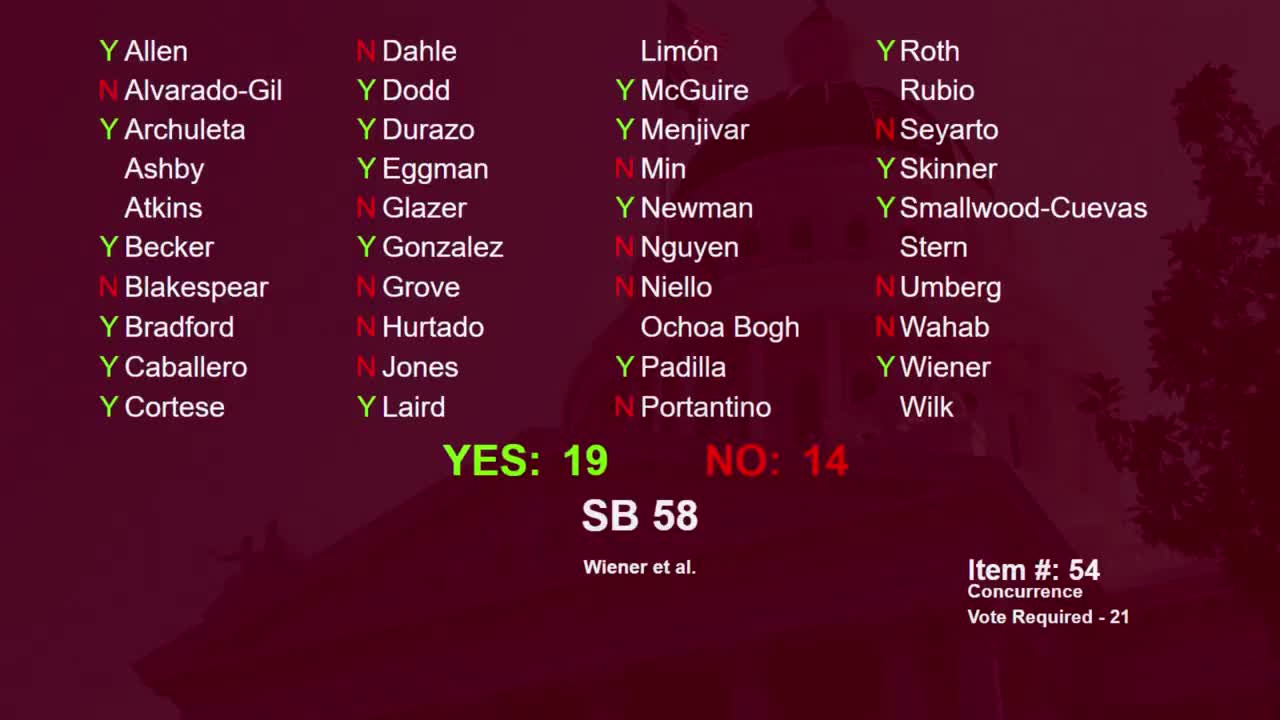 41SEC
Senate Floor
 1MIN
Assembly Floor
 8MIN
Assembly Standing Committee on Human Services
 5MIN
Assembly Standing Committee on Judiciary
 48SEC
Senate Floor
 6MIN
Senate Standing Committee on Human Services
 11MIN
Senate Standing Committee on Judiciary
Bill Author

Bill Co-Author(s):