SB 355: Multifamily Affordable Housing Solar Roofs Program.
- Session Year: 2023-2024
- House: Senate
- Latest Version Date: 2023-10-07
Current Status:
Passed
(2023-10-07: Chaptered by Secretary of State. Chapter 393, Statutes of 2023.)
Introduced
In Committee
First Chamber
In Committee
Second Chamber
Enacted
Existing law vests the Public Utilities Commission with regulatory authority over public utilities, including electrical corporations. Existing law establishes the Multifamily Affordable Housing Solar Roofs Program. Existing law requires the commission, beginning with the 201617 fiscal year and ending with the 201920 fiscal year, to authorize the annual allocation of certain amounts of moneys for the program. Existing law requires the commission to continue authorizing the allocation of those moneys through June 30, 2026, if the commission determines that revenues are available and that there is adequate interest and participation in the program. Existing law requires the commission, as part of the program, to award monetary incentives for qualifying solar energy systems, as defined, that are installed on multifamily residential buildings of at least 5 rental housing units that are operated to provide deed-restricted low-income residential housing, as defined, and that meet one or more specified requirements, including that at least 80% of the households have incomes at or below 60% of the area median income, through December 31, 2030.
This bill would expand those specified requirements to, among other things, include properties in which at least 66% of the households have incomes at or below 80% of the area median income, properties owned by a tribe, as defined, and rental housing properties owned by public housing agencies or authorities, as defined. The bill would extend the requirement that the commission award monetary incentives for those solar energy systems through December 31, 2032. If those multifamily residential properties are new construction, the bill would prohibit using moneys authorized through the program to meet specified regulatory requirements. The bill would authorize the commission to consider authorizing an advance payment loan to an eligible project if there is reasonable evidence to suggest that an advance payment loan would lead to the delivery of a project that would not occur absent the advance payment loan, as specified.
Existing law requires that low-income tenants who participate in the program receive credits on utility bills from the program.
This bill would limit the applicability of that requirement to units that are separately metered.
Under existing law, a violation of any order, decision, rule, direction, demand, or requirement of the commission is a crime.
Because a violation of a commission action implementing this bills requirements would be a crime, the bill would impose a state-mandated local program.
The California Constitution requires the state to reimburse local agencies and school districts for certain costs mandated by the state. Statutory provisions establish procedures for making that reimbursement.
This bill would provide that no reimbursement is required by this act for a specified reason.
Existing law vests the Public Utilities Commission with regulatory authority over public utilities, including electrical corporations. Existing law establishes the Multifamily Affordable Housing Solar Roofs Program. Existing law requires the commission, beginning with the 201617 fiscal year and ending with the 201920 fiscal year, to authorize the annual allocation of certain amounts of moneys for the program. Existing law requires the commission to continue authorizing the allocation of those moneys through June 30, 2026, if the commission determines that revenues are available and that there is adequate interest and participation in the program. Existing law requires the commission, as part of the program, to award monetary incentives for qualifying solar energy systems, as defined, that are installed on multifamily residential buildings of at least 5 rental housing units that are operated to provide deed-restricted low-income residential housing, as defined, and that meet one or more specified requirements, including that at least 80% of the households have incomes at or below 60% of the area median income, through December 31, 2030.
This bill would expand those specified requirements to, among other things, include properties in which at least 66% of the households have incomes at or below 80% of the area median income, properties owned by a tribe, as defined, and rental housing properties owned by public housing agencies or authorities, as defined. The bill would extend the requirement that the commission award monetary incentives for those solar energy systems through December 31, 2032. If those multifamily residential properties are new construction, the bill would prohibit using moneys authorized through the program to meet specified regulatory requirements.
Existing law requires that low-income tenants who participate in the program receive credits on utility bills from the program.
This bill would limit the applicability of that requirement to units that are separately metered.
Under existing law, a violation of any order, decision, rule, direction, demand, or requirement of the commission is a crime.
Because a violation of a commission action implementing this bills requirements would be a crime, the bill would impose a state-mandated local program.
The California Constitution requires the state to reimburse local agencies and school districts for certain costs mandated by the state. Statutory provisions establish procedures for making that reimbursement.
This bill would provide that no reimbursement is required by this act for a specified reason.
Existing law vests the Public Utilities Commission with regulatory authority over public utilities, including electrical corporations. Existing law establishes the Multifamily Affordable Housing Solar Roofs Program. Existing law requires the commission, beginning with the 201617 fiscal year and ending with the 201920 fiscal year, to authorize the annual allocation of certain amounts of moneys for the program. Existing law requires the commission to continue authorizing the allocation of those moneys through June 30, 2026, if the commission determines that revenues are available and that there is adequate interest and participation in the program. Existing law requires the commission, as part of the program, to award monetary incentives for qualifying solar energy systems, as defined, that are installed on multifamily residential buildings of at least 5 rental housing units that are operated to provide deed-restricted low-income residential housing, as defined, and that meet one or more specified requirements, including that at least 80% of the households have incomes at or below 60% of the area median income, through December 31, 2030.
This bill would expand those specified requirements to, among other things, include properties in which at least 66% of the households have incomes at or below 80% of the area median income, properties located in California Indian country, owned by a tribe, as defined, and rental housing properties owned by public housing agencies or authorities, as defined. The bill would extend the requirement that the commission award monetary incentives for those solar energy systems through December 31, 2034. 2032. If those multifamily residential properties are new construction, the bill would prohibit using moneys authorized through the program to meet specified regulatory requirements.
Existing law requires that low-income tenants who participate in the program receive credits on utility bills from the program. Existing law requires the commission to ensure that electrical corporation tariff structures affecting the low-income tenants participating in the program continue to provide a direct economic benefit from the qualifying solar energy system.
This bill would limit the applicability of the that requirement that low-income tenants who participate in the program receive credits on utility bills to units that are separately metered. If the development has at least 45% of units reserved for tenants in extremely low-income households and is master-metered, the bill would specify that those direct economic benefits to low-income tenants may include providing housing.
Under existing law, a violation of any order, decision, rule, direction, demand, or requirement of the commission is a crime.
Because a violation of a commission action implementing this bills requirements would be a crime, the bill would impose a state-mandated local program.
The California Constitution requires the state to reimburse local agencies and school districts for certain costs mandated by the state. Statutory provisions establish procedures for making that reimbursement.
This bill would provide that no reimbursement is required by this act for a specified reason.
Existing law vests the Public Utilities Commission with regulatory authority over public utilities, including electrical corporations. Decisions of the commission adopted the California Solar Initiative, to be administered by the states 3 largest electrical corporations and subject to the commissions supervision. Existing law requires the commission to ensure that not less than 10% of the funds for the California Solar Initiative are used for the installation of solar energy systems on low-income residential housing. Pursuant to this requirement, the commission adopted decisions that established Existing law establishes the Multifamily Affordable Housing Solar Roofs Program, pursuant to which the electrical corporations provide monetary incentives for the installation of solar energy systems on low-income residential housing. Program. Existing law requires the commission, beginning with the 201617 fiscal year and ending with the 201920 fiscal year, to authorize the annual allocation of certain amounts of moneys for the Multifamily Affordable Housing Solar Roofs Program. program. Existing law authorizes requires the commission to continue authorizing the allocation of those moneys through June 30, 2026, if the commission determines that revenues are available and that there is adequate interest and participation in the program. Existing law requires the commission, as part of the program, to award monetary incentives for qualifying solar energy systems, as defined, that are installed on multifamily residential buildings of at least 5 rental housing units that are operated to provide deed-restricted low-income residential housing, as defined, and that meet one or more specified requirements, including that at least 80% of the households have incomes at or below 60% of the area median income, through December 31, 2030.
This bill would make nonsubstantive changes to the provisions authorizing the program. expand those specified requirements to, among other things, include properties in which at least 66% of the households have incomes at or below 80% of the area median income, properties located in California Indian country, as defined, and rental housing properties owned by public housing agencies or authorities, as defined. The bill would extend the requirement that the commission award monetary incentives for those solar energy systems through December 31, 2034. If those multifamily residential properties are new construction, the bill would prohibit using moneys authorized through the program to meet specified regulatory requirements.
Existing law requires that low-income tenants who participate in the program receive credits on utility bills from the program. Existing law requires the commission to ensure that electrical corporation tariff structures affecting the low-income tenants participating in the program continue to provide a direct economic benefit from the qualifying solar energy system.
This bill would limit the applicability of the requirement that low-income tenants who participate in the program receive credits on utility bills to units that are separately metered. If the development has at least 45% of units reserved for tenants in extremely low-income households and is master-metered, the bill would specify that those direct economic benefits to low-income tenants may include providing housing.
Under existing law, a violation of any order, decision, rule, direction, demand, or requirement of the commission is a crime.
Because a violation of a commission action implementing this bills requirements would be a crime, the bill would impose a state-mandated local program.
The California Constitution requires the state to reimburse local agencies and school districts for certain costs mandated by the state. Statutory provisions establish procedures for making that reimbursement.
This bill would provide that no reimbursement is required by this act for a specified reason.
Existing law vests the Public Utilities Commission with regulatory authority over public utilities, including electrical corporations. Decisions of the commission adopted the California Solar Initiative, to be administered by the states 3 largest electrical corporations and subject to the commissions supervision. Existing law requires the commission to ensure that not less than 10% of the funds for the California Solar Initiative are used for the installation of solar energy systems on low-income residential housing. Pursuant to this requirement, the commission adopted decisions that established the Multifamily Affordable Housing Solar Roofs Program, pursuant to which the electrical corporations provide monetary incentives for the installation of solar energy systems on low-income residential housing. Existing law requires the commission, beginning with the 201617 fiscal year and ending with the 201920 fiscal year, to authorize the annual allocation of certain amounts of moneys for the Multifamily Affordable Housing Solar Roofs Program. Existing law authorizes the commission to continue authorizing the allocation of those moneys through June 30, 2026, if the commission determines that revenues are available and that there is adequate interest and participation in the program.
This bill would make nonsubstantive changes to the provisions authorizing the program.
(a)As used in this section, the following definitions apply:
(1)CARE program means the California Alternate Rates for Energy program established pursuant to Section 739.1.
(2)Program means the Multifamily Affordable Housing Solar Roofs Program established pursuant to this chapter, which is also known as the Solar on Multifamily Affordable Housing Program.
(3)Qualified multifamily affordable housing property means a multifamily residential property of at least five rental housing units that is, or will be, operated to provide deed-restricted low-income residential housing, as defined in clause (i) of subparagraph (A) of paragraph (3) of subdivision (a) of Section 2852, and that meets one or more of the following requirements:
(A)The property is located in a disadvantaged community, as identified by the California Environmental Protection Agency pursuant to Section 39711 of the Health and Safety Code.
(B)At least 66 percent of the households have incomes at or below 80 percent of the area median income, as defined in subdivision (f) of Section 50052.5 of the Health and Safety Code.
(C)The property is owned by a tribe.
(D)The property is rental housing property that is owned by one of the following:
(i)A public housing authority created pursuant to the Housing Authorities Law (Chapter 1 (commencing with Section 34200) of Part 2 of Division 24 of the Health and Safety Code).
(ii)A public housing agency, as defined in Section 1437a of Title 42 of the United States Code.
(4)Solar energy system means a solar energy photovoltaic device that meets or exceeds the eligibility criteria established pursuant to Section 25782 of the Public Resources Code.
(5)Tribe means a California Native American tribe, as defined in Section 21073 of the Public Resources Code.
(b)(1)Adoption and implementation of the program may count toward the satisfaction of the commissions obligation to ensure that specific alternatives designed for growth among residential customers in disadvantaged communities are offered as part of the standard contract or tariff authorized pursuant to paragraph (1) of subdivision (b) of Section 2827.1.
(2)This section does not preclude electrical corporations from offering and administering a distributed energy resource program, including solar energy systems, in disadvantaged communities offered under current or proposed programs using funds provided under subdivision (c) of Section 748.5 or programs proposed to comply with paragraph (1) as approved by the commission.
(c)The commission shall annually authorize the allocation of one hundred million dollars ($100,000,000) or 66.67 percent of available funds, whichever is less, from the revenues described in subdivision (c) of Section 748.5 for the program, beginning with the fiscal year commencing July 1, 2016, and ending with the fiscal year ending June 30, 2020. The commission shall continue authorizing the allocation of these funds through June 30, 2026, if the commission determines that revenues are available after 2020 and that there is adequate interest and participation in the program.
(d)The commission shall consider the most appropriate program administration structure, including administration by a qualified third-party administrator, selected by the commission through a competitive bidding process, or administration by an electrical corporation, in an existing or future proceeding.
(e)Not more than 10 percent of the funds allocated to the program shall be used for administration.
(f)(1)By June 30, 2017, the commission shall authorize the award of monetary incentives for qualifying solar energy systems that are installed on qualified multifamily affordable housing properties through December 31, 2032. The target of the program is to install a combined generating capacity of at least 300 megawatts on qualified properties.
(2)The commission shall require that the electricity generated by qualifying renewable energy systems installed pursuant to the program be primarily used to offset electricity usage by low-income tenants. These requirements may include required covenants and restrictions in deeds.
(3)The commission shall require that qualifying solar energy systems owned by third-party owners are subject to contractual restrictions to ensure that no additional costs for the system be passed on to low-income tenants at the properties receiving incentives pursuant to the program. The commission shall require third-party owners of solar energy systems to provide ongoing operations and maintenance of the system, monitor energy production, and, where necessary, take appropriate action to ensure that the kWh production levels projected for the system are achieved throughout the period of the third-party agreement. Those actions may include, but are not limited to, providing a performance guarantee of annual production levels or taking corrective actions to resolve underproduction problems.
(4)The commission shall ensure that incentive levels for photovoltaic installations receiving incentives through the program are aligned with the installation costs for solar energy systems for affordable housing and take account of federal investment tax credits and contributions from other sources to the extent feasible.
(5)The commission shall require that no individual installation receive incentives at a rate greater than 100 percent of the total system installation costs.
(6)The commission shall establish local hiring requirements for the program to provide economic development benefits to disadvantaged communities.
(7)The commission shall establish energy efficiency requirements that are equal to the energy efficiency requirements established for the program described in Section 2852, including participation in a federal, state, or utility-funded energy efficiency program or documentation of a recent energy efficiency retrofit.
(8)For purposes of the new construction of qualified multifamily affordable housing property, moneys authorized through the program shall not be used to meet the requirements of Part 6 (commencing with Section 100) of Title 24 of the California Code of Regulations.
(g)(1)The commission shall ensure that electrical corporation tariff structures affecting the low-income tenants participating in the program continue to provide a direct economic benefit from the qualifying solar energy system.
(2)If units are separately metered, low-income tenants who participate in the program shall receive credits on utility bills from the program. The commission shall ensure that utility bill reductions are achieved through tariffs that allow for the allocation of credits, such as virtual net metering tariffs designed for program participants, or other tariffs that may be adopted by the commission pursuant to Section 2827.1.
(h)This chapter is not intended to supplant CARE program rates as the primary mechanism for achieving the goals of the CARE program.
(i)The commission shall determine the eligibility of qualified multifamily affordable housing property tenants that are customers of community choice aggregators.
(j)The commission may consider authorizing an advance payment loan to an eligible project if there is reasonable evidence to suggest that an advance payment loan would lead to the delivery of a project that would not occur absent the advance payment loan, so long as appropriate funding guarantee and loss recovery mechanisms are implemented to limit the risk of liability to the program from making the advance payment loan. The commission, in considering an advance payment loan, may prioritize allocating funding to a project where an advance payment loan will have the greatest impact on project delivery.
(k)(1)Every three years, the commission shall evaluate the programs expenditures, commitments, uncommitted balances, future demands, performance, and outcomes and shall make any necessary adjustments to the program to ensure the goals of the program are being met. If, upon review, the commission finds there is insufficient participation in the program, the commission may credit uncommitted funds back to ratepayers pursuant to Section 748.5.
(2)The commission shall include in the annual workplan required pursuant to Section 910, an annual update of the program that shall include, but not be limited to, the number of projects approved, number of projects completed, number of pending projects awaiting approval, and geographic distribution of the projects.
SEC. 2.No reimbursement is required by this act pursuant to Section 6 of Article XIIIB of the California Constitution because the only costs that may be incurred by a local agency or school district will be incurred because this act creates a new crime or infraction, eliminates a crime or infraction, or changes the penalty for a crime or infraction, within the meaning of Section 17556 of the Government Code, or changes the definition of a crime within the meaning of Section 6 of Article XIIIB of the California Constitution.
(a)As used in this section, the following definitions apply:
(1)CARE program means the California Alternate Rates for Energy program established pursuant to Section 739.1.
(2)Program means the Multifamily Affordable Housing Solar Roofs Program established pursuant to this chapter, which is also known as the Solar on Multifamily Affordable Housing Program.
(3)Qualified multifamily affordable housing property means a multifamily residential property of at least five rental housing units that is, or will be, operated to provide deed-restricted low-income residential housing, as defined in clause (i) of subparagraph (A) of paragraph (3) of subdivision (a) of Section 2852, and that meets one or more of the following requirements:
(A)The property is located in a disadvantaged community, as identified by the California Environmental Protection Agency pursuant to Section 39711 of the Health and Safety Code.
(B)At least 66 percent of the households have incomes at or below 80 percent of the area median income, as defined in subdivision (f) of Section 50052.5 of the Health and Safety Code.
(C)The property is owned by a tribe.
(D)The property is rental housing property that is owned by one of the following:
(i)A public housing authority created pursuant to the Housing Authorities Law (Chapter 1 (commencing with Section 34200) of Part 2 of Division 24 of the Health and Safety Code).
(ii)A public housing agency, as defined in Section 1437a of Title 42 of the United States Code.
(4)Solar energy system means a solar energy photovoltaic device that meets or exceeds the eligibility criteria established pursuant to Section 25782 of the Public Resources Code.
(5)Tribe means a California Native American tribe, as defined in Section 21073 of the Public Resources Code.
(b)(1)Adoption and implementation of the program may count toward the satisfaction of the commissions obligation to ensure that specific alternatives designed for growth among residential customers in disadvantaged communities are offered as part of the standard contract or tariff authorized pursuant to paragraph (1) of subdivision (b) of Section 2827.1.
(2)This section does not preclude electrical corporations from offering and administering a distributed energy resource program, including solar energy systems, in disadvantaged communities offered under current or proposed programs using funds provided under subdivision (c) of Section 748.5 or programs proposed to comply with paragraph (1) as approved by the commission.
(c)The commission shall annually authorize the allocation of one hundred million dollars ($100,000,000) or 66.67 percent of available funds, whichever is less, from the revenues described in subdivision (c) of Section 748.5 for the program, beginning with the fiscal year commencing July 1, 2016, and ending with the fiscal year ending June 30, 2020. The commission shall continue authorizing the allocation of these funds through June 30, 2026, if the commission determines that revenues are available after 2020 and that there is adequate interest and participation in the program.
(d)The commission shall consider the most appropriate program administration structure, including administration by a qualified third-party administrator, selected by the commission through a competitive bidding process, or administration by an electrical corporation, in an existing or future proceeding.
(e)Not more than 10 percent of the funds allocated to the program shall be used for administration.
(f)(1)By June 30, 2017, the commission shall authorize the award of monetary incentives for qualifying solar energy systems that are installed on qualified multifamily affordable housing properties through December 31, 2032. The target of the program is to install a combined generating capacity of at least 300 megawatts on qualified properties.
(2)The commission shall require that the electricity generated by qualifying renewable energy systems installed pursuant to the program be primarily used to offset electricity usage by low-income tenants. These requirements may include required covenants and restrictions in deeds.
(3)The commission shall require that qualifying solar energy systems owned by third-party owners are subject to contractual restrictions to ensure that no additional costs for the system be passed on to low-income tenants at the properties receiving incentives pursuant to the program. The commission shall require third-party owners of solar energy systems to provide ongoing operations and maintenance of the system, monitor energy production, and, where necessary, take appropriate action to ensure that the kWh production levels projected for the system are achieved throughout the period of the third-party agreement. Those actions may include, but are not limited to, providing a performance guarantee of annual production levels or taking corrective actions to resolve underproduction problems.
(4)The commission shall ensure that incentive levels for photovoltaic installations receiving incentives through the program are aligned with the installation costs for solar energy systems for affordable housing and take account of federal investment tax credits and contributions from other sources to the extent feasible.
(5)The commission shall require that no individual installation receive incentives at a rate greater than 100 percent of the total system installation costs.
(6)The commission shall establish local hiring requirements for the program to provide economic development benefits to disadvantaged communities.
(7)The commission shall establish energy efficiency requirements that are equal to the energy efficiency requirements established for the program described in Section 2852, including participation in a federal, state, or utility-funded energy efficiency program or documentation of a recent energy efficiency retrofit.
(8)For purposes of the new construction of qualified multifamily affordable housing property, moneys authorized through the program shall not be used to meet the requirements of Part 6 (commencing with Section 100) of Title 24 of the California Code of Regulations.
(g)(1)The commission shall ensure that electrical corporation tariff structures affecting the low-income tenants participating in the program continue to provide a direct economic benefit from the qualifying solar energy system.
(2)If units are separately metered, low-income tenants who participate in the program shall receive credits on utility bills from the program. The commission shall ensure that utility bill reductions are achieved through tariffs that allow for the allocation of credits, such as virtual net metering tariffs designed for program participants, or other tariffs that may be adopted by the commission pursuant to Section 2827.1.
(h)This chapter is not intended to supplant CARE program rates as the primary mechanism for achieving the goals of the CARE program.
(i)The commission shall determine the eligibility of qualified multifamily affordable housing property tenants that are customers of community choice aggregators.
(j)The commission may consider authorizing an advance payment loan to an eligible project if there is reasonable evidence to suggest that an advance payment loan would lead to the delivery of a project that would not occur absent the advance payment loan, so long as appropriate funding guarantee and loss recovery mechanisms are implemented to limit the risk of liability to the program from making the advance payment loan. The commission, in considering an advance payment loan, may prioritize allocating funding to a project where an advance payment loan will have the greatest impact on project delivery.
(j)(k)(1)Every three years, the commission shall evaluate the programs expenditures, commitments, uncommitted balances, future demands, performance, and outcomes and shall make any necessary adjustments to the program to ensure the goals of the program are being met. If, upon review, the commission finds there is insufficient participation in the program, the commission may credit uncommitted funds back to ratepayers pursuant to Section 748.5.
(2)The commission shall include in the annual workplan required pursuant to Section 910, an annual update of the program that shall include, but not be limited to, the number of projects approved, number of projects completed, number of pending projects awaiting approval, and geographic distribution of the projects.
SEC. 2.No reimbursement is required by this act pursuant to Section 6 of Article XIIIB of the California Constitution because the only costs that may be incurred by a local agency or school district will be incurred because this act creates a new crime or infraction, eliminates a crime or infraction, or changes the penalty for a crime or infraction, within the meaning of Section 17556 of the Government Code, or changes the definition of a crime within the meaning of Section 6 of Article XIIIB of the California Constitution.
(a)As used in this section, the following definitions apply:
(1)CARE program means the California Alternate Rates for Energy program established pursuant to Section 739.1.
(2)Program means the Multifamily Affordable Housing Solar Roofs Program established pursuant to this chapter, which is also known as the Solar on Multifamily Affordable Housing Program.
(3)Qualified multifamily affordable housing property means a multifamily residential property of at least five rental housing units that is, or will be, operated to provide deed-restricted low-income residential housing, as defined in clause (i) of subparagraph (A) of paragraph (3) of subdivision (a) of Section 2852, and that meets one or more of the following requirements:
(A)The property is located in a disadvantaged community, or within one mile of a disadvantaged community, as identified by the California Environmental Protection Agency pursuant to Section 39711 of the Health and Safety Code.
(B)At least 66 percent of the households have incomes at or below 80 percent of the area median income, as defined in subdivision (f) of Section 50052.5 of the Health and Safety Code.
(C)The property is owned by a tribe.
(D)The property is rental housing property that is owned by one of the following:
(i)A public housing authority created pursuant to the Housing Authorities Law (Chapter 1 (commencing with Section 34200) of Part 2 of Division 24 of the Health and Safety Code).
(ii)A public housing agency, as defined in Section 1437a of Title 42 of the United States Code.
(4)Solar energy system means a solar energy photovoltaic device that meets or exceeds the eligibility criteria established pursuant to Section 25782 of the Public Resources Code.
(5)Tribe means a California Native American tribe, as defined in Section 21073 of the Public Resources Code.
(b)(1)Adoption and implementation of the program may count toward the satisfaction of the commissions obligation to ensure that specific alternatives designed for growth among residential customers in disadvantaged communities are offered as part of the standard contract or tariff authorized pursuant to paragraph (1) of subdivision (b) of Section 2827.1.
(2)This section does not preclude electrical corporations from offering and administering a distributed energy resource program, including solar energy systems, in disadvantaged communities offered under current or proposed programs using funds provided under subdivision (c) of Section 748.5 or programs proposed to comply with paragraph (1) as approved by the commission.
(c)The commission shall annually authorize the allocation of one hundred million dollars ($100,000,000) or 66.67 percent of available funds, whichever is less, from the revenues described in subdivision (c) of Section 748.5 for the program, beginning with the fiscal year commencing July 1, 2016, and ending with the fiscal year ending June 30, 2020. The commission shall continue authorizing the allocation of these funds through June 30, 2026, if the commission determines that revenues are available after 2020 and that there is adequate interest and participation in the program.
(d)The commission shall consider the most appropriate program administration structure, including administration by a qualified third-party administrator, selected by the commission through a competitive bidding process, or administration by an electrical corporation, in an existing or future proceeding.
(e)Not more than 10 percent of the funds allocated to the program shall be used for administration.
(f)(1)By June 30, 2017, the commission shall authorize the award of monetary incentives for qualifying solar energy systems that are installed on qualified multifamily affordable housing properties through December 31, 2032. The target of the program is to install a combined generating capacity of at least 300 megawatts on qualified properties.
(2)The commission shall require that the electricity generated by qualifying renewable energy systems installed pursuant to the program be primarily used to offset electricity usage by low-income tenants. These requirements may include required covenants and restrictions in deeds.
(3)The commission shall require that qualifying solar energy systems owned by third-party owners are subject to contractual restrictions to ensure that no additional costs for the system be passed on to low-income tenants at the properties receiving incentives pursuant to the program. The commission shall require third-party owners of solar energy systems to provide ongoing operations and maintenance of the system, monitor energy production, and, where necessary, take appropriate action to ensure that the kWh production levels projected for the system are achieved throughout the period of the third-party agreement. Those actions may include, but are not limited to, providing a performance guarantee of annual production levels or taking corrective actions to resolve underproduction problems.
(4)The commission shall ensure that incentive levels for photovoltaic installations receiving incentives through the program are aligned with the installation costs for solar energy systems for affordable housing and take account of federal investment tax credits and contributions from other sources to the extent feasible.
(5)The commission shall require that no individual installation receive incentives at a rate greater than 100 percent of the total system installation costs.
(6)The commission shall establish local hiring requirements for the program to provide economic development benefits to disadvantaged communities.
(7)The commission shall establish energy efficiency requirements that are equal to the energy efficiency requirements established for the program described in Section 2852, including participation in a federal, state, or utility-funded energy efficiency program or documentation of a recent energy efficiency retrofit.
(8)For purposes of the new construction of qualified multifamily affordable housing property, moneys authorized through the program shall not be used to meet the requirements of Part 6 (commencing with Section 100) of Title 24 of the California Code of Regulations.
(g)(1)The commission shall ensure that electrical corporation tariff structures affecting the low-income tenants participating in the program continue to provide a direct economic benefit from the qualifying solar energy system.
(2)If units are separately metered, low-income tenants who participate in the program shall receive credits on utility bills from the program. The commission shall ensure that utility bill reductions are achieved through tariffs that allow for the allocation of credits, such as virtual net metering tariffs designed for program participants, or other tariffs that may be adopted by the commission pursuant to Section 2827.1.
(h)This chapter is not intended to supplant CARE program rates as the primary mechanism for achieving the goals of the CARE program.
(i)The commission shall determine the eligibility of qualified multifamily affordable housing property tenants that are customers of community choice aggregators.
(j)(1)Every three years, the commission shall evaluate the programs expenditures, commitments, uncommitted balances, future demands, performance, and outcomes and shall make any necessary adjustments to the program to ensure the goals of the program are being met. If, upon review, the commission finds there is insufficient participation in the program, the commission may credit uncommitted funds back to ratepayers pursuant to Section 748.5.
(2)The commission shall include in the annual workplan required pursuant to Section 910, an annual update of the program that shall include, but not be limited to, the number of projects approved, number of projects completed, number of pending projects awaiting approval, and geographic distribution of the projects.
SEC. 2.No reimbursement is required by this act pursuant to Section 6 of Article XIIIB of the California Constitution because the only costs that may be incurred by a local agency or school district will be incurred because this act creates a new crime or infraction, eliminates a crime or infraction, or changes the penalty for a crime or infraction, within the meaning of Section 17556 of the Government Code, or changes the definition of a crime within the meaning of Section 6 of Article XIIIB of the California Constitution.
(a)As used in this section, the following definitions apply:
(1)CARE program means the California Alternate Rates for Energy program established pursuant to Section 739.1.
(2)Indian country has the same meaning as defined in Section 1151 of Title 18 of the United States Code.(3)Privately held in-holdings means non-Indian owned fee land located within the exterior boundaries of California Indian country.(4)(2)Program means the Multifamily Affordable Housing Solar Roofs Program established pursuant to this chapter, which is also known as the Solar on Multifamily Affordable Housing Program.
(5)(3)Qualified multifamily affordable housing property means a multifamily residential property of at least five rental housing units that is, or will be, operated to provide deed-restricted low-income residential housing, as defined in clause (i) of subparagraph (A) of paragraph (3) of subdivision (a) of Section 2852, and that meets one or more of the following requirements:
(A)The property is located in a disadvantaged community, or within one mile of a disadvantaged community, as identified by the California Environmental Protection Agency pursuant to Section 39711 of the Health and Safety Code.
(B)At least 66 percent of the households have incomes at or below 80 percent of the area median income, as defined in subdivision (f) of Section 50052.5 of the Health and Safety Code.
(C)The property is located in California Indian country, except privately held in-holdings. If a property has multiple owners, that property shall be considered Indian owned if at least one owner is a tribe or tribal member, regardless of the use of the property. owned by a tribe.
(D)The property is rental housing property that is owned by one of the following:
(i)A public housing authority created pursuant to the Housing Authorities Law (Chapter 1 (commencing with Section 34200) of Part 2 of Division 24 of the Health and Safety Code).
(ii)A public housing agency, as defined in Section 1437a of Title 42 of the United States Code.
(6)(4)Solar energy system means a solar energy photovoltaic device that meets or exceeds the eligibility criteria established pursuant to Section 25782 of the Public Resources Code.
(5)Tribe means a California Native American tribe, as defined in Section 21073 of the Public Resources Code.
(b)(1)Adoption and implementation of the program may count toward the satisfaction of the commissions obligation to ensure that specific alternatives designed for growth among residential customers in disadvantaged communities are offered as part of the standard contract or tariff authorized pursuant to paragraph (1) of subdivision (b) of Section 2827.1.
(2)This section does not preclude electrical corporations from offering and administering a distributed energy resource program, including solar energy systems, in disadvantaged communities offered under current or proposed programs using funds provided under subdivision (c) of Section 748.5 or programs proposed to comply with paragraph (1) as approved by the commission.
(c)The commission shall annually authorize the allocation of one hundred million dollars ($100,000,000) or 66.67 percent of available funds, whichever is less, from the revenues described in subdivision (c) of Section 748.5 for the program, beginning with the fiscal year commencing July 1, 2016, and ending with the fiscal year ending June 30, 2020. The commission shall continue authorizing the allocation of these funds through June 30, 2026, if the commission determines that revenues are available after 2020 and that there is adequate interest and participation in the program.
(d)The commission shall consider the most appropriate program administration structure, including administration by a qualified third-party administrator, selected by the commission through a competitive bidding process, or administration by an electrical corporation, in an existing or future proceeding.
(e)Not more than 10 percent of the funds allocated to the program shall be used for administration.
(f)(1)By June 30, 2017, the commission shall authorize the award of monetary incentives for qualifying solar energy systems that are installed on qualified multifamily affordable housing properties through December 31, 2034. 2032. The target of the program is to install a combined generating capacity of at least 300 megawatts on qualified properties.
(2)The commission shall require that the electricity generated by qualifying renewable energy systems installed pursuant to the program be primarily used to offset electricity usage by low-income tenants. These requirements may include required covenants and restrictions in deeds.
(3)The commission shall require that qualifying solar energy systems owned by third-party owners are subject to contractual restrictions to ensure that no additional costs for the system be passed on to low-income tenants at the properties receiving incentives pursuant to the program. The commission shall require third-party owners of solar energy systems to provide ongoing operations and maintenance of the system, monitor energy production, and, where necessary, take appropriate action to ensure that the kWh production levels projected for the system are achieved throughout the period of the third-party agreement. Those actions may include, but are not limited to, providing a performance guarantee of annual production levels or taking corrective actions to resolve underproduction problems.
(4)The commission shall ensure that incentive levels for photovoltaic installations receiving incentives through the program are aligned with the installation costs for solar energy systems for affordable housing and take account of federal investment tax credits and contributions from other sources to the extent feasible.
(5)The commission shall require that no individual installation receive incentives at a rate greater than 100 percent of the total system installation costs.
(6)The commission shall establish local hiring requirements for the program to provide economic development benefits to disadvantaged communities.
(7)The commission shall establish energy efficiency requirements that are equal to the energy efficiency requirements established for the program described in Section 2852, including participation in a federal, state, or utility-funded energy efficiency program or documentation of a recent energy efficiency retrofit.
(8)For purposes of the new construction of qualified multifamily affordable housing property, moneys authorized through the program shall not be used to meet the requirements of Part 6 (commencing with Section 100) of Title 24 of the California Code of Regulations and shall only be used for incremental production allocated 100 percent to property tenants. Regulations.
(g)(1)The commission shall ensure that electrical corporation tariff structures affecting the low-income tenants participating in the program continue to provide a direct economic benefit from the qualifying solar energy system.
(2)If units are separately metered, low-income tenants who participate in the program shall receive credits on utility bills from the program. The commission shall ensure that utility bill reductions are achieved through tariffs that allow for the allocation of credits, such as virtual net metering tariffs designed for program participants, or other tariffs that may be adopted by the commission pursuant to Section 2827.1.
(3)If the development has at least 45 percent of units reserved for tenants in extremely low-income households, as defined in Section 50106 of the Health and Safety Code, and is master-metered, the direct economic benefits to low-income tenants described in paragraph (1) may include providing housing.(h)This chapter is not intended to supplant CARE program rates as the primary mechanism for achieving the goals of the CARE program.
(i)The commission shall determine the eligibility of qualified multifamily affordable housing property tenants that are customers of community choice aggregators.
(j)(1)Every three years, the commission shall evaluate the programs expenditures, commitments, uncommitted balances, future demands, performance, and outcomes and shall make any necessary adjustments to the program to ensure the goals of the program are being met. If, upon review, the commission finds there is insufficient participation in the program, the commission may credit uncommitted funds back to ratepayers pursuant to Section 748.5.
(2)The commission shall include in the annual workplan required pursuant to Section 910, an annual update of the program that shall include, but not be limited to, the number of projects approved, number of projects completed, number of pending projects awaiting approval, and geographic distribution of the projects.
SEC. 2.No reimbursement is required by this act pursuant to Section 6 of Article XIIIB of the California Constitution because the only costs that may be incurred by a local agency or school district will be incurred because this act creates a new crime or infraction, eliminates a crime or infraction, or changes the penalty for a crime or infraction, within the meaning of Section 17556 of the Government Code, or changes the definition of a crime within the meaning of Section 6 of Article XIIIB of the California Constitution.
(a)As used in this section, the following definitions apply:
(1)CARE program means the California Alternate Rates for Energy program established pursuant to Section 739.1.
(2)Indian country has the same meaning as defined in Section 1151 of Title 18 of the United States Code.
(3)Privately held in-holdings means non-Indian owned fee land located within the exterior boundaries of California Indian country.
(2)(4)Program means the Multifamily Affordable Housing Solar Roofs Program established pursuant to this chapter. chapter, which is also known as the Solar on Multifamily Affordable Housing Program.
(3)(5)Qualified multifamily affordable housing property means a multifamily residential building property of at least five rental housing units that is is, or will be, operated to provide deed-restricted low-income residential housing, as defined in clause (i) of subparagraph (A) of paragraph (3) of subdivision (a) of Section 2852, and that meets one or more of the following requirements:
(A)The property is located in a disadvantaged community, or within one mile of a disadvantaged community, as identified by the California Environmental Protection Agency pursuant to Section 39711 of the Health and Safety Code.
(B)At least 80 66 percent of the households have incomes at or below 60 80 percent of the area median income, as defined in subdivision (f) of Section 50052.5 of the Health and Safety Code.
(C)The property is located in California Indian country, except privately held in-holdings. If a property has multiple owners, that property shall be considered Indian owned if at least one owner is a tribe or tribal member, regardless of the use of the property.
(D)The property is rental housing property that is owned by one of the following:
(i)A public housing authority created pursuant to the Housing Authorities Law (Chapter 1 (commencing with Section 34200) of Part 2 of Division 24 of the Health and Safety Code).
(ii)A public housing agency, as defined in Section 1437a of Title 42 of the United States Code.
(4)(6)Solar energy system means a solar energy photovoltaic device that meets or exceeds the eligibility criteria established pursuant to Section 25782 of the Public Resources Code.
(b)(1)Adoption and implementation of the Multifamily Affordable Housing Solar Roofs Program program may count toward the satisfaction of the commissions obligation to ensure that specific alternatives designed for growth among residential customers in disadvantaged communities are offered as part of the standard contract or tariff authorized pursuant to paragraph (1) of subdivision (b) of Section 2827.1.
(2)This section does not preclude electrical corporations from offering and administering a distributed energy resource program, including solar energy systems, in disadvantaged communities offered under current or proposed programs using funds provided under subdivision (c) of Section 748.5 or programs proposed to comply with paragraph (1) as approved by the commission.
(c)The commission shall annually authorize the allocation of one hundred million dollars ($100,000,000) or 66.67 percent of available funds, whichever is less, from the revenues described in subdivision (c) of Section 748.5 for the Multifamily Affordable Housing Solar Roofs Program, program, beginning with the fiscal year commencing July 1, 2016, and ending with the fiscal year ending June 30, 2020. The commission shall continue authorizing the allocation of these funds through June 30, 2026, if the commission determines that revenues are available after 2020 and that there is adequate interest and participation in the program.
(d)The commission shall consider the most appropriate program administration structure, including administration by a qualified third-party administrator, selected by the commission through a competitive bidding process, or administration by an electrical corporation, in an existing or future proceeding.
(e)Not more than 10 percent of the funds allocated to the program shall be used for administration.
(f)(1)By June 30, 2017, the commission shall authorize the award of monetary incentives for qualifying solar energy systems that are installed on qualified multifamily affordable housing properties through December 31, 2030. 2034. The target of the program is to install a combined generating capacity of at least 300 megawatts on qualified properties.
(2)The commission shall require that the electricity generated by qualifying renewable energy systems installed pursuant to the program be primarily used to offset electricity usage by low-income tenants. These requirements may include required covenants and restrictions in deeds.
(3)The commission shall require that qualifying solar energy systems owned by third-party owners are subject to contractual restrictions to ensure that no additional costs for the system be passed on to low-income tenants at the properties receiving incentives pursuant to the program. The commission shall require third-party owners of solar energy systems to provide ongoing operations and maintenance of the system, monitor energy production, and, where necessary, take appropriate action to ensure that the kWh production levels projected for the system are achieved throughout the period of the third-party agreement. Those actions may include, but are not limited to, providing a performance guarantee of annual production levels or taking corrective actions to resolve underproduction problems.
(4)The commission shall ensure that incentive levels for photovoltaic installations receiving incentives through the program are aligned with the installation costs for solar energy systems in for affordable housing markets and take account of federal investment tax credits and contributions from other sources to the extent feasible.
(5)The commission shall require that no individual installation receive incentives at a rate greater than 100 percent of the total system installation costs.
(6)The commission shall establish local hiring requirements for the program to provide economic development benefits to disadvantaged communities.
(7)The commission shall establish energy efficiency requirements that are equal to the energy efficiency requirements established for the program described in Section 2852, including participation in a federal, state, or utility-funded energy efficiency program or documentation of a recent energy efficiency retrofit.
(g)(1)Low-income tenants who participate in the program shall receive credits on utility bills from the program. The commission shall ensure that utility bill reductions are achieved through tariffs that allow for the allocation of credits, such as virtual net metering tariffs designed for Multifamily Affordable Solar Housing Program participants, or other tariffs that may be adopted by the commission pursuant to Section 2827.1.(8)For purposes of the new construction of qualified multifamily affordable housing property, moneys authorized through the program shall not be used to meet the requirements of Part 6 (commencing with Section 100) of Title 24 of the California Code of Regulations and shall only be used for incremental production allocated 100 percent to property tenants.
(2)(g)(1)The commission shall ensure that electrical corporation tariff structures affecting the low-income tenants participating in the program continue to provide a direct economic benefit from the qualifying solar energy system.
(2)If units are separately metered, low-income tenants who participate in the program shall receive credits on utility bills from the program. The commission shall ensure that utility bill reductions are achieved through tariffs that allow for the allocation of credits, such as virtual net metering tariffs designed for program participants, or other tariffs that may be adopted by the commission pursuant to Section 2827.1.
(3)If the development has at least 45 percent of units reserved for tenants in extremely low-income households, as defined in Section 50106 of the Health and Safety Code, and is master-metered, the direct economic benefits to low-income tenants described in paragraph (1) may include providing housing.
(h)This chapter is not intended to supplant CARE program rates as the primary mechanism for achieving the goals of the CARE program.
(i)The commission shall determine the eligibility of qualified multifamily affordable housing property tenants that are customers of community choice aggregators.
(j)(1)Every three years, the commission shall evaluate the programs expenditures, commitments, uncommitted balances, future demands, performance, and outcomes and shall make any necessary adjustments to the program to ensure the goals of the program are being met. If, upon review, the commission finds there is insufficient participation in the program, the commission may credit uncommitted funds back to ratepayers pursuant to Section 748.5.
(2)The commission shall include in the annual workplan required pursuant to Section 910, an annual update of the Multifamily Affordable Housing Solar Roofs Program program that shall include, but not be limited to, the number of projects approved, number of projects completed, number of pending projects awaiting approval, and geographic distribution of the projects.
SEC. 2.No reimbursement is required by this act pursuant to Section 6 of Article XIIIB of the California Constitution because the only costs that may be incurred by a local agency or school district will be incurred because this act creates a new crime or infraction, eliminates a crime or infraction, or changes the penalty for a crime or infraction, within the meaning of Section 17556 of the Government Code, or changes the definition of a crime within the meaning of Section 6 of Article XIIIB of the California Constitution.
(a)As used in this section, the following terms have the following meanings: definitions apply:
(1)CARE program means the California Alternate Rates for Energy program established pursuant to Section 739.1.
(2)Program means the Multifamily Affordable Housing Solar Roofs Program established pursuant to this chapter.
(3)Qualified multifamily affordable housing property means a multifamily residential building of at least five rental housing units that is operated to provide deed-restricted low-income residential housing, as defined in clause (i) of subparagraph (A) of paragraph (3) of subdivision (a) of Section 2852, and that meets one or more of the following requirements:
(A)The property is located in a disadvantaged community, as identified by the California Environmental Protection Agency pursuant to Section 39711 of the Health and Safety Code.
(B)At least 80 percent of the households have incomes at or below 60 percent of the area median income, as defined in subdivision (f) of Section 50052.5 of the Health and Safety Code.
(4)Solar energy system means a solar energy photovoltaic device that meets or exceeds the eligibility criteria established pursuant to Section 25782 of the Public Resources Code.
(b)(1)Adoption and implementation of the Multifamily Affordable Housing Solar Roofs Program may count toward the satisfaction of the commissions obligation to ensure that specific alternatives designed for growth among residential customers in disadvantaged communities are offered as part of the standard contract or tariff authorized pursuant to paragraph (1) of subdivision (b) of Section 2827.1.
(2)Nothing in this section shall This section does not preclude electrical corporations from offering and administering a distributed energy resource program, including solar energy systems, in disadvantaged communities offered under current or proposed programs using funds provided under subdivision (c) of Section 748.5 or programs proposed to comply with paragraph (1) of subdivision (b) as approved by the commission.
(c)The commission shall annually authorize the allocation of one hundred million dollars ($100,000,000) or 66.67 percent of available funds, whichever is less, from the revenues described in subdivision (c) of Section 748.5 for the Multifamily Affordable Housing Solar Roofs Program, beginning with the fiscal year commencing July 1, 2016, and ending with the fiscal year ending June 30, 2020. The commission shall continue authorizing the allocation of these funds through June 30, 2026, if the commission determines that revenues are available after 2020 and that there is adequate interest and participation in the program.
(d)The commission shall consider the most appropriate program administration structure, including administration by a qualified third-party administrator, selected by the commission through a competitive bidding process, or administration by an electrical corporation, in an existing or future proceeding.
(e)Not more than 10 percent of the funds allocated to the program shall be used for administration.
(f)(1)By June 30, 2017, the commission shall authorize the award of monetary incentives for qualifying solar energy systems that are installed on qualified multifamily affordable housing properties through December 31, 2030. The target of the program is to install a combined generating capacity of at least 300 megawatts on qualified properties.
(2)The commission shall require that the electricity generated by qualifying renewable energy systems installed pursuant to the program be primarily used to offset electricity usage by low-income tenants. These requirements may include required covenants and restrictions in deeds.
(3)The commission shall require that qualifying solar energy systems owned by third-party owners are subject to contractual restrictions to ensure that no additional costs for the system be passed on to low-income tenants at the properties receiving incentives pursuant to the program. The commission shall require third-party owners of solar energy systems to provide ongoing operations and maintenance of the system, monitor energy production, and, where necessary, take appropriate action to ensure that the kWh production levels projected for the system are achieved throughout the period of the third-party agreement. Such Those actions may include, but are not limited to, providing a performance guarantee of annual production levels or taking corrective actions to resolve underproduction problems.
(4)The commission shall ensure that incentive levels for photovoltaic installations receiving incentives through the program are aligned with the installation costs for solar energy systems in affordable housing markets and take account of federal investment tax credits and contributions from other sources to the extent feasible.
(5)The commission shall require that no individual installation receive incentives at a rate greater than 100 percent of the total system installation costs.
(6)The commission shall establish local hiring requirements for the program to provide economic development benefits to disadvantaged communities.
(7)The commission shall establish energy efficiency requirements that are equal to the energy efficiency requirements established for the program described in Section 2852, including participation in a federal, state, or utility-funded energy efficiency program or documentation of a recent energy efficiency retrofit.
(g)(1)Low-income tenants who participate in the program shall receive credits on utility bills from the program. The commission shall ensure that utility bill reductions are achieved through tariffs that allow for the allocation of credits, such as virtual net metering tariffs designed for Multifamily Affordable Solar Housing Program participants, or other tariffs that may be adopted by the commission pursuant to Section 2827.1.
(2)The commission shall ensure that electrical corporation tariff structures affecting the low-income tenants participating in the program continue to provide a direct economic benefit from the qualifying solar energy system.
(h)Nothing in this chapter is This chapter is not intended to supplant CARE program rates as the primary mechanism for achieving the goals of the CARE program.
(i)The commission shall determine the eligibility of qualified multifamily affordable housing property tenants that are customers of community choice aggregators.
(j)(1)Every three years, the commission shall evaluate the programs expenditures, commitments, uncommitted balances, future demands, performance, and outcomes and shall make any necessary adjustments to the program to ensure the goals of the program are being met. If, upon review, the commission finds there is insufficient participation in the program, the commission may credit uncommitted funds back to ratepayers pursuant to Section 748.5.
(2)As part of The commission shall include in the annual workplan required pursuant to Section 910, the commission shall provide an annual update of the Multifamily Affordable Housing Solar Roofs Program that shall include, but not be limited to, the number of projects approved, number of projects completed, number of pending projects awaiting approval, and geographic distribution of the projects.
|
Date
|
Status
|
|---|---|
| Oct 7, 2023 | Chaptered by Secretary of State. Chapter 393, Statutes of 2023. |
| Oct 7, 2023 | Approved by the Governor. |
| Sep 18, 2023 | Enrolled and presented to the Governor at 3 p.m. |
| Sep 12, 2023 | Assembly amendments concurred in. (Ayes 31. Noes 8. Page 2674.) Ordered to engrossing and enrolling. |
| Sep 11, 2023 | In Senate. Concurrence in Assembly amendments pending. |
| Sep 11, 2023 | Read third time. Passed. (Ayes 73. Noes 0. Page 3140.) Ordered to the Senate. |
| Sep 8, 2023 | Ordered to third reading. |
| Sep 8, 2023 | Read third time and amended. |
| Sep 8, 2023 | Assembly Rule 69 suspended. (Ayes 59. Noes 15. Page 3115.) |
| Aug 17, 2023 | Read second time. Ordered to third reading. |
| Aug 16, 2023 | From committee: Do pass. (Ayes 14. Noes 1.) (August 16). |
| Jun 29, 2023 | From committee: Do pass and re-refer to Com. on APPR. (Ayes 13. Noes 0.) (June 28). Re-referred to Com. on APPR. |
| Jun 1, 2023 | Referred to Com. on U. & E. |
| May 25, 2023 | In Assembly. Read first time. Held at Desk. |
| May 24, 2023 | Read third time. Passed. (Ayes 32. Noes 7. Page 1264.) Ordered to the Assembly. |
| May 22, 2023 | Read second time. Ordered to third reading. |
| May 18, 2023 | Read second time and amended. Ordered to second reading. |
| May 18, 2023 | From committee: Do pass as amended. (Ayes 5. Noes 2. Page 1167.) (May 18). |
| May 16, 2023 | Set for hearing May 18. |
| May 15, 2023 | May 15 hearing: Placed on APPR suspense file. |
| May 5, 2023 | Set for hearing May 15. |
| May 1, 2023 | Read second time and amended. Re-referred to Com. on APPR. |
| Apr 27, 2023 | From committee: Do pass as amended and re-refer to Com. on APPR. (Ayes 14. Noes 2. Page 870.) (April 24). |
| Apr 12, 2023 | Set for hearing April 24. |
| Mar 29, 2023 | Re-referred to Com. on E., U. & C. |
| Mar 16, 2023 | From committee with author's amendments. Read second time and amended. Re-referred to Com. on RLS. |
| Feb 15, 2023 | Referred to Com. on RLS. |
| Feb 9, 2023 | From printer. May be acted upon on or after March 11. |
| Feb 8, 2023 | Introduced. Read first time. To Com. on RLS. for assignment. To print. |
|
Date
|
Description
|
Location
|
Votes
|
|
|---|---|---|---|---|
| Sep 12, 2023 | Unfinished Business SB355 Eggman et al. Concurrence | Senate Floor |
Passed |
|
| Sep 11, 2023 | SB 355 Eggman Senate Third Reading By Soria | Assembly Floor |
Passed |
|
| Aug 16, 2023 | Do pass. | Assembly Standing Committee on Appropriations |
Passed |
|
| Jun 28, 2023 | Do pass and be re-referred to the Committee on [Appropriations] | Assembly Standing Committee on Utilities and Energy |
Passed |
|
| May 24, 2023 | Senate 3rd Reading SB355 Eggman | Senate Floor |
Passed |
|
| May 18, 2023 | Do pass as amended | Senate Standing Committee on Appropriations |
Passed |
|
| May 15, 2023 | Placed on suspense file | Senate Standing Committee on Appropriations |
Passed |
|
| Apr 24, 2023 | Do pass as amended, but first amend, and re-refer to the Committee on [Appropriations] | Senate Standing Committee on Energy, Utilities and Communications |
Passed |
This list shows positions taken on this bill by organizations on the date displayed, which is linked to the original source.
Positions by individuals are not included.
|
Organization
|
Position
|
Date
|
|---|---|---|
| 350 Bay Area Action | ** Support | |
| association for energy affordability | ** Support | |
| California Democratic Party | ** Support | |
| California Democratic Renters Council | ** Support | |
| California Environmental Justice Alliance | ** Support | |
| California Housing Partnership | ** Support | |
| California Solar & Storage Association | ** Support | |
| Center for Sustainable Energy | ** Support | |
| EAH Housing | ** Support | |
| Eden Housing | ** Support | |
| Grid Alternatives | ** Support | |
| Sunrun | ** Support |
SENATE RULES COMMITTEE Office of Senate Floor Analyses (916) 651-1520 Fax: (916) 327-4478 | SB 355 |
UNFINISHED BUSINESS
Bill No: SB 355
Author: Eggman (D), et al.
Amended: 9/8/23
Vote: 21
SENATE ENERGY, U. & C. COMMITTEE: 14-2, 4/24/23
AYES: Bradford, Ashby, Becker, Caballero, Dodd, Durazo, Eggman, Gonzalez, McGuire, Min, Newman, Rubio, Skinner, Stern
NOES: Seyarto, Wilk
NO VOTE RECORDED: Dahle, Grove
SENATE APPROPRIATIONS COMMITTEE: 5-2, 5/18/23
AYES: Portantino, Ashby, Bradford, Wahab, Wiener
NOES: Jones, Seyarto
SENATE FLOOR: 32-7, 5/24/23
AYES: Allen, Alvarado-Gil, Archuleta, Ashby, Atkins, Becker, Blakespear, Bradford, Caballero, Cortese, Dodd, Durazo, Eggman, Glazer, Gonzalez, Hurtado, Laird, Limón, McGuire, Menjivar, Min, Newman, Padilla, Portantino, Roth, Rubio, Skinner, Smallwood-Cuevas, Stern, Umberg, Wahab, Wiener
NOES: Dahle, Grove, Jones, Nguyen, Niello, Seyarto, Wilk
NO VOTE RECORDED: Ochoa Bogh
ASSEMBLY FLOOR: 73-0, 9/11/23 - See last page for vote
SUBJECT: Multifamily Affordable Housing Solar Roofs Program
SOURCE: Author
DIGEST:
This bill makes changes to the Solar on Multifamily Affordable Housing (SOMAH) Program, including expanding the eligibility for the program in order to increase participation.
Assembly Amendments
add a provision to authorize the California Public Utilities Commission (CPUC) to consider advance payment loan for projects with specified conditions.
ANALYSIS:
Existing law:
- Establishes and vests the California Public Utilities Commission (CPUC) with regulatory authority over public utilities, including electrical corporations. (California Constitution Article XII)
- Establishes the Multifamily Affordable Housing Solar Roofs Program, also known as SOMAH.
- Requires the CPUC, beginning with the 2016–17 fiscal year and ending with the 2019–20 fiscal year, to authorize the annual allocation of certain amounts of moneys for the program. Requires the CPUC to continue authorizing the allocation of those moneys through June 30, 2026, if the CPUC determines that revenues are available and that there is adequate interest and participation in the program.
- Requires the CPUC, as part of the program, to award monetary incentives for qualifying solar energy systems, as defined, that are installed on multifamily residential buildings of at least five rental housing units that are operated to provide deed-restricted low-income residential housing, as defined, and that meet one or more specified requirements, including that at least 80 percent of the households have incomes at or below 60 percent of the area median income, through December 31, 2030.
- Requires that low-income tenants who participate in the program receive credits on utility bills from the program.
- Requires the CPUC to ensure that electrical corporation tariff structures affecting the low-income tenants participating in the program continue to provide a direct economic benefit from the qualifying solar energy system. (Public Utilities Code §2870)
- Requires the CPUC to allocate up to 15 percent of revenues received by an electrical corporation as a result of the direct allocation of GHG allowances to electrical distribution utilities to be used for clean energy and energy efficiency projects and otherwise requires revenues to be credited directly to residential, small business, and emission-intensive trade-exposed customers. (Public Utilities Code §748.5)
- Requires the CPUC to establish a program for assistance to low-income electric and gas customers, referred to as the California Alternate Rates for Energy program. (Public Utilities Code §739.1)
- Requires every electric utility, defined to include electrical corporations (IOUs), local publicly owned electric utilities (POUs), and electrical cooperatives, to develop a standard contract or tariff for net energy metering (NEM), for generation by a renewable electrical generation facility, and to make this contract or tariff available to eligible customer-generators until the time that the total rated generating capacity used by eligible customer generators exceeds five percent of the electric utility’s aggregate customer peak demand. (Public Utilities Code §2827)
- Requires the CPUC, for large electric IOUs to have developed a second standard contract or tariff to provide NEM to additional eligible customer-generators in the IOU’s service territory and imposes no limitation on the number of new eligible customer-generators. Requires the CPUC, in developing the second standard contract or tariff, to include specific alternatives designed for growth among residential customers in disadvantaged communities. (Public Utilities Code §2827.1)
This bill:
- Expands the requirements of the SOMAH program to include:
- Properties in which at least 66 percent of the households have incomes at or below 80 percent of the area median income.
- Properties owned by California Native American tribes.
- Rental housing properties owned by public housing agencies or authorities, as defined.
- Extends the requirement that the CPUC award monetary incentives for those solar energy systems through December 31, 2032. Prohibits using moneys authorized through the program to meet regulatory requirements related to the solar rooftop mandate (Title 24 Building Standards), if those multifamily residential properties are new construction.
- Limits the applicability of the requirement that low-income tenants who participate in the program receive credits on utility bills to units that are separately metered.
- Authorizes the CPUC to consider authorizing an advance payment loan to an eligible project if there is reasonable evidence to suggest that an advance payment loan would lead to the delivery of a project that would not occur absent the advance payment loan, as specified.
Background
SOMAH. Established by AB 693 (Eggman, Chapter 582, Statutes of 2015), the SOMAH program provides incentives for solar energy photovoltaic systems for qualified multifamily affordable housing. SOMAH is funded from the portion of the electric IOUs greenhouse gas (GHG) emissions auction proceeds that is authorized to be programed by the CPUC for clean energy or energy efficiency programs. Per the statute, the program requires funding of up to $100 million annually, and up to $1 billion over 10 years, to install 300 megawatts (MW) of capacity. The qualified multifamily affordable housing is defined as a residential building of at least five rental housing units that is operated to provide deed-restricted low-income residential housing, and is located in a disadvantaged community and/or at least 80 percent of the households have incomes at or below 60 percent of the area median income.
The SOMAH program had a delayed start, as the program didn’t begin accepting applications until July 1, 2019. On the first day it opened, the program received more than 200 applications, and waitlists were started in the large electric IOUs’ territories. The SOMAH Program Administrative team is comprised entirely of non-profit organizations: the Center for Sustainable Energy, GRID Alternatives, the Association for Energy Affordability, and the California Housing Partnership Corporation. In April 2020, the CPUC directed the electric IOUs to continue funding the SOMAH program through 2026. According to the program’s website, there have been 82 completed projects with 15 MW of installed capacity with service to over 7,333 tenant units across the state. Currently, there are 422 active applications, representing 50 MW of reserved capacity and $104 million in funding, with participation in all five SOMAH-eligible electric IOU territories.
There is currently $452 million of remaining available funding for the program. More recently, the program seems to have stalled as the number of applications declined significantly last year. The CPUC recently adopted a decision (D.23-03-007) to adjust the incentive levels of the program in order to encourage more participation and address concerns about increased projects costs, including those affected by recent inflation.
Changes proposed by this bill. This bill proposes to expand the eligibility of the program in a few ways, specifically:
- Authorizing multifamily residential property, instead of building, to allow for properties that may have separate single-family buildings (including mobile home parks).
- Expanding the income requirements to at least 66 percent, instead of 80 percent, of households have incomes at or below 80 percent, instead of 60 percent, of area median income.
- Authorizing properties owned by California Native American tribes.
- Authorizing properties that are rental housing properties owned by either a public housing authority or public housing agency.
Additionally, this bill prohibits, for new construction, the use of the incentives from the program to satisfy the Title 24 California Code of Regulations requirements, including the solar mandate on new buildings. This bill authorizes the continued use of the available funding an additional two years, to 2032. Lastly, this bill includes a provision that authorizes the CPUC to consider advance payment loans wish specified conditions.
Need to reach more eligible populations. As noted above, the SOMAH program has widespread interest, though more recently the number of applications have stalled. The CPUC’s recently adopted higher incentives may help to address some of the increase in project costs, particularly those affected by the impacts from recent inflation. However, proponents of this bill are interested in expanding the eligibility of the program to allow for more participation from low-income populations. Given that the program has reserved only a fraction of its available funding and that the source of the funding is from the 15 percent portion of the GHG allowance revenue that can be programmed by the CPUC for clean energy and energy efficiency programs, pursuant to the existing statutes, expanding eligibility for the program would seem reasonable. The author recently amended the bill to allow the CPUC to consider authorizing advance payment loans for projects if there is reasonable evidence to suggest that the loan is needed to ensure the delivery of the project. The bill requires that the loans must include appropriate funding guarantee and loss recovery mechanisms to limit the risk of liability to the program. While the program has stalled, the expansion of the program by this bill should help increase uptake in the program and only limit the advance payment loans to very few projects that would otherwise not be delivered.
Related/Prior Legislation
AB 693 (Eggman, Chapter 582, Statutes of 2015) created the SOMAH Program, to provide financial incentives for qualified solar installations at multifamily affordable housing properties funded from IOU’s GHG allowances.
AB 217 (Bradford, Chapter 609, Statutes of 2013) extended the low-income programs of the California Solar Initiative (CSI) Program from 2016 until 2021, authorizes the collection of an additional $108 million for these programs, and adds additional standards to the program, as specified.
SB 1 (Murray, Chapter 132, Statutes of 2006) established the electric portion of the CSI with a 10-year budget of $2.2 billion collected from ratepayers.
FISCAL EFFECT: Appropriation: No Fiscal Com.: Yes Local: Yes
According to the Assembly Appropriations Committee, the CPUC describes the changes to SOMAH program rules in this bill as "minor" and contends it could make them through the use of existing resources.
SUPPORT: (Verified 9/8/23)
350 Bay Area Action
Association for Energy Affordability
California Democratic Party
California Democratic Renters Council
California Environmental Justice Alliance
California Housing Partnership
California Solar & Storage Association
Center for Sustainable Energy
EAH Housing
Eden Housing
GRID Alternatives
Sunrun
OPPOSITION: (Verified 9/8/23)
None received
ARGUMENTS IN SUPPORT: According to the author, “In 2015, with AB 693, we made a promise to Californians that we were going to bring the financial benefits of rooftop solar to those in economically and environmentally disadvantaged areas. This was a crucial piece of equity-focused climate policy that established the Solar on Multifamily Affordable Housing (SOMAH) Program. SB 355 will be the next step for improving the program to the benefit of California’s low-income families. The program has shown some successes, but I know that we can do much more to spread these benefits to deserving families and eligible properties. While the program is currently planned to sunset in just three years, it still has over half of its planned funding unspent, an excess of $500 million. This bill will help ensure that these funds will be used to benefit families by extending the program and updating the eligibility requirements.”
ASSEMBLY FLOOR: 73-0, 9/11/23
AYES: Addis, Aguiar-Curry, Alanis, Alvarez, Arambula, Bains, Bauer-Kahan, Bennett, Berman, Boerner, Bonta, Bryan, Calderon, Juan Carrillo, Wendy Carrillo, Cervantes, Connolly, Davies, Dixon, Flora, Mike Fong, Friedman, Gabriel, Garcia, Gipson, Grayson, Haney, Hart, Holden, Hoover, Irwin, Jackson, Jones-Sawyer, Kalra, Lackey, Lee, Low, Lowenthal, Maienschein, Mathis, McCarty, McKinnor, Muratsuchi, Stephanie Nguyen, Ortega, Pacheco, Papan, Jim Patterson, Joe Patterson, Pellerin, Petrie-Norris, Quirk-Silva, Ramos, Rendon, Reyes, Luz Rivas, Rodriguez, Blanca Rubio, Santiago, Schiavo, Soria, Ting, Valencia, Villapudua, Waldron, Wallis, Ward, Weber, Wicks, Wilson, Wood, Zbur, Robert Rivas
NO VOTE RECORDED: Chen, Megan Dahle, Essayli, Vince Fong, Gallagher, Sanchez, Ta
Prepared by: Nidia Bautista / E., U. & C. / (916) 651-4107
9/11/23 19:49:37
**** END ****
SENATE THIRD READING
STR Bill Id:SB 355
Author:(Eggman)
As Amended Ver:September 8, 2023
Majority vote
SUMMARY
Expands eligibility for and extends the existing Solar on Multifamily Affordable Housing Program (SOMAH, also known as the Multifamily Affordable Housing Solar Roofs Program).
Major Provisions
- Extends, from December 31, 2030, to December 31, 2032, the date through which the California Public Utilities Commission (CPUC) is to authorize the award of monetary incentives for solar energy systems for SOMAH.
- Authorizes the CPUC to consider authorizing an advance payment loan to SOMAH project if there is reasonable evidence that suggests the advance payment loan would lead to the delivery of a project that would otherwise not occur without the loan. Additionally specifies that any loan must be accompanied by appropriate funding guarantee and loss recovery mechanisms to limit the risk of liability to SOMAH. The CPUC, in considering an advance payment loan, may also prioritize allocating funding to a project where the loan will have the greatest impact on project delivery.
- Expands the criteria that determine whether a multifamily residential building is eligible for monetary incentives through SOMAH for installation of a solar energy systems by making a multifamily residential building with any of the following characteristics eligible:
- At least 66% of households in the building have incomes at or below 80% of the area median income. (Current law requires a multifamily residential building, to be eligible for monetary incentives through SOMAH, include at least 80% of households with incomes at or below 60% of the area median income.)
- The property is owned by a California Native American tribe.
- The property is a rental housing property owned by a qualifying public housing agency or a public housing authority.
- For new construction, prohibits using SOMAH moneys to meet regulatory requirements related to the solar rooftop installation requirements of Title 24 of the California Building Standards.
COMMENTS
AB 693 (Eggman), Chapter 582, Statutes of 2015, created the Multifamily Affordable Housing Solar Roofs Program. The CPUC, in developing rules for the program, named it SOMAH.
The program provides monthly electric utility bill credits to participating multifamily affordable housing located in the territory of one of the state’s investor-owned utilities (IOUs). Through SOMAH, owners and tenants of an eligible building are compensated through monthly utility bill credits for the electricity generated by a single solar system located on the property. Bill credits accrue to both tenants and common areas, and program rules require that at least 51% of credits go to tenants. Current credit rates are $3.50 per watt for tenant areas and $1.19 per watt for common areas.
To be eligible to participate in SOMAH, an existing building must have specified requirements that include:
- Deed-restricted, low-income residential housing
- Separated meter for every unit
- Satisfy one of the following: 80% of the property residents have incomes at or below 60% of the area median income or the property is in a defined disadvantaged community.
SOMAH is funded at $100 million annually, and up to $1 billion over 10 years, from the IOUs’ shares of greenhouse gas emission permit auction proceeds. The program goal is to install 300 megawatts of capacity by 2030. The program is overseen by the CPUC and administered by a team of nonprofit organizations selected by the CPUC.
For a variety of reasons, four years passed between passage of legislation to require creation of the program and implementation of the program. On July 1, 2019, the CPUC—having determined revenues were available and there was adequate interest, and participation, in the program, and consistent with statutory direction—continued authorizing the allocation of IOU moneys to SOMAH through June 30, 2026. Over $400 million in SOMAH funding, remains currently available.
This bill extends the date, from December 31, 2030, to December 31, 2032, through which the CPUC is to authorize the award of monetary incentives for SOMAH. It also loosens program income requirements and expands program eligibility to include new construction, with some limitation. Finally, it permits the CPUC to authorize advanced payment loans for SOMAH projects, so long as specified financial protections are in place. The author and supporters conclude these changes will result in increased applications to the program and in fewer applications being cancelled or withdrawn.
According to the Author
According to the author, "Currently, the Solar on Multifamily Affordable Housing (SOMAH) program provides financial incentives for qualified solar installations on multifamily affordable housing properties. A key facet of this program is providing financial benefits from the solar installation directly to the residents of the affordable housing development. Unfortunately, the program has faced some implementation challenges over the last seven years, such as delayed implementation. SB 355 will address these limitations to expand the properties eligible for the program and ensure eligible low-income families are able to benefit from the remaining $400+ million in the SOMAH program."
Arguments in Support
Supporters of this bill have argued the need to extend the program timeframe in response to the delays that emerged from the passage of this legislation to its implementation. They likewise raise the modifications proposed in this bill to expand eligibility as being more inclusive of low-income communities, in line with state equity priorities.
Arguments in Opposition
None on file.
FISCAL COMMENTS
According to the Assembly Appropriations Committee, the CPUC describes the changes to SOMAH program rules in this bill as minor.
VOTES
SENATE FLOOR: 32-7-1
YES: Allen, Alvarado-Gil, Archuleta, Ashby, Atkins, Becker, Blakespear, Bradford, Caballero, Cortese, Dodd, Durazo, Eggman, Glazer, Gonzalez, Hurtado, Laird, Limón, McGuire, Menjivar, Min, Newman, Padilla, Portantino, Roth, Rubio, Skinner, Smallwood-Cuevas, Stern, Umberg, Wahab, Wiener
NO: Dahle, Grove, Jones, Nguyen, Niello, Seyarto, Wilk
ABS, ABST OR NV: Ochoa Bogh
ASM UTILITIES AND ENERGY: 13-0-2
YES: Garcia, Jim Patterson, Bauer-Kahan, Calderon, Wendy Carrillo, Connolly, Hart, Mathis, Muratsuchi, Reyes, Santiago, Schiavo, Wallis
ABS, ABST OR NV: Chen, Holden
ASM APPROPRIATIONS: 14-1-1
YES: Holden, Bryan, Calderon, Wendy Carrillo, Dixon, Mike Fong, Hart, Lowenthal, Mathis, Papan, Pellerin, Soria, Weber, Wilson
NO: Megan Dahle
ABS, ABST OR NV: Sanchez
UPDATED
VERSION: September 8, 2023
CONSULTANT: Lina Malova / U. & E. / (916) 319-2083 FN: 0002170
SENATE THIRD READING
STR Bill Id:SB 355
Author:(Eggman)
As Amended Ver:May 18, 2023
Majority vote
SUMMARY
Expands eligibility for and extends the existing Solar on Multifamily Affordable Housing Program (SOMAH, also known as the Multifamily Affordable Housing Solar Roofs Program).
Major Provisions
- Extends, from December 31, 2030, to December 31, 2032, the date through which the California Public Utilities Commission (CPUC) is to authorize the award of monetary incentives for solar energy systems for SOMAH.
Expands the criteria that determine whether a multifamily residential building is eligible for monetary incentives through SOMAH for installation of a solar energy systems by making a multifamily residential building with any of the following characteristics eligible:
- At least 66% of households in the building have incomes at or below 80% of the area median income. (Current law requires a multifamily residential building, to be eligible for monetary incentives through SOMAH, include at least 80% of households with incomes at or below 60% of the area median income.)
- The property is owned by a California Native American tribe.
- The property is a rental housing property owned by a qualifying public housing agency or a public housing authority.
- For new construction, prohibits using SOMAH moneys to meet regulatory requirements related to the solar rooftop installation requirements of Title 24 of the California Building Standards.
COMMENTS
AB 693 (Eggman), Chapter 582, Statutes of 2015, created the Multifamily Affordable Housing Solar Roofs Program. The CPUC, in developing rules for the program, named it SOMAH.
SOMAH provides monthly electric utility bill credits to participating multifamily affordable housing located in the territory of one of the state's investor-owned utilities (IOUs). Through SOMAH, owners and tenants of an eligible building are compensated through monthly utility bill credits for the electricity generated by a single solar system located on the property. Bill credits accrue to both tenants and common areas, and program rules require that at least 51% of credits go to tenants. Current credit rates are $3.50 per watt for tenant areas and $1.19 per watt for common areas.
To be eligible to participate in SOMAH, a building must:
- Be deed-restricted, low-income residential housing.
- Have at least five rental units.
- Meter every unit separately.
- Be an existing building.
- Be an IOU or community choice aggregator (CCA) customer in the following utility territories: Pacific Gas & Electric, Southern California Edison, San Diego Gas & Electric, Liberty Utilities, or PacifiCorp.
- Satisfy one of the following: 80% of the property residents have incomes at or below 60% of the area median income or the property is in a defined disadvantaged community.
SOMAH is funded at $100 million annually, and up to $1 billion over 10 years, from the IOUs' shares of greenhouse gas emission permit auction proceeds. The program goal is to install 300 megawatts of capacity by 2030. SOMAH is overseen by the CPUC and administered by a team of nonprofit organizations selected by the CPUC.
For a variety of reasons, four years passed between passage of legislation to require creation of the program and implementation of the program. On July 1, 2019, the CPUC—having determined revenues were available and there was adequate interest, and participation, in the program, and consistent with statutory direction—continued authorizing the allocation of IOU moneys to SOMAH through June 30, 2026.
Ample funding remains available to the program. Overall, of nearly $560.9 million in SOMAH funding, nearly $425.6 million remains available.
According to the second triennial evaluation of SOMAH, prepared by Verdant Associates, LLC and released on July 14, 2023, about 40% of the 719 applications to the program submitted since its inception have been cancelled or withdrawn. The report also notes a significant slowdown in applications in 2023 when compared the number of applications submitted in the previous three years.
This bill extends the date, from December 31, 2030, to December 31, 2032, through which the CPUC is to authorize the award of monetary incentives for SOMAH. It also loosens program income requirements and expands program eligibility to include new construction, with some limitation. The author and supporters conclude these changes will result in increased applications to the program and in fewer applications being cancelled or withdrawn.
According to the Author
According to the author, "Currently, the Solar on Multifamily Affordable Housing (SOMAH) program provides financial incentives for qualified solar installations on multifamily affordable housing properties. A key facet of this program is providing financial benefits from the solar installation directly to the residents of the affordable housing development. Unfortunately, the program has faced some implementation challenges over the last seven years, such as delayed implementation. SB 355 will address these limitations to expand the properties eligible for the program and ensure eligible low-income families are able to benefit from the remaining $400+ million in the SOMAH program."
Arguments in Support
Supporters of this bill have argued the need to extend the program timeframe in response to the delays that emerged from the passage of this legislation to its implementation. They likewise raise the modifications proposed in this bill to expand eligibility as being more inclusive of low-income communities, in line with state equity priorities.
Arguments in Opposition
None on file.
FISCAL COMMENTS
According to the Assembly Committee on Appropriations, the CPUC describes the changes to SOMAH program rules in this bill as "minor" and contends it could make them through the use of existing resources.
VOTES
SENATE FLOOR: 32-7-1
YES: Allen, Alvarado-Gil, Archuleta, Ashby, Atkins, Becker, Blakespear, Bradford, Caballero, Cortese, Dodd, Durazo, Eggman, Glazer, Gonzalez, Hurtado, Laird, Limón, McGuire, Menjivar, Min, Newman, Padilla, Portantino, Roth, Rubio, Skinner, Smallwood-Cuevas, Stern, Umberg, Wahab, Wiener
NO: Dahle, Grove, Jones, Nguyen, Niello, Seyarto, Wilk
ABS, ABST OR NV: Ochoa Bogh
ASM UTILITIES AND ENERGY: 13-0-2
YES: Garcia, Jim Patterson, Bauer-Kahan, Calderon, Wendy Carrillo, Connolly, Hart, Mathis, Muratsuchi, Reyes, Santiago, Schiavo, Wallis
ABS, ABST OR NV: Chen, Holden
ASM APPROPRIATIONS: 14-1-1
YES: Holden, Bryan, Calderon, Wendy Carrillo, Dixon, Mike Fong, Hart, Lowenthal, Mathis, Papan, Pellerin, Soria, Weber, Wilson
NO: Megan Dahle
ABS, ABST OR NV: Sanchez
UPDATED
VERSION: May 18, 2023
CONSULTANT: Laura Shybut / U. & E. / (916) 319-2083 FN: 0001261
Date of Hearing: August 16, 2023
ASSEMBLY COMMITTEE ON APPROPRIATIONS
Chris Holden, Chair
SBPCA Bill Id:SB 355
Author:(Eggman) – As Amended Ver:May 18, 2023
Policy Committee: | Utilities and Energy | Vote: | 13 - 0 |
|
| ||
|
|
Urgency: No State Mandated Local Program: Yes Reimbursable: No
SUMMARY:
This bill expands eligibility for, and extends, the existing Solar on Multifamily Affordable Housing Program (SOMAH, also known as the Multifamily Affordable Housing Solar Roofs Program).
Specifically, this bill:
- Extends, from December 31, 2030, to December 31, 2032, the date through which the California Public Utilities Commission (CPUC) is to authorize the award of monetary incentives for solar energy systems for SOMAH.
- Expands the criteria that determine whether a multifamily residential building is eligible for monetary incentives through SOMAH for installation of a solar energy systems by making a multifamily residential building with any of the following characteristics eligible:
- At least 66% of households in the building have incomes at or below 80% of the area median income. (Current law requires a multifamily residential building, to be eligible for monetary incentives through SOMAH, include at least 80% of households with incomes at or below 60% of the area median income.)
- The property is owned by a California Native American tribe.
- The property is a rental housing property owned by a qualifying public housing agency or a public housing authority.
- For new construction, prohibits using SOMAH moneys to meet regulatory requirements related to the solar rooftop installation requirements of Title 24 of the California Building Standards.
FISCAL EFFECT:
The CPUC describes the changes to program rules this bill entails as “minor” and contends it could make them through the use of existing resources.
COMMENTS:
- Purpose. The author intends this bill improve the SOMAH program so that more low-income homes are able to qualify. According to the author:
Currently, the Solar on Multifamily Affordable Housing (SOMAH) program provides financial incentives for qualified solar installations on multifamily affordable housing properties. A key facet of this program is providing financial benefits from the solar installation directly to the residents of the affordable housing development. Unfortunately, the program has faced some implementation challenges over the last seven years, such as delayed implementation. SB 355 will address these limitations to expand the properties eligible for the program and ensure eligible low-income families are able to benefit from the remaining $400+ million in the SOMAH program.
- Background. AB 693 (Eggman), Chapter 582, Statutes of 2015, created the Multifamily Affordable Housing Solar Roofs Program. The CPUC, in developing rules for the program, named SOMAH.
SOMAH provides monthly electric utility bill credits to participating multifamily affordable housing located in the territory of one of the state’s investor-owned utilities (IOUs). Through SOMAH, owners and tenants of an eligible building are compensated through monthly utility bill credits for the electricity generated by a single solar system located on the property. Bill credits accrue to both tenants and common areas, and program rules require that at least 51% of credits go to tenants. Current credit rates are $3.50 per watt for tenant areas and $1.19 per watt for common areas.
To be eligible to participate in SOMAH, a building must:
- Be deed-restricted, low-income residential housing.
- Have at least five rental units.
- Meter every unit separately.
- Be an existing building
- Be an IOU or community choice aggregator (CCA) customer in the following utility territories: Pacific Gas & Electric, Southern California Edison, San Diego Gas & Electric, Liberty Utilities or PacifiCorp.
- Satisfy one of the following: 80% of the property residents have incomes at or below 60% of the area median income or the property is in a defined disadvantaged community.
SOMAH is funded at $100 million annually, and up to $1 billion over 10 years, from the IOUs’ shares of greenhouse gas emission permit auction proceeds. The program goal is to install 300 megawatts of capacity by 2030. SOMAH is overseen by the CPUC and administered by a team of nonprofit organizations selected by the CPUC.
For a variety of reasons, four years passed between passage of legislation to require creation of the program and implementation of the program. On July 1, 2019, the CPUC, having determined revenues were available and there was adequate interest, and participation, in the program, and consistent with statutory direction, continued authorizing the allocation of IOU moneys to SOMAH through June 30, 2026.
Ample funding remains available to the program. Overall, of nearly $560.9 million in SOMAH funding, nearly $425.6 million remains available.
According to the second triennial evaluation of SOMAH, prepared by Verdant Associates, LLC and released on July 14, 2023, about 40% of the 719 applications to the program submitted since its inception have been cancelled or withdrawn. The report also notes a significant slowdown in applications in 2023 when compared the number of applications submitted in the previous three years.
This bill extends the date, from December 31, 2030, to December 31, 2032, through which the CPUC is to authorize the award of monetary incentives for SOMAH. It also loosens program income requirements and expands program eligibility to include new construction, with some limitation. The author and supporters conclude these changes will result in increased applications to the program and in fewer applications being cancelled or withdrawn.
Analysis Prepared by: Jay Dickenson / APPR. / (916) 319-2081
Date of Hearing: June 28, 2023
ASSEMBLY COMMITTEE ON UTILITIES AND ENERGY
Eduardo Garcia, Chair
SBPCA Bill Id:SB 355
Author:(Eggman) – As Amended Ver:May 18, 2023
SENATE VOTE: 32-7
SUBJECT: Multifamily Affordable Housing Solar Roofs Program
SUMMARY: This bill would make changes to the Solar on Multifamily Affordable Housing (SOMAH) Program, including expanding program eligibility.
- Expands the requirements of the SOMAH Program to include:
- Properties in which at least 66 % of the households have incomes at or below 80 % of the area median income.
- Properties located in California Indian country.
- Rental housing properties owned by public housing agencies or authorities.
- Extends the requirement that the California Public Utilities Commission (CPUC) award monetary incentives for those solar energy systems through December 31, 2032. Prohibits using moneys authorized through the program to meet regulatory requirements related to the solar rooftop mandate (Title 24 Building Standards), if those multifamily residential properties are new construction.
- Limits the applicability of the requirement that low-income tenants who participate in the program receive credits on utility bills to units that are separately metered.
EXISTING LAW:
- Grants the CPUC with regulatory authority over public utilities, including electrical corporations. (Public Utilities Code § 701)
- Establishes the Multifamily Affordable Housing Solar Roofs Program which is also referred to as SOMAH. (Public Utilities Code § 2870)
- Requires the CPUC, beginning with the 2016–17 fiscal year and ending with the 2019–20 fiscal year, to grant annual allocation of $100,000,000 million for the program. Requires the CPUC to continue authorizing the allocation of those moneys through June 30, 2026, if the CPUC determines that revenues are available and that there is adequate interest and participation in the program. (Public Utilities Code § 2870) (c)
- Requires the CPUC to award monetary incentives for qualifying solar energy systems, as defined in the SOMAH Program, that are installed on multifamily residential buildings of at least five rental housing units that are operated to provide deed-restricted low-income residential housing, as defined, and that meet one or more specified requirements, including that at least 80 % of the households have incomes at or below 60 % of the area median income, through December 31, 2030. (Public Utilities Code § 2870)
- Requires not more than 10% of the allocated grant for the program shall be used for
administration of the program. (Public Utilities Code § 2870) 4(e)
- Requires low-income tenants who participate in the program receive credits on utility bills from the program. (Public Utilities Code § 2870) (f) (2)
- Requires the CPUC to ensure that electrical corporation tariff structures affecting the low-income tenants participating in the program continue to provide a direct economic benefit from the qualifying solar energy system. (Public Utilities Code § 2870)
- Requires the CPUC to allocate up to 15% of revenues received by an electrical corporation as a result of the direct allocation of GHG allowances to electrical distribution utilities to be used for clean energy and energy efficiency projects and otherwise requires revenues to be credited directly to residential, small business, and emission-intensive trade-exposed customers. (Public Utilities Code § 748.5)(a)
- Requires the CPUC to establish a program for assistance to low-income electric and gas customers, referred to as the California Alternate Rates for Energy (CARE) program. (Public Utilities Code § 739.1)
- Requires every electric utility, defined to include electrical corporations (IOUs), local publicly owned electric utilities (POUs), and electrical cooperatives, to develop a standard contract or tariff for net energy metering (NEM), for generation by a renewable electrical generation facility, and to make this contract or tariff available to eligible customer-generators until the time that the total rated generating capacity used by eligible customer generators exceeds five % of the electric utility’s aggregate customer peak demand. (Public Utilities Code § 2827)
FISCAL EFFECT: According to the Senate Committee on Appropriations, the fiscal impact to this bill is unknown but potentially significant cost pressure from Cap-and-trade allocation sales and ratepayer funds due to expanded SOMAH Program eligibility, and continued use of available funding for an additional two years, until 2032. It’s also noted that this bill would result in reduced credits to electricity consumers as a result of the sale of Cap-and-trade allocations. The CPUC estimates any costs would be minor and absorbable.
BACKGROUND:
Statewide Solar Initiatives in 2006 – California is often at the forefront of policy, technology and investments in clean energy. AB 32 (Nunez, Chapter 488, Statutes of 2006), also known as the California Global Warming Solutions Act of 2006 created a market mechanism for the auctioning of greenhouse gas (GHG) proceeds for utilities and required that 15% of the revenues from that auction would go to clean energy and energy efficiency projects.[1] This mechanism, known as the California Greenhouse Gas Cap-and-Trade Program, has been instrumental in California’s clean energy transition.
Additionally, SB 1 (Murray, Chapter 132, Statutes of 2006) authorized the California Public Utilities Commission (CPUC) to launch the California Solar Initiative (CSI), an unprecedented $3.3 billion ratepayer-funded rebate program with the goal of installing 3,000 megawatts (MW) of new grid-connected solar over the next decade. Seemingly, these efforts were to also dramatically reduce the cost of solar power.[2] CSI had historical programs that provided incentives to low-income customers installing solar photovoltaic (PV) systems, and to all utility customers installing solar water heating systems:
- The Single-family Solar Affordable Solar Housing (SASH) Program was established in 2006 and required a minimum of 10% of CSI funds be set aside for programs assisting low-income households in Investor Owned Utility (IOU) service territories.[3]
- The Multifamily Affordable Solar Housing (MASH) Program was established in 2008 to provide solar incentives on qualifying affordable housing multifamily dwellings.
Low Solar Adoption in Disadvantaged Communities – AB 217, Bradford (Chapter 609, Statutes of 2013) provided $108 million to SASH and MASH programs and extended their operations to 2021. As of 2022, the SASH program has installed 30.6 MW of capacity, while MASH has installed 57.2 MW.[4] Both the SASH and MASH programs are closed to new applicants with unfunded projects remaining on the program’s waitlists in each IOU territory. Despite these efforts, the adoption of solar in disadvantaged communities (DACs)[5] remained low. In 2015, only about 6% of residential customers had access to solar in DACs.[6] This estimate has been attributed to the chronic housing, public health, and economic burdens that already plague these communities.
Solar on Multifamily Affordable Housing (SOMAH) Program – AB 693 (Eggman, Chapter 582, Statutes of 2015) created the Multifamily Affordable Housing Solar Roofs Program, which confusingly is called by CPUC the Solar on Multifamily Affordable Housing Program (SOMAH).[7] SOMAH is funded at $100 million annually, and up to $1 billion over 10 years from the IOUs share of GHG auction proceeds, and it aims to install 300 MW of capacity by 2030. SOMAH targets existing multifamily affordable housing[8] with 80% of property residents having incomes at or below 60% of area median income.[9] Although the SOMAH program shares many features with the MASH program that ended in 2021, CPUC delineated SOMAH as a different program with new rules and procedures to be developed. SOMAH was also the first program to provide direct benefits to tenants through virtual net metering (VNEM).[10] Historically, multi-tenant buildings with individual electric meters for each tenant have historically faced challenges installing distributed solar Photovoltaic (PV) systems because unlike a single family home, it’s difficult to fairly distribute the benefits of on-site renewable electricity generation among various tenants and the owner. As such, VNEM was designed by CPUC to attempt to address this challenge. The SOMAH program is known to provide bill savings to low-income households that would otherwise be unable to benefit from on-site solar generation.
SOMAH Program Implementation –The CPUC designated the Center for Sustainable Energy, GRID Alternatives, the Association for Energy Affordability, and the California Housing Partnership Corporation, a team of nonprofits as program administrators.[11] These program administrators leveraged their existing relationships, and brought Community based Organizations (CBOs) into the program implementation process, as part of community outreach efforts. Even though the launch of the SOMAH program was marked with delays,[12] the program was inundated with applications, the first day it became available July 1, 2019. In April 2020, the CPUC directed the IOUs to continue funding the SOMAH program through 2026.
SOMAH Project Impact – According to the SOMAH website, there have been 82 completed projects with 15 MW of installed capacity with service to over 7,333 tenant units across the state. 32% of projects serve residents in disadvantaged communities identified by CalEnviroScreen. About $ 30 million in incentives has been paid to tenants. Currently, there are 422 active projects representing 50 MW of reserved capacity.
Limited Program Eligibility – SOMAH’s program’s eligibility criteria as currently specified in Public Utilities Code Section 2870 leaves out many vulnerable households due to property type or its location. Currently, there are no CPUC solar programs available to low-income households living in mobile home parks. Low-income households residing in mobile home parks or located in California Indian Territory are not substantially different from currently eligible households. As a result, a significant amount of incentive dollars remain unused in the three largest IOUs territories of Pacific Gas & Electric (PG&E), Southern California and San Diego Gas & Electric (SDG&E).
Unspent Incentives – About $400 million in incentive funding is currently available across all IOUs.[13]As illustrated in Table 1, PG&E has $133,816,172 in remaining incentives, which equates to 69% of available incentives in its territory. $212,952,120 remains in funding within Southern California Edison which is equal to 79% of current funding yet to be utilized in that territory. PacifiCorp which represents one of the smallest utilities has 97% of its incentives funding available for its residents.
Table 1: SOMAH Incentive Funding by Investor-Owned Utility (IOU)[14] | |||
IOU | Total Incentive Budget ($) | Remaining Incentive Budget ($) | % of Total that is Remaining |
Pacific Gas & Electric | 195,076,849 | 133,816,172 | 69% |
Southern California Edison | 268,718,659 | 212,952,120 | 79% |
San Diego Gas & Electric | 67,152,167 | 49,708,005 | 74% |
PacifiCorp | 6,170,225 | 5,955,496 | 97% |
Liberty | 1,751,447 | 1,470,907 | 84% |
Total | 538,869,347 | 403,902,700 | 75% |
COMMENTS:
- Author’s Statement. According to the author, “Currently, the Solar on Multifamily Affordable Housing (SOMAH) program provides financial incentives for qualified solar installations on multifamily affordable housing properties. A key facet of this program is providing financial benefits from the solar installation directly to the residents of the affordable housing development. Unfortunately, the program has faced some implementation challenges over the last seven years, such as delayed implementation. SB 355 will address these limitations to expand the properties eligible for the program and ensure eligible low-income families are able to benefit from the remaining $400+ million in the SOMAH program.”
- Adjust Rate of Spending. This bill extends the timeframe for CPUC to provide incentives for the SOMAH program from December 2030 to December 2032. The supporters of the bill have argued the need to extend the program timeframe in response to the delays that emerged from the passage of this legislation to its implementation. Some of the causes of the delays have been mentioned earlier. While this extension seems reasonable, it could also put pressure on administrative funds which will need to cover a longer period of time. When the program ends in 2030 there will be close-out activities, including final reports and evaluations. Extending through 2032 requires another evaluation and legislative report. Currently, the program administrator is spending at a rate connected to a shorter timeframe As such, the program administrator should consider adjusting the rate of spending to a longer timeframe.
- Address Inequality. As indicated earlier, the SOMAH program has widespread interest, even though recently, the number of applications have stalled. The CPUC’s recently increased incentives that could help address some of the increase in project costs, particularly those affected by recent inflation but deferred from modifying incentives for properties in disadvantaged communities to an anticipated future decision.[15] Raising the income limit and reducing the low-income household as the bill proposes may mean it will be easier for properties in urban areas to participate in the program, and incentive dollars could move more quickly. Additionally, solar generation can benefit low-income mobile home residents and tenants living in California Indian Territory. If solar access does not expand, addressed, these vulnerable groups will continue to lack access to subsidized distributed solar power. As such, the alternative is to maintain the status quo and permit the SOMAH eligibility criteria to remain unequitable. The legislation as proposed could address this issue of inequality.
- Related Legislation.
AB 1181 (Zbur) requires the California Public Utilities Commission (CPUC) to improve interconnection of energy storage systems in multifamily properties participating in virtual net energy metering. Also, increases financial incentives for eligible affordable multi-family homes that install solar and battery technologies under Self-Generation Incentive Program (SGIP) and Solar on Multifamily Affordable Housing (SOMAH) program. Status: Held in Assembly Committee on Appropriations.
AB 1664 (Friedman, 2023) requires the CPUC to establish a block grant structure for administering a portion of SGIP funded by the General Fund to allow investments for eligible residential customers, including those of POUs and California Indian tribes. Status: Held in Assembly Committee on Appropriations.
SB 851 (Stern, 2023) requires the CPUC to establish a block grant structure and associated guidelines within the SGIP for California Indian tribes, community-based service providers, local publicly owned electric utilities, and community choice aggregators to apply for grants on behalf of eligible low-income residential households. Status: Held in Senate Committee on Appropriations.
- Prior Legislation.
AB 2667 (Friedman, 2021) would have established a program at the CEC to provide incentives for commercially available distributed energy resources, specifically, behind-the-meter energy storage systems or self-generation systems paired with energy storage. Would have established the Integrated Distributed Energy Resources Fund as a special fund in the State Treasury, the moneys in which would be available to the CEC, upon appropriation by the Legislature, for purposes of the bill. The bill would have required the CEC to administer the fund in consultation with the CPUC and CARB to provide incentives for eligible resources to support statewide customer adoption of clean distributed energy resources. Status: failed passage on the Senate Floor in 2021.
SB 92 (Committee on Budget) requires the CPUC to annually authorize either Status: 100 million or 66.67% of available incentives for the SOMAH Program The funding allocation is determined by the IOU service territory where a project is located or interconnected. Status: Chapter 26, Statutes of 2017
AB 693 (Eggman) created the Multifamily Affordable Housing Solar Roofs Program, to provide financial incentives for qualified solar installations at multifamily affordable housing properties funded from IOU’s GHG allowances. Status: Chapter 582, Statutes of 2015
AB 217 (Bradford) extended the low-income programs of the CSI Program from 2016 until 2021, authorizes the collection of an additional $108 million for these programs, and adds additional standards to the program. Status: Chapter 609, Statutes of 2013
SB 1 (Murray) established the electric portion of the CSI with a 10-year budget of $2.2 billion collected from ratepayers. Status: Chapter 132, Statutes of 2006
AB 2723 (Pavley) required the CPUC to ensure that not less than 10% of the funds for the California Solar Initiative are utilized for the installation of solar energy systems on low-income residential housing. Status: Chapter 864, Statutes of 2006
REGISTERED SUPPORT / OPPOSITION:
Support
350 Bay Area Action
Association for Energy Affordability
California Democratic Party Renters Council
California Environmental Justice Alliance Action, a Project of Tides Advocacy
California Housing Partnership
California Solar & Storage Association
Center for Sustainable Energy
Eden Housing
Grid Alternatives
Opposition
None on file.
Analysis Prepared by: Lina V. Malova / U. & E. / (916) 319-2083
Pg 6, Clean Energy Alliance, “California’s Solar for Multifamily Affordable Housing (SOMAH) Program; November 2022 ↑
Pg 2, “California Solar Initiative: California Public Utilities Commission Staff Progress Report”; January 2009 ↑
AB 2723, Pavley, Chapter 864, Statutes of 2006 ↑
Pg. 6, CPUC, 2022 California Solar Initiative Annual Program Assessment, June 2022; https://www.cpuc.ca.gov/-/media/cpuc-website/divisions/office-of-governmental-affairs-division/reports/2022/2022-csi-apa.pdf ↑
The term “disadvantaged communities” refers to the areas throughout California which most suffer from a combination of economic, health, and environmental burdens. These burdens include poverty, high unemployment, air and water pollution, presence of hazardous wastes as well as high incidence of asthma and heart disease, as identified by CalEnviroScreen 4.0 ↑
Pg. 6, CPUC, 2022 California Solar Initiative Annual Program Assessment, June 2022; https://www.cpuc.ca.gov/-/media/cpuc-website/divisions/office-of-governmental-affairs-division/reports/2022/2022-csi-apa.pdf ↑
D.17-12- 022 ↑
D.06-01-024 created a separate component of CSI specifically for residential new construction to be overseen by the California Energy Commission (CEC) ↑
Defined in Section 50052.5 of the Health and Safety Code ↑
Virtual Net Energy Metering (VNEM or VNM) is a tariff arrangement that enables a multi-meter property owner to allocate the property's solar system's energy credits to tenants. The generated electricity does not flow directly to any tenant meter, but feeds directly back onto the grid. The participating utility then allocates the kilowatt-hours from the energy produced by the solar PV generating system to both the building owner's and tenants' individual utility accounts, based on a pre-arranged allocation agreement. ↑
CPUC, Energy Division; Resolution E-4987; March 2019 ↑
Some delays were attributed to lengthy negotiations between the program administration team and the different IOUs involved in administering the program funds. ↑
SOMAH, “Distributed Generation Statistics”; https://www.californiadgstats.ca.gov/charts/somah/ ↑
SOMAH Semi-Annual Progress Report (July 2022) ; https://www.cpuc.ca.gov/-/media/cpuc-website/divisions/energy-division/documents/somah/somah-semiannual-progress-report_-july-2022.pdf .The remaining incentive budgets include some portion of funds which were collected based on the IOUs’ forecasted greenhouse gas auction results and will be adjusted after the calendar year has ended. ↑
D.23-03-007 ↑
SENATE COMMITTEE ON APPROPRIATIONS
Senator Anthony Portantino, Chair
2023 - 2024 Regular Session
SB 355 (Eggman) - Multifamily Affordable Housing Solar Roofs Program
Version: May 1, 2023 | Policy Vote: E., U. & C. 14 - 2 |
Urgency: No | Mandate: Yes |
Hearing Date: May 18, 2023 | Consultant: Ashley Ames |
Bill Summary:
This bill would make changes to the Solar on Multifamily Affordable Housing (SOMAH) Program, including expanding program eligibility.
*********** ANALYSIS ADDENDUM – SUSPENSE FILE ***********
The following information is revised to reflect amendments
adopted by the committee on May 18, 2023
Fiscal Impact:
- Unknown but potentially significant cost pressure (Cap-and-trade allocation sales and ratepayer funds) due to expanded SOMAH Program eligibility and continued ability to use available funding for an additional two years, until 2032. Staff this bill would result in reduced credits to electricity consumers as a result of the sale of Cap-and-trade allocations, including the state.
- The California Public Utilities Commission (CPUC) estimates any costs would be minor and absorbable.
Committee Amendments:
These amendments would strike out the requirement to be "within one mile of a disadvantaged community.”
-- END --
SENATE COMMITTEE ON APPROPRIATIONS
Senator Anthony Portantino, Chair
2023 - 2024 Regular Session
SB 355 (Eggman) - Multifamily Affordable Housing Solar Roofs Program
Version: May 1, 2023 | Policy Vote: E., U. & C. 14 - 2 |
Urgency: No | Mandate: Yes |
Hearing Date: May 15, 2023 | Consultant: Ashley Ames |
Bill Summary:
This bill would make changes to the Solar on Multifamily Affordable Housing (SOMAH) Program, including expanding program eligibility.
Fiscal Impact:
- Unknown but potentially significant cost pressure (Cap-and-trade allocation sales and ratepayer funds) due to expanded SOMAH Program eligibility and continued ability to use available funding for an additional two years, until 2032. Staff note this bill would result in reduced credits to electricity consumers as a result of the sale of Cap-and-trade allocations, including the state.
- The California Public Utilities Commission (CPUC) estimates any costs would be minor and absorbable.
Background:
SOMAH. Established by AB 693 (Eggman, Chapter 582, Statutes of 2015), the SOMAH program provides incentives for solar energy photovoltaic (PV) systems for qualified multifamily affordable housing. SOMAH is funded from the portion of the electric IOUs greenhouse gas (GHG) emissions auction proceeds that is authorized to be programed by the CPUC for clean energy or energy efficiency programs. Per the statute, the program requires funding of up to $100 million annually, and up to one billion dollars over 10 years, to install 300 megawatts (MW) of capacity. The qualified multifamily affordable housing is defined as a residential building of at least five rental housing units that is operated to provide deed-restricted low-income residential housing, and is located in a disadvantaged community and/or at least 80 percent of the households have incomes at or below 60 percent of the area median income.
The SOMAH program had a delayed start, as the program didn’t begin accepting applications until July 1, 2019. On the first day it opened, the program received more than 200 applications, and waitlists were started in the large electric IOUs’ territories. The SOMAH Program Administrative team is comprised entirely of non-profit organizations: the Center for Sustainable Energy, GRID Alternatives, the Association for Energy Affordability, and the California Housing Partnership Corporation. In April 2020, the CPUC directed the electric IOUs to continue funding the SOMAH program through 2026. According to the program’s website, there have been 82 completed projects with 15 MW of installed capacity with service to over 7,333 tenant units across the state. Currently, there are 422 active applications, representing 50 MW of reserved capacity and $104 million in funding, with participation in all five SOMAH-eligible electric IOU territories.
There is currently $452 million of remaining available funding for the program. More recently, the program seems to have stalled as the number of applications declined significantly last year. The CPUC recently adopted a decision (D.23-03-007) to adjust the incentive levels of the program in order to encourage more participation and address concerns about increased projects costs, including those affected by recent inflation.
Proposed Law:
This bill would make changes to the Solar on Multifamily Affordable Housing (SOMAH) Program, including expanding program eligibility. Specifically, this bill would:
- Expand the requirements of the SOMAH program to include:
- Properties in which at least 66 percent of the households have incomes at or below 80 percent of the area median income.
- Properties owned by a tribe, as defined.
- Rental housing properties owned by public housing agencies or authorities, as defined.
- Extend the requirement that the CPUC award monetary incentives for those solar energy systems through December 31, 2032. Prohibit using moneys authorized through the program to meet regulatory requirements related to the solar rooftop mandate (Title 24 Building Standards), if those multifamily residential properties are new construction.
- Limit the applicability of the requirement that low-income tenants who participate in the program receive credits on utility bills to units that are separately metered.
Related Legislation:
AB 693 (Eggman, Chapter 582, Statutes of 2015) created the Multifamily Affordable Housing Solar Roofs Program, to provide financial incentives for qualified solar installations at multifamily affordable housing properties funded from IOU’s GHG allowances.
AB 217 (Bradford, Chapter 609, Statutes of 2013) extended the low-income programs of the CSI Program from 2016 until 2021, authorizes the collection of an additional $108 million for these programs, and adds additional standards to the program, as specified.
SB 1 (Murray, Chapter 132, Statutes of 2006) established the electric portion of the CSI with a 10-year budget of $2.2 billion collected from ratepayers
Staff Comments:
The State of California is an electrical customer, purchasing roughly one percent of the state’s electricity. As such, the state incurs costs when electricity rates increase. Since this bill would result in reduced credits to electricity consumers as a result of the sale of Cap-and-trade allocations, it could increase state costs as an electrical ratepayer.
SOMAH is funded from Cap-and-Trade Program auction proceeds deposited in the Greenhouse Gas Reduction Fund (GGRF), as part of the California Climate Investments Initiative used to further the state’s objectives of decarbonization and curbing climate change. Existing law authorizes a program budget of up to $100 million annually, and sets an overall target to install 300 MW of generating capacity by 2030. Current law authorizes annual collections through May 2026.
About $600 million total has been collected since 2016, averaging around $75 million per year. To-date, the SOMAH program has reserved only a fraction of its available funding, and that funding is from the 15 percent portion of the GHG allowance revenue that can be programmed by the CPUC for clean energy and energy efficiency programs. Just 15 MW of capacity has been installed to-date, although currently active applications, if ultimately completed, would provide another 49 MW, totaling 64 MW or about one-fifth of SOMAH’s target.
Currently, more than $450 million in reserved funding remains available for projects, and SOMAH has the authority to collect even more before it reaches its statutory cap of one billion dollars over 10 years. If the Legislature still intends to achieve its goals for the SOMAH program, expanding program eligibility and/or extending the timeframe for use of the available funding could make sense. These changes, which this bill would enact, could help to fund additional projects and lead to the installation of additional capacity under SOMAH.
-- END --
SENATE RULES COMMITTEE Office of Senate Floor Analyses (916) 651-1520 Fax: (916) 327-4478 | SB 355 |
THIRD READING
Bill No: SB 355
Author: Eggman (D)
Amended: 5/18/23
Vote: 21
SENATE ENERGY, U. & C. COMMITTEE: 14-2, 4/24/23
AYES: Bradford, Ashby, Becker, Caballero, Dodd, Durazo, Eggman, Gonzalez, McGuire, Min, Newman, Rubio, Skinner, Stern
NOES: Seyarto, Wilk
NO VOTE RECORDED: Dahle, Grove
SENATE APPROPRIATIONS COMMITTEE: 5-2, 5/18/23
AYES: Portantino, Ashby, Bradford, Wahab, Wiener
NOES: Jones, Seyarto
SUBJECT: Multifamily Affordable Housing Solar Roofs Program
SOURCE: Author
DIGEST:
This bill makes changes to the Solar on Multifamily Affordable Housing (SOMAH) Program, including expanding the eligibility for the program in order to increase participation.
ANALYSIS:
Existing law:
- Establishes and vests the California Public Utilities Commission (CPUC) with regulatory authority over public utilities, including electrical corporations. (California Constitution Article XII)
- Establishes the Multifamily Affordable Housing Solar Roofs Program, also known as SOMAH.
- Requires the CPUC, beginning with the 2016–17 fiscal year and ending with the 2019–20 fiscal year, to authorize the annual allocation of certain amounts of moneys for the program. Requires the CPUC to continue authorizing the allocation of those moneys through June 30, 2026, if the CPUC determines that revenues are available and that there is adequate interest and participation in the program.
- Requires the CPUC, as part of the program, to award monetary incentives for qualifying solar energy systems, as defined, that are installed on multifamily residential buildings of at least five rental housing units that are operated to provide deed-restricted low-income residential housing, as defined, and that meet one or more specified requirements, including that at least 80 percent of the households have incomes at or below 60 percent of the area median income, through December 31, 2030.
- Requires that low-income tenants who participate in the program receive credits on utility bills from the program.
- Requires the CPUC to ensure that electrical corporation tariff structures affecting the low-income tenants participating in the program continue to provide a direct economic benefit from the qualifying solar energy system. (Public Utilities Code §2870)
- Requires the CPUC to allocate up to 15 percent of revenues received by an electrical corporation as a result of the direct allocation of GHG allowances to electrical distribution utilities to be used for clean energy and energy efficiency projects and otherwise requires revenues to be credited directly to residential, small business, and emission-intensive trade-exposed customers. (Public Utilities Code §748.5)
- Requires the CPUC to establish a program for assistance to low-income electric and gas customers, referred to as the California Alternate Rates for Energy program. (Public Utilities Code §739.1)
- Requires every electric utility, defined to include electrical corporations (IOUs), local publicly owned electric utilities (POUs), and electrical cooperatives, to develop a standard contract or tariff for net energy metering (NEM), for generation by a renewable electrical generation facility, and to make this contract or tariff available to eligible customer-generators until the time that the total rated generating capacity used by eligible customer generators exceeds five percent of the electric utility’s aggregate customer peak demand. (Public Utilities Code §2827)
- Requires the CPUC, for large electric IOUs to have developed a second standard contract or tariff to provide NEM to additional eligible customer-generators in the IOU’s service territory and imposes no limitation on the number of new eligible customer-generators. Requires the CPUC, in developing the second standard contract or tariff, to include specific alternatives designed for growth among residential customers in disadvantaged communities. (Public Utilities Code §2827.1)
This bill:
- Expands the requirements of the SOMAH program to include:
- Properties in which at least 66 percent of the households have incomes at or below 80 percent of the area median income.
- Properties owned by California Native American tribes.
- Rental housing properties owned by public housing agencies or authorities, as defined.
- Extends the requirement that the CPUC award monetary incentives for those solar energy systems through December 31, 2032. Prohibits using moneys authorized through the program to meet regulatory requirements related to the solar rooftop mandate (Title 24 Building Standards), if those multifamily residential properties are new construction.
- Limits the applicability of the requirement that low-income tenants who participate in the program receive credits on utility bills to units that are separately metered.
Background
SOMAH. Established by AB 693 (Eggman, Chapter 582, Statutes of 2015), the SOMAH program provides incentives for solar energy photovoltaic systems for qualified multifamily affordable housing. SOMAH is funded from the portion of the electric IOUs greenhouse gas (GHG) emissions auction proceeds that is authorized to be programed by the CPUC for clean energy or energy efficiency programs. Per the statute, the program requires funding of up to $100 million annually, and up to $1 billion over 10 years, to install 300 megawatts (MW) of capacity. The qualified multifamily affordable housing is defined as a residential building of at least five rental housing units that is operated to provide deed-restricted low-income residential housing, and is located in a disadvantaged community and/or at least 80 percent of the households have incomes at or below 60 percent of the area median income.
The SOMAH program had a delayed start, as the program didn’t begin accepting applications until July 1, 2019. On the first day it opened, the program received more than 200 applications, and waitlists were started in the large electric IOUs’ territories. The SOMAH Program Administrative team is comprised entirely of non-profit organizations: the Center for Sustainable Energy, GRID Alternatives, the Association for Energy Affordability, and the California Housing Partnership Corporation. In April 2020, the CPUC directed the electric IOUs to continue funding the SOMAH program through 2026. According to the program’s website, there have been 82 completed projects with 15 MW of installed capacity with service to over 7,333 tenant units across the state. Currently, there are 422 active applications, representing 50 MW of reserved capacity and $104 million in funding, with participation in all five SOMAH-eligible electric IOU territories.
There is currently $452 million of remaining available funding for the program. More recently, the program seems to have stalled as the number of applications declined significantly last year. The CPUC recently adopted a decision (D.23-03-007) to adjust the incentive levels of the program in order to encourage more participation and address concerns about increased projects costs, including those affected by recent inflation.
Changes proposed by this bill. This bill proposes to expand the eligibility of the program in a few ways, specifically:
- Authorizing multifamily residential property, instead of building, to allow for properties that may have separate single-family buildings (including mobile home parks).
- Expanding the income requirements to at least 66 percent, instead of 80 percent, of households have incomes at or below 80 percent, instead of 60 percent, of area median income.
- Authorizing properties owned by California Native American tribes.
- Authorizing properties that are rental housing properties owned by either a public housing authority or public housing agency.
Additionally, this bill prohibits, for new construction, the use of the incentives from the program to satisfy the Title 24 California Code of Regulations requirements, including the solar mandate on new buildings. Lastly, this bill authorizes the continued use of the available funding an additional two years, to 2032.
As noted above, the SOMAH program has widespread interest, though more recently the number of applications have stalled. The CPUC’s recently adopted increased incentives may help to address some of the increase in project costs, particularly those affected by the impacts from recent inflation. However, proponents of this bill are interested to expand the eligibility of the program to allow for more participation from low-income populations. Given that the program has reserved only a fraction of its available funding and that the funding is from the 15 percent portion of the GHG allowance revenue that can be programmed by the CPUC for clean energy and energy efficiency programs, expanding eligibility may makes sense.
Related/Prior Legislation
AB 693 (Eggman, Chapter 582, Statutes of 2015) created the SOMAH Program, to provide financial incentives for qualified solar installations at multifamily affordable housing properties funded from IOU’s GHG allowances.
AB 217 (Bradford, Chapter 609, Statutes of 2013) extended the low-income programs of the California Solar Initiative (CSI) Program from 2016 until 2021, authorizes the collection of an additional $108 million for these programs, and adds additional standards to the program, as specified.
SB 1 (Murray, Chapter 132, Statutes of 2006) established the electric portion of the CSI with a 10-year budget of $2.2 billion collected from ratepayers
FISCAL EFFECT: Appropriation: No Fiscal Com.: Yes Local: Yes
According to the Senate Appropriations Committee:
- Unknown but potentially significant cost pressure (Cap-and-trade allocation sales and ratepayer funds) due to expanded SOMAH Program eligibility and continued ability to use available funding for an additional two years, until 2032. Staff note this bill would result in reduced credits to electricity consumers as a result of the sale of Cap-and-trade allocations, including the state.
- CPUC estimates any costs would be minor and absorbable.
SUPPORT: (Verified 5/18/23)
Association for Energy Affordability
California Democratic Renters Council
California Housing Partnership
California Solar & Storage Association
Center for Sustainable Energy
Eden Housing
GRID Alternatives
OPPOSITION: (Verified 5/18/23)
None received
ARGUMENTS IN SUPPORT: According to the author, “In 2015, with AB 693, we made a promise to Californians that we were going to bring the financial benefits of rooftop solar to those in economically and environmentally disadvantaged areas. This was a crucial piece of equity-focused climate policy that established the Solar on Multifamily Affordable Housing (SOMAH) Program. SB 355 will be the next step for improving the program to the benefit of California’s low-income families. The program has shown some successes, but I know that we can do much more to spread these benefits to deserving families and eligible properties. While the program is currently planned to sunset in just three years, it still has over half of its planned funding unspent, an excess of $500 million. This bill will help ensure that these funds will be used to benefit families by extending the program and updating the eligibility requirements.”
Prepared by: Nidia Bautista / E., U. & C. / (916) 651-4107
5/23/23 15:13:22
**** END ****
SENATE COMMITTEE ON ENERGY, UTILITIES AND COMMUNICATIONS
Senator Steven Bradford, Chair
2023 - 2024 Regular
Bill No: SB 355 Hearing Date: 4/24/2023
Author: | Eggman | ||
Version: | 3/16/2023 Amended | ||
Urgency: | No | Fiscal: | Yes |
Consultant: | Nidia Bautista | ||
SUBJECT: Multifamily Affordable Housing Solar Roofs Program
DIGEST: This bill makes changes to the Solar on Multifamily Affordable Housing (SOMAH) Program, including expanding the eligibility for the program to expand participation.
ANALYSIS:
Existing law:
- Establishes and vests the California Public Utilities Commission (CPUC) with regulatory authority over public utilities, including electrical corporations. (California Constitution Article XII)
- Establishes the Multifamily Affordable Housing Solar Roofs Program, also known as SOMAH.
- Requires the CPUC, beginning with the 2016–17 fiscal year and ending with the 2019–20 fiscal year, to authorize the annual allocation of certain amounts of moneys for the program. Requires the CPUC to continue authorizing the allocation of those moneys through June 30, 2026, if the CPUC determines that revenues are available and that there is adequate interest and participation in the program.
- Requires the CPUC, as part of the program, to award monetary incentives for qualifying solar energy systems, as defined, that are installed on multifamily residential buildings of at least five rental housing units that are operated to provide deed-restricted low-income residential housing, as defined, and that meet one or more specified requirements, including that at least 80 percent of the households have incomes at or below 60 percent of the area median income, through December 31, 2030.
- Requires that low-income tenants who participate in the program receive credits on utility bills from the program.
- Requires the CPUC to ensure that electrical corporation tariff structures affecting the low-income tenants participating in the program continue to provide a direct economic benefit from the qualifying solar energy system. (Public Utilities Code §2870)
- Requires the CPUC to allocate up to 15 percent of revenues received by an electrical corporation as a result of the direct allocation of GHG allowances to electrical distribution utilities to be used for clean energy and energy efficiency projects and otherwise requires revenues to be credited directly to residential, small business, and emission-intensive trade-exposed customers. (Public Utilities Code §748.5)
- Requires the CPUC to establish a program for assistance to low-income electric and gas customers, referred to as the California Alternate Rates for Energy program. (Public Utilities Code §739.1)
- Requires every electric utility, defined to include electrical corporations (IOUs), local publicly owned electric utilities (POUs), and electrical cooperatives, to develop a standard contract or tariff for net energy metering (NEM), for generation by a renewable electrical generation facility, and to make this contract or tariff available to eligible customer-generators until the time that the total rated generating capacity used by eligible customer generators exceeds five percent of the electric utility’s aggregate customer peak demand. (Public Utilities Code §2827)
- Requires the CPUC, for large electric IOUs to have developed a second standard contract or tariff to provide NEM to additional eligible customer-generators in the IOU’s service territory and imposes no limitation on the number of new eligible customer-generators. Requires the CPUC, in developing the second standard contract or tariff, to include specific alternatives designed for growth among residential customers in disadvantaged communities. (Public Utilities Code §2827.1)
This bill:
- Expands the requirements of the SOMAH program to include:
- Properties in which at least 66 percent of the households have incomes at or below 80 percent of the area median income.
- Properties located in California Indian country, as defined.
- Rental housing properties owned by public housing agencies or authorities, as defined.
- Extends the requirement that the CPUC award monetary incentives for those solar energy systems through December 31, 2034. Prohibits using moneys authorized through the program to meet regulatory requirements related to the solar rooftop mandate (Title 24 Building Standards), if those multifamily residential properties are new construction.
- Limits the applicability of the requirement that low-income tenants who participate in the program receive credits on utility bills to units that are separately metered. If the development has at least 45 percent of units reserved for tenants in extremely low-income households and is master-metered, this bill would specify that those direct economic benefits to low-income tenants may include providing housing.
Background
SOMAH. Established by AB 693 (Eggman, Chapter 582, Statutes of 2015), the SOMAH program provides incentives for solar energy photovoltaic (PV) systems for qualified multifamily affordable housing. SOMAH is funded from the portion of the electric IOUs greenhouse gas (GHG) emissions auction proceeds that is authorized to be programed by the CPUC for clean energy or energy efficiency programs. Per the statute, the program requires funding of up to $100 million annually, and up to one billion dollars over 10 years, to install 300 megawatts (MW) of capacity. The qualified multifamily affordable housing is defined as a residential building of at least five rental housing units that is operated to provide deed-restricted low-income residential housing, and is located in a disadvantaged community and/or at least 80 percent of the households have incomes at or below 60 percent of the area median income.
The SOMAH program had a delayed start, as the program didn’t begin accepting applications until July 1, 2019. On the first day it opened, the program received more than 200 applications, and waitlists were started in the large electric IOUs’ territories. The SOMAH Program Administrative team is comprised entirely of non-profit organizations: the Center for Sustainable Energy, GRID Alternatives, the Association for Energy Affordability, and the California Housing Partnership Corporation. In April 2020, the CPUC directed the electric IOUs to continue funding the SOMAH program through 2026. According to the program’s website, there have been 82 completed projects with 15 MW of installed capacity with service to over 7,333 tenant units across the state. Currently, there are 422 active applications, representing 50 MW of reserved capacity and $104 million in funding, with participation in all five SOMAH-eligible electric IOU territories.
There is currently $452 million of remaining available funding for the program. More recently, the program seems to have stalled as the number of applications declined significantly last year. The CPUC recently adopted a decision (D.23-03-007) to adjust the incentive levels of the program in order to encourage more participation and address concerns about increased projects costs, including those affected by recent inflation.
Changes proposed by this bill. This bill proposes to expand the eligibility of the program in a few ways, specifically:
- Authorizing multifamily residential property, instead of building, to allow for properties that may have separate single-family buildings (including mobile home parks).
- Expanding eligibility to properties that are within one half mile of a disadvantaged community.
- Expanding the income requirements to at least 66 percent, instead of 80 percent, of households have incomes at or below 80 percent, instead of 60 percent, of area median income.
- Authorizing properties located in California Indian Country, except private held in-holdings.
- Authorizing properties that are rental housing properties owned by either a public housing authority or public housing agency.
Additionally, this bill would prohibit, for new construction, the use of the incentives from the program to satisfy the Title 24 California Code of Regulations requirements, including the solar mandate on new buildings. This bill would also authorize developments with at least 45 percent of units reserved for tenants in extremely low-income households and that are master-metered to satisfy the direct economic benefits to low-income tenants to include providing housing. Lastly, this bill would authorize the continued use of the available funding an additional four years, to 2034.
As noted above, the SOMAH program has widespread interest, though more recently the number of applications have stalled. The CPUC’s recently adopted increased incentives may help to address some of the increase in project costs, particularly those affected by recent inflation. However, proponents of this bill are interested to expand the eligibility of the program to allow for more participation from low-income populations. Given that the program has reserved only a fraction of its available funding and that the funding is from the 15 percent portion of the GHG allowance revenue that can be programmed by the CPUC for clean energy and energy efficiency programs, expanding eligibility may makes sense. However, the Legislature may wish to
Additional clarifications needed. In order to support the goals of the program, the author and committee may wish to amend this bill to clarify the following:
- Replace the definition of Native American tribes with that in other statutes which reference the Native American tribes located in California that are on the contact list maintained by the Native American Heritage Commission for the purposes of Chapter 905 of the Statutes of 2004.
- Delete the reference to property that is considered eligible if at least one owner is a tribe or tribal member, while preserving the language expanding the program to Native American tribes
- Delete the language regarding using electric tariffs to fund housing.
- Delete the language related to the “incremental production” in relation to Title 24 California Code of Regulations.
- Authorize an additional two years for the program to award incentives, to the year 2032, instead of 2034, to allow the Legislature an opportunity to redirect funding should interest in the program continue to stall.
Prior/Related Legislation
AB 693 (Eggman, Chapter 582, Statutes of 2015) created the Multifamily Affordable Housing Solar Roofs Program, to provide financial incentives for qualified solar installations at multifamily affordable housing properties funded from IOU’s GHG allowances.
AB 217 (Bradford, Chapter 609, Statutes of 2013) extended the low-income programs of the CSI Program from 2016 until 2021, authorizes the collection of an additional $108 million for these programs, and adds additional standards to the program, as specified.
SB 1 (Murray, Chapter 132, Statutes of 2006) established the electric portion of the CSI with a 10-year budget of $2.2 billion collected from ratepayers
FISCAL EFFECT: Appropriation: No Fiscal Com.: Yes Local: Yes
SUPPORT:
Association for Energy Affordability
Center for Sustainable Energy
California Democratic Renters Council
California Housing Partnership
GRID Alternatives
OPPOSITION:
None received.
ARGUMENTS IN SUPPORT: According to the author:
In 2015, with AB 693, we made a promise to Californians that we were going to bring the financial benefits of rooftop solar to those in economically and environmentally disadvantaged areas. This was a crucial piece of equity-focused climate policy that established the Solar on Multifamily Affordable Housing (SOMAH) Program. SB 355 will be the next step for improving the program to the benefit of California’s low-income families. The program has shown some successes, but I know that we can do much more to spread these benefits to deserving families and eligible properties. While the program is currently planned to sunset in just three years, it still has over half of its planned funding unspent, an excess of $500 million. This bill will help ensure that these funds will be used to benefit families by extending the program and updating the eligibility requirements.
-- END --
Discussed in Hearing
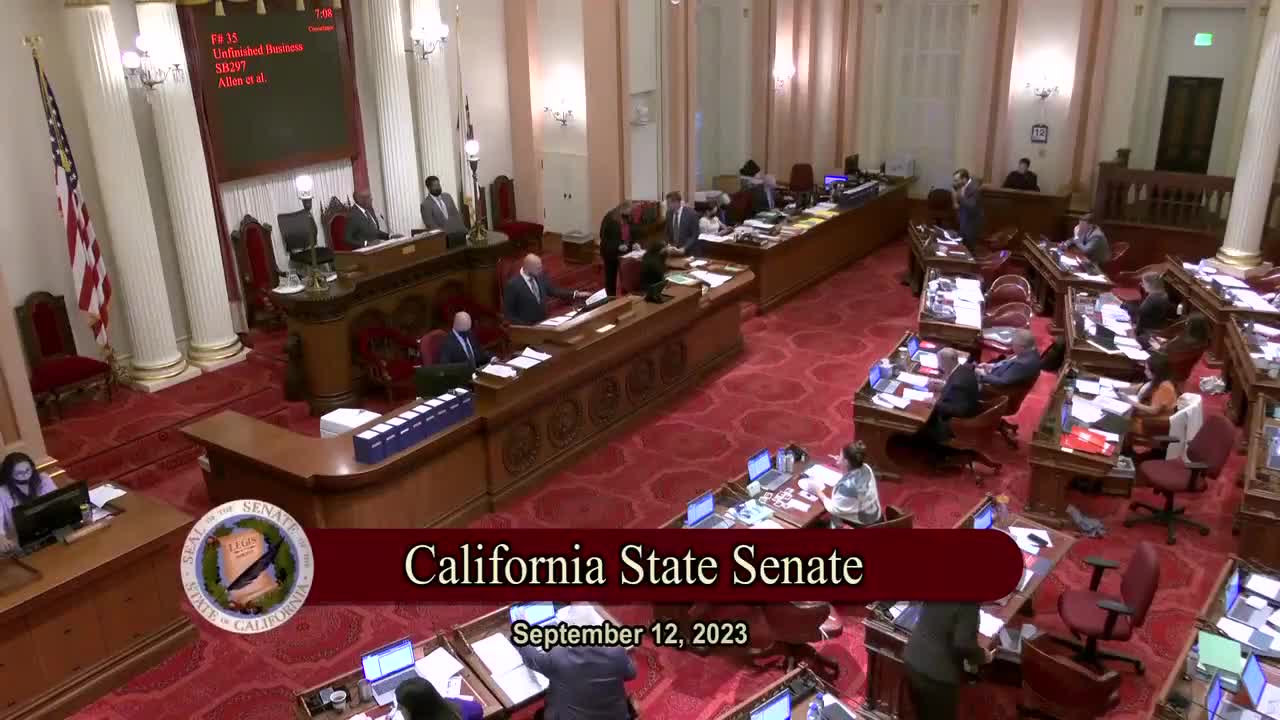 2MIN
Senate Floor
 2MIN
Assembly Floor
 37SEC
Assembly Floor
 2MIN
Assembly Standing Committee on Appropriations
 3MIN
Assembly Standing Committee on Utilities and Energy
 2MIN
Senate Floor
 7MIN
Senate Standing Committee on Energy, Utilities and Communications
Bill Author

Bill Co-Author(s):
