SB 372: Department of Consumer Affairs: licensee and registrant records: name and gender changes.
- Session Year: 2023-2024
- House: Senate
- Latest Version Date: 2023-09-23
Current Status:
Passed
(2023-09-23: Chaptered by Secretary of State. Chapter 225, Statutes of 2023.)
Introduced
In Committee
First Chamber
In Committee
Second Chamber
Enacted
Existing law establishes in the Business, Consumer Services, and Housing Agency the Department of Consumer Affairs. Existing law establishes various boards within the department for the licensure, regulation, and discipline of various professions and vocations. Existing law defines board for purposes of the Business and Professions Code to include bureau, commission, committee, department, division, examining committee, program, and agency, unless otherwise expressly provided.
This bill would require a board within the Department of Consumer Affairs to update a licensees or registrants license or registration by replacing references to the former name or gender on the license or registration, as specified, if the board receives documentation, as described, from the licensee or registrant demonstrating that the licensee or registrants legal name or gender has been changed. If the board operates an online license verification system, the bill would require the board to replace references to the licensees or registrants former name or gender with the individuals current name or gender, as applicable, on the publicly viewable information displayed on the internet. The bill would prohibit a board from publishing the licensees or registrants former name or gender online. Instead, the bill would require the board to post an online statement directing the public to contact the board for more information. For specified licensees or registrants, the board would be prohibited from posting enforcement records online, but would be required to post an online statement stating that the individual was previously subject to an enforcement action and directing the public to contact the board, as prescribed.
This bill would provide that all records related to a request to update an individuals license or registration under these provisions are confidential and not subject to public inspection or disclosure. The bill would require the board, if requested by a licensee or registrant, to reissue any license created by the board and conferred upon the licensee or registrant. The bill would prohibit a board from charging a higher fee for reissuing a license with an updated legal name or gender than the fee it charges for reissuing a license with other updated information.
Existing constitutional provisions require that a statute that limits the right of access to the meetings of public bodies or the writings of public officials and agencies be adopted with findings demonstrating the interest protected by the limitation and the need for protecting that interest.
This bill would make legislative findings to that effect.
Existing law establishes in the Business, Consumer Services, and Housing Agency the Department of Consumer Affairs. Existing law establishes various boards within the department for the licensure, regulation, and discipline of various professions and vocations. Existing law defines board for purposes of the Business and Professions Code to include bureau, commission, committee, department, division, examining committee, program, and agency, unless otherwise expressly provided.
This bill would require a board within the Department of Consumer Affairs to update a licensees or registrants license by replacing references to the former name or gender on the license or registration, as specified, if the board receives documentation, as described, from the licensee or registrant demonstrating that the licensee or registrants legal name or gender has been changed. If the board operates an online license verification system, the bill would require the board to replace references to the licensees or registrants former name or gender with the individuals current name or gender, as applicable, on the publicly viewable information displayed on the internet. The bill would prohibit a board from publishing information relating to the licensees or registrants former name or gender online. Instead, the bill would require the board to post an online statement directing the public to contact the board for more information. For specified licensees or registrants, the board would be prohibited from posting enforcement records online, but would be required to post an online statement stating that the individual was previously subject to an enforcement action and directing the public to contact the board, as prescribed. The bill would provide that all records related to a request to update an individuals license or registration under these provisions are confidential and not subject to public inspection or disclosure. The bill would require the board, if requested by a licensee or registrant, to reissue any license created by the board and conferred upon the licensee or registrant. The bill would prohibit a board from charging a higher fee for reissuing a license with an updated legal name or gender than the fee it charges for reissuing a license with other updated information.
Existing constitutional provisions require that a statute that limits the right of access to the meetings of public bodies or the writings of public officials and agencies be adopted with findings demonstrating the interest protected by the limitation and the need for protecting that interest.
This bill would make legislative findings to that effect.
Existing law establishes in the Business, Consumer Services, and Housing Agency the Department of Consumer Affairs. Existing law establishes various boards within the department for the licensure, regulation, and discipline of various professions and vocations. Existing law defines board for purposes of the Business and Professions Code to include bureau, commission, committee, department, division, examining committee, program, and agency, unless otherwise expressly provided.
This bill would require a board to update a licensees or registrants license by replacing references to the former name or gender on the license or registration, as specified, if the board receives documentation, as described, from the licensee or registrant demonstrating that the licensee or registrants legal name or gender has been changed. If the board operates an online license verification system, the bill would require the board to replace references to the licensees or registrants former name or with the individuals current name or gender, as applicable, on the publicly viewable information displayed on the internet. The bill would prohibit a board from publishing information relating to the licensees or registrants former name or gender online. Instead, the bill would require the board to post an online statement directing the public to contact the board for more information. For specified licensees or registrants, the board would be prohibited from posting enforcement records online, but would be required to direct post an online statement stating that the individual was previously subject to an enforcement action and directing the public to contact the board, as prescribed. The bill would provide that all records related to a request to update an individuals license or registration under these provisions are confidential and not subject to public inspection or disclosure. The bill would require the board, if requested by a licensee or registrant, to reissue any license created by the board and conferred upon the licensee or registrant. The bill would prohibit a board from charging a higher fee for reissuing a license with an updated legal name or gender than the fee it charges for reissuing a license with other updated information.
Existing constitutional provisions require that a statute that limits the right of access to the meetings of public bodies or the writings of public officials and agencies be adopted with findings demonstrating the interest protected by the limitation and the need for protecting that interest.
This bill would make legislative findings to that effect.
Existing law establishes in the Business, Consumer Services, and Housing Agency the Department of Consumer Affairs. Existing law establishes various boards within the department for the licensure, regulation, and discipline of various professions and vocations. Existing law defines board for purposes of the Business and Professions Code to include bureau, commission, committee, department, division, examining committee, program, and agency, unless otherwise expressly provided.
This bill would require a board to update a licensees or registrants records, including records contained within an online license verification system, to include the licensees or registrants updated legal name or gender license by replacing references to the former name or gender on the license or registration, as specified, if the board receives government-issued documentation, as described, from the licensee or registrant demonstrating that the licensee or registrants legal name or gender has been changed. The If the board operates an online license verification system, the bill would require the board to remove replace references to the licensees or registrants former name or gender from its online license verification system and treat this information as confidential. The with the individuals current name or gender, as applicable, on the publicly viewable information displayed on the internet. The bill would prohibit a board from publishing information relating to the licensees or registrants former name or gender online. For specified licensees or registrants, the board would be required to establish a process to allow a person to request and obtain a licensees or registrants current name or prohibited from posting enforcement action record linked to a former name, records online, but would be required to direct the public to contact the board, as prescribed. The bill would require the board, if requested by a licensee or registrant, to reissue specified documents any license created by the board and conferred upon, or issued to, upon the licensee or registrant with their updated legal name or gender. registrant. The bill would prohibit a board from charging a higher fee for reissuing a document license with a corrected or an updated legal name or gender than the fee it charges for reissuing a document license with other corrected or updated information.
Existing constitutional provisions require that a statute that limits the right of access to the meetings of public bodies or the writings of public officials and agencies be adopted with findings demonstrating the interest protected by the limitation and the need for protecting that interest.
This bill would make legislative findings to that effect.
Existing law establishes in the Business, Consumer Services, and Housing Agency the Department of Consumer Affairs. Existing law establishes various boards within the department for the licensure, regulation, and discipline of various professions and vocations. Existing law defines board for purposes of the Business and Professions Code to include bureau, commission, committee, department, division, examining committee, program, and agency, unless otherwise expressly provided.
This bill would require a board to update a licensees or registrants records, including records contained within an online license verification system, to include the licensees or registrants updated legal name or gender if the board receives government-issued documentation, as described, from the licensee or registrant demonstrating that the licensee or registrants legal name or gender has been changed. The bill would require the board to remove the licensees or registrants former name or gender from its online license verification system and treat this information as confidential. The board would be required to establish a process to allow a person to request and obtain this information, a licensees or registrants current name or enforcement action record linked to a former name, as prescribed. The bill would require the board, if requested by a licensee or registrant, to reissue specified documents conferred upon, or issued to, the licensee or registrant with their updated legal name or gender. The bill would prohibit a board from charging a higher fee for reissuing a document with a corrected or updated legal name or gender than the fee it charges for reissuing a document with other corrected or updated information.
Existing constitutional provisions require that a statute that limits the right of access to the meetings of public bodies or the writings of public officials and agencies be adopted with findings demonstrating the interest protected by the limitation and the need for protecting that interest.
This bill would make legislative findings to that effect.
Existing law establishes in the Business, Consumer Services, and Housing Agency the Department of Consumer Affairs. Under existing law, the department is composed of various boards, bureaus, committees, and commissions. Existing law establishes various boards within the department for the licensure, regulation, and discipline of various professions and vocations. Existing law defines board for purposes of the Business and Professions Code to include bureau, commission, committee, department, division, examining committee, program, and agency, unless otherwise expressly provided.
This bill would require a board to update a licensee licensees or registrants records, including records contained within an online license verification system, to include the licensee licensees or registrants updated legal name or gender if the board receives government-issued documentation, as described, from the licensee or registrant demonstrating that the licensee or registrants legal name or gender has been changed. The bill would require the board to remove the licensees or registrants former name or gender from its online license verification system and treat this information as confidential. The board would be required to establish a process to allow a person to request and obtain this information, as prescribed. The bill would require the board, if requested by a licensee or registrant, to reissue specified documents conferred upon, or issued to, the licensee or registrant with their updated legal name or gender. The bill would prohibit a board from charging a higher fee for reissuing a document with a corrected or updated legal name or gender than the fee it charges for reissuing a document with other corrected or updated information.
Existing constitutional provisions require that a statute that limits the right of access to the meetings of public bodies or the writings of public officials and agencies be adopted with findings demonstrating the interest protected by the limitation and the need for protecting that interest.
This bill would make legislative findings to that effect.
Existing law establishes in the Business, Consumer Services, and Housing Agency the Department of Consumer Affairs. Under existing law, the department is composed of various boards, bureaus, committees, and commissions. Existing law establishes various boards within the department for the licensure, regulation, and discipline of various professions and vocations. Existing law defines board for purposes of the Business and Professions Code to include bureau, commission, committee, department, division, examining committee, program, and agency, unless otherwise expressly provided.
This bill would require a board to update a licensee or registrants records, including records contained within an online license verification system, to include the licensee or registrants updated legal name or gender if the board receives government-issued documentation, as described, from the licensee or registrant demonstrating that the licensee or registrants legal name or gender has been changed. The bill would require the board, if requested by a licensee or registrant, to reissue specified documents conferred upon, or issued to, the licensee or registrant with their updated legal name or gender. The bill would prohibit a board from charging a higher fee for reissuing a document with a corrected or updated legal name or gender than the fee it charges for reissuing a document with other corrected or updated information.
(a)(1)Notwithstanding any other law, if a board within the Department of Consumer Affairs receives government-issued documentation, as described in subdivision (b), from a licensee or registrant demonstrating that the licensees or registrants legal name or gender has been changed, the board, upon request by the licensee or registrant, shall update the individuals license or registration by replacing references to the former name or gender on the license or registration, as applicable, with references to the current name or gender.
(2)(A)If the board operates an online license verification system, upon request by a licensee or registrant whose name or gender was updated pursuant to paragraph (1), the board shall replace references to the licensees or registrants former name or gender with the individuals current name or gender, as applicable, on the publicly viewable information displayed on the internet about the licensee or registrant. The licensees or registrants former name or gender, as applicable, shall not be published online.
(B)Notwithstanding any other law, for licensees or registrants subject to subparagraph (A) who were previously subject to an enforcement action referencing the individuals former name or gender, as applicable, the board shall not post enforcement records online, but shall instead post online a statement stating that the individual previously was subject to enforcement action and directing the public to contact the board for more information about the licensees or registrants prior enforcement action. The board shall ensure compliance with the California Public Records Act (Division 10 (commencing with Section 7920.000) of Title 1 of the Government Code) in implementing this section, including, but not limited to, responding to a request for records within 10 days from receipt of the request, as specified in Section 7922.535 of the Government Code.
(C)If a public search of the online license verification system is performed using a licensees or registrants former name that was replaced pursuant to subparagraph (A), the board shall post an online statement directing the public to contact the board for more information about the licensee or registrant.
(3)If requested by the licensee or registrant, the board shall reissue the license created by the board and conferred upon the licensee or registrant by the board. A board shall not charge a higher fee for reissuing a document with an updated legal name or gender than the fee it regularly charges for reissuing a document with other updated information.
(b)(1)The documentation identified in either of the following is required to demonstrate a legal name change of a licensee or registrant:
(A)A certified court order issued pursuant to a proceeding authorized by subdivision (b) of Section 1277 of the Code of Civil Procedure and a copy of the certificate issued under the Secretary of States Safe at Home program authorized by Chapter 3.1 (commencing with Section 6205) of Division 7 of Title 1 of the Government Code reflecting the licensees or registrants updated name.
(B)A certified court order issued pursuant to a proceeding authorized by Section 1277.5 of the Code of Civil Procedure or Article 7 (commencing with Section 103425) of Chapter 11 of Part 1 of Division 102 of the Health and Safety Code reflecting the licensees or registrants updated name.
(2)Any of the following documents are sufficient to demonstrate a gender change of a licensee or registrant:
(A)State-issued drivers license or identification card.
(B)Birth certificate.
(C)Passport.
(D)Social security card.
(E)Court order indicating a gender change from a court of this state, another state, the District of Columbia, any territory of the United States, or any foreign court.
(c)Notwithstanding any other law, all records related to a request by a licensee or registrant for a board to update the individuals license or registration pursuant to this section, including, but not limited to, all documentation described in subdivision (b), are confidential and not subject to public inspection or disclosure.
SEC. 2.The Legislature finds and declares that Section 1 of this act, which adds Section 27.5 to the Business and Professions Code, imposes a limitation on the publics right of access to the meetings of public bodies or the writings of public officials and agencies within the meaning of Section 3 of Article I of the California Constitution. Pursuant to that constitutional provision, the Legislature makes the following findings to demonstrate the interest protected by this limitation and the need for protecting that interest:
In order to protect the privacy rights and safety of individuals, it is necessary that this act limit the publics right of access to that information.
(a)(1)Notwithstanding any other law, if a board within the Department of Consumer Affairs receives government-issued documentation, as described in subdivision (b), from a licensee or registrant demonstrating that the licensees or registrants legal name or gender has been changed, the board, upon request by the licensee or registrant, shall update the individuals license or registration by replacing references to the former name or gender on the license or registration, as applicable, with references to the current name or gender.
(2)(A)If the board operates an online license verification system, upon request by a licensee or registrant whose name or gender was updated pursuant to paragraph (1), the board shall replace references to the licensees or registrants former name or gender with the individuals current name or gender, as applicable, on the publicly viewable information displayed on the internet about the licensee or registrant. The licensees or registrants former name or gender, as applicable, shall not be published online.
(B)Notwithstanding any other law, for licensees or registrants subject to subparagraph (A) who were previously subject to an enforcement action referencing the individuals former name or gender, as applicable, the board shall not post enforcement records online, but shall instead post online a statement stating that the individual previously was subject to enforcement action and directing the public to contact the board for more information about the licensees or registrants prior enforcement action. The board shall ensure compliance with the California Public Records Act (Division 10 (commencing with Section 7920.000) of Title 1 of the Government Code) in implementing this section, including, but not limited to, responding to a request for records within 10 days from receipt of the request, as specified in Section 7922.535 of the Government Code.
(C)If a public search of the online license verification system is performed using a licensees or registrants former name that was replaced pursuant to subparagraph (A), the board shall post an online statement directing the public to contact the board for more information about the licensee or registrant.
(3)If requested by the licensee or registrant, the board shall reissue the license created by the board and conferred upon the licensee or registrant by the board. A board shall not charge a higher fee for reissuing a document with an updated legal name or gender than the fee it regularly charges for reissuing a document with other updated information.
(b)(1)The documentation identified in either of the following is required to demonstrate a legal name change of a licensee or registrant:
(A)A certified court order issued pursuant to a proceeding authorized by subdivision (b) of Section 1277 of the Code of Civil Procedure and a copy of the certificate issued under the Secretary of States Safe at Home program authorized by Chapter 3.1 (commencing with Section 6205) of Division 7 of Title 1 of the Government Code reflecting the licensees or registrants updated name.
(B)A certified court order issued pursuant to a proceeding authorized by Section 1277.5 of the Code of Civil Procedure or Article 7 (commencing with Section 103425) of Chapter 11 of Part 1 of Division 102 of the Health and Safety Code reflecting the licensees or registrants updated name.
(2)Any of the following documents is are sufficient to demonstrate a gender change of a licensee or registrant:
(A)State-issued drivers license or identification card.
(B)Birth certificate.
(C)Passport.
(D)Social security card.
(E)Court order indicating a gender change from a court of this state, another state, the District of Columbia, any territory of the United States, or any foreign court.
(c)Notwithstanding any other law, all records related to a request by a licensee or registrant for a board to update the individuals license or registration pursuant to this section, including, but not limited to, all documentation described in subdivision (b), are confidential and not subject to public inspection or disclosure.
SEC. 2.The Legislature finds and declares that Section 1 of this act, which adds Section 27.5 to the Business and Professions Code, imposes a limitation on the publics right of access to the meetings of public bodies or the writings of public officials and agencies within the meaning of Section 3 of Article I of the California Constitution. Pursuant to that constitutional provision, the Legislature makes the following findings to demonstrate the interest protected by this limitation and the need for protecting that interest:
In order to protect the privacy rights and safety of individuals, it is necessary that this act limit the publics right of access to that information.
(a)(1)Notwithstanding any other law, if a board receives government-issued documentation, as described in subdivision (b), from a licensee or registrant demonstrating that the licensees or registrants legal name or gender has been changed, the board, upon request by the licensee or registrant, shall update the individuals license or registration by replacing references to the former name or gender on the license or registration, as applicable, with references to the current name or gender.
(2)(A)If the board operates an online license verification system, upon request by a licensee or registrant whose name or gender was updated pursuant to paragraph (1), the board shall replace references to the licensees or registrants former name or gender with the individuals current name or gender, as applicable, on the publicly viewable information displayed on the internet about the licensee or registrant. The licensees or registrants former name or gender, as applicable, shall not be published online.
(B)Notwithstanding any other law, for licensees or registrants subject to subparagraph (A) who were previously subject to an enforcement action, action referencing the individuals former name or gender, as applicable, the board shall not post enforcement records online, but shall instead post online a statement stating that the individual previously was subject to enforcement action and directing the public to contact the board for more information about the licensees or registrants prior enforcement action. The board shall ensure compliance with the California Public Records Act (Division 10 (commencing with Section 7920.000) of Title 1 of the Government Code) in implementing this section, including, but not limited to, responding to the a request for records within 10 days from receipt of the request, as specified in Section 7522.535 7922.535 of the Government Code.
(C)If a public search of the online license verification system is performed using a licensees or registrants former name that was replaced pursuant to subparagraph (A), the board shall post an online statement directing the public to contact the board for more information about the licensee or registrant.
(3)If requested by the licensee or registrant, the board shall reissue the license created by the board and conferred upon the licensee or registrant by the board. A board shall not charge a higher fee for reissuing a document with an updated legal name or gender than the fee it regularly charges for reissuing a document with other updated information.
(b)(1)The documentation identified in either of the following is required to demonstrate a legal name change of a licensee or registrant:
(A)A certified court order issued pursuant to a proceeding authorized by subdivision (b) of Section 1277 of the Code of Civil Procedure and a copy of the certificate issued under the Secretary of States Safe at Home program authorized by Chapter 3.1 (commencing with Section 6205) of Division 7 of Title 1 of the Government Code reflecting the licensees or registrants updated name.
(B)A certified court order issued pursuant to a proceeding authorized by Section 1277.5 of the Code of Civil Procedure or Article 7 (commencing with Section 103425) of Chapter 11 of Part 1 of Division 102 of the Health and Safety Code reflecting the licensees or registrants updated name.
(2)Any of the following documents is sufficient to demonstrate a gender change of a licensee or registrant:
(A)State-issued drivers license or identification card.
(B)Birth certificate.
(C)Passport.
(D)Social security card.
(E)Court order indicating a gender change. change from a court of this state, another state, the District of Columbia, any territory of the United States, or any foreign court.
(c)Notwithstanding any other law, all records related to a request by a licensee or registrant for a board to update the individuals license or registration pursuant to this section, including, but not limited to, all documentation described in subdivision (b), are confidential and not subject to public inspection or disclosure.
SEC. 2.The Legislature finds and declares that Section 1 of this act, which adds Section 27.5 to the Business and Professions Code, imposes a limitation on the publics right of access to the meetings of public bodies or the writings of public officials and agencies within the meaning of Section 3 of Article I of the California Constitution. Pursuant to that constitutional provision, the Legislature makes the following findings to demonstrate the interest protected by this limitation and the need for protecting that interest:
In order to protect the privacy rights and safety of individuals, it is necessary that this act limit the publics right of access to that information.
(a)(1)Notwithstanding any other law, if a board receives government-issued documentation, as described in subdivision (b), from a licensee or registrant demonstrating that the licensees or registrants legal name or gender has been changed, the board board, upon request by the licensee or registrant, shall update their records, including any records contained within an online license verification system, to include the updated legal name or gender. the individuals license or registration by replacing references to the former name or gender on the license or registration, as applicable, with references to the current name or gender.
(2)(A)If the board operates an online license verification system, it shall remove the licensees or registrants former name upon receipt of government-issued documentation, as described in subdivision (b). upon request by a licensee or registrant whose name or gender was updated pursuant to paragraph (1), the board shall replace references to the licensees or registrants former name or gender with the individuals current name or gender, as applicable, on the publicly viewable information displayed on the internet about the licensee or registrant. The licensees or registrants former name and gender shall be deemed confidential. or gender, as applicable, shall not be published online.
(B)The board shall establish a process for providing a licensees or registrants current name or enforcement action record linked to a former name upon receipt of a request that is related to an enforcement action against the licensee or registrant or a search of a licensee by a previous name. The process shall ensure that the request is completed within 10 business days. This subparagraph shall be implemented in compliance with the California Public Records Act (Division 10 (commencing with Section 7920.000) of Title 1 of the Government Code).(C)In establishing a process to provide a licensees or registrants former name and gender, the board shall consider respect for the licensees or registrants privacy and safety.(B)Notwithstanding any other law, for licensees or registrants subject to subparagraph (A) who were previously subject to an enforcement action, the board shall not post enforcement records online, but shall instead post online a statement directing the public to contact the board for more information about the licensees or registrants prior enforcement action. The board shall ensure compliance with the California Public Records Act (Division 10 (commencing with Section 7920.000) of Title 1 of the Government Code) in implementing this section, including, but not limited to, responding to the request within 10 days from receipt of the request, as specified in Section 7522.535 of the Government Code.
(3)If requested by the licensee or registrant, the board shall reissue any documents conferred upon the licensee or registrant with the licensees or registrants updated legal name or gender. license created by the board and conferred upon the licensee or registrant by the board. A board shall not charge a higher fee for reissuing a document with a corrected or an updated legal name or gender than the fee it regularly charges for reissuing a document with other corrected or updated information.
(b)(1)The documentation of a licensee or registrant identified in either of the following is required to demonstrate a legal name change of a licensee or registrant:
(A)A certified court order issued pursuant to a proceeding authorized by subdivision (b) of Section 1277 of the Code of Civil Procedure and a copy of the certificate issued under the Secretary of States Safe at Home program authorized by Chapter 3.1 (commencing with Section 6205) of Division 7 of Title 1 of the Government Code reflecting the licensees or registrants updated name.
(B)A certified court order issued pursuant to a proceeding authorized by Section 1277.5 of the Code of Civil Procedure or Article 7 (commencing with Section 103425) of Chapter 11 of Part 1 of Division 102 of the Health and Safety Code reflecting the licensees or registrants updated name.
(2)Any of the following documents is sufficient to demonstrate a legal name or gender change includes, but is not limited to, any of the following: of a licensee or registrant:
(1)(A)State-issued drivers license or identification card.
(2)(B)Birth certificate.
(3)(C)Passport.
(4)(D)Social security card.
(5)(E)Court order indicating a name change or a gender change.
(c)This section does not require a board to modify records that the licensee or registrant has not requested for modification or reissuance.SEC. 2.The Legislature finds and declares that Section 1 of this act, which adds Section 27.5 to the Business and Professions Code, imposes a limitation on the publics right of access to the meetings of public bodies or the writings of public officials and agencies within the meaning of Section 3 of Article I of the California Constitution. Pursuant to that constitutional provision, the Legislature makes the following findings to demonstrate the interest protected by this limitation and the need for protecting that interest:
In order to protect the privacy rights and safety of individuals, it is necessary that this act limit the publics right of access to that information.
REVISIONS: HeadingLine 3.(a)(1)Notwithstanding any other law, if a board receives government-issued documentation, as described in subdivision (b), from a licensee or registrant demonstrating that the licensees or registrants legal name or gender has been changed, the board shall update their records, including any records contained within an online license verification system, to include the updated legal name or gender.
(2)(A)If the board operates an online license verification system, it shall remove the licensees or registrants former name upon receipt of government-issued documentation, as described in subdivision (b). The licensees or registrants former name and gender shall be deemed confidential.
(B)The board shall establish a process for providing a licensees or registrants former name and gender upon receipt of a request that is related to a complaint against the licensee or registrant. current name or enforcement action record linked to a former name upon receipt of a request that is related to an enforcement action against the licensee or registrant or a search of a licensee by a previous name. The process shall ensure that the request is completed within 10 business days. This subparagraph shall be implemented in compliance with the California Public Records Act (Division 10 (commencing with Section 7920.000) of Title 1 of the Government Code).
(C)In establishing a process to provide a licensees or registrants former name and gender, the board shall consider respect for the licensees or registrants privacy and safety.
(3)If requested by the licensee or registrant, the board shall reissue any documents conferred upon the licensee or registrant with the licensees or registrants updated legal name or gender. A board shall not charge a higher fee for reissuing a document with a corrected or updated legal name or gender than the fee it charges for reissuing a document with other corrected or updated information.
(b) The documentation of a licensee or registrant sufficient to demonstrate a legal name or gender change includes, but is not limited to, any of the following:
(1)State-issued drivers license or identification card.
(2)Birth certificate.
(3)Passport.
(4)Social security card.
(5)Court order indicating a name change or a gender change.
(c)This section does not require a board to modify records that the licensee or registrant has not requested for modification or reissuance.
SEC. 2.The Legislature finds and declares that Section 1 of this act, which adds Section 27.5 to the Business and Professions Code, imposes a limitation on the publics right of access to the meetings of public bodies or the writings of public officials and agencies within the meaning of Section 3 of Article I of the California Constitution. Pursuant to that constitutional provision, the Legislature makes the following findings to demonstrate the interest protected by this limitation and the need for protecting that interest:
In order to protect the privacy rights and safety of individuals, it is necessary that this act limit the publics right of access to that information.
(a)(1)Notwithstanding any other law, if a board receives government-issued documentation, as described in subdivision (b), from a licensee or registrant demonstrating that the licensee licensees or registrants legal name or gender has been changed, the board shall update their records, including any records contained within an online license verification system, to include the updated legal name or gender. If requested by the licensee or registrant, the board shall reissue any documents conferred upon the licensee or registrant with the licensee or registrants updated legal name or gender.
(2)(A)If the board operates an online license verification system, it shall remove the licensees or registrants former name upon receipt of government-issued documentation, as described in subdivision (b). The licensees or registrants former name and gender shall be deemed confidential.
(B)The board shall establish a process for providing a licensees or registrants former name and gender upon receipt of a request that is related to a complaint against the licensee or registrant.
(C)In establishing a process to provide a licensees or registrants former name and gender, the board shall consider respect for the licensees or registrants privacy and safety.
(2)(3)If requested by the licensee or registrant, the board shall reissue any documents conferred upon the licensee or registrant with the licensees or registrants updated legal name or gender. A board shall not charge a higher fee for reissuing a document with a corrected or updated legal name or gender than the fee it charges for reissuing a document with other corrected or updated information.
(b) The documentation of a licensee or registrant sufficient to demonstrate a legal name or gender change includes, but is not limited to, any of the following:
(1)State-issued drivers license or identification card.
(2)Birth certificate.
(3)Passport.
(4)Social security card.
(5)Court order indicating a name change or a gender change.
(c)This section does not require a board to modify records that the licensee or registrant has not requested for modification or reissuance.
SEC. 2.The Legislature finds and declares that Section 1 of this act, which adds Section 27.5 to the Business and Professions Code, imposes a limitation on the publics right of access to the meetings of public bodies or the writings of public officials and agencies within the meaning of Section 3 of Article I of the California Constitution. Pursuant to that constitutional provision, the Legislature makes the following findings to demonstrate the interest protected by this limitation and the need for protecting that interest:
In order to protect the privacy rights and safety of individuals, it is necessary that this act limit the publics right of access to that information.
(a)(1)Notwithstanding any other law, if a board receives government-issued documentation, as described in subdivision (b), from a licensee or registrant demonstrating that the licensee or registrants legal name or gender has been changed, the board shall update their records, including any records contained within an online license verification system, to include the updated legal name or gender. If requested by the licensee or registrant, the board shall reissue any documents conferred upon the licensee or registrant with the licensee or registrants updated legal name or gender.
(2)A board shall not charge a higher fee for reissuing a document with a corrected or updated legal name or gender than the fee it charges for reissuing a document with other corrected or updated information.
(b) The documentation of a licensee or registrant sufficient to demonstrate a legal name or gender change includes, but is not limited to, any of the following:
(1)State-issued drivers license or identification card.
(2)Birth certificate.
(3)Passport.
(4)Social security card.
(5)Court order indicating a name change or a gender change.
(c)This section does not require a board to modify records that the licensee or registrant has not requested for modification or reissuance.
|
Date
|
Status
|
|---|---|
| Sep 23, 2023 | Chaptered by Secretary of State. Chapter 225, Statutes of 2023. |
| Sep 23, 2023 | Approved by the Governor. |
| Sep 11, 2023 | Enrolled and presented to the Governor at 3 p.m. |
| Sep 6, 2023 | Assembly amendments concurred in. (Ayes 36. Noes 4. Page 2422.) Ordered to engrossing and enrolling. |
| Sep 5, 2023 | In Senate. Concurrence in Assembly amendments pending. |
| Sep 5, 2023 | Read third time. Passed. (Ayes 63. Noes 5. Page 2929.) Ordered to the Senate. |
| Sep 1, 2023 | Ordered to third reading. |
| Sep 1, 2023 | Read third time and amended. |
| Aug 17, 2023 | Read second time. Ordered to third reading. |
| Aug 16, 2023 | From committee: Do pass. (Ayes 12. Noes 4.) (August 16). |
| Jun 28, 2023 | Read second time and amended. Re-referred to Com. on APPR. |
| Jun 27, 2023 | From committee: Do pass as amended and re-refer to Com. on APPR. (Ayes 8. Noes 1.) (June 27). |
| Jun 20, 2023 | From committee: Do pass and re-refer to Com. on JUD. (Ayes 13. Noes 0.) (June 20). Re-referred to Com. on JUD. |
| Jun 20, 2023 | Coauthors revised. |
| Jun 12, 2023 | From committee with author's amendments. Read second time and amended. Re-referred to Com. on B. & P. |
| May 26, 2023 | Referred to Coms. on B. & P. and JUD. |
| May 23, 2023 | In Assembly. Read first time. Held at Desk. |
| May 22, 2023 | Read third time. Passed. (Ayes 33. Noes 4. Page 1218.) Ordered to the Assembly. |
| May 18, 2023 | Read second time. Ordered to third reading. |
| May 18, 2023 | From committee: Do pass. (Ayes 5. Noes 2. Page 1168.) (May 18). |
| May 12, 2023 | Set for hearing May 18. |
| May 1, 2023 | May 1 hearing: Placed on APPR suspense file. |
| Apr 25, 2023 | Set for hearing May 1. |
| Apr 20, 2023 | Read second time and amended. Re-referred to Com. on APPR. |
| Apr 19, 2023 | From committee: Do pass as amended and re-refer to Com. on APPR. (Ayes 9. Noes 0. Page 799.) (April 18). |
| Mar 29, 2023 | Set for hearing April 18. |
| Mar 27, 2023 | From committee: Do pass and re-refer to Com. on JUD. (Ayes 8. Noes 2. Page 535.) (March 27). Re-referred to Com. on JUD. |
| Mar 20, 2023 | From committee with author's amendments. Read second time and amended. Re-referred to Com. on B., P. & E. D. |
| Mar 6, 2023 | Set for hearing March 27. |
| Feb 22, 2023 | Referred to Coms. on B., P. & E. D. and JUD. |
| Feb 10, 2023 | From printer. May be acted upon on or after March 12. |
| Feb 9, 2023 | Introduced. Read first time. To Com. on RLS. for assignment. To print. |
|
Date
|
Description
|
Location
|
Votes
|
|
|---|---|---|---|---|
| Sep 6, 2023 | Unfinished Business SB372 Menjivar et al. Concurrence | Senate Floor |
Passed |
|
| Sep 5, 2023 | SB 372 Menjivar Senate Third Reading By Zbur | Assembly Floor |
Passed |
|
| Aug 16, 2023 | Do pass. | Assembly Standing Committee on Appropriations |
Passed |
|
| Jun 27, 2023 | Do pass as amended and be re-referred to the Committee on [Appropriations] | Assembly Standing Committee on Judiciary |
Passed |
|
| Jun 20, 2023 | Do pass and be re-referred to the Committee on [Judiciary] | Assembly Standing Committee on Business and Professions |
Passed |
|
| May 22, 2023 | Senate 3rd Reading SB372 Menjivar et al. | Senate Floor |
Passed |
|
| May 18, 2023 | Do pass | Senate Standing Committee on Appropriations |
Passed |
|
| May 1, 2023 | Placed on suspense file | Senate Standing Committee on Appropriations |
Passed |
|
| Apr 18, 2023 | Do pass as amended, but first amend, and re-refer to the Committee on [Appropriations] | Senate Standing Committee on Judiciary |
Passed |
|
| Mar 27, 2023 | Do pass, but first be re-referred to the Committee on [Judiciary] | Senate Standing Committee on Business, Professions and Economic Development |
Passed |
This list shows positions taken on this bill by organizations on the date displayed, which is linked to the original source.
Positions by individuals are not included.
|
Organization
|
Position
|
Date
|
|---|---|---|
| AFSCME | ** Support | |
| Asian Americans for Community Involvement | ** Support | |
| Board of Behavioral Sciences | ** Support | |
| California Academy Of Family Physicians | ** Support | |
| California Access Coalition | ** Support | |
| California Association for Licensed Professional Clinical Counselors | ** Support | |
| California Association Of Marriage And Family Therapists | ** Support | |
| California Association of Social Rehabilitation Agencies | ** Support | |
| California Board of Psychology | ** Support | |
| California Consortium of Addiction Programs and Professionals | ** Support | |
| California Council Of Community Behavioral Health Agencies | ** Support | |
| California Dental Association | ** Support | |
| California Psychiatric Alliance | ** Support | |
| California Psychological Association | ** Support | |
| California State Association of Psychiatrists | ** Support | |
| California Transgender Advisory Council, | ** Support | |
| County Behavioral Health Directors Association of California | ** Support | |
| Department of Consumer Affairs, Speech-language Pathology and Audiology and Hearing Aid Dispensers Board | ** Against | |
| Equality California | ** Support | |
| Medical Board of California | ** Support | |
| National Association Of Social Workers, California Chapter | ** Support | |
| PathPoint | ** Support | |
| Physician Assistant Board | ** Against | |
| Psychiatric Physicians Alliance of California | ** Support | |
| Steinberg Institute | ** Support | |
| Sycamores | ** Support | |
| The Kennedy Forum | ** Support |
SENATE RULES COMMITTEE Office of Senate Floor Analyses (916) 651-1520 Fax: (916) 327-4478 | SB 372 |
UNFINISHED BUSINESS
Bill No: SB 372
Author: Menjivar (D), et al.
Amended: 9/1/23
Vote: 21
SENATE BUS., PROF. & ECON. DEV. COMMITTEE: 8-2, 3/27/23
AYES: Roth, Archuleta, Becker, Dodd, Eggman, Glazer, Smallwood-Cuevas, Wahab
NOES: Nguyen, Niello
NO VOTE RECORDED: Alvarado-Gil, Ashby, Wilk
SENATE JUDICIARY COMMITTEE: 9-0, 4/18/23
AYES: Umberg, Allen, Ashby, Caballero, Durazo, Laird, McGuire, Min, Wiener
NO VOTE RECORDED: Wilk, Niello
SENATE APPROPRIATIONS COMMITTEE: 5-2, 5/18/23
AYES: Portantino, Ashby, Bradford, Wahab, Wiener
NOES: Jones, Seyarto
SENATE FLOOR: 33-4, 5/22/23
AYES: Allen, Alvarado-Gil, Archuleta, Ashby, Atkins, Becker, Blakespear, Bradford, Caballero, Cortese, Dodd, Durazo, Eggman, Glazer, Gonzalez, Grove, Hurtado, Laird, Limón, McGuire, Menjivar, Min, Newman, Padilla, Portantino, Roth, Rubio, Skinner, Smallwood-Cuevas, Stern, Umberg, Wahab, Wiener
NOES: Jones, Nguyen, Niello, Seyarto
NO VOTE RECORDED: Dahle, Ochoa Bogh, Wilk
ASSEMBLY FLOOR: 63-5, 9/5/23 - See last page for vote
SUBJECT: Department of Consumer Affairs: licensee and registrant records: name and gender changes
SOURCE: California Association for Licensed Professional Clinical Counselors
California Association of Marriage and Family Therapists
California Association of Social Rehabilitation Agencies
California Council of Community Behavioral Health Agencies
California Psychological Association
California State Association of Psychiatrists
National Association of Social Workers – California Chapter
Psychiatric Physicians Alliance of California
DIGEST:
This bill requires a licensing entity within the Department of Consumer Affairs (DCA) to update licensee records if it receives government-issued documentation demonstrating that the individual’s legal name or gender has changed.
Assembly Amendments
made various conforming changes and clarifications related to accessing information about enforcement actions taken against a licensee.
ANALYSIS:
Existing law:
- Establishes various practice acts in the Business and Professions Code (BPC) governed by various licensing entities within DCA which provide for the licensing and regulation of various professions.
- Requires specified licensing entities to provide information regarding the status of all of the entity’s licensees on the internet according to the following:
- Information on license suspensions and revocations and other related enforcement action.
- Information may not include personal information, including home telephone number, date of birth, or social security number.
- A licensee’s address of record, however, a licensee may provide a post office box number or other alternate address, instead of the licensee’s home address, as the address of record. An entity may require a licensee, who has provided a post office box number or other alternative mailing address as the licensee’s address of record, to provide a physical business address or residence address that is only for the entity’s internal administrative use and not for disclosure as the licensee’s address of record or disclosure on the internet. (BPC § 27)
- Requires specified health practitioner licensing entities to disclose information about various enforcement actions taken against a licensee, including a former licensee, by the entity or another state or jurisdiction, to an inquiring member of the public. Requires these entities to also disclose information about civil judgments and settlements, as well as felony convictions. (BPC § 803.1)
- Requires various health practitioner licensing entities to provide information about licensees on probation and licensees practicing under probationary licenses, in plain view on the licensee’s profile page on the entity’s online information website.
- Outlines the specifications for a legal processing to for a change of name to conform to an individual’s gender identity and exempts this type of proceeding from any requirement for publication. (Code of Civil Procedure § 1277.5)
This bill:
- Requires a licensing entity within DCA to update licensee records, including any records contained in an online license verification system, if it receives government-issued documentation demonstrating that the individual’s legal name or gender has changed to include the updated legal name or gender.
- Specifies that if a licensing entity operates an online license verification system, it must remove the individual’s former name upon receipt of the government-issued documentation and specifies that the individual’s former name and gender are deemed confidential.
- Requires a licensing entity to establish a process, one that considers respect for the individual’s privacy and safety, to provide a licensee’s or registrant’s current name or enforcement action record linked to a former name upon receipt of a request that is related to an enforcement action against the licensee or registrant or a search of a licensee by a previous name.
- Requires a licensing entity to reissue any documents related to licensure with the individual’s updated legal name or gender and specifies that a higher fee cannot be charges for this effort than the fee associated with any other document reissuance.
- Clarifies that a licensing entity does not need to modify licensure records if the individual does not request a modification or reissuance of licensing documents.
- Specifies that this bill imposes a limitation on the public’s right of access to the meetings of public bodies or the writings of public officials and agencies within the meaning of Section 3 of Article I of the California Constitution. States that this is necessary in order to protect the privacy rights and safety of individuals, it is necessary that this act limit the public’s right of access to that information.
Background
Within the DCA are 36 entities, including 26 boards, seven bureaus, one committee, one program, and one commission (hereafter “boards” unless otherwise noted). Collectively, these boards regulate more than 100 types of businesses and 200 different industries and professions to include over 3.4 million licensees. As regulators, these boards perform two primary functions:
- Licensing—which entails ensuring only those who meet minimum standards are issued a license to practice, and
- Enforcement—which entails investigation of alleged violations of laws and/or regulations and taking disciplinary action, when appropriate.
DCA has been working since 2009 on replacing multiple antiquated standalone IT systems with one fully integrated system. A number of programs currently employ BreEZe to provide applicant tracking, licensing, renewals, enforcement, monitoring, cashiering, and data management capabilities. BreEZe is web-enabled and allows many licensees to complete and submit applications, renewals, and the necessary fees through the internet. The system also allows the public to file a complaint, search for a licensee, and subscribe to license status changes.
Licensing entities have processes, typically outlined in the entity’s practice act, that outline how an individual can change their name. Typically, once a licensing entity receives a name-change request, the licensing entity updates the online licensing search system to update the individual’s profile with the new name, however documentation related to the individual’s license under the prior name still remains a part of the profile and is searchable on the individual’s online profile. BreEZe allows a prior name to be designated private, which in turn eliminates the ability for online lookup of that particular name. The licensee information and documentation for both names, however, remains available to licensing entity staff and part of the internal materials maintained by that program.
Comments
According to the Author, “Deadnaming occurs when someone intentionally or unintentionally refers to a trans or non-binary person by the name they previously used. This practice can both negatively impact the mental health as well as the physical safety of all licensees under DCA who are identified by their deadname online. When transgender or non-binary people transition or come out, they may choose a new name to affirm their identity. Research has shown that referring to someone using their chosen name can reduce depressive symptoms and even suicidal ideation and behavior for transgender people. Transgender people experience high rates of discrimination, especially if they are known or believed to be trans. The National Center for Transgender Equality found in their 2015 US Trans Survey that 46% of people surveyed had been verbally harassed and 9% had been physically assaulted for their trans identity. Additionally, 30% reported experiencing discrimination in the workplace or with prospective employers. The UCLA Williams Institute found that trans adults have a suicidal ideation rate 12 times higher and a suicide attempt rate 18 times higher than the general population.”
While this bill outlines the requirement for certain action by DCA licensing entities that receive a request related to enforcement against the individual, it is not clear how members of the public would be able to automatically access information about enforcement actions taken against a licensee if any documentation including their prior name is no longer connected to the licensee in the public facing portion of the online licensing system. The Legislature has passed numerous measures aimed at shining a light on the actions of licensees to ensure the public is able to be informed about not only the qualifications and licensure of an individual, but also any discipline that the individual has faced throughout the course of their licensure. A member of the public may not know to search for an individual by name, to ensure they are in fact licensed, but then separately engage the individual’s licensing entity about prior disciplinary action taken against the same individual with an old name. It may be clearer for the individual to simply receive a new license number to ensure that their profile is publicly searchable and available only with their new name, and part of the licensing entity process that is developed for providing disciplinary action on the individual under an old name could include the entity’s steps, if statutorily necessary to clarify, to connect the two licenses at the licensing entity’s level.
FISCAL EFFECT: Appropriation: No Fiscal Com.: Yes Local: No
According to the Assembly Committee on Appropriations, DCA anticipates minor and absorbable costs to its boards and bureaus to update procedures, processes, forms, and manuals, and to adopt regulations to comply with the requirements in this bill. DCA indicates some programs expect a slight increase in requests relating to name or gender request, but the associated workload is considered minor and would be absorbed within current resources. Other programs have identified current processes already in place and, therefore, would experience no additional costs. DCA’s Office of Information Services estimates total costs of $21,000 to create and apply a global secondary status code and configure the DCA search to not display the previous names of record within the secondary status code. DCA indicates these costs are absorbable.
SUPPORT: (Verified 9/25/23)
California Council of Community Behavioral Health Agencies (co-source)
California Association for Licensed Professional Clinical Counselors (co-source)
California Association of Marriage and Family Therapists (co-source)
California Association of Social Rehabilitation Agencies (co-source)
California Psychological Association (co-source)
California State Association of Psychiatrists (co-source)
National Association of Social Workers, California Chapter (co-source)
AFSCME
Asian Americans for Community Involvement
Board of Behavioral Sciences
California Academy of Family Physicians
California Board of Psychology
California Consortium of Addiction Programs and Professionals
California Dental Association
California Transgender Advisory Council,
Medical Board of California
Pathpoint
Psychiatric Physicians Alliance of California
Steinberg Institute
Sycamores
The Kennedy Forum
OPPOSITION: (Verified 9/25/23)
Physician Assistant Board
ARGUMENTS IN SUPPORT: Supporters note that “By limiting what is shared on the website, the safety and privacy of transitioned persons and others who have changed licensed under DCA is protected. Victims of domestic violence that have legally changed their name may wish for their information to be kept confidential. Individuals that have transitioned may be harassed or discriminated against when their transition is shared on the Breeze system. Safeguards for consumers to ensure that a complaint can be filed under either name are included in the bill. If a disciplinary action was taken under the deadname, that information would remain linked to the license number and available for the public to review. Additionally, if a consumer would like to re-engage with a licensee, that would be possible as well.” Supporters highlight that this bill is similar to an existing process at the California State Bar.
ARGUMENTS IN OPPOSITION: The Physician Assistant Board notes that it is concerned about ensuring that consumers are adequately protected by maintaining access to a licensee’s discipline records. “The Board is concerned with the ease of access to the discipline records associated with the licensee if the Board is required to remove a former name from its online license verification system. This would interfere with the Board’s mandate of public protection, and for that reason the Board has taken an “oppose” position on this bill.”
ASSEMBLY FLOOR: 63-5, 9/5/23
AYES: Addis, Aguiar-Curry, Alvarez, Arambula, Bains, Bauer-Kahan, Bennett, Berman, Boerner, Bonta, Bryan, Calderon, Juan Carrillo, Wendy Carrillo, Cervantes, Connolly, Mike Fong, Friedman, Gabriel, Garcia, Gipson, Grayson, Haney, Hart, Holden, Irwin, Jackson, Jones-Sawyer, Kalra, Lee, Low, Lowenthal, Maienschein, McKinnor, Muratsuchi, Stephanie Nguyen, Ortega, Pacheco, Papan, Pellerin, Petrie-Norris, Quirk-Silva, Ramos, Rendon, Reyes, Luz Rivas, Rodriguez, Blanca Rubio, Santiago, Schiavo, Soria, Ting, Valencia, Villapudua, Waldron, Wallis, Ward, Weber, Wicks, Wilson, Wood, Zbur, Robert Rivas
NOES: Megan Dahle, Dixon, Gallagher, Mathis, Sanchez
NO VOTE RECORDED: Alanis, Chen, Davies, Essayli, Flora, Vince Fong, Hoover, Lackey, McCarty, Jim Patterson, Joe Patterson, Ta
Prepared by: Sarah Mason / B., P. & E.D. /
9/5/23 17:19:05
**** END ****
SENATE THIRD READING
STR Bill Id:SB 372
Author:(Menjivar)
As Amended Ver:September 1, 2023
Majority vote
SUMMARY
Requires a board under the Department of Consumer Affairs (DCA) to replace references to a licensee's former name or gender on their license and on any website upon request when the licensee's name has been changed due to a court-ordered change in gender or under circumstances that resulted in participation in state's address confidentiality program.
Major Provisions
- Requires a board within the Department of Consumer Affairs to update references to a licensee's former name or gender on their license upon a request from a licensee who provides documentation demonstrating that their name and/or gender was legally changed under specified circumstances.
- Additionally requires a board that operates an online license verification system to replace references to a licensee's former name or gender with the individual's current name or gender on the publicly viewable information displayed on the internet about the licensee and prohibits the licensee's former name or gender from being published online.
- Provides that a licensee qualifies for the above actions by a board if the licensee provides government-issued documentation demonstrating that they legally changed their name either as part of a court-ordered change in gender or under circumstances that resulted in their participation in the Secretary of State's Safe at Home address confidentiality program.
- Specifies the types of documents that are sufficient to demonstrate a gender change.
- Prohibits a board from publishing enforcement records for an individual whose name was changed under the above circumstances, but requires that the board post a statement that the individual previously was subject to enforcement action and that the public should contact the board for more information about the licensee's enforcement history.
- Requires boards to ensure compliance with the PRA in implementing the above requirement, including by responding to a request within 10 days of receipt.
- Requires a board to reissue a license created by the board and conferred upon the licensee upon request, and prohibits a board from charging a higher fee for reissuing that document that it ordinarily charges for reissuing documents with other updated information.
- Finds and declares that the bill's imposition of a limitation on the public's right of access to the meetings of public bodies or the writings of public officials and agencies is necessary in order to protect the privacy rights and safety of individuals.
- Expressly provides that notwithstanding any other law, all records related to a request by a licensee or registrant for a board to update the individual's license or registration, including, but not limited to, all documentation relating to their name change, are confidential and not subject to public inspection or disclosure.
COMMENTS
Licensee Information Disclosure Requirements. Provisions of law generally applicable to entities under the DCA requires boards "provide on the internet information regarding the status of every license issued by that entity in accordance with the California Public Records Act … and the Information Practices Act." The statute specifically requires that the public information include "information on suspensions and revocations of licenses issued by the entity and other related enforcement action, including accusations filed pursuant to the Administrative Procedure Act … taken by the entity relative to persons, businesses, or facilities subject to licensure or regulation by the entity." Additional statutes provide for further requirements for individual boards within the DCA to post specified information about licensees on their websites.
Deadnaming. The term "deadnaming" refers to the act of using a transgender person's name assigned to them at birth, after they have transitioned and chosen a new name that aligns with their gender identity. Emerging research has demonstrated that the practice of deadnaming and misgendering can be detrimental to a transgender individual's mental health and physical safety by contributing to anxiety and psychological distress, triggering or exacerbating gender dysphoria, and damaging both the individual's identify affirmation and social acceptance. Studies by researchers have concluded that use of a transgender individual's chosen name reduces mental health risks such as depression, suicidal ideation, and suicidal behavior.
Recognition of a transgender person's identify on government documentation is both socially and legally significant. In 2013, then-Assemblymember Toni Atkins authored legislation that created an administrative procedure for a transgender person to amend the gender and name on their birth certificate without first obtaining a court order. In 2017, Senators Toni Atkins and Scott Wiener passed additional legislation enacting the Gender Recognition Act, which further improved the procedures that allow transgender and nonbinary individuals to change their name and gender marker to conform with their gender identity in a variety of documents, including a birth certificates and driver's licenses.
For transgender individuals who transition while in possession of a license, there has been discussion as to how to ensure that public information about the licensee accurately reflects the licensee's correct identity without compromising the public's access to information that is published to protect consumers and patients. Currently, the DCA provides a process through which an applicant or licensee under a board operating on the BrEZe system can request recognition of a legal name change "if the change is not made for fraudulent purposes and is not misleading to the public." However, the author contends that this process does not necessarily prevent a licensee's former name from remaining published online in connection with their current name, including through disciplinary records that still contain a former name.
This bill would require each board under the DCA, upon request, to replace references to a licensee's former name or gender both on any license that has been issued when the licensee's name has been changed due to a court-ordered change in gender. For a board that operates an online license verification system, any references to the licensee's former name or gender would also be required to be replaced with the individual's current name or gender. If a licensee was previously subjected to an enforcement action, the board would be prohibited from posting those records online, but would instead be required to post a statement directing the public to contact the board for more information about the licensee's or registrant's prior enforcement action. The board would be expected to respond to these requests within ten days.
The author and supporters of this bill believe that its current approach strikes an appropriate balance between protecting the public and recognizing the importance of eliminating the publication of deadnames for transgender licensees. Language recently amended in the bill was crafted in consultation with the DCA. The author states that the bill "will limit discrimination and harassment of licensees under DCA, making them feel safer in their roles."
Other Name Changes. In addition to recognizing name changes resulting from a legal change in gender, this bill would also apply its requirements upon the request of licensees whose names have changed under other circumstances. Specifically, a licensee would be allowed to request that their former name be removed from their license and any website if they demonstrate that they are participating in the Secretary of State's Safe at Home address confidentiality program. Under the Safe at Home Program, eligible individuals can apply to have their address kept confidential. Instead of using their actual residential address, they are provided with a substitute address that can be used for various official purposes, such as voter registration, driver's license, and public records.
Individuals are eligible to participate in the Safe at Home program if they are victims of domestic violence, sexual assault, stalking, human trafficking, or elder or dependent adult abuse, or if they are employees or volunteers working in the reproductive health care field. While the reasons for removing any connection between these individuals' former and current names on public information are unrelated to the practice of deadnaming, the author fairly believes that there are other cogent reasons to apply the same provisions to these licensees. This bill would extend its requirements and prohibitions to those individuals who have changed their names and are participating in the Safe at Home Program.
According to the Author
"The Department of Consumer Affairs (DCA) licenses professionals ranging from accountants to mental health professionals to nurses, who are all catalogued under the their BreEZe online license verification system. Currently, however, transgender and non-binary licensees who have gone through the process of legally changing their names still have their original or "dead" names listed on the DCA's online site. When trans or non-binary people transition or come out, they may choose a new name to affirm their identity. Research has shown that referring to someone using their chosen name can reduce depressive symptoms and even suicidal ideation for trans people. DCA's current practice can both negatively impact the mental health as well as the physical safety of all DCA licensees who are identified by their deadname online. SB 372 takes a simple and much-needed step to protect the safety and privacy of transgender and non-binary people licensed under DCA by requiring DCA to update its site to only identify its licensees by their current legal name upon request."
Arguments in Support
A coalition letter was submitted on behalf of the numerous co-sponsors of this bill, including the California Psychological Association, California Association of Marriage and Family Therapists, California State Association of Psychiatrists, National Association of Social Workers – California Chapter, California Psychiatric Alliance, California Association for Licensed Professional Clinical Counselors, California Association of Social Rehabilitation Agencies, and the California Council of Community Behavioral Health Agencies. The letter states: "When a licensed professional legally changed their name, their original name, or deadname, appears on the DCA's Breeze online license verification system. This practice negatively impacts all licensees under the DCA who are identified by their previous name, when they prefer their legal name to be publicly shared. By limiting what is shared on the website, the safety and privacy of transitioned persons and others who have changed their licensed name under DCA is protected. Victims of domestic violence that have legally changed their name may wish for their information to be kept confidential. Individuals that have transitioned may be harassed or discriminated against when their transition is shared by listing their former name on the Breeze system."
Arguments in Opposition
None on file.
FISCAL COMMENTS
According to the Assembly Committee on Appropriations, the DCA anticipates minor and absorbable costs to its boards and bureaus to update procedures, processes, forms, and manuals, and to adopt regulations to comply with the requirements in the bill, and the DCA's Office of Information Services estimates total costs of $21,000 to create and apply a global secondary status code and configure the DCA search to not display the previous names of record within the secondary status code.
VOTES
SENATE FLOOR: 33-4-3
YES: Allen, Alvarado-Gil, Archuleta, Ashby, Atkins, Becker, Blakespear, Bradford, Caballero, Cortese, Dodd, Durazo, Eggman, Glazer, Gonzalez, Grove, Hurtado, Laird, Limón, McGuire, Menjivar, Min, Newman, Padilla, Portantino, Roth, Rubio, Skinner, Smallwood-Cuevas, Stern, Umberg, Wahab, Wiener
NO: Jones, Nguyen, Niello, Seyarto
ABS, ABST OR NV: Dahle, Ochoa Bogh, Wilk
ASM BUSINESS AND PROFESSIONS: 13-0-6
YES: Berman, Alvarez, Bains, Bonta, Grayson, Irwin, Jackson, Lee, Lowenthal, McCarty, McKinnor, Stephanie Nguyen, Ting
ABS, ABST OR NV: Flora, Alanis, Chen, Dixon, Gipson, Joe Patterson
ASM JUDICIARY: 8-1-2
YES: Maienschein, Connolly, Haney, Kalra, Pacheco, Papan, Reyes, Lee
NO: Dixon
ABS, ABST OR NV: Essayli, Sanchez
ASM APPROPRIATIONS: 12-4-0
YES: Holden, Bryan, Calderon, Wendy Carrillo, Mike Fong, Hart, Lowenthal, Papan, Pellerin, Soria, Weber, Wilson
NO: Megan Dahle, Dixon, Mathis, Sanchez
UPDATED
VERSION: September 1, 2023
CONSULTANT: Robert Sumner / B. & P. / (916) 319-3301 FN: 0001427
SENATE THIRD READING
STR Bill Id:SB 372
Author:(Menjivar)
As Amended Ver:June 28, 2023
Majority vote
SUMMARY
Requires a board under the Department of Consumer Affairs (DCA) to replace references to a licensee's former name or gender on their license and on any website upon request when the licensee's name has been changed due to a court-ordered change in gender or under circumstances that resulted in participation in state's address confidentiality program.
Major Provisions
- Requires a board to update references to a licensee's former name or gender on their license upon a request from a licensee who provides documentation demonstrating that their name and/or gender was legally changed under specified circumstances.
- Additionally requires a board that operates an online license verification system to replace references to a licensee's former name or gender with the individual's current name or gender on the publicly viewable information displayed on the internet about the licensee and prohibits the licensee's former name or gender from being published online.
- Provides that a licensee qualifies for the above actions by a board if the licensee provides government-issued documentation demonstrating that they legally changed their name either as part of a court-ordered change in gender or under circumstances that resulted in their participation in the Secretary of State's Safe at Home address confidentiality program.
- Specifies the types of documents that are sufficient to demonstrate a gender change.
- Prohibits a board from publishing enforcement records for an individual whose name was changed under the above circumstances, but requires that the board post a statement that the individual previously was subject to enforcement action and that the public should contact the board for more information about the licensee's enforcement history.
- Requires boards to ensure compliance with the PRA in implementing the above requirement, including by responding to a request within 10 days of receipt.
- Requires a board to reissue a license created by the board and conferred upon the licensee upon request, and prohibits a board from charging a higher fee for reissuing that document that it ordinarily charges for reissuing documents with other updated information.
- Finds and declares that the bill's imposition of a limitation on the public's right of access to the meetings of public bodies or the writings of public officials and agencies is necessary in order to protect the privacy rights and safety of individuals.
- Expressly provides that notwithstanding any other law, all records related to a request by a licensee or registrant for a board to update the individual's license or registration, including, but not limited to, all documentation relating to their name change, are confidential and not subject to public inspection or disclosure.
COMMENTS
Licensee Information Disclosure Requirements. Provisions of law generally applicable to entities under the DCA requires boards "provide on the internet information regarding the status of every license issued by that entity in accordance with the California Public Records Act … and the Information Practices Act." The statute specifically requires that the public information include "information on suspensions and revocations of licenses issued by the entity and other related enforcement action, including accusations filed pursuant to the Administrative Procedure Act … taken by the entity relative to persons, businesses, or facilities subject to licensure or regulation by the entity." Additional statutes provide for further requirements for individual boards within the DCA to post specified information about licensees on their websites.
Deadnaming. The term "deadnaming" refers to the act of using a transgender person's name assigned to them at birth, after they have transitioned and chosen a new name that aligns with their gender identity. Emerging research has demonstrated that the practice of deadnaming and misgendering can be detrimental to a transgender individual's mental health and physical safety by contributing to anxiety and psychological distress, triggering or exacerbating gender dysphoria, and damaging both the individual's identify affirmation and social acceptance. Studies by researchers have concluded that use of a transgender individual's chosen name reduces mental health risks such as depression, suicidal ideation, and suicidal behavior.
Recognition of a transgender person's identify on government documentation is both socially and legally significant. In 2013, then-Assemblymember Toni Atkins authored legislation that created an administrative procedure for a transgender person to amend the gender and name on their birth certificate without first obtaining a court order. In 2017, Senators Toni Atkins and Scott Wiener passed additional legislation enacting the Gender Recognition Act, which further improved the procedures that allow transgender and nonbinary individuals to change their name and gender marker to conform with their gender identity in a variety of documents, including a birth certificates and driver's licenses.
For transgender individuals who transition while in possession of a license, there has been discussion as to how to ensure that public information about the licensee accurately reflects the licensee's correct identity without compromising the public's access to information that is published to protect consumers and patients. Currently, the DCA provides a process through which an applicant or licensee under a board operating on the BrEZe system can request recognition of a legal name change "if the change is not made for fraudulent purposes and is not misleading to the public." However, the author contends that this process does not necessarily prevent a licensee's former name from remaining published online in connection with their current name, including through disciplinary records that still contain a former name.
This bill would require each board under the DCA, upon request, to replace references to a licensee's former name or gender both on any license that has been issued when the licensee's name has been changed due to a court-ordered change in gender. For a board that operates an online license verification system, any references to the licensee's former name or gender would also be required to be replaced with the individual's current name or gender. If a licensee was previously subjected to an enforcement action, the board would be prohibited from posting those records online, but would instead be required to post a statement directing the public to contact the board for more information about the licensee's or registrant's prior enforcement action. The board would be expected to respond to these requests within ten days.
The author and supporters of this bill believe that its current approach strikes an appropriate balance between protecting the public and recognizing the importance of eliminating the publication of deadnames for transgender licensees. Language recently amended in the bill was crafted in consultation with the DCA. The author states that the bill "will limit discrimination and harassment of licensees under DCA, making them feel safer in their roles."
Other Name Changes. In addition to recognizing name changes resulting from a legal change in gender, this bill would also apply its requirements upon the request of licensees whose names have changed under other circumstances. Specifically, a licensee would be allowed to request that their former name be removed from their license and any website if they demonstrate that they are participating in the Secretary of State's Safe at Home address confidentiality program. Under the Safe at Home Program, eligible individuals can apply to have their address kept confidential. Instead of using their actual residential address, they are provided with a substitute address that can be used for various official purposes, such as voter registration, driver's license, and public records.
Individuals are eligible to participate in the Safe at Home program if they are victims of domestic violence, sexual assault, stalking, human trafficking, or elder or dependent adult abuse, or if they are employees or volunteers working in the reproductive health care field. While the reasons for removing any connection between these individuals' former and current names on public information are unrelated to the practice of deadnaming, the author fairly believes that there are other cogent reasons to apply the same provisions to these licensees. This bill would extend its requirements and prohibitions to those individuals who have changed their names and are participating in the Safe at Home Program.
According to the Author
"The Department of Consumer Affairs (DCA) licenses professionals ranging from accountants to mental health professionals to nurses, who are all catalogued under the their BreEZe online license verification system. Currently, however, transgender and non-binary licensees who have gone through the process of legally changing their names still have their original or "dead" names listed on the DCA's online site. When trans or non-binary people transition or come out, they may choose a new name to affirm their identity. Research has shown that referring to someone using their chosen name can reduce depressive symptoms and even suicidal ideation for trans people. DCA's current practice can both negatively impact the mental health as well as the physical safety of all DCA licensees who are identified by their deadname online. SB 372 takes a simple and much-needed step to protect the safety and privacy of transgender and non-binary people licensed under DCA by requiring DCA to update its site to only identify its licensees by their current legal name upon request."
Arguments in Support
A coalition letter was submitted on behalf of the numerous co-sponsors of this bill, including the California Psychological Association, California Association of Marriage and Family Therapists, California State Association of Psychiatrists, National Association of Social Workers – California Chapter, California Psychiatric Alliance, California Association for Licensed Professional Clinical Counselors, California Association of Social Rehabilitation Agencies, and the California Council of Community Behavioral Health Agencies. The letter states: "When a licensed professional legally changed their name, their original name, or deadname, appears on the DCA's Breeze online license verification system. This practice negatively impacts all licensees under the DCA who are identified by their previous name, when they prefer their legal name to be publicly shared. By limiting what is shared on the website, the safety and privacy of transitioned persons and others who have changed their licensed name under DCA is protected. Victims of domestic violence that have legally changed their name may wish for their information to be kept confidential. Individuals that have transitioned may be harassed or discriminated against when their transition is shared by listing their former name on the Breeze system."
Arguments in Opposition
None on file.
FISCAL COMMENTS
According to the Assembly Appropriations Committee, the DCA anticipates minor and absorbable costs to its boards and bureaus to update procedures, processes, forms, and manuals, and to adopt regulations to comply with the requirements in this bill, and the DCA's Office of Information Services estimates total costs of $21,000 to create and apply a global secondary status code and configure the DCA search to not display the previous names of record within the secondary status code.
VOTES
SENATE FLOOR: 33-4-3
YES: Allen, Alvarado-Gil, Archuleta, Ashby, Atkins, Becker, Blakespear, Bradford, Caballero, Cortese, Dodd, Durazo, Eggman, Glazer, Gonzalez, Grove, Hurtado, Laird, Limón, McGuire, Menjivar, Min, Newman, Padilla, Portantino, Roth, Rubio, Skinner, Smallwood-Cuevas, Stern, Umberg, Wahab, Wiener
NO: Jones, Nguyen, Niello, Seyarto
ABS, ABST OR NV: Dahle, Ochoa Bogh, Wilk
ASM BUSINESS AND PROFESSIONS: 13-0-6
YES: Berman, Alvarez, Bains, Bonta, Grayson, Irwin, Jackson, Lee, Lowenthal, McCarty, McKinnor, Stephanie Nguyen, Ting
ABS, ABST OR NV: Flora, Alanis, Chen, Dixon, Gipson, Joe Patterson
ASM JUDICIARY: 8-1-2
YES: Maienschein, Connolly, Haney, Kalra, Pacheco, Papan, Reyes, Lee
NO: Dixon
ABS, ABST OR NV: Essayli, Sanchez
ASM APPROPRIATIONS: 12-4-0
YES: Holden, Bryan, Calderon, Wendy Carrillo, Mike Fong, Hart, Lowenthal, Papan, Pellerin, Soria, Weber, Wilson
NO: Megan Dahle, Dixon, Mathis, Sanchez
UPDATED
VERSION: June 28, 2023
CONSULTANT: Robert Sumner / B. & P. / (916) 319-3301 FN: 0001262
Date of Hearing: August 16, 2023
ASSEMBLY COMMITTEE ON APPROPRIATIONS
Chris Holden, Chair
SBPCA Bill Id:SB 372
Author:(Menjivar) – As Amended Ver:June 28, 2023
Policy Committee: | Business and Professions | Vote: | 13 - 0 |
Judiciary | 8 - 1 | ||
|
|
Urgency: No State Mandated Local Program: No Reimbursable: No
SUMMARY:
This bill requires a board or bureau under the Department of Consumer Affairs (DCA) to, upon request of a licensee, replace references to the licensee’s former name or gender on their license and on publicly viewable information displayed on the internet when the licensee’s legal name or gender has been changed, as specified. This bill makes documentation to support such a request exempt from public inspection and disclosure.
Specifically, this bill:
- Requires a board or bureau to update references to a licensee’s former name or gender on their license upon a request from the licensee who provides documentation demonstrating their name or gender were legally changed under specified circumstances.
- Additionally requires a board or bureau that operates an online license verification system to replace references to a licensee’s former name or gender with the individual’s current name or gender on the publicly viewable information displayed on the internet about the licensee, and prohibits the licensee’s former name or gender from being published online.
- Provides that a licensee qualifies for the above actions by a board or bureau if the licensee provides government-issued documentation demonstrating they legally changed their name either as part of a court-ordered change in gender or under circumstances resulting in their participation in the Secretary of State’s Safe at Home address confidentiality program.
- Specifies the types of documents sufficient to demonstrate a gender change, including a state-issued driver’s license or identification card, a birth certificate, a passport, a social security card, or a court order indicating a gender change from a court of this state, another state, the District of Columbia, any territory of the United States, or any foreign court.
- Prohibits a board or bureau from publishing enforcement records for an individual whose name was changed under the above circumstances, and instead requires the board or bureau to post a statement online stating the individual previously was subject to enforcement action and directing the public to contact the board or bureau for more information about the licensee’s enforcement history.
- Requires a board or bureau to ensure compliance with the California Public Records Act (CPRA) in implementing the above requirements, including by responding to a request for records within 10 days of receipt.
- Requires, if a public search of the online license verification system is performed using a licensee’s former name that was replaced under the above circumstances, the board or bureau to post an online statement directing the public to contact the board or bureau for more information about the licensee.
- Requires a board or bureau to reissue a license created by the board or bureau, upon request, and prohibits a board or bureau from charging a higher fee than it ordinarily charges for reissuing documents with other updated information.
- Provides that all records related to a request by a licensee for a board or bureau to update the individual’s license or registration pursuant to the provisions of this bill, including but not limited to, all documentation described in 3 and 4 above, are confidential and not subject to public inspection or disclosure.
FISCAL EFFECT:
- DCA anticipates minor and absorbable costs (various special funds) to its boards and bureaus to update procedures, processes, forms, and manuals, and to adopt regulations to comply with the requirements in this bill. DCA indicates some programs expect a slight increase in requests relating to name or gender request, but the associated workload is considered minor and would be absorbed within current resources. Other programs have identified current processes already in place and, therefore, would experience no additional costs.
- DCA’s Office of Information Services (OIS) estimates total costs of $21,000 to create and apply a global secondary status code and configure the DCA search to not display the previous names of record within the secondary status code. DCA indicates these costs are absorbable.
COMMENTS:
- Purpose. The author seeks to strikes an appropriate balance between DCA’s mission of protecting consumers and patients and recognizing the importance of eliminating the publication of “deadnames” for transgender licensees. This bill is sponsored by a number of associations of professionals who are licensed or registered by a board or bureau under DCA. According to the author:
The DCA licenses professionals who are all catalogued under their BreEZe online license verification system. Currently, however, transgender and non-binary licensees who have gone through the process of legally changing their names still have their original or “dead” names listed on the DCA’s online site. DCA’s current practice can both negatively impact the mental health as well as the physical safety of all DCA licensees who are identified by their deadname online. [This bill] takes a simple and much-needed step to protect the safety and privacy of transgender and non-binary people licensed under DCA by requiring DCA to update its site to only identify its licensees by their current legal name upon request.
- Background. Existing law requires boards and bureaus within DCA to publish on the internet information regarding every license issued by that entity in accordance with the CPRA and the Information Practices Act. Existing law specifically requires DCA boards and bureaus to include information on suspensions and revocations of licenses issued by the entity and other related enforcement actions.
Deadnaming. The term “deadnaming” refers to the act of using a transgender person’s name assigned to them at birth, after they have transitioned and chosen a new name that aligns with their gender identity. Emerging research has demonstrated that the practice of deadnaming and misgendering can be detrimental to a transgender individual’s mental health and physical safety.
DCA provides a process for an applicant or licensee under a board operating on the BrEZe system to request recognition of a legal name change. However, the author of this bill contends this process does not necessarily prevent a licensee’s former name from remaining published online in connection with their current name, including through the publication of disciplinary records that still contain a former name.
This bill requires each board and bureau under DCA, upon request of a licensee whose name or gender is updated by DCA pursuant to this bill, to also replace a licensee’s former name or gender in any publically viewable information displayed on the internet and prohibits a board or bureau from posting certain enforcement records online, subject to additional requirements.
Safe at Home Program. The Safe at Home program under the Secretary of State enables state and local agencies to respond to requests for public records without disclosing the changed name or location of a victim of domestic violence, sexual assault, stalking, human trafficking, or elder or dependent adult abuse through use of a substitute mailing address. This bill’s requirements also apply to a DCA licensee whose legal name has changed because they are participating in the Safe at Home address confidentiality program.
CPRA. Records regarding discipline of individuals who are licensed by a board or bureau overseen by DCA generally are open to the public. Likewise, the California Public Records Act (CPRA) makes all documents and “writings” of a public agency open to public inspection upon request, unless the records are otherwise exempt from public disclosure. These transparency provisions may conflict with legitimate interests the public has in protecting their privacy, a right that also is constitutionally protected. The CPRA recognizes this tension and provides specific exemptions that allow an agency to withhold information and writings from public inspection and disclosure.
The bill allows the public to obtain information about the disciplinary history of a DCA licensee who has a court-ordered change of name or gender, while protecting sensitive information about the person’s former name or gender from disclosure.
- Related Legislation. SB 373 (Menjivar) prohibits the Board of Behavioral Sciences, the Board of Psychology, and the Veterinary Medical Board from disclosing the full address of record of its licensees on the internet. SB 373 is pending in this committee.
Analysis Prepared by: Jennifer Swenson / APPR. / (916) 319-2081
Date of Hearing: June 27, 2023
ASSEMBLY COMMITTEE ON JUDICIARY
Brian Maienschein, Chair
SBPCA Bill Id:SB 372
Author:(Menjivar) – As Amended Ver:June 12, 2023
As Proposed to be Amended
SENATE VOTE: 33-4
SUBJECT: DEPARTMENT OF CONSUMER AFFAIRS: LICENSEE AND REGISTRANT RECORDS: NAME AND GENDER CHANGES
KEY ISSUES:
- SHOULD VARIOUS REGULATORY BOARDS BE REQUIRED TO REPLACE REFERENCES TO A LICENSEE’S FORMER NAME OR GENDER ON ANY WEBSITE, UPON REQUEST OF THE LICENSEE, WHEN THE LICENSEE’S NAME OR GENDER HAS BEEN CHANGED?
- SHOULD DOCUMENTATION PRESENTED BY A LICENSEE, SEEKING SUCH REPLACEMENT, BE EXEMPT FROM PUBLIC INSPECTION AND DISCLOSURE?
SYNOPSIS
Records regarding discipline of individuals who are licensed by, or registered with, a board or bureau overseen by the California Department of Consumer Affairs (DCA) generally are open to the public. (See Business and Professions Code Section 27.) This transparency furthers the DCA’s “core mission of consumer protection, which is shared by all its boards and bureaus.” Likewise, the California Public Records Act (CPRA) makes all documents and “writings” of a public agency open to public inspection upon request, unless the records are otherwise exempt from public disclosure. (See Government Code Sections 7922.000 7922.525.) The CPRA furthers the constitutionally guaranteed right of the people of the State of California to know the business of their government. These transparency provisions may conflict with legitimate interests that the public has in protecting their privacy, a right that also is constitutionally protected. The CPRA recognizes this tension and provides both specific exemptions, as well as a balancing test, that allows an agency to withhold information and writings from public inspection and disclosure.
This bill, sponsored by a number of associations of professionals who are licensed or registered by a board or bureau under the DCA, deals with a unique set of competing interests. On one hand, the public has a compelling interest in government transparency—specifically the need for information about the discipline of licensees and registrants under the DCA. On the other hand, some of these licensees and registrants—specifically those who have obtained a name and gender change—have a compelling interest in retaining privacy about a former name or gender. The bill wisely seeks to allow the public to obtain information about the disciplinary history of a licensee or registrant who has a court-ordered change of name or gender, but also protects sensitive information—about the person’s former name or gender--from disclosure. The author proposes a number of technical, clarifying, and substantive amendments. Most significant, especially given the jurisdiction of this Committee over the CPRA, the author proposes to enact an exemption to the CPRA for records that are submitted to the DCA by a licensee or registrant as documentation of their request to shield sensitive information about their former name or gender from public disclosure. The amendments are incorporated into the SUMMARY, below, and explained in the analysis.
The bill, which recently was approved by the Assembly Business & Professions Committee by a vote of 13-0, is supported by a large number of labor, professional, and public health organizations. It is formally opposed by two regulatory boards under DCA, but as explained in the analysis, it is possible that recent (and proposed) amendments to the bill have addressed opposition concerns.
SUMMARY: Requires a board under the Department of Consumer Affairs (DCA) to, among other things, replace references to a licensee’s former name or gender on their license and on any website upon request when the licensee’s name or gender has been changed, or upon the licensee’s participation in the Safe at Home address confidentiality program; and makes documentation to support such a request exempt from public inspection and disclosure. Specifically, this bill:
- Provides that notwithstanding any other law, if a board receives government-issued documentation, as described in 6) or 7), below, from a licensee or registrant demonstrating that the licensee’s or registrant’s legal name or gender has been changed, the board, upon request by the licensee or registrant, shall update the individual’s license or registration by replacing references to the former name or gender on the license or registration, as applicable, with references to the current name or gender.
- Requires, if the board operates an online license verification system, upon request by a licensee or registrant whose name or gender was updated pursuant to 1), above, the board to replace references to the licensee’s or registrant’s former name or gender with the individual’s current name or gender, as applicable, on the publicly viewable information displayed on the internet about the licensee or registrant; also prohibits the licensee’s or registrant’s former name or gender, as applicable, from being published online.
- Provides that notwithstanding any other law, for licensees or registrants subject to 2), above, who were previously subject to an enforcement action referencing the individual’s former name or gender, as applicable, the board shall not post enforcement records online, but shall instead post online a statement stating that the individual previously was subject to enforcement action and directing the public to contact the board for more information about the licensee’s or registrant’s prior enforcement action. The board shall ensure compliance with the California Public Records Act (Division 10 (commencing with Section 7920.000) of Title 1 of the Government Code) in implementing this section, including, but not limited to, responding to a request for records within 10 days from receipt of the request, as specified in Section 7922.535 of the Government Code.
- Requires, if a public search of the online license verification system is performed using a licensee’s or registrant’s former name that was replaced pursuant to 2), the board to post an online statement directing the public to contact the board for more information about the licensee or registrant.
- Requires, if requested by the licensee or registrant, the board to reissue a license created by the board and conferred upon the licensee or registrant by the board. Also provides that the board shall not charge a higher fee for reissuing a document with an updated legal name or gender than the fee it regularly charges for reissuing a document with other updated information.
- Provides that the documentation identified in either of the following is required to demonstrate a legal name change of a licensee or registrant:
- A certified court order issued pursuant to a proceeding authorized by subdivision (b) of Section 1277 of the Code of Civil Procedure and a copy of the certificate issued under the Secretary of State’s Safe at Home program authorized by Chapter 3.1 (commencing with Section 6205) of Division 7 of Title 1 of the Government Code reflecting the licensee’s or registrant’s updated name.
- A certified court order issued pursuant to a proceeding authorized by Section 1277.5 of the Code of Civil Procedure or Article 7 (commencing with Section 103425) of Chapter 11 of Part 1 of Division 102 of the Health and Safety Code reflecting the licensee’s or registrant’s updated name.
- Provides that any of the following documents is sufficient to demonstrate a gender change of a licensee or registrant:
- State-issued driver’s license or identification card.
- Birth certificate.
- Passport.
- Social security card.
- Court order indicating a gender change of a court of this state, another state, the District of Columbia, any territory of the United States, or any foreign court.
- Provides that notwithstanding any other law, all records related to a request by a licensee or registrant for a board to update the individual’s license or registration pursuant to this section, including but not limited to, all documentation described in 6) and 7), above, are confidential and not subject to public inspection or disclosure.
- Finds and declares that the bill’s imposition of a limitation on the public’s right of access to the meetings of public bodies or the writings of public officials and agencies is necessary in order to protect the privacy rights and safety of individuals.
EXISTING LAW:
- Establishes the DCA within the Business, Consumer Services, and Housing Agency. (Business and Professions Code Section 100.)
- Enumerates various regulatory boards, bureaus, committees, and commissions under the DCA’s jurisdiction. (Business and Professions Code Section 101.)
- Enacts the Public Records Act (PRA), which gives every person a right to inspect any public record, except as specifically exempted. (Government Code Section 7920.000 et seq.)
- Enacts the Information Practices Act (IPA), which limits government collection and disclosure of individuals’ personal information. (Civil Code Section 1798 et seq.)
- Requires entities within the DCA to publish on the internet information regarding every license issued by that entity in accordance with the PRA and the IPA; specifically requires entities to include information on suspensions and revocations of licenses issued by the entity and other related enforcement action. (Business and Professions Code Section 27.)
- Requires every board under the DCA to adopt regulations to require its licensees to provide notice to their clients or customers that the practitioner is licensed by this state. (Business and Professions Code Section 138.)
- Requires healing arts boards to each create and maintain a central file of the names of all persons who hold a license or similar authority from the board confidentially containing an individual historical record for each licensee containing, among other things, disciplinary information. (Business and Professions Code Section 800.)
- Requires certain healing arts boards to disclose to an inquiring member of the public specified information regarding any enforcement actions taken against a licensee, including probationary status and limitations on practice. (Business and Professions Code Section 803.1.)
- Requires the Medical Board of California to post on its internet website information about the current status of its licensees; any revocations, suspensions, probations, or limitations on practice, including those made part of a probationary order or stipulated agreement; historical information regarding probation orders by the board, or the board of another state or jurisdiction, completed or terminated. (Business and Professions Code Section 2027.)
- Provides for a process through which an individual may petition the court for a legal name change, which generally requires publication of the proposed name change. (Code of Civil Procedure Sections 1277 (a).) But exempts from the publication requirement a change of name requested by a participant in the Secretary of State’s address confidentiality program sought to avoid domestic violence, among other specified crimes (Id. at Section 1277 (b)) and a change in name to conform with gender identity. (Id. at Section 1277.5.)
- Provides for a process through which an individual may petition the court seeking a judgment recognizing the change of gender and sex identifier to female, male, or nonbinary, which may include an order for a new birth certificate or marriage license reflecting that change. (Health and Safety Code Section 103425.)
- Provides a non-judicial process for the State Registrar to issue a new birth certificate reflecting a change of gender and sex identifier to female, male, or nonbinary without a court order for any person who has a birth certificate issued by this state who submits directly to the State Registrar an application to change the gender and sex identifier on the birth certificate and an affidavit attesting under penalty of perjury that the request for a change of gender and sex identifier to female, male, or nonbinary is to conform the person’s legal gender and sex identifier to the person’s gender identity and is not made for any fraudulent purpose. (Health and Safety Code Section 103426.)
- Establishes the Safe at Home program under the Secretary of State for the purpose of enabling state and local agencies to respond to requests for public records without disclosing the changed name or location of a victim of domestic violence, sexual assault, stalking, human trafficking, or elder or dependent adult abuse through use of a substitute mailing address. (Government Code Sections 6205 - 6210.)
FISCAL EFFECT: As currently in print this bill is keyed fiscal.
COMMENTS: Records regarding discipline of individuals who are licensed by, or registered with, a board or bureau overseen by the California Department of Consumer Affairs (DCA) generally are open to the public. (See Business and Professions Code Section 27.) This transparency furthers the DCA’s “core mission of consumer protection, which is shared by all its boards and bureaus.” (See DCA’s homepage at https://www.dca.ca.gov/.) Likewise, the California Public Records Act (CPRA) makes all documents and “writings” of a public agency open to public inspection upon request, unless the records are otherwise exempt from public disclosure. (See Government Code Sections 7922.000 7922.525.) The CPRA furthers the constitutionally guaranteed right of the people of the State of California to know the business of their government. “The people have the right of access to information concerning the conduct of the people’s business, and therefore . . . the writings of public officials and agencies shall be open to public scrutiny.” (Cal. Const., art. I, sec. 3 (b)(1).)
These transparency provisions may conflict with legitimate interests that the public has in protecting their privacy, a right that also is constitutionally protected. “All people are by nature free and independent and have inalienable rights. Among these are enjoying and defending life and liberty, acquiring, possessing, and protecting property, and pursuing and obtaining safety, happiness, and privacy.” (Cal. Const., art. I, sec. 1.) The CPRA recognizes this tension and provides both specific exemptions, as well as a balancing test, that allow an agency to withhold information and writings from public inspection and disclosure. (See Government Code Section 7922.000, explained in more detail below.)
This bill, sponsored by a number of associations of professionals who are licensed or registered by a board or bureau under the DCA, deals with a unique set of competing interests. On one hand, the public has a compelling interest in government transparency—specifically the need for information about the discipline of licensees and registrants under the DCA. On the other hand, some of these licensees and registrants—specifically those who have obtained a name and gender change—have a compelling interest in retaining privacy about a former name or gender. The bill wisely seeks to allow the public to obtain information about the disciplinary history of a licensee or registrant who a court-ordered change of name or gender, but also protects sensitive information—about the person’s former name or gender--from disclosure. According to the author:
The Department of Consumer Affairs (DCA) licenses professionals ranging from accountants to mental health professionals to nurses, who are all catalogued under the their BreEZe online license verification system. Currently, however, transgender and non-binary licensees who have gone through the process of legally changing their names still have their original or “dead” names listed on the DCA’s online site. When trans or non-binary people transition or come out, they may choose a new name to affirm their identity. Research has shown that referring to someone using their chosen name can reduce depressive symptoms and even suicidal ideation for trans people. DCA’s current practice can both negatively impact the mental health as well as the physical safety of all DCA licensees who are identified by their deadname online. SB 372 takes a simple and much-needed step to protect the safety and privacy of transgender and non-binary people licensed under DCA by requiring DCA to update its site to only identify its licensees by their current legal name upon request.
Background – California Public Records Act and its Application to DCA Licensing Records. Access to information concerning the conduct of the people’s business is a fundamental and necessary right of every person in this state. (Government Code Section 7921.000.) In 2004, the right of public access was enshrined in the California Constitution with the passage of Proposition 59 (Nov. 3, 2004, statewide general election), placed on the ballot by unanimous vote of both houses of the Legislature pursuant to SCA 1 (Burton), Chap. 1, Stats. 2004, amending the California Constitution to specifically protect the right of the public to access and obtain government records: “The people have the right of access to information concerning the conduct of the people’s business, and therefore . . . the writings of public officials and agencies shall be open to public scrutiny.” (Cal. Const., art. I, sec. 3 (b)(1).) In 2014, voters approved Proposition 42 (Jun. 3, 2014, statewide direct primary election), placed on the ballot by unanimous vote of both houses of the Legislature, (SCA 3 (Leno, Ch. 123, Stats. 2013), to further increase public access to government records by requiring local agencies to comply with the CPRA and the Ralph M. Brown Act, and with any subsequent statutory enactment amending either act, as provided. (Cal. Const., art. I, sec. 3 (b)(7).)
Under the CPRA, public records are open to inspection at all times during the office hours of a public agency for inspection by the public, unless exempted. (Government Code Section 7922.525.) A public record is defined as any writing containing information relating to the conduct of the public’s business prepared, owned, used, or retained by any public agency regardless of physical form or characteristics. (Government Code Section 7920.530.) Any writing in possession of a government agency that relates to the operation of government is considered a public record. (Braun v. City of Taft (1984) 154 Cal.App.3d 332, 340.) “An agency shall justify withholding any record by demonstrating that the record in question is exempt under express provisions of this division, or that on the facts of the particular case the public interest served by not disclosing the record clearly outweighs the public interest served by disclosure of the record.” (Government Code Section 7922.000.)
Existing law governing the records of DCA’s boards and bureaus makes disciplinary records open to the public (See Business & Professions Code Section 27) and appears to have few, if any, specific exemptions from the CPRA. Therefore, unless an exemption to the CPRA itself applies to a record (such as a record that qualifies as a tax record governed by Government Code Section 7925.000, or a social security number within a record governed by Government Code Sections 7922.200, for example), all records and information within the records would be subject to public inspection and disclosure. Furthermore, DCA’s website facilitates the search for licensees and registrants by name. (See DCA License Search, available at https://search.dca.ca.gov/.)
Deadnaming. The term “deadnaming” refers to the act of using a transgender person’s name assigned to them at birth, after they have transitioned and chosen a new name that aligns with their gender identity. Emerging research has demonstrated that the practice of deadnaming and misgendering can be detrimental to a transgender individual’s mental health and physical safety by contributing to anxiety and psychological distress, triggering or exacerbating gender dysphoria, and damaging both the individual’s identify affirmation and social acceptance. Studies by researchers have concluded that the use of a transgender individual’s chosen name reduces mental health risks such as depression, suicidal ideation, and suicidal behavior. (Russell, Stephen, et al, “Chosen Name Use Is Linked to Reduced Depressive Symptoms, Suicidal Ideation, and Suicidal Behavior Among Transgender Youth.” (2018) The Journal of Adolescent Health, vol. 63, 4.)
Recognition of a transgender person’s identity on government documentation is both socially and legally significant. In 2013, as a result of AB 1121 (Atkins), Chap. 651, Stats. 2013, the Legislature created an administrative procedure for a transgender person to amend the gender and name on their birth certificate without first obtaining a court order. In 2017, pursuant to SB 179 (Atkins and Weiner), Chap. 853, Stats. 2017, the Gender Recognition Act was enacted, further simplifying and clarifying the procedures that allow transgender and nonbinary individuals to change their name and gender marker to conform with their gender identity in a variety of documents, including birth certificates and driver’s licenses.
For transgender individuals who transition while in possession of a professional or vocational license, there has been discussion over the past several years as to how to ensure that public information and documentation about the licensee accurately reflects the licensee’s correct identity without compromising the public’s access to information that is published to protect consumers and patients. Currently, the DCA provides for a process through which an applicant or licensee under a board operating on the BrEZe system can request recognition of a legal name change “if the change is not made for fraudulent purposes and is not misleading to the public.” However, the author of this bill contends that this process does not necessarily prevent a licensee’s former name from remaining published online in connection with their current name, including through the publication of disciplinary records that still contain a former name.
This bill would require each board under the DCA, upon request, to replace references to a licensee’s former name or gender both on any license that has been issued when the licensee’s name has been changed due to a court-ordered change in gender. For a board that operates an online license verification system, any references to the licensee’s former name or gender would also be required to be replaced with the individual’s current name or gender. If a licensee was previously subjected to an enforcement action, the board would be prohibited from posting those records online, but would instead be required to post a statement directing the public to contact the board for more information about the licensee’s or registrant’s prior enforcement action. The board would be expected to respond to these requests within ten days.
In addition to recognizing name changes resulting from a legal change in gender, this bill would also apply its requirements upon the request of licensees whose names have changed under other confidential circumstances. Specifically, a licensee would be allowed to request that their former name be removed from their license and any website if they demonstrate that they are participating in the Secretary of State’s Safe at Home (SAH) address confidentiality program. Under SAH, eligible individuals -- victims of domestic violence, sexual assault, stalking, human trafficking, or elder or dependent adult abuse – can apply to have their address kept confidential. Instead of using their actual residential address, they are provided with a substitute address that can be used for various official purposes, such as voter registration, driver’s license, and public records. (See Government Code Sections 6205 - 6210.) SAH participants also are eligible under existing law to obtain a confidential name change. (See Code of Civil Procedure Section 1277 (b).) This bill sensibly would ensure that, upon request of a SAH participant, their former and current names would not be linked or published on DCA websites.
The bill requires a licensee or registrant who seeks to have their former name or gender shielded from public disclosure, at least by name search on DCA’s website, to present specified documentation of their change of name or gender. The bill in print requires one of the following as documentation of a legal name change of a licensee or registrant:
- A certified court order issued pursuant to a proceeding authorized by subdivision (b) of Section 1277 of the Code of Civil Procedure and a copy of the certificate issued under the Secretary of State’s Safe at Home program authorized by Chapter 3.1 (commencing with Section 6205) of Division 7 of Title 1 of the Government Code reflecting the licensee’s or registrant’s updated name.
- A certified court order issued pursuant to a proceeding authorized by Section 1277.5 of the Code of Civil Procedure or Article 7 (commencing with Section 103425) of Chapter 11 of Part 1 of Division 102 of the Health and Safety Code reflecting the licensee’s or registrant’s updated name.
These two types of documentation would not encompass all types of legal name changes (i.e. those made by court order of another state). Rather, they focus on types of name changes which are particularly private or sensitive: a confidential name change for a participant in the SAH address confidentiality program, or a confidential name change issued pursuant to the Gender Recognition Act.
The bill specifies which type of documentation is sufficient to prove a change in gender. The bill in print specifies that one of the following documents is sufficient to demonstrate a gender change of a licensee or registrant:
- State-issued driver’s license or identification card
- Birth certificate
- Passport
- Social security card
- Court order indicating a gender change
Proposed author’s amendments, explained below, will clarify that a court order indicating a gender change may be “of a court of this state, another state, the District of Columbia, any territory of the United States, or any foreign court.”
The author and supporters of this bill believe that its current approach strikes an appropriate balance between protecting the public and recognizing the importance of eliminating the publication of deadnames for transgender licensees. The provisions were crafted in consultation with the DCA to ensure that they are feasible.
Concerns of (and Amendments Requested by) Opponents and Others. The Speech-Language Pathology and Audiology and Hearing Aid Dispensers Board writes, in a letter dated May 11, 2023 (prior to its most recent amendments to the bill in print on June 12, 2023), that it took an Oppose Unless Amended position on the bill and “recommends amending the language to require the update of records to occur as a result of a gender change so that the Board would be required to hide previous names and update prior disciplinary records on its online license verification system for the purpose of preventing deadnaming.” It is unclear whether the June 12th amendments, along with the author’s proposed amendments, described below, fully resolve these concerns. The board has not submitted an updated letter to the Committee.
The boards listed in opposition, below, allege that prior versions of the bill could compromise their public protection functions and were unclear about how the process for removal of a deadname, while still allowing disclosure of prior discipline, would work. It is also unclear if these boards remain opposed to the bill, notwithstanding prior and proposed amendments to the bill that have been negotiated with DCA. The Committee has not received any letters of opposition to the bill, but groups on file in opposition (or as opposed to the bill, unless amended) to the bill which submitted letters to committees that previously heard the bill have not formally changed their position.
The Medical Board of California submitted a letter dated May 29, 2023, expressing support for the bill, if amended. The board wrote that it seeks amendment to do the following:
- Ensure that any cost to implement the bill is minimized, including that the DCA boards shall not have to alter any publicly available records.
- Ensure that consumers maintain access to disciplinary records under the licensee’s former name.
- Limit the bill to those who have changed both their name and gender, but with consideration of those escaping a domestic violence situation.
Recent amendments appear to address most, if not all, of these issues.
Author’s amendments. The author proposes a number of technical, clarifying, and substantive amendments. Most significant, especially given the jurisdiction of this Committee over the CPRA, the author proposes to enact an exemption to the CPRA for records that are submitted to the DCA by a licensee or registrant as documentation of their request to shield sensitive information about their former name or gender from public disclosure on a DCA website. The amendments also sensibly allow a licensee or registrant to document their legal change in name with a court order “of this state, another state, the District of Columbia, any territory of the United States, or any foreign court.” Other technical amendments clarify what information DCA will provide on its website in response to a search for the previous name for a licensee or registrant who has requested and been approved to have their former name shielded pursuant to the bill. In that case, the board shall post an online statement directing the public to contact the board for more information about the licensee or registrant.
The text of the author’s proposed amendments to Section 1 of the bill read as follows:
SECTION 1. Section 27.5 is added to the Business and Professions Code, to read:
27.5. (a) (1) Notwithstanding any other law, if a board receives government-issued documentation, as described in subdivision (b), from a licensee or registrant demonstrating that the licensee’s or registrant’s legal name or gender has been changed, the board, upon request by the licensee or registrant, shall update the individual’s license or registration by replacing references to the former name or gender on the license or registration, as applicable, with references to the current name or gender.
(2) (A) If the board operates an online license verification system, upon request by a licensee or registrant whose name or gender was updated pursuant to paragraph (1), the board shall replace references to the licensee’s or registrant’s former name or gender with the individual’s current name or gender, as applicable, on the publicly viewable information displayed on the internet about the licensee or registrant. The licensee’s or registrant’s former name or gender, as applicable, shall not be published online.
(B) Notwithstanding any other law, for licensees or registrants subject to subparagraph (A) who were previously subject to an enforcement action referencing the individual’s former name or gender, as applicable, the board shall not post enforcement records online, but shall instead post online a statement stating that the individual previously was subject to enforcement action and directing the public to contact the board for more information about the licensee’s or registrant’s prior enforcement action. The board shall ensure compliance with the California Public Records Act (Division 10 (commencing with Section 7920.000) of Title 1 of the Government Code) in implementing this section, including, but not limited to, responding to the request a request for records within 10 days from receipt of the request, as specified in Section 7522.535 7922.535 of the Government Code.
(C) If a public search of the online license verification system is performed using a licensee’s or registrant’s former name that was replaced pursuant to subparagraph (A), the board shall post an online statement directing the public to contact the board for more information about the licensee or registrant.
(3) If requested by the licensee or registrant, the board shall reissue license created by the board and conferred upon the licensee or registrant by the board. A board shall not charge a higher fee for reissuing a document with an updated legal name or gender than the fee it regularly charges for reissuing a document with other updated information.
(b) (1) The documentation identified in either of the following is required to demonstrate a legal name change of a licensee or registrant:
(A) A certified court order issued pursuant to a proceeding authorized by subdivision (b) of Section 1277 of the Code of Civil Procedure and a copy of the certificate issued under the Secretary of State’s Safe at Home program authorized by Chapter 3.1 (commencing with Section 6205) of Division 7 of Title 1 of the Government Code reflecting the licensee’s or registrant’s updated name.
(B) A certified court order issued pursuant to a proceeding authorized by Section 1277.5 of the Code of Civil Procedure or Article 7 (commencing with Section 103425) of Chapter 11 of Part 1 of Division 102 of the Health and Safety Code reflecting the licensee’s or registrant’s updated name.
(2) Any of the following documents is sufficient to demonstrate a gender change of a licensee or registrant:
(A) State-issued driver’s license or identification card.
(B) Birth certificate.
(C) Passport.
(D) Social security card.
(E) Court order indicating a gender change of a court of this state, another state, the District of Columbia, any territory of the United States, or any foreign court.
(c) Notwithstanding any other law, all records related to a request by a licensee or registrant for a board to update the individual’s license or registration pursuant to this section, including but not limited to, all documentation described in subdivision (b), are confidential and not subject to public inspection or disclosure.
ARGUMENTS IN SUPPORT: The California Psychological Association; California Association of Marriage and Family Therapists; California State Association of Psychiatrists; National Association of Social Workers – California Chapter; Psychiatric Physicians Alliance of California; California Association of Licensed Professional Clinical Counselors; California Association of Social Rehabilitation Agencies; and the California Council of Community Behavioral Health Agencies, co-sponsors of the bill, write the following in a joint letter of support:
When a licensed professional legally changed their name, their original, or deadname, appears on the DCA’s Breeze online license verification system. This practice negatively impacts all licensees under the DCA who are identified by their previous name, when they prefer their legal name to be publicly shared.
By limiting what is shared on the website, the safety and privacy of transitioned persons and others who have changed licensed under DCA is protected. Victims of domestic violence that have legally changed their name may wish for their information to be kept confidential. Individuals that have transitioned may be harassed or discriminated against when their transition is shared on the Breeze system.
Safeguards for consumers to ensure that a complaint can be filed under either name are included in the bill. If a disciplinary action was taken under the deadname, that information would remain linked to the license number and available for the public to review.
ARGUMENTS IN OPPOSITION: The California Board of Psychology writes, in a letter dated June 12, 2023 that it has a number of concerns with the bill:
These concerns include the impact on consumer protection given that consumers will not have the ability to view current or past disciplinary actions. In addition, all previous names would now be considered private or confidential, which may cause a hardship for consumers in locating a psychologist who provided services in the past. This in-turn may also cause barriers in consumers submitting a written request to a licensee to obtain their patient records.
The amendments on April 20, 2023, still lack clarity regarding how the Board is to process and provide the requested confidential or private information. As provided as a Public Records Request, the Board may face legal challenges with releasing the confidential or private information.
Similarly, the Physician Assistant Board writes the following about why it opposes the bill in a letter dated May 18, 2023:
One of the concerns the Board has is to ensure that consumers are adequately protected by maintaining access to a licensee’s discipline records. The Board is concerned with the ease of access to the discipline records associated with the licensee if the Board is required to remove a former name from its online license verification system. This would interfere with the Board’s mandate of public protection, and for that reason the Board has taken an “oppose” position on this bill.
REGISTERED SUPPORT / OPPOSITION:
Support
California Association for Licensed Professional Clinical Counselors (Co-Sponsor)
California Association of Marriage and Family Therapists (Co-Sponsor)
California Association of Social Rehabilitation Agencies (Co-Sponsor)
California Council of Community Behavioral Health Agencies (Co-Sponsor)
California Psychological Association (Co-Sponsor)
California State Association of Psychiatrists (Co-Sponsor)
National Association of Social Workers, California Chapter (Co-Sponsor)
Psychiatric Physicians Alliance of California (Co-Sponsor)
AFSCME
Asian Americans for Community Involvement
Board of Behavioral Sciences
California Academy of Family Physicians
California Access Coalition
California Consortium of Addiction Programs and Professionals
California Dental Association
County Behavioral Health Directors Association of California
Equality California
The Kennedy Forum
Pathpoint
Steinberg Institute
Sycamores
Support if Amended
Medical Board of California
Opposition
California Board of Psychology
Physician Assistant Board
Oppose Unless Amended
Department of Consumer Affairs, Speech-language Pathology and Audiology and Hearing Aid Dispensers Board
Analysis Prepared by: Alison Merrilees / JUD. / (916) 319-2334
Date of Hearing: June 20, 2023
ASSEMBLY COMMITTEE ON BUSINESS AND PROFESSIONS
Marc Berman, Chair
SBPCA Bill Id:SB 372
Author:(Menjivar) – As Amended Ver:June 12, 2023
NOTE: This bill is double referred and if passed by this Committee will be re-referred to the Assembly Committee on Judiciary.
SENATE VOTE: 33-4
SUBJECT: Department of Consumer Affairs: licensee and registrant records: name and gender changes
SUMMARY: Requires a board under the Department of Consumer Affairs (DCA) to replace references to a licensee’s former name or gender on their license and on any website upon request when the licensee’s name has been changed due to a court-ordered change in gender or under circumstances that resulted in participation in state’s address confidentiality program.
EXISTING LAW:
- Establishes the DCA within the Business, Consumer Services, and Housing Agency. (Business and Professions Code (BPC) § 100)
- Enumerates various regulatory boards, bureaus, committees, and commissions under the DCA’s jurisdiction. (BPC § 101)
- Defines “board” as also inclusive of “bureau,” “commission,” “committee,” “department,” “division,” “examining committee,” “program,” and “agency.” (BPC § 22)
- Enacts the Public Records Act (PRA), which gives every person a right to inspect any public record, except as specifically exempted. (Government Code (GOV) §§ 6250 et seq.)
- Enacts the Information Practices Act (IPA), which limits government collection and disclosure of individuals’ personal information. (Civil Code §§ 1798 et seq.)
- Requires entities within the DCA to publish on the internet information regarding every license issued by that entity in accordance with the PRA and the IPA; specifically requires entities to include information on suspensions and revocations of licenses issued by the entity and other related enforcement action. (BPC § 27)
- Requires every board under the DCA to adopt regulations to require its licensees to provide notice to their clients or customers that the practitioner is licensed by this state. (BPC § 138)
- Requires healing arts boards to each create and maintain a central file of the names of all persons who hold a license or similar authority from the board confidentially containing an individual historical record for each licensee containing, among other things, disciplinary information. (BPC § 800)
- Requires certain healing arts boards to disclose to an inquiring member of the public information regarding any enforcement actions taken against a licensee, including probationary status and limitations on practice. (BPC § 803.1)
- Requires the Medical Board of California to post on its internet website the current status of its licensees; any revocations, suspensions, probations, or limitations on practice, including those made part of a probationary order or stipulated agreement; historical information regarding probation orders by the board, or the board of another state or jurisdiction, completed or terminated. (BPC § 2027)
- Provides for a process through which an individual may petition the court for a legal name change, including a change of name to conform to the petitioner’s gender identity, which is exempt from any publication requirements. (Code Civil Procedure § 1277.5)
- Provides for a process through which an individual may petition the court seeking a judgment recognizing the change of gender and sex identifier to female, male, or nonbinary, which may include an order for a new birth certificate or marriage license reflecting that change. (Health and Safety Code § 103425)
- Establishes a program under the Secretary of State for the purpose of enabling state and local agencies to respond to requests for public records without disclosing the changed name or location of a victim of domestic violence, sexual assault, stalking, human trafficking, or elder or dependent adult abuse through use of a substitute mailing address. (GOV §§ 6205 et seq.)
THIS BILL:
- Requires a board to update references to a licensee’s former name or gender on their license upon a request from a licensee who provides documentation demonstrating that their name and/or gender was legally changed under specified circumstances.
- Additionally requires a board that operates an online license verification system to replace references to a licensee’s former name or gender with the individual’s current name or gender on the publicly viewable information displayed on the internet about the licensee and prohibits the licensee’s former name or gender from being published online.
- Provides that a licensee qualifies for the above actions by a board if the licensee provides government-issued documentation demonstrating that they legally changed their name either as part of a court-ordered change in gender or under circumstances that resulted in their participation in the Secretary of State’s Safe at Home address confidentiality program.
- Specifies the types of documents that are sufficient to demonstrate a gender change.
- Prohibits a board from publishing enforcement records for an individual whose name was changed under the above circumstances, but requires that the board post a statement directing the public to contact the board for more information about the licensee’s enforcement history.
- Requires boards to ensure compliance with the PRA in implementing the above requirement, including by responding to a request within 10 days of receipt.
- Requires a board to reissue a license created by the board and conferred upon the licensee upon request, and prohibits a board from charging a higher fee for reissuing that document that it ordinarily charges for reissuing documents with other updated information.
- Finds and declares that the bill’s imposition of a limitation on the public’s right of access to the meetings of public bodies or the writings of public officials and agencies is necessary in order to protect the privacy rights and safety of individuals.
FISCAL EFFECT: According to the Senate Committee on Appropriations, a prior iteration of this bill would cost various amounts to specified boards within the DCA in addition to $347,000 to the DCA’s Office of Information Services to make updates to the Consumer Affairs System.
COMMENTS:
Purpose. This bill is co-sponsored by the California Association of Marriage and Family Therapists; the California State Association of Psychiatrists; the California Association of Social Rehabilitation Agencies; the California Council of Community Behavioral Health Agencies; the California Psychological Association; the California Association for Licensed Professional Clinical Counselors; the National Association of Social Workers, California Chapter; and the Psychiatric Physicians Alliance of California. According to the author:
“The Department of Consumer Affairs (DCA) licenses professionals ranging from accountants to mental health professionals to nurses, who are all catalogued under the their BreEZe online license verification system. Currently, however, transgender and non-binary licensees who have gone through the process of legally changing their names still have their original or “dead” names listed on the DCA’s online site. When trans or non-binary people transition or come out, they may choose a new name to affirm their identity. Research has shown that referring to someone using their chosen name can reduce depressive symptoms and even suicidal ideation for trans people. DCA’s current practice can both negatively impact the mental health as well as the physical safety of all DCA licensees who are identified by their deadname online. SB 372 takes a simple and much-needed step to protect the safety and privacy of transgender and non-binary people licensed under DCA by requiring DCA to update its site to only identify its licensees by their current legal name upon request.”
Background.
Licensee Information Disclosure Requirements. Provisions of law generally applicable to entities under the DCA requires boards “provide on the internet information regarding the status of every license issued by that entity in accordance with the California Public Records Act … and the Information Practices Act.” The statute specifically requires that the public information include “information on suspensions and revocations of licenses issued by the entity and other related enforcement action, including accusations filed pursuant to the Administrative Procedure Act … taken by the entity relative to persons, businesses, or facilities subject to licensure or regulation by the entity.” Additional statutes provide for further requirements for individual boards within the DCA to post specified information about licensees on their websites.
Deadnaming. The term “deadnaming” refers to the act of using a transgender person’s name assigned to them at birth, after they have transitioned and chosen a new name that aligns with their gender identity. Emerging research has demonstrated that the practice of deadnaming and misgendering can be detrimental to a transgender individual’s mental health and physical safety by contributing to anxiety and psychological distress, triggering or exacerbating gender dysphoria, and damaging both the individual’s identify affirmation and social acceptance. Studies by researchers have concluded that use of a transgender individual’s chosen name reduces mental health risks such as depression, suicidal ideation, and suicidal behavior.[1]
Recognition of a transgender person’s identify on government documentation is both socially and legally significant. In 2013, then-Assemblymember Toni Atkins authored legislation that created an administrative procedure for a transgender person to amend the gender and name on their birth certificate without first obtaining a court order. In 2017, Senators Toni Atkins and Scott Wiener passed additional legislation enacting the Gender Recognition Act, which further improved the procedures that allow transgender and nonbinary individuals to change their name and gender marker to conform with their gender identity in a variety of documents, including a birth certificates and driver’s licenses.
For transgender individuals who transition while in possession of a professional or vocational license, there has been discussion over the past several years as to how to ensure that public information and documentation about the licensee accurately reflects the licensee’s correct identity without compromising the public’s access to information that is published to protect consumers and patients. Currently, the DCA provides for a process through which an applicant or licensee under a board operating on the BrEZe system can request recognition of a legal name change “if the change is not made for fraudulent purposes and is not misleading to the public.” However, the author of this bill contends that this process does not necessarily prevent a licensee’s former name from remaining published online in connection with their current name, including through the publication of disciplinary records that still contain a former name.
This bill would require each board under the DCA, upon request, to replace references to a licensee’s former name or gender both on any license that has been issued when the licensee’s name has been changed due to a court-ordered change in gender. For a board that operates an online license verification system, any references to the licensee’s former name or gender would also be required to be replaced with the individual’s current name or gender. If a licensee was previously subjected to an enforcement action, the board would be prohibited from posting those records online, but would instead be required to post a statement directing the public to contact the board for more information about the licensee’s or registrant’s prior enforcement action. The board would be expected to respond to these requests within ten days.
The author and supporters of this bill believe that its current approach strikes an appropriate balance between protecting the public and recognizing the importance of eliminating the publication of deadnames for transgender licensees. Language recently amended in the bill was crafted in consultation with the DCA. The author states that the bill “will limit discrimination and harassment of licensees under DCA, making them feel safer in their roles.”
Other Name Changes. In addition to recognizing name changes resulting from a legal change in gender, this bill would also apply its requirements upon the request of licensees whose names have changed under other circumstances. Specifically, a licensee would be allowed to request that their former name be removed from their license and any website if they demonstrate that they are participating in the Secretary of State’s Safe at Home address confidentiality program. Under the Safe at Home Program, eligible individuals can apply to have their address kept confidential. Instead of using their actual residential address, they are provided with a substitute address that can be used for various official purposes, such as voter registration, driver’s license, and public records.
Individuals are eligible to participate in the Safe at Home program if they are victims of domestic violence, sexual assault, stalking, human trafficking, or elder or dependent adult abuse, or if they are employees or volunteers working in the reproductive health care field. While the reasons for removing any connection between these individuals’ former and current names on public information are unrelated to the practice of deadnaming, the author fairly believes that there are other cogent reasons to apply the same provisions to these licensees. This bill would extend its requirements and prohibitions to those individuals who have changed their names and are participating in the Safe at Home Program.
Current Related Legislation. SB 373 (Menjivar) would prohibit the Board of Behavioral Sciences (BBS) and the Board of Psychology from disclosing the full address of record of its licensees on the internet. This bill is pending in this committee.
Prior Related Legislation. AB 184 (Mathis) from 2019 would have required the BBS to withhold from the public information regarding a licensee or applicant’s address of record, upon the applicant’s request, if that address is a home address. This bill died in this committee.
ARGUMENTS IN SUPPORT:
A coalition letter was submitted on behalf of the numerous co-sponsors of this bill, including the California Psychological Association, California Association of Marriage and Family Therapists, California State Association of Psychiatrists, National Association of Social Workers – California Chapter, California Psychiatric Alliance, California Association for Licensed Professional Clinical Counselors, California Association of Social Rehabilitation Agencies, and the California Council of Community Behavioral Health Agencies. The letter states: “When a licensed professional legally changed their name, their original name, or deadname, appears on the DCA’s Breeze online license verification system. This practice negatively impacts all licensees under the DCA who are identified by their previous name, when they prefer their legal name to be publicly shared. By limiting what is shared on the website, the safety and privacy of transitioned persons and others who have changed their licensed name under DCA is protected. Victims of domestic violence that have legally changed their name may wish for their information to be kept confidential. Individuals that have transitioned may be harassed or discriminated against when their transition is shared by listing their former name on the Breeze system.”
ARGUMENTS IN OPPOSITION:
None on file.
REGISTERED SUPPORT:
California Association for Licensed Professional Clinical Counselors (Co-Sponsor)
California Association of Marriage and Family Therapists (Co-Sponsor)
California Association of Social Rehabilitation Agencies (Co-Sponsor)
California Council of Community Behavioral Health Agencies (Co-Sponsor)
California Psychological Association (Co-Sponsor)
California State Association of Psychiatrists (Co-Sponsor)
National Association of Social Workers, California Chapter (Co-Sponsor)
Psychiatric Physicians Alliance of California (Co-Sponsor)
AFSCME
Asian Americans for Community Involvement
Board of Behavioral Sciences
California Academy of Family Physicians
California Access Coalition
California Consortium of Addiction Programs and Professionals
California Dental Association
County Behavioral Health Directors Association of California
Equality California
The Kennedy Forum
Pathpoint
Steinberg Institute
Sycamores
REGISTERED OPPOSITION:
None on file.
Analysis Prepared by: Robert Sumner / B. & P. / (916) 319-3301
Russell, Stephen T. et al. “Chosen Name Use Is Linked to Reduced Depressive Symptoms, Suicidal Ideation, and Suicidal Behavior Among Transgender Youth.” The Journal of Adolescent Health vol. 63, 4 (2018). ↑
SENATE RULES COMMITTEE Office of Senate Floor Analyses (916) 651-1520 Fax: (916) 327-4478 | SB 372 |
THIRD READING
Bill No: SB 372
Author: Menjivar (D), et al.
Amended: 4/20/23
Vote: 21
SENATE BUS., PROF. & ECON. DEV. COMMITTEE: 8-2, 3/27/23
AYES: Roth, Archuleta, Becker, Dodd, Eggman, Glazer, Smallwood-Cuevas, Wahab
NOES: Nguyen, Niello
NO VOTE RECORDED: Alvarado-Gil, Ashby, Wilk
SENATE JUDICIARY COMMITTEE: 9-0, 4/18/23
AYES: Umberg, Allen, Ashby, Caballero, Durazo, Laird, McGuire, Min, Wiener
NO VOTE RECORDED: Wilk, Niello
SENATE APPROPRIATIONS COMMITTEE: 5-2, 5/18/23
AYES: Portantino, Ashby, Bradford, Wahab, Wiener
NOES: Jones, Seyarto
SUBJECT: Department of Consumer Affairs: licensee and registrant records: name and gender changes
SOURCE: California Association for Licensed Professional Clinical Counselors
California Association of Marriage and Family Therapists
California Association of Social Rehabilitation Agencies
California Council of Community Behavioral Health Agencies
California Psychological Association
California State Association of Psychiatrists
National Association of Social Workers – California Chapter
Psychiatric Physicians Alliance of California
DIGEST:
This bill requires a licensing entity within the Department of Consumer Affairs (DCA) to update licensee records if it receives government-issued documentation demonstrating that the individual’s legal name or gender has changed.
ANALYSIS:
Existing law:
- Establishes various practice acts in the Business and Professions Code (BPC) governed by various licensing entities within DCA which provide for the licensing and regulation of various professions.
- Requires specified licensing entities to provide information regarding the status of all of the entity’s licensees on the internet according to the following:
- Information on license suspensions and revocations and other related enforcement action.
- Information may not include personal information, including home telephone number, date of birth, or social security number.
- A licensee’s address of record, however, a licensee may provide a post office box number or other alternate address, instead of the licensee’s home address, as the address of record. An entity may require a licensee, who has provided a post office box number or other alternative mailing address as the licensee’s address of record, to provide a physical business address or residence address that is only for the entity’s internal administrative use and not for disclosure as the licensee’s address of record or disclosure on the internet. (BPC § 27)
- Requires specified health practitioner licensing entities to disclose information about various enforcement actions taken against a licensee, including a former licensee, by the entity or another state or jurisdiction, to an inquiring member of the public. Requires these entities to also disclose information about civil judgments and settlements, as well as felony convictions. (BPC § 803.1)
- Requires various health practitioner licensing entities to provide information about licensees on probation and licensees practicing under probationary licenses, in plain view on the licensee’s profile page on the entity’s online information website.
- Outlines the specifications for a legal processing to for a change of name to conform to an individual’s gender identity and exempts this type of proceeding from any requirement for publication. (Code of Civil Procedure § 1277.5)
This bill:
- Requires a licensing entity within DCA to update licensee records, including any records contained in an online license verification system, if it receives government-issued documentation demonstrating that the individual’s legal name or gender has changed to include the updated legal name or gender.
- Specifies that if a licensing entity operates an online license verification system, it must remove the individual’s former name upon receipt of the government-issued documentation and specifies that the individual’s former name and gender are deemed confidential.
- Requires a licensing entity to establish a process, one that considers respect for the individual’s privacy and safety, to provide a licensee’s or registrant’s current name or enforcement action record linked to a former name upon receipt of a request that is related to an enforcement action against the licensee or registrant or a search of a licensee by a previous name.
- Requires a licensing entity to reissue any documents related to licensure with the individual’s updated legal name or gender and specifies that a higher fee cannot be charges for this effort than the fee associated with any other document reissuance.
- Clarifies that a licensing entity does not need to modify licensure records if the individual does not request a modification or reissuance of licensing documents.
- Specifies that this bill imposes a limitation on the public’s right of access to the meetings of public bodies or the writings of public officials and agencies within the meaning of Section 3 of Article I of the California Constitution. States that this is necessary in order to protect the privacy rights and safety of individuals, it is necessary that this act limit the public’s right of access to that information.
Background
Within the DCA are 36 entities, including 26 boards, seven bureaus, one committee, one program, and one commission (hereafter “boards” unless otherwise noted). Collectively, these boards regulate more than 100 types of businesses and 200 different industries and professions to include over 3.4 million licensees. As regulators, these boards perform two primary functions:
- Licensing—which entails ensuring only those who meet minimum standards are issued a license to practice, and
- Enforcement—which entails investigation of alleged violations of laws and/or regulations and taking disciplinary action, when appropriate.
DCA has been working since 2009 on replacing multiple antiquated standalone IT systems with one fully integrated system. A number of programs currently employ BreEZe to provide applicant tracking, licensing, renewals, enforcement, monitoring, cashiering, and data management capabilities. BreEZe is web-enabled and allows many licensees to complete and submit applications, renewals, and the necessary fees through the internet. The system also allows the public to file a complaint, search for a licensee, and subscribe to license status changes.
Licensing entities have processes, typically outlined in the entity’s practice act, that outline how an individual can change their name. Typically, once a licensing entity receives a name-change request, the licensing entity updates the online licensing search system to update the individual’s profile with the new name, however documentation related to the individual’s license under the prior name still remains a part of the profile and is searchable on the individual’s online profile. BreEZe allows a prior name to be designated private, which in turn eliminates the ability for online lookup of that particular name. The licensee information and documentation for both names, however, remains available to licensing entity staff and part of the internal materials maintained by that program.
Comments
According to the Author, “Deadnaming occurs when someone intentionally or unintentionally refers to a trans or non-binary person by the name they previously used. This practice can both negatively impact the mental health as well as the physical safety of all licensees under DCA who are identified by their deadname online. When transgender or non-binary people transition or come out, they may choose a new name to affirm their identity. Research has shown that referring to someone using their chosen name can reduce depressive symptoms and even suicidal ideation and behavior for transgender people. Transgender people experience high rates of discrimination, especially if they are known or believed to be trans. The National Center for Transgender Equality found in their 2015 US Trans Survey that 46% of people surveyed had been verbally harassed and 9% had been physically assaulted for their trans identity. Additionally, 30% reported experiencing discrimination in the workplace or with prospective employers. The UCLA Williams Institute found that trans adults have a suicidal ideation rate 12 times higher and a suicide attempt rate 18 times higher than the general population.”
While this bill outlines the requirement for certain action by DCA licensing entities that receive a request related to enforcement against the individual, it is not clear how members of the public would be able to automatically access information about enforcement actions taken against a licensee if any documentation including their prior name is no longer connected to the licensee in the public facing portion of the online licensing system. The Legislature has passed numerous measures aimed at shining a light on the actions of licensees to ensure the public is able to be informed about not only the qualifications and licensure of an individual, but also any discipline that the individual has faced throughout the course of their licensure. A member of the public may not know to search for an individual by name, to ensure they are in fact licensed, but then separately engage the individual’s licensing entity about prior disciplinary action taken against the same individual with an old name. It may be clearer for the individual to simply receive a new license number to ensure that their profile is publicly searchable and available only with their new name, and part of the licensing entity process that is developed for providing disciplinary action on the individual under an old name could include the entity’s steps, if statutorily necessary to clarify, to connect the two licenses at the licensing entity’s level.
FISCAL EFFECT: Appropriation: No Fiscal Com.: Yes Local: No
According to the Senate Appropriations Committee, DCA notes that most of its programs will require regulations to comply with this bill, however this workload for these programs is anticipated to be minor and absorbable within existing resources, and other workload to DCA’s programs include updating procedures, processes, forms, and manuals. There are four programs under DCA that have identified costs that are not absorbable: The Bureau of Household Goods and Services anticipates unknown, potentially significant costs for additional staff; The California State Board of Optometry anticipates costs of approximately $148,000; The California Board of Naturopathic Medicine anticipates costs of approximately $74,000 and; The Contractors State License Board anticipates the need for additional staff to develop regulations and support its Licensing and Records Certification Unit. The fiscal impact for these additional staff are estimated to be $365,000 in the first year, $299,000 in the second year, and $126,000 ongoing. The DCA’s Office of Information Services estimates total costs of $347,000.
SUPPORT: (Verified 5/19/23)
California Association for Licensed Professional Clinical Counselors (co-source)
California Association of Marriage and Family Therapists (co-source)
California Association of Social Rehabilitation Agencies (co-source)
California Council of Community Behavioral Health Agencies (co-source)
California Psychological Association (co-source)
California State Association of Psychiatrists (co-source)
National Association of Social Workers, California Chapter (co-source)
Psychiatric Physicians Alliance of California (co-source)
AFSCME
Asian Americans for Community Involvement
Board of Behavioral Sciences
California Academy of Family Physicians
California Access Coalition
California Consortium of Addiction Programs and Professionals
California Dental Association
County Behavioral Health Directors Association of California
Equality California
Pathpoint
Steinberg Institute
Sycamores
The Kennedy Forum
OPPOSITION: (Verified 5/19/23)
Physician Assistant Board
ARGUMENTS IN SUPPORT: Supporters note that “By limiting what is shared on the website, the safety and privacy of transitioned persons and others who have changed licensed under DCA is protected. Victims of domestic violence that have legally changed their name may wish for their information to be kept confidential. Individuals that have transitioned may be harassed or discriminated against when their transition is shared on the Breeze system. Safeguards for consumers to ensure that a complaint can be filed under either name are included in the bill. If a disciplinary action was taken under the deadname, that information would remain linked to the license number and available for the public to review. Additionally, if a consumer would like to re-engage with a licensee, that would be possible as well.” Supporters highlight that this bill is similar to an existing process at the California State Bar.
ARGUMENTS IN OPPOSITION: The Physician Assistant Board notes that it is concerned about ensuring that consumers are adequately protected by maintaining access to a licensee’s discipline records. “The Board is concerned with the ease of access to the discipline records associated with the licensee if the Board is required to remove a former name from its online license verification system. This would interfere with the Board’s mandate of public protection, and for that reason the Board has taken an “oppose” position on this bill.”
Prepared by: Sarah Mason / B., P. & E.D. /
5/20/23 12:44:42
**** END ****
SENATE COMMITTEE ON APPROPRIATIONS
Senator Anthony Portantino, Chair
2023 - 2024 Regular Session
SB 372 (Menjivar) - Department of Consumer Affairs: licensee and registrant records: name and gender changes
Version: April 20, 2023 | Policy Vote: B., P. & E.D. 8 - 2, JUD. 9 - 0 |
Urgency: No | Mandate: No |
Hearing Date: May 1, 2023 | Consultant: Janelle Miyashiro |
Bill Summary:
SB 372 requires a board within the Department of Consumer Affairs (DCA) to update licensee or registrant records with that individual’s updated legal name or gender upon receiving government-issued documentation, as specified.
Fiscal Impact:
The DCA notes that most of its programs will require regulations to comply with this bill, however this workload for these programs is anticipated to be minor and absorbable within existing resources (various special funds). Other workload to DCA’s programs include updating procedures, processes, forms, and manuals.
There are four programs under DCA that have identified costs that are not absorbable. This workload includes updating processes and working with enforcement and licensing staff to identify actions that may fall within the type of license name and/or gender updates needed. Actual workload to these programs will depend on how many requests each program receives on an annual basis.
- The Bureau of Household Goods and Services anticipates unknown, potentially significant costs for additional staff. It is unknown at what classification and for how long these staff would be needed (Electronic and Appliance Repair Fund, Home Furnishing and Thermal Insulation Fund, Household Movers Fund).
- The California State Board of Optometry anticipates costs of approximately $148,000 for one limited-term Staff Services Analyst (SSA) for a period of two years (State Optometry Fund).
- The California Board of Naturopathic Medicine anticipates costs of approximately $74,000 for a limited-term, part-time SSA for a period of two years (Naturopathic Doctors Fund).
- The Contractors State License Board anticipates the need for a limited-term Staff Services Manager I to develop regulations and an additional SSA on an ongoing basis to support its Licensing and Records Certification Unit. The fiscal impact for these additional staff are estimated to be $365,000 in the first year, $299,000 in the second year, and $126,000 ongoing (Contractors License Fund). Costs in the first year include workload related to making IT updates to create custom programming, suppress data extraction, and upload new enforcement documents.
The DCA’s Office of Information Services (OIS) estimates total costs of $347,000 which include:
- $16,000 to create and implement a system-wide data patch. These costs are anticipated to be absorbable through the redirection of existing maintenance resources.
- $331,000 to modify and update the Consumer Affairs System, which includes costs for vendor contracts. OIS notes that this cost is not absorbable within existing resources and will require additional funding with a delayed implementation date.
Background:
Within the DCA are 36 entities, including 26 boards, seven bureaus, one committee, one program, and one commission (hereafter “boards” unless otherwise noted). Collectively, these boards regulate more than 100 types of businesses and 200 different industries and professions to include over 3.4 million licensees. As regulators, these boards perform two primary functions:
- Licensing—which entails ensuring only those who meet minimum standards are issued a license to practice, and
- Enforcement—which entails investigation of alleged violations of laws and/or regulations and taking disciplinary action, when appropriate.
DCA entities are semiautonomous regulatory bodies with the authority to set their own priorities and policies and take disciplinary action on their licensees. Board members are representatives of the public and the profession a particular board oversees. The composition of each board is outlined in statute, with members appointed by the Governor and Legislature. Day-to-day operations of a board are managed by an executive officer selected by the board. If a board has a policy issue that it wants to address, it can vote to pursue a regulatory or statutory change. Boards can directly sponsor legislation without prior approval from any other governing body, but the DCA prepares board budgets. By nature, the operations of a board tend to be very public because all decisions are made at public meetings. DCA provides administrative support to boards through its various offices and divisions.
DCA has direct control and authority over bureaus, as they are a direct extension of the DCA and cannot act on policy matters without first consulting with the DCA. Policy decisions start at the bureau level but must be vetted through the DCA, Business, Consumer Services and Housing Agency, and the Governor’s Office. The DCA Director supervises and administers the acts of every bureau, but delegates the authority to a bureau chief, who then carries out the will of the Director. Policy decisions of a bureau, as part of the Department, are confidential until approved by the Administration. Bureaus may also consult with an advisory committee, typically comprised of representatives in a particular field or profession regulated by a bureau, however, these bodies have little actual power to direct or influence bureau activities and decisions. Some bureau chiefs are appointed by the Governor; others are appointed by the Director of the DCA.
DCA has been working since 2009 on replacing multiple antiquated standalone IT systems with one fully integrated system. A number of programs currently employ BreEZe to provide applicant tracking, licensing, renewals, enforcement, monitoring, cashiering, and data management capabilities. BreEZe is web-enabled and allows many licensees to complete and submit applications, renewals, and the necessary fees through the internet. The system also allows the public to file a complaint, search for a licensee, and subscribe to license status changes.
Licensing entities have processes, typically outlined in the entity’s practice act, that outline how an individual can change their name. Typically, once a licensing entity receives a name-change request, the licensing entity updates the online licensing search system to update the individual’s profile with the new name, however documentation related to the individual’s license under the prior name still remains a part of the profile and is searchable on the individual’s online profile. BreEZe allows a prior name to be designated private, which in turn eliminates the ability for online lookup of that particular name. The licensee information and documentation for both names, however, remains available to licensing entity staff and part of the internal materials maintained by that program.
Proposed Law:
- Requires a board to update its records, including any records within an online license verification system, upon receiving government-issued documentation from a licensee or registrant demonstrating that the licensee’s or registrant’s legal name or gender has been changed.
- Provides that the documentation of a licensee or registrant sufficient to demonstrate a legal name or gender change includes a state-issued driver’s license or identification card, birth certificate, passport, social security card, or court order indicating a name or gender change.
- Requires a board operating an online license verification system to remove the licensee’s or registrant’s former name upon receipt of government-issued documentation. Provides that the licensee’s or registrant’s former name and gender be deemed confidential.
- Requires a board to establish a process for providing a licensee’s or registrant’s current name or enforcement action record linked to a former name upon receipt of a request that is related to an enforcement action against the licensee or registrant or a search of a licensee by a previous name. Requires this process to be completed within 10 business days.
- Requires the board to consider respect for the licensee’s or registrant’s privacy and safety in establishing this process.
- Requires a board to reissue any documents with the licensee’s or registrant’s updated legal name or gender if requested.
- Prohibits a board from charging a higher fee for reissuing these documents than it charges for reissuing a document with other corrected or updated information.
- Provides that a board is not required to modify records that the licensee or registrant has not requested for modification or reissuance.
Staff Comments:
The boards and bureaus within the DCA are special fund agencies whose activities are funded by regulatory and license fees and generally receive no support from the General Fund. New legislative mandates, even those modest in scope, may in totality create new cost pressures and impact the entity’s operating costs, future budget requests, or license fees.
-- END --
Senator Thomas Umberg, Chair
2023-2024 Regular Session
Bill No: SB 372 (Author:Menjivar)
Version: March 20, 2023
Hearing Date: April 18, 2023
Fiscal: Yes
Urgency: No
Consultant: CK
SUBJECT
Department of Consumer Affairs: licensee and registrant records: name and gender changes
DIGEST
This bill requires a board within the Department of Consumer Affairs to update a licensee or registrant’s records with an updated legal name or gender upon receiving specified government-issued documentation and to reissue updated documents as provided.
EXECUTIVE SUMMARY
A host of California laws have sought to ease the process for changing one’s gender and name both legally and on official records. This has been done most recently for community college students, staff and faculty. One area where concerns continue to arise is within the Department of Consumer Affairs. Specifically, licensees and registrants of boards within the department have reported struggles with being identified by “deadnames” through the department’s online licensing system, BreEZe.
This bill requires boards to update official records, including their online systems, with updated names and genders after receiving proper government identification. Former names and genders will be protected, but the boards will be required to have a system to provide those former names and genders when necessary in connection with a complaint against the registrant or licensee.
This bill is sponsored by the California Council of Community Behavioral Health Agencies, the California Association for Licensed Professional Clinical Counselors, the California Association of Marriage and Family Therapists, the California Association of Social Rehabilitation Agencies, the California Psychiatric Alliance, the California Psychological Association, the California State Association of Psychiatrists, the National Association of Social Workers, California Chapter, and the Psychiatric Physicians Alliance of California. It is supported by a number of organizations. There is no known opposition. The bill passed out of the Senate Business, Professions, and Economic Development Committee on a vote of 8 to 2.
PROPOSED CHANGES TO THE LAW
Existing law:
- Requires boards within the Department of Consumer Affairs to provide on the internet information regarding the status of every license issued by that entity in accordance with existing law. The public information to be provided on the internet shall include information on suspensions and revocations of licenses issued by the entity and other related enforcement actions, including actions taken by the board relative to persons, businesses, or facilities subject to licensure or regulation by the board. The information may not include personal information, including home telephone number, date of birth, or social security number. Each entity shall disclose a licensee’s address of record. (Bus. & Prof. Code § 27.)
- Defines “board” to refer to the board in which the administration of each provision is vested, and unless otherwise expressly provided, shall include “bureau,” “commission,” “committee,” “department,” “division,” “examining committee,” “program,” and “agency.” (Bus. & Prof. Code § 22.)
- Requires specified medical boards to disclose to an inquiring member of the public information regarding any enforcement actions taken against a licensee, including a former licensee, by the board or by another state or jurisdiction, including temporary restraining orders issued; revocations, suspensions, probations, or limitations on practice ordered; public letters of reprimand issued; and infractions, citations, or fines imposed. (Bus. & Prof. Code § 803.1.)
- Specifies the guidelines for a proceeding for a change of name to conform the petitioner’s name to the petitioner’s gender identity. Such a proceeding is exempt from the requirement for publication. (Code Civ. Proc. § 1277.5)
This bill:
- Requires a board to update a licensee or registrant’s records, including any records contained within an online license verification system, to include their updated legal name or gender if the board receives specified government-issued documentation demonstrating that the licensee or registrant’s legal name or gender has been changed.
- Requires a board to remove the former name after proper documentation from any online license verification system. It makes the licensee or registrant’s former name and gender confidential. However, the board must establish a process for providing the former name and gender in connection with complaints made against them. The board must consider licensee’s and registrants’ privacy and safety when establishing this process.
- Requires a board, if requested by the licensee or registrant, to reissue any documents conferred upon the licensee or registrant with the licensee or registrant’s updated legal name or gender. The board is prohibited from charging a higher fee for reissuing such updated documents than the fee it charges for reissuing a document with other corrected or updated information.
- Provides that the following are sufficient documentation demonstrating a legal name or gender change:
- a state-issued driver’s license or identification card;
- a birth certificate;
- a passport;
- a social security card; and
- a court order indicating a name change or a gender change.
- Clarifies that it does not require a board to modify records that the licensee or registrant has not requested for modification or reissuance.
COMMENTS
- Respecting the integrity and identity of California’s professionals
Over the past decade, the struggles of the transgender and gender nonconforming communities have become part of the American zeitgeist, particularly as various media have explored the institutional challenges facing these communities. In order to live safe, full, and authentic lives, it is essential that transgender and gender nonconforming people have access to identifying or professional documents that accurately reflect their true name, gender identity, and gender expression. The ability to change one’s documentation or status can have a significant impact on all other aspects of a person’s life including employment, marriage, and inheritance rights. A National Transgender Discrimination Survey found that 90 percent of transgender people experienced mistreatment or discrimination at work or took actions to avoid such discrimination.[1] Nearly 47 percent of those surveyed lost their jobs, were denied a promotion, or were denied a job as a direct result of discrimination because they were transgender.
The importance of affirming a person’s new name cannot be understated:
A new name can represent a more affirming life for some transgender or gender nonconforming (someone who doesn’t follow gender stereotypes) people. It’s a fresh start and it gives them a way to finally live in their truth. But when people refuse to acknowledge a person’s new name or continue to use their old name, it can be quite invalidating or traumatic.[2]
Although the term is not universally accepted, this failure or refusal to acknowledge a person’s new name is sometimes referred to as “deadnaming”:
A transgender person may decide to no longer use their birth or legal name. Instead, they’ll choose a name that better aligns with their identity. When someone uses their old name after being asked not to, that is what we call ‘deadnaming.’ The person who they once were is dead, but the new person is alive, so their current name should be used.”[3]
The quantitative data emphasizes the importance of using people’s affirmed names:
In one of the largest and most diverse studies of transgender youths to date, researchers led by a team at The University of Texas at Austin have found that when transgender youths are allowed to use their chosen name in places such as work, school and at home, their risk of depression and suicide drops.
“Many kids who are transgender have chosen a name that is different than the one that they were given at birth,” said author Stephen T. Russell, professor and chair of human development and family science. “We showed that the more contexts or settings where they were able to use their preferred name, the stronger their mental health was.” . . .
Because many names are common to one gender, allowing transgender youths to use a chosen name is one simple step that institutions such as schools, hospitals, financial institutions, workplaces and community organizations can use to help young people affirm their gender identity, Russell said.
“It’s practical to support young people in using the name that they choose,” Russell said. “It’s respectful and developmentally appropriate.”[4]
- Legislative efforts to address these issues
In recent years, the Legislature has addressed the hurdles faced by the transgender community. To address the barriers faced by transgender individuals going through the court process for name changes, AB 1121 (Atkins, Ch. 651, Stats. 2013) was introduced and enacted into law. It required courts to grant petitions for a change of name sought to conform an individual’s name to the individual’s gender identity without a hearing if no timely objection is made. In 2017, SB 179 (Atkins, Ch. 853, Stats. 2017) streamlined these processes even further and updated the required documentation to reflect an evolved understanding of gender identity.
AB 218 (Ward, Ch. 577, Stats. 2021) took the next step in providing more inclusive processes for the transgender and gender nonconforming communities. That bill extended the existing framework for petitioners changing their names and/or genders on their own birth certificates to further update their marriage licenses and certificates and the birth certificates of their children. It also extended eligibility for certain processes to persons not born or residing within the state and recognizes orders in foreign jurisdictions for purposes of sufficient documentation.
California law establishes a procedure by which kindergarten through grade 12 students can obtain corrected documents from their school, when the request is accompanied by specified government-issued documentation.[5] AB 245 (Chiu, Ch. 555, Stats. 2021) expanded these processes for some students. It required campuses of the University of California, the California State University, and California Community Colleges to provide an option for a former student to request that their records be updated, and reissued, to reflect a legal name or gender change, when in receipt of specified legal documentation. Commencing with the 2023–24 graduating class, these institutions are also required to provide an option for a graduating student to request that the diploma to be conferred by the institution list the student’s chosen name, regardless of whether there is documentation of a legal name or gender change. Last year, this was extended to California’s community colleges. AB 2315 (Arambula, Ch. 932, Stats. 2022) requires the governing board of each community college district to implement a system by which students, staff, and faculty can declare an affirmed name, gender, or both, to be used and to be updated, in certain records. This bill takes these efforts to state boards within the Department of Consumer Affairs.
- Name and gender changes within state boards
According to the author:
The Department of Consumer Affairs (DCA) licenses professionals ranging from accountants to mental health professionals to nurses, who are all catalogued under the their BreEZe online license verification system. Currently, however, transgender and non-binary licensees who have gone through the process of legally changing their names still have their original or “dead” names listed on the DCA’s online site. When trans or non-binary people transition or come out, they may choose a new name to affirm their identity. Research has shown that referring to someone using their chosen name can reduce depressive symptoms and even suicidal ideation for trans people. DCA’s current practice can both negatively impact the mental health as well as the physical safety of all DCA licensees who are identified by their deadname online. SB 372 takes a simple and much-needed step to protect the safety and privacy of transgender and non-binary people licensed under DCA by requiring DCA to update its site to only identify its licensees by their current legal name.
This bill requires any board within DCA to update their records when they receive specified government-issued documentation. This includes records that are contained within online license verification systems. This includes the aforementioned BreEZe system: “BreEZe is DCA’s licensing and enforcement system and a one-stop shop for consumers, licensees and applicants! BreEZe enables consumers to verify a professional license and file a consumer complaint. Licensees and applicants can submit license applications, renew a license and change their address among other services.”[6] Writing in support, Asian Americans for Community Involvement highlight the relevant issues with the system:
Currently, when a licensed professional has legally changed their name, their former or deadname is publicly available on the DCA’s Breeze online license verification system. This makes their former or deadname public information, making their identity vulnerable to harassment or being outed to the community. This imposes a danger for providers who wish to keep their transition private.
In order to further protect licensees and registrants within these systems, the bill specifically provides that boards must remove former names, and the former name and gender, where applicable, are to be deemed confidential. However, in order to ensure that consumers are adequately protected, the bill requires each board to establish a process for providing former names and genders upon request when related to a complaint against that licensee or registrant. The board must take certain specified considerations when establishing this process. Concerns have been raised about the timeline for this process and the responsiveness to relevant consumer requests. To alleviate this concern, the author has agreed to amendments that require a timely response, within ten business days, when there is a request that is related to an enforcement action against the licensee or registrant or a search of a licensee or registrant by a previous name. All of this will be accomplished in compliance with the Public Records Act:
Amendment
Amend Section 27.5 (a)(2)(B) to read: “The board shall establish a process for providing a licensee’s or registrant’s current name or enforcement action record linked to a former name upon receipt of a request that is related to an enforcement action against the licensee or registrant or a search of a licensee by a previous name. The process shall ensure that the request is completed within ten business days. This section shall be implemented in compliance with the Public Records Act.”
The boards are also required to reissue updated documents without charging higher fees than reissuance would otherwise cost.
The bill is sponsored by a coalition of professional organizations represented among the boards affected by this bill, including the California Psychological Association and the California Council of Community Behavioral Health Agencies. The coalition writes:
When a licensed professional legally changes their name, their original, or deadname, appears on the DCA’s Breeze online license verification system. This practice negatively impacts all licensees under the DCA who are identified by their previous name, when they prefer their legal name to be publicly shared.
By limiting what is shared on the website, the safety and privacy of transitioned persons and others who have changed licensed under DCA is protected. Victims of domestic violence that have legally changed their name may wish for their information to be kept confidential.
Individuals that have transitioned may be harassed or discriminated against when their transition is shared on the Breeze system.
Safeguards for consumers to ensure that a complaint can be filed under either name are included in the bill. If a disciplinary action was taken under the deadname, that information would remain linked to the license number and available for the public to review.
SUPPORT
California Council of Community Behavioral Health Agencies (co-sponsor)
California Association for Licensed Professional Clinical Counselors (co-sponsor)
California Association of Marriage and Family Therapists (co-sponsor)
California Association of Social Rehabilitation Agencies (co-sponsor)
California Psychiatric Alliance (co-sponsor)
California Psychological Association (co-sponsor)
California State Association of Psychiatrists (co-sponsor)
National Association of Social Workers, California Chapter (co-sponsor)
Psychiatric Physicians Alliance of California (co-sponsor)
American Federation of State, County, and Municipal Employees (AFSCME), AFL-CIO
Asian Americans for Community Involvement
California Academy of Family Physicians
California Access Coalition
California Consortium of Addiction Programs and Professionals
California Dental Association
Equality California
The Kennedy Forum
Pathpoint
Steinberg Institute
One individual
OPPOSITION
None known
RELATED LEGISLATION
Pending Legislation: None known.
Prior Legislation:
AB 2315 (Arambula, Ch. 932, Stats. 2022) supplements existing law by requiring community colleges in California to implement a system that enables current students, staff, and faculty to declare an affirmed name, gender, or both name and gender identification to be used in their records where legal names are not required by law. Commencing with the 2023–24 academic year, these campuses are required to be fully capable of allowing a student, staff, or faculty to declare an affirmed name, gender, or both name and gender identification.
AB 421 (Ward, 2022) updates procedures for changing gender and sex identifiers on official documents, addressing internal inconsistencies from previous legislation. This bill is currently on the Assembly Floor.
AB 218 (Ward, Ch. 577, Stats. 2021) See Comment 2.
AB 245 (Chiu, Ch. 555, Stats. 2021) See Comment 2.
SB 179 (Atkins, Ch. 853, Stats. 2017) See Comment 2.
AB 1121 (Atkins, Ch. 651, Stats. 2013) See Comment 2.
PRIOR VOTES:
Senate Business, Professions, and Economic Development Committee (8 Ayes, 2 Noes)
**************
Jaime M. Grant et al., Injustice at Every Turn: A Report of the National Transgender Discrimination Survey (2011) National Center for Transgender Equality and National Gay and Lesbian Task Force, https://transequality.org/sites/default/files/docs/resources/NTDS_Report.pdf. All internet citations are current as of March 27, 2023. ↑
Why Deadnaming Is Harmful (November 18, 2021) Cleveland Clinic, https://health.clevelandclinic.org/deadnaming/. ↑
Ibid. ↑
Using Chosen Names Reduces Odds of Depression and Suicide in Transgender Youths (March 30, 2018) UT News, https://news.utexas.edu/2018/03/30/name-use-matters-for-transgender-youths-mental-health/. ↑
Ed. Code § 49062.5. ↑
DCA BreEZe Online Services, Department of Consumer Affairs, available at https://www.breeze.ca.gov/datamart/mainMenu.do. ↑
SENATE COMMITTEE ON
BUSINESS, PROFESSIONS AND ECONOMIC DEVELOPMENT
Senator Richard Roth, Chair
2023 - 2024 Regular
Bill No: SB 372 Hearing Date: March 27, 2023
Author: | Menjivar | ||
Version: | March 20, 2023 | ||
Urgency: | Fiscal: | ||
Consultant: | |||
Subject: Department of Consumer Affairs: licensee and registrant records: name and gender changes
SUMMARY:
Requires a licensing entity within the Department of Consumer Affairs (DCA) to update licensee records if it receives government-issued documentation demonstrating that the individual’s legal name or gender has changed.
NOTE: This measure is double-referred to the Senate Committee on Judiciary, second.
Existing law:
- Establishes various practice acts in the Business and Professions Code (BPC) governed by various licensing entities within DCA which provide for the licensing and regulation of various professions.
- Requires specified licensing entities to provide information regarding the status of all of the entity’s licensees on the internet according to the following:
- Information on license suspensions and revocations and other related enforcement action.
- Information may not include personal information, including home telephone number, date of birth, or social security number.
- A licensee’s address of record, however, a licensee may provide a post office box number or other alternate address, instead of the licensee’s home address, as the address of record. An entity may require a licensee, who has provided a post office box number or other alternative mailing address as the licensee’s address of record, to provide a physical business address or residence address that is only for the entity’s internal administrative use and not for disclosure as the licensee’s address of record or disclosure on the internet. (BPC § 27)
- Requires specified health practitioner licensing entities to disclose information about various enforcement actions taken against a licensee, including a former licensee, by the entity or another state or jurisdiction, to an inquiring member of the public. Requires these entities to also disclose information about civil judgments and settlements, as well as felony convictions. (BPC § 803.1)
- Requires various health practitioner licensing entities to provide information about licensees on probation and licensees practicing under probationary licenses, in plain view on the licensee’s profile page on the entity’s online information website.
- Outlines the specifications for a legal processing to for a change of name to conform to an individual’s gender identity and exempts this type of proceeding from any requirement for publication. (Code of Civil Procedure § 1277.5)
This bill:
- Requires a licensing entity within DCA to update licensee records, including any records contained in an online license verification system, if it receives government-issued documentation demonstrating that the individual’s legal name or gender has changed to include the updated legal name or gender.
- Specifies that if a licensing entity operates an online license verification system, it must remove the individual’s former name upon receipt of the government-issued documentation and specifies that the individual’s former name and gender are deemed confidential.
- Requires a licensing entity to establish a process, one that considers respect for the individual’s privacy and safety, to provide an individual’s former name and gender upon receipt of a request that is related to a complaint against the individual.
- Requires a licensing entity to reissue any documents related to licensure with the individual’s updated legal name or gender and specifies that a higher fee cannot be charges for this effort than the fee associated with any other document reissuance.
- Clarifies that a licensing entity does not need to modify licensure records if the individual does not request a modification or reissuance of licensing documents.
- Specifies that this bill imposes a limitation on the public’s right of access to the meetings of public bodies or the writings of public officials and agencies within the meaning of Section 3 of Article I of the California Constitution. States that this is necessary in order to protect the privacy rights and safety of individuals, it is necessary that this act limit the public’s right of access to that information.
FISCAL EFFECT: Unknown. This bill is keyed fiscal by Legislative Counsel.
COMMENTS:
- Purpose. This bill is co-sponsored by the California Association of Marriage and Family Therapists, California State Association of Psychiatrists, California Association of Social Rehabilitation Agencies, California Council of Community Behavioral Health Agencies, California Psychological Association, California Association for Licensed Professional Clinical Counselors, National Association of Social Workers – CA Chapter, and Psychiatric Physicians Alliance of California.
According to the Author, “Deadnaming occurs when someone intentionally or unintentionally refers to a trans or non-binary person by the name they previously used. This practice can both negatively impact the mental health as well as the physical safety of all licensees under DCA who are identified by their deadname online.
When transgender or non-binary people transition or come out, they may choose a new name to affirm their identity. Research has shown that referring to someone using their chosen name can reduce depressive symptoms and even suicidal ideation and behavior for transgender people.
Transgender people experience high rates of discrimination, especially if they are known or believed to be trans. The National Center for Transgender Equality found in their 2015 US Trans Survey that 46% of people surveyed had been verbally harassed and 9% had been physically assaulted for their trans identity. Additionally, 30% reported experiencing discrimination in the workplace or with prospective employers. The UCLA Williams Institute found that trans adults have a suicidal ideation rate 12 times higher and a suicide attempt rate 18 times higher than the general population.
It is imperative that the state take every step to uplift and protect trans and non-binary Californians. DCA can help protect its over 3.4 million licensed professionals by ensuring that trans and non-binary licensees who have legally changed their names have their identities reflected on their online system.”
- Background.
DCA. Within the DCA are 36 entities, including 26 boards, seven bureaus, one committee, one program, and one commission (hereafter “boards” unless otherwise noted). Collectively, these boards regulate more than 100 types of businesses and 200 different industries and professions to include over 3.4 million licensees. As regulators, these boards perform two primary functions:
- Licensing—which entails ensuring only those who meet minimum standards are issued a license to practice, and
- Enforcement—which entails investigation of alleged violations of laws and/or regulations and taking disciplinary action, when appropriate.
DCA entities are semiautonomous regulatory bodies with the authority to set their own priorities and policies and take disciplinary action on their licensees. Board members are representatives of the public and the profession a particular board oversees. The composition of each board is outlined in statute, with members appointed by the Governor and Legislature. Day-to-day operations of a board are managed by an executive officer selected by the board. If a board has a policy issue that it wants to address, it can vote to pursue a regulatory or statutory change. Boards can directly sponsor legislation without prior approval from any other governing body, but the DCA prepares board budgets. By nature, the operations of a board tend to be very public because all decisions are made at public meetings. DCA provides administrative support to boards through its various offices and divisions.
DCA has direct control and authority over bureaus, as they are a direct extension of the DCA and cannot act on policy matters without first consulting with the DCA. Policy decisions start at the bureau level but must be vetted through the DCA, Business, Consumer Services and Housing Agency, and the Governor’s Office. The DCA Director supervises and administers the acts of every bureau, but delegates the authority to a bureau chief, who then carries out the will of the Director. Policy decisions of a bureau, as part of the Department, are confidential until approved by the Administration. Bureaus may also consult with an advisory committee, typically comprised of representatives in a particular field or profession regulated by a bureau, however, these bodies have little actual power to direct or influence bureau activities and decisions. Some bureau chiefs are appointed by the Governor; others are appointed by the Director of the DCA.
Public Licensee Information. DCA has been working since 2009 on replacing multiple antiquated standalone IT systems with one fully integrated system. A number of programs currently employ BreEZe to provide applicant tracking, licensing, renewals, enforcement, monitoring, cashiering, and data management capabilities. BreEZe is web-enabled and allows many licensees to complete and submit applications, renewals, and the necessary fees through the internet. The system also allows the public to file a complaint, search for a licensee, and subscribe to license status changes.
Licensing entities have processes, typically outlined in the entity’s practice act, that outline how an individual can change their name. Typically, once a licensing entity receives a name-change request, the licensing entity updates the online licensing search system to update the individual’s profile with the new name, however documentation related to the individual’s license under the prior name still remains a part of the profile and is searchable on the individual’s online profile. BreEZe allows a prior name to be designated private, which in turn eliminates the ability for online lookup of that particular name. The licensee information and documentation for both names, however, remains available to licensing entity staff and part of the internal materials maintained by that program.
- Arguments in Support. Supporters note that “By limiting what is shared on the website, the safety and privacy of transitioned persons and others who have changed licensed under DCA is protected. Victims of domestic violence that have legally changed their name may wish for their information to be kept confidential.
Individuals that have transitioned may be harassed or discriminated against when their transition is shared on the Breeze system. Safeguards for consumers to ensure that a complaint can be filed under either name are included in the bill. If a disciplinary action was taken under the deadname, that information would remain linked to the license number and available for the public to review. Additionally, if a consumer would like to re-engage with a licensee, that would be possible as well.” Supporters highlight that this bill is similar to an existing process at the California State Bar.
- Implementation Issues and Clarifications. While this bill outlines the requirement for certain action by DCA licensing entities that receive a request related to “a complaint” against the individual, it is not clear how members of the public would be able to automatically access information about enforcement actions taken against a licensee if any documentation including their prior name is no longer connected to the licensee in the public facing portion of the online licensing system. The Legislature has passed numerous measures aimed at shining a light on the actions of licensees to ensure the public is able to be informed about not only the qualifications and licensure of an individual, but also any discipline that the individual has faced throughout the course of their licensure. For many DCA licensing entities, complaints are not public and members of the public are not aware of enforcement action until legal proceedings have commenced. A member of the public may not know to search for an individual by name, to ensure they are in fact licensed, but then separately engage the individual’s licensing entity about prior disciplinary action taken against the same individual with an old name. The Author should continue working with DCA, and the bill may need to be amended to ensure that any licensing entity’s process to provide disciplinary action information to an inquiring member of the public is related to enforcement action, rather than just a complaint. The bill may need to be amended to specify that within the process, reference to the prior name may need to be redacted, in order to achieve the goal of preventing the individual’s association with their prior name. It may also be clearer for the individual to simply receive a new license number to ensure that their profile is publicly searchable and available only with their new name, and part of the licensing entity process that is developed for providing disciplinary action on the individual under an old name could include the entity’s steps, if statutorily necessary to clarify, to connect the two licenses at the licensing entity’s level.
SUPPORT AND OPPOSITION:
Support:
California Council of Community Behavioral Health Agencies
California Association for Licensed Professional Clinical Counselors
California Association of Marriage and Family Therapists
California Association of Social Rehabilitation Agencies
California Psychological Association
California State Association of Psychiatrists
National Association of Social Workers, California Chapter
Pathpoint
Psychiatric Physicians Alliance of California
Opposition:
None received
-- END --
SENATE COMMITTEE ON
BUSINESS, PROFESSIONS AND ECONOMIC DEVELOPMENT
Senator Richard Roth, Chair
2023 - 2024 Regular
Bill No: SB 372 Hearing Date: March 27, 2023
Author: | Menjivar | ||
Version: |
| ||
Urgency: | Fiscal: | ||
Consultant: | |||
Subject: Department of Consumer Affairs: licensee and registrant records: name and gender changes
SUMMARY:
Requires a licensing entity within the Department of Consumer Affairs (DCA) to update licensee records if it receives government-issued documentation demonstrating that the individual’s legal name or gender has changed.
NOTE: This measure is double-referred to the Senate Committee on Judiciary, second.
Existing law:
- Establishes various practice acts in the Business and Professions Code (BPC) governed by various licensing entities within DCA which provide for the licensing and regulation of various professions.
- Requires specified licensing entities to provide information regarding the status of all of the entity’s licensees on the internet according to the following:
- Information on license suspensions and revocations and other related enforcement action.
- Information may not include personal information, including home telephone number, date of birth, or social security number.
- A licensee’s address of record, however, a licensee may provide a post office box number or other alternate address, instead of the licensee’s home address, as the address of record. An entity may require a licensee, who has provided a post office box number or other alternative mailing address as the licensee’s address of record, to provide a physical business address or residence address that is only for the entity’s internal administrative use and not for disclosure as the licensee’s address of record or disclosure on the internet. (BPC § 27)
- Requires specified health practitioner licensing entities to disclose information about various enforcement actions taken against a licensee, including a former licensee, by the entity or another state or jurisdiction, to an inquiring member of the public. Requires these entities to also disclose information about civil judgments and settlements, as well as felony convictions. (BPC § 803.1)
- Requires various health practitioner licensing entities to provide information about licensees on probation and licensees practicing under probationary licenses, in plain view on the licensee’s profile page on the entity’s online information website.
- Outlines the specifications for a legal processing to for a change of name to conform to an individual’s gender identity and exempts this type of proceeding from any requirement for publication. (Code of Civil Procedure § 1277.5)
This bill:
- Requires a licensing entity within DCA to update licensee records, including any records contained in an online license verification system, if it receives government-issued documentation demonstrating that the individual’s legal name or gender has changed to include the updated legal name or gender.
- Specifies that if a licensing entity operates an online license verification system, it must remove the individual’s former name upon receipt of the government-issued documentation and specifies that the individual’s former name and gender are deemed confidential.
- Requires a licensing entity to establish a process, one that considers respect for the individual’s privacy and safety, to provide an individual’s former name and gender upon receipt of a request that is related to a complaint against the individual.
- Requires a licensing entity to reissue any documents related to licensure with the individual’s updated legal name or gender and specifies that a higher fee cannot be charges for this effort than the fee associated with any other document reissuance.
- Clarifies that a licensing entity does not need to modify licensure records if the individual does not request a modification or reissuance of licensing documents.
- Specifies that this bill imposes a limitation on the public’s right of access to the meetings of public bodies or the writings of public officials and agencies within the meaning of Section 3 of Article I of the California Constitution. States that this is necessary in order to protect the privacy rights and safety of individuals, it is necessary that this act limit the public’s right of access to that information.
FISCAL EFFECT: Unknown. This bill is keyed fiscal by Legislative Counsel.
COMMENTS:
- Purpose. This bill is co-sponsored by the California Association of Marriage and Family Therapists, California State Association of Psychiatrists, California Association of Social Rehabilitation Agencies, California Council of Community Behavioral Health Agencies, California Psychological Association, California Association for Licensed Professional Clinical Counselors, National Association of Social Workers – CA Chapter, and Psychiatric Physicians Alliance of California.
According to the Author, “Deadnaming occurs when someone intentionally or unintentionally refers to a trans or non-binary person by the name they previously used. This practice can both negatively impact the mental health as well as the physical safety of all licensees under DCA who are identified by their deadname online.
When transgender or non-binary people transition or come out, they may choose a new name to affirm their identity. Research has shown that referring to someone using their chosen name can reduce depressive symptoms and even suicidal ideation and behavior for transgender people.
Transgender people experience high rates of discrimination, especially if they are known or believed to be trans. The National Center for Transgender Equality found in their 2015 US Trans Survey that 46% of people surveyed had been verbally harassed and 9% had been physically assaulted for their trans identity. Additionally, 30% reported experiencing discrimination in the workplace or with prospective employers. The UCLA Williams Institute found that trans adults have a suicidal ideation rate 12 times higher and a suicide attempt rate 18 times higher than the general population.
It is imperative that the state take every step to uplift and protect trans and non-binary Californians. DCA can help protect its over 3.4 million licensed professionals by ensuring that trans and non-binary licensees who have legally changed their names have their identities reflected on their online system.”
- Background.
DCA. Within the DCA are 36 entities, including 26 boards, seven bureaus, one committee, one program, and one commission (hereafter “boards” unless otherwise noted). Collectively, these boards regulate more than 100 types of businesses and 200 different industries and professions to include over 3.4 million licensees. As regulators, these boards perform two primary functions:
- Licensing—which entails ensuring only those who meet minimum standards are issued a license to practice, and
- Enforcement—which entails investigation of alleged violations of laws and/or regulations and taking disciplinary action, when appropriate.
DCA entities are semiautonomous regulatory bodies with the authority to set their own priorities and policies and take disciplinary action on their licensees. Board members are representatives of the public and the profession a particular board oversees. The composition of each board is outlined in statute, with members appointed by the Governor and Legislature. Day-to-day operations of a board are managed by an executive officer selected by the board. If a board has a policy issue that it wants to address, it can vote to pursue a regulatory or statutory change. Boards can directly sponsor legislation without prior approval from any other governing body, but the DCA prepares board budgets. By nature, the operations of a board tend to be very public because all decisions are made at public meetings. DCA provides administrative support to boards through its various offices and divisions.
DCA has direct control and authority over bureaus, as they are a direct extension of the DCA and cannot act on policy matters without first consulting with the DCA. Policy decisions start at the bureau level but must be vetted through the DCA, Business, Consumer Services and Housing Agency, and the Governor’s Office. The DCA Director supervises and administers the acts of every bureau, but delegates the authority to a bureau chief, who then carries out the will of the Director. Policy decisions of a bureau, as part of the Department, are confidential until approved by the Administration. Bureaus may also consult with an advisory committee, typically comprised of representatives in a particular field or profession regulated by a bureau, however, these bodies have little actual power to direct or influence bureau activities and decisions. Some bureau chiefs are appointed by the Governor; others are appointed by the Director of the DCA.
Public Licensee Information. DCA has been working since 2009 on replacing multiple antiquated standalone IT systems with one fully integrated system. A number of programs currently employ BreEZe to provide applicant tracking, licensing, renewals, enforcement, monitoring, cashiering, and data management capabilities. BreEZe is web-enabled and allows many licensees to complete and submit applications, renewals, and the necessary fees through the internet. The system also allows the public to file a complaint, search for a licensee, and subscribe to license status changes.
Licensing entities have processes, typically outlined in the entity’s practice act, that outline how an individual can change their name. Typically, once a licensing entity receives a name-change request, the licensing entity updates the online licensing search system to update the individual’s profile with the new name, however documentation related to the individual’s license under the prior name still remains a part of the profile and is searchable on the individual’s online profile. BreEZe allows a prior name to be designated private, which in turn eliminates the ability for online lookup of that particular name. The licensee information and documentation for both names, however, remains available to licensing entity staff and part of the internal materials maintained by that program.
- Arguments in Support. Supporters note that “By limiting what is shared on the website, the safety and privacy of transitioned persons and others who have changed licensed under DCA is protected. Victims of domestic violence that have legally changed their name may wish for their information to be kept confidential.
Individuals that have transitioned may be harassed or discriminated against when their transition is shared on the Breeze system. Safeguards for consumers to ensure that a complaint can be filed under either name are included in the bill. If a disciplinary action was taken under the deadname, that information would remain linked to the license number and available for the public to review. Additionally, if a consumer would like to re-engage with a licensee, that would be possible as well.” Supporters highlight that this bill is similar to an existing process at the California State Bar.
- Implementation Issues and Clarifications. While this bill outlines the requirement for certain action by DCA licensing entities that receive a request related to “a complaint” against the individual, it is not clear how members of the public would be able to automatically access information about enforcement actions taken against a licensee if any documentation including their prior name is no longer connected to the licensee in the public facing portion of the online licensing system. The Legislature has passed numerous measures aimed at shining a light on the actions of licensees to ensure the public is able to be informed about not only the qualifications and licensure of an individual, but also any discipline that the individual has faced throughout the course of their licensure. For many DCA licensing entities, complaints are not public and members of the public are not aware of enforcement action until legal proceedings have commenced. A member of the public may not know to search for an individual by name, to ensure they are in fact licensed, but then separately engage the individual’s licensing entity about prior disciplinary action taken against the same individual with an old name. The Author should continue working with DCA, and the bill may need to be amended to ensure that any licensing entity’s process to provide disciplinary action information to an inquiring member of the public is related to enforcement action, rather than just a complaint. The bill may need to be amended to specify that within the process, reference to the prior name may need to be redacted, in order to achieve the goal of preventing the individual’s association with their prior name. It may also be clearer for the individual to simply receive a new license number to ensure that their profile is publicly searchable and available only with their new name, and part of the licensing entity process that is developed for providing disciplinary action on the individual under an old name could include the entity’s steps, if statutorily necessary to clarify, to connect the two licenses at the licensing entity’s level.
SUPPORT AND OPPOSITION:
Support:
California Council of Community Behavioral Health Agencies
California Association for Licensed Professional Clinical Counselors
California Association of Marriage and Family Therapists
California Association of Social Rehabilitation Agencies
California Psychological Association
California State Association of Psychiatrists
National Association of Social Workers, California Chapter
Pathpoint
Psychiatric Physicians Alliance of California
Opposition:
None received
-- END --
Discussed in Hearing
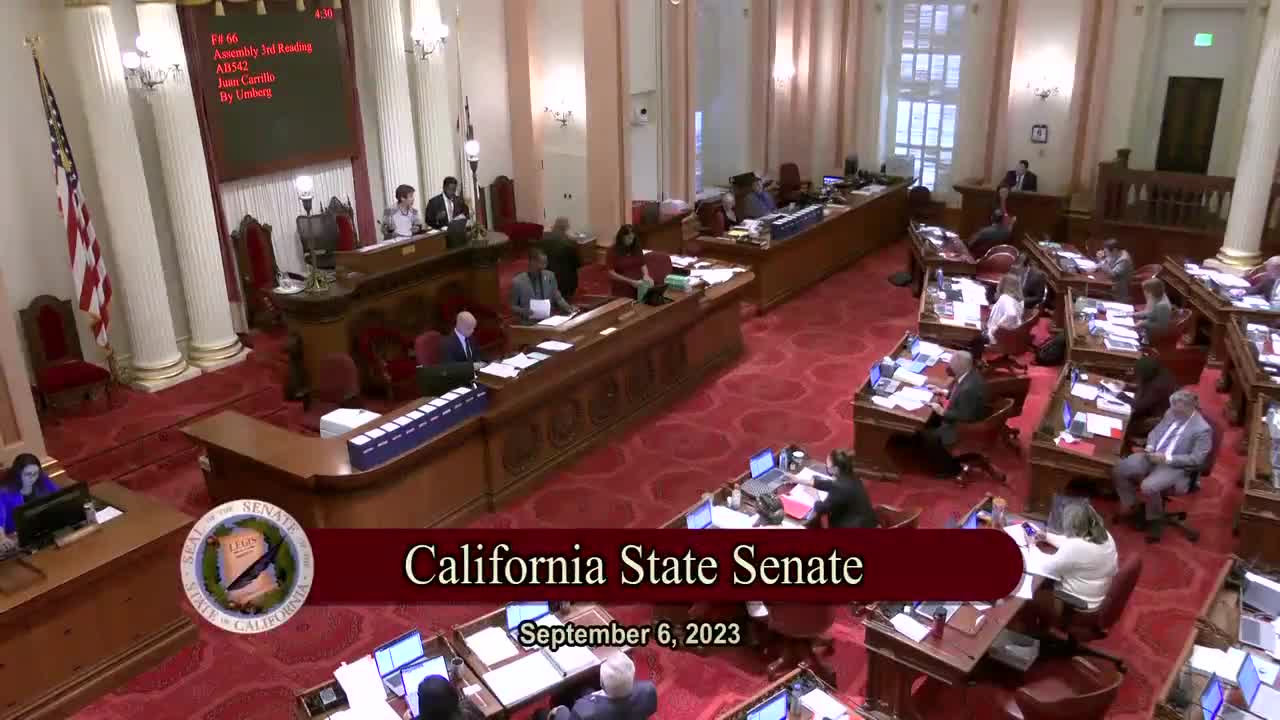 4MIN
Senate Floor
 2MIN
Assembly Floor
 55SEC
Assembly Floor
1MIN
Assembly Floor
 6MIN
Assembly Standing Committee on Appropriations
 24MIN
Assembly Standing Committee on Judiciary
 15MIN
Assembly Standing Committee on Business and Professions
 3MIN
Senate Floor
Bill Author