SB 38: Battery energy storage facilities: emergency response and emergency action plans.
- Session Year: 2023-2024
- House: Senate
- Latest Version Date: 2023-10-07
Current Status:
Passed
(2023-10-07: Chaptered by Secretary of State. Chapter 377, Statutes of 2023.)
Introduced
In Committee
First Chamber
In Committee
Second Chamber
Enacted
Existing law vests the Public Utilities Commission with regulatory authority over public utilities, including electrical corporations. Existing law requires the commission to implement and enforce standards for the maintenance and operation of facilities for the generation and storage of electricity owned by an electrical corporation or located in the state to ensure their reliable operation.
This bill would require each battery energy storage facility located in the state and subject to the requirement described above to have an emergency response and emergency action plan that covers the premises of the battery energy storage facility, as specified. The bill would require the owner or operator of the facility, in developing the plan, to coordinate with local emergency management agencies, unified program agencies, and local first response agencies. To the extent the bill would impose new duties on local government agencies, the bill would create a state-mandated local program. The bill would require the owner or operator of the facility to submit the plan to the county and, if applicable, the city where the facility is located.
Under existing law, a violation of the Public Utilities Act or any order, decision, rule, direction, demand, or requirement of the commission is a crime.
Because the above provisions would be part of the act and a violation of a commission action implementing this bills requirements would be a crime, the bill would impose a state-mandated local program.
The California Constitution requires the state to reimburse local agencies and school districts for certain costs mandated by the state. Statutory provisions establish procedures for making that reimbursement.
This bill would provide that with regard to certain mandates no reimbursement is required by this act for a specified reason.
With regard to any other mandates, this bill would provide that, if the Commission on State Mandates determines that the bill contains costs so mandated by the state, reimbursement for those costs shall be made pursuant to the statutory provisions noted above.
Existing law vests the Public Utilities Commission with regulatory authority over public utilities, including electrical corporations. Existing law requires the commission to implement and enforce standards for the maintenance and operation of facilities for the generation and storage of electricity owned by an electrical corporation or located in the state to ensure their reliable operation.
This bill would require each battery energy storage facility located in the state and subject to the requirement described above to have an emergency response and evacuation emergency action plan that covers the premises of the battery energy storage facility, as specified. The bill would require the owner or operator of the facility, in developing the plan, to coordinate with local emergency management agencies, unified program agencies, and local first response agencies. To the extent the bill would impose new duties on local government agencies, the bill would create a state-mandated local program. The bill would require the commission to require the owner or operator of the facility to submit the plan to the commission. county and, if applicable, the city where the facility is located.
Under existing law, a violation of the Public Utilities Act or any order, decision, rule, direction, demand, or requirement of the commission is a crime.
Because the above provisions would be part of the act and a violation of a commission action implementing this bills requirements would be a crime, the bill would impose a state-mandated local program.
The California Constitution requires the state to reimburse local agencies and school districts for certain costs mandated by the state. Statutory provisions establish procedures for making that reimbursement.
This bill would provide that with regard to certain mandates no reimbursement is required by this act for a specified reason.
With regard to any other mandates, this bill would provide that, if the Commission on State Mandates determines that the bill contains costs so mandated by the state, reimbursement for those costs shall be made pursuant to the statutory provisions noted above.
Existing law vests the Public Utilities Commission with regulatory authority over public utilities, including electrical corporations. Existing law requires the commission to implement and enforce standards for the maintenance and operation of facilities for the generation and storage of electricity owned by an electrical corporation or located in the state to ensure their reliable operation.
This bill would require each battery energy storage facility located in the state and subject to the requirement described above to have an emergency response plan and an evacuation plan that covers the premise premises of the battery energy storage facility. facility, as specified. The bill would require the owner or operator of the facility, in developing the plan, to coordinate with local emergency management agencies, unified program agencies, and local first response agencies. To the extent the bill would impose new duties on local government agencies, the bill would create a state-mandated local program. The bill would require the commission to require the owner or operator of the facility to submit the plan to the commission.
Under existing law, a violation of the Public Utilities Act or any order, decision, rule, direction, demand, or requirement of the commission is a crime.
Because the above provisions would be part of the act and a violation of a commission action implementing this bills requirements would be a crime, the bill would impose a state-mandated local program.
The California Constitution requires the state to reimburse local agencies and school districts for certain costs mandated by the state. Statutory provisions establish procedures for making that reimbursement.This bill would provide that no reimbursement is required by this act for a specified reason.The California Constitution requires the state to reimburse local agencies and school districts for certain costs mandated by the state. Statutory provisions establish procedures for making that reimbursement.
This bill would provide that with regard to certain mandates no reimbursement is required by this act for a specified reason.
With regard to any other mandates, this bill would provide that, if the Commission on State Mandates determines that the bill contains costs so mandated by the state, reimbursement for those costs shall be made pursuant to the statutory provisions noted above.
Existing law requires the State Energy Resources Conservation and Development Commission (Energy Commission) to undertake various actions in furtherance of meeting the states clean energy and pollution reduction objectives, including implementing the Long-Duration Energy Storage Program to provide financial incentives for projects to deploy innovative energy storage systems to the electrical grid for purposes of providing critical capacity and grid services. Existing law vests the Public Utilities Commission (PUC) with regulatory authority over public utilities, including electrical corporations, while local publicly owned electric utilities are under the direction of their governing boards. corporations. Existing law authorizes the PUC, after a hearing, to require every public utility to construct, maintain, and operate its line, plant, system, equipment, apparatus, tracks, and premises in a manner so as to promote and safeguard the health and safety of its employees, passengers, customers, and the public. requires the commission to implement and enforce standards for the maintenance and operation of facilities for the generation and storage of electricity owned by an electrical corporation or located in the state to ensure their reliable operation.
This bill would require each battery energy storage facility located in the state and subject to the requirement described above to have an emergency response plan and an evacuation plan that covers the area premise of the battery energy storage facility.
Under existing law, a violation of the Public Utilities Act or any order, decision, rule, direction, demand, or requirement of the commission is a crime.
Because the above provisions would be part of the act and a violation of a commission action implementing this bills requirements would be a crime, the bill would impose a state-mandated local program.
The California Constitution requires the state to reimburse local agencies and school districts for certain costs mandated by the state. Statutory provisions establish procedures for making that reimbursement.
This bill would provide that no reimbursement is required by this act for a specified reason.
Existing law requires the State Energy Resources Conservation and Development Commission (Energy Commission) to undertake various actions in furtherance of meeting the states clean energy and pollution reduction objectives, including implementing the Long-Duration Energy Storage Program to provide financial incentives for projects to deploy innovative energy storage systems to the electrical grid for purposes of providing critical capacity and grid services. Existing law vests the Public Utilities Commission (PUC) with regulatory authority over public utilities, including electrical corporations, while local publicly owned electric utilities are under the direction of their governing boards. Existing law authorizes the PUC, after a hearing, to require every public utility to construct, maintain, and operate its line, plant, system, equipment, apparatus, tracks, and premises in a manner so as to promote and safeguard the health and safety of its employees, passengers, customers, and the public.
This bill would require each battery energy storage facility in the state to have an emergency response plan and an evacuation plan that covers the area of the battery energy storage facility.
Existing law vests the Public Utilities Commission (PUC) with regulatory authority over public utilities, including electrical corporations, while local publicly owned electric utilities are under the direction of their governing boards. Existing law requires the PUC to ensure that facilities needed to maintain the reliability of the electrical supply remain available and operational.Existing law establishes an Independent System Operator (ISO) as a nonprofit public benefit corporation and requires the ISO to ensure efficient use and reliable operation of the electrical transmission grid consistent with achieving planning and operating reserve criteria no less stringent than those established by the Western Electricity Coordinating Council and the North American Electric Reliability Council.This bill would state the intent of the Legislature to enact future legislation to address the need for better safety systems at battery storage facilities.Existing law vests the Public Utilities Commission (PUC) with regulatory authority over public utilities, including electrical corporations, while local publicly owned electric utilities are under the direction of their governing boards. Existing law requires the PUC to ensure that facilities needed to maintain the reliability of the electrical supply remain available and operational.
Existing law establishes an Independent System Operator (ISO) as a nonprofit public benefit corporation and requires the ISO to ensure efficient use and reliable operation of the electrical transmission grid consistent with achieving planning and operating reserve criteria no less stringent than those established by the Western Electricity Coordinating Council and the North American Electric Reliability Council.
This bill would state the intent of the Legislature to enact future legislation to address the need for better safety systems at battery storage facilities.
(a)Notwithstanding subdivision (g) of Section 216 and subdivision (c) of Section 218.5, the commission shall implement and enforce standards for the maintenance and operation of facilities for the generation and storage of electricity owned by an electrical corporation or located in the state to ensure their reliable operation. The commission shall enforce the protocols for the scheduling of powerplant outages of the Independent System Operator.
(b)This section does not authorize the commission to establish rates for wholesale sales in interstate commerce from those facilities, or to approve the sale or transfer of control of facilities if an exempt wholesale generator, as defined in the federal Public Utility Holding Company Act of 2005 (42 U.S.C. Sec. 16451(6)).
(c)(1)(A)Except as otherwise provided in this subdivision, this section does not apply to nuclear powered generating facilities that are federally regulated and subject to standards developed by the Nuclear Regulatory Commission and that participate as members of the Institute of Nuclear Power Operations.
(B)The owner or operator of a nuclear powered generating facility shall file with the commission an annual schedule of maintenance, including repairs and upgrades, updated quarterly, for each generating facility. The owner or operator of a nuclear powered generating facility shall make good faith efforts to conduct its maintenance in compliance with its filed plan and shall report to the Independent System Operator any significant variations from its filed plan.
(C)The owner or operator of a nuclear powered generating facility shall report on a monthly basis to the commission all actual planned and unplanned outages of each facility during the preceding month. The owner or operator of a nuclear powered generating facility shall report on a daily basis to the Independent System Operator the daily operational status and availability of each facility.
(2)(A)Except as otherwise provided in this subdivision, this section does not apply to a qualifying small power production facility or a qualifying cogeneration facility within the meaning of Sections 201 and 210 of Title 11 of the federal Public Utility Regulatory Policies Act of 1978 (16 U.S.C. Secs. 796(17), 796(18), and 824a-3), and the regulations adopted pursuant to those sections by the Federal Energy Regulatory Commission (18 C.F.R. Secs. 292.101 to 292.602, inclusive), nor does this section apply to other generation units installed, operated, and maintained at a customer site exclusively to serve that customers load.
(B)An electrical corporation that has a contract with a qualifying small power production facility, or a qualifying cogeneration facility, with a name plate rating of 10 megawatts or greater, shall report to the commission maintenance schedules for each facility, including all actual planned and unplanned outages of the facility and the daily operational status and availability of the facility. Each facility with a name plate rating of 10 megawatts or greater shall be responsible for directly reporting to the Independent System Operator maintenance schedules for each facility, including all actual planned and unplanned outages of the facility and the daily operational status and availability of the facility, if that information is not provided to the electrical corporation pursuant to a contract.
(d)This section shall not result in the modification, delay, or abrogation of any deadline, standard, rule, or regulation adopted by a federal, state, or local agency for the purposes of protecting public health or the environment, including, but not limited to, any requirements imposed by the State Air Resources Board or by an air pollution control district or an air quality management district pursuant to Division 26 (commencing with Section 39000) of the Health and Safety Code. The Independent System Operator shall consult with the State Air Resources Board and the appropriate local air pollution control districts and air quality management districts to coordinate scheduled outages to provide for compliance with those retrofits.
(e)The Independent System Operator shall maintain records of generation and storage facility outages and shall provide those records to the commission on a daily basis. Each entity that owns or operates an electric generating unit in California with a rated maximum capacity of 10 megawatts or greater shall provide a monthly report to the Independent System Operator that identifies any periods during the preceding month when the unit was unavailable to produce electricity or was available only at reduced capacity. The report shall identify the reasons for any such unscheduled unavailability or reduced capacity. The Independent System Operator shall immediately transmit the information to the commission.
(f)This section does not apply to any of the following:
(1)A facility owned by a local publicly owned electric utility.
(2)A public agency that may generate electricity incidental to the provision of water or wastewater treatment.
(3)A facility owned by a city and county operating as a public utility, furnishing electric service as provided in Section 10001.
(g)(1)In order to ensure the safety of employees, emergency responders, and surrounding communities, each battery energy storage facility located in the state and subject to subdivision (a) shall have an emergency response and emergency action plan that covers the premises of the battery energy storage facility, consistent with Sections 142.3 and 6401 of the Labor Code and any related regulations, including the regulatory requirements applicable to emergency action plans pursuant to Section 3220 of Title 8 of the California Code of Regulations.
(2)The emergency response and emergency action plan shall do all of the following:
(A)Establish response procedures for an equipment malfunction or failure.
(B)Include procedures that provide for the safety of surrounding residents, neighboring properties, emergency responders, and the environment. These procedures shall be established in consultation with local emergency management agencies.
(C)Establish notification and communication procedures between the battery energy storage facility and local emergency management agencies.
(3)The emergency response and emergency action plan may do all of the following:
(A)Consider responses to potential offsite impacts, including, but not limited to, poor air quality, threats to municipal water supplies, water runoff, and threats to natural waterways.
(B)Include procedures for the local emergency response agency to establish shelter-in-place orders and road closure notifications when appropriate.
(4)In developing the emergency response and emergency action plan, the owner or operator of the battery energy storage facility shall coordinate with local emergency management agencies, unified program agencies, and local first response agencies.
(5)The owner or operator of each battery energy storage facility shall submit the emergency response and emergency action plan to the county and, if applicable, the city where the facility is located.
SEC. 2.No reimbursement is required by this act pursuant to Section 6 of Article XIIIB of the California Constitution for certain costs that may be incurred by a local agency or school district because, in that regard, this act creates a new crime or infraction, eliminates a crime or infraction, or changes the penalty for a crime or infraction, within the meaning of Section 17556 of the Government Code, or changes the definition of a crime within the meaning of Section 6 of Article XIIIB of the California Constitution.
However, if the Commission on State Mandates determines that this act contains other costs mandated by the state, reimbursement to local agencies and school districts for those costs shall be made pursuant to Part 7 (commencing with Section 17500) of Division 4 of Title 2 of the Government Code.
(a)Notwithstanding subdivision (g) of Section 216 and subdivision (c) of Section 218.5, the commission shall implement and enforce standards for the maintenance and operation of facilities for the generation and storage of electricity owned by an electrical corporation or located in the state to ensure their reliable operation. The commission shall enforce the protocols for the scheduling of powerplant outages of the Independent System Operator.
(b)This section does not authorize the commission to establish rates for wholesale sales in interstate commerce from those facilities, or to approve the sale or transfer of control of facilities if an exempt wholesale generator, as defined in the federal Public Utility Holding Company Act of 2005 (42 U.S.C. Sec. 16451(6)).
(c)(1)(A)Except as otherwise provided in this subdivision, this section does not apply to nuclear powered generating facilities that are federally regulated and subject to standards developed by the Nuclear Regulatory Commission and that participate as members of the Institute of Nuclear Power Operations.
(B)The owner or operator of a nuclear powered generating facility shall file with the commission an annual schedule of maintenance, including repairs and upgrades, updated quarterly, for each generating facility. The owner or operator of a nuclear powered generating facility shall make good faith efforts to conduct its maintenance in compliance with its filed plan and shall report to the Independent System Operator any significant variations from its filed plan.
(C)The owner or operator of a nuclear powered generating facility shall report on a monthly basis to the commission all actual planned and unplanned outages of each facility during the preceding month. The owner or operator of a nuclear powered generating facility shall report on a daily basis to the Independent System Operator the daily operational status and availability of each facility.
(2)(A)Except as otherwise provided in this subdivision, this section does not apply to a qualifying small power production facility or a qualifying cogeneration facility within the meaning of Sections 201 and 210 of Title 11 of the federal Public Utility Regulatory Policies Act of 1978 (16 U.S.C. Secs. 796(17), 796(18), and 824a-3), and the regulations adopted pursuant to those sections by the Federal Energy Regulatory Commission (18 C.F.R. Secs. 292.101 to 292.602, inclusive), nor does this section apply to other generation units installed, operated, and maintained at a customer site exclusively to serve that customers load.
(B)An electrical corporation that has a contract with a qualifying small power production facility, or a qualifying cogeneration facility, with a name plate rating of 10 megawatts or greater, shall report to the commission maintenance schedules for each facility, including all actual planned and unplanned outages of the facility and the daily operational status and availability of the facility. Each facility with a name plate rating of 10 megawatts or greater shall be responsible for directly reporting to the Independent System Operator maintenance schedules for each facility, including all actual planned and unplanned outages of the facility and the daily operational status and availability of the facility, if that information is not provided to the electrical corporation pursuant to a contract.
(d)This section shall not result in the modification, delay, or abrogation of any deadline, standard, rule, or regulation adopted by a federal, state, or local agency for the purposes of protecting public health or the environment, including, but not limited to, any requirements imposed by the State Air Resources Board or by an air pollution control district or an air quality management district pursuant to Division 26 (commencing with Section 39000) of the Health and Safety Code. The Independent System Operator shall consult with the State Air Resources Board and the appropriate local air pollution control districts and air quality management districts to coordinate scheduled outages to provide for compliance with those retrofits.
(e)The Independent System Operator shall maintain records of generation and storage facility outages and shall provide those records to the commission on a daily basis. Each entity that owns or operates an electric generating unit in California with a rated maximum capacity of 10 megawatts or greater shall provide a monthly report to the Independent System Operator that identifies any periods during the preceding month when the unit was unavailable to produce electricity or was available only at reduced capacity. The report shall identify the reasons for any such unscheduled unavailability or reduced capacity. The Independent System Operator shall immediately transmit the information to the commission.
(f)This section does not apply to any of the following:
(1)A facility owned by a local publicly owned electric utility.
(2)A public agency that may generate electricity incidental to the provision of water or wastewater treatment.
(3)A facility owned by a city and county operating as a public utility, furnishing electric service as provided in Section 10001.
(g)(1)In order to ensure the safe operation of battery energy storage facilities in the state, safety of employees, emergency responders, and surrounding communities, each battery energy storage facility located in the state and subject to subdivision (a) shall have an emergency response and evacuation emergency action plan that covers the premises of the battery energy storage facility, consistent with Sections 142.3 and 6401 of the Labor Code and any related regulations, including the regulatory requirements applicable to emergency action plans pursuant to Section 3220 of Title 8 of the California Code of Regulations.
(2)The emergency response and evacuation emergency action plan shall do all of the following:
(A)Establish response procedures for an equipment malfunction or failure.
(B)Include procedures that provide for the safety of surrounding residents, neighboring properties, emergency responders, and the environment. These procedures shall be established in consultation with local emergency management agencies.
(C)Establish notification and communication procedures between the battery energy storage facility and local emergency management agencies.
(3)The emergency response and evacuation emergency action plan may do all of the following:
(A)Consider responses to potential offsite impacts, including, but not limited to, poor air quality, threats to municipal water supplies, water runoff, and threats to natural waterways.
(B)Include procedures for establishing the local emergency response agency to establish shelter-in-place orders and road closure notifications when appropriate.
(4)In developing the emergency response and evacuation emergency action plan, the owner or operator of the battery energy storage facility shall coordinate with local emergency management agencies, unified program agencies, and local first response agencies.
(5)The commission shall require the owner or operator of each battery energy storage facility to shall submit the emergency response and evacuation emergency action plan to the commission. county and, if applicable, the city where the facility is located.
SEC. 2.No reimbursement is required by this act pursuant to Section 6 of Article XIIIB of the California Constitution for certain costs that may be incurred by a local agency or school district because, in that regard, this act creates a new crime or infraction, eliminates a crime or infraction, or changes the penalty for a crime or infraction, within the meaning of Section 17556 of the Government Code, or changes the definition of a crime within the meaning of Section 6 of Article XIIIB of the California Constitution.
However, if the Commission on State Mandates determines that this act contains other costs mandated by the state, reimbursement to local agencies and school districts for those costs shall be made pursuant to Part 7 (commencing with Section 17500) of Division 4 of Title 2 of the Government Code.
(a)Notwithstanding subdivision (g) of Section 216 and subdivision (c) of Section 218.5, the commission shall implement and enforce standards for the maintenance and operation of facilities for the generation and storage of electricity owned by an electrical corporation or located in the state to ensure their reliable operation. The commission shall enforce the protocols for the scheduling of powerplant outages of the Independent System Operator.
(b)This section does not authorize the commission to establish rates for wholesale sales in interstate commerce from those facilities, or to approve the sale or transfer of control of facilities if an exempt wholesale generator, as defined in the federal Public Utility Holding Company Act of 2005 (42 U.S.C. Sec. 16451(6)).
(c)(1)(A)Except as otherwise provided in this subdivision, this section does not apply to nuclear powered generating facilities that are federally regulated and subject to standards developed by the Nuclear Regulatory Commission and that participate as members of the Institute of Nuclear Power Operations.
(B)The owner or operator of a nuclear powered generating facility shall file with the commission an annual schedule of maintenance, including repairs and upgrades, updated quarterly, for each generating facility. The owner or operator of a nuclear powered generating facility shall make good faith efforts to conduct its maintenance in compliance with its filed plan and shall report to the Independent System Operator any significant variations from its filed plan.
(C)The owner or operator of a nuclear powered generating facility shall report on a monthly basis to the commission all actual planned and unplanned outages of each facility during the preceding month. The owner or operator of a nuclear powered generating facility shall report on a daily basis to the Independent System Operator the daily operational status and availability of each facility.
(2)(A)Except as otherwise provided in this subdivision, this section does not apply to a qualifying small power production facility or a qualifying cogeneration facility within the meaning of Sections 201 and 210 of Title 11 of the federal Public Utility Regulatory Policies Act of 1978 (16 U.S.C. Secs. 796(17), 796(18), and 824a-3), and the regulations adopted pursuant to those sections by the Federal Energy Regulatory Commission (18 C.F.R. Secs. 292.101 to 292.602, inclusive), nor does this section apply to other generation units installed, operated, and maintained at a customer site exclusively to serve that customers load.
(B)An electrical corporation that has a contract with a qualifying small power production facility, or a qualifying cogeneration facility, with a name plate rating of 10 megawatts or greater, shall report to the commission maintenance schedules for each facility, including all actual planned and unplanned outages of the facility and the daily operational status and availability of the facility. Each facility with a name plate rating of 10 megawatts or greater shall be responsible for directly reporting to the Independent System Operator maintenance schedules for each facility, including all actual planned and unplanned outages of the facility and the daily operational status and availability of the facility, if that information is not provided to the electrical corporation pursuant to a contract.
(d)This section shall not result in the modification, delay, or abrogation of any deadline, standard, rule, or regulation adopted by a federal, state, or local agency for the purposes of protecting public health or the environment, including, but not limited to, any requirements imposed by the State Air Resources Board or by an air pollution control district or an air quality management district pursuant to Division 26 (commencing with Section 39000) of the Health and Safety Code. The Independent System Operator shall consult with the State Air Resources Board and the appropriate local air pollution control districts and air quality management districts to coordinate scheduled outages to provide for compliance with those retrofits.
(e)The Independent System Operator shall maintain records of generation and storage facility outages and shall provide those records to the commission on a daily basis. Each entity that owns or operates an electric generating unit in California with a rated maximum capacity of 10 megawatts or greater shall provide a monthly report to the Independent System Operator that identifies any periods during the preceding month when the unit was unavailable to produce electricity or was available only at reduced capacity. The report shall identify the reasons for any such unscheduled unavailability or reduced capacity. The Independent System Operator shall immediately transmit the information to the commission.
(f)This section does not apply to any of the following:
(1)A facility owned by a local publicly owned electric utility.
(2)A public agency that may generate electricity incidental to the provision of water or wastewater treatment.
(3)A facility owned by a city and county operating as a public utility, furnishing electric service as provided in Section 10001.
(g)(1)In order to ensure the safe operation of battery energy storage facilities in the state, each battery energy storage facility located in the state and subject to subdivision (a) shall have an emergency response plan and an evacuation plan that covers the premise premises of the battery energy storage facility, consistent with Sections 142.3 and 6401 of the Labor Code and any related regulations, including the regulatory requirements applicable to emergency action plans pursuant to Section 3220 of Title 8 of the California Code of Regulations.
(2)The emergency response and evacuation plan shall do all of the following:
(A)Establish response procedures for an equipment malfunction or failure.
(B)Include procedures that provide for the safety of surrounding residents, neighboring properties, emergency responders, and the environment. These procedures shall be established in consultation with local emergency management agencies.
(C)Establish notification and communication procedures between the battery energy storage facility and local emergency management agencies.
(3)The emergency response and evacuation plan may do all of the following:
(A)Consider responses to potential offsite impacts, including, but not limited to, poor air quality, threats to municipal water supplies, water runoff, and threats to natural waterways.
(B)Include procedures for establishing shelter-in-place orders and road closure notifications when appropriate.
(4)In developing the emergency response and evacuation plan, the owner or operator of the battery energy storage facility shall coordinate with local emergency management agencies, unified program agencies, and local first response agencies.
(5)The commission shall require the owner or operator of each battery energy storage facility to submit the emergency response and evacuation plan to the commission.
SEC. 2.No reimbursement is required by this act pursuant to Section 6 of Article XIIIB of the California Constitution because the only costs that may be incurred by a local agency or school district will be incurred because this act creates a new crime or infraction, eliminates a crime or infraction, or changes the penalty for a crime or infraction, within the meaning of Section 17556 of the Government Code, or changes the definition of a crime within the meaning of Section 6 of Article XIIIB of the California Constitution.SEC. 2.No reimbursement is required by this act pursuant to Section 6 of Article XIIIB of the California Constitution for certain costs that may be incurred by a local agency or school district because, in that regard, this act creates a new crime or infraction, eliminates a crime or infraction, or changes the penalty for a crime or infraction, within the meaning of Section 17556 of the Government Code, or changes the definition of a crime within the meaning of Section 6 of Article XIIIB of the California Constitution.
However, if the Commission on State Mandates determines that this act contains other costs mandated by the state, reimbursement to local agencies and school districts for those costs shall be made pursuant to Part 7 (commencing with Section 17500) of Division 4 of Title 2 of the Government Code.
(a)Notwithstanding subdivision (g) of Section 216 and subdivision (c) of Section 218.5, the commission shall implement and enforce standards for the maintenance and operation of facilities for the generation and storage of electricity owned by an electrical corporation or located in the state to ensure their reliable operation. The commission shall enforce the protocols for the scheduling of powerplant outages of the Independent System Operator.
(b)This section does not authorize the commission to establish rates for wholesale sales in interstate commerce from those facilities, or to approve the sale or transfer of control of facilities if an exempt wholesale generator, as defined in the federal Public Utility Holding Company Act of 2005 (42 U.S.C. Sec. 16451(6)).
(c)(1)(A)Except as otherwise provided in this subdivision, this section shall does not apply to nuclear powered generating facilities that are federally regulated and subject to standards developed by the Nuclear Regulatory Commission, Commission and that participate as members of the Institute of Nuclear Power Operations.
(B)The owner or operator of a nuclear powered generating facility shall file with the commission an annual schedule of maintenance, including repairs and upgrades, updated quarterly, for each generating facility. The owner or operator of a nuclear powered generating facility shall make good faith efforts to conduct its maintenance in compliance with its filed plan and shall report to the Independent System Operator any significant variations from its filed plan.
(C)The owner or operator of a nuclear powered generating facility shall report on a monthly basis to the commission all actual planned and unplanned outages of each facility during the preceding month. The owner or operator of a nuclear powered generating facility shall report on a daily basis to the Independent System Operator the daily operational status and availability of each facility.
(2)(A)Except as otherwise provided in this subdivision, this section shall does not apply to a qualifying small power production facility or a qualifying cogeneration facility within the meaning of Sections 201 and 210 of Title 11 of the federal Public Utility Regulatory Policies Act of 1978 (16 U.S.C. Secs. 796(17), 796(18), and 824a-3), and the regulations adopted pursuant to those sections by the Federal Energy Regulatory Commission (18 C.F.R. Secs. 292.101 to 292.602, inclusive), nor shall does this section apply to other generation units installed, operated, and maintained at a customer site, site exclusively to serve that customers load.
(B)An electrical corporation that has a contract with a qualifying small power production facility, or a qualifying cogeneration facility, with a name plate rating of 10 megawatts or greater, shall report to the commission maintenance schedules for each facility, including all actual planned and unplanned outages of the facility and the daily operational status and availability of the facility. Each facility with a name plate rating of 10 megawatts or greater shall be responsible for directly reporting to the Independent System Operator maintenance schedules for each facility, including all actual planned and unplanned outages of the facility and the daily operational status and availability of the facility, if that information is not provided to the electrical corporation pursuant to a contract.
(d)This section shall not result in the modification, delay, or abrogation of any deadline, standard, rule, or regulation adopted by a federal, state, or local agency for the purposes of protecting public health or the environment, including, but not limited to, any requirements imposed by the State Air Resources Board or by an air pollution control district or an air quality management district pursuant to Division 26 (commencing with Section 39000) of the Health and Safety Code. The Independent System Operator shall consult with the State Air Resources Board and the appropriate local air pollution control districts and air quality management districts to coordinate scheduled outages to provide for compliance with those retrofits.
(e)The Independent System Operator shall maintain records of generation and storage facility outages and shall provide those records to the commission on a daily basis. Each entity that owns or operates an electric generating unit in California with a rated maximum capacity of 10 megawatts or greater, greater shall provide a monthly report to the Independent System Operator that identifies any periods during the preceding month when the unit was unavailable to produce electricity or was available only at reduced capacity. The report shall identify the reasons for any such unscheduled unavailability or reduced capacity. The Independent System Operator shall immediately transmit the information to the commission.
(f)This section does not apply to any of the following:
(1)A facility owned by a local publicly owned electric utility.
(2)A public agency that may generate electricity incidental to the provision of water or wastewater treatment.
(3)A facility owned by a city and county operating as a public utility, furnishing electric service as provided in Section 10001.
(g)In order to ensure the safe operation of battery energy storage facilities in the state, each battery energy storage facility located in the state and subject to subdivision (a) shall have an emergency response plan and an evacuation plan that covers the premise of the battery energy storage facility, consistent with Sections 142.3 and 6401 of the Labor Code and any related regulations, including the regulatory requirements applicable to emergency action plans pursuant to Section 3220 of Title 8 of the California Code of Regulations.
SEC. 2.No reimbursement is required by this act pursuant to Section 6 of Article XIIIB of the California Constitution because the only costs that may be incurred by a local agency or school district will be incurred because this act creates a new crime or infraction, eliminates a crime or infraction, or changes the penalty for a crime or infraction, within the meaning of Section 17556 of the Government Code, or changes the definition of a crime within the meaning of Section 6 of Article XIIIB of the California Constitution.
SECTION 1.Chapter 6.4 (commencing with Section 25549) is added to Division 15 of the Public Resources Code, to read:6.4.Battery Energy Storage Facilities25549.To ensure the safe operation of battery energy storage facilities in the state, each battery energy storage facility in the state shall have an emergency response plan and an evacuation plan that covers the area of the battery energy storage facility.To ensure the safe operation of battery energy storage facilities in the state, each battery energy storage facility in the state shall have an emergency response plan and an evacuation plan that covers the area of the battery energy storage facility.
SECTION 1.It is the intent of the Legislature to enact future legislation to address the need for better safety systems at battery storage facilities.It is the intent of the Legislature to enact future legislation to address the need for better safety systems at battery storage facilities.
|
Date
|
Status
|
|---|---|
| Oct 7, 2023 | Chaptered by Secretary of State. Chapter 377, Statutes of 2023. |
| Oct 7, 2023 | Approved by the Governor. |
| Sep 13, 2023 | Enrolled and presented to the Governor at 4 p.m. |
| Sep 7, 2023 | Assembly amendments concurred in. (Ayes 40. Noes 0. Page 2464.) Ordered to engrossing and enrolling. |
| Sep 6, 2023 | In Senate. Concurrence in Assembly amendments pending. |
| Sep 6, 2023 | Read third time. Passed. (Ayes 77. Noes 0. Page 2966.) Ordered to the Senate. |
| Aug 31, 2023 | Ordered to third reading. |
| Aug 31, 2023 | Read third time and amended. |
| Aug 28, 2023 | Ordered to third reading. |
| Aug 28, 2023 | From consent calendar on motion of Assembly Member Bryan. |
| Aug 24, 2023 | Read second time. Ordered to consent calendar. |
| Aug 23, 2023 | From committee: Do pass. Ordered to consent calendar. (Ayes 15. Noes 0.) (August 23). |
| Jul 13, 2023 | From committee: Do pass and re-refer to Com. on APPR. with recommendation: To consent calendar. (Ayes 14. Noes 0.) (July 12). Re-referred to Com. on APPR. |
| Jul 3, 2023 | From committee with author's amendments. Read second time and amended. Re-referred to Com. on U. & E. |
| Jun 8, 2023 | Referred to Com. on U. & E. |
| May 25, 2023 | In Assembly. Read first time. Held at Desk. |
| May 25, 2023 | Read third time. Passed. (Ayes 40. Noes 0. Page 1295.) Ordered to the Assembly. |
| May 23, 2023 | Ordered to special consent calendar. |
| May 18, 2023 | Read second time. Ordered to third reading. |
| May 18, 2023 | From committee: Do pass. (Ayes 7. Noes 0. Page 1158.) (May 18). |
| May 12, 2023 | Set for hearing May 18. |
| May 1, 2023 | May 1 hearing: Placed on APPR suspense file. |
| Apr 21, 2023 | Set for hearing May 1. |
| Apr 18, 2023 | Read second time and amended. Re-referred to Com. on APPR. |
| Apr 17, 2023 | From committee: Do pass as amended and re-refer to Com. on APPR. (Ayes 15. Noes 0. Page 637.) (April 10). |
| Apr 3, 2023 | Set for hearing April 10. |
| Mar 29, 2023 | Re-referred to Com. on E., U. & C. |
| Mar 22, 2023 | From committee with author's amendments. Read second time and amended. Re-referred to Com. on RLS. |
| Jan 18, 2023 | Referred to Com. on RLS. |
| Dec 6, 2022 | From printer. May be acted upon on or after January 5. |
| Dec 5, 2022 | Introduced. Read first time. To Com. on RLS. for assignment. To print. |
|
Date
|
Description
|
Location
|
Votes
|
|
|---|---|---|---|---|
| Sep 7, 2023 | Unfinished Business SB38 Laird et al. Concurrence | Senate Floor |
Passed |
|
| Sep 6, 2023 | SB 38 Laird Senate Third Reading By Addis | Assembly Floor |
Passed |
|
| Aug 23, 2023 | Do pass. To Consent Calendar. | Assembly Standing Committee on Appropriations |
Passed |
|
| Jul 12, 2023 | Do pass and be re-referred to the Committee on [Appropriations] with recommendation: To Consent Calendar | Assembly Standing Committee on Utilities and Energy |
Passed |
|
| May 25, 2023 | Special Consent SB38 Laird et al. | Senate Floor |
Passed |
|
| May 18, 2023 | Do pass | Senate Standing Committee on Appropriations |
Passed |
|
| May 1, 2023 | Placed on suspense file | Senate Standing Committee on Appropriations |
Passed |
|
| Apr 10, 2023 | Do pass as amended, but first amend, and re-refer to the Committee on [Appropriations] | Senate Standing Committee on Energy, Utilities and Communications |
Passed |
This list shows positions taken on this bill by organizations on the date displayed, which is linked to the original source.
Positions by individuals are not included.
|
Organization
|
Position
|
Date
|
|---|---|---|
| County of Monterey | ** Support | |
| Health Officers Association Of California | ** Support |
SENATE RULES COMMITTEE Office of Senate Floor Analyses (916) 651-1520 Fax: (916) 327-4478 | SB 38 |
UNFINISHED BUSINESS
Bill No: SB 38
Author: Laird (D), et al.
Amended: 8/31/23
Vote: 21
SENATE ENERGY, U. & C. COMMITTEE: 15-0, 4/10/23
AYES: Bradford, Dahle, Ashby, Becker, Dodd, Durazo, Eggman, Gonzalez, McGuire, Min, Newman, Rubio, Seyarto, Skinner, Wilk
NO VOTE RECORDED: Caballero, Grove, Stern
SENATE APPROPRIATIONS COMMITTEE: 7-0, 5/18/23
AYES: Portantino, Jones, Ashby, Bradford, Seyarto, Wahab, Wiener
SENATE FLOOR: 40-0, 5/25/23
AYES: Allen, Alvarado-Gil, Archuleta, Ashby, Atkins, Becker, Blakespear, Bradford, Caballero, Cortese, Dahle, Dodd, Durazo, Eggman, Glazer, Gonzalez, Grove, Hurtado, Jones, Laird, Limón, McGuire, Menjivar, Min, Newman, Nguyen, Niello, Ochoa Bogh, Padilla, Portantino, Roth, Rubio, Seyarto, Skinner, Smallwood-Cuevas, Stern, Umberg, Wahab, Wiener, Wilk
ASSEMBLY FLOOR: 77-0, 9/6/23 - See last page for vote
SUBJECT: Battery energy storage facilities: emergency response and emergency action plans
SOURCE: Author
DIGEST:
This bill requires each battery energy storage facility located in the state, and subject to specified safety requirements, to have an emergency response plan and emergency action plan that covers the premises of the battery energy storage facility.
Assembly Amendments
specify the required and permitted elements of the emergency response and emergency action plans, require coordination with specified local agencies, and require the plans to be submitted to the county and city where the facility is located.
ANALYSIS:
Existing law:
- Establishes and vests the California Public Utilities Commission (CPUC) with regulatory authority over public utilities, including electrical corporations. (California Constitution Article XII)
- Requires the CPUC to determine appropriate targets, if any, for each load-serving entity to procure viable and cost-effective energy storage systems to be achieved by December 31, 2015, and December 31, 2020. Requires the governing board of each local publicly owned electric utility to initiate a process to determine appropriate targets, if any, for the utility to procure viable and cost-effective energy storage systems to be achieved by December 31, 2016, and December 31, 2020. (Public Resources Code §2836)
- Authorizes the CPUC, after a hearing, to require every public utility to construct, maintain, and operate its line, plant, system, equipment, apparatus, tracks, and premises in a manner so as to promote and safeguard the health and safety of its employees, passengers, customers, and the public. (Public Utilities Code §768)
- Requires the CPUC, as part of the Public Utilities Act, to implement and enforce standards for the maintenance and operation of facilities for the generation and storage of electricity owned by an electrical corporation or located in the state to ensure their reliable operation. (Public Utilities Code §761.3)
- Authorizes the California Occupational Safety and Health Standards (Cal/OSHA) Board within the Department of Industrial Relations (DIR) to establish by an affirmative vote of at least four members (from a total of seven), to adopt, amend or repeal occupational safety and health standards and orders. Requires Cal/OSHA to adopt standards that are as effective as the federal standards, as specified. Establishes that Cal/OSHA is the only agency in the state authorized to adopt occupational safety and health standards. (Labor Code §142.3)
- Requires every employer to furnish employment and a place of employment that is safe and healthful for the employees, including requiring an injury prevention plan. (Labor Code §6401 et seq.)
This bill:
- Requires each battery energy storage facility located in the state, and subject to CPUC safety oversight, to have an emergency response and emergency action plan that covers the premise of the battery energy storage facility.
- Requires the above mentioned plans to be consistent with Sections 142.3 and 6401 of the Labor Code and any related regulations, including the regulatory requirements applicable to emergency action plans pursuant to Section 3220 of Title 8 of the California Code of Regulations.
- Requires the owner or operator of the facility, in developing the plan, to coordinate with local emergency management agencies, unified program agencies, and local first response agencies.
- Requires the owner or operator of the facility to submit the plan to the county and, if applicable, the city where the facility is located.
Background
Growth in battery energy storage. California is increasingly relying on new and emerging energy storage technologies to support electricity reliability and help achieve the state’s ambitions greenhouse gas reduction goals. Energy storage technology offers opportunities for balancing increasing volumes of intermittent renewable energy (such as solar and wind energy), allowing for the storage of energy during times when production is high but demand is lower, and discharging during times when production from renewable energy resources is more limited or not available. In particular, lithium-ion stationary energy storage development in California is accelerating rapidly. The technology is fast-tracked in utility procurements due to its ability to support the state’s clean energy and reliability goals cost-effectively. Currently, there is nearly 6,000 megawatts (MW) of battery energy storage installed capacity and the CPUC anticipates almost 15 gigawatts by 2032, with lithium-ion batteries as the main type of storage.
Safety incidents at battery storage facilities. There have been three distinct and recent safety incidents at separately owned battery energy storage facilities located at the Moss Landing in Monterey County which occupies one of the largest battery energy storage systems.
- On September 4, 2021, there was a safety incident at the Moss Landing Phase I (300 MW) lithium-ion battery energy system owned by Vistra Corporation that prompted an immediate shutoff of the facility. According to Vistra Corporation, an investigation found that smoke from a failed bearing in an air-handling unit in the building triggered a heat suppression system to improperly spray water on battery racks, causing damage and overheating.
- The same facility, though in a separate building, experienced a second incident on February 13, 2022, at its Phase II (100 MW) building. Following the incident, Vistra stated in a news release that there was early evidence that water hoses leaked and that some batteries short circuited, creating smoke in the building. Vistra subsequently decided to pause restart activities while they assess the Phase II incident and incorporate any learnings. Both Vistra-owned facilities have since been brought back on-line.
- On September 20, 2022, a separate incident occurred at a neighboring battery energy storage facility (182 MW) at Moss Landing, known as the Elkhorn Battery Energy Storage Facility, owned by Pacific Gas & Electric which consists of Tesla battery megapacks and under a maintenance contract with Tesla. The battery fire at the storage facility led to a shelter-in-place advisory for the neighboring community, including to a local recreational vehicle camp. According to news reports, the fire smoldered for five hours until it burnt out. Emergency responders are advised to not extinguish a battery fire, but allow it to burn itself out, as there risks of the fire spreading or causing an explosion.
Labor Code and related regulatory requirements. Existing statutory requirements (Labor Code §§142.3 and 6401, among others), and related regulations (California Code of Regulations DIR Subchapter 7 General Industry Safety Orders, including §3220), generally, require employers to provide a safe environment for workers, which includes emergency action plans and evacuation procedures and plans as it relates to fires and other emergency events. As such, employers who operate battery energy storage facilities are subject to the Cal/OSHA requirements, though there are not specific requirements for these facilities as there may be with some high risk facilities, such as refineries. However, battery energy storage facilities may not have many personnel, if any, on-site, which may limit the application of these and other labor safety requirements.
SB 1383 (Hueso, Chapter 725, Statutes of 2022). Given California’s growing reliance on lithium-ion battery storage systems and safety issues at the Vistra facility, one of the state’s largest lithium-ion battery storage facilities, SB 1383 expanded the CPUC Generating Asset Owner operation and maintenance standards, contained in General Order (GO) 167-B to oversight of energy storage systems, not only electric generation facilities, including systems owned by third-parties. These requirements are applicable to CPUC-jurisdictional energy storage facilities, and not those operated by, or for the purposes of serving, publicly-owned electric utilities. The CPUC’s Safety and Enforcement Division (SED) implements GO 167-B by conducting in-person audits at CPUC-jurisdictional electric generation and storage facilities (e.g. natural gas, combined cycle, solar, wind and geothermal) throughout the state. As part of the SED’s responsibility to ensure compliance with GO 167-B, a team of auditors from the Electric Safety and Reliability Branch within SED regularly conduct comprehensive audits of power plants through performance data analysis, record review, field inspection, and plant staff interviews. SB 1383 expanded the CPUC’s authority to audit and inspect energy storage facilities in order to help ensure safety and reliability, potentially reducing future safety incidents and related unexpected loss of energy capacity on the electric system. As part of the CPUC’s safety oversight, facilities are required to comply with existing laws and statutes, including those related to ensuring protection of life and limb.
Need for this bill? Following the September fire incident at the Elkhorn facility, local residents and other community stakeholders expressed concerns about the safety and potential risks of battery energy storage facilities and the desire for improved communication and notification to the surrounding community.
Related/Prior Legislation
SB 1383 (Hueso, Chapter 725, Statutes of 2022) expanded the CPUC’s safety oversight of electric generating facilities to encompass energy storage facilities.
AB 2514 (Skinner, Chapter 469, Statutes of 2010) required the CPUC to determine appropriate targets for load serving entities to procure energy storage systems.
FISCAL EFFECT: Appropriation: No Fiscal Com.: Yes Local: Yes
According to the Assembly Appropriations Committee:
Costs to the CPUC to provide direction to each battery storage facility to submit its emergency response and evacuation plan to the CPUC should be minor and absorbable.
For its part, the CPUC estimates costs of $3.7 million ongoing, plus $1.4 million per year for three years and $3.5 million one time (Public Utilities Commission Utility Reimbursement Account). The CPUC describes the tasks driving these costs as working with other state, local and regional agencies to develop requirements applicable to emergency response and evacuation plans and enforcing safety standards. However, the bill requires neither activity of the CPUC.
Notably, in 2022, the CPUC informed this committee it would need $854,000 annually ongoing, plus an additional $748,000 annually during each of the first three years, to implement SB 1383, Chapter 725, statutes of 2022, the bill that directed the CPUC to enforce standards for the maintenance and operation of electric storage facilities owned or contracted for by an electrical corporation.
SUPPORT: (Verified 9/6/23)
County of Monterey
Health Officers Association of California
OPPOSITION: (Verified 9/6/23)
None received
ARGUMENTS IN SUPPORT: According to the author:
This September, California saw record temperatures putting immense strain on our state’s electrical grid. We were able to avoid blackouts in part due to our investments of 3,500 megawatts of clean energy battery storage. Increasing the state’s battery storage is essential to reaching our clean energy goals, but we also have to ensure that these facilities have safety systems in place to ensure the safety of workers and surrounding communities.
ASSEMBLY FLOOR: 77-0, 9/6/23
AYES: Addis, Aguiar-Curry, Alanis, Alvarez, Arambula, Bauer-Kahan, Bennett, Berman, Boerner, Bonta, Bryan, Calderon, Juan Carrillo, Wendy Carrillo, Cervantes, Chen, Connolly, Megan Dahle, Davies, Dixon, Essayli, Flora, Mike Fong, Vince Fong, Friedman, Gabriel, Gallagher, Garcia, Gipson, Haney, Hart, Holden, Hoover, Irwin, Jackson, Jones-Sawyer, Kalra, Lee, Low, Lowenthal, Maienschein, Mathis, McCarty, McKinnor, Muratsuchi, Stephanie Nguyen, Ortega, Pacheco, Papan, Jim Patterson, Joe Patterson, Pellerin, Petrie-Norris, Quirk-Silva, Ramos, Rendon, Reyes, Luz Rivas, Rodriguez, Blanca Rubio, Sanchez, Santiago, Schiavo, Soria, Ta, Ting, Valencia, Villapudua, Waldron, Wallis, Ward, Weber, Wicks, Wilson, Wood, Zbur, Robert Rivas
NO VOTE RECORDED: Bains, Grayson, Lackey
Prepared by: Nidia Bautista / E., U. & C. / (916) 651-4107
9/6/23 18:14:33
**** END ****
SENATE THIRD READING
STR Bill Id:SB 38
Author:(Laird)
As Amended Ver:August 31, 2023
Majority vote
SUMMARY
Requires each battery energy storage facility in the state and subject to regulation by the California Public Utilities Commission (CPUC) to have an emergency response and emergency action plan that covers the premise of the battery energy storage facility.
Major Provisions
- Specifically, this bill requires the owner or operator of the facility, in developing the emergency response and action plan, to coordinate with local emergency management agencies, unified program agencies, and local first response agencies and submit the plan to the county and, if applicable, the city where the facility is located.
- The plan shall also ensure the safety of employees, emergency responders, and surrounding communities of each battery energy storage facility.
- The plans shall include procedures for the local emergency response agency to establish shelter-in-place orders and road closure notifications when appropriate.
COMMENTS
In the last five years, battery storage capacity has increased by nearly 20 times – from 250 megawatts (MW) in 2019 to 5,000 MW – by 2023. By 2045, capacity is projected to increase another 10 times to 52,000 MW, with lithium-ion batteries as the main type of storage.
Safety Incidents at the Moss Landing Harbor. In the last two years, there have been safety incidents at separately owned battery energy storage facilities located at the Moss Landing Harbor location in Monterey County which occupies one of the largest battery energy storage systems in the world. Facilities on the compound have experienced several safety incidents of differing types over the past two years. Nonetheless, Vistra, the company that operates the largest battery storage facility on the site, is undertaking an expansion of storage capacity at Moss Landing.
CPUC's Authority. The CPUC regulates the general operation and maintenance standards, including protocols for scheduling power plant outages, applicable to the state's electricity generating facilities, other than those owned by municipalities, in order to ensure they are effectively and appropriately maintained and efficiently operated, and to ensure electrical service reliability and adequacy. The CPUC enforces its regulatory requirements through in-person audits at electric generation facilities, during which CPUC staff reviews the generator records and manuals and inspects the facility and its operations. Additionally, the CPUC investigates safety incidents and generation outages at these facilities.
SB 1383 (Hueso), Chapter 725, Statutes of 2022. Recently, SB 1383, expanded the CPUC's current safety operation and maintenance standards of electric generation facilities to include oversight of energy storage systems owned by an electrical corporation or located in the state. This bill does not expand the regulatory authority or jurisdiction of the CPUC, nor does it add any new requirement to the CPUC after recent amendments were adopted directing facility operators to submit their plans directly to the county and city where the facility is located rather than the CPUC.
According to the Author
According to the author, "Last September, California saw record temperatures putting immense strain on our state's electrical grid. We were able to avoid blackouts in part due to our investments of 3,500 megawatts of clean energy battery storage. Increasing the state's battery storage is essential to reaching our clean energy goals, but we also have to ensure that these facilities have safety systems in place to ensure the safety of workers and surrounding communities."
Arguments in Support
The bill is supported by Monterey County which argues, "SB 38 aims to have appropriate emergency response and evacuation plans in place for battery storage facilities. This measure will require the owner or operator of a battery energy storage facility to develop an emergency response and evacuation plan that establishes response procedures in the event of a malfunction or failure in equipment to the California Public Utilities Commission."
The Health Officers Association of California has a Support if amended position, seeking local health officers to be included in the notification list in the event of an emergency at a battery facility.
Arguments in Opposition
None on file.
FISCAL COMMENTS
According to the Assembly Appropriations Committee, costs to the CPUC to provide direction to each battery storage facility to submit its emergency response and evacuation plan should be minor and absorbable. The CPUC estimated costs in the millions to implement this bill; although the justification for such cost estimations were unclear. Recent amendments by the author remove any requirement on the CPUC, further suggesting that costs to implement this bill will be minor and absorbable.
VOTES
SENATE FLOOR: 40-0-0
YES: Allen, Alvarado-Gil, Archuleta, Ashby, Atkins, Becker, Blakespear, Bradford, Caballero, Cortese, Dahle, Dodd, Durazo, Eggman, Glazer, Gonzalez, Grove, Hurtado, Jones, Laird, Limón, McGuire, Menjivar, Min, Newman, Nguyen, Niello, Ochoa Bogh, Padilla, Portantino, Roth, Rubio, Seyarto, Skinner, Smallwood-Cuevas, Stern, Umberg, Wahab, Wiener, Wilk
ASM UTILITIES AND ENERGY: 14-0-1
YES: Jim Patterson, Bauer-Kahan, Wendy Carrillo, Chen, Connolly, Hart, Mathis, Muratsuchi, Reyes, Santiago, Schiavo, Ting, Wallis, Wood
ABS, ABST OR NV: Garcia
ASM APPROPRIATIONS: 15-0-1
YES: Holden, Megan Dahle, Bryan, Calderon, Wendy Carrillo, Dixon, Mike Fong, Hart, Mathis, Papan, Pellerin, Sanchez, Soria, Weber, Wilson
ABS, ABST OR NV: McCarty
UPDATED
VERSION: August 31, 2023
CONSULTANT: Lina V. Malova / U. & E. / (916) 319-2083 FN: 0001380
SENATE THIRD READING
STR Bill Id:SB 38
Author:(Laird)
As Amended Ver:July 3, 2023
Majority vote
SUMMARY
Requires each battery energy storage facility in the state and subject to regulation by the California Public Utilities Commission (CPUC) to have an emergency response and evacuation plan that covers the premise of the battery energy storage facility. Specifically, this bill requires the owner or operator of the facility, in developing the plan, to coordinate with local emergency management agencies, unified program agencies, and local first response agencies and submit the plan to the CPUC.
Major Provisions
COMMENTS
Lithium- ion stationary energy storage development in the state is accelerating rapidly as California strives to meet its clean energy and climate goals. In the last five years, battery storage capacity has increased by nearly 20 times – from 250 megawatts (MW) in 2019 to 5,000 MW – by 2023. By 2045, capacity is projected to increase another 10 times to 52,000 MW, with lithium-ion batteries as the main type of storage. Even though, lithium-ion batteries are the most recognized form of energy storage, today's portfolio of storage technologies is diverse and expanding due to research and development efforts happening in California and around the world.
Safety Incidents at the Moss Landing Harbor. In the last two years, there have been safety incidents at separately owned battery energy storage facilities located at the Moss Landing Harbor location in Monterey County which occupies one of the largest battery energy storage systems in the world. Facilities on the compound have experienced several safety incidents of differing types over the past two years. Nonetheless, Vistra, the company that operates the largest battery storage facility on the site, is undertaking an expansion of storage capacity at Moss Landing.
CPUC's Authority. The CPUC regulates the general operation and maintenance standards, including protocols for scheduling power plant outages, applicable to the state's electricity generating facilities, other than those owned by municipalities, in order to ensure they are effectively and appropriately maintained and efficiently operated, and to ensure electrical service reliability and adequacy. The CPUC enforces its regulatory requirements through in-person audits at electric generation facilities, during which CPUC staff reviews the generator records and manuals and inspects the facility and its operations. Additionally, the CPUC investigates safety incidents and generation outages at these facilities.
SB 1383 (Hueso), Chapter 725, Statutes of 2022. Recently, SB 1383 expanded the CPUC's current safety operation and maintenance standards of electric generation facilities to include oversight of energy storage systems owned by an electrical corporation or located in the state. This bill does not expand the regulatory authority or jurisdiction of the CPUC. The only requirement the bill makes of the CPUC is to direct the CPUC to require the owner or operator of each battery energy storage facility to submit its emergency response and evacuation plan, required by this bill, to the CPUC.
According to the Author
According to the author, "Last September, California saw record temperatures putting immense strain on our state's electrical grid. We were able to avoid blackouts in part due to our investments of 3,500 megawatts of clean energy battery storage. Increasing the state's battery storage is essential to reaching our clean energy goals, but we also have to ensure that these facilities have safety systems in place to ensure the safety of workers and surrounding communities."
Arguments in Support
The bill is supported by Monterey County which argues, "SB 38 aims to have appropriate emergency response and evacuation plans in place for battery storage facilities. This measure will require the owner or operator of a battery energy storage facility to develop an emergency response and evacuation plan that establishes response procedures in the event of a malfunction or failure in equipment to the California Public Utilities Commission."
The Health Officers Association of California has a Support if Amended position, seeking local health officers to be included in the notification list in the event of an emergency at a battery facility.
Arguments in Opposition
None on file.
FISCAL COMMENTS
According to the Assembly Appropriations Committee, costs to the CPUC to provide direction to each battery storage facility to submit its emergency response and evacuation plan should be minor and absorbable.
However, the CPUC has estimated its costs as $3.7 million ongoing, plus $1.4 million per year for three years and $3.5 million one-time. The CPUC describes the tasks driving these costs as working with other state, local, and regional agencies to develop requirements applicable to emergency response and evacuation plans and enforcing safety standards. However, the bill requires neither activity of the CPUC. As such, it is unclear why such high costs are estimated by the Commission.
VOTES
SENATE FLOOR: 40-0-0
YES: Allen, Alvarado-Gil, Archuleta, Ashby, Atkins, Becker, Blakespear, Bradford, Caballero, Cortese, Dahle, Dodd, Durazo, Eggman, Glazer, Gonzalez, Grove, Hurtado, Jones, Laird, Limón, McGuire, Menjivar, Min, Newman, Nguyen, Niello, Ochoa Bogh, Padilla, Portantino, Roth, Rubio, Seyarto, Skinner, Smallwood-Cuevas, Stern, Umberg, Wahab, Wiener, Wilk
ASM UTILITIES AND ENERGY: 14-0-1
YES: Jim Patterson, Bauer-Kahan, Wendy Carrillo, Chen, Connolly, Hart, Mathis, Muratsuchi, Reyes, Santiago, Schiavo, Ting, Wallis, Wood
ABS, ABST OR NV: Garcia
ASM APPROPRIATIONS: 15-0-1
YES: Holden, Megan Dahle, Bryan, Calderon, Wendy Carrillo, Dixon, Mike Fong, Hart, Mathis, Papan, Pellerin, Sanchez, Soria, Weber, Wilson
ABS, ABST OR NV: McCarty
UPDATED
VERSION: July 3, 2023
CONSULTANT: Lina V. Malova / U. & E. / (916) 319-2083 FN: 0001366
Date of Hearing: August 23, 2023
ASSEMBLY COMMITTEE ON APPROPRIATIONS
Chris Holden, Chair
SBPCA Bill Id:SB 38
Author:(Laird) – As Amended Ver:July 3, 2023
Policy Committee: | Utilities and Energy | Vote: | 14 - 0 |
|
| ||
|
|
Urgency: No State Mandated Local Program: Yes Reimbursable: Yes
SUMMARY:
This bill requires each battery energy storage facility located in the state and subject to regulation by the California Public Utilities Commission (CPUC) have an emergency response and evacuation plan that covers the premises of the battery energy storage facility, which the owner or operator is to submit to the CPUC.
FISCAL EFFECT:
Costs to the CPUC to provide direction to each battery storage facility to submit its emergency response and evacuation plan to the CPUC should be minor and absorbable.
For its part, the CPUC estimates costs of $3.7 million ongoing, plus $1.4 million per year for three years and $3.5 million one time (Public Utilities Commission Utility Reimbursement Account). The CPUC describes the tasks driving these costs as working with other state, local and regional agencies to develop requirements applicable to emergency response and evacuation plans and enforcing safety standards. However, the bill requires neither activity of the CPUC.
Notably, in 2022, the CPUC informed this committee it would need $854,000 annually ongoing, plus an additional $748,000 annually during each of the first three years, to implement SB 1383, Chapter 725, statutes of 2022, the bill that directed the CPUC to enforce standards for the maintenance and operation of electric storage facilities owned or contracted for by an electrical corporation.
COMMENTS:
- Purpose. The author intends this bill to ensure the state’s electrical battery facilities are prepared to operate safely as the states reliance on them increases. According to the author:
Last September, California saw record temperatures putting immense strain on our state’s electrical grid. We were able to avoid blackouts in part due to our investments of 3,500 megawatts of clean energy battery storage. Increasing the state’s battery storage is essential to reaching our clean energy goals, but we also have to ensure that these facilities have safety systems in place to ensure the safety of workers and surrounding communities.
- Background.
California Clean Energy Goals Mean More Battery Storage. California law requires the state receive its electricity from increasing amounts of renewable resources and from sources that emit no greenhouse gases. By 2045, all of the state's retail electricity supply is to come from renewable and zero-carbon resources. Many such resources produce electricity only intermittently—solar panels move electrons only when then sun shines and wind mills turn only when the wind blows. For this reason, the state is increasingly relying on battery storage to capture this electricity when it is generated and to put it to use when it is needed. This reliance on battery storage will likely grow considerably over the coming years, as predicted in the graphic, below, provide by the CPUC.
A compound of one of the largest battery storage facilities in the world is located on the grounds of what was the Moss Landing Power Plant, located on the Monterey Bay. Facilities on the compound have experienced several safety incidents of differing types over the past two years. Nonetheless, Vistra, the company that operates the largest battery storage facility on the site, is undertaking an expansion of storage capacity at Moss Landing.
CPUC Regulates Operation and Maintenance of Electricity Generation and Storage Facilities. The CPUC, pursuant to its rules and consistent with state law, regulates the general operation and maintenance standards, including protocols for scheduling power plant outages, applicable to the state’s electricity generating facilities, other than those owned by municipalities, in order to ensure they are effectively and appropriately maintained and efficiently operated, and to ensure electrical service reliability and adequacy. The CPUC enforces its regulatory requirements through in-person audits at electric generation facilities, during which CPUC staff reviews the generator records and manuals and inspects the facility and its operations. In addition, the CPUC investigates safety incidents and generation outages at these facilities.
In 2016, the Legislature expanded the CPUC’s authority to include oversight of the operation and maintenance of energy storage systems owned or contracted for by an electrical corporation. In, 2022, the Legislature passed SB 1383 (Hueso), Chapter 725, Statutes of 2022, to implement and enforce standards for the maintenance and operation of electric storage facilities owned or contracted for by electrical corporations.
This bill does not expand the regulatory authority or jurisdiction of the CPUC. The only requirement the bill makes of the CPUC is to direct the CPUC to require the owner or operator of each battery energy storage facility to submit its emergency response and evacuation plan, required by this bill, to the CPUC.
Analysis Prepared by: Jay Dickenson / APPR. / (916) 319-2081
Date of Hearing: July 12, 2023
ASSEMBLY COMMITTEE ON UTILITIES AND ENERGY
Eduardo Garcia, Chair
SBPCA Bill Id:SB 38
Author:(Laird) – As Amended Ver:July 3, 2023
SENATE VOTE: 40-0
SUBJECT: Battery energy storage facilities: emergency response and evacuation plans
SUMMARY: : This bill requires each battery energy storage facility located in the state to have an emergency response plan and an evacuation plan that covers the premise of the battery energy storage facility. Specifically, this bill:
- Requires the owner or operator of the facility, in developing the plan, to coordinate with local emergency management agencies, unified program agencies, and local first response agencies. And mandates the California Public Utilities Commission (CPUC) to require the owner or operator of the facility to submit the plan to the CPUC.
EXISTING LAW:
- Requires the California Energy Commission (CEC) to undertake various actions to support the state’s clean energy and pollution reduction goals, including implementing the Long-Duration Energy Storage Program by providing financial incentives for projects to deploy innovative energy storage systems to the electrical grid for purposes of providing critical capacity and grid services. (Public Resources Code § 25640 et seq.)
- Grants the CPUC with regulatory authority over public utilities, including electrical corporations. (Public Utilities Code § 701)
- Requires the CPUC to determine appropriate targets for each load-serving entity to procure viable and cost-effective energy storage systems to be achieved by December 31, 2015, and December 31, 2020. Also, requires the governing board of each local publicly owned electric utility to initiate a process to determine appropriate targets, if any, for the utility to procure viable and cost-effective energy storage systems to be achieved by December 31, 2016, and December 31, 2020. (Public Resources Code §2836)
- Authorizes the CPUC, after a hearing, to require every public utility to construct, maintain, and operate its line, plant, system, equipment, apparatus, tracks, and premises in a manner so as to promote and safeguard the health and safety of its employees, passengers, customers, and the public. (Public Utilities Code § 768)
- Requires the CPUC, as part of the Public Utilities Act, to implement and enforce standards for the maintenance and operation of facilities for the generation and storage of electricity owned by an electrical corporation or located in the state to ensure their reliable operation. (Public Utilities Code § 761.3)
- Authorizes the California Occupational Safety and Health Standards (Cal/OSHA) Board within the Department of Industrial Relations (DIR) to establish by an affirmative vote of at least four members (from a total of seven), to adopt, amend or repeal occupational safety and health standards and orders. Requires Cal/OSHA to adopt standards that are as effective as the federal standards, as specified. Also establishes that Cal/OSHA is the only agency in the state authorized to adopt occupational safety and health standards. (Labor Code § 142.3)
- Requires every employer to furnish employment and a place of employment that is safe and healthful for the employees, including requiring an injury prevention plan. (Labor Code § 6401 et seq.)
FISCAL EFFECT: According to the Senate Committee on Appropriations, this bill will result in approximately $13.6 million from ratepayer funds. Of that amount, CPUC anticipates costs of $3.4 million each year for three years in order to develop, in collaboration with other state, local, and regional agencies, the requirements of emergency response and evacuation plans, possibly as part of a rulemaking process. One-time costs include $3.5 million to update the CPUC’s Energy Safety Reliability Branch database to receive and manage annual filings of emergency response and evacuation plans. The CPUC also estimates ongoing costs of $3.2 million annually from ratepayer funds for evaluation and oversight of plans, enforcement of safety standards, and provision of input for subsequent amendments or updates to these plans, among other things.
BACKGROUND:
Benefits of Energy Storage. As California strives to meet its energy and climate goals, energy storage has become a crucial component in helping the state meet these goals while supporting the electric grid in balancing between supply (generation) and demand (consumer use). Energy storage provides several benefits for energy producers and consumers alike:
- Helps meet energy demand: When supply is high and demand is low, storage can store excess energy for later use. When demand is high and supply is low, storage can discharge stored energy to the electric grid for use, avoiding shortages or outages.[1]
- Strengthens the electric grid: Due to its ability to discharge energy quickly when needed, energy storage can rapidly respond to changes on the electricity grid. As such, energy storage can help add flexibility and resilience to the electric grid.[2]
- Supports the integration of renewable energy: While some renewable energy technologies—such as wind and solar—experience intermittent periods of “down-time” during which energy cannot be produced, electricity demand must still be met. Storage helps plug these gaps by providing energy during these periods of variable output and therefore stabilizing the electricity supply.[3]
Energy Storage in California. AB 2514 (Skinner, Chapter 469, Statutes of 2010) required the CPUC to open a proceeding to establish procurement targets for each investor-owned utility (IOU). It also required the governing board of each publicly owned utility (POU) to adopt energy storage system procurement targets and report their progress to the CEC. In 2013, the CPUC issued a decision in response to AB 2514 establishing the state’s first energy storage procurement target of 1,325 megawatts (MW) by 2020.[4] This legislation was the first of its kind in the United States.
California is increasingly relying on new and emerging energy storage technologies. In particular, lithium-ion stationary energy storage development in the state is accelerating rapidly. The technology is fast-tracked in utility procurements due to its ability to support the state’s clean energy and reliability goals cost-effectively. As shown in Figure 1, battery storage capacity has increased by nearly 20 times over the last 5 years — from 250 megawatts (MW) in 2019 to 5,000 MW by 2023. Today’s fleet of storage resources can capture enough electricity to power up to 5 million California homes. By 2045, capacity is projected to increase another 10 times to 52,000 MW, with lithium-ion batteries as the main type of storage.[5]Although lithium-ion batteries are the most recognized form of energy storage, today’s portfolio of storage technologies is diverse and expanding due to research and development efforts happening in California and around the world.
Figure 1: California’s Growing Battery Storage Capacity[6] 
Safety Incidents at the Moss Landing Harbor. In the last two years, there have been three distinct safety incidents at separately owned battery energy storage facilities located at the Moss Landing Harbor location in Monterey County which occupies one of the largest[7] battery energy storage systems in the world.
- Vistra's Moss Landing's energy storage facility consists of two separate buildings, the first housing a 300 MW - Phase I system and the second, housing a 100 MW - Phase II system. On September 4, 2021, there was a safety incident at the Moss Landing Phase I facility that prompted an immediate shutoff. An investigation found that smoke from a failed bearing in an air-handling unit in the building triggered a heat suppression system to improperly spray water on battery racks, causing damage and overheating.[8]
- The same facility, though in a separate building, experienced a second safety incident on February 13, 2022, at its Phase II building. Following the incident, Vistra stated in a news release that there was early evidence that water hoses leaked and that some batteries short circuited, creating smoke in the building. Vistra subsequently decided to pause restart activities while assessing the Phase II incident and incorporating any learnings from the incident.[9] Both Vistra-owned facilities have since been brought back online.
- On September 20, 2022, a separate incident occurred at a neighboring battery energy storage facility (182 MW) which is a Tesla installation at Moss Landing, but owned by Pacific Gas & Electric (PG&E).[10] The battery fire which involved a single Tesla megapack[11] at the storage facility led to a shelter-in-place advisory for the neighboring community, including a local recreational vehicle camp. According to news reports, the fire smoldered for five hours as emergency responders are advised to not extinguish a battery fire, but to allow it to burn itself out.
CPUC’s Authority. CPUC General Order 167-B establishes standards for the maintenance and operation of electric generating facilities and power plants so as to ensure that electric generating facilities are effectively and appropriately maintained and efficiently operated.[12] The CPUC’s Safety and Enforcement Division (SED) [13]conducts in-person audits at CPUC-jurisdictional electric generation facilities (e.g. natural gas, combined cycle, solar, wind and geothermal power plants) throughout the state. A team of auditors within SED regularly conduct comprehensive audits of power plants through performance data analysis, record review, field inspection, and appearing at CPUC safety proceedings. During these audits, SED reviews the generator’s records and manuals, and inspects the facility to ensure that the generator’s operation and maintenance of the facility is in accordance with GO 167-B. In addition to scheduled audits, SED also conducts incident investigations at generation facilities and outage investigations. SED has the authority to issue citations with penalties against utility operators who violate public utility safety codes and requirements. Recently, SB 1383 (Hueso, Chapter 725, Statutes of 2022) expanded the CPUC’s current safety operation and maintenance standards of electric generation facilities to include oversight of energy storage systems owned by an electrical corporation or located in the state.
Existing Law and Related Regulations. Current statutory requirements and related regulations[14] require employers to provide a safe environment for workers. This includes emergency action plans and evacuation procedures regarding fires and other emergency events. As such, employers who operate battery energy storage facilities are subject to the current statutory requirements, though there are no specific requirements for these facilities as there may be with high risk facilities, such as refineries.
COMMENTS:
- Author’s Statement. According to the author, “Last September, California saw record temperatures putting immense strain on our state’s electrical grid. We were able to avoid blackouts in part due to our investments of 3,500 megawatts of clean energy battery storage. Increasing the state’s battery storage is essential to reaching our clean energy goals, but we also have to ensure that these facilities have safety systems in place to ensure the safety of workers and surrounding communities.”
- Local Concerns. According to the author, local residents and other community stakeholders have expressed concerns about the safety and potential risks of battery energy storage facilities. A town hall meeting to discuss these concerns has been in the works but has been delayed due to the recent and repeated winter storms affecting the region. While the transition to energy storage continues to surge rapidly, these recent safety and fire incidents are becoming increasingly common and destructive – and safety measures for residents around storage facilities will have to be put in place. This bill requires each battery energy storage facility located in the state to have an emergency response plan and an evacuation plan that covers the premise of the battery energy storage facility. While the oversight process of this bill is unclear, the provisions of the bill may be helpful in addressing some of the safety concerns and potential risks of battery energy storage facilities that have recently become prevalent in Monterey County.
- Prior Legislation
AB 2667 (Friedman) would have established a program at the CEC to provide incentives for commercially available distributed energy resources, specifically, behind-the-meter energy storage systems or self-generation systems paired with energy storage systems. The bill would have established the Integrated Distributed Energy Resources Fund as a special fund in the State Treasury, the moneys which would be available to CEC, upon appropriation by the Legislature, for purposes of the bill. The bill would have required CEC to administer the fund in consultation with the CPUC and CARB to provide incentives for eligible resources to support statewide customer adoption of clean distributed energy resources. Status: Failed passage on the Senate Floor in 2021.
SB 700 (Wiener) authorized the continuation of the Self-Generation Incentive Program and made $830 million of funding available for behind the meter storage technologies through 2025. Status: Chapter 839, Statutes of 2018.
SB 801 (Stern) required Southern California Edison to deploy 20 MW of energy storage in response to reliability needs. Additionally mandated the Los Angeles Department of Water and Power to identify 100 MW worth of energy storage procurement opportunities to address reliability concerns associated with the Aliso Canyon Natural Gas Storage Facility. Status: Chapter 814, Statutes of 2017.
AB 2868 (Gatto) accelerated the deployment of storage among California’s three investor-owned utilities (IOUs) by an additional 500 MW by 2024, with no more than 25% of that capacity being behind the meter storage. Status: Chapter 681, Statutes of 2016.
AB 33: (Quirk) directed the CPUC and the CEC to evaluate the feasibility of long-duration bulk energy storage in supporting renewable energy integration. Status: Chapter 680, Statutes of 2016.
AB 2514 (Skinner) requires the CPUC to open a proceeding to establish procurement targets for each IOU and requires the governing board of each POU to adopt energy storage system procurement targets and report their progress to the CEC. Status: Chapter 469, Statutes of 2010.
REGISTERED SUPPORT / OPPOSITION:
Support
County of Monterey
Health Officers Association of California
Opposition
None on file
Analysis Prepared by: Lina V. Malova / U. & E. / (916) 319-2083
Union of Concerned Scientists; “Energy Storage: How it Works and Its Role in an Equitable Clean Energy Future;” https://www.ucsusa.org/resources/how-energy-storage-works ↑
Union of Concerned Scientists; “Energy Storage in California”; https://ucs-documents.s3.amazonaws.com/clean-energy/energy-storage-in-california-explainer.pdf ↑
Ibid ↑
D. 13-10-040 ↑
CEC; “New Data Shows Growth in California’s Clean Electricity Portfolio and Battery Storage Capacity”; https://www.energy.ca.gov/news/2023-05/new-data-shows-growth-californias-clean-electricity-portfolio-and-battery#:~:text=According%20to%20the%20California%20Independent,to%205%20million%20California%20homes ↑
Ibid ↑
Monterey Weekly, “Even after two shutdowns, Vistra’s Moss Landing battery plant expects to nearly double”; https://www.montereycountyweekly.com/news/local_news/even-after-two-shutdowns-vistra-s-moss-landing-battery-plant-expects-to-nearly-double/article_4fb66e0c-9a5b-11ec-a940-97fe3a9f84cb.html ↑
Vistra Corp; “Vistra Announces Investigation Findings and Corrective Actions Related to Fall 2021 Incident at Moss Landing Energy Storage Facility”; https://investor.vistracorp.com/news?item=217 ↑
ETN News; “Vistra restarts Phase I and Phase II of Moss Landing Energy Storage Facility”; https://etn.news/energy-storage/vistra-restarts-phase-i-and-phase-ii-of-moss-landing-energy-storage-facility ↑
CNBC, “Tesla Megapack Battery Caught Fire at PG&E Substation in California”; https://www.cnbc.com/2022/09/20/tesla-megapack-battery-caught-fire-at-pge-substation-in-california.html ↑
Tesla's Megapacks are giant batteries that can be used to stabilize power grids and prevent outages — a single unit can power an average of 3,600 homes for one hour, according to the company. The batteries are designed for utilities and large-scale commercial projects. ↑
CPUC, “General Order No.167” https://docs.cpuc.ca.gov/PUBLISHED/GENERAL_ORDER/108114.htm ↑
CPUC, “Safety and Enforcement Division”; https://www.cpuc.ca.gov/about-cpuc/divisions/safety-and-enforcement-division ↑
California Code of Regulations Department of Industrial Relations Subchapter 7 General Industry Safety Orders, including § 3220 ↑
9SENATE RULES COMMITTEE Office of Senate Floor Analyses (916) 651-1520 Fax: (916) 327-4478 | SB 38 |
THIRD READING
Bill No: SB 38
Author: Laird (D), et al.
Amended: 4/18/23
Vote: 21
SENATE ENERGY, U. & C. COMMITTEE: 15-0, 4/10/23
AYES: Bradford, Dahle, Ashby, Becker, Dodd, Durazo, Eggman, Gonzalez, McGuire, Min, Newman, Rubio, Seyarto, Skinner, Wilk
NO VOTE RECORDED: Caballero, Grove, Stern
SENATE APPROPRIATIONS COMMITTEE: 7-0, 5/18/23
AYES: Portantino, Jones, Ashby, Bradford, Seyarto, Wahab, Wiener
SUBJECT: Battery energy storage facilities: emergency response and evacuation plans
SOURCE: Author
DIGEST:
This bill requires each battery energy storage facility located in the state, and subject to specified safety requirements, to have an emergency response plan and an evacuation plan that covers the premise of the battery energy storage facility.
ANALYSIS:
Existing law:
- Establishes and vests the California Public Utilities Commission (CPUC) with regulatory authority over public utilities, including electrical corporations. (California Constitution Article XII)
- Requires the CPUC to determine appropriate targets, if any, for each load-serving entity to procure viable and cost-effective energy storage systems to be achieved by December 31, 2015, and December 31, 2020. Requires the governing board of each local publicly owned electric utility to initiate a process to determine appropriate targets, if any, for the utility to procure viable and cost-effective energy storage systems to be achieved by December 31, 2016, and December 31, 2020. (Public Resources Code §2836)
- Authorizes the CPUC, after a hearing, to require every public utility to construct, maintain, and operate its line, plant, system, equipment, apparatus, tracks, and premises in a manner so as to promote and safeguard the health and safety of its employees, passengers, customers, and the public. (Public Utilities Code §768)
- Requires the CPUC, as part of the Public Utilities Act, to implement and enforce standards for the maintenance and operation of facilities for the generation and storage of electricity owned by an electrical corporation or located in the state to ensure their reliable operation. (Public Utilities Code §761.3)
- Authorizes the California Occupational Safety and Health Standards (Cal/OSHA) Board within the Department of Industrial Relations (DIR) to establish by an affirmative vote of at least four members (from a total of seven), to adopt, amend or repeal occupational safety and health standards and orders. Requires Cal/OSHA to adopt standards that are as effective as the federal standards, as specified. Establishes that Cal/OSHA is the only agency in the state authorized to adopt occupational safety and health standards. (Labor Code §142.3)
- Requires every employer to furnish employment and a place of employment that is safe and healthful for the employees, including requiring an injury prevention plan. (Labor Code §6401 et seq.)
This bill:
- Requires each battery energy storage facility located in the state, and subject to CPUC safety oversight, to have an emergency response plan and an evacuation plan that covers the premise of the battery energy storage facility.
- Requires the above mentioned plans to be consistent with Sections 142.3 and 6401 of the Labor Code and any related regulations, including the regulatory requirements applicable to emergency action plans pursuant to Section 3220 of Title 8 of the California Code of Regulations.
Background
Growth in battery energy storage. California is increasingly relying on new and emerging energy storage technologies to support electricity reliability and help achieve the state’s ambitions greenhouse gas reduction goals. Energy storage technology offers opportunities for balancing increasing volumes of intermittent renewable energy (such as solar and wind energy), allowing for the storage of energy during times when production is high but demand is lower, and discharging during times when production from renewable energy resources is more limited or not available. In particular, lithium-ion stationary energy storage development in California is accelerating rapidly. The technology is fast-tracked in utility procurements due to its ability to support the state’s clean energy and reliability goals cost-effectively. Currently, there is nearly 6,000 megawatts (MW) of battery energy storage installed capacity and the CPUC anticipates almost 15 gigawatts by 2032, with lithium-ion batteries as the main type of storage.
Safety incidents at battery storage facilities. There have been three distinct and recent safety incidents at separately owned battery energy storage facilities located at the Moss Landing in Monterey County which occupies one of the largest battery energy storage systems.
- On September 4, 2021, there was a safety incident at the Moss Landing Phase I (300 MW) lithium-ion battery energy system owned by Vistra Corporation that prompted an immediate shutoff of the facility. According to Vistra Corporation, an investigation found that smoke from a failed bearing in an air-handling unit in the building triggered a heat suppression system to improperly spray water on battery racks, causing damage and overheating.
- The same facility, though in a separate building, experienced a second incident on February 13, 2022, at its Phase II (100 MW) building. Following the incident, Vistra stated in a news release that there was early evidence that water hoses leaked and that some batteries short circuited, creating smoke in the building. Vistra subsequently decided to pause restart activities while they assess the Phase II incident and incorporate any learnings. Both Vistra-owned facilities have since been brought back on-line.
- On September 20, 2022, a separate incident occurred at a neighboring battery energy storage facility (182 MW) at Moss Landing, known as the Elkhorn Battery Energy Storage Facility, owned by Pacific Gas & Electric which consists of Tesla battery megapacks and under a maintenance contract with Tesla. The battery fire at the storage facility led to a shelter-in-place advisory for the neighboring community, including to a local recreational vehicle camp. According to news reports, the fire smoldered for five hours until it burnt out. Emergency responders are advised to not extinguish a battery fire, but allow it to burn itself out, as there risks of the fire spreading or causing an explosion.
Labor Code and related regulatory requirements. Existing statutory requirements (Labor Code §§142.3 and 6401, among others), and related regulations (California Code of Regulations DIR Subchapter 7 General Industry Safety Orders, including §3220), generally, require employers to provide a safe environment for workers, which includes emergency action plans and evacuation procedures and plans as it relates to fires and other emergency events. As such, employers who operate battery energy storage facilities are subject to the Cal/OSHA requirements, though there are not specific requirements for these facilities as there may be with some high risk facilities, such as refineries. However, battery energy storage facilities may not have many personnel, if any, on-site, which may limit the application of these and other labor safety requirements.
SB 1383 (Hueso, Chapter 725, Statutes of 2022). Given California’s growing reliance on lithium-ion battery storage systems and safety issues at the Vistra facility, one of the state’s largest lithium-ion battery storage facilities, SB 1383 expanded the CPUC Generating Asset Owner operation and maintenance standards, contained in General Order (GO) 167-B to oversight of energy storage systems, not only electric generation facilities, including systems owned by third-parties. These requirements are applicable to CPUC-jurisdictional energy storage facilities, and not those operated by, or for the purposes of serving, publicly-owned electric utilities. The CPUC’s Safety and Enforcement Division (SED) implements GO 167-B by conducting in-person audits at CPUC-jurisdictional electric generation and storage facilities (e.g. natural gas, combined cycle, solar, wind and geothermal) throughout the state. As part of the SED’s responsibility to ensure compliance with GO 167-B, a team of auditors from the Electric Safety and Reliability Branch within SED regularly conduct comprehensive audits of power plants through performance data analysis, record review, field inspection, and plant staff interviews. SB 1383 expanded the CPUC’s authority to audit and inspect energy storage facilities in order to help ensure safety and reliability, potentially reducing future safety incidents and related unexpected loss of energy capacity on the electric system. As part of the CPUC’s safety oversight, facilities are required to comply with existing laws and statutes, including those related to ensuring protection of life and limb.
Need for this bill? Following the September fire incident at the Elkhorn facility, local residents and other community stakeholders expressed concerns about the safety and potential risks of battery energy storage facilities, including the potential for toxic emissions affecting local residents. A town hall meeting to discuss these concerns has been in the works, but has been delayed due to the repeated severe winter storms that affected the region. The author proposes to have the statute explicitly require battery energy storage facilities to have emergency response and evacuation plans.
Related/Prior Legislation
SB 1383 (Hueso, Chapter 725, Statutes of 2022) expanded the CPUC’s safety oversight of electric generating facilities to encompass energy storage facilities.
AB 2514 (Skinner, Chapter 469, Statutes of 2010) required the CPUC to determine appropriate targets for load serving entities to procure energy storage systems.
FISCAL EFFECT: Appropriation: No Fiscal Com.: Yes Local: Yes
According to the Senate Appropriations Committee:
- The California Public Utilities Commission (CPUC) estimates one-time costs of $13.6 million (ratepayer funds). Of that amount, CPUC anticipates costs of $3.4 million each year for three years in order to develop, in collaboration with other state, local, and regional agencies, the requirements of emergency response and evacuation plans, possibly as part of a rulemaking process. One-time costs would also include $3.5 million to update the CPUC’s Energy Safety Reliability Branch database to receive and manage annual filings of emergency response and evacuation plans.
- CPUC estimates ongoing costs of $3.2 million annually (ratepayer funds) for evaluation and oversight of plans, enforcement of safety standards, and provision of input for subsequent amendments or updates to these plans, among other things.
SUPPORT: (Verified 5/18/23)
County of Monterey
OPPOSITION: (Verified 5/18/23)
None received
ARGUMENTS IN SUPPORT: According to the author:
This September, California saw record temperatures putting immense strain on our state’s electrical grid. We were able to avoid blackouts in part due to our investments of 3,500 megawatts of clean energy battery storage. Increasing the state’s battery storage is essential to reaching our clean energy goals, but we also have to ensure that these facilities have safety systems in place to ensure the safety of workers and surrounding communities.
Prepared by: Nidia Bautista / E., U. & C. / (916) 651-4107
5/20/23 12:37:47
**** END ****
SENATE COMMITTEE ON
Senator Anthony Portantino, Chair
2023 - 2024 Regular Session
SB 38 (Laird) - Battery energy storage facilities: emergency response and evacuation plans
Version: | Policy Vote: |
Urgency: | Mandate: |
Hearing Date: | Consultant: |
Bill Summary:
This bill would require each battery energy storage facility located in the state to have an emergency response plan and an evacuation plan, as specified.
Fiscal Impact:
- The California Public Utilities Commission (CPUC) estimates one-time costs of $13.6 million (ratepayer funds). Of that amount, CPUC anticipates costs of $3.4 million each year for three years in order to develop, in collaboration with other state, local, and regional agencies, the requirements of emergency response and evacuation plans, possibly as part of a rulemaking process. One-time costs would also include $3.5 million to update the CPUC’s Energy Safety Reliability Branch database to receive and manage annual filings of emergency response and evacuation plans.
- CPUC estimates ongoing costs of $3.2 million annually (ratepayer funds) for evaluation and oversight of plans, enforcement of safety standards, and provision of input for subsequent amendments or updates to these plans, among other things.
Background:
Growth in battery energy storage. California is increasingly relying on new and emerging energy storage technologies to support electric service reliability and help achieve the state’s ambitions greenhouse gas (GHG) reduction goals. Energy storage technology offers opportunities for balancing increasing volumes of intermittent renewable energy (such as solar and wind energy), allowing for the storage of energy during times when production is high but demand is lower, and discharging during times when production from renewable resources is more limited or not available. In particular, lithium-ion stationary energy storage development in California is accelerating rapidly. The technology is fast-tracked in utility procurements due to its ability to support the state’s clean energy and reliability goals cost-effectively. In 2019, there was 250 megawatts (MW) of utility-scale lithium-ion battery systems operating and participating in the state’s wholesale power markets, which has grown to over 3,000 MW. The CPUC anticipates growth in total battery energy storage installed capacity to reach almost 15 gigawatts by 2032, with lithium-ion batteries as the main type of storage.
Safety incidents at battery storage facilities. There have been three distinct and recent safety incidents at separately owned battery energy storage facilities located at the Moss Landing Harbor location in Monterey County which occupies one of the largest battery energy storage systems.
- On September 4, 2021, there was a safety incident at the Moss Landing Phase I (300 MW) lithium-ion battery energy system owned by Vistra Corporation that prompted an immediate shutoff of the facility. According to Vistra Corporation, an investigation found that smoke from a failed bearing in an air-handling unit in the building triggered a heat suppression system to improperly spray water on battery racks, causing damage and overheating.
- The same facility, though in a separate building, experienced a second incident on February 13, 2022, at its Phase II (100 MW) building. Following the incident, Vistra stated in a news release that there was early evidence that water hoses leaked and that some batteries short circuited, creating smoke in the building. Vistra subsequently decided to pause restart activities while they assess the Phase II incident and incorporate any learnings. Both Vistra-owned facilities have since been brought back on-line.
- On September 20, 2022, a separate incident occurred at a neighboring battery energy storage facility (182 MW) at Moss Landing, but owned by Pacific Gas & Electric (PG&E). The battery fire at the storage facility led to a shelter-in-place advisory for the neighboring community, including to a local recreational vehicle camp. According to news reports, the fire smoldered for five hours as emergency responders are advised to not extinguish a battery fire, but allow it to burn itself out.
SB 1383. Given California’s growing reliance on lithium-ion battery storage systems and recent safety issues at one of the state’s largest lithium-ion battery storage facilities, SB 1383 (Hueso, Chapter 725, Statutes of 2022) expanded the CPUC Generating Asset Owner (GAO) operation and maintenance standards, contained in General Order (GO) 167-B to oversight of energy storage systems, not just electric generation facilities, including systems owned by third-parties. The CPUC’s Safety and Enforcement Division (SED) implements GO 167-B by conducting in-person audits at CPUC-jurisdictional electric generation and storage facilities (e.g. natural gas, combined cycle, solar, wind and geothermal) throughout the state. As part of the SED’s responsibility to ensure compliance with GO 167-B, a team of auditors from the Electric Safety and Reliability Branch (ESRB) within SED regularly conduct comprehensive audits of power plants through performance data analysis, record review, field inspection, and plant staff interviews. SB 1383 expanded the CPUC’s authority to audit and inspect energy storage facilities in order to help ensure safety and reliability, potentially reducing future safety incidents and related unexpected loss of energy capacity on the electric system. As part of the safety oversight, facilities are required to comply with existing laws and statutes, including those related to ensuring protection of life and limb.
Proposed Law:
This bill would require each battery energy storage facility located in the state and subject to certain CPUC standards to have an emergency response plan and an evacuation plan that covers its premise, consistent with Sections 142.3 and 6401 of the Labor Code and any related regulations.
Related Legislation:
SB 1383 (Hueso, Chapter 725, Statutes of 2022) expanded the CPUC’s safety oversight of electric generating facilities to encompass energy storage facilities.
AB 2514 (Skinner, Chapter 469, Statutes of 2010) required the CPUC to determine appropriate targets for load serving entities to procure energy storage systems.
Staff Comments:
Following the September fire incident discussed above, local residents and other community stakeholders expressed concerns about the safety and potential risks of battery energy storage facilities, including the potential for toxic emissions affecting local residents. A town hall meeting to discuss these concerns has been in the works, but has been delayed due to the recent and repeated winter storms affecting the region. Existing statutory requirements (Labor Code §§142.3 and 6401, among others), and related regulations (California Code of Regulations DIR Subchapter 7 General Industry Safety Orders, including §3220), generally, require employers to provide a safe environment for workers, which includes emergency action plans and evacuation procedures and plans as it relates to fires and other emergency events. As such, employers who operate battery energy storage facilities are subject to the Cal/OSHA requirements, though there are not specific requirements for these facilities as there may be with some high risk facilities, such as refineries. Nonetheless, the author wishes to have the statute explicitly require battery energy storage facilities to have emergency response and evacuation plans.
CPUC notes that its role in this area would become more critical over time as the number of energy storage facilities in the state continue to increase. Utility-scale lithium-ion battery systems have grown to over 3,000 megawatts; the CPUC anticipates approximately 15 gigawatts in service by 2023.
-- END --
SENATE COMMITTEE ON ENERGY, UTILITIES AND COMMUNICATIONS
Senator Steven Bradford, Chair
2023 - 2024 Regular
Bill No: SB 38 Hearing Date: 4/10/2023
Author: | Laird | ||
Version: | 3/22/2023 Amended | ||
Urgency: | No | Fiscal: | Yes |
Consultant: | Nidia Bautista | ||
SUBJECT: Battery energy storage facilities: emergency response and evacuation plans
DIGEST: This bill requires each battery energy storage facility in the state to have an emergency response plan and an evacuation plan that covers the area of the battery energy storage facility.
ANALYSIS:
Existing law:
- Requires the State Energy Resources Conservation and Development Commission (known as the California Energy Commission (CEC)) to undertake various actions in furtherance of meeting the state’s clean energy and pollution reduction objectives, including implementing the Long-Duration Energy Storage Program to provide financial incentives for projects to deploy innovative energy storage systems to the electrical grid for purposes of providing critical capacity and grid services. (Public Resources Code §25640 et seq.)
- Establishes and vests the California Public Utilities Commission (CPUC) with regulatory authority over public utilities, including electrical corporations. (California Constitution Article XII)
- Requires the CPUC to determine appropriate targets, if any, for each load-serving entity to procure viable and cost-effective energy storage systems to be achieved by December 31, 2015, and December 31, 2020. Requires the governing board of each local publicly owned electric utility to initiate a process to determine appropriate targets, if any, for the utility to procure viable and cost-effective energy storage systems to be achieved by December 31, 2016, and December 31, 2020. (Public Resources Code §2836)
- Authorizes the CPUC, after a hearing, to require every public utility to construct, maintain, and operate its line, plant, system, equipment, apparatus, tracks, and premises in a manner so as to promote and safeguard the health and safety of its employees, passengers, customers, and the public. (Public Utilities Code §768)
- Requires the CPUC, as part of the Public Utilities Act, to implement and enforce standards for the maintenance and operation of facilities for the generation and storage of electricity owned by an electrical corporation or located in the state to ensure their reliable operation. (Public Utilities Code §761.3)
- Authorizes the California Occupational Safety and Health Standards (Cal/OSHA) Board within the Department of Industrial Relations (DIR) to establish by an affirmative vote of at least four members (from a total of seven), to adopt, amend or repeal occupational safety and health standards and orders. Requires Cal/OSHA to adopt standards that are as effective as the federal standards, as specified. Establishes that Cal/OSHA is the only agency in the state authorized to adopt occupational safety and health standards. (Labor Code §142.3)
- Requires every employer to furnish employment and a place of employment that is safe and healthful for the employees, including requiring an injury prevention plan. (Labor Code §6401 et seq.)
This bill requires each battery energy storage facility in the state to have an emergency response plan and an evacuation plan that covers the area of the battery energy storage facility.
Background
Growth in battery energy storage. California is increasingly relying on new and emerging energy storage technologies to support electric service reliability and help achieve the state’s ambitions greenhouse gas (GHG) reduction goals. Energy storage technology offers opportunities for balancing increasing volumes of intermittent renewable energy (such as solar and wind energy), allowing for the storage of energy during times when production is high but demand is lower, and discharging during times when production from renewable resources is more limited or not available. In particular, lithium-ion stationary energy storage development in California is accelerating rapidly. The technology is fast-tracked in utility procurements due to its ability to support the state’s clean energy and reliability goals cost-effectively. In 2019, there was 250 megawatts (MW) of utility-scale lithium-ion battery systems operating and participating in the state’s wholesale power markets, which has grown to over 3,000 MW. The CPUC anticipates growth in total battery energy storage installed capacity to reach almost 15 gigawatts by 2032, with lithium-ion batteries as the main type of storage.
Safety incidents at battery storage facilities. There have been three distinct and recent safety incidents at separately owned battery energy storage facilities located at the Moss Landing Harbor location in Monterey County which occupies one of the largest battery energy storage systems.
- On September 4, 2021, there was a safety incident at the Moss Landing Phase I (300 MW) lithium-ion battery energy system owned by Vistra Corporation that prompted an immediate shutoff of the facility. According to Vistra Corporation, an investigation found that smoke from a failed bearing in an air-handling unit in the building triggered a heat suppression system to improperly spray water on battery racks, causing damage and overheating.
- The same facility, though in a separate building, experienced a second incident on February 13, 2022, at its Phase II (100 MW) building. Following the incident, Vistra stated in a news release that there was early evidence that water hoses leaked and that some batteries short circuited, creating smoke in the building. Vistra subsequently decided to pause restart activities while they assess the Phase II incident and incorporate any learnings. Both Vistra-owned facilities have since been brought back on-line.
- On September 20, 2022, a separate incident occurred at a neighboring battery energy storage facility (182 MW) at Moss Landing, but owned by Pacific Gas & Electric (PG&E). The battery fire at the storage facility led to a shelter-in-place advisory for the neighboring community, including to a local recreational vehicle camp. According to news reports, the fire smoldered for five hours as emergency responders are advised to not extinguish a battery fire, but allow it to burn itself out.
SB 1383. Given California’s growing reliance on lithium-ion battery storage systems and recent safety issues at one of the state’s largest lithium-ion battery storage facilities, SB 1383 (Hueso, Chapter 725, Statutes of 2022) expanded the CPUC Generating Asset Owner (GAO) operation and maintenance standards, contained in General Order (GO) 167-B to oversight of energy storage systems, not just electric generation facilities, including systems owned by third-parties. The CPUC’s Safety and Enforcement Division (SED) implements GO 167-B by conducting in-person audits at CPUC-jurisdictional electric generation and storage facilities (e.g. natural gas, combined cycle, solar, wind and geothermal) throughout the state. As part of the SED’s responsibility to ensure compliance with GO 167-B, a team of auditors from the Electric Safety and Reliability Branch (ESRB) within SED regularly conduct comprehensive audits of power plants through performance data analysis, record review, field inspection, and plant staff interviews. SB 1383 expanded the CPUC’s authority to audit and inspect energy storage facilities in order to help ensure safety and reliability, potentially reducing future safety incidents and related unexpected loss of energy capacity on the electric system. As part of the safety oversight, facilities are required to comply with existing laws and statutes, including those related to ensuring protection of life and limb.
Need for this bill? Following the September fire incident, local residents and other community stakeholders expressed concerns about the safety and potential risks of battery energy storage facilities, including the potential for toxic emissions affecting local residents. A town hall meeting to discuss these concerns has been in the works, but has been delayed due to the recent and repeated winter storms affecting the region. Existing statutory requirements (Labor Code §§142.3 and 6401, among others), and related regulations (California Code of Regulations DIR Subchapter 7 General Industry Safety Orders, including §3220), generally, require employers to provide a safe environment for workers, which includes emergency action plans and evacuation procedures and plans as it relates to fires and other emergency events. As such, employers who operate battery energy storage facilities are subject to the Cal/OSHA requirements, though there are not specific requirements for these facilities as there may be with some high risk facilities, such as refineries. Nonetheless, the author wishes to have the statute explicitly require battery energy storage facilities to have emergency response and evacuation plans.
Technical amendments needed. The author and committee may wish to adopt amendments to clarify that the requirements proposed by this bill are in adherence of existing Labor Code and related regulations regarding worker safety, including requirements related to emergency action plans and evacuation procedures that apply to the premise of the facility. Additional amendments will move this requirement to the Public Utilities Code §761.3 which provides for an inspection and enforcement regime administered by the CPUC.
Prior/Related Legislation
SB 1383 (Hueso, Chapter 725, Statutes of 2022) expanded the CPUC’s safety oversight of electric generating facilities to encompass energy storage facilities.
AB 2514 (Skinner, Chapter 469, Statutes of 2010) required the CPUC to determine appropriate targets for load serving entities to procure energy storage systems.
FISCAL EFFECT: Appropriation: No Fiscal Com.: Yes Local: No
SUPPORT:
None received
OPPOSITION:
None received
ARGUMENTS IN SUPPORT: According to the author:
This September, California saw record temperatures putting immense strain on our state’s electrical grid. We were able to avoid blackouts in part due to our investments of 3,500 megawatts of clean energy battery storage. Increasing the state’s battery storage is essential to reaching our clean energy goals, but we also have to ensure that these facilities have safety systems in place to ensure the safety of workers and surrounding communities.
-- END --
Discussed in Hearing
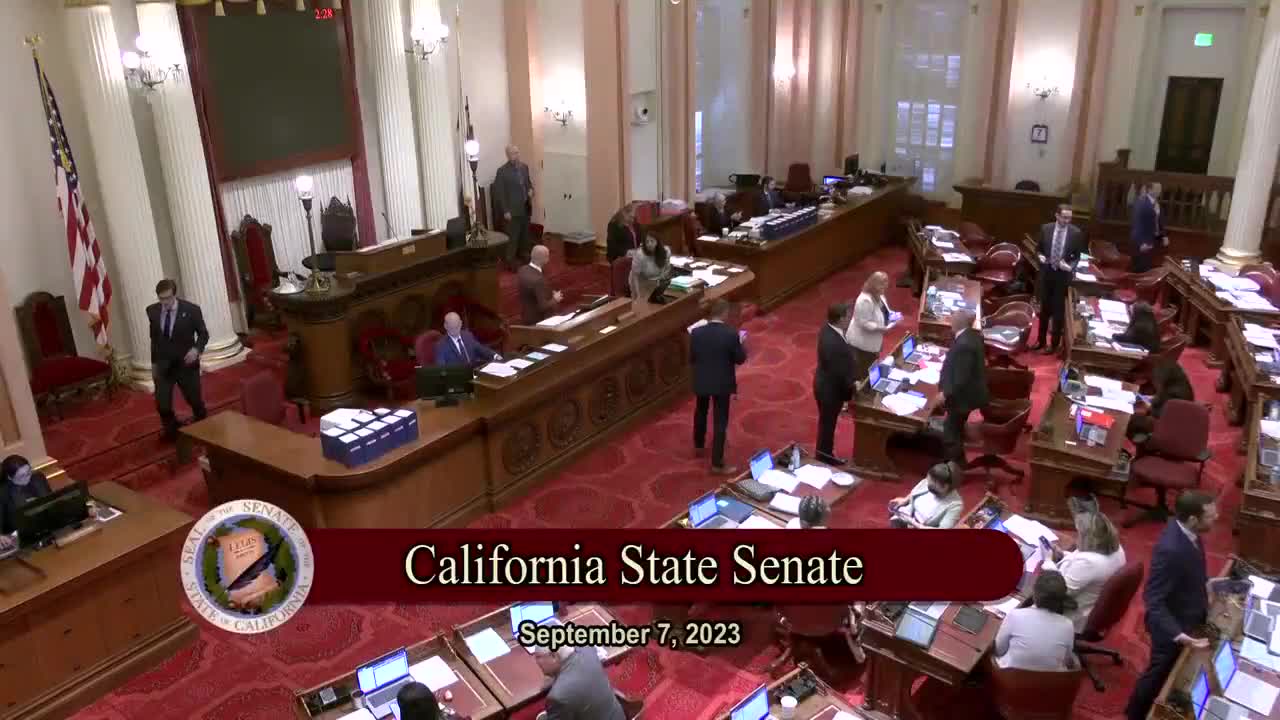 46SEC
Senate Floor
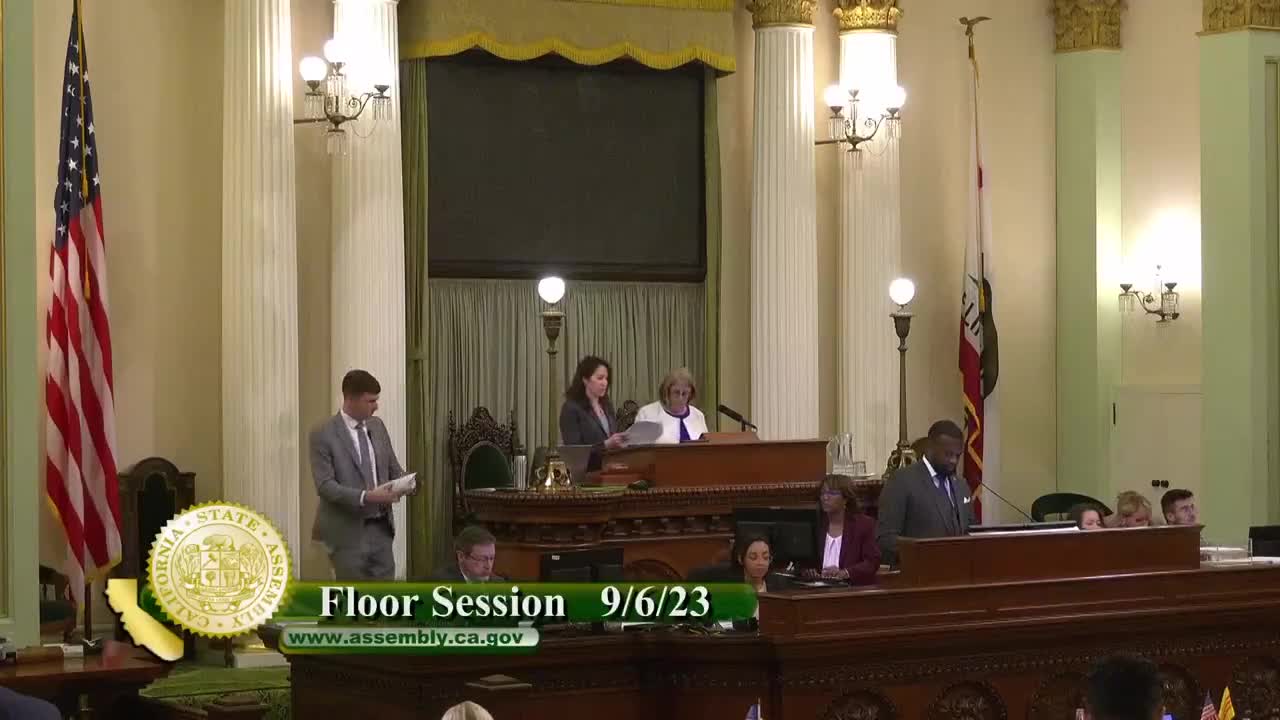 8MIN
Assembly Floor
 1MIN
Assembly Floor
 9MIN
Senate Standing Committee on Energy, Utilities and Communications
Bill Author

Bill Co-Author(s):